JENNY HVAL AND SUSANNA-MESHES OF VOICE.
JENNY HVAL AND SUSANNA-MESHES OF VOICE.
Five years ago, in 2009, Jenny Hval and Susanna began writing to each other. A lot has happened to Jenny and Susanna since that initial exchange of letters.
Jenny and Susanna were both singer-sonwriters. So it made sense that they collaborated. Together, they cowrote fifteen songs. They showcased these songs at their debut performance at Ladyfest, at the Henie Onstad Art Exchange on March 8th 2009. This performance was recorded, and would become Meshes Of Voices. After the success of their debut performance, Jenny and Susanna were invited to one of the biggest events in the Nordic musical calendar.
After their critically acclaimed performance at Henie Onstad Art Exchange, Jenny and Susanna were invited to one of the most prestigious events in the Norwegian musical calendar, the Oslo Jazz Festival. This is, without doubt, one of the most prestigious events in the Nordic musical calendar. At the Oslo Jazz Festival, Jenny and Susanna won friends and influenced people. Despite this, the recording of the concert at at the Henie Onstad Art Exchange wasn’t released. Indeed, another five years passed before it would be released as Meshes of Voice.
Meshes Of Voice will be released on 18th August 2014, on Susanna’s label SusannaSonatta. A lot has happened since Meshes Of Voice was recorded in March 2009.
Two years later, in 2011, Norwegian singer, songwriter, guitarist and author Jenny Hval released her third album album, Viscera, on Rune Grammofon. Viscera was the first album Jenny had released under her own name.
Previously, Jenny had recorded two albums as Rockettothesky. To Sing You Apple Trees was Rockettothesky’s 2006 debut. Two years later, Rockettothesky released Medea. It reached number twenty in the Norwegian charts. This proved to be the album that launched Jenny’s career.
When Jenny Hval released Viscera in 2011, It was to critical acclaim. Critics realised that Jenny Hval was an innovative artist. So it was no surprise Viscera was hailed one of the best albums of 2011. Uncut magazine placed Visera at number 42 on its list of the Top 50 Albums of 2011. Two years later, Jenny returned with a career defining album.
This was Jenny’s fourth album, Innocence Is Kinky. It reached number thirty-one in Norway in 2013. Not only was Innocence Is Kinky released to widespread critical acclaim, but it saw Jenny nominated for one of Norwegian music’s most prestigious award.
This was a Spellemannprisen, which is the Norwegian equivalent of a Grammy Award. Jenny had been nominated for the best composer award. Despite Innocence Is Kinky being only Jenny’s sophomore album, this Norwegian woman of letters was establishing a reputation as one of Norway’s most innovative artists.
Comparisons were drawn to Laurie Anderson, Yoko Ono and a pre-Sledgehammer Peter Gabriel. Great things were forecast of Jenny Hval. So she headed out on tours of Britain and America. This further reinforced Jenny Hval’s reputation as a truly innovative artist. The same can be said about Susanne Karolina Wallumrød.
Susanna was an experienced artist when she first met Jenny. She’d released two albums as Susanna and The Magical Orchestra, 2004s List Of Lights And Buoys and 2006s Melody Mountain. Then in 2007, Susanna released her first album as Susanna. This was Sonata Mix Dwarf Cosmos, which was released on Rune Grammofon. It featured twelve songs written by Susanna, and made a big impression.
Released to critical acclaim, Sonata Mix Dwarf Cosmos caught the attention not just of record buyers, but some music industry insiders. Among them, were Will Odham. He wrote to Susanna, expressing his admiration for her voice and music. This resulted in Susanna and Will collaborating.
This happened on Susanna’s 2008 sophomore album, Flower Of Evil. On Flower Of Evil, Susanna wrote just two songs. The over twelve songs were cover versions. This included one penned by Will Odham, Joy And Jubilee. Will dawned his Bonnie Prince Billy alias and added vocals on Thin Lizzy’s Jailbreak and a cover of Badfinger’s Without You. Susan gave songs by Lou Reed, Prince, Nico, Sandy Denny and Abba. For critics, this was a masterstroke. On Flower Of Evil’s release, Susanna’s star being in the ascendancy.
The following year, 2009, Susanna returned with another another album from Susanna And The Magical Orchestra. 3 was Susanna And The Magical Orchestra’s third album. Just like her previous releases, Susanna And The Magical Orchestra’s 3 was well received. However, Susanna didn’t release another album until 2011.
By then, she’d started writing to Jenny Hval. They’d been friends for two years when Susanna began one of the busiest years of her musical life, 2011.
During 2011, Susanna released two collaboration and one solo album. The first was a collaboration with Norwegian poet Gunvor Hofmo. On Jeg Vil Hjem Til Menneskene put Gunvor’s poetry to music. This resulted in Gunvor’s poetry reaching a new audience. Then, later in 2011, Susanna collaborated with Swiss harpist Giovanna Pessi on If Grief Could Wait.
Just like Flower Of Evil, If Grief Could Wait saw Susanna combine cover versions and her own songs. She only wrote two tracks. The other eleven tracks were cover versions. Susanna and Swiss harpist Giovanna Pessi reinterpreted songs by Henry Purcell, Leonard Cohen and Nick Drake. The result was another critical acclaimed and commercial successful album. Susanna’s final album of 2011 was a solo album.
Unlike her previous solo album, Susanna released Hangout as Susanna Wallumrød. It was released on ECM Records. Hangout was well received by critics. Susanna had managed to navigate the busiest year of her career successfully. She’d released three very different albums. Each found favour with critics and record buyers. However, there was more to come from Susanna. She was about to found her own record label.
One of the biggest events of 2011, was Susanna launching her own record label SusannaSonatta. That would be the outlet for Susanna’s future albums. Before that, Susanna released one more album on Rune Grammofon. This was Wild Dog.
Wild Dog featured a total of ten tracks. They were written by Susanna. On Wild Dog, Susanna became a musical chameleon. Acoustic, alt rock, balladry, indie rock and pop featured on Wild Dog. Just like previous albums, Wild Dog was well received by music critics. Susanna was well on her way to becoming one of the most successful Norwegian artists.
Susanna’s previous album was a collaboration with Ensemble neoN. The Forrester was released in 2013. Not only was The Forrester released to widespread critical acclaim, but it won a Spellemannprisen, which is Norwegian Grammy. Success came in the open category in 2013. Buoyed by this success, Susanna decided to release her collaboration with her friend Jenny Hval, Meshes Of Voice.
Meshes Of Voice was recorded on 8th March 2009 at the Henie Onstad Art Exchange. This was only Jenny Hval and Susanna’s second performance. Their performance featured fifteen tracks that Jenny and Susanna wrote. That night, Jenny Hval and Susanna were accompanied by a small, talented band.
Jenny Hval and Susanna’s band featured just two members. They were Anita Kausboll and Jo Berger Mhyer. Anita played drum, effects, noise and sung backing vocals. Jo played double bass, zither, effects and noise. Jenny played piano, autoharp and guitar. She also added effects, noise, samples and vocals. Susanna played grand piano, harmonium, and added effects, noise, samples and vocals that night in March 2009. Since then, what became Meshes Of Voice has lain unreleased. Not anymore.
Meshes Of Voice will be released on 18th August 2014. It has a fascinating backstory. The music on Meshes of Voice was written for Ladyfest in 2009. It was inspired by Maya Deren’s 1943 surrealist film, Meshes of the Afternoon, and the gothic visions of Antoni Gaudí. On Meshes Of Voices, Jenny Hval and Susanna prove a musical yin and yang.
Listening to Jenny Hval and Susanna on Meshes Of Voices is like jumping onboard a musical and emotive roller coaster. The music veers between ethereal, haunting and beautiful to wild, discord and joyous. Jenny and Susanna toy with you. They tug at your emotions with music that’s cerebral, poetic, poignant and minimalist. Sometimes, it’s not what they say, but what they leave unsaid. They leave you wondering and thinking. It’s not often that happens in music nowadays. However, Jenny and Susanna are different.
Although their voices are very different, they prove a perfect foil for each other. Especially when they sing call and response. Sometimes, raw power and emotion is countered with ethereal beauty. Other times, it’s a meeting of minds. Always, the vocals are heartfelt, impassioned and delivers with meaning and feeling. Lyrics come to life. You’re in no doubt as to their meaning. Equally compelling are the arrangements.
Mostly, the arrangements are understated. They tinkle, shimmer, glisten and quiver. Examples of this are Droplet and Milk Pleasures. They’re atmospheric and spacious. Other times, the arrangements ooze ethereal beauty. Especially on the piano lead Black Lake and O Sun O Medusa. Both tracks remind me of Kate Bush in her prime.
Equally beautiful is A Mirror in My Mouth, where the subtle arrangement allows the vocals to take centre-stage. Atmospheric describes the arrangement to Thirst That Resembles Me. Again, this allows the tender, heartfelt and ethereal vocals to capture your attention. This is the case throughout the rest of Meshes Of Voice.
I Have a Darkness and Running Down are very different to the rest of Meshes Of Voice. The multilayered arrangement envelops you, as the darkness descend and the track veers between dramatic and discordant. After that, Meshes Of Voices continues to spring surprises.
An understated arrangement provides a backdrop for an impassioned, dramatic and strident vocal on A Sudden Swing. Honey Dew sees the unmistakable sound of a harmonium provide the backdrop for Susanna’s vocal. She seems to dawn the role of a torch singer. Medusa sees another change of tack. It allows Jenny and Susanna to stretch their legs vocally. What follows, is another reminder that you’re listening to two of the finest Nordic voice.
Having just written that, House of Bones reinforces these words.It’s best described as a cathartic outpouring of emotion. Pain, hurt, sadness and emotion. It’s all there, and much more. There’s no drop in quality on Dawn. It features some of the best lyrics on Meshes Of Voice. They come alive as Jenny and Susanna’s vocal become one.
Closing Meshes Of Voice is The Black Lake Took. With an sparse, understated backdrop, there’s very little to distract you from the undisputed ethereal beauty of Jenny and Susanna. This means they close Meshes Of Voice with one of its highlights.
It’s hard to believe that an album as good as Meshes Of Voice has lain unreleased for over five years. Music as good as this deserves a much wider audience. That’s what Meshes Of Voice will be released to. After all, Jenny Hval and Susanna’s profiles are much higher than they were in 2009.
Now, Jenny Hval and Susanna have established themselves as two of the finest Nordic voices. That’s apparent on Meshes Of Voice. It’s just the latest critically acclaimed album from Jenny Hval and Susanna have released since 2009.
Critical acclaim has been a familiar friend for Jenny Hval and Susanna. Each of them have released critically acclaimed albums since 2009. Both Jenny and Susanna have been nominated for a Spellemannprisen, which is the Norwegian equivalent of a Grammy Award. Susanna and Ensemble neon won a Spellemannprisen for their 2013 collaboration The Forrester was released in 2013. Maybe this is what inspired Susanna to release Meshes Of Voice.
Belatedly, Meshes Of Voice will be released on Susanna’s label SusannaSonatta, on 18th August 2014. Hopefully, Meshes Of Voice won’t be the last collaboration between Jenny Hval and Susanna. After all, what could be better than another collaboration between two of the most talented and successful Norwegian singer-songwriters? They’re like yin and yang on Meshes Of Voice. Their voices are made for each other. They bring out the best in each other, and drive each other to greater musical heights. That’s apparent on Meshes Of Voice, which is a tantalising taste of two of the finest Nordic vocalists Jenny Hval and Susanna as their career unfolds. Maybe, Meshes Of Voice is just the beginning, and further collaborations between Jenny Hval and Susanna will follow?
If they do, we’ll hear a very different Jenny Hval and Susanna. They’re five years older and have a wealth of experience under their musical belts. That’s what makes a followup to Meshes Of Voice such a tantalising proposition. Let’s just hope that somehow, Jenny Hval and Susanna can find the time within their busy schedules to record the followup to the critically acclaimed Meshes Of Voice.
JENNY HVAL AND SUSANNA-MESHES OF VOICE.
DANA GILLESPIE-CAT’S MEOW.
DANA GILLESPIE-CAT’S MEOW.
Dana Gillespie has packed a lot of living into her sixty-five years. She’s been an actress, singer and songwriter. Her singing career began in the mid-sixties. Initially, Dana was a folk singer. Before long, Dana became a teen pop idol and released her debut album, Foolish Seasons in1967. Since then, Dana’s musical career has continued to evolve.
During the seventies, Dana’s career moved in the direction of rock. This came about after Dana sang backing vocals on It Ain’t Easy, a track from David Bowie’s 1972 classic album, The Rise and Fall Of Ziggy Stardust and The Spiders From Mars. David Bowie and producer Mick Ronson realised Dana was a talented singer-songwriter. So, they produced Diana’s 1973 album Weren’t Born A Man. However, Weren’t Born A Man proved to be Dana’s only dalliance with rock. After that, Dana found her real musical love, the blues. Since then, Dana has been singing the blues. Here most recent album is Cat’s Meow, which was recently released on Ace Records.
Cat’s Meow is Dana’s comeback album. She hasn’t released an album since 2010s Rest My Case. However, Dana has been busy. That’s been the story of her career.
Throughout Dana’s career, she’s been much more than a singer. She’s successfully juggled a number of careers. Dana is a successful actress, whose appeared on stage and screen. Her screen debut was the 1966 film Secrets of a Windmill Girl. Since then, Dana has appeared in a number of films and stage-plays.
Without doubt, Dana’s highest profile role on the stage, was in the original London production of Jesus Christ Superstar. This was back in 1973, at the Palace Theatre. She played Mary Magdalene and appeared on the Original London Cast album. As you can see, Dana Gillespie means different things to different people. She’s an actress, singer and songwriter. Most people remember Dana as a singer-songwriter. No wonder, with over forty-five albums to her name. Cat’s Meow is Dana’s latest album.
For Cat’s Meow, Dana cowrote eleven tracks. Of these eleven tracks, she cowrote eight with guitarist Jake Zaitz. This includes Cat’s Meow, Love Matters, Especially Yours, Eureka Moment, Hands Of Hope, Love Moves, It’s Alchemy and Giving Out To Everyone. Dana, Jack and Evan Jenkins penned Last Chance Saloon. They also cowrote Two-Faced Girls with Artie Zaitz. The other tracks was Running Out Of Steam, which Dana and Jeff Walker wrote. These eleven tracks became Cat’s Meow.
Cat’s Meow was recorded at DD Studios London. Dana and Jake Zaitz produced Cat’s Meow. Dana’s band included a rhythm section of drummer Evan Jenkins, bassist Jeff Walker and guitarist Jake Zaitz. Artie Zaitz plays acoustic guitar, guitar, electric piano, organ, keyboards and percussion. Mike Paice played harmonica and saxophone, while percussionist David Malin added backing vocals. Once the eleven songs were recorded, they became Cat’s Meow.
After four years away, Dana Gillespie was back. Cat’s Meow was her comeback album, was released recently to critical acclaim. Britain’s Queen of the blues was back with Cat’s Meow, which I’ll tell you about.
Opening Cat’s Meow is the title-track. As the rhythm section provide the arrangement’s heartbeat, a guitar chirps, blues harmonica blows and a saxophone rasps. The arrangement is slow, moody, bluesy and understated. It’s the perfect backdrop for Dana’s vocal. She’s totally calm as she deliver the lyrics about pride and betrayal. He thinks he’s the Cat’s Meow, but Dana isn’t impressed and lets him know that.
A plucked bass, crystalline guitar and shuffling rhythm section open Love Matters. They provide the backdrop for Diana. Accompanied by braying horns and piano, she ensures the song swings. Her vocal is a sultry and needy as her band deliver jazzy backdrop. When the solos come round, each member of the band enjoys their moment in the spotlight. They’re talented musicians who play a huge part in the tracks sound and success.
Bursts of quivering, shivering, bluesy harmonica and a glistening guitar join the rhythm section, in setting the scene on Eternally Yours. Having set the scene for Dana, her vocal is slow, sultry and sassy. All the time, her band create the perfect bluesy backdrop. This allows Dana to deliver one of her sultriest and finest vocals on Cat’s Meow.
As Dana delivers a tender, pensive vocal on Eureka Moment, her band create a slow, spacious arrangement. Chirping guitars, stabs of grizzled horns and the rhythm section combine. They leave plenty space within the arrangement. So does Dana. By doing so, her vocal is really effective. It’s breathy and needy as she breaths meaning and sass into the lyrics.
A probing bass and the drums combine with Dana’s vocal on Last Chance Saloon. She’s far from happy as she sings: “I had my fill of your crazy ways…you’d better shape up or ship out, not a moment too soon, ‘cos you’re standing in the Last Chance Saloon.” Dana means what she says, as she delivers a despairing vocal. Meanwhile, her band provide a bluesy backdrop that swings. Especially when the rhythm section and bluesy harmonica combine with guitars. They’re yin to Dana’s yang.
Hands Of Hope has a tough, bluesy sound. This comes courtesy of bursts of blistering guitars, washes of Hammond organ and the rhythm section. They set the scene for Dana’s vocal. She’s fearless. The reason for this is she’s been: “Rescued by the Hands Of Hope.” Dana can’t quite believe this. So much so, that she sings; “It’s still a mystery to me, I must confess, how you heard my S.O.S.” Bluesy, soulful and with a gospel twist, this shows the many sides of Dana Gillespie.
Love Moves has a soulful, jazz-tinged sound. The arrangement meanders along, with the rhythm section, guitars and percussion accompanying to Dana’s heartfelt, soulful vocal. Subtle bursts of saxophone interject and guitars chime. All the time, percussion marks time as Dana’s delivers some beautiful lyrics, including: “Love Moves even mountains.”
Running Out Of Steam sees a return to a much more bluesy sound. The rhythm section, guitars and washes of Hammond organ lock into a bluesy groove. They’ve set the scene for a despairing Dana, as she sings: “oh I’m running out of love… I’m running out of patience… I’m running out on you.” When her weary, despairing vocal drops out, guitarist Jake Zaitz delivers a blues guitar masterclass. This seems to spur Dana on as she breathes life and meaning into the lyrics.
Percussion and drums open It’s Alchemy. They’re joined by shimmering guitar and Dana’s sultry vocal. As guitars shimmer, the rhythm section provide an understated backdrop. Washes of Hammond organ sweep in. Later, Jake Zaitz delivers another stunning guitar solo. This is the finishing touch, as a lovestruck Dana delivers a needy, breathy, sensual vocal.
A carefully strummed guitar and wash of Hammond organ accompany Dana on Two Faced Girls. Before long, Dana is delivering an angry, frustrated vocal. She’s frustrated at a younger woman having stolen her man. She takes her aim, and vents her spleen at those “Two Faced Girls” who “shake their hips and purse those lips, then move in for the kill.”Later, Jake Zailz delivers another stunning guitar solo as Dana and her band kick loose.
Closing Cat’s Meow is Giving Out To Everyone. It’s a slow, spacious track, where the band allow Dana’s vocal to take centre-stage. Her mid-Atlantic vocal is accompanied by gently rasping horns, keyboards and glistening guitars. Before long, Dana’s vocal is growing in power and drama. She delivers a spellbinding, soulful performance that ensures Dana closes Cat’s Meow on a high.
After four years away, Dana Gillespie makes a welcome return with Cat’s Meow, which was recently released by Ace Records. Cat’s Meow is very much a return to form from Dana. Accompanied by a tight, talented band, Dana Gillespie combines blues, jazz and soul on Cat’s Meow. Considering Dana has made a name as a blues singer, she’s equally comfortable delivering jazz and soul. That’s no surprise. During Dana’s near fifty year career, Dana has been a musical chameleon.
Over the last fifty years, Dana has sung everything from folk, pop, rock, jazz, soul and blues. However, it was as a blues singer Dana Gillespie made her name. She’s been singing the blues for over forty years. That’s what Dana Gillespie was born to do. She breaths life and meaning into the lyrics. Hurt, heartbreak, despair, frustration and anger come to life when Dana sings. Other times, Dana’s vocals are joyous, heartfelt, impassioned, sensual and sassy. On Love Moves, Dana comes across as lovestruck. Sometimes, Dana kicks loose, strutting and swaggering her way through tracks, making them her own. One thing that we can say, is that no two songs are the same.
That’s what music lovers have come to expect from Dana Gillespie. She’s without doubt one of the most versatile artists of the past fifty years. Dana Gillespie reinvented herself several times. Then she found the blues. That was over forty years ago. Since then, Dana Gillespie has released over forty albums. Her latest album Cat’s Meow, is a reminder of why Dana Gillespie is Britain’s blues Queen.
DANA GILLESPIE-CAT’S MEOW.
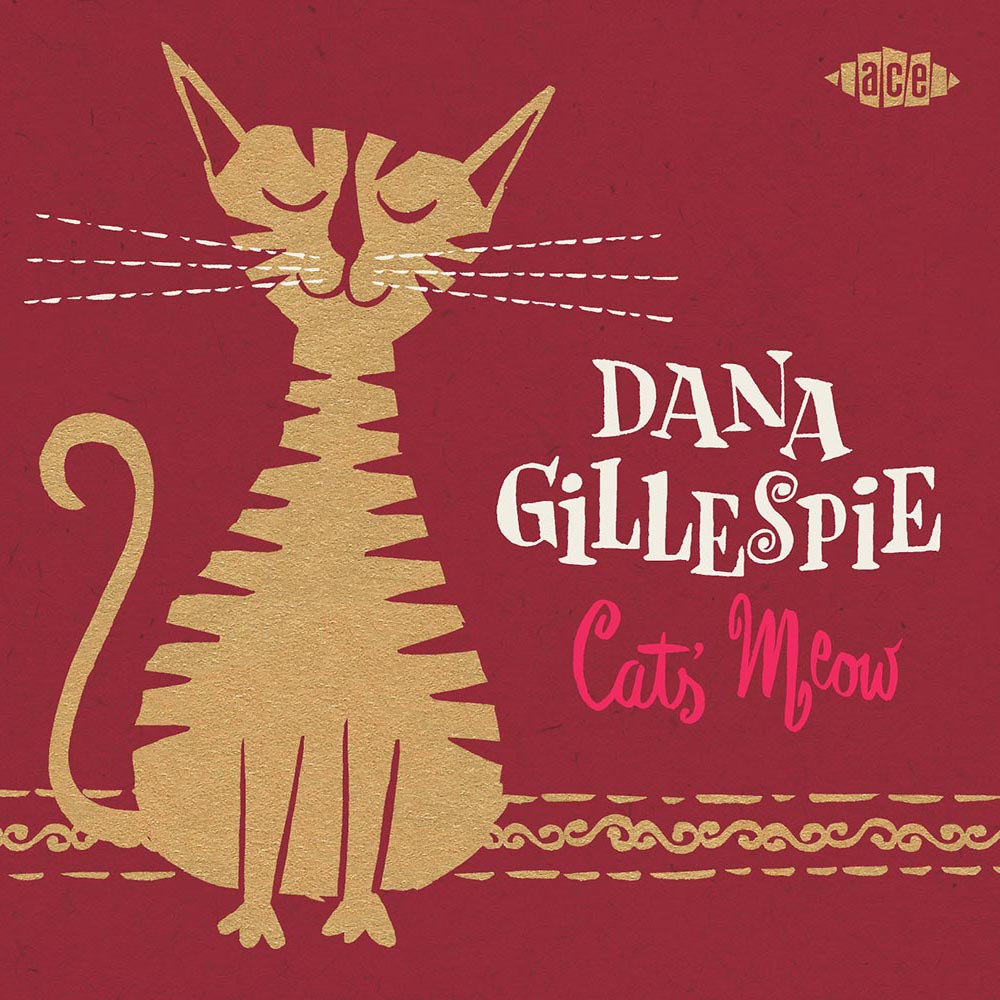
KING CREOSOTE-FROM SCOTLAND FROM LOVE.
KING CREOSOTE-FROM SCOTLAND FROM LOVE.
There aren’t many artists who’ve released over forty albums. Scottish singer-songwriter Kenny Anderson has. However, many people won’t have heard of Kenny Anderson. They will have heard of King Creosote.
King Creosote is just one of a number of aliases Kenny Anderson records records under. He’s been a one man music making machine since 1995. That’s when he formed his own label Fence Records. After that, there was no stopping Kenny.
Kenny went onto record as the Skuobhie Dubh Orchestra, Khartoum Heroes, Kid Canaveral and Jokes. He also collaborates with Jon Hopkins. They record together as The Burns Unit. Another of their other collaborations proved hugely successful. King Creosote and Jon Hopkins released Diamond Mine in 2011. It resulted in them being nominated for the Mercury Prize. Since then, King Creosote’s music has been reaching a much wider audience.
Especially since King Creosote teamed up with Domino Records. They co-release some of King Creosote’s albums. This has helped to spread the word about the delights of King Creosote far and wide. King Creosote’s latest album is From Scotland From Love which was recently released by Domino Records.
From Scotland With Love is a the soundtrack to a documentary feature film directed by Virginia Heath. The film was commissioned as part of the Cultural Festival, which accompanied the 2014 Commonwealth Games in Glasgow.
During the Commonwealth Games, a screening of From Scotland With Love took place on Glasgow Green. It was accompanied by live music. This was fitting. After all, Glasgow Green has been the scene of many memorable musical events. The screening of From Scotland With Love was just the latest.
As films go, From Scotland With Love is quite unusual. The seventy-five minute film features no dialogue. That’s not surprising. The documentary was created entirely from archive film material from the National Library of Scotland and the Scottish Screen Archive. With no voiceover, Virginia Heath decided to add a musical backdrop. That’s where King Creosote came in.
Virginia Heath brought King Creosote onboard. “We came to Kenny because we felt he had a great storytelling ability in his lyrics. We knew that to get across some of the complexity of the sequences we wanted, we needed someone who could translate feelings and stories into song.”
King Creosote does this wonderfully well on From Scotland With Love. He gets to the nub of the themes that run through the film. This includes love, loss, resistance and migration. There’s a reminder of how Scotland has changed when the film touches on urbanisation and emigration. many Scottish people emigrated to Australia, Canada and New Zealand in the fifties and sixties. From Scotland With Love also shows Scotland at work and play. There’s a sense of sadness too. Especially when reminders of Scotland’s past.
Back then, shipbuilding, heavy industry and the fishing industry, were just three of Scotland’s industrial heavyweights. Not any more. Tragically, they’ve been brought to their knees. Another sense of sadness is when From Scotland With Love touches on the war. Far too many Scottish people died in battlefields around the world. From Scotland With Love is a reminder of that.
For From Scotland With Love, King Creosote wrote eleven tracks. This took place during composing session in a studio near Loch Fyne. For King Creosote, the surrounding beauty proved inspirational. Now he was ready to record From Scotland With Love.
Recording of From Scotland With Love took place at Chem 19 Studios, Blantyre. David McAulay produced From Scotland With Love. Ex-Delgado and now seasoned producer Paul Savage, also helped on From Scotland With Love. Paul had worked with King Creosote on his 2009 album Flick the Vs and his 2013 album That Might Well Be It, Darling. The band that accompanied King Creosote were similarly experienced.
At Chem 19 Studios, King Creosote’s band included a rhythm section of drummers Paul Savage and Andy Robinson who also played percussion. Pete Macleod played bass and David McAulay played electric and acoustic guitar, keyboards, synths, banjo, mandolin, percussion and added backing vocals. Derek O’Neil played piano, keyboards and organ. Kevin Brolly of Admiral Fallow played clarinet. Two members of Meursault, violinist Kate Miguda and cellist Pete Harvey made guest appearances. Asher Zaccardelli and Emma Peebles played viola. Backing vocalists included Jenny Reeve, Grant Keir, ex-Delgado Emma Pollock, Jim Sullivan of Sparrow and The Workshop and Louise Abbot of Admiral Fallow and the Beatroute Street Singers. Quite simply, an all-star case of musicians accompanied King Creosote on From Scotland With Love. It was released on 21st July 2014.
On the release of release of From Scotland With Love on 21st July 2014, it was critically acclaimed. So was Virginia Heath’s film. When several generations of Scots saw the film it seemed to strike a chord. People from eight to eighty looked back on Scotland’s past. Poignant, heartbreaking, joyous, uplifting and funny, memories came flooding back. For King Creosote, he was winning friends and influencing people with From Scotland With Love, which I’ll tell you about.
The wistful and beautiful Something To Believe In opens From Scotland With Love. A lone accordion sets the scene for King Creosote’s needy, hopeful vocal as he longingly sings: “you promised me a feeling, Something To Believe In.” As he sings, a piano and slow, steady drums add to the sense of melancholy.
Cargill is a song the refers to the part fishing has played in Scotland’s history. Kenny’s lyrics are truly poignant. Especially the lyric: “the dread of counting home the fleet, the sudden thrill of seeing that you’re back.” Again, there’s a sense of drama and sadness in the song. That comes courtesy of pounding piano, drums and melancholy strings. Along with a female vocal, they provide the backdrop for his vocal. It’s delivered with feeling and sincerity, as he paints pictures with his lyrics.
Largs for those unfamiliar with its delights, is a affluent seaside town just twenty miles from Glasgow. It’s where generations of Glaswegians have headed for a day out, or even holiday. That’s what this song is about. Instantly, King Creosote brings back memories. The song explodes into life. Strings swirl, drums pound and clarinet provide athe galloping arrangement. It provides the backdrop for King Creosote. He sings about ice creams, broken deck chairs, sea, sun and promises of romances for some. Not for others. It’s knock backs all the way. A wistful, wiser King Creosote’s sings against an understated backdrop: “maybe kid on I’m from Largs.”
Just thoughtful keyboards open Miserable Strangers. That’s before an acoustic guitar and sweeping strings enter. It’s a truly beautiful backdrop for King Creosote’s vocal. His vocal is tinged with sadness, as he sings about being one of a generation of Scots who emigrated in the fifties and sixties. He’s standing at the quay, tears in eyes and doubts in his mind. Eventually, he decides it’s for the best. So, he puts on a brave face. Strings sweep and swirl, a choir sings and the rhythm section provide the backdrop for a soul-baring vocal. All this results in a truly beautiful, but heartbreaking songs. Without doubt, it’s a long time since I heard a more powerful song.
Just pensive strings, acoustic guitar and drums accompany King Creosote on a story with a twist in its tale. He sings about a crofter struggling to make a living out the land their father worked. King Creosote’s weary vocal brings home their struggle to make ends meet. However, it’s not all bad. He sings: “that’s when I clap eyes upon my lass, and I find I’m singing like a lark.” Quite simply, poignant and beautiful.
For One Night Only tells the story of a Scot’s couple heading out for a night on the town. They’ve saved all week and now it’s time to celebrate. Firmly strummed guitars build the drama. Then pounding drums and sweeping strings join in. Last but not least is King Creosote’s vocal. His vocal is a mixture of joy and relief. He’s worked all week and wants to celebrate. Shrewdly, his wife is pocketing the change. After all, there’s still the rest of the week to go. Handclaps accompany King Creosote during this joyous, rocky track that paints a picture of a million Friday nights in the West of Scotland.
Bluebell, Cockleshell, 123 begins with children singing and clapping their hands. It sounds like the type of traditional rhyme children used to sing when they played in the streets. It is. They’re singing about becoming a fisherman’s wife. King Creosote sings from the point of view of the view fisherman. He’s accompanied by acoustic guitar and handclaps. His vocal is a mixture bravado, pathos and sadness. It’s as if death is almost inevitable for a fisherman. Especially when he sings about being buried: “beside my only brother, my coffin shall be black.”
Strings and a shuffling beat provide the backdrop for King Creosote’s needy vocal. Later, a Hammond organ and tender harmonies sweep in. His vocal is tinged with equal amounts of sadness and hope. Sometimes King Creosote reminds me of Lloyd Cole. Always though, he’s a troubled troubadour who breaths life and meaning into lyrics. Especially here, were he croons his way through the track.
Crystal 8s is an atmospheric instrumental. The arrangement shimmers and quivers, drawing you in. After that, a wistful acoustic guitar makes its way across the arrangement as it draws to an atmospheric close.
Paupers Dough one of the most poignant songs on From Scotland With Love. It has an understated, piano lead arrangement. The lyrics are tinged with social comment. They’re about a group of brave, determined people who demanded social justice. They wanted a better life for them and their families. That’s apparent from the lyrics: “and I want better for my boy, to bury my father in dry desecrated ground.” A truly poignant song designed to make you think and be thankful, for those brave, determined people.
Closing From Scotland With Love is A Prairie Tale. It’s another instrumental. Wistful, melancholy strings tug at your heartstrings. They’re a reminder of Scotland’s rich musical heritage. The track also has a cinematic quality, which encourages your imagination to run riot.
I can’t rate From Scotland With Love highly enough. It’s easily one of the best albums I’ve heard all year. Without doubt, From Scotland With Love will be on the list of best albums of 2014. That’s testament to a hugely talented singer-songwriter, King Creosote.
Since 1995, Kenny Anderson, a.k.a. has been a musical machine. He’s released over forty albums. From Scotland With Love has to be a coming of age musically from King Creosote. Especially given the themes that run through From Scotland With Love. This includes love, loss, resistance and migration. There’s also a reminder of how Scotland has changed because of urbanisation and emigration. From Scotland With Love deals with Scotland and work and play. Scotland has always been a country who work and play hard. This is apparent on From Scotland With Love.
King Creosote sings of holidays in Largs. That was where people from the West of Scotland went on holiday. Some still do. It’s songs like Largs that make From Scotland With Love an album that will appeal to anyone between the age of eight and eighty. Any Scot will be able to relate to From Scotland With Love. Having said that, From Scotland With Love will appeal to much more than Scottish people.
Why? From Scotland With Love is a beautiful, joyous, melancholy, poignant, uplifting and wistful album. The music tugs at your heartstrings. Especially, when King Creosote is delivering vocals that are heartfelt, hopeful, needy, joyous and inspirational. King Creosote is the latest in a long line of Scottish troubadours. His Magnus Opus, From Scotland With Love, marks a coming of age from Scotland’s newly crowned musical King, King Creosote.
KING CREOSOTE-FROM SCOTLAND FROM LOVE.
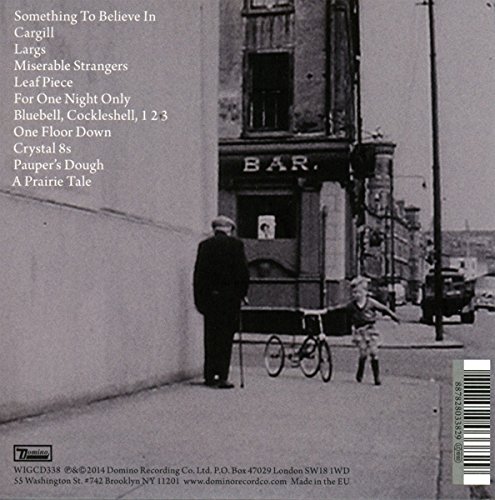
ELECTRI CITY-ELEKTRONISCHE MUSIK AUS DUSSELDORF.
ELECTRI CITY-ELEKTRONISCHE MUSIK AUS DUSSELDORF.
Some cities are synonymous with a musical genre. Mention Memphis, and it’s remembered as the birthplace of rock ’n’ roll and later, Southern Soul. Philadelphia is famous for Philly Soul and disco. Chicago is synonymous with blues and house music. New Orleans gave us Dixieland and R&B, Seattle grunge, Plainfield P-Funk, Washington Go-Go and New York hip hop and disco. Then there’s Detroit. It’s famous for techno. Over the Atlantic, Britain and Europe has given the world their fare share of musical genres.
Liverpool gave the world The Beatles and Mersey-beat. The Midlands was the birthplace of heavy metal. A decade later, Coventry spawned T-Tone. Over the English Channel, Europe has been a musical hotbed.
One of France’s most famous musical exports was ye ye. It was born in Paris. A decade later, Euro Disco was born in Munich. Another German city, Dusseldorf, is famous for electronic pop music.
Dusseldorf in the seventies and eighties was synonymous for electronic music. Some of the best electronic music came out of Dusseldorf. This includes La Dusseldorf, Harmonia and Eno, Der Plan, Daf, Neu!, Teja, Die Krups, Rheingold and Makrosoft. These are just a few of the artists that feature on Electri City-Electronische Musik Aus Dusseldorf. It’ll be released on 10th October 2014 by Berlin based, Groenland Records. For anyone interested in electronic music, then Electri City-Electronische Musik Aus Dusseldorf will be a music have. You’ll soon realise why.
Opening Electri City-Electronische Musik Aus Dusseldorf is La Dusseldorf’s Dusseldorf. La Dusseldorf’s was founded by Klaus Dinger after Neu! split-up in 1975. Neu! had just released Neu 75, but wasn’t a commercial success. This resulted in Neu! splitting-up. A year later, Klaus Dinger returned with his new band La Dusseldorf. It featured Hans Lampe and Thomas Dinger. They released their eponymous debut album in 1976. It was produced by Conny Plank and La Dusseldorf. On its release on Nova Records, La Dusseldorf wasn’t a commercial success. Despite this, La Dusseldorf is a vastly underrated album. Dusseldorf is proof of this. Atmospheric, moody and hypnotic describes this fusion of ambient, Krautrock and rock.
Wolfgang Reichmann’s musical career began in 1966. He was a member Kraftwerk and Neu. After that, he became a member of Düsseldorf based band called Streetmark. Then in 1977, Wolfgang embarked upon a solo career. His debut album was 1978s Wunderbar, which was released on Sky Records. One of the highlights is the title-track. It’s a mixture of ambient, experimental and electronica that has an inherent ethereal beauty.
A collaboration between two musical pioneers, Harmonia and Brian Eno was a tantalising prospect. After all, Harmonia were one of the most innovative German groups. Brian Eno was a musical legend. After leaving Roxy Music, he became a pioneer of ambient and electronic music. Harmonia and Eno collaborated on Harmonia 76’s 1997 debut album Tracks and Traces. It features the slow, mesmeric and hypnotic Luneburg Heath. Without doubt, it’s one of Harmonia and Eno’s finest hours.
Der Plan were founded in 1979 and were together until 1993. During that period, they were responsible for some truly groundbreaking music. Proof of that is Wir Werden Immer Mehr. It’s a fusion of electronica, post punk and eperimental. The song never found its way onto any of Der Plan’s albums. Instead, this hidden gem is tucked away on one of their compilations Geri Reig Und Normalette Surprise which was released in 1996. It’s an irresistible reminder of what Der Plan were capable of.
DAF, or to gve them their full name, Deutsch Amerikanische Freundschaft were formed in 1978. They released six albums between 1979 and 1986, before making a comeback in 2002 and releasing their seventh album Fünfzehn Neue DAF Lieder. That was DAF’s swan-song. One of the finest albums was their third album, 1981s Alles Ist Gut. It was produced by none other than Conny Plank. Alles Ist Gut’s best known track is Der Mussolini, a track that’s synonymous with DAF.
Neu!, just like Can and Kraftwerk are, without doubt, three of the most important, influential and innovative bands in German musical history. Even today, their influence can be heard in modern music. Incredibly, Neu! only released five albums. Hero is a track from album Neu! 75, which was released in 1975, on Brain Records. After that, Neu! split-up. It would be another twenty years before Neu! released Neu! 4. Neu! 75 and Hero in particular, is a poignant reminder of one of the most innovative bands at the peak of their powers.
Teja Schmitz is a name that might not be familiar with most people. However, back in 1981Teja released Säuren Ätzen Und Zersetzen. There was no label involved. In true punk style, Teja released Säuren Ätzen Und Zersetzen, which featured Säuren. Since 1981, the track lay undiscovered. Then in 2013, Snowboy Records released this glorious fusion of ambient, avant garde and electronica as a limited edition of 200. Now, at long last, Säuren is finding the wider audience it deserves. It’s a real find. This make me to wonder where Teja released any more music?
Die Krupps are one of those bands whose music constantly evolved. They weren’t a band who stood still. Their music ranged from noise, EBM, industrial and then during the nineties, headed in the direction of heavy metal. Back in 1982, Die Krupps released their sophomore album Volle Kraft Voraus! It featured Wahre Arbeit Wahrer Lohn where electronica, Krautrock and post punk unite to create mesmeric, dramatic track. So good is the track, it’ll have you digging deep into Die Krupps’ discography.
Liaisons Dangereuses only released one album. That was their 1981 eponymous album, which was released on the TIS label. It features Los Niños Del Parque. The best way to describe Los Niños Del Parque is dance-floor friendly. Drum machines and synths drive this hypnotic track along. It sounds like a forerunner to techno. Later, swaggering vocals are added, as elements of post punk and synth pop combine. This works. However, even with the vocals, the track would’ve worked. Especially given the hypnotic, proto techno arrangement.
Wolfgang Flur was a member of Kraftwerk between 1973 and 1987. The Karftwerk influence shines through on I Was A Robot, which Wolfgang released as a single in 2014. It’s a truly innovative track. Elements of electronica, jazz, Kraurock and dance music melt into one, creating a truly timeless track. Without doubt, I Was A Robot is one of the highlights of Electri City-Electronische Musik Aus Dusseldorf.
Rheingold released three albums and several singles between 1980 and 1984. After that, nothing was heard of them until 2007. That’s when Rheingold released Electric City-Düsseldorfer Schule. It features 3Klangsdimensionen. It’s something of a slow burner. The track takes time to reveal its many delights. Understated and featuring a heartfelt, soulful vocal, the arrangement combines elements of ambient, electronica, funk and Krautrock. This proves the perfect introduction to Rheingold. one of Germany’s best kept musical secrets.
Michael Rother is a member of German musical royalty. His career began when he joined Spirit of Sound. He left Spirit of Sound in 1970 and was briefly a member of Kraftwerk. When he left Kraftwerk, so did Klaus Dinger. They formed Neu! and released a trio of albums between 1972 and 1975. Neu! split-up in 1975. Two years later, Michael released his debut album Flammende Herzen. It was released on Sky Records in 1977. One of the album’s highlights was the title-track Flammende Herzen. It’s a fusion of ambient, electronica, Krautrock and rock that has a beautiful, wistful sound.
Closing Electri City-Electronische Musik Aus Dusseldorf is MakroSoft’s Electricity. Previously, MakroSoft has only released one album, Stereo Also Playable Mono. That was in 2006. It didn’t feature Electricity. It’s something of a hidden gem where synth pop meets social comment.
The thirteen tracks on Electri City-Electronische Musik Aus Dusseldorf are a tantalising taste of the music that Dusseldorf gave the world. There’s so much more to the Dusseldorf music scene than these tracks. That’s why Groenland Records have to make Electri City-Electronische Musik Aus Dusseldorf the first in a regular compilation series. Surely, more instalments in this series must follow? I hope so. After all, the influence of Dusseldorf electronic music scene can’t be understated.
Without the electronic music coming out of Dusseldorf, groups like OMD, Heaven 17 and Depeche Mode might never have existed? Their music is inextricably linked to Dusseldorf’s electronic music scene. It’s not just eighties synth groups who were influenced by Dusseldorf’s electronic music scene.
No. Several generations of bands have been influenced by German music, including the music coming out of Dusseldorf. One of the most influential bands on Electri City-Electronische Musik Aus Dusseldorf are Neu! Along with Can and Kraftwerk, they’re perceived as the golden triumvirate of German music. Many British groups, including Primal Scream, have been hugely influenced by the golden triumvirate. So have several generations of electronic music producers. No wonder.
The music on Electri City-Electronische Musik Aus Dusseldorf is best described as important, innovative, influential and inspiring. It resulted in artists and producers rethinking how they approached music. This is still the case. As a result, interest in German music is at an all time high.
Recently, the have been reissues of some of the most important releases in German musical history. This includes Can, Neu!, Kraftwerk, Holger Czukay, Michael Rother and Conny Plank. A number of books have been written about the German music scene.
This includes David Stubbs’ Future Days: Krautrock and the Building of Modern Germany. Then there’s Rüdiger Esch’s book Electri City-Electronic Music from Dusseldorf. It’s the perfect companion to Electri City-Electronische Musik Aus Dusseldorf, which will be released on 10th October 2014, by Groenland Records. For anyone interested in electronic music, German music or the Dusseldorf music scene, then Electri City-Electronische Musik Aus Dusseldorf is essential listening. No wonder. Electri City-Electronische Musik Aus Dusseldorf, features some of the most important, innovative and influential music in German musical history. That’s why Electri City-Electronische Musik Aus Dusseldorf is sure to be one of the best compilations of 2014.
ELECTRI CITY-ELEKTRONISCHE MUSIK AUS DUSSELDORF.

EDDIE “CLEANHEAD” VINSON-THE ORIGINAL CLEANHEAD.
EDDIE “CLEANHEAD” VINSON-THE ORIGINAL CLEANHEAD.
By 1970, Eddie “Cleanhead” Vinson was fifty-three. He was a musical veteran. His career was about to enter its fifth decade. Eddie had caught a break.
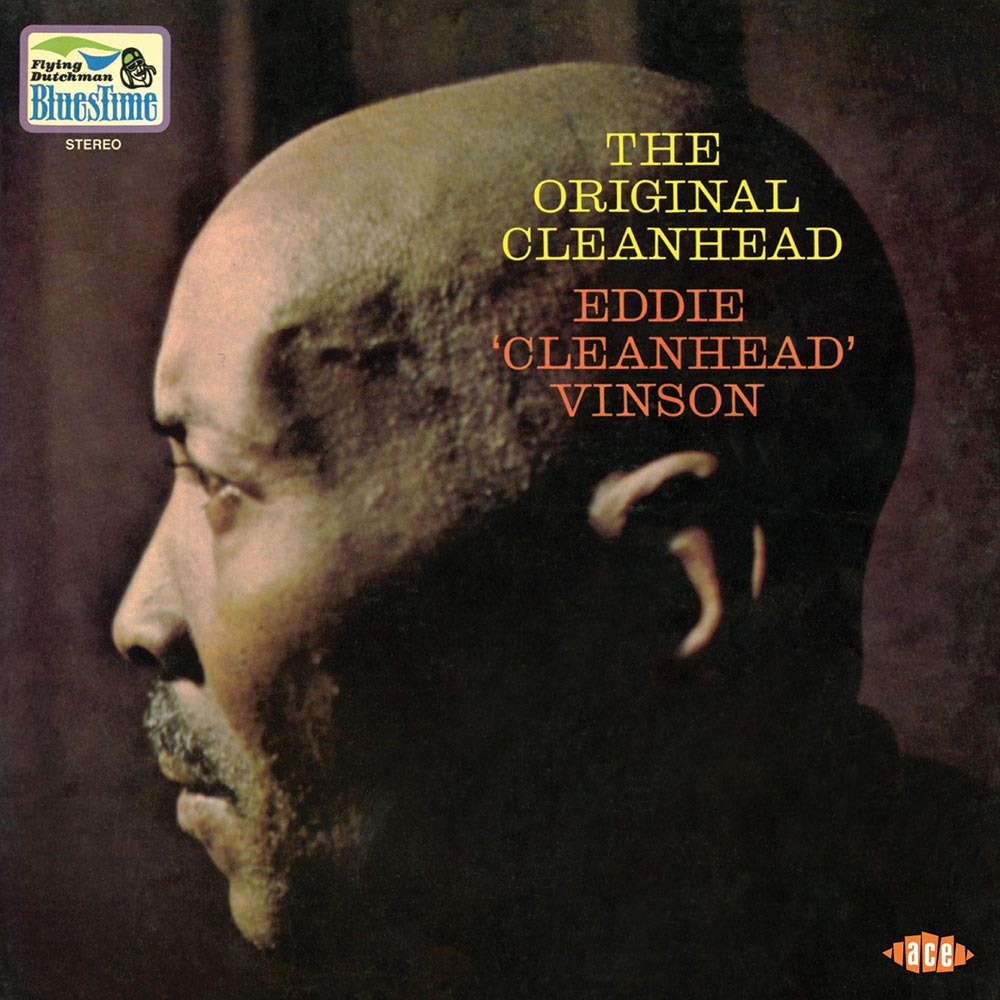
Bob Thiele asked him to sign to his Blues Time imprint. It was a subsidiary of Flying Dutchman Productions. In 1970, Eddie released his what was seen as his comeback album, The Original Cleanhead, which was recently rereleased on CD by Ace Records. The Original Cleanhead marked a change in fortune for Eddie “Cleanhead” Vinson. After a few years in the doldrums, Eddie’s career was on the up again. This was just the latest chapter in the Eddie “Cleanhead” Vinson story.
Eddie “Cleanhead” Vinson born in Houston, Texas on 19th December 1917. His family were all musical. His father played the honky tonk piano and his grandmother was a violinist. They encouraged Eddie musically.
Growing up, Eddie decided he wanted to play alto saxophone. So, his father bought him a saxophone and paid for music lessons. This paid off.
By the time Eddie was in high school, he was playing in Chester Boone’s band. Not long after that, Eddie turned professional and joined Chester Boone’s band full-time. This was the start of Eddie’s musical journey.
Some time later, Chester Boone decided to head to New York. Chester’s band was taken over by Mlt Larkin. For Eddie this was a blessing in disguise.
Milt Larkin’s band had a secret weapon. That was the horn section. It featured Arnett Cobb, Tom Archia, Illinois Jacquet and Eddie. Before long, Mlt Larkin’s band were taking on all-comers and leaving them in their wake. Duke Ellington and Earl Hines’ bands lost out, when they took on Milt Larkin’s band. This was in part down to the horn section. As a result, Mlt Larkin’s band establishing a reputation as one of the finest bands of the swing era. They were booked to play far and wide.
No longer were Milt Larkin’s band playing just in their own area. They toured America. Sometimes, they toured with blues legend Big Bill Broonzy. For Eddie, this was a musical education. It expanded his knowledge of the blues. On these tours, Eddie took centre-stage during ballads. However, it wasn’t this that lead to him being spotted by Cootie Williams.
Eddie was singing the blues during some downtime. Cootie Williams, who was there trying to persuade Arnett Cobb to join his band, heard Eddie singing. Eddie was asked to join the Cootie Williams Orchestra.
Eddie was with the Cootie Williams Orchestra 1942 to 1945. During that period, they recorded such tunes as Cherry Red and Is Your Or Is You Ain’t My Baby. However, by 1945 was ready to form his own band.
He formed his own band in 1945. Right up until the late forties, Eddie was a huge star. Eddie was one of the biggest names in blues music. His solo career got off to the perfect start. He signed to Mercury and released Old Maid Boogie. It reached number one. This was helped by Eddie moving from jump blues to a tougher R&B sound. Right through to the late forties and into the early fifties, Eddie could do no wrong. Then his career stalled.
The problem was, many of the new artists saw Eddie as part of music’s past. He was perceived as a remnant of the swing era. That was wrong. Eddie still had plenty to offer musically. He released his debut album Cleanhead’s Back In Town in 1957. Sadly, this didn’t seem to change people’s opinion of Eddie
What people forget was that Eddie had been around when bebop was born. played his part in the new genre’s rise. Sadly, many people had short memories. At least Julian “Cannonball” Adderley knew Eddie still had plenty to offer.
So, Julian “Cannonball” Adderley and Eddie “Cleanhead” Vinson entered the studio. The result was a collaboration between the pair, Cleanhead and Cannonball. It was released in 1961, the same year Eddie released Backdoor Blues, which featured Cannonball” Adderley. This undoubtedly gave Eddie’s career a boost.
After Backdoor Blues, Eddie released Cherry Red on Blues Way in 1967. It was the blues imprint of ABC Records and had been founded by Bob Thiele. Their paths would cross again.
Before that, Eddie released Wee Baby Blues on Black and Blue, in 1969, The same year, Eddie released Kidney Stew Is Fine on Delmark Records. Sadly, by then, Eddie’s career was stalling. It needed someone who could rejuvenate Eddie’s career. Who better than Bob Thiele?
He’d just signed to Bob Thiele’s Blues Time imprint. It was a subsidiary of Flying Dutchman Productions. In 1970, Eddie released his what was seen as his comeback album, The Original Cleanhead.
When Bob Thiele founded his Blues Time imprint, he started signing artists he’d worked with at Blues Way, the ABC subsidiary. Among them were Joe Turner and T-Bone Walker. So, when Eddie walked in the door, it was like a reunion. Having said their hellos, Eddie got down to business and began work on his comeback album The Original Cleanhead.
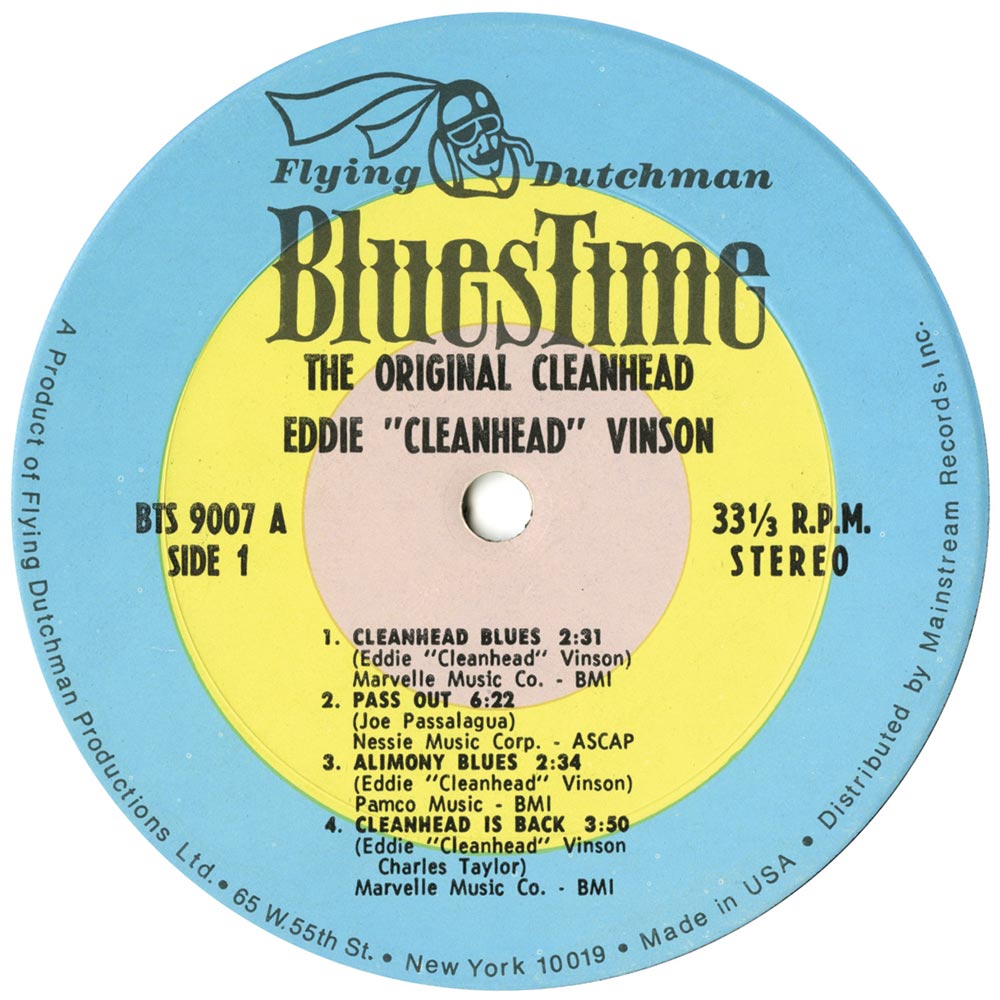
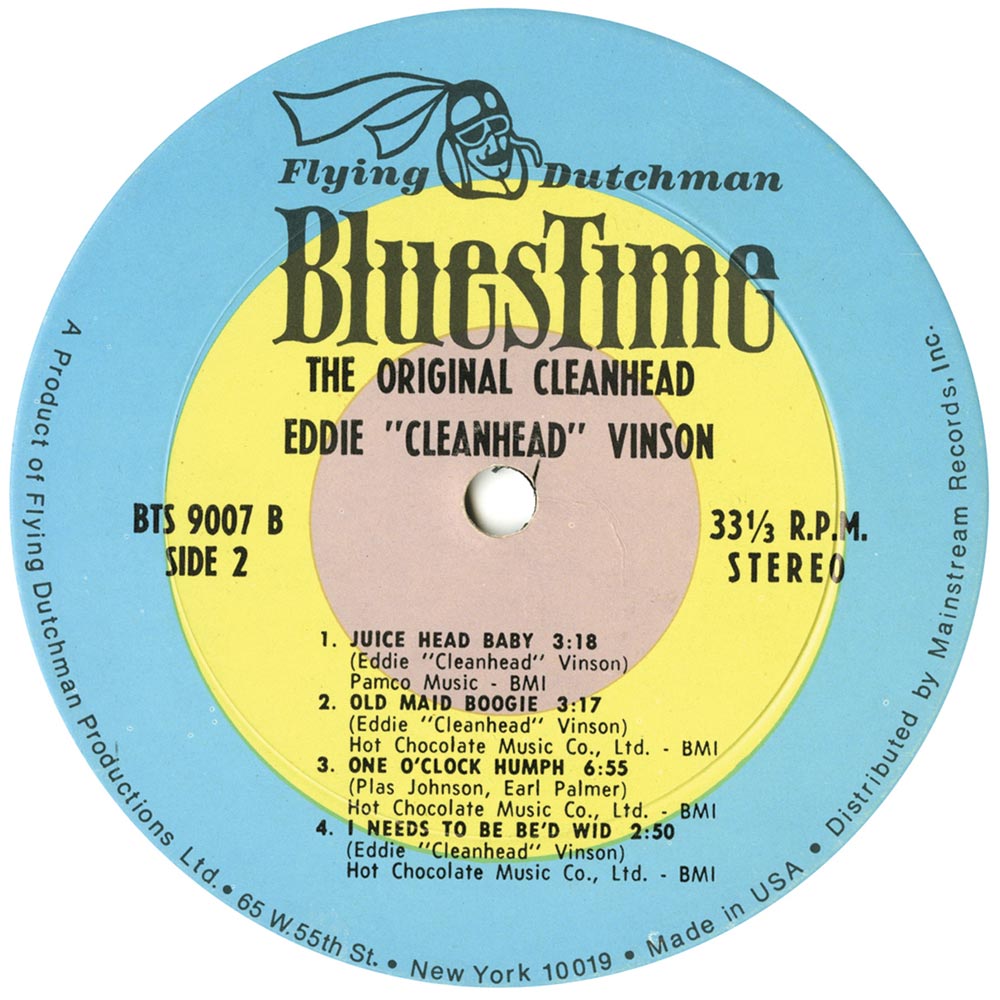
ForThe Original Cleanhead, Eddie returned to his number one single Old Maid Boogie. He’d written the song himself. He also penned I Needs To Be Be’d Wid. Eddie and Louis Zito cowrote Alimony Blues, Juice Head Baby. Jessie Mae Robinson and Eddie wrote Cleanhead Blues and Charles Taylor and Eddie penned Cleanhead Is Back. Other tracks included Joe Pass’ Pass Out and Plas Johnson and Earl Palmer’s One O’Clock Humph. These tracks became Eddie’s comeback album The Original Cleanhead.
When recording of The Original Cleanhead began, Bob Thiele had put together a talented band. The rhythm section included drummer Earl Palmer, bassist Arthur Wright and guitarists Joe Pass and David Cohen. Artie Butler played piano and organ and Plas Johnson played tenor saxophone. Eddie played alto saxophone and took charge of vocals. Once The Original Cleanhead was finished, it was released in 1970.
On the release of The Original Cleanhead, the album was well received. It also had the desired effect and rejuvenated Eddie’s career. Bob Thiele who produced The Original Cleanhead, had helped get Eddie’s career back on track. The next few years would see a change in Eddie’s fortunes. This started with The Original Cleanhead, which I’ll tell you about.
Cleanhead Blues opens The Original Cleanhead. It was originally recorded in 1946. Stabs of braying saxophone and pounding drums set the scene for Eddie’s vocal. It’s unmistakable. Once heard, you never forget Eddie “Cleanhead” Vinson. Here, Eddie veers between weary and sassy. Crystalline guitars, piano and the rhythm section accompany Eddie. The bass helps drive the arrangement along. Guitars are panned left and right. Meanwhile Eddie delivers a vocal powerhouse. He’s in his element. Especially as the track heads to its dramatic ending. Riffing bluesy guitar, blazing horns and pounding piano accompany him as the track reaches a crescendo.
Eddie drops the tempo on Pass Out. It has a jazzy sound. Eddie blows his alto saxophone tenderly. The rest of his band play in a similarity understated way. A jazz-tinged guitar, piano and a bass which drives the arrangement along accompany Eddie. Drums mark time and never overpower the rest of the band. When the solos come round, a chiming guitar solo sets the bar. After that, the baton passes to the tenor saxophone. Next up it’s the jazzy piano. Then it’s Eddie turn. Just like the rest of the band, his playing is understated and results in a beautiful, jazz-tinged track.
Short, sharp bursts of saxophone and the rhythm section open Alimony Blues. They set the scene for Eddie angry, frustrated and powerful vocal. He rages against the judge, while his band combine jazz and blues. Slow, bluesy and moody describes the backdrop. Soon, it begins to swing. That in part, is down to the horn. It’s at the heart of everything that’s good. Eddie is determined to have the last say, “I got the Alimony Blues, on the day she set me free.”
Cleanhead Is Back is the followup to Alimony Blues. A territorial Eddie decides to makes a return. His partner doesn’t sound too happy. Eddie is oblivious. Against a slow, broody, bluesy backdrop, Eddie becomes the seducer in chief. Searing, crystalline, guitars, stabs of riffing bluesy horns and washes of Hammond organ accompany the rhythm section. They provide the heartbeat, as Eddie sings “I’m so sorry baby, I didn’t mean to stay away so long,” during this blues’ soap opera.
A searing, soaring guitar line open Juice Head Baby. It lasts forty-five seconds. The bass matches it every step of the way. Meanwhile, drums mark time, horns rasp and then a Hammond organ enters. All this is setting scene for Eddie gravely vocal. It’s a mixture of power and despair. His despair is caused by his “Juice Head Baby…she drinks whisky like water, and gin like lemonade.” No matter what he does, he can’t help “she’s got the juice head blues.” Behind him. Eddie’s band provide a moody, dramatic backdrop for his despairing vocal.
Old Maid Boogie was the song that gave Eddie his only number one single. The arrangement is driven along by horns and the rhythm section. Before long, Eddie jumps onboard and delivers a sassy, swaggering vocal. Bursts of horns, washes of Hammond organ and crystalline guitar join in the fun. Then when Eddie’s vocal drops out, he’s not afraid to let his band shine. When he makes his return, it’s as if he’s been inspired, and delivers a barnstorming vocal. He then joins the rest of his band in driving the track to a blues crescendo.
As the guitar and bass wander along, bursts of blues horns punctuate the arrangement to One O’Clock Humph. Gradually, the rest of the band make their entrance. The piano, drums and hissing hi-hats join forces with the rest of the band. At the heart of the arrangement is the bass. It sets the tempo and provides the heartbeat. Especially when the solos come around. They reinforce what a tight talented band Eddie has. The guitar, piano and horns play play starring roles during this laid-back fusion of blues and jazz.
Closing The Original Cleanhead is I Needs To Be Be’d Wid. It was written especially for The Original Cleanhead and suits Eddie’s vocal perfectly. His band drop the tempo and provide a slow, moody and bluesy backdrop. The rhythm section and Hammond organ accompany Eddie’s vocal. It’s needy and full of emotion. Sometimes, it’s tinged with sadness and longing. Regardless of which, Eddie breathes life and meaning into the lyrics.
Listening back to The Original Cleanhead, it’s no surprise that the album rejuvenated Eddie “Cleanhead” Vinson’s career. From the opening bars of Cleanhead Blues, right through to the closing notes of I Needs To Be Be’d Wid, the music oozes quality. Eddie was into his fifth decade of a musician and singer. He put all his experience to good use on The Original Cleanhead. So, it’s no surprise that The Original Cleanhead was a commercial success. It rejuvenated Eddie’s career.
Ironically, when other blues musicians were reinventing themselves, Eddie kept on what he’d been doing since the thirties. Eddie wasn’t for changing. Even if he’d wanted to. That wouldn’t be easy. After all, Eddie was known for his mixture of jump blues, swing and bebop. That was what people knew Eddie for. So, with some judicious choice of material, old and new, Bob Thiele set about attempting to rejuvenate Eddie’s career. This worked.
After The Original Cleanhead, Eddie’s career enjoyed something of an Indian Summer. He continued to record until his death in 1988. Eddie’s career had lasted over fifty years. However, one of the finest albums of Eddie “Cleanhead” Vinson’s career was The Original Cleanhead, which was recently released by Ace Records.
The recent release of The Original Cleanhead is a first. Never before has The Original Cleanhead been released on CD. That’s until now. As an added bonus, there are a trio of live tracks. This includes Cleanhead Blues, I Had A Dream and Person To Person. They’re a reminder of how talented and charismatic an artist Eddie “Cleanhead” Vinson was live. Along with the rest of The Original Cleanhead, this is the perfect introduction to the unmistakable sound of the one and only, Eddie “Cleanhead” Vinson.
EDDIE “CLEANHEAD” VINSON-THE ORIGINAL CLEANHEAD.

NANA LOVE-DISCO DOCUMENTARY FULL OF FUNK.
NANA LOVE-DISCO DOCUMENTARY FULL OF FUNK.
Disco. Never has a musical genre caused so much controversy. It divided opinion back in the seventies. Even today, disco continues to divide opinion. That’s why disco has been described as Marmite music. People seem to either love or loathe disco. There seems to be no in between. Controversy even surrounds disco’s birth.
What was the first disco record is disputed. Ask a hundred music critics, and they’ll give you a different answer. Some critics believe disco was born in 1971, with Barry White and Isaac Hayes pioneering the disco sound. Other critics think 1972 was the year disco was born. They point towards singles like The O’Jays’ Love Train, Jerry Butler’s One Night Affair or Manu Dibango’s Soul Makossa. Even 1972 might be too early for disco’s birth?
It could be that disco wasn’t born until 1973, when the Hues Corporation released Rock The Boat. Some critics think George McCrae’s 1974 number one single got the disco ball rolling. However, it’s thought that disco was already celebrating its first birthday by then. The first article in the music press about disco was penned by Vince Aletti for Rolling Stone magazine in September 1973. Little did Vince know, he’d just written the first article about a true musical phenomenon.
Disco was born in America. Music historians have traced disco’s roots to clubs in Philly and New York. These two cities would play an important part in a disco. Philly and New York were where many of the most successful disco records were recorded. They were also home to some of disco’s top labels, Salsoul Records, SAM Records, West End Records and Casablanca. New York was also home to some of the top clubs, including David Mancuso’s Loft and Studio 54. Although born in America, soon disco’s influence was being felt worldwide.
Around the world, dancers danced to the disco beat. Disco crossed the continents. Soon, nightclubs in Britain, Australia, Canada and Germany danced to the disco beat. Before long, disco’s influence had spread to Africa.
Having succumbed to pulsating rhythms of funk, Africa was soon won over by disco. Swathes of lush strings, rasping horns and a pulsating beat were hard to resist. Africa was wonder over by disco. It then gave it a twist. Afro-beat and highlife were combined with disco. The music was funky, soulful and dance-floor friendly. That describes the music on Nana Love’s Disco Documentary–Full Of Funk, which will be released on BBE Music on 11th August 2014.
Nana Love’s Disco Documentary–Full Of Funk is the third instalment of BBE’s Masters We Love series. For the latest stop in BBE Music’s crate-digging adventure, they found themselves at the home of producer Reindorf Oppong. He produced Disco Documentary–Full Of Funk. It’s remembered fondly by crate-diggers, record collectors and connoisseurs of all things disco. Why? Well, Nana Love’s Disco Documentary–Full Of Funk is one of the most mysterious Afro-disco records of the late seventies.
When BBE Music met Reindorf, it transpired that he had the original master tapes to Disco Documentary–Full Of Funk. Even better, they were in good shape. Then BBE Music caught a break. They were getting the tapes restored when five previously unheard tracks were discovered. For everyone involved with the project, they couldn’t believe their luck. After all, the five tracks on the original version of Disco Documentary–Full Of Funk have everything.
The five songs on the original Disco Documentary–Full Of Funk were written by Nana. So were the previously unreleased songs. Then there’s Nana’s voice. She could’ve and should’ve been a disco diva. Especially with some hugely talented musicians accompanying her.
Recording of Disco Documentary–Full Of Funk took place in London in 1978. The rhythm section features drummer Tony Martin, bassist Grek Haywood and guitarists Harry Mosco, Les Forrest and Paul Pryce. They’re joined by Humphrey Okoh-Turner on horns, percussionist Ayindi, pianist Richard Reid and Adrian Bennett on synths. Producing Disco Documentary–Full Of Funk was Reindorf Oppong. Once Disco Documentary–Full Of Funk was recorded, it was released in 1978.
Disco Documentary–Full Of Funk was a private pressing. It was released on the San Diego label, Nestor Records in 1978. Unfortunately, like many private pressings Disco Documentary–Full Of Funk wasn’t a commercial success. However, since then, Disco Documentary–Full Of Funk has become a cult record. It’s a prized possession among crate-diggers, record collectors and connoisseurs of all things disco. You’ll realise why, when I tell you about Disco Documentary–Full Of Funk.
Opening Disco Documentary–Full Of Funk is I’m In Love, a twelve minute epic. From the get-go, the rhythm section get busy. Along with chiming guitars they provide an uber funky heartbeat. Stabs of Afro-beat horns and washes of synths sweep in. They provide the backdrop for the sweet, sultry and sassy sound of Nana Love. She struts her way through the track. Then when her vocal drops out, horns take charge. They’re joined by a tough, funky rhythm section. When Nana’s vocal returns, it’s a mixture of power and passion. Again, banks of synths unite with the rhythm section to create a tough, funky sound. In the background, a piano provides a contrast. After that, Nano returns. Harmonies answer her call as seamlessly, she and her band fuse elements of Afro-beat, disco, funk, jazz and soul.
Synths set the scene for blazing horns and the funky rhythm section on We Gonna Stay For The Party. Then comes the unmistakable sound of Nana Love. She makes the song her own. As her vocal drops out, the band take centre-stage. Their funk masterclass seems to spur Nana on. Her vocal is feisty and powerful. By then, her band are combining Afro-beat, funk, jazz and soul. Horns and the funky rhythm section unite. Banks of keyboards play their part. Later, a flute is added. When it drops out this glorious fusion builds and builds until it reaches a majestic crescendo.
As Talking About Music unfolds, Nana literally struts her way through the lyrics. She seems to draw inspiration from Eartha Kitt, Esther Phillips and Charo. Her vocal is a mixture of sass, power and attitude. This spurs her band on. They explode into life. Bubbling synths, percussion and the rhythm section unite. Nana hollers and roars, as if encouraging her band to greater heights. This works. They lock into the tightest of grooves. A flute and synths play starring roles as Nana’s band produce a funk masterclass.
Braying horns and a pounding bass open Disco Lover. Then Nana announces “it’s disco time.” Her vocal is much more tender. It’s also needy and hopeful. As for her band, they fuse musical genres, including elements of boogie, disco, funk, highlife and jazz. Again there’s a similarity to Charo. Enveloping her vocal is a myriad of percussion, a flute, blazing horns and keyboards. Anchoring the arrangement is the rhythm section. Thunderous drums and a slapped bass. Later, Nana’s vocal veers between joyous and sensual, as she dawns the role of disco diva.
Sahara/Chains Of Love closed the original version of Disco Documentary–Full Of Funk is I’m In Love. There’s a reggae feel to this laid-back, melodic tracks. As the arrangement chugs along, the rhythm section, braying horns and keyboards provide the backdrop for Nana. She unleashes a vocal full of hurt and heartbeat. Harmonies sweep in, as if trying to sooth Nana’s hurt. The finishing touch is a sultry, wistful saxophone solo. It tugs at your heartstrings, before the track heads to a wistful close. That isn’t the end of Disco Documentary–Full Of Funk. There’s still the bonus tracks to come.
Although Sahara/Chains Of Love was the final track on the original version of Disco Documentary–Full Of Funk is I’m In Love, there’s more to come. Five more tracks. Hang On Baby is a real find. Thunderous drums, funky bass and chiming guitars provide the backdrop for Nana’s vamp. She’s like a disco Shaman. Her raison d’être is to fill dance-floors. To do this, Nana and her band combine Afro-beat, disco, funk and soul. She hollers, shrieks and struts her way through this nine minute epic hidden gem.
There’s not drop in the quality as When The Heart Decides bursts into life. As usual, Nana encourages her band along. They burst into life, combining musical genres and influences. Elements of Afro-beat, disco, funk and soul shine through. Nana swaggers its way through the lyrics. All the time, the rhythm section, percussion and crystalline guitars provide a frenzied backdrop. Later, dusty Hammond organ sweeps in. It adds another layer to this irresistible fusion of musical genres.
Reach Out A Hand sees a drop in tempo. Sultry horns float and the rhythm section float along. They provide the backdrop for another heartfelt, soul-baring vocal from Nana. Stabs of Hammond organ drift in. Guitars reverberate, horns growl and flourishes of Hammond combine. Together, they provide the perfect backdrop for Nana’s heartbroken, soulful vocal.
Two different versions of Loving Feeling close Disco Documentary–Full Of Funk. The first version is the dance mix. It’s just under six minutes long and would’ve filled many a dance-floor. Furiously funky, incredibly soulful and dance-floor friendly, it features a musical masterclass from Nana Love and her band. The other version of Loving Feeling is a three minute instrumental version. Even without the vocal, the song works. It allows you to hear just how tight and talented Nana’s band were, as they mix a potent and heady brew of Afro-beat, funk and soul.
Thirty-six years after Nana Love released Disco Documentary–Full Of Funk on San Diego based Nestor Records, the album will be rereleased by BBE Music on 11th September 2014. Nana Love’s Disco Documentary–Full Of Funk is the third instalment of BBE’s Masters We Love series. This is the perfect addition to this series. After all, over the last thirty-six years, Disco Documentary–Full Of Funk has become a cult record. It’s a also a highly collectable record. Copies are changing hands for up to £360. That puts Disco Documentary–Full Of Funk beyond the reach of most people. Not any more.
BBE Music discovered that the producer of Disco Documentary–Full Of Funk, Reindorf Oppong still had the master tapes. So, BBE Music decided to rerelease Disco Documentary–Full Of Funk. It was long overdue a rerelease. Here was an album that had never before been released on CD. With the ever increasing interest in disco, now was the time to rerelease Disco Documentary–Full Of Funk. Before that the master tapes had to be restored.
They were thirty-six years old. It was during this laborious process that the bonus tracks were released. None of the five tracks had been released before. For everyone concerned, this was an unexpected bonus. Especially when you hear the five tracks. This makes the newly released version of Disco Documentary–Full Of Funk a must have for fans of Nana Love. However, it’s not just fans of Nana Love, the newly released version of Disco Documentary–Full Of Funk will appeal to.
Disco Documentary–Full Of Funk isn’t just a disco album. There’s elements of Afro-beat, boogie, funk, highlife, jazz and plenty of soul. So, not only will Disco Documentary–Full Of Funk appeal to anyone who remembers the heady, decadent days of disco, but fans of Afro-beat, boogie, funk, highlife, jazz and soul. Quite simply, Disco Documentary–Full Of Funk is a delicious fusion of musical genres and influences.
There no doubt about that. One listen and you’ll realise why crate-diggers, record collectors and connoisseurs of disco are always on the look out for a copy of Disco Documentary–Full Of Funk. Quite simply, it’s a glorious fusion of Afro-beat, funk, highlife, jazz and soul. It’s a heady, hypnotic and potent brew, one that should be tasted often. So, drink deeply from the cup that’s Nana Love’s Disco Documentary–Full Of Funk and you won’t regret it. Nana Love’s Disco Documentary–Full Of Funk is an intoxicating and heady brew, and one that should be tasted often.
NANA LOVE-DISCO DOCUMENTARY FULL OF FUNK.

L.C. COOKE-THE COMPLETE SAR RECORDINGS.
L.C. COOKE-THE COMPLETE SAR RECORDINGS.
Although Sam Cooke made his name as a singer and songwriter, he was also a successful producer. So much so, that Sam formed his own record label SAR Recordings. This made sense. He needed a vehicle for the various artists he was producing. They included some big names. Among them were The Soul Stirrers, Bobby Womack, Johnny Taylor and The Simms Twins. Another artist Sam produced was his younger brother L.C. Cooke.
L.C. Cooke was also a singer. Despite his undoubted talent, L.C. Cooke lived in his brother’s shadow. This wasn’t anyone’s fault. Sam Cooke was a huge star. He wasn’t just one of the biggest names in soul, but music per se. So, for L.C. Cooke, it was going to be almost impossible to step out his brother’s shadow.
The sad thing is, that like any sibling with a famous brother or sister, L.C. Cooke was always perceived as Sam’s younger brother. People overlooked that L.C. Cooke was a talented singer and songwriter. That’s apparent on L.C. Cooke-The Complete SAR Recordings which was recently released by Ace Records.
L.C. Cooke-The Complete SAR Recordings features eighteen tracks recorded between October 1960 and January 1964. These tracks are a reminder that the Cooke family were a talented family.
L.C. Cooke and Sam Cooke were two of the eight children Annie Mae and the Rev. Charles Cook, a baptist minister. They were born and brought up in Clarksdale, Mississippi. Growing up, L.C. Cooke and the rest of his brothers and sisters were part of the family singing group, The Singing Children. This launched the career of L.C. and Sam.
The Singing Children was just the start of L.C’s career. He then became a member of doo woo group, Johnny Keyes and the Magnificents. After that, L.C. decided to embark upon a solo career.
Having signed to Leonard Chess’ Checker Records, L.C. Cooke released Do You Remember in 1958? It was penned by L.C, but failed to chart. So did the two singles L.C. released during 1959.
I’m Falling was released in May 1959. Written by L.C. it’s an irresistible slice of perfect pop. Five months later, L.C. released If I Could Only Hear October 1959. If I Could Only Hear shows what L.C. Cooke is capable of. He breathes life, meaning and emotion into the lyrics. L.C. does this on If I Could Only Hear. His vocal is tinged with hurt and regret, as he makes the song swing. Sometimes, L.C. sounds like his brother Sam. Despite the quality of If I Could Only Hear, commercial success continued to elude L.C. Cooke.
L.C. left Checker Records after If I Could Only Hear failed to chart. It features on L.C. Cooke-The Complete SAR Recordings. So does You Remember and I’m Falling. After leaving Checker Records, L.C. wasn’t long without a label.
Next stop for L.C. Cooke was Wand. He released just one single on Wand, Half A Man. Still L.C. couldn’t catch a break. That was until he signed to his brother Sam’s new label, SAR Records.
While some people may have accused Sam Cooke of nepotism, they didn’t realise how talented L.C. Cooke was. That was apparent when entered the studio on 2nd September 1960. He returned to the studio on 22nd September 1960. The fruits of these sessions were Magic Words and Teach Me.
Magic Words was L.C. Cooke’s SAR Records’ debut and features on L.C. Cooke-The Complete SAR Recordings. It was written by his brother Sam and J.W. Alexander. It’s an uptempo fusion of soul and pop, where the hooks haven’t been spared. On the flip side, the Sam Cooke and J.W. Alexander penned ballad features a needy, heartfelt vocal. Of the two tracks, maybe Teach Me would’ve made a better single, given it oozes soulfulness ?Despite the quality of Magic Words and Teach Me, success continued to elude L.C.
March 1961 saw L.C. release his second single on SAR Records. This was The Lover, a Sam Cooke penned song. On the flip side was Sufferin’ which L.C. wrote. Recording of the two tracks took place on 2nd September 1960 and 17th January 1961. On its release in March 1961, the single disappeared without trace. That was a great shame. It’s one of the finest moments of L.C’s career. Rasping horns and sweeping strings set the scene for L.C. Strings then sweep L.C’s sassy vocal along. He swaggers his way through the songs. When you turn over and listen to Sufferin, L.C. sounds just like his brother Sam. As for the arrangement, it sometimes reminds me of Chain Gang. Just like The Lover, Sufferin’ showcases L.C’s talent and soulfulness. Surely, success couldn’t be far away?
L.C. and Sam returned to the studio on April 1st 1962. Sam wrote and produced You’re Working Out Your Bag. It would become the B-Side to Tell Me, which L.C. wrote Both tracks were recorded at the familiar surroundings of United Recordings, Hollywood. That’s where all L.C’s songs were recorded. Tell Me is a catchy, soulful track. On the B-Side, You’re Working Out Your Bag L.C. delivers a powerhouse of a vocal. This time, he reminds of Bobby Womack. His voice has a tougher, rougher sound. It’s as if he’s determined to find his own style. Sadly, still commercial success eluded L.C.
As commercial success continued to elude L.C, his brother Sam continued to enjoy widespread critical acclaim and commercial success. He was one of the biggest names in music. Maybe some of that success would rub off?
L.C’s next single was The Wobble, another Sam Cooke track. It’s a song written for the dance-floor. Back then, songwriters and artists were looking for the new Twist. The Wobble was Sam’s shot at the title. L.C. recorded The Wobble on 15th February 1963. On the B-Side was Chalk Line. This wasn’t a new song. It had been recorded on 1st March 1962. Written by Sam and Joseph Wallace, Chalk Line sees L.C. combine pop and soul. Despite the popularity of novelty dance tracks, The Wobble didn’t become a musical phenomena.
Put Me Down Easy was the last single L.C. Cooke released while his brother was alive. Fittingly, Sam wrote Put Me Down Easy. It’s a beautiful ballad where L.C’s vocal is needy and full sadness. He delivered the lyrics like he’d lived them. Incredibly, the song had been cut ten months earlier, on 15th February and 6th March 1963. That was the case with the B-Side, Take Me For What I Am. It was recorded at United Recording, Hollywood on 15th and 19th February 1963. It’s an uptempo fusion of soul and pop where L.C, that shows another side to L.C’s music. Sadly, despite the talent he displays, on Put Me Down Easy success passed L.C by. That’s not the end of L.C. Cooke-The Complete SAR Recordings.
The rest of the tracks on L.C. Cooke-The Complete SAR Recordings have never been released before. This includes a previously unreleased version of the Sam Cooke penned The Lover. It features a sassy vamp from L.C. That’s the perfect way to describe Missy Sally. Without doubt, this is one of L.C. Cooke’s finest hours. He struts his way through the track, making it his own. There’s also two versions of Sam Cooke’s Gonna Have A Good Time. They were recorded on the 7th and 21st May 1964. The first version comes to abrupt end, as L.C. fluffs his lines, amidst chatter and laughter. He doesn’t make the same mistake twice. His vocal is slow, sultry and soulful and takes centre-stage, where it belongs. However, it’s not the only hidden gem on L.C. Cooke-The Complete SAR Recordings.
Another hidden gem is alternate version of Put Me Down Easy. It was recorded on 15th February 1963. Sam wrote and produced the track. Another version was chosen as a single in January 1964. So, this version of Put Me Down Easy didn’t see the light of day until the release of Sam Cooke’s SAR Records Story in 1994. Belatedly, this soulful hidden gem found a wider audience. Eleven months after sam released Put Me Down Easy as a single, L.C’s life changed forever.
Sam Cooke died on December 11th 1964, at the Hacienda Motel at 9137 South Figueroa St. in Los Angeles. Details are sketchy. When the L.A.P.D. arrived at the Hacienda Motel, they are responding to reports of a shooting and kidnapping.
What they found was Sam Cooke, lying dead, wearing just a sports jacket and shoes. He’d been shot through the chest. The bullet had pierced Sam’s heart and he died instantly. When questioned, the Motel manager claimed she shot Sam Cooke in self-defence, after he broke into her office residence and attacked her. However, since then, mystery surrounds Sam Cooke’s death. L.C. Cooke was devastated.
He’d lost his older brother. This was the man he looked up to. Sam was L.C’s mentor and producer. He also wrote many of the songs L.C. recorded. For L.C. Cooke the death of his brother affected him personally and professionally.
L.C. Cooke had been about to start work on his debut album for SAR Recordings. It was to be a ten track album. That never happened. The final single L.C. recorded on SAR Recordings was a slow, lush and dramatic version of Do You Wanna Dance (Yea Man). That was L.C’s SAR Recordings’ swan-song.
After L.C. Cooke left SAR Recordings, his career as a singer and songwriter continued. Eventually, L.C. Cooke became knowns as a talented and successful songwriter. However, he could just as easily have enjoyed commercial success and critical acclaim as a singer. The problem was L.C. Cooke was forever in the shadow of his brother Sam.
As a result, L.C. Cooke the singer, never received the recognition he deserved. It’s only now that do people fully appreciate just how talented L.C. Cooke was. Having a famous brother didn’t really help him. If anything, it hindered him. People always saw him as Sam’s little brother, not L.C. Cooke singer and songwriter. What didn’t help was that sometimes, L.C. and Sam sound the same. Both sounded alike and had one thing in common…they were talented singers and songwriters. That’s apparent when you listen to L.C. Cooke-The Complete SAR Recordings which was recently released by Ace Records.
L.C. Cooke-The Complete SAR Recordings is a reminder of one of the most underrated singers in the history of soul music. He was able to sing soul, pop and blues. Seamlessly, L.C. switches between the three genres on L.C. Cooke-The Complete SAR Recording,s and shows that he’s much more than Sam’s little brother.
L.C. COOKE-THE COMPLETE SAR RECORDINGS.
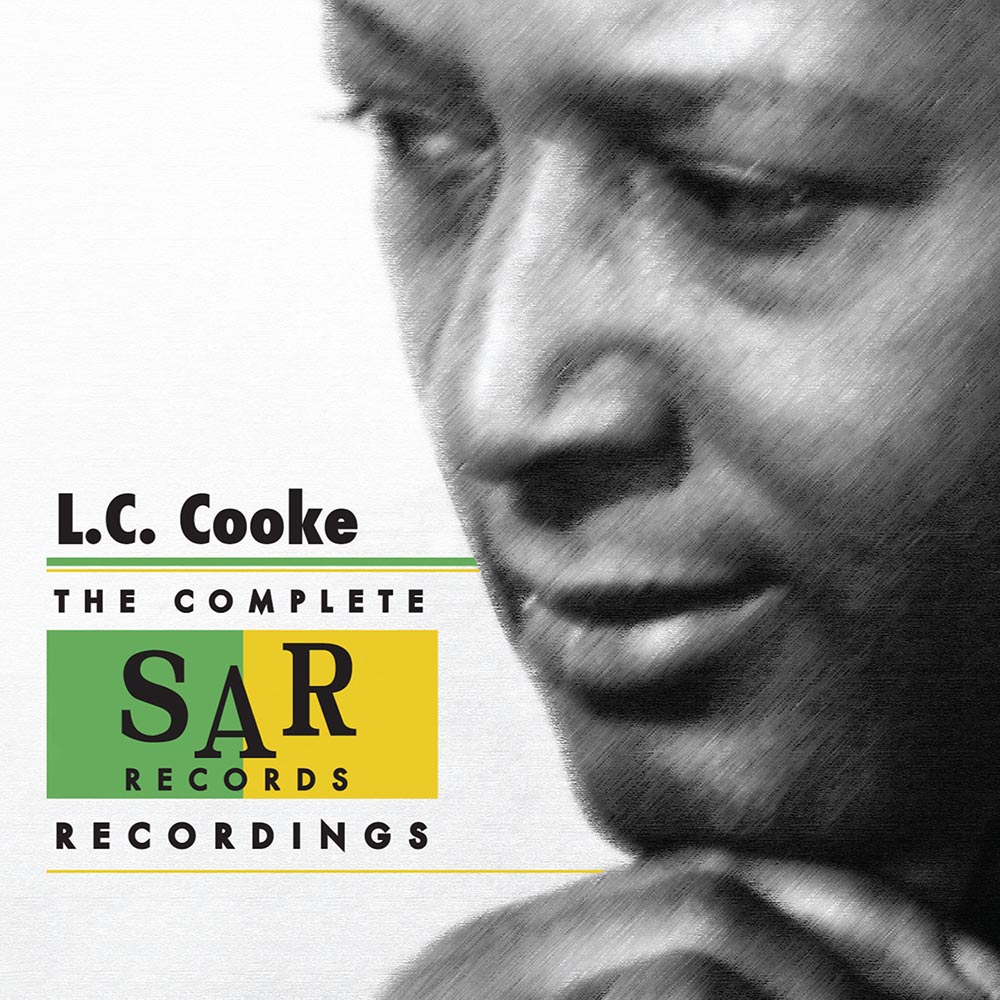
LEWIS-SMOKE, MIRRORS, HYPE AND HYPERBOLE?
LEWIS-SMOKE, MIRRORS, HYPE AND HYPERBOLE?
One of the biggest stories in music in 2014, was the mystery surrounding the man they called Lewis. It’s become an internet phenomena. Usually, I don’t bother with sensationalist stories like this. Especially, this story. It just didn’t seem right.
Far from it. There were way too many unanswered questions. I mentioned the story in my review and moved on. To be honest, the story didn’t interest me. What interests me is music, not smoke, mirrors, hype and hyperbole. So, having reviewed L’Amour I forgot about the story.
Then I received an email from Donna, who had dated Lewis in the seventies. Back then, he was Randall Aldon Wulff. She emailed me to tell me that Randall wasn’t related to Doris Duke, the heiress. That was part of the Lewis mythology.
Previously, Randall claimed he was the nephew of heiress of Doris Duke. She was heir to the Duke Power fortune and a legendary philanthropist. Growing up, Ralph’s nephew claimed, Randall lived with his Aunt Doris in Hawaii. I knew that the Doris Duke connection was a long-shot. Other people were suspicious. Donna confirmed they were right to be suspicious. That wasn’t the end of the story Donna had to tell.
When I emailed her to thank her for her information, I happened to ask her if she’d any memories of her time with Randall Aldon Wulff? To my surprise, Donna sent me a lengthy email. In it she told me of her time with Randall Aldon Wulff.
“I met Randall Aldon Wulff in the summer of 1975 or 1976 on the Oregon coast. He was on a motorcycle trip and I was on a beach camping trip with my sister. He was a Canadian, the son of Gladys and Earl Wulff of Calgary, Alberta. In the winter of 1976, Randy and I lived with Gladys and Earl in their home while we did painting jobs around Calgary trying to get enough money to get to Hawaii. His mother, Gladys Wulff was a clerk in the Hudson Bay Dept store in Calgary, and his father, Earl, was a building contractor, who had recently been disabled by a stroke. I believe Randy was about 23, at the time and I was about 30 yrs old. We went to Maui, Hawaii for about a month, ran out of money, and my father paid for our transport back to Calgary. We soon left Calgary and moved to Victoria, BC Canada, where we lived on St Ann Street i,n a rented house in Oak Bay. Then after 6 months to a year, we moved to a rental house on Hollywood Crescent in the Fairfield neighbourhood of Victoria.
We were constantly broke. Randy was collecting unemployment and I was unable to work legally because I was an American without a Canadian SI number. What kept us together was our mutual quest for sex, drugs and rock and roll… Randy was an attractive, sweet, artistic soul but uninterested in persuing an income through the construction trades and unable to make any money softly singing his original songs and playing his guitar. He was a good person but he was not well educated or very bright. Unable to tolerate our precarious financial situation any longer, I split up with him in 1977 or 1978 and he left Victoria. I saw him again around 1980 when he returned to Victoria and called me. We met for dinner. He was with his older brother, Larry Wulff, who had been living “up island” on Vancouver Island and they were travelling in a limousine and seemed to have lots of money. When I questioned him about the source of his new found wealth, he gave me vague answers about “silver futures”…the stock market, etc. I did not believe him and think there was an illegal source of new wealth…. Later in the 80s he sent me a vinyl copy of his LP L’Amour which I have since lost and I never saw him again.”
Between that dinner and 1983, Randall Aldon Wulff became Lewis. It was a remarkable transformation.
When he swept in to town, Randall was sporting perfectly coiffured blonde hair and movie star looks. The man who called himself Lewis, lived the playboy lifestyle. Randall drove a white convertible Mercedes and booked into the Beverley Hilton. Randall dated a string of beautiful women. Models and movie stars accompanied Lewis to the smartest parties in Los Angeles. He lived the playboy lifestyle. Wine, women and song were constant companions for Randall. However, before long, the party was over.
Randall had arrived in Los Angeles with L’Amour already recorded. Not that anyone knew where L’Amour had been recorded. The sessions took place in the Fiasco Brothers Recording Studios in Vancouver. Randall had recorded there before. After that, Randall headed to Los Angeles. That’s where he readied himself for release Lewis’ debut album, L’Amour. Rather than using his own name, Randall used the alias Lewis. This added to the air of mystery. So did the album cover.
For the album cover, Randall called one of the most famous photographers in music, Ed Colver. He’d made his name photographing punk bands. That was the past. By 1983, Ed was expanding his musical portfolio. So when Randall called, Ed agreed to meet him in the Beverley Hilton.
When the two met, Ed wasn’t suspicious of Randall. Why should he be? After all, Randall was living in the Beverley Hilton, driving a Mercedes convertible and had a beautiful, model girlfriend. He’d also just recorded his debut album and was looking for someone to shoot some photographs for the cover of L’Amour. That would be Ed. Randall agreed to pay Ed $250 for the photo shoot and wrote a cheque for $250.
Ed shot thirty different versions of the photo that agreed on the cover of L’Amour. It was a head and shoulders photo of Randall. That photo epitomises eighties fashion and attitudes. Looking like the atypical eighties playboy, Randall looks mysteriously into the distance. However, just like everything else about Randall, this was all a facade.
When Ed went to cash the cheque for $250 it bounced. The supposed wealthy playboy wasn’t what he seemed. It was a case of style over substance. After all, surely $250 was only loose change to an international playboy. Surely Lewis the international playboy would give a busboy that sort of money for parking his Mercedes? Lewis it seemed was financially embarrassed. The myth was unravelling. For Ed Colver this was a disaster. $250 was a lot to him.
The cheque had been drawn on an account in Malibu. This was no help to Ed. So he headed to where Ed had met Randall, the Beverley Hilton. Staff at the Beverley Hilton told Ed that Randall had left. Randall, they told him, had headed to Las Vegas and then Hawaii. They didn’t have a forwarding address. For Ed this was a disaster. $250 was lot of money. So much, it took him four months to repay his bank. As security, Ed held on to the negatives to the photos for L’Amour, which was released in 1983. Two years alter, Lewis released his sophomore album Romantic Times.
In 1985 Romantic Times was released by a Lewis Baloue. This was the latest alias adopted Randall Aldon Wulff had adopted. Lewis adopted a much lower profile. Still he sported movie star looks and enjoyed his love of the finer things in life. Romantic Times features Lewis standing nonchalantly beside a sport’s car and private jet. This was the lifestyle Lewis always wanted. However, still success eluded Lewis. After that, most people forgot about Lewis.
Donna occasionally wondered what became of Randall? That’s only natural. They spent three years together. However, nearly thirty years later, other people began looking for Lewis.
Over the past four decades, L’Amour became something of a cult album. It was only a matter of time before a reissue label released it. This happened earlier this year when Light In The Attic Records released L’Amour. The sleeve-notes told what they believed was Lewis story and claimed to have solved it.
When Jack Jack D. Fleischer was writing the sleeve-notes to L’Amour, he he got a phone call from a friend and another long time fan of L’Amour Markus Armstrong. He was on way to solving the mystery of Lewis’ identity.
Markus Armstrong discovered several copies of L’Amour for sale in Alberta, Canada.This was unusual, as copies of L’Amour are a rarity. So, Markus decided to start looking for Lewis’ identity in Alberta. Then Markus remembered that L’Amour was a private pressing. Usually, private pressings were recorded locally. In the case of L’Amour, it was recorded at Fiasco Brothers Recording Studios in Vancouver. So possibly, Lewis or Randall Wulff, as he called himself back in 1983, was a Canadian?
He was right. As Donna told me, Randall was a Canadian. So, Markus started looking for anyone with a similar name. He checked everywhere he could think of. This included phonebooks. It was a long-shot. Then he thought his luck had changed.
Before long, Markus was contacted by Randall Wulff’s nephew, Jeremy. He said he was able to throw some light on who Randall Wuiff was. He was the nephew of heiress of Doris Duke. She was heir to the Duke Power fortune and a legendary philanthropist. Growing up, Ralph lived with his Aunt Doris in Hawaii. However, the nom de plume Lewis, was a reference to his grandmother. At last, thirty-one years after the mystery began, Lewis had been unmasked? They were wrong. Very wrong.
Randall as we know, wasn’t related to Doris Duke. However, mixed up in he information were two clues that would help solve the story. That would take time.
After the release of L’Amour, it seemed music lovers across the world were trying to find Lewis. I had a dilemma. Donna had given me all this information, what would I do with it? Should I write an article or just forget about the whole story? There was, something strange about the whole story. It didn’t seem right. I begin to wonder if the whole story was hype to sell a record? This wouldn’t be the first time this had happened. However, Donna had one more piece of information.
Donna said “I came across the 2010 obituary of his mother, Gladys, who had remarried someone named Camden after Earl died… the Calgary newspaper obituary… listed “his surviving brothers, Gary and Larry and his sister, Maureen and significantly, Randall is not mentioned… which leads me to believe he is dead.” This was potentially, a game-changer.
When I thought about the situation I’d mixed feelings. Just because Randall wasn’t mentioned in the obituary didn’t mean he was dead. There could’ve been a family fall out? Maybe Randall was in hiding and his family were ensuring he stayed hidden? I wasn’t sure. It was a leap of faith using just an obituary to say a man had died? I wasn’t happy. Eventually, I printed what Donna’s thought had happened. Then the floodgates opened.
Everyone had their story to tell. Many people who knew the man who called himself Lewis got in touch. They each had their story to tell.
Rumours surrounding Lewis’ newly found wealth started doing the rounds. They found their way to me. I heard stories of money made silver futures and the stock market? My sources had their doubts. Nothing can be proved though. That’s the case with so much about Lewis.
Later, rumour has it that Lewis became allegedly addicted to Quaaludes. That’s probably just another myth. So much surrounding Lewis is smoke and mirrors. The same can be said of his religious phase.
After that, Lewis allegedly found religion. It’s even been suggested to me that he recorded an album of religious music. Lewis’ supposed involvement with religion adds to the mystery surrounding Lewis. He would certainly have made a charismatic preacher. Charisma I’m told, is something Lewis certainly didn’t lack. All the rumours didn’t ring true. It was like something from a bad B-movie.
If Lewis had done all these things, he’d have had to live several lives. He’d also have had to have the constitution of an ox. It’s no wonder some people thought the whole story was a hoax. The more stories that came to light, the more suspicious people were. Their suspicions were further raised earlier this year.
Copies of what was thought to be Lewis’ sophomore album Romantic Times had turned out. Just like everything to do with the Lewis story, nothing is straightforward.
Two versions of the story have been told to me. The first is that a Canadian record collector found a copy of Romantic Times, an album released by Lewis Baloue in 1985 and sold it to Light In The Attic Records. That sounds the most likeliest outcome. After all, dedicated crate diggers who look long and hard enough, will always have the opportunity to discover that elusive rare albums. After all, surely it’s not as easy as finding a copy of Romantic Times on Ebay?
That’s the second version of the story behind Romantic Times. Allegedly, a copy of Romantic Times was offered for sale on eBay. To say a bidding frenzy followed is to put it mildly. The price reached $1,725. This is similar to what happened when copies of L’Amour were discovered. Nothing was straightforward in the Lewis story.
Everyone wanted their say on Lewis. The story was all across the internet. As far as I was concerned, the whole story was becoming tedious. I was beginning to tire of the story. After all, the smoke, mirrors, hype and hyperbole were becoming more important than the music. So, I decided to close the book on Lewis. I’d said all I wanted to say on Lewis. Then there was a breakthrough.
Yesterday afternoon, I received an email from a friend. Lewis’ whereabouts had been discovered. I’d been here before. My friend was convincing. He told me where Lewis was living and under what name. I now had a dilemma. Obviously, Lewis didn’t want to be found? Should I respect his privacy or should I print him name and location? So I decided to sleep on it. After all, it was hardly the biggest scoop in the history of journalism.
Then today when I logged on the internet, I discovered that Lewis’ whereabouts had been discovered. At last the mystery was solved. For Light In The Attic Records, they’d solved the mystery. After two and a half years they’d found Lewis. There was a but.
Lewis has asked that his location is kept secret. Light In The Attic Records have agreed to that. That’s very noble. I would’ve done so as well. After all, everyone deserves their privacy. That’s until someone who I believe is close to the story, decided to threaten me. They weren’t the brightest, as they used their own name and email address. After that, all bets were off.
Lewis I believe, resides in Hawaii, where he lives under the alias Randy Duke. That’s the name on the recordings at Fiasco Studios, where L’Amour and Romantic Times were recorded. Len from Fiasco Studios knew the truth, but kept Lewis’ secret. He kept that secret for thirty years. That’s what I call a friend. What I can’t quite understand, is why Len didn’t tell Lewis everyone was trying to find him.
Eventually, Lewis was found alive and well. Donna will be pleased. Especially given Lewis looks so well and happy. Seemingly, he spends his time with his girlfriend and cats. The music on L’Amour and Romantic Times is his past, a past he’s no longer interested in. As L.P. Hartley said, “the past is a foreign country.” I don’t blame him.
I hope Lewis is happy and enjoys a long and healthy life. We’ll never know why he disappeared and changed his name? He’s not for telling. There must be a reason. We’ll never know. Lewis wants to stay hidden. He’s said all that he wants to say. That brings to an end one of music’s mysteries. Now that the mystery is over, everyone will await the release of Lewis’ sophomore album Romantic Times. Now people can concentrate on Lewis’ music.
Maybe now that the mystery surrounding Lewis’ whereabouts has been solved, people will remember him for his music. His debut album L’Amour is a variously beautiful, ethereal, haunting, minimalist, poignant and powerful album. Lewis sings about heartbreak, hope and hurt. He delivers lyrics like he’s lived, loved and survived them. His vocal ranges from emotive, hopeful, needy and seductive. Other times his vocal is rueful, as he sings about love lost and the woman who broke or stole his heart. L’Amour and Romantic Times are reminder of a truly talented singer, songwriter and musician who could’ve and should’ve been huge star.
LEWIS-SMOKE, MIRRORS, HYPE AND HYPERBOLE?
LED ZEPPELIN-LED ZEPPELIN III.
LED ZEPPELIN-LED ZEPPELIN III.
By 1970, Led Zeppelin had been crowned rock royalty. They were up there with the biggest names in rock music. No wonder. Their first two albums had sold over twenty-three million copies. The new four years would be a game-changer for Led Zeppelin.
Over the next five years, Led Zeppelin would become the biggest band in the world. Led Zeppelin’s influence would increase. They would become one of the most influential groups of the seventies. This lead to a change in Led Zeppelin. Their dress style became flamboyant and they travelled everywhere by their own private jet, The Starship. Then there was the rock ’n’ roll lifestyle. Led Zeppelin revelled in the rock ’n’ roll lifestyle.
Led Zeppelin lived the rock ’n’ roll dream. Drink, drugs and debauchery was commonplace. So was destruction. The four members of Led Zeppelin weren’t averse to wrecking hotel rooms. Having trashed a room in the Tokyo Hilton, Led Zeppelin were banned from the chain for life. Hotel rooms weren’t just trashed. Television sets out of hotel windows. Another time, John Bonham rode a motorcycle the Continental Hyatt House, which Led Zeppelin nicknamed Riot House. However, when it came time to recording an album, Led Zeppelin put their game head on.
So when the time came to record Led Zeppelin III, which was recently rereleased by Atlantic Records as a double album, Jimmy Page and Robert Plant headed to rural Wales. Their destination was a remote cottage in Bron-Yr-Aur. This was where Robert Plant’s family used to holiday in the fifties. It became the place where Jimmy Page and Robert Plant came to write and unwind after tours. They did this for Led Zeppelin III.
For Led Zeppelin III, Jimmy Page and Robert Plant wrote Immigrant Song, Friends and That’s The Way. Jimmy Page and Robert Plant cowrote Celebration Day, Since I’ve Been Loving You and Bron-Y-Aur Stomp with John Paul Jones. John Bonham cowrote Out On The Tiles with Jimmy Page and Robert Plant. Other tracks included the Jimmy Page penned Tangerine, a cover of Gallows Pole and Hats Off to (Roy) Harper arranged by Jimmy Page and Robert Plant. These ten tracks became Led Zeppelin III.
Recording of Led Zeppelin III took place at various studios in the UK and USA. This included Olympic Studios and Basing Street Studios in London. Other recording session took place at Headley Grange Manor in Hampshire. It was a rather dilapidated mansion. It benefited from a laid-back atmosphere. This was perfect for recording Led Zeppelin III.
Rather than record the album in one go, sessions took place between January and August 1970. In between, Led Zeppelin toured their eponymous debut. They were, after all, on their way to becoming one of the biggest rock bands of the first half of the seventies. The constant touring helped further hone Led Zeppelin’s sound when they entered the studio.
For the recording of Led Zeppelin III, Jimmy Page played acoustic, electric and pedal steel guitar, plus banjo and dulcimer. The rhythm section included John Paul Jones who played bass, double bass, organ, Moog synth and mandolin. John Bonham played drums and percussion. Robert Plant delivered his usual series of vocal powerhouses and played harmonica on the album that became Led Zeppelin II. It was released in October 1970.
Exactly a year had passed when Led Zeppelin III was released in October 1970. Led Zeppelin III marked a change in Led Zeppelin’s music. There was a move towards folk rock and acoustic music. This surprised critics. They gave Led Zeppelin III indifferent views. For Led Zeppelin, this was nothing new. They’d never been the critic’s choice. Instead, Led Zeppelin were hard living musical outlaws. However, Led Zeppelin III showed a different side to their music. There was a reason for this.
Every member of Led Zeppelin played their part in the writing of Led Zeppelin III. It seemed Led Zeppelin was becoming a democracy. No longer were Jimmy Page and Robert Plant the main songwriters. John Bonham and John Paul Jones played their part in Led Zeppelin III. It was a much more eclectic album than their first two hard rocking albums. This resulted in Led Zeppelin’s music appealing to a much wider range of record buyers.
Despite this, Led Zeppelin III didn’t enjoy the same commercial success as Led Zeppelin’s first two albums. Led Zeppelin III reached number one in the UK and spent three weeks at the top of the charts. Over the Atlantic, Led Zeppelin III reached number one in the US Billboard 200, where it spent four weeks. It even reached number thirty in the US R&B charts. Across the world, Led Zeppelin III was a huge commercial success.
In the UK, Led Zeppelin III was certified platinum and in America, Led Zeppelin III was certified platinum six times over. Led Zeppelin III was certified triple platinum in Australia and Canada and platinum in Argentina and France. Gold discs came Led Zeppelin III’s way in Germany, Netherlands, Spain and Switzerland. Despite all the gold and platinum discs, Led Zeppelin III didn’t sell as many copies as Led Zeppelin’s two previous albums. Although that was disappointing. That wasn’t the end of the commercial success.
Despite Led Zeppelin’s strict no singles policy, Immigrant Song was released as a single. It peaked at number sixteen in the US Billboard 100 charts. Immigrant Song is also the song that opened Led Zeppelin III.
Opening Led Zeppelin III is Immigrant Song. Once the band are counted in, hiss envelops the arrangement. Searing guitars and rhythm section drive come out the other side. They’re responsible for pounding, driving arrangement arrangement along. Robert’s vocal is a mixture of drama and theatre as he paints pictures of vikings heading of in search of new lands. Sometimes, his vocal is becomes a distinctive wail. Immigrant Song features one of Led Zeppelin’s most famous lyrics “the hammer of the gods/will drive our ships to new lands.” There’s more to the song’s success than Robert’s vocal. The rest of Led Zeppelin add a driving, dramatic backdrop that’s not unlike the “Hammer of the Gods.”
Against a backdrop of studio chatter, Friends unfolds. An acoustic guitar is joined by percussion as the arrangement unfolds. When Robert’s vocal enters, he sings about friendship and its importance. His vocal is restrained and enveloped by strings and harmonies. It’s totally unlike what we’ve come to expect from Led Zeppelin, but shows they’re no one trick pony.
The introduction to Celebration Day is a combination of a bluesy and experimental sound. Jimmy plays his guitar at breakneck speed and a Moog synth adds a futuristic sound. Then it’s all change. Led Zeppelin unleash their unique brand of good time rock ’n’ roll. They swagger their way through the track, riffing, blistering guitars join forces with the rhythm section. The guitars are at the heart of the track. They’re tuned to a standard and then open tuning. This is a masterstroke. Adding the finishing touch is Robert’s urgent, strutting vocal.
A crystalline guitar opens Since I’ve Been Loving You. It adds a bluesy hue. Then the rhythm section join. They lock into a groove, allowing Jimmy’s guitar to play a leading role. Later, a Hammond organ enters. Not long after that Led Zeppelin begin to stretch their legs. It looks as if they’re about to kick loose. That’s not the case. Robert’s weary vocal enters. He’s been working “seven till eleven.” His vocal is tinged with emotion. She’s been messing with his mind and he’s scared she’ll leave him. Almost spent, his vocal drops out, allowing a guitar masterclass from Jimmy to take charge. When Robert’s vocal returns, it’s a mixture of raw power, emotion and sadness as Led Zeppelin continue to seamlessly mix blues, rock and drama effortlessly.
Out On The Tiles could’ve been Led Zeppelin’s theme tune. In Britain, a night on the tiles is slang for a night on the town. This is fitting. Led Zeppelin were about to embark upon their wild years. During these years, this driving, rocky, everyman anthem could just as well be Led Zeppelin’s theme tune.
Gallows Pole is an oft-covered traditional folk song. One of the earliest versions was by blues legend Leadbelly. Given that Led Zeppelin were huge blues fans, that’s maybe where they first heard the song. It’s a song of two parts. The first part is acoustic. Just an acoustic guitar accompanies Robert’s powerhouse of a vocal. After that, the arrangement builds and builds. Instruments are dropped in and the arrangement builds. Thundering drums, mandolin and Robert’s grizzled vocal. He struts and swaggers his way through the lyrics defiantly, breathing new life into the track.
After a false start, Tangerine gets underway. Just a strummed twelve-stringed acoustic guitar hesitantly introduces Robert’s vocal tender, hurt-filled vocal. Soon, guitars reverberate and the rhythm section provide the backdrop to what’s best described as a fusion of folk rock and country. Latterly, the country sound shines through. There’s a nod to Neil Young. Especially given the addition of the pedal steel and harmonica. This shows another side to Led Zeppelin, as they become a musical chameleon.
That’s The Way is another acoustic guitar lead track. It’s joined by a mandolin and pedal steel. They provide a mellow backdrop to Robert’s vocal. His vocal is a mixture of hurt and dread. He’s been hurt by his cheating partner and is dreading telling her their relationship is over. There’s even a psychedelic twist to the track. Especially with lyrics like “yesterday I saw you kissing tiny flowers, but all that lives is born to die” after that Robert becomes nihilistic when he sings: “and so I say to you nothing matters, and all you do is stand and cry.” These are some of the best lyrics on Led Zeppelin III, on a track that’s laid-back, mellow and beautiful.
Bron-Y-Aur Stomp sees another change of tack from Led Zeppelin. Just a noodling acoustic guitar and spoons combine with castanets. It’s Led Zeppelin as you’ve never heard them. Then comes the big bass drums and Robert’s vocal. His vocal is veers between restrained to raw power. handclaps, drums, acoustic guitar and percussion accompany him. John Paul Jones plays a five string fretless bass. Despite using the unlikeliest instruments, producer Jimmy Page moulds them together seamlessly.
Closing Led Zeppelin III is Hats Off To (Roy) Harper. The track is a medley of fragments of blues songs and lyrics. It’s a case of spot the blues track. One of the most recognisable is Bukka White’s Shake ‘Em, Down. Delivering the lyrics is a modern day bluesman, Robert Plant. Along with Jimmy Page’s guitar, Robert plays an important part in Led Zeppelin’s homage to blues music and a modern day folk singer.
That however, isn’t the end of Atlantic Records recently rereleased version of Led Zeppelin III. It’s a luxuriously compiled double album. On disc two, which entitled Companion Audio, there’s alternate mixes of Immigrant Song and Celebration Day. There’s rough mixes of Since I’ve Been Loving You, Gallows Pole, That’s The Way and Jennings Farm Blues, which evolved out of Bron-Y-Aur Stomp. Other tracks include a version of Friends with no vocal and a rough mix of Key To The Highway/Trouble In Mind. Each of these tracks are a snapshot of Led Zeppelin III at an important part of their career. Led Zeppelin III marked a change in sound from Led Zeppelin.
After releasing two albums that sold twenty-three million copies, Led Zeppelin decided to move away from their tried and tested fusion of blues, folk, psychedelia and rock. This was brave. After all, Led Zeppelin had found a winning formula. Why change. The reason for that, was Led Zeppelin were musical innovators. They wanted to challenge themselves. So they changed direction.
A year after the release of their sophomore album Led Zeppelin II, Led Zeppelin III was released in October 1970. Led Zeppelin III marked a change in Led Zeppelin’s music. There was a move towards folk rock and acoustic music. There was even a country twist to Led Zeppelin III. Led Zeppelin hadn’t turned their back on blues, rock and psychedelia. As a result, Led Zeppelin III was the most eclectic album of their three album career. This surprised critics.
Critics gave Led Zeppelin III indifferent views. For Led Zeppelin, this was nothing new. They’d never been the critic’s choice. It seemed Led Zeppelin couldn’t win as far as the critics were concerned. They disliked their first two albums. The critics believed that neither Led Zeppelin nor Led Zeppelin II offered nothing new. Now Led Zeppelin tried to move forward musically, they still felt the wrath of the critics. Robert Plant took this badly. He never spoke to the press for eighteen months. Even when Led Zeppelin released Led Zeppelin IV, he refused to talk to the critics. However, just like their first two albums, belatedly, critics revised their opinion of Led Zeppelin III.
Just like many other times, collective amnesia struck music critics. Many of the critics that panned Led Zeppelin III, wrote fawning articles praising the album. What they wrote was what many music fans already knew. Led Zeppelin III was a classic album. Since its release in 1970, music critics have been frantically backtracking. Now, when they mention Led Zeppelin III, critics make sure to call it a classic album. Belatedly, they were right.
Originally, music fans didn’t seem to appreciate the quality of Led Zeppelin III. It didn’t sell as many copies as their first two albums. Music lovers didn’t seem to enjoy Led Zeppelin III as much as their first two albums. Having said that, it still sold by the millions. Gold and platinum discs aplenty came Led Zeppelin’s way. After Led Zeppelin III, Led Zeppelin became the world’s biggest and most successful rock band.
By 1970, Led Zeppelin were seen as rock royalty. They were up there with the biggest names in rock music. No wonder. Their first two albums had sold over twenty-three million copies. The new four years would be a game-changer for Led Zeppelin. After Led Zeppelin III, Led Zeppelin had sold nearly thirty million copies. Their lives were transformed.
Over the next five years, Led Zeppelin would become the biggest band in the world. Led Zeppelin’s influence would increase. They would become one of the most influential groups of the seventies. This lead to a change in Led Zeppelin. Their dress style became flamboyant and they travelled everywhere by their own private jet, The Starship. They indulged in the rock ’n’ roll lifestyle. Most importantly, Led Zeppelin released some of the best music of the seventies, includes Led Zeppelin III.
LED ZEPPELIN-LED ZEPPELIN III.
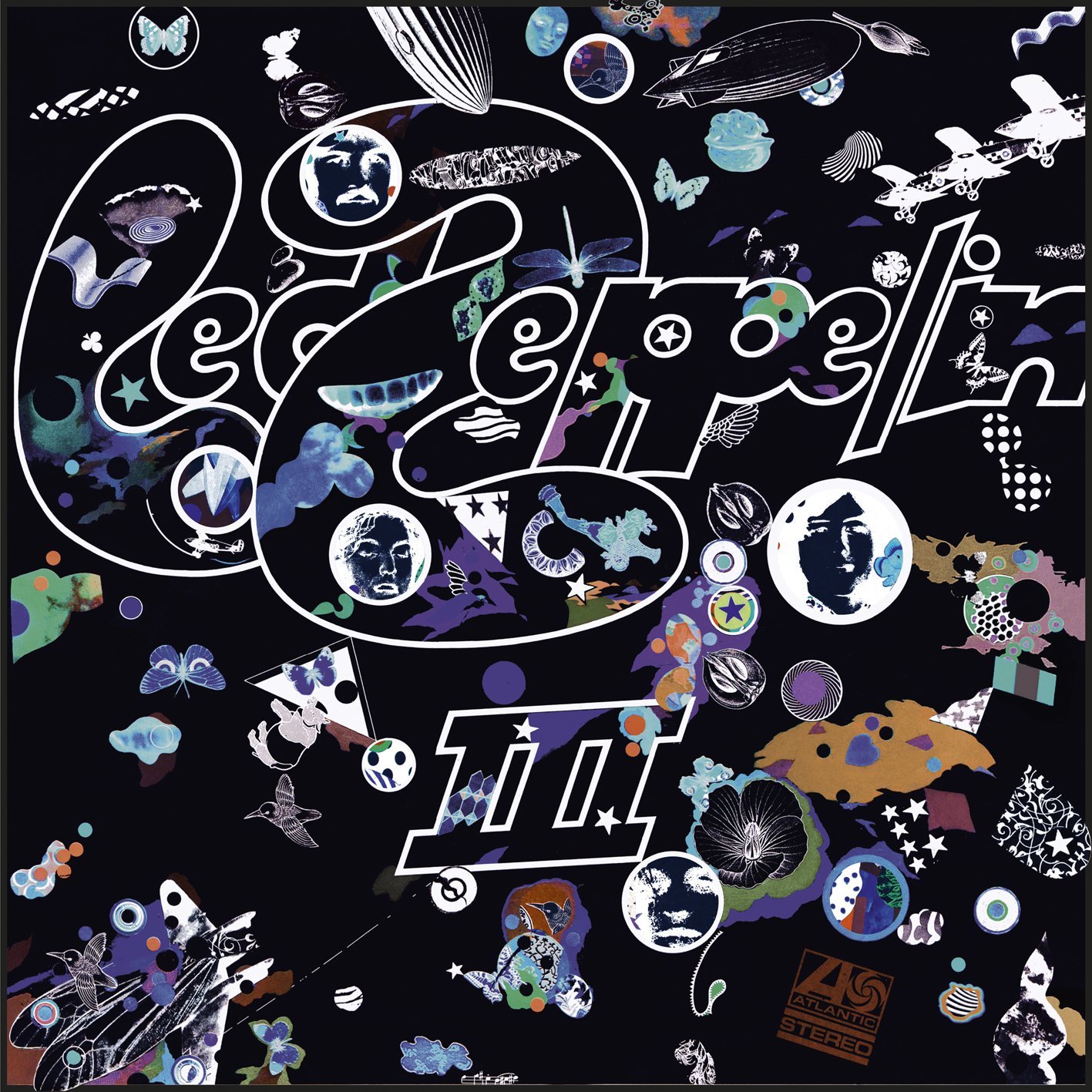
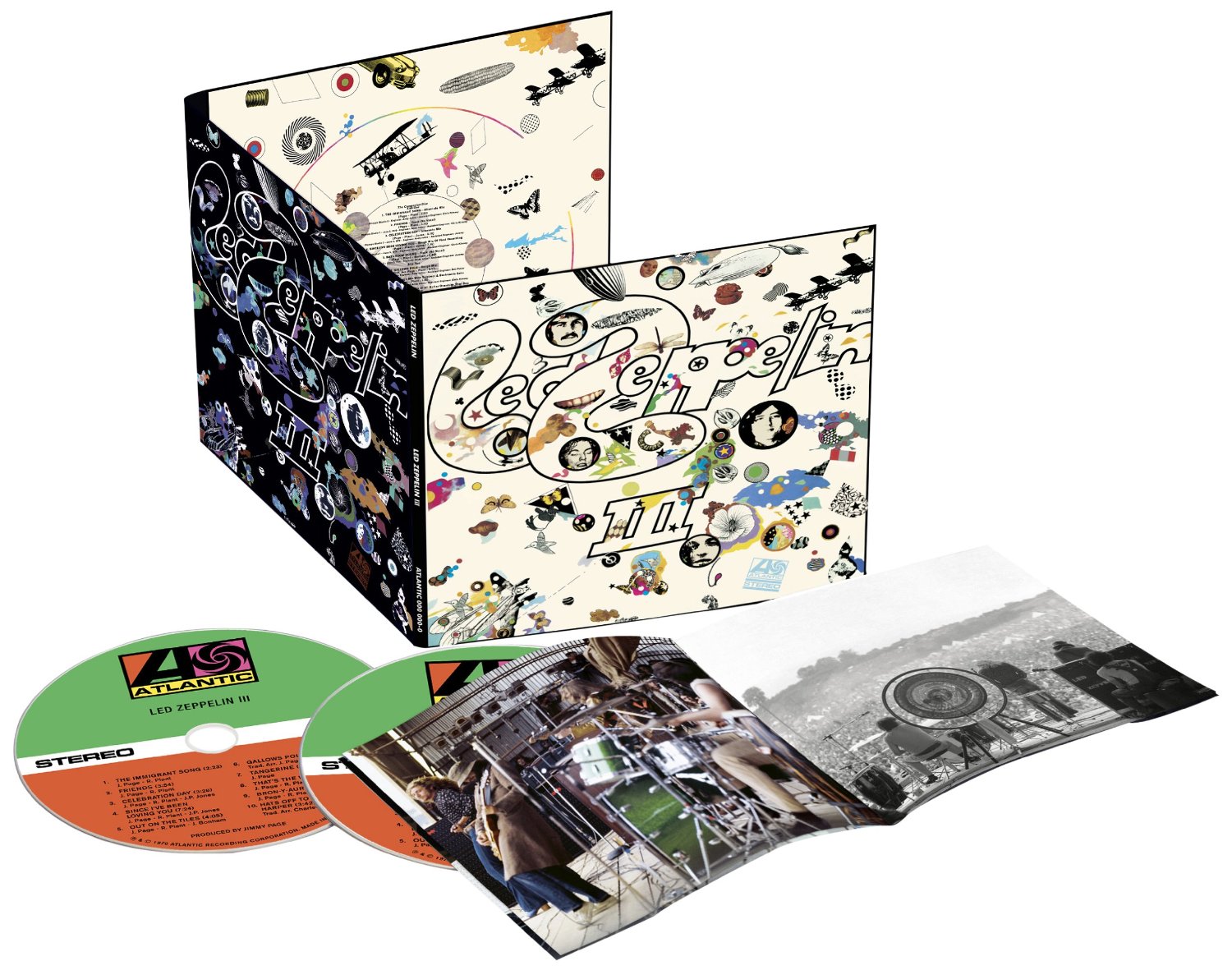
THE MASQUERADERS-EVERYBODY WANNA LIVE ON.
THE MASQUERADERS-EVERYBODY WANNA LIVE ON.
Although The Masqueraders’ roots can be traced back to 1958, they never released their debut album until 1975. That was the Isaac Hayes’ produced Everybody Wanna Live On, which was recently rereleased by Ace Records. Everybody Wanna Live On was the result of a long journey for the five Masqueraders.
Their story begins back in Dallas in 1958. That’s when high school students Robert “Tex” Wrightsil and Charlie Moore decided to form their own band, The Stairs. Before long, there were a few changes in the lineup. Harold Thomas, David Sanders and Lee Jones would join The Stairs. Then in 1962, The Stairs became The Masqueraders. There was a reason for this.
The Stairs had established a reputation for being able to impersonate other groups. So, they decided that The Masqueraders was a much more fitting name. That was the name that featured on their debut single in 1963.
For their debut single, The Masqueraders decided to cover Gene Chandler’s Man’s Temptation. It was released in 1963, on Scotty McKay’s MK label, but flopped. The Masqueraders’ debut single proved an inauspicious start to their career. Little did they realise their career would last six decades.
A further two years passed before The Masqueraders released another single. Their sophomore single was Talk About A Woman. It was released on the Soultown label. Not only did Talk About A Woman fail to chart, but there was a spelling mistake on the label. The Masqueraders were billed as The Masqaders. Despite Talk About A Woman’s commercial failure, it would be adopted by Northern Soul DJs.
Talk About A Woman become a popular and valuable single. At one point, copies of Talk About A Woman were changing hands for over £1,000. That was until one of the group found a box of Talk About A Woman. After that, the prices dropped considerably. By then, The Masqueraders’ career had moved on.
Following the release of Talk About A Woman, a DJ who was friendly with The Masqueraders advised them to move to Detroit. He believed The Masqueraders would’ve more chance of attracting the interest of record companies. Especially Stax and Motown, who were two of the biggest should labels. However, their success lead to many small labels being founded. It was to one of these labels The Masqueraders signed.
Lou Beatty had founded Le Beat Records. He heard The Masqueraders and decided they were perfect for his nascent label. The Masqueraders released six singles on Le Beat Records, including 1966s A Family Part 1 and How and One More Chance in 1967. None of The Masqueraders singles troubled the charts. Their only success was within the Detroit area, where The Masqueraders had established a reputation as one of the city’s top live bands. Despite their success as a live band, the failure of their singles resulted in three members of the The Masqueraders decided to head home to Dallas.
Tex Wrightsil, Charlie Moore and Dave Sanders had enough of Detroit. They wanted to return to Dallas. So they headed home. Lee Jones and Harold Thomas stayed in Detroit. By the end of 1967, Lee and Harold decided to head home.
On their return home, The Masqueraders could say their time in Detroit hadn’t been wasted. They’d released six singles and written a number of new songs. They’d also honed their live act. Now, The Masqueraders were a much better live act. During their time in Detroit, The Masqueraders had met a future Masquerader, Sam Hutchins. That was still to come.
Before that, The Masqueraders considered which label might suit their music best. The label they decided upon was Stax. Looking back, that was obvious. The Masqueraders weren’t a Motown group. Stax would’ve been the perfect home for The Masqueraders. Their music was suited to Stax in its sixties’ glory days. Sadly, Stax weren’t needing another male soul group. So, The Masqueraders and their manager Alvin Howard looked elsewhere.
This time, The Masqueraders caught a break. Producer Chips Moman had just opened his legendary American Studios. He was planning on setting up his own label. It would be a one-stop shop. He’d record and release music. The Masqueraders would be one of the first groups to release a single on AGP Records. There was a problem. AGP Records wasn’t up and running.
Chip took The Masqueraders into the studio and cut a number of tracks. Having cut some masters, Chip headed to Scepter Records. He let them hear I Don’t Want Nobody To Lead Me On and Sweet Lovin’ Woman. They liked what they heard and decided to sign The Masqueraders on a short term deal. The Masqueraders released two singles on Wand, including I Don’t Want Nobody To Lead Me On in 1967 and 1968s Sweet Lovin’ Woman. Sadly, neither single even came close to troubling the charts. Things were about to change.
During their sessions at American Studios, The Masqueraders recorded a number of tracks. The majority were released on AGP Records, which was a collaboration between Chip and Bell Records. This seemed a marriage made in musical heaven. Surely, The Masqueraders fortunes would change?
Before The Masqueraders released a single on AGP Records, they released This Heart Is Haunted and On The Other Side. For some reason, it was released as Lee Jones and The Sounds Of Soul. Even the change of name didn’t improve The Masqueraders’ fortunes. Things, however, were about to improve.
Bell Records decided that rather than release I Ain’t Got To Love Nobody Else on AGP Records, it would be release on Bell with an AGP logo. This proved a masterstroke. The single reached number seven in the US R&B Charts and number fifty-seven in the US Billboard 100. At last, The Masqueraders had made a commercial breakthrough. Things got even better when later in 1968, I’m Just An Average Guy reached the top thirty in the US R&B charts. That was as good as it got for The Masqueraders at AGP Records. None of their other singles charted and the label folded. For The Masqueraders this was a huge blow. So, they returned to Dallas.
The Masqueraders were the only person who suffered when AGP Records folded. So did Sam Hutchins, another artist on the AGP Records’ roster. He’d been backed by The Masqueraders on his AGP Records’ releases. Sam’s career had stalled. Not for long. He became a member of The Masqueraders.
Lee Jones left The Masqueraders in 1970, after he became a muslim. He didn’t think he could be a musician and a muslim. So he left The Masqueraders and was replaced by Sam Hutchins. However, in 1974, Lee returned to The Masqueraders’ fold. His timing was impeccable. This was the start of the most successful period in The Masqueraders’ career.
This meant that Lee wasn’t around when The Masqueraders released two singles on their own label Stairway. The Masqueraders produced 1971s Let Me Show The World and 1972s The Truth Is Free. Neither single was a commercial success. Despite that, The Masqueraders signed to Hi Records, which was one of the most successful Southern Soul labels.
Now signed to Hi Records, The Masqueraders released two singles. This includes Wake Up Fool, which was released on Hi Records in 1974. It’s one of the finest moments of The Masqueraders’ career. Maybe that’s what brought The Masqueraders to Isaac Hayes attention?
In 1974, Stax’s finances were in a perilous state. It’s no surprise that towards the end of 1975, Stax was declared bankrupt. One of soul’s legendary labels was no more. One of Stax’s biggest success stories was Isaac Hayes. He left Stax in 1974 and joined ABC Records. As an incentive, Isaac was given his own label, Hot Buttered Soul imprint.
Isaac Hayes’ Hot Buttered Soul imprint only lasted two years and released four albums. This included two albums from Isaac Hayes and one from Dionne Warwick. The other album Hot Buttered Soul released was The Masqueraders Everybody Wanna Live On.
For Everybody Wanna Live On, the five members of The Masqueraders, Samuel Hutchins, Lee Jones, David Sanders, Harold Thomas and Robert Wrightsil wrote six tracks. They’re Please Don’t Try (To Take Me To The Sky), (Call Me) The Traveling Man, Listen, Sweet Sweetning, (My Love For You Is) Honest And True and Your Sweet Love Is A Blessing. The Masqueraders also cowrote Everybody Wanna Live On with Eula Joan Rivers. Burt Bacharach and Hal David’s Baby It’s True was the other track on Everybody Wanna Live On, which was recorded in Los Angeles and Memphis
Rather than record at Everybody Wanna Live On at one studio, the recording was split between ABC Recording Studios Los Angeles and Hot Buttered Soul Recording Studio in Memphis. Isaac Hayes had put tougher some of the best session players of the day. The Movement provided the rhythm section. This includes bassist Errol Thomas, guitarists Charles “Skip” Pitts and William “Boots” Vaughn and Willie Hall and Willie Cole on drums and tambourines. Sammy Watts played acoustic guitar, Jimmy “Congalou” Thompson congas and Isaac Hayes and Duke Hall played keyboards. Strings came courtesy of the Memphis Symphony Orchestra. Along with The Movement, the Memphis Symphony Orchestra supplied the horns. Lester Snell orchestrated six of the eight tracks. Duke Hall orchestrated (Call Me) The Traveling Man and Listen. Isaac Hayes arranged and produced Everybody Wanna Live On. Once Everybody Wanna Live On was completed, it was released in 1975.
On the release of Everybody Wanna Live On in 1975, it spent three weeks in the US R&B charts, peaking at number fifty-seven. Baby It’s You was the lead single, but stalled at number seventy-six in the US R&B charts. (Call Me) The Travelling Man was released in 1975 and reached number thirty-two in the US R&B charts. Your Sweet Love Is A Blessing was released as a single in 1976, but failed to chart. However, seventeen years after they were founded, The Masqueraders were enjoying the commercial success and critical acclaim their music deserved. You’ll realises why, when I tell you about The Masqueraders’ debut album Everybody Wanna Live.
Everybody Wanna Live On opens with the title-track. Against a stomping, 4/4 beat The Movement combine funk, soul and disco. They unleash funky guitars and pounding drums. This proves the perfect backdrop for a grizzled, joyous lead vocal from Sam Hutchins. Meanwhile, lush strings dance, horns growl and the the rhythm section get funky. The rest of The Masqueraders add soaring harmonies. A pounding piano and stabs of French horn are added as The Masqueraders strut their way through this delicious, dance-floor friendly anthem.
Please Don’t Try sees the tempo drop and braying horns join the rhythm section and piano in providing the backdrop for The Masqueraders. Sam’s lead vocal is an impassioned outpouring of emotion. He literally begs as he sings: “Please don’t take me away to the sky.” Accompanying the lead vocal are dramatic, heartfelt harmonies. All the time, horns bray and blaze as The Movement provide the heartbeat to this soul-baring ballad.
(Call Me) The Travelling Man has a much more understated arrangement. Just a lone Fender Rhodes sets the scene for a tender, wistful vocal. It’s rueful and accompanied by a ride and acoustic guitar. That’s until equally tender harmonies sweep in. Before long, horns rasp gently, strings quiver and the Fender Rhodes meanders across the arrangement. They combine with The Masqueraders to create a beautiful, heartbreaking ballad that’s truly timeless.
Not for the first time, there’s a Philly Soul influence on Everybody Wanna Live On. It’s apparent from Listen, which The Masqueraders penned. There’s a nod to Vince Montana Jr, Thom Bell, Norman Harris and Gamble and Huff here. That’s the case from the get-go. Literally, the track bursts into life. Blazing horns and dancing strings sweep you away, as they unite with the rhythm section. This provides the perfect backdrop for The Masqueraders, who deliver one of their best vocals. It’s an inspired performance. Almost effortlessly, The Masqueraders drive each other to greater heights as they combine soul and social comment.
Baby It’s You is a cover of a Bacharach and David song. It was originally made famous by The Shirelles. Here, The Masqueraders drop the tempo and against an understated, laid-back backdrop deliver a sultry slice of soul. The vocal is tender, emotive and devoted. All the time, lush strings sweep, horns rasp and guitars chime. All the time, drums marks the time. Gradually, the arrangement unfolds and the vocal grows in power. It becomes a cathartic outpouring of emotion and hope.
Before long, the strings are dancing and The Movement power the arrangement to Sweet Sweetning along. Atop the arrangement sits the lead vocal. It’s accompanied harmonies and later, bursts of growling horns. Later, the vocal becomes a vamp as The Masqueraders trade uber soulful licks.
(My Love For You Is) Honest And True is quite different to much of Everybody Wanna Live On. A subtle, but funky guitar, pounding piano and bass drive the arrangement along. The vocal is akin to confessional. It’s accompanied by sweeping harmonies and later, rasping horns and sweeping strings. There’s even flourishes of Fender Rhodes as the arrangement reveals its secrets. At one point, jazz-tinged horns take the track in an unexpected direction. Mostly, the focus of your attention is on The Masqueraders, who put seventeen years experience to good use.
Your Sweet Love Is A Blessing closes Everybody Wanna Live On. It’s another ballad, which The Masqueraders excel at. Just the bass, Fender Rhodes and acoustic piano accompany a heartfelt, impassioned vocal. That’s until harmonies sweep in. They’re the perfect accompaniment to the vocal. It’s a case of yin and yang. Together, they play starring roles on this beautiful, romantic ballad. This proves the perfect way to close Everybody Wanna Live On.
After seventeen years of struggling, The Masqueraders finally got the chance to fulfil their undoubted potential. They had the occasional tantalising glimpse of commercial success. Sadly, if proved fleeting. Before long, The Masqueraders were back struggling. What it needed was a producer who understood them.
Chips Moman at AGP Records came close. So did Willie Mitchell at Hi Records. The man who finally brought out The Masqueraders’ potential was Isaac Hayes. He signed The Masqueraders to his newly formed Hot Buttered Soul Records. The Masqueraders went away and penned seven tracks. They also chose to cover of Bacharach and David’s Baby It’s You. When recording of Everybody Wanna Live On began, Isaac Hayes brought onboard Lester Snell, who orchestrated six of the eight tracks. Duke Hall orchestrated (Call Me) The Traveling Man and Listen. They played a huge part in the sound and succes of Everybody Wanna Live On, which was recently released on CD by Ace Records for the first time.
It was as if Isaac Hayes template for Everybody Wanna Live On was Philly Soul. He introduced swathes of the lushest strings and rasping horns. To this he added The Movement, one of the top rhythm sessions. They featured throughout Everybody Wanna Live On, which is a mixture of beautiful, romantic ballads and joyous dance tracks. It was as if The Masqueraders knew that this was their shot at the title.
Just like an ageing prize fighter, The Masqueraders knew that if Everybody Wanna Live On failed, then their career could be over. That was a sobering thought. So, they wrote some of the best songs of their career. Then when they entered the studio, they raised their game. The Masqueraders produced some of the best performances of their seventeen year career. They clutched victory from the jaws of defeat. Everybody Wanna Live On charted and so did two of the three singles.
After Everybody Wanna Live On, The Masqueraders’ career continued. The Masqueraders released two further albums, 1978s Love Anonymous and 1980s The Masqueraders. Of these three albums, Everybody Wanna Live On, is the finest album of The Masqueraders long career and features them at their soulful best.
THE MASQUERADERS-EVERYBODY WANNA LIVE ON.
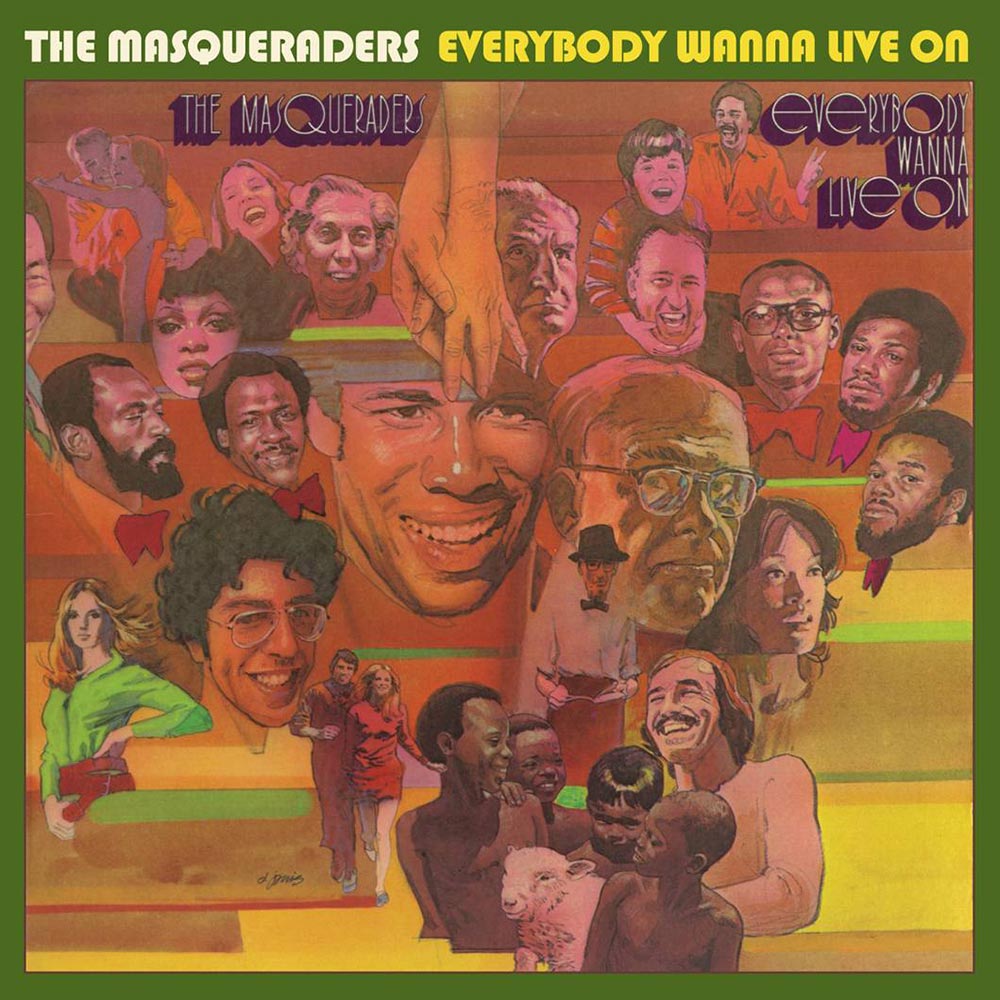
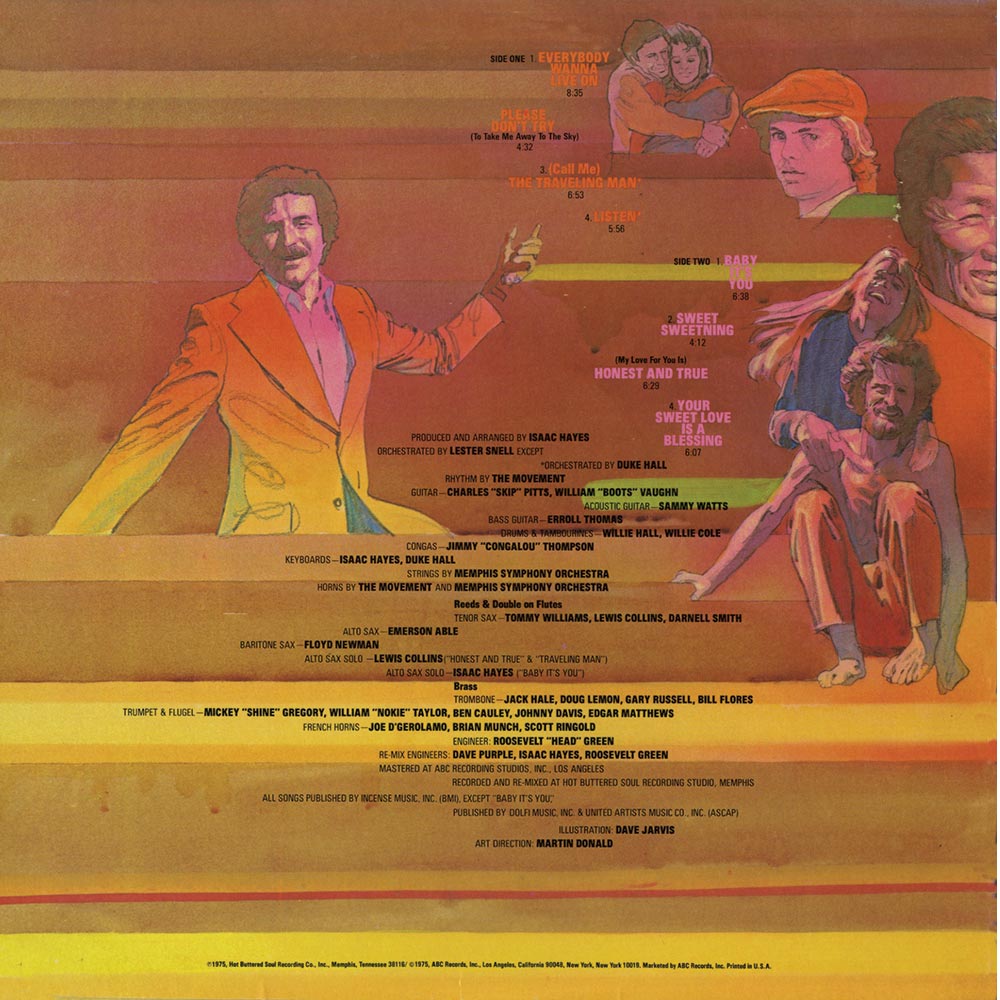
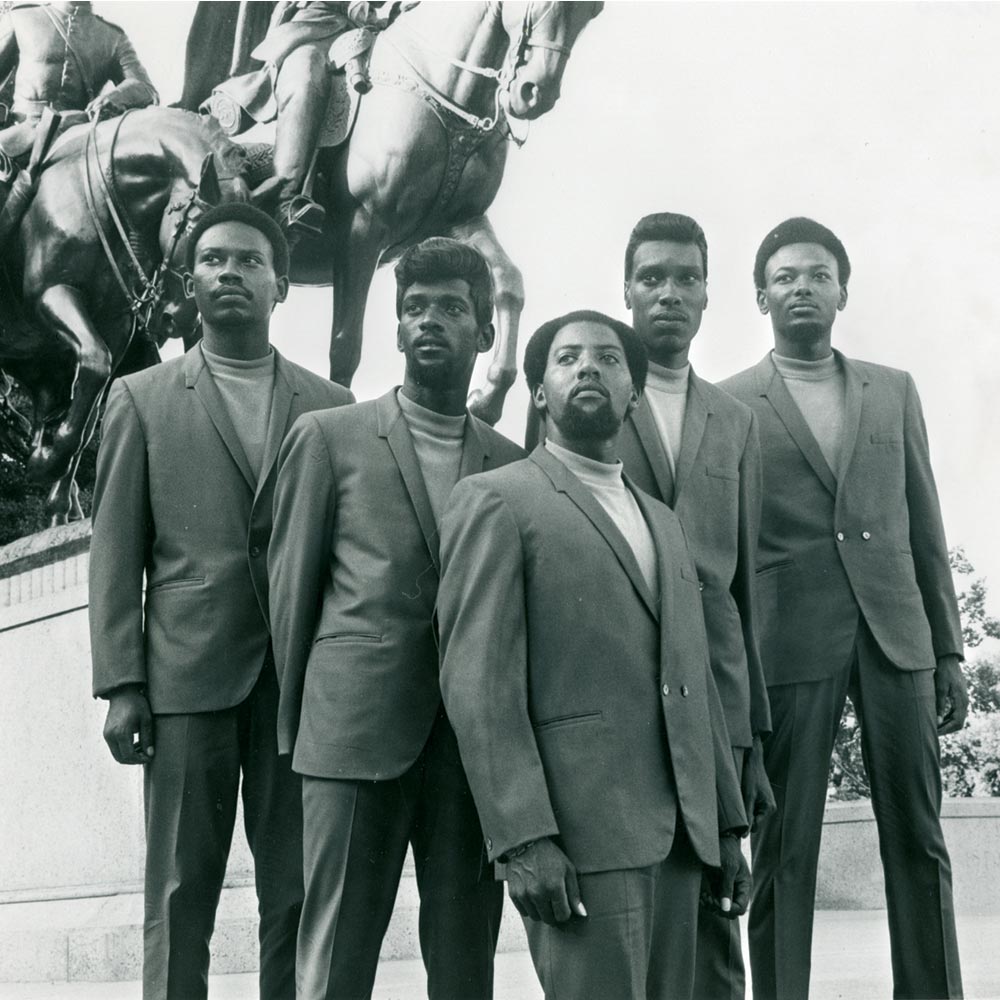
BLUESIN’ BY THE BAYOU-ROUGH ’N’ TOUGH.
BLUESIN’ BY THE BAYOU-ROUGH ’N’ TOUGH.
Usually, when a compilation reaches its eighth instalment, the quality starts to suffer. Not the Bayou series. Just like a good wine, it appears to mature with age. That’s apparent from listening to the eighth instalment, Bluesin’ By The Bayou-Rough ’N’ Tough, which was recently released by Ace Records.
Bluesin’ By The Bayou-Rough ’N’ Tough sees Ian Saddler dig deeper into the J.D. Miller and Eddie Shuler’s back-catalogues. Previously, they’ve provided Ian with a veritable musical feast. The good news is, there’s plenty more to come. This includes the music on Bluesin’ By The Bayou-Rough ’N’ Tough.
Bluesin’ By The Bayou-Rough ’N’ Tough features a total of twenty-eight tracks. This includes seventeen previously unissued or alternate tracks. There’s contributions from blues legends like Slim Harpo, Lightnin’ Slim and Lazy Lester. That’s not forgetting contributions from Vince Monroe, Morris “Big” Chenier, Wonder Boy Travis and Mad Dog Sheffield. That’s not all. There’s another eleven tracks on Bluesin’ By The Bayou-Rough ’N’ Tough.
The other eleven tracks were released between 1953 and 1990. Many of them will be familiar to anyone with a passing interest in the blues. Blues legends like Lazy Lester, sit side-by-side with Joe Mayfield, Boozoo Chavis, Hop Wilson and Lonesome Sundown. As you can see, Bluesin’ By The Bayou-Rough ’N’ Tough is crammed full of what’s described as “downhome Louisiana blues with a touch of zydeco.”Choosing the highlights isn’t going to be easy. As usual, Ian Saddler has ensured that Bluesin’ By The Bayou-Rough ’N’ Tough is crammed full of quality music.
What better way to open Bluesin’ By The Bayou-Rough ’N’ Tough, that with an unreleased track from two blues legends, Lightnin’ Slim and Lazy Lester. Trip To Chicago was recorded at J.D. Miller’s studio. The track was written by Dan Hicks and Lazy Lester, under his real name Leslie Johnson. For whatever reason, Trip To Chicago was never released and remained a hidden blues gem. No wonder, with Lightnin’ Slim playing guitar and Lazy Lester blowing some blues harmonica.
That’s not the last we’ve heard from Lazy Lester. He contributes two other tracks, Sugar Coated Love and Whoa Now. Sugar Coated Love was penned by J.D. Miller, but never released. It makes a welcome debut on Bluesin’ By The Bayou-Rough ’N’ Tough. The other track features Lazy Lester at his very best. For newcomers to his music, the Jerry West wrote Whoa Now, is the perfect introduction Lazy Lester. His swaggering vocal is accompanied by blistering bluesy guitar licks.
Just like Lazy Lester, Lightnin’ Slim is a blues legend. So, it’s fitting he contributes two tracks. Neither the alternate version of Tired Little Fellow nor I’m Tired Of Waiting Baby have been released before. Both tracks epitomise everything that’s good about Lightnin’ Slim. There’s that weary, lived in vocal and two spellbinding performance on guitar. Tired Little Fellow was penned by Otis Hicks and Jerry West, while Jerry West wrote I’m Tired Of Waiting Baby. In Lightnin’ Slim’s hands, the lyrics come to life. He sounds as if he’s lived and survived them. Accompanied by a crack band of blues musicians, Lightnin’ Slim shows why he’ll forever be remembered as one of the greatest blues musicians ever.
Vince Monroe features twice on Bluesin’ By The Bayou-Rough ’N’ Tough. They’re an alternate take of Change Your Ways and They Call Me Mr Calhoun. Neither track has been released before. Of the two tracks, Change Your Ways is the best. Against a slow, moody backdrop, a frustrated, despairing Vince lays bare his hurt. Adding the finishing touch is a wailing harmonica. It’s the perfect foil for Vince’s vocal.
Joe Mayfield may be a new name to many people. He recorded for J.D. Miller in 1957. The hurt-filled You’re The One I Love was the B-Side to his 1957 single I’m A Natural Born Man. At the same session, he recorded Look Out Baby. It wasn’t released until the late seventies, when it featured on a compilation released by Flyright Records. Sadly, by the Joe Mayfield’s recording career was over.
When Cornelius Green dawned the moniker Lonesome Sundown, he began a journey that saw him eventually crowned a blues great. He was born in 1931, in Donaldson, Louisiana. By 1961, Lonesome was thirty. That’s when he recorded If Anybody Ask You and the swaggering I’m Gonna Stick To You Baby which he wrote with J.D. Miller. He was accompanied by an all-star band that featured Lazy Lester on harmonica, guitarist Leroy Washington and pianist Tal Miller. Neither track was ever released. They’ve lain unreleased in the vaults. Belatedly, Ian Saddler has discovered these hidden gems. They make a welcome debut on Bluesin’ By The Bayou-Rough ’N’ Tough. Hopefully, after hearing these tracks, a new generation of music lovers will rediscover Lonesome Sundown’s music.
Slim Harpo’s career began in 1957, and continued until his death in 1970. During that period, Slim Harpo established a reputation as a hugely talented vocalist and harmonica player. That’s apparent on the Cornelius Green penned Bought Me A Ticket. Slim’s other contribution is like My Little Queen Bee. It was written by James Moore. a poignant reminder of a blues great.
After a veritable feast of blues music, accordionist Boozoo Chavis takes Bluesin’ By The Bayou-Rough ’N’ Tough in the direction of zydeco. There’s still a bluesy sound on Paper In My Shoe, which was written by Wilson Chavis and Eddie Shuler. It featured on Boozoo Chavis’ 1986 album Louisiana Zydeco Music, which was released on Louisiana Zydeco Music and was the title-track on a 1987 compilation released by Ace Records. Boozoo Chavis’ other contribution is the wonderfully broody, moody Wilson Chavis composition Got Me A Brand New Mojo Hand, where Boozoo delivers a vocal that’s worldweary and all-knowing. Behind him, his band mix a heady brew of zydeco and blues.
Za Belle is the first of two tracks from Clarence Garlow. This time, the track is credited to Clarence Garlow and His Accordion. Written by Clarence and Eddie Shuler, Za Belle was released as a single in 1953. It’s an explosion of energy. Clarence and his band drive the arrangement along. His vocal is a mixture of power and emotion. Combined with the arrangement, and it’s an irresistible and timeless slice of zydeco. It Isn’t Right was written by Clarence, but never released. That’s a great shame. This fusion of blues and zydeco literally oozes quality. There’s more of a blues influence on It Isn’t Right, which is a reminder of a seriously talented singer and songwriter. Sadly, in 1970 Clarence stopped performing. During the eighties he played the occasional concert and died in 1986, aged seventy-five.
Two tracks on Bluesin’ By The Bayou-Rough ’N’ Tough are something of a mystery. They’re credited to Mad Dog Sheffield. However, not much is known about Charles Mad Dog Sheffield. There’s even speculation about his true identity. What’s not disputed is that Mad Dog Sheffield is a seriously talented blues player. He wrote both I Love You So and Nothing Can Keep My Love From You. Both tracks were recorded for a Goldband session, which took place between 1955 and 1957. Of the two tracks, Nothing Can Keep My Love From You is the best. I’d go further and say it’s one of the highlights of Bluesin’ By The Bayou-Rough ’N’ Tough. Accompanying Mad Dog Sheffield are a tight, talented band. The result is what can only be described as blues heaven.
There aren’t many people who can master the guitar in four months. Lee Baker Jr. did. Not long after this, Lee was playing live. He was asked to join Clifton Chenier’s band and christened Guitar Jr. For Lee he was living the dream. Here he was, making a living out of music. This was every musician’s dream. Soon, things got even better. During 1958 and 1959, Lee recorded seventeen tracks with producer J.D. Shuler. This included the stomping, swaggering Fine Fine Fine Pretty Thing and the needy, heartfelt and dramatic Love Me Baby. Incredibly, neither track was ever released. Instead, they’ve lain in J.D. Shuler’s vaults. Not any more. Belatedly, they make their debut on Bluesin’ By The Bayou-Rough ’N’ Tough. These tracks and are a reminder of Guitar Jr, one of the most underrated and talented blues musicians.
The final tracks I’ve chosen from Bluesin’ By The Bayou-Rough ’N’ Tough are by harmonica player Jimmy Anderson. He contributes I Wanna Boogie and Keep On Naggin.’ I Wanna Boogie was released as a single in 1962. It was produced by J.D. Miller and released on the Wynn label. After giving Jimmy a hit in the Louisiana area, the single became a nationwide hit. Listening to I Wanna Boogie, it reminds me of Jimmy Reed. Keep On Naggin’ was Jimmy’s other contribution. Written by Jimmy Anderson and Jerry West, it wasn’t released until1988. By then, Jimmy’s career was into its third decade. Sadly, despite his undoubted talent, Jimmy hadn’t enjoyed the commercial success he deserved. So a few years later, Jimmy quit making music for playing music. He became a DJ. Thankfully, Jimmy made a welcome comeback. Still, he didn’t find commercial success in America. Over the Atlantic, Jimmy became a popular act around Europe. Just like a several generations of blues, jazz and soul musicians, Jimmy was more popular in Europe than in America.
That’s the story of Bluesin’ By The Bayou-Rough ’N’ Tough, which was recently released by Ace Records. This is the eighth volume in the Bayou series. Just like a good wine, the Bayou series is maturing with age. That’s down to compiler Ian Saddler, a man who knows where the best kept musical secrets can be found.
Compiler Ian Saddler has pulled out all the stops for Bluesin’ By The Bayou-Rough ’N’ Tough. He’s dug deep into J.D. Miller and Eddie Shuler’s vaults. He’s found what can only be described as a proverbial musical feast. It’s no exaggeration to say that Bluesin’ By The Bayou-Rough ’N’ Tough oozes quality. That’s down to Ian Saddler’s track selection. Ian has the ability to spot a hidden gem. There’s plenty on Bluesin’ By The Bayou-Rough ’N’ Tough. This includes contributions from familiar faces and new names. Blues legends like Slim Harpo, Lightnin’ Slim, Lazy Lester and Lonesome Sundown site side-by-side with Jimmy Anderson, Mad Dog Sheffield, Vince Monroe and Joe Mayfield. The quality keeps on coming.
Compiler Ian Saddler has pulled out all the stops for Bluesin’ By The Bayou-Rough ’N’ Tough. He realises that when a compilation gets to volume eight, it sometimes loses its mojo. Not the Bayou series. Ian chooses each track with the utmost care. That’s why there’s no filler. Not once did my hand stray near the remote control. Instead, for just over an hour, a little corner of Scotland became Louisiana. That’s thanks to Ian Saddler and what’s the best compilation in Ace Records’ Bayou series, Bluesin’ By The Bayou-Rough ’N’ Tough.
BLUESIN’ BY THE BAYOU-ROUGH ’N’ TOUGH.
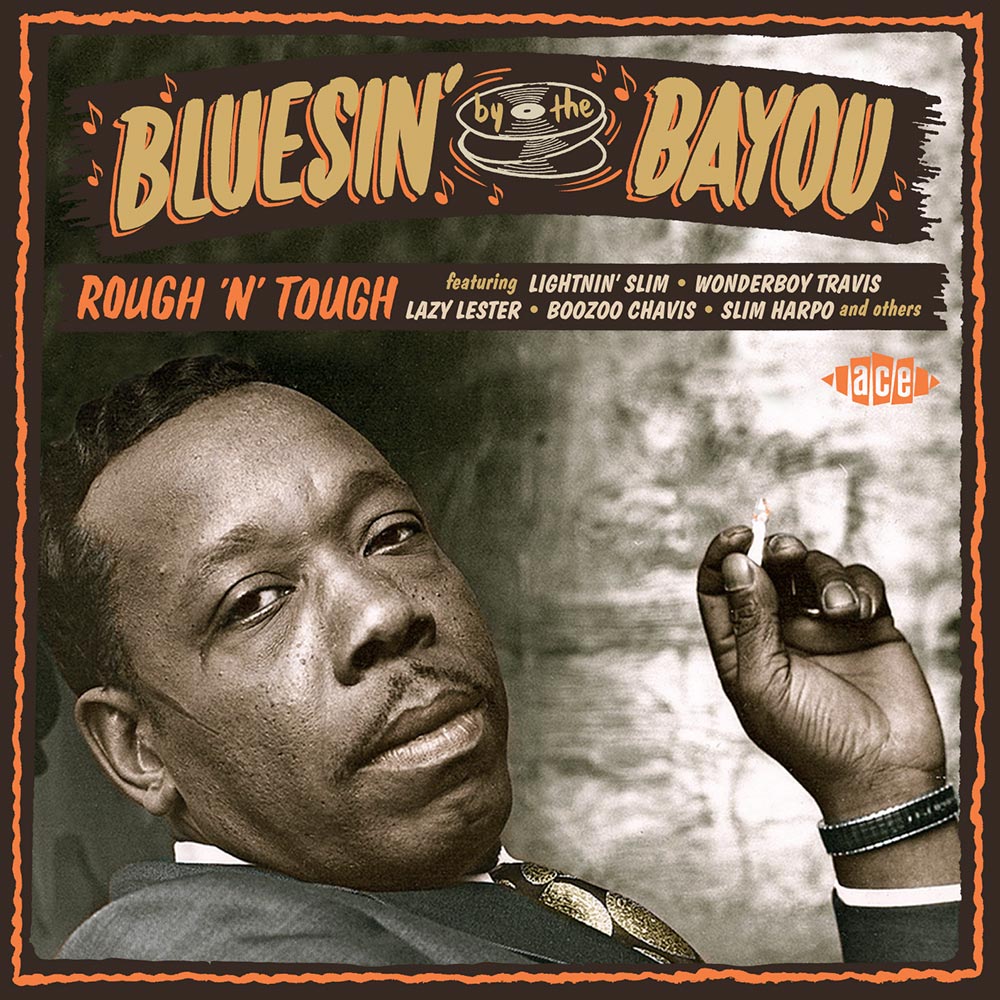
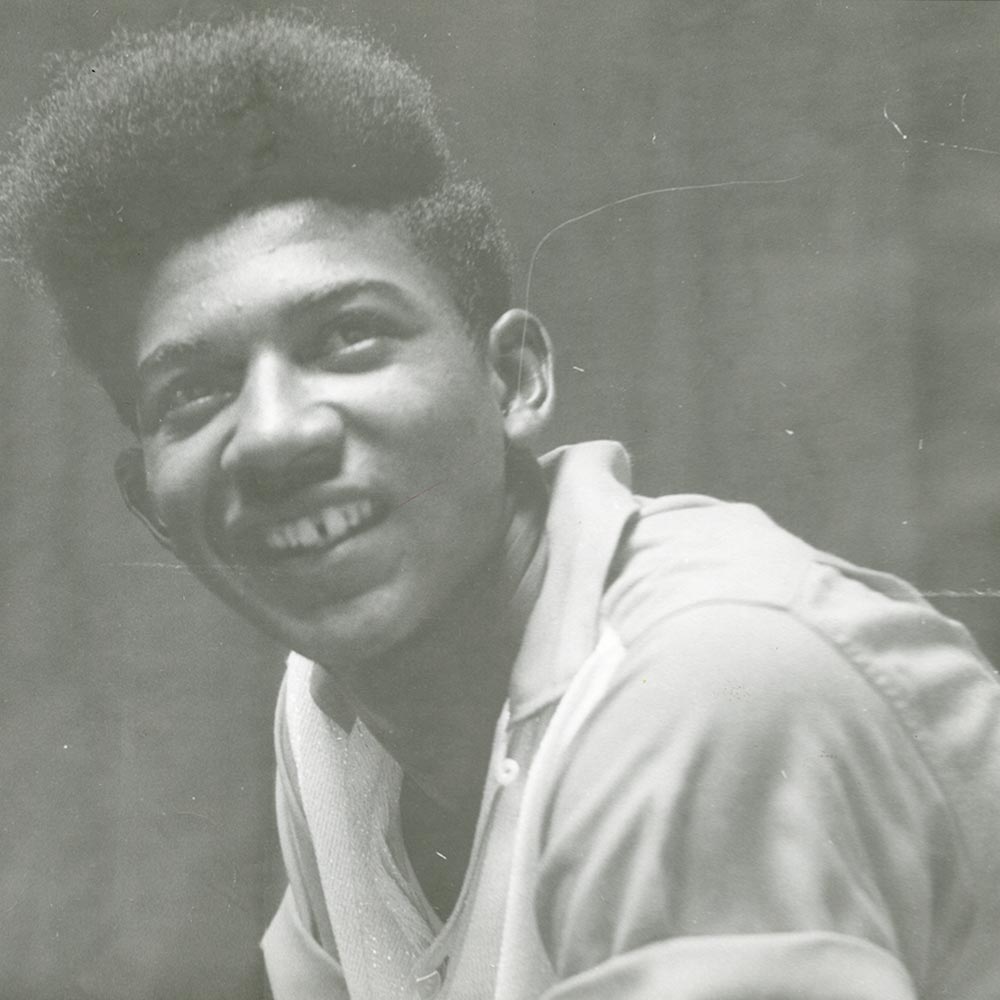
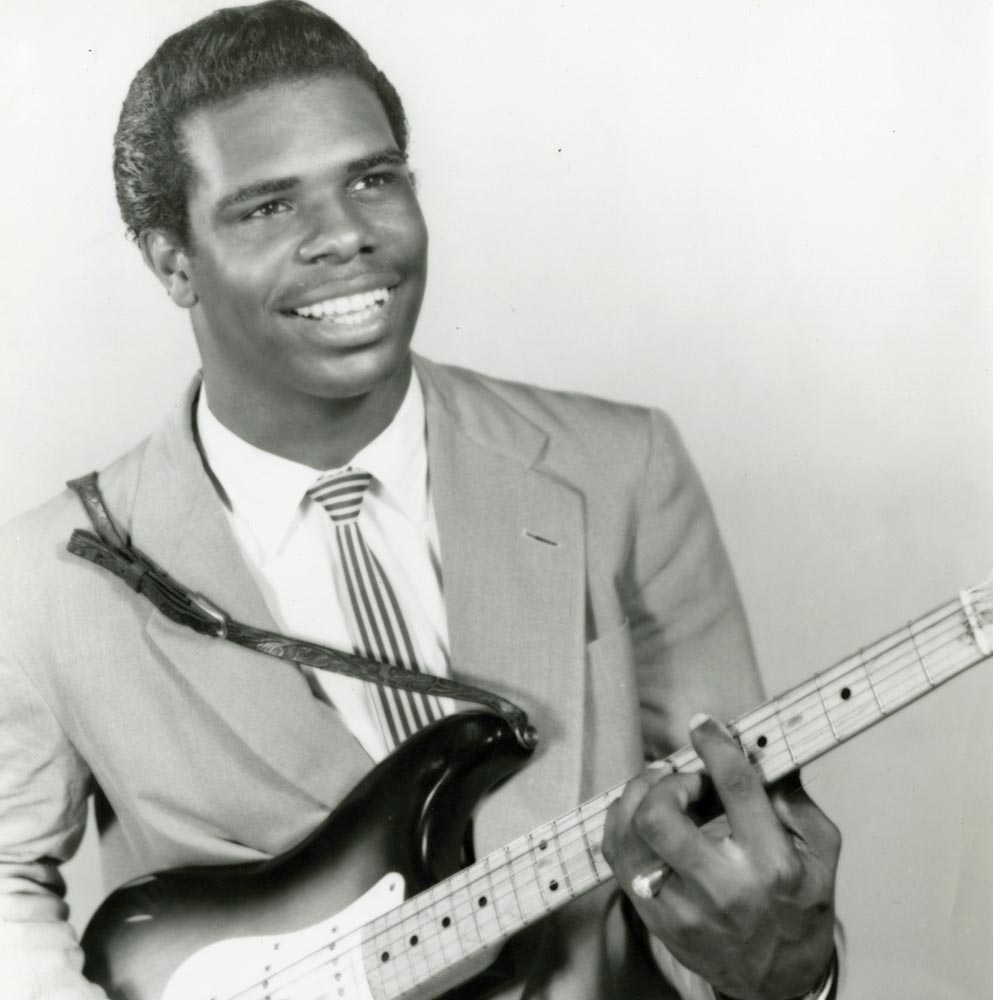
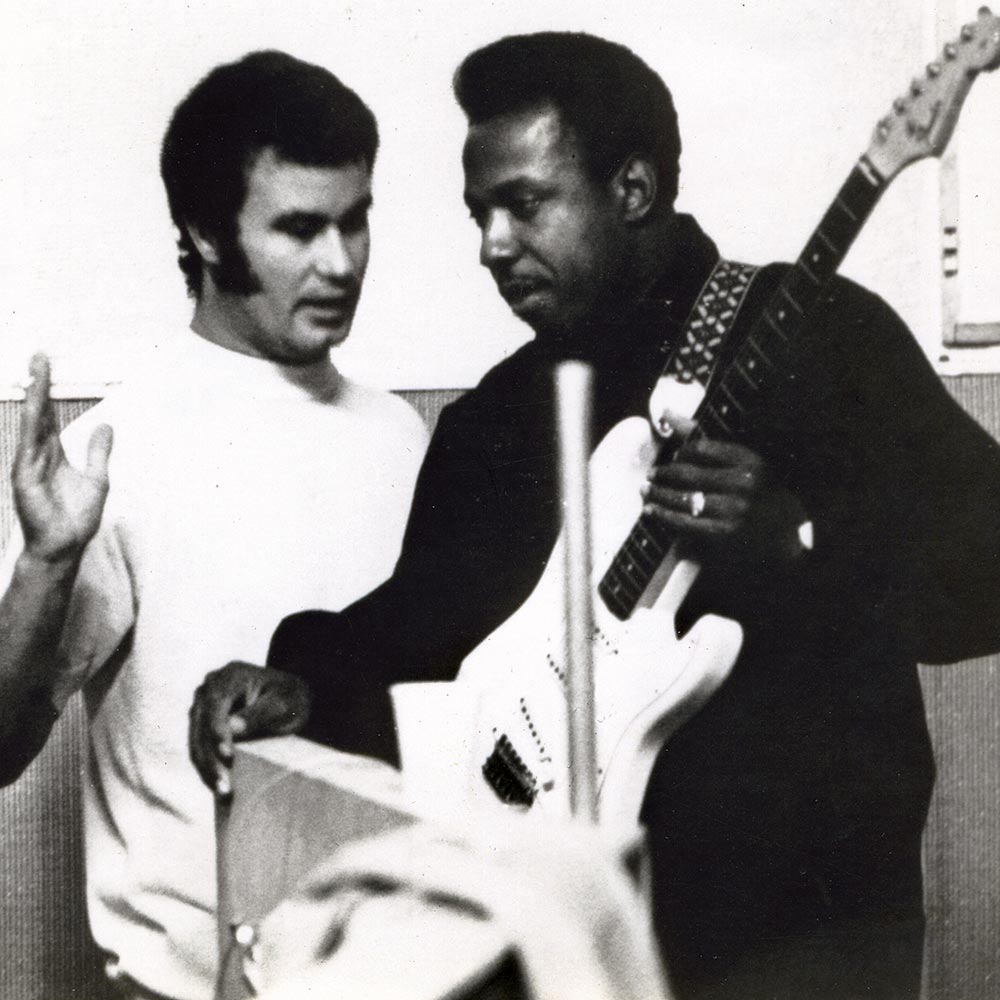
T-BONE WALKER, JOE TURNER, OTIS SPANN-SUPER BLACK BLUES.
T-BONE WALKER, JOE TURNER, OTIS SPANN-SUPER BLACK BLUES.
By the late sixties, blues music was no longer as popular. Psychedelia and rock music were the most popular genres. Groups like The Beatles, the Rolling Stones, Pink Floyd, Cream, Led Zeppelin, The Band, Canned Heat and Fleetwood Mac were some of the biggest selling acts. Along with Bob Dylan and Jimi Hendrix, they were music’s future. Blues music many people thought, represented its past. For many musicians, that wasn’t the case.
Many of the biggest names in music acknowledged the influence blues music had on them. Jimi Hendrix, the Rolling Stones, The Beatles, Canned Heat and Fleetwood Mac all were inspired by blues music. They made no bones about that. Each of these artists realised this. Without the blues, they wouldn’t be enjoying the commercial success and critical acclaim that they were. The blues was where modern music began. It couldn’t and shouldn’t be allowed to die. So groups like the Rolling Stones and Fleetwood Mac revisited old blues tracks. This gave the blues a much needed boost. The blues wasn’t dead, it was just sleeping deeply.
With a new generation of musicians breathing new life and meaning into blues classics, there was a sudden upsurge of interest in the blues. So, record companies started signing new blues acts. Some record companies even signed ageing blues musicians. This included Bob Thiele’s new label.
After leaving Impulse, following the musical equivalent of a coup d’etat Bob Thiele, formed Flying Dutchman Productions. He also believed the blues had a future. So, he started signing some of the biggest names in blues music to his nascent label. Before long, Flying Dutchman’s roster read like a who’s who of the blues. T-Bone Walker, Joe Turner and Otis Spann were all signed to Flying Dutchman Productions and would release comeback albums.
In 1969, Joe Turner released The Real Boss Of The Blues on Flying Dutchman Productions. Otis Spann released Sweet Giant Of The Blues during 1969. A year later, T-Bone Walker released Every Day I Have The Blues, in 1970. However, a year earlier, in 1969, T-Bone Walker, Joe Turner and Otis Spann collaborated on on Super Black Blues, which was released by Flying Dutchman Productions in 1969. Super Black Blues which was recently rereleased by Ace Records, was essentially a blues supergroup.
Joining T-Bone Walker, Joe Turner and Otis Spann were George “Harmonica” Smith, Ron Brown, Arthur Wright, Ernie Watts and Paul Humphrey. For blues aficionados, it’s a tantalising lineup that recorded four tracks.
Of the four tracks on Super Black Blues, T-Bone Walker penned Paris Blues, Jot’s Blues and Blues Jam under his real name, Aaron Walker. The fourth track was a cover of Lew Brown, B.G. DeSylva and Ray Henderson’s Here I Am Broken Hearted. These four tracks were recorded by T-Bone Walker, Joe Turner and Otis Spann’s all-star blues’ band.
When the recording of Super Black Blues began, the recording studio was full with blues greats. The rhythm section included drummer Paul Humphrey, bassist Ron Brown and guitarists T-Bone Walker and Arthur Wright. Otis Spann played piano, Ernie Watts tenor saxophone and George “Harmonica” Smith blew his unmistakable blues harmonica. Adding the finishing touch was Joe Turner’s vocals. As sessions go, it must have been one of Bob Thiele’s easiest.
No wonder. Look at the experience and talent that gathered together in the one recording studio. For Bob Thiele, a huge blues aficionado, this was a dream come true. Although he was the producer, musicians this good, almost didn’t need a producer. They’d been here many times before and new how a session worked. So, for Bob, it was a case of enjoy the show.
Once the microphones were setup and instruments tuned, it was a case of pressing the record button and enjoying the recording sessions for Super Black Blues. T-Bone Walker, Joe Turner and Otis Spann’s all-star blues’ band didn’t disappoint.
On the release of Super Black Blues in 1969, it seemed to pass people by. That was a shame, given it’s three blues masters at the peak of their powers. It seemed that the sudden resurgence in interest in the blues had been overstated? Since then Super Black Blues, has remained a hidden gem that’s talked about in hushed tones among blues fans. You’ll realise why, when I tell you about Super Black Blues.
Super Black Blues opens with Paris Blues. It’s slow, moody and bluesy. A probing bass, jangling piano and crystalline guitar combine with bursts of bluesy harmonica. They set the scene for Joe Turner’s lived-in, heartbroken vocal. He’s hurting as he sings: “I love my woman, but she doesn’t love me.” Behind him, the rest of the band lock into a groove. They feed off each other. It becomes a game of daring do. Whatever Otis Spann can do on the piano, T-Bone Walker can do better on the guitar. All the time, bassist Ron Brown provides the heartbeat. Chiming guitar, flourishes of piano and bursts of bluesy harp provide the backdrop for Joe’s soul-baring vocal. Everyone gets the opportunity to shine. Not just T-Bone Walker, Joe Turner and Otis Spann. There’s plenty of time for that. After all, this is a fourteen minute Magnus Opus, where three blues’ greats and their friends get the opportunity to showcase their considerable talents.
T-Bone Walker’s crystalline guitar opens Here I Am Broken Hearted. It sets the scene for another heartbroken vocal from Joe. He leaves gaps, which are filled by Ernie Watts’ blistering, riffing tenor saxophone. Ernie’s playing raises the bar. Suddenly, everyone is pulls out the stops. They lift their game. Especially, T-Bone’s guitar and Otis’ piano. They’re played with flamboyant flourishes. They’re the perfect foil for Joe’s despairing, hurt-filled vocal.
Just T-Bone Walker’s opens Jot’s Blues, as the arrangement gradually unfolds. Deliberatelym he picks at the strings, before a dramatic flourish signals the band to enter. Otis Spann plays flamboyantly, while the rhythm section lock into a bluesy groove. T-Bone unleashes some brief, bluesy licks. Then Joe’s grizzled, weary vocal enters. It’s accompanied by Ernie Watts’ scorching tenor saxophone and Otis’ piano. They seem to drive each other to greater heights. It’s a case of anything you can do, I can do better. Soon, T-Bone gets in on the act. Effortlessly, his fingers fly up and down the fretboard, his guitar chiming all the time. Meanwhile, Joe unleashes a vocal that’s full of sadness and emotion. His timing is perfect. He’s also quite happy to allow others to shine, during this eight minute epic. Playing starring roles are Otis, Joe, T-Bone and Ernie Watts, who are responsible for a blues masterclass.
Closing Super Black Blues is Blues Jam. Straight away, the rhythm section and Otis’ piano get to work. They drive the arrangement along. T-Bone unleashes bursts of bluesy guitar. When Joe’s vocal enters, he’s got the blues. The band try to lift his spirits, as they unleash a jaunty arrangement. Everyone does their best. Especially, George “Harmonica” Smith, who blows his best solo. He never misses a beat. Neither does Otis as he pounds his piano. Accompanying him is Ernie Watts, who seems to bring out the best in Otis. After that, Joe returns, and takes on the roll of MC. By then, the band are on a roll. They’re at their tightest, as the music just flows through them. A scorching saxophone, pounding piano and rhythm section accompany a lovestruck Joe as the band drive the track towards its crescendo. They’re determined to close Super Black Blues on a high. This they do and then some. Without doubt, they’ve kept the best until last.
Often, when a group of top musicians get together, egos get in the way of the music. Not on Super Black Blues. T-Bone Walker, Joe Turner and Otis Spann were too long in the tooth for that. They’d spent a lifetime playing the blues. As the sixties drew to a close, blues music had been in the doldrums. Not any more.
A new generations of music had acknowledged the influence blues music had on them. Jimi Hendrix, the Rolling Stones, The Beatles, Canned Heat and Fleetwood Mac all were inspired by blues music. They revisited old blues tracks and brought new life and meaning into them. This lead to a resurgence in interest in blues music.
Record companies were now signing new blues acts. Meanwhile, Bob Thiele’s Flying Dutchman Productions took a different approach. They went looking for blues greats. This described T-Bone Walker and Joe Turner, who were approaching the veteran status. Otis Spann was different. He was one of a new breed of bluesmen. He was only thirty-nine when he recorded Super Black Blues. However, Otis loved life. Too much it turned out.
Otis faithfully lived the life of a bluesman. This meant a regular diet of wine, women and song. Sadly, this caught up with him in 1930. He died age forty. That’s much too young. A hugely talented pianist never got the opportunity to fully fulfil his potential. Listening to Super Black Blues, which was one of Otis, last recordings, one wonders what heights he’d have reached? Going by Super Black Blues, the sky was the limits for Otis Spann.
Sadly, Super Black Blues was the only time T-Bone Walker and Joe Turner ever recorded with Otis Spann. Although it features just four songs and lasts thirty-three minutes, Super Black Blues is an essential purchase for anyone interested in the blues.
Not only does Super Black Blues feature T-Bone Walker, Joe Turner and Otis Spann, but an all-star band. Among them are tenor saxophonist Ernie Watts and bassist Ron Brown. They play their part in the sound and success of Super Black Blues, which was recently rereleased by Ace Records. Super Black Blues is one of the best blues reissues of 2014 and belongs in any self respecting record collection.
T-BONE WALKER, JOE TURNER, OTIS SPANN-SUPER BLACK BLUES.
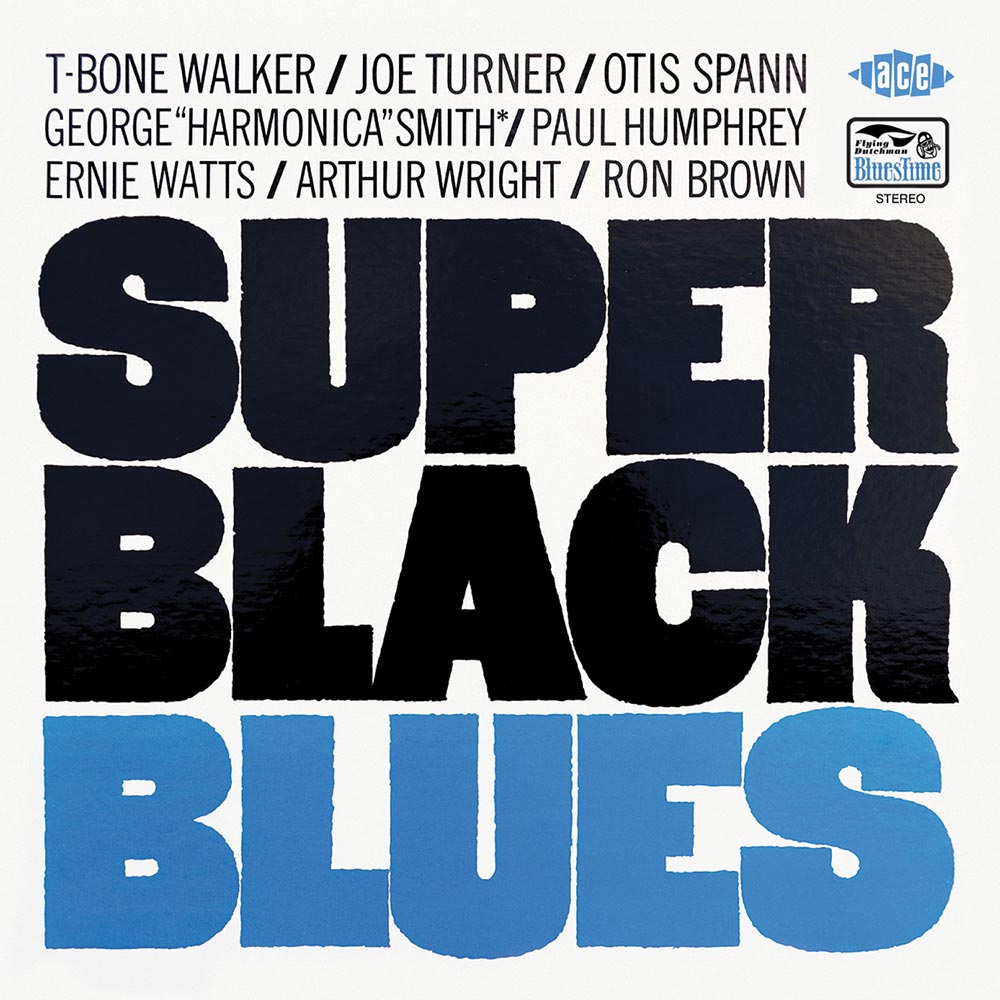

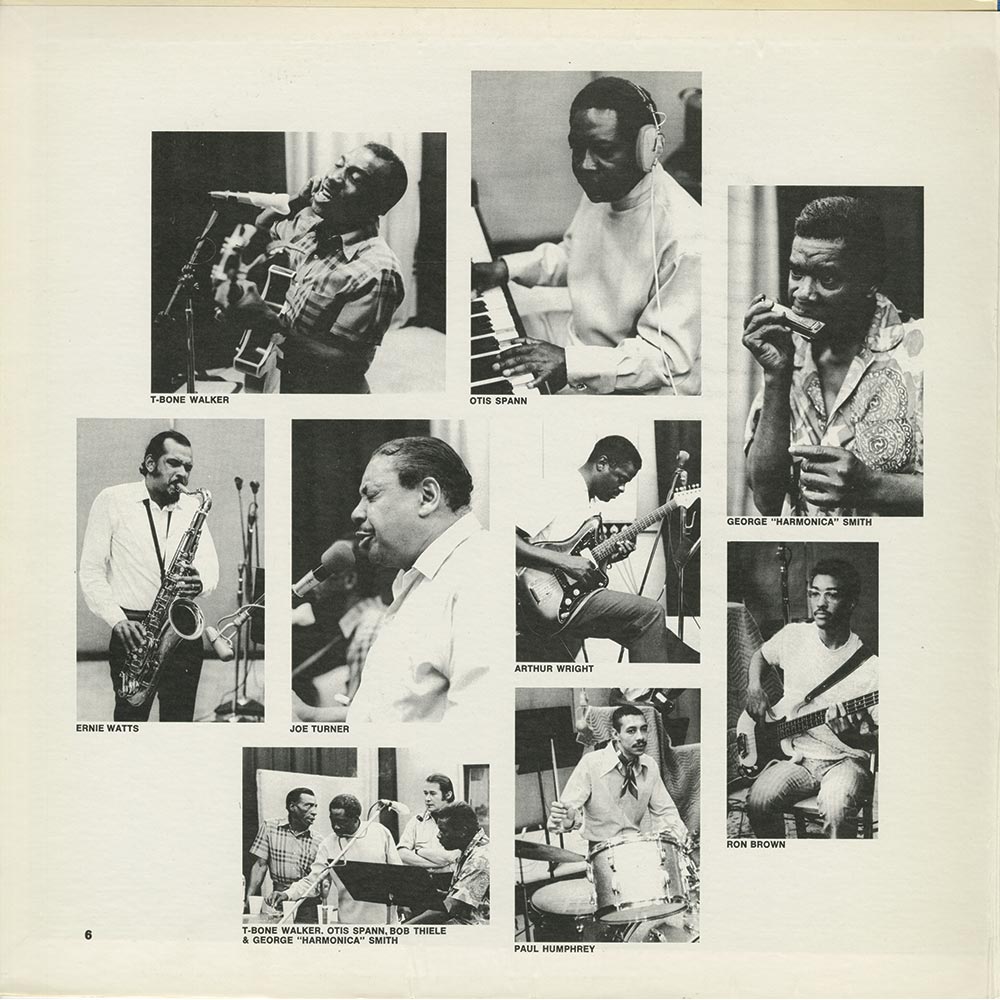

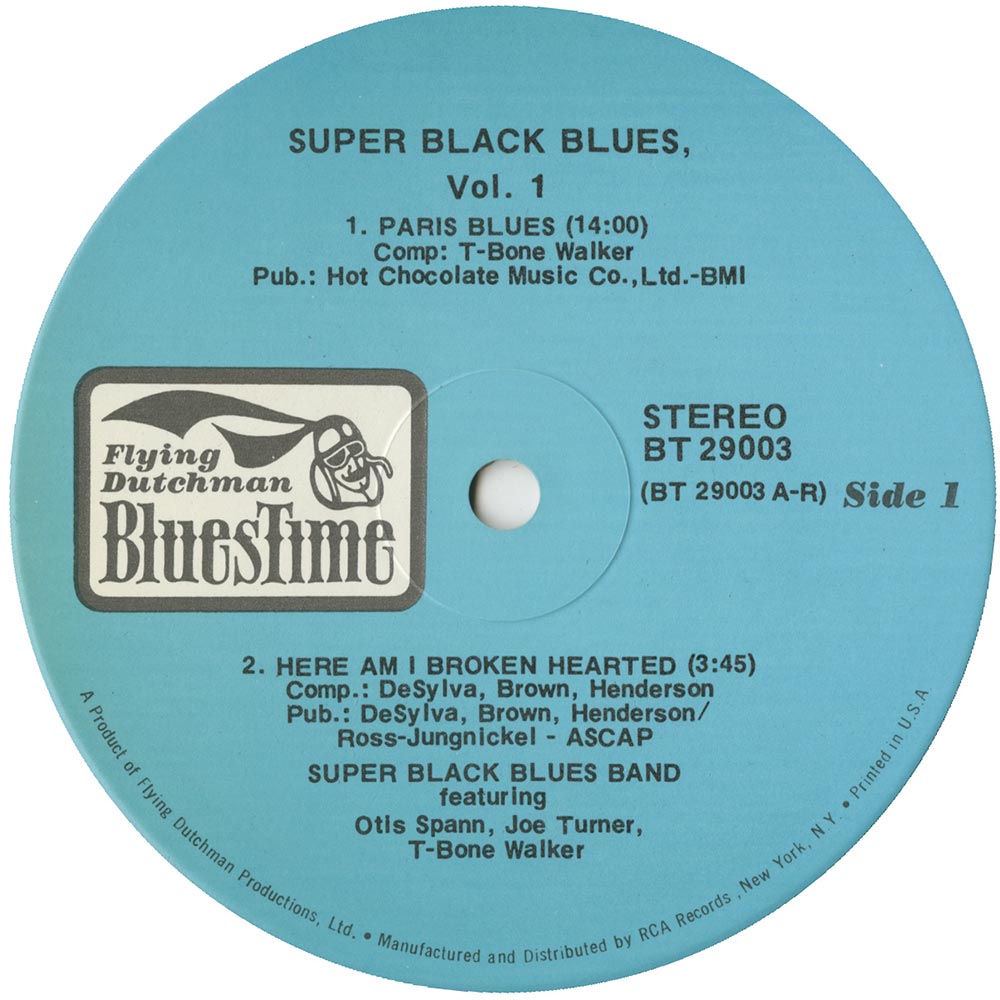

MAN-CALL DOWN THE MOON.
MAN-CALL DOWN THE MOON.
When Man split-up in 1976, Deke Leonard was asked whether Man would ever reform. Deke was clear about that. He said that Man “would never, ever, be one of those bands who reformed in a futile attempt to recapture past glories.” For fans of Man, that looked like the end of the road for one of Britain’s best loved and most talented bands.
Man had been formed in 1968, out of the ashes of Welsh rock harmony band The Bystanders. The newly formed Man wanted to change direction musically. So, their music headed in the direction of psychedelia and the West Coast sound. As music changed, so did Man.
They were a musical chameleon, whose music constantly changed. From psychedelia and the West Coast sound, Man toyed with progressive rock. Extended jams peppered their sets as Man became one of Britain’s biggest bands. However, the constant touring took its toll.
By 1976, Man decided to call it a day. For the past eight years, Man had worked almost nonstop. They recorded an album, toured the album and did it all again. Despite the commercial success and critical acclaim that came Man’s way, something had to give.
It hadn’t all been plain sailing. There had been controversy and changes in Man’s lineup. When touring Germany, Man were suspected of being terrorists and found themselves in a German jail. On a tour of Belgium, Man were jailed for drugs offences. Then there’s numerous changes in Man lineup.
In 1976, Man had were touring the US when Ryan Williams and John MacKenzie announced they were leaving the group. This was the beginning of the end. Arguments had been rife within the group. The atmosphere during the tour was terrible. This wasn’t conducive to making music. So, the rest of Man decided the band would split-up. There was a problem though.
Man had just signed to MCA Records and owed them three albums. Nobody wanted to record even one album. None of the members of Man wanted to contribute any songs. Cover versions were considered. However, Man this idea was soon forgotten about. Man’s attempts at cover versions floundered. It seemed that Man as a group were finished. So, Man agreed to release a live farewell album, All’s Well That Ends Well. It was recorded at the Roundhouse, London between 11th and 13th December 1976. Three days later, on 16th December 1976, Man announced they were splitting up.
After Man announced All’s Well That Ends Well was their finale, everyone thought that was the last we’d heard from Man. Especially, after all the arguments, backbiting and changes in lineup. That looked like being the case.
Then in 1983, Man announced they were reforming. Those in the know wondered how long the Man reunion would last?
The newly reformed Man headed into the studio and recorded Friday The 13th. This was their first album since 1976s The Welsh Connection. It was well received. Man’s loyal fans awaited a followup. They waited nine long years.
1992 saw Man released what was their tenth studio album, The Twang Dynasty. It had been recored back in 1983. However, Man fell out with producer Peter Kerr. He was also the promoter of the album. So The Twang Dynasty wasn’t released until November 1992. Onlookers said that this could only happen to Man. They’d shot themselves in the foot again. Hopefully, this would be the last time.
Two years later, in November 1994, Man entered the studio for the first time since 1983. Man had written nine tracks which would become Call Down The Moon, which has been rereleased by Esoteric Recordings.
At Egg Studios, Seattle, Ron Sanchez and Man produced Call Down The Moon. Man’s rhythm section included bassist Martin Ace, guitarist Micky Jones and drummer and guitarist John Weathers. Deke Leonard played keyboards and guitar. By the end of November 1994, Call Down The Moon was finished. It would be released in 1995.
On its release in 1995, Call Down The Moon was well received. Some critics didn’t seem to appreciate the lengthy tracks. Man, it seemed, were determined to take advantage of the compact disc’s length. The album opener, Call Down The Moon, lasted a mighty nine minutes. The next six tracks lasted between four and eight minutes. The penultimate track, Drivin’ Around, is a twelve minute epic. Closing Call Down The Moon, was Burn My Workin’ Clothes, which lasts a mere three minutes. For Man’s loyal fans, Call Down The Moon was a return to the past, when lengthy jams were part and parcel of their sets. However, was the music on Call Down The Moon as good as that released during Man’s glory years?
Opening Call Down the Moon is the title-track. Glistening, shimmering guitars glide across the arrangement as the rhythm section and keyboards provide moody backdrop. Man stretch their legs before a hurt-filled vocal enters. It’s tinged with sadness and regret. Meanwhile, the rest of Man add a dramatic backdrop. This comes courtesy of stabs of keyboards, bursts of blistering guitars and a rhythm section that combine rock and blues. Later, Man also add tight harmonies. They’re the perfect foil to the vocal. After that, Man bring put to good use twenty years of experience during this fusion of blues, rock and heartbreak.
If I Were You sees Man return to a late-sixties psychedelic, West Coast sound. A choppy drumbeat, jangling piano and dreamy, lysergic vocal are combined with Deke’s guitar. There’s even what sounds like a harpsichord buried deep in the mix. The more you listen to the arrangement, the more you hear. It’s a complex and multilayered. It marches along to the beat of Man’s rhythm section. Meanwhile, some scorching guitar riffs. So are layer harmonies. They all play their part in a track that’s a homage to not just Man’s musical past, but the music that inspired Man.
Dream Away is a bluesy shuffle. It’s best described as bluesy, moody and broody. As the rhythm section add the heartbeat, a slide guitar adds to this atmospheric ballad. The arrangement almost pauses when a weary, lived in vocal enters. It’s needy as it sings: “there ain’t nothing like a woman’s touch|.” All the time, the rest of Man contribute a bluesy shuffle. Stealing the show is the slide guitar. It’s the perfect foil for a vocal that’s needy and weary.
Blackout bursts into life. Man become one. Keyboards, rhythm section and a reverberating guitar combine with Deke Leonard’s choppy, urgent vocal. Try as he may, Deke can’t quite make the lyrics work. He’s almost trying too hard. Even the rest of Man can’t make the song work. They trade guitar licks while the rhythm section drive the arrangement along. Despite their best efforts, Blackout never rises above average and is a long way from classic Man.
Straight away, The Man With X Ray Eyes sounds more promising. There’s a brief nod to Chicago as keyboards take centre-stage. They’re interrupted by drums, before Man kick loose. This is much more like it. Blistering, riffing guitars and a pounding rhythm section strut their way across the arrangement. It’s one of Man’s best performances. Briefly, there’s a nod to Thin Lizzy courtesy of Man’s guitars. When the vocal enters, it’s almost tender. It carries the lyrics well, before harmonies sweep in. Meanwhile, the rest of Man are delivering a masterclass. They draw upon four decades experience, as they unleash one of their best performances on Call Down the Moon.
Gradually, chiming guitars and a pounding rhythm section join forces as Heaven and Hell unfolds. Keyboards, pounding rhythm section and riffing guitars then set the scene for the vocal. It’s mixture of power and swagger, and comes across as almost theatrical. Again, it’s a case of trying too hard. Meanwhile, stabs of dramatic, rocky guitars and keyboards are unleashed. Later, as the track metamorphosis,’ it heads in the direction of prog rock. Suddenly, the track is transformed. Man become one. Blistering guitars, pounding keyboards and a driving rhythm section join forces. Even the vocal seems to improve later. It becomes a throaty growl, as Man belatedly, recover their mojo.
Dramatic and rocky describes The Girl Is Trouble. The rhythm section provide the engine room, while bursts of machine gun guitars are unleashed. Then when the vocal enters, it’s a mixture of power and drama. It’s replaced by a guitar masterclass from Micky Jones. He lays down some of his best guitar licks on Call Down The Moon during this track. Seamlessly, his hands fly up and down the fretboard, as he dawns the role of guitar hero. Behind him Deke’s keyboards play a supporting role. To a man, Man pull out the stops on this rocky anthem.
Drivin’ Around is the longest track on Call Down The Moon. It lasts over twelve minutes and allows Man to stretch their legs musically. This is the case from the opening bars. A cymbal hisses and shimmers, before keyboards pick up the baton. After that the rest of Man make an entrance. They’re in no hurry and it takes two minutes before Micky Jones’ vocal enters. It’s a mixture of emotion, sadness, control and power. His lived-in vocal is perfect for the lyrics. It sounds as if Micky has lived, loved and survived to tell the tale. He then lays down another peerless solo. Without doubt, it’s the best solo on the album. The rest of Man are left playing a supporting role as Micky steals the show as man combine rock and blues seamlessly.
Burn My Workin’ Clothes closes Call Down the Moon. It’s a really disappointing way to end the album. Maybe Man were trying to be ironic or funny? Instead, they come across as sloppy. Man provide a bluesy backdrop for John Weathers’ mid-Atlantic vocal. He’s accompanied by slide guitar and harmonies. His vocal is distant. So much so, that it sounds as if he’s too far from the microphone. The track’s only saving grace is the slide guitar. However, even that can’t save what’s a disappointing end to Call Down the Moon.
After twelve years away from a recording studio, Man fans thought that the band would be back with a career defining album. That’s what Call Down the Moon could’ve and should’ve been. They were very wrong. Out of the nine tracks, only six at the most pass muster. The rest disappoint.
Blackout is a truly disappointing song. It’s the lyrics that let the Blackout down. Heaven and Hell is best described as a song of two parts. Part one disappoints, while part two marks a return to form from Man. However, Man saved the worst to last. That’s Burn My Workin’ Clothes. Maybe it’s an badly judged attempt at humour or irony? Ironically, things started so promisingly.
The bluesy Call Down the Moon opened the album and set the scene for If I Were You. It’s a return to the psychedelic, West Coast sound Man pioneered. After that, there’s the bluesy shuffle of Dream Away. Following the disappointing Blackout, a strutting Man return with The Man With X Ray Eyes and rocky, anthem The Girl Is Trouble. Without doubt the highlight of Call Down The Moon is Drivin’ Around, where Micky Jones steals the show. Drivin’ Around showed just what Man were capable of.
Surely, it wasn’t too much for Man to return after twelve years away from a recording studio, with nine tracks of the calibre of Drivin’ Around? If they had, then Call Down the Moon would’ve stood alongside the greatest albums Man had released. Sadly, that’s not the case.
Instead, Call Down the Moon is best described as merely above average. Call Down the Moon is far from classic Man. If that’s what you’re looking for, then I’d suggest you’d be better buying the recently released five disc box set, Original Album Series. Unlike Call Down the Moon, the five albums in the Original Album Series box set, feature Man at their very best.
MAN-CALL DOWN THE MOON.
LOUDON WAINWRIGHT III-HAVEN’T GOT THE BLUES (YET).
LOUDON WAINWRIGHT III-HAVEN’T GOT THE BLUES (YET).
Did you ever hear the story about the singer songwriter you sold his guitar to pay for yoga lessons, but still won a Grammy Award? That’s what Loudon Wainwright III did when was growing up.
Loudon was born on September 5th 1946, in Chapel Hill, North Carolina. His father Loudon Wainwright, Jr, was a columnist for Life magazine and occasional songwriter and his mother was Martha Taylor a yoga teacher. They introduced their family to music. So, it’s no surprise that Loudon would learn to play guitar. That was until he decided he wanted to learn yoga.
There was a problem. Loudon, now living in San Francisco, didn’t have any money. So he decided to sell his beloved guitar. Back then, Loudon didn’t seem to have any intention of making a career out of music. That was until he was working in a boatyard in Rhode Island.
Loudon’s grandmother got Loudon the job working in the boatyard. He was working beside an old lobsterman, Edgar. Working alongside Edgar and hearing his stories inspired Loudon to write his first song. This presented a problem. He’d sold his guitar. So, he borrowed a guitar and penned his first song Edgar. After this the floodgates opened.
Within a year, Loudon had written nearly twenty songs. Loudon gave up his job in the boatyard. Packing his bags, he headed to Boston and then New York, where he played in folk clubs. Eventually, Loudon was discovered by Milton Kramer, who became his manager. Before long, Loudon signed to Atlantic Records.
Loudon Wainwright III.
Now signed to Atlantic Records, Loudon began working on his debut album. He released his eponymous debut album in 1970 to critical acclaim. Loudon Wainwright III was an acoustic album showcases Loudon’s caustic humour. Despite failing to chart, it was a tantalising taste of what would follow. Forty-four years later, and Loudon Wainwright III has just released his twenty-second album Haven’t Got The Blues (Yet), which was by Proper Records.
Haven’t Got The Blues (Yet) marks a departure in style from one of the most underrated singer-songwriters of his generation. It sees Loudon Wainwright III belatedly, finding the blues. It’s a welcome change of style from Loudon Wainwright III who in the early seventies, was hailed as the new Dylan.
Album II.
From his eponymous debut album, it was apparent that Loudon Wainwright III had a big future ahead of him. He released his sophomore album Album II in 1971. Just like his debut, it was released to widespread critical acclaim, but failed to chart. Album II was co-produced by Loudon and his manager Milt Kramer, and has a darker worldview. It also features a mixture of Loudon’s legendary caustic lyrics and trademark humour. It was Loudon’s unique brand of humour that gave Loudon the biggest hit single of his career.
Album III.
Loudon’s first two album were acoustic albums. Not his third album. Album III was released on Columbia and saw Loudon backed by a full backing band. There was a change of producer. This time, Thomas Jefferson Kaye produced Album III. For Loudon, this worked. Not only was Album III hailed the finest album of Loudon’s career, but it was his most successful. Album III reached number 108 in the US Billboard 200, while the single Dead Skunk reached number eighteen in the US Billboard 100. For Loudon, this was the commercial breakthrough he’d been looking for.
Attempted Mustache.
For the followup Attempted Mustache, Loudon headed to Nashville. Bob Johnson produced Attempted Mustache. Although Attempted Mustache was released to commercial success in 1973, it failed to chart. Surely, this was just a blip?
Unrequited.
Unrequited was the final album Loudon released on Columbia. It was a mixture of new and live tracks. All the new tracks were penned by Loudon. Critics and music lovers appreciated Unrequited. On its release in 1975, it was well received by critics and reached number 156 in the US Billboard 200. Loudon’s luck it seemed, was changing.
T-Shirt.
This continued with his 1976 album T-Shirt. It was one of Loudon’s most eclectic album. There were acoustic tracks, a blues and then on Slowtrain, Loudon and his band kick loose. T-Shirt should’ve fared better than 188 in the US Billboard 200. Sadly, punk rock arrived. Critics turned on artists like Loudon. The reviews of T-Shirt were scathing. Rolling Stone did a hatchet job on T-Shirt. From hailing Loudon as the new Dylan, he and his peers were suddenly dinosaurs. However, Loudon’s music has outlived punk.
Final Exam.
Following the disappointment surrounding T-Shirt, Loudon returned in 1978 with Final Exam. Stylistically, it was a much more rocky album. Loudon plugged in on Final Exam. On its release, reviews were mixed and it failed to chart. However, reviews back then weren’t necessary fair. A new breed of critics were slating everything that was pre-punk. Artists like Loudon didn’t stand a chance. So, it’s no surprise that Loudon didn’t release another album until 1983.
Fame and Wealth.
During the five years between Final Exam and 1983s Fame and Wealth, Loudon spent a lot of time in Britain. He established a large and loyal fan-base. It’s thought he became more popular in Britain than America. Britain seemed to get Loudon, who was in the process of reinventing himself.
Fame and Wealth was the first album to showcase Loudon’s new sound. It was a much more pared back, folk sound. Gone was the rockier sound of Final Exam. Aided and abetted by musicians of the calibre of Richard Thompson a new Loudon Wainwright III emerged.
Critics didn’t like Fame and Wealth. It was released to mixed reviews. Loudon’s fans had mixed feelings about Fame and Wealth. On its release, Fame and Wealth failed to chart. For Loudon this was a blow. He wasn’t going to give-up though.
I’m Alright.
Two years passed before Loudon returned with I’m Alright in 1985. It was produced by Richard Thompson, and featured Danny Thompson and Paul Brady. Loudon who usually wrote all his own songs, even collaborated on Screaming Issue. He penned the track about his teenage daughter Martha, with Terre Roche. The result was an album that was well received by critics. Sadly, although I’m Alright fared well in Britain, the album failed to chart in America. This would become a pattern and Britain adopted Loudon as one of their own.
More Love Songs.
Just like I’m Alright, Loudon recorded More Love Songs in Britain. It was produced by Richard Thompson, and featured Danny Thompson and Martin Carthy. A total of thirteen tracks were recorded. The acoustic style continued. There were also a number of piano driven ballads on More Love Songs, which included some of the best music Loudon released during the eighties. Sadly, quality didn’t equate to commercial success. On More Love Songs’ release, it failed to chart. So, Loudon took a break from recording for three years.
Therapy.
By 1989, when Loudon released Therapy, much had changed in his life. During his three years away from the recording studio, he’d moved back home to America. So, Richard Thompson was replaced as producer by Chaim Tannenbaum. Along with a talented band folk, country and Americana collided. The result was a well received, but underrated album. Therapy, which, failed to chart, remains one of the hidden gems in Loudon Wainwright III’s back-catalogue. It would be Loudon’s only album until 1992s History.
History.
When Loudon released History in 1992, the three previous years had been turbulent. Loudon’s father had died and he was having problems with his own son Rufus. The death of his father provoked a myriad of emotions within Loudon. It also inspired many of the songs on History. As a result, the music on History is personal, maybe even therapeutic. Just like T-Shirt, History was an eclectic album. There was everything from folk, blues and country rock on History, which was released in 1992.
History was Loudon’s first album of the new decade. He must have been hoping for an upturn in his fortunes. After all, it had been a long time since one of his albums charted. On History’s release, critics welcome the eclectic nature of the album. Whether he was delivering a reflective ballad or rocking out, Loudon, critics said was on fine form. Sadly, this didn’t translate into sales. Again, chart success eluded him. So, Loudon took another break from the recording studio.
Grown Man.
Between 1992 and 1995, Loudon had been busy helping bring up his family. In 1993, he release his second live album Career Moves. Ironically, Career Moves, which was made-up of material from the eighties, was hailed one of Loudon’s best album. After that, Loudon continued to tour and then in 1995 with Grown Man.
Grown Man featured a different side of Loudon. It wasn’t as bleak an album. Instead, Loudon’s humour shawn through. Reviews were mixed and Grown Man wasn’t a commercial success. Long gone was chart success and hit singles.
Little Ship.
After a gap of two years, Loudon returned in October 1995, with Little Ship. Despite the title, Little Ships was a group of songs that focused on relationships. Not for the first time, did a Loudon Wainwright III album divided opinion amongst critics and music lovers. That was the case with Little Ship. Some people loved and “got” Little Ship. Other, well it sailed past them. So, it’s no surprise that Little Ship sunk without trace.
Social Studies.
Loudon had never been a singer to write inane songs. His songs were cerebral, full of social comment and caustic wit. That was the case with 1999s Social Studies. Many of the songs had been written for National Public Radio and looked at the Tonya Harding scandal, the O.J. Simpson trial and the advent of the millennium. These tracks allowed Loudon to combine social comment and humour.
Essentially, Loudon was following in his father’s footsteps. While his father wrote for Time magazine, Loudon’s “columns” were put to music. Fifteen of these columns featured on Social Studies, which was released in 1999.
On its release in 1999, reviews of Social Studies ranged from good to outstanding. Loudon seemed to have caught the critics imagination. Sadly, Social Studies didn’t come close to troubling the charts. Yet again, another of Loudon’s albums failed to find the audience it deserved. Despite that, he was still a hugely popular artist live. Especially in his second home Britain, where his albums found an appreciative audience. That was the case with his next album Last Man on Earth.
Last Man on Earth.
When Loudon released Last Man on Earth in September 2001, he’d been through another traumatic time. His mother had died and a relationship had ended. Music was Loudon’s way of expressing his feelings and grieving.
Last Man on Earth found Loudon lonely and grieving. He’d laid bare his soul. On other tracks, Loudon continued to examine his troubled relationship with late father. All this made Last Man on Earth one of the most personal and introspective albums Loudon had released. It was akin to a snapshot into his weary, troubled soul. How would critics and music lovers react to Last Man on Earth?
On the release of Last Man on Earth, it didn’t chart in the US Billboard 200. It did reach number forty-four in the US Top Independent chart. Belatedly, Loudon’s music was receiving the recognition it deserved. Would this continue?
Here Come The Choppers.
Four years passed before Loudon released his next studio album, Here Come The Choppers. Since Last Man On Earth’s release, the world was a very different place. The world was at war. Ironically, this gave Loudon inspiration.
Loudon wrote an album based upon the Iraq war. Instead of Iraq, the war was taking place in the Miracle Mile district of Los Angeles. Here Come The Choppers saw Loudon unleash his acerbic wit and dark humour.
Released in 2005, Here Come The Choppers received mixed reviews and failed to chart. The commercial success Loudon had enjoyed proved fleeting.
Strange Weirdos.
Loudon released his first soundtrack album in 2007. This was Strange Weirdos, the soundtrack to Judd Apatow’s Knocked Up. It was co-produced by Joe Henry and Loudon. Guest artists included Van Dyke Parks, Richard Thompson and Greg Leisz. They played their part in what was one of Loudon’s most successful albums.
On the release of Strange Weirdos in 2007, it peaked at number thirty-two in the Billboard Heatseekers and number 22 on the Top Soundtracks chart. For Loudon, this was a welcome change in his fortunes.
Recovery.
Recovery saw Loudon return to his first four albums for inspirations. Having chosen thirteen tracks, Loudon reinvented them. Accompanying him, was a tight and talented band.
They help Loudon to breath new life and meaning into what’s without doubt, classic Loudon Wainwright III. After all, Loudon’s first four albums feature some of the best music of his forty-four year recording career. Despite being crammed full of classic tracks, reviews were mixed and the album failed to chart. Maybe what was the one of the most ambitious albums of Loudon’s career would mark a change in his fortunes?
High Wide and Handsome: The Charlie Poole Project.
That was High Wide and Handsome: The Charlie Poole Project. This was the twentieth album of Loudon’s career. It sees him pay homage to country musicians and banjo player, Charlie Poole. His music may not have been familiar to many people. Loudon was determined to rectify this. While this is admirable, it wasn’t exactly the most commercial project. That’s until he brought onboard a few friends.
This includes Loudon’s daughter Martha, son Rufus and sister Sloan Wainwright. The Roche sisters, Maggie, Suzzy and Terre added backing vocals and Geoff Muldaur, a former member of Paul Butterfield Blues’ Band played banjo. They’re just a few of the many musicians who played their part in High Wide and Handsome: The Charlie Poole Project sound and success.
At last, Loudon Wainwright III was on the verge of receiving the recognition his music deserved. On the release of High Wide and Handsome: The Charlie Poole Project in 2009, it was released to critical acclaim and reached number two in the Bluegrass’ charts. Then to top it all, High Wide and Handsome: The Charlie Poole Project won a Grammy Award for best folk album. After thirty-nine years and twenty albums, Loudon Wainwright III was receiving the commercial success and critical acclaim his music deserved. However, Loudon wasn’t one for resting on his laurels.
10 Songs for the New Depression.
Straight away, Loudon began penning 10 Songs for the New Depression. The songs were inspired by the global financial crisis and the recession. Loudon went back to basics, accompanying himself on banjo, guitar and ukelele.
On the release of 10 Songs for the New Depression, it received mostly, positive reviews. Especially in Britain, where critics lauded Loudon’s analysis of the situation. He combine analysis with wit and wisdom. The result was a fitting followup to High Wide and Handsome: The Charlie Poole Project. Especially when 10 Songs for the New Depression reached number number thirty-eight in the Top 40 Independent Albums charts. Loudon’s career, it seemed was enjoying an Indian Summer.
Older Than My Old Man Now.
April 17th 2012 was when Loudon released his previous album, Older Than My Old Man Now. It found Loudon in a reflective mood. He was posing questions about the big subjects in life. This included growing old and dying. Loudon was also thinking about childhood, family and family history. It seemed Loudon was at the stage in his life when he realised that, none of us are invincible. Partly, this was down to Loudon having outlived his father, who died aged just sixty-three. So, it’s no wonder Loudon was in a reflective mood. Ironically, when Loudon’s in a reflective mood, he’s at his best.
Especially when accompanied by Martha and Rufus Wainright and Suzzy Roche. Produced by Dick Connette Older Than My Old Man Now was released to widespread critical acclaim. Many of the critics had been around since Loudon released his 1970 eponymous debut. For them, Older Than My Old Man Now was a sobering album. They realised that they too were no longer invincible. That made Older Than My Old Man Now all the more personal and pertinent. It seemed that Older Than My Old Man Now struck a note with many people and it reached number seven in the US Top Heatseekers charts. For Loudon, this was proof that he was at his best when he was in a reflective mood, giving something of himself. However, on his twenty-third album, Haven’t Got the Blues (Yet), Loudon changes tack.
Haven’t Got the Blues (Yet).
For Haven’t Got the Blues (Yet), Loudon penned fourteen tracks. He was then joined by a tight, talented band. Their lineup changes throughout Haven’t Got the Blues (Yet). However, there are some musicians who play an important role.
Especially drummer David Mansfield. He’s like a one man band, playing guitars, mandolin, Roksichord, mandodello, percussion, ukelele, fiddle, drums, spoon, viola, violins, tin whistle, pedal steel and electric sitar. He also takes care of programming the upright bass, drums and horn section.
Other musicians who play a starring role are Martha Wainwright, Tim Luntzel on upright bass, organist Glen Patscha and pianist Andy Burton. So good are the horn section, it would be unfair to single anyone out. They’re at the heart of sound and success of tracks like Brand New Dance, Spaced and Haven’t Got the Blues (Yet). This trio of tracks are just a taste of what’s one of Loudon Wainwright III’s best albums in a a long time, Haven’t Got the Blues (Yet).
Haven’t Got the Blues (Yet) literally bursts into life with Brand New Dance. It sounds like a blistering homage to early Elvis. Especially with blazing horns, Jerry Lee Lewis like piano and a driving rhythm rhythm section for company, Loudon vamps his way through the lyrics. They’re a mixture of social comment and Loudon’s caustic wit. Later, add in scorching guitar solo and what a storming way to open Haven’t Got the Blues (Yet), which is a musical roller coaster.
Very different is Spaced, which has a tango sound. The tempo drops and a much more understated and moody arrangement unfolds. This comes courtesy of wistful violins, a clarinet, bursts of tuba and an accordion. They provide the backdrop for Loudon’s melodramatic vocal.
In A Hurry sees Loudon return to the acoustic sound of his early career. His vocal is full of emotion, concern and sadness, as he sings about someone he sees in the station each day. He doesn’t know them, but can see they’re tired and stressed. Loudon paints pictures. So much, that you can see the scenes unfolding before your eyes during this beautiful ballad.
From ballads, Loudon turns his attention to the blues on Depression Blues. This isn’t a first. Over the years, Loudon’s included a blues song on a number of songs. Depression Blues is one of Loudon’s best. Especially, with the slide guitar accompany Loudon’s melancholy vocal. He sings about suffering from depression and struggling to find a cure. They’ve tried everything, but nothing seems to work. That’s why there’s a sense of despair in Loudon’s vocal.
Morgue is another track that revisits America’s rich musical past. It draws inspiration to the early days of country music. With an authentic country backdrop, of fiddles, banjo, accordion and washtub, Loudon sings about having to identify the woman who broke his heart. The payoff is truly caustic as he sings: “you sure got your comeuppance for your crimes, a guilty conscience and a frozen broken heart.”
Harmless is another track with a country influence. Loudon accompanied by just his acoustic guitar and fiddle, sings about how he’s harmless. He’d never kill an insect, he’s thrifty and “there’s never no trouble from me.” As he sings this, there’s a sense of sadness in his voice. Especially when he sings” “there’s one or two lads who I could call my chums.” As he sings this, Loudon paints a picture of a life never lived and finally, the character in the song has realised this. Especially when he sings: “nobody would notice if I wasn’t there, if I didn’t come home for me tea.” A truly poignant and beautiful track.
The next few tracks continue the country sound. Man and Dog is typical Loudon Wainwright III. There’s a nod to Neil Young and C.S.N.Y, as the track unfolds. Soon, Loudon combines social comment and humour. However, try as he may Loudon can’t quite make Man and Dog work. It’s a disappointing track. Things improve slightly on Harlan County, as a despairing Loudon sings: “I can’t get a drink in Harlan County.” Later, swirling fiddles drive the arrangement to a crescendo.
I Knew Your Mother is a laid-back,country-tinged track. There’s a brief nod to Neil Young’s Harvest, as the song unfolds. Pedal steel and clarinet play leading roles as the rhythm section drive the arrangement along. Loudon delivers some of his finest lyrics, via a vocal that’s wistful and melancholy.
Rocky describes Looking at the Calendar. It’s totally different from the previous tracks. You hope Loudon and his band kick loose. They come close on this country rock track, but never quite do. Regardless of this, Loudon and his band are at their best.
Only Loudon could use the words killing and Christmas in a song title. That’s the case on I’ll Be Killing You This Christmas, where Loudon turns his sights on the pro gun lobby. He does this against a subtle, old fashioned, jazz-tinged backdrop.
God and Nature sees Loudon combine elements of blues, country and folk. He’s accompanied by an understated backdrop. This allows his vocal to take centre-stage. When, it drops out, his band enjoy their moment in the sun, combining blues and country, on this poignant and powerful ballad.
Loudon protest too much I think. That’s apparent on Haven’t Got the Blues (Yet). It’s a gloriously bluesy track. It’s driven along by the bass. That’s until growling, rasping horns enter. They’re the perfect foil to Loudon’s weary vocal as he claims I “Haven’t Got the Blues (Yet).” Not much.
The melancholy Last Day of the Year closes Haven’t Got the Blues (Yet). It’s akin to a lament to the days that have passed. Just accordion, banjo, mandolin, harmonium and harmonies accompany Loudon on this wistful lament.
Despite having released twenty-two studio albums, Loudon Wainwright III is still one of music’s best kept secrets. In a career lasting forty-four years, commercial success has eluded Loudon. No wonder, on several occasions Loudon has taken a break from recording albums. He’s always comeback for more.
There’s a reason for that. He’s a prolific songwriter with plenty to say about the world. On his twenty-two studio albums, Loudon has combined social comment and his caustic humour. Yet it took twenty albums before Loudon Wainwright III received the commercial success and critical acclaim his music deserved. That came when he released
High Wide and Handsome: The Charlie Poole Project. This resulted in a hit album and a Grammy Award. Belatedly, Loudon music was rubbing shoulders with the greats. It marked the start of an Indian Summer for Loudon.
Since then, Loudon has continued to release quality music. The latest instalment in a run of critically acclaimed albums is Haven’t Got the Blues (Yet). It sees Loudon pay homage to America’s rich musical past. Americana, blues, country, folk and rock can be heard on the fourteen tracks on Haven’t Got the Blues (Yet). Mostly, it’s an album full of quality music. The only disappointment is Man and Dog, which doesn’t come up to the standard of the rest of Haven’t Got the Blues (Yet). Mind you, Loudon set the bar high on Haven’t Got the Blues (Yet).
Haven’t Got the Blues (Yet) is, without doubt, one of the finest albums Loudon Wainwright III has released in a long time. Loudon Wainwright III’s Indian Summer continues with Haven’t Got the Blues (Yet), which was recently released by Proper Records.
LOUDON WAINWRIGHT III-HAVEN’T GOT THE BLUES (YET).

DISCO RECHARGE-JOHN DAVIS AND THE MONSTER ORCHESTRA-AIN’T THAT ENOUGH FOR YOU AND THE MONSTER STRIKES AGAIN.
DISCO RECHARGE-JOHN DAVIS AND THE MONSTER ORCHESTRA-AIN’T THAT ENOUGH FOR YOU AND THE MONSTER STRIKES AGAIN.
By 1978, John Davis had established a reputation in music as a successful songwriter, arranger and producer. Ever since the early seventies, he’d been working in Philly, with groups like First Choice, The Intruders, The Soul Survivors and artists like William DeVaughn. Then when he joined the nascent SAM Records, John began developing a reputation as one of disco’s pioneers.
John was playing his part in making SAM a label to challenge Salsoul as disco’s premier label. To do this, John had formed his own disco orchestra, John Davis and The Monster Orchestra, to rival the legendary Salsoul Orchestra. Not only had , John Davis and The Monster Orchestra played on most of SAM Records’ releases, but they’d released two albums.
They were 1976s Night and Day and 1977s Up Jumped The Devil. Soon, John Davis and The Monster Orchestra would release their third album, Ain’t That Enough For You in 1978. Ain’t That Enough For You was the most important album John Davis and The Monster Orchestra would release. The reason for this was that The Salsoul Orchestra had lost Vince Montana Jr, its founder, leader, conductor and driving force, the title of disco’s greatest orchestra was up for grabs. Could John Davis and The Monster Orchestra snatch their crown with Ain’t That Enough For You which along with The Monster Strikes Again, has been rereleased by Harmless Records as part of their Disco Recharge series?
Ain’t That Enough For You.
With the title of disco’s premier orchestra up for grabs, John Davis and The Monster Orchestra got to work on Ain’t That Enough For You. John wrote the title-track Ain’t That Enough For You, Disco Fever and A Bite Of The Apple. With guitarist Craig Snyder he cowrote I’ll Be The Music. They also cowrote Stay With Me with Vince Fay. David and Dee Ervin cowrote I’ve Got The Hots For You, while Mark Bauman and Marty Markiewicz wrote Whatever Happened To Me and You. The other track might not have seemed like a controversial choice, but it was.
It was a cover of the Kojak Theme. Covers of tracks like this, plus novelty songs, were providing ammunition for the anti-disco bandwagon. It was beginning to gather pace. According to them, this was proof that disco was lacking in direction and imagination. Disco they believed, was about to implode. This would prove prophetic in 1979. That was still to come. Before that, John Davis and The Monster Orchestra began recording Ain’t That Enough For You.
When recording of Ain’t That Enough For You began, many of the musicians that featured on Up Jumped The Devil were there. This included guitarist Craig Snyder, bassist Vince Fay, percussionists Larry Washington and Jimmy Walker, while Don Renaldo provided the strings and horns. John Davis played flute, keyboards, saxophone and took charge of vocals. Absent were The Sweethearts of Sigma, who’d played a big part in the success of Up Jumped The Devil. Instead, adding vocals were Billy Harner, Carolyn Mitchel and Vaneese Thomas, daughter of Rufus Thomas. Once Ain’t That Enough For You was completed, it was released in 1978.
Ain’t That Enough For You was released in 1978, but wasn’t a commercial success. The title-track, Ain’t That Enough For You was the lead single, and proved popular in clubs. In the UK, it reached number seventy. Released as the second single, was the Kojak Theme. This may have been to cash-in in the program’s popularity. However, it seemed a strange choice for a single. After all, there were much better tracks on Ain’t That Enough For You, as you’ll realise, when I tell you about. Ain’t That Enough For You.
Opening Ain’t That Enough For You, is the title-track, which was one of two singles released from the album. It’s a six-minute epic that explodes into life. A pulsating rhythm section and percussion drive the arrangement along. Then searing, rocky guitars, dramatic keyboards and horns join the fun. Next, the lushest of strings dance in. They dance joyously, above the pulsating arrangement. When a female vocal enters, her vocal is equally joyous, filled with enthusiasm and emotion. Her vocal is swept away, on top of the lushest strings. By now, the track takes on a Euro Disco sound, which when combined with disco and elements of Philly Soul, funk and rock, is a delicious, and heady brew that’s truly dance-floor friendly.
Rolls of drama open Disco Fever, which has a heavier, funkier sound. Tight, urgent and soulful harmonies join the funky rhythm section, percussion, keyboards and chiming guitars. Flourishes of strings and stabs of horns join bursts of dramatic drums. While the arrangement is crucial to the song’s success, so are the harmonies, which are delivered with power and emotion. Later, a growling saxophone solo proves to be the finishing touch, as funk soul and disco unite.
That seems to set John Davis and The Monster Orchestra on their way. Spurred on, they continue spreading hooks and happiness aplenty, on this infectiously catchy, soulful and funky slice of classic disco.
Like the previous tracks, I’ll Be The Music just bursts into life, grabbing your attention and taking you on a musical journey. You float along amidst the lushest of strings, while harmonies serenade you and horns rasp. Meanwhile the rhythm section provide this joyous, uplifting track’s heartbeat. Horns growl and kick, drums pound and horns swirl and cascade, as John Davis and The Monster Orchestra demonstrate just why they were one of the best disco orchestra’s and challenging for The Salsoul Orchestra’s crown.
I’ve Got The Hots For You is a quite different track. It’s slower, funkier and has a much tougher sound. Vaneese’s sassy, feisty and snarled vocal is accompanied by a P-Funk influenced arrangement. The rhythm section and guitars provide an uber funky backdrop. They’re joined by keyboards and blazing horns. Together, they play their part in a track that’s very different from what’s gone before, but demonstrates there’s much more to John Davis and The Monster Orchestra than disco.
A Bite Of The Apple was written by John Davis. He appears to have found biblical inspiration. A pounding, pulsating disco beat is joined by a Spanish guitar as the arrangement becomes jaunty and funky. Flourishes of strings sweep and swirl above the sweet, punchy harmonies as the arrangement gallops away. Spanish horns sound, while percussion and the pulsating beat combine with cascading strings. As Euro Disco and disco are combining, a growling saxophone solo adds a jazzy twist. For five-minutes the track gallops along teasing and tempting, daring you take A Bite Of The Apple, which is quite delicious.
As Stay With Me begins, you sense something is about to unfold. There’s this sense of anticipation when percussion and rhythm section combine. Then flourishes of strings and rasping horns join the punchy, pounding beat. That’s a clue that something is about to make a grand entrance. What it is, is a strutting, soaring vocal. Urgent and dramatic, it joins the swathes of swirling strings, stabs of horns and pounding beats. It’s the missing link. Now everything falls into place. You just sit back and luxuriate in this track where elements of Earth, Wind and Fire, disco and Philly Soul combine. The next six minutes fly by. When the track ends, you can’t resist the temptation to play it again SAM.
Earlier, I mentioned that the inclusion of the Kojak Theme was controversial for many people. However, they’ve probably never listened to this string-drenched fusion of funk and disco. It features the lushest of strings, a funky rhythm section and sassy, sensual harmonies. It’s orchestral, dance-floor friendly, dramatic and funky. If it didn’t happen to be the theme from a popular television show, it would’ve been hailed as a musical triumph.
Whatever Happened To Me and You closes Ain’t That Enough For You. This is four minutes of soulful, disco. The sweetest of harmonies sweep in, accompanied by lush strings, while the rhythm section march the arrangement along. It’s the bass that leads the way, before Craig Synder’s rocky guitar add to the heartache and drama of the lyrics. Later, John Davis unleashes a saxophone solo, as he takes centre-stage. When his solo is over, he passes the baton to the harmonies. They’re at the heart of this beautiful and heartbreakingly sad fusion of disco and soul. This seems the perfect way to close Ain’t That Enough For You, with John Davis and The Monster Orchestra proving whether it’s disco, funk, Philly Soul or Euro Disco, they’re equally at home.
Just like Night and Day, then Up Jumped The Devil, John Davis and The Monster Orchestra’s third album Ain’t That Enough For You continued their ascendancy to the towards becoming disco’s greatest orchestra. Good as Ain’t That Enough For You was, and it’s one of the finest albums by a disco orchestra, John Davis and The Monster Orchestra didn’t quite take the crown from The Salsoul Orchestra. They were still the best disco orchestra. John Davis and The Monster Orchestra were a close second with their fusion of disco, funk, Philly Soul and Euro Disco. It was a close run thing though.
During the eight tracks on Ain’t That Enough For You they demonstrate why. Not only were they capable of creating some of the most soulful and dance-floor friendly music, but seamlessly, they could switch between musical genres. There’s no way you could describe John Davis and The Monster Orchestra as a one-trick pony. Not at all. Instead, you could describe them as versatile and multitalented. The eight tracks on Ain’t That Enough For You demonstrates this. Even the Kojak Theme works in the hands of John Davis and The Monster Orchestra. This refuted the accusations that disco lacked direction and imagination. Instead, the hook-laden, soulful and dance-floor friendly Ain’t That Enough For You proved beyond all reasonable doubt that John Davis and The Monster Orchestra were one of the most innovative, influential and multitalented disco orchestras. Sadly, despite this, John Davis and The Monster Orchestra would only release one further album, The Monster Strikes Again.
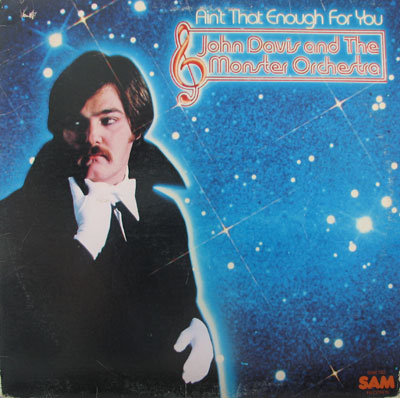
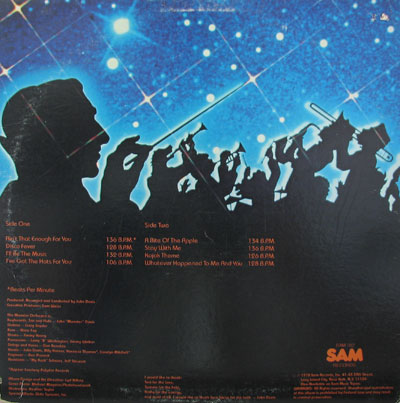
The Monster Strikes Again.
By 1979, John Davis and The Monster Orchestra had cemented their reputation as one of the most successful disco orchestras. Like two prize fighters, John Davis and The Monster Orchestra and The Salsoul Orchestra were going toe-to-toe for the title of disco’s best orchestra. By 1979, The Salsoul Orchestra were on the ropes. They’d lost Vince Montana Jr. year earlier and some of The Salsoul Orchestra’s stars had been sideline. Among them were Norman Harris. So, the title was up for grabs. So, John Davis and The Monster Orchestra returned to the studio and recorded The Monster Strikes Again.
For their fourth album, 1979s The Monster Strikes Again, two singles, Love Magic and a cover of Ashford and Simpson’s Bourgie Bourgie saw John Davis and The Monster Orchestra revisit the commercial success of their earlier albums. Considering The Monster Strikes Again proved to be John Davis and The Monster Orchestra’s final album, this seemed a fitting end to their recording career. However, what made The Monster Strikes Again such a successful album? That’s what I’ll now tell you.
For The Monster Strikes Again, John Davis wrote That’s What I Get, and penned Baby I’ve Got It, Holler and Love Magic with Vince Fay. Ron Netsky wrote When It’s Right For Love and the other tracks was a cover of Ashford and Simpson’s Bourgie Bourgie. When it came to recording The Monster Strikes Again, many of the same musicians that had played on previous John Davis and The Monster Orchestra albums were joined by some new faces.
When recording of The Monster Strikes Again began, a mixture of familiar and faces gathered. The rhythm section included guitarists Ronnie James and Craig Snyder, bassist Vince Fay and drummers Grant MacAvoy and Jimmy Young. They were joined by percussionists Larry Washington and David Waker, while Gerson Rosenbloom played synths. Taking charge of strings and horns was Don Renaldo. John Davis played flute, keyboards, synths, saxophone and took charge of vocals. Adding vocals were Billy Harner, Carolyn Mitchel and Vaneese Thomas-White, daughter of Rufus Thomas. Once The Monster Strikes Again was completed, it was released in 1979.
On the release of The Monster Strikes Again in 1979, it was more successful than its predecessor Ain’t That Enough.The two singles, Love Magic and Bourgie Bourgie surpassed this success. Not only were they commercially popular, but gave John Davis and The Monster Orchestra two massive club hits. Considering The Monster Strikes Again would prove to be John Davis and The Monster Orchestra’s final album, this seemed a fitting finale from one of disco’s greatest orchestras, which I’ll now tell you about.
Opening The Monster Strikes Again is Baby I’ve Got It, one of three songs penned by John and Vince Fay. A rocky rhythm section and percussion combine to drive the arrangement along. before synths and chiming guitars enter. When sassy, feisty harmonies enter, they prove to be a game-changer. They prove to be crucial to the track’s success. They’re soulful, but give the track a noticeable Euro Disco influence, joining the pounding rhythm section, synths and searing guitars. By now,
elements of soul, disco, Euro Disco have been combined. Unlike earlier John Davis and The Monster Orchestra albums, synths play a bigger role in this track. However, they work well and their sound has aged well. What really makes the track are the choppy, confident and often sassy harmonies. Adding the finishing touch is a growling sax solo, which adds to the drama of this hook-laden slice of disco, where disparate musical genres and influences are seamlessly fused.
Bourgie Bourgie, which was written by Ashford and Simpson, was one of two singles released from The Monster Strikes Again. Not only is this one of John Davis and The Monster Orchestra’s best tracks, but a true disco classic. As the arrangement gradually unfolds, you realize something special is about to reveal its secrets. This is case from the entrance of the pounding drums and percussion. They’re joined by a pensive piano, elegant gliding strings and blazing horns. Everything adds to the sense of anticipation. Heartfelt, soaring harmonies add a sense of urgency, while the rhythm section add bursts of dramatic funk. What then follows is true disco perfection. Everything falls into place at the right time. Elements of soul, funk and drama combine, while drama, beauty and elegance are ever-present. For just over six-minutes, producer John Davis produces a soulful and funky disco Magnus Opus which is truly timeless and worthy of being called a disco classic.
Percussion and the rhythm section join urgent guitars and stabs of keyboards before horns blaze and strings dance on That’s What I Get. Here, the guitars have a real Chic sound. This is quite unlike previous albums, but works well. The choppy sensual vocals are needy and filled with emotion. The vocals are swept away atop the lushest of strings that quiver and shimmer. By now, the arrangement is combining elements of soul, funk, disco and Euro Disco. However, the Euro Disco influence is much stronger than on earlier albums. It’s really apparent in the strings, harmonies and thunderous drums. in many ways that brings out the emotion and sense of neediness in the lyrics, on what is one of the highlights of The Monster Strikes Again.
There’s a slight moody, dramatic sound to When It’s Right For Love, as the arrangement begins reveals its secrets. You can hear this from the entrance of the rhythm section, chiming guitar and swathes of lush strings. When the harmonies enter, they’re veer between tender and impassioned to tight and urgent. One thing never changes, their soulfulness. They’re a perfect foil to the arrangement that takes as its reference points disco and Euro disco. Gradually the drama builds and builds, with horns growling, strings dancing, rocky guitars screaming and Larry Washington adding his trademark percussion. Like the other tracks, producer John Davis brings everything together seamlessly. The arrangement reaches a dramatic crescendo, one that’s melodic, soulful and dance-floor friendly. In short, it’s another classic slice of disco courtesy of John Davis and The Monster Orchestra.
Straight away, you realise Holler has a harder, funkier sound. This is very different to previous tracks. Key to this are the keyboards and rhythm section that drive the arrangement along. The soulful, cascading harmonies and braying horns provide a contrast. They’re the perfect foil to this tougher, funkier sound. Later, the arrangement heads in the direction of Euro Disco, which has been one of the themes of The Monster Strikes Again. Having said that, this was the direction disco was heading by 1979. Many producers had been influenced by the popularity of Euro Disco. Here, John Davis and The Monster Orchestra seamlessly switch from their trademark disco sound to incorporate this harder, funkier sound. In doing so, they demonstrate their versatility as musicians.
Closing The Monster Strikes Again is Love Magic, which sees John Davis and The Monster Orchestra determined to end their fourth album on a high. Chiming guitars and thunderous drums combine before percussion, an uber funky bass and swathes of cascading strings combine. When the harmonies enter, they’re choppy and urgent, and accompanied by dancing strings. Again, there’s a Euro Disco influence to parts of the arrangement, especially the drums, strings and harmonies. Apart from Euro Disco, funk and jazz have influenced other parts of the arrangement. The bass has been influenced by funk, while the keyboards have been influenced by jazz. Mostly, the arrangement has been influenced by Euro Disco, and it’s in that direction it heads. Nearly eight minutes it arrives at its destination, closing The Monster Strikes Again on a dance-floor friendly, funky high.
After just four albums, The Monster Strikes Again brought John Davis and The Monster Orchestra’s career to a close. Granted they released one more 12” single, Hanging Out in 1981, but The Monster Strikes Again was their final album. At least The Monster Strikes Again ended their career with a commercially successful album. Not only that, but The Monster Strikes Again featured two hit singles Love Magic and Bourgie Bourgie. This meant a return to the commercial success and critical acclaim that John Davis and The Monster Orchestra enjoyed earlier in their career. However, by then, their music had changed.
Indeed, what’s noticeable about The Monster Strikes Again is the shift towards Euro Disco. This was a common occurrence among disco producers. Whereas previously American disco producers stuck to the classic American disco sound, they started to move towards the sound favored by European producers. This sound had proved commercially successful for Boris Midney and Giorgio Moroder. While this changed of sound might have prolonged the career of many disco producers, nothing could save disco from what happened on 12th July 1979, Disco Demolition Night.
Having provided the musical backdrop to the second half of the seventies. disco went from hero to zero in the space of a year. Suddenly, disco sucked. Disco’s downfall started on Christmas Eve 1978, That’s when Steve Dahl was fired by Chicago radio station WDAI. It had previously been a rock station, but switched to disco. Steve wasn’t out of work long. He was hired by WLUP, a rival station. WLUP played rock, which suited Steve Dahl. He’d an inkling that disco wasn’t long for this world.
Steve wasn’t a fan of disco, and took to mocking disco on-air. Openly, he mocked WDAI’s “disco DAI.” It became “disco die” to to Steve. Soon, Steve had created the Insane Coho Lips, his very own anti-disco army. Along with cohost Gary Meier, they coined the now infamous slogan “Disco Sucks.” The backlash had begun.
From there, the Disco Sucks movement gathered momentum. Events were held all over America. This came to a head at Disco Demolition Derby, which was Steve Dahl’s latest anti-disco event. Each one was becoming bigger, rowdier and attracting even more publicity. Disco Demolition Derby, which was held at Comiskey Park, Chicago on 12th July 1979 surpassed everything that went before. WFUL were sponsoring a Chicago White Sox game at Comiskey Park. if fans brought with them a disco record, they’d get in for ninety-eight cents. These records would be blown up by Steve Dahl. An estimated crowd between 20-50,000 people attended. Quickly the event descended into chaos. Vinyl was thrown from the stands like frisbees. Then when Steve blew up the vinyl, fans stormed the pitch and rioted. Things got so bad, that the riot police were called. After the Disco Demolition Derby, disco nearly died.
Following Disco Derby Night, disco’s popularity plunged. Disco artists were dropped from labels, disco labels folded and no further disco albums were released. Disco was on the critical list, and suffered a near death experience. It took a long time to recover. After disco’s demise, dance music changed.
No longer were record labels willing to throw money at dance music. Budgets were suddenly much smaller. Gone were the lavish productions of the disco orchestras of the seventies. This is epitomised by The Salsoul Orchestra and John Davis and The Monster Orchestra. Strings and horns were now a luxury. Music would have to go back to basics. For John Davis and The Monster Orchestra, this was the end of the road.
Disco Demolition Night almost destroyed disco. After that, disco artists, records and labels were hugely unpopular. So it’s no surprise that John Davis and The Monster Orchestra didn’t release any more albums. Instead they released just four albums of almost flawless disco. The Monster Strikes Again, with its fusion of disco, Euro Disco, soul, funk and Philly Soul, brought John Davis and The Monster Orchestra’s career to a close, with one of their finest albums of their four album career which at last, have bee reissued.
For way too long, the four John Davis and The Monster Orchestra have been out of print. Not any more. They’ve been released by Harmless Records as part of their Disco Recharge series. The second volume in this series features Ain’t That Enough For You and The Monster Strikes Back. This brings to a close the John Davis and The Monster Orchestra story who without doubt, were one of the greatest disco orchestras. Proof of that is John Davis and The Monster Orchestra’s fourth album The Monster Strikes Again.
DISCO RECHARGE-JOHN DAVIS AND THE MONSTER ORCHESTRA-AIN’T THAT ENOUGH FOR YOU AND THE MONSTER STRIKES AGAIN.
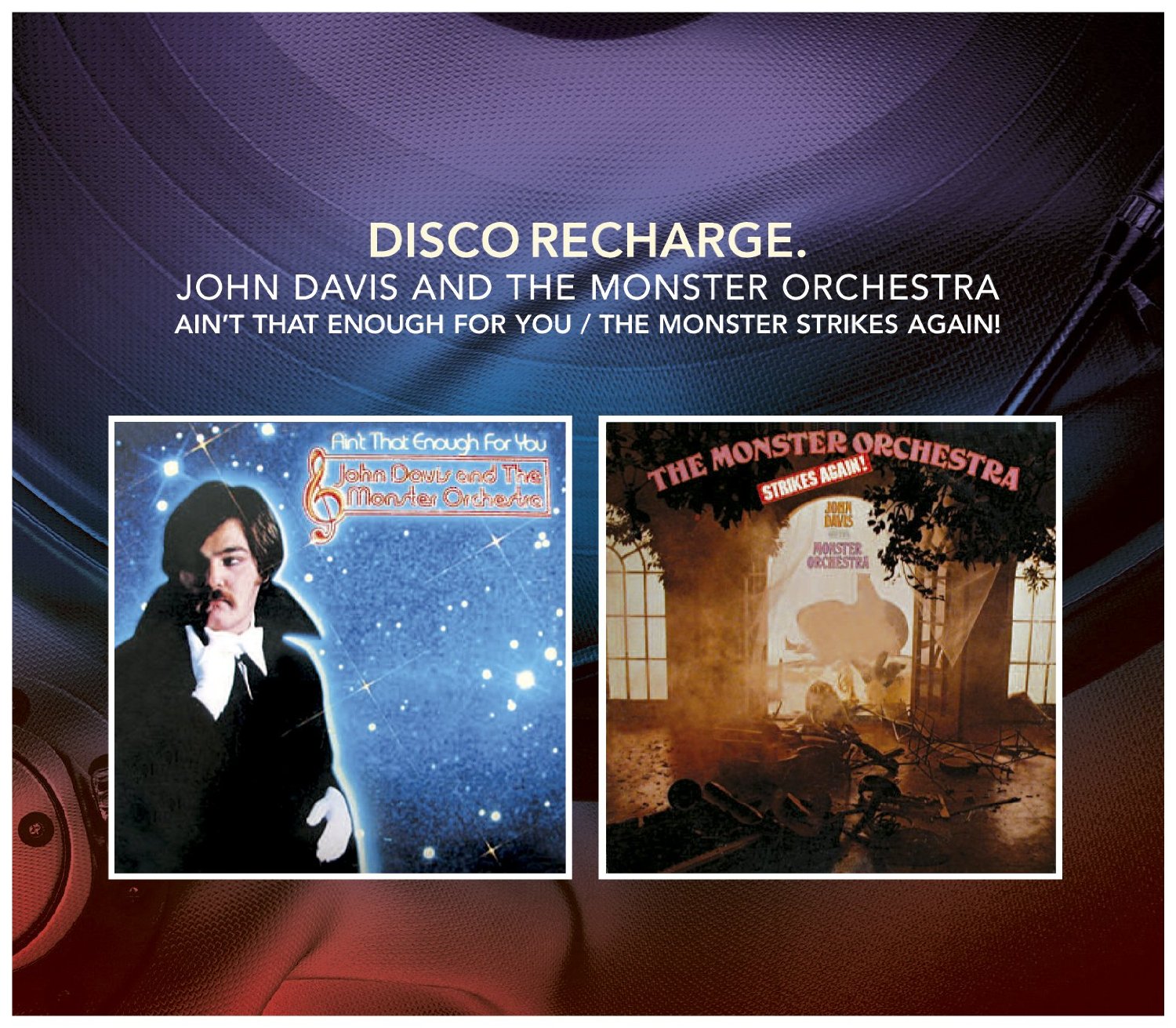
JOHN HIATT-TERMS OF MY SURRENDER.
JOHN HIATT-TERMS OF MY SURRENDER.
Recently, some of music’s elder statesmen have made a welcome return. During the last couple of weeks, Eric Clapton, Richard Thompson, Loudon Wainwright III and Tom Petty and The Heartbreakers. That’s not all. Another musical veteran on the comeback trail is John Hiatt.
John’s new album Terms Of My Surrender, is his twenty-third studio album. It’s a double album, which was released on New West Records, on 21st July 2014. That’s forty years after John released his debut album Hangin’ Around The Observatory in 1974. Since then, John Hiatt has established a reputation as one of America’s finest singer-songwriters. That’s apparent on Terms Of My Surrender.
When John Hiatt began recording Terms Of My Surrender, he was sixty-one. He was born in Indianapolis, on 20th August 1970. John, who is one of seven children. Tragedy touched his life early on. His older brother committed suicide and his father died two years later, after a lengthy illness. To escape the tragedy that had touched his life, John spent his time listening to the blues, Bob Dylan and Elvis Presley. Along with Indy Car racing, this was how John to spent his early years. Then John picked up a guitar for the first place.
He was only eleven when he first picked up a guitar. Before long, John was playing in bands around Indianapolis. This included some of the city’s clubs. Little did John, or anyone who saw him in clubs like the Hummingbird, know that John would make a living as a musician.
Aged eighteen, John left Indianapolis and headed to Nashville. His first job w as a songwriter for the Tree-Music Publishing Company. John was paid just twenty-five dollars a week. Despite being unable to read music, John penned 250 songs. At the same time, John joined White Duck.
Unlike most groups, White Duck had three singer-songwriters within the group. John featured on their 1972 sophomore album In Season. He wrote and sang two tracks on In Season. This proved to be start of his career.
It was around this time that John made his solo debut. He was splitting his time between White Duck and his solo career. Then in 1973, John met Don Ellis of Epic Records and signed his first solo deal. His debut single was We Make Spirit. The followup was Sure As I’m Sitting Here, which would later give Three Dog Night a hit single. A year later, John Hiatt released his debut album.
John released Hangin’ Around the Observatory in 1974, on Epic Records. It failed to chart. Neither did his 1975 sophomore album Overcoats. This resulted in John being dropped by Epic Records.
Next stop was MCA. Sadly, John’s fortunes didn’t improve. Neither 1979s Slug Line nor Two Bit Monsters entered the US Billboard 200. So, John changed label again.
Stll success failed to come John’s way. He released a trio of albums on Geffen. These albums, 1983s All Of A Sudden and 1985s Riding With The King and Warming Up To The Ice Age failed to chart. After Warming Up To The Ice Age John left Geffen. However, success came his way when he signed to A&M.
One of the most successful periods of John’s career began in 1987. That’s when John released his A&M debut Bring The Family in 1987. It transformed his fortunes, reaching number 107 in the US Billboard 200 charts. Things got better when 1988s Slow Turning reached number ninety-eight in the US Billboard 200 charts. Then in 1990, John released the tenth album of his US Billboard 200 charts. This was the most successful album of John’s career. He surpassed this with 1993s Perfectly Good Guitar, which reached number forty-seven in the US Billboard 200 charts. Perfectly Good Guitar was John’s last album before he headed to Capitol.
At Capitol, John’s fortunes were mixed. 1998s Walking On reached number forty-eight in the US Billboard 200 charts. However, 1997s Little Head wasn’t a commercial success, stalling at number 111 in the US Billboard 200. For John this must have proved hugely disappointing. Just when he looked like becoming one of the most successful singer songwriters, his career took a wrong turn. Getting back to where he’d been was a long, hard road.
Following the commercial failure of Little Head, John left Capitol. He signed for Vanguard and released two albums. 2000s Crossing Muddy Waters stalled at 110 in the US Billboard 200 charts. Things improved slightly when 2001s The Tiki Bar Is Open reached number eighty-nine in the US Billboard 200 charts. The Tiki Bar Is Open proved to be the final album John released for Vanguard. After that, he signed to New West Records, the label he’s still signed to.
Beneath This Gruff Exterior was John’s seventeenth album and his first release for New West Records. Released in 2003, it marked an upturn in John’s fortunes, reaching number seventy-three in the US Billboard 200 charts. Two years later, in 2005, John released Master Of Disaster, which featured The North Mississippi Allstars. It stalled at a disappointing number 126 in the US Billboard 200 charts. There was a gap of three years until John released his next album, Same Old Man. This marked the start of an Indian Summer in John’s long career
The Indian summer began with 2008s Same Old Man, which reached number seventy-eight in the US Billboard 200 charts. 2010 saw release of The Open Road, which reached number seventy-two in the US Billboard 200 charts. Then in 2011, John released his most successful album in seventeen. This was Dirty Jeans and Mudslide Hymns, which number fifty-nine in the US Billboard 200 charts. However, John surpassed its success with his previous album Mystic Pinball, which reached number thirty-nine in the US Billboard 200 charts. Incredibly, Mystic Pinball was the most successful album of John’s five decade career. Would Terms Of My Surrender surpass the success of Mystic Pinball.
For Terms Of My Surrender, John penned eleven new tracks. He headed to the studio with a tight, talented band and producer Doug Lancio. John played guitar, harmonica and sang lead vocals. The rhythm sectio included bassist Nathan Gehri, drummer and percussionist Kenneth Blevins and Doug Lancio on guitar, banjo and mandolin. Jon Coleman played keyboards and Brandon Young sang backing vocals. When Terms Of My Surrender was recorded, it was released on 21st July 2014.
On the release of Terms Of My Surrender, critics welcomed the more organic sound of the album. They remarked that John’s voice had aged well. Its smokey, lived-in sound suits the fusion of blues, roots and rock. Mostly, John plays acoustic guitar, saving his electric guitar for special occasions, which hopefully, there will be many on Terms Of My Surrender. Will that be the case? That’s what I’ll tell you.
Opening Terms Of My Surrender is Long Time Comin.’ It’s a slow, heartfelt ballad. When it begins to unfold, the arrangement is understated. John plays an acoustic guitar. It combines with slow, thoughtful drums and percussion. They leave space for John’s worldweary vocal. Hurt and pain fill his vocal, on this song about love lost. Midway through the track, a soaring glistening guitar joins washes of Hammond organ and drums. They’re the perfect backdrop for John’s vocal. After that, the track returns to its acoustic roots and heads to its wistful ending.
Confidently, John strums his guitar on Face Of God. Along with the rest of his band, he creates a bluesy backdrop. This includes short, sharp bursts of harmonica and Hammond organ. Even John’s weary, lived-in vocal has a bluesy hue. Especially when he asks “how much more suffering, before you see the face of God.” Frustration, anger and despair fill his voice on a track that’s the perfect showcase for John Hiatt singer-songwriter.
Marlene sees a change of sound. It’s a much more upbeat sounding track. That’s down to John’s tender, lovestruck vocal. Especially when he sings the lines “Marlene, Marlene, like a summer rain, like the honey dew, drippin’ all in my brain, Marlene, Marlene, I’m in love with you.” Meanwhile, the band provide an understated backdrop. Elements of country, folk and blues are combined with poppy hooks.
On Wind Don’t Have To Hurry, a banjo accompanies John’s husky vocal. He’s accompanied by percussion and scatted harmonies. They deliver the constant chorus of “Na Na Na Na.” This lets the song down. Especially given the quality of the rest of the lyrics, which are full of social comment. Midway through the track the arrangement fills out. Drums, harmonies and handclaps unite. After that, it’s a return to the understated, banjo drive arrangement. By the end of the track, it’s apparent this track doesn’t work, and shouldn’t have made the cut.
Nobody Knew His Name sees a continuation of the understated arrangement. John strums his trusty guitar while the rhythm section provide the heartbeat. A slide guitar is sprayed across the arrangement. John’s live-in, country-tinged vocal is perfect for this track. Sometimes, he’s accompanied by a female vocals. She’s yin to John’s yang. Together, they bring the mystery in the lyrics to life. You’re left wondering who is this mysterious man who Nobody Knew His Name? Whoever he was, he provided the inspiration for one of Terms Of My Surrender’s highlights.
Baby’s Gonna Kick sees a return to earlier the bluesy sound. It’s a slow, moody, bluesy sounding track. While the rhythm section lock into a groove, a bluesy harmonica accompanies John’s vocal. So, do harmonies, keyboards and guitar. Seamlessly, everything fits into place. This includes the lyrics, John delivery of them. Not only does John deliver one of his best vocals, but delivers a masterclass in how to play blues harmonica. Aided and abetted by his tight, talented band they deliver a slow, sultry, moody bluesy track that’s truly glorious.
Nothin’ I Love marks a return to the understated arrangement. Not for long though. At the start, John’s accompanied by just the guitar. That’s until washes of Hammond organ sweep in. Then your patience is rewarded. Another bluesy track unfolds. High kicking guitars signal the changing of the guard. From there, the guitars prove the perfect foil for John’s heartbroken, desperate vocal.
Terms Of My Surrender sees John drop the tempo and deliver a jazz-tinged vocal. His vocals are tinged with humour and some of the best on Terms Of My Surrender. One of the funniest and most disturbing is “sometimes love can be so wrong, like a fat man in a thong.” Not a pleasant thought. Accompanying John are just a guitar, drums and cooing harmonies. Add all is together and the result is an understated, jazz-tinged paean.
Following up Terms Of My Surrender wasn’t going to be easy. It was, one of the best tracks on Terms Of My Surrender. So, John John changes tack on Here To Stay. He’s got the blues again. Washes of guitar, handclaps and harmonies accompany John’s soul-baring vocal.
Old People sees a return of John’s legendary wit. He doesn’t much care whether the lyrics are P.C. From the get-go, we’re privy to the wit and wisdom of John Hiatt. Especially when he sings: “old people are pushy, they don’t have much time, they’ll shove you at the coffee shop, cut ahead in the buffet line.” John and his band turn this track into a bluesy sing-along. Full of slick hooks and infectiously catchy, you’ll not forget this song in a hurry.
Closing Terms Of My Surrender is Come Back Home , a guitar driven track. That guitar accompanies John’s needy vocal. He’s missing the woman who left him alone. Despair and loneliness fill his vocal, as the piano enters. His hurt shines through as the arrangement opens up, fusing country, blues and rock. The finishing touches are washes of Hammond organ, harmonies and stabs orb blistering guitar. Along with John’s needy, hurt-filled vocal, they ensure Terms Of My Surrender ends on a high.
Just like you’d expect from a musical veteran, John Hiatt knows to always leave the audience wanting more. That’s the case with Terms Of My Surrender. It features eleven tracks. He doesn’t make the mistake so many young musicians make, and release sprawling albums. Instead, Terms Of My Surrender is a reminder of the age of the vinyl album.
Back then, an album featured only an artist’s best work. That’s almost the case here. The only time John makes a wrong turning is the banjo driven Wind Don’t Have To Hurry. It just doesn’t work. Why neither John nor Doug Lancio realised this seems strange. Without Wind Don’t Have To Hurry, Terms Of My Surrender would be a return to the golden age of the album. Despite that, Terms Of My Surrender sees John Hiatt’s Indian Summer continue.
John Hiatt seems to have found his musical home at New West Records, who recently released Terms Of My Surrender. His last few albums have seen a return to the commercial success and critical acclaim John Hiatt enjoyed earlier in his career. Just like a fine win John’s matured as a singer and songwriter. He’ll be sixty-two next month and is putting his age and experience to good use.
That’s apparent on Terms Of My Surrender. Songs of love and love lost, sit side-by-side side with songs full of social comment and John’s trademark humour. The result is a welcome return to form on Terms Of My Surrender, which seesJohn Hiatt’s comeback continue apace.
JOHN HIATT-TERMS OF MY SURRENDER.
ANALOG DREAMS.
ANALOG DREAMS.
Every week, an average of a thousand albums are issued. They’re a mixture of new albums, reissues, box sets and compilations. Then there’s albums that are only released as a download. As you can see, competition is for the record buyer’s pound is fierce. That’s an understatement.
Never before, has so much music been released. Partly, that’s because no longer is it so expensive to record an album. That’s no bad thing. It’s democratised the making of music. No longer do you need either a huge budget or a record company behind you.
Instead, it’s possible to record an album in the comfort of your own home. All you need is a computer and digital audio workstation. You don’t even need to be able to play an instrument or sing. Instead, you can sample and use loops. After you’ve recorded your album, it’s possible to release it on your own label. It’s a return to punk D.I.Y. ethos. That’s all very well. However, for music lovers, all this music presents a problem.
Whether you make a weekly exodus to your favourite record shop, or shop online, this proliferation of music presents a problem. How you separate the wheat from the chaff? After all, not all music is equal. The music released on a weekly basis can be described as the good, the bad and the ugly. So how do you find the best music?
The best place to start are reviews. Blogs like this one, are constantly searching the best in new music and reissues. Then there’s weekly and monthly music magazines and some newspapers. Some radio shows take pride in breaking the best new music. Other radio shows seek out the best in new music and reissues. They’re often presented by DJs who see it as their raison d’être to educate their listeners. However, just like bloggers and journalists, even the most dedicated DJ can’t review all the music released every week.
Sadly, many albums released each week aren’t even released. Nothing whatsoever is written about them. These albums could be crammed full of quality music. However, they still find their way into some people’s record collection. The reason for this, is the album cover.
Often, a bold, striking or imaginative album cover has resulted in me buying an album. Sometimes, I’ve discovered some incredible, sometimes, life-changing music. Other times, the cover proved to be the best thing about an album. These albums are in the minority. Thankfully, I’ve a high success. That may change though.
Recently, I noticed a compilation entitled Analog Dreams was due to be released by DAT Records on 28th July 2014. I saw it advertised in an online record store. What drew me to Analog Dreams was the psychedelic cover.
I knew nothing about the music on Analog Dreams. There was no description of the music on the record shop website. So, I tried to find out more about the compilation. Despite my best efforts, I couldn’t find any details of Analog Dreams. So, I decided to take the plunge. I paid my money and the next day, a copy of Analog Dreams dropped through my letterbox.
I was like a kid on Christmas Day, desperate to discover the delights within Analog Dreams. Would it be a compilation of rare sixties psychedelia? Secretly, I hoped it would be. When I opened the parcel, I was greeted by a lurid green CD box. Strangely, it seemed to setoff the psychedelic cover. Opening the box up, I discovered that Analog Dreams was an album of psychedelic trance. Okay.
As regular readers know, I’ve a pretty eclectic musical taste. I’ll listen to anything from ambient to zydeco, and anything in-between. That includes trance. However, that was a long time ago. Back then, the whole dance music scene was in its infancy. Since then, I’ve heard a lot of music. That includes psychedelic trance.
Looking at the track listing to Analog Dreams, I recognised some of the tracks. There’s contributions from Hallucinogenic, Space Tribe, Doof, Slinky Wizard, Total Eclipse, Etnica, Prana and Nervasystem. Some of the tracks aren’t the original version. Instead, there’s remixes, extended mixes and evan a live versions of Total Eclipse’s Free Lemonade on Analog Dreams. In total, there’s nine tracks on Analog Dreams, which I’ll tell you about.
Hallucinogenic’s LSD ’93 opens Analog Dreams. LSD was the first Hallucinogenic track produced by Simon Posford. Recording took place at Butterfly Studios in 1993. The following year, LSD was released on the Dragonfly label. For sample spotters, it’s a sample of Ken Kesey talking about LSD that opens futuristic, trippy sounding track. After fifty seconds, the track explodes into life, and pounding drums and hissing hi-hats propel this anthem along. For the next five minutes, the sound of LSD assails you.
The original mix of Space Tribe’s The Great Spirit was produced around 1994 or 1995. Again, it was co-produced by Simon Posford at Butterfly Studios. The hallucinogenic remix if The Great Spirit then featured on Sonic Mandala, Space Tribe’s 1996 debut album. However, the original version was never released, Until now. With a thunderous kick drum at the heart of the track, it’s a relentless and mesmeric assault on your senses. Having said that, there are similarities with the previous track.
It was in 1995, that the original mix of Doof’s We Are Free was first released. It featured on the Return To The Source’s very first compilation of Deep Trance and Ritual Beats. The version on Analog Dreams is the desk mix. It has a futuristic, moody and hypnotic sound.
Many people won’t have met a Slinky Wizard Before. They didn’t go to Hogwarts. More likely a rave, where they’d provide tracks like Funkus Mukus. Slinky Wizard recorded Funkus Mukus at Butterfly Studios in January or February 1996. One of the samples allegedly features a US Army or Air Force Press Officer, discussing Area 51. That’s fitting. Again, there’s a robotic, futuristic sound before thunderous drums pound. They propel the arrangement along at 143.8 beats per minute. Sci-fi synths bubble above the arrangement before the big, bouncy trance chords enter. By now a 21st Century hands in the air, lysergic anthem has began to unfold.
Green Nuns Of The Revolution sounds like a character from a sci-fi B-movie. Their contribution is the extended version of Ring Of Fire. It bares no resemblance to Johnny Cash. Ring Of Fire was released on the B-Side of the Flying Rhino’s Afterburner E.P. A high energy, atmospheric track, the TR-303 is omnipresent throughout the track. At the start, the track builds and builds. That’s until the arrangement is almost ready to explode into life. When this happens, banks of synths are at the heart of this epic.
Total Eclipse’s live mix of Free Lemonade, is something of a first. It’s not live tracks feature on a compilation. The track was recorded at a Trance Body Express party in 1993. Free Lemonade which would later feature on their 1995 album Delta Aquarids, was the finale to what’s remembered as a memorable set.
Ethica showcased Full On at the Voov festival in the summer of 1995. It gave Ethica the opportunity to make use of their SH-101 synth. After the festival, the track was extended. When it was recorded, Ethica decided to make use of their newly acquired JD800 synth. Just like the SH-101 synth, it features on Full On, which was released by Blue Room. Although several mixes of Full On were released, the original, acid-tinged version which features on Analog Dreams is the best.
Prana released Voyager 2 in 1993, on the POF label. The track was recorded by what was the first lineup of Prana. This included Nick Taylor and Tsuyoshi Suzuki and Chris Deckker on percussion. Together they combine an Eastern influence with analog synths. There’s even a sample Om Namah Shivayah included. This is the perfect accompaniment to the ethnic influence. When all this combined, the result is a ethnic tinged track with a spacey, lysergic influence.
Closing Analog Dreams is Nervasystem’s Whirling Dervish. The version included is the kaleidoscope mix. It was released on Matsuri’s 1996 compilation The Truth Of Communication. This version if much more understated and laid back than the original version. There’s even an ambient influence to this atmospheric, haunting and moody track.
So that’s the story behind Analog Dreams, a compilation I bought without even knowing anything about. It wasn’t the psychedelic compilation I’d expected. Instead, Analog Dreams features nine psychedelic trance tracks. Many connoisseurs of psychedelic trance will remember these tracks fondly. However, some of the tracks haven’t stood the test of time.
Instead, they sound dated. That’s especially the case with Hallucinogenic’s LSD ’93, Space Tribe’s The Great Spirit and Total Eclipse’s live mix of Free Lemonade. In their day, both tracks sounded fresh and innovative. Twenty years later, they’re a reminder of part of electronic’s past and its music rich musical history. That some of the tracks on Analog Dreams haven’t aged well isn’t not unusual.
Many dance tracks haven’t aged well. Far from it. That’s also the case with many tracks from the Acid House era. Maybe we shouldn’t be surprised. The tracks on Analog Dreams were made to dance to, not listen to at home on a stereo. Instead, they were meant to be listened to at high volumes in hot, sweaty nightclubs. Nobody expected the music to be remembered twenty years later. Not even the producers who made the tracks. Instead, they believed the music would be almost disposable, part of an evening’s soundtrack. Soon, it would be replaced by another track. However, that’s not the way things have worked.
Nowadays, nostalgia is a profitable business. People want to remember the music they danced to in clubs twenty years ago. They want to relive their memories and relive their youth. That’s what Analog Dreams, which was released by DAT Records is an opportunity to do.
The nine slices of psychedelic trance will bring memories flooding back. Twenty years will fall from your shoulders. Instantly, you forget your forty not twenty. You forget that the music isn’t timeless. It never was meant to be.
Instead, the music on Analog Dreams was the soundtrack to your weekend when anything was possible. Not any more. You’re older, wiser and supposedly grownup. Long ago did you retire from the raving scene. You leave that to another generation. However, if you want to relive your youth, then Analog Dreams will bring back memories of another musical era come flooding back.
ANALOG DREAMS.
DJIVAN GASPARYAN-I WILL NOT BE SAD IN THIS WORLD AND MOON SHINES AT NIGHT.
DJIVAN GASPARYAN-I WILL NOT BE SAD IN THIS WORLD AND MOON SHINES AT NIGHT.
The first time that Brian Eno heard Djivan Gasparyan perform was in Moscow, in 1988. Straight away, Brian was captivated by Djivan Gasparyan’s haunting music. So much so, that Brian decided to track down Djivan Gasparyan’s previous album I Will Not Be Sad In This World, which was been rereleased by All Saints Records.
I Will Not Be Sad In This World and Moon Shines At Night feature on a lovingly compiled double album of Djivan Gasparyan’s music. It was recently rereleased by All Saints Records. Both albums are a welcome reminder of a hugely talented musician, who was first discovered by Brian Eno. He first tracked down a copy of I Will Not Be Sad In This World in 1988.
Before long, Brian found a copy of I Will Not Be Sad In This World. It had been released five years before, in 1983, by Melodiya, the Russian state owned record company. When Brian Eno first heard I Will Not Be Sad In This World he referred to the album as: “without doubt, one of the most beautiful and soulful recordings I have ever heard.” Coming from a musical luminary like Brian Eno, this was high praise indeed. Before long, Brian was championing the music of Armenian born duduk player, Djivan Gasparyan in the West.
Brian Eno decided that Djivan Gasparyan’s music deserved to be heard by a much wider audience. No longer would be one of music’s best kept secrets. So Brian set about negotiating the release of I Will Not Be Sad In This World on his own label Opal/Land Records. This took some time. Eventually, I Will Not Be Sad In This World was released in 1989. By then, a tragedy had struck Armenia.
When I Will Not Be Sad In This World was released in 1988, what should’ve been a joyous occasion, was tinged with sadness. A devastating earthquake had struck Armenia on 7th December 1988. The effects of the earthquake in Armenia were still being felt. Many people died and were left homeless. Djivan shared their pain and suffering. After all, Armenia was where Djivan Gasparyan was born on October 12th 1928.
Djivan first learnt to play the duduk when he was six. His father was an talented duduk player. So, it was only natural that Djivan became his apprentice. His father taught Djivan how to master the duduk. He taught his son well.
By the time he was twenty, Djivan was a soloist of the Armenian Song and Dance Popular Ensemble and the Yerevan Philarmonic Orchestra. This resulted in Djivan touring the world. He visited Europe, Asia, America and Middle East with the Yerevan Philarmonic Orchestra. After this, success would come his way as a soloist.
Djivan was a regular competitor at the UNESCO worldwide competitions. He won four medals in four separate decades. His first win came in 1959. Further wins came in 1962, 1973 and 1980. When he won his third medal in 1973, Djivan was awarded the honorary title of People’s Artist of Armenia. Then by the time he won his final UNESCO medal, Djivan was Professor at the Yervan Conservatoire. He’s held this position for over forty years. During this period, Djivan became one of Armenia’s most successful musical exports.
So, it’s no surprise that eventually, he was awarded the honorary title of People’s Artist of Armenia. Sixteen years later, Djivan Gasparyan’s music was about to be heard by the wider audience it deserved.
I Will Not Be Sad In This World.
On its release in 1989, I Will Not Be Sad In This World was dedicated to the victims and survivors of the Armenian earthquake. One of Armenia’s most talented son’s was helping to publicise the continuing plight of the Armenian people. He did this through his music.
I Will Not Be Sad In This World was released in 1989, to widespread critical acclaim. Worldwide, critics were won over. No wonder, given the quality of the music
Listening to I Will Not Be Sad In This World the seven tracks are variously ethereal, haunting, atmospheric and beautiful. The music might be minimalist, but it’s truly timeless. From opening bars of A Cool Wind Is Blowing, the music is captivating and haunting. Here, Djivan is accompanied by just Vachagan Avakian. His duduk drone is omnipresent, as Djivan’s duduk quivers and shivers, emotively.
Several tracks on I Will Not Be Sad In This World have a cinematic sound. This includes Brother Hunter and The Ploughman. Both tracks would perfect for cinematographers everywhere. Each song paints pictures in your mind eye. Especially the Eastern tinged The Ploughman. It conjures up pictures of hot nights under the Arabian sun. Surely, a filmmaker somewhere will discover this hidden gem. They have in the past. Djivan’s music has previously featured in The Gladiator and The Last Temptation of Christ.
Look Here My Dear sounds like a heartfelt plea. Its ethereal beauty is truly memorable. Little Flower Garden has a haunting and spiritual sound. Evocative and poignant describes Your Strong Mind. You find yourself shutting your eyes and letting the music wash over you. You wallow in its beauty, allowing it to cleanse your soul.
Dle Yaman proves a perfect way to close I Will Not Be Sad In This World. It’s a truly haunting and atmospheric track. Again, it washes over you. The duduk drone is panned right as Djivan Gasparyan delivers a soul-baring performance. This proves a heartbreakingly beautiful way to close I Will Not Be Sad In This World.
Earlier, I described I Will Not Be Sad In This World as ethereal, haunting, atmospheric and beautiful. That’s an understatement. The music is also atmospheric, cinematic and evocative. Djivan Gasparyan’s music is also minimalist and timeless. It benefits from eternal beauty. That’s not all.
Another way to describe I Will Not Be Sad In This World is spiritual. So much so, that you can’t help but close your eyes and wallow in the music’s inherent beauty. It cleanses your soul. Having heard the music on I Will Not Be Sad In This World, you want to hear more from Djivan Gasparyan.
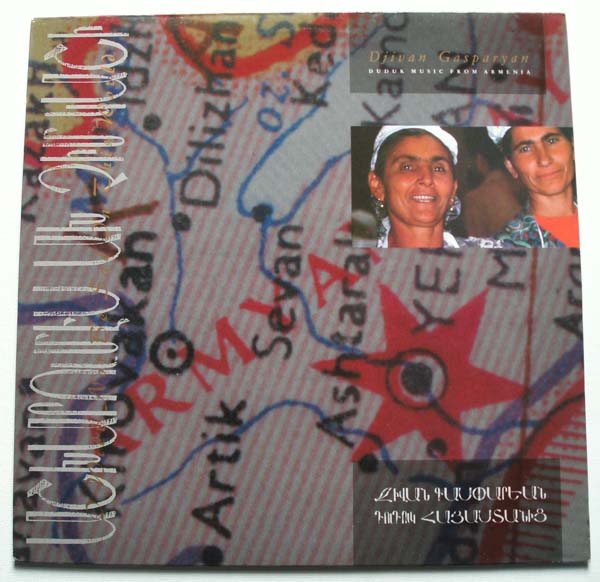


Moon Shines At Night.
Sadly, despite the critical acclaim that followed the release of I Will Not Be Sad In This World, it took another four years before Djivan Gasparyan released his sophomore album Moon Shines At Night.
Eventually, Brian Eno managed to bring Djivan Gasparyan to London in 1993. Brian decided to bring onboard Michael Brook. He’d regularly worked with Brian Eno on the past. The Canadian guitarist and producer, Brian thought, would be the perfect collaborator for Djivan and his band.
Accompanying Djivan were a small band consisting of damkash player Vachagan Avakian plus Levon Arshukuna and E. Oganesyan. They arrived at Church Studios, London and started recording the album on a two-track recorder. It was recorded live. There were no overdubs. Even when Djivan sung for the first time on an album. This was on Mother Of Mine and the hugely poignant 7th December 1988 which refers to the Armenian earthquake. Djivan and his band were consummate professionals throughout the recording session. After just three just hours, what would become Moon Shines At Night was completed.
Again, critical acclaim came the way of Moon Shines At Night. Indeed, the response to Moon Shines At Night surpassed that of I Will Not Be Sad In This World. Partly, that was down to Brian’s decision to bring Michael Brook onboard as producer. It’s not that Michael Brooks’ adds to Moon Shines At Night. Instead, he allows the musicians to shine. They’re allowed to take centre-stage and play starring roles on another critically acclaimed album, Moon Shines At Night.
The hopeful sounding Lovely Spring opens Moon Shines At Night. Tenderly, Djivan caresses the duduk, coaxing beauty from its midst. This results in an almost mystical sound. Sayat Nova may have a slightly wistful sound. There’s a sense of loss and longing in the music. Despite that, beauty is omnipresent.
Very different is 7th December 1988, a song that deals with the tragic Armenian earthquake. It features a vocal from Djivan full of hurt, heartbreak and sadness. Memories come flooding back. People who died, and others who lost everything. His pain and hurt is almost tangible in what’s an outpouring of grief and loss.
Slowly the soul-searching Don’t Make Me Cry unfolds. It’s without doubt, one of the most beautiful songs on Moon Shines At Night. Djivan having been hurt before, can’t stand for it to happen again. So, he pleads Don’t Make Me Cry.
You Have To Come Back To Me floats hopefully along. There’s a sense of hope as you loose yourself within the music. It carries you along, taking taking you on a journey where hope and joy are constant companions.
As Tonight unfolds, there’s an element of drama. The arrangement quivers and shimmers. It’s louder and much more powerful. There’s also a sense of melancholy and sadness. This continues on the wistful, but beautiful They Took My Love Away. A tale of love lost it’s a deeply moving track. Moon Shines At Night is best described as haunting and cinematic. One of the most beautiful tracks on Moon Shines At Night is Apricot Tree, a ten minute epic. From the get-go it’s a truly captivating and sometimes, haunting. You loose yourself in the track. It sweeps you along, revealing a shimmering, sometimes spiritual sound.
Mother Of Mine closes Moon Shines At Night. It features another heartfelt, emotive vocal from Djivan. His vocal takes centre-stage, as the drone sits subtly in the background. Meanwhile, Djivan’s vocal is akin to a window into his soul.
Ten years passed between the recording of I Will Not Be Sad In This World and Moon Shines At Night. During that period, Djivan Gasparyan had matured as a songwriter and musician. That’s not all. By the time he recorded Moon Shine Bright At Night, Djivan had discovered his voice. He proved to be a talented vocalist, who had the ability to breath life, meaning and emotion into lyrics. That’s apparent on the poignant 7th December 1988 and the heartfelt Mother Of Mine. Just like the rest of Moon Shines At Night these two tracks ooze quality. That’s the same as I Will Not Be Sad In This World which was recently rerelease.
I Will Not Be Sad In This World and Moon Shines At Night feature on a lovingly compiled double album of Djivan Gasparyan’s music, which was recently rereleased by All Saints Records. Both albums are a welcome reminder of a hugely talented musician, whose music belatedly, found the audience it deserved.
By the time Brian Eno’s record company, Opal/Land Records, rereleased Djivan Gasparyan’s debut album I Will Not Be Sad In This World in 1989, he was already sixty-one. He’d been playing the duruk
for fifty-five years. He was a master musician, who when a member of the Yerevan Philarmonic Orchestra, toured the world. However, it wasn’t until Brian Eno discovered Djivan Gasparyan that his music was heard by a wider audience. After that, many artists collaborated with Djivan Gasparyan.
This included everyone from Peter Gabriel, Sting, Brian May, Lionel Ritchie and Hans Zimmer. Djivan Gasparyan’s music has also featured in a number of films, including The Gladiator and The Last Temptation Of Christ. Belatedly, Djivan Gasparyan’s music found the wider audience it deserved. Hopefully, after the release of I Will Not Be Sad In This World and Moon Shines At Night, even more people will discover the delights of one of the man they call the “master of the duduk.”
DJIVAN GASPARYAN-I WILL NOT BE SAD IN THIS WORLD AND MOON SHINES AT NIGHT.
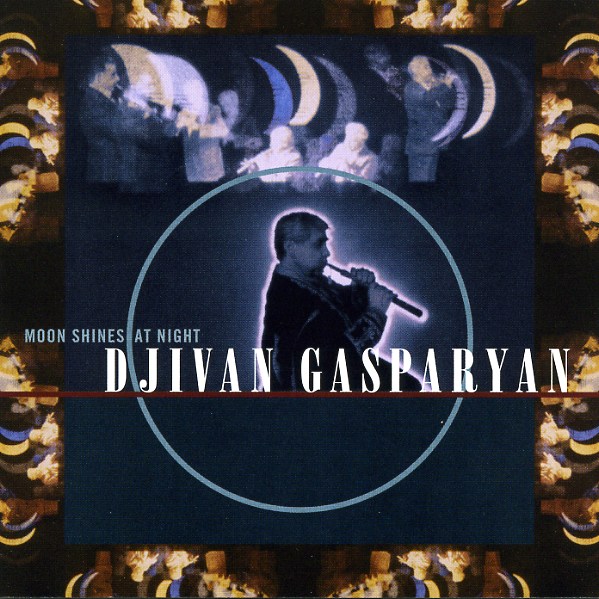
CALYPSO -MUSICAL POETRY IN THE CARIBBEAN 1955-1969.
CALYPSO -MUSICAL POETRY IN THE CARIBBEAN 1955-1969.
Even today, calypso’s origins are still disputed by historians. Depending upon which historian you ask, they’ll tell you that calypso’s origins are in France or Spain. Others will suggest calypso’s origins are in West Africa, and specially, Nigeria.
Calypso in the language of the Ibildilio people, of West Africa, is translated as kaiso. Ka means go, and iso, means forward. So essentially, kaiso is a word to encourage the musician or performer to move forward. One of the first singers to have heard the word kaiso, was Raymond Quevedo. He was Attila the Hun, the Trinidadian calypso singer.
When he first started singing in 1911, Attila the Hun remembers the word kaiso being used to describe a song and dance routines. If Attila the Hun had performed really well, his audiences described his performance as an excellent kaiso. However, despite kaiso being replaced by calypso in the pervious hundred years, some people still use the word kaiso.
Especially when they’re describing calypso in its rawest, most basic form. However, calypso is the anglicised version of kaiso. Calypso-Musical Poetry In The Caribbean 1955-1969, is also the title of a recent Soul Jazz Records compilation. It features nineteen tracks from the period when calypso was at the height of its popularity in the Caribbean.
Calypso had been popular from 1912, when Lovey’s String Band headed to New York to record Mango Vert for Columbia Records. Two years later, in 1914, the first vocal calypso recordings were made. This included Julian Whiterose’s Iron Duke In The Land and Julian Sims’ Native Trinidad Kalenda. Then in 1914, the War interrupted calypso’s evolution. No calypso recordings were made during the War.
As the twenties dawned, calypso was about to enter its golden era. This lasted through until the thirties. What made this so important was that at last, Calypso has a standard structure, style and vernacular. This was hugely important. Before that, different artists approached calypso in different ways. Not any more.
With ground rules established, calypso’s popularity exploded. Artists like Attila the Hun, Lord Beginner, Roaring Lion, Growling Tiger, King Radio, Wilmoth Houdini and Lord Executor became some of the biggest names in Calypso. They also became champions of calypso. It was a way people within the Caribbean could express themselves.
Soon, lyrics were being written about everything from social problems, politics, politics and relationship humour. Humour played an important part in calypso lyrics. The calypso singer became known as part poet, politician, philosopher, romantic and comedian. However, the government took to censoring records. Not only did the fear political unrest, but moral outrage. Despite the censoring of calypso records, some of the best calypso singers became huge stars, travelling to New York where they play live. So, it’s no surprise that American record labels looked enviously at calypso.
In 1925, Columbia became musical pioneers. They were the first American record label to release calypso records. Okeh followed suit in 1934. Okeh came late to the party, and although they benefited financially, calypso’s golden era was interrupted by the War.
Unlike during World War I, calypso records were released during World War II. Some calypso singers released records in support of the War effort. Many of these records fell into the hands of American G.I.s. They were stationed in Trinidad, and many came across Calypso for the first time. This resulted in the American G.I.s spreading the word about calypso.
Previously, only a small number of people were aware of calypso. This included a coterie of middle class intellectuals, whose natural habitat was Greenwich Village. No longer was calypso just a music for a minority in America.
Instead, calypso became almost mainstream. Roaring Lion’s Ugly Woman featured in the 1944 movie Happy Go Lucky. Even The Andrews Sisters jumped on the Calypso bandwagon. They covered Lord Invader’s Rum and Coca Cola. Calypso’s move to the mainstream continued in the post-war years.
In 1946, Ella Fitzgerald covered Wilmouth Houdini’s 1939 Calypso hit He Had It Coming. Accompanied by Louis Jordan and The Hot Tympany Five, He Had It Coming reached number one in the US R&B charts. Then a year later, Calypso Carnival became “the first calypso musical ever presented.” Over in Trinidad, a new calypso superstar was born.
His story began back in 1942. That’s when Aldwyn Roberts dawned the persona of Lord Kitchener and recorded his first hit Green Fig. He was championed by a calypso veteran, Crouching Tiger, as the man who would take calypso in a new direction. Lord Kitchener introduced jazz and R&B influences into Calypso. This was vital. By then, Calypso was risking going stale. Not any more. The man hailed as the “Grandmaster of calypso” had revitalised the genre. His popularity soared. So much so, that Lord Kitchener performed in front of US President Harry Truman, when he visited Trinidad. After that, Lord Kitchener toured the Caribbean, and then headed to Britain, where he helped popularise calypso.
Lord Kitchener set sail on the HMS Windrush in 1948. Onboard were Lord Beginner and Lord Woodbine, two other calypso singers. Their destination was Britain, where like the rest of the Windrush generation on the boat, a new life awaited. They believed they were heading to a country which was prosperous and they’d be welcomed. Sadly, they were very wrong.
Many of the Windrush generation weren’t welcomed with open arms. At best, they were treated with indifference. Many British people were far from friendly. Instead, they were downright hostile. For The West Indians who’d arrived with great hopes and dreams, the dream had gone sour. A small consolation was that they’d brought a reminder of home, calypso.
New songs were written that reflected the hardship and disappointment of their new life. The lyrics were full of scathing social comment. This was their outlet to give voice to their disappointment. Sometimes, though the lyrics were joyous, hopeful and tinged with humour. Before long the genesis of a Caribbean music scene was taking place in Britain. Its popularity would eventually explode. Sadly, some Calypso veterans fed up with their new home, returned to Jamaica.
Soon, a new generation of singers were making a name for themselves. Especially with Lord Kitchener and other Calypso singers heading home. When they arrived home in Jamaica, a new type of Calypso was becoming popular, mento.
Mento was the music of the rural Jamaica. It featured instruments that were mostly used in rural locations. This meant a banjo, acoustic guitar, flute, saxophone, hand percussion and even, handmade instruments. These instruments were responsible for a proto-reggae beat. One of the biggest names of the Mento scene was Lord Flea.
Lord Flea became a huge star in Jamaica. Especially in the island’s nightclubs and hotels. By then, Calypso was a huge musical phenomenon. It was sweeping Britain and America by storm. ironically, the man who’d become one of the biggest names in calypso wasn’t even Jamaican.
That was Harry Belafonte. He was born in Harlem, to Jamaican and Martiniquan parents. Harry started off as a folk singer in the forties, and eventually, incorporated Calypso into his act. His first calypso release was his 1953 cover of King Radio’s Matilda. Three years later, in 1956, Harry Belafonte released his album Calypso. A fusion of Jamaican mento and traditional mento, Calypso seemed to catch the imagination of the American record buying public. It became a huge commercial success, resulting in the Calypso craze sweeping America. However, the calypso craze bore very little similarity to authentic calypso.
For authentic calypso, there was only one place to go, the Caribbean. Whilst Harry Belafonte was conquering America with his sanitised version of calypso, some of the finest calypso ever, was being released in the Caribbean. Especially between 1955 and 1969. This is the period covered by Soul Jazz Records’ recent compilation Calypso-Musical Poetry In The Caribbean 1955-1969. It features nineteen tracks from another of calypso’s golden eras.
On Calypso-Musical Poetry In The Caribbean 1955-1969, there’s a total of nineteen tracks. They’re a mixture of calypso and mento. There’s contributions from some of the biggest names in calypso. This includes Lord Flea and Lord Kitchener. Then there’s contributions from Young Growler, Lord Hummingbird, Mighty Dougla, Viper, JB Williams Band, Brownie, Charlie Binger and His Quartet and Lord Byron and Orquesta Nueva Alegria. Several generation of calypso singers contribute to Calypso-Musical Poetry In The Caribbean 1955-1969. It’s best described a a veritable feast of calypso.
There’s a mixture of we’ll known tracks, hidden gems and rarities on Calypso-Musical Poetry In The Caribbean 1955-1969. During this period, lyrics were being written about everything from social problems, politics, politics and relationships. Humour played an important part in calypso lyrics. The calypso singer became known as part poet, politician, philosopher, romantic and comedian. No longer were the government censoring records. The fear political unrest, but moral outrage seemed to have passed. That’s just as well.
Some of the lyrics are full of social comment and sexual innuendo. There’s no way these tracks would pass a censor. Having said that, the music is also full of poppy hooks and is dance-floor friendly. Some of the tracks are akin to a call to dance. Resistance is futile as you submit to its charms and delights. Other tracks have a much more laid-back, languid sound.
Sitting side-by-side with calypso and mento on Calypso-Musical Poetry In The Caribbean 1955-1969, is proto reggae. During this fourteen year period, Caribbean music was constantly evolving. It wasn’t going to risk standing still. That had happened before. It took mento to rejuvenate Caribbean music.
You may wonder why I keep saying Caribbean music. There’s a reason for this. The music on Calypso-Musical Poetry In The Caribbean 1955-1969 isn’t just the music of Jamaica. No. Instead, it’s the music of all the islands in the Caribbean. They played their part in the sound and success of calypso revolution, whose second golden period is documented on Soul Jazz Records’ recent compilation Calypso-Musical Poetry In The Caribbean 1955-1969.
For the newcomer to calypso, then Calypso-Musical Poetry In The Caribbean 1955-1969 is the perfect starting place.
CALYPSO -MUSICAL POETRY IN THE CARIBBEAN 1955-1969.
LED ZEPPELIN-LED ZEPPELIN II.
LED ZEPPELIN-LED ZEPPELIN II.
On 12th January 1969, the lives of the four members of Led Zeppelin were transformed. Their debut album Led Zeppelin reached number ten in the US Billboard 200 and number six in the UK. Led Zeppelin was certified platinum in the US eight times over. In the UK and Australia, Led Zeppelin was certified double platinum. Across the world, Led Zeppelin was a huge commercial success. It was certified diamond in Canada and platinum in Spain. Gold discs came Led Zeppelin’s way in Holland, Switzerland and France. Suddenly, Led Zeppelin was one of the most successful albums of the late-sixties.
Considering Led Zeppelin had only been formed In October 1968, made their success even more remarkable. Led Zeppelin rose out of the ashes of The Yardbirds. Guitarist Jimmy Page was the last remaining member of The Yarbirds. He also owned the rights to The Yarbirds’ name. However, he was also under contract to play several concerts in Scandinavia. So Jimmy began putting together a new band.
For his new band, The New Yarbirds, Jimmy Page brought onboard the rhythm section of bassist John Paul Jones and drummer John Bonham. Robert Plant became the vocalist. This was essentially a new band that toured Scandinavia. They honed their sound during that tour. After the tour, the newly named Led Zeppelin entered the studio, and recorded their eponymous debut album. Little did they realise how successful it would be.
Especially after the critics were less than impressed by Led Zeppelin. Their reviews were negative. Some of the highest profile critics rounded on Led Zeppelin. They felt Led Zeppelin offered nothing new. It had all been done before, and done better. Led Zeppelin had the last laugh though, when the album sold over eleven-million copies. There was only one problem, surpassing such a successful album.
For what became Led Zeppelin II, which was recently rereleased by Atlantic Records as a two CD deluxe edition, nine songs were chosen. There was only one cover version on Led Zeppelin II, Bring It On Home, which was made famous by Sonny Boy Williamson II. The other eight tracks were penned by the band. Jimmy Page and Robert Plant cowrote What Is and What Should Never Be, Thank You, Living Loving Maid (She’s Just a Woman) and Ramble On. They cowrote Moby Dick With John Paul Jones. The four members of Led Zeppelin wrote Heartbreaker. Two other songs Led Zeppelin wrote proved controversial, and expensive financially.
The four members of Led Zeppelin wrote Whole Lotta Love. They were forced to give a credit to Willie Dixon in 1985. He felt there was a similarity to You Need Love, which had been recorded by Muddy Waters in 1962. There was a similar problem with The Lemon Song.
Written by Led Zeppelin, The Lemon Song was alleged to have borrowed from Howlin’ Wolf’s Killing Floor. Ironically, Killing Floor borrows from Robert Johnson’s Travelling Riverside Blues. It in turn borrowed from Arthur McKay’s She Squeezed My Lemon. However, only Howlin Wolf was credited, under his real name Chester Burnett. This controversy was still to come. Before that, Led Zeppelin recorded their sophomore album Led Zeppelin II.
Recording of Led Zeppelin II took place at various studios in the UK and USA. Rather than record the album in one go, sessions took place between January and August 1969. In between, Led Zeppelin toured their eponymous debut. They were, after all, on their way to becoming one of the biggest rock bands of the first half of the seventies. The constant touring helped further hone Led Zeppelin’s sound when they entered the studio.
Jimmy Page played acoustic, electric and theremin on Whole Lotta Love. The rhythm section included bassist and organist John Paul Jones and drummer John Bonham who also played percussion and timpani. Robert Plant delivered a series of vocal powerhouses and played harmonica on the album that became Led Zeppelin II. It was released in October 1969.
Before Led Zeppelin II was released, Atlantic Records embarked upon a heavy promotional campaign. The advertising slogan Led Zeppelin-The Only Way To Fly and Led Zeppelin II Now Flying worked wonders. Advance orders of 400,000 in the US alone were place. So, it’s no surprise Led Zeppelin II reached number one on the US Billboard 200 charts, knocking Abbey Road off the top spot. It spent seven weeks at number one and was in the US Billboard 200 for 130 consecutive weeks. By April 1970, three million copies of Led Zeppelin II had been sold. Eventually, Led Zeppelin II was certified platinum twelve times over in the US and four times platinum in the UK and Australia. The albums was certified nine times platinum in Canada. Across Europe, Led Zeppelin II was a huge success. Gold discs came the way of Led Zeppelin. This was helped by Whole Lotta Love.
Led Zeppelin had a strictly no singles policy. That was until Whole Lotta Love. The song was shortened and released as a single. This didn’t please Led Zeppelin. It did reach number four in the US Billboard 100 and was certified gold. Since then, it’s been remembered as stonewall Led Zeppelin classic. That’s the same as Led Zeppelin II. However, in 1970, critics took a different viewof Led Zeppelin II.
Just like Led Zeppelin, Led Zeppelin II was released to mixed reviews. Rolling Stone magazine panned Led Zeppelin II. Many critics failed to realise that Led Zeppelin II was the template for heavy metal. Here was an album that gave birth to a new musical genre. Instead, critics accused Led Zeppelin of ripping off old blues’ singers. It was nothing new. They said the same about Led Zeppelin. Just like the did with Led Zeppelin, history would be rewritten by music critics.
Critics have managed to rewrite history over the next thirty-four years. Suddenly, Led Zeppelin II was a being hailed a classic album. Every critic was suddenly claiming to have realised that all along. Even Rolling Stone magazine, which wasn’t originally a fan of Led Zeppelin, put the album at number twenty seventy-five in their list of 500 greatest albums of all time. Nowadays, Led Zeppelin II, which I’ll tell you about, is perceived as a stonewall classic by the same critics who panned the album originally.
The unmistakable Whole Lotta Love opens Led Zeppelin II. A loose blues riff opens the track. It comes courtesy of Jimmy Page’s 1958 Les Paul Standard guitar. Before long, the rhythm section join in, creating a chugging, pounding rhythm. Washes of guitar are panned from left to right. Then at 1.24 the track heads in the direction of free jazz and psychedelia. A theremin and drums combine with Robert’s orgiastic vocal. That’s until bursts of blistering guitar solos mix blues and heavy rock. They and the rhythm section drive the arrangement along. Meanwhile Robert Plant vamps, pants and hollers as he unleashes a vocal powerhouse during five-and-half minutes of musical perfection.
Very different is the introduction to What Is and What Should Never Be. It has a much more understated sound. Robert’s vocal is tender and seductive. He sings unaccompanied. When the arrangement sweeps in it’s subtle. Then it explodes into life. Robert’s vocal is a mixture of power and passion, as scorching guitars and driving, stomping rhythm section lock horns. Later, guitars are panned. They assail and surround you. By then, Robert unleashes another powerful vamp, as his vocal becomes a needy plea full of longing. The result is a rock ’n’ roll love song Led Zeppelin style.
The Lemon Song was one of two tracks that caused a lot of problems for Led Zeppelin. They were accused of borrowing from Howlin’ Wolf’s Killing Floor. It proved a costly mistake. However, it resulted in a stunning marriage of blues and rock which was recorded in a room measuring sixteen foot square. This proves perfect for what Led Zeppelin were trying to achieve. From the get-go, the music is moody, broody, dark and dramatic. Blistering guitars and a thunderous, pounding rhythm section provide the backdrop for Robert’s blues’ tinged vocal. He mixes emotion and poses as he delivers the innuendo laden lyrics. Meanwhile, John Paul Jones lays down some of the best and most intricate bass lines on Led Zeppelin II. It’s just another reason why it’s one of Led Zeppelin finest fusions of blues and rock.
Thank You is another track from the pen of Jimmy Page and Robert Plant. Even though this was only their second album, they were forming a successful songwriting partnership. Here, they fuse folk, rock and psychedelia. It’s a slower love song, which Robert wrote for his then wife Maureen. A Hammond organ, meandering acoustic guitar and the rhythm section combine. Mostly, Led Zeppelin resist the urge to kick loose. Sometimes, drums pound, guitars scream and Robert’s vocal soars. However, before long the track returns to its much more understated, beautiful sound.
Blistering machine gun guitar licks are unleashed as Heartbreaker unfolds. Before long, the rhythm section enter. Then Robert’s swaggers in. Like a musical outlaw, he struts his way through the track. Sometimes, he’s marching to the beat of John’s drum. As he delivers a swaggering vocal, the rest of Led Zeppelin become a power trio. Then later, Jimmy Page steals the show. He delivers a guitar masterclass. Remarkably, it’s totally improvised. It takes centre-stage before the rest of the band join in, and provide an explosive, dramatic, driving, performance which epitomises everything that’s good about Led Zeppelin.
Living Loving Maid (She’s Just a Woman) is a song about a groupie who annoyed the band. Strangely, it’s smeant to be Jimmy’s least favourite Led Zeppelin song. He dawns a twelve-string guitar for the track. Enveloped by searing guitar riffs, pounding drums and crashing cymbals Robert vents his spleen about the Living Loving Maid. Frustration and anger fills his voice. Then Jimmy unleashes his twelve-string guitar. It quivers and shimmers, during this slice of good time rock ’n’ roll.
Just a lone guitar, drum and then bass open Ramble On. Robert’s vocal is tender and wistful. “It’s time for me to go” he announces as his vocal grows in power. Soon, he’s delivering one of his trademark vocals. It’s a mixture of melancholia, memories and power. Meanwhile, the rest of Led Zeppelin veer between power and drama to understated and wistful. All the time, Robert’s laying bare his soul before he sings I guess I’ll “Ramble On.”
Moby Dick is an instrumental and sees Led Zeppelin’s rhythm section lock into a blues rock riff. This allows Jimmy’s guitar to play the starring role. After that, it’s John’s drums that take centre-stage. He than plays the starring role, demonstrating why he was without doubt, one of the greatest rock drummers of the late-sixties seventies. When it’s time Jimmy’s guitar and John Paul Jones’ bass return as the track reaches its dramatic ending.
The bluesy Bring It On Home closes Led Zeppelin II. A bluesy harmonica joins the rhythm section before Robert’s vampish, theatrical vocal enters. Then midway through the song, Led Zeppelin kick loose. Sometimes, they briefly draw inspiration from Whole Lotta Love. After that, blistering, searing and scorching guitars and the rhythm section provide the backdrop for Robert’s vocal powerhouse. Then with just over twenty seconds remaining, there’s a return to the song’s bluesy roots. This seems fitting, as Bring It On Home showcases the blues rock roots of Led Zeppelin.
That’s not the end of Led Zeppelin II. Atlantic Record’s recently rereleased version of Led Zeppelin II. Not at all. Instead, it’s a two CD deluxe edition. Disc two features eight tracks. This includes a rough mix of Whole Lotta Love. There’s rough mixes with a vocal of What Is and What Should Never Be, Heartbreaker and Ramble On. Other tracks include the backing track to Thank You, Living Loving Maid and Moby Dick. The other track is La La, the intro/outro rough mix. These tracks are interesting as they show how Led Zeppelin II evolved. Especially when you then listen to what Led Zeppelin II became.
Atlantic Records’ recent release of Led Zeppelin II has been newly remastered. The music seems to comes alive. Compared to my other version of Led Zeppelin II, there’s no comparison. Anyone thinking of buying Led Zeppelin II for the first time, then the 2014 2CD Legacy Edition of Led Zeppelin II is the one to buy. A classic album takes on new life.
Although Led Zeppelin had only been together two years, they’d grown and matured as a band since their 1969 debut. They’d improved as musicians and songwriters. So much so, that it’s hard to believe that Led Zeppelin II was only their sophomore album. What’s even more incredible, is that Led Zeppelin had managed to surpass the commercial success of their eponymous debut album.
Having sold eleven million copies of Led Zeppelin worldwide, Led Zeppelin II surpassed this. It sold over twelve-million copies in America. In total, Led Zeppelin II shipped nearly fourteen million copies worldwide. Led Zeppelin were now one of the biggest rock bands in the world. Incredibly, neither of Led Zeppelin’s first two albums had been well received by critics.
Many music journalists, including those at Rolling Stone magazine failed to realise that Led Zeppelin II would become a classic album. According to them, Led Zeppelin II was nothing new. It was a fusion of old blues’ licks and rock. This wasn’t the first time cynical critics got it wrong. It certainly wouldn’t be the last time. So, they developed a dose of collective amnesia.
Time and time again, collective amnesia struck music critics. Many of the critics that panned Led Zeppelin II, wrote fawning articles praising the album. What they wrote was what fourteen million music fans already knew. Since 1970, music critics have been frantically backtracking. Now, when they mention Led Zeppelin II, they make sure to call it a classic album. Belatedly, they were right.
Led Zeppelin II is a glorious fusion of blues, folk, psychedelia and rock. Just like many classic albums, Led Zeppelin II is almost flawless. It would provide the template for heavy metal. That’s apparent on Led Zeppelin II. The power trio of guitarist Jimmy Page, bassist John Paul Jones and drummer John Bonham prove the perfect foil for Robert Plant’s vocal powerhouses. In full flight, Led Zeppelin are peerless. They’ve no equal. They may have spawned a thousand imitators, but not one came close to Led Zeppelin in their pomp.
Back in 1970, when Led Zeppelin II was released, Led Zeppelin are the original hard rocking, hard living band. Led Zeppelin were living the dream. Just two years earlier, they were living in obscurity. Not any more. Now, Led Zeppelin had joined rock ’n’ roll royalty. Life they realised, was for the living. So, they lived life to its fullest. Soon, they became known as one of the hardest living bands in the history of rock. Wine, women, song and narcotics were constant companions. Life was one long party. They owed it to their fans to live the dream. Throughout that party, Led Zeppelin recorded some of the greatest rock music of the seventies and all time. This includes Led Zeppelin and Led Zeppelin II, which belong in any self-respecting record collection.
LED ZEPPELIN-LED ZEPPELIN II.
 dereksmusicblog
 dereksmusicblog