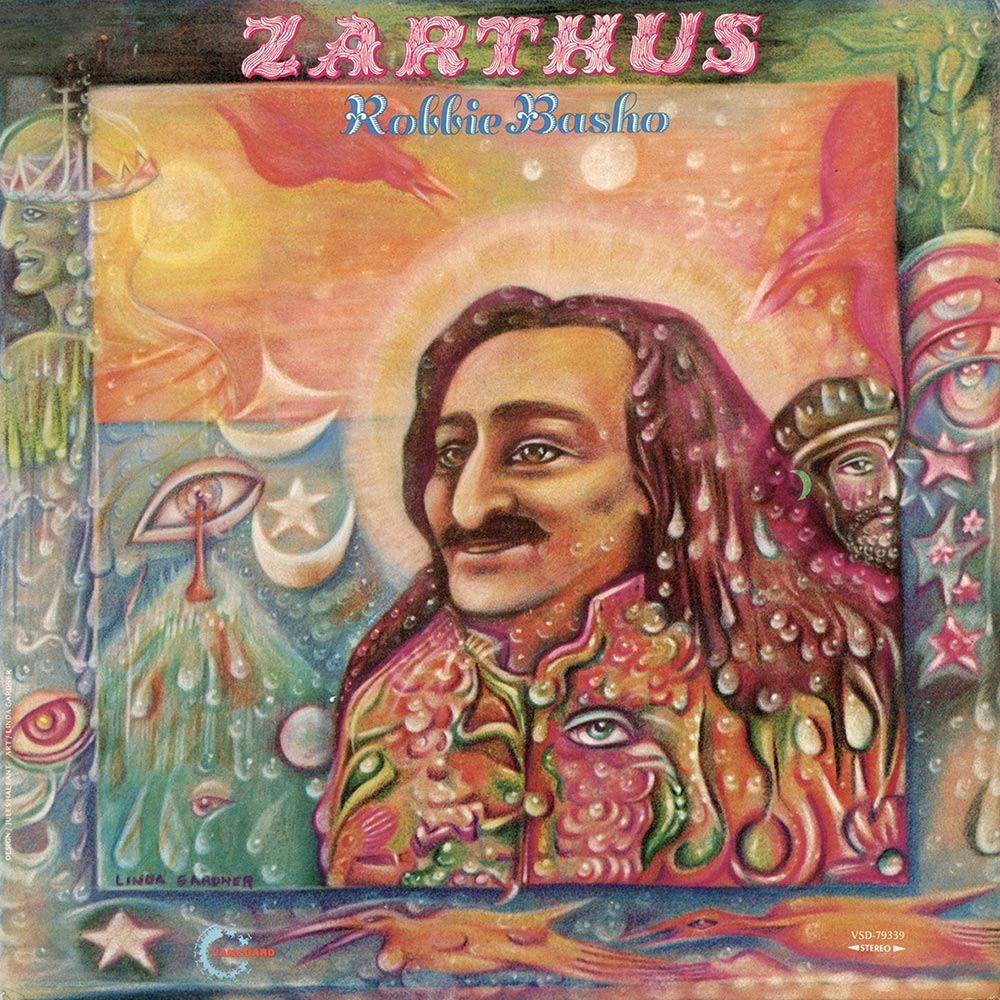
ROBBIE BASHO-ZARTHUS.
ROBBIE BASHO-ZARTHUS.
The last time I wrote about Robbie Basho, I described him as a trendsetter and innovator. That was the case throughout his career. However, some of the most innovative and groundbreaking music Robbie Basho released was at Vanguard Records. Robbie’s Vanguard Records debut was The Voice Of The Eagle, which was released to widespread critical acclaim. The Voice Of The Eagle found Robbie immersing himself in Native American culture. It was a truly ambitious album.
Robbie’s raison d’être on The Voice Of The Eagle seemed to be broaden the minds of music lovers. He wanted them to open their ears to musical possibilities. The same can be said of the followup to The Voice Of The Eagle, Zarthus, which was recently rereleased by Vanguard Masters, an imprint of Ace Records. Zarthus saw a change in direction from Robbie Basho.
Whereas The Voice Of The Eagle saw Robbie immerse himself in the culture of Native American culture, Zarthus saw Robbie change direction. He’d previously been through a Japanese and Indian period. The cultures of Japan and India had influenced Robbie’s music. Now, Robbie was about to enter his Persian period.
Zarthius was a tapestry of Persian, Arabic and Western music. The result was what Robbie Basho described as a “Fabric D’Amour to cover the bare manekin of modern times.” Released in 1973, Zarthus was ambitious, innovative and groundbreaking. Here was music very different to much or the music being released during 1973. No wonder. Robbie Basho was a trendsetter and had been throughout his career. This began in 1962, when Robbie first heard Ravi Shankar.
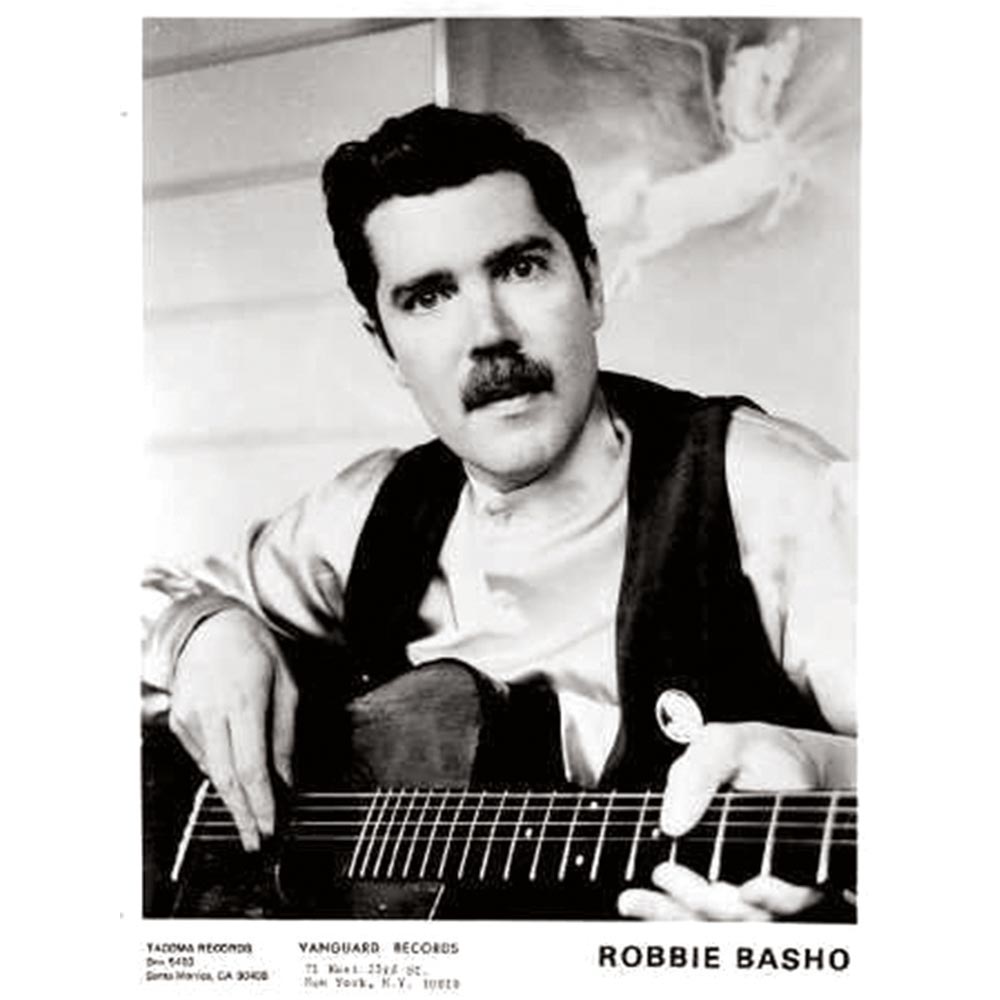
Before hearing Ravi Shankar, Robbie had already embraced Asian culture. This began back in 1959, when the then nineteen year old Daniel Robinson Jr, bought his first guitar. Soon, Robbie immersed himself in Asian culture. So much so, that he changed his name to Robbie Basho, in honour of the Japanese poet Matsuo Bashō. This was the beginning of the transformation of Daniel Robinson Jr, from student to Robbie Basho, groundbreaking musician who released a string of albums between 1965 and 1985. This included 1972s The Voice Of An Eagle, which was recently rereleased on Vanguard Masters, a subsidiary of Ace Records. It demonstrates why Robbie Basho is remembered as a groundbreaking musician. Robbie’s story began in Baltimore in 1940.
Tragically, Daniel Robinson Jr, was orphaned at an early age. He was then adopted by the Robinson family and attended school in Baltimore. At high school, he sang in the middle and high school choirs. Daniel also played the euphonium in his high school band. So, for some people, it wasn’t a surprise that Daniel Robinson Jr, would go on to enjoy a career as a musician. His career began at the University of Maryland.
Daniel headed of to the University of Maryland in 1958. It was there that he met John Fahey, Ed Denson and Max Ochs. They were all aspiring guitarists. Their interest rubbed off on Daniel. However, he didn’t have a guitar. Not until he met a sailor who’d just returned from Mexico.
Daniel was working his way through college by working in a club. One night, he met a sailor who’d just returned from Mexico. The sailer had an antique Mexican 12-string guitar. He offered to sell it to Daniel. The only problem was that he wanted $200 for it. Robbie however, bought the guitar for $200. However, buying the guitar was just the start of a new chapter in Daniel’s life.
With his new guitar, Daniel set about pushing the guitar to his limits. Daniel also immersed himself in Asian culture. So much so, that he changed his name to Robbie Basho, in honour of the Japanese poet Matsuo Bashō. This was the just the first change in Robbie’s life and career.
Having started off playing country blues, with John Fahey, Ed Denson and Max Ochs, that didn’t seem to satisfy Robbie. So he dipped into bluegrass, classical, oriental and free jazz. Then came the moment that changed Daniel’s life. He heard Ravi Shankar.
Sitting in the dark, listening to Ravi Shankar, Daniel found music he could relate to. This was fortuitous. Many artists who played folk music found they weren’t able to express themselves. Having listening to Ravi, Daniel realised he could. There were a whole host of tunings he hadn’t yet discovered. Soon, Daniel was studying with Ali Akbar Khan, who was a renowned sarod virtuoso. Ali helped popularise Indian music within the West. So, did Robbie Basho.
Robbie pioneered and popularised a whole host of open and exotic tunings. He also developed his coded Doctrine of Mood and Colour For 6 and 12-String Guitar. This was all part of Robbie efforts to transform the steel-string acoustic guitar into a concert instrument. That took the best part of ten years. By then, Robbie’s recording career was well underway.
After a spell spent travelling, Robbie found himself in Berkeley. There was a thriving folk scene in Berkeley. This played its part in the revival of Takoma Records, who Robbie would release Robbie’s solo album.
This was 1965s The Seal Of The Blue Lotus. Robbie’s sophomore album was 1966s The Grail and The Lotus. These two albums were innovative and much more adventurous than much of the folk music being released back then. Robbie was determined to push musical boundaries. He succeeded, releasing The Falconer’s Arm I, The Falconer’s Arm II and Basho Sings in 1967. That year, Robbie contributed The Thousand Incarnations Of The Rose to the compilation Contemporary Guitar – Spring ’67. 1967, proved to be the most fruitful year of Robbie’s career.
It wasn’t until a new decade dawned that Robbie Basho released another album. This was 1970s Venus In Cancer, which was released on Blue Thumb Records. Robbie last album for Takoma Records was released in 1971. That was Song Of The Stallion. After that, Robbie signed to another prestigious label, Vanguard Records, where he released two albums.
The first of the two albums Robbie released on Vanguard Records, was The Voice Of The Eagle. It featured eight tracks penned by Robbie. He played 6 and 12-string guitar and sang led vocals. Ramnad Raghavan was a guest artist. He played the mrdangam drums, which are an Indian log drum. Producing The Voice Of The Eagle, was Jack Mothrop. Robbie dedicated The Voice Of The Eagle to the Indian American and Avatar Meher Baba an Indian spiritual master, who many people believed, was God in human form. The Voice Of The Eagle was released in 1972.
The Voice Of The Eagle found Robbie immersing himself in Native American culture. It was a truly ambitious album. Sadly, The Voice Of The Eagle was a commercial failure. It passed most people by. Looking back, maybe the problem was, people didn’t understand what was one of Robbie Basho’s most ambitious and innovative albums. However, Robbie wasn’t going to give up. Instead he returned with another album of pioneering music Zarthus.
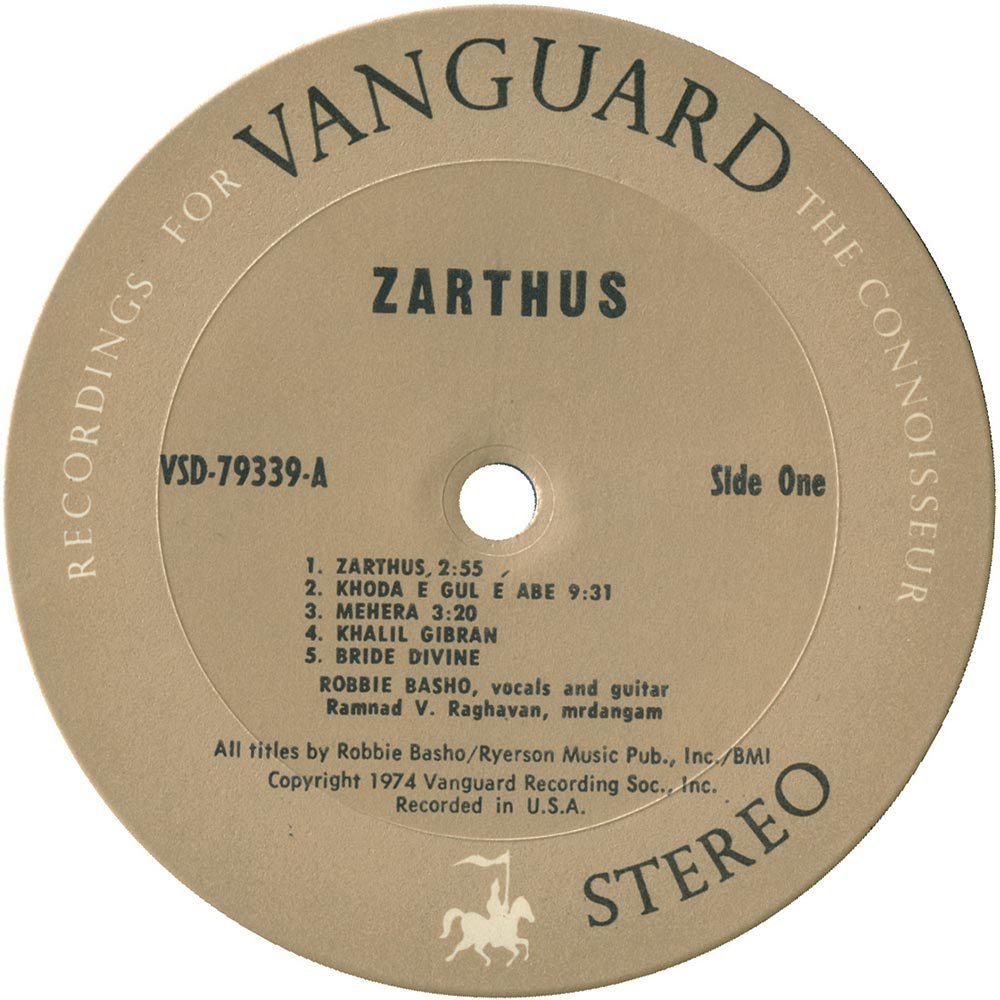
For Zarthus, Robbie penned six tracks, Zarthus,Khoda E Gule Abe, Mehera, Khalil Gibran, Bride Divine and Rhapsody In Druz. Robbie played 6 and 12-string guitar and sang led vocals. Ramnad Raghavan was a guest artist. He played the mrdangam drums, which are an Indian log drum. Producing Zarthus, was Jack Mothrop. Would Zarthus, which saw Robbie Basho change direction prove a commercial success?
Sadly, that wasn’t the case. Just like The Voice Of The Eagle, Zarthus passed music lovers by. Critics appreciated Zarthus. It was well received upon its release. They recognised the quality of the music, and that Robbie was trying create music that was groundbreaking. The problem was, just like with The Voice Of The Eagle, Robbie Basho was way ahead of his time. He was a visionary, whose music was under-appreciated upon its release. It was only later, that Robbie Basho was recognised as a musical pioneer. By then, he was dead. Zarthus proved to one of the finest albums of Robbie’s career. You’ll realise why, when I tell you about Zarthus.
Zarthus opens with the title track. Just a deliberate thoughtful, crystalline guitar opens the track. Deliberately, Robbie strums, choosing notes with care. Then a tender, earnest half-spoken vocal enters. When it departs, frantically, Robbie strums his guitar. The drama grows and builds. Although it’s just one man and his guitar, the music has a cinematic quality. Its also dramatic and emotive as it heads towards its crescendo.
Khoda E Gule Abe (The Lord Of The Blue Rose) sees Robbie interpret a Persian raga. At the start, it’s just his guitar. His hands flit up and down the fretboard, as he strums and plucks. Before long, the raga is underpinned by tablas. Music flows through Robbie. It’s as if he’s only an outlet for the music. The music is mesmeric, hypnotic and spiritual. Later, it becomes urgent and dramatic. It draws you in. You’re captivated by it. This is ordinary music. Instead, it ’s music designed to cleanse and sooth your weary soul. As the final notes play, you feel better for having allowed the music into your life and soul.
Mehera (Persian For Mary) is another track with a spiritual quality. That’s apparent from the get-go. Robbie’s vocal is earnest and impassioned. He accompanies himself on the piano. The lone piano speaks a thousand words. It’s the perfect foil for Robbie’s vocal, becoming yin to his yang. Through Robbie the music flows. He’s a vessel for this cathartic soul cleansing vocal. When Robbie’s vocal departs, the piano takes centre-stage. Flamboyant flourishes of piano are unleashed. Their ethereal beauty seems a fitting replacement for Robbie, during this hymnal to his “beloved higher mind.”
Straight away, the understated and beautiful Khalil Gibran, takes on a spiritual quality. That’s not surprising, given the track seems to have been inspired by the Lord’s Prayer. Then there’s Robbie’s earnest, heartfelt vocal. It’s delivered with the utmost sincerity. Accompanying his is gently plucked and strummed guitar. Nothing else is needed. That would be overkill. Just Robbie and his trusty guitar breath life, beauty and spiritually into this devotional.
Robbie’s urgently strummed guitar opens Bride Divine. Then his quivering vocal enters. By delivering his vocal this way, his voice becomes akin to another instrument. It veers between a jazzy scat and even free jazz. It quivers, shivers and shimmers. This allows Robbie to inject drama, emotion, passion and sincerity into the lyrics. The effect this has, is to give the song joyous, celebratory sound that forty years later, is still as powerful and enchanting.
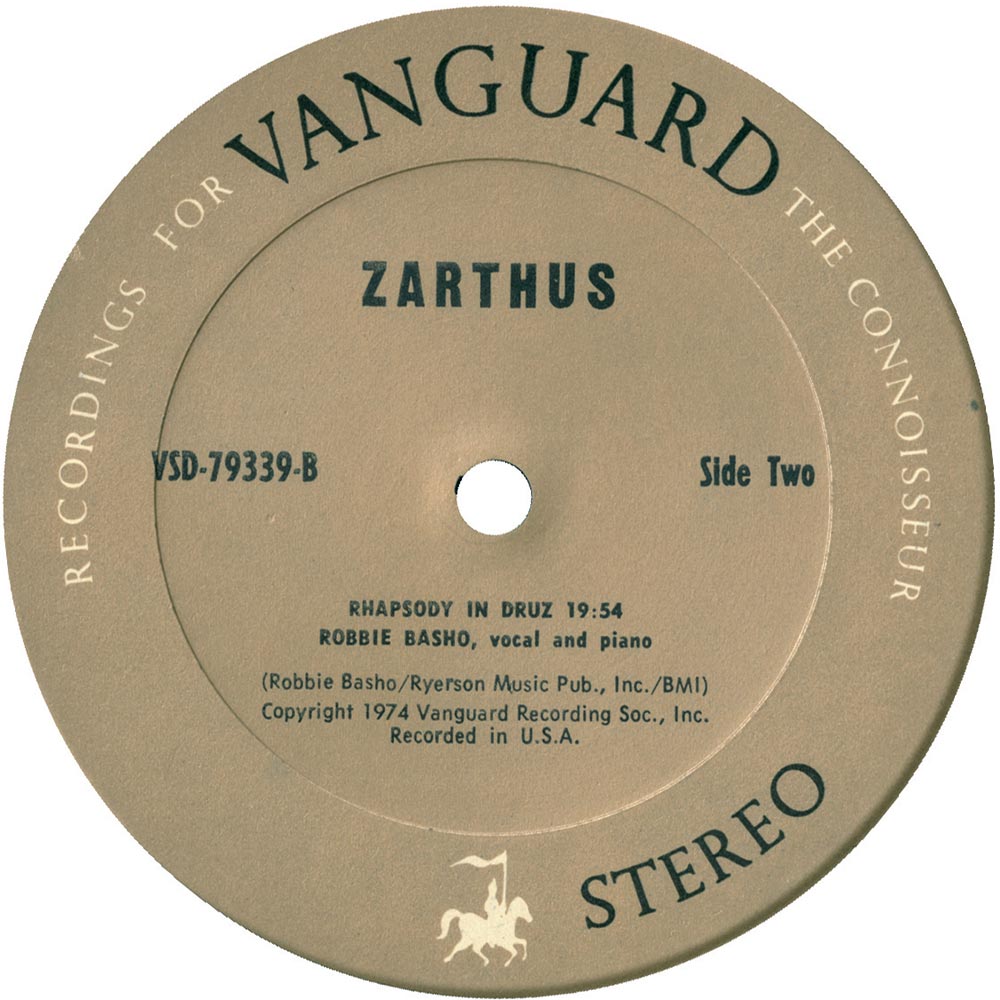
Closing Zarthus, is Rhapsody In Druz, where we embark on what Robbie described as ” a spiritual journey.” A series of short stories makeup Rhapsody In Druz. They’ve one commonality love. Originally, the song took up all of the second side of Zarthus. It’s a near twenty minute opus. Robbie’s shimmering, sometimes dramatic piano opens the track. The music cascades in waves. It’s truly captivating and beautiful. You lose yourself in the music. It washes over you, cleansing your soul. Suddenly, everything seems right. After three minutes, the tempo drops and Robbie’s vocal enters. He mixes drama, emotion and hope. When his vocal drops out, it’s just the piano. This becomes a familiar pattern. Robbie and his piano toy with your emotions, before the piano takes centre-stage. A series of melodic masterclass unfolds. You’re taken on a journey by Robbie and his piano during what’s one of the most ambitious, innovative and adventuresome pieces of music Robbie ever recorded.
Rhapsody In Druz seems a fitting way not just to close Zarthus, but Robbie Basho’s time at Vanguard Records. They allowed Robbie to follow his heart and release music that was ambitious, groundbreaking and innovative. There seems to be no thought to how successful Zarthus would be.
Vanguard Records didn’t seem to think like that. It was as if music mattered more than money. Music was art and you couldn’t put a price on art. Especially avant garde, experimental and innovative art. In some ways, Vanguard Records are to be applauded. They afforded their artists complete artistic freedom. There was never any pressure for the artist to try to release music that was commercial. So, Robbie Basho was able to release music he’d never had the opportunity to release on a major label. However, there was a downside.
The problem with signing to a small, independent label is they don’t have the budget to promote an album. Especially a niche album like Zarthus. It had to be promoted, and promoted well. It was all about marketing the music to right audience. There was, after all, a market for the music on Zarthus. People’s musical tastes had been much more eclectic since the late-sixties. However, there was a problem, reaching this market.
Just like The Voice Of An Eagle, Zarthus seemed to passed many people by. Either that, or they didn’t understand the music. Then there was the fact that music had moved on. Folk and jazz were no longer as popular. Rock was King. Whether it was Krautrock, prog rock or classic rock, rock ruled the roost. Granted soul was making inroads, but only briefly. Commercially, Zarthus was the wrong album at the wrong time.
Artistically, Zarthus is a lost classic. Sadly, Zarthus wasn’t appreciated on its release in 1974. Despite this, Zarthus has stood the test of time. A timeless album, full of captivating, enchanting, ethereal and mesmeric music, Zarthus also has a spiritual quality. It’s designed to cleanse and soothe the weary soul. This is music to immerse yourself in, and let it wash over you. Zarthus is also ambitious, innovative and groundbreaking music. Here was music very different to much or the music being released during 1974. No wonder. Robbie Basho was a trendsetter and would continue to be the rest of his career.
Throughout the rest of his career, Robbie Basho continued to innovate and plough his own musical furrow. Sadly, commercial success eluded Robbie. That’s a great shame, because Robbie Basho was determined to create ambitious and groundbreaking music. Ironically, given his talent as a musician, singer and songwriter, Robbie could’ve enjoyed commercial success and critical acclaim.
That would’ve meant compromising what he believed in. Robbie wasn’t willing to go down the road of James Taylor and Jackson Browne. No. He was determined to release music he believed in. You can’t help but admire Robbie for sticking to his principles. That was the case throughout his twenty-year recording career. Sadly, commercial success and critical acclaim eluded Robbie Basho.
Despite commercial success and critical acclaim eluding Robbie Basho, he released a string of groundbreaking albums. Two of Robbie Basho’s best albums were The Voice Of An Eagle and Zarthus which was recently rereleased by Vanguard Masters, an imprint of Ace Records. Zarthus finds the founding father of the American raga at his innovative best, and is a spiritual journey everyone should embark upon once in their life.
ROBBIE BASHO-ZARTHUS.
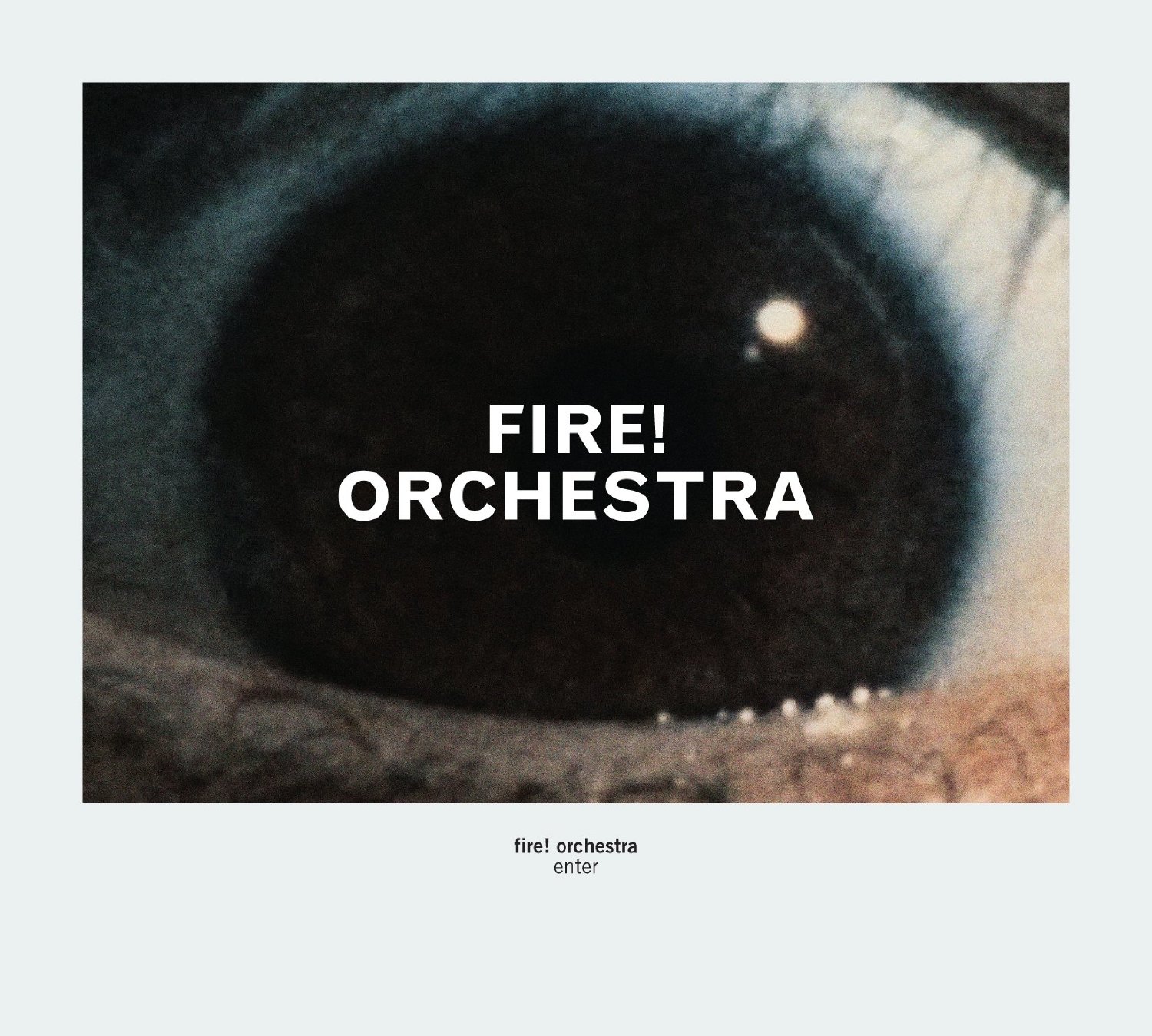
FIRE! ORCHESTRA-ENTER.
FIRE! ORCHESTRA-ENTER.
The origins of Fire! Orchestra can be traced to Fire! It’s a trio consisting of bassist Johan Berthling, drummer Andreas Werliin and saxophonist Mats Gusfasson. They’re three of Sweden’s finest jazz musicians. Their speciality is free jazz. However, there’s much more to the members of Fire! than that.
They’re far from purists when it comes to jazz. Instead, they’ve an eclectic taste in music. That’s apparent by their music pasts. Each of the members of Fire! have played with a variety of bands. Currently, Johan Berthling is a member of experimental folk-electronica combo Tape. Andreas Werliin is a member of alternative pop duo Wildbirds And Peacedrums and Mats Gusfasson a member of jazz trio The Thing. Despite their very different musical backgrounds, Johan, Andreas and Matt have been making music as Fire! for a number of years. Then in 2011, Fire decided to change direction.
It was in 2011, that the members of Fire decided to expand beyond the core trio. They hit on the idea to expand the group. The way Fire! did this, was to bring onboard the great and the good of Scandinavian jazz, improvisation and avant rock players and vocalists. They called this new musical venture Fire! Orchestra. It was a musical first in Sweden.
The newly named Fire! Orchestra were building on the music of some of the legendary free jazz big bands. This includes the big bands of Sun Ra, Charlie Haden’s Liberation Orchestra, Mike Westbrook and Mike McGregor. There was more to the Fire! Orchestra that free jazz. They incorporated funk, blues, rock and jazz. This became apparent when the Fire! Orchestra made their tentative first steps.
In the beginning, the Fire! Orchestra played just a handful of shows. They were finding their feet musically. Gradually, they were finding their sound. It’s best described as genre-melting and was showcased on their live debut album, Exit.
It was in 2013, when Fire! released their live debut album Exit. Released to widespread critical acclaim, Exit was a genre-melting sound that people wanted to hear more of.
So after playing a couple of concerts early in January 2014, the Fire! Orchestra entered the Svenska Grammofonstudion, in Gothenberg on 10th January 2014. This wasn’t going to be a long session. Instead, the twenty-nine members of the Fire! Orchestra took just one day to record Enter, which will be released by Rune Grammofon on 14th July 2014. The lineup of the Fire! Orchestra included some of the best musicians in Scandinavia.
With twenty-nine members, the Fire Orchestra must have been one of the biggest groups to recently record at Svenska Grammofonstudion, in Gothenberg. Vocalists included Mariam Wallentin, Ethiopian-born Sofie Jernberg and Silverbullit´s Simon Ohlsso. The horn section included trumpeters Niklas Barnö, Magnus Broo and Emil Strandberg, trombonists Mats Äleklint and Per Åke Holmlander. Goran Kajfes played coronet, Anna Högberg alto saxophone, Mats Gustafsson and Elin Larsson tenor sax, Fredrik Ljungkvist and Martin Küchen baritone saxophone and Jonas Kullhammar bass saxophone. Keyboardists included pianist Sten Sandell and Martin Hederos on Fender Fhodes and organ. Fire! Orchestra’s rhythm section included drummers Raymond Strid, Johan Holmegard and Andreas Werliin, bassists Joel Grip, Dan Berglun and Johan Berthling on electric bass. Guitarists included Sören Runolf, David Stackenäs and David Stackenäs who also played lap steel. They were joined by Christer Bothén on bass clarinet and guimbri, while Joachim Nordwall took charge of electronics. This was the lineup of Fire! Orchestra which recorded Enter, which I’ll tell you about
Enter opens with Enter Part One, a near fourteen minute epic. A wistful, mesomorphic rock guitar combines with a buzzing bass to set the scene for an ethereal vocal from Mariam Wallentin. Her vocal is yin to the arrangement’s yang. Both are sparse and compelling. Before long, braying horns and Simon’s tender vocal add to the melancholy sound. Gradually, the arrangement unfolds. A vocal soars above the arrangement. The soul-baring vocals play a crucial part in the track’s sound and success. Soon, searing, scorching rocky guitars enter. Along with the rest of the Fire! Orchestra they combine classic rock with jazz, blues, soul and free jazz. Later, when the vocals drop out, blistering guitars feedback. It’s as if the ghost of Jimi Hendrix has made a welcome return. There’s even a nod to Neil Young’s experimental opus Arc. After that, this genre-melting track takes a number of twists and turns. It becomes theatrical, dramatic, innovative, experimental and impassioned. Still the vocal is at the heart of the track. It’s a cathartic outpouring of emotion, drama and frustration. There’s even a nod to Kate Bush in her prime. Along with wailing horns and a pounding rhythm section, it leads this dramatic, free jazz jam to its dramatic crescendo.
Eerie and sinister describes the whispery vocal that’s panned left as Enter Part Two unfolds. Meanwhile, the driving rhythm section combine elements of classic rock, Krautrock and jazz. Blistering, scorching horns and a Doors’ inspired organ prove the perfect backdrop for Simon’s vocal. It veers between emotive to vampish and becomes a stream of consciousness. At one point, it’s the equivalent of Primal Scream Therapy. It’s as if the rest of the Fire! Orchestra are helping him to exercise his demons. In doing so, they combine post punk, Krautrock, free jazz, funk, classic rock and free jazz. This glorious melange is hypnotic and mesmeric. Then it’s all change, as the track becomes a frenetic fusion of avant garde, experimental and industrial. After that, Fire! Orchestra return to their jazz roots. From a traditional, sultry sound, the track slowly heads in the direction of dramatic, moody free jazz, with the Fire! Orchestra at their innovative best.
As Enter Part Three unfolds, Fire! Orchestra take you in a new direction. It’s not so much a vocal that opens the track. Instead, it’s a series of scatted, avant garde sounds. They’re dramatic, impassioned and soul-baring, they’re accompanied by a myriad of percussion. Again, it’s as if demons are being exorcised. Then after five minutes, the track begins to unfold. A Fender Rhodes joins the rhythm section and percussion. The vocal takes on a much more orthodox sound. Free jazz horns sweep in, quivering and shivering, blazing and braying. Their raison d’être is to ensure the arrangement swings along. It does. Meanwhile, the vocal becomes powerful, veering between bluesy, jazz-tinged and soulful. Later, it becomes a cathartic confessional. At that point, the arrangement is stripped bare. A myriad of grizzled, rasping horns carry along the vocal, until like the arrangement, it reaches a dramatic crescendo. By then, the vocal is spent and exhausted by the effort and emotion, expelled during this cathartic confessional.
Closing Enter is Enter Part Four, the shortest track on the album. It comes in at just under nine minutes. Straight away, the Fire! Orchestra combine blues and classic rock. The rhythm section join keyboards in providing the backdrop for the trio vocalists. They’re accompanied by jazz-tinged horns. Along with the rhythm section and keyboards, they provide a hypnotic, groove-laden track. This is another side to the Fire! Orchestra. Their fusion of jazz, blues and classic rock is peerless. Especially when combined with the dreamy, soulful delights of the three vocalists. Add to that scorching, blistering rocky guitar. The longer the track goes on, the better the Fire! Orchestra become. It’s as if they’re determined to leave you wanting more. That’s what they do. They build the drama, combining musical genres, before stripping the arrangement bare, leaving you with the melancholy sound of the Fender Rhodes. What a way for Fire Orchestra to close their debut studio album Enter.
As debut albums go, Enter is one of the best I’ve heard during the last few years. Through the four tracks on Enter, Fire! Orchestra spring a series of surprises. They take you places you never expect to go. Not only that, but Enter is a mood altering album. One minute it’s wistful and melancholy, the next it’s dramatic, dreamy and ethereal. Sometimes, the music on Enter is joyous and uplifting, the next it’s heartbreaking and guaranteed to tug at your heartstrings. Much of that is down to the vocals.
Fire! Orchestra’s vocalists include Mariam Wallentin, Ethiopian-born Sofie Jernberg and Silverbullit´s Simon Ohlsso. Each of them, play a huge part in the albums sound and success. Their vocals are impassioned, heartfelt, ethereal, soul-baring and sometimes, the equivalent to a cathartic confessional. Confession they say, is good for the soul. That’s definitely the case here, as the vocals veer between bluesy, jazz-tinged and soulful. Sometimes, they draw inspiration from Afro-beat, avant garde and experimental music. Along with the rest of Fire! Orchestra, the three vocalists play their part in a truly groundbreaking album, Enter.
The best way to describe Fire! Orchestra’s debut album Enter is innovative and progressive. It’s also an album that will influence a new generation of musicians. Enter showcases the sound of the twenty-nine members of the Fire! Orchestra in full flight. This was an impressive sound. Especially given their fusion of mesomorphic rock rhythms, funk, free jazz and the bluesy, soul-baring vocals of the Fire! Orchestra’s three vocalists. Add to this the scorching free jazz saxophone of Joe McPhee and Enter, which will be released by Rune Grammofon on 14th July 2014 has a potent, powerful and captivating sound.
Enter is definitely an album that makes a big impression. It was written and produced by the three members of Fire! They’re just the latest in a long line of hugely talented Swedish musicians I’ve written about. However, it’s not just Swedish musicians that feature in the Fire! Orchestra! No. Fire! Orchestra features some of the top Scandinavian musicians. They joined forces in the Fire! Orchestra to record Enter, a groundbreaking, genre-melting album featuring ambitious, innovative and progressive music.
FIRE! ORCHESTRA-ENTER.
PEE WEE CRAYTON-TEXAS BLUES JUMPIN’ IN LOS ANGELES.
PEE WEE CRAYTON-TEXAS BLUES JUMPIN’ IN LOS ANGELES.
Musically, Pee Wee Crayton was a late developer. He only started playing the guitar seriously in 1935, when he was twenty-one. That just so happened to coincide with Pee Wee Crayton moving to Los Angeles.
He’d moved to Los Angeles from Rockdale, Texas. That had been home to Pee Wee Crayton. It was where he was born on December 18th 1914. Growing up, Pee Wee Crayton was influenced by T-Bone Walker.
That wasn’t unusual. Many aspiring musicians were influenced by T-Bone Walker. He was an influential and innovative guitarist, and is remembered as one of the legendary blues players. So is Pee Wee Crayton.
Over time, Pee Wee Crayton developed his own unique sound and style. His style of playing is best described as aggressive and confident. Coupled with a voice that’s smooth as silk, this was a winning combination. Pee Wee Crayton would go on to enjoy commercial success and critical acclaim, when he signed to Modern Records in 1948.
Pee Wee Crayton didn’t sign his first recording contract until he was thirty-three. He might have been a late developer, but success came quickly for Pee Wee Crayton. One of the first singles Pee Wee Crayton released, Blues After Hours, headed all the way to number one in the US R&B charts. It seemed Pee Wee Crayton was making up for lost time.
This was just the start of the most productive period of Pee Wee Crayton’s career. The music Pee Wee Crayton recorded at Modern Records included, without doubt, some of the best music of his career. A reminder of this is Texas Blues Jumpin’ In Los Angeles, Ace Records’ recently rereleased compilation of music Pee Wee Crayton recorded for Modern Records between 1948 and 1951.
Texas Blues Jumpin’ In Los Angeles features twenty-eight tracks. The majority of these tracks will be new to most people. Twenty-six of these tracks have never been released before. There’s alternate version of singles and album tracks. Then there’s tracks that never made the cut. They’ve lain unloved in Modern Records’ vaults. Only two tracks from Texas Blues Jumpin’ In Los Angeles have been released before.
The two tracks from Texas Blues Jumpin’ In Los Angeles to have been released before include a B-Side and a single. I’m Still In Love With You is the B-Side to Pee Wee Crayton’s 1948 number one US R&B single Blues After Hours. Some Rainy Day was released as a single in 1950. These two tracks are just the tip of a musical iceberg.
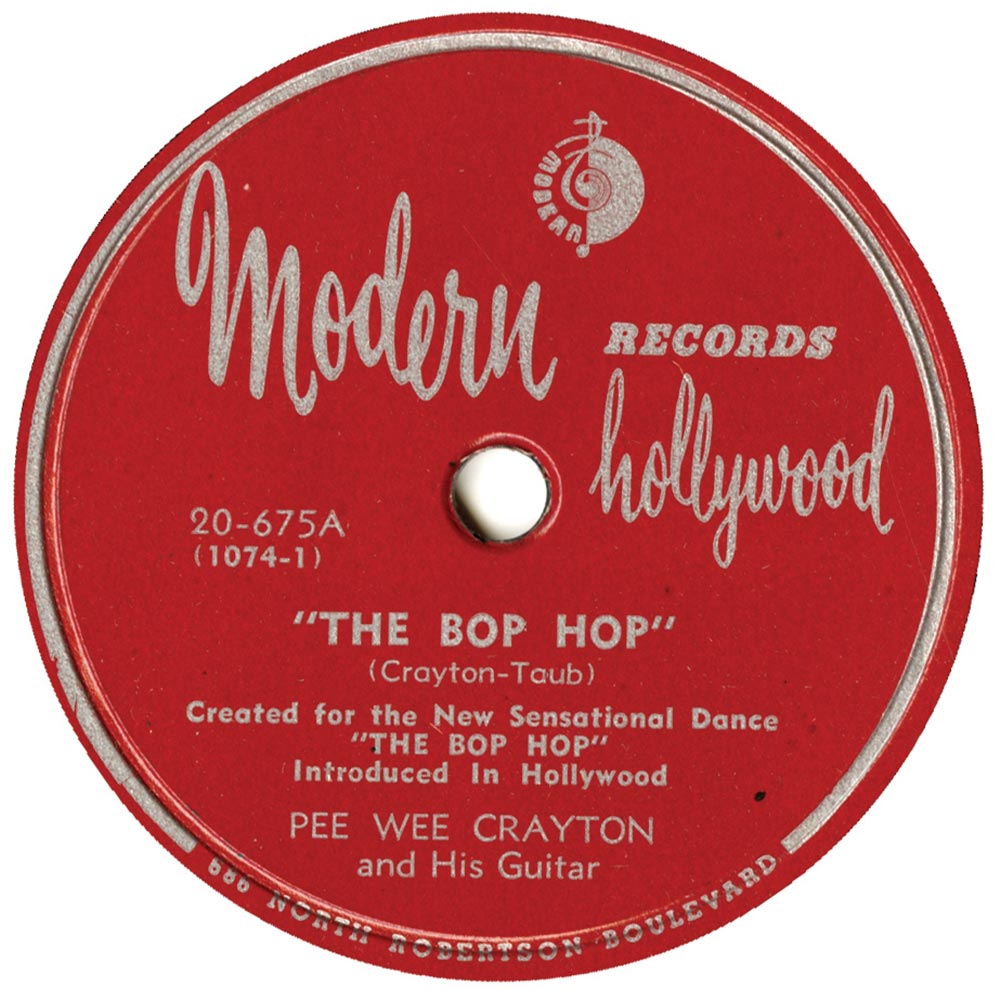
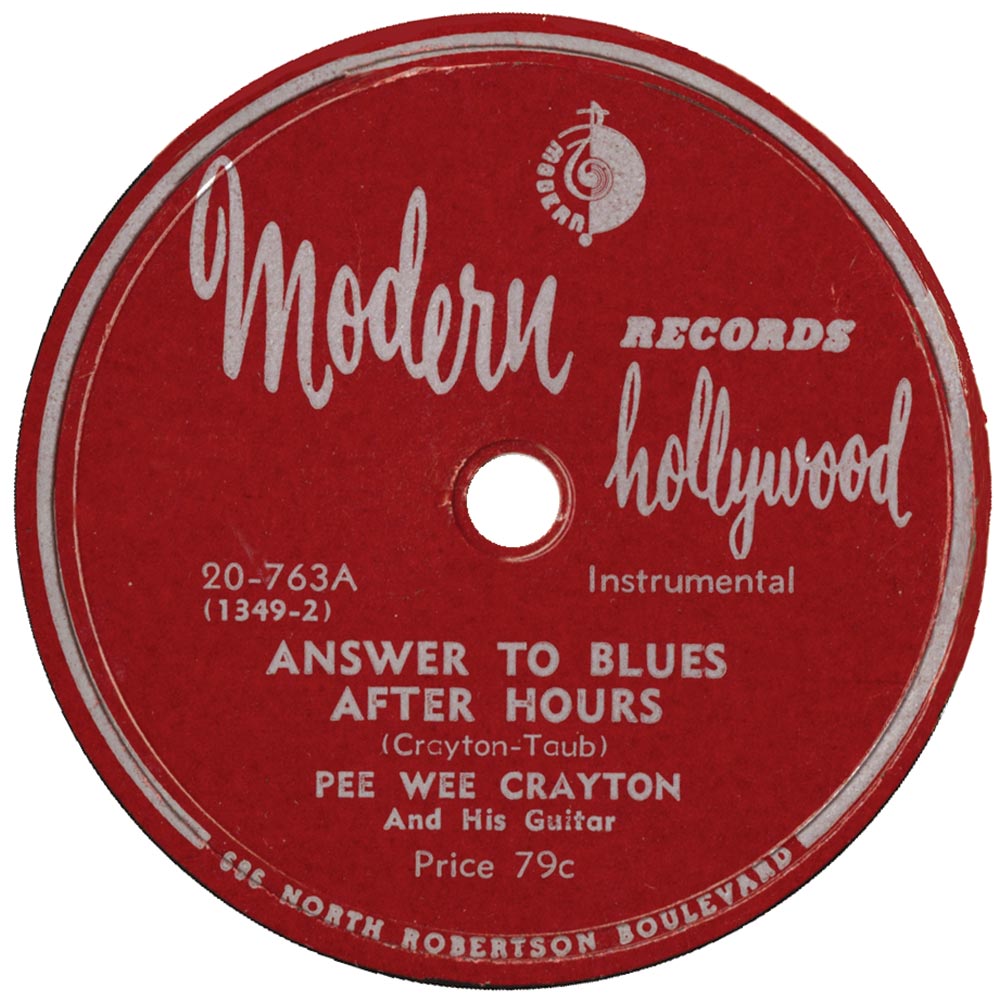
Pee Wee Crayton’s first session for Modern Records was in September 1948. It resulted in the number one single Blues After Hours. Fittingly, an alternate take of Blues After Hours opens Texas Blues Jumpin’ In Los Angeles. It’s followed by the B-Side to Blues After Hours, I’m Still In Love With You. This version includes the false start. The same session yielded the ballad When Darkness Falls. Given how fruitful this session was, Modern Records didn’t wait long until they got Pee Wee back into the studio.
November 1948 saw Pee Wee and his band return to the studio. One of the highlights was an alternate version of Texas Hop. It’s a blistering boogie, featuring a guitar masterclass from Pee Wee. Among the other tracks from this session was a wistful alternate take of Central Avenue Blues. Later, Pee Wee springs a surprise unleashing a blistering guitar solo. The tempo is still slow on I Love You So aka I Still Love You. It features a melancholy, thoughtful vocal from Pee Wee. Playing an important part in the success of Central Avenue Blues and I Love You So aka I Still Love You, is the piano. Without doubt, it’s the perfect foil for Pee Wee as we hear another side to him and his music. A month later, Pee Wee showed another side to his music.
There was no rest for Pee Wee. Modern Records brought him back into the studio in December 1948. He and his band kick loose, delivering a scorching version of Austin Boogie. His trademark guitar is joined by a pounding piano and growling horns. What a way to end 1948, the year that transformed Pee Wee Crayton’s career. Would 1949 be as successful?
After a couple of sessions early in 1949 proved less than fruitful, it wasn’t until 30th July 1949 that Pee Wee Crayton found himself back in the studio. Accompanying him were his usual band a trio of horn players. Among the tracks from this session to feature on Texas Blues Jumpin’ In Los Angeles are two versions of Brand New Woman. The first version has a false start. That’s a shame, given the blistering solo from Pee Wee. With the help of the horns, the other version swings. It’s just a pity they fluffed the first version. A dramatic, moody version of Long After Hours was another of the session’s highlights. So is Rockin’ The Blues, Long After Hours and Tired Of Travelin, which features a despairing vocal from Pee Wee. This was one of Pee Wee’s most fruitful sessions of 1949. The same can be said of a session in September 1949.
It was at a session in September 1949 that Pee Wee recorded the alternate take of Blues For My Baby, which features on Texas Blues Jumpin’ In Los Angeles. It’s another instrumental. After a false start, Pee Wee and his band get into the groove. The music is moody and bluesy. Sometimes, he thrashes his guitar, other times he caresses it. Another of the tracks from this session was When A Man Has The Blues. Here, Pee Wee pays homage to his hero T-Bone Walker’s They Call It Stormy Monday. My Everything and Old Fashioned Baby have a slow, moody, late night sound. It’s Pee Wee at his best, making music for the lonely, brokenhearted and disenfranchised. The September 1949 session had proved fruitful. Pee Wee was on a roll.
Later in 1949, Pee Wee recorded two versions of T For Texas. The exact date isn’t known. One of the versions of T For Texas features on Texas Blues Jumpin’ In Los Angeles. So does Rockin’ The Blues. It was recorded in December 1949. Pee Wee was accompanied by Harry Edison’s Orchestra. Bursts of muted trumpet play an important part in the track’s sound and success. After the recording sessions, Pee Wee took a three month break from recording.
Pee returned refreshed in February 1950. He went on to lay down some of the best music of his career. This included Huckle Boogie, where Pee Wee records a guitar double. It was overdubbed and resulted in a glorious boogie. The quality continued on Change Your Way Of Lovin’ and Some Rainy Day. It seemed Pee Wee was on his way to becoming one of the biggest names in blues music. Then fate decided to intervene.
During 1950, Pee Wee married his wife Esther, who he met in 1949. A year later, they were married. They remained married until Pee Wee passed away in 1985. However, the newly marred Pee Wee was involved in an automobile accident. This curtailed his recording schedule.
His first, and only, recording session of 1950 took place on 25th May 1950. Pee Wee recorded Answer To Blues After Hours. The song seems to follow Pee Wee’s tried and tested formula. This means that after a hesitant start, Pee Wee’s evocative guitar and flourishes of piano combine. Right through to the diminished chord that closes the track, this format had proved successful for Pee Wee. Why change a winning formula? Just like many artists, Pee Wee had found a successful formula. So would The Beatles, Motown and Gamble and Huff. Apart from Answer To Blues After Hours, Pee Wee laid down Crayton Special, Good Little Woman and an alternate take of California Women, which would feature on Pee Wee’s Crown 1960 eponymous album. Despite only entering a recording studio once during 1950, Pee Wee hadn’t lost his mojo.
It would be another ten months before Pee Wee entered the recording studio again. On 14th March 1951, Pee Wee recorded the ballad Thinkin’ Of You and Poppa Stoppa, a horn driven ballad. It features Pee Wee unleashing a spellbinding solo. Accompanied by the piano, it’s a mesmeric performance, one of his best. Another version of Tired Of Travelin’ closes Texas Blues Jumpin’ In Los Angeles. A weary, lonesome Pee Wee lays bare his soul, as he delivers a needy vocal. This proves the perfect way to close Texas Blues Jumpin’ In Los Angeles.
Texas Blues Jumpin’ In Los Angeles is the third instalment in Ace Records Pee Wee Crayton retrospective. Compiled by Dick Shurman, a renowned expert on the music of Pee Wee Cratyon, Texas Blues Jumpin’ In Los Angeles is a captivating collection of alternate tracks.
There’s alternate version of singles and album tracks. Then there’s unissued tracks that for whatever reason, never made the cut. They’ve lain unloved in Modern Records’ vaults for over sixty years. That’s way too long. Music deserves to heard and enjoyed. Thanks to Ace Records and Dick Shurman that’s now possible, with the recent released of Texas Blues Jumpin’ In Los Angeles
Only two tracks from Texas Blues Jumpin’ In Los Angeles have been released before. This includes a B-Side and a single. I’m Still In Love With You is the B-Side to Pee Wee Crayton’s 1948 number one US R&B single Blues After Hours. Some Rainy Day was released as a single in 1950. These two tracks are just the tip of a musical iceberg, that’s Pee Wee Crayton’s career at Modern Records.
It was at Modern Records that Pee Wee released some of the best music of his career. This music launched a career that lasted twenty-seven years, until Pee Wee passed away on June 25th 1985. Pee Wee was only seventy-one years old. A late developer as a musician, Pee Wee Crayton made up for lost time.
Not long after he signed to Modern Records, Pee Wee Crayton enjoyed a number one single with Blues After Hours. Although Pee Wee never replicated that success, he enjoyed a successful career. Pee Wee Crayton is remembered as one of the finest blues guitarists of his generations. Then there’s that voice. It’s smooth as silk. When combined with his guitar playing, it’s a potent partnership that’s showcased on Ace Records’ Texas Blues Jumpin’ In Los Angeles. For the newcomer to Pee Wee Crayton’s career, then Texas Blues Jumpin’ In Los Angeles is the perfect place to start.
PEE WEE CRAYTON-TEXAS BLUES JUMPIN’ IN LOS ANGELES.



KEB DARGE AND LITTLE EDITH’S LEGENDARY WILD ROCKERS 4.
KEB DARGE AND LITTLE EDITH’S LEGENDARY WILD ROCKERS 4.
A lot has happened to Keb Darge and Little Edith since the release of Keb Darge and Little Edith’s Legendary Wild Rockers 3, in June 2013. The village in the Philippines, where Keb Darge and Little Edith live, was destroyed by a typhoon. Nothing was heard of Keb Darge and Little Edith for several days. Some people feared the worst. Then came the news, Keb Darge and Little Edith were safe. They’d survived one of the most devastating typhoons to hit the Philippines. It had been a harrowing period for Keb Darge and Little Edith. Despite this, they were determined to compile Keb Darge and Little Edith’s Legendary Wild Rockers 4 which will be released by BBE Music on 7th July 2014.
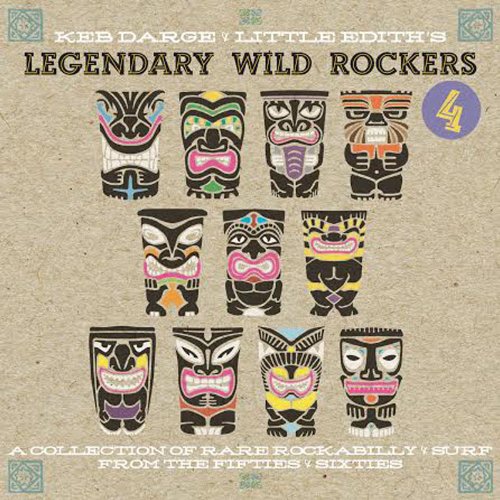
Keb Darge and Little Edith’s Legendary Wild Rockers 4 features twenty slices of rare rockabilly and surf. These tracks were released between 1956 and 1964. They’re a mixture of rarities, cult classics and hidden gems. That’s what we’ve come to expect from the Keb Darge and Little Edith’s Legendary Wild Rockers compilation series.
The first instalment in Keb Darge and Little Edith’s Legendary Wild Rockers compilation series began in June 201. It was so successful, that it’s since become an annual occurrence.
Keb Darge and Little Edith’s Legendary Wild Rockers 2 followed in July 2012, with Keb Darge and Little Edith’s Legendary Wild Rockers 3 following in June 2013. Now just over a year later, Keb Darge and Little Edith’s Legendary Wild Rockers 4 is about to be released. This makes the Keb Darge and Little Edith’s Legendary Wild Rockers compilation series one of BBE Music’s most successful compilations. Not bad for what Keb once called “junk records.”
This was back in 2010, when Keb decided to move away from his favoured deep funk, which he was the founding father of. Deep funk was just one of many chapters in the life times of Keb Darge DJ, record collector extraordinaire, compiler and founding father of “deep funk.”
Keb Darge was born in Elgin, Scotland, and from an early age, was absorbed in music. His first exposure to music was as a record collector. Having accumulated an impressive record collector, DJ-ing was the next step for Keb. He travelled around Scotland and eventually, to Wigan. The road to Wigan was a well travelled road for Scottish soul fans. Most headed to the Wigan Casino, whereas Keb landed a DJ residency near the casino. He continued to DJ until he was twenty-two, then decided to move to London.
After moved to London, Keb quit DJ-ing. Promoters persisted in asking him to DJ. Eventually, he relented, allowing London’s club-goers to experience the Northern Soul sound. Then disaster struck for Keb in 1987. His divorce saw him forced to sell his beloved record collection. Obviously, without records, a DJ-ing career wasn’t feasible. Heading out into civvy street, Keb tried various jobs to make ends meet. Then, when he rediscovered some records in his loft, this would change his career, and life.
The pile of records that Keb discovered in his loft were what Keb called “junk records.” They included what was the beginning of what would become “deep funk.” Keb took this junk records to the Wag Club in 1989. Although this was the height of the Acid House’s popularity, the Wag Club was best known for Acid Jazz. After the night ended at The Wag Club, Keb met fellow DJ and record collector Snowboy. This was the start of a long and successful partnership.
Snowboy and Keb transferred their deep funk night to another venue. Due to the popularity of house music, the night never gathered momentum. From there, they headed to Soho. This was the perfect venue. Their Legendary Deep Funk night became hugely successful. It was so successful that the new venue quickly establishing itself as a club. Keb continued to DJ at the Legendary Deep Funk night lasted until 2010, when he decided to quit playing Deep Funk. This resulted in a change of direction from Keb Darge.
After moving away from Deep Funk, Keb continued to DJ. He changed direction musically, spinning an eclectic selection Northern Soul, rockabilly, early R&B and jump-blues. However, by 2010, Keb’s career was heading in different directions. Not only was he busy compiling compilations for various labels, but was running Kay Dee, a label he founded with Kenny Dope.
By 2010, Keb Darge had compiled various compilations, including several volumes of his Legendary Deep Funk, plus Soul Spectrum, Funk Spectrum and Lost and Found with Paul Weller. 2010 saw the release of the first of Keb Darge and Little Edith’s collaborations. In 2010, Keb Darge and Little Edith released Keb Darge and Little Edith’s Legendary Rockin’ R&B. Then in 2011, came the first installment in Keb and Little Edith’s new compilation series.
Keb Darge and Little Edith’s Legendary Wild Rockers was released in July 2011, with Keb Darge and Little Edith’s Legendary Wild Rockers 2 following in July 2012. Now just eleven months later, Keb Darge and Little Edith’s Legendary Wild Rockers 3. Given how critically acclaimed Keb Darge and Little Edith’s Legendary Wild Rockers 2 was, Keb Darge and Little Edith’s Legendary Wild Rockers 3 has a lot to live up to.
No worries. Keb and Little Edith dug deep into his record collection. He came out with twenty of his secret weapons. The result was Keb Darge and Little Edith’s Legendary Wild Rockers 3, which managed to surpass the quality of the two previous volumes. However, after without doubt the most turbulent year of their lives, Keb and Little Edith return with Keb Darge and Little Edith’s Legendary Wild Rockers 4, which I’ll pick the highlights of.
The most important track on any compilation is the opening track. Keb and Little Edith realise this. They open Keb Darge and Little Edith’s Legendary Wild Rockers 4 with The Black Albinos’ Shish Kebab. It was released on a single on the Belgian label, Newtown Records. For those unfamiliar with The Black Albinos, they’re a Dutch group. They released their first single in 1962 and the split-up in 1965. Nearly thirty years later, The Black Albinos made a comeback in 1994. One of their finest moments was Shish Kebab, a dramatic slice of surf garage.
From the get-go, the Floyd Dakil Combo don’t spare the hooks on Dance, Franny, Dance. It’s a rockabilly track. Released in 1964, on Jetstar Records, Floyd Dakil Combo gave the Dallas based group a nationwide hit. Hook-laden and joyous, this was as good as it got for the Floyd Dakil Combo. They never again replicated the success of Dance, Franny, Dance.
Ric Cartey With The Jiva-Tones released Young Love as a single in 1956. It was released on the Stars Inc. label. Tucked away on the B-Side is Oooh-Eeee. Written by Jerry Reed, this is a swinging slice of rockabilly that’s guaranteed to fill a dance-floor.
Mike Waggoner and The Bops were a rockabilly from from Minneapolis, Minnesota. Despite recording a number of songs, the majority went unreleased. This includes a cover of Chuck Berry’s Bye Bye Johnny. The only single Mike Waggoner and The Bops released was Baby Baby. It’s a cover of a Dale Hawkins’ song, which was released in April 1961, on the Vee label. It sees Mike seems to pay homage to Eddie Cochran during a barnstorming version of Baby Baby. So it’s no surprise that three years later, Mike Waggoner and The Bops opened for The Rolling Stones in Minneapolis.
Irresistible. That describes The Dazzlers’ Gee Whiz. It was released in 1958, on Lee Records. Gee Whizz bursts into life and The Dazzlers create a blistering slice of rockabilly. Sometimes, it reminds me of Chuck Berry’s 1956 hit Too Much Monkey Business. Just like Chuck Berry on Too Much Monkey Business, The Dazzlers storm their through Gee Whizz.
In 1960, the Col-Lee-Jets released Phoney Baby as a single, on the Northwestern label. Tucked away on the B-Side was Jam and Jelly. It’s a driving, stomping slice of rockabilly. Stab of searing guitars and blazing horns play their part in this glorious hidden gem.
Benny Joy’s Little Red Book bursts into life. Straight away, it’s obvious Benny Joy is a seriously talented singer. There’s a nod to Elvis. Maybe that’s why Sam Phillips offered Benny a contract with Sun Records? Incredibly, Benny turned down what for most singers, would’ve been the opportunity of a lifetime. He did go on to enjoy regional success. One of Benny’s biggest hits was Little Red Book, which he swaggers his way through. Another was Steady With Betty. It features an Elvis-esque performance from Benny Joy, where he’s accompanied by some searing guitar licks. Just like Little Red Book, Steady With Betty is a glimpse of what the man they called the Dark Prince of Southern Rockabilly was capable of.
The Emanons released Stomper as a single in 1959. It’s one of the rarest tracks on Keb Darge and Little Edith’s Legendary Wild Rockers 4. Over the last couple of years, copies have been changing hands for well over $100. No wonder. It oozes quality. Stomper by name, it’s a stomper by nature. Even better are the scorching saxophone solos. They’re the finishing touch to this Stomper.
It was back in 1959 that George Fleming released I’m Gonna Tell as a single. I’m Gonna Tell was released on the Fleming label. Then twenty years later, in 1979, the single was rereleased on Rollercoaster Records. On both occasions, Shake was the B-Side. Just like I’m Gonna Tell, Shake epitomises everything that’s good about rockabilly. Although the music is fifty-five years old, it’s timeless and will leave you wanting to hear much more rockabilly.
Big John Taylor was Benny Joy’s guitarist. He also released Money Money as a single in 1959. From the opening bars, he unleashes his surf guitar. It plays its part in the track’s moody, menacing sound. Especially when combined with a grizzled saxophone. The result is one of the best instrumentals on Keb Darge and Little Edith’s Legendary Wild Rockers 4.
Closing Keb Darge and Little Edith’s Legendary Wild Rockers 4 is Service With A Smile. This is the second single from Kuf-Linx. They’re joined by John Jennings. It was a double-A side. Eyeballin’ was the flip-side. Released in 1958, Service With A Smile is a fusion of doo wop and R&B. This marked a stylistic departure from their debut single So Tough. Of the two tracks, I much prefer Service With A Smile, with its fusion of smooth soul and doo wop.
Keb Darge and Little Edith have surpassed themselves with Legendary Wild Rockers 4. It’s without doubt, the best instalment in their Legendary Wild Rockers’ compilation series. That’s incredible, given how traumatic a year it has been for Keb and Little Edith.
They survived a typhoon that devastated the town they live in, in the Philippines. At one point, they were missing. As time went by, people began to think the worst. Then, just as a few people were beginning to abandon all hope, the word came through, Keb and Little Edith were safe. This was a big relief for everyone. After all, Keb is one of legends of London’s club scene.
The founding father of Deep Funk, Keb changed direction in 2010. He began spinning a much more eclectic selection of music, including Northern Soul, rockabilly, early R&B and jump-blues. Then a year later, came the first instalment in the Legendary Wild Rockers’ compilation series. Since then, another three volumes have been released by BBE Music. Keb Darge and Little Edith’s Legendary Wild Rockers 4 is the latest instalment in the series. It’ll be released on 7th July 2014, on BBE Music.
Every year, Keb and Little Edith somehow, manage to surpass the quality of the previous instalment in the Legendary Wild Rockers’ compilation series. This year, they’ve dug deeper than they dug before to find the rare rockabilly and surf that features on Keb Darge and Little Edith’s Legendary Wild Rockers 4. They’ve surpassed themselves. Keb Darge and Little Edith have combined cult classics, hidden gems, B-Sides and rarities on Keb Darge and Little Edith’s Legendary Wild Rockers 4, which without doubt, is the finest instalments in the Legendary Wild Rockers’ series.
KEB DARGE AND LITTLE EDITH’S LEGENDARY WILD ROCKERS 4.
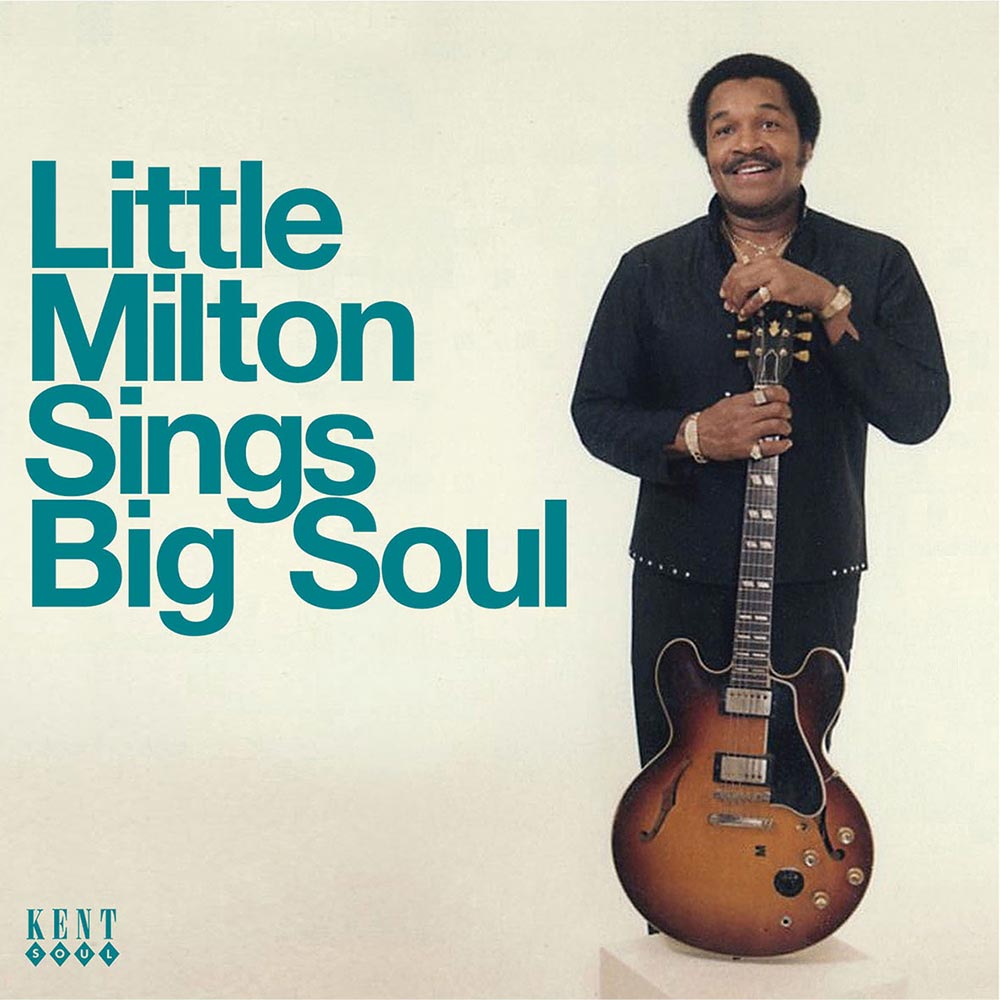
LITTLE MILTON SINGS BIG SOUL.
LITTLE MILTON SINGS BIG SOUL.
Although Little Milton eventually became one of the biggest soul singers of sixties, his background was in the blues music. Growing up, Little Milton modelled himself on legendary blues player T-Bone Walker. By the age of twelve, Little Milton was playing the blues in the streets of Greensville.
That’s where Little Milton lived, after moving from Inverness, Mississippi, where he was born on 7th September 1934. Little Milton was brought up in Greensville by a local farmer and blues musician. Just like the music of T-Bone Walker, he would influence the young James Milton Campbell Jr, growing up. This paid off. By the age of eighteen, he’d come to the attention of Ike Turner, who was then a talent scout for Sam Phillips Sun Records.
Now signed to Sun Records, Little Milton released a series of singles. They all failed to chart and Little Milton left Sun Records in 1955. After that, Little Milton released singles on various labels, including on Trumpet Records. Still success eluded Little Milton. So, he setup his own record label, Bobbin Records.
Little Milton founded Bobbin Records in St Louis. His nascent label struck a deal with Leonard Chess’ Chess Records. Before long, he signed Albert King and Fontella Bass to Bobbin Records. Soon, they were enjoying commercial success. So was Little Milton.
This was the start of Little Milton’s long and successful career. He’d go on to sign to some of the biggest American labels. This included Checker, Stax and Malaco, where Little Milton released some of the best music of his career. It features on Kent Soul’s recently released compilation Little Milton Sings Big Soul. Little Milton’s time at Malaco was still a long way away. Before that, Little Milton would enjoy his first hit single at Bobbin Records.
Although Little Milton had enjoyed a few regional hits, he’d yet to see one of his singles reach the US R&B charts. Eventually, So Mean to Me, which was released on Little Milton’s Bobbin Records, reached number fourteen in the US R&B charts. This was just the start of the commercial success that was about to come Little Milton’s way.
Three years later, Little Milton was signed to Checker, a subsidiary of Chess Records. Jis music changed direction. Whereas he’d previously been influenced by T-Bone Walker, Little Milton was now influenced by B.B. King. So, his music had a slicker sound. This resulted in a trio of hit singles. Blind Man stalled at number eighty-six in the US R&B charts, before We’re Gonna Make It reached number one. The followup, Who’s Cheating Who, then reached number two. These three singles featured on We’re Gonna Make It, Little Milton’s debut album.
We’re Gonna Make It, was released in 1969 and showcases Little Milton’s fusion of blues and soul. It reached number 101 in the US Billboard 200 and number three in the US R&B charts.This looked like transforming him into one of the biggest names in music.
Things didn’t quite work out like that. After releasing his sophomore album Sings Big Blues, Little Milton didn’t release another album for three years. He did enjoy a few minor hits. Then his luck changed in 1969.
That was when Little Milton released the single Grits Ain’t Groceries. It reached number seventy-three in the US Billboard 100 and thirteen in the US R&B charts. Just A Little Bit then reached number ninety-seven in the US Billboard 100 and thirteen in the US R&B charts later in 1969. Both singles featured on the 1969 album Grits Ain’t Groceries Featuring ”Just A Little Bit.” A year later, in 1970, Little Milton released If Walls Could Talk.
If Walls Could Talk was released in 1970. It reached number 197 in the US Billboard 200 and number twenty-three in the US R&B charts. Although If Walls Could Talk didn’t match the success of Grits Ain’t Groceries Featuring ”Just A Little Bit.” This was Little Milton’s final album for Checker. He wouldn’t release another solo album until 1973.
That was on Stax. Little Milton’s Stax debut was 1973s Waiting for Little Milton. It stalled at just number thirty-nine in the US R&B charts. Little Milton also featured on Stax’s live album Montreux Festival, which featured Albery King and Chico Hamilton. Then in 1974, Little Milton released Blues ‘N’ Soul, which reached just number forty-five in the US R&B charts. This would be Little Milton’s highest chart placing until 1990.
After the demise of Stax in 1975, Little Milton signed to the Glades label, an imprint of T.K. Records. Glades was home to Timmy Thomas, George McCrae, Latimore, Seven Seas and Otis Clay. Little Milton’s Glades debut was Friend of Mine, which reached number fifty in the US R&B charts in 1976. This was as good as it got for Little Milton at Glades. 1977s Me For You, You For Me failed to chart. Following the commercial failure of Me For You, You For Me, Little Milton left Glades.
The next few years saw Little Milton weren’t kind to Little Milton. His next three albums failed to chart. He released I Need Your Love So Bad on Golden Ear in 1980. Walkin’ The Back Streets was released in 1981, on the second coming of Stax. Then The Blues Is Alright was released on Evidence. Not one of these albums troubled the charts. Things changed in 1983.
That’s when Little Milton released Age Ain’t Nothin’ But a Number. Released in 1983, on Mobile Fidelity, it reached number fifty-three in the US R&B charts. Then a year later, Little Milton signed to a label that he’d call home for two decades, Malaco Records.
During his time at Malaco Records, Little Milton released some of the best music of his career. Little Milton Sings Big Soul is a taste of the twenty years Little Milton spent at Malaco Records. There’s a total of eighteen tracks on Little Milton Sings Big Soul. These tracks featured on ten albums released between 1984 and 2002. The story begins with two tracks from Little Milton’s 1984 album Playing for Keeps.
Opening Little Milton Sings Big Soul is Misty Blue. Accompanied by lush sweeping strings, Little Milton delivers a needy, soul-baring vocal. It’s taken from the 1984 album Playing for Keeps. It reached number fifty-five in the US R&B charts. You’re Gonna Have A Murder On Your Hands is another track from Playing For Keeps. It’s a fusion of soul, blues and gospel harmonies, from a reinvigorated Little Milton.
1985 saw Little Milton release his second album for Malaco, I Will Survive. Despite failing it to chart, there was nothing wrong with the music. That’s obvious listening to I Had A Talk With My Baby Last Night. It’s a dramatic, emotive and soulful confessional from Little Milton. We’re Gonna Make It has a hopeful, bluesy sound. Blazing horns help drive the arrangement along, as Little Milton delivers a vocal powerhouse, accompanied by cooing harmonies. Of all the albums Little Milton released for Malaco, I Will Survive is one of the most underrated albums from a musical survivor.
Following I Will Survive’s failure to chart, the same fate befell 1986s Annie Mae’s Cafe and 1987s Movin’ to the Country. 1988 saw a return to commercial success on Back To Back, which reached number seventy-three in the US R&B charts. Three tracks from Back to Back feature on Little Milton Sings Big Soul. This includes the slow, moody and bluesy Can’t Trust Your Neighbour. The tempo drops on Caught In The Act (Of Gettin’ It On), a smooth slice of soulful music about a cheating couple. Little Milton’s lived-in, weary vocal brings the lyrics to life. On The End Of The Rainbow, Little Milton mixes blues and soul, with emotion, melancholia and sadness, to create a beautiful, wistful track.
In 1990, Little Milton released his most successful album in twenty years, Too Much Pain. It reached number forty in the US R&B charts. The followup was 1991s Reality.
On Reality’s release, in 1991, it reached number seventy-three in the US R&B charts. That’s The Way I Feel About ‘Cha is one of the highlights of Reality. It’s a cover a song made famous by Bobby Womack. Although Bobby’s version is the definitive version, Little Milton reworks a soul classic. His version is an outpouring of emotion and power, where a needy Little Milton delivers a vocal masterclass. The other track from Reality is the soul soap opera You Left A Goldmine For A Golddigger.
Strugglin’ Lady was released in 1992. This was Little Milton’s eighth album for Malaco. It featured A Nickel And A Nail. Little Milton’s is akin to a confessional, as his band fuse blues and soul. Strugglin’ Lady sees a return to the soulful side from Little Milton. It features some of the best, and most moving lyrics. They were written George Jackson and Anthony McKinney. In Little Milton’s hands their transformed into a beautify, but moving song.
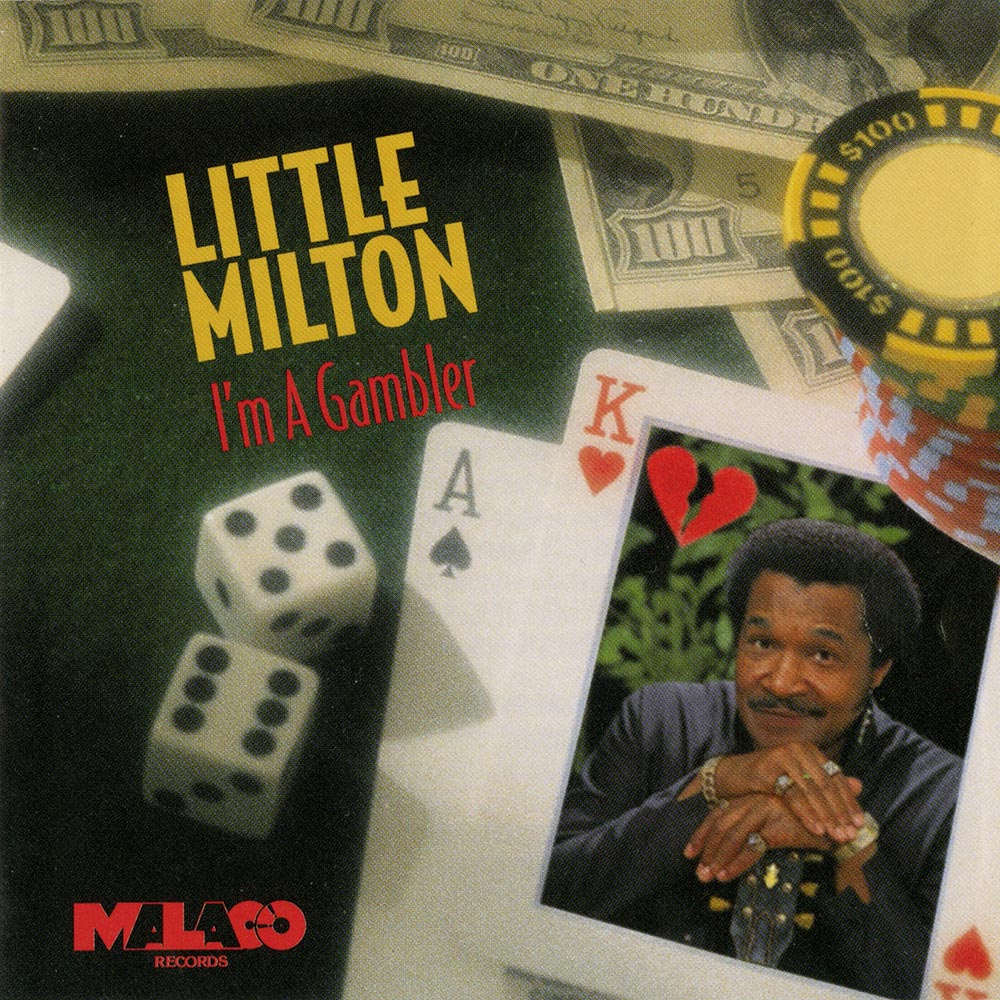
I’m A Gambler was the start of a run where commercial success eluded Little Milton. It failed to chart on its release in 1994. One of I’m A Gambler’s highlights was A Man Needs A Woman. Written by Quinton Claunch and Osbie Burnett Clinton, it’s an oft covered song. Among those who covered the track, are James Carr and Z.Z. Hill. So, Little Milton was in illustrious company. This seems to inspire him. Little Milton delivers a captivating cover of A Man Needs A Woman. He combines soul and gospel, with power and emotion.
This Time They Told The Truth is a track from Little Milton’s 1995 album Cheatin’ Habit. Although it failed to chart in the US R&B charts, it reached numb fourteen in the US Blues charts. Approaching his sixtieth birthday, Little Milton was a musical veteran. His gravelly, lived-in vocal is perfectly suited to this track.
There was a three year gap between Cheatin’ Habit and 1998s For Real. Just like his two previous albums, For Real failed to chart. It did reach number thirteen in the US Blues charts. That’s no surprise, when you hear the quality of music on For Real. Especially Little Milton’s covers of A Rainy Night In Georgia and I’d Rather Go Blind. They’re both oft-covered classics, but Little Milton’s slow, soulful covers breath new life and meaning into the songs. Especially on I’d Rather Go Blind, where Little Milton seems to draw inspiration from James Carr. What Our Love Needs is another slow soulful, ballad, where Little Milton and his band seamlessly combine soul and blues beautifully.
Welcome To Little Milton followed a familiar pattern. It failed to chart in the US R&B charts, but reached number ten in the US Blues charts. Little Milton was now sixty-five, and had spent his whole adult life as a working musician. His experience shines through on Osbie Burnett Clinton’s Lovable Girl. It’s a fusion of Southern Soul and blues, with Little Milton delivering a vocal full of hurt and longing.
Mr. and Mrs Untrue is a track from Little Milton’s 2002 album Guitar Man. It reached number eight in the US Blues charts. On Mr. and Mrs Untrue, Little Milton is joined by Karen Brown. Together, they cover a track made famous by the First Lady of Fame, Candi Staton. Without doubt, Candi’s version is the definitive version. Little Milton and Karen Brown try to reinvent the track, as they combine emotion, passion and soulfulness.
That’s the story of Little Milton Sings Big Soul, which was recently released by Kent Soul, an imprint of Ace Records. It features eighteen tracks, taken from ten of the albums Little Milton released on Malaco Records. During this period, Little Milton was releasing some of the best music of his career.
Malaco Records was the label Little Milton had spent his life looking for. During the twenty years Little Milton spent at Malaco Records, his music oozed quality. His fusion of soul and blues should’ve been much more successful. Sadly, that wasn’t the case. The reason for that is simple, musical tastes had changed.
Between Little Milton’s Malaco Records’ debut, Playing for Keeps and 2002s Guitar Man, neither blues nor soul was as popular as it had been. This resulted in many albums being overlooked. Some struggled to even break into the US R&B charts. Many albums didn’t even trouble the charts. For many people, they think because an album didn’t chart that there’s something wrong with the music. As regular readers of this blog know, that’s far from the case. There’s many a hidden gem or lost classic that failed to chart. That includes several of the albums Little Milton released for Malaco Records. The music on Little Milton Sings Big Soul is proof of this.
Little Milton Sings Big Soul showcases the voice and guitar playing of the man they call Little Milton. A hugely talented singer and guitarist, he deserved to scale the heights that B.B. King did. Sadly, that wasn’t to be. Instead, for much of his career, commercial success and critical acclaim eluded Little Milton. That shouldn’t have been the case. Not with the talent Little Milton had. Hopefully, Little Milton Sings Big Soul will inspire a new generation to discover the soulful side of Little Milton.
LITTLE MILTON SINGS BIG SOUL


MORE LOST SOUL GEMS FROM SOUNDS OF MEMPHIS.
MORE LOST SOUL GEMS FROM SOUNDS OF MEMPHIS.
During the sixties and seventies, Gene Lucchesi’s Sounds Of Memphis label was one of the most important Southern Soul labels. It was one of two labels Gene founded. The other was XL Records, which he founded in 1964. A year later, in 1965, his nascent label released one of the biggest selling Southern Soul singles, Wooly Bully, by Sam The Sham. It sold over ten million copies. This was the start of a musical journey that saw Gene Lucchesi’s labels become two of the biggest players in Southern Soul.
Sounds Of Memphis and XL Records signed some of the most talented artists in Southern Soul history. This included Dan Greer, Spencer Wiggins, George Jackson, Minit, The Ovations and Barbara and The Browns. Many of these artists feature on More Lost Soul Gems From Sounds Of Memphis, which was recently released by Kent Soul, an imprint of Ace Records.
More Lost Soul Gems From Sounds Of Memphis is the latest look back at Gene Lucchesi’s label. It’s a fitting accompaniment to previous retrospectives of Sounds Of Memphis and XL Records. There’s been seven in total.
The first instalment was Can’t Be Satisfied: The XL and Sounds of Memphis Story. It was released in October 2007, and featured some of the best singles XL and Sounds of Memphis released. Less than a year later, in August 2008, Play The Game: The XL and Sounds of Memphis Story Volume 2 was released. After that, it wasn’t until May 2010, that Steppin’ Stone-The XL and Sounds Of Memphis Story Volume 3 was released. Then in 2012, Lost Soul Gems From Sounds Of Memphis was released. Apart from these four compilations, Kent Soul have also released compilations of music recorded by Dan Greer, Barbara and The Browns and The Ovations. However, there’s much more to XL and the Sounds of Memphis than the music on these seven compilations.
That’s why Kent Soul have decided to release More Lost Soul Gems From Sounds Of Memphis. It features twenty-two tracks. Only four of them have been released before. The other eighteen tracks have never previously been released. These unreleased tracks have been hidden away in the Sounds Of Memphis since they were recorded. Not any more. More Lost Soul Gems From Sounds Of Memphis was released on 30th June 2014. That’s fitting, given it’s fifty years since Gene Lucchesi founded XL Records. Since then, both XL Records and Sounds Of Memphis have had a special place in the hearts of Southern Soul fans. You’ll realise why, when I tell you about the highlights of More Lost Soul Gems From Sounds Of Memphis.
Marjorie Ingram’s Tempted opens More Lost Soul Gems From Sounds Of Memphis. It’s one of the eighteen unreleased tracks. Tempted features a sassy, sultry, vampish vocal, complete with a trademark Southern Soul arrangement. Waves of Hammond organ, stabs of blazing horns and soaring harmonies result in a gloriously soulful track, that’s a real hidden gem. What a way to open More Lost Soul Gems From Sounds Of Memphis.
In the history of Southern Soul, George Jackson’s name looms large. A hugely talented singer and songwriter, George recorded for Sounds Of Memphis and Fame Records. Hold On, Hold Out is a beautiful, slow ballad. It’s the perfect showcase for George’s vocal. His vocal is a fusion of emotion, fear and hope. The fear is that his partner will be unfaithful when he’s away. He realises she’ll be tempted, but hopes that his partner “can hold out till I come home. A beautiful, heartfelt ballad, it’s the perfect introduction to George Jackson.
The same can be said Since My Baby Left Me, which features a heartbroken vocal from Dan Greer. Sadly, Dan didn’t enjoy the success his talent warranted. That was the case when Dan was at Fame Records. Next stop was Gene Lucchesi’s Sound Of Memphis. The multitalented Dan Greer became A&R man, producer, songwriter and singer. Despite his undoubted talent, Dan enjoyed more success as a songwriter, producer and A&R man. Since My Baby Left Me is however, a taste of what Dan’s capable of.
Some artists feature more than once on More Lost Soul Gems From Sounds Of Memphis. That includes Rudolph Taylor. He contributes two unreleased tracks. One Man’s Poison is stomping vamp, featuring a vocal powerhouse from Rudolph. His gravelly vocal is accompanied by a pounding rhythm section and stabs of braying horns. Misery is very different. It’s a soul-searching ballad, where cooing harmonies accompany a heartbroken Rudolph. You’re Using Me sees the tempo rise, and the frustration Rudolph’s feeling boils over. Accusingly, he sings “You’re Using Me.”
Mention Barbara Brown and most people will remember her seminal Southern Soul classic Pity A Fool. However, Barbara also enjoyed commercial success with Barbara and The Browns. Before they signed to Sounds Of Memphis, they’d been signed to Stax and Chess Records’ subsidiary Cadet Records. After that, Barbara and The Browns signed to Sounds Of Memphis, where they recorded the Stacy Davison penned Human Emotions. A slow ballad, where Barbara combines drama and emotion. The result is a spellbinding track that tugs at your heartstrings.
Carroll Lloyd contributes two tracks to More Lost Soul Gems From Sounds Of Memphis. Her first contribution is A Great Big Thing. It showcases a vocal that’s soulfulness personified. Poor Side Of Town is the best of the two tracks. No wonder. It came from the pen of Lou Adler and Johnny Rivers. It’s quality all the way.From the get-go, Carroll’s is an outpouring of hurt. She’s been betrayed, and is hurting. The grizzled horns and harmonies reflect her despair, as Carroll lays bare her weary soul.
Fran Farley’s features twice on More Lost Soul Gems From Sounds Of Memphis. They’re very different. I Care For You has a subtle, understated sound. The arrangement meanders along, before Fran’s needy, heartfelt vocal enters. It’s also tender and hopeful. Very different is Memphis Funk. It’s hard to believe it’s the same artist. Funky, but still soulful, gone is the understated sound. There’s more of a swagger in the vocal, which is fuller and funkier.
Straight away, Billy Cee and The Freedom Express’ Don’t Matter If It’s In The Past reminds me of the type of music Hi Records were producing in the early seventies. Sometimes, Billy Cee’s vocal even sounds like Al Green. Especially as it begins to soar and Billy unleashes a vamp . As for the rest of the arrangement, it epitomises everything that’s good about Southern Soul. That’s why this track is the highlight of More Lost Soul Gems From Sounds Of Memphis.
From the opening bars, Art Jerry Miller’s You Can Always Depend On Me oozes quality. Why this track wasn’t released seems strange? After all, it’s a glorious slice of Southern Soul with a funky twist. Art delivers a vampish, heartfelt vocal while stabs of keyboards and washes of Hammond organ accompany him. The result is a track with a glorious feel-good sound.
A Hammond organ joins forces to drive the arrangement to drive Tommy Raye’s You Don’t Love Me along. The arrangement is reminiscent of what Booker T. and The MGs were producing during the sixties. You Don’t Love Me will be familiar with most people. It was penned by the blues singer Willie Cobbs. An oft-covered classic, it’s given a Memphis makeover by Tommy Raye.
My final choice from More Lost Soul Gems From Sounds Of Memphis is Ann Hodge’s Your Own Free Will. It was written by Larry Chambers and Raymond Moore, but was never released. A dramatic horn drenched introduction sets the scene for Ann’s vocal. It’s emotive, tinged with sadness and is rueful. No wonder. The man that left her is now being given the runaround by “the other woman.” She can’t seem to muster up the sympathy, given the pain he caused her. This mini-musical soap opera is one of the highlights of More Lost Soul Gems From Sounds Of Memphis.
For anyone who enjoys Southern Soul, then More Lost Soul Gems From Sounds Of Memphis is a compilation that belongs in their collection. After all, Sounds Of Memphis, like XL Records, Gene Lucchesi’s other label, was one of the most important labels in the history of Southern Soul. No wonder. Look at its roster.
Dan Greer, George Jackson, Rudolph Taylor, Barbara and The Browns, Carroll Lloyd, Fran Farley, Billy Cee and The Freedom Express and Art Jerry Miller were all signed to Sounds Of Memphis. All these artists feature on Kent Soul’s recently released compilation More Lost Soul Gems From Sounds Of Memphis. This is the eighth compilation released by Kent Soul that looks back at Sounds Of Memphis. That’s no surprise, Sounds Of Memphis was one of the most important labels in the history of Southern Soul. That’s obvious when you listen to More Lost Soul Gems From Sounds Of Memphis.
Of the twenty-two tracks on More Lost Soul Gems From Sounds Of Memphis, eighteen have never been released before. That’s not because of the quality. Far from it. Many of the tracks could’ve been released as a single. They’re certainly good enough. In fact, some of the unreleased tracks are better than the singles other labels were releasing, at that time.
That’s testimony to the quality of music Sounds Of Memphis were releasing, that these tracks have never been released before. Thankfully, albeit somewhat belatedly, the twenty-two tracks on More Lost Soul Gems From Sounds Of Memphis are now available for everyone to hear. It’s mixture of singles, hidden gems and rarities from the Sounds Of Memphis vaults. That’s why Lost Soul Gems From Sounds Of Memphis is a fitting companion to the eight previous compilations of music from Gene Lucchesi’s Sounds Of Memphis label.
MORE LOST SOUL GEMS FROM SOUNDS OF MEMPHIS.


STUDIO ONE DANCEHALL-SIR COXSONE IN THE DANCE: THE FOUNDATION.
STUDIO ONE DANCEHALL-SIR COXSONE IN THE DANCE: THE FOUNDATION.
After founding Studio One in 1963, Sir Coxsone Dodd’s legendary label went on to play a huge part in shaping the sound of Jamaican music. Everything from lover’s rock, ska, rocksteady, reggae, dub and dancehall was recorded in Studio One by the great and good Jamaican music. That’s why Studio One is remembered as one of the most influential and innovative Jamaican record labels. This is apparent on Soul Jazz Records’ recently released compilation Studio One Dancehall-Sir Coxsone In The Dance: The Foundation.
Released on 30th of June 2014, Studio One Dancehall-Sir Coxsone In The Dance: The Foundation features eighteen tracks. They’re no ordinary tracks though. Instead they’re a collection of singles, rarities and hidden gems from Studio One’s dancehall period. Many of these tracks have never been released before. That’s despite their dance-floor friendly sound.
They were released in the late-seventies, when much of the world had been won over by disco. In Jamaica, dancehall was providing the soundtrack in the country’s clubs. Dancehall however was quite different to much of the music recorded at Studio One.
A new breed of producers were responsible for the dancehall sound. They took classic Studio One rhythms, then got vocalists and DJs to add a vocal or rhyme. This new musical genre was christened dancehall.
Before long, dancehall was growing popularity. It was well on its way to becoming a musical phenomena. A young and up-and-coming singer Sugar Minot noticed this. So, he told legendary producer Sir Coxsone Dodd about this development.
A musical veteran, whose career began in 1954, when Sir Coxsone Dodd set up the Downbeat Sound System. This came about after Sir Coxsone Dodd first heard R&B during a visit to the Southern States of America.
Soon, the Downbeat Sound System was spreading the word about American R&B. Sir Coxsone Dodd began importing new records from America. He even made regular visits to New Orleans and Miami to find new music. Before long, the Downbeat Sound System was a huge success. So Sir Coxsone Dodd decided to expand. Eventually, he had five sound systems. They were run by Lee Scratch Perry, U-Roy and Prince Buster. However, having expanded, Sir Coxsone Dodd encountered a problem, R&B was no longer as popular.
For some people, this would’ve proved the end of their musical adventure. Not Sir Coxsone Dodd. He and the other owners of sound systems decided to record Jamaican music. This would fill the void left by R&B.
Sir Coxsone Dodd’s first record company was World Disc. Originally, the label was recording music for the sound system to play. Before long, a nascent recording industry started to take shape.
By 1962, when Sir Coxsone Dodd was recording a jazz track I Cover The Waterfront, he met two musicians who’d play an important part in his future. They were future Skalites, Roland Alphonso and Don Drummond. The Skalites became the house-band when in 1963, Sir Coxsone Dodd founded Studio One.
Studio One was the first black-owned recording studio in Jamaica. It also became one of most influential recording studio in Jamaican musical history. Some of the biggest names in Jamaican music would pass through Studio One’s doors. Among them were Bob Marley and The Wailers, Horace Andy, The Heptones, Dennis Brown, Jackie Mittoo, John Holt and Wailing Souls. They recorded everything from lover’s rock, ska, rocksteady, reggae, dub and in the late-seventies, dancehall.
It was an up-and-coming singer that alerted Sir Coxsone Dodd to dancehall’s popularity. Sugar Minot watched as a new breed of producers took classic Studio One rhythms, then got vocalists and DJs to add a vocal or rhyme. This new musical genre was christened dancehall. Sir Coxsone Dodd’s reaction was unexpected.
Rather than taking the producers court for using the classic Studio One rhythms, this seemed to inspire Sir Coxsone Dodd. He embraced the new sound. A shrewd businessman, Sir Coxsone Dodd decided Studio One should make their own dancehall recordings.
So, Sir Coxsone Dodd looked for the best up-and-coming singers and DJs. They would join Studio One’s dancehall stable. This included Sugar Minott, Ernest Wilson, Barry Brown, Johnny Osbourne, Lone Ranger, Devon Russell, Slim Smith, Doreen Schaffer, Brentford Disco Set and Field Marshall Haye. Each of these artists feature on Studio One Dancehall-Sir Coxsone In The Dance: The Foundation, which I’ll pick the highlights of.
Ernest Wilson features twice on Studio One Dancehall-Sir Coxsone In The Dance: The Foundation. Why Oh Why opens the compilation. It was written by Sir Coxsone Dodd and Ernest and released on Studio One in 1978. It’s a real hidden gem. Featuring a needy, soulful vocal, it’s delivered against a sultry arrangement, complete with bubbling synths. Ernest’s other contribution is Pick Them Up. Penned by Ernest and released in 1977, it shows why Ernest earned the nickname “Soulful.”
Johnny Osbourne also contributes two tracks to Studio One Dancehall-Sir Coxsone In The Dance: The Foundation. Both Lend Me the Sixteen and Time A Run Out were written by Johnny and Sir Coxsone Dodd, who produced both tracks. Lend Me the Sixteen epitomises the dancehall sound. Especially when delivered by one of dancehall’s finest exponents. Time A Run Out is the best of the two tracks. It has a hypnotic, mesmeric and anthemic sound that’s a reminder of Johnny Osbourne, dancehall king in his prime.
Windel Haye features three times on Studio One Dancehall-Sir Coxsone In The Dance: The Foundation. His first contribution is Haunted House, which he cowrote with Scorcher. That’s an alias of Sir Coxsone Dodd. It featured on a double-A-Sided single. The other track was Cornell Campbell’s Conversation. Then Windel dawns the guise of Field Marshall Haye on Roots and Herb Style. It which has a heavier, modier, roots reggae sound, which I much prefer. For his final contribution, Windel Haye and Captain Morgan collaborate on Flood Victim. Written by Sir Coxsone and Windel, it was released as a 12” single 1978. Sadly, the track was hidden away on the B-Side of Johnny Osbourne’s Water More Than Flour. A track beautiful and moving as Flood Victim deserved a better fate than that.
Green Tea and Chassy are responsible for one of the highlights of the compilation, Ghetto Girl. Driven along by braying, growling horns, an uplifting and joyous dancehall track unfolds.
Devon Russell’s Thanks and Praise showcases the way reggae music was heading in the late-seventies, early eighties. Classic Studio One rhythms were combined with studio and electronic trickery. Bubbling synths and dub-tinged drums provide the backdrop as Devon Russell combines elements of gospel, reggae and soul seamlessly.
Any record with the word disco in the title is sure to divide opinion. After all, disco is Marmite music. You either love or hate disco. Me, I like some, but far from all of the disco produced. I do like Rebel Disco, a track from the Brentford Disco Set. With a name like that, they sound like a crew of dodgy London soul fans. Not the Brentford Disco Set. They create a delicious slice of mellow, funky, jazz-tinged and soulful reggae. Without doubt, it the highlight of Studio One Dancehall-Sir Coxsone In The Dance: The Foundation.
Doreen Schaffer’s soulful, heartfelt, rendition of I Don’t Know Why is designed to tug at the heartstrings. Just one listen and you’ll realise this. There’s even a nod to William Vaughan’s Be Thankful For What You’ve Got during the lyrics to this beautiful, soulful, hidden gem.
DJ Dawn and The Ranking Queens’ Peace Truce Thing, uses for inspiration Althea and Donna’s Uptown Ranking. It was a number one single in 1977. In the hands of DJ Dawn and The Ranking Queens, the track takes on a laid-back, melodic sound that’s truly irresistible.
Sugar Minott was the man who introduced Sir Coxsone Dodd to dancehall. As a result, he was one of the first dancehall singers signed to Studio One. He released Peace Treaty Style in 1978. It was written by Sugar and Sir Coxsone Dodd, who produced the track. With a impassioned, soulful vocal, delivered against a dubby, arrangement, it shows another side to Sugar Minott. Often, his music is perceived as reggae-lite. Not here. This is far from the lightweight, poppy reggae he’d release later in his career.
My final choice from Studio One Dancehall-Sir Coxsone In The Dance: The Foundation is Barry Brown’s Far East. This is dancehall with social comment. Far East wasn’t released until 1993, when it was released on the Street Wise label. By then, Barry was a reggae veteran. He’d eventually release over 150 singles and twenty albums. Sadly, he died ten years ago in 2004, and Far East is a reminder of what Barry Brown was capable of.
Studio One Dancehall-Sir Coxsone In The Dance: The Foundation sees Soul Jazz Records continue to pay homage to Sir Coxsone Dodd’s legendary Studio One Records. This latest trawl through Studio One Records’ vaults, sees Soul Jazz Records focus on dancehall.
Dancehall was quite different to much of the music recorded at Studio One. It saw a new breed of producers take classic Studio One rhythms, and got vocalists and DJs to add a vocal or rhyme. The result was a cross between disco and hip hop. This new musical genre was christened dancehall. Before long, dancehall was growing popularity. It was well on its way to becoming a musical phenomena. That’s when Sir Coxsone Dodd climbed onboard the dancehall bandwagon.
Before that, much of the dancehall being released was good, but Sir Coxsone Dodd’s dancehall releases were showstoppers. No wonder. Sir Coxsone Dodd had a keen eye for a talented musician or vocalist. He brought onboard some of the best up-and-coming musicians and vocalists. The result was a rejuvenated Studio One. It enjoyed an Indian Summer, during the late-seventies and early eighties. That’s thanks to Sir Coxsone Dodd’s determination to innovate.
That’s what he did with dancehall. Just like he had with lover’s rock, ska, rocksteady, reggae and dub, Sir Coxsone Dodd ensured Studio One released pioneering music. That’s what he’d been doing throughout his musical career. A talented and shrewd producer, songwriter and businessman, Sir Coxsone Dodd transformed Studio One into one of the most important labels in Jamaican music. That’s where it stayed. There’s a reason for that.
Constantly, Sir Coxsone Dodd ensured Studio One reinvented itself to stay relevant. Always, Sir Coxsone Dodd was looking for the next big thing. That was always the case. Whilst others were climbing on the bandwagon, Sir Coxsone Dodd was looking for the next big thing. The next big thing in the late-seventies was dancehall. Sir Coxsone Dodd was responsible for some of the best dancehall music ever recorded. That’s apparent when you listen to Studio One Dancehall-Sir Coxsone In The Dance: The Foundation, which is a glorious glimpse of the pioneering music Sir Coxsone Dodd was producing.
STUDIO ONE DANCEHALL-SIR COXSONE IN THE DANCE: THE FOUNDATION.

MESTRE CUPIJO E SEU RITMO-SIRIA.
MESTRE CUPIJO E SEU RITMO-SIRIA.
Recently, things have been quiet with Samy Ben Rebjeb’s Analog Africa label. Samy is very much a believer in quality rather than quantity. Analog Africa have only released sixteen compilations since 2008. Their sixteenth release, and first of 2014, is SIria, a compilation of fourteen tracks from Mestre Cupijo.
Sirio was released on 30th June 2014, and features fourteen tracks from the six albums Mestre Cupijo recorded between 1973 and 1978. The music on Sirio is a delicious and irresistible melting pot of musical influences and genres.
Siria’s origins are the state of Para in Northern Brazil. Siria is a fusion of Brazilian music. This includes the music of the inhabitants of the quilombos. It’s a settlement in rural Brazil. It was originally founded by African slaves, who managed to escape their captors. The other influences is the music of the indigenous people of the Amazon rainforest. From these two very different sources, a pulsating, insistent and organic music was born. It was alive and full of vitality. Later, it was given a musical makeover by a Brazilian musical legend, Mestre Cupijó. Since then, Siria has become the soundtrack to many a party, festival or celebration. That’s thanks to Mestre Cupijó.
It was in the state of Para, in Northern Brazil, that Mestre Cupijó was born in 1936. He was born into a musical family. His father was Mestre Vincente Castro, who was the musical director of Eutepe Cametense. This was a band that had been founded by Mestre’s grandfather in 1874. By the time Mestre was born, Eutepe Cametense was the oldest band in Para, and some believed, Brazil. Mestre would become the third generation of his family to become a musician.
Aged twelve, Mestre began playing the clarinet. This was the first instrument he learnt to play. Soon, he was able to play guitar, ukelele, piano and violin. A talented multi-instrumentalist, the elders at the church Mestre attended, arranged for him to receive extra musical tuition. This resulted in Mestre learning to play another instrument, the saxophone. It became the instrument that Mestre became known for.
By 1959, Mestre was twenty-three and an experienced musicians. He’d played with a number of bands. The next step was to found his own band, the Jazz Orquestra os Azes do Ritmowas. Now Mestre was the third generation of his family to become a bandleader.
Despite having his own band, work wasn’t easy to find. So the Jazz Orquestra os Azes do Ritmowas had to be willing to play all types of music. This included the waltz, mambo and bolero. Mestre and his band had to be able to play all the songs that were popular in dance halls and the radio. Other genres of music that interested Mestre were Carimbo and Siria.
Carimbo was the music of the Selgado region of Brazil. Siria was the music of the black community of Cameta. This was the music that fascinated Mestre. So much so, that to discover the essence of Siria, Cupijó went to its source. He spent a year living with the quilombolas community of the Amazon. This proved to be a life-changing experience for Cupijó.
Revitalised and energised by the experience, Cupijó set himself a goal. He decided to give several traditional forms of Brazilian music a makeover. This included Siriá, Samba de Cacete, Banguê and a variety of other traditional musical genres native to the state of Pará. To do this, Cupijó’s Jazz Orquestra os Azes do Ritmowas was renamed Os Azes do Ritmo. A musical revolution began.
This just happened to coincide with an onslaught of music filling Para’s airwaves. The music of the Caribbean and Latin America provided the soundtrack to everyday life in Para. So the the cumbia sound of the legendary Colombian orchestras. Another influence was merengue, which was popular in Cuba, the Dominican Republic and in the Amazon. All these influences were playing an important part in influencing the music of Northern Brazil, especially the mambo. One man especially was influenced and inspired by this eclectic influx of music, Mestre.
Mestre combined each and every one of these influences. He fused them what he’d learnt whilst living and studying Siriá in the Quilombos. This fusion of musical genres and influences became popular in the various festivals held across Northern Brazil. His band was often invited to the festivals. Often, their groundbreaking fusion meant that they walked away with the first prize. Before long, this was a regular occurrence. Especially when the glorious rhythms of were combined by the lyrics of poet Alberto Mocbel, who was a friend of Mestre’s. They were a potent partnership who were hugely popular.
So much so, that word of mouth was enough to guarantee a large crowd when Mestre’s band played live. They often travelled to festivals on wooden boats. A somewhat perilous method of transport, the band always arrived safely. As soon as they set foot on dry land, the word was out. Word spread about the arrival of Mestre’s band. Soon, stalls were set up, selling food and refreshments. After that, the party began, with Mestre’s band providing the soundtrack. This soundtrack proved to be hugely popular.
No wonder. Unlike other bands, Mestre’s never stood still. Mestre made sure of this. He made sure the band’s sound evolved. Later, they started to use electric basses and guitars. This meant when Mestre played at the various festivals, generators were needed. They were brought in before the party could begin. However, despite Mestre’s new sound, Mestre wanted a reminder of the band’s old sound. So, he decided to record an album.
Mestre’s band recorded their debut and sophomore albums in 1973. Recording of Mestre Cupijo’s genre-melting sound took place at a club in Cametá, called Favela. The equipment used was very basic. Despite this, an explosive fusion of musical genres was recorded. Cupijó, Mestre’s debut album, was a groundbreaking album. Maybe Cupijó and Mestre’s sophomore album were way ahead of their time. Sadly, the first two albums Mestre and his band recorded weren’t a commercial success. That would change with their third album.
Having recorded their third album in studio in Belém, Mestre’s luck was about to change. When they released their third album, Mestre’s band were about to become a phenomena. That was down to two tracks on the album, Caboclinha Do Igapo and Mambo do Martela. Both these tracks feature on Analog Africa’s latest compilation of Mestre Cupijo’s music, Siria.
Just like so much of the music on Sirio, these two tracks are an irresistible fusion of traditional Brazilian music. It’s then given a modern makeover by Mestre and his band. These tracks are among the highlights of Sirio. Caboclinha Do Igapo is the new, updated sound of Sirio. Innovative, uplifting and joyous it’s two magical minutes of music. Mambo do Martela is an explosive and irresistible call to dance. Braying horns and a myriad of percussion tease and toy with you. Before long, you can’t help but submit to its charms. That’s what happened when a year later, Mestre released what was his best known son.
A year later, Mestre released Mingau de Açai. It surpassed the commercial success of his two previous hits. Since then, it’s the track that’s synonymous with Mestre. So it’s fitting that the glorious and joyous sound of Mingau de Açai opens the newly released compilation Siria. This is one of several track from the 1975 album Siria. They’re a combination of mambos and sirias. The mambos include Tubarao Branco and Ventinho Do Norte. Sirias include Siria Quente, Passarinho Siriri, Eu Quero O Meu Anel and Cadê O Anel. These six tracks are just a glimpse of what’s perceived as the finest album Mestre Cupijó recorded. However, comes a close second.
Again, Seu Ritmo-Siriá Siriá sees Mestre Cupijó combine musical genres and give them a musical makeover. The result is some irresistible and infectiously catchy music. It’s music that’s provided the soundtrack to many a party and festival. No wonder. Look at the quality of the sirias Pra Dançar Meu Siria, Then there’s mambos of the quality of Perereca and Mambo Do Martelo. Between 1975 and 1976, Mestre Cupijó was releasing some of the best music of his career.
This includes a trio of other tracks that feature on Siria. They’re the sirias Papa Chibe and Morena Do Rio Mutuaca. The other track is the carimbo Farol Do Marajo. These three tracks are a reminder of how Mestre Cupijó reinvented traditional Brazilian music. A musical visionary, he reinvents and rejuvenates the music. In doing so, he breathes new life and meaning into them. That’s not surprising. After all, Mestre Cupijó is a musical visionary.
That’s apparent when you listen to Siria, which was released by Analog Africa on 30th June 2014. Siria may be Analog Africa’s first compilation of 2014, but it’s well worth the wait. Rather than release third rate releases on a weekly basis, like some British independent labels do, Analog Africa believe in quality rather than quantity.
Siria is only the sixteenth compilation Analog Africa have released since 2008. It’s all killer and no filler. Featuring fourteen tracks from the six albums Mestre Cupijo recorded between 1973 and 1978, it’s a tantalising taste of one of Brazilian music’s kept secrets. Previously, Mestre Cupijó was only known by a few musical connoisseurs. Not any more. The genie is out of the bottle. Thats thanks to Analog Africa. Now the music of Mestre Cupijó can be heard by everyone, on their recently released compilation Siria.
MESTRE CUPIJO E SEU RITMO-SIRIA.

THE DOORS-WEIRD SCENES INSIDE THE GOLD MINE.
THE DOORS-WEIRD SCENES INSIDE THE GOLD MINE.
By 1972, The Doors were history. Their charismatic frontman Jim Morrison had died on the 3rd July 1971. The Lizard King became the latest entrant into the twenty-seven club, where he joined Brian Jones, Janis Joplin, Alan Wilson and Jimi Hendrix. This meant that The Doors’ career ended at the top. Our memories of them were never tarnished.
The Doors never going to grow old together. They would forever be the band that featured on their final album L.A. Woman. Never would they age. Nor would they make a series of comebacks or reunions. There would never be any third-rate albums released. No way. Just like The Beatles, The Doors career ended whilst they were at the top. The only difference was that The Doors’ career ended in tragic circumstances. At least we have our musical memories.
These memories included a sextet of critically acclaimed and commercially successful albums. Between 1967s The Doors and 1971s L.A. Woman, The Doors only ever released six albums. Their debut album, The Doors was certified platinum five times over. After that, four of the next five albums were certified platinum and one double platinum. That wasn’t all.
1970 saw The Doors’ release Absolutely Live. It was certified gold. The same year, they released their first compilation, 13. Released in January 1970, it was certified platinum. Then six months of the tragic loss of Jim Morrison, a second Doors’ compilation was released, Weird Scenes From Inside The Gold Mine.
Weird Scenes From Inside The Gold Mine was the most extensive compilation of The Doors’ music. As befitting The Doors’ stature, Weird Scenes From Inside The Gold Mine was a double album. Not only did it feature The Door’ best known singles, but a few left-field choices. This made it the a fitting tribute to The Lizard King. On its release, Weird Scenes From Inside The Gold Mine was certified gold. This meant that in the space of five years, The Doors had sold over thirteen-million albums. Since then, over thirty compilations of The Doors’ music has been released.
However, Weird Scenes From Inside The Gold Mine, which was recently rereleased by Rhino, is without doubt, one of the best. It contains three rare B-sides, including a cover of Willie Dixon’s “(You Need Meat) Don’t Go No Further. A combination of familiar favourites and left-field choices, Weird Scenes From Inside The Gold Mine, is also a fitting tribute to one of rock’s greatest ever groups, The Doors, whose career began in 1965.
It was in 1965, that The Doors were formed in Los Angeles. The Doors had taken their name from Aldous Huxley’s seminal book The Doors Of Perception.They were a quartet lead by the charismatic vocalist Jim Morrison.
Jim Morrison was more than a singer, he was a lyricist and poet. He was a free spirit, charismatic, enigmatic and wildly unpredictable. Life was for living, and Jim Morrison lived a thousand lives in twenty-seven years. However, The Doors weren’t a one man band.
No. The Doors’ success was down to the four members of The Doors. This included drummer John Densmore, guitarist Robby Krieger and keyboardist Ray Manzarek. Together, they were about to enjoy the kind of commercial success and critical acclaim that they’d only dreamed of.
The Doors got their break in 1966. That was when they signed to Elektra Records. It was the first label to spot the potential in psychedelic rock. Before long. Elektra Records started signing up a whole host of psychedelic rock bands. Among the most successful were Love and The Doors, who released their debut album in January 1967.
The Doors.
Recording of what became The Doors, took place between the 24th and 31st August 1966. Six months later, on 4th January 1967, The Doors was released. It would become one of most influential albums The Doors released. So much so, it’s worthy of being referred to as a classic. Gradually, The Doors reached number two in the US Billboard 200 and was certified platinum five times over. Across the world, from Canada through Europe and into the UK, The Doors was critically acclaimed and commercially successful. In the UK it was certified platinum twice, while it was certified platinum five times over in France. This was helped by the commercial success of Light My Fire.
On its release Light My Fire, reached number one on the US Billboard 100 charts. It was the second single released from The Doors. Break On Through (To the Other Side) was the first single, but wasn’t a commercial success. Both singles featured on the 1972 compilation Weird Scenes From Inside The Gold Mine. So did the haunting The End. It would go on to become a Doors’ classic. So would several songs from The Doors’ sophomore album Strange Days.

Strange Days.
Eight months later, The Doors returned with Strange Days, their sophomore album. It was released to the same widespread critical acclaim and commercial success. Released on 25th September 1967, Strange Days was hailed a heavy, psychedelic classic, after it reached number three in the US Billboard 200 charts. This resulted in Strange Days being certified platinum. Eventually, nine million copies of Strange Days were released. No wonder. Look at the psychedelic delights of Strange Days.
Strange Days featured some of the most psychedelic songs The Doors ever released. Among them were Strange Days, Love Me Two Times, When The Music’s Over and the moody, haunting People Are Strange. These tracks would feature on the 1972 compilation Weird Scenes From Inside The Gold Mine. Two of these tracks, People Are Strange and Love Me Two Times were released as singles.
Both People Are Strange and Love Me Two Times reached the top thirty in the US Billboard 100, with People Are Strange proving the most successful, reaching number twelve. This proved that The Doors weren’t a one trick pony. No. The Doors were one of the heaviest, psychedelic rock bands of the sixties, lead by the charismatic Lizard King. Critics wondered what direction The Doors’ music would head?

Waiting For The Sun.
July 1968 saw The Doors release their third album Waiting for the Sun. Just like Strange Days, many of the songs had been written before The Doors signed their first recording deal. The Doors matured early as songwriters, and had enough material for several albums of material. This included Waiting for the Sun.
Waiting for the Sun. became The Doors’ first number one album. This gave the The Doors’ their second platinum album. Just like their two previous albums, Waiting for the Sun was a huge success worldwide. Whether it was Europe, Britain or North America, The Doors were providing the soundtrack to a generation’s life.
This included the two singles which were released from Waiting for the Sun. The first single was The Unknown Soldier, which was Jim Morrison’s reaction to the Vietnam War. A poignant, dramatic anti-war song, The Unknown Soldier gave voice to the frustration and anger a generation felt. Instantly, The Doors became the voice of a generation. This showed another side of The Doors’ music. Very different was the second single from Waiting for the Sun, Hello I Love You. It’s best described as two minutes of perfect pop. A timeless anthem, Hello I Love You gave The Doors a number one single. However, Hello I Love You doesn’t feature on Weird Scenes From Inside The Gold Mine.
Instead, the compilers choose two hidden gems from Weird Scenes From Inside The Gold Mine. They’re Love Street and Five To One. Love Street started life as a poem and became a baroque pop song. Five To One saw Jim Morrison drawing inspiration from the ninth century hymn and bedtime rhyme Now the Day is Over. By eschewing the obvious, when compiling Weird Scenes From Inside The Gold Mine, it became one of the most captivating compilations of The Doors’ music ever released. What tracks from The Doors’ fourth album The Soft Parade.
The Soft Parade.
Never before had a year passed before The Doors’ released an album. That’s until they released The Soft Parade. It was released on 21st July 1969. Gone was the stripped down, understated sound of their first three albums. Instead, The Doors decided to add strings and horns. Some fans and critics didn’t welcome this change of sound. They also had a problem with the lyrics.
For some fans, The Soft Parade’s lyrics were formulaic. They felt that The Doors were following a formula when it came to writing lyrics. Given this was their fourth album, fans and critics felt that The Doors sound had to change. Despite this, The Soft Parade was a commercial success.
Released on 21st July 1969, The Soft Parade reached number six in the US Billboard 200 charts. This was The Doors’ least successful album. However, it still was certified platinum. This success continued with the lead single.
Who Scared You was released in 1968, as a taster of The Soft Parade. It reached number three in the US Billboard 100. The other three singles, Wishful Sinful, All The People and Runnin’ Blue all charted, but failed to crack the top thirty in the US Billboard 10. None of the singles feature Weird Scenes From Inside The Gold Mine.
Instead, Weird Scenes From Inside The Gold Mine features Who Scared You and Shaman’s Blue. Who Scared You was the B-Side to Wishful Sinful, Shaman’s Blues, with its laid-back, lysergic sound, epitomises the late-sixties and is one of the forgotten highlights of The Soft Parade, which marked a change in The Doors’ music. What next for The Doors?
Morrison Hotel.
As a new decade dawned, little did The Doors know that they’d only release two more studio albums. The first of these two albums was Morrison Hotel, which saw The Doors change direction again
For their fourth album The Soft Parade, The Doors changed direction. This didn’t please critics and fans. So, on on Morrison Hotel, The Doors returned to their trademark sound and combined it with a bluesy hue. Recording took place during August 1966, March 1968 and November 1969. The result was a fusion of psychedelia and blues rock. It proved popular with critics and music lovers.
Released on 9th February 1970, Morrison Hotel, which is often referred to as Hard Rock Café, after the title of the first side of the album, reached number four in the Us Billboard 200. This resulted in Morrison Hotel being certified platinum. Over the Atlantic, Morrison Hotel was certified gold. That was a familiar story. Throughout the world, Morrison Hotel was both commercially successful and critically acclaimed. The Doors were back, despite Morrison Hotel not featuring a hit single.
You Make Me Real was the only single released from Morrison Hotel. It stalled at just number fifty in the US Billboard 100. Maybe that’s why You Make Me Real doesn’t feature on Weird Scenes From Inside The Gold Mine. Roadhouse Blues the B-side to You Make Me Real features on Weird Scenes From Inside The Gold Mine. So does The Spy, Maggie McGill and Ship Of Fools. They feature The Doors at the peak of their powers, when they were one of the biggest and best bands of the late-sixties. Absolutely Live The Doors first live album, is proof of this.

Absolutely Live.
Just five months after the release of Morrison Hotel, The Doors released their first live album, Absolutely Live. It was a tantalising taste of The Doors live. This was a double album that had been compiled from The Doors’ tour. Absolutely Live is one of the best live albums you could hope to hear. Featuring The Lizard King at his most charismatic, he struts his way through some of The Door’ best known songs. It’s no surprise that Absolutely Live was a huge commercial success.
Released on 20th July 1970, Absolutely Live reached number eight in the US Billboard 200. It was certified gold. The same year, The Doors released their first compilation, 13 and the commercial success kept on coming.
13.
Released in November 1970, 13 featured some of greatest music The Doors released between 1967 and 1967. So, it’s no surprise that it reached number twenty-five in the US Billboard 200. This resulted in 13 being certified platinum. It seemed The Doors could do no wrong.
L.A. Woman.
L.A. Woman proved to be the last album released during Jim Morrison’s lifetime. It was released on 19th April 1971. Three months after the release of L.A. Woman, The Lizard King was dead. His swan-song was L.A. Woman.
Just like Morrison Hotel, L.A. Woman saw The Doors combine blues rock and psychedelia. There was a difference though. Longtime Doors’ producer Paul Rothschild had been replaced. In his place, Bruce Botnick co-produced L.A. Woman with The Doors, which marked another appearance from Jim Morrison’s alter ego, the blues veteran.
At this point in his life, Jim Morrison was heavily Influenced by legendary blues singers like Howlin’ Wolf, Muddy Waters and John Lee Hooker. This influence began on Morrison Hotel, and continued on L.A. Woman.
Recording of L.A. Woman began at The Doors workshop, in Los Angeles. After that, much of L.A. Woman was recorded live. The recording took just two months. Between December 1970 and January 1971 ten tracks were recorded. Only a few overdubs were added. So essentially, L.A. Woman is a live album. It was also critically acclaimed and commercially successful.
Released on April 19th 1971, L.A. Woman reached number eight in the US Billboard 200. This resulted in L.A. Woman being certified double platinum. Across the world, L.A. Woman sold in vast quantities. Even more so, three months later when The Doors’ charismatic frontman Jim Morrison had died on the 3rd July 1971. Before that, there was still the small matter of two top twenty singles.
They were L.A. Woman and Love Her Madly. L.A. Woman reached number eleven in the US Billboard 100. Riders In The Storm, a true Doors’ classic then reached number fourteen in the US Billboard 100. This marked the end of an era. Never again, would the original lineup of The Doors release another album. So, it’s fitting that four tracks from L.A. Woman feature on Weird Scenes From Inside The Gold Mine.
A quartet of tracks that feature on feature on Weird Scenes From Inside The Gold Mine include the anthemic L.A. Woman, the single Love Her Madly and its B-Side (You Need Meat) Don’t Go No Further). The other track is The Wasp (Texas Radio & The Big Beat). Just like the other tracks, it shows what The Doors were capable of. They were one of the most exciting, innovative and pioneering band of the late-sixties. Their music is timeless and remains some of the finest rock music ever recorded. However, the question we’ll never know the answer to, is what further greatness The Doors might have achieved?
One can only speculate the direction that The Doors’ music might have headed? They did release one further album, One Voice. Released in October 1971, it reached just number thirty-one in the US Billboard 100. Without the charismatic Lizard King’s vocals, The Doors weren’t the same band, the band that features on the second compilation they released Weird Scenes From Inside The Gold Mine, which was originally released in January 1972.
On it release in January 1972, Weird Scenes From Inside The Gold Mine reached number fifty-five in the US Billboard 200. It was certified gold and is a captivating compilation of one of the greatest bands in musical history. One of the reasons for this, is the choice of music on Weird Scenes From Inside The Gold Mine.
Rather than just make Weird Scenes From Inside The Gold Mine a greatest hits album, the compiler digs deeper. B-Sides, rarities and album tracks are included. The result is a fascinating overview of one of the most innovative and pioneering bands in musical history.
Over five years, The Doors released six studio albums, one live album and one compilation. They sold over thirteen million copies in America alone. Across the world, The Doors were one of the biggest selling bands of the late-sixties and early seventies. There’s a reason for this. The Doors pushed musical boundaries to their limits, and sometimes, beyond. Their music was ambitious, groundbreaking and genre-melting. As a result, The Doors’ music is timeless. That’s apparent when you listen to Weird Scenes From Inside The Gold Mine, which was recently rereleased by Rhino. It’s without doubt, one of the best compilations of The Doors’ music.
For a newcomer to The Doors’ music, Weird Scenes From Inside The Gold Mine and one of their many Greatest Hits albums is the perfect starting place. After that, I’d recommend you discover the delights of The Doors. It’s much more innovative and important musically than The Beatles and Rolling Stones debut albums.
Please Please Me was a mixture of cover versions and three chord pop. As for The Rolling Stones, it was an album of blues cover versions. Obviously, back then, in 1963 and 1964, both albums were groundbreaking. Nothing like this had been released before. However, three years later, when The Doors was released, it was an innovative, groundbreaking classic. The Doors deserves to be spoken about alongside the greatest albums of all time. The same can be said about their sophomore album Strange Days, Waiting for the Sun, Morrison Hotel and L.A. Woman, which tragically, proved to be The Doors’ swan-song.
Never again, would the original lineup of The Doors set foot in a recording studio. As a result, The Doors’ career ended at the top. Our memories of them were never tarnished. The Doors never got to grow old together. Instead, they would forever be the band that featured on their final album L.A. Woman. Never would they age. Nor would they make a series of comebacks or reunions. Instead, they’d remain one of the most important, innovative, influential and successful groups in musical history, that can be heard on Weird Scenes From Inside The Gold Mine.
THE DOORS-WEIRD SCENES INSIDE THE GOLD MINE.
THE HERBALISER-THERE WERE SEVEN-REMIXES.
THE HERBALISER-THERE WERE SEVEN-REMIXES.
Twenty months ago, The Herbaliser released the seventh album of their career, There Were Seven. It was released to widespread critical acclaim and marked a welcome return from The Herbaliser. They’d been away too long. Four years to be exact. That’s a long time in music.
Music is constantly changing. As a result, artists have constantly got to be keeping their finger on the musical pulse. If they don’t, they risk releasing music that’s irrelevant. That can spell the kiss of death for a career. Not The Herbaliser though.
During the four years The Herbaliser were away, they’d kept their finger on the music pulse. As a result, There Were Seven matched the quality of their six previous albums. What had changed was the musical landscape.
When Jake Wherry and Ollie Trattles made their comeback, social media was King. Facebook, Twitter and Pinterest were now perceived as an essential way to engage, and interact, with their fan-base in the digital age. Just like other artists, much more of their time was spent glad handling their fans. After shows, they had to spend time chatting and signing autographs. Gone were the days of jumping on the tour bus, quaffing a few beers, enjoying a smoke and listening to some tunes. No way.
The same goes for music. Now fans expect more from an artist than an album every two or three years. Nowadays, fans want music released on a much more regular basis. This includes singles and E.Ps every couple of months. Preferably these releases should be on multiple formats and feature multiple remixes. Fans also expect albums of instrumentals and remixes. So, The Herbaliser have decided to give their fans what they want, by releasing There Were Seven-Remixes on The Herbaliser’s Department H label, on 30th June 2014.
There Were Seven-Remixes features fifteen newly recorded and remixed versions of tracks from the critically acclaimed There Were Seven. They come courtesy of some of The Herbaliser’s old friends. This includes UK Hip-Hop legend No Sleep Nigel. That’s not all. The Herbaliser invited a new breed of producers to remix some of the tracks from There Were Seven.
Among the new names to contribute remixes to There Were Seven-Remixes, are French producer Gigabeatz Bonson, Liverpool’s Jenome and Paraguayan trio Lopez. The result is a groundbreaking album of remixes, There Were Seven-Remixes, which features contribution from old friends and new faces. It’s just the latest instalment in The Herbaliser’s nineteen year career.
For nineteen years, Jake Wherry and Ollie Trattles have been releasing groundbreaking, genre-hopping music. That was apparent from their debut album Remedies. This was the first of a quintet of albums The Herbaliser released for Ninja Tunes.
Two years later, in March 1997, The Herbaliser released Blow Your Headphones. It was very different from the music Remedies. There was a reason for that. Musicians replaced the samples that featured on Remedies. The Herbaliser also brought onboard guest vocalists. They played their part on the jazz-tinged sound of Blow Your Headphones. This was also the case on their third album Very Mercenary.
Very Mercenary was released in 1999. It featured a cast of guest vocalists. Among them were Roots Manuva, Blade, Dream Warrior, Philly-based Bahamadia and What? What?, who also featured on Blow Your Headphones. Each of these artists played their part in the development of The Herbaliser’s sound.
This development continued on Session One. Released in 2000, it was their first studio album to be recorded entirely by a live musicians. Each of the tracks were taken from The Herbaliser’s first three albums. They’re reinvented by The Herbaliser Band, who combine funk, jazz, hip hop and a big band sound. Although very different to what The Herbaliser had released previously. What of the future though?
Something Wicked This Way Comes was released in March 2002. The title is a quotation from Macbeth. This was the case with several other tracks on Something Wicked this Way Comes, which features a whole host of guest vocalists. Among them were Seaming To, Rakaa Taylor, Blade, Wildflower, Phi Life Cypher and MF Doom. A fusion of hip hop and nu jazz, The Herbaliser’s music was constantly evolving. There was no chance of The Herbaliser standing still.
Over three years passed before The Herbaliser released Take London, in May 2005. This was The Herbaliser’s fifth studio album. As usual, they were joined by a whole host of guest artists. This included Trap Clappa, Cheech Marina, Daddy Mills, A.K, MacGuyver,Private E1, Jean Grae, Katerine and Roots Manuva. Although they’d been away three years, The Herbaliser were still relevant. Their music was still ambitious and innovative. That would continue to be the case.
After another gap of three years, The Herbaliser released Same as It Never Was in 2008. A fusion of musical genres, funk, hip hop, jazz and soul melted into one. Especially with guest artists like Jessica Darling, Jean Grae and Essa. They played their part in Same as It Never Was’ sound. Well received by critics and music lovers alike, Same as It Never Was was the last we heard of The Herbaliser until 2012.
It wasn’t until October 2012, that The Herbaliser released their seventh album. That was the critically acclaimed There Were Seven. Hailed as one of the finest albums of The Herbaliser’s career, it marked a return to form from two veterans of the UK’s electronic music scene.
Now, twenty months later, The Herbaliser return with There Were Seven-Remixes. It features fifteen newly recorded and remixed versions of tracks from the critically acclaimed There Were Seven. They come courtesy of some of The Herbaliser’s friends. There’s contribution from old friends and new faces on There Were Seven-Remixes.
The fifteen remixes on There Were Seven-Remixes are all very different. Each remixer takes the original track and takes it in a new and different direction.This is the case from the get-go.
Opening There Were Seven-Remixes is Gigabeatz Bonson’s remix of The Return Of The Seven. He remixes three tracks. Gigabeatz might be a new name for many people, but he’s seriously talented. At the start, his remix of The Return Of The Seven is briefly haunting, before becoming a slice of hip hop that’s melodic and dramatic. That’s a good description of another of his remixes, Crimes and Misdemeanours. With a myriad of scratches, blazing horns and flourishes of pounding piano, a hip hop opus unfolds. The Lost Boy is the last contribution. It’s very different from the other two tracks. A shimmering, ethereal, jazz-tinged track with a whispery, sensual vocal, it’s one of the highlights of There Were Seven-Remixes
The same could be said of the Colman Brothers remix of The Lost Boy. Straight away, It takes on an a haunting, ethereal, cinematic sound. The result is glorious. Danny K’s remix of The Lost Boy briefly, sticks to the understated sound of other remixes. That’s before a thunderous bass makes its entrance. This results in a very different remix of The Lost Boy.
No Sleep Nigel’s Dub remix of Welcome To Extravagance does what it says on the tin. With its dubby, lysergic sound, it’s a smoker’s delight from one of UK hip hop’s legends.
There’s nothing second class about 2econd Class Citizen’s remix Mother Dove. Waves of drama sweep you away. They come courtesy of chiming guitars, sweeping strings and pounding drums. Together, they create a dramatic 21st Century symphony.
Soundsci’s remix of Zero Hill gives the track a dark, edgy hip hop sound. The hip hop sound continues on the T Power remix of Take ‘Em On. It features Zoe Theodorou. Waves of powerful, hypnotic music assail you. That’s before Zoe’s strutting, sassy vocal. Accompanied by horns and hollers, she struts her way through the track.
A Sad State Of Affairs features one of the new breed of producers, Jenome. He adds a funky sound to this moody, smoky slice of hip hop with a social conscience. Then there’s the Muneshine remix of What You Asked For. It’s best described as funky and soulful.
Krilla remix of March Of The Dead Things has a dramatic, cinematic sound, before a swaggering slice of hip hop unfolds. Hugo Kant takes the same track, and takes it in a very different direction. It’s a genre-hopping remix. Drawing inspiration from rock, nu jazz, electronica and briefly, sixties French music, Hugo sets the scene for the rap. The rest of the track is reworked, and is totally transformed. That’s definitely the case with the Renegade Brass Band remix of March of The Dead Things. It’s a spellbinding remix. You can’t quite believe what you’re hearing. It’s a glorious fusion. What a way to close There Were Seven-Remixes, than with a brass band hued remix of a hip hop track.
So, that’s the story of the latest instalment in The Herbaliser’s nineteen year recording career, There Were Seven-Remixes. Featuring fifteen remixes, the original tracks from There Were Seven are given a musical makeover. All of the tracks take on new life and meaning.
In some cases, two or three remixers remix the same album. They take a very different approach to the same track. Often, the result is very different. That’s what you’d expect, given each of the remixers come from a very different musical background. The music becomes funky, jazz-tinged, rocky and soulful. One thing doesn’t change, and that’s the Rhere Were Seven’s fundamentals, its hip hop-tinged sound. It’s transformed into something very different.
Listening to There Were Seven-Remixes, is like discovering a totally new album. The fifteen tracks on There Were Seven-Remixes are very different from those on There Were Seven. You discover a whole new side to The Herbaliser’s music. You hear some glorious rhythms and melodies unfolding, as a variety of musical genres and influences melt into one. During There Were Seven-Remixes you hear everything from ambient, funk, hip hop, jazz, Nu Jazz, Nu Soul, rock, soul and trip hop is fused by remixers old and new.
Two generations of remixers remixed the tracks on There Were Seven-Remixes. They’re a combination of old friends and new faces. They reinvent the music on The Herbaliser’s 2012 album, There Were Seven. The result is music that’s cinematic, dark, dramatic, funky, haunting, jazzy, sassy and soulful. That’s not all. There Were Seven-Remixes is also uplifting, inspirational and thoughtful. This is music for the heart and soul, music that makes you think, music that makes you laugh, and music that makes you want to dance. It’s also a fitting homage to two veterans of the UK electronic music scene.
By that, I mean Jake Wherry and Ollie Trattles, a.k.a. The Herbaliser. They’ve been making music since 1995. That’s three decades making music. So, it’s fitting that, There Were Seven-Remixes on The Herbaliser’s Department H label, on 30th June 2014. It’s a fitting homage to two pioneering musicians. For nineteen years, The Herbaliser have been releasing groundbreaking, pioneering music. With each album The Herbaliser released, they pushed musical boundaries. The Herbaliser don’t stand still. No. Instead, their music, continues to evolve. That’s why The Herbaliser’s will continue to be relevant. Proof of this is their seventh studio album, There Were Seven, which has been reworked and reinvented on There Were Seven-Remixes, by two generations of remixers.
THE HERBALISER-THERE WERE SEVEN-REMIXES.

TRICKY D-EQUANIMITY.
TRICKY D-EQUANIMITY.
Dean Bagar has done just about everything in music. He’s managed bands, founded record labels, owned a record shop, DJ-ed and worked as a producer. Back in 2000, Dean collaborated with General Electrick and DJ Deckar as Fab Factory. They released several singles and an album. However, the one thing Dean hadn’t done was release a solo album. That’s until now. Under his Tricky D alias, Dean will release his debut album Equanimity, on BBE Music, on 30th June 2014.
Equanimity is best described as a genre-melting album. Everything from Balkan funk, cumbia, downbeats, dub, deep dubstep, future garage beats, soul and tango is combined by Tricky. There’s even a cinematic sound on some of the tracks on Equanimity, which sees Tricky D joined by vocalists from around Europe and South America.
This includes Jupiter, Lianna, Tango Crash, Hernan Lopez Newbery, Katya Tasheva Terrence Borwy, Mr. Baba, Big Mancilla and Nuewella Love. Each of these artists join Tricky D on his debut album, Equanimity. It has been a long time coming.
Dean’s roots are in Croatia. That’s where he was born and brought up. Originally, he was a visual artist. He was also part of the Croatia’s punk and new wave scene, during the early eighties. By the late-eighties Dean had left Croatia.
Towards the end of the eighties, Dean found himself in London. That was where he first came across reggae sound systems. For Dean, musically, this was an important musical discovery. Later, Dean would spend time in Jamaica. Before that, Dean found himself a refugee.
Back home in Croatia, the political situation was perilous. People were fleeing the Balkan region which was a war zone. As a result, Dean found himself a refugee in Berlin. In his newly adopted hometown, Berlin began to become part of Berlin’s thriving and eclectic music scene.
As a reaction to the problems affecting his home country, Dean threw himself into Berlin’s Daisy Age movement. Its raison d’être was to bring positivity back to the dance floor. Daisy Age stands for “DA Inner Sound Y’all.” It represents a vibe and sound that’s happy, upbeat, playful and experimental. The term Daisy Age was first coined by De La Soul in 1989 and was supported by The Native Tongue movement. It was the Daisy Age movement that saw Dean make his DJ-ing and production debut.
Having become a part of Berlin’ burgeoning music scene, Dean started to get involved in one of Berlin’s underground clubs, Eimer. It was there he made his debit an underground break-beat activist. Not long after this, Dean was part of one Germany’s first Drum´n´Bass live bands, Elektronauten. Dean’s venture was founding his first record shop, Tricky Tunes. This was a smart move. After all, Berlin’s music scene was thriving. However, before long, Dean has founded another business.
This came after Dean and his friend Mez spent some time in Jamaica. There reason for the journey to Jamaica was to record some sessions with Jamaican singers. After this, Dean decided to found his own label, which he named Tricky Tunes. His newly founded label went on to release a series of singles and Tricky D’s compilation of collaboration entitled Tricky Tunes Cuts, in February 2011. This wasn’t Tricky D’s first collaboration. No.
This came back in 2001. That’s when General Electrick, DJ Deckart and Tricky D collaborated as Fab Factory. They released a trio of singles and an album. The singles were Keep The Sunshine, City Lights and Magica, while Fab Factory’s only album was City Lights. It was an ambitious album that was well received. Despite that being the only album Fab Factory released, Tricky D’s production career has continued.
Following the release of City Lights in 2001, Tricky D has been working hard DJ-ing and producing. Tricky D has been refining his sound. He’s also been a member of Digital Tattoo, an visual-audio project. Then in 2006, Tricky D made his first trip to Columbia.
Since 2006, Tricky D has been commuting between Berlin and Columbia. During his trips to Columbia, Tricky D has become an integral part of the country’s music scene. He manages and produces many artists, including Los Transatlanticos, who released critically acclaimed album on BBE Music in 2012. Tricky D has also collaborated with a number of Columbian artists. A number of Columbian artists feature on Equanimity, the long-awaited debut album from Tricky D.
Equanimity features thirteen tracks. It’s a genre-melting musical journey which features a whole host of guest artists. Among them are Jupiter, Lianna, Tango Crash, Hernan Lopez Newbery, Katya Tasheva Terrence Borwy, Mr. Baba, Big Mancilla and Nuewella Love. Each of these artists play their part on Equanimity, which I’ll tell you about.
Opening Equanimity is Time; Los Secundos Nunca Parra. It features guest artists Jupiter and Lianna. Just congas and bursts of sci-fi synth join keyboards and a tender, hopeful and soulful vocal. Before long, the arrangement unfolds. Washes of keyboards, crisp drums and a jazz-tinged flute. By now, elements of drum ’n’ bass, electronica, jazz and Nu Soul combine. They create a track that’s variously sultry, soulful, dramatic, and occasionally, futuristic.
Alberto Dub sees Tricky D joined by Tango Crash and Hernán López Newbery. A gypsy violin tugs at your heartstrings. Before a melange of traditional and modern instruments unite. An accordion, synths and drums combine, They create the perfect backdrop for a soul-baring vocal, as the music of the past and present unite beautifully.
Fight You With The Love is a near eight minute epic. Synth shimmer and quiver, resonating into the difference, accompanying the ethereal beauty of Katya Tasheva’s vocal. She scats, her vocal soaring above the arrangement. It’s carried amidst swathes of synths. Before long an earnest soliloquy replaces it. After that, the scene is set for Katya. A myriad of synths, keyboards, drums and percussion accompany her. She delivers a vocal that’s ethereal, tender, impassioned and soulful. It’s the perfect foil for an arrangement that veers between slow, sultry and sometimes, dramatic.
Ambient and cinematic describes Equanimity. It slowly unfolds. It’s as if hesitating about revealing its secrets. When it does, swathes of glistening synths join crisp drums, a probing bass and keyboards. Musical genres melt into one. Elements of ambient, avant garde, drum ’n’ bass and experimental music combine to create a track that’s ambitious, innovative and has an ethereal beauty.
Terrence (Alfonso) Borwy joins Tricky D on The Square. A combination of percussion, a thunderous bass, synths and echoey vocal. There’s even a brief stab of clavinet during this slow, moody, sometimes sci-fi arrangement. Then all of a sudden, it’s all change. The vocal becomes soulful, needy and powerful. The arrangement meanders along. For much of the time, the arrangement takes on a feel-good sound. Stabs of braying horns, chiming guitars and buzzing synths combine to create a genre-melting arrangement, where soul, funk, jazz, dub and electronica are combined by Tricky D.
Just like so many of the tracks on Equanimity, Music Control is a fusion of genres. Here, everything from speed garage, drum ’n’ bass, electronica and hip hop combine. Mostly, Tricky D combines a buzzy, bubbling synths with galloping drums. His lyrics are full of social comment. His lyrics about the modern music industry are scathing. It’s obvious Tricky D isn’t a fan of mainstream music.
Lianna and Mr. Baba join Tricky D on Who’s Gonna Be Responsible? Straight away, Lianna’s tender, scatted vocal grabs your attention. She’s accompanied by drums and fluttering, shimmering and bubbling synths. When Mr. Baba enters, his vocal is much more powerful. It’s full of frustration and anger, as he asks “Who’s Gonna Be Responsible?” The arrangement becomes understated. Just rim-shots, percussion and a fluttering flute drift in and out. This allows Lianna’s powerhouse of a vocal to take centre-stage, before the melancholy arrangement drifts into the distance.
Latin Seed’s arrangement is best described as widescreen. The arrangement is big and bold. Instruments are panned left and right. As a result, the arrangement assails and surrounds you. Stabs of growling horns, bouncy synths and a myriad of percussion and sound effects assail you. So do musical genres and influences. Everything from ambient, drum ’n’ bass, electronica, funk, hip hop and trip hop are thrown into the mix. This results in Latin Seed’s cinematic sound.
Immediately, Imprudente has a dubby, sci-fi sound. Echo and reverb are deployed, distorting the drums. They dissipate into the distance. Then Big Mancilla’s emotive vocal enters. It’s accompanied by bubbling synths, dubby drums and stabs of keyboards. By now, genres melt into one, creating a track that’s dubby, emotive, moody and sometimes futuristic.
Synths sweep in, beeping and squeaking on Campaign Of War. They meander, as percussion punctuates the arrangement. Before long, drums pound and a bass drives the arrangement along. From understated, the arrangement becomes dramatic, with an Eastern twist. A spoken word samples is used effectively. It backfires on the speaker, reinforcing the futility of war. Tricky D’s decision to use this sample is a masterstroke, resulting in a powerful, poignant and dramatic track.
Fire Baby gallops along. A myriad of synths and percussion combine with a bass. Soon, burst of a horns and flute escape from the arrangement. Drum ’n’ bass drums drive the arrangement along, before a bursts of vocal cascade above the arrangement. Then there’s a change in tempo. Before long, the arrangement slows down, before returning to its previous breakneck speed. Horns are fired above the arrangement, before squelchy Acid House synths make an entrance. Eclectic doesn’t come close to describing this track. It’s a musical roller coaster where of subtleties, surprises and nuances are omnipresent.
So Many Tears sees Nuewella Love make a guest appearance. Space age synths and pedestrian drums combine with a flute and percussion. They set the scene for Nuewella. Her vocal veers between tender, sultry and powerful. Meanwhile, buzzing, futuristic synths and crisp drums create an arrangement that skanks along. However, it’s Nuewella’s vocal that steals the show. Sweet, soulful and tender, it’s perfect for the lyrics.
What’s Wrong With Schools closes Equanimity. Washes of thoughtful, ethereal synths sweep in. This proves a pleasing and wistful sound. Then drums and guitars meander in. A spoken word sample is added, before the arrangement veers between ethereal, atmospheric moody. Before long, another sample is thrown into the mix. They’re followed by sci-fi synths and sound effects. They give the track a 21st Century sound, before returning to the understated, ethereal sound.
Although Equanimity is Tricky D’s debut album, he’s no novice producer. Far from it. Tricky D has over twenty years experience as a producer behind him. It’s just Tricky D has been doing other things. This includes founding a record label, running a record shop, DJ-ing and forging a career as a audio-visual artist. However, the time was right for Tricky D to release his debut album Equanimity. So he called upon some of his musical friends.
Jupiter, Lianna, Tango Crash, Hernan Lopez Newbery, Katya Tasheva Terrence Borwy, Mr. Baba, Big Mancilla and Nuewella Love joined Tricky D on Equanimity. It’s a genre-melting album. Tricky D draws inspiration from everything from ambient, cumbia, deep dubstep, downbeats, dub, electronica, funk, future garage, hip hop, jazz, Nu-Soul, soul and tango. The result is a captivating and compelling musical tapestry full of subtleties and surprises.
Over thirteen tracks, Tricky D throws a series of curveballs. It’s a case of expect the unexpected. You never quite know what will happen next. Songs head in one direction, before taking detours via several musical genres. The result is an album that’ll keep listeners on their toes. Equanimity which will be released by BBE Music on 30th June 2014, is the debut album from the globe-trotting Tricky D.
Since 2006, Tricky D has divided his time between Berlin and Columbia. These two cities have influenced his music. Many of the guest artists are based in either Berlin or Columbia. Although some of the names are new to most people, hopefully we’ll be hearing more from the soulful delights of Lianna, Katya Tasheva and Nuewella Love? They played an important part in Equanimity’s sound. However, how would you describe Equanimity?
That’s not easy. No one word describes Equanimity. Instead, Equanimity can be described as beautiful, captivating, cinematic, dramatic, dubby, emotive, ethereal, futuristic, jazz-tinged, melancholy, moody, soulful and understated. A whole host of other words could be used to describe Equanimity. It’s one of these albums that the more you listen to it, the more you hear. Layers and layers of captivating music unfold on Tricky D’s long-awaited debut album Equanimity.
TRICKY D-EQUANIMITY.
THE NASHVILLE SOUND-COUNTRY MUSIC’S GOLDEN ERA.
THE NASHVILLE SOUND-COUNTRY MUSIC’S GOLDEN ERA.
By the mid-fifties, music was changing. Rock ’n’ roll had been born. This was a game-changer. Some genres, including blues and country, were no longer as popular. They were struggling to survive. It was a case of adapt or die. Country music realised this and changed.
Production values changed. The productions became much more polished. Immediately, the rough edges were smoothed away. Country music was transformed. Lush strings were added. Even the singing style change. Some singers adopted the crooning style that was popular amongst pop singers. All this helped transform the fortunes of country music. Not only was country music relevant, but the golden age of country music began.
The golden age of country music began in 1955. It lasted seven years, and finished in 1962. During that period, some of the greatest country music ever recorded was released. This came courtesy of country music legends like Patsy Cline, Jim Reeves, George Jones, Charlie Rich, Marty Robbins, Skeeter Davis, Don Gibson, Brenda Lee, Burl Ives, Stonewall Jackson, Dolly Parton and Slim Whitman. Each of these artists feature on Proper Records recently released box set The Nashville Sound-Country Music’s Golden Era.
The Nashville Sound-Country Music’s Golden Era is no ordinary box set. It features ninety-nine tracks spread over four discs. There’s also extensive sleeve-notes and a detailed discography. It’s obvious that a lot of time and effort has gone into compiling The Nashville Sound-Country Music’s Golden Era.
Each of the four discs on The Nashville Sound-Country Music’s Golden Era has a theme. Disc one is Four Walls, disc two I Fall To Pieces, disc three Lonesome Number One and disc four She Thinks I Still Care. On each disc, is a combination of classics and hidden gems. They all have one thing in common, their quality. That’s why, for a newcomer to country music, then The Nashville Sound-Country Music’s Golden Era is the perfect introduction the country music’s golden era. You’ll realise that when I tell you about some of the highlights of The Nashville Sound-Country Music’s Golden Era.
Disc One-Four Walls.
Opening disc one of The Nashville Sound-Country Music’s Golden Era is Eddy Arnold’s Cattle Call. It was released in 1955 and epitomised the new country sound. With lush strings playing a part in a much more polished sound. This is very different from just a few years previously. Eddy’s other contribution is his 1959 single Tennessee Stud. It reinforces this much more polished and professional sound. So do a number of other tracks on The Nashville Sound-Country Music’s Golden Era.
This includes two tracks from Don Gibson. There’s Oh Lonesome Me and his classic I Can’t Stop Loving You. The two tracks from Webb Pierce showcase this much more polished sound. They’re quite different and show two sides of his music. I Ain’t Never has a much more traditional country sound, while Webb croons his way through It’s My Way Of Loving You with weeping guitars for company. Those weeping guitars accompany Charlie Walker on Pick Me Up On Your Way Down and I’ll Catch You When You Fall, which incorporates country music’s past and present. That’s the case with Marvin Rainwater’s two contributions. Gonna Find Me A Bluebird fuses the traditional country sound with a much more polished arrangement. Then on Whole Lotta Woman, Marvin combines country and pop, to create an irresistibly catchy track.
Marty Robbins combines elements of pop and country on A White Sport Coat (And A Pink Carnation). He returns to a more traditional country sound on Singing The Blues.
Sonny James croons his way through Young Love, Talk Of The School and You’re The Reason I’m In Love. Accompanied by tender harmonies, Bobby Helms croons his way through My Special Angel. It’s a beautiful track, very different to his other contribution Fraulein. Jim Reeves is one of country music’s most famous crooners. His smooth, silky vocal breathes life, meaning and emotion into Four Walls.
Disc Two-I Fall To Pieces.
Just like disc one, disc two is crammed full of quality country music. There’s no better track that Patsy Cline’s classic Patsy Cline. It’s not just a country classic, but one of the finest songs ever recorded. Another of country music’s best female singers is Brenda Lee. Two tracks from Brenda Lee, I’m Sorry and I Want To Be Wanted are included. I’m Sorry is akin to an outpouring of grief, while Brenda’s vocal on I Want To Be Wanted is best described as needy. Kitty Wells contributes Amigo’s Guitar and Heartbreak USA, which epitomises the golden age of country music. Skeeter Davis contributes two of the highlights of disc two, Am I That Easy To Forget? and (I Can’t Help You) I’m Falling Too. Her vocal is full of hurt and heartbreak. So much so, Skeeter sounds as if she’s lived and survived the lyrics. Marion Worth might not have as high a profile as Patsy, Brenda, Kitty or Skeeter, but she was a popular act at the Grand Ole Opre, during country music’s golden age. I Think I Know shows why.
Some country artists careers lasted beyond the golden era. This includes Charlie Rich. He delivers an Elvis influenced vocal on Lonely Weekends. George Jones also enjoyed a long and successful career. No wonder. He was capable of consistently releasing quality country music. An example of this is The Window Up Above. Don Gibson’s career also spanned several decades. He contributes Just One Time which showcases one of country music’s finest vocals. The same can be said of Jim Reeves. A true legend of country music, He’ll Have To Go is a reminder of what Gentleman Jim was capable of.
Johnny Tillotson’s career spanned three decades. It began in the late-fifties and lasted right through to the fifties. He’s best known for Poetry In Motion, which was a hit in 1960. It’s a hook-laden fusion of pop and country. Johnny’s other contribution is Jimmy’s Girl, which was also released in 1960.
Roy Drusky contributes Another (Just Like Me) and Three Hearts In A Tangle. Both songs are full of heartache and emotion. With understated arrangements, Roy’s wistful vocal takes centre-stage.
Although country music changed in 1955, Webb Pierce didn’t. His music was stayed the same. He wasn’t going to forego his trademark hillbilly sound. It’s showcased on Is It Wrong (For Loving You). The quality remained the same. All that changed was the production. It was a bit slicker.
Sadly, not all the artists enjoyed the longevity of Charlie Rich, George Jones and Brenda Lee. That’s true of The Browns. They were family trio made of Jim Ed Brown and his sisters Maxine and Bonnie. Their career began in the late-fifties and spanned the sixties. During that period, they released songs like Three Bells and the heartbreaking Send Me The Pillow That You Slept On. However, The Browns played their part in the changing face of country music.
Disc Three-Lonesome Number One.
Even someone with only a passing interest in country music will have heard of many of the names of disc three. The great and the good of country music are present. This includes Patsy Cline, with her timeless classic Crazy. That sets the bar high for the other twenty-four tracks.
No worries though. The quality keeps on coming. Connie Hall, one of country music’s best female vocalists, contributes two tracks, Love’s Been Good To Me and the heartbreaking I’m As Lonely As Anyone Can Be. There’s even more heartbreak on Patti Page’s Go On Home. She delivers a spine-tingling vocal. It’s needy, hopeful and full of sadness and regret. That’s not the end of emotion.
It continues on Jim Reeves’ Losing Your Love, George Jones’ Tender Years, Burl Ives’ A Little Bitty Tear and Stonewall Jackson’s A Wound Time Can’t Erase. Stonewall makes the lyrics real. Later, we encounter a rueful Billy Walker on Funny How Time Slips Away and Charlie’s Shoes. A heartbroken Hawkshaw Hawkins delivers I Can’t Seem To Say Goodbye. Emotive and heartfelt, it’s one of the best vocals on disc three.
Some artists feature twice on disc three. This includes Don Gibson. Given he’s a legend of country music, this is fitting. He contributes Sea Of Heartbreak and Lonesome Number One. Sea Of Heartbreak is one of Don’s finest hours. Slim Whitman features twice. His contribution are The Old Spinning Wheel and Blue Eyes Crying In The Rain. Hank Locklin contributes You’re The Reason and Happy Journey. Things get even better though. Willie Nelson delivers Touch Me. He then duets with Shirley Collie on Willingly. Over fifty years later, Willie Nelson is still going strong and is the grand old man of country music.
Disc Four-She Thinks I Still Care.
The only way to describe disc two of The Nashville Sound-Country Music’s Golden Era, is littered with legends of country music. Patsy Cline, the First Lady of country’s golden era. So, it’s fitting that she contributes She’s Got You and When I Get Thru With You (You’ll Love Me Too). They’re a tantalising taste of a true country legend. It’s as if she lived the songs she sung. Brenda Lee is another the best known female country singers. She delivers a soul-baring vocal on All Alone Am I. It’s a beautiful song full of heartbreak. One of the most beautiful and heartbreaking songs is Skeeter Davis’ version of The End Of The World. She returns to duet with Porter Wagoner on There’s Always One (Who Loves You A Lot) and My Greatest Weakness. Patsy Cline, Brenda Lee and Skeeter Davis’ career benefitted from the changes in country music. They became huge stars. Later, so did Dolly Parton.
There’s two tracks from a young Dolly Parton. She was just sixteen when she released The Love You Gave as a single. Her voice has yet to mature, as she sings call and response, fusing country and pop. Tucked away on the B-Side is It’s Sure Gonna Hurt, a full of heartache and hurt. Although Dolly’s career began as country’s golden era ended, she would go on to become a superstar. So did a number of other country singers.
This included Charlie Rich. He became one of the biggest names in country music. His contribution is the wonderfully maudlin Sittin And Thinkin’, which he recorded in 1962. Glen Campbell’s career was in its infancy as country’s golden era ended. Just like Charlie Rich, that didn’t stop him becoming one of country music’s biggest names. Too Late To Worry, Too Blue To Cry and Long Black Limousine were a hint of what he was capable of. However, some artists career’s began during country music’s golden era and lasted several decades.
That’s the case with several artists on disc four. One of them is Marty Robbins, who contributes Devil Women. He enjoyed a longevity, many artists would be envious of. So did George Jones. His worldweary voice is perfect for She Thinks I Still Care and A Girl I Used To Know. Jimmy Dean, who contributes The Cajun Queen and Pt 109 enjoyed a career that spanned four decades. His two contributions are a fusion of country’s old and new sounds.
Whether you’re a veteran or newcomer to country music, there will be plenty to interest you on The Nashville Sound-Country Music’s Golden Era. There’s contributions from some of the biggest names in country music. These tracks are taken from the golden age of country music.
It began in 1955 and lasted until 1962. During that period, some of the greatest country music ever recorded was recorded by legends like Patsy Cline, Jim Reeves, George Jones, Charlie Rich, Marty Robbins, Skeeter Davis, Don Gibson and Brenda Lee. There’s even contributions from a sixteen year old Dolly Parton and Glen Campbell, as his career got underway. Each of these artists feature on the four discs within The Nashville Sound-Country Music’s Golden Era, which was recently released by Proper Records.
The Nashville Sound-Country Music’s Golden Era is no ordinary box set. Far from it. It features ninety-nine tracks spread over four discs. There’s also extensive sleeve-notes and a detailed discography. It’s obvious that a lot of time, effort and care has gone into compiling The Nashville Sound-Country Music’s Golden Era. On each disc, is a combination of classics and hidden gems. They all have one thing in common, their quality. That’s why, whether you’re a veteran of country compilations or a newcomer to country music, then The Nashville Sound-Country Music’s Golden Era is the perfect reminder of country music’s golden era.
THE NASHVILLE SOUND-COUNTRY MUSIC’S GOLDEN ERA.
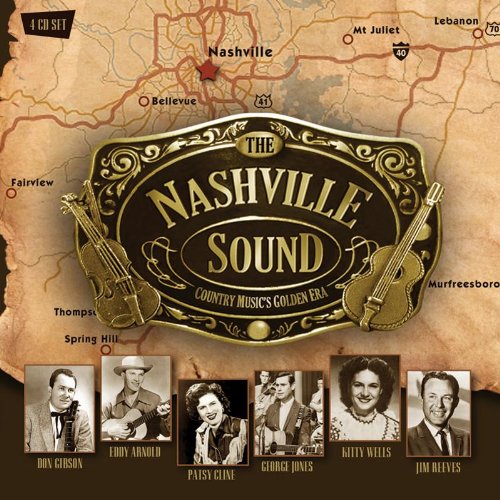
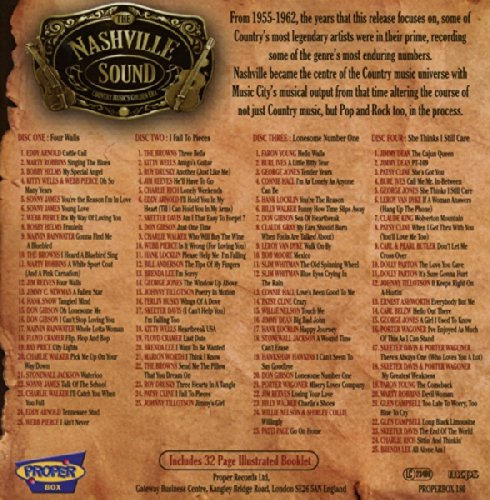
DAVE MASON-IT’S LIKE YOU NEVER LEFT.
DAVE MASON-IT’S LIKE YOU NEVER LEFT.
There aren’t many musicians who’ve played with everyone from Jimi Hendrix, Fleetwood Mac, Eric Clapton, David Crosby, George Harrison, Joe Walsh, Graham Nash and Paul McCartney. Dave Mason did. He played on numerous classic albums. This includes Jimi Hendrix’s Electric Ladyland, the Rolling Stones’ Beggar’s Banquet and George Harrison’s All Things Must Pass. Dave also cofounded pioneering British rock band Traffic. After leaving Traffic in 1969, Dave embarked upon a successful solo career.
His debut album was 1970s Alone Together. Three years later, in 1973, Dave released It’s Like You Never Left. It featured a glittering all-star cast and was one the best albums of Dave’s solo career. It’s Like You Never Left has just been rereleased by BGO Records, and showcases the talents of one of the legends of British music, David Mason.
Dave Mason cofounded Traffic in April 1967. Looking back, it’s like a British supergroup. The originally lineup featured Dave, Steve Winwood, Jim Capaldi and Chris Wood. This was the lineup that released Traffic’s first three albums, which were released between 1967 and 1969.
Traffic’s debut was Mr. Fantasy. It was released eight months after Traffic were founded. Mr. Fantasy was released in December 1967. It reached number eight in the UK. Over the Atlantic, Mr. Fantasy was released as Heaven Is in Your Mind and reached number eighty-eight in the US Billboard 200 charts. The two singles that were released from Mr. Fantasy and Heaven Is in Your Mind were Paper Sun and Hole In My. Paper Sun reached number five in the UK and number ninety-four in the US Billboard 100. Hole In My Show gave Traffic the biggest hit of their career, when it reached number two in the UK. Considering this was Traffic’s debut album, they’d come a long way in a short time.
After the release of Mr. Fantasy, Traffic looked like joining the rock’s major league. They started out as a psychedelic rock band, influenced by The Beatles, but gradually, decided to diversify musically. Just like so many late-sixties bands, Traffic were keen to explore sonic possibilities. This didn’t go down well with all the members. Indeed, all wasn’t well within Traffic.
Following the release of Mr. Fantasy, Dave quit Traffic. The reason given was “artistic differences.” For Traffic this was a huge blow. Dave wasn’t lost to music. He produced Family’s debut album Music In A Doll’s House. However, midway through the recording of their sophomore album Traffic, Dave rejoined Traffic. He put his artistic differences aside and Traffic was released in October 1968.
On its release, Traffic was the album the broke Traffic in America. It reached number seventeen in the US Billboard 200 and number nine in the UK. That was as good as things got for Traffic featuring Dave Mason.
Just seven months after the release of Traffic, Last Exit was released in May 1969. It was essentially a selection of unreleased tracks. Although the album cover featured the four members of Traffic, Dave didn’t play on most of the songs. He wrote Just For You, and cowrote Shanghai Noodle Factor and Something’s Got a Hold of My Toe. Dave played guitar on Just for You and Something’s Got a Hold of My Toe. He also delivered the lead vocal on Just for You. Last Exit wasn’t a commercial success in the UK. It failed to chart. Across the Atlantic, Last Exit reached number nineteen in the US Billboard 200. Last Exit proved to be aptly named, as it was Dave’s Traffic swan-song.
After Last Exit, Dave embarked upon his solo career. He was also busy playing on albums by the biggest names in music. In 1968, Dave played on Jimi Hendrix’s Electric Ladyland and the Rolling Stones’ Beggar’s Banquet. Then in 1970, as Dave’s solo career began, he played on George Harrison’s All Things Must Pass. Dave also toured with Delaney and Bonnie and Friends. This was an all-star band featuring Eric Clapton, George Harrison, Greg and Daune Allman, Leon Russell, Rita Coolidge, King Curtis and Bobby Whitlock. Somehow, Dave also managed to find the time to record his debut album Along Together.
Alone Together saw Dave joined by the great and good of music. Many of the artists who toured with Delaney and Bonnie and Friends joined Dave. This included Eric Clapton, Leon Russell and Rita Coolidge. Jim Capaldi of Traffic, and legendary American session drummer Jim Keltner joined Dave. With such an illustrious cast of guest musicians, it’s no surprise that Alone Together was critically acclaimed and commercially successful. It reached number twenty-two in the US Billboard 200. Dave’s solo career had picked up where he left off with Traffic.
After the commercial success of his debut solo album, Dave released a collaboration with Cass Ellitot. Dave had been introduced to Mama Cass by a mutual friend. Mama Cass, like Dave was pursuing a solo career. She’d released two solo albums. However, both she and Dave put their solo career on hold and released an album together. Both of them missed being part of a group and collaborating with others. So they began work on Dave Mason and Cass Elliot.
Although Dave and Mama Cass were given equal billing, on Dave Mason and Cass Elliot, Dave wrote five songs and cowrote two other tracks. This included Something to Make You Happy, which Dave and Mama Cass cowrote. When recording began, it was more like a Dave Mason solo album. He sang all the lead vocals. Mama Cass was left singing backing vocals. However, Dave Mason and Cass Elliot sold well.
Released in March 1971, Dave Mason and Cass Elliot reached number forty-nine in the US Billboard 200 charts. No wonder. It was very much of its time, tapping in to the West Coast sound. Country rock with a bluesy hue, it proved more popular in America than in the UK. That was the case with Dave’s solo career, which was on hold.
Dave was signed to Blue Thumb Records. However, in 1972, just as he was about to record his sophomore album Headkeeper, Dave entered into a dispute with Blue Thumb Records. Given he was Blue Thumb Records’ most successful artist, he wanted an improved contract. A standoff ensued. However, Blue Thumb Records realised that Dave needed to release another album. So, they released Headkeeper.
Headkeeper was a mixture of tracks recorded in Sunset Sound Studios, Hollywood and live at the Troubadour in Los Angeles. Released in 1972, Headkeeper reached number fifty-one in the US Billboard 200 charts. It proved to be Dave’s final album for Blue Thumb Records. After this, he signed to Columbia.
Dave’s major label debut was It’s Like You Never Left. It’s a collection of ten tracks. Nine were written by Dave. He cowrote Side Tracked with Rick Jaegar, Mark Jordan and Lonnie Turner, who were part of Dave’s all-star backing band.
Recording of It’s Like You Never Left took place at the Record Plant and Sunset Sound in LA, plus CBS Studios in San Francisco. Dave’s band included some top musicians. The rhythm section included drummers Jim Keltner and Rick Jaegar, bassists Chuck Rainey, Carl Radle, Charles Fletcher, Greg Reeves and Lonnie Turner, while George Harrison played guitar. They were joined by pianist and organist Mark Jordan, Stevie Wonder on harmonica, Rocky on congas and Mark Cecil on Moog. A horn section and backing vocalists were brought onboard. Among the backing vocalists were Kathleen Saroyan, Clydie King, Julie Tillman, Maxine Willard and John Batdorf. Dave played guitar and Moog bass synth on what was, his third solo album, It’s Like You Never Left.
On its release in 1973, It’s Like You Never Left was Dave’s first new solo album since 1970. This was a long time not to release a new album. His previous album Headkeeper, was compiled and released by Blue Thumb Records. At that time, Blue Thumb Records and Dave were locked in a during a lengthy and bitter legal dispute. That was the past. It’s Like You Never Left was the future. It was released to widespread critical acclaim and eached number fifty in the US Billboard 200 charts. With a little from his friends, Dave’s comeback album was a success. You’ll realise why when I tell you about It’s Like You Never Left.
Baby… Please opens It’s Like You Never Left. Guitars are strummed while drums provide the heartbeat. Soon, a blistering guitar solo is unleashed. That’s the signal for the band to kick loose. Rick Jaeger’s drums and Chuck Rainey’s bass dive the arrangement along at breakneck speed. Dave unleashes a needy, soul-baring vocal. Soulful harmonies sweep in. They’re the perfect foil for the desperation and heartbreak in Dave’s vocal as the West Coast sound and RM Rock combines seamlessly.
Every Woman marks a change in sound. There’s a much more understated sound. That’s because the band unplug. Just gently strummed guitars accompany Dave and Graham Nash’s tender, heartfelt vocals. There’s a nod to C.S.N.Y. on this beautiful paean.
If You’ve Got Love has an early seventies West Coast sound. Crystalline guitars set the scene for Dave’s vocal. It’s a mixture of tenderness and sincerity, as his all-star band drive the arrangement along. Just like Baby… Please, the bass is prominent in the mix. This time, Carl Radle plays bass. He matches Jim Keltner every step of the way. Along with the Hammond organ and chiming guitars, they provide the perfect backdrop for Dave. Later, Dave’s vocal becomes joyous. It grows in power and confidence he sings call and response. Soaring, sweeping gospel tinged harmonies answer his call. By then, this hook-laden track has taken on a joyous, celebratory sound.
Maybe sees another change in sound. It’s just guitars and bass that accompany Dave’s hopeful, heartfelt vocal. Later, there’s a sense of urgency in his vocal as he tries to rescue his failing relationship.
Head Keeper sees Dave and his kick loose from the get-go. The arrangement gallops along. Searing, scorching and quivering rocky guitars are unleashed. Meanwhile, the rhythm section drive the arrangement along. Dave’s vocal is a powerful and urgent. This suits the lyrics, about the all-seeing “seeker.” Adding the finishing touches are harmonies and some blistering guitar licks. They add to the drama and theatre of this track.
A lone piano opens Misty Morning Stranger. It’s joined by stabs of horns and rocky guitars. Then when Dave’s vocal enters, again, it’s a mixture of power and urgency. Soon, it settles down and becomes soulful. Behind him, his band veer between dramatic and understated. When it becomes understated, this allows Dave’s vocal to take centre-stage. After that, his vocal is carried along by the band. Tempo changes, stabs of horns, hypnotic piano chords and a barnstorming crystalline guitar solo play their part in what’s one of the highlights of It’s Like You Never Left.
Silent Partner marks another change of direction musically. Dave seems to draw inspiration from a variety of sources. Folk, rock and even Caribbean music seem to have influenced Dave. Urgently, he strums his guitar, before launching into the lyrics. His vocal is urgent, but soulful as he sings about the “Silent Partner whose taken hold.” Later Dave sings:“when you can’t see past your nose?” Succinctly, Dave articulates how a drug addict feels. All that matters is their next fix. It’s a powerful track.
Side Tracked has a lovely laid-back sound. A crystalline guitar solo takes centre-stage, while the rhythm section and keyboards combine. They jam for just over three minutes, showcasing their combined talents. Stealing the show is Dave’s guitar playing. It’s his best on It’s Like You Never Left. This results in a beautiful mellow, instrumental.
As the rhythm section open The Lonely One, Stevie Wonder tenderly plays harmonica. This sets the scene for Dave’s wistful vocal. Flourishes of piano and brief bursts of harmonica accompany him. So do washes of Hammond organ and sweeping harmonies. All the time, the rhythm section provide the heartbeat. When all this is combined, it’s the perfect backdrop for a heartbroken Dave. His pain and hurt seems real. It’s as if he’s lived, loved and survived to tell the tale.
Closing It’s Like You Never Left is the title-track. It’s a rocky track, where the band kick loose from the opening bars. A pounding rhythm section, scorching guitars and dramatic harmonies provide the backdrop for Dave’s soul-searching vocal. Again, it’s a song about the break up of a relationship. Just like the relationship, the song is a roller-coaster ride. Sudden changes in tempo, injections of dramatic harmonies and blistering guitar solos are used. Somehow, it work…just. However, by the end of the track you’re spent, exhausted and exhilarated, by the constant twists and turns of this roller coaster of a track.
Three years after the release of his debut album Alone Together, Dave Mason returned with It’s Like You Never Left. It featured ten tracks where Dave is accompanied by an all-star cast. The result was an eclectic album, where we hear the many sides of Dave Mason.
During It’s Like You Never Left, Dave takes detours via blues, country, folk, rock, soul and the West Coast sound. One minute Dave’s delivering a tender, understated track like Every Woman, the next he’s kicking loose on the joyous and celebratory If You’ve Got Love. Then there’s the title-track. It’s a roller-coaster ride, full of sudden changes. Somehow, Dave who produced It’s Like You Never Left manages to make the track work. Whether he’s kicking loose or dropping the tempo and delivering a soul-baring relationship song, Dave Mason is always captivating. Part of the reason for this, is his lyrics.
Dave’s songs tell stories. Many of his songs are about relationships. There’s tales of love, love lost and loneliness. Many of the songs sound personal. It’s as if they’re a window into Dave’s soul. Then on Silent Partner, Dave tackles the subject or drug addiction, and specifically, cocaine addiction. It was, after all, the rock star’s drug of choice during the seventies. Just like the rest of the songs on It’s Like You Never Left, Silent Partner tells a story. Dave Mason, you see, is a born storyteller. His songs have a cinematic quality. Pictures and scenarios unfold and take shape before your eyes, during Dave Mason’s comeback album It’s Like You Never Left.
After a gap of three years, Dave Mason returned with It’s Like You Never Left which has just been rereleased by BGO Records. It’s Like You Never Left was a welcome return to form from Dave Mason. He’d been away far too long. The dispute with Blue Thumb Records didn’t help. Now signed to Columbia, Dave Mason had returned with It’s Like You Never Left. This was an album that came close to rivalling Dave’s debut Alone Together. However, Alone Together remains the highlight of Dave Mason’s solo career. Coming a very close second is It’s Like You Never Left, which showcases the multitalented Dave Mason.
DAVE MASON-IT’S LIKE YOU NEVER LEFT.
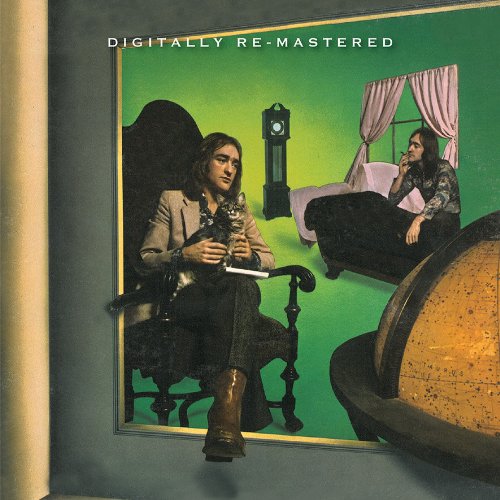
DONNIE AND JOE EMERSON-STILL DREAMIN’ WILD: THE LOST RECORDINGS 1979-81.
DONNIE AND JOE EMERSON-STILL DREAMIN’ WILD: THE LOST RECORDINGS 1979-81.
Back in 1979, Donnie and Joe Emerson’s parents spent $100,000 buying equipment for their two son’s home studio. That wasn’t enough. Donnie and Joe weren’t going to settle for second best. Not when it came to the equipment for their nascent studio. The synths, drum machines and eight-track recorders available were good, but not good enough for Donnie and Joe. They had their limitations. So, their parents mortgaged the 1,600 acre family farm in Fruitland, Washington. All this was so Donnie and Joe could follow their dreams. With the best musical equipment money could buy in their studio, Donnie and Joe Emerson recorded their debut album, Dreamin’ Wild.
Donnie and Joe headed into their home studio and recorded eight tracks. Once the eight tracks were recorded, the album became Dreamin’ Wild. This was almost ironic. After all, the Emerson brothers had been living the dream. In doing so, they’d spent a fortune, their parent’s fortune. The Emerson’s had spent $100,000 and mortgaged their future. Dreamin’ Wild had to sell well. It had to be a huge hit.
Rather than try and interest record companies in Dreamin’ Wild, the Emerson family decided to release the album privately. This wasn’t unusual. All across America, private pressings were being released. They varied in quality. Many were little more than vanity releases. Not Dreamin’ Wild.
It showcased two talented singers, songwriters and musicians. Dreamin’ Wild wasn’t just a case of wealthy parents indulging their son’s musical fantasies. No. Far from it. Donnie and Joe’s fusion of soft rock, funk and soul had potential. The Emerson brothers could’ve enjoyed a successful career. Especially, if they’d signed to a major label. They would’ve guided Donnie and Joe’s career. That would’ve made sense. So would bring in an experienced management team to guide Donnie and Joe’s career. Sadly, that didn’t happen.
Instead, Dreamin’ Wild was released on the Enterprise and Co. label. Its only release were Donnie and Joe’s 1977 single Take It, and two years later, Dreamin’ Wild in 1979. Neither sold well. In the case of Dreamin’ Wild it sunk without trace. The Emerson family’s gamble hadn’t paid off.
They’d bet the bank on their talented sons. Not only were they $100,000 lighter, but there was a mortgage on their 1,600 acre farm. Dreamin’ Wild must be the most expensive private pressing ever. Worse was to come.
Following the commercial failure of Dreamin’ Wild, Joe decided to concentrate on the family farm. Donnie and Joe continued to write and record songs. Over the next two and a half years, they wrote and recorded seventy songs. Not only were the Emerson brothers prolific, but the quality was consistent. What differed was style. They recorded everything from FM rock, power pop, and new wave. Sadly, these songs were never released…until recently
On 16th June 2014, Light In The Attic Records released Still Dreamin’ Wild-The Lost Recordings 1979-81. It features twelve of the seventy tracks Donnie and Joe Emerson recorded following the release of Dreamin’ Wild. The story behind the release of Still Dreamin’ Wild-The Lost Recordings 1979-81, began when a record collector bought a copy Dreamin’ Wild.
Just like any self-respecting record collector, Jack Fleischer is always on the look out for hidden gems and rarities. One day, in a Spokane thrift shop he came across a copy of Dreamin’ Wild. It was the album cover that caught Jack’s attention. Donnie and Joe sport matching bouffant hairstyles and white jumpsuits. The album cover epitomises the late-seventies. Paying $5, Jack took his newly acquired copy of Dreamin’ Wild home. Jack was so impressed at what he heard, that he blogged about Dreamin’ Wild. That’s where Ariel Pink, a cult musician read about Dreamin’ Wild.
Having read about Dreamin’ Wild, Ariel Pink recorded his version of one of Baby. It’s without doubt, one of the highlights of Dreamin’ Wild. Ariel’s cover of Baby came to the attention of Light In The Attic Records. They released Ariel’s version with Donnie and Joe’s orignal on the B-Side. Then later in 2012, Light In The Attic Records rereleased Dreamin’ Wild.
Thirty-three years after the original release of Dreamin’ Wild, Light In The Attic Records reissued Donnie and Joe Emerson’s debut album. It was released to widespread critical acclaim. Belatedly, Dreamin’ Wild had found an audience who appreciated it beauty and delights. However, there was more to Donnie and Joe Emerson’s music than Dreamin’ Wild.
All these years later, Donnie still had the tapes of the other seventy songs he and Joe recorded, in their home studio. They proved to be a veritable treasure trove.
Following the success of Dreamin’ Wild, Donnie and Joe mentioned the tapes. The guys at Light In The Attic Records decided to have a listen. They were astounded to find just over seventy track. Given the amount of tracks, Donnie and Joe could’ve been forgiven if the quality varied. It didn’t. Instead, the quality was consistent throughout the tapes. This presented a problem. How do you manage whittle down seventy tracks to twelve?
Eventually, Light In The Attic Records settled on twelve tracks from the original seventy. They became Still Dreamin’ Wild-The Lost Recordings 1979-81, the long-awaited followup to 1979s Dreamin’ Wild. Thirty-five years later, Donnie and Joe Emerson are back, with Still Dreamin’ Wild-The Lost Recordings 1979-81, which I’ll tell you about.
Overture opens Still Dreamin’ Wild-The Lost Recordings 1979-81. It’s a thirty-two second amuse bouche. Just buzzing, pulsating synths and an ethereal piano combine. They tantalise your musical tastebuds as you await the rest of the menu.
This starts with Don’t Fight. It bursts into life. The rhythm section, complete with eighties drums, drive the arrangement along. They provide the backdrop for Donnie’s urgent, emotive vocal. It’s a song about a teenager struggling to find his identity. Donnie sings about being yourself. He also adds ethereal, cooing vocals. Later, as the drama increases, Donnie’s vocal becomes an urgent vamp, during this slick slice of hooky pop perfection.
Ride The Tide has a much more understated sound. The song tells the story of Donnie being introduced to a beautiful, famous woman in L.A. To Donnie, this was “like a dream.” His disbelief shines through in he lyrics. Again, Donnie plays all the instruments. This includes a 12-string acoustic guitar, drums and polymoog synth. Drums provide the heartbeat and the polymoog glistens. Brief bursts of acoustic guitar accompany Donnie’s tender, needy and heartfelt vocal. All this results in another beautiful, urgent example of pop perfection.
One True Love sees Donnie drop them tempo. Donnie wrote the song in 1981, at the family farm. It was how he imagined the city to be like, His vocal is wistful, as the arrangement starts off understated, and grows in power. The rhythm section and acoustic guitar provide the mainstay of the arrangement. That’s until the Fender Rhodes and rocky guitar enters. They play a hugely important role, carrying Donnie’s vocal as FM rock and power pop combines seamlessly to create one of the highlights of Still Dreamin’ Wild-The Lost Recordings 1979-81.
A lone crystalline guitars soars above the arrangement to Somethin’s Comin’ Down. Straight away, Donnie combines the West Coast sound with the songwriting skills of Paisley’s very own, Gerry Rafferty. It’s a beautifully crafted song. Everything falls into place at the right time. Whether it’s the crystalline guitar, Fender Rhodes or wistful piano, Donnie drops it in at the right time. His vocal is tender, needy and emotive. He adds baking vocals, dropping them in at the right time. The result is a gorgeous, seductive paean from the Donnie Emerson.
Everybody Knows It was recorded in the late-seventies, before the release of the Dreamin’ Wild album. In fact it was just the second song the Emerson brothers recorded. Given their lack of experience, it eschews their lack of experience. The poymoog synth and rhythm section drive the arrangement along. Donnie’s vocal is joyous. It plays an important part in this anthemic fusion of pop, rock and synth pop.
Stabs of synths and thunderous drums open Big Money, one of two track Joe wrote and played on. They provide the backdrop to Donnie’s vocal on this track about Reaganomics. Delivered with a mixture of anger and frustration, Donnie’s vocal is accompanied by a hypnotic, robotic arrangement. This is very different from what’s gone before and what comes next.
Ooh Baby Yeah sees the Emerson turn their back on politics, and concentrate on providing a proliferation of poppy hooks. Searing guitars, pounding guitars and stabs of piano grab your attention. Having set the scene for Donnie’s cooing vocal, Donnie and Joe draw inspiration from The Beach Boys and Dire Straits. Accompanying his vocal are sweet harmonies, rocky guitars and stabs of piano. Hooks certainly aren’t rationed, in what’s a delicious hook-laden fusion of pop and rock.
Never before, has a song been written about a guitar amplifier. That’s until Donnie wrote Stand by Love. His performance seems inspired by Rick Springfield. Gone are the synths. Instead, the rhythm section kick loose. They’re joined by Donnie’s 12-string acoustic guitar. He delivers a powerful, vampish vocal on this driving rock track. It has an anthemic, everyman sound, that’s infectiously catchy.
Girl with the Rainbow Seeds sees a return of the synth. Joe plays drums on what’s best described as a fusion synth pop and psychedelia. The psychedelic influence comes courtesy of the Beatles’ inspired lyrics. They’ve a late sixties influence. Donnie, like a musical pied piper, spreads the message about the Girl with the Rainbow Seeds.
Since You Been with Me has a robotic sound. That’s down to the polymoog synth and organ drum machine. Providing a soulful contrast is Donnie’s melancholy, thoughtful vocal. His vocal is reminiscent of Hall and Oates. As for the arrangement, despite its robotic sound, it’s still funky. However, stealing the show is Donnie’s wistful vocal.
Don’t Disguise The Way You Feel closes Still Dreamin’ Wild-The Lost Recordings 1979-81. It’s the longest track on the album. At over seven minutes long, it’s like a lost teenage symphony. Swathes of synthetic strings sweep, producing a wistful, heartbreaking sound. This is perfect for Donnie’s grief stricken vocal. He’s recovering from the loss of a friend and is questioning everything. His vocal is an outpouring of hurt and grief. Drums add a lo-fi backdrop and Donnie strums his guitar, as he searches desperately for answers. A hugely powerful and moving track, that’s a poignant reminder of the Emerson brother’s musical potential.
Sadly, the Emerson brothers never fulfilled their potential. They only ever released one album, Dreamin’ Wild. Released as a private pressing, Dreamin’ Wild sunk without trace. Nothing was ever heard of the album. That’s until record collector Jack Fleischer came across a copy of Dreamin’ Wild in a Spokane thrift shop. Paying his $5, Jack took his newly acquired copy of Dreamin’ Wild home. He was so impressed at what he heard, that he blogged about Dreamin’ Wild. That’s where Ariel Pink, a cult musician read about Dreamin’ Wild.
Having read about Dreamin’ Wild, Ariel Pink recorded his version of one of Baby. Light In The Attic Records heard Ariel’s version of Baby, and most importantly, heard Dreamin’ Wild. They reissued Dreamin’ Wild in 2014. Then on 16th June 2014, Light In The Attic Records released Still Dreamin’ Wild-The Lost Recordings 1979-81. It features twelve of the seventy songs Donnie and Joe Emerson recorded between 1979 and 1981. They’re an eclectic selection.
Everything from FM Rock, pop, power pop, psychedelia, rock and synth pop on Still Dreamin’ Wild-The Lost Recordings 1979-81. On these twelve tracks, Donnie is the senior partner. He features on all the tracks. Joe appears just twice. Following the commercial failure of Dreamin’ Wild, Joe decided to concentrate on the family farm. Donnie never gave up his musical dream.
Throughout his life, music has beee a constant. He never made the commercial breakthrough he’d hope of. However, he had the opportunity to follow his dreams. His parents made sure of that. They spent $100,000 buying equipment for their two son’s home studio. That wasn’t enough. Donnie and Joe weren’t going to settle for second best. Not when it came to the equipment for their nascent studio. The synths, drum machines and eight-track recorders available were good, but not good enough for Donnie and Joe. They had their limitations. So, their parents mortgaged the 1,600 acre family farm in Fruitland, Washington. All this was so Donnie and Joe could follow their dreams. Sadly, this gamble didn’t pay off.
This wasn’t because Donnie and Joe lacked talent. Far from it. Instead, it was a case of making a series of bad decisions. The first was spending a small fortune on a home studio for two teenage boys. That was indulging two boy’s dreams. In doing so, the Emerson family risked everything. Their second mistake was not trying to get a record company interested in Dreamin’ Wild. Maybe then, Dreamin’ Wild would’ve become a commercial success. By releasing Dreamin’ Wild on their own label, the Emerson family weren’t able to promote the album sufficiently. So, it’s no surprise that Dreamin’ Wild sunk without trace. After that, Joe Emerson gave up on his dream. Thirty-five years later, Joe and Donnie are back.
Still Dreamin’ Wild-The Lost Recordings 1979-81 showcases the Emerson brother’s undoubted talent. The twelve tracks on Still Dreamin’ Wild-The Lost Recordings 1979-81 show what they were capable of. Who knows what heights Donnie and Joe Emerson would’ve reached if things had been different? Maybe then, the twelve tracks on Still Dreamin’ Wild-The Lost Recordings 1979-81 wouldn’t have lain unloved and unreleased for thirty-five years. Not any more.
Light In The Attic Records have done Donnie and Joe Emerson’s music justice. Still Dreamin’ Wild-The Lost Recordings 1979-81 is a luxurious and lovingly compiled compilation that showcases two talented brothers Donnie and Joe Emerson, who could’ve and should’ve, enjoyed commercial success and critical acclaim thirty-five years ago.
DONNIE AND JOE EMERSON-STILL DREAMIN’ WILD: THE LOST RECORDINGS 1979-81.
KASAI ALLSTARS-BEWARE THE FETISH.
KASAI ALLSTARS-BEWARE THE FETISH.
Nearly six years ago, in December 2008, the Kasai Allstars released their critically acclaimed debut album In The 7th Moon, The Chief Turned Into A Swimming Fish and Ate The Head Of His Enemy By Magic. On its release, critics were won over by the Kasai Allstars’ music. They hadn’t heard music like this before. Here was music that was totally unique. It was also irresistible, joyous, otherworldly, trance-inducing, mythical and mystical. So, critics and music lovers eagerly awaited the Kasai Allstars’ sophomore album.
Since the release of 7th Moon, The Chief Turned Into A Swimming Fish and Ate The Head Of His Enemy By Magic very little has been heard of the Kasai Allstars. They made an appearance on 2011s Congotronics v Rockers. This was a collaboration between ten Congolese and indie musicians. The result was a glorious cultural collaboration. It was a brief reminder of what the Kasai Allstars were capable of. Surely, their sophomore album wasn’t far away?
Three years later, the Kasai Allstars are ready to release their sophomore album, Beware The Fetish on Crammed Discs. It’s a double album featuring twelve-tracks of the Kasai Allstars trademark sound. The twelve tracks last over 100 minutes. They showcase the Congolese collective’s genre-melting sound. Just like their debut album, Beware The Fetish is music that you must immerse yourself in. If you do, you’ll discover music that’s irresistible, joyous, otherworldly, trance-inducing, mythical and mystical. That’s down to the fifteen members of the Kasai Allstars.
The Kasai Allstars are a collective of fifteen Congolese musicians, based in Congo’s capital Kinshasa Originally, they were members of five bands based in the Kasai region. They come from very different backgrounds. Five different ethnic backgrounds are represented in the Kasai Allstars. Different cultures, languages and musical traditions play their part in the success story that’s the Kasai Allstars. Essentially, the Kasai Allstars are a cross-cultural collaboration. They’re an example to the people of Congo, as they’re able to live side-by-side happily and peacefully. In doing so, they create their unique brand of irresistible music. It’s influenced by traditional Congolese music.
Just like their debut album, the Kasai Allstars draw inspiration from festive and ritual music. It used to be played in the bush. However, it was eventually banned. The music was perceived by the establishment as scandalous. This was because of some of the erotic dances and the paeanistic trance rituals that accompanied the music. In the establishment’s eyes, this was perceived as sacrilegious, sometimes, even satanic. So, the music is hugely controversial. It’s also irresistible and joyous.
Beware The Fetish sees the Kasai Allstars continue to push musical boundaries. This time, their music is even more eclectic than on In The 7th Moon, The Chief Turned Into A Swimming Fish and Ate The Head Of His Enemy By Magic. There’s a reason for this. They’re joined by a several guest artists. Among the vocalists are Kabongo, Muambuyi, Tshimanga, Mi Amor, Tandjolo, Grand Prêtre, and the late, lamented Mbuyamba Nyunyi. Each of these vocalists breath life, meaning and emotion into lyrics about social problems, sorcery and traditional Congolese wisdom. They help the Kasai Allstars seamlessly combine musical genres and influences. The same goes for instruments.
African and Western instruments play their part in shaping the sound of Beware The Fetish. This plays their part in the Kasai Allstars’ unique sound. Traditional instruments include xylophones, percussion, likembes, plus slit and buzz drums. They join electric guitars and unmistakable sound of distorted thumb pianos. The Kasai Allstars eschew traditional means of amplification. Instead, they do things their way. This works wonderfully, and plays a huge part in the Kasai Allstars’ sound on Beware The Fetish, the Kasai Allstars’ long-awaited sophomore album. A double album featuring twelve tracks lasting nearly 100 minutes, Beware The Fetish is a return to form from the Kasai Allstars. You’ll realise that when I tell you about Beware The Fetish.
Disc One.
Opening disc one of Beware The Fetish is The Chief’s Enthronement / Oyaye. Crystalline guitars set the scene for a myriad of percussive delights, handclaps and drums. Bursts of a joyous vocal emerge from the arrangement. They’re then sung in a call and response style. Meanwhile, a rhythm is beat on a drum. Sound flit in and out the arrangement. They tease and tantalise you. Some make only a fleeting appearance. Others like the thunderous drum, chiming guitars and percussion are omnipresent. The same can be said of the vocals. Later, the track becomes hypnotic and mesmeric. Then it returns to its celebratory, joyous sound.
Jangling guitars open Yangye, The Evil Leopard and the arrangement bursts into life. It’s akin to a call do dance. As the guitars flits across the arrangement, percussion, drums and vocals enter. Again, the vocal is sung in a call and response style. Soon, the music becomes hypnotic. Trance-inducing describes the music perfectly. So does urgent and frenetic. Layers of music assail you. It assaults your senses, and its mystical properties has you utterly spellbound.
Understated describes the introduction to Salute To Kalombo. Drums, percussion, likembes and thumb pianos are deployed. They provide the backdrop to the vocal. It’s impassioned, heartfelt and soulful. At the start, it’s sung in a call and response style. Then it takes centre-stage. That’s where it belongs. It’s a cathartic outpouring of emotion. It grows in power and passion. So does the arrangement. The rest of the Kasai Allstars chant, holler and provide a thunderous, dramatic backdrop. However, taking centre-stage during this epic is an impassioned, heartfelt vocal.
Buzzing guitars flit across the arrangement to Down And Out. They’re accompanied by a myriad or percussion and hypnotic drums. It’s a compelling combination. Elements of Afro-beat, traditional Congolese music, funk, jazz and rock melts into one. Then there’s the vocal. It’s a delivered with power and passion. Soul-baring describes the vocal. Again, it’s sung in a call and response style. Meanwhile, the pulsating arrangement meanders along. Crucial to its sound are the jazz-tinged guitars and subtle percussion. Stealing the show is the vocal. Literally, it oozes emotion as the Kasai Allstars provide a pulsating backdrop.
Crystalline, jangling guitars ring out as He Who Makes Bush Fires For Others reveals its secrets. Bursts of joyful, celebratory vocals emerge from the arrangement. Drums and bass pound, while guitars chime. Then there’s the percussive delights of the Kasai Allstars. That’s one of their secret weapons. They play a part in the track’s mesmeric sound. However, just like other tracks, the vocal is at the heart of the track’s success. It’s delivered with emotion. Then punchy, urgent harmonies interject. They proceed to drive each other to greater heights, as the Kasai Allstars deliver a vocal masterclass.
As They Walked Into The Forest On A Sunday, They Encountered Apes Dressed As Humans closes disc one. Frantic percussion, drums, xylophones and likembes combine. They create the an understated backdrop for the vocal. It’s delivered tenderly, but with sincerity and emotion. Harmonies interject, responding to the call. Later, the tempo increases. There’s a sense of urgency. The vocal becomes a frantic vamp. Hollers and scream escape from the arrangement, which grows in power and drama. It seems that the Kasai Allstars have decided to kick loose. Things get a little funky. They fuse jazz, Afro-beat and traditional Congolese music, ensuring that disc one ends on a glorious high. This leaves you wanting more. So, here comes disc two.
Disc Two.
Thus Spoke The Ancestors opens disc two of Beware The Fetish. It has a traditional Congolese sound. It sounds like a song of praise. The Kasai Allstars sing unaccompanied. It’s really powerful and works well. You’re captivated as they give thanks. Midway through the track, things change…totally. It’s as if they’ve done a u-turn and the track explodes. Genres melt into one. Everything from funk, R&B, blues, Afro-beat, jazz and rock melts into one. Jangling piano, thundering drums and percussion join searing guitars. A powerhouse of a vocal encourages the Kasai Allstars to kick loose. They do, and they revel in it, resulting in a glorious, innovative and genre-melting track where the Kasai Allstars show another side to their music.
Chiming guitars are panned left on Beware The Fetish. Percussion and drums join as the arrangement unfolds. After the previous track, it’s a case of expect the unexpected. The vocal is delivered quickly. It’s delivered with power and passion. Waves of harmonies, jangling guitars, drums and percussion accompany it. Before long, you’re spellbound. The music veers between dramatic, haunting and mesmeric. It worms its way into your soul. It’s also a hypnotic call to dance which you can’t help but submit to.
Meandering and mesmeric describes the arrangement to A Good Husband. So does understated. This isn’t the Kasai Allstars in full flow. No. They’re holding back. Just a fusion of percussion, likembes, slit and buzz drums create the backdrop for the emotive, heartfelt vocal. The harmonies are soulful and emotive, as they soar above the arrangement. They’re joyous and deserve their moment in the sun. They take centre-stage. Then the arrangement grows in power and drama. It’s time for the Allstars to kick loose. Harmonies become a chant and a mass of thundering drums and percussion combine and the Kasai Allstars become an unstoppable force. It’s a joy to be hold the Kasai Allstars in full flow.
Searing machine gun guitars are unleashed, joining percussion on In Praise Of Homeboys. They set the scene for the chanted vocal. It’s joyous, soulful and provides a contrast to the raw power of the arrangement. Before long, the chanted vocal becomes a vamp. It veers between a chant and vamp, as the arrangement takes on a dramatic, hypnotic sound. It’s irresistible and shows yet another side to the Kasai Allstars, as they spread their wings musically.
The Dead Don’t Dance is a near thirteen minute epic. Glorious crystalline, chiming guitars set the scene. They’re joined by percussion, xylophones, percussion, likembes and drums. They create a big, bold, booming arrangement. The vocal is sung in a call and response style. When the Kasai Allstars harmonise, they’re at their very best. The arrangement is pretty good too. Searing guitars, a buzzing bass, drums and the percussion. It’s a potent and powerful combination. Perfect for the soulful delights of the Kasai Allstars.
As They Walked Into The Forest On A Sunday, They Encountered Apes Dressed As Humans unfolds, the arrangement assails and surrounds you. Layers of music assault your senses. Quickly, it becomes hypnotic and trance-inducting. Very different is the vocal. It’s impassioned and emotive. Delivered soulfully, harmonies sweep in. Then it’s all change. The vocal grows in power, becoming a vamp. Similarly, the arrangement become frantic and dramatic. Thundering drums, a myriad of percussion and bursts of vocal escape from the dramatic, pulsating arrangement. The Kasai Allstars have kicked loose, before reaching a dramatic crescendo.
The Ploughman (Le Laboureur) closes Beware The Fetish. Slowly and moodily, a blues-tinged guitar solo takes centre-stage. It accompanied by whoops and hollers. However, the Kasai Allstars are only toying with you. Having teased you, they unleash a rocky arrangement. They’ve saved the best until last. The same can be said of the vocal. It’s rousing and raucous, sung in a call and response style. Blistering, driving guitars, thundering drums and crashing cymbals are at the heart of the arrangement. Elements of rock, psychedelia and Afro-beat combine as the Kasai Allstar showboat their way through nine minutes of anthemic, everyman music.
After six years away, the Kasai Allstars are back. They certainly don’t do things by halves. Beware The Fetish is a double album, featuring twelve songs, lasting over 100 minutes. The best way to describe this music is genre-melting. As a starting point, the Kasai Allstars take traditional Congolese music, specifically festive and ritual music. This is a controversial starting point. It used to be played in the bush. However, it was eventually banned. The music was perceived by the establishment as scandalous. This was because of some of the erotic dances and the paeanistic trance rituals that accompanied the music. In the establishment’s eyes, this was perceived as sacrilegious, sometimes, even satanic. So, the music is hugely controversial. Despite this, the Kasai Allstars use this as a starting point for their unique and irresistible music.
To that, they add everything from Afro-beat, funk, gospel, jazz, psychedelia, rock and soul. Over twelve tracks, these musical influences seamlessly, melt into one. This is what we’ve come to expect from the Kasai Allstars.
For those unfamiliar with the Kasai Allstars’ music, it’s like nothing you’ve ever heard before. Here is music that’s totally unique. It’s dramatic, irresistible, joyous, mythical and mystical, otherworldly, spiritual and trance-inducing. I’d also call Beware The Fetish a glorious cultural collaboration. There’s a reason for this.
Within the Kasai Allstars are five different ethnic groups. In other walks of Congolese life, this could be an explosive combination. Not here. They’re able to live side-by-side happily and peacefully. Music you see, brings the fifteen members of the Kasai Allstars together. Their shared love of music means they’re able to put aside cultural and political differences. In doing so, they create their unique brand of irresistible, joyous and trance-inducing music.
Beware The Fetish is their second album. It will be released by Crammed Discs on 23rd June 2014. On Beware The Fetish, the Kasai Allstars spread their wings. It’s a much more eclectic album. They draw inspiration from a variety of influences and genres. So much so, that you never know what to expect next. Sometimes, the Kasai Allstars perform several u-turns during the same song. As a result, Beware The Fetish is always captivating.
Throughout the twelve tracks on Beware The Fetish, you’re spellbound. That’s thecae from the opening bars of The Chief’s Enthronement/Oyaye. Right through to the closing notes of The Ploughman (Le Laboureur), you immerse yourself in the delights of Beware The Fetish. Surprises, subtleties and nuances are never far away. Neither is irresistible, joyous, hypnotic and hook-laden music. Whether its songs with a social conscience, or tracks to dance to, Beware The Fetish is truly irresistible. Innovative and groundbreaking, Beware The Fetish is a genre-melting album where the Kasai Allstars come of age musically. Especially, when they kick loose. That’s a joy to behold. The Kasai Allstars in full flight on Beware The Fetish, is something everyone should experience once in their life.
KASAI ALLSTARS-BEWARE THE FETISH.
MICHAEL CHAPMAN-PLAYING GUITAR THE EASY WAY.
MICHAEL CHAPMAN-PLAYING GUITAR THE EASY WAY.
Nine years after releasing his debut album Rainmaker, on Harvest Records, Michael Chapman released Playing Guitar The Easy Way which has just been released on CD for the first time by Light In The Attic Records. This is no ordinary reissue. Far from it. It’s a no expense spared reissue. Light In The Attic have faithfully recreated the sleeve-notes. They’ve also taken Michael Chapman’s own tapes and remastered them at 24bit/96kHz. All this results in what’s best described as a luxurious and lovingly compiled reissue of Playing Guitar The Easy Way. It was very different album from the ten albums Michael had released.
Many people looking at Playing Guitar The Easy Way might mistake it for an album about how to play the guitar. It’s not. Playing Guitar The Easy Way was tenth album, but it had some secrets within its sleeve-notes.
The idea behind Playing Guitar The Easy Way was to make life easier for aspiring guitar players. So, in the sleeve-notes, Michael includes a series of practical tips. Michael makes it clear that this isn’t an instruction book. No. It’s just a series of handy hints that will make life easier for experienced guitar players. Each song has its own handy hint. They’re all explained concisely. No matter whether you’ve been playing six weeks or six years, there’s something that will help you. That’s not all.
For hardcore Michael Chapman fans, there’s even a list of tunings for many of Michael’s songs. So, say you’d like to cover Goodbye To Monday Night, the tuning is DADGBE. If Wrecked Again is one of your favourite Michael Chapman song, then the tuning is also DADGBE. However, what makes the release of Playing Guitar The Easy Way so special is it’s the first time this famous album has been released on CD. Released originally in 1978, a lot had happened to Michael Chapman.
Before releasing his 1969 debut album Rainmaker, on Harvest Records, Michael Chapman taught art and photography. Music was something he did in his spare time. Despite being a part time musician, Michael was a regular on the folk circuit. He traveled from his home county of Yorkshire down to London and Cornwall. It wasn’t until 1967, that Michael Chapman was “discovered.” Two years later, he released his debut album. This was the first of four albums Michael Chapman released on Harvest.
Rainmaker.
Harvest Records, a subsidiary of Capitol Records, was home to Pink Floyd, Kevin Ayers, Third Ear Band and Deep Purple. Michael Chapman found himself in illustrious company. Here were some of the most progressive musicians of the late-sixties. Michael was well thought of. Executives at Harvest thought Michael had a big future. They brought in Gus Dudgeon to produce Rainmaker, Michael’s 1969 album. On its release, Rainmaker was released to critical acclaim. A cut above mainstream British folk, Rainmaker showcased Michael’s skill as a songwriter, musician and singer. Sadly, the fusion of folk, blues and rock that was Rainmaker, wasn’t a commercial success. Neither was Michael’s sophomore album Solo Guitar.
Solo Guitar.
Solo Guitar was released later in 1969. Unlike Rainmaker, Solo Guitar was released on Standard Music Library. It featured nine tracks written by Michael. Released in 1969, it failed commercially. However, back at Harvest, they persisted with Michael Chapman, believing success wasn’t far away.
Fully Qualified Survivor.
Fully Qualified Survivor was Michael’s third album. Released in early 1970, Fully Qualified Survivor saw Michael focusing on strengthening his songwriting skills. He seemed to be a perfectionist. That’s no bad thing and paid off. For Fully Qualified Survivor, which like his debut album, was produced by Gus Dudgeon, Michael brought a new lead guitarist onboard. This was Mick Ronson, who’d later, make his name as David Bowie’s guitarist. A combination of some of Michael’s best songs, Gus’ production work and a guitar masterclass resulted in critics hailing Fully Qualified Survivor as a mini-masterpiece. It struck a nerve with music fans, reaching number forty-five in the UK. After the commercial success and critical acclaim Fully Qualified Survivor enjoyed, it looked like Michael Chapman was about to become one of the most successful artists of the early seventies.
Window.
That wasn’t to be. For his third album Window, producer Gus Dudgeon seemed to allow Michael more freedom. Window lyrically, was a much more eclectic album. Featuring nine songs written by Michael, Gus Dudgeon produced Window. Critically, Window divided opinion. Compared to Rainmaker and Fully Qualified Survivor, Window critics didn’t perceive as Window as progression. Neither did music fans. Window failed to chart on its release in 1970. Michael Chapman would argue that that’s no surprise.
After the release of Window, Michael disowned Window. He alleged it comprised a series of unfinished demos, which Harvest released whilst Michael was on tour. Ironically, Window, the album Michael disowned, has been have reevaluated by critics. Now it’s seen as Michael’s most underrated album. Back in 1971, after Window, Michael Chapman’s career at a crossroads. He had to get his career back on track. Would that be the case with his next album, Wrecked Again.
Wrecked Again.
Wrecked Again, which features eleven songs written by Michael Chapman, saw a change in style. Often described as Michael’s “Memphis” album, the best way to describe Wrecked Again is eclectic. Everything from folk, blues, rock, country and jazz can be found within Wrecked Again, which was recorded at Rockfield Studios.
Producing Wrecked Again was Gus Dudgeon, who produced Michael’s three previous albums. Michael’s band included a rhythm section of bassist and cello bassist Rick Kemp, drummer Pique Withers and guitarist Ray Martinez. They were joined by accordionist Jack Emblow, while horns and strings were over-dubbed by Paul Buckmaster. Another addition was backing vocals which played an important part in Wrecked Again, an album that could make or break Michael Chapman’s career at Harvest Records.
When Wrecked Again was released early in 1971, it failed to chart. Despite its eclectic, all encompassing sound, music fans weren’t won over by Wrecked Again. At least critics were. They recognized Wrecked Again as a return to form from the Leeds’ born troubadour. Sadly, Harvest decided Wrecked Again would be Michael Chapman’s final album for Harvest.
Millstone Grit
After leaving Harvest, Michael signed to Decca. This became his home for the next few years. He released Millstone Grit in 1973. It was much more eclectic than some of the albums Michael had previously released. A year later, Michael returned with one of his finest albums, the hugely underrated Deal Gone Down.
Deal Gone Down.
Deal Gone Down was released in 1974. This was the followup to Millstone Grit. Critics hailed Deal Gone Down one of Michael’s finest albums. Michael Chapman was back. However, it would be another two years before Michael released another studio album.
Pleasures Of The Streets.
1975 saw Michael release his first live album, Pleasures Of The Streets. It was recorded during Michael’s tour of Europe. Pleasures Of The Streets was a tantalising taste of what Michael Chapman live sounded like. Live albums were growing in popularity during the mid-seventies. So the release of Pleasures Of The Streets saw Michael dip his toe into what was an expanding market. Maybe this would help rejuvenate Michael’s career. After all, his last album to chart was 1970s Fully Qualified Survivor.
Savage Amusement.
Savage Amusement was released in 1976. This was Michael’s first studio album since 1974s Deal Gone Down. Released in 1976 on Decca, it failed to chart despite its undoubted quality. 1977s The Man Who Hated Mornings was Michael’s last album for Decca. He finished on a high. This was Michael at his mellowest. The Man Who Hated Mornings was one of the best albums Michael had released. It showed that he was capable of moments of genius. Despite this, commercial success eluded him. Worse was come, Michael and Decca parted company.
Playing Guitar The Easy Way.
Having left Decca, Michael signed to Criminal Records. His first release on Criminal Records that Michael was Playing Guitar The Easy Way. It featured twelve tracks. Eleven were written by Michael. The exception was Rockport Sunday, which was penned by Tom Rush. They were recorded by Michael at Virgin Studios.
At Virgin Studios, London, recording of Playing Guitar The Easy Way got underway. Micael played a selection of classic guitars, including a Fylde, Martin D.16, Fender Stratocaster and Gibson 175. Whether it’s six string or 12 string guitars, they’re putty in his hands. Then there’s Michael’s secret weapons. Among them are a FOXX fuzz box, MXR phase shifter, H.H. tape delay, Korg synthesiser pedal and wah way pedal. During the sessions, Keith Herd was the engineer. Michael produced Playing Guitar The Easy Way, which I’ll tell you about.
Normal Norman opens Playing Guitar The Easy Way. Just like all the tracks on the album, it begins with an open tuning. Before long, Michael is unleashing waves of bluesy guitar. Seamlessly, his hands flit up and down the fretboard. His playing seem to have matured since his 1969 debut Rainmaker. That’s apparent on Normal Norman, which showcases one of British music’s best kept secrets.
The bluesy sound continues on Revival Time. There’s similarities with the previous track. Again, it’s a reminder that Michael Chapman is one of British music’s most underrated guitarists. It doesn’t take long to realise this. Here, Michael uses the phase shifter. He makes good use of it, as the two guitars embark upon a spellbinding duel.
Muted and mellow describe Suite Mellow Dee. So does joyous. It’s two minutes of beautiful, meandering, music. Michael plays both acoustic and slide guitar. They’re a perfect foil for each other. Then towards the end of the track, the slide guitar drops out, the lone acoustic guitar takes centre-stage on this mellow, laid-back track.
English Musick is the only track to feature an electric guitar. He deploys his fuzz box. He unleashes stabs of dramatic rocky licks. Meanwhile, Michael’s plays his trusty acoustic guitar. His playing is quick, intricate and folk-tinged. His hands fly up and down the fretboard, as we hear two sides to Michael Chapman.
After the usual open tuning, Pipe Dreams unfolds. Again, it has a mellow, country blues’ sound. That’s thanks to brief bursts of slide guitar and his trusty acoustic guitar. They’re like yin and yang. Before long, Michael is upping the ante. At breakneck speed, his hands fly up and down the fretboard. He never misses note. Layers of music melt into one as Michael Chapman becomes a magical one man band.
Deliberate strums of guitar prove to be a curveball on High Wide and Handsome. Before long, Michael returns to his familiar country blues sound. Then he plays some slide guitar. It’s no exaggeration to say that this is a glorious sound. Michael is one the best exponents of the slide guitar. It sounds as if Michael was weaned on Mississippi Fred McDowell and Blind Willie Johnson, and is paying homage to their memory.
Straight away, Michael deploys his box of tricks on A Scholarly Man. He uses it to transform the sound. That’s only briefly. After that his guitar rings out. At breakneck speed, Michael gives a guitar masterclass. He digs deep, drawing upon all the music that’s influenced him. What follows is best described joyous and dramatic. It’s also one of the highlights of Playing Guitar the Easy Way.
Sometimes in the Night has a melancholy, wistful sound. Having said that, there’s an ethereal beauty in the music. It’s simplicity itself. Essentially, it’s one man and his guitars, albeit, aided and abetted by his effect boxes. He uses them sparingly. At first it’s just Michael on his acoustic guitar, Before long, he’s playing a double. Subtly, he uses effects to shape the sound. His fingers fly up and down the fretboard, twisting, shaping and honing the sound. Almost effortlessly, he creates a track that’s melancholy, wistful and has an ethereal beauty.
Listening to Loop the Loop, it’s reminiscent of legendary country and western singer, songwriter and guitarist Merle Travers. Just like Merle, Michael plays a Gibson. Not always. He’s a variety of guitars to call upon. Michael makes his guitar sing. Seamlessly and peerlessly, Michael combines elements of blues, country and western and folk.
Rockport Sunday sees Michael’s guitar ring out joyously. He’s a guitarist’s guitarists. Technically, he’s up there with the best British guitarists of his generation. There’s plenty of them, including Peter Green, John Mayall, Mick Taylor, Jeff Beck, Eric Clapton, Ron Wood and Keith Richards. Although they enjoyed much more commercial success and critical acclaim than Michael, he can hold his head high. A hugely talented, versatile and technically proficient guitarist, the joyous Rockport Sunday demonstrates what Michael Chapman is capable of.
Envious Eyes allows Michael to show different sides to his music. One minute, the music is understated and thoughtful, the next it takes on a country hue. That’s because Michael deploys his wah-wah pedal. He plays two different guitars. They sound very different. At one point, the second guitar is replying to the first guitar’s call. It wah-wahs across the arrangement, as we hear yet another side to Michael Chapman’s music.
Steel Bonnets closes Playing Guitar the Easy Way. Michael strums the guitar and deploys the phaser. This makes the music shimmer and quiver. It reverberates into the distance. Effects aren’t overused. Instead, they’re used sparingly. This add to what’s a beautiful, mellow and melancholy track.
Michael Chapman’s eleventh album, Playing Guitar the Easy Way, was very different to his previous albums. Playing Guitar the Easy Way was an album made up entirely of instrumentals. This proves the perfect showcase for Michael Chapman. After all, he’s without doubt, one of the best guitarists of his generations.
That’s apparent from the first time you hear Playing Guitar the Easy Way. You’re spellbound by Michael’s playing. His hands fly up and down the fretboards. He draws inspirations from blues, country and western, country blues, folk and rock. Michael’s just as happy playing acoustic guitar as he is unleashing some slide guitar. In his hands, a guitar comes alive. Michael has the ability to make a guitar come to life. It sings. The music he creates veers between bluesy, hopeful, joyous, melancholy, thoughtful, uplifting and wistful. Other times, it’s beautiful and ethereal. Despite the undoubted quality of Michael Chapman’s music, he’s still one of British music’s best kept secrets.
Only Michael Chapman’s 1970 album Fully Qualified Survivor charted. Even then, it stalled at number forty-five in the UK. For the rest of Michael’s career, it’s a case of what might have been? Commercial success and critical acclaim managed to elude Michael. That was the case with 1978s Playing Guitar the Easy Way. Since then, it’s never been released again. Recently, however, Playing Guitar the Easy Way made its debut on CD.
Michael Chapman released Playing Guitar The Easy Way which has just been released on CD for the first time by Light In The Attic Records. This is no ordinary reissue. Far from it. It’s a no expense spared reissue. Light In The Attic have faithfully recreated the sleeve-notes. They’ve also taken Michael Chapman’s own tapes and remastered them at 24bit/96kHz. All this results in what’s best described as a luxurious and lovingly compiled reissue of Playing Guitar The Easy Way.
Many people looking at Playing Guitar The Easy Way might mistake it for an album about how to play the guitar. It’s not. The idea behind Playing Guitar The Easy Way was to make life easier for aspiring guitar players. So, in the sleeve-notes, Michael includes a series of practical tips. Michael makes it clear that this isn’t an instruction book. No. It’s just a series of handy hints that will make life easier for both experienced and inexperienced guitar players. Each song has its own handy hint. They’re all explained concisely. No matter whether you’ve been playing six weeks or six years, there’s something that will help you. However, all that is just an added bonus. The main event is the music on Michael Chapman’s eleventh studio Playing Guitar The Easy Way.
MICHAEL CHAPMAN-PLAYING GUITAR THE EASY WAY.
MIDNIGHT RIDER-A TRIBUTE TO THE ALLMAN BROTHERS.
MIDNIGHT RIDER-A TRIBUTE TO THE ALLMAN BROTHERS.
Earlier this year, Cleopatra Records released what was one of the best compilations of 2014, so far, A Psych Tribute To The Doors. The latest instalment in the “Tribute To” series is The Allman Brothers, one of the founding fathers of Southern Rock.
Midnight Rider-A Tribute To The Allman Brothers was released on Cleopatra Records on 16th June 2014. It features twelve tracks. Eleven of the tracks were taken from The Allman Brothers’ discography. The other track was taken from a Greg Allman album. These tracks were recorded by an all-star cast.
Among the luminaries to feature on Midnight Rider-A Tribute To The Allman Brothers are Pat Travers, Leon Russell, Molly Hatchett, The Artimus Pyle Band, Steve Morse, Tinsley Ellis, Eric Gales and Eli Cook. This shows just how highly regarded The Allman Brothers are among their fellow musicians.
This isn’t surprising. Look at The Allman Brothers recording career. It began in 1969 with their eponymous debut album. It failed to chart. So did The Allman Brothers’ sophomore album, Idlewild South, which was released in 1970. Commercial success and critical acclaim wasn’t far away though.
1971 saw The Allman Brothers released Live At Filmore East. It reached number thirteen in the US Billboard 200 charts and was certified platinum. So was 1972s Eat A Peach, which reached number four in the US Billboard 200 charts. 1973s Brothers and Sisters gave The Allman Brothers their only number one album and their third, and final platinum album. After this The Allman Brothers never enjoyed the same commercial success.
After a gap of two years, Win, Lose Or Draw was released. It reached number five in the US Billboard 200 charts. This gave The Allman Brothers their first gold album. There was problems within the band. They weren’t getting on, like they had in the past. It was affecting the music, Win, Lose Or Draw didn’t match the quality of previous albums. The tension within the band was affecting the quality of music. When this started to happen, it was time for The Allman Brothers called it a day…albeit for a few years.
1979 saw The Allman Brothers return with their seventh studio album, Enlightened Rogues. It featured new guitarist Dan Toler and bassist David Goldflies. They played their part in an album that reached number five in the US Billboard 200 charts. It was also certified gold. This was The Allman Brothers’ penultimate gold disc. They’d not enjoy the same commercial success for another fifteen years.
Reach For The Sky was released in 1980, and reached number twenty-seven in the US Billboard 200 charts. 1981s Brothers Of The Road saw another change in lineup. Dummer Jai Johanny Johanson didn’t feature on the album. It’s the only Allman Brothers’ album he doesn’t feature on. It reached just number fifty-three in the US Billboard 200 charts. At least it featured The Allman Brothers last top forty hit, Straight From The Heart. However, this was The Allman Brothers’ last album for nine years.
The nineties saw The Allman Brothers make a return. Their nineties debut was 1990s Seven Turns, which reached number fifty-three in the US Billboard 200 charts. 1991s Shades Of Two Worlds was The Allman Brothers’ least successful studio album, stalling at number eighty-five in the US Billboard 200 charts. Things however, were about improved for The Allman Brothers.
In 1994, The Allman Brother released Where It All Begins. It reached number forty-five in the US Billboard 200 charts, and was certified gold. This wasThe Allman Brothers last album to be certified gold. After this, it would be another nine years before The Allman Brother released another studio album.
2003 saw The Allman Brothers release their twelfth studio album, Hittin’ the Note. It reached number thirty-seven. This was the highest chart position of any Allman Brothers’ album since 1980s Reach for the Sky. This seemed a fitting finale to The Allman Brothers’ thirty-four years recording career. During that period, they released twelve studio albums
These twelve studio albums released by The Allman Brothers, feature a plethora of possible material for artists looking to record a tribute to The Allman Brothers. However, eventually, eleven Allman Brothers and one Greg Allman album were chosen for Midnight Rider-A Tribute To The Allman Brothers, which I’ll tell you about.
Opening Midnight Rider-A Tribute To The Allman Brothers, is Pat Travers’ cover of Midnight Rider. This is a track from The Allman Brothers’ 1970 sophomore album Idlewild South. Canadian rocker, Pat Travers, delivers what’s best described as a vocal powerhouse, as he turns the track into an anthem.
Ramblin’ Man is regarded as the Southern Rock national anthem. It’s an Allman Brothers’ classic. The Oak Ridge Boys are given the job of covering this track. This is an inspired choice. They don’t try and reinvent the wheel. Instead, they deliver a fitting, country-tinged homage to one of the founding fathers of Southern Rock.
Molly Hatchet are were founded back in 1975. Since then, they’ve been playing Southern Rock. Their first three albums were their most successful. 1978s Molly Hatchet and 1980s Beatin’ The Odds were certified platinum. 1979s Flirtin’ With Disaster was their Magnus Opus. It was certified triple-platinum. These three albums ooze quality. So does Molly Hatchet’s cover of Melissa, a track from The Allman Brothers’ 1972 classic album, Eat A Peach. Its ethereal beauty makes this one of the highlights of Midnight Rider-A Tribute To The Allman Brothers.
The Allman Brothers covered Blind Willie McTell’s Blue Sky on 1972s Eat The Peach. For newcomers to The Allman Brothers’ music, Eat The Peach is the perfect starting place. On Midnight Rider-A Tribute To The Allman Brothers, The Artimus Pyle Band cover Blue Sky. It’s a fusion of Southern Rock, country and blues. Wistful and beautiful it’s a track that’ll have you digging into The Artimus Pyle Band’s back-catalogue.
Jimmy Hall and Steve Morse join forces to cover Whipping Post. It featured on The Allman Brothers 1969 eponymous debut album. Here, the track is reinvented. This cover is best describe as a fusion of drama, frustration, anger and sadness. New life and meaning is breathed into a familiar track.
Roy Rogers, John Wesley and Jim Eshelman collaborate to cover Jessica. It’s a track for the 1973 album Brothers and Sisters. It also featured on the 1976 live album Wipe The Windows, Check The Oil, Dollar Gas. Jessica is a stonewall Southern Rock classic. Again, Roy, John and Jim don’t try and reinvent the track. Instead, they replicate this classic track, which epitomises everything that’s good about Southern Rock.
Robben Ford and Martin Gerschwitz cover One Way Out on Midnight Rider-A Tribute To The Allman Brothers. It’s a case of playing to their strengths. They unleash some spellbinding, scorching guitar licks during another glorious example of Southern Rock at its very best.
One of the most beautiful songs on Midnight Rider-A Tribute To The Allman Brothers is Soulshine. This is down to the duet between Debbie Davies and Melvin Seals. They’re the perfect foil for each other. Their vocals are emotive, heartfelt and needy. Accompanying them is an arrangement is a fusion of Southern Rock, country and blues. The result is a quite beautiful and emotive track.
Statesboro Blues was a staple of many an Allman Brothers’ concert. It’s also featured on many of the live albums The Allman Brothers released. Here, Eli Cook covers Statesboro Blues. From the get-go, he combines blues and rock. Crucial to the song’s success and his kerosene soaked vocal and scorching guitars. The result is a blistering, blues-rock cover of an Allman Brothers’ staple.
Memory Of Elizabeth Reed featured on Idlewild South, The Allman Brothers’ 1970 sophomore album. Eric Gales covers Memory Of Elizabeth Reed. He combines a mellow, laid-back sound with elements of drama. There’s even a nod to vintage Santana. Later, it’s all change as Eric delivers what can only be described as a guitar masterclass. All you can do is sit back and enjoy the maestro showboating.
Commander Cody and Sonny Landreth collaborate on Southbound, a track from The Allman Brothers’ 1973 album Brothers And Sisters. It’s given a blistering blues-rock makeover. With Commander Cody taking charge of the vocal, while Sonny Landreth unleashes some spellbinding guitar licks. He’s a master of the slide-guitar, who released his debut album Blues Attack in 1981. Since then, he’s been honing his trademark sound, which proves the perfect backdrop for Commander Cody’s worldweary vocal.
I’m No Angel closes Midnight Rider-A Tribute To The Allman Brothers. It’s a collaboration between Leon Russell, Reese Wynans and Ronnie Earl. This isn’t an Allman Brothers’ track. No. It was released by Greg Allman as a single in 1987. With Leon delivering a grizzled vocal, Reese on keyboards and Ronnie on guitar play their part in a freewheeling slice of Southern Rock. This proves the perfect finale to Midnight Rider-A Tribute To The Allman Brothers.
The tribute album isn’t a new concept. Far from it. There’s been plenty of them released over the years. Previously, they’ve differed in quality. Previously, I’ve described them as the good, bad and downright ugly. No wonder. Many are thrown together, cash-ins. Often, they’re by labels that should’ve known better. These thrown-together compilations have since become stains on the record company’s discographies. Other labels take more care over tribute albums. This includes Cleopatra Records.
Cleopatra Records released Midnight Rider-A Tribute To The Allman Brothers on 16th June 2014. It features twelve tracks. They’re all filler no killer. No wonder. Midnight Rider-A Tribute To The Allman Brothers features an all-star cast. There’s contributions from Pat Travers, Leon Russell, Molly Hatchett, The Artimus Pyle Band, Steve Morse, Tinsley Ellis, Eric Gales and Eli Cook. The result is a fitting followup to A Psych Tribute To The Doors, which Cleopatra Records released earlier in 2014. Both albums have one thing in common, their quality.
In the case of Midnight Rider-A Tribute To The Allman Brothers, it’s a fitting tribute to one of the founding fathers of Southern Rock. Over twelve tracks, an all-star cast combines Southern Rock with elements of blues, country and rock. it’s a glorious musical melange, that anyone who loves either Southern Rock or the music of the seventies will enjoy. Midnight Rider-A Tribute To The Allman Brothers is also a reminder of one of the most successful groups of the early-seventies.
Often, when people talk about the music of the early-seventies, they overlook The Allman Brothers. As a result, they’re one of the most underrated groups of the seventies. They don’t receive the plaudits of their contemporaries. They enjoyed commercial success and critical acclaim. However, like many groups, they brought about their own downfall. Tension within the group saw them split-up in 1975. They didn’t release another studio album until 1979. Although they enjoyed some commercial success after that, they never enjoyed the same commercial success. Their time had passed. However, forever, The Allman Brothers will be remembered as one of the founding fathers of Southern Rock. So, The Allman Brothers definitely deserve the great and good of music to pay tribute to them.
As tribute albums go, Midnight Rider-A Tribute To The Allman Brothers is just like A Psych Tribute To The Doors. It’s without doubt, one of the best tribute album money can buy. Midnight Rider-A Tribute To The Allman Brothers is a perfect reminder of one of the founding fathers of Southern Rock. The Allman Brothers were also one of the most successful groups in the history of Southern Rock. That’s why the calibre of artists have come together to pay homage to The Allman Brothers. They’ve done The Allman Brothers proud, on Midnight Rider-A Tribute To The Allman Brothers, which is a glorious reminder of the undisputed Kings of Southern Rock.
MIDNIGHT RIDER-A TRIBUTE TO THE ALLMAN BROTHERS.
MOEBIUS-STORY-LEIDECKER-SNOWGHOST PIECES.
MOEBIUS-STORY-LEIDECKER-SNOWGHOST PIECES.
One of the most eagerly awaked recent releases is Snowghost Pieces, a collaboration between Dieter Moebius of Cluster and Americans Tim Story and Jon Leidecker. This might seem like an unlikely collaboration, given how different the three musician’s pasts are. That’s not the case though. Each of the musicians have one thing in common. They’re all innovative musicians whose raison d’être is to create groundbreaking music. That’s apparent on Snowghost Pieces, which was released on the Bureau label, on 16th June 2014.
Dieter Moebius is the most experienced of the three musicians responsible for Snowghost Pieces. He’s one of the grand old men of German electronic and ambient music.He was one of the founders of Cluster, in 1971. Since then, they released their eponymous debut in 1971, Cluster have released eight studio albums. They’ve also been involved in a trio of collaborations, including two with another of the founding fathers of electronic music, Brian Eno. However, there’s more to Cluster than electronic and ambient music.
Cluster were like a musical chameleon. Their style was constantly changing. It was as if they were determined never to stand still. From ambient, avant garde and experimental music, Cluster’s music headed towards Krautrock and progressive rock. So, it’s no surprise that Cluster are regarded as one of Germany’s most innovative and influential musicians. Influential is the word that describes Tim Story and Jon Leidecker.
Tim Story was born in Philadelphia, in 1957. He went on to enjoy a career as a musician and producer. In a city famous for soul music, Tim Story became famous for the electronic and acoustic music he was producing, In the beginning, this was in Tim’s home studio. The music he was making in the early days, was ambient music.
Between 1981 and 1987, Tum Story was forging a career as one of the America’s foremost ambient musicians. He released his debut album Threads in 1981. It showcased his unique style of ambient music. His sophomore album was 1982s In Another Country. Untitled followed in 1984, with 1985s Three Feet From the Moon and Wheat and Rust in 1987.
Wheat and Rust was the first album Tim released on a label. It was released on the Windham label. This started Tim’s long and productive relationship with Windham. He’s contributed to many of the label’s innovative compilations. Since 1987, Tim has released another eighteen albums. With each album, Tim’s reputation grows. Just like Dieter Moebius, Tim Story is perceived as an innovator, who pushes musical boundaries to their limits, and sometimes, beyond. This could be said of Jon Leidecker.
Jon Leidecker is a San Francisco based musician. He has been producing music since 1987, often using the alias Wobbly. As Wobbly, Jon has released a quartet of albums. His music is best described as avant garde or experimental. During his twenty-seven year career, Jon has released several albums and collaborated with Thomas Dimuzio, Kevin Blechdom, Tim Perkis, People Like Us, Matmos and The Weatherman of Negativland. Away from his solo career and collaborations, Jon is a member of the Chopping Channel and Sagan. With all this experience, Jon Leidecker was the perfect partner for Dieter Moebius and Tim Story.
As Moebius-Story-Leidecker, they composed eleven track. These eleven tracks were recorded by Dieter, Tim and Jon. They became Snowghost Pieces, which I’ll tell you about.
Flathead opens Moebius-Story-Leidecker’s Snowghost Pieces. Immediately, Flathead showcases Moebius-Story-Leidecker’s ability to create innovative music, A pounding bass, quivering and squelchy, dubby synths join forces. That’s before the music becomes futuristic and ethereal. Later, it veers between jagged, lysergic, experimental and almost discordant a. Sci-fi sounds are unleashed as a myriad of sound assail you. Before long, an intriguing and innovative 21st Century soundscape has unfolded.
Literally, Treadmill is what you think you’re stepping on. Straight away, it takes on an almost robotic sound. It’s as if Moebius-Story-Leidecker are commenting on the tediousness of modern life. We’re all stuck on a treadmill, we can’t get off. Then deliberate stabs of piano take the arrangement in a different direction. Still, in the background, a robotic sound can be heard. That’s until bells chime. They’ve a slightly eerie sound. Maybe that’s because of the futuristic and robotic sounds in the background. They make this an unsettling, intriguing and eerie listen, where with every listen you hear something new.
Haunting and cinematic describes the introduction to Cut Back. The arrangement is understated, but dramatic. It unfolds in waves. Synths and flourishes of piano combine. Dieter, Tim and Jon seem determined to take the listener on a hair raising journey. Again, it’s unsettling. The arrangement sounds like the theme to some futuristic thriller. Best described as cinematic, dark and eerie, a fusion of ambient, avant garde, electronic and experimental create a haunting masterpiece.
The drama and cinematic sound continues on Fracture Fuss. It’s real edge of the seat music. Sci-fi sounds come courtesy of banks of synths and keyboards. Together, they create a dramatic, moody and futuristic soundscape. Quite simply, this is a soundtrack-in-waiting.
Understated, broody and dark describes Yaak. The arrangement is minimalist. Darkness and drama comes courtesy of synths. Brief bursts of ethereal beauty emerge from the arrangement. Mostly, it’s darkness and drama though. It surrounds you. Sounds emerge from the slow, mesmeric and edgy arrangement. They assail you, make you think and paint picture’s in your mind’s eye. That’s why the best word to describe this track is cinematic.
Slow, deliberate stabs of piano prove to be a curveball as Olara unfolds. What looks like being a minimalist soundscape changes. Soon, swathes of synths and percussion create a frantic, futuristic and hypnotic backdrop. It sounds like the dance of the Jedi Masters . Wave upon wave of sounds emerge. They assail you. Then gradually, they dissipate and disappear, leaving nothing but memories.
Minimalist and futuristic describes Cliff Doze. Synths drone and hesitantly, the arrangement unfolds. It takes on sci-fi sound, and glides along, somewhat hesitantly. Beeps and squeaks emerge from the arrangement, which sometimes, takes on a robotic, machinelike sound. The music is strangely serene and ethereal, as well as being moderne, minimalist and futuristic. It’s also totally captivating.
Straight away, Whelmed briefly reminds me of The Blue Nile’s Automobile Noise. It has a similar robotic sound. Some of the same instruments and sounds are deployed. However, before long, it’s all change. Here, the music veers between dramatic and discordant, to robotic and futuristic. Waves of music unfolds. They’re gradually unleashed. Some are dark and dramatic, others understated and ethereal. Sometimes, you’re overwhelmed by Whelmed’s eclectic, ethereal, innovative sound.
Pinozeek reminds me of early ambient music, given a 21st Century makeover. Bells chime while a myriad of eerie, experimental sounds emerge from the arrangement. They’re the perfect foil for each other, like a musical yin and yang.
Vex is a near eleven minute epic. What sounds like a combination of morse code and a radio being tuned sets the scene for another broody, moody soundscape. Drums, bass and synths combine with percussion and piano. Occasionally, bursts of ethereal beauty shine though. So bursts of static. Even eerie strings are thrown into the mix. It’s a pot pourri of influences and sounds. Despite this, it all works well, and results in an atmospheric soundscape from Moebius-Story-Leidecker.
Closing Snowghost Pieces is Defenestrate. Straight away, we hear two sides of Moebius-Story-Leidecker’s music. The first is understated and mellow. This doesn’t last. After that, the music is big, bold, dark and eerie. Synths, pianos, beeps and squeaks combine to create a dark, dramatic and futuristic final from three true musical innovators.
Snowghost Places is, without doubt, one of the most innovative electronic albums of 2014. No wonder. Between them, Moebius-Story-Leidecke have over one-hundred years experience. They’ve released over forty groundbreaking albums between them. So, it’s no surprise that Snowghost Places is an album of groundbreaking music?
I’m certainly not surprised. Knowing the reputation of the three musicians involved, I knew that Snowghost Places would be captivating and compelling collaboration. The three musicians involved all have their own ideas about music. They’ve spent a life time creating music. Not just any old music. No.
This is music that’s challenging and cerebral. It’s music to make you think, and music that sometimes, will take you out of your comfort area. Especially when you hear the futuristic soundscapes. They’re innovative and have a dramatic, cinematic sound. Moebius-Story-Leidecke paint pictures with your music. All you need to do is open your mind and absorb this groundbreaking, cinematic music. Let your imagination run riot and you’ll hear this music’s full potential. Turn up the volume and let Snowghost Places assail and surround you. Experience and absorb what is without doubt one of the best electronic albums of 2014, Snowghost Places which was released on the Bureau label, on 16th June 2014. It’s a genre melting album, Magnus Opus that anyone who enjoys electronic music must own.
Everything from ambient, avant garde, electronica and experimental music combine to create Snowghost Places. It’s an album that’s guaranteed to change your mood and make you think. Captivating and compelling, it’s moody, broody, dramatic, pensive and thoughtful. Snowghost Places is also melancholy, ethereal and beautiful. These are just a few of the words to describe Snowghost Places. It’s an album that variously, washes over you, embraces you, and forces you to think, as it paints pictures in your mind’s eye. Snowghost Places is best described as the soundtrack to a film that’s yet to be made. Instead, for the time being, you supply the pictures to Snowghost Places.
MOEBIUS-STORY-LEIDECKER-SNOWGHOST PIECES.

MUSIC CITY VOCAL GROUPS-GREASY LOVE SONGS OF TEENAGE ROMANCE, REGRET, HOPE AND DESPAIR.
MUSIC CITY VOCAL GROUPS-GREASY LOVE SONGS OF TEENAGE ROMANCE, REGRET, HOPE AND DESPAIR.
Described as containing “fifty slices of tear-stained wax,” Music City Vocal Groups-Greasy Love Songs Of Teenage Romance, Regret, Hope and Despair is Ace Records latest retrospective of Ray Dobard’s Music City label. Its origins can be traced back to 1950. That’s when Ray formed a record shop, Berkeley’s Music City in Adeline Street, San Francisco. Not long after that, Ray founded his first record label Delcro Records. This was Ray’s latest business.
Born in New Orleans, on 31st August 1920, Ray Dobard was born into a working class family. Ray was a born entrepreneur. This became apparent when he moved to Berkeley, California, with his wife Jeanne. His first business venture was a construction company. Soon, Ray was buying up properties. Before long he had a vast property portfolio. However, like all good entrepreneurs, Ray realised the importance of having a diverse portfolio.
So in 1950, Ray decided to open a record shop, Berkeley’s Music City in Adeline Street, San Francisco. Not long after that, Ray founded his first record label Delcro Records. Three years later, with his latest business expanding his record store, now called Music City Record Store moved to new premises.
Music City Record Store’s new premises were at 1815 Alcatraz Avenue. Behind the shop, there was an empty space. Ray decided to build a small studio. This meant he could record artists, release their music on his own label and sell them in Music City Record Store. That was the plan. However, things didn’t get off to a good start.
In the early days, Ray recorded everything from jazz, jump blues and gospel in his studio. There was a problem though. The records he recorded and released weren’t selling. Then his luck changed when and R&B quartet called The Stars entered Music City Record Store to record a song midway through 1954.
The song The Stars wanted to record was Annie Pulled A Hum Bug. It was the answer to The Midnighters’ Annie singles. Annie Pulled A Hum-Bug was a song The Stars wrote. They wrote all their own material. Melvin Dennis was the lead singer and drummer. He was one of three soldiers from Camp Stoneman army base, thirty miles away in Pittsburgh. Artis Johnson was he other member of The Stars. He was just sixteen and in still in high school. Despite their different backgrounds, The Stars gelled musically. Immediately, Ray like The Stars and decided to take a chance on them. There was one thing he didn’t like, their name.
Ray decided that The Stars should change their name They became The Midnights. There was a problem though. The Midnights could be confused with The Midnighters. So, Ray signed an indemnity, stating that The Stars “were not to be confused with The Midnighters.” Having covered himself legally, he released Annie Pulled A Hum-Bug.
On its release, Annie Pulled A Hum-Bug was a commercial success. Ray’s luck had changed. Following the success of Annie Pulled A Hum-Bug, Ray decided to release further vocal group singles. However, this wouldn’t include The Midnights. The Camp Stoneman army base closed. Its personnel were sent to other bases. As a result, The Midnights only released one more single, Cheating On Me, which features on Music City Vocal Groups-Greasy Love Songs Of Teenage Romance, Regret, Hope and Despair. It’s a song that oozes emotion and hurt. So does No Other Way Round, a lost song from The Midnights. This is one of thirty-seven previously unreleased tracks on Music City Vocal Groups-Greasy Love Songs Of Teenage Romance, Regret, Hope and Despair.
There’s a total of fifty tracks spread over two discs on Music City Vocal Groups-Greasy Love Songs Of Teenage Romance, Regret, Hope and Despair. Of the fifty tracks, thirty-seven have never been released before. Some including The Midnights’ No Other Way Round were feared lost They were only discovered recently. Some of the tracks are real hidden gems. Indeed, Music City Vocal Groups-Greasy Love Songs Of Teenage Romance, Regret, Hope and Despair released by Ace Records is best described as a mixture of classics, old friends, hidden gems and rarities. You’ll realise that when I tell you about some of the highlights of Music City Vocal Groups-Greasy Love Songs Of Teenage Romance, Regret, Hope and Despair.
DISC ONE.
Disc one of Music City Vocal Groups-Greasy Love Songs Of Teenage Romance, Regret, Hope and Despair features a total or twenty-five tracks. There’s contributions from The Pagans, The Midnights, The Holidays, The Gaylarks, The Gayteens, The Dialtones, The Five Crystels and The Holidays. Some of the groups feature twice, or in the case of The Gaylarks, three times. This is no bad thing, given the quality of music. It epitomises everything that’s good about doo wop. So much so, that picking the highlights of Music City Vocal Groups-Greasy Love Songs Of Teenage Romance, Regret, Hope and Despair isn’t going to be easy. However, here goes.
The Pagans’ Lucille opens Music City Vocal Groups-Greasy Love Songs Of Teenage Romance, Regret, Hope and Despair. It’s never been released before. That seems strange. It literally oozes quality. Written by Clyde McPhatter, straight away, you realise something special is unfolding. A soul-baring lead vocal and slow, emotive harmonies prove a beautiful, and emotive combination.
Morrine was released by The 5 Campbells as a single in 1956. The 5 Campbells were still students at the McClymonds High School, In West Oakland, when they recorded Morrine. They were a short lived group. Their only single was Morrine, which featured a needy, soulful vocal. It was a tantalising taste of what they were capable of.
The Holidays were just students at Oakland High School when they recorded for Music City Records. Their first contribution is Angel In My Heart, which was recorded in 1958. So was Station (L-O-V-E). Neither have been released before. That’s not because of the quality. Both tracks could’ve been released as a single. Especially, Angel In My Heart. With a dramatic arrangement and punchy harmonies, this proves the perfect backdrop for a hopeful vocal.
Only The Gaylarks feature three times on disc one. The released Lil Dream Girl as a single in 1955. Two years later, they released My Greatest Sin. It features one of the best leads vocals. It’s best described an outpouring of emotion. The Gaylarks other contribution was a collaboration with The John Heartsman Band. Church On The Hill was written by James Moore, and released a single in 1957. It features a tender, wistful vocal, with cooing harmonies
Alan Richardson takes charge of the lead vocal on The Five Crystels’ Heaven’s Own Choir. This song will be familiar to many people. It was released as a single in 1958, with Path Of Broken Hearts on the B-Side. This version hasn’t been heard before. The reason for this is, is that it’s an alternate version of the vocal. So good is this version, that it’s almost as good as the original.
Robert Rose wrote The 5 Lyrics 1956 single I’m Travelling Light. Ray Dobard received the single through the post. When he listened to the song, decided to release it. It features an understated arrangement. That allows Robert Rose’s lead vocal and harmonies to shine. They take centre-stage, where they quite rightly. No wonder, given a vocal where hurt and heartbreak are ever-present.
I’m Coming Over To You was recorded by The Girls in 1957. Sadly, it was never released. Instead, it lay in the vaults of Music City Records. That’s until it was rediscovered for this compilation by Jim Dawson. For that we should be grateful. Of all the unreleased tracks on disc one, this is one of the best.
There are two acpappellas on disc one. This includes The Marcels’ version of So Hard To Please and The Idols’ version of Forever And A Day. Of the two tracks, The Idols’ version of Forever And A Day stands out. They go back to their roots, singing unaccompanied and showcase their vocal prowess.
My final choice from disc one of Music City Vocal Groups-Greasy Love Songs Of Teenage Romance, Regret, Hope and Despair, is The Chantels All The Days Of My Life. Recorded in 1958, it was never released. That’s despite All The Days Of My Life featuring the quality you’d expect from The Chantels.
DISC TWO.
Disc two of Music City Vocal Groups-Greasy Love Songs Of Teenage Romance, Regret, Hope and Despair picks up where disc one left off. It’s quality doo wop all the way. There’s contributions from The Klixs, The Derbys, The Treniers and The Marcels. Some groups on disc one make a reappearance. This includes The Five Crystels, The Holidays and The Marcels. Some groups feature twice, including Bob and Jessie, The Crescendos, The Derbys, The Five Crystels, The Klixs and The Marcels. Again. familiar faces, hidden gems and rarities sit side-by-side. So, picking the highlights of disc two of Music City Vocal Groups-Greasy Love Songs Of Teenage Romance, Regret, Hope and Despair won’t be easy.
Bob and Jessie open disc two of Music City Vocal Groups-Greasy Love Songs Of Teenage Romance, Regret, Hope and Despair with Church On The Hill (Take 1) and Church On The Hill (Take 2). Take 1 has never been released before, while Take 2 featured on a compilation released in 2011. So good are both versions that’s it’s almost impossible to say which is best. Personally, I prefer the unreleased version. It literally bristles with emotion.
Just like Bob and Jessie, the Italics feature twice. Their first contributions is the beautiful There’s A Girl. Recorded in 1962, it was never released. It makes its debut here. So does I Feel So Blue, which was also recorded in 1962. There are similarities with There’s A Girl. Both feature understated, lo-fi arrangements and heartbroken vocals.
The Klixs contribute Elaine and Our Love Is Here To Stay. Their first contributions is an alternate version of Elaine. It features a heartfelt, needy vocal. Despite the song’s undoubted quality, it’s never been released before. Just like Elaine, Our Love Is Here To Stay has never been released before. Recorded in 1957, it’s a cover of a song written by George and Ira Gershwin. Here, The Kliks reinvent a familiar song, and breath new life into it.
Having featured on disc one, The Five Crystels make a welcome return on disc two. They contribut Path Of Broken Hearts and Ten Commandments Of Love. Path Of Broken Hearts is the best of the two tracks. It was released as a single in 1958. Accompanied by rasping horns and harmonies, Alan Richardson delivers another vocal masterclass.
The Derbys recorded Lonely One and Happy Birthday Baby in 1962. Neither track was released as single. Lonely One seems to draw inspiration from The Drifters. It features a soulful, heartfelt vocal. The result is a classy soulful, slice of doo wop that’s a real find. Happy Birthday Baby shows another side of The Derbys. It’s an a cappella cover of a song that gave The Tune Weavers a hit single in 1957.
Another group making a welcome return on disc two are The Marcels. So Hard To Please is their first contribution. Released in 1958, it’s never been released. It features a vocal that’s full of frustration and sadness. So much so, that you feel for the lead vocalist’s plight. Wait For Me is an a cappella recorded in 1956. Again. it’s never been released before is something of a find.
The Crescendos feature twice on disc two. Both tracks, Last Date and Teenage Prayer, are full of teenage angst. Last Date was recorded in 1960, but was never released. Despite that, it’s one of the highlights of the unreleased tracks. Literally, Last Date oozes angst and heartbreak. The same can be said of Teenage Prayer, which was released as a single in 1961. Written by Bernie Lowe and Bickley Reichner, it’s a single that captures another musical era.
Sixty years ago, The Rovers released Why-Ohh as a single in 1954. This was one of the earliest singles Ray Dobard released. Sadly, commercial success eluded this tale of betrayal and heartbreak. Salute To Johnny Ace is The Rovers’ other contribution. A sombre affair, it features the same quality as Why-Ohh.
Desiree is my final choice from disc two of Music City Vocal Groups-Greasy Love Songs Of Teenage Romance, Regret, Hope and Despair. It was recorded in 1963, but never released. Sadly, the artist is unknown. That’s a pity, as it’s a beautiful slice of doo wop.
Classics, familiar faces, hidden gems and rarities feature on Music City Vocal Groups-Greasy Love Songs Of Teenage Romance, Regret, Hope and Despair. There’s a total of fifty tracks. Thirty-seven of them have never been released before. Many of them ooze quality, and they’re a welcome addition to Music City Vocal Groups-Greasy Love Songs Of Teenage Romance, Regret, Hope and Despair. Often, these tracks were recorded, but never released as a single. In many cases, this is a missed opportunity.
Many of the unreleased tracks could’ve and should’ve been released as a single. For whatever reason, that never happened. That must have been a huge disappointment to the artists involved. Belatedly, these songs are enjoying their moment in the sun. Over forty years after they were recorded, they’re getting the opportunity to be heard by a wider audience. I for one welcome this. There’s many a hidden gem on Music City Vocal Groups-Greasy Love Songs Of Teenage Romance, Regret, Hope and Despair. Among the hidden gems are alternate versions of singles and a cappellas. Then there’s the singles.
Many of the singles will be familiar to fans of doo wop. Especially, anyone familiar with Ray Dobard’s legendary Music City label. Music City was one of the finest doo wop labels. They were responsible for some of doo wop’s finest hours. Incredibly, Ray Dobard who founded such a successful label, hand’t a musical background. Instead, he was an entrepreneur, who had built several successful businesses. Despite the amount of success Ray Dobard’s other companies enjoyed, they’ll not be remembered as fondly as his Music City, one of doo wop’s greatest labels.
That’s why when Ace Records release a compilation of music released by Ray Dobard’s Music City label, it’s always to critical acclaim. That’s the case with Music City Vocal Groups-Greasy Love Songs Of Teenage Romance, Regret, Hope and Despair. It’s a lovingly compiled compilation which will be of interest to anyone who enjoys doo wop or the music of Music City. Music City Vocal Groups-Greasy Love Songs Of Teenage Romance, Regret, Hope and Despair is also the perfect introduction to Ray Dobard’s legendary Music City label.
MUSIC CITY VOCAL GROUPS-GREASY LOVE SONGS OF TEENAGE ROMANCE, REGRET, HOPE AND DESPAIR.

JARIBU AFROBEAT ARKESTRA-JARIBU.
JARIBU AFROBEAT ARKESTRA-JARIBU.
Over the last few years, the JariBu Afrobeat Arkestra have established a reputation as one of the most exciting live bands in Japan. That’s been the case since the JariBu Afrobeat Arkestra released their debut album Afro Sound System in 2009. Released to critical acclaim, Afro Sound System won over DJs and music fans. So popular was Afro Sound System that it quickly sold out. After that, the JariBu Afrobeat Arkestra were invited to play at one of the most prestigious festivals in Japan, the 2009 Fuji Rock Festival.
Anyone whose at attended The Fuji Rock Festival will know, that this is no ordinary festival. No. It’s Japan’s biggest and most prestigious festival. For the JariBu Afrobeat Arkestra, this was the perfect showcase for their music. When the JariBu Afrobeat Arkestra they weren’t overawed. Far from it. Instead, the JariBu Afrobeat Arkestra stole the show. They won over the audience with their unique brand of Neo Afrobeat.
Inspired by the music of the legendary Fela Kuti, the JariBu Afrobeat Arkestra fuse Afrobeat with funk, soul and rock. They showcased this on Afro Sound System. However, following the release of Afro Sound System, the JariBu Afrobeat Arkestra started looking for a way to move their music forward. There was no way that the JariBu Afrobeat Arkestra were going to stand still when they began recording their sophomore album, Mediacracy.
Before the JariBu Afrobeat Arkestra released their sophomore album Mediacracy, they released a single in 2010. This was Legend of Yoruba Part 1 and 2. It was released as limited edition of 300, in late 2010, on Soul Garden Records. Then two years later, in 2012, the JariBu Afrobeat Arkestra released their final single on Soul Garden Records, Deeper. After Deeper, the JariBu Afrobeat Arkestra signed to German label Tramp Records.
Three years after the released of their debut album Afro Sound System, the JariBu Afrobeat Arkestra were ready to release their sophomore album. It had been recorded over the past couple of years. During that period, the JariBu Afrobeat Arkestra had been honing their sound. They were one of the most exciting bands in Japan. This translated onto their sophomore album Mediacracy, which was released on Tramp Records.
Before the release of Mediacracy, the JariBu Afrobeat Arkestra released the single Tricky Liars on Tramp Records. It was a tantalising taste of the JariBu Afrobeat Arkestra’s new sound. Tricky Liars whet the appetite of music lovers.
When Mediacracy was released, it marked a coming of age for the JariBu Afrobeat Arkestra. Three years had passed since the release of Afro Sound System. It had been worth the wait. Mediacracy, the JariBu Afrobeat Arkestra was released to widespread critical acclaim. The JariBu Afrobeat Arkestra’s brand of Neo Afrobeat had won friends and influenced people. Hopefully, it wouldn’t be another three years until the JariBu Afrobeat Arkestra released their third album.
It wasn’t. Instead, two years passed. JariBu was released on 16th June 2014, on Tramp Records. At last, the JariBu Afrobeat Arkestra were back. However, would JariBu be a fitting followup to Mediacracy?
For JariBu, ten tracks were written. Yuichiro Kubo wrote Devil Parts 1 and 2, One By One, Yellow Joint and Dancers In The Darkness. He also cowrote Wild Pansy with Mi-Chang, who wrote Unrevealed Truth. Va-O penned KEW, TETTA wrote Afro Rodeo and Yuji Okumura contributed Witness and Bomb. These ten tracks became JariBu.
When recording of JariBu began, the JariBu Afrobeat Arkestra were joined by some guest artists. The JariBu Afrobeat Arkestra’s lineup included Mi-Chang, who played woodblock, cowbell, cho and xequere. MAKI played flute and cho, while Va-O played tenor saxophone and cho. Keyboard maestro Masamichi Ishikawa played Hammond organ, piano, clavinet, piano, Wurlitzer, Fender Rhodes. MC Yuji Okumura played congas, TETTA guitar, and Tetsuya Kawabata drums and percussion. Yuichiro Kubo played bass and percussion. Guest artists included baritone saxophonist Toraza Udagawa, trumpeter Masami Hokama and Al Sato on cho. Once the ten tracks were recorded, they became JariBu, which I’ll tell you about.
Jaribu opens with Devil (Parts 1and 2). A lone bass sets the scene for the rest of the rhythm section. They explode into action. Seamlessly, Afrobeat and funk melts into one. Meanwhile, jazz-tinged keyboards provide a contrast. It’s a glorious combination. Things get even better when a flute is dropped in. This takes the track in the direction of early seventies Blaxploitation. Then when growling, grizzled horns are unleashed, an authentic slice of Afrobeat unfolds. All the time, the rhythm section and a myriad of percussion propel the arrangement along. Later, the JariBu Afrobeat Arkestra jam before kicking loose. Together, they fuse Afrobeat, jazz, and funk, before the track reaches its dramatic crescendo. This whets your appetite for what’s still to come.
Straight away, the unmistakable sound of the Hammond organ combines with the rhythm section and braying horns on One By One. They fuse funk and Afrobeat with scorching, blistering rocky guitars. A baritone saxophone punctuates the arrangement, while waves of Hammond organ fill in the gaps left by the guitar. The Hammond organ and guitar drive each other to greater heights. Each tries to steal the show. They’re also the perfect foil for each other. Later, a sultry, jazzy,saxophone is added. It looks like producing a show-stealing performance as it combines power, passion and control. Then when the guitar returns, it rises to challenge, and delivers a show stealing performance. That’s despite the rest of the JariBu Afrobeat Arkestra raising their game during the solos. Quite simply, it’s a spellbinding performance from the JariBu Afrobeat Arkestra.
A lone buzzing bass opens KEW. It’s a slow, mellow track. The rhythm section are joined by grizzled horns and a Fender Rhodes. They drop the tempo and create a laid-back, jazz-tinged track. It meanders along, taking on a seventies sound. A guitar is panned hard left and unleashes a captivating solo. Intricate and unobtrusive describes it. Equally captivating is the flute solo. It quivers, shivers and shimmers above the arrangement with growling horns for company. The result is a quite beautiful, laid-back track.
Wild Pansy is a track that gradually reveals its secrets. A cowbell beats out the rhythm while a probing bass sets the scene for the rest of the rhythm section. Before long, they joined forces with Ggowling horns and percussion to create a mesmeric track. Partly, that’s because of the rhythm section. The bass drives the arrangement along. It’s helped along by a myriad of percussive delights. Later, stabs of piano and a dramatic, braying horn are added. By now, an irresistible and joyous track has revealed its secrets and the JariBu Afrobeat Arkestra in full flow is a joy to behold.
As Afro Rodeo begins, a crystalline guitar is panned. It surrounds you. Meanwhile, percussion provides the heartbeat. Swathes of Hammond organ and blazing horns join the rhythm section and the JariBu Afrobeat Arkestra kick loose. They sweep you along in their midst, as they fuse Afrobeat, funk and jazz. Briefly, punchy and braying horns take the track in the direction of free jazz. Later, the horns join a Hammond organ, percussion, a pounding, funky rhythm section and joyous harmonies. What a combination. Together, they create a track that’s variously dramatic, anthemic and always, has a joyous feel-good sound. It’s bound to become a festival favourite.
Drums provide a hypnotic and mesmeric heartbeat to Witness. Before long, an impassioned vocal enters. The lyrics are delivered with power and passion. Then chiming guitars, keyboards and the funky rhythm section combine with percussion. The guitars remind me of many a James Brown track, while the keyboards have a sixties cinematic sound. Later, the scorching horns sound as if they come from an old Afrobeat album. They’re delivered with power, the notes soaring above the arrangement. There it stays. It’s a showboating performance. This spurs the rest of the JariBu Afrobeat Arkestra on. They drive each other to greater heights. That’s the case on this mesmeric, hypnotic, fusion of Afrobeat, funk and jazz.
Dramatic and cinematic describes Unrevealed Truth. It sounds not unlike an old Blaxploitation track. It’s the urgent piano and stabs of grizzled horns that leads to this comparison. Things soon start to change. Elegant flourishes of jazzy piano and percussion are added. The comparison ends when tender, soulful harmonies are added. After that, the arrangement veers between jazzy, floaty, funky, dramatic and urgent. Braying horns are added as things get funky, before we take a detour via jazz as musical genres melt into one. Everything from Afrobeat, funk, jazz, jazz-funk and soul combine to create one of JariBu’s highlight.
Drums and bursts of mellow, jazz-tinged, Fender Rhodes join a pounding bass on Yellow Joint. Soon, punchy horns make their dramatic presence felt. Then a blistering, rocky guitar solo follows. It’s as if the spirit of Jimi Hendrix has been tapped into. Mesmeric and blistering it’s the best guitar licks on JariBu. When it’s the turn of the flute to take centre-stage, it creates a laid-back, summery vibe. All the time, the bass glues the rhythm section together. Along with the horns it adds a dramatic backdrop, while bursts of percussion and Fender Rhodes pad out the arrangement, before the track reaches a dramatic ending.
Not for the first time, the bass opens Dancers In The Darkness. It’s joined by chiming guitars, braying horns and percussion. The arrangement is slow, understated and meanders along. Funky and jazz-tinged, it allows the JariBu Afrobeat Arkestra to showcase their considerable talents. We hear a very different, quite understated and laid-back sound during this seven minute track.
Closing JariBu is Bomb, where Afrobeat is given a makeover. The tough, distinctive sound of the clavinet joins rolls of drums as the JariBu Afrobeat Arkestra kick loose. There’s no holding them back. Stabs of blazing horns, a shimmering flute and driving rhythm section join percussion in propelling the arrangement. Punctuating the arrangement are occasional shouts of “boom.” Later, a powerful vocal is unleashed. It’s sung in a call and response style. All the time, a frenetic JariBu Afrobeat Arkestra seem determined to close JariBu on a high. They don’t disappoint. No way. Bomb is an explosive track guaranteed to fill any dance-floor.
That’s the story of JariBu, the JariBu Afrobeat Arkestra’s third album. Released on 16th June 2014, on Tramp Records, JariBu is the best album of the JariBu Afrobeat Arkestra’s three album career. They seem to improve with each album they release.
They’ve come a long way since they released their debut album Afro Sound System in 2009. It was released to critical acclaim. Critics realised that here was a band with potentially, a big future ahead of them. Their sophomore album was going to be hugely important. Sophomore albums always are.
Mediacracy was released in 2012. Three long years had passed since the JariBu Afrobeat Arkestra released of their debut album, Afro Sound System. Only then, were the JariBu Afrobeat Arkestra ready to release their sophomore album, Mediacracy. It had been recorded over the past couple of years. During that period, the JariBu Afrobeat Arkestra had been honing their sound. Now they were one of the most exciting bands in Japan. This translated onto their sophomore album Mediacracy, which proved to be a coming of age for the JariBu Afrobeat Arkestra.
Rather than rush their sophomore album Mediacracy, the JariBu Afrobeat Arkestra took time to get it right. Sophomore albums are notoriously tricky. Many bands struggle with sophomore albums. The problem is, usually, their debut album is released before they sign to a label. Then, after a successful debut album, a sophomore album is often written quickly, when the band is touring their previous album. This wasn’t the case with the JariBu Afrobeat Arkestra. Their patience was rewarded when Mediacracy was released to widespread critical acclaim. So, having learnt this important lesson, the JariBu Afrobeat Arkestra didn’t rush out their third album JariBu.
No. Two years passed before the JariBu Afrobeat Arkestra released JariBu. Again, their patience has been rewarded. JariBu is a game-changer. A delicious fusion of Afrobeat, free jazz, funk, jazz, jazz-funk, rock and soul, JariBu is without doubt, the best album the JariBu Afrobeat Arkestra have released. It surpasses the quality of their two previous album. The JariBu Afrobeat Arkestra have matured as a band musically. As a result, JariBu is a much more eclectic album.
The best way to describe JariBu is a melting pot of musical genres and influences. Mostly, the tracks are the JariBu Afrobeat Arkestra’s unique brand of Neo Afrobeat. However, sometimes, the JariBu Afrobeat Arkestra take diversions via Afrobeat, free jazz, funk, jazz, jazz-funk, rock and soul. This keeps things interesting. You’re never sure which direction the music is heading? Sometimes, songs explode joyously into life, becoming irresistible and hook-laden. Other times, the music is veers between dramatic and urgent, to hypnotic and mesmeric, to beautiful and joyous, right through to laid-back and mellow. Always, the music on JariBu is captivating and compelling. No wonder. This is the multitalented JariBu Afrobeat Arkestra critically acclaimed third album JariBu we’re talking about.
JARIBU AFROBEAT ARKESTRA-JARIBU.


 dereksmusicblog
 dereksmusicblog