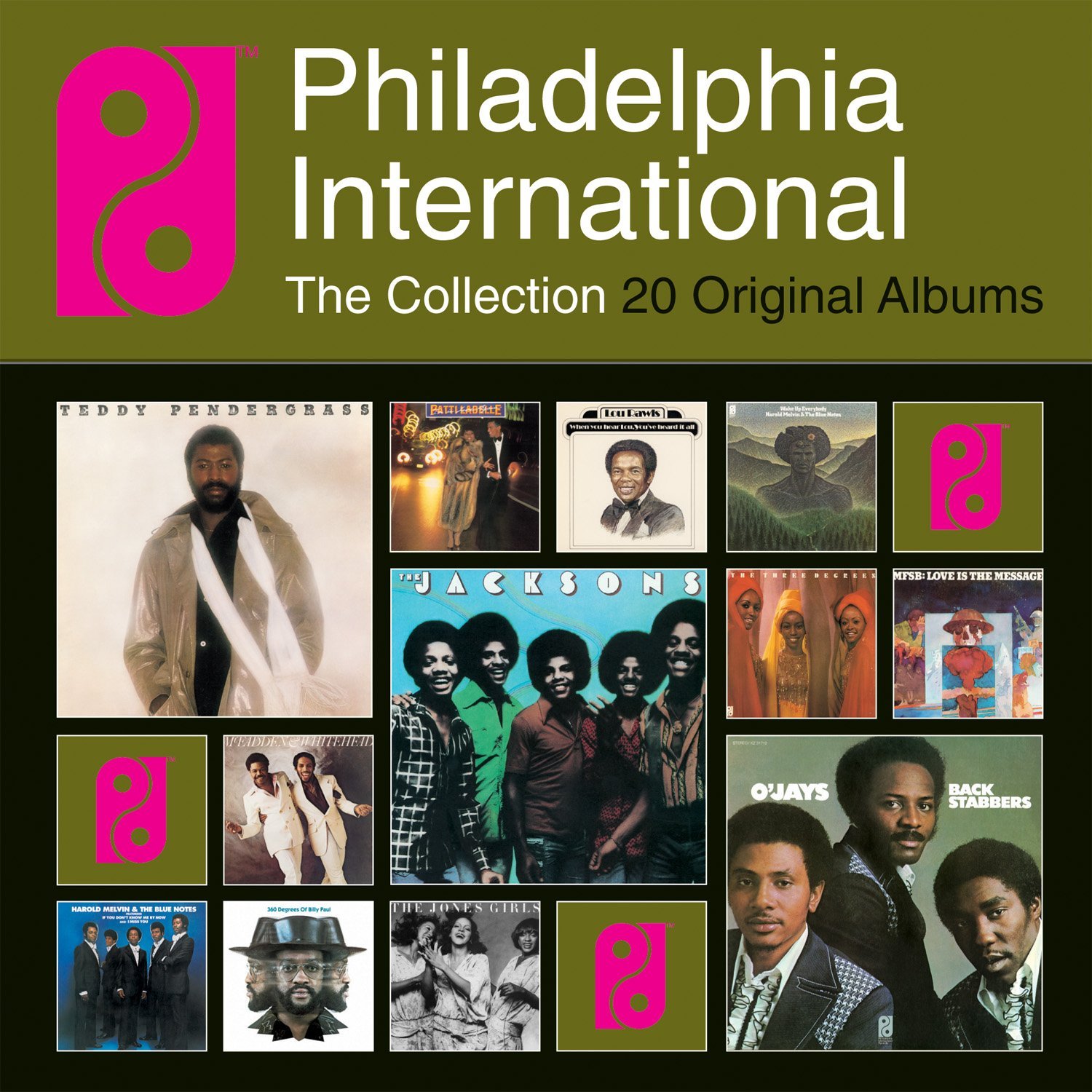
PHILADELPHIA INTERNATIONAL-THE COLLECTION 20 ORIGINAL ALBUMS.
PHILADELPHIA INTERNATIONAL-THE COLLECTION 20 ORIGINAL ALBUMS.
On February 13th 2014, Sony Music announced that it had acquired the worldwide rights to Philadelphia International Records’ post 1975 back-catalogue. At last, one label, Sony Music now had control of the rights to the entire Philadelphia International Records’ back-catalogue. This was progress. Maybe now, a proper reissue program of Philadelphia International Records’ back-catalogue could get underway.
This would be an improvement from what has gone before. Previously, Philadelphia International Records’ back-catalogue fell into the wrong hands. It seemed that anyone with money, could license Philadelphia International Records’ back-catalogue. There seemed to be no checks into the background of the labels. What followed wasn’t pretty.
Cheap and nastily reissues of the back-catalogue made their way onto the shelves of record shops. Sometimes, the Philadelphia International Records’ back-catalogue was reduced to budget label product. Twofers were released. Often, three albums were squeezed onto two discs. This meant there were no sleeve-notes and the bare minimum of details about the albums. A low point was reached when what came across what I can only describe as reissue that was a needle drop. It was obvious rather than the master tapes being sourced, a vinyl copy was used. Not a very good copy at that. What had been one of the most influential soul labels between 1972 and 1975, was reduced to this. How the mighty had fallen. Then came the news back in February 2014. This were looking better for Philadelphia International Records’ post 1975 bak-catalogue.
At the time, I thought that maybe, at last, a comprehensive reissue of Philadelphia International Records’ back-catalogue would get underway. Like many people, I hoped for lavish and lovingly compiled box sets, remasters of classic albums and rereleases of some of albums that have never before released on CD before. Sony Music it seemed were thinking along the same lines.
Immediately, Sony Music announced they would be releasing a box set featuring twenty albums. They also announced a series of greatest hits. This was just the tip of the iceberg. What was about to follow was the most comprehensive reissue of Philadelphia International Records’ back-catalogue. The release that interested most people, was what would become Philadelphia International-The Collection 20 Original Albums.
Tantalisingly, there was no mention of what albums would feature in Philadelphia International-The Collection 20 Original Albums. Speculation was rife. Everyone had their wish-list of classics and hard to find albums. Ideally, Philadelphia International-The Collection 20 Original Albums would be a mixture of the familiar and hidden gems. When word got out about the contents of Philadelphia International-The Collection 20 Original Albums, that wasn’t what we were getting.
What I, and many people didn’t want, was a box set that was predictable. To some extent, that’s what we got. Obviously, Philadelphia International-The Collection 20 Original Albums had to feature artists who played an important part in the label’s history.
Between 1972 and 1975, the artists included in Philadelphia International-The Collection 20 Original Albums are Harold Melvin and The Blue Notes, The O’Jays, Billy Paul, The Three Degrees and M.F.S.B. Post-1975 successful and landmark albums were included by Lou Rawls, The Jacksons and Teddy Pendergrass. What frustrated some people, was that there were two albums from Harold Melvin and The Blue Notes, The O’Jays and Teddy Pendergrass. This meant there was less opportunity for hidden gems and rarities.
The rest of the artists that feature in Philadelphia International-The Collection 20 Original Albums didn’t enjoy the same commercial success and critical acclaim as Harold Melvin and The Blue Notes and The O’Jays enjoyed. However, there were welcome additions included The Intruders, the innovative Dexter Wansel and the underrated McFadden and Whitehead. Surprising choices were Edwin Birdsong, Bunny Sigler, Jean Carn, The Jones Girls and Patti LaBelle. They divided opinion among the Philadelphia International faithful. Personally, I wouldn’t have included any of these albums. Edwin Birdsong, Bunny Sigler, Jean Carn and Patti LaBelle only had walk-on parts in the Philadelphia International story and I could’ve lived without these albums. You’ll realise that, when I tell you about story of the Philadelphia International-The Collection 20 Original Albums.
It’s a story that begins in 1971. This was just a year after Gamble and Huff had founded Philadelphia International Records. The new label’s first release was Billy Paul’s Going East. It reached number 197 in the US Billboard 200 and number forty-two in the US R&B charts. This wasn’t bad for a new artist on a newly founded label. However, a year later, Philadelphia International Records’ were transformed.
August 1972 saw the release of two landmark albums on Philadelphia International Records. Harold Melvin and The Blue Notes released their eponymous album. It was originally entitled I Miss You. However, after the success of If You Don’t Know Me By Now, the second single released from the album, Philadelphia International Records decided to repackage the album, giving it a new cover and title, Harold Melvin and The Blue Notes. The now entitled Harold Melvin and The Blue Notes, reached number fifty-three in the US Billboard 200 and four in the US R&B Charts. This wasn’t the only album Philadelphia International Records released in August to become a huge success.
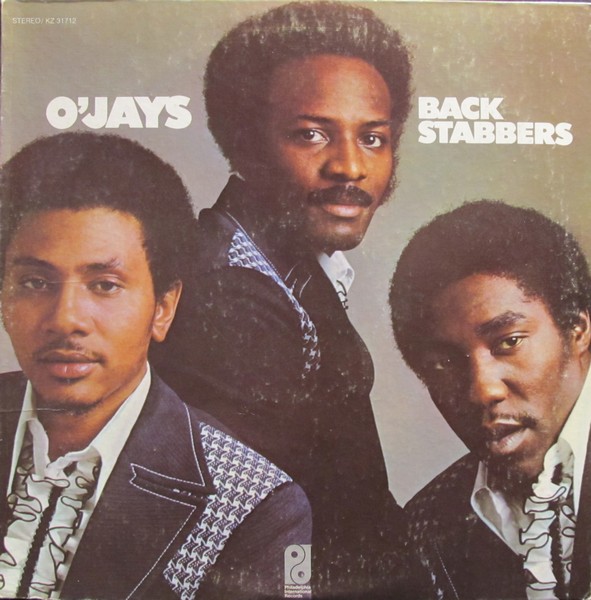
The O’Jays released Back Stabbers in August 1972. Their success began when they release Back Stabbers as a single Not only did it reach number three in the US Billboard 100 and number three in the US R&B but was certified gold. So was the anthemic Love Train, which gave The O’Jays a dual number one single. Even better, The O’Jays debut album Back Stabbers reached number ten in the US Billboard 200 and number three in the US R&B Charts. Within less than a year, the album was certified gold. For The O’Jays and Gamble and Huff, it seemed they could do no wrong.
Billy Paul, the man who released Philadelphia International Records’ debut album released 360 Degrees Of Billy Paul in November 1972. Before 360 Degrees of Billy Paul was released, a single was chosen from the album. One track stood out, Me and Mrs Jones. It was released in October 1972, and made its way up the charts. Ironically, before it hit number one in the US Billboard 100, the single blocking its way was The O’Jays’ Backstabbers, another Philadelphia International Records’ single. Soon, Billy Paul had a a dual number one single, in both the US Billboard 100 and US R&B Charts. Suddenly, Me and Mrs Jones was a worldwide hit and everyone knew who Billy Paul was. Spurred on by the success of Me and Mrs Jones, 360 Degrees of Billy Paul was released in November 1972, reaching reached number one in the US R&B Charts and number seventeen in the US Billboard 200. Sadly, Billy Paul never scaled these heights again. Philadelphia International Records did.
Matching the success of 1972 wasn’t going to be easy for Gamble and Huff. One of their first releases of 1973 was The Intruders Save The Children. They’d played a big part in Gamble and Huff’s past. When Gamble and Huff were considered leaving the Cameo Parkway label to form their own label, it was the Intruders that Gamble and Huff chose to risk their money and futures on. In 1966, the Intruders released two singles, (We’ll Be) United and Devil WIth An Angel’s Smile. They gave The Intruders two minor hit singles. This was the Intruders’ first hit singles since forming in 1961 and started them on a musical journey with Gamble and Huff. Seven years later, Save The Children reached number 133 in the US Billboard 200 and number twelve in the US R&B Charts. The Intruders were making steady, but not spectacular process. That wasn’t the case with The Three Degrees.
Under the guidance of Gamble and Huff, their fortunes were transformed. They released what was their third album, but first for Philadelphia International Records in 1973. On its release, it reached number twenty-eight in the US Billboard 200 and thirty-three in the US R&B Charts. In the UK the album fared even better, reaching number twelve. Four singles were released from the album, with the Gamble and Huff penned When Will I See You Again being the most successful, reaching number two in the US Billboard 100 and number four in the US R&B Charts. Back then, The Three Degrees were on a roll. So were The O’Jays.
Following the success of Back Stabbers, The O’Jays headed back into the studio. What followed was one of the most powerful albums of their career. Full of social comment and slick hooks, Ship Ahoy was released in October 1973. It surpassed the success of Back Stabbers, reaching number eleven in the US Billboard 200 and number one in the US R&B Charts, resulting in The O’Jays first platinum disc. Put Your Hands Together was the lead single, released in November 1973. It reached number ten in the US Billboard 100 and number two in the US R&B Charts. For The Love Of Money was released in March 1974, reaching number nine in the US Billboard 100 and number three in the US R&B Charts. The O’Jays were now, without doubt, Philadelphia International’s most successful bands. Providing the backdrop to their success was M.F.S.B, Philadelphia International Records’ legendary house band.
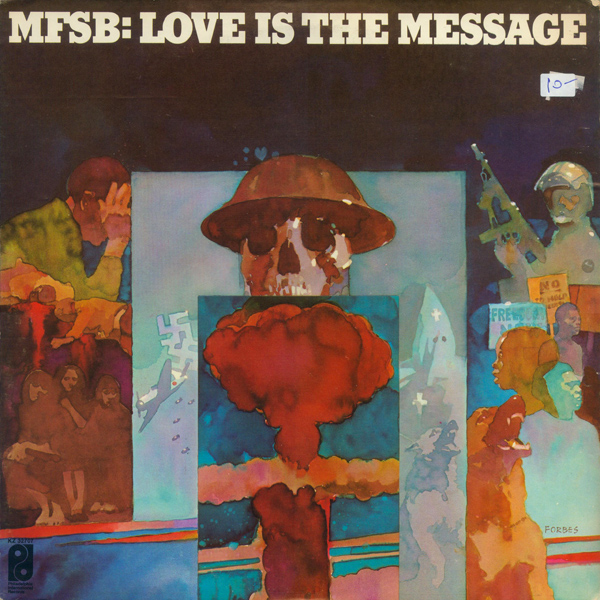
M.F.S.B. were more than a house band. They were arrangers, producers and songwriters. Without the original lineup of M.F.S.B, Philadelphia International Records wouldn’t have enjoyed the same success. In December 1973, they released their sophomore album Love Is The Message was the most successful album of their career, reaching number four in the US Billboard 200 and number one in the US R&B charts. This was helped by the success of the single T.S.O.P. (The Sound Of Philadelphia). Featuring The Three Degrees’ vocals, it gave M.F.S.B. a dual number one. This was the perfect showcase for the multitalented M.F.S.B. They would also accompany Bunny Sigler Philadelphia International Records’ nearly man.
Bunny Sigler enjoyed more success as a songwriter than singer. Deep down, he felt unfulfilled writing songs. So, he convinced Gamble and Huff to sign him as an artist. Keep Smilin’ was his third album, but only his second for Philadelphia International. Released in 1973, it failed to chart. The two singles Keep Smilin’ and a cover of Love Train gave Bunny minor hits in the US R&B charts. Despite the failure of Keep Smilin’ it’s regarded as one of Bunny’s best albums. The same can be said of Harold Melvin and The Blue Notes’ Wake Up Everybody.
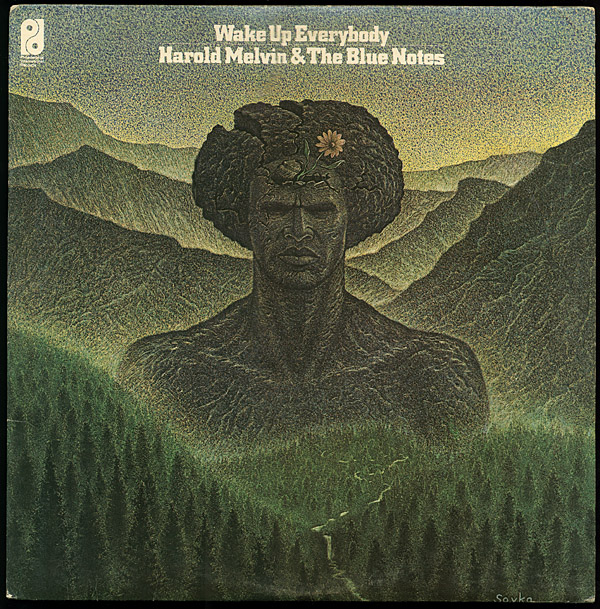
Released in November 1975, Wake Up Everybody was landmark album for Harold Melvin and The Blue Notes. It was the last to feature Teddy Pendergrass on lead vocal. This was their fourth and final album for Philadelphia International, and provided the group with their most successful ever album. On its release, it reached number nine in the US Billboard 100, and gave the group their second number one R&B album. The title-track was a released as a single, reaching number twelve in the US Billboard 100 and number one in the US R&B chars. After Wake Up Everybody, Harold Melvin and The Blue Notes’ left Philadelphia International Records’ and Teddy Pendergrass signed a recording contract as a solo artist. He released his solo debut in 1977. Before that, times were changing at Philadelphia International Records.
As 1975 drew to a close, Gamble and Huff were locked in a dispute with Philadelphia International Records’ legendary house band M.F.S.B. over money. When this dispute couldn’t be resolved, members of M.F.S.B. remembering the proverb “the workman is worthy of his hire” quit Philadelphia International Records and headed to New York where they became The Salsoul Orchestra. They transformed Salsoul into the greatest label in disco’s history. These musicians had played on all of Philadelphia International Records’ successful albums. This was a huge loss. Gamble and Huff lost more than they realised.
M.F.S.B. were more than a house band. They were arrangers, producers and songwriters. Without the original lineup of M.F.S.B, Philadelphia International Records wouldn’t have enjoyed the same success. Good as the musicians that featured on M.F.S.B. Mk II were, they weren’t as good as Vince Montana Jr, Baker, Harris Young, Larry Washington and Bobby “Electronic” Eli. Philadelphia International Records still enjoyed commercial success, but was never the same label. It missed out on the disco boom, which the original lineup of M.F.S.B. were enjoying commercial success and critical acclaim with. However, Gamble and Huff enjoyed commercial success with Lou Rawls.
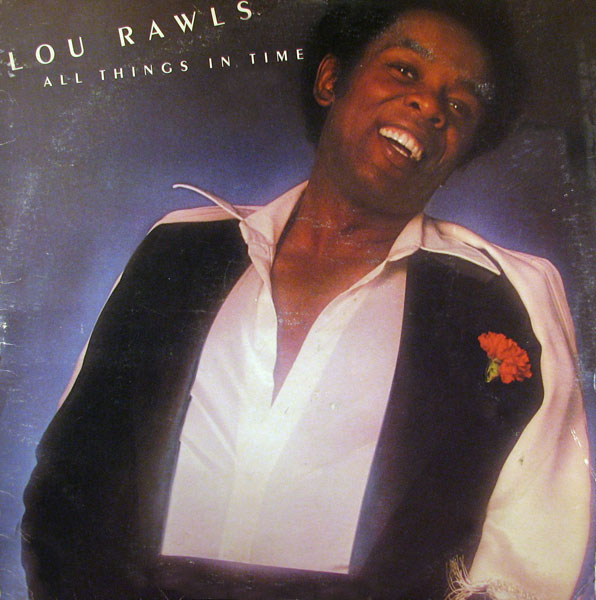
Gamble and Huff had worked with Lou Rawls before. Since then, his career had stalled. Lou’s career needed rejuvenated. So, everyone at Philadelphia International Records got to work. During parts of 1975 and 1976, Lou Rawls spent time in the famous Sigma Sound Studios in Philadelphia, recording All Things In Time. It was time well spent. When All Things In Time was released in June 1976, the album was a huge success, reaching number seven in the US Billboard 200 and number one in the US R&B Charts. The album was certified gold. That wasn’t the end of the success. You’ll Never Find Another Love Like Mine was released as a single, reaching number two in the US Billboard 100, and number one in the US R&B Charts and US Dance Charts. This was the biggest single of Lou’s career. Since then, it’s become a classic track. So has The Jacksons’ Enjoy Yourself.
It featured on The Jacksons’ 1976 eponymous album. The Jacksons was their first album to be released on their new label CBS. This was a joint venture between Epic and Philadelphia International Records. The joint venture meant that The Jacksons would be produced by Gamble and Huff. After four months recording between June and October 1976, The Jacksons was released in November 1976. Before the release of The Jacksons, Enjoy Yourself was the first single released from the album at the end of October 1976. It reached number six in the US Billboard 100 and number two in the US R&B Charts, Then The Jacksons was released in November 1976, reaching number thirty-six in the US Billboard 200 and number six in the US R&B Charts. It was the first gold disc of The Jacksons’ career, despite having previously sold over ten-million albums whilst signed to Motown. For Gamble and Huff, along with everyone at Philadelphia International, including Dexter Wansell, this was a triumph.
Especially Dexter Wansell. After all the changes at Philadelphia International, he was playing a bigger role. He was writing, arranging and producing. Then there was his solo career. He’d released his debut album Life On Mars in 1976. It was an innovative album, which utilised synths fully. A quite different album from what Philadelphia International usually released, it still reached number forty-four in the US R&B charts. The title-track with its futuristic, dance-floor friendly sound gave Dexter a minor hit. Just like the rest of the album, it was ahead of its time. That wasn’t the case with Teddy Pendergrass.
Teddy released his eponymous solo album in June 1977. It was produced by Gamble and Huff and Gene Mc Fadden and John Whitehead. Bobby Martin and Jack Faith arranged Teddy Pendergrass. On it’s release, it reached number seventeen in the US Billboard 200 and number five in the US R&B Charts. This resulted in a platinum disc for Teddy. Two singles were released from Teddy Pendergrass. They were the vampish I Don’t Love You Anymore and the classic The Whole Town’s Laughing At Me. Both gave Teddy hit singles and vindicated his decision to embark upon what was a hugely successful solo career. The same couldn’t be said of Jean Carn.
If Bunny Sigler was the nearly man of Philadelphia International, Jean Carn was the nearly woman. She released a quartet of albums on Philadelphia International, but widespread commercial success eluded her. Her debut was Jean Carn. Released in 1977. Produced by Gamble and Huff, Jean Carn reached just number twenty-four in the US R&B Charts. Despite her silky smooth, soulful vocal, success always seemed to elude Jean. That wasn’t the case with Low Rawls.
Having rejuvenated his career with 1976s All Things In Time, Lou’s career was enjoying something of an Indian Summer. He’d released Unmistakably Lou in 1977. Then in 1978, he enjoyed further success with When You Heard Lou You’ve Heard It All. Released in 1978, it reached number forty-one in the US Billboard 200 and number thirteen in the US R&B charts. Good as that was, it was nothing compared to the success Teddy Pendergrass was enjoying.
1978 saw Teddy Pendergrass release his sophomore album Life Is A Song Worth Singing. It saw Teddy pickup where he left on his 1977 debut album, Teddy Pendergrass. There were seven songs on Life Is A Song Worth Singing. Only You and Close the Door were released as singles. The first single released from the album was Close the Door. It was a huge hit, reaching number twenty-five in the US Billboard 100 and number one in the US R&B Charts. Similarly, when Life Is A Song Worth Singing was released in June 1978, it gave Teddy a number one US R&B album. The album also reached number eleven in the US Billboard 200. This meant Teddy received his second platinum album of his solo career. Teddy was becoming one of Philadelphia International’s biggest names. So were a new act, The Jones Girls.
By the time The Valerie, Brenda and Shirley Jones signed to Philadelphia International, there career was a decade old. They’d released a string of singles to little, or no success. So they sang backing vocals for Betty Everett, Teddy Pendergrass, Lou Rawls, Aretha Franklin and Diana Ross. Then in 1979, The Jones Girls signed to Philadelphia International and released their eponymous debut album. It featured their first million selling single, You Gonna Make Me Love Somebody Else. The single reached number thirty-eight in the US Billboard 100, number five in the US R&B Charts and number twelve in the US Dance Charts. When The Jones Girls was released, it reached number fifty in the US Billboard 200 and number eight in the US R&B Charts. Still, Philadelphia International Records were enjoying commercial success. This continued with McFadden and Whitehead.
Gene McFadden and John Whitehead had formed their songwriting partnership in Philly back in the seventies. They went on to become one of the most successful songwriting and production partnerships. Apart from writing and producing other artists, McFadden and Whitehead enjoyed a successful recording career. Their 1979 eponymous debut album McFadden and Whitehead featured a stonewall, seminal Philly Soul classic, Ain’t No Stopping Us Now. It reached number thirteen in the US Billboard 100 and number one in the US R&B Charts and gave McFadden and Whitehead their first gold disc. When McFadden and Whitehead was released, it reached number twenty-three in the US Billboard 200 and number five in the US R&B Charts. McFadden and Whitehead were vindicated. They were more than songwriters, they were singers. So was Edwin Birdsong.
Edwin had released a trio of albums before signing to Philadelphia International. Commercial success eluded him. History was about repeat itself. He only released one album on Philadelphia International, Edwin Birdsong in 1979. It failed commercially and Edwin left Philadelphia International. Two years later, he resurfaced at Salsoul, where he released Funtazik. However, Edwin Birdsong is a disappointing album, which doesn’t belong in such illustrious company as Philadelphia International-The Collection 20 Original Albums. Things improved in 1983 when Patti LaBelle released I’m In Love Again.
By 1983, Philadelphia International had seen better days. It was like an ageing starlet. The makeup couldn’t quite hide the ravages of time. More was required than a nip and tuck. Gamble and Huff’s signing and release policy seemed strange. A slew of compilations were released. Their signings were just as strange. The Stylistics were signed. They were well past their best. So were The O’Jays. Teddy Pendergrass’ career was all but over, following the car accident resulted in him being paralysed. What Gamble and Huff needed was good news. This came when Patti LaBelle released I’m In Love Again.
I’m In Love Again was recorded whilst Patti LaBelle was appearing on Broadway. Despite this, I’m In Love Again was recorded at Philly’s Sigma Sound Studios. Released in November 1983, to critical acclaim, I’m In Love Again was a commercial success. It reached number forty in the US Billboard 200 and number four in the US R&B charts. This resulted in I’m In Love Again being certified gold. Despite its commercial success I’d not have included I’m In Love Again in Philadelphia International-The Collection 20 Original Albums. It’s far from one of the twenty best albums Philadelphia International released. Maybe Sony Music wanted to include an album from the early eighties? Personally, I would rather have had an album from what was Philadelphia International’s glory years, between 1972 and 1975.
Trying to tell the story of Philadelphia International Records in twenty discs is impossible. Sony Music gave it a good go on Philadelphia International-The Collection 20 Original Albums. They started well, but concentrating on classic and landmark albums released between 1972 and 1975. Harold Melvin and The Blue Notes, The O’Jays, Billy Paul, The Three Degrees and M.F.S.B. all had to feature. They were responsible for transforming Philadelphia International Records into one of the most successful labels between 1972 and 1975. However, I’d have liked Philadelphia International-The Collection 20 Original Albums to feature more albums released between 1972 and 1975. Ideally, two box sets could’ve been released.
The first could’ve covered 1972 to 1975. This would’ve allowed classics, hidden gems and rarities to sit side-by-side. After all, there’s plenty of albums that weren’t huge commercial successes that are full of quality music? The same can be said of Philadelphia International classics. Quite simply, twenty discs and one box set doesn’t do Philadelphia International justice. It’s just a tantalising taste. There’s still 1976 to 1983 to come.
Personally, I’d have made the cut-off date 1979. After that, Philadelphia International was a shadow of its former self. That was apparent on Philadelphia International Records-The 40th Anniversary Box Set. Philadelphia International-The Collection 20 Original Albums falls into the same trap and gets lost after 1979. Ideally, a second box set could’ve been released to cover the period between 1976 and 1979. Sadly, that’s not what Sony Music decided.
Instead, Philadelphia International-The Collection 20 Original Albums is a case of good, but could do better. There were some surprising choices on Philadelphia International-The Collection 20 Original Albums. Among them Edwin Birdsong, Bunny Sigler, Jean Carn, The Jones Girls and Patti LaBelle. They divided opinion among the Philadelphia International faithful. Personally, I wouldn’t have included any of these albums. Edwin Birdsong, Bunny Sigler, Jean Carn and Patti LaBelle only had walk-on parts in the Philadelphia International story. Having said that, there were welcome additions on Philadelphia International-The Collection 20 Original Albums.
This includes albums by The Intruders, the innovative Dexter Wansel and the underrated McFadden and Whitehead. There’s also a number of Billy Paul albums worthy of inclusion. The same goes for albums by Instant Funk, Archie Bell and The Drells, People’s Choice, Jerry Butler, The Futures and Dee Dee Sharp. As I said, Philadelphia International-The Collection 20 Original Albums is just the tip of the iceberg. There’s much, much more in Philadelphia International Records’ vaults. However, given Sony Music have only recently acquired the worldwide rights to Philadelphia International Records’ post 1975 back-catalogue, this is a step in the right direction. Just a couple of words of advice though.
Some more thought could’ve gone into the recently released Greatest Hits’ albums. Their covers were garish and cheapened the product. Hopefully, that’s just a blip. After all, Sony Music now have control of the rights to the entire Philadelphia International Records’ back-catalogue. Sony Music are custodians of the back-catalogue of Philadelphia International Records. This is music with a special place in many people’s hearts.
As a result, the back-catalogue of Philadelphia International Records deserves to be treated with care and respect. Philadelphia International Records was one of the most innovative, influential and successful soul labels of the seventies.
Founded by Gamble and Huff in 1971, it became a showcase for a city’s talent. This includes musicians like Vince Montana Jr, Baker, Harris, Young, Larry Washington, Bobby “Electronic” Eli and Don Renaldo. Then there’s backing vocalists The Sweethearts of Sigma, plus songwriters, arrangers and producers like McFadden and Whitehead, Victor Carstarphen, Jack Faith, Bobby Martin, Cynthia Biggs and Dexter Wansel. All of these musicians, songwriters, arrangers and producers were brought together by Gamble and Huff. Together, they made Philly Soul the soundtrack the much of seventies.
Much of that music is timeless, including many of the albums on the recently released box set Philadelphia International-The Collection 20 Original Albums. Over forty years later, the Philly Soul is loved by many people worldwide. Forever they’ll have a special place in their heart for the music on Philadelphia International-The Collection 20 Original Albums.
PHILADELPHIA INTERNATIONAL-THE COLLECTION 20 ORIGINAL ALBUMS.
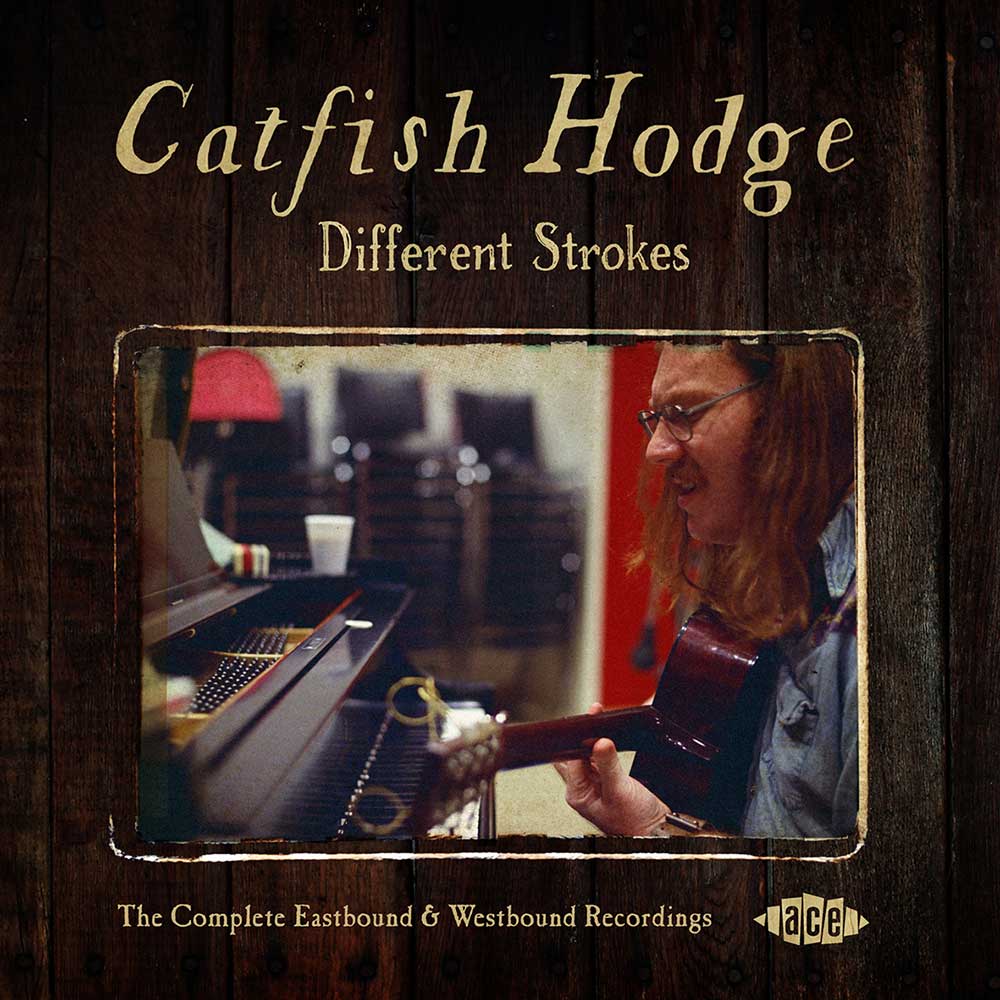
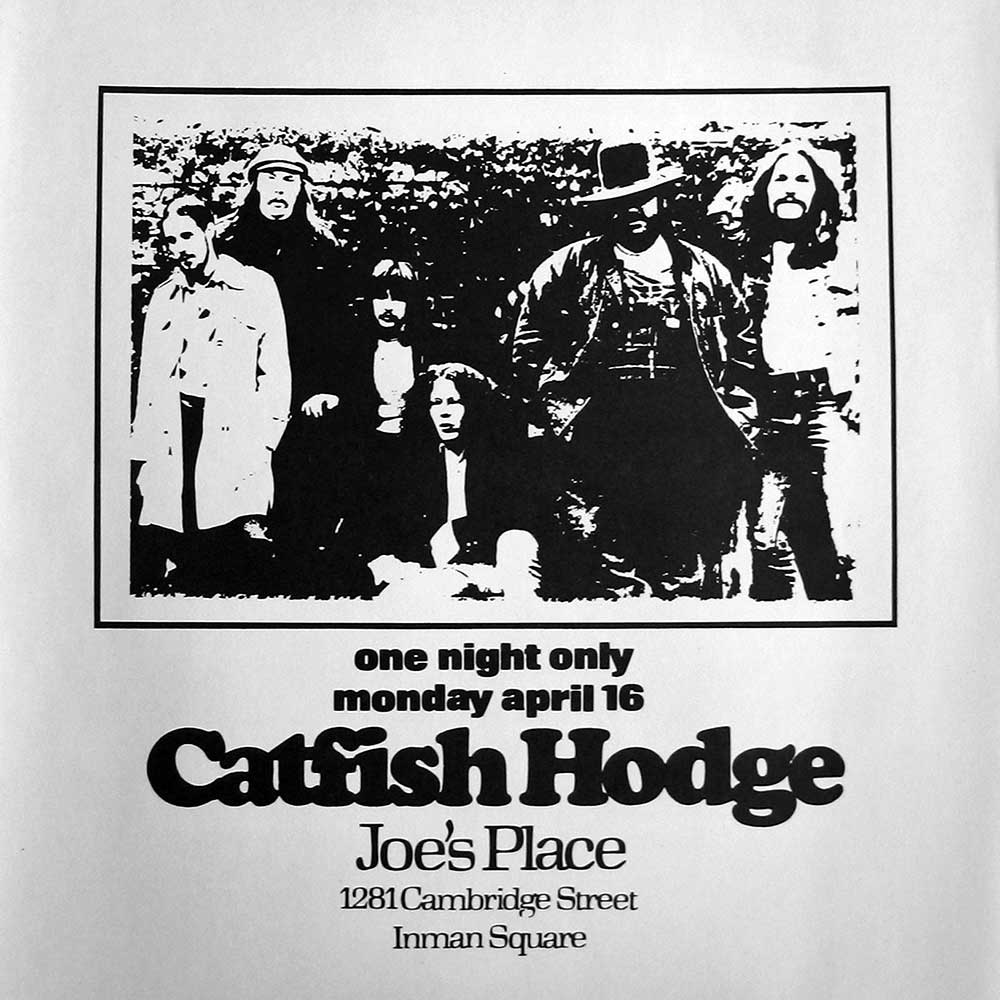
CATFISH HODGE-DIFFERENT STROKES-THE COMPLETE EASTBOUND AND WESTBOUND RECORDINGS.
CATFISH HODGE-DIFFERENT STROKES-THE COMPLETE EASTBOUND AND WESTBOUND RECORDINGS.
Great things were expected of Bob “Catfish” Hodge. He was born into a musical family in Detroit, and began playing in clubs when he was still in high school. Before long, he was a regular in Detroit’s clubs. Despite not being able to read music, music came naturally to Catfish. It seemed to flow through him. Catfish you see, was a natural when it came to music. So it’s no surprise that Bob “Catfish” Hodge decided to make a career out of music.
Since then, Bob “Catfish” Hodge has enjoyed a long and illustrious career. He first came to prominence as a member of Catfish. They “coulda been a contender.” During the late-sixties, Catfish seemed destined for greatness. Catfish rubbed shoulders with The Stooges and MC5. Sadly, success eluded Catfish. After that Bob “Catfish” Hodge embarked upon a solo career.
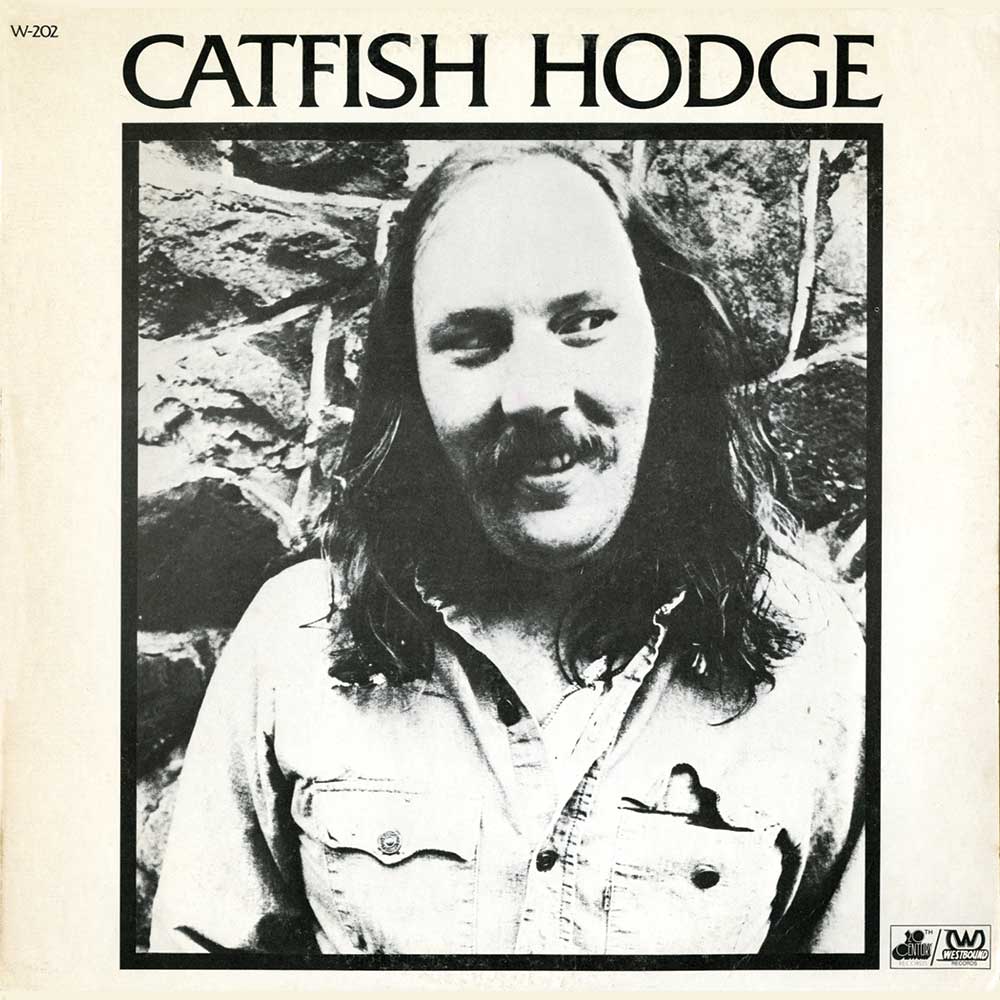
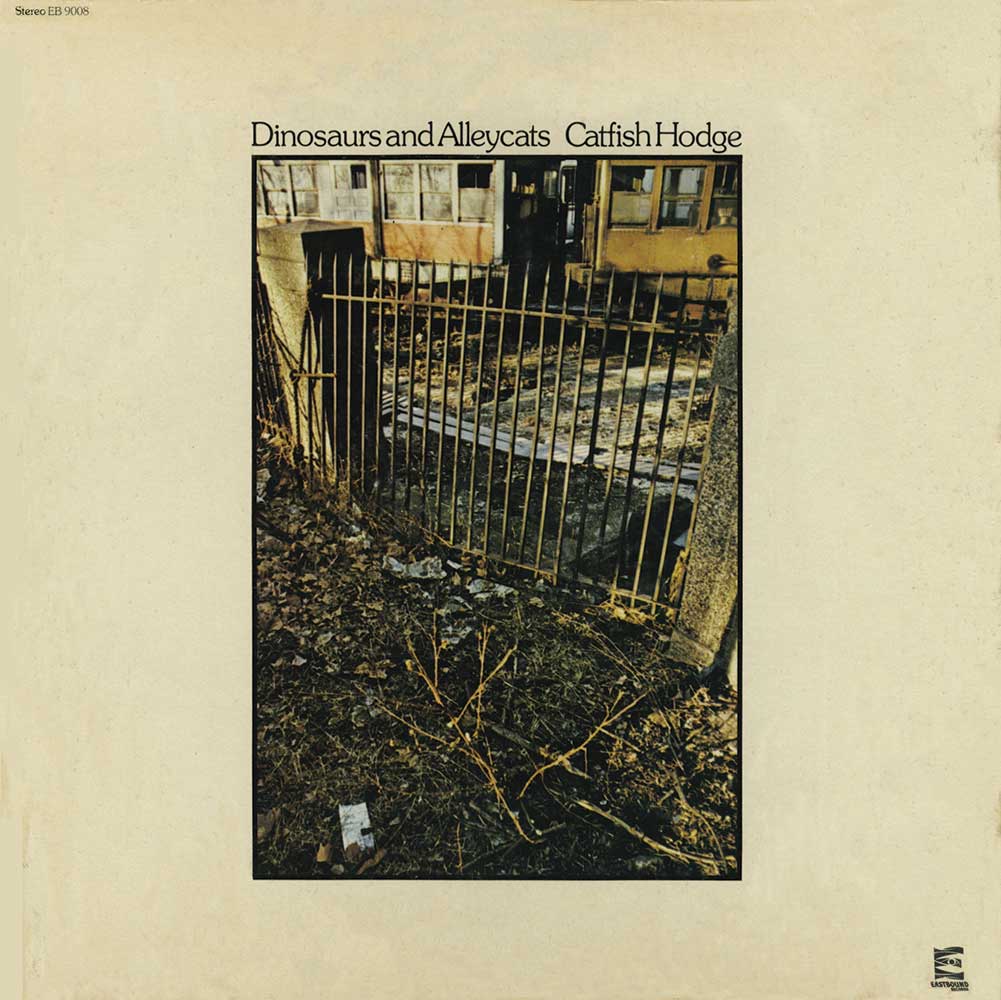
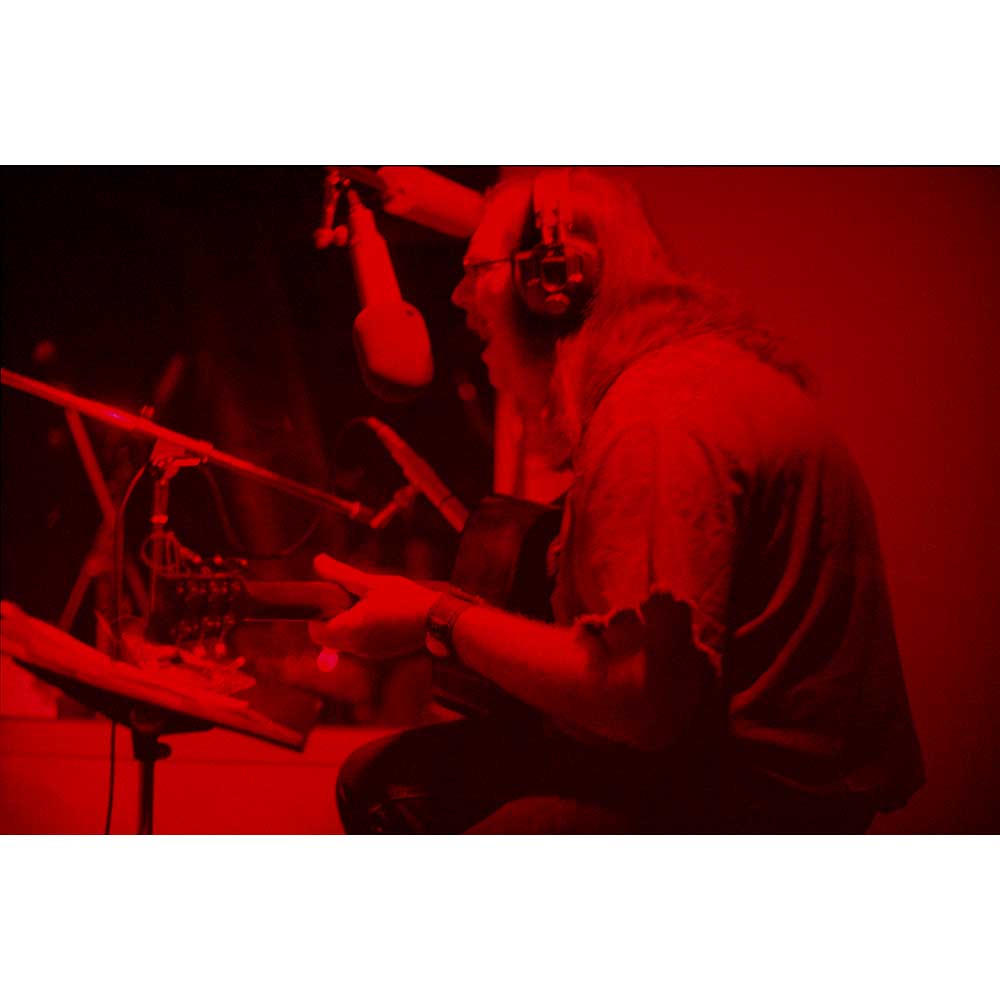
Bob signed to Eastbound Records in the early seventies. As Catfish Hodge,he released his debut album Boogieman Gonna Get You in 1972. Two years later, Bob released his sophomore album Dinosaurs and Alleycats. Then in 1975, Catfish released Soap’s Opera. It was released on Westbound and was Bob’s final release on the Eastbound and Westbound. After that, Bob signed to Adelphi Records. However, the three albums release don Eastbound and Westbound are seen as the finest of his career. These albums, plus several bonus tracks, feature on Ace Records’ compilation of Catfish Hodge’s music Different Strokem-The Complete Eastbound and Westbound Recordings. A luxurious and lovingly compiled double album Different Strokes-The Complete Eastbound and Westbound Recordings, is the perfect introduction to Catfish Hodge, whose career I’ll tell you about.
Music was Bob’s life. He spent all of his spare time listening to music. When he wasn’t listening to music he was making music. Bob formed his first band as a senior in high school, after his friend Terry Kelly taught him how to play guitar. Terry also introduced Bob to a variety of artists, including Lonnie Mack, whose songs found their way into the setlist of Bob’s band. However, Terry wasn’t Bob’s only musical influence.
By the late-sixties, Bob was absorbing the sounds of Detroit. He was a regular visitor to Motown. Along with his friends, Bob sat in his car listening to the music emanating from the studios. Sometimes, Bob and his friends managed to sneak past the security guards in and watch the recording sessions. They were able to watch artists like Smokey Robinson recording. Before long, they were discovered by an embarrassed guard and they’d be thrown out, until the next time. This was a regular cat and mouse game. Whilst watching these sessions, this only depended Bob’s determination to become a musician.
Aspiring musicians are only mortal. They “can’t live by bread alone.” So on leaving school, Bob got a job working at a finance company. One of the job’s he was given was collecting money from customers who had missed a payment. This included a forgetful member of the Four Tops. Whenever he was on tour, he forgot to pay his bills. Bob would go and collect the payments. So Bob would’ve to take the forgetful Four Top, or his wife to Motown. At Motown, they’d pick up some money to pay the bill. Naturally, seeing what was another world close up, made Bob’s mind up, now was the time to make music his career.
Bob’s first job in the music industry was as a songwriter and producer. He penned and produced Capreez’s Over You, which was released on the Detroit label Sound. That was Bob’s introduction to the music industry.
Soon, Bob was working with three local bands. He hired an office and started trying to get them a record deal. One label that showed an interest was Vanguard. So, Bob caught the redeye to the Big Apple, and headed to see Maynard Solomon at Vanguard. Bob played him the tapes. Solomon like what he heard, but reckoned that Vanguard weren’t quite ready for rock ’n’ roll. After his meeting, Bob headed into Greenwich Village.
That night, Bob saw Jimi Hendrix playing in a coffee bar. He was still unsigned. After that, Bob headed to Bleecker. As he passed by a club that was closed, he heard music. Curious, Bob looked in. There was Van Morrison rehearsing. For Bob, that was a eureka moment. At last, he knew what he wanted to do with the rest of his life.
Back home, Bob formed Wicked Religion, who evolved into Catfish. Before long, Catfish established a reputation as one of Detroit’s top live groups. They were soon rubbing shoulders with MC5 and The Stooges. Their raw blues rock sound was winning friends not just in Detroit, but Catfish further afield. This included in the offices of Epic
Kenny Hodges of Epic had heard good things about Catfish. The word in Detroit was Catfish were on their way to the top. So, Kenny signed Catfish to Epic. He wasn’t going to risk anyone beating him to their signature. The only problem would be, replicating Catfish’s famous live sound?
For their debut album Get Down, Kenny Cooper was brought in to produce the album. A total of nine tracks were recorded. They were meant to showcase Catfish’s blues rock sound. On the release of Get Down in 1970, it wasn’t a commercial success. It didn’t even come close to troubling the charts. Then someone at Epic came up with an idea of how to capture what Catfish were about musically. The idea was to record a live album.
So, Detroit’s Eastown Theatre was booked. In front of an enthusiastic audience, Catfish combined their own songs with two Motown covers, Nowhere To Run and Money. The concert became Catfish’s sophomore album, Catfish Live. Released in 1971, Catfish Live failed to chart. Still commercial success and critical acclaim eluded Catfish. Not only did Catfish Live fail to chart, but it spelt the end of Catfish.
The plaudits and commercial success that were about to come the way of MC5 and The Stooges passed Catfish by. They were about to become a footnote to Detroit’s musical history. That shouldn’t have been the case. Catfish had what it took to go from contenders to title holders. Who knows, maybe another record company would’ve got the best out of Catfish? Sadly, Catfish would split-up not long after the release of Catfish Live.
Bob realised this was about to happen, and had been thinking about embarking upon a solo career. He started recording his first album as Bob Hodge. Catfish Hodge had yet to make his debut. As Bob Hodge, he released Empathy. It was recorded in a small studio in Memphis and released on Cupid Records, which was Catfish’s own record label. Bob optimistically, had 500 copies pressed. Empathy passed most people by. So Bob decided it was time for a change and hopped on a plane to London.
He jumped on a plane and headed to London. There was a reason for this. Bob was friendly with many British musicians, including the legendary Peter Green. In London, Bob stayed at the Earls Court hotel and wrote songs. Back then, Bob had hopes of become the next James Taylor. Instead, his music headed in a very different direction, when Bob wrote Boogie Man. So with another album written, Bob headed home, looking for a record deal.
Since Bob had been away, Detroit had changed. Motown had followed the sun to Los Angeles. This was now the age of the major label. No longer were independent labels thriving. Many were struggling to make ends meet. One independent label bucked the trend, Westbound Records.
Founded and run by Armen Boladian, Westbound Records and its subsidiary Eastbound Records were doing well. They were home to Denise LaSalle and The Detroit Emeralds. So, Bob went to see Armen. He’d heard Empathy and liked what he heard. Armen decided to take a chance on Bob. He gave him $500 and told him to record some demos.
Five songs were recorded at a small studio owned by a local band SRC. Then Armen wanted to see Bob play live. Bob just so happened to be playing in a local club. So Armen headed over to the club, accompanied by two members of Funkadelic, George Clinton and Calvin Simon. That night, Bob won over not just Armen, but the two members of Funkadelic. They encouraged Armen to send Bob to Toronto, where Funkadelic were recording America Eats Its Young. Armen agreed, and Bob headed to Toronto, where he recorded Boogie Man Gonna Get Ya.
BOOGIE MAN GONNA GET YOU.
At Manta Recording Studios, in Toronto, Bob recorded Boogie Man Gonna Get Ya. Calvin Simon who’d encouraged Armen to record Bob produced Boogie Man Gonna Get Ya. Bob wrote seven of the eight songs. The other song was a cover of The Beatles’ Want You (She’s So Heavy). Accompanying Bob was a tight, talented band. This included a rhythm section of bassist William Landless, drummer Pat Freer and guitarists “Shakey” Al Werneken and Dallas Hodge. They were joined by pianist Bob Babitch and percussionist Jerry Paul. Producer Calvin Simon decided to add some punchy horns. This was an absolute masterstroke.
Boogie Man Gonna Get Ya was released in 1972. It marked the debut a the newly named Catfish Hodge. It’s described as rock with a hint of funk. Over eight tracks, Catfish Hodge as Bob was now billed, had reinvented himself. From the opening bars of Different Strokes, where rock and funky horns combine, you’re spellbound. Ghetto sees Bob kick loose. Its tough, rocky sound is timeless. Hungry Love has delicious bluesy sound. With its late-night, bluesy sound, it’s one of the highlights of Boogie Man Gonna Get Ya closed side one of Boogie Man Gonna Get Ya.
Lennon and McCartney’s I Want You (She’s So Heavy) opens side two of Boogie Man Gonna Get Ya, It’s reworked, taking on a hard, rocky sound. Then blues, rock and funk combine seamlessly on I’ll Be Gone. Stop has a poppier sound than other tracks, before Catfish unleashes a vocal powerhouse. Just like on I’m The Man reminds me of Tim Buckley stylistically on Stop. The same can be said of the music. Jazz, rock and pop combine head on, on these two tracks. Closing Boogie Man Gonna Get Ya is the blues rock jam. Boogie Man. It’s the perfect track to close any album, including a debut album like Boogie Man Gonna Get Ya.
Sadly, despite what’s a delicious fusion of blues, funk, jazz and rock, Boogie Man Gonna Get Ya failed to chart. This wasn’t helped by Westbound falling behind with the release of Boogie Man Gonna Get Ya. Locally, the album was a success. Boogie Man Gonna Get Ya was played on local radio. This resulted in Catfish playing bigger gigs and heading out to tour Boogie Man Gonna Get Ya. Westbound believing Catfish had a big future ahead of him, commissioned a second album, which became Dinosaurs and Alleycats.
DINOSAURS AND ALLEYCATS.
For Dinosaurs and Alleycats, eight tracks were chosen. Catfish wrote Color TV Blues and Living The Blues. He cowrote five of the other six tracks. The other track was a cover of Jack Bruce and Pete Brown’s Never Tell Your Mother She’s Out Of Tune. Some tracks were recorded at Manta Recording Studios, in Toronto. Other tracks were recorded in Detroit, at the Golden World Studio, which had been where so many Motown hits were recorded. It was much the same band accompanying Catfish.
Catfish’s band included a rhythm section of bassist William Landless, drummer Dave Chambers and guitarists “Shakey” Al Werneken and Dallas Hodge. They were joined by slide guitarist Bob McCarthy pianist Bob Babitch, plus backing vocalists and a horn section. Catfish played acoustic guitar, piano and organ. Once Dinosaurs and Alleycats was completed, it was released in 1974, two years after Boogie Man Gonna Get Ya.
Sadly, some things didn’t change. Dinosaurs and Alleycats failed to chart. This was despite Catfish changing direction. Whereas some of the arrangements on Boogie Man Gonna Get Ya are busy and sometimes, some of the arrangement on Dinosaurs and Alleycats are much more understated and spacious. They remind me of the three albums Terry Callier recorded for Cadet. That’s not the case on the track that opens Dinosaurs and Alleycat, Train To Detroit.
Train To Detroit literally explodes into life and blues and rock collide head on. It’s a glorious combination. Heartbeat Of The Street continues the bluesy sound, but has a much understated arrangement. This allows Catfish’s vocal to take centre-stage. Accompanied by backing vocalists, this new sound where blues, rock and soul combines suits him. Color TV Blues has a traditional bluesy sound. What’s different are the lyrics. This must be the first blues about colour television. Despite this, it showcases Catfish’s credentials as one of the best blues players of his generation. Bluesy horns provide the backdrop to Circus Is In Town, which features an understated and wistful arrangement. Catfish sounding like Van Morrison, delivers a vocal oozing emotion. Without doubt, it’s his finest on Dinosaurs and Alleycats and is the perfect way to close side one.
Never Tell Your Mother is another fusion of blues, funk and rock. Grizzled horns set the scene for Catfish as he almost struts his way through this track. Ten Speed Bike sees a change in style. Catfish fuses blues, jazz and rock on what’s a reminder of another era. Living The Blues has a late-night, smokey sound. Horns play an important part, before Catfish seems to draw inspiration from B.B. King. Combining power and emotion, Catfish aided and abetted by the horn, delivers a blues masterclass. Closing Dinosaurs and Alleycats is the jaunty blues, Birmingham. Again, Catfish remembers the importance of closing an album on a high. He leaves you wanting more, on Dinosaurs and Alleycats, which marked a coming of age from Catfish Hodge.
SOAP’S OPERA.
A year after the release of Dinosaurs and Alleycats, Catfish began work on Soap’s Opera. It proved to be Catfish’s final album for Westbound Records was Soap’s Opera. It was released on their Eastbound imprint. Soap’s Opera featured ten tracks. Catfish wrote eight tracks. The other two tracks were covers of It’s All Over Now and Joni Mitchell’s For Free. Accompanying Catfish, was an all-star band.
This meant it was all change for Catfish. None of the band that played on his first two albums played on Soap’s Opera. The rhythm section included drummers Larry Zack, bassist David Kovarick and guitarist Bonnie Riatt. They were joined by Dr. John on piano and organ, Wayne Cook on keyboards and Sneaky Pete Kleinow played pedal steel. James Montgomery played harmonica and Rosemary Butler of the all-girl band Birtha sung backing vocals. The ten tracks became Soap’s Opera, which proved to be Catfish’s Westbound finale.
On its release in 1975, Soap’s Opera failed to chart. Catfish Hodge had changed direction again. He incorporated the West Coast sound to his usual fusion of blues and rock.
We Got Love In Our House opens Soap’s Opera, and showcases Catfish’s new West Coast Sound. It features some glorious harmonies. They compliment Catfish’s vocal and drive him to greater heights of soulfulness. Silver Arrow has an understated, mellow West Coast Sound. It’s A Shame allows Dr. John to showcase his boogie woogie piano. He’s joined by James Montgomery on harmonica on what’s a delicious fusion of blues and jazz. Bulldog has an understated, laid-back, jazz-tinged sound. This demonstrates another side to Catfish Hodge. So does Oscar Teo, which marks a return to the West Coast sound. It’s very different to what’s gone before. Understated, wistful and beautiful, Catfish comfortably dawns the role of West Coast singer-songwriter. This proves a poignant way to close side one of Soap’s Opera.
Des Woman opens side two of Soap’s Opera with a band. It’s a much more uptempo track, with a rockier sound. This allows Catfish and his band to cut loose. After that, Catfish changes direction on It’s All Over Now. It has a much more understated West Coast arrangement. Catfish delivers a heartbroken, soul-baring vocal. Sweet Cocaine marks a return to the bluesy sound of Catfish Hodge. It has understated, acoustic arrangement it, which allows Catfish’s worldweary vocal to shine. Take A Look In The Mirror is another fusion of styles. Dr. John adds a taste of New Orleans as blues, rock, jazz and soulful harmonies combine. Closing Soap’s Opera is For Free. It features a dramatic, emotive, vocal delivered against a slow, understated arrangement. Gradually, the song reveals its secrets and just like Catfish’s two previous albums, leaves you wanting more.
After the commercial failure of Soap’s Opera, Catfish Hodge left Westbound Records. He’d released a trio of albums, yet hadn’t made a commercial breakthrough. That’s despite the undoubted quality of the music on Boogieman Gonna Get You, Dinosaurs and Alleycats and Soap’s Opera. Each of these albums were very different.
On each album, Catfish’s music evolved. He wasn’t going to stand still. So, each album saw a new side of Catfish. By the time he released Soap’s Opera, Catfish had adopted the West Coast sound. This was totally different from the fusion of blues and rock that was Boogieman Gonna Get You. Then on Dinosaurs and Alleycats, musical genes and influences melted into one. Catfish also realised the importance of space. The arrangements were much more understated and spacious. Having said that, still occasionally, Catfish and his band cut loose. When they kicked loose, it was a glorious sound. Still, commercial success eluded Catfish Hodge. By 1975, Catfish was still trying to catch a break. Even when he jumped on the West Coast Sound bandwagon, commercial success and critical acclaim was nowhere to be seen. For Westbound Records, that was the end of the road.
For Catfish Hodge, his time at Westbound Records might be over, but his career was still in its infancy. Since 1975, Catfish Hodge has continued to release albums and tour. He’s one of the hardest working men in music. Now a musical veteran, Catfish Hodge has recorded a lot of music since Boogieman Gonna Get You, Dinosaurs and Alleycats and Soap’s Opera. However, these three albums are still regarded as the best music of Catfish Hodge’s long career. They’re now available on Different Strokes-The Complete Eastbound and Westbound Recordings, which was recently released by Ace Records.
Boogieman Gonna Get You, Dinosaurs and Alleycats and Soap’s Opera, plus several bonus tracks, feature on Ace Records’ compilation of Catfish Hodge’s music Different Strokes-The Complete Eastbound and Westbound Recordings. A luxurious and lovingly compiled double album Different Strokes-The Complete Eastbound and Westbound Recordings is, without doubt, the perfect introduction to Catfish Hodge, one of music’s best kept secrets. One listen to Different Strokes-The Complete Eastbound and Westbound Recordings, and you’ll wonder how you’ve been able to live without Catfish Hodge’s music in your life.
CATFISH HODGE-DIFFERENT STROKES-THE COMPLETE EASTBOUND AND WESTBOUND RECORDINGS.
SHARON VAN ETTEN-ARE WE THERE.
SHARON VAN ETTEN-ARE WE THERE.
Are We There is singer-songwriter Sharon Van Etten’s fourth album. Released on May 27th 2009, on Jaguarwar, Are We There was released to widespread critical acclaim. Critics hailed Are We There, the finest album of Sharon’s four album career. It surpassed everything that had come before.
Sharon’s recording career began in May 2009. That’s when she released her debut album Because I Was In Love. However, her career began back in 2005. That’s when Kyp Malone of TV On The Radio encouraged Sharon to follow her dream and embark upon a career in music.
By then, Sharon was twenty-four. She was born in Clinton, New Jersey in 1981 and was the middle child in a family of five. Her parents were music lovers, who had a large vinyl collection. This was part of Sharon’s musical education.
So was singing in her school choir and studying clarinet, violin and piano at Yantacaw Elementary School. After that, Sharon headed to North Hunterdon High School. Sharon became a member of school choir and started taking singing more seriously. During this period, Sharon taught herself to play guitar and began writing songs. When Sharon left school, she headed to Middle Tennessee State University.
At Middle Tennessee State University Sharon studied recording. After a year, she dropped out of University. For the next five years, Sharon worked at at the Red Rose. It’s a coffee and record shop, and music venue in Murfreesboro, Tennessee. During this period, Sharon continued to write songs. However, Sharon never sung these songs.
There was a reason for this. Her then boyfriend was constantly telling Sharon her songs were terrible. As a result, Sharon’s confidence was badly affected. Then after six years, she turned her back on this abusive relationship and moved back home to New Jersey. It was the best thing she ever did.
Now back living with her parents, Sharon’s confidence returned. She realised her songs were good. To make some money, Sharon got a job in a shop selling wines and spirits. This allowed her to save enough money to move to Brooklyn, New York in 2005.
It was in Brooklyn, New York in 2005, that Sharon met Kyp Malone of TV On The Radio. Sharon was a friend of Kyp’s brother. After one of Kyp’s shows, she hand him a CD of her music. When he heard Sharon’s music, straight away, he was won over. So, he encouraged Sharon to follow her dream and embark upon a career in music. Kyp also played Sharon’s CD on NPR’s All Songs Considered show. After this, Sharon’s career began in earnest.
With the music industry changing dramatically, Sharon realised she had to market herself properly. She set up her own website and sold her music directly to her fans. Sharon also sold t-shirts and postcards that she designed. Importantly, she was building up a database of people interested in her music. To help her understand the music industry better, Sharon got a job in a publicist. This was the final part of her music education. Now her recording career could begin.
May 2009 saw Sharon released her debut album Because I Was in Love. It was released on the Language of Stone label. Critics were won over by the eleven songs on Because I Was in Love. Its minimalist arrangements were the perfect showcase for a talented singer-songwriter. Sharon Van Etten looked like having a big future ahead of her.
Sharon released her sophomore album Epic in September 2010. Recorded at Miner Street Studios in Philly, Epic was a game-changer. Released to critical acclaim, Sharon Van Etten’s music was finding a wider audience. Especially when Bon Iver, Dave Alvin and The National covered Love More, the song which closed Epic. Sharon’s career was on an upward spiral.
Between the release of Epic in September 2010 and Sharon’s third album Tramp in February 2012, Sharon had been busy playing live. She’d also been busy recording her third album Tramp. On Tramp, shorn collaborated with Zach Condon of Beirut, Jenn Wasner, Wye Oak, Julianna Barwick, Thomas Bartlet and Aaron Dessner, whose studio Tramp was recorded in. The result was the most successful album of Sharon’s career. Tramp reached number seventy-five in the US Billboard 200. Sharon had come a long way in three years.
In the two years since the release of Tramp, Sharon has spent time touring and writing her fourth album Are We There. She penned a total of eleven tracks. They were recorded at two studios. Nine songs were recorded at Hobo Sound, in Weehawken and the other two tracks recorded at the legendary Electric Lady Studios in New York. Accompanying Sharon were her band, plus a string and woodwind section.
For the recording of Are We There, Sharon’s band included a rhythm section of drummer and percussionist Zeke Hutchins, David Hartley who played bass, guitar, synth bass, baritone guitar and guitarists Doug Keith, Marisa Anderson, Adam Granduciel and Jonathan Meiburg, who also played organ. They were joined by Stewart Lerman and Jacob C. Morrison piano, organ, Mickey Free supplied the beats and Mary Lattimore played harp. Stuart Bogie supplied woodwinds and strings came courtesy of Peter Broderick and Heather Woods Broderick, who also played organ and added backing vocals with Jana Hunter and Little Isidore. Sharon played guitars, piano, bass, organ, synths, drums and Omnichord. Once the eleven songs were recorded, Are We There was ready for release in May 2014.
Released in May 2014, Are We There was seen as the best album of Sharon’s career. Released to critical acclaim, Are We There picked up where Tramp left of. Some critics are already forecasting that Are We There will be on the list of best albums of 2014. Will that be the case?
Afraid of Nothing opens Are We There. Just meandering guitars and deliberate stabs of piano combine. They create a wistful backdrop for Sharon’s vocal. Her vocal is tender, but full of pain and misery. Just like the arrangement, it grows in power, becoming needy and despairing. It becomes akin to a cathartic outpouring of grief during this tale of love lost.
A rounded, beefy bass joins beats and sci-fi synths on Taking Chances. They keep the tempo slow before Sharon’s dreamy, ethereal vocal makes its entrance. Quickly, it’s submerged amidst the rocky arrangement. Searing guitars and pounding drums almost smother the vocal. Before long, Sharon takes centre-stage. Her vocal is seductive and dreamy, as she encourages her partner to keep “Taking Chances.”
Swathes of screaming guitars accompany her. They’re the perfect foil for her vocal. Later, washes of Hammond organ replace her vocal. They’re a familiar sound on Sharon’s previous albums. They set the scene for more of the ethereal delights of Sharon’s vocal, as rock, ambient, folk and indie melt into one.
Your Love is Killing Me is another relationship song, which deals with a troubled relationship that’s on its last legs. For Sharon this must bring back memories of the year abusive relationship she was in. As a result, the lyrics are very personal. She’s been there and survived to tell the tale. Without doubt, she’s an inspiration to other women in similar situations. As she delivers the lyrics sometimes, her vocal is bereft of emotion. It’s as if she’s been worn down. So much so, that she’s immune to the pain and abuse. Other times, pain, anger and frustration shine through. Washes of synths and keyboards join a rocky rhythm section and harmonies. Together, Sharon lays bare her soul and in doing so, offers hope to others in a smiler situation.
Our Love has a much more understated and mellow sound. That’s despite the presence of a drum machine. It adds hypnotic beats to the washes of synths and reverberating guitar. They accompany Sharon’s tender, hopeful vocal. So do handclaps, that add to the mesmeric sound. However, it’s Sharon’s tender, ethereal vocal that captivates and has you spellbound throughout this beautiful track.
Tarifa has a minimalist arrangement. A droning space age synth floats in, to be replaced by a carefully strummed guitar. It’s the perfect accompaniment to Sharon’s vocal. It features some of Sharon’s best lyrics. They’re about a relationship gone wrong. With feeling, frustration and sadness, Sharon sings: “tell me when, tell me when is this over, chewed you out, chewed me out when I’m stupid, I don’t wanna, everyone else pales.” It’s as if they can live together, can’t live apart. Sharon delivers them like she’s lived and experienced them. Quite simply, she brings meaning and emotion to the lyrics to this powerful song.
I Love You But I’m Lost is another song about a relationship gone wrong. Against a minimalist arrangement, Sharon sings the lyrics from the point of view of a woman who try as she may, her relationship isn’t working. She delivers the lyrics with power and passion. Pain and frustration fill her vocal. This is reflected in the arrangement. Stabs of piano and pounding drums provide a dramatic backdrop for another soul-baring vocal from Sharon Van Etten.
Ominous drums, droning synth, reverberating guitars and stabs of piano set the scene for Sharon on You Know Me Well. Dramatic describes the arrangement. Fuzzy guitars, melodic keyboards accompany Sharon as she delivers lyrics that are tinged with existentialist angst. Her vocal features equal parts power, passion and pain. One minute she questions, the next she’s encouraging the character in the song to find their true self. The lyrics are some of Sharon’s best. They also demonstrate that Sharon is one of the most talented songwriters of recent years.
Dark synths and plodding drums combine on Break Me. A plucked harp accompanies Sharon’s vocal. There’s a reason for the darkness, Sharon is remembering her abusive relationship. Her vocal is a mixture of emotion and fear as she sings, “he can break me, with one hand to my head.” Later, she sings: “I am writing about him home, I am, I am writing a song for him, he can break me, with one hand to my, head.” By now, you can imagine a scared young woman, far from home, trapped in an abusive relationship. You fear for her, and empathise with her plight. Sharon makes this scenario seem very real, and bravely, tackles the horrors of an abusive relationship.
Hope fills Sharon’s vocal on Nothing Will Change. Accompanied by a thoughtful, subtle arrangement, a hopeful Sharon sings: “I will reach you, I will meet you, on your street, I won’t let you down.” Deep down, Sharon’s optimism turns to pessimism as she sings: “nothing will change.” Despite nothing changing, this is still one of the highlights of Are We There. Quite simply, it’s a beautiful song.
I Know sees Sharon accompanied by just a piano. This is no bad thing. It allows her heartfelt vocal to take centre-stage. She combines emotion, frustration and sadness. Memories come back. Not all good. You wonder if that’s why Sharon sometimes, almost pounds the piano. Her vocal sees Sharon attempt to cleanse herself of memories, because she sings: “all I ever wanted was you.”
Every Time the Sun Comes Up closes Are We There. A chiming guitar and beats combine with a probing bass accompany Sharon. Her vocal is slow, full of emotion and wistful. Especially when she sings: “Every Time the Sun Comes Up I’m in trouble.” Remembering the night before, memories come flooding back. Again, Sharon’s lyrics have a cinematic quality. Just like Sharon’s vocal, they’re among the best on the album.
That’s the story of Are We There, Sharon Van Etten’s fourth album, Are We There. It was released to widespread critical acclaim on May 27th 2009, on Jaguarwar. Critics hailed Are We There, the finest album of Sharon’s four album career. It they sadim surpassed everything that had come before. They were right.
Are We Right is the best album of Sharon Van Etten’s four album career. It was produced by Sharon with a little help from producer Stewart Lerman. Gone is the indie sound of her early albums. Replacing it are lush strings, wistful woodwinds. mesmeric drums and soulful, multi-tracked harmonies. They provide the perfect backdrop to Sharon’s hushed vocals as she lays bare her soul on Are We There.
During the eleven songs on Are We There, Sharon relives the hurt of a troubled relationship. The relationship lasted six long years. By the time Sharon had the confidence to pack her bags and walk, her confidence was crushed. She was down, but far from out.
Having returned home, Sharon rebuilt her shattered confidence. Gradually, she realised the songs she’d written were good. Eventually, she plucked up the confidence to record a debut and make her live debut. Since then, a star has been born. Four albums later, Sharon Van Etten is enjoying commercial success and critical acclaim. She’s won over audiences on both sides of the Atlantic with her unique brand of understated folk rock. After three albums, her fourth album, Are We There, is a game-changer.
During Are We There, Sharon continues to reinvent her music. The eleven songs are best described as a mixture of folk rock and indie rock. With a tight, talented band for company on Are We There, Sharon lays bare her soul. She tells you about her troubled relationship. You’re privy to the six troubled years she spent having every grain of confidence squeezed out of her. Sharon was traumatised. Fear, frustration, pain and hurt were constant companions. She couldn’t seem to do wrong for right. Often, she was left wondering what she’d done wrong. Always, Sharon feared ““he can break me, with one hand to my head.” You can’t help but empathise with her plight. Nobody should’ve to endure what she did. That’s no way for anyone to live. So it’s no surprise Sharon left that relationship traumatised. Now, well on her way to putting those traumatic years behind her, Sharon used her experiences for Are We There.
Hopefully, Are We There will prove an inspiration to other woman who find themselves in a similar situation to Sharon Van Etten. Thankfully, she survived the hurt and pain to tell the tale on Are We There, It’s without doubt, the best album of Sharon Van Etten’s career. Are We There is also a cathartic and soulful confessional where Sharon Van Etten lays bare her soul for all to see.
SHARON VAN ETTEN-ARE WE THERE.

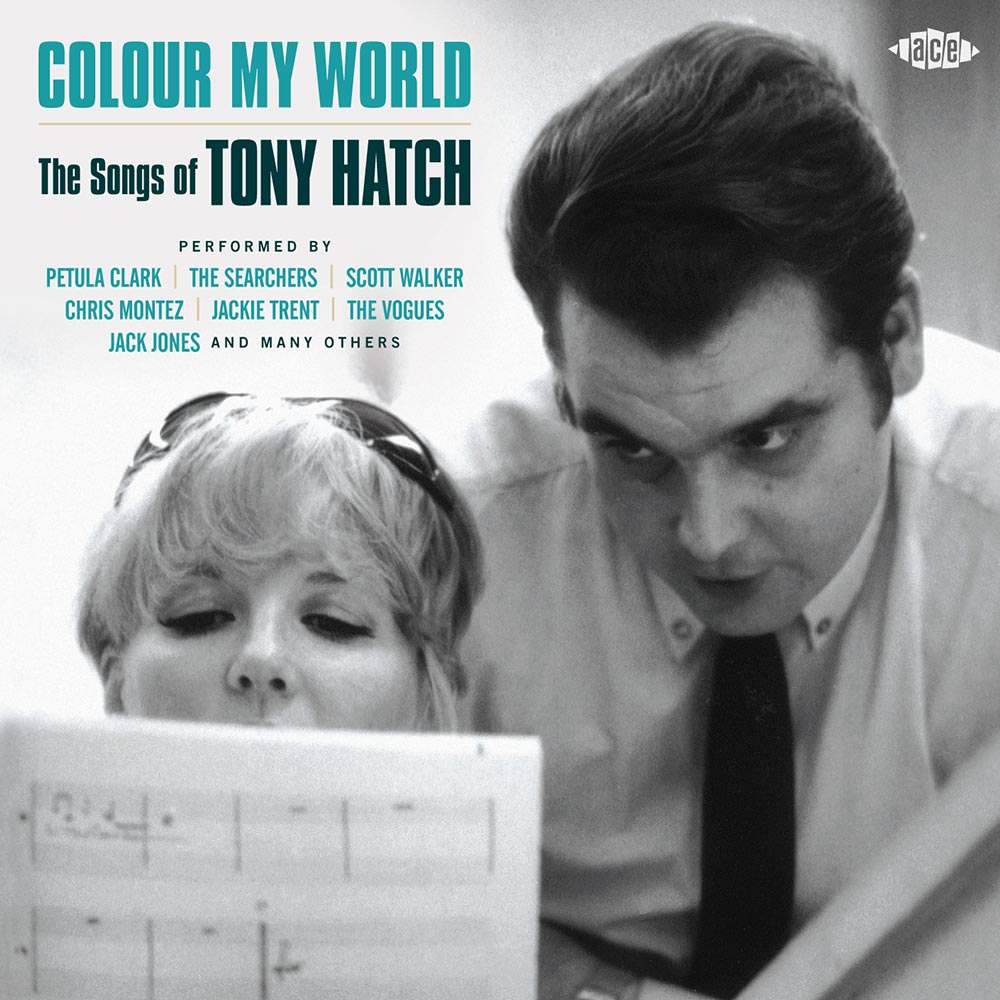
COLOUR MY WORLD-THE SONGS OF TONY HATCH.
COLOUR MY WORLD-THE SONGS OF TONY HATCH.
Prolific. That’s the best way to describe songwriter, pianist, arranger and producer Tony Hatch. During a career that’s lasted over fifty years, Tony has arranged, composed, conducted and produced over one-thousand tracks. Twenty-five of these tracks feature on Ace Records’ recent compilation Colour My World-The Songs Of Tony Hatch. It’s a reminder of one Britain’s most successful songwriters, arrangers and producers. That’s no surprise. Tony was a musical prodigy.
Tony Hatch was born in Southhall, Middlesex on 30th June 1939. From an early age, Tony was fascinated by music. By the age of four, Tony could play the piano. Aged eight, Tony was singing in the school choir. Realising Tony’s potential, his mother decided to enrol him in the London Choir School, in Bexley, Kent. For Tony, this musical appetite whetted his appetite for a career in music.
The choir didn’t just sing in church. They also sung in films, television and on records. Later, Tony became assistant choirmaster. Towards the end of his time at the London Choir School, Tony was writing hymns. All this was a hint of what was to come. When Tony finished school, he’d the opportunity to attend the prestigious Royal Academy Of Music. That wasn’t for Tony. Instead, he went to work for a music publisher.
Aged sixteen, Tony started work at Robert Mellin Music. His job involved demoing songs to potential clients. He’d play the piano and sing the songs to singers and A&R men. After work and at weekend, Tony had his own dance band. His two jobs were the perfect introduction to the music industry for Tony. Before long, Tony was about to make the best move of his nascent carer.
Having demoed one of his songs, Crazy Bells, to Dick Rowe of Decca Records, Dick decided the song was perfect for Gerry Dorsey. Dick also decided that Tony would make a good assistant. So, Dick offered Tony a job at Decca Records. Tony accepted the job and Dick Rowe became his mentor.
When Tony went to work at Decca Records, Dick encouraged him to make instrumental version of popular songs. Back then, instrumentals were big sellers. So, Tony headed into the studio. His debut single was Chick, which featured Side Saddle, on the B-Side. Side Saddle had originally been released by Russ Conway. Released in 1959, Chick was the start of Tony’s recording career. However, that was just one of Tony’s roles.
Amongst Tony’s other duties was producing artists signed to Decca Records. Two of his earliest productions were albums released by the Coldstream Bands. This would prove to be ironic.
Tony was called-up by the armed services to serve National Service. Back then, young men were forced to spend two years in the armed forces. Luckily, National Service had been abolished. However, there was a problem. Tony’s birthday fell on the 30th June, and if he’d been born two days later, he’d not have been eligible for National Service. So, Tony had to spend two years in the army.
Fortunately, with Tony having produced the Coldstream Guards and having proved to be a talented musician, Tony was able to spent the two years in the Coldstream Guards. He spent two years working as the regiment’s arranger. In his spare time, Tony continued to write songs and produce artists for Decca. They’d kept Tony on a retainer during his two years in the Coldstream Guards. During this period, Tony got married and start writing for films.
Tony married Jean Matthews in 1959. He was just twenty. The couple would go on to have two children. Another change in Tony’s life was, he began writing music for films. He’d been approached by Harold Shampan, the Managing Director of Filmmusic, Top Rank’s publishing company. Tony wrote the soundtrack to several films. This included Look For A Star, which was recorded by Garry Mills. It reached number seven in the UK and gave Tony his first hit single. This would be the first of many. However, as the sixties dawned, Tony tried to interest Top Rank in teen pop music. Top Rank weren’t interested. So Tony approached Pye. They offered Tony a part-time job until he left the army. Then when he left the army, the job would become full-time.
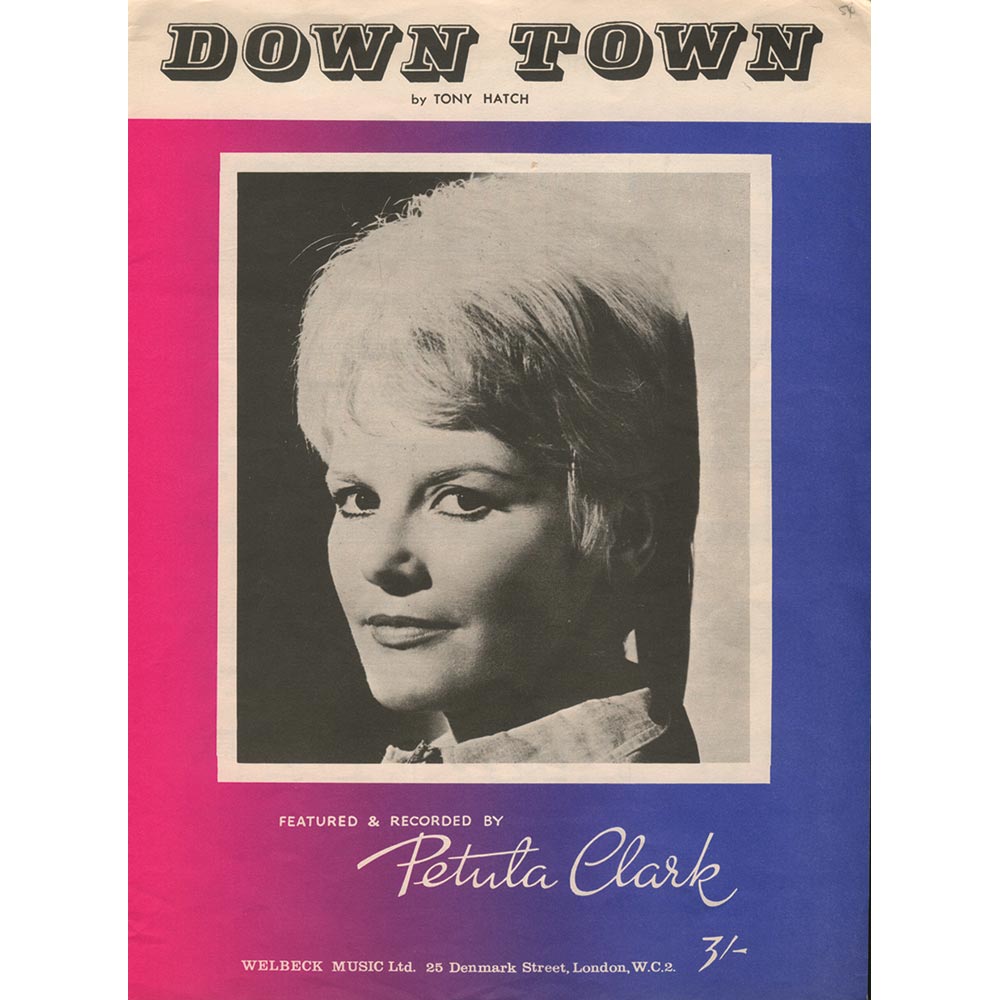
The first single Tony worked on after he left the amy was Emile Ford’s Counting Teardrops. Tony it seemed, had the Midas touch. The single reached number four in the UK. After that, Tony worked alongside Alan Freeman on Petula Clark’s Sailor. It was recorded in November 1960, and reached number one in the UK. This wasn’t the last time Tony would work with Petula Clark. They’d later record the classic track Downtown. It’s one of the twenty-five tracks on Colour My World-The Songs Of Tony Hatch.
The tracks on Colour My World-The Songs Of Tony Hatch were recorded between 1960 and 1968. There’s contributions from Petula Clark, Gary Mills, Jackie Trent, Jack Jones, Sarah Vaughan, Matt Monro, Connie Francis, Scott Walker, The Searchers and The Tony Hatch Orchestra. They’re an introduction to one of the finest songwriters, arrangers and producers of his generation, Tony Hatch. So choosing the highlights of Colour My World-The Songs Of Tony Hatch isn’t going to be easy, but here goes.
Colour My World-The Songs Of Tony Hatch features four singles from Petula Clark. This is fitting, given Tony and Petula enjoyed a successful partnership. The earliest single on Colour My World-The Songs Of Tony Hatch is a true classic and a song that’s synonymous with Petula Clark, Downtown. Released in 1964, it was written by Tony and reached number two in the UK, and became a worldwide hit. It’s a truly timeless classic. A Sign Of The Times was released in 1966, and reached number forty-nine in the UK. A poppy, stomping arrangement is the perfect foil for Petula’s tender, needy vocal. It’s a track from the 1966 album My Love, which reached number sixty-eight in the US Billboard 200 charts. Later that year, Petula released the album album Colour My Love. Two of the singles released from Colour My Love were Who Am I and Colour My World. They were written by Tony and Jackie Trent. Tony arranged and produced Colour My Love, which reached number sixteen in the UK and number forty-nine in the US Billboard 200. Sadly, neither single charted, despite their undoubted quality.
The Montanas feature twice on Colour My World-The Songs Of Tony Hatch. Many of their songs were penned by Tony and Jackie Trent. That’s the case here. They cowrote You’ve Got To Be Loved, which was released in 1967. Produced by Tony, it gave The Montanas their only US hit, reaching number fifty-eight in the US Billboard 100. A fusion of pop and rock, it was one of The Montanas finest singles. A year later, The Montanas released A Step In The Right Direction. It’s another track penned by Tony and Jackie Trent, that showcases the vastly underrated Montanas.
Chris Montez wasn’t the first person to record Call Me. No. Petula Clark and then Keely Smith covered the track. It wasn’t until Chris Montez covered the track that it became a huge hit. Written by Tony, Herb Albert arranged and produced Call Me. This mellow, soulful version reached number twenty-two and is the definite version of the track.
There’s three tracks from Tony Hatch on Colour My World-The Songs Of Tony Hatch. Two of the tracks featured on Hit The Road To Themeland. Man Alive features The Tony Hatch Sound. Written and produced by Tony, it was the theme tune to a BBC TV show. So was Sportsnight, which features The Tony Hatch Orchestra. It’s remembered fondly by sport’s fans of my generation. Sounds Of The 70s comes courtesy of Tony Hatch & The Satin Brass. This was the title-track to Tony’s 1974 album. A dramatic sometimes dreamy, and always innovative instrumental, it shows another side to Tony Hatch’s music.
Sarah Vaughan is without doubt, one of the greatest jazz singers of her generation. I Know A Place is a track from her 1966 album Pop Artistry. Written by Tony and produced by Luchi De Jesus, it’s an infectiously catchy stomper, that Northern Soul fans will enjoy.
Following the British invasion in 1964, Connie Francis career stalled. So, it’s ironic that in 1965, Connie Francis headed to London. She was on her way to record with Tony Hatch. He wrote and produced two tracks, Roundabout and Love Is Mine. The best of the two tracks in Love Is Mine. It literally explodes into life, blazing horns, cooing harmonies and the rhythm section driving Connie to greater heights, on what’s a hidden gem from Connie Francis back-catalogue.
Jackie Trent was Tony’s songwriting partner, and also, his wife. She was a talented singer who released a string of singles that she and Tony cowrote. This includes 1965s the wistful, accusing Where Are You Now and 7.10 From Suburbia. It was released in 1968 and benefits from strong, dramatic narrative. Pictures unfold before your eyes during this tale of tedious suburban life. Although not the best known track Tony and Jackie cowrote, it’s one of the most intriguing, given its social comment and cinematic quality.
Jack Jones recorded If You Ever Leave Me two years after Jackie Trent released her version. It became the title-track to his 1968 album. On If You Ever Leave Me Jack Jones, Jack delivers a vocal that’s a combination of power, passion and fear, fear that the woman he loves leaves him. Accompanying Jack is big, bold and dramatic arrangement that’s the perfect foil for his vocal.
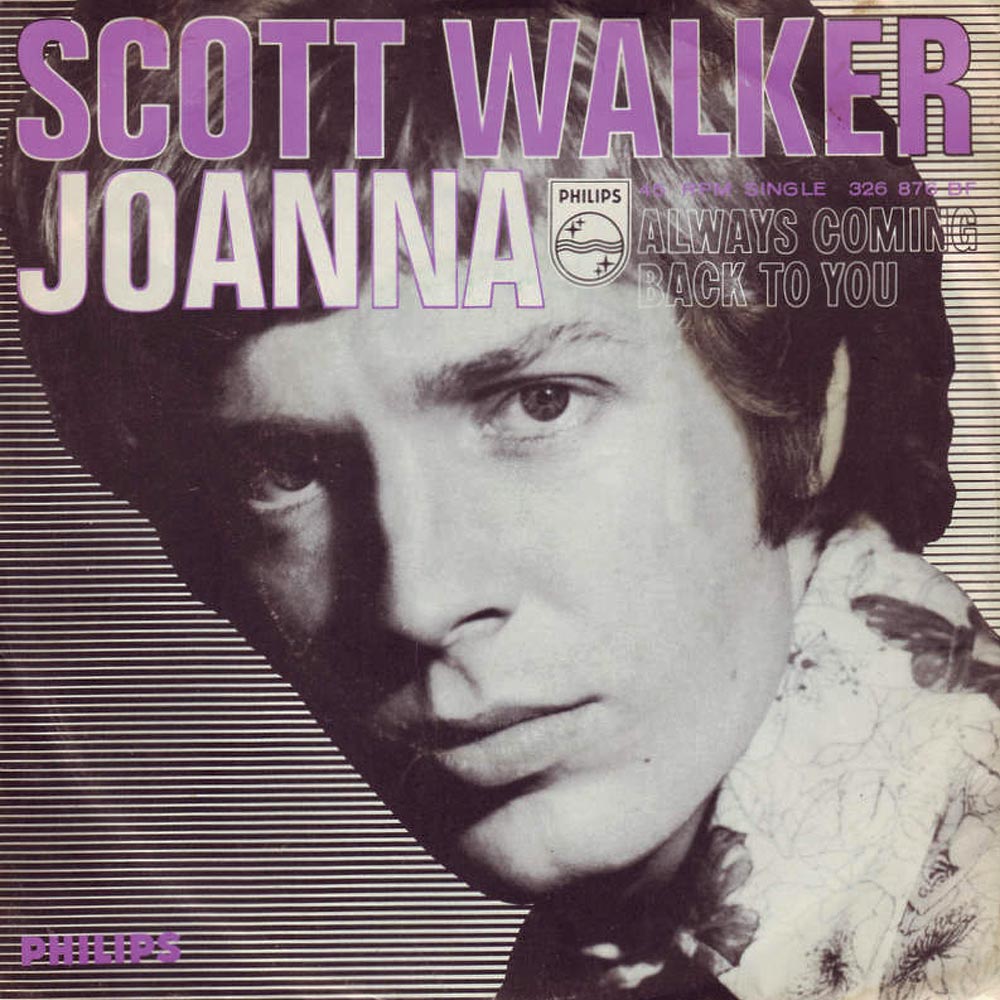
One of the most beautiful and compelling tracks Scott Walker recorded is Joanna. Written by Tony and Jackie, Peter Knight’s string-drenched arrangement is the perfect accompaniment for Scott. He combines emotion, hope and pain on a track from his debut solo album Scott. For newcomers to Scott Walker, this is the perfect starting point to his music.
Garry Mills’ Look For A Star was the song that gave Tony his first hit single. Tony wrote the song for the film Circus Of Horrors. His mentor Dick Rowe produced it. It reached number seven in the UK. After this, ten cover versions of this song were released. However, Garry’s tender, heartfelt vocal is the best version.
Originally, Matt Monro was a bus driver. Not for long. Soon, The Man With The Golden Voice was soon rubbing shoulders with musical royalty. He released a series of commercially successful and critically acclaimed albums. I Love The Little Things was written by Tony and was Britain’s entry in the 1964 Eurovision Song Contest. Although it didn’t win, it’s a tantalising taste of what Matt Monro, The Man With The Golden Voice was capable of.
My final choice from Colour My World-The Songs Of Tony Hatch is Bobby Rydell’s Forget Him. It was written by Tony and released on Philly’s Cameo Parkway label in 1963. Back then, Bobby Rydell was a teen idol. Released in the UK in May 1963, Forget Him gave Bobby a top ten hit with what’s a slick slice of sixties pop. Belatedly, Forget Him was released in the US in January 1964, and reached number four in the US Billboard 200. This opened the door for Tony Hatch. He went on to work with Frank Sinatra, Pat Boone and some of the biggest names in music.
The tracks I mentioned are just some of the highlights of Colour My World-The Songs Of Tony Hatch. I could just as easily have mentioned any one of the twenty-five tracks. That’s testament to Tony Hatch, and sometimes, his songwriting partner, Jackie Trent. Tony was, without doubt, a hugely talented songwriter, arranger and producer. The music he wrote and produced was of the highest quality. That’s why he enjoyed a string of hit singles. This includes writing classic tracks like Downtown for Petula Clark and Joanna for Scott Walker. These two artists are just the tip of the iceberg. Tony wrote, arranged and produced over one-thousand songs.
Whether Tony was working with some of the biggest names in music, or a newcomer, he was determined that to help an artist fill their potential. Time and time again, he does that. There’s numerous examples of this on Colour My World-The Songs Of Tony Hatch. Among the artists Tony worked with are Petula Clark, Gary Mills, Jackie Trent, Jack Jones, Sarah Vaughan, Matt Monro, Connie Francis, Scott Walker, The Searchers. He helped launch careers and rejuvenate careers that had stalled. The reason for that was Tony Hatch was the man with Midas touch.
Many of the songs he wrote and produced became timeless classics. Over a career spanning over fifty years, commercial success and critical acclaim were familiar friends for Tony Hatch. He released several albums and a string of singles. Away from his solo career, whether it was Tony Hatch songwriting, arranging, production or running his own publishing company, Tony Hatch was a success. He was one of Britain’s music successful music moguls. Not only was Tony Hatch steeped in music, but he was a shrewd businessman. Where others faltered, Tony thrived. That’s why he enjoyed such a long and successful career.
Now aged seventy-five, Tony Hatch is one of the grand old men of British music. Last year, 2013, Tony was inducted into the Songwriters Hall of Fame. That’s long overdue. Tony Hatch is without the most talented songwriters, arrangers and producers of his generation. To celebrate Tony Hatch’s long and illustrious career, Ace Records have released Colour My World-The Songs Of Tony Hatch, which is a memorable musical reminder of Tony’s six decade career.
COLOUR MY WORLD-THE SONGS OF TONY HATCH.


THE PHANTOM BAND-STRANGE FRIEND.
THE PHANTOM BAND-STRANGE FRIEND.
There aren’t many bands who take four years before they settle on a permanent name. That was the case with The Phantom Band. Formed in 2002, The Phantom Band changed names numerous times. The Phantom Band were variously called NRA, Les Crazy Boyz, Los Crayzee Boyz, Tower of Girls and Wooden Trees. Then in 2005, they adopted the name Robert Redford. That didn’t go down well.
The band were asked to change their name. They also had to remove all references to it from their online presence. As a result, Robert Redford’s only release, The Mummy and Daddy Dance, has become something of a collector’s item. Following their controversial dalliance with Hollywood, the band reformed, under the name Robert Louis Stevenson.
Their new moniker didn’t last long. Having played a series of concerts in Glasgow and Edinburgh, Robert Louis Stevenson released a limited edition cassette. Only 150 cassettes were sold and they too, have become a collector’s edition. After that, Robert Louis Stevenson changed name again. After four years together, The Phantom Band were born in 2006.
The Phantom Band was how the band’s fans affectionately referred to the band’s activities, or some would say lack of activity. A year later, The Phantom Band released their debut single Throwing Bones on the London label Trial and Error Recordings. Released to critical acclaim, Throwing Bones resulted in Glasgow’s premier label, Chemikal Underground signing The Phantom Band.
Since then, Chemikal Underground has been home to The Phantom Band. They’ve released a trio of albums since signing to Chemikal Underground. Their debut album was 2009s Checkmate Savage. The Wants followed in 2010. After that, nothing has been heard of The Phantom Band. That’s until June 2014, when The Phantom Band released their third album, Strange Friend, on Chemikal Underground. It was released five years after The Phantom Band’s debut album Checkmate Savage.
Before heading into the studio to record their debut, The Phantom Band headed out on the road. They played some of the biggest festivals during the summer of 2007. Then in early 2008, The Phantom Band headed into the studio.
Checkmate Savage, The Phantom Band’s debut album was recorded at Chem 19 Studios in Blantyre, Lanarkshire. Recording began in early 2008, with former Delgado Paul Savage producing Checkmate Savage. The lineup of The Phantom Band on Checkmate Savage included a rhythm section of drummer Damien Tonner, bassist Gerry Hart and guitarists Duncan Marquiss, Greg Sinclair and Rick Anthony, the lead vocalist. Andy Wake played keyboards. Together, they recorded nine tracks which became Checkmate Savage. They were then mixed at Franz Ferdinand’s studio in Govan, Glasgow. Once recording of Checkmate Savage was completed, it was released in January 2009.
On its release in January 2009, Checkmate Savage received widespread critical acclaim. Critics realised this was no ordinary debut. Instead, it was an ambitious and cerebral release. The Phantom Band examined a various themes on Checkmate Savage. This included over-population and dwindling natural resources. Checkmate Savage were a band with a social conscience. They also looked like being Scotland’s next big band.
Following the commercial success and critical acclaim of Checkmate Savage, The Phantom Band headed out on a series of UK and European tour. Across Britain and Europe, The Phantom Band played to sell-out shows. One of the most memorable gigs was T In The Park, where the Glasgow based The Phantom Band were hailed conquering heroes. There were also barnstorming appearances at London Calling in Amsterdam, the Storasfestivalen near Trondheim and Sound City in Liverpool. Then as 2009 drew to a close, The Phantom Band played at the prestigious Transmusicales festival in Rennes. 2009 had been a huge year for The Phantom Band. Now they had to begin work on their sophomore album, which became The Wants.
Sophomore albums are notoriously difficult. Often, a band write some of their best material before they’re signed. They’re young, hungry for success and dedicate themselves to getting a record deal. They spend inordinate amounts of time writing their songs. Then when they sign to a record label and enjoy a successful debut album, things change. No longer have they the same time to write an album. Instead, they’re writing on the road, as they tour their debut album. As a result, often, the quality of music suffers. For The Phantom Band, the recording of their sophomore album The Wants, wasn’t easy.
When The Phantom Band entered Chem 19, to record The Wants, the album wasn’t written. So, much of The Wants was written in the studio. The other problem was time was tight. They couldn’t take their time recording The Wants.This caused problems within The Phantom Band. However, with Paul Savage producing The Wants, the album was recorded within the timeframe. However, after The Wants was recorded, The Phantom Band lost its drummer.
Having recorded The Wants, drummer Damien Tonner left The Phantom Band. Considering The Phantom Band were about to tour The Wants, this presented the band with a problem. A new drummer would have to learn all their songs and then head out on the longest and most gruelling tour of their career. Before that, The Wants was released in October 2010.
Despite all the problems the band had encountered, The Wants was released to the same critical acclaim as their debut album Checkmate Savage. The Phantom Band had overcome the problem of the difficult second album. Now they headed out on tour, with a new drummer Iain Stewart.
Iain Stewart was brought in to fill the void left by the departure of Damien Tonner. It couldn’t have been easy. The Phantom Band had been together since 2002. Despite this, Iain settled in to his new role.
On the day The Wants was released, The Phantom Band played the CMJ festival in New York. After that, they hooked up with another Scottish band, Frightened Rabbit. The Phantom Band supported them as they played Boston, Philadelphia, Washington, New York and Chicago. Having won over American audiences, The Phantom Band headed home.
There was no time for rest. It was a case of saying hello to friends and family and heading out on a brief tour of Britain. After that, The Phantom Band spent two months touring Europe. It was one of the most gruelling schedules they’d embarked upon. Having started in March 2011, the tour finished just in time for the festival season to begin. There was no rest for The Phantom Band. They played at festivals like Latitude in Suffold, Walk the Line in Den Haag and The Camden Crawl in London. Then to crown this summer of festivals, The Phantom Band played T in the Park in their native Scotland. By now, they were well on their way to becoming one of Scotland’s best bands. However, since then all has been quiet on The Phantom Band front.
Away from The Phantom Band, the six members of the band have various side-projects to keep them occupied. Rick enjoys a successful solo career. As Rick Redbeards, he released his debut solo album, No Selfish Heart in 2013, on Chemikal Underground. Iain Stewart is a member of Bronto Skylift, an experimental rock band. Duncan Marquiss, Andy Wake and Greg Sinclair sometimes, perform as Omnivore Demon. They’re best described as an improvisational group. All these various side-projects are what has been keeping The Phantom Band busy. However, recently, they headed back into the studio to record their third album Strange Friend.
For Strange Friend, The Phantom Band wrote nine tracks. These tracks marked the recording debut of The Phantom Band’s new lineup. The lineup of The Phantom Band on Checkmate Savage included a rhythm section of drummer Iain Stewart, bassist Gerry Hart and guitarists Duncan Marquiss, Greg Sinclair and Rick Anthony, the lead vocalist. Andy Wake played keyboards. It wasn’t just the band’s lineup that had changed.
For the first time in their career, Paul Savage didn’t produce The Phantom Band. Instead, Strange Friend was produced by The Phantom Band with Derek O’Neill. He also engineered Strange Friend with Paul Savage. Strange Friend was mastered by Kenny MacLeod. It was then released in June 2014.
It was a case of all hail the returning heroes when Strange Friend was released in June 2014. Critics hailed the album as a triumph for the Glasgow-based sextet. Critical acclaim and plaudits came the way of The Phantom Band, on the release of Strange Friend. It’s been a long time coming, but well worth the wait.
The Wind That Cried The World opens Strange Friend. There’s a nod towards Kraftwerk and eighties synth pop sound as the song unfolds. Eighties drums, keyboards and guitars provide the backdrop for Rick Anthony’s vocal. It’s earnest and thoughtful. Before long, Rick scats, drums pound and the rest of The Phantom Band deliver the chorus. It’s infectiously catchy. Especially when the ethereal harmonies becomes a chant. By then, a rousing anthem is unfolding. From there, the track builds. Synths bubble, while pounding drums, guitars drive this arrangement along and what’s sure to be a festival favourite reveals its secrets.
Clapshot sees a change of style from The Phantom Band. Drummer Iain Stewart’s thunderous drums are at the heart of the arrangement. So are Andy Wake’s hypnotic keyboards. They add texture to the arrangement, propelling it along at breakneck speed. The Phantom Band aren’t a two man band. No. They all climb onboard and plays a part in the track’s success. Crystalline guitars shimmer, while Rick seems to have grown into the role of frontman. He struts his way through the lyrics. Later, he’s replaced by ethereal harmonies as this melodic, musical merry-go-round heads into the stratosphere.
Dark and mesmeric describes Doom Patrol. The robotic arrangement marches along. Drums and Kraftwerk synth combine with machine gun guitars. Rick’s vocal sounds not unlike Midge Ure of Ultravox. The same can be said of some of the synths. The Phantom Band draw inspiration from seventies, eighties and nineties. They combine Krautrock with synth pop, pop and later, add some glorious searing, rock guitars. There’s even an Acid House bass added for good measure. This results in a melodic, genre-melting track that’s truly irresistible.
Atacama sounds like a lost Johnny Cash song. Just an acoustic guitar accompanies Rick’s pensive, heartfelt vocal. Before long, drums and quivering strings enter. They don’t crowd Rick’s vocal. Instead, mostly, the arrangement is understated. Later, the drama builds, and guitars quiver. Rick’s vocal becomes an impassioned scat, as he draws inspiration from Neil Young and Bob Dylan. In doing so, he delivers a vocal that’s emotive and impassioned. For everyone who enjoys this track, then Rick’s debut solo album, No Selfish Heart is a must have.
Deliberately, and slowly, chords are played on the guitar and piano as (Invisible) Friends reveals its secrets. They’re played urgently. Stabs of keyboards set the scene for Rick’s vocal. It’s tender, wistful and becomes ethereal. Meanwhile, drums, organ and the piano are combine with guitars. Rick, accompanied by beautiful, ethereal harmonies delivers a vocal that oozes emotion. It’a as if the lyrics are personal and he’s drawing on his own experiences. That’s why this is one of Rick’s most compelling performances.
As Sweatbox unfolds, you’re introduced to a much more avant garde side of The Phantom Band. It’s not unlike disco, but with a lo-fi, lysergic twist. There’s even a nod towards Duran Duran. Literally, the arrangement bursts into life. A myriad of unorthodox instruments are deployed. This includes a collection of vintage keyboards. They join the rhythm section. The other instruments add an experimental sound. It works really well. The arrangement just flows along. You’re captivated. Rick delivers another vocal masterclass. His vocal is veers between slow, soulful and dramatic, as buzzing synths and blistering, choppy guitars are added as the track heads towards its crescendo.
Melancholy describes No Shoes Blues. Guitars shimmer and quiver as the bass and drums join forces with keyboards. They plod along as Rick delivers a soul-searching vocal. Heartache and hurt fill his vocal which sometimes, reminds me of Jeff Buckley. It’s a cathartic outpouring of emotion. He cleanses himself of pain and hurt. Meanwhile, the slow, moody, dramatic and chiming arrangement accompanies him every step of the way during this six-minute Magnus Opus.
Women Of Ghent sees another change of direction from The Phantom Band. Drums, retro synths and chiming guitars combine to provide the backdrop for Rick. He’s accompanied by harmonies as the cascading arrangement unfolds. Synths shimmers and glint, hypnotic drums pound and crystalline guitars chime. Gradually, the arrangement builds. Eventually, it’s ready to reveal its hidden depths. By then, the track has taken on a hypnotic, almost anthemic sound as Krautrock, synth pop and even a hint of psychedelia combine seamlessly.
Galápagos closes Strange Friend, the third album from The Phantom Band. Straight away, the track takes on an eerie ambient sound. That comes courtesy of the myriad of the percussion and synths being deployed. A strummed guitar and despairing vocal from Rick are hidden behind the percussion. Although the arrangement is busy, you can still focus on Rick’s vocal. It’s full of emotion. Then all of sudden, the percussion disappears. So does Rick’s vocal. After that, swathes of synths take centre-stage. They circle above the arrangement, before disappearing into the distance. The result is an atmospheric, ambient track.
Nearly four years have passed since The Phantom Band released The Wants. That’s a long time for a band to be away. Music can have moved on by then. So can their fans. They’ve found new bands. As a result, any band away as long as The Phantom Band must have something special to tempt their fans back. That’s the case with The Phantom Band third album Strange Friend, which was recently released by Chemikal Underground
On Strange Friend The Phantom Band set about reinventing their music. They combine everything from ambient, folk, indie rock, Krautrock, pop, psychedelia, synth pop. There’s even a brief nod towards Acid House and prog rock. Strange Friend is without doubt, a truly eclectic album. It sees The Phantom Band draw inspiration from Can, Kraftwerk, Ultravox, Bob Dylan, Neil Young, Jeff Buckely, Johnny Cash and Brian Eno on Galápagos. The result is a rich, eclectic and captivating and compelling musical tapestry.
The music on Strange Friend is a real emotive roller coaster. No two songs are the same. One song can be beautiful and ethereal, the next dark and dramatic. Other times, the music becomes eerie, haunting and lysergic. Several times, Rick’s vocals are heartfelt and impassioned. They tug at your heartstrings, and you share his pain and hurt. Then, all of a sudden, the music becomes anthemnic, joyous and rousing. Hooks haven’t been spared. Truly, the music becomes irresistible and infectiously catchy. Without doubt, The Phantom Band are sure to win a lot of friends when they play Strange Friend live. There’s many a festival favourite on Strange Friend, which marks a welcome return to form for the Glasgow-based Phantom Band.
After nearly four years away, The Phantom Band are back, and better than ever. They’ve grown and matured as a band, and have reinvented themselves musically. The Phantom Band’s genre-melting music is bound to win friends and influence people over the summer months, as The Phantom Band make their return to the festival circuit. Until then, you’ll have to content yourself with a copy of their critically acclaimed and eclectic album Strange Friend.
THE PHANTOM BAND-STRANGE FRIEND.
THE SUPERBS-THE BEST OF THE SUPERBS.
THE SUPERBS-THE BEST OF THE SUPERBS.
Just over fifty years ago, in March 1964, The Superbs released their debut single, The Story Book Of Love. Things were happening quickly for The Superbs. They’d just signed to Lew Bedell’s Dore Records a month earlier, in February 1964. Lew thought that The Superbs had potential. So, he signed them to Dore Records on a one year deal.
For their debut single, The Story Book Of Love was chosen. It was penned by Gordy Harmon Jr, Frances Lark and Art Sibrie. Gene Page was brought in to arrange The Story Book Of Love. With a shrewd choice of single and one Gene Page’s trademark arrangements, The Story Book Of Love was the perfect showcase for The Superbs’ fusion of soul and doo woo. Before long, The Superbs had a hit single on their hands.
Released in March 1964, The Story Book Of Love gave The Superbs a minor hit, when it reached number eighty-three in the US Billboard 100. Although not the most successful debut single, The Story Book Of Love hinted at a successful future for The Superbs. Sadly, that wasn’t the case.
Never again would The Superbs enjoy a hit single, even a minor hit single. That’s despite The Superbs releasing singles on Dore over a forty-one year period. During the five spells The Superbs had at Dore, they released over thirty singles. Twenty-one of these singles feature on The Best Of The Superbs, which was released on Kent Soul, a subsidiary of Ace Records. Featuring twenty-four tracks,
The Best Of The Superbs is the most comprehensive compilation of The Superbs’ music. It features twenty-four tracks. These tracks were released between 1964 and 1987. Essentially, The Best Of The Superbs documents the history of The Superbs.
1962 was when The Superbs’ story begins. Walter White a native of Long Beach, California, and Lawrence Lockhard were a member of a quartet called The Superiors. They then recorded for the Nanc label as Lonnie and The Heartbreakers. However, none of their recordings were ever released. After The Heartbreakers, the pair decided to form a new group, a quintet which Walter called The Superbs.
At first, The Superbs concentrated on playing live. This was no bad thing. It allowed The Superbs to hone their style. Not long after this, Walter White met someone who’d play an important part in The Superbs’ strory, Bobby Swayne.
Previously, Bobby had enjoyed success with Ray Appleberry as Bob and Ray. Bobby was the vocalist and they enjoyed a minor hit with 1962s Air Travel. Neither of the followup singles, When The Dance Was Over, nor Our Last Night charted. After the failure of Our Last Night, Bob and Ray went their own way, and Ray joined Walter White in The Superbs.
For a while, Bobby and Walter were both members of The Superbs. For a while, everything went well. Then Bobby decided to form his own band. This resulted in Bobby and Walter parting company. Bobby however, held on to The Superbs name. So when Bobby was offered a contract by Lew Bedell’s Dore label, The Superbs were reborn.
The new lineup of The Superbs featured lead vocalist Eleanor Green, Bobby Swayne, Gordon Harmon and Ronnie Cook. On 25th February 1964, the four members of The Superbs headed to their manager Art Sibrie’s Los Angeles’ home. That’s where The Superbs signed the one year contract Lew Bedell’s Dore label offered them. The terms of the contract meant that The Superbs had to record six singles within a year. These six singles feature on The Best Of The Superbs.
For The Superbs debut single, The Story Book Of Love was chosen. Gordy Harmon Jr, Frances Lark and Art Sibrie cowrote the track. Gene Page arranged The Story Book Of Love and the B-side Better Get Your Own One Buddy. The result was the perfect showcase for The Superbs’ fusion of soul and doo wop. Eleanor Green’s lead vocal was a mixture of drama and emotion, while Bobby Swayne, Gordon Harmon and Ronnie Cook added tight, soulful harmonies. Released in March 1964. The Story Book Of Love in March 1964, it reached number eighty-three in the US Billboard 100. Although this was only a minor hit, surely, success wasn’t far away for The Superbs.
July 1964 saw The Superbs release their sophomore single Baby, Baby All The Time. The B-side was Sad Sad Sad, which oozes emotion. Baby, Baby All The Time was penned by B.J. Hunter and arranged by Gene Page. The introduction sees The Superbs draw inspiration from Phil Spector’s girl groups. After that, it’s a seamlessly combination of soul and doo wop. Eleanor’s vocal is heartfelt and needy, as it soars above the arrangement. Harmonies accompany her, proving the perfect foil for her heartbroken vocal. Despite the quality of Baby, Baby All The Time, it failed to chart. Lew Bedell must have thought this was just a blip. However, never agin would The Superbs enjoy a hit single.
By the time My Heart Isn’t In It was released later in 1964, Bobby and Ronnie Cook weren’t getting along. They put aside their disagreements to record a track written by Jack Lawrence. Gene Page’s arrangement is slow and string laden. Eleanor delivers a vocal that’s full of sadness and despair. It’s without doubt, one of her best and most soulful vocals. Just like the other Superbs, she’s influenced by doo wop as she lays bare her soul. Still, a hit single eluded The Superbs.
They tried again in November 1964, when they released The Big Hurt as a single. Penned by Art Sibrie and Bobby Swayne, it was one of The Superbs best singles. Drama, despair and emotion combine as Eleanor delivers a vocal powerhouse that belies her tender years. The arrangement adds to the drama. Driving, braying horns, gongs, percussion and cooing harmonies provide the perfect backdrop for Eleanor. The result is track that should’ve given The Superbs a hit single. On the B-Side was the despairing I Was Blind, which one of The Superbs’ best B-Sides.
1965 began as 1964 had ended, with Baby’s Gone Away failing to chart. It’s another track from the pen of Art Sibrie and Bobby Swayne. Accompanied by the lushest of strings, Eleanor accompanied by the other Superbs deliver a soulful opus full of hurt and heartache.
March 1965 marked the end of The Superbs one year contract with Dore. They released the hopeful, joyous I Was Born When You Kissed Me. Just like the B-Side It Hurts So Much it was written by Art Sibrie and Bobby Swayne. Both were peerless ballads that brought out the best in The Superbs. Despite this, The Superbs weren’t selling many records. Something had to change.
It would. Very soon. Goddess Of Love a catchy, dance-floor friendly single was released in July 1965. Again, it didn’t trouble the charts. As a result, it was the last single to feature the original lineup of The Superbs. Following Goddess Of Love, two members of The Superbs left.
Eleanor Green and Bobby Swayne left The Superbs. Their replacements was Lawrence Dickens. He made his Superbs debut on He Broke A Young Girl’s Heart, which he penned with Walter White. On He Broke A Young Girl’s Heart, The Superbs deliver one of their best performances on The Very Best Of The Superbs. They draw inspiration from the Beach Boys as they deliver a heartfelt, dramatic fusion of soul and doo wop. He Broke A Young Girl’s Heart should’ve been a game-changer for The Superbs. Incredibly, the single failed to chart. Nothing more was heard from The Superbs until February 1966.
That’s when The Superbs released It’s A Million Miles To Paradise. Again, chart success eluded The Superbs. Then On A Day When It’s Raining, which was written by Art Sibrie and Bobby Swayne, was released as a single. Listeners heard had a much more dramatic, experimental sound. This was because of the sound effects. Soul and pop were combined by The Superbs as they tried a new approach. It didn’t result in that elusive hit single. So The Superbs tried again on The Wind Is Blowing. It was an uptempo fusion of pop and soul which showcased another side of The Superbs music. Still, success eluded them. However, The Superbs weren’t about to give up. So they released a couple of singles with the dance-floor in mind.
Go For What You Know was released in April 1966. It was written by Ronald Cook and Lawrence Dickens, who took charge of the lead vocal. With a nod to The In Crowd, Go For What You Know was a hook-laden dance-track. Sadly, despite its quality, the single wasn’t a commercial success. Nor was the B.J. Hunter penned I Wanna Do It With You, Baby. Arranged by James Carmichael, I Wanna Do It With You, Baby was released in January 1967, but the single failed commercially. It did become a favourite amongst Northern Soul fans. By then, The Superbs lineup had changed.
By January 1968, The Superbs released One Bad Habit, their lineup had changed. Originally, The Superbs tried to get Eleanor Green to make a return to the group. She wanted to return. However, her husband wanted the group to be billed as Eleanor Green and The Superbs. That wasn’t going to happen. So The Superbs brought in Claudia Lennear. Along with Lawrence Lockard, Walter White and Bobby Walker the new lineup of The Superbs recorded Richard “Dimples” Fields’ Bad Habit. It’s best described bluesy, wistful and beautiful. This is the last track The Superbs released during the sixties that features on The Very Best Of The Superbs.
Four years later, The Superbs released Your Eyes. Released in 1972, it features a new lineup of The Superbs. This includes Lawrence Lockard, Lawrence Dickens, Ronnie Cook, Bobby Walker and Sandra Petersen. Slow, tender and deeply soulful, an understated arrangement accompanies The Superbs. Hidden away on the B-Side is Wind In My Sails. Written by Lawrence Dickens and Ronnie Cook, it’s a fusion of funk and soul, with a rousing chorus. Bobby Walker takes charge of the lead vocal as we hear another side of The Superbs.
1977 saw The Superbs jump on the disco bandwagon, with Where Or When. Here, The Superbs reinvent a Rogers and Hart song, and give it a dance-floor friendly makeover. The final track from The Superbs on The Very Best Of The Superbs is Where Or When. Released in 1987, twenty-three years after they released their debut single, The Superbs release a deliciously smooth slice of soulful music.
The Very Best Of The Superbs is a twenty-three year journey through The Superbs’ music. It starts with their 1964 debut single The Story Book Of Love, and closes with 1987s Where Or When. This allows the listener to hear the evolution of The Superbs’ music. In their early days, The Superbs’ music was a fusion of doo wop and soul. This became their trademark sound. Eventually, The Superbs music began to change. Later, their soulful side came to the fore. At one point, The Superbs combined soul and pop. This was only briefly. Then in the early seventies, The Superbs mixed soul and funk. This was an example of The Superbs music changing with the time. As The Very Best Of The Superbs closes, The Superbs it’s with a deliciously smooth slice of soulful music. What a way to end The Very Best Of The Superbs, which was recently released by Kent Soul, an imprint of Ace Records.
Without doubt, The Very Best Of The Superbs is the most comprehensive compilation of The Superbs’ music ever released. Rather than just focus on one period of The Superbs’ career, there’s tracks from the sixties, seventies and one from the eighties. There’s even B-Sides, which includes the hidden gem I Was Blind. During these three decades, The Superbs’ lineup changed several times.
One of The Superbs’ biggest loss was Eleanor Green. Her soprano lead vocal sounded not unlike a male falsetto. She was able to breathe emotion, heartache, hurt, joy and sadness into the songs. Then when Eleanor leaves The Superbs, a variety of other Superbs take charge of the lead vocal. Each of them bring something new to the role. Unlike many bands, there was life for The Superbs after Eleanor Green. Indeed, The Superbs career were still releasing singles until 2005. Their final single was 2005s Little Girl, which meant The Superbs’ recording career spanned forty-one years. Sadly, despite the longevity of their career, The Superbs never replicated the commercial success of their debut single The Story Book Of Love.
Released in March 1964, The Story Book Of Love gave The Superbs a minor hit, when it reached number eighty-three in the US Billboard 100. Although not the most successful debut single, The Story Book Of Love was as good as it got for The Superbs. Never again would The Superbs enjoy a hit single, even a minor hit single. That’s despite The Superbs releasing over thirty singles on Dore over a forty-one year period.
During their career at Dore, The Superbs never enjoyed the commercial success and critical acclaim they deserved. That’s a great shame. They were a hugely talented group. Their music was variously soulful, funky and sometimes, dance-floor friendly. Each of these sides of The Superbs’ music features on The Very Best Of The Superbs, which is the perfect introduction to one of soul’s best kept secrets, The Superbs.
THE SUPERBS-THE BEST OF THE SUPERBS.


LOUIS ARMSTRONG-LOUIS ARMSTRONG AND HIS FRIENDS.
LOUIS ARMSTRONG-LOUIS ARMSTRONG AND HIS FRIENDS.
1970 is remembered as a landmark year for Louis Armstrong. It was the year Louis and an all-star band, headed into the studio to record an album to celebrated his seventieth birthday. The album was Louis Armstrong and His Friends, which was recently rereleased on Boplicity, an imprint of Ace Records. It was recorded over three days in May 1970. Louis Armstrong and His Friends was released on Bob Thiele’s Flying Dutchman Records. However, Louis Armstrong and Bob Thiele had jumped the gun.
When Louis Armstrong celebrated his birthday in August 1970, he was only sixty-nine. Louis would never get the opportunity to celebrate this seventieth birthday. Tragically, Louis Armstrong died on the 6th of July 1971, less than a month short of his seventieth birthday. Louis Armstrong and His Friends, proved to be Louis Armstrong’s swan-song. Was Louis Armstrong and His Friends a fitting finale to one of jazz music’s true long and illustrious career?
By the time Louis Armstrong signed to Bob Thiele’s Flying Dutchman Records, he was one of the biggest names in jazz music. He’d come a long way since his early days in New Orleans.
It’s no exaggeration to say, that Louis Armstrong was born into abject poverty. He spent his early years in one of New Orleans’ poorest areas. Poverty was rife in Uptown, New Orleans. When Louis was still an infant, things got tougher.
His father abandoned his young family, and went to live with another woman. After that, Louis’ mother left her family. She placed them in the care of Louis’ grandmother and uncle.
Then when Louis was five, his mother returned and he and his sister went to live with his mother’s family. Louis only ever saw his father occasionally. He later remembered seeing his father taking part in a parade. Still, life for Louis and his sister was tough. Louis had a series of odd jobs that brought some money into the household. Despite this, there was never enough money to make ends meet. However, later, music however, offered Louis an escape from poverty.
Louis had been introduced to music at school. When he left school age eleven, Louis joined a quartet who sang in the streets. At night, Louis spent time listening to bands in New Orleans. Before long, he start teaching himself to play trumpet. Self taught, he learnt to play by ear. Little did anyone realise, Louis would become a musical legend.
Certainly not when Louis found himself in the New Orleans Home for Coloured Waifs. He was a serial offender. One of the most series offences came when Louis discharged his stepfather’s pistol. Ironically, his spells in the Home allowed Louis to hone his musical style. It proved to be a somewhat unorthodox musical apprenticeship for Louis. By the end of his time in the Home, Louis was the bandleader. Then when he was fourteen, Louis was released and returned home. It was then that Louis got his first job playing in a dancehall.
It was at Henry’s Ponce’s that Louis made his debut. He played their by night and worked as coal man by day. Soon, Louis was playing in New Orleans’ legendary parades. Older musicians, especially Joe “King” Oliver took Louis under their wing. He mentored Louis, who soon, got a job working on the steamboat, Fate Marable. This was where Louis mastered reading written arrangements. Then in 1919, Joe “King” Oliver left Kid Ory’s band and Louis replaced him. At the same time, Louis joined the Tuxedo Brass Band. Louis’ career was just about to begin in earnest.
The twenties were a hugely important decade for Louis Armstrong. He moved to Chicago, which was then jazz central. He joined Joe “King” Oliver’s Creole Jazz Band in 1922. This was a huge step for Louis. Soon, Louis’ reputation was growing. He became known as one of the top musicians in Chi Town. Before long, Louis was living the high life. For fun, Louis enjoyed taking part in cutting contests, where jazz men challenged each other to blow 200 high consecutive high Cs. Not many could do this. Louis could. Throughout his career, Louis enjoyed cutting contests. However, with his reputation growing, it would’t be long before Louis made his recording debut.
In 1925, Louis made his recording debut for the Okeh label. This wasn’t with the Creole Jazz Band. No. It was Louis’ own band, the Hot Five and Hot Seven. Featuring a lineup of Kid Ory, Johnny Dodds and Earl Hines, who replaced Louis’ wife on piano, the Hot Five and Hot Seven were a groundbreaking band. They made many a standard their own. The Hot Five and Hot Seven set the bar high. Especially when Louis recorded Ain’t Misbehavin’ in 1929. This was the first track to showcase Louis’ vocal prowess. Ain’t Misbehavin’ gave Louis the biggest hit of his career. For Louis, this was the perfect way for the twenties to end.
As a new decade dawned, Louis was under new management. Joe Glaser, who was allegedly a friend if Al Capone, became Louis’ manager. With Joe Glaser guiding his career, Louis found himself fronting a big band by the end of the thirties. They were called Louis Armstrong and His Stompers. A hugely successful band, their commercial success lasted right through until 1947. However, by then, keeping a big band on the road was becoming prohibitively expensive. So, Louis had to rethink his band.
Louis’ next band was The All Stars. They were a much smaller band. What they lacked in numbers, they made up in skill and charisma. The All Stars toured extensively and always, drew large crowds. So, it made sense to record a series of albums. Their best albums were The All Stars Plays W.C. Handy and The All Stars Plays Fats. Just like Louis previous band, The All Stars enjoyed longevity.
Having began in 1947, The All Stars career lasted right through the fifties and sixties. Each year, they averaged roughly 300 concerts a year. Then there were appearances in films. The All Stars were even more successful than Louis previous bands. Just like Louis, they enjoyed commercial success and critical acclaim.
Louis released Hello Dolly as a single in 1964. It reached number one in the US Billboard 100. So successful was Hello Dolly, that it knocked The Beatles of the number one spot. Three years later, Louis recorded a song that’s become synonymous with Louis Armstrong. This was What A Wonderful World. It reached number one in the UK. A year later, in 1968, Louis recorded We Have All The Time In The World, which became the theme for the James Bond film, On Her Majesty’s Secret Service. We Have All The Time In The World became another Louis Armstrong classic. For Louis, the sixties were the most successful and prolific decade of his career.
Throughout the sixties, Louis Armstrong released a series of albums. He was a truly prolific artist. He released about twenty albums for various labels. Louis was signed to labels like Decca, Coral, Kapp, Mercury, Brunswick, Stateside and ABC Records. It was at ABC Records that Louis first met Bob Thiele.
Bob started work at Impulse 1961 and spent eight years there. During that time, Bob Thiele enjoyed the busiest period of his career. Bob, he was hardly away from the studio, producing over 150 albums in eight years. This included John Coltrane’s seminal album A Love Supreme. Ironically, Bob’s most successful production was Louis Armstrong’s What A Wonderful World. Not all of Bob Thiele’s production’s were as successful. Innovative music didn’t always equate to commercially successful music.
Through working with some of the most innovative and creative musicians in the history of jazz, Bob must have realised that often, large record companies aren’t the best environment for innovative and creative musicians. Often, these musical mavericks didn’t thrive within such an orthodox environment. Their creativity is restricted, meaning they’re unable to experiment and innovate like they’d like.
Soon, Bob Thiele, would be able to create an environment where this would be possible. By 1969, Bob had been at Impulse for eight years. He’d been responsible for producing some of the most important jazz music of the sixties. However, there’s no sentiment in music. In the musical equivalent of a musical coup d’tat, Bob Thiele was ousted from his role at Impulse. This proved to the start of the next chapter in his career.
Leaving Impulse in 1969, Bob founded Flying Dutchman Productions. This would become home to everyone from Ornette Coleman, through Gil Scott Heron, Leon Thomas, Eddie “Cleanhead” Vinson and Louis Armstrong.
Louis Armstrong’s one and only album for Flying Dutchman Productions was Louis Armstrong and His Friends. Joining Louis were some of the biggest names in jazz. It’s no exaggeration to call it an all-star cast that accompanied Louis. However, Louis Armstrong and His Friends was unlike any album Louis had recorded.
For Louis Armstrong and His Friends, Bob Thiele chose a mixture of classics, hits and familiar faces. This included Mood Indigo, Fred Neil’s Everybody’s Talkin’ (Echoes), What A Wonderful World, John Lennon’s Give Peace A Chance and Leon Thomas and Pharaoh Saunders’ The Creator Has A Master Plan (Peace). There was also a cover of the protest song We Shall Overcome. Bob Thiele who penned What A Wonderful World with George David Weiss, cowrote two other tracks. George and Bob penned Father Wore Long Hair with with Pauline Rivelli. Bob coyote Boy From New Orleans with Bob Katz and Ruth Roberts. The other two tracks were Lorenzo Pack’s This Black Cat Has 9 Lives and Robert Medelin and Guy Wood’s My One And Only Love. These ten tracks, which became Louis Armstrong and His Friends, were recorded by a band featuring some top session players.
The recording of Louis Armstrong and His Friends took place on the 26th, 27th and 29th May 1970. Over three days, Louis Armstrong and His Friends recorded ten tracks. Different players played on different tracks. Strings, horns, a chorus and the rhythm section joined forces. The rhythm section included bassist Richard Davis, electric bassists Chuck Rainey and John Williams Jr, electric guitarist Kenny Burrell and Sam Brown, plus drummer Petty Purdie. Other musical luminaries included flautist James Spaulding, pianist Frank Owens and trumpeter Thad Jones. These were just a few of the musicians who joined Louis in recording the album that celebrated his seventieth birthday, Louis Armstrong and His Friends. It was released later in 1970.
Louis Armstrong and His Friends was a mixture of the old and new. Bob Thiele, who produced Louis Armstrong and Friends had pushed Louis to release music that normally, he wouldn’t have considered recording. Normally, Louis Armstrong wouldn’t have recorded Give Peace A Chance or The Creator Has A Master Plan (Peace). Along with We Shall Overcome, this was some of the most political music Louis Armstrong had recorded. On its release, Louis Armstrong and His Friends was well received. Critics enjoyed hearing another side to Louis Armstrong. Sadly, Louis Armstrong and His Friends didn’t sell well. Less than a year later, Louis Armstrong was dead. Was Louis Armstrong and His Friends a fitting finale to his career? That’s what I’ll tell you.
We Shall Overcome opens Louis Armstrong and His Friends. For the recording Bob Thiele threw a party and invited Miles Davis, Chico Hamilton, Leon Thomas, Ornette Coleman and Tony Bennett. They contribute the chorus. Horns soar above the arrangement and drums signal the arrival of Louis’ hopeful, punchy vocal. He’s accompanied by a piano, ride and wandering bass. Horns rasp as the chorus joins Louis. A blazing horn punctuates the arrangement as the chorus returns. They help Louis reinvent Pete Seeger’s song. It takes on a joyous, hopeful sound.
Not only did Fred Neil write Everybody’s Talkin’ (Echoes), but he sung the definitive version. Louis’ version sees the tempo increase and the rhythm section drive the arrangement along. Strings sweep and the piano helps propel the arrangement along. Sitting atop the arrangement is Louis’ carefree vocal. He paints pictures, as he brings new meaning to a classic track.
Having recorded the definitive version of What A Wonderful World, Bob Thiele felt that Louis should rework a song that was synonymous with him. That was a huge risk. After all, he was never going to better the original version. All he could do was reinterpret the lyrics, and attempt to breath new life, meaning and emotion into them. That’s what he does. He changes the introduction. His lived-in vocal is a soliloquy, as he ponders the world’s problems. Then before long, comes that familiar rasping vocal. Accompanied by lush, cascading strings, piano, flute and the rhythm section, Louis reworks the lyrics. With emotion and sincerity, What A Wonderful World takes on a new relevance.
Boy From New Orleans was written with Louis in mind, by Bob Thiele, Bob Katz and Ruth Roberts. The arrangement is based on When The Saints Go Marching In. High kicking horns set the scene for Louis. Soon, he’s accompanied by the piano and bass. Memories come flooding back for Louis. He grabs the song, and makes it work. As for his all-star band, they ensure the song swings. Blazing horns are at the heart of the arrangement as seamlessly, Louis rolls back the years. Later, a misty-eyed Louis gives thanks for his career as the track reaches a dramatic crescendo.
A probing bass, percussion and piano opens The Creator Has A Master Plan (Peace). Soon, strings sweep and a flute cascades. Then Louis and Leon Thomas scat, as the atmospheric arrangement unfolds. Fittingly, the man who popularised and pioneered scatting, Louis Armstrong, is accompanied by another musician who also utilised scatting, Leon Thomas. With a roll of drums, Leon’s tender vocal is accompanied by Louis’ deep, hopeful vocal. Although an unlikely partnership, Leon and Louis work well together. Leon’s vocal becomes like an instrument as a he scats. Against the understated, atmospheric arrangement, Louis and Leon become like yin and yang.
Just a lone piano and understated rhythm section set the scene for an urgent vocals on Give Peace A Chance. They’re delivered at hopefully and urgently at breakneck speed. Louis is content to play a supporting role. His vocal sweeps in and out, soaring above the arrangement. His gravely vocal combines power and passion. Later, the arrangement grows in power. It builds and builds. Growling horns, gospel-tinged harmonies, handclaps and piano join with the rhythm section in helping Louis create an rousing version of a familiar protest song.
Mood Indigo must be one of the most covered songs in musical history. Louis has recorded it before. So he sets about reinventing the track. A cascading flute, flourishes of strings and piano combine. They’re joined by the rhythm section. Together, they provide the backdrop for Louis. He strolls his way through the lyrics, and with the help of his band, totally reinvents a familiar and classic track.
His Father Wore Long Hair has a wistful, understated introduction. Just a piano accompanies Louis’ emotive vocal. Strings sweep in. Drums are played subtlety and briefly, a flute soars above the arrangement. It’s a mixture of drama and emotion, and is the perfect foil for Louis vocal as memories come flooding. He sings the lyrics as if they’re personal.
Strings sweep and a flute flutters above the arrangement to My One And Only Love. Along with a piano, they play the introduction to My One And Only Love. They set the scene for Louis’ heartfelt, seductive vocal. It’s beauty is captivating on what’s not just a beautiful paean, but one of the highlights of Louis Armstrong and His Friends.
Louis Armstrong and His Friends closes with This Black Cat Has 9 Lives. Drums pound, horns bray and strings sweep before Louis’ vocal enters. He seems determined to make the song swing. Louis succeeds. Accompanied by stabs of blazing horns, piano, pounding drums and percussion, Louis shows what he’s capable of and one last time, rolls back the years.
Even though he was a year early, Bob Thiele’s decision to put together an all-star band to record an album to celebrate Louis Armstrong’s seventieth birthday, was a masterstroke. After all, it gave jazz musicians of different generations the opportunity to celebrate the career of one the greats of jazz. The great and the good of jazz turned up. This included Miles Davis, Chico Hamilton, Leon Thomas, Ornette Coleman and Tony Bennett. They were joined by Chuck Rainey, Kenny Burrell, Petty Purdie, James Spaulding and Thad Jones. Each and every one of these musicians pulled out the stops on Louis Armstrong and His Friends.
Given Louis Armstrong’s advancing years and ailing health, each of the musicians gave their all. They were determined Louis Armstrong and His Friends would be a fitting celebration of Louis’ career. Bob Thiele chose the material for Louis Armstrong and His Friends carefully. Classics, hits and new songs sat side-by-side. Each featured the unmistakable voice of Louis Armstrong. By now, he wasn’t playing his trumpet much. Instead, he left that to a new generation of musicians. Louis however, was still able to bring a song to life.
He breathed life and meaning into protest songs like We Shall Overcome and Give Peace A Chance. What A Wonderful World took on new life. Louis reworked and politicised the lyrics. Louis and Leon Thomas reworked The Creator Has A Master Plan (Peace). Just like so many other songs on Louis Armstrong and His Friends, it takes on new meaning. Other tracks were tailor made for Louis Armstrong.
This includes Boy From New Orleans. Listening to the lyrics, it’s easy to imagine them being about a young Louis Armstrong. Maybe so did Louis. He makes the song come to life, injecting emotion and drama. The same can be said of My Father Wore Long Hair. Louis, with the benefit of a lifetime’s experience, interprets the lyrics in a way that they seem real. They come alive and tug at your heartstrings. What helps is Louis’ lived-in, all-seeing, worldweary vocal, plus a band full of some top class musicians. Despite its undoubtable quality, when Louis Armstrong and His Friends was released in 1970, it wasn’t a commercial success. Worse was to come for Louis.
Sadly, Louis Armstrong would never did get the opportunity to celebrate his seventieth birthday. Tragically, Louis Armstrong died on the 6th of July 1971, less than a month short of his seventieth birthday. Louis Armstrong and His Friends, which was recently rereleased on Boplicity, an imprint of Ace Records, proved to be Louis Armstrong’s swan-song. Louis Armstrong and His Friends was a fitting finale to the career of one of jazz music’s true pioneers.
LOUIS ARMSTRONG-LOUIS ARMSTRONG AND HIS FRIENDS.

WHEEDLE’S GOOVE-SEATTLE FUNK, MODERN SOUL AND BOOGIE: VOLUME 2 1972-1987.
WHEEDLE’S GOOVE-SEATTLE FUNK, MODERN SOUL AND BOOGIE: VOLUME 2 1972-1987.
It’s hard to believe that ten years have passed since Light In The Attic Records released the first volume of their Wheedle’s Groove compilation series. Wheedle’s Groove was the first compilation to focus on Seattle’s soul scene between 1965 and 1975. Released to critical acclaim in 2004, Light In The Attic Records had struck gold with Wheedle’s Groove. Hidden gems, rarities and lost classics sat side-by-side on Wheedle’s Groove. Music lovers heard a different side to Seattle’s music scene.
For many people, Seattle was synonymous with grunge. Seattle was the city that brought the world groups like Alice In Chains, Mudhoney, Nirvana, Pearl Jam and Soundgarden. Later, Seattle brought us the post-grunge of The Lemons and the indie folk of Fleet Foxes. However, not many people had heard the soulful and funky sound of Seattle. That’s until the heard Wheedle’s Groove.
The cat was out of the back. Suddenly, Seattle’s best kept secret was common knowledge. Music lovers worldwide had, at last, heard the delights of groups like The Topics, Soul Swingers, Cookin’ Bag, Broham, The Johnny Lewis Trio, Ron Buford and Black On White Affair. So popular was Wheedle’s Groove that a film was made about Seattle’s soul scene.
That was four years later in 2008. Wheedle’s Groove: Seattle’s Forgotten Soul Of the 1960s and 70s was released to the same critical acclaim as Wheedle’s Groove. It went on to win awards. Wheedle’s Groove: Seattle’s Forgotten Soul Of the 1960s and 70s was one of the finest musical documentaries of recent years. After the release of Wheedle’s Groove: Seattle’s Forgotten Soul Of the 1960s and 70s, there was still no sign of another instalment in the Wheedle’s Groove series.
Everyone who’d bought Wheedle’s Groove waited with baited breath for the followup. Years passed and there was no sign of Wheedle’s Groove Volume 2. However, the wait is nearly over. Light In The Attic Records will release Wheedle’s Groove-Seattle Funk, Modern Soul and Boogie: Volume 2 1972-1987 on 16th June 2014.
Wheedle’s Groove-Seattle Funk, Modern Soul and Boogie: Volume 2 1972-1987 features another eighteen tracks of funky, soulful and dance-floor friendly music from Seattle. This includes contributions from Epicentre, Priceless, Don Brown, Deuece, Push, Seattle Pure Dynomite, Romel Westwood, Steppen Stones, Steppen Stones and Robbie Hill’s Family Affair. These tracks were released between 1972 and 1987, when music was changing.
Back then, both music and society was changing. Technology was affecting the way music was made. Drum machines, samplers and sequencers meant music could be made much more cheaply. They were within the budget of aspiring musicians and producers, and they were able to record their own single and release it on their own labels. These singles were sent to local DJs. This didn’t just include radio DJs.
By the mid to late seventies, artists were making music specifically for the dance-floor. No longer did a generation want to form a band and spend years honing their sound in local clubs. Instead, they wanted the instant gratification of having their record played in local clubs. Sometimes, local radio would pick up on the track. This was a lot easier than being in a band and spending years trying to make a commercial breakthrough. However, not every artists was willing to settle for instant gratification.
Instead, they wanted the longevity that traditionally, an artist or band had enjoyed. They spent years honing their sound and learning their “trade.” Eventually, when the time was right, they proudly released a single. For many an artist, this was the biggest day of their musical career. This was the case all over Seattle.
Across Seattle, artists and bands released singles. Many were released on private labels. They were self-financed and released on local labels. Other tracks were released on bigger labels. However, they failed to make the commercial breakthrough their quality deserved. Since then, these singles have been forgotten about. They’re remembered fondly only by the artists that released them and a small group of musical connoisseurs. This includes Seattle’s DJ Supreme La Rock, who compiled Wheedle’s Groove-Seattle Funk, Modern Soul and Boogie: Volume 2 1972-1987, which I’ll pick the highlights of.
The most important track on any compilation is the first track. DJ Supreme La Rock realises this and opens Wheedle’s Groove-Seattle Funk, Modern Soul and Boogie: Volume 2 1972-1987 with Epicentre’s Get Off The Phone. It featured on a 1978 compilation KYYX•FM Seattle Grown. The compilation was released to showcase Seattle’s eclectic musical talent. Epicentre combine Modern Soul with funk on Get Off The Phone. Written by lead vocalists Stacy Christenson, it’s a track that’s got everything. It’s funky, soulful, dance-floor friendly and full of slick poppy hooks.
Don Brown released his Shut The Door E.P. in 1978. It was released on the First American label and featured Don’t Lose Your Love, It’s best described as a blue-eyed soul with disco strings and a hint of boogie. Featuring a soulful, heartfelt vocal from Don this is a real hidden gem, which sometimes, reminds me of Hall and Oates. Just like Epicentre’s Get Off The Phone, Don’t Shut The Door E.P. is a real rarity.
Push only ever released one single. However, what a single You Turn Me On was. Released on the Sound of Seattle label in 1978, You Turn Me On was penned by “Big Joe” Erickson. It’s a slice of dance-floor friendly Modern Soul. Jazz-tinged and with a funky side, You Turn Me On is a joyous dance track. Accompanied by sultry horns, harmonies and keyboards Joe, a joyful, vampish vocal. The result is a track that deserved to fare better than it did. Having said that, it’s a cult classic amongst Seattle soul fans.
Priceless are another group that only released one single. This was Look At Me. It was recorded at Studio One, in Seattle and released on Decimal Records. Written by Jackie Stoudemire, this another laid-back slice of soulful music. Lush strings, harmonies, percussion and a jazz-tinged guitar augment the impassioned vocal. All this results in a smooth slice of dance-floor friendly soul.
By the time Lenny Randle and Ballplayers released Kingdome as a single in 1982, music was changing. Disco had died in 1979. Gone were lush strings and horns. Replacing disco was boogie and hip hop. These singles were recorded on lower budgets. Aspiring musician made good use of drum machines, samplers and sequencers. This allowed aspiring musicians to record their own music, which they then released on their own labels. Many a boogie or hip hop single was recorded and released this way. This included Lenny Randle and Ballplayers, who released Kingdome on their Ballplayers label. It’s a fusion of funk, rock, boogie and hip hop. There’s even a nod to Grandmaster Flash and the Furious Five on Kingdome, a groundbreaking track which shows the changing face of Seattle’s music scene in 1982.
Teleclere released Steal their debut single Fantasy Love in 1982. A year later, they returned with their debut album Affection/Defection. Just like Fantasy Love, it was released on Telemusic Productions. One of the tracks from Affection/Defection was Your Love. It shows the changing face of music. Hugely soulful, thanks to a heartfelt powerhouse of a lead vocal, the arrangement is quite different. Funk and electro combined and provide the backdrop for a vocal that’s an outpouring of emotion and hurt. DJ Supreme La Rock has dug deep to discover this rarity.
Sometimes, it doesn’t take more than a few bars to realise that a track is more than a little special. That’s the case with Steppen Stones’ Darlin’ Oh Darlin.’ Released in 1980, on J Jam Records, this is one of DJ Supreme La Rock’s best finds. It’s smooth, soulful and full of slick hooks. This post disco dance track is one of the highlights of Wheedle’s Groove-Seattle Funk, Modern Soul and Boogie: Volume 2 1972-1987. Thirty-four years after its release, Darlin’ Oh Darlin’ will still fill a dance-floor.
Back in 2011, Unfinished Business rereleased Holding On on Seattle’s Decimal Records. Belatedly, this glorious hidden gem made a welcome return. It’s one of these tracks that as soon as you hear it, you’re won over by its charms. Smooth, soulful, jazz-tinged and funky describes what was only the second single Unfinished Business released. The arrangement just floats along. Jazz-tinged guitars and mellow keyboards setting the scene for a tender, needy vocal. With a summery feel-good sound, it’s a timeless sounding track.
Frederick Robinson III released Love One Another in 1983, on TLP Records. It’s a real fusion of musical genres and influences. Some people see Love One Another as Modern Soul. Not me. I’d described it as a gospel-funk protest track featuring an impassioned vocal vamp from Frederick.
My final choice from Wheedle’s Groove-Seattle Funk, Modern Soul and Boogie: Volume 2 1972-1987 is Robbie Hill’s Family Affair’s Don’t Give Up. This was one five tracks recorded in Los Angeles, between 1971 and 1973, when the band were active. Sadly, these tracks were never released during the band’s lifetime. It wasn’t until 2013, forty years later, that Light In The Attic Records released Gotta Get Back : The Unreleased L.A. Sessions that the songs were heard by a wider audience. One of the highlights is Don’t Give Up, a beautiful and hopeful slice of soulful music. This is the perfect way to close Wheedle’s Groove-Seattle Funk, Modern Soul and Boogie: Volume 2 1972-1987, and whets our appetite for the next instalment in the series.
Wheedle’s Groove-Seattle Funk, Modern Soul and Boogie: Volume 2 1972-1987 has a been a long time coming. Ten years in fact. However, whose been counting? Well plenty of people who enjoyed the first instalment in the Wheedle’s Groove series. However, their patience has been rewarded. The music on Wheedle’s Groove-Seattle Funk, Modern Soul and Boogie: Volume 2 1972-1987 makes the ten year wait worthwhile.
The music on Wheedle’s Groove-Seattle Funk, Modern Soul and Boogie: Volume 2 1972-1987 is a mixture of boogie, funk and soul. There’s even a hint of disco, gospel, hip hop and jazz. Eclectic is the best way to describe Wheedle’s Groove-Seattle Funk, Modern Soul and Boogie: Volume 2 1972-1987. This isn’t a compilation that focuses on one genre. No. It’s a compilation that takes a few twists and turns. Surprises are sprung and curveballs bowled. You never quite know what what direction Wheedle’s Groove-Seattle Funk, Modern Soul and Boogie: Volume 2 1972-1987 is heading. What you do know is that the music is captivating, compelling and will ooze quality.
Light In The Attic Records have struck gold with Wheedle’s Groove-Seattle Funk, Modern Soul and Boogie: Volume 2 1972-1987. It’ll be released by Light In The Attic Records on 16th June 2014. At long last, the ten year wait is over. You won’t be disappointed. No way. Not with music as good as this. Wheedle’s Groove-Seattle Funk, Modern Soul and Boogie: Volume 2 1972-1987 features another eighteen tracks of funky, soulful and dance-floor friendly music from Seattle. Compiled by DJ Supreme La Rock hidden gems, rarities and lost classics sat side-by-side on Wheedle’s Groove-Seattle Funk, Modern Soul and Boogie: Volume 2 1972-1987, which is a must have compilation.
WHEEDLE’S GOOVE-SEATTLE FUNK, MODERN SOUL AND BOOGIE: VOLUME 2 1972-1987.

TOO SLOW TO DISCO.
TOO SLOW TO DISCO.
For the last thirty years, many people have mocked the seventies West Coast sound. They viewed the lush harmonies, slick sound and clever chord progressions with disdain. One of the reasons for this was that West Coast rock was perceived as the music of the establishment. When punk came along, groups like the Sex Pistols took to mocking West Coast rock. These groups cast themselves as class warriors. Helping spread their message was the music press. Unquestionably, they parroted the message of these new class warriors. Their message was met by slavish approval.
Across the country, a generation who previously had grownup listening to the West Coast sound did a swift volte face. Suddenly, West Coast rock wasn’t fashionable any more. Worse still, they believed it was the music of the establishment. They were told that the West Coast sound epitomised everything that was wrong with music. Incredibly, a generation of young people believed this. What’s even more incredible, is that they believed that the fakery of groups like the Sex Pistols was the future of music.
Suddenly, it helped if you couldn’t play an instrument. Up and down the country, bands were formed. It didn’t matter that they couldn’t even play three chords. No. Their nihilistic outpouring of anger was perceived as music. Deluded late night DJs even played these records. Incredibly, people even bought these records. This was The Great Rock ’N’ Swindle.
Buying this pseudo music was a new generation of well balanced class warriors. By that, I mean they have a chip on each shoulder. They preferred to “keep things real.” The West Coast sound was they believed was the music of the establishment. So they openly mocked West Coast sound. This wasn’t for them.
Punk was were their musical drug of choice. It wasn’t because they liked the music. No. Instead, it was because this was what they thought they should like. These people read the music press and like lemmings jumping of a cliff, they believed the hype about punk. They swallowed the hype hook, line and sinker. Years later, it’s only now that they realise they’ve been conned.
All these years later, they were still mistakenly clinging to the belief that they were right all along. Then one night, they dug out their only singles and gave them a spin. It was only then that they realised what deep down, they’d known all along. They’d been conned. It was then that they realised that Public Enemy were right, Don’t Believe The Hype. Belatedly, they realised that the West Coast sound, not punk was what they preferred.
No wonder. Look at the music the West Coast sound gave us. This includes the Beach Boys, The Eagles, The Doobie Brothers, Fleetwood Mac, Chicago, Foreigner, Supertramp and REO Speedwagon. These groups enjoyed widespread commercial success and critical acclaim. That’s no surprise. Their music was always slick, full of clever hooks and always memorable. So, it’s no surprise that nearly forty years after the heyday of the West Coast sound, the music is just as popular as ever.
Recently, a number of compilations celebrating the West Coast sound have been released. This includes Too Slow To Disco, which was recently released on the How Dare You Are Recordings. Compiled by DJ Supermarkt, Too Slow To Disco is like a who’s who of the West Coast sound.
The nineteen tracks on Too Slow To Disco, include contributions from some of the finest purveyors of the West Coast sound. This includes The Doobie Brothers, Fleetwood Mac, and Chicago. There’s also contributions from Tony Joe White, Rupert Holmes and Matthew Larkin Cassell. Some of these tracks aren’t the artists biggest hits.
No. Many of the track were recorded before the artists struck West Coast gold. That doesn’t matter. The tracks aren’t dance tracks. No. They’re Too Slow To Disco. Instead, the songs are best described as mood music. This is what the beautiful people listened to in the seventies. No wonder.
Each of the tracks ooze quality. They’re best described as mellow and laid back. They epitomise everything that’s good about the West Coast sound. This means lush harmonies, clever chord progressions and well written songs. They play their part in the West Coast sound’s slick, hook-laden sound. Quite simply, the tracks on Too Slow To Disco epitomise everything that’s good about the West Coast sound. You’ll realise this as I pick the highlights of Too Slow To Disco.
My first choice from Too Slow To Disco is Micky Denne and Ken Gold’s Let’s Put Our Love Back Together. Micky and Ken were two British singer-songwriters who worked together during the seventies and eighties. Together, they penned numerous hit singles. In 1977, they decided to released an album together. Denne And Gold was released on MCA Records. The lead single was Let’s Put Our Love Back Together. Written by Micky and Ken, it’s a mid-tempo track that epitomises what the West Coast sound was all about. Lush strings, harmonies and slick production play their part in what’s an irresistible hidden gem.
Rupert Holmes is another purveyor of the West Coast sound born in Britain. He’s best know for his hit single, Escape (The Pina Colada Song). That was still to come. In 1975, Rupert released his eponymous sophomore album Rupert Holmes. Released on Epic, it showcases Rupert’s songwriting skills. His music is witty, cerebral and full of hooks. The arrangement is smooth, with dancing string and searing guitars. It’s a reminder not just of how talented Rupert Holmes was, but why the West Coast sound was so successful.
Many people might not have heard of White Horses. That’s a great shame. They were a multitalented group featuring some musicians. This includes drummer Jeff Porcaro and British-born pianist Billy Nicholls, White Horses released their eponymous debut album in 1977. It was released on Capitol Records and is best described as a combination of the West Coast sound, soft rock and funk. There’s even a nod towards Steely Dan. One of White Horses’ many highlights was Over and Done With. That’s thanks to the tight harmonies, washes of Hammond organ and the lead vocals of emotive, needy vocals from Billy Nicholls and Jon Lind.
Straight away, it looks like Nicolette Larson is heading for the dance-floor on Lotta Love, a track from her 1978 debut album Nicolette. It was released on Warner Bros Records. This was the first of a quartet of albums Nicolette released for Warner Bros Records. She’s a hugely underrated and versatile singer. Her career began when she was asked to sing backing vocals on Neil Young’s 1977 album American Stars ’N’ Bars. A year later, Nicolette was signed to Warner Bros. Accompanying her were a crack band of session musicians. Nicolette combined folk, country rock and funk on her debut album. Lotta Love showcased Nicolette’s ability to make lyrics come to life. Her vocal is a heartfelt outpouring of emotion on this soulful and mellow track.
Brian Elliot released his eponymous debut album in 1978 on Warner Bros. It’s a genre-hopping album. Everything from pop, disco, rock and funk combines. That’s apparent on Room To Grow. It’s soulful, funky, dance-floor friendly and full of poppy hooks. Gospel tinged backing vocals add the finishing touch. Sadly, this was the only album Brian ever released.
By July 1972, when Chicago released their fifth album on Columbia, they were a hugely successful band. Two of their albums were certified platinum and two double-platinum. Chicago V kept up the commercial success and critical acclaim. It was certified double-platinum. Saturday in the Park was released as a single and reached number three in the US Billboard 100. No wonder. It oozes quality. Everything from Robert Lamm’s lead vocal to the crystalline guitar and braying horns draw you in. You’re spellbound as Chicago paint pictures about that Saturday in the Park.
Matthew Larkin Cassell seems to have been inspired by Steely Dan. That’s apparent from Rendezvous, a track from Matthew Larkin Cassell’s only album Pieces. It was released by Matthew in 1977. He financed and released Pieces. On Rendezvous, he combines jazz, funk, soul and rock. It features a tender, needy vocal. It’s delivered against a slick, jazz-tinged arrangement, where Matthew pays homage to Steely Dan.
The Doobie Brothers’ Losin’ End is a track from their 1976 album Takin’ It To The Streets. It was released on Warner Bros and reached number eight on the US Billboard 200. Losin’ End is quite different to The Doobie Brothers’ earlier music. It’s as if the rough edges have been smoothed away on this slice of blue eyed soul, which features a vocal masterclass from Michael McDonald.
Fleetwood Mac were formed in London in 1967. By 1975, they were about to enter the most successful period of their career. They released their eponymous album in July 1975. It was certified gold in the UK and reached number one in the US Billboard 200 charts. This resulted in Fleetwood Mac being certified platinum five times over. No wonder. It was the best album Fleetwood Mac had released in several years. There’s no filler, just quality music. One of the highlights is the anthemic Sugar Daddy, which showcases Fleetwood Mac’s unique brand of soft rock.
Tony Joe White’s I’ve Got a Thing About You Baby is my final choice from Too Slow To Disco. This is a track from Tony’s fifth album The Train I’m On. Released in 1972, on Warner Bros, Tony fuses blues, folk and Southern Rock. The understated arrangement allows Tony’s needy, hopeful vocal to shine.
Although I’ve only mentioned ten of the nineteen tracks on Too Slow To Disco, I could’ve picked any of the tracks. That’s how good Too Slow To Disco is. It’s quality all the way. There’s neither filler nor padding on Too Slow To Disco. Compiler DJ Supermarkt has made sure of this. He’s dug deep to find the music on Too Slow To Disco.
Classics, hidden gems and rarities sit side-by-side. There’s contributions from West Coast royalty. The Doobie Brothers, Fleetwood Mac, and Chicago. There’s also contributions from Tony Joe White, Rupert Holmes and Matthew Larkin Cassell. Many of the tracks aren’t the artists biggest hits.
Instead, many are album tracks. This makes a pleasant change. Usually, compilers look no further than singles. However, that’s not DJ Supermarkt’s style. He eschews the obvious for long forgotten album tracks. Many people won’t remember these tracks. No. They’ll only be remembered by diehard fans. Not any more. Now a new generation of music lovers will get the chance to hear these tracks. The same can be said of the West Coast sound.
Too Slow To Disco is the perfect introduction to the delights of the much maligned West Coast sound. It received a bad press in the late-seventies and early-eighties from blinkered musicians and music journalists. They perceived the West Coast sound as the music of the establishment. As a result, the West Sound incurred the wrath of these class warriors. They encouraged a generation to ignore the many, and varied, delights of the West Coast sound. That was a great shame. Hopefully, a new generation of music lovers won’t make the same mistake. After all, there’s a cornucopia of great music awaiting discovery. The nineteen tracks on Too Slow To Disco are just a tantalising taste of the West Coast sound. Hopefully, How Dare You Are Recordings will release further volumes in the Too Slow To Disco series and a new generation will discover the delights of the West Coast sound.
TOO SLOW TO DISCO.
THE FAR OUT MONSTER DISCO ORCHESTRA-THE FAR OUT MONSTER DISCO ORCHESTRA.
THE FAR OUT MONSTER DISCO ORCHESTRA-THE FAR OUT MONSTER DISCO ORCHESTRA.
Between 1975 and 1979, disco orchestras provided the soundtrack to dance-floors worldwide. The greatest disco orchestra was, without doubt, The Salsoul Orchestra. Founded and lead by the late, great Vince Montana Jr, The Salsoul Orchestra featured some of Philly’s top musicians. This included the Baker, Harris, Young rhythm section, guitarist Bobby “Electronic” Eli, percussionist Larry Washington and legendary backing vocalists, The Sweethearts of Sigma. With Vince at the helm of The Salsoul Orchestra, they released a string of successful album. Sadly, nothing lasts forever. When Vince left The Salsoul Orchestra, they never reached the same heights. It was a shadow of its former self. This allowed other disco orchestras to steal The Salsoul Orchestra’s crown.
One of the main contenders was John Davis and His Monster Orchestra. Lead by another Philly native John Davis, His Monster Orchestra featured a number of musicians from his home town. This included musicians who’d played on albums by The Salsoul Orchestra. John Davis, His Monster Orchestra released a quartet of albums, epitomise the disco orchestra sound. However, across North America the same could be said of a number of other disco orchestra.
Although some of the biggest and most successful disco orchestras were based in Philly and New York, across America disco orchestras were founded. Many orchestras were made up of session musicians and members of the city’s orchestra. Collaborations sprung up coast to coast. Some of the biggest success stories were Philly’s The Ritchie Family and n Canada’s THP Orchestra. Other disco orchestra’s included The Alan Silvestri Disco Orchestra, The New York Disco Orchestra, The Disco Light Orchestra and The Charlie Calello Orchestra. However, nothing lasts forever. Disco proved to be a musical bubble.
For a few years, disco was a phenomena. The charts were full of disco tracks. They differed in quality. For every Salsoul Orchestra or Chic, there were artists jumping on the disco bandwagon. Many of these artists careers were at a crossroads. They were desperate to rejuvenate their career. They’d do anything to get back to where they were. Including jump on the disco bandwagon. The results were disastrous. Before long, disco was becoming something of a joke. This lead to disco’s death.
Disco died a slow lingering death. This was no mercy killing. In just under a year, the Disco Sucks campaign succeeded in killing disco. Disco went from hero to zero in the space of a year. Disco’s downfall started on Christmas Eve 1978, That’s when Steve Dahl was fired by Chicago radio station WDAI. It had previously been a rock station, but switched to disco. Steve wasn’t out of work long. He was hired by WLUP, a rival station. WLUP played rock, which suited Steve Dahl. He’d an inkling that disco wasn’t long for this world.
Steve wasn’t a fan of disco, and took to mocking disco on-air. Openly, he mocked WDAI’s “disco DAI.” It became “disco die” to to Steve. Soon, Steve had created the Insane Coho Lips, his very own anti-disco army. Along with cohost Gary Meier, they coined the now infamous slogan “Disco Sucks.” The backlash had begun.
From there, the Disco Sucks movement gathered momentum. Events were held all over America. This came to a head at Disco Demolition Derby, which was Steve Dahl’s latest anti-disco event. Each one was becoming bigger, rowdier and attracting even more publicity. Disco Demolition Derby, which was held at Comiskey Park, Chicago on 12th July 1979 surpassed everything that went before. WFUL were sponsoring a Chicago White Sox game at Comiskey Park. if fans brought with them a disco record, they’d get in for ninety-eight cents. These records would be blown up by Steve Dahl. An estimated crowd between 20-50,000 people attended. Quickly the event descended into chaos. Vinyl was thrown from the stands like frisbees. Then when Steve blew up the vinyl, fans stormed the pitch and rioted. Things got so bad, that the riot police were called. After the Disco Demolition Derby, disco died.
Following Disco Derby Night, disco’s popularity plunged. Disco artists were dropped from labels, disco labels folded and no further disco albums were released. Disco was on the critical list, and suffered a near death experience. It took a long time to recover. After disco’s demise, dance music changed.
No longer were record labels willing to throw money at dance music. Budgets were suddenly much smaller. Gone were the lavish productions of the disco orchestras of the seventies. This is epitomised by The Salsoul Orchestra and John Davis and The Monster Orchestra. Strings and horns were now a luxury. Music would have to go back to basics. Replacing them would be sequencers, synths and drum machines, which during the last couple of years, had become much cheaper. With disco dead, it looked like we’d seen the last of the disco orchestra. However, that proved not be the case.
During the nineties and noughties, nostalgic producers decided to bring back the disco orchestra. Rather than concentrate on the music of the future, they were fixated by the music of the past. Essentially, this was the equivalent of vanity publishing. These albums never sold in huge amounts. No wonder. Music had moved on. The problem was, these producers hadn’t. Just like many remixers, they were lost in the past with their musical memories. Since then, the disco orchestra has almost disappeared. Replacing it was new and innovative music. However, recently, the disco orchestra has decided to make a comeback.
Recently, I read that The Far Out Monster Orchestra were about to release their eponymous debut album on Far Out Recordings. This was a project that began six years ago, in 2008. Inspired by the music coming out of Philly in the seventies, The Far Out Monster Orchestra was founded. Its raison d’être was to combine disco, soul, funk and Brazilian music.
To do this, The Far Out Monster Orchestra divided their time recording in Brazil and England. It’s not been easy though. Three producers and three engineers played their part in the recording of The Far Out Monster Orchestra. Joining them, were a cast of Brazilian and English musicians. Among them were some familiar names.
This includes Jose Roberto Bertrami, one of the driving forces behind the project. Sadly, he died it 2012. He cowrote seven of the twelve tracks and played Fender Rhodes, Hammond organ, Mini Moog, piano, vocoder and synths. Other familiar faces included Azymuth’s Jose Roberto Bertrami and Alex Malheiros plus Arthur Verocai and Paulinho Black from the original Banda Black Rio. They were joined by vocalists Mia Mendes and Marcina Arnold. Giving The Far Out Monster Orchestra its authentic sound was a full string and horn section. It was arranged by Arthur Verocai. Giving the track its pulsating heartbeat was a rhythm featuring some top musicians.
Providing The Far Out Monster Orchestra’s heartbeat were drummers Paulinho Black and Flavio Santos, Alex Malheiros played bass and guitar while Jose Carlos and Fabio Lima play electric guitar. Augmenting the rhythm section is percussionists Zero and Rafael Rocha. DJ Kuku seems to have the strangest role in The Far Out Monster Orchestra. He takes charge of scratching. Hopefully, we won’t make many appearances. Especially as The Far Out Monster Orchestra are trying to replicate the sound of a seventies disco orchestra.
To do this, The Far Out Monster Orchestra have used vintage equipment. Producers Joe Davis, David Brinkworth and Daniel Maunick decided to use an SSL desk, Neve compressors and and two inch Ampex tape. The idea was to replicate sound and feel of the seventies disco orchestra as The Far Out Monster Orchestra combined disco, soul, and Brazilian music on their eponymous debut album. However, it takes more than vintage equipment to create a modern day disco classic. Have The Far Out Monster Orchestra managed this?
Mystery opens The Far Out Monster Disco Orchestra. Drums provide the heartbeat, and cymbals crash, before a funky guitar sets the scene for swathes of sweeping, dancing strings. They dance with delight. All that’s needed is a disco diva and it’s a case of back to the seventies. In she struts, unleashing a sassy, feisty vocal powerhouse. Meanwhile, strings sweep and shimmer and the rhythm section up the funk factor, Urgent harmonies drift in and out, accompanying the strutting, diva-esque vocal. Sometimes, the song reminds of Masters At Work’s Nuyorican Soul project. Just like Nuyorican Soul, this track is funky, soulful and dance-floor friendly. It also sets the tone for what’s to come.
The introduction to Don’t Cha Know He’s Alright is reminiscent of the previous track. Thunderous drums set the scene for a funky bass. Then the arrangement unfolds. Swathes of strings sweep in. They’re joined by a Fender Rhodes and the dreaded vocoder. It’s not overused. Instead, it exits stage left, leaving a soulful, seductive vocal to take centre-stage. However, when it drops out the vocoder returns. The Far Out Monster Disco Orchestra seem to draw inspiration from Daft Punk on this genre-melting track. Everything from disco, jazz, funk, soul and Nu-Disco combine to create a track that’s good, but not great.
Freefall sees The Far Out Monster Disco Orchestra draw inspiration from The Ritchie Family. As the the arrangement bursts into life, bubbling synths, dancing strings and a pounding, funky rhythm section join forces. The vocal is carried above the arrangement. It’s delivered with urgency, a mixture of power, passion and sass. When the vocal drops out, the rest of The Far Out Monster Disco Orchestra get their opportunity to shine. They fuse disco, funk and soul to create a track that’s a reminder of the disco orchestra’s heyday.
Straight away, The Last Carnival has real Latin sound. Braying horns, a myriad of percussion and keyboards join the rhythm section in driving the arrangement along. Harmonies drift in and out, adding a joyous sound. Sometimes, the track reminds me of The Ritchie Family’s album Brazil. That’s down to female vocalists Mia Mendes and Marcina Arnold. They scat and coo their way through the track. Later, a jazz-tinged Fender Rhodes replaces their vocal. By then, the arrangement veers between funky, to futuristic and soulful. One thing that’s omnipresent is the Latin influence. Especially when The Far Out Monster Disco Orchestra jam. They enjoy the opportunity to showcase their talents during thus joyous slice of musical sunshine.
As the rhythm section provide the heartbeat to Keep Believing (Can You Feel It), strings sweep and swirl. Soon, a sweet, hopeful vocal enters. It’s joined by stabs of horns while the mellow sound of the Fender Rhodes adds a melodic wistful sound. By then, The Far Out Monster Disco Orchestra are in full flight. It’s a glorious sound. Then the track almost grinds to a halt. All momentum is lost. After that, the vocal becomes a soliloquy, and the arrangement becomes ethereal and floaty. As the tempo grows and the arrangement rebuilds, the track never quite recovers. Just like disco, it’s gone from hero to zero, and never quite recovered. This track is a real lost opportunity. The idea to reduce the tempo was good, but done too abruptly.
Futuristic and funky describes the introduction to A Disco Supreme. Soon, the arrangement unfolds and reveals its many surprises. Strings sweep and swirl, horns growl and synths bubble. The rhythm section provide an uber funky, futuristic backdrop. Boogie, disco and funk are combined. So is soul. It comes courtesy of a feisty vocal. It’s accompanied by swathes of dancing strings, bubbling synths, sweeping harmonies and the funkiest of rhythm sections. They play their part in a genre-melting, futuristic and dramatic track.
A haunting vocal opens Dead Dance. Stabs of keyboards join the rhythm section in creating an understated and hypnotic arrangement. Before long, The Far Out Monster Disco Orchestra are combining jazz and funk. Keyboards play an important role in this noodling track. So does a heartfelt female vocal. It makes a brief appearance, before disappearing. When it reappears, it breaks up the monotony. Part of the problem is the track is seven minutes long. That’s way too long. As a result, this is one of the most disappointing tracks on The Far Out Monster Disco Orchestra.
Drums pound, synths bubble and this Vendetta begins. Percussion joins cinematic strings and synths as the arrangement prowls along. It has a dark, dramatic sound. Strings add to the eerie sound. Before long, the arrangement takes on a Latin sound. That’s until the bass, guitars and bubbling synths join forces with sweeping strings in driving this arrangement along. At a breakdown, an acoustic guitar and strings provide respite for The Far Out Monster Disco Orchestra on what’s best described as dramatic cinematic disco with a Latin twist. This proves a fitting way to close The Far Out Monster Disco Orchestra.
So that’s the story of The Far Out Monster Disco Orchestra, where the disco orchestra makes its comeback. Of the eight tracks on The Far Out Monster Disco Orchestra, three disappoint. That’s nearly half the album. They’re Don’t Cha Know He’s Alright, Keep Believing (Can You Feel It) and Dead Dance. Don’t Cha Know He’s Alright is a genre-melting tracks. From the opening bars, it reminds me of the opening track Mystery. After that, disco, jazz, funk, soul and Nu-Disco combine. There’s even a nod to Daft Punk via the vocoder. However, somewhere along the way The Far Out Monster Disco Orchestra seem to get lost. The result is a track that’s good, but not great. Keep Believing (Can You Feel It) could’ve and should’ve been the best track on The Far Out Monster Disco Orchestra. Sadly, when the tempo drops midway through the track, it’s much too abrupt. Try as they may, The Far Out Monster Disco Orchestra never recapture the track’s earlier heights. Dead Dance is a fusion of jazz and funk. It’s a track that doesn’t go anywhere. Again, The Far Out Monster Disco Orchestra loose their way and they noodle their way through Dead Dance. Maybe if the track hadn’t been as long, it would’ve worked better? The other five tracks on The Far Out Monster Disco Orchestra are much better.
That’s definitely the case. The Far Out Monster Disco Orchestra showcase their musical prowess. This is what I’d hoped to hear throughout the album. The Far Out Monster Disco Orchestra create music that’s funky, soulful and dance-floor friendly. There’s also a Latin influence on The Far Out Monster Disco Orchestra. These five tracks are best described as cinematic, dramatic, futuristic and joyous. Musical genres melt into one. Lush strings dance, horns growl, synths bubble and the rhythm section create a pulsating heartbeat. Elements of disco, electronica, funk, jazz, Latin, Nu-Disco and soul combine seamlessly. Given the quality of these five tracks, you wonder why The Far Out Monster Disco Orchestra couldn’t have been more consistent? If they had, The Far Out Monster Disco Orchestra would’ve been the perfect homage to the disco orchestra.
Sadly, that’s not the case. The Far Out Monster Disco Orchestra is a good, but not great album. As I said earlier, it takes more than vintage equipment to create a modern day disco classic. You can have the best equipment, musicians and vocalists and still create a disappointing album. The musicians and singers are only as good as the songs they’re given to play and sing. On a couple of occasions, The Far Out Monster Disco Orchestra were let down by the material they were given. Then on Keep Believing (Can You Feel It), if it weren’t for such an abrupt change of tempo, the track would be a modern day dance classic. There’s the genesis of a great track there. The same can be said about The Far Out Monster Disco Orchestra, which isn’t quite finished.
Having said earlier that Vendetta marks the end of The Far Out Monster Disco Orchestra, that’s not quite the case. There’s another four tracks. They’re instrumental versions. This includes instrumentals of Freefall, Don’t Cha Know He’s Alright, Freefall and Keep Believing (Can You Feel It). Just like all bonus tracks they’ll divide opinion.
For some people, they’ll be a welcome inclusion. They allow you to hear another side of the tracks. Without the vocal, other parts of the track grab your attention. Sometimes, you hear things you’ve missed. However, for other people the instrumentals will be seen as filler. They’ll be perceived as makeweights designed to pad out The Far Out Monster Disco Orchestra. For me, the inclusion of the remixes on disc one spoiled the flow of The Far Out Monster Disco Orchestra. If they had to be included, the instrumentals belonged on disc two.
Disc two sees eight remixers remix a tracks on The Far Out Monster Disco Orchestra. Each of the remixers, including John Morales, Theo Parrish, Marcellus Pitman and Jose Carretas reinvent the tracks. They attempt to breath new life and meaning into a track. The three tracks that disappointed on the album are given a much needed makeover. However, in these cases, the remixer’s hands are tied by the stems they’re given. As a result, the remixes vary in quality. The best remix comes from John Morales. His M&M Main Mix of Mystery is the best remix on disc two of The Far Out Monster Disco Orchestra. John’s remix and maybe one other remix would’ve sufficed?
The Far Out Monster Disco Orchestra is a case of what might have been. It’s been six years in the making, but is still three tracks short of being modern day dance classic. Maybe The Far Out Monster Disco Orchestra has been released too soon? Possibly, releasing The Far Out Monster Disco Orchestra to coincide with the World Cup was too good a marketing opportunity? If that’s the case that’s quite sad. Marketing opportunities shouldn’t come into it. Instead, it should all be about the music.
In the case of The Far Out Monster Disco Orchestra, they should’ve drawn inspiration from the disco orchestras of the seventies. They never released sprawling double albums. Instead, albums featured eight to ten tracks. The emphasis was on quality not quantity. As a result, listeners heard only artist’s best work. Another advantage was that the listener doesn’t suffer from over-saturation. Nowadays, that’s often the case, with modern albums featuring upwards of fifteen tracks. That’s way too many. The Far Out Monster Disco Orchestra would do well to remember this. Maybe when The Far Out Monster Disco Orchestra release their sophomore album, it’ll be a homage to heyday of the disco orchestra, rather than a case of what might have been.
THE FAR OUT MONSTER DISCO ORCHESTRA-THE FAR OUT MONSTER DISCO ORCHESTRA.
HAROLD LAND-CHOMA (BURN).
HAROLD LAND-CHOMA (BURN).
Musically, Harold Land was a late developer. Growing up in Houston, Harold never showed any interest in learning to play an instrument. Then in 1944, when he was sixteen, Harold heard Coleman Hawkins recording of Body and Soul. This was a life-changing experience. After this, Harold decided to learn how to play the tenor saxophone. Five years later, Harold Land made his professional debut on Savoy Records.
This was the start of a career that spanned six decades. During his career, Harold Land worked with the great and good of jazz. This included everyone from Wes Montgomery, Bobby Hutcherson, Clifford Brown, Max Roach, Ella Fitzgerald, Bill Evans, Chico Hamilton, Donald Byrd and Curtis Counce. Anyone looking for a top tenor saxophonist had Harold Land’s phone number. However, there was more to Harold Land than collaborator and sideman. He also enjoyed a successful solo career.
During his solo career, Harold Land only released a series of groundbreaking solo albums. This included Choma (Burn), which was released in 1971, on the Mainstream label. It showcased Harold Land’s legendary acoustic combo. They made their name in the late-sixties. By 1971, when Choma (Burn) was released, Harold Land’s combo were at the peak of their powers. That’s apparent on Choma (Burn), which was recently rereleased by Boplicity, a subsidiary of Ace Records. However, before I tell you about Choma (Burn), I’ll tell you about Harold’s career.
Harold Land was born in Houston, in December 1928. When he was five, Harold’s family moved to San Diego. That’s where Harold grew up and went to school. It’s also where Harold first heard Coleman Hawkins recording of Body and Soul in 1944. This was a life-changing experience.
After this, Harold decided to learn how to play the tenor saxophone. Harold had left it late to learn the tenor saxophone. However, he dedicated himself to mastering the tenor saxophone. Remarkably, five years later, in 1949, Harold made his recording debut.
This was for a session for Savoy Records. For the next five years, Harold Land spent time doing what amounted to a musical apprenticeship. He played gigs and recording sessions whenever he could. All the time, he was honing his sound and style. By 1954, Harold was ready to move to Los Angeles.
Now based in L.A, Harold struggled for work. Then his luck changed. Clifford Brown asked Harold to join a band he was forming with drummer Max Roach. This was the break he needed. Between 1954 and 1955, Harold played on five albums featuring Clifford Brown and Max Roach. They were the 1954 live album Jam Session. Late in 1954, Harold played on Brown and Roach Incorporated and Daahoud. Then in 1955, Harold played on Study In Brown. This was his swan-song for Clifford Brown and Max Roach’s band. After this, Harold joined Curtis Counce’s band.
Harold’s debut as a member of Curtis Counce’s band was 1956s You Get More Bounce With Curtis Counce. Landslide followed in 1956, with Sonority following in 1957. A year later, Exploring The Future was released on Dooto in 1958. Harold’s last album was 1960s Carl’s Blues. Away from Curtis Counce’s band, Harold was in demand as a session player.
This included working with Elmo Hope on the 1957 album The Elmo Hope Quintet featuring Harold Land. Then in 1958, Harold played on Hampton Hawkes’ album For Real. However, by then, Harold’s solo career had began.
Grooveyard was Harold’s debut album. It was released in 1958. His sophomore album Harold In The Land Of Jazz, released later in 1958. Then in 1959, Harold released the first in a series of collaborations.
This was The Fox. Released in 1959, it featured Elmo Hope, DuPree Bolton, Herbie Lewis and Frank Butler. The Fox was an album of hard bop which was released to critical acclaim. With every release, Harold’s reputation was growing.
As a new decade dawned, Harold Land released two albums. West Coast Blues and Eastward Ho! Harorld Land in New York were released in 1960. Both albums built on the three albums Harold had released during the late-fifties. As a result, Harold Land was seen as one of jazz’s up-and-coming artists.
1961 saw Harold asked to collaborate with Red Mitchell, for an album that would be released on Atlantic Records. For Harold, this was the opportunity to be heard by a wider audience. So he agreed to the collaboration, and Hear Ye! Harold Land Quintet with Red Mitchell was released in 1961. Not long after Hear Ye! Harold Land Quintet with Red Mitchell was released to widespread critical acclaim, Harold was asked to join Gerald Wilson’s Orchestra.
Harold jumped at the opportunity. Figuring he wouldn’t be asked twice, he joined Gerald Wilson’s Orchestra in 1961. He spent the next six years touring and recording with Gerald Wilson’s Orchestra. Then in 1967, Harold left Gerald Wilson’s Orchestra.
That was when Harold met Bobby Hutcherson. Harold was thirteen years Bobby’s senior. Bobby was a rising star. He was seen as one of a small coterie of musicians who were the future of jazz. This included Jackie McLean, Eric Dolphy, Tony Williams, Graham Moncur III. These musicians were innovators, who were determined to push jazz in a new direction. Harold would play on all of Bobby’s albums for Blue Note. Before that, Harold and Bobby collaborated on an album for Cadet, a subsidiary of Chess Records. The Peace-Maker was released in 1967, and showcased the Hutcherson-Land partnership. This wouldn’t be that last time this partnership was heard.
It was heard on Bobby Hutcherson’s 1968 album Total Eclipse. Harold played tenor saxophone on what was hailed an inventive album. The following year, Harold was signed to Blue Note Records. Harold released Take Aim in 1969. It’s come to be regarded as a Blue Note classic. On Take Aim, Bobby Hutcherson was one of Harold’s band. Harold returned the favor on the two albums Bobby Bobby released in 1969, Blow Up and Now! That year, Harold also played on Ella Fitzgerald’s album Things Ain’t What They Used to Be. Harold Land was rubbing shoulders with the great and good of jazz.
That continued into the seventies. Harold played on Bobby Hutcherson’s next two albums. San Francisco was released in 1970 and Head On in 1971. Donald Byrd also released Ethiopian Knights in 1971. Harold and Bobby were part of a band featuring some of the best jazz musicians. This included Joe Sample and Wilson Felder. Harold Land was, it seemed, the go-to-guy for anyone looking for a tenor saxophonist. This would be the case for much of the seventies.
During this period, Harold Land was splitting his time between session work and his solo career. He’d signed Bob Shad’s Mainstream label and released A New Shade of Blue in 1971. Later in 1971, Harold released the followup to A New Shade of Blue, which was Choma (Burn).
Choma (Burn) features just four lengthy tracks. Three of them, Choma (Burn), Black Caucus and Up and Down were written by Harold. Bill Henderson wrote Our Home. These four tracks were recorded by a band featuring some top jazz musicians.
For the recording of Choma (Burn), the rhythm section included drummers Leon Ndugu Chancler and Woody Theus and bassist Reggie Johnson. Bill Henderson played piano, and Bobby Hutcherson vibes and marimba. Harold Land played piano and tenor saxophone. Producing Choma (Burn), was Bob Shad, who owned the Mainstream label. Choma (Burn) was released later in 1971.
On the release of Choma (Burn) in 1971, the album wasn’t a commercial success. Despite its undoubted quality, Choma (Burn) failed to chart. Choma (Burn) seemed to pass both critics and music lovers by. Considering Choma (Burn) is one of the finest albums Harold Land released since the late-fifties, the album deserved a better fate. I’ll now tell you why.
Opening Choma (Burn) is the title-track. It has a melancholy, understated sound. This comes courtesy of Harold’s flute and Bobby’s vibes. After that, Reggie Johnson’s bass powers the arrangement along. Thunderous drums, stabs of piano, franatic flute and marimba combine. The arrangement charges along, powered by the rhythm section. Everyone else is swept along. By then, the track is heading in the direction of free jazz. Each of the band enjoy their moment in the sun, when the solos arrive. Bill Henderson unleashes a spellbinding solo. He’s matched every step of the way by the drums. It’s as if they’re trying to outdo each other. They drive each other to greater heights, combining drama with power to create a captivating track.
Our Home has a much more thoughtful sound. That’s down to Harold’s tenor saxophone. It takes centre-stage. The rhythm section provide the heartbeat, while Bill Henderson’s piano matches Harold every step of the way. He stabs at his piano while Harold unleashes a blistering, rasping solo. It’s a combination of power and control. Meanwhile, the rest of the band lock into the tightest of grooves. Seamlessly, they fuse funk and jazz. Importantly, they leave space, allowing the arrangement to breath. Later, Bill Henderson’s piano ensures things get funky, while Bobby’s vibes add a contrast to the drama of the rhythm section. The result is an innovative fusion which hinted at the direction jazz was heading during the seventies.
Harold unleashes a blistering tenor saxophone solo on the fantastically funky Black Caucus. Drawing inspiration from Harold, the rest of the band provide a funky, cinematic backdrop. Drums try to match Harold, as he unleashes a spellbinding solo. It’s a tantalising taste of what Harold Land was capable of. He blows his saxophone as if his very life depends upon it. The rest of the band raise their game. Thunderous drums, a funky bass and Bobby Hutcherson’s vibes combines with Bill Henderson’s electric piano. It’s as if they’re determined to match Harold’s virtuoso performance. They don’t let him down on this genre-hopping track. Sometimes, the track heads in the direction of free jazz. Other times, it veers between funk and jazz. It veers between cinematic, dramatic and joyous, and is best described as a lost jazz Magnus Opus.
A lone sultry sounding tenor saxophone Up and Down closes Choma (Burn). It’s soon joined by a melancholy electric piano. Then, before long, it’s all change. The drums threaten to drive the arrangement along. They’re only teasing. Instead, the bass powers the arrangement along. Joining in the fun are the drums. They help propel the swinging arrangement along. Despite that, it’s Harold’s growling saxophone steals the show. He unleashes another spellbinding solo. Hardly pausing for breath, his saxophone soars above the arrangement. Then when he takes a break, the rest of the band get their chance to shine. This includes Bill Henderson on electric piano and Bobby Hutcherson on vibes. They try to match the quality of Harold’s solos. So, do the rhythm section. However, it’s close but no cigar. Harold steals the show. Later on, the arrangement takes on an understated, slinky late-night sound, before everyone kicks loose one more time, ensuring Choma (Burn) closes on a high.
When Harold Land recorded Choma (Burn), it was twenty-two years since he made his recording debut. That was in 1949, for Savoy. Since then, Harold had constantly sought to reinvent his music and stay relevant. Harold had watched as jazz constantly evolved.
When Harold Land’s career began, the swing era was all but over. Bebop was about to become the most popular musical genre. Then it was all change. The West Coast sound became where it was at. Suddenly, everyone wanted to go to the Cool School. It surpassed bebop and hard bop in popularity. Harold Land survived all this and more. His career started in 1949 and he made his name in the second half of the fifties. By 1961, he’d established a reputation as a pioneering musician. That’s why he was asked to join Gerald Wilson’s Orchestra. Then when he left Gerald Wilson’s Orchestra in 1967, he befriended Bobby Hutcherson.
Bobby and Harold become good friends and enjoyed a success. For the next few years, they played on each other’s albums. They also played on other people’s albums. This includes Donald Byrd’s 1971 album Ethiopian Nights. However, by 1971, their partnership was about to end. Choma (Burn) was the last album they recorded together. They certainly went out on a high.
Although Choma (Burn) features just four tracks, they ooze quality. Harold Land and his all-star band burn their way through a quartet of tracks. They pull out the stops, combining elements of free jazz, funk, fusion and jazz. The music on Choma (Burn) is innovative and inventive. It also hints at the direction music was about to take. As the seventies unfolded, fusion grew in popularity. Jazz and funk melted into one. This would provide the soundtrack to part of the seventies. Sadly, Harold Land wasn’t one of the artists doing this. After Choma (Burn), which was recently rereleased by Boplicity, a subsidiary of Ace Records, Harold and Bobby Hutcherson went their separate ways. He only released one more album for Mainstream, which maybe, was the wrong label for Harold?
If Harold Land had been signed to a major label, his music might have been heard by a wider audience? Who knows what heights Harold Land might have reached? Maybe, Harold Land would’ve enjoyed the critical acclaim and commercial success his music deserved. Sadly, that never happened. Instead, Harold only released a few more albums. His last great album was Choma (Burn), which features a fusion of groundbreaking, innovative music from one of the most underrated jazz musicians of his generation, Harold Land.
HAROLD LAND-CHOMA (BURN).

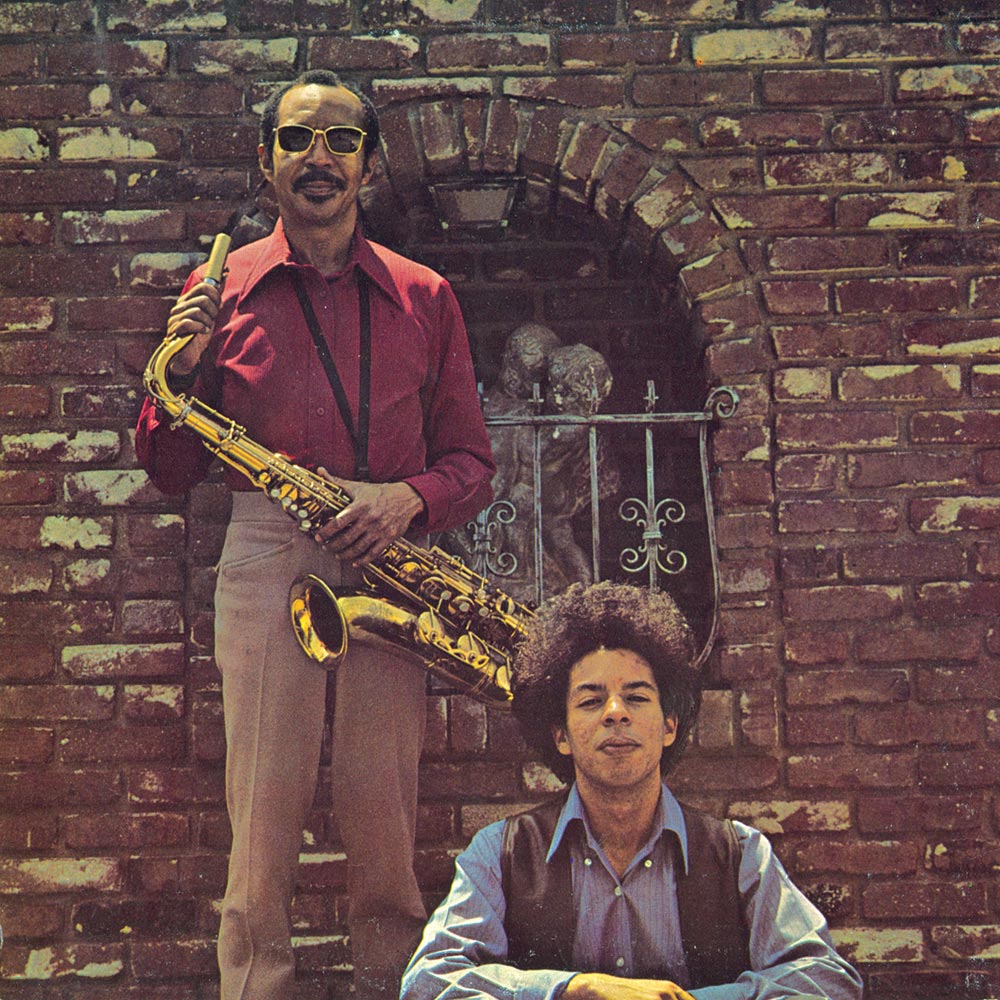
DJ VADIM-DUBCATCHER.
DJ VADIM-DUBCATCHER.
For Dubcatcher, the followup to DJ Vadim’s critically acclaimed tenth album, Don’t Be Scared, he dawns the role of his alter ego Dubcatcher. There’s a reason for this. Dubcatcher isn’t another hip hop album. Instead, Dubcatcher is album of dancehall reggae. This isn’t DJ Vadim’s first reggae album. No. He’s previously released a reggae album. However, after a string of critically acclaimed hip hop albums, DJ Vadim felt the time was right to change direction. This just happened to coincide with a special anniversary.
DJ Vadim’s career began twenty years ago, when DJ Vadim founded his own record Jazz Fudge in 1994. A year later, DJ Vadim released his debut album Headz Ain’t Ready in 1995. Since then, critical acclaim and commercial success has come DJ Vadim’s way. He’s now a globetrotting DJ whose about to release his eleventh album Dubcatcher, which will be released by BBE Music on 9th June 2014. Dubcatcher however, is very different to Don’t Be Scared. It sees DJ Vadim turn his back on his beloved hip hop in favour of dancehall reggae on Dubctacher. This is just the latest of numerous twists and turns in the career of DJ Vadim.
2014 marks the twentieth anniversary of the first time DJ Vadim spun the wheels of steel in public. Since then, DJ Vadim has played across the globe, including at some of the most prestigious venues and events. This includes the legendary Glastonbury Festival. He’s also played in front of forty-thousand people at the Moscow Street Ball. Then there’s appearances at prestigious festivals like Sonar, Big Chill, Fuji Rock and the Notting Hill Carnival. These are just a few of the 2,500 events DJ Vadim has played at during his twenty year journey entertaining and educating dancers worldwide. However, DJ-ing is just one string to DJ Vadim’s bow.
After founding his own record company Jazz Fudge in 1994, DJ Vadim released his debut album Headz Ain’t Ready in 1995. That was the year DJ Vadim signed to Ninja Tunes, who he released four albums for between 1996 and 2002.
Having signed to Ninja Tunes in 1995, DJ Vadim released four albums between 1996 and 2002. These albums are referred to as the U.S.S.R. quartet. The U.S.S.R. quartet established DJ Vadim’s reputation as a innovative DJ, who was constantly pushing the musical boundaries and determined to reinvent his music. His Ninja Tunes’ debut was 1996s U.S.S.R. Repertoire (The Theory of Verticality). Two years later, U.S.S.R. Reconstruction (Theories Explained) followed in 1998. Then in 1999, DJ Vadim released U.S.S.R. Life From the Other Side. After U.S.S.R. Life From the Other Side, another three years passed before DJ Vadim released another album.
By then, DJ Vadim was one of the biggest names in hip hop. He was constantly crisscrossing the globe DJ-ing. DJ Vadim was determined to spread the hip hop gospel. During this three year period, DJ Vadim didn’t turn his back on production. He released several singles. This included 2000s Your Revolution, and then Bang Y2 and Up To Ja in 2002. Later in 2002, DJ Vadim released the final instalment in the U.S.S.R. quartet U.S.S.R. The Art of Listening. This brought to an end what’s remembered as a groundbreaking quartet of albums. However, having released four albums in six years for Ninja Tunes, it would be another five years before DJ Vadim released another album.
During that period, DJ Vadim was busier than ever, producing and DJ-ings. He collaborated with numerous artists, including The Herbaliser, Fat Freddy’s Drop and The Super Furry Artists. After working with other artists, the time came for DJ Vadim to release his next solo album. So DJ Vadim signed to BBE Music and would release his next album in 2007, The Soundcatcher, when sadly, tragedy entered his life.
Five years after he released U.S.S.R. The Art of Listening, DJ Vadim released his first album for his new label BBE Music in 2007. This was The Soundcatcher. It was return to form from DJ Vadim. Like a conquering hero, he released The Soundcatcher Extras following later in 2007. Then tragedy struck for DJ Vadim in 2007. He was diagnosed with a rare form of eye cancer, Ocular Melanoma.
Thankfully, DJ Vadim recovered from Ocular Melanoma. Two years later, in 2009, DJ Vadim made his comeback. He released U Can’t Lurn Imaginashun on BBE Music. It was a glimpse of what hip hop had been missing for the past two years.Then two years later, after further collaborations, plenty of globe-trotting DJ-ing trips, came DJ Vadim’s ninth album.
This was 2011s DJ Vadim Presents The Electric’s Life Is Moving. Just like U Can’t Lurn Imaginashun. It was the third album DJ Vadim released on BBE Music. DJ Vadim Presents The Electric’s Life Is Moving was a fitting followup to U Can’t Lurn Imaginashun. Critics loved the album. So did hip hoppers everywhere. It was vintage hip hop from a hip hop veteran. A year later, DJ Vadim made a welcome return.
When DJ Vadim returned in 2012, he came bearing gifts. This was his tenth studio album Don’t Be Scared. It was released to widespread critical acclaim. Without doubt, Don’t Be Scared was one of the best hip hop albums of 2012. DJ Vadim had set the bar high for his eleventh album. However, DJ Vadim has bowled a curveball.
The followup to Don’t Be Scared isn’t a hip hop album. No. Dubcatcher is an album of dancehall reggae. This being DJ Vadim though, means Dubcatcher isn’t just an album of dancehall reggae. There’s everything from bass culture, boogie, boom bap rap, roots music, soul and UK 2 step soul. Essentially, Dubcatcher is a genre-hopping album where DJ Vadim embarks upon another musical experiment. Helping him along the way, are an extensive cast guest artists.
That’s no exaggeration. On Dubcatcher each of the sixteen tracks on Dubcatcher see DJ Vadim joined by a guest artist. This includes Rio Hemopo, Sabira Jade, Demolition Man, Govenor Tiggy, YT, Dynamite MC, Katrina Blackstone, Jimmy Screech, Jamalski, Karen B and Gappy Ranks. Each of these guest artists play their part in what’s akin to a magical musical mystery tour.
Dubcatcher is like a musical tapestry. DJ Vadim and his guest artists combine musical genres and influences. It’s a musical journey through the music of the last forty years. As a result, the music on Dubcatcher’s playful, joyous and dance-floor friendly. The music is also oozes social comment. This is music with a social conscience. It’s also dubby, and sometimes, takes on a sunshine sound. Dubcatcher is DJ Vadim at his best, producing groundbreaking, genre-melting music. You’ll realise that, when I tell you about Dubcatcher.
Opening Dubcatcher is Hope, where a dubby toaster sets the scene for growling horns, eighties drums and the unmistakable sound of a Hammond organ. That’s the signal for the arrangement to skank along. Sirens howl, before Rio Hemopo delivers a tender, hopeful vocal. He’s accompanied by Sabira Jade. She’s the perfect foil for Rio’s lead vocal. Mostly, her vocal is understated, but later, it soars defiantly. Later, drums crack, becoming dubby, while horns and the Hammond organ play their part in this delicious, and hopeful slice of dancehall reggae. Thankfully, this isn’t the last we’ve heard of Rio Hemopo and Sabira Jade. They make a welcome return on Rise. It’s an inspirational slice of soulful, sunshine sounding music.
Demolition Man features on three of the tracks on Dubcatcher. The first is If Life Was A Thing. Here, Daddy Vad throws another curveball. Braying horns are joined by hypnotic drums. Briefly, they’re drenched in futuristic, sci-fi effects. That’s the signal for Demolition Man to unleash an impassioned rap. The lyrics are full of social comment, including: “the rich are getting richer, the poor are getting poorer.” Angrily, Demolition Man spits out the lyrics. Meanwhile, the dubby arrangement reverberates into the distance, before growing in power and drama. Lyrical Soldier sees the return of Demolition Man. Again, he delivers a spellbinding rap at breakneck speed. Frustration and anger fill his vocal as he breathes life and meaning into the lyrics. Badman is another genre-melting tracks. Everything from electronica, drum ’n’ bass, hip hop and reggae melts into one as Demolition Man unleashes another vocal tour de force.
Consignment marks the entrance of Governor Tiggy. Against a jaunty, bouncy understated arrangement, Governor Tiggy delivers lyrics full of social comment. Again, the theme is poverty and inequality. A thunderous bass plays a crucial role in the skanking arrangement. Despite that, it Governor Tiggy’s vocal that steals the show. He delivers the lyrics with power and passion as if affronted at the equality and injustice he’s singing about. This isn’t the last we’ve heard of Governor Tiggy. No. We hear a different side to him on the irresistibly catchy Sweet Like A Lolly, and the hook-laden, dance-floor friendly Ring My Bell.
Subjects like politics, poverty and war were the type of subjects that featured in the music of the pioneers of dancehall. This is the case with Nah Join. It features more of DJ Vadim’s politically aware lyrics. They deal with the issue of the Afghan war. Here, the lyrics are sung from the perspective of someone refusing to fight in the war. YT unleashes a vocal that’s equal parts anger, frustration and despair. The bass heavy rhythm section are joined by stabs of synths and sci-fi effects. They’re the perfect backdrop for YT’s impassioned plea. Especially when a despairing TY sings: “my heroes are peacemakers.” That’s not the last we’ve heard of YT.
He returns on Give It Up, where he’s joined by Katrina Blackstone. Against a futuristic, dubby backdrop YT provides the perfect foil for the soulful delights of Katrina Blackstone. Together, they’re responsible for one of the real highlights of Dubcatcher. That’s not the last we’ve heard from Katrina Blackstone. She joins forces with Serocee on Magnetic. Serocee and grizzled horns set the scene for a sassy, sultry vocal from Katrina. Meanwhile, the rhythm section, keyboards and harmonies accompany a soulful, sassy Katrina as she delivers a coquettish vocal. Just like on Give It Up, it’s obvious that Katrina Blackstone is a seriously talented singer.
Originate features Dynamite MC. It’s dancehall, albeit with a modern makeover. This dancehall track has a dubby, futuristic sound. Dynamite MC unleashes a vocal that rivals Demolition Man for speed, power and passion. Later, he sings call and response, before the arrangement becomes dubby and later, mellow and melodic.
Jimmy Screech takes charge of the vocal on Action. His vocal is slow, soulful and needy. Rasping horns and a shuffling rhythm section accompany him. Before long it’s all chance. His vocal become a rap, before returning to its earlier slow and soulful sound. This combination results in another genre-melting track. The same can be said other three tracks on Dubcatcher.
Raggamuffin Life. It’s a fusion of dancehall, electronica and funk. Pounding drums, a thunderous bass and stabs of horns accompany Jamalski’s vocal. The result is a track that’s funky, soulful and dance-floor friendly. Karen B is responsible for a sultry vocal on Pele. It’s a captivating fusion of musical genres and influences. Everything from dancehall, drum ’n’ bass, electronica and funk are combined with opera. It’s a truly innovative fusion that DJ Vadim specialises In. So is Carpenter, which features a heartfelt, spiritual vocal from Gappy Ranks. Quite simply, it’s captivating. Here dancehall is combined with Afro-beat, drum ’n’ bass, dub and electronica. The combination of a genre-melting arrangement and Gappy Ranks’ vocal ensures Dubcatcher closes on an irresistible high.
So that’s the story of DJ Vadim’s eleventh album Dubcatcher. Dubcatcher is the followup to 2012s Don’t Be Scared. It was released to critical acclaim, and hailed one of DJ Vadim’s finest albums. For DJ Vadim, this presented a problem. How do you surpass such a critically acclaimed album? DJ Vadim had a cunning plan.
Rather than release another hip hop album, DJ Vadim decided to embark upon another of his musical experiments. So for Dubcatcher, DJ Vadim turned his back on hip hop. Instead, he decided to record an album of dancehall reggae. To do this, he needed some help.
Helping him along the way, are an extensive cast guest artists. Some of these guest artists you might not have heard of. However, that might be about to change. No wonder. Some of the guest artists are seriously talented. This includes Rio Hemopo, Sabira Jade, Katrina Blackstone, Jimmy Screech and Gappy Ranks. They play a huge part in the sound and success of Dubcatcher, where DJ Vadim returns to dancehall reggae.
This being DJ Vadim it’s not just dancehall reggae. Instead, Dubcatcher is a groundbreaking album of genre-melting music. Dubcatcher is best described as a musical tapestry. DJ Vadim combines everything from Afro-beat to bass culture, boogie, boom bap rap plus drum ’n’ bass, dub, electronica, funk, roots music, soul and UK 2 step soul. Quite simply, Dubcatcher is a myriad of musical genres and influences. During the sixteen tracks on Dubcatcher, DJ Vadim and his special guests take you on the equivalent of a musical magical mystery tour.
During Dubcatcher, DJ Vadim’s latest magical mystery tour through musical genres, he springs a series of surprises. DJ Vadim combines social comment with hooks. Staying true to dancehall’s roots, DJ Vadim isn’t afraid to tackle subjects like inequality, injustice, poverty and war. However, other tracks are hook-laden, joyous and dance-floor friendly. There are, you see, several sides to DJ Vadim’s music. They’re all present and correct on Dubcatcher, where DJ Vadim at his best, producing groundbreaking, genre-melting music.
Quite simply, Dubcatcher is a captivating, roller-coaster musical adventure. Just like on previous albums, DJ Vadim is forever the innovator. He’s forever reinventing his music, constantly crossing and combines musical genres. That’s what we’ve come to expect from DJ Vadim, one of the most innovative hip hop producers of his generation. However, there’s more to DJ Vadim than hip hop.
DJ Vadim shows this on Dubcatcher. It sees DJ Vadim make a welcome return to reggae. Dubcatcher is a modern dancehall album, where DJ Vadim, with a little help from his musical collaborators create a fitting followup to Don’t Be Scared. Dubcatcher which will be released by BBE Music on 9th June 2014 is an innovative and imaginative fusion of musical genres and influences. That’s what we’ve come to expect from DJ Vadim. He certainly hasn’t disappointed. Far from it. Dubcatcher is an innovative dancehall album for the 21st century. On Dubcatcher, DJ Vadim has succeeded in reinventing his music once again. Although Dubcatcher is very different from Don’t Be Scared, it has one thing in common, it oozes quality. That’s what we’ve come to expect from DJ Vadim, one of modern music’s most innovative producers. Proof of that is DJ Vadim’s eleventh album Dubcatcher, which is a fitting way for DJ Vadim to celebrate twenty years in music.
DJ VADIM-DUBCATCHER.
MOD JAZZ, AND THEN SOME!
MOD JAZZ, AND THEN SOME!
It doesn’t seem like eighteen years since Kent Soul released the first instalment in the Mod Jazz series. However, that’s the case. 30th September 1996 was when Mod Jazz first hit the shops. Released to critical acclaim, Mod Jazz was a commercial success. Mod Jazz was music for attendees of the Cool School. Featuring twenty-five slices of gritty dance-floor friendly jazz and smokey soulful dancers, Mod Jazz was one of the best compilations of 1998. Since then, another eight instalments in the Mod Jazz series have been released. The latest instalment is Mod Jazz, and Then Some, which was recently released by Kent Soul, a subsidiary of Ace Records.
Mod Jazz, and Then Some! was released by Kent Soul on 2nd June 2014. It features twenty-four tracks. There’s contributions from The Pac-Keys, Shirley Scott, King Curtis, T.K.O, The Five Counts, Freddy Washington’s Band, B.B. King, Chuck Higgins, Trudy Pitts and Etta Jones. Compilers Ady Croasdell and Dean Rudland dug deep into the vaults of labels like Hollywood, Class, Prestige, Kent, Musicor, Tru-Sound, Ten Star, Brent, Atlas, High Tone, Hill and Temple. On Mod Jazz, and Then Some, classics sit side-by-see with familiar faces, hidden gems and rarities. There’s everything from blues, jazz, Latin, R&B, soul and soul jazz feature on Mod Jazz, and Then Some! All this means that Mod Jazz, and Then Some! is a welcome addition to the Mod Jazz series. You’ll realise why when I tell you about the highlights of Mod Jazz, and Then Some!
The Pac-Keys’ Dig In is my first choice from Mod Jazz, and Then Some! It was the B-Side to The Pac-Keys’ 1966 single Stone Fox. Released on Hollywood Record, it was written by Charles Axton, Johnny Keyes, Jimmy King and Ewan Roussell. It’s a mid-tempo fusion of jazz and funk that oozes quality. That’s no surprise. Two members of The Pac-Keys were experienced musicians. Johnny Keyes was a familiar face in the Memphis music scene. So was Charles Axton. He’d previously been a member of The Mar-Kays and The Packers. They’re responsible for what’s a real hidden gem.
Clarence Daniels and Obie Jessie cowrote Hard Working Girl. They released Hard Working Girl as a single on Affiliated in 1966. It’s a mellow, laid back slice of jazz. For far too long, it lay unloved in Affiliated’s vaults. Not any more. Mod Jazz, and Then Some! is the second compilation of 2014 Hard Working Girl features on. It also features on Tramp Records’ compilation Movements 6, which I recently reviewed.
Shirley Scott is the only artist to feature on Mod Jazz and the latest instalment, Mod Jazz, and Then Some! Her contribution to MoT.K.O The Fat Man Pt. 1d Jazz, and Then Some! is Sister Sadie Pt. 1. This is a track from her 1962 album Plays Horace Silver. It was released on Prestige, the label where Shirley established her reputation as one of the finest Hammond organ players of her generation. On Sister Sadie Pt. 1. Shirley unleashes a blistering performance on her beloved big burner.
Although Eddie “Blues Man” Kirkland was born in Jamaica, he established a reputation as one of the finest blues players of the sixties and seventies. He accompanied blues legends like John Lee Hooker, Muddy Waters and Honeyboy Edwards. Eddie also played alongside King Curtis and Otis Redding. His debut album was 1962s It’s The Blues Man! Released on Tru-Sound, one of the highlights of It’s The Blues Man! was Saturday Night Stomp. Bluesy with a jazzy hue, Saturday Night Stomp is a tantalising reminder of what Eddie “Blues Man” Kirkland, who died in 2011, was capable of.
The name Curtis Ousley might not mean anything to most music lovers. Mention King Curtis, and that’s a different matter. King Curtis enjoyed a successful career as a songwriter, session musician and producer. Then there’s King Curtis’ solo career. He’s best known for his 1967 classic Memphis Soul Stew. There’s more to King Curtis than Memphis Soul Stew. This includes Free For All, a track from his 1962 album It’s Party Time With King Curtis. Released on Tru-Sound, it’s blistering slice of R&B. King Curtis blows his saxophone like his very life depends upon it. A scorching solo on Free For All shows that It’s Party Time With King Curtis.
If you’re only going to release one single, make it one as good as The Five Counts’ Watermelon Walk. It was released in 1962, on the Brent label. Written by Lafayette Faucette and Steven Owens, it’s a moody, mid-tempo, R&B instrumental. Quite simply, it oozes quality. However, Watermelon Walk is a real rarity. That’s why nowadays, copies change hands for over $100.
Despite being eighty-nine, B.B. King is still going strong. Without doubt, B.B. is one of the biggest names in blues music. So was his cousin, Bukka White, who B.B. refers to as his mentor. Bukka taught B.B. well. He became one of the most prolific blues musicians. B.B. also helped popularise blues music. One of B.B’s best known singles was 1972s Don’t Get Around Much Anymore. On the B-Side was Poontwangie (a.k.a. 3 O’Clock Stomp). This wasn’t a new track. Originally, it been released in 1962 on Kent and is a stomping introduction to a blues legend.
Back in 1962, the little-known Bobby Jenkins And His Quartet covered Harry Belafonte’s Troubles. They released it on the Los Angeles based Vistone label. After this, Bobby Jenkins And His Quartet released several other singles on Vistone. However, their finest moment is their reworking of Troubles, a track most people associate with Harry Belafonte.
Comin’ Home Baby is a track that will be familiar to most people. No wonder. It’s a track that numerous artists have recorded. It was originally written by Benjamin Tucker. He was the bassist in The Dave Bailey Quintet. They recorded Comin’ Home Baby in 1961. Then when Herbie Mann covered the track, Bob Dorough added lyrics. After this, Mel Torne enjoyed a top forty hit with Comin’ Home Baby in 1962. Eric Kloss covered Comin’ Home Baby on his 1967 album First Class Kloss! Released on Prestige, his take on Comin’ Home Baby is best described as bright, airy and joyous. New life and meaning is added to a familiar classic.
Trudy Pitts covered Bill Carney’s Bucket Full Of Soul in 1968. It featured on Trudy Pitts and Mr. C’s A Bucketful Of Soul. Released on Prestige, it showcases Trudy Pitts’ prowess on the Hammond organ. Just like Shirley Scott, Philly born Trudy is one of the best Hammond organists of the sixties. One of her finest albums was A Bucketful Of Soul. She kicks loose and unleashes a series of spellbinding performances. One of her best performances is on Bucket Full Of Soul.
Frenchy and The Chessmen’s El Tacos is the track that closes Mod Jazz and Then Some! Released in 1964, on the Temple label, it was the B-Side to Beetle Bebop. Tucked away on the B-Side was the instrumental El Tacos. It’s a real find. An irresistible fusion of funk, jazz, pop, psychedelia and soul, El Tacos is a delicious musical find.
Although I’ve only mentioned eleven of the twenty-four tracks on Mod Jazz and Then Some! there’s much more for the discerning music lover to discover. I could just as easily have mentioned tracks by T.K.O, Freddy Washington’s Band, Chuck Higgins and Etta Jones. Then there’s the two unreleased tracks.
They’re real finds. The soulful delights of Floyd White’s Another Child Lost opens Mod Jazz and Then Some! It leaves you wanting more. You’ve got to wait until the slinky, jazz-tinged sound of Dave Hamilton’s In The Dark. Both of these tracks are real hidden gems. They deserve a wider audience. The same could be said of many of the tracks on Mod Jazz and Then Some!
No wonder. Quite simply, Mod Jazz and Then Some! oozes quality. Mind you, it’s what I’ve come to expect from the latest instalment in Kent Soul’s Mod Jazz series. It’s one of the very few compilations you eagerly await. Never are you disappointed. Certainly not with Mod Jazz and Then Some! Classics sit side-by-side with familiar faces, hidden gems and rarities. Legends like B.B. King, Shirley Scott, Trudy Pitts and King Curtis rub shoulders with The Five Counts, Frenchy and The Chessmen and Bobby Jenkins And His Quartet. Everything from blues, jazz, Latin, R&B, soul and soul jazz feature on Mod Jazz, and Then Some, a welcome and worthy addition to the Mod Jazz series.
Mod Jazz and Then Some! which was recently released by Kent Soul, is the result of compilers Ady Croasdell and Dean Rudland legendary crate-digging skills. They’ve surpassed themselves this time. After all, with each instalment in the Mod Jazz jazz series, there’s a smaller pool of possible tracks available for them to choose from. Despite this, Ady and Dean have dug deep and found some glistening musical gems in the vaults of labels like Hollywood, Class, Prestige, Kent, Musicor, Tru-Sound, Ten Star, Brent, Atlas, High Tone, Hill and Temple. The result was Mod Jazz and Then Some! the ninth volume in what’s without doubt, one of the most eagerly awaited compilation Mod Jazz series. Next time around, the Mod Jazz compilation will celebrate its tenth anniversary.
Who knows what bluesy, funky, jazz-tinged and soulful delights we’ll find on the tenth instalment of Mod Jazz? What In do know, is that if surpasses the quality of Mod Jazz and Then Some!, then it’ll be some compilation.
MOD JAZZ, AND THEN SOME!
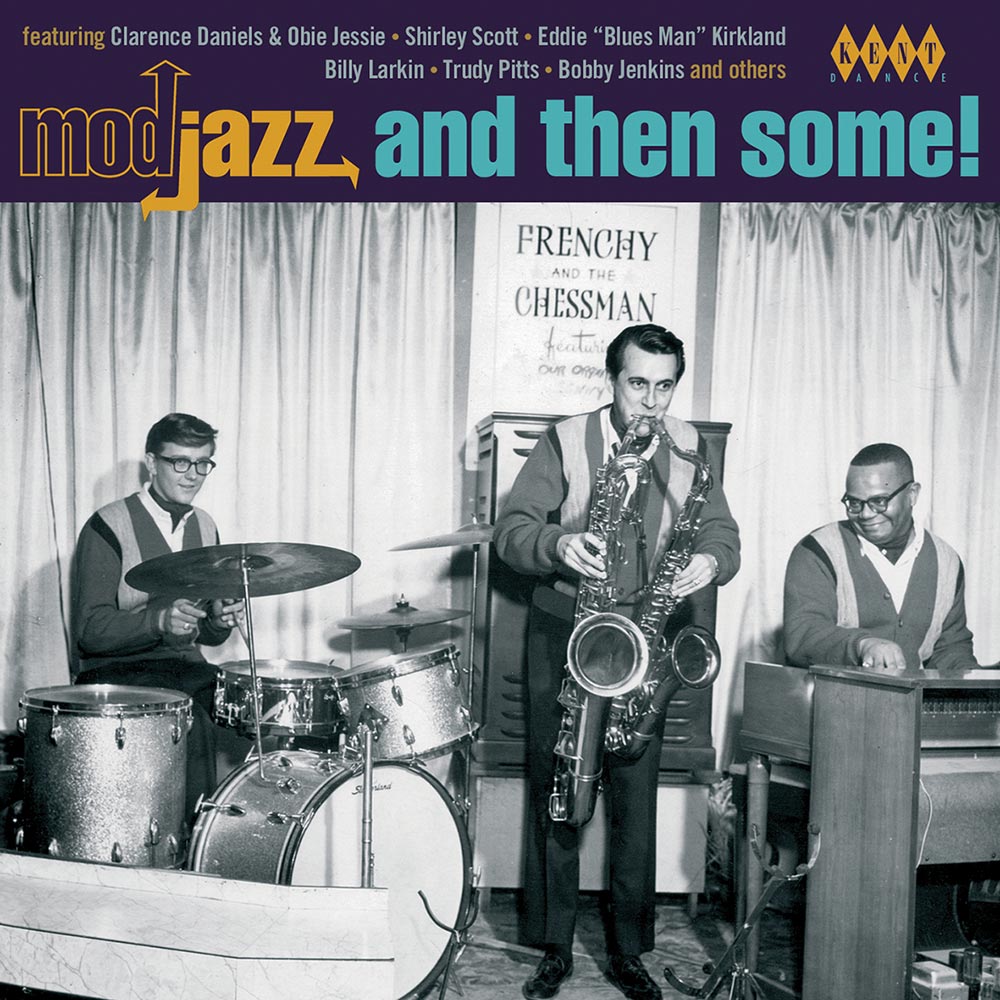
ARTHUR PRYSOCK-TOO LATE BABY-THE OLD TOWN SINGLES 1958-66.
ARTHUR PRYSOCK-TOO LATE BABY-THE OLD TOWN SINGLES 1958-66.
Although Arthur Prysock’s career lasted six decades, the most successful period of his career was the eight years he spent at Old Town Records. Between 1958 and 1966, Arthur Prysock released twenty-four singles. There’s also the small matter of nine albums. From Arthur’s debut album was I Worry About You, right through until 1965s A Double Header With Arthur Prysock, Arthur was one of Old Town Records’ most successful artists. So much so, that in 1966, Arthur Prysock was signed to one of jazz’s premier labels, Verve Records.
Sadly, at Verve Records, Arthur never replicated the success he’d enjoyed at Old Town Records. He released six albums for Verve Records and released a collaboration with Count Basie. These albums were well received, but didn’t match the success Arthur enjoyed at Old Town Records. So in 1969, Arthur signed to King Records and released a quartet of albums. Again, the Arthur couldn’t replicate the commercial success he enjoyed at Old Town Records. This resulted in Arthur moving on, before returning home.
Following his departure from King Records, Arthur enjoyed a brief dalliance with MGM Records. Funny Thing was Arthur’s only release for MGM Records. After that, Arthur returned to where it all began for him, Old Town Records.
Now resigned to Old Town Records, Arthur released a quartet of albums. Although Arthur didn’t enjoy the same commercial success he enjoyed first time round at Old Town Records, Arthur became an accidental disco star.
This came courtesy of John Davis, who gave Arthur a Philly Soul makeover on his 1976 album All My Life. The lead single When Love Is New, was released in October 1976, reaching number sixty-four in the US Billboard 100, number ten in the US R&B charts and number eleven in the US Disco charts. Then when All My Life was released in December 1976. It reached number 153 in the US Billboard 200 and number thirty-six in the US R&B Charts. Briefly, Arthur Pysock’s career had been rejuvenated. However, this didn’t compare with the commercial success and critical acclaim Arthur Prysock enjoyed first time around at Old Town Records. Some of Arthur Pysock’s finest moments feature on Ace Records’ recent compilation Too Late Baby-The Old Town Singles 1958-66.
Too Late Baby-The Old Town Singles 1958-66 features twenty four tracks from Arthur Prysock’s time at Old Town Records. They were released between 1958 and 1966. Many of the tracks have never found their way onto CD before. So, for fans of Arthur Prysock, Too Late Baby-The Old Town Singles 1958-66 will be a must have compilation. It’s also an introduction to Arthur Prysock during the most successful period of his career. By the time Arthur signed to Old Town Records, he was already an experienced singer.
Arthur Prysock was born in Spartanburg, South Carolina, on New Year’s Day 1924. He grew on the farm his father, Arthur worked on. His mother Betty was determined her children would be able to look after themselves when they left home. She taught them how to cook, clean and look after themselves. For Arthur, this would prove vital, when he left home aged sixteen, to work in the aircraft industry, in Hartford, Connecticut.
There was a problem though. Arthur had mislead his employer about his age. As a result, Arthur left his job in the aircraft industry and began work as a cook. This was only his “day job.” At night, Arthur Prysock became a singer in a local band.
Arthur was a baritone, who modelled himself on Billy Eckstine. The band played clubs in the Hartford area. One night, sitting in the audience was bandleader Buddy Johnson. Then when Arthur went to see Buddy Johnson’s band, regular vocalist Warren Evans was absent. So, at the interval, Arthur approached Buddy and asked if he could sing during the second show.
Buddy asked if Arthur knew the songs? Arthur did. He sang them every night with his own band. Deciding to take a chance, Buddy gave Arthur the chance to prove himself. He walked onstage like a conquering hero and before long, had the audience in the palm of his hands. They loved Arthur. Following the show, Buddy hired Arthur. It was like a fairy story, the local singer filling in for the star singer and then getting hired.
Between 1944 and 1950, Arthur was the main male vocalist in Buddy Johnson’s band. His sister Ella just happened to be the principal female vocalist in the band. It was now a family affair. For six years, Buddy Johnson’s band were one of the biggest bands in America. Despite this, they only enjoyed two hit singles, 1945s They Say I’m The Biggest Fool and 1950s Because, which was one of the final recordings Arthur made with Buddy Johnson’s band. Not long after the recording of Because, Arthur decided to embark upon a solo career.
For the next eight years, Arthur Prysock embarked upon what was the equivalent to a musical apprenticeship. He signed for Decca in 1950. The next two years, Arthur struggled. It wasn’t until his 1952 cover of I Didn’t Sleep A Wink. It reached the top five in the US R&B chart. Little did Arthur realise, that this would be the biggest single of Arthur’s career. After I Didn’t Sleep A Wink, Arthur released Wheel Of Fortune. It was the first of seven consecutive singles that failed to chart. So in 1954, Arthur Prysock was released from his Decca contract. Next stop for Arthur was Mercury.
At Decca, Arthur modelled his career on his idol Billy Eckstine. However, by the time Arthur signed to Mercury in 1954, Billy Eckstine’s career was on the slide. So, Arthur was given a makeover. Arthur was like a musical chameleon, releasing everything from country, hillbilly and R&B. Despite this, commercial success eluded Arthur. So in 1956, Mercury dropped Arthur. He was then signed to Don Robey’s Peacock label.
Don Robey decided that Arthur should become an R&B shouter. Arthur released two singles, O-Ho-O-Yeh (What The Heck) and There Goes The Mailman. Neither single rejuvenated Arthur’s career. They failed to chart and in 1957, Arthur left Don Robey’s Peacock label. For the next year, Arthur was without a label, until he signed to Old Town Records.
After eight years of struggling, Old Town Records would be the place where Arthur Prysock enjoyed commercial success and critical acclaim. He signed to Old Town Records in 1958 and before long, released his Old Town Records debut, The Greatest Gift.
One of twenty-four tracks that feature on Ace Records’ recent compilation Too Late Baby-The Old Town Singles 1958-66 is The Greatest Gift. It’s Arthur’s Old Town Records debut. Penned by Robert “Bubber” Johnson, The Greatest Gift is best described as a wistful ballad. Elements of jazz, soul and easy listening combine with pop. Sadly, history repeated itself, when The Greatest Gift failed to chart. This was an inauspicious start to Arthur’s career at Old Town Records.
For the followup to The Greatest Gift, Arthur released Keep A Light In The Window For Me. It’s another ballad written by Robert “Bubber” Johnson and features a needy, hopeful vocal. Tucked away on the B-Side is Arthur’s take on I Just Want To Make Love To You. It swings, as Arthur fuses blues, jazz, R&B and soul. So good is this version of I Just Want To Make Love To You, it would’ve made a good single. Maybe then, the single would’ve charted?
As 1959 dawned, Arthur had released two singles, but still hadn’t enjoyed any chart success. His third single was the Norman Mapp penned, I Worry About You. It’s a song Arthur made his own. A slow, sultry. jazzy ballad, it’s a game-changer. Arthur delivers one of his finest vocals. His heartfelt vocal veers between needy to hopeful, joyous. Accompanied by rasping horns and strings, it was the best single Arthur had released for Old Town Records. Despite this, commercial success still eluded him. Maybe as a new decade dawned, commercial success would come Arthur’s way?
1960 saw Arthur released My Everything as a single. Again, tucked away on the B-Side was a hidden gem. It’s a storming cover of Ray Brown’s Good Rockin’ Tonight. R&B and rock ’n’ roll melts into one, resulting in track that’s too good to be a B-side. One More Time was another track destined to be just a B-Side It was the B-Side to the 1960 single Speak To Me. My Everything and Speak To Me weren’t the only singles Arthur released in 1960.
No. In 1960, Arthur released If Ever I Should Fall In Love as a single. He returns to balladry. His vocal is wistful, but tinged with hope and fear, fear that he’ll be hurt again. Arthur articulates the words carefully, delivering each word as if he’s lived and survived it. Despite this, the single failed commercially. So did the heartfelt ballad, Do You Believe? Although commercial success eluded Arthur, Old Town Records released his 1960, debut album I Worry About You. It featured some of the songs Arthur had released for Old Town Records. Essentially, it was an introduction to Arthur Prysock, who was about to make a commercial breakthrough.
It came in September 1961. That’s when Arthur released One More. The single spent two weeks on the US R&B charts. For Arthur, it must have felt as if a weight had been lifted from his shoulders.
1962 saw the release of Pianissimo as a single. It’s another ballad, which was also covered by Jackie Wilson in 1962. In the battle of Pianissimo, Arthur came second. This didn’t stop Arthur releasing his sophomore album Arthur Prysock Sings Only For You. It featured eleven tracks and sees Arthur interprets standards like Unchained Melody and When I Fall In Love. Maybe this was meant to introduce Arthur Prysock to a wider audience. Sadly, Arthur didn’t find favour with the wider audience his music deserved.
In 1963, Arthur was busier than ever. He released two albums, the genre-hopping A Portrait Of Arthur Prysock and Coast To Coast, which was an easy listening album. During 1963, Arthur released a string of singles.
Crawdad was released as a single in 1963, and saw Arthur jumps on the Hootenanny bandwagon. Although catchy, the heartbreaking, string-drenched ballad There Will Never Be Another You, surpasses the quality of Crawdad. Truly, it deserved a better fate than a B-Side. Another B-Side was My Special Prayer, which Arthur delivers with emotion. Quite different was the Our Love Will Last. It saw Arthur combine pop, easy listening, jazz and soul. Hidden away on the B-Side was Come And See This Old Fool. Arthur kicks loose, delivering a sassy vamp as he mixes jazz, R&B and soul. So good is Come And See This Old Fool, it should’ve been a single. For Arthur this might have been the single that transformed his career?
1964 saw Arthur release a quartet of albums. He seemed to be the hardest working man in music. Mr. Arthur Prysock And Guest and In A Mood With featured Arthur doing what he did best, balladry. Everlasting Songs For Everlasting Lovers was another genre-hopping album. Arthur mixed jazz, R&B, soul with easy listening. Intimately Yours was mixture of standards and familiar tracks. Then there were the singles Arthur released during 1964.
This included Ebb Tibe, which should’ve been the single that transform Arthur Prysock’s career. His version was released in February 1964 and is the definitive version of the song. That’s despite Lenny Welch released the song a month later. Unfortunately, record buyers preferred Lenny’s version, and it reached number twenty-five in the US Billboard 100. For Arthur it was a case of so near, but so far.
Still Arthur wasn’t going to give up. He released a swinging, high-kicking version of Close Your Eyes as a single. Full Moon And Empty Arms is another single released in 1964. It’s a return to the balladry Arthur excels at. However, by 1964 music had moved on. The British Invasion was a game changer. Despite the undoubted quality of the dramatic ballad that was Full Moon And Empty Arms, it failed commercially. So did the E.P.s Arthur released in 1964. In A Mood With Arthur Prysock featured the thoughtful, but beautiful ballad House By The Side Of The Road. It’s a glimpse of what Arthur Prysock is capable of. However, with music changing, and changing fast, maybe artists like Arthur were music’s past, rather than future?
1965 saw Arthur release the bossa nova tinged I’m Crossing Over as a single. It’s perfect for Arthur. He breathes new meaning into an old standard. The same can be said of the understated, wistful and beautiful Teardrops In The Rain, which features on Arthur’s E.P. Intimately Yours. Arthur also released Again as a single. With lush strings for company, he croons his way through a track penned by Dorchas Cochran and Lionel Newman. A fusion of jazz and M.O.R. it’s a reminder of another age. Indeed, it’s reminder of what Frank Sinatra and Nelson Riddle did so well at Capitol Records. That’s how good this track is. However, Frank Sinatra was producing music like this in the late-fifties. Again was released in 1965. However, there was still an audience for Arthur’s music.
A Double Header With Arthur Prysock was Arthur’s final album for Old Town Records. Arthur had always sold more albums than singles. Singles were just an introduction to the main event, the album. His final album for Old Town Records oozes quality. Proof of this are tracks like Let It Be Me, Open Up Your Heart and Goodnight My Love. As Arthur’s fans enjoyed wheat proved to be his swan-song for Old Town Records, Arthur came towards the end of his time at Old Town Records.
Arthur’s patience and hard work was rewarded when a bluesy cover of Buddy Johnson’s It’s Too Late Baby, Baby Too Late gave him a hit in late 1965. It reached number fifty-six in the US Billboard 100 and number eleven in the US R&B charts. For Arthur this must have been ironic. He’d spent six years looking for a hit single and just as he was leaving Old Town Records, he hit pay-dirt. For the followup, Arthur released Only A Fool Breaks His Own Heart. A string-laden ballad, it features a heartbroken vocal from Arthur. Despite its quality, Only A Fool Breaks His Own Heart didn’t replicate the success of It’s Too Late Baby, Baby Too Late.
In 1966, Arthur Prysock left Old Town Records. During the eight years he spent at Old Town Records, Arthur was one of the hardest working men in music. Between 1958 and 1966, Arthur Prysock released twenty-four singles and nine albums. Twenty-four tracks from Arthur’s time at Old Town Records feature on Ace Records’ recent compilation Too Late Baby-The Old Town Singles 1958-66. Quite simply, it’s the perfect introduction to one of the most underrated singers in musical history.
From the moment Arthur arrived at Old Town Records, he looked like a star-in-waiting. However, it wasn’t singles that would make Arthur a star. Instead it was albums.
Arthur’s debut album was I Worry About You. His swan-song was his 1965 album A Double Header With Arthur Prysock, It was these nine albums where Arthur Prysock made his name.
Singles were almost a loss leader. They were an introduction to Arthur Prysock. The album was the main event. During this feast of music, Arthur Prysock could stretch his legs. He combined everything from blues, easy listening, jazz, M.O.R, pop, R&B and soul. Arthur Prysock you see, was a versatile singer. He was equally comfortable crooning, as he was making a song swing or delivering a tale of heartbreak with a bluesy hue. Arthur’s versatility and ability to make a song come alive, would prove a successful formula for Arthur Prysock.
Right through until 1965s A Double Header With Arthur Prysock, Arthur was one of Old Town Records’ most successful artists. His 1965 bluesy cover of Buddy Johnson’s It’s Too Late Baby, Baby Too Late, belatedly, gave Arthur the second hit single of his time at Old Town Records. That’s no surprise. It’s Too Late Baby, Baby Too Late is one of the finest moments of Arthur Prysock’s career. Thankfully, it features on Too Late Baby-The Old Town Singles 1958-66.
Too Late Baby-The Old Town Singles 1958-66 is the perfect starting place for anyone interested in Arthur Prysock’s music. It’s a compilation where the music oozes quality. There’s neither filler nor faux pas, just quality music. Whether he’ crooning or swinging, Arthur Prysock as an average vocal from Arthur. Whether ballads or uptempo, dance tracks, Arthur was equally comfortable. With the help of a crack team of musicians, arrangers, producers and songwriters, Arthur Prysock became Old Town Records’ shining star. This is apparent on the twenty-four tracks on Too Late Baby-The Old Town Singles 1958-66. From the opening bars of I Worry About You right through to the closing notes of It’s Too Late Baby, Baby Too Late, Arthur Prysock has you spellbound as he croons and swings his way through the classics, standards and hidden gems that feature on Too Late Baby-The Old Town Singles 1958-66.
ARTHUR PRYSOCK-TOO LATE BABY-THE OLD TOWN SINGLES 1958-66.
MILLIE JACKSON-ON THE COUNTRY SOUL SIDE.
MILLIE JACKSON-ON THE COUNTRY SOUL SIDE.
Trying to describe Millie Jackson in just one word, is almost impossible. If I was asked to do so, the word I’d use would be versatile. She could breath life, meaning and drama into a variety of songs. Whether it was heartbreaking, soulful ballads or country soul, Millie could take you on a mesmerising musical journey. That was the case throughout Millie Jackson’s time at Spring Records.
Millie Jackson was, without doubt, one of the most talented and charismatic female vocalists of the seventies and eighties. That’s indisputable. What many people won’t realise, is that Millie Jackson was a country girl at heart. She was born in Thomson, in rural Georgia, in July 1944. Millie’s country roots influenced her unique brand of soul music. Especially the sixteen albums Millie recorded for Spring Records. Fans of Millie Jackson’s music will be aware of her country soul roots. However, other people may not be aware of Millie Jackson’s country soul side. For them, Millie Jackson-On The Country Soul Side will be the perfect introduction to this side of Millie Jackson’s music.
Released on Kent Soul, an imprint of Ace Records on 2nd June 2014, Millie Jackson-On The Country Soul Side was a tantalising taste of Millie Jackson country soul side. It features seventeen tracks. Sixteen of these tracks are cover versions. Fourteen were released between 1977 and 1981. This includes the 1979 duets with Isaac Hayes You Never Cross My Mind and You Needed Me. The other three tracks have never been released before. There’s an edit of I Still Love You (You Still Love Me) and alternate vocal take of Loving Arms. The other track is Millie’s new single Black Bitch Crazy a.k.a. Redneck Crazy. These seventeen tracks are an irresistible introduction to Millie Jackson’s country soul side. It shawn through early in Millie’s career.
Millie Jackson was born in Thomson, Georgia, but when her mother died, she moved to Newark, New Jersey with her father. Then when Millie was a teenager, she moved to Brooklyn to live with an aunt. It was in New York that Millie Jackson’s career began in 1964. One of Millie’s friends dared her to enter a talent contest in Harlem nightclub.
Having entered the talent competition, Millie won it. This proved to be the start of Millie’s nascent musical career. Six years later, in 1970, Millie recorded her first single for MGM Records. A year later, in 1971, Millie signed to the record company where she would establish her reputation as one the most talented, versatile and charismatic female vocalists of her generation, Spring Records.
At Spring Records, Millie worked with Spring Records’ in-house producer Raeford Gerald, her 1971 singe A Child Of God gave Millie the first hit single of her career. It reached number 102 in the US Billboard 100 and number twenty-two in the US R&B Charts. This proved to the start of the most successful period of Millie Jackson’s long career. During her time at Spring Records, she released what’s undoubtably, the best music of her career. Millie was a truly prolific artist, who released sixteen studio albums for Spring Records between 1972 and 1983. Three of these albums, 1974s Caught Up, 1977s Feelin’ Bitchy and 1978s Get It Out’cha System were certified gold. Each of these albums feature a truly versatile artist. However, some of the best music Millie Jackson recorded at Spring Records was country soul. That’s apparent on Millie Jackson-On The Country Soul Side
When it comes to country soul, Millie Jackson breathes life, meaning, emotion and often, hurt and heartache into each of the seventeen tracks. One minute, Millie is laying bare her soul, the next delivering a heartfelt, impassioned performances. When Millie Jackson sings country soul, it’s a mesmeric musical experience. You’ll realise this when I tell you about Millie Jackson-On The Country Soul Side, which is a reminder of one of the most talented, versatile and charismatic female vocalists of the seventies and eighties.
The story of Millie Jackson-On The Country Soul Side begins back in 1977. That’s when Millie Jackson released Feelin’ Bitchy. It reached number thirty-four in the US Billboard 200 and number four in the US R&B charts. For Millie, this resulted in the second gold disc of her career. Feelin’ Bitchy also featured If You’re Not Back In Love By Monday, which reached number forty-three in the US Billboard 100 and number five in the US R&B charts. This gave Millie her most successful country soul single since 1973s It Hurts So Good. If You’re Not Back In Love By Monday is one of four tracks from Feelin’ Bitchy to feature Millie Jackson-On The Country Soul Side.
1977s Feelin’ Bitchy was produced by Millie and Brad Shapiro. It’s an album about relationships. On Feelin’ Bitchy, betrayal, cheating, heartache and hurt are everyday occurrences. So are breaking up and making up. This is apparent from the four tracks that have been taken from Feelin’ Bitchy.
Angel In Your Arms features a beautiful, soul-baring vocal from Millie. Truly, it’s an outpouring of hurt and betrayal. If You’re Not Back In Love By Monday was a song synonymous with Merle Hagard. That’s until Millie reinvents the song. Her vocal is a mixture of hope, longing, loss and melancholia. She delivers the lyrics like an ultimatum, but all the time, hope’s her man is back in love by Monday. Cheatin’ Is is the final track taken from Feelin’ Bitchy. Although country soul, there’s a funky twist to this musical soap opera from Feelin’ Bitchy. A year later, Millie was back with another critically acclaimed and commercially successful album.
In 1978, Millie released Get It Out’cha System, another album produced by Millie and Brad Shapiro. Get It Out’cha System reached number fifty-five in the US Billboard 200 and number fourteen in the US R&B charts. This resulted in the third and final gold disc of Millie’s career. The Kenny Rodgers penned Sweet Music Man was released as a single, reaching number thirty-three in the US R&B charts. Sweet Music Man and Here You Come Again are the two tracks taken from Get It Out’cha System to feature on Millie Jackson-On The Country Soul Side.
Sweet Music Man is a slow, dramatic ballad. Millie delivers a vocal oozing emotion and despair. Cooing harmonies and sweeping strings provide the perfect backdrop for Millie as she unleashes a heartbroken vocal Magnus Opus. Then on Here You Come Again, Millie accompanied by a crack band of musicians, reinvents a track made famous by Dolly Parton. Dancing strings, growling horns and harmonies create the perfect backdrop for a dramatic, joyous and soulful vocal from Millie Jackson. The result is without doubt, the highlight of Get It Out’cha System.
A year after the critical acclaim and commercial success of Get It Out’cha System, Millie released a collaboration with Isaac Hayes, Royal Rappin’s. It reached number eighty in the US Billboard 200 and number seventeen in the US R&B Charts. One of the singles was You Never Cross My Mind, which reached number thirty in the US R&B charts. Here, Millie and Isaac prove a perfect foil for each other, on this tale of love lost, but in reality, not forgotten. The other track from Royal Rappin’s on Millie Jackson-On The Country Soul Side is You Needed Me. Millie and Isaac’s breath meaning and emotion into this old classic. Royal Rappin’s would be Millie’s last album before a new decade dawned.
As the eighties dawned, Millie released the genre-hopping album For Men Only, which was produced by Millie and Brad Shapiro, It marked a change in Millie Jackson’s music. Her 1979 album Live & Uncensored, hinted at the direction Millie’s music was heading. For Men Only stalled at just number 100 on the US Billboard 200 and number twenty-three in the US R&B charts. One of For Men Only’s highlights was the ballad, I Wish I Could Hurt That Way Again. It epitomises everything that’s good about Millie Jackson’s music. Soul baring describes her wistful, melancholy vocal on what’s one of For Men Only’s highlights. A year later, Millie changed direction again, returning to her country soul roots on Just A Lil’ Bit Country.
Millie released Just A Lil’ Bit Country in 1981. Just like previous albums, Just A Lil’ Bit Country was produced by Millie and Brad Shapiro. Just A Lil’ Bit Country featured covers of Harlan Howard’s Pick Me Up On Your Way Down, Don Gibson’s I Can’t Stop Loving You, Barbara Fairchild’s Standing In Your Line and Kris Kristofferson’s Anybody That Don’t Like Millie Jackson. Other tracks included G. F. Babber and John Conlee’s Rose Coloured Glasses and Larry Henley and Red Lane’s Till I Get It Right. Recording took place at The Sound Shop, in Nashville, Tennessee. The result was a return to form from Millie Jackson.
Sadly, Just A Lil’ Bit Country wasn’t a commercial success. It narrowly missed the US R&B charts, stalling at number 201. At least Just A Lil’ Bit Country reached number forty-three in the US R&B charts. Millie’s cover of Don Gibson’s I Can’t Stop Loving You was released as a single, reaching just number sixty-two in the US R&B charts. For Millie the commercial failure of Just A Lil’ Bit Country was a huge disappointment. Especially given the quality of music on Just A Lil’ Bit Country.
This is apparent from the tracks from Just A Lil’ Bit Country that feature on Millie Jackson-On The Country Soul Side. I Can’t Stop Loving You is given a dance-floor friendly makeover, and Millie struts her way through the lyrics. However, she never forgets her country soul roots. The same can be said of Pick Me Up On Your Way Down. It features a feisty, sassy vocal from Millie, delivered against a dance-floor friendly arrangement.
Standing In Your Line sees the tempo drop and the country influence shine through, Crystalline, country guitars and punchy, rasping horns set the scene for Millie’s despairing vocal. Rose Coloured Glasses is without doubt, Millie at her best. She delivers a slow, wistful vocal. It’s as if she’s lived the hurt and despair she’s singing about. The result is a beautiful ballad, which is vintage Millie Jackson. Melancholy describes Till I Get It Right. Millie’s down, but not defeated. She veers between weary to defiant. Soon, she unleashes a vocal powerhouse. Power, passion and emotion combine to create a track where country and gospel combine seamlessly.
The country sound oozes through on the Kris Kristofferson penned Anybody That Don’t Like Millie Jackson. So does Millie’s trademark humour. It’s the final track from Just A Lil’ Bit Country.
Apart from the fourteen tracks I’ve mentioned, there’s a previously unreleased version of Mac Davis and Mark James’ I Still Love You (You Still Love Me). It’s a hauntingly, beautiful ballad that’s best described as a hidden gem from Millie Jackson’s discography. There’s also an alternate vocal take of Loving Arms. Quite simply, it’s spine tingling. The other new track is Millie’s new single, Black Bitch Crazy aka Redneck Crazy. Millie it seems might be seventy, but the voice remains the same.
For anyone yet to discover the country soul of Millie Jackson, then without doubt, Millie Jackson-On The Country Soul Side is the place to start. It features the varied hues of Millie Jackson’s country soul.
There’s everything from heartbreaking ballads and dance-floor friendly tracks on Millie Jackson-On The Country Soul Side. That’s not surprising. Millie Jackson was a musical chameleon. Her music was constantly evolving. One minute she’s delivering heart-wrenching ballads, the next getting Millie and her band are getting funky and heading for the dance-floor. Whether it’s ballads or dance tracks, Millie’s vocal are country soul. That’s not surprising. She’s a country girl at heart. Born in Thomson, in rural Georgia, Millie Jackson never forgot her country soul roots during the twelve years she spent Spring Records.
Between 1971 and 1983, Millie released sixteen albums. Three of those, 1974s Caught Up, 1977s Feelin’ Bitchy and 1978s Get It Out’cha System were certified gold. However, there’s gold elsewhere in Millie Jackson’s discography. Tony Rounce, who compiled Millie Jackson-On The Country Soul Side for Kent Soul, an imprint of Ace Records, realised this. He dug deep, and the result was Millie Jackson-On The Country Soul Side, a combination of classics, familiar faces, hidden gems, rarities and unreleased tracks. These seventeen tracks are a tantalising taste of Millie Jackson during the most productive period of her career.
During the twelve year period at Spring Records, commercial success and critical acclaim were constant companions for Millie Jackson. She became a huge star. So much so, that Millie Jackson was regarded as one of the most talented, versatile and charismatic soul singer of her generation. No wonder. Millie could make a song come to life. Seamlessly, Millie brings lyrics to life. She breathes life, meaning and emotion into lyrics. Whether it’s heartbreak and hurt, sensuality and sass, or anger and frustration, Millie Jackson brings all these things and more to a song. Quite simply, Millie Jackson is like an artist. Her voice is like a musical palette. It allows her to paint pictures before your eyes. One minute you’re empathising with Millie’s hurt, pain and plight, the next her vocal is filled with joy and happiness and then she’s delivering a wistful and melancholy Magnus Opus. Not many vocalists can do this. Millie Jackson can.
However, not many vocalists are as versatile and talented as Millie Jackson. That’s apparent when you listen to Millie Jackson-On The Country Soul Side to realise this. It’s the perfect companion to the critically acclaimed The Moods Of Millie Jackson-Her Best Ballads. It was released in 2013 by Kent Soul, a subsidiary of Ace Records. Its followup, Millie Jackson-On The Country Soul Side is a tantalising taste of the country soul of Millie Jackson, one of the most talented soul singers of her generation.
MILLIE JACKSON-ON THE COUNTRY SOUL SIDE.
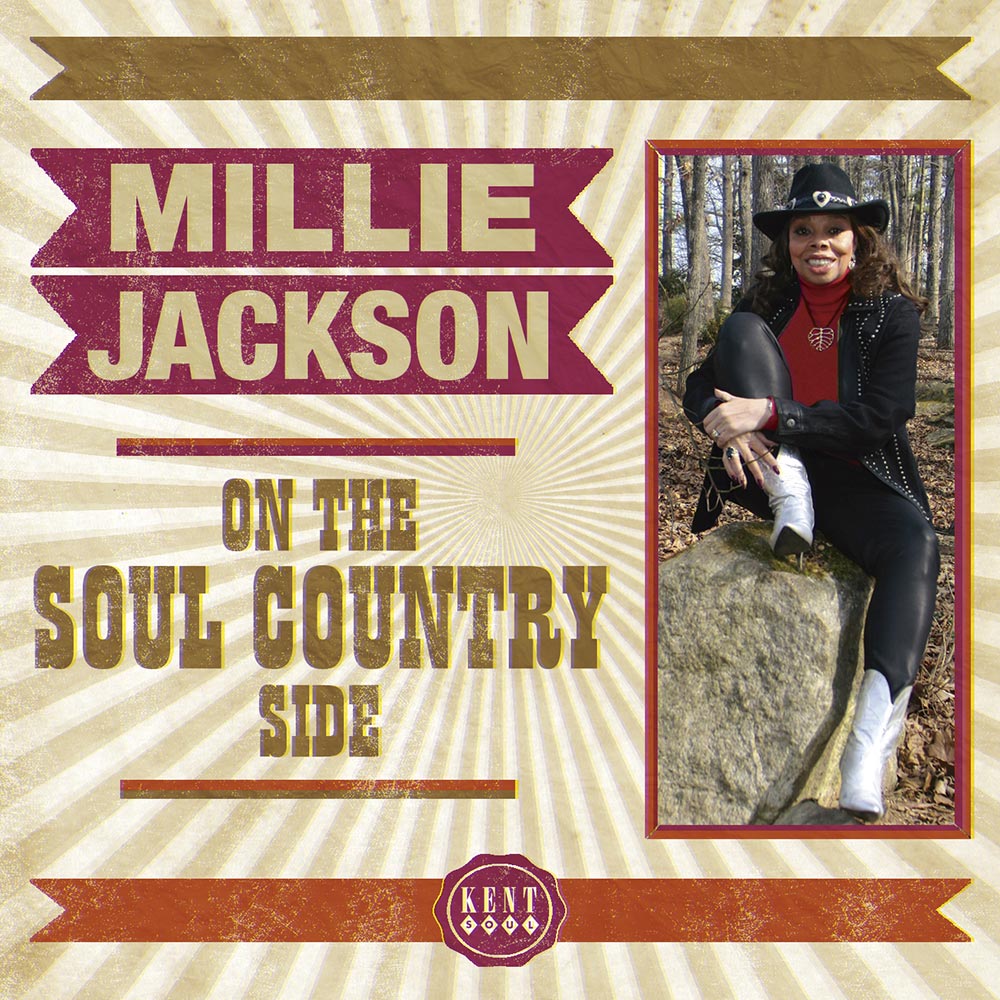
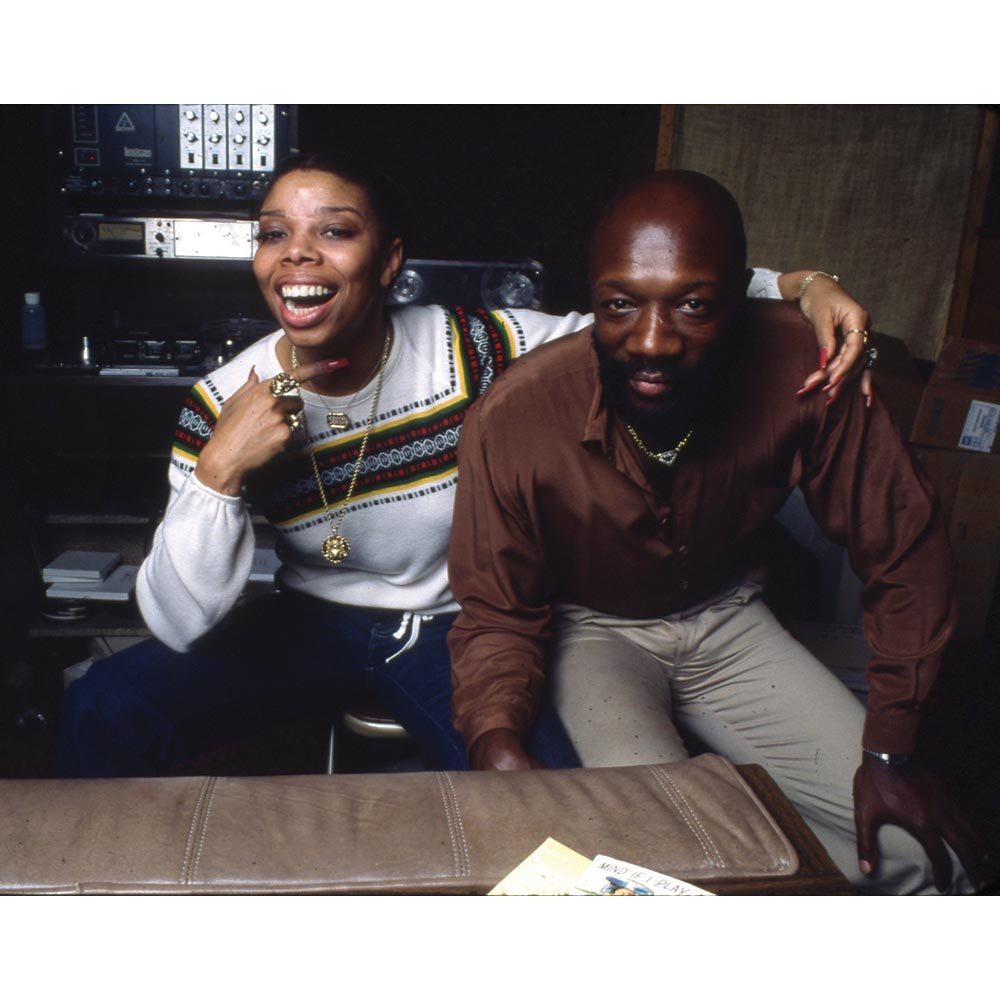


WARDELL GRAY-WAY OUT WARDELL.
WARDELL GRAY-WAY OUT WARDELL.
During Wardell Gray’s tragically short career, he proved to be one of jazz’s innovators. His career lasted just fifteen years. It began in the swing era and encompassed the bebop era. Then, just when Wardell Grey looked like fulfilling his undoubted potential, tragedy struck on May 25th 1955.
Towards the end of his short career, Wardell dabbled with drugs. This isn’t good news for any jazzer. It undoubtably affects their chops. This was the case with Wardell. As his life neared its end, his playing suffered. The drugs took their toll. Then on May 25th 1955 Wardell was found dead.
Mystery surrounds Wardell’s death. He was found was found dead on the outskirts of Las Vegas. His neck was broken. Despite this, the local coroner ruled accidental death. Maybe this isn’t surprising. After all, since then, it’s been alleged that Wardell may have fallen foul of the Mafia. Wardell’s death wasn’t so much an accident, but a mob hit. Even the coroner in fifties Vegas were wary of crossing the mob, who ruled Vegas by fear. Sadly, Wardell Grey may have been one their victims. As a result, jazz music was robbed of a pioneering player, Wardell Gray. Following his untimely death in 1955, Way Out Wardell was released on Modern Records.
Way Out Wardell has recently been rereleased on Boplicity, an imprint of Ace Records. It features five songs recorded in 1947. Wardell is on barnstorming form. He blows his tenor saxophone with power, passion and aplomb. Accompanying him are an all-star case of West Coast jazzers. The result is a poignant and blistering performance from Wardell Gray and his tight, talented band. Quite simply, Way Out Wardell is the perfect way to remember one of jazz’s pioneers. Before I tell you about Way Out Wardell, I’ll tell you about Wardell’s short life.
Wardell Gray was born in Oklahoma City, in May 1921. He was the youngest of four children. For the first eight years of his life, Wardell lived in Oklahoma. However, in 1929, his family moved to Detroit, Michigan. He then transferred to Cass Technical High School. By 1935, Wardell was attending Northeastern High School. Wardell was already playing the clarinet. It produced several jazz musicians, Donald Byrd, Al McKibbon and Eli “Lucky” Thompson. However, Wardell didn’t graduate. Instead he dropped out in 1936. It was around this time that Wardell had a life changing experience.
He heard legendary tenor saxophonist Lester Young. Immediately, Wardell decided to switch to tenor saxophone. Soon, he was playing with a small combo. Isaac Goodwin’s band provided the soundtrack to local dance clubs. This was just a stepping stone to bigger and better things.
Having been heard by pianist Dorothy Patton, Wardell was asked to join her band. He stayed a year with Dorothy Patton’s band. After that, Wardell joined Jimmy Raschel’s band. Then Wardell joined Benny Carew’s band. This was a step up in class. with each move, Wardell was coming closer to making his name as a musician. In a sense, he was learning his trade. Another important thing that happened, was Wardell became a father.
It was during that time, that Wardell met Jeanne Goings. They had a relationship and in January 1941, their daughter Anita, who was born. This was the start of a period where Wardell’s life on and off the stage was going well.
Wardell caught a break when as a twenty-one year old, he was asked to join the Earl Hines Orchestra in 1943. However, this wasn’t playing tenor saxophone. Instead, he was playing alto saxophone. For Wardell, this was the opportunity of a lifetime. He grabbed it with both hands. After all, jazz legends like Charlie Parker and Dizzy Gillespie had made their name with the Earl Hines Orchestra. So did Wardell. Before long he was a soloist in the Earl Hines Orchestra. His spellbinding solos were showstoppers. He spent the next three years criss crossing the land of the free. Wardell also played on the Earl Hines Orchestra 1945 and 1946 recordings. However, in late 1946 the time came for Wardell to move on.
Having left the Earl Hines Orchestra, Wardell flew to Los Angeles. The West Coast was where some of the most innovative jazz was being recorded. Wardell became friends with jazz legends like Chico Hamilton, Dexter Gordon and Charles Mingus. Each of the four musicians played on each other’s albums. A feature of each album was Wardell’s blazing saxophone. Wardell and his compadres hit pay-dirt on or Charlie Parker’s sessions for Dial.
Unlike many players, Wardell wasn’t overawed by being in the presence of greatness. Quite the opposite. It was as if Wardell was inspired by Byrd’s presence, especially on Relaxing’ At Camarillo. After this, Wardell seemed to grow in stature.
On a Dexter Gordon session for Dial, Wardell and Dexter got toe-to-toe on The Chase. It’s a blistering performance from two jazz virtuosos. With Wardell Gray playing as if his very life depended upon it, surely it wasn’t going to be long before Dexter’s solo career began?
That looked like being the case. When Wardell played at the Shrine Auditorium, Los Angeles, on 27th February 1947. That night the tapes were running. Two tracks were recorded. This includes the Ben Bernie, Kenneth Casey and Maceo Pinkard penned Sweet Georgia Brown. The other tracks was Jesse Greer and Raymond Klages’ Just You, Just Me. These two tracks featured an all-star band, including trumpeter Howard McGhee, tenor saxophonist Vido Musso and pianist Arnold Ross. The rhythm section featured drummer Don Lamond, bassist Harold Babasin and guitarist Barney Kessel. This was the band that breathed life and meaning into the two tracks. Then two months later, other three tracks were recorded, albeit with a different lineup. What didn’t change was the quality of music.
At the Civic Auditorium, Pasadena on 29th April 1947, the tapes were running again. Three tracks were recorded featuring Wardell Gray’s band. They’re Edwin Frickel’s Blue Lou, Count Basie’s One O’Clock Jump plus Walter Gross and Jack Lawrence’s Tenderly. The band featured trombonist Vic Dickenson, alto saxophonist Benny Carter and trumpeter Howard McGhee. They were joined by a rhythm section of drummer Jackie Mills, bassist Red Callendar and guitarist Irving Ashby. Wardell unleashes a series of masterclasses on his tenor saxophonist. Sadly, these musical masterclasses weren’t heard until after Wardell Gray’s death.
For the next eight years Wardell’s career continued. Wardell was always a sideman. He never took centre-stage. However, he was the man jazz’s biggest names called when they’d a session. This included Benny Goodman, Count Basie and Benny Carter. Indeed, it was with Benny Carter than Wardell was working when he met his untimely and mysterious death.
Benny Carter’s band were playing three shows a night in the Moulin Rouge Casino, Las Vegas. Wardell played the first two shows on on May 25th 1955. However, Wardell missed the third show. He was found was found dead on the outskirts of Las Vegas. His neck was broken. Despite this, the local coroner ruled accidental death. Since then, it’s been alleged that Wardell may have fallen foul of the Mafia. By 1955, Wardell was dabbling with drugs. Some people allege Wardell was also a gambler and owed the mob money. There was a problem though, Wardell couldn’t pay. So Wardell had to make the long walk into the desert where he met his fate. That night, jazz music lost one of its most promising and pioneering players, Wardell Gray. Way Out Wardell, you’ll realise, is a poignant tribute to Wardell’s talent.
Blue Lou opens Way Out Wardell. Errol Garner’s piano sets the scene for Wardell’s rasping tenor saxophone. Meanwhile, the bass propels the rhythm section along. Wardell’s solo is spellbinding. He ensures the song swings seamlessly. Not once does he miss a beat. His solo cascades, soaring above the arrangement. Later, he combines power and control. Stabs of piano add to the drama. However, it’s Wardell’s rasping tenor saxophone that steals the show. Then the baton passes to pianist Errol Garner. Errol unleashes a jaunty, flamboyant solo. It’s as if he’s been inspired by Wardell’s solo and pulls out the stops. Then later, the two join forces as the track reaches a glorious crescendo.
To rousing applause Sweet Georgia Brown, unfolds. Howard Babsain’s bass powers the arrangement along, before barnstorming solos from Wardell and trumpeter Howard McGhee. The band sound as if they’re having a ball. Hollers accompany drummer Howard Mills as he pounds at his high kicking drums. Soon, everybody is showboating and the crowd love it. They raise the roof, encouraging the band to greater heights. This works. Wardell’s band do what seems impossible and raise their game. Following blistering tenor saxophone and trumpet solos, pianist Arnold Ross gets in on the action. So does drummer Howard Mills. Everyone enjoys their moment in the sun as Wardell and his all-star band breath new life and meaning into an old classic, Sweet Georgia Brown.
Tenderly sees the tempo drop. The piano takes centre-stage. It’s wistful, before flamboyant flourishes are unleashed. Wardell is content to let other members of the band shine. He realises the soloist needs space, so doesn’t crowd Errol Garner. This is something of a masterstroke, as Errol Garner’s flamboyant, beautiful and wistful solo is one of the highlights of Way Out Wardell. It’s a heartachingly beautiful track.
It’s all change on Just You, Just Me, another ten minute epic. The growling horns and rhythm section join forces, and power the arrangement along. Trumpeter Howard McGhee and tenor saxophonist Vido Musso join Wardell. They’re the perfect foil for each other on this bebop influenced track. Again, Wardell allows the soloists to shine. He’s content for his band to shine. One of the finest performances comes from trumpeter Howard McGhee. Guitarist Barney Kessel unleashes a crystalline solo. He combines jazz and blues. Then it’s time for pianist Arnold Ross to take centre-stage. He and drummer Howard Lamont play daring do as the soloists enjoy their moment in the sun. Then later, the band join together as this ten minute epic draws to a close. Not before reminding the audience what’s gone before. By that I mean a stunning slice of bebop.
One O’Clock Jump closes Way Out Wardell, and is another Magnus Opus. It lasts eleven minutes. This means the soloists get the chance to stretch their legs. A cocktail piano and shuffling rhythm section join forces. They play their way into the track. Then the horns sweep in. What a lineup. Alto saxophonist Benny Carter joins trumpeter Howard McGhee and trombonist Vic Dickenson. Add Wardell to the equation and something special is beginning to unfold. Just like previous tracks, the band are revelling on the atmosphere. They encourage each other to greater heights. Somehow, the solos are even more innovative. It’s as if Wardell and his band are determined to pay homage to Count Basie, who wrote the track. Blistering tenor saxophone solos are played with power, speed and control. Then the alto saxophone picks up the reins. Just like previous solos, Howard’s soar above the shuffling, bass lead arrangement. Wardell Grey seems to have kept the best until last. He and his band kick loose and reinvent a Count Basie classic.
Listening back to Way Out Wardell is quite poignant. After all, Wardell Gray was cut down in his prime. He was a pioneering jazz musician, whose solo career had hardly began. By his death in May 1955, Wardell hadn’t even released a solo album. It’s a case of what might have been? What if Wardell hadn’t allegedly dabbled with drugs or gambled? He’d never have come to the attention of the mob. Then Wardell would never have had to make the long walk into the desert. It was a walk where Wardell surely knew he’d never return. What’s unbelievable is that there was no real investigation into what happened to Wardell Gray?
Who knows, maybe a man found with a broken neck on the outskirts of Vegas was a regular occurrence? In the fifties, it was a city like no other American city. Regular rules didn’t seem to apply there. It was a city where shills, spills and thrills were regular occurrences. This was after all, Vegas. Vegas and Wardell Gray weren’t a good combination. Especially when he seemed to have crossed the wrong person. He wasn’t going to live to tell the tale.
As a result, a wife lost a husband and a daughter her father. Jazz also lost one of its most promising and pioneering players, Wardell Gray. Who knows the heights Wardell Gray might have reached? Listening to Way Out Wardell, the death of Wardell Gray robbed jazz lovers of an innovative and inventive player. By 1947, when Way Out Wardell was released, Wardell Gray was blossoming into potentially one of the finest tenor saxophonists of his generation. The five tracks on Way Out Wardell, which was recently rereleased by Ace Records are proof of this. Way Out Wardell is also a reminder of that jazz lost one of the finest tenor saxophonists of his generation that night on 25th May 1955.
WARDELL GRAY-WAY OUT WARDELL
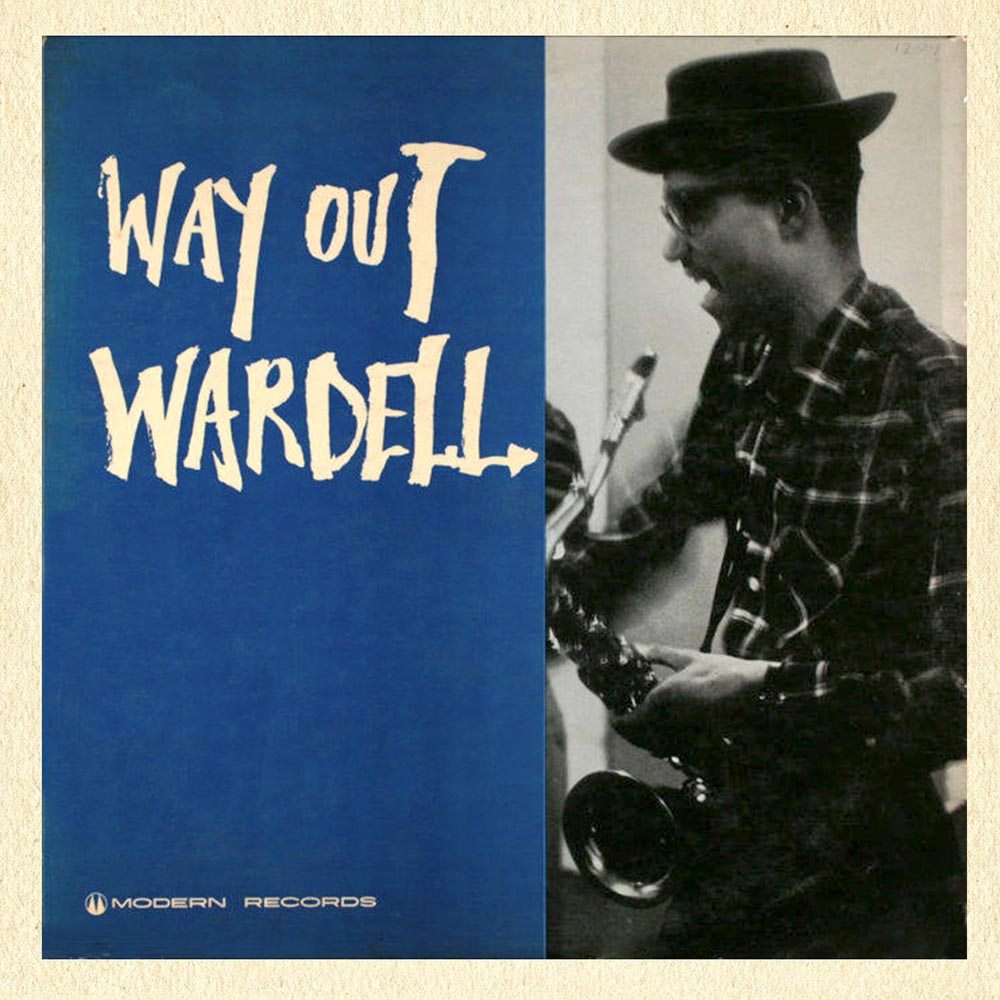


ENO-HYDE SOMEDAY WORLD.
ENO-HYDE SOMEDAY WORLD.
It’s no exaggeration to refer to Brian Eno as the Godfather of electronic music. He is, without doubt, one of the genre’s founding fathers. Brian Eno is also one of electronic music’s innovators. That’s been the case throughout Brian Eno’s career.
Ever ever since his days with Roxy Music, Brian Eno had been an innovator. He was constantly looking to release groundbreaking music. Musical boundaries he realised, should pushed to their limits, and sometimes, beyond. Sadly, this wasn’t going to be with Roxy Music.
When Brian Eno eventually tired of constantly touring with Roxy Music, he decided to pursue a solo career. In many ways, Brian turned his back on fame and fortune, in pursuit of his art. Glam rock he realised, was a passing phase. Electronic music was the future. He was interested in technology and taking his inspiration from minimalist painting which interested and inspired him, decided to forge a career in ambient music. Brian released his debut solo album Here Come the Warm Jets in 1973, with ambient classics like 1975s Another Green World, 1978s Ambient 1: Music For Airports and Music For Films following soon after. During that period, Brian was busy with his “other career,” as a producer.
This included David Bowie’s Berlin Trilogy of 1977s Low and Heroes and final installment, 1979s Lodger. Since then, Brian Eno has released over twenty albums and produced some of the biggest groups in music and forged a career as a remixer. He’s produced albums by Talking Heads, Devo, U2 and Coldplay. Brian has also worked as a remixer
Remixing was just the latest string to Brian Eno’s bow. He was asked to work with some of the biggest names in electronic and dance music. Brian’s credits as a remixer included Massive Attack and Depeche Mode. Apart from production work and remixes, Brian Eno has collaborated with a whole host of artists.
Eclectic. That describes the artists Brian Eno has collaborated with. He’s collaborated with everyone from includes David Byrne, Robert Fripp and Robert Wyatt. However, in the last few years, Brian Eno hasn’t been as prolific as his early years. His last solo album was 2012s Lux. Released to critical acclaim, the Godfather of electronic music was back, and better than ever. Sadly since Lux, nothing has been heard of Brian Eno. That was until recently, when Brian released a collaboration with Karl Hyde of Underworld, Someday World, which was released by Warp.
Released as Eno-Hyde, Someday World features nine tracks. On Someday World, Brian Eno and Karl Hyde joined by a cast of guest artists. This includes some big names. The biggest of all is, without doubt, Andy McKay of Roxy Music. An unlikely collaborator is Coldplay’s Will Champion. He joins the major league on Someday World, rubbing shoulders with Brian Eno, Andy MacKay and Karl Hyde. A new name is Fred Gibson. He’s only twenty-two, but co-produces Someday World. Fred also cowrote two tracks on Someday World.
The two tracks Fred cowrote on Someday World are Daddy’s Car and A Man Wakes Up. Fred cowrote these two tracks with Brian Eno and Karl Hyde. Brian and Karl cowrote The Satellites, Witness, Strip It Down, Mother Of A Dog and Who Rings The Bell. When I Built This World and To Us All were penned by Brian Eno. These nine tracks became Someday World.
When recording of Someday World began, Brian Eno played bass, guitar, keyboards, synths, programmed drums and added vocals and backing vocals. Karl Hyde played piano, guitar and added backing vocals. In addition to his production duties, Fred Gibson played piano, drums, bass, brass, guitar synth and added backing vocals. Regular Brian Eno collaborator John Reynolds played drums. So did Chris Vatalaro and Will Champion. Andy MacKay played alto saxophone, Don E synth and Neil Catchpole viola and violin. Georgia Gibson added alto Vocals, tenor vocals and baritone saxophone. Vocals came courtesy of Darlo Eno and Marianna Champion. The nine songs on Someday World were produced by Brian, Karl and Fred. Once they were mixed and mastered, Someday World was released recently.
Just like so many previous Brian Eno projects, Someday World was released to critical acclaim. Its a haunting and intriguing musical through musical genres. Everything from Afro-beat, ambient, electronica, funk, jazz, pop, rock and soul can be heard Someday World’s nine tracks. As you’ll realise when I tell you about Someday World, it’s another groundbreaking collaboration from he Godfather of electronic music.
Someday World opens with The Satellites. It has a haunting, intriguing sound. A plucked guitar sits amidst shimmering synths. The arrangement grows, veering between discordant and dramatic. Then it’s all change. An explosion of rock guitars are unleaded. They sit above rhythm section and banks of synths. Seamlessly, rock meets electronica. With the band in the tightest of grooves, they power the arrangement alongs. That sets the scene for Brian Eno’s deliberate vocal. This works. You focus on the lyrics. Later, punchy, cascading horns join the rhythm section and synths in driving this anthemic track along.
A myriad of synths and drums combine as Daddy’s Car unfolds. It has an eighties sound and influence. That’s down to the drums, synths and Karl Hyde’s soulful vocal. Think Human League and you’re halfway there. The unmistakable sound of a bass synth and horns help the drums and synths power the arrangement along. Sometimes, the track takes on a hypnotic sound. Other times, slick hooks reveal their secrets. Karl’s soulful, heartfelt vocal plays a part in this. Especially, with sweeping, harmonies accompanying him on a track that’s variously hypnotic, hook-laden and soulful.
A Man Wakes Up is quite different from the previous track. It has a futuristic, almost sci-fi sound. Karl Hyde takes charge of the vocal, delivering it in urgent, dramatic bursts. Meanwhile, the bank of synths join the funky, robotic, rhythm section. Eighties drums crack, stabs of keyboard and a funky synth join forces. Rocky guitar add a contrast. Handclaps ad drama before acrystalline guitar solo weaves its way across the arrangement. Later, the arrangement matches the senesce of urgency in Karl Hyde’s vocal as electronica, rock, funk and soul melts seamlessly into one.
Witness is the signal for Eno-Hyde to get a little funky. Chiming guitars joins a probing bass and synths. The result is more than a little funky. After that, banks of synths build the arrangement. By the time Karl’s vocal enters, it’s obvious that this track is more than a little special. Karl Hyde’s vocal wistful and rueful. He doesn’t reveal the track’s melodic delights too soon. With the help of synths and backing vocals, they build the arrangement. Stabs of Jerry Lee Lewis piano and a deadpan vocal add to the drama. Still, it’s not time to unleash another hook-laden anthem. When it is, it’s well worth the wait to hear the delights of another genre-melting anthem.
Stabs of a bass synths open Strip It Down, before drums crack and a keyboard adds a melodic contrast. The arrangement is panned. It reverberates, taking on a dark, haunting and hypnotic sound. Especially when Brian Eno delivers his vocal. It too, is dark and haunting. Meanwhile, the arrangement veers between dark and mesmeric to melodic. Banks of synths and keyboards play an important part in the track’s dark, driving sound. So do the strings, piano and guitar. They all play their part in an enigmatic and innovative track that should stand the test of time.
Mother Of A Dog has an understated, spacious arrangement. Drums and synths create a rumbling arrangement, before a bluesy harmonica signals the arrival of Karl’s haunting vocal. Brian Eno’s rumbling bass joins a somewhat futuristic, but haunting arrangement. This is perfect for Karl’s Neil Young inspired vocal. Drama builds, and a futuristic, sci-fi soundscape unfolds. Quite simply, this is the highlight of Someday World.
A thunderous drum and guitar combine as Who Rings A Bell gradually reveals its treasure trove of secrets. After this, the arrangement veers between understated, ethereal, thoughtful and graceful to futuristic and robotic. Swathes of cooing harmonies accompany Karl’s enigmatic, emotive vocal. Meanwhile, musical genres melt into one. Elements of ambient, electronica, experimental, jazz and rock are combined by Eno-Hyde and friends, resulting in a musical treasure trove of secrets.
Cinematic describes the introduction to When I Built The World. Shimmering, quivering strings and pulsating, pounding drums give way to Brian Eno’s vocal. It’s heartfelt and rueful. Especially when he sings “when I built this world I built it full of guilt, I built with regret and pain and sin.” As he delivers his vocal, the drama builds. Synths shimmer and bubble, drums pulsate. Then the track takes on futuristic, funky, dance-floor friendly sound. Everything from Andy MacKay’s saxophone, horns, a vocoder, rocky guitar and funky bass join a myriad of synths in showing another side to Eno-Hyde’s music. It’s cinematic and dance-floor friendly, albeit with a futuristic, dramatic sound.
To Us All closes Someday World. It has a much more understated sound. It’s almost mellow, with synths and crystalline guitars joining forces. The arrangement meanders along. Guitars become rocky and synths shimmer as Brian delivers the lyrics. He’s like a seer, pondering what the future has in hold. Hopefully, another Brian Eno solo album.
It’s been two years since we last heard from Brian Eno. That was his 2012 solo album Lux. It was triumphant comeback from the returning hero, and Godfather of electronic music. Since then, Brian Eno has been working with two generations of musicians. Brian’s main collaborator was Underworld’s Karl Hyde. They’re both innovators, who are determined to create groundbreaking and inventive music. The same can be said of Brian’s old friend from Roxy Music, Andy McKay. Another collaborator was Coldplay’s Will Champion. Then there’s another of Brian’s trusty lieutenants John Reynolds. With such a multitalented cast of collaborators, it’s no surprise that Someday World was such a critically acclaimed and commercially successful album.
Just like every album Brian Eno has released, it’s an album that sees him move forward. For Brian Eno standing still is like going backwards. That’s never going to happen. Especially with three generations of groundbreaking musicians to collaborate with. The result was a genre-melting album.
Everything from ambient, Afro-beat, blues, electronica, funk, jazz, pop, rock and soul melts into one during the musical journey that’s Someday World. The music veers between funky to futuristic to dark and dramatic and right through haunting and hypnotic. Other times it melodic or mesmeric. Sometimes, the music is uplifting and joyous. Especially when slick poppy hooks are unleashed on The Satellites and Witness. These tracks should introduce a new generation to Brian Eno and Karl Hyde’s music.
Awaiting them, are a cornucopia of musical delights. That describes the Brian Eno and Karl Hyde’s music. However, cornucopia of musical delights is also the perfect description of Eno-Hyde’s critically acclaimed album Someday World.
ENO-HYDE SOMEDAY WORLD.

ASHFORD AND SIMPSON-HIGH RISE.
ASHFORD AND SIMPSON-HIGH RISE.
By 1983, Ashford and Simpson were about to release their eleventh album, High Rise. It was their second album for their new record label Capitol Records. High Rise was also the followup to their 1982 concept album Street Opera, which dealt with the problems couples face in economically tough times.
Street Opera dealt with the problem a couple face keeping their love alive when money’s tight. Ashford and Simpson examined the problems an ordinary working man encountered whilst trying to support his wife and family during an economic downturn. The result was a concept album full of social comment, emotion and soul searching. Released to widespread critical acclaim in 1982, Street Opera was a huge commercial success. It reached number forty-five in the US Billboard 200 and number five in the US R&B Charts. Since then, High Rise is considered one of Ashford and Simpson’s best albums. A year later, in August 1983, Ashford and Simpson decided to move away from the social comment and urban drama of Street Opera to something quite different, High Rise, an album where four of the eight tracks were designed for the dance-floor.
For High Rise, Ashford and Simpson penned eight tracks. They were a mixture of ballads and dance-tracks. This was very different from Street Opera, but showed that Ashford and Simpson weren’t willing to stand still. Instead, High Rise was the next chapter in Ashford and Simpson’s long and successful career.
When the recording of High Rise began at Penny Lane Studios, Ashford and Simpson enlisted the help of a crack team of musicians to help record the eight songs on the album. This included guitarist Sidney McGinnis, bassist Francisco Centeno, drummer Yogi Horton and Ray Chew on electric piano. Together with the rest of the band, they cut eight tracks, four of which were written specifically for the dance-floor, where the music of Ashford and Simpson had always been well received. On High Rise was a combination of soul and R&B music, with slower songs sitting comfortably next to faster dance-floor friendly tracks. Once High Rise which was rereleased by BBR Records on 2nd June 2014, was recorded, it was mixed at Sigma Sound Studios, in New York. High Rise was then released in August 1983.
High Rise was Ashford and Simpson’s eleventh album, and was released in August 1983. Before it was released, the first single from High Rise, an instrumental version of the title track High Rise was released. It reached number seventeen in the US R&B Charts and number forty-one in the US Dance Charts. A month later, the album High Rise was released, reaching number fourteen in the US R&B Charts and number eighty-four in the US Billboard 200. October 1983 saw the release of the second single from the album It’s Much Deeper. It reached number forty-five in the US R&B Charts. In January 1984 the third and final single was released from High Rise. This was It’s Not That Tough, which reached number seventy-eight in the US R&B Charts. Although neither the album High Rise, nor the three singles taken from it, had replicated the success of Street Opera, High Rise was still a great album, full of quality music, which I’ll now tell you about.
The opening track on High Rise is the title track, High Rise a song cloaked in drama and suspense, from the opening bars. A combination of piano, rhythm section and guitars give way to Nick’s vocal, before Valerie makes her entrance. Nick tell the story of a woman he loved, who wanting the finer things in life him, in pursuit of them. Like Nick, Valerie plays her character well, the quick tempo like her hasty departure in pursuit of a better life. The sound is punctuated by bursts of darkness and suspense from the piano. Meanwhile, a bass reverberates, while a constant drumbeat provides the song’s heartbeat. Later, vibes played by Ray Chew provides a musical contrast, while the chords played on the piano sympathetically echos Valerie’s desire for better things. Similarly to the music on their previous album Street Opera, Ashford and Simpson tell a story that reflects real life perfectly, using not just their vocals, but the instruments to get across the sadness, drama and desire of the scenario, and the pursuit of the best things in life.
SIde Effect opens with a funk drenched sound from the rhythm section and guitars, while a wailing saxophone floats above the arrangement. It’s a dance-floor oriented track, with crisp beats, a funk laden bass and piano being joined by blazing horns. Key to track’s success is Sidney McGinnis guitar playing is used to reflect the side effect suffered by the character in the song. This side effect is how either a lack of love, or a love affair that’s gone wrong can have on a person, and its affect on their life in other ways. As the song progresses, a combination of funky driving rhythm section, chiming guitars and piano accompany Nick and Valerie’s looser, joyous, powerful vocals. The result is a great song, one that’s not just dance-floor friendly, but has a joyful, uptempo sound.
Experience (Love Had No Face) is a slower song, one that explores the nature of casual relationships and their lack of commitment and emotion. Against a backdrop of pianos, rhythm section and shimmering guitar Nick thoughtfully sings the lead vocal. Brief bursts of horns signal Valerie’s entrance, while lush strings sweep in the background. By now, the arrangement has grown, with acoustic and electric piano combining well, while strings and horns add a sad, emotive sound, reflecting the emptiness of these fleeting, casual relationships. Later, Nick and Valerie’s vocals soar emotionally, while behind them, the best arrangement unfolds. Not only has it a beautiful, slow, lush sound, that gradually reveals itself, but when combined with the vocals is by far, one of the album’s highlights.
It’s A Rush is quite different from its predecessor. Straight away, it’s immediately noticeable that the track has a quite dated, electronic sound. This is caused by various synths used, including a synthesizer bass line. Although they sounded okay back in 1983, the sound has dated. Thankfully, after the joyous vocals enter, the sound improves, with the arrangement starting to lose its earlier artificial sound. Maybe this is because of the inclusion of more traditional instruments, including guitars, pianos, percussion and rhythm section. Together, they drive the track along quickly, providing a dance-floor friendly track, made all the better by Nick and Valerie’s joyful, soaring and energetic vocals. However, it’s just a pity that parts of the track haven’t aged well, a common problem among synth-heavy, early-eighties tracks.
My Kinda Pick Me Up, a much better sounding track than its predecessor. It has a jazz influence throughout the track, especially with the addition of George Young’s saxophone playing. It wails and howls above the punchy, arrangement, as piano, rhythm section and chiming, quivering guitars accompany it. Valerie’s gentle tender vocal enters, as she sings about how her lover is her pick me up. Nick’s vocal has a similar tenderness, while the rhythm section, piano and saxophone are key to this fantastic, jazz tinged arrangement. When you add Nick and Valerie’s vocal to it, the result is a timeless, track, unlike its predecessor.
It’s Not That Tough is another slow song, with gentle harmonies sitting atop the arrangement, while strings slowly, sweep and a piano and the rhythm section combine. Both Nick and Valerie’s vocals begin tenderly, growing in strength, before quickly, returning to the previous gentle style. It’s a song about a man with a tough facade, but behind that facade, is a man waiting and wanting to melt into his lover’s arms. Behind them, lush strings, piano and the rhythm section combine with bursts of rasping horns to create a beautiful, slow meandering arrangement, which is perfect for the gentle, beauty and tenderness of the vocal. The result of this combination is a stunning track, one of the best on High Rise.
It’s Much Deeper is a much quicker track, with rock style guitars throughout the track. Ashford and Simpson have built the song around a repeated groove, one that’s used throughout the track. Onto that groove, they get Sidney McGinnis to add a very eighties sounding rock guitar solo. Like the synths used in It’s A Rush, this detracts from the track, giving it a predictable, somewhat dated sound. It just doesn’t work, and sounds like too many similar eighties’ tracks. From the start, a funky, driving rhythm section, chiming guitars and piano accompany the powerful, energetic vocals from Nick and Valerie. Even until Sidney McGinnis adds his rock influenced guitar solo, the track wasn’t as good as the rest of the album. Like the guitar solo, the track has an eighties sound throughout. Like It’s A Rush, it hasn’t dated well, and is a disappointing track.
High Rise closes with Still Such A Thing, a track that Ashford and Simpson had produced for Gladys Knight and The Pips About Love album. This is a stunning track, one that more that makes up for the disappointment of It’s Much Deeper. It’s a track that pays homage to how love transcends race or religion and class or creed, and truly is a universal thing. Against a gentle piano lead arrangement Nick and Valerie gently and tenderly deliver the lyrics. Lush sweeping strings enter, while the rhythm section, guitar and percussion combine. They provide a beautiful backdrop for the vocals, and when subtle, horns enter, combining with the strings, things get even better. As the song progresses, Nick and Valerie sing with emotion and passion, against an arrangement that’s both lush and sometimes dramatic, matching their delivery. By the end of this stunning track, it seems Ashford and Simpson have kept one of the album’s best tracks until last. It was well worth the wait, to hear such a beautiful and brilliant song.
It’s been a while since I last listened to High Rise. So, I’ve had to familiarise myself with High Rise again. Having spent time doing this, I’ve come to the conclusion that although it’s not quite as good as Street Opera, it’s still a good album. Of the eight songs on High Rise, only two disappoint. These are It’s A Rush and It’s Much Deeper, two tracks with a slightly dated sound that sadly, haven’t stood the test of time well. Apart from these two tracks, Ashford and Simpson work their Magic on High Rise.
Some of the tracks are on a par with the critically acclaimed Street Opera. This includes Experience (Love Had No Face) and It’s Not That Tough. They’re two slow tracks which feature great arrangements and some tender, emotive and heartfelt vocals from Nick and Valerie. The jazz tinged My Kinda Pick Me Up, demonstrates Ashford and Simpson’s versatility and features some virtuoso playing by George Young which helps lift the song to the next level. However, Ashford and Simpson kept the best to last with Still Such A Thing, which had originally been on Gladys Knight and The Pips, About Love album. On that track, they pay homage to the universality of love, and produce a stunning vocal performance. That was the perfect way to end the album. Leave the listener on a high, wanting more. That’s the case on High Rise, an an album that deserved to do better, reaching number fourteen in the US R&B Charts and number eighty-four in the US Billboard 200.
ASHFORD AND SIMPSON-HIGH RISE.

SOUTHPORT WEEKENDER: LEFTO.
SOUTHPORT WEEKENDER: LEFTO.
The Southport Weekender has come a long way since it first took place back in 1987. Since 1987, the Southport Weekend has been one of the highlights of the dance music scene. Rather confusingly, the first Southport Weekend took place in Berwick Upon Tweed. This was a somewhat strange choice of venue for a dance music festival. Berwick Upon Tweed isn’t exactly rock ’n’ roll. However, Berwick Upon Tweed was the birthplace of Britain’s premier dance music festival.
After that, the Southport Weekender headed to the party capital of the North West of England, Blackpool. This was the next place the Southport Weekender called home. Following Blackpool, the Southport Weekender headed just along the coast to Morecambe. This was only a brief dalliance. Next stop was sedate Southport, where the weekender called home for many years. Not any more.
Now, somewhat confusingly, the home of the Southport Weekender is Minehead, in sleepy Somerset. Minehead for the time being, is the new home of the Southport Weekender, Britain’s premier dance music festival. It’s played host to some of the biggest artists and DJs.
Over the twenty-seven years, the great and the good have headed for the Southport Weekender. This includes some of the biggest DJs and artists have played at the Southport Weekender. Among the artists are A Tribe Called Quest, India Aria and Soul II Soul. Some of the biggest DJs of the past twenty-five years have all featured at the Southport Weekender, including Blaze, Kenny Dope, Tony Humphries, Dimitri From Paris, Joe Claussell Kerri Chandler, Miguel Migs and Atjazz. Each of these DJs’ mixes have featured on the ten previous volumes of the Southport Weekender. For the latest instalment of the Southport Weekender series, Lefto, the man Fact! Magazine called “your favourite DJ’s favourite DJ,” joins this illustrious list of DJs.
Southport Weekender: Lefto will be released on 2nd June 2014, on BBE Music. It’s best described as a lovingly compiled double album album. Disc one sees Lefto seamlessly mix his way through an eclectic selection of seventeen tracks. It’s a case of jump onboard Lefto’s magical mystery tour. You embark upon a musical journey through musical genres. There’s everything from deep house, electronica, folk, funk, funky house, hip hop, jazz, psychedelia and soul. Then there’s Latin and Lebanese music on Southport Weekender: Lefto.
Opening his set with Reginald Omas Mamode IVth’s Keep On Walking, Lefto mixes seamlessly into The Breathing Effect’s Daydream Prison, before taking you on an eclectic and spellbinding musical journey. You’re introduced to the delights of Om Unit’s . Shine Your Light, Amral’s Trinidad Cavalier’s It Sure Is Funky and Elias Rahbani’s La Dance De Nadia. By then, you realise that Lefto is one of the most dedicated crate diggers’s in Europe. His encyclopaedic knowledge of music means he’s able to drop the right track at just the right time. Genius Of Time’s Drifting Back sits side-by-side with the Kyodai Remix of Pablo Sánchez’s Out and About. Lefto then drops Rodendion’s Well Done. It’s a masterstroke. So is closing his set with the trio of Detroit Swindle’s Under The Spell and then Kid Fonque and Zaki Ibrahim’s 2Sides. Then closing his seventeen track set is Sam Sanders’ Face At My Window. By then, you’ll realise why Lefto is “your favourite DJ’s favourite DJ.” However, this is only half-time in Southport Weekender: Lefto.
You’ve still got disc two of Southport Weekender: Lefto to enjoy. Disc two features twelve full length versions of the seventeen tracks on disc one. This can’t have been easy. Lefto could’ve included any of the seventeen tracks. However, he had only eight minutes to fill. Some tracks weren’t going to make the cut. For Lefto choosing which of the five tracks to omit must have been torturous. I’m sure he changed his many times, given the quality of music on disc one. Eventually, he managed to choose twelve tracks with feature on disc two. They’re a tantalising taster of the music Lefto has spent his life looking for and playing.
Over the last few years, Lefto’s reputation has a groundbreaking DJ has soared. So much so, that now, Lefto is perceived as one of Europe’s top tastemakers. There’s a reason for this. He plays groundbreaking music.
Unlike some DJs, who’ve been playing the same sets since the seventies and eighties, Lefto is always digging deep to find music next big thing. Lefto you see, is not the type of DJ to follow fashions. Instead, Lefto is a trendsetter, who constantly, searches out music’s next big thing. That’s been the case since Lefto worked at the famous Music Mania record shop in Brussels.
It was during this period, that Lefto’s love affair with hip hop and jazz began. Since then, Lefto has come a long way. This was where Lefto first crate digging expeditions took place. Lefto dug deep, discovering hidden gems and rarities. He’s been doing that ever since.
Nowadays, Lefto is one of the top DJs in Europe. His eclectic sets see Lefto spin everything from hip hop, funk breaks, future bass and jazz. To that Lefto adds South-American influences and African music rhythms. This is why Lefto has been crowned one of Europe’s top DJs. He spins his eclectic sets throughout Asia, Europe and North America. Wherever he plays, Lefto keeps the dance-floor packed. That’s the case at Lefto’s regular residencies in Amsterdam and New York. However, there’s more to Lefto’s career than travelling the world DJ-ing clubs.
Lefto also has a regular radio show on Belgium’s national radio station Studio Brussels. During these shows, Lefto’s crate-digging skills are put to good use. He spins a groundbreaking selection of music. Much of the music Lefto plays, many DJs won’t have heard of. If they have, they daren’t spin in live on national radio. Lefto will. Fearlessly, he introduces his audience to a diet of new and innovative audiences. This is why listeners eagerly await Lefto’s shows on Studio Brussels. Club and radio DJ-ing isn’t all Lefto does.
He also works closely with a number of record companies. This includes Brownswood Recordings, BBE Music and Blue Note Records. In 2010, Lefto and Simbad were compiled Worldwide Family Volume 1 for Brownswood Records. Then in 2012, DJ Lefto Presents Universal Magnetic was released on 101 Apparel Artist Series. However, one of Lefto’s proudest moments was being commissioned to by Blue Note Records to create an album of remixes. For a jazz lover like Lefto, this was a dream come true. Since then, Lefto has been busy, DJ-ing and working on a series of projects. Lefto’s latest project was Southport Weekender: Lefto, which I’ll pick the highlights of.
You might not have heard of Reginald Omas Mamode IV yet. That should change and change soon. He released an limited edition E.P. Do You, on Five Easy Pieces in 2013. Another of Reginald’s releases was a cover of Roy Ayers’ Keep On Walking. It’s the perfect track to open Southport Weekender: Lefto. From cinematic and moody, the track becomes slow, sultry and soulful. Hip hop and Nu-Soul become one as you’re introduced to Reginald Omas Mamode IV, an artist with a big future ahead of him.
The Breathing Effect’s Daydream Prison is another hidden gem. It featured on The Breathing Effect’s eponymous E.P. Released in February 2014, The Breathing Effect combine experimental electronica with funk, jazz, hip hop and psychedelia. It’s a glorious combination and a tantalising taste of the innovative music The Breathing Effect create. Let’s hope they release an album really soon.
London based DJ and producer Jim Coles has been releasing music as Om Unit since 2010. He released his debut album Threads in 2013, on Civil Music. Although it doesn’t feature Shine Your Light, the quality of this track will have you checking out Threads. It’s best described as a fusion of elements of drum ’n’ bass, dubstep and electronica. There’s even a hint of hip hop on this joyous genre melting track from Jim Coles’ alter ego.
Anyone whose been a fan of Mr. Bongo’s Brazilian Beats’ series, will have discovered the delights of Som Sete’s Esquindindin. It featured on Brazilian Beats Volume 7. It’s beautiful and understated example of bossa nova, that falls firmly into the category of a hidden gem.
Elias Rahbani is a Lebanese arranger, composer, conductor and producer. He also released a series of albums. This includes Mosaic Of The Orient, which was released in 1972 on Voix De L’Orient Series. It featured La Dance De Nadia, which to me, is one of the highlights of Southport Weekender: Lefto. It’s a fusion of traditional Lebanese music, jazz, folk, funk and even psychedelia. East meets West in this glorious and captivating musical melange.
Peshay’s Kickin’ It With The Piano Trio features Tonounion. This is a track from Peshay’s fourth album Generation. Released on Tru Thoughts in 2013, it sees Peshay reinvent himself and his music. Here, he and his band are transformed into a old school jazz group. While the piano takes centre-stage, the bass propels the arrangement along. By the end of the track, Peshay has been transformed into a fully paid up member of the cool school.
From the get-go Genius Of Time’s Drifting Back is a joyous, hands in the air track. Dance-floor friendly, but with a jazzy twist, this deep house track has a real summery vibe. It was released in 2011 on the Royal Oak label, it’s a timeless dance track that’ll still fill a dance-floor.
Over the last couple of tracks of Southport Weekender: Lefto, the tempo has been rising. It plateaus on Rodendion’s Well Done. It’s best described funky and dance-floor friendly. Inspiration seems to have been sought from Blaxploitation movies. Wah-wah guitars set the scene as the Rodendion mixes licks with pounding beats.
Detroit Swindle’s Under The Spell is aptly titled. Straight away, you’re spellbound. This is a track from Detroit Swindle’s Unfinished Business E.P. Released on Freerange Records, in 2013, all things house melt into one. Deep, funky and vocal house are combined with electronica. The result is a track that’s uplifting, hook-laden and joyous, as Southport Weekender: Lefto heads towards its crescendo.
Sam Sanders’ Face At My Window closes Southport Weekender: Lefto. This is a track from Sam’s album Mirror, Mirror. Belatedly, it was rereleased on Strata Records and was a welcome release. Before this, Sam was best knows as a saxophonist and composer. He’d played with some of the biggest names in soul, funk and jazz, including Stevie Wonder, Smokey Robinson and The Four Tops. On Mirror Mirror, Sam and an all star band combine soul, funk and jazz. One of the album’s highlights was the beautiful and soulful Face At My Window. It proves a fitting way to Lefto’s magical musical mystery tour, Southport Weekender: Lefto.
Choosing the highlights of Southport Weekender: Lefto wasn’t easy. The reason for that is the quality of the music. Lefto it seems, has dug deep, deeper than he’s dug before. The result is an eclectic magical musical mystery tour. During the seventeen tracks, you hear everything from deep house, electronica, folk, funk, funky house, jazz, psychedelia and soul. Then there’s Latin and Lebanese music on Southport Weekender: Lefto. It’s a captivating treasure trove of eclectic music that in Lefto’s hands, becomes a seamless mix.
Definitely. Hidden gems and rarities sit side-by with familiar faces on disc one of Southport Weekender: Lefto. They’re seamlessly mixed together by Lefto. His mixing and programming skills are peerless. It’s a flawless mix. One great track follows hard on the heels of another. A majestic journey through numerous musical genres unfolds. A few curveballs are thrown, just to keep you on your toes. So are a few favourites. Other times, Lefto spices things up with some cutting edge and contemporary tracks. Lefto you see, isn’t the type of DJ to trot out the same tracks.
No way. He’s always determined to keep listeners on their toes. That’s why Lefto is called “your favourite DJ’s favourite DJ.” He’s always going to spin a series of groundbreaking tracks. Things are always interesting when Lefto’s behind the wheels of steel. That’s why Lefto is one of Europe’s top DJs. He spins his eclectic sets throughout Asia, Europe and North America. Wherever he plays, Lefto keeps the dance-floor packed. That’s the case at Lefto’s regular residencies in Amsterdam and New York. For anyone yet to have heard Lefto play one of his legendary sets, then Southport Weekender: Lefto will be released on 2nd June 2014, on BBE Music. Southport Weekender: Lefto is your opportunity to hear one of Europe’s most exciting and innovative DJs spinning an eclectic and exciting set of groundbreaking music.
SOUTHPORT WEEKENDER: LEFTO.
CAROL WILLIAMS-‘LECTRIC LADY.
CAROL WILLIAMS-‘LECTRIC LADY.
In late 1975, Carol Williams became the first Lady of of Salsoul. Carol, one of the original disco divas, became the first female singer to sign for Salsoul. At Salsoul Records, Carol worked with Vince Montana Jr, the man behind the rise and rise of The Salsoul Orchestra. With Vince at her side, Carol Williams disco diva, released two disco classics Love Is You and More. More became the first twelve inch single commercially available worldwide, reaching number four in the Hot Club Play Charts in 1976. The following year, Carol released ‘Lectric Lady, her only album for Salsoul. Mind you, if you’re only going to release one album for the greatest disco label Salsoul, make it one as good as ‘Lectric Lady. On ‘Lectric Lady, Carol Williams with The Salsoul Orchestra created a true Salsoul classic which will be rereleased by BBR Records on 2nd June 2014.
New Jersey born Carol Williams, transformation to becoming the First Lady of Salsoul was almost accidental. Her career started back in the sixties, when she was a member of the female soul trio The Geminis. They released a string of singles on RCA Victor, with 1966s Get It On Home, giving The Geminis their biggest hit. Further singles, including I Hired A Girl and You Put A Hurting On followed, before The Geminis signed to Brunswick. During her time with The Geminis, Carol established herself as a singer and songwriter.
It was during a stint performing on the New Jersey hotel circuit that Carol Williams got the opportunity to become a solo artist. She was performing six nights a week, further honing her skills as a singer, when the opportunity to sign for Salsoul arose. Daverne, Carol’s husband was Wilson Pickett’s bandleader, and his assistant got a call from Salsoul looking for a female vocalist who was similar to Gloria Gaynor. Carol went to the audition and was chosen. When Salsoul heard of Carol’s background in the music industry that was the clincher. Salsoul’s search was over. Carol signed a contract with Salsoul for one album, and soon, a true disco diva would be born.
Now signed to Salsoul, Carol got the opportunity to work with some of the most talented arrangers, producers and musicians. This included producer Vince Montana Jr. and The Salsoul Orchestra. Vince Montana Jr. would play a big part in the success of ‘Lectric Lady. Not only did he produce the album, but played vibes on it and cowrote four tracks. One of these tracks Love Is You which he cowrote with Ron Walker would give Carol one of her biggest hits and best loved tracks. Vince would also go onto become one of Carol’s songwriting partners.
For her Salsoul debut, Carol had the artistic freedom to choose many of the tracks on ‘Lectric Lady. She also cowrote three of the tracks on ‘Lectric Lady and acted as co-publisher of these three tracks. This was an innovative idea, allowing Carol control of the music she cowrote. Of the three tracks she cowrote, two were with Vince Montana Jr, My Time of Need and Come Back, The other track she cowrote wasYou’re So Much A Part of Me, with Jack Perricone, who also cowrote This May Be the Last Time with Paul Vance. With
A total of nine tracks were chosen for ‘Lectric Lady, including a cover version of a track from 1963, More. Originally, the track had been recorded by Kai Winding and featured in the movie Monde Cane. Little did anyone at Salsoul realize that this would become one of Carol’s best known tracks. It was transformed into a stonewall disco classic, at the legendary Sigma Sound Studios.
Accompanying Carol Williams were The Salsoul Orchestra, featuring some of the greatest musicians of the seventies. All the greats played on the album. The Baker, Harris, Young rhythm section and guitarists Bobby Eli, T.J. Tindall and Roland Chambers. Ron “Have Mercy” Kersey and Bunny Sigler played keyboards, Vince Montana Jr, vibes, Larry Washington congas and percussion, flautist Jack Faith plus Don Renaldo’s strings and horns. Adding backing vocals were the legendary Sweethearts of Sigma, Carla Benson, Barbara Ingram and Evette Benton, along with Deborah McKnight, Ronnie Walker and Carl Helms. With such talented personnel accompanying Carol Williams and Vince Montan Jr. producing ‘Lectric Lady, it should come as no surprise that the album would become a Salsoul classic, and featured two successful singles.
Although ‘Lectric Lady didn’t chart on it release in 1976, the two singles released from the album would not just prove successful. They became Salsoul and disco classics. More reached number ninety-eight in the US R&B Charts, number eight in the Dance Music-Club Play Charts and number four in the Hot Club Play Charts. Love Is You then reached number twenty-nine in the Dance Music-Club Play Charts.
From their release Carol Williams two singles More and Love Is You were favorites of disco lovers worldwide. However, there’s much more to Carol Williams Salsoul debut ‘Lectric Lady than just two tracks, as you’ll realize when I tell you about the music on ‘Lectric Lady.
Opening ‘Lectric Lady is Love Is You, the second single released from the album. Earl Young’s pounding drums and Larry Washington’s congas combine before the lushest of strings sweep in accompanied by bursts of rasping horns. They usher in Carol’s tender, heartfelt and beautiful vocal enters. Instantly, you realize an anthemic Salsoul classic is unfolding. With the Baker, Harris, Young rhythm section providing the track’s heartbeat, Bobby Eli’s guitar punctuates the arrangement, while the mass of lush strings and rasping horns carry Carol’s vocal along. The Sweethearts of Sigma provide subtle, tender backing vocals, while flourishes of harp and solos from vibes supremo Vince Montana Jr. and a blistering horn solo play their part in the track’s hook-laden sound. However, it’s Carol’s vocal that makes the track. Her vocal is perfect for the track, delivering the lyrics with equal amounts emotion, energy and passion.
Having started ‘Lectric Lady with a classic track, you’d think that following up such a track wouldn’t be easy. Not here. This was Salsoul at the height of their creative powers. Paul Vance and Jack Perricone cowrote This Time May Be The Last Time, an emotive ballad that tugs at the heartstrings. Carol sings the song from the point of the “other woman,” with gentle, cooing backing vocals accompanying her. Slow, sad sounding strings are at the heart of the arrangement, with the Baker, Harris, Young rhythm section playing subtly, before dramatically reflecting the passion and pain in Carol’s voice. Bursts of rasping horns and keyboards punctuate the arrangement, as Carol’s voice soars, full of heartache and hurt, with strings ever-present reflecting the emotion in the love she might of lost. During this track, Carol shows that there was much more to her music than disco, proving she was equally at home delivering a heartfelt, emotive soulful ballad.
As More begins, the track literally explodes. A pounding rhythm section, with drummer Earl Young at its helm, combines with blazing horns and cascading strings. Carol’s vocal is a mixture of power and joy, as she struts her way through the track. The Sweethearts of Sigma deliver punchy backing vocals, while swathes of strings dance with delight and horns bray. Ron Baker’s bass helps anchor the track, matching Earl beat for beat as he almost makes his drums speak, while percussion, congas and Vince Montana Jr.’s vibes feature. Key to the track are the strings, backing vocalists and horns. One of the best saxophone solos you’ll hear on a Salsoul album can be heard here. Truly, Carol Williams and The Salsoul Orchestra transform this track, turning it into an anthemic disco track thirty-six years later, is best described as a timeless. It’s joyous, uplifting classic, featuring one of Carol’s best vocals.
The tempo drops on Just Feel, which gives Carol another opportunity to reveal her soulful side. The rhythm section, rasping horns, swathes of lush strings, guitar and vibes combine, creating a dramatic, punchy and beautiful backdrop for Carol’s vocal. Her vocal is tender, impassioned and full of hope, with the Sweethearts of Sigma adding equally, tender and soulful backing vocals. Layers of strings, growling horns and pounding drums set the scene for Carol, as she steps up to deliver a stunning vocal. It’s as if she’s been waiting the moment, anticipating delivering Vince Montana Jr. and Ron Walker’s lyrics. She mixes power and passion with emotion, against a backdrop of cooing backing vocalists, the lushest of strings, growling horns and a punchy rhythm section. It’s a mesmerising performance, filed hope and happiness from a hugely talented and versatile vocalist.
My Time Of Need is the first of three songs Carol cowrote, with this one of two she cowrote with Vince Montana Jr. This song is like a four minute soap-opera, filled with drama and emotion. Carol singing the song from the perspective of a young woman, pregnant, desperate and on her own. Strings cascade, while horns rasp, as percussion and vibes accompany the Baker, Harris, Young rhythm section. Together they provide track’s dramatic and moody heartbeat. Carol’s voice is tinged with sadness and hurt, while the Sweethearts of Sigma add judgmental backing vocalists, their vocals are full of shock and surprise. Their back vocals are the finishing touch, contrasting Carol’s desperation, sadness and loneliness. Here, also Carol shows how a talented songwriter and storyteller she, painting vivid pictures in just four minutes.
Come Back is the second track Carol and Vince Montana Jr. cowrote. This is a much quicker, dance-floor friendly track. Pounding drums, breathy backing vocals and flourishes of strings signal the arrival of Carol’s vocal. It’s a mixture of power, passion and hurt, with the Sweethearts of Sigma adding sweeping backing vocals. Meanwhile, horns growl as string dance, as if marching to the rhythm section’s pounding beat. It’s a glorious combination, with Carol’s impassioned, pleading vocal, the finishing touch, swept along above Vince Montana Jr.’s arrangement.
Flourishes of percussion and harp, are augmented by Jack Faith’s flute and Bobby Eli’s guitar, before Danger Sign reveals its secrets. Carol’s vocal is tinged with regret as the rhythm section, sizzling guitars and swathes of strings accompany her. Her heartbroken vocal is a mixture of despair, drama and regret, matched by Vince Montana Jr.’s arrangement. Ron Baker’s pounding bass, bursts of harp and flute plus moody horns play their part in an arrangement that reflects that sadness and regret in Carol’s vocal, as do Don Renaldo’s strings.
Rattlesnake is something of a hidden gem from Carol Williams. It features a sassy, strutting, power vocal from Carol. The Salsoul Orchestra certainly don’t let the side down. A pounding rhythm section, percussion, cascading strings and blazing horns accompany jazz-tinged guitar as Carol Williams disco diva takes centre-stage. Punchy, soaring backing vocals from the Sweethearts of Sigma accompany Carol, as The Salsoul Orchestra kick loose. Here, the mix of a mesmerizing mixture of growling horns, dancing strings and a pounding rhythm section shows them at their very best. It’s a peerless performance from The Salsoul Orchestra, the Sweethearts of Sigma and Carol Williams. She struts her way through the track delivering an impassioned, powerful and sassy vocal.
Closing ‘Lectric Lady is You’re So Much A Part Of Me, which Carol and Jack Perricone cowrote. There’s an almost wistful sound to the track, as horns rasp while strings sweep and swirl. A dramatic burst of Earl Young’s drums signals the arrival of Carol’s beautiful, heartfelt vocal. It floats along amidst the lushest of strings, while horns growl as percussion, vibes and the rhythm section accompany Carol. Soulful backing vocals from the Sweethearts of Sigma augment Carol’s vocal. Sadly, too soon, one of the most beautiful tracks on ‘Lectric Lady close and so does Carol Williams’ career at Salsoul.
Truly, Carol Williams debut album for Salsoul, ‘Lectric Lady is a true gem. It’s been a pleasure reviewing ‘Lectric Lady. To me it represents everything that’s good about music in the seventies. Here was a hugely talented vocalist, equally comfortable in her role as disco diva or singing soulful ballads. Carol was also a talented songwriter, who cowrote a trio of tracks My Time of Need, Come Back and You’re So Much A Part of Me. She also proved a shrewd and innovative businesswoman, deciding to co-publish the three tracks she cowrote, allowing her control of her music. On the nine tracks that comprise ‘Lectric Lady, Carol breathes life and meaning into each of the tracks, transforming herself from disco diva and soul singer seamlessly. Although ‘Lectric Lady wasn’t a commercial success, two of the tracks would become stonewall disco classics, More and Love Is You. These tracks gave Carol the two biggest hits of her career. Since then, they’ve become disco classics, with Love Is You being sampled by Spiller on If This Ain’t Love. Although Carol’s voice played a huge part in the sound and success of ‘Lectric Lady, so did The Salsoul Orchestra and The Sweethearts of Sigma.
The Salsoul Orchestra featured some of the most talented musicians not just of the seventies, but in the history of music. However, The Salsoul Orchestra were much more than musicians, but arrangers, producers and songwriters. On ‘Lectric Lady their combined talents were put to good use. They played real instruments, without a sampler, sequencer or drum machine in sight. Similarly, on ‘Lectric Lady musicians like Vince Montana Jr. proved he was a talented songwriter. He wrote three songs, two with Carol and Love Is You which with Ron Walker. This was way before artists “borrowed” samples from other tracks. Instead they wrote their own material. Vince Montana Jr. and Baker, Harris, Young proved to be talented songwriters, arrangers and producers. With such a coming together of musical talents, it’s no wonder that ‘Lectric Lady is such a stunning album. Really, there’s not a bad track on ‘Lectric Lady. Sadly, ‘Lectric Lady would be Caroi Williams’ only album for Salsoul Records.
Not long after ‘Lectric Lady was released, Carol Williams and Salsoul parted company. Carol didn’t want to become known as just a disco diva. She felt she’d much more to offer. ‘Lectric Lady shows that Carol is just as comfortable singing soulful ballads. However, if you’re only going to release one album for Salsoul, make it as good as ‘Lectric Lady. Truly, ‘Lectric Lady is a Salsoul classic, as are its two singles More and Love Is You. ‘Lectric Lady belongs in the collection of anyone who loves disco, soul or Salsoul. Once you’ve heard Carol Williams’ ‘Lectric Lady, you’ll Come Back for More. Standout Tracks: Love Is You, More, Come Back and You’re So Much A Part Of Me.
CAROL WILLIAMS-‘LECTRIC LADY.

 dereksmusicblog
 dereksmusicblog