CULT CLASSIC: LEE HAZLEWOOD-COWBOY IN SWEDEN.
Cult Classic: Lee Hazlewood-Cowboy In Sweden.
By 1969, Lee Hazlewood’s career was no longer going to plan. The man who had been around since the birth of rock ‘n’ roll was suddenly regarded as yesterday’s man. Suddenly, he was no longer in demand as a producer. Especially by a new generation of up-and-coming musicians. A few that had worked with Lee Hazlewood, including Gram Parsons, but weren’t willing to repeat the experience. This made matters worse for Lee Hazlewood’s ailing record company LHI Records.
Five years had passed since LHI Records last enjoyed a hit single. Since then, commercial success eluded LHI Records, which couldn’t buy a hit single. To make matters worse, Lee Hazlewood had alienated the president of Bell Records, who used to distribute LHR Records’ releases. Lee Hazlewood was fast running out of friends in the music industry.
To make matters worse, Lee Hazlewood’s successful partnership with Nancy Sinatra ended in 1968. Lee Hazlewood tried to replicate his formula with Anne-Margaret. However, Lee but to no avail. This left Lee Hazlewood looking to forge new musical partnerships.
Some musical partners had only a short and unhappy experience with Lee Hazlewood. This included Gram Parsons, when he was a member of The International Submarine Band. Other up-and-coming musicians were put off working with Lee Hazlewood because of his jealousy, temper and possessiveness. Especically when it came to his partner Suzi Jane Hokom.
In 1968, Suzi Jane Hokom received an invitation to meet The Beatles while they were in New York. Lee Hazlewood was extremely possessive and controlling when it came to Suzi Jane Hokom. He decided to accompany her to the meeting with The Beatles, whose music he disliked. This didn’t stop Lee Hazlewood asking The Beatles to producing artists for their Apple label. When the answer was a firm no, Lee Hazlewood stormed out of the meeting.
A year later, music’s one-time golden boy was running out of friends in the American music industry. Lee Hazlewood’s record company was on its last legs. It seemed that Lee Hazlewood’s career had stalled in America. However, he still had a few friends overseas.
Although Lee Hazlewood’s star no longer shawn as bright in America, he was still a regarded as a celebrity elsewhere. This included in Russia, where Nancy Sinatra’s These Boots Are Made for Walkin’ had proved popular. So much so, that later in 1969, a Russian official contacted Lee Hazlewood to tell him that they wanted to present him with a wood cabin in honour of These Boots Are Made for Walkin’. Lee Hazlewood decided to head behind the Iron Curtain to receive his honour.
Meanwhile, Swedish film director Torbjörn Axelman contacted Lee Hazlewood about a possible project. This meant that en route to Russia, he would have to take a detour via Sweden.
Lee Hazlewood had been invited to appear as a guest on In Town Tonight. It was filmed in the Swedish capital Stockholm. That was where Lee Hazlewood met Torbjörn Axelman. The two men were introduced by Gunilla Nilars, who worked with Torbjörn Axelman. When the two men began talking, it soon became apparent that they had much in common. This was the start of a long friendship and working relationship.
One of the projects that Lee Hazlewood and Torbjörn Axelman worked on, was Cowboy In Sweden. Lee Hazlewood would provide the soundtrack for Cowboy In Sweden, which marked the start of a new chapter in Lee Hazlewood. He decided to move to Sweden with Suzi Jane Hokom.
Moving to Sweden suited Lee Hazlewood for a number of reasons. His record company, LHI Records, was on its last legs, and would fold in 1970, after 305 releases. Lee Hazlewood also had unresolved tax problems. The other reason was his son who was a teenager, was almost old enough to be drafted to fight in the Vietnam War. For Lee Hazlewood this brought back memories. He had fought in the Korean War, and was keen that his son wouldn’t have to follow in his footsteps. Moving to Sweden ensured that his son avoided being drafted. This made the move to Sweden all the more appealing. So the Hazelwood family headed to Sweden.
Once his family had settled in Sweden, Lee Hazlewood began work on the film Cowboy In Sweden. He would costar with Swedish actress, Nina Lizell in what proved to a somewhat surreal film.
Just so the viewer doesn’t forget that he is the Cowboy In Sweden, Lee Hazlewood sports a black stetson and cowboy boots. He wanders through a series of dreamscape. They’re akin to a series of individual videos rather than part of a cohesive film. However, this adds to the surreal, lysergic nature of the film. So do the absurdist skits, and the sight of Lee Hazlewood sitting discussing both Swedish culture and weather between songs. Critics wondered if this was an ill-fated attempt at comedy? They also wondered why the music seemed to bear no relation to the scenes in Cowboy In Sweden?
Cowboy In Sweden.
There was a reason for this. Unlike most soundtracks, Lee Hazlewood didn’t record the music especially for Cowboy In Sweden. Instead, Lee Hazlewood chose ten tracks he had recorded the music over the past couple of years. During this period, Lee Hazlewood had travelled extensively and recorded songs in different European European and American cities.
Paris.
Lee Hazlewood’s musical adventure began in Paris, France in 1968. This was one of the country’s where Lee Hazlewood’s star still shawn bright. It was also where he recorded the hurt-filled ballad Forget Marie, at CBS Studios. Later in 1968, Forget Marie made its debut on Lee Hazlewood’s 1968 album Love and Other Crimes. Alas, when the album was released on LHI Records, commercial success eluded the album.
Two years later, in 1970, Lee Hazlewood decided to include Forget Marie on the soundtrack to Cowboy In Sweden. It joined songs that he had recorded in London in 1969.
London.
The following year, 1969, Lee Hazlewood travelled to London to work with American producer Mel Talmy. Both men shared the same lawyer and musically, had much in common. They both wrote and produced. Recently though, Mel Talmy was way ahead in the success stakes. He had produced hits for The Kinks and The Who. However, by 1969, was turning his attention to the new wave of British folk music.
Recently, Mel Talmy had been working with many of the British folk groups and artists, including Pentangle and Bert Jansch. However, despite concentrating on folk music, Mel Talmy was keen to produce an album with Lee Hazlewood.
The two men album began work on a new album for Lee Hazlewood’s LHI Records. Ten tracks were recorded, and became Forty, an album of pop, rock and balladry. It was released on LHI Records later in 1969, but failed commercially. Two of Forty’s highlights were the ballads, The Night Before and the string-drenched What’s More I Don’t Need Her. They would find their way onto Cowboy In Sweden. So would a number of songs recorded in Los Angeles.
Los Angeles.
Despite commercial success continuing to elude LHI Records’ releases, Lee Hazlewood was still in demand as a producer. He was hired to produce Waylon Jenning’s Singer Of Sad Songs and then Eddy Arnold’s Standing Alone. It was arranged by Clark Gassman, who would collaborate with Lee Hazlewood on his next round of recordings.
The songs that Lee Hazlewood recorded with Clark Gassman were Pray Them Bars Away, Cold Hard Times and Easy and Me. Although this trio of songs didn’t bring commercial success to Lee Hazlewood’s door, their inimitable wistful, orchestrated country sound would prove perfect for the soundtrack to Cowboy In Sweden.
So would two tracks Lee Hazlewood had recorded with two of the female singers he had worked with. This included Ann Margaret. Lee Hazlewood and Ann Margaret had recorded an album together, The Cowboy and The Lady. It was released on LHI Records in 1969, but failed to commercially. The other song Lee Hazlewood decided to include on Cowboy In Sweden, was by his partner Suzi Jane Hokom, For A Day Like Today. This proved to be the last song Lee Hazlewood and Suzi Jane Hokom recorded together. It was released as a single June 1970 and featured on Cowboy In Sweden. By then, Suzi Jane Hokom and Lee Hazlewood’s relationship was over.
She had agreed to star in Cowboy In Sweden. However, rather than travel to Sweden, it was decided that Suzi Jane Hokom should shoot her part in California. She dawned a long white dress as her part was filmed during a gloomy, smoggy day in San Bernardino. This was apt. Suzi Jane Hokom and Lee Hazlewood’s relationship was almost over. They had been through so much personally and professionally.
Whilst together, the pair had founded and run LHI Records. Suzi Jane Hokom and Lee Hazlewood both enjoyed solo careers and recorded together. Then in 1969, they both featured in Cowboy In Sweden. By the time it was released, their relationship was at an end. Before that, Lee Hazlewood had to complete the soundtrack to Cowboy In Sweden.
Stockholm.
Having chosen much of the soundtrack for Cowboy In Sweden, Lee Hazlewood for Cowboy In Sweden still required three tracks. He wrote and recorded these songs during his stay n Stockholm.
The first of these songs was the anti war protest song, No Train To Stockholm. During the same session, Lee Hazlewood recorded Hey Cowboy, with his costar Nina Lizell. The final song, was the traditional song Vem Kan Segla (I Can Sail Without The Wind). Lee Hazlewood wrote English lyrics to the song that would close Cowboy In Sweden. For songwriter Joe Cannon this was a disappointment,
Joe Cannon had written Me and The Wine and The City Lights. Lee Hazlewood had covered the song during a session at T.T.G. Studios, L.A. on the 16th of April 1970. It’s another ballad, which is produced by Lee Hazlewood and Larry Marks. It has a much more contemporary cinematic sound that shows a very different side to Lee Hazlewood. Alas, the song missed the cut and for Lee Hazlewood it was an opportunity lost. Thankfully, Me and The Wine and The City Lights features on Light In The Attic’s reissue of Cowboy In Sweden. So do alternate versions of Easy and Me and Pray Them Bars Away. However, back in 1970 the film and soundtrack to Cowboy In Sweden were about to be released.
Upon the release of Cowboy In Sweden, the film flopped. It found a small audience in Sweden, thanks to the popularity of Lee Hazlewood. The few reviews of Cowboy In Sweden that were published weren’t exactly complimentary. Words like surreal and trippy were used. Critics accused Cowboy In Sweden of lacking cohesion and narrative. Lee Hazlewood’s latest venture into film hadn’t been a success. Nor was the soundtrack to Cowboy In Sweden.
When Cowboy In Sweden was released in 1970, it was through Lee Hazlewood’s ailing LHI Records. The company was dying a death, and would fold later in 1970. Lacking the budget to promote Cowboy In Sweden properly, the album never stood a chance. Just like the film, the soundtrack to Cowboy In Sweden flopped. However, that wasn’t the end of the story.
Much later, there was a resurgence in popularity in Lee Hazlewood’s music. This included the soundtrack to Cowboy In Sweden. The only problem was that the album was something of a rarity. Copies of the original album were extremely difficult to find. If they became available, the prices were usually prohibitive to most record buyers. That was a great shame.
Cowboy In Sweden, which is essentially a compilation of Lee Hazlewood’s solo material and collaboration showcases a talented singer, songwriter and producer. Especially on the ballads, where Lee Hazlewood comes into his own. His voice is perfect for singing country, especially the melancholy string-drenched What’s More I Don’t Need Her and the hurt-filled Forget Marie. They part of what’s a truly underrated, hidden gem of an album. Sadly, it failed to find the audience it deserved.
By then, Lee Hazlewood’s career had stalled, and he was viewed by many as yesterday’s man. Many thought that his best years were behind him. He certainly didn’t replicate the success of the early part of his career. Music was changing, and changing fast. The problem was, Lee Hazlewood had kept up with the changes.
Many of the new generation of musicians wanted to write and produce their own music. The ones that musicians who wanted to work with a producer, chose not to work with Lee Hazlewood. They had heard the stories, about how he wasn’t the easiest person to work with. Sometimes, his temper of jealousy got the better of him. Especially when working with the new generation of up-and-coming artists. That was a great shame, as Lee Hazlewood had so much musical experience, and could’ve mentored these artists.
Later, though, the next generation of artists found inspiration in Lee Hazlewood’s music. By then, there had been a resurgence in popularity of his music. Lee Hazlewood’s music was starting to find a new audience. They appreciated the music that he wrote, recorded and produced during a forty-eight year career. This includes the music on Cowboy In Sweden.
The music on Cowboy In Sweden was recorded in four countries on two continents during a two year period. They’re a reminder of, and introduction to, Lee Hazlewood a truly talented singer, songwriter and producer who for a year, was a Cowboy In Sweden.
Cult Classic: Lee Hazlewood-Cowboy In Sweden.


CULT CLASSIC: THE INCREDIBLE STRNG BAND-CHANGING HORSES.
Cult Classic: The Incredible String Band-Changing Horses.
When The Incredible String Band released their fifth album, Changing Horses in November 1969, much had changed within the group that had formed in Edinburgh, Scotland, six years earlier in 1963. The Incredible String Band was one of the biggest, and most successful folk bands in the world, and regularly played at some of the biggest and most prestigious venues in Britain and America. This included London’s Royal Albert Hall, the Filmore East in New York and the Filmore West in San Francisco. More recently, The Incredible String Band had played a starring role at the Woodstock Music and Art Fair on Saturday the ‘15th’ of August 1969. Buoyed by this success, The Incredible String Band returned home for the release of Changing Horses which marked the start of a new era.
By the time Changing Horses was released, Robin Williamson and Mike Heron had some announcements to make. This included that The Incredible String Band was now a quartet, with Christina ‘Licorice’ McKechnie and Rose Simpson joining The Incredible String Band as full-time members. Both had worked with the band live and in the studio for some time. Christina ‘Licorice’ McKechnie first featured on The 5000 Spirits Or the Layers Of The Onion, which was released in July 1967, while Rose Simpson played on Wee Tam and The Big Huge which was released in November 1968. However, this wasn’t the only announcement that The Incredible String Band were about to make.
They explained that they had decided to no longer take drugs, which had been part of their life for the last few years. The other announcement was that The Incredible String Band had joined the secretive and cult-like Church of Scientology came as a shock to critics and fans. Things seemed to be changing within The Incredible String Band, and this would include the music on Changing Horses, which was very different to the music they made in the early days of the band.
Only six years had passed since Robin Williamson and Clive Palmer first played together at the Crown Bar, Edinburgh, in 1963. That was where Archie Fisher hosted a weekly folk night, and where two years later, in 1965, Joe Boyd, who was then working as an A&R man for Elektra Records first saw the Incredible String Band. Joe Boyd would later play an important part in the Incredible String Band story. Before that, two became three.
Later in 1965, Robin Williamson and Clive Palmer decided that The Incredible String Band should become a trio. They decided that they needed someone to fill out their sound, and started looking for a rhythm guitarist. Before long, Robin Williamson and Clive Palmer were joined by Mike Heron, and the as unnamed band donned the moniker The Incredible String Band. This was the final piece of the jigsaw, and was the lineup of The Incredible String Band that Joe Boyd saw when he reentered the band’s world a year later.
By 1966, The Incredible String Band were the house band at Clive’s Incredible Folk Club, which was based on the fourth floor of a building on Sauchiehall Street, in Glasgow, Scotland’s musical capital. One night, Joe Boyd made his way to Clive’s Incredible Folk Club. He was a man with a mission and was determined to sign The Incredible String Band.
Elektra Records had heard about The Incredible String Band, and wanted to sign them. They were, after all, predominately, a folk label and it made sense to sign The Incredible String Band to their roster. There was only one problem though, another label was interested in the Incredible String Band, Transatlantic Records. However, Joe Boyd managed to sign the Incredible String Band and took them into the studio in May 1966.
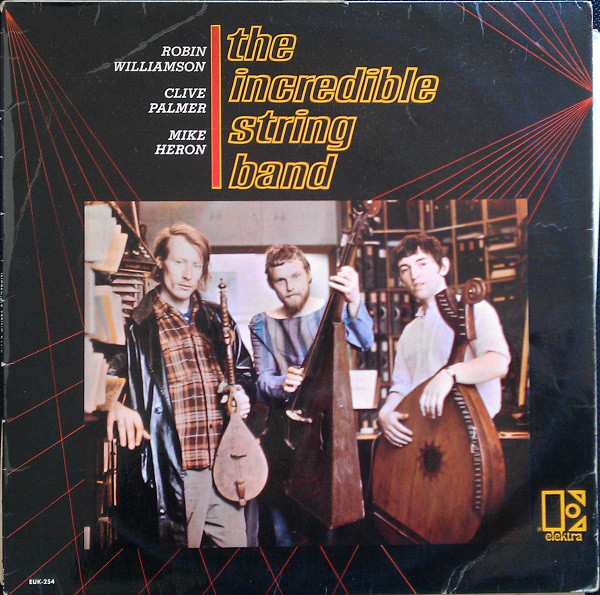
The Incredible String Band.
To record their eponymous debut album, Joe Boyd took the Incredible String Band into the Sound Techniques’ studio in London. Joe Boyd would produce The Incredible String Band which featured a total of sixteen songs. They were a mixture of original and traditional songs. On these songs, the Incredible String Band deployed an eclectic selection of instruments. Guitars, fiddles, a mandolin, kazoo, violin and tin whistle featured on The Incredible String Band, which was completed in June 1966.
On its release, on ‘20th’ July 1966, The Incredible String Band was well received by critics. It featured a much more traditional sound than later Incredible String Band albums. There was no sign of the psychedelic sound that featured on later albums. That was still to come. In 1966, the Incredible String Band were still a traditional folk group and a popular one at that.
The Incredible String Band reached number thirty-four in the UK charts, where it spent three weeks. Considering it was The Incredible String Band’s debut album for Elektra Records this was seen as a success, and something to build on. However, just when things seemed to be going to plan for The Incredible String Band, sadly, things went awry.
After recording The Incredible String Band, the band split-up. Clive Palmer decided to head off on the hippie trail to Afghanistan and India. Robin Williamson and his girlfriend also caught the travel bug and headed to Morocco. Only Mike Heron remained in Edinburgh, where he hooked up with Rock Bottom and The Deadbeats. With the Incredible String Band looking like history, it looked as if Mike Heron’s future lay with Rock Bottom and The Deadbeats. However, that wasn’t the case, when The Incredible String Band decided to reform.
Robin Williamson returned from Morocco after running out of money. However, he brought back an eclectic selection of musical Moroccan instruments which would feature on later Incredible String Band albums.
Clive Palmer and Robin Williamson decided that The Incredible String Band should reform, but only as a duo. This was essentially The Incredible String Band Mk II.
They made their debut on a tour in November 1966, where The Incredible String Band, who were now a duo, supported Judy Collins and Tom Paxton. After the tour, The Incredible String Band had an award to collect.
Their debut album The Incredible String Band won the Folk Album Of The Year in Melody Maker’s 1966 annual poll. By then, The Incredible String Band was well-regarded among their musical peers. Bob Dylan referred to October Song as one of his favourite songs of the mid-sixties in an interview in Sing Out magazine. With the Incredible String Band reforming, this was spurred them on to greater heights.
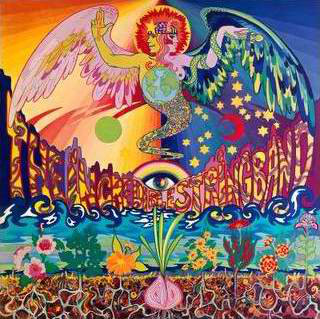
The 5000 Spirits Or The Layers Of The Onion.
Buoyed by winning the Folk Album Of The Year Award, and the praise of Bob Dylan ringing in their ears, the Incredible String Band set about writing and recording their sophomore album. Unlike many bands, the Incredible String Band didn’t write together. When they were apart, this was when they wrote their new songs. This was the case with their sophomore album The 5000 Spirits Or The Layers Of The Onion. Clive Palmer and Robin Williamson contributed seven songs each and they became The 5000 Spirits Or The Layers Of The Onion.
Reduced to a duo, The Incredible String Band brought onboard a number of guest musicians. This included Pentangle double bassist Danny Thompson, pianist Jon Hopkins and Soma, who played sitar and tamboura. Licorice McKechnie, who was Robin William’s girlfriend, made her Incredible String Band debut contributing percussion and adding vocals. Just like on The Incredible String Band, Joe Boyd took charge of production on The 5000 Spirits Or The Layers Of The Onion, which was completed early in 1967. When it was released, it marked a change in The Incredible String Band’s sound.
The 5000 Spirits Or The Layers Of The Onion marked the start of The Incredible String Band’s psychedelic folk era. However, mostly, The 5000 Spirits or the Layers of the Onion drew upon traditional British folk music. What was apparent was that Robin Williamson and Mike Heron had honed The Incredible String Band’s sound and matured and evolved as musicians. They were now talented multi-instrumentalists who could seamlessly switch between traditional and exotic instruments that played their part in the sound and success of The 5000 Spirits Or The Layers Of The Onion.
Critics on hearing The Incredible String Band’s sophomore album, realised that Robin Williamson and Mike Heron were both talented songwriters. Their songs were cerebral and full of imagery and mystery. There was also a psychedelic hue to The 5000 Spirits Or The Layers Of The Onion. This fusion of the traditional and psychedelic, found favour amongst critics and music lovers.
When The 5000 Spirits Or The Layers Of The Onion was released in July 1967, it seemed to typify the underlying counter-culture. It struck a nerve with critics and music lovers. Critics hailed The 5000 Spirits or the Layers of the Onion as an eclectic and innovative album that found The Incredible String Band picking up where the left with their eponymous debut album.
With its eclectic, genre-melting style The 5000 Spirits or the Layers of the Onion appealed to a wide range of record buyers, and soon, the album was climbing the UK charts. Eventually, it reached number twenty-five in the UK charts, where it spent five weeks. Gradually, the Incredible String Band’s popularity was growing, and it seemed as if the band was on the verge of greatness.
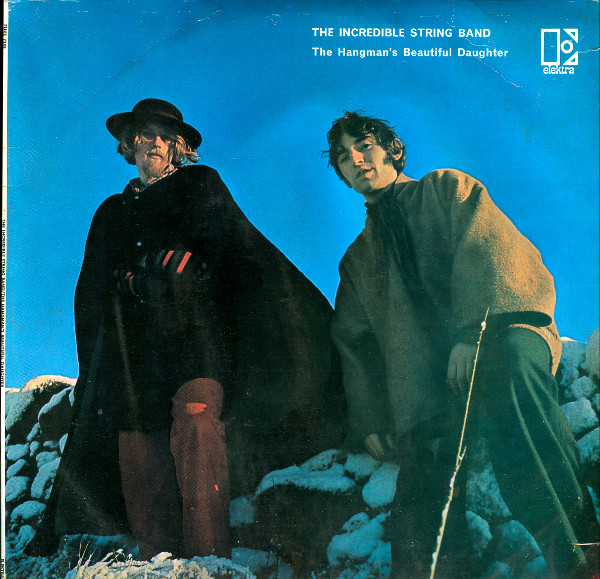
The Hangman’s Beautiful Daughter
That proved to be the case. 1968 was the to be the biggest year of The Incredible String Band’s nascent career. They released two albums, including The Hangman’s Beautiful Daughter, which was their first album of 1968.
For The Hangman’s Beautiful Daughter, Robin Williamson wrote seven songs while Mike Heron penned just three songs. The Incredible String Band had decided that The Hangman’s Beautiful Daughter wasn’t going to be sprawling album. Their two previous albums featured sixteen and fourteen songs. This time, only ten songs featured, and with Robin Williamson and Mike Heron concentrating on quality, this marked a coming of age for The Incredible String Band.
With Joe Boyd producing The Hangman’s Beautiful Daughter, the Incredible String Band entered the studio in December 1967. This time round, Robin Williamson and Mike Heron played most of the instruments on The Hangman’s Beautiful Daughter. They were joined by Licorice McKechnie, who was with the Incredible String Band until 1972. Other musicians were drafted in on an ad hoc basis. This included Fairport Convention’s Judy Dyble and Richard Thompson, who played piano on The Minotaur’s Song. During the recording sessions, The Incredible String Band made use of the new multi-track tape recorders, which meant they were able to layer instruments on top of each other. For the Incredible String Band, this was a departure from their “usual sound.” It worked though, and played its part in what was the Incredible String Band’s Magnus Opus.
Released in March 1968, The Hangman’s Beautiful Daughter represented, promoted and epitomised the hippie ideal. This included Eastern mysticism, communal living and rational pantheism. The Hangman’s Beautiful Daughter was a cerebral and beautiful album which featured songs that were dreamy, ethereal, cerebral and surreal. Especially The Minotaur’s Song, which is essentially a parodic song that is sung from the Minotaur’s perspective, and has been influenced by the British musical hall. Very different is A Very Cellular Song, which is a thirteen minute epic that is a reflective and thoughtful song that poses a series of big questions on life, love, and amoebas. Just like the rest of The Hangman’s Beautiful Daughter, The Incredible String Band fuse disparate musical genres. Mostly though, their unique brand of progressive, psychedelic folk shines through. This found an audience on both sides of the Atlantic.
Released to widespread critical acclaim, The Hangman’s Beautiful Daughter reached number five in the UK, where it spent twenty-one weeks in the charts. This was The Incredible String Band’s most successful UK album. The Hangman’s Beautiful Daughter became the Incredible String Band’s first album to chart in the US. It reached number 161 in the US Billboard 200. Having spent nine weeks in the US Billboard 200, The Hangman’s Beautiful Daughter the Incredible String Band was nominated for a Grammy Award. It seemed the Incredible String Band was going places.
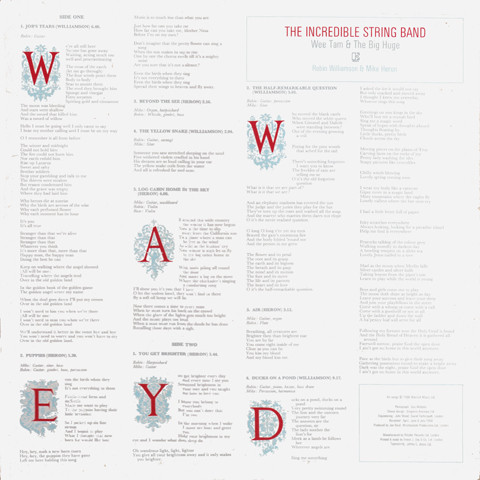
Wee Tam and The Big Huge.
Having just released the most successful album of their career, The Incredible String Band were one of the most successful British groups of the late-sixties. They were capable of filling the biggest venues in Britain, and were just as popular across the Atlantic in America. The Incredible String Band was capable of selling out both the Filmore East in New York and the Filmore West in San Francisco. This was something only a small number of British bands could do. However, The Incredible String Band’s star was in the ascendancy and they were a popular draw after the released of their third album The Hangman’s Beautiful Daughter. It was a game-changer, and broke The Incredible String Band in America. Later, in 1968, they tried to do the same with Wee Tam and The Big Huge.
Wee Tam and The Big Huge was without doubt, the most ambitious album of The Incredible String Band’s career. It was released as a double-album in the UK and as two individual albums, Wee Tam and The Big Huge, in America. This meant that Robin Williamson and Mike Heron had been busy.
On their return from the latest gruelling tour, members of The Incredible String Band and their entourages lived together in Newport, in eight cottages that cottages that had been joined together. This communal living was typical of the time, and was where the eighteen tracks that became Wee Tam and The Big Huge were written. Robin Williamson penned ten songs and Mike Heron the other eight tracks. When Wee Tam and The Big Huge was recorded at Sound Techniques studio, in Chelsea it would be with their usual eclectic selection of instruments and their two girlfriends Licorice McKechnie and Rose Simpson.
Joe Boyd, who had produced the Incredible String Band’s three previous albums would produce Wee Tam and The Big Huge. This time, Joe Body decided that The Incredible String Band should be recorded as a group, rather than overdubbing parts later. Given time was short, for The Incredible String Band this seemed a risky decision as recording of Wee Tam and The Big Huge began in April 1968. It could’ve backfired, but Joe Boyd wanted to capture the essence of the Incredible String Band live.
Given the variety of instruments Robin Williamson and Mike Heron played on Wee Tam and The Big Huge, some overdubbing was necessary. Unlike previous albums, no guest artists featured on Wee Tam and The Big Huge. Instead, only Licorice McKechnie and Rose Simpson, Robin Williamson and Mike Hero’s respective girlfriends featured on Wee Tam and The Big Huge. Rose Simpson’s voice was used to balance out the role of Licorice McKechnie, ion an album that saw The Incredible String Band combine elements of British and American influences. By August 1968, The Incredible String Band had completed recording of Wee Tam and The Big Huge, such was released later in 1968.
November 1968 saw the release of Wee Tam and The Big Huge which was the much-anticipated followup to The Hangman’s Beautiful Daughter. However, The Incredible String Band knew that The Hangman’s Beautiful Daughter was a hard act to follow. It was the greatest album of their career, so rather record The Hangman’s Beautiful Daughter Mk. II, Wee Tam and The Big Huge was a very different album.
Eclectic describes Wee Tam and The Big Huge which is an album of disparate influences. Similarly, a verity of different instruments were used, and even the arrangements differ from previous albums. By then, Robin Williamson and Mike Heron were influencing the arrangements to each other’s songs. This was a new development, but by then, the internal politics of the group and its dynamics had changed. Despite this, Wee Tam and The Big Huge was another ambitious and cerebral album from The Incredible String Band. The themes included mythology, religion, awareness and identity, on what was the first album from The Incredible String Band as a four piece band.
Critics appreciated this change of direction from the new lineup of The Incredible String Band, and recognised that Wee Tam and The Big Huge was another ambitious release. The addition of Rose Simpson had given The Incredible String Band a much more balanced sound on Wee Tam and The Big Huge. It was an album that The Incredible String Band should be able to replicate live critics noted. However, the only problem was that Wee Tam and The Big Huge didn’t fare well commercially.
Wee Tam and The Big Huge was released as a double album in Britain in November 1968, but incredibly failed to chart. This was a huge surprise for The Incredible String Band, producer Joe Boyd and executives at Elektra Records. They could only hope that Wee Tam and The Big Huge would fare better upon their released in America.
Four months later, Wee Tam and The Big Huge were released as separate albums in March 1969. Wee Tam reached number 174 in the US Billboard 200 and The Big Huge stalled at just number 180 in the US Billboard 200. After spending just three weeks in the charts, both albums disappeared. This was yet another disappointment for the members of The Incredible String Band, producer Joe Boyd and executives at Elektra Records.
Despite its lack of commercial success, Wee Tam and The Big Huge is nowadays regarded as one of the best albums that The Incredible String Band released. However, for The Incredible String Band Wee Tam and The Big Huge was regarded as the album that got away. It should’ve been a commercial success, but slipped under the musical radar. This was a disappointment for The Incredible String Band who wouldn’t release another album until November 1969.
In 1969, the Incredible String Band hit the road, and embarked upon what was a gruelling touring schedule. During this period, the Incredible String Band continued to live communally in a farmhouse in Newport, Pembrokeshire. It was also during this time, that The Incredible String Band became interested in mixed media, which was something that would later influence their music. However, in 1969, touring was what kept them busy.
The Woodstock Music and Art Fair.
The Incredible String Band’s most high-profile performance took place at the Woodstock Music and Art Fair which took place between the ‘15th’ and ‘17th’ of August 1969. By then, The Incredible String Band were one of the biggest and most successful folk bands in the world. That’s why they were booked to play at Woodstock in 1969.
Rain delayed the Incredible String Band’s performance at Woodstock. They were due to play at 10.50pm on Friday ‘15th’ August 1969. This was when all the other folk acts were due to play. The Incredible String Band were due to follow Ravi Shankar, However, as Ravi Shankar played, the heavens opened. This presented a problem for The Incredible String Band, who refused to take to the stage. Realising that The Incredible String Band were one of the biggest folk bands of the day, their performance was rescheduled. Melanie was called in as a last-minute replacement for The Incredible String Band and they took to the stage the following day.
Between 6.00-6.30pm on Saturday the ‘15th’ August 1969, the Incredible String Band took to the stage, following Keef Hartley. From the moment that The Incredible String Band took to the stage, they played a starring role in the Woodstock Festival. They had the audience in the palm of their hands. Following their appearance at the Woodstock Festival, The Incredible String Band kept on touring.
Two weeks after playing a starring role at the Woodstock Festival, The Incredible String Band found themselves in Texas for the Labor Day Weekend. That was when the Texas International Pop Festival was held at the Dallas International Motor Speedway. The Incredible String Band played on Sunday the ‘30th’ August 1969. However, their performance didn’t match their appearance at the Woodstock Festival which disappointed the members of The Incredible String Band. However, they had to put this behind them, as they an album to release in three months time, Changing Horses.
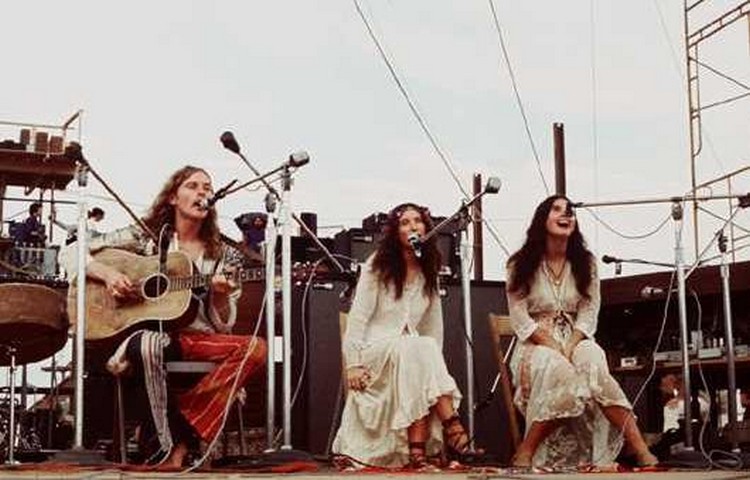
Changing Horses.
In November 1969, The Incredible String Band were preparing to release their fifth album Changing Horses. By then, much had changed over the last few months for The Incredible String Band and especially Robin Williamson and Mike Heron.
Robin Williamson and Mike Heron had split from their respective girlfriends and moved from Newport to Innerleithen, in Peeblesshire, Scotland. This became the new headquarters for The Incredible String Band.
While The Incredible String Band had performed as a quartet on Wee Tam and The Big Huge, the only two full-time members of the band were Robin Williamson and Mike Heron. However, despite the breakup of their relationships, Robin Williamson and Mike Heron confirmed that Licorice McKechnie and Rose Simpson were now full-time members of The Incredible String Band. This wasn’t the only change that occurred.
Recently, The Incredible String Band had fully embraced the controversial cult-like Church Of Scientology. They had been “believers” since the autumn of 1968, when they dined with producer Joe Boyd after a sellout show in New York. That night, Joe Boyd happened to mention that the manager of the restaurant they were dining in had turned his life around since he last seen him. This transformation the manager claimed was down to his recent conversion to the Church Of Scientology. Having told the story, Joe Boyd finished his meal and then left the restaurant to head off on a business trip to California. Little did Joe Boyd realise the consequences of his story.
In Joe Boyd’s absence, The Incredible String Band approached the band’s US agent wanting the payments that they were owed for the mini tour of the East Coast. When the US agent phoned Joe Boyd before paying the money to The Incredible String Band, he decided to find out what the band wanted the money for?
Joe Boyd struggled to contact any of the members of The Incredible String Band, who had checked out of the Chelsea Hotel. By then, Joe Boyd was wondering why The Incredible String Band needed any money as he had given the band an allowance before leaving for California. Eventually, though, Joe Boyd got through to Licorice McKechnie, who explained they needed the money to pay for some “courses” with the Church Of Scientology. This was just a day after Joe Boyd had mentioned the Church Of Scientology. Had they working quickly on their latest potential converts, who just so happened to be high-profile and relatively wealthy musicians?
When Joe Boyd returned the next day, he was met by the four members of The Incredible String Band who were determined that he should write them a cheque for the “courses.” After questioning the group, it turned out that after Joe Boyd left the restaurant, the manager began his pitch on how the Church Of Scientology had transformed his life. The next day, the same restaurant manager invited the four members of The Incredible String Band to its New York “celebrity centre.” By the end of the evening, Robin Williamson and Licorice McKechnie had been converted.
Joe Boyd was reluctant to write the cheques there and then, and managed to convince Mike Heron and Rose Simpson to think things over. They agreed and headed home to Britain, but before long they too had been caught in the Church Of Scientology’s thrall.
Mike Heron’s account differs slightly, and claims that his conversion to the Church Of Scientology came after reading a book on self-improvement. After reading the book, he decided to embrace the Church Of Scientology “philosophies.”
After embracing the controversial and secretive Church Of Scientology, The Incredible String Band’s concerts began to change. It’s claimed that the concerts took on a much more communal and friendlier than before their “conversion.” That wasn’t the only change.
The other thing that changed was The Incredible String Band’s attitude to money. After joining the Church Of Scientology the band began to have weekly meetings to discuss their finances. Despite their newfound spirituality. money began to play an increasingly important role in The Incredible String Band’s lives. Already the members of The Incredible String Band were changing due to their dalliance with the Church Of Scientology, and this would affect their music and lifestyle.
After Robin Williamson and Mike Heron’s conversion to the Church Of Scientology the pair gave up drugs, which previously had been part of their lives. Mike Heron alludes to their decision in White Bird, which was one of two tracks he contributed to Changing Horses. The other was Sleepers Awake!, while Mike Heron and Robin Williamson wrote Dust Be Diamonds. Robin Williamson’s contributions to Changing Horses were Big Ted, Mr. and Mrs and Creation. These six tracks would become Changing Horses, The Incredible String Band’s fifth album.
Recording of Changing Horses had to fit round The Incredible String Band’s touring schedule, but much of recording took place over the summer of 1969, at Sound Techniques studio in London, and at Elektra Records studio in New York. By then, the members of The Incredible String Band were different people from. They now spent time studying spirituality and philosophy, and self-analysing as part of their conversion to conversion to the Church Of Scientology. Their newfound religious belief meant that drugs were a thing of the past for The Incredible String Band during the recording of Changing Horses which marked a series of changes.
The first was that The Incredible String Band started to move from psychedelic folk to a new British folk rock sound and even a hint of the progressive rock influences. Joe Boyd started to be more flexible when it came to the band’s creative process, and very rarely chose to intervene. This allowed The Incredible String Band to develop new ideas. By then Licorice McKechnie and Rose Simpson were playing a more active roles in the band. Licorice McKechnie played the guitar and organ on some tracks, while Rose Simpson’s Simpson’s bass featured on each track on Changing Horses. Just like on previous albums, Robin Williamson and Mike Heron played their usual mixture of traditional and exotic instruments and shared lead vocals. They were no longer as close as they once were, and there was a friction between them. However, by the end of the summer of 1969, the recording of Changing Horses was completed. However, two songs dominated the album, with White Bird and Creation taking up thirty of the fifty minutes on Changing Horses. This was a first for The Incredible String Band.
In October 1969, The Incredible String Band released an edited version of Big Ted as a single. However, it failed to chart, which was disappointment for The Incredible String Band. They had never been a singles band, and were known for the four albums they had released. Soon, four would become five. Before that, the critics had their say on Changing Horses.
Critics on hearing Changing Horses were surprised that The Incredible String Band had moved away from their trademark psychedelic folk sound. It was another eclectic album that marked the start of a new chapter in The Incredible String Band’s career.
Opening was Big Ted, a tongue-in-cheek lament to a pig where The Incredible String Band become a jug band as they combine elements of country, doo wop, ragtime and vaudeville. White Bird is a fifteen minute epic that deals with the changing beliefs of The Incredible String Band. It’s full of subtleties and nuances as this cerebral songs unfolds. Dust Be Diamonds is a quirky song penned by Robin Williamson and Mike Heron where The Incredible String Band combine riddles, religious ideology, excerpts of nursery rhymes, as they play everything from electric guitars to kazoos.
The Incredible String Band roll back the years on Sleepers, Awake! as they sing unaccompanied. It’s a reminder to the early years of their career as they sung in Scottish folk clubs. Mr. and Mrs deals with the ups-and-downs and quirks of family life, and finds The Incredible String Band plugging-in and changing direction. They deploy electric guitars and an organ that accompanies Robin Williamson’s ironic, and sometimes mocking vocal. Closing Changing Horses is Creation, a sixteen minute epic which combined an Eastern raga motif with a soliloquy during this melodic and memorable retelling of the seven days of creation. It’s without doubt one of the highlights of Changing Horses, and ensures the album closes on a high.
On the release of Changing Horses in November 1969, it reached number thirty in the UK. However, after a week, Changing Horses disappeared from the charts. Over the Atlantic, Changing Horses stalled at just 166 in the US Billboard 200. Three weeks later, it disappeared from the charts. This was a disappointment for The Incredible String Band who had starred at the Woodstock Festival just three months earlier.
Having triumphed at Woodstock, The Incredible String Band must have been hoping that Changing Horses would see the band build on their two critically acclaimed albums. However, record buyers didn’t seem to “get” Changing Horses which was an album that saw The Incredible String Band in a reflective mood as they mused on their newfound spirituality, retell the story of Creation and deal with subjects like family life on Mr. and Mrs. Other times, the music was quirky and comedic as The Incredible String Band experimented and changed direction on what was a genre-melting album full of different musical textures.
They came courtesy of The Incredible String Band’s fusion of traditional, Moroccan and Eastern instruments, which were augmented by electric guitars and a Hammond organ on Changing Horses. It found The Incredible String Band move from their former psychedelic folk sound to their new British folk rock sound that hints at progressive rock. There’s also elements of country, doo wop, ragtime and vaudeville on Big Ted, while Creation is full of Eastern sounds. They’re part of what was an eclectic album from The Incredible String Band, which marked the end of their golden period.
It was also the end of The Incredible String Band as a duo, as Licorice McKechnie and Rose Simpson were now full-time members of the band. They would continue to record and play live as band rather than a duo. No longer was it just two friends playing the music that they loved. Instead, The Incredible String Band would spend the rest of their career trying to reach recreate the music they released between their 1966 eponymous debut album and Changing Horses in 1969.
Sadly, never again would The Incredible String Band reach the same heights of creativity again. It was the end of an era, and never again would their star shine as brightly as it had between The Incredible String Band and Changing Horses which nowadays, is regarded somewhat ironically as a cult classic.
Cult Classic: The Incredible String Band-Changing Horses.

DEXTER GORDON-A SWINGIN’ AFFAIR.
Dexter Gordon-A Swingin’ Affair.
Label: Blue Note Records.
Tenor saxophonist Dexter Gordon was only seventeen when he joined Lionel Hampton’s band in 1940, and for the next three years, played alongside Illinois Jacquet and Marshal Royal. However, by 1944 he was a member of the Fletcher Henderson band before featuring in Louis Armstrong and Billy Eckstine bands. Already Dexter Gordon was regarded one of jazz’s rising stars.
In 1945, he featured on recordings by Dizzy Gillespie, and then went on to record under his own name for the Savoy label. This was the start of Dexter Gordon’s long and illustrious recording career.
In late 1946, Dexter Gordon returned home to Los Angeles, the city where he was born on February the ’27th’ 1923 and grew up loving jazz music. He started playing the clarinet when he was thirteen and then switched to the alto saxophone. Then when he was fifteen he began playing the tenor saxophone which he had already made his name playing and would continue to do so.
The following year, 1947, he began recording for Ross Russell’s Dial label, and embarked upon saxophone duels with his friend and fellow tenor saxophonist Wardell Gray. They would become a popular attraction when the pair played live between 1947 and 1952. By then, Dexter Gordon was regarded as one of rising stars of bebop and indeed jazz.
Sadly, Dexter Gordon’s life seemed to spiral out of control during the fifties as heroin addiction took its toll. No longer was he spending as much time in the recording studio nor playing live. Then in 1953, he was sentenced to two years in prison for drugs offences, and when he was released in 1955 Dexter Gordon played on the Stan Levey album, This Time the Drum’s on Me. It was hoped that this was a new start for the thirty-two year old.
One problem Dexter Gordon faced upon his release was that he was unable to obtain a cabaret card in New York because of his criminal record. This meant he was unable to play in any of the city’s nightclubs. For Dexter Gordon this was hugely disappointing.
This was the least of his worries though. Over the next four years while Dexter Gordon tried to resume his career, he was in and out of prison. However, when he left Folsom Prison in 1959 it was for the last time.
As the sixties dawned, Dexter Gordon was back living in LA and was determined to get his career back on track. He had beaten his addiction to heroin, but was still on parole from Chino State Penitentiary. That was when time Julian “Cannonball” Adderley reconnected with Dexter Gordon who was appearing in a production of The Connection, a play about the victims of heroin addiction.
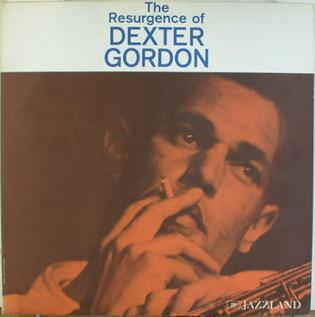
The Resurgence Of Dexter Gordon.
Julian “Cannonball” Adderley wanted to try to persuade Dexter Gordon to return to the studio. After some persuasion a session was booked at United Recording Studios, Los Angeles, on the ‘13th’ of October 1960.
That was where The Resurgence Of Dexter Gordon was recorded with Julian “Cannonball” Adderley producing the session. Six complex compositions were recorded that allowed Dexter Gordon to showcase his ability to improvise as he unleashed a series of breathtaking performances that were a reminder of what he was capable of.
When The Resurgence Of Dexter Gordon was released in late 1960 by Jazzland, critics heaped praise on the album from the fallen idol who who was on the comeback trail. It could be regarded as the album that saved Dexter Gordon’s career as he was at the crossroads and could’ve taken a wrong turning. Thankfully he didn’t and in 1961 Dexter Gordon was signed by jazz’s premier label Blue Note Records. Over the next two years he recorded some of the best albums of his career.
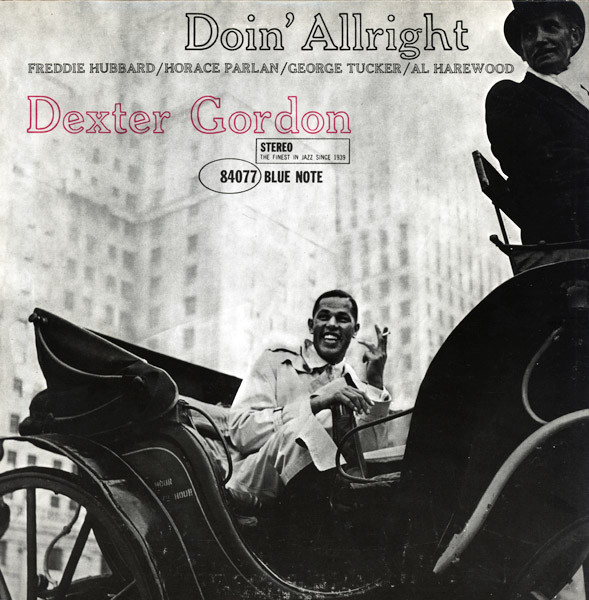
Doin’ Alright.
On the ‘6th’ of May 1961, Dexter Gordon recorded what would become his debut album for Blue Note Records, Doin’ Alright. Five tracks were recorded at the Van Gelder Studio, in Englewood Cliffs, New Jersey, where all his Blue Note Records’ sessions were recorded with producer Alfred Lion. The band featured twenty-two year old trumpeter Freddie Hubbard who like Dexter Gordon nearly two decades earlier, was regarded as one of jazz’s rising stars. He was part of an all-star band.
They played their part in the sound and success of Doin’ Alright which was released to critical acclaim two months later in August 1961. Dexter Gordon wasn’t just Doin’ Alright his comeback continued apace at jazz’s premier label.
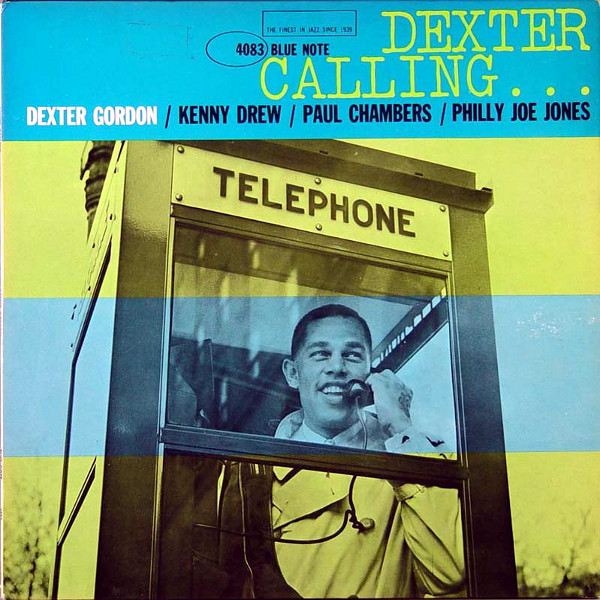
Dexter Calling…
Just three days after recording Doin’ Alright, the comeback king was back in the studio recording Dexter Calling…on the ‘9th’ of May 1961. This time, Dexter Gordon led a quartet which featured none of the musicians that played on his last album. Despite that, this new band played their part in what was one of the finest albums of Dexter Gordon’s career.
Dexter Calling…was released in late January 1962, and featured Soul Sister, I Want More and Ernie’s Tune which were written for the Los Angeles production of Jack Gelber’s 1960 play The Connection. It was vintage Dexter Gordon with the thirty-eight year old tenor saxophonist back to his best on that not only swung, but was full of subtleties and surprises. Dexter Calling…was called an essential album from Dexter Gordon who was making up for lost time.
He recorded seven albums between 1961 and 1964. This included Landslide which was recorded during 1961 and 1962, but wasn’t released until 1980. However, the next two albums Dexter Gordon recorded were classics, Go! and A Swinging Affair.
Go!
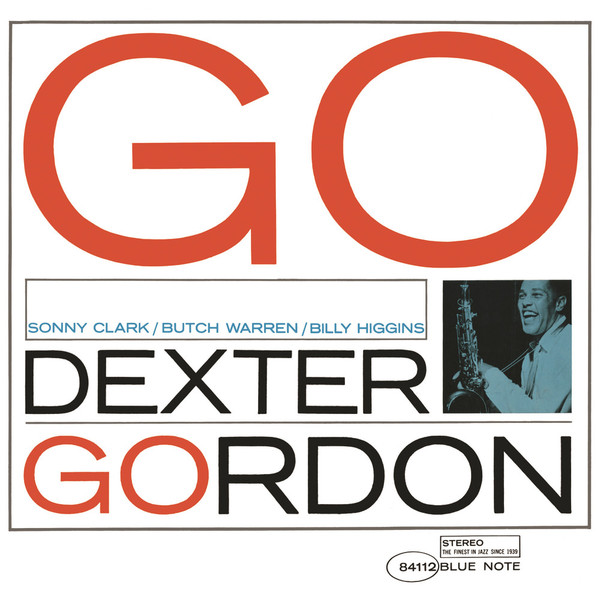
When Go! was recorded on August the ’27th’ 1962, it was another quartet recording featuring drummer Billy Higgins, bassist Butch Warren and pianist Sonny Clark. They made their way to the Van Gelder Studio, and Rudy Van Gelder recorded the album in what was later described as an informal setting.
This brought out the best in this latest quartet, and from the opening bars of Cheese Cake it was apparent that they had brought their A-game to the studio as the quartet combined hard bop and modal jazz. However, it was Dexter Gordon who plays a starring role as he continues his comeback. He plays with confidence and giving a series of emotive, impassioned and energetic performances. The rest of the band raises their game and when Go! was released in December 1962 it was hailed as his finest album and nowadays, is regarded as a jazz classic. So is the album Dexter Gordon recorded two days later, A Swingin’ Affair which has just been reissued by Blue Note Records.
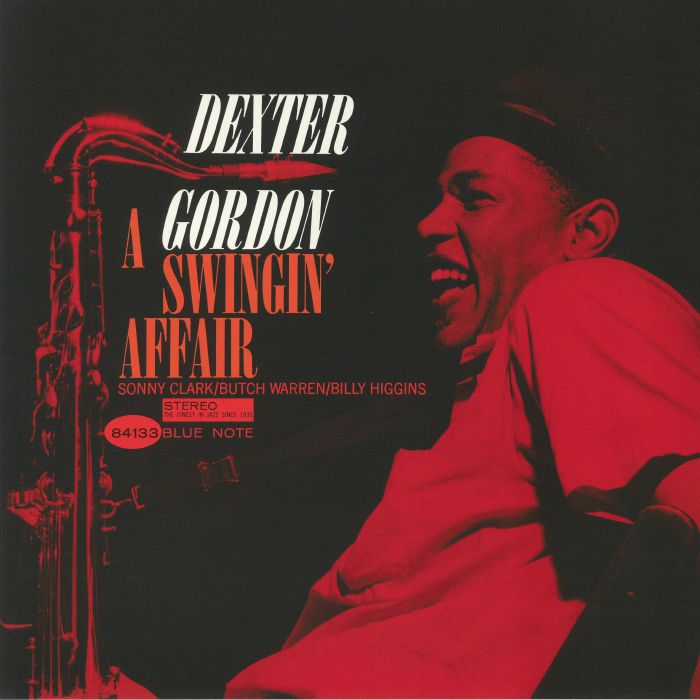
A Swingin’ Affair.
There was no rest for Dexter Gordon who two days after recording Go!, made the return journey to the Van Gelder Studio, where he and the same quartet were greeted by Rudy Van Gelder and producer Alfred Lion.
This time around, Dexter Gordon was going to record two of his own compositions Soy Califa and McSplivens. Bassist Butch Warren had written The Backbone while the rest of the album were cover versions. They were Billie Holiday and Arthur Herzog Jr’s Don’t Explain, Nacio Herb Brown and Gus Kahn’s You Stepped Out Of A Dream and Until The Real Thing Comes Along. These tracks were recorded by the same quartet that recorded Go!
The quartet featured drummer Billy Higgins, bassist Butch Warren and pianist Sonny Clark and recorded the six tracks during a one day session. Little did they know that they had recorded two classic albums in the space of two days.
Not long after the recording of A Swingin’ Affair, Dexter Gordon left New York and moved to Paris, which was his home for the next fourteen years. He was happier in Paris, which was a much more tolerant company. There wasn’t the same racism that Dexter Gordon had experienced in New York, and he liked that the French people valued jazz musicians.
Despite the success of Go!, Blue Note Records seemed in no hurry to release A Swingin’ Affair. They album lay unreleased for over two years and during that period Dexter Gordon recorded more albums.
This included Our Man In Paris, an album of classics which was released in December 1963 and now is regarded as another classic album from Dexter Gordon. The other album he recorded was One Flight Up on June the ‘2nd’ 1964. It wasn’t released until September 1965, and by then, A Swingin’ Affair had been released.
When A Swingin’ Affair was released in October 1964, it was to widespread critical acclaim. Dexter Gordon was on a roll and critics called the album one of his finest offerings. Nowadays, A Swingin’ Affair is regarded as a classic and a reminder of one of the great tenor saxophonists at the peak of his powers.
A Swingin’ Affair opens with the Afro Cuban tinged Soy Califa, where pianist Sonny Clark and Dexter Gordon play starring roles when the solos come round. In Dexter Gordon’s case he eschew the opportunity to improvise and stays true to the melody as the track swings and then some. Don’t Explain is the first of the three standards on the album. Here, Sonny Clark’s playing is slow and understated, and Dexter Gordon also plays slowly and within himself. What follows is a beautiful and romantic cover of a much-loved standard for lovers, and those who have loved and lost. You Stepped Out Of A Dream is an oft-covered standard which Dexter Gordon’s quartet reinvent. To do this, they invert the melody in the bridge and add Latin rhythms throughout this swinging and memorable cover where Dexter Gordon and pianist Sonny Clark play starring roles.
For many critics, Butch Warren composition The Backbone was the highlight of the album. It’s tailor made for the band and is hard bop albeit with a Bossa nova influence. Not for the first time pianist Sonny Clark is at the heart of everything that is good. Despite that, Dexter Gordon just manages to outdo him with a solo where he plays with restraint, fluidity and an inventiveness. It Will Have To Do Until The Real Thing Comes Along is a beautiful wistful remake of this standard. Again, the Dexter Gordon and Sonny Clark play starring roles in what’s a heartachingly beautiful cover. McSplivens is bright and breezes along as Dexter Gordon and his quartet ensure that the album closes with what’s definitely a A Swingin’ Affair.
When A Swingin’ Affair was released in October 1964, Dexter Gordon’s comeback was complete and he was enjoying one of the most successful periods of what was a long and successful career. It seemed he could do no wrong during the Blue Note Records’ years and released a string of classic albums. This included the two albums he recorded in two days, Go! and A Swingin’ Affair. On both albums, Dexter Gordon leads a quartet that compliment him perfectly and play their part in the sound and success of two albums that are now regarded as jazz classics. Go! and A Swingin’ Affair are the perfect way to discover Dexter Gordon, one of the greatest tenor saxophonist in the history of jazz, and the comeback king who came back from the brink.
Dexter Gordon-A Swingin’ Affair.
GARD NILSSEN’S SUPERSONIC ORCHESTRA-IF YOU LISTEN CAREFULLY THE MUSIC IS YOURS.
Gard Nilssen’s Supersonic Orchestra-If You Listen Carefully The Music Is Yours.
Label: Odin Records.
To say that bandleader, composer, drummer and percussionist Gard Nilssen is a prolific musician is something of an understatement. Since 2007, he has played on over seventy albums by all types of groups. Mostly, it’s been with small groups including the trios Acoustic Unity, Amgala Temple and Bushman’s Revenge. However, Gard Nilssen has also played with two big bands Zanussi Thirteen and the critically acclaimed Trondheim Jazz Orchestra. They showcase a versatile, inventive and innovative drummer who can seamlessly switch between and fuse disparate styles as if at the flick of a switch. Gard Nilssen is one of Norway’s top jazz drummers and is still just thirty-six.
Recently, he returned with anther new album If You Listen Carefully The Music Is Yours which marks the debut of Gard Nilssen’s Supersonic Orchestra. It was released on Odin Records, and was recorded live at the Molde International Jazz Festival in 2019, where Gard Nilssen was the Artist In Residence and led his new big band.
This is not just any big band. Gard Nilssen’s Supersonic Orchestra is very different to the rest and features a unique lineup. There’s three drummers and a trio of double bassists as well as ten horn players, mostly saxophonists. It was an ambitious project, but if anyone could make it work it was Gard Nilssen.
He as born in Skien, Telemark, Norway on the ‘24th’ of June 1983, and has been playing the drums since an early age. “I began drumming when I was two…My father, grandfather, uncle and two cousins played drums. There were drums everywhere. It was a jazz-loving family and I grew up listening to the classic big-band format with Count Basie. I’ve always loved the sound of a big band.”
Even today, Gard Nilssen says that Jo Jones, the drummer with the Count Basie Orchestra between 1934–1948, is still one of his favourite musicians. He would influence the music he went on to make.
Before that, Gard Nilssen grew up in the seaport of Skien, which was where he played in his first band with his friend Thomas Johansson who later, became a member of Gard Nilssen’s Supersonic Orchestra: “When I was eight, I started playing in a marching band in my hometown along with my best friend, the trumpeter Thomas Johansson. Later, when we were teenagers, we also played in a couple of big bands, one at high school and another in town.”
For Gard Nilssen, the attraction of a big band is how many instrumental combinations are offered by the extended lineups. He explains: You can get so many different sounds and textures and constellations inside a big band, it’s practically infinite…And if the musicians are as fantastic as those in Supersonic, your arrangements can be dynamic rather than rigid-the music can be wilder and more spontaneous than is standard in big bands. In Supersonic there is plenty of room for the musicians to improvise and be free in the music. That is what we’re best at after all.”
Joining Supersonic was all in the future for Gard Nilssen in 2003, which was when he enrolled in the Jazz program at the Trondheim Musikkonservatorium in 2003. It’s a prestigious course and has produced many of Norway’s top musicians.
Having graduated from the Trondheim Musikkonservatorium, Gard Nilssen embarked upon a career as a professional musician. Over the next few years, he cofounded Puma, Bushman’s Revenge, Astro Sonic and Spacemonkey and founded Gard Nilssen’s Acoustic Unity, and was also a member of Lord Kelvin and Cortex. The rest of his time was spent working with other artists and groups. This included Susanne Sundfør, Zanussi Five, Mathias Eick, Trondheim Jazz Orchestra, Jens Carelius and Morten Myklebust. Gard Nilssen was one of the hardest working Norwegian musicians.
Despite that, in 2019 he accepted the invitation to become Artist In Residence at the Molde International Jazz Festival. It’s always been regarded as a showcase for audacious, adventurous, ambitious, experimental and innovative music. This described the music that Gard Nilssen’s Supersonic Orchestra were making. They were perfect for the Molde International Jazz Festival.
It was decided that when Gard Nilssen’s Supersonic Orchestra took to the stage at the Molde International Jazz Festival, that the tapes would be running and their performance recorded.
That night, the all-star band worked their way through six tracks which were written and arranged by Gard Nilssen and Acoustic Unity’s saxophonist,André Roligheten, who the bandleader speaks highly of. “André is a genius. He took this project to another level. Making music with him is always pure pleasure.”
And so is listening to the six tracks that they’ve written over the years and arranged for If You Listen Carefully The Music Is Yours. This includes Bøtteknott Elastic Circle and Jack which they wrote for Acoustic Unity. They’re part of
a six track high octane workout where Gard Nilssen’s Supersonic Orchestra rethink the relationship between pre-composition and improvisation in orchestral jazz. Sometimes, they dare to flout musical convention as they push musical boundaries to their limits and sometimes beyond during the six tracks that last sixty-six minutes.
The basis for If You Listen Carefully The Music Is Yours album is free improvisation and American European and Scandinavian avant-garde jazz as well as Afrobeat experimental jazz, free jazz, fusion and rock. Add to the musical equation three bassists and three drummers. This has its advantages.
And it’s not merely about sheer volume or traction. Gard Nilssen explains that: “Having three drummers gives each one of us more space to play around the beat.“We can go in and out of it, be more creative and add colours to the music. It means Håkon [Johansen], Hans [Hulbækmo] and I don’t have to be timekeepers all the time, which we never wanted to be in the first place. You don’t really need much timekeeping with this band anyway. You just press play and go.”
Gard Nilssen’s Supersonic Orchestra isn’t the first to deploy three bassists on an album. This is something that The Art Ensemble Of Chicago did on their 2019 album We Are On The Edge which was the fiftieth anniversary celebration of the free jazz pioneers. They’re one of number of iconic groups and artists from jazz’s past that have influenced Gard Nilssen’s Supersonic Orchestra on If You Listen Carefully The Music Is Yours.
Others influences are apparent from the opening bars of the album opener Premium Processing Fee.This includes Sun Ra’s Arkestra untamed blazing, squealing, soaring space horns as the expanded rhythm section propel the arrangement along. Later, as the arrangement swings, a saxophone solo seems to pay homage to Eric Dolphy as it is played with speed, power and control. The sound of the Orchestra in full flight is an impressive one. Then with two minutes left it’s all change and the tempo drops and improvisation is the order of the day, as a myriad of naturalistic, eerie and otherworldly sounds are added to what’s now become an experimental soundscape and shows that it’s a case of expect the unexpected on If You Listen Carefully The Music Is Yours.
Welcome additions to the album are the orchestral interpretations of two of Acoustic Unity’s tracks. The first is Bøtteknott Elastic Circle where the Orchestra tease the listener playing slowly before bursting melodically into life. Now that they’ve been let off the leash there’s no stopping them and they play with speed, power and inventiveness as horns rasp, bray, growl and intertwine. The playing is tight and swings as the tempo increases and a lone saxophone is played with power, control, fluidity and feel before gradually other members of the freewheeling Orchestra enter the fray and play with freedom as the music becomes joyous, melodic and truly memorable. However, with two minutes left the tempo drops and the arrangement becomes understated and ruminative as is another twist in the tale.
Initially, Teppen Dance is understated with just the basses playing. They snap as they’re played firmly and with confidence. It’s as if they’re trying to grab the listener’s attention as they hint at what’s to come. Then at 4:41 as a beautiful sultry saxophone enters and brings to mind another musical era and jazz’s golden age. Meanwhile, waves of beautiful, emotive and filmic music unfold and paint pictures as the listener enjoys eleven stunning and magical minutes of moving music.
Drums rumble and combine with percussion and crashing cymbals as The City Of Roses begins to reveal its secrets. Mournful horns play, drums add drama and cymbals crash before a lone bass scrabbles and plays almost hesitantly and gives way to a clarinet. It squeaks, screeches and soars melodically before briefly the horns sweep in and soon intertwine, quiver, shiver and shimmer before reaching a crescendo and dissipating.
Jack is the other Acoustic Unity tracks that is reinvented on If You Listen Carefully The Music Is Yours. For just over two-and-a-half minutes the basses and percussion combine to create an understated fusion of avant-garde and experimental music before the horns and rhythm section enter and head in a direction marked jazz. Suddenly, the track is transformed. Especially during a saxophone solo which is played with speed, fluidity, power and precision, then briefly heads in the direction of free jazz. Later, machine gun free horns punctuate the arrangement which goes on to incorporate hip swaying Latin percussion as the track heads towards a high kicking crescendo.
Closing If You Listen Carefully The Music Is Yours is the barnstormingAfrobeat-tinged Bytta Bort Kua Fikk Fela Igjen. It’s a fourteen minute epic and Fela Kuti’s influence can be heard during parts of the track that closes what’s an adventurous, ambitious and innovative album of genre-melting music.
Fela Kuti is just the latest artist who has influenced Gard Nilssen’s Supersonic Orchestra on Gard Nilssen’s Supersonic Orchestra. Others included The Art Ensemble Of Chicago, Sun Ra’s Arkestra, Eric Dolphy and the mid-sized lineups Charles Mingus Jazz Workshop. Then the influence of The John Coltrane Quartet’s 1961 album Africa/Brass can be heard drying the album. Closer to home, the sound of Trondheim Jazz Orchestra permeates parts of the album. So does Japanese avant-garde jazz pianist, composer and big band leader Satoko Fujii.
All these disparate influences play their part in the sound and success of Gard Nilssen’s Supersonic Orchestra’s audacious, adventurous and ambitious debut album If You Listen Carefully The Music Is Yours, which is a captivating and often high octane musical adventure full of twists and turns and surprises aplenty.
Gard Nilssen’s Supersonic Orchestra-If You Listen Carefully The Music Is Yours.
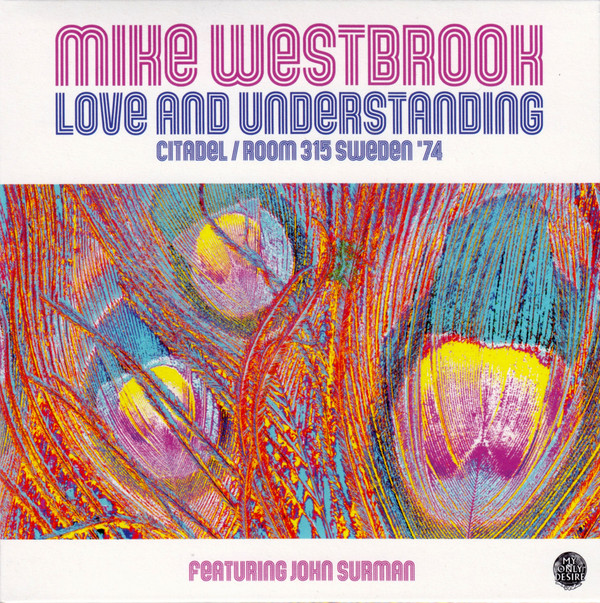
MIKE WESTBROOK-LOVE AND UNDERSTANDING: CITADEL/ROOM 315 SWEDEN 74.
Mike Westbrook-Love and Understanding: Citadel/Room 315 Sweden 74.
Label: My Only Desire Records.
By 1974, composer and pianist Mike Westbrook was thirty-eight and one of the leading lights of the British jazz scene. He had come a long way since he formed his first band in 1958 when he was an art student studying painting. That was how he came to meet Lou Gare, Keith Rowe and John Surman.
Four years later, in 1962, Mike Westbrook moved to London, and was soon leading bands big and small. He played numbers venues including Ronnie Scott’s original jazz club The Old Place as well as the Little Theatre Club at Garrick Yard, St Martin’s Lane. Along with Chris McGregor’s Brotherhood of Breath, Mike Westbrook shared the role of the house band at Ronnie Scott’s Jazz Club. All this was part of Mike Westbrook’s apprenticeship and stood him in good stead.
Throughout the sixties, he played an important part in the development of jazz in Britain, and led The Mike Westbrook Concert Band between 1967 and 1969. It featured anywhere between ten and twenty-six musicians and included some of the top British jazz musicians, including his friend John Surman.
In 1967, The Mike Westbrook Concert Band was signed to the Deram label and released the first of five albums they released between 1967 and 1970. This included 1967s Celebration and in 1968, which was the year they appeared at the Montreux Jazz Festival, The Mike Westbrook Concert Band released their much-anticipated sophomore album Release. The following year 1969, two albums Marching Song Volumes 1 and 2 were released and featured one of the best British jazz bands at the peak of their powers. Sadly, their swan-song was 1970s Mike Westbrook’s Love Songs and by then, Mike Westbrook was embracing fusion which was growing in popularity.
As the seventies dawned, Mike Westbrook embarked upon several new projects. Adrian Mitchell asked him to work on his musical Tyger, which was a celebration of William Blake which was staged by the Royal National Theatre in 1971.The same year Tyger was released by RCA in 1971.
Another project that was released in 1971 was Metropolis, which was based on Mike Westbrook’s initial impressions of visiting London. This was a project that Mike Westbrook had been working on for a couple of years and at last it bore fruit.
The BBC broadcasted The Mike Westbrook Concert Band playing Metropolis live from Ronnie Scott’s Jazz Club on Tuesday the ’25th’ November 1969. Just a couple of months later, on the ‘9th’ of January 1970, an enlarged lineup of The Mike Westbrook Concert Band recorded Metropolis for BBC Radio 3. When Metropolis as released in 1971, this was just the latest ambitious release from Mike Westbrook.
During 1972 and 1973, Mike Westbrook was busy with his jazz-rock band Solid Gold Cadillac. It featured vocalist and trumpeter Phil Minton, who would lend his voice to many of Mike Westbrook’s later projects. However, the following year 1974, Mike Westbrook was reunited with another of his friends for a new project.
In 1974, Mike Westbrook was commissioned by Sveriges (Swedish) Radio to write what became Citadel/Room 315, which was a one hour-long, eleven track suite, which featured John Surman as the lead soloist.
Having completed Citadel/Room 315, Mike Westbrook travelled to Sweden perform and conduct it for the first time, live in concert. Joining his was John Surman who would play baritone and soprano saxophone, as well as bass clarinet. They would be accompanied by an all-star band that featured some of Sweden’s finest and most experienced musicians.
This was The Swedish Radio Jazz Group, a sixteen piece group that was led by saxophonist and clarinetist Arne Domnérus and Argentinian trumpeter Americo Bellotto. Members of this multi-talented group had accompanied everyone from Stan Getz and George Russell to Monica Zetterlund and Jan Johansson.
Their number included drummer Egil Johansen, drummer, percussionist and vibraphonist Jan Bandel, bassist Stefan Brolun, guitarist Rune Gustafsson and pianist Bengt Hallberg. The horn section included trombonist Lars Olofsson, bass trombonist and tubaist Sven Larsson, trumpeter and alto horn player Jan Allan, tenor saxophone and flautist Claes Rosendahl and trumpeter Bertil Lövgren who also played flugelhorn. Many musicians were multi-instrumentalists flautist Lennart Åberg who played tenor and soprano saxophone, while Lennart Åberg could play tenor and soprano saxophone as well as flute. Erik Nilsson would switch between baritone saxophone, bass clarinet and flute, and trumpeter Håkan Nyquist played flugelhorn and French horn.
While Mike Westbrook was going to conduct The Swedish Radio Jazz Group, he would play electric piano on Citadel/Room 315. His friend John Surman would switch between baritone and soprano saxophone and bass clarinet during the eleven track suite that lasted one hour.
During Citadel/Room 315, Michael Westbrook his star soloist John Surman and The Swedish Radio Jazz Group flit between disparate musical genres during this eclectic suite. There’s everything from fusion and funk to avant-garde, ballads, big band and orchestral themes.
Michael Westbrook understands the importance of making an impression and the opening track Overture certainly does that. A lone piano is joined by blazing horns and soon, the arrangement is swinging as this multitalented band kick loose and set the bar high for the rest of Citadel/Room 315. Then on Construction, elements of fusion, funk and library music can be heard before the track threatens to head in the direction of free jazz during this eight minute epic jam.
Pistache is something of an emotional roller coaster and initially is dark and dramatic before becoming understated and thoughtful sounding and later becomes takes on a melancholy sound. As Love and Understanding gradually unfolds and the tension builds during a truly beautiful and ruminative sounding cinematic track.
Quite different is Love and Understanding which is best described as funky big band music with John Surman playing a starring role. One of the most beautiful sounding tracks is the ballad Tender Love, where the band play within themselves on one of the album’s highlights. It’s all change on Bebop de Rigueur where the band go up through the gears and then kick loose and swing during this all action workout.
The piano led Pastarole lasts 14:40 and initially, is pensive sounding and invites reflection but eventually, Bertil Lövegren‘s trumpet solo takes centre-stage. Soon, the tempo increases as horns intertwine and are played with speed and power during what’s one of the most ambitious pieces on Citadel/Room 315. So is Sleepwalker Awaking In Sunlight where John Surman’s solo takes centrestage before guitarist Rune Gustafsson enjoys his moment in the sun during this truly memorable freewheeling track.
Initially, there’s a sense of melancholia as Outgoing Song unfolds and it’s always there even when the horns soar high above the arrangement before it dissipates. Then Finale sees Mike Westbrook, John Surman and The Swedish Radio Jazz Group close the album on a high. It’s no wonder that they receive a standing ovation from an appreciative audience. That is no surprise.
When Mike Westbrook travelled to record Citadel/Room 315 for Sveriges (Swedish) Radio he was one of the leading lights of British jazz. He composed, conducted and played electric piano during the performance of Citadel/Room 315 and was joined by lead soloist John Surman a multitalented band. They played with a freedom, energy and sometimes there was a rawness in their playing. The result was a very different album to the polished studio album, Citadel/Room 315 that was released in 1975.
Sadly, the recording of Citadel/Room 315 from 1974 has lain in the vaults of Sveriges (Swedish) Radio for forty-six years. It looked as if this hugely important concert would never be heard by jazz fans. That was until now.
The concert has just been released as Love and Understanding: Citadel/Room 315 Sweden 74, by the London-based label My Only Desire Records. It’s a welcome release that stars Mike Westbrook and John Surman who are two titans of British jazz at the peak of their considerable creative powers. They both play starring roles in the sound and success of Love and Understanding: Citadel/Room 315 Sweden 74, which is a must-have for anyone who is interested in jazz, and especially British jazz. Quite simply, Love and Understanding: Citadel/Room 315 Sweden 74 is an album that belongs in their collection.
Mike Westbrook-Love and Understanding: Citadel/Room 315 Sweden 74.
LARRY ROSE BAND-THE JUPITER EFFECT.
Larry Rose Band–The Jupiter Effect.
Label: BBE Music.
Release Date: ‘17th’ April 2020.
Usually, at this time of the year, dedicated crate-digging DJs and discerning record collectors spend much of their spare time searching for oft-overlooked albums and long lost hidden gems in back-street record shops, thrift stores and dusty warehouses. This is the natural habitat of the real life vinyl detective. It’s where what’s akin to a treasure hunt takes place as they scour the bargain bins for rarities hoping to strike vinyl gold. Sadly, with so many other vinyl detectives pounding the same beat, striking gold gets more difficult with each passing week.
As the vinyl detective returns home, they log onto to their computers and spend evenings continuing their search for vinyl gold. Some are specialists who spent their time searching for free jazz, psychedelia or seventies progressive rock. However, others are just looking for anything that looks unusual, esoteric or interesting, and will even take a chance on an album cover. Each vinyl detective has their own approach to online crate-digging. Sometimes this pays off and they strike vinyl gold and discover a hidden gem that failed to find an audience when it was first released.
For a record collector or DJ, it’s a huge thrill to unearth a long-lost hidden gem and the next stage is to share their latest discovery. Many DJs will include a track in their DJ sets or play it on their radio shows. They may even write about it social media or blogs. However, some DJs want a wider audience to be able to hear the album that they’ve discovered.
That was the case when record collector, compiler, DJ and music historian DJ Amir, unearthed The Larry Rose Band’s 1978 rare jazz fusion album The Jupiter Effect. He brought it to the attention of BBE Music who will reissue The Jupiter Effect on the ‘17th’ April 2020. Forty-two years after it was released The Larry Rose Band’s debut album will be available once again. It was recorded in Amsterdam by American multi-instrumentalist Larry Rose.
He was born in Indiana, but his parents moved to the Windy City of Chicago, and he was brought up in Waukegan. However, when the Rose family moved to Oakland, in California Larry discovered and embraced music.
Soon, Larry Rose was listening to an eclectic selection of music which included everything from The Beach Boys to John Coltrane. However, when he heard Mose Allison’s piano playing that was a game-changer. Suddenly, Larry Rose wasn’t content to listen to music and wanted to be able to play the piano.
By the time Larry Rose began taking music lessons he was in his early teens. He started off learning to play the piano but when he was in junior high school, like many teenagers, he decided to switch to guitar. Not longer after this, he had joined his first band, The Cheques.
While the nascent band played mostly cover versions of songs from the late-sixties, already the members of The Cheques were already writing their own songs. These they played during their sets. However, for Larry Rose being a member of The Cheques was a only a stepping stone.
When he left the Cheques he joined The Liquid Blues Band, which featured two up-and-coming musicians, bassist Lex Silva who would later join John Lee Hooker’s band, while Hammond organist Clay Cotton would play in Charlie Musslewhite’s group. That was all in the future.
With such a talented lineup, it was no surprise that The Liquid Blues Band were soon regarded as rising stars locally. They were soon familiar faces on the local live scene, and after serving their musical apprenticeship, played at The Fillmore West, in San Francisco. Alas, this was as good as it got for the band who never released an album. However, Larry Rose’s next band would.
Music was now the most important thing in Larry Rose’s life. More so than his college course. After graduating high school, Larry Rose had enrolled at UC Berkeley, and was studying psychology. He was in his senior year when he decided to drop out, and go travelling.
When his parents heard Larry Rose’s plans they were hugely disappointed, as their son was so close to graduating from one of America’s most prestigious universities. Instead, he had bought a oneway ticket to Europe, and was planning to travel and explore the continent and maybe even, play some music along the way.
With his oneway ticket Larry Rose left America and travelled to Europe, where his money and luck ran out in the Dutch capital, Amsterdam.
He wasn’t the first American musician this happened to. The same thing happened to singer-songwriter Mike Tingley in 1968, and he had recorded and released his cult classic in Amsterdam. Maybe history would repeat itself a decade later?
Down on his luck, Larry Rose moved into one of the many condemned houses in Amsterdam. They were known as cracked houses, and in the mid-seventies, if a Dutch citizen was living in one, they were obliged to provide electricity and water. This became home for Larry Rose who studied the Dutch language and gave guitar lessons to pay the rent. It must have seemed like a long way from UC Berkeley.
Not long after arriving in Amsterdam, Larry Rose was in a club in Zaandam where he met fellow countryman Chuck Pyle. He soon became friends with the singer-songwriter and Zen Cowboy. Soon, Larry Rose had convinced his friend to let him join him when he played live, and he played the piano and sang backing vocals.
This was the start of an adventure for the pair who toured Holland. Larry Rose also played keyboards, organ and piano on Chuck Pyle’s eponymous debut album. It was released later in 1976on Bubble a Dutch record label, but unfortunately the track listing was wrong. Despite that, it was the start of a long and successful career for Chuck Pyle, and marked the recording debut of Larry Rose.
By then, a new chapter had begun for Larry Rose. In late 1975, he met American songwriter and bassist Stanley Davis and the pair decided to form a band together. It became The Larry Rose Band, and the earliest lineup featured drummer Theo Wanders and guitarist and vocalist Look Schrivers. The new band initially toured Holland and Germany playing rock ’n’ roll covers. However, this was just another stepping stone for Larry Rose.
In 1977, Larry Rose and Stanley Davis decided to create a breakaway group, and they were joined by drummer and percussionist Toon Janssen and saxophonist Theo van Halen. This was the new lineup of The Larry Rose Band who wanted to make a very different type of music.
Larry Rose said: “We wanted to go in a much more jazz, funk and world-beat direction.” This was a far cry from playing covers of old rock ’n’ roll songs with the first lineup of The Larry Rose Band. It was the start of a new chapter.
So was the arrival of vocalist Paul Pinto, a friend of Larry Rose’s from Oakland. He had originally traveled to Amsterdam to visit his friend, but was then invited to join The Larry Rose Band in the studio when they recorded their debut album, The Jupiter Effect.
It featured eight tracks, including the Larry Rose composition Lucina, and Who Conned The Lady which he wrote with Stanley Davis. He also contributed Papa, Blues Are Dyin’, Looking, Oregon and The Sand. New vocalist Paul Pinto penned Nana, and these tracks were recorded in March 1978.
Joining The Larry Rose Band who had decided to produce their debut album at at Crossroads Studios was engineer Wim Pulles, and were four of their musical friends. This included trombonist Rinie Plant, trumpeter Victor Bonkent, tenor saxophonist Guus Tongelder and accordionist Ellen Boeren who augmented the band on The Jupiter Effect. This they hoped would help them achieve sound they envisaged and wanted on The Jupiter Effect. Sadly, this wasn’t the case.
Larry Rose wasn’t happy with the album and phoned British producer Robin Freeman who was a friend. They decide to book studio time at Relight Studios and rerecorded some of the vocal tracks and remixed the album. This time, Larry Rose was happy with The Jupiter Effect which was released later in 1978.
Opening The Jupiter Effect is Papa, which starts off as a soulful slice of jazz before heading in the direction of fusion as the tempo rises and The Larry Rose Band showcase their versatility and skill. It’s all change on The Blues Are Dyin’, which is a wistful bluesy ballad that features a soul-baring vocal from Paul Pinto. Then Nana features a heartachingly beautiful saxophone solo that’s sure to tug at the heartstrings. Looking is closes side one and like Papa, the lyrics tell a story. A bluesy guitar and percussion combine on this folk-tinged song where Paul Pinto delivers an emotive vocal and sounds as if he’s been inspired by James Taylor.
Who Conned The Lady opened side two and is an uptempo track. Paul Pinto’s vocal plays an important role before the rest of The Larry Rose Band enjoy the opportunity to stretch their legs and combine jazz-funk, fusion and Latin. Playing a starring role is Paul Pinto’s guitar before the horns before drummer and percussionist Toon Janssen unleashes a stunning solo as The Larry Rose Band showcases their considerable talents. A chiming guitar and jangling piano usher in an impassioned vocal, which is accompanied by soaring harmonies another beautiful ballad. A lone jazzy piano plays and pounds before being joined by cymbals as Lucina unfolds and melancholy horns are added. Sadly, all too soon this memorable instrumental is over leaving just a memory of two ruminative minutes. The Larry Rose Band save one of the best until last on The Jupiter Effect. Sand is a beautiful sultry sounding song that meanders melodically along and leaving the listener wanting to hear more from The Larry Rose Band.
The Jupiter Effect was the only album that The Larry Rose Band released during the four years that they were together. The band spilt-up in 1979 after four years together, and by then, they had played in venues all over Holland. There was no acrimony, it was a case of needs must.
Larry Rose’s parents were getting older and he was an only child, and headed home to be nearer them. He had enjoyed his European adventure and made music along the way and led The Larry Rose Band when they recorded The Jupiter Effect which showcases a talented, versatile and youthful group as they switch between and fuse disparate musical genres on this long-lost hidden gem of an album that is a prized possession amongst discerning record collectors and DJs.
Nowadays, original copies of The Jupiter Effect are almost impossible to find. It’s an album that that’s on many a crate digger’s wants list and is likely to remain there unless they’re incredibly lucky and find a copy in the bargain bin of a second hand record shop or in a box of old vinyl in the corner of thrift store. That would be like striking vinyl gold, and is every crate-digger’s dream.
Sadly, that is unlikely nowadays as record shops and thrift stores check the prices of albums before putting them out on the racks. If they see a rarity they tend to price accordingly. A copy of The Jupiter Effect would likely to be priced between £120 to £175 and will be beyond the budget of all but a few record collectors.
Thankfully, not any more as BBE Music will reissue The Jupiter Effect on CD, LP and digital on the ‘17th’ April 2020. This is the first time that the album has been reissued since it was released in 1978, and is a welcome reissue. It allows a new generation to discover the delights of The Larry Rose Band’s debut album The Jupiter Effect, which features a group at the peak of their powers as they seamlessly switch between uptempo tracks and beautiful ballads.
Larry Rose Band–The Jupiter Effect.
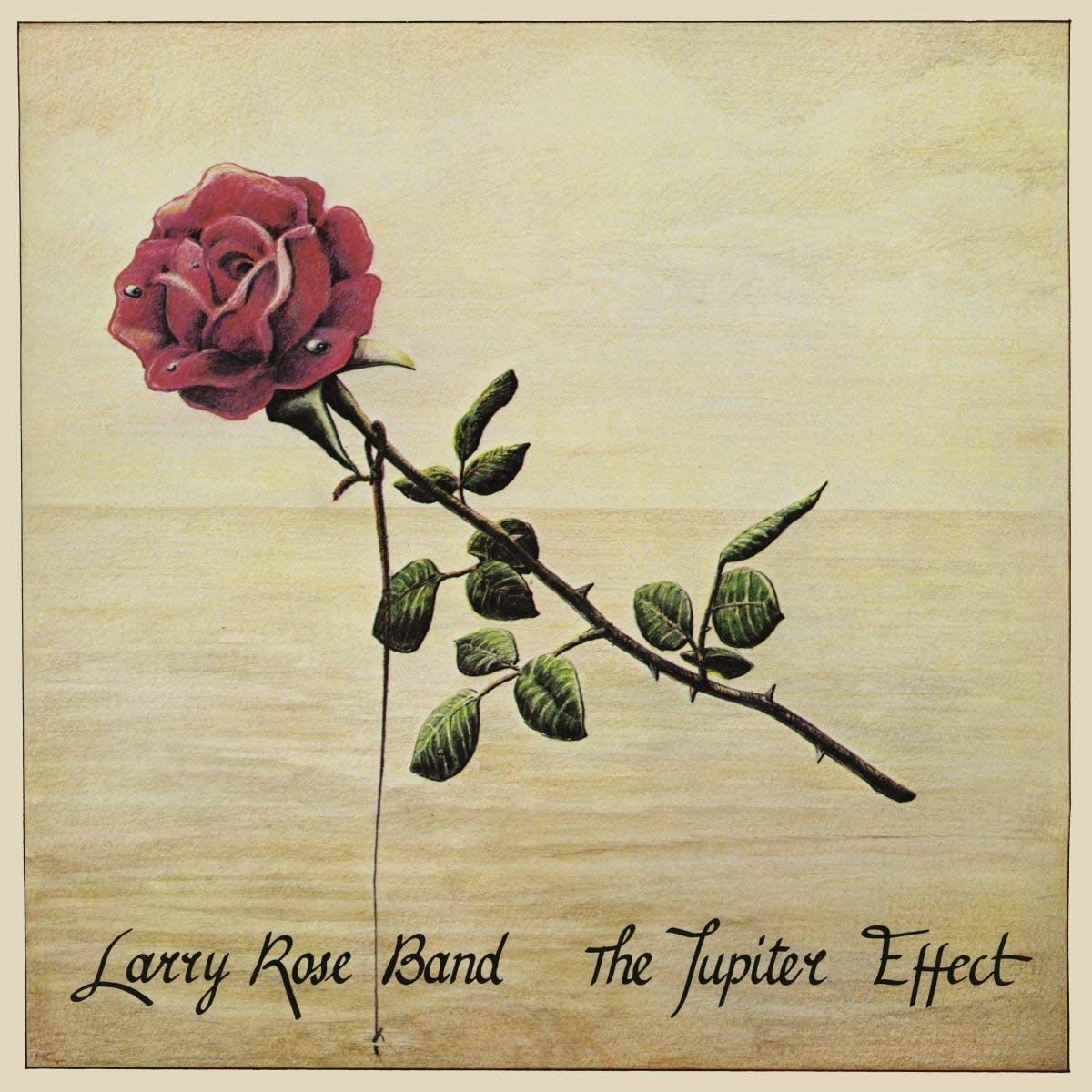
CULT CLASSIC: THE ZODIAC-COSMIC SOUNDS.
Cult Classic: The Zodiac-Cosmic Sounds.
By 1967, many critics and record buyers regarded Elektra Records as a folk rock label that had released albums by some of the genre’s finest exponents including Judy Collins, Love, Tom Rush and Tim Buckley. Many of these albums would later become important and influential albums, and some nowadays, are regarded as genre classics. However, some people’s perception of Elektra Records was about to change in May 1967 with the release of The Zodiac’s album Cosmic Sounds, which became a cult classic.
The Zodiac’s Cosmic Sounds was a groundbreaking concept album which featured twelve tracks that were described as psychedelic mood music. It featured a myriad of exotic and electronic instruments and spoken prose that came courtesy of Cyrus Faryar. Cosmic Sounds was no ordinary album, and The Zodiac was no ordinary band.
That was certainly the case. The Zodiac didn’t even exist before the recording of Cosmic Sounds. Jac Holzman the head of Elektra Records came up with the concept for Cosmic Sounds after the success of The Doors’ eponymous debut album which had been released in January 1967. He then set about making The Zodiac and their debut album Cosmic Sounds reality.
To do that, Jac Holzman hired Alex Hassilev, formerly a member of The Limeliters, to produce the album. Alex Hassilev brought onboard Mort Garson who he had recently formed a production company with, to write the music for Cosmic Sounds.
With producer Alex Hassilev and composer and musician Mort Garson onboard, the Cosmic Sounds’ concept quickly grew legs, and the pair were planning to record and release a series of similar concept albums. Before that, Mort Garson began work on Cosmic Sounds.
Eventually, composer, arranger, orchestrator, conductor and pianist Mort Garson had written twelve tracks, with one for each astrological sign. This included Aries-The Fire-Fighter, Taurus-The Voluptuary, Gemini-The Cool Eye, Cancer-The Moon Child, Leo-The Lord of Lights, Virgo-The Perpetual Perfectionist, Libra-The Flower Child, Scorpio-The Passionate Hero, Sagittarius-The Versatile Daredevil, Capricorn-The Uncapricious Climber, Aquarius The Lover Of Life and Pisces-The Peace Piper. These tracks would become Jac Holzman’s album of psychedelic mood music-Cosmic Sounds.
By then, producer Alex Hassilev had returned from producing The Dusk ‘Till Dawn Orchestra’s Sea Drift album. One of the tracks incorporated a piece of music that was meant to feature on a followup album, The Sea. However, it had been scrapped, after Rod McKuen, who was meant to feature on the project, left and worked on his own version with Anita Kerr. This had been a disappointment, but Alex Hassilev was fully focused on producing Cosmic Sounds.
To record Cosmic Sounds, and capture the sounds that producer Alex Hassilev required wasn’t going to be easy. It would require a variety of exotic and electronic instruments. Fortunately, Alex Hassilev knew a couple of musicians who could help create the sound that he was looking for.
This included Paul Beaver, who back in 1967, was known as someone who provided sound effects for the film industry. He was also passionate about the new electronic instruments and had amassed an enviable collection, including a Moog synth. He would play the Moog and other electronic instruments on The Zodiac.
In 1967, the Moog synth was a new instrument, which its inventor Robert Moog and Paul Beaver had just demonstrated at the California Audio Engineering Society convention in early 1967. This was the assembled audience got the opportunity to see and hear the Moog on the West Coast. They realised it was a gamechanger, as did Jac Holzman the head of Elektra Records. The Moog he knew would play an important part on Cosmic Sounds.
Jac Holzman was keen to bring Paul Beaver onboard for The Zodiac project, as he was one of just a handful of people on the West Coast who knew how to setup and use the Moog synth. Paul Beaver agreed to join The Zodiac project and was keen to showcase the instrument’s vast capabilities on Cosmic Sounds,
With Paul Beaver onboard, producer Alex Hassilev was keen to enlist percussionist Emil Richards, who had played with great and good of music, and on over 1,700 movies. Emil Richards was also a collector percussion instruments, and had already amassed a collection of 700 instruments from all over the world. He would put some of the strange and exotic percussion to good use on The Zodiac.
The day of the recording sessions, electronics guru Paul Beaver setup his Moog synth, and an array of electronic instruments. When percussionist Emil Richards arrived at the studio, it was in a truck. As members of the band looked out, they were amazed to see that half of the truck was filled with myriad of exotic percussion instruments including water chimes and angklungs, bamboo rattles from Southeast Asia. They were unloaded from the truck, along with a sitar and harpsichord. These instruments were taken into the studio, where producer Alex Hassilev introduced Emil Richards to the rest of the band.
It featured some of L.A’s top session musicians, including members of the legendary Wrecking Crew were waiting. This included drummer Hal Blaine, who was joined in the rhythm section to bassist Carol Kaye. They were joined by keyboardist Mike Melvoin and Bud Shank on bass flute. Other members of this experienced group of musicians that recorded Cosmic Sounds weren’t credited on the album.
With The Zodiac in the studio, they began recording the twelve tracks that became Cosmic Sounds. Mostly, the recording sessions ran smoothly. The only problem the band encountered was that the Moog’s oscillators were somewhat unstable and this meant that Paul Beaver had switch the machine on way before the sessions began, to allow them to warm up. Occasionally, the Moog failed to stay in frequency and the tuning was out. Apart from that, there were very few problems. What many members of the band remembered, was percussionist Emil Richards dashing round the studio playing anything up to five or six instruments live. Somehow, he managed this and after four recording sessions, the twelve backing tracks were recorded.
With Cosmic Sounds complete, The Zodiac listened to the playback, and listened intently to the twelve tracks that featured a spacey but tight groove. Cosmic Sounds sounded like an instrumental psychsploitation soundtrack. However, that would soon change.
With the backing tracks completed, folk singer Cyrus Faryar was brought onboard to narrate Cosmic Sounds. He was the final member or The Zodiac, and added the twelve vocals against a futuristic, moody, haunting and lysergic backdrop that combined the debut of a Moog synth with a sitar, flute, Hammond organ, haunting harpsichord and even searing, mid-sixties rocky guitar riffs as Cyrus Faryar’s voice veered between ruminative to dramatic and ironic. This was the final piece of the musical jigsaw that was Cosmic Sounds.
Once Cosmic Sounds was completed, Jac Holzman decided to release The Zodiac’s debut album in May 1967. William S. Harvey was hired to take charge of the artwork on Cosmic Sounds, and must have surpassed even Jac Holzman’s expectations. The elaborate sleeve was a patchwork of bright, bold and gaudy colours, and was almost luminous. It also featured wavy undulating lettering and pictures that were lysergic and had been influenced by classical mythology. This was a perfect cover for The Zodiac’s album of psychedelic mood music, Cosmic Sounds.
Not for the first time, Jac Holzman’s timing was perfect, with the release of The Zodiac’s debut album in May 1967 coinciding with a resurgence of interest in astrology, while psychedelia had also become hugely popular. Surely, this was the perfect time for The Zodiac to release their groundbreaking and innovative concept album Cosmic Sounds? It was sure to appeal to those who were about to turn on, tune in, drop out.
Unfortunately, Cosmic Sounds divided the opinion of critics, many of whom failed to understand this groundbreaking and imaginative album of psychedelic mood music, which came with instructions that the album “must be played in the dark.” Some critics embraced and understood the album, and were won over by its mixture of exotic and electronic instruments and spoken prose.
It was essentially a fusion of psychedelia, rock and astrology played by some the of L.A’s top musicians and narrated by Cyrus Faryar. This Jac Holzman hoped would tap into the burgeoning market for all things psychedelic.
Unfortunately, there was a degree of confusion amongst critics and soon, record buyers who were unsure about who the album was by. Some thought that the album was The Zodiac by Cosmic Sounds, while others were of the opinion that the album was Cosmic Sounds by The Zodiac. Even after looking at the sleeve and the insert critics and record buyers remained confused. This wasn’t good news for Jac Holzman who had masterminded Cosmic Sounds.
It was his concept, and one that he hoped would cash-in in the recent resurgence of interest in astrology and psychedelia’s popularity. Sadly, The Zodiac’s debut album Cosmic Sounds didn’t sell in vast quantities, but still found a small but appreciative audience. Soon, Cosmic Sounds was a cult classic, and for many, who aficionados of psychedelia, the album was part of the soundtrack to the psychedelic era. Some record buyers played the record so often that they got through several copies. Especially as they sat cross-legged on bean bags ingesting tetrahydrocannabinol as lava lamps flickered in the background.
Despite the popularity of Cosmic Sounds within some parts of the psychedelic community, the album failed to crossover and find audience within mainstream music fans. By then, Cosmic Sounds was a psychedelic cult classic, and over the next fifty-three years would be discovered by several new generations of record buyers.
That’s still the case today. With each passing year more and more record buyers discover The Zodiac’s groundbreaking concept album Cosmic Sounds, which is a cult classics that features psychedelic mood music that: “must be played in the dark.”
Cult Classic: The Zodiac-Cosmic Sounds.
CULT CLASSIC: MIROSLAV VITOUS-THE BASS.
Cult Classic: Miroslav Vitous-The Bass.
In 1967, twenty year old Miroslav Vitous was playing alongside Clark Terry in a Chicago club. It was just the latest gig for the up-and-coming Czech bassist. He had made America his home in 1966, when he won a scholarship to study at Berklee College of Music, in Boston. Now he was putting into practise everything he had learnt at the Prague Conservatory and then Berklee College of Music. As he played, Miroslav Vitous didn’t see a familiar figure in the audience…Miles Davis.
After the set finished, Miroslav Vitous was approached by Miles Davis. After introducing himself and complimenting him on his performance, Miles Davis told Miroslav Vitous how his band had been booked to play at The Village Gate for a week during August 1967. However, his regular bassist, Ron Carter was unavailable. Would Miroslav be willing to deputise for Ron Carter at The Village Gate? This was a huge break for the young bassist.
Just under a year later, the lineup of Miles Davis’ band began to change. Bassist Ron Carter left. Not long after his departure, Miroslav received a call from Miles Davies. By then, his music was changing, and moving towards fusion. Within this new sound, Miles Davis envisaged the bass playing just “repetitive motifs.” This was a very specific and disciplined role. Miroslav wanted more freedom and to be able to express his creativity.The two musicians were on different pages musically. As a result, Miroslav Vitous proved to be just a temporary replacement for Ron Baker until Miles Davis could secure the services of Dave Holland.
After leaving Miles Davis’ employ, Miroslav Vitous’ services were in demand. He joined Stan Getz’s band, which included tenor saxophonist Chick Corea. This proved to be a another lucky break for Miroslav.
Not long after this, Chick Corea got the chance to record an album for the Solid State label. He decided to record to put together a trio. Its lineup included Chick Corea, Miroslav Vitous and drummer Roy Haynes. They recorded Now He Sings, Now He Songs, which was released to critical acclaim later in 1968. Nowadays, Now He Sings, Now He Songs is regarded as one of the most important and influential trio albums.
Later in 1968, Miroslav Vitous joined Roy Ayers when he was recording Stoned Soul Picnic. This was just the followup to Virgo Vibes, which had found favour with critics. So did Stoned Soul Picnic, with its fusion of soul and jazz. It was released in 1968, the same year Miroslav Vitous made his recording debut as part of flautist Herbie Mann’s band.
Having joined Herbie Mann’s band in 1968, Miroslav Vitous made his debut on Windows Opened. When it was released in 1968, it was hailed a classic. The following year, Herbie Mann released Live At The Whisky A Go Go in 1969. Miroslav Vitous and Roy Ayers were part of the band on this memorable live album. It was just one of the albums Miroslav Vitous played on during 1969.
Among the others were Jack DeJohnette’s eclectic and genre-melting album The DeJohnette Complex. It was released in 1969. So was Wayne Shorter’s Super Nova. Miroslav Vitous was chalking up the credits and proving the go-to-guy for anyone looking for a bassist. However, Miroslav Vitous was looking beyond a career as a sideman, and one as a solo artist.
The opportunity arose when Herbie Mann was setting up his Embryo Records label. He had managed to secure a distribution deal with Atlantic Records. Now, Herbie Mann began adding to Embryo Records’ small roster. One name he was keen to add the roster was Miroslav Vitous.
That was how Miroslav Vitous found himself making his way to A&R Studios, New York in November 1969. That was where Herbie Mann was waiting to produce his debut album. It’s an album that would eventually be released under three different titles including The Bass. It was the album Herbie Mann hoped would launch the career of the Miroslav Vitous.
He was already more than a musician. Miroslav Vitous was also a composer, and had written most of his debut album. This included Mountain In The Clouds, Epilogue, Infinite Search, I Will Tell Him On You and When Face Gets Pale. The only composition that Miroslav Vitous decided to cover, was Eddie Harris’ classic Freedom Jazz Dance. It would prove the perfect showcase for Miroslav Vitous’ all-star band.
Despite being a month short of his twenty-second birthday, some of the biggest names in jazz accompanied Miroslav Vitous on Bass. That was no surprise. He was already an experienced and well respected musician. Miroslav had played alongside Miles Davis, Stan Getz, Roy Haynes, Chick Corea, Roy Ayers, Herbie Mann and Jack DeJohnette, and had more than held his own musically. So when it came to putting together a band, Miroslav was able to choose from the creme de la creme of jazz,
They joined Miroslav Vitous and producer Herbie Mann at A&R Studios, in New York. This included drummer Jack DeJohnette, whose album The DeJohnette Complex Miroslav had played on. Jack DeJohnette slotted into the rhythm section alongside This included one of the musicians Miroslav Vitous had played alongside bassist Miroslav Vitous and guitarist John McLaughlin. They were augmented by Herbie Hancock on electric piano and tenor saxophonist Joe Henderson. During the session, Joe Chambers was brought in to deputise for Jack DeJohnette on When Face Gets Pale. For the rest of the recording, the band remained unchanged. Backed by such an experience and talented band, and with Herbie Mann taking charge of production, the album was soon complete.
As the sixties gave way to the seventies, Herbie Mann’s Embryo Records began preparing for the release of Miroslav Vitous’ debut album in spring of 1970. By then, Miroslav had decided to name his debut album Infinite Search. It featured six of the tracks that had been recorded, Freedom Jazz Dance, Mountain In The Clouds, When Face Gets Pale, Infinite Search, I Will Tell Him On You and Epilogue. Before the release of Infinite Search, copies of this carefully sequenced album were sent to critics.
They lauded Infinite Search, which hailed as an ambitious, progressive and innovative album. Accompanied by some of the biggest names in jazz, bandleader Miroslav Vitous pioneered the nascent fusion sound. To do this, he combined fusion with elements of free jazz, modal jazz and a hint of bebop. There’s a fluidity, invention and energy to the all-star band’s playing. Other times, the rhythm section probe or drive the music forward, as they play with an urgency. Sometimes, the music is rhythmic, dramatic or melodic. However, other times, the music is thoughtful, understated, languid and mellow. Infinite Search was a captivating and groundbreaking album that showcased the nascent fusion sound.
That was the apparent from the opening bars of Eddie Harris’ Freedom Jazz Dance through to the closing notes of Epilogue. Miroslav Vitous gave his audience a foretaste of the new fusion sound that saved jazz from obscurity and irrelevance.
Accompanied by critical acclaim, Infinite Search was released in the spring of 1970. The album wasn’t a huge seller, but found an audience within the jazz community. Especially those who had latched onto the emerging fusion sound. It was already growing in popularity.
By 1972, fusion’s popularity had soared, and one of the genre’s most popular bands was Weather Report. Miroslav Vitous confounded Weather Report with Joe Zawinul and Wayne Shorter. As their popularity grew, so did interest in Miroslav Vitous’ solo albums.
This resulted in Hör Zu Black Label a German experimental label licensing Infinite Search from Atlantic Records. They owned Herbie Mann’s Embryo Records. Previously, Hör Zu Black Label had released a myriad of jazz, progressive and avant-garde albums. Their back-catalogue included everything from Alice Coltrane to Karlheinz Stockhusen to Soft Machine. However, Hör Zu Black Label didn’t plan to rerelease Infinite Search exactly.
Instead, they decided to give Infinite Search a new title. It became The Bass. The track listing was also totally resequenced. That wasn’t the end of the changes. A seventh track was added, Cerecka to The Bass. By now, it was a very different album.
Upon its release by Hör Zu Black Label later in 1972, the track listing was Mountain In The Clouds, Epilogue, Cerecka, Infinite Search I Will Tell Him On You and When Face Gets Pale.
Just like two years earlier, The Bass was released to critical acclaim and found an audience within the jazz and fusion communities. This groundbreaking album had found a new audience for the second time.
That was no surprise. Fusion was still popular in 1972, and Miroslav Vitous continued to pioneer the genre. He was enjoying a successful solo career and was still a member of Weather Report until 1974. By 1976, fusion was no longer as popular.
Despite this, Warner Bros decided to released The Bass in Europe in 1976 as Magical Shepherd. To give the album broader appeal, a bonus track was added, New York City. Its disco-tinged sound was meant to appeal to dancers and DJs. Alas, that wasn’t the case and Magical Shepherd wasn’t the success that Warner Bros. had hoped for.
Despite this, The Bass was still a groundbreaking album, and one that pioneered the nascent fusion sound. Forty-five years later, and The Bass is regarded quite rightly regarded as innovative and influential fusion classic. Not only did The Bass launch Miroslav Vitous solo career, and helped popularise fusion, it ensured that jazz remained relevant and saved it from potential obscurity.
Cult Classic: Miroslav Vitous-The Bass.

MUSAX BACKGROUND MUSIC LIBRARY VOLUME 1.
Musax Background Music Library Volume 1.
Label: Farfalla Records.
The resurgence of interest in library music that began a few years ago is still continuing, with collectors keen to add to their burgeoning collections. For many, it’s original releases from the golden era of library music which covers the late-sixties through to the mid-eighties.
Alas, many of these albums released during this golden era are nowadays, incredibly rare and with each passing year, become more valuable. They’re attracting a premium, especially the more collectable labels. That comes as no surprise many of these releases were pressed in relatively small quantities, and very few have survived since the late-sixties and seventies.
Often when a collector discovers a stash of library music for sale, they’re not in the best condition. That’s always disappointing. More so, when the seller quotes a ridiculous price for a pile of badly beaten up records. When questioned about this, they usually justify the price because that was what was quoted on a website. Usually, that is for a near mint copy not one that is badly beaten and looks as if it has been used as a frisbee and then left in the back of Ford Cortina during the winter of discontent. In a case like that, it’s better to forget about the album and either wait for another copy to come up for sale. There is however, an another option…reissues.
Over the last few years, hardly a week goes by without a compilation of library music being reissued or original albums being rereleased by labels like Be With Records. For anyone who is interested in library music this is a wonderful way to add those elusive albums to their collection. It’s also an opportunity to discover some of the hidden gems lurking in the vaults of British, French, German, Italian and Polish record library labels.
This includes Musax Background Music Library Volume 1, which was recently released by Farfalla Records. It features twelve tracks from the Musax back-catalogue and is a tantalising taste of the delights awning the newcomer to this French library label.
The Musax story began in the late-seventies after Eddie Warner’s L’illustration Musicale closed its doors for the last time. It was founded in the late-fifties, and over the next two decades released twenty-six albums of library music. However, that wasn’t the end of story.
Rather than close the business completely, the existing music publishing license was passed to one of the partners in the business, Jacky Giordano. He called the new company Musax, and continued to record library music.
By then, Jacky Giordano had established a reputation as one of the leading lights of the French library music scene. He had recorded for various labels including L’illustration Musicale. Musax was a new chapter for Jacky Giordano.
His new company continued to release a myriad of new releases right through until the late-eighties. Some of these releases were recorded by well known artists including Jean-Pierre Decerf, Jean-Claude Pierric, Serge Planchon, Patrick Petitbon, Gérard Gesina, Jean-Charles Capon and Daniel Humair. There’s also a group that featured members of the legendary Crazy Horse cabaret, including Pedro Perea, Claude Brisset, Bruno Bompard, Jean-Claude Guselli, Claude Thirifays, Vincent Momplet and Joseph Gatineau. Some new names also recorded for Musax, while other artists weren’t always what they seemed.
Jacky Giordano was prolific when it came to recording library music. During his career, he used a number of aliases when he recorded library music. This continued at Musax and he recorded eight albums using a variety of aliases. Among them were Joachim Sherylee and José Pharos. There’s tracks by Jacky Giordano using both of his aliases on Musax Background Music Library Volume 1.
The twelve tracks on Musax Background Music Library Volume 1 are best described as eclectic and ranges from jazz-funk and fusion to electronic music. This ranges from spacey electronica right through to more experimental electronic music. There’s something for everyone and back in the in 1978 and 1978 when the twelve tracks were released this would be perfect for television and companies as well as advertising agencies looking for music for their latest production or advert. It’s music of the highest quality.
Side One.
Proof of this is Pedro Perea ’s My Wooden Cross a stunning cinematic jazz-funk workout. This sets the bar high and the Joseph Gatineau’s Pete doesn’t disappoint either. It starts off a wistful slice of swinging jazz before metamorphosing into a spacey slice of fusion that sounds as if it should be theme to an intergalactic cop show.
Jacky Giordano makes his debut on the compilation as Joachim Sherylee on the beautiful dreamy sounding Cimarone.
Remorse is a genre-melting collaborations between Jean-Claude Pierric and Serge Planchon that has veers between tough and spacey as sci-fi sounds emerge from an arrangement that later, becomes jazz-tinged. Vincent Momplet’s Trois Caros is an emotional and musical roller coaster that bobs and weaves, as horns, shimmering keyboards and later a blistering guitar play their part in this filmic opus.
Liberia Land closes side two and marks the return of Joachim Sherylee. His second of three contributions is a a pulsating slice of memorable jazz-funk.
Side Two.
Watery State is a spacey, futuristic sounding electronic track from Jean-Pierre Decerf.
Joachim Sherylee’s last contribution is the ruminative sounding Iceberg, which is a quite beautiful and wistful sounding.
Patrick Petitbon’s Pictures Of My Soul has an understated sound, but still manages impart a degree of drama. Then Gérard Gesina fuses electronica, funk and jazz on Man Fly which sounds as if it belongs on a sci-fi soundtrack.
Ghost March is a contribution from another of Jacky Giordano’s aliases, José Pharos. The pulsating arrangement glides dramatically along emitting a series of sci-fi beeps. It’s a captivating track from one of the leading lights of French library music.
Closing side two and the compilation is Jean-Charles Capon and Daniel Humair’s Marchaleco. Eastern sounds and drama combine during this musical journey, and paint pictures of adventures in faraway places. It’s the perfect way to close Musax Background Music Library Volume 1.
And it’s the perfect introduction to the library music that Jacky Giordano’s Musax label released between the late-seventies and late-eighties. During that period, Musax released just over thirty albums. Nowadays, these albums are rarities, and if copies come up for sale are usually prohibitively expensive for the average record collector.
Collecting the albums that feature the twelve tracks on Musax Background Music Library Volume 1 wouldn’t be easy, would take time, patience and a large amount of money. Many collectors of library music, whether veterans and newcomers, will be unable to afford the original albums then Musax Background Music Library Volume 1 is the next best thing and offers a tantalising taste of the cinematic sounds Jacky Giordano’s label released over the course of a decade.
Musax Background Music Library Volume 1.
ART BLAKEY AND THE JAZZ MESSENGERS-BUHAINA’S DELIGHT.
Art Blakey and The Jazz Messengers-Buhaina’s Delight.
Label: Blue Note Records.
By the time Art Blakey arrived at Van Gelder Studio, in Englewood Cliffs, New Jersey, on the ‘28th’ of November 1961, he had just turned forty-two a month earlier, and had already established a reputation as one of the greatest jazz drummers of his generation. He had started out in the forties in playing in Fletcher Henderson and Billy Eckstine’s big bands, before turning his attention to bebop and playing alongside Thelonious Monk, Charlie Parker and Dizzy Gillespie. However, Art Blakey didn’t want to spend all his career working as a sideman, and knew he wanted to lead his own band.
This he would do with great success leading Art Blakey and The Jazz Messengers for thirty-five years. During that time, they released several classic albums including Buhaina’s Delight which has just been reissued by Blue Note Records. It was recorded in late 1961, and was the final album to feature the classic lineup of drummer Art Blakey, bassist Jymie Merritt and pianist Cedar Walton with a front line of trumpeter Freddie Hubbard, trombonist Curtis Fuller and tenor saxophonist Wayne Shorter who left the group after the recording of Buhaina’s Delight. It was the end of an era for the Jazz Messengers whose roots can be traced to 1947.
Fourteen years earlier, on the ‘17th’ of December 1947, twenty-eight year old Art Blakey made his way to WOR Studios, in New York for what was a day of firsts. He was about to lead a group called Art Blakey’s Messengers in what was his first recording session as a bandleader for Blue Note Records. The new group recorded four tracks, which were later released on two 78s. This was the start of Art Blakey’s recording career with Blue Note Records and was the genesis of the Jazz Messengers.
Art Blakey then led a big band called Seventeen Messengers briefly for a while in late-forties, but the group split-up. This wasn’t the last time the Messengers name was used.
When Art Blakey and Horace Silver co-led a new band, they called it the Messengers. However, the name wasn’t used on the band’s earliest recordings. Things changed in 1954.
That was when Horace Silver and Art Blakey used the Jazz Messengers name for the first time. They were billed as Horace Silver and The Jazz Messengers on the recording that took place at Van Gelder Studio, Hackensack, New Jersey, on November the ’13th’ 1954. That was the name the group adopted for the next year.
By the time the band played at Cafe Bohemia, in New York, on November the ’23rd’ 1955, the band had shortened their name to The Jazz Messengers. However, this would change the following year.
Another change was the departure of trumpeter Kenny Dorham, who was replaced by Donald Byrd in Art Blakey and The Jazz Messengers. The newly named band made their recording debut on the ‘5th’ of April 1956, and a new chapter began in the career of Art Blakey.
By 1958, nineteen year old trumpeter Lee Morgan joined The Jazz Messengers. He was a prodigiously talented musician who had signed to Blue Note Records as a solo artist in 1956 when he was just seventeen. Two years later Lee Morgan made his Jazz Messengers’ debut on the classic album Moanin’. Over the next few years some of the biggest names in jazz joined the band.
In 1959, Art Blakey and The Jazz Messengers’ lineup included bassist Jymie Merritt, pianist Bobby Timmons, trumpeter Lee Morgan and tenor saxophonist Wayne Shorter. This lineup was together until 1961 and recorded several albums together including The Big Beat and in 1960 A Night In Tunisia. However, Art Blakey!!!!! Jazz Messengers!!!!! released on September the ‘1st’ 1961 was Lee Morgan’s swansong for the Jazz Messengers.
Talking his place was twenty-three year old Freddie Hubbard who had played bebop and embraced hard bop and later post bop. He had honed a a distinctive tone which would go on to influence other musicians. However, in 1961 Art Blakey realised that Freddie Hubbard would be the perfect replacement for Lee Morgan.
Another new addition was pianist Cedar Walton who replaced the departing Bobby Timmons. They would make their debut on Mosaic which was recorded on the ‘2nd’ of October 1961, at Van Gelder Studio, in Englewood Cliffs, New Jersey. The new lineup of Art Blakey and His Jazz Messengers would return in a month for the first of the Buhaina’s Delight sessions.
For Buhaina’s Delight, Art Blakey and The Jazz Messenger chose six tracks that they were going to record. This included five tracks written by members of the Jazz Messengers. They were Cedar Walton’s Cedar Walton, Curtis Fuller’s Bu’s Delight and Wayne Shorter’s Backstage Sally, Contemplation and Reincarnation Blues. The only cover was Henry Mancini and Johnny Mercer’s Moon River. These tracks became Buhaina’s Delight.
On the ‘28th’ of November 1961 Art Blakey and The Jazz Messengers recorded the first Buhaina’s Delight session. Joining drummer Art Blakey was bassist Jymie Merritt and pianist Cedar Walton with a front line of trumpeter Freddie Hubbard, trombonist Curtis Fuller and tenor saxophonist Wayne Shorter. They returned just under a month later on the ‘18th’ of December 1961 to complete the album. However, it wasn’t released until July 1963.
By then, Art Blakey and The Jazz Messengers had left Blue Note Records and signed to Riverside Records in late 1962. However, one of the last albums he recorded for Blue Note Records, Buhaina’s Delight, was a hard bop classic.
Opening Buhaina’s Delight is Backstage Sally, which made its debut on the 1960 album Big Beat. Straight away, the horns take centrestage as the arrangement becomes upbeat and joyful while the rhythm section lock into a groove and play a shuffle on what’s nowadays regarded as one of Art Blakey and The Jazz Messengers’ classic tracks. Contemplation is a ruminative sounding track where Wayne Shorter takes the lead. He delivers a stunning tenor saxophone solo on this heartachingly beautiful track. Bu’s Delight bursts into life and is a nine minutes high octane hard bop featuring breathtaking solos from pianist Cedar Walton and bandleader Art Blakey who powers his way round his kit and in doing so, drives his band to greater heights as the track reaches a dramatic ending.
There’s no stopping Art Blakey and The Jazz Messengers now, and from the get-go as the sprightly soundingReincarnation Blues swings. Playing an important role is Jymie Merritt’s walking bass. Then when it’s time for the solos, it’s one of the newcomers trumpeter Freddie Hubbard who steals the show playing with speed, agility and fluidity. However, it’s a close call as pianist Cedar Walton more than plays his part in what’s one of the album’s highlights. From there, there’s a detour via soul-jazz on Shaky Jake is a truly memorable track. Closing the album is Moon River, which is given a makeover and becomes a breathtaking and pulsating slice of hard bop that makes the listener sit up and take notice. Especially when the solos come round and this talented and youthful line of the Jazz Messengers get the chance to shine. And shine they do stretching and other times staggering phrases as drums interject. One of the finest solos comes from from Wayne Shorter. He sets the bar high and newcomers Freddie Hubbard and Cedar Walton as they play their part in the reinvention of this familiar song. It’s the perfect way to close Buhaina’s Delight.
As was often the case with albums recorded for Blue Note Records, Buhaina’s Delight wasn’t released for nearly two years. By then, Art Blakey and The Jazz Messengers had left the label and signed with Riverside Records. This seems a strange move as Blue Note Records was one of the premier jazz labels, and by comparison, Riverside Records was a relative newcomer.It had only been founded by Orrin Keepnews and Bill Grauer in 1953, and turned out to be a relatively short-lived venture.
Tragedy struck in December 1963 when Bill Grauer died after suffering, and seven months later in July 1964 Riverside Records filed for voluntary bankruptcy.
By then, Blue Note Records had released Buhaina’s Delight in early July 1963, to widespread critical acclaim. It would later be regarded as a classic, and nowadays, is regarded as one of the finest albums by Art Blakey and The Jazz Messengers released during the sixties. That is no surprise given the line of the Jazz Messengers.
Ever since he formed the Jazz Messengers, Art Blakey had an uncanny ability to spot the best young up-and-coming jazz musicians and regardless of their youthfulness or relative inexperience brought them onboard. He recruited Lee Morgan when he was nineteen and when he left, many thought that it would be impossible to replace him.
Art Blakey replaced him with twenty-three year old Freddie Hubbard, which proved to be a masterstroke. And so was recruiting Cedar Walton to replace pianist Bobby Timmons. They had made their Jazz Messengers’ debut on Mosaic, and then came of age on Buhaina’s Delight playing starring roles.
Nowadays, the lineup of the Jazz Messengers that features on Buhaina’s Delight is regarded as one of its finest lineups of this ever evolving band, which during its thirty-five year history, featured the great and good of jazz. Art Blakey and The Jazz Messenger’s were prolific and recorded forty-seven studio albums, twenty-one live albums and two soundtracks. However, the time Art Blakey and The Jazz Messengers were signed to Blue Note Records resulted in several classic albums including 1959s Moanin’, 1960s A Night In Tunisia and 1963s Buhaina’s Delight which is truly timeless, and showcases one of the greatest and most influential jazz drummers and his all-star band on what’s undoubtably one of their finest recordings.
Art Blakey and The Jazz Messengers-Buhaina’s Delight.
TEA AND SYMPHONY-AN ASYLUM FOR THE MUSICALLY INSANE.
Tea and Symphony-An Asylum For The Musically Insane.
Label: Magic Box.
When the original lineup of Tea and Symphony was founded in Birmingham, England, in the late-sixties, they were an acoustic group who have since been compared to Marc Bolan’s Tyrannosaurus Rex. The group was founded by Jeff Daw, James Langston and Nigel Phillips, but when they played live they were sometimes augmented by guest musicians.
That was also the case when they recorded their debut album An Asylum For The Musically Insane in 1969, which has just been reissued on vinyl by Magic Box. It’s a reminder of an ambitious, oft-overlooked and underrated album that sadly, never found the audience it deserved. However, looking back, commercial consideration was never Tea and Symphony’s raison d’être.
After the group was formed in the late-sixties, Tea and Symphony soon became familiar faces on Birmingham’s vibrant music scene which was thriving. However, Tea and Symphony were unlike most of the groups playing locally. Their stage shows which were regarded as “strange” and gig goers weren’t used to a band who combined music and theatrical content in their sets. This was something that they would add to over the next year or so.
Before that, Tea and Symphony became the first local band to appear at the now famous Mothers’ club, in the Birmingham district of Erdington. It was previously the Carlton Ballroom, and was run by John ‘Spud’ Taylor and promoter Phil Myatt, until it closed its doors on the ‘3rd’ of January 1971. By then, over 400 artists and bands had played their ranging from the great and good of rock right through to aspiring and up-and-coming bands like Tea and Symphony.
They were following in the footsteps of groups like Pink Floyd by using light shows and projecting films onto the stage. However, they went further when they added a mime artist to their act.
This was Jonathan Benyon who at the time was also known as Cockroach, and roadied for Tea and Symphony as well as Locomotive. However, he was also the mime artist Dr Smock, who wore a surgeons gown and danced under a strobe light.
Mime wasn’t just a gimmick and according to James Langston was an important part of their music: “The mime is very much related to what is going on musically. Our music has a lot of mood changes and we improvise to a certain extent…I think audiences who haven’t heard us before sometimes find our music very strange because of its originality. I see Tea and Symphony developing as a mini travelling theatre.” Alas, that didn’t happen.
In 1969, Tea and Symphony headed out on tour with Tamworth-based progressive blues group Bakerloo. The tour transformed both their careers when they were signed by Harvest, the new EMI imprint.
Later in 1969, Tea and Symphony began working with producer Gus Dudgeon, who previously, had been working Ten Years After. By then, their sophomore album Stonedhenge had enjoyed success on both sides of the Atlantic, and so would Ssssh when it was released in August 1969.
When Tea and Symphony headed to Trident Studios, in London, for their first session with Gus Dudgeon they recorded a cover of Procol Harum’s Boredom which became their debut single. It was an accessible and radio friendly song that had commercial appeal. On the B-Side was the Jeff Daw composition Armchair Theatre which was more like Tea and Symphony’s true sound and featured on their debut album An Asylum For The Musically Insane.
Despite Tea and Symphony’s debut single Boredom having commercial potential, it failed commercially upon its release in 1969. This was disappointing for the group who hoped that their debut album would fare better.
For An Asylum For The Musically Insane, Tea and Symphony’s songwriter-in-chief Jeff Daw penned Armchair Theatre, Feel How So Cool The Wind, Sometime and The Come On. He also cowrote Maybe My Mind (With Egg) and Terror In My Soul with Nigel Phillips who contributed Nothing Will Come Of Nothing. James Langston the other member of the group wrote Winter and the one cover versions was Fred Neil’s Travellin’ Shoes. These tracks became An Asylum For The Musically Insane.
Recording took place at Trident Studios, with producer Gus Dudgeon and engineer Barry Sheffield. Jeff Daw, James Langston and Nigel Phillips played an interesting and eclectic collection of acoustic and electric instruments and were joined by several guest artists. This included bassists Ron Chesterman and Mick Hincks, drummer Bob Lamb and Gus Dudgeon who added percussion on album that was very different to the majority of the albums being released in 1969.
Most groups were releasing albums that had commercial potential. This sometimes meant compromising and got in the way of artistic integrity. However, Tea and Symphony wanted to make an artistic statement and weren’t it seems, willing to compromise. Their debut album An Asylum For The Musically Insane was totally different from anything that was released at that time.
Critics on hearing the album couldn’t make up their mind about Tea and Symphony’s debut. Some called the album “brilliant,” others “bizarre” and others regarded the music as “self-indulgent.” That was a word that was often used to describe albums of progressive rock. Usually when the critic didn’t understand, or take the time to understand what a group were trying to achieve. That may have been the case with Tea and Symphony’s musical statement An Asylum For The Musically Insane. It was way an album that was way ahead of its time.
When An Asylum For The Musically Insane was released by Harvest later in 1969, the album failed commercially. For the group this was disappointing, but they wanted to be successful on their terms and weren’t willing to compromise.
That was the case on Armchair Theatre which opens An Asylum For The Musically Insane finds Tea and Symphony doing things their way. They flit between genres including folk and incorporate elements of vaudeville as they combine their vocals with an eclectic selection of instruments on this wonderfully eccentric track. It’s just a musical amuse bouche though.
Initially, Feel How So Cool The Wind is eerie and atmospheric, and as soon as the vocal enters there’s an element of drama as the wind blows. What follows is a story of demon worlds where it looks like someone is about to freeze to death. However, there’s a twist in the tale with a barroom singalong. Sometime is another adventure in acid folk, and features just a hand drum, guitars and bass. Jeff Daw and James Langston share the lead vocal and are accompanied by backing vocals which have been treated with echo. This is effective and plays a part in the song’s sound and success. It gives way to the lysergic and Eastern sounding Maybe My Mind (With Egg) before the bluesy sounding The Come On closes side one.
Terror In My Soul opens side two and as it unfolds, Tea and Symphony’s love of theatre is apparent. There’s an element of drama as the tension builds as a guitar is strummed briskly and a flute adds to this sinister sounding song that is one of the album’s highlights. A bluesy harmonica sets the scene on a captivating cover of Fred Neil’s Travellin’ Shoes which is rich in imagery. So is Winter which veers between haunting, atmospheric and cinematic. Providing a backdrop for the vocal are a carefully chosen selection of instruments, a myriad of sounds and even birdsong. They play their part in what’s an outstanding track. Closing side two is Nothing Will Come Of Nothing, and as a harpsichord plays, there’s no hint of what’s to come. Soon, a piano accompanies a dramatic, powerful vocal before surprises aplenty are sprung. Meanwhile, every instrument seems to have been perfectly chosen as the arrangement waltzes and swings and seems to head in the direction of free jazz before preferring an apology. It’s not needed and instead, Tea and Symphony should take a bow as one of the great lost albums of the late-sixties comes to a close.
An Asylum For The Musically Insane was an ambitious and unconventional album where Tea and Symphony flit between and fuse disparate musical genres. This includes everything from avant-garde, blues and classical to folk rock, progressive folk, psychedelic rock and progressive rock. As they do, they use acoustic instruments as the basis for many arrangements and the vocal arrangements were very different to the majority of albums. They’re sometimes theatrical and dramatic as if Tea and Symphony are playing parts in a play. That is no surprise as the group loved theatre and it was always part of their sets. They decided to incorporate an element of theatre and drama into their music. Alas, this was something that some critics and record buyers neither understood nor were willing to embrace.
Maybe a wonderfully eccentric album like An Asylum For The Musically Insane was the type of album a more established group could’ve risked releasing? It was maybe too soon for Tea and Symphony who were just beginning their recording career. However, they were musical mavericks and were determined to do things their way.
Most groups who were signed to by a label of the stature of Harvest would’ve “played the game” and recorded an album that had much more commercial potential. Even if deep down, they may have wanted to make a musical statement with an ambitious album that was very different to everything else on the shelves of record shops. That was the case right down to the distinctive album cover.
Tea and Symphony succeeded in making a musical statement with An Asylum For The Musically Insane which is akin to a musical roller coaster with twists and turns aplenty during the nine tracks. It was an unconventional album where the music that is well worth discovering and persevering with. Not everyone will “get” the album when they first listen to it. However, after several listens they’ll have discovered the delights of Tea and Symphony’s oft-overlooked debut album An Asylum For The Musically Insane, which is a hidden gem full of subtleties and nuances where the imaginative and multi-talented Birmingham-based trio dared to be so different, and thanks goodness they did.
Tea and Symphony-An Asylum For The Musically Insane.

NIGHTMARES ON WAX-SMOKER’S DELIGHT 25TH ANNIVERSARY EDITION.
Nightmares On Wax-Smoker’s Delight 25th Anniversary Edition.
Label: Warp.
Four years after releasing their debut album A Word Of Science: The First and Final Chapter in 1991, Nightmares On Wax returned with their much-anticipated and critically acclaimed sophomore album Smoker’s Delight. It was released on the ‘24th’ of October 1995, Warp, who have just reissued a ’25th’ Anniversary edition on vinyl as a 2-LP set. This is a welcome reissue of an album that was part of the soundtrack to many people’s lives in the mid-nineties. However, the Nightmares On Wax story began in Leeds, in the late-eighties.
DJ and producer George Evelyn, was born in Leeds, in Yorkshire, and growing up, his father and sister introduced him to the soul music of Curtis Mayfield and Quincy Jones. This love of soul music would become apparent in his DJ sets and his work as a producer.
So would his love of hip hop, which he later discovered. Tracks like The Sugarhill Gang’s Rappers delight and Malcolm McLaren and The World’s Famous Supreme Team’s Buffalo Gals became favourites and would influenced George Evelyn when he embarked upon his production career.
In 1988, in Leeds, he founded Nightmares On Wax with John Halnon. Later, the pair were joined by Kevin Harper. They released their debut single a year later.
By then, Nightmares On Wax had signed to the Warp label, and late in 1989, released their debut single Dextrous. Little did George Evelyn realise that he would still be signed to Warp in 2020.
Nightmares On Wax returned with their sophomore single Aftermath #1 in 1990. It found George Evelyn and Co. digging deep into their record collections and sampling Cuba Gooding’s Happiness Is Just Around The Bend and Newcleus’ Jam On It. Sampling would play an important part in the group’s sound over the next few years.
1991 was a year of firsts for Nightmares On Wax as they released their debut EP A Case of Funk.They also released their debut album A Word Of Science: The First and Final Chapter.
A Word Of Science: The First and Final Chapter.
Despite Nightmares On Wax being a trio, A Word Of Science: The First and Final Chapter was the work of George Evelyn. However, the other members of the group promoted and toured the album.
It was released on September 1991 and featured Nightmares On Wax’s mellow, laidback and smokey fusion of funk, hip hop and soul as well as elements of house and techno. The result was very different from previous releases from the group, and some critics didn’t know what to make of the album? Reviews were mixed and the album failed commercially. Since then, A Word Of Science: The First and Final Chapter is regarded as an underrated album in Nightmares On Wax’s back-catalogue.
A Word Of Science: The First and Final Chapter, especially the track Night’s Interlude also laid the foundations for the group’s next two albums Smoker’s Delight and Carboot Soul.
Following the release of A Word Of Science: The First and Final Chapter Kevin Harper left Nightmares On Wax to concentrate on his DJ-ing.
In 1992, Nightmares On Wax returned with two singles. Neither Set Me Free nor Happiness were taken from their debut album. It looked as if the release of this new material was the start of a new chapter for the group. Sadly, that wasn’t the csae.
Not long after this, Nightmares On Wax disbanded, and George Evelyn started making house music for Warp imprint Nucleus. He then joined forces with Robin Taylor-Firth who had worked with Nightmares On Wax. However, eventually, George Evelyn decided to revive Nightmares On Wax as a solo project.
Alive was released in 1994 and marked the return of Nightmares On Wax. They were back to stay and would released their debut album Smoker’s Delight the following year 1995.
Smoker’s Delight.
George Evelyn spent much of 1995 recording Smoker’s Delight at Don Studios, Sheffield, TTB Studios, Wakefield and at Touchwood Studios, in Leeds. Eventually, he had recorded the sixteen tracks that became Nightmares On Wax’s sophomore album Smoker’s Delight.
Smoker’s Delight was much-anticipated and released to widespread critical acclaim on the ‘24th’ of October 1995 and reached eighty-four in the UK. It was the album that featured Nightmares On Wax’s trademark trip hop sound that was much-admired and copied by many.
To create Nightmares On Wax’s trip hop sound on Smoker’s Delight, George Evelyn wove what can best be described as a musical tapestry. He combined elements of funk, soul, jazz and hip hop with dub, electro, easy listening and cinematic sounds. There’s even detours via electronic, jazz funk and Latin music as well as the unmistakable sound of warn vinyl and a number of samples.
This includes Quincy Jones’ Summer In The City on the album opener Nights Introlude. The Dells were sampled on Love Is Missing From Our Lives on Me and You, and Smokey Robinson’s Just My Soul Responding on (Man) Tha Journey. Sample spotters will have heard Positive Force’s We Got The Funk on Bless My Soul and finally, a sample of Bob James’ Fireball on Mission Venice. These samples played their part in what was hailed as a trip hop classic upon its release.
That was apparent from the opening bars of Night’s Introlude, four glorious minutes of symphonic and cinematic chill out. Dreddoverboard starts off laidback before revealing its secrets and becomes soulful, funky sometimes hypnotic. It gives way to the mellow and mesmeric Pipes Honour as it meanders memorably along soothing even the weariest of souls. Me and You is a slice of smith and slinky downtempo music that is over all too quickly.
Very different is Stars which is another track that gradually unfolds. Soon, pounding drums, a probing bass and percussion combine as this captivating and carefully crafted genre-melting track unfolds as hip hop, electronica, funk, jazz and soul melt into one. Wait A Minute finds George Evelyn combining snippet of dialogue with elements of funk, acid house, gospel and soul. The result is a track that sounds as if it’s a missing track from Primal Scream’s Screamadelica.
It’s all change on Groove Street which is dark, hypnotic and cinematic with surprises aplenty during this multilayered track. It gives way to Time (To Listen) a short dramatic cinematic snippet. Then (Man) Tha Journey veers between funky, joyous and uplifting as Nightmares On Wax fuse elements of soul, funk, easy listening, dub and hip hop to create a dancefloor friendly track for B-boys and girls.
Bless My Soul features a sample of Smokey Robinson’s Just My Soul, and is another carefully crafted track. George Evelyn combines hip hop, soul, dub and the sample with a whispery vocal to create a truly memorable track. As it fades away Cruise (Don’t Stop) unfolds, and is full of twists and turns and seamlessly disparate genres melt into one during this seven minute epic.
The cinematic sounding Mission Venice sounds as it should be part of the soundtrack to a French film from the late-sixties or seventies. What I’m Feelin (Good) is a joyous sounding track that is the perfect soundtrack to lazy days lying on a beach watching the world pass by. Rise is a beautiful meandering track that epitomises everything that is good about Nightmares On Wax’s mellow downtempo sound. It’s so good it’s followed by Rise (Reprise). Then the spacious sounding Gambia Via Vagatorbeach ambles along and closes Smoker’s Delight.
While Smoker’s Delight received critical acclaim upon its release, Nightmares On Wax’s sophomore album is now regarded as a trip hop classic. It’s one of the most important albums in the genre’s history, and so was the followup Carboot Soul. These two albums were Nightmares On Wax’s finest albums, and were career defining for George Evelyn. He never bettered these albums despite releasing five further albums.
For record buyers in 1995, Smoker’s Delight was a gamechanger of an album and became part of the soundtrack to their lives. It was an album that people could listen to all day, and with each listen they would hear some subtlety or nuance. Disparate genres and musical influences were part of Nightmares On Wax’s musical tapestry on Smoker’s Delight. Sonically this genre-melting album of music was vibrant and a mini masterpiece that was almost flawless. The music on Smoker’s Delight was captivating, sometimes cinematic or sun kissed and always enchanting as it wove its spell and for seventy-four magical minutes.
That is still the case today, with the 25th Anniversary Edition of Smoker’s Delight which was recently reissued by Warp on green and red vinyl. The album also comes with a digital version of the album which features bonus tracks This reissue of Nightmares On Wax’s first trip hop classic is a welcome one, as it’s the first time the album has been reissued on vinyl since it was released in 1995. However, like so many reissues it’s a limited edition and it’s a case of get your copy of Smoker’s Delight which is sure to bring back memories and will once again, become part of the soundtrack to your life.
Nightmares On Wax-Smoker’s Delight 25th Anniversary Edition.
PIRANA-PIRANA.
Pirana-Pirana.
Label: Magic Box.
Although Australian progressive rockers Pirana were together for just over three years, they played live over 600 times and released two albums on Harvest Records. This included their 1972 debut album Pirana, which has just been reissued on vinyl by Magic Box. It’s a cult classic and a reminder of a group that should’ve reached greater heights. Sadly, commercial success eluded Pirana, and theirs is another case of what might have been?
The Pirana story begins in Sydney, fifty years ago in mid-1970, when former members of Gus and The Nomads’ rhythm section decided to head form a new band. By then, the group had been together since the mid-sixties and released several singles as Gus and The Nomads and also as The Nomads. Despite that, drummer Jim Yonge, bassist Graeme Thomson and guitarist Tony Hamilton plus keyboardist, guitarist and vocalist John Millyard decided to start afresh with a new group and make a different type of music…progressive rock.
Before long, Pirana were playing live and had a nightly residency in Sydney, at the Hawaiian Eye, a club run by promoter and manger John Harrigan. Things were looking good for Pirana. That was until keyboardist, guitarist and vocalist John Millyard announced that he was leaving the band.
This was a huge disappointment for Pirana who had lost their lead vocalist and keyboardist. Fortunately, they were told about a tattered keyboard from New Zealand Stan White, who was worth checking out. Maybe he could fill the gap left by John Millyard?
Stan White was originally from Lake Tekapo, in the South Island, and later, moved to Christchurch, where he became a members of The Chapta. They became a successful group and during the early seventies, were signed to Festival Records and HMV. However, by then, Stan White had moved on.
He left Christchurch and moved to Sydney where he joined the group Multiple Balloon. They were often to be found playing in a cellar bar at the bottom of William Street, Sydney. This was where other members of Pirana saw Stan White play and quickly realised he was the perfect replacement for John Millyard.
After speaking with the members of Pirana, Stan White agreed to join group. The second lineup of the group was born, and when Pirana’s powerhouse of a rhythm section combined with Stan White’s dazzling, mesmeric keyboard skills the newcomer played an important part in its sound and success.
So would his flare and ability to write and arrange songs. Stan White would prove to be the perfect foil and compliment Pirana’s other songwriter, Tony Hamilton. He had a thirst and passion for songwriting and Stan White helped bring out the best in him. The group’s new keyboardist was soon proving his worth.
Each night, Pirana made their way to the Hawaiian Eye, in Castlereagh Street, and when they took to the stage used each set to plan for their future. They road tested new songs and honed their sound, which was a fusion of progressive rock and Latin percussion.
By then, Jim Duke Yonge had already established a reputation as progressive and innovative drummer who played with power and rhythmic invention, with bassist Graeme Thomson was steady and played with feel as he provided the musical pulse. Playing an important part in the group’s sound was Stan White’s coursing, swirling Hammond organ and his high vocal. Meanwhile Tony Hamilton’s blistering, searing, soaring guitar answered its call and when needed, he was capable of adding a vocal powerhouse. Pirana in full flow was an impressive sound, and it wasn’t going to be long before Pirana they came to the attention of one of the A&R scouts that were regulars in the Hawaiian Eye.
It was Michael Barclay, who had just taken over as A & R Manager for EMI who spotted Pirana playing one night in the Hawaiian Eye. The former manager of Decca Records UK realising that Pirana were a cut above the competition signed the band to a longterm contract to the nascent Harvest label. Pirana were in good company as Michael Barclay had previously signed The Moody Blues to their new label. For Pirana, these were exciting times.
They started to work on their debut album and paid more attention to the set lists for their concerts. This in included an appearance at Wallacia, which was a one day festival to the west of Sydney.
Pirana weren’t the only new signing to Harvest records on the bill at the Wallacia Festival. They were joined by Greg Quill and Country Radio. This would be Pirana’s last major concert before recording their debut album.
The members of Pirana thought that their appearance at Wallacia was the perfect place to road test some new songs they had written. However, this was risky, a newly signed band playing new songs in front of a large crowd. If the material wasn’t well received they would fall flat on their face. Fortunately, Pirana and their new material went down well receiving rapturous applause. This augured well for the recording of their eponymous debut album.
By the time Pirana entered the studio, the rock magazine Go Set wrote an article praising their barnstorming performance at the Wallacia Festival. This was the perfect boost to their confidence as they started recording Pirana.
Joining Pirana at EMI’s 301 studio in Sydney was producer Gus McNeil and engineer John Taylor. The rhythm section of drummer Jim Yonge, bassist Graeme Thomson and Tony Hamilton who played rhythm guitar, lead guitar, timbales and added vocals. Stan White played Hammond organ, piano and contributed vocals during what was a relatively quick session. The band were devoted to what they were doing and innovative, like so many progressive rock band. Their eponymous debut album featured their trademark sound. This was traditional progressive rock sound combinedLatin rhythms, which critics compared to a Santana influence. This Pirana hoped would prove popular when their album was released later in 1971.
This was the sound that Pirana had been playing and had proven popular when they played live. By then, Pirana were no strangers to Sydney’s live scene, having started out at the Hawaiian Eye before spreading their wings and unleashing a barnstorming performance at the Wallacia Festival just before recording Pirana. They hoped that the album would find an audience across Australia where progressive rock was popular.
By then, many other groups had turned their back on the traditional pop sound, and embracing progressive rock. This included Company Cain, Greg Quill and Country Radio, Spectrum, Mackenzie Theory, Taman Shud, The Aztecs and The La De Da’s. Just like Pirana, these groups featured talented, inventive and versatile musicians brought a new level of creativity to the studio was they showcased a new sound with the music they made. It was ambitious, innovative and progressive and would stand the test of time. Sadly, not all of the albums released by these groups found the audience they deserved.
That includes Pirana’s eponymous debut album which was released in 1971. Sadly, although the album was well received by critics who were won over by Pirana’s ambitious and innovative fusion of progressive rock, Latin percussion with a hint of pop, psych and country rock. From the opening bars Pirana was a compelling and captivating album.
Elation opens the album and is designed to grab the listener’s attention. It doesn’t disappoint and and connoisseurs of progressive rock the lengthy drum and percussion solo will prove a veritable musical feast. One of the highlights of the album Sermonette which features some stunning interplay between Tony Hamilton’s guitar and Stan White’s Hammond organ. The Time Is Now breezes gently along before becoming rocky and anthemic. It’s a song with a message that is still relevant today as Pirana seamlessly combine pop, blistering guitars, Latin percussion, a swirling Hammond organ with hints of psych and their trademark progressive rock to create another of the album’s highlights.
Straight away, there’s a wistful sound to Find Yourself A New Girl and nod to The Beatles and even The Move. A flute plays a leading role in this melodic and memorable song that is without doubt the most commercial on the album. Quite different is The River where Pirana drop the tempo on what’s a country rocker. It features a looser sound that may not be as polished as other tracks. The vocal is impassioned and emotive while the rest of the band showcase their versatility. Both Easy Ride and then Stand Back have much in common with Sermonette as they feature a much heavier sound with the Hammond organ and guitar playing starring roles. On Stand Back, which is a ten minute epic there’s lengths solos as this talented and versatile band close their debut album on an uber rocky high and considerable talents.
Following the release of Pirana, the band left Sydney in late 1971 and headed to Melbourne where they hoped to introduce their music to a new and wider audience. That made sense as the city had a bigger live scene and their were more venues for Pirana to play at.
This included Berties, Sebastians, Thumping Tum and countless other suburban pubs as well as the universities and RMIT, which was a fantastic venue for live bands at lunchtime. Pirana played all these venues and more in the hope that their eponymous debut album would start to find the audience it deserved. It was a gruelling schedule.
The members of Pirana found themselves playing three times on a Saturday, and by the end of the week had always played seven or eight gigs. They were lucky that Michael Chugg’s Sunrise agency were always able to find work for the band in Melbourne.
The band were part of a bill that featured Deep Purple, Free and Manfred Mann and toured Australia. For Pirana that was one of the highlights of the year. Another was being on the bill at the Pink Floyd concert at Randwick Racecourse as 50,000 watched on. Despite rubbing shoulders with the great and good of rock, Pirana still wasn’t selling as 1972 dawned.
At the start of 1972 Pirana played their first Sunbury, and executes at EMI decided to record the set. They played another breathtaking set bit only their encore of Santana’s Soul Sacrifice made it onto a compilation album. That however, was the least of the group’s worries.
In February 1972, Stan White left Pirana after just under two years. He left behind two songs, I Hope You don’t Mind and Funny Games which featured on Pirana II. They were part of his legacy.
The rest was his contribution to Pirana, which was overlooked and underrated upon its release in 1971. Maybe part of the problem was it was only released in Australia, and fans of progressive rock in Britain and America never got the chance to discover Pirana’s trademark sound?
They took as a starting point progressive rock and Latin percussion and added elements of pop, hard rock, psychedelia and even a detour via country rock. Add to the mix a sweeping, swirling Hammond organ and blistering, scorching guitar licks and the result was an ambitious, inventive and innovative album of genre-melting music from four talented and versatile and musicians.
Sadly, theirs is a case of what might have been. In 1971, they released their eponymous debut album, Pirana, which should’ve found a much wider audience, but remained one of music’s best kept secrets for far too long and is only new receiving the critical acclaim it so richly deserves.
Pirana-Pirana.
CULT CLASSIC: IAN MATTHEWS-SOME DAYS YOU EAT THE BEAR AND SOME DAYS THE BEAR EATS YOU.
Cult Classic: Ian Matthews-Some Days You Eat The Bear and Some Days The Bear Eats You.
Having completed recording of Journeys From Gospel Oak, Ian Matthews had discharged his contractual obligations to Vertigo. Journeys From Gospel Oak was the third and final album he owed Vertigo. This left Ian Matthews free to sign a two album deal with Elektra Records. For Ian Matthews this was the start of a new chapter in his career.
Not only was Ian Matthews signing to a new record label, but he and his family had decided to move to Los Angeles. That was where Ian Matthews would record his next album Valley Hi, with producer Michael Nesmith. Valley Hi and the followup Some Days You Eat The Bear and Some Days The Bear Eats You and are a reminder of Ian Matthews’ Elektra Records’ years.
Valley Hi.
Once Ian Matthews had settled in Los Angeles, work began on his Elektra Records debut, Valley Hi. This was a dream come true for the twenty-four year old singer, songwriter and musician. He was about to record an album in LA, which was something Ian Matthews had dreamt about. Now that dream was about to become a reality. It had been a long time coming
The discussions about the album, and who was going to produce it, began before Journeys From Gospel Oak was recorded. When it came to choosing a producer, Electra Records’ founder Jac Holzman had suggested that Ian Matthews talk to Michael Nesmith.
He had embarked upon a solo career after leaving The Monkees, but was also a successful songwriter and budding producer. At Jac Holzman’s suggestion, Ian Matthews flew from Britain to LA to meet Michael Nesmith, and talk about recording an album together. The talks lasted two weeks, with Michael Nesmith agreeing to produce Ian Matthews’ Elektra Records’ debut Valley Hi.
For Valley Hi, Ian Matthews decided to record an album of new songs and cover versions. This included three songs that Ian Matthews had penned, Keep On Sailing, Leaving Alone and Save Your Sorrows. Ian Matthews decided to cover one of Michael Nesmith’s songs Propinquity. The other six songs included the traditional song Old Man At The Mill, Richard Thompson’s Shady Lies, Jackson Browne’s These Days, Steve Young’s Seven Bridges Road, Randy Newman’s What Are You Waiting For and Don Gibson’s Blue Blue Day. These ten tracks would become Valley, which was recorded in LA with some top musicians.
Recording of Valley Hi took place at The Countryside Studio, in Los Angeles. Producer Michael Nesmith was assisted by engineer Fritz Richmond. They were joined by a band that had been hand picked to record an album of country rock. This included a rhythm section that featured drummer Danny Lane, bassist and fiddler Billy Graham and guitarists Jay Lacy, Bobby Warford and Michael Nesmith. They were augmented by keyboardist David Barry and O.J. Red Rhodes on pedal steel and dobro. This all-star band accompanied Ian Matthews, who played guitar and laid down the vocals on Valley Hi. Once it was completed, Ian Matthews’ Elektra Records’ debut was released in the summer of 1973.
Before the release of Valley Hi, critics had their say on the album. It found favour with critics, who hailed the album a country rock masterpiece.
That was no exaggeration. Valley Hi was a strong and cohesive album that showcased Ian Matthews’ talents as a songwriter and showcased his versatility as a singer. That’s the case from the opening bars of the Ian Matthews’ composition Keep On Sailin’ right through to the closing notes of Don Gibson’s Nashville classic Blue Blue Day. They’re just two of the highlights of Valley Hi and feature two sides to Ian Matthews.
He’s equally comfortable interpreting urban and rural songs. Sometimes he stays true to the original, like on his rueful cover of Jackson Browne’s These Days, while he takes Randy Newman’s What Are You Waiting For in a new direction. Always though, he breathes life, meaning and emotion into each and every song. Especially on Shady Lies and Leaving Alone which are perfect for Ian Matthews’ interpretative style. It’s as if Ian Matthews has lived and survived the lyrics. However, one of the most melodic and beautiful songs on Valley Hi was Seven Bridges Road. Valley Hi was a country rock classic in waiting, that oozed quality, and had the potential to transform Ian Matthews’ fortunes in America.
When Valley Hi was released in the summer of 1973, the album failed to find an audience. For Ian Matthews, producer Michael Nesmith and everyone at Elektra Records, this was a huge disappointment. Especially given the quality of music on Valley Hi, which nowadays, is regarded as one of the hidden gems on Ian Matthews back-catalogue.
Despite the disappointment, Ian Matthews returned to the studio in late 1973 to record his second album for Elektra Records Some Days You Eat The Bear and Some Days The Bear Eats You.
Some Days You Eat The Bear and Some Days The Bear Eats You
Not long after the release of Valley Hi, Ian Matthews began work on the followup album Some Days You Eat The Bear and Some Days The Bear Eats You. Ian Matthews wrote four new songs, A Wailing Goodbye, Keep On Saying, Home and The Fault. They were augmented by six cover versions. This included Tom Waits’ Ol’ ’55, Danny Whitten’s I Don’t Wanna Talk About It and Gene Clark’s Tried So Hard. They were joined by Donald Fagen and Walter Becker’s Dirty Work, Pete Dello’s Do I Still Figure in Your Life and Jesse Winchester’s Biloxi. These songs were recorded at one of LA’s top studios in late 1973.
Elektra Sound Recorders was booked for the recording Some Days You Eat The Bear and Some Days The Bear Eats You. The session began on the ‘3rd’ December 1973, but there was no sign of producer Michael Nesmith. This time around, Ian Matthews decided to produce the album himself. Still though, he was joined by some top musicians.
It was essentially an all-star band that joined Ian Matthews at Elektra Sound Recorders. The rhythm section included drummer Willie Leacox, bassist David Dicke and guitarist Jeff ‘Skunk’ Baxter who played electric, acoustic and pedal steel. David Lindley played lap steel guitar, while Danny Weis and Steve Gillette acoustic guitar. They were joined by pedal steel guitarist B.J. Coles, saxophonist Lyn Dobson pianist Michael Fonfars, pianist and organist David Barry, fiddler Richard Green and Richard Curtis on mandolin. Ian Matthews played guitar, added lead vocals and took charge of production. By the ‘10th’ of January 1974, Some Days You Eat The Bear and Some Days The Bear Eats You was complete. Now it was ready for release.
Before that, critics had their say on Some Days You Eat The Bear and Some Days The Bear Eats You. They were greeted by carefully crafted album that was quite different from Valley Hi.
Ian Matthews moved away from country rock on Some Days You Eat The Bear and Some Days The Bear Eats You, and switched between the LA country sound, the West Coast Sound and soft rock. The music was slick, polished and radio friendly. That was no surprise, given the personnel that played on the album. They provided the perfect accompaniment for Ian Matthews. Especially on his rueful cover of Tom Waits’ Ol’ 55, and soul-baring covers of I Don’t Wanna Talk About It and Tried So Hard. There was also a cover of Steely Dan’s Dirty Work, where Ian Matthews and his all-star band stay true to the carefully crafted original. Then on Wailing Goodbye, Keep On Sailing and Home Ian Matthews’ showcased his talents as a singer and songwriter. However, he had kept one of his finest songs until last. The melodic and memorable strains of The Fault closed Some Days You Eat The Bear and Some Days The Bear Eats You.
When Some Days You Eat The Bear and Some Days The Bear Eats You was released in 1974, the album was bang on trend. However, just like Valley Hi, the album failed to trouble the charts. Given the quality of music on Some Days You Eat The Bear and Some Days The Bear Eats You this was a huge disappointment for everyone involved.
For Ian Matthews, this was the end of the Elektra Records’ years. When his two album deal expired, it wasn’t renewed. So Ian Matthews signed to Columbia Records. While the Elektra Records’ years weren’t the most successful years of Ian Matthews recording career, he released two albums that ooze quality.
The first of these albums was Ian Matthews’ oft-overlooked 1973 country rock masterpiece, Valley Hi. It was followed up by his cult classic Some Days You Eat The Bear and Some Days The Bear Eats You where Ian Matthews reinvents himself and switches between the LA country sound, soft rock and the West Coast Sound. It was a carefully crafted album that featured slick, radio-friendly music. Despite its undoubted quality, Some Days You Eat The Bear and Some Days The Bear Eats You failed to find an audience. For Ian Matthews, these two albums were the ones that got away and are a reminder of what was an oft-overlooked period in Ian Matthews’ career, the Elektra Records’ years.
Cult Classic: Ian Matthews-Some Days You Eat The Bear and Some Days The Bear Eats You.

MILES DAVIS-BITCHES BREW AT 50.
Miles Davis-Bitches Brew At 50.
Although Miles Davis’ recording career began in 1951, when he released his debut album The New Sounds, he soon had established a reputation as a prolific, and innovative musician. He released further forty-three albums between 1951 and 1969. This included classics like 1957s Round About Midnight and 1959s Kind Of Blue. While both of these albums would become classic albums, neither sold in huge quantities at the time of their release. Certainly not enough to result in a gold or platinum disc. That was all about change when Miles Davis released his forty-fifth album, Bitches Brew which was released in 1970 and celebrates its 50th “anniversary: in 2020.
Bitches Brew was the third of Miles Davis’ “electric albums,”as he continued to embrace the fusion sound that was growing in popularity, and as was seen by many as jazz’s saviour. This latest period in Miles Davis’ career began with In A Silent Way. It was released in July 1969, and completed the shift that began on Filles De Kilimanjaro in September 1968.
In a Silent Way
For Miles Davis, In a Silent Way marked a stylistic change and indeed, a change his fortunes when the album was released on ‘30th’ July 1969. The forty-two year old had recorded the album at CBS 30th Street Studio, on the on February the ‘18th’ 1969 with a band that featured some of the future greats of fusion. This included twenty-seven year old guitarist, John McLaughlin who was a relative newcomer. However, he would win the trust and respect of his Miles Davis and the rest of the band with his playing on In A Silent Way, where they incorporated elements of the classical sonata form plus elements of jazz, psychedelia and rock. With the session over, Miles Davis left Teo Macero to edit the recordings.
Teo Macero’s part in the success of In A Silent Way can’t be underestimated, as he began editing the album. When it came to the two lengthy tracks, Shhh and In A Silent Way, Teo Macero’s idea was to edit them so that they consisted of three different parts which can be regarded as exposition, development and recapitulation. By the time Teo Macero had finished editing Shhh, the first and last six minutes of the track featured the exact same piece of music. However, this would play its part in the sound and success of album that some critics called ‘space music’ upon its release.
In A Silent Way was an album that divided the opinion of critics. Some critics were shocked at Miles Davis’ decision to incorporate electric instruments on the album, and took this as a betrayal and Miles Davis was seen by some critics as heretic. While some jazz critics sent Miles Davis to Coventry, where he was forced to sit on jazz’s equivalent of the naughty step, other critics welcomed the addition and incorporation of electric albums on In A Silent Way which they called a groundbreaking album from musical chameleon Miles Davis. However, with critic’s opinion split on In A Silent Way, record buyers had the final say on the album.
When In A Silent Way was released, it reached number 134 in the US Billboard 200, and became Miles Davis’ first album to chart since Seven Steps To Heaven in 1963. In A Silent Way also reached number three in the US Jazz charts, which meant it was Miles’ most successful album. It seemed Miles’ new sound had introduced a new generation to Miles Davis. So, it’s no surprise that Miles decided to return to the studio straight away.
Bitches Brew.
Miles Davis booked three days at Columbia Studio B, New York for the sessions that would later become Bitches Brew. They began on August the ‘19th’ 1969, and over the next three days, Miles Davis’ extended band would record six songs that became one of Miles’ most ambitious and innovative albums, Bitches Brew.
Between the ‘19th’ and ‘21st’ August 1969, a huge cast of musicians, that can only be described as the great and good of jazz, made their way Columbia Studio B. This included a rhythm section of drummers Lenny White and Jack DeJohnette, Dave Holland on standup bass, Harvey Brooks on electric bass and guitarist John McLaughlin. They were joined by Joe Zawinul and Chick Corea on electric piano. Adding a percussive backdrop were conga players Don Alias congas and Juma Santos, who also played shakers. Soprano saxophonist Wayne Shorter joined soprano saxophone, Bennie Maupin on bass clarinet and Miles Davis trumpet. With the lineup in place and in situ, the session on the ‘19th’ of August set the tone for the next three days.
‘19th’ of August.
Three songs were recorded on the ‘19th’ of August by producer Teo Macero, Bitches Brew, John McLaughlin and Sanctuary. This was quite a feat as Miles Davis’ band was very different to most bands of that time. He used two drum kits and two electric pianos. Lenny White’s drum kit was situated on the right, and Jack DeJohnette’s on the left. Similarly, Chick Corea electric piano sat on the right, while Joe Zawinul was situated on the left. There were also two bases used. Dave Holland played standup bass and Harvey Brooks electric bass. Some of the musicians had never encountered this setup before, nor had engineer Frank Laico. Nobody it seemed, had encountered Miles Davis’ way of working on Bitches Brew, but were willing to try it.
What’s quite remarkable given what happened over the three-day session, is that Miles Davis had brought the band together without much notice. Looking back, it’s as if he wanted them to arrive without any preconceived ideas. He needed them to work with him and trust him as he pioneered what was an innovative way to record what would be a groundbreaking album.
Very little of the material on Bitches Brew had been rehearsed by the band. That was how Miles Davis had planned it. He wanted everything the band played to be off-the-cuff. Briefly, he would give them some hints and guidance about tempo, chord structure, melody, mood or tone, then when the red light came on, Miles Davis stood watching and studying each of the musicians If needed, he would encourage and cajole a performance out some of the musicians who were struggling with this new way of working, and other times would give cues when to change tempo or chord. Often, the only cue a musician had, was when Miles Davis clicked his fingers. With Miles Davis guiding his all-star band, gradually a very different style of music emerged.
The three tracks that were recorded on the ‘19th’ of August, Bitches Brew, John McLaughlin and Sanctuary hinted at the direction Bitches Brew was heading. Miles Davis was turning his back on traditional jazz rhythms and instead, had decided to fully embraced the much looser rock-tinged, improvisational style. This was what Miles Davis had been trying to cajole out of his band. As Miles Davis sat down at the end of the session with producer Teo Macero and played the tapes back, he knew he was on the right road.
Miles Davis had coaxed and cajoled the basis for three tracks out of the band he had hastily put together.Bitches Brew would eventually become a twenty-seven minute epic. John McLaughlin would be trimmed to just over four minutes. Sanctuary, which was penned by Joe Zawinul, would close Bitches Brew. It would eventually clock in at just under eleven minutes. However, there was still half an album to record, plus a lot of editing to do.
‘20th’ of August 1969.
As the ‘20th’ of August 1969 dawned, the same musicians made their way to Columbia Studio B. The only change was Stan Tonkel engineered the rest of the sessions. Everything else stayed the same.
If the previous day had been a shock to their system, the band now they had some idea of what Miles Davis and producer Teo Macero were trying to achieve. The band embraced the concept, and having thought about it, realised that they had the opportunity to be part of musical history, as Bitches Brew potentially, was a truly innovative album in the making. Especially, those in the rhythm section.
For those in the rhythm section, they must have realised the enormity of rhythmic innovations. The use of two bassists, two drummers and two electric pianos was groundbreaking. Especially, as they all played together as one. This was what some rock groups had been doing, and this had influenced Miles Davis. So had the Jimi Hendrix Experience who influenced and inspired Miles Davis to reinvent his music, and head in a new direction.
As part of the reinvention of Miles Davis, he decided that his rhythm section should be allowed off the leash. They enjoyed the opportunity to take centre-stage, as they unleashed lengthy and improvised solos. For musicians of the calibre of John McLaughlin, Dave Holland and Chick Corea, this was music to their ears.
Whereas the previous day, Miles Davis’ band had recorded three tracks, they only recorded the one track on the 20th August, Miles Runs The Voodoo Down. It’s an equally ambitious track, that eventually, was edited down to fourteen minutes. However, that day in August, when the red light went on, Miles Davis again, coaxed, cajoled and encouraged a performance out of his band. He wasn’t interested in a good performance. That wasn’t good enough for a perfectionist like Miles Davis who demanded an outstanding performance befitting a potentially groundbreaking album. His band was capable of this, and as bandleader, it was Miles Davis’ job to coax it out of the band.
Unsurprisingly, Miles Davis managed to do so. He had been a bandleader long enough, and using a mixture of praise and constructive criticism, somehow, encouraged the band to raise their game and reach even greater heights.
Just like on the ‘19th’ of August, the rhythm section was responsible for a truly innovative performances. Similarly, Wayne Shorter’s soprano saxophone, Bernie Maupin’s bass clarinet and Miles’ trumpet played leading roles in another epic track. It would later be edited down to fourteen minutes. That was still to come. There were two more tracks to record.
‘21st’ of August 1969.
The two final tracks that would make up Bitches Brew, were Spanish Key and Joe Zawinul’s Pharaoh’s Dance. They were scheduled to be recorded on the ‘21st’ August 1969, and when the same band reconvened, Miles Davis announced that he had decided to add a third pianist. He knew the very man, Larry Young.
Bringing in a new face so let on in the Bitches Brew session made sense, as Larry Young would have no preconceived ideas about what to play. He would play with an unbridled freedom. That was what Miles Davis and producer Teo Macero wanted from Larry Young, whose piano would sit in the centre of the arrangement. This resulted in yet another layer of music, as Miles Davis and Ted Macero continued to push musical boundaries to their limits, and sometimes, even beyond.
Over the course of the 21st August, Miles encouraged, coaxed and persuaded two final performances out his band. They responded to Miles Davis’ encouragement and delivered two sterling performances. As engineers Frank Laico and producer Teo Macero looked on, little did they know that they were in the process of making history.
Making History.
With the six songs that became Bitches Brew recorded, the band left Columbia Studio B, New York. None of them realised that they had just played their part in an album that would transform jazz music. However, there was a lot of work to do before then.
Much of this entailed the editing process, which was Teo Macero’s area of expertise. He had plenty of material to choose from. This came as no surprise, as Miles Davis had encouraged the band to lay down a series of performances. Now he was left to pick and choose what made its way onto the final tracks. Surrounded by piles of reel-to-reel tapes, Miles Davis and Ted Macero worked their way through the various reels. What followed was like piecing together a musical jigsaw. Sometimes, numerous edits featured in the one track, and on Bitches Brew alone, there were fifteen edits, including the same loop being repeated on three occasions.
Then on Pharaoh’s Dance, the number rose to nineteen. Never before had editing been used so extensively, and later, Bitches Brew was seen as a landmark album in terms of utilising the available studio technology to is full potential This wasn’t the only reason though.
In the studio, all producers had a variety of effects they can use. Like most musicians, Miles Davis was well aware of this and encouraged Teo Macero to deploy them effectively and if he wanted, extensively. Essentially, Miles Davis wanted to transform the studio into another musical instrument. This wasn’t a new concept, and was one the musique concrète composers of the fifties and sixties had used extensively. Now Miles Davis was about to follow in their footsteps, as he and Ted Macero deployed tape delays, reverb and echo. They would play their part in what would be the most ambitious and innovative album of Miles Davis’ career. However, before then, Miles returned to Columbia Studio B, New York, on January 28, 1970.
January ’28th’ 1970.
Many of the same musicians that featured on the other tracks on Bitches Brew returned to Columbia Studio B. This included a rhythm section of drummers Lenny White and Jack DeJohnette, Dave Holland on standup bass and,Harvey Brooks on electric bass and guitarist John McLaughlin. They were joined by Joe Zawinul and Chick Corea who both played electric piano. Percussionist Airto Moreira also played cuíca, and was joined by soprano saxophonist Wayne Shorter, bass clarinetist Bennie Maupin and trumpeter Miles Davis. This was the band that would record Wayne Shorter’s composition Felio.
Over the course of January the ‘28th’ 1970, Miles Davis, producer Teo Macero and engineer Stan Tonkel recorded Felio. Gradually, the song began to take shape. Eventually, by the close of play, Miles Davis had another song in the can. However the big question was would it make its way onto Bitches Brew?
The answer was no. Despite its quality, Felio didn’t make it onto Bitches Brew. It was an ambitious and groundbreaking double album that lasted ninety-four minutes and eleven seconds. Miles Davis and Teo Macero had poured their heart and soul into an album which they believed, could, change the face of jazz music.
There was a stumbling block though. Critics weren’t won over by Bitches Brew. Just like In A Silent Way, the reviews were mixed. Rock critics seemed to “get” Bitches Brew, and most were excited by this melting pot of musical genres. They could understand the marriage of avant-garde, experimental, musique concrète, funk, jazz, psychedelia and rock. It seemed to harness the best of various disparate genres. However, not everyone agreed.
Jazz critics especially, wrote the most disparaging and damaging reviews of Bitches Brew. Some went as far as to say this wasn’t jazz music. The problem was, many of these critics over the past two decades had been fed on diet of “mainstream jazz,” and just didn’t understand this gushing vortex of groundbreaking, genre-melting music. An expanded rhythm section featuring multiple drummers, bassists and pianists wasn’t something they had encountered before. This was something new, imaginative, influential and innovative that was being referred to as fusion. It caught the attention of a several generations of music lovers.
Unlike some music critics, record buyers tuned in and were turned on to the music on Bitches Brew when it was released on March the ‘30th’ 1970, and before long, became Miles Davis’ biggest selling album. Bitches Brew reached number thirty-five in the US Billboard 200 and number one on the US Jazz charts. This resulted in Miles Davis’ first ever gold album in America. Meanwhile, across the Atlantic, in Britain, audiences had embraced Miles Davis’ groundbreaking opus Bitches Brew, which was certified silver.
It was fitting that Bitches Brew had given Miles Davis his biggest selling album on both sides of the Atlantic, as it was the forty-fifth album of the forty-three year old trumpeter’s career. Eventually though, Bitches Brew sold over two million copies in America, and was certified double platinum. By then, people understood Bitches Brew.
Just like so much groundbreaking music, many people didn’t understand Bitches Brew initially and many critics, musicians and record buyers were puzzled. Why had Miles Davis plugged in? What was with the expanded rhythm section and the myriad of effects? They found it hard to comprehend where Miles was coming from. Soon, it all became clear, at least to those who cared to listen.
The Godfather of cool and modal jazz was at the vanguard of a yet another new musical movement, fusion. Where Miles Davis lead, others followed. Soon, it would become one of the biggest musical movements of the seventies. Miles Davis would, eventually, be crowned its founding father. Recognition came a year later.
In February 1971, Miles Davis released The Complete Bitches Brew Sessions. This four album set featured the Bitches Brew Sessions in their entirety. In some ways, this further explained where Miles Davis was coming from musically. The four discs explained the musical journey that became Bitches Brew. Suddenly, many who hadn’t understood Bitches Brew were enlightened. Already enlightened however, were the Grammy Awards’ judges.
From 1961, there had a Grammy Award for the Best Large Jazz Ensemble Album. One of the nominees in 1971, was Miles Davis’ Magnus Opus Bitches Brew. Looking back, it seemed inevitable Miles’ would win a Grammy Award for Bitches Brew. However, it was far from a fait accompli.
On its release, Bitches Brew had divided opinion. While Bitches Brew won the hearts and minds of rock critics, jazz critics weren’t convinced. To them it was strange brew of disparate musical genres and influences; one they either didn’t understand, or want to understand. However, the Grammy Award judges were made of sterner stuff, and understood innovation when they heard it. They were more than happy to reward Miles Davis’ innovative fusion classic Bitches Brew.
At the glittering Grammy Awards’ ceremony in April 1971, Miles Davis was vindicated. His decision to plug-in, and change direction musically on Bitches Brew, was richly rewarded. He won a Grammy Award for the Best Large Jazz Ensemble Album. By then, fusion as it became known, was growing in popularity, and the man who gave birth to fusion was receiving his reward. This has been the case over the last forty-five years.
Ever since the release of Bitches Brew, it has been recognised as a landmark album. This musical tour de force is now perceived as one of the most important albums in the history of jazz. Bitches Brew was a game-changer. Suddenly, jazz’s rhythmic rules were rewritten. Anything was now possible. Rhythm sections grew in size, and suddenly, two drummers, bassists or pianists were acceptable. The use of effects were embraced, transforming the recording studio into an extra instrument. Similarly, editing was used as part of the creative process. Here, Miles Davis drew inspiration from the musique concrète composers of the fifties and sixties. This was just another piece in the musical jigsaw that was Bitches Brew. It rejuvenated interest in jazz.
By 1970, many critics and record buyers regarded jazz as yesterday’s music. It was the music their parents and grandparents listened to. A new generation of record buyers turned their back on jazz. That was until Miles Davis released Bitches Brew.
Suddenly, jazz was back in fashion. It had been reimagined and reinvented by Miles Davis on Bitches Brew. This was a game-changer, and fusion as the genre became known, proved to be happy a marriage between jazz and rock. Before long, fusion was the most popular genre of jazz. A generation of jazz and rock musicians collaborated, resulting in jazz that was commercially successful and critically acclaimed. It’s also music that’s stood the test of time.
That’s the case fifty years after the release of Bitches Brew, which belongs in every self-respecting record collection. It’s not just one of Miles Davis’ best albums, but one of his most ambitious and groundbreaking albums. Yet again, Miles Davis set out to reinvent himself and jazz music, and succeeded in doing so, and in the process, created a timeless and innovative Magnus Opus that transformed, and rejuvenated jazz, Bitches Brew.
Miles Davis-Bitches Brew At 50.
OTO NO WA: SELECTED SOUNDS OF JAPAN 1988-2018.
Oto No Wa: Selected Sounds Of Japan 1988-2018.
Label: Music For Dreams Denmark.
Each and every week of the year, record companies from all over the world, release countless compilations into the global music marketplace. These compilations range from lovingly curated compilations released by small indie labels to the cheap and cheerful, nostalgia-inducing budget box sets like released by majors and often sold in supermarkets alongside cheap plonk and even cheaper pizza. Everything Tesco thinks your average suburban Lothario needs for a Saturday night in.
It’s no exaggeration to say that there’s something for everyone in the modern day compilation market. There’s genre specific compilations that include everything from acid house and easy listening to gospel, hip hop, dream pop, hard rock, R&B, reggae and zydeco.
Then there’s compilations that concentrate on music from one particular country. Over the last few years, record companies have traversed the globe looking for released compilations of music from all over Western and Eastern Europe, Africa, North and South America and Asia. This includes Japan, which since the seventies has always had a vibrant and eclectic scene.
Recently, there’s been lovingly created compilations of J-Jazz and ambient music released to widespread critical acclaim. The most recent compilation of Japanese music was Oto No Wa: Selected Sounds Of Japan 1988-2018, a two LP set released by Music For Dreams Denmark.
Oto No Wa: Selected Sounds Of Japan 1988-2018 is the fifth instalment in Music For Dreams Denmark’s Collector’s Series. This time around, they brought onboard a triumvirate of musical connoisseurs based in Japan. This includes Ken Hidaka, Max Essa and Dr. Rob who are responsible for a compilation of fourteen chilled out Japanese tracks that were released between 1988-2018.
There literally is something for everyone on Oto No Wa: Selected Sounds Of Japan 1988-2018 including ambient music, dancefloor fillers, a contribution from the nine piece reggae band Little Tempo, a track by percussionist Kazuya Kotani and one by the organic, psychedelic collective Olololop. This is an eclectic and loving curated compilation from three top tastemakers.
Opening the album is Yoshio Ojima’s Seale which is an example of late-eighties environmental music. This beautiful, meandering track was computer generated and is a stunning example of the genre.
There’s also contributions by two of Yoshio Ojima’s contemporaries who in the nineties released albums of music designed for art galleries and museum installations. BGM was made using the nascent technology and sometimes the counterpoint was played by tapping sticks and stones. This includes Yoshiaki Ochi’s Balasong from his 1990 album Natural Sonic, and later, the filmic and ruminative ambient sound of Takashi Kokubo’s Quiet Inlet. It paints pictures and sets the imagination racing.
As the eighties gave way to the nineties, Susumu Yokota was making a name for himself as a pioneer of electronic music. An example of this is Uchu Tanjyo, one of the highlights from his 1999 classic electric album Sakura, which is a reminder of a musical visionary.
In Japan some critics compared Scha Dara Parr to The Beastie Boys. The prolific rap trio released Nice Gus as a single in 1991, and the third and final track was Nice Guitar Dub which is mellow, melodic and truly memorable.
Then as the new millennia dawned, Flower Records released a series of post house productions. This included the title-track to Kentaro Takizawa’s 2006 album Gradual Life. However, this is the album version of this captivating track where a lush orchestral arrangement is successfully combined elements of dub, jazz, electronica and house. The same year 2006, Little Big Bee released their sophomore album Waterman which featured the cinematic sounding post house of Scuba.
Another track from 2006 is Wave Traveller from Kaoru Inoue’s album Slow Motion. It’s a blissful and mesmeric fusion of ambient and new age music which will soothe even the weariest soul.
Since Coastlines released their debut single East Dry River, on Flower Records in 2018, great things have been forecast for the group. They draw inspiration from the classic fusion of the late-sixes and early seventies, library music and subtle nova bossa nova rhythms on East Dry River which also featured on their 2019 eponymous debut album.
Other contributors to Oto No Wa: Selected Sounds Of Japan 1988-2018 included the sun kissed electro acoustic sound of Karel Arbus and Eiji Takamatsu’s Coco and The Fish. Then there’s Time and Space which is a previously unreleased meandering, spacious analog-modular genre-melting jam by Chillax. It’s a welcome addition to the compilation.
Unlike so many other compilations released each week, the trio Ken Hidaka, Max Essa, and Dr. Rob dig deep in their search for musical treasure. They’ve struck gold and as a result, Oto No Wa: Selected Sounds Of Japan 1988-2018 which is a lovingly compiled and eclectic compilation that’s a musical treasure trove that discerning record buyers will want to add to their collections and discover its delights.
Oto No Wa: Selected Sounds Of Japan 1988-2018.

MIKE TINGLEY-THE ABSTRACT PRINCE.
Mike Tingley-The Abstract Prince.
Label: Music On Vinyl.
Mike Tingley was born and brought up in Southern California, and in the early sixties started playing the guitar and like a lot of aspiring musicians was influenced by The Beatles, the Beach Boys and folk music. However, it was only when the twenty year old singer, songwriter and guiatrist headed to Sweden in search of love that he started playing live.
Mike Tingley had met a Swedish exchange student who had spent a year in America, and was just about to return home and head to university. The young Mike Tingley thought he was in love with her, so packed his duffle bag and twelve-string guitar, and hitchhiked along Route 66 to Oklahoma City. From there, he took a Greyhound Bus to New York, and because didn’t have a enough money, bought a oneway ticket to Gothenburg.
Soon, Mike Tingley was boarding the Icelandic Airlines’ flight and bound for the Swedish capital. Like many a young man in love, he was expecting a warm welcome when he arrived in Gothenburg, in October 1967. While, the object of his affection was shocked, and a little surprised to see him she took Mike home to meet her family. Things seemed to be going well for Mike Tingley.
He started playing in bars and coffee shops in the city. Mostly, he played covers of his favourite Beatles along with some folk and country as well some of his own songs. This allowed Mike to get used to playing in front of audience which once scared him. Not any more, and life was good in Sweden with the girl he had travelled halfway around the world to be with.
Then she told Mike she wanted him to move on. This was a bolt out of the blue and left him reeling. Mike was devastated. To make matters worse, he had had only bought a oneway ticket and didn’t have enough money to get home.
Mike had enough money to head to another part of Europe, and decided to tale head to the Danish capital, Denmark. Once he was there, he took stock of the situation, and then decided to head to Amsterdam.
In the Dutch capital, Mike found himself living in a hostel, in the Hague, which was subsidised by a church. At night, he was playing in bars and coffee houses for tips. He was now doing requests, and often he asked to play his own songs. By then, Mike was maturing as a singer, songwriter and musician. It wasn’t an easy way to make a living, and was akin to a musical apprenticeship.
One night, Mike had finished playing when he was approached by Cees de Best, the guitarist in the Dutch rock group Blues Dimension. He asked if Mike had a demo tape of his songs? Fortunately, he had recorded one at home a few months before leaving for Sweden. When Mike handed over the demo, Cees de Best told him he wanted to play it to producer Tony Vos.
When Tony Vos heard the demo, he realised that Mike Tingley was a talented singer, songwriter and musician and offered him a recording contract. Mike Tingley signed to Decca, and entered the Phonogram Studios in Hilversum, Holland in February 1968. That was where he recorded the twelve tracks that became his debut album The Abstract Prince, which was recently reissued by Music On Vinyl.
Joining Mike Tingley in the Phonogram Studios were a group talented Dutch musicians. This included drummer Cees Kranenburg and bassist Jan Hollesteller who were veterans of many a session. Bert Paige was onboard to take charge of the orchestrations on the album. Even producer Tony Vos played on the album.
While many people knew Tony Vos for his production work in 1968, he was also a talented jazz saxophonist and played on The Abstract Prince. The sessions lasted a couple of weeks and producer Tony Vos and engineer Gerard Beckers then spent four or five days mixing creatively to get the sound he envisaged. Having succeeded in doing so, Mike Tingley’s debut album The Abstract Prince was scheduled for release later in 1968.
There was a problem though. Decca decided to only please The Abstract Prince in Holland. This meant that record buyers in other parts of Europe as well as Britain and America were unable to buy The Abstract Prince. It was a beautiful and cerebral album of orchestral baroque pop that’s tinged with psychedelic sounds. Mike Tingley songs broached subjects like loneliness and love, an individual’s search for truth and Vietnam War. Each song told a story.
The album opener A Real Fine Time which was living in a city for the first time. Mike wrote Begin The Sun before leaving South California to head to Sweden, and is about how much he was in love with the girl he was traveling to see. Connected To Nothing was written by Mike when he was an idealistic nineteen year old, who thought that the older generation weren’t doing nothing to improve the world, and how his generation were going to do better. Monotony Message is about meditation and revelation, and the individual finding their own truth. See The People closes side is about being alone in a big city, and wanting it to have a big band sound.
Opening the second side was The Abstract Prince an anti war song inspired by Buffy Sainte-Marie’s Universal Soldier. Of Sand is about being lonely and trying to forge relationships with people only to realize that they don’t care about you. It’s Time to Leave Her documents the breakup of one of Mike’s friend’s relationship with his wife. Album closer Crossroads is an uptempo, orchestrated song that was written mostly by Mike’s brother Jim. It finds a thoughtful Mike questioning and wondering on this melodic and memorable track. It closes The Abstract Prince on a high.
When The Abstract Prince was released in Holland 1968, the album wasn’t a commercial success. Neither was the single A Real Fine Time. That was despite performing on a Dutch television on one of the music programs and being interviewed on Radio Veronica. Sadly, The Abstract Prince wasn’t the commercial success it deserved to be.
When Mike returned home to California in the early seventies, in his luggage was a master tape of The Abstract Prince. At the time, Decca seemed keen on releasing the album in America. Mike wanted to rerecord the vocals and use have his brother Jim add harmonies. However, after a few meetings with record company executives in Hollywood, there was bad news.
Mike was told that because The Abstract Prince sessions were recorded in Europe, the EQ and bias curves were recorded to a different standard than what American studios were using. This meant that they couldn’t use the master tape. For Mike Tingley this was another blow.
It may have been that he was being spun a line by the record company executives who incredibly didn’t realise how good an album The Abstract Prince was.
Thankfully, Music On Vinyl did and recently released The Abstract Prince as a limited edition of 500 on gold heavyweight vinyl. This is a lovingly curated reissue of an album that failed to find the audience it deserved upon its release in 1968, but has been rediscovered and nowadays is regarded as a cult classic. That is is no surprise as Mike Tingley’s debut The Abstract Prince is beautiful, carefully crafted and cerebral album of orchestral baroque pop and psychedelic sounds that once heard, will soon become a firm favourite of discerning record buyers.
Mike Tingley-The Abstract Prince.
COCTEAU TWINS-GARLANDS AND VICTORIALAND.
Cocteau Twins-Garlands and Victorialand.
Label: 4AD.
In 1979, guitarist Robin Guthrie and bassist Will Heggie formed a new band in their hometown of Grangemouth, in Scotland. The new band they called the Cocteau Twins after a song by Johnny and The Self-Abusers, who later changed their name to Simple Minds.
Not long after forming the Cocteau Twins band its founders were in a local disco Nash, where they met Liz Fraser who became the nascent group’s vocalist.
Her inimitable and ethereal vocals would play an important in the rise and rise of the Cocteau Twins between 1979 and 1997. During that period, they became one of Scotland’s most successful bands releasing eight studio albums. This included their 1982 debut Garlands and their fourth album Victorialand which was released in 1986, and were recently reissued by 4AD on vinyl.
Having met Liz Fraser, the first lineup of the Cocteau Twins was complete, and they began honing their sound. It was almost inevitable that record companies would show an interest in the band including 4AD.
At the time, one of the Cocteau Twins’ influences included Sex Pistols, Kate Bush, Siouxsie and The Banshees and The Birthday Party. It was their drummer, Phill Calvert, that encouraged the Cocteau Twins to sign to 4AD, and they released their debut album Garlands in 1982.
Garlands.
For what eventually became Garlands, the three members of the Cocteau Twins had written eight tracks, which they recorded at Blackwing Studios, in London during 1981 and 1982. Vocalist Liz Fraser was joined by bassist Will Heggie and guitarist Robin Heggie and his drum machine which he put to good use on the album. Augmenting the band was Cindy Sharp of Cindytalk who added backing vocals on Dear Heart, Hearsay Please and Hazel. The three members of the Cocteau Twins coproduced Garlands with Ivo Watts-Russell the co-founder of 4AD. When the album was completed, Garlands was scheduled for release in the autumn of 1982.
When Garlands was released on the ‘1st’ of September 1982, the album was mostly received plaudits and praise. However, there were some barbed comments with Spin saying that the album sounded like “Siouxsie and The Banshees with echo.”
Some critics tried to dismiss the Cocteau Twins as merely copying Siouxsie and The Banshees. Another critic felt the album was too repetitive. However, other critics embraced and recognised the quality of music on Garlands.
It was an ambitious and innovative fusion of post punk, gothic rock and dream pop, that sounds as if it’s been influenced by The Cure’s third album Faith and the followup Pornography; PIL’s classic Metal Box and even a nod to Joy Division. During Garlands, the music veers between visceral to dark, heavy and moody as it throbs and pulsates. Sometimes the music is edgy and has an unsettling effect. Then when Robin Heggie unleashes his guitar it screeches, sears, soars and sometimes shimmers and glistens. Occasionally, the music becomes atmospheric and hints at what was to come from the Cocteau Twins. However, for much the time they stick to the same formula which they believed was a winning one.
And so it proved to be. When Garlands was released, the album reached number four in the UK Indie chats and was eventually certified silver after selling 60,000 copies. This resulted in the Cocteau Twins being called an overnight success despite having been founded three years earlier.

Buoyed by the success if Garlands, the Cocteau Twins returned on the ‘1st’ of October 1982 with the Lullabies EP. It found their music evolving, and the EP showcasing a louder, driving fusion of post punk and gothic rock. This proved popular and reached number eleven in the UK Indie charts.
Six months later, the Cocteau Twins released their Peppermint Pig EP on the ‘4th’ of April 1983. This time, Alan Rankin of The Associates took charge of production. Stylistically, the music on the Peppermint Pig EP was similar to that on their Lullabies EP. However, the Cocteau Twins weren’t happy with the release. Despite that, it reached number two in the UK Indie charts. While the success continued for the Cocteau Twins, things were about to change for them.
Head Over Heels.
By the time work began on Head Over Heels, the Cocteau Twins were now a duo. Bassist Will Heggie had left the group leaving just Liz Fraser and Robin Guthrie who wrote the ten tracks that became their sophomore album Head Over Heels.
Recording of Head Over Heels took place at Palladium Studios, in Edinburgh during 1983. The two remaining members of the Cocteau Twins co-produced the album with John Fryer of This Mortal Coil. Head Over Heels found the Cocteau Twins changing direction as their trademark sound made its debut.
When Head Over Heels was released on the ‘31st’ of October 1983, it was to widespread critical acclaim. The music was very different, with a much more ethereal sound that the Cocteau Twins would become known for.
This was thanks to Liz Fraser’s wordless sounding vocals where it sounded as if she was singing some lost Tolkienesque language. Meanwhile, the multilayered arrangements featured chiming, glistening, shimmering and sweeping guitars often, Robin Guthrie makes good use of reverb. Occasionally, there’s a nod to Siouxsie and The Banshees, especially on In Our Angelhood. However, on most of Head Over Heels the Cocteau Twins were well on their way to forging their own inimitable sound.
When Head Over Heels was released, the Cocteau Twins’ sophomore album reached fifty-one in the UK charts and topped the UK Indie Charts. Just like Garlands, Head Over Heels was later certified silver as the Cocteau Twins’ success story continued apace.

That was the case when the Cocteau Twins released their Sunburst and Snowblind EP on the ‘7th’ of November 1983 and it reached eighty-six in the UK charts and number two in the UK Indie Charts. It was the perfect way to end what had been a difficult year for the Cocteau Twins.
Their first releases of 1984 were the single Pearly Dewdrops’ Drops and The Spangle Maker EP. When they were released on the ‘2nd’ of April 1984 they reached number twenty-nine on the UK charts and number one the the UK Indie Charts. This augured well for the release of their next album, Treasure.
Treasure.
By the time the Cocteau Twins began recording their third album Treasure, there had been another change in the group’s line. The addition of bassist Simon Raymonde was the final piece in the jigsaw, and this was the start of a new era for the classic lineup of the Cocteau Twins.
They wrote and produced the ten tracks which later, became Treasure. Recording sessions took place at Palladium Studios, in Edinburgh, and Rooster Studios, in West London, between August and September 1984. Less than two months later the album was released, and it proved to be musical Treasure.
When critics heard the Cocteau Twins’ third album Treasure, it was immediately hailed as their finest album. It showcases their trademark ethereal dream pop sound which was now fully formed. The music was inventive, imaginative, beautiful and sometimes, was cinematic and wistful. This musical Treasure trove was the Cocteau Twins’ most melodic offering and nowadays, is regarded as a dream pop classic and one of the group’s finest hours.
Record buyers agreed, and when the album was released on the ‘1st’ of November 1984 it reached twenty-nine in the UK charts and two in the UK Indie charts. Elsewhere, Treasure reached thirty-four in New Zealand and thirty-two in Sweden. Later, the Cocteau Twins received another silver disc in the UK for Treasure. It seemed that they could do no wrong.

During 1985, the Cocteau Twins released three more EPs. The first was the Aikea-Guinea EP which was released on the ‘4th’ of March 1985 and reached forty-one on the UK charts and topped the UK Indie charts. It also reached the thirty-eight in New Zealand, where the Cocteau Twins were becoming popular. By then, the Cocteau Twins’ popularity was growing and their music was finding favour with record buyers in other parts of the world.
November 1985 was a busy time for the Cocteau Twins who released two EPs within the space of a fortnight. Tiny Dynamine was released on the ‘15th’ of November and reached fifty-two in the UK charts and again, topped the UK Indie charts. It was two in a row for the Cocteau Twins.
Two weeks later, Echoes In A Shallow Bay was released on the ‘29th’ of November, reaching sixty-five in the UK charts and became the Cocteau Twins’ third consecutive EP to top the UK Indie charts. Meanwhile, the EP reached forty-eight in New Zealand. 1985 had been a successful year for the new lineup of the Cocteau Twins.
The Pink Opaque.
As 1986 dawned, the Cocteau Twins prepared to release the first compilation of their career,The Pink Opaque. By then, they were growing in popularity in America, partly because they had been played on college radio. However, the Cocteau Twins didn’t have a distribution deal in America, which made reissuing their back-catalogue or new albums problematic.
A way round this was to have the American label Relativity Records distribute the Cocteau Twins’ albums under license. This started with the compilation The Pink Opaque, which was essentially a sampler of the Cocteau Twins’ music up until 1985. The Pink Opaque compilation was released on the ‘13th’ of January 1986 and was the first time many Americans were able to find a Cocteau Twins’ album in their local record shop. Another would follow later in 1986.

Victorialand.
This was Victorialand, which found the Cocteau Twins once again recording as a duo. The newest member of the group Simon Raymonde, had been asked by This Mortal Coil to collaborate with them on their album Filigree and Shadow. For the second time, it was a case of and then there were two.
For their fourth album Victorialand, Liz Fraser and Robin Guthrie wrote nine tracks. Some of the track titles were were borrowed from passages on the Arctic and Antarctic that feature in David Attenborough’s The Living Planet: A Portrait Of The Earth, a book that accompanied his 1984 BBC documentary series The Living Planet. The album title was a reference to the part of Antarctica known as Victoria Land, which was named after Queen Victoria.
When recording of Victorialand began, it was a very different album to everything that preceded it. The album featured just Robin Guthrie’s guitar and Liz Fraser’s vocals with Richard Thomas of Dif Juz playing saxophone and tabla. There were neither drums nor percussion on Victorialand just acoustic guitars which were drenched with reverb to create space for Liz Fraser’s vocals inimitable ethereal vocals. They played an important part in the sound and success of Victorialand.
The only problem arose during the mastering of Victorialand. It wasn’t easy to replicate the Cocteau Twins minimalist soundscapes on vinyl. A solution was to press an album that played 45 rpm rather 33⅓ rpm. This worked and the Cocteau Twin’ fourth album Victorialand was ready to be released.
When Victorialand was released on the ‘14th’ of April 1986, it was to widespread critical acclaim, and reached number ten in the UK charts and became their second album to top the UK Indie charts. For the Cocteau Twins, Victorialand was the most successful album of their career and for many critics their best.
Victorialand which featured nine carefully crafted soundscapes where the Cocteau Twins take as a starting point their trademark dream pop sound and add elements of ambient, ethereal wave and even hints of psychedelia. It’s a genre-melting opus from the Cocteau Twins.
The nine soundscapes on Victorialand were variously understated, atmospheric, crystalline, dreamy, ethereal, elegiac and cinematic as the Cocteau Twins paint pictures with music that cocoons the listener and transports them to another time, place or even planet. It’s a case of listeners relaxing and allowing themselves to drift away and let their imagination run riot. That’s easy to do as you immerse yourself in these multilayered and nuanced soundscape which also have a psychedelic side. This comes courtesy of the the guitars drenched in reverb and Liz’s ethereal, cooing vocal. When all this is combined it results in a truly beautiful album of relaxing music that allows the listener to drift away and forget their troubles. It’s music to soothe the weariest of souls and when it was released in April 1986 was the finest album of the Cocteau Twins career .
Eventually, the Cocteau Twins went on to release eight studio albums before splitting up in 1997. Nowadays, Victorialand is regarded as one of their finest albums and a genre classic. It’s also a reminder of the Cocteau Twins during a period when it seemed like they could do wrong. From Treasure onwards, the Cocteau Twins enjoyed commercial success and critical acclaim. That was the case right through to their 1996 swansong Milk and Kisses.
The recent reissue of Garlands and Victorialand on 180 gram vinyl is to be welcomed. This gives a new generation the opportunity to discover the delights of the Cocteau Twins music which was always ambitious and innovative. That was the case throughout their career and was the case on Garlands and especially Victorialand where the Cocteau Twins scaled new heights on what was regarded upon its release as a career-defining album.
Cocteau Twins-Garlands and Victorialand.

STANLEY TURRENTINE-COMIN’ YOUR WAY.
Stanley Turrentine-Comin’ Your Way.
Label: Blue Note Records.
When bandleader and saxophonist Stanley Turrentine entered Van Gelder Studio, Englewood Cliffs, in New Jersey on January the ’20th’ 1961, he was twenty-six and about to record what would eventually become Comin’ Your Way. It was the third time he had made this journey since he had signed to Blue Note Records.
The first time was just a month earlier, in December 1960, when he completed the recording Blue Hour, a collaboration between Stanley Turrentine and The Three Sounds. It had been recorded during two sessions in 1960, and was scheduled for release during March 1961. This album he was about to record would be released later in 1961. Or so Stanley Turrentine thought.
Sadly, that wasn’t the case and the release of Comin’ Your Way was postponed at the last minute. In its place, Up At “Minton’s”, a live album that was recorded at the famous Harlem venue, just one month after the Comin’ Your Way session. This came as a surprise to Stanley Turrentine and must have been disappointing and frustrating. However, he had still released his debut solo album on the legendary Blue Note Records. Surely it was only a matter of time before Comin’ Your Way was released?
Little did Stanley Turrentine realise that seventeen years would pass before the tracks on Comin’ Your Way were eventually released in 1978 by Blue Note Records as part of the Jubilee Shouts’ compilation. By then, he was signed to Fantasy Records and changed direction musically. However, Comin’ Your Way was a reminder of Stanley Turrentine as he blossomed as a bandleader and tenor saxophonist.
Now forty-two years later, Blue Note Records have reissued Comin’ Your Way as part of their Blue Note Tone Poet Series and is a 180 gram audiophile LP. It’s a welcome reminder of the late, great Stanley Turrentine who nowadays, is recognised as one of the great tenor saxophonists.
Stanley William Turrentine was born on April the 5th 1934, Pittsburgh, Pennsylvania and grew up in a musical family in the Hill District. His father Thomas Turrentine, Sr, was a saxophonist with Al Cooper’s Savoy Sultans, while his mother played piano and Stanley’s elder brother Thomas became a professional trumpeter and in January 1961, played on Comin’ Your Way. That was in the future.
When Stanley Turrentine started out, he wasn’t playing jazz. Instead, he was a member of various blues and R&B bands. However, his main influence was jazz tenor saxophonist, Illinois Jacquet who is remembered for his solo on Flying Home, which nowadays, is regarded as the first ever R&B saxophone solo. He wrote his name into musical history and later, so would Stanley Turrentine.
During the fifties, Stanley Turrentine was a member of Lowell Fulson and Earl Bostic‘s bands. However, when he joined Earl Bostic‘s band he was literally standing in the shadow of a giant as he replaced John Coltrane in 1953. Stanley Turrentine was also a member of pianist Tadd Dameron’s band during this period. Then in the mid-fifties Stanley Turrentine was drafted.
During his time serving his country, Stanley Turrentine received the only formal musical training he ever had. When he left the US Army in 1959 he was a much more complete musician.
Upon leaving the military, Stanley Turrentine joined Max Roach’s band. He featured on four albums by the jazz drummer including 1959s Moon Faced and Starry Eyed, 1960s Quiet As It’s Kept and Parisian Sketches plus 1964s Long as You’re Living. However, when Stanley Turrentine wasn’t working with Max Roach he was in constant demand as a sideman.
Another album he played in during 1959 was Abbey Lincoln’s Abbey Is Blue. This was just the start of prolific period for Stanley Turrentine, who by then, had met his future wife.
As the new decade decade dawned, Stanley Turrentine married organist Shirley Scott in 1960, and the pair often played and recorded together. He accompanied his new wife on nine albums between 1961 and 1978. However, there was no sign of Shirley Scott when Stanley Turrentine recorded his debut album.
In 1960, he signed to Blue Note Records and on June the 16th recorded the six tracks with drummer Al Harewood, bassist George Tucker and pianist Horace Parlan that became Look Out! It was a recording of traditional bop which was quite different from his later bluesy, soul-jazz outings. However, his debut was well received by critics who were impressed by the power, clarity and sweet and articulate album where Stanley Turrentine played within himself. Look Out! was a sign of what was to come from Stanley Turrentine.
Apart from recording his debut album Look Out! in 1960, Stanley Turrentine recorded Blue Hour, a collaboration with and The Three Sounds. It was recorded on June the ‘29th’ and December ‘16th’ 1960 at Van Gelder Studio, Englewood Cliffs, in New Jersey.
That was also where hard bop and post bop pianist Horace Parlan recorded his album Speakin’ My Piece on July the ‘14th’ 1960. It was just one of a number of albums Stanley Turrentine played on during 1960. These albums were released during 1961.
As 1961 dawned, Stanley Turrentine journeyed to Van Gelder Studio, Englewood Cliffs, in New Jersey on January the ’20th’ 1961 to record his sophomore album Comin’ Your Way.
It featured six tracks including Dorothy Fields and Albert Hague’s My Girl Is Just Enough Woman For Me; Yip Harburg and Arthur Schwartz’s Then I’ll Be Tired of You; Leon Mitchell’s Fine L’il Lass; George and Ira Gershwin’s Someone to Watch Over Me and Wild Bill Davis’ Stolen Sweets. While Stanley Turrentine didn’t write any of the tracks on Comin’ Your Way, his brother Tommy contributed Thomasville and joined the band.
Just like in his debut album, tenor saxophonist Stanley Turrentine was joined by drummer Al Harewood, bassist George Tucker and pianist Horace Parlan.The addition of his brother Tommy Turrentine on trumpet meant Comin’ Your Way was a quintet recording.
The session was engineered and ran by Rudy Van Gelder with Alfred Lion producing Comin’ Your Way. It found Stanley Turrentine moving away from the traditional bop of his debut album towards a bluesy soul-jazz sound.
Comin’ Your Way opens with a pliant and swinging version of My Girl Is Just Enough Woman For Me. While the rhythm section of drummer Al Harewood and bassist George Tucker create a jolting groove, Stanley Turrentine takes centrestage when he plays the main melody with an expressiveness and a smoothness that many of contemporaries would be envious of. However, he’s not finished and raises the bar with a solo that twists and turns. Then like any good bandleader, Stanley Turrentine lets other band members showcase their skills. This includes hs brother Tommy on trumpet and pianist Horace Parlan on this breathtaking opener.
Many people will know and love Ella Fitzgerald’s version of Then I’ll Be Tired of You. After one listen to the quintet’s cover that will be the case here. Tommy Turrentine takes centrestage before the baton passes to his brother and bandleader Stanley. Just like on his debut album he plays within himself, playing tender and emotively. When Tommy returns he ads to the sense of melancholy before later, the two horns combine on this beautiful, wistful, late night ballad.
There’s almost a subdued sound to Fine L’il Lass before Stanley Turrentine’s plays his a soulful saxophone solo. Later, George Tucker plays his only bass solo on the album. By then, this soulful track is starting to reveal its secrets, and is swinging.
Thomasville was penned by the older of the Turrentine brothers and is a blistering, driving slice of hard bop. Drummer Al Harewood drives and powers the arrangement along and also adds some swing. When it’s time for the solos it’s Stanley Turrentine whose up first and then his brother Tommy. It’s then time for Horace Parlan to steals the show with an uber funky piano solo, before Al Harewood enjoys a brief moment in the sun. Just like on the album opener, Stanley Turrentine allows his band the opportunity to shine on this hard bop opus.
Very different is the Gershwin’s standard Someone To Watch Over Me. It’s another beautiful, emotive ballad where Stanley Turrentine mournful, melancholy tenor saxophone plays a starring role. It’s soul-baring sound is accompanied by the rhythm section who take great care to play within themselves. In doing so, they play their part in a breathtakingly beautiful version of a much-loved jazz standard.
Closing Comin’ Your Way is Stolen Sweets which was written by R&B organist Wild Bill Davis. Following what’s akin to a fanfare, the Turrentine brothers lock horns as they play a series of ascending melodies. Then Tommy Turrentine drops out and leaves his younger brother to showcase his considerable talents as he plays an emotive and impassioned bop-tinged solo. Although Comin’ Your Way was only his sophomore album, Stanley Turrentine was determined to close the album on a high and does so.
After Stanley Turrentine and his band recorded Comin’ Your Way in January 1961, the twenty-six year old bandleader must have been looking forward to what was a breathtaking album of soul-jazz with diversions via hard bop and balladry. Here was an album that showcased the considerable talents of Stanley Turrentine and his band. They had accompanied him on his debut album with the exception of his brother Tommy, and he proved to be the missing piece of the jigsaw.
Tommy Turrentine could prove the perfect accompaniment for his brother, and other times was the perfect foil. Sometimes, he spurred his younger brother on to even greater heights and helped bring out the best in Stanley Turrentine. While he had been playing professionally for a while, he was relatively inexperienced as a bandleader and solo artist. Maybe having his elder brother beside him in the studio brought out the best in him. Stanley Turrentine playing is almost flawless on Comin’ Your Way and why executives at Blue Note Records decided to shelf the album at the last moment seems strange?
In its place, Up At “Minton’s”, a live album that was recorded at the famous Harlem venue, just one month after the Comin’ Your Way session was released by Blue Note Records later in 1961. The album was a success, and Up At “Minton’s” Volume 2 followed later in 1961. This allowed executives at Blue Note Records to argue that their decision to shelf Comin’ Your Way was vindicated. That is debatable as it may have been a much more successful album than Up At “Minton’s” and could’ve transformed Stanley Turrentine’s nascent solo career.
He spent the rest of the sixties signed to Blue Note Records and released albums of the quality of Hustlin’, Easy Walker, The Spoiler and The Look Of Love. Then as the seventies dawned, Stanley Turrentine left Blue Note Records.
In 1970 Stanley Turrentine signed to Creed Taylor’s CTI Records and changed direction musically. He recorded a series of albums of fusion including one of his finest outings Sugar which was released in 1970.
The following year 1971, Stanley Turrentine and Shirley Scott divorced after eleven years of marriage. Sadly, this talented couple never recorded another album together.
Following his divorce, Stanley Turrentine continued to record for CTI Records and released several critically acclaimed album. This included Salt Song, Cherry with Milt Jackson and Don’t Mess With Mister T. Then in 1974, Stanley Turrentine left CTI Records and signed for Fantasy Records. It was the end of an era.
Just like his time at Blue Note Record and CTI Records, Stanley Turrentine was prolific during his time at Fantasy Records. He released nine albums between 1974 and 1980 which encompassed a variety of styles. These albums were orchestrated by the likes of Gene Page and featured an all-star group. Despite that, the albums received mixed reviews, with some of the negative reviews often unwarranted. The Fantasy Records’ years weren’t as successful as Stanley Turrentine’s time at Blue Note Record and CTI Records.
In 1978, Comin’ Your Way was discovered in the Blue Note Records’ vaults and belatedly released as part of the Jubilee Shouts’ two LP compilation in America.
Another nine years passed before Comin’ Your Way was released on LP and CD by Blue Note Records in 1987. It was a case of better late than never. At last, record buyers were able to hear Stanley Turrentine’s stunning, mythical lost album of soul-jazz, hard bop and beautiful ballads which had the potential to transform his nascent solo career if it had been released in 1961.
Stanley Turrentine-Comin’ Your Way.
LOCOMOTIVE-WE ARE EVERYTHING YOU SEE.
Locomotive-We Are Everything You See.
Label: Magic Box.
By 1965, all over Britain, new groups were being founded every day. They had watched as The Beatles and the rest of the British Invasion groups took America by storm. The new groups watched enviously, hoping and dreaming that one day soon, they would be signed by a record label.
For many of these groups, they would’ve been happy to release even one single. It would be something to show the grandchildren in the future.
Others groups however, wanted more than that. While they recognised the importance of singles, they wanted to make a statement musically, and the only way to do that was by releasing an album. They could also explore and fuse different musical genres and experiment musically. Birmingham-based Locomotive did all this on their 1970 debut album We Are Everything You See, which was recently released on vinyl by Magic Box. However, the story begins five years earlier in 1965.
That was when the group the Kansas City Seven was founded in Birmingham, England, by trumpeter Jim Simpson and singer Danny King, drummer Mike Kellie, bassist Pete Allen, organist Richard Storey and saxophonists Chris Wood and Brian “Monk” Finch. They had all been members of other local bands before joining forces in the Kansas City Seven.
Initially, the new group played a variety of music including jazz. However, when they started to play more R&B and soul and less jazz, they changed their name to The Locomotive. That was when the group started to gain a reputation for their live performances. However, as is often the case with new bands, The Locomotive’s started to change.
By the end of 1966, Chris Wood had left to join Steve Winwood, Dave Mason and Jim Capaldi in Traffic. Danny King, Mike Kellie, Pete Allen, Richard Storey and Brian “Monk” Finch all left The Locomotive. Jim Simpson was the only original member of the group.
During this period, new arrivals included drummer “Mooney” Mezzone, bassist Jo Ellis, keyboardist Norman Haines and saxophonist Bill Madge. The arrival of Norman Haines was particularly important to the development of The Locomotive.
Norman Haines had worked in a record shop in Smethwick, a district of Birmingham, where he developed an interest in ska.
He also filled the void after vocalist Danny King’s departure from the group. For The Locomotive this was the start of a new era.
By 1967, The Locomotive had signed to the Direction label and had recorded their debut single Broken Heart, which was written by Norman Haines. Tucked away on the B-Side was a cover of Dandy Livingstone’s Rudy-A Message To You which twelve years later in 1979, gave The Specials a hit single. That was still to come.
Before that, Broken Heart was released by The Locomotive and their debut single gave them a hit single in 1967. This could’ve launched the group’s career.
In 1968, Jim Simpson left the group and became The Locomotive’s manager. He also setup a new record label Big Bear Records. This wasn’t the end of the changes in changes in lineup.
Bassist Jo Ellis was replaced by Mick Hincks, while drummer “Mooney” Mezzone left and his replacement was Bob Lamb. The final change in personnel was the addition of Mick Taylor who replaced Jim Simpson who was now The Locomotive’s manager.
It was also at this time that The Locomotive decided to shorten their name to Locomotive. They also signed to Parlophone Records, and it was full steam ahead for Locomotive.
Their sophomore single was another Norman Haines composition, Rudi’s In Love. When it was released in late 1968, it reached twenty-five in the UK charts and gave the group another hit single. Executives at Parlophone Records wanted to build on the momentum, and work began on Locomotive’s debut album.
The majority of the album was written by the band. Mick Hincks penned Rain, Mick Taylor wrote Now Is The EndThe End Is When and Overture was written by Nigel Phillips who cowrote Nobody Asked You To Come, A Day In Shining Armour and The Loves Of Augustus Abbey-Parts One, Two and Three with Norman Haines. He also contributed Mr. Armageddon, Lay Me Down Gently, You Must Be Joking and Times Of Light And Darkness. They were joined by covers of the United States Of America’s Coming Down and Love Song For The Dead Che on what would eventually become We Are Everything You See.
By the time recording took place at Abbey Road Studios, with producer Gus Dudgeon, Locomotive had changed direction musically and were playing progressive rock. This was based around Norman Haines’ keyboard skills. We Are Everything You See was going to be a very different album than their first two singles.
As the recording began, Locomotive’s lineup featured drummer and percussionist Bob Lamb, bassist Mick Hincks who added backing vocalist and sang the lead on Rain. Norman Haines took charge of the rest of the lead vocals and played harpsichord, mellotron, organ and piano. Horns came courtesy of trumpeters Mick Taylor and Henry Lowther plus tenor saxophonists Bill Madge, Chris Mercer, Dick Heckstall-Smith and Lyn Dobson plus trumpeter Henry Lowther. While the completed album saw Locomotive move in the direction of progressive rock, there were also elements of progressive folk, psychedelia, soul and a good deal of jazz, especially the changes in tempo. Executives at Parlophone Records were in for a surprise when they heard We Are Everything You See.
That’s the case from the album opener Overture, a cinematic and symphonic sounding track that is a tantalising taste of what’s to come. This includes the dramatic sounding Mr. Armageddon. The drama comes courtesy of the vocal, washes of organ and sweeping, swirling string. Horns add to to the drama in We Are Everything You See, a lysergic, progressive rock track where effects are used effectively by Locomotive and producer Gus Dudgeon. Then Lay Me Down finds Locomotive seamlessly switching between rock and jazz, while there’s a progressive folk sound to Nobody Asked You To Come. Closing side one is You Must Be Joking, a carefully crafted, melodic and memorable genre-melting track which is one of the highlights of the album.
Elements of progressive rock, jazz and even R&B can be heard on A Day In Shining Armour, where Locomotive showcase their versatility and ability to switch between and fuse disparate genres. This they continue to do on The Loves of Augustus Abbey, Parts 1-3 which features on side two. Unlike other similar suites, it’s broken up by other tracks including the wistful and ruminative sounding Rain which features Mick Hincks only lead vocal. There’s also a “suite” of United States Of America’s Coming Down and Love Song For The Dead Che which later featured on several progressive compilations. Closing the album was the lysergic and anthemic rocker Times Of Light and Darkness which closes this hidden gem of an album on a high.
It was a very different album to the one executives at Parlophone Records expected. So much so, that when they heard it, they decided to delay the release of the album. This was a huge disappointment for the group.
It also caused a great deal of uncertainty and Parlophone Records decided that Locomotive should record a cover of Question Mark and the Mysterians’ I’m Never Gonna Let You Go. When it was released later in 1969, i sunk without trace. Things then went from bad to worse.
Keyboardist Norman Haines left the group later in 1969. He was then asked to join Black Sabbath, but turned down the chance and formed the Norman Haines Band. This wasn’t his best decision, and Locomotive had lost one of its creative forces.
Later in 1969, Mr. Armageddan was released as the lead single from We Are Everything You See. However, just like Locomotive’s previous single it failed to trouble the charts. This didn’t augur well for the release of their debut album.
As the seventies dawned, We Are Everything You See was belatedly released in early 1970. While the album was well received by critics who appreciated Locomotive’s new and more sophisticated sound, their fans weren’t won over by it. They preferred the group’s previous R&B sound and the album failed commercially. For Locomotive this was another disaster and spelt the end of the line for that lineup of the group.
After the release of We Are Everything You See most of the group left. Only Mick Hincks and Bob Lamb remained and tried to continue Locomotive with two new members John Caswell and Keith Millar. The new lineup released one more single a Locomotive, Roll Over Mary.
Later in 1970, Locomotive was no more, after group as renamed as The Dog That Bit People. The new band released their eponymous debut album in 1971, but spilt up later that year.
Fifty years after the release of We Are Everything You See, Music Box has rereleased Locomotive’s only album on vinyl. For too long it was an oft-overlooked album, but nowadays We Are Everything You See is starting to receive the recognition this progressive cult classic deserves.
It’s not just an album of progressive rock. We Are Everything You See also features elements of progressive folk, psychedelia, R&B, soul and jazz. Throughout the album Locomotive switch between and fuse disparate genres and seamlessly change tempo on an album where the vocals are impassioned, emotive and sometimes sound almost tormented. It’s a captivating album and a reminder of one of the great lost British groups of the late-sixties and early seventies. Sadly, their star only was shining brightly for only a short period of time. We Are Everything You See is a reminder of Locomotive, a tight, talented and versatile band whose music on what was an album of ambitious, imaginative and innovative music that features a band at the peak of their powers when their star was shining at its brightest.
Locomotive-We Are Everything You See.
 dereksmusicblog
 dereksmusicblog