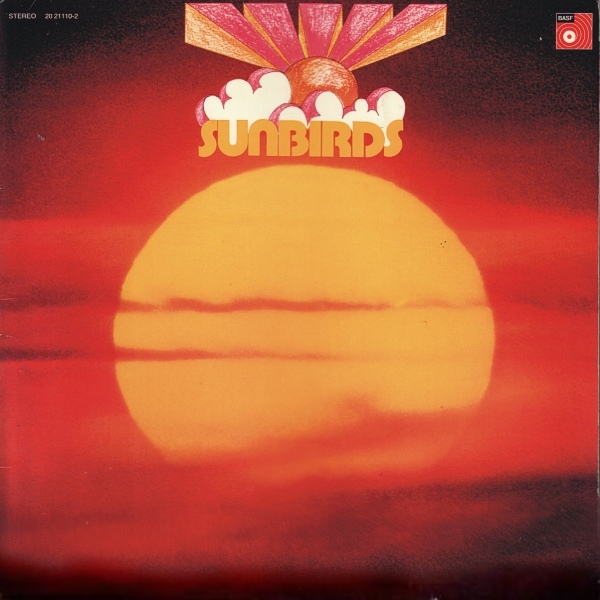
CULT CLASSIC: SUNBIRDS-SUNBIRDS.
Cult Classic: Sunbirds-Sunbirds.
Back in the seventies, the only German band most British people had heard of was Kraftwerk. A few more knowledgeable music lovers have heard of Can, and maybe, Neu!, Cluster or Harmonia. That however, was the extent of their knowledge of German music. That was a great shame, as Germany in the seventies, had one of the most vibrant and eclectic music scenes. One of the best kept secrets of the German music scene was Sunbirds, who released two albums between 1971 and 1973.
Sunbirds were a Munich based jazz-rock band, who released their eponymous debut album on the BASF label in 1971. Two years later,and Sunbirds returned with their sophomore album Zagara. Sadly, Zagara was also Sunbirds’ final album. After just two albums, Sunbirds recording career was over. Zagara was Sunbirds’ swan-song, and brought to a close what could’ve been a glittering career.
No wonder. Sunbirds lineup featured five talented and experienced musicians. They came from Germany, Austria, Holland, England and America. These five musicians had worked with some of the biggest names in jazz, before Sunbirds recorded their eponymous debut album on 21st August 1971.
Drummer Klaus Weiss was born in Gevelsberg, Germany, in 1942. By 1971, he ahd previously alongside Bud Powell, Johnny Griffin and Kenny Drew. Klaus Weiss had also been a member of the Klaus Dinger Quartet. However, since 1967, Klaus Weiss was the drummer Erwin Lehn Orchestra. In his downtime, Klaus collaborated with many musicians, including Hampton Hawkes, Leo Wright and free jazz pioneer Don Cherry. Although he was only twenty-nine, Klaus was an experienced musician. So were other future members of Sunbirds, including Klaus Weiss’ partners in the rhythm section.
Bassist Jimmy Woode was born in Philly in 1928, and compared to the other members of Sunbirds, was almost a veteran. Jimmy had already enjoyed a glittering career, and had been a professional musician for over twenty years.
Originally, Jimmy Woode had played piano and trombone, but later, switched to double bass. On graduating high school, Jimmy studied music in his home town of Philly, and then in Boston. He then went on to play alongside some of the great and good of jazz.
This included Charlie Parker, Miles Davis, Dizzy Gillespie, Ella Fiztgerald, Sarah Vaughan and Louis Armstrong. Then in 1955, Jimmy Woode joined Duke Ellington’s big band. For the next five years, Jimmy was part of the Duke’s band. However, in 1960 he left the Duke’s employ, and headed to Europe.
Jimmy Woode wasn’t the first American jazz musician to head to Europe. Many jazz musicians had made Europe their home, and were enjoying a renaissance in their career. So Jimmy headed to Sweden, and later, made Germany his home. By the time he joined the Sunbirds, Jimmy was living in Munich. So was guitarist Philip Catherine.
Just like Jimmy Woode, Philip Catherine had made Munich his home. He was born in London in 1942, into a musical family. Phillip’s grandfather had, at one point, been the first violinist with the London Symphony Orchestra. Phillip was similarly talented.
Phillip Catherine had been inspired to play the guitar after hearing George Brassens. From the first time he picked up a guitar, music seemed to flow from Phillip. Soon, he had developed into a talented guitarist. Unlike Jimmy Woode, he didn’t study music. Instead, he learnt from listening to the great jazz men of the day. Eventually, he was playing alongside them.
From 1969, right through until he joined Sunbirds, Philip Catherine accompanied Lou Bennett, Dexter Gordon and Stéphane Grappelli. Philip’s versatility allowed him to adapt to playing alongside a wide variety of artists. That was also the case with Dutch saxophonist Ferdinand Povel.
He was born in the Haarlem, near Amsterdam, in 1947.Growing up, Ferdinand Povel learnt to play the saxophone. Eventually, Ferdinand Povel was equally comfortable playing the tenor and alto sax. Ferdinand could also play the flute. Success came early in Ferdinand’s career.
In 1964, when Ferdinand Povel was only seventeen he won the prestigious Loosdrecht, the Netherlands Jazz Festival. This essentially launched Ferdinand’s career. By 1969, he was touring with Goykovich’s Summit Quartet, where he switched between the tenor and occasionally the alto saxophone. It was only when Ferdinand joined Sunbirds that he switched to flute full time. The final member of Sunbirds’ cosmopolitan lineup was Austrian pianist Fritz Pauer.
He was born in Vienna born pianist, was born in 1943, and was the youngest member of the Sunbirds. However, he already had a wealth of experience. Fritz Pauer had played alongside Fatty George and Hans Koller in the early sixties. Then as the sixties drew to a close, Fritz formed a trio with Erich Bachtragi and Jimmy Woode. Then in 1970, Fritz joined the ORF Radio Band By 1971, Fritz Pauer had written a number of new songs, and was about to show them to another future member of Sunbirds.
Having written some new songs, pianist Fritz Pauer decided to take them to Klaus Weiss. When Klaus saw the songs, he was impressed, so much so, that he suggested to Fritz that they record these songs with a new band.
Gradually, the new band took shape. Cosmopolitan described its lineup. The rhythm featured Klaus on drums, American bassist, and Fritz’s friend Jimmy Woode and English guitarist Phillip Catherine. Augmenting them, were Fritz on electric piano, and Ferdinand Povel on flute. However, there was a problem, the new band didn’t have a name.
It was then that one of the band was looking at the three songs Fritz had written. They had were Sunrise, Sunshine and Sunbirds, and were all written in the key of E. There was a reason for this. E was regarded as the sun note in esotericism. That’s why one of the band suggested Sunbirds as the name of the band. It stuck, and Sunbirds began work on their debut album, Sunbirds.
Given Fritz had already written Sunrise, Sunshine and Sunbirds, the members of Sunbirds only had to write a few more songs before they could record their debut album. Eventually, another five tracks were written. However, only three would feature on Sunbirds’ eponymous debut album; the Phillip Catherine composition Kwaeli; the Jimmy Woode penned Blues For D.S. and Spanish Sun, which was penned by the five members of Sunbirds. These tracks were recorded on 24th August 1971 at Union Studios, München, Germany.
The five members of Sunbirds worked with Reinhold Mack at the Union Studios. He recorded what became Sunbirds, while twenty-nine year old Klaus Weiss produced the album. Sunbirds recorded eight tracks in one day. All that was left was to mix the tracks.
On 25th August 1971, the five members of Sunbirds returned to Union Studios. As they began to mix Sunbirds, they chose the songs that would make it onto the album. Eventually, two tracks didn’t make the cut. The first was Fire Dance, which would be rerecorded on Sunbirds’ sophomore album Zagara. Now there were only seven tracks left. Still it was too long to fit on one album. Something had to give. Eventually, it was decided that Dreams a ten minute epic would be cut from the album. The six remaining tracks became Sunbirds. Now all they needed to do was get a label interested in Sunbirds.
Luckily, Klaus Weiss had connections at BASF, one of Germany’s biggest labels. When Klaus let the the A&R people at BASF hear the album, they were so impressed by Sunbirds that they signed the new band. Things began to happen quickly.
Later in 1971, Sunbirds was released on BASF. However, there were no critically acclaimed reviews. Instead, Sunbirds seemed to pass critics by. This however, wasn’t unusual.
In the early seventies, across Germany, many talented groups were releasing albums of groundbreaking music. Often, this music was way ahead of its time. Kraftwerk and Amon Düül II were finding this out the hard way. So would Sunbirds, and would only be later that their music found the audience it deserved.
Sadly, when Sunbirds was released in 1971, the album sunk without trace. Part of the problem was, by 1971, BASF was a vast conglomerate. A record company was just part of its business portfolio. However, BASF didn’t seem to have the personnel to run what was a pan European record company.
They seemed to lack the expertise to promote Sunbirds. That essentially killed the album. BASF seemed to lack a proper distribution network that ensure the album found its way into shops. That was the last straw. So it was no surprise that Sunbirds across not a commercial success.
Far from it. Only a few discerning record buyers bought Sunbirds’ eponymous debut album. At most, only a few thousand copies of Sunbirds were sold. For Sunbirds, this was a huge blow. A bigger blow came when BASF pulled the plug on Sunbirds.
For the five members of Sunbirds, this came as a crushing blow. A tour had been planned to promote Sunbirds. That fell by the wayside. As it was, Fritz didn’t have the time to head out on tour. So a decision was made that Sunbirds remainder a studio project. It was a case of what might have been.
Opening Sunbirds is Kwaeli, where the the Klaus’ drums provide the backdrop to Jimmy’s bass. As it’s plucked confidently and deliberately, it takes centre-stage. Meanwhile, Klaus provides the heartbeat, before pounding the cymbals. That’s the signal for Fritz’s Hohner Electra-piano and Ferdinand’s flute enter. By then, the arrangement is moodily meandering along, with Phillip’s chiming guitar joining the fray. Soon, the tempo increases as Sunbirds enjoy the opportunity to stretch their legs, as elements of fusion and progressive rock melt into one. The result is a truly timeless track.
Sunrise is the first of a trio of tracks penned by Fritz Pauer. From the distance, the sound of Sunbirds’ rhythm section draws closer. They seem to almost gallop along. That however, is down to the way Klaus plays the cymbals. He eschews the drums, allowing the rest of the rhythm section to join forces with the flute and chirping guitar. Repetition is the key as Sunbirds thoroughly explore the groove. Once they’ve taken things as far as they possibly can, they throw a curveball. Washes of keyboards and wah-wah guitar add a psychedelic hue. By then, it’s fusion meets psychedelia and classic rock. Soon, Sunbirds are off and running, as they head in the direction of progressive rock. Sci-fi sounds are added to the arrangement. So is a Hendrix-esque performance from guitarist Phillip Catherine, as Sunbirds become sonic explorers, adding space rock to their heady musical brew.
Spanish Sun is a twelve minute epic. Its elegant sound gradually unfolds. Just a wistful flute accompanies the probing bass, and soon, the unmistakable sound of Fritz Pauer’s Hohner Electra. Everyone is playing within themselves, leaving space in the music. That’s until the bass is let off the lease, and a smattering sci-fi sounds show that it’s all change. Another clue is Klaus’ drums. They lock horns with the rumbling bass and glistening guitar. By now, the tempo is rising, and Phillip Catherine has stepped forward and begins to unleash his finest solo so far. Seamlessly, he and his guitar become one. Behind him, the rhythm section lock into a groove where jazz and rock unite. Swirls of sci-fi sounds dance, while Sunbirds’ rhythm section take centre-stage. Later, Fritz lays down a solo on his eclectic piano. It’s augmented by Phillip’s guitar, while the rhythm section drive the arrangement along. For twelve magical minutes, Sunbirds combine to create what’s their Magnus Opus, Spanish Sun.
From the get-go, Sunbirds kick loose on Sunshine. Klaus’ hypnotic drums provide backdrop as for the buzzing bass and airy flute. Soon, a chiming, funky guitar is unleashed. Choppy licks accompany the Fritz Pauer’s Hohner Electra. His fingers fly across the keyboards, as he and Phillip seem to drive each other to greater heights. Meanwhile, the rest of the rhythm are content to let them enjoy the limelight. Later, Klaus gets in on the act, and works his way round his kit. Ferdinand then joins the fray, and Sunbirds are in full flight. Later, Phillip steps forward and steals the show; delivering what’s without doubt, his best solo on the album. His fingers flit up and down the fretboard, as he delivers a fluid, jazz-tinged musical masterclass. This proves to be the icing on a particularly tasty musical cake.
Dramatic describes the introduction to Sunbirds. Space is left as the bass hums menacingly and cymbals shimmer. Ferdinand’s flute adds to the cinematic sound. Meanwhile, the keyboards add a brief otherworldly sound. Soon, Sunbirds are playing as one, and the arrangement meanders along. The feel-good sound they create brings back memories of long, sunny summer days. At 3.26 guitarist Phillip Catherine steps forward, and delivers another of his trademark glistening solos. It’s another stunning solo. Sometimes, it seems Phillip has nowhere to go, but he seems to find another note. It’s like slight of hand. Behind him, swathes of otherworldly sounds are joined by the rhythm section. Later, when Phillip’s guitar drops out, Sunbirds play as one. They fuse elements of fusion, classic rock, psychedelia, space rock and avant garde, as they take the listener on a magical, musical mystery tour.
Closing Sunbirds, is Blues For D.S. The title is ironic. By 1971, many new German groups had rejected the blues influence on music. This included pioneers like Kraftwerk, Kluster, Cluster and Neu! For them, the blues was the ghost of music past. It wasn’t part of Germany’s musical past. So a new generation of German musicians rejected the blues influence on modern music. Still, though, many other German bands embraced blues, and blues rock was a popular genre. However, Sunbirds were musical alchemists.
Granted there’s a brief blues influence on Blues For D.S. However, jazz is the most obvious influence. Keyboards and the rhythm section combine, before the mellow, airy sound of the flute breeze along. It’s accompanied by chirping, funky guitar licks. Soon, jazz funk shines throughs. When Phillip Catherine takes charge, Fritz Pauer is at his side. They breeze their way through the track. His guitar runs are augmented by stabs of electric piano, before Ferdinand’s flute takes centre-stage. He’s helped on his way by Jimmy’s bass and Phillip’s chiming guitar. Then it’s Fritz’s turn to shine, when he delivers a glorious solo. Meanwhile, Klaus is content to let other people take the limelight, as this wistful, but beautiful sounding track draws to a close and an album that features a band who could’ve and should’ve, had a glittering career.
The problem was, Sunbirds signed to the wrong label. BASF in 1971, seemed to a be somewhat dysfunctional record company. It wasn’t equipped to promote new artists. If they had been, then Sunbirds would’ve found a much wider audience. Sunbirds, it seemed, had signed to the wrong label.
Who knows what might have happened if Klaus Weiss had had contacts at Ohr, Brain or even Liberty? Maybe these labels would’ve promoted Sunbirds more effectively, and the band wouldn’t have been relegated to a studio project. That’s why it was another two years before Sunbirds returned with their sophomore album Zagara in 1973. Sadly, it didn’t fare any better than Sunbirds. However, Sunbirds weren’t alone.
Far from it. In the early seventies, countless bands released albums of groundbreaking music. However, many of these albums sunk without trace. Often, it was through no fault of the band. Many had the misfortune to sign to the wrong label. Some of these labels lacked the knowledge, nous or funds to promote an album. As a result, albums that could’ve played an important part in German musical history were lost for a generation.
It’s hard to believe that Sunbirds was recorded back in 1971, as the album has a truly timeless sound. It’s an album that could’ve been recorded anywhere between 1971 and 2019. In fact, it’s an album that could’ve been recorded in the last few years. However, there’s an important clue as to the when Sunbirds was recorded.
While fusion is the most prominent genre on Sunbirds, and to some extent, provides the biggest clue to the date of Sunbirds’ ‘birth’. However, this isn’t just a fusion album. There’s diversions via avant garde, classic rock, jazz, funk, progressive rock and psychedelia. These curveballs disguise Sunbirds’ age, and play their part their part in the album that should’ve launched what was a long and illustrious career for a talented and versatile band.
Sadly, that wasn’t to be. However, a small crumb of comfort to the four remaining members of Sunbirds is that their eponymous debut album is being discovered by a new generation of music lovers are discovering Sunbirds’ music. They’re belatedly discovering one of German music’s best kept secrets and their cult classic Sunbirds.
The genie is out the bottle, and somewhat belatedly, Sunbirds are receiving the credit and critical acclaim that their music deserves. At last, Sunbirds’ timeless eponymous debut album is starting to be heard by a much wider, and appreciative audience than heard its release back in 1971. They’ll cherish Sunbirds’ groundbreaking, genre-melting debut album, which is a musical treasure trove, from what was, one of the finest Munich-based bands of the early seventies.
Cult Classic: Sunbirds-Sunbirds.
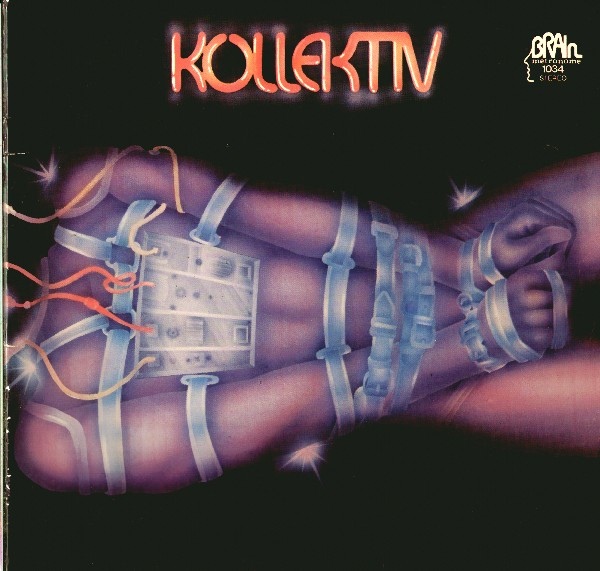
CULT CLASSIC: KOLLECTIV-KOLLECTIV.
Cult Classic: Kollectiv-Kollectiv.
Musical history is littered with bands who only ever released one album during their career. All too often, that album fails to find the audience it deserves. This can come as a bitter blow, and sometimes, can lead to the band breaking up. By then, the rock star dream is over and the only option left, is to return to the tedium of the 9 to 5 lifestyle.
Gone forever, is the dream of a glittering musical career. It’s consigned to the past. So is the dream of million selling albums, gold or platinum discs and sell-out worldwide tours. Nor will they be able to live rock ’n’ roll lifestyle. Excess, decadence and dalliances with Hollywood stars are but a pipe dream. It could’ve been so different.
Especially, when their debut album was released to widespread critical acclaim. Discerning record buyers embraced and championed the album. Critics and cultural commentators even nominated the album for a prestigious award. Despite this, widespread commercial success eluded the album, and within two years the band had split-up. That band were Kollectiv, who released their eponymous debut album on Brain, in 1973.
Kollectiv had the potential, talent and confidence to become one of the biggest German bands of the early seventies. They pioneers, musical mavericks who made ambitious, genre-melting music. Sadly, commercial success eluded Kollectiv, whose roots can be traced to Krefeld, in 1964.
By 1964, the new waves of British rock and pop groups were influencing teenagers across Europe and America to form a band. They all wanted to live the dream, like The Beatles and Rolling Stones. Brothers and high school students Jürgen “Jogi” Karpenkiel and Waldemar “Waldo” Karpenkiel were no different.
So in 1964, they formed The Generals. Jürgen “Jogi” Karpenkiel was a bassist, and his brother Waldemar “Waldo” Karpenkiel played the drums. They were joined guitarist Jürgen Havix. In the early days, The Generals were a beat group. They were inspired by much of the music coming out of Britain. However, as the psychedelic era dawned, The Generals music changed.
Different artists began to inspire and influence The Generals. They began to listen to Frank Zapppa’s early albums, plus King Crimson and Blodwyn Pig. Around this time, The Generals discovered jazz, and particularly, Cannonball Adderley, Jimmy Scott and Wes Montgomery. All these artists would later influence Kollectiv. However, back in the mid to late sixties, The Generals were serving their musical apprenticeship. This paid off for Jürgen “Jogi” Karpenkiel.
Around 1967, he was asked to join another local group, The Phantoms. Their whose lineup included flautist and saxophonist Klaus Dapper; and organist and future Kraftwerk founded Ralf Hutter. For the next year or so, Jürgen “Jogi” Karpenkie was a member of The Phantoms. However, in 1968, Jürgen had a big decision to make.
The Generals wanted Jürgen to return to the group he cofounded. He agreed, and when he returned to The Generals, brought with him Klaus Dapper. In effect, Kollectiv had just been born, while Ralf Hutter went on to found The Organisation, a forerunner of Kraftwerk. That was all to come.
It was another two years before The Generals became Kollectiv in 1970. After six years, The Generals became a footnote in musical history. The dawn of a new decade was a new musical dawn, where anything was possible.
For Kollectiv, the seventies was a brave new world. Kollectiv believed anything was possible. They set out to experiment, and push musical boundaries to the limits, and sometimes…way beyond. Kollectiv weren’t content just to combine musical genres, they wanted to combine traditional instruments with effects and handmade instruments. These instruments, whether traditional, handmade or exotic, were used to play lengthy improvised pieces as Kollectiv played live.
By 1971, Kollectiv were ready to make head out on tour. The members of Kollective had spent part of the last year modifying and making new instruments. These instruments were used during Kollectiv’s lengthy and intensive practise sessions. Gradually, the group honed its sound. So did the tracks that would feature on their setlist, when Kollectiv played live.
Before the tour began, the four members of Kollectiv pooled their resources, and bought an old VW bus for DM400. This would travel the length and breadth of West Germany on their forthcoming tour. It didn’t even mater that the VM bus had Campari-Bitter emblazoned on its side. All that mattered, was that Kollectiv were about to embark upon their first tour.
With their newly bought tour bus packed with equipment, Kollectiv began their tour. The firs venue was four-hundred kilometres away from Krefeld, in Wilhelmshaven, in North Germany. This journey was a tantalising taste of what life as a professional musician was like.
Over the next two years, Kollectiv criss crossed West Germany in their old VW bus. They played everywhere from pubs and clubs, to the university circuit and festivals big and small. By 1973, Kollectiv were almost mainstays of the live circuit. The band came alive as they took to the stage. Kollectiv seemed to be intoxicated by life as a professional musicians. They were living the dream.
For any band, part of the ‘dream’ is to release an album. By 1973, Kollectiv had been together for three years, but had still to set foot in the studio. That would change in March 1973.
Recorded of Kollectiv’s eponymous debut album would take place during March 1973, at Windrose-Studio, Hamburg. Guiding Kollectiv through the recording process, was recordist and co-producer Conny Plank. He had already worked with some of the biggest names in German music. I was something of a coup having Conny Plank record and co-produce Kollectiv. He was working was a talented and pioneering group.
This wasn’t unusual. Germany featured some of the most innovative European bands of the seventies. Kollectiv were just the latest Conny Plank had encountered. He watched as Kollectiv setup their instruments.
The rhythm section featured drummer Waldemar “Waldo” Karpenkiell; bassist Jürgen “Jogi” Karpenkielm and guitarist Jürgen Havix, who also played zither. Klaus Dapper switched between flute and saxophone. Augmenting Kollectiv, were violinist Volkmar Han; guitarist Axel Zinowski; bassist Georg Fukne; and Christoph on electric piano. Along with Kolectiv, the guest artists cut four tracks. They became Kolectiv.
Once Kolectiv was complete, Germany’s premier label Brain released the album later in 1973. Things were looking good for Kolectiv. Critically acclaimed reviews preceded the album’s release. It looked as if Kolectiv were about to have a successful album on their hands.
Sadly, that proved not to be the case. Kolectiv didn’t sell in huge quantities. Instead, it was a cult album, embraced and appreciated by musical connoisseurs and discerning record buyers. Most record buyers didn’t ‘get’ what was an album of ambitious, groundbreaking and genre-melting music. Kolectiv was far removed from the populist music in the charts during 1973. Kolectiv wanted to take the listener on a magical mystery tour. Listeners however, seemed reluctant to get onboard. They missed hearing one of the great lost albums of 1973, Kolectiv.
Opening Kolectiv is Rambo Zambo. For the first ninety seconds, it’s just Klaus’ flute. It’s slow, spacey and sometimes, has echo added. Sometimes, sci-fi sounds augment the dubby flute. Then after ninety seconds, the rhythm, section join the fray. By then, the flute is panned thirty degrees left, as the Karpenkielm brothers lay down a groove. Jürgen’s bass sits slightly in front of the drums. He’s joined by Jürgen Havix’s chiming, chirping guitar. He flits between jazz, funk and rock, and at one point, unleashes machine gun licks. Meanwhile, Klaus’ flute references avant garde and free jazz. Echo is to his flute, distorting and disguising the sound. This result is an otherworldly sound. Later, as the Karpenkielm brothers provide the heartbeat, Jürgen Havix unleashes a spellbinding guitar solo. He’s like a shaman, unleashing musical magic. However, Kollectiv aren’t a one man band. Everyone plays their part, on improvised rocky epic, where Kollectiv take detours via avant garde, free jack, funk and jazz. This whets the listener’s appetite, as this magical mystery tour begins.
A chirping, chiming, crystalline guitar is played urgently as Baldrian unfolds. Washes of saxophone have been distorted by effects, adding a lysergic sound. Meanwhile, cymbals shimmer and crash, while a violin protests. Drum rolls add an element of drama. Later, a zither, and a sixty-four stringed instrument made by Kollectiv play their part on this cinematic soundscape. It features Kollective at their most innovative. Later, the music becomes slow, sultry, jazz-tinged and melodic. Washes of shimmering guitar add a dreamy, lysergic sound to this atmospheric soundscape.
Försterlied is a two minute musical experiment. Kollectiv are counted in, and launch into genre-defying, stop-start track. Lyrics aren’t so much sung, but dramatically spoken. Meanwhile, Kollectiv take free jazz as their starting point. They add hints of avant garde and experimental, as a wailing saxophone, urgent rumbling drums, chirping guitar and a myriad of miscellaneous percussion and sound effects combine. Then all of a sudden, the track grinds to a halt, only to start again. This happens several times, before Kollectiv call to a halt this captivating musical experiment
Closing Kollective, is Gageg, which is a three part suite. Andante gives way to Allegro before Pressluft closes this near twenty minute epic. Originally, it took up side two of Kollectiv. Allegro just meanders lazily into being. A guitar is panned right while a myriad of hypnotic sound are panned left. They’re replaced by an airy flute, while washes of guitar reverberate. Drums are eschewed, and Waldo keeps time on the ride. Everyone plays tenderly, as the arrangement begins to unfold. Chirping, shimmering guitars, a fluttering flute and slow, thoughtful drums combine with a probing bass. Kollectiv it seems, are about to stretch their legs.
The guitars grows in power, a blistering rocky solo taking ship. Then when drums pound, that looks like the signal for Kollectiv to kick loose. It’s not. They’re still playing within themselves. Even when another guitar solo unfold. Meanwhile, the rhythm section match each other every step of the way. Above the arrangement, the flute soars. Still the arrangement meanders along, before Kollectiv stretch their legs. When they slow things down, it’s a signal that things are about to change.
At 8.49 the arrangement becomes jazz-tinged, and the bas drives the arrangement along. Then a blistering guitar cuts through the arrangement. The drums add a jaunty beat. A saxophone is added as jazz and rock unites seamlessly. From there, Kollectiv are at their most inventive. Later, Klaus lays down a funky sax solo, while the rest of the band drive the arrangement along. By now the chirping guitar is playing a supporting role. That’s until three minutes before the ending, and a scorching guitar threatens to explode. However, Kollectiv are jamming, on what’s been an epic journey through funk, fusion, jazz, rock and space rock. After twenty memorable minutes, it reaches a magical crescendo, bringing Kollectiv to a close.
After the release of Kollectiv, the band began rehearsing, in preparation for their sophomore album. They eventually recorded some demo tracks, and sent them to SWF. This lead to SWF inviting Kollectiv to record some new material. Sadly, Kollectiv didn’t get as for as releasing their sophomore album.
Kollectiv split-up in 1975, when Jürgen “Jogi” Karpenkiel joined Guru Guru. They were, by then, one of Germany’s most successful bands. So it was no surprise that Jürgen “Jogi” Karpenkiel joined Guru Guru. By then, Kollectiv still hadn’t made a commercial breakthrough. They were still an underground band.
What maybe made Jürgen “Jogi” Karpenkiel’s mind up, was that Kollectiv were no nearer releasing their second studio album. So four became three. Then Klaus Dapper left, and three became two. The first part of the Kollectiv story was almost over.
In 1976, a new lineup of Kollectiv played a few concerts. Joining the two remaining members of Kollectiv was pianist and organist Klaus Hackspiel. However, this lineup only played a few concerts, before splitting up.
The third lineup of Kollectiv featured Jürgen “Jogi” Karpenkiel, guitarist Axel Zinowski, bassist Georg Fukne, and Christoph on electric piano. They even recorded a few tracks at the band’s rehearsal rooms including Intro, Pull Moll, Pap-Jack and Rozz-Pop, which showcase the combined talents of Kollectiv Mk. III. Just like the two previous lineups of Kollectiv, they were musical pioneers.
That had been the case since Kollective were born in 1970. Three years later, Kollectiv released their eponymous debut album. It’s the only musical document from a truly groundbreaking group, Kollectiv. From the day they were formed, they were determined to do things their way.
There was no way that Kollectiv were going to blindly follow other groups. Instead, they were innovators, who made ambitious, inventive music. They did this, by combining their array of traditional, handmade and exotic instruments with effects and nascent technology. The result was an album of innovative, genre-melting music.
Kollectiv is best described as a captivating journey throughout disparate and eclectic musical genres. It works though. Seamlessly, Kollectiv combine elements of avant garde, experimental, free jazz, funk and fusion with progressive rock, psychedelia and rock. The result is an album that veers between cinematic, dramatic and melodic, to blissful and wistful. Other times, the music is dreamy, melodic, atmospheric and lysergic. The result was an album which could’v, and should’ve, launched the career of musical mavericks Kollectiv, whose eponymous debut album takes listeners on a magical mystery tour.
Cult Classic: Kollectiv-Kollectiv.
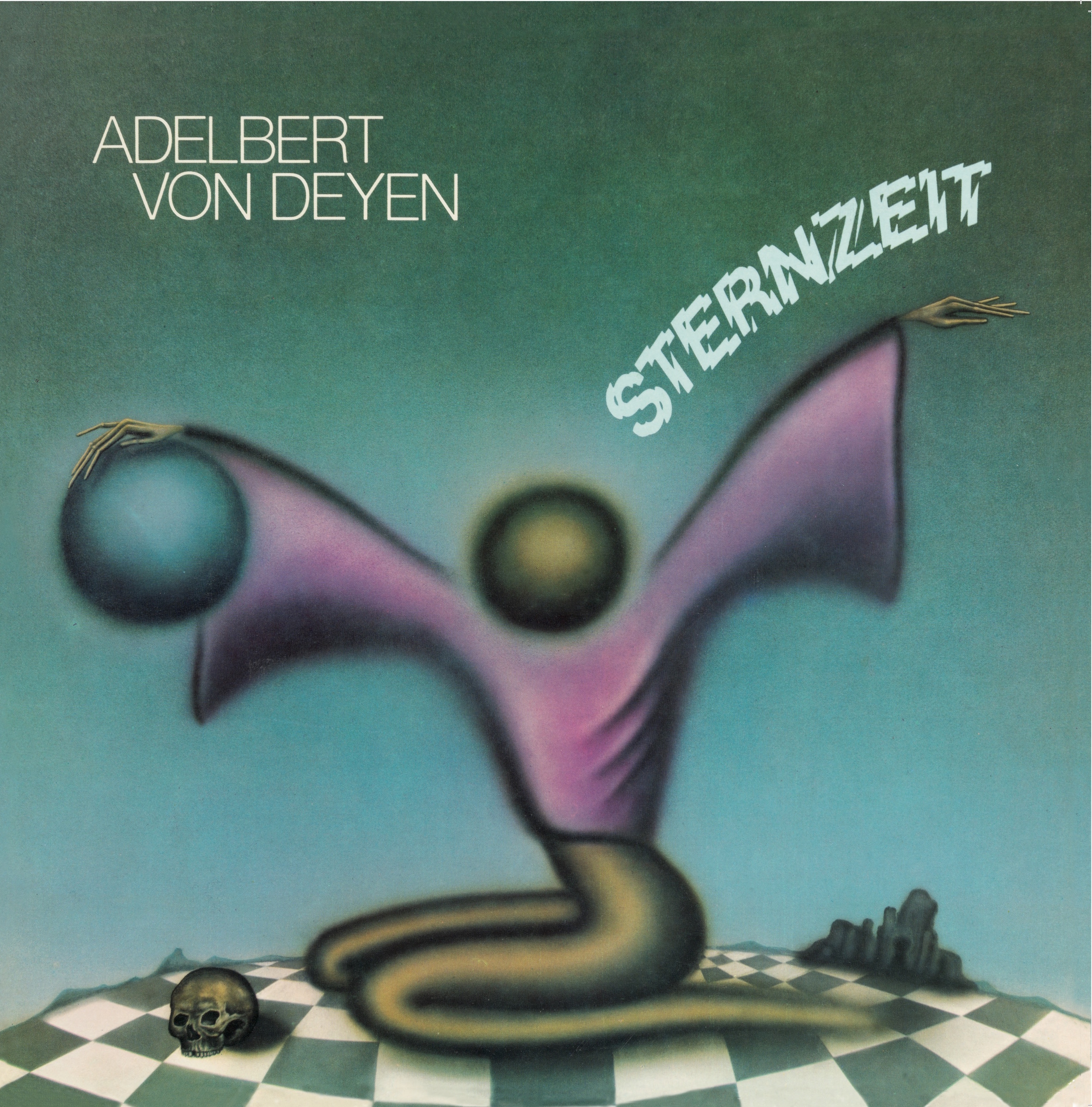
CULT CLASSIC: ADELBERT VON DEYEN-STERNZEIT.
Cult Classic: Adelbert Von Deyen-Sternzeit.
By 1977, Adelbert Von Deyen was working as a retoucher for a Berlin newspaper. While this kept him busy during the day, he had plenty of free time in the evenings. Wanting to put his free time to good use, Adelbert decided to take up a hobby. The hobby he chose was music.
This was no surprise, as at that time, Berlin had a thriving music scene. Many of the Krautrock bands, were formed in Berlin. Meanwhile, Tangerine Dream, Klaus Schulze, and Manuel Göttsching were pioneering the Berlin School of electronic music. However, Adelbert Von Deyen didn’t just want to listen to the music being made in Berlin, he wanted to make music.
The type of music Adelbert Von Deyen wanted to make was electronic music. So he began to working out what type of equipment he would need to buy. Having made a “shopping list” of equipment, Adelbert headed out and bought a second hand synth, a Revox A77 tape recorder and keyboards. Little did he realise that this was just the first of numerous shopping trips he would make.
Having started making music in the evenings as a hobby, gradually Adelbert Von Deyen was bitten by the music making bug. Soon, he was adding new pieces of equipment to his home studio. This meant making sacrifices. Sometimes, when Adelbert hadn’t enough money to buy new pieces of equipment, he borrowed from the funds from the bank. Adelbert was dedicated to making music.
When he returned from work each night, Adelbert Von Deyen began making music. He often worked late into the night, and sometimes, into the early hours of the morning as he perfected his elegiac soundscapes. This took time, patience and determination.
After eight months, Adelbert Von Deyen had finished his first compositions. He decided to tape the compositions, and send a copy to various German record companies. Maybe he hoped, one of the record companies would interested in his album?
This was a long shot. Adelbert Von Deyen was a new artist, who had only been making music for eight months. However, it was a case of fortune favouring the brave.
One of the record companies Adelbert Von Deyen had sent his tape to, was Hamburg based Sky Records. They had been formed just three years earlier, in 1975 by Günter Körber. Since then, Sky Records’ had only released eighteen albums. However, Sky Records had released albums by Bullfrog, Streetmark, Wolfgang Riechmann, Michael Rother, Cluster, and Hans-Joachim Roedelius. This was already an impressive roster, and one that many musicians were keen to sign to.
Sky Records had already established a reputation for releasing groundbreaking music. Just like most record companies, Sky Recordswere being sent many tapes during 1978. Usually, the tapes would range from good and bad to indifferent. One of the tapes that Günter Körber had been sent was Adelbert Von Deyen’s. Having listened to the tape, Günter Körber made the decision to add a new name to the Sky Records’ roster,.. Adelbert Von Deyen.
Günter Körber contacted Adelbert Von Deyen to offer him a recording contract. Sky Records were willing to record Adelbert Von Deyen’s debut album worldwide. The as yet unnamed album became Sternzeit, which featured a distinctive cover painted by Adelbert Von Deyen. Sternzeit was the first of nine albums Adelbert Von Deyen released for Sky Records between 1978 and 1985. Many of these albums contained groundbreaking music, including Adelbert Von Deyen’s debut album Sternzeit.
Sky Records’ release of Sternzeit rewarded all the time and effort Adelbert Von Deyen’s had spent recording his debut album. From March to August 1978, Adelbert worked on the two lengthy tracks that became Sternzeit. They were Per Aspera Ad Astra ,which was a three-part suite, featuring Mental Voyage, Stellardance and Astral Projection. Then on the second side of Sternzeit was the title-track a twenty-five minute epic. These tracks were recorded in Adelbert new home studio.
Although Sternzeit was recorded in his home studio, Adelbert Von Deyen had access to an enviable array of equipment. This included a myriad of strings including an ARP Odyssey. They were joined by synth strings, an organ, electric piano and electric guitar. Adelbert Von Deyen played each instrument, and produced Sternzeit. Once the album was recorded, it was mixed at Star-Studio, in Hamburg. Now Sternzeit was ready for release.
When Sternzeit was released later in 1978, it was well received by critics. Sternzeit sold reasonably, well and certainly was more successful than many Krautrock and Berlin School albums. It was only later that Adelbert Von Deyen’s music would receive the credit and critical acclaim it deserved.
By then, Adelbert Von Deyen was regarded as one of the leading lights of the Berlin School. His music was innovative and would go on to influence further generations of artists. This included Adelbert Von Deyen’s debut album Sternzeit.
Opening Sternzeit is Per Aspera Ad Astra, the three part suite, where Mental Voyage, which gives way to Stellardance and Astral Projection. Slow, spacious and ambient describes the introduction, as lone keyboard plays, while a guitar is strummed carefully. To this, occasional bursts of sci-fi synths are added. Less is more, as the arrangement meander along. An electric piano plays, adding a melancholy and mesmeric backdrop. As it taps out a code, subtle washes of synths sweep. Again, the sci-fi synths make a brief appearance, as the drama builds. Soon, an elegiac cinematic sound has emerged, and washes over, and cocoons the listener. Gradually though, an organ adds to the drama, while futuristic sounds bubble and a pulsating synth provides the heartbeat to what could be the soundtrack to a sci-fi film. From there, the arrangement ebbs and flows, with drama, beauty and sci-fi sounds omnipresent. Later, the music becomes shrill and adds to the drama that’s unfolding. There’s also a ruminative, melancholy and darkness to as Adelbert Von Deyen paints pictures and sets the listener’s imagination racing during this epic three part twenty-four minute musical suite.
The title-track closes Sternzeit. A synth hisses, quivers and shimmers, before growing in power and drama. The tempo is slow, but there’s an element of drama as the edgy arrangement eddies. Gradually, synth strings are added, and become the counterpoint. Still, the arrangement buzzes and quivers, as it continues to drone. Meanwhile, subtle layers of synth strings and the organ sit below the main part of the arrangement gradually revealing. At 9.51 wistful keyboards are added. Still the arrangement drones and buzzes. though the synth strings and organ grow in power. However, the arrangement is still dominated by buzzing, drone. It’s joined by a variety synths and keyboards as the drama continues to build. There’s more to the arrangement than meets the eye. It’ll take several listens, before the arrangement reveals all its secrets and subtleties. Right up until the closing bars, the drama builds during this compelling cinematic opus that sounds as if it belongs on a sci-fi drama.
Sternzeit was the result of eight months work of hard work and dedication by Adelbert Von Deyen. He worked long hours crafting and sculpting two lengthy complex, multilayered soundscapes. They’re variously atmospheric, cinematic, dramatic, elegiac and ruminative. There’s also beauty, darkness and sense of melancholia on Sternzeit, as it reveals its secrets, subtleties and nuances. The result is compelling album which would later, and quite rightly, be hailed a Berlin School classic. No wonder.
The music on Sternzeit was groundbreaking and way ahead of its time. That was the case with many within the Berlin School. However, Adelbert Von Deyen would become a leading light of the Berlin School, and his music would go on to influence two generations of musicians. However, Sternzeit was just the first chapter in Adelbert Von Deyen’s long and illustrious career.
Adelbert Von Deyen went on to release nine albums on Sky Records. His first five albums contained his most groundbreaking music. This includes the followup to Sternzeit, Nordborg, which was released in 1979. The as the seventies gave way to the eighties, Adelbert Von Deyen’s rich vein of form continued, with Atmosphere in 1980, Eclipse in 1981 and Planetary in 1982. That wasn’t the of Adelbert Von Deyen’s career at Sky Records. He remained with the label right through until the release of his ninth solo album Dreamdancer.
After leaving Sky Records, Adelbert Von Deyen didn’t release another album until Painted Black in 2006. It was released on Adelbert Von Deyen Productions. So was 2007s Roseg@rden, and Adelbert Von Deyen’s 2009 collaboration with Dieter Schütz, Old Fashioned. Thirty-one years after the release of Sternzeit, Adelbert Von Deyen continued to release ambitious albums. That had been the story of musical career.
Especially, the early years of Adelbert Von Deyen’s long and illustrious career. He continued to release innovative music that would influence further generations of musicians. However, the most fruitful period of Adelbert Von Deyen’s career was the quintet of albums he released between Sternzeit in 1978 and Planetary in 1982. They feature a musical pioneer as he hits a rich vein of form and his creativity blossoms.
Cult Classic: Adelbert Von Deyen-Sternzeit.
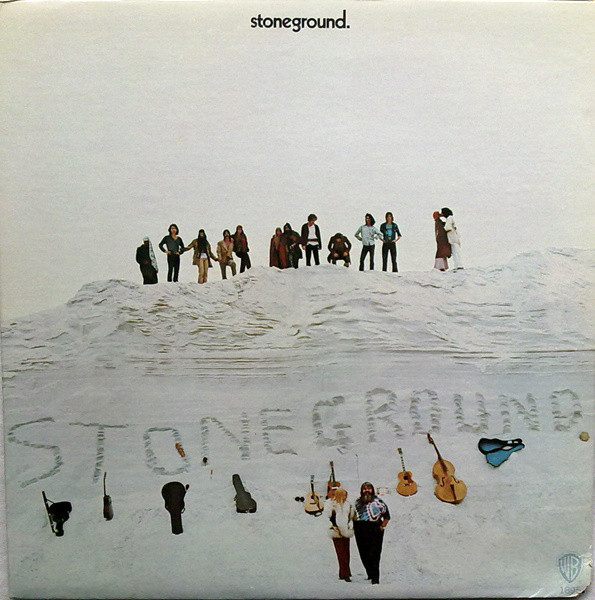
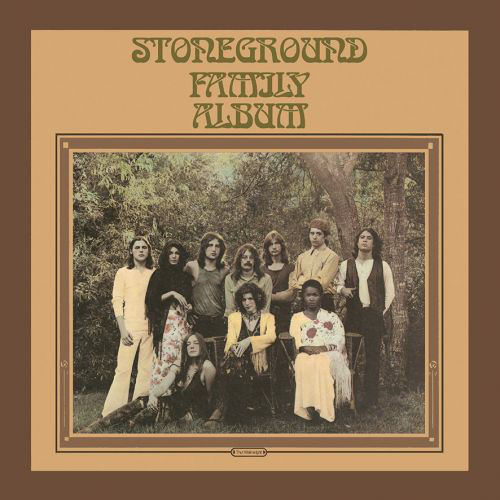
CULT CLASSIC: STONEGROUND-FAMILY ALBUM.
Cult Classic: Stoneground- Family Album.
By 1970, the San Francisco’s vibrant music scene was thriving. New bands were being formed all across the city. Many of these bands dreamed of being signed to record label and releasing an album. For most bands, this remained a dream. However, for Stoneground, this dream became reality in 1971. Stoneground released their eponymous debut album, which was the first of eight albums they released. This includes their sophomore album Family Album, which was released in late 1971, just a year after the Stoneground story began.
When Stoneground were formed in 1970, the band was originally a trio. Its lineup featured guitarists Tim Barnes and Luther Billed and drummer Mike Mau. At first, Stoneground were happy playing as a trio. However, before long, Stoneground’s lineup began to expand.
This came about when Tom Donahue, a DJ and promoter who Stoneground’s manger, introduced the band to the two remaining members of The Beau Brummels. They had been one of the pioneers the country rock sound. However, in 1968, The Beau Brummels, who had once been signed to Tom Donahue’s Autumn Records, were reduced to a duo. Since then, the band failed to reach the same heady heights they once had. Maybe it was time for a new challenge?
So when Tom Donahue introduced Stoneground to The Beau Brummels’ vocalist Sal Valentino and guitarist and bassist John Blakely, the five musicians hit it off. They agreed to join forces as an expanded lineup of Stoneground. Soon though, five became nine.
Despite now being a five piece, Stoneground’s lineup was still not complete. Stoneground decided to add four female vocalists to the lineup. Annie Sampson, Lynne Hughes, Lydia Phillips, and Deirdre LaPorte were added to the lineup of Stoneground.
This newly expanded lineup of Stoneground began to hone their sound. At first, they played in San Francisco and in the Bay Area. Their popularity grew, and soon, Stoneground being booked to play further afield.
This resulted in Stoneground being booked to tour America and Europe. It was during that tour that Stoneground found the final piece of the musical jigsaw. This was keyboardist and bassist Pete Sears, who later, would join Jefferson Starship and Hot Tuna. He became the tenth and final member of Stoneground.
Having returned home from what had been the longest tour of their career, Stoneground returned to playing in San Francisco. That was where they were spotted by an A&R executive from Warner Bros. They signed Stoneground, and early in 1970, entered the studio to record what became their eponymous debut album.
Stoneground.
Now signed to Warner Bros, Stoneground began work on their eponymous debut album in London, at Trident Studios during a UK tour. However, when Warner Bros heard the tracks they weren’t happy with them. This resulted in Stoneground having to rerecord their debut album.
This time, Sal Valentino assumed the role of songwriter-in -chief. The former Bueau Brummel penned Looking for You, Added Attraction (Come and See Me), Dreaming Man, Stroke Stand and Colonel Chicken Fry. John Blakely and Tom Donauhue wrote Brand New Start. The rest of Stoneground was made up of cover versions.
One of them was Reverend Gary Davis’ Great Change Since I’ve Been Born. It was joined by Ray Davies’ Rainy Day in June and John D. Loudermilk’s Bad News. The other cover version was John Mayall and Sonny Thompson’s Don’t Waste My Time. These tracks would become Stoneground.
Recording of Stoneground took place at Sunwest Studios, Los Angeles during early 1971. By then, Stoneground were an eleven piece band. Keyboardist and percussionist Ron Nagle had been added to Stoneground. This expanded lineup began work on Stoneground.
The rhythm section included drummer Mike Mau, bassist and rhythm guitarist John Blakeley and bassist and keyboardist Pete Sears. Sal Valentino played electric and acoustic guitar while Luther Bildt played guitar and Tim Barnes added lead and bottleneck guitar. Keyboardist and percussionist Ron Nagle was joined by vocalists Annie Sampson, Lynne Hughes, Lydia Phillips, and Deirdre LaPorte. Taking charge of some of the lead vocals were Luther Bildt, Tim Barnes and Sal Valentino. He also co-produced Stoneground with the band’s manager Tom Donahue. Eventually, the album was complete and delivered to Warner Bros.
They had great hopes for Stoneground, and embarked upon an extensive promotional campaign. This made sense. By then, Stoneground were already a popular band with a loyal following. That is despite not releasing an album. However, Stoneground had spent much of their time playing live, and their lives shows were extremely popular. No wonder. Stoneground were a talented and versatile band who seamlessly switched between and combined genres. They continued to do this on their eponymous debut album.
When of Stoneground were sent out to critics by Warner Bros, the band had become the travelling house band for the Medicine Ball Caravan. This was seen by some as Warner Bros trying to jump on the success of the concert film genre. However, Stoneground could walk the walk. Their eponymous debut album was proof of that.
As critics played Stoneground, they heard a captivating fusion of blues pock, pop, psychedelia, rock and soul. Here was a tight, talented band who played with a fluidity that would be the envy of many bands. Stoneground’s potential shawn though on what was an accomplished and eclectic album. It was living up to Warner Bros heavy marketing campaign.
Despite the time and money spent on Stoneground, the album failed commercially. Although Stoneground were a popular live band, the album failed to trouble the US Billboard 200. For Stoneground and Warner Bros this was a huge disappointment. Soon, everyone’s thoughts turned to Stoneground’s sophomore album.
Family Album.
After the release of Stoneground, the band continued in their role as the travelling house band for the Medicine Ball Caravan. They would feature in the the Medicine Ball Caravan film. It documents a hippie caravan on an 8,000 mile road trip. A total of 154 buses, truck and groups like Stoneground made the journey. When the soundtrack was released that accompanied the film, it featured three songs by Stoneground. This introduced their music to a wider audience.
So they hoped would their sophomore album. However, by the time work began on what became Family Album, there had been several changes in Stoneground’s lineup.
Keyboardist and basset Pete Sears left to play on Rod Stewart’s album Every Picture Tells A Story. His replacement was keyboardist Cory Lerios. Two other departure were guitarist Luther Bildt and drummer Mike Mau. He was replaced by Stephen Price. This meant that Stoneground had been reduced to a ten piece band. The new lineup would make their recording debut with Stoneground on the 8th of August 1971.
This recording session wouldn’t take place in the one of San Francisco’s recording studios. Instead, it would take place in KSAN, a radio station in San Francisco, had booked Stoneground to play in what was a series of live broadcasts. Stoneground would take to the air on KSAN in San Francisco on Sunday the 8th of August 1971.
For Stoneground, this was a huge booking. Potentially, they were about to be heard by their largest audience. So before they took to the air, Stoneground began to hone a potential setlist.
When Stoneground arrived at KSAN in San Francisco on Sunday the 8th of August 1971, this was the first time the band had recorded as a ten piece. The rhythm section included drummer Stephen Price, bassist Brian Godual and John Blakeley on bass and rhythm guitarist Sal Valentino played electric guitar, acoustic guitar and percussion. Meanwhile Tim Barnes added lead guitar and Cory Lerios keyboards. This left just the vocalists. Annie Sampson, Lynne Hughes, Lydia Phillips, and Deirdre LaPorte were joined by vocalists Tim Barnes and Sal Valentino. Once the band was setup, they began to work their way through what was a truly eclectic set in front of a specially invited audience of 200 people.
Stoneground opened their set with Get Rhythm which gave to Passion Flower. It was followed by a reworking of the traditional song Corrina and Johnny Cash’s Big River. They would later find their way onto side one of Family Album.
Side two would later feature Won’t Be Long before Super Clown, was followed by Mississippi John Hurt’s Richland Woman, Queen Sweet Dreams and the spiritual sounding Precious Lord. Nine tracks into a set that combined elements of from Americana to blues rock, country, folk, gospel rock and rock ’n’ roll Stoneground had the audience captivated. The audience watched on as Stoneground showcased their versatility and fluidity.
They opened what became the third slide of Family Album with a cover of Bob Dylan’s It Takes A Lot To Laugh (It Takes A Train To Cry). It gave way to Hank Williams I Can’t Help It, and then No Doreen. However, with just three songs to go, Stoneground up the ante on It’s Not Easy and If You Got To Go. Stoneground unleash a riotous reworking of Jerry Williams’ Total Destruction To Your Mind. After what was a truly eclectic, fifteen song set, Stoneground take their leave.
Later a decision was made to release the set that Stoneground had recorded at KSAN as part of a double album. It would take up the first three sides. The fourth side featured five tracks Stoneground recorded at the Record Plant in Los Angeles.
This included Ron Nagle’s You Must Be One Of Us; Cory Lerios’ All My Life and Lynne Hughes’ Where Will I Find Love. It was followed by a cover of the joyous sounding Gonna Have A Good Time. Closing side four and Family Album was Jam It. It’s a near six minute jam penned by Stoneground where the ten piece band to showcase their considerable skills.
With Family Album completed, Warner Bros began promoting Stoneground’s sophomore album. Copies of Family Album were sent out to critics. They hailed what was a truly eclectic album as a captivating album. It found Stoneground switching between genres and playing with freedom, fluidity and spontaneity. Some critics called the album Stoneground’s finest hour. Later, Family Album was regarded by some critics as the band’s best recording. It showed very different sides to truly talented band.
On Family Album, Stoneground worked their way through a mixture of original songs and cover versions on an album that featured live tracks and songs recorded at the Record Plant. Family Album showed the two sides of Stoneground. They were a talented band who many felt came into their own in the live setting. However, in the studio, Stoneground were capable of crafting memorable music like All My Life, Where Will I Find Love, Gonna Have A Good Time and Jam It. Given Family Album showed the two different sides to Stoneground, Warner Bros had high hopes for the album.
Alas, it wasn’t to be. When Family Album was released late in 1971, the album followed in the footsteps of Stoneground and failed to chart. It was another disappointment for Stoneground. However, their career continued at Warner Bros.
Just like its predecessors, Stoneground 3 failed to make an impression commercially upon its release in 1972. Warner Bros dropped Stoneground. That was the final straw for Stoneground.
As 1973 dawned, the members of Stoneground had decided to call it a day. Stoneground’s swan-song took place at the Sacramento Memorial Auditorium. This was the last time the original lineup of Stoneground played together.
Although Stoneground would reunite and record further albums, the original lineup of Stoneground never played together again. Their finest moment was their sophomore album Family Album, which is a cult classic and a welcome reminder of Stoneground, one of San Francisco’s great forgotten groups.
Cult Classic: Stoneground- Family Album.
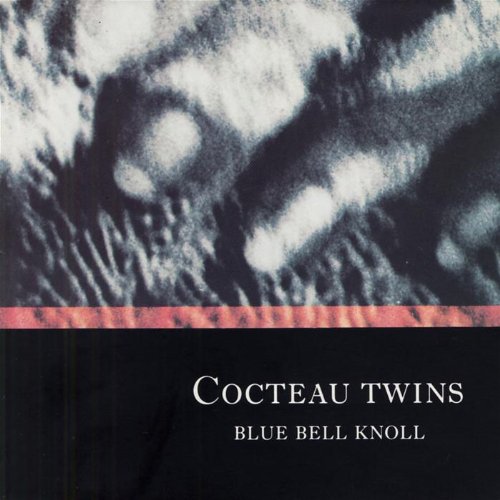
CULT CLASSIC: COCTEAU TWINS-BLUE BELL KNOLL.
Cult Classic: Cocteau Twins-Blue Bell Knoll.
By 1988, the Cocteau Twins’ star was in the ascendancy. They were officially, one of music’s rising stars. So it’s no surprise that major labels were starting to take an interest in the Cocteau Twins.
That wasn’t surprising. The Cocteau Twins had already served their musical apprenticeship. They had already released four solo albums and nine E.P.s since forming in 1980. Critical acclaim accompanied each released. This included the Cocteau Twins’ collaboration with Harold Budd on The Moon and The Melodies, released in 1986. The Moon and The Melodies further reinforced the Cocteau Twins’ credentials as the hottest indie band of the eighties.
Since releasing their debut album Garlands in 1982, the Cocteau Twins had been indie darlings. Garlands reached number four in the UK indie charts and was certified silver. For the Cocteau Twins, this the perfect start to their career.
The followup to Garlands, 1983s Head Over Heels reached number one in the UK indie charts and number fifty-one on the main UK charts. Just like Garlands, Head Over Heels was certified silver. It seemed the Cocteau Twins could do no wrong.
Treasure, released in 1984 then reached number two in the UK indie charts and number twenty-nine on the main UK charts. Two became three when Treasure was certified silver. With each release, the Cocteau Twins’ popularity was growing.
This continued with Victorialand in 1985. It reached number one in the UK indie charts and number ten on the main UK charts. By then, major labels were beginning to show an interest in the Grangemouth trio of Liz Fraser, Robin Guthrie and Simon Raymone. So were other artists.
Among them were Harold Budd, the American avant-garde composer and poet. He collaborated with the Cocteau Twins on The Moon and The Melodies, which reached number one in the UK indie charts and number forty-six on the main UK charts. This high profile, critically acclaimed collaboration increased the Cocteau Twins’ profile.
Before long, major labels were showing an interest in the Cocteau Twins. Eventually, a deal was struck where Capitol Records would license the Cocteau Twins’ releases from 4AD in the US. This suited everyone, as the Cocteau Twins had still to make a breakthrough in the lucrative American market. With the marketing muscle of Capitol Records behind the Cocteau Twins, maybe, just maybe, their fifth album Blue Bell Knoll, would chart in America?
For the recording of Blue Bell Knoll, recording took place at September Sound, Twickenham, London. That’s where the Cocteau Twins recorded the ten tracks on Blue Bell Knoll. Each of these tracks were penned by the three members of the Cocteau Twins. They played their part in ten atmospheric, ethereal and cinematic soundscapes full of imagery.
At September Sound, the three members of the Cocteau Twins got to work. They picked up where they left off on Treasure, the Cocteau Twins’ previous album. Liz Fraser added her inimitable vocals, Robin Guthrie played guitar and Simon Raymonde added bass. Once the ten tracks were completed, Blue Bell Knoll was released on 19th September 1988.
When Blue Bell Knoll was released on 19th September 1988, it was to almost overwhelming critical acclaim. Blue Bell Knoll, was perceived as the Cocteau Twins’ finest album. Despite that, the usual contrarian critics had their knives out for Blue Bell Knoll. That was to be expected, as these critics enjoyed the controversy that came with such contrarianism. However, what mattered was sales.
Blue Bell Knoll reached number fifteen on the main UK charts and number one on the UK indie charts. This was the Cocteau Twins third number one indie album. However, things however, got even better for the Cocteau Twins. On its release in America, Blue Bell Knoll reached number 109 on the US Billboard 200 charts. The combination of Capitol Records’ marketing muscle and the Cocteau Twins’ considerable talent, the Grangemouth trio were well about to reach new heights of commercial success and critical acclaim. This started with Blue Bell Knoll.
Opening Blue Bell Knoll, is the title-track. What sounds like flourishes of harpsichord are joined by Liz’s inimitable, ethereal vocal. She delivers the vocal in what’s akin to a secret language. It is, however, heartachingly beautiful. Especially, with a subtle bass, drum and harpsichord for company. They take care never to overpower Liz’s vocal. Only when her vocal drops out, does a wall of music assail you. This includes a fuzzy and later, searing guitar. They play their part in a post punk soundscape that’s variously beautiful, dramatic and ethereal.
The drama continues on Athol-Brose. It comes courtesy of Liz’s impassioned vocal. It’s multi tracked and accompanied by a plodding drum, bass and chiming guitars. They add an element of urgency, as Liz unleashes a heartfelt, soul-baring vocal that’s akin to a cathartic unburdening.
Deliberately Carolyn’s Fingers Robin runs his fingers down his guitar. It shimmers and glistens, before a wash of sound encircles Liz’s deliberate, soaring vocal. Soon, her vocal grows in power, as ethereal harmonies are panned right. Behind her, the arrangement is melodic and dreamy, the perfect foil to the ethereal quality of Liz’s vocal.
Slowly, the dreamy arrangement for For Phoebe Still A Baby unfolds. Before long, it envelops, and cocoons the listener. What follows is a beautiful innovative dream pop soundscape that the Cocteau Twins started to pioneer on their previous album, Victorialand. Again, Liz’s fragile, tender vocal is key to the song’s success as it takes on what’s best described as an almost vulnerable sound. Especially when it combines with her dreamy harmonies resulting in an innovative, but timeless soundscape.
Driven guitars chime, and are drenched in reverb on The Itchy Glowbo Blow. They join drums and Liz’s cooing, floaty vocal. Together, they play their part in an elegiac, lysergic soundscape.
Cico Buff has a floaty minimalist, cinematic sound. A drum machine plays thoughtfully, and guitars chime and shimmer. They set the scene for Liz’s melancholy, tender dreamy vocal. This is easily one of her best vocals. It cascades above the arrangement, which is akin to a journey on a musical merry-go-round.
Suckling The Mender takes the cinematic sound of the previous track further. This could easily have been part of the soundtrack to a lost Wim Wenders’ movie. Indeed, if a followup to Paris Texas had been made, this would’ve been perfect. The soundscape is simplicity itself. Drums pitter patter, guitars shimmer and glisten. The final piece in the musical jigsaw is Liz’s cooing, ethereal vocal.
From the get-go, Spooning Good Singing Gum has the Cocteau Twins’ name written all over it. They combine a minimalist mixture of trembling guitars and crispy drums with Liz’s vocal. It veers between an understated, ethereal, cooing sound to powerful, impassioned and dramatic. The result is a potent, and heady brew that paints pictures and takes you places, places you’ve never been before.
As A Kissed Out Red Floatboat begins, it’s mostly business is usual. The only difference are a few sci-fi sounds that soar above the arrangement. Then when Liz’s vocal enters, her delivery is much more tradition. She’s not improvising as much. That comes later. By then she’s flitting been a traditional and her trademark style. It’s a captivating combination. Especially with the other Cocteau Twins creating a dreamy, otherworldly backdrop.
Ella Megalast Burls Forever closes Blue Bell Knoll. It has the perfect sound to close any album, especially one as good as Blue Bell Knoll. From the opening bars, Robin and Simon provide a dramatic backdrop for Liz’s vocal. It’s equally dramatic, and heartfelt as she delivers the lyrics, it’s with equal parts emotion, hope and sincerity. This proves a beautiful conclusion to Blue Bell Knoll, the first in what was a golden quartet of albums from the Cocteau Twins.
For the Cocteau Twins, Blue Bell Knoll was a landmark album. It was the start of an eleven year period where they could do wrong. From Bell Knoll, through 1990s Heaven Or Las Vegas, 1993s Four-Calendar Cafe and their final album, Milk Or Kisses, released in 1997 the Cocteau Twins enjoyed commercial success and critical acclaim. Their final three albums all reached the top twenty in the UK. The most successful of these three albums was Heaven Or Las Vegas, which was certified silver in the UK. That’s not surprising, as it’s one of the Cocteau Twins’ best albums.
Meanwhile, the Cocteau Twins were belatedly, enjoying commercial success in America. Heaven Or Las Vegas, Four-Calendar Cafe and Milk Or Kisses all reached the top hundred in the US Billboard 200 charts. No longer were the Cocteau Twins just an indie band.
Now the Cocteau Twins were now enjoying mainstream success. This had been a longtime coming. It had taken eight long years before the Cocteau Twins made their breakthrough in America with Blue Bell Knoll. Now, however, all the years of trying had paid off. For Liz, Fraser, Robin Guthrie and Simon Raymone, Blue Bell Knoll was a game-changer.
Of the five studio album the Cocteau Twins had recorded, Blue Bell Knoll was their finest hour. It featured ten tracks lasting thirty-five minutes. The music on Blue Bell Knoll was variously beautiful, cinematic, dramatic, dreamy, elegiac, ethereal, lysergic and otherworldly. During Blue Bell Knoll, the Cocteau Twins music washes over you, cocooning, enveloping and sometimes, assailing the listener. Its otherworldly sound is akin to a journey to a lost world. On this journey, the listener floats along, a spectator on this forgotten kingdom and its hidden secrets. Providing the backdrop are the Cocteau Twins, who provide music that’s innovative, timeless and unique.
Try as the pretenders may, no one can replicate the dream pop sound of the Cocteau Twins. They showcased this sound on Victorialand, and then perfected it on Blue Bell Knoll. Crucial to this sound was Liz Fraser’s beautiful, ethereal vocal. The Cocteau Twins’ First Lady played a huge part in the rise and rise of the Cocteau Twins. However, the Cocteau Twins weren’t a one woman band.
Far from it. Robin Guthrie and Simon Raymone provided the perfect backdrop for Liz’s vocal on the seven studio albums they released during a seventeen year period. Sadly, in 1997, the Cocteau Twins split-up. However, the Cocteau Twins left behind a rich, innovative and truly timeless musical legacy, including Blue Bell Knoll, which transformed the career of the Cocteau Twins.
Cult Classic: Cocteau Twins-Blue Bell Knoll.
THE BLUE NILE-HATS-VINYL EDITION.
The Blue Nile-Hats-Vinyl Edition.
Label: Confetti Records.
Enigmatic, reluctant and contrarian are words that best of describe The Blue Nile. They’re the complete opposite of most bands. The Blue Nile have been described as publicity shy. That’ is an understatement. Ever since Paul Buchanan, Robert Bell and Paul Joseph Moore formed the Blue Nile they’ve been one of the most low-profile bands in musical history. It seems that when they were formed thirty-eight years ago, The Blue Nile ticked the “no publicity” box. This has proved a double-edged sword, and resulted in The Blue Nile becoming one of the most enigmatic groups ever. Their story began thirty-five years ago.
The Blue Nile were formed in 1981, when two friends Paul Buchanan and Robert Bell, met Paul Joseph Moore, all of whom met at Glasgow University. Before forming The Blue Nile, Buchanan and Bell were previously members of a band called Night By Night. Try as they may, a recording contract eluded them. Night By Night’s music wasn’t deemed commercial enough. So they decided to form a new band, The Blue Nile.
Once The Blue Nile were formed, they set up their own record label Peppermint Records. It was on Peppermint Records that The Blue Nile released their debut single, I Love This Life. This single was then picked up and rereleased on the RSO label. Unfortunately for the Blue Nile, RSO became part of the Polygram label and I Love This Life disappeared without trace. Despite this setback, Blue Nile persisted.
Still, The Blue Nile kept writing and recording material after the merger of RSO with Polygram. Some of that material would later be found on A Walk Across the Rooftops. That was in the future.
Recording of The Blue Nile’s demos took place at Castlesound studio near Edinburgh. That’s home to the man whose often referred to as the fourth member of The Blue Nile, recording engineer Calum Malcolm. He was listening to recently recorded demos through the studio’s Linn Electronics system. It had recently had a new set of speakers fitted. So the company founder, Ivor Tiefenbrun, decided to visit Calum Malcolm to hear his thoughts on the speakers. That’s when Ivor Tiefenbrun first heard The Blue Nile.
Calum Malcolm played Ivor Tiefenbrun a demo of Tinseltown In The Rain. Straight away, the founder of Linn was hooked. He decided to offer The Blue Nile a record contract to the label he was in the process of founding. Most bands would’ve jumped at the opportunity. Not The Blue Nile.
It took The Blue Nile nine months before they replied to Ivor Tiefenbrun’s offer. When they did, the answer was yes. The Blue Nile’s debut album A Walk Across The Rooftops would be released on Ivor Tiefenbrun’s new label Linn Reords.
A Walk Across the Rooftops.
Linn Records and The Blue Nile seemed a marriage made in musical heaven. Linn Records weren’t like a major label, pressurising The Blue Nile into making a decision and delivering an album within a certain timeframe. Instead, Linn Records allowed The Blue Nile to do what they did best, make music. From the outside, this looked as if it was working, and working well.
Years later, Paul Buchanan commented that during Linn Records didn’t operate like a record label. Mind you, he conceded that, during this period, The Blue Nile didn’t operate as a band. However, eventually, in May 1984 The Blue Nile’s debut album was released on Linn Records.
On the release of A Walk Across the Rooftops, it was released to critical acclaim. Critics described the album as a minor classic. A Walk Across the Rooftops was described as atmospheric, ethereal, evocative, soulful and soul-baring. It also featured the vocals of troubled troubadour Paul Buchanan. Despite the critical acclaim A Walk Across the Rooftops enjoyed, it wasn’t a huge commercial success, reaching just number eighty in the UK. However, since the A Walk Across the Rooftops has been recognised as a classic album. So has the followup Hats.

Hats.
Unlike most bands, The Blue Nile weren’t in any rush to release their sophomore album Hats. There was a five year gap between A Walk Across the Rooftops and Hats. It was worth the wait. The Blue Nile had done it again. Hats was a classic.
Featuring seven tracks, written by Paul Buchanan, Glasgow’s answer to Frank Sinatra He’s a tortured troubadour, whose voice sounds as if he’s lived a thousand lives. Producing Hats was a group effort, with Paul, Robert and P.J. taking charge of production duties. Guiding them, was Callum Malcolm. On the release of Hats, British and American audiences proved more discerning and appreciative of the Blue Nile’s sophomore album Hats.
On the release of Hats in the UK in 1989, it was critically acclaimed and commercial success, reaching number twelve in the UK. Then when it was released in America in 1990, audiences seemed to “get” Hats. Not only did it reach number 108 in the US Billboard 200 Charts, but The Downtown Lights reached number ten in the US Modern Rock Tracks charts. It seemed that The Blue Nile were more popular in America, than in Britain. Gradually, The Blue Nile’s music was beginning to find a wider and more appreciative album. Especially when The Blue Nile decided to embark upon their debut tour later in 1989, and showcased what was one of the albums of the year.
In many ways, Hats is a like a musical journey, a voyage of discovery. Over The Hillside is the first step on the journey. Slow, spacious drums, washes of wistful synths and a dramatic guitar combine. Then Paul’s worldweary vocal enters. The sheer drudgery, repetitiveness and almost hopelessness of everyday life flavors Paul’s vocal. Sage-like, he sees through living to work and working to live. It fills him with dread and despair. Reflecting this, is the arrangement, with its somewhat industrial, repetitiveness. Drums with a synthetic, monotonous regularity and washes of wistful synths combine. As the drums reflect the pointlessness of the 9 to 5 life, synths offer a sympathetic backdrop. Meanwhile, eloquently and giving voice to the lack of hope, opportunity and escape, is Paul’s vocal, which brings to life the relentless grind of modern life. Bleak, honest but eloquence personified is this five minute track.
A sprinkling of cascading synths gives way to thunderous drums and washes of synths as The Downtown Lights begins. Soon, Paul Buchanan’s tortured vocal enters. It’s a mixture of emotions, worldweary, but heartfelt and reassuring. Drums cracks, synths fill the gaps and a pounding, broody bass reflects the drama in Paul’s vocal. As the arrangement grows in power and drama, so too does the emotion and reassurance in Paul’s voice. When he sings “it’s alright,” you believe him. His vocal grows in emotion and soulfulness, enveloped by swathes of synths, a funky bass and crispy drums. Later, as the power, drama and emotion grows, driven along by chiming guitars, you realize this is deeply soulful, but not soul music. Instead, it’s music for the soul, music about love, being in love and insecurity.
Waves of synths meander, growing in tension and drama. Let’s Go Out Tonight has just began to reveal its cerebral beauty. Guitars chime, while the backdrop is minimalistic. Paul’s whispered vocal is filled with despair. His relationship is almost over. It’s on its last legs. Rather than stay home and talk about it, it’s easier to go out. Best to dance around the subject and problems, rather admit it’s over. Meanwhile, synths, keyboards and guitar join Paul’s vocal, as he lays bare his soul, his hurt and heartache. His voice is tinged with regret and sadness, as if he can’t believe it’s over. For anyone whose been in this situation, or is going through it, then this song describes it perfectly. Quite simply, this is highlight of Hats and one of the Blue Nile’s greatest songs.
The tempo increase on Headlights On The Parade. So too does the emotion. Blue Nile mix moody funk courtesy of the bass and guitars with waves of bright, hopeful synths and stabs of keyboards. It’s almost as if they’re setting the scene for the worldweary troubadour, Paul Buchanan. From the moment Paul’s vocal begins, his vocal is filled with emotion. Saying: “I love you” isn’t easy, it’s hard, the three hardest words for him to say. Waves of symphonic, hopeful music cascade, envelop Paul’s vocal as he finally plucks up the courage.When he does, it’s almost a relief, it seems. Keyboards and quivering strings join him. Having found the courage, they serenade the one he loves. The result is an elegant, symphonic and beautiful song, one about conquering and overcoming the fear of commitment and the fear of rejection.
From A Late Night Train is a track that’s wonderfully moody and melancholy. The arrangement is broody and minimalistic, meandering behind Paul’s heartfelt vocal. It’s a bit like Frank Sinatra meets Brian Eno. Keyboards picked out carefully and cautiously are joined by occasional bursts of wistful horns. Slowly, Paul delivers lyrics that are poetic, with a strong narrative and steeped in emotion. His half-spoken vocal is filled with sadness, as he sings of his relationship being “over now.” You can imagine him heartbroken, sitting on the late night train, wondering why and what could I have done differently? Considering this track is only four minutes long, it’s a poetic, descriptive and emotive tour de force, Blue Nile style.
Squelchy synths, crunchy drums and percussion join a funky bass as Seven A.M. unfolds. A combination of an industrial sounding arrangement, which brings to mind Can, Neu and Velvet Underground join Paul’s worldweary, wistful vocal. Pensive, probing and questioning, he wonders “where is the love?” It’s a question posed a thousand times before, puzzling poets and philosophers alike. Paul sounds just as puzzled, pondering, wondering. Lovelorn and confused Paul and the Blue Nile bring out the subtleties and beauties of the lyrics, but pose a question that’s unanswerable, even for them.
Saturday Night sees the Blue Nile close Hats with another of their Magnus Opus.’ Like Let’s Go Out Tonight, this is classic Blue Nile. Washes and stabs of synths, chiming guitars, a buzzing bass and crispy drums combine with Paul’s vocal. It’s a mixture of hope, happiness and longing, but tinged with insecurity. Washes of synths and lush strings cascade. They sweep and swirl, and are joined by chiming guitars. Together they envelope Paul’s deeply soulful vocal. His vocal is filled with hope and emotion and plays its part in one of the most beautiful tracks the Blue Nile ever recorded. As if a remastered version of Hats isn’t enough in itself, then there’s the bonus disc.
Unlike the original version of Hats, the newly remastered version includes a second disc of six bonus tracks. While these tracks may not be particularly rare, they offer an insight to an enigmatic band. A live studio version of Seven A.M, alternate versions of Saturday Night Let’s Go Out Tonight are three hidden gems from The Blue Nile back-catalogue. So too is the live version of Headlights On the Parade, which is the perfect reminder of how good a live band the Blue Nile were. The Wires Are Down is a tantalizing glimpse of The Blue Nile and what might have been. I’m sure there’s many more tracks like this hidden, safely away in The Blue Nile’s vaults. Hopefully, before too long, we’ll be able to hear many more of these hidden gems. So, having told you about the newly released, remastered version of Hats, is Hats a better album than their debut album A Walk Across the Rooftops?
Hats is a captivating, bewitching and beautiful album, where The Blue Nile lay bare their soul. Not only do they lay bare their soul, but articulate their hopes, fears, frustrations and dreams. Articulating this range of emotions, is Glasgow’s troubled troubadour, who mixes Frank Sinatra, Tom Waits and Tim Buckley, but doing so in a way that’s almost quintessentially Scottish. This newly remastered version of Hats accentuates the Scottishness of the seven songs. However, despite this quintessentially Scottishness, the music transcends geographical boundaries. For anyone whose lived, lost and lost love, then this album speaks to and for them. It brings to life their heartache and hurt, their sense of how life will never be quite the same again. Combining elements as diverse as Brian Eno, Can, Neu and the Velvet Underground Hats is an album of many influences, but unique. Only the Blue Nile could produce an album so special, so deeply soulful, beautiful and emotive. In some ways, Hats is a very different album from A Walk Across the Rooftops, the Blue Nile’s debut album. However, is Hats a better album?
A Walk Across the Rooftops was one of the best debut albums released by a Scottish, or indeed British band. A Walk Across the Rooftops belongs in every self-respected record collection. So too does Hats. Both albums are the perfect introduction the Blue Nile and their music. After just one listen to the seven tracks on A Walk Across the Rooftops and Hats, you’ll fall in love with the music of The Blue Nile. These were the two best albums of The Blue Nile’s career. Choosing which is the best album is like asking a parent which of their children is their favorite child. Just like they’d refuse to answer the question, I’m going to refuse to choose between not just two of my favorite albums, but two of the best albums released by a British band in the last forty years. Instead, I’ll leave you to decided. The best way to do this, is to buy copies of A Walk Across the Rooftops and Hats, two of best albums by one of music’s best kept secrets.
The Blue Nile-Hats-Vinyl Edition.

CULT CLASSIC: SANDY DENNY-LIKE AN OLD FASHIONED WALTZ.
Cult Classic: Sandy Denny-Like An Old Fashioned Waltz.
Sandy Denny left Fairport Convention in December 1969, and in early 1970, decided to form a new band. The new band became Fotheringay, who released their eponymous debut album in June 1970. Critics hailed Fotheringay a masterful debut, and the album sold well upon its release. This looked like the start of another successful chapter in Sandy Denny’s career.
Buoyed by the success of Fotheringay, the band began work on their sophomore album in November 1970. As the sessions continued into December 1970, it was thought that everything was going to plan and Fotheringay’s sophomore album would soon be completed. Sadly, in January 1971, it was announced that Fotheringay were no more and the band split-up. What would eventually become Fotheringay 2 was shelved and the album wasn’t released until 2008.
With Fotheringay now consigned to musical history, Sandy Denny decided to embark upon a solo career. Sandy Denny signed to Island records, and soon, began to work on to release her debut solo album, The North Star Grassman and The Ravens. For Sandy Denny, this was the start of a new and exciting chapter in her career.
The North Star Grassman and The Ravens.
After Fotheringay split-up, Island Records were keen for the latest signing to enter the studio. Sandy Denny, Island Records believed, had the potential to quickly become one of the company’s biggest selling artists. When Sandy Danny entered the studios in March 1971, it was with the weight of expectation on her shoulders.
By then, Sandy Denny was maturing as a songwriter. This was what she had planned to hone her songwriting skills after she left Fairport Convention in December 1969. By March 1971 she was an accomplished songwriter and had written eight of the eleven songs on The North Star Grassman and The Ravens. This included Late November and John The Gun which had been recorded for the Fotheringay 2 sessions. Among Sandy’s other compositions, were The Sea Captain, The Optimist, Next Time Around, Wretched Wilbur, The North Star Grassman and The Ravens and Crazy Lady Blues. They joined a rework of the traditional song Blackwaterside; Bob Dylan’s Down In The Flood and Charles Robins’ Let’s Jump The Broomstick. These songs were recorded over a three-month period with some familiar faces.
The recording sessions began in March 1971, at Sound Techniques, with Sandy Denny, John Wood and Fairport Convention’s Richard Thompson tanking charge of production. Just two songs were recorded there, Blackwaterside and Let’s Jump The Broomstick. Then things were moved in-house and the rest of the sessions took place at Island Studios, in London.
At Island Studios, Sandy Denny was accompanied on some of the tracks by the musicians that were previously part of Fotheringay. Other musicians were drafted in when they were needed. This included drummer Roger Powell, bassist Tony Reeves, Buddy Emmons on pedal steel guitar, violinist Barry Dransfield and Ian Whiteman on piano and flute organ. Royston Wood and Robin Dransfield added backing vocals on John The Gun. Co-producer Richard Thompson played accordion, bass, electric and acoustic guitar and sang on Down In The Flood. Harry Robertson arranged the strings on Next Time Around and Wretched Wilbur. That talented band spent two months recording The North Star Grassman and The Ravens which was completed by May 1971, and was released four months later.
Before the release of The North Star Grassman and The Ravens, critics had their say on Sandy Denny’s debut solo album. With its mixture of Sandy Denny compositions, and cover versions, it was a truly captivating album. Sandy Denny’’s vocals were compelling, as she breathed meaning and emotion into lyrics. Among the highlights were John The Gun, Late November, the wonderfully wistful Next Time Around and The North Star Grassman and The Ravens. That’s not forgetting Down In The Flood, where the interplay between Richard Thompson’s guitar and Sandy’s vocal is masterful. The only songs some critics felt let the album down slightly, was Let’s Jump The Broomstick and Down In The Flood. Still, though, The North Star Grassman and The Ravens was a hailed a musical masterpiece and minor folk rock classic. Sandy Denny it seemed, could do no wrong.
When The North Star Grassman and The Ravens was released in September 1971, the album didn’t sell in the huge quantities that Island Records had hoped. They seemed to envisage Sandy Denny enjoying the same commercial success that Joni Mitchell was enjoying in America. Sadly, that wasn’t to be, although Sandy Denny was enjoying the same critical acclaim that her American counterpart was enjoying. This would continue on her sophomore album Sandy.

Sandy.
There was no rest for Sandy Denny after she returned from a tour to promote the release of her debut album, The North Star Grassman and The Ravens. Two weeks later, in November 1971, Sandy Denny began recording his sophomore album Sandy at Sound Techniques and Island Studios.
By then, Sandy Denny had been busy, and had written eight new songs that would feature on Sandy. This included It’ll Take a Long Time, Sweet Rosemary, For Nobody to Hear, Listen, Listen, The Lady, Bushes and Briars, It Suits Me Well and The Music Weaver. These songs joined covers of Bob Dylan’s Tomorrow Is A Long Time, and the traditional song The Quiet Joys Of Brotherhood, which Richard Fariña had written lyrics for. These songs were recorded by a band that featured familiar faces and new names.
The first change was that Trevor Lucas had been hired to produce Sandy. John Wood who had played such an important part in the sound and success of The North Star Grassman and The Ravens was relegated to engineer. Similarly, Richard Thompson’s only part in Sandy was playing on five songs. However, one thing hadn’t changed, were the studios that were used.
Just like with Sandy Denny’s debut album, recording took place at Sound Techniques and Island Studios. When the first sessions took place in November 1971, Sandy Denny was joined by British folk royalty, including Fotheringay bassist Pat Donaldson. He was joined by four members of Fairport Convention, Richard Thompson on mandolin, acoustic and electric guitar, vocalist Linda Thomson, violinist Dave Swarbrick and Trevor Lucas on acoustic guitar. They were joined by some new names.
This included The Flying Burrito Brothers’ pedal steel player Sneaky Pete Kleinow. He was joined by organist and pianist John Bundrick. Both men played on It’ll Take A Long Time and Tomorrow Is A Long Time. The final member of Sandy Denny’s band was John Kirkpatrick who played concertina on It Suits Me Well. With the lineup of the band finalised, the recording of Sandy got underway.
With an all-star band for company, Sandy Denny recorded the ten songs over five sessions held during November 1971 and then in April and May 1972. Once the ten songs were recorded, the strings and horns were added.
Harry Robertson was brought in to arrange the strings on Listen, Listen, The Lady and The Music Weave. Allen Toussaint was drafted in to arrange the horns on For Nobody to Hear. Rather than travel to Britain, Allen Toussaint recorded the horn section at the Deep South Studio in Baton Rouge, Louisiana. Once the strings and horns were added, and Sandy was mixed and mastered, and Sandy was almost ready for release.
Before that, critics received their advance copy of Sandy, and Sandy Denny and the A&R executives at Island Records awaited their verdict.The critics were won over by Sandy, and noted that th promotion of Trevor Lucas to the position of producer had paid off. He managed to successfully combine the two disparate sides of Sandy Denny’s music. This was the traditional folk sound, and the more modern folk rock sound. Part of this was in the choice of instruments. Traditional instruments like a mandolin and acoustic guitar harked back to folk music’s past; and the pedal steel and Hammond organ were its future. However, key to the success of Sandy were Sandy Denny’s skills as a singer and songwriter.
Some of Sandy’s finest moments were on Listen, Listen, where strings and a mandolin accompany her vocals, and on The Lady, where Sandy delivers a heartfelt vocal. Then on Quiet Joys Of Brotherhood, the lushest of strings provide the perfect backdrop for Sandy. It was a similar case with the horns on For Nobody to Hear. Bob Dylan’s oft-covered Tomorrow Is A Long Time takes on new meaning thanks on Sandy. Critics were calling Sandy a minor classic. Surely the album would bring commercial success Sandy Denny’s way?
Sadly, it wasn’t to be, and when Sandy was released in September 1972, history repeated itself when Sandy was the commercial success that Island Records was hoping for. This was a huge disappointment for Sandy Denny, and it would nearly two years before she returned with her third album Like An Old Fashioned Waltz.

Like An Old Fashioned Waltz.
After returning from a tour where she was promoting her sophomore album Sandy, Island Records wanted Sandy Denny to head back into the studio. The recording then touring schedule was relentless. However, the tour had given Sandy Denny time to think about where her career was heading.
When she returned home, Sandy Denny had done a lot of soul-searching and decided that she wanted to make her impression musically. That was no surprise as Sandy Denny had been rubbing shoulders with two of Britain’s biggest musical exports, Led Zeppelin and The Who. She had performed with both bands, and saw how the other half lived. By the end of the tour, Sandy Denny had decided that she wanted to enjoy a taste of the commercial success both bands were enjoying.
This was music to executives at Island Records’ ears. However, Sandy Denny was still disappointed by the commercial failure of her first two albums. It seemed folk rock wasn’t going to make Sandy Denny rich. That was when she realised that she would have to broaden her appeal if she wanted to enjoy the commercial success she wanted.
In her heart of hearts, Sandy Denny knew her music had to change if it was going to appeal to a much wider audience. So for her third album, Like An Old Fashioned Waltz, Sandy decided to make some changes. She decided to incorporate elements of pop and jazz into her usual folk rock sound on her next album, Like An Old Fashioned Waltz. Despite deciding to change direction musically, Sandy decided to stick with Trevor Lucas who had produced Sandy.
It would’ve been awkward if Sandy Denny had decided to change producer, as Trevor Lucas and Sandy Denny had married during 1973. The only change Sandy Denny made, was to bring John Wood back as co-producer. They would co-produce Like An Old Fashioned Waltz in London and Los Angeles.
For Like An Old Fashioned Waltz, Sandy Denny had written eight new songs. This included Solo, Like An Old Fashioned Waltz, Friends, Carnival, Dark The Night, At The End Of The Day and No End. The only cover versions were Doris and Fred Fisher’s Whispering Grass and Sammy Cahn, Saul Chaplin and LE Freeman’s Until The Real Thing Comes Along. Sandy Denny remembered the two songs from her father’s record collection, and gave them a jazzy makeover. These songs were recorded in Sound Techniques, in London, and A&M Studios, Los Angeles, between May and August 1973.
Again, the great and good of folk music were present for the recording of Like An Old Fashioned Waltz. Sandy Denny was joined by former Fotheringay bassist Pat Donaldson, and six members of her former group Fairport Convention. This included Richard Thompson on mandolin, acoustic and electric guitar, guitarist Jerry Donahue, bassist Dave Pegg, drummer Dave Mattacks, violinist Dave Swarbrick and Trevor Lucas on acoustic guitar. They were joined by some familiar faces and new names.
The familiar face was John Bundrick, who played on Sandy. This time around, he played organ, piano and clavinet on Like An Old Fashioned Waltz. New names included bassist Danny Thompson, who had previously worked with Nick Drake and John Martyn. Danny Thompson was joined by drummer Gerry Conway and saxophonist Alan Skidmore. Sandy Denny’s band was shaping up nicely.
Other new names included Diz Disley on acoustic guitar, organist Jean Roussel and pianist Ian Armit. They were part of a band that spent three months recording Like An Old Fashioned Waltz in L.A. and London. Eventually, the album was released by August 1973, and executives at Island Records planned to release Like An Old Fashioned Waltz in late 1973.
That was until Sandy Denny dropped a bombshell, when she announced that she was rejoining Fairport Convention, and embarked upon a tour that lasted from autumn 1973 to June 1974. Suddenly, Island Records’ plans were in disarray and they had no option but to postpone the release of Like An Old Fashioned Waltz.
Eventually, Island Records rescheduled the release of An Old Fashioned Waltz for June 1974. By then, Sandy Denny had just returned from touring with Fairport Convention. Somewhat belatedly, Like An Old Fashioned Waltz was about to be released.
Before that, critics had their say on Sandy Denny’s much-anticipated third album. When critics heard Like An Old Fashioned Waltz, they were struck by how personal album it was.
Like An Old Fashioned Waltz finds Sandy Denny laying bare her soul and sharing her deepest secrets and fears. Many of the songs on An Old Fashioned Waltz dealt with things that preoccupied and worried Sandy Denny. This included everything from loss and loneliness, the changing of the season, a fear of the dark and ironically, the passing of time. Like An Old Fashioned Waltz was also a very different album from her two previous albums, with its jazz and pop stylings.
Especially the covers of Whispering Grass and Until The Real Thing Comes Along, which were given a jazzy makeover by Sandy Denny and her band. Stylistically, these two songs showed a different side to Sandy Denny, and jazz suited the twenty-seven year old singer-songwriter. However, the rest of Like An Old Fashioned Waltz was quite different.
On a number of tracks the lushest of strings joined a subtle piano in creating a ruminative and wistful album. Highlights included the album opener Solo, Friends, Dark The Night, At the End Of The Day and No End, which gave some insight into who Sandy Denny was as a person. Like An Old Fashioned Waltz was also a quite beautiful and extremely personal album from Sandy Denny which had won over the majority of critics.
While some reviews were positive, the usual suspects including the self-styled Dean of American Rock Critics wasn’t impressed. In his Village Voice review he called Like An Old Fashioned Waltz a “slugging album.” Other critics took a more favourable view of Like An Old Fashioned Waltz, and believed that this was the album that was destined to transform Sandy Denny’s fortunes.
Sadly, it wasn’t to be, and when Like An Old Fashioned Waltz was released in June 1974, commercial success eluded the album. Whispering Grass was chosen as the lead single, and was released in 1973. This was a strange choice, as it wasn’t one of the stronger songs on the album. Unsurprisingly, it failed to catch the attention of record buyers. For Sandy Denny this the commercial failure of Like An Old Fashioned Waltz and the single Whispering Grass was a huge blow.
Worse was to come when the release of the sophomore single Like an Old Fashioned Waltz was cancelled. For Sandy Denny, her dreams of becoming one of the biggest names in music had come to nothing. With her dreams in tatters, Sandy Denny rejoined Fairport Convention for the third and final time.
It wasn’t just Sandy Denny that embarked upon a world tour with Fairport Convention. So had her husband and producer Trevor Lucas. With Sandy Denny touring the world with Fairport Convention, her solo career was put on hold.
For Sandy Denny, Like An Old Fashioned Waltz was the one that got away, and was an album that had the potential to transform her career and introduce her music to a wider audience. Sadly, that wasn’t to be, bur since then, Like An Old Fashioned Waltz has been reappraised by critics and nowadays, is regarded as a cult classic that showcases the considerable talents of the late, great Sandy Denny who is remembered as one of the finest folk singers of her generation.
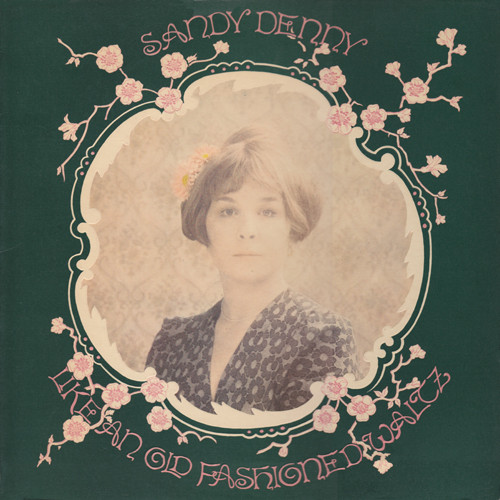
CULT CLASSIC: NEU!-NEU!
Cult Classic: Neu!-Neu!
There aren’t many artists who after leaving one of the most pioneering groups in musical history, end up founding another groundbreaking group. That’s what happened to Klaus Dinger and Michael Rother who had both been members of Kraftwerk, but left in 1971. After leaving Kraftwerk, the pair founded Neu! another Kratrock band.
Neu! went on to be one be one of the most influential groups in musical history. They’re one of the founding father’s of Krautrock. They’ve influenced everyone from Brian Eno, David Bowie, Iggy Pop, Radiohead, Primal Scream and a generation of electronic music producers. However, Neu only released a trio of albums between 1972 and 1975. Their debut album was Neu!, released in 1972. It was followed by Neu! 2 in 1973 and then Neu! ’75 in 1975. These three albums were among the most influential albums released during that period. Despite being innovative and influential, Neu!’s three albums weren’t particularly successful when they were released .
Just like so many other musical pioneers, Neu! didn’t enjoy the success their music deserved. Maybe Neu! were ahead of their time? Possibly, people didn’t understand what was essentially, a new musical genre, Krautrock. This was the case for Neu’s contemporaries Can, Cluster and to some extent, even Kraftwerk. Since then, a new generation of musicians and music lovers have discovered Krautrock. Its influence can be heard in modern music. Indeed, many musicians refer to Neu! as one of the groups that have influenced them. One of the most influential albums Neu! released was their eponymous debut album.
It was 1971 when Klaus Dinger and Michael Rother decided to form Neu. Both had been members of Kraftwerk, but not for any length of time. Klaus, a drummer, joined midway through the recording of Kraftwerk’s eponymous debut album. Michael, a bassist, joined Kraftwerk after the album was finished. When Kraftwerk was released in 1971, it wasn’t a commercial success. It only sold 30,000 copies. For the founder of Kraftwerk Ralph Hutter, this was too much. He left the band for six months. Kraftwerk carried on though.
Kraftwerk were reduced to a trio of Wolfgang Scheider, Klaus Dinger and Michael Rother. They played a few concerts, and even appeared on German television program Beat Club. However, concerts were becoming few and far between. For two members of Kraftwerk, this was becoming frustrating. Klaus Dinger and Michael Rother decided to leave Kraftwerk and form a new band.
When they founded his new band, which was based in Dusseldorf, there were debates about the band’s name. Michael though the band should have an organic name. Klaus however, had hit on the name Neu! So, the new band became Neu! To go with the new name, a pop art logo was designed and copyrighted. This new logo was seen as a comment and protest against the modern consumer society. Just like contemporaries Can, Neu weren’t afraid to combine social comment and art. Having settled on a name, Neu headed to the recording studio.
Recording of what became Neu! took place in December 1971, at Windrose-Dumont-Time Studios, in Hamburg. Four days had been booked to record the six songs that Klaus and Michael cowrote. Klaus played drums, guitar and Japanese banjo, while Michael played guitar and bass. Conny Plank, who’d produced Kraftwerk’s debut album would act as producer. He also acted as a go-between, when it came to differences of opinion between Klaus and Michael.
For the first two days, it was slow going. Nothing much was achieved. It was only only when Klaus brought along his Japanese banjo that they began to make progress. That seemed to act as a catalyst. Not long after this, Klaus first played his trademark motorik beat. That’s where Klaus plays a 4/4 drum beat with only very occasional interruptions. The effect is hypnotic and mesmeric. It can be heard on Hallogallo and Negativland. Klaus didn’t realise how influential the motorik beat would become. The sessions carried on and once they were finished, Conny Plank mixed Neu! at Star Musik Studio, in Hamburg. Now Neu! was ready for release.
On its release by Brain Records in 1972, Neu! wasn’t a commercial success. In total, it sold only 30,000 records. For Klaus and Michael this must have been hugely disappointing. They must have felt history was repeating itself again. After all, Kraftwerk’s debut album hadn’t been a commercial success. However, there was another thing the two albums had in common, they were influential and innovative albums from two of the founding fathers of Krautrock.
Opening Neu! is Hallogallo, a ten minute epic. Chiming guitars, funky bass and driving drums unite as the tempo increases. It’s a track to loose yourself in. At the heart of the arrangement is Klaus’ drumming. He creates a hypnotic groove, thanks to the motorik beat. It hardly changes, except for occasional crashing cymbals. Crystalline guitars escape from the arrangement, wah-wahing into the distance. Washes of guitar create an atmospheric, ambient sound. It’s a counterpoint to mesmeric rhythm section, where the bass and drums are one. They match each other every step in the way. Later, blistering guitars and thunderous drums see the arrangement head in the direction of rock and psychedelia, as this groundbreaking, hypnotic and genre melting track introduces musical pioneers Neu!
An eerie vocal is panned right and the sound of a plane descending from the sky opens Sonderangebot. This gives the arrangement a cinematic sound. It reappears, adding to the drama of this experimental sounding track. Sound effects are utilised, before gongs and cymbals crash. Somewhere in the distance water runs, while a droning sound makes its presence felt. The moody arrangement assails you. You’re surrounded by it, unable to escape it. Cinematic, disturbing, eerie and experimental, Sonderangebot is all this and more, including innovative.
From the opening bars, Weissensee has a moody sound. It reminds me of Pink Floyd. The tempo is slow, just Klaus’ drums providing the hypnotic heartbeat. Guitars wah-wah, as if speaking in some unknown language. Together, they march along purposefully, as elements of rock, psychedelia, funk, Krautrock and ambient music create a dramatic, cinematic opus.
Side two of Neu! was entitled Jahresübersicht and is a three part piece. The first past is Im Gluck (Lucky). Straight away, it has an experimental sound. What sounds like people in a boat, chatting and laughing can be heard. This gives the track an avant-garde, ambient sound. Droning guitars arrive from faraway. Gradually, they drift in, taking centre-stage. They’re alone, wah-wahing and recreating the sound of wistful strings. Above the arrangement, birds can be heard as a boat is rowed. You wonder where to? Here, Neu draw inspiration from ambient, avant garde, classical and experimental music, creating a wistful soundscape that’s atmospheric and cinematic.
Negativland” (Negative Land) is the second track in the three part movement. It features Klaus’ trademark motorik beat. The sound of pneumatic drills, applause and a discordant symphony assail you. It has a psychedelic sound, reminiscent of Sgt. Peppers Lonely Heart’s Club Band. Then it’s all change. A bubbling bass combines with Klaus’ motorik beat. Shredded guitars spraying feedback add a free jazz sound. There’s an avant-garde influence as sound effects are unleashed. Neu! use panning effectively, meaning the music surrounds you. By now they’re in a groove, and are exploring it fully. Rock, funk, jazz and psychedelia are combined as the Krautrock pioneers become one. It’s as if Klaus and Michael know what the other is about to do, as they create an uber funky, hypnotic, groove-laden track.
Closing Neu! is Lieber Honig” (Dear Honey). This was the final piece in this groundbreaking movement. It has pensive, spacious and melancholy introduction. Space is left, before a tender, fragile and ethereal vocal makes its entrance. Just like the arrangement, it spacious and wistful. It’s akin to a stream of consciousness, or a cathartic confessional cleansing. When the vocal drops out, a droning noise drifts in. This is the polar opposite to the rest of the arrangement. After that, the track reminds me of Im Gluck, as someone rows a boat across. That’s all you can hear, apart from the droning noise heading into the distance. The result is an enigmatic, ethereal and experimental track which poses more questions than answers.
Having left Kraftwerk to found a new band, Neu!, Klaus Dinger and Michael Rother began as they meant to go on, by creating music that was pioneering. This began with their debut album Neu! Recorded over just four days in Hamburg, Klaus and Michael, with Conny Plank producing and acting as referee, created one of the most important and influential albums in the history of not just Krautrock, but music per se. Quite simply, Neu’s importance can’t be underestimated. It went on to influence everyone from Brian Eno, Iggy Pop and Brian Eno right through to Primal Scream and Radiohead. Even forty-two years after the release of Neu! it’s still cited as album that influenced the latest generation of musicians. So, you’d think that Neu! sold millions of copies?
Sadly, that wasn’t the case. When Neu! was released, it sold just 30,000 copies. Since then, Neu! has been released several times, allowing several generations of musicians and music lovers to hear the album. This includes several generations of electronic music producers. Just like Brian Eno, Can, Cluster and Kraftwerk, Neu!’s music has influenced electronic music. There’s a reason for this. The music these artists produced was groundbreaking.
When Neu! was released in 1972 it was an album that was innovative, groundbreaking and totally unique as they combined disparate musical genres. They drew inspiration from ambient, avant garde, electronic, experimental, funk, psychedelia and rock to create their unique brand of Krautrock. This is no different to how a painter uses his palette to create paintings. Neu’s musical experiments were groundbreaking and unique. Proof of this was Klaus’ trademark motorik beat. That’s where Klaus played a 4/4 drum beat with only a very occasional interruption. The effect is hypnotic and mesmeric. It can be heard on Hallogallo and Negativland. This helped Neu! to stand out from other Krautrock groups.
It’s also why Neu!, along with Can, Cluster and Kraftwerk, are seen as the founding fathers of Kraftwerk and why forty-seven years after its release this cult classic is regarded as one of the most important, innovative and influential Krautrock albums ever released.
Cult Classic: Neu!-Neu!

CULT CLASSIC: LIGHTDREAMS-ISLANDS IN SPACE.
Cult Classic: LightDreams-Islands In Space.
Thirty-five years ago in 1981, the British Columbian band LightDreams, released their debut album, Islands In Space. It was a captivating, psychedelic sci-fi odyssey where LightDreams explored cosmic ideology. This was something that had fascinated and enthralled the band’s leader Paul Marcano ever since he first encountered the work and theories of author, physicist and space activist, Gerard K. O’Neill. So much so, that Paul decided to explore the subject on LightDreams’ debut album, Islands In Space.
Later, in 1981, LightDreams released Islands In Space. Normally, an album like Islands In Space would’ve found favour with fans of psychedelia and progressive rockers who embraced cerebral, innovative and epic albums. Alas, that wasn’t the case.
There was a quite simple reason for this. Unlike the majority of successful psychedelic and progressive rock bands, LightDreams weren’t signed to a record company. This meant there was no promotional budget to hep spread the word about slands In Space. Nor did LightDreams have the access to people with the expertise to promote what was a truly ambitious and innovative. Instead, LightDreams decided to self-release Islands In Space. They had 1,000 albums pressed on vinyl which the planned to sell themselves. Sadly, Islands In Space wasn’t the success that the members of of LightDreams had hoped.
It was only much later, that word began to spread about Islands In Space and its followup 10,001 Dreams. Occasionally, a few lucky record and tape collectors chanced upon a copy of Islands In Space or 10,001 Dreams. They paid their money and discovered tw groundbreaking hidden gems. Before long, collectors and aficionados of psychedelia were looking for copies of Islands In Space and 10,001 Dreams. This was a long shot, and most collectors came up short. Those that found a copy were transported back in time to British Columbia in 1981 when Paul Marcano met the musicians with whom he would form LightDreams.
Like most towns and cities in 1981, British Columbia had a vibrant and thriving music scene. Paul Marcano was part of this scene, and had been for eight years. By 1981, Paul deiced to look for likeminded musicians who he collaborate with, and maybe even form a band?
Having loked through the local music scene, and at his circle of friends, eventually, Paul found likeminded musicians he could work with. This included two of his friends, rhythm guitarist Cory Rhyon and keyboardist Andre Martin. They would be joined by bassist Alex Lowe, lead guitarist John Walker and Tim Moore on keyboards and saxophone.
Islands In Space.
With Paul Marcano’s search for likeminded musicians over, the search for a name. Eventually, they decided to call the newly formed group, LightDreams. This suited the type of music Paul intended to make. LightDreams was, to all intents and purposes, a vehicle for Paul Marcano. Compared to the other members of LightDreams, Paul had a wealth of experience.
He had been making music since 1973. Paul Marcano’s recording career began in 1973, when he recorded what should’ve been his debut album. For whatever reason, the album was never released. However, one of the songs would feature on 10,001 Dreams, which was LightDreams’ 1982 sophomore album. So would two songs from Paul’s unreleased sophomore album, It had been recorded in 1978, but just like its predecessor it lay unreleased. LightDreams offered Paul a new and fresh start.
Paul Marcano was brimming with ideas enthusiasm and energy. Not only had Paul been writing songs for a number or years, but he was also a talented multi-instrumentalis with a vision. That would become clear as LightDreams’ thoughts began to turn to their debut album.
With the encouragement of his friends Cory Rhyon and Andre Martin, Paul began writing Islands In Space. His creativity was about to blossom. Paul had already written I Ride With The Wind and Atmospheric Dreams/My Spirit Soars in 1976. They were perfect for the project Paul envisaged. However, two songs don’t make an album, so Paul penned four new tracks, The High Frontier, Islands In Space, Voiceless Voice, Solar Winds and Farewell Goodbyes during 1981. The other track was Atmospheric Dreams, which Paul and Cory Rhyon. These songs would become Islands In Space, where Paul shared his vision for the future.
The songs on Islands In Space had been influenced by the work and theories of author, physicist and space activist, Gerard K. O’Neill. This was someone who Paul Marcano had been enthralled by for several years. One of his theories was, that eventually, mankind would inhabit outer space. This Gerard K. O’Neill believed, would result in a much better world for those left behind inhabiting earth. No longer would there be problems with overpopulation and a reliance on natural resources. However. Paul took this proposition further, exploring whether mankind’s grasp of space-age technology could lead to a peace and cosmic presence on earth? This was the thread that ran through what was sure to a an album cerebral and ambitious music. There was a minor problem though.
Recording studios were expensive and beyond the budget of LightDreams. An alternative was, recording the album using the pro-sumer technology that was becoming popular in the early eighties. That still required funds, funds which for most new bands, were limited. However, one of LightDreams’ friends had another idea, and decided to approach executives at the TEAC Corporation, in the hope that they would let the band use some of their technology. This was a long shot, but one that paid off.
The TEAC Corporation, who were a market leader in early eighties recording equipment, allowed LightDreams to use a 144 track cassette recorder. This was beyond their widest dreams, and more than enough to the record the psychedelic opus that LightDreams were planning, Islands In Space.
Having secured what was start of the art recording equipment, work could begin on Islands In Space. Paul Marcano was joined by the rest of LightDreams. The rhythm section included just bassist Alex Lowe and rhythm guitarist Cory Rhyon. LightDreams didn’t employ a drummer on Islands In Space. Other musicians that featured on the album were lead guitarist John Walker, keyboardist Andre Martin and Tim Moore on keyboards and saxophone. These musicians were used on an ad hoc basis, and didn’t feature on every track. Some musicians only featured on one or two tracks. That’s apart from Paul, who played bass, rhythm and lead guitar, keyboards and added vocals and sound effects. He was able to use all sorts of sonic trickery and layer instruments instruments on Islands In Space. After all, he access to the latest musical technology.
To makes this music, which became Islands In Space, Paul Marcano who was producing the album would make good use of the 144 track cassette recorder. This was more than enough to record even the most ambitious Magnus Opus. Islands In Space had its very own Magnus Opus, Atmospheric Dreams; My Spirit Soars; Atmospheric Dreams a near eleven minute epic. It was just one of the seven tracks that were recorded and became Islands In Space.
Now that Islands In Space was completed, LightDreams decided to release the album themselves. This wasn’t unusual back in 1981, when there were many private pressings released. LightDreams had a 1,000 vinyl copies of Islands In Space pressed. These albums they hoped, they would be able to sell to their fellow British Columbians.
Alas, it wasn’t to be. Islands In Space, a captivating psychedelic and progressive sci-fi odyssey where LightDreams explored cosmic ideology passed record buyers by. Paul Marcano was unable to setup consignments to record shops. This was a disaster, and meant that record buyers were unable to find copies of Islands In Space in their local shops. At least a few local radio stations played tracks from Islands In Space. Later, the title-track was used on a Canadian television programme. Mostly, though, Islands In Space passed record buyers by. They missed out on an album that wasn’t just ambitious, but innovative and featured cerebral and thought-provoking lyrics.
Somewhat belatedly, word began to spread about Islands In Space. They paid their money a groundbreaking hidden gem. Before long, collectors and aficionados of psychedelia were looking for copies of 10,001 Dreams. This was a long shot, and most collectors came up short. Now though, Got Kinda Lost Records’ remastered reissue of Islands In Space allows the album to be heard by a much wider and appreciative audience.
The High Frontier opens Islands In Space, and is a guitar lead instrumental. Paul and lead guitarist John Walker take charge of the guitars. They chime and chirp, while a grinding sound is the recording of a guitar being played backwards. These guitars melt into one, with their glistening, crystalline sound being panned across the arrangement, and sometimes, back to front, At one point, it’s as if guitars are replicating the sound of a deserted beach, with seagulls flying overhead. Later, the arrangement grows in power and drama, as the guitars and bass create cinematic backdrop. That’s until a blistering, scorching guitar solo is unleashed, It’s then replaced by a sprinkling of space age sounds that come courtesy of the guitars.It seems that The High Frontier is a showcase for the LightDreams’ guitarists and their inventiveness and imagination.
On the title-track, Paul sings of his dreams that one day, there will be Islands In Space. A guitar is strummed urgently, and the sound of engine buzzing can be heard as the arrangement begins to reveal its secrets. Maybe it’s heading for one of the Islands In Space? Paul’s vocal is accompanied by guitars and washes of keyboards. Reverb is added to arrangement, adding lysergic sound. Soon, the bass is played firmly, as synths maunders and grind. Mostly this big, bold arrangement has a dreamy sound, with Paul’s impassioned vocal taking centre-stage Midway through the song, a saxophone is added,. and brings to mind Pink Floyd, and their Magnus Opus Dark Side Of The Moon. It drifts in and out, as Paul scats and guitars combine with keyboards. Together, the play their part in a carefully crafted, melodic song with cerebral and thoughtful lyrics.
The cinematic sounding Voiceless Voice sound as if it belongs on the soundtrack to the soundtrack to sci-fi movie. Glacial synths glide along, while beeps and squeaks tap out code. Meanwhile, dialogue between launch control and a spaceship is added. When the dialogue drops out, the ethereal, elegiac synths float along. They’re joined by a bass synth, which adds an element tension and drama. So too the bubbling synths and synth strings. Later, an alarm sounds and the dialogue returns “Columbia requests permission to dock?” This marks the end of this captivating voyage of discovery. Providing this cinematic accompaniment were LightDreams, who encourage the listener to let their imagination run riot? Those that do, will be richly rewarded.
I Ride With The Wind is a song Paul write back in 1976. He plays all the instruments on the track. This includes the acoustic guitar that sets the scene. It’s joined by another guitar and they provide the backdrop for Paul’s ruminative vocal. He’s contemplating space travel, and trying to imagine leaving planet earth behind and “I Ride With The Wind.” Meanwhile, just the guitars and bass accompany him. Briefly, reverb added to the vocal, before echo is added to the arrangement. It becomes dubby and beatific as if Paul’s is imagining and hoping that one day, this will be possible.
Atmospheric Dreams and My Spirit Soars are part of a twelve minute, two part suite. It’s the work of guitarist Cory Rhyon and Paul, who plays the rest of the instruments. This includes the bass that underpins the arrangement, guitar and wind chimes. Paul also adds another dreamy, beatific vocal and narrates the song with cinematic lyrics. Meanwhile, the arrangement meanders along, as Cory occasionally adds echo. He realises less is more, and this sparing use of echo proves effective. By then, elements folk rock, psychedelia and progressive rock combine. Later, a blistering rocky guitar cuts through the arrangement. Echo is added to this virtuoso performance before it drops out. Replacing it is a backwards guitar, before the scorching guitar makes a welcome return. It’s joined by an acoustic guitar before it’s all change.
Just guitars play, and add en elements of urgency as the second part of the suite unfolds. Musical genres melt into one as the guitars play. At one point, the guitars are reminiscent of Jethro Tull, as progressive rock and later folk combine. Later, the arrangement becomes understated, and there’s even a jazz influence to the guitar and bass. Things change when the buzzing bass synths makes it presence felt, before this on this genre-melting epic meanders to a close. It features Paul and Cory at their creative zenith, as they innovate and create music that’s imaginative and inventive.
Solar Winds is another instrumental. Cory’s acoustic guitar is combined with washes of Paul’s glacial synths. They’re responsible for a variety of futuristic sound, while what are described as Solar Winds are added. Together, they create a meandering backdrop that’s variously otherworldly, eerie, haunting, elegiac and futuristic. This conjures up images of the sounds and sights one would expect late at night in the desert, under the Joshua Tree.
Farewell Goodbyes closes Islands In Space. An acoustic guitar plays, as Paul dawns the role of narrator. That’s until the vocal proper enters. It’s interspersed with dialogue and sci-fi sounds, before a searing guitar is added. Later, Paul’s vocal and narration combine. They’re layered one on top of the other. Then another rocky guitar is unleashed briefly, before Paul continues his attempts to convince the listener that: “Islands In Space…are the next big taste.” These “Islands In Space.” Paul believed; “will save the human race.” Meanwhile, a guitar is panned, while there’s a beatific, hopeful sound to Paul’s vocal as he sings: “we’re on our way.” This thoughtful and cerebral song closes LightDreams debut album Islands In Space. It was a thought provoking album that deserved to be heard by a much wider audience.
Maybe things would’ve been different if Islands In Space had been released by a major label? Instead, the band self-released the album, and its release was beset with problems. Even setting up consignments of the album proved problematic. This meant that very few people outside of British Columbia got to hear Islands In Space. It was the album that got away.
Islands In Space was a polished and highly accomplished hidden gem of an album. Paul Marcano’s eight years of experience shine through on Islands In Space. By 1981 he was an experienced singer, songwriter, multi-instrumentalist and producer. He had recorded at least six albums, none of which he had released. Maybe Paul Marcano was searching for musical perfection? It may have been that Paul was searching for likeminded musicians, and only found them when he founded LightDreams in 1981.
LightDreams was essentially, Paul Marcano’s musical vehicle. He wrote six of the seven songs on Islands In Space, and cowrote the other song. Paul also produced and played many of the songs on Islands In Space. It’s a captivating, psychedelic sci-fi odyssey where LightDreams explored cosmic ideology. The lyrics are cerebral, ruminative and thought-provoking. That’s still the case thirty-five years after its release in 1981.
Alas, LightDreams’ debut album Islands In Space passed most people by. It was only discovered by a small group of discerning music fans living in British Columbia. Most collectors and aficionados of psychedelia got to the party late, as far as Islands In Space was concerned. That’s apart from a few lucky music fans who found a copy in second hand stores or bargain bins. They paid their money, and discovered a groundbreaking, genre-melting hidden gem. Before long, word was out, and collectors and aficionados of psychedelia were looking for copies of Islands In Space. The only problem was finding an original copy of the album.
Original copies of Islands In Space were incredibly rare. It was more good luck than good judgement when record buyers found a copy. Usually when they discovered a copy, the price was beyond the pocket of most record buyers. This meant a new audience who wanted to discover the delights of Islands In Space were unable to do so. Not any more though.
Islands In Space is a genre-melting album, which is a voyage of discovery.takes as its starting point psychedelia. However, Islands In Space is much more than psychedelic album. Elements of ambient, avant-garde, Berlin School, folk pop, Krautrock, progressive rock and rock can be heard throughout Islands In Spac. It’s a musical melting pot, where instruments and influences melt into one as LightDreams sculpt a captivating psychedelic sci-fi odyssey. LightDreams begin their exploration of cosmic ideology, which was continued on their sophomore album 10,001 Dreams.
Both Islands In Space, and its followup 10,001 Dreams are true cult classics, that showcase the considerable talents of LightDreams. Especially founder member Paul Marcano. He had been working towards releasing an album based on cosmic ideology for several years. This only happened when Paul Marcano met the likeminded musicians that joined him in LightDreams in 1981. Later in 19.81, Islands In Space was released. It’s the first, in a two part musical voyage of discovery, that features LightDreams’ unique, imaginative and innovative brand of cerebral and throught-provoking music on their captivating psychedelic, sci-fi odyssey, Islands In Space.
Cult Classic: LightDreams-Islands In Space.
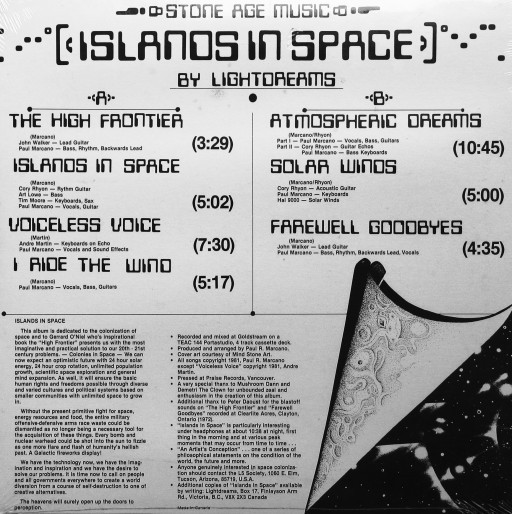
CULT CLASSIC: ASHRA-CORRELATIONS.
Cult Classic: Ashra-Correlations.
When Manuel Göttsching released Inventions For Electric Guitar in 1975, this was meant to be the start of a new chapter in his career. Inventions For Electric Guitar was meant to be Manuel Göttsching’s debut solo album. Some eagle eyed record buyers weren’t so sure about that.
Atop the album cover to Inventions For Electric Guitar’s album were the words Ash Ra Tempel VI in small print. This muddied the waters somewhat. Did this mean that Inventions For Electric Guitar was the sixth album by Ash Ra Tempel? Maybe Manuel Göttsching had been talked into releasing one more Ash Ra Tempel album and this was the band’s swan-song? Some record buyers weren’t convinced.
If that was the case, why put Manuel Göttsching’s name on the album cover? Maybe this was paving the way for his solo career? The debate and confusion continued.
Nowadays, though, Inventions For Electric Guitar is regarded as Manuel Göttsching’s debut album. It seemed that the addition of Ash Ra Tempel VI was part of Ohr Records’ marketing campaign. Ash Ra Tempel was already a relatively well known ‘brand name’ within German music. So if record buyers didn’t recognise Manuel Göttsching’s name, there was every chance they would recognise Ash Ra Tempel. Inventions For Electric Guitar was indeed, a new chapter for him.
This new chapter continued in 1976. So did the confusion. The first place that Manuel Göttsching released his sophomore solo album New Age Of Earth, was in France. Again, the album bore the Ash Ra Tempel name. However, despite bearing the Ash Ra Tempel name, New Age Of Earth was a solo album. Manuel Göttsching had composed, played all the instruments and produced New Age Of Earth at his Studio Roma in Berlin. It seemed that the continued use of the Ash Ra Tempel name was proving problematic.
So when Manuel Göttsching signed to Virgin Records in the spring of 1977, he decided to dispense with the Ash Ra Tempel name. However, rather than release his solo albums as Manuel Göttsching, he made the decision to release them as Ashra. The first album to feature the Ashra name was New Age Of Earth. This added to the confusion.
Now there were two different versions of New Age Of Earth available. The French version bore the name Ash Ra Tempel, and the British version was credited to Ashra. However, Ashra were about to play a flying visit to Britain to promote the New Age Of Earth.
Ashra arrived in Britain in August 1977, not long after the release of New Age Of Earth. The purpose of the visit was twofold. There was the usual round of promotion meeting and gland-handling that accompanied the release of any album. Considering New Age Of Earth was Ashra’s debut for Virgin Records in Britain, there was more promotion than usual. Part of this was the second reason for the visit to London, a concert.
This was no ordinary concert. Ashra were going to play a concert at the Open-Air Theatre in Regents Park. This would mark the debut of Ashra. For Ashra, this was a high profile concert. So Manuel Göttsching brought with him, a couple of his musical friends.
To accompany him, Manuel Göttsching had brought along Lutz Ulbrich and Harald Grosskopf. They would accompany him when he took to the stage at the Open-Air Theatre in Regents Park. This would introduce the world to Ashra, and hopefully, put an end to the confusion. After this, Ashra had to return home. Manuel Göttsching had a new album to record.
Under the terms of his recording contract, Ashra had to begin work on his new album almost immediately. So on his return to Berlin, Manuel Göttsching began work on his next solo album. Recording began at Manuel Göttsching’s own Studio Roma in September 1977. He wrote and record a total of six tracks. They became Blackouts, his third solo album. It would be released by Virgin Records in 1978.
Before that, Ashra were due to fly out to Japan in late 1977. Despite being a solo artist, Manuel Göttsching decided to enlist the help of a couple of his musical friends for the Japanese tour. For the forthcoming Japanese tour, Manuel Göttsching was joined by Lutz Ulbrich and Harald Grosskopf. They became the expanded lineup of Ashra.
With the newly expanded lineup of Ashra in tow, Manuel Göttsching embarked upon the Japanese tour. It proved a huge success, with the new lineup of winning friends across Japan. After the success of the Japanese tour, Manuel Göttsching returned home, and his thoughts turned to his next album.
By then, the next Ashra album had been recorded, and Blackouts would be released in 1978, Manuel Göttsching couldn’t afford to rest on his laurels. He would need to begin work on the followup early in 1978. Most people expected it to be a solo album. After all, Manuel Göttsching had embarked upon a solo album in 1975. Since then, his star was in the ascendancy. His first two album Inventions For An Electric Guitar and New Age Of Earth were received to critical acclaim and furthered Manuel Göttsching’s reputation as a pioneer and and of the leading lights of German music. So why change what was a winning formula?
Despite this, Manuel Göttsching was beginning to think that the next Ashra album wouldn’t be a solo album. Especially given how well the trio had played during the Japanese tour. Maybe the trio should reunite for the next Ashra album. Eventually, Manuel Göttsching decided to ask Lutz Ulbrich and Harald Grosskopf to join him for the recording of his next album. That album would become Correlations, which was recently reissued as the Correlation Complete five disc box set.
Correlations.
When Manuel Göttsching decided to ask Lutz Ulbrich and Harald Grosskopf to join him for the recording of the next Ashra album, the pair agreed. For Lutz Ulbrich this was just like the old days, when he and Manuel Göttsching were both members of Ash Ra Tempel. The pair had recorded and released five albums between 1971 and 1973. Correlations was the first time they had recorded together for five years.
Before the record sessions began, Manuel Göttsching began rehearsing. For the rehearsals, he took Ashra to the old Ufa film studios in Berlin. Manuel Göttsching had managed to book one of the large rooms. This the other members of Ashra thought, was the perfect place to rehearse. This was just as well, it would be their second home for three weeks.
Before the rehearsals could begin, Ashra began to setup their instruments and equipment. The other thing he brought along was his trusty old Revox A77 mono tape recorder.
With the equipment setup, Manuel Göttsching pressed play as Ashra began to jam. That was all they did for the next three weeks. These lengthy sessions were recorded and would eventuality form the basis for the album.
After the rehearsals, the framework for some of the album. in place. Eventually, eight tracks were composed. Ice Train, Morgana Da Capo and Pas De Trois were written by the three members of Ashra. Manuel Göttsching wrote Oasis, Bamboo Sands and Phantasus. The other track on the album was Springtime. These tracks were recorded at three studios.
After the rehearsals, Ashra began work on the the album. Much of the recording took place at Erd-Studios, in Berlin with Ashra taking charge of production. Ashra brought along an array of traditional and modern equipment. This included Lutz Ulbrich’s guitar, synth strings, piano and mellotron. Drummer and percussionist Harald Grosskopf also brought along his synths. Manuel Göttsching came armed with an array electric guitars and synths. He also took charge of sequencing parts of Correlations. The recording took time, but eventually, Ashra completed the album.
With the album recorded and mixed, Ashra were ready to let executives at Virgin Records hear the new album. This new album, Ashra planned to call Phantasus.
When Ashra played Phantasus to the executives at Virgin Records, they weren’t impressed by the album. It wasn’t quite there yet they felt. There was still work to be done on the album.
For the three members of Ashra, this was a huge blow. They had spent months recording the album. However, Ashra seemed to be on the right road. They didn’t to rerecord the entire album. Some parts of the album had to be rerecorded.
Over the next weeks and months, the members of Ashra locked themselves away in the studio to salvage the album. Gradually, the album began to take shape. One track, Springtime didn’t make it onto to what became Correlations. Instead, it was replaced by Oasis, a Manuel Göttsching composition. Once the rerecording was complete, Manuel Göttsching handed the tapes over to the three engineers who had been chosen to remix the album.
Two studios and three engineers were used to remix Phantasus. Remixing took place at Audio Studio, in Berlin and at Panne-Paulsen Studio, in Frankfurt. The three engineers that were used were Udo Arndt, Eberhard Panne and Mick Glossop. He who ended up receiving a credit as co-producer. For Ashra, the decision to remix Phantasus was an expensive one, but one that paid off.
Phantasus which was renamed as Correlations, was a genre classic in waiting. When it was eventually released in 1979, critical acclaim would accompany the release of Correlations.
It was a genre-melting album where Ashra married elements of ambient, avant-garde, Berlin School, electronica, funk, jazz, Krautrock, post rock, progressive rock and rock.The result was an album where Ashra, now a fully fledged band, moved towards a much more rock oriented sound. This should’ve brought Ashra to the attention of a much wider audience.
Until then, Ashra had slipped under the musical radar, both at home and abroad. That was the case with the majority of the Krautrock and Berlin School bands and artists. While Ashra were by no means selling vast amounts of albums, they were more popular than many of their contemporaries. Ashra had also released several classic albums.
Correlations was just the latest. It marked another turning point in the chameleon like career of Manuel Göttsching. He had continually reinvented his music since the earliest days of Ash Ra Tempel. That had been the case since he Manuel Göttsching as a solo career. Now though, he was back as a member of a band, Ashra.
Their career had gotten off to a false start when they were Virgin Records rejected the original version of Phantasus. Maybe that was for the best? Ashra had returned with a stonewall classic album Correlations.
Correlations was the latest classic album from Ashra, which had been reinvented as a trio for Correlations. This was a new chapter in the career of Manuel Göttsching, as Ashra’s music moved towards a much more rock oriented sound. Forever the musical chameleon, Manuel Göttsching continued to reinvent his music, to ensure that it stayed relevant His determination to reinvent his music paid off, and the result was another innovative, genre-melting album, Correlations.
With his new band, Ashra created a genre-melting album where they married elements of ambient, avant-garde, Berlin School, electronica, funk, jazz, Krautrock, post rock, progressive rock and rock. The resultant album, Correlations became a genre classic album, and introduced Ashra to a much wider audience than previously. Sadly, still Ashra weren’t enjoying the commercial success and critical acclaim their music deserved despite the quality of music on Correlations. Some forty years after its release, Correlations is regarded as a cult classic and the perfect introduction to Ashra, who are a truly groundbreaking band and one of the most important in modern German musical history.
Cult Classic: Ashra-Correlations.

CULT CLASSIC: TOM WAITS -CLOSING TIME.
Cult Classic: Tom Waits-Closing Time.
It was in the summer of 1971, when Herb Cohen first saw and heard Tom Waits at the Troubadour in Los Angeles, which was one of the city’s top clubs in the city’s music scene and where many an up-and-coming singers and bands had started out before going on to greater things. Even some of the more experienced artists and bands still enjoyed playing at what was by then a legendary venue. Tom Waits who was just a twenty-two year old aspiring singer-songwriter, when he played at the Troubadour, and had already come a long way in a short space of time.
Just three years previously Tom Waits was a rebellious high school student who loved R&B, country music, Bob Dylan, the Beat Generation, The Twilight Zone and The Alfred Hitchcock Hour. However, in 1968, Tom Waits dropped out of high school, and got a job Napoleon’s pizza restaurant in National City, California.
During his shifts in the pizzeria, Tom Waits listened to the patrons and often scribbled down phrases and interesting pieces of dialogue which he later used in his songs. However, when Tom Waits wasn’t working in Napoleon’s, he was part of the city’s folk scene and could often be found playing in local coffee shops. Before long, Tom Waits was playing in San Diego, and as word spread about the up-and-coming local singer he was being asked to support Tim Buckley, Sonny Terry, Brownie McGhee and even one of his friends Jack Tempchin. By then, Tom Waits had come to the conclusion that he could go no further in San Diego, and would have to travel to the Troubadour Los Angeles to progress his career.
That was how Tom Waits was ‘discovered’ by Herb Cohen who at the time, was managing several artists including Frank Zappa, and was a record company executive and music publisher. Despite his track record, Herb Cohen didn’t off Tom Waits the all-important recording contract, and instead, signed him to a publishing contract. Herb Cohen it seemed saw Tom Waits as a songwriter rather than a singer.
Having signed a publishing contract, Tom Waits his job at Napoleon’s and moved to LA where wanted to concentrate on his songwriting career. However, in 1971 Herb Cohen had Tom Waits record the first of two demos in late summer of 1971 with producer Robert Duffey. Nothing came of these demos by the time 1971 gave way to 1972.
By early 1972, Tom Waits had found and moved into a flat in Sliver Springs, which was a working class ares that was home to the Hispanic community and a number of LA’s bohemians. The area would provide Tom Waits with a wealth of material over the next weeks and months.
Despite supposedly concentrating on his songwriting career, Tom Waits continued to play live and was a regular at the Troubadour which was where he first met David Geffen who had already cofounded Asylum Records. When David Geffen heard Tom Waits sing Grapefruit Moon he was “floored” and was so impressed with Tom Waits that, that night he offered the singer-songwriter a recording contract.
After Tom Waits had signed with Asylum Records, David Geffen paired his latest signing with Jerry Yester, who had formerly been a member of the Lovin’ Spoonful until the group split-up in 1968. After that, Jerry Yester had embarked upon a career as a producer and would produce Tom Waits’ debut album at Sunset Sound Recorders. That album would eventually become Closing Time.
With the ink barely dry on the recording contract, work began on Closing Time, with Tom Waits recording a pre-production tape at Jerry Yester’s home. The pair discussed the arrangements and what instruments should be used on the album. Already, Tom Waits had an idea of the type of album he wanted to record, and made it clear that he wanted a standup bass on Closing Time. This fitted with Tom Waits’ vision of recording a jazz-tinged album for his debut.
When the recording of Closing Time began in the spring of 1972, there was only one problem, and that was that Tom Waits and Jerry Yester weren’t going to be able to record late at night and into the early hours of the morning. The only time the studio at Sunset Sound Recorders was free was between 10am to 5pm. While this wasn’t exactly ideal, the pair knew that they had no option but to record during the daytime shift.
By the time work began at Sunset Sound Recorders, twenty-three year old Tom Waits had already written the twelve tracks that became his debut album Closing Time. Just like many singer-songwriters he had amassed a number of songs, and some would feature on Closing Time. However, songwriting wasn’t Tom Waits’ only talent.
Tom Waits who was already a talented multi-instrumentalist who played celeste, guitar, harmonium, harpsichord and piano on Closing Time. He also added his inimitable lived-in, gravelly vocal to eleven of the twelve tracks. Already, it sound as if Tom Waits, the new troubadour in town survived on a daily diet of Jack Daniels and Marlboro. It was a voice that sounded as if it had already lived several lives, and which was accompanied by some seasoned LA musicians.
This included a rhythm section that featured drummer John Seiter, double bassist Bill Plummer and guitarists Shep Cook who added backing vocals and Peter Klimes who played pedal steel on Rosie. They were joined by trumpeter Delbert Bennett Meanwhile, Jerry Yester took charge of production and guided the debutant singer through the maze that is recording a debut album.
For the first couple of days of the session at Sunset Sound Recorders, Tom Waits spent time finding his way around the studio, but after that, his nerves disappeared. So much so, that he was confident enough to voice his concerns at the direction of his debut album.
Producer Jerry Yester was intent on making Closing Time a folk based album, which wasn’t what Tom Waits wanted. He envisaged Closing Time as a jazz-tinged, which was what he wanted to make. Despite this difference of opinion, Tom Waits and Jerry Yester worked well together, and the singer soon grew in confidence and was directing his band. So much so, that when Ol’ 55 was recorded, drummer John Seiter was directed to add backing vocals and added a perfect harmony line before the chorus kicked in. It looked as if the recording going to plan.
Alas, at the end of the first recording session, nine songs had been recorded, but Tom Waits was disappointed with several songs, and Jerry Yester booked another session. This time, it took place at Western Union Recorders in Hollywood.
Joining Tom Waits bands the following Sunday was a trio of guest artists that included bassist Arni Egilsson and trumpeter Tony Terran who featured on the instrumental version of Closing Time, while cellist Jesse Ehrlich played on Martha. That day, only one song was rerecorded, Closing Time, while trumpets and strings were overdubbed. After ten days Tom Waits had recorded his debut album Closing Time.
With Closing Time completed, the album was mixed and mastered at Wally Heider Studios, in San Francisco. Now Tom Waits was ready to release his debut album.
Given David Geffen was keen to send Tom Waits into the studio to record Closing Time in the spring of 1972, the troubadour must have thought that the release of his debut album was imminent. Sadly, that wasn’t the case and it was nearly a year before Closing Time was released by Asylum Records.
Eventually, the release of Closing Time was scheduled for March the ‘6th’ 1972, which was almost a year after the album had been completed. It had been a long wait, and Tom Waits hoped that the critics and then record buyers would enjoy and embrace his debut album Closing Time.
Critics on hearing Closing Time discovered what was an eclectic album, that featured a variety of musical genres. There was everything from jazz, folk and blues to country-rock which was embraced by Rolling Stone magazine and the self-styled dean of rock critics Robert Christgau. Some critics even drew comparisons with Randy Newman which was high praise indeed. However, it was richly deserved.
Closing Time opens with Ol’ 55, a classic-in-waiting about escapism where a jangling piano sets the scene for Tom Waits’ lived-in vocal. His delivery of the cinematic lyrics is emotive on this anthemic track. There’s a wistfulness to I Hope That I Don’t Fall In Love With You which features a contrarian Tom Waits, while Virginia Avenue which is the first of the jazz-tinged tracks. Old Shoes (and Picture Postcards) has a much more understated arrangement with guitar and backing vocals accompanying Tom Waits on this singalong song. It gives way to the jazzy Midnight Lullaby, has a smoky late-night sound, while a piano and strings accompany a vulnerable Tom Waits on the beautiful ballad Martha.
A weeping pedal steel and backing vocals accompany Tom Waits on Rosie, as he delivers a soul-baring vocal on this country-tinged piano led song. Lonely featured a melancholy, emotive vocal before the tempo rises on Ice Cream Man. It’s very different from the rest of album and this uptempo track shows another side of troubadour Tom Waits. The bluesy, jazz-tinged Little Trip To Heaven (On The Wings Of Your Love) is much more representative of Closing Time as a trumpet accompanies Tom Waits and his piano on another beautiful song. It gives way to the jazz-tinged Grapefruit Moon, before the melancholy and evocative instrumental version of Closing Time is rich in imagery and closes this impressive debut album on a high.
Despite the quality of Closing Time, the album failed to trouble the US Billboard 200, but was certified gold in Britain and reached twenty-nine in the Republic of Ireland. However, later, record buyers rediscovered Closing Time, and for many years it’s had a cult following. They’ve been won over by a Tom Waits jazz-tinged, bluesy debut album that occasionally heads in the direction of folk music as LA’s newest troubadour announces his arrival.
Closing Time was a remarkably mature album, as Tom Waits was only twenty-two when he recorded the album with Jerry Yester. However, with his lived-in, worldweary voice he sounds much older, and is if he’s lived several lives, and the lyrics on Closing Time. Despite displaying maturity beyond his years on this carefully crafted album, there’s also a sense of loneliness, melancholy and vulnerability as the lovelorn Tom Waits wears his heart on his sleeve on Closing Time.
It’s also an album that is sardonic and fully of irony as a drawling Tom Waits sometimes resorts to sneering, which comes across a defence mechanism. Other times, Closing Time has a late-night smoky sound. Especially on the jazz-tinged tracks on Closing Time, which are among the album’s highlights. Closing Time is also a melodic album full of emotion and sometimes beauty, as Tom Waits plays a variety of characters and brings their story to life. This he would do throughout his long and illustrious career, but one of the finest albums of Tom Waits’ career was his debut album Closing Time, which is the perfect way to discover this truly talented troubadour.
Cult Classic: Tom Waits-Closing Time.
CULT CLASSIC: GORDON JACKSON-THINKING BACK.
Cult Classic: Gordon Jackson-Thinking Back.
Nowadays, Gordon Jackson’s 1969 lost classic Thinking Back, which has just been reissued by Sunbeam Records, is often referred to as a: “lost Traffic album.” However, that isn’t strictly true, despite Dave Mason, Jim Capaldi, Chris Wood, and Steve Winwood all play on Thinking Back. As is often the case, there’s more to the story of Thinking Back than meets the eye.
The Hellions.
The story began in the spa town of Worcester, England, in 1963. That was when drummer and vocalist Jim Capaldi, who previously had been a member of The Sapphires, joined forces with guitarists Gordon Jackson from Unit Five and Dave Mason who had been a member of The Jaguars formed The Hellions. However, the nascent lineup of The Hellions was still looking for a bassist and during the first few months various bassists joined and left the band.
Eventually, The Hellions were introduced to bassist Dave Meredith, who previously, had been a member of The Cherokees. Now a four piece band, The Sapphires were soon a popular draw in the Worcester area and regularly played at the Flamingo Coffee Bar. However, this was just the start for The Hellions.
By August 1964, The Hellions had turned professional, and like The Beatles before them, headed to Star Club in Hamburg, West Germany, where they became the backing band for Tanya Day a singer from Walsall. She had recently appeared on the British television show Thank Your Lucky Stars, and was regarded as something of celebrity in Britain and Germany. The next chapter in career unfolded in Hamburg, with The Hellions
Over the next few months, The Hellions discovered just how gruelling the life of a professional musician was in West Germany. This is something that The Beatles had discovered, and the gruelling schedule helped them to improve as a band. It was a similar case with The Hellions, and another band they met in Hamburg.
This was The Spencer Davis Group, who became friendly with The Hellions. Especially The Spencer Davis Group vocalist Steve Winwood, who quickly discovered that he had much in common with Jim Capaldi and Dave Mason. The friendship that was formed in Hamburg would blossom when the two groups returned home.
After returning home, The Hellions were a much tighter band and were soon backing some of the big names who visited the Midlands, including Adam Faith and Dave Berry. However, by the end of 1964, The Hellions were ready to leave the Midlands after securing a residency at the Whisky-A-Go-Go Club in London.
This brought The Hellions to the attention of the American record producer Kim Fowley and songwriter Jackie De Shannon, who helped the band secure a recording contract with Pye.
In 1964, The Hellions released their debut single Daydreaming Of You on the Pye imprint Piccadilly. It was penned by Jackie De Shannon, and produced by Kim Fowley, but sadly, the single failed to trouble the charts. History repeated itself when The Hellions released Tomorrow Never Comes and A Little Lovin’ in 1965.
Despite their lack of commercial success, The Hellions were asked to open for American vocalist PJ Proby when he toured Britain. This The Hellions hoped would introduce their music to a new and wider audience. However, still The Hellions struggled to make a commercial breakthrough.
Although the band was still to enjoy its first hit single, The Hellions added flautist and vibraphonist John “Poli” Palmer to their lineup. However, he switched to drums, which allowed Jim Capaldi to take charge of the lead vocals.Alas, this change in The Hellions didn’t result in a change in fortune for the group.
By 1966, The Hellions were struggling financially, and the expenses were mounting with each passing week. They had no option but to return to Worcester where they had started out three years earlier. However, the music scene was very different in Worcester by 1966, and things weren’t looking good for The Hellions.
As a last roll of the disc, The Hellions released one more single in 1966. This was Hallelujah, which was credited to The Revolution, but sank without trace. It was the end of the road for one of The Hellions.
Guitarist Dave Mason left The Hellions and played with various local groups, and worked as a roadie for The Spencer Davis Group. Meanwhile, Jim Capaldi brought guitarist Luther Grosvenor who had been a member of The Wavelength onboard and renamed The Hellions as Deep Feeling.
Deep Feeling.
The newly named Deep Feeling started playing in and around Birmingham, and became known for a heavier, psychedelic-tinged type of music. This they wrote themselves, and when they played live, every band member sang. When John “Poli” Palmer switched to flute or vibes, Gordon Jackson played drums. Deep Feeling was a cut above most of the bands on the Birmingham scene, and surely it was just a mater of time before they were discovered?
It was The Yardbirds manager and producer Giorgio Gomelsky that expressed an interest in Deep Feeling after seeing them play live in Cheltenham. Not long after that, Giorgio Gomelsky arranged for Deep Feeling to record their debut album. However, although the band recorded several songs, only the Jim Capaldi, Gordon Jackson and John “Poli” Palmer composition Pretty Colours was released as a single, but only in France.
Meanwhile, Deep Feeling started to travelling to London on a regular basis, and that was where they met The Animals’ manager Chas Chandler. He asked if a young, unknown American guitarist called Jimi Hendrix could join them on stage. Deep Feeling agreed and that night, three became four. Little did anyone realise that Jimi Hendrix who made his debut on a British stage with Deep Feeling would go on to become a legendary musician.
Around this time, the former Hellions guitarist Dave Mason was still drifting between bands and working as road manager for The Spencer Davis Group, who sometimes, played at The Elbow Room in Birmingham. That was there where Jim Capaldi and Dave Mason from Deep Feeling and Steve Winwood from The Spencer Davis Group would sometimes join forces with saxophonist and flautist Chris Wood who previously had been a member of Chicken Shack, and was now a member of Locomotive. However, what started out as a jam session ended up in the formation of a new band.
In early 1967,Steve Winwood announced that he was leaving The Spencer Davis Group and was about to form Traffic with Jim Capaldi, Dave Mason, and Chris Wood. This was a huge shock to the remaining members of Deep Feeling, who after careful consideration, decided to call time on the band and embark upon other musical projects.
The Solo Years.
After the demise of Deep Feeling, Gordon Jackson and John “Poli” Palmer continued to write songs together, and it looked like they had established a successful songwriting partnership. However, this changed when Georgio Gomelsky offered Gordon Jackson a recording contract with his label Marmalade Records.
Georgio Gomelsky had formed Marmalade Records in 1966, and since then, it became home to the many artists that he managed. Marmalade Records which was distributed by Polydor Records, was about to become to Gordon Jackson when he signed his recording contract, and embarked upon a solo career.
Having signed the recording contract, Gordon Jackson was soon working on his debut solo single. He wrote two new songs, Me Am My Zoo which became the single and the B-Side A Day At The Cottage on the B-Side. Both sides were produced by Dave Mason and featured the first lineup complete of Traffic. Sadly, Me Am My Zoo failed to find an audience upon its release in May 1968 and didn’t even come close to troubling the British singles’ charts.
Despite that, Georgio Gomelsky encouraged Gordon Jackson to continue writing his debut album Thinking Back. He eventually had written seven new songs which were recorded in late 1968.
Just like the recording of his debut single,Dave Mason took charge of production on Thinking Back and brought onboard Traffic who became Gordon Jackson’s backing band. They were augmented by some top musicians.
Joining the members of Traffic were Gordon Jackson’s old friend and former songwriting partner, organist and pianist John “Poli” Palmer. He was joined by bassist Rick Grech, soprano saxophonist Jim King, conga player Rocki Dzidzornu and Remic Abacca played tabla, while Chicken Shack’s Rob Blunt switched between acoustic guitar, electric guitar and electric sitar. Adding backing vocalists Julie Driscoll, Spooky Tooth’s Luther Grosvenor and Reg King, Rob Blunt switched between acoustic guitar, electric guitar and electric sitar. Gordon Jackson played acoustic and rhythm guitar and laid down the vocals on Thinking Back. Once the album was complete, Thinking Back was scheduled for release on 1969.
Before the release of Thinking Back, which had the potential to launch Gordon Jackson’s solo career, and could’ve been a profitable release for Georgio Gomelsky’s Marmalade Records the record label failed to promote the album properly. This must have been hugely disappointing for Gordon Jackson given the quality of music on Thinking Back.
When Thinking Back was released by Marmalade Records in July 1969, and was a groundbreaking and melodic fusion of folk, pop, psychedelia, rock, soul, world music and a myriad of Eastern sounds. The supergroup that played the complex music on Thinking Back were tight and versatile, on the seven songs that feature on Thinking Back.
This includes the album opener The Journey which sounds as if belongs on Traffic’s Mr. Fantasy album, until Gordon Jackson delivers his inimitable vocal on this genre-melting track. It’s a memorable and melodic fusion of drama and Eastern sounds which features elements of folk, pop and psychedelia. The tempo drops on My Ship, My Star, which is a slow, beautiful and haunting track with a spartan arrangement where just an acoustic guitar and piano accompany Gordon Jackson’s melancholy vocal. Me and My Dog originally started life as Me Am My Dog when it was released as a single, but by the time Thinking Back was released, this catchy, melodic track had taken on a new lease of life. Despite the lyrics lacking the depth of the other tracks on Thinking Back, the song still leaves a lasting memory. Very different is Song For Freedom along, where the rhythm section drive the arrangement along as horns, percussion and backing vocalists accompany Gordon Jackson on this lost dancefloor friendly sixties anthem.
Sing To Me Woman which was released as a single, but failed to chart is an out-and-out rocker that could’ve given Gordon Jackson that elusive hit single. He’s accompanied by cooing harmonies as he delivers lyrics that are rich in imagery. The seven minute epic When You Are Small is atmospheric and full of Eastern sounds as a jazzy saxophone plays, while Gordon Jackson thinks back to his youth. Closing Thinking Back is Snakes And Ladder which, has a progressive arrangement and as Gordon Jackson’s heartfelt vocal delivers lyrics that are almost surreal on this complex and carefully crafted track. It ensures that Thinking Back which is a lost classic closes on a high.
For Gordon Jackson, his debut album Thinking Back was the one that got away. It featured seven songs that were variously beautiful, haunting, lysergic and ruminative. So much so, that some of the songs on Thinking Back encourage reflection. These songs are part of an album that should’ve launched Gordon Jackson’s solo career.
Sadly, when Thinking Back was released, Marmalade Records were experiencing distribution problems, which wasn’t a good sign for Gordon Jackson. Then after Marmalade Records had pressed around 2,000 copies of Thinking Back, the label collapsed. With Marmalade Records insolvent, this was a huge blow for Gordon Jackson who many critics felt had a big future ahead of him.
While Gordon Jackson continued to play live over the next few years, he never returned to the studio and only ever recorded one single and one album. That album, Thinking Back, is a cult classic and should’ve been the start of a long and successful career for this talented singer, songwriter and musician. Sadly, Thinking Back was Gordon Jackson’s one and only album, and after the demise of Marmalade Records he spent several years playing live, before turning his back on music and embarking upon a career restoring churches. Music’s loss was liturgical restoration’s gain and Gordon Jackson never released a followup to his lost classic Thinking Back.
Cult Classic: Gordon Jackson-Thinking Back.
CULT CLASSIC: THE BATHERS-KELVINGROVE BABY.
Cult Classic: The Bathers-Kelvingrove Baby.
The Bathers were formed in Glasgow, in 1985, by singer, songwriter and troubled troubadour Chris Thomson and released six albums between 1987 and 1999. Their fifth album was Kelvingrove Baby, which is a a minor classic, that’s one of the finest Scottish albums ever released. Sadly, Kelvingrove Baby and The Bathers is a story of what might have been.
With Chris Thomson at the helm, the Glasgow based quintet could’ve, and should’ve, been one the biggest Scottish bands ever. After all, The Bathers music is articulate, beautiful, dramatic, ethereal, elegiac, emotive, languid, literate and melancholy. This is music for those that have loved, lost and survived to tell the tale. Sadly, however, The Bathers never reached the heady heights their music deserved. As a result, the six albums The Bathers released between 1987s Unusual Places To Die and 1999s Pandemonia, never reached the audience it deserved. For Chris Thomson, history was repeating itself.
The Bathers were formed in Glasgow in 1985. They formed after Chris Thomson’s previous group Friends Again split up. Initially, The Bathers were a vehicle for singer-songwriter Chris Thomson. However, in 1987, The Bathers secured their first record deal with Go! Discs Records, and released their debut album Unusual Places To Die.
Unusual Places To Die.
For their debut album Unusual Places To Die, Chris Thomson penned ten tracks. These tracks were recorded by The Bathers’ original lineup. This included bassist Sam Loup, drummer James Locke and Chris on guitar and keyboards. Joining The Bathers, were Michael Peden of The Chimes, Douglas Macintyre and James Grant of Love and Money. They played walk on parts on Unusual Places To Die, which was released later in 1987.
When Unusual Places To Die was released in 1987, it was to widespread critical acclaim. Chris Thompson’s songs seemed to strike a nerve with critics. They described the music as variously engaging, emotive and dramatic. One critic went as far to wonder whether Unusual Places To Die was the work of a genius? Despite this critical acclaim Unusual Places To Die wasn’t a commercial success. This was nothing to do with the music though.
Instead, Unusual Places To Die fell victim to the internal politics within the record company. As a result, sales of Unusual Places To Die were poor. Given the critical response to Unusual Places To Die, this was disappointing. So, it wasn’t a surprise when The Bathers switched labels for their sophomore album, Sweet Deceit.
Sweet Deceit.
After the Go Discs! internal problems sabotaged the release of Unusual Places To Die, The Bathers moved to Island Records, where the recorded Sweet Deceit.
Sweet Deceit was an epic album, featuring fifteen tracks. Chris wrote thirteen of the tracks, and cowrote the other two. He co-produced Sweet Deceit with Keith Mitchell, and the album was released in 1990.
Three years had passed since Unusual Places To Die was released. The Bathers were back, and according to critics, better than ever. Sweet Deceit was described as impressionistic, beautiful and spellbinding. One critic, quite rightly referred to the album as a mini masterpiece. However, The Bathers had been here before with Unusual Places To Die.
On Sweet Deceit’s release, lightning struck twice for The Bathers. Sales of Sweet Deceit were disappointing. Despite the critically acclaimed reviews, Sweet Deceit seemed to pass record buyers by. For The Bathers, this was a huge disappointment.
Especially when Island Records didn’t renew The Bathers’ contract. There would be another gap of three years before we heard from The Bathers again. However, Chris was still making music.
Following Sweet Deceit, Chris Thomson joined with two former members of Lloyd Cole and the Commotions, Stephen Irvine and Neil Clark, to create a Scottish supergroup, Bloomsday. They released just one album, Fortuny, which is now regarded as a classic Scottish album. Just like The Bathers two previous albums, Bloomsday’s debut album, Fortuny, was released to critical acclaim. Unfortunately, commercial success eluded Fortuny. However, a more fruitful period was round the corner for The Bathers.
Lagoon Blues.
After signing a record contract with a German record label Marina, the group released three albums in a four year period. In 1993, they released Lagoon Blues, their Marina debut.
Just like Sweet Deceit, Lagoon Blues was another epic album penned by Chris Thompson. It featured sixteen songs, which were the perfect showcase for Chris’ octave defying vocal. Accompanied by what was essentially The Bathers and friends, sixteen tracks were recorded at Palladium Studios, Edinburgh and mixed at Palladium Studios and Cava Studios, Glasgow. Once Lagoon Blues was completed, it was released in 1993.
On its release in 1993, critics remarked that Lagoon Blues was a more eclectic album. There were diversions into jazz-skiffle on Pissor, while the album opener Lagoon Blues showcased a string quartet. The strings would play an important part on Lagoon Blues, which was hailed as poetic, elegant, sumptuous and intense. The same critical acclaim accompanied Lagoon Blues, however, this time The Bathers’ music found a wider audience. It seemed after three albums, The Bathers’ star was in the ascendancy.
Sunpowder.
For The Bathers’ fourth album, and followup to Lagoon Blues, they returned with Sunpowder. It marked the debut of a new lineup of The Bathers.
Sunpowder marked The Bathers’ debut of drummer and percussionist Hazel Morrison, keyboardist Carlo Scattini and string players Ian White and Mark Wilson. These new additions would change The Bathers’ sound greatly. Many people refer to this as the classic lineup of The Bathers. This classic lineup, plus guest artist ex-Cocteau Twin, Liz Fraser, who features on four tracks, made its debut on Sunpowder.
For Sunpowder, Chris Thomson had written eleven new songs. They were recorded a at Palladium Studios, Edinburgh. Chris and Keith Mitchell produced Sunpowder, which was released in 1995.
When Sunpowder was released, it received the same critical acclaim as The Bathers’ three previous albums. Sunpowder was called sumptuous, sensual, dramatic and ethereal. Liz Fraser, an honorary Bather was the perfect foil to Chris, forever the troubled, tortured troubadour. The result was, what was The Bathers most successful album, Sunpowder. That however, would change with Kelvingrove Baby.
Kelvingrove Baby.
Kelvingrove Baby would be The Bathers’ Marina swan-song. They were certainly eaving the German label on a high.
Chris Thomson had written thirteen new songs for Kelvingrove Baby, which was recorded in Glasgow and Edinburgh. It was at these locations that The Bathers’ expanded lineup reconvened.
Picking up where they left off, were The Bathers’ new lineup, plus a few friends. The Bathers’ rhythm section included bassists Sam Loup, Douglas MacIntyre and Ken McHugh, drummers Hazel Morrison and James Locke, who also played percussion. Joining them in the rhythm section were guitarist Colin McIlroy. They were joined by accordionist, pianist and and organist Carlo Scattini, string players Ian White and Mark Wilson. Fermina Haze plays organ, James Grant of Love and Money plays acoustic guitar and with with Hazel Morrison and Justin Currie of Del Amitri, adds backing vocals. Chris plays acoustic guitar, piano and adds his unmistakable vocals. He produced most of Kelvingrove Baby, apart from Thrive, which was produced by James Locke. Once Kelvingrove Baby was completed, it was released in 1997.
Just like each of The Bathers’ four previous albums, Kelvingrove Baby was released to overwhelming critical acclaim. Kelvingrove Baby was hailed The Bathers’ finest hour. It seemed everything had been leading up to Kelvingrove Baby.
Opening Kelvingrove Baby, is the James Locke produced Thrive. Just a strummed acoustic guitar takes centre-stage, while subtle washes of keyboards flit in and out. They provide the backdrop for Chris Thompson’s vocal. For the first time on Kelvingrove Baby, Chris dawns the role of troubled troubadour, playing it to perfection. It’s as if he’s experience, lived through, and survived someone leaving him. His vocal is full of emotion of swells of strings sweep in. They’re the perfect accompaniment as Chris delivers the lyrics “up on the west coast waiting, I wear the rain like tears.” In doing so, Chris’ hurt and loneliness is there for all to see and hear.
Girlfriend is akin to a devotional from the pen of Chris Thomson. A piano and bass probe, while a cymbal is caresses. This sets the stage for Chris’ tender, emotive vocal. There’s almost disbelief in his voice that he’s found someone to call his own. He’s fallen head over heels, hence lyrics like “I’m the kind of guy, whose dreams rise unashamed, who will love you ’til the end, cos you’re my girlfriend.” With just a subtle, meandering piano, understated drums, washes of ethereal harmonies and crystalline guitar, Chris delivers a heartfelt devotional.
If Love Could Last Forever is the perfect showcase for The Bathers’ unique brand of cerebral, literate and poetic pop. After all, who apart from The Bathers write: “they flutter down like fireflies, tugging at your sleeves, somehow rise to shame you, bring you to your knees?” It’s a beautiful, soul-searching song about love. That’s the case from the opening bars, when an acoustic guitar is strummed, a guitar chimes and drums mark the beat. Then, longingly and hopefully, Chris, accompanied by cooing harmonies, sings “ If Love Could Last Forever, forever and a day.” Effortlessly, Chris breathes life, meaning and emotion into what’s a timeless paean.
While East Of East Delier has an understated arrangement, it allows Chris to unleash his full and impressive vocal range. Drums are caressed and a piano meanders. Meanwhile, a bass adds an element of darkness. This is reflected in the hurt, loneliness and regret in Chris’ vocal. His vocal soars above the arrangement, with frustration omnipresent at the love he once had and lost.
Accompanied by firmly strummed acoustic guitar No Risk No Glory, unfolds. A guitar chimes as fingers flit up and down the fretboard. Meanwhile, Chris’ vocal is a mixture of power, emotion and hurt. The hurt is obvious from the moment he sings “I was born to love her,” it’s a case of infatuation and unrequited love. With harmonies, an accordion and guitars for company, Chris delivers a cathartic outpouring of hurt. He wouldn’t have it any other way, singing ruefully “no risk, no glory.”
Dramatic and moody describes the dark, but sparse piano lead introduction to Once Upon A Time On The Rapenburg. If a picture tells a thousand stories, so does a piano. It sets the scene for Chris, as once again, he dawns the role of troubled troubadour. With shimmering strings and a deliberate gothic piano for company, Chris remembers the love affair that almost was.
Kelvingrove Baby is the centre-piece of Kelvingrove Baby. It’s a seven minute epic about an unnamed femme fatale from Glasgow’s West End who toyed with Chris’ affections. From just a strummed guitar and subtle piano, the arrangement builds. The piano plays a more prominent role, adding an element of drama. After ninety seconds drums pound and ethereal harmonies sweep in. They give way to Chris’ worldweary, lived-in vocal. Meanwhile, Hazel Morrison adds ethereal, elegiac harmonies. This seems to spur Chris on. Using his wide vocal range, he unleashes a needy vocal tour de force. Hopefully, he sings “someday I know, that you’ll be back…I don’t know, maybe then you can be my Kelvingrove Baby.” Behind him, the epic, ethereal and dramatic arrangement is the perfect accompaniment for what’s without doubt, The Bathers’ finest hour on Kelvingrove Baby.
Memories come flooding back to Chris on Girl From The Polders. Instantly, he’s transported back to another time and place. That’s when they first met, and where “I first kissed you.” With the rhythm section and piano providing a backdrop, Chris delivers another hopeful, needy vocal. He hopes that when summer returns, and heads back to Poolewe, his “songbird, melodious and pure,” is there.
Against a backdrop of quivering strings, Chris delivers a vocal on Lost Certainties that’s equal parts power, passion, frustration and sadness. Below the vocal and strings, the rhythm section drives the arrangement along, adding to the drama and intensity of this soul-baring refrain about a bewitching woman.
After the intensity of Lost Certainties, Dial has a much looser, laid-back sound. Chris eschews the power of the previous track, as The Bathers deliver an understated, spacious, melodic track. Hazel Morrison, James Grant and Justin Currie add harmonies that are yin to Chris’ yang, as he almost croons his way through Dial.
Orchestral strings and a pounding rhythm section set the scene for Chris’ vocal on The Fragrance Remains Insane. There’s an intensity in Chris’ lovelorn vocal, on this tale of love gone wrong. He’s struggling to come to terms with the breakup of his relationship, despite his claims “that I’m not crazy about you.”
If Chris Thomson had been born twenty years earlier, he’d have been a crooner. That’s apparent on Hellespont In A Storm, where he literally croons his way through the track. Accompanied by washes of accordion, swathes of strings, a subtle rhythm section and acoustic guitar. As Chris croons, emotion and regret are omnipresent. Especially when he sings “spread your wings, above you, the time has come to fly away, where I can’t follow.” Given this is the ultimate sacrifice, the beauty and emotion is almost overwhelming.
The piano lead Twelve, closes Kelvingrove Baby. Chris lays bare his soul, accompanied by his trusty piano. Later, swathes of lush strings sweep in. They provide the accompaniment to a telephone conversation, on this story of everlasting love.
For The Bathers, Kelvingrove Baby was a musical coming of age. It’s as if everything they’d been working towards was leading to Kelvingrove Baby. The music was variously atmospheric, cerebral, dramatic, ethereal, heartfelt, hopeful, literate, needy and sensual. It’s also tinged with pathos, regret and sadness. No wonder, given the tales of love found and lost. They’re brought to life by The Bathers’ very own troubled troubadour Chris Thomson. Along with the rest of The Bathers, they’re responsible for Kelvingrove Baby, a truly enthralling album.
On Kelvingrove Baby, the music is captivating. So much so, that you’re drawn into Kelvingrove Baby’s lush, atmospheric sound. Having captured your attention, The Bathers don’t let go. Before long, the listener has fallen in love. They fall in love with music that’s hauntingly beautiful, emotive, dramatic and pensive. Much of this is thanks to Chris Thomson’s peerless vocal performances. He plays the role of the troubled troubadour, to a tee. His worldweary, emotive, heartfelt and impassioned vocal sounds as if it’s lived the lyrics he’s singing about. Lived them not just once, but several times over. As a result, Kelvingrove Baby is akin to a snapshot into Chris Thomson’s life, and very soul. Indeed, Kelvingrove Baby sounds a very personal album from The Bathers’ troubled troubadour, Chris Thomson. Kelvingrove Baby was a career high from The Bathers. However, two years later, somehow, The Bathers managed to top Kelvingrove Baby.
Pandemonia, which was released in 1999, was The Bathers’ swan-song. Just like Kelvingrove Baby, the critically acclaimed Pandemonia, should’ve transformed The Bathers’ career. Sadly, despite oozing quality, The Bathers’ cerebral, literate and melodic brand of chamber pop failed to find the wider audience it deserved. As a result, The Bathers remained almost unknown apart from loyal band of discerning music lovers.
After Pandemonia, most people expected The Bathers to return after a couple of years with their seventh album. That wasn’t to be. Two years became three, became five, ten and fifteen. Now, twenty years have passed since the release of Pandemonia. Throughout the last twenty years, there have been rumours that another Bathers album is in the pipeline. With every year, that looks even more unlikely. However, maybe, they’ll return out of the blue with their seventh album.
The Bathers are unlike most bands. They’re enigmatic, almost reclusive and publicity shy. Quite simply, The Bathers aren’t exactly your normal band. Not for them the rock “n” roll lifestyle favoured by other bands. In many ways, musical fashions and fads didn’t affect them. Their attitude was almost contrarian. Albums were recorded slowly and methodically. It was as if The Bathers were striving for perfection. On Kelvingrove Baby and Pandemonia, they almost achieved the impossible. What’s more they did it their way.
This means The Bathers aren’t willing to jump onto a musical bandwagon in pursuit of fame, fortune or starlets. Quite the opposite. It seemed to be their way or no way, in the pursuit of musical perfection. By perfection this means music that cerebral, dramatic, emotive, ethereal, literate and melodic. That describes The Bathers’ fifth album Kelvingrove Baby perfectly. Kelvingrove Baby saw The Bathers strive for perfection, and very nearly, achieve the impossible.
Cult Classic: The Bathers-Kelvingrove Baby.
CULT CLASSIC: LINDA PERHACS-PARALLELOGRAMS.
Cult Classic: Linda Perhacs -Parallelograms.
In 1970, twenty-seven year old dental hygienist Linda Perhacs released her debut album Parallelograms. Some people wondered why it had taken Linda so long. After all, she was a musical prodigy.
Linda Long was born in Mill Valley, which lies just north of San Francisco’s Golden Gate Bridge in 1943. By the time she was six or seven, Linda was able to write write quite complicated compositions. She was gifted. However, as is often the case with gifted children, her teachers didn’t maybe realise this. This didn’t stop Linda enrolling in the University of Southern California.
At University of Southern California, Linda majored in dental hygiene. This allowed her to work and study. Her course also allowed Linda to explore what was unfolding around her. Remember, this was the start of the counterculture explosion. San Francisco was central to this. Being around this meant Linda was exposed to a many different cultures. It was the same with art and music. For Linda, this was creatively stimulating and would change the course of her life.
Having graduated from University of Southern California, Linda began working with periodontist. During this period, Linda immersed herself in the various philosophies that were popular. Essentially, she taught her to mediate and rid herself of negative energy. This helped her and her patients. It may also have helped Linda develop as songwriter.
Away from work, Linda and her sculptor husband used to enjoy walking in the city’s public parks. It was during these walks that Linda was first inspired to write songs. This was something Linda hadn’t done since she and her husband moved to Topanga Canyon.
Indeed, Linda hadn’t written songs for a while. Throughout her University days, Linda hadn’t been involved in making music. However, she loved music. Topanga Canyon was full of artists and musicians. So, it was the perfect place for an aspiring singer-songwriter. With an environment that inspired her, and the sense of hope that was prevalent during the second half of the sixties, this marked the cultural blossoming of Linda Perhacs.
What also inspired Linda was her travels. She spent time travelling up the Big Sur coastline, right through Mendocino, the Pacific Northwest and to Alaska. This was her road rip. So was a trip to Chimacum, on the Olympic Peninsula. These journeys were what inspired Linda to write songs. Linda stresses her journeys inspired her. Drugs played no part in stimulating her creativity. Her songs come from her experiences in life.
This includes the colours, patters and shapes that she’s seen since she was a child. Again, they’re not the result of recreational drugs. No. They’re a phenomenon that many people experience. These colours, patters and shapes inspired Linda, who soon, would be one step releasing her first album.
Linda was, by now, working in the office of Beverley Hills’ periodontist. That’s where Linda met film soundtrack composer Leonard Rosenman and his wife Kay. Linda would ask them about their forthcoming projects. Then one day Leonard said to Linda “I can’t believe that clinical work is all you do.” So, Linda told them about her music and played a tape of one of her songs. These were songs she’d recorded during her travels. Leonard took the songs home to listen to them. The next day, Linda was offered a record contract.
When Linda handed Leonard the tape, she thought that Leonard was wanting to hear a glimpse of the type of music younger people were making. After all, Leonard had a lot of projects on the go. However, that didn’t stop him offering to produce Linda’s debut album. The song that made him make that offer was the Parallelograms, which would be the title-track of Linda’s debut album. Leonard referred to this track as “visual music composition.”
Once Leonard made the offer to produce Linda’s debut album, she headed to his home. Once there, she met musicians and singers she’d only read about. It was then that Leonard explained the his concept of “visual music composition.” Leonard who’d been a composer all his life, had never been able to achieve this. Linda had. He explained that Parallelograms was different from the other tracks. They were songs. Parallelograms was different. Each of the component parts were interactive to the composer as three-dimensional sound. It’s akin to sculpting with ice, where the result is essentially a type of light and dance. For Linda, this was the way she’d always written. However, now Linda was going to take this one step further and record what became Parallelograms.
Parallelograms featured eleven tracks. Linda wrote ten of them. The exception was Hey, Who Really Cares? which Linda cowrote with Oliver Nelson wrote. Producer Leonard Rosenman brought in an all-star cast of musicians.
When recording of Parallelograms began, Leonard Rosenman and Linda were aiming to sculpt a series of soundscapes full of textures, colours and shapes. The music Linda hoped, would be “softer and ethereal.” Accompanying her were some legendary musicians. This included Shelley Mann and Milt Jackson on percussion. The rhythm section included Reinie Press on electric bass and Fender guitar and Steve Cohn on lead and 12-string guitar. John Neufield played flute and saxophone, Leonard Rosenman electronic effects and Tommy harmonica. Brian Ingoldsby was tasked with using an electrified shower hose for horn effects. Parallelograms was no ordinary album. It was truly groundbreaking.
On its release in 1970, Parallelograms was released to critical acclaim, but sadly, this psychedelic folk classic wasn’t the huge commercial success it should’ve been. This wasn’t helped by the record company’s failure to promote Parallelograms Linda, like so many other hugely talented artists failed to enjoy their commercial success and critical acclaim. So Linda returned to her job as a periodontist and nothing was heard of Parallelograms until the nineties. Since then, it has become a cult class. Interest in Parallelograms grows with each year. Maybe only now do people fully understand and appreciate this seminal, lost classic which I’ll tell you about.
The wistful Chimacum Rain opens Parallelograms. It has an understated, acoustic arrangement. That’s perfect for Linda’s tender, ethereal vocal. She also adds harmonies. They cascade and surround you, like the rain Linda is singing about. Her vocal has a dreamy, lysergic song. It’s captivating. You’re drawn to and seduced by its ethereal beauty.
Just guitars set the scene for Linda’s vocal on Paper Mountain Man. Her vocal is slow, sultry and deliberate. It’s as if she’s taking care with her phrasing and diction. Behind her, her small tight band mix blues and country. A scorching blues harmonica, guitars and percussion join forces. They leave plenty of space in the arrangement for Linda’s vocal. It’s a mixture of power, emotion and control, that’s yin to the arrangement’s yang.
Ethereal and heartfelt describes Linda’s vocal on Dolphin. She’s accompanied by a lone guitar that reminds me of Nick Drake. Linda delivers a vocal that’s spellbinding in its beauty. It’s quite simply, haunting and captivating.
Call Of The River is reminiscent of Chimacum Rain. Just a guitar accompanies Linda’s vocal. It’s sung with feeling, as cascading harmonies accompany Linda. They’re sung by Linda and compliment her vocal. The same can be said of the arrangement. It’s understated, spacious and dreamy. It also allows Linda’s vocal to take centre-stage on a track that epitomises everything that’s good about psych-folk.
Just like the previous tracks, Sandy Toes is a carefully crafted soundscape. Here, psych-folk and country combine. An electric bass joins a chiming guitar and percussion. They provide the backdrop to Linda’s vocal. She proceeds to paint pictures. Close your eyes and they come to life. Her cinematic lyrics and tender, heartfelt vocal prove a potent combination, as we hear another side to Linda Perhacs.
Parallelograms is the track that grabbed Leonard Rosenman’s attention. It’s a musical sculpture full of textures, colours and shapes. They drift in and out, to be replaced by something else. From understated and ethereal, darkness and drama makes an appearance. Soon, the lysergic, dreamy and experimental sound makes me think of Alice In Wonderland. You loose yourself in this sonic experiment, drifting away to another place and time. It’s as if the doors of perception have been opened. The only problem is, you neither want the song to finish, nor the doors to close.
Hey, Who Really Cares? is another track where Linda is just accompanied by acoustic guitar. Her vocal is rueful and full of melancholia. It’s joined by a bass, that hesitantly probes its way through the arrangement. Effects and guitars compliment Linda’s wistful vocal. She’s despairing, wondering “if anyone really cares.” Her pain seems real as she breathes life, meaning and emotion into a song where pathos and pain are ever-present.
Slow and space describes the drums that open Moons And Cattails. Chiming, crystalline guitars quiver and shiver, before Linda’s dreamy, lysergic vocal floats above the arrangement. It’s as if it’s been caught in “sandstorm” she’s singing about. After that, her vocal is deliberate and dramatic. Adding to the drama are drums played by hand and shimmering, weeping guitar. Together, this results in a track that dramatic, moody and atmospheric.
Hesitantly, a line guitars plays as Morning Colors unfolds. It’s all that accompanies Linda, as she delivers a vocal that’s heartfelt and full of sincerity. Just like other tracks, her lyrics have a cinematic quality. They’re also cerebral, haunting and beautiful. The same can be said of the flute and horn that later, accompanies Linda. They’re addition takes the direction of jazz, sometimes free jazz. This compliments the rest of the arrangement and highlights the lyrics, as takes on the role of storyteller. Using her voice like an artist uses his palette, Linda paints pictures that come to life before your eyes.
Porcelain Baked-Over Cast-Iron Wedding was one of the earliest songs Linda wrote. She wrote it in 1969. It’s an uptempo, guitar driven track. Guitars are panned left and right, enveloping Linda’s vocal. She seems determined to make the song swing. This shows another side to her. She’s accompanied by percussion, drums and bass. Linda’s vocal is full of irony, and her lyrics full of social comment at perceived stereotypes. Her combination of intelligent lyrics and subtle hooks are another example of Linda’s versatility and talent as a singer and songwriter.
Delicious closes Parallelograms. Linda’s slow, tender, ethereal vocal is joined by a guitar, as the arrangement meanders along. Her vocal soars elegantly above the arrangement, while the guitar ambles along. Cascading harmonies flit in and out. They’re the perfect accompaniment to Linda’s vocal. It’s one of her best vocals. Ethereal, heartfelt, tender and beautiful, it’s a tantalising taste of what Linda Perhacs is capable of.
Following the release of Parallelograms, it failed commercially. This wasn’t anything to do with the music. Instead, it was the record company’s failure to promote Parallelograms. As a result, Linda, like so many other hugely talented artists, failed to enjoy their commercial success and critical acclaim their talent deserves. So Linda returned to her job as a periodontist.
Nothing was heard of Parallelograms until the nineties. Since then, it has become a cult class. Interest in Parallelograms grows with each year. Maybe only now do people fully understand and appreciate this seminal, lost classic from an artist who should’ve enjoyed a long and successful career.
Looking back, Linda admits that, much as she loved music, she didn’t seem to have the drive required to make a career as a musician. She did, however, have the talent. Linda was blessed with an abundance of talent. That’s apparent listening to her critically acclaimed debut album Parallelograms.
Parallelograms is a flawless fusion of Americana, country, folk, pop, psychedelia and rock. There’s even a twist of ambient, drone pop, experimental and jazz. It’s potent and heady brew that showcases one of music’s hidden gems, Linda Perhacs.
She’s only released three albums between 1970 and 2017 This includes 2014s The Soul Of Natural Things and and 2017s I’m A Harmony. Target mark the welcome return of a truly talented and innovative singer-songwriter.
The Soul Of Natural Things was the long awaited followup to Parallelograms, and Linda Perhacs picked up where she left off in 1970. It was if she had never been away. Incredibly, forty-four years had passed before Linda returned with the followup to Parallelograms. It showcases Linda Perhacs who nearly fifty years after releasing Parallelograms is still one of music’s best kept secrets. .
Parallelograms features a hugely talented singer and songwriter, Linda Perhacs. Then there was producer Leonard Rosenman, an ambitious, innovator who in Linda, found a musical soul-mate who wanted to push musical boundaries to their limits. The result was Parallelograms an ambitious, innovative and flawless lost classic. It features the ethereal sound of Linda Perhacs, as she breathes, life, meaning, beauty and emotion into the eleven songs on Parallelograms which is a cult classic that is belatedly receiving the plaudits, praise and critical acclaim that it so richly deserves.
Cult Classic: Linda Perhacs -Parallelograms.
TIME BURGESS AND BOB STANLEY PRESENT TIME PEAKS-SONGS FOR A LATE-NIGHT DINER.
Tim Burgess and Bob Stanley Present Tim Peaks-Songs For A Late-Night Diner.
Label: Ace Records.
On April 8, 1990, the first series of Twin Peaks, which was created by David Lynch and Mark Frost, made its debut on ABC, and quickly, gained a cult following. Viewers in Britain and America were captivated by what was a landmark series that nowadays, is regarded as one of the greatest and most memorable programs in television history. It was set in the Pacific North-West which provided the perfect atmospheric backdrop for the series.
Meanwhile, iviewers in Britain wondered where a British version of Twin Peaks would be filmed? Some speculated that it would be somewhere in the North-West of England, which had a similar climate and landscape to Pacific north west. This included Tim Burgess, who grew up in Northwich, in Cheshire, supporting Witton Albion FC. That was where he met Bob Stanley, who shared Tim Burgess’ love of football, music, Twin Peaks and cafes.
It was nearly thirty years ago when Tim Burgess met Bob Stanley, who back then, was writing about the new Manchester bands for now defunct Melody Maker. He had moved from Croydon to Manchester. This came as no surprise to people who knew him. As
a teenager Bob Stanley was fascinated by British New Wave cinema and novels penned by Alan Sillitoe, Barry Hines, Keith Waterhouse and Stan Barstow. The films were usually shot in the North of England, which was where the books were based in the sixties. It later became his home and where Tim met Bob.
They shared much in common from old vinyl, the music being released by Factory Records, football and Twin Peaks which the pair believed was the finest television series ever made. The two men also share a love of cafes, although Tim Burgess has taken it a bit further than Bob Stanley.
Tim Burgess founded the Tim Peaks Diner, which during the summer moves between festival and combines tea, coffee and music. Tim Peaks Diner is a familiar sight and favourite of many festival goers. They will be pleased to see and hear Tim Burgess and Bob Stanley Present Tim Peaks-Songs For A Late-Night Diner which has just been released by Ace Records. It’s described as a soundtrack for the Tim Peaks Diner at dusk.
The twenty tracks on the compilation feature bands and artists from the North of England and Wales. This includes Young Marble Giants who contribute Choci Loni a track from their 1980 Colossal Youth album. It’s moody and minimalist and is the perfect way to open Tim Burgess and Bob Stanley Present Tim Peaks-Songs For A Late-Night Diner.
Dreamy and ethereal describes Lips That Would Kiss (Form Prayers To Broken Stone) by the Durutti Column. It’s another track from 1980, and showcases the talents of Vini Reilly one of the unsung heroes of British music. Every self-respecting record collection must have a Durutti Column album.
Breathtakingly beautiful describes the cinematic sounding Hunros (A Dream) from Gwenno’s 2018 album Le Kov. It’s a hidden gem that is well worth discovering.
I Love You (Restrained In A Moment) by The Royal Family and The Poor is a track from their 1984 album The Project Phase 1: The Temple Of The 13th Tribe. It’s a soul-baring ballad with a hint if psychedelia from a band that should’ve sadly, didn’t enjoy the success they deserved.
Jane Weaver contributes Slow Motion from her 2017 album Modern Kosmology. It’s a beautiful melancholy sounding song from a truly talented singer-songwriter.
One of the biggest names on the complain are Echo and The Bunnymen, who contribute the dark and lysergic sounding Fuel which was released in 1982.
Gnac released The Broken Fall as a single in 1996. It also featured in Omnibus, a film about David Hockney. This slow, spacious and thoughtful sounding track is a welcome addition to Tim Burgess and Bob Stanley Present Tim Peaks-Songs For A Late-Night Diner.
Dog is a genre-melting track from El Perro Del Mar’s 2008 eponymous album. It finds Sara Assbring combining elements of chamber pop, dream pop, library music and sixties girl groups. The result is a beautiful, dreamy and ethereal sounding track that deserves to be heard by a wider audience.
Forty years ago in 1979, Una Baines and Martin Bramah left The Fall, and founded Blue Orchids. The original group only released a handful of singles and the album The Greatest Hit (Money Mountain). It featured A Year With No Head, which is melodic and memorable a Blue Orchidds paints pictures on what was one their finest offerings.
Closing Tim Burgess and Bob Stanley Present Tim Peaks-Songs For A Late-Night Diner is Sky Burial by Dean McPhee. It’s a hesitant, wistful and ponderous track which features a crystalline guitar. Echo and delay is deployed effectively to create a cinematic sounding track that is sure to be a favourite on the juke box at Tim Peaks.
The twenty tracks on the Tim Burgess and Bob Stanley Present Tim Peaks-Songs For A Late-Night Diner, which is a carefully curated compilation which features a mixture of familiar faces and hidden gems from truly talented artists and bands. They’re part of what’s the perfect soundtrack to the Tim Peaks Diner at dusk. The music is variously atmospheric, cinematic, dark, ethereal, hesitant, lysergic, ponderous and wistful. It’s also beautiful and thought-provoking and paints pictures in the mind’s eye as the listener is transported to the Tim Peaks Diner. It would be home to a cast of colourful and mysterious characters just like its American counterpart in 1990. However,the Tim Peaks Diner is situated somewhere in the North of England not the Pacific North-West.
During the summer, the Tim Peaks Diner is a familiar sight at many festivals across the UK. It’s a favorite place for many festival goers who enjoy the tea or coffee and an eclectic selection of music. This includes the music on Tim Burgess and Bob Stanley Present Tim Peaks-Songs For A Late-Night Diner which has just been released by Ace Records and is a captivating collection of eclectic and cinematic music.
Tim Burgess and Bob Stanley Present Tim Peaks-Songs For A Late-Night Diner.
CULT CLASSIC: FUNKADELIC-MAGGOT BRAIN.
Cult Classic: Funkadelic-Maggot Brain.
Rumour has it, that when Funkadelic recorded their career defining album, Maggot Brain, they were on one long acid trip. Members of Funkadelic had dropped some Yellow Sunshine Acid before producer George Clinton pressed the record button and ironically, the result was their finest hour, Maggot Brain. Sadly, never again, would Funkadelic reach the same heights. Maggot Brain had come at a huge cost.
After the recording of Maggot Brain, Tawl Ross, Eddie Hazel, Billy Nelson, and Tiki Fulwood left Funkadelic. Maggot Brain became the last Funkadelic album to feature the original group. That’s not surprising.
The members of Funkadelic had a voracious appetite for the rock ’n’ roll lifestyle. Although they the were a funk band, Funkadelic liked to live life hard. Part of their lifestyle was drugs. However, their lifestyle caught up with Funkadelic and the group’s lineup was torn apart by drugs.
Drummer Tiki Fulwood was the first to leave Funkadelic. After that, the floodgates opened and Tawl Ross, Eddie Hazel and Billy Nelson departed within a year. Bernie Worrell was the last man standing. Maggot Brain may have been Funkadelic ’s finest hour, but it came at a huge price.
The original members of Funkadelic never got to share the commercial success of the group’s two most successful albums, 1978s One Nation Under A Groove or 1979s Uncle Groove Wants You. One Nation Under A Groove sold a million copies and was certified platinum, while Uncle Groove Wants You was certified gold. By then, Funkadelic’s lineup was constantly changing. It seemed they had a revolving door policy, as far as members were concerned. This was very different to the Funkadelic’s early days.
Funkadelic’s origins can be traced back to 1964. That’s when George Clinton hired musicians Frankie Boyce, Richard Boyce and Langston Booth to back his doo wop group The Parliaments. Two years later, Frankie, Richard and Langston decided to join the US Army. This left George Clinton looking for three new musicians.
George recruited bassist Billy Bass Nelson and guitarist Eddie Hazel in 1967. Later, he added guitarist Tawl Ross and drummer Tiki Fulwood. This was the lineup of The Parliaments that headed to Detroit.
Now living in Detroit, The Parliaments found themselves in a dispute with Revilot, a record company. They owned the rights to The Parliaments. So, George’s group needed a new name. That’s when Billy Bass Nelson came up with the name Funkadelic. It stuck. Soon, in 1968, Funkadelic signed to Westbound Records.
Having signed to Westbound Records, Funkadelic’s music began to evolve. Doo woo was yesterday’s sound. The newly named Funkadelic needed a new, and much more contemporary sound. Psychedelia, rock, soul and funk were the musical flavours of the month. So were Jimi Hendrix and Sly Stone. So, it made sense for Funkadelic to fuse these musical genres and influences.
This is what Funkadelic did. However, Funkadelic were no ordinary band. This was, after all, the era of the civil rights movement. Just like many other bands, the civil rights movement inspired Funkadelic. Their lyrics were full of social and political comment. Funkadelic’s music would prove to be a heady brew, when the band released their eponymous debut album.
Funkadelic.
Before Funkadelic entered the recording studio for the first time, they’d spent two years honing their sound. They were a much more tighter band, than when they became Funkadelic. This was apparent when they released their eponymous debut album.
When Funkadelic released their eponymous debut album, on 11th May 1970, it was well received by critics. Rolling Stone magazine gave the album a positive review. Other critics followed suit. Some critics remarked upon Funkadelic’s rhythm section. The rhythm section, they said, were at the heart of everything that was good on Funkadelic. This included the lengthy jams, where Funkadelic took the opportunity to stretch their legs. George Clinton’s new band, had made a strong impression
When Funkadelic was released on 11th May 1970, it reached number 126 in the US Billboard 200 and number eight in the US R&B charts. For a debut album, by a relatively new group, the future looked bright for psychedelic, funkateers, Funkadelic.
Free Your Mind… and Your Ass Will Follow.
Just two months after the release of Funkadelic, George Clinton and Co. returned with Free Your Mind… and Your Ass Will Follow. It was unlike any album ever released.
After all, no band had tried to record an album while tripping on acid. That’s until Funkadelic tried. George Clinton had a brainwave. He wondered if Funkadelic could record an album whilst tripping on acid. The result was Free Your Mind… and Your Ass Will Follow, Funkadelic’s sophomore album.
On Free Your Mind… and Your Ass Will Follow’s release, in July 1970, the album was mired in controversy. This was down to the title-track. It was a ten minute epic, where, amidst a feedback drenched backdrop,
Funkadelic managed to offend Christians everywhere. Funkadelic’s subversive attitude towards the sacred, and specifically, The Lord’s Prayer and the 23rd Psalm, meant Funkadelic were unlikely to sell many albums in America’s bible belt. They would make up for this elsewhere.
Following the positive reception of Funkadelic’s eponymous debut album, Free Your Mind… and Your Ass Will Follow received mixed reviews. It seemed Funkadelic couldn’t please all the critics, all the time. Record buyers however, were won over by Free Your Mind… and Your Ass Will Follow. It reached number ninety-two in the US Billboard 200 and number eleven in the US R&B charts. This made Free Your Mind… and Your Ass Will Follow Funkadelic’s most successful album. The followup, Maggot Brain, would be both Funkadelic’s finest hour, and the end of an era.
Maggot Brain.
Recording of Maggot Brain, Funkadelic’s third album took place during 1970 and 1971. This was the last album from the original lineup of Funkadelic. Partly, this was down to Funkadelic’s voracious appetite for drugs, and specifically, acid. What would become a classic album, cost not just Funkadelic, but the individual members dearly. Things were very different when work on Maggot Brain began.
Maggot Brain was recorded during 1970 and 1971. The lineup of Funkadelic featured a rhythm section of lead guitarist Eddie Hazel, bassist Billy Bass Nelson, rhythm guitarist Tawl Ross and drummer Tiki Fulwood. They were joined by Bernie Worrell on keyboards and backing vocalists Hot Buttered Soul. Funkadelic, unlike many groups didn’t have a designated lead vocalist. It changed from song to song on Maggot Brain, which was released on 12th July 1971.
On its release, on 12th July 1971, Maggot Brain was well received by critics. Most critics gave Maggot Brain glowing reviews. The occasional critic wasn’t won over by Funkadelic’s genre-melting music. However, mostly, critics realised Funkadelic had released the finest album of their career. This wasn’t reflected in sales.
Music buyers weren’t convinced by Funkadelic’s dark, moody worldview. Maggot Brain stalled at 108 in the US Billboard 200 and number fourteen in the US R&B charts. For George Clinton this was a huge disappointment. Worse was to come.
After the release of Maggot Brain, Tawl Ross, Eddie Hazel, Billy Nelson, and Tiki Fulwood left Funkadelic. Maggot Brain became the last Funkadelic album to feature the original group. Maggot Brain was Funkadelic’s finest hour, and is now perceived as a classic album. You’ll realise why, when I tell you about Maggot Brain.
Maggot Brain opens with the title-track. It’s a ten minute epic. A crackling sound gives way to a dark, moody spoken word introduction. It gives way to understated, sometimes dubby arrangement. At the centre of the arrangement is Eddie Hazel’s legendary guitar solo. Soon, it’s assailing you. Producer George Clinton pans the guitar right and left. All the time, the arrangement meanders along. The longer the track progresses, the better Eddie’s blistering, screaming, rocky guitar solo gets. Later, it’s drenched in feedback, as elements of psychedelia and rock unite. After that, Eddie’s guitar playing becomes understated, triply and dubby as Eddie Hazel master craftsman, delivers a stunning solo on what’s the equivalent of Funkadelic’s A Love Supreme.
Can You Get to That has a much more traditional rocky sound. This is very different to Funkadelic’s trademark sound. Gone is the groove oriented sound. It’s replaced by a joyous fusion of rock and gospel harmonies. Garry Shider and Ray Davis share the lead vocals. They’re accompanied by what seems like a joyous choir. Together, they deliver lyrics that seem to partly, have been inspired by Dr. Martin Luther King’s I Have A Dream Speech. The result is a melodic, joyous song full of social comment.
A guitar plays its way into a groove on Hit It and Quit It. Soon, the rest of the rhythm section explode into life. They’re joined by Bernie Worrell’s powerhouse of a vocal. He also plays an organ, which adds a dramatic, almost gothic sound. Adding the finishing touches are frenzied, urgent harmonies. While everyone more than plays their part in the song’s sound and success, Bernie plays a starring role. Later, so does guitar virtuoso Eddie Hazel, as he delivers another guitar masterclass.
Dubby and funky describes the introduction to You and Your Folks, Me and My Folks. Soon, it becomes a dramatic, emotive plea for unity. Here, Funkadelic Funkadelic use their music as a platform for social comment. It’s a plea for unity among the poor. If this isn’t achieved then never, ever will equality be achieved. It’s a soulful, funky anthem, where Funkadelic’s trademark sound shines through.
Super Stupid sees Eddie Hazel take charge of the lead vocals. Here, Funkadelic combine musical genres and influences. Funk, psychedelia, rock and soul combines with Sly and The Family Stone and Jimi Hendrix. The song is about a drug addict, nickname Maggot Brain, who buys the wrong drug. It’s a truly turbocharged track. At the heart of the driving, dramatic rocky track are Funkadelic’s rhythm section. Eddie however, plays a starring role, unleashing some of his finest, blistering guitar licks.
Back in Our Minds is another song about unity. It’s story about two friends who are reunited after falling out. George and Tawl Ross take charge of the lead vocal, on what sounds like a raucous, slice of good time music. Gone is the tightness of the previous track. It sounds as if Funkadelic are in a ‘relaxed’ state of mind. Sunshine soul, meets jazz, and a loose, funky sound.A myriad of avant-garde sounds are thrown into the mix. Later, McKinley Jackson adds bursts of trombone and a piano adds to the singalong nature of the song.
Closing Maggot Brain is Wars of Armageddon. It’s very different from previous tracks. Wars of Armageddon is an innovative and futuristic fusion of left-field music, sound effects and surreal lyrics. That’s not surprising, given Maggot Brain was recorded while Funkadelic were tripping on acid. Here, Funkadelic seemed to have opened the doors to perception to its fullest. They’re determined to end the album on a high. Bernie Worrell on Hammond organ and guitarist Eddie Hazel play starring roles. Meanwhile, the rhythm section create a groove laden backdrop. Above them, sound effects and snatches of dialogue flit in and out, as the original lineup of Funkadelic take their bow, producing a post apocalyptic vision of the Wars of Armageddon.
By the time Maggot Brain was released, the original lineup of Funkadelic were no more. Recording of their Magnus Opus, Maggot Brain, had taken its toll. The reason for this, were the sessions were drug fuelled. Funkadelic’s drug de jour was acid, which can have devastating effect. That was the case after Maggot Brain was completed.
Following the recording of Maggot Brain, Tawl Ross, Eddie Hazel, Billy Nelson, and Tiki Fulwood all left Funkadelic. Maggot Brain became the last Funkadelic album to feature the original and classic lineup of the group. That’s not surprising.
Funkadelic had a voracious appetite for the rock ’n’ roll lifestyle. They liked to live life hard. Part of their lifestyle was drugs. However, their lifestyle caught up with Funkadelic. Their lineup was torn apart by drugs.
Drummer Tiki Fulwood was the first to leave Funkadelic. After that, the floodgates opened. Tawl Ross, Eddie Hazel and Billy Nelson departed. Within a year, only Bernie Worrell was left. He was the last man standing. Maggot Brain may have been their finest hour, but it came at a huge price.
When Maggot Brain was released, it was to mostly critical acclaim. Critics hailed the album Funkadelic’s finest hour and while they may have released more successful albums than Maggot Brain, they never bettered it. Maggot was was their finest hour.
It saw Funkadelic at their innovative best as they pushed musical boundaries to their limit and sometimes beyond. Funk, jazz, psychedelia, P-funk, rock, soul and social comment all melt into one on Maggot Brain, which is a groundbreaking and genre-melting acid fuelled Magnus Opus, where Funkadelic throw open the doors of perception on this career defining cult classic.
Cult Classic: Funkadelic-Maggot Brain.
CULT CLASSIC: MELVIN SPARKS-TEXAS TWISTER.
Cult Classic: Melvin Sparks-Texas Twister.
Although American jazz and blues guitarist Melvin Sparks enjoyed a career that spanned five decades, the most fruitful period of his career was the seventies, when he released five albums between 1970 and 1975. Melvin Sparks’ career began at Prestige Records, where he released a triumvirate of albums between 1970 and 1972. However, after leaving Prestige, Melvin Sparks signed to Armen Boladian’s Eastbound Records in Detroit.
In 1973, Melvin Sparks entered the studio with producer Bob Porter, and an all-star band and recorded his fourth album Texas Twister, which was released later that year. It’s an oft-overlooked album which is a reminder of the late, great jazz guitarist Melvin Sparks, who sadly passed away in on March the ’15th’ 2011, just before his sixty-fifth birthday.
Melvin Sparks was born in Houston, Texas, on March the ‘22nd’ 1946, into what was a musical family. His two brothers both played guitar, and his mother ran a cafe which was a favourite hangout for local musicians. This included Don Wilkerson, Stix Hooper and Cal Green, who would prove supportive of Melvin Sparks and influenced him later in his career.
At the age of eleven, Melvin Sparks received his first ever guitar, and by the time he was in high school, was playing in his first band alongside organist Leon Spencer. Within a few years, seventeen year old Melvin Sparks had left school and embarked upon a career as a processional musician.
Initially, Melvin Sparks went out on the road with The Upsetters, who had been Little Richard’s backing band, and then went on to back some of the biggest names in R&B. For the next three years, Melvin Sparks served what was akin to a musical apprenticeship with The Upsetters, as they crisscrossed America. In 1966, The Upsetters arrived in New York which was where Melvin Sparks met the man who would transform his career.
In New York, Melvin Sparks met bandleader and jazz organist Brother Jack McDuff, who just happened to be looking for a guitarist. Melvin Sparks fitted the bill and in 1966, he joined Brother Jack McDuff’s band. Over the next few years, Melvin Sparks played on several albums that featured Brother Jack McDuff. This included his 1967 album Do It Now, and the same year, Melvin Sparks played on Do It Now, Jimmy Witherspoon with Jack McDuff’s The Blues Is Now. The following year, Melvin Sparks played on Brother Jack McDuff and David Newman’s 1968 collaboration Double Barrelled Soul. That was just part of the story.
Soon, Melvin Sparks was the go-to-guitarist for anyone who was looking for a jazz guitarist, and played alongside Lonnie Smith on his 1967 album Finger Lickin’ Good. After that, Melvin Sparks played alongside several top boogaloo artists signed to Blue Note between 1968 and 1970, including Lou Donaldson, Reuben Wilson and Lonnie Smith. However, in 1970 Melvin Sparks made the transition from sideman to solo artist.
By 1970, Melvin Sparks signed to Prestige, where he was reunited with his old friend and former high school bandmate Leon Spencer Jr, who was also signed to the label. The pair would play on each other’s albums over the next couple of years.
Sparks!
Having signed to Prestige Records, twenty-seven year old Melvin Sparks soon, began work on his much-anticipated debut album, Sparks! He was paired with producer Bob Porter who by 1970, had already established the Prestige soul-jazz sound. Now they had to choose the songs that suited this sound.
Just like many albums of soul jazz, cover versions were often the order of the day. That was the case with Melvin Sparks’ first album of Prestige soul-jazz, which featured Sly Stone’s Thank You For Being Myself, Rogers and Hart’s I Didn’t Know What Time It Was and Leiber and Stoller’s Charlie Brown. However, Melvin Sparks had decided to record The Stinker which was written by his old friend and now label mate Leon Spencer Jr, who was also part of all-star band that recorded Sparks!
When recording of Melvin Sparks debut album Sparks! began, Bob Porter took charge of production and Rudy Van Gelder was the recordist. Backing guitarist Melvin Sparks was a tight and talented band that featured drummer Idris Muhammad, organist Leon Spencer Jr, trumpeter Virgil Jones and tenor saxophonists Houston Person and John Manning. Once the album was recorded, Sparks! was scheduled for release later in 1970.
Before the release of Sparks!, critics had their say on Melvin Sparks debut album, which was an album of soul-jazz that headed in the direction of pop. Sparks! was well received by critics, and when it was released in later 1970, it was hoped that it would launch Melvin Sparks’ solo career. However, despite the favourable reviews, Sparks! failed to find a wider audience which was a disappointing start to Melvin Sparks’ career at Prestige.
Spark Plug.
After the commercial failure of his debut album Sparks!, Melvin Sparks went away and wrote Spark Plug, Conjunction Mars and Dig Dis which would featured on his sophomore album Spark Plug. These three tracks were joined by covers of Gene Redd’s Who’s Gonna Take The Weight? and Schwartz and Dietz’s Alone Together. The songs that became Spark Plug were recorded by many of the musicians that featured on Sparks!
Drummer Idris Muhammad, organists Leon Spencer Jr and Reggie Roberts, trumpeter Virgil Jones and tenor saxophonists Grover Washington Jr join guitarist Melvin Sparks. Taking charge of production on Spark Plug was Bob Porter, as a much more laid back, but funky album of soul-jazz took shape. This was similar to the Prestige “sound” that had evolved over the last few years under Bob Porter. Melvin Sparks was the latest purveyor of the Prestige sound.
Just like his debut album Sparks!, Sparks Plug, was well received by critics, and many thought that Melvin Sparks was one of Prestige’s rising stars. However, when Melvin Sparks released Sparks Plug later in 1971, the album wasn’t the commercial success that Prestige nor Melvin Sparks had hoped. For both parties, this was hugely disappointing.
Akilah!
With neither Sparks! nor Spark Plug proving particularly popular, Melvin Sparks was well aware that his third album Akilah!, was make or break for him at Prestige. Melvin Sparks was still regarded as one of Prestige’s rising stars, but he had still to make a breakthrough. It was a case of now or never as Melvin Sparks began work on Akilah!
For his third album, Melvin Sparks had written four new tracks, On The Up, All Wrapped Up, Akilah and Blues For JB. They were joined by Leon Spencer Jr’s The Image Of Love and Gene Redd and Kool and The Gang’s Love The Life You Live.
By the time Melvin Sparks recording his third album, producer Bob Porter had left Prestige, and this time, he was joined in the studio by Ozzie Cadena who supervised the recording of Akilah! This wasn’t the only change, as a very different band accompanied Melvin Sparks during the Akilah! sessions.
Familiar faces included Idris Muhammad, organist and pianist Leon Spencer Jr and trumpeter Virgil Jones. They were joined by some new names including alto saxophonists George Coleman and Sonny Fortune, flautist Hubert Laws, percussionist Buddy Caldwell, trumpeter Ernie Royal and tenor saxophonists Frank Wess and Dave Hubbard who also played flute on Akilah! It built on Melvin Sparks’ two previous albums, Sparks! and Sparks Plug, and was the most important album of his solo career.
With Akilah! completed, Melvin Sparks’ third album was scheduled for release later in 1972, and again, just like his two previous well received by critics upon its release. However, history repeated itself, and Akilah! failed to find the audience that it deserved. This was a huge blow for Melvin Sparks, who left Prestige later in 1972.
Fortunately, by the time Akilah! was released, Bob Porter who had left Prestige Records, had joined Armen Boladian’s Detroit-based label Eastbound Records. With Melvin Sparks without a label, Bob Porter recommended that Eastbound Records sign his old friend and protégé. This was the start of a new era for Melvin Sparks.
Texas Twister.
After signing to Eastbound Records, began work on his fourth album Texas Twister with his old mentor and producer Bob Porter. Melvin Sparks hoped that renewing his partnership with Bob Porter might kickstart his career.
For Texas Twister, Melvin Sparks wrote four new compositions Whip! Whop!, Judy’s Groove, Texas Twister and Star In The Crescent. They were joined by Bobby Graham’s Gathering Together, Billy Eckstine’s Want To Talk About You and Brian Potter and Denise Lambert’s Ain’t No Woman (Like The One I Got). These seven tracks became Melvin Sparks’ Eastbound Records’ debut Texas Twister.
No expense was spared for the recording of Texas Twister which was produced by Bob Porter and was recorded by band that featured some top musicians. The rhythm section of drummer Idris Muhammad, bassist Wilbur Bascomb and guitarists Ron Miller. They were joined by organist Caesar Frazier, Sonny Phillips on Fender Rhodes and Buddy Caldwell on bongos. A horn section that featured baritone saxophonist Ed Xiques, tenor saxophonist Ron Bridgewater and trumpeters Cecil Bridgewater and Jon Faddis was the final piece of the jigsaw. Melvin Sparks played his trusty Guild guitar on Texas Twister which was meant to be the start of a new era for him.
Texas Twister was released to plaudits and praise, and hailed as Melvin Sparks’ finest album. Although it was a much funkier album than his previous offerings, Melvin Sparks hadn’t turned his back on soul jazz as he led three different lineups of his band on Texas Twister. Sometimes, Melvin Sparks’ all-star band are reduced to a trio, while other times he leads an impressive ten piece combo on Texas Twister. One of Melvin Sparks’ secret weapons on Texas Twister were the bongos which added a Latin sound as he flitted between funk and soul-jazz on his comeback album.
Side One.
Whip! Whop! which opens Texas Twister is a much funkier track, and it’s as if Melvin Sparks with the help of producer Bob Porter, was in the process of reinventing himself, as funk was growing in popularity by 1973. Gathering Together features a guitar masterclass from Melvin Sparks who plays with speed and fluidity and is accompanied by tight, rasping horns as the rhythm section drive the arrangement along. Judy’s Groove is a slice of swinging soul jazz where drummer Idris Muhammad is responsible for the ambling beat as Melvin Sparks and his band showcase their skills and versatility.
Side Two.
Melvin Sparks unleashes a breathtaking and fluid solo on Texas Twister, before blazing horns and the Hammond organ enjoy their moment in the sun, and play their part in the sound and success of the title-track. The tempo drops on Ain’t No Woman (Like The One I Got), and the horns take centre-stage and are augmented by a subtle Fender Rhodes before Melvin Sparks delivers another spellbinding solo. It takes centre-stage, and sometimes, he’s joined by the horns who provide the perfect accompaniment on the track that was released as a single. I Want To Talk About You continues with the soul-jazz sound, albeit with a Latin twist, while the album closer Star In The Crescent marks a return to the bop-driven sixties soul-jazz style. It ensures Texas Twister ends on a memorable high.
Despite being well received by critics, who thought Texas Twister Melvin Sparks’ finest album, it failed to find an audience when it was released later in 1973. History had repeated itself again, and Melvin Sparks who had just released his fourth album Texas Twister was still looking to make a commercial breakthrough.
Nowadays, Texas Twister, which was released by Eastbound Records in 1973, is regarded as Melvin Sparks’ finest hour. Sadly, this Latin-tinged album of funky soul-jazz wasn’t a commercial success and original copies of Texas Twister are extremely rare. It features Melvin Sparks at the peak of his powers, as he leads a crack band of that features the great and good of seventies jazz on his cult classic Texas Twister.
Cult Classic: Melvin Sparks-Texas Twister.

CULT CLASSIC: TEENAGE FANCLUB-BANDWAGONESQUE.
Cult Classic: Teenage Fanclub-Bandwagonesque.
Hardly ever does commercial success and critical acclaim come overnight for a band. Instead, it often takes a couple of albums before a band hits their stride. That was the case with the Teenage Fanclub.
It wasn’t until the Teenage Fanclub released their third album Bandwagonesque in November 1991 that commercial success and critical acclaim came their way. Soon, comparisons were being drawn with the legendary Big Star, and a great future was forecast for the Teenage Fanclub.
Twenty-five years and six albums later, a lot of water has flown under the bridge for Teenage Fanclub. Sadly, Teenage Fanclub never quite recached the heights the critics forecast. The most successful period of their career was between Thirteen in 1993 through 1995s Grand Prix to Songs From Northern Britain in 1995. The Teenage Fanclub’s melodic, hook-laden brand of power pop proved popular in America, Europe and Australia. However, that was until the new millennia dawned.
When Teenage Fanclub released their seventh album Howdy in 2000, it stalled at thirty-three in the UK. Little did anyone realise that was as good as it got for Teenage Fanclub. Commercial success eluded their 2002 collaboration with Jad Fair, Words of Wisdom and Hope. After this it was another three years before Teenage Fanclub returned.
2005 saw the Teenage Fanclub return with their first album in five years, Man-Made. However, it reached just thirty-four in the UK. Following Man-Made, another five years passed before Teenage Fanclub returned with Shadows. While the album received mostly favourable reviews, it reached just number thirty in the UK. It was a long way from the period between 1991 and 1997, when Teenage Fanclub were one of the most successful indie bands.
The album that began the most successful period of Teenage Fanclub’s twenty-seven year career, was Bandwagonesque which is now regarded as a genre classic. It was the start of the most successful period of Teenage Fanclub’s career.
That period began in 1991. However, Teenage Fanclub had been formed just two years earlier in Bellshill, Lanarkshire in 1989. Teenage Fanclub had emerged out of Glasgow’s C86. They had been inspired by bands like The Beach Boys, The Byrds and Big Star, who Teenage Fanclub would be later be compared to.
Unlike Big Star, Teenage Fanclub were a five piece band. The original lineup featured guitarist Norman Blake, lead guitarist Raymond McGinley, bassist Gerard Love, drummer and Francis MacDonald. Teenage Fanclub’s three principal songwriters shared lead vocal duties. That was the case on their debut album.
A Catholic Education,
Just a year after the band was founded, Teenage Fanclub released their debut album in 1990. A Catholic Education would later be described as a quite un-Teenage Fanclub album. The music was dark, harsh and peppered with cynicism and controversy.
Most of the controversy stemmed from Teenage Fanclub’s decision to turn their sights on Catholic church. For a band from a city divided by religion, that was a controversial move, and one that could alienate people. What made the decision to “attack” the Catholic church, was that Teenage Fanclub prided themselves on being apolitical band. The other surprise for a band who admired The Byrds, The Beach Boys and Big Star was the sound of A Catholic Education.
For much of A Catholic Education, Teenage Fanclub unleashed a mixture of grunge and heavy metal. The only hint of what was to come from Teenage Fanclub was the Norman Blake penned Everything Flows. It was a glorious slice of power pop. This was something that Teenage Fanclub would return to later. Before that, A Catholic Education was released on June 11th 1991.
Before that, critics reviewed A Catholic Education. Reviews of the album were mixed, and very few critics forecast the critical acclaim and commercial success that came Teenage Fanclub’s way. When A Catholic Education was released by Matador, the album failed to even trouble the British or American charts. It was an inauspicious debut from Teenage Fanclub.
The King.
Just two months later, and Teenage Fanclub released their sophomore album, The King. However, in reality, The King was a quickly assembled collection of tracks.
The tracks that became The King had been recorded once Teenage Fanclub had completed what would be their third album, Bandwagonesque. Quickly, Teenage Fanclub recorded nine tracks, including covers of Madonna’s Like A Virgin and Pink Floyd’s Interstellar Overdrive. Once The King was recorded, Teenage Fanclub were hoping this would allow them to escape their contractual liability to Matador. This could have backfired.
Teenage Fanclub owed Matador an album. If they accepted The King, then they had fulfilled their contractual obligations. There was the possibility that the album could be rejected, if Matador didn’t believe the album was of a certain commercial standard,
Fortunately, they didn’t. That’s despite covers of Madonna’s Like A Virgin and Pink Floyd’s Interstellar Overdrive. The King wasn’t exactly Teenage Fanclub’s finest hour. Despite this, Matador released in August 1991.
Reviews of The King hadn’t been favourable. Despite this, The King reached fifty-three in the UK charts. It was almost ironic. Very few critics thought that The King would even trouble the charts. Teenage Fanclub had the last laugh. Free from all encumbrances, the Teenage Fanclub signed to Creation Records.
Bandwagonesque.
Now signed to Alan McGhee’s Creation Records, Teenage Fanclub like a magician pulling a rabbit from a hat, delivered the completed version of Bandwagonesque.
It featured twelve new songs from Teenage Fanclub. Norman Blake had contributed The Concept, What You Do To Me, Metal Baby and Alcoholiday. Raymond McGinley’s wrote I Don’t Know.
Gerard Love had written December, Star Sign, Pet Rock, Guiding Star and Is This Music? He also cowrote Sidewinder with Brendan O’Hare; while Satan was credited to the four members of Teenage Fanclub. They would record Bandwagonesque in Amazon Studio, in Liverpool.
The Bandwagonesque session began on 9th April 1991. Teenage Fanclub’s rhythm section featured drummer Brendan O’Hare, bassist Norman Blake and guitarist Norman Blake. Raymond McGinley played lead guitar; while the vocal duties were shared between the three songwriters. Augmenting the four members of Teenage Fanclub were Don Fleming on occasional guitar and handclaps while Dave Buchanan also added handclaps. Joseph McAlinden took charge of brass and strings. Producing Bandwagonesque, were Don Fleming, Paul Chisholm and Teenage Fanclub. By 12th May 1991, was recorded and mixed. Six months later, Bandwagonesque became Teenage Fanclub’s Creation Records’ debut.
Before that, critics had their say on Bandwagonesque. Critical acclaim had accompanied Bandwagonesque’s released. It was the first album to feature Teenage Fanclub’s melodic, hook-laden brand of power pop. With their Byrdsian jangling guitars and tight harmonies, Bandwagonesque stood head shoulders above A Catholic Education and The King. Granted, Teenage Fanclub could still rock out, and enjoyed the odd excursion into grunge, however, Bandwagonesque was Teenage Fanclub’s finest moment…by far. Record sales backed this up.
In August 1991, Star Sign was released as a single. Although reached just forty-four in the UK charts, it reached number four in the US Modern Rock charts. When the hard rocking single The Concept was released in October 1991, it reached fifty-one in the UK, and number twelve in US Modern Rock charts. Then came the main course.
On 19th November 1991 Bandwagonesque was released by Alan McGhee’s Creation Records. In Britain, Bandwagonesque reached twenty-two and in America the album reached 137 in the US Billboard 200. Bandwagonesque had introduced Teenage Fanclub to British and American record buyers. It was also the start of a six year period, when Teenage Fanclub released four albums that featured the best music of their career. This started with Bandwagonesque in 1991.
A wail of feedback opens Bandwagonesque, before Teenage Fanclub tame the tiger, and lock into a steady, rocky groove. As rhythm section create the heartbeat, choppy, seeing guitars drive the arrangement along. Atop the arrangement sits the vocal, that delivers those familiar lyrics: “I didn’t want to hurt you.” Then at 3.13 Brian Wilson meets The Byrds as swooning, heartfelt harmonies as jangling and searing guitars combine, and create a symphonic sound that’ll mend any broken heart.
Satan brings back memories of A Catholic Education, as elements of grunge and heavy metal gallop along. They buzz, beep and squeak before Teenage Fanclub unite for just over twenty seconds of hard rocking music that would make Lemmy proud.
December finds Teenage Fanclub changing direction, as they combine indie rock and pop. The tempo drops on what’s a much more mellow sounding song. Chiming, chirping and bristling guitars sit above the rhythm section as Gerard take’s charge of the vocal. It’s full of emotion and hurt. Later, tight harmonies accompany the vocal, before a false ending introduces strings. They sweep and weep, as guitars buzz and bring this song to a wistful conclusion.
As What You Do To Me unfolds, one can’t help but wonder whether one of the Teenage Fanclub’s guilty pleasures was Status Quo. They dawn their old denims, and with a nod to The Byrds, rock their way through what’s a two minute anthem. Accompanied by sweet Byrdsian harmonies, they don’t spare the hooks during this irresistible anthemic track.
A vortex of distant guitars are joined by the rhythm section on I Don’t Know. Suddenly, it’s all systems go, as the tight rhythm section and choppy, chirping licks and riffs drive the arrangement along. The vocals are unsure as they sing: “I Don’t Know.“ When the vocals drop out, their replaced by bursts of blistering, scorching guitars. At 3.25. Teenage Fanclub kick loose, searing guitars cut through the arrangement. As if realising that something special is unfolding, rolls of drums are added as indie rock and power pop combine to create another memorable and melodic moment from Bellshill’s finest, Teenage Fanclub.
Guitars swirl in the distance, effects transforming their sound. Echo and reverb are the weapons of choice on Star Sign as it begins to take shape. It’s as if Teenage Fanclub are teasing the listener, and it’s not until 1.15 when the song unfolds. Drum pounds and with the bass, underpin the arrangement. It features jangling driving, and scorching guitars. Meanwhile, the vocal is mixed back in the arrangement. This works, and allows a tight and talented band shine, as they literally come of age musically. Twenty-five years later, and this rousing fusion of indie rock and power pop is timeless, and one of the reasons why Bandwagonesque is regarded as a genre classic.
The hooks keep on coming on Metal Baby. Drums pound furiously, before relentlessly driving the hard rocking arrangement along. Meanwhile, jangling, searing and scorching guitars accompany Gerard Love’s vocal. He’s augmented by harmonies and guitar licks. By then, Teenage Fanclub seem to be relishing the opportunity to kick loose, and rock their way through another song rich in poppy hooks.
Just guitars ring out as Pet Rock unfolds. Soon, the rhythm section join the fray and Teenage Fanclub become one. They’re a tight unit, who when they recorded Bandwagonesque, had only been together since 1991. It’s hard to believe. When the vocal enters, it’s accompanied by harmonies. When they drop out, they’re replaced by bristling, scorching guitars. Meanwhile, horns blaze as the hard rocking rhythm section. Aleready Teenage Fanclub sound like hard rocking musical veterans on this melodic rocker.
Melodic rocker also describes Sidewinder. It’s one of the slower songs, where the vocals intertwine with the West Coast harmonies. Meanwhile, the rhythm section and bristling, chiming guitars create a rocky backdrop. Later, when the vocal drops out, lead guitarist Raymond McGinley dawns the role of guitar hero, and unleashes a scorching solo. As the reaches its crescendo, the guitars have become crunchy as a little bit of the West Coast of America comes to Glasgow.
Shimmering. liquid guitars open Alchoholiday, before the rhythm section lay down the tightest of grooves. The bass bounds as drums pound. Meanwhile, the vocal is heartfelt, needy and emotive. It’s also tinged with confusion as Norman sings: “there are things I want to say, but if they will be to you.” Cooing, soothing harmonies accompany the vocal as the Teenage Fanclub never miss a beat. Guitars chime and chirp, before a blistering solo cuts through the arrangement. By then, Teenage Fanclub are at their tightest, combining elements of Big Star, The Byrds and The Beach Boys, on what’s a classic track.
Stylistically, Guiding Star is quite different from previous tracks. Strings and a guitar accompany the vocal, before the bass picks its way through the arrangement. Harmonies augment the arrangement, as it threatens to kick loose. It never does, and retains what’s by Teenage Fanclub’s standard is an almost a restrained sound.
Bandwagonesque closes with Is This Music? A pulsating bass is joined by chiming, bristling guitars and drums. There’s no vocal, just Teenage Fanclub playing with freedom. The music flows through them, with the searing, scorching guitar and pulsating bass leading the way. Already one knows the question posed by Teenage Fanclub, Is This Music? Definitely, and some of the best released in 1991.
Twenty-eight years have passed since I first heard Bandwagonesque for the first time. From the first time I heard Teenage Fanclub’s third album Bandwagonesque, I realised this was defining moment for Bellshill’s finest. Bandwagonesque stood head and shoulders above A Catholic Education and The King. Teenage Fanclub had released what was without doubt, the best album of their nascent career. Soon, Bandwagonesque was being hailed as a genre classic. That’s still the case over quarter a century later.
Bandwagonesque is a welcome reminder of Teenage Fanclub, as they began what was the most successful period of their career. After Bandwagoneque introduced record buyers on both sides of the Atlantic to Teenage Fanclub, their star was in the ascendancy.
From the release of their fourth album Thirteen in 1993, through to Grand Prix in 1995 to Songs From Northern Britain in 1997, Teenage Fanclub enjoyed the most successful period of their twenty-seven year career. Their unique fusion of indie rock and melodic, hook-laden power pop proved popular in in America, Europe and Australia. Teenage Fanclub were one of the most popular British indie bands of that era, and their music influence a generation of new bands. It looked like Teenage Fanclub’s golden period would last forever. Sadly, it wasn’t to be.
After the release of Songs From Northern Britain in 1997, Teenage Fanclub’s albums never sold in the same quantities and stalled around thirty in the UK album charts. Teenage Fanclub’s golden period was over. Despite this, Teenage Fanclub continue to provide the soundtrack to the lives of a generation of record buyers.
Many people’s introduction to Teenage Fanclub was their third album Bandwagonesque, a timeless genre classic. It’s an album that belongs in every record collection. Bandwagonesque is also a record that’s guaranteed to bring back memories, of November 1991, when Teenage Fanclub released their breakthrough album. For many people, this was the start of a lifelong love affair with Teenage Fanclub, who are back on the comeback trail.
Later in 2016, Teenage Fanclub will return with their first album for six years. It’s their much anticipated tenth album Here. By the time Here is released, many of the people who discovered Teenage Fanclub through Bandwagonesque, will be well into middle age. They’ll still enjoy Here, and Teenage Fanclub’s genre classic, where perfect power pop and indie rock combine a hint of grunge to create Bandwagonesque.
Cult Classic: Teenage Fanclub-Bandwagonesque.
CULT CLASSIC: JETHRO TULL-THICK AS A BRICK.
Cult Classic: Jethro Tull-Thick As A Brick.
Jethro Tull came of age musically in 1971 when they released Aqualung, which became the most successful album of their four album career. Aqualung sold three million copies in America, and was certified triple platinum. This surpassed the success of their three previous albums, including 1969s Stand Up and 1970s Benefit. While both were certified gold in America Aqualung was a game-changer.
Suddenly, Jethro Tull were one of the biggest bands in the world. They were well on their way to becoming one of the most successful, groundbreaking and innovative progressive rock bands. Partly, that was down to Jethro Tull’s determination to reinvent themselves musically. Jethro Tull weren’t content to stand still. Instead, they experimented musically, and pushed musical boundaries to their limit. This saw Jethro Tull become one the most groundbreaking and inventive bands. However, very few people were prepared for Thick As A Brick, the followup to Aqualung.
Thick As A Brick was a concept album which were de rigueur amongst progressive rock bands. However, it wasn’t just anyconcept album though. Instead, Thick As A Brick was a concept album featuring just one lengthy track. This track, Jethro Tull described as “bombastic” and “over the top.” It was meant to be an adaptation of an epic poem written by an fictional eight year old prodigy. It’s meant to be Homeric, but with a bombastic, humorous style. The album came complete with a cover that replicates a comedic newspaper, which features the poem penned by the child prodigy. In reality, the lyrics were written by Ian Anderson, Jethro Tull’s lead singer. Up until then, he could do no wrong. Was this about to change?
The origins of Jethro Tull can be traced to Blackpool, in 1962, That’s when Ian Anderson formed his first group Blades. Originally a four piece, featuring Ian Anderson on vocals and harmonica, they became a quintet in 1963 and sextet in 1964. By that time, they were a blue eyed soul band. After three years, the band decided to head to London.
Having moved to London, the band split-up within a short time. Just Ian Anderson and bassist Glen McCornick were left. This proved a blessing in disguise. They were soon joined by blues guitarist Mick Abrahams and drummer Clive Bunker. This was the lineup that featured on their debut album This Was. That was still to come.
Before that, the band had to settle on a name. Various names were tried. Then someone at a booking agent christened them Jethro Tull, after the eighteenth century agriculturalist. Not long after that, Ian Anderson acquired his first flute.
Up until then, Ian Anderson played just harmonica and was trying to learn to play the guitar. He realized wasn’t a great guitarist though. So, decided the world had enough mediocre guitarists, decided to expand his musical horizons. So he bought his flute. Little did he realize this would be one of Jethro Tull’s trademarks. After a couple of weeks, Ian had picked up the basics of the flute. He was learning as he played. Not long after this, Jethro Tull released their debut single.
Sunshine Day was penned by Mick Abrahams, with Derek Lawrence producing the single. On its release, the single was credited to Jethro Toe. It seemed thing weren’t going right for Jethro Tull. The single wasn’t a commercial success and failed to chart. Despite this disappointment, thing got better when they released their debut album This Was.
This Was.
Recording of This Was took place at Sound Techniques in London. The sessions began on 13th June 1968, and finished on 23rd August 1968. Unlike later albums, Jethro Tull recorded This Was on a tight budget. Only £1,200 was spent recording Jethro Tull’s debut album This Was. This money would soon be recouped when This Was released.
Having released their debut album This Was in 25th October 1968, it reached number ten in the UK. This Was was well received by critics. They were won over by Jethro Tull’s fusion of blues rock, R&B and jazz. This lead to This Was being launched at the Marquee Club.
Jethro Tull were only the third band to launch their debut album at the Marquee Club. The other two were The Rolling Stones and The Who. Both were now amongst the biggest bands in the world. They had certainly conquered America. So would Jethro Tull.
When This was released in the US on 3rd February 1969, it reached just number sixty-two in the US Billboard. This was seen as a success by Island Records in Britain and Reprise in America. Jethro Tull had made inroads into the most lucrative music market in the world. It was a successful start to Jethro Tull’s career, which was about to enter a period where critical acclaim and commercial success were almost ever-present. However, there was a twist in the tale.
Prior to the recording of Stand Up, Jethro Tull’s sophomore album, Mick Abrahams left the band. Mick and Ian Anderson disagreed over the future direction of Jethro Tull. The problem was, Mick wanted Jethro Tull to stick with blues rock. Ian Anderson realised there was no real future in blues rock. He wanted to take Jethro Tull in different directions, exploring a variety of musical genres. So Mick left Jethro Tull and was replaced by Michael Barre. Little did either Mick nor Michael realize that Stand Up marked the start of a period where Jethro Tull sold over sixty-million albums.
Stand Up.
Following the departure of Mick Abrahams, who was replaced by Michael Barre work began on Jethro Tull’s sophomore album. It would be very different to This Was.
Stand Up was a much more eclectic album. Ian Anderson, who was now the primary songwriter, penned nine of the ten tracks. He drew inspiration from everything from blues rock, Celtic, classical, folk and rock. The ten tracks became Stand Up, which was recorded over three months in 1969.
Recording of Stand Up took place at Morgan Studios and Olympic Studios. The sessions began in April 1969, and continued through to May 1969. They recommenced in August 1969, when Stand Up was completed. A month later, and Stand Up was released.
Before the release of Stand Up in September 1969, reviews of the album were positive. The musicianship and production were praised. Whilst there was still a blues rock sound, Jethro Tull were expanding their musical palette. This struck a nerve with critics and record buyers.
On its release in September 1969, Stand Up reached number twenty in the US Billboard 200 Charts and number twenty in Britain. This resulted not just in the start of Jethro Tull’s first gold disc of their career and the beginning of a golden period in their career. The next album in this golden period was Benefit.
Benefit.
Following the commercial success of Stand Up, Jethro Tull returned to the studio in December 1969. Ian Anderson had written ten new tracks. These ten tracks were recorded at Morgan Studios, London. For the first time, Ian Anderson was the sole producer of a Jethro Tull album. He started as he meant to go on, producing what would become a much more experimental, and darker album, Benefit. It was completed in January 1970 and release in April and May 1970.
Before the release of Benefit, the critics had their say. They remarked upon the much more experimental sound of Benefit. Ian Anderson had allowed Jethro Tull more freedom to express themselves. He also wanted Benefit to have a live sound. This shines through. So, does Benefit’s darker sound. This Ian Anderson claimed was because of the pressure of a forthcoming American tour, and his disillusionment with the business side of the music industry. However, this didn’t affect sales.
When Jethro Tull released Benefit in the America. It was released 20th April 1970, and reached number eleven in the US Billboard 200 Charts. This meant another gold disc for Jethro Tull. However, how would British record buyers react to Benefit?
Already, Jethro Tull were more popular in America, than in Britain. Stand Up, Jethro Tull’s previous album was more successful in America, than Britain. It seemed American record buyers “got” Jethro Tull more than their British counterparts. Benefit just reinforced this. Upon its release on May 1st 1970, Benefit reached number three in Britain. While there was no gold disc, Jethro Tull were on a roll, and about to release a classic album.
Aqualung.
By December 1970, Jethro Tull had just returned from their American tour. They were on a gruelling schedule, where they recorded an album, then embarked upon long, exhausting tours. It wasn’t ideal, and already, Ian Anderson wasn’t enjoying the months away from home. He missed his friends and family. However, this was one of the downsides of being a member of one of the most successful rock bands in the world. So, while others were readying themselves for the forthcoming festive season, Ian Anderson and the rest of Jethro Tull were about to begin recording their fourth album, Aqualung.
Despite Jethro Tull’s gruelling touring schedule, Ian Anderson’s creativity hadn’t been stifled. Far from it. Ian returned with the lyrics to Jethro Tull’s most ambitious and cerebral album, Aqualung. It was a concept album that examined ”the distinction between religion and God.” This seemed an unlikely subject for an album, even a seventies concept album. However, Aqualung, which feature two new members, would transform Jethro Tull’s fortunes.
As Jethro Tull arrived at Island Studios in December 1970, two new members made their debut. Keyboardist John Evans and bassist Jeffrey Hammond were the latest recruits to Jethro Tull. Right through to February 1970, Jethro Tull recorded their most cerebral and philosophical album. Aqualung was produced by Ian Anderson and Terry Ellis. It was also their most successful album.
Once Aqualung was completed, neither Chrysalis in Britain, nor Reprise in America wasted time in releasing Jethro Tull’s fourth album. Given the subject matter, there must have been a some trepidation amongst the executives at Chrysalis and Reprise. After all, concept albums were controversial. However, what about a concept album that examined ”the distinction between religion and God?”
As copies of Aqualung were sent out to critics, executives at Chrysalis and Reprise awaited their reviews with baited breath. They need not have worried. Most of the reviews were positive. Reviews remarked upon the quality of the music, the standard of the musicianship and Ian Anderson’s lyrics. Many critics hailed Aqualung Jethro Tull’s finest album. Since then, Aqualung is seen as a classic album. However, forty-five years ago, critics embraced they hailed as an extremely cerebral album. Aqualung was music for the mind, and music the world would embrace.
On the release of Aqualung on 19th March 1971, it reached number seven in the US Billboard 200, and was certified triple platinum. Across the Atlantic, Aqualung reached number four in Britain. Elsewhere, Aqualung reached number five in Germany, and was certified gold. In total, Aqualung sold over seven million copies. This transformed Jethro Tull. They were now one of the biggest rock bands in the world.
For the two new members of Jethro Tull, this must have been hard to take in. Suddenly, the were part of a band who had just sold over seven million albums. This doesn’t happen often, even in the seventies, the heyday of the album. However, after the success of Aqualung, another member of Jethro Tull decided to call it a day.
Drummer Clive Bunker had been a member of Jethro Tull since the early days. He was part of the furniture, and replacing him wasn’t going to be easy. However, at least Clive Bunker had been able to enjoy what was the most successful album of Jethro Tull’s career, Aqualung. Following up Aqualung wasn’t going to be easy.
Thick As A Brick.
After the commercial success and critical acclaim of Aqualung, critics, record company executives and the record buying public wondered what Ian Anderson had in-store for the fifth Jethro Tull album?As always, it was a case of expect the unexpected.
What nobody expected, was that Ian Anderson would’ve penned one lengthy track that took up both sides of Thick Of A Brick. Side one of the original album featured Thick as a Brick Part I, while side two featured Thick as a Brick Part II. This song of two parts comprised Jethro Tull’s latest concept album.
Following critics conclusion that Aqualung was a “concept album,” Ian Anderson decided to have some fun at the critic’s expense. He decided to “come up with something that really is the mother of all concept albums”. One of his influences was Monty Python. Another influence was the movie Airplane. Just like Airplane poked fun at the cinema goers, filmmakers and critics, Thick Of A Brick saw Jethro Tull poke fun at their audience and music critics. However, Jethro Tull weren’t laughing at their audience, they were laughing with them. They maybe, were laughing at other groups.
Later, Ian Anderson would say Thick As A Brick was a reaction against the concept albums being released by groups like Yes and Emerson, Lake and Palmer. That would explain why Ian Anderson produced an album that he later described as “bombastic” and “over the top.”
When Jethro Tull entered the Morgan Studios, on 10th December 1971, Jethro Tull had a new drummer, Barriemore Barlow. Thick As A Brick wasn’t his most exacting album with Jethro Tull. Far from it.
Thick As A Brick was recorded in a day. It was meant to be an adaptation of an epic poem written by an fictional eight year old prodigy, Gerald Bostock. Ian Anderson even went as far as giving the fictional Gerald Bostock a co-credit. The poem was meant to be pseudo Homeric, but with a bombastic, humorous style. The album came wrapped in a cover that replicates a comedic newspaper. It features the poem penned by the child prodigy. Although Thick As A Brick’s album cover and the album had spoof written all over it, many people didn’t get Jethro Tull, or more specifically, Ian Anderson’s unique style of humour. It was way too subtle.
With Thick As A Brick complete, and the fictional Gerald Bostock’s epic poem brought to life, copies of the album were sent out to critics. They hailed the album one of Jethro Tull’s finest. The music on Thick As A Brick was groundbreaking, innovative, slick and sophisticated. Most critics were won over by music that was complicated, but tinged with subtle humour. Incredibly, some critics failed to find the funny side of Thick As A Brick, and bought it hook, line and sinker. They failed to see that Jethro Tull were poking fun at the concept album, and laughing along with their audience at what Ian Anderson perceived as its pomposity. However, what very few critics overlooked was Jethro Tull’s first prog rock offering.
Thick As A Brick marked the completion of Jethro Tull’s move towards prog rock. They had toyed with the genre before. On Thick As A Brick they embraced it. There were numerous musical themes, changes in time signature and tempo shifts on Thick As A Brick. Even the instruments used differed from Jethro Tull’s early blues rock offerings. Never before had harpsichord, lute, saxophone, timpani, trumpet, violin or xylophone featured on a Jethro Tull album. This was a first. What Ian Anderson regarded as a satirical album, marked the beginning of Jethro Tull’s conversion to prog rock pioneers.
When Thick As A Brick was released, it came wrapped in a pun riddled cover. It was disguised as a British regional newspaper, and openly mocked the style of journalism that prevailed in these provincial publications. Thick As A Brick’s newspaper cover poked fun at the style of journalism. Most of the cover was designed by Ian Anderson, with the rest of the band having a hand in the design. Ironically, the cover took longer to design than the album took to record. However, it proved to be worth the effort.
On 10th March 1972, Thick As A Brick was released, it reached number one in Australia, Canada and the US Billboard 200 charts. Back home in Britain, Thick As A Brick reached number thirteen. This wasn’t unlucky for Jethro Tull. Thick As A Brick proved to be Jethro Tull’s most popular album in Britain. It was certified silver, while Thick As A Brick was certified gold in America. Ian Anderson’s parodic concept album saw Jethro Tull triumph again, as they became prog rock pioneers.
Following Thick As A Brick, Jethro Tull went on to see eight further albums certified gold. In total, Jethro Tull sold over sixty-million albums over a recording career that lasted five decades. The most successful period of Jethro Tull’s career came between 1969s Stand Up and 1989s Rock Island. During that period, Jethro Tull were one of the most successful bands in the world. Their albums sold by the million, while their tours sold out. That’s not surprising. Jethro Tull were one of the most innovative bands of their generation.
Before Thick As A Brick, Jethro Tull experimented musically. Thick As A Brick was a turning point in Jethro Tull’s career. It sees Jethro Tull full embrace prog rock. Before Thick As A Brick, they had toyed with prog rock. Not any more. On Thick As A Brick, Jethro Tull became converts to the prog rock cause. Jethro Tull were like Paul on the road to Damascus.
Following this conversion to prog rock, Jethro Tull constantly, sought to reinvent themselves, and their music. They were determined not to stand still, and constantly release music that was ambitious, cerebral, groundbreaking and sophisticated. Aqualung had been the most cerebral album of Jethro Tull’s career. Thick As A Brick was the most ambitious and sophisticated. It was also tinged with subtle satire, satire that forty-three years later, has stood the test of time.
Thick As A Brick is an album full of subtleties and nuances that has numerous musical themes and changes in time signature and tempo shifts. Similarly, Jethro Tull reply an eclectic palette of musical instruments including harpsichord, lute, saxophone, timpani, trumpet, violin and xylophone. The use of these instruments marked a stylistic departure for Ian Anderson and Jethro Tull. Never before had they used such an eclectic selection of instruments before. However, Thick As A Brick was a first, and marked Jethro Tull’s Damascene conversion to progressive rock pioneers on Ian Anderson’s satirical pièce de résistance.
Cult Classic: Jethro Tull-Thick As A Brick.
CULT CLASSIC: THE BONNIWELL MUSIC MACHINE-THE BONNIWELL MUSIC MACHINE.
Cult Classic: The Bonniwell Music Machine-The Bonniwell Music Machine.
In 1955, Sean Bonniwell’s life changed when he heard The Platters’ Only You and decided to become a musician. Eventually, his dream became a reality, and he became one of the most influential and innovative musicians of the mid-sixties. With his band The Bonniwell Music Machine, Sean would influence a whole generation of musicians. The Bonniwell Music Machine’s music would influence psychedelia, garage and punk bands. Their most important album was their 1968 eponymous sophomore album, The Bonniwell Music Machine. It was the result of a nine year musical journey for Sean Bonniwell.
Sean Bonniwell was born in August 1940, in San Jose, California. He was inspired musically, by his father, who played trumpet. However his life changed the day he heard The Platters’ Only You. That’s when Sean, who was still a high school student, decided to make a living as a singer-songwriter. Four years later, aged nineteen, Sean formed his first band The Noblemen.
This was 1959, and Sean was a college student. The Noblemen were a folk group. Sean wanted to be part of the burgeoning folk movement, so founded The Noblemen. They were a short-lived group, lasting until 1960. It would be another three years before Sean joined another group, The Wayfarers
The Wayfarers were an existing band and Sean joined them in 1963. They’re best described as a pop-folk quartet and Sean’s time with The Wayfarers was part of his musical education. It was during this period that Sean recognised the importance of a band being prepared. For The Wayfarers, second best wasn’t good enough. They were determined to be the best, so honed their sound. During this period, The Wayfarers released a trio of albums.
Having signed to RCA, The Wayfarers released their debut album The Wayfarers At The Hungry I in 1963. Sean featured on their sophomore album, The Wayfarers At The World’s End. During that period, The Wayfarers shared the stage with some of the biggest names of the sixties. However, in 1964, Sean decided to leave The Wayfarers. He decided to form The Ragamuffins.
Although it might have surprised many people that Sean left The Wayfarers, he had a good reason for doing so. He felt frustrated artistically. He was a member of a clean cut folk pop group. This Sean felt, was too conservative. He needed to push himself and find himself as a singer and songwriter. What better vehicle for this was there than his own band, The Ragamuffins.
Formed in 1965, The Ragamuffins featured Ron Edgar, Keith Olsen and Sean. Straight away, Sean set about reinventing himself and finding his own voice. The shackles were off. No longer was he restricted. He set about finding himself as a songwriter. His timing was perfect. The psychedelic era was just about to dawn. The doors of perception were well and truly opened.
After a year as a trio, The Ragamuffins added guitarist Mark Landon and keyboardist Doug Rhodes in 1966. It was then that The Ragamuffins realised they needed a new name. Sean Bonniwell’s reasoning was “artistic survival.” He was fed up of managers asking him to play cover versions. What he wanted was the band to get up on stage and just play constantly. The band would be like a machine. So, he hit on the name, The Music Machine.
With new members and a new name, The Music Machine’s fortunes changed. They signed a recording contract with Original Sound. They then began work on (Turn On) The Music Machine. It was recorded at Original Sound Studios. A total of twelve songs were recorded, seven of which were written by Sean Bonniwell. They became (Turn On) The Music Machine.
On the release of (Turn On) The Music Machine in 1966, the singles fared better than the album. (Turn On) The Music Machine was a fusion of garage, pop, rock and psychedelia. It was groundbreaking and influential. Sadly, it wasn’t a commercially success. At least the singles were.
Talk Talk, the lead single, became a top twenty single in the US Billboard 100. The follow-up single, The People In Me, stalled at number sixty-six in the US Billboard 100. Sean felt the single should’ve fared better, but alleged problems between the band’s manager and someone at the record company didn’t help matter. Another bone of contention was the four cover version on (Turn On) The Music Machine. This was the record company’s idea. Relationships it seems, were strained. The problem was, nobody knew how badly.
After the release of (Turn On) The Music Machine, The Music Machine headed on a tour to promote their debut album. On their return home, four of the five members of The Music Machine left the band. Then there was one.
Now that The Music Machine was just Sean Bonniwell, he decided to change the group’s name again. He decided upon The Bonniwell Music Machine. This was the band that signed to Warner Bros.
With The Bonniwell Music Machine reduced to just Sean, this could’ve presented a problem for Warner Bros. After all, how was a one man band going to record an album? One solution would’ve been to bring in sidemen. That wasn’t necessary. Luckily, Sean had an album up his sleeve.
During the first six months of 1967, The Music Machine had been on a gruelling touring schedule. They decided to record some music. This includes some of the music on The Bonniwell Music Machine. Originally, these tracks, which were recorded in New Orleans, were going to be demos. The plan was for The Music Machine to rerecord them in Los Angeles. Then when the band listened to them, they realised they were good enough to release. For Sean, this was a result. He at least had an album to present to Warner Bros.
What became The Bonniwell Music Machine, features fourteen tracks. They’re a mixture of the songs recorded in New Orleans, plus some singles. Sean had penned thirteen tracks and cowrote The Day Today with Keith Olsen. Although this was hardly ideal for The Bonniwell Music Machine’s major label debut, there was no alternative. After all, Sean had a band, but no band members. It was a case of making do and mend. So, The Bonniwell Music Machine was released in 1968.
When The Bonniwell Music Machine was released in 1968, it didn’t make any impression on the US charts. Neither did the single Bottom Of My Soul. For The Bonniwell Music Machine their eponymous sophomore album hadn’t proved a commercial success.
Everything from blues, garage, pop, proto-punk, psychedelia, R&B and rock was combined by The Bonniwell Music Machine on their eponymous sophomore album. It was produced Brian Ross, who played an important role, in turning what was originally a bunch of demos into an album. This saved Sean Bonniewell from an embarrassing situation.
After all, The Bonniwell Music Machine had just signed to Warner Bros. The only problem was, that the band was no more. Sean was The Bonniwell Music Machine. However, out of a bunch of demos reworded in New Orleans, plus some singles came The Bonniwell Music Machine. This was the band’s Warner Bros. debut.
Sadly, The Bonniwell Music Machine wasn’t a commercial success. Some critics felt that The Bonniwell Music Machine was too eclectic. How wrong they were. The Bonniwell Music Machine went on to influence several generations of musicians and they were the founding fathers of psychedelia and punk. As if that’s not enough, The Bonniwell Music Machine were also one of the most important garage bands. That is why The Bonniwell Music Machine’s importance can’t be underestimated.
After the release of The Bonniwell Music Machine, Sean went on to release another four albums. Then in 1970, Sean Bonniwell turned his back on music. He was lost to music for eleven years.
Sean decided to become a westernised guru era. This affected every part his life. Sean became interested in transcendental meditation, vegetarianism and a whole host of Eastern religions. That was Sean’s life for eleven years. However, throughout that time, Sean continued to write music. That was a constant in his life. Throughout the rest of his life, Sean Bonniwell continued to make music. That was the case right up until his death on 20th December 2011. The most fruitful part of Sean’s career was as part of The Music Machine and The Bonniwell Music Machine.
Throughout their career, The Bonniwell Music Machine released innovative and influential music. They influenced several generations of musicians. Some people would go as far as to say that Sean Bonniwell was one of then most influential and innovative musicians of the mid-sixties. With his band The Bonniwell Music Machine, Sean would influence a whole generation of musicians. The Bonniwell Music Machine were founding father’s of both psychedelia and punk who would influence psychedelia, garage and punk bands. Their most important album was their 1968 eponymous sophomore album, which is a groundbreaking cult classic that has influenced severla generation of musicians.
Cult Classic: The Bonniwell Music Machine-The Bonniwell Music Machine.

 dereksmusicblog
