45 YEARS AGO IN 1974 ERIC CLAPTON RELEASED 461 OCEAN BOULEVARD.
45 Years Ago In 1974 Eric Clapton Released 461 Ocean Boulevard.
By 1974, Eric Clapton had established a reputation as a survivor. He had managed to overcome heroin and alcohol addiction. His life had spiralled out of control after releasing his debut solo album, Eric Clapton in August 1970. It reached number seventeen in Britain and number thirteen in the US Billboard 200. To onlookers, it looked as if Eric Clapton was going to enjoy the commercial success he enjoyed with Cream, Blind Faith and Derek and The Dominoes. Surely, a glittering career was about to unfold? Things however, didn’t work out like that.
Nearly four years would pass before Eric Clapton released another album. Very little was heard of Eric Clapton during that period. He made brief appearances at the Concert For Bangladesh in August 1971. By then, Eric Clapton was deep in the throes of heroin and alcohol addiction. He was also infatuated with Pattie Boyd, who was then married to his friend George Harrison. However, despite Eric all but turning his back on music, George Harrison managed to convince Eric to play at the Concert For Bangladesh.
Eric’s appearance at the Concert For Bangladesh didn’t quite go to plan, when he passed out on-stage. After being revived, he managed to continue his performance. That was the last time Eric Clapton played live for nearly two years.
It wasn’t until January 1973 that Eric Clapton made a comeback. During that period, Eric struggled with his drug addiction. Things got so bad, that Eric even sold some of his treasured guitars. Then came the comeback, organised by Pete Townsend, The Who’s guitarist, organised the Rainbow Concert at London’s Rainbow Theatre. The Rainbow Concert was meant to help Eric beat his addiction to drugs and alcohol.
A year later, and Eric Clapton was no longer addicted to heroin. He had a new partner, Pattie Boyd, formerly the wife of George Harrison. The only downside was Eric started drinking heavily. However, for the first time for four years, Eric Clapton released an album, 461 Ocean Boulevard.
Having overcome his addiction to heroin, Eric was given a demo tape by his old friend, Carl Radde, who had been the bassist in Derek and The Dominoes. On the tape, were a set of songs played by Carl Radle, keyboardist Dick Sims and drummer Jamie Oldaker. They would form be the genesis for 461 Ocean Boulevard.
Now that Eric had decided to make a comeback, his manager Robert Stigwood decided to bring in producer Tom Dowd. Studio time was then booked at Criteria Sound Studios, Miami. At last, the man many music lovers called God,was ready tp return to the studios.
For 461 Ocean Boulevard, Eric recorded ten tracks at Criteria Sound Studios, Miami. Of the ten tracks that became 461 Ocean Boulevard, seven were cover versions. This included Bob Marley’s I Shot The Sheriff, and unsurprisingly, given Eric’s love of blues music, covers of Robert Johnson’s Steady Rollin’ Man and Elmore James’ I Can’t Hold Out. Other covers included Johnny Otis’ Willie and The Hand Jive, Charles Scott Boyer’s Please Be With Me and George Terry’s Mainline Florida. Eric wrote Give Me Strength, Let It Grow and cowrote Get Ready with Yvonne Elliman. The other track on 461 Ocean Boulevard was Motherless Child. It was rearranged by Eric and Carl Radle. These ten tracks would become 461 Ocean Boulevard.
At Criteria Sound Studios, recording of 461 Ocean Boulevard began in April 1974. The rhythm section included bassist Carl Radle, drummer Jamie Oldaker and George Terrry and Eric on guitar. They were joined by keyboardist Dick Sims and vocalist Yvonne Elliman. Augmenting this tight, talented, band were Al Jackson, Jr. who played drums on Give Me Strength, Albhy Galuten who played synths, piano and clavichord. Marc Levy played harmonica, and with Tom Bernfield, added backing vocals. After two months, the Tom Dowd produced 461 Ocean Boulevard was completed. Two months later, Eric Clapton’s comeback was complete.
On the release of 461 Ocean Boulevard, in July 1974, mostly the reviews were positive. Some reviewers remarked upon 461 Ocean Boulevard’s honesty. Others called the music groundbreaking. However, Eric couldn’t please all the people, all the time. A few reviewers accused Eric of hiding behind his band. They believed Eric’s playing had lost its sparkle. If that was the case, that wasn’t surprising. After all, Eric had been to hell and back during the last four years. However, mostly, 461 Ocean Boulevard won over the hearts and minds of critics and record buyers.
When 461 Ocean Boulevard was released in July 1974, it reached number fifteen in Britain and number twenty-one on the US Billboard 200 charts. This resulted in 461 Ocean Boulevard being certified gold in Britain and America. This however, wasn’t the end of the commercial success.
I Shot The Sheriff was released as the lead single from 461 Ocean Boulevard. It reached number nine in Britain and number one in the US Billboard 100 charts. Then when Willie and The Hand Jive was released as a single, it reached number twenty-six in the US Billboard 100 charts. Eric Clapton’s comeback was complete. 461 Ocean Boulevard marked the return of the comeback King, Eric Clapton.
Opening 461 Ocean Boulevard is Motherless Child, a blues standard, first recorded by Blind Lemon Jefferson in 1927. The song is autobiographical, as Blind Lemon Jefferson’s mother died when he was young. Here, Eric and Carl Radle arranged Motherless Child. Blistering guitars are unleashed, as music lovers get a taste of what they’ve been missing for four years. Soon, the rhythm section of Jamie Oldaker’s drums and Carl’s bass power the arrangement along. They’re joined by washes of Hammond organ and scorching guitars that accompany Eric’s vocal. It’s tender and thoughtful. Eric eschews power, and in doing so, brings meaning to the lyrics. Then when Eric’s drops out, he and the rest of his band join forces. Before long, they’re in full flight. It’s a joy to behold. When Eric’s vocal returns, it’s as if he’s been reenergised. He seems to be feeding off the rest of the band, in an attempt to reach the heights he’s previously scaled. In doing so, it’s obvious Eric’s comeback is well underway.
Give Me Strength is one of two tracks Eric wrote himself. A slide guitar, slow hypnotic drums and a Hammond organ set the scene for Eric’s vocal on what’s a very personal track. Recovering from heroin addiction, Eric is in a fragile state. The slightest thing could set him back. Almost pleading, he sings “Give Me Strength to carry on.” As he delivers these lyrics, the track takes on an almost spiritual quality and you empathise with Eric’s plight.
The Johnny Otis’ penned Willie And The Hand Jive, might seem a strange choice for Eric to cover. However, Eric was always a fan of blues and R&B. Johnny Otis’ name was synonymous with blues and R&B. Here, Willie And The Hand Jive is transformed, and becomes a slow, laid-back track. Guitars chime, before the bass rhythm section and washes of guitar combine with Eric’s vocal. Soon, he’s ensuring the song swings. Carl Radle’s bass and Dick Sim’s Hammond organ play important parts, as this oft covered track is given a makeover.
Get Ready was written by Eric with Yvonne Elliman, who also shares the lead vocal. Shakers set the scene for the rhythm section, a chugging Hammond organ and searing guitars. They provide a dramatic backdrop for Eric’s vocal. He’s had his heartbroken, and has his mind set on revenge. However, he’s not the only one. When Yvonne’s vocal enters, it’s far from a case of mea culpa. No. She’s also looking for revenge. Anger and frustration fill her vocal. later, when Eric and Yvonne deliver the lyrics, against a stripped down groove, this proves effective. Their hurt, anger and frustration shines through, on tale of love gone wrong. It seems hell hath no fury like a man or woman scorned.
I Shot The Sheriff is very different from previous tracks. It’s a cover of a Bob Marley track. It stays true to the original, with the arrangement taking on a reggae vibe. Eric, accompanied by Yvonne Elliman’s backing vocals delivers what’s akin to a confession. Behind him, a chugging, shuffling, rhythm section, washes of Hammond organ and a piano combine with rocky guitars. They provide the perfect backdrop for Eric’s vocal, where elements of reggae and rock combine. Stylistically, it’s as if he’s determined to stay true to the original. Especially with the addition of backing vocals and Hammond organ. They add the finishing touch to what was, the most successful version of I Shot The Sheriff, which some believe, surpasses the original.
Hesitantly, and slowly, Eric begins his cover of Elmore James’ I Can’t Hold Out. Just guitar licks and hissing hi-hats combine, before the bass and washes of Hammond organ accompany Eric’s needy, hopeful vocal. Despite his vocal being stronger than on previous tracks, there’s an intimacy to Eric’s vocal. I Can’t Hold Out seems made to measure for Eric Clapton. It brings out the best in him, and apart from I Shot The Sheriff, is the best cover on 461 Ocean Boulevard.
Against an understated backdrop, crystalline guitars and backing vocals accompany Eric on Please Be With Me. Again, his vocal is needy, but sometimes, becomes wistful. It’s both effective and beautiful. So, are the singalong backing vocals and the slide guitar Eric plays. They result in a beautiful needy, paean.
Eric delivers a tender vocal and gently, strums his guitar as Let It Grow unfolds. He plays dobro and sing sabout his new partner Pattie Boyd, and their love blossoming. Gradually, the drama and emotion builds. Singalong harmonies, the rhythm section, chiming guitars and washes of Hammond organ accompany Eric as he delivers what can only be described as a soul baring vocal.
For a blues lover like Eric Clapton, covering a track by Robert Johnson was a must. The problem was, which one? For 461 Ocean Boulevard, Eric chose Steady Rollin’ Man. Straight away, Eric is reborn. It’s as if he’s determined to pay a fitting homage to a blues great. He leads from the front, delivering some glorious bluesy licks. Even his vocal has a swagger. His band pickup on this. They lift their game, seamlessly combining blues and rock, to create one of 461 Ocean Boulevard’s highlights.
Mainline Florida closes 461 Ocean Boulevard. It’s as if Eric and his all-star band are determined to close 461 Ocean Boulevard on a high. Blistering, rocky guitars and a pounding, driving rhythm section join washes of Hammond organ. As the band roar out of the blocks, Eric sings call and response with his backing vocalists. His vocal isn’t as powerful, until later, when he vamps as his band kick out the jams. With gospel tinged harmonies and his band in full stride, this is a joy to behold and proves that Eric Clapton’s comeback was complete.
After four years away, where Eric Clapton had been to hell and back, he made his long awaited comeback with his sophomore album 461 Ocean Boulevard. Expectantly, critics and music lovers awaited the release of 461 Ocean Boulevard in July 1974. The big question was, had four years of constant hard living affected Eric Clapton?
Mostly, critics thought that musically, Eric Clapton was none the worse for what had been a tumultuous four year period of full on hard living. He was still a far better guitar player than most of the pretenders to his crown. Time and practice would see Eric return to where he had once been, before he became addicted to heroin. However, he was still able to unleash some blistering, spellbinding licks on 461 Ocean Boulevard. Apart from few critics, who accused Eric of hiding behind his fellow guitarists, it seemed Eric was still one of the top guitarists. Nor had his vocal prowess been affected.
Eric was still able to breath life and meaning into songs. Other times he could make them swing. Occasionally, he delivered a swaggering vocal. Sometimes, though, Eric’s vocal seemed weak. This however, worked in his favour. It meant you were captivated by his delivery. So, it seemed Eric Clapton had survived four years of addiction to tell the tale.
That proved to be the case. These years of turmoil also inspired Eric to write Give Me Strength, where he lays bare his soul for all to see. Then there was his paean Let It Grow, which seems directed at Eric’s new partner Pattie Boyd. These two tracks were part of what’s now considered a classic album, 461 Ocean Boulevard.
While 461 Ocean Boulevard was the first classic album from Eric Clapton as a solo artist, it wasn’t his last. After 461 Ocean Boulevard, commercial success and critical acclaim would accompany Eric Clapton for the next thirty years. Just about everything Eric Clapton released, turned to silver, gold or platinum. Eric Clapton became one of the most successful solo artists. Musically, it seemed he could do no wrong. However, things might have been very different if Eric Clapton hadn’t managed to get himself clean.
If Eric Clapton remained in the throes of heroin and alcohol addiction, the commercial success and critical acclaim he enjoyed might never have happened. Thankfully, it did. However, the album that relaunched Eric Clapton’s career, was his 1974 sophomore album, 461 Ocean Boulevard, where the man they once called God becomes the comeback King.
45 Years Ago In 1974 Eric Clapton Released 461 Ocean Boulevard.

40 YEARS AGO IN 1979 THE DAMNED RELEASE MACHINE GUN ETIQUETTE.
40 Years Ago In 1979 The Damned Release Machine Gun Etiquette.
Not many bands get to celebrate their fortieth anniversary. Especially punk bands. They were mostly short-lived affairs, who released one or two singles, before calling it a day. However, one band are still going strong after forty-three years, The Damned. One of their finest releases was third album Machine Gun Etiquette which was released forty years ago in 1979, three years after the story of The Damned began.
The Damned were formed in London in 1976, when members of two existing groups decided to form a new band. This included Dave Lett, Raymond Burns and Chris Millar, who previously, had been members of Masters Of The Backside. They were joined by final Brian Robertson, who had been a member of the London SS. They became The Dammed.
In The Damned, the four musicians sported new musical identities. Vocalist David Lett was known as Dave Vanian; drummer Chris Millar became Rat Scabies; bassist and future guitarist Raymond Burns sported the moniker Captain Sensible. Guitarist Brian Robertson became known as Brian James. Together as The Damned, they soon began making their presence felt in London’s nascent punk scene.
On the 6th of July 1976, The Damned made their live debut, when they supported the Sex Pistols at 100 Club. This was the start of a rivalry between the two groups, which saw one writing their name into musical history.
Having made their live debut, The Damned’s thoughts eventually turned to releasing a debut single. None of the punk groups had released a single yet. Somebody had to be first, so why not The Damned?
They headed to Pathway Studios, London, with producer Nick Lowe. That was where The Damned recorded their new single, the Brian James’ composition New Rose. On the B-Side, was a cover The Beatles’ Help, which was given a punk makeover. Once the single was recorded, it was released on October 22nd 1976, and made history.
New Rose was released by Stiff Records, and reached eighty-one in the UK single charts. It became the first single to be released by a British punk rock group. The Damned had beaten the Sex Pistols’ Anarchy In The UK to the title by five weeks. This wouldn’t the only time The Damned made musical history.
Damned, Damned, Damned.
After the success of New Rose, The Damned headed out on tour with the Sex Pistols, The Clash and The Heartbreakers. The plan was to tour Britain, taking punk to the provinces. However, by then, the Sex Pistols had released Anarchy In The UK as a single. This resulted in many venues cancelling the concerts, in case anarchy in the provinces broke out. After a shorter tour than The Damned had expected, they returned to London, and completed the recording of their debut album.
Recording of Damned, Damned, Damned took place during three sessions at Pathway Studios, London. The first was in September 1976, with the album being completed in December 1976 and January 1977. In total, it had taken just ten days to record Damned, Damned, Damned. This left just the album to be mixed. It was completed on 15th January 1977, and just a month later, Damned, Damned, Damned was released.
Before that, critics had their say on The Damned’s debut album Damned, Damned, Damned. The reviews were mostly positive, and praised the energy and humour of the songs. Most were penned by Brian James, with Tony James cowriting Fish, and Rat Scabies contributing Stab Yor Back. Closing the album was a cover of The Stooges’ I Feel Alright. It was one of the tracks where critics remarked upon drive and energy of the rhythm section. Rat Scabies’ drums and Brian James’ bass were crucial to the album’s sound and indeed, success.
When Stiff Records released The Damned’s debut album Damned, Damned, Damned, on 18th February 1977, it reached number thirty-one in the UK album charts. Making the success even sweeter, was the thought that The Damned had become the first punk band to release an album. Again, The Damned had beaten their old nemesis’ the Sex Pistols again, and in doing so, had written their way into musical history. This was becoming a habit.
Alas, The Damned’s run of breaking records came to an abrupt end on 18th February 1977. The same day as Damned, Damned, Damned was released, Neat, Neat, Neat was released as a single. It failed to even trouble the charts. There was small crumb of comfort. Neat, Neat, Neat featured a truly memorable bass line from Captain Sensible. So much so, that in 2006 Stylus magazine called Captain Sensible’s one of the thirty-third best bass line of all time. However, back in 1977, The Damned hardly had time to worry about the commercial failure of Neat, Neat, Neat.
Straight after the release of Damned, Damned, Damned, The Damned headed out on tour, to promote their debut album. Then in March 1977, The Damned got the opportunity to open for T-Rex in March 1977. Things were happening quickly for The Damned, and as
Spring turned to summer, they then embarked upon an American tour. The Damned became the first British punk band to tour America. Again, they had beaten the Sex Pistols to the punch. However, by August 1977, changes were afoot.
In August 1977, The Damned brought onboard Lu Edmonds as a second guitarist. Around this time, there was also an ill-conceived and ill-fated attempt to bring Syd Barrett onboard to produce their sophomore album. Sadly, by then the founder of Pink Floyd was living a reclusive lifestyle and had serious health problems. However, his onetime colleague Nick Mason agreed to produce what became Music For Pleasure.

Music For Pleasure.
Now a five piece, The Damned began work on their sophomore album, Music For Pleasure. Again, Brian James wrote much of the album. He penned six songs of the ten songs; cowrote Problem Child and Stretcher Case with Rat Scabie and joined with Dave Varian to write Your Eyes. The remaining song, Idiot Box, came from the pen of Dave Varian and Rat Scabies. However, to onlookers, Brian James was playing a major part when it came to writing The Damned’s first two albums. Without him, where would they be?
When it came to recording Music For Pleasure, The Damned had come up in the world. They headed to Britannia Row Studios, which Pink Floyd had built after recording Wish You Were Here in 1975. It was a cutting edge facility, and very different to most studios that punk bands frequented. WithNick Mason taking care of production, The Damned recorded the ten tracks that became Music For Pleasure. Once it was recorded, Stiff Records scheduled the release for late 1977.
Eventually, Music For Pleasure was scheduled for released on the 18th November 1977. Before that, critics had their say on the album. Critics were far from impressed. Part of the problem was the quality of songs. They failed to match the quality on Damned, Damned, Damned. This isn’t unusual, as often, a band have spent months, even years writing their debut album. So when asked to write an album in a short space of time, this is often a step too far. Among the few highlights were Politics, Alone, Your Eyes and Creep (You Can’t Fool Me). They just about stood up to scrutiny, in an album that some critics felt, lacked focus and musical direction. Even new addition Lu Edmonds came in for criticism, with critics doubting that he brought anything to the table. Did The Damned really need two guitarists? That some critics felt was debatable. However, Lu Edmonds almost got away lightly. Other critics went further, calling the album a disaster and a musical misjudgement. This didn’t augur well for the released of Music For Pleasure.
Especially when Stretcher Case Baby had been released as the lead single, on 3rd July 1977, but never came close to troubling the charts. This must have worried members of The Damned and everyone at Stiff Records. Things got worse when Problem Child was released on the 28th September 1977, and failed to chart. Surely things couldn’t get any worse for The Damned?
By then, they must have been fearing the worst, and preparing for what was to come. However, even The Damned couldn’t have foreseen what would happen. When Music For Pleasure was released on the 18th November 1977, the album failed to chart. Neither did final single released from Music For Pleasure.
When Don’t Cry Wolf which was released in December 1977, it failed to chart. It became The Damned’s fourth consecutive single that failed to chart. Only their debut single New Rose charted, and even then, reached a lowly eighty-one in the UK single charts. These were worrying times for The Damned.
Little did The Damned know that two members of the band were planning to quit. Don’t Cry Wolf would prove to be two members of The Damned’s swan-song. That was in the future. Before that, The Damned were hit by two huge blows.
The first was when Stiff Records dropped The Damned. Suddenly, the band who were at the vanguard of the punk movement were without a label. To make matters worse, one of their most talented musicians walked away from the band.
Rat Scabies was so disappointed with Music For Pleasure, that he quit The Damned. Given the importance of Rat Scabies’ drums in The Damned’s sound, it was a blow the band wouldn’t recover from.
That is despite bringing future Culture Club drummer Jon Moss onboard. He couldn’t replicate the sound of Rat Scabies, and in February 1978, The Damned split-up for the first time.
For the next year, the members of The Damned worked on a variety of projects. However, in late 1978, Rat Scabies had formed a new band, Les Punks for a one off gig. Its lineup featured vocalist Dave Vanian, Captain Sensible and a rhythm section of drummer Rat Scabies and Motorhead’s Lemmy on bass. So successful was the Les Punks’ gig, that they reunited in early 1979.
When Les Punks reunited, they decided to change their name to The Doomed. This as close as they dare to using The Damned name. If they had performed as The Damned, there was the likelihood that they would encounter problems with the use of the band’s trademark. By then, Captain Sensible had switched to guitar and keyboards. This left the band without a bassist. While Lemmy filled in when recording demos and playing a few live dates, he had other commitments.
This left The Doomed searching for a replacement bassist. They thought they had found it in Henry Badowski. He spent part of 1978 playing with The Doomed. Then Henry Badowsk was eventually replaced by The Saints’ former bassist Algy Ward. The Doomed’s problematic bass position had been solved. At last, The Doomed had a settled lineup. The only blip came in December 1978, during The Doomed Scottish tour. Gary Holton had to briefly fill in for Dave Vanian. Apart from that, things were looking up for The Doomed.
By April 1979, The Doomed were now The Damned. The group was now, officially able to play and record as The Damned. It was a big relief to the band, whose career had been on hold. Now The Damned could begin to play live and sign a new record deal.
The Damned made their ‘second’ debut in April 1979. By then, Dave Vanian’s vocal style had changed, and he was no longer just singing in his former high baritone style, but crooning. It came as a shock to those who remembered The Damned’s early days as punk pioneers. Another difference was The Damned had adopted a much more melodic style. It was a mixture of speed and volume, and driven along by Captain Sensible’s keyboards. The times they were a changing.
Later in 1979, The Damned’s good luck continued, when they signed a record deal with Chiswick Records. Not long after signing their new recording contract, The Damned headed to Wessex Studios to record what became Machine Gun Etiquette.
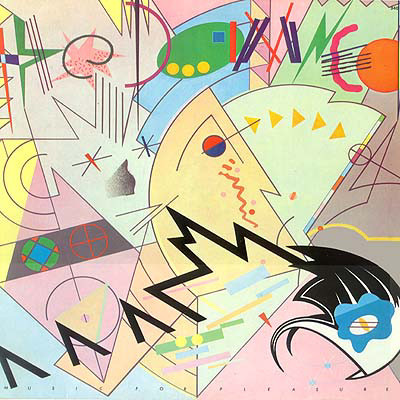
Machine Gun Etiquette.
Before heading to Wessex Studios, The Damned had written ten new tracks and cowrote I Just Can’t Be Happy Today with Giovanni Dadomo. Gone were the days when The Damned were reliant upon one songwriter to write most of an album. Belatedly, The Damned were a democracy as far songwriting went. Machine Gun Etiquette was a much more collaborative album. It was also album where they paid homage to one of their musical heroes, MC5.
On their debut album Damned, Damned, Damned, The Damned covered The Stooges I Feel Alright. This time around, The Damned covered MC5s Looking at You. This was fitting given the new direction The Damned’s music was about to head in on Machine Gun Etiquette.
The Damned would combine elements of sixties garage rock, pop, punk and psychedelic rock. There was also a more experimental sound Machine Gun Etiquette. It seemed as if The Damned were in the process of finding themselves musically. Helping them to do so, was producer Roger Armstrong.
When The Damned arrived at Wessex Studios, London, they immediately encountered another of the punk pioneers, The Clash. They were in the process of recording their classic album, London Calling. The new lineup of The Damned must have been hoping that their comeback album would enjoy some of the success that previous Clash albums had enjoyed. They were now one of the biggest British bands, while the third lineup of The Damned were starting over.
This new lineup of The Damned featured vocalist Dave Vanian; drummer Rat Scabies; bassist Algy Ward and Captain Sensible who was switching between guitar and keyboards. It took two lots of sessions to record Machine Gun Etiquette. The first began in March, and finished in May 1979. After a month which The Damned spent playing live, they returned to the studio in July. They spent the next two months completing their third album Machine Gun Etiquette. By August 1979, The Damned were ready to begin their comeback.
For The Damned’s comeback single, the album opener Love Song was chosen. No wonder; it was undoubtably one of the highlights of Machine Gun Etiquette. It’s memorable and catchy, as The Damned fuse elements of punk with swaggering garage rock and a memorable hook. Playing leading roles, were Rat Scabies’ drums and Captain Sensible’s blistering, searing guitar licks. Atop the arrangement, sits Dave Vernon’s punk infused vocal. This was a potent combination, which when in it was released in April 1979, caught the imagination of the record buying public. Love Song reached number twenty in the UK, and was then released in France, Germany and Holland. The Damned had just enjoyed the biggest hit of their career so far. Soon, The Damned were on a role.
Having enjoyed a hit single with Love Song, The Damned were keen to repeat the experience. The song that was chosen for their second single, was Smash It Up. It’s a song of two parts, where the melodic first half giving way to riotous fusion of pop and punk. It was critique of hippie culture, and a call for political revolution. This the BBC took offence at, fearing it would lead to anarchy in the UK. However, this was the best thing that could happen to the song.
Smash It Up was released on the 28th September 1979, with ironically Burglar on the B-Side. Burglar saw Rat Scabies take charge of the lead vocal. Suddenly, curiosity got the best of record buyers, who bought the single to see what the fuss was about. When this was combined with The Damned fans who bought Smash It Up, it reached thirty-six in the UK. The Damned’s call for political revolution, had been a successful and profitable exercise.
Having released two hit singles from Machine Gun Etiquette, things were looking good for The Damned as November 1979 release date approached. There was only one hurdle left to overcome, the critics. All The Damned had to do, was avoid the slings and arrows of over critical critics.
Unlike their sophomore album Music For Pleasure, Machine Gun Etiquette was hailed a resounding success by critics. Some went as far as to use the c-word, and called Machine Gun Etiquette a classic. This some critics said, was The Damned’s second classic. However, whether Damned, Damned, Damned was a classic is debatable. Machine Gun Etiquette certainly was
Critics enjoyed, embarked and welcome The Damned’s exploration through sixties garage rock, pop, punk and psychedelic rock. They hadn’t turned their back on their punk roots, but The Damned knew that their music had to evolve. What hadn’t changed was The Damned’s ability to create music that is witty and sometimes, full of social comment. That humour was evident in the album opener Love Song, where The Damned combine their trademark pun sound with wit and cliches. It’s a similarly story on Noise, Noise, Noise and Liar. This is what people had come to expect from The Damned.
Elsewhere, The Damned swagger their way through Machine Gun Etiquette, as they created riotous, rocky and memorable music. It’s akin to an adrenaline rush as The Damned rock, and rock hard. They kick out the jams, on Machine Gun Etiquette and on Anti Pope, which is a song of two parts. Then on the MC5s Looking At You, The Damned pay homage to Detroit’s finest with a blistering, driving fusion of garage rock and punk. However, one of the highlights is
I Just Can’t Be Happy Today which stylistically and sonically, is reminiscent of the Electric Prunes. Hooks aren’t in short supply on this fusion of pop and rock. However, on other songs, another side to The Damned shines through.
These Hands features one of Dave Vanian’s best vocals, on a tale of supposed merry mayhem. This gives way to Plan 9 Channel 7, a five minute epic, about the life and times of James Dean. However, after Liar, this leaves just Smash It Up Part 1 and 2. The Damned many critics felt, had kept the best until last. Critics hailed Machine Gun Etiquette a stonewall classic.
When Machine Gun Etiquette was released in November 1979, it was to critical acclaim. Ever since their comeback, The Damned’s luck had changed. This continued when Machine Gun Etiquette reached number thirty-one in the UK album charts. Eventually, it was certified silver. The Damned had released the most successful and finest album of their career, Machine Gun Etiquette. It’s just been reissued on vinyl by Ace Records. The sound quality is stunning, and is the perfect way to rediscover this classic album.
Thirty-seven years after the release of Machine Gun Etiquette, The Damned’s third album is nowadays recognised as a classic album. The Damned come of age on Machine Gun Etiquette. No longer were they the punk band that made their debut on Damned, Damned, Damned. While The Damned hadn’t turned their back on their punk roots, they had moved towards a much more rocky sound.
The Damned incorporate elements of sixties garage rock, pop and psychedelia to their punk roots on Machine Gun Etiquette. This resulted in a much more accessible album than their first two albums. Machine Gun Etiquette had a much wider appeal than Damned, Damned, Damned and Music For Pleasure. Partly, this was to do with the new lineup.
With Captain Sensible switching to keyboards and guitar, this left a void. A new bassist was needed, and Algy Ward fitted the bill. He slotted into the rhythm section alongside drummer Rat Scabies, and they formed a formidable partnership. Meanwhile, Captain Sensible proved a talented keyboardist and guitarist. This game of musical chairs had worked. So had the other change since The Damned had reformed.
This final change was that no longer were The Damned reliant upon one songwriter. Suddenly, the band was a democracy as far as songwriting was concerned. Their lyrics were clever, controversial, witty and sometimes, full of social comment. These songs came to life in the Wessex Studios, and gave The Damned the most successful album of their career.
While Machine Gun Etiquette failed to match the success of the other album being recorded at Wessex Studios, The Clash’s London Calling, forty years later, it’s regarded as The Damned’s classic album and one of their finest releases.
40 Years Ago In 1979 The Damned Release Machine Gun Etiquette.
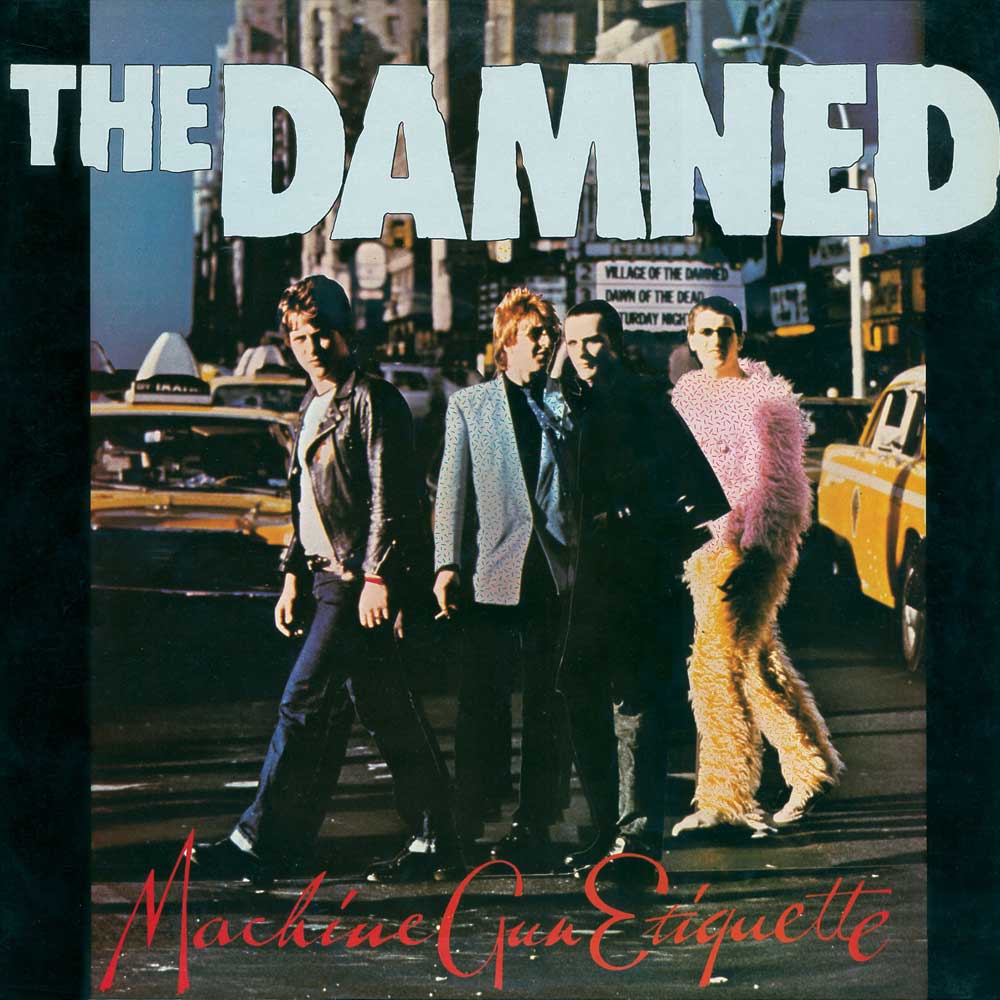
IN 1984 THE BLUE NILE RELEASED A WALK ACROSS THE ROOFTOPS.
In 1984 The Blue Nile Released A Walk Across The Rooftops.
Some albums are like old friends, and that is the case with The Blue Nile’s debut album A Walk Across The Rooftops. It’s an album I’ve treasured and loved for over three decades, and has I been a faithful companion in an ever-changing musical world. A Walk Across The Rooftops is also a timeless classic and one of the best Scottish albums of all time. It was recorded by a remarkable group, whose likes we’ll never see again in Scotland.
Enigmatic, reluctant and contrarian are words that best of describe The Blue Nile’s 1984 debut album A Walk Across the Rooftops. The Blue Nile are the complete opposite of most bands. Describing the Blue Nile as publicity shy, is an understatement. Indeed, since Paul Buchanan, Robert Bell and Paul Joseph Moore formed the Blue Nile, they’ve been one of the most low-profile bands in musical history. It seems that when they formed thirty-five years ago, The Blue Nile ticked the “no publicity” box. This has proved a double-edged sword, and resulted in The Blue Nile becoming one of the most enigmatic groups ever.
Having released their debut album A Walk Across the Rooftops in 1984, only three further albums were released during the next twenty years. Five years after A Walk Across the Rooftops came 1989s Hats. This marked the end of the original Blue Nile sound, where influences so diverse as Kraftwerk, Brian Eno and Frank Sinatra united. The next time Blue Nile released an album, they turned to America for inspiration.
Seven long years passed, where Blue Nile fans wondered what had become of Glasgow’s most enigmatic trio. Then the unthinkable happened. The Blue Nile signed a million Dollar deal with Warner Bros. and along came Peace At Last, released in 1996. Gone was the sound of A Walk Across the Rooftops and Hats, with the American-influenced Peace At Last showing a different side to the Blue Nile and their music. Paul, Robert and P.J. were back, but it was a different sound. One constant was Paul’s worldweary vocal. He was still the tortured soul, who wore his heart on his sleeve. Opinions were divided among fans and critics. Little did we know that Peace At Last was their penultimate album.
High released in 2004, proved to be the Blue Nile’s swan-song. It was very different from their first two albums, Although soulful, High lacked the European influence of A Walk Across the Rooftops and Hats. Some critics unkindly called High soul for the wine bar generation. Obviously, they didn’t quite get High, or more likely, didn’t want to. Maybe they didn’t want to understand its subtleties and nuances. What they neither understood nor realized was that the Blue Nile were never a band to stand still. Instead, they’d always tried to innovate and ensure their music evolved and was reborn. Sadly, there would be no rebirth for the Blue Nile’s music. After just four albums, the Blue Nile were no more. Even when they spilt-up, the Blue Nile never told anyone. Instead, like the lover that waits for the letter that never arrives, Blue Nile fans waited for an album that was never released.
Just like that lover, all we’re left is our memories. This includes the four albums The Blue Nile released between 1984 and 2004. The first of these was A Walk Across The Rooftops, which was released in 1984. That was thirty years ago. Sadly, there’s no fanfare for what was a true classic, and the album that launched the career of the enigmatic Blue Nile. They always did things their way.
Even the story of how A Walk Across the Rooftops came about, is typical Blue Nile. Not for the Blue Nile signing to a traditional record company. First they formed their own label, then released A Walk Across the Rooftops on a label founded by a prestigious hi-fi maker to showcase their products.
The Blue Nile were formed in 1981, when two friends Paul Buchanan and Robert Bell, met Paul Joseph Moore, all of whom met at Glasgow University. Before forming the Blue Nile, Buchanan and Bell were previously members of a band called Night By Night. Try as they may, a recording contract eluded them. Night By Night’s music wasn’t deemed commercial enough. So Paul, Robert and P.J. decided to form a new band, Blue Nile.
Once the Blue Nile were formed, they set up their own record label Peppermint Records. It was on Peppermint Records that The Blue Nile released their debut single, I Love This Life. This single was then picked up and rereleased on the RSO label. Unfortunately for the Blue Nile, RSO became part of the Polygram label and I Love This Life disappeared without trace. Despite this setback, Blue Nile persisted.
Blue Nile kept writing and recording material after the merger of RSO with Polygram. Some of that material would later be found on A Walk Across the Rooftops. When recording engineer Calum Malcolm heard The Blue Nile’s music, he alerted Linn Electronics. At last, their luck had changed.
Linn gave The Blue Nile money to record a song that they could use to demonstrate the quality of Linn’s top-class hi-fi products. When Linn heard the track they were so pleased, they decided to set up their own record label, which would release their debut album A Walk Across the Rooftops 1984.
Although this allowed the band to finally release their debut album A Walk Across the Rooftops, Paul Buchanan later wondered whether Linn was the right label for the Blue Nile to sign to. He felt that Linn didn’t operate like a record label. Mind you, he conceded that, during this period, The Blue Nile weren’t like a band.
When A Walk Across the Rooftops was released in 1984, although it wasn’t quite to critical acclaim, but the reviews were at least positive. A Walk Across the Rooftops was quite different from other albums released in 1984. Since its release, A Walk Across the Rooftops has gained almost a cult status. It’s widely recognised as one of the finest British albums of the last forty years.
A Walk Across the Rooftops opens with the title-track, A Walk Across the Rooftops. Like much of the album, the tempo is slow, the sound moody and hauntingly beautiful. It’s a song about love, and being in love. Washes of Brian Eno influenced synths meander in, joined by percussion. They add drama and tension, while the slow tempo adds to the impact of the lyrics. Beautiful lush strings, the slow steady beat of a drum machine and Paul Buchanan’s worldweary vocal, become one. Soon, Paul’s vocal and the arrangement grow in power, emotion and drama. Although it’s a love song, it’s a love song with a difference. Paul sings of his love for Glasgow, name-checking the things he loves about the city. For five minutes, drama and emotion unite to create what’s quite simply a beautiful track, featuring a vocal tour de force from Glasgow’s Frank Sinatra and troubled troubadour Paul Buchanan.
Tinseltown In the Rain is the most upbeat song on A Walk Across the Rooftops. The funkiest of bass line, stabs of keyboards and guitars unite. When Paul’s vocal enters, he delivers some really beautiful, poetic and Glasgow-centric lyrics. They reminds me of Glasgow. Even the title puts me in mind of a rainy, winter’s night in Glasgow. People going about their business, walking hand in hand on a cold, wet winter’s night. Lovers walking hand in hand, neon lights casting their shadows over them, the buildings and the city. Strings that sweep and swirl furiously, take this track to another level. Meanwhile the slap bass drives the track along, with flourishes of keyboards for company. Together, they create a track that’s a funky, orchestral, symphonic Magnus Opus, and one that’s wonderfully Glasgow-centric.
Rags To Riches like all the tracks on A Walk Across the Rooftops is written and produced by Paul Buchanan and Robert Bell. Sounds and textures shine through. So do the atmospheric sounds that open the track. Along with the mid-tempo beat, meandering waves of synths give the arrangement a somewhat industrial, Kraftwerk sound. What makes the song are the lyrics, plus Paul’s heartfelt, worldweary vocal. He’s like a modern-day minstrel or troubadour, delivering a vocal bathed in sadness, passion and pathos. As the industrial sound continues, building and growing, it becomes dramatic and even, challenging. Still, beauty and emotion shines through. Paul referencing and influenced by troubadours and crooners, lays bare his soul against a post-modernist backdrop, that’s drama personified.
Stay sees the tempo and the emotion and heartache grow. Synths, drums that crack like whips and percussion set the backdrop for Paul’s vocal. He pleads, his vocal tinged with emotion, sorrow and sadness, as sings about his crumbling relationship. Robert Bell’s thunderous, dramatic, slapped bass crackles. It’s as if it’s reflecting the electricity in Paul’s vocal. Welling up with emotion, he pleads, asks, begs, his partner to stay. He’ll change: “learn to understand you.” It’s hugely moving, emotional and soulful. You can’t help but feel and sympathize for Paul and his plight, on what’s quite simply, a Blue Nile classic. Not only is one of the highlights of A Walk Across the Rooftops, but their career.
Just a wistful, melancholy piano opens Easter Parade and accompanies Paul’s weary vocal. The tempo is slow, the sound haunting and beautiful. It’s apparently about a young man being stuck on a street whilst an Easter parade takes place around him. This evokes old and painful memories, when he attended church and learned about religion and the death of Christ. This is a sad, spiritual and incredibly moving and hauntingly beautiful song.
Heatwave sees the Blue Nile tease and toy with you. After meandering slowly into life, stabs of synths, percussion and then thunderous drums signal the arrival of Paul’s vocal. His vocal is filled with sadness, despair and even bitterness. Soon the arrangement loses its moody, pensive sound. Although other bands kick loose, the Blue Nile don’t. That’s not quite their thing. They nearly do though, just don’t tell anyone. Guitars and bass unite. Together with washes of synths and crunchy drums, they provide a sound where hope shines through. They also provide a backdrop for a peerless vocal from Paul. Although his vocal might be worldweary and tired, hope shines through. Textures and layers of music unfold, washing over you, drawing you in. The band play under and around Paul’s vocal, with Paul, Robert and P.J. becoming one. They unite, to create a track that’s a timeless, emotive roller-coaster that you don’t want to ever climb of.
Closing A Walk Across the Rooftops is Automobile Noise. It sees a return to the industrial sound that is heard on Rags To Riches. Again, the tempo is slow, with Brian Eno and Kraftwerk influencing the track. There’s a combination of avante-garde and more traditional sounds as the track reveals its secrets. This works, and works well. Thunderous crashes of cymbals, crispy drums and melancholy keyboards create a compelling backdrop for Paul’s vocal. He delivers some insightful lyrics about one person’s struggle to cope with life in the city. They find urban life tiring, almost soul destroying. Soon, they tire of the daily grind, they’re fed up just keeping their head above water. Gradually, they long to walk away from chasing the wealth the city promises. Sadly and tragically, it’s always just out of their reach. Of all the songs the Blue Nile wrote, the lyrics to Automobile Noise are among their most insightful and honest. Twenty-eight years after A Walk Across the Rooftops, these lyrics are just as relevant, poignant and insightful.
So what makes A Walk Across the Rooftops such a special album? After all, it contains just seven songs and lasts just over thirty-eight minutes. Within these thirty-eight minutes, the lush, atmospheric sound draws the listener in, holding their attention. Before long, the listener has fallen in love. They fall in love with music that’s hauntingly beautiful, emotive, dramatic and pensive. Much of this is thanks to seven peerless vocal performances courtesy of Glasgow’s very own Frank Sinatra, Paul Buchanan. He plays the role of the troubled troubadour, to a tee. His worldweary, emotive, heartfelt and impassioned vocal sounds as if it’s lived the lyrics he’s singing about. Lived them not just once, but several times over. Paul’s vocal adds soulfulness to an album that references Brian Eno, Kraftwerk, Tim Buckley, classic soul and seventies funk. The result is a compelling, innovative album.
A Walk Across the Rooftops, was so innovative that it was way ahead of its time. Released in 1984, Blue Nile were miles ahead of other groups. They were innovators, leaders of a new wave of Scottish bands, who trailed in their wake. In many ways, A Walk Across the Rooftops is a very Scottish album, but not in a traditional way. On several of the seven songs on A Walk Across the Rooftops, the lyrics bring to mind Glasgow, its streets, its people and its secrets. For Glasgow, you could replace it with Philly, Berlin, New York or Oslo.
For anyone yet to discover The Blue Nile, you’ve yet to discover one of the greatest and underrated bands of the last thirty years. Although they have only made four albums in thirty years, they were four great albums. A Walk Across the Rooftops is one of the best debut albums released by a Scottish, or indeed British band. A Walk Across the Rooftops belongs in every self-respected record collection. It’s the perfect introduction to The Blue Nile, and their music. After just one listen to the seven tracks on A Walk Across the Rooftops, you’ll fall in love with the music of The Blue Nile. After that, I’d recommend Hats, which was the follow up to A Walk Across the Rooftops. It’s as good, if not better than A Walk Across the Rooftops. While Peace At Last and High had considerably more commercial success than the first two albums, I prefer A Walk Across the Rooftops and Hats. They’re the perfect introduction to one of Scotland’s best ever bands, the Blue Nile, whose music deserved to savorued and treasured. One listen to A Walk Across the Rooftops, and you’ll be smitten by The Blue Nile, and treasure their majestic music forevermore.
In 1984 The Blue Nile Released A Walk Across The Rooftops.
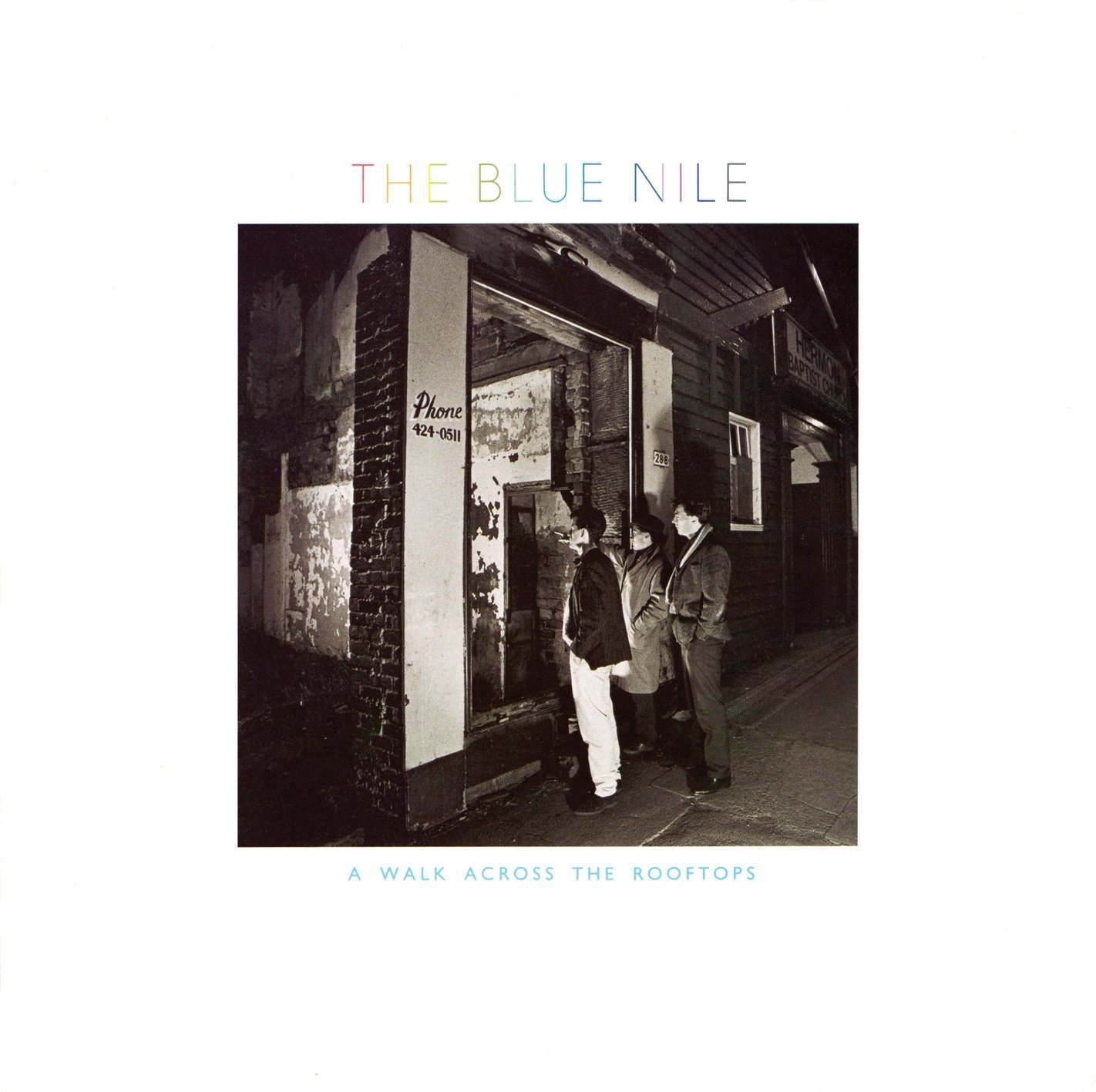
35 YEARS AGO IN 1984 LLOYD COLE AND THE COMMOTIONS RELEASED RATTLESNAKES.
35 Years Ago In 1984 Lloyd Cole and The Commotions Released Rattlesnake.s
During the eighties, Lloyd Cole and The Commotions were, without doubt, one of the finest purveyors of perfect pop, releasing a triumvirate of critically acclaimed albums during a six year period, and becoming one of the most successful Scottish bands of the past forty years. The Lloyd Cole and The Commotions story began in 1982, in Glasgow’s musical capital Glasgow.
In 1982, Derby born Lloyd Cole was studying at the University of Glasgow. Twenty-one year old Lloyd Cole had moved to Glasgow to study philosophy and English. Previously, Lloyd Cole had studied a year of law at University College London. However, Law wasn’t for Lloyd Cole, so he decided to head to Glasgow to restart his educational career. That’s where Lloyd Cole met The Commotions.
By 1982, Glasgow was like a second home to Lloyd Cole, and he had embraced the city’s vibrant musical scene. However, in 1982, he decided to make the move from onlooker to participant. So, Lloyd decided to form his own band. That band became Lloyd Cole and The Commotions.
Having made the decision to form his own band, gradually, Lloyd Cole and The Commotions’ lineup took shape. Lloyd who would sing lead vocals and play guitar, brought onboard four musicians. They became his Commotions. This included the rhythm section of drummer Stephen Irvine, bassist Lawrence Donegan and guitarist Neil Clark. They were joined by keyboardist Blair Cowan. At last the lineup of Lloyd Cole and The Commotions was compete.
With the lineup complete, Lloyd Cole and The Commotions embarked upon their musical journey. This began when Lloyd Cole and The Commotions signed to Polydor Records, and began work on their debut single.
The Lloyd Cole and The Commotions’ story started in earnest when the band released their debut single Perfect Skin in the spring of 1984. The single sold well, reaching number twenty-six in the UK charts. The follow up, Forest Fire, didn’t fare so well, only reaching a disappointing forty-one in the UK charts. That was only a minor blip. When Lloyd Cole and The Commotions released their debut album Rattlesnakes later in 1984, it was a huge success.
Rattlesnakes.
When Rattlesnakes was released later on 12th October 1984, it was to widespread critical acclaim and commercial success. Rattlesnakes reached number thirteen in the UK album charts, selling in over one-hundred thousand copies. For Lloyd Cole and The Commotions, this meant the first gold disc of their career. No wonder. Lloyd Cole and The Commotions were unique and caught the attention of critics and cerebral record buyers.
Critics and discerning music lovers were quick to release that Lloyd Cole and The Commotions were very different from most bands. Similarly, the songs on Rattlesnakes were unlike much of the music released in 1984. Lloyd Cole’s lyrics were influenced by Bob Dylan and his studies of English and philosophy. So it was no surprise that Lloyd Cole and The Commotions’ songs referenced Renata Adler, Simone de Beauvoir and Norman Mailer in their lyrics. This was articulate, catchy and cerebral pop. Not only did it win over critics and cultural commentators, but provided the soundtrack to thousands of student bedsits.
A generation of students eavesdropped on Lloyd’s anguished, quirky and cinematic lyrics. He brought songs like Perfect Skin, Rattlesnakes, Forest Fire, 2cv, Patience and Are You Ready To Be Heartbroken to life. With vocals that were a mixture of anguish, emotion and passion, Lloyd Cole lived the songs on Rattlesnakes. Behind him, The Commotions’ trademark jangling, perfect pop caught the imagination of generation of music lovers. Lloyd Cole and The Commotions’ star was in the ascendancy.
After the commercial success and critical acclaim of Rattlesnakes, Lloyd Cole and The Commotions headed out on tour. Basking in the success of Rattlesnakes, Lloyd Cole and The Commotions played to sold out audiences. They were flavour of the month with critics and cultural commentators. Lloyd Cole and The Commotions had a reputation for producing music for the “thinking” music lover. It was the polar opposite of vacuous new romantic movement. At least, here was a group of substance, capable of making compelling cinematic songs. The future looked bright for Lloyd Cole and The Commotions.
Sadly, after the potential Lloyd Cole and The Commotions showed on Rattlesnakes, the Glasgow-based ground never truly fulfilled it on neither Easy Pieces nor Mainstream. Lloyd Cole and The Commotions had the potential to be one of the biggest and best groups of the eighties and beyond. However, looking back, some critics feel that Lloyd Cole and The Commotions never quite fulfilled their potential. Maybe that’s being hard on Lloyd Cole and The Commotions?
Instead, Lloyd Cole and The Commotions are another group whose debut album was a pop classic, and surpassing it was never going to be easy. Lloyd Cole and The Commotions set the bar high, and were forever chasing pop perfection. They came close on Easy Pieces and Mainstream, but Rattlesnakes was Lloyd Cole and The Commotions’s finest hour, and is a classic album, that is a reminder of one of the greatest Scottish bands of their generation, whose recording career was way to brief.
35 Years Ago In 1984 Lloyd Cole and The Commotions Released Rattlesnakes.
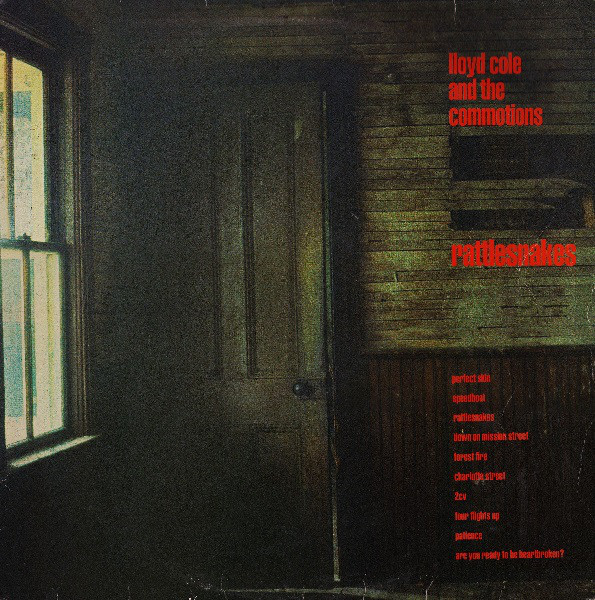
SIDIKU BUARI-FEELINGS AND SIDIKU BUARI AND HIS JAM BUSTERS.
Sidiku Buari-Feelings and Sidiku Buari and His Jam Busters.
Label: BBE Africa.
There aren’t many people who forge a career in sport and music, but Ghanian born Sidiku Buari managed to do just this. He was a silver medallist in the 400 metres at the 1963 All-Africa Games held in Dakar, Senegal. Two years later, in 1965, Sidiku Buari was a member of the 4×400 relay team and the All-Africa Games in Brazzaville, the Republic Of Congo, and won a bronze medal. However, while Sidiku Buari was a talented and successful athlete, he enjoyed more success as a musician.
Sidiku Buari was a prolific artist, arranger, composer and producer who released in excess of twenty-five albums. This includes two extremely rare albums , Feelings and Sidiku Buari and His Jam Busters on the short-lived and extremely collectable label Precious Records. These two albums have been released on one CD by BBE Africa and are a reminder of Sidiku Buari who led a remarkable life.
After his second appearance at the All-African Games, Sidiku Buari emigrated to America in 1966, and studied music at the New York School of Music. After that, Sidiku Buari studied interior design at the La Sale University in Chicago, Illinois. By then, Sidiku Buari’s musical career was underway, but his love of sport saw him playing baseball to a reasonable standard during his three decade stay in the United States.
In 1983, Sidiku Buari’s recorded Feelings, the first of two albums he released on Precious Records. The followup Sidiku Buari and His Jam Busters, was released in 1984, and featured a similar sound to Feelings. By then, Sidiku Buari had turned his back on the highlife and Afrodisco he made a name recording.
This was replaced by on Feelings and Sidiku Buari and His Jam Busters by Afroboogie, electrofunk and Accra funk. On both albums, Sidiku Buari deploys electronic drums and synths that provide a backdrop for his impassioned vocals that deliver lyrics full of socially conscious lyrics delivered in his native tongue. All this is a potent and powerful combination. The music is hook-laden, anthemic, dancefloor friendly and memorable.
Among the highlights of Feelings are Music and Anokwar (Truth) which bookend the album. Both feature squelchy synths on what are dancefloor friendly tracks that have stood the test of time. Then Let’s Go Funky Town opens Sidiku Buari and His Jam Busters before a slap bass powers along Minsumobo. Karambani is peerless example of dub disco, while Power To My People features poweful socially conscious lyrics featuring a heartfelt vocal. Closing Sidiku Buari and His Jam Busters is the truly memorable Rhythm Of Africa, where a flute plays a starring role on what’s one of the album’s highlights.
Feelings and Sidiku Buari and His Jam Busters are careful crafted albums that combined disparate musical genres as the Ghanian master musician headed in a different direction. He combined elements of African and Western music to create albums that for way too long were oft-overlooked hidden gems . Sadly, neither Feelings nor Sidiku Buari and His Jam Busters sold well and are extremely rare albums that change hands for large sums of money. Now BBE Africa have reissued Feelings and Sidiku Buari and His Jam Busters are available on one CD, and they’re a reminder of a remarkable and multitalented man Sidiku Buari.
He stated off as an athlete, and became a singer, songwriter, musician, producer and arranger as well as an award-winning music video producer and later in life, the president of Ghana’s Musicians’ Union and a recipient of a Lifetime Achievement Award of the Pan- African Society. Sidiku Buari is a remarkable man who was a prolific musician and for the newcomer to his music, Feelings and Sidiku Buari and His Jam Busters are the perfect place to start.
Sidiku Buari-Feelings and Sidiku Buari and His Jam Busters.

EBO TAYLOR-PALAVER.
Ebo Taylor-Palaver.
Label: BBE Africa.
In the history of Ghanian music one man looms large, Ebo Taylor. He’s a colossus of Ghanian music who is best described as an innovator who went on to influence future generations of Ghanian musicians. Nearly forty years later, Ebo Taylor’s influence is still being felt not just in Ghanian music, but further afield.
Ebo Taylor was orn in Ghana in 1936, and his career started in the fifties, when he was the leader of two highlife bands in Ghana, The Stargazers and The Broadway Dance Band. These weren’t just any highlife bands. They were two of the best and most important highlife bands. This allowed Ebo Taylor to establish a reputation, before he decided to spread the gospel of Ghanian music in London.
By 1962, Ebo Taylor had moved to London, where he founded The Blackstar Highlife Band. Having founded his own band, he could dictate musical policy. What Ebo Taylor wanted to do, was create a fusion of disparate musical genres and influences. This included traditional Ghanian music and other West African musical genres as well as funk and jazz.
What The Blackstar Highlife Band eventually created was akin to a musical melting pot where Afrobeat, highlife, jazz and funk came together to form a hypnotic and enthralling fusion of African and Western music. Before long, The Blackstar Highlife Band became a popular group not just in London, but further afield. The effect this had on Ebo Taylor’s career was considerable, and on his return to Ghana, his services as a producer were greatly in demand.
Having returned to Ghana, Ebo Taylor was like the all-conquering hero. Word had spread of the genre melting music he’d created in London with The Blackstar Highlife Band. Job offers came thick and fast. Musician, songwriter, arranger and producer, Ebo Taylor could turn his hand to anything.
He was a member of the short-lived The Apagya Show Band, who released one single, Tamfo Nyi Ekyir in 1973. They also released one album, which lay unreleased for thirty-nine years. From playing, Ebo Taylor decided to move onto arranging and production.
Then in 1975, Ebo Taylor arranged CK Mann and His Carousel 7’s 1975 album Funky Highlife. Later that year, he produced Gyedu-Blay Ambolley’s album Simigwa. It was through production that allowed Ebo Taylor to put his new ideas about music into practice. Ebo Taylor it seemed, had done just about everything in music. Two things remained, songwriting and releasing a solo album.
Two years later, in 1977, Ebo Taylor wrote several songs for Pat Thomas and Marijata’s eponymous album. Ebo was also called upon to arrange the album. This was good practice for what was about to happen. The one thing Ebo Taylor had still to do, was release a solo album. This would be rectified in 1977, when Ebo Taylor released his eponymous album Ebo Taylor on the Ghanian label Essiebons. Before long, he would release his sophomore album.
Twer Nyame was Ebo Taylor’s sophomore album, and was released on Phillips West-African Records. Having released two solo albums in the space of a year, it was another two years before Ebo Taylor released another album.
His next album was collaboration with the Saltpond Barkers Choi, Me Kra Tsie which was released in 1979, on Ghanian label Essiebons. The following year, Ebo Taylor released another collaborations, and recorded another album.
For what was his fourth album Conflict, Ebo Taylor joined forces with Uhuru Yenzu. When the album was released in 1980 it was a commercial success in Ghana, but failed to find an audience in other parts of Africa.
Despite this, Ebo Taylor was a popular live draw in other parts of Africa. This included Nigeria, and in 1980 Ebo Taylor and his r touring band embarked upon a club tour, which was how he met none other that Chief Tabansi of Tabansi Records.
Within a few short days, Chief Tabansi had offered Ebo Taylor a one album deal, which he signed. With the deal concluded, Ebo Taylor and his touring band, entered the studio and recorded an album’s worth of material which under the terms of the deal was to be released exclusively on Tabansi Records. Once the album was recorded Ebo Taylor competed his Nigerian club tour.
Ebo Taylor was under the impression that Tabansi Records would release the album he had recorded Palaver, later in 1980 or in 1981. Sadly, for reasons lost in the mists of time, the album was never released and Palaver sat in the Tabansi Records’ vaults for thirty-nine years.
Then last year, Peter Adarkwah of BBE Music agreed a deal with Joe Tabansi, Chief Tabansi’s son to reissue around sixty releases by the label and its imprints. That was when Joe Tabansi mentioned the tantalising prospect of unreleased material. That was when Joe Tabansi produced the mastertapes to Palaver. Little did Peter Adarkwah realise that he had struck musical gold.
Palaver features five new tracks penned by Ebo Taylor, which were recorded by his band who accompanied him on tour and in the studio.The lineup included George Amissah, Mat Hammond, George Kennedy and George Abunuah. They were responsible for what’s a long lost hidden gem that for thirty-nine years lay in the Tabansi Records vaults.
BBE Africa recently released Palaver, which is a genre-melting fusion of African and Western influences that features Ebo Taylor and his band at the peak of their powers. By 1980, Ebo Taylor was a vastly experienced musician and bandleader. He had nearly thirty years experience as a musician, and drew upon all that experience, fusing African and Western music on Palaver. Everything from funk and jazz to Afrobeat and highlife are combined on Palaver, which deserves to be called a lost masterpiece from Ghana’s greatest ever musician, and the King of Ghanaian Funky-Highlife, Ebo Taylor.
Ebo Taylor-Palaver.

MAKOTA TERASHITA MEETS HAROLD LAND-TOPOLOGY.
Makoto Terashita Meets Harold Land–Topology.
Label: BBE Music.
Hot on the heels of BBE Music’s critically acclaimed compilation J Jazz-Deep Modern Jazz From Japan 1969-1983 Volume 2, comes a reissue of Topology, a collaboration from 1983 between the young, up-and-coming, Japanese pianist Makoto Terashita, and fifty-five year old American hard bop and post bop tenor saxophonist Harold Land. He was by then, an elder statesman of jazz, and on Topology, which was billed as Makoto Terashita Meets Harold Land the two generations of jazzers recorded six tracks. These tracks became Topology, which although it’s one of the finest J Jazz albums of the eighties, is almost unknown outside of Japan. Only a few discerning connoisseurs of jazz were aware of the existence of Topology, which is a welcome reissue and is a chance for to rediscover this collaboration between Makoto Terashita and Harold Land from 1983.
When Topology was recorded in 1983, Makoto Terashita was still in his early thirties, and had only recorded one album as bandleader, Great Harvest. It was released five years earlier, in 1978, and nowadays, is regarded as a J Jazz cult classic, and is a tantalising taste of what was to come from Makoto Terashita. He would go on to become one of the greats of J Jazz.
By 1983, Harold Land was fifty-five, and was approaching veteran status, and was a vastly experienced tenor saxophonist who had played alongside many jazz greats as sideman including Bobby Hutcherson, Clifford Brown, Gerald Wilson and Max Roach. However, Harold Land was also an experienced bandleader, and by 1983, had released twelve solo albums for various labels including Mainstream, Pacific Jazz and Blue Note since making his recording debut in the fifties.
Four decades later, he was still playing live and recording, and journeyed to Japan to record Topology with Makoto Terashita. He was already an incredibly gifted composer and had written five of the six tracks that would feature on Topology. The other, World Peace was written by Harold Land.
These six tracks were recorded with a talented band that featured a rhythm section of drummer Mike Reznikof and bassist Yasushi Yoneki. They were joined by percussionist Takayuki Koizumi and the two stars of the album pianist Makoto Terashita and tenor saxophonist Harold Land. They recorded the six tracks that became the captivating collaboration Topology, which was billed as Makoto Terashita Meets Harold Land.
Topology was released to plaudits and praise later in 1983 on the cult Aketa’s Disk label, but wasn’t a commercial success. Outside of Japan, Topology failed to make any impression, which was a great shame given the quality of music on Topology.
When Topology was released, Makoto Terashita was still an up-and-coming pianist but played with a maturity despite his relative inexperience. By contrast, Harold Land was a veteran whose playing was inventive, confident and was versatile. His playing was also nuanced and full of subtleties throughout Topology.
Topology opens with Dragon Dance an energetic spiritual jazz opus where Makoto Terashita’s piano takes centrestage during the introduction and showcases his considerable skills. It’s a tantalising taste of what’s to come. Harold Land kicks loose during Crossing, a heady and intoxicating slice of bop. Very difference is World Peace, a ruminative Harold Land composition full of subtleties and nuances. Crossing which closes Topology, is a nine minute epic, which breezes along, with Harold Lamb’s tenor saxophone playing a starring role on what’s one of the album’s highlights.
It was only much later that jazz afficianados discovered the delights of Topology by Makoto Terashita and Harold Land. Topology which is now regarded as a J Jazz classic us a captivating collaboration between two truly talented jazz musicians. They may have come from difference backgrounds and were from different generations, but were responsible for enduring and engaging J Jazz classic Topology, which is belatedly is starting to find an audience and receive the recognition and critical acclaim it so richly deserves.
Makoto Terashita Meets Harold Land–Topology.

45 YEARS AGO IN 1974 BAD COMPANY RELEASED BAD COMPANY.
45 Years Ago In 1974 Bad Company Released Bad Company.
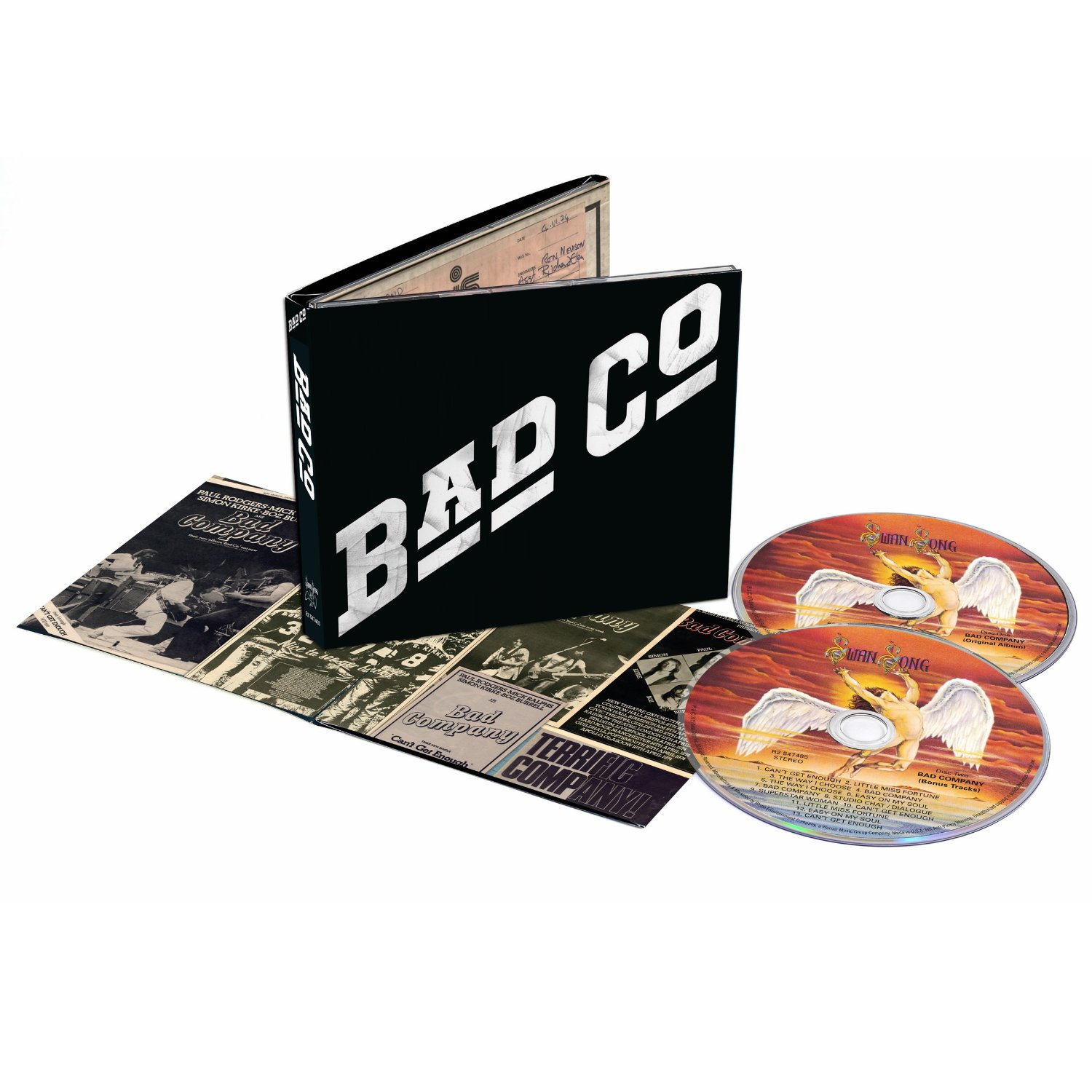
When Free split-up in for the second and final time in 1973, vocalist Paul Rodger and drummer Simon Kirke joined the latest rock supergroup Bad Company. Completing Bad Company’s lineup, were Mott the Hoople guitarist Mick Ralphs and bassist Boz Burrell. They would become part of the most successful supergroup of the seventies.
From their 1974 debut album Bad Company, right through to 1979s Desolation Angels, Bad Company were one of the biggest selling bands on both sides of the Atlantic. In Britain and America, Bad Company could do now wrong. Three of their five albums were certified gold in Britain. Across the Atlantic, Bad Company enjoyed four multi-platinum albums. They sold an estimated 13.5 million albums. This meant Bad Company were shoulders with the biggest, and most successful supergroups of the late-sixties and early seventies. The album that started this run of commercial success and critical acclaim, is Bad Company
Before long, Bad Company were signed to Led Zeppelin’s newly formed Swan Song label. Soon, they had acquired a manager, and this was Led Zeppelin’s manager, Peter Grant. He would guide Bad Company through the most successful period of their career. It began in November 1973.
That’s when Bad Company began recording their eponymous debut album. Recording began in November 1973, when Ronnie Lane’s mobile recording studio became available. This came about purely by chance.
Having released their fifth album in February 1973, Led Zeppelin were due to return to the studio in November 1973. So, they had hired Ronnie Lane’s mobile recording studio, which Led Zeppelin had sent to Headley Grange. However, things didn’t go well. The recording session ground to a halt, and Bad Company who were about to record their eponymous debut album, used the studio time.
At Headley Grange, Bad Company would record the eight tracks that became their debut album Bad Company. Each of the eight tracks were written by members of the band. Drummer Mick Ralphs wrote Can’t Get Enough, Movin’ On and Ready for Love, which Mott The Hoople had already recorded. Mick and Paul Rodgers cowrote Don’t Let Me Down and Seagull. Vocalist Paul Rodgers contributed Rock Steady and The Way I Choose. He also cowrote Bad Company with drummer Simon Kirke. These eight tracks were recorded by Bad Company during November 1973.
Using Ronnie Lane’s mobile recording studio, Bad Company began recording and producing their debut album at Headley Grange. Vocalist Paul Rodger played rhythm guitar on Can’t Get Enough, piano on Bad Company and Don’t Let Me Down. He also played all instruments on Seagull. Bad Company’s rhythm section featured drummer Simon Kirke, bassist Boz Burrell and guitarist Mick Ralph. Augmenting Bad Company, were saxophonist Mel Collins, and backing vocalists Sue Glover and Sunny Leslie. They feature on Don’t Let Me Down. By the end of November 1973, Bad Company was completed. It would prove to be one of the most successful debut albums of the early seventies.
Before Bad Company was released, the critics had their say. They were won over by Bad Company’s spartan, stripped back brand of rock. There were no dissenting voices, just critically acclaimed reviews of Bad Company. Things were looking good for Bad Company.
Can’t Get Enough was chosen as the lead single from Bad Company. It reached number fifteen in Britain, number three in Canada and number five in the US Billboard 100. Then when Bad Company was released on June 26th 1974, it reached number three in Britain, number seven in Canada and number one in the US Billboard 200. This resulted in Bad Company being certified gold in Britain and five times platinum in America. The second single from Bad Company was Movin’ On, which reached number thirty in Canada and number seventeen in the US Billboard 100. Bad Company, the third and final single released from Bad Company failed to chart. However, Bad Company, which I’ll tell you about, was one of the biggest selling albums of 1974. It was also just the start of the rise and rise of Bad Company.
Opening Bad Company is the classic, lead single Can’t Get Enough. Drummer Simon Kirke counts Bad Company, before the rhythm section and bursts of scorching guitars sets the scene for Paul’s needy, hopeful vocal. Soon, a fist-pumping, future rock classic is unfolding. It’s apparent the four members of Bad Company are talented and experienced musicians. They never miss a beat, as they fuse rock and blues. Later, guitarist Mick Ralph delivers a guitar masterclass. This inspires Paul. He goes on to deliver a swaggering, powerhouse of a vocal on this classic rock anthem.
Rock Steady was penned by Paul Rodgers. Bursts of rocky licks are unleashed, before Bad Company’s rhythm section enter. They join Mick Ralph’s guitar, providing the backdrop for Paul’s vocal. His vocal veers between soulful and thoughtful, to powerful, and bluesy. Backing vocalists accompany him, adding further bursts of backing soulfulness. Soon, though, Bad Company are ready to kick loose. That’s the signal for Paul’s vocal to drop out. The rest of Bad Company jam, allowing the opportunity to showcase their considerable talents. They’re at their rocky best. As the rhythm section lay down a rocky groove, guitarist Mick Ralph unleashes searing, crystalline licks. When Paul returns, again, he’s a man inspired. He struts, whoops and hollers his way through the rest of Rock Steady, as Bad Company look set to join supergroup royalty.
Originally, Mick Ralphs wrote Ready For Love for Mott The Hoople, his former band. They recorded it. This didn’t stop Mick’s new band reworking the track. Some saw this as a brave move, as there would be the inevitable comparisons. Bad Company stay true to the original. It’s a case of dropping the tempo, and turning Ready For Love into a thoughtful ballad. Paul delivers a pensive, pleading vocal and plays piano. Cooing harmonies sweep above the arrangement. Meanwhile, the rest of Bad Company seem to play within themselves. They take care not to overpower Paul’s vocal or piano. The piano plays in important part in the song. Especially during the breakdown, where piano carries the melody. Then when Paul’s vocal returns, Bad Company threaten to kick loose. However, they never do, allowing the listener to hear another side to Bad Company during this beautiful ballad.
Slowly, and dramatically, Don’t Let Me Down unfolds. Guitar riffs, drums rolls and subtle bursts of piano accompany Paul’s probing, questioning vocal. He pleads “Don’t Let Me Down,” laying bare his soul for all to hear. Meanwhile, cooing, sweeping, gospel tinged harmonies join searing guitars, piano and sultry saxophone. Then when the saxophone drops out, guitarist Mick Ralph unleashes one of his best solos. This inspires the rest of Bad Company on this fusion of rock, soul and gospel harmonies.
Hesitantly and gently, Bad Company begins to unfold. Paul’s vocal is tender, as he remembers his younger days. Meanwhile, a piano plays and the rhythm section play within themselves. That’s until Paul delivers the lyric: “that’s what they call me Bad Company.” That proves the signal for Bad Company to cut loose. This they do briefly, before returning to the understated sound. From there, they veer between the understated and rocky sound. In doing so, Bad Company enjoy the opportunity to showcase their versatility
The Way I Choose has an understated, thoughtful sound. As the rhythm section play slowly and subtly, a chiming, crystalline guitar accompanies Paul’s vocal. It’sfull of emotion. One minute he sings: “I don’t need nobody,” the next, “I only love you baby.” No wonder. His partner isn’t sure. Paul pleads; “answer my question, don’t say goodbye,” on this soul-baring paean.
After the balladry of The Way I Choose, Bad Company turn to good time rock on Movin’ On. From the opening bars, it’s apparent why it was chosen as a single. Hooks haven’t been rationed, on this rocky anthem. Bad Company combine the rhythm section and blistering guitars. They provide the backdrop for Paul’s strutting vocal. As he sings about life as a rock star on the road, harmonies are added. They’re the perfect foil for Paul’s vocal. Then when his vocal drops out, guitarist Mick Ralph delivers a blistering, searing solo. It’s one of his best. It drives Paul and the rest of Bad Company to greater heights on this rocky anthem.
Seagull closes Bad Company and disc one of the Deluxe Edition. It’s another understated song. Mostly, it’s just Paul’s vocal and his guitar. As he strums his acoustic guitar, Paul wistfully delivers the lyrics. He’s very different from the swaggering, strutting rocker on Can’t Get Enough Of Your Love and Movin’ On. That’s no bad thing. It shows that Bad Company weren’t one trick ponies, never would be. Instead, they were and most successful bands of the seventies.
Right through until 1979s Desolation Angels, Bad Company’s fifth album, they were one of the biggest selling bands on both sides of the Atlantic. In Britain and America, Bad Company, it seemed, could do now wrong. Three of their five albums were certified gold in Britain. Across the Atlantic, Bad Company enjoyed four multi-platinum albums. In America alone, Bad Company sold an estimated 13.5 million albums. The album that started the rise and rise of Bad Company, was their 1974 eponymous album, Bad Company.
With its mixture of rocky tracks and ballads, Bad Company caught the imagination of the record buying public. Across Europe, North America, Australasia and Britain, Bad Company were the latest supergroup to become part of rock royalty. They were at the top for five years, right through until 1979. After that, the hits dried up for six years.
By then, Paul Rodgers had left Bad Company. He left in 1982, and played a huge part in Bad Company’s success. The former Free vocalist struck gold with his second band, Bad Company. However, Bad Company weren’t a one man band.
Far from it. Each of the four members of Bad Company player their part in the band’s success. That was the case on their debut album Bad Company, which was recently released as a Deluxe Edition by Rhino. The rhythm section of bassist Boz Burrell and drummer Simon Kirke provided Bad Company’s rocky heartbeat. Guitarist Mick Ralphs unleashed a series of blistering, scorching and crystalline solos. Adding the final piece to the jigsaw, was Paul Rodger’s vocal. It veered between needy and hopeful, to a strutting, swaggering powerhouse. Together, the four members of Bad Company became an unstoppable musical juggernaut.
From 1974, right through to 1979, Bad Company were rubbing shoulders with the great and good of rock music. They were one of the most successful British rock bands, and also, one of the most successful rock supergroups. While some supergroups released just a couple of albums, Bad Company enjoyed an unenviable longevity. Their recording career lasted twenty-two years and twelve albums. However, Bad Company’s most successful album was their 1974 eponymous debut, Bad Company which forty-one years later, is regarded as a classic album.
45 Years Ago In 1974 Bad Company Released Bad Company.
KJETIL MULELID TRIO-WHAT YOU THOUGHT WAS HOME.
Kjetil Mulelid Trio-What You Thought Was Home.
Label: Rune Grammofon.
Prodigious describes twenty-eight year old Norwegian composer, bandleader and pianist Kjetil Mulelid, who graduated from the Norwegian University of Science and Technology’s jazz program in Trondheim in 2014. By then, he had already made his recording debut on Lauv’s album De Som Er Eldre Enn Voksne. Since then, Kjetil Mulelid has collaborated with Arve Henriksen, Eirik Hegdal, Kirsti Huke, Nils-Olav Johansen and Ola Kvernberg, and has released albums as Kjemilie, Wako and the Kjetil Mulelid Trio who recently released their sophomore album What You Thought Was Home on Rune Grammofon. This was the latest chapter in the Kjetil Mulelid story.
Having graduated from Norwegian University of Science and Technology’s jazz program in 2014, Kjetil Mulelid embarked upon a career as a professional musician. Just a year later, his band Wako released their debut album The Good Story to plaudits and praise. They would release two more albums Modes For All Eternity in 2017, and in 2018, Urolige sinn which showcased a talented band. However, by 2018, Kjetil Mulelid had founded another band.
This was Kjemilie, who released their critically acclaimed debut album Hverdagene in 2016. The following year 2017, Kjemilie returned with another album that found favour with critics, Bakkekontakt. It was one of a quartet of albums that showcased Kjetil Mulelid’s considerable skills.
Another was Fieldfare’s eponymous album. However, the other was the Kjetil Mulelid Trio’s debut album Not Nearly Enough To Buy A House, which was released to widespread critical acclaim. Critics compared Kjetil Mulelid’s playing on Not Nearly Enough To Buy A House to legendary pianists Keith Jarrett and Bill Evans. On what was a captivating and melodic album that combined elements of jazz, folk and even gospel, Kjetil Mulelid came of age musically. Critics awaited the followup.
Now two years later, the Kjetil Mulelid Trio return with What You Thought Was Home, which features eight new compositions. Just like on Nearly Enough To Buy A House the compositions captivate and showcase a truly talented and versatile Trio. Led by pianist Kjetil Mulelid and joined by bassist Bjørn Marius Hegge and drummer Andreas Winther this truly talented Trio play effortlessly on what are sometimes rhythmically complex compositions. They’re also very beautiful and melodic, which are best described as sometimes cinematic and evocative that paint pictures in the mind’s eye. The music is sometimes energetic and rich in harmonies. However, while Kjetil Mulelid’s piano plays a starring role, and he plays with a maturity beyond his years, his rhythm section add layers of magical music as well as textures and tones. Their playing veers between calm and energetic, but is always effortless, as the compositions gradually unfold, revealing their secrets on a carefully crafted album that is beguiling and constantly captivates and has a distinctive Scandinavian sound. It showcases the Kjetil Mulelid Trio at the peak of their powers as they reach new heights on What You Thought Was Home, which is career defining album from the prodigiously talented Norwegian bandleader, composer and pianist who has a bright future ahead of him.
Kjetil Mulelid Trio-What You Thought Was Home.
LOTHAR OHLMEIER, ISAMBARD KHROUSTALIOV, RUDI FISCHERLEHNER-HYPERTIDE OVER KIRIBATI.
Lothar Ohlmeier, Isambard Khroustaliov, Rudi Fischerlehner-Hypertide Over Kiribati.
Label: Not Applicable Recordings.
Each week, a vast amount of new albums are released into the global musical marketplace by artists and bands from every corner of the world. This should mean that there’s a constant stream on ambitious and innovative music being released. Sadly, that isn’t the case, and sometimes, it’s as if time has stood still as artists and bands rehash the same sound that was popular twenty or thirty years ago. Their rationale seems to be that deep house, twee indie pop or hair metal was once popular, and brought fame and fortune to many artists and bands and can line their pockets with filthy lucre. However, times have changed, and record buyers are looking for new and groundbreaking music that will push musical boundaries to their limits and beyond. Thankfully, music like this is still being released.
This includes by the truly talented triumvirate of Lothar Ohlmeier, Isambard Khroustaliov, Rudi Fischerlehner, who have just released a new album Hypertide Over Kiribati, on Not Applicable Recordings. Hypertide Over Kiribati, which was recorded at Keller4 Tonstudio, Berlin, in March 2018, showcases the considerable talents of drummer Lothar Ohlmeier, Rudi Fischerlehner on bass clarinet and Isambard Khroustaliov whose specially is modular synths and computers. The trio recorded four tracks that last forty-nine minutes, and they became Hypertide Over Kiribati. They’re a welcome reminder that there are still artists who are willing to innovate and release cerebral, genre-melting music that that is inventive and pushes musical boundaries to their limits. For that we should be grateful.
Lothar Ohlmeier, Rudi Fischerlehner and Isambard Khroustaliov assure us that the not only is the hypertide is real, and so is Kiribati, a real life paradise in the central Pacific Ocean. Tragically, the hypertide threatens to submerge and decimate Kiribati. This Lothar Ohlmeier, Rudi Fischerlehner and Isambard Khroustaliov compare with how we’re gradually the hypertide that will drown both the real and the virtual. This philosopher and computer scientist Jaron Lanier once described as: “a vast pointilist spew” of platform sterilised media that’s been robbed of any history or culture and no longer has any meaning.
Nowadays, artists and record companies place great importance on likes, plays, views and shares, fretting over a slew of stats in the internet age. As a result, many record companies are becoming much more choosy about what they release and are reluctant to release anything that isn’t populist. Hard luck if you’ve recorded a groundbreaking album of leftfield music that explores the relationship between music and computation. Sadly, you’re out of luck and that project is unlikely to be released by the majority of record labels. That’s a great shame.
Especially since there’s been many examples of experiments and of going back to the 20th century, and range from jazz musicians exploring the creative uses of improvisation right through to the use of electronic instruments and technology in dance and music. This includes what were some of the earliest computers, which were issued by what were mostly classically trained composers who were pioneers who were looking to innovative and create new music that was very different from what had preceded it. The use of technology that was constantly evolving and continues ton evolve, has freed several generations from constraints and allowed them to push musical boundaries to their limits and beyond. That is the case today, and is the case on Hypertide Over Kiribati.
It’s a very personal album by Lothar Ohlmeier, Isambard Khroustaliov and Rudi Fischerlehner who embarked upon a musical odyssey, and were determined to challenge what they call the: “anonymising, anodising force of platform capitalism in music.” To do this they’ve recorded an album of ambitious, inventive and innovative genre-melting music where Lothar Ohlmeier, Isambard Khroustaliov and Rudi Fischerlehner fuse elements of avant-garde, electronica, electroacoustic, experimental, improv and jazz that pushes musical boundaries to their limits and sometimes beyond on album what’s hopefully the first of many albums by this truly talented triumvirate of musical mavericks and pioneers.
Lothar Ohlmeier, Isambard Khroustaliov, Rudi Fischerlehner-Hypertide Over Kiribati.
35 YEARS AGO IN 1984 SIMPLE MINDS RELEASED SPARKLE IN THE RAIN.
35 Years Ago in 1984 Simple Minds Realised Sparkle In The Rain .
Success didn’t come easy for Glasgow’s very own Simple Minds. It took five years and five albums before they found commercial success and critical acclaim across Europe with New Gold Dream (81–82–83–84). This was the start of the rise and rise of Simple Minds, and was also the start of their stadium rock era. The story began in Glasgow, Scatland’s musical capital in April 1982.
That’s when Simple Minds released the anthemic Promised You A Miracle as the lead single from New Gold Dream (81–82–83–84). It reached number eleven in the British charts. This was Simple Minds first British hit single. Soon, Promised You A Miracle took Europe by storm. This was the start of Simple Minds transformation from new wave pioneers, to stadium rock superstars.
Four months after the release of Promised You A Miracle, Glittering Prize was released as the followup. It reached number sixteen in Britain, and reached the top twenty in Australia, Ireland, New Zealand and Sweden. Word was spreading about Simple Minds’ new sound. This was just in time for the release of New Gold Dream (81–82–83–84).
Released on 13th September 1982, life was never going to be the same for Simple Minds after the release of New Gold Dream (81–82–83–84). It reached number three in Britain, and was certified platinum. From Australia and New Zealand, to France, Holland and Sweden, right through to America and Canada, New Gold Dream (81–82–83–84) sold well. In Canada, it was certified gold. For Jim Kerr, Charlie Burchill, Michael MacNeil and Derek Forbes, it was a New Gold Dream come true. The only disappointment was when one of Simple Minds’ most anthemic tracks, Someone Somewhere in Summertime, stalled at number thirty-six in Britain. Apart from that, things had never been better for Simple Minds.
Or so it seemed. Simple Minds had been having problems with drummers on New Gold Dream (81–82–83–84). The problem was, they didn’t have one. So, they’d used two drummers for the recording of New Gold Dream (81–82–83–84). Mike Ogletree played on four tracks, while Mel Gaynor played on the other six tracks. However, it was Mike Ogletree that headed out on tour with Simple Minds, to tour New Gold Dream (81–82–83–84). Mike played on the first leg of the tour, and left in November 1982 to form Fiction Factory. That presented a problem for Simple Minds.
The answer to their problem was Mel Gaynor. He’d played on New Gold Dream (81–82–83–84). So, he knew many of the songs. Mel Gaynor was brought onboard, and became Simple Minds’ first non-Scottish member. However, Mel Gaynor’s drumming would prove a crucial part of Simple Minds future sound and success.
During the summer of 1983, Simple Minds played a series of high profile concerts. Many were in large stadiums, in front of fifty thousand people. This was no place for shrinking violets. So, Simple Minds cranked up the volume and went for it. Little did anyone realise, that Simple Minds were now bona fide stadium rockers.
One new song epitomised Simple Minds’ new sound… Waterfront. With its pulsating bass line, thunderous drums, and Jim’s strutting, preening vocal, Simple Minds literally swaggered their way through what was their latest anthem. This raised a few eyebrows. Were Simple Minds in the process of reinventing themselves?
That proved to be the case. The story began in September 1983 at Monnow Valley Studio in Rockfield, and At The Town House in London. That’s where work began on Simple Minds’ sixth album Sparkle In The Rain which was recorded over two months in 1983.
When Simple Minds arrived at Monnow Valley Studio, in Rockfield they had already recorded demos for six tracks at The Chapel studio in Lincolnshire. Other musical ideas had been recorded at Nomis Studios, London. So, when producer Steve Lillywhite arrived at Monnow Valley Studio, some of the hard work had already began. That, however, was only the starting point.
For the next three weeks, Steve Lillywhite and Simple Minds took their original recordings, and reshaped them. The early recordings were the genesis of the finished songs. Some recordings featured just Simple Minds’ new rhythm section. However, quickly, Mel Gaynor was proving to be an invaluable member of Simple Minds. He slotted seamlessly into Simple Minds’ rhythm section alongside bassist Derek Forbes and guitarist Charlie Burchill. Mick MacNeil played keyboards, and Simple Minds’ charismatic frontman, Jim Kerr took charge of lead vocals. This was the lineup of Simple Minds that transformed the demos into songs. Together, Simple Minds’ new lineup began transforming Simple Minds’ demos into fully fledged songs. It took just three weeks. After that, Simple Minds were on the move again.
Their new home was Nomis Studios, London. That’s where producer Steve Lillywhite encouraged Simple Minds to complete the tracks. This meant vocalist Jim Kerr had to write the lyrics to their nine new tracks. To do this, Jim Kerr sought inspiration. Sometimes it came when he heard Charlie Burchill play guitar, other times when Mick MacNeil was playing keyboards. Soon, the lyrics for the nine tracks were completed, and ready to be recorded. The other track Simple Minds recorded, was a cover of Lou Reed’s Street Hassle. After two months, the reinvention of Simple Minds was almost complete. All that was left was for producer Steve Lillywhite to add his Midas touch to a couple of tracks. Only then, would Sparkle In The Rain be ready for release.
Before the release of Sparkle In The Rain, Waterfront was released as the lead single on 4th November 1983. It reached number thirteen in Britain, and was a hit across the world. So was Speed Your Love To Me, which was released on 9th January 1984. Strangely, this stadium rocker only reached number twenty in Britain. However, at least it gave Simple Minds a taste of the direction their music was heading.
Nearly four months after Sparkle In The Rain was completed, it was ready for release on 6th February 1984. However, before the release of Sparkle In The Rain, critics had their say. Collectively, Simple Minds held their breath. How would critics respond to Simple Minds turning their back on the new wave sound of New Gold Dream (81–82–83–84). Mostly, Sparkle In The Rain was well received. The forever contrarian Rolling Stone and N.M.E. weren’t so sure of Sparkle In The Rain. They gave Sparkle In The Rain mixed reviews. This didn’t matter though.
When Sparkle In The Rain was released, on 6th February 1984, it soared up the British charts to number one, resulting in another platinum disc for Simple Minds. Across the Atlantic, Sparkle In The Rain was became Simple Minds most successful album, reaching number sixty-four in the US Billboard 200. That however, wasn’t the end of the commercial success.
Just like New Gold Dream (81–82–83–84), Sparkle In The Rain was a hit across the world. In Australia, Canada, France, Germany, Holland, Ireland, New Zealand, Sweden and Switzerland, Sparkle In The Rain reached the top twenty. Sparkle In The Rain was was certified gold in Canada and Germany. The reinvention of Simple Minds transformed their fortunes. They were now superstar stadium rockers, who were rubbing shoulders with the great and good of music. The album that transformed their career was Sparkle In The Rain, which I’ll tell you about.
Up On The Catwalk opens Sparkle In The Rain. It’s the first of the stadium rock anthems on Sparkle In The Rain. From the moment Mel Gaynor counts the band in, Simple Minds burst into life. Thunderous, jubilant drums and a pounding,sometimes ethereal and elegiac piano are at the heart of the arrangement. Other parts including Charlie’s guitar and Derek’s bass can be heard, but they’re neither as prominent nor important. The track could be stripped down to just the drums, piano and Jim’s swaggering vocal and still work. It would still be an hands in the air eighties anthem, that’s guaranteed to bring memories flooding back.
As soon as Book Of Brilliant Things unfolds, Mick’s keyboards and Mel’s drums go toe-to-toe. They’re joined by Charlie’s machine gun guitar. Jim vamps, clicking his fingers, as if encouraging Simple Minds to greater heights. What follows is the first of the songs with religious references. Jim Kerr is transformed into a street preacher, giving thanks for The Bible, his “Book Of Brilliant.” Joyously, he gives thanks for what it’s given. Despite that, he’s still the gallus, strutting stadium rocker. The rest of Simple Minds are at their tightest, hard rocking best. They never miss a beat, as their leader encourages them to even greater heights.
There’s no end of anthems on Sparkle In The Rain. Speed Your Love To Me is just the latest. It evolved out of hours of jamming, and eventually, fell into place. It’s one of Simple Minds’ finest hours. Again, Simple Minds burst into life, carrying the listener in their wake. Simple Minds’ rhythm section power the arrangement along, while Charlie unleashes blistering, searing guitars. They’ve got the same sound as Big Country. Charlie stabs at his keyboards. Later, his crystalline keyboards help carry Jim’s needy, hopeful vocal along on this irresistible anthem.
The pulsating, hypnotic bass line as Waterfront unfolds is unmistakable. Then Simple Minds literally come crashing in. Their rhythm section, blistering guitars and keyboards unite, providing the backdrop for Jim’s vocal. When it enters, he paints pictures, pictures of Glasgow, late at night, after its heart was ripped out. Soon, memories of the once thriving industrial city come flooding back. Jim sounds angry and frustrated. So he should be. It’s his city, our city. With the rest of Simple Minds he vents his anger and frustration at those who tore the heart and soul out of a great city.
Simple Minds drop the tempo on East At Easter. Jim wrote some of the lyrics as the task force was setting sail for the Falklands. ironically, just Sparkle In The Rain was reissued, the task force sets sail for the Falklands again. Other lyrics Jim wrote after watching a documentary about Lebanon. They inspire Jim to deliver an impassioned vocal. Meanwhile, Mick’s soaring, crystalline synths and Derek’s pulsating bass play an important part in the arrangement. So do Mel’s drums, which help power the arrangement along to its wistful crescendo.
Lou Reed’s Street Hassle was originally, the opening track on side two of the vinyl edition of Sparkle In The Rain. With side one chock full of anthems, many people ignored side two. Those that got that far, often found side two something of comedown. There’s a sense of drama as the arrangement unfolds. It comes courtesy of Mick’s string synths. Soon, Street Hassle skips along to the sound of Mel’s drums. Jim’s vocal is understated, but sometimes dramatic. Washes of guitar and string synths provide a backdrop. Then just after two minutes, Simple Minds kick loose. Feeding off Mick’s synth riff, searing, blistering guitars soar above the arrangement and strings dance, as Lou Reed’s Street Hassle is given a makeover by Simple Minds.
As Simple Mind’s rhythm section and keyboards combine White Hot Day bursts into life. Jim delivers a vocal powerhouse. Not to be undone, Charlie unleashes some of his best guitar riffs. Soon, the glisten and combine perfectly with the melodic nature of Mick’s synths. By then, things look like falling into place. However, before long Steve Lillywhite’s arrangement seems to struggle. As a result, the song fails to flow. It’s a fragmented, stop start performance, where Simple Minds try their best, but can’t quite rescue the situation. Even Jim Kerr agrees that the arrangement wasn’t the best, and that’s why he’s been reluctant to play the song live.
Some of the lyrics to ”C” Moon Cry Like A Baby came to Jim when he was on tour. He was standing on the balcony of a hotel, staring in bewilderment at the beauty in front of him. It was then he wondered how he got from the South Side of Glasgow to where he was?Chiming, chirping guitars, eighties drums and crystalline keyboards are joined by retro synths. It’s a song whose roots sonically, are in the early eighties. As Mel’s mesmeric drums provide the heartbeat, Jim delivers a a punchy, impassioned vocal. He voices his deepest fears. After this cathartic outpouring, Jim still believes that: “love can conquer all,” on this captivating track where we hear two sides to Simple Minds. The hard edgy sound of the arrangement, is very different from Jim’s soul-baring vocal.
After a hesitant start, Simple Minds combine elements of punk, new wave and rock ’n’ roll on The Kick Inside Of Me. The punk influence comes courtesy of Jim’s vocal. It soon, changes and references Lou Reed. Meanwhile, the rest of Simple Minds become an old fashioned rock ’n’ roll band. Strip away the new wave, dancing string synths and Simple Minds are at their hard rocking best. At times, the track has a “live” sound. That comes during Jim’s machismo fuelled vocal, accompanied by a hard rocking Simple Minds.
Shake Off The Ghosts closes Sparkle In The Rain. It’s another track with a hesitant start. Eventually, when it finds it direction, there’s a nod to U2. Glacial synths join the rhythm section as the arrangement glides along. Charlie adds some chiming guitars to this captivating instrumental.
Ever since Simple Minds released Sparkle In The Rain in 1984, for many people, it’s been the ultimate album of two sides. Side one was full of fist pumping anthems. Then side two was something of a slow burner. There weren’t as many hook heavy songs. That however, is somewhat simplistic.
The problem with Sparkle In The Rain, is that all the anthems come early in the album. Nobody thought to breakup the flow of the album. Maybe, if some of the songs from side two had been interspersed with the anthems, then it would’ve been perceived as a more balanced album?
While the five songs on side one surpass the quality of songs on side two, side two wasn’t without its moments. Simple Minds’ reinvented Lou Reed’s Street Hassle. Then on ”C” Moon Cry Like A Baby Jim Kerr delivers a soul-baring vocal. The Kick Inside Of Me is best described as machismo fuelled, and Shake Off The Ghosts is a captivating instrumental. The only letdown is White Hot Day, which promises much, but fails to deliver. Even Jim Kerr will admit that. That’s why Jim has been reluctant to play White Hot Day live. However, it’s the only time Simple Minds go wrong on Sparkle In The Rain.
That’s pretty good going, considering Sparkle In The Rain marked the reinvention of Simple Minds. They left their electronic and new wave roots behind. Now, Simple Minds were well on their way to superstardom. There was no stopping them after Sparkle In The Rain, which was recently reissued by Universal as a double album.
Following Sparkle In The Rain, Simple Minds were bona fide stadium rock royalty. For their next four albums, Simple Minds could do wrong. From 1985s Once Upon A Time, 1989s Street Fighting Years, 1991s Real Life and 1992s Good News From The Next World, commercial success and critical acclaim were omnipresent. With every album, Simple Mind’s popularity grew. Then by 1996s Néapolis, gone were the gold discs and hit singles. The writing had been on the wall since Good News From The Next World, which was only certified gold in Britain and Germany. Simple Minds had been at the top since 1982s New Gold Dream (81–82–83–84). However, one of Simple Minds’ finest albums is Sparkle In The Rain, where they reinvented themselves as a strutting, swaggering stadium rock band and went on to become one of Scotland’s most successful and enduring musical exports.
35 Years Ago in 1984 Simple Minds Realised Sparkle In The Rain .
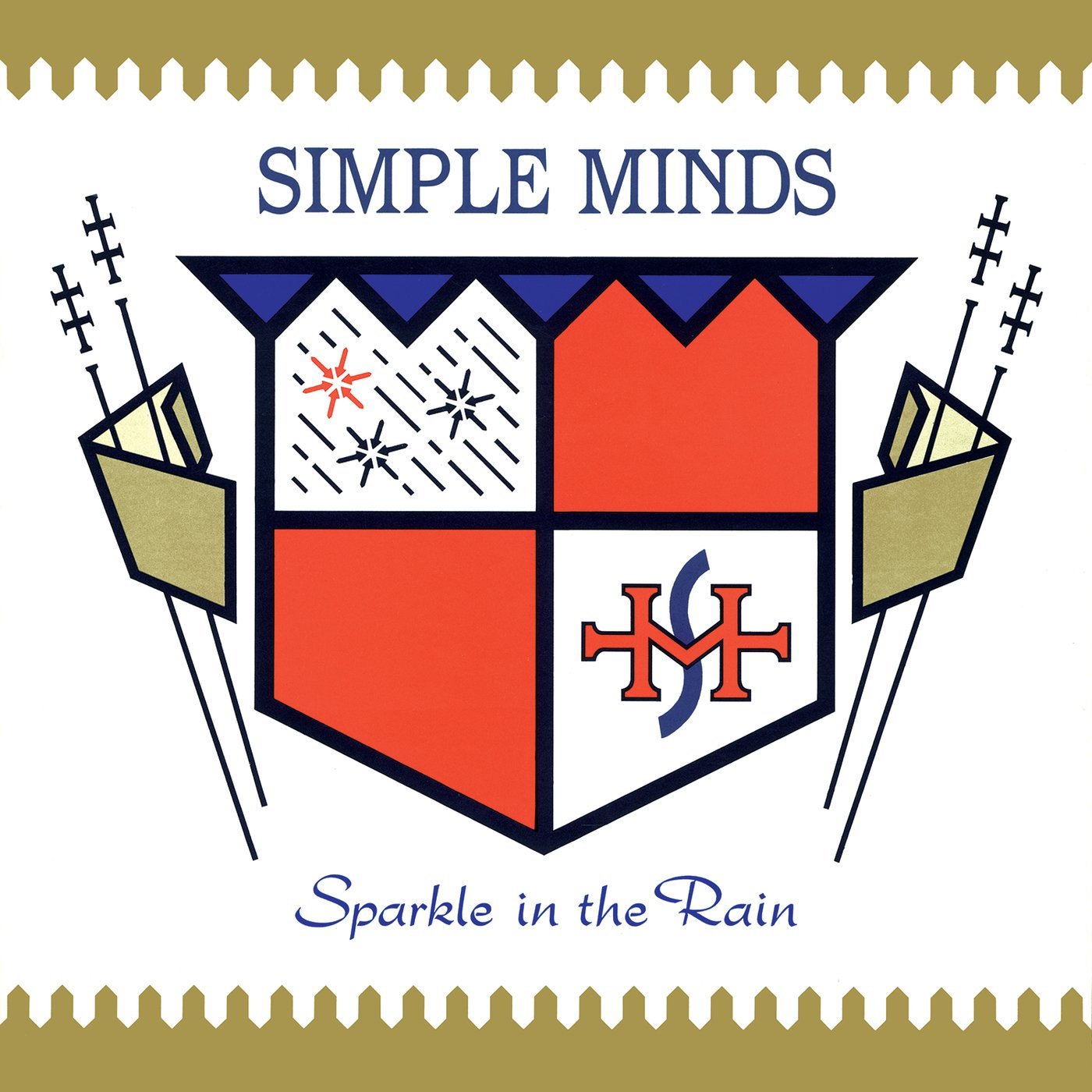
IN 1979 LED ZEPPELIN RELEASED IN THROUGH THE OUT DOOR.
In 1979 Led Zeppelin Released In Through the Out Door.
On 15th August 1979, Led Zeppelin released their eighth studio album In Through the Out Door, a and by then, they were one of the biggest selling bands in the world. Their first seven studio albums and their 1976 live album The Song Remains The Same, had sold eighty-three million copies in America alone. Worldwide Led Zeppelin’s albums had sold over 100 million copies. However, little did the four members of Led Zeppelin realise that In Through the Out Door marked the end of an era.
In Through The Out Door was the last album to feature the original lineup of Led Zeppelin. Not for the first time, tragedy was about to touch Led Zeppelin. Things hadn’t been going well for Led Zeppelin since the 5th August 1975.
Before Led Zeppelin embarked upon an American tour, Robert Plant decided to take his family on holiday to Rhodes. Robert decided to hire a car so he could see the Island. Disaster struck on 5th August 1975, when the car spun off the road and crashed. He was taken to hospital where doctors discovered that Robert had broken his ankle and elbow. This resulted in the American tour being postponed.
Presence.
With the American tour cancelled, Robert Plant began the lengthy period of recuperation. His convalescence began in Jersey, where Robert began writing some of the lyrics for Presence. When Robert moved Malibu, he continued to write the lyrics for Presence. By then, he was joined by Jimmy Page. The pair began to knock the lyrics into shape. Soon, the Page and Plant songwriting partnership had enough material for an album.
and Robert’s recuperation looking like being lengthy, he he decided to write the lyrics for Led Zeppelin’s next album. This made sense. However, with Robert confined to a wheelchair, it wasn’t going to be easy for him to record his vocals.
Despite this, the early recording sessions for Presence took place at Hollywood’s SIR Studio. That’s where they spent the next month, working on the songs that became Presence. After a month, Led Zeppelin flew to Giorgio Moroder’s Musicland Studios, in Munich, Germany, which was perceived as the studio to record an album. Led Zeppelin were just the latest to make their way Musicland Studios.
As Led Zeppelin setup, onlookers something was missing. John Bonham’s drums and percussion were present. So were John Paul Jones four and eight string basses. Jimmy Pages’ array of guitars were setup in his corner of the studio. All Robert Plant brought was his trusty harmonica. Then it became clear what was missing, keyboards. It looked like Led Zeppelin were going to record an album without keyboards.
That’s what Led Zeppelin proceeded to do. Presence Plant and Page decided, should mark a change in Led Zeppelin’s sound. This should make Led Zeppelin’s return to hard rock. The riffs were much simpler, as Led Zeppelin moved towards guitar based jams. This was very different to some of the complex arrangements on Physical Graffiti. Another change was the lack of keyboards. Originally, they were meant to be absent. However, it was a case of needs must. Keyboards had to be used for the chorus on Candy Store Rock. Mostly, though, Presence was a much more stripped back, simpler and spontaneous album than previous Led Zeppelin albums. There was a reason for this.
Led Zeppelin had to work quickly. The Rolling Stones were scheduled to record Black and Blue. So, Led Zeppelin had to work quickly. They laid the tracks down quickly. There was an element of spontaneity in the sessions. Once the tracks were laid down, three nights were spent adding overdubs. By the 25th November 1975, Led Zeppelin’s yet unnamed album was recorded and mixed. It hadn’t been the ideal sessions for Led Zeppelin.
Usually, Led Zeppelin would spend much longer than eighteen days recording an album. However, they were against the clock.
If the album wasn’t recorded in time, Led Zeppelin would have to find another studio. They were determined not to have to do this, so they spent eighteen to twenty hours a day recording. Sometimes, members of Led Zeppelin fell asleep while mixing the album. Whoever was left awake, was left to mix the track. Somehow, Presence was recorded the album in eighteen days. Later, Robert Plant felt this showed.
With Robert Plant confined to a wheelchair, this made delivering his trademark vocals difficult. He couldn’t unleash the same power. As a result, Robert later though his vocal was “pretty poor”…and “sounds tired and strained.” Robert also felt “claustrophobic” as Led Zeppelin recorded in Musicland’s basement studios. He was also still suffering from the accident that happened three months earlier. Despite this, Robert soldiered on and the Presence sessions were finished on time.
Somehow, Led Zeppelin had managed what many thought was impossible, and recorded and mixed an album in eighteen days. It was ready for release in early 1976.
Before Presence was released on 31st March 1976, critics had their say about Led Zeppelin’s latest album. Previously, many critics hadn’t been fans of Led Zeppelin. It didn’t matter that they were one of the most successful bands in the world, certain critics enjoyed panning new Led Zeppelin albums. So, it was no surprise that Led Zeppelin tended to avoid the press. No wonder. Just like previous albums, Presence wasn’t well received by critics. Some critics remarked that the songs were all similar. Gone was the diversity of previous albums. Other critics called Presence inaccessible, and a difficult album to like. While Led Zeppelin had had bad reviews before, this didn’t bode well for the release of Presence.
Presence wasn’t released until 31st March 1976. The album had been delayed while the sleeve was completed. By the time Presence was released, it had racked up the highest ever advance orders in Britain. This resulted in Presence reaching number one and being certified gold upon its release, and later, was certified platinum. Across the Atlantic, Presence eventually reached number one in the US Billboard 200. It was the slowest selling of Led Zeppelin’s seven album career. Eventually, Presence sold just three million copies, and was certified triple-platinum. Considering Physical Graffiti had sold sixteen million copies, Presence was seen as a failure in America. Elsewhere, sales of Presence were slow.
In Australia, France, Japan, New Zealand, Norway, Spain and Sweden, Presence entered the top ten. Presence didn’t sell as well in Canada, where Led Zeppelin had always been popular. Gold and platinum discs were in short supply. Apart from Britain and America, Presence didn’t sell enough copies elsewhere. Nor did the single released from Presence.
Candy Store Rock was chosen as Presence’s lead single. It was perceived as one of Presence’s highlights. However, it failed to chart in any of the countries it was released in. For Led Zeppelin, Presence was a disappointing album commercially. Especially given Led Zeppelin were at the peak of their powers. What was even more galling was that Led Zeppelin were unable to tour. If they had headed out on tour, maybe sales of Presence would improve? Given Robert Plant’s injuries, this wasn’t possible. So Led Zeppelin decided to complete the concert film The Song Remains The Same.
The Song Remains The Same.
Ever since late 1969, Led Zeppelin had been planning a documentary film about the band. A performance was filmed at the Albert Hall in London, on 9th January 1970. However, the sound quality wasn’t satisfactory, so the idea was shelved temporarily.
Then on 20th July 1973, Led Zeppelin’s manager Peter Grant made contact with actor and director Joe Massot. He had previously filmed George Harrison’s Wonderwall. Joe was a friend of Peter Grant, and Jimmy Page. So when Peter Grant approached Joe about filming Led Zeppelin, he didn’t take much convincing. A month later, Joe was in New Your filming Led Zeppelin.
On 27th, 28th and 29th July 1973, Led Zeppelin were playing at Madison Square Garden. The three nights were filmed on 35mm film with a twenty-four track quadraphonic mobile recoding studio. This cost $85,000, which the four members of Led Zeppelin financed. After the three shows at Madison Square Garden, progress slowed. This didn’t please Peter Grant.
He decided to bring another direction onboard Peter Clifton to complete the project in July 1974. So, Peter Grant sent someone to Joe Massot’s house to collect the film. Joe Massot however, was owed money, and decided to hide the film. This he thought would ensure he was paid. Instead, Joe’s editing machine was taken as collateral. Before long, it was stalemate and Joe served a writ.
Once the writ had been served, Led Zeppelin’s lawyers paid Joe Massot the money he was owed. He delivered the films, and Peter Clifton was given the job of completing the film.This included Led Zeppelin recreating the Madison Square concerts at Shepperton Studios in August 1974. Eventually, The Song Remains The Same was completed after three years work.
A premiere of The Song Remains The Same took place at Atlantic Records. The label’s founder and president, Ahmet Ertegun is reported to have fallen asleep during the screening. This didn’t bode well for the release of The Song Remains The Same.
On 20th October 1976, the film and soundtrack to The Song Remains The Same was released. Critics weren’t impressed with the soundtrack. They felt the album was over-produced, clumsy and awkward. Even the four members of Led Zeppelin weren’t fans of The Song Remains The Same. Jimmy Page felt that The Song Remains The Same: “wasn’t necessarily the best live stuff we have. I don’t look upon it as a live album…it’s essentially a soundtrack.” Given the subsequent recreating of the Madison Square concerts and subsequent, there’s more than an element of truth in this. However, record buyers had the casting vote.
When The Song Remains The Same was released, it reached number one in Britain and number two in the US Billboard 200. Elsewhere, The Song Remains The Same reached the top ten in the album charts in Canada, Japan and New Zealand. The Song Remains The Same was certified gold in France and Germany, platinum in Britain and four times platinum in America. With around five millions sales, The Song Remains The Same had been a success for Led Zeppelin. However, 1977 proved to be the most difficult years of Led Zeppelin’s career.
With Robert Plant fully recovered, Led Zeppelin were ready to embark upon their American tour. Things however, didn’t go to plan. In February 1977, Robert Plant was diagnosed with laryngitis. This resulted in the opening date being postponed from February to April 1977. This further impacted upon ticket sales.
When Led Zeppelin announced their 1977 American Tour, the tickets sold well. However, they didn’t sell in the same quantities they had two years earlier. Back then, Led Zeppelin were at the peak of their popularity. Two years later, Led Zeppelin tickets weren’t selling as well. The postponement impacted upon the band.
With Led Zeppelin’s equipment being shipped to America, the band had no equipment to practice with. For a month, Jimmy Page never picked up a guitar. So when Jimmy played the first few shows, he stepped on-stage with a degree of trepidation. However, the shows went to plan, until Led Zeppelin reached Cincinnati.
The Cincinnati concert was marred by a group of ticketless fans forced their way into the stadium. Within minutes, all hell broke out. It was like a mini riot at the Riverfront Coliseum. This wasn’t the end of the controversy.
Two months later, in June 1977, Led Zeppelin were due to play in Tampa. The concert began, but didn’t finish. A thunderstorm forced the cancellation of the concert. Then the following month, Led Zeppelin were embroiled in controversy.
On 23rd July 1977 Led Zeppelin were playing in Oakland, California. The concert was promoted by Bill Graham. After the show, Led Zeppelin’s manger Peter Grant lead a group, which included John Bonham. They badly beat up one Bill Graham’s employees. This was just the latest example of darkness descending during the 1977 American tour. However, the events of three days later meant everything else paled into insignificance.
A couple of days after the events at Oakland, Robert Plant’s five year old son Karac contracted a stomach infection. Then on the 26th of July 1977 came the news, Karac Plant had died. His death was sudden and came without warning. Robert Plant was totally distraught. He struggled to come to terms with the death of Kovac.
Following the death of Kovac, Robert Plant returned home. He was struggling to cope. The press and media covered the story closely. All Robert wanted to do, was be around his family. John Bonham proved supportive of Robert. Music no longer interested Robert Plant. At one point he applied, and was accepted for a career in education. Led Zeppelin it seemed were history. So it appeared were drugs.
Before the death of his son, Robert Plant, like the rest of Led Zeppelin lived the rock ’n’ roll lifestyle. They were regarded as one of the hardest living bands in rock music.
Ever since the early days, Led Zeppelin were one of the hardest living bands in rock music. They embraced the rock ‘n’ roll lifestyle. Especially on tour. Led Zeppelin lived the rock ’n’ roll dream. Drink, drugs and debauchery was commonplace. So was destruction. The four members of Led Zeppelin weren’t averse to wrecking hotel rooms. Having trashed a room in the Tokyo Hilton, Led Zeppelin were banned from the chain for life. Hotel rooms weren’t just trashed. Television sets out of hotel windows. Another time, John Bonham rode a motorcycle the Continental Hyatt House, which Led Zeppelin nicknamed Riot House. However, it wasn’t just on tour Led Zeppelin embraced the rock ‘n’ roll lifestyle.
When neither touring nor recording, Led Zeppelin lived the life becoming a rock star. Members of Led Zeppelin lived in mansions, drove fast cars and in Robert Plant’s case, flamboyant clothing and expensive jewellery. Robert Plant was every inch the rock star. He enjoyed the finer things in life, including holidays to the most glamorous of destinations. Robert Plant planned to give all this, and the rock ’n’ lifestyle up.
Later, Robert Plant claimed that following the death of his son, he quit the various drugs he was taking. Robert eschewed treatment, and went cold turkey. However, by the time Led Zeppelin began recording In Through The Out Door, he was addicted to heroin.
In Through The Out Door.
Sixteen months after the death of Robert Plant’s son, Led Zeppelin returned to the studio in November 1978. This was exactly three years since Led Zeppelin began recording their previous album Presence. Recording of Presence had taken just eighteen days. This time, Led Zeppelin would spend three weeks in November and December of 1978 recording In Through The Out Door. That’s quite incredible, given one member of Led Zeppelin was an alcoholic, and another a heroin addict.
By the time recording of In Through The Out Door began, John Bonham was an alcoholic. while Jimmy Page was addicted to heroin. This resulted in Led Zeppelin being split in two.
Robert Plant and John Paul Jones were clean. Although the pair had enjoyed the rock ’n’ roll lifestyle, they were clean. Neither were addicted to drink nor drugs when recording of In Through The Out Door began. They became the driving force of Led Zeppelin. Meanwhile, John Bonham and Jimmy Page became increasingly reliable. This resulted in John Paul Jones playing a bigger role in writing the songs that became In Through The Out Door.
Previously, Jimmy Page and Robert Plant proved a formidable songwriting partnership. That’s one of the reasons why by 1977, Led Zeppelin sold over 100 million albums worldwide. For In Through The Out Door, Jimmy Page and Robert Plant only penned one track, Hot Dog. They cowrote In The Evening, Fool In The Rain, Carouselambra and I’m Gonna Crawl with John Paul Jones. South Bound Saurez and All My Love. These seven tracks became In Through The Out Door, which was recorded in three weeks.
Gone were the days when Led Zeppelin spent months over an album. Instead, recording took began in November 1978 at Polar Studios, in Stockholm, Sweden. At Polar Studios, Led Zeppelin split in two. Jimmy Page and John Bonham teamed up. Sometimes, one or both of them failed to turn up for recording sessions. This meant that Robert Plant and John Paul Jones had to pick up the slack.
Bassist John Paul Jones was a happy man when the sessions began. Keyboards were back on In Through The Out Door. He played keyboards, piano, synths and mandolin. Jimmy Page added acoustic and electric guitars, and deployed his newly acquired Gizmotron effects device. He also produced In Through The Out Door. Recording took three weeks, with Robert Plant and John Paul Jones recording during the day. This allowed Robert Plant and John Paul Jones to tighten songs. However, when darkness descended, drummer John Bonham and guitarist Jimmy Page entered the studio. After three eventful weeks, recording of In Through The Out Door was complete in December 1978. Now the four members of Led Zeppelin could head home for Christmas. Little did they realise that the In Through The Out Door session were their final recording sessions together.
Once the holiday season was over, Led Zeppelin’s thoughts turned to their eighth album, In Through The Out Door. Hipgnosis who had designed previous Led Zeppelin albums needed to come up with an album cover. Each of their previous album covers were unusual. In Through The Out Door was no different.
Storm Thorgerson Hipgnosis’ inspiration for In Through The Out Door’s album cover came from the bootleg albums which were popular around 1978-1979. Many came wrapped in a plain brown sleeve, with the title of the album stamped on it by a rubber stamp. This Storm Thorgerson and Led Zeppelin decided would be perfect for their eight album. It was entitled In Through The Out Door, which was Led Zeppelin trying to describe what they had been through in the last few years.
The last few years had been tough on Led Zeppelin. Obviously, the death of Robert Plant’s Karac son had been the worst experience of this period. However, during this period, Led Zeppelin were tax exiles, and were living far from their friends and family. This was also taking its toll on Led Zeppelin. This meant In Through The Out Door was the perfect description of what Led Zeppelin had been through. Maybe, Led Zeppelin’s luck would change when In Through The Out Door was released?
Originally, In Through The Out Door was scheduled to be released before Led Zeppelin played two concerts at the 1979 Knebworth Festival. However, when Led Zeppelin took to the stage on the 4th of August 1979, In Through The Out Door had been postponed. Instead, it was released on 15th August 1979.
Before the release of In Through The Out Door, critics had their say. Many of the reviews were poor. Despite this, In Through The Out Door reached number one in Britain and in the US Billboard 200. In Through The Out Door was certified platinum in Britain and six times platinum in America. Across the border, In Through The Out Door reached number one. This was also the case in Australia, where In Through The Out Door was certified platinum. Elsewhere, In Through The Out Door reached the top twenty in Austrian, French, Italian, Japanese, Norwegian, Spanish and Swedish album charts. In West Germany, In Through The Out Door reached number twenty-eight. That wasn’t the end of the commercial success for Led Zeppelin.
Not for the first time, Led Zeppelin made history on the week beginning 23rd October 1979. In Through The Out Door, and each of Led Zeppelin’s previous albums charted in the US Billboard 200. Led Zeppelin repeated this feat a week later, on 3rd November 1979. Considering that critics had panned In Through The Out Door, Led Zeppelin were having the last laugh. However, were the critics correct to pan In Through The Out Door?
Opening In Through The Out Door is In The Evening. Jimmy Page’s low, droning washes of guitar combines with John Paul Jones’ bass. He uses his myriad of pedals to twist and torment the original sound. Meanwhile, John Bonham’s drums rumble in the distance. Gradually they grow in power, before Led Zeppelin unite. Robert Plant’s gritty, needy powerhouse of vocal is accompanied by blistering guitars. They quiver, soaring above the arrangement, as effects aplenty are deployed. Robert Plant struts his way through the arrangement. At 3.48, the arrangement explodes, and Led Zeppelin kick loose. After that the tempo drops, and a moody bluesy sound takes shape. That’s just a curveball, as Led Zeppelin return to their hard rocking sound. This Led Zeppelin doing what they do best
There’s no letting up on South Bound Saurez. This is just one of two Led Zeppelin tracks that Jimmy Page didn’t write or co-write. South Bound Saurez is built around John Paul Jones’ driving, honky tonk piano. Soon, a muted guitar and the rhythm section join the fray. Robert delivers a gnarled vocal, on a track that briefly borrows from A Whole Lotta Love. That’s no bad thing, as that’s a Led Zeppelin classic. Here, they unleash what’s a slice of good time rock ’n’ roll. This is just one of two Led Zeppelin tracks that Jimmy Page didn’t write or co-
Fool In The Rain marks a change of time signature. Led Zeppelin play in 12/8 time. This gives the song a Latin feel, John Paul Jones’ keyboards are at the heart of the arrangement. At first it’s the piano. The rest of the band play around him. Meanwhile, Robert delivers a deliberate, heartfelt vocal. Later, John Paul Jones flits between piano and keyboards, while a scorching guitar bounds along. Midway through song, the Latin influence becomes more apparent. A myriad of percussion and whistles are deployed, as Led Zeppelin show their versatility, one one of the hidden gems of their discography.
Jimmy Page’s guitar is counted in on Hot Dog. Soon, he’s unleashing blistering licks. John Paul Jones adds boogie woogie piano. Meanwhile, the rhythm section drive the arrangement along. Robert’s vocal is a country-tinged vamp. The rest of Led Zeppelin add harmonies, before searing, scorching guitars punctuate the arrangement. This results in country music with a Led Zeppelin rocky twist.
As Carouselambra unfolds, synths are to the fore. They’re then joined by crunchy, scorching guitars combine and the rhythm section. They create a wall of sound. It dominates the arrangement. So much so, that it almost overpowers Robert’s vocal. Even the drums are dwarfed by the synth driven arrangement. At one point, the arrangement sounds like a carousel. That’s before this near eleven minute epic charges on, taking a prog rock twist. There’s twists and turns aplenty as Led Zeppelin show their creativity and imagination. Stylistic changes, and changes in tempo are deployed effectively. Similarly, Jimmy Page unleashes some of his best, crystalline licks, despite his battle against heroin. Led Zeppelin were down, but far from out.
All My Love sees the tempo drop and synths play a leading role as the song takes shape. The synth is accompanied by drums, chiming guitars and Robert’s impassioned vocal. Again, there’s a prog rock influence on All My Love. It was written in honour of Robert Plant’s son Karac. He delivers a vocal that’s heartfelt and emotive. When it drops out, the synths take charge. Then when Robert’s vocal returns, he combines the same emotion as he delivers a paean to his late son.
I’m Gonna Crawl closes In Through The Out Door. Again, the synths opens the song. The tempo has dropped, as the rhythm section and a chiming guitar combine. The drums create a mesmeric backdrop for Robert’s tormented vocal. He’s infatuated and unleashes a soul-baring vocal on this dramatic, rocky ballad. It features another vocal powerhouse from Robert, who in the space of two tracks, shows his versatility as a vocalist. Along with the rest of Led Zeppelin, they take what would be their final bow, on this dramatic, rocky ballad.
Little did the four members of Led Zeppelin realise it, but the In Through The Out Door sessions were the last time they would record together.
On 25th September 1980 John Bonham was found dead. The previous day, he had drunk the equivalent of forty shots of 40% vodka. The day began, when John was heading for rehearsals, downed four quadruple vodkas. He continued to drink throughout the day. At the end of the day, Led Zeppelin headed to Jimmy Page’s house. When he went to bed, John had drunk 1.4 litres of 40% vodka. Despite putting him on his side, John Bonham was sick and choked on his own vomit. The next day, John Bonham was found dead, aged just thirty-two. In Through The Out Door was his swan-song.
In Through The Out Door also proved to be Led Zeppelin’s final studio album. Their final album, Coda which was released in 1982, was a compilation of unreleased tracks. Led Zeppelin’s final album was In Through The Out Door.
In Through The Out Door wasn’t Led Zeppelin’s finest moment but has to be taken in context, as Jimmy Page was addicted to heroin and John Bonham was by then, an alcoholic. Led Zeppelin dug deep, and came up with an album that sees them flit between musical genres. There’s everything from blues, country, Latin, progressive rock and rock. Not just any rock, but Led Zeppelin at their heaviest. Sadly, if In Through The Out Door didn’t feature Led Zeppelin at their hard rocking best, what a fitting finale it would’ve been to the 100 million selling band. Sadly, it wasn’t to be.
What put a lot of people off In Through The Out Door was the use of synths. Keyboards had long played an important part in the Led Zeppelin sound. Synths were something that divided opinion. Especially on In Through The Out Door. It’s quite different from their classic sound on Led Zeppelin, Led Zeppelin II, Led Zeppelin III, Led Zeppelin IV, Houses Of The Holy and Physical Graffiti. These six albums feature Led Zeppelin at their hard rocking best, and show just why Led Zeppelin have sold over 100 million albums. Led Zeppelin at their hard rocking best were, and are, one of the greatest bands in the history of rock. Led Zeppelin were at the top for ten years, and their swan song was In Through The Out Door, may not have been their greatest album, but is one of their most eclectic, and shows fleeting moments of their previous genius.
In 1979 Led Zeppelin Released In Through the Out Door.
IN 1979 VAN HALEN RELEASED VAN HALEN II
In 1979 Van Halen Released Van Halen II.
The Van Halen story began in the early seventies, when brothers, Eddie and Alex Van Halen had formed a band. Like many bands, they found it difficult to settle on a name and initially, they were called The Broken Combs, then changed the name to The Trojan Rubber Co. By then, The Trojan Rubber Co. had a settled lineup.
Their lineup featured Alex on drums and Eddie on guitar. They were joined by bassist Mark Stone and vocalist David Lee Roth, who they had hired a sound system from. Eddie had initially failed the audition. However, Eddie and Alex were realists. Money was tight, so if they brought David onboard, they would save having to hire a sound system. They also thought that David might improve as a vocalist. However, in 1974, The Trojan Rubber Co. changed its name and its lineup.
1974 was a pivotal year for The Trojan Rubber Co. By then, bassist Mark Stone had been replaced by bassist Michael Anthony. His audition was unorthodox. Only after Michael took part in an all night jam session, was he hired. So, Michael left local band Snake and joined The Trojan Rubber Co. Soon, The Trojan Rubber Co. changed its name to Mammoth, and then Van Halen. For the next three years, Van Halen spent honing their sound.
Van Halen played wherever they could. Backyard parties, clubs and dive bars, they weren’t proud. Far from it. They certainly were loud. Too loud some thought.
When Van Halen went to audition at Gazzarri’s, a bar on Sunset Strip, that was down on its luck, the owner Bill Gazzarri, told them they were “too loud, and refused to hire them.” However, Van Halen’s new managers stepped in.
Mark Algorri and Mario Miranda had just been installed as Van Halen’s managers. They had also just taken over the booking at Gazzarri’s. So, Van Halen were installed as the house band. Not long after this, Van Halen entered the studio for the first time.
The four members of Van Halen headed to Cherokee Studios, which had recently housed Steely Dan. At Cherokee Studios, Van Halen recorded their demo tape. It would become their calling card, and see them play some of L.A.’s top clubs, including the famous Whisky-A-Go-Go.
Soon, Van Halen were a permanent fixture in L.A.’s top clubs. That’s where they continued to hone their sound. It’s also where they came to the attention of Kiss’ Gene Simmons.
Gene Simmons had heard good things about Van Halen. So, he went to check out Van Halen. According to what he had heard, they were one of the rising stars of L.A.’s music scene. When Gene Simmons arrived at the Gazzarri club in the summer of 1976, he was won over by Van Halen. He knew they were going places.
So, Gene Simmons took Van Halen to Village Recorders in L.A. to produce a new demo tape. Overdubs then took place at Electric Ladyland in New York. Things were looking good for Van Halen. The only thing Van Halen baulked at, was Gene’s suggestion to change the band’s name to Daddy Longlegs. That was a step too far. The next step was for Gene to take the newly recorded demo tape to Kiss’ management.
When Kiss’ management heard the demo, they were pretty disparaging about Van Halen. According to Kiss’ managers, Van Halen “had no chance of making it.” These words would come back to haunt them, after Van Halen sold over 50.5 million albums in America alone. However, with Kiss’ management not interested in signing Van Halen, Gene Simmons bowed out of the story. He would be replaced a year later by Mo Ostin and Ted Templeman.
Down but not out, Van Halen returned to the club circuit. For the next year, they continued to hone their sound on the club circuit. One night, in the middle of 1977, Van Halen were playing at the Starwood in Hollywood. There wasn’t much of an audience. However, little did Van Halen know, that two very special guests were in the audience, Mo Ostin and Ted Templeman of Warner Bros. Records. The pair liked what they heard and less than a week later, Van Halen had signed to Warner Bros. Records. Mo Ostin dispatched Van Halen to Sunset Sound Records with producer Ted Templeman, where recording of Van Halen I began.
Van Halen.
Like many bands recording their debut album, Van Halen were fearless. They had no apprehension. Mind you, this wasn’t exactly a new experience. Van Halen had been in studios before, recording two different demo tapes. However, this was for real. The band had written nine tracks. The other two were covers of The Kinks’ You Really Got Me and John Brim’s Ice Cream Man. These eleven tracks would eventually become Van Halen’s debut album, Van Halen.
Recording of Van Halen began in the middle of September 1977. Van Halen’s rhythm section of drummer Alex Van Halen and bassist Michael Anthony set about proving the album’s pulsating heartbeat. A week was spent recording Eddie’s guitar parts. Another two weeks were spent recording David’s vocals and the backing vocals. By early October 1977, recording of Van Halen was all but complete. The decision was made not to do much in the way of over-dubbing. This meant Van Halen was much more like hearing Van Halen live. How would critics respond to this?
Before the release of Van Halen, critics had their say. For everyone at Warner Bros. Records, they held their breath. Back in 1978, critics could be venomous. It was hardly rock critic’s finest hour. They were in the throes of a love affair with punk. Many critics took great pleasure in trashing rock albums. The critics didn’t hold back when it came to Van Halen. Most of the reviews were negative. One of the worst reviews came from the so called doyen of critics, the contrarian Robert Christgau. The equally contrarian Rolling Stone were not fans of Van Halen. At least they admitted that Van Halen were going places. Mostly, the reviews panned Van Halen. However, soon, critics would be eating their words.
When Van Halen was released on 18th February 1978, it began climbing the charts. Eventually, it reached number nineteen in the US Billboard 200 charts. Since then, Van Halen has sold over ten million copies and has been certified diamond. Back in 1978, rhis was just the start of the rise and rise of Van Halen, who critics had changed their mind about.
Gradually, critics changed their minds about Van Halen. Suddenly, they began to regard Van Halen as one of the best debut albums in the history of rock ’n’ roll. That’s the case today, with critics hailing Van Halen as a classic, and one of the greatest debut albums ever released. From that album, a trio singles were chosen.
Three singles were released from Van Halen. A cover of The Kinks’ You Really Got Me reached number thirty-six in the US Billboard 100. Runnin’ With The Devil Stalled at number eighty-four in the US Billboard 100. The final single released from Van Halen was Ain’t Talkin’ ’bout Love. It failed to chart. While the singles failed to replicate the success of Van Halen, it showcased the band at their hard rocking best.
Literally, Van Halen strut and swagger through the eleven tracks on their debut album Van Halen. It’s no surprise that rock and heavy metal fans were won over by Van Halen. It’s a track full of some of Van Halen’s biggest songs, including Runnin’ With The Devil, Eruption, You Really Got Me, Ain’t Talkin’ ‘Bout Love, Jamie’s Cryin’ and Ice Cream Man. Van Halen’s rhythm section of Alex and Michael provide the backdrop to Eddie’s blistering guitars and David’s lived-in vocal. From the opening bars of Runnin’ With The Devil, right through On Fire, Van Halen win friends and influence people. The band who just a year ago, were being hailed L.A.’s best bar band, were on their way to becoming a one of the biggest bands on planet rock.
Van Halen II.
When Van Halen entered Sunset Sound Recorders, in Hollywood, on 11th December 1978, the the four members of the band must have wondered what had happened in the last ten months? They had gone from bar room band, to a million selling rock band. All of a sudden, they were one of the biggest bands in the America. They were being touted as the saviour of American rock. This was hard to comprehend. It also meant that Van Halen were under pressure to record a fitting followup to Van Halen.
Recording of what became Van Halen II began on 11th December 1978. Nine of the ten tracks were penned by Van Halen. Many of the tracks weren’t new songs. Instead, they featured on the Gene Simmons’ sessions. However, given Van Halen were under pressure to record their sophomore album, it’s no surprise that they chose to dust off these songs. The other track chosen for Van Halen II was Clint Ballard Jr.’s You’re No Good. These ten track were produced by Ted Templeman. By January 1979, Van Halen II was complete, and ready for release.
Given the negative reviews of their debut album, the four members of Van Halen must have awaited the reviews of Van Halen II with bated breath. Mostly, reviews of Van Halen II were positive. That’s apart from the “usual suspects,” who still, failed to be won over by Van Halen. They were in the minority. The majority of critics were impressed by Van Halen II’s upbeat, feel good sound. Especially tracks like Dance The Night Away and Beautiful Girls, which some critics referred to Van Halen II as perfect party music. One track however, was very different to the rest.
This was the instrumental, Spanish Fly. It was perceived as the followup to Eruption on Van Halen. Spanish Fly however, is only a minute long, and featured Eddie Van Halen on an acoustic guitar. Rather than fingerpick, he uses a plectrum. This makes things doubly hard. Despite this, he delivers a guitar masterclass. Eddie deploys a variety of techniques, including finger tapping and tremolo picking. Those who had marvelled at Eruption, would be spellbound by Eddie’s performance on Spanish Fly.
That would be the case with Van Halen’s performance on Van Halen II. When Van Halen II was released on March 23rd 1979, copies of Van Halen II sold quickly. It was one of 1979s must have rock albums. Soon, Van Halen two reached number six in the US Billboard 200. Eventually, it sold five million copies in America, and was certified platinum five times over. Across the border, Van Halen II was certified double platinum in Canada. Meanwhile, in France Van Halen II was certified gold. It seemed Van Halen could do no wrong.
While that was the case with Van Halen’s first two albums, their singles were selling as well. While Dance The Night Away reached number fourteen in the US Billboard 100, Beautiful Girls stalled at number eighty-four. Just like many other rock bands before them, Van Halen looked like being an album’s band. Maybe that would change with their third album?
Just a year after Van Halen began recording their sophomore album, the band began work on their third album, Women and Children First. It marked the beginning of a new chapter in the Van Halen story. It was released to critical acclaim and when it was released on March 6th 1980, t reached number six in the US Billboard 200. Eventually, it sold three million copies in America, and was certified triple-platinum. Elsewhere, Women and Children First was certified double platinum in Canada and gold in France. As Van Halen and everyone at Warner Bros. breathed a sigh of relief, still Van Halen weren’t selling singles in vast quantities. However, Van Halen with David Lee Roth at the helm were on on their way to becoming one of the biggest bands of their generation.
Van Halen were also a notoriously hard living band, and burnt the candle at both ends, replicating the excesses of Led Zeppelin, Black Sabbath and Deep Purple. Just like Icarus, members of Van Halen sailed to close to the sun. However, Van Halen lived to tell the tale, and in the process, released some of the best rock music of the late seventies and early eighties. Sadly, all too soon, the David Lee Roth years were over, and Van Halen never scaled the same heights again. It had been good while it lasted, and classic albums Van Halen, Van Halen II and 1984, which feature the hard rocking Van Halen at the peak of their considerable musical powers.
In 1979 Van Halen Released Van Halen II.
JETHRO TULL RELASE STAND UP IN 1969.
Jethro Tull Release Stand Up In 1969.
When Jethro Tull were formed in December 1967, little did they realise that this was the beginning of an adventure that would last five decades. During this period, Jethro Tull went on to release thirty-eight studio albums. The Jethro Tull story is a remarkable one with many twists and turns. and began in the North West of England.
The origins of Jethro Tull can be traced to Blackpool, in 1962, That’s when Ian Anderson formed his first group Blades. Originally a four piece, featuring Ian Anderson on vocals and harmonica, they became a quintet in 1963 and sextet in 1964. By that time, they were a blue eyed soul band. After three years, the band decided to head to London.
Having moved to London, the band split-up within a short time. Just Ian Anderson and bassist Glen McCornick were left. This proved a blessing in disguise. They were soon joined by blues guitarist Mick Abrahams and drummer Clive Bunker. This was the lineup that featured on their debut album This Was. That was still to come.
Before that, the band had to settle on a name. Various names were tried. Then someone at a booking agent christened them Jethro Tull, after the eighteenth century agriculturalist. Not long after that, Ian Anderson acquired his first flute.
Up until then, Ian Anderson played just harmonica and was trying to learn to play the guitar. He realized wasn’t a great guitarist though. So, decided the world had enough mediocre guitarists, decided to expand his musical horizons. So he bought his flute. Little did he realize this would be one of Jethro Tull’s trademarks. After a couple of weeks, Ian had picked up the basics of the flute. He was learning as he played. Not long after this, Jethro Tull released their debut single.
Sunshine Day was penned by Mick Abrahams, with Derek Lawrence producing the single. On its release, the single was credited to Jethro Toe. It seemed thing weren’t going right for Jethro Tull. The single wasn’t a commercial success and failed to chart. Despite this disappointment, thing got better when they released their debut album This Was.
This Was.
Recording of This Was took place at Sound Techniques in London. The sessions began on 13th June 1968, and finished on 23rd August 1968. Unlike later albums, Jethro Tull recorded This Was on a tight budget. Only £1,200 was spent recording Jethro Tull’s debut album This Was. This money would soon be recouped when This Was released.
Having released their debut album This Was in 25th October 1968, it reached number ten in the UK. This Was was well received by critics. They were won over by Jethro Tull’s fusion of blues rock, R&B and jazz. This lead to This Was being launched at the Marquee Club.
Jethro Tull were only the third band to launch their debut album at the Marquee Club. The other two were The Rolling Stones and The Who. Both were now amongst the biggest bands in the world. They had certainly conquered America. So would Jethro Tull.
When This was released in the US on 3rd February 1969, it reached just number sixty-two in the US Billboard. This was seen as a success by Island Records in Britain and Reprise in America. Jethro Tull had made inroads into the most lucrative music market in the world. It was a successful start to Jethro Tull’s career, which was about to enter a period where critical acclaim and commercial success were almost ever-present. However, there was a twist in the tale.
Prior to the recording of Stand Up, Jethro Tull’s sophomore album, Mick Abrahams left the band. Mick and Ian Anderson disagreed over the future direction of Jethro Tull. The problem was, Mick wanted Jethro Tull to stick with blues rock. Ian Anderson realised there was no real future in blues rock. He wanted to take Jethro Tull in different directions, exploring a variety of musical genres. So Mick left Jethro Tull and was replaced by Michael Barre. Neither Mick nor Michael realised that Jethro Tull’s sophomore album Stand Up would be a game changer for the band.
Stand Up.
Following the departure of Mick Abrahams, who was replaced by Michael Barre work began on Jethro Tull’s sophomore album. It would be very different to This Was.
Stand Up was a much more eclectic album. Ian Anderson, who was now the primary songwriter, penned nine of the ten tracks. He drew inspiration from everything from blues rock, Celtic, classical, folk and rock. The ten tracks became Stand Up, which was recorded over three months in 1969.
Recording of Stand Up took place at Morgan Studios and Olympic Studios. The sessions began at Morgan Studios on the 17th April 1969. Unlike many bands in the late sixties, Jethro Tull were a disciplined and organised band. Each morning, they arrived at the studios around 9am, and would work until 5pm. By then, they would worked on at least one, but more likely two songs. This disciplined and organised approach worked. Before long, the early sessions produced A New Day Yesterday, Back To The Family, Fat Man and Jeffrey Goes To Leicester Square. Everything was going well until April 24th, when Jethro Tull were told that Morgan Studios was double booked.
Olympic Studios was free, so Jethro Tull made the journey to South London. It was well worthwhile, with Jethro Tull recording Bourée during their brief stay at Olympic Studios. The next day, April 25th, Jethro Tull returned to Morgan Studios.
Recording continued through to May 1969. Stand Up was almost finished. Three months later, Jethro Tull briefly reconvened at Morgan Studios in August 1969. Soon, Stand Up was ready for release in September 1969. Before that, critics had their say on Stand Up.
Before the release of Stand Up in September 1969, reviews of the album were positive. The musicianship and production were praised. So were Ian Anderson’s lyrics. Some of the songs dealt with his relationship with his parents. Especially on Back To The Family and For A Thousand Mothers. Other songs, including Fat Man and Jeffrey Goes To Leicester Square, are best described as observational poetry. Then on We Used To Know, Ian Anderson remembers the early days of the band as they struggled to make a breakthrough. Ian Anderson it seemed, was already maturing as a songwriter. Meanwhile, Jethro Tull’s music was beginning to evolve.
Whilst there was still a blues rock sound on Stand Up, Jethro Tull were expanding their musical palette. Elements of Celtic, classical, folk and rock can be heard throughout the album. The blues rock of This Was, can be heard on A New Day Yesterday and Nothing Is Easy. Elsewhere, Jethro Tull stretch their legs musically. Jeffrey Goes To Leicester Square combines elements of traditional Celtic with folk music. This folk sound features on Fat Man and Reasons For Waiting. However, on Bouree Back To The Family and Look Into The Sun Jethro Tull move towards folk rock. It’s combined with a more traditional rock sound on We Used To Know and For A Thousand Mothers. This new and more eclectic sound struck a nerve with critics and record buyers.
On its release in September 1969, Stand Up reached number twenty in the US Billboard 200 Charts and number twenty in Britain. This resulted not just in the start of Jethro Tull’s first gold disc of their career and the beginning of a golden period in their career.
Ironically, Jethro Tull were more popular in America than in Britain, where record buyers never seemed to ‘get’ their music. That was the case from their debut This Was and the followup Stand Up right though to their progressive rock years, and then when they reinvented themselves as a folk rock group. This was another chapter in Jethro Tull’s career, just like Stand Up was.
Stand Up was Jethro Tull’s sophomore album, and is underrated and oft-overlooked from the chameleon like band who went on to become one of the most successful and innovative British rock bands. Part of their success was their determination to constantly reinvent their music and innovate. This they succeeded in doing on Stand Up, which Jethro Tull released fifty years ago in 1969.
Jethro Tull Release Stand Up In 1969.
MIRIAM MAKEBA-PATA PATA.
Miriam Makeba-Pata Pata.
Label: Strut Records.
Zenzile Miriam Makeba was born on the ‘4th’ of March 1932, in the Prospect Township, of Johannesburg, the capital of South Africa. The future singer, songwriter, civil rights activist and actress was born to to Swazi and Xhosa parents. Sadly, Miriam Makeba’s father died when she was still a child, and as the eldest child had no option but to seek employment. This was expected of her.
At the age of seventeen, it’s thought that Miriam Makeba married for the first time. The marriage didn’t last long, and it’s alleged, was abusive. A year later in 1950, Miriam Makeba gave birth to her first and only child, and also survived breast cancer.
During the fifties, Miriam Makeba whose talent for singing was spotted at an early age, began singing professionally. This included with the Cuban Brothers, The Manhattan Brothers and The Skylarks, a girl group who sang jazz, popular music from the West and traditional African melodies which proved popular. However, soon Miriam Makeba’s career was about to change direction.
In 1959, the twenty-seven year old singer was cast in the anti-apartheid film Come Back, Africa. While she made only a short appearance in the film, this was enough for to lift her profile internationally. It wasn’t long before Miriam Makeba was singing in New York, Venice and London, where she met the man who would become her mentor, Harry Belafonte.
The American singer started off mentoring Miriam Makeba, and Harry Belafonte went on to perform alongside her. However, in 1960, she embarked upon a recording career that spanned five decades.
Miriam Makeba released her eponymous debut album in 1960 to plaudits and praise. The same year, Miriam Makeba’s mother died and when she tried to return home, was prevented from entering South Africa. This was because she had appeared in the f support of the anti-apartheid film Come Back, Africa.
In 1962, the thirty year old singer released The Many Voices Of Miriam Makeba, with The World Of Miriam Makeba following in 1963. It reached eighty-six in the US Billboard 200. The followup The Voice Of Africa was released in 1964, but stalled at 122 in the US Billboard 200. Things got worse when 1965s Makeba Sings! failed to chart. However, a collaboration with her mentor Harry Belafonte fared better, when An Evening With Belafonte/Makeba reached eighty-five in the US Billboard 200 in 1965. The same year, The Magic Of Makeba failed to chart, and Miriam Makeba left RCA Victor.
Having signed to Mercury debut The Magnificent Miriam Makebawas released in 1966, but it also failed to chart. So did her ninth album All About Miriam, which was also released in 1966. After this, Miriam Makeba left Mercury and signed to Reprise Records, which The Chairman Of The Board, Frank Sinatra founded in 1960.
Now signed to Reprise Records, Miriam Makeba released Pata Pata in 1967, which featured eleven songs that included everything from African music, jazz and soul. Pata Pata was hailed as one of Miriam Makeba’s finest albums and reached seventy-four in the US Billboard 200. This was Miriam Makeba’s most successful album which enjoyed widespread critical acclaim and fifty-two years later, is regarded as a genre classic.
The best known song on the album was the title-track Pata Pata, which featured some new English lyrics, Just like the rest of the album, it was produced by Jerry Ragovoy who gave Pata Pata a makeover and the track was took on an airier, upbeat fusion of R&B and Afro-pop. Pata Pata was a game-changer, and reached number twelve in the Billboard 100. While Pata Pata is Miriam Makeba best known song on the album, many others are of a similar quality.
This includes the traditional Xhosa classic Click Song Number One ‘Qongqothwane) and a stunning and atmospheric versions of West Wind. It was joined Tilahun Gessesse’s Yetentu Tizaleny which Miriam Makeba first heard and was taught during atrip to Addis to perform for Haile Selassie at the Organisation Of African Unity. These tracks are just a few of the highlights of what was a career-defining album for Miriam Makeba, who combined elements of jazz, Afro-pop, soul and world music on Pata Pata. It showcased the considerable talents of Miriam Makeba who nowadays, many music critics regard as the greatest female vocalist in the history of African music.
Pata Pata which was remastered and has been rereleased by Strut Records is a welcome reissue of a genre classic, from legendary singer and songwriter Miriam Makeba who was also an actress and civil rights activist and United Nations goodwill ambassador who enjoyed a five decade recording career. However, Pata Pata was the album that transformed Miriam Makeba’s career and was undoubtably her finest and best known album.
Miriam Makeba-Pata Pata.
FIFTY YEARS AGO CREAM RELEASED GOODBYE CREAM
Fifty Year Ago Cream Released Goodbye Cream.
It was in July 1966, when Britain’s first supergroup, Cream was born. Eric Clapton who was regarded as the greatest British blues guitarist of his generation, was looking beyond life with John Mayall and The Bluesbreakers. That was the group Eric Clapton had joined after his departure from The Yarbirds.
By July 1966, Eric Clapton was in his second spell with John Mayall and The Bluesbreakers. He originally joined in April 1965 and was a Bluesbreaker until August 1965. Three months later, Eric Clapton returned to the fold in November 1965. For the next eight months, Eric Clapton was a Bluesbreaker. During this period, John Mayall and The Bluesbreakers recorded their classic album Blues Breakers With Eric Clapton in April 1966.
Three months later, and Blues Breakers With Eric Clapton was released by Decca on the 22nd July 1966. Critical acclaim accompanied what’s regarded as a British blues classic. It reached number six in the UK charts. This should’ve been a reason to celebrate. However, Eric Clapton was neither happy nor feeling fulfilled musically.
Instead, he felt constrained musically. Eric Clapton was unable to stretch his legs within John Mayall and The Bluesbreakers. There was certainly no room for invention. This was frustrating for Eric Clapton. So much so, that he was even considering forming his own band. However, Blues Breakers With Eric Clapton had just been released and looked like being the band’s most successful album. For Eric Clapton, his nascent career was at a crossroads.
To take his mind off his problems, Eric Clapton decided to go and see blues guitarist Buddy Guy in concert. That night, Buddy Guy took to the stage with a trio. When Eric Clapton saw the trio live, he was so impressed that he decided to form a new band. They would also be a trio, Cream.
Having made the decision to leave John Mayall and The Bluesbreakers, Eric Clapton began looking for musicians to join his band. He knew drummer Ginger Baker, who was a member The Graham Bond Organisation. Ginger Baker was tiring of Graham Bond’s drug addiction and bouts of instability. So much so, that he was considering his future.
When Eric Clapton approached Ginger Baker about joining his trio, the answer was yes. However, there was a catch. Eric Clapton had to agree to hire The Graham Bond Organisation’s bassist Jack Bruce.
Eric Clapton already knew Jack Bruce and played alongside him on two occasions. The first came in November 1965 when Jack Bruce sat in with John Mayall and The Bluesbreakers during November 1965. More recently, Eric Clapton and Jack Bruce were part of Steve Winwood’s band Powerhouse, which also featured Paul Jones. During the two sessions, Eric Clapton had been impressed by Jack Bruce proficiency and prowess as a bassist. Jack Bruce who had previously enjoyed working with Eric Clapton, agreed to join the band. However, he was surprised that Ginger Baker had recommended him to Eric Clapton.
During their time with The Graham Bond Organisation, Ginger Baker and Jack Bruce had a volatile relationship. The two members of the rhythm section were known to argue onstage. Sometimes, things got so bad that they traded blows. However, that was the past. Ginger Baker and Jack Bruce agreed to put their differences aside. A musical truce was declared. Suddenly, there was peace in our time. All for the good of the new group.
With the lineup complete, the nascent band set about establishing the ground rules. They envisaged that songs would be collaborations, with each member playing a part in writing the lyrics and music. Next on the agenda was a name for the group. It didn’t take long for them to come up with the name Cream. The music press had been describing the new band as the: “cream of the crop” of British musicians. Cream was essentially the first British supergroup. They were about to make what was their unofficial debut.
This took place on the 29th of July 1966, at the Twisted Wheel nightclub in Manchester. That night, it was hosting the Sixth Annual Windsor Jazz & Blues Festival. Cream were special guests, and in absence of new material, ran through a set of blues covers. Little did those in the audience realise that they had just witnessed history being made.
Just three months later, in October 1966, Cream took to the stage with another legend of sixties music, Jimi Hendrix. He was a fan of Eric Clapton’s was keen to jam with his new band on his arrival of London. Little did anyone realise that by the end of the sixties, both Cream and Jimi Hendrix would’ve become two of the biggest names of the late-sixties music scene.
Later in 1966, Cream were still experimenting musically. They had yet to decide who would be the group’s lead vocalist. Eric Clapton’s shyness meant he was reluctant to take charge of the lead vocals. Instead, Jack Bruce became Cream’s lead vocalist. However, during Cream’s lifetime, Eric Clapton would add harmonies and the lead vocal on a number of tracks.This included a track on Cream’s debut album Fresh Cream.
Fresh Cream.
Almost straight away, work began on Cream’s debut album, which later became Fresh Cream. It featured ten songs. They were a mixture of new songs and cover versions.
The new songs included Jack Bruce’s N.S.U. and Dreaming. He cowrote Sleepy Time Time with his first wife and songwriting partner Janet Godfrey. She cowrote Sweet Wine with Ginger Baker, who wrote the instrumental Toad. Other songs included a cover of song Cat’s Squirrel, which was arranged by Cream and a quartet of blues classics.
This included Willie Dixon’s Spoonful. Cream decided to cover Robert Johnson’s From Four Until Late which Eric Clapton arranged. It was joined by Rollin’ and Tumblin’ which Muddy Waters penned using his real name, McKinley Morganfield. The final blues classic was Skip James’ I’m So Glad. These songs were recorded over a three month period.
Recording of Fresh Cream took place between July and October 1966 at two separate studios in London. Some sessions took at Rayrik Studios, while others took place at Ryemuse Studios. Drummer Ginger Baker joined bassist Jack Bruce in the rhythm section. He also played harmonica, piano and took charge of seven of the eight lead vocals. Guitarist Eric Clapton added the lead vocal on Four Until Late. Meanwhile, Robert Stigwood produced what would later became Fresh Cream. It was completed by October 1966.
The release of Fresh Cream was scheduled for the 9th of December 1966. Before that, Cream released their debut single Wrapping Paper in October 1966 . It was penned by Jack Bruce and Pete Brown, but didn’t feature on Fresh Cream. Wrapping Paper showcased a psychedelic pop sound that Cream returned to. This proved popular and reached thirty-four in the UK charts. Things were looking good for Cream.
Nearer the release of Fresh Cream, critics had their say on the nascent supergroup’s debut album. Nearly every critic lavished praise and plaudits on Fresh Cream. They were won over by an album that ranged from blues rock to psychedelia and a much more hard rocking sound. Cream’s debut was an eclectic and accomplished album. Especially the psychedelic sound of N.S.U, the bluesy Sleepy Time and the Jack Bruce penned ballad Dreaming. Four Until Late shakes off his shyness and makes his debut on lead vocal on the cover Robert Johnson’s Four Till Late. However, one of Cream’s finest moments on Fresh Cream was their reinvention of I’m So Glad. It’s transformed into something that Skip James could never have envisaged. Given the critical reaction to Fresh Cream, it seemed that the future looked bright for Cream.
They prepared to release Fresh Cream on the 9th of December 1966 on Robert Stigwood’s new independent record label, Reaction Records. The same day, Cream released their sophomore single, I Feel Free. Just like their debut single, it didn’t feature on Fresh Cream. Despite that, I Feel Free reached number eleven in the UK and fifty-three in Australia. Meanwhile, Fresh Cream reached number six in the UK, ten in Australia and twenty in France. This resulted in Fresh Cream being certified gold in Britain and France. The success continued when Fresh Cream was released in America.
The American version of Fresh Cream was released by Atco. It featured a slightly different track listing. I Feel Free opened the album, with the British version of Fresh Cream following. This proved popular among American record buyers. Fresh Cream eventually reached thirty-nine in the US Billboard 200 and was certified gold. For Cream, this meant that their debut album Fresh Cream had been certified gold in three different continents. Critics wondered how they could they followup such a successful album? Cream returned with a classic album, Disraeli Gears.
Disraeli Gears.
Following the success of Fresh Cream, Cream headed out on tour. In March they landed in America, to play their first American tour. They were part of a package tour, and were booked to play nine dates at the Brooklyn Fox Theater in New York.
Each day, Cream played three times. However, the early concerts weren’t well received. DJ turned promoter Murray the K wasn’t impressed. He placed Cream at the bottom of the bill. Towards the end of the run, they were reduced to playing just one song during each set. The New York part of their American tour had been a disaster. They wouldn’t forget Murray the K in a hurry.
Having returned home from their American tour, Cream’s thoughts turned to their sophomore album. They had been writing what later became Disraeli Gears for some time.
When Cream was formed, the plan had been for the band to collaborate on songs. Alas, none of the eleven tracks on Disraeli Gears were written by the three members of Cream. They arranged the traditional song, Mother’s Lament. Sometimes, the members of Cream wrote alone. Jack Bruce wrote We’re Going Wrong and Ginger Baker penned We’re Going Wrong. Mostly, the members of Cream wrote alone or formed songwriting partnerships with other musicians and songwriters.
Jack Bruce and Eric Clapton cowrote Sunshine Of Your Love with Pete Brown. It would become one of their known songs. So would Strange Brew, which Eric Clapton wrote with Felix Pappalardi Gail Collins penned. Meanwhile,Jack Bruce wrote Dance the Night Away, SWLABR and Take It Back with Pete Brown. Eric Clapton wrote just the one song. This was Tales of Brave Ulysses with Martin Sharp. However, Eric Clapton arranged Arthur Reynolds’ Outside Woman Blues. It was one of just three covers on Disraeli Gears. Another was World Of Pain, which the Felix Pappalardi and Gail Collins songwriting partnership wrote. Just like the rest of Disraeli Gears, it was recorded in New York, during May 1967.
The prestigious surroundings of Atlantic Studios, New York were where Cream began work on Disraeli Gears. This time around, Felix Pappalardi had replaced ‘musical impresario’ Robert Stigwood. Twenty-seven year old was a classically trained musician who having turned his back on classical music, became a successful singer, songwriter, bassist and producer. One of his biggest projects was producing Disraeli Gears. It was a much more complex album than Fresh Cream.
Ginger Baker played drums and percussionist and joined his cohort, bassist Jack Bruce in the rhythm section. Jack Bruce also played harmonica, piano and took charge of seven of the eight lead vocals. Eric Clapton switched between lead guitar, rhythm guitar and twelve-string guitar. He also added the lead vocal on Strange Brew, World of Pain and Outside Woman Blues. It seemed that Eric Clapton was well on his way to overcoming his shyness, as Cream changed direction musically.
Critics realised this when they received their promotional copies of Disraeli Gears. It took its name from a malapropism which alluded to the former British Prime Minister Benjamin Disraeli. Eric Clapton had been taking about buying a racing bike during a car journey. Mick Turner who was driving the car responded that it should have: “Disraeli Gears” when he meant derailleur gears. That malapropism gave birth to tittle of the album critics were holding. When they listened to Disraeli Gears, they soon realised that Cream were moving away from the blues’ roots.
That was apart from on the cover of Blind Boy Reynolds’ Outside Woman Blues and Take it Back. It had been inspired by American students burning their draft cards. These were the only bluesy tracks on Disraeli Gears. Mostly, Cream moved towards psychedelia on Disraeli Gears. Tracks like Strange Brew, Sunshine Of Your Love, Dance The Night Away, Tales Of Brave Ulysses and We’re Going Wrong found Cream embracing psychedelia on an album that stood head and shoulders above the competition. Critic acclaim accompanied the release of Disraeli Gears.
On 2nd November 1967, Cream released their sophomore album Disraeli Gears. In Britain, Disraeli Gears reached number six and was certified platinum. Meanwhile, Disraeli Gears reached number two in France and twenty in Norway. Halfway round the world, Disraeli Gears reached number one in Australia and was certified platinum. However, Disraeli Gears was a huge success across North America. It reached number ten in Canada and number four in America. By then, Disraeli Gears had sold over a million copies. This resulted in Cream receiving their first platinum disc in America. However, that wasn’t the end of the success for Cream.
They released Sunshine Of Your Love as a single in January 1968. It reached seventeen in the UK, eighteen in Australia, three in Canada and five in the US Billboard 100. This resulted in Sunshine Of Your Love being certified gold in Britain, Australia and America. After just two albums, Cream were one of the biggest bands in the world. They were keen to build on this success, and began work on their third album, Wheels Of Fire.
Wheels Of Fire.
For their third album Wheels Of Fire, Cream decided to release a double album. This was no ordinary album. The first album was recorded in the studio, while the second disc was entitled Live At The Fillmore. Wheels Of Fire was an ambitious project for one of the most successful bands in the world.
Some of the tracks that became part of disc one of Wheels Of Fire had already been recorded. Others were still to be recorded. A total of nine tracks were chosen.
This included White Room, As You Said, Politician and Deserted Cities of the Heart which were penned by the Jack Bruce and Pete Brown songwriting partnership. Ginger Baker formed a songwriting partnership with Mike Taylor, and cowrote Passing The Time, Pressed Rat and Warthog and Those Were The Days. They were joined by two cover versions, Walter Vinson and Lonnie Chatmon’s Sitting on Top of the World and Booker T. Jones and William Bell’s Born Under A Bad Sign. These nine songs were recorded between July 1967 and June 1968.
The Wheels Of Fire sessions took place at a variety of studios. This included the IBC Studios during July and August 1967. From there, Cream headed Atlantic Studios, New York. They spent January and February of 1968 recording at the famous studios. Later in 1968, Cream returned to Atlantic Studios, New York during June 1968. During the various sessions, Cream used a myriad of instruments.
Each member of Cream had expanded their musical arsenal. Ginger Baker played drums and percussionist. He also added bells, glockenspiel, timpani and add the spoken word part on Pressed Rat and Warthog. Bassist Jack Bruce played acoustic guitar, calliope, cello, harmonic and recorder. Jack Bruce took charge of the lead vocals. Meanwhile, Eric Clapton laid down the guitar parts. Augmenting Cream, was Felix Pappalard, who played organ pedals, Swiss hand bells, tonette, trumpet and the viola. This left just Live At The Fillmore to be recorded.
Despite being entitled Live At The Fillmore, only Toad was recorded at the Filmore in San Francisco on 7th March 1968. However, Toad is transformed and becomes a sixteen minute epic where Cream stretch their legs and improvise. At last, Eric Clapton had the freedom he missed so much during his last spell with John Mayall and The Bluesbreakers. After the show at the Filmore, Cream headed to another venue in San Francisco, Winterland.
Just like at the Filmore, Cream were due to play two shows each night. On first show of 8th of March 1968, Cream’s set included Traintime a Jack Bruce composition. It made it onto Live At The Fillmore. Two nights later, Cream played two more shows at Winterland. During the first show, Cream covered Robert Johnson’s Crossroad and Willie Dixon’s Spoonful. Eric Clapton’s takes charge of the vocal on Crossroads. Later in the set, Cream cover and transform Willie Dixon’s Spoonful. Cream enjoy the opportunity to improvise and take the song in new directions over a sixteen minute period. This was a tantalising taste of Cream live.
Critics agreed when they received their copies of Wheels Of Fire. They were won over by what was an ambitious double album of studio and live recordings. Cream seemed to be maturing as a band. Especially live, where they enjoyed deconstructing and reconstructing songs. That was the case with Spoonful and Toad, which featured Cream at their best live. Critical acclaim preceded the release of Wheels Of Fire
Wheels Of Fire was released during July 1968, and quickly became Cream’s most successful album. It reached number three in the UK, two in France, fifteen in Germany and sixteen in Norway. In Australia, Canada and America, Wheels Of Fire reached number one. This resulted in Wheels Of Fire being certified platinum in Australia, America and British. For Cream this should’ve been a reason to celebrate.
Sadly, all wasn’t well within Cream. It hadn’t been for some time. Musically, the three members of Cream were no longer on the same page. Eric Clapton was now interested in the music that Bob Dylan was producing. He also cast envious glances at Bob Dylan’s former backing band, The Band. He was interested in their music, and the way that it was heading. Meanwhile, the truce Eric Clapton had been brokered between Jack Bruce and Ginger Baker was over. Their arguing was putting pressure on the very future of Cream. It was almost inevitable that the three members of Cream would decide to call it a day.
What had hastened the demise of Cream was when Eric Clapton read a review of Cream in the contrarian publication, Rolling Stone. The reviewer in what was nothing more than a hatchet job of review, resorted to name calling. Cream the reviewer said were a: “master of the blues cliché.” When Eric Clapton read the review, he decided that it was the end of road for Cream.
They embarked upon a Farewell Tour that began in Oakland on 4th October 1968. The tour ended fifteen days later at the Forum, Los Angeles, on the 19th of October 1969. That show was recorded, and became part of of Cream’s final album, Goodbye Cream.
Goodbye Cream.
For their fourth and final album, the three members of Cream returned to London to record three tracks at IBC Studios in London. This included Badge, which Eric Clapton wrote with Beatle George Harrison. Doing That Scrapyard Thing was penned by the Jack Bruce and Pete Brown songwriting partnership. It had been a source of successful song’s during Cream’s lifetime. Ginger Baker contributed What a Bringdown. This meant that each of the members of of Cream wrote new song on their swan-song.
Joining Cream at IBC Studios, was producer Felix Pappalardi. When recording Badge, Doing That Scrapyard Thing and What a Bringdown at IBC Studios, keyboards were used extensively. This was a first. Cream were innovating to the end. Cream also used a Leslie speaker on Badge and Doing That Scrapyard Thing. This added to the psychedelic sound of both tracks. The three tracks that were recorded at IBC Studios became half of Goodbye.
The rest of Cream consisted of a trio of live tracks. They had been recorded at the Forum, in Los Angeles, on the 19th of October 1969. Skip James’ I’m So Glad, Jack Bruce and Pete Brown’s Politician and Walter Vinson and and Lonnie Chatmon’s Sitting on Top of the World featured Cream at their very best.
So much so, that when critics heard Goodbye, they hailed the live tracks as better as those on Wheels Of Fire. This was a glimpse of what Cream were capable of producing live. Similarly, the three songs recorded at IBC Studios were regarded as groundbreaking, and saw Cream reinventing their music. Badge critics said, was the standout track, and without doubt one Cream’s finest hours. It looked as if Cream were about to bow out at the top.
By the time Goodbye was released in March 1969, Cream had been dissolved. They played a farewell concert at the Royal Albert Hall, in London. Despite this, Goodbye reached number one in the UK, three in France, nine in Germany and seven in Norway. In Australia, Goodbye reached number six. Meanwhile, Goodbye reached number five in Canada and number two in America. This resulted in Goodbye being certified platinum in the UK and gold in America and Australia. Cream bowed out at the top, with their fourth albums in just under three years.
Each of these albums were released to critical acclaim and went on to sell in vast quantities. Cream’s four albums were certified gold and platinum on three continents. Britain’s first supergroup became one of the country’s most successful bands. Cream sold over fifteen million copies of Fresh Cream, Disraeli Gears and Wheels Of Fire and Goodbye. That’s why, nowadays, Cream are regarded as rock royalty.
They were also the first British supergroup. Other followed in Cream’s wake. However, Cream achieved more than most in just under three years. Each of their albums found Cream’s music evolving as they continued to create groundbreaking music. This ranged from blues rock to hard rock and psychedelia. The quartet of albums Cream’s released between December 1966 and March 1969 are a reminder of the first, and many say best British supergroup, Cream.
Cream-Britain’s First and Best Supergroup.
FIFTY YEARS AGO DEEP PURPLE RELEASE DEEP PURPLE
Fifty Years Ago Deep Purple Release Deep Purple.
Little did record buyers realise it,that the seventies was the golden era for rock music. That was when rock music came of age. So did true titans of rocks, like Led Zed Zeppelin, Black Sabbath and Deep Purple. As the seventies dawned, they become three of biggest bands in the world.
For the four members of Led Zeppelin, their lives were transformed when their debut album became one of the biggest selling albums of 1969. This was the start of the rise and rise of Led Zeppelin. They had released three albums that had sold over twenty-five million by the time Deep Purple made a commercial breakthrough.
It had taken four albums before 1970s Deep Purple In Rock transformed the fortunes of Deep Purple. For the next five years, commercial success and critical acclaim would be constant companions of Deep Purple. Between 1970 and 1975 Deep Purple enjoyed worldwide success. Deep Purple would also become one of hardest rocking groups of the seventies.
Vying with Deep Purple for the title of Kings of seventies rock were Led Zeppelin and Black Sabbath. Just like Deep Purple, they were hugely successful and hard rocking bands. They were also the hardest living living rock groups. This lead to them being known as the “unholy trinity of British hard rock and heavy metal.” The three groups seemed proud of their infamy, and wore it like a badge.
The “unholy trinity’s” penchant for the rock ’n’ roll lifestyle was legendary. Excess and extravagance was an everyday occurrence. Similarly, chaos and carnage was omnipresent as the “unholy trinity” toured the world. Each group seemed to determined to outdo the other. Hotel rooms were wrecked, televisions thrown out of windows and copious amounts of drink and drugs consumed. This would ultimately come at a human cost later in the seventies with the death of Led Zeppelin’s John Bonham. Until then, the party continued; and the “unholy trinity” continued to make what would be remembered as some of the best, and most memorable music of the seventies. They were living the dream. Especially Deep Purple, who had only been formed in 1968.
Deep Purple were formed in 1968 in Hertford. However, the story begins in 1967. That was when ex-Searchers drummer, Chris Curtis, contacted London based businessman, Tony Edwards, with a business proposition. Chris wanted to create a supergroup which he would name Roundabout. The idea behind the name was that the lineup was fluid. Members would come and go, on what was akin to a musical roundabout. Tony Edwards liked the idea and brought onboard Jon Coletta and Ron Hire. They named their new venture Hire-Edwards-Coletta (HEC) Enterprises. Now with financial backing, Chris Curtis started putting together Roundabout.
The first member of Roundabout was Jon Lord, a classically trained organist. He’d previously played with The Artwoods. Guitarist Richie Blackmore, who recently, had been working as a session musician is Hamburg auditioned. He too joined Roundabout. So did bassist Nick Simper, whose most recent band was The Flower Pot Men. Nick was a friend of Richie Blackmore. The two other members of Roundabout were also friends. Rod Evans was recruited as the lead vocalists. Previously, he was a member The Maze. Their drummer was Ian Paice. Nick became the final piece in the jigsaw. However, he was not the first choice drummer.
Originally, Bobby Woodman was meant to be Roundabout’s drummer. He was drummer when Rod Evans auditioned as vocalist. Richie Blackmore had seen Nick Paice playing before. Although just eighteen, Richie knew Ian Paice was a good drummer. So when Bobby headed out to buy cigarettes, Ian Paice was auctioned. Instantly, everyone realised Nick Paice was a better drummer. When Bobby returned with his cigarettes, he was no longer Roundabout’s drummer. However, at least Roundabout’s lineup was settled. Or so people thought.
Roundabout were kitted out with the finest equipment and lived at Deeves House in South Mimms, Hertfordshire. This was their home during March 1968. That was, until they headed out on a short tour of Denmark and Sweden. It was during this tour that Roundabout became Deep Purple.
It was Richie Blackmore that came up with the name Deep Purple. This was the name of his grandmother’s favourite song. That was the name he wrote on the blackboard, when everyone was asked to choose a new name for the nascent band. Deep Purple wasn’t the favourite though. That was Concrete God. However, the members of Roundabout decided against it. They felt the name was too harsh. So Roundabout became Deep Purple and began recording their debut album in May 1968.
Shades Of Deep Purple.
When Deep Purple entered Pye Studios, in Marble Arch, London Deep Purple in May 1968, they’d chosen ten songs for their debut album Shades Of Deep Purple. Seven songs were written by members of Deep Purple. The other three songs were cover versions. This included Joe South’s Hush, Lennon and McCartney’s Help! and Joe Roberts’ Hey Joe which is synonymous with Jimi Hendrix. These ten songs were recorded by the original version of Deep Purple. This included vocalist Rod Evans, drummer Ian Paice, bassists Nick Simper, organist Jon Lord and guitarist Richie Blackmore. Producing Shades Of Deep Purple was a friend of Richie’s, Derek Lawrence. Once Shades Of Deep Purple was recorded, it was released later in 1969
When critics heard Shades Of Deep Purple they weren’t impressed. Reviews were mostly negative. Since then, critics have rewritten history and most reviews of Shades Of Deep Purple are positive. Back in 1968, things were very different. Shades Of Deep Purple was perceived as unfocused. It was a mix of psychedelia, progressive rock, pop rock and thanks to Richie’s guitar riffs, hard rock. That was why many critics disliked Shades Of Deep Purple. Record buyers had different ideas about Shades Of Deep Purple,
Shades Of Deep Purple was released in July 1968 in America. It reached number twenty-four in the US Billboard 200 charts. This was no doubt helped by Hush reaching number four in the US Billboard 100 charts. Two months later, Shades Of Deep Purple reached number fourteen in Britain. For Deep Purple their debut album had been a commercial success and their lives transformed.
After the commercial success of the single Hush and Shades Of Deep Purple, Deep Purple were booked into a gruelling tour of America. Their American record company, Tetragrammaton, decided that Deep Purple should record another album. So Deep Purple headed into the recording studio in September 1968 to record The Book of Taliesyn.
The Book of Taliesyn.
Time was against Deep Purple. There wasn’t long before their American tour began. Deep Purple only had five new songs written. They had to rely upon cover versions to complete The Book of Taliesyn. Neil Diamond’s Kentucky Woman, Lennon and McCartney’s We Can Work It Out and River Deep, Mountain High completed The Book of Taliesyn. It was released in America in December 1968,
Just like Shades Of Deep Purple, The Book of Taliesyn was a mixture of psychedelia and progressive rock. The only difference was it had a harder edge. Deep Purple’s trademark sound was evolving. Critics seemed to prefer The Book of Taliesyn. It received a much more favourable reception from critics. This was also the case upon the release of The Book of Taliesyn.
Released in December 1968, The Book of Taliesyn reached number fifty-four in the US Billboard 200. Two singles were released in America. Kentucky Woman reached number thirty eight in the US Billboard 100 charts. Then River Deep, Mountain High stalled at number fifty-three in the US Billboard 100 charts. The Book of Taliesyn charted in Canada and Japan. It seemed word was spreading about Deep Purple. However, in Britain, The Book of Taliesyn failed to chart. That wasn’t the only problem Deep Purple would have.
Deep Purple.
By 1969, Deep Purple were becoming a tight, talented band. Onstage and in the studio, they were growing and evolving. This included as songwriters. Although they’d only been together just over a year, they were a much better band. They’d released two albums and toured constantly. There was a problem though. Which direction should their music take?
Some members of Deep Purple wanted their music to take on a rawer, harder sound. This didn’t please everyone. Lead vocalist Rod Evans and bassist Nick Simper were in the minority. Organist Jon Lord, guitarist Richie Blackmore and drummer Nick Paice wanted the band to change direction. With the band split, this wasn’t the best way to prepare for the recording of their third album Deep Purple.
For Deep Purple, the band were keen to turn their back on cover versions. Deep Purple only featured one cover version, Donavon’s Lalena. The eight tracks were all written by members of Deep Purple. Just like their first two albums, Deep Purple would be produced by Derek Lawrence.
Recording of Deep Purple took place during a two-month tour. Deep Purple had ensured they had some free days where they could record their third album during January and March 1969. Recording took place at the De Lane Lea Studio, London. They were familiar with the De Lane Lea Studio. Previously, Deep Purple had rerecorded The Bird Has Flown there. So, they were familiar with the room. This allowed Deep Purple to work quickly. With their reputation in America growing, Deep Purple wanted their eponymous album released as soon as possible.
As soon as Deep Purple was recorded, Deep Purple jumped on a plane and headed back to America. They rejoined the tour of the country that had claimed them as their own. There was a problem though. Tetragrammaton, Deep Purple’s American label hadn’t pressed the album. Worse than that, the label had financial problems. Within a year, they would be insolvent and filing for bankruptcy. Already, this was affecting Deep Purple. Their manager John Colleta headed home. He decided that this would save on a hotel room. Things it seemed, couldn’t get any worse for Deep Purple.
On the release of Deep Purple in June 1969, the album had a harder sound. Elements of blues, progressive rock and heavy metal combined on seven tracks. The exception was The Bird Has Flown. It veered off in the direction of classical music. Mostly, though, Deep Purple’s trademark sound was evolving. How would critics and fans respond to Deep Purple?
Given the problems with Tetragrammaton, it’s no surprise that Deep Purple wasn’t a commercial success. Tetragrammaton couldn’t afford to promote Deep Purple properly. Despite generally positive reviews from critics, Deep Purple stalled at 162 in the US Billboard 200 charts. It failed to chart in the UK on its release in November 1969. At least Deep Purple charted in Japan. Things looked up when Deep Purple was certified gold in Germany. That was the only good news Deep Purple enjoyed.
The tension that was within Deep Purple bubbled over after the release of their third album. This lead to vocalist Rod Evans and bassist Nick Simper being replaced. In came vocalist Ian Gillan and bassist Roger Glover. Little did anyone realise that this would later, be perceived as the classic lineup of Deep Purple. It was also the lineup that recorded the album that saw Deep Purple make a commercial breakthrough in Britain, Deep Purple In Rock.
Fifty Years Ago Deep Purple Release Deep Purple.
FIFTY YEARS AGO IN 1969 FREE RELEASE TONS OF SOBS
Fifty Years Ago In 1969 Free Release Tons Of Sobs.
It’s not often that someone get the opportunity to witness history being made. Those that happened to be in the Nag’s Head pub, in Battersea, London on 19 April 1968 saw history being made. They watched as four young men took to the stage for the first time. What some members of the audience noticed was how young the band were.
Two of the band didn’t look old enough to buy a round in the Nag’s Head. Especially the bassist. Andy Fraser was just fifteen. His partner in the rhythm section, drummer Simon Kirke, was eighteen. Lead guitarist Paul Kossoff was just seventeen, while the vocalist Paul Rodgers was just eighteen. Many of the regulars were veterans gig goers, and weren’t expecting much of the young band. They were in for a pleasant surprise as the young blues rock made their debut. However, nobody present that night what would happen over the next five years.
By November 1968, Alexis Korner had christened the nascent band Free. They would sign to Island Records in 1969, and later that year, recorded their debut album Tons Of Sobs. It would be released in 1970, and the first of six studio albums and one live album Free released between 1969 and 1973. During that period, the band broke up, the lineup changed several times and Free sold twenty-million albums. Sadly, Free split-up in 1973, and that was the end of the road for the hard rock pioneers.
Tons Of Sobs.
Having recently signed to Chris Blackwell’s Island Records, London-based blues rockers Free entered the Morgan Studios, in London with producer Guy Stevens. He had been allocated a budget of just £800 to produce what became Tons Of Sobs. This was going to be a challenge.
Free were one of the youngest bands Guy Stevens had worked with. Despite their youth, Free had spent the last few months playing live. This allowed them to hone their sound and set. That set Free would replicate at Morgan Studio.
Free’s set included a number of tracks by lead vocalist Paul Rodgers. He wrote Over the Green Hills (Pt. 1), Worry, Walk in My Shadow, Sweet Toot and Over The Green Hills. Paul Rodgers also cowrote three other tracks. This included Wild Indian Woman and I’m A Mover with Andy Fraser plus Moonshine with Paul Kossoff. The other two tracks were cover versions. They were St. Louis Jimmy Oden’s Goin’ Down Slow and The Hunter which was penned by the Stax Records’ house band by Booker T. and The MGs. This combination of cover versions and new songs would become Free’s debut album Tons Of Sobs.
With such a limited budget, Guy Stevens decided to take a minimalist approach to recording Tons Of Sobs. This he hoped, would allow him to replicate how Free sounded live. Their sets showcased the blues rock sound that was then popular in late-1968.
When Free arrived in the studio, drummer and percussionist Simon Kirke joined bassist and pianist in the rhythm section. Meanwhile, Paul Kossoff switched between lead and rhythm guitar. Paul Rodgers took charge of the lead vocals. As Free played, they were loud, raw and far from polished. That was no surprise given Free’s youthfulness and inexperience. Given time and a bigger budget, Guy Stevens could’ve overcome this.There was a problem though.
Island Records expected all producers to complete an album on time and within budget. It didn’t matter who the artists was, whether they were making their debut or were veterans. Guy Stevens succeeded, and Tons Of Sobs was completed in December 1968. However, given more time and money, Guy Stevens could’ve produced a much slicker, polished album. In a way, this was just as well, as Tons Of Sobs was representative of Free in the early part of their career.
Just three months after the completion of Tons Of Sobs, Island Records were preparing for the release of Free’s debut album. It was scheduled for release on 14th March 1969. The reviews had been mixed.
In Britain, Tons Of Sobs had been well received by critics. They were won over by Free’s raw and raucous blues rock sound. However, across the Atlantic, Rolling Stone magazine weren’t impressed by Tons Of Sobs. This was no surprise. The magazine seemed to dislike any British blues rock band. Free were just the latest to incur the wrath of Rolling Stone. This was disappointing, as it was an influential publication in America, and could affect sales of Tons Of Sobs.
Ironically, when Tons Of Sobs was released on 14th March 1969, the album fared better in America than Britain. Tons Of Sobs failed to chart in Britain, but crept into the US Billboard 200 at a lowly 197. For Free and Island Records, the commercial failure of Tons Of Sobs must have been a huge disappointment. Despite this, Free continued to record their eponymous sophomore album.
For Free, Tons Of Sobs was just the start, and they went on to release six studios albums and one live album during the five years they were together. During that period, there were highs and lows, bust ups and betrayals, and triumph and tragedy. Free had split-up once before, and the lineup had changed. However, the one constant had been the music.
Free’s music evolved throughout the five years they were together. They began as a blues rock band, before the music began to evolve. Briefly, Free’s music moved towards folk rock. Mostly, though, their albums showcased classic rock, folk rock or hard rock. However, Free never quite turned their back on their early blues rock sound. Sometimes, Free eschewed their hard rocking sound for heartfelt balladry. This showed another side to one of the pioneers of hard rock, Free. Their music found a wide and appreciative audience.
Over the five years Free were together, they hardly stopped touring. That was apart to record six studio albums. Free seemed happiest as they toured the world, playing live. They played 700 arena concerts and festivals. The classic lineup of Free, drummer Simon Kirke, bassist, guitarist Paul Kossoff and vocalist Paul Rodgers were one of the hardest working bands. They’re also one of the most successful.
By the time Free called time on their career, they sold twenty million copies of Tons Of Sobs, Free, Fire and Water, Highway, Free Live!, Free At Last and Heartbreaker. Sadly, though, sometimes, Free are overlooked in favour of Led Zeppelin, Black Sabbath or Deep Purple. However, they enjoyed much longer careers than Free. They seem to have slipped under the radar, and nowadays, most people remember only two of their biggest hits, All Right Now and Wishing Well. That however, is just a tantalising taste of the music Free released between 1969 and 1973.
During that four-year period, Free achieved more than most. After all, how many bands sell twenty-million albums during a four-year period? Free managed to do so during a period where the competition was fierce. They were up against some of the biggest names in rock. Despite this, Free become one of the biggest and most successful British rock bands, and left behind a rich musical legacy that has stood the test of time including their debut album Tons Of Sobs.
Fifty Years Ago In 1969 Free Release Tons Of Sobs.
 .
.
FIFTY YEARS AGO TEN YEARS AFTER RELEASED STONEDHENGE.
Fifty Years Ago Ten Years After Released Stonedhenge,
When Ten Years After released their eponymous debut album in October 1967, it failed to make an impression on either side of the Atlantic. It was a disappointing start to Ten Years After’s recording career. Especially considering how well things had been going for Ten Years After.
Ever since they had changed their name from Blues Yard to Ten Years After, their fortunes had changed. They had secured a residency at the Marquee, played a starring role at the Windsor Jazz Festival and then signed to Deram Records. It had been roller coaster ride. However, it was nothing compared to the next six years.
The story began in May 14th 1968, when Ten Years After played a small gig at the Klooks Kleek jazz club in London. Deram Records arranged for the concert to be recorded. This proved a masterstroke.
When Ten Years After took to the stage, they worked their way five genre-melting songs. Everything from blues and boogie to jump blues, rock and rock ’n’ roll were combined by Ten Years After. It was a truly barnstorming performance, and a perfect way to showcase Ten Years After’s considerable skills. Their performance would come to the attention of legendary American promoter Bill Graham, who began championing their music in America.
Three months later, Ten Years After released their live album Undead in August 1968, it proved a game-changer. It was heard by legendary promoted Bill Graham. He championed Ten Years After in America. As a result, Undead reached number 115 in the US Billboard 200. This was the start of a six year period when Ten Years After could do no wrong in the eyes of the American record buying public.
From Stonedhenge right through to Ten Years After’s eighth and final studio album, Positive Vibrations, which was released in April 1974, Ten Years After spent much of their time in America. That wasn’t surprising. Ten Years After were much more popular stateside. They were the latest rock band to make it big in America. However, it was a far cry from the group’s early days, back in 1960.
That’s when Ivan Jay and the Jaycats were formed. They consisted of musicians from the Nottingham and Manfield area. This included vocalist Ivan Jay, guitarist and vocalist Alvin Lee and bassist Leo Lyons. In 1962, Ivan Jay became The Jaycats and later, Ivan and The Jaymen. Just as the name changed, so did the lineup.
Ivan Jay was the lead vocalists until 1962. He was replaced by Ray Cooper, who also played rhythm guitar. Drummer Pete Evans joined in 1962, but left in 1965, to be replaced by Dave Quickmire. Then in 1965, Ric Evans became The Jaybirds drummer. The following year, 1966, The Jaybirds were on the move, and changed their name.
Like so many bands, The Jaybirds headed to London, where they became The Ivy League. Later, in 1966, keyboardist Chick Churchill joined The Ivy League. They soon came to the attention of future Chrysalis founder, Chris Wright. He became The Ivy League’s manager, who changed their name to Blues Trip. However, the quartet made their debut as Blues Yard.
Chris Wright got the newly named Blues Yard the job of opening for Bonzo Dog Doo-Dah Band. That was their one and only concert as Blues Yard. Not long after this, Blues Yard became Ten Years After. This was the start of the rise and rise of Ten Years After.
Through the Chrysalis Booking Agency, Ten Years After secured a residency at the Marquee. This was a prestigious residency. Suddenly, people were taking notice of Ten Years After. However, it was their appearance at the Windsor Jazz Festival in 1967 that resulted in Ten Years After signing to the Deram, a subsidiary of Decca.
Ten Years After.
Now signed to Deram, Ten Years After began work on their eponymous debut album. Deram didn’t bother getting Ten Years After to record a single. Even then, it was obvious that Ten Years After were more of an albums band. So Ten Years After were sent into the studio to record their debut album.
For their eponymous debut album, Ten Years After chose a mixture of cover versions and new songs. Cover versions included Paul Jones’ I Want to Know, Al Kooper’s I Can’t Keep from Crying, Sometime, Willie Dixon’s Spoonful and the blues standard help me. Alvin Lee penned Feel It for Me, Love Until I Die and Don’t Want You, Woman. He also cowrote Adventures of a Young Organ with Chick Churchill and Losing the Dog with Gus Dudgeon. These ten tracks became Ten Years After.
Recording of Ten Years After took place at Decca Studios, London during September 1967. The rhythm section featured drummer Ric Lee, bassist Leo Lyons and guitar and vocalist Alvin Lee. Augmenting the rhythm section was keyboardist Chick Churchill. Producing Ten Years After were two experienced and practised producers, Mike Vernon and Gus Dudgeon. Once Ten Years After was completed, it was released in October 1967.
When Ten Years After was released in October 1967, the album was well received by critics. Many described the album as purely blues rock. That wasn’t quite the case.
Granted blues rock was the most obvious influence on Ten Years After. Other influences included Americana, country, jazz, psychedelia and rock. These influences shine through on Ten Years After, which was released in the Autumn of 1967.
Ten Years After was released on October 27th 1967 but the album failed to chart on either side of the Atlantic. While this was a disappointment for Ten Years After and everyone at Deram, critics forecast a bright future Ten Years After. And so it proved to be. However, that might not have proved to be the case if Ten Years After hadn’t recorded their live album Undead.
Undead.
Just seven months after the release of their eponymous debut album, Ten Years After were scheduled to play a small gig on May 14th 1968. The venue was the Klooks Kleek jazz club in London. Deram Records had arranged for the concert to be recorded, and released as a live album. This proved a masterstroke.
When Ten Years After took to the stage, they worked their way five genre-melting songs. Everything from blues and boogie to jump blues, rock and rock ’n’ roll were combined by Ten Years After. It was a truly barnstorming performance, and a perfect way to showcase Ten Years After’s considerable skills. Their performance would come to the attention of legendary American promoter Bill Graham, who began championing their music in America.
Three months later, Ten Years After released their live album Undead in August 1968, it proved a game-changer. It was heard by legendary promoted Bill Graham. He championed Ten Years After in America. As a result, Undead reached number 115 in the US Billboard 200. This was good news for Ten Years After, who had just completed their sophomore studio album Stonedhenge. With Bill Graham championing their music, they hoped that Stonedhenge would build on Undead.
Stonedhenge.
When work began on Stonedhenge, it was a familiar story. Alvin Lee was Ten Years After’s songwriter-in-chief, penning six songs, including Going To Try, Woman Trouble, Skoobly-Oobly-Doobob, Hear Me Calling, A Sad Song, No Title. He also cowrote Speed Kills with Mike Vernon. Keyboardist Chick Churchill contributed I Can’t Live Without Lydia, while Leo Lyons wrote Faro. Drummer Ric Lee’s contribution was arranging Three Blind Mice. Along with the other nine tracks, it was recorded at Decca Studios, in West Hampstead, London.
Recording of Ten Years After took place at Decca Studios, London between the 3rd and 15th September 1967. The rhythm section featured drummer Ric Lee, bassist Leo Lyons and guitar and vocalist Alvin Lee. Augmenting the rhythm section was keyboardist Chick Churchill. Producing Ten Years After was Mike Vernon. Once Ten Years After was completed, it was released on 22nd February 1969.
Before the release of Stonedhenge, critics had their say on Ten Years After’s second studio album. Their boogie rock sound was still present. So was the bluesy sound that featured on Ten Years After. However, producer Mike Vernon guided Ten Years After further down roads marked blues and jazz. He managed to do this, without Ten Years After forgetting their roots. There was something for everyone on Stonedhenge. Some critics compared Ten Years After to Canned Heat. This was ironic, as Ten Years After had just supported Canned Heat. They were enjoying the most successful period of their career. That was still to come for Ten Years After. It began with Stonedhenge.
When Stonedhenge was released on 22nd February 1969, it reached number sixty-one in the US Billboard 200 charts. This was a vast improvement on Undead, which reached number 115. The next chapter in the Ten Years After story had begun with Stonedhenge.
Going To Try opens Stonedhenge. Straight away, Ten Years are teasing the listener. From an understated introduction, a urgent arrangement unfolds. It’s a fusion of rock, blues and thanks to ethnic percussion, world music. There’s even a nod to prog rock, as continually, Ten Years After vary the tempo. From there, the musical mystery tour that’s Stonedhenge continues to tease and tantalise.
This starts with I Can’t Live Without Lydia, a short, jazz-tinged track. The jazz sound continues on Woman Trouble. It has a bluesy hue. Then on the jazzy Skoobly-Oobly-Doobob, Alvin Lee takes centre-stage. He scats and delivers a breathtaking guitar solo. Hear Me Calling which closed side one of Stonedhenge, features Ten Years After combining blues and boogie rock. They sound not unlike Canned Heat, the other purveyors of this sound.
Opening side tow of Stonedhenge was A Sad Song, which is a good description of this track. It has a slow, moody and somewhat haunting sound. It’s very much of its time, sounding as if it was recorded in the late sixties. Ten Years After combine elements of pop and rock with psychedelia and blues. Then Three Blind Mice, the children’s nursery rhyme, is transformed into a one minute drum lead instrumental. This is the weakest track on Stonedhenge. No Title, an eight minute jam more than makes up for Three Blind Mice.
No Title is a slow burner where Ten Years After showcase a slow, broody and lysergic sound. Blues, rock and psychedelia are combined, before Ten Years After start to stretch their legs, and unleash one of their best performances on Stonedhenge. Faro sadly, is a tantalising taste of what might have been. It sounds as if it’s an idea for a song, rather than a completed song. With some time and effort, Faro could’ve been a track that rivalled No Title. Speed Kills completes the musical journey that’s Stonedhenge. As the train leaves the station, Ten Years After climb onboard and combine blues and country. The country influence comes courtesy of Alvin Lee’s mid-Atlantic vocal. Meanwhile, the rest of Ten Years After kick loose, and ensure that their sophomore album Stonedhenge ends on a high.
For the four members of Ten Years After, the last two years had been a roller coaster. Their 1967 eponymous debut album had failed commercially on both sides of the Atlantic. This was a huge disappointment. The members of Ten Years After had spent seven years getting this far. However, their luck was about to change.
When promoter Bill Graham heard Ten Years After’s first live album Undead, he began to champion their music. Across America, a generation of record buyers decided to investigate this new British band. This resulted in Undead reaching number 115 on the US Billboard 200 on its release in August 1968. By then, Ten Years After had finished recording Stonedhenge, which was recently released by Decca Music Group.
On its release in February 1969, Stonedhenge reached number sixty-one in the US Billboard 200 charts. This was the start of a year Ten Years After would never forget. They played at the Newport Jazz Festival in July 1969. Next stop for Ten Years After was the Seattle Pop Festival later in July. Then on 17 August 1969, Ten Years After took to the stage at Woodstock, and played I’m Going Home. Their appearance would feature on both the soundtrack and movie. Ten Years After were about to become a musical phenomena.
That would be the case right through until 1974. when Ten Years After split-up. For six years Ten Years After were one of the biggest bands on both sides of the Atlantic. Although Undead was Ten Years After’s breakthrough album, it was their second studio album that brought the band to the attention of the wider record buying public. The American record buying public embraced Ten Years After for the next five years. Stonedhenge was the start of America’s love affair with Ten Years After and up until 1974 they could do no wrong, enjoying commercial success and critical acclaim.
Fifty Years Ago Ten Years After Released Stonedhenge,
FIFTY YEARS AGO THE STOOGES RELEASE THE STOOGES
Fifty Years Ago The Stooges Release The Stooges.
James Newell Osterberg a.k.a. Iggy Pop had been the drummer in a number of bands based in Ann Arbor during his teenage years. This included The Iguanas and later, The Prime Movers. However, it was a chance meeting with blues drummer Sam Lay in Chicago that inspired the future Iggy Pop to form a new group to make a new type of blues music, which wasn’t a derivative of the past.
On his return to Detroit, James Osterberg started looking for the “right” musicians for his new band. This included drummer Scott Asheton, bassist Dave Alexander and guitarist Ron Asheton who James Newell Osterberg saw playing with the covers band The Chosen Few. He was recruited because James Newell Osterberg believed that: “I’ve never met a convincing musician that didn’t look kind of ill and kind of dirty, and Ron had those two things covered!”
The three musicians joined James Osterberg in a new band that was originally called The Psychedelic Stooges. It would later change its name, and so would the lead singer. This came after the rest of the band started calling James Osterberg Pop after a local character who he resembled. However, it was only after seeing the MC5 that James Osterberg started calling himself Iggy Pop.
By then, The Psychedelic Stooges had played their debut gig at their communal State Street house on the ‘31st’ October 1967…Halloween. The best part of three months passed before The Psychedelic Stooges played their second gig in January 1968. It wasn’t long before The Psychedelic Stooges were familiar faces on the Detroit live scene.
This included sharing the bill with MC5 at the Grande Ballroom, in Detroit. During that concert, they were playing I Wanna Be Your Dog when Ron Asheton guitar neck separated from the body. As a new band, The Psychedelic Stooges’ instruments weren’t the best and they even used homemade instruments and used household including a blender and vacuum cleaner. Then there was The Jim-a-phone which was a homemade effects unit that was used to funnel feedback. The Psychedelic Stooges were a unique band who sometimes shocked the audience.
While The Psychedelic Stooges music was raw, primitive and wild, Iggy Pop’s behaviour was often confrontational and outrageous. He sometimes smeared his bare chest with peanut butter and hamburger meat and during gigs and took to stage diving. Other times, he cut his chest with shards of glass and on occasions exposed himself to the audience. Iggy Pop was unlike most singers and The Psychedelic Stooges were unlike most bands.
Despite that, in 1968, Elektra Records signed The Stooges as they were now known. Elektra Records had sent DJ and publicist Danny Fields to watch the MC5 and that night, he also saw The Stooges. Realising the potential of both bands the MC5 and The Stooges were signed to Elektra Records.
While the MC5 was paid $20,000, The Stooges received just $5,000. The disparity between the rates of pay was a bone of contention between the members of The Stooges. However, they were soon sent into the studio to record their debut album The Stooges which was reissued for Record Store Day 2018 as a two LP set. This version was the famous Detroit Mix of The Stooges which was mixed by John Cale, who produced the album.
The Stooges.
By thew time The Stooges entered The Hit Factory, in New York, in April 1969, they intended to record five songs that were staples of their live sets. This included I Wanna Be Your Dog, No Fun, 1969, Ann and We Will Fall. During their sets, The Stooges would play each song for around two minutes, before improvising for several minutes. The Stooges thought that they could do this during the recording sessions .
Vocalist Iggy Pop, drummer Scott Asheton, bassist Dave Alexander and guitarist Ron Asheton recorded fives songs that are best described as a mixture brutalist garage rock and proto-punk. Once the five songs that The Stooges had recorded with producer John Cale were completed, they were handed over to executives at Elektra Records. For The Stooges this was a proud moment as they had completed their eponymous debut album.
Or so they thought. Unfortunately for The Stooges, when executives at Elektra Records heard the album they promptly rejected it. Their reason was that there weren’t enough songs for an album. When The Stooges were told about the lack of songs they bluffed, claiming that they plenty more songs they could record.
That wasn’t true. The Stooges had exhausted their supply of songs and were faced with the prospect of writing three songs overnight. This wasn’t going to be easy, but somehow, The Stooges wrote Real Cool Time, Not Right and Little Doll, which they played for the first time in the studio the following day.
With eight songs recorded, The Stooges had enough material for their eponymous debut album. They even had one song left over, Asthma Attack which didn’t make it onto The Stooges. Now that The Stooges was recorded, the next stage was mixing.
Producer John Cale took charge of the first mix, and used as a reference Lou Reed’s “closet mix” of The Velvet Underground’s eponymous third album, which had also been recorded at The Hit Factory, in New York, in April 1969. When it was handed over to executives at Elektra Records they rejected the mix.
The Stooges was then remixed by Iggy Pop and Elektra Records’ president Jac Holzman. This was the version of The Stooges that was released on August the ‘5th’ 1969.
Before that, critics had their say on The Stooges.The reviews of The Stooges weren’t good, and the majority of critics struggled to find any merit in the album. Robert Christgau the self-styled ‘dean’ of rock critics reviewed The Stooges for the Village Voice and called the album: “stupid-rock at its best.” Edmund O Ward writing in the Rolling Stone said: that The Stooges was: “loud, boring, tasteless, unimaginative and childish,” but did concede that he: “kind of liked it.” Most of the critics rejected The Stooges out of hand, which didn’t bode well for its release.
When The Stooges was released on August the ‘5th’ 1969, it was unlike anything else that had been released. It was a ferocious fusion of brutalist garage rock and proto-punk. Despite the quality of songs like 1969, I Wanna Be Your Dog, No Fun and Real Cool Time the album failed to find an audience. The problem was that neither record buyers nor critics understood The Stooges.
It was only later that critics started to change their mind about The Stooges. By then, The Stooges was regarded as one of forerunners of punk. The raw power and proto-punk sound of The Stooges inspired many on the early punk bands who cited Iggy Pop and Co. as an influence on the music they went on to make.
Meanwhile, many critics who had slated The Stooges were now rewriting history. The Stooges was now regarded as a classic album and part of any self-respecting record collection. Some critics went as far as to say that The Stooges as a groundbreaking album that was way ahead of its time. The Stooges was held in such high esteem that it was ranked at “185” in Rolling Stones’ magazine’s list of the 500 best albums of all time.
By 2010, The Stooges were regarded as one of the most important and influential groups in the history of music. Meanwhile, their eponymous debut album was now seen as a classic album and a staple of numerous record collections. However, still The Stooges was reissued once more on CD and featured a bonus disc. It featured the original John Cale mix of The Stooges.
John Cale’s Detroit Mix of The Stooges was the first mix of the album, and the mixer’s reference was Lou Reed’s “closet mix” of The Velvet Underground. Whether this was what The Stooges wanted or envisaged is a different thing, as they were very different bands.However, even after a couple of listens it’s obvious that Lou Reed’s “closet mix” of The Velvet Underground was used by John Cale’s reference when he mixed The Stooges.
Despite this different approach to mixing, the energy, defiance, raw power and rebelliousness is omnipresent as The Stooges swagger and tear through eight songs combining garage rock and proto-punk. The music was raw and primitive as The Stooges played as if their very lives depended upon it. This was a lo-fi recording, and it was important that John Cale’s mix didn’t try to make The Stooges something they were never going to be. Maybe the problem was that when John Cale used Lou Reed “closet mix” of The Velvet Underground he was trying to make The Stooges something they were never going to be?
Sadly, John Cale’s mix was rejected by Elektra Records and Iggy Pop and Jac Holzman’s remixed The Stooges. However, one can only speculate what would’ve happened if John Cale’s mix of The Stooges had been released in August 1968?
Instead, Iggy Pop and Jac Holzman’s mix featured on The Stooges and is quite different from John Cale’s original mix. However, fifty years after the release of The Stooges, and Iggy Pop and Jac Holzman’s mix is regarded by most critics as the definitive mix of this classic album.
Fifty Years Ago The Stooges Release The Stooges.
 dereksmusicblog
 dereksmusicblog