THE LIBRARY MUSIC FILM: MUSIC FROM AND INSPIRED BY THE FILM.
The Library Music Film: Music From and Inspired By The Film.
Label: Legere Recordings Germany.
During the last few years, there’s been a resurgence of interest in library music, with British and European independent record labels releasing lovingly curated compilations that are welcomed by a coterie of musical connoisseurs who have a passion for library music. This includes DJs, producers and record collectors who are willing to pay large sums of money to add rare releases to their collections of library music.
Many British collectors of library music started off collecting releases by labels like KPM, De Woife, Amphonic, Conroy and Sonoton from the sixties, seventies early eighties, which is regarded by many collectors as a golden age for library music. This is ironic as albums of library music were never meant to fall into the hands of collectors.
Originally, library music was meant to be used by film studios or television and radio stations, and was never meant to be commercially available. The music was recorded on spec by music libraries who often hired young unknown composers, musicians and producers. This ranged from musicians who were known within publishing circles, to up-and-coming musicians who later, went onto greater things, and look back fondly at their time writing, recording and producing library music. This they now regard as part of their musical apprenticeship.
For the musicians hired to record library music, their remit was to music libraries with a steady stream of new music, which was originality referred to as production music. During some sessions, the musicians’ remit was write and record music to match themes or moods. This wasn’t easy, but after a while they were able to this seamlessly. Soon, the musicians were able to enter the audio and write and record a piece of music that matched a theme or mood for a film or television show.
Once the library music was recorded, record libraries sent out demonstration copies of their music to advertising agencies, film studios, production companies, radio stations and television channels. If they liked what they heard, they would license a track or several tracks from the music libraries. That was how it was meant to work.
Sometimes, copies of these albums fell into the hands of record collectors, who realising the quality of music recorded by these unknown musicians, started collecting library music. However, it always wasn’t easy to find copies of the latest albums of library music. That was until the arrival of the CD.
Suddenly, record collectors and companies across Britain were disposing of LPs, and replacing them with CDs. It didn’t matter that the prices of LPs were at all-time low, some record collectors just wanted rid of their collection they were replacing with CDs. With people literally dumping LPs, all sorts of musical treasure was available to record collectors who didn’t believe the hype about CD. This included everything from rare psych and progressive rock right through to albums of library music. These albums were often found in car boot sales, second hand shops and charity for less than a skinny latte macchiato.
This was the case throughout the period that vinyl fell from grace, and suddenly, it was possible for collectors of British library music to add to their burgeoning collections. Gradually, longtime collectors of library music had huge and enviable collections and were almost running out of new music to collect. Some of them decided that the time had come to see what European library music had to offer.
Now these collectors had a whole continent’s worth of library music to discover. Some collectors were like magpies buying albums from all over Europe, while others decided to concentrate on just one country or company. Although it was more expensive to collect European library music, gradually, enviable new collections started to take shape.
This includes French, German and Italian library music which was recorded during the sixties and seventies, and features on The Library Music Film: Music From and Inspired By The Film which has just been released by Legere Recordings Germany.
The Library Music Film: Music From and Inspired By The Film has just been released as a companion to Shawn Lee’s critically acclaimed documentary on the pioneers of library music. It features seventeen tracks obscure track selected by some of the various DJs and producers who contributed to the movie. They dug deep and chose tracks from KPM, Music De Wolffe, Bosworth and Tele Music of France. These tracks ooze quality and were produced by some of the giants of library music who were pioneers and are welcome additions to The Library Music Film: Music From and Inspired By The Film
Side One.
Opening side one of The Library Music Film: Music From and Inspired By The Film is the jazz-funk of Tonio Rubio’s slow burner Bass In Action No. 1. It’s followed by The Roger Webb Sound’s Grey Sigh which is taken from the 1971 Music De Wolfe album Moonshade. It features a fleet fingered guitar solo and a sultry saxophone that play their part in the sound and success of a track from a library music pioneer. Nick Ingman’s Tense Preparation is a playful Blaxploitation inspired track from his 1976 KPM album Distinctive Themes/Race To Achievement.
The quality continues with Peter Thomas’ Moog heavy space funk Coordinates Meeting from his 1973 album Sound Music Album 5, which was released on Golden Ring Records. One of the most innovative tracks is Brian Bennett and Alan Hawkshaw’s synth-laden, cinematic and timeless Day-Tripper. The same can be said of Bernard Estardy’s Gang Train which featured on his 1974 album Claviers.
Geoff Bastow’s rueful and rocky Change Of Pace featured on his 1976 album Music To Varnish Owls By. It was released by JW Music Library. There’s a Hammond organ to the fore on I Marc 4’s Rayban, which sounds as if it belongs on the soundtrack to a British seventies police drama. Very different is slow, shuffling and exotic strains of Piero Umiliani’s Nel Villaggio which closes side on of The Library Music Film: Music From and Inspired By The Film.
Side Two.
James Asher’s dramatic sounding electronic rock Umbrellas is taken from the 1980 compilation Gyroscope which was released on Bruton Music. Tony Kinsey’s filmic, dramatic and rocky Virgin Land is taken from the 1970 KPM split album Construction In Jazz. Johnny Pearson is another pioneer of library music, and contributes Heavy Action which featured on the 1974 KPM compilation Industrial Panorama and was the theme to the BBC TV program Superstars. William Parrish and Alan Parker’s Main Chance is a slice of cinematic jazz funk that featured on the soundtrack to Hogan, The Hawk And Dirty John Crown. Closing The Library Music Film: Music From and Inspired By The Film is Marcello De Martino Rhythm and Brass Combination’s urgent sounding Speed Fever. It closes the compilation on a memorable high.
While there’s been a number of compilations of library music released over the last few years, The Library Music Film: Music From and Inspired By The Film is one of the best. It’s a lovingly curated compilation which features obscurities aplenty recorded and released by some music libraries in Britain and Europe.
Some of the tracks were recorded by the pioneers of British library music. These composers and musicians made a comfortable living recording library music, and enjoyed working as session musicians. Some of these composers and musicians who began their career writing and recording library music went on to enjoy long and successful careers, others shied alway from the limelight, but recorded music that was heard by millions on British television.
There’s also contributions from their European counterparts on The Library Music Film: Music From and Inspired By The Film, which is the perfect companion to o Shawn Lee’s critically acclaimed documentary on the pioneers of library music.
The Library Music Film: Music From and Inspired By The Film.
MARIANNE FAITHFULL-COME AND STAY WITH ME-THE UK 45s 1964-1969.
Marianne Faithfull-Come And Stay With Me-The UK 45s 1964-1969.
Label: Ace Records.
Release Date: ‘26th’ October 2018.
In March 1964, nearly two years after The Beatles released Love Me Do it was already apparent that pop music wasn’t just a passing fad. The Beatles were a global phenomenon, and the British Invasion of the American charts had just begun. Britain was a musical powerhouse, that the world envied. Despite this, many labels weren’t resting on their laurels.
Record companies in Britain were constantly on the search for ‘the next big thing.’ Surely they reasoned, there was another Fab Four somewhere in Britain. It was all a matter of finding them. Some labels put more effort into this than others.
Decca Records had an enviable network of A&R executives and talent scouts across Britain. Their finger was on the pulse of the local music scene. Night after night, talent scouts headed out to local pubs and clubs, where they listened to new bands and singers. Promising artists were signed to contracts, before other labels even had a chance to hear them. Helping Decca Records add to their already enviable roster, were various producers and music ‘impresarios.’
They were the trusted ears of some record companies. This included the Rolling Stones manager Andrew Loog Oldham. He was by 1964, was managing the second biggest band in the world. The Rolling Stones only rivals were The Beatles. So when Andrew Loog Oldham recommended a new, unknown artist to Decca Records, they took notice.
The artist Andrew Loog Oldham was unlike any he had come across. Even her background was unlike that of any artist he had encountered. The eighteen year old former convent girl, was the daughter of an Austrian aristocrat and a former British Army officer, who was now a professor of psychology and Italian literature at Bedford College of London University. They had met in Vienna, and were living in Hampstead when Marianne Faithful was born on 29th December 1946. However, this would soon change.
The Faithfull family had to move to Ormskirk in Lancashire, while her father finished his doctorate at Liverpool University. Later, the Faithfull family lived at the commune and institution for social research in Braziers Park, a Grade II listed building at Ipsden, Oxfordshire. This must have seemed an idyllic place to grow up. However, when Marianne was six, her parents divorced.
For Marianne Faithfull the Reading years weren’t exactly happy ones. She lived with her mother in Milman Road, Reading, which she refers to as the “Reading Gaol.” No wonder. It was a far cry from the early years of her life.
Now, money was tight, and Marianne Faithfull and her mother were reduced to living in suburbia. To make matters worse, Marianne Faithfull suffered from tuberculosis; and she had to become a subsidised pupil at St Joseph’s Convent School where she was a weekly boarder. It was at school, that Marianne Faithfull first took to the stage.
It wasn’t as a singer though. Instead, she was part of the school’s Progress Theatre group. Little did anyone realise, that when Marianne Faithful; left St Joseph’s Convent School, she spend much of her life on the stage. Before that, Marianne Faithful. escaped the drudgery and boredom of suburban Reading.
Very different was London’s social scene, which Marianne Faithfull threw herself into. It was as if she was making up for the Reading years. London was different from small-town Reading. Marianne Faithfull enjoyed the constant round of parties, record launches and gallery openings. She even travelled to Cambridge to attend a University ball, where she met her future husband John Dunbar. By then, Marianne was regular in London’s folk circuit.
For some time, Marianne Faithfull had been playing coffee shops, including Cafe Au Lait and Shades. Her career was in its infancy, but through John Dunbar, Marianne Faithfull met Peter Asher of Peter and Gordon. They were enjoying a successful career. Not as successful as the two men Peter Asher introduced Marianne Faithful to at a party in March 1964.
Marianne Faithfull went along to a party with John Dunbar in March 1964. That was where she was introduced to the leaders of the two biggest groups in the world. First Marianne Faithfull met Paul McCartney, and then she was introduced to Mick Jagger. Little did she realise the effect this meeting would have on her career.
Through Mick Jagger, Marianne Faithfull was introduced to Andrew Loog Oldham. Straight away, he signed Marianne Faithful to Decca Records. Soon, work began on Marianne Faithfull’s debut single.
For Marianne Faithfull’s debut single, As Tears Go By, which was penned by Mick Jagger and Keith Richards was chosen. On the B-Side was Greensleeves and both sides were produced by Mike Leander, and released in the summer of 1964.
As Tears Go By reached number nine in Britain; twenty-two in the US Billboard 100 and thirty-five in Australia. The eighteen year old had enjoyed a hit single on three continents. However, the followup single wasn’t as successful.
Having chosen to cover a Jagger-Richards song for her debut single, Marianne Faithful decided to cover Bob Dylan’s Blowin’ In The Wind for her sophomore single. On the B-Side was House Of The Rising Sun which had given The Animals the biggest hit of their career.
When Blowin’ In The Wind was released later in 1964, it failed to chart on both sides of the Atlantic. Surely Marianne Faithful wasn’t a one hit wonder?
Decca Records didn’t think so, and decided that Marianne Faithful should begin work on not just one album, but two albums
This included Come My Way which was released on the ’15th’ April 1965 The album was well received by critics, and reached number twelve in Britain. However, Come My Way wasn’t released in America. Instead, Marianne Faithful’s eponymous sophomore was released on both sides of the Atlantic the same day as Come My Way
Marianne Faithful was recorded at the same time as Come My Way, and would be released in America and Britain. However, Marianne Faithful was a very different album to Come My Way. Gone was the folk sound of Marianne’s debut album. It was replaced by pop, chanson and ye-ye. Already, Marianne was showing that she was a versatile singer.
Critics remarked that some of the song’s were perfectly suited to Marianne Faithful in their reviews. When Marianne Faithfull was released reached fifteen in Britain, and twelve in the US Billboard 200. This wasn’t the end to the success
Come And Stay With Me was released as a single in 1965 with What Have I Done Wrong on the B-Side. It reached number four in Britain, and twenty-six in the US Billboard 100. Then This Little Bird was released later in 1965 with Morning Sun on the flip-side. It reached number six in Britain, and thirty-two in the US Billboard 100. For Marianne Faithfull this was a fairytale, as just a year after signing to Decca Records, she was a star on both sides of the Atlantic.
Less than a month after the release of Come My Way and Marianne Faithfull, she married John Dunbar on the 6th of May 1965, in Cambridge. After the wedding, the pair lived in a flat in Belgravia, in London and What looked like a fairytale continued.
Although newly married and expecting her first child, Marianne Faithfull had to record a new American album Go Away From My World. It featured twelve tracks, which were a mixture of traditional songs and cover version. The Reviews of Go Away From My World which featured a mixture of pop and folk were mainly positive. This was quite different to the pop oriented Marianne Faithfull.
In May 1965 released the Go Away From My World EP in Britain which also featured a cover of Donovan’s The Most Of What Is Least, Et Maintenant (What Now My Love? and The Sha La La Song. The EP was followed by the release of the Go Away From My World album.
After the success of Marianne Faithfull in America, Go Away From My World reached a disappointing eighty-one on the US Billboard 200. This was a bitter blow for Marianne Faithfull.
The only crumb of comfort was that when Summer Nights was released as a single, it reached number ten in Britain and number twenty-four in the US Billboard 100. Then Marianne’s cover of Yesterday which featured Oh Look Around You on the B-Side reached number thirty-six in Britain. Her last single from Go Away From My World was the title-track, which reached a lowly eighty-nine in the US Billboard 100. Little did Marianne know, that Go Away From My World would be her last American hit. That would’ve been the least of her worries.
In December 1965, Marianne Faithfull left her husband of seventh months, and went to live with the Rolling Stones’ frontman Mick Jagger. Little did Marianne Faithfull realise this decision would change her life, and people’s perception of her forever more. That was still to come.
Before that Marianne Faithfull released her mew North Country Maid on the ‘1st’ of April 1966 to critical acclaim. It was an eclectic album that featured folk, blues, country, acid folk and even pop. Despite the quality and eclectic nature of North Country Maid failed to chart on its release. For Marianne Faithfull this was another bitter blow. To make matters worse Tomorrow’s Calling which featured That’s Right Baby failed to failed to chart. This made Marianne’s next album and single crucial ones.
Later in 1966, Marianne Faithfull released Counting as a single with I’d Like To Dial Your Number on the B-Side. Just like her previous single, Counting failed to trouble the charts
The next single that Marianne Faithfull released was Is This What I Get For Loving You? in February 1967. It was one of her finest singles but stalled at forty-three in Britain. Sadly, Is This What I Get For Loving You was overshadowed by what happened next.
On Sunday 12th February 1967, she was relaxing with members of the Rolling Stones’ inner circle at Redlands, Keith Richards country estate. That night, the Sussex police raided Redlands looking for drugs. The claimed to have been tipped off that a drug were being consumed on the premises When they entered Redlands, they discovered Marianne covered by just a fur rug. This would come back to haunt Marianne.
After a search of Redlands, various tablets and substances, including amphetamine and cannabis were discovered. This lead to the arrest of Mick Jagger and Keith Richards. They were charged, and were facing imprisonment. However, as the story became front page news, so did the details of how the police discovered Marianne. This shocked many prurient little Englanders, who viewed not just Mick Jagger and Keith Richards with distaste, but Marianne Faithful too.
Suddenly, the press were raking over her private life, serving up every salacious piece of petty gossip for the titillation of the little people in their suburban two up, two downs. They stood in judgment of Marianne Faithfull, who was about to release a new album.
Just over three weeks later, Marianne Faithful released her fourth album, Love In A Mist on the ‘2nd’ of March 1967. Despite the quality of the music on Love In A Mist, the album never came close to troubling the charts. Whether the unwanted publicity affected sales of Love In A Mist is a matter of speculation? Following the release of Love In A Mist, Decca Records and Marianne Faithfull parted company. Marianne’s Decca Records ‘ swan-song was her most underrated albums.
Just over two years later Decca Records released Something Better as a single in 1969, with Sister Morphine on the B-Side. However, not long after the single was released it was withdrawn by Decca Records and brought to an end her five year association with the label. It’s documented on Come And Stay With Me-The UK 45s 1964-1969 which will be released by Ace Records on the ‘26th’ of October 2018.
Come And Stay With Me-The UK 45s 1964-1969 charts the rise and eventual fall of Marianne Faithfull. She made her breakthrough in 1964 as a teenager, but just three short years later in 1967 had her reputation dragged through the mud by those moral arbiters the tabloid press. They relished their role in feeding salacious tittle-tattle to the little judgmental people in their suburban homes.
The reaction of the press and public played its part in the decision that executives at Decca Records made, and twenty-one year old Marianne Faithfull parted company with Decca Records.
By then, Marianne Faithfull had enjoyed commercial success and critical acclaim and was a versatile and talented singer. She had enjoyed seven hit singles which all feature on Come And Stay With Me-The UK 45s 1964-1969 which are a reminder of Marianne Faithfull’s Decca Records years when it looked like she was about to become one of the biggest female singers of the sixties.
Marianne Faithfull-Come And Stay With Me-The UK 45s 1964-1969.

SHE CAME FROM HUNGARY! 1960S BEAT GIRLS FROM THE EASTERN BLOC.
She Came From Hungary! 1960s Beat Girls From The Eastern Bloc.
Label: Ace International.
After releasing compilations of girl pop from France, Italy, Japan, Spain and Sweden, over the last few years, Ace International’s Beat Girls’ series turns heads to Eastern Europe and Hungary for the latest instalment in this long-running and successful compilation series. This new instalment is She Came From Hungary! 1960s Beat Girls From The Eastern Bloc which features twenty-four tracks which were recorded behind the Iron Curtain.
The story begins in the mid-sixties when there was a relaxation in the rule that all music released in Hungary had to adhere to strict socialist values. This no longer made sense in a country where nearly 40% of the population were aged twenty or under, and wanted to listen to popular music. However, not the music being released by Hungarian bands and singers. Instead, young Hungarians were listening to radio stations based in Western Europe and had discovered popular music.
This resulted in many up-and-coming Hungarian bands and singers being influenced by British and American popular music. However, there was still a problem for the new generation of Hungarian bands and singers. The music they released had to abide by the government’s Prohibited, Permitted and Propagated policy.
This draconian edict restricted lyrics and dress codes which bureaucrats believed were permissive or subversive. Adding to the woes of bands and singers was the National Centre for Popular Music. It had to approve each and every that was song recorded or performed live. After approval was granted, bands and singers were permitted to record and were accompanied by the National TV and Radio Orchestra, the Stúdió 11 ensemble. That was the case with the majority of tracks on She Came From Hungary! 1960s Beat Girls From The Eastern Bloc.
Only a very few Hungarian beat groups that were allowed to record on their own during this time. These groups were trusted by the authorities because they towed the party line and released music that was essentially propaganda for the Communist Party.
By then, the KISZ (Hungarian Young Communist League) had realised the growing interest in Western pop music within Hungary and decided to take advantage of this. They decided to promote Hungarian pop culture, and tried to convince young people into performing songs in their national language and using traditional folk instruments. The Hungarian Young Communist League even decided to organise a new competition.
This was the Táncdalfesztivál,which began in 1966, and was televised by the state broadcaster. Various artists and grouse competed live in the competition which proved popular with viewers in Hungary. Meanwhile, in the real world, the sixties were swinging in England the psychedelic era was well underway.
The Táncdalfesztivál proved so popular that it featured on Hungarian television for four years. After that, music in Hungary began to change.
During the four year period between 1966 and 1969 all Hungarian records were released on the state-run Qualiton label. The label was unlike most Western labels and in many cases, a different artist or band featured on either side of a single. However, it was easy to spot the most successful Hungarian artists as their singles were released in picture sleeves.
By the mid-sixties the Qualiton began to sign mainly beat girls including Sarolta Zalatnay, Kati Kovács and Zsuzsa Koncz, They were joined by groups Illés, Omega and Metro, who would become some of the most successfulHungarian music groups over the next few years. All these artists and groups feature on She Came From Hungary! 1960s Beat Girls From The Eastern Bloc.
One of the biggest names in Hungarian music was Sarolta Zalatnay who contributes Fekete Beat, Zold Borostyán and Vén Tükör. Her first hit single resulted in her winning a musical scholarship in London.
There’s highlights aplenty in this twenty-four track compilation ncluding Ha Csak Egy Fokkal Szebb Az Ördögnél’ by Gabi Fenyvesi, ‘Keresek Egy Fiút and Mária Wittek’s Keresek Egy Fiút and Éva Nagy’s freakbeat cult classic Ez Az Utolsó Randevúnk which opens She Came From Hungary! 1960s Beat Girls From The Eastern Bloc.
Add to this songs of the quality of Márta Bencze’s Csak Fiataloknak,Kyri Ambrus’ Júdás Vagy, Clementina Magay’s Zsákutca and Mindig Tanul Az Ember by Beáta Kard. There’s also Marika Késmárky’s Nyílik Még Virág,Kyri Ambrus’ Ez A Szerelem, Kati Kovács’Hazudik A Drág and Teréz Harangozó’s Hétköznapi Szerelem which closes She Came From Hungary! 1960s Beat Girls From The Eastern Bloc.
These songs are a reminder of quality of music that was being recorded and released in Hungary by the Hungarian beat girls. However, these are just some of the highlights on She Came From Hungary! 1960s Beat Girls From The Eastern Bloc, which was recently released by Ace International, an imprint of Ace Records.
She Came From Hungary! 1960s Beat Girls From The Eastern Bloc is a welcome addition to this this long-running and successful compilation series. This new instalment features a tantalising taste of the music which was being recorded behind the Iron Curtain. Sadly, the wider world was unable to hear the music which features on She Came From Hungary! 1960s Beat Girls From The Eastern Bloc.
That was a great shame as there are many talented artists and groups on She Came From Hungary! 1960s Beat Girls From The Eastern Bloc which deserved to be heard by a wider audience. Now some fifty years later, the music on She Came From Hungary! 1960s Beat Girls From The Eastern Bloc somewhat belatedly can be heard by a wider audience during Ace International’s first journey behind the Iron Curtain with the beat girls.
She Came From Hungary! 1960s Beat Girls From The Eastern Bloc.

BOB STANLEY AND PETE WIGGS PRESENT STATE OF THE UNION.
Bob Stanley and Pete Wiggs Present State Of The Union.
Label: Ace Records.
Release Date: ‘26th; October 2018.
By 1968, the times they were a changing in the land of the free, and many Americans watched on as the country they loved and were proud of changed, and sadly not for the better. The Vietnam War was raging, while at home Americans were still struggling to comprehend the assassination of President Kennedy in 1963.
Less than three years later, Dr Martin Luther King, one of the leading lights of the civil rights movement was assassinated on the ‘4th’ of April 1966, in Memphis. This shocked many Americans. So did the assassination of Robert Kennedy on the ‘6th’ of June 1966. Many Americans thought things couldn’t get any worse.
Sadly they did, and over the next two years unemployment and inflation grew and more Americans became victims of poverty. Many were living in substandard housing and frustrated at their lack of prospects for themselves, their children and grandchildren. The American Dream for many was fast becoming a nightmare.
Political commentators found themselves reporting on everything from racism and race riots to pollution in Cleveland and California to the sudden increase in the divorce rate. Many Americans wondered what was happening to their country?
Meanwhile, music was changing in America, and many of the pre-Beatles generation of artists and bands were no longer as popular. Others were reinventing their music, and some were becoming politicised and others releasing music full of social comment.
This included the comeback King Elvis Presley w who released Clean Up Your Own Back Yard in 1968. For an artist who usually kept out of politics, this was a first for Elvis Presley who had just returned to music.
Another artist on the comeback trail was Dion, who who had spent four years battling heroin addiction, before returning with Abraham, Martin and John in 1968. This resulted in a return to American for another of the pre-Beatles generation of musicians.
This included the Chairman Of The Board Frank Sinatra, who tackled the subject of divorce in his 1970 single The Train. Two years previously, The Four Seasons tackled the break-up of the nuclear family in Saturday’s Father.
One of the most powerful and poignant tracks was the Beach Boys’ ‘4th’ Of July lost classic. Another hidden gems is the title-track from Lou Christie’s 1971 album.
The standout track on Eartha Kitt’s 1970 album was Paint Me Black Angels where she tackles the subjects of racism and religion. Another powerful track is Roy Orbison’s 1969 seven-minute single Southbound Jericho. Equally powerful and thought-provoking singles from 1968 were Bobby Darin’s Questions and Paul Anka’s 1968 single This Crazy World. They both may have been part of the pre-Beatles generation of singers but were determined to make music that was relevant.
The Tokens’ Some People Sleep is a track from their 1968 lost album Intercourse. It’s two magical minutes harmony pop that is a welcome addition to Bob Stanley and Pete Wiggs Present State Of The Union. So to is Buddy Greco’s cover of Cardboard California which was arranged and produced by Tony Hatch after the singer moved to Britain. It documents another side to the music industry, that is very different to the world populated by The King and Frank Sinatra.
Two of the most powerful songs on Bob Stanley and Pete Wiggs Present State Of The Union are cover versions, This includes Teresa Brewer’s 1972 cover of Gil Scott-Heron’s Save The Children and The Brothers Four version of Lennon and McCartney’s Revolution which is fitting way to close Bob Stanley and Pete Wiggs Present State Of The Union.
Just like the two previous compilations they’ve compiled for Ace Records, Bob Stanley and Pete Wiggs Present State Of The Union is another lovingly curated collection of songs. It features twenty-four songs from artists and bands from the pre-Beatles generation. Some of these artists and bands are familiar face and among the biggest names in music. They’re joined by some lesser known names on Bob Stanley and Pete Wiggs Present State Of The Union which covers the period between 1967 when the American Dream became a nightmare for many.
Bob Stanley and Pete Wiggs Present State Of The Union.
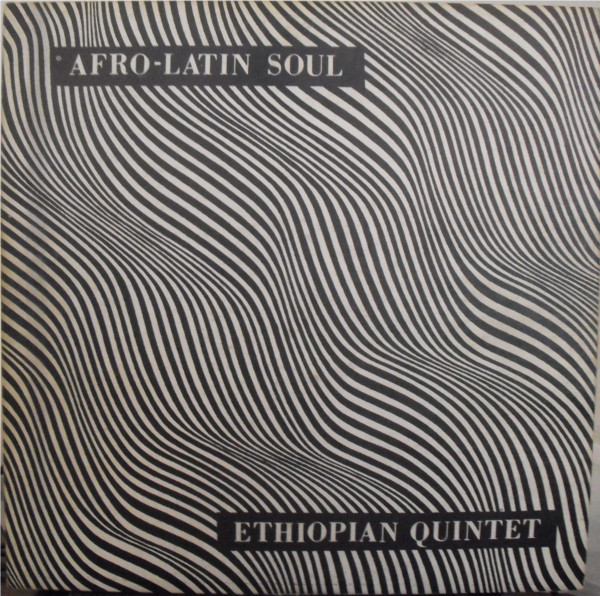
MULATU ASTATKE AND THE ETHIOPIAN QUINTET-AFRO LATIN SOUL-VINYL
Mulatu Astatke and The Ethiopian Quintet-Afro Latin Soul-Vinyl.
Label: Strut Records.
By 1966, Ethiopian multi-instrumentalist Mulatu Astatke was twenty-three, and had already spent time studying music in London, Boston and New York. This included spells at two prestigious institutions, London’s Trinity College of Music and Boston’s Berklee College of Music. However, having finished his studies, Mulatu Astatke was ready to embark upon a musical career.
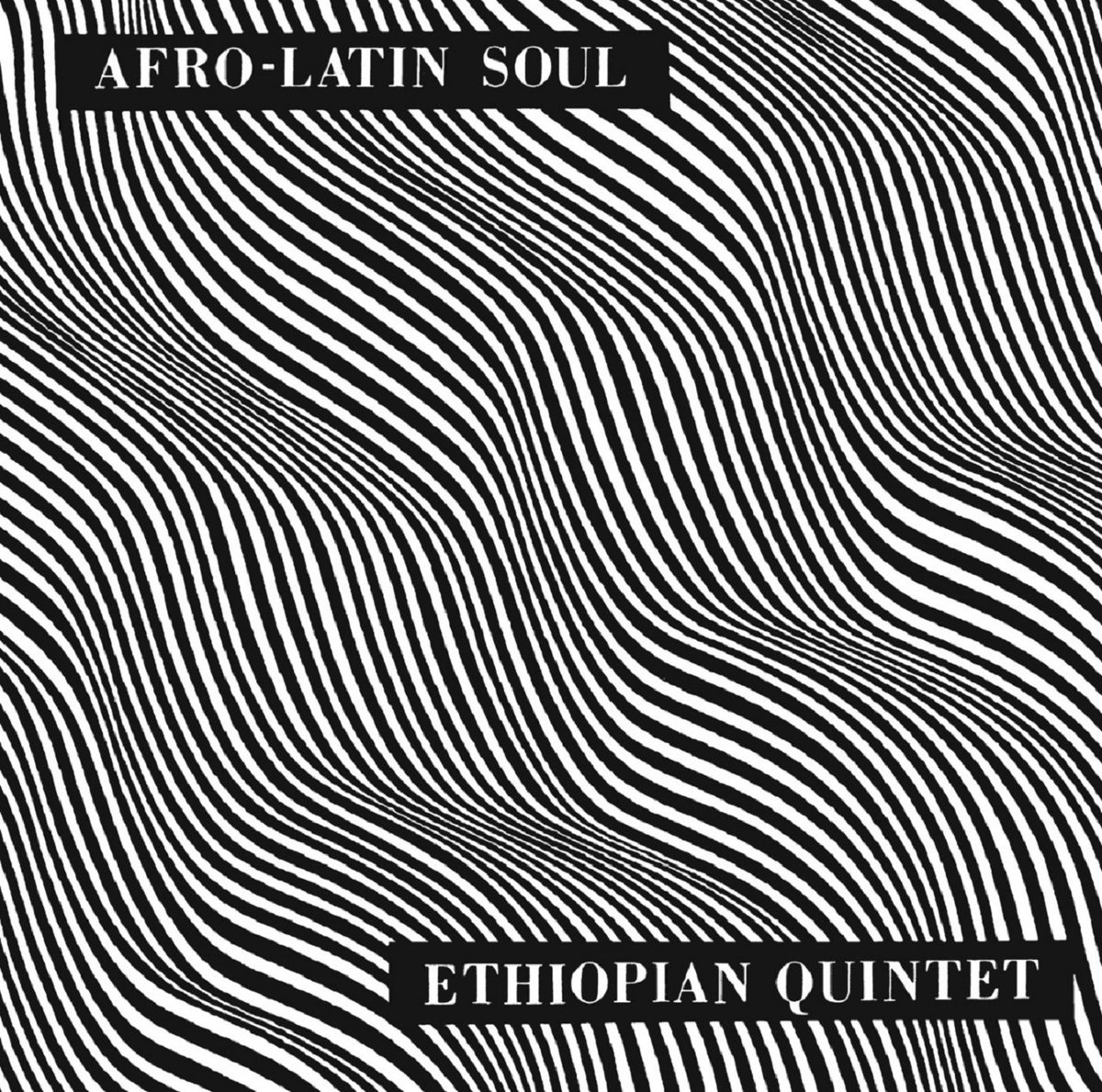
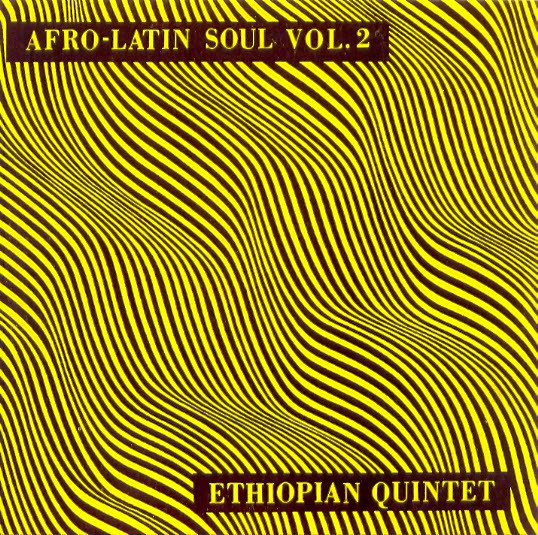
In 1966, twenty-three year old Mulatu Astatke led the The Ethiopian Quintet when they recorded Afro-Latin Soul Volume 1 and Volume 2 which have just been rereleased by Strut Records. These two albums marked the debut of the man who would later become the founding father of Ethio-jazz, Mulatu Astatke.
He was born in the city of Jimma, in south-western Ethiopia, on ‘19th’ December 1943, and growing up, Mulatu Astatke developed a love of music. Over the next few years, he learnt to play a variety of instruments, including the vibraphone, conga drums, percussion, keyboards and organ. Mulatu Astatke developed into a talented multi-instrumentalist and it looked as if Mulatu Astatke would embark upon a career in music. Suddenly, though, any dreams Mulatu Astatke had of embarking upon a career in music were dashed.
Towards the end of the fifties, Mulatu Astatke’s family sent him to Wales study engineering. However, Mulatu Astatke had other ideas and enrolled at Lindisfarne College near Wrexham which prepared him for his studies in London, New York and Boston.
After completing his course at Lindisfarne College, Mulatu Astatke enrolled at Trinity College of Music, where he spent the next few years studying towards a degree in music. Having graduated, Mulatu Astatke began collaborating with jazz singer and percussionist Frank Holder. The pair formed a fruitful partnership, and for a while, Mulatu Astatke was part of London’s jazz scene. Eventually though, Mulatu Astatke decided to head stateside, where he would continue his studies and career.
Next stop for Mulatu Astatke was Boston, and the prestigious Berklee College of Music. He became the first African student to enrol and study at Berklee College of Music. For the next few years, Mulatu Astatke studied the vibraphone and percussion and remembers: “ I learnt the technical aspects of jazz and gained a beautiful understanding of many different types of music. That’s where I got my tools. Berklee really shook me up.” His spell at Berklee College of Music proved an important period in Mulatu Astatke’s career. So did a journey to New York
While studying in Boston, Mulatu Astatke would often travel to New York to play gigs, and other times, to watch concerts at venues like The Cheetah, The Palladium and The Village Gate. It was during one of these journeys to the Big Apple that Mulatu Astatke met producer Gil Snapper for the first time. “Gil was a nice and very interesting guy. He produced music and worked with all kinds of musicians.” This would eventually include Mulatu Astatke.
After graduating from Berklee College of Music, which had been a life-changing experience for Mulatu Astatke, he moved to New York and continued his studies. Having settled in New York, began experimenting by fusing Ethiopian music, Afro Latin and jazz.
Mulatu Astatke remembers: “I have always felt a deep connection between Latin and African music…I travelled to Cuba and listened to their musicians; the tempo, rhythm and feeling was very similar to different African forms. In the mid-‘60s, I formed a band called The Ethiopian Quintet in New York comprising Ethiopian, Latin and Afro-American musicians – the band included trumpeter and pianist Rudy Houston who later played with Yambu and Felix Torres who played with La Sonora Poncena.” Little did anyone know that The Ethiopian Quintet was a about to make history.
With the support of Worthy Records and the help of Gil Snapper who offered to record and produce The Ethiopian Quintet, Mulatu Astatke had to chance to record his new genre-melting music. It was already regarded as ambitious, innovative and culturally important. Here was music that had the potential to take Ethiopian music in a new direction. For a proud Ethiopian like Mulatu Astatke, these were exciting times, as he began recording not one, but two albums for Gil Snapper’s Worthy label.
Afro-Latin Soul Volume 1,
The first album was Afro-Latin Soul Volume 1 which would eventually feature ten tracks. This included I Faram Gami I Faram, Mascaram Setaba, Shagu, One For Buzayhew, Almaz and Mulatu’s Hideaway. Other tracks included Rudy Houston’s Askum, Oscar Garcia’s Playboy Cha Cha and Alone In The Crowd which was penned by Gil Snapper. He also joined forces with Charles Weiss to write A Kiss Before Dawn. These songs recorded by The Ethiopian Quintet and would feature on Afro-Latin Soul Volume 1,
During that initial session, it was obvious that Mulatu Astatke taking African music in a new direction. Gil Snapper describes what was at the heart of this new sound on the sleeve-notes to Afro-Latin Soul Volume 1: “he has taken the ancient five-tone scales of Asia and Africa and woven them into something unique and exciting; a mixture of three cultures, Ethiopian, Puerto Rican and American.”
One of the songs on the album I Faram Gami I Faram, was Mulatu Astatke’s adaptation of a traditional ancient Ethiopian warrior song. Ideally, Mulatu Astatke wanted to use an Ethiopian singer for the recording of the song, which featured Latin lyrics. However, when an Ethiopian singer couldn’t be found, the lyrics were translated to Spanish and Mulatu Astatke who took charge of the lyrics. While this was a departure from the original ancient Ethiopian warrior song, the new version was powerful and the new arrangement and vocal took the song in a new direction.
Meanwhile, Mulatu Astatke was proving to be a talented composer, arranger, bandleader and multi-instrumentalist who could play a variety of instruments. This included the vibraphone, congas, percussion, keyboards and organ. However, Mulatu Astatke didn’t use his entire musical arsenal as he led from the front during what was an ambitious, genre-melting album that mostly featured instrumentals. They were carefully crafted and featured a new and innovative sound which would influence the future direction of Ethiopian music.
Up until Mulatu Astatke released Afro-Latin Soul Volume 1 in 1966, Ethiopian musicians neither used congas nor bongos on when recording popular music. This would change when musicians back home in Ethiopia heard Afro-Latin Soul Volume 1 which featured elements of disparate musical genres.
Mulatu Astatke and The Ethiopian Quintet as Gil Snapper said combined the music of three cultures on Afro Latin Soul. Musical alchemist Mulatu Astatke combined the music of Ethiopia, Puerto Rica and American as he recorded Afro-Latin Soul Volume 1. He combined Ethiopian music, Afro Latin and jazz with Latin soul-jazz and even R&B-tinged boogaloo. The result was a groundbreaking album of genre-melting music.
The highlights of Afro-Latin Soul Volume 1 were Mulatu Astatke’s compositions being the album’s shining lights. Especially tracks of the quality the album opener I Faram Gami I Faram plus Mascaram Setaba, Shagu and Mulatu’s Hideaway. They’re joined by the jazz ballad A Kiss Before Dawn and the Latin jazz of Playboy Cha Cha which closes Afro-Latin Soul Volume 1.
Having released Afro-Latin Soul Volume 1, Mulatu Astatke and The Ethiopian Quintet had no idea that they had just released an important and influential album would influence and inspire musicians back home in Ethiopia. Afro-Latin Soul Volume 1 was also one of the stepping-stones that led Mulatu Astatke to becoming the founding father of Ethio-jazz. The next step was Afro-Latin Soul Volume 2.
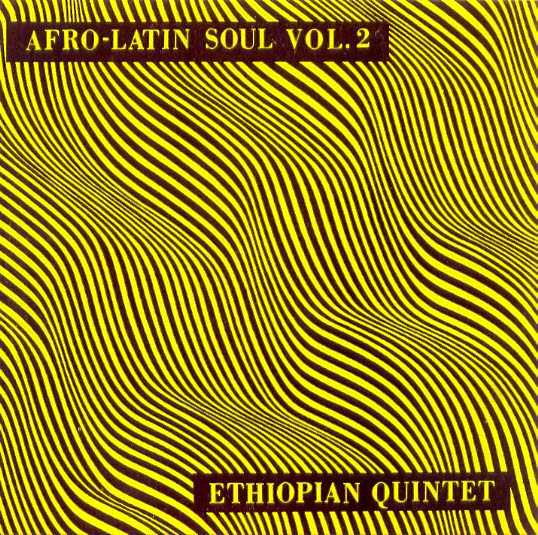
Afro-Latin Soul Volume 2.
Buoyed by the reception that Afro-Latin Soul Volume 1 received, Mulatu Astatke keen to record another album. While Afro-Latin Soul Volume 1 hadn’t been a huge commercial success, Worthy Records agreed and Mulatu Astatke and The Ethiopian Quintet entered the studio to record what became Afro-Latin Soul Volume 2.
This time, Mulatu Astatke arranged the traditional song Lover’s Mambo and penned Girl From Addis Ababa. Rudy Houston contributed The Panther (Boogaloo), Soul Power, Love Mood For Two, Jigger and Raina. The remainder of the tracks, Konjit (Pretty) and Karayu were written by Oscar Garcia, and became part Afro-Latin Soul Volume 2, which was Mulatu Astatke and The Ethiopian Quintet’s sophomore album.
Later in 1966, Mulatu Astatke and The Ethiopian Quintet returned with his sophomore album, Afro-Latin Soul Volume 2. Stylistically, it was similar to his genre-melting debut album as Mulatu Astatke and The Ethiopian Quintet fused and switched between Ethiopian music, Afro Latin and jazz with Latin soul-jazz and even R&B-tinged boogaloo. Mostly, though, Mulatu Astatke’s vibes are accompanied by a piano and conga drums that add Latin rhythms. This was regarded as new and innovative back home in Ethiopia.
Mulatu Astatke’s fellow musicians and record buyers were amazed as they listened to such what was another ambitious and eclectic album. It made an impression from the get-go, when The Panther (Boogaloo) opened the album. After that, Mulatu Astatke and The Ethiopian Quintet take the listener on a captivating musical journey with musical influences and genres melting into one. Among the highlights were Mulatu Astatke’s reworking of the traditional song Lover’s Mambo Girl From Addis Ababa, which is the album’s standout track. Along with Soul Power, Lover’s Mambo, Love Mood For Two, Karayu and Raina, Afro-Latin Soul Volume 2 was another ambitious and groundbreaking album of genre-melting music.
Despite this, some critics thought that Mulatu Astatke and The Ethiopian Quintet’s Afro Latin Soul Volume 2 was similar to many other Latin-jazz records released during the mid-sixties. Given the fusion of disparate genres on Afro Latin Soul Volume 2, this must have been a disappointing comment. Latin-jazz was just one part of the genre-melting recipe on Afro Latin Soul Volume 2. It seemed that the critics hadn’t listened closely enough to Afro Latin Soul Volume 2, which was a very different and much more ambitious album to other Latin-jazz albums.
When Afro Latin Soul Volume 2 was released later in 1966, it wasn’t a hugely successful album, but found an audience who embraced and were appreciative of what was an ambitious and innovative album. It was a similar case back home in Ethiopia.
Just like Afro Latin Soul Volume 1, Afro Latin Soul Volume 2 influenced and inspired musicians in Ethiopia who followed in Mulatu Astatke’s footsteps. Up until Mulatu Astatke and The Ethiopian Quintet released Afro-Latin Soul Volume 1 in 1966, Ethiopian musicians neither used congas nor bongos on when recording popular music. This had started to change when Ethiopian heard Afro-Latin Soul Volume 1 and its followup Afro Latin Soul Volume 2. However, while both albums influenced Ethiopian musicians, Mulatu Astatke’s third album was a game-changer.
As the sixties gave way to the seventies, Mulatu Astatke’s music began to change. This was a conscious decision, and one that was necessary. Mulatu Astatke needed and wanted to develop his own sound, and make music that stood out from the crowd.
Mulatu Astatke had decided to develop the sound that had featured on Afro-Latin Soul Volume 1 and 2. To this, Mulatu Astatke decided to add elements of funk and Azmari chik-chikka rhythms to his genre-melting sound. Gradually, this new sound began to take shape. The next step was to return to the studio, and record an album that showcased Mulatu Astatke’s new sound.
Mulatu Of Ethiopia.
By 1972, Mulatu Astatke had gained the necessary skills to fuse the disparate musical genres to create Ethio-jazz. It had taken time and perseverance. Now the twenty-nine year old was ready to return to the studio to record his long-awaited third album, Mulatu Of Ethiopia.
Joining Mulatu Astatke at a studio in downtown Manhattan, were producer Gil Snapper and the band that would record eventually record Mulatu Of Ethiopia. Before that, Mulatu Astatke put his multitalented band through their paces. The band featured some of the Big Apple’s top Latin session musicians and several young, up-and-coming jazz musicians. They would spend the next four weeks rehearsing, and honing Mulatu Astatke’s new sound. He remembers that: “it took them a while to get the right feeling in the music.” Eventually, the band were ready to record what would become a landmark album, Mulatu Of Ethiopia.
The release of Mulatu Of Ethiopia was a turning point in Mulatu Astatke’s career, and after spending several years searching for his own sound, Mulatu Astatke had eventually settled on what would become his trademark sound, Ethio-jazz. It’s the sound that eventually Mulatu Astatke would become famous for.
While Mulatu Astatke released his first album of Ethio-jazz in 1972, Mulatu Of Ethiopia wasn’t a hugely successful album, it influenced a generation of Ethiopian musicians. They adopted the new Ethio-jazz sound, and for the second time in his career, Mulatu Astatke was influencing Ethiopian musicians from afar. At least his fellow countrymen understood the importance of this ambitious and innovative album.
It was until much later that record collectors discovered Mulatu Of Ethiopia, and realised just how important, influential and innovative an album it was. Sadly, by then, Mulatu Of Ethiopia was out of print, and very few original copies of the album were still available. Occasionally, record collectors chance upon a copy of Mulatu Of Ethiopia, and picked it up in the bargain bins. Mostly though, copies of Mulatu Of Ethiopia were changing hands for large sums of money. What had once been a £200 album was changing hands for upwards of £600. This was a reflection of the importance of Mulatu Of Ethiopia, which was the first album of Ethio-jazz, from the genre’s founding father, Mulatu Astatke.
For Mulatu Astatke, Mulatu Of Ethiopia was a game-changer of an album. At last, after years of searching for his own sound, Mulatu Astatke had discovered his own unique sound. This Mulatu Astatke called Ethio-jazz.
The first Ethio-jazz album was Mulatu Of Ethiopia, which influenced and inspired a generation of Ethiopian musicians. Now forty-six Mulatu Of Ethiopia continues to influence a new generation of musicians. However, Mulatu Astatke would never have recorded Mulatu Of Ethiopia if Mulatu Astatke and The Ethiopian Quintet hadn’t recorded the two volumes of Afro Latin Soul.
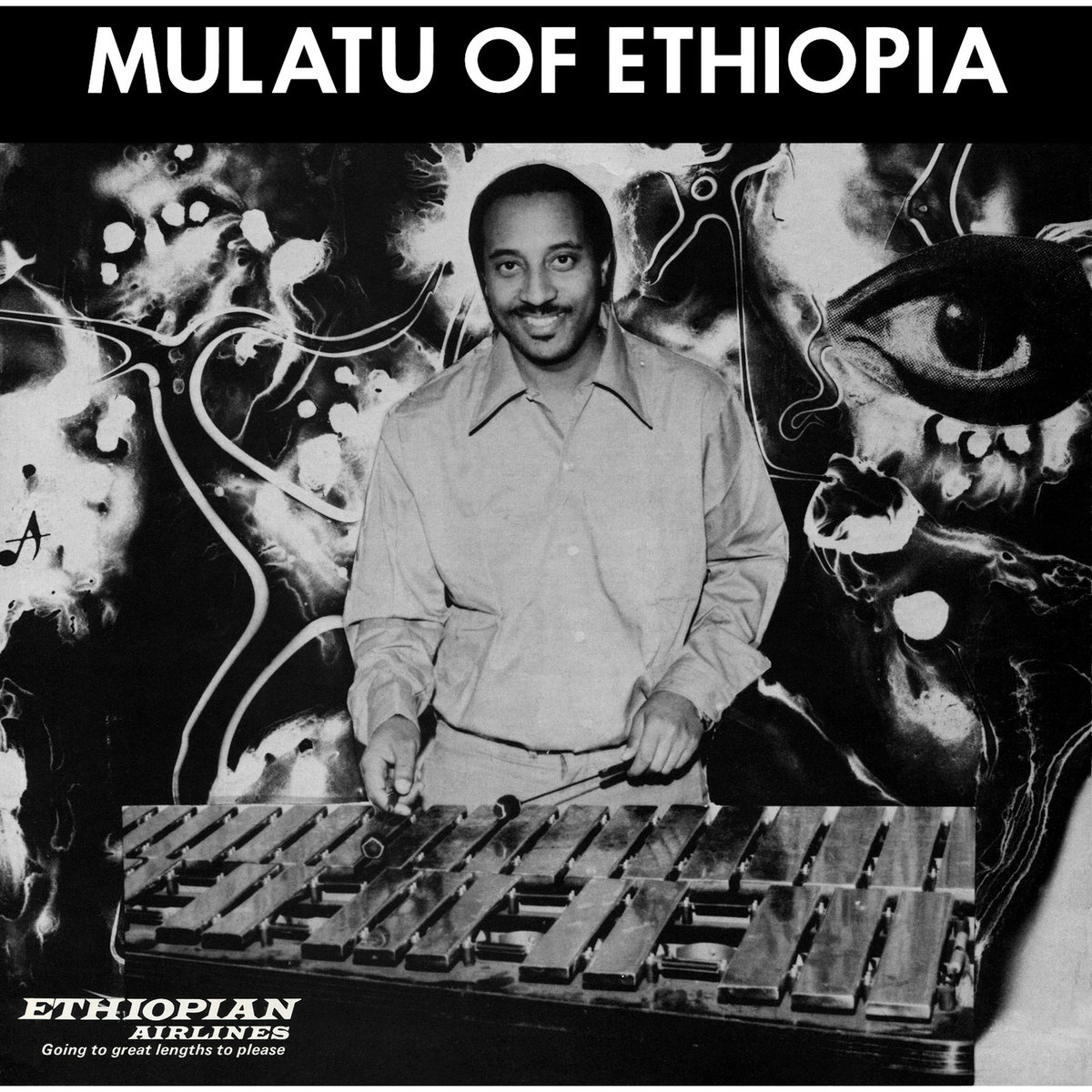
Afro Latin Soul Volume 1 was the start of a journey for Mulatu Astatke as he began to develop and hone his sound with The Ethiopian Quintet. He continued to do this later in 1966 when Mulatu Astatke and The Ethiopian Quintet released Afro-Latin Soul Volume 2. Both album genre-melting albums found musical pioneer combining the music of three cultures as he combined disparate genres in his quest to modernise Ethiopian music. This Mulatu Astatke and The Ethiopian Quintet succeeded in doing as he started to discover and develop his own unique sound. It can be heard on Afro-Latin Soul Volume 1 and Afro-Latin Soul Volume 2, which have been reissued by Strut Records as Afro Latin Soul.
Strut Records also reissued Mulatu Astatke’s landmark album Mulatu Of Ethiopia in 2017, which was the first ever Ethio-Jazz album. However, Mulatu Astatke would never have become the founding father of Ethio-Jazz if the bandleader hadn’t recorded the two genre-melting albums that feature on Afro Latin Soul. They were stepping-stones for Mulatu Astatke who is regarded as a pioneer of Ethiopian music who changed and helped modernise Ethiopian. Mulatu Astatke also influenced and inspired Ethiopian musicians with the two albums on Afro Latin Soul and his Ethio-Jazz classic Mulatu Of Ethiopia, which belong in the collections of anyone with even a passing interest in African music.
Mulatu Astatke and The Ethiopian Quintet-Afro Latin Soul-Vinyl.
GORDON JACKSON-WHAT MIGHT HAVE BEEN?
Gordon Jackson-What Might Have Been?
Over the past to fifty years, there are many artists in Britain and America who could’ve and should’ve enjoyed long and successful careers. Some of these artists even recorded albums that should’ve launched or kickstarted their solo careers . Sadly, the fickle finger of fate decided otherwise and commercial success eluded them.
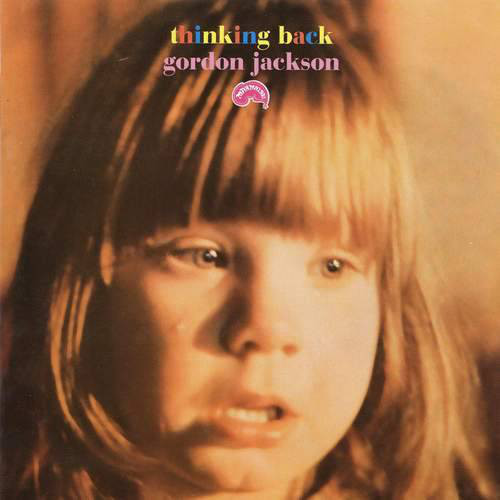
That was the case with British singer-songwriter Gordon Jackson. Despite being hugely talented, Gordon Jackson only ever released one album his lost classic Thinking Back, which is often referred to as a: “lost Traffic album.” However, that isn’t strictly true, despite Dave Mason, Jim Capaldi, Chris Wood and Steve Winwood all playing on Thinking Back which should’ve launched Gordon Jackson’s solo career in 1969. By then, he was an experienced musicians.
The Hellions.
The story began in the spa town of Worcester, England, in 1963. That was when drummer and vocalist Jim Capaldi, who previously had been a member of The Sapphires, joined forces with guitarists Gordon Jackson from Unit Five and Dave Mason who had been a member of The Jaguars formed The Hellions. However, the nascent lineup of The Hellions was still looking for a bassist and during the first few months various bassists joined and left the band.
Eventually, The Hellions were introduced to bassist Dave Meredith, who previously, had been a member of The Cherokees. Now a four piece band, The Sapphires were soon a popular draw in the Worcester area and regularly played at the Flamingo Coffee Bar. However, this was just the start for The Hellions.
By August 1964, The Hellions had turned professional, and like The Beatles before them, headed to Star Club in Hamburg, West Germany, where they became the backing band for Tanya Day a singer from Walsall. She had recently appeared on the British television show Thank Your Lucky Stars, and was regarded as something of celebrity in Britain and Germany. The next chapter in career unfolded in Hamburg, with The Hellions
Over the next few months, The Hellions discovered just how gruelling the life of a professional musician was in West Germany. This is something that The Beatles had discovered, and the gruelling schedule helped them to improve as a band. It was a similar case with The Hellions, and another band they met in Hamburg.
This was The Spencer Davis Group, who became friendly with The Hellions. Especially The Spencer Davis Group vocalist Steve Winwood, who quickly discovered that he had much in common with Jim Capaldi and Dave Mason. The friendship that was formed in Hamburg would blossom when the two groups returned home.
After returning home, The Hellions were a much tighter band and were soon backing some of the big names who visited the Midlands, including Adam Faith and Dave Berry. However, by the end of 1964, The Hellions were ready to leave the Midlands after securing a residency at the Whisky-A-Go-Go Club in London.
This brought The Hellions to the attention of the American record producer Kim Fowley and songwriter Jackie De Shannon, who helped the band secure a recording contract with Pye.
In 1964, The Hellions released their debut single Daydreaming Of You on the Pye imprint Piccadilly. It was penned by Jackie De Shannon, and produced by Kim Fowley, but sadly, the single failed to trouble the charts. History repeated itself when The Hellions released Tomorrow Never Comes and A Little Lovin’ in 1965.
Despite their lack of commercial success, The Hellions were asked to open for American vocalist PJ Proby when he toured Britain. This The Hellions hoped would introduce their music to a new and wider audience. However, still The Hellions struggled to make a commercial breakthrough.
Although the band was still to enjoy its first hit single, The Hellions added flautist and vibraphonist John “Poli” Palmer to their lineup. However, he switched to drums, which allowed Jim Capaldi to take charge of the lead vocals.Alas, this change in The Hellions didn’t result in a change in fortune for the group.
By 1966, The Hellions were struggling financially, and the expenses were mounting with each passing week. They had no option but to return to Worcester where they had started out three years earlier. However, the music scene was very different in Worcester by 1966, and things weren’t looking good for The Hellions.
As a last roll of the disc, The Hellions released one more single in 1966. This was Hallelujah, which was credited to The Revolution, but sank without trace. It was the end of the road for one of The Hellions.
Guitarist Dave Mason left The Hellions and played with various local groups, and worked as a roadie for The Spencer Davis Group. Meanwhile, Jim Capaldi brought guitarist Luther Grosvenor who had been a member of The Wavelength onboard and renamed The Hellions as Deep Feeling.
Deep Feeling.
The newly named Deep Feeling started playing in and around Birmingham, and became known for a heavier, psychedelic-tinged type of music. This they wrote themselves, and when they played live, every band member sang. When John “Poli” Palmer switched to flute or vibes, Gordon Jackson played drums. Deep Feeling was a cut above most of the bands on the Birmingham scene, and surely it was just a mater of time before they were discovered?
It was The Yardbirds manager and producer Giorgio Gomelsky that expressed an interest in Deep Feeling after seeing them play live in Cheltenham. Not long after that, Giorgio Gomelsky arranged for Deep Feeling to record their debut album. However, although the band recorded several songs, only the Jim Capaldi, Gordon Jackson and John “Poli” Palmer composition Pretty Colours was released as a single, but only in France.
Meanwhile, Deep Feeling started to travelling to London on a regular basis, and that was where they met The Animals’ manager Chas Chandler. He asked if a young, unknown American guitarist called Jimi Hendrix could join them on stage. Deep Feeling agreed and that night, three became four. Little did anyone realise that Jimi Hendrix who made his debut on a British stage with Deep Feeling would go on to become a legendary musician.
Around this time, the former Hellions guitarist Dave Mason was still drifting between bands and working as road manager for The Spencer Davis Group, who sometimes, played at The Elbow Room in Birmingham. That was there where Jim Capaldi and Dave Mason from Deep Feeling and Steve Winwood from The Spencer Davis Group would sometimes join forces with saxophonist and flautist Chris Wood who previously had been a member of Chicken Shack, and was now a member of Locomotive. However, what started out as a jam session ended up in the formation of a new band.
In early 1967,Steve Winwood announced that he was leaving The Spencer Davis Group and was about to form Traffic with Jim Capaldi, Dave Mason, and Chris Wood. This was a huge shock to the remaining members of Deep Feeling, who after careful consideration, decided to call time on the band and embark upon other musical projects.
The Solo Years.
After the demise of Deep Feeling, Gordon Jackson and John “Poli” Palmer continued to write songs together, and it looked like they had established a successful songwriting partnership. However, this changed when Georgio Gomelsky offered Gordon Jackson a recording contract with his label Marmalade Records.
Georgio Gomelsky had formed Marmalade Records in 1966, and since then, it became home to the many artists that he managed. Marmalade Records which was distributed by Polydor Records, was about to become to Gordon Jackson when he signed his recording contract, and embarked upon a solo career.
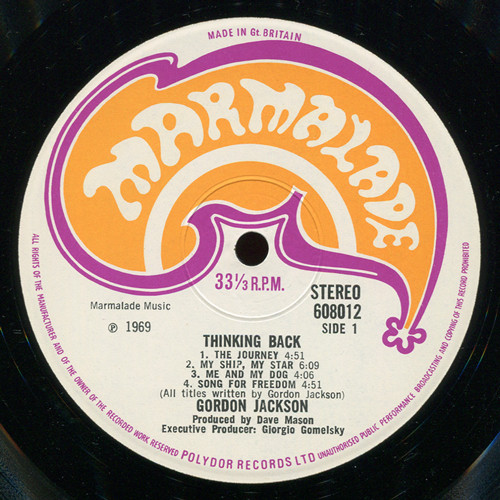
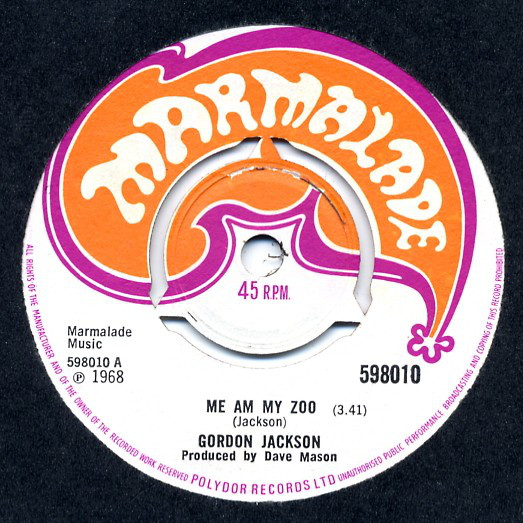
Having signed the recording contract, Gordon Jackson was soon working on his debut solo single. He wrote two new songs, Me Am My Zoo which became the single and the B-Side A Day At The Cottage on the B-Side. Both sides were produced by Dave Mason and featured the first lineup complete of Traffic. Sadly, Me Am My Zoo failed to find an audience upon its release in May 1968 and didn’t even come close to troubling the British singles’ charts.
Despite that, Georgio Gomelsky encouraged Gordon Jackson to continue writing his debut album Thinking Back. He eventually had written seven new songs which were recorded in late 1968.
Just like the recording of his debut single,Dave Mason took charge of production on Thinking Back and brought onboard Traffic who became Gordon Jackson’s backing band. They were augmented by some top musicians.
Joining the members of Traffic were Gordon Jackson’s old friend and former songwriting partner, organist and pianist John “Poli” Palmer. He was joined by bassist Rick Grech, soprano saxophonist Jim King, conga player Rocki Dzidzornu and Remic Abacca played tabla, while Chicken Shack’s Rob Blunt switched between acoustic guitar, electric guitar and electric sitar. Adding backing vocalists Julie Driscoll, Spooky Tooth’s Luther Grosvenor and Reg King, Rob Blunt switched between acoustic guitar, electric guitar and electric sitar. Gordon Jackson played acoustic and rhythm guitar and laid down the vocals on Thinking Back. Once the album was complete, Thinking Back was scheduled for release on 1969.
Before the release of Thinking Back, which had the potential to launch Gordon Jackson’s solo career, and could’ve been a profitable release for Georgio Gomelsky’s Marmalade Records the record label failed to promote the album properly. This must have been hugely disappointing for Gordon Jackson given the quality of music on Thinking Back.
When Thinking Back was released by Marmalade Records in July 1969, and was a groundbreaking and melodic fusion of folk, pop, psychedelia, rock, soul, world music and a myriad of Eastern sounds. The supergroup that played the complex music on Thinking Back were tight and versatile, on the seven songs that feature on Thinking Back.
This includes the album opener The Journey which sounds as if belongs on Traffic’s Mr. Fantasy album, until Gordon Jackson delivers his inimitable vocal on this genre-melting track. It’s a memorable and melodic fusion of drama and Eastern sounds which features elements of folk, pop and psychedelia. The tempo drops on My Ship, My Star, which is a slow, beautiful and haunting track with a spartan arrangement where just an acoustic guitar and piano accompany Gordon Jackson’s melancholy vocal. Me and My Dog originally started life as Me Am My Dog when it was released as a single, but by the time Thinking Back was released, this catchy, melodic track had taken on a new lease of life. Despite the lyrics lacking the depth of the other tracks on Thinking Back, the song still leaves a lasting memory. Very different is Song For Freedom along, where the rhythm section drive the arrangement along as horns, percussion and backing vocalists accompany Gordon Jackson on this lost dancefloor friendly sixties anthem.
Sing To Me Woman which was released as a single, but failed to chart is an out-and-out rocker that could’ve given Gordon Jackson that elusive hit single. He’s accompanied by cooing harmonies as he delivers lyrics that are rich in imagery. The seven minute epic When You Are Small is atmospheric and full of Eastern sounds as a jazzy saxophone plays, while Gordon Jackson thinks back to his youth. Closing Thinking Back is Snakes And Ladder which, has a progressive arrangement and as Gordon Jackson’s heartfelt vocal delivers lyrics that are almost surreal on this complex and carefully crafted track. It ensures that Thinking Back which is a lost classic closes on a high.
For Gordon Jackson, his debut album Thinking Back was the one that got away. It featured seven songs that were variously beautiful, haunting, lysergic and ruminative. So much so, that some of the songs on Thinking Back encourage reflection. These songs are part of an album that should’ve launched Gordon Jackson’s solo career.
Sadly, when Thinking Back was released, Marmalade Records were experiencing distribution problems, which wasn’t a good sign for Gordon Jackson. Then after Marmalade Records had pressed around 2,000 copies of Thinking Back, the label collapsed. With Marmalade Records insolvent, this was a huge blow for Gordon Jackson who many critics felt had a big future ahead of him.
While Gordon Jackson continued to play live over the next few years, he never returned to the studio and only ever recorded one single and one album. That album, Thinking Back should’ve been the start of a long and successful career for this talented singer, songwriter and musician. Sadly, Thinking Back was Gordon Jackson’s one and only album, and after the demise of Marmalade Records he spent several years playing live, before turning his back on music and embarking upon a career restoring churches. Music’s loss was liturgical restoration’s gain and Gordon Jackson never released a followup to his lost classic Thinking Back.
Gordon Jackson-What Might Have Been?

SHAOLIN SOUL: EPISODE 1, 2, 3.
Shaolin Soul: Episodes 1, 2, 3
Label: Because Music France
Nowadays, there are very few compilation series’ that are still going strong after twenty years. They’re in the minority, as most compilation series don’t last more than one or two volumes. However, there exceptions including the Shaolin Soul series which began in 1998 and twenty years later Shaolin Soul: Episodes 4 was recently. It was a welcome addition to this long-runny and successful series that has prided itself in releasing compilations of top quality soul music.
Many of the tracks on Shaolin Soul: Episodes 1, 2, 3 which has just been reissued as a box set by Because Music France inspired many hip hop producers.’ They sampled many of the tracks on Shaolin Soul: Episodes 1, 2, 3 which provided the inspiration for many all known hip hop tracks. These tracks are a reminder of these tracks from the golden age of soul.
Shaolin Soul: Episode 1
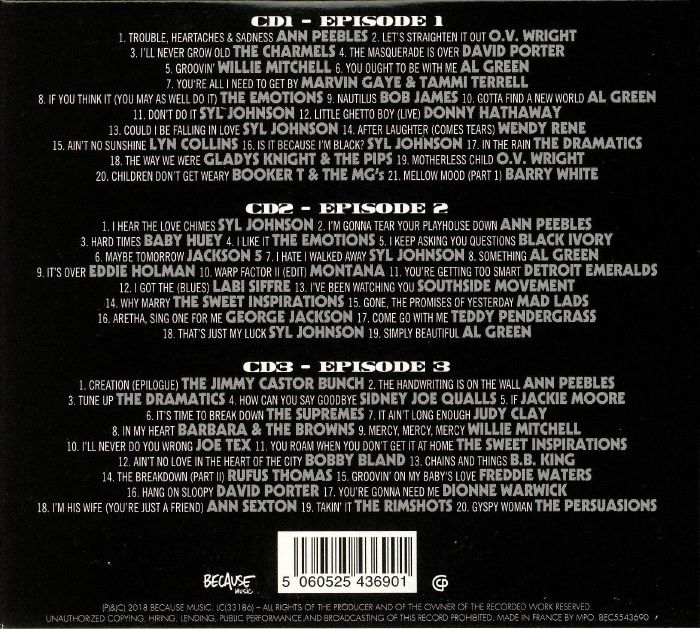
Shaolin Soul: Episodes 1 was released twenty years ago in 1998, was an all-star compilation that featured nineteen tracks funky and soulful tracks from labels like Atlantic, Hi, Motown and Stax.
Compiled by Uncle O Shaolin Soul: Episode 1 featured the great and good of soul, including Ann Peebles, OV Wright, David Porter, Donny Hathaway, Syl Johnson, OV Wright, Booker T and The MGs and Barry White. Amongst the highlights were Al Green’s You Ought To Be With Me, Lyn Collins ‘Ain’t No Sunshine, Syl Johnson ’s Is It Because I’m Black, The Dramatics’ In The Rain and Gladys Knight and The Pips’ heartfelt cover of The Way We Were.
When Shaolin Soul: Episode 1 was released in 1998, it was to widespread critical acclaim. The big question was would their be a followup?
Shaolin Soul: Episode 2.
Three years later, in 2001, Shaolin Soul: Episode 2 was released and featured another nineteen tracks, including some of the artists that featured on the first instalment in the compilation series. Syl Johnson three contributions included the guiltridden I Hate I Walked Away, which was joined byAnn Peebles classic I’m Gonna Tear Your Playhouse Down and Al Green’s Simply Beautiful which was one of two tracks he contributed to Shaolin Soul: Episode 2.These familar faces were joined by new names to the series.
This included The Emotions, Black Ivory and the Jackson 5 who were joined by Southside Movement and George Jackson’s Aretha, Sing One For Me. The highlights of Shaolin Soul: Episode 2 included Eddie Holman’s It’s Over, Laby Siffre’s I Got The (Blues), The Sweet Inspirations’ Why Marry? and Teddy Pendergrass’ Come Go With Me. Uncle O had dug deep into the vaults of Hi, Stax, Westbound and Motown on Shaolin Soul: Episode 2.
When Shaolin Soul: Episode 2 was released in 2001, it was to plaudits and praise on a compilation where soul classics, cult classics, beautiful ballads and hidden gems sat side-by-side. Following the release of Shaolin Soul: Episode 2 the third instalment in the series was much-anticipated. Surely it would arrive within a couple of years?
Shaolin Soul: Episode 3
Thirteen long years later, Shaolin Soul: Episode 3 was released in 2014 and featured twenty slices of blues, funk and soul. Just like the previous two instalments was compiled by Olivier Carrié, aka Uncle O. This time around, each artist featured just once and some old friends returned for a third time. This included Ann Peebles who contributed The Handwriting Is On The Wall while The Dramatics’ Tune Up,Willie Mitchell’s take on Mercy, Mercy, Mercy and The Sweet Inspirations’ You Roam When You Don’t Get It At Home. These tracks were just part of the story.
They were joined by songs of the quality of Sidney Joe Qualls’ How Can You Say Goodbye, Barbara and The Browns’ In My Heart, Bobby Bland’s Ain’t No Love In The Heart Of The City and BB King’s Chains and Things. However, Judy Clay’s It Ain’t Long Enough, Joe Tex’s I’ll Never Do You Wrong, Ann Sexton’s I’m His Wife (You’re Just A Friend) and The Persuasions ‘ Gypsy Woman were among the highlights of Shaolin Soul: Episode 3 which marked the long-awaited return of the series.
When Shaolin Soul: Episode 3 was released in 2014, it was to the same critical acclaim as the two previous instalments. With its mixture of bluesy, funky and soulful music Shaolin Soul: Episode 3 was another success for compiler Uncle O. He had triumphed yet again with Shaolin Soul: Episode 3, which picked up where the second volume left off thirteen years previously.
Since then, the first three volumes in the Shaolin Soul series have become rarities, much in demand amongst collectors of soul and funk, and of course the hip hop producers. However, as each year passed the first three volumes of Shaolin Soul became harder to find and the price increased. What was needed was a reissue of Shaolin Soul: Episodes 1, 2, 3.
Just a few weeks after the release of Shaolin Soul: Episodes 4, Because Music France have reissued Shaolin Soul: Episodes 1, 2, 3 as a box set. This is welcome reissue with fifty-eight bluesy,funky and soulful songs on Shaolin Soul: Episodes 1, 2, 3. They feature soul classics, dancefloor fillers, hidden gems and underground tracks on Shaolin Soul: Episodes 1, 2, 3 which documents the first sixteen years in this longrunning and critically acclaimed compilation series.
Shaolin Soul: Episodes 1, 2, 3.

THE BETA BAND-THE BETA BAND.
The Beta Band-The Beta Band.
Label: Regal Records.
Buoyed by the success of 1998s critically acclaimed The Three E.P.s compilation, The Beta Band’s thoughts turned to recording their debut album. Initially the plan for the Edinburgh-based band was to record parts of the album on different continents. However, financial constraints put paid to this plan, and instead, The Beta Band, which has just been reissued by Regal Records was recorded in various locations. It seemed like the members of The Beta Band were determined to live the life of a seventies rock star.
Unlike many seventies rock bands, The Beta Band hadn’t any songs prepared when they entered the studio in early 1999. That wasn’t they way they worked, and instead songs were developed from either an idea or melody. The closest The Beta Band came to being prepared was working out chords and melodies for some songs. Sometimes a drum beat or sample was enough to begin recording a song. This left the lyrics.
Lyricist and vocals Steve Mason took a unique approach to writing lyrics, and like a percussionist followed the rhythms of the songs. However, unlike most songs the lyrics had no narrative. Despite that, The Beta Band disputed that their songs were pastiches and claimed their lyrics were honest and serious. That was despite taking an unusual approach to recording.
While The Beta Band’s budget didn’t stretch to recording on different continents, the band decided to head to a very different location. This was a small hut owned by John Maclean’s grandfather in the remote North West of Scotland. What must have seemed like a good idea quickly became chaotic. After packing so much musical equipment into The Beta Band realised they had no room to sleep. It wasn’t the best start to the recording session, but things improved and eventually they had recorded ten tracks.
Regal Records scheduled the released of The Beta Band for the ’21st’ of June 1999. The Beta Band’s eponymous debut album was much-anticipated by critics who wondered what direction their music was heading in?
When critics heard The Beta Band it’s was an ambitious and innovative genre-melting album. Elements of alternative pop, blues, country rock, electronica, experimental music, folk, hip hop and psychedelia. The music was dense, experimental, intricate and multilayered as musical influences and instruments were combined with sound effects as The Beta Band used different song structures on an album where the songs were much more based on beat and rhythm. This was very different from the music on The Beta Band’s three E.P.s
Dig deeper into the music on The Beta Band, and there are samples, Can-like editing, surreal lyrics and raps hat were part of The Beta Band’s musical arsenal, as they combined the most unlikely genres. Proof of that was the album opener The Beta Band Rap where a marching band intro gives way to rap that tells the band’s story to date. It’s a Marmite track that listeners either loved or loathed. Much better was the country rock of Round The Bend where The Beta Band combine sadness, pathos and humour on what’s the album’s highlight. Dance O’er The Border is fusion of a traditional and electronic jams while Steve Mason’s lyrics are like a stream of cosmic consciousness. The Hard One is another highlight where The Beta Band pay homage to Bonnie Tyler’s hit Total Eclipse Of The Heart and is another of the album’s highlight.
The Beta Band was released to widespread critical acclaim and included a bonus disc. Everyone at Regal Records celebrated as The Beta Band reached number nineteen in the UK, However, not everyone was happy with the album.
Despite their eponymous debut album giving them a hit in the UK, The Beta Band called the album: “fucking awful” and “it’s definitely the worst record we’ve ever made and it’s probably one of the worst records that’ll come out this year.” Steve Mason then said in an interview with NME that the album had: some terrible songs,” and they weren’t e “fully realised or fully even written. Half-written songs with jams in the middle” The Beta Band seemed determined to sabotage their career at Regal Records.
EMI’s chairman was furious and wanted to know: “what the fuck is going on with the Beta Band?” This was the start of a three-sided argument.
Miles Leonard who was in charge of Regal Records and The Beta Band’s manager, called their complaints, “lame excuses” as “they had as much time as they wanted to have to make it, they were not forced to do anything they didn’t want to.”
Already it was obvious to music industry insiders that The Beta Band weren’t suited to life on a major label. They were more suited to a small indie label, but having signed on the dotted line had to make the best of life signed to Regal Records.
The Beta Band’s 2001 crucially acclaimed sophomore album Hot Shots II reached number thirteen in the UK and 200 in the US Billboard 200. Three years later in 2004, Heroes To Zeros was released to plaudits and praise and reached eighteen in the UK. Heroes To Zeros was The Beta Band’s swan-song and they split-up later in 2004.
Looking back at The Beta Band’s eight year career, their eponymous genre-melting debut album was their most underrated. The Beta Band was innovative, and featured numerous musical influences and genres. However, many record buyers found the album too experimental.
It also didn’t help that The Beta Band Rap opened the album. Here was a track that was musical Marmite. and may have put many record buyers off The Beta Band. Despite the inauspicious start to The Beta Band, it’s a vastly underrated album that nineteen years is being reappraised by critics and cultural commentators. They’re belatedly realising the importance of Scottish cult classic from folktronica pioneers and musical mavericks, The Beta Band.
The Beta Band-The Beta Band.

EMANATIVE-EARTH-VINYL.
Emanative-Earth-Vinyl.
Label: Jazzman Records.
Three years after the release of their third album The Light Years Of The Darkness in 2015, British jazz collective Emanative return with Earth, a new album of ambitious genre-melting music. It finds Emanative channelling the spirit of Sun Ra, but also drawing inspiration from Floating Point’s unique brand if cinematic experimentation. The result is Earth, which was recently released as 2 LP set by Jazzman Records. This is the fourth album from Emanative, who have been led by drummer and producer Nick Woodmansey for the past decade.
The name Woodmansey will ring a bell with many record buyers, especially fans of David Bowie, who will remember Mick ‘Woody’ Woodmansey who was the drummer on Spiders from Mars. Mick had a son, Nick Woodmansey who was born in 1975, and from an early age, music was part of his life. It was almost inevitable that Nick Woodmansey would sooner, rather than later, follow in his father’s footsteps.
Nick Woodmansey had one of the best teachers an aspiring drummer could hope to have as he began to learn the drums. Mick taught his son Nick Woodmansey the basics of drumming, which gave him a good grounding and was the start of a lifelong passion for the drums.
Back then, neither Mick nor his son had any idea that a musical career beckoned for Nick Woodmansey. He planned to go to art college, but his plans were put on hold when sixteen year old Nick Woodmansey moved into a Dalston squat in 1991, and became part of London’s eclectic and vibrant music scene. This was all part of Nick Woodmansey’s musical apprenticeship.
A few years later, Nick Woodmansey’s musical apprenticeship continued when he spent a year playing drums in a band on a cruise ship. This was good experience for Nick Woodmansey when he arrived back on terra firma.
Over the next ten years, Nick Woodmansey became a familiar face on the London music, and was involved in various musical projects. Still he found time to raise a family whilst working as a full-time musician. However, in 2006 Nick Woodmansey decided launch his own jazz collective Emanative.
After two years honing their sound and playing live, Emanative released their debut single What On Earth in 2008. This was followed up by the Spacebeats EP. It featured a tantalising taste of Emanative’s debut album Space which was released in 2009 and found favour with critics.
Buoyed by the success and response to Space, Emanative returned in 2010 with their genre-melting sophomore album Time. It was released to plaudits and praise and Emanative’s star was in the ascendancy.
Over the next three years, released just two singles. The first was Lions Of Judah in 2011, which was a collaboration between Emanative and Ahmed Abdullah who was Sun Ra’s trumpeter. Then on the ‘18th’ of November 2013, Emanative released Over as a single. It featured appearances by Earl Zinger and RocketNumber9 on what was the latest chapter in the Emanative story.
Less than two years later, and Emanative returned with their third album The Light Years Of The Darkness, which featured a cast of top musicians. This included Keiran Hebden a.k.a Four Tet and trumpeter Ahmed Abdulla. The Light Years Of The Darkness was released to widespread critical acclaim and was seen as Emanative’s breakthrough album. However, it’s also an album that was supporting a good cause.
When The Light Years Of The Darkness was released on Gilles Peterson’s Brownswood label in 2015, all profits were being donated to the Steve Reid Foundation. It’s a charity founded by Gilles Peterson, and Nick Woodmansey is a trustee. The charity baring the name of the legendary jazz drummer had been setup to support musicians in crisis and up-and-coming musicians. Emanative’s decision to support the project was admirable, and his breakthrough album The Light Years Of The Darkness introduced the jazz collective’s music to a new and wider audience.
Over the next three years, Emanative released the single Ominous Shanti in 2017, and followed it up with Planet B in 2018. Meanwhile, the members of Emanative were preparing to release their fourth album Earth.
Emanative’s fourth album was their most ambitious and was a truly eclectic offering from the British based jazz collective. Led by drummer Nick Woodmansey who produced Earth, he and the rest of Emanative combine African, Asian, Indian and Middle Eastern influences with jazz of the spiritual and free variety.To do this, Nick Woodmansey put together what can only be described as an all-star band.
This included Manchester-based musician Nat Birchall, Malcolm Catto of The Heliocentrics, Idris Ackamoor of American spiritual jazz group The Pyramids and Afrobeat legend Dele Sosimi who was once a member of Fela Kuti’s Africa 80. They were joined by Ben Hadwen of Ibibio Sound Machine, RocketNumberNine’s Benjamin Page and Flying Lotus collaborator Ahu. The final member of this all-star band was Sarathy Korwar who was born and brought up in India and is a talented artist whose signed to Ninja Tunes and has collaborated with Shabaka Hutchings. When they arrived at the studio, Nick Woodmansey had a request for his multitalented band.
As Nick Woodmansey spoke to his band about the project, he encouraged his dig deeper into their spirituality. Thinking back to the project he says: “when you work with guys like Ahmed and Idris (Ackamoor), spiritual people, their vibe, attitude rubs off on you…I’m not religious but I am very spiritual: my perspective on life is less materialistic, more humanitarian. It’s important to see both the negative and the positive in life–but a spiritual perspective is inherently positive–you look for the good in things”.
In the case of Nick Woodmansey, his spiritual side is entwined with life as musician. They’re part of his life and what he’s become over the past forty-three years. However, Nick Woodmansey is a realist and does realise that: “the rest of the band are not necessarily on the same planet as me!.”
They were certainly on the same page musically as Emanative recorded the eleven tracks on Earth. The result is ambitious, captivating and innovative album where Emanative channel the spirit of Sun Ra’s unique brand of space jazz on an album where they mix global influences, religion and politics on Earth.
Dawn Child (Sunrise) opens Earth, features a welcome in French from Atrobal, which gives way to Indian classical music and closes with a raga. This sets the scene for the rest of Earth, including Heaven’s Mirror where Idris Ackamoor and David Molina of The Pyramids play starring roles during a track where constellations map civilisations and join the dots between Egypt, Ethiopia, Thailand and Meso-America. Ìyáàmi is jazz-tinged and soulful shootout to motherhood that swings and as Dele Sosimi delivers an impassioned vocal.
Spice Route Suite is powerful and thought-provoking as Nat Birchall plays minor-key saxophone whilst the rest of Emanative use spice to symbolise the cultural trade route that has flows between the East and West for centuries. It gives way to the evocative and cinematic Sandhyavandanam where Vedic prayers are recited at midday as the sun beats down. Meanwhile, Emanative deploys a flute, rubab. and sarod to create an authentic backdrop as they continue to paint pictures with music.
There’s social comments a plenty on Ecosystem (Solar Noon) which is dramatic and sometimes discordant as Emanative criticise and condemn what they believe is a so-called “inner clique” who try to outdo each other. Reflection gives the listener as a chance to reflect as Emanative unleash what’s best described as Liz Elensky delivers dramatic prose where opposites abound as they’re set to melodic music. Equally melodic, soulful, jazz-tinged and hook-laden is New Day which initially seems hopeful and joyous. Sadly, this hope and joy is short-lived as Ahu delivers one of the finest vocals on Earth.
Heaven’s Mirror (Reprise) finds Nat Birchall’s dancing saxophone taking centre as beep punctuate an arrangement that is best described as celestial imitation. It’s another carefully crafted and ambitious track from jazz collective Emanative.
So is Minutes To Midnight For This Planet, which was inspired by the legendary free jazz pioneer Sun Ra. He once said: “it’s about one minute to midnight for this planet,” and here Emanative try to recreate the concept of this pre-apocalyptic minute .
Closing Earth Raga Requiem (Dusk) which deals with the subject of death. Atheists and scientists realised that death is the end, while religion talks of heaven and hell, and of afterlife where spirits exist. Emanative try to recreate the sounds of heaven and hell and the afterlife during Earth Raga Requiem (Dusk). It another thought-provoking and cinematic track full of imagery.
Twelve years after Nick Woodmansey founded Emanative, they released Earth, which is a truly ambitious, groundbreaking genre-melting album. It features an all-star cast and finds Emanative fusing African, Asian, Indian and Middle Eastern influences with various varieties of jazz. This includes contemporary jazz, free jazz, soul jazz, spiritual jazz. There’s even elements of electronica, Indian classical music, Middle Eastern trance and soul on the eleven tracks on Earth, which is the fourth album from Emanative.
While The Light Years Of The Darkness was Emanative’s breakthrough album, Earth is a career-defining album from Nick Woodmansey’s jazz collective who with a little help from his friends created an ambitious, innovative and thought-provoking opus.
Emanative-Earth-Vinyl.

COCTEAU TWINS-TREASURE HIDING: THE FONTANA YEARS.
Cocteau Twins-Treasure Hiding: The Fontana Years.
Label: UMC
It was the best of times, it was the worst of times for 4AD President Ivo Watts-Russell when the Cocteau Twins released their sixth studio album Heaven Or Las Vegas on the ’17th’ of September 1990. He watched as the critically acclaimed album of dream reached number seven in the UK where it was certified silver. Across the Atlantic Heaven Or Las Vegas reached number ninety-nine in the US Billboard 200, as the album sold 250,000 copies worldwide. Heaven Or Las Vegas was one of 4AD’s best and most successful albums which was something to celebrate, but by then Ivo Watts-Russell knew the Cocteau Twins were about to sign to Fontana.
After six albums, the Cocteau Twins whose music was starting to evolved, left 4AD on a high after their most successful album Heaven Or Las Vegas. It was the start of a new era for Liz Fraser, Robin Guthrie and Simon Raymonde which is documented on the Treasure Hiding: The Fontana Years box set which has just been released by UMC.
Treasure Hiding: The Fontana Years features two albums, 1993s Four-Calendar Café and 1996s Milk and Kisses. There’s also singles, tracks from EP and for sessions recorded for BBC Radio One. It’s a compressive celebration of the Cocteau Twins Fontana years, that looks back at what was a new chapter for one of Scotland’s greatest groups of the last forty years.
After the release of Heaven Or Las Vegas, all wasn’t well within the Cocteau Twins. Part of the problems was the conflict with 4AD founder Ivo Watts-Russell. It had gotten so bad that the Cocteau Twins were considering splitting up. To make matters worse, Robin Guthrie was in the throes of drug and alcohol addiction. Things were looking bleak for the Cocteau Twins.
In 1991, the Cocteau Twins left 4AD and signed to Mercury Records’ imprint Fontana in. the UK This was a new start for the Cocteau Twins.
They began recording their seventh album and Fontana debut Four-Calendar Café in early 1993. The album was a response to what the band had been through in the last few years. Robin Guthrie had entered rehab and was no longer addicted to drugs and alcohol. His partner Liz Fraser had undergone a course of psychotherapy, and the Cocteau Twins were a very different band.
Four-Calendar Café was released to critical acclaim on 18 October 1993 and saw the Cocteau Twins move away from the ambient sound of previous albums to a pop-oriented sound. There was still Liz Fraser’s ethereal vocals and dream pop sound as Four-Calendar Café which reached thirteen in the UK, but failed to chart in American. This was a disappointment for the Cocteau Twins who tried a new approach.
In December 1993 the Cocteau Twins returned with their Snow EP, and followed this up with the Bluebeard EP in January 1994. Nothing was heard of the Cocteau Twins for over a year.
In September 1995 the Cocteau Twins released Otherness which was a tantalising taste of their eighth album Milk and Kisses. So was the single Tishbite which the Cocteau Twins released in March 1996.
The same month, March 1996, the Cocteau Twins eighth album Milk and Kisses, and the reviews were mixed. Some critics hailed the album as a fitting followup Four-Calendar Café as the Cocteau Twins combined elements of dream pop with ambient and pop. It was a carefully crafted and vastly underrated album from the Cocteau Twins that stalled at seventeen in the UK and ninety-nine in the US Billboard 200. This was a huge boost to the Cocteau Twins as the Fontana years continued.
Seven months later in October 1996 the Cocteau Twins released Violaine, which was the second single to be released from Milk and Kisses. Sadly, Violaine which features on Treasure Hiding: The Fontana Years was the Cocteau Twins last ever single to be released from a non-compilation album.
Over the next two years, there was no sign of the Cocteau Twins starting work on a new album. Then in 1997 the Cocteau Twins decided to begin work on their ninth album. Their time in the studio was short-lived and the Cocteau Twins disbanded citing irreconcilable differences, which was partly due to the break-up of Robin Guthrie and Liz Fraser’s relationship. It was the end of an era and music fans were in mourning.
At least the Cocteau Twins left behind a rich, innovative and truly timeless musical legacy that is documented on Treasure Hiding: The Fontana Years. It features the two albums they released for Fontana, 1993s critically acclaimed Four-Calendar Café and 1996s underrated hidden gem Milk and Kisses. There’s also singles, tracks from EP and for sessions recorded for BBC Radio One on what’s a compressive celebration of the Cocteau Twins Fontana years.
Treasure Hiding: The Fontana Years looks back at what was the final chapter in the story of one of Scotland’s greatest groups of the Cocteau Twins the dream pop pioneers whose inimitable sound was part of the soundtrack during the eighties and nineties, and is a truly timeless reminder of one of the greatest Scottish groups of the last forty years.
Cocteau Twins-Treasure Hiding: The Fontana Years.
PRIMAL SCREAM-GIVE OUT BUT DON’T GIVE UP: THE ORIGINAL MEMPHIS RECORDINGS.
Primal Scream-Give Out But Don’t Give Up: The Original Memphis Recordings.
Label: Sony Music.
It’s never easy to followup a classic album, and countless bands have discovered that over the last fifty years. In 1994, the latest band to realise that were Primal Scream, who three years earlier, at the height of the Acid House era had released Screamadelica, a groundbreaking fusion of rock and dance music.
Released on 23rd September 1991, Screamadelica reached number eight in Britain, and was certified double platinum. After three albums, Primal Scream had finally made a commercial breakthrough. However, as time passed by Primal Scream realised that it wasn’t going to be easy to followup Screamadelica.
Following the success of Screamadelica, Primal Scream headed out on tour, winning over rock and dance music fans simultaneously. However, not everyone was happy. Previously, Primal Scream were a rock ‘n’ roll band, and lead singer Bobby Gillespie didn’t even like dance music. He was a died in the wool rock ‘n’ roller. Then he was introduced to the Acid House scene.
Soon, Bobby Gillespie, who revelled in the rock ‘n’ roll lifestyle, embraced Acid House culture. Even after Screamadelica, the party continued, and tales of hedonism were commonplace. So were stories that certain members had flown to close to the sun. Before long, the party had lasted over a year. Now it was time to record their fourth album, which became Give Out But Don’t Give Up.
Recording of Give Out But Don’t Give Up began in late 1992 at the Roundhouse Studios, in London, but soon it became apparent that the sessions lacked direction and were going nowhere. Primal Scream had few songs to show for their time in the studio, and morale was so low that it was feared the band were going to split-up. Alan McGee the Creation Records founder and long-time friend of Bobby Gillespie and Co. knew he had to intervene and save Primal Scream from themselves.
The big question facing Alan McGee was what to do with Primal Scream, that would ensure that they didn’t implode. He knew that all Primal Scream wanted to do was make music, and it was all the members of Creation Records’ only real rock ’n’ roll band knew. That was when Alan McGee hit on the idea of sending Primal Scream to Memphis, the spiritual home of rock ’n’ roll.
Alan McGee chose Arden Studios, Memphis where Primal Scream had recorded three songs for their Dixie Narco EP with ‘producer’ Andrew Weatherall and engineer Hugo Nicholson. This time, Primal Scream were about to work with legendary producer Tom Dowd.
In 1993, Primal Scream made the journey to Memphis, and headed to Arden Studios where they met producer Tom Dowd. He introduced the band to drummer Roger Hawkins and bassist David Hood of the Muscle Shoals Rhythm Section and The Memphis Horns who would augment Primal Scream.
By then, Bobby Gillespie, Andrew Innes and Robert Young .had written the eleven songs that eventually featured on Give Out But Don’t Give Up. With five top Memphis musicians backing them, Primal Scream began recording what they believed would be their fourth album. Tom Dowd brought out the best in Primal Scream who rediscovered their inner rockers on Jailbird and Rocks. Call On Me was another uptempo track from Primal Scream who had written a number of ballads.
This included the melancholy Sad and Blue with its gospel-tinged choruses. I’ll Be There For You features a heartfelt vocal from Bobby Gillespie while The Memphis Horns, backing vocals and Martin Duffy’s piano and Hammond organ play supporting roles. Jesus which was later renamed ‘I’ll Be There for You, featured the first of two soul-baring vocals full of vulnerability from Bobby Gillespie, He then lays bare his soul once again on (I’m Gonna) Cry Myself Blind .By then, Tom Down had cajoled and coaxed a series of rocky and soulful performances from Primal Scream who were back with a what looked like the perfect followup to Screamadelica.
That should’ve been the case, until Alan McGee decided to have George Drakoulias who had just worked with The Black Crowes remix the tracks. The reasoning was that musical tastes and fashion had changed and a more contemporary sound was needed. That was how Creation Records justified bringing George Clinton in to remix Funky Jam. All Primal Scream and Tom Dowd’s work had been for nothing.
After that, the master tapes for Tom Dowd’s Memphis’ sessions went missing, and were thought to be lost for good. That was until they were discovered in Andrew Innes basement and reissued as Give Out But Don’t Give Up: The Original Memphis Recordings, which is a two CD set that has just been released by Sony Music. The first disc features nine songs recorded in Memphis, while disc two features jams, rehearsals and alternate takes. It’s a fascinating insight into Primal Scream’s much lamented lost album.
Give Out But Don’t Give Up: The Original Memphis Recordings takes the listener back to Memphis when Tom Dowd brought out the best in Primal Scream who recorded what could’ve been their second classic album, It features nine songs lasting forty-five minutes, where Give Out But Don’t Give Up: The Original Memphis Recordings Bobby Gillespie and Co, combine blues, rock and Southern Soul as they switch between rockers and ballads on Give Out But Don’t Give Up: The Original Memphis Recordings which ls a reminder of the album that got away for Primal Scream and could’ve transformed their career.
Primal Scream-Give Out But Don’t Give Up: The Original Memphis Recordings.
CRAIG ARMSTRONG-SUN ON YOU-VINYL
Craig Armstrong-Sun On You-Vinyl.
Label: Decca.
Over the past twenty years, Glasgow born Craig Armstrong has been one of the hardest working British composers and is the man many top film directors call when they’re looking for a score to their latest movie. This includes fellow Glaswegian Peter Mullan and Baz Luhrmann, who Craig Armstrong collaborated with and created the score to Moulin Rouge and The Great Gatsby. They’re two of the highest profile projects the quietly spoken fifty-nine year old award-winning composer has worked on during a long and illustrious career.
It began in 1981. after Craig Armstrong graduated from the Royal Academy Of Music in Glasgow, and became the music and dance specialist at Strathclyde Regional Council. A year later, Craig Armstrong joined Midge Ure’s band on his Gift World Tour. This was very different to his previous job was good experience for the twenty-six year old musician and composer.
In 1994, Craig Armstrong was commissioned by the Royal Shakespeare Company to write music for two new productions. This included The Broken Heart and The Tempest which were both directed by Michel Boyd. Craig Armstrong’s spell with the Royal Shakespeare Company ended in 2002, but by then his career was blossoming.
By then, Craig Armstrong was award-winning ssoundtrack composer with a BAFTA, Golden Globe, and American Film Institute Award, as well as World Soundtrack Award and a Golden Satellite Award for Moulin Rouge!. Despite being constantly in demand to score soundtracks and compose for television, Craig Armstrong had always wanted to embark upon a solo career.
This dream came true in February 1998 when Craig Armstrong released The Space Between Us to plaudits and praise. Some four years later he returned with his crucially acclaimed sophomore album As If To Nothing in February 2002. Since then, Craig Armstrong has continued to successfully juggle his solo career and soundtrack work.
That was the case until relatively recently, when the fifty-nine year old decided that after twenty years moving from project to project, the time had come to spend more time with his family and more time making solo albums. This included Sun On You which is Craig Armstrong’s debut album for Decca.
Sun On You finds an older and wiser Craig Armstrong revisit the music of his younger self. It’s an album of what Craig Armstrong regards as his own music.
This might sound like a strange thing to say, but it makes sense to Craig Armstrong and those who have followed his career closely. In the early days of his solo career, Craig Armstrong’s music was inimitable and showcased a talented composer and musician, However, after a few albums, Craig Armstrong started to be influenced by other musicians and bands. This was something has happened to many composers and artists over the years, and some are frustrated by this.
They try to detox their system and rid themselves of all the outside influences that might affect their music. This was what Craig Armstrong decided to do when he wrote and recorded Sun On You.
Having written sixteen tracks that are described as music for piano and strings, Craig Armstrong went back to basics. He played piano and produced on Sun On You, which meant that he had to eschew the impressive array of electronics that surrounded him in his recording studio. In their place was strings that came courtesy of the strings of the Scottish Ensemble. They joined Craig Armstrong at Gorbals Sound Studio, Glasgow, and AIR Studio, in London and recorded what became Sun On You.
Only when Sun On You was completed to Craig Armstrong’s satisfaction did he deliver the album to Decca. His new record won over executives at Decca, and Sun On You was released and marked the start of a new chapter for Craig Armstrong.
Sun On You is a carefully crafted and cinematic album of instrumental music from Craig Armstrong, This comes as no surprise given Craig Armstrong has spent three decades as a soundtrack composer.
The music on Sun On You is also emotive and expressive, and has been inspired by various abstract paintings, including those by Rothco. These paintings provided the inspiration for Craig Armstrong to create an album where as classical and cinematic music melt into one.
In doing so, Craig Armstrong and the string section of the Scottish Ensemble create music that is variously beautiful, cinematic, dramatic elegiac, emotive , ethereal and expressive. The music on Sun On You is also filmic.and sometimes haunting and uplifting on where Craig Armstrong hoes back to basics on an album of organic music.
Unlike previous albums, it’s just a piano and strings that featured on Sun On You, where the older Craig Armstrong seeks inspiration from his younger self on a carefully crafted fusion of filmic and cinematic music where one of Scotland’s leading composers and musicians roll back the years.
Craig Armstrong-Sun On You-Vinyl.
DJ SHADOW-PRIVATE PRESS.
DJ Shadow-Private Press.
Label: UMC.
On September the ’16th’ 1996, DJ Shadow released his critical acclaimed landmark debut album Endtroducing…..on the label Mo Wax Recordings. Endtroducing….which featured uptempo jams and slow, dark and broody tracks was inspired by early hip hop and was hailed as a genre classic-in-waiting.
It was no surprise when Endtroducing….was certified gold in Britain and Canada and sold over 290,000 copies in America. Critics called DJ Shadow one of hip hop’s rising stars and forecast a great future for the twenty-four year old DJ, producer record collector.
By then, DJ Shadow had amassed a 60,000 record collection which he had sampled extensively on Endtroducing….and on his early singles which featured on Preemptive Strike. It was released to plaudits and praise by Mo Wax Recordings on January the ’13th’ 1998 and featured singles released by DJ Shadow between 1991 and 1997. Preemptive Strike was another tantalising reminder of what DJ Shadow was capable of.
A year later, in 1999, DJ Shadow and Cut Chemist released their first live album Brainfreeze. This was the first of a quartet of live albums DJ Shadow and Cut Chemist would release between 1999 and 2008.
Nearly four years after the release of Endtroducing….DJ Shadow entered the The Parlor Of Mystery studio in August 2000 to begin recording his sophomore studio album Private Press. By then, DJ Shadow had signed to MCA Records as he began recording the much-anticipated followup to Endtroducing….which was regarded as a genre classic.
DJ Shadow had recorded Endtroducing….between 1994 and 1996, but spent just over year recording Private Press. It was completed in December 2001, and by then DJ Shadow had released another live album.
This was Product Placement which was released in 2001, and was the second live album from DJ Shadow and Cut Chemist. Product Placement was only released at DJ Shadow’s gigs between 2001 and 2003.
By then, DJ Shadow has released his much-anticipated sophomore album Private Press on CD and a 2 LP set on June the ‘4th’ 2002. Now sixteen years later, Private Press was reissued by UMC as a 2 LP set. Nearly six years after the release of Endtroducing….DJ Shadow was back with Private Press.
When Private Press was released it was to widespread critical acclaim. Critics in Britain and America were won over by Private Press. DJ Shadow had sampled forty-three tracks ranging from novelty tracks to hidden gems and rarities. They were part of the musical tapestry that was Private Press.
Now thirty, DJ Shadow showcases his versatility and production skills on Private Press. Even after a couple of carefully crafted tracks it’s obvious that Private Press is a DJ Shadow album. It opens with the musical amuse-bouche (Letter From Home) before Fixed Income and later, Giving Up The Ghost feature melancholy, string-drenched arrangements that sit atop various sampled breaks. This becomes a pattern as DJ Shadow hops between genres on Private Press.
On Walkie Talkie it’s swaggering disco breaks and wistful sixties pop Six Days through to Right Thing/GDMFSOB where the tempo rises and there’s breaks aplenty. DJ Shadow unleashes a myriad of effects including echo amidst the electro breakbeats before he drops in Leonard Nimoy’s pure energy sample which is a masterful inclusion.
Mashin’ On The Motorway is described as road rage comedy and features Lateef The Truth Speaker. It’s followed by Blood On The Motorway where a lone vocal is combined with a vocal that repeats a biblical text. This proves effective and is followed by You Can’t Go Home Again, before a reprise of (Letter from Home) closes Private Press, which was DJ Shadow’s long-awaited sophomore album.
After DJ Shadow released Endtroducing….which was his critically acclaimed debut album, many critics wondered how would he would followup a genre classic? DJ Shadow returned to the studio where he used his trusty sampler to create a genre-melting album.
Disco, electronica, funk, hip hop, jazz, pop, soul and trip hop were combined by DJ Shadow as he spent over a year piecing Private Press together until his second genre classic was complete. DJ Shadow had followed up Endtroducing…with Private Press which was a fitting followup to one of the best hip hop albums of the nineties,
Prior to the release of Private Press, DJ Shadow was still regarded as one of hip hop’s rising stars. However, DJ Shadow came of age on his sophomore album Private Press which was his second genre classic and sixteen years later is still one of his finest moments.
DJ Shadow-Private Press.

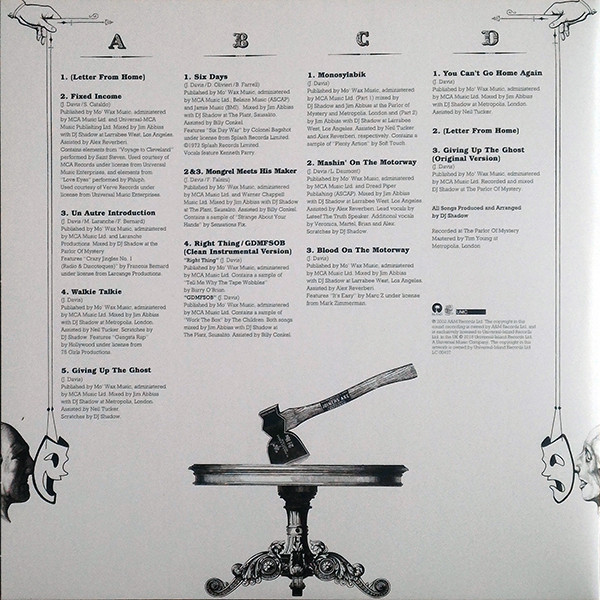
LEFTO PRESENTS JAZZ CATS
Lefto Presents Jazz Cat
Label: Sdban Ultra Belgium.
Each and every week hundreds of new compilations are released into what’s become an increasingly competitive compilation market. Many of the compilers hope that their compilations will be the first in a long-running series. However, only a few of these compilations will return for a second instalment. The rest will be one-offs who are quickly forgotten and destined for the remainder bins.
One of then best new compilations of recent weeks comes courtesy of Belgian DJ Lefto whose one the most important taste makers in Europe and is a lover of eclectic and esoteric music. He has been busy recently compiling a new compilation that showcases the best in Belgian jazz Lefto Presents Jazz Cats, which has just been released by the Sdban Ultra Belgium label.
Lefto has been one of the most important figures of the Belgian music scene for many years and is has been passionate about the Nu-Jazz scene in Belgium for many years. This makes him perfectly qualified to curate a new collection of Nu-Jazz, Lefto Presents Jazz Cats.
It showcases sixteen tracks from a new generation of Belgian jazz artists and musicians. While some of these artists are better known than others, they’re all hugely talented and bring something new to the table.
This includes Schntzl who open Lefto Presents Jazz Cafe with the mellow and meandering Lindbergh. It’s a track from Schntzl’s eponymous debut album that was released on W.E.R.F.
Psychedelic jazz-fusion collective BRZZVLL’s most recent album was Waiho which was released on Sdban Ultra in 2017. One of the highlights of the album was De Vlijtige Kip which showcases BRZZVLL’s considerable talents.
LABtrio released their third and most recent album Nature City on Outnote Records in 2017. It featured Elevator where LABtrio play with freedom and expression.
Steiger’s music is often recorded a radical and experimental by critic and their fans. They’ve released a trio of studio albums and recorded a split album with Trafik. However, Part One is a brand new track from sonic adventurers Steiger.
Between 2012 and 2017 electro-acoustic piano trio De Beren Gieren have released a quartet of albums, and recorded an album with Portuguese trumpeter Susana Santos Silva. However, Oude Beren was one of the finest moments from De Beren Gieren;s 2017 album Dug Out Skyscrapers. It’s a reminder of how many talented jazz artists and groups there are within Belgium.
Commander Spoon’s Introducing-Part III is another track that makes its debut on Lefto Presents Jazz Cats. Although Commander Spoon don’t have the experience that other groups on he compilation have, their genre-melting music is a taste of what’s this talented band have to offer.
Strata first appeared on Stuff’s sophomore 2017 album Old Dreams New Planets. It’s a carefully crafted fusion of jazz, electronica and hip hop from this exciting band.
Madama Blavatsky’s Steak In The Neck is the third unreleased track on Lefto Presents Jazz Cats. Just like the two previous they’re another talented band with a bright future ahead of them.
Outrageous is word that some of BeraadGeslagen’s critics have used to describe them. However, Suikerbeat which features on their 2016 eponymous albums shows that talented is another word that describes BeraadGeslagen.
Pudding oO close Lefto Presents Jazz Cats with Hiza Hiza Hey from their 2015 album Lefto Presents Jazz Cats. It’s genre-melting track where electronica, funk, hip hop, jazz and soul that closes the compilation on a high.
This week countless new compilations were released into what’s become an increasingly competitive compilation market. Only a few of these compilations will return for a second instalment. The rest will be one-offs who are quickly forgotten and destined for the remainder bins. One of the best compilations of recent weeks is Lefto Presents Jazz Cats which has just been released by the Sdban Ultra Belgium label and is a cut above the competition.
Lefto Presents Jazz Cats.

GRANT GREEN-FUNK IN FRANCE FROM PARIS TO ANTIBES 1969-1970 VINYL.
Grant Green-Funk In France From Paris To Antibes 1969-1970 Vinyl.
Label: Resonance Records.
In 1967, thirty-five year old guitarist Grant Green was in the throes of heroin addiction, and it looked as if he was fighting a battle he had no chance of winning. Grant Green was a shadow of the man who had arrived in New York in 1960, to meet Alfred Lion of Blue Note Records.
By then, Grant Green who was born on the ‘6th’ of July 1931, was twenty-nine, had been a professional musician since he was a teenager and for the early part of his career had played in his home town of St Louis and around East St Louis. Initially, he had no inclination to move to New York until Lionel Hampton persuaded him to make the move in 1959.
A year later, in 1960, Grant Green was introduced to Alfred Lion the cofounder of Blue Note Records, who signed the twenty-nine tear old guitarist to one of jazz’s premier labels.
Between 1960 and 1965, Grant Green recorded a total of twenty-two albums for Blue Note Records as bandleader leading trios, quartets, quintets and sextets. Fourteen of these albums were released between 1960 and 1965, with the remainder released by Blue Note Records during the seventies and eighties. However, by 1965 Grant Green was already one of jazz music’s rising stars and had come a long way in five years.
Although Grant Green was a prolific recording artist between 1960 and 1965, he also found time to work with many of the other artists signed to Blue Note Records. This was akin to the great and good of jazz, and before long, Grant Green was the go-to-guitarist for many artists signed to Blue Note Records. However, within the space of two years Grant Green’s life had been transformed.
As 1967 dawned, Grant Green was in throes of heroin addiction which was threatening to derail his burgeoning career. Just like so many jazz musicians before him, Grant Green had succumbed to heroin, not knowing how addictive the drug was. By 1967, heroin had sunk its claws into Grant Green who was desperate to free himself from its grasp. That was why in 1967, Grant Green made the decision to move to Detroit where he would turn his back on the local music scene while he tackled his heroin addiction.
Grant Green moved his family to Detroit which became his home for the next two years as he set about beating his addiction to heroin. During 1967 and 1968, Grant Green deliberately avoided the local music scene, where he knew drugs would be freely available. He wasn’t willing to put temptation in his way having come so far, and beaten his addiction to heroin. By 1969, he was ready to return to the Big Apple, and rebuild his career.
After two years away, Alfred Lion resigned a newly reinvigorated Grant Green to Blue Note Records in 1969. By then, Grant Green was a changed man, and although he looked older, and his hair was starting to thin, he looked much healthier than he had two years previously.
Grant Green had also put together a new band and was moving in a new direction musically. Rather than jazz, Grant Green’s new band were playing a much funkier type of music. This new music would be showcased by Grant Green and his band over the new year or so, and features on Funk In France From Paris To Antibes 1969-1970 which was recently released as a two-CD set by Resonance Records.
Having resigned to Blue Note Records, Grant Green joined Larry Ridley and Don Lamond on a European tour, where each of the three guitarists took to the stage with the band that travelled with them, and played a short set. After the three sets, the three guitarists joined forces, and played together showcasing their considerable skills. Grant Green enjoyed the tour and when he left Europe, had no idea that he would return to France in October 1969. However, before that, Grant Green had his comeback album to record.
On the ‘3rd’ of October 1969, Grant Green and his band headed to Van Gelder Studio, Englewood Cliffs, New Jersey, to record his comeback album Carryin’ On. It found Grant Green leading a sextet on an album which marked a stylistic change for the thirty-eight year old guitarist. Carryin’ On was the first album of jazz-funk that Grant Green recorded, and this was the sound he embraced for the remainder of his career.
Having recorded Carryin’ On, which was released in the spring of 1970, Grant Green started preparing to return to Paris, France, later that month. This latest journey came as something of a surprise for Grant Green.
In the October 1969 edition of Jazz Magazine, an announcement that ORTF’s Guitar Night was due to take place at the headquarters of French National Radio with a ‘dream lineup’ of Barney Kessel, Kenny Burrell and Tal Farlow all featuring on the ‘26th’ of October. As soon as the event was announced, French jazz fans were looking forward to three of their favourite guitarists. That was until one was forced to withdraw from the event.
This was Tal Farlow, who had been suffering from asthma attacks and was unable to make the journey to France. For the organisers this was a disaster, but by the time next edition of Jazz Magazine was published, a replacement had been found…Grant Green.
While Grant Green was one of the biggest names in American jazz, French jazz fans didn’t appreciate the talented St Louis born guitarist. When Jazz Hot ran its reader’s poll, Grant Green ended up in eighth place in the list of guitarists. As a result, the announcement of Grant Green as Tal Farlow’s replacement was greeted with a lack of enthusiasm. It was going to take a lot for Grant Green to win over the French jazz fans.
When Grant Green arrived in Paris to play at the ORTF’s Guitar Night on the ‘26th’ of October 1969, he was joined by a slightly different, and slimmed down lineup of his band. Grant Green was about to lead a trio, which didn’t feature his usual drummer Idris Muhammad, who was unable to make the trip. Instead, drummer Don Lanond, bassist Larry Ridley and Grant Green would take to the stage at Studio 104, La Maison De Le Radio.
Disc One-Live At La Maison De Le Radio.
Only 852 patrons could be seated in Studio 104, La Maison De Le Radio, which was situated on the banks of the Seine. On the night of the ‘26th’ October 1969, it was decided that Grant Green who was perceived as the least popular of the three guitarists by the French promoters should take to the stage first. Grant Green was relegated to the warmup act, but was determined to win over the audience.
Thirty-eight year old Grant Green opened his set with a cover of James Brown’s I Don’t Want Nobody To Give Me Nothing (Open Up The Door I’ll Get It Myself), which he had recorded for his new album Carryin’ On. Straight away, the emphasis is on funk as the rhythm section lock into a groove, before Grant Green showcases his majestic rhythmic skills, before covering Oleo which was written by Sonny Rollins. He was one of Grant Green’s favourite composers, and Oleo allowed the guitarist to experiment and improvise, unleashing his trademark spitfire single sound during this journey into jazz funk.
Very different is Antonio Carlos Jobim’s How Insensitive (Insensatez), which seems an unlikely track for Grant Green to cover. Unlike many other jazz guitarists, Grant Green hadn’t embraced samba, but with the help of his band delivers a sympathetic cover of a familiar track which allows the guitarist and bandleader to showcase his talent and versatility.
Grant Green is back on familiar territory on the improvised Untitled Blues, before covering another Sonny Rollins’ composition Sonnymoon For Two. It’s reinvented with the help of the rhythm section, who showcase their skills during the solos and when they join forces with Grant Green, help him reach new heights. After that, Grant closes the set with the oft-covered I Wish You Love, where guitarist Barney Kessel joins the trio. This sparking cover was the perfect way for Grant Green to close his set and by the time he left the stage, he had won over the audience.
This was ironic, because the Paris audience weren’t exactly enthusiastic when they heard that Grant Green was Tal Farlow’s replacement. However, what the audience didn’t realise was that Grant Green’s music was changing, and he had embraced funk and jazz-funk, which would become his new trademark sound. The audience in Studio 104, La Maison De Le Radio, were privileged to hear Grant Green’s new sound, albeit he was accompanied by what slimmed down lineup of his band. However, this was enough to give French jazz fan’s a tantalising taste of Grant Green’s new sound.
Buoyed by the reception at Studio 104, La Maison De Le Radio, on the ‘26th’ October 1969, Grant Green headed home, and this new chapter in his career continued apace. This included recording a new album.
Green Is Beautiful was recorded at Rudy Van Gelder Studio, Englewood Cliffs, New Jersey, on January the ’30th’ 1970, and featured a very different lineup of Grant Green’s band. This time around, Grant Green led an octet that featured drummer Idris Muhammad, bassist Jimmy Lewis and conga player Cándido. The expanded lineup of Grant Green’s band worked their way five cover versions as the bandleader continued his journey into jazz-funk.
In the spring of 1970, Carryin’ On was released and showcased Grant Green’s new jazz-funk sound. Carryin’ On was well received, although some of Grant Green’s older fans weren’t won over by the album. They preferred his earlier albums, although a new audience embraced Grant Green’s newly updated sound. Later, Carryin’ On proved popular amongst collectors of acid jazz and rare groove.
By July 1970, Green Is Beautiful was released and found Grant Green growing into his new sound on an album that featured a tougher, funkier, brand of R&B. This new sound Grant Green was about to showcase at the Festival Mondial du Jazz Antibes, in 1970.
Disc Two-Haute Funk.
Grant Green had been invited to the prestigious Festival Mondial du Jazz Antibes, which took place between the ‘18th’ and ‘20th’ of July 1970. By then, Grant Green had fully embraced jazz-funk which was growing in popularity. However, he hadn’t turned his back on his jazz roots as the four lengthy workouts on Funk In France From Paris To Antibes 1969-1970 show.
When Grant Green arrived at the Festival Mondial du Jazz Antibes, the bandleader and guitarist was forty, and was due to appear on the ‘18th’ and ‘20th’ of July 1970. Joining him was a band that featured drummer Billy Wilson, organist Clarence Palmer and tenor saxophonist Claude Bartee. They joined musical chameleon, bandleader and guitarist Grant Green who by July 1970 was at the peak of his powers.
Grant Green’s performances of at the Festival Mondial du Jazz Antibes on the ‘18th’ and ‘20th’ July 1970 opened with sizzling versions of one of his own compositions Upshot. The first version closes disc one and lasts eighteen majestic minutes, while the second version that features on disc two is extended to nearly twenty minutes. Just like the first version, Grant Green and his band ensure that Upshot sizzles and swings during this latest journey into jazz-funk. Hurt So Bad which had given Little Anthony and The Imperials a hit in 1965 was a favourite of Grant Green’s and was often included in his live sets. He stays true to the original, and unleashes a breathtaking solo during this melodic cover of a familiar song. Closing disc two is a twenty-seven minute epic version of Hi-Heel Sneakers, that veers between joyous, uplifting and celebratory to explosive when Grant Green unleashes his solo during a track that fuses elements of funk, gospel, jazz and jazz funk. In doing so, Grant Green and his band reinvent a familiar and oft-covered track.
For fans of Grant Green, Funk In France From Paris To Antibes 1969-1970 which was originally released by Resonance Records as a three LP set for Record Store Day 2018 and recently released as a two CD set is a welcome reminder of one of the great jazz guitarists of his generation. By July 1970, when four of the tracks on Funk In France From Paris To Antibes 1969-1970 were recorded, Grant Green was enjoying a new chapter in his career after reinventing himself as a jazz-funk guitarist in 1969. This became his trademark sound for the rest of his career.
Sadly, following Grant Green’s performance at the Festival Mondial du Jazz Antibes he only recorded another eight albums between August 1971 and April 1978. After that, his health deteriorated in 1978, and Grant Green was forced to spend much of that year in hospital. During this period, Grant Green wasn’t earning money, and before long the guitarist’s finances were in a perilous state.
Against doctor’s advice, Grant Green headed back out on the road to try to make some much-needed money. His final gig was at his fiend George Benson’s Breezin’ Lounge in New York, but sadly, Grant Green collapsed in his car of a heart attack and died on January the ’31st’ 1979 aged just forty-three. That day, jazz music lost one of its great guitarists.
His recording career belatedly began in 1960 when twenty-nine year old Grant Green signed to Blue Note Records for the first time. This was the label that Grant Green called home for the majority of his career, and where he recorded the best music of his career. Grant Green was signed to Blue Note Records when he recorded the music on Funk In France From Paris To Antibes 1969-1970, which is a reminder of the early part of his jazz-funk years, which was a new chapter in the career of this talented and versatile guitarist, bandleader and composer.
Grant Green-Funk In France From Paris To Antibes 1969-1970 Vinyl.
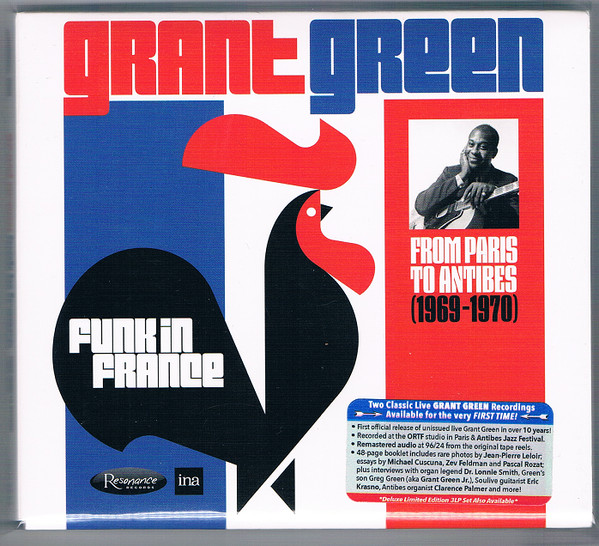
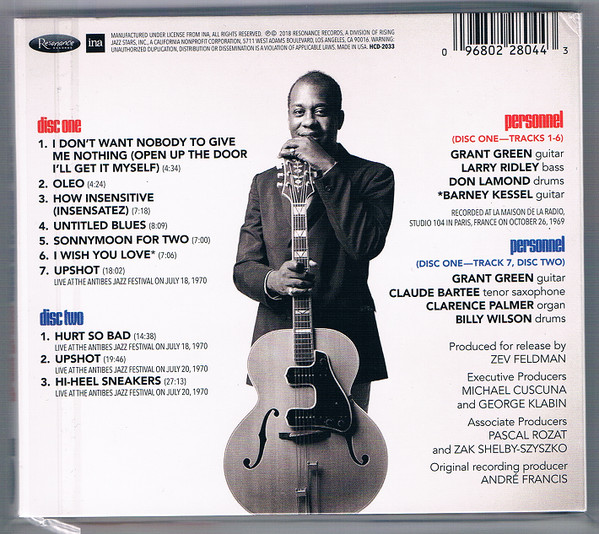
GEIR SUNDSTOL-BRODLOS.
Geir Sundstøl-Brødløs.
Label: Hubro Music.
Since Geir Sundstøl’s career began thirty years ago in 1988, he’s been the equivalent of a musical hired gun and has featured on over 300 albums. This includes the albums he recorded as member of Rovers, and then Morris. Mostly, though, Geir Sundstøl has worked as a session player over the past four decades
Geir Sundstøl is no ordinary session musician though. Most session players stick to one instrument, but not Geir Sundstøl who describes himself as a guitarist and self-taught multi-instrumentalist. He can play everything from guitar tp mandolin, pedal steel, banjo, dobro, marxophone and harmonica. There is, it seems, no end to Geir Sundstøl’s talents a and that is one of the reasons why so many artists have dialled his number.
Over the past thirty years Geir Sundstøl has worked with the great and good of Norwegian music, and has travelled far and wide recording albums and touring. That is what life is like for Geir Sundstøl who can seamlessly switch between musical genres and is just as comfortable playing blues, country, jazz, pop, rock and roots music. However, spending so much time working as a session musician meant Geir Sundstøl wasn’t able to embark upon a solo album until relatively recently.
In September 2015, forty-six year old Geir Sundstøl released his much-anticipated genre melting debut album Furulund to widespread critical acclaim. The cerebral and cinematic Furulund was a tantalising taste of what Geir Sundstøl was capable of.
Buoyed by the success of Furulund, Geir Sundstøl returned in 2016 with his sophomore album Langen Ro. Plaudits and praise accompanied the release of what was another ambitious album of innovative music from Geir Sundstøl who was keen to make up for lost time.
Now two years later Geir Sundstøl returns with his third album Brødløs which has just been released by Hubro Music. Brødløs marks the welcome return of Geir Sundstøl
Although Brødløs has much in common with Geir Sundstøl’s first two albums, it’s also a quite different album. Geir Sundstøl explains: “When we started recording, I didn’t have any specific plans other than I knew I wanted it to be a sad album. Sad is good.”
To record his “sad album,” Geir Sundstøl and his eclectic array if unusual and exotic instruments headed into his custom-built home studio, Studio Intim, where he was joined by some top Norwegian musicians. This included drummer Erland Dahlen and pianist and keyboardist David Wallumrod. Geir Sundstøl also invited a new name to join the session.
This was percussionist and tabla player Sanskriti Sherestra, who Geir Sundstøl first saw playing with Bugge Wesseltoft’s New Conception of Jazz. He was so impressed with the young musician that he invited Sanskriti Sherestra to play on Brødløs.
“I’ve learned that it’s good to invite at least one stranger to every session. I knew all the male musicians from before, and it’s easy to fall into certain routines when you know your fellow players, but we who know each other will behave differently when there’s a new person present. I didn’t know Sanskriti Sherestra from before, and had only heard her once, but I’d always wanted to play with tablas and I knew she was the one.”
The new band entered the studio and began recording Brødløs, which was the most ambitious album of Geir Sundstøl’s solo career which he named after his hometown.
“The album title is the name of the area in my hometown of Halden, where I grew up. Directly translated, it means “out of bread”, but perhaps penury would be a better translation. From what I’ve been told, the name goes back to WW2. Hard times.”
Brødløs which is Geir Sundstøl’s much-anticipated third album is captivating genre-melting album where a myriad of musical influences can be heard. Think of Brian Eno’s ambient albums with a guest appearance by John Coltrane while slide guitarist Geir Sundstøl showcases his considerable skills on an album that conjures up pictures of Indian, Outer Mongolia, the familiar Norwegian landscapes and the Lone Star State, Texas.
The music on Brødløs is atmospheric, cinematic and rich in imagery as the listener hears what sounds the horses trot along drawing a trap or carriage. This could be anywhere where there’s a horse-drawn culture. Meanwhile, layers of music combine and became part of the eight tracks on Brødløs. These tracks feature elements of ambient avant-garde, country rock, electronic jazz and traditional Indian music on an album where a myriad of exotic, unusual and tradition instruments became part of a rich musical tapestry,
It sounds as if John Coltrane has been joined by David Bowie and Brian Eno’s when they recorded Warszawa and Ry Cooder when he accorded the soundtrack to Win Wenders’ Paris Texas. Add to this the sound of legendary pedal steel player Sneaky Pete and the influence of Mike Oldfield’s Tubular Bells and Ennio Morricone’s Days Of Heaven, Cinema Paradiso and The Good, the Bad and the Ugly on Waterloo which closes Brødløs.
It’s a carefully crafted album that is vibrant and rich in detail, with subtleties and nuances that reveal themselves with each listen. They’re part of what’s a truly ambitious and innovative album Brødløs, which has been well worth the two year wait. Geir Sundstøl’s groundbreaking and genre-melting third album Brødløs is a widescreen cinematic epic which is without doubt the guitarist and musical hired gun’s finest hour.
Geir Sundstøl-Brødløs.
BOB MARLEY AND THE WAILERS-KAYA VINYL DELUXE EDITION.
Bob Marley and The Wailers-Kaya Vinyl Deluxe Edition.
Label: UMC.
Nine month after Bob Marley and The Wailers released their critically acclaimed classic album Exodus in June 1977, they returned on the ‘23rd’ of March 1978 with their much-anticipated tenth album Kaya. It was a very different album to Exodus, and was one of Bob Marley and The Wailers’ most controversial releases.
Kaya had a much more relaxed, laid-back and optimistic sound. Many of the songs were about love, while others were about marijuana. This resulted in the cries of sell-out from critics and fans who accused Bob Marley and The Wailers of going soft and being more concerned with commercial success than political problems.
These accusations stung and hurt Bob Marley who was regarded as Jamaica’s social conscience and as someone who spoke on behalf of the oppressed and downtrodden. Bob Marley was known for albums of politically charged music full of social comment until he recorded and release Kaya,
Bob Marley’s decision to eschew militant and outspoken music filled with social comment, and include a much more relaxed, laid-back and optimistic sound was a huge risk, but one that paid off. Nowadays, Kaya is regarded as one of Bob Marley and The Wailers finest hours, and UMC have released Kaya as a two CD set. It was the fifth album Bob Marley and The Wailers had released for Island Records.
Catch A Fire.
Ever since Bob Marley and The Wailers had signed to Chris Blackwell’s Island Records, their career had been transformed. Their first release for Island Records was their fifth album Catch A Fire.
Released in April 1973, Catch A Fire proved more popular in Britain than America. It reached number 171 in the US Billboard 200 and number fifty-one in the US R&B Charts. Critically acclaimed upon its release, Catch A Fire was certified silver in the UK and is featured in Rolling Stone magazine’s list of 500 best albums of all times. Six months after the release of Catch A Fire, came the album that broke Bob Marley and The Wailers in the US.
Burnin’.
Burnin’ wasn’t just the album that broke Bob Marley and The Wailers in America, but was also the last album to feature Peter Tosh and Bunny Wailer. After the release of Burnin’ in October 1973, they embarked upon solo careers.
And they did so, with a gold disc. On its release, Burnin’ reached number 151 in the US Billboard 200 and number forty-one in the US R&B Charts. This resulted in a gold disc in America, while it was certified silver in the UK. Featuring classics like Get Up, Stand Up and I Shot The Sheriff, Burnin’ marks the debut of the militant, confrontational Bob Marley. However, If Burnin’ marked the birth of a reggae revolutionary, Bob Marley picked up the baton on Natty Dread.
Natty Dread.
Natty Dread was released a year after Burnin,’ in October 1974. The wait was worthwhile though. Here was an album which featured Bob Marley at his militant and confrontational best.
He was like a reggae revolutionary, protesting against injustice, on an album that’s politically charged and full of social comment. Featuring No Woman, No Cry and Them Belly Full (But We Hungry) Bob Marley rails against poverty, while Rebel Music (3 O’Clock Roadblock) and Revolution are akin to a call to arms).
On it release, Natty Dread was more popular in the UK than US. It was certified gold in the UK, but only reached number ninety-two in the US Billboard 200 and number forty-four in the US R&B Charts.
Following three commercially successful and critically acclaimed albums, it would be another two years before Bob Marley and The Wailers released another studio album.
Live
While Bob Marley and The Wailers didn’t release another studio album until 1976, they released their first live album. Released in December 1975, and simply entitled Live, this gave fans an opportunity to hear what Bob Marley and The Wailers live sounded like.
Recorded on td 18th and 19th July 1975, Live was a tantalising taste of one of the best live groups of the seventies.
Fans and critics agreed, with Live reaching number ninety in the US Billboard 200. This resulted in Live being certified gold in the US and silver in the UK. Although Live and their three previous studio albums had been successful, their next album would surpass everything they’d previously released.
Rastaman Vibration.
When Rastaman Vibration was released in April 1976, it became Bob Marley and The Wailers’ only album to enter the top ten in the US Billboard 200. It also featured their most successful American single the Vincent Ford penned Roots, Rock, Reggae, which reached number fifty-one in the US Billboard 100. Rastaman Vibration reached number eight in the US Billboard 200 and number eleven in the US R&B Charts.
Unlike previous albums, Rastaman Vibration featured synths alongside the Wailers famed rhythm section. This added a contrast to the power of rhythm section, and are part of Rastaman Vibration’s success. Good as Rastaman Vibration was, Bob Marley and The Wailers next album was a stonewall classic…Exodus.
Exodus,
After an attempted assassination on 3rd December 1976 in Jamaica, Bob Marley took up residence in London. Although he’d been shot in the chest, he’d been luck, things could’ve been much worse. So rather than record the remainder of Exodus in Jamaica, parts of it were recorded in London.
When Exodus was released in June 1977, it was the album that transformed Bob Marley into a worldwide star. Exodus was crammed full of quality music including Jamming, Waiting In Vain, Turn Your Lights Down Low, Three Little Birds and One Love/People Get Ready were lined by Natural Mystic, Heathen and Exodus. Critics referred to Exodus as a classic album and it features in Rolling Stone magazine’s list of 500 best albums of all times. Fans loved Exodus. It reached number twenty in the US Billboard 200 and fifteen in the US R&B Charts. This resulted in Exodus being certified gold in the US and UK.
Having released a timeless classic album, Exodus, Bob Marley and The Wailers tried to repeat this feat with Kaya.
Kaya.
Much of Kaya had been recorded at the same time as Exodus. Two of the tracks, Kaya and The Sun Is Shining had featured on Bob Marley and The Wailers 1973 compilation African Herbsman, which was released on Trojan Records.
When Kaya was released in March 1978, it reached number fifty in the US Billboard 200 and US R&B Charts, resulting in Kaya being certified gold in the US. Across the Atlantic, Kaya reached number four in the UK, and was certified gold. Despite the success of Kaya, Bob Marley and The Wailers’ tenth album faced a backlash from critics and fans.
Rather that revolution, Kaya was an album that saw Bob Marley and The Wailers’ music evolve. Bob Marley wrote the ten tracks on Kaya which saw Jamaican and Western music combine. Kaya was a fusion of two musical cultures that Bob Marley embraced. This was similar to previous albums, going back to Burnin.’ Where things differed were with Kaya’s lyrics.
Whereas previous albums were politically charged and filled with searing social comment, Kaya focused on a variety of themes, including love and marijuana. Indeed, the word “Kaya” is synonymous with marijuana in Jamaican culture. When critics heard the songs on Kaya, they accused Bob Marley and The Wailers of selling out. The music on Kaya was much more laid-back and relaxing. Soon, fans joined critics in accusing Bob Marley and The Mailers of selling out. Was that the case though?
Not only did critics accuse Bob Marley and The Wailers of selling out on Kaya, but they accused him of penning a ten track love letter to marijuana. That was unfair, though. While much of Kaya was about love, and there were tracks about marijuana, there was much more to Kaya than that.
Other subjects included unity, togetherness, commonality and spirituality. While the music lacked the militancy of previous albums, it had a much more laid-back, understated sound. Proof of this is the rhythmic delights of Satisfy My Soul. This showed another side to Bob Marley and The Wailers’ music, one that was captivating and appealed to a wide range of music fans.
Like most Bob Marley and The Wailers’ albums, Kaya contained a couple of classics. This included the timeless, hopeful and optimistic hopeful Easy Skanking and Is This Love.
Showing another side to Kaya, was the broody, moody and thoughtful Running Away. Despite the lack of politically charged songs, there was still a spiritual side to Kaya. Similar to other albums, Bob Marley continues to seek help and guidance from Jah.
This makes Kaya was much more than a ten-track love letter to marijuana. Instead, there was much more to Kaya. It touched on several themes, and in the process, demonstrated another side to Bob Marley and The Wailers’ music.
Critics and fans accused Bob Marley and The Wailers of selling out when Kaya was released were wrong. This wasn’t the case, and instead, Kaya saw Bob Marley and The Wailers music evolving. Kaya was a much more subtle album, both in its content and style of music. With themes ranging from love, marijuana, unity, togetherness and spirituality, Kaya was a much more complex album than people realised.
Originally, Kaya’s accusers had said it was no more than a love letter to marijuana. How wrong they were. The ten tracks on Kaya contained intelligent, thoughtful, introspective and beautiful music. These tracks demonstrated that Bob Marley and The Wailers were a versatile band, determined not to continue releasing albums of similar music. Instead, they wanted their music to be constantly evolving. This meant their music neither risked becoming stale nor predictable.
While not as overtly militant as previous albums, Kaya’s ten tracks were all written by Bob Marley. Unlike Exodus, which featured numerous songwriters, Kaya was all Bob Marley’s own work. It offered an insight to an intelligent, complex and spiritual man who had gained a reputation as Jamaica’s social conscience. However, Kaya demonstrated another side to Bob Marley’s songwriting skills as love songs sat side-by-side with pleas to unity, paeans to marijuana and songs about spirituality. While Kaya wasn’t immediately hailed a classic, in the intervening forty years, critics have performed a volte face.
Recently, Kaya was released by UMC as a two CD set, featuring the original album on disc one and Kaya 40 on disc two. It shows another side to Kaya, the album where Bob Marley and The Wailers were accused of selling out on an album that forty years later is regarded as a classic,
While many albums are referred to as classics, Bob Marley and The Wailers’ Kaya truly is a classic. Kaya deserves to be spoken about in the same breath as Burnin,’ Natty Dread and Exodus. Quite simply, Kaya is hugely important and powerful album which feature some intelligent, thoughtful, introspective and beautiful music from Bob Marley and The Wailers.
Bob Marley and The Wailers-Kaya Vinyl Deluxe Edition.
ART ENSEMBLE OF CHICAGO-LES STANCES A SOPHIE.
Art Ensemble of Chicago-Les Stances A Sophie.
Label: Soul Jazz Records.
There aren’t many groups that are still going strong after fifty years, but that is the case with the avant-garde jazz group the Art Ensemble of Chicago. Their roots can be traced to the Advancement of Creative Musicians which was , founded in Chicago in 1965, Three years later, in 1968, Lester Bowie, Roscoe Mitchell, Joseph Jarman and Malachi Favors decided to form a new group in 1968 which they called the Art Ensemble of Chicago.
By 1969, the Art Ensemble of Chicago had left the Windy City behind and headed to Paris, France where they became a truly prolific group. Between 1969 and 1971 the Art Ensemble of Chicago the recording studio was like their second home, and sometimes they were joined by musicians of the caliber of Archie Shepp and Don Cherry. Other times, the Art Ensemble of Chicago were joined by Sunny Murray and Andrew Braxton in the recording studio. However, when they recorded their first soundtrack album Les Stances A Sophie, which has just been reissued by Soul Jazz Records, it was just the six members of the Art Ensemble of Chicago that made their way to the studio.
On July ’22nd’ 1970, the members of the Art Ensemble of Chicago made their way to Pathé Marconi studio in Boulogne, France where they were to record the soundtrack to Les Stances A Sophie. This was a French film directed by Moshé Mizrahi, which was due out later in 1970.
There was no time to spare as all the members of the Art Ensemble of Chicago had only two weeks left on their visa. This meant that the Art Ensemble of Chicago had to work quickly. The lineup featured Lester Bowie, Joseph Jarman, Roscoe Mitchell, Malachi Favors Maghostut, Fontella Bass and Don Moy. They had written seven new compositions for the soundtrack to Les Stances A Sophie. and covered Theme de Yoyo by Noreen Beasley. These eight tracks became the soundtrack to Les Stances A Sophie.
By the time Les Stances A Sophie was released by Pathé Records later in 1970, the Art Ensemble of Chicago had returned home as their latest album was released to widespread critical acclaim. That was no surprise as it was an ambitious and innovative album of genre-melting music.
Throughout Les Stances A Sophie the Art Ensemble of Chicago flitted between and fused elements avant-garde jazz, bop, free jazz, improv, Nu-Dixieland and pounding, pulsating R&B. The Art Ensemble of Chicago combine braying, blistering saxophone solos while Malachi Favors’ walking bass and Don Moye’s drums and percussion play a leading role in the sound and success of the soundtrack. So does Fontella Bass’ searing vocal as it cuts through the multilayered genre-melting arrangements on Les Stances A Sophie’s eight track which closes with Proverbes No. 2.
Critics hailed Les Stances A Sophie a landmark release, and an avant-garde classic. It was certainly the Art Ensemble of Chicago’s finest hour of their fifty year career.
Les Stances A Sophie is certainly one their most ambitious and innovative albums that the Art Ensemble of Chicago have released over the past six decades. Not only is Les Stances A Sophie regarded as an avant-garde classic, but one orb the greatest jazz albums of the past fifty years. One listen to Les Stances A Sophie and that will become apparent as the Art Ensemble of Chicago showcase their ability to innovate and creative groundbreaking music that was way ahead of its time.
Art Ensemble of Chicago-Les Stances A Sophie.
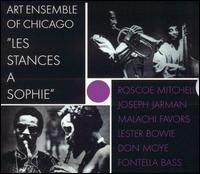
MOD JAZZ RIDES AGAIN.
Mod Jazz Rides Again.
Label: Kent Dance.
Twenty-two years ago in 1996, Kent Dance an imprint of Ace Records released a new compilation Mod Jazz which celebrated the music that the Modernists listened to during the sixties. Mod Jazz was released to plaudits and praise and was
a trip down memory lane for the original Mods, and those that were part of the seventies Mod revival. Many other music fans embraced and enjoyed Mod Jazz, which was about lend its name to a popular compilation series.
Two years later in 1998, Mo Mod Jazz was released, and in 1999, Even Mo Mod Jazz became the third instalment in what was a popular companion series.
As the new millennia dawned, Yet Mo Mod Jazz was released was released in 2000 to the same critical acclaim as the three previous instalments in the series.
Despite the critical acclaim, five years passed before The Return Of Mod Jazz was released in 2005. This was a welcome instalment in this popular compilation series. So was 2008s Further Adventures Of Mod Jazz and Mod Jazz Forever in 2012. The Mod Jazz compilation series was still going after seven volumes while many other franchises were still going strong.
When the original Mod Jazz compilation was reissued in June 2013 as a two LP set, seventeen years had passed since its original release. Just a year later in June 2014, Kent Dance released the eight instalment in the series, Mod Jazz And Then Some! It enjoyed the same plaudits and praise as previous instalments in the series, and fans of the Mod Jazz compilation series was eagerly awaited the next volume.
They’ve had to be patient, but after four-and-a-quarter years Mod Jazz Rides Again has just been released by Kent Dance. Mod Jazz Rides Again features twenty-four tracks from the likes of The Tempo Rhythms, Jimmy Witherspoon, Ray Shanklin, Ray Johnson, The Rhoda Scott Trio, The Rhoda Scott Trio, Montego Joe, Otis Spann, Nina Simone, Johnny “Hammond” Smith, T-Bone Walker, Playboy Five, Candy Phillips and the Bobby Jenkins Quartet. These are just a few of the artists and groups on Mod Jazz Rides Again.
The Tempo Rhythms recorded the jazz-tinged and funky Poppa Nickel for Poncello Records in 1964. However, this instrumental never saw the light of day until 2007 when it featured on the Poncello Records Story. Eleven years later and Poppa Nickel returns for an encore and sets the standard on Mod Jazz Rides Again.
Blues and jazz singer Jimmy Witherspoon released Hey Mrs Jones as a single on Reprise in 1962. This uptempo slice of R&B was akin to a call to dance for the Mods and was guaranteed to fill any dancefloor.
When Russell Evans and The Nite Hawks released Send Me Some Cornbread on Atco in 1966, The Bold was tucked away on the B-Side. It features a fleet fingered solo on the Hammond organ by Russell Evans who plays as a starring role on The Bold.
Jazz trombonist Harold Betters released Hot Tamale Man as a single on Reprise Records in 1967. Hot Tamale Man also opened the album Funk City Express and is a funky slice of high swinging soul jazz.
In 1966, Sammy Davis Jr and Buddy Rich joined forces to record The Sounds Of ’66. One of the songs they covered was I Know A Place which was penned by British songwriter Tony Hatch, Ernie Freeman and George Rhodes. Their composition was given a makeover by vocalist Sammy Davis Jr and jazz drummer Buddy Rich.
Otis Spann recorded I’m A Dues Payin’ Man for his album Sweet Giant Of The Blues which was released on Flying Dutchman in 1969. It’s a reminder of one of the greatest blues pianist of his generations, who as I’m A Dues Payin’ Man shows was also a talented vocalist.
Come On Back Jack was released as single by Nina Simone on Colpix Records in 1961. By then, the twenty-eight year old singer, songwriter and pianist was well on her way to becoming a jazz legend
Sticks and Stones was released by Johnny “Hammond” Smith as a single on Prestige in 1960. It’s a reminder of one of the great Hammond organists of the sixties.
Pianist, organ player and band leader Jackie Ivory was twenty-nine in 1966, the Jackie Ivory Trio reinvented Hi Heel Sneakers. It becomes a funky slice of soul jazz thanks to Jackie Ivory’s Hammond organ solo.
Blues guitarist T-Bone Walker released his album Every Day I Have The Blues on Flying Dutchman in 1969. It’s a vastly underrated album which showcases a truly talented guitarist, who gives one of his finest performances on his cover of Shake It Baby.
Another cover version is Howlin’ Wolf’s Spoonful, which is given a makeover by the Memphis-based Playboy Five. It was released on Bandstand in 1964 ad finds the Playboy Five transforming this familiar track and turning it into something new and timeless.
Closing Mod Jazz Rides Again is What Is Love by the Bobby Jenkins Quartet. This beautiful soulful ballad was released by Vistone Records in 1962, and closes Mod Jazz Rides Again on a high.
For many an ageing mod, the music on Mod Jazz Rides Again is sure to bring back many a happy memory. Some of the original mods will be well into their seventies. It’s a long time since they were a mod about town in the early sixties. Back then, they would dawn their cashmere suits, complete with narrow lapels. Completing the look were button-down collar shirts, thin ties and a wool or cashmere jumpers and Chelsea boots. This was all part of their carefully cultivated image that they wore about town when they headed to their local coffee bar, pub and club. That was when the music would start to play.
This includes the music on Mod Jazz Rides Again which will bring memories flooding back for the original Mods. It’s a similar case for those who were part of the mod revival in the seventies and the second mod revival in the nineties. What they remember is the fashion and of course, the music.
Much of that music is timeless and proof if any was needed is Mod Jazz Rides Again which was recently released by Kent Dance, an imprint of Ace Records. Mod Jazz Rides Again is a tantalising reminder of a time when mohair suits, button down shirts, fishtail parkas and a Vespa was de rigeur for the mod about town. Mod Jazz Rides Again is also a reminder of one of the most important British youth cults, who have enjoyed an unrivalled longevity.
Mod Jazz Rides Again.

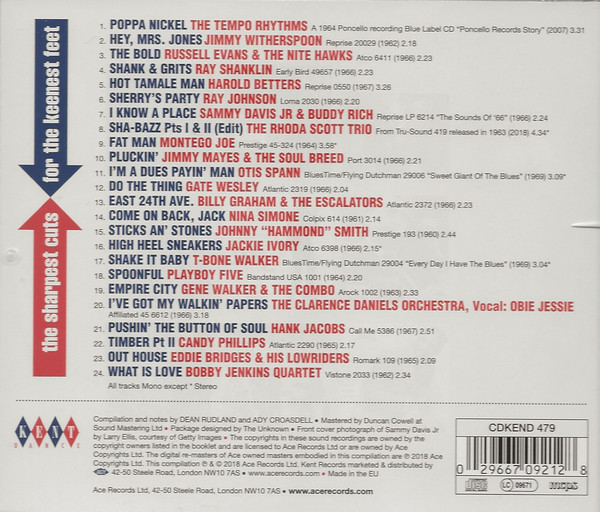
SHAOLIN SOUL: EPISODE 4.
Shaolin Soul: Episode 4.
Label: Because Music France.
Twenty years ago in 1998, the first instalment in the Shaolin Soul compilation series was released to widespread critical acclaim. Shaolin Soul: Episode 1 was an all-star compilation that featured nineteen funky and soulful tracks from labels like Atlantic, Hi, Motown and Stax that had inspired many hip hop producers.
So did the music on Shaolin Soul: Episode 2 when it was released to plaudits and praise three years later in 2001. Just like the first instalment in the series, Shaolin Soul: Episode 2 featured contributions from the great and good of soul and funk. Critics and record buyers awaited the much-anticipated third instalment in the Shaolin Soul series.
Thirteen long years later, Shaolin Soul: Episode 3 was released and featured twenty slices of blues, funk and soul. Familiar songs and hidden gems sat side-by-side Shaolin Soul: Episode 3 on which like the previous two instalments was compiled by Olivier Carrié aka Uncle O.
Four more years passed before Shaolin Soul: Episode 4 was released by Because Music France. It features twenty-two tracks from Esther Phillips, Al Green, Eddie Kendricks, Betty Wright, The Dynamics, Ernie Hines, Jerry Butler, Jean Plum, The Staple Singers, Freda Payne and Carla Thomas. They’re part of what’s a welcome addition to the Shaolin Soul series.
Shaolin Soul: Episode 4 opens with Esther Phillips’That’s All Right With Me which is taken from From A Whisper To A Scream. It was released by Kudu in 1971 and is a beautiful, poignant ballad from Esther Phillips who is a vastly underrated soul singer.
During the first half of the seventies Al Green was one of the biggest names in soul music. In 1975, he released Al Green Is Love on Hi Records which featured the soul-baring Southern Soul ballad Wish You Were Here. It’s not just one of the highlights of Al Green Is Love, but one of his finest moments.
When Eddie Kendricks released his eponymous album on Motown in 1981, Intimate Friends was released as a single. It’s a heartfelt ballad and the full version appears on Shaolin Soul: Episode 4 as the former Temptation showcases his vocal prowess.
In 1968, Betty Wright released Girls Can’t Do What The Guys Do as a single on Steve Alaimo and Henry Stone’s Alston Records. Girls Can’t Do What The Guys Do is a reminder, if any was needed, that Betty Wright could breath meaning and emotion into a song.
When The Dynamics released their sophomore album What A Shame on Black Gold Records in 1973, it featured Get Myself High. It’s a beautiful ballad where horns, harmonies and strings accompany am emotive and sometimes hurt filled vocal.
One of the most underrated albums to be released by Stax in the early seventies was Electrified Ernie Hines on the We Produce Records’ imprint. One of the highlights was Our Generation where Ernie Hines combines soul, funk and gospel.
A welcome addition to the compilation is Jerry Butler’s funky and soulful I’m Your Mechanical Man. It featured on Sweet Sixteen which was released on Mercury in1974 and is one of the highlights of Shaolin Soul: Episode 4.
One of the songs on The East St Louis Gospelettes’ 1977 album Love Is Key was Have Mercy On Me. It’s soulful sounding gospel song from The East St Louis Gospelettes who released six albums between 1970 and 1980.
When The Staple Singers signed to Curtom, they featured on the soundtrack to Let’s Do It Again. One of the tracks they contributed was the string-drenched Let’s Do It Again which features The Staple Singers at their soulful best;.
Freda Payne released I Get High (On Your Memory) as single in 1977. It’s taken from the 1977 album Stares And Whispers which was released on Capitol Records. I Get High (On Your Memory) is a slick, soulful and dancefloor friendly song from Freda Payne that is truly memorable.
Carla Thomas closes Shaolin Soul: Episode 4 with a cover of Bacharach and David’s What The World Needs Now. It’s from her 1966 Stax album Comfort Me and finds Carla Thomas’ staying true to this oft-covered classic song.
Just like the three previous volumes in the series, Shaolin Soul: Episode 4 is the lasted lovingly curated compilation from Uncle O. He’s chosen a mixture of familiar songs, cult classics and hidden gems for Shaolin Soul: Episode 4, which was recently release by Because Music France and is welcome addition to this long-running compilation series .
Shaolin Soul: Episode 4.
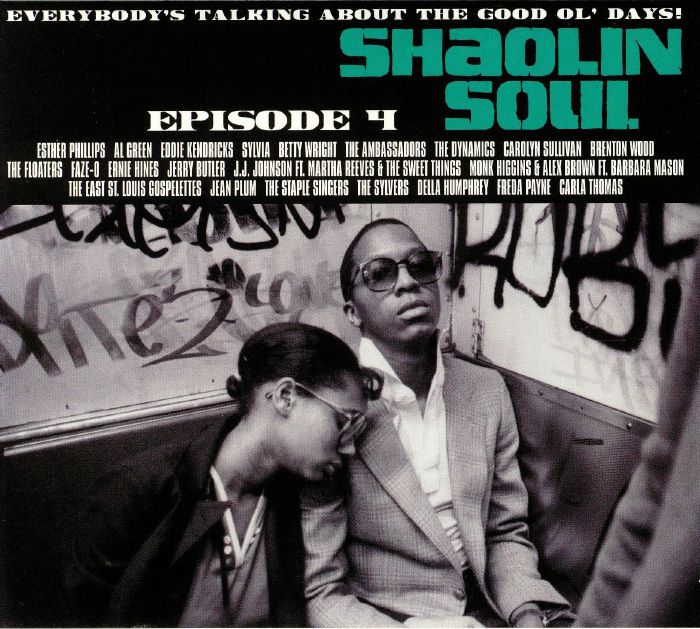
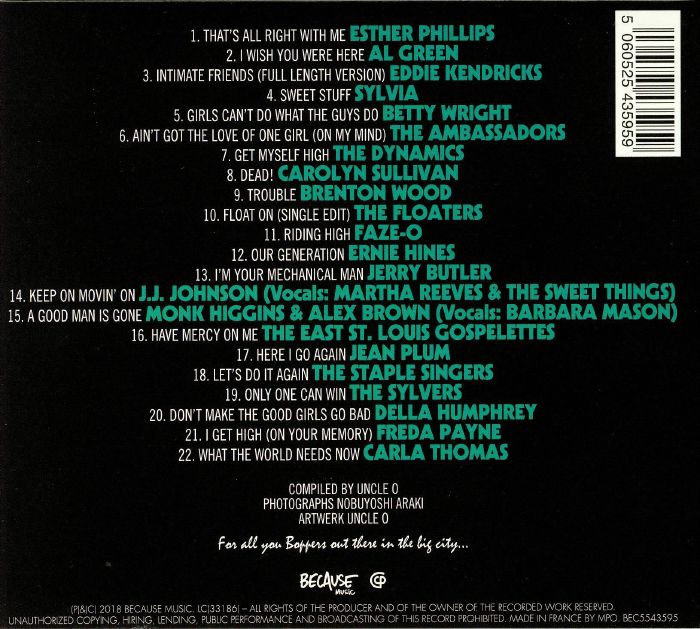
 dereksmusicblog
