WESTBOUND SUPER BREAKS-ESSENTIAL FUNK, SOUL AND JAZZ SAMPLES AND BREAKBEATS.
Westbound Super Breaks-Essential Funk, Soul And Jazz Samples And Breakbeats.
Label. Westbound Records.
Back in 1969, Armen Boladian was a familiar face within the Detroit music scene, and the musical impresario was about to launch a new label Westbound Records. This came as no surprise to those that knew Armen Boladian who previously, had founded and run the Fascination label and the Record Distribution Corporation. However, when Armen Boladian’s latest venture Westbound Records opened its doors in 1969, he had no idea that it would become a musical institution whose music inspired several generation of hip hop producers. That music features on Westbound Super Breaks-Essential Funk, Soul And Jazz Samples And Breakbeats, which was recently released by Westbound Records, an imprint of Ace Records and is a reminder of Armen Boladian’s latest success story.
In a way, that was no surprise, as Armen Boladian brought onboard talented arrangers, musicians, producers and songwriters to work with the artists he would sign to Westbound Records over the next few years. This included CJ and Company, Denis LaSalle, Dennis Coffey, Funkadelic, The Detroit Emerald and The Ohio Players. These artists would bring commercial success and critical acclaim the way of Westbound Records.
When Denise LaSalle released Trapped By A Thing Called Love in 1971, it reached number thirteen in the US Billboard 100, topped the US R&B charts and was certified gold. Denise LaSalle then enjoyed hits with Now Run and Tell That which reached number three in the US R&B charts, while Man Sized Job reached number four in the US R&B charts. Having just enjoyed three consecutive top ten hits in the US R&B charts, Denise LaSalle was one Westbound Records most successful signings.
Not to be outdone, The Detroit Emeralds also enjoyed three consecutive top ten hits in the US R&B charts between 1971 and 1972. This began with Do Me Right which reached forty-three in the US Billboard 100 and seven in the US R&B charts. Baby Let Me Take You (In My Arms) reached thirty-six in the US Billboard 100 and five in the US R&B charts, before You Want It, You Got It reached twenty-four in the US Billboard 100 and four in the US R&B charts. Armen Boladian’s Westbound Records was going from strength to strength.
Another of Westbound Records’ signings the Ohio Players, had released their sophomore album Pain in 1972, which was certified gold. Then in 1973 Funky Worm reached fifteen in the US Billboard 100 and topped the US R&B charts. Despite this success, The Ohio Players weren’t Westbound Records most successful signing.
That honour fell to Funkadelic, who released eight albums on Westbound Records. This began with Funkadelic in May 1970 and six years later, Tales of Kidd Funkadelic was released in September 1976 just before the P-Funk pioneers signed to Warner Bros. By then, music and Westbound Records was changing.
Armen Boladian had already launched Eastbound Records, which started life as a jazz label and signed artists of the calibre of Bill Mason, Caesar Frazier, Houston Person and Melvin Sparks. Later, Catfish Hodge, Fantastic, Pleasure Web, Robert Lowe and The Houston Outlaws would all sign to Eastbound Records. However, by 1975 Eastbound Records was no more and all the artists on the label’s roster became part of Westbound Records.
As 1975 gave way to 1976, disco was growing in popularity, and like many record labels, Westbound Records were keen to embrace disco.
This was a perfect opportunity for artists and groups to reinvent themselves, especially any artists whose career was at a crossroads and needed kick-started. Disco had the potential to kick-start ailing and failing careers, while new stars were born and embarked upon musical careers. Meanwhile, many artists continued to on their path and made funky, soulful, jazzy and dance-floor friendly music.
This includes the artists and groups that feature on Westbound Super Breaks-Essential Funk, Soul And Jazz Samples And Breakbeats. Among them are Junie, Funkadelic, The Detroit Emeralds, Caesar Frazier, Fuzzy Haskins, Ohio Players, Fantastic Four and Denise LaSalle.
Suzie Thundertussy by Junie opens Westbound Super Breaks-Essential Funk, Soul And Jazz Samples And Breakbeat. It’s a funky and soulful track from the 1976 album Suzie Super Groupie which is a reminder of the multitalented Junie.
One of P-Funk pioneers and superstars Funkadelic’s classic albums was Maggot Brain which was released in 1972. It features You And Your Folks, Me And My Folks a prime slice of classic P-Funk from Funkadelic,
You’re Gettin’ A Little Too Smart was released as a single in 1973 by The Detroit Emeralds. It’s a track from their 1973 album I’m In Love With You, and features The Detroit Emeralds at the most soulful as they deliver vocals and harmonies against a funky arrangement,
When funk group Pleasure Web released Music Man-Part 1 as a single, Music Man-Part 2 was on the B-Side. This funky hidden gem later became a favourite of DJs and hip hop producers and introduced Pleasure Web’s music to a wider audience.
Just a year after Armen Boladian founded Westbound Records, the label released Magictones’ single I’ll Make It Up To You in 1970. Tucked away in the B-Side was Good Old Music a soulful, funky and rock tinged track by Magictones which is vastly underrated.
In 1975, Caesar Frazier released his sophomore album ’75 which features Funk It Down. This memorable jazz-funk instrumental is a reminder of a talented artist who deserved to enjoy a much more successful career.
The Fuz And Da Boog is a track from Fuzzy Haskins’ 1976b debut album A Whole Nother Thang. This funky track is a call to dance and still sounds as good in 2018.
When Ohio Player released their Westbound Records’ debut Pleasure in 1972, it featured Funky Worm. It’s an uber funky offering from the Ohio Player who were one of Westbound Records’ most successful signings.
The soulful sounding ballad Does He Treat You Better made its debut on Unique Blend’s 1974 single. With its lush stings and harmonies it’s a highlight of Westbound Super Breaks-Essential Funk, Soul And Jazz Samples And Breakbeats.
Mixed Up Moods And Attitudes was released as a single in 1977 and feared on the Fantastic Four’s 1977 album Got To Have Your Love, It’s a soulful ballad with a tender heartfelt vocal. Very different is Disco Pool Blues where the Fantastic Four reinvent their music.
Heartbreaker Of The Year by Denise LaSalle closes Westbound Super Breaks-Essential Funk, Soul And Jazz Samples And Breakbeats. It’s taken from Denise LaSalle’s 1972 album soulful and funky album Trapped By A Thing Called Love,
Pack Of Lies is a track from The Counts’ 1971 debut album What’s Up Front That-Counts. It was another album of soulful and funky released on Westbound Records. One of yen standout tracks was Pack Of Lies which showcases The Counts’ considerable talents.
Westbound Records released an eclectic selection of music during the seventies including disco. funk, jazz-funk, P-Funk, post-P-Funk, proto-boogie, soul and soul-jazz. The music was usually carefully crafted, often by using top arrangers, musicians and producers. They played their part in making music that as often slick, soulful, funky and dancefloor friendly. Sadly the music Westbound Records wasn’t always successful and passed record buyers by.
That includes a number of tracks on Westbound Super Breaks-Essential Funk, Soul And Jazz Samples And Breakbeats. This nineteen track compilation was recently released by Westbound Records, which is an imprint of Ace Records. The groundbreaking music on Westbound Super Breaks-Essential Funk, Soul And Jazz Samples And Breakbeats is a reminder of Armen Boladian’s influential label. Westbound Records, which helped shape hip hop and inspired several generation of producers.
Westbound Super Breaks-Essential Funk, Soul And Jazz Samples And Breakbeats.

50 YEARS MPS.
50 Years MPS.
Label: MPS.
In 1958, German engineer and producer Hans Georg Brunner-Schwer founded a new record label SABA (Schwarzwälder-Apparate-Bau-Anstalt). Over the next ten years, SABA released 40 jazz albums. However, in 1968, SABA’s parent company was sold to the American GTE Corporation.
Sadly, the new owners had no interest in SABA’s recording business, and when Hans Georg Brunner-Schwer realised this, he decided to found his own new label, MPS Records. His next step was to buy SABA’s entire back catalogue.
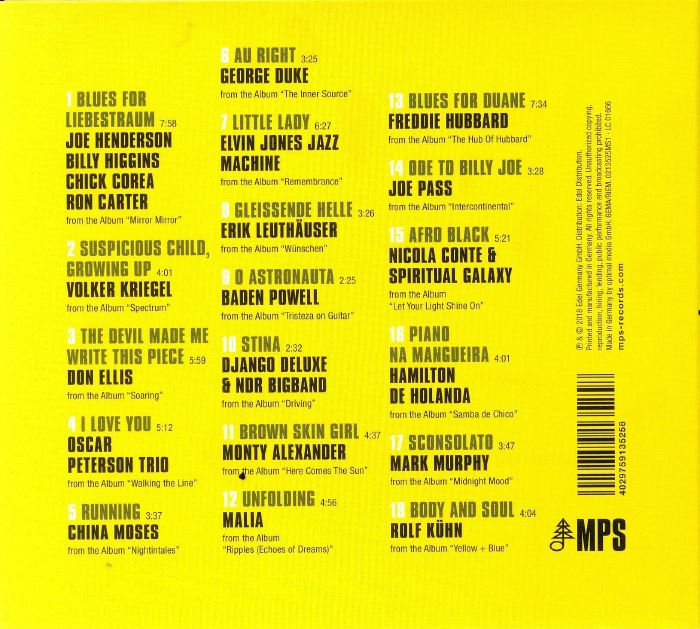
Hans Georg Brunner-Schwer then launched MPS Records in 1968, but had no idea that his new label would enjoy the longevity it did. His label would still be going strong in fifty years time and is celebrated on the new compilation 50 Years MPS, which was recently released by MPS. It features eighteen tracks from Volker Kriegel, Don Ellis, the Oscar Peterson Trio,George Duke, Elvin Jones Jazz Machine, Erik Leuthauser, Baden Powell. Freddie Hubbard, Joe Pass and Rolf Kuhn. They’re just some of the artists who feature on 50 Years MPS,
Opening 50 Years MPS is Joe Henderson, Billy Higgins, Chick Corea, Ron Carter’s Blues For Liebestraum. It’s taken from the 190 album Mirror Mirror where this multitalented all-star band combine elements of post bop and modal jazz.
By 1971, many jazz musicians had embraced fusion in America, Britain and Europe. This included German jazz-rock guitarist, Volker Kriegel who released his sophomore album Spectrum in 1971. It features Suspicious Child, Growing Up which is the perfect showcase for the Father of German Jazz Rock.
In 1973, thirty-five years old american bandleader, composer, arranger, producer and trumpeter released the post bop album Soaring. It featured The Devil Made Me Write This Piece where Don Ellis unleashes a breathtaking solo. Tragically, Soaring was Don Ellis’ swan-song, as he died of a heart attack on December the ‘17th’ 1978.
China Moses released her genre-melting debut album Nightintales in 2017. It’s jazz-tinged, soulful, funky and bluesy album. It opens with Running, where China Moses delvers a vocal that is soulful, sassy and powerful as her band ensure the arrangement swings.
After leaving Liberty, George Duke signed to MPS Records and released The Inner Source in 1973. By then, he was twenty-seven and had just released a truly eclectic album. One of the highlights was Au Right, where jazz funk and fusion combine seamlessly.
Elvin Jones Jazz Machine released their debut album Remembrance in 1978. It featured Little Lady a fusion of modal and post bop that had a contemporary sound that has stood the test of time.
Django Deluxe and NDR Bigband recorded Stina for their 2015 album Driving. German-Ghanaian soul-singer Y’Akoto takes charge of the lead vocal on a jazzy song that is a reminder of another age.
Freddie Hubbard released the album The Hub Of Hubbard in 1970. The thirty-two year old trumpeter had made a playing bebop, hard bop and post bop styles in the early sixes. The Hub Of Hubbard which features Blues For Duane, shows Freddie Hubbard was still relevant musically.
In 1970, forty-one year old jazz guitarist and vocalist Joe Pass released the album Intercontinental. It fears a captivating reinvention of the classic Ode To Billy Joe.
Mark Murphy’s 1968 album Midnight Mood veered between balladry, Latin jazz and soul-jazz. One of the highlights was the sultry late night sound of Sconsolato where the jazz vocalist gives one of his finest performances.
Closing 50 Years MPS is Rolf Kühn’s cover of Body and Soul. It finds Rolf Kühn fusing elements of modal and free jazz as he plays with freedom and inventiveness and takes a familiar song in a new direction.
50 Years MPS which features eighteen tracks is a tantalising taste of the music within the MPS Records’ vaults. This includes music from American and European jazz musicians, including many giants of jazz who wrote their name into musical history.
There’s also tracks by new names and artists and bands who didn’t enjoy the commercial success their talent deserved. However, they still play a part in the long and illustrious history of MPS Records which is celebrated on 50 Years MPS. While 50 Years MPS is the perfect introduction to one of the great European jazz labels, it would require a several box set to document and celebrate the story of Hans Georg Brunner-Schwer’s MPS Records.
50 Years MPS.

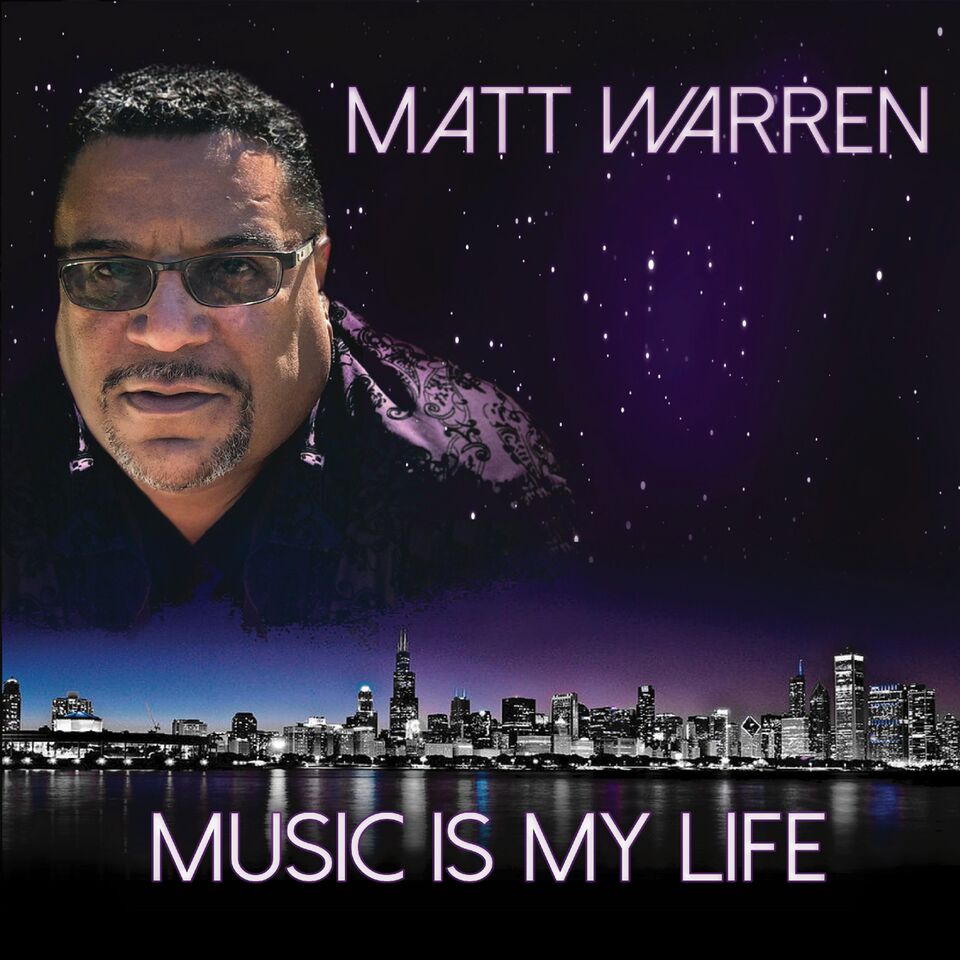
MATT WARREN-MUSIC IS MY LIFE-HISTORY IS MADE-THE BIRTH OF NU-HOUSE
Matt Warren-Music Is My Life-History Is Made-The Birth Of Nu-House.
Words like pioneer and innovative are oft-overused by over-enthusiastic music critics . However, once in a while an album is released by a pioneering musician that features truly innovative music. That is the case with Matt Warren’s new album Music Is My Life which will be released by Chicago and Miami based Wake Up! Music on the ‘19th’ of October 2018, with the UK and European release following on the ‘15th’ of February 2019.
Music Is My Life features the first new music that DJ and producer Matt Warren has released in over ten years, and as befitting one of the pioneers of Chicago House, is a landmark album in the history of dance music. Matt Warren is about to mark his return with Music Is My Life as the first ever Nu-House album, which is about to transform dance music.
Music Is My Life features eleven tracks, and opens with the sultry rework of How Do I Love Thee. It’s a surefire floor-filler featuring a vocal tour de force from legendary house diva Pepper Gomez. She plays a starring role on Music Is My Life and returns on a triumvirate of anthemic tracks. Pepper Gomez adds a coquettish vocal on Catch Me If You Can and a sultry sounding vocal on the remake of The Way To My Heart. Pepper Gomez then steals the show on the anthem Sometimes, with her sensuous sounding vocal. However, this is just part of the story of Music Is My Life.
There’s also a remake of the Chicago House classic Bang The Box, the Matt Warren composition Going Deeper and Musica Es Mi Vida which features the welcome return of Pepper Gomez. She stars on the stomping disco-tinged remix of Catch Me If You Can, which is sure to become a favourite of DJs and dancers everywhere.
The same could be said of La Rosa, which is a captivating fusion of Latin house and flamenco. Then on the hook-laden earworm Get On Up which is currently enjoying radio play in America, soulful diva and Janis McGee makes her recording debut and leaves a lasting impression.
So does the ruminative and brooding The Dark Storm, which was written and performed by he prodigiously talented Richard Meyer Jr, who is Matt Warren’s twelve year old son. This thoughtful sounding track brings Music Is My Life to a close after a dance filled ride on the sounds of the other tracks.
Music Is My Life is a landmark album that is about to become part of house music’s history. This is nothing new for Matt Warren who released his debut single in 1984, and over the next few years, made history as one the pioneers of Chicago House made history.
Now Matt Warren and the multitalented group of musicians and vocalists who recorded Music Is My Life are about to make history all over again. Fittingly, Music Is My Life was recorded in Chicago, where it all began for him in 1985.
Now thirty-three years later, Matt Warren is about to release the future dance classic and the first ever Nu-House album, Music Is My Life. Stylistically it’s a much slicker and more polished album, where Matt Warren and his all-star cast combined elements of disco, funk, Latin and soul as they rewrote musical history. In doing so, they create a groundbreaking release, Music Is My Life, which is the first Nu-House album, and a landmark event in dance music history.
Matt Warren-Music Is My Life-History Is Made-The Birth Of Nu-House.
DAM
HOLGER CZUKAY, JAH WOBBLE, JAKI LIEBEZEIT-FULL CIRCLE.
Holger Czukay, Jah Wobble, Jaki Liebezeit-Full Circle.
Label: Gronland Records.
Having released eleven albums in eleven years, Can called time on their career in 1979. By then, Can were rightly regarded by critics as one of the most important, influential and innovative bands of the Krautrock era. However, like many of the Krautrock bands, Can hadn’t enjoyed the commercial success that their music had deserved. While their music found an a small, but discerning audience in Britain and France, Can, like many of the other Krautrock bands had failed to find audience in Germany. This was disappointing, just like the demise of Can the group that Holger Czukay cofounded.
After the demise of Can, Holger Czukay dusted himself down after two years where he was marginalised in the group he cofounded.“During the recording of Out Of Reach, I felt an outsider in my own group. I was on the outside looking in. I was on the margins. All I was doing was adding sound-effects.” Holger Czuaky felt his group had been hijacked by Rosko Gee and Rebop Kwaku Baah and things got so bad, that Holger quit Can.
Sadly, Rosko Gee and Rebop Kwaku Baah dominated Out Of Reach. Gone was the loose, free-flowing style of previous Can albums. Even Jaki Liebezeit’s play second fiddle to Baah’s overpowering percussive sounds. The only positive thing was a guitar masterclass from Michael Karoli. Apart from this, things weren’t looking good for Can. It was about to get worse though.
The critics rounded on Out Of Reach. They found very little merit in Out Of Reach. Gee and Baah were rightly blamed for the album’s failure. Even Can disliked Out Of Reach. They later disowned Out Of Reach. Despite this, Rosko Gee and Rebop Kwaku Baah remained members of Can.
Unable to play with the necessary freedom Can were famed for, the two ex-members of Traffic stifled Can. Rebop’s percussion overpowers Jaki’s drums, which have always been part of Can’s trademark sound. At least Michael’s virtuoso guitar solos are a reminder of classic Can. A nod towards Carlos Santana, they showed Can were still capable of moments of genius. Sadly, there wouldn’t be many more of these.
Some time after the release of Out Of Reach, Can decided to release a new single. It wasn’t one of the songs on Out Of Reach. Instead, it was reworked version of Jacques Offenbach’s Can Can. This was somewhat surreal, and far removed from classic Can. They had moved far away from the music that featured on their golden quartet. Can’s loyal fans wondered what the future held for Can. Sadly, Can would breakup after their next album.
Can.
Following the commercial failure of Out Of Reach, the members of Can began recording what became their tenth album, Can. Remarkably, Rosko Gee and Rebop Kwaku Baah were still part of Can. Sadly, Holger was not longer a member of Can. He had left during the making of Out Of Reach. His only involvement was editing Can which was a travesty.
Allowing Rosko Gee and Rebop Kwaku Baah to remain members of Can while Holger left the band he cofounded was a massive mistake. Faced with the choice or losing Holger or keeping Rosko Gee and Rebop Kwaku Baah in Can, should’ve been a no-brainer. Incredibly, Holger was marginalised further.
Neither Rosko Gee nor Rebop Kwaku Baah were suited to a band like Can. Both came from a very different musical background, and as a result the decision to hire them initially was flawed and questionable. Their playing on Out Of Reach was odds with the way Can played. They had spent their career playing with freedom that resulted in inventive and innovative music. The much more rigid style of Rosko Gee and Rebop Kwaku Baah stifled the other members of Can. To make matters worse, their playing overpowered the rest of Can, and was one of the reason’s for the album’s failure. Yet when recording of Can began, Rosko Gee and Rebop Kwaku Baah remained.
Can, which is sometimes referred to as Inner Space, was released in July 1979. Again, critics weren’t impressed by Can, and the album received mixed reviews. No longer was Can the critic’s darlings.
The music on Can was a fusion of avant-garde, electronica, experimental, psychedelia and rock. Add to that, a myriad of effects including distortion and feedback, and here was an album that divided the opinion of critics. While the critics agreed, it was better than Out Of Reach. They also agreed that Holger was sadly missed.
Even Holger’s renowned editing skills couldn’t save Can. Try as he may, he could only work with what he was given. He did his best with Can, which the eleventh album from the group he co-founded. By the time Can was released, Holger: “had come to a realisation, that it was time to go his own way.” Holger describes this as “necessary.”
Can had split-up after the release of Can. That was their swan-song. However, even before that, Holger: “felt marginalised, this had been the case since Rosko Gee and Rebop Kwaku Baah became part of Can. They had hijacked Can,” and ultimately, this lead to the death of a great and innovative band.
With Can now part of musical history, Irmin Schmidt, Holger Czukay, Michael Karoli and Jaki Liebezeit set about reinventing themselves. Music critics wondered whether they would form new bands or embark upon solo careers? Irmin Schmidt, Holger Czukay and Michael Karoli all embarked upon solo careers.
Movies!
Holger Czukay hadn’t really been making music since 1976, and had edited the last two Can albums. This meant that Holger Czukay had to find “his own sound again.” He had “been through this with Can,” Now he’d have to do so again. It would be worth it though, when he released his first solo album since 1969s Canaxis 5, Movies!
When Holger Czukay released his much-anticipated sophomore album Movies! to widespread critical acclaim and was hailed as one of the best albums of 1979. It was an eclectic album described as variously psychedelic, cinematic, melodic, moody, understated and progressive, here was the next chapter in Holger’s musical career. The one track that everyone agreed was a minor masterpiece was Cool In The Pool. It was Movies’ Magnus Opus. Holger’s decision to embark upon a solo career had been vindicated. He was back doing what he did best, creating ambitious, groundbreaking and pioneering music. That would continue in 1981, when Holger released On The Way To The Peak Of Normal.
On The Way To The Peak Of Normal.
For Holger, 1981s’ On The Way To The Peak Of Normal was “one of the albums I’m most proud of. It was also Holger’s first collaboration with Conny Plank
Working with Conny Plank Holger remembers, was a revelation. Holger felt Conny was a consummate professional. “Here was someone who understood what I was trying to achieve.” He ensured that I never made music people neither understood, nor wanted to buy. The sessions were organised and disciplined, very difference from the indiscipline of late Can albums.”
Recording took place in the familiar surroundings of Inner Space Studios, Cologne. The only member of Can were present was Jaki Liebezeit. Other members of the band included Conny Plank and Jah Wobble, who Holger and would collaborate with on 1982s Full Circle and the 1983 Snake Charmer E.P.
Before that, Holger released On The Way To The Peak Of Normal in 1981. Just like the early days of Can, Holger was once again, the critic’s darling.
Critics were won over by On The Way To The Peak Of Normal. The album was a fusion of ambient, avant-garde, electronic, experimental, funk, industrial, jazz, psychedelia and rock. Genre-melting describes an album of bold, challenging, innovative, inventive and influential music. It was a case of expect the unexpected on On The Way To The Peak Of Normal, which saw Holger continue to create groundbreaking music. Here, was one of the most inventive albums Holger had recorded.
Although Holger had been making music for three decades, he still had plenty to say musically. This included when Holger Czukay collaborated with Jah Wobble, Jaki Liebezeit on the album Full Circle which was recently reissued by Gronland Records.
Full Circle.
Holger Czukay had collaborated with Public Image Limited’s bassist Jah Wobble and former Can drummer Jaki Liebezeit on his third album On The Way To The Peak Of Normal. They had enjoyed working together and decided to record an album which reflected their respective musical backgrounds and influences.
Holger Czukay and Jah Wobble wrote How Much Are They?, Where’s the Money, Trench Warfare and Twilight World. They also joined forces with Jaki Liebezeit to write Full Circle RPS (No 7) and Full Circle RPS (No 8). These six tracks were recorded at Can’s Inner Space Studio, Cologne,
During the recording of Full Circle, Holger Czukay switched between guitar, piano, organ, French horn, added vocals on Full Circle RPS (No 7) and drum machine on How Much Are They? Jaki Liebezeit played drums, percussion, trumpet and added backing vocals on Full Circle RPS (No 7). Jah Wobble added bass, vocals and synths on Full Circle RPS (No 7). The three pioneering musicians had soon recorded the six tracks that became Fill Circle which was mixed by Holger Czukay.
When Full Circle was released in 1982, it was hailed a groundbreaking album of innovative music by critics as dub and Krautrock melted into one. Scratch below the surface and elements of avant-garde, electronica, experimental and rock can be heard on Full Circle. It features multilayered soundscapes that are dreamy,dubby, filmic,futuristic, lysergic, otherworldly and was full of subtleties and surprises. Full Circle was a truly groundbreaking album.
Sadly Full Circle wasn’t the commercial success that it deserved to be, and this crucially critically acclaimed collaboration between Holger Czukay, Jah Wobble and Jaki Liebezeit hasn’t found the audience it deserved. It’s shades of Can, before their music started to receive the recognition it deserved.
As for Full Circle, it’s always been an underground album, appreciated by a small coterie of music lovers who understand and appreciate the combined talents of the three musical innovators of Holger Czukay, Jah Wobble, Jaki Liebezeit who were responsible for an early eighties cult classic.
Holger Czukay, Jah Wobble, Jaki Liebezeit-Full Circle.

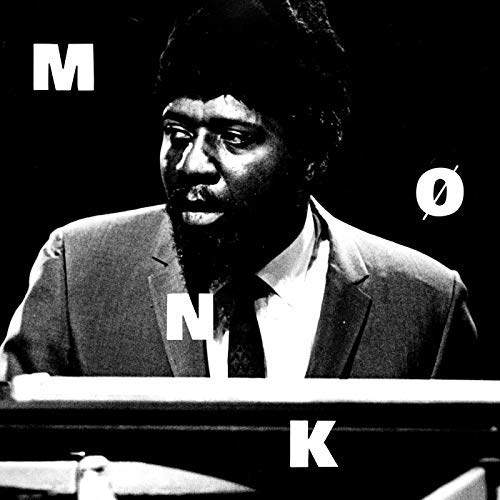
THELONIOUS MONK-MONK.
Thelonious Monk-Monk.
Label: Gearbox Records.
Over the last few years, the fashion has been for a minimalism within the hipper home, and it has been fashionable to declutter and adopt a less is more look. Some people have been so keen to declutter that they don’t seem to care about what they thrown away. However, it’s not just the hipper home where scant regard is pad to what’s being discarded.
The same thing happened twenty years ago when someone was on a decluttering mission at the Danish Broadcasting Corporation in Copenhagen, and threw away a Scotch Broadcast Tape that featured recording of Thelonious Monk from 1963. Fortunately, when the master tape was lying in a skip it was spotted by a producer who realising the importance of the tape, rescued it. Now twenty years later, that tape, which features Thelonious Monk’s classic quartet has been released by Gearbox Records as Monk. This newly released recording of Monk features the pianist at the peak of his powers.
Although Thelonious Monk is now regarded as one of the great jazz pianists, he wasn’t without his critics with poet and jazz critic Phillip Larkin dismissing him as: “the elephant on the keyboard.” Sadly, it seemed not everyone appreciated Thelonious Monk’s innovative approach to jazz music.
That is despite Thelonious Monk as now being the second-most covered jazz composer of all time. That is pretty good going as Thelonious Monk composed only seventy pieces. These compositions and improvisations featured dissonances and what are best described as angular melodic twists, which are an accurate representation of his unique approach to the piano. Initially, it was described as hard swinging, but evolved over the next twenty years.
Those that had followed Thelonious Monk career watched his style evolve, and his extremely percussive attack which featured abrupt and dramatic use of switched key releases, silences, pauses and hesitations, which divided the opinion of jazz critics and fans. What they forgot, was that Thelonious Monk was a relative latecomer to jazz, and had started his career accompanying a touring evangelist on an old church organ. In some ways, Thelonious Monk was making up for lost time, as he was already twenty-four before he first started playing jazz.
Despite arriving to the party late, Thelonious Monk was soon making up for lost time, and from the early fifties, was working as bandleader, sideman and collaborating with other future giants of jazz. He had started off at Blue Note Records between 1948 and 1952, before moving to Prestige Records where he spent two years between 1952 and 1954. After that, Thelonious Monk moved to Riverside Records which was his home between 1955 and 1961, and by then, his star was in the ascendancy.
This was quite remarkable given everything that Thelonious Monk had been through since the early fifties. He had his New York cabaret card revoked in 1951, when he became the latest victim of a trumped up narcotics charge. This meant that Thelonious Monk was unable to play in New York’s club’s for six long years. During that time, Thelonious Monk signed to Riverside Records in 1955, which was his home until 1961.
Although Thelonious Monk was held in high regard by critics and commentators, sadly, for someone so talented, his records weren’t selling well. In 1955, he agreed to release an albums of jazz standards, Thelonious Monk Plays Duke Ellington in the hope that this would increase his profile and record sales. However, later in 1955 tragedy struck for Thelonious Monk.
Towards the end of 1955, Thelonious Monk’s mother passed away, and the following year, 1956, a fire destroyed the pianist’s apartment in West ‘63rd’ Street, New York. Thelonious Monk and family were left destitute, and his family of five had no option but to stay with friends for several months, with fifteen people shoehorned into a three room apartment. Meanwhile, Thelonious Monk continued to live with an undiagnosed bipolar disorder, which nobody was aware at the time. Despite this, he released Brilliant Corners an album of hard bop in late 1956, which was one of the finest albums he released for Riverside Records.
In 1957, Thelonious Monk’s run of bad luck continued when he was involved in a car accident, and when the police discovered him unresponsive, took him to Bellevue Psychiatric Hospital, where he spent three weeks. By then, Thelonious Monk was unaware that his father had been living in a psychiatric hospital for the past fifteen years
Things got worse for Thelonious Monk in May 1957, when his wife Nellie became ill, and required a thyroidectomy. After the operation, she became frail and depressed, which affected Thelonious Monk’s wellbeing. The last two years had been hard on the couple, but at least Thelonious Monk was about to get his New York cabaret card back, and could start playing live in the Big Apple.
By then, Thelonious Monk had a manager, and started a six-month residency at the Five Spot Café, and had formed a friendship with John Coltrane. This was a coincidence as many of John Coltrane’s band had served their music apprenticeship Five Spot.
During Thelonious Monk’s residency at the Five Spot Café during 1957 and 1958, the sharp dressed and sartorially elegant pianist took to the stage with his carefully cultivated look. Thelonious Monk wore suits, hats and had taken to wearing sunglasses which hid the window to his troubled and weary soul. Still, he dazzled patrons with his unique playing style as he switched between standards and his own compositions. Thelonious Monk was back in the Big Apple, after a six-year absence.
With Thelonious Monk’s albums still not selling well by 1958, he was asked to release a second album of jazz standards. It was hoped that The Unique Thelonious Monk would increase his profile and record sales. Ironically, later, in 1958, Thelonious Monk’s face was all over American newspapers, after his latest brush with the law.
Thelonious Monk had been hired to play for a week at the Comedy Club, in Maryland, and on his way to the gig, he and Nica De Koenigswarter were stopped by the police in Wilmington, Delaware. When Thelonious Monk refused to answer or cooperate with the police officer, who beat him with a blackjack. During an authorised search the car drugs were found, and suddenly Thelonious Monk was looking at some serious jail time. Fortunately, Judge Christie of the Delaware Superior Court ruled that the pair had been unlawfully detained, and that the beating of Thelonious Monk meant that the consent to the search void as given under duress. Forty-one year old Thelonious Monk survived to fight another day.
As the fifties gave way to the sixties, Thelonious Monk’s relationship with Riverside Records had gone south, after a disagreement over royalty payments. While Riverside Records released two live albums recorded in Europe, Thelonious Monk hadn’t recorded a studio album since 5 By Monk By 5 in June 1959. Fortunately, Columbia Records one of the four major labels were keen to sign Thelonious Monk.
The negations between Thelonious Monk and Columbia Records, were protracted, and it wasn’t until 1962 that a contract was signed. At last, Thelonious Monk could get back into the studio and do what he did best…make music
In 1963, Thelonious Monk released Monk’s Dream, which was his Columbia Records debut. Critical acclaim greeted the release of Monk’s Dream, and it was a similar case with the classic Criss-Cross. By then, Thelonious Monk was on a roll, and recorded Monk In Tokyo which was released in 1973. Miles and Monk At Newport, Big Band. Quartet In Concert and the critically acclaimed Monk’s Time were all released in 1964. However, another recording from 1963 wasn’t released for fifty-five years.
Monk.
This is Monk, which features a live recording of Thelonious Monk’s classic quartet that took place in Copenhagen, Denmark,on March the ‘5th 1963 during a European tour. That night in Copenhagen. pianist Thelonious Monk was joined by tenor saxophonist Charlie Rouse, drummer Frank Dunlop and bassist John Ore as they took the stage.
Opening the set is Thelonious Monk’s composition Bye Ya, where drummer Frank Dunlop plays an energetic solo, before the classic quartet play with enthusiasm as they innovate and unleash a myriad of musical ideas. Nutty is another Monk composition, and at one point the bandleader having built-up the momentum descends the piano keyboard leaving the stage set for Charlie Rouse’s baying tenor saxophone to soar and take centre-stage. Very different is beautiful is the tender reading of I’m Getting Sentimental Over You. It gives way to a heart-achingly beautiful and moving version of Body and Soul where the loneliness seems very real. Closing the set is the swinging Monk’s Dream which careers along, and closes Monk on a high,
Thelonious Monk recorded the music that features on Monk Danish Broadcasting Corporation in Copenhagen on the ‘5th’ of March 1963 and four days later, the concert was broadcast on the ‘9th’ of March 1963. Fifty-five years later, Gearbox Records released Monk, which is hidden gem that features Thelonious Monk’s classic quartet at the peak of their considerable powers.
Crucial to the success of the classic quartet was the interaction between Thelonious Monk and Charlie Rouse, with the two men constantly on the same wavelength, and anticipating their every move. That was the case throughout Monk, which is welcome and almost flawless reminder of Thelonious Monk’s classic quartet live in concert.
Thelonious Monk-Monk
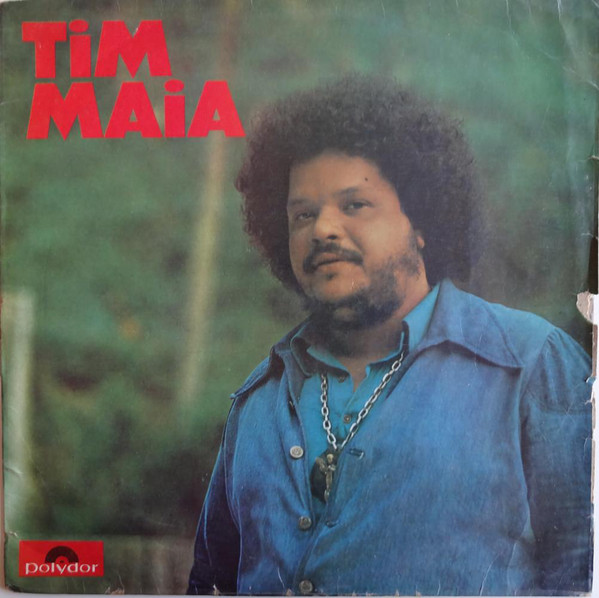
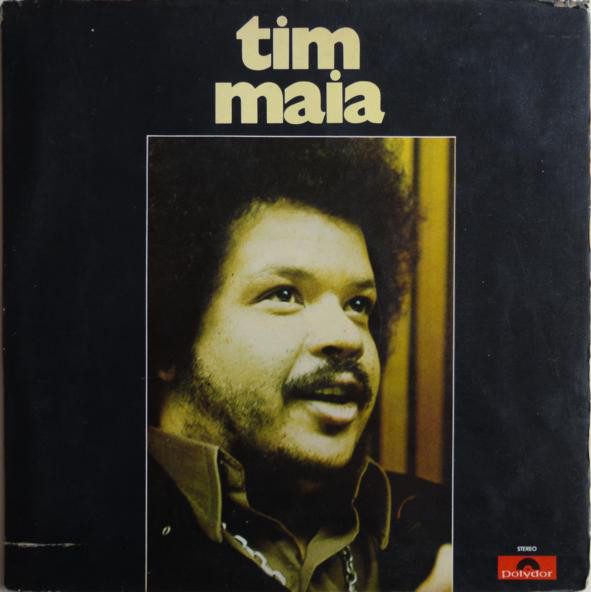
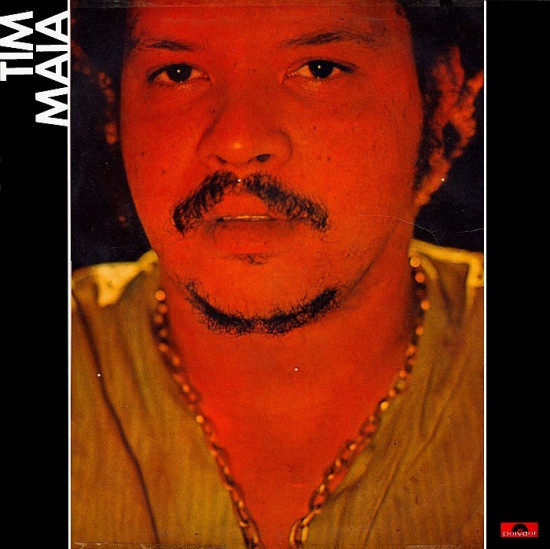
TIM MAIA-1970-1978: THE FIRST TEN ALBUMS.
Tim Maia-1970-1078: The First Ten Albums.
By 1978, charismatic Brazilian singer-songwriter Tim Maia’s career was at a crossroads and he was worried about what the future held for him. Tim Maia found himself financially embarrassed, after a couple of musically barren years.
He had spent much of the money he earned on cars, musical instruments and the rock ’n’ roll lifestyle. This Tim Maia had embraced almost defiantly over the last few years, and this proved to be part of his undoing,
Things had been going from bad to worse over the last few years as he found himself being chased by bailiffs and debt collectors on a daily basis. It was a far cry from the critical acclaim and commercial success that Tim Maia had enjoyed earlier in his career. That seemed a long time for Tim Maia who was still only twenty-eight.
Tim Maia, who was born in Rio De Janeiro on September the ‘28th’ 1942.Tim Maia was the eighteenth of nineteen children. Aged just six, Tim Maia earned a living delivering homemade food which his mother cooked. This Tim Maia hoped would be the nearest he ever got to an ordinary job. After that, Tim Maia decided to devote himself to music which offered him an escape from the grinding poverty that was around him.
It turned out that Tim Maia was a prodigiously talented child, who wrote his first song as an eight year old. By the time he was fourteen, Tim Maia had learnt to play the drums and formed his first group Os Tijucanos do Ritmo. They were only together for a year, but during that period, Tim Maia took guitar lessons and was soon a proficient guitarist. This would stand him in good stead in the future.
In 1957, Tim Maia domed vocal harmony group, The Sputniks who made a television appearance on Carlos Eduardo Imperial’s Clube do Rock. However, the group was a short-lived, and Tim Maia embarked upon a solo career. This lasted until 1959, when seventeen year old Tim Maia made the decision to emigrate.
Tim Maia decided to head to America, which he believed he was the land of opportunity and headed to New York with just twelve dollars in his pocket. On his arrival, Tim Maia who was unable to speak English, managed to bluff his way through customs, telling the officials that he was a student called Jimmy. Incredibly, the customs officer believed him and Tim Maia made his way to Tarrytown, New York, where he lived with extended family and started making plans for the future. By then, Tim Maia had decided he would never return to Brazil.
During his time in New York, Tim Maia held down a variety of casual jobs and it has been alleged that he even augmented his meagre earnings by committing petty crimes. However, Tim Maia also learnt to speak and sing in English, which lead to him forming a vocal group The Ideals.
During his time with The Ideals, they decided to record a demo which included New Love which featured lyrics by Tim Maia. When The Ideals entered the studio, percussionist Milton Banana made a guest appearance. Sadly, nothing came of the demo, although Tim Maia later resurrected New Love for his album Tim Maia 1973. Before that, things went awry for Tim Maia and he was eventually deported.
Confusion surrounds why and when Tim Maia was deported from America, and there’s two possible explanations. The first, and more rock ’n’ roll version is that Tim Maia was arrested on possession of cannabis in 1963, and deported shortly thereafter. That seems unlikely given how punitive penalties for possession of even a small quantity of cannabis were in the sixties. Indeed, it’s highly unlikely that Tim Maia would’ve deported, without having to serve a jail sentence first. This lends credence to the allegation that Tim Maia was caught in a stolen car in Daytona, Florida, and after serving six months in prison, he was deported back to Brazil in 1964.
Now back home in Brazil, Tim Maia’s life seemed to be going nowhere fast. He was fired from several jobs, and was also arrested several times. It was no surprise when Tim Maia decided to move to São Paulo, where he hoped that he could get his career back on track.
Having moved to São Paulo, Tim Maia, hoped he would be reunited with Roberto Carlos who had been a member of The Sputniks. Ironically, it was Roberto Carlos who Tim Maia had insulted before he left The Sputniks. Despite leaving several messages, Roberto Carlos never returned Tim Maia’s calls and he had no option but to try to make his own way in the São Paulo music scene.
Tim Maia’s persistence paid off, and soon, he had featured on Wilson Simonal’s radio show, and then appeared alongside Os Mutantes on local television. Despite making inroads into the São Paulo music scene, Tim Maia was determined to contact Roberto Carlos and sent him a homemade demo. Eventually, Tim Maia’s persistence paid off.
When Roberto Carlos heard the demo, he recommended Tim Maia to CBS who offered him a recording deal for a single, and an appearance on the Jovem Guarda television program. However, when Tim Maia’s released his debut single Meu País in 1968, it failed to find an audience.
Tim Maia tried a new approach with his sophomore single and recorded These Are the Songs, in English. It was released later in 1968, but again, commercial success eluded Tim Maia. Things weren’t looking good for the twenty-six year old singer.
Fortunately, Tim Maia’s luck changed when he wrote These Are the Songs for Roberto Carlos, which gave his old friend a hit single. At last, things were looking up for Tim Maia.
Things continued to improve when Elis Regina became captivated by Tim Maia’s song These Are the Songs. This led to Elis Regina asking Tim Maia to duet with her on the song. Tim Maia agreed and they recorded the song in English and Portuguese, which the song featured on Elis Regina’s 1970 album Em Pieno Veroa. Recording with such a famous Brazilian singer gave Tim Maia’s career a huge boost, and soon, he was offered a recording contract by Polydor.
Having signed to Polydor in 1970, and somewhat belatedly recorded his debut album Tim Maia 1970. Although it showcased a talented, versatile and charismatic singer, who married soul and funk with samba and Baião. This groundbreaking album spent twenty-four weeks in the upper reaches of the Brazilian charts and launched Tim Maia’s career.
The following year, Tim Maia returned with his sophomore album Tim Maia 1971, where elements of soul and funk were combined with samba and Baião There were even hints of jazz, psychedelia and rock, during what was an ambitious and innovative album of genre-melting music which was released to critical acclaim and commercial success. Tim Maia 1971 also featured two hits singles Não Quero Dinheiro (Só Quero Amar) and Preciso Aprender a Ser Só. Tim Maia’s star was in the ascendancy, and it looked as if he was well on his way to becoming one of the biggest stars in Brazilian music.
After the success of his sophomore album, Tim Maia headed to London to celebrate after years of struggling to make a breakthrough. For the first time in his career he was making a good living out of music, and Tim Maia was determined to celebrate and enjoy the fruits of his label. However, it was during this trip to London, that he first discovered his love of the rock ’n’ roll lifestyle.
Realising that he was only here for a visit, Tim Maia embraced the rock ‘n’ roll lifestyle and almost defiantly, lived each day as if it was his last. He hungrily devoured copious amounts of drugs and alcohol which became part of Tim Maia’s daily diet. Fortunately, his new-found lifestyle didn’t seem to affect Tim Maia’s ability to make music. That was until Tim Maia discovered a new drug that would prove to be his undoing.
In London, Tim Maia discovered LSD He became an advocate of its supposed mind opening qualities. He took 200 tabs of LSD home to Brazil, giving it to friend and people at his record label. Little did Tim Maia know, but this was like pressing the self destruct button.
Over the next two years, he released two further albums, Tim Maia 1972 and Tim Maia 1973 which were released to critical acclaim and commercial success in Brazil. The only problem was that after the success of Tim Maia 1973, Tim Maia became unhappy at the royalty rate he was receiving from his publisher. This lead to him founding his own publishing company Seroma, which coincided with Tim Maia signing to RCA Victor
They had offered Tim Maia the opportunity to record a double album for his fifth album. He was excited by this opportunity and, agreed to sign to RCA Victor, and soon, began work on his fifth album. Somehow, Tim Maia was still seemed able to function normally on his daily diet of drink and drugs. Before long, he had already recorded the instrumental parts, and all that was left was for Tim to write the lyrics.
Seeking inspiration for the lyrics, Tim Maia decided to visit one of his former songwriting partners Tibério Gaspar. That was where Tim main found the book that would change his life, but sadly, not for the better. The book was Universo em Desencanto (Universe in Disenchantment), which revolved around the cult of Rational Culture who didn’t believe in eating red meat or using drugs. Given Tim Maia’s voracious appetite for drink and drugs, he seemed an unlikely candidate to join the cult. However, sadly, he did.
Straight away, the cult’s beliefs affected Tim Maia and his music. Ever since he joined the cult of Rational Energy, he beam fixated on UFOs, Tim was now clean-shaved, dressed in white and no longer drank, ate red meat, smoked or took drugs. Always in his hand was a mysterious book. Tim Maia was a changed man, and even his music changed.
The lyrics for his fifth album, and RCA Victor debut, were supposedly about his newly acquired knowledge that came courtesy of Universo em Desencanto. With the ‘lyrics’ complete, Tim Maia’s vocals were overdubbed onto what became Racional Volumes 1 and 2. With the album completed, Tim took it to RCA Victor who promptly rejected the album.
RCA Victor’s reason for rejecting the album was that it wasn’t of a commercial standard. To make matters worse, the lyrics made absolutely no sense. There was only one small crumb of comfort, and that was that Tim Maia’s voice was improving. That hardly mattered for RCA Victor, who weren’t going to release the album. For RCA Victor, Racional Volumes 1 and 2 was huge disappointment.
That was until Tim Maia offered to buy the master tapes from RCA Victor, so that he could release the album independently. RCA Victor accepted his offer, which allowed them to recoup some of their money. Having bought the master tapes, Tim Maia set about releasing Racional Volume 1 in 1975. Sadly, it didn’t enjoy the same critical acclaim and commercial success of Tim Maia’s four previous albums. Suddenly, many of Tim Maia’s fans thought he was no longer the artist he once was.
After releasing Racional Volume 1 in 1975, Tim Maia returned in 1976 with his sixth album Racional Volume 2. Lightning struck twice when Racional Volume 2 failed to impress the critics and was a commercial failure. Nowadays, Racional Volumes 1 and 2 are cult classics, whereas in 1976 they tarnished Tim Maia’s reputation. Maybe this was the wakeup call he needed?
In 1976, Tim quit the cult after the release of Racional Volume 2. By then, he had fallen out with its leader and felt as if he had been duped. So much so, that Tim Maia wanted the master tapes to Racional, Volumes 1 and 2 destroyed. The two albums were part of his past, and now Tim Maia was ready and wanted to move forward.
Tim Maia’s music changed after Tim Maia Racional, Volumes 1 and 2 as he entered what was the most prolific period of his career. This began with the release of Tim Maia in 1976, which saw the thirty-four year old combine soul, funk and MPB (música popular brasileira). However, although Tim Maia proved reasonably popular upon its release, it didn’t match the success of his first four albums.
After the disappointment of his previous album, Tim Maia returned in 1977 with eighth album which he once again, decided to call Tim Maia. It found Tim Maia combining soul, funk and Latin influences on what’s an underrated album. Sadly, Tim Maia failed commercially and thirty-five year old Tim Maia was a worried man.
Ever since he had been signed by Polydor and received his first advance, Tim Maia had lavished large sums of money on everything from cars and musical instruments to his continued love of the rock ’n’ roll lifestyle. The rest of Tim Maia’s money was used to pay various fines he ran up, and to pay lawyers bills that had accumulated over the last few years. This came at a price, and by 1977, Tim Maia realised that he was insolvent. Almost every day, Tim Maia was forced to play a cat and mouse game as he left his flat as bailiffs and debt collectors who were constantly chasing him for unpaid bills. It was a worrying time for Tim Maia. However, Tim Maia knew that if he could record another successful album then all his financial problems would be solved.
Fortunately, there was still a small sum of money left from the advance Tim Maia had received from Polydor, and he decided to use this to record his ninth album. Unlike previous albums, he decided to record the album in English, which was something Tim Maia had always dreamt of. Using the last of his advance, he put a band together and recorded Tim Maia en Ingles. When the album was released in early 1978, Tim Maia en Ingles sold less than 10,000 which was nothing compared to what his other albums had sold. This was another financial disaster for Tim Maia whose finances went from bad to worse.
With no money, and his popularity at an all-time low, the future wasn’t looking good for Tim Maia who watched as Brazil was won over by disco. The film Saturday Night Fever had just been released in Brazil, and records by Chic, Gloria Gaynor, KC and The Sunshine Band and Kool and The Gang were filling dancefloors in clubs across the country. Little did Tim Maia that two of the leading lights of Brazilian music were hatching a plan for him to record a disco album.
Lincoln Olivetti was one of the top arrangers in Brazil, while Guti Carvalho one of the country’s leading producers and they were keen to record a disco album with Tim Maia. They were both aware that the maverick singer was one of Brazil’s most talented singers, but were also aware of the reputation of being unpredictable. Their job was to harness Tim Maia’s talent and help him record an album where he reached the heights of his first four albums. However, to do that, required the backing of a record company.
Guti Carvalho approached Warner Bros in the hope that they would be interested in signing the flawed genius Tim Maia. However, they were well aware of his past and knew what had happened when he signed to RCA Victor. However, eventually, they decided to take a chance on Tim Maia, and he signed a recording contract with Warner Bros. His debut for his new label was Disco Club, which was arranged by Lincoln Olivetti and produced by Guti Carvalho.
Backed by a band that featured top musicians, the initial recording sessions went well until there a problem arose. When Tim Maia went to listen to the playback of Pais E Filhos he wasn’t impressed by what he heard, so producer Guti Carvalho opened the microphone to ask Miguel Cidrás to listen to the playback. Not knowing the microphone was open, Tim Maia explained that he felt his voice was being overpowered by the strings, and would rather have one of his friend arranging the strings. Miguel Cidrás heard every world and raced into the studio and grabbed Tim Maia by his tie and through him to the ground and it’s alleged started choking him. It took Guti Carvalho and Piau to get Miguel Cidrás off of Tim Maia.
As Tim Maia gasped for breath, he made it clear that he wanted Miguel Cidrás to play no further part in the session. He was gone for good as far as Tim Maia was concerned. Meanwhile, Miguel Cidrás was furious at this act of disrespect, but Warner Bros realised that the session couldn’t continue with him and at great expense paid the Argentinean arranger off. Things only lightened up when Tim Maia’s friend Mauricio do Valle arrived at the session and produced a large bag of cocaine. Suddenly, things started to return to normal.
After that, Tim Maia’s tenth album Disco Club began to take shape, and over the next few days and weeks, the musical maverick recorded what was one of his finest albums. It combines disco with funk, soul, MPB and occasionally jazz and rock. Disco Club’s slick, polished and hook-laden sound found an audience across Brazil when it was released later in 1978. Tim Maia’s Disco Club became one of the most successful albums of his career.
The Brazilian soul man was back with what’s one of the finest album that Tim Maia released during a career that spanned three decades and thirty-four albums. Disco Club marked the return of the maverick soul man whose career had been a roller coaster since making a commercial breakthrough with Tim Maia 1970.
Since then, he had embraced become one of the most successful Brazilian singers of the early seventies, defiantly embraced the rock ’n’ roll lifestyle, joined a cult and spent all the money that had earned. That was why Tim Maia found himself playing a game of cat and mouse with bailiffs and debt collectors before releasing Disco Club. However, apart from joining the cult, Tim Maia enjoyed every minute of the past eight years Tim Maia knew he was only here for a visit and set out to live life to the full.
That was just as well as Tim Maia passed away on March the ‘15th’ 1998, aged just fifty-five. Sadly, by then, Tim’ Mai’s shows and behaviour had become predictable, and that had been the case since his 1976 post-Racional comeback.
Tim Maia was never the same man or musician after his dalliance with the cult of rational behaviour. However, Disco Club was one of the finest albums Tim Maia released after his post-Racional comeback. Just like his first four albums Disco Club is a poignant reminder of one of Brazilian music’s most talented sons at the peak of his power.
Since his death in 1998, Tim Maia’s music has been a well-kept secret outside of his native Brazil, and even within Brazil, many people still aren’t aware of Tim Maia’s music. However, older record buyers still talk about the maverick singer-songwriter in hushed tones and remember the flawed genius that was Tim Maia who could’ve, and should’ve, been a huge star outside of his native Brazil. Sadly, something held him back, and stopped Tim Maia from enjoying the widespread commercial success and critical acclaim that his music richly deserved. That is despite Tim Maia being a hugely talented singer, songwriter, musician and producer who was capable of producing several classic albums, during his long and eventful career.
Tim Maia-1970-1078: The First Ten Albums.
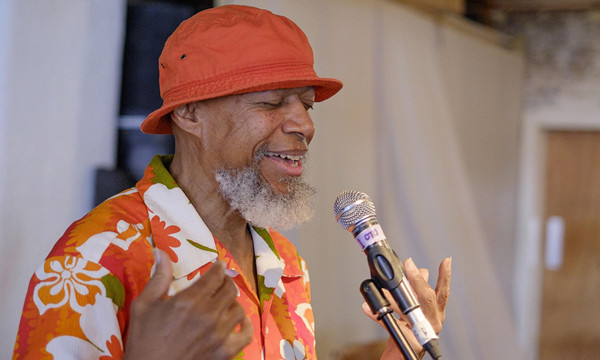
LARAAJI-THE LIFE AND TIMES.
Laraaji-The Life and Times.
Laraaji’s career has spanned five decades, and during that period, the American multi-instrumentalist has released around forty albums and countless collaborations. Many of these albums were self released by Laraaji on cassettes, and feature his unique and inimitable genre-melting sound. This is best described as a fusion of ambient, avant-garde, experimental and psychedelia which is hypnotic, mesmeric and meditative which features the zither, Mbira and piano. However, Laraaji is best known as a zither player, and as is the man who transformed and reinvented this oft-overlooked traditional instrument.
Having bought a zither in a local pawn shop in the early seventies, Laraaji set about converting it into an electronic instrument. This he succeeded in doing, to the bemusement of traditionalists who saw the zither as an acoustic instrument. Soon, that was no longer the case, as Laraaji began experimenting and playing his newly adapted zither like a piano. Nobody had ever seen this before, not even Brian Eno.
He and Bill Laswell were walking through Washington Square Park, when they came across Laraaji sitting cross-legged on top of a blanket with his eyes closed, played his zither using the open tunings he favoured. Brian Eno watched for a while and realising he was watching a talented musician wrote a message, which he left for Laraaji.
The next day, Brian Eno and Laraaji met and discussed ambient music and electronics. Three weeks later, Laraaji, recorded Ambient 3 (Day Of Radiance) at Apple Studios, in Green Street, New York. Once the album was recorded, Ambient 3 (Day Of Radiance) was released later in 1980. This album it was hoped would launch Laraaji’s career, and transform the busker’s fortunes.
While Ambient 3 (Day Of Radiance) was released to critical acclaim, and is nowadays, considered a cult classic, it didn’t change Laraaji’s life. Three years after Brian Eno ‘discovered’ Laraaji, the zither player back self-releasing albums.
It was only much later that Laraaji’s music was discovered by a wider audience, and in 2017 he released Bring On The Sun and Sun Gong on the All Saints’ label. Tracks form Bring On The Sun and Sun Gong were remixed and re-edited for the Sun Transformations’ album was released by the All Saints label for Record Store Day 2018. These remixes and edits show anther side to Laraaji’s music, and hopefully will introduce this remarkable musician’s music to a new audience. The Laraaji story began in 1943.
In The Beginning.
Laraaji was born Edward Larry Gordon in Philadelphia in 1943, and at early age, moved with his family to New Jersey. That was where Larry studied violin, piano, trombone and took singing lessons. At high school, Larry played in the school band and orchestra. Music was part of his life, and he was exposed to an eclectic range of music.
His family attended the local Baptist church, where Larry heard choral and gospel music, as well as negro spirituals. At home though, he heard very different music.
Larry sat and absorbed everything from jazz to R&B and rock ’n’ roll. However, it was the great piano players that especially inspired Edward Larry Gordon, including Oscar Peterson, Fats Domino and Ahmad Jamal. Over the next months and years, Laraaji spent much of his time listening to music. Still, though, he continued to play the violin, piano, trombone and sang. Music was Larry’s passion and it was no surprise that having graduated from high school this talented multi-instrumentalist decided to study music.
Having won a scholarship to study piano and composition, Larry headed to one of the most prestigious universities in America, Howard University, in Washington DC. During the next few years, Larry totally immersed in music, and where he first discovered marijuana in his second year and also psychedelic drugs. They would play a part in opening Larry’s consciousness during his spiritual awakening, while he would later use marijuana as an aide to the creative process. Before that, it seemed that Larry was destined to pursue a career in music. However, that wasn’t the case.
Laughter: Is The Best Medicine.
After graduating from Howard University, Larry decided not to pursue a career in music, which was a huge surprise to his friends, including this he had studied alongside. Instead, Larry decided to pursue a career as a standup comic. His love of comedy began in college, and when he left University, Larry and his comedy partner decided to head to New York to audition at the Bitter End, who regularly held talent shows.
This was where Bill Cosby’s comedy career began. For an aspiring comedian, the Bitter End seemed the perfect place to launch their new career. However, the night Larry and his comedy partner were meant to make their debut, his partner never turned up. Having been left in the lurch, Larry had not option to make his debut as a solo artist. He was well received, and this was the start of Larry’s new comedy career. Soon he became a regular on New York’s thriving comedy circuit. However, comedy wasn’t the only career Larry had.
Through his exploits as a comedian, Larry came to the attention of Ernestine McClendon, who was a respected theatrical agent. She took Larry under her wing and guided his nascent career. Soon, she was sending Larry to auditions, and before long, he found himself appearing on television commercials, theatre and even films.
On The Big Screen.
One of these films that Larry appeared in was Putney Swope, which was a comedy directed by Robert Downey which examined the of role race and advertising in America. Putney Swope was very different to anything Larry appeared in before, as much of the film was improvised. This which was new to Larry, but something he coped with in a film, the chairman of an advertising company dies, and the firm’s executive board must elect someone to fill the vacant position. However, each member, is unable to vote for himself, and Swope who was the token African-American on the board is unexpectedly elected chairman. He decides to do things his way, and fires all the staff, apart from a lone white employee. Swope then renames the company Truth and Soul, Inc. and no longer accept represents companies selling tobacco, alcohol, or war toys. The film must have made a big impression on Larry, because when Putney Swope was released it inspired him to look at the role of the mass media. Looking for answers, Larry read books and learnt to meditate.
To help him, he turned to teachers who taught Larry how to meditate properly He soon was practising meditation and calisthenics. Larry was also using piano exercises as an outlet which was how he discovered spontaneous music. Everything was improvised, off-the-cuff and experimental. Straight away, Larry realised the possibilities were endless. However, meditation was key to this. Soon, Larry was starting to realise just what he could do with music and art now that he had discovered meditation. Discovering meditation was akin to the first part of Larry’s spiritual awakening. Before long, the next part of Larry’s Meditation spiritual awakening took place.
Spiritual Awakening.
Around 1974 or 1975, Larry found himself was living not far from JFK airport, and decided to go out for a walk in the evening. On his return home, he started hearing what he describes as: “the music of the spheres.” This was akin to a cosmic symphony where the music was joyous and celebratory. Larry became part of the music and was at one with the music. The whole experience had a lasting effect and was his spiritual and cosmic awakening.
Suddenly, he understood things that had previously puzzled him. Things now started to make sense after what Larry refers to as: “a trigger for a cosmic memory.” It was as if Larry had been enlightened. However, he wanted to know more about what had happened, and decided to embarked on a course of study.
To further understand what had happened to him, Larry embarked upon a study of Vedic teachings. Part of the Vedic teachings is that the yogis hear music in layers. When Larry heard this, he realised this what he had experienced and was why he was able to describe the music so vividly. His teachers told him that he had reached such a high level of consciousness that he was now able to see things differently from most people. It seemed his spiritual and cosmic awakening was almost complete. Now he decided that he wanted to recreate the music that he heard that night near JFK Airport.
At last, Larry was able to put his musical education to good use. He had always played music, even when he was working as a comedian and actor. Latterly, he’d been playing the Fender Rhodes, but was fed up having to transport such a heavy instrument. One night as he was preparing to go onstage, he told his “cosmic ear” that he would: “like a lighter instrument to share his musical consciousness with the world.”
A few days later, Larry found himself in a pawn shop where he was ready to pawn his guitar when suddenly, out of nowhere, a voice told Larry to swap his guitar for a stringed instrument in the shop window. This he realised was an autoharp, which he was unable to play. However, Larry decided to swap his guitar for the autoharp, and he after that, he headed home, where he was determined to master this new instrument.
A Musical Voyage Of Discovery Begins.
When Larry took the instrument home, he tuned it to his favourite piano chords and open guitar tunings. The effect this had, was to return it to what was essentially a zither, whose roots can be traced back the ancient, traditional instrument the kithara. Gradually, through a process of experimentation, Larry discovered what the autoharp was capable of. Then when he added an electric pickup, this was a game-changer, and he discovered that the possibilities were endless. He was able to begin creating the music that he had heard that fateful night, albeit with a little help from a friend.
Not long after Larry begin playing the autoharp, he was strumming and plucking it like a guitar which seemed to him the way to play the autoharp. That was until he met Dorothy Carter who was a hammered dulcimer artist and encouraged Larry to play his autoharp with hammers. The other thing Dorothy did, was invite Larry to the Boston Globe Music Fest where he met another innovator.
At the Boston Globe Music Fest, Larry met Steven Halpern who is one of the pioneers of new age music. Meeting Steven Halpern exposed him to music that he never new existed, and changed Larry’s way of thinking. He realised that music didn’t need to follow the structures that he had been taught as a child and at university. Music didn’t need to have a beginning, end or even a melody. Instead, it could be a freeform stream of consciousness. Larry also learnt that there was always room for experimentation and improvisation within music. For Larry this changed his approach to music. Inspired and confident in his ability to play the autoharp, Larry was ready to make his debut.
The old saying that the world is a stage proved to be the case for Larry, who made his debut as a busker on the streets of New York in 1978. He had released his first album Celestial Vibration in 1978, which he hoped would introduce his music to a wider audience.
A year later, Larry was still busking and had self-released his sophomore album Lotus-Collage in 1979. However, he was busking abet in a different location. This proved fortuitous, while other said it was fate.
Enter Brian Eno.
Larry was now busking in Washington Square Park and on that fateful day, he sat on top of a blanket, cross-legged and with his eyes closed, played his zither using the open tunings he favoured. As a result, he never saw Brian Eno standing watching him play. The man who many called The Godfather of ambient music was transfixed as he watched Larry play. Little did Brian Eno realise when he walked through the park with Bill Laswell that he would come across a fellow innovator. Recognising the potential that Larry had, Brian Eno wrote a message on a piece of paper which Laraaji as he was now calling himself found later.
The next day Brian Eno met with Laraaji and the two men spoke about ambient music and electronics. Straight away, they got on and three weeks Laraaji, was heading to Apple Studios, in Green Street, New York where he recorded Ambient 3 (Day Of Radiance).
Ambient 3 (Day Of Radiance).
When Laraaji arrived at Apple Studios, he brought with him his zither and dulcimer, and five tracks that he had composed. With Brian Eno taking charge of production the five tracks that became Ambient 3 (Day Of Radiance) were recorded, which was the latest instalment in this groundbreaking series.
Later in 1980, Laraaji was preparing to release Ambient 3 (Day Of Radiance), which it was hoped would launch his career and transform him from an underground artist to a successful experimental musicians. The only worry was in the post punk days, the snarling angry young gunslingers in the music press weren’t exactly accommodating to music that didn’t fit their particular agenda. However, some critics gave Ambient 3 (Day Of Radiance) a chance, and realised that this was a groundbreaking album where elements of ambient, avant-garde, dub, electronica, experimental, folk, New Age and world music were combined by Laraaji on this future cult classic.
Despite the critically acclaimed reviews of Ambient 3 (Day Of Radiance), the album wasn’t a huge success and didn’t transform Laraaji’s career. It was disappointing for Laraaji who over the next few years, continued to record new music, often late at night in his flat not far from Columbus University which was where a young man called Barrack Obama was studying.
The Eighties.
In 1981 Laraaji returned with his new album, I Am Ocean which was released on the Celestial Vibration label, and was the much-anticipated followup to Ambient 3 (Day Of Radiance). However, it failed to make much of an impression upon its release. Later in 1981, Laraaji was back to self-releasing his next album Unicorns in Paradise. This was something he would do regularly throughout his five decade career.
A year later, when Laraaji released Rhythm N’ Bliss in 1982, it was on the Third Ear label. This was the start of a period when Laraaji was a prolific artist, who often self-released his own music on cassettes which are now sought after.
1984 was one of the most prolific years of Laraaji’s career. He released a triumvirate of albums including Om Namah Shivaya on the Celestial Vibration label and self-released Sun Zither. However, one of the most important albums he released at this period was his epic album Vision Songs Volume 1.
Unlike previous albums, which featured freeform songs where Laraaji enjoyed the opportunity to improvise, Vision Songs Volume 1 featured eighteen gospel inspired songs where he wrote and sang the vocals. This was a stylistic departure from Laraaji, who had released his debut album Celestial Vibration six years previously in 1978. By 1984, Laraaji who was a talented and versatile multi-instrumentalist who wasn’t afraid to innovate.
Laraaji continued to innovate during the remainder of the eighties, and was a truly prolific recording artist between 1985 and 1989. He often recorded and released several albums during a year, which he self-released. This included 1986s Once Upon A Zither, and the following year, Zither Bliss, White Light Music and Urban Saint which were released during 1987. However, as the eighties gave way to the nineties, Laraaji’s profile was rising.
The Nineties.
By 1992, Laraaji had signed to All Saints Records and recorded an album with Canadian producer Michael Brook. That album was Flow Goes The Universe which was released to plaudits and praise.
In 1994, Laraaji was part of Channel Light Vessel, when they released their debut album Automatic. This was then first of several projects Laraaji would work on during the nineties.
This included Laraaji’s 1995 collaboration with the Japanese reggae fusion band Audio Active. It was released by All Saints Records and introduced Laraaji’s music to a new audience.
The same year, 1995, Laraaji and Roger Eno’s album Islands was released to critical acclaim. Soon, Laraaji was working with some of the leading lights of the experimental music scene.
Before that, Laraaji was part of Channel Light Vessel, when they released their sophomore album Excellent Spirits on All Saints Records. It was becoming a home from home for Laraaji.
Laraaji’s next collaboration was with Bill Laswell, and in 1998, they released Divination/Sacrifice. It featured two musical pioneers at the peak of their powers.
A New Millennia.
So did Celestial Reiki which was a collaboration between Laraaji and Jonathan Goldman that was released in 2000, as the new millennia dawned. By then, Laraaji was nearly fifty-seven and had been making music for four decades.
While many musicians start to slow down in their late-fifties, that wasn’t the case with Laraaji. In 2000 he released Shiva Shakti Groove, with Celestial Zone and My Orangeness following in 2002. That same year, Laraaji and Jonathan Goldman released their second collaboration Celestial Reiki II which also featured Sarah Benson.
Two years passed before Laraaji returned with a triumvirate of self-released albums in 2004. This included Water and Soft Zither, Laughter: The Best Medicine and Chakra Balancing Music. In a Celestial Water Garden followed in 2006, and was the only solo album Laraaji realised until Ambient Zither in G Pentatonic and Mountain Creek Water in 2007. As Laraaji approached his sixty-fifth birthday, he self-released Sonic Portals. After that, it was three years before Laraaji returned.
In 2011, the experimental music duo Blues Control and Laraaji released their collaboration FRKYWS, Volume 8. Blues Control were the latest in a long line of artists to collaborate with Laraaji and the results were impressive.
Over the next few years, Laraaji the master of celestial music continued to make and release music. He also masterminded what he described as: “seriously playful laughter workshops” which he believed were therapeutic. He had showcased this form of therapy on his Laughter: The Best Medicine album, which featured five untitled tracks. However, the next album Laraaji released was very different.
This was the genre-melting album Professional Sunflow which was a collaboration between Laraaji and Sun Araw, which was released in June 2016. Critics were impressed by this latest collaboration from Laraaji, whose recording career now spanned six decades.
Having re-signed to All Saints Records, Laraaji released Bring On The Sun and Sun Gong on as a two CD set, while Bring On The Sun and Sun Gong were released on vinyl as two separate albums. However, when Laraaji’s new collection of blissed out percussive jams and ruminative hymnals was released to widespread critical acclaim in late September 2017, and hailed as one of seventy-five year old musician’s finest albums. However, the big question what was next for Laraaji?
Following the success of Bring On The Sun and Sun Gong, a decision was made for remixers and DJs to remix and edit tracks from Laraaji’s latest collection with a view to releasing them as an album for Record Store Day 2018. This it was hoped would bring Laraaji’s music to a wider audience.
Sadly, for too long, Laraaji’s music has slipped under the musical radar. Maybe part of the problem was Laraaji’s decision to self-release much of his music? This meant that the majority of record buyers never got the opportunity to discover many of his albums. That is a great shame as consistently Laraaji released albums of quality music. The music was variously beautiful, cerebral, dreamy, ethereal, melancholy, mystical, soulful, spiritual, thought-provoking and uplifting..
Forty years after Laraaji released his debut album Celestial Vibration, the man who reinvented the zither is still writing, recording and releasing albums. Recently, Laraaji’s music has started to find the wider audience that it deserves a true musical pioneer goes from strength-to-strength musically.
Laraaji-The Life and Times.
GOOSEBUMPS 25 YEARS OF MARINA RECORDS.
Goosebumps 25 Years Of Marina Records.
Label: Marina Records
Any indie label that has survived for the last twenty-five years is obviously doing something right. Especially given how challenging a market it has been for both major and indie labels over the past twenty years. Everything from the death of vinyl and the introduction of illegal torrents, MP3s, Spotify You Tube have made life increasingly difficult for record companies and sadly, there’s been a number of casualties along the way. However, there’s some labels who have gone form strength-to-strength since 1993, including Marina Records.
The Marina Records’ story began in Hamburg in 1993, when Stefan Kassel and Frank Lähnemann decided to form a new label. Soon, the new releases from Marina Records label were finding favour with critics and record buyers. It wasn’t just the quality of music Marina Records was releasing,their support classic songwriter and the eclectic releases.That was just part of the Marina Records story.
Before long, Marina Records distinctive sleeve design was being praised by music journalists, designers and music fans. By then, Marina Records album covers were being praised by the authors of several books about album covers. Marina Records in seemed were doing things their way but doing them right,
Proof pot tis was Marina Records’ The In-Kraut compilation series which gave birth to a genre of its own. This was just the start for Marina Records.
The Hamburg based introduced a generation of grateful record buyers to a myriad of magical and majestic music.This includes Brent Cash’s pop single Digging The Fault Lin and tracks from Glasgow funk sextet Gazelle, Chris Thomson’s chamber pop combo The Bathers, Starless’ album of lush filmic soundscapes, jazz trumpeter Colin Steele and Marina Records’ veterans The Pearlfishers. They’re one of the jewels in the Marina Records’ crown, and their classic songwriting style has previously led to comparisons to Paul McCartney, Jimmy Webb and Brian Wilson during the Marina Records’ years.
Whilst signed to Marina Records The Pearlfishers have released six albums,and recorded a spellbinding cover of The Pale Fountains’ Southbound Excursion, which features on Goosebumps 25 Years Of Marina Records. It’s two CD set that has just been released by Marina Records and features forty tracks that are guaranteed to bring memories flooding back.
This includes Brent Cash’s 2008 pop smash Digging The Fault Line which opens Goosebumps 25 Years Of Marina Record. It’s taken from the album How Will I Know If I’m Awake.
Port Sulphur featuring James Kirk, formerly of Orange Juice released the carefully crafted poo album You Can Make It If You Boogie on 2003. One of its highlights was Orient Express.James Kirk was part Scottish supergroup Port Sulphur on they recorded a covert of the Orange Juice song Felicity, which makes a welcome debut.
The Pearlfishers contribute the previously unreleased The Time Is Right,which was recorded in 2016. Norman Blake if Teenage Fanclub covered Only With You for Caroline Now The Songs Of Brian Wilson.
Another welcome addition comes courtesy of The Pale Fountains and The Norfolk Broads – a track from their Marina anthology Longshot For Your Love. Pale Fountains songwriter Michael Head then joins forces with Dragonfly from the Shack’s 1995 album Waterpistol. It’s regarded by many critics as one of the best British albums ever.
The Colin Steele Quartet is led by the jazz trumpeter, who released the album Diving For Pearls in 2017, One of its highlights is You’ll Never Steal My Spirit.
Way before The Bathers were formed, Chris Thomson was member of supergroup in waiting Friends Again. They released just one album, and in 1981 covered the Velvet Underground’s Sweet Jane. It’s remarkable reminder of an on oft-overlooked band. A more recent Scottish supergroup is Starless who released the Sam Barker Axor Remix on the 2016 EP Starless The Remixes.
Disc Two.
A trio of unreleased tracks open disc two of Goosebumps 25 Years Of Marina Records including Die Zimmermänner’s Pampelmusen. They’re followed by two real finds the Marina Unlimited Orchestra’s Breezy (Marina’s In The Air) and The Pale Fishers cover of The Oake Fountain’s Southbound Excursion,
One of the standout tracks on Goosebumps 25 Years Of Marina Records is The Bathers’ If Love Could Last Forever from their 1997 album Kelvingrove Baby. Hipsway frontman assumed the same role in the Jazzateers when they recorded the album I Shot The President in 1997. Up To My Eyes was one of the album’s highlights and makes a welcome return on 25 Years Of Marina Records. So does Meet Me In Milan fro, The Magic Circles’ 2004 album.
In 2001, sunshine pop legends TΩe Free Design reformed and released their comeback album Cosmic PeekabooEccentric Ogie!. It’s a reminder of what music fans had been missing for too long. Big Star’s Alex Chilton contributed a cover of I Wanna Pick You Up for the Caroline Now The Songs Of Brian Wilson compilation.
Paul Quinn and The Independent Group released the album Will I Ever See The Inside Of You in 1994. It featured Have You Have Been Seen, one of the finest moments of their early career. Another well know face in Scottish music is Paul Haig who contributes the unreleased track Listen To Me.
Closing disc two of Goosebumps 25 Years Of Marina Records is Goodbye (She Quietly Says) by Cowboy Mouth. This stunning reading of a track from Frank Sinatra’s song cycle Watertown was recently recorded by Grahame Skinners who fittingly sings: “She reaches out across the table, looks at me, and quietly says goodbye.”
Goosebumps 25 Years Of Marina Records is the perfect introduction to, and reminder of the back-catalogue of the Hamburg-based musical institution. Marina Records has been releasing carefully crafted and eclectic albums since 1993. Always the emphasis been on quality and Marina Records have released many albums that are regarded as genre classics. This includes albums from The Bathers, The Pearlfishers, Shack and The Pale Fountains who have all played their part in the rise of Marina Records which is celebrated on Goosebumps 25 Years Of Marina Records.
Goosebumps 25 Years Of Marina Records.
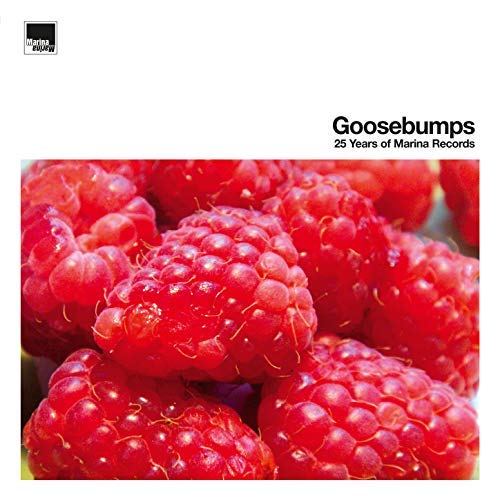

TAKEO MORIYAMA-EAST PLANTS
Takeo Moriyama-East Plants.
Label: BBE Music.
Release Date: ’28th’ September 2018.
Following the commercial success of BBE Music’s critically acclaimed compilation J Jazz: Deep Modern Jazz From Japan 1969-1984, the UK-based label decided to release a new series featuring J Jazz classics. The latest instalment in the series is Takeo Moriyama’s 1983 cult classic East Plants. It will released by BBE Music on the ’28th’ September 2018, and the reissue of Takeo Moriyama’s album East Plants as a CD and 2 LP set will be welcomed by collectors of J-Jazz.
Takeo Moriyama was born on the ‘27th’ of January 1945, in Katsunuma, in the Yamanashi Prefecture. As a child, Takeo Moriyama played piano before switching to drums in his late teens. This resulted in him taking a degree in percussion at the Tokyo University of the Arts.
In 1967, Takeo Moriyama joined Yosuke Yamashita’s group and embraced upon several international tours before leaving in 1975. This was all good experienced for Takeo Moriyama who was unsure about his future.
So much so, that Takeo Moriyama was unsure whether he wanted to continue working as professional musicians, and instead decided yo concentrate his efforts on teaching. Between 1975 and 1977, Takeo Moriyama stayed way from studio and never took to the stage. Many of his fans wondered if Takeo Moriyama would return to his former life as a professional musician?
In 1977, Takeo Moriyama returned of from what was akin to a lengthy sabbatical and decided to found his own quartet. Soon , the Takeo Moriyama Quartet were touring West Germany, Italy and the USSR. This allowed the new group to hone their sound before recording a new albums.
This included the Takeo Moriyama Quartet’s 1977 live debut album Flush Up. Four years later, in 1981, came the followup Smile.
It was a very different album, and Smile that eschewed the eruptive improvisation of the past. Smile feature a new approach from drummer Takeo Moriyama whose steady, sophisticated and unfussy style was perfect for his unique and inimitable style of composition.
When Takeo Moriyama returned with his My Dear album in 1982, pianist Fumio Itabashi was absent. He was recording and promoting his solo album Watarase. While the absence of Fumio Itabash was loss to Takeo Moriyama’s band, the bandleader knew that his pianist might not return for the followup Fast Plants.
East Plants.
By 1983, thirty-eight year old Takeo Moriyama was regarded as one of Japan’s finest jazz drummers. He had been a musician since the sixties and was a vastly experienced drummer who had .just signed to the Japanese VAP label.They would release Takeo Moriyama’s solo album East Plants later in 1983.
East Plants featured six tracks, but only one Takeo Moriyama’s composition Kagelou. The rest of the album was written by saxophonist Toshihiko Inoue, and recorded at CBS-Sony Roppongi Studio, in Tokyo.
Joining drummer Takeo Moriyama was bassist Hideaki Mochizuki, percussionist Yoji Sadanari plus Shuichi Enomoto and Toshihiko Inoue who switched between tenor and soprano saxophone on East Plants. Once the album was completed the release of East Plants was scheduled for later in 1983.
Sadly, when East Plants was released in 1983, the album passed record buyers. They missed out on what was later regarded as a J Jazz cult classic.
That was no surprise given East Plants featured several key features of Takeo Moriyama’s music. There’s the clearly connected and innovative rhythms, grooves that are accessible, balanced, controlled and elegant, while the arrangements are best described as open and orderly East Plants.
With no piano, the rhythm section are joined by percussion and saxophones . They open the album with the title-track East Plants. Its build-up is similar to a raga as a mesmeric track unfolds and is one of East Plants’ highlights. There’s an urgency to Take where the band play with power and freedom as the saxophone plays a starring role. Kaze Kaze majestic example of modal jazz, while the ferocious post bop exertions of Fields is one of East Plants highlights.
Thirty-five years after the initial released of East Plants, BBE Music will reissue this J Jazz cult classic on the ’28th’ September 2018 on CD and LP. Up East Plants is a welcome reissue of this oft-overlooked J Jazz gem from Takeo Moriyama’s talented quintet.
Each member of this multitalented quintet play their part in the sound and success of East Plants, which is mystical sounding opus that until recently, was an oft-overlooked hidden gem that is now regarded as a J Jazz cult classic

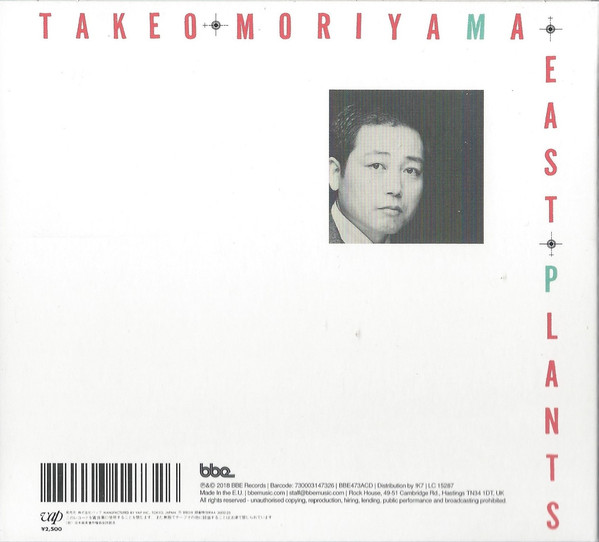
DAVID AXELROD-SONGS OF INNOCENCE VINYL
David Axelrod-Songs Of Innocence-Vinyl.
Label: Now Again Records.
By the time David Axelrod began work on his debut album Songs Of Innocence in 1968, the thirty-seven year arranger, composer, drummer and producer old had enjoyed a chequered career. He had started off as a boxer, before changing direction and finding work in film and television. However, in 1959 David Axelrod embarked upon a musical career when he produced Harold Land’s album The Fox. This launched David Axelrod’s nascent musical career.
Four years later, David Axelrod was hired by Capitol Records as a producer and A&R man. Initially, he worked with R&B artists, including Lou Rawls who was signed to Capitol Records. David Axelrod produced a string of hit singles for Lou Rawls, his Live album and several albums that were certified gold. David Axelrod was the man with the Midas Touch.
Soon, David Axelrod was working with jazz saxophonist Julian “Cannonball” Adderley, and produced his 1966 Grammy Award winning album Mercy, Mercy, Mercy! Live at “The Club.” The album also featured the hot single Mercy, Mercy, Mercy which reached number eleven in the US Billboard 100. By then, David Axelrod’s star was in the ascendancy at Capitol Records.
It was around this time, David Axelrod began working with some top session musicians including drummer Earl Palmer, bassist Carol Kaye and guitarist Howard Roberts. This band would play an important part in David Axelrod’s future.
David Axelrod wrote and arranged Mass in F Minor and Release of an Oath for the psychedelic rock band The Electric Prunes. The only problem was that both songs were complex pieces of music. Mass in F Minor consists of a mass sung in Latin and Greek and performed in a psychedelic style. However, there was a problem, it was too complex a piece for The Electric Prunes to record and it was recorded by David Axelrod’s band. This lead to The Electric Prunes disbanding and David Axelrod’s band completed the albums. Executives at Capitol Records were grateful that David Axelrod had rescued what was a particularly tricky situation, and wanted to reward him for his recent success. This resulted in David Axelrod being allowed to record his debut solo album Songs Of Innocence which was recently reissued by Now Again Records.
David Axelrod had been watching trends in popular music and realised that there was a new breed of record buyer with much more sophisticated taste than the three chord pop of the early Beatles’ record. They were willing to embrace and buy much more experimental sounding albums, including two of the best known, The Beach Boys’ Pet Sounds and The Beatles’ Sgt Peppers Lonely Hearts Club Band. Both of these experimental had been hugely successful, and was proof to David Axelrod that there was a demand for this type of music.
Buoyed by the experimental climate of popular music David Axelrod decided to write and record his what was akin to a suite-like tone poem, which was based on Songs Of Innocence which was an illustrated collection of poems written in 1789 by William Blake. The poet had inspired many composers and musicians during the twentieth century. Many composers had set his poems to music, and William Blake’s music had been used in theatre and inspired everyone from folk musicians to David Axelrod who was a self-confessed “Blake freak.”
Over the space of a week, David Axelrod wrote seven compositions and borrowed titles from William Blake’s poems. The compositions death with a variety of themes, ranging from visions, religious iniquity, rite of passage and life experience after a person’s birth and innocence. After just a week, David Axelrod had completed Songs Of Innocence, which was his homage to William Blake. David Axelrod had been captivated by William Blake’s poetry since he was a teenager and seemed to relate to the poet. Neither William Blake nor David Axelrod were regarded as sociable men, and this could’ve hindered the producer’s career. However, he had a successful track record as he began recording Songs Of Innocence in 1968.
Having written Songs Of Innocence in just one week, David Axelrod arranged the seven tracks which he intended to produce and add the vocals to. Now he was ready to record his debut album, and work was scheduled to start in mid-1968 at Capitol Studios, in Los Angeles.
David Axelrod decided to use many of the musicians that he worked with on a regular basis. This included drummer Earl Palmer, bassist Carol Kaye and guitarist Al Casey. They were joined by percussionist Gene Estes and organist and pianist Don Randi who would conduct the string and horn section that David Axelrod planned to use on Songs Of Innocence. They would allow David Axelrod to create his musical vision.
Songs Of Innocence was essentially an instrumental album of jazz-fusion, but incorporated elements of baroque pop, blues, classical music, funk, jazz, liturgical music, pop, psychedelia, R&B, rock and theatre music. During Songs Of Innocence, David Axelrod used contrast extensively during the orchestral compositions which was peppered with euphoric psychedelic soul and dramatic, sometimes, distressing arrangements to reflect the supernatural themes that are found within William Blake’s poems. So does the music’s almost reverential psychedelic undercurrent which brings to mind the themes of innocence and spirituality that is a feature William Blake’s poems which inspired David Axelrod to write such an ambitious album as Songs Of Innocence.
His arrangements on Songs Of Innocence accentuated the pounding drums played in 4/4 time, complex baselines, searing and gritty guitars, sweeping melodramatic and progressive strings, organ parts designed to disorientate and blazing, dramatic horns. David Axelrod who had written Songs Of Innocence in the rock idiom, but used a mixture of jazz, rock and classical musicians to record his debut album.
They were all comfortable when David Axelrod asked them to improvise during this psycheliturgical opus. David Axelrod had been influenced by György Ligeti’s 1961 piece Atmosphères, and Lukas Foss’ concept of starting a piece with a sustained chord and improvising for over 100 bars, and ending on a different chord. However, it wasn’t joust improvisation that David Axelrod embraced.
David Axelrod encouraged musicians to use various sound effects, including reverb and echo during the recording sessions. This included adding echo to breakbeats to reflect the spiritual nature of William Blake’s poetry. For much of the album, David Axelrod’s rock orchestra painted pictures with music which veered between spartan, dramatic and harrowing to liturgical, ruminative and celebratory. As the music changed, so did the rock orchestra.
Seamlessly David Axelrod’s rock orchestra changed direction and were transformed into a vampish big band. Other times, they played bluesy bop or locked into a jazzy groove and on occasions started to swing. Meanwhile, producer David Axelrod was constantly encouraging his band to experiment, and not be afraid to improvise. Towards the end of recording sessions, David Axelrod’s rock orchestra had fully embraced psychedelia deploying organ licks that seemed to be designed to disorientate and gritty guitars. Then as The Mental Traveler was recorded, David Axelrod was keen to embrace and experiment with atonality. However, he felt that music that lacks a tonal centre of key was a step too far even on such an ambitions and innovative album as Songs Of Innocence.
When David Axelrod completed recording his suite-like tone poem, everyone who had worked on the concept album realised that it was an impressive, innovative and immersive album, that was ambitious, cerebral. However, the big question was what would the critics who make of Songs Of Innocence?
Not only was Songs Of Innocence David Axelrod’s debut album, but it was ambitious concept album inspired by William Blake’s poetry. This was too much for many critics, and the album regarded as something of a curio when it was released in October 1968 by Capitol Records. Many critics failed to understand what was essentially a mixture of genre-melting music, mysticism and philosophy that was cerebral, creative and showed just how much music had changed over the last few years. David Axelrod’s suite-like tone poem Songs Of Innocence, was a long way from Love Me Do in 1962. Music was changing, and record buyers were embracing much more experimental and sophisticated music. This augured well for the release of Songs Of Innocence.
Sadly, when Songs Of Innocence was released in October 1968, AM and FM radio stations started playing the title-track and Holy Thursday, which became the best known track on the album. However, despite being played on radio, Songs Of Innocence wasn’t the commercial success that David Axelrod or executives at Capitol Records had hoped. By October 1969, Songs Of Innocence had only sold 75,000 copies in America.
It was the best part of twenty-five years before critics reassessed the oft-overlooked Songs Of Innocence, and realised that it was a groundbreaking and timeless release that was unlike nothing else that had been released in the late-sixties. Maybe the problem was that Songs Of Innocence was way ahead of its time? If that was the case, a new audience was discovering David Axelrod’s Songs Of Innocence.
This soon included many DJs and producers who realised that David Axelrod’s Songs Of Innocence was a rich source of samples. One of the producers who sampled Songs Of Innocence was DJ Shadow who sampled the album for his debut album Endtroducing. Soon, the DJs and producers who were sampling Songs Of Innocence were championing David Axelrod’s music and especially his debut album, which was soon well on its way to becoming a cult classic.
Now fifty years after David Axelrod released his debut album Now Again Records have reissued Songs Of Innocence on CD and LP. The album was initially reissued for Record Store Day 2018 as a limited edition, but is now available for a wider audience to discover or rediscover. This is a welcome and overdue reissue of Songs Of Innocence, which will be followed by a reissue of David Axelrod’s sophomore album Songs of Experience. It’s another highlight of David Axelrod’s long and illustrious career.
Sadly, David Axelrod didn’t live to see this latest resurgence of interest in his solo career. One of music’s pioneers passed away on February the ‘5th’ 2017, aged eighty-six. However, David Axelrod left behind a rich musical legacy, including the trio of albums he recorded for Capitol Records.
This included his debut album Songs Of Innocence, which is an ambitious, cerebral and innovative album that for far too long was overlooked by critics and record buyers. That is no longer the case. Somewhat belatedly, this genre-melting cult classic, which is a mixture of music, mysticism and philosophy is finally starting to find the wider audience who understand and appreciate David Axelrod’s timeless, psycheliturgical opus Songs of Experience, which was inspired by his hero, poet William Blake.
David Axelrod-Songs Of Innocence-Vinyl.
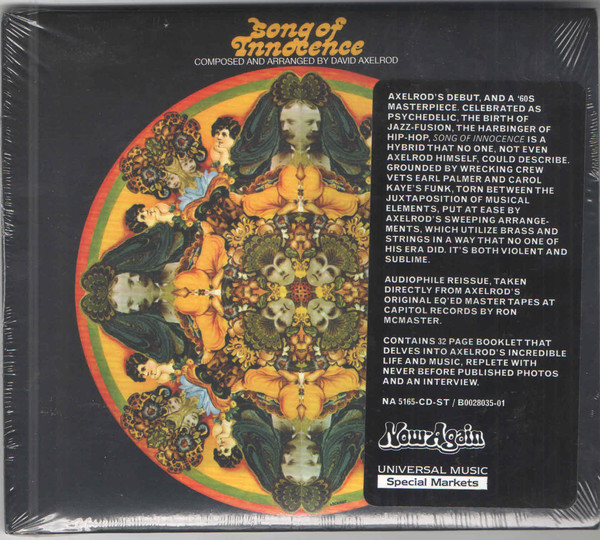
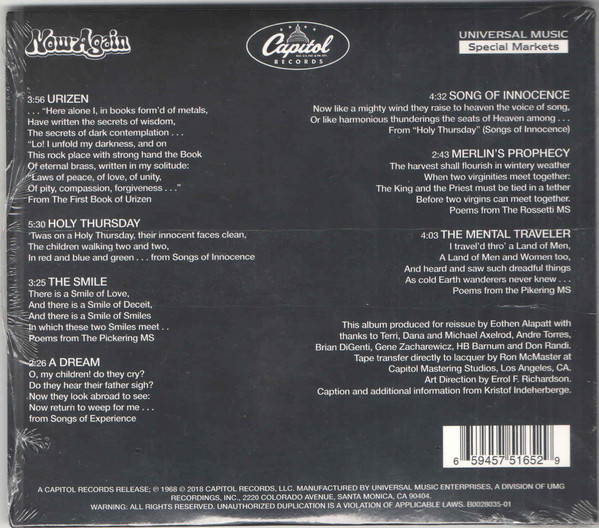
WINSTON McANUFF AND FIXI-BIG BROTHERS.
Winston McAnuff and Fixi-Big Brothers.
Label: Chapter Two Records
Following his recent collaborations with the Jamaican roots collective Inna De Yard, the man of the moment Winston McAnuff, returns with Big Brothers, the second album he’s released with French accordionist and producer Fixi. Big Brothers was recently released on Chapter Two Records and finds Winston McAnuff ruminating about the state of the world in 2018, which he views from a Rastafarian perspective. This he’s been doing since the seventies .
That was when Winston McAnuff became a familiar face within the Jamaican roots reggae scene. Back then, Winston McAnuff was better known as Electric Dread during his seventies heyday. Sadly, the success didn’t last, and in Winston McAnuff’s life took a series of twists and turns over the next three decades.
As the new millennia dawned, there was a resurgence of interest in Winston McAnuff’s music and by 2013, he had released three solo albums and two collaborations. Soon, two became three when Winston McAnuff and Fixi who first met in 2005, released their debut album A New Day. This transformed Winston McAnuff’s career and suddenly his profile was rising.
Buoyed by the success of A New Day, Winston McAnuff and Fixi headed out on the road to tour the album. This was an old school tour with hi-jinx and hard living the order of the day for Winston McAnuff and Fixi toured Britain and Europe.
Just under two years later, as the bells rang as 2015 dawned, people across Europe looked forward to a new year. However, in some parts of Europe many people had nothing to celebrate, including those living in the Jungle’ immigration camp in Calais in 2015.
That was why Winston McAnuff and Fixi’s beat boxer partner Markus (Marc Ruchmann) decided to put on a party Jungle immigration camp to celebrate the dawning of a New Year in 2015. The party was meant to bribing some much-needed happiness and humanity to those waiting at the camps to hear their fate. Despite the climate of fear for what the future held, there was laughter, and songs during the night while the bells rang out every two hours to celebrate the dawn of a new day in a different time zones. This celebration proved inspirational for Winston McAnuff and Fixi.
When the time came for Winston McAnuff and Fixi to record their sophomore album Big Brothers, they remembered were inspired by the friendship and fraternity that had been a feature of that party in the Jungle immigration camp. The more that Winston McAnuff and Fixi thought about that night, they realised that friendship and fraternity was the secret to their musical relationship.
When Winston McAnuff and Fixi thought about their musical relationship, they realised that they first worked together on their Paris Rockin’ album collaboration in 2005. Two decades later, and they were preparing to record a new album Big Brothers.
Joining Winston McAnuff and Fixi was vast cast of musicians and vocalists. The band features Afrobeat drummer Cyril Atef, bassist Elise Blanchard, keyboardist Camille Ballon and the maloya of Olivier Araste from the band Lindigo. They provide the backdrop for two generations of the Inna De Yard family who add vocals on Big Brothers. This includes The Congos’ Cedric Myton, and Kiddus I, Derajah, Var and Winston McAnuff’s daughter Nadia McAnuff who jibs forces with Angolan vocalist Pongo on Big Brothers’ lead single One Note.
Big Brothers finds Winston McAnuff and Fixi continue their theme and philosophy of connectedness. This is revisited on Big Brothers which Winston McAnuff, who nowadays is regarded as one of reggae’s elder statesman, wrote as he travelled around Jamaica. The songs he wrote became Winston McAnuff and Fixi’s album Big Brothers.
It’s a powerful, poignant and sometimes politically charged album.Big Brothers features everything from life maxims and parables to wishes and wants that give the album an intensity and fierce contemporary sound. Especially songs like Think, which can only be desired hard-hitting and straight to the point as Winston McAnuff advises: “think, observe and listen”.
Crying for Love was written by Winston McAnuff on top of the cliffs of Dover, and is an anthem for all those who have braved the seas in the hope of finding a land to call home. Then on Black Bird Winston McAnuff unleashes high-pitched caws and becomes the narrator of a child’s lullaby. One song that should ring with most people is If You Want It So Bad where Winston McAnuff remind the listener of their our responsibility is seven word: ”Now you’ve got it, please respect it.” It’s one of the highlights of Big Brothers.
With its fusion of Jamaican and Angolan vocals that are accompanied by Cuban pianos, bursts of glistening electronics and a production that emits rays of sunshine is a powerful, poignant and politically charged album of genre-melting music from that is built around the friendship between Big Brothers Winston McAnuff and Fixi.
Winston McAnuff and Fixi-Big Brothers.
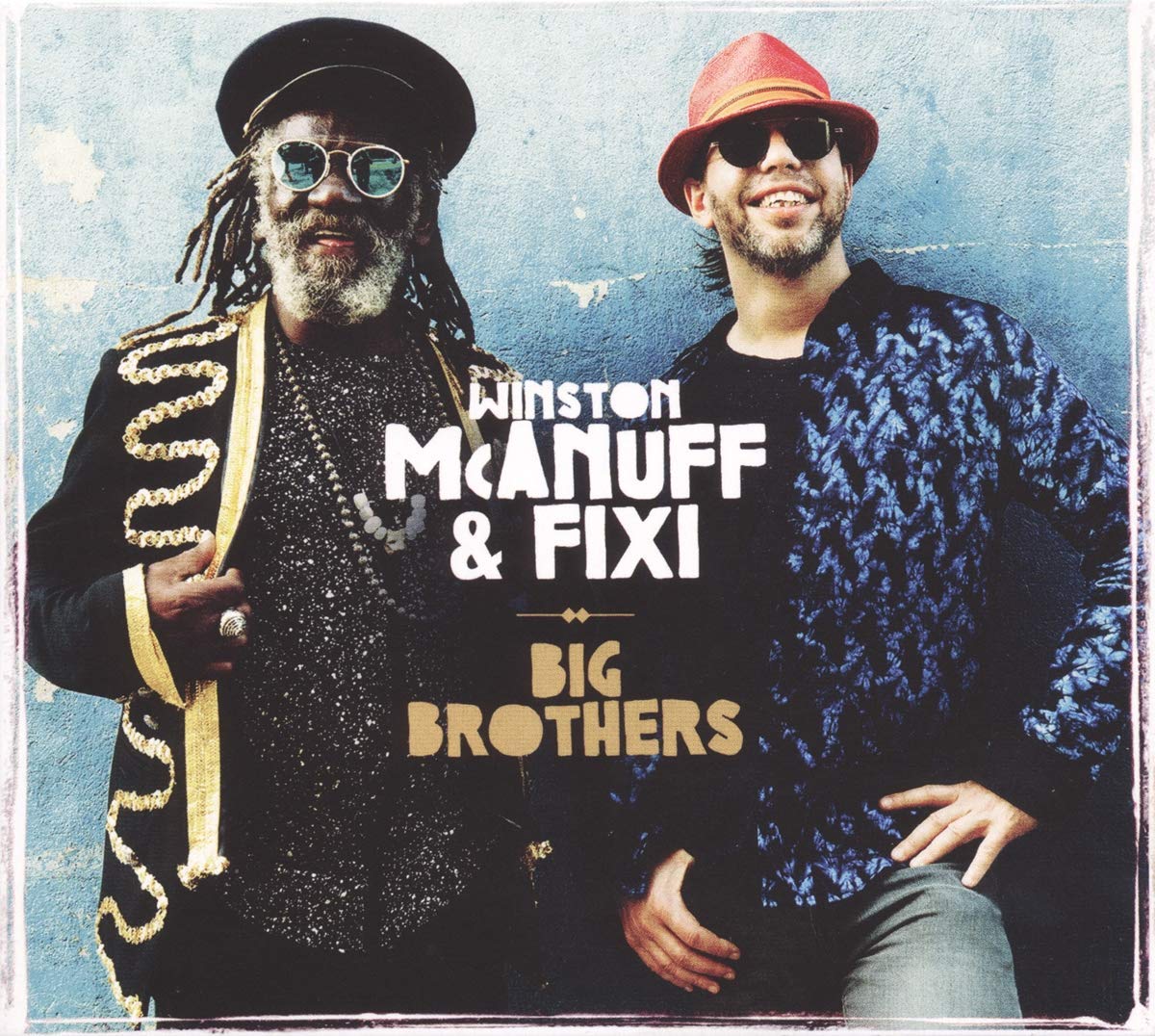
THE DELI-JAZZ CAT
THE DELI-JAZZ CAT
The Deli-Jazz Cat
Label: Cold Busted Record Company.
Each and every week of the year, major and independent record labels in across the world release new albums onto a fiercely competitive and crowed global marketplace. It’s a market where often, resources are scarce and the consumer can only afford one of two new releases each week. As a result, they take great care before buying a new album. Sometimes the cash strapped consumer choose something familiar rather than embrace the new and unfamiliar. In doing so, they miss out on releases of the quality of The Deli’s new album Jazz Cat which was recently released by Cold Busted Record Company.
For those unfamiliar with hip hop beat maker The Deli, he was born David Pryor, in Austin, Texas, over the last few years has forged his own unique style.
This came to the attention of many music journalists in 2016, when he released his debut albumin Vibes 3 on the Cold Busted Record Company. It showcased The Deli’s jazz-tinged, lush, and smooth take on instrumental hip-hop and featured Flowers, which was played fourteen million times on Spotify. Soon, some critics were comparing The Deli to boom-bap era greats like J Dilla, Pete Rock, Madlib, and MF Doom. They had all influenced The Deli, who was being described as one of hip hop’s rising stars,
Despite the success of the critically acclaimed Vibes 3, The Deli’s next album was Encounters a self-released cassette album released on the ‘1st’ June 2017. This low profile release was the only album The Deli released in 2017.
In 2018, Kid Abstrakt and The Deli joined forces to release Daydreaming. Then just a few months later, The Deli returned with his new album Jazz Cat.
On The Deli’s much anticipated album Jazz Cat features fifteen jazz-tinged tracks. They’re best described as laid back and smokey slices of enticing hip hop instrumentals where the past and present collide.
To do this, The Deli recycles the music of the past to create hip hop’s future. Especially on the cinematic city sound of Jazz Cat, as The Deli combines snares that snap and crackle with melodic piano chords. Elsewhere the music is filmic and rich in imagery and brings to mind big cities that would be the neural habitat of a Jazz Cat like The Deli. He’s also responsible for the dreamy and ruminative Virgo Flip and Fractals.
Very different is Spring a hip hop block party where The Deli provides a street smart soundtrack. He’s not done yet and has more surprises in store. This includes the carefully crafted and jazz-tinged Going Home, which gives way to Rainy Day In Japan that closes Jazz Can on another high.
The Deli’s new album Jazz Cat is a career defining release from the Austin-based beatmaker who has a big future in front of him. Especially if The Deli continues to release albums of the quality of Jazz Cat. This carefully craved album of jazz-tinged, smoky and cinematic sounding instrumental hip-hop showcases the considerable talents if hip hop’s rising star and Jazz Cat The Deli.
The Deli-Jazz Cat

BERT JANSCH-1965-1975: THE FIRST DECADE.
Bert Jansch-1965-1975: The First Decade.
Although folk singer Bert Jansch was born in Springburn, Glasgow on the ‘3rd’ of November 1943, he spent his formative years living in West Pilton, in Edinburgh, where he later, embarked upon a career as a professional musician. Before long, Bert Jansch was regarded as one of the leading lights of folk scene and looked destined for a long and successful career.
As 1965 dawned, folk singer Bert Jansch was signed to the Transatlantic label, and had released his eponymous debut album to critical acclaim on the ‘16th’ of April 1965. Eight months later, he released the followup It Don’t Bother Me to plaudits and praise. It looked as if the twenty-two year singer was about to enjoy a successful solo career.
With things looking good for Bert Jansch, he returned to the studio in early summer 1966, and was once again, joined by his friend John Renbourn as he recorded Jack Orion. When this third album of traditional folk was released in September 1966, the reviews were mixed. While some critics were won over by the album, and continued to fly the flag for the folk singer, others felt it was a weaker album than its predecessors. Despite that, Bert Jansch’s star was still in the ascendancy.
As 1967, dawned little did Bert Jansch realise that this would one of the most important year of his career. He entered the studio to record his fourth album Nicola in April 1967, which was Bert Jansch’s first folk rock album. When it was released in July 1967, many reviews were positive, but some weren’t sure about the new direction Bert Jansch’s music was heading. Bert Jansch had realised that his music had to evolve to stay relevant, and increase his fan-base. However, this wasn’t the only change made during 1967.
In 1967, Bert Jansch was one of the cofounders of Pentangle, which joined included his friend John Renbourn, Danny Thompson, Danny Cox and Jacqui McShee. They would combine disparate musical genres including blues, folk, folk rock and jazz over the next few years.
Having joined Pentangle, Bert Jansch’s solo career was put on hold as the new band began honing their sound and playing live. Then in 1968, Pentangle released their critically acclaimed debut album The Pentangle on the ’17th’ May 1968. It was followed by another album of folk rock Sweet Child, which was released on the ‘1st’ of November 1968 to plaudits and praise. After this, Bert Jansch’s thoughts turned to completing his sixth solo album.
Bert Jansch had started recording his sixth album in October 1968, and completed the album in November, just after Pentangle released Sweet Child. Two months later, Birthday Blues, which was produced by Shel Talmy, was released in January 1969 and was hailed as one of Bert Jansch’s finest albums. However, it would two years before Bert Jansch returned with the followup to Birthday Blues.
Buoyed by the response to Birthday Blues, Bert Jansch joined the rest of Pentangle and recorded the album Basket Of Light with producer Shel Talmy. When it was released on the ‘28th’ October 1969, it was to critical acclaim as the album reached number forty-three in Britain. Nowadays, Basket Of Light which finds Pentangle fusing folk jazz and fusion is now regarded as a minor classic, and one the Pentangle’s finest hours.
Meanwhile, Bert Jansch was working on his seventh album Rosemary Lane, between June 1970 and January 1971. Despite working on the album on and off for the best part of seventh months, Rosemary Lane, which was produced by Bill Leader received mixed reviews. This was a blow for Bert Jansch who had invested so much of his time into recording Rosemary Lane.
Two months later, and Bert Jansch was back in the studio, and spent three weeks during March 1971, recording Reflection, which was a genre-melting album. Reflection found Pentangle combining Celtic music, country, folk, folk rock, gospel and even funk on what was an ambitious and eclectic album, but one that didn’t find favour with all the critics. Some were unsure of Reflection, and their reviews were far from positive. It was a case of deja vu for Bert Jansch after the response to Rosemary Lane.
Despite the reviews of Rosemary Lane, Pentangle eventually returned to the studio and began work on their sixth album Solomon’s Seal. By then, Pentangle’s contract with Transatlantic had expired amidst arguments and wrangling over royalties. This resulted in Pentangle signing to Warner-Reprise, who had distributed their albums in America. Pentangle released Rosemary Lane on Reprise in September 1972, but the reviews were poor and so were the sales. Things weren’t looking good for Pentangle.
They got even worse when Bert Jansch announced his intention to leave Pentangle on On New Year’s Day, 1973. Melody Maker ran the story Pentangle to split in the first edition of 1973. It was the end of an era, that had ended with a disappointing swan-song that sold badly.
By then, the members of Pentangle had all spent the advances that they had received from Reprise, and owed the company significant sums of money. It would take the band until the early eighties before the advance was paid off. That was still to come, and in 1973, Bert Jansch was looking for a new record label.
He was no longer signed to Transatlantic, and had signed to Pentangle’s old label Reprise. Bert Jansch’s debut for his new label was Moonshine, which was released on Reprise in February 1973. It was produced by Danny Thompson, and saw Bert Jansch combine baroque folk and folk rock which found favour with the critics. However, after just one album, Bert Jansch left Reprise and signed for Charisma Records.
By then, Bert Jansch had written Chambertin which was one of two songs he recorded with Danny Thompson in early 1973 The other was John Renbourn’s Lady Nothing, which later, became part of Bert Jansch’s nine album L.A. Turnaround.
Having signed to Charisma, Bert Jansch began writing the rest of L.A. Turnaround, which was produced by former Monkee, Michael Nesmith, and released to widespread critical acclaim in September 1974. L.A. Turnaround was an album of blues, country rock, folk and folk rock and was hailed as , Bert Jansch’s finest hour.
Buoyed by the critical acclaim and commercial success that L.A. Turnaround, Bert Jansch returned with Santa Barbara Honeymoon in October 1975. It was a good, but not great album and was a disappointing followup to L.A. Turnaround. For Bert Jansch it was a case of what might have been as Santa Barbara Honeymoon failed to build on L.A. Turnaround.Santa Barbara Honeymoon was Bert Jansch’s tenth album since he released his debut in 1965, and was a somewhat disappointing way to close the first decade of his career.
Despite that, the first decade of Bert Jansch’s career was the most prolific and successful of a career that spanned five decades. During the period between 1965 and 1975, Bert Jansch divided his time between his solo carer and his former band Pentangle and by 1975 was regarded as one of the top British folk musicians.
This was just the start for Bert Jansch, who nowadays is regarded as one of the most influential folk musicians of his generation, who between 1965 and 1975 released some of his finest solo albums and was a member of the inimitable and pioneering Pentangle.
Bert Jansch-1965-1975: The First Decade.

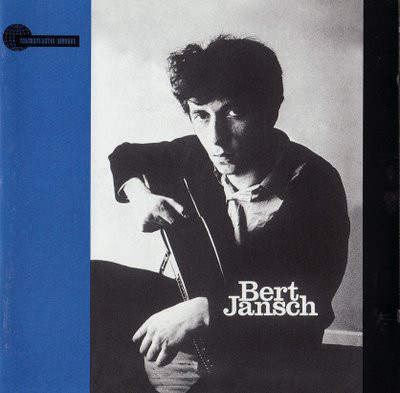

MARCEL VOGEL’S LUMBERJACK’S IN HELL.
Marcel Vogel’s Lumberjacks In Hell
Label: BBE Music.
Release Date: ‘28th’ September 2018
German DJ and producer Marcel Vogel always believed he that had some unique to contribute to music from the moment he started: “cutting up soulful tunes in the early noughties. By 2010, Marcel Vogel had relocated was one of the rising stars of European DJ scene, and was establishing a reputation for his edits and productions.
The only problem Marcel Vogel encountered was finding the right label to release his edits and productions. That was why, eight years ago, in 2010, Marcel Vogel decided to found a new record label which he called Lumberjacks In Hell in hisAmsterdam, Holland which he now called home.
Initially, Marcel Vogel envisaged his Lumberjacks In Hell label as vehicle to release his own productions and edits. Before long, though, Lumberjacks In Hell began to operate like a traditional record label as it signed some of the stats of disco and modern dance music.
Over the next few years, Marcel Vogel signed artists like Theo Parrish, Ron Hardy, Questlove, Moodyman, Jazzy Jeff, and Gaslamp Killer to Lumberjacks In Hell’s roster. Soon, people were starting to take notice of a label that looked like it was going places.
By then, Marcel Vogel had tarted taking the Lumberjacks In Hell’s’ sound to various clubs and festivals around the world. This was perfect publicity for the Lumberjacks In Hell allowed and allowed them to interface with loyal and potential customers.
Across the globe, music fans were won over by and bought into Lumberjacks In Hell’s unique and inimitable vibe and vision. When this was combined with Lumberjacks In Hell’s carefully cultivated image and their timeless musical sound.
Led by general manager Marcel Vogel, Lumberjacks In Hell released both disco and house singles over the past eight years. They’ve been released to plaudits and praise and have found a loyal following all over the world. Especially Lumberjacks In Hell’s house singles which are best described as having a timeless sound that can be traced to the Windy City, Chicago.
That was where house music was born in the early eighties and sparked a musical revolution. Just over thirty years later, Marcel Vogel’s Amsterdam-based label Lumberjacks In Hell had established a reputation for releasing some of the best house music between 2010 and 2018.
No wonder, legends including Rahaan, Soulphiction, Karizma and Jamie 3:26 had all released quality singes on Lumberjacks In Hell. So had some relative unknowns who were already making waves on the house scene. All this resulted in 5 Magazine describing Lumberjacks In Hell. as “the best Chicago dance music label not based in Chicago.” This was high praise indeed for Marcel Vogel’s Lumberjacks In Hell label, who eight years later are breaking bread at house’s top table.
To celebrate the first eight year of Marcel Vogel’s Lumberjacks In Hell label, BBE Music will release a new compilation on ‘28th’ September 2018. This is the double album Marcel Vogel’s Lumberjacks In Hell Disc One is a seamless continuous mix from Marcel Vogel who weaves fourteen tracks including Govanni Damico’s Even The Stones, Beam Me Up’s Rabbit’s Foot, Seven Davis Jr’s Get To Know Me, Boogie Nite’s Jazz-A-Nova (Oooh), Harry Wolfman’s Ava and Jonna’s Everyday. These house and disco singles are guaranteed floor-fillers that ooze quality.
It’s a similar case on Disc Two Marcel Vogel’s Lumberjacks In Hell which in unmixed and features thirteen full length tracks. Having once again opened with Govanni Damico’s Even The Stone the quality continues and with Ant La Rock’s 2018 single Goddess and Krewcial’s hook-ladn house Over. That isn’t forgetting Nachtbraker’s Jared Fogle, Reece Johnson’s Neyt Life, Joel Holmes’s Outer Light and Frawl’s Be Good To Me which closes Marcel Vogel’s Lumberjacks In Hell on a resounding high.
For anyone whose followed the rise and rise of Marcel Vogel’s Lumberjacks In Hell label, then 28th’ September 2018 is a date for the diary. That is when BBE Music releases Marcel Vogel’s Lumberjacks In Hell which is a reminder of the disco and house the Amsterdam label has released since 2010.
The music that Marcel Vogel’s Lumberjacks In Hell label has released has showcased their timeless musical sound. Its roots can be traced back to Chicago, but sometimes, the music Marcel Vogel’s Amsterdam-based label gads released music has surpassed much if not all of the Winy City. Marcel Vogel’s Lumberjacks In Hell has come a long way in just eight years.
Proof of that is the music on Marcel Vogel’s Lumberjacks In Hell which is one the best compilations of disco and house released in recent months. Marcel Vogel’s Lumberjacks In Hell is quality all the way and shows why the label is dining at house’s top table.
Marcel Vogel’s Lumberjacks In Hell.
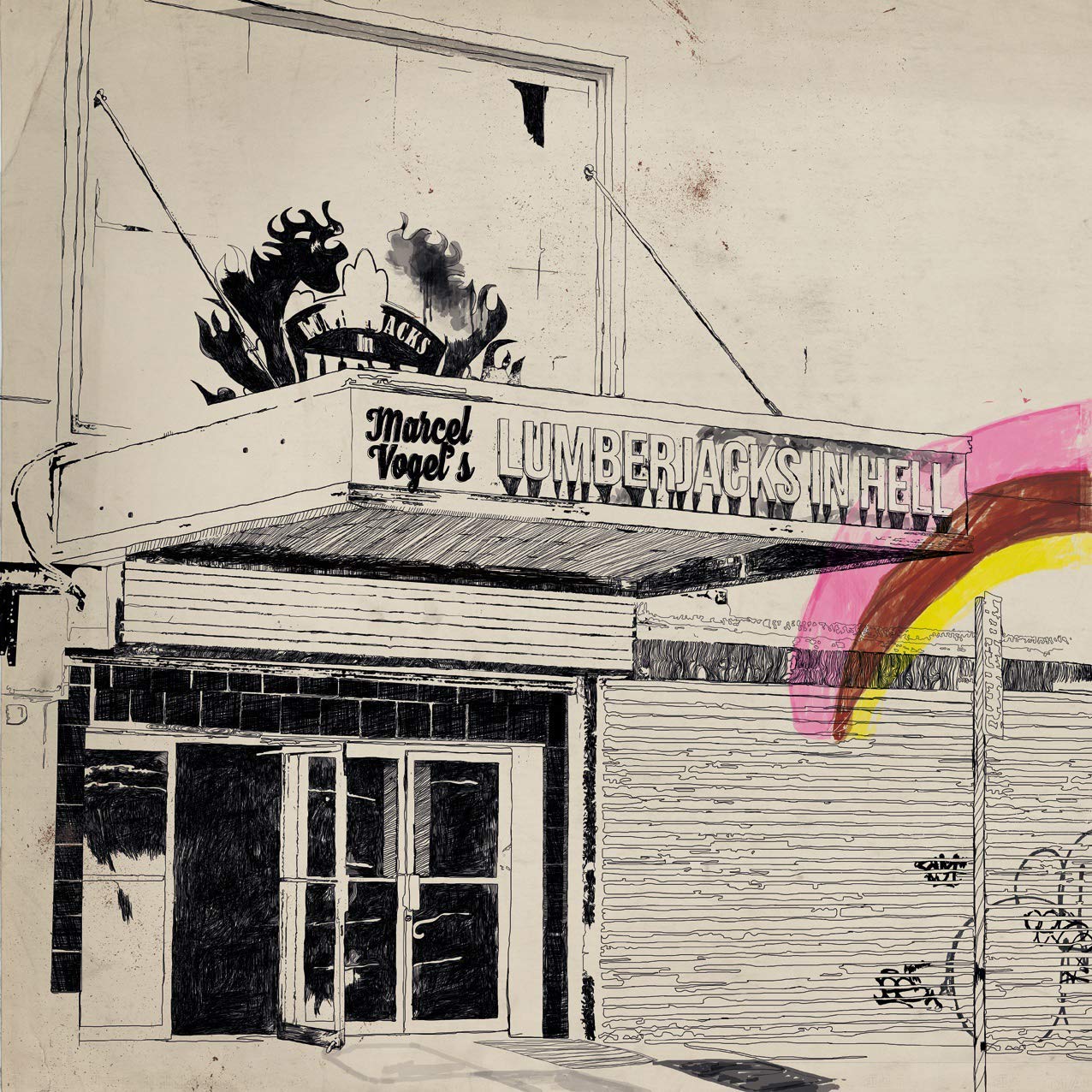
CRAIG ARMSTRONG-SUN ON YOU.
Craig Armstrong-Sun On You.
Label: Decca.
Over the past twenty years, Glasgow born Craig Armstrong has been one of the hardest working British composers and is the man many top film directors call when they’re looking for a score to their latest movie. This includes fellow Glaswegian Peter Mullan and Baz Luhrmann, who Craig Armstrong collaborated with and created the score to Moulin Rouge and The Great Gatsby. They’re two of the highest profile projects the quietly spoken fifty-nine year old award-winning composer has worked on during a long and illustrious career.
It began in 1981. after Craig Armstrong graduated from the Royal Academy Of Music in Glasgow, and became the music and dance specialist at Strathclyde Regional Council. A year later, Craig Armstrong joined Midge Ure’s band on his Gift World Tour. This was very different to his previous job was good experience for the twenty-six year old musician and composer.
In 1994, Craig Armstrong was commissioned by the Royal Shakespeare Company to write music for two new productions. This included The Broken Heart and The Tempest which were both directed by Michel Boyd. Craig Armstrong’s spell with the Royal Shakespeare Company ended in 2002, but by then his career was blossoming.
By then, Craig Armstrong was award-winning ssoundtrack composer with a BAFTA, Golden Globe, and American Film Institute Award, as well as World Soundtrack Award and a Golden Satellite Award for Moulin Rouge!. Despite being constantly in demand to score soundtracks and compose for television, Craig Armstrong had always wanted to embark upon a solo career.
This dream came true in February 1998 when Craig Armstrong released The Space Between Us to plaudits and praise. Some four years later he returned with his crucially acclaimed sophomore album As If To Nothing in February 2002. Since then, Craig Armstrong has continued to successfully juggle his solo career and soundtrack work.
That was the case until relatively recently, when the fifty-nine year old decided that after twenty years moving from project to project, the time had come to spend more time with his family and more time making solo albums. This included Sun On You which is Craig Armstrong’s debut album for Decca.
Sun On You finds an older and wiser Craig Armstrong revisit the music of his younger self. It’s an album of what Craig Armstrong regards as his own music.
This might sound like a strange thing to say, but it makes sense to Craig Armstrong and those who have followed his career closely. In the early days of his solo career, Craig Armstrong’s music was inimitable and showcased a talented composer and musician, However, after a few albums, Craig Armstrong started to be influenced by other musicians and bands. This was something has happened to many composers and artists over the years, and some are frustrated by this.
They try to detox their system and rid themselves of all the outside influences that might affect their music. This was what Craig Armstrong decided to do when he wrote and recorded Sun On You.
Having written sixteen tracks that are described as music for piano and strings, Craig Armstrong went back to basics. He played piano and produced on Sun On You, which meant that he had to eschew the impressive array of electronics that surrounded him in his recording studio. In their place was strings that came courtesy of the strings of the Scottish Ensemble. They joined Craig Armstrong at Gorbals Sound Studio, Glasgow, and AIR Studio, in London and recorded what became Sun On You.
Only when Sun On You was completed to Craig Armstrong’s satisfaction did he deliver the album to Decca. His new record won over executives at Decca, and Sun On You was released and marked the start of a new chapter for Craig Armstrong.
Sun On You is a carefully crafted and cinematic album of instrumental music from Craig Armstrong, This comes as no surprise given Craig Armstrong has spent three decades as a soundtrack composer.
The music on Sun On You is also emotive and expressive, and has been inspired by various abstract paintings, including those by Rothco. These paintings provided the inspiration for Craig Armstrong to create an album where as classical and cinematic music melt into one.
In doing so, Craig Armstrong and the string section of the Scottish Ensemble create music that is variously beautiful, cinematic, dramatic elegiac, emotive , ethereal and expressive. The music on Sun On You is also filmic.and sometimes haunting and uplifting on where Craig Armstrong hoes back to basics on an album of organic music.
Unlike previous albums, it’s just a piano and strings that featured on Sun On You, where the older Craig Armstrong seeks inspiration from his younger self on a carefully crafted fusion of filmic and cinematic music where one of Scotland’s leading composers and musicians roll back the years.
Craig Armstrong-Sun On You.
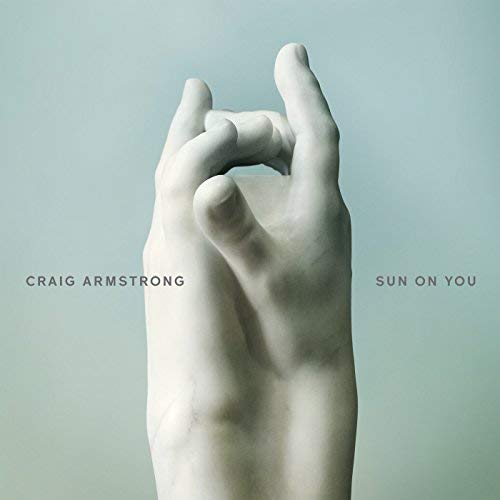
MOSTER!-STATES OF MIND.
Moster!-States Of Mind.
Label: Hubro Music.
In March 2015, Norwegian supergroup Moster! released their third album third album When You Cut Into The Present to widespread critical acclaim and hailed as a career defining release. Now three years later and Moster! return with their much-anticipated fourth album States Of Mind which has just been released on Hubro Music. States Of Mind is another groundbreaking album of genre-melting music from Moster!.
The Moster! story began in 2010, when Bushman’s Revenge saxophonist and bandleader Kjetil Møster decided to found a new group. Møster! was never intended to be a supergroup, but that was how it turned out.
Møster! was an accidental supergroup after Kjetil Møster brought onboard three of Norway’s most talented musicians. This included Motorpsycho and Grand Central drummer, Kenneth Kapstad. He was joined by two members of Elephant9, including keyboardist Ståle Storløkken and bassist Nikolai Hængsle Eilertsen, whose also a member of Big Bang. With Møster’s lineup complete, the made their debut at one Norway’s most prestigious festivals, the Kongsberg Jazz Festival in 2010.
Not many new bands get the opportunity to start launch their career at such a prestigious event, but Møster! did. Having taken the Kongsberg Jazz Festival by storm, Møster! left the stage to a standing ovation. Critics believed that it was time before Kjetil Møster’s new band would release their debut album. Sadly, they were wrong.
Edvard Lygre Møster
Three long years passed, before Møster! released their long-awaited debut album Edvard Lygre Møster, on Hubro Music in 2013. Looking back, this isn’t surprising. The four members of Møster! have other musical commitments, so finding time to record Møster!’s debut album wasn’t easy. However Edvard Lygre Møster was worth the wait,
Critical acclaim accompanied Møster!’s much-anticipated debut album Edvard Lygre Møster which was later hailed as one of the finest Norwegian albums of 2013. By then, Møster!’s music was finding an audience much further afield.
As 2013 drew to a close, Edvard Lygre Møster had found its way into New York City Jazz Records’ top ten jazz albums. Then when Prog Magazine published its list of the best albums of 2013, Edvard Lygre Møster was at number six. This was just the start of the Møster story.
Eagerly, critics, cultural commentators and music lovers awaited Møster’s next move. The next hurdle they had to overcome was their sophomore album, or what’s often referred to by critics as “the difficult second album.”
Inner Earth
When Møster began work on their sophomore album is Inner Earth, their was a new face in the studio. This was Motorpsycho guitarist Hans Magnus “Snah” Ryan. He joined saxophonist and bandleader Kjetil Møster and the rhythm section of drummer Kenneth Kapstad and bassist Nikolai Hængsle Eilertsen. This was the lineup of Møster that wrote and recorded Inner Earth.
Just like their debut album, Inner Earth was released to widespread critical acclaim. The music was an ambitious and innovative fusion of moods, textures and musical genres. It veered between dreamy, futuristic, lysergic and otherworldly to cinematic and melodic on the musical journey that was Inner Earth. Moster! had just released one of the best Norwegian albums of 2014;
After the release of Inner Earth, Møster! embarked upon what was a gruelling touring schedule. They toured with Norwegian-American band Young Mothers, and On that tour, Møster! worked hard, honing and tightening their sound even further and this paid off.
When You Cut Into The Present.
During a three-day break from their tour, Moster! entered the studio and recorded their third album When You Cut Into The Present which was released in November 2015,
When You Cut Into The Present found Møster! making huge strides on an album of hard rocking music. They kick loose from the opening bars of Nebula and Red Giant and never let go until the closing notes of Soundhouse Rumble. In between, listeners were treated a glorious assault on the sensory system which unleashes endorphins aplenty. This comes courtesy of those genre-melting innovators Møster!, and their critically acclaimed, career-defining third album When You Cut Into the Present.
States Of Mind.
After releasing a critically acclaimed and career defining album as When You Cut Into the Present, Moster began work on States Of Mind in the autumn of 2016, It looked like Moster wouldn’t be long before they returned with their fourth album in early 2017
The first recording session for States Of Mind took place between the ‘29th’ October and ‘2nd’ of November 2016 at Duper Studio, Bergen Kjøtt. Engineering the sessions was Jorgen Træen, who plays modular synths and lap steel guitar during the first States Of Mind sessions.
Six months later, the States Of Mind sessions resumed on the ‘9th’ May and concluded the ‘12th’ May 2017. By then, Moster had recorded ten tracks that became States Of Mind. It showcases Moster’s new sound.
States Of Mind was no ordinary album and was a groundbreaking release. It’s a double album which features two LPs that were conceived on what can only described as a grand scale. The ccontents include group improvisations and spontaneous compositions which sit side-by-side with themes written by one or two members of Moster or those they’ve been collaborating with. The result is new and innovative music from musical chameleons Moster.
Essentially States Of Mind combines Moster’s old sound with a new, ambitious and innovative album where freeform rock, gutbucket blues and harmolodic funk is fused by Moster and guest artist Jorgen Træe with contemporary jazz, experimental rock, free jazz and improv.To do this, Moster deploy a myriad of disparate instruments and effects.
While the rhythm section lock down the groove, a wailing saxophones is unleashed and are combined with everything from a clarinet, electronics and percussion to modular synths and lap steel guitar. This is all part of the musical tapestry that Moster weaved over two sessions and became States Of Mind.
During the two seasons, Moster and Jorgen Træen, created the ten tracks on States Of Mind which in innovative album of new and ambitious music. It’s also an album were many tracks are hardly indebted to music’s past. As a result, the music has a freshness as Moster become musical pioneers on States Of Mind.On other tracks Moster reference music’s pas on genre-melting tracks.
The music on States Of Mind finds Moster play with an intensity during what are best described full-on, and sometimes challenging jams where the band head in the direction of experimental rock, rather that what purists would define as jazz in the broadest sense orb the word.
Having said that, listen closer to States Of Mind, and the saxophone sounds similar to Duke Ellington’s “jungle music” and the Texas hands Ornette Coleman once played in before becoming one of the legends of jazz.
By then, Coleman Hawkins just like John Coltrane and Albert Ayler were among those whip adopted the tough tenor sound which play a part in the Moster sound. It adds more than a degree of intensity similar to John Coltrane on States Of Mind which is another genre-melting album by Moster,
They combine mesmeric electric blues and boogie on States Of Mind which features electronica, experiential rock, funk, improv, jazz and rock. States Of Mind which is an extraordinary album. It features the musical amuse bouche Plate Sized Eyes when lasts a minute to the twenty-minute epic Brainwave Entrainment and What A Flop Waking Up which closes States Of Mind which is Moster’s groundbreaking genre-melting opus where they continue to reach new heights.
Moster! States Of Mind.

WILLIE HIGHTOWER-OUT OF THE BLUE.
Willie Hightower-Out Of The Blue.
Label: Ace Records.
Sadly, nowadays ageism is rife in society and many experienced and talented professionals are consigned to the scrap-heap. Many talented and experienced people are suddenly jettisoned by organisations who should know better. Many of these people are only in their fifties and sixties and have a lot to offer their chosen professions.So does seventy-seven year old soul singer Willie Hightower, a man with an impeccable musical pedigree.
Willie Hightower lives in Muscle Shoals, Alabama, which is the home of Southern Soul,and has enjoyed a long and illustrious career that began in he fifties and has spanned seven decades. Sadly, since the noughties Willie Hightower hasn’t spent much time in the studio although the veteran soul man still puts on a remarkable show.
That was the case in 2017 when Willie Hightower appeared at Graziano Uliani’s annual Porretta Soul Festival in Italy, where he was backed by the Anthony Paule Soul Orchestra from the San Francisco Bay Area. During each performance, the veteran soul man rolled back the years as he revisited hits like If I Had A Hammer. As Willie Hightower took his final bow, many in the audience thought he was about to head home. Willie Hightower had other plans.
Seventy-six year old Willie Hightower had signed a recording contract with ninety-four year old Memphis producer Quinton Claunch. The pair who had a combined age of 160 were about to turn back time to the sixties, which was a golden age for soul, and especially Southern Soul, when they recorded a new album.
This was Willie Hightower’s new album Out Of The Blue, which was released on Ace Records and produced Quinton Claunch. Out Of The Blue features ten new songs which features the unmistakable voice of Willie Hightower and a tight, talented band who play with feel and passion.
These musicians are creme de la creme of Muscle Shoals musicians, including veteran season players, keyboardist Clayton Ivey and guitarists Travis Wammack and Will McFarlane. They’re joined by a new generation of musicians, while Billy Lawson co-produces Out Of The Blue.
When Willie Hightower completed recording of Out Of The Blue with producer Quinton Claunch. the veteran soul man said the he was: “really pleased with his new album. Willie Hightower was just being modest and had recorded an album to be proud of.
This they managed to during relaxed and laid-back sessions where the two men often quipped their way through the day while laying down the tracks that later became Out Of The Blue. The two veterans were enjoying being back in the studio. Willie Hightower remarked that: when you get a good bunch [of musicians] together and a couple of guys at the controls who know what they are doing, it’s hard to see anything really going wrong.”
Very little went wrong and Willie Hightower had soon recorded the ten songs that became Out Of The Blue which was recently released by Ace Records.
On Out Of The Blue, Willie Hightower combines country soul, gospel, R&B and Southern Soul. It’s also an album that has been influenced by everyone from tender gospel-tinged sound of Sam Cooke to Johnnie Taylor. There’s also a freshness to the songs on Out Of The Blue which are the polar opposite to albums of third rate cover versions revisited by lesser names than Willie Hightower.
He opens Out Of The Blue with a heartfelt rendition of I Found You, before an emotional reading of Raining All The Time. This gives way to a tender cover of Rock Me Gently and the soul-baring and soulful Somewhere Dry. Equally beautiful is the Southern Soul of Tired Of Losing You.
Country soul meets Southern Soul on You Can’t Love Me (Better Than You’re Lovin’ Me Now), while No Gettin’ Over Me is a classy and heartfelt Southern Soul ballad. The balladry continues on the tender Easy Lovin’ and Everybody Wants My Girl which features a rueful vocal from Willie Hightower He closes Out Of The Blue with the melodic and memorable Who Who Who. It completes Willie Hightower’’s comeback on Out Of The Blue.
Seventy-seven year old Willie Hightower has been away from the studio for far too long, and recently the veteran soul man released with Out Of The Blue which was released by Ace Records. Out Of The Blue was produced by legionary producer producer Quinton Claunch, who helps Willie Hightower roll back the years.
To do that, Willie Hightower combines country soul, gospel, R&B and Southern Soul on on Out Of The Blue. There’s freshness to the music on Out Of The Blue which is beautiful, emotive, heartfelt, smooth and soulful. Out Of The Blue is a carefully crafted album where Willie Hightower testifies his through ten tracks, and makes a welcome comeback, proving class is permanent.
Willie Hightower-Out Of The Blue.

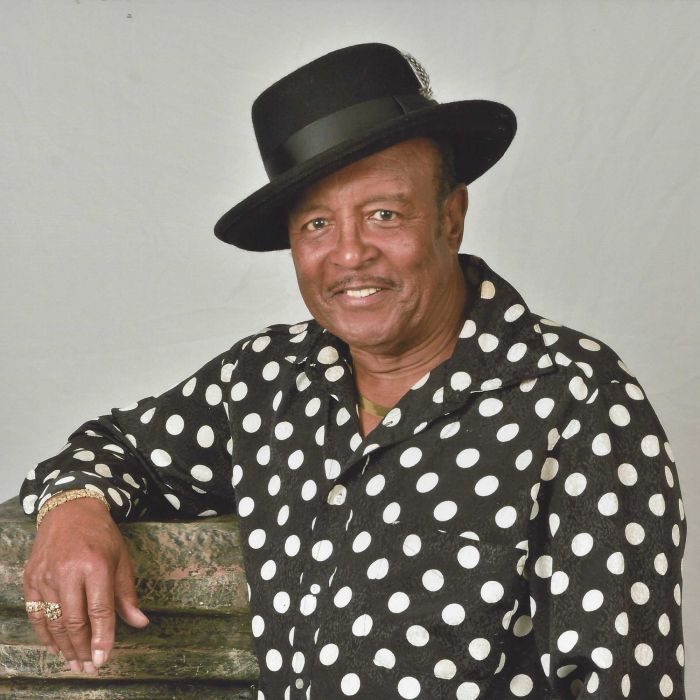

RALPH THOMAS-EASTERN STANDARD TIME.
Ralph Thomas-Eastern Standard Time.
Label: BBE.
Back in 1980, Ralph Thomas released his debut album Eastern Standard Time on the obscure Zebra Jazz imprint. Sadly, this spiritual jazz cult classic failed to find the audience it deserved until much later.
By them, copies of Eastern Standard Time were almost impossible to find, and when a copy came up for sale. the prices were prohibitively high for most jazz fans. They were unable or unwilling to spend a couple of hundred pounds on a copy of Ralph Thomas ’s oft-overlooked hidden gem Eastern Standard Time.
Now though, jazz fans everywhere can enjoy Ralph Thomas’ Eastern Standard Time which has just been released BBE. At last, this spiritual jazz cult classic will be heard by the audience it so richly deserves. Eastern Standard Time is a reminder of a talented and versatile reedman, Ralph Thomas
Ralph Thomas was born into musical family in the Windy City of Chicago in 1950. Growing up, Ralph Thomas’ principal instrument was the saxophone, but he was able to play a variety of different instruments. It was no surprise when Ralph Thomas decided to study music at one of Chicago’s most venerable institutions.
In 1969, nineteen year old Ralph Thomas nerved at the Chicago Conservatory of Music which was his home for the next few years. During this period, he became a member of the Chicago A.A.C.M, and studded alongside master musicians Phil Cohran and Richard Muhal Abrams. By then, Ralph Thomas was keen to put what he had learnt into practise.
Soon, Ralph Thomas was recording with blues legend, Howlin’ Wolf and Mighty Joe Young for the Cadet imprint of Chess records. Although this was just the start of his career he was already working with some big names,
Five years layer, this continued when Ralph Thomas moved to LA and continued to work as a session player ‘20th’ Century Fox and Motown. Ralph Thomas recorded with Marvin Gaye, Jermaine Jackson, Smokey Robinson and Rick James. A talented and versatile reedman, Ralph Thomas was never short of offers of work.
As the eighties dawned, Ralph Thomas was keen to embark upon a solo career. While Ralph Thomas enjoyed session work, a solo career was how he saw his career progressing.
By them, he had written Cafe Phillipp, E.S.T. and Spellbound and penned Muscavado and Venice with Lawrence Dixon. Ralph Thomas and Thierry Sharfe write Doloreso which was joined by Joel Ector’s Big Spliff. These seven tracks were played by Ralph Thomas and his babd and became Eastern Standard Time,
Ralph Thomas arranehd and produced Eastern Standard Time, alto, tenor, soprano and baritone saxophone and flute. His rhythm section featured drummer and percussionist Joel Vierset, bassist Joel Ector and guitarist Thierry Sharfe, They were joined by flautist Joann Leauanthal, percussionist Warren Thomas and keyboardist Lawrence Dixon who also played,
One the ‘9th’ of January 1980, Eastern Standard Time was released on Zebra Jazz, but sadly failed to find the audience it deserved. With tracks of the quality of Cafe Phillipp, EST, Spellbound, Muscavado and Venice, Eastern Standard Time where Ralph Thomas and his talented band combined hard bop, modal, posy bop and spiritual jazz. The result was astern Standard Time ambitious and innovative debut album from Ralph Thomas.
It wasn’t until much later that this Ralph Thomas spiritual jazz cult classic started to receive the recognition it deserved, By them, copies of Eastern Standard Time were almost impossible to find, and when a copy came up for sale, the prices were prohibitively high for most jazz fans. They were unable to spend $150 or $200 on a copy of Ralph Thomas ’s oft-overlooked hidden gem Eastern Standard Time.
Forty-eight years later, jazz fans everywhere can enjoy Ralph Thomas’ Eastern Standard Time which has just been released by BBE. Now Eastern Standard Time which is a s spiritual jazz cult classic can l be beard by the audience it so richly deserves and isa reminder of a talented and versatile reedman, Ralph Thomas.
Ralph Thomas-Eastern Standard Time.
ROBERT ‘ROBI’ SVÄRD-ALQUIMIA.
Robert ‘Robi’ Svärd-Alquimia,
Label: Asphalt Tango Records.
In 2016, Swedish flamenco guitarist Robert ‘Robi’ Svärd release his debut album Pa’ki Pa’ka to widespread critical acclaim. Soon, Robert ‘Robi’ Svärd’s debut album Pa’ki Pa’ka was finding the wider audience that it so richly deserved. However, things got even better for Robert ‘Robi’ Svärd when he received the recognition of his peers.
This is the recognition that deep down, every singer or musician secretly craves. In Robert ‘Robi’ Svärd’s case, hearing the praise of his peers meant that all his years of practise and studying had been worthwhile and he was gradually being accepted into flamenco’s inner circle.
Traditionalists believe that unless the only true flamencos are those born in the Andalusia region of Southern Spain. In the eyes of the traditionalists, anyone born outside of Andalusia will never be regarded as a true flamenco. It doesn’t matter how technically brilliant a singer, dancer or guitarist the outsiders are. This would disqualify Robert ‘Robi’ Svärd from being regarded as a true flamenco as he was born in Sweden.
Future flamenco Robert ‘Robi’ Svärd was born in Gothenburg, Sweden, in 1975, and developed an interested in the guitar at an early age. Robert ‘Robi’ Svärd was just four when he first picked up a guitar and strummed his first few chords. Straight away, he was captivated by the guitar, and began a journey that continues nearly forty years later.
By 1992, Robert ‘Robi’ Svärd left Sweden behind to continue his musical education in Sydney, Australia. The young guitarist enrolled at the Sydney Conservatorium of Music where he was taught by Gregory Pikler. His guidance over the next few years, and Robert ‘Robi’ Svärd’s dedication and practise paid off.
Soon, Robert ‘Robi’ Svärd was maturing and developing into a talented musician and artist who won many prizes and awards. Robert ‘Robi’ Svärd was nominated for the 1997 Young Achievers Award and won the Sydney Eistedfodd Classical Guitar Competition 1998. This led to an invitations to perform at the Sydney Opera House and on television and radio. However, this was Robert ‘Robi’ Svärd’s Australian swan-song.
In 1998, Robert ‘Robi’ Svärd Robi decided to make the move to Seville, in Spain, to study flamenco. He was soon recognised for both his rhythmical and technical ability on the guitar. This was enough to earn Robert ‘Robi’ Svärd the respect of Seville’s flamencos.
So much so, that between 1998 and 2002, Robert ‘Robi’ Svärd played alongside some of Spain’s popular musicians and accompanied many top Spanish dancers. This included Rafael Amador of Pata Negra, El Pechuga and La Cabra Mecánica. However, the biggest albums Robert ‘Robi’ Svärd played on was La Cabra Mecánica ’Vestidos de Domingo which was nominated for a Grammy Award. This was a huge boost to Robert ‘Robi’ Svärd’s career.
After this, Robert ‘Robi’ Svärd embarked upon extensive tours of Spain and Europe. By then, the flamenco guitarist had returned home to Sweden, where he began to work on various projects. This included working with the popular singer Alfredo Tejada Heredia and the percussionist Miguel “Cheyenne.” However, the most important release was Robert ‘Robi’ Svärd’s debut
Having recorded his debut album Pa’ki Pa’ka”, it was released to widespread critical acclaim on Asphalt Tango Records in April 2016.
After the release of Pa’ki Pa’ka back in 2016 caused the album found an audiences within the leading figures within the flamenco scene. They were captivated the Swedish flamenco guitarist who they regarded as of their own. It didn’t matter that he was born in Sweden, not the Andalusia region. For Robert ‘Robi’ Svärd the recognition and respect of his peers made all the hard work and dedication worthwhile as he was regarded as a flamenco.
Robert ‘Robi’ Svärd’s peer even agreed to appear on his sophomore album Alquimia,which has just been erased on Asphalt Tango Records.This carefully crafted fusion of flamenco, Spanish and world music features an all-star cast.
Some of the living legends and giants of flamenco join forces with Robert ‘Robi’ Svärd on Alquimia. This includes El Potito, Niño Josele, Luis Moneo and Pepe Torres who appear on Alquimia. So does Alfredo Tejada, whose sonorous and charismatic vocal played a leading role om Pa’ki Pa’ka. He makes a welcome return on Alquimia and is one of twenty guest artists that feature on what’s one of the best flamenco albums of 2018.
Alquimia is an album that oozes quality from the opening bars of the title track right through to the closing notes of Reencuentro, Along with tracks of the quality if Alquimia, La Luna Quiere Bailarm, Nor Jugha and Callej¢n Del Agua Alquimia marks the musical coming of age of Swedish flamenco Robert ‘Robi’ Svärd on could future genre classic.
Robert ‘Robi’ Svärd-Alquimia,

 dereksmusicblog
