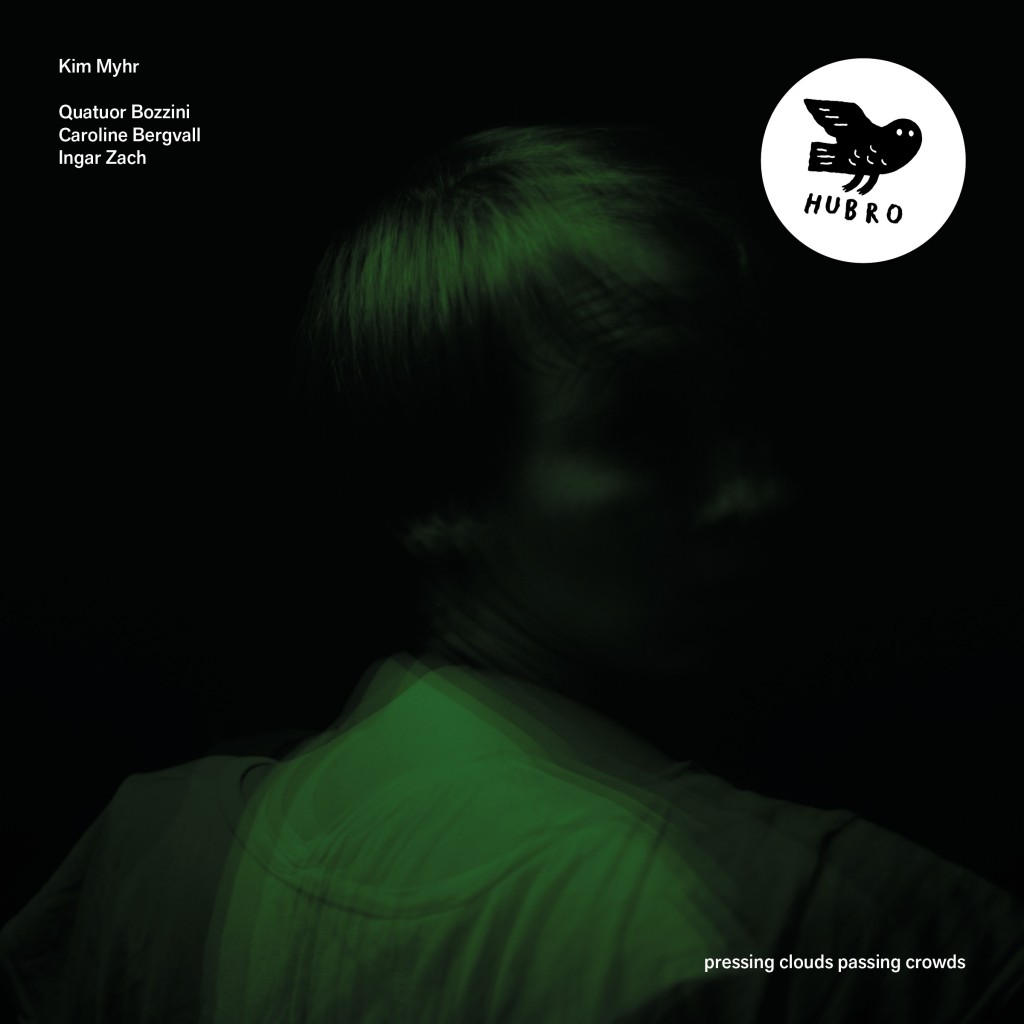
KIM MYHR-PRESSING CLOUDS PASSING CROWDS.
Kim Myhr-Pressing Clouds Passing Crowds.
Label: Hubro Music.
Release Date: ‘23rd November 2018.
Thirty-seven year old Kim Myhr is one of the leading lights of Norway’s vibrant and thriving experimental music scene and has been for the past two decades. During that period, he has spent much of the time touring, writing and recording, including his third album Pressing Clouds Passing Crowds which will be released by Hubro Music on the ‘23rd November 2018. This is just the latest chapter in the Kim Myhr story, and shows just how far he’s come since his early days in Trondheim.
The first time that many music fans heard of Kim Myhr was when he collaborated with Nils Ostendorf, Philippe Lauzier, Martin Taxt and Toma Gouband on the improv album Spin Ensemble, which was released in 2005. This was the first high-profile collaboration that Kim Myhr had been involved with, but certainly it wouldn’t be his last.
Three years later, on the ‘23rd’ of June 2008, Kim Myhr made his way to the at Hotel2tango, in Montréal, where he was about to record a live album with trio of Canadian musicians. This included saxophonist and clarinettist Philippe Lauzier who was joined by DJ and improviser Martin Tétreault and violist Pierre-Yves Martel. The resulting album Disparation De L’Usine Éphémère, was released later in 2008 and hailed as an ambitious and innovative album that combined avant-garde, experimental and improv. This was another taste of what was to come from Kim Myhr.
Next stop for Kim Myhr was Sydney, Australia, where he was about to record an album with Jim Denley an improv musician who incorporated wind instruments and electronics into his music. This was the case on Systems Realignment, which Jim Denley and Kim Myhr released in 2009. It was an ambitious album of inventive and innovative music from Jim Denley and Kim Myhr who would renew their acquaintance the following year.
For Kim Myhr, 2010 was the busiest year of his career. Mural, the improv group he had formed with bassist Ingar Zach and saxophonist and flautist Jim Denley released their debut album Nectars Of Emergence in February 2010. This was the first of four albums Mural would release over the next five years.
Just two months after Mural released their debut album, the Trondheim Jazz Orchestra and Kim Myhr released their critically acclaimed collaboration Stems And Cages during April 2010. This was the first of two collaborations between the Trondheim Jazz Orchestra and Kim Myhr.
Later in 2010, Jim Denley and Kim Myhr released Live In Munich, which was the followup to Systems Realignment. The pair also featured on their collaboration with Philippe Lauzier, Pierre-Yves Martel and Eric Normand, Transition De Phase. Both albums of improv found favour with critics, and rounded off what had been the busiest year of Kim Myhr’s career.
2011 started off with the released The New Songs’ debut album A Nest At The Junction Of Paths in February. It featured Kim Myhr on guitar and zither on a captivating album that fused avant-garde, jazz and pop. However, just a month later Kim Myhr was recording another album.
On the ‘4th’ of March 2011 Mural headed to the Rothko Chapel, Houston, Texas to record what would become their sophomore album.This was Live At The Rothko Chapel, which featured one epic fifty-two-minute soundscape Doom And Promise. Live At The Rothko Chapel was released later in 2011.
By then, Live At Ringve Museum Trondheim 2011 had been released, which was a collaboration between a quartet that featured four of the top European improv artists. Kim Myhr had led a quartet that featured Burkhard Beins, Kari Rønnekleiv and Nils Ostendor during a concert that had been recorded in his home city on the ‘8th’ of May 2011. This was a proud day for Kim Myhr whose star was in the ascendancy.
As 2012 dawned, Kim Myhr was preparing for the release of The Unknown Knowns, which was the debut album by his latest improv project Muringa. Kim Myhr was joined by drummer and percussionist Tor Haugerud, saxophonist and clarinetist Klaus Ellerhusen Holm and tubaist Martin Taxt. They had recorded Muringa’s debut album during two days in June and November 2010. Fifteen months later, The Unknown Knowns was released in March 2012 was well received by critics. However, there was still one thing Kim Myhr had yet to do, release a solo album.
This changed in March 2014, when somewhat belatedly, Kim Myhr released his critically acclaimed debut album All Your Limbs Singing. It had been recorded over two days in August 2013 in Berlin, Germany and showcased a truly talented, imaginative and innovative musician.
Just a few months later, Mural returned with their third album Tempera in June 2014. This was their first album since 2011, and their first studio album since Nectars Of Emergence in 2010. Fifteen month later, Mural returned with a three CD set Tempo which had been recorded on April the ‘27th’ 2013 at the Rothko Chapel, in Houston, Texas. It was an ambitious, sprawling album that lasted nearly three hours, but sadly, Mural haven’t returned with a followup. Maybe that is because Kim Myhr has been concentrating on other projects?
This included Kim Myhr’s new collaboration with the Trondheim Jazz Orchestra, and one of Norway’s top singer-songwriters Jenny Hval. They collaborated on In The End His Voice Will Be The Sound Of Paper which was credited to Trondheim Jazz Orchestra, Kim Myhr and Jenny Hval and released by Hubro Music in July 2016. Critical acclaim accompanied In The End His Voice Will Be The Sound Of Paper which was hailed as one of the best albums to come out of Norway during 2016. Considering how strong the Norwegian music scene was, this high praise indeed.
Just a couple of weeks after the release of In The End His Voice Will Be The Sound Of Paper, Circadia a new multinational improv band that Kim Myhr was a member of, released their debut album Advances And Delays in late July. Advances And Delays was a live album that had been recorded at Fylkingen, Stockholm, on June the ‘26th’ 2014 and showcased the combined talents of a group that featured some top improv musicians. It was just the latest project that Kim Myhr was involved in during 2016.
In October 2016, Kim Myhr returned with his much-anticipated sophomore album Bloom, which was released by Hubro Music. Bloom certainly didn’t disappoint and surpassed the quality of his debut album All Your Limbs Singing. However, Kim Myhr would release one more album during 2016.
AJMiLIVE #13 was the debut album from The New Songs, an all-star improv band that Kim Myhr was a member of. They had recorded the tracks that became AJMiLIVE #13 in November 2014. Two years later, and The New Songs’ debut album AJMiLIVE #13 was released in November 2016 and found favour with critics. This rounded off the busiest year of Kim Myhr’s career so far.
As 2017 dawned, Ingar Zach and Kim Myhr were the latest artists to feature on the long-running Nonfigurativ Musikk series. Nonfigurativ Musikk #22 was a split album, with each artist showcasing their skills on one side of this limited edition cassette. However, only thirty copies were released and for many fans of Kim Myhr this is the holy grail.
You | Me
The following month, February 2017, Kim Myhr and Lasse Marhaug released their first collaboration On The Silver Globe. It was released to plaudits and praise and was the latest addition to Kim Myhr’s burgeoning back-catalogue. However, by then Kim Myhr began recording his third solo album You | Me.
Kim Myhr’s third solo album You | Me was released to widespread critical in January 2018. By then, this ambitious and innovative album was nominated and then shortlisted for the prestigious Nordic Music Prize. You | Me was a fusion of disparate musical genres, including ambient, avant-garde, electronica, experimental, Hindustani classical music, improv, Musique concrète and psychedelia. It was Kim Myhr’s finest hour. The big question was what was next for Kim Myhr?
Pressing Clouds Passing Crowds.
By then, Kim Myhr had recorded his new album Pressing Clouds Passing Crowds at Athletic Sound, Halden, between October ’30th’ and ’31st’ 2017. The album was mixed by Espen Reinertsen in October 2017 and mastered by Rashad Becker in January 2018. This brought to an end a story that began in 2016.
That was when Kim Myhr was commissioned to write the music and text piece Pressing Clouds Passing Crowds as a commission for the 2016 FIMAV-festival (Festival International de Musique Actuelle de Victoriaville) in Quebec, Canada. The following year, 2017, Kim Myhr recorded Pressing Clouds Passing Crowds.
Joining Kim Myhr on 12-string guitar when he recorded Pressing Clouds Passing Crowds were Montreal-based string quartet Quatour Bozzini, Huntsville and Dans les Arbres
percussionist Ingar Zach. They’re joined by poet Caroline Bergvall, who reads her own text on Pressing Clouds Passing Crowds and inspired Kim Myhr.
“Inspired by meeting poet Caroline Bergvall in 2015 and the music of Robert Ashley that I was listening to at the time, I was wanting to make a longer, slow-moving piece centered around a speaking voice…The composition is in six parts, but the parts all blend into each other so that they feel like one slowly changing state of mind” explains Kim Myhr.
The combination of Kim Myhr, Quatour Bozzini, percussionist Ingar Zach and poet Caroline Bergvall is a fascinating, captivating and successful one, and results in Pressing Clouds Passing Crowds which is an album of ambitious, groundbreaking and genre-melting music.
Kim Myhr’s 12-string guitar glistens, shimmers, chimes and chirps, and combines with sprinklings of different types of percussion and stabs, sighs, whispers, drones and glissando slides courtesy of the Quatour Bozzini’s strings. They provide a counterpoint to Caroline Bergvall’s mesmeric voice which will have the listener spellbound and captivated, as music and text combines to create a rich, complicated and multilayered album in six movements. Each movement on Pressing Clouds Passing Crowds is a combination of sound, sense, discourse and narrative and is part of a cerebral and thought-provoking album.
Interestingly, neither the music nor text dominates Pressing Clouds Passing Crowds meaning the listener can enjoy and appreciate each part. Each movement is independent, which means it can be appreciated on its own, and can read or listened to separately. Having said that, it makes no sense not to immerse oneself in the entire album and enjoy and experience the six movements as one gives way to another on to Pressing Clouds Passing Crowds.
What’s all the more remarkable about Pressing Clouds Passing Crowds is: “I had in fact composed all the parts to the music before any text was written…Although I did have the sound of Caroline’s voice, which can be both brutal and empathetic at the same time, in my head while I made the music. After a few days conversing together in London, Caroline wrote words relating to the general character of the music and our conversations around it. : something suspended in air, personal yet universal, a sort of sensual confusion of the subjective and the objective” remembers Kim Myhr.
Although Kim Myhr’s music came first, Caroline Bergvall’s text seems tailor-made, and the perfect accompaniment on Pressing Clouds Passing Crowds. It continues to evolve and essentially becomes an a musical analogue which is transformed during the six movements. It’s a captivating and breathtaking musical journey which has been influenced by various musical pioneers.
In Kim Myhr’s case this includes the contemplative intensity of Morton Feldman, which is combined with the influence of Steve Reich’s Different Trains. Add to the mix Asian-influenced lyrics and a percussive masterclass from the versatile and talented Ingar Zach who switches between instruments and adds an important dimension Pressing Clouds Passing Crowds. In doing so, he narrows the gap between movements and the tonal distance between voice, guitar and the string quartet. However, Kim Myhr’s role can’t be underestimated.
He reflects that: “I wanted to take this delicate harmonic language I’ve developed on the 12-string guitar, which I’m at least partly indebted to Morton Feldman for, and bring it into a very warm, intimate sphere: The guitar itself helps create this intimacy, as it’s a domestic and intimate instrument that people often play in their own house, including their own bedroom. I think Caroline’s voice and words further emphasize this aspect. The listener is brought into the dreamy intimate world of the narrator, gently and floatingly shifting from one state of mind to another.” That is the case throughout Pressing Clouds Passing Crowds.
Caroline Bergvall plays an important part in the success of Pressing Clouds Passing Crowds, especially in terms of subject-matter and context. Her theme of transformation is especially relevant and is open to interpretation. She touches on everything from the personal to the political to the universal, and even the world of natural phenomena. Still Caroline Bergvall has more to say, and deals with social issues Pressing Clouds Passing Crowds. Her use of imagery and metaphors is powerful and an instant Caroline Bergvall takes the listener from a train journey in search of a beach, to the outer limits of the solar system. It’s an incredible journey on an incredible album.
The combination of Caroline Bergvall’s dramatic, chanting ritualised vocal which is akin concrete poetry, is combined with rhythmic repetitions, sweeping, swirling, dancing strings and a percussive masterclass. Together they replicate Pressing Clouds Passing Crowds as this genre-melting album reaches a dramatic ending.
It’s safe to say that Pressing Clouds Passing Crowds is Kim Myhr’s finest hour, and the most ambitious album of a long and successful career. Pressing Clouds Passing Crowd is a career defining opus from musical pioneer Kim Myhr, whose one of the leading lights of Norway’s vibrant and thriving experimental music scene.
Kim Myhr-Pressing Clouds Passing Crowds.
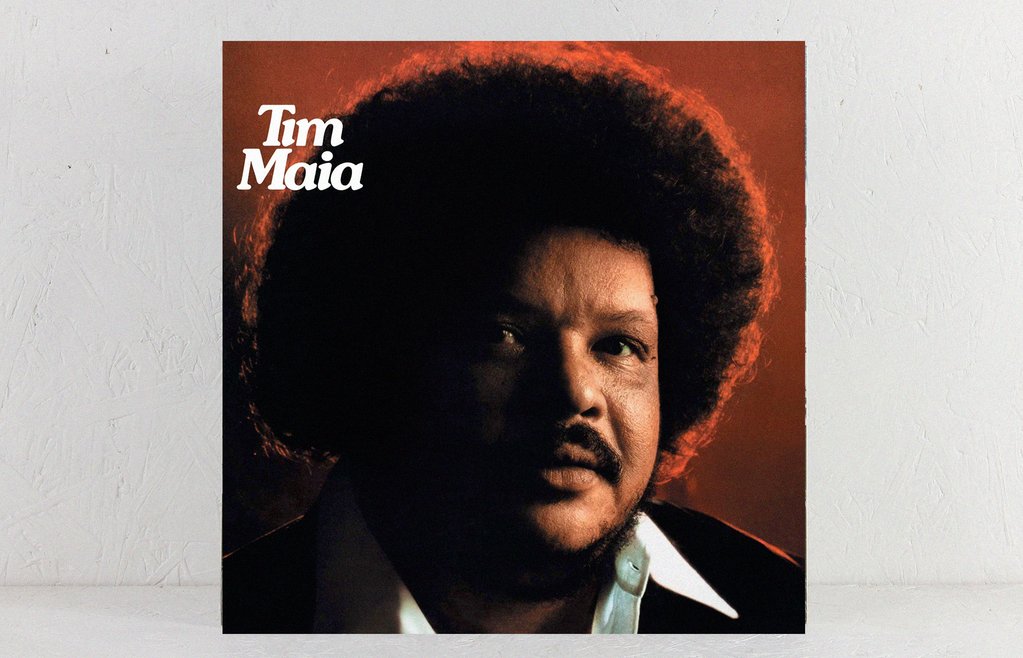
TIM MAIA-TIM MAIA (1977).
Tim Maia-Tim Maia (1977).
Label: Mr. Bongo Records.
As 1977 dawned, Tim Maia had already released seven albums since his 1970 eponymous debut, and although some of these album had been released to critical acclaim and were a commercial success, the charismatic Brazilian singer found himself financially embarrassed.
Things had been going from bad to worse over the last few years and Tim Maia now found himself being chased and hounded by bailiffs and debt collectors on a daily basis. He needed his 1977 eponymous album Tin Maia which was recently reissued by Mr. Bongo Records, would sell well enough to solve all his financial problems. By then, Tim Maia was desperate and needed money, as everything he had earned since 1970 was long gone. Tim Maia had spent his money on cars, musical instruments and the rock ’n’ roll lifestyle which Tim Maia had embraced almost defiantly. However, it hadn’t always been like this.
Tim Maia, who was born in Rio De Janeiro on September the ‘28th’ 1942.Tim Maia was the eighteenth of nineteen children. Aged just six, Tim Maia earned a living delivering homemade food which his mother cooked. This Tim Maia hoped would be the nearest he ever got to an ordinary job. After that, Tim Maia decided to devote himself to music which offered him an escape from the grinding poverty that was around him.
It turned out that Tim Maia was a prodigiously talented child, who wrote his first song as an eight year old. By the time he was fourteen, Tim Maia had learnt to play the drums and formed his first group Os Tijucanos do Ritmo. They were only together for a year, but during that period, Tim Maia took guitar lessons and was soon a proficient guitarist. This would stand him in good stead in the future.
In 1957, Tim Maia domed vocal harmony group, The Sputniks who made a television appearance on Carlos Eduardo Imperial’s Clube do Rock. However, the group was a short-lived, and Tim Maia embarked upon a solo career. This lasted until 1959, when seventeen year old Tim Maia made the decision to emigrate.
Tim Maia decided to head to America, which he believed he was the land of opportunity and headed to New York with just twelve dollars in his pocket. On his arrival, Tim Maia who was unable to speak English, managed to bluff his way through customs, telling the officials that he was a student called Jimmy. Incredibly, the customs officer believed him and Tim Maia made his way to Tarrytown, New York, where he lived with extended family and started making plans for the future. By then, Tim Maia had decided he would never return to Brazil.
During his time in New York, Tim Maia held down a variety of casual jobs and it has been alleged that he even augmented his meagre earnings by committing petty crimes. However, Tim Maia also learnt to speak and sing in English, which lead to him forming a vocal group The Ideals.
During his time with The Ideals, they decided to record a demo which included New Love which featured lyrics by Tim Maia. When The Ideals entered the studio, percussionist Milton Banana made a guest appearance. Sadly, nothing came of the demo, although Tim Maia later resurrected New Love for his album Tim Maia 1973. Before that, things went awry for Tim Maia and he was eventually deported.
Confusion surrounds why and when Tim Maia was deported from America, and there’s two possible explanations. The first, and more rock ’n’ roll version is that Tim Maia was arrested on possession of cannabis in 1963, and deported shortly thereafter. That seems unlikely given how punitive penalties for possession of even a small quantity of cannabis were in the sixties. Indeed, it’s highly unlikely that Tim Maia would’ve deported, without having to serve a jail sentence first. This lends credence to the allegation that Tim Maia was caught in a stolen car in Daytona, Florida, and after serving six months in prison, he was deported back to Brazil in 1964.
Now back home in Brazil, Tim Maia’s life seemed to be going nowhere fast. He was fired from several jobs, and was also arrested several times. It was no surprise when Tim Maia decided to move to São Paulo, where he hoped that he could get his career back on track.
Having moved to São Paulo, Tim Maia, hoped he would be reunited with Roberto Carlos who had been a member of The Sputniks. Ironically, it was Roberto Carlos who Tim Maia had insulted before he left The Sputniks. Despite leaving several messages, Roberto Carlos never returned Tim Maia’s calls and he had no option but to try to make his own way in the São Paulo music scene.
Tim Maia’s persistence paid off, and soon, he had featured on Wilson Simonal’s radio show, and then appeared alongside Os Mutantes on local television. Despite making inroads into the São Paulo music scene, Tim Maia was determined to contact Roberto Carlos and sent him a homemade demo. Eventually, Tim Maia’s persistence paid off.
When Roberto Carlos heard the demo, he recommended Tim Maia to CBS who offered him a recording deal for a single, and an appearance on the Jovem Guarda television program. However, when Tim Maia’s released his debut single Meu País in 1968, it failed to find an audience.
Tim Maia tried a new approach with his sophomore single and recorded These Are the Songs, in English. It was released later in 1968, but again, commercial success eluded Tim Maia. Things weren’t looking good for the twenty-six year old singer.
Fortunately, Tim Maia’s luck changed when he wrote These Are the Songs for Roberto Carlos, which gave his old friend a hit single. At last, things were looking up for Tim Maia.
Things continued to improve when Elis Regina became captivated by Tim Maia’s song These Are the Songs. This led to Elis Regina asking Tim Maia to duet with her on the song. Tim Maia agreed and they recorded the song in English and Portuguese, which the song featured on Elis Regina’s 1970 album Em Pieno Veroa. Recording with such a famous Brazilian singer gave Tim Maia’s career a huge boost, and soon, he was offered a recording contract by Polydor.
Having signed to Polydor in 1970, and somewhat belatedly recorded his debut album Tim Maia 1970. Although it showcased a talented, versatile and charismatic singer, who married soul and funk with samba and Baião. This groundbreaking album spent twenty-four weeks in the upper reaches of the Brazilian charts and launched Tim Maia’s career.
The following year, Tim Maia returned with his sophomore album Tim Maia 1971, where elements of soul and funk were combined with samba and Baião There were even hints of jazz, psychedelia and rock, during what was an ambitious and innovative album of genre-melting music which was released to critical acclaim and commercial success. Tim Maia 1971 also featured two hits singles Não Quero Dinheiro (Só Quero Amar) and Preciso Aprender a Ser Só. Tim Maia’s star was in the ascendancy, and it looked as if he was well on his way to becoming one of the biggest stars in Brazilian music.
After the success of his sophomore album, Tim Maia headed to London to celebrate after years of struggling to make a breakthrough. For the first time in his career he was making a good living out of music, and Tim Maia was determined to celebrate and enjoy the fruits of his label. However, it was during this trip to London, that he first discovered his love of the rock ’n’ roll lifestyle.
Realising that he was only here for a visit, Tim Maia embraced the rock ‘n’ roll lifestyle and almost defiantly, lived each day as if it was his last. He hungrily devoured copious amounts of drugs and alcohol which became part of Tim Maia’s daily diet. Fortunately, his new-found lifestyle didn’t seem to affect Tim Maia’s ability to make music. That was until Tim Maia discovered a new drug that would prove to be his undoing.
In London, Tim Maia discovered LSD He became an advocate of its supposed mind opening qualities. He took 200 tabs of LSD home to Brazil, giving it to friend and people at his record label. Little did Tim Maia know, but this was like pressing the self destruct button.
Over the next two years, he released two further albums, Tim Maia 1972 and Tim Maia 1973 which were released to critical acclaim and commercial success in Brazil. The only problem was that after the success of Tim Maia 1973, Tim Maia became unhappy at the royalty rate he was receiving from his publisher. This lead to him founding his own publishing company Seroma, which coincided with Tim Maia signing to RCA Victor
They had offered Tim Maia the opportunity to record a double album for his fifth album. He was excited by this opportunity and, agreed to sign to RCA Victor, and soon, began work on his fifth album. Somehow, Tim Maia was still seemed able to function normally on his daily diet of drink and drugs. Before long, he had already recorded the instrumental parts, and all that was left was for Tim to write the lyrics.
Seeking inspiration for the lyrics, Tim Maia decided to visit one of his former songwriting partners Tibério Gaspar. That was where Tim main found the book that would change his life, but sadly, not for the better. The book was Universo em Desencanto (Universe in Disenchantment), which revolved around the cult of Rational Culture who didn’t believe in eating red meat or using drugs. Given Tim Maia’s voracious appetite for drink and drugs, he seemed an unlikely candidate to join the cult. However, sadly, he did.
Straight away, the cult’s beliefs affected Tim Maia and his music. Ever since he joined the cult of Rational Energy, he beam fixated on UFOs, Tim was now clean-shaved, dressed in white and no longer drank, ate red meat, smoked or took drugs. Always in his hand was a mysterious book. Tim Maia was a changed man, and even his music changed.
The lyrics for his fifth album, and RCA Victor debut, were supposedly about his newly acquired knowledge that came courtesy of Universo em Desencanto. With the ‘lyrics’ complete, Tim Maia’s vocals were overdubbed onto what became Racional Volumes 1 and 2. With the album completed, Tim took it to RCA Victor who promptly rejected the album.
RCA Victor’s reason for rejecting the album was that it wasn’t of a commercial standard. To make matters worse, the lyrics made absolutely no sense. There was only one small crumb of comfort, and that was that Tim Maia’s voice was improving. That hardly mattered for RCA Victor, who weren’t going to release the album. For RCA Victor, Racional Volumes 1 and 2 was huge disappointment.
That was until Tim Maia offered to buy the master tapes from RCA Victor, so that he could release the album independently. RCA Victor accepted his offer, which allowed them to recoup some of their money. Having bought the master tapes, Tim Maia set about releasing Racional Volume 1 in 1975. Sadly, it didn’t enjoy the same critical acclaim and commercial success of Tim Maia’s four previous albums. Suddenly, many of Tim Maia’s fans thought he was no longer the artist he once was.
After releasing Racional Volume 1 in 1975, Tim Maia returned in 1976 with his sixth album Racional Volume 2. Lightning struck twice when Racional Volume 2 failed to impress the critics and was a commercial failure. Nowadays, Racional Volumes 1 and 2 are cult classics, whereas in 1976 they tarnished Tim Maia’s reputation. Maybe this was the wakeup call he needed?
In 1976, Tim quit the cult after the release of Racional Volume 2. By then, he had fallen out with its leader and felt as if he had been duped. So much so, that Tim Maia wanted the master tapes to Racional, Volumes 1 and 2 destroyed. The two albums were part of his past, and now Tim Maia was ready and wanted to move forward.
Tim Maia’s music changed after Tim Maia Racional, Volumes 1 and 2 as he entered what was the most prolific period of his career. This began with the release of Tim Maia in 1976, which saw the thirty-four year old combine soul, funk and MPB (música popular brasileira). However, although Tim Maia proved reasonably popular upon its release, it didn’t match the success of his first four albums.
Tim Maia 1977
Ever since he had been signed by Polydor and received his first advance, Tim Maia had lavished large sums of money on everything from cars and musical instruments to his continued love of the rock ’n’ roll lifestyle. The rest of Tim Maia’s money was used to pay various fines he ran up, and to pay lawyers bills that had accumulated over the last few years. This came at a price, and by 1977, Tim Maia realised that he was insolvent. Almost every day, Tim Maia was forced to play a cat and mouse game as he left his flat as bailiffs and debt collectors who were constantly chasing him for unpaid bills. It was a worrying time for Tim Maia. However, Tim Maia knew that if he could record another successful album then all his financial problems would be solved.
After the disappointment of his previous album, Tim Maia returned with Tim Maia (1977) with eighth album which he once again, decided to call Tim Maia. It featured twelve new songs, including five Tim Maia wrote with various songwriting partners. He also wrote six new songs including É Necessário, Leva O Meu Blue, Venha Dormir Em Casa, Ride Twist and Roll. Flores Belas (Instrumental) and Let It All Hang Out. These tracks were recorded at three studios with some top session players and backing vocalists and was produced by Tim Maia.
He combines soul, funk, MPB and jazz with Latin influences, disco and pop on Tim Maia (1977). It’s a slick and carefully crafted album where Tim Maia is joined by lush strings, horns and backing vocals on an album where beautiful ballads sit side by side with soulful songs, funky tracks and even the instrumental Flores Belas. Just like on previous albums, Tim Maia is equally comfortable delivering heart-wrenching ballads and funky tracks.
Among the highlights are the uptempo opener Pense Menos, the beautiful ballad Sem Você with an arrangement that combines drama and lush strings. It’s followed by the funky and soulful Verão Carioca, while É Necessário is regarded by many as one of the highlights of the album. Three other beautiful ballads are Leva o meu Blue and Venha Dormir em Casa and Música para Betinha. They feature Tim Maia balladeer at his very best. Then on Ride Twist and Roll, the instrumental Flores Belas and the album closer Let It All Hang Out Tim Maia rolls back the years.
Sadly, Tim Maia (1977) which is a hugely underrated album failed commercially and thirty-five year old Tim Maia was a worried man as he continued to play cat and mouse with the bailiffs that hounded him day in day out. This wa very different to a few years previously.
Tim Maia had struggled to reach the heights of his first four albums, but on Tim Maia (1977) he was back with what proved to one of the finest, but most underrated albums of his career. It combines funk, soul, MPB and occasionally jazz, pop and disco. It’s a slick, polished but Tim Maia (1977) failed to find the audience it deserved. The maverick soul man whose career had been a roller coaster since making a commercial breakthrough with Tim Maia 1970 was still looking for an album that would transform his career.
By then, Tim Maia enjoyed every minute of the past eight years Tim Maia knew he was only here for a visit and set out to live life to the full.That was just as well as Tim Maia passed away on March the ‘15th’ 1998, aged just fifty-five. Sadly, by then, Tim’ Mai’s shows and behaviour had become predictable, and that had been the case since his 1976 post-Racional comeback. Tim Maia was never the same man or musician after his dalliance with the cult of rational behaviour. However, Tim Maia (1977)was one of the finest albums Tim Maia released after his post-Racional comeback and is a poignant reminder of one of Brazilian music’s most talented sons at the peak of his power.
Since his death in 1998, Tim Maia’s music has been a well-kept secret outside of his native Brazil, and even within Brazil, many people still aren’t aware of Tim Maia’s music. However, older record buyers still talk about the maverick singer-songwriter in hushed tones and remember the flawed genius that was Tim Maia who could’ve, and should’ve, been a huge star outside of his native Brazil. Sadly, something held him back, and stopped Tim Maia from enjoying the widespread commercial success and critical acclaim that his music richly deserved. That is despite Tim Maia being a hugely talented singer, songwriter, musician and producer, and proof of his considerable talent can be found on Tim Maia (1977).
Tim Maia-Tim Maia (1977).
HOLGER CZUKAY, JAH WOBBLE, JAKI LIEBEZEIT-FULL CIRCLE-VINYL.
Holger Czukay, Jah Wobble, Jaki Liebezeit-Full Circle-Vinyl.
Label: Gronland Records.
Having released eleven albums in eleven years, Can called time on their career in 1979. By then, Can were rightly regarded by critics as one of the most important, influential and innovative bands of the Krautrock era. However, like many of the Krautrock bands, Can hadn’t enjoyed the commercial success that their music had deserved. While their music found an a small, but discerning audience in Britain and France, Can, like many of the other Krautrock bands had failed to find audience in Germany. This was disappointing, just like the demise of Can the group that Holger Czukay cofounded.
After the demise of Can, Holger Czukay dusted himself down after two years where he was marginalised in the group he cofounded.“During the recording of Out Of Reach, I felt an outsider in my own group. I was on the outside looking in. I was on the margins. All I was doing was adding sound-effects.” Holger Czuaky felt his group had been hijacked by Rosko Gee and Rebop Kwaku Baah and things got so bad, that Holger quit Can.
Sadly, Rosko Gee and Rebop Kwaku Baah dominated Out Of Reach. Gone was the loose, free-flowing style of previous Can albums. Even Jaki Liebezeit’s play second fiddle to Baah’s overpowering percussive sounds. The only positive thing was a guitar masterclass from Michael Karoli. Apart from this, things weren’t looking good for Can. It was about to get worse though.
The critics rounded on Out Of Reach. They found very little merit in Out Of Reach. Gee and Baah were rightly blamed for the album’s failure. Even Can disliked Out Of Reach. They later disowned Out Of Reach. Despite this, Rosko Gee and Rebop Kwaku Baah remained members of Can.
Unable to play with the necessary freedom Can were famed for, the two ex-members of Traffic stifled Can. Rebop’s percussion overpowers Jaki’s drums, which have always been part of Can’s trademark sound. At least Michael’s virtuoso guitar solos are a reminder of classic Can. A nod towards Carlos Santana, they showed Can were still capable of moments of genius. Sadly, there wouldn’t be many more of these.
Some time after the release of Out Of Reach, Can decided to release a new single. It wasn’t one of the songs on Out Of Reach. Instead, it was reworked version of Jacques Offenbach’s Can Can. This was somewhat surreal, and far removed from classic Can. They had moved far away from the music that featured on their golden quartet. Can’s loyal fans wondered what the future held for Can. Sadly, Can would breakup after their next album.
Can.
Following the commercial failure of Out Of Reach, the members of Can began recording what became their tenth album, Can. Remarkably, Rosko Gee and Rebop Kwaku Baah were still part of Can. Sadly, Holger was not longer a member of Can. He had left during the making of Out Of Reach. His only involvement was editing Can which was a travesty.
Allowing Rosko Gee and Rebop Kwaku Baah to remain members of Can while Holger left the band he cofounded was a massive mistake. Faced with the choice or losing Holger or keeping Rosko Gee and Rebop Kwaku Baah in Can, should’ve been a no-brainer. Incredibly, Holger was marginalised further.
Neither Rosko Gee nor Rebop Kwaku Baah were suited to a band like Can. Both came from a very different musical background, and as a result the decision to hire them initially was flawed and questionable. Their playing on Out Of Reach was odds with the way Can played. They had spent their career playing with freedom that resulted in inventive and innovative music. The much more rigid style of Rosko Gee and Rebop Kwaku Baah stifled the other members of Can. To make matters worse, their playing overpowered the rest of Can, and was one of the reason’s for the album’s failure. Yet when recording of Can began, Rosko Gee and Rebop Kwaku Baah remained.
Can, which is sometimes referred to as Inner Space, was released in July 1979. Again, critics weren’t impressed by Can, and the album received mixed reviews. No longer was Can the critic’s darlings.
The music on Can was a fusion of avant-garde, electronica, experimental, psychedelia and rock. Add to that, a myriad of effects including distortion and feedback, and here was an album that divided the opinion of critics. While the critics agreed, it was better than Out Of Reach. They also agreed that Holger was sadly missed.
Even Holger’s renowned editing skills couldn’t save Can. Try as he may, he could only work with what he was given. He did his best with Can, which the eleventh album from the group he co-founded. By the time Can was released, Holger: “had come to a realisation, that it was time to go his own way.” Holger describes this as “necessary.”
Can had split-up after the release of Can. That was their swan-song. However, even before that, Holger: “felt marginalised, this had been the case since Rosko Gee and Rebop Kwaku Baah became part of Can. They had hijacked Can,” and ultimately, this lead to the death of a great and innovative band.
With Can now part of musical history, Irmin Schmidt, Holger Czukay, Michael Karoli and Jaki Liebezeit set about reinventing themselves. Music critics wondered whether they would form new bands or embark upon solo careers? Irmin Schmidt, Holger Czukay and Michael Karoli all embarked upon solo careers.
Movies!
Holger Czukay hadn’t really been making music since 1976, and had edited the last two Can albums. This meant that Holger Czukay had to find “his own sound again.” He had “been through this with Can,” Now he’d have to do so again. It would be worth it though, when he released his first solo album since 1969s Canaxis 5, Movies!
When Holger Czukay released his much-anticipated sophomore album Movies! to widespread critical acclaim and was hailed as one of the best albums of 1979. It was an eclectic album described as variously psychedelic, cinematic, melodic, moody, understated and progressive, here was the next chapter in Holger’s musical career. The one track that everyone agreed was a minor masterpiece was Cool In The Pool. It was Movies’ Magnus Opus. Holger’s decision to embark upon a solo career had been vindicated. He was back doing what he did best, creating ambitious, groundbreaking and pioneering music. That would continue in 1981, when Holger released On The Way To The Peak Of Normal.
On The Way To The Peak Of Normal.
For Holger, 1981s’ On The Way To The Peak Of Normal was “one of the albums I’m most proud of. It was also Holger’s first collaboration with Conny Plank
Working with Conny Plank Holger remembers, was a revelation. Holger felt Conny was a consummate professional. “Here was someone who understood what I was trying to achieve.” He ensured that I never made music people neither understood, nor wanted to buy. The sessions were organised and disciplined, very difference from the indiscipline of late Can albums.”
Recording took place in the familiar surroundings of Inner Space Studios, Cologne. The only member of Can were present was Jaki Liebezeit. Other members of the band included Conny Plank and Jah Wobble, who Holger and would collaborate with on 1982s Full Circle and the 1983 Snake Charmer E.P.
Before that, Holger released On The Way To The Peak Of Normal in 1981. Just like the early days of Can, Holger was once again, the critic’s darling.
Critics were won over by On The Way To The Peak Of Normal. The album was a fusion of ambient, avant-garde, electronic, experimental, funk, industrial, jazz, psychedelia and rock. Genre-melting describes an album of bold, challenging, innovative, inventive and influential music. It was a case of expect the unexpected on On The Way To The Peak Of Normal, which saw Holger continue to create groundbreaking music. Here, was one of the most inventive albums Holger had recorded.
Although Holger had been making music for three decades, he still had plenty to say musically. This included when Holger Czukay collaborated with Jah Wobble, Jaki Liebezeit on the album Full Circle which was recently reissued by Gronland Records.
Full Circle.
Holger Czukay had collaborated with Public Image Limited’s bassist Jah Wobble and former Can drummer Jaki Liebezeit on his third album On The Way To The Peak Of Normal. They had enjoyed working together and decided to record an album which reflected their respective musical backgrounds and influences.
Holger Czukay and Jah Wobble wrote How Much Are They?, Where’s the Money, Trench Warfare and Twilight World. They also joined forces with Jaki Liebezeit to write Full Circle RPS (No 7) and Full Circle RPS (No 8). These six tracks were recorded at Can’s Inner Space Studio, Cologne,
During the recording of Full Circle, Holger Czukay switched between guitar, piano, organ, French horn, added vocals on Full Circle RPS (No 7) and drum machine on How Much Are They? Jaki Liebezeit played drums, percussion, trumpet and added backing vocals on Full Circle RPS (No 7). Jah Wobble added bass, vocals and synths on Full Circle RPS (No 7). The three pioneering musicians had soon recorded the six tracks that became Fill Circle which was mixed by Holger Czukay.
When Full Circle was released in 1982, it was hailed a groundbreaking album of innovative music by critics as dub and Krautrock melted into one. Scratch below the surface and elements of avant-garde, electronica, experimental and rock can be heard on Full Circle. It features multilayered soundscapes that are dreamy,dubby, filmic,futuristic, lysergic, otherworldly and was full of subtleties and surprises. Full Circle was a truly groundbreaking album.
Sadly Full Circle wasn’t the commercial success that it deserved to be, and this crucially critically acclaimed collaboration between Holger Czukay, Jah Wobble and Jaki Liebezeit hasn’t found the audience it deserved. It’s shades of Can, before their music started to receive the recognition it deserved.
As for Full Circle, it’s always been an underground album, appreciated by a small coterie of music lovers who understand and appreciate the combined talents of the three musical innovators of Holger Czukay, Jah Wobble, Jaki Liebezeit who were responsible for an early eighties cult classic.
Holger Czukay, Jah Wobble, Jaki Liebezeit-Full Circle-Vinyl.

THE BETA BAND-THE BETA BAND-VINYL.
The Beta Band-The Beta Band-Vinyl.
Label: Regal Records.
Buoyed by the success of 1998s critically acclaimed The Three E.P.s compilation, The Beta Band’s thoughts turned to recording their debut album. Initially the plan for the Edinburgh-based band was to record parts of the album on different continents. However, financial constraints put paid to this plan, and instead, The Beta Band, which has just been reissued by Regal Records was recorded in various locations. It seemed like the members of The Beta Band were determined to live the life of a seventies rock star.
Unlike many seventies rock bands, The Beta Band hadn’t any songs prepared when they entered the studio in early 1999. That wasn’t they way they worked, and instead songs were developed from either an idea or melody. The closest The Beta Band came to being prepared was working out chords and melodies for some songs. Sometimes a drum beat or sample was enough to begin recording a song. This left the lyrics.
Lyricist and vocals Steve Mason took a unique approach to writing lyrics, and like a percussionist followed the rhythms of the songs. However, unlike most songs the lyrics had no narrative. Despite that, The Beta Band disputed that their songs were pastiches and claimed their lyrics were honest and serious. That was despite taking an unusual approach to recording.
While The Beta Band’s budget didn’t stretch to recording on different continents, the band decided to head to a very different location. This was a small hut owned by John Maclean’s grandfather in the remote North West of Scotland. What must have seemed like a good idea quickly became chaotic. After packing so much musical equipment into The Beta Band realised they had no room to sleep. It wasn’t the best start to the recording session, but things improved and eventually they had recorded ten tracks.
Regal Records scheduled the released of The Beta Band for the ’21st’ of June 1999. The Beta Band’s eponymous debut album was much-anticipated by critics who wondered what direction their music was heading in?
When critics heard The Beta Band it’s was an ambitious and innovative genre-melting album. Elements of alternative pop, blues, country rock, electronica, experimental music, folk, hip hop and psychedelia. The music was dense, experimental, intricate and multilayered as musical influences and instruments were combined with sound effects as The Beta Band used different song structures on an album where the songs were much more based on beat and rhythm. This was very different from the music on The Beta Band’s three E.P.s
Dig deeper into the music on The Beta Band, and there are samples, Can-like editing, surreal lyrics and raps hat were part of The Beta Band’s musical arsenal, as they combined the most unlikely genres. Proof of that was the album opener The Beta Band Rap where a marching band intro gives way to rap that tells the band’s story to date. It’s a Marmite track that listeners either loved or loathed. Much better was the country rock of Round The Bend where The Beta Band combine sadness, pathos and humour on what’s the album’s highlight. Dance O’er The Border is fusion of a traditional and electronic jams while Steve Mason’s lyrics are like a stream of cosmic consciousness. The Hard One is another highlight where The Beta Band pay homage to Bonnie Tyler’s hit Total Eclipse Of The Heart and is another of the album’s highlight.
The Beta Band was released to widespread critical acclaim and included a bonus disc. Everyone at Regal Records celebrated as The Beta Band reached number nineteen in the UK, However, not everyone was happy with the album.
Despite their eponymous debut album giving them a hit in the UK, The Beta Band called the album: “fucking awful” and “it’s definitely the worst record we’ve ever made and it’s probably one of the worst records that’ll come out this year.” Steve Mason then said in an interview with NME that the album had: some terrible songs,” and they weren’t e “fully realised or fully even written. Half-written songs with jams in the middle” The Beta Band seemed determined to sabotage their career at Regal Records.
EMI’s chairman was furious and wanted to know: “what the fuck is going on with the Beta Band?” This was the start of a three-sided argument.
Miles Leonard who was in charge of Regal Records and The Beta Band’s manager, called their complaints, “lame excuses” as “they had as much time as they wanted to have to make it, they were not forced to do anything they didn’t want to.”
Already it was obvious to music industry insiders that The Beta Band weren’t suited to life on a major label. They were more suited to a small indie label, but having signed on the dotted line had to make the best of life signed to Regal Records.
The Beta Band’s 2001 crucially acclaimed sophomore album Hot Shots II reached number thirteen in the UK and 200 in the US Billboard 200. Three years later in 2004, Heroes To Zeros was released to plaudits and praise and reached eighteen in the UK. Heroes To Zeros was The Beta Band’s swan-song and they split-up later in 2004.
Looking back at The Beta Band’s eight year career, their eponymous genre-melting debut album was their most underrated. The Beta Band was innovative, and featured numerous musical influences and genres. However, many record buyers found the album too experimental.
It also didn’t help that The Beta Band Rap opened the album. Here was a track that was musical Marmite. and may have put many record buyers off The Beta Band. Despite the inauspicious start to The Beta Band, it’s a vastly underrated album that nineteen years is being reappraised by critics and cultural commentators. They’re belatedly realising the importance of Scottish cult classic from folktronica pioneers and musical mavericks, The Beta Band.
The Beta Band-The Beta Band-Vinyl.

PRIMAL SCREAM-GIVE OUT BUT DON’T GIVE UP: THE ORIGINAL MEMPHIS RECORDINGS-VINYL.
Primal Scream-Give Out But Don’t Give Up: The Original Memphis Recordings-Vinyl.
Label: Sony Music.
It’s never easy to followup a classic album, and countless bands have discovered that over the last fifty years. In 1994, the latest band to realise that were Primal Scream, who three years earlier, at the height of the Acid House era had released Screamadelica, a groundbreaking fusion of rock and dance music.
Released on 23rd September 1991, Screamadelica reached number eight in Britain, and was certified double platinum. After three albums, Primal Scream had finally made a commercial breakthrough. However, as time passed by Primal Scream realised that it wasn’t going to be easy to followup Screamadelica.
Following the success of Screamadelica, Primal Scream headed out on tour, winning over rock and dance music fans simultaneously. However, not everyone was happy. Previously, Primal Scream were a rock ‘n’ roll band, and lead singer Bobby Gillespie didn’t even like dance music. He was a died in the wool rock ‘n’ roller. Then he was introduced to the Acid House scene.
Soon, Bobby Gillespie, who revelled in the rock ‘n’ roll lifestyle, embraced Acid House culture. Even after Screamadelica, the party continued, and tales of hedonism were commonplace. So were stories that certain members had flown to close to the sun. Before long, the party had lasted over a year. Now it was time to record their fourth album, which became Give Out But Don’t Give Up.
Recording of Give Out But Don’t Give Up began in late 1992 at the Roundhouse Studios, in London, but soon it became apparent that the sessions lacked direction and were going nowhere. Primal Scream had few songs to show for their time in the studio, and morale was so low that it was feared the band were going to split-up. Alan McGee the Creation Records founder and long-time friend of Bobby Gillespie and Co. knew he had to intervene and save Primal Scream from themselves.
The big question facing Alan McGee was what to do with Primal Scream, that would ensure that they didn’t implode. He knew that all Primal Scream wanted to do was make music, and it was all the members of Creation Records’ only real rock ’n’ roll band knew. That was when Alan McGee hit on the idea of sending Primal Scream to Memphis, the spiritual home of rock ’n’ roll.
Alan McGee chose Arden Studios, Memphis where Primal Scream had recorded three songs for their Dixie Narco EP with ‘producer’ Andrew Weatherall and engineer Hugo Nicholson. This time, Primal Scream were about to work with legendary producer Tom Dowd.
In 1993, Primal Scream made the journey to Memphis, and headed to Arden Studios where they met producer Tom Dowd. He introduced the band to drummer Roger Hawkins and bassist David Hood of the Muscle Shoals Rhythm Section and The Memphis Horns who would augment Primal Scream.
By then, Bobby Gillespie, Andrew Innes and Robert Young .had written the eleven songs that eventually featured on Give Out But Don’t Give Up. With five top Memphis musicians backing them, Primal Scream began recording what they believed would be their fourth album. Tom Dowd brought out the best in Primal Scream who rediscovered their inner rockers on Jailbird and Rocks. Call On Me was another uptempo track from Primal Scream who had written a number of ballads.
This included the melancholy Sad and Blue with its gospel-tinged choruses. I’ll Be There For You features a heartfelt vocal from Bobby Gillespie while The Memphis Horns, backing vocals and Martin Duffy’s piano and Hammond organ play supporting roles. Jesus which was later renamed ‘I’ll Be There for You, featured the first of two soul-baring vocals full of vulnerability from Bobby Gillespie, He then lays bare his soul once again on (I’m Gonna) Cry Myself Blind .By then, Tom Down had cajoled and coaxed a series of rocky and soulful performances from Primal Scream who were back with a what looked like the perfect followup to Screamadelica.
That should’ve been the case, until Alan McGee decided to have George Drakoulias who had just worked with The Black Crowes remix the tracks. The reasoning was that musical tastes and fashion had changed and a more contemporary sound was needed. That was how Creation Records justified bringing George Clinton in to remix Funky Jam. All Primal Scream and Tom Dowd’s work had been for nothing.
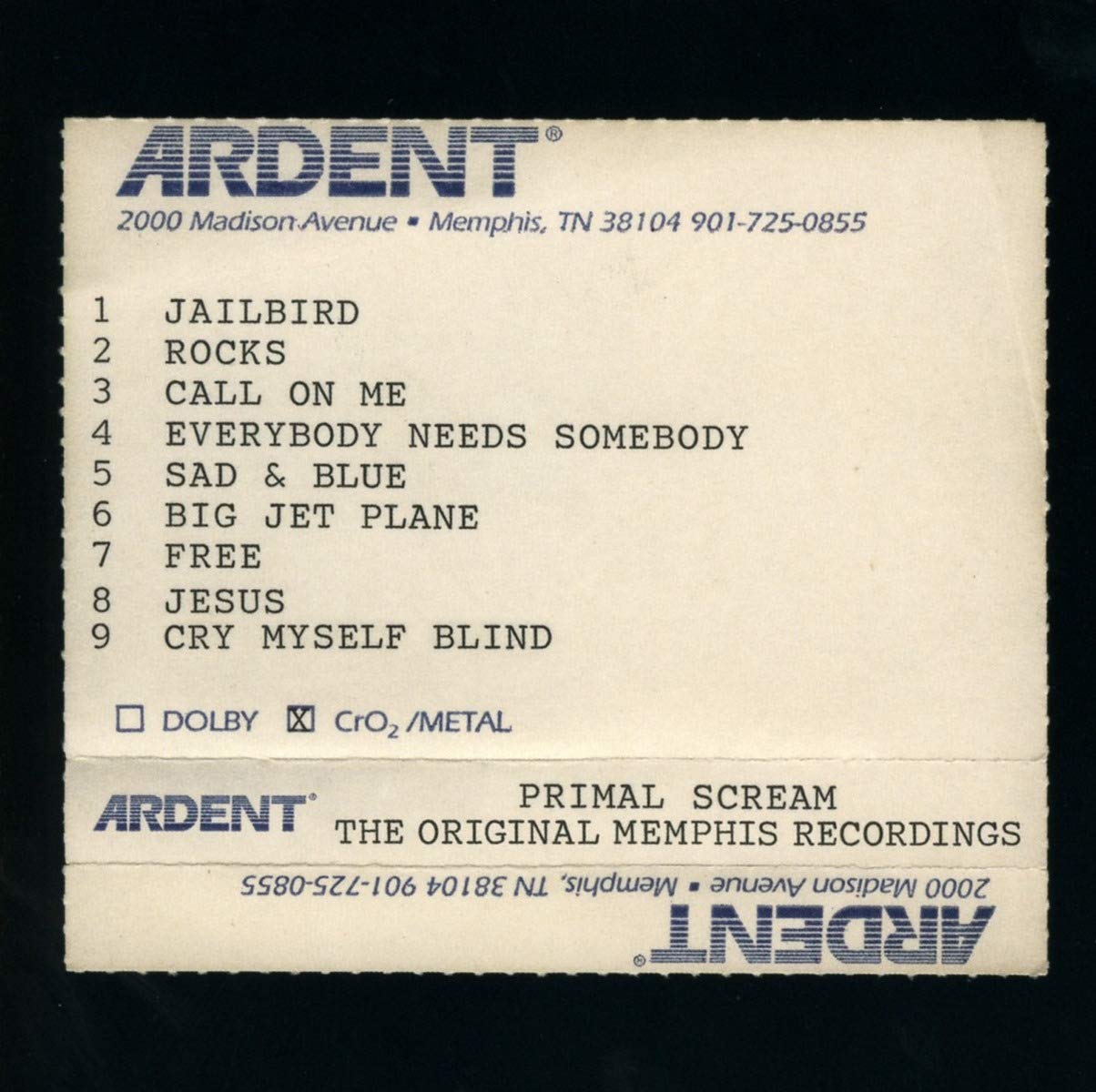
After that, the master tapes for Tom Dowd’s Memphis’ sessions went missing, and were thought to be lost for good. That was until they were discovered in Andrew Innes basement and reissued as Give Out But Don’t Give Up: The Original Memphis Recordings, which is a two LP set that has just been released by Sony Music. The first LP features nine songs recorded in Memphis, while the second LP features jams, rehearsals and alternate takes. It’s a fascinating insight into Primal Scream’s much lamented lost album.
Give Out But Don’t Give Up: The Original Memphis Recordings takes the listener back to Memphis when Tom Dowd brought out the best in Primal Scream who recorded what could’ve been their second classic album, It features nine songs lasting forty-five minutes, where Give Out But Don’t Give Up: The Original Memphis Recordings Bobby Gillespie and Co, combine blues, rock and Southern Soul as they switch between rockers and ballads on Give Out But Don’t Give Up: The Original Memphis Recordings which ls a reminder of the album that got away for Primal Scream and could’ve transformed their career.
Primal Scream-Give Out But Don’t Give Up: The Original Memphis Recordings-Vinyl.
]
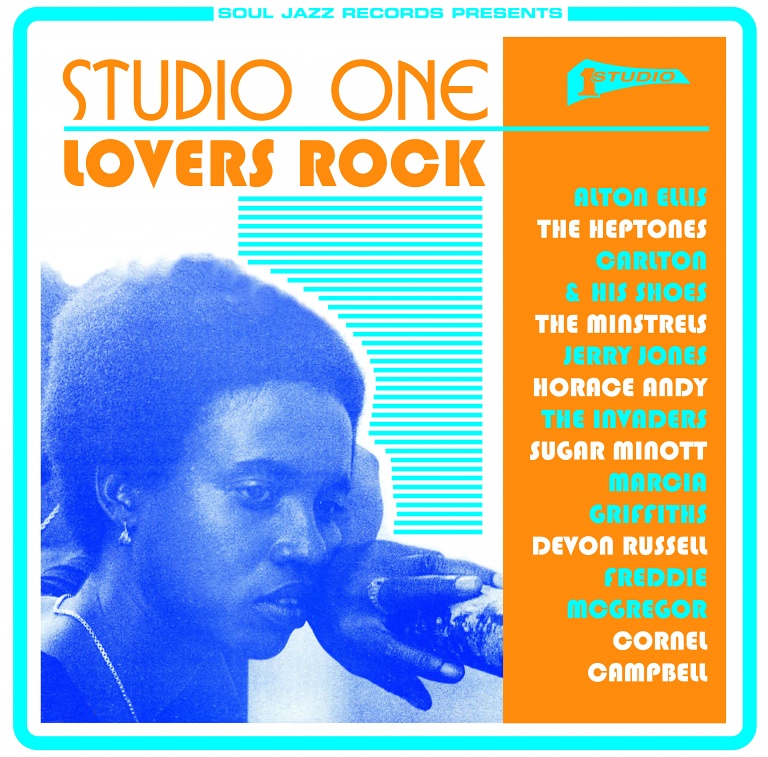
STUDIO ONE LOVERS ROCK.
STUDIO ONE LOVERS ROCK.
Studio One Lovers Rock.
Label:Soul Jazz Records
Twenty-six years ago in 1992, Stuart Baker founded Soul Jazz Records in London, England to draw “cross cultural connections between various music genres.” This included Brazilian music, dub, jazz, Latin, reggae, ska and soul. Many of these compilations, especially the reggae compilations were released to plaudits and praise. However, Soul Jazz Records weren’t content to sit on their laurels.
Gradually, Soul Jazz Records started looking at other musicals genres ranging from Chicago House, electronica, post punk and world music. Since then, critical acclaim has come Soul Jazz Records’ way and they’re renowned for the quality of the compilations that they release. This includes their reggae compilations including Soul Jazz Records’ latest release Studio One Lovers Rock which features eighteen tracks.
These tracks were recorded at Clement Dodd’s Brentford Road studio in Kingston, Jamaica which was where many of reggae’s biggest names recorded, including those signed to Studio One. Among them were Alton Ellis, Freddie McGregor, Horace Andy, Marcia Griffiths, Sugar Minott and The Heptones. They’re just some of the names on Studio One Lovers Rock, which in the late-sixties changed reggae.
The lovers rock sound came to prominence in the late-sixties, and saw artists and bands fuse the then rocksteady sound with the sweetest of harmonies. They featured on covers of soul songs and even disco tracks. These cover of familiar songs portrayed love and harmony as two lovers sit side-by-side as the sun sets Kingston.
Providing a soundtrack could be the eighteen songs on Studio One Lovers Rock. This includes disco mixes of Alton Ellis’ Tumbling Tears which opens the compilation and is joined by Carlton and The Shoes’ Let Me Love You and The Heptones’ My Ting A Ling. Despite being given a disco mix, the music is still soulful and romantic.
That is the case with soulful, romantic sounding songs like Jerry Jones’ Oh Me Oh My, The Invaders’ Soulful Music, Sugar Minott’s Ghetto Girl and Marcia Griffiths’ Truly. They’re joined by Devon Russell’s dub-tinged My Woman’s Love which is a soulful paean which is followed by Billy Cole’s Rock All Night.
A beautiful song and welcome addition is Cornel Campbell’s Didn’t I. Horace Andy’s Wanna Be Free isn’t the most romantic and is a tale of love gone wrong. Another beautiful and hopeful song is The Righteous Flames’ I Was Born To Be Loved which closes Studio One Lovers Rock, which is another lovingly curated compilation from Soul Jazz Records.
They’ve been releasing top quality compilation for three decades, and Soul Jazz Records’ reggae compilations are some of their finest and most popular releases. The reggae realises have been released to plaudits and praise and widespread critical acclaim. Studio One Lovers Rock is no different and features an all-star case who recorded Clement Dodd’s Brentford Road studio in Kingston, Jamaica and provided a timeless soundtrack that lovers the world over will enjoy even today.
Studio One Lovers Rock.
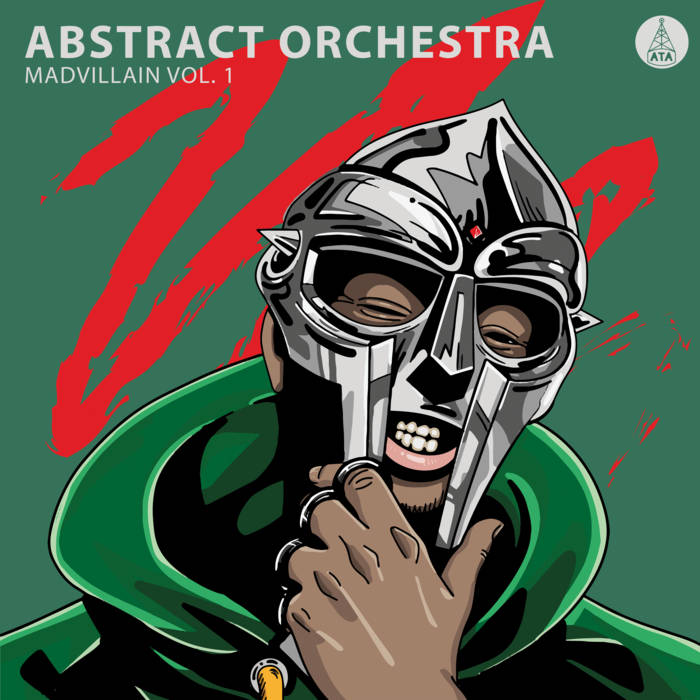
ABSTRACT ORCHESTRA-MADVILLAIN VOLUME 1.
Abstract Orchestra-Madvillain Volume 1.
Label: ATA.
On the ‘30th’ of June 2017, the Abstract Orchestra, who are led by saxophonist Rob Mitchell, released their debut album Dilla to plaudits and praise. Buoyed the response to Dilla, the Abstract Orchestra headed out on a lengthy tour of Britain where the all-star hip hop band’s music found a new and wider audience.
Just eight months later in February 2018 the Abstract Orchestra released their new single New Day which featured Illa J. By then, critics, cultural commentators and tastemakers had been won over by one of the hardest working bands on the live scene.
Now, nine months later, the Abstract Orchestra have just released their much-anticipated sophomore album Madvillain Volume 1 on the ATA label. It’s sure to be welcomed by the Abstract Orchestra’s large and loyal fanbase who will embrace Madvillain Volume 1 which builds on their debut album and features some of the top musicians on the north of England’s jazz scene. T
Since the release of Dilla in June 2017, the Abstract Orchestra have been familiar faces in concert halls across Britain where they showcase their unique sound. Abstract Orchestra is based on the classic big band sound, and features some of the top musicians from the north of England’s jazz scene. Their saxophones, trombones and trumpets have accompanied everyone from Jamiroquai, Mark Ronson and Roots Manuva to Amy Winehouse, Corinne Bailey Rae and Martha Reeves right through to John Legend and The Roots. Now though, they play together as the Abstract Orchestra, who have been inspired by various artists.
This includes live performances of The Roots with Jay-Z, Miguel-Atwood Ferguson’s forty piece orchestral arrangements the work of J Dilla. The combination of classic arranging techniques are combined with modern loop-based structures which breathing new life and meaning into familiar tracks on Madvillain Volume 1.
Here, the Abstract Orchestra pickup where they left of on Dilla, and take a similar approach. This is the same approach that MF Doom and Madlib aka Madvillain took when they collaborated on the albums Madvillainy and Madvillain. Part of this approach was sampling.
On Madvillain Volume 1, Abstract Orchestra samples everyone from Sun Ra and Stevie Wonder to Bill Evans, Dr Lonnie Smith, Freddie Hubbard, George Duke and Quincy Jones. These samples are woven into the rich musical tapestry that is Madvillain Volume 1, which has a jazz-tinged sound and ethos. It features eight tracks which were deconstructed and reimagined by the Abstract Orchestra and recorded live in the studio, with hardly any overdubs. That is quite remarkable given the complexity of Madvillain Volume 1 which is a multilayered genre-melting album.
On Madvillain Volume 1 the Abstract Orchestra explore the jazz TV soundtrack and film score aspect of the original work. This they combine with classic big band writing whilst focusing on improvisation. Listen carefully and the influence of Quincy Jones, Lalo Schifrin and David Shire who wrote the soundtrack to The Taking of Pelham 123 can be heard. However, bandleader and saxophonist Rob Mitchell makes sure to create his own unique and inimitable sound that sits somewhere between jazz and hip hop.
The best way to describe the music on Madvillain Volume 1 is somewhere between Madlib’s production and Quincy Jones’ writing. This results in an album that combines the cinematic sound of library music with jazz, hip hop and funk. There’s even a nod to many a seventies cop show soundtrack on Madvillain Volume 1.
It features music which veers between beautiful and lush to broody, moody and menacing and other times angular and dissonant. Always though the music on Madvillain Volume 1 continues to captivate and will appeal to anyone who likes hip hop, jazz, library music or soundtrack albums.
Sometimes during Madvillain Volume 1 the influence of both Quincy Jones and Lalo Schifrin can be heard,and it seems both men have influenced and inspired bandleader and arranger Rob Mitchell on Madvillain Volume 1. He surpasses himself on the Abstract Orchestra’s much anticipated sophomore album Madvillain Volume 1, which is a career defining album from Britain’s all-star hip hop big band whose music deserves to find an even wider audience.
Abstract Orchestra-Madvillain Volume 1.
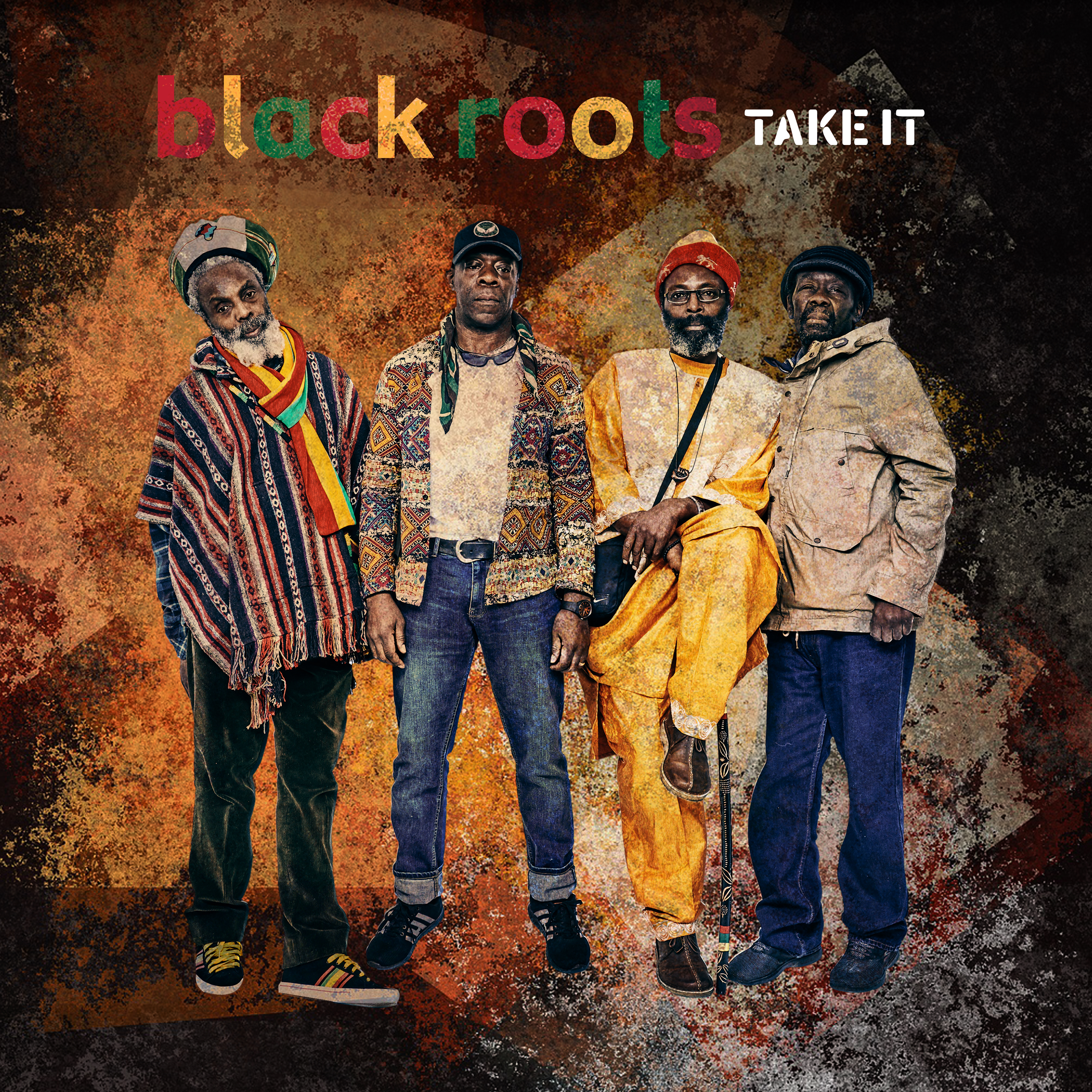
BLACK ROOTS-TAKE IT.
Black Roots-Take It.
Label: Nubian Records.
Within the British reggae scene, Black Roots are viewed as respected elder statesmen who have been together since 1979. During the last thirty-nine years, Black Roots have been making music that is powerful and full of social comment. That’s the case on their new album Take It, which was recently released on Nubian Records. It features eleven new songs, where Black Roots highlight injustice and speak up for the poor, disenfranchised and dispossessed. This is something that Black Roots have been doing since they were first formed in 1979.
As the Black Roots story began in 1979, change swept across Britain on 3rd May 1979. Margaret Thatcher was elected Prime Minister with a majority of sixty. Britain now had a Conservative government for the first time since 1974. Among the interested onlookers were the members of Black Roots who wondered what the future held for them, and the rest of their generation?
By the early eighties, many people had discovered that Britain wasn’t a particularly pleasant place to live in anymore. Especially the unemployed, disabled, poor or elderly. They were all part of an underclass who it seemed, were despised by the right-wing Thatcherite government. Britain in the words of the politicians was “broken.”
Unemployment was over two million, and Inflation was rising and the future looked bleak. To make matters worse, poverty and racism was rife. It was no surprise that eventually, riots broke out in Liverpool, London, Leeds, Sheffield and Birmingham. Some of the commentators saw this as the disenfranchised fighting back.
Many of those who fought back, thought there was no other way. They had had enough, a and could no longer could they walk the streets without being constantly stopped and searched.
Stop and search was one of the most controversial pieces of legislation the police had been using. The powers to stop and search had been instigated under The Vagrancy Act 1824. The new powers enabled police officers to stop and search anyone based upon “reasonable suspicion” that an offence had been committed. In reality, stop and search was often used a fishing trip by the police. To make matters worse, in many inner cities, a disproportionate amount of young black men were victims of stop and search. They had done nothing wrong, and instead, were British citizens going about their lawful business in a peaceful manner. This wasn’t going to end well.
That was the case in 1981, “the year of the riots.” Across England, communities literally exploded. Often, when the dust settled, heavy-handed policing was to blame. Especially, when it came to the use of stop and search. So on 27th August 1981, the power to stop and search was repealed when the Criminal Attempts Act 1981 received assent. Maybe things were starting to change?
That looked unlikely. In 1980, Margaret Thatcher gave her “the lady’s not for turning” speech. It seemed the Conservatives were not going to be derailed. Those that took to the streets saw a government that seemed unwilling to listen, never mind change. The only alternative was to make the government listen.
The chances of this happening were slim. Those that weren’t poor, unemployed, disabled or elderly weren’t willing to upset the apple cart. They led comfortable lives in middle class, middle England. Safe in the suburbs, they weren’t willing to stand shoulder-to-shoulder with the disenfranchised and dispossessed. So it was left to writers, philosophers, poets and musicians to provide a voice for the disenfranchised and dispossessed. This would include Black Roots.
By 1983, the eight piece Bristol-based band were one of the rising stars of the reggae scene. Black Roots had toured the length and breadth of Britain, and soon, had a large following. Especially, in colleges and universities. Audiences were won over by what Black Roots described as “militant pacifism” roots reggae. It struck a nerve with the bright young minds who were hoping to graduate from colleges and universities across Britain, and enter the workplace. In 1983, this seemed unlikely.
Unemployment was at record levels since the depression. Still the ‘lady’ wasn’t for turning. Things were at breaking point in Britain. Bristol, Black Roots’ home city was no different. Unemployment, poverty, racism, disquiet and unrest were almost omnipresent. However, the disenfranchised and dispossessed didn’t have a voice. The eight members of Black Roots decided they would became their voice.
Later in 1983, Black Roots released their eponymous debut album. It featured Black Roots’ unique brand of militant roots reggae. They highlighted injustice and the way large parts of communities had become alienated by the political reform introduced by the Thatcher government. Britain it seemed, was broken; maybe even beyond repair?
That’s how it looked right up until 1985 when many parts of England were like a powder keg, just waiting to explode. Often it did as the disenfranchised and dispossessed felt they had no option but to take to the streets, and riots broke out. However, as 1985 drew to a close, the riot years were over.
By 1986, a lot had happened to Black Roots. They continued to tour constantly and had also released their sophomore album The Front Line in 1984. This seemed fitting, as in parts of Britain, it was like a war zone, with the disenfranchised and dispossessed taking to The Front Line in an effort to have their voice heard. Black Roots were also The Front Line, but used their music to provide a voice for the disenfranchised and dispossessed. Someone was listening.
Soon, Black Roots were making their way to Broadcasting House to record a series of sessions for Radio 1. These sessions allowed Black Roots’ music to be heard by a much wider audience than they played to in several tours. This was a huge break. So was when highlights of the sessions were released in 1985 as the Black Roots ‘In Session’ cassette. By the end of 1985, things were looking up for Black Roots.
The remainder of the eighties saw Black Roots continue to tour and record. Their third album All Day All Night, was released in 1987, but was their first album for Nubian Records. It would become home to Black Roots for over a decade.
When Ina Different Style was released on Nubian Records in 1988, it marked a stylistic change from Black Roots. This was their first adventure in dub. It wouldn’t be their last. Before that Black Roots would release two more albums.
The first was their first live album, Live Power. Released in 1989, Live Power was a reminder of how good a live band Black Roots were. That was no surprise. Black Roots had spent much of the last ten years touring Britain. They were a familiar face in venues the length and breadth of Britain. Especially in colleges and universities, where their songs about injustice would be welcomed and embraced. Some of the people in the audience could they hoped, in the future, make a difference and make Britain a better place.
As the nineties dawned, Black Roots were now into their third decade making music. However, it had been nearly three years since Black Roots had released a studio album. It was time to rectify this.
Later in 1990, Natural Reaction, another album of roots reggae was released by Black Roots. This was the Bristol-based eight-piece’s fifth studio album. It’s not just social comment than can be found on Natural Reaction. There’s emotion and spiritually on an album that was well received by critics. This didn’t stop Black Roots going for another adventure in dub.
Dub Factor: The Mad Professor Mixes was released in 1991, and was Black Roots’ second dub album. Just like Ina Different Style, this latest adventure in dub was well received. It seemed Black Roots were willing to experiment, so that their music stayed relevant. This included collaborating with some familiar faces within the British reggae scene.
Two years passed before Black Roots returned with With Friends in 1993. It was a collaboration with some of the biggest names in the British reggae scene. This included Dub Judah, Mickey Forbes, Trevor Dixon and B.B. Seaton. They joined Black Roots on ten new tracks. While this was a welcome release, and one that was well received by critics and cultural commentators, some of Black Roots’ fans wondered when they would next release a noter studio album?
When Black Roots announced the release of their next album in 1994, the wait for a studio album went on. Fans weaned on militant roots reggae discovered that the next album was Dub Factor 2-The Dub Judah Mixes. The wait went on in 1995, when Dub Factor 3-“In Captivity” Dub Chronicles-Dub Judah/Mad Professor Mixes was released. Still the wait for a studio album continued.
Two years became three and four. Still there was no sign of another studio album from Black Roots. Was this the end of the group once hailed as “the next great hope for [British] reggae?” It seemed like it when Black Roots decided to call time on their career in the mid-nineties.
Nothing was heard of Black Roots until the next millennia. Then in 2004, a compilation On The Frontline was released. Things went all quiet until 2011, when The Reggae Singles Anthology was released on Bristol Archive Records. Some critics thought that was release meant it was the end of the road for Black Roots. If it was, The Reggae Singles Anthology a limited edition release, seemed a fitting farewell to one of the most eloquent of the British roots reggae groups. Little did anyone realise that Black Roots were about to make a comeback.
This came in April 2012, when six of the original members of Black Roots began to record an album of new material, On The Ground. It was well received upon its release in 2012, some nineteen years after their Black Roots’ previous studio album, With Friends. Belatedly, Black Roots were back, just in time. They were the musical superheroes with a social conscience.
Two years previously, a Conservative-Liberal Democrat coalition came to power in 2010. By 2012, the junior partners were enjoying the once in a lifetime opportunity to be part of the decision making process. Suddenly, principles forgotten about as the heady scent of power hung in the air. With a seat at the Cabinet at stake, the disenfranchised and dispossessed were forgotten about. The worst that could happen to the junior partners was they loose their seats at the next election, and retire with a healthy pension and string of directorships.
That’s what happened in 2015. By then, Black Roots had released another new album Ghetto Feel in 2014. It was released on the Soulbeats’ label. The voice of the disenfranchised and dispossessed were back, and were determined to make a difference. However, in 2015, things took a turn for the worse.
Politically, Britain lurched to the right. Many of the junior partners lost their seats, and retired with their pension pots and directorships. This left the the most right wing government in living history with a mandate to govern. Things were about to get messy, very quickly.
The newly elected government announced their plans for the age of austerity. They were determined to go further than previous Conservative governments had gone. Public spending wasn’t just cut, it was slashed. Especially on the welfare state. Hardest hit were the unemployed, disabled, poor and elderly. Suddenly, they that found themselves choosing between eating or heating their home. However, the Conservatives weren’t finished yet.
With wars raging around the Middle East and North Africa, many refugees were came to Britain seeking political asylum from tyrannical regimes. However, they discovered that there was no room at the inn. This was after all, the age of austerity. For many onlookers and commentators this was just the straw that broke the camel’s back. This included Black Roots.
They returned to the studio in 2015, and recorded eleven new songs. These songs became Son Of Man. Just like on previous albums, Black Roots combine social comment, melodies and hooks on Son Of Man. Accompanied by harmonies and horns, Black Roots deliver lyrics that are uncompromising, and provide a voice for the poor, disenfranchised and dispossessed. Especially the victims of the age of austerity and the refugees fleeing the Middle East and North Africa. These are two of the subjects that feature on Son Of Man which was released to plaudits and praise. The big question was when would the veterans of British reggae return with a new album
As November 2018 dawned, Black Roots made a welcome return with their new album Take It. It’s another album full of searing social and political comment, while Black Roots sing about African emancipation on other tracks on Take It..
Just like their previous albums, Black Roots message on Take It is one of unity and inclusiveness, encompassing everyone, regardless of their race and religion. Black Roots message of unity encourages the listener to seek out and speak about knowledge, become empowered and unite to face and fight against those who enslave and oppress those that are disenfranchised, poor and weak. This is particularly fitting and poignant.
Across the globe, right wing governments have come to power in many countries. In many of these countries the rights of minorities, refuges and those trapped in poverty have been infringed and are constantly and shamefully being diluted. Black Roots document this on Take It, and on Children Of The World believe that children should be protected as they are the future of the world. Sadly, across the world children are starving, displaced and living in poverty, which Black Roots highlight on Take It.
A subject that Black Roots revisit on Take It is Africa. They believe the world won’t be free until Africa is, where poverty shamefully, poverty is still rife in a continent that is sadly, is home to some of the most disadvantaged and disenfranchised people in the world.
Elsewhere on Take It, Black Roots turn their attention to the subject of war which they believe is fuelled by greed. That may be the case in some cases, but not every war has been fuelled by greed as historians will be quick to point out.
Two of the most controversial songs close Take It, including Reincarnation, which is the penultimate song on the album. It finds Black Roots referring to President Trump as the reincarnation of Hitler. Then on Tories which closes Take It
Black Roots turn their attention to the Conservative Party who currently govern Britain. Black Roots have previously railed against the Conservative Party’s austerity policy, but this time refer to the government as false prophets whose present to the nation is oppression and false imprisonment. This is a thought provoking way to end Take It, which marks the return of Black Roots.
On Take It, Black Roots continue to provide a voice for the poor, disenfranchised, dispossessed and disadvantaged. This is what they’ve been doing that since they released their eponymous debut album in 1983. Since then, they’ve doing this eloquently, and do this for the most part Take It.
Black Roots highlight injustice, while speaking for those who can’t speak for themselves. This is the voiceless underclass who can’t fight back in countries around the world. Thirty-nine years after Black Roots continue to provide a voice for those who have none.
This they continue to do with their unique and inimitable brand of melodic roots reggae on Take It. That is the case from the opening bars of Take It through songs like Forgive Them, Be, Common Man, Children Of The World and How Long. These songs find Black Roots rolling back the years on Take It, which is another carefully crafted album from the grand old men of British reggae. Black Roots continue to combine social and political comment with songs about African emancipation on Take It and provide a voice for those who have nome.
Black Roots-Take It.
IF MUSIC PRESENTS: YOU NEED THIS- WORLD JAZZ GROOVES.
If Music Presents: You Need This-World Jazz Grooves.
Label: BBE.
Release Date: ‘23rd’ November 2018.
Compilation Of The Week.
Recently, If Music supremo Jean-Claude has been on something of a roll, compiling a trio of critically acclaimed compilations for BBE. This included two volumes of A Journey into Deep Jazz and an introduction to Black Saint and Soul Note Records. Now Jean-Claude is about to release If Music Presents: You Need This–World Jazz Grooves on BBE on the ‘23rd’ November 2018, which he compiled with record dealer and specialist music expert Victor Kiswell. Together the pair have compiled the perfect compilation to celebrate fifteen years of IF Music.
This is quite a feat considering how difficult the last fifteen years have been for small independent record labels. Still though, Jean-Claude continues to trade from his London record shop IF Music. During the last fifteen years, Jean-Claude has been many DJs and producer’s record dealer of choice. and the man they go to find the rarest of records. He can usually find all sorts of rarities, hidden gems and obscurities for DJs and producers. So can his fellow compiler and record dealer, Victor Kiswell.
While many DJs and producers know Victor Kiswell as a globe-trotting crate digger record dealer, he’s also a specialist music expert and occasional star of television. Victor Kiswell appeared on the Cairo edition of Boiler Edition. That was a one-off, as intrepid explorer Victor Kiswell continued his search for black gold, vinyl.
Just like Jean-Claude, all the time Victor Kiswell had spent crate-digging when they compiled If Music Presents: You Need This–World Jazz Grooves. It features tracks from Europe, the Americas, Africa and Asia, and includes several surprises during this lovingly curated eight track compilation of jazzy grooves.
Opening If Music Presents: You Need This–World Jazz Grooves is Billy Bang’s Illustration a searing slice of social commentary from New York in 1978. It’s a truly powerful track rom the Watts Prophets influenced spoken word vocal which tragically, is just as relevant in 2018 as it was back in 1978.
Michael Sardaby was born in 1935 in Martinique, and learnt to play the piano when he was five years old. Soon, he was a regular fixture in his father’s brasserie in the Fort-de-France. It was almost inevitable that Michael Sardaby forged a career as a musician and in 1972 released his sophomore albums In New York. It features the cinematic Martinica, which paints pictures of long summer nights in Martinique as it breezes along.
In 1990, trumpeter, percussionist and vocalist Edouard Ignoln aka Kafé, released Santiman-Ka (Jili). One of the highlights of this genre-melting albums that fuses folk, funk, jazz and Latin is Fonetik a Velo, and is a welcome addition to IF Music Presents: You Need This–World Jazz Grooves.
So is The Theo Loevendie Consort’s 1969 track Timbuktu from their album Mandela. This Dutch supergroup features some of the country’s top musicians. Another talented group were The Jazz Committee For Latin American Affairs who contribute Ismaa, while Armand Lemal’s Souffle (Part II) showcases the considerable talents of the French drummer and percussionist.
Next stop on this musical journey is Japan which was home to the late Masabumi Kikuch who was one of the country’s greatest jazz musicians. A reminder of this is Pumu #1 from the 1978 album But Not For Me.. Closing If Music Presents: You Need This–World Jazz Grooves is IT Twenty Five by Joe Malinga and Southern African Force which is a reminder of how hard life could be for South Africans in 1989. It’s a powerful and poignant way to close this lovingly curated compilation.
Jean-Claude has released three critically acclaimed albums on BBE, and that number will rise to four after the release of If Music Presents: You Need This–World Jazz Grooves. This eight track compilation was compiled with the help of Victor Kiswell and will be released by BBE on the ‘23rd’ November 2018. The two crate diggers and record dealers have found eight slices of oft-overlooked jazz, ranging from rarities and hidden gems to anomalies and obscurities that are part of If Music Presents: You Need This–World Jazz Grooves, which is a lovingly curated compilation that is the perfect way for IF Music to celebrate its fifteenth anniversary.
If Music Presents: You Need This–World Jazz Grooves.
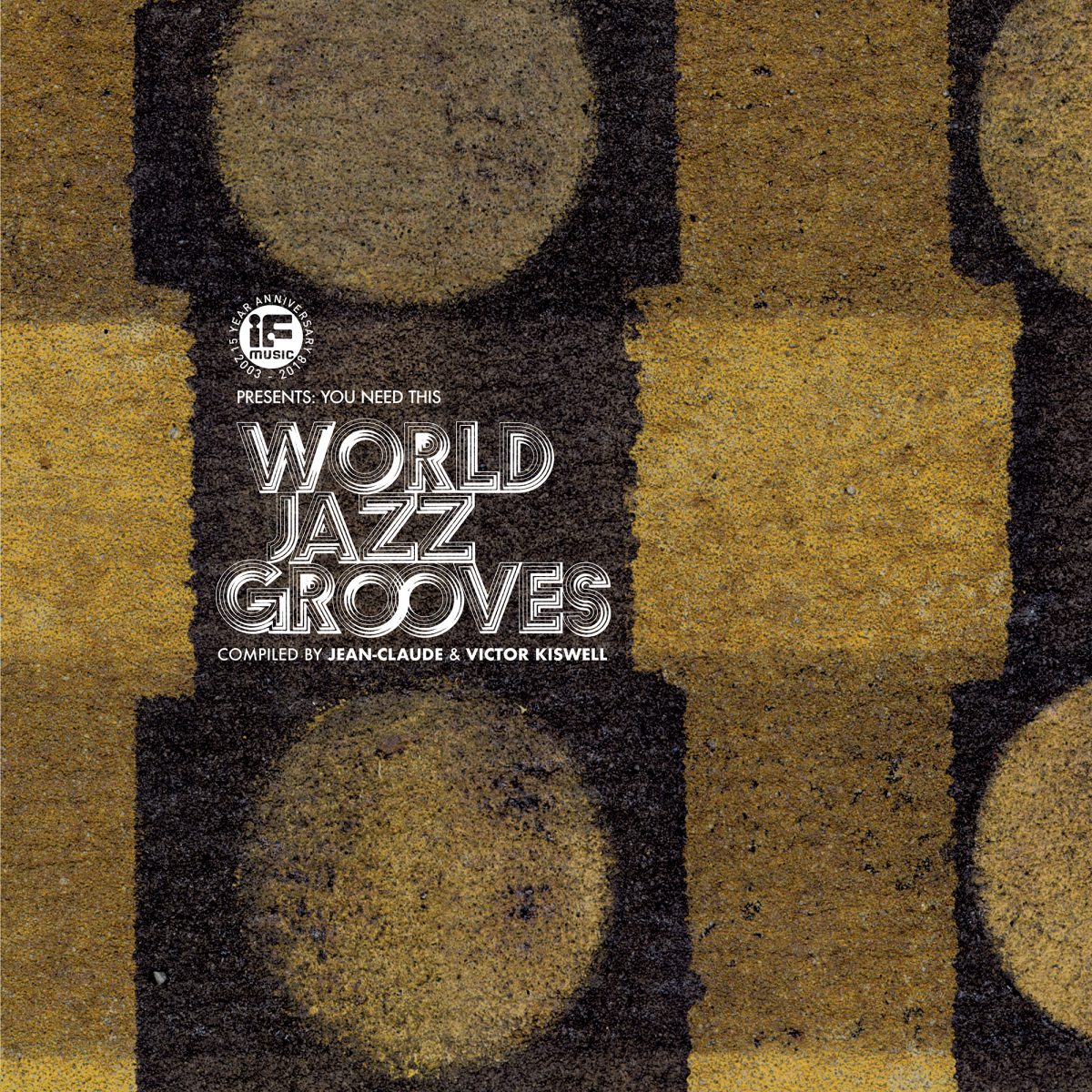
RUNNING THE VOODOO DOWN 2: PSYCHROCKFUNKSOULJAZZ 1965-77
Running The Voodoo Down Volume 2-Psychrockfunksouljazz 1965-77
Label: TAD.
Release Date: ‘9th’ November 2018.
Just nineteen months after the release of the critically acclaimed Running The Voodoo Down compilation, the much-anticipated follow-up Running The Voodoo Down Volume 2 will be released on the ‘9th’ November 2018 by TAD. Running The Voodoo Down Volume 2 has been complied by Dean Rudland and Tony Harlow, and finds the two curators looking at a decade where African-American music was heading in a variety of different directions thanks pioneering musicians. All this took place against a backdrop of economic, political and social change within America.
Running The Voodoo Down Volume 2 is a lovingly curated complain that features fifteen tracks from some of the biggest names including John Coltrane, The Byrds, Herbie Hancock, The Temptations, Dr John and Isaac Hayes. They’re joined by MC5, Joe Zawinul, Shuggie Otis, Melvin Van Peebles and Bob Thiele who all released groundbreaking music which never found the audience it deserved. It was only later that the tracks which featured Running The Voodoo Down Volume 2 were rediscovered by crate diggers, DJs, discerning record collectors and several generations of artists who the music influenced. However, between 1965 and 1977 these fifteen tracks were part of the soundtrack in America when the times they were a changing.
Especially by the mid-sixties when music started to change, and became darker, and carried a political or social message. This was very different to the twee three chord pop were rhyming couplets of a few year earlier. Now musicians and bands wanted to be agents for change and make a difference in America where racism was rife while poverty and unemployment were rising. To make matters worse, the Vietnam War raged and young Americans died fighting a war that wasn’t their making.
Meanwhile, music was changing including jazz, led by one of its pioneers John Coltrane. He realised that jazz had to evolve and move away from the hard bop and the organ trios that gave kitsch a bad name. John Coltrane and his Quartet recorded his groundbreaking classic album A Love Supreme, which was released in December 1965 and is regarded as one of the most important post war jazz albums. A Love Supreme Pt 1 Acknowledgement opens John Coltrane’s critically acclaimed and influential epic, which fittingly opens Running The Voodoo Down Volume 2. It’s the perfect start to the compilation and sets the bar high.
The Byrds were also musical pioneers, who were inspired by the energy of John Coltrane’s modal classic My Favourite Things, Ravi Shankar, space travel and drug culture on their perfect pop single Eight Miles High. Drug culture obviously influenced Shuggie Otis when he wrote and recorded Aht Uh Mi Head. It’s a reminder of one of the most talented but sadly underrated musicians of his generation, Shuggie Otis.
Very different to Shuggie Otis is the raw energy MC5. They released their debut album Kick Out The Jams in the 1969. It’s a genre-melting cult classic that features the proto-punk of Starship. However, like much of the music on Running The Voodoo Down Volume 2 it only influenced musicians and found an audience at a later date.
Meanwhile, between 1965 and 1977 musicians were being inspired by everything from music to Afrocentric politics which inspired Lou Bond’s To The Establishment. Jazz pioneer Miles Davis, whom had embraced fusion inspired may of his sidemen to form their own bands, including Joe Zawinul who contributes In A Silent Way to Running The Voodoo Down Volume 2. Very different is the innovative free jazz of guitarist Sonny Sharrock’s Black Woman which was the title-track to his 1969 album. Other jazz tracks include Equinox by vocalist Sarah Webster Fabio 1977 eponymous album. Both are welcome inclusions to Running The Voodoo Down Volume 2 and help document how music was changing during that period.
Although music was changing, Jimi Hendrix groundbreaking and genre-melting albums were still influencing many a musician. This included Jimi Macon who pays homage to his hero with Jimi’s Guitar Rap. By the seventies the influence of the late Jimi Hendrix could be heard in many Blaxploitation soundtracks.One of the pioneers of Blaxploitation was Isaac Hayes who contributes Do Your Thing. One of the classic Blaxploitation soundtracks as Melvin Van Peebles’ Sweet Sweetback’s Baadasssss Song (An Opera) which features Sweetback’s Theme. It’s a reminder of a classic Blaxploitation soundtrack.
Genre-melting describes Dr John’s Zu Zu Mamou, while there’s a darkness and drama to the Chairmen Of The Board’s Life and Death In The G&A Suite. Very different is The Temptations’ hopeful sounding Ungena Za Ulimwenga (Unite The World); Closing Running The Voodoo Down Volume 2 is an edited versions of Bob Thiele’s Lament For John Coltrane. It’s thought provoking end to this lovingly curated compilation
Running The Voodoo Down Volume 2 is without doubt one of the best and most eclectic compilations of recent months. It will be released on the ‘9th’ November 2018 by TAD, and features everything from Blaxploitation, free jazz, funk, psychedelia, rock and soul. Curators Dean Rudland and Tony Harlow have compiled a compilation that oozes quality, and Running The Voodoo Down Volume 2 is a truly eclectic collection of groundbreaking music that documents what was an important period in modern American history which saw a country change.
Running The Voodoo Down Volume 2-Psychrockfunksouljazz 1965-77
HUGO FATTUOSO-Y BARRIO OPA-VINYL.
Hugo Fattoruso-Y Barrio Opa-Vinyl.
Label: Far Out Recordings.
Composer, arranger and multi-instrumentalist Hugo Fattoruso, was born in the Uruguayan capital of Montevideo on the ‘29th’ June 1943, and formed his first band Trío Fattoruso in 1952 aged nine. Sixty-six years later and Hugo Fattoruso is still involved in music and recently, released a new album Y Barrio Opa on vinyl Far Out Recordings. It’s the latest album from an artist and musician who has dedicated his life to music, and released an eclectic selection of albums. Y Barrio Opa is just the latest release from Hugo Fattoruso one of the biggest names in Uruguayan music. His story began in 1952,
Hugo Fattoruso joined the family group Trío Fattoruso as a nine-year old in 1952, and what was his first ever band, was together for six years. However, in 1958 it looked as if it was the end of the road for Trío Fattoruso. Nothing more was heard of the group until the dawn of the new millennia, when Hugo Fattoruso would reformed Trío Fattoruso in 2000. By then, his musical career had six decades and he was a veteran of many groups.
This included The Hot Blowers who were formed in 1959, when Hugo Fattoruso was sixteen. They were together for four years, until the band went their separate ways in 1963.
Los Shakers
Another year passed before Hugo Fattoruso and his brother Osvaldo formed the four piece band Los Shakers. This came after they saw the film A Hard Day’s Night which starred The Beatles. They would heavily influence Los Shakers musically, and the band even copied the way the Fab Four dressed.
Just a year after Los Shakers was founded, the band signed to Odeon imprint of EMI in Argentina in 1965 and became part of the Uruguayan Invasion of South America. When Los Shakers released their debut single Break it All later in 1965, the group was briefly billed as The Shakers. However, when they returned with their eponymous debut album in 1965 they were now called
Los Shakers.
In January 1966, Los Shakers made their one and only attempt to break into the lucrative American market when they released Break It All. However, the album failed to make any impact in America, Los Shakers decided to concentrate on Latin America and especially the Argentinian market.
Ten months later, in November 1966, Los Shakers released Break It All, which was their breakthrough album. By the, Los Shakers were being referred to in the press as “The South American Beatles.” This was what Hugo and Fattoruso had been working towards. They may have achieved their goal, but some critics believed that they were merely copying The Beatles, and their music lacked originality.
These comments were ironic, because when Los Shakers released their third album La Conferencia Secreta del Toto’s Bar in 1968, it was hailed as the Latin American equivalent of Sgt. Pepper’s Lonely Hearts Club Band. However, Los Shakers’ record label neither liked nor approved of the new sound, and failed to promote the album. For Los Shakers this was the end of the road.
Opa.
In 1969, Hugo Fattoruso left Uruguay behind, and moved to New York where he founded Opa. They fused Candombe which is the traditional rhythm of Uruguay with rock, jazz, funk and various other Latin American rhythms to create an irresistible and inimitable Afro-Uruguayan sound. This would influence and inspired many artists over the next few years and beyond.
Before that, Hugo Fattoruso worked with Airto Moreira and played on Fingers, which was released in 1973 and became one of the percussionist’s most successful albums. Three years later, in 1976, played on Flora Purim’s groundbreaking album. However, the same year, Opa released their much-anticipated debut album.
Seven years after Opa was founded, they released their critically acclaimed debut album Goldenwings in 1976. Buoyed by its reception Opa returned with their sophomore album Magic Time following in 1977. It was released to plaudits and praise and it wasn’t until 1981 that Opa realised A Los Shakers four years later in 1981. Five years later, Hugo Fattoruso released his solo album Hugo Fattoruso with Opa’s fourth album En Vivo following in 1988. By then, Hugo Fattoruso was living in Brazil and had begun a new chapter in his career.
As the nineties dawned, Hugo Fattoruso released his solo album Oriental in, but after that, much of his time was spent working with various Brazilian artists. That was until Opa decided to record a new album, Back Home which was released in 1996. This was Opa’s first album in eight years and was their swan-song.
In 1997 Hugo Fattoruso returned with his first new album in seven years, Homework. However, the highlight of 1997 for Hugo Fattoruso was arranging and working on Milton Nascimento’s 1997 World Grammy Award winning album Nascimento.
Three years later, in 2000, Hugo Fattoruso reformed Trío Fattoruso, and they played together for the first time in forty-two years. Still though, Hugo Fattoruso found time to work on a variety of other projects.
This included his solo album Ciencia Fictiona, which was released in 2004. After that, Hugo Fattoruso spent much of the next five years working with other artists and collaborating on albums with Tomohiro Yahiro, Ray Tambor and Aska Strings. However, in 2011 Hugo Fattoruso returned with Acorde On and followed this up with Fatto In Casa in 2014. Despite turning seventy-one, Hugo Fattoruso was as busy as ever.
Hugo Fattoruso then jailed forces with Leo Maslíah recorded Montevideo Ambiguo, which was released in 2015. That was Hugo Fattoruso’s last release for the best part of three years.
Y Barrio Opa.
The next album that Hugo Fattoruso released was Y Barrio Opa, which was released in 2018, and featured an all-star cast of Uruguayan musicians. This included Hugo Fattoruso’s son Francisco who plays bass on Y Barrio Opa. He’s a talented musician whose followed in his father’s footsteps.
For Y Barrio Opa, Hugo Fattoruso wrote three new compositions and cowrote the other six songs. His new compositions were Botijas, El Romance del Sordo and Llamada Insólita. Hugo Fattoruso wrote Trenes de Tokyo and For You To Be Proud Albana Barrocas and they then penned Candombelek and Candombe Alto with Wellington Silva. Other tracks included the Hugo and Osvaldo Fattoruso composition Antes/Goldenwings which was originally recorded by Opa. It was joined by La del Cheche which Hugo and Christian Fattoruso wrote with Gustavo Etchenique. The other track on Y Barrio Opa was Francisco Fattoruso’s Candombe Beat Funk. These tracks were recorded at the Sondor Studio in Montevideo.
Hugo Fattoruso was joined by Joe Davis the founder of Far Out Recordings, who oversaw production. He watched on as a rhythm section of drummer Tato Bolognini, bassist Francisco Fattoruso and guitarist Nicolás Ibarburu. They were joined by percussionists Guillermo Díaz Silva, Mathías Silva, Wellington Silva and Albana Barrocas who added vocals. Hugo Fattoruso played keyboards, added vocals and took charge of production. With such a talented band accompanying him, it wasn’t long before Y Barrio Opa was completed.
With Y Barrio Opa completed, it was recently released by Far Out Recordings and was Hugo Fattoruso’s first solo album in four years. However, it’s been well worth the wait.
Hugo Fattoruso and his top class band take as a starting point for Y Barrio Opa, Opa’s original sound. To that they add Afro-Uruguayan rhythms, a healthy dose of funk, fusion, jazz harmonies, jazz-funk and Candombe drumming which comes courtesy of the De Silva brothers. They play their part in what’s a captivating, genre-melting album from Hugo Fattoruso… Y Barrio Opa.
It opens with the slow burner La del Cheche which gradually reveals its secrets as Hugo Fattoruso and his band play with a fluidity, drawing inspiration from Opa as they combine elements of funk, fusion, jazz, and jazz-funk with Afro-Uruguayan rhythms. In doing so, this flawless track whets the listener’s appetite for the rest of this musical feast.
This includes Botijas which breezes along as the piano carries the melody, while Hugo Fattoruso scats and his rhythm section unleashes rolling waves of jazzy rhythms. Soon, the band is in full flight, as they play with freedom, fluidity, speed and accuracy creating washes of melodic, genre-melting music.
The carefully crafted Candombe Beat Funk is built around the Fattorusos. Son Francisco ensures the funky, bubbling and percussive arrangement swings before his father’s keyboards enter. These rhythmic movements play starring roles, but it’s Hugo Fattoruso’s keyboards that take centre-stage as he rolls back the years and steals the show as funk meets jazz.
El Romance del Sordo sees the tempo rise, as the rhythm section lock down the groove. Meanwhile a myriad of percussion is part of the backdrop as Hugo Fattoruso unleashes another spellbinding performance. This inspirers guitarist Nicolás Ibarburu who steps forward and delivers one of his finest solos. After that, Hugo Fattoruso plays a flawless fleet-fingered keyboard solo plays a starring role, and he scats, as if he’s not got a care in the world.
The tempo drops on the cinematic, soulful and sultry sounding Trenes de Tokyo. As it meanders and shuffles along revealing its hip swaying, feelgood sound. Next up is Candombelek, where layers of shuffling percussion combine with exotic vocals that bring to mind exotic faraway places. Meanwhile, Hugo Fattoruso’s electric keyboards sit back in the mix, letting the vocals take centre-stage. When they drop out Hugo Fattoruso’s then take centre-stage against the percussive arrangement. The vocals, percussion and keyboards prove to be a potent and successful combination. Candombe Alto is regarded as the partner piece to Candombelek, but is a much more explosive track with searing guitar, urgent Afro-Cuban rhythms and keyboards combining. Hugo Fattoruso plays with speed and accuracy as his keyboards climb and soar high above the arrangement and reaches new heights.
Sci-fi synths and keyboards combine on Llamada Insólita as the rhythm section drop the tempo and the arrangement meanders almost lazily along. However, it’s the keyboards that are at the heart of the arrangement which features futuristic sounds and synths strings. Still, beauty is omnipresent as this melodic and filmic track reveals its secrets.
Antes is another new track which seamlessly gives way to a remake of Goldenwings, which was the title track of Opa’s 1976 eponymous debut album. The track where Opa combined funk and disco was a favourite of DJs and dancers and became a club hit. However, the remake ‘borrows’ and incorporates the melody to Summertime as the track heads in new and unexpected directions. This includes jazz, Latin and rock during what’s another genre-melting track.
For You To Be Proud closes Y Barrio Opa, and fittingly, Hugo Fattoruso’s keyboards play a leading role in this futuristic and filmic track. It’s quite different to previous tracks but shows Hugo Fattoruso’s versatility and ability to innovate.
Y Barrio Opa which was recently released on vinyl by Far Out Recordings, is Hugo Fattoruso’s first album in four years. It finds one of Uruguay’s finest musicians returning with a carefully crafted genre-melting album Y Barrio Opa.
The building blocks for Y Barrio Opa is the Opa sound, and Hugo Fattoruso add Afro-Uruguayan rhythms, a healthy dose of funk plus fusion, jazz harmonies, jazz-funk, Latin, rock and Candombe drumming. It’s a melodic and potent musical potpourri from one of the legends of music Hugo Fattoruso’s whose new album Y Barrio Opa is without his finest post-millennium solo album.
Hugo Fattoruso-Y Barrio Opa-Vinyl.
ONENESS OF JUJU-AFRICAN RHYTHMS-VINYL.
Oneness of Juju-African Rhythms-Vinyl.
Label: Strut.
After five politically charged years living on the East and West coast of America, bandleader James “Plunky” Branch returned to his home town of Richmond, Virginia, where he formed Oneness of Juju won released their Afro-jazz classic‘African Rhythms’ on the Black Fire label in 1975.
Now some forty-three years later Strut have recently reissued a new edition of African Rhythms as a two LP set. It’s an album that wouldn’t have been made if it wasn’t for James “Plunky” Branch’s experiences during the first half of the seventies.
James “Plunky” Branch’s journey began when he enrolled at Columbia University, in New York, where he soon became politically active. This wasn’t unusual at the time, but Columbia University was different and was home many revolutionary political activists, This soon included James “Plunky” Branch.
Before long he was heavily involved in political activities, and was regularly took over buildings belonging to Columbia University and fought in the streets with officers from the NYC Police Department. This wasn’t a phase James “Plunky” Branch was going through and he spent three years a revolutionary political activist. Suddenly, though the fighting became all too real
When James “Plunky” Branch received his call up papers, he did what many of these ‘brave’ revolutionary political activists did and fled, rather than fight for his country.
James “Plunky” Branch headed ti San Francisco which had a much more liberal political climate. Soon, James “Plunky” Branch was spending time with the Black Panthers, who were sympathetic towards George Jackson and Angela Davis. Meanwhile, James “Plunky” Branch made his debut on the city’s music scene in 1971 and began playing at jam sessions.
That was how James “Plunky” Branch met Ndikho Xaba who asked James “Plunky” Branch to join his band Ndikho and The Natives. Not long after this, the band were asked to provide the musical backdrop to Resurrections Of The Dead, directed by Marvin X. Its concept was a mixture of African ritual and the teachings of the Nation of Islam and found American being resurrected with a new African-American identity struck a chord with James “Plunky” Branch who became Plunky Nkabinde.
James “Plunky” Branch’s new identity was shaped through the band, as began to campaign for freedom and equality in South Africa. This led to James “Plunky” Branch and the rest band painting their faces and playing heavy African rhythms and combine this with avant-garde jazz.
The new sound made its debut on the 1972 album Message From Mozambique, which Ju Ju as the band was now named released on Strata East.
By then, Ju Ju had moved to New York and also spent time in Brooklyn and Harlem, where they were familiar faces on the loft scene. During this period, them met and played alongside Pharaoh Sanders and Ornette Coleman, who invited Ju Ju to stay at his home where they could also record. However, by then money was tight for Ju Ju.
They decided to record their sophomore album Chapter Two which was released by Strata East in 1974. By then, several members of Ju Ju were unhappy by how little they were receiving for their efforts. It was only a matter of time before Ju Ju split-up.
James “Plunky” Branch returned to Richmond, Virginia, where he decided to focus on the mid-Atlantic preference for Southern R&B and gospel: “Juju had always been blues-based and it was a natural progression to add R&B and dance rhythms. It didn’t change our message.”
The first African Rhythms sessions took place in early 1975, and was funded by James “Plunky” Branch. However, this was just the start of the African Rhythms sessions.
Two months later, recording began at BIAS Studios, Virginia, with James “Plunky” Branch continuing to fund the album which was produced by Jimmy Gray of Black Fire Records. During the sessions African Rhythms was recorded:“We wanted a song to dance to with a message–‘you are dancing to African rhythms’” the positive message of ‘Don’t Give Up’ and political commentary on ‘Liberation Dues’.”
A total of eleven songs found their way onto Oneness of Juju’s debut album African Rhythms which was released by Black Fire in 1975. It was a regional hit on the East coast and particularly in the capital Washington DC specifically. Soon, African Rhythms’ popularity grew and it became an underground album elsewhere in America.
Later, African Rhythms influenced the early go-go scene in Washington DC. Towards the end of eighties African Rhythms ‘ popularity grew after it became a favourite in the rare groove scene.
Since then, African Rhythms has become a soul-jazz favourite worldwide. African Rhythms is a gene-melting album Oneness of Juju fuse elements of Afrobeat, blues funk, jazz and R&B. In doing so, Oneness of Juju created what’s now regarded as an Afro-jazz classic, African Rhythms.
Oneness of Juju-African Rhythms-Vinyl.

A NEW LIFE VOLUME II.
A New Life Volume II.
Label: Jazzman Records
Three years ago in 2015, Jazzman Records released A New Life, their critically acclaimed compilation of British jazz. This is no ordinary jazz compilation though. Instead, A New Life featured tracks from private pressings and hidden gems released by independent labels. So successful was A New Life that compilers Francis Gooding and Duncan Brooker began work on a second instalment in this occasional series.
The pair decided to dig deeper than other compilers I’m their search for hidden gems, obscurities and rarities from the seventies and eighties for A New Life Volume II. Eventually, they had settled on twelve tracks which have been overlooked by previous compilers. These tracks are from hugely talented artists who come from all over Britain, and sadly, didn’t enjoy the commercial success and critical acclaim that their considerable talent deserved.
Part of the problem that during the seventies and eighties major labels in Britain had very little interest in jazz music. This meant that the artists that feature on A New Life Volume II were left to release music on small independent labels or as private presses.
Many of these labels were small and run by either jazz enthusiasts or jazz musicians who wanted to release their own music. Independent labels and private presses were the only way for many British jazz musicians and bands to have their music heard, That was the case the length and breach of Britain.
Everyone from established artists who had released several albums right through to experimental groups to up-and-coming local groups to youth bands began to release private pressings. This they realised was the only way to document their music and start to create and build a scene in their local area.
That was the case from London to Leicester to Belfast as familiar faces and new names released albums as private presses or on small independent labels. Proof of that are the thirteen artists and groups on A New Life Volume II.
This includes Belfast born Gerry McClelland’s Come, Listen To Me which sets the standard high with a stunning example of swinging vocal jazz. It’s joined by the theatrical modal jazz of Don Rendell Five’s Unicorn and Billy Jenkins spiritual jazz homage to the jazz great Pharoah Sanders.
Welcome additions are Frank Evans’ Pipe Of Peace and Inner Ear’s Dunkelfunk which are hidden gems that will gladden the heart of all true jazz fans. Another hidden gem is the Midland Youth Jazz Orchestra’s Down In The Hollow very few jazz fans will have heard until now. The same can be said of Big Baffle’s Bikini Atoll and even Pat Crumly Sextet’s Senufo Chant which closes A New Life Volume II.
The thirteen tracks on A New Life Volume II are a reminder of a time when major labels were no longer interested in British jazz, and artists and groups were left to their own devices, Across Britain small independent labels were founded and some artists, groups and orchestras had no option to release their albums as private presses. Sadly, many of these albums are oft-overlooked or long forgotten by even many British jazz fans.
That was until Francis Gooding and Duncan Brooker began work on A New Life Volume II, which has just been released by Jazzman Records. A New Life Volume II is a fitting followup to A New Life and features thirteen hidden gems, obscurities and rarities that are a reminder that there were still many talented jazz artists, bands and orchestras recording and releasing esoteric, groundbreaking and unorthodox music that deserved to find a wider audience and hopefully will, albeit somewhat belatedly.
A New Life Volume II.
MUSICA PER L’IMMAGINE II: LOST ITALIAN LIBRARY MSUIC OF THE 1970s/80s
Musica Per L’Immagine II: Lost Italian Library Music Of The 1970s’/1980s.
Label: Fly By Night Music,
Nowadays, music is no different to fashion with tastes constantly changing as hipsters go in search of what genre is currently fashionable. This includes library music which has enjoyed a resurgence in popularity over the last couple of years. That is why a number of record of British and European independent record labels have released lovingly curated compilations. The latest compilation of library music is Musica Per L’Immagine II: Lost Italian Library Music Of The 1970s’/1980s which has just been released by including the Fly By Night label. It’s sure to be welcomed by a coterie of musical connoisseurs who have a passion for library music. This includes DJs, producers and record collectors who are willing to pay large sums of money to add rare releases to their collections of library music.
Many of the British collectors of library music started off collecting releases by labels like KPM, De Woife, Amphonic, Conroy and Sonoton from the sixties, seventies early eighties, which is regarded by many collectors as a golden age for library music. This is ironic as albums of library music were never meant to fall into the hands of collectors.
Originally, library music was meant to be used by film studios or television and radio stations, and was never meant to be commercially available. The music was recorded on spec by music libraries who often hired young unknown composers, musicians and producers. This ranged from musicians who were known within publishing circles, to up-and-coming musicians who later, went onto greater things, and look back fondly at their time writing, recording and producing library music. This they now regard as part of their musical apprenticeship.
For the musicians hired to record library music, their remit was to music libraries with a steady stream of new music, which was originality referred to as production music. During some sessions, the musicians’ remit was write and record music to match themes or moods. This wasn’t easy, but after a while they were able to this seamlessly. Soon, the musicians were able to enter the studio and write and record a piece of music that matched a theme or mood for a film or television show.
Once the library music was recorded, record libraries sent out demonstration copies of their music to advertising agencies, film studios, production companies, radio stations and television channels. If they liked what they heard, they would license a track or several tracks from the music libraries. That was how it was meant to work.
Sometimes, copies of these albums fell into the hands of record collectors, who realising the quality of music recorded by these unknown musicians, started collecting library music. However, it always wasn’t easy to find copies of the latest albums of library music. That was until the arrival of the CD.
Suddenly, record collectors and companies across Britain were disposing of LPs, and replacing them with CDs. It didn’t matter that the prices of LPs were at all-time low, some record collectors just wanted rid of their collection they were replacing with CDs. With people literally dumping LPs, all sorts of musical treasure was available to record collectors who didn’t believe the hype about CD. This included everything from rare psych and progressive rock right through to albums of library music. These albums were often found in car boot sales, second-hand shops and charity for less than a skinny latte macchiato.
This was the case throughout the period that vinyl fell from grace, and suddenly, it was possible for collectors of British library music to add to their burgeoning collections. Gradually, longtime collectors of library music had huge and enviable collections and were almost running out of new music to collect. Some of them decided that the time had come to see what European library music had to offer.
Now these collectors had a whole continent’s worth of library music to discover. Some collectors were like magpies buying albums from all over Europe, while others decided to concentrate on just one country or company. Although it was more expensive to collect European library music, gradually, enviable new collections started to take shape. However, despite a continent’s worth of library music to collect, some collectors bemoaned the availability of what they regarded as the holy grail of European library music.
This included the Italian library music that had been recorded during the sixties, seventies and eighties which for collectors is the golden age of library music. Many collectors are willing to pay large sums of money for the music on Musica Per L’Immagine II: Lost Italian Library Music Of The 1970s’/1980s which is a two LP set that has just been released by Fly By Night, and is full of rarities, hidden gems and obscurities that will light up the life of connoisseurs of library music.
The first instalment of Musica Per L’Immagine was released in 2017 to plaudits and praise, while collectors were overjoyed to discover a carefully curated album of rarities and obscurities. This resulted in Lorenzo the founder of Fly By Night Music whose a DJ, crate digger and owner of record shop owner in Peckham, London, starting to make plan as for another albums of lush, spacey Italian jazz-funk.
This resulted in Lorenzo heading to his native Italy where he began licensing tracks from publishers in Milan and Rome, which is the capital of the Italian film industry. After R Milan is where much of the Italian televisions programs and and advertising is produced. The final stop for Lorenzo was Genoa where he found long lost hidden gems that have been unavailable for several decades.
Just like the first instalment, Musica Per L’Immagine II: Lost Italian Library Music Of The 1970s’/1980s focuses on cinematic jazz funk which is sometimes lush and spacey. There’s twelve tracks in total including Franco Delfino’s Onusto and King Zerand Orchestra’s Take Eught which are real finds and welcome additions to this compilation of obscure cinematic jazz funk. Mitridate’s Bolle D’Aria and The Astral Dimension’s Eros Stars which both fall into the category of long lost hidden gems of Italian library music.
Guido Manusardi’s wistful Neve and the Orchestra Giampaolo Boneschi’s filmic jazz funk Oltre Il Dosso is a reminder of seventies cop shows. Both are standout tracks on the third side. Fabor’s Orchestra opens side four with Soap Bubbles which is atmospheric, dreamy and lysergic. Closing Musica Per L’Immagine II: Lost Italian Library Music Of The 1970s’/1980s is Orchestra Giampaolo Boneschi’s Rilassamento which is shimmering slice of electronica, funk and fusion. It’s the perfect way to close the compilation.
Although there’s been a number of compilations of library music released over the last few years, Musica Per L’Immagine II: Lost Italian Library Music Of The 1970s’/1980s is one of the best. It’s a lovingly curated compilation which features hidden gems, rarities bd obscurities aplenty recorded and released by Italian music libraries during the seventies and eighties, which was a golden age for library music. Proof of that is Musica Per L’Immagine II: Lost Italian Library Music Of The 1970s’/1980s, which is a welcome addition to any collection of library music.
Musica Per L’Immagine II: Lost Italian Library Music Of The 1970s’/1980s.

MADELEINE PEYTROUX ANTHEM.
Madeleine Petytroux-Anthem.
Label: Decca.
Twenty-two years after singer-songwriter Madeleine Petytroux released her debut album Dreamland in 1996, she recently returned with her eighth album Anthem. It’s the much-anticipated followup to her 2016 album Secular Hymns which was released to plaudits and praise. Just like Secular Hymns, Anthem finds Madeleine Petytroux breathing life, meaning and emotion into twelve new songs. This is nothing new for Madeleine Petytroux during a three decade career.
Madeleine Peyroux was born in Athens, Georgia, on the ‘18th’ of April 1974, but began her musical career as a teenager singing jazz and blues on the streets of Paris. This was Madeleine Peyroux’s musical apprenticeship, and in 1996 the American jazz singer and songwriter released her debut album Dreamland. It was a tantalising taste of what as to come from twenty-two year old Madeleine Peyroux.
Eight long years passed before Madeleine Peyroux returned with her eagerly awaited sophomore album. When Careless Love was released in 2004 Madeleine Peyroux realised the potential that was apparent on Dreamland and sold in excess of 500,000 albums. Careless Love launched Madeleine Peyroux’s career;
Just two years later Madeleine Peyroux returned with Half The Perfect World in 2006, which featured covers of songs by Tom Waits, Fred Neil and Leonard Cohen. Critics were won over by Half The Perfect World, and the followup Bare Bones in 2009. It featured eleven songs which Madeleine Peyroux wrote with various songwriting partners. Madeleine Peyroux was already being hailed as one of the most talented singer-songwriters of her generation.
This was confirmed by the release of Standing On The Rooftop which was Madeleine Peyroux’s 2011 debut for Decca. Madeleine Peyroux had written the majority of songs on Standing On The Rooftop as she pushed musical boundaries and tried to change people’s perception of her music.
Two years later in 2013 Madeleine Peyroux released The Blue Room to widespread critical acclaim. Her followup to Standing On The Rooftop was hailed as one of her finest albums.
The following year, 2014, Keep Me In Your Heart For A While-The Best Of Madeleine Peyroux was released by the Rounder Records. It was the perfect introduction to Madeleine Peyroux who returned in 2016 with her seventh studio album Secular Hymns. It was a vibrant and soulful album that featured everything from funk, blues and jazz as Madeleine Peyroux showcased her talent and versatility. Critical acclaim accompanied Madeleine Peyroux who was celebrating twenty years as a recording artist.
Just two years later Madeleine Peyroux returned with her eight studio album Anthem, which features twelve new songs with strong narratives that are poignant, ironic, full of pathos and social comment. The songs on Anthem found Madeleine Peyroux collaborating with various songwriters and musicians.
This included Patrick Warren who previously has worked with everyone from Bob Dylan, Bruce Springsteen, Bonnie Raitt, JD Souther, Bob Dylan, Bruce Springsteen and The Red Hot Chilli Peppers. Madeleine Peyroux also joined forces with Brian MacLeod who has worked with Leonard Cohen and Tina Turner. David Baerwald who has worked with Joni Mitchell and Sheryl Crow was Madeleine Peyroux’s other songwriting partner and when it came time to record Anthem, her three songwriting partners became her rhythm section. This talented trio provided the perfect foil to Madeleine Peyroux.
Recording of Anthem began during what proved to be the crucial period of the 2016 US elections. Madeleine Peyroux and Larry Klein who cowrote and produced Anthem watched as events unfolded before their very eyes. They knew if they were going to comment on what had happened that didn’t want to come across as preaching to the listener.
Instead, Madeleine Peyroux and her collaborators penned twelve songs which looked at subjects including the then political landscape and the singer’s personal life. Other songs combine what’s going on in the outside world with their personal lives, and this resulted in songs tinged with humour and empathy. The result was Anthem an album that was a sobering, philosophical and poetic assessment of the world today as seen through Madeleine Peyroux’s eyes.
Part of the success of the album was Madeleine Peyroux and fellow songwriters sitting together in one room, as they considered idea for Anthem. This proved to be a masterstroke as each member of the team came up with ideas for Anthem.
This included the sadness felt by David Baerwald’s after the passing of poet John Ashbery. The loss resulted in thoughts of hugely admired figures lost over recent years and resulted in the song All My Heroes which pays tribute to pioneers and innovators who although they: “light fires in the shadows,” have a degree of vulnerability that makes them human.
Opening Anthem is the jazzy and wistful sounding On My Own, which is the strongest track on the album and features Madeleine Peyroux at her best. There’s a poignancy to Down On Me which deals with the financial problems that many people are currently experiencing. The rueful bluesy Ghosts of Tomorrow is a tale of dreams unfulfilled, while The Brand New Deal full of powerful and scornful social commentary. There’s also two cover versions on the album, including a soulful rendition of Anthem penned by Madeleine Peyroux’s hero the late, great Leonard Cohen. Closing Anthem is Paul Eluard’s World War II poem Liberté, which is a sobering and thought-provoking way to close Madeleine Peyroux’s eighth album.
Anthem which is primarily a jazz album which sometimes heads in the direction of blues is without doubt one of the finest albums of forty-four year old Madeleine Peyroux’s twenty-two year recording career. It’s a carefully crafted album, which was honed by a small but talented band and together, they have created the finest album of Madeleine Peyroux’s Decca years.
Quite simply, Anthem is a truly ambitious album and sets the bar for future albums from Madeleine Peyroux. The twelve tracks are variously beautiful, cerebral, sobering and full of social comment while others reflect on loss and love and are thought-provoking and wistful. Anthem features Madeleine Peyroux back to her very best on what’s without the finest album of her Decca years, and quite possibly her finest album since her 2004 breakthrough album Careless Love.
Madeleine Petytroux-Anthem.

TOM WAITS -CLOSING TIME-VINYL.
Tom Waits-Closing Time-Vinyl.
Label: Anti.
It was in the summer of 1971, when Herb Cohen first saw and heard Tom Waits at the Troubadour in Los Angeles, which was one of the city’s top clubs in the city’s music scene and where many an up-and-coming singers and bands had started out before going on to greater things. Even some of the more experienced artists and bands still enjoyed playing at what was by then a legendary venue. Tom Waits who was just a twenty-two year old aspiring singer-songwriter, when he played at the Troubadour, and had already come a long way in a short space of time.
Just three years previously Tom Waits was a rebellious high school student who loved R&B, country music, Bob Dylan, the Beat Generation, The Twilight Zone and The Alfred Hitchcock Hour. However, in 1968, Tom Waits dropped out of high school, and got a job Napoleon’s pizza restaurant in National City, California.
During his shifts in the pizzeria, Tom Waits listened to the patrons and often scribbled down phrases and interesting pieces of dialogue which he later used in his songs. However, when Tom Waits wasn’t working in Napoleon’s, he was part of the city’s folk scene and could often be found playing in local coffee shops. Before long, Tom Waits was playing in San Diego, and as word spread about the up-and-coming local singer he was being asked to support Tim Buckley, Sonny Terry, Brownie McGhee and even one of his friends Jack Tempchin. By then, Tom Waits had come to the conclusion that he could go no further in San Diego, and would have to travel to the Troubadour Los Angeles to progress his career.
That was how Tom Waits was ‘discovered’ by Herb Cohen who at the time, was managing several artists including Frank Zappa, and was a record company executive and music publisher. Despite his track record, Herb Cohen didn’t off Tom Waits the all-important recording contract, and instead, signed him to a publishing contract. Herb Cohen it seemed saw Tom Waits as a songwriter rather than a singer.
Having signed a publishing contract, Tom Waits his job at Napoleon’s and moved to LA where wanted to concentrate on his songwriting career. However, in 1971 Herb Cohen had Tom Waits record the first of two demos in late summer of 1971 with producer Robert Duffey. Nothing came of these demos by the time 1971 gave way to 1972.
By early 1972, Tom Waits had found and moved into a flat in Sliver Springs, which was a working class ares that was home to the Hispanic community and a number of LA’s bohemians. The area would provide Tom Waits with a wealth of material over the next weeks and months.
Despite supposedly concentrating on his songwriting career, Tom Waits continued to play live and was a regular at the Troubadour which was where he first met David Geffen who had already cofounded Asylum Records. When David Geffen heard Tom Waits sing Grapefruit Moon he was “floored” and was so impressed with Tom Waits that, that night he offered the singer-songwriter a recording contract.
After Tom Waits had signed with Asylum Records, David Geffen paired his latest signing with Jerry Yester, who had formerly been a member of the Lovin’ Spoonful until the group split-up in 1968. After that, Jerry Yester had embarked upon a career as a producer and would produce Tom Waits’ debut album at Sunset Sound Recorders. That album would eventually become Closing Time, which was recently remastered and reissued on vinyl by the Anti-label.
With the ink barely dry on the recording contract, work began on Closing Time, with Tom Waits recording a pre-production tape at Jerry Yester’s home. The pair discussed the arrangements and what instruments should be used on the album. Already, Tom Waits had an idea of the type of album he wanted to record, and made it clear that he wanted a standup bass on Closing Time. This fitted with Tom Waits’ vision of recording a jazz-tinged album for his debut.
When the recording of Closing Time began in the spring of 1972, there was only one problem, and that was that Tom Waits and Jerry Yester weren’t going to be able to record late at night and into the early hours of the morning. The only time the studio at Sunset Sound Recorders was free was between 10am to 5pm. While this wasn’t exactly ideal, the pair knew that they had no option but to record during the daytime shift.
By the time work began at Sunset Sound Recorders, twenty-three year old Tom Waits had already written the twelve tracks that became his debut album Closing Time. Just like many singer-songwriters he had amassed a number of songs, and some would feature on Closing Time. However, songwriting wasn’t Tom Waits’ only talent.
Tom Waits who was already a talented multi-instrumentalist who played celeste, guitar, harmonium, harpsichord and piano on Closing Time. He also added his inimitable lived-in, gravelly vocal to eleven of the twelve tracks. Already, it sound as if Tom Waits, the new troubadour in town survived on a daily diet of Jack Daniels and Marlboro. It was a voice that sounded as if it had already lived several lives, and which was accompanied by some seasoned LA musicians.
This included a rhythm section that featured drummer John Seiter, double bassist Bill Plummer and guitarists Shep Cook who added backing vocals and Peter Klimes who played pedal steel on Rosie. They were joined by trumpeter Delbert Bennett Meanwhile, Jerry Yester took charge of production and guided the debutant singer through the maze that is recording a debut album.
For the first couple of days of the session at Sunset Sound Recorders, Tom Waits spent time finding his way around the studio, but after that, his nerves disappeared. So much so, that he was confident enough to voice his concerns at the direction of his debut album.
Producer Jerry Yester was intent on making Closing Time a folk based album, which wasn’t what Tom Waits wanted. He envisaged Closing Time as a jazz-tinged, which was what he wanted to make. Despite this difference of opinion, Tom Waits and Jerry Yester worked well together, and the singer soon grew in confidence and was directing his band. So much so, that when Ol’ 55 was recorded, drummer John Seiter was directed to add backing vocals and added a perfect harmony line before the chorus kicked in. It looked as if the recording going to plan.
Alas, at the end of the first recording session, nine songs had been recorded, but Tom Waits was disappointed with several songs, and Jerry Yester booked another session. This time, it took place at Western Union Recorders in Hollywood.
Joining Tom Waits bands the following Sunday was a trio of guest artists that included bassist Arni Egilsson and trumpeter Tony Terran who featured on the instrumental version of Closing Time, while cellist Jesse Ehrlich played on Martha. That day, only one song was rerecorded, Closing Time, while trumpets and strings were overdubbed. After ten days Tom Waits had recorded his debut album Closing Time.
With Closing Time completed, the album was mixed and mastered at Wally Heider Studios, in San Francisco. Now Tom Waits was ready to release his debut album.
Given David Geffen was keen to send Tom Waits into the studio to record Closing Time in the spring of 1972, the troubadour must have thought that the release of his debut album was imminent. Sadly, that wasn’t the case and it was nearly a year before Closing Time was released by Asylum Records.
Eventually, the release of Closing Time was scheduled for March the ‘6th’ 1972, which was almost a year after the album had been completed. It had been a long wait, and Tom Waits hoped that the critics and then record buyers would enjoy and embrace his debut album Closing Time.
Critics on hearing Closing Time discovered what was an eclectic album, that featured a variety of musical genres. There was everything from jazz, folk and blues to country-rock which was embraced by Rolling Stone magazine and the self-styled dean of rock critics Robert Christgau. Some critics even drew comparisons with Randy Newman which was high praise indeed. However, it was richly deserved.
Closing Time opens with Ol’ 55, a classic-in-waiting about escapism where a jangling piano sets the scene for Tom Waits’ lived-in vocal. His delivery of the cinematic lyrics is emotive on this anthemic track. There’s a wistfulness to I Hope That I Don’t Fall In Love With You which features a contrarian Tom Waits, while Virginia Avenue which is the first of the jazz-tinged tracks. Old Shoes (and Picture Postcards) has a much more understated arrangement with guitar and backing vocals accompanying Tom Waits on this singalong song. It gives way to the jazzy Midnight Lullaby, has a smoky late-night sound, while a piano and strings accompany a vulnerable Tom Waits on the beautiful ballad Martha.
A weeping pedal steel and backing vocals accompany Tom Waits on Rosie, as he delivers a soul-baring vocal on this country-tinged piano led song. Lonely featured a melancholy, emotive vocal before the tempo rises on Ice Cream Man. It’s very different from the rest of album and this uptempo track shows another side of troubadour Tom Waits. The bluesy, jazz-tinged Little Trip To Heaven (On The Wings Of Your Love) is much more representative of Closing Time as a trumpet accompanies Tom Waits and his piano on another beautiful song. It gives way to the jazz-tinged Grapefruit Moon, before the melancholy and evocative instrumental version of Closing Time is rich in imagery and closes this impressive debut album on a high.
Despite the quality of Closing Time, the album failed to trouble the US Billboard 200, but was certified gold in Britain and reached twenty-nine in the Republic of Ireland. However, later, record buyers rediscovered Closing Time, and for many years it’s had a cult following. They’ve been won over by a Tom Waits jazz-tinged, bluesy debut album that occasionally heads in the direction of folk music as LA’s newest troubadour announces his arrival.
Closing Time was a remarkably mature album, as Tom Waits was only twenty-two when he recorded the album with Jerry Yester. However, with his lived-in, worldweary voice he sounds much older, and is if he’s lived several lives, and the lyrics on Closing Time. Despite displaying maturity beyond his years on this carefully crafted album, there’s also a sense of loneliness, melancholy and vulnerability as the lovelorn Tom Waits wears his heart on his sleeve on Closing Time.
It’s also an album that is sardonic and fully of irony as a drawling Tom Waits sometimes resorts to sneering, which comes across a defence mechanism. Other times, Closing Time has a late-night smoky sound. Especially on the jazz-tinged tracks on Closing Time, which are among the album’s highlights. Closing Time is also a melodic album full of emotion and sometimes beauty, as Tom Waits plays a variety of characters and brings their story to life. This he would do throughout his long and illustrious career, but one of the finest albums of Tom Waits’ career was his debut album Closing Time, which is the perfect way to discover this truly talented troubadour.
Tom Waits-Closing Time-Vinyl.
LED ZEPPELIN-THE SONG REMAINS THE SAME.
Led Zeppelin-The Song Remains The Same
Label: Atlantic Records.
By the ‘22nd’ of October 1976, Led Zeppelin were one of the biggest selling bands in the world. Their first seven studio albums had sold seventy-nine million copies in America alone, and worldwide Led Zeppelin’s albums had sold over 100 million copies. This resulted in an impressive array of silver, gold, platinum and even diamond discs adorning the walls of each member of Led Zeppelin. Critics wrote that they had achieved just about everything in music. That wasn’t true, as there was still several things that Led Zeppelin had to do.
They hadn’t released a soundtrack album and they had yet to release a live album. Only then could Robert Plant, Jimmy Page, John Bonham and John Paul Jones say that they had achieved everything possible.
On the ‘22nd’ of October 1976 Led Zeppelin released the live soundtrack album of the film The Song Remains The Same. It reached number one in Britain and number two on the US Billboard 200. The Song Remains The Same sold well across Britain, Europe and North America and it was certified gold in France and Germany, platinum in Britain and four times platinum in America. This was pretty good considering the critical response to The Song Remains The Same.
When critics heard The Song Remains The Same many weren’t impressed with the live double album. Some critics believed that the album was over produced, and others felt it lacked the energy of Led Zeppelin live. However, not for the first time would critics change their mind about a Led Zeppelin
Before that, even members of Led Zeppelin, especially Jimmy Page expressed their reservations of The Song Remains The Same. He felt that the album wasn’t a true representation of Led Zeppelin live and at the peak of their powers.
The Song Remains The Same was recorded and filmed between the ‘27th’ and ’29th’ of July 1973, at Madison Square Garden, in New York. By then, Led Zeppelin were one of the biggest bands in the world and already released five hugely successful albums. These albums would provide the material for the three nights at Madison Square Garden, which would feature on the double album The Song Remains The Same.
Disc One.
Led Zeppelin open disc one with a memorable version of Rock ’N’ Roll, which gives way to Celebration Day, Black Dog and Over The Hills and Far Away. It’s Led Zeppelin in their prime and they power their way through Misty Mountain Hop Since I’ve Been Loving You, No Quarter, The Song Remains The Same and The Rain Song The Rain Song which featured on their fifth and latest album The Same from Houses Of The Holy. By now, the listener is transported back in time to 1973 when Led Zeppelin were one of the greatest bands on planet rock. They show why as they close disc one with The Ocean. That is only half time in soccer parlance.
Disc Two
Disc Two of The Song Remains The Same opens with a near twenty-seven minute version of Dazed and Confused which is a reminder of Led Zeppelin at their most inventive and a group at the peak of their powers. From there Led Zeppelin lock into a groove and work their way through series of classics from Stairway To Heaven, Moby Dick, Heartbreaker and roof-raising version of Whole Lotta Love. With that, Led Zeppelin who were regarded by many as the greatest rock band take their leave to a standing ovation.
Forty-five years after Led Zeppelin played the three nights at Madison Square Gardens, in New York, The Song Remains The Same has just been reissued by Atlantic Records. This is remastered reissue of the 2007 edition and the remastering has been supervised by Jimmy Page. The new 2018 remaster is the perfect way to discover what’s one of Led Zeppelin’s most underrated albums.
When The Song Remains The Same was released in 1976, it wasn’t regarded as Led Zeppelin’s finest hour, and was criticised as being an over produced and lumbering album. However, recording a live album isn’t an exact science and instead is snapshot in time and is a reminder of Led Zeppelin at the peak of their powers. Probably the finest Led Zeppelin live album is How The West Was Won. Coming a close second is The Song Remains The Same which was recorded in 1973 and released in 1976.
By 1973, Led Zeppelin were vying for the title the greatest rock band in the world when they recorded The Song Remains The Same. The new remaster belongs in the collection of every Led Zeppelin fan, and The Song Remains The Same is a reminder of the biggest and some would say the baddest rock ’n’ roll band in the world at the peak of their powers.
Led Zeppelin-The Song Remains The Same.
GOOSEBUMPS 25 YEARS OF MARINA RECORDS-VINYL.
Goosebumps 25 Years Of Marina Records-Vinyl.
Label: Marina Records
Any indie label that has survived for the last twenty-five years is obviously doing something right. Especially given how challenging a market it has been for both major and indie labels during that period. Everything from the supposed death of vinyl to the introduction of illegal torrents, MP3s, Spotify You Tube have made life increasingly difficult for record companies and sadly, there’s been a number of casualties along the way. However, there’s some labels who have gone form strength-to-strength since 1993, including Marina Records.
The Marina Records’ story began in Hamburg in 1993, when Stefan Kassel and Frank Lähnemann decided to form a new label. Soon, the new releases from Marina Records label were finding favour with critics and record buyers. It wasn’t just the quality of music Marina Records was releasing,their support classic songwriter and the eclectic releases.That was just part of the Marina Records story.
Before long, Marina Records distinctive sleeve design was being praised by music journalists, designers and music fans. By then, Marina Records album covers were being praised by the authors of several books about album covers. Marina Records in seemed were doing things their way but doing them right.
Proof of this was Marina Records’ The In-Kraut compilation series which gave birth to a genre of its own. This was just the start for Marina Records.
The Hamburg based introduced a generation of grateful record buyers to a myriad of magical and majestic music.This includes Brent Cash’s pop single Digging The Fault Lin and tracks from Glasgow funk sextet Gazelle, Chris Thomson’s chamber pop combo The Bathers, Starless’ album of lush filmic soundscapes, jazz trumpeter Colin Steele and Marina Records’ veterans The Pearlfishers. They’re one of the jewels in the Marina Records’ crown, and their classic songwriting style has previously led to comparisons to Paul McCartney, Jimmy Webb and Brian Wilson during the Marina Records’ years.
Whilst signed to Marina Records The Pearlfishers have released six albums and recorded a spellbinding cover of The Pale Fountains’ Southbound Excursion, which features on Goosebumps 25 Years Of Marina Records. It’s two CD set that has just been released by Marina Records and features forty tracks that are guaranteed to bring memories flooding back.
This includes Brent Cash’s 2008 pop smash Digging The Fault Line which opens Goosebumps 25 Years Of Marina Record. It’s taken from the album How Will I Know If I’m Awake.
Port Sulphur featuring James Kirk, formerly of Orange Juice released the carefully crafted poo album You Can Make It If You Boogie on 2003. One of its highlights was Orient Express.James Kirk was part Scottish supergroup Port Sulphur on they recorded a covert of the Orange Juice song Felicity, which makes a welcome debut.
The Pearlfishers contribute the previously unreleased The Time Is Right,which was recorded in 2016. Norman Blake if Teenage Fanclub covered Only With You for Caroline Now The Songs Of Brian Wilson.
Another welcome addition comes courtesy of The Pale Fountains and The Norfolk Broads – a track from their Marina anthology Longshot For Your Love. Pale Fountains songwriter Michael Head then joins forces with Dragonfly from the Shack’s 1995 album Waterpistol. It’s regarded by many critics as one of the best British albums ever.
The Colin Steele Quartet is led by the jazz trumpeter, who released the album Diving For Pearls in 2017, One of its highlights is You’ll Never Steal My Spirit.
Way before The Bathers were formed, Chris Thomson was member of supergroup in waiting Friends Again. They released just one album, and in 1981 covered the Velvet Underground’s Sweet Jane. It’s remarkable reminder of an on oft-overlooked band. A more recent Scottish supergroup is Starless who released the Sam Barker Axor Remix on the 2016 EP Starless The Remixes.
There several unreleased tracks on Goosebumps 25 Years Of Marina Records including Die Zimmermänner’s Pampelmusen. They’re followed by two real finds the Marina Unlimited Orchestra’s Breezy (Marina’s In The Air) and The Pale Fishers cover of The Oake Fountain’s Southbound Excursion,
One of the standout tracks on Goosebumps 25 Years Of Marina Records is The Bathers’ If Love Could Last Forever from their 1997 album Kelvingrove Baby. Hipsway frontman assumed the same role in the Jazzateers when they recorded the album I Shot The President in 1997. Up To My Eyes was one of the album’s highlights and makes a welcome return on 25 Years Of Marina Records. So does Meet Me In Milan fro, The Magic Circles’ 2004 album.
In 2001, sunshine pop legends The Free Design reformed and released their comeback album Cosmic PeekabooEccentric Ogie!. It’s a reminder of what music fans had been missing for too long. Big Star’s Alex Chilton contributed a cover of I Wanna Pick You Up for the Caroline Now The Songs Of Brian Wilson compilation.
Paul Quinn and The Independent Group released the album Will I Ever See The Inside Of You in 1994. It featured Have You Have Been Seen, one of the finest moments of their early career. Another well know face in Scottish music is Paul Haig who contributes the unreleased track Listen To Me.
Closing Goosebumps 25 Years Of Marina Records is Goodbye (She Quietly Says) by Cowboy Mouth. This stunning reading of a track from Frank Sinatra’s song cycle Watertown was recently recorded by Grahame Skinners who fittingly sings: “She reaches out across the table, looks at me, and quietly says goodbye.”
Goosebumps 25 Years Of Marina Records is the perfect introduction to, and reminder of the back-catalogue of the Hamburg-based musical institution. Marina Records has been releasing carefully crafted and eclectic albums since 1993. Always the emphasis been on quality and Marina Records have released many albums that are regarded as genre classics. This includes albums from The Bathers, The Pearlfishers, Shack and The Pale Fountains who have all played their part in the rise of Marina Records which is celebrated on Goosebumps 25 Years Of Marina Records.
Goosebumps 25 Years Of Marina Records-Vinyl.
MOUNTAIN-WHAT MIGHT HAVE BEEEN.
Mountain-What Might Have Been.
Mountain were the band who could’ve and should’ve become one of the biggest hard rock band of the seven tie but left the field clear for the unholy trinity of hard rock. Led Zeppelin, Black Sabbath and Deep Purple continued to write their way into musical history while Mountain would only play a walk-on part in the history of hard rock. However, things might have been very different.
The Mountain story began in Long Island in 1969, when former Vagrants guitarist Leslie West, decided to form a new band, which would allow him to further hone his sound. Initially, the new band was called Leslie West Mountain, and featured drummer Ken Janick, keyboardist Norman Landsberg and guitarist Leslie West. Initially, the band played which played blues and R&B around Long Island, and quickly became a popular draw on the local live scene. However, Leslie West who was heavily influenced by Cream, soon, became disillusioned with blues and R&B, and preferred the sound of their classic album Disraeli Gears.
When Leslie West looked at Disraeli Gears, he realised there was a familiar face in the credits, Felix Pappalardi. He had produced Leslie West’s first band The Vagrants, and was now producing Cream. This inspired the members of Leslie West Mountain to go and see Cream in concert at the Filmore East.
When the members Leslie West Mountain arrived at the Filmore East, they took all dropped LSD before the curtain rose. Even in their altered state, the members of Leslie West Mountain realised that compared to Cream, they weren’t in the same ballpark as the legendary British power trio. That night, the members of Leslie West Mountain realised that they needed to practise.
That was what they spent the next weeks and months doing. Meanwhile, the British blues bands like Fleetwood Mac and John Mayall Bluesbreakers plus Jeff Beck and Eric Clapton continued to influence American music. So did the British Invasion bands, including The Kinks, Rolling Stones and The Who. They inspired and influenced Leslie West Mountain, and so did the British blues explosion.
Leslie West Mountain wanted to move away from blues and R&B, towards a much heavier, hard rocking sound. This took time and practise, but the band were getting there. Especially when bassist Felix Pappalardi joined the band and became its vocalist. The lineup was almost complete.
Before that, Mountain was asked to play at The Woodstock Music and Art Fair on Saturday, August the ’16th’ 1969. This was only Mountain’s third gig, but when they took to the stage 9:00 pm and played for hour nobody had any idea that the group was in its infancy. Especially as Mountain left the stage at 10:00 pm, having written their name into music history.
The only thing that let Mountain down was their drummer, who was the weak link. Many within the music industry who had run the rule over the band realised this, and eventually, Corky Laing replaced Ken Janick. Mountain’s classic lineup was complete.
With a lineup of drummer Corky Laing, bassist and vocalist Felix Pappalardi, guitarist Leslie West and keyboardist Steve Knight who had replaced Norman Landsberg, Mountain hit the road. The new lineup of Mountain began honing their sound, and Felix Pappalardi was already looking like an inspired choice for frontman.
It was no surprise when blues Mountain signed their first recording contract in late-1969. What was a surprise was it was a small label like Windfall Records. The would release Mountain’s debut album in 1970.
Climbing!
Mountain spent late 1969 and early 1970 recording nine compositions at the Record Plant Studios. The four members of Mountain combined elements of blues rock, hard rock and psychedelic rock on what later became Climbing! It was produced by Felix Pappalardi and released in March the ‘7th’ 1970.
Before that, Mississippi Queen was released as a single in February 1970, and reached twenty-one on the US Billboard 100. Mississippi Queen is now regarded as a classic rock single, and has been covered by many bands. However, Mountain’s original is regarded as the best, and was just the start. However, this wasn’t the end of the commercial success for Mountain.
Meanwhile, Mountain released Climbing!, to widespread critical acclaim and critics praised songs of the quality of Mississippi Queen and Theme For An Imaginary Western. They were part of what was a hugely successful album.
Climbing! charted on the US Billboard 200, and continued to climb until it reached seventeen on the US Billboard 200 in 1970. This was enough for Climbing! to be certified gold. Little did Mountain realise that they had released a rock classic, Climbing!
Nantucket Sleighride.
Buoyed by the success of their debut album, Mountain began work on their debut album Nantucket Sleighride. Eventually, the members of Mountain had written nine new songs including the title-track dedicated Nantucket Sleighride.
It refers to the experience of being towed along in a boat by a harpooned whale, and the song Nantucket Sleighride is was dedicated to Owen Coffin. He was a teenage sailor who was on the whaler Essex when it was rammed by a sperm whale and sank in 1820. After the sinking, Owen Coffin was shot and eaten by his shipmates.
Nantucket Sleighride was joined eight other songs, including Tired Angels a homage to Jimi Hendrix and Travellin’ In The Dark (To EMP), which was written for Felix Pappalardi’s mother Ella. Felix Pappalardi even wrote Taunta (Sammy’s Tune) for his pet poodle. These songs and the rest of the album were recorded at The Record Plant, New York, and were produced by Felix Pappalardi in late 1970.
In January 1971, Nantucket Sleighride was released to plaudits and praise and hailed a classic as Mountain fused blues rock and hard rock with psychedelic rock. Given the critical response to Nantucket Sleighride, things were looking good for Mountain.
The Animal Trainer and The Toad was chosen as the lead single, but stalled at seventy-six in the US Billboard 100 in early 1971. However, Nantucket Sleighride reached sixteen in the US Billboard 200 and was certified gold. Mountain had just enjoyed their most successful album, and after just two albums had sold over a million units. Now they had to build on this.
Flowers Of Evil.
Having just enjoyed two successful studio albums, many groups would’ve stuck to what looked a winning formula and written a third album. However, Mountain decided that the first side of their third album Flowers Of Evil would be recorded in the studio and the second side feature the band live.
Bassist and vocalist Felix Pappalardi played a huge part in the writing of the first side of Flowers Of Evil. He wrote King’s Chorale and cowrote Flowers Of Evil with David Rea. The other three songs, One Last Cold Kiss, Crossroader and the epic Pride and Passion were penned by Felix Pappalardi and his wife Gail Collins. These songs were recorded at The Record Plant, New York, and produced by Mountain during September 1971. They were joined on side two by two tracks that featured Mountain live.
Mountain had played the Filmore East, on September 1971, where the recorded the twenty-five minute suite ream Sequence. It sounds as it it’s been inspired by Cream, as Mountain improvise their way through what was their live Magnus Opus. A guitar solo from Leslie West gives way to a cover of Roll Over Beethoven, Dreams Of Milk and Honey, Variation and Swan Theme. During the four-part suite, Leslie West unleashes blistering guitar licks and vocalist Felix Pappalardi channels the spirit of Robert Plant. It’s a potent and heady brew, and gets even better as Mountain’s theme tune Mississippi Queen closes the set on a high,
Flowers Of Evil was released in November 1971, and found favour with critics. They were won over by an album where Mountain successfully combined blues rock and hard rock with psychedelic rock in the studio and on the stage. Buoyed by the critical response to Flowers Of Evil, Mountain watched with interest as the album.
When Flowers Of Evil was released the album reached just thirty-one in the US Billboard 200. While this was ordinarily a respectable chart placing, it was a disappointment for Mountain whose first two albums had been certified gold. However, there was always the next time for Mountain.
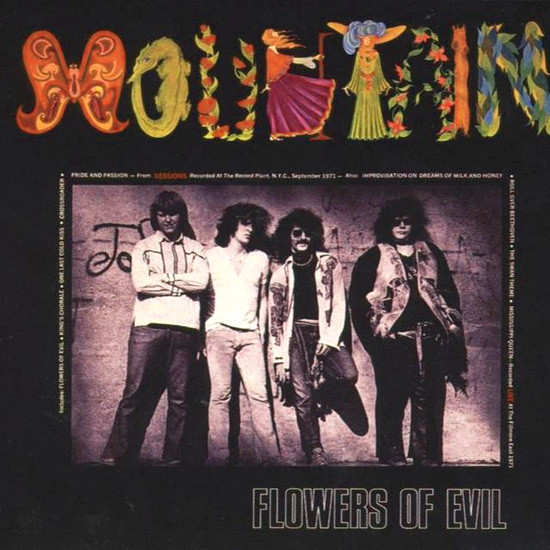
Mountain Live: The Road Goes Ever On.
After the release of Flowers Of Evil, Mountain headed out on tour, and the latest stop in their schedule was Britain. It was another successful tour for Mountain, who on their return home, were about to spring a surprise.
In February 1972, Mountain was no more after the band announced their intention to split-up. They had been together just three years and released three albums which sold in excess of one million copies in America alone. Mountain, it seemed, were bowing out while they were at the top.
Although Mountain wanted to call time on their career, Windfall Records had other ideas. They scheduled the release of another live album for April 1972.
This was Mountain Live: The Road Goes Ever On, which takes its title from JRR Tolkien’s 1937 novel The Hobbit. Mountain Live: The Road Goes Ever On featured four tracks that were recorded between 1969 and 1972.
Long Red and Waiting To Take You Away which Mountain recorded at The Woodstock Music and Art Fair on Saturday, August the ’16th’ 1969. Although this was only Mountain’s third gig, they sound a much experienced band. These two songs hinted at what was to come from Mountain.
This included Crossroader which featured on their 1971 sophomore album Nantucket Sleighride. Mountain recorded this live version in January 1972. Crossroader features a much tighter and more versatile group than the one that took to the stage at The Woodstock Music and Art Fair.
Mountain kept the best until last on Mountain Live: The Road Goes Ever On, and close the album with an eighteen minute version of Nantucket Sleighride that was recorded at The Academy Of Music, New York, on December the ’14th’ 1971. It’s a genre-melting epic where Mountain improvise and transform what started life as a six-minute song into an eighteen minute epic as Mountain bowed out on a high.
Just like their three previous albums, Mountain Live: The Road Goes Ever On was well received by critics. It was a hard rocking album where Mountain switch between and combine blues rock, hard rock and psychedelic. It was another potent and heady brew from Mountain.
Sadly, when Mountain Live: The Road Goes Ever On was released in April 1972, it reached just sixty-three in the US Billboard 200. This meant that Mountain Live: The Road Goes Ever On was Mountain’s last successful.
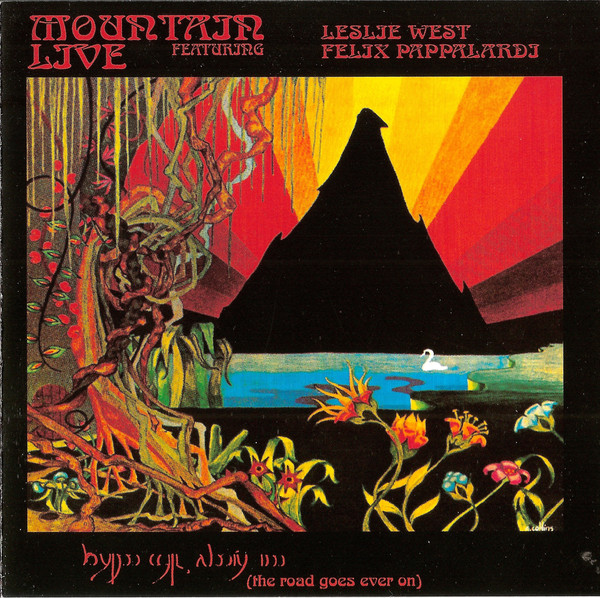
Mountain Live: The Road Goes Ever On is also Mountain’s most underrated album and is a hidden gem in their discography. BGO Records’ recent remastered reissue of Flowers Of Evil and Mountain Live: The Road Goes Ever On as a two CD set, is a welcome one, previously, record companies have focused on Mountain’s first two albums. However, there’s more to Mountain than just two albums.
While Climbing! and Nantucket Sleighride are regarded as classic albums, all too often the other two albums released by the classic lineup of Mountain are overlooked.Flowers Of Evil showcases a tight, versatile and hard rocking band in the studio and on the stage. Their swan-song Mountain Live: The Road Goes Ever On, documents Mountains’s three year career in just four songs. Mountain came a long way in just three years since they took to the stage at The Woodstock Music and Art Fair. Sadly, Flowers Of Evil brought the curtain down on Mountain’s career and by February 1972, when they announced that they had split-up.
Just like many groups, Mountain’s couldn’t resist a comeback, and reformed in 1973 band returned with their fifth album Avalanche in November 1974. It featured the debut of guitarist David Perry, who replaced keyboardist Steve Knight. However, Avalanche stalled at a lowly 102 in the US Billboard 200, and bassist and vocal Felix Pappalardi left Mountain for good. After this, this Mountain split for the second time.
That was the last that was heard of Mountain when they reunited in Leslie West and Corky Laing reformed Mountain, with ex-Savoy Brown guitarist Miller Anderson and bassist Keef Hartley). Mountain’s lineup changed in 1984 when Miller Anderson was replaced by Mark Clarke who was a member of Mountain when the group recorded Go For Your Life. It was released in March 1985 and stalled at a lowly 166. This was a long way from Mountain’s first two albums which were certified gold. Not long after the release of Go For Your Life Mountain split-up once more, and nothing was heard of the band for seven years.
Nothing was heard of Mountain until 1992 when Leslie West and Corky Laing decided to reform the band. The pair tried several different lineups before Mark Clarke returned, and in 1996 and Mountain recorded and released Man’s World which failed to chart. This was a first for Mountain, and in 1998 Mountain split-up again until 2001.
After reforming in 2001, Mountain released their comeback album Mystic Fire. Just like Man’s World, Mystic World failed to chart, and it was five years before Mountain returned with a new album in 2007.
That was Masters Of War, an album of Bob Dylan cover versions. Sadly, history repeated itself when Masters Of War failed to chart, and that was the last studio album Mountain released. They continued to play live until 2010, when Mountain played what proved to be their final live show. It was the end of an era.
After forty-one years, fallouts, comebacks and eight studio albums Mountain were no more. The band that could’ve rivalled Led Zeppelin, Black Sabbath and Deep Purple. Sadly, it wasn’t to be. However, Mountain released two classics Climbing! and Nantucket Sleighride which are both underrated albums and a reminder of Mountain’s glory days.
Mountain-What Might Have Been.


VENEZUELA 70 VOLUME 2: COSMIC VISONS OF A LATIN AMERICAN EARTH: VENEZUELAN EXPERIMENTAL ROCK IN THE 1970S AND BEYOND.
Venezuela 70 Volume 2: Cosmic Visions Of A Latin American Earth: Venezuelan Experimental Rock In The 1970s and Beyond.
Label: Soul Jazz Records.
During the seventies, Venezuela was one of the most prosperous countries in South America after oil was discovered in the North West of the country in 1914. Soon, there was the equivalent of gold rush in the Maracaibo basin. However, it was liquid gold prospectors came in search of, oil.
Before long, most of the biggest oil companies were beating a path to the Maracaibo basin and were soon shooting fish in a barrel. There was oil, and plenty of it. As a result, people came from all over the world in search of work and wealth. This was no surprise, as Venezuela was ideally situated.
Venezuela was the gateway to the Caribbean, so people from Cuba, Guyana, Haiti, Jamaica, Puerto Rico and Trinidad and Tobago arrived in Venezuela. So did immigrants from neighbouring South American countries including Bolivia, Brazil and Columbia. However, by then, Venezuelans were used to people settling in their country
That had been the case for over 200 years. People had emigrated fro Germany, Italy and Portugal, and so had Arabs and Africans. Venezuela had always been a multicultural country, and it was no different in 1928.
By 1928, Venezuela was the largest exporter of oil in the world and had become home to many of the world’s biggest oil companies. They came in search of black gold, and found a plentiful supply. This they exported to across the globe. However, by 1943 the Venezuelan government were tired of watching their oil heading out of the country, and decided to take action.
In 1943, the Venezuelan government passed laws that resulted in a 50/50 split in profits between the government and the oil companies. This was a huge blow to oil companies, but the Venezuelan government were resolute. They weren’t going to change their mind. Especially when the money raised from the oil tax transformed Venezuela into one of the most prosperous countries in the world.
That was the case through the remainder of the forties and fifties. By 1960, Venezuela’s new, democratically elected government played a leading role in founding OPEC, whose aim was to ‘support’ the price of oil. Things were changing in Venezuela.
The country continued to prosper in more ways than one during the sixties. By then, Venezuela had a rich cultural capital. The kinetic arts scene was thriving, and so was music. Traditional forms of Venezuelan music continued to prosper in some parts of Venezuela. However, many Venezuelans began to look outside of the country for musical inspiration.
They looked to Cuba, Puerto Rico and Latin America. Some Venezuelans had travelled to New York, and heard the Nu Yorican which was popular within the Latino community. This music soon began to influence Venezuelans. So too did British rock music. However, other types of music from within Venezuela began to influence the music scene.
With so many immigrants settling in Venezuela, they brought with them their own musical influences. These different genres all played an important part in Venezuela’s musical future.
Meanwhile, the prosperity continued, and there was an air of positivity during the sixties. Venezuela was a very different country and was now run by democratically elected government, who looked like they were about to play an important part on the world stage, given their role in OPEC. However, as the sixties gave way to the seventies, Venezuela changed, and the wider world were in for a surprise.
In 1973, Venezuelans voted to nationalize the oil industry. For all the companies who had invested heavily in Venezuela, this was a massive blow. The only small crumb of comfort was that the new law didn’t take force until the 1st of January 1976. After that, Petróleos de Venezuela would take over exploration, production, refining and exporting oil. This meant all the money made out of oil, stayed in Venezuela, and made the country even more prosperous. That was the theory.
The only problem was, that by the seventies corruption was rife within Venezuela. Still the country continued to prosper, pre and post the ‘1st’ of January 1976 and Venezuela remained a wealthy and prosperous country financially and culturally.
Part of Venezuela’s rich cultural capital during the seventies was its music scene. Venezuelan musicians were creating ambitious and innovative music. However, that music has never been heard outside of Venezuela, which is a great shame, given the quality of music produced by Venezuelan musicians during the seventies. However, Soul Jazz Records have just released Venezuela 70 Volume 2: Cosmic Visions Of A Latin American Earth: Venezuelan Experimental Rock In The 1970s and Beyond which is another selection of groundbreaking music.
That music was made by pioneering musicians whose raison d’être to create album of groundbreaking and innovative music. Most of these artists and bands were part of the Venezuelan underground music scene and were relative unknowns. Sadly, that remains the case even today, and it’s only the release of compilations like Venezuela 70 Volume 2: Cosmic Visions Of A Latin American Earth: Venezuelan Experimental Rock In The 1970s and Beyond that may introduce these artists and bands to the wider audience that their music so richly deserves.
Back then, artists and bands fused elements of disparate and sometimes unlikely musical genres with everything from progressive rock and jazz, electronica, experimental music and even disco during the seventies. This was very different from much of the music that was popular in Latin America during the seventies.
This included salsa which filled dancefloors across Latin America. Meanwhile, many Venezuelan rock bands were heavily influenced by British and American bands. However, this changed in the seventies when there was a revolution in Venezuelan music.
Suddenly, a new generation of Venezuelan artists and bands began releasing groundbreaking music from the seventies onwards. Eighteen of these artists feature on Venezuela 70 Volume 2: Cosmic Visions Of A Latin American Earth: Venezuelan Experimental Rock In The 1970s and Beyond. This includes Vytas Brenner who contributes the folk rock of Agua Clara. He returns later with La Sabana and Tragavenado which are a reminder of a truly talented singer and songwriter.
Straight away, Daniel Grau’s cosmic disco experiment Dejando Volar El Pensamiento which in parts brings to mind Giorgio Moroder who has obviously been an influence, Daniel Grau’s other contributions include Delirio En Fa Menor and Voy which are both a remainder of a pioneering musicians.
The driving disco-tinged funk of Orchestra Julian ’s Do It With Class is a real hidden gem. So is the psychedelic rock of Vytas Brenner’s Gavilan with its blistering guitar licks and funky backdrop. Vytas Brenner also contributes Mandingo, La Sabana and Morrocoy which are a reminder of one of one of Venezuelan music’s pioneers who sadly, is one of the country’s best kept musical secrets.
Machu Picchu Dos (El Nino Anciano) is best described as a slice of tropical funk from Un Dos Tres Y Fuera. They only feature once and so does Johnny Lamas whose Noches En Caracas is one of the compilation’s finest moments. Closing Venezuela 70 Volume 2: Cosmic Visions Of A Latin American Earth: Venezuelan Experimental Rock In The 1970s and Beyond is Aldemaro Romero Y Su Onda Nuevo’s joyous sounding Una Por Una with its feel-good sound.
The various artists and bands on Venezuela 70 Volume 2: Cosmic Visions Of A Latin American Earth: Venezuelan Experimental Rock In The 1970s and Beyond were all pioneers determined to push musical boundaries to their limits as they created groundbreaking and innovative music.
To do that, the artists and bands fused elements of electronica, funk, jazz, and Latin rhythms with progressive rock, psychedelia and rock. Some added Venezuelan roots music to the mix which created a new and unique sound which combined elements of the music of the past and present. This music was all part of a new musical era which is celebrated on Venezuela 70 Volume 2: Cosmic Visions Of A Latin American Earth: Venezuelan Experimental Rock In The 1970s and Beyond and is a further reminder of the groundbreaking and innovative music being released in Venezuela during what was a golden age for underground music.
Venezuela 70 Volume 2: Cosmic Visions Of A Latin American Earth: Venezuelan Experimental Rock In The 1970s and Beyond,
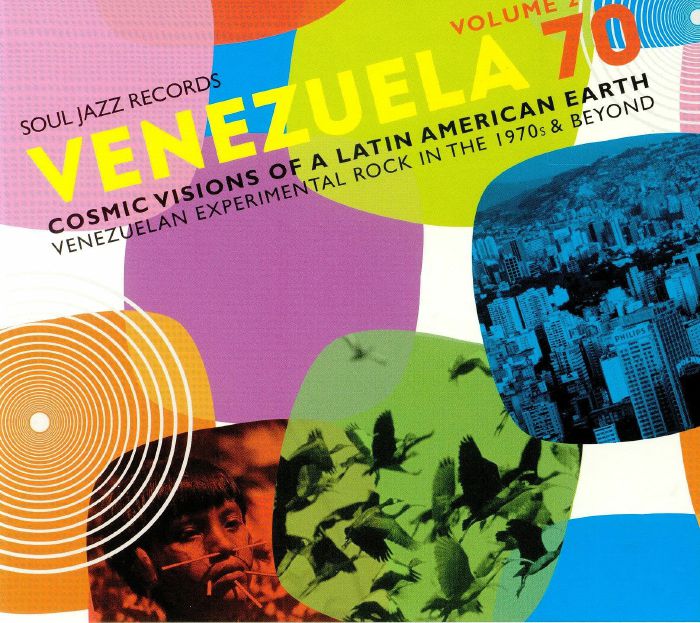
 dereksmusicblog
