TOM ARTHURS AND ISAMBARD KHROUSTALIOV-VAUCANSON’S MUSE-VINYL EDITION.
TOM ARTHURS AND ISAMBARD KHROUSTALIOV-VAUCANSON’S MUSE-VINYL EDITION.
Trumpeter Tom Arthurs and electronic musicians Isambard Khroustaliov have been friends for the best part of ten years. During that time, they’ve been involved with the Not Applicable record label and collective. It organised an English tour of Graphic Scores back in October 2013, that inspired Tom Arthurs and Isambard Khroustaliov to record an album together, Vaucanson’s Muse.
The Graphic Scores tour was funded by the Arts Council, and began on the 3rd of October 2013. This was the first of six concerts by the Not Applicable collective. Their lineup featured the combined and considerable talents of Oliver Coates, Elaine Mitchener, Tom Arthurs and Isambard Khroustaliov. They were lead by pianist and band leader Joanna MacGregor and played composed and improvised music that had been realised with the use of graphic scores.
Each night, the Not Applicable collective charted the history of graphic scores. This was where composers used visual symbols to convey musical information. It was, and still is, often used instead of, or in combination with traditional musical notation. One of the pioneers of graphic scores was John Cage. So it was fitting that the Not Applicable collective revisited his 1952 composition Water Music. This pioneering composition paved the way for the other artists that the Not Applicable collective celebrated on the Graphic Scores tour.
Among them, were Cornelius Cardew who wrote Treatise between 1963-1967, and George Crumb who wrote Makrokosmos in 1972. Pulitzer Prize. Thirty years later, Pulitzer Prize winner Wadada Leo Smith’s wrote Luminous Axis in 2002. Bringing graphic scores to a new audience was Jenifer Walshe, who wrote This Is Why People O.D. On Pills and Jump From The Golden Gate Bridge. It became part of the Not Applicable collective’s setlist during what was essentially, a celebration of Graphic Scores. The tour ended on 11th October 2013, in Oxford. For then, two members of the collective, the tour had been an illuminating and inspirational one.
So much so, that trumpeter Tom Arthurs and electronic musicians Isambard Khroustaliov had changed over the course of just eight days. It had been an informative experience for the two friends, who came from very different backgrounds. Tom Arthurs was an experienced jazz musician, who had recorded for various labels. Sam Britton a.k.a. Isambard Khroustaliov, had a background in dance music and algorithmic composition. Despite coming from very different musical backgrounds, the pair decided to head straight to the studio and record an album.
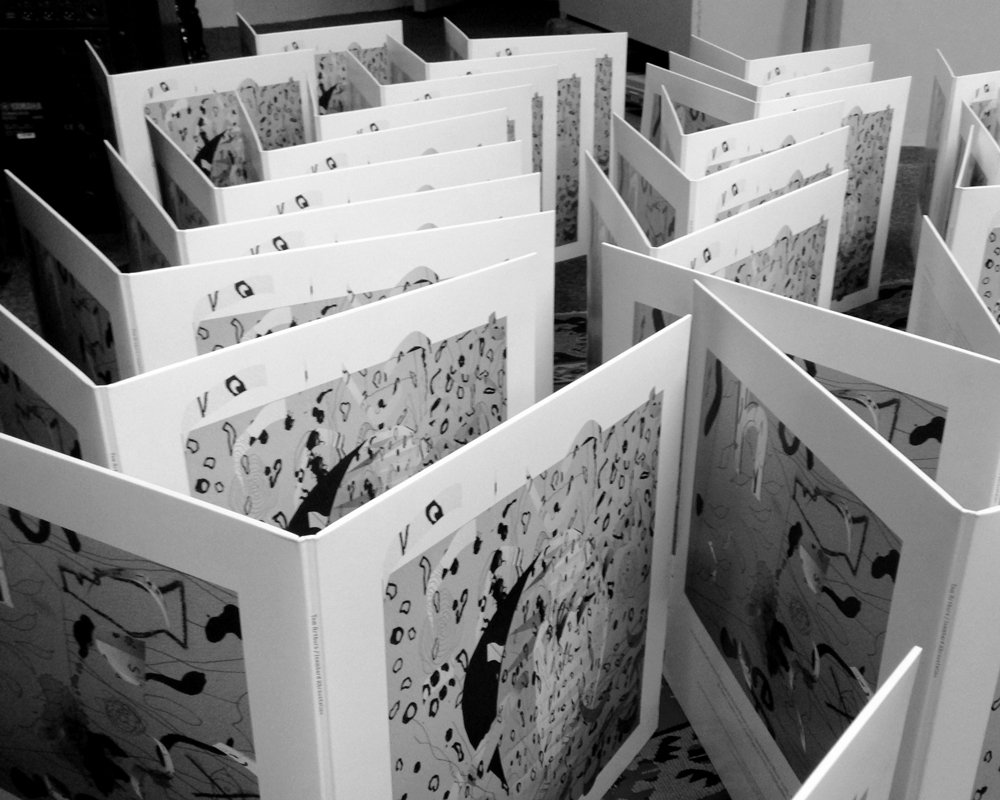
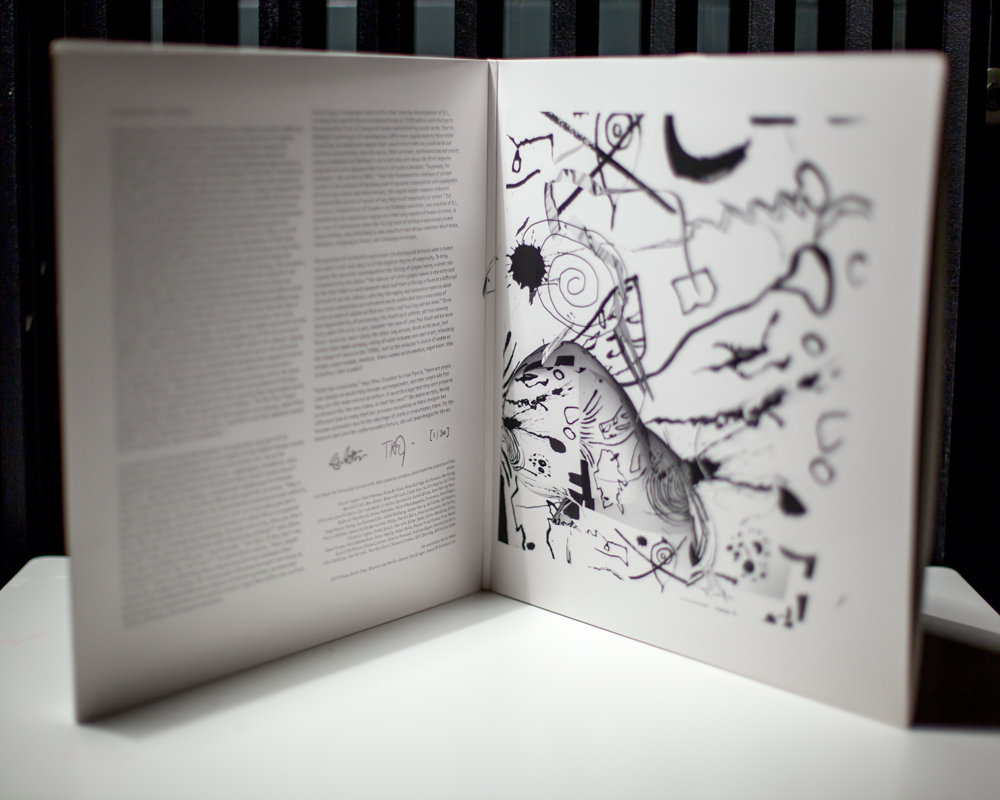
This was a first for the pair. Tom Arthurs and Isambard Khroustaliov had been involved in projects, but had never recorded an album together. These improvised recordings became Vaucanson’s Muse, which was recently released via Not Applicable’s Bandcamp Page. Vaucanson’s Muse is a limited edition of only 300. It’s best described as a lovingly curated release, which oozes quality. That’s the case from the artwork of architect Will Alsop to the sleeve notes of author and musician David Toop. They strengthen the themes hinted at throughout Vaucanson’s Muse, and that’s the music of unknown worlds constructed through symbolic and geometric abandon. This is fascinating and thought-provoking, just like the music of Tom Arthurs and electronic musicians Isambard Khroustaliov.
Isambard Khroustaliov.
Both men have enjoyed lengthy careers, and from very different musical backgrounds. In the case of Sam Britton, he never intended to embark upon a career in electronic music. Instead, he enrolled at the Architectural Association in 1996. Not long after this, Sam began writing electronic music. Within a year, he was recording for an independent label. This included with Ollie Brown as Icarus.
They would release six albums between 1998 and 2010. Icarus released albums for labels on both sides of the Atlantic, including Output Recordings, Temporary Residence, Domino and The Leaf label. However, just a year after Icarus released their debut album, Sam’s time studying architecture was over. His musical career, however, was just beginning.
Over the next few years, Sam Britton juggled several careers. He was a member of Icarus, and a member of the trio Fiium Shaarrk. Sam had also dawned the moniker Isambard Khroustaliov, and collaborated on six albums between 2006 and 2013. Isambard Khroustaliov released his debut solo album Ohka in 2009. Meanwhile, Sam Britton was forging a successful career as a composer.
That had been the case ever since 2002. Sam Britton began composing music for television, film, animation and new media. He quickly established a reputation as a talented composer, and was working with many of the biggest British television companies. Despite this, Sam was keen to further his musical education.
Away from making music, Sam Britton was a keen student of music. In 2006 he completed a Masters course in electronic music and composition at IRCAM in Paris, France. Then in 2011, Sam began a Phd in composition under the supervision of Richard Barrett, Peter Wiegold and Christopher Fox at Brunel University. This Phd Sam was in the throes of, when he embarked upon the Graphic Scores’ tour and the recorded Vaucanson’s Muse with Tom Arthurs.
Tom Arthurs.
Trumpeter and composer Tom Arthurs has spent the best part of two decades honing his sound. Now he’s regarded as one of the most talented, and versatile British trumpeters of his generation. Almost seamlessly, Tom can switch between jazz and improvised music. As he does this, he draws inspiration from a wide range of influences. Everyone from John Taylor, Kenny Wheeler and Jimmy Guiffre to Berlin’s Echtzeitmusik scene and composers like György Ligeti, Luc Ferrari, Wolfgang Mitterer and Morton Feldman. That’s not forgetting filmmakers Andrei Tarkovsky and Jean-Luc Godard, baroque music, Gal Costa, David Sylvian and Arto Lindsay. They’ve shaped Tom Arthurs as a musician and composer.
By the time Tom Arthurs was in his mid-thirties, word of this musical pioneer had spread far and wide. On both sides of the Atlantic, and across Europe Tom Arthurs’ music had been discovered by both an appreciative musical public and critics. They hailed Tom as a “a world-class improviser,” and described his playing: “as vulnerable as Miles Davis at his fragile best.” There was a simplicity and beauty to Tom Arthurs’ music, which was exacting as he knocked on the door of perfection. So it was no surprise that Tom was constantly busy, as a bandleader and collaborator.
Tom Arthurs lead two different international trios. The first featured British pianist Richard Fairhurst and Finnish drummer Markku Ounaskari; while the second included French bassist Sébastien Boisseau and Swedish drummer Jon Fält. Away from his work was a bandleader, Tom has worked on a variety of collaborations and collective improvised projects.
He’s also played alongside, and recorded with, Julia Hülsmann, Theo Bleckmann, Ingrid Laubrock, Dine Doneff Denis Badault and Eric Schaefer. Tom Arthurs has also a shared the stage with an eclectic selection of musicians. This includes many familiar faces, including John Surman, John Taylor, Kenny Wheeler, Benoît Delbecq, Jack DeJohnette, Régis Huby, Iain Ballamy, Thomas Strønen, Jan Bang, Nicolas Masson, Julie Sassoon, and Eddie Prévost. Other times, Tom shares a stage with what are regarded as the finest musicians of his generation. Among them are Marc Schmolling, Miles Perkin, M Philipp Gropper, Ronny Graupe and Wanja Slavin. They’re among many artists that Tom has taken to the stage with Tom. This also includes the Not Applicable collective.
By October 2013, Tom Arthurs had been involved with the Not Applicable record label and collective for a number of years. The collective had recently secured funding from the Arts Council, for the six date Graphic Scores tour. It was scheduled to take place between the 3rd and 11th October 2013. So the Not Applicable collective headed out on the Graphic Scores tour.
Leading the collective was pianist Joanna MacGregor. She was joined onstage by the combined and considerable talents of Oliver Coates, Elaine Mitchener, Tom Arthurs, Isambard Khroustaliov. Each night, they celebrated and charted the history of graphic scores. To do this, the collective revisited the work of John Cage, Cornelius Cardew, George Crumb, Wadada Leo Smith and Jenifer Walshe. For six nights, the music of these musical pioneers reached a new and receptive audience. Fittingly, the critically acclaimed tour ended in one of England’s most learned cities, Oxford.
Buoyed and enthused by the tour, Tom Arthurs and Isambard Khroustaliov decided to record an album together. This was a first. Although the two friends had worked on albums before, they had never record an album together. Despite this trumpeter Tom Arthurs and electronic musician decided to record an album of improvised music, Vaucanson’s Muse.
Vaucanson’s Muse.
Recording of Vaucanson’s Muse took place at Coda to Coda Studios, in London during November 2013. A total of eight tracks were recorded. They were mixed by Tom Arthurs and Isambard Khroustaliov at Code Cole Studios, in February 2014. When it came to mastering, this took place at Abbey Road Studios. Alex Wharton mastered and cut what became Vaucanson’s Muse on a Neumann DMM lathe. It was then sent to Optimal in Germany to be pressed.
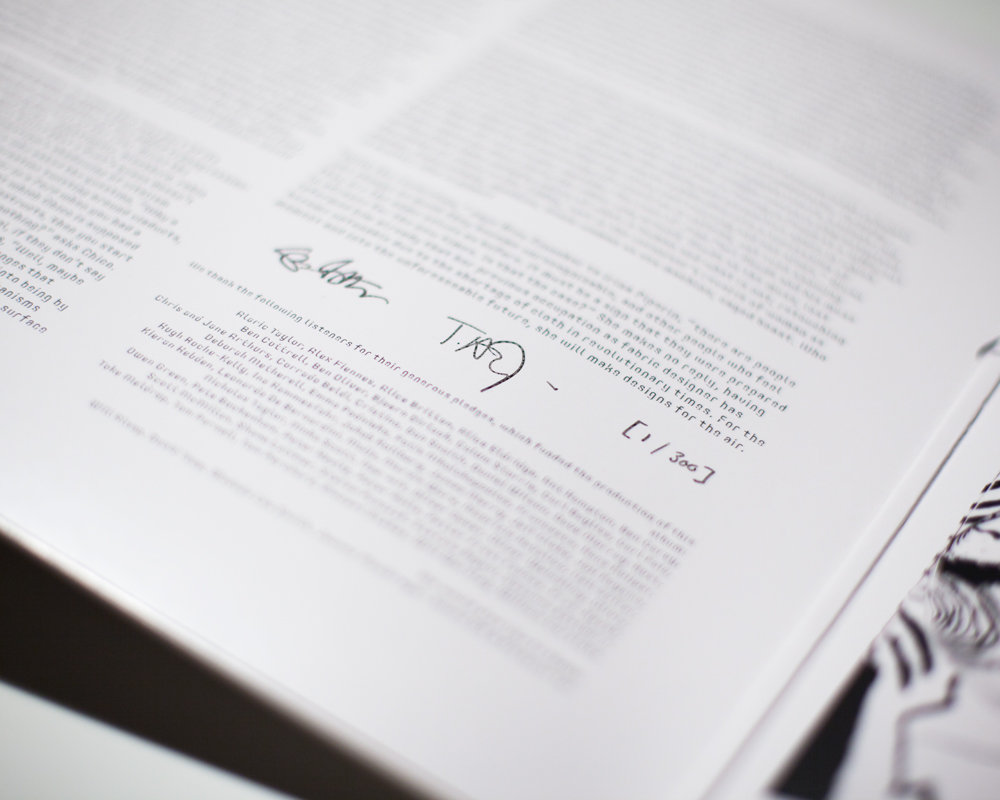
Meanwhile, architect Will Alsop was hard at at work designing the album cover and the rest of artwork. It’s his interpretation of the music on Vaucanson’s Muse. Similarly, author and musician David Toop waxes lyrical, as he interprets the music in his sleeve notes. By the time the artwork and sleeve notes were completed, Vaucanson’s Muse had been pressed and was ready for release via Not Applicable’s Bandcamp Page. Vaucanson’s Muse was recently released as a limited edition of 300 copies, which are pressed in heavyweight vinyl, and features two musical pioneers, Tom Arthurs and Isambard Khroustaliov.
Opening side one of Vaucanson’s Muse is On A Carpet Of Leaves Illuminated By The Moon. A trumpet wails, and soars high above the arrangement. It features a myriad of beeps, squeaks, clicks, crackles and bubbling sounds. They provide an alternative symphony, as Isambard Khroustaliov dig deeps into his array of sonic trickery. They’re manipulated, with sounds grinding as they’re played backwards. Other sounds tap out a code, that’s akin to computer’s chattering. Meanwhile, Tom plays with power and control. Later, he plays a with a subtlety, leaving space in the music that takes on a ruminative and wistful beauty.
Gently and tenderly, Tom plays his trumpet on Vaucanson’s Muse. It brays softly as Isambard adds a variety of clicks, crackles and rustling sounds. They beep, squeak and buzz menacingly, as he he becomes a modern day Jimi Hendrix unleashing, but somehow controlling this array of disparate sounds. They’re panned, as they move across and then up and down the soundscape. Meanwhile, the trumpet squeals, squeaks and shrieks becoming part of an alternative and futuristic orchestra. Later, the arrangement becomes minimalist, with rustles, beeps, squeak and bubbling sounds accompanying machinelike sounds and short bursts of trumpet. They merge into one, becoming part of captivating soundscape, that pays homage to not just the pioneers of graphic scores, but those that were at the forefront of improvised, avant-garde and experimental music. They’ve obviously influenced Tom Arthurs and Isambard Khroustaliov.
Grace Jones is one of the shortest, and most melodic tracks on Vaucanson’s Muse. Isambard puts his array of electronic equipment to good use. What sounds not unlike a fax machine is at the heart of the glistening, shimmering arrangement. It’s carefully crafted, and as it meanders along, takes on a space age sound. Later, Tom sprays bursts of trumpet, and takes care not to overpower the rest of arrangement. His trumpet becomes part of what’s a melodic, space age soundscape.
Trajets closes side one of Vaucanson’s Muse. Tom’s trumpet blazes, soaring high above the crackling, bristling and beeping arrangement. Occasionally, Tom answers his own call. By then, the arrangement has taken on a edgy, experimental sound. Other times, it veers between futuristic and understated, as it becomes a robotic symphony. Then when Tom’s trumpet enters, he plays within himself. There’s no blazing, scorching solos. Instead, he plays carefully and thoughtfully, adding a warm, melodic sound. It’s a contrast to other parts of this experimental sounding arrangementm which bristles, beeps and squeaks. They’re joined by washes of eerie chatter while the muted trumpet plays. Together, they create a captivating, cinematic soundscape that would be the perfect soundtrack for a short sci-fi film.
Cant’ Unsee opens side two of Vaucanson’s Muse. In the distance a droning synth plays. Soon, it’s joined by a rasping trumpet, that’s played softly. It picks out a melody, before embarking on brief sonic excursions. Always, Tom returns to the memorable melody. Meanwhile, the beeps, squeaks and bubbling sounds that provided a backdrop for the haunting beauty of the trumpet. Soon, it’s been joined by what sounds like an engine. Coupled with the futuristic beeps, cheeps and squeaks, and the haunting beauty of the trumpet, it again sounds like the soundtrack to another space age voyage of discovery.
Beeps, cackles, crackles and squeaks join the squealing, shrieking trumpet on Irina Piperin. They’re joined by samples of water dripping and a myriad of clicks and crackles. Tom’s transforming the trumpet, so that he can too can help shape this soundscape. To do this, he has to eschew playing with speed and fluidity. Instead, he improvises, as gruff, croaking notes fall from his trumpet. They’re part of what’s a understated but somewhat eerie, edgy soundscape. It’s not unlike walking down a dark, deserted city street as one’s mind starts playing tricks. This is the case here, with everything from clicks and crackles to a rumbling sound and the scampering, braying and squeaking trumpet. They’re part of a eerie and unsettling soundscape, that’s sure to set the listener’s mind racing.
Sea Interval closes side two, and indeed, Vaucanson’s Muse. A drone takes centre-stage, before Tom adds a rasping trumpet. It’s played with a subtlety, and becomes part of the meandering, multilayered arrangement. Still, the drone is at its heart, as the trumpet is omnipresent, as the trumpet probes and rasps, adding a melancholy hue. Later, short urgent blasts of the trumpet punctuate the arrangement as it takes on a melodic and thoughtful sound. It’s a case of saving the best until last. Key to the sound and success of Sea Interval is the relationship between Isambard and Tom. Isambard Khroustaliov is the perfect muse for Tom Arthurs, and ensures that he reaches new heights. As a result, Sea Interval showcases the considerable and combined talents of Tom Arthurs and Isambard Khroustaliov. That has been the case throughout Vaucanson’s Muse.
It features two musical pioneers, who come from very different musical backgrounds. They’ve worked together many times, but never have recorded an album together. That was until they returned from the Not Applicable collective’s Graphic Scores’ tour. Buoyed by the success of the critically acclaimed tour, Tom Arthurs and Isambard Khroustaliov entered the studio and recorded Vaucanson’s Muse back in November 2013. However, it was nearly three years before the album was released in late October 2016. Vaucanson’s Muse which was recently released via Not Applicable’s Bandcamp Page has been worth the three year wait.
From the opening bars of On A Carpet Of Leaves Illuminated By The Moon, right through to the closing notes of Sea Interval, Tom Arthurs and Isambard Khroustaliov push musical boundaries. To do this, they combine elements of ambient, avant-garde, experimental and improvised music. The result is music that’s variously cinematic, edgy, eerie, futuristic, melodic, melancholy and ruminative. It’s also music that’s guaranteed to set the listener’s mind racing, as Tom Arthurs and Isambard Khroustaliov take the listener on a sonic voyage of discovery. All the listener has to do, is submit to the music, and enjoy its nuances, subtleties and its plentiful supply of surprises. If they do, they will be richly rewarded. Vaucanson’s Muse finds two musical innovators uniting, to create a groundbreaking album of music, where Tom Arthurs and Isambard Khroustaliov follow in the footsteps of the pioneers of graphic scores.
TOM ARTHURS AND ISAMBARD KHROUSTALIOV-VAUCANSON’S MUSE-VINYL EDITION.

MILT JACKSON-SUNFLOWER AND GOODBYE.
MILT JACKSON-SUNFLOWER AND GOODBYE.
By 1967, Creed Taylor was a veteran of the music industry. He had worked numerous record labels, including Bethlehem, ABC and Verve. However in 1967, Creed Taylor left Verve to join Herb Albert and Jerry Moss’ A&M Records. This was something of a coup for A&M Records, as Creed Taylor had an impressive track record.
At ABC, Creed founded one of jazz’s most influential labels, Impulse! and signed John Coltrane in 1960. With one of the legends of jazz onboard, McCoy Tyner, Sonny Rollins, Art Blakey, Charles Mingus, Albert Ayler and Archie Shepp would then sign to Verve. Impulse! would go on to release some of the most innovative and influential jazz of the sixties. By then, Creed Taylor had moved on to Verve in 1961.
Now working for Verve Records, Creed Taylor introduced bossa nova to America. Creed signed artists like Antonio Carlos Jobim and Stan Getz. Their music caught the attention of Charlie Byrd and Dizzy Gillespie. Soon, Verve Records was one of the most successful jazz labels. However, after six years at Verve Records, Creed Taylor was on the move.
He signed to A&M in 1967. That’s where CTi Records was born. Originally, CTi Records was an imprint of A&M. A&M was responsible for distributing CTi Records’ releases. That was the case right through until 1969, when Creed Taylor left A&M. The following year, CTi Records become an independent record company.
Many people saw Creed Taylor’s decision to leave A&M as risky. Not Creed Taylor though. He saw it as a carefully calculated risk. Music was about to change. Especially jazz music. Creed Taylor foresaw the and was determined that CTi Records would be at the forefront of this change. So he began signing some of the most talented jazz musicians of that time to CTi Records. This included Chick Corea, Dave Holland, Ron Carter and Herbie Hancock. Another artist that Creed Taylor signed to Cti Records in 1970, was forty-seven year old vibes player Milt Jackson.
He would spend three years at CTi Records, and released a trio of albums. This included Sunflower and Goodbye, which have been digitally remastered, and were recently released by BGO Records on one CD. On both Sunflower and Goodbye, Milt Jackson’s is joined by an all-star band, which features many other artists signed to CTi Records.
By the time Milt Jackson signed to CTi Records, he was a musical veteran. He had released thirty-six albums, including collaborations with some of the biggest names in jazz. John Coltrane, Coleman Hawkins, Wes Montgomery, Oscar Peterson and Ray Charles had all collaborated with Milt Jackson. His first collaboration on an album came in 1948.
Milt Jackson was then twenty-five. He was born in Detroit on 1st January 1923. Music was omnipresent in the Jackson household. It played an important part in everyday. So did the church, where Milt Jackson would later sing gospel.
Before that, Milt Jackson began searching for the right musical instrument for him. This search began when seven year old Milt Jackson began to play the guitar. Then when he was eleven Milt switched to piano. However, when Milt started at Miller High School, he began playing drums and then timpani and violin. Somehow, Milt even found time to sing in the school choir. By the time he was sixteen, Milt began touring with the gospel group the Evangelist Singers. However, that wasn’t where his future lay.
For sixteen year old Milt Jackson, hearing Lionel Hampton playing the vibraphone in Benny Goodman’s band, changed not just his musical direction, but his life. Realising that the vibraphone was the instrument for him, Milt Jackson spent the next few years dedicating himself to learning how to play the vibes. This paid off.
In 1945, Milt Jackson was discovered by Dizzy Gillespie, and he became a member of his sextet. Before long, Milt was a familiar face in Dizzy Gillespie’s bands. This was something of a coup for the young vibes player, and certainly got him noticed. Milt went on to Milt play alongside Woody Herman, Thelonious Monk, Charlie Parker and Howard McGhee, with whom he recorded an album in 1948
Trumpeter Howard McGhee and Milt Jackson entered the studio in 1948 to record an album. They were joined by some of the top musicians of the day. Together, they recorded twelve tracks, which eventually, were released as Howard McGhee and Milt Jackson in 1955. Little did Milt Jackson realise that this was the first of a prolific career.
Milt Jackson’s career would eventually spanned six decades. His recording career began in earnest in 1952. By then, Milt had formed the Milt Jackson Quartet in 1950. It would later become the Modern Jazz Quartet, which right through until 1974, when it disbanded, would released ambitious and groundbreaking music. Still, though Milt managed to juggle his solo career with his would within the Modern Jazz Quartet.
Two years after the formation of the the Milt Jackson Quartet, its founder released his solo debut album, Wizard of the Vibes. It featured music recorded between 1948 and 1952. Three years later, and the Milt Jackson Quartet released their eponymous debut album on Prestige. The following year, was one of the most productive of Milt’s early career.
During 1956, Milt Jackson released a quartet of solo albums. By then, Milt had acquired the nickname Bags, after arriving at a gig with bags under his eyes. They were the result of too many nights carousing into the early others. However, Milt’s new nickname provided inspiration for many an album title, including Roll ‘Em Bags. It featured music that had been recorded between 1949 and 1956; while Meet Milt Jackson had been recorded between 1954 and 1956. Milt’s other releases were Opus de Jazz and The Jazz Skyline. They showcased Milt Jackson as developed and blossomed as an artist. That would be the case throughout the remainder of the fifties.
When Milt Jackson released Plenty, Plenty Soul in 1957, it proved to be his final release for Savoy. He would move to Atlantic Records, and later in 1957, released Plenty, Plenty Soul and Bags and Flutes. Milt continued to be a prolific solo artist, but still somehow, found time to record with the Modern Jazz Quartet and collaborate with other artists.
This included recording Soul Brothers with Ray Charles in 1958. Then in 1959, Milt Jackson recorded Bean Bags with Coleman Hawkins. That year, Milt released his last solo album of the fifties, Bags’ Opus. It’s regarded as one of the finest album Milt recorded for Atlantic Records during the late fifties. The Atlantic Records’ years continued into the sixties.
As the sixties dawned, Milt Jackson released Bags and Trane, his collaboration with John Coltrane in 1960. It was regarded as was one of Milt’s best collaborations, and featured a series of stellar performance from both men. The other album Milt released during 1960, was The Ballad Artistry Of Milt Jackson, where he works his way through a series of standards. Alas it wasn’t one of Milt’s finest hours. Reviews of the the album were mixed. Milt’s next album was another high profile collaboration.
This was Soul Meeting, a collaboration between Milt Jackson and Ray Charles. It was released in 1961, the year Milt’s time at Atlantic Records drew to a close. For the rest of 1961, he released albums on a variety of labels.
Among them, were Verve, who released Very Tall, Milt Jackson’s collaboration with jazz pianist Oscar Peterson. It was released in 1961, the same year that Milt released Statements on Impulse! However, it was Milt’s 1961 collaboration with Wes Montgomery, Bags Meets Wes! that resulted in him finding a new home, Riverside.
It was home for Milt Jackson for the next few years. Milt released Big Bigs and Invitation during 1962. For Someone I Love followed in 1963, with Milt Jackson Quintet Live at the Village Gate being released in 1964. By then, Milt had moved on again.
The next few years saw Milt Jackson flit between labels big and small. He released Jazz ‘N’ Samba on Impulse in 1964, and somewhat belatedly, Atlantic Records released Vibrations, which had been recorded in 1960 and 1961. That was when Atlantic Records was home for Milt. Not anymore. Home was now the Limelight label, which released In A New Setting in 1964. This would home for Milt for the next couple of years. Before that though, Milt would on the collaboration trail.
During 1964, released three collaborations. This included Milt Jackson with Orchestra Enrico Intra’s album Sings. Milt Jackson and Sonny Still collaborated on the album In The Beginning. However, the third collaboration was with Ray Brown, and would become Milt’s most productive and longest lasting musical of the sixties.
It was in 1964 that Milt Jackson and Ray Brown released the first of two collaborations on Verve, Much in Common. This was followed by Ray Brown-Milt Jackson. The other album Milt released during 1965 was Milt Jackson At The Museum of Modern Art. Just like In A New Setting, it was released on Limelight, which had become Milt’s new home. Limelight released Born Free in 1966, which was his swan-song for the label.
Milt Jackson returned in 1968 with a new ensemble, Milt Jackson and the Hip String Quartet. It included Hubert Laws who Ron Carter, who Milt would join forces with at Creed Taylor’s CTi Records. That was two years down the line.
Before that, Milt Jackson and Ray Brown released a trio of collaborations during 1969. That’s the Way It Is and Just the Way It Had to Be were live albums. The other album Memphis Jackson, was a studio album which featured an all-star cast, that included the Ray Brown Big Band. Despite the illustrious array of talent on display, critics weren’t impressed. It was an inauspicious end to the sixties.
During the sixties, Milt Jackson had been a prolific artist. Not only had released numerous solo albums, but he had continually collaborated. Then there was the albums Milt had recorded with the Modern Jazz Quartet. They recorded throughout the sixties, and were equally prolific. Despite this, the Modern Jazz Quartet were no longer regarded by the latest generation of jazz aficionados as pioneers. Instead, fusion was King where jazz was concerned.
Fusion was a marriage of jazz, funk and rock and psychedelia, that had been born in the late sixties. Among its founding fathers were Gary Burton, Larry Coryell and Miles Davis. They brought onboard Chick Corea, Dave Holland, Ron Carter and Herbie Hancock. With some of jazz’s big hitters joining the fusion revolution, Creed Taylor began signing some of this musical movement’s leading lights to CTi Records. However, Creed Taylor wasn’t just signing artists who played fusion. He had signed jazz guitarist George Benson and several Bossa Nova artists. His latest signing in 1970, was forty-seven year old Milt Jackson.
Signing to CTi Records was a no-brainer for Milt Jackson. He had been drifting for the last few years, and latterly, hadn’t reached the heights of his early career. Maybe Creed Taylor could rejuvenate his Milt’s career? CTi Records was regarded as a label that was going places. It was also a label that was home to some of the best and most innovative jazz musicians of a generation. These musicians would happily switch between bandleader and sidemen.
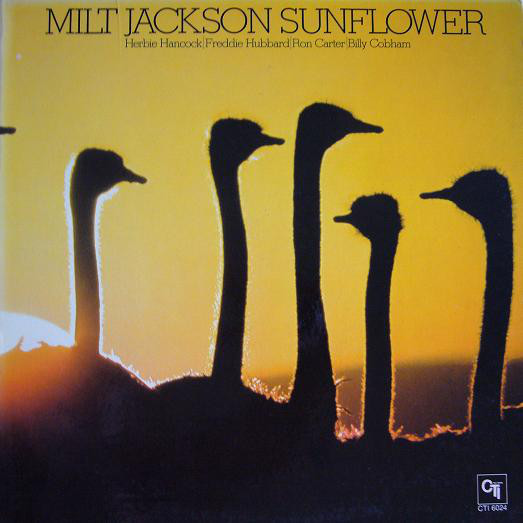
In the case of Milt Jackson, he made his CTi Records’ debut on Stanley Turrentine’s Cherry. He was one of the guest artists on the album when it was recorded in May 1972. Then seven months later, on the 12th and 13th December 1972, Milt Jackson released his CTi Records’ debut Sunflower.
Sunflower.
Before the recording of Sunflower began at Rudy Van Gelder Studio in Englewood Cliffs, New Jersey on the 12th and 13th December 1972, Milt Jackson set about choosing the material for the album. Four songs were chosen, Milt’s composition For Someone I Love (What’s Your Story); Alan and Marilyn Bergman’s What Are You Doing the Rest of Your Life?; Thom Bell and Linda Creed’s People Make the World Go Round and Freddie Hubbard’s Sunflower. These four tracks would be recorded by an all-star band.
At its heart, was a rhythm section that featured drummer Billy Cobham, bassist Ron Carter and Jay Berliner. They were joined by pianist Herbie Hancock, percussionist Ralph MacDonald, trumpeter Freddie Hubbard and Milt Jackson on vibes. Augmenting the core band was harpist Margaret Ross, plus string and woodwind sections. Arranging Sunflower and conducting the band was Don Sebesky. Creed Taylor took charge of production on Sunflower, which he hoped would transform Milt Jackson’s career and fortunes.
That proved to be the case. Prior to the release of Sunflower, critics hailed the album Milt Jackson’s finest album of many a year. Backed by a crack band of jazz’s top players, Bags rolled back the years, and was like a man reborn musically.
Someone I Love (What’s Your Story) opens that album, and just a lone acoustic guitar plays. It sets the scene, before for a Freddie Hubbard’s melancholy trumpet and a wistful lush strings. When it comes to the solos, Milt plays with fluidity and flamboyance, that comes with thirty years experience. Similarly, Freddie Hubbard’s trumpet and Herbie Hancock’s piano play leading roles, in a track that’s beautiful, ruminative and showcases the considerable talents of Milt and his band. There’s a similar beauty to the balladry of What Are You Doing the Rest of Your Life?, which has a widescreen, cinematic sound. After this, it’s all change.
People Make the World Go Round which had given The Stylistics a hit single, is then reinvented by Milt Jackson. It becomes a mid tempo track, where jazz, funk and soul are combined. Trumpeter Freddie Hubbard and Herbie Hancock on piano and Fender Rhodes are at the heart of everything good. Milt is content to play a supporting role, as his band reach new heights. Sunflower closes the album, and is an eleven minute epic. Lush strings ensure the arrangement soars, as Freddie Hubbard’s flugelhorn takes centre-stage. Later, so does the piano, and Milt’s shimmering vibes as jazz and 4/4, gives way to samba. However, it’s Freddie Hubbard that plays a starring role in what was the finest album Milt Jackson had released for many a year.
Record buyers agreed. When Sunflower was released in 1973, it reached number five in the US Jazz charts. This turned out to be the most successful album of Milt Jackson’s career. Not for the first time had Creed Taylor transformed an artist’s career. Now it was a case of doing it all again.
Goodbye.
After the success of Sunflower, Creed Taylor sent Milt Jackson into the studio to record another album in December 1973. Milt Jackson and his band would record four new songs. This included the he Milt Jackson penned S.K.J. and the jazz standard Old Devil Moon. Detour Ahead had been penned by Lou Crter, Herb Ellis and Johnny Frigo, while Goodbye was a Gordon Jenkins composition that for many a year, had been the closing song to the Benny Goodman Orchestra’s show. These tracks were recorded at Rudy Van Gelder Studio in Englewood Cliffs, New Jersey during December, 1973.
Joining Milt Jackson this time round was a much smaller band, than last time. The sextet featured a rhythm section of drummer Steve Gadd and bassist Ron Carter, plus pianist Cedar Walton, flautist Hubert Laws and Milt Jackson on vibes. Creed Taylor again produced Goodbye. These four tracks would form the basis of Goodbye.
There were tracks from the Sunflower sessions that hadn’t been used. The best of these tracks was the Horris Silver composition Opus de Funk. It had been recorded on December 12th 1972, at Rudy Van Gelder Studio in Englewood Cliffs. That day, the lineup featured drummer Billy Cobham, pianist Herbie Hancock, trumpeter Freddie Hubbard and Milt Jackson on vibes. Now Sunflower was complete, and would be released later in 1974.
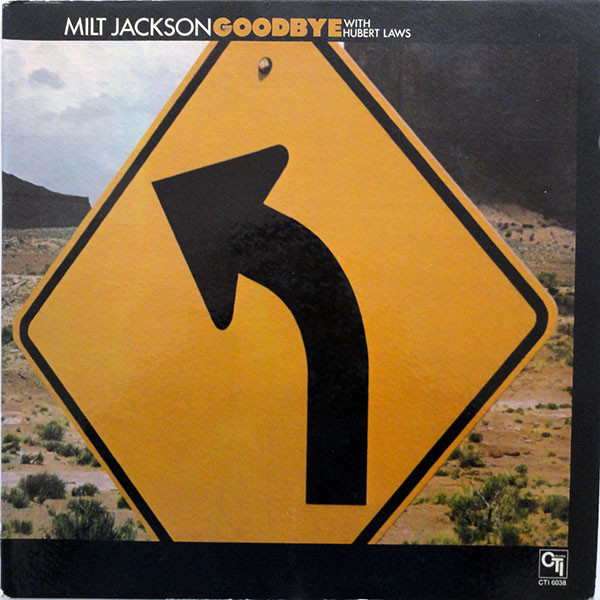
When critics received a copy of Goodbye, it was credited to Milt Jackson with Hubert Laws. That was no surprise to those who heard the album. The Houston born flautist had played such an important role in the sound and success of album. None more so that than the languid, dreamy take on Old Devil Moon. It just meanders along beautifully, with Hubert Laws’ flute and Milt Jackson’s vibes playing leading roles.The rhythm section play slowly and carefully, never overplaying and always leaving space for the soloists. It’s a similar case on S.K.J., with its bop stylings. As it meanders along, Cedar Walton’s piano and the vibes playing starring roles, as an element of funk is introduced later as S.K.J. starts to groove and swing. Mostly, though, jazz is to the fore on S.K.J. Soon, though, the tempo rises.
Opus de Funk finds Milt Jackson and his band stretching their legs. The tempo rise on this oft covered hard bop number. With Steve Gadd’s drums propelling the arrangement along, a glorious and smoking slice of jazz unfolds. However, on Detour Ahead the tempo drops. Milt and his band take the opportunity to explore the track’s subtleties and nuances. That’s the case throughout from the opening bars to the closing notes, when the band never miss a beat. All too soon, Milt Jackson bids the audience Goodbye on the mid-tempo title-track.Just like the previous track, everyone more than plays their part in the sound and success of Goodbye. However, when the solos come round, Hubert Laws steals the show, with pianist Cedar Walton deserving an honourable mention. Milt seems content and secure enough, to allow other members of the band shine. He knows it’s for the greater good, and that it’s his name that’s on Goodbye. It was released later in 1974.
When Goodbye was released, most of the reviews were positive. The reinvention of Milt Jackson continued, on album where elements of post bop, hard bop and funk. This results in music that swings, and is melodic, harmonic and full of subtleties, surprises and nuances. Goodbye is also an accomplished and polished album, from a band that features seasoned jazzers. Despite this, Goodbye failed to replicate the commercial success of Sunflower. Goodbye still found an audience, but not like Milt, Creed Tylor and everyone at CTi Records had hoped. It was disappointing commercially, considering Sunflower had been Milt Jackson’s biggest selling album.
That remained the case throughout the rest of Milt Jackson’s career. He continued to record for record labels big and small right up until his death in 1999. However, never again, did one of Milt Jackson’s albums sell as many albums as Sunflower. It’s was, without doubt, one of the best albums Milt Jackson had released in many a year. His career was rejuvenated at CTi Records.
A reminder of this is Sunflower and Goodbye, which Milt Jackson released in 1973 and 1974. Both albums find Milt Jackson being accompanied by an all-star band, as he works his way through original songs and cover versions. Buoyed by such a talented band, Milt Jackson delivers a series virtuoso performances on his trusty vibes. Then on other tracks, he’s content to let other remembers of the band shine on Sunflower and Goodbye. Both Sunflower and Goodbye have been digitally remastered, and were recently released by BGO Records on one CD. They’re a welcome reminder of Milt Jackson, who is one of the greatest vibes players in jazz history.
MILT JACKSON-SUNFLOWER AND GOODBYE.

SANDY DENNY-WHO KNOWS WHERE TIME GOES?
SANDY DENNY-WHO KNOWS WHERE TIME GOES?
On the 21st of April 1978, Sandy Denny passed away aged just thirty-one. That day, the career of one of the finest British folk singers of her generation was cut tragically short. Music lost a hugely talented singer and songwriter. There was no doubt about that. Sandy Denny stood head and shoulders above many of her contemporaries, including some she had shared a stage with. The loss of Sandy Denny was a tragedy
Music was in mourning at the loss of Sandy Denny. She had achieved so much in a short space of time. This included a brief spell with The Strawbs, before becoming the lead singer of Fairport Convention. However, Sandy left Fairport Convention in December 1969 to hone her songwriting skills. That was the plan.
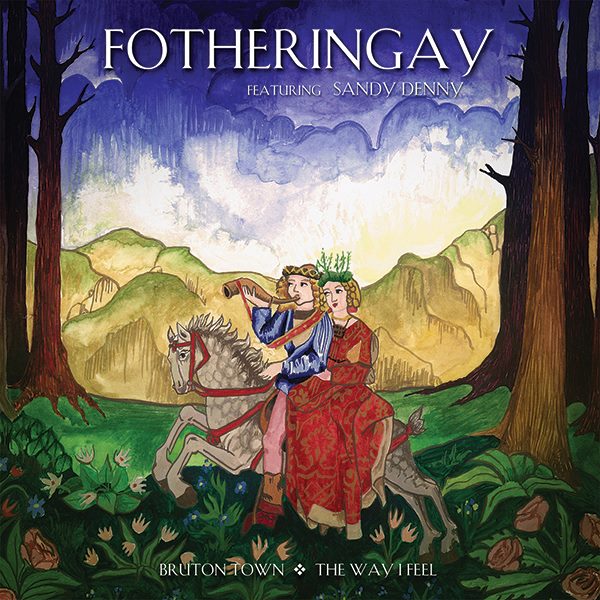
Not long after her departure from Fairport Convention, Sandy decided to form a new band, Fotheringay. So in the early 1970, Sandy began putting together a new band. One of the first musicians she brought onboard was guitarist Trveor Lucas.
He had been born in Australia, but was now based in Britain. Trevor was now a familiar face in the British folk scene. Previously, Trevor was a member of Eclection. That’s when Trevor met Sandy Denny. The pair started dating in May 1969, and eventually, married in 1973. However, Trevor’s career began back in Australia, in the early sixties.
Back then, Trevor Lucas was a solo artist. He released his debut solo album See That My Grave Is Kept Clean in 1964. Then on New Year’s Eve Trevor boarded a ship and made the journey from Australia to Britain. That’s when he became a member of Eclection, and met drummer Gerry Conway.
Eclection were a folk-rock band, who were formed in 1967, and broke up two years later in 1969. However, by then, Trevor Lucas and Gerry Conway were firm friends. They renewed their musical partnership in Fotheringay.
Gradually, Sandy’s new band was taking shape. The final pieces in the musical jigsaw were two former members of The Poet and The One Man Band. Guitarist Jerry Donahue had moved from Manhattan to Britain, where he quickly became stalwart of the folk scene. This wasn’t surprising. Jerry’s father was big band saxophonist Sam Donohue. However, Jerry wasn’t inspired by his father. Instead, Gerry McGee, Earl Scruggs, Chet Atkins and Duane Eddy inspired Jerry, who in 1970, joined Fotheringay with Edinburgh born bassist Pat Donaldson.
By 1970, Pat Donaldson was a familiar face in the London music scene. He had moved to London in the early sixties. Since then, he had been a member of Bob Xavier and the Jury, Zoot Money’s Big Roll Band and the reformed Dantalian’s Chariot. Fotheringay was just the latest group the twenty-seven year old bassist work with.
With the lineup of her new band finalised, all Sandy Denny needed was a name for the band. She decided on Fotheringay, after Fotheringay Castle where Mary Queen Of Scots was imprisoned. With its lineup complete and a name in place, Sandy Denny’s new band could begin work on their debut album.
Fotheringay.
Sandy Denny didn’t waste any time recording Fotheringay’s debut album. She wrote four tracks and cowrote Peace in the End with Trevor Lucas. He also penned The Ballad of Ned Kelly. Other tracks included covers of Gordon Lightfoot’s The Way I Feel, Bob Dylan’s Too Much Of Nothing and Banks of the Nile. These ten tracks were recorded between February and April, 1970 at Sound Techniques, in London with Joe Boyd producing what became Fotheringay.
Once Fotheringay was completed, the album was released in June 1970. It was one of the most eagerly awaited albums of the year. Critics and record buyers eagerly anticipated the release of Fotheringay.
They weren’t disappointed. Critics hailed the album a masterful debut. Sandy Denny was back, and better than ever. Her enchanting, ethereal vocal was complimented by a tight, talented band. They won not just the critics, but record buyers.
Fotheringay sold well upon its release in June 1970, and reached number eighteen in Britain. Good as this was, it wasn’t good enough for Island Records. Their expectations and Fotheringay’s differed. Island Records hoped the album would be one of the label’s biggest selling albums. That wasn’t the case. This resulted in Island Records’ pressurising Sandy to embark upon a solo career.
Sandy Denny dug her heels in. She was determined to continue with Fotheringay. So work began on what was meant to be Fotheringay’s sophomore album.

Fotheringay 2.
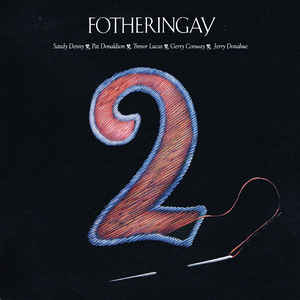
A total of eleven tracks were meant to feature on Fotheringay’s sophomore album. This time, Sandy Denny only wrote two songs. Trevor Lucas and Pete Roach penned Knights of the Road and Restless.Among the other tracks were traditional songs, a cover of Bob Dylan’s I Don’t Believe You and the Dave Cousins’ composition Two Weeks Last Summer. These eleven tracks were recorded by an expanded lineup of Fotheringay.
Joining the usual lineup of Fotheringay was Linda Thompson. She was going to add backing vocals when the sessions began in November 1970. The sessions continued into December 1970. Everyone thought that things were going to plan. Sadly, that wasn’t the case.
In January 1971, it was announced that Fotheringay were no more. The band split-up and what would eventually become Fotheringay 2 was shelved. It wasn’t released until 2008. With Fortheringay now consigned to musical history, Sandy Denny embarked upon a solo career.
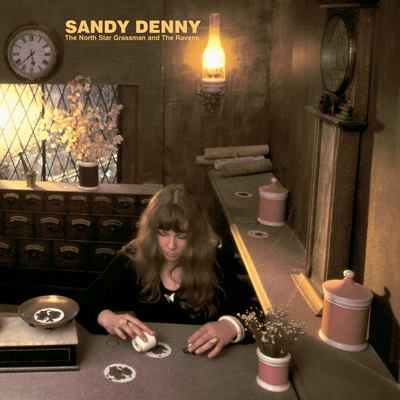
Sandy Denny signed to Island records, and went on to release four studio albums, The North Star Grassman and The Ravens, Sandy, Like An Old Fashioned Waltz and Rendezvous. However, Sandy Denny’s career began in 1971 with The North Star Grassman and The Ravens.
The North Star Grassman and The Ravens.
After Fotheringay split-up, Island Records were keen for the latest signing to enter the studio. Sandy Denny, Island Records believed, could become one of the company’s biggest selling artists. So Sandy entered the studios in March 1971.
By then, Sandy Denny was maturing as a songwriter. That was what she set out to do, when she left Fairport Convention. For The North Star Grassman and The Ravens, Sandy wrote eight of the eleven songs, including Late November and John The Gun which had been recorded for the Fortheringay 2 sessions. Among Sandy’s other compositions, were The Sea Captain, The Optimist, Next Time Around, Wretched Wilbur, The North Star Grassman and The Ravens and Crazy Lady Blues. They joined a rework of the traditional song Blackwaterside, Bob Dylan’s Down In The Flood and Charles Robins’ Let’s Jump The Broomstick. These songs were recorded over a three month period, with some familiar faces.
The recording sessions began in March 1971, at Sound Techniques, with Sandy Denny, John Wood and Fairport Convention’s Richard Thompson tanking charge of production. Just two songs were recorded there Blackwaterside and Let’s Jump The Broomstick. Then things were moved in-house and the rest of the sessions took place at Island Studios, in London.
At Island Studios, Sandy was accompanied on some of the tracks, by the rest of Fotheringay. Other musicians were drafted in when needed. This included Buddy Emmons on pedal steel guitar; drummer Roger Powell; bassist Tony Reeves; violinist Barry Dransfield and Ian Whiteman on piano and flute organ. Royston Wood and Robin Dransfield added backing vocals on John The Gun. Richard Thompson played accordion, bass, electric and acoustic guitar. His vocal featured on Down In The Flood. Harry Robertson arranged the strings on Next Time Around and Wretched Wilbur. By May 1971, The North Star Grassman and The Ravens was complete. It would be released four months later.
Before the release of The North Star Grassman and The Ravens, critics had their say on Sandy Denny’s debut solo album. With its mixture of Sandy Denny compositions, and cover versions, it was a truly captivating album. Sandy’s vocals were compelling, as she breathed meaning and emotion into lyrics. Among the highlights were John The Gun, Late November, the wonderfully wistful Next Time Around and The North Star Grassman and The Ravens. That’s not forgetting Down In The Flood, where the interplay between Richard Thompson’s guitar and Sandy’s vocal is masterful. The only song some critics felt let the album down slightly, was Let’s Jump The Broomstick and Down In The Flood. Still, though, The North Star Grassman and The Ravens was a hailed a musical masterpiece and minor folk rock classic. Sandy Denny it seemed, could do no wrong.
When The North Star Grassman and The Ravens was released in September 1971, the album didn’t sell in the huge quantities that Island Records had hoped. They seemed to envisage Sandy Denny enjoying the commercial success that Joni Mitchell was enjoying. That wasn’t to be. However, Sandy Denny enjoyed the same critical acclaim that her American counterpart was enjoying.

Sandy.
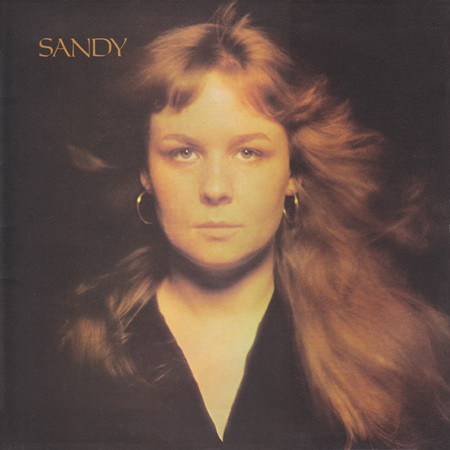
There was no rest for Sandy Denny, after she returned from a tour to promote the release of her debut album, The North Star Grassman and The Ravens. Two weeks later, in November 1971, Sandy began recording his sophomore album Sandy at Sound Techniques and Island Studios.
Sandy had been busy, and written eight new songs. This included It’ll Take a Long Time, Sweet Rosemary, For Nobody to Hear, Listen, Listen, The Lady, Bushes and Briars, It Suits Me Well and The Music Weaver. These songs joined covers of Bob Dylan’s Tomorrow Is A Long Time, and the traditional song The Quiet Joys Of Brotherhood, which Richard Fariña had written lyrics for. These songs were recorded by a familiar faces and new names.
The first change was that Trveor Lucas had been hired to produce Sandy. John Wood who had played such an important part in the sound and success of The North Star Grassman and The Ravens was relegated to engineer. Similarly, Richard Thompson’s only part in Sandy was playing on five songs. However, one thing hadn’t changed, where the studios that were used.
Just like with Sandy Denny’s debut album, recording took place at Sound Techniques and Island Studios. The first sessions took place in November 1971 Sandy was joined by British folk royalty, including Fotheringay bassist Pat Donaldson. He was joined by four members of Fairport Convention, Richard Thompson on mandolin, acoustic and electric guitar, vocalist Linda Thomson, violinist Dave Swarbrick and Trevor Lucas on acoustic guitar. They were joined by some new names.
This included The Flying Burrito Brothers’ pedal steel player Sneaky Pete Kleinow. He was joined by organist and pianist John Bundrick. Both men played on It’ll Take A Long Time and Tomorrow Is A Long Time. The final member of Sandy’s band was John Kirkpatrick who played concertina on It Suits Me Well. Now the recording could get underway.
With her all-star band for company, Sandy recorded the ten songs over five sessions help during November 1971 and then in April and May 1972. Once the ten songs were recorded, the strings and horns were added.
Harry Robertson was brought in to arrange the strings on Listen, Listen, The Lady and The Music Weave. One change was the addition of on one of the tracks on Sandy. So, Allen Toussaint was drafted in to arrange the horns on For Nobody to Hear. Rather than travel to Britain, Allen Toussaint recorded the horn section at the Deep South Studio in Baton Rouge, Louisiana. Once the strings and horns were added, and Sandy was mixed and mastered, the album was ready for release.
Before that, critics received their advance copy of Sandy. The promotion of Trevor Lucas to the position of producer had paid off. He managed to combine the two sides of Sandy Denny’s music. This was the traditional folk sound, and the more modern folk rock sound. Part of this was in the choice of instruments. Traditional instruments like a mandolin and acoustic guitar harked back to folk music’s past; while the pedal steel and Hammond organ were its future. However, key to the success of Sandy were Sandy’s skills as a singer and songwriter.
Some of Sandy’s finest moments were on Listen, Listen, where strings and a mandolin accompany her vocals, and on The Lady, where Sandy delivers a heartfelt vocal. Then on Quiet Joys Of Brotherhood, the lushest of strings provide the perfect backdrop for Sandy. It was a similar case with the horns on For Nobody to Hear. Bob Dylan’s oft-covered Tomorrow Is A Long Time takes on new meaning thanks on Sandy. Critics were calling Sandy a minor classic. Surely the album would bring commercial success Sandy Denny’s way?
Sadly, it wasn’t to be. When Sandy was released in September 1972, history repeated itself. Sandy was the commercial success that Island Records were hoping for. Again, Sandy Denny had failed to find mainstream success. It was a huge disappointment for Sandy, and it would nearly two years before she returned with her third album Like An Old Fashioned Waltz.
Like An Old Fashioned Waltz.
After returning from a tour where she was promoting her sophomore album Sandy, Island Records wanted Sandy Denny to head back into the studio. The recording then touring schedule was relentless. However, the tour gave Sandy time to think.
She decided that she wanted to make her impression musically. Sandy Denny had been rubbing shoulders with two Britain’s biggest musical exports, Led Zeppelin and The Who. She had performed with both bands, and seeing how the other half lived, decided that she wanted to enjoy a taste of the commercial success both bands were enjoying. This was music to executives at Island Records’ ears. However, Sandy was disappointed by the commercial failure of her first two albums. It seemed folk rock wasn’t going to make Sandy rich. So Sandy had decided to broaden her appeal.
In her heart of hearts, Sandy Denny knew her music had to change if it was to appeal to a much wider audience. So for her third album Like An Old Fashioned Waltz, Sandy decided to make some changes. Elements of pop and jazz would join her usual folk rock sound on her next album, Like An Old Fashioned Waltz. Despite deciding to change direction musically, Sandy decided to stick with Trevor Lucas who had produced Sandy.
It would’ve been awkward if Sandy Denny decided to change producer, as Trevor Lucas and Sandy were married during 1973. The only change Sandy made, was to bring John Wood back as co-producer. They would co-produce Like An Old Fashioned Waltz in London and Los Angeles.
For Like An Old Fashioned Waltz, Sandy Denny had written eight new sings. The only cover versions were Doris and Fred Fisher’s Whispering Grass and Until The Real Thing Comes Along Sammy Cahn, Saul Chaplin and L.E. Freeman. Sandy remembered them from her father’s record collection, and gave them a jazzy makeover. These songs were recorded in Sound Techniques and A&M Studios, Los Angeles, between May and August 1973. Again, the great and good folk were present. Sandy Denny was joined by former Fotheringay bassist Pat Donaldson, and six
members of her former group Fairport Convention. This included Richard Thompson on mandolin, acoustic and electric guitar, guitarist Jerry Donahue, bassist Dave Pegg, drummer Dave Mattacks, violinist Dave Swarbrick and Trevor Lucas on acoustic guitar. They were joined by some old faces and new names.
The old face was John Bundrick, who played on Sandy. This time around, he played organ, piano and clavinet. New names included bassist Danny Thompson, who had previously worked with Nick Drake and John Martyn. Joining Danny Thompson was drummer Gerry Conway and saxophonist Alan Skidmore. Sandy’s band was shaping up nicely. Other new names included Diz Disley on acoustic guitar; organist Jean Roussel and pianist Ian Armit. They were part of a band that spent three months recording Like An Old Fashioned Waltz in L.A. and London. The album was completed in August 1973. This meant that Like An Old Fashioned Waltz would be released in late 1973. Or it should have been.
That was if Sandy Denny hadn’t dropped a bombshell. She was rejoining Fairport Convention. From Autumn 1973 to June 1974, Sandy toured with Fairport Convention. Eventually, Island Records scheduled the release of An Old Fashioned Waltz for June 1974.
When critics heard An Old Fashioned Waltz, they were struck by what was a very personal album. Many of the songs dealt with things that preoccupied and worried Sandy Denny. This included everything from loss and loneliness, the changing of the season, a fear of the dark and ironically, the passing of time. Like An Old Fashioned Waltz was a very different album from her two previous albums. Jazz and pop stylings featured on an album where the lushest of strings joined a subtle piano in creating a ruminative and wistful album. Highlights included the album opener Solo, Friends, Dark The Night, At the End Of The Day and No End, which gave some insight into who Sandy Denny was as a person. However, Like An Old Fashioned Waltz divided the opinion of critics.
While some reviews were positive, the usual suspects like self-styled Dean of American Rock Critics wasn’t impressed. In his Village Voice review he called Like An Old Fashioned Waltz a “slugging album.” Other critics took a more favourable view of Like An Old Fashioned Waltz. Some felt this was the album that would change Sandy Denny’s fortunes.
It wasn’t to be. When Like An Old Fashioned Waltz was released in June 1974, commercial success eluded the album. Whispering Grass was chosen as the lead single, and was released in 1973. This was a strange choice, as it wasn’t one of the stronger songs on the album. Unsurprisingly, it failed to catch the attention of record buyers. Worse was to come when the release of Like an Old Fashioned Waltz as a single was cancelled. For Sandy Denny, her dreams of becoming one of the biggest names in music had come to nothing. So, Sandy rejoined Fairport Convention for the third and final time.

Sandy embarked upon a world tour with Fairport Convention. Trevor Lucas, Sandy’s husband had also rejoined Fairport Convention. For the time being, her solo career was on hold. Then as 1975 drew to a close, Sandy’s thoughts turned to her solo career, and her fourth album Rendezvous.
Rendezvous.
As 1975 gave way to 1976, Sandy began writing Rendezvous. She penned Gold Dust, Take Me Away, One Way Donkey Ride, I’m A Dreamer, All Our Days and No More Sad Refrains. The other three songs on Rendezvous were cover versions. This included Richard Thompson’s I Wish I Was a Fool For You (For Shame of Doing Wrong); Elton John and Bernie Taupin’s Candle In The Wind and Jack Rhodes and Dick Reynolds’ Silver Threads and Golden Needles. Recording of these songs began in April 1976.
By then, Sandy Denny and Trevor Lucas had decided to try one more time, to move Sandy’s music towards the mainstream. This would mean Rendezvous would feature a contemporary rock sound. Rendezvous was recorded between April and June 1976 at Island Studios Basing Street and Hammersmith; CBS Studios in London; Strawberry Studios in Stockport and Sound Techniques in Chelsea, London. Accompanying Sandy was a band the featured over thirty musicians and backing vocalists.
This included Sandy Denny’s former colleagues in Fairport Convention, guitarist Jerry Donahue and Richard Thompson, bassist Dave Pegg, drummer Dave Mattacks and Trevor Lucas on acoustic guitar. They were joined reggae guitarist Junior Murvin, John Bundrick on synths and piano; Steve Winwood on organ, piano and clarinet and former Fotheringay bassist Pat Donaldson. Adding backing vocals were Benny Gallagher and Graham Lyle; Kay Garner and Clare Torry; Sue Glover and Sunny Leslie. Even The Silver Band made a guest appearance on Silver Threads and Golden Needles. Much of Rendezvous had been recorded between 23rd of April and 7th of June 1976 at Basing Street and Island Studios.
When the everyone arrived at the studio, Harry Robertson had arranged the strings on Candle In The Wind, I’m a Dreamer and All Our Days. Steve Gregory had arranged the horns on Take Me Away. Even The Silver Band’s appearance on Silver Threads and Golden Needles required the Robert Kirby to be brought onboard. John Wood again, returned to the role of engineer as Trevor Lucas produced Rendezvous. Now the sessions began. Straight away, there was a problem.
During these sessions, Sandy Denny’s voice no longer had neither the same purity nor ethereal quality. During the Fairport Convention tour, she had been drinking and smoking heavily. Eventually, this took its toll. However, still Sandy could still unleash a powerful vocal whilst always in control, and could breath life, meaning and emotion into lyrics. Sandy was still a great singer and storyteller. She recorded her parts, and took her leave. Little did Sandy know she would never enter a studio again.
Despite Sandy Denny having recorded her vocals, Rendezvous was still not complete. Another session took place between the 9th and 18th of June 1976. By then,Trveor Lucas was at the overdubbing stage. He added layers of string, and also overdubbed layer after layer of backing vocals and instruments. This would prove controversial.
With the album completed in July 1976, the original album title was Gold Dust. The release date was scheduled for October 1976. However, the release date kept being postponed. When the album was eventually released in May 1977, the album was called Rendezvous. It was an album that didn’t win over critics.
Many critics felt Rendezvous had been overproduced. This was a result of Trevor Lucas overdubbing of layers of strings, backing vocals and instruments. There were too many strings, backing vocalist and the lead guitars threatened to overpower Sandy’s vocals. That was a great shame, given the quality of Sandy’s songwriting, and vocals. If Trevor Lucas had taken a less is more approach, Rendezvous would’ve been a much better album. However, it was not without some fine moments.
Among them, where Gold Dust took on a Caribbean influence. Take Me Away and I’m A Dreamer became soulful torch songs. All Our Days was a seven minute pastoral epic, which seemed to draw inspiration from Vaughan Williams. I’m A Dreamer, All Our Days and No More Sad Refrains all showcased Sandy Denny’s talents as a singer and songwriter. However, when Rendezvous was released in May 1977, it was to mixed reviews.
When Rendezvous was belatedly released, the album passed record buyers by. It became Sandy Denny’s least successful album. The dream was almost over.

Gold Dust.
Not long after the release of Rendezvous, Island Records quietly dropped Sandy Denny. Despite being without a record label, she went ahead with plans to record a live album, Gold Dust.
After the release of Rendezvous, Sandy Denny headed out on tour to promote the album. The last date on the tour was at the Royalty Theatre in London on 27th November 1977. That night the tapes rolled.
Sandy Denny accompanied by her band, worked their way through the seventeen songs. Closing the set was a spine-tingling version of one of Sandy’s best songs Who Knows Where the Time Goes? That proved to a poignant way to end what was Sandy’s last public performance was on Gold Dust, which was released somewhat belatedly in 1998.

After Rendezvous failed commercially, Island Records dropped Sandy. She was already drinking heavily, smoking and snorting cocaine. Her behaviour became erratic. Sandy was also suffering from severe headaches. So a doctor prescribed a distalgesic. However, Sandy continued to drink. Whether this played a part in a fall she had in late March 1978 is unknown. What we know, is that tragedy struck on 17th April 1978.
That night, Sandy Denny was admitted to the Atkinson Morley Hospital in Wimbledon. She fell into a coma, and four days later, on 21st April 1978, Sandy Denny died. The cause of Sandy’s death was a brain haemorrhage and blunt force trauma. It’s likely that when Sandy Denny fell, this played a contributory factor in her death. Tragically, Sandy Denny was only thirty-one.
Despite her relatively youth, Sandy Denny had platted a huge part in the British folk scene. She had played a huge part in the success of Fairport Convention, and founded Fotheringay. Their music has only recently received the recognition it deserved. So to some extent have Sandy Denny’s solo albums. It’s only recently that they’ve been reevaluated and started to finds a wider audience. They’re a a reminder of British folk music’s greatest ever folk singer, Sandy Denny, who passed away thirty-eight years ago. As Sandy Denny sang in her finest song Who Knows Where Time Goes?
SANDY DENNY-WHO KNOWS WHERE TIME GOES?

JOHN MARTYN-GRACE AND DANGER-VINYL EDITION.
JOHN MARTYN-GRACE AND DANGER-VINYL EDITION.
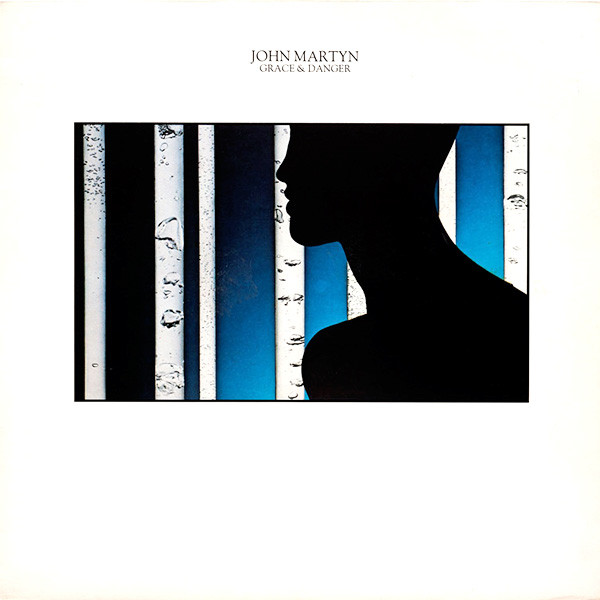
With the vinyl revival in full flow, some of the biggest names in music are taking the opportunity to reissue their albums exclusively on vinyl. This includes one of Glasgow’s most talented sons, John Martyn. Two of his finest albums, including his classic One World and the hugely personal Grace and Danger were reissued on vinyl on 28th October 2016 by Commercial Marketing. Both albums include some of the best music of John Martyn’s long and illustrious career. One World is proof of this.
In November 1977, John Martyn released what’s was undoubtably one the finest albums of his career, One World. It was an atmospheric, experimental and genre-defying album. Everything from folk, jazz, reggae and rock melted together over eight tracks. Released to overwhelming critical acclaim, One World was hailed a classic album. This was the second classic album of John Martyn’s ten year recording career.
The first came four years earlier, in February 1973, when John released Solid Air. Released to widespread critical acclaim, Solid Air critics realised, was without doubt, the finest album of John Martyn’s career. It was also the album that saw the Glasgow born troubadour make a commercial breakthrough. This should’ve been the start of the rise and rise of John Martyn.
For his eighth album, Sunday’s Child which was released in January 1975, John reigned in his experimental sound. However, Sunday’s Child was a much more eclectic album, with John flitting between country, folk and rock. The result was an eclectic and critically acclaimed album. However, controversy wasn’t far away for John.
In 1975 Island Records refused to release Martyn’s live album, Live At Leeds. So, John resorted to selling signed copies by mail from his home. After the release of Live At Leeds in 1977, John headed to Jamaica on holiday.
What started out as a holiday, ended up with John collaborating with reggae producer Lee “Scratch” Perry. One World is seen by some people as the first ever trip hop album. As a resuly, John Martyn is perceived as the father of trip hop and One World a John Martyn classic. After One World, John didn’t release an album for three years. There was a reason for this.
By the end of the seventies, John’s marriage had broken down. This led to John pressing “the self destruct button” as he described it. John became addicted to alcohol and drugs. He later said this was a very dark period in his life. Grace and Danger, which was released in October 1980, was the album that came out of this period, and the start of a turbulent time for John Martyn, both personally and professionally.
Grace and Danger was an autobiographical album, that described what he was going through at that time. John’s marriage had broken down and divorce proceedings were underway. This makes the music on Grace and Danger very personal. It’s akin to a snapshot to the pain, hurt and regret John was experiencing. This shines through on Grace and Danger.
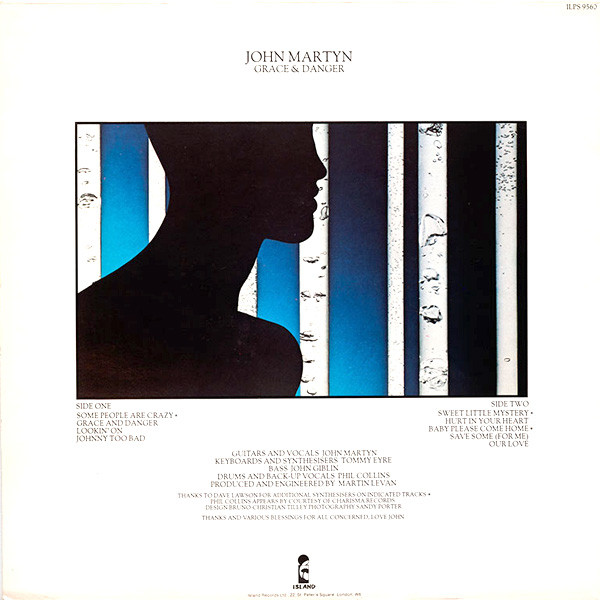
Eight of the nine tracks that became Grace and Danger, were written by John. They describe what he was going through emotionally. The only track not penned by John was Johnny Too Bad, which was written by Slickers. These nine tracks were recorded by a tight, but talented band.
For Grace and Danger, John played guitars and added vocals. His friend Phil Collins, played drums and sung backing vocals. Tommy Eyre played synths and keyboards, while John Giblin played bass. These three musicians and producer Martin Levan were responsible for a soul baring album from John Martyn’s, Grace and Danger.
Once Grace and Danger was completed, John delivered the album to Chris Blackwell at island Records. When Chris Blackwell realised just how personal an album Grace and Danger was, held the album’s release back a year. Partly, this was because of his friendship with both John and Beverley Martyn. However, Chris also felt that Grace and Danger was “too depressing and didn’t want it released.” This angered John Martyn.
When John heard what Chris Blackwell thought of Grace and Danger, he wasn’t happy. He responded to Chris Blackwell saying: “please get it out! I don’t give a damn how sad it makes you feel-it’s what I’m about: direct communication of emotion.’” Eventually, a year later, Grace and Danger was released.
By then, the relationship between John and Island Records was damaged beyond repair. Grace and Danger was released in October 1980. Contrary to Chris Blackwell’s expectations, Grace and Danger was well received by critics. They realised just how personal an album Grace and Danger was, and empathised with what John had gone through. He had just suffered the breakup of a relationship, and was hurting badly. This however, wasn’t the last relationship that broke down during this period.
After the release of Grace and Danger, John’s relationship with Island Records deteriorated. John submitted another album to Island Records, The Apprentice. Island Records rejected The Apprentice. However, John had the last laugh. The Apprentice was eventually released in 1990, it was hailed as John’s comeback album. By then, it was nine years since John Martyn parted company with Island Records.
A year after the release of Grace and Danger, John left Island Records. This was the end of a fourteen year relationship. During this period, John had released eight albums for Island Records. His Island Records’ swan-song, was Grace and Danger, one of his most underrated and personal albums.
Opening Grace and Danger, is Some People Are Crazy. Just a broody bass, shimmering synths and bold keyboards combine with drums and crystalline guitars. They provide the backdrop for John’s vocal. It’s more a confessional that a vocal. There’s an honesty in his vocal. Belatedly, John’s come the conclusion that people either loved or loathed the hell raising John Martyn of the late seventies. He sings “some people are crazy about him, some people can’t stand his face.” He’s even chased the woman he loves away. This hurts. As if in desperation, John delivers the lyric “yes this loving kind of business, might be the best find you ever had.” Whether John believes this, though, is another matter? His parting line in this confessional is“some people are crazy, some people are just like me.”
Searing guitars and the rhythm section drive the rocky arrangement to Grace and Danger along. John’s vocal has a melancholy quality, as he realises what he’s lost. Against a backdrop of chiming, blistering guitars, keyboards and the rhythm section, John’s vocal is akin to an outpouring of pain. Reflecting, he sings: “I never knew the road that carried me along.” It’s obvious he had no idea where it would lead. It lead to him losing the woman he loved. Despite his being broken, he wishes Beverley well. He’s loved, lost and wishes her “sweet grace, no danger.”
Lookin’ On has a jazz tinged arrangement. A bass plays, guitars chime and stabs of keyboards are joined by drums played tenderly. As the drama builds, a tormented John paints a picture. It’s easy to visualise John returning from a night out, to Beverley who quite rightly, is less than happy. John comes “stealing in, with an innocent grin, to leave you staring, at the empty ceiling, feeling nothing, lookin’ on, I’m just lookin’ on.” At that moment, John wonders what’s gone wrong with his marriage? Previously, this type of behaviour would’ve elicited a laugh. Not any more. Things have gone to far. That’s reflected in the urgent jazz tinged arrangement. It accompanies John’s despairing vocal, on this tale of love gone wrong.
While Johnny Too Bad wasn’t written by John, it sums up the situation he finds himself in. Just like John, Johnny Too Bad has a penchant for hard living. “With your running, and shooting,looting and tooting, you’re too bad, cos one of these days, you’re going to make your woman cry,” these lyrics could’ve been written about John. It’s as if he realises this, and delivers a gravelly, vampish vocal. Again, he makes the lyrics sound like a confessional. Accompanying him are the rhythm section and guitars. One of the guitars is played through John’s trusty echoplex. Then later, John dawns the role of guitar hero, unleashing washes of a blistering, crystalline solo. It’s the perfect foil for John as he vamps his way through the rest of what could be an autobiographical song.
Sweet Little Mystery marks a change in direction on Grace and Danger. It’s the first of a series of ballads. Against a backdrop of twinkling keyboards, synths strings and the rhythm section John tenderly delivers a beautiful, heartfelt ballad about a relationship that’s all but over. Accopanied by backing vocals, John lays bare his soul. His vocal is full of sadness, hurt and melancholy as he sings: “it’s not the letters you just don’t write, it’s not the crying in the dead of the night.” Instead, “it’s that sweet little mystery that’s in your heart, it’s just that sweet little mystery that makes me cry.” These lyrics show just how talented a lyricist John was. He wrote about what he’d experienced, including the breakup of his marriage. It was the inspiration for such a beautiful, poignant tale of love lost.
Deliberately, chords are played on the shimmering keyboards as Hurt In Your Heart unfolds. They’re joined by weeping guitars. They reflect the heartbreak in John’s weary vocal. It’s akin to a cathartic outpouring of hurt and regret, regret at the way he behaved, and how it caused his marriage to end. However, although his marriage is over, John hope that “when that hurt in your heart has gone, I’ll still be your friend, right to the end of our river, and further still.”
Baby, Please Come Home is another beautiful, soul baring ballad. Against a backdrop of an understated rhythm section, glistening keyboards and a sometime, scorching guitar, John delivers a needy, hopeful vocal. Full of regret, he wants to make things right, and almost begging and pleading, sings “Baby, Please Come Home.”
Save Some (For Me) sees John change direction. It’s a mid-tempo track with a punchy, spacious introduction. Drums and synths combine, before John’s tender vocal enters. He leaves space between the lyrics. This adds to the urgency of the arrangement. Soon, John, accompanied by backing vocals from Phil Collins, combines power, emotion and urgency. Behind him, sci-fi synths, shimmering keyboards and the rhythm section combine. They play a supporting role in another emotional roller coaster.
Our Love closes closes Grace And Danger, John Martyn’s Island Records’ swan-song. Phil Collins’ drums set the scene for the rhythm section, keyboards and John’s needy, hurt filled vocal. Memories come flooding back, back to a time when their love was young. Things were good, the future looked bright. “Our love, once was you and me against this world, made a man from a boy and made a woman from a little girl.” Not any more. Now I find I have to beg before you call my name, please call my name, please call my name, and baby take a look, take a good look, baby, baby take a look in your heart.” As John delivers these lyrics he wells up, regrets omnipresent at the hurt he caused, and the love he lost.
While Grace and Danger was well received upon its release, it wasn’t the commercial success that John Martyn classics like Solid Air or One World. This had nothing to do with the music. Partly, it was to do with the type of music that was popular in 1980. By then, John Martyn’s music was the polar opposite of the post punk, hip hop, electronica and new romantic music that filled the charts. Then there was the fact that Chris Blackwell didn’t like Grace and Danger which will was reissued on vinyl on 28th October 2016 by Commercial Marketing. It’s a welcome reissue of John Martyn’s soul baring opus, of a highly personal album.
Chris Blackwell found the music on Grace and Danger “too personal” and “depressing.” As a result, Island Records didn’t seem to cover themselves in glory when it came to promoting Grace and Danger. This was a huge mistake. After all, here was an album that spoke to many people. Grace and Danger was the story of many a failed relationship and marriage. For many, who had loved and lost, Grace and Danger spoke to them. It said everything that they wished they could. Thirty-six years later, that’s still the case.
Many suffering the heartbreak of a marriage breakup, have found solace in Grace and Danger. John speaks for, and too them on Grace and Danger. He’s been where they’ve been, and experienced the hurt, heartbreak and regret. Each song brings back a memory, often, a memory of better times. Especially Our Love, which closes Grace and Danger.
John is at his most eloquent, writing “Our love, once was you and me against this world, made a man from a boy and made a woman from a little girl.” Not any more. “Now I find I have to beg before you call my name, please call my name, please call my name, and baby take a look, take a good look, baby, baby take a look in your heart.” Not only does this prove the perfect way to close Grace and Danger, but sums up succinctly, the thin line between love and hate. That’s one of nine reasons why Grace and Danger is a forgotten classic in John Martyn’s back catalogue.
Quite simply, Grace and Danger is best described as the most personal album John Martyn ever released. It’ tells the story of one of the worst periods in his life, where the newly heartbroken John Martyn lays bare his soul for all to see and hear. What would’ve been fascinating, is if Beverley had replied to Grace and Danger. We could’ve heard her side to the story. Sadly, that never happened, and despite Beverley making a recent comeback, is unlikely to ever happen. As a result, Grace and Danger, one of John Martyn’s most underrated albums, remains one of the most soul-baring and cathartic breakup albums ever released.
JOHN MARTYN-GRACE AND DANGER-VINYL EDITION.
THE SUN RECORDS ROCK ’N’ COLLECTION-40 ROCKIN’ GREATS FROM THE SUN VAULTS-LIMITED EDITION VINYL.
THE SUN RECORDS ROCK ’N’ COLLECTION-40 ROCKIN’ GREATS FROM THE SUN VAULTS-LIMITED EDITION VINYL.
Back in late 2014, I was talking to someone who was then, the label manager at an independent record label. At the time, sales of vinyl were growing on both sides of the Atlantic, as well in Europe. Many independent labels were jumping on the vinyl bandwagon, and releasing many of their releases on vinyl. This made sense, as a new generation had discovered the delights of vinyl. When I asked this particular label manager why his label weren’t releasing their albums on vinyl, his response was that vinyl was a passing fad? How wrong he’s been.
Just over two years later, and sales of vinyl are booming. Both independent and major labels are releasing albums on vinyl to a captivate audience. This included the new generation of record buyers, and baby boomers keen to replace their much loved original pressings of albums they bought in the late sixties and early seventies. Vinyl has risen like a phoenix from the ashes.
So much so, that now, each week literally hundreds of albums are reissued on vinyl. Nearly all of the major reissue programs feature a vinyl version. Indeed, certain groups, Pink Floyd and Genesis, are in the process of reissuing their back catalogue on vinyl also. Similarly, so is the late, great John Martyn. For record buyers these are welcome reissues. However, this is just part of the vinyl phenomenon.
Another part of the vinyl phenomenon is the myriad of limited editions. Often, anything between 100-1,000 copies of an album are released, often in clear or coloured vinyl. They’re often sold through independent record shops, like recent releases by Teenage Fanclub, Mogwai, King Creosote and the Pictish Trail. However, another type retailer is jumping on the vinyl bandwagon,..supermarkets.
Previously, the British supermarket chain Tesco released a series of albums to celebrate Father’s Day. This included albums by Status Quo, Dexy’s Midnight Runners and The Clash. These albums were released in limited quantities, usually 1,000, so it was no surprise that they quickly sold out. For Tesco this was a profitable venture, and one that generated free positive publicity for the company. However, Tesco aren’t just the only supermarket chain to jump on the vinyl bandwagon.
Far from it. Sainsbury’s have recently jumped on the burgeoning vinyl bandwagon, and have released a series of limited editions. This includes The Sun Records Rock ’N’ Collection-40 Rockin’ Greats From The Sun Vaults, which was released as a double album by Charly, and retailed exclusively through Sainsbury’s. Only 1,000 copies were pressed on 180 gram orange heavyweight vinyl. This it appears, is meant to make the album look and feel like a quality product. That’s the case. Even the type of paper inner sleeve that’s been used, has been designed to save the vinyl being damaged. That’s a nice touch. My only gripe, and it’s is a minor one, is that it would’ve been nice if there was a booklet detailing even a brief history of Sun Records. After all, it’s without doubt, one of the most important labels in musical history.
It’s the label where rock ’n’ roll was born, and that was home to everyone from Elvis Presley, Carl Perkins and Jerry Lee Lewis to Johnny Cash, Roy Orbison and the Silver Fox Charlie Rich. That’s not forgetting Warren Smith, The Miller Sisters, Billy Lee Riley and Earl Hooker. They all feature on The Sun Records Rock ’N’ Collection-40 Rockin’ Greats From The Sun Vaults. Some of their best known tracks feature on this double album, and will be instantly recognisable to music lovers of all ages. That’s the case throughout The Sun Records Rock ’N’ Collection-40 Rockin’ Greats From The Sun Vaults.
Side One.
The compilers don’t hesitate to bring out their big guns on side of The Sun Records Rock ’N’ Collection-40 Rockin’ Greats From The Sun Vaults. Elvis Presley’s 1954 single Good Rockin’ Tonight gets the ball rolling and gives way to Carl Perkins’ original version of Blue Suede Shoes which was released in 1956. It’s followed High School Confidential which was released in 1958. Back then, it was credited to Jerry Lee Lewis and His Pumping Piano. Nowadays, though, it’s just credited to The Killer, who later makes a welcome return. Before that, stars of rock ’n’ roll take a bow
This includes The Man In Black, Johnny Cash. He encouraged the listener to Get Rhythm back in 1956. However, tucked away on the other side of Get Rhythm, was a future Johnny Cash classic Walk The Line. It features later in the compilation. Before that, Roy Orbison makes his debut with Ooby Dooby from 1956. Elvis then returns with I’m Left, You’re Right She’s Gone from 1955. However, Carl Perkins’ Dixie Fried from 1955, which was later recorded by James Luther Dickinson, is a very welcome addition. So is Billy Lee Riley’s Flying Saucer Rock And Roll, which was belatedly released in 1976. Closing side one is Roy Orbison’s Claudette, which was also covered by the Everly Brothers and Kris Jensen. Both versions more than do justice to the song, but for many people, The Big O’s version of Claudette is the best. That’s a matter of personal preference. Roy Orbison returns throughout The Sun Records Rock ’N’ Collection-40 Rockin’ Greats From The Sun Vaults.
Side Two.
It’s Jerry Lee Lewis and His Pumping Piano’s Great Balls Of Fire that opens The Sun Records Rock ’N’ Collection-40 Rockin’ Greats From The Sun Vaults. This explosive classic was released in 1957, and since then has been a favourite on oldies stations ever since. So has the music of Johnny Cash. He was only twenty-three when released Cry!, Cry!, Cry! in 1955. Already he had honed his inimitable style and delivery that would become a favourite of several generations of music fans.
A year later, in 1956, Carl Perkins released Blue Suede Shoes as a single. On the flip side was Honey Don’t. It’s a perfect showcase for the man who also penned Blue Suede Shoes. The same can be said of Charlie Rich’s 1959 single Rebound. It was released on Sam Phillips’ Phillips International label, and showed that the Silver Fox was destined for greatness. However, in when Elvis Presley released Let’s Play House in early 1955, he had still to make a commercial breakthrough. Let’s Play House was a game-changer, when it reached number five in the US Country chart. Buoyed by this success, Sun Records then released I’m Left, You’re Right. Alas, it failed to chart, but Elvis had taken the first steps on the road to being crowned The King.
Meanwhile, Carl Perkins continued to write and record for Sam Phillips’ Sun Records. He cowrote the irresistible Boppin’ The Blues, which was released as a single in 1956. The same year, 1956, Roy Orbison released Ooby Dooby, as a single with Go! Go! Go! (Down The Line) on the B-Side. It ensures side two finishes on a memorable and barnstorming high.
Side Three.
It’s Elvis Presley’s Mystery Train that opens the third side of The Sun Records Rock ’N’ Collection-40 Rockin’ Greats From The Sun Vaults. It was released as a single in 1955, reaching number ten in the US Country charts. Elvis was about to embark upon a period where commercial success was a constant companion. Alas, it was a different story for his another Sun Records’ artist.
Carl Perkins by 1957, had been enjoying hit singles single 1956. in 1957, Carl Perkins with Jerry Lee Lewis On 88 Keys released Put Your Cat Clothes On. Sadly, commercial success eluded what’s a hidden rockabilly gem. Meanwhile, The Killer was about to make a breakthrough.
Jerry Lee Lewis’ released Whole Lotta Shakin’ Goin’ On in early 1957. It reached number three in the US Billboard 100 and number one in the US Country charts. Since then, it’s been regarded as a classic. It’s a similar story with Johnny Cash’s I Walk The Line. Released in April 1956, it became synonymous with The Man In Black. Later that year, Jerry Lee Lewis and His Pumping Piano had released Crazy Arms in December 1956. This was The Killer’s debut single, which failed to trouble the charts. Commercial success was just round the corner for him. He wasn’t alone.
Charlie Rich’s career began in 1958, when he released Whirlwind on Phillips International. He went onto enjoy and long and successful career, and won two Grammy Awards. It’s fitting that he closes side three of The Sun Records Rock ’N’ Collection-40 Rockin’ Greats From The Sun Vaults.
Side Four.
Two Sun Records’ classics open The Sun Records Rock ’N’ Collection-40 Rockin’ Greats From The Sun Vaults. The first is Elvis Presley’s 1954 Sun Records debut single That’s All Right. Hot on its heels comes Johnny Cash and The Tennessee Two’s 1955 single Folsom Blues. Jerry Lee Lewis and His Pumping Pianp then fittingly, chips in with Wild One (Real Wild Child). It would later be covered by Iggy Pop and become one of his most memorable songs.
Back at Sun Records, had what nowadays, is regarded as an the enviable roster. Johnny Cash’s career was beginning to blossom. He recorded Rock Island Line in the late fifties, and it was released in various territories worldwide during the sixties and seventies. Meanwhile, Roy Orbison recorded a A Cat Called Domino 1957, which a reminder of a truly talented singer and songwriter. The same can be said of Carl Perkins, who sometimes, doesn’t receive the credit he deserved. Partly, that’s with having to live in Elvis’ shadow. Maybe if he had been signed to a different label, Carl Perkins would’ve enjoyed more commercial success. An example of this is Matchbox, which Carl Perkins wrote and released as a single in February 1957. Despite its undeniable quality, it failed to make an impression on the charts. Neither did Earl Hooker’s instrumental of The Hucklebuck when it was released in 1977. This lightweight novelty song is transformed courtesy of a driving piano and Earl Hooker’s guitar. It’s a fitting and irresistible way to close The Sun Records Rock ’N’ Collection-40 Rockin’ Greats From The Sun Vaults.
That’s the story of the latest Sun Records’ retrospective, The Sun Records Rock ’N’ Collection-40 Rockin’ Greats From The Sun Vaults. It was recently released on 180 gram heavyweight orange vinyl, and exclusively retailed through Sainsbury’s. It’s the perfect starting place for anyone whose yet to discover the delights of Sun Records. This should be part of their musical education. After all, Sun Records was one of the most important labels in the history of music.
Sun Records was home to everyone from Elvis Presley, Carl Perkins and Jerry Lee Lewis to Johnny Cash, Roy Orbison and the Silver Fox Charlie Rich. That’s not forgetting Warren Smith, The Miller Sisters, Billy Lee Riley and Earl Hooker. They all feature on The Sun Records Rock ’N’ Collection-40 Rockin’ Greats From The Sun Vaults. Some of their best known tracks feature on this double album, and will be instantly recognisable to music lovers of all ages. However, with only 1,000 copies available, anyone wanting a copy will have to be quick.
Already, copies are becoming hard to find. Sadly, as is often the case, scalpers not real music music fans bought many copies of The Sun Records Rock ’N’ Collection-40 Rockin’ Greats From The Sun Vaults. That’s been the case with previous limited edition releases from the ones released by HMV, Tesco and now Sainsbury’s. They’ve tried to ensure that customers are only able to buy one copy. Alas, this is very hard to police. Many parasites posing as music fans have managed to buy multiple copies. They then sell them on the after market at a huge markup. This means real music fans may be unable to discover the delights of The Sun Records Rock ’N’ Collection-40 Rockin’ Greats From The Sun Vaults. That to me is a great shame, as The Sun Records Rock ’N’ Collection-40 Rockin’ Greats From The Sun Vaults is reminder of what was one of the most important record label in musical history.
THE SUN RECORDS ROCK ’N’ COLLECTION-40 ROCKIN’ GREATS FROM THE SUN VAULTS-LIMITED EDITION VINYL
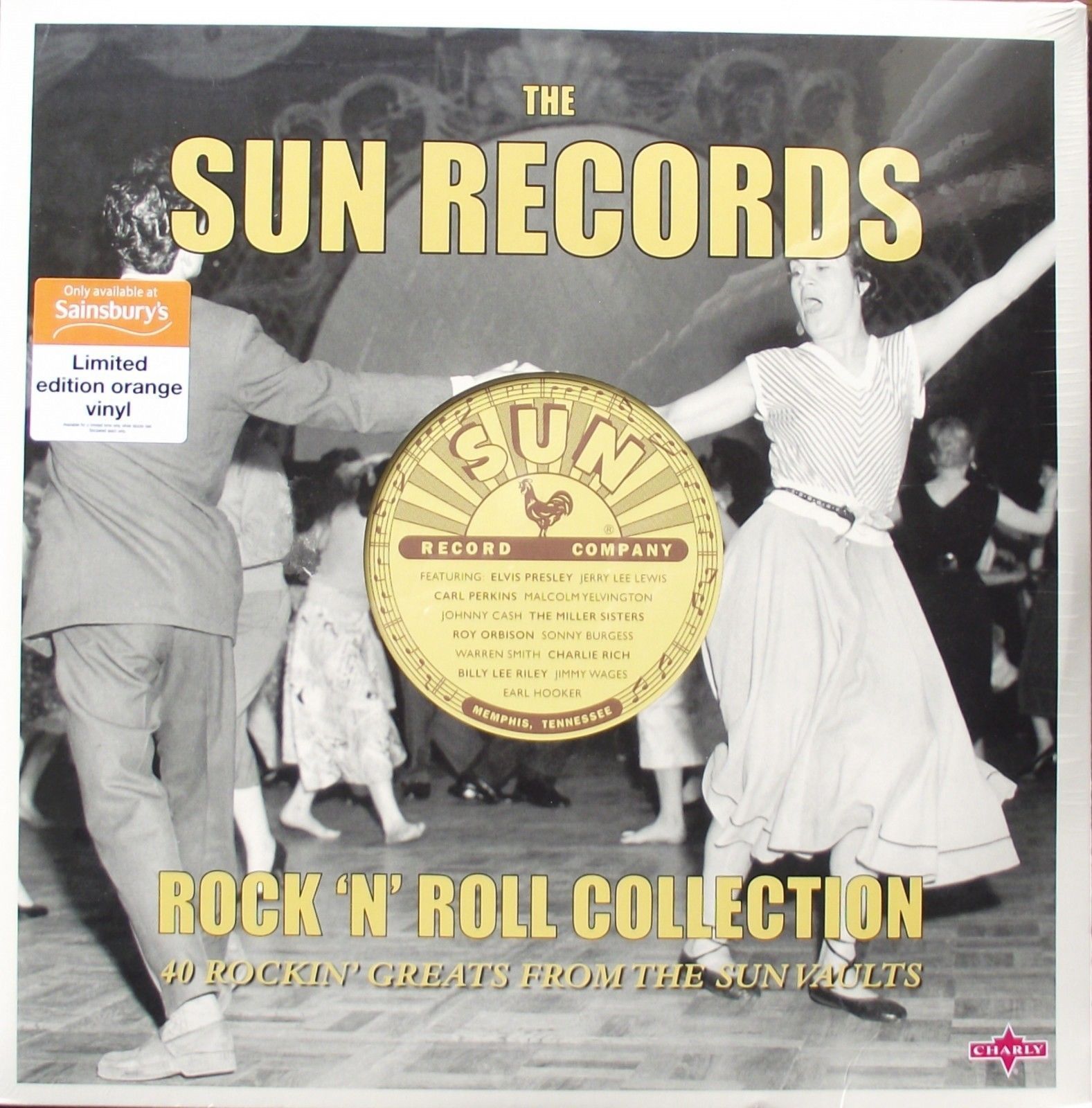
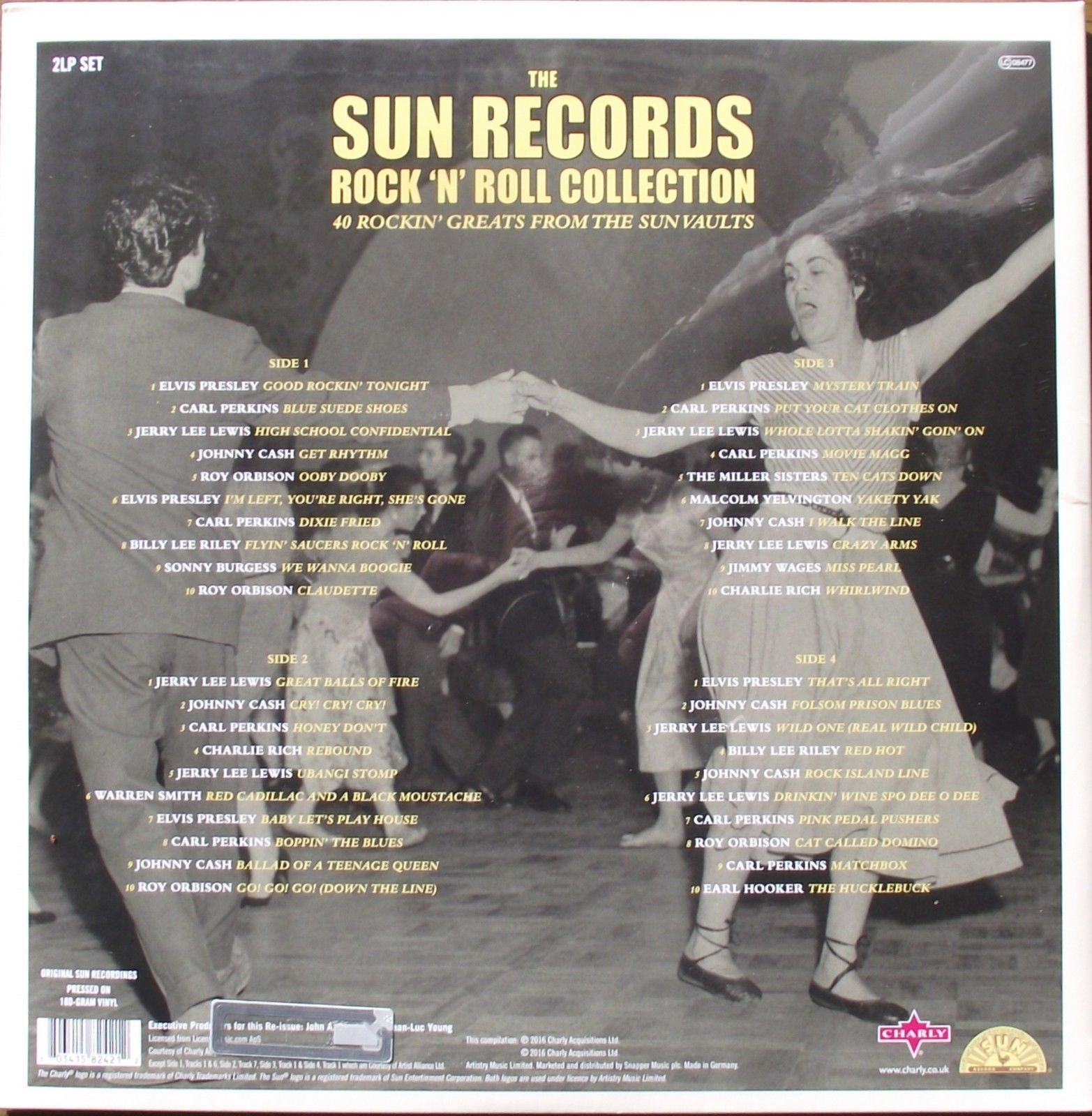
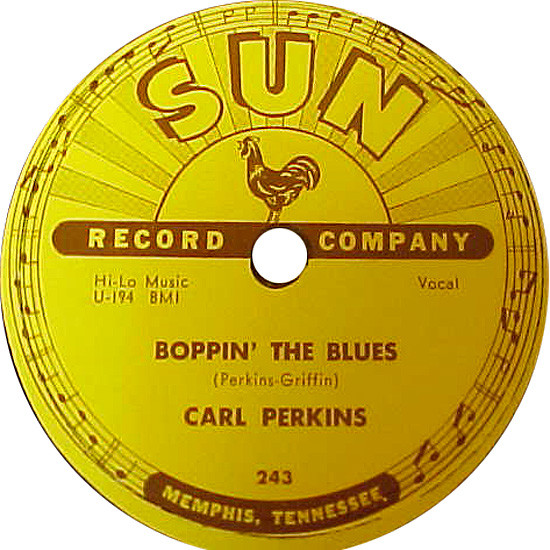
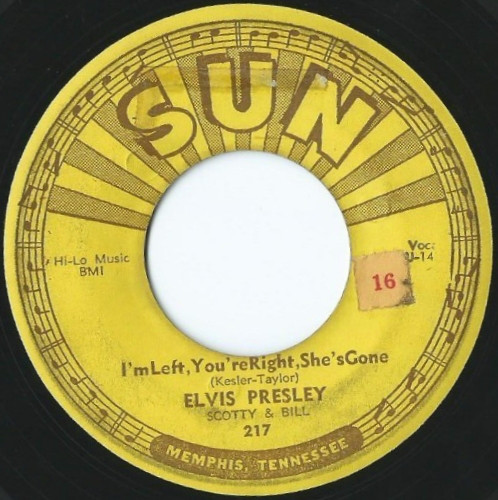
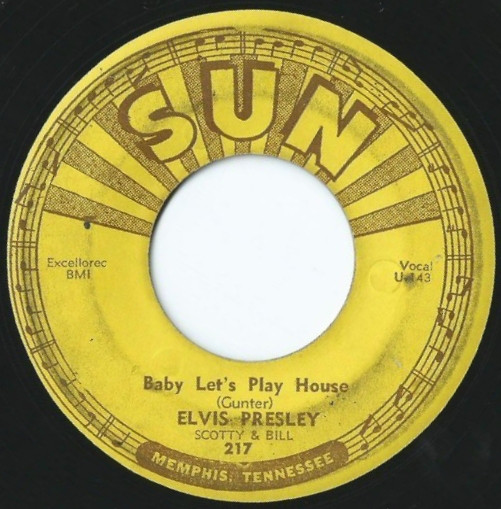
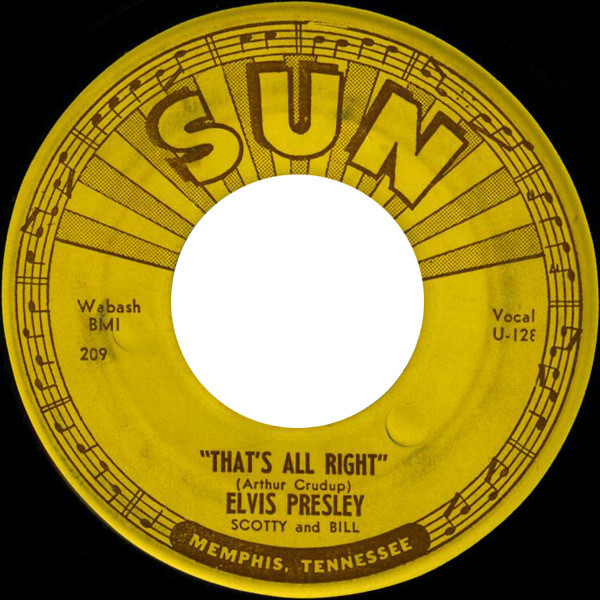
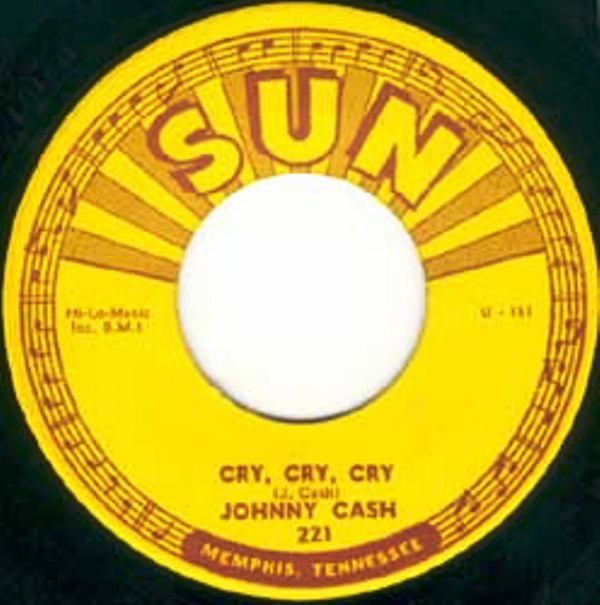
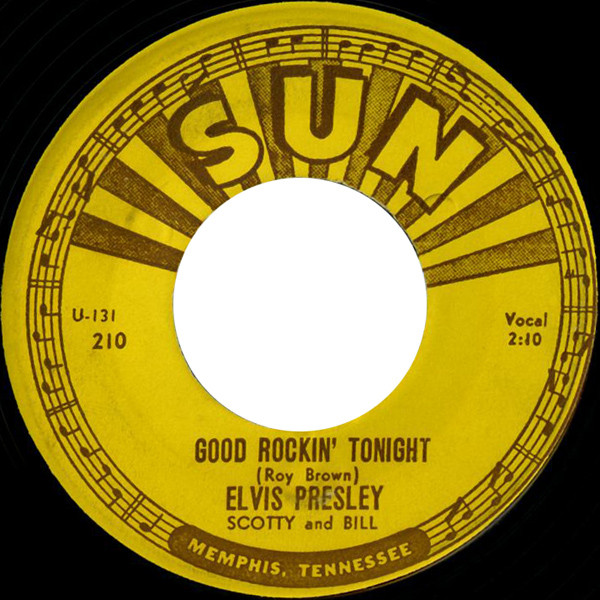
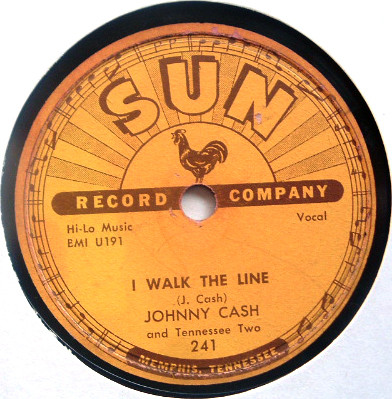
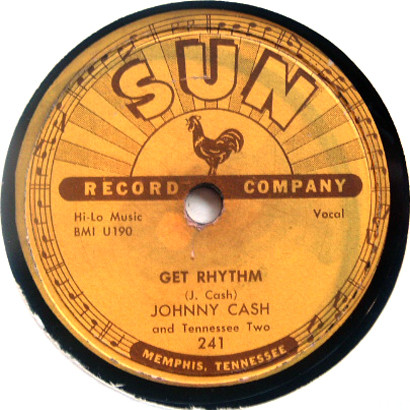
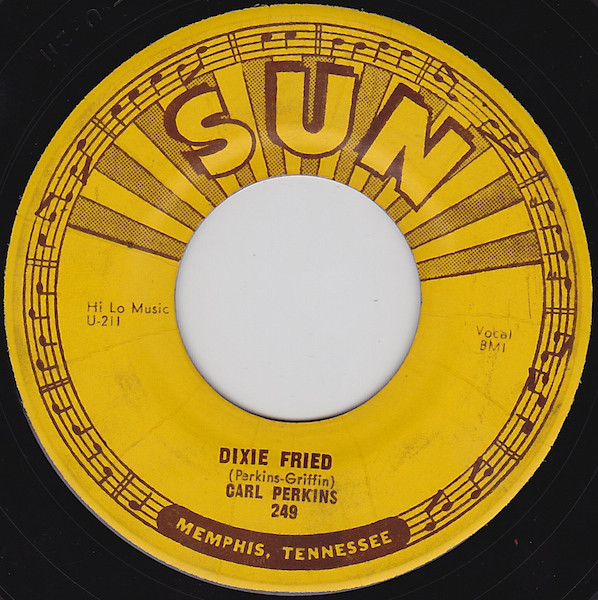
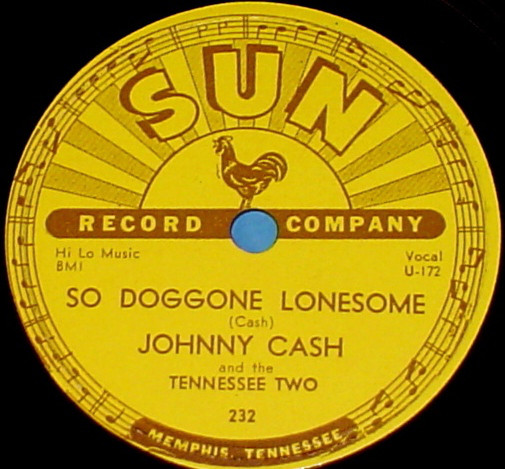

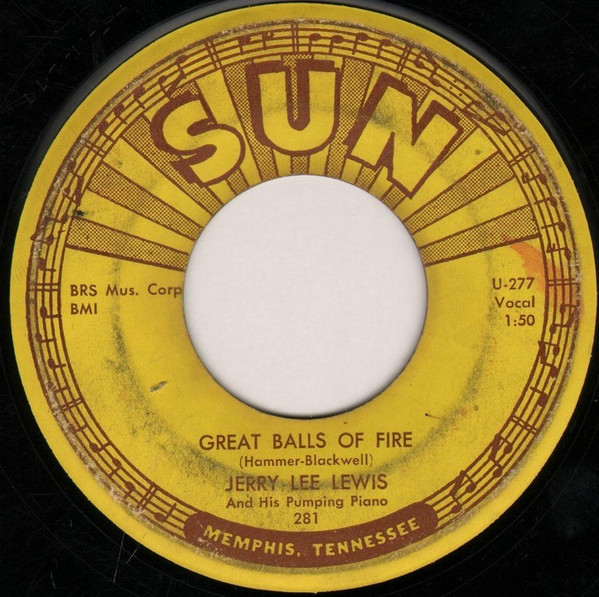
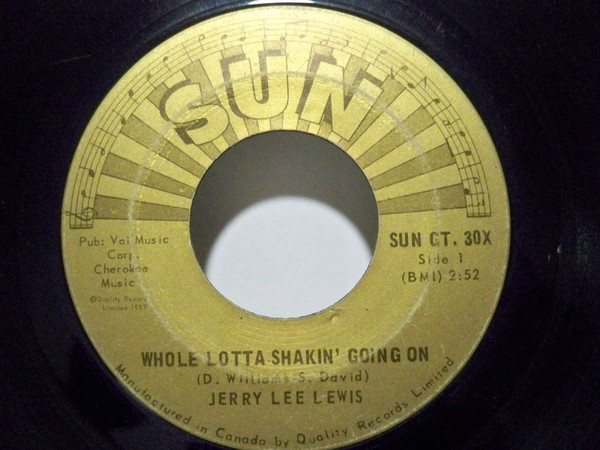
PAUL MARCANO AND LIGHTDREAMS-10,001 DREAMS.
PAUL MARCANO AND LIGHTDREAMS-10,001 DREAMS.
In 1981, British Columbian band LightDreams released debut album Islands In Space. It was a captivating psychedelic sci-fi odyssey where LightDreams explored cosmic ideology. Normally, an album like Islands In Space would’ve found favour with fans of psychedelia and progressive rockers who embraced cerebral, innovative and epic albums. Alas, that wasn’t the case with Islands In Space, which was released by LightDreams. Sadly, history repeated itself a year later.
LightDreams who were now billed as Paul Marcano and LightDreams, had returned to the studio to record their sophomore album 10,001 Dreams. The album picked up where Islands In Space left off, and went as far as exploring what was described as “utopian outer space colonisation.” This was something that fascinated and enthralled Paul Marcano since he first encountered the work and theories of author, physicist and space activist, Gerard K. O’Neill. His work and theories influenced Paul Marcano and the genre-melting music on 10,001 Dreams. It was recorded during 1982 and released that year.
This time around, Paul Marcano and LightDreams decided not to release the album on vinyl. Instead, it was released by the band on cassette. Just like Islands In Space, 10,001 Dreams found an audience within British Columbia, where the band were based. However, beyond British Columbia failed to find the audience it so richly deserved.
It was only much later, that word began to spread about Islands In Space and 10,001 Dreams. Occasionally, a few lucky record and tape collectors chanced upon a copy of Islands In Space or 10,001 Dreams. They paid their money and discovered two groundbreaking hidden gems. Before long, collectors and aficionados of psychedelia were looking for copies of Islands In Space and 10,001 Dreams. This was a long shot, and most collectors came up short. The only hope was that a reissue company would eventually reissue both albums. Thankfully, Got Kinda Lost Records released Islands In Space during 2015. Then recently, Got Kinda Lost Records completed the set by rereleasing 10,001 Dreams. It’s been restored and is one of the most welcome releases of 2016. 10,001 Dreams allows the listener to go back in time to British Columbia in 1981 when Paul Marcano met the musicians with whom he would form LightDreams.
Back in 1981. like most towns and cities, British Columbia had a vibrant and thriving music scene. Paul Marcano was part of this scene. He was looking for like minded musicians to collaborate with. Eventually, Paul found his circle of friends and like minded musicians. Among the members of the newly formed band which became LightDreams, were Cory Rhyon and Andre Martin. They would record their debut album Islands In Space, later in 1981.
Islands In Space.
Paul Marcano dawned the role of the newly formed LightDreams. He was brimming with ideas, enthusiasm and energy. Not only had Paul been writing songs for a number or years, but he was also a talented multi-instrumentalist. With Paul at the helm, LightDreams’ thoughts began to turn to their debut album.
There was a minor problem though. Recording studios were expensive and beyond the budget of LightDreams. An alternative was, recording the album using the pro-sumer technology that was becoming popular in the early eighties. That still required funds, funds which for most new bands, were limited. However, one of LightDreams’ friends had another idea, and decided to approach executives at the TEAC Corporation, in the hope that they would let the band use some of their technology. This was a long shot, but one that paid off.
The TEAC Corporation, who were a market leader in early eighties recording equipment, allowed LightDreams to use a 144 track cassette recorder. This was beyond their widest dreams, and more than enough to the record the psychedelic opus that LightDreams were planning.
LightDreams planned to record seven songs penned by Paul Marcano. These songs had been slightly influenced by the work and theories of author, physicist and space activist, Gerard K. O’Neill. This was someone who Paul Marcano had been enthralled by for several years.
One of his theories was, that eventually, mankind would inhabit outer space. This Gerard K. O’Neill believed, would result in a much better world for those left behind inhabiting earth. No longer would there be problems with overpopulation and a reliance on natural resources. However. Paul took this proposition further, exploring whether mankind’s grasp of space-age technology could lead to a peace and cosmic presence on earth? He was following in the footsteps of the progressive rockers, in making cerebral and ambitious music.
To makes this music, which became Islands In Space, Paul Marcano who was producing the album would make good use of the 144 track cassette recorder. This was more than enough to record even the most ambitious Magnus Opus. Islands In Space had its very own Magnus Opus, Atmospheric Dreams; My Spirit Soars; Atmospheric Dreams a near eleven minute epic. It was just one of the seven tracks that were recorded and became Islands In Space.
Now that Islands In Space was completed, LightDreams decided to release the album themselves. This wasn’t unusual back in 1981, when there were many private pressings released. LightDreams had a 1,000 vinyl copies of Islands In Space pressed. These albums they hoped, they would be able to sell to their fellow British Columbians.
Alas, it wasn’t to be. Islands In Space, a captivating psychedelic and progressive sci-fi odyssey where LightDreams explored cosmic ideology passed record buyers by. They missed out on an album that wasn’t just ambitious, but innovative and featured cerebral and thought-provoking lyrics. However, Paul Marcano and the other members of LightDreams, weren’t beaten. They decided to record a followup to Islands In Space. This would eventually become 10,001 Dreams.
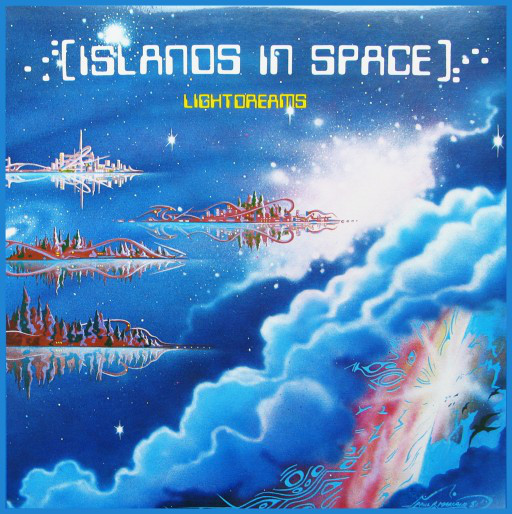
10,001 Dreams.
After the disappointing response to LightDreams’ debut album Islands In Space, they dusted themselves down and returned to the studio in 1982. By then, LightDreams were now being billed as Paul Marcano and LightDreams. For many groups, one member receiving equal billing as the group could’ve torn the group apart. However, Paul was playing a huge role in LightDreams. Not only was he the group’s principal songwriter, vocalist and producer, he was also a multi-instrumentalist. He would would play an important part on what became 10,001 Dreams.
For the best part of a decade, Paul Marcano had been writing songs. Some of these songs he believed, were perfect for 10,001 Dreams. So Paul dusted down songs he had previously penned. The earliest of these songs was Follow The Stream, which Paul had written and recorded in 1973. It was part of an album Paul recorded, but never released. This wasn’t the only album Paul hadn’t released.
Five years later, and Paul had penned Everyone Grows and Grows and Who Is The One in 1978. Again, it was part of an album that Paul recorded, but decided not to release. Since then, he had kept the song awaiting the right project. 10,001 Dreams was it. However, more songs were required for the album.
The rest of 10,001 Dreams consisted of new songs, including Andre Martin’s Being Here and Paul’s composition 10,001 Dreams. They were augmented by a trio of instrumentals including Stream III, the twenty-three minute epic In Memory Of Being Here and Building Islands In Space (Reprise). These tracks became 10,001 Dreams, the followup to Islands In Space.
Again, Paul Marcano and LightDreams recorded 10,001 Dreams with the 144 track cassette recorder. With so many tracks available, Paul who was producing the album, was able to let his imagination run riot. Paul Marcano and LightDreams deployed a myriad of New Age synths and augmented this with the rhythm section and fuzzy, lysergic, languid and dreamy guitars. The result was a truly eclectic album, where a myriad of disparate influences seem to have influenced Paul Marcano and LightDreams.
The guitars that feature on 10,001 Dreams bring to mind Michael Rother’s first three albums, Flammende Herzen, Sterntaler and Katzenmusik. There’s also similarities to Manuel Göttsching’s Inventions For Electric Guitar. Similarly, the synths on 10,001 Dreams were reminiscent of those that played an important part of so many Berlin School and Krautrock albums. Other notable influences included sixties British psychedelia, seventies progressive rock, folk pop at its most melodic and ambient and avant-garde music. 10,001 Dreams was another ambitious and innovative album, which features aul Marcano and LightDreams at their most inventive and progressive. All that was left was to release the album.
With 10,001 Dreams completed, releasing the album on vinyl would’ve proved problematic. The album was the best part of ninety minutes long. It was far too long to fit on a one album. Instead, 10,001 Dreams would need to be a double album. This would’ve required significant investment from Paul Marcano and LightDreams. For the band, it was a big decision.There was always the possibility that the album might no sell, and they would fail to recoup their initial investment. A much simpler solution, was to release 10,001 Dreams on cassette.
This made sense, as this meant that Paul would be able to make the cassette himself. So 10,001 Dreams was released on cassette later in 1982. Now it was a waiting game how would the music fans react?
Sadly, just like Islands In Space, 10,001 Dreams never found the audience it so richly deserved. That only happened much later.
Somewhat belatedly, word began to spread about 10,001 Dreams. Occasionally, a few lucky tape collectors chanced upon a copy of 10,001 Dreams. They paid their money a groundbreaking hidden gem. Before long, collectors and aficionados of psychedelia were looking for copies of 10,001 Dreams. This was a long shot, and most collectors came up short. Now though, Got Kinda Lost Records’ remastered reissue of 10,001 Dreams allows the album to be heard by a much wider and appreciative audience.
Opening 10,001 Dreams, is the title-track, a fourteen minutes epic. Thematically, it picks up where Islands In Space left off. A guitar takes centre-stage, chirping and chiming urgently. It’s panned quickly, adding a lysergic hue. So does the vocal that’s buried in the midst of the arrangement. By then, the guitar is reminiscent of Manuel Göttsching’s on Inventions For Electric Guitar. Later, the guitar is multi-tracked and assails the listener, as genres melt into one. Elements of psychedelia, Krautrock, avant-garde and progressive rock combine. Guitars then envelop the vocal which sits back in the mix. When it drops out, guitars take charge before Paul returns and sings of his futuristic, utopian dream against a dreamy, psychedelic backdrop. His vocal is hopeful and delivered in a folk pop style, as the multilayered arrangement briefly becomes rocky and urgent. Much later, the guitar adds occasional Eastern sounds. It’s just one of the many secrets, subtitles and nuances, within this melodic, genre-melting epic.
Stream III is the first of a trio of instrumentals. Washes of crystalline guitars, break like waves on a beach. They chirp, cheep and wah-wah, and are at the forefront of this multilayered arrangement. Soon, they’re panned quickly adding a trippy effect. Remembering the maxim less is more, effects are used sparingly. Then a rhythm guitar is played with an element of urgency, and plays an important part, carving out rhythms aplenty. Later, when effects are used on a guitar, it becomes like the musical equivalent of the big dipper as the dry signal is bent out of shape. Mostly, though, the effects are used sparingly and effectively. They play their part on what’s a captivating and carefully sculpted soundscape. It paints pictures in the mind’s eye, with its innovative and timeless sound.
Guitar shimmer and glimmer on Everyone Grows and Grows unfold. The guitars are almost choppy, as Paul’s lysergic vocal enters. It sits atop meandering, fluffy synths that float dreamily along. Paul’s vocal evokes memories of sixties British psychedelia, including The Beatles at their most psychedelic. There’s even a stylistic nod to Pink Floyd’s Speak To Me around 1.20, as Paul becomes a carnival barker as he enthuses: “find yourself a dream.” Later, the guitars range veer between garage rock and take on an almost Eastern sound. However, Everyone Grows and Grows is psychedelic at purest. Especially the Paul’s vocal and harmonies than can only be described as lysergic and beatific as he enthuses about: “when I make the Great transformation…what a day it will be.” Similarly, what a song this is, psychedelia at its best.
Straight away, guitars glisten and shimmer on Visual Breakfast, while a bass probes before a blistering, searing rocky guitar cuts through the arrangement. It’s played with speed and accuracy, as the washes of guitar join the pulsating arrangement. It has a mesmeric quality, that’s reminiscent of many a Krautrock album. Soon, the rocky guitar assails the listener. When it drops out, cinematic guitars plays as synths augment the dreamy arrangement. Before long, it takes on a rocky sound, as which again, references The Beatles. Especially their psychedelic era. Synths are added and augment an arrangement that’s variously rocky, psychedelic, shrill and melodic as Paul delivers the cerebral lyrics. Always, though, he and the rest of LightDreams have the capacity to throw curveballs and continually captivating. At 7.42 they seem to pay homage to Pink Floyd as a quite beautiful psychedelic ballad unfolds. It gives way to a slice of Beatles-esque psychedelic rock, during what’s been a Magical Mystery Tour.
Guitars are to the fore on Who Is The One. Washes of lysergic guitar join the bass as another guitar is strummed with a degree of urgency. Then a searing rocky guitar is added. It’s panned before Paul’s lysergic vocal enters. Later, shimmering and celestial guitars are added to the multilayered arrangement. This includes dreamy synths, acoustic guitars, bass and Paul’s vocal, which is a mixture of folk pop and thanks to the effects, psychedelic. These effects have been used on a guitar, which panned and swirls, adding a psychedelic hue. It adds yet another layer, as the scorching, blistering guitar climbs and climbs, before soaring like an eagle above the genre-melting arrangement.
At first glance, In Memory Of Being Here might look like a twenty-three minute epic. It’s not. Instead, it’s a six part musical suite, which opens with Being Here. Guitars are the forefront of the arrangement, while Paul’s vocal has been treated with effects. Harmonies and chirping, chiming and bristling guitars on this slice of psychedelic rock. It gives way to Subtle Arrival, where washes of celestial synths ebb and flow, adding a futuristic, Berlin School inspired sound. Later, it rumbles ominously before echoing, and referencing Pink Floyd. From there, Something Out Of Nothing opens which scrabbled guitars cooing, before trippy synths beep and squeak as if covering in some obscure interplanetary language. Washes of guitar shimmer and glisten, before ethereal, elegiac and futuristic synths reverberate. Meanwhile, on Shuttle Departure the sound of an engine can be heard above the arrangement? It drones and glides, making its presence felt. In doing so, the script to this cinematic track takes shape. What follows is akin to the soundtrack to a sci-fi film. That’s until the penultimate part of this six part suite.
Maybe having reached the destination, Paul Marcano and LightDreams replicate the welcome they receive on Windsong For The Rain. Acoustic guitars are played quickly and join mesmeric persuasion that seems determined to replicate the sound of raindrops. Meanwhile, the guitars are played with speed and urgency, creating a joyous backdrop. Soon, though the arrangement almost grinds to a halt. A thunderstorm stops play as the arraignment meanders along. What sounds like traffic, a thunderstorm and wistful Eastern sound combine. This comes courtesy of synths and wind instruments. Later, as the storm passes just an understated but cinematic backdrop remains. It gives way to Erona Interlude, as world music is combined with sound of the shuttle returning. As the arrangement drones and buzzes, this epic musical journey is over and has showcased Paul Marcano and LightDreams at their creative zenith. In Memory Of Being Here deserves to be called a Magnus Opus.
Maj Moorhsum is another example of inventiveness. Layers of guitars, bass and synths combine. This includes a searing guitar that adds a melodic backdrop and a buzzing bass. Filters and effects are used, as a couple layers seem to be played backwards. This proves effective. Especially as panning has been used, adding to the psychedelic rock sound. It’s not just lysergic and strangely melodic, but vaguely hypnotic, experimental and ultimately, musically satisfying for anyone whose a sonic explorer.
Closing 10,001 Dreams is Building Islands In Space (Reprise).. Again, filters and effects are used throughout. Guitars chirp, chime and bristle, while synths augment the arrangement. The vocal is akin to a mesmeric, dreamy, chant that’s reminiscent of sixties gurus, offering spiritual and sometimes, psychedelic guidance. Essentially, there’s a cinematic sound to Building Islands In Space (Reprise), which like so many tracks on 10,001 Dreams is an invitation to let your imagination run riot. Those that do, will be richly rewarded.
That’s definitely the case, with Got Kinda Lost Records newly restored reissue of 10,001 Dreams. It’s without doubt one of the most welcome releases of 2016. Collectors and aficionados of psychedelia have dreamt of this day for many a year.
Although 10,001 Dreams, was self released in 1982, Paul Marcano and LightDreams’ sophomore album passed most people by. It was only discovered by a small group of discerning music fans living in British Columbia. Most collectors and aficionados of psychedelia got to the party late, as far as 10,001 Dreams was concerned. That’s apart from a few lucky music fans who found a copy of the tape in second hand stores or bargain bins. They paid their money, and discovered a groundbreaking, genre-melting hidden gem. Before long, word was out, and collectors and aficionados of psychedelia were looking for copies of 10,001 Dreams. It takes as its starting point psychedelia.
10,001 Dreams is much more than psychedelic album. Elements of ambient, avant-garde, Berlin School, folk pop, Krautrock, progressive rock and rock can be heard throughout 10,001 Dreams. It’s a musical potpourri, where instruments and influences melt into one as Paul Marcano and LightDreams sculpt a captivating psychedelic sci-fi odyssey. Just like Islands In Space, 10,001 Dreams finds Paul Marcano and LightDreams continuing to explore cosmic ideology. This may seem like an unlikely theme for an album. However, back in the the seventies, when Paul Marcano wrote three of the songs on 10,000 Dreams, that was the age of progressive rock epics. They were almost de rigeur. It was almost a rite of passage for any self-respecting progressive rock band. Paul Marcano and LightDreams weren’t progressive rockers. They were however, musical pioneers.
Proof of that, is Paul Marcano and LightDreams’ sophomore album 10,001 Dreams, which was an ambitious, innovative and cerebral Magnus Opus, that thirty-four years later, is truly timeless, and deserves to find its way into any self-respecting sonic explorer’s record collection.
PAUL MARCANO AND LIGHTDREAMS-10,001 DREAMS.
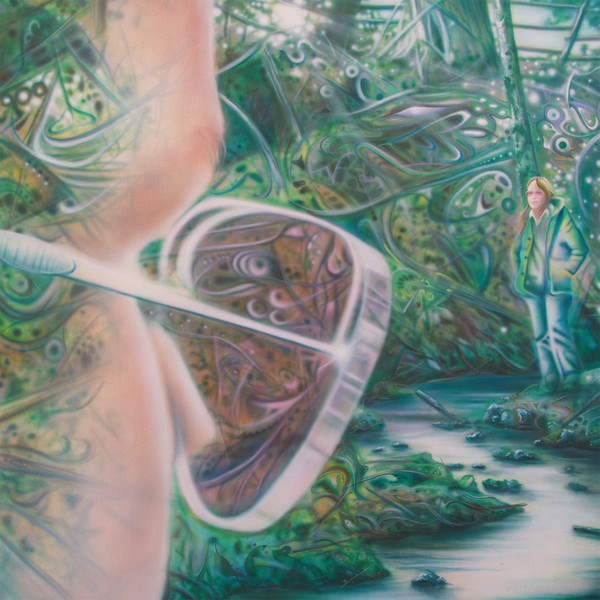
DAN WHITEHOUSE-THE REVEAL RECORDS’ E.P.s.
DAN WHITEHOUSE-THE REVEAL RECORDS’ E.P.s.
For Dan Whitehouse, 2016 has been without doubt, one of the most important and successful years of his eighteen year career. This began when Dan Whitehouse signed to Reveal Records. On April 22nd 2016, Dan Whitehouse released his Reveal Records’ debut Introducing. It was a mixture of new songs and cover versions, which showcased a truly talented troubadour. However, Introducing was just a tantalising taste of what Dan Whitehouse was capable of. The main event was the studio album he was in the process of recording.
Less than five months later, and Dan Whitehouse released That’s Where I Belong on the 2nd of September 2016. The track lent its name to the album was a hook laden, joyous anthem. It was just one the tracks that showcased Dan Whitehouse’s considerable talents as a singer, songwriter and storyteller. That’s also the case with Dan Whitehouse’s latest E.P.s.
Most artists are content to release one E.P. at a time. Not Dan Whitehouse. Instead, Reveal Records have released a quartet of Dan Whitehouse E.P.s on CD. These E.P.s are entitled E.P. 1, E.P. 2, E.P. 3 and the Dan Whitehouse Sings Boo E.P. These four E.P.s feature a total of twenty-five songs, and include Dan Whitehouse compositions and cover versions. They’re the most recent addition to Dan Whitehouse’s burgeoning back-catalogue. That’s not surprising, as Dan Whitehouse’scareer began back in 1998.
That was when nineteen year old Dan Whitehouse joined Naomi, a local band. Dan was a member of the band for two years, but left in 2000 to join the rock band Sonara.
Dan Whitehouse became Sonara’s frontman, and was a member of the band until 2007. During this period, Sonara played at the prestigious Reading Festival. However, by 2007 Dan announced he was leaving Sonara, to embark upon a solo career.
For the first two years of his career, Dan Whitehouse spent time writing songs, honing sound and playing live. This was akin to a musical apprenticeship. After two years, Dan felt confident enough to releases his debut E.P.
When Dan Whitehouse released The Balloon E,P. in early 2009, it featured seven tracks. This Dan explained, was only the first in a trilogy of E.P.s They would examine a variety of themes, including “life, love, loss and happiness.” The second instalment in the trilogy, followed later in 2009.
The Bubble E.P. picked up where The Balloon E,P. left off, examining “life, love, loss and happiness.” One of the most beautiful tracks on The Bubble E.P. was You Can’t Give Me Anymore. Unsurprisingly, it caught the attention of few discerning critics. Suddenly, people were taking notice of the young singer-songwriter. This included veteran pedal steel player B.J. Cole, who made a guest appearance on The Bubble E.P. This was be the start of a long working relationship between the pair that continues today.
Later in 2009, Dan Whitehouse released The Box EP., which was the final instalment in the trilogy. This brought the examination “life, love, loss and happiness” to an eloquent and heartfelt end. Now surely, Dan’s thoughts would turn to his debut album?
Surprisingly, it wasn’t until 2012 that Dan Whitehouse returned with his eponymous debut album. It had been in Dan’s flat, and featured mainly acoustic instruments. This worked though, and allowed Dan’s vocal to take centre-stage. Five years after embarking upon a solo career, Dan Whitehouse had released his debut album. His sophomore album followed the in 2013.
When work began on Reaching For A State of Mind, Dan Whitehouse found himself in a recording studio with a full band. The band featured some familiar faces. This included P.J. Wright from Fairport Convention; Ezio guitarist Booga. percussionist Chip Bailey and Helen Lancaster of The Old Dance School. This all-star band accompanied Dan in the eleven tracks that became Reaching For A State of Mind. It was released in autumn 2013.
Reaching For A State Of Mind was a genre sprawling album. Despite several folk musicians in Dan’s band, the album featured everything from Americana, folk, pop, rock and roots. Critics felt that Reaching For A State of Mind was a much more refined and polished album. It was launched in Dan’s adopted hometown of Birmingham, at the city’s Crescent Theatre. However, it wasn’t just Reaching For A State of Mind that was being launched, but Dan Whitehouse’s career.
Over the next year, Dan Whitehouse’s star was in the ascendancy. He spent the year touring and recording. Dan released his third album Raw State in 2013. It was well received by critics, and found Dan maturing as a singer and songwriter.Then later in 2014, Dan released the Reaching Further For A State of Mind E.P. It featured unreleased songs recorded during the Further For A State of Mind sessions. However, by then, Dan was on tour.
This included touring North America with German-American singer-songwriter Anja McCloskey. The pair even released the Still E.P. together. Then in August 2014, Dan played at the Moseley Folk Festival. He took to the stage after a set by The Felice Brothers, but quickly won the audience over. By the end of his set, Dan had the audience eating out of his hands. Watching from the wings was Richard Thompson, who followed Dan. The grand old man of British folk realised that he was watching one of genre’s rising stars. However, Dan was no stranger to working with some of the biggest names in music.
Over the years, Dan Whitehouse has toured with some major names. This includes Peter Green, 10CC, Maria McKee, World Party and Julian Cope. Dan has also opened for Josh Ritter, Caitlin Rose, Joseph Arthur, Willy Mason and Simone Felice since he embarked upon a solo career in 2007. Recently, Dan Whitehouse has toured with Eddi Reader, and opened for Kris Drever on his U.K. tour.
By the time Dan Whitehouse headed out on tour with Kris Drever, he had released his first album for Tom Rose’s Reveal Records. Introducing is a limited edition CD which features eight tracks from Dan Whitehouse. They’re a mixture of cover versions and songs penned by Dan Whitehouse.
Introducing.
Among the songs on Introducing penned by Dan Whitehouse, are That’s When I Belong, The Places We Have Been, Work and CCC. Apart from Work, which is a Radio Edit, the other three tracks are a taster of Dan’s forthcoming album. The other four tracks were recorded live at Kyoti Studios, in Glasgow without any overdubbing. This includes Dan’s duet with Jess Morgan on Close Up, which Boo Hewerdine cowrote. Other tracks include covers of The Cowboy Junkies’ Sun Comes Up, Its Tuesday Morning and Chris Wood’s Two Widows. These track introduce Dan Whitehouse on Introducing.
Dan Whitehouse’s Reveal Records’ debut Introducing, was his fourth album. It was released on 22nd April 2016, and showcased a truly talented singer-songwriter. However, Introducing was just the equivalent of a musical amuse-bouche. The main course now is about to be served, and That’s Where I Belong is a veritable musical feast.
That’s Where I Belong,
Now signed to Reveal Records, Dan Whitehouse began working on his debut album. He has been writing songs for the best part of twenty years, and draws inspiration from various types of music, including Americana and folk music. Many of Dan Whitehouse’s songs have a cinematic quality, as he paints pictures with his lyrics. These stories take shape in the space of three or four minutes, and leave a lasting memory. Other times, Dan Whitehouse’s song are observational.
Dan Whitehouse is a people watcher, who often, tells other people’s stories. On Close Up, Dan tells the story of refugees, displaced from their homeland. CCC and Little Left Unsaid deal with subjects like anxiety and mental health. Other times, Dan Whitehouse’s songs are reflective and poignant. He sings about subjects like family and love, and loss and compassion. It seems that singer, songwriter and storyteller Dan Whitehouse had drawn inspiration from a variety of sources for the nine songs he penned for That’s Where I Belong. These songs were recorded in Glasgow and London.
Recording of That’s Where I Belong took place at Reservoir Studios in London and at Kyoti Studios in Glasgow. Producing the That’s Where I Belong were Danny Wilson and Chris Clarke. Joining Dan Whitehouse when recording began, were veteran pedal and lap steel player B.J.Cole and folk singer Jess Morgan. She duets with Dan on Close Up. Once That’s Where I Belong was complete, there was no rest for Dan Whitehouse.
Instead, Dan Whitehouse headed out on tour with Kris Drever, and opened for him on his UK tour. This was perfect publicity for That’s Where I Belong. Meanwhile, That’s Where I Belong had been released to critical acclaim. It seemed that after all the years of struggling to make a breakthrough, Dan Whitehouse’s star was in the ascendancy. That’s Where I Belong was regarded as his finest album, and a welcome addition to his back-catalogue. Se are the quartet of E.P.s that have just been released by Reveal Records.
E.P. 1.
The first in the quartet of Reveal Records E.P.s is unsurprisingly, E.P. 1 It features five songs, which are a mixture of Dan Whitehouse compositions and cover versions. They included Matthew Sweet’s Your Sweet Love and Nada Surf’s Inside Of Love. Dan’s compositions included an old favourite That’s Where I Belong, which was the title-track of his recent album. They’re joined by two new songs, My Anchor and Tethered Together. These songs were recorded at Kyoti Studios in Glasgow, which previously, has been a happy hunting ground. That’s where parts of Introducing and That’s Where I Belong were recorded.
What better way to open E.P. 1, than with the radio edit of That’s Where I Belong. It’s an irresistible, hook laden and joyous anthem that’s radio friendly. It sets the bar high for the rest of E.P. 1.
Your Sweet Voice is a tender and beautiful ballad, where the sparse arrangement allows the vocal to take centre-stage. That’s where it belongs. It’s a similar case with Dan’s cover of Nada Surf’s Inside Of Love. Against the understated arrangement, Inside Of My Love becomes a soul-baring ballad in Dan Whitehouse’s hands. It’s another beautiful addition to E.P. 1. After the two cover versions, Dan showcases two excliusive songs.
The first is My Anchor, the first of the two exclusive songs on E.P. 1. Americana and country seem to have influenced Dan on this ballad. A piano and guitar play leading roles, while Dan’s vocal is akin to a confession, as he sings: “you are My Anchor.” Closing E.P. 1. is Tethered Together, which features a carefully crafted arrangement. Dan’s band and harmonies accompany him as he delivers a heartfelt and soulful vocal, on a truly memorable song. It’s another radio friendly song, that hopefully, will find its way onto Dan’s next album. However, before that, Dan’s thought’s turned to another E.P.

E.P. 2.
This was E.P. 2, which features fives songs penned by Dan Whitehouse. This includes Nothing’s Gonna Change It and four exclusive songs. Just like the two previous E.P.s, they were recorded at Kyoti Studios, in Glasgow. That was where Dan enjoyed one of his finest moments.
That’s Nothing’s Gonna Change a truly irresistible, anthemic and radio friendly song. It was without doubt, one of the highlights of That’s Where I Belong, so sets the bar high for the four exclusive songs.
This includes Somebody Loves You, which features some powerful and insightful lyrics. They’re part of what sounds like a very personal song, which has a confessional quality. Maybe Dan, or someone close to him has experienced and lived through what he’s singing about? Pebbles is piano lead ballad, where Dan lays bare his hurt and heartbreak. The Fire Of Lust is a song which showcases Dan’s ability to write cinematic lyrics. They unfold against, an spartan arrangement and show how two people’s lives can be changed in an instant. Coin which closes E.P. 2 is another ballad, where an acoustic guitar accompanies Dan as he delivers a tender, heartfelt vocal that’s full of emotion. It’s a beautiful track from a truly talented singer, songwriter and storyteller, Dan Whitehouse. When he recorded E.P. 2, he was enjoying one of the most productive years of his career, and this would continue.

E.P. 3
Having released two albums and two E.P.s during 2016, Dan Whitehouse decided to add to his burgeoning back-catalogue. So he headed to Kyoti Studios in Glasgow, and recorded five songs. This included five songs, including a cover of Ron Sexsmith’s These Days, and three songs written by Dan. This includes two versions of You Brought The Sunshine and CCC, which both featured on That’s Where I Belong. The other two songs, Looking For A Way Out Of My Head and There’s A Lot Of Things I Don’t Understand were exclusive to E.P. 3. These songs show different sides to Dan Whitehouse.
What better way to open E.P. 3 than with the radio edit of You Brought The Sunshine. Dan Whitehouse combines power and emotion on what’s akin to a confessional, as the song heads firmly into anthem territory. The other version of You Brought The Sunshine was recorded live at Kyoti Studios in Glasgow. Its arrangement is sparse, with Dan entering troubadour territory as he delivers an impassioned, emotive vocal. With just a guitar for company, Dan reinvents the song. It’s a similar case with CCC, which was another of That’s Where I Belong’s anthems. Again, the understated arrangement allows Dan to breath new life and meaning into the song. This Dan does with his beautiful cover of Ron Sexsmith’s These Days that bristles with emotion. However, this isn’t the end of E.P. 3.
There’s still the two exclusive songs left. This includes Looking For A Way Out Of My Head, where Dan’s joined by his band. Hooks certainly haven’t been rationed, on what’s a powerful song that showcases Dan’s talents as a singer and songwriter. So does There’s A Lot Of Things I Don’t Understand, which closes E.P. 3. Dan’s in a thoughtful and reflective mood, as his vocal sometimes veers towards a soliloquy. Later, though, the arrangement builds, and a wistful horn plays its part in a memorable fusion of pop and folk. It’s sure to whet the listener’s appetite for E.P. 4.

E.P. 4-Dan Whitehouse Sings Boo E.P..
Unlike the three previous E.P.s, the fourth E.P. is made up entirely of cover versions. Each of the nine songs on the Dan Whitehouse Sings Boo E.P. were penned by another Reveal Records’ artist, Boo Hewerdine. He wrote six of the songs, and cowrote the other three. Only one of these songs have been released before, Close Up which featured on That’s Where I Belong. Just like the rest of the songs, it was recorded in Glasgow, at Kyoti Studios by troubadour Dan Whitehouse.
Opening Dan Whitehouse Sings Boo E.P. is Hunger. Its arrangement is spartan and spacious, with guitars and a mesmeric keyboard accompanying Dan’s heartfelt, questioning vocal. This is a taste of the delights that are in-store for listeners.
Washes of guitar disappear into the distance, as Dan strums his guitar and delivers a wistful, emotive vocal on The Birds Are Leaving. Then on the country-tinged Last Cigarette, Dan delivers a vocal that’s tinged with sadness and has a worldweary quality. He sounds as if he’s living the lyrics, which in his hands, take on new meaning. It’s a smiler story on Graceland, with its spartan arrangement. Dan’s vocal veers between emotive and urgent, as he displays frustration and melancholia. His finest moment on Dan Whitehouse Sings Boo E.P. is Close Up. It’s a beautiful, moving, country-tinged ballad where Dan is joined by Jess Morgan. This balladry continues throughout the rest of Dan Whitehouse Sings Boo E.P.
Follow My Tears is another ballad, which is something that Dan Whitehouse excels at. This time, his vocal is tender and heartfelt vocal, but bristling with emotion. Just like previous songs, it’s a case of less is more when it comes to the almost jaunty arrangement. It’s the perfect accompaniment to Dan’s vocal. That’s the case on Wild Wild Wind, where an electric guitar adds a rockier sound. Meanwhile, Dan opens up and delivers a soul-baring confessional. He then gives thanks on It’s A Beautiful Night, which is without doubt one of the most beautiful and joyous songs on Dan Whitehouse Sings Boo E.P. It closes with Bars, where Dan dawns the role of troubadour on this duet, and paints pictures with lyrics that are rich in imagery and emotion. What better way is there to close Dan Whitehouse Sings Boo E.P., which is the fourth E.P. Dan has released for Reveal Records?
These four E.P.s showcase the considerable talents of troubadour Dan Whitehouse. He’s equally at home delivering cover versions and his own compositions. Similarly, Dan can seamlessly switch between delivering uptempo anthems and ballads. That was the case on Introducing and That’s Where I Belong. It’s also the case on the four E.P.s. Among the anthems on the E.Ps are That’s Where I Belong, Nothing’s Gonna Change and You Brought The Sunshine. These are among the finest songs that Dan has penned. However, he’s also a talented balladeer.
It’s no exaggeration to say that Dan Whitehouse is a truly talented singer, songwriter and storyteller. Almost effortlessly, he breathes meaning and emotion into carefully crafted songs. Their lyrics tell a series of stories, that often have a cinematic quality. Often, it seems Dan draws inspiration from his own life. Other times, Dan provides a voice for those who have none. This includes on Close Up, where Dan tells the story of refugees, displaced from their homeland. Then on CCC Dan deals with subjects like anxiety and mental health. Other times, Dan Whitehouse’s songs are reflective and poignant. He sings about subjects like family and love, and loss and compassion. Dan it seems, has drawn inspiration from a variety of sources. It’s a similar case with music that has influenced Dan.
Elements of Americana, country, folk, pop, rock and soul can be heard on That’s Where I Belong. So can the influences of artists like Bob Dylan and Ry Cooder. Both artists have influenced Dan. So has Boo Hewerdine, whose music Dan covers on the Dan Whitehouse Sings Boo E.P. He brings new meaning to the nine songs, which in some cases, are like short stories which Dan narrates. Framing his vocals are spartan arrangements, which prove hugely effective and show another side to the songs on Dan Whitehouse Sings Boo E.P. It’s the fourth and final E.P. that Dan is releasing just now, and brings to an end what’s been the most productive years of his eleven year solo career.
Dan Whitehouse has spent the last eighteen years making music.
However, since he embarked upon his solo career in 2007, Dan has been working towards making a commercial breakthrough. With every album and E.P., Dan Whitehouse is one step nearer making a commercial breakthrough. When it does, it will be richly deserved.
Hopefully, that will be soon. Dan Whitehouse deserves to enjoy adulation, commercial success and critical acclaim. He’s served his musical apprenticeship, and spent years honing his skills as a singer and songwriter. That’s been time well spent. Troubadour Dan Whitehouse Dan Whitehouse has an abundance of talent.That’s apparent in the music that he has released during 2016. From Introducing and That’s Where I Belong, through to E.P. 1, E.P. 2, E.P. 3 and Dan Whitehouse Sings Boo E.P. All this wonderful music should introduce singer, songwriter and storyteller to a much wider audience, who will embrace his hook-laden anthems and beautiful ballads.
DAN WHITEHOUSE-THE REVEAL RECORDS’ E.P.s.
KEB DARGE PRESENTS THE BEST OF LEGENDARY DEEP FUNK.
KEB DARGE PRESENTS THE BEST OF LEGENDARY DEEP FUNK.
For any serious record collector, the thought of having to sell their record collection fills them with dread. Sadly, that happened to DJ and record collector extraordinaire Keb Darge. He was in the midst of a divorce, and was forced to sell of his extensive collection of Northern Soul. While this would’ve been a huge blow for most serious record collectors, it was much worse for Keb Darge. The records he was forced to sell, were the tools of his trade. DJ-ing was how Keb Darge paid the bills. This presented a huge problem for him, and called for some lateral thinking.
It was then that Keb Darge remembered what he referred to as his “junk records.” They had been kept apart from his collection of Northern Soul. So Keb Darge started looked through his collection of “junk records.” Within this collection was a variety of eclectic records, which would provide the basis for a new club night Keb Darge was due to DJ at.
Armed with his boxes of “junk records,” Keb Darge headed out to the first of his new club nights. It became Madama Jo Jo’s Weekly Deep Funk night. Each night Keb Darge dug deep into his box of “junk records,” and deployed his secret musical weapons. This ranged from the rawest of funk and soul, to boogaloo and soulful disco. Keb Darge’s sets featured an eclectic and captivating mixture of music. This found favour with Pete Adarkwah, who had founded the BBE.
Originally, BBE had started life as a club night, but eventually evolved into a record label. The new label released its first release in 1996, Stop and Listen Volume 1 a compilation compiled by DJ Dr. Bob Jones. Less than a year later, and BBE were preparing to release a new two CD compilation, Keb Darge’s Legendary Deep Funk. What was BBE’s fourth release hit the shops on 10th March 1997. Little did Keb Darge realise that his “junk records” would result in a near twenty year relationship with BBE.
Buoyed by the success of Keb Darge’s Legendary Deep Funk, BBE eventually commissioned a followup compilation. Keb Darge’s Legendary Deep Funk Volume 2 was released on November 1997, and just like its predecessor, featured a myriad of hidden gems. That was no surprise.
By then, Keb Darge was heading off on crate digging expeditions seeking hidden gems to add to his burgeoning collection of “junk records.” He searched record shops, second hand shops, flea markets and charity shops. This was the case everywhere Keb Darge went. In towns and cities, he searched far and wide. Nowhere was off limits. Not even damp and dusty warehouses where most record collectors feared to tread. Keb Darge like many Scots, was made of hardy stuff, and often, his crate digging expeditions proved fruitful. So much so, that in 1999 BBE would commission a third instalment in Keb Darge’s Legendary Deep Funk series.
Keb Darge’s Legendary Deep Funk Volume 3 was released in 1999. Just like the two previous instalments in the series, it was released to critical acclaim. Soon, commercial success came the way of Keb Darge’s Legendary Deep Funk Volume 3. Those who frequented Keb Darge’s Legendary Deep Funk nights bought the new compilation. So did those who had to discover the delights of one of Keb Darge’s Legendary Deep Funk club nights was like. Keb Darge’s Legendary Deep Funk Volume 3 was a successful addition to what many thought was going to be a long running compilation series.
That wasn’t to be. After three volumes, there were no further instalments in Keb Darge’s Legendary Deep Funk series. Record buyers mourned the loss of one of the finest compilations of the early years of BBE.
Since then, Keb Darge has continued to be part of the BBE family, and has released a variety of compilations for the label. This includes compiling The Kings Of Funk with RZA in 2005. Two years later, and Keb Darge and Cut Chemist compiled Present Lost And Found-Rockabilly And Jump Blues. It was released in 2007, and was one a very welcome addition to the BBE discography. Keb Darge was about to enter the most productive period of his career at BBE.
In 2008 Kenny Dope and Keb Darge compiled Kay-Dee Volume 2. This was followed in 2009, by Keb Darge and Paul Weller’s compilation Lost and Found (Real R’N’B & Soul). Here was another welcome addition to BBE’s burgeoning discography. So was Legendary Rockin’ R’N’B in September 2010. Soon, though, a Keb Darge would form a new and what would successful partnership.
Keb Darge had met a new partner Little Edith. She shared Keb Darge’s love of music, and soon, the pair were dipping into his “junk records” to compile what became Keb Darge and Little Edith’s Legendary Wild Rockers. It was released to critical acclaim in June 2011, and was the first in what would become a successful compilation series. So much so, that it became an annual occurrence.
Keb Darge and Little Edith’s Legendary Wild Rockers 2 followed in July 2012. It built on the success of the first instalment in the series. Less than a year later, and Keb Darge And Little Edith’s Legendary Wild Rockers Volume 3 was released in June 2013. By then, Keb Darge And Little Edith’s Legendary Wild Rockers was following in the footsteps of Keb Darge’s Legendary Deep Funk. However, in July Keb Darge And Little Edith’s Legendary Wild Rockers Volume 4 was released, making it the most successful and longest running compilation series of Keb Darge’s career. The pair weren’t done yet, and Keb Darge And Little Edith’s Legendary Wild Rockers Volume 5 followed in May 2015. This made the series one of the longest running series BBE had released. Keb Darge’s “junk records” had triumphed again.
This had been the case since 1997, when Keb Darge released his first compilation for BBE. That was Keb Darge’s Legendary Deep Funk. Since 1997, he has played a big part in BBE’s history, compiling another twelve compilations. With BBE celebrating its twentieth anniversary during 2016, it’s only fitting that Keb Darge returns with a new compilation. However, it’s not as many people expected a new volume Keb Darge And Little Edith’s Legendary Wild Rockers. Instead, back by popular demand, is Keb Darge’s Presents The Best Of Legendary Deep Funk. It’s a two CD set, that will be released by BBE on 28th October 2016. For those who headed to Madama Jo Jo’s Weekly Deep Funk, it’ll be a journey down memory lane, while others can sit back and enjoy a myriad of eclectic music from Keb Darge’s collection of “junk records.”
For Keb Darge Presents The Best Of Legendary Deep Funk, Keb Darge has chosen twenty-one tracks. This includes King Tutt, Harris and Orr, Soul Drifter, Record Player, Dee Edwards, Leon Gardner, Family Of Eve, Joe Washington, ons Of The Kingdom, Golden Toadstools and Carleen and The Groovers. They feature on disc two of Keb Darge Presents The Best Of Legendary Deep Funk. It’s the unmixed disc. Disc one is a seventeen mix from another BBE stalwart, Mr. Thing. The DJ and record collector showcases his considerable skills on the wheels of steel. Then on disc two, Keb Darge Presents The Best Of Legendary Deep Funk.
Keb Darge realising the importance of the track that opens a compilation digs deep, and comes up with something just a little special, King Tutt’s You’ve Got Me Hung Up. It opens Keb Darge Presents The Best Of Legendary Deep Funk and is a fusion of funk, disco and soul. King Tutt was the brainchild of William Tutt, and they released a trio of singles between 1979 and 1980. Their debut was You’ve Got Me Hung Up, which was released on Fun City Records in 1979. Funky, soulful and dance-floor friendly, it’s an irrreisitible track that’s a sure floor filler.
There’s a funky, cinematic sound to the introduction of Cross Bronx Expressway’s Cross Bronx Expressway. Straight away, it’s reminiscent of traffic backed up on a hot summers day. Keyboards replicate the sound of car horns, as this funky instrumental unfolds. Keyboards and a wah wah guitar are to the fore on a track penned by Chris Wright. It was produced by Zell Sanders, and released as a single on Zell Records in 1974. It’s not just deep funk, it’s also uber funky with rocky guitars thrown into this uber funky jam.
In 1979, Record Player entered Kingsmill Studio, Columbus, Ohio to record their debut single Free Your Mind. It was written by Record Player’s trombonist Michael Jennings. His lyrics may have a late sixties sentiment, but Free Your Mind which was produced by Record Player, is funky, soulful and dance-floor friendly. This type of music was hugely popular in the late-seventies. However, the single was released independently on Gem City Records in 1979. Sadly, the single sunk without trace. It might have been a different story if Free Your Mind had been released on a major label. Then Record Player’s career would’ve lasted longer than just the one single, albeit one as good as Free Your Mind.
The Chefs’ Mr. Machine Part 1 is one three songs that were re-edited for Keb Darge Presents The Best Of Legendary Deep Funk. It’s the type of funky music that one can imagine Keb Darge spinning at Madama Jo Jo’s Weekly Deep Funk night. Mr. Machine was produced by The Chefs, and was released on the short-lived Pro-Gress Records. Sadly, Mr. Machine was Wisconsin based funkmeisters one and only single. It’s a smouldering slice of funky music, with a vampish and soulful vocal that owes a debt of gratitude to James Brown. It’s a very welcome addition to Keb Darge Presents The Best Of Legendary Deep Funk.
Dee Edwards’ recording career spanned three decades. During that period, she released over twenty singles. One of her finest moments came in 1977 when Dee Edwards covered the Billy Kyle composition (I Can) Deal With That. It was arranged by Floyd Jones and produced by Billy Kyle. (I Can) Deal With That was released on the short-lived De-To label in 1977. Although the single failed commercially, it features a vocal that defines the word soulful, as a defiant Dee Edwards lays bare her soul for all to hear.
In 1975, Total Experience released their debut single Illusion on TTE Records. Tucked away on the B-Side was Contradiction, a song that every bit as good, if not better than Illusion. It was a Jeff Owens composition, which featured a heartfelt, soulful vocal. Meanwhile, the rest of Total Experience fused elements of jazz and funk. This was the perfect accompaniment to the vocal, on what’s another long forgotten hidden gem. Sadly, Total Experience never released another single, and they’re best remembered for Illusion,
the B-Side to their one and only single.
Back in 1974, the Ronnie Keaton Ocean Liners entered the studio for the only time. They recorded the Ronnie Keaton and King Sporty composition Going Down For The Last Time Part 1. This was released as a single later in 1974, on Noel Williams’ Miami based Konduko label. Alas, the single failed to make an impression on charts. It wasn’t until DJs like Keb Darge started spinning Going Down For The Last Time Part 1, that the single was heard by a wider audience. With a rueful, defiant and soulful vocal, sitting atop an arrangement that’s a smouldering slice of funk, this proved a potent combination. It’s no wonder that belatedly, Going Down For The Last Time Part 1 became a favourite of DJs and dancers.
The Fabulous Originals’ wrote It Ain’t Far, But It’s Fun Parts 1 and 2, which was produced by Margaret Harris. It was released on Jewel Records in 1971, but failed commercially. As a result, there was no followup single released, and The Fabulous Originals’ recording career lasted just under five minutes. However, It Ain’t Far, But It’s Fun Parts 1 and 2 has been edited by Ian Wright for Keb Darge Presents The Best Of Legendary Deep Funk. In his hands, it becomes four minutes of good-time, funky music.
There’s more than meets the eye to The Sons Of The Kingdom. The trio released a trio singles between 1976 and 1980. This included their third and final single Men Believe in 1980. It was released on the K.O.G. label, (Kingdom Of God) and featured Modernisation on the flip side. This was no gospel group though. Instead, The Sons Of The Kingdom were part of what was known as the Black Hebrews movement. They were a group of African-Americans who travelled to a kibbutz in Israel, where they would establish a new zion. Their leader Ben Carter, a steel worker turned theologian. One of the ways The Sons Of The Kingdom spread their ‘message,’ was through music. Men Believe was their third musical message. Just like the two previous singles, this ‘message’ passed record buyers by. Hidden away on the B-Side was Modernisation, a fusion of soul and funk with another ‘message’ from The Sons Of The Kingdom. It was by far their finest hour, but everyone knows that the devil has the best songs.
Straight away, Ricky Calloway sounds uncannily like the self-styled Godfather of Funk, James Brown on Tell Me. This was Ricky Calloway’s debut single, which was released on Jayville Records in 1970. Whether vamping on delivering a vampish vocal, Ricky Calloway pays homage to the James Brown, and does so with style and aplomb.
Carleen and The Groovers’ Can We Rap is my final choice from Keb Darge Presents The Best Of Legendary Deep Funk. It was the B-Side to Carleen and The Groovers’ 1972 single Hot Pants. On the flip side was Can We Rap, which was also written by Clary Butler. Can We Rap is just over two minutes of glorious funky music, which builds and builds. The rhythm section and guitars provide a funky backdrop, while blazing horns punctuate the arrangement. Then at 1.12 the vocal enters. Again, there’s a nod to James Brown on Can We Rap, as The Groovers ensure that Keb Darge Presents The Best Of Legendary Deep Funk ends on an uber funky high.
These songs are just some of the highlights of Keb Darge Presents The Best Of Legendary Deep Funk. It’s a case of all killer, and no filler. That’s been the case with so many of the compilations that Keb Darge has compiled for BBE. Keb Darge Presents The Best Of Legendary Deep Funk is just the latest, and features the creme de la creme of deep soul. That’s a genre that’s close to Keb Darge’s heart.
Having had to sell his collection of Northern Soul during his first divorce, Keb Darge had to reinvent himself. All he had left were what he called his “junk records.” This eclectic collection of 45s was enough for him to reinvent himself. Before long, Keb Darge had one of the most successful club nights Madama Jo Jo’s Weekly Deep Funk. The one time Northern Soul DJ had now reinvented himself, and his name was synonymous with the deep funk movement. It made sense that it was Keb Darge who compiled the first compilation of deep funk for BBE.
In March 1997, Keb Darge’s Legendary Deep Funk was released in March 1997. Buoyed by its success, the followup, Keb Darge’s Legendary Deep Funk Volume 2 being released in November 1997. Sadly, there was only one further instalment in the series, Keb Darge’s Legendary Deep Funk Volume 3 whic was released in 1999. Since then, Keb Darge has continued to compile compilations for BBE. However, with BBE celebrating its twentieth anniversary in 2016, what better time for Keb Darge takes listeners on a trip down memory lane?
Seventeen long years after his last compilation of deep funk, Keb Darge Presents The Best Of Legendary Deep Funk will be released on the 28th Octiber 2016. It’s available on CD, LP and as a digital download, and Keb Darge’s Legendary Deep Funk is a welcome reminder of three volumes of. However, the forthcoming release of Keb Darge Presents The Best Of Legendary Deep Funk features the creme de la creme of deep funk, from the genre’s founding father, Keb Darge.
KEB DARGE PRESENTS THE BEST OF THE LEGENDARY DEEP FUNK.

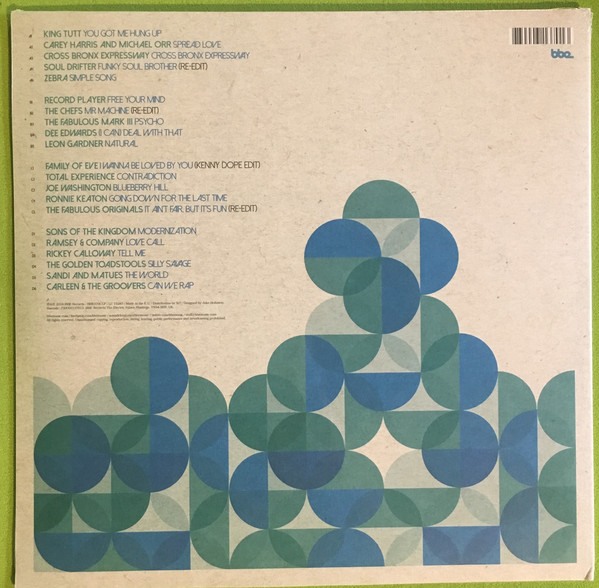




SYREETA-THE RITA WRIGHT YEARS: RARE MOTOWN 1967-1970.
SYREETA-THE RITA WRIGHT YEARS: RARE MOTOWN 1967-1970.
When Rita Wright got a job as a receptionist at Motown in 1965, little did she realise that in the space of seven years her life would be transformed beyond all recognition. This transformation began when Rita Wright became producer Mickey Stevenson’s secretary. It was through him, that Rita met Brian Holland of Holland, Dozier and Holland. He became Rita’s mentor, helping and encouraging her to hone her vocal talents. Soon, this began to pay off, and Rita graduated to singing on demos. Then in May 1967, Rita Wright recorded the song that would become her debut single, I Can’t Give Back the Love I Feel.
Seven months later, and I Can’t Give Back the Love I Feel was released as a single on Gordy in January 1967. Alas, the single neither won over DJs nor record buyers, and failed to trouble the charts. For Rita Wright, this was a huge blow. It would be another four years before Rita Wright returned with her sophomore single.
Meanwhile, Rita Wright’s recording career continues. The only problem was, that none of these recordings were being released as singles. Most of them make their debut on Syreeta-The Rita Wright Years: Rare Motown 1967-1970 which was released by Kent Soul, an imprint of Ace Records. These songs feature the early years of Rita Wright’s career. Her story began in Pittsburgh, in 1946.
Rita Wright was born in August 1946, in Pittsburgh, Pennsylvania. For the first four years of Rita’s life, the Wright family lived in Braddock. Sadly tragedy struck when Rita was four, and her father was killed whilst serving in the Korean War. This resulted in the Wright family moving between Pittsburgh, Carolina, and Detroit. Eventually, though, the Wright family settled in Detroit.
By the time Rita Wright was a teenager, Detroit had vibrant music scene. She was already singing in local groups around Detroit. The members of these bands all dreamt of releasing a record, and enjoying a hit single. Especially if it was on Detroit’s most successful label,..Motown. Rita Wright was no different. However, when she first arrived at Motown, it was to work as a secretary.
This was in 1965, when Rita Wright was nineteen. Soon, though, she began to climb the corporate ladder. Rita progressed to working as a secretary for producer Mickey Stevenson. Then, Brian Holland of Holland, Dozier and Holland started working with Rita, helping her to hone her vocal prowess. Soon, she was singing on demos. That was how Rita Wright found herself recording the vocal for I Can’t Give Back the Love I Feel.
The songwriting partnership of Ashford and Simpson had recently arrived at Motown. They had penned I Can’t Give Back the Love I Feel with Brian Holland. He and Lamont Dozier would produce what would become Rita Wright’s debut single. She recorded her vocal on 17th May 1967. Now it was a waiting game.
Nearly seven months passed before I Can’t Give Back the Love I Feel was released on the Gordy label 11th January 1968. On the B-Side was the heartfelt ballad Something On My Mind, another Ashford and Simpson composition. When I Can’t Give Back the Love I Feel was released, it failed to find an audience in America. Without the all important radio play, Rita Wright’s debut single was dead in the water. Over the Atlantic, it was a different story.
In February 1968, I Can’t Give Back the Love I Feel was released in Britain on the Tamla Motown label. The single was played on radio, but didn’t sell sufficient copies to reach the charts. However, I Can’t Give Back the Love I Feel had sold enough copies that Rita Wright was something of a cult figure within the UK soul scene. This seemed to augur well for the future.
Following the commercial failure of her debut single, Rita Wright returned to the studio on 16th February 1968. She recorded Beware Of A Stranger which originally, had been assigned to Tammi Terrell, but was reassigned to Rita Wright. Maybe the song was being earmarked as a potential followup to I Can’t Give Back the Love I Feel? It certainly would’ve made a good single. This soulful warning shot was written and produced by Ashford and Simpson. With Beware Of A Stranger recorded, any thoughts of releasing it as single were shelved when I Can’t Give Back the Love I Feel flopped. Suddenly Beware Of A Stranger, the song which could’ve launched Rita’s career was shelved. Rita didn’t return to the studio until 26th June 1968.
That day, Rita Wright was due to record You Made Me Feel Like Everything Was Alright. It had been written by Stephen Bowden, James Dean and William Witherspoon. When Rita arrived at the studio on 26th June 1968, there was no sign of Ashford and Simpson. Instead, James Dean and William Witherspoon produced the session, where Rita unleashed a soul-baring, powerhouse of a vocal. She breathed life and meaning into the lyrics. Despite that, the song remained unreleased.
Just three weeks later, and Rita Wright recorded It Don’t Mean Nothin’ To Me on 14th July 1968, Stevie Wonder had entered her life. The pair were a couple, and Stevie Wonder cowrote and co-produced her next session. Rita was due to record Lulu Hardaway, Don Hunter and Stevie Wonder’s Ain’t I Gonna Win Your Love. It was produced by Don Hunter and Stevie Wonder. This was the first, but wouldn’t be the last time Stevie Wonder worked with Rita Wright. However, he was absent from the next recording session, on 29th July 1968.
This time around, Rita Wright was recording Robert Hamilton and Joanne Bratton’s That’s What He Told Me. It had been originally assigned to Brenda Holloway, but was later reassigned to Rita. With producer Richard Morris, she recorded a catchy slice of uptempo soul. However, it too remained in the Motown vaults.
Still, Rita Wright continued to record new songs . On the 12th of August 1968, she recorded the Jack Goga and Ivy Hunter composition, Where Is The Love. Producing the session was Ivy Hunter, who coaxed and encouraged a performance out of Rita. It’s a mixture of power and emotion, as Rita questions and wonders Where Is The Love? Having nailed an impressive performance, Rita wouldn’t return to the studio until September.
Rita Wright returned to the studios on 7th September 1968. This time, the session took place in Los Angeles, which would become Motown’s headquarters in 1969. Rita Wright would move to L.A., but in September 1969 was due to record two songs. The first was Helen and Kay Lewis’ penned Where There’s A Will There’s A Way on 7th September 1968. Producing the session, was none other than Hal Davis. He sweetens the song with swathes of lush strings, as the Motown sound is given a smooth L.A. makeover. This really suits Rita’s vocal on this ballad, but sadly, when she returned later in September, there was no sign of Hal Davis.
Rita Wright returned to the studio in L.A. on 19th September 1968. She was due to record Love Child. The rhythm track had been recorded, with strings added the day before Rita arrived. All that remained was for Rita to lay down her lead vocal. As Rita lay down her vocal, The Clan took charge of production. What followed was one of the finest moments of Rita’s early career at at Motown. It was a song that had a much more traditional Motown sound, and was reminiscent of The Supremes. That’s no surprise.
Motown’s golden girl, Diana Ross, entered the studio on 19th September 1968. She spent two days recording her vocal on Love Child and left the studio on 20th September 1968. This left just The Supremes to add their parts.
The Supremes entered the studio on 30th September 1968. By then, The Supremes had been relegated to La Ross’ backing band. They recorded their backing vocals, and the second version of Love Child was complete. However, only one version was going to be released.
Diana Ross and The Supremes won the day. Their version of Love Child was released later in 1968, it reached number one on the US Billboard 100 and two on the US R&B charts. Since then, Rita Wright’s version of Love Child has lain unreleased. If it had been released, it may have been the single that launched Rita Wright’s career? For Rita Wright, it was a case of what might have been
Less that two weeks after recording Love Child, Rita Wright returned to the studio to record (Touched) By The Hand Of Love on 8th October 1968. It was penned by Hank Cosby and Sylvia May, and originally, had been assigned to The Supremes. However, it was reassigned to Rita, who recorded the song with producer Hank Cosby. He had previously worked with The Supremes, and this shows on the arrangement. Rita sounds not unlike Diana Ross, in a song where hooks haven’t been rationed. Despite that, the song was never released. This was becoming a familiar story for Rita Wright. Maybe her fortunes would improve in 1969?
It wasn’t until 25th February 1969 that Rita Wright returned to the studio. That day, she recorded Give Me The Good Things, which had been written by Walter Fields and Jack Goga. He also produced the song. However, Jack Goga wasn’t sure about the vocal, and Rita returned to the studio and recut it on the 14th July and 15th August 1969. It was a case of third time lucky, with Rita nailing the vocal. Her vocal on third take was a mixture of urgency and emotion, from a singer who Motown’s best kept secret.
Over a year had passed since Rita Wright had released her debut single, and there was no sign of her releasing a followup. Rita had recorded with numerous producers, but none of the songs were released. Despite this, Rita got the call to record a new song in August 1969.
On 26th August 1969, Rita Wright returned to the studio, to record It Don’t Mean Nothin’ To Me. This beautiful ballad was penned and produced by Jimmy Roach. He was responsible for an arrangement where the Funk Brothers were accompanied by lush strings and horns. The result was a true hidden soulful gem, which showcases was perfect showcase for the talents of Rita Wright. She was maturing as a singer, but sadly, when it came to releasing singles, Rita remained on the sidelines at Motown.
To make matters worse, Rita Wright hadn’t been recording as many songs as she had during 1968. She recorded eight songs during 1968, but by the start of October 1969, had only recorded two tracks that year. Nor was Rita any nearer releasing her sophomore single. It must have been a frustrating time for the twenty-three year old single. However, Rita got the call to record a new song on the 25th October 1969.
This was Love My Lovin’ Man, which Leonard Caston and Mike Ossman had written. Leonard Caston had recorded the backing track and all that remained was for Rita Wright to lay down her vocal on the ballad Love My Lovin’ Man. Having done so, Rita’s luck changed.
Just over two weeks later, Rita Wright was asked to record May His Love Shine Forever. It had been written by Hank Cosby and Joe Hinton. So on the 12th November 1969, Rita recorded the song with Hank Cosby taking charge of production. It’s a beautiful ballad, where gospel and soul are combined by Rita. She seemed to reach new heights on May His Love Shine Forever, but the song was never released. However, Hank Cosby must have been impressed by Rita’s performance, and the pair were reunited for another session later that month.
This time, Rita Wright would record Since You Came Back, another song penned by Hank Cosby and Joe Hinton. Originally, the song had been assigned to The Supremes. However, it was later reassigned to Rita, and she was scheduled to recored the song on 20th November 1969. That day, Rita added her lead vocal while cooing harmonies were added. Gradually, Since You Came Back, with its joyous, feel-good sound took shape. Producer Hank Cosby had crafted a slice of poppy soul, that Motown seemed to specialise in. Despite having commercial potential, the song was shelved. That had been the story of Rita Wright’s first two years with Motown. Maybe her luck would change as a new decade dawned?
As the seventies dawned, most of Rita Wright’s recording took place in Los Angeles. It had become Motown’s headquarters in 1969. Despite that, Rita continued to record in Detroit. Not any more. From 1970, she was living in LA. That was where she recorded several tracks with Hal Davis, who Rita had worked with in 1968.
During 1970, Rita Wright recorded eight tracks at MoWest in LA with Hal Davis. This included I Want To Go Back There Again, a tender rueful ballad penned by Chris Clark and Berry Gordy. He also cowrote another Bad Boy with William “Smokey” Robinson. Hal Davis sweetens the arrangement, using swings and a piano whilst giving Rita delivers a vocal that’s a mixture of hurt and heartbreak. It’s a song that’s quite unlike the trademark Motown sound. Two of the songs recorded at the Hal Davis sessions, Hurtin’ Me (Became A Habit) and Can’t Stop were penned by Gloria Jones and Pamela Sawyer. They’re tailor made for Rita, who comes into her own under the tutelage of Hal Davis. His arrangements are the perfect accompaniment to her vocals. Gone is the stomping beat, allowing the vocals to breath. Mind, Body and Soul which Ronald Dunbar and Edythe Wayne cowrote, finds Rita delivering a vocal that’s a mixture of melancholia and soulfulness. Again, Hal Davis put all his experience to good use, with dancing strings and harmonies playing a leading role in the arrangement. It’s a similar case on You, which Jeffrey Bowen, Jack Goga and Ivy Hunter cowrote and the Sherie Matthews and Deke Richards composition Can You Feel It, Babe. The other two songs show different sides to Rita Wright.
Another of the songs covered during the Hal Davis sessions was a cover of Laura Nyro’s Save The Country. It becomes a beautiful ballad. Very different is Holland, Dozier, Holland’s Love’s Gone Bad, which is an uptempo track featuring a vocal powerhouse from Rita Wright. She showcases her talent and versatility in the space of two very different songs recorded during the Hal Davis sessions. This was when Rita Wright recorded some of the best music on Syreeta-The Rita Wright Years: Rare Motown 1967-1970, which was recently released by Kent Soul, an imprint of Ace Records.
Having worked with a variety of different producers and production teams, it was Hal Davis who was had three decades of experience behind him, that brought out the best in Rita Wright. She reaches new heights of soulfulness with Hal Davis’ guidance. His productions deployed strings and harmonies, which sweetened the nine songs he recorded with Rita between 1968 and 1970. He seemed to bring out the best in Rita, who was always destined for greatness.
That’s apparent throughout Syreeta-The Rita Wright Years: Rare Motown 1967-1970, where Rita breathes life, meaning and emotion into the lyrics. Sometimes she seems to live the lyrics, and have experienced the hope, hurt, heartbreak and joy. Many of these songs had been written by talented and top class songwriters, including Ashford and Simpson, Gloria Jones and Pamela Sawyer, Hank Cosby and Joe Hinton, Hank Cosby and Sylvia May and Holland, Dozier, Holland. Similarly, Rita was often paired with experienced producers, who play an important part in the sound and belated success of these songs. Many were recorded nearly fifty years ago, but have only made their debut on Syreeta-The Rita Wright Years: Rare Motown 1967-1970.
Belatedly, these musical hidden gems showcase Rita Wright before she went on to enjoy a successful career. Before that, Rita married Stevie Wonder in London, around Christmas 1970. The marriage was short-lived, and by 1972 the couple were divorced. This didn’t stop Stevie Wonder producing Rita Wright’s debut album.
In 1972, Rita Wright had reinvented herself as Syreeta. This was somewhat ironic, as it was the name that Berry Gordy had suggested back in 1967. It became Rita’s stage name, and the name that dawned her 1972 debut eponymous album. Two years later, came the followup Stevie Wonder Presents: Syreeta. Then in 1977, her third solo album Syreeta One To One, and her collaboration with CC Cameron Rich Love, Poor Love. However, it was in 1979 that Syreeta released a song that would become synonymous with her.
With You I’m Born Again was a duet Syreeta had recorded with Billy Preston for the soundtrack to the movie Fast Break. The single reached number four in the US Billboard 100 and number two in the UK. Belatedly, Syreeta had released a hit single after twelve years of trying.
Sadly, With You I’m Born Again was the biggest single of Syreeta’s career. She released a string of singles, and five further albums. However, Syreeta never reached the same heights. Syreeta’s career continued right up until her death in 2004, aged just fifty-eight. That day, soul music lost one of its most talented and best loved female vocalists, Rita Wright, a.k.a. Syreeta. A reminder of this truly talented vocalist can be found on Syreeta-The Rita Wright Years: Rare Motown 1967-1970, which features a myriad of hidden gems from the early years of Rita Wright’s Motown career.
SYREETA-THE RITA WRIGHT YEARS: RARE MOTOWN 1967-1970.
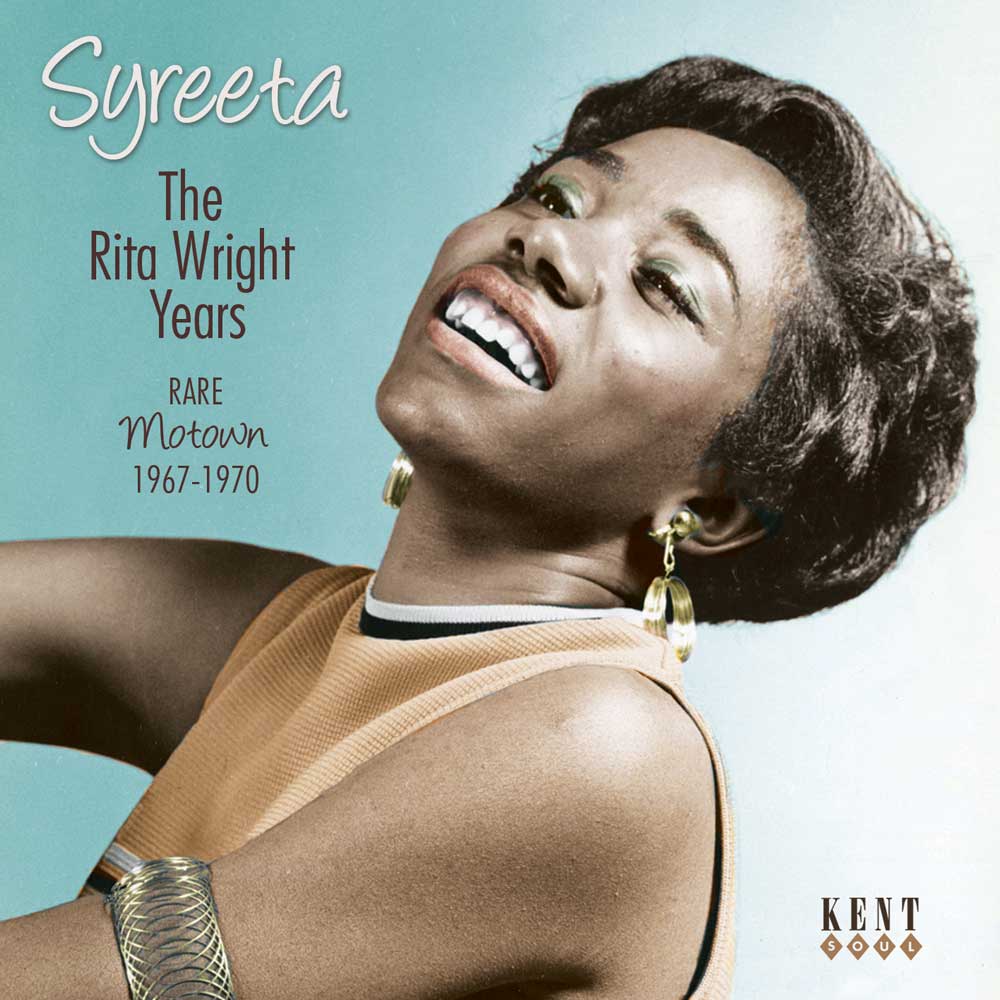

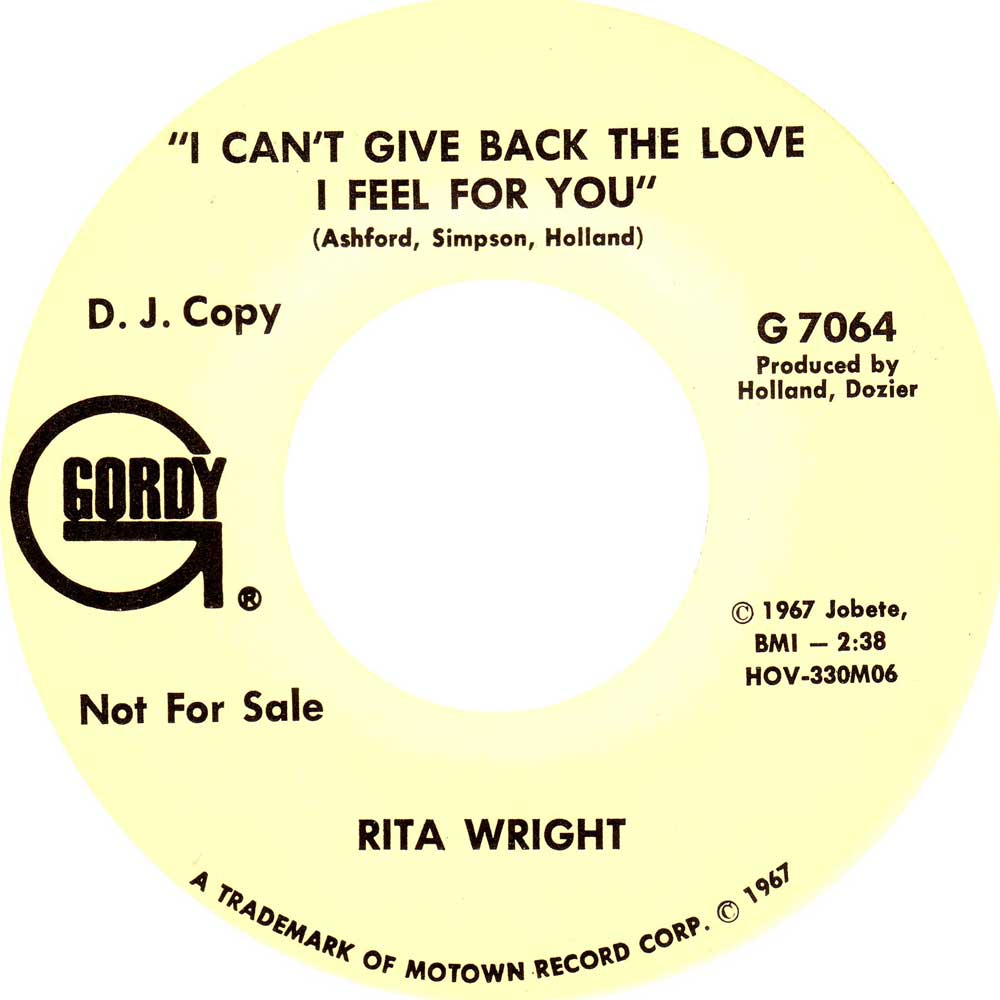
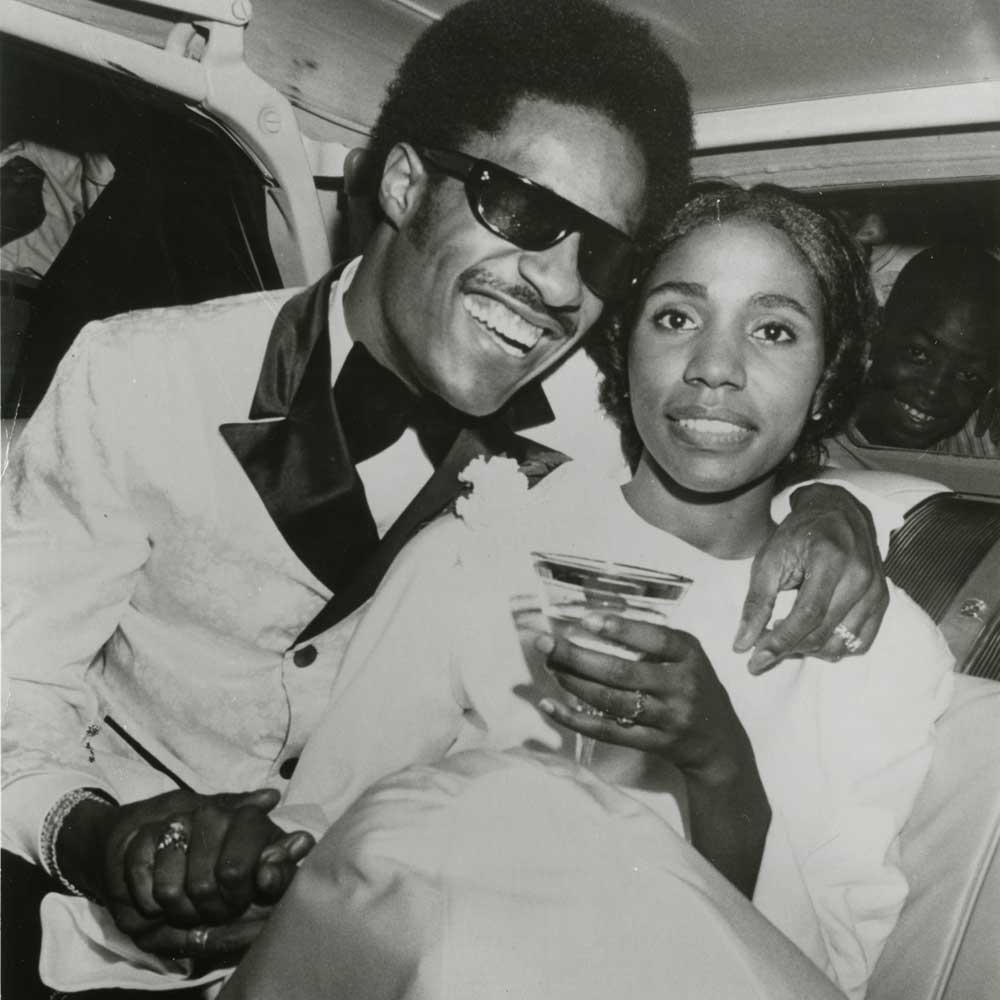
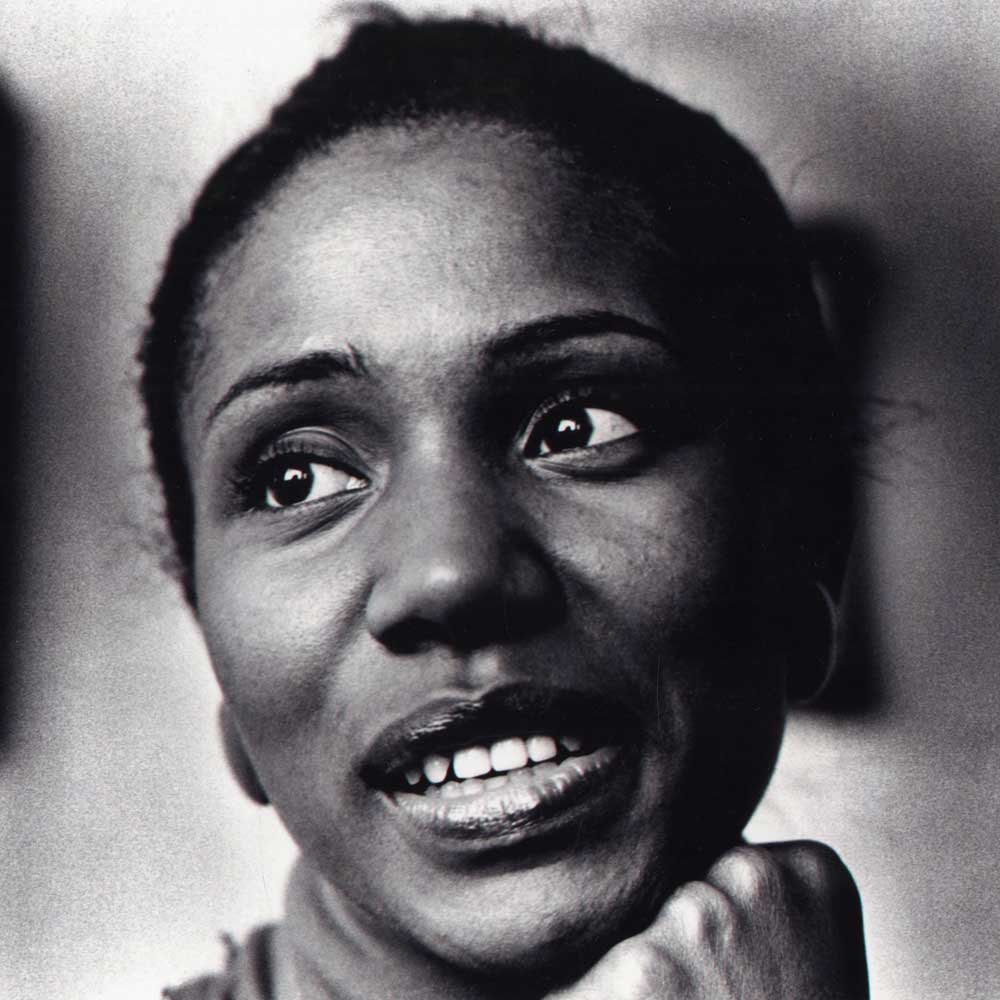
BOO HEWERDINE-STILL LIVING THE DREAM.
BOO HEWERDINE-STILL LIVING THE DREAM.
Boo Hewerdine’s life has always revolved around music. That’s been the case for over thirty years. The first job Boo Hewerdine had, was working in the warehouse of Andy’s Records in Bury St. Edmunds. However, Boo Hewerdine always had ambition beyond working in a record shop. Instead, he dreamt of making music.
This first materialised when he formed his first band with a friend. Placebo Thing may have been a short-lived band, but it gave Boo a tantalising taste of life as a musician. Suddenly, he wanted to be making records rather than selling them.
The Great Divide.
Fortunately, he didn’t have long wait. Boo Hewerdine joined The Great Divide in the early eighties. They were another local band, but one that looked as if they were going places.
By 1982, The Great Divide had signed to a local Cambridge label, Wimp Records. Twenty-one year old Boo Hewerdine made his debut on the single Who Broke the Love Bank. Not long after this, The Great Divide caught a break, when Mike Scott of The Waterboys heard the band.
He thought that The Great Divide had potential, so recommended them Ensign Records. Executives at Ensign Records agreed, and signed The Great Divide. They went on to release a trio of singles on Ensign Records. Alas, commercial success eluded these singles. By 1985, Boo Hewerdine was back where it all started for him.
With The Great Divide consigned to musical history, Boo Hewerdine was back working in a record shop in 1985. This time, Boo Hewerdine was behind the counter of the Beat Goes On record shop in Cambridge. While this allowed Boo to be around music, he hadn’t given up on his dream of making a living as a musician. So when Boo met jazz drummer Tony Shepherd, it looked like his time behind the counter could be coming to an end.
The Bible.
Originally, Tony Shepherd was a jazz drummer when he met Boo Hewerdine. While Tony sat in with other bands, he was like Boo, between bands. So the pair decided to form a new band, and The Bible were born. They drafted in Kevin Flanagan another former member of The Great Divide. Before long, The Bible began to make an impression locally.
Soon, The Bible were a popular band locally. They had quickly acquired a cult following. Word began to spread further afield about this new band from Cambridge. This was through word-of-mouth. So it was no surprise that a record company decided to sign The Bible.
The label that signed The Bible was Black Records, a Norwich based independent label. They released The Great Divide’s 1986 debut album Walking The Ghost Back Home. It reached number ten in the UK Indie Charts, and featured two hit singles. Graceland reached number eighty-seven in UK charts, before Mahalia reached number fifteen in the UK Indie Charts. Given the success of Walking The Ghost Back Home, it was no surprise that bigger record labels started to take an interest The Bible.
Eventually, The Bible decided to sign to Chrysalis. They began work on their sophomore album Eureka. The Great Divide had decided to produce the album with Pete Smith and Owen Morris. However, the initial sessions proved unsatisfactory for the band. It was then that their management suggested bringing country rocker Steve Earle onboard to produce Eureka. This worked, and the album was scheduled for release in 1988.
Prior to the release, the reviews of Eureka were positive. Despite this, the album stalled at just seven-one in the UK. For everyone involved, this was disappointing, considering how popular The Bible were. Surely this was a blip?
Just a year later, The Bible enjoyed the most successful single of their career. A rerecorded version of Graceland reached fifty-one in the UK. It looked like things were improving for them. Then Honey Be Good reached fifty-four in the UK. However, when The Bible released their third album Dodo, it failed to chart. Things were set to get even worse.
A year later, and The Bible split-up in 1990. After five years together, and a lineup that’s best described as fluid, it looked like the end of the road for The Bible. It wasn’t.
Since then, The Bible have reformed twice. The first time came in 1994, and the second in 2011. However, then Boo Hewerdine was a successful solo artist.
Boo Hewerdine and Darden Smith-Evidence.
Once The Bible split-up, Boo Hewerdine decided to concentrate on his solo career. He knew the direction his career was heading. A meeting a year earlier had influenced the direction his music was about to head in.
This meeting took place in 1989, while The Bible were still together. That was when an A&R executive introduced him to New Country singer Darden Smith. The two realising they had much in common, decided to write and record an album together. Time was short though.
Somehow, Darden Smith and Boo Hewerdine managed to write and record an album in just nine days. This album became Evidence, which was released to critical acclaim in 1989. This was the first, but not the last time Boo would collaborate with other artists. By then, he would be a solo.
The Solo Years.
Now that The Bible had split-up, Boo Hewerdine embarked upon a solo career. This solo career began in 1990. Since then, Boo has released eight albums and a string of E.P.s.
Two years after the demise of The Bible, Boo Hewerdine released his debut album Ignorance in 1992. Critical acclaim accompanied the release Ignorance. It was a much anticipated and highly accomplished album of carefully crafted songs. However, three years would pass before the followup was released.
The reason for the delay, was that by then, Boo Hewerdine was writing for other artists. This included writing for Eddi Reader and Clive Gregson’s 1993 album Wonderful Lie. Since then, Boo has written songs for many successful artists, including KD Lang, Kris Drever, David McAlmont, Natalie Imbruglia and Alex Parks. However, this sometimes curtailed his ability to release albums quickly.
It wasn’t until 1995 that Boo Hewerdine returned with his sophomore album Worlds End. Just like Ignorance, praise and plaudits accompanied the release of World’s End. Buoyed by the response and success of World’s End, Boo released Baptist Hospital in 1996. Some critics felt that was the best album of Boo’s career. With album he seemed to be maturing and growing as a singer and songwriter. Like a fine wine, Boo was maturing with age.
So when Nick Hornby was looking for someone to write the soundtrack to the film adaptation of his book Fever Pitch, Boo got the call. The film was released in 1997, the same year that the film Twenty Four Seven was released. Boo and Neil MacColl had written the soundtrack. The other soundtrack that Boo penned for the television film Our Boy. For Boo, writing for film and television was a whole new world, and one he would return to later. Before that, Boo released a new solo album.
Three years had passed since Boo Hewerdine had released Baptist Hospital in 1996. He returned in 1999 with his fourth album Thanksgiving. It featured a guest appearance by Martha Wainwright. By then, Boo’s music was reaching a wider audience. That wasn’t surprising given the quality of songs on Thanksgiving. The Birds Are Leaving, Hope Is A Name, Our Boy, Homesick Son and A Long Winter showcased a talented singer, songwriter and storyteller. However, in 2002, Boo added another string to his bow.
This came about when Boo Hewerdine was asked to co-produce Eddie Reader’s album Angels and Electricity. Boo had written a number of songs for Eddi, but was now co-producing her albums. Soon, Boo was producing The Corrs, Heidi Talbot and Chris Difford. Along with his work as a songwriter, Boo was constantly busy. Sometimes, his solo career seemed to take a backseat. However, in 2001, Boo’s contribution to music was recognised.
In 2001, Boo Hewerdine was named as the Performing Rights Society’s songwriter in residence at The Song’s The Thing concert series in London. Boo had come a long way from when he was working in a record shop warehouse and about to form his first band. Now he was regarded as one of Britain’s top songwriters. He took to the stage during one of The Song’s The Thing concerts, and got the opportunity to showcase his skills as a singer and a songwriter. However, another opportunity for Boo to showcase his songwriting skills arose during 2001.
This came when Boo returned to the world of soundtracks. One of his songs featured in Christine Lahti‘s My First Mister. For Boo, this meant a whole new audience would hear his music. This couldn’t have happened at a better time, as Boo would released a new album in 2002.
Anon, which was released in 2002, was Boo Hewerdine’s first album of the new millennia. By then, Boo’s star was in the ascendancy. It seemed that every album he released was welcomed with open arms by admiring critics. His new album Anon was no different. Boo was consistently releasing albums of carefully crafted, thought provoking songs. That continued to be the case.
When Eddi Reader entered the studio to record her critically acclaimed album Sings The Songs Of Robert Burns, Boo Hewerdine was drafted in to co-produce the album. The result was one of the most successful albums of Eddi Reader’s career. It found favour with Burns aficionados across the world. Buoyed by the success of Sings The Songs Of Robert Burns. 2003 had been a good year for Boo.
It got even better when Boo’s song Different God was chosen to feature on the soundtrack to the film Intermission. After such a successful year, Boo’s thoughts began to turn to his solo career.
Two years later, and Boo Hewerdine returned with a new album in 2005. This was his sixth album, Harmonograph. Boo it seemed had the Midas touch, and critics heaped praise on Harmonograph. However, Boo it seemed, was in no rush to release a followup.
That wasn’t surprising. Boo Hewerdine now spending more time writing songs for other artists. He was also in demand as a producer. He also recorded a comeback album with The Bible. Money and Time was released in 2007. However, Boo hadn’t turned his back on his solo career.
Still, though, he found time to play live, and when he had the time, headed into the studio. The fruits of his most recent sessions were his seventh album God Bless The Pretty Things. It was released in 2009, and just like the albums the had preceded it, was well received by the critics. They lavished praise on God Bless the Pretty Things, which was a welcome, and some felt overdue addition to Boo’s back-catalogue.
Little did they realise it would be six years before Boo Hewerdine released another album. During that period featured on State Of The Union’s two albums. He wrote much of their eponymous debut album and shared the lead vocals with Brook Williams. This was the case when State Of The Union released their 2012 sophomore album Snake Oil. These albums weren’t the only albums Boo worked on.
When Kris Drever was recording his solo album Last Man Standing, Boo featured on the album. Last Man Standing was released in 2015, the same year that Boo released his long-awaited comeback album.
Open was released in 2015, and found Boo Hewerdine crowned the comeback King. He may have been six years since his last solo album, but the fifty-three year old’s comeback album had been well worth the wait. Critical acclaim accompanied the release of Open. However, Boo’s fans wondered when they would hear from Boo again?
Little did they realise it would be so soon. Just a year later, and Boo Hewerdine recently returned with a new E.P. The Born E.P. is the first E.P. that Boo has released since Toy Box No. 2 in 2008. However, the Born E.P. is very different.
The best way to describe the Born E.P. is a very personal collection of songs. It’s a collaboration between Boo Hewerdine and his son Ben. They wrote the five songs at Boo Hewerdine’s father piano.Three of the songs, The Year That I Was Born, Bobby Fischer and Farewell were written by Boo Hewerdine.
Hometown and Swimming in Mercury were written by Boo and Ben Hewerdine. These five songs were recorded at Hub Studios, in Cambridge. Later in 2016, The Born E.P. was released to critical acclaim on Reveal Records. It was the latest addition to Boo Hewerdine’s burgeoning back-catalogue.
For thirty-three years, Boo Hewerdine’s life has revolved around making music, first as a member of The Great Divide and then The Bible. However, after the demise of The Bible, Boo embarked upon a solo career.
Since then, Boo Hewerdine has released eight solo albums and a string of E.P.s. Each of these releases showcase a gifted and talented singer-songwriter, whose music has found an audience not just on both sides of the Atlantic, but in Europe and Australasia. However, there’s much more to Boo than his solo career.
Away from his solo career, Boo Hewerdine has many strings to his musical bow. He’s collaborated with a variety of artist; made guest appearances on numerous albums and has forged a career as a successful producer. Then there’s Boo’s songwriting skills. Not only has Boo written songs for artists, but other artists have dipped into his burgeoning back catalogue, and covered his songs. Similarly, filmmakers have also discovered the musical delights of Boo Hewerdine’s music and his songs have featured on television and films. Boo Hewerdine has come a long way from when he was working in a record shop.
Back then, Boo Hewerdine dreamt of making music, not selling it. For Boo Hewerdine, that dream came true, and he’s spent thirty-three making music. He’s toured the world and released eight solo albums. They showcase Boo Hewerdine, a truly talented singer and songwriter, whose still living the dream.
BOO HEWERDINE-STILL LIVING THE DREAM.

JOHN MARTYN-MUSIC’S MAVERICK.
JOHN MARTYN-MUSIC’S MAVERICK.
John Martyn’s life revolved around music. His career began in 1967, when he was just seventeen. Back then, John Martyn was a folk singer. Over the next forty-two years, John Martyn continually reinvented his music. He flitted between folk and folk rock to blues, psychedelia, reggae, rock and trip hop during the five decades John spent making music. He had released twenty studio albums during his lifetime, including classics like Bless The Weather, Solid Air and One World. They’re part of the rich musical legacy that John Martyn left behind in 2009. His story started back in 1948.
John Martyn was born Iain David McGeachy, in 1948 in New Malden, Surrey, England. Both his parents were opera singers, so from an early age John Martyn was exposed to music. When John was five, his parents divorced and much of his childhood was spent at his grandmother’s in Glasgow.
His musical career began aged seventeen, playing a mixture of blues and folk music. Legendary folk singer Hamish Imlach was to prove to be an early influence, even a mentor, to John. Quickly, he became a leading figure on the London folk circuit. Thereafter, things started to move quickly for John Martyn.
Aged nineteen, John signed to Chris Blackwell’s Island Records in 1967. In October 1967, his debut album London Conversation was released. Just over a year later, his second album The Tumbler was released in December 1968. On The Tumbler album, the style of music was to change, to a much more jazz influenced sound. This would be the start of the evolution of John Martyn’s music.
By the time John Martyn released his third album Stormbringer in February 1970, he had met and and married Beverley Martin. Stormbringer was their first collaboration.
Previously, Beverley had been a solo artist, Beverley Kutner. She had worked with Jimmy Page and Nick Drake. On Stormbringer John’s sound changed again. John played his acoustic guitar through a fuzzbox, phase shifter and Echoplex. This would become part of John’s trademark sound, when he returned to his solo career. Before that, he released one further album with Beverley.
John and Beverley Martyn released one further album together. This was the The Road To Ruin, like Stormbringer released in November 1970. By then, Island Records wanted to market John Martyn as a solo artist. Beverley Martyn did make an appearance on further albums, singing backing vocals. Mostly though, Beverley returned to her career as a solo artist. So did John.
With Island Records now marketing John as a solo artist, he released six studio albums and one live album, 1975s Live At Leeds between 1971 and 1977. the first of these albums was Bless The Weather.
November 1971 saw the release of Bless The Weather. It was hailed as the finest album of John’s solo career. Mostly, it features acoustic music. The exception is Glistening Glynebourne, which showcased John’s echoplex. It would become part of John’s trademark sound. This was a hint of what was to come from John Martyn.
By far, the best album of the seventies was his seminal album Solid Air. Released in February 1973, Solid Air is seen as one of the best albums of the 1970s. The title track was a tribute to Nick Drake, a close friend of Martyn’s who died tragically of an overdose. During the recording of Solid Air, Martyn was to meet bassist, Danny Thompson. The pair collaborated right up until John’s death in 2009. John’s vocal style changed during the recording of Solid Air. At that time, he started to develop a new slurred vocal style. The timbre of this new vocal style resembled a tenor saxophone. Just like the echoplex, this new singing style became a feature of John’s future albums.
His next album Inside Out, was released in October 1973. It featured a much more experimental style of music. There was much more emphasis on improvisation. John’s sound and style it seemed, was constantly evolving.
For his eight album, Sunday’s Child which was released in January 1975, John reigned in his experimental sound. However, Sunday’s Child was a much more eclectic album, with John flitting between country, folk and rock. The result was an eclectic and critically acclaimed album. However, controversy wasn’t far away for John.
In 1975 Island Records refused to release Martyn’s live album, Live At Leeds. So, John resorted to selling signed copies by mail from his home. After the release of Live At Leeds in 1977, John headed to Jamaica on holiday.
What started out as a holiday, ended up with John collaborating with reggae producer Lee “Scratch” Perry. One World, John Martyn’s second classic album, now is seen by some people as the first ever trip hop album. As a result, John Martyn is perceived as the godfather of trip hop and One World a John Martyn classic. After One World, John didn’t release an album for three years.
The eighties were a turbulent time for John Marten, both personally and professionally. By the end of the seventies, John’s marriage had broken down. This led to John pressing “the self destruct button” as he described it. John became addicted to alcohol and drugs. He later said this was a very dark period in his life. Grace and Danger, which was released in October 1980, was the album that came out of this period.
Grace and Danger was autobiographical, describing what he was going through at that time. Chris Blackwell, realising just how personal an album Grace and Danger was, held the album’s release back a year. Partly, this was because of his friendship with both John and Beverley Martyn. Following Grace and Danger, which is one of John’s most underrated and powerful albums, he left Island Records.
After leaving Island Records in 1981, John Martyn joined two albums for WEA. They thought they could transform John’s career, and turn him into a commercially successful artist. The way to do this, they thought, was to move away from John’s traditional sound, to a more mainstream sound. This didn’t appeal to John. So he only stayed at WEA for two albums.
Glorious Fool was released in September 1981, with and Well Kept Secret following in August 1982. This more mainstream sound didn’t prove successful. So John returned to Island Records.
Back at Island Records, John Martyn only released two studio albums. Sapphire released in November 1984, had a poppy sheen. It was quite unlike John Martyn. So was Piece By Piece, which was released in February 1986. Neither album proved particularly successful. So Island Records released a live album
Foundations in 1987. This was much more representative of John Martyn. Sadly, still commercial success eluded John and Island Records dropped Martyn in 1988. This brought to an end a twenty year association with Island Records.
Two years later, John Martyn returned with a new album, The Apprentice. It was released on Permanent Records, and was hailed as a return to form from John Martyn. This would prove ironic and embarrassing for Island Records.
It’s thought that one of the reasons for John Martyn’s departure from Island Records, was that they didn’t like the demos what would became The Apprentice. So when John left Island Records, he set about proving them wrong.
Rather than sign to another record company, John paid for the recording of The Apprentice. He returned “home” to Glasgow, and with his band, recorded The Apprentice at the city’s Cava Studios. This seemed to inspire John, and when the album was complete, John went in search of a record company to release The Apprentice.
Given his track record, there would be no shortage of record companies willing to release a John Martyn album. However, it was Permanent Records that got the honour of releasing what became John’s best album of recent years. Sadly, John never came close to matching the quality of The Apprentice.
The closest he came was Cooltide, which was recorded at Cava Studios, Glasgow. Cooltide was released in November 1990, and featured a jazz sheen. This was well received by critics. They were won over by Cooltide, which critics felt, came close to the quality of The Apprentice. It seemed John’s career was enjoying an Indian Summer.
Despite this, it was another seven years before John returned with an other studio album. His only release was Live, a double album released by Permanent Records in 1994. This showcased what John Martyn live sounded like by the nineties. Nearly two decades after the release of Live At Leeds, and John was still a stalwart of the live circuit. Wherever he went, he still a popular draw. On tour, John embraced the rock ’n’ roll lifestyle.
John Martyn loved life. However, he loved life in the fast lane. During some part of his career, drink and drugs became part of John’s daily diet. This lead to addiction. Eventually, this caught up with John in 1996, when his pancreas literally exploded. For most musicians this would’ve marked the end of their career, and a much more sedate lifestyle. Not John.
He returned in 1997 with a new album And, which featured his old friend, and sometime collaborator, Phil Collins. And marked another stylistic change from John Martyn. There was a noticeable trip hop influence on And. That’s not surprising, as John is regarded as inventing the genre on One World. Reviews of And were mixed. The standout track was Sun Shines Better, which was remixed for the hidden track on the album. With its trip hop sound, the remix would become a favourite of DJs playing chill-out sets. Despite approaching his fiftieth birthday, John Martyn was still relevant.
After not releasing an album for seven years, John returned with his second album in just under two years. The Church With One Bell was a covers albums, where John and small band recorded ten tracks during one week at CaVa Sound Studios. John had covered songs by Bobby Charles, Ben Harper, Elmore James, Rev. Gary Davis, Lightnin’ Hopkins and Portishead. This eclectic selection of songs was released 1998.
The Church With One Bell, like many of John’s later albums, divided opinion amongst critics and fans. While some loved the albums, others weren’t so sure. It was a disappointing way for John to celebrate his fiftieth birthday.
Many people found it hard to believe John Martyn was just fifty. He seemed, had been around forever.. His career had began thirty-three years earlier. Since then, he had released eighteen studio albums. As the new millennia dawned, eighteen became nineteen.
Glasgow Walker was John’s first album of the new millennia. It was also the first album John wrote on a keyboard. Usually, John sat down with a guitar to write songs. Not this time. At Phil Collins’ suggestion, John wrote Glasgow Walker at a keyboard. The result was a genre-hopping album.
Seamlessly, John flitted between blues rock, folk-rock, jazz, psychedelia, rock and trip hop on Glasgow Walker, which was released in 2000. For his oder fans, Cool In This Life, a trip hop track came as a surprise. However, it showed that John Martyn was still determined to take his music in a new direction. The result was a much more eclectic sounding album, which won over critics. They felt Glasgow Walker was better than And and matched the quality of Cooltide. John Martyn’s first album of the new millennia one of the his best album of the post-Island Years. As a result, critics and fans eagerly awaited John Martyn’s next album.
Sadly, On The Cobbles proved to be the final album released during John’s life. It had been recorded in studios in Britain, Ireland and America. By then, John was suffering from health problems.
This had been the case for some time. For some time, John seemed to be jinxed. It started when had injured his head on a rock whilst swimming underwater. Then he stumbled as he took to the stage, and broke a toe. Next there was the time John dislocated his shoulder. One night when John driving home after a “celebration,” he had forgotten to put the car lights on. The car crashed and John broke his neck. Somehow, John survived to tell the tale. However, despite this close escape, John chose to ignore shooting pains in his right knee.
When John eventually sought medical advice, the pain was misdiagnosed as deep vein thrombosis. Eventually, John sought a second opinion. It turned out that John had a cyst on his knee. Poison had been pumping around his body for months. Soon, John was being operated on. Three operations later, and John’s right lower leg was amputated from the knee down. John’s fear of doctors had const him dearly. Despite the loss of part of his right leg, John’s career continued.
He recorded On The Cobbles from a wheelchair at various studios. A familiar face returned for the On The Cobbles, bassist Danny Thompson. The pair had been playing together for over thirty years. However, they hadn’t recorded an album together for nearly twenty years. It was fitting that they reunited on On The Cobbles.
When On The Cobbles was released in April 2004, it was John’s twentieth studio album. He was joined by Mavis Staples, Andy Sheppard and Paul Weller. They played their part on an album that was well received by critics. Sadly, On The Cobbles proved to be John Martyn’s swan-song.
Nearly five years later, on 29th January 2009, John Martyn passed away, aged just sixty. He had spent five decades making music, and released twenty studio albums. These albums were the soundtrack to many people’s lives. Especially classics like Bless The Weather, Solid Air and One World. Then there were hidden gems like the jazz-tinged Inside Out, the eclecticism of Sunday’s Child and the breakup album Grace and Danger. When it comes to live albums, Live At Leeds, which John sold from his house, is his best live outing. Each of these albums, are from the Island Years. For many, these were the best years of John Martyn’s recording career.
Especially the period between 1967 and 1980. When John returned to Island Records, he never reached the same heights as first time round. The glossy pop sheen of Sapphire and Piece By Piece seemed far removed from John’s classic albums. After that, John released six albums for various record companies.
Some of these albums divided the opinion of critics. However, The Apprentice and Cooltide marked a return to form of one of music’s true mavericks.
John Martyn never seemed willing to “play the game.” Just like Neil Young and Van Morrison, John Martyn preferred to do things his way. He was too much of a maverick, and wasn’t suited to life as part of the major label machine. Instead, he was happy to divide his time between the road, and the recording studio.
In the recording studio, John Martyn never stood still. Instead, he combined disparate musical genres, often on the one album. This was all part of John’s determination to innovate and push musical boundaries. He flitted between folk and folk rock to blues, psychedelia, reggae, rock and trip hop on the twenty studio album released during during his lifetime. Despite innovating, and creating several classic albums, commercial success eluded John Martyn. Maybe that’s why for much of his career, John spent large parts of the year on the road.
For much of his career, John Martyn’s natural habitat was the road. He was a free spirit, who enjoyed touring, and was happy to spend large parts of the year on the road. Especially, if Danny Thompson was by his side. Hi-jinks, hilarity and hell-raising often ensued. Sometimes, this meant getting out of Dodge in a hurry. However, they lived to tell the tale and laughed about it afterwards. Sadly, all the hell-raising and carousing caught up with John.
During large parts of his career, John was addicted to drink and drugs. This resulted in his pancreas exploding in 1996, and the car crash where he broke his neck. By the late nineties, John’s luck seemed to be running out.
Then when a cyst was misdiagnosed, this eventually resulted in part John’s right leg being amputated. John didn’t even let this get him down. Determination kicked in, and John overcame the loss of his lower right leg. With the aid of a prosthetic leg, John Martyn’s career continued.
In 2007, John and his keyboard player Spenser Cozens cowrote and recorded the score for Strangebrew. Then a newly reinvigorated John returned to the studio for what would’ve been his twenty-first album, Heaven and Earth. Sadly, before the album was complete, John Martyn died on on 29th January 2009. That day, music had lost one of its most talented sons.
Since then, many of John Martyn’s albums have been reissued. There’s also been box sets and best offs released. These reissues have introduced a new generation of music lover’s to John Martyn’s music. No longer is he one of music’s best kept secrets. Instead, John Martyn’s music is belatedly reaching a much wider audience, who are discovering an innovative and influential artist, who even today, continues to influence another generation of artists, seven years after his death,
JOHN MARTYN-MUSIC’S MAVERICK.
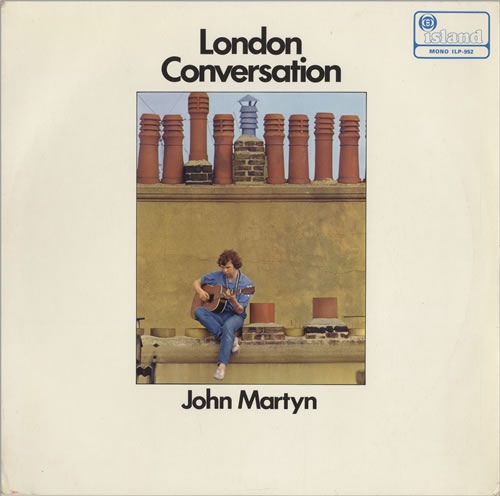
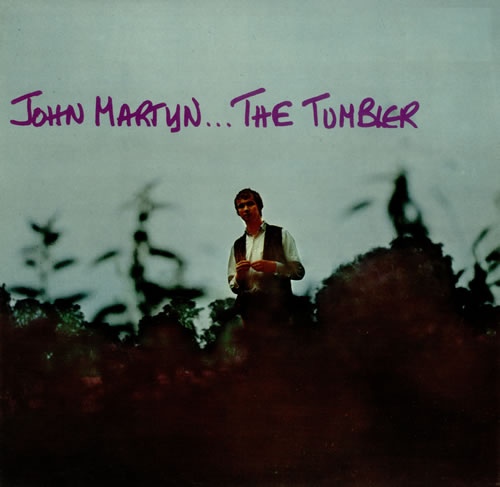
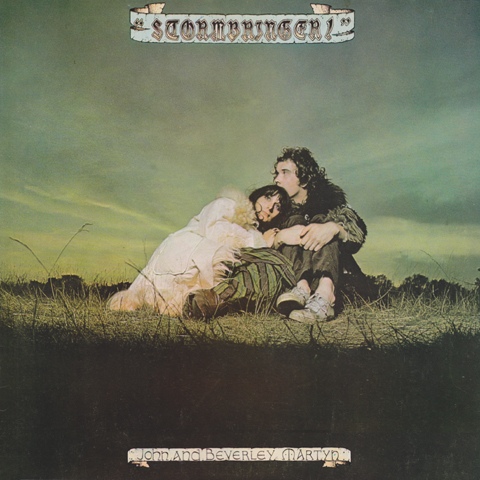

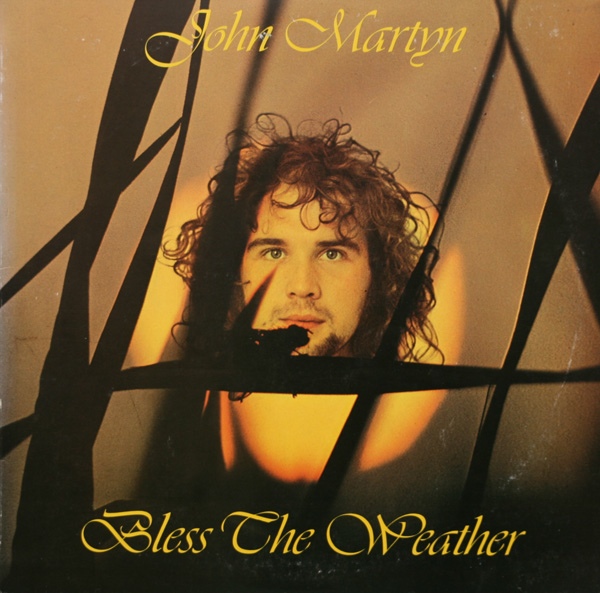

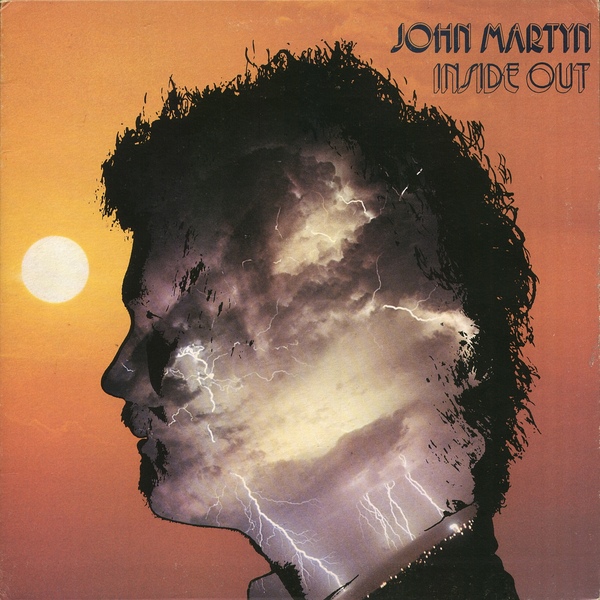
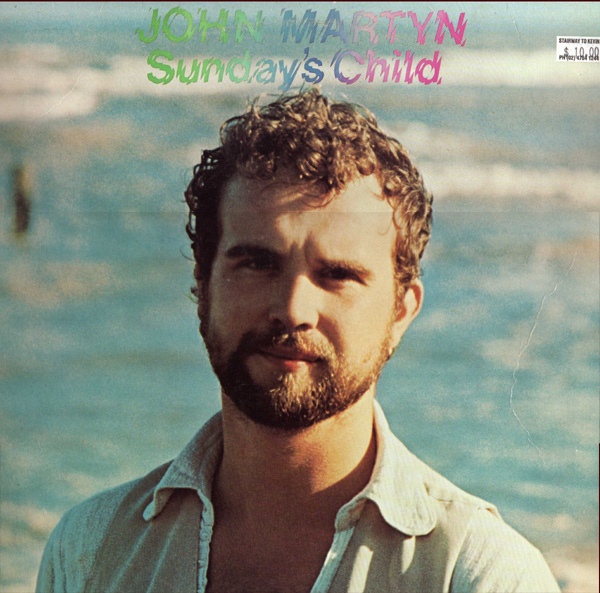
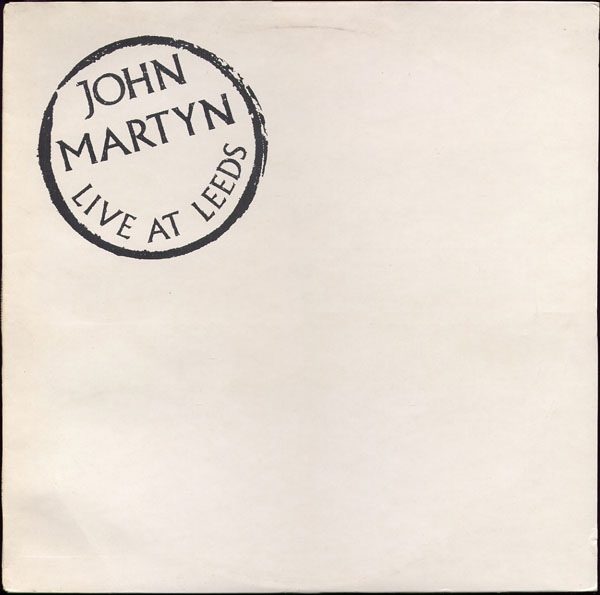
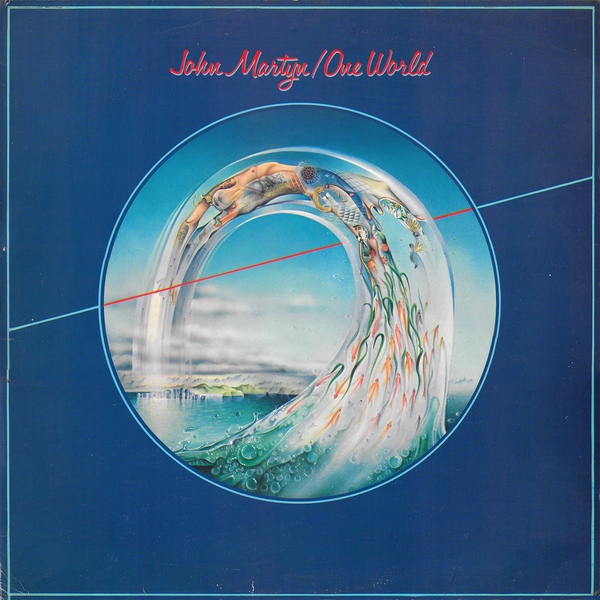
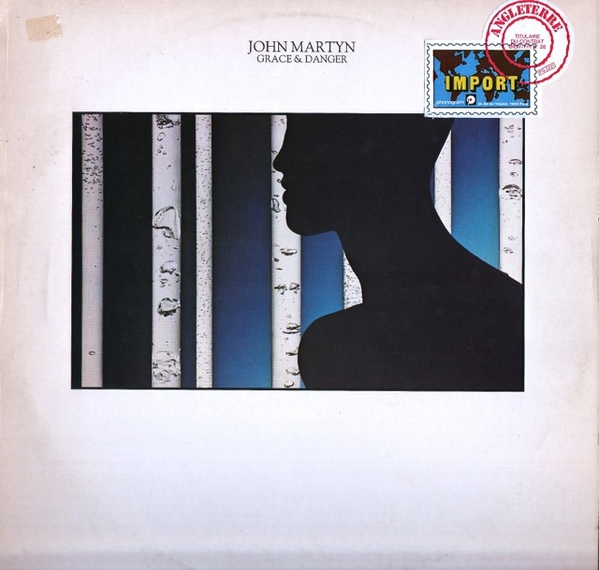
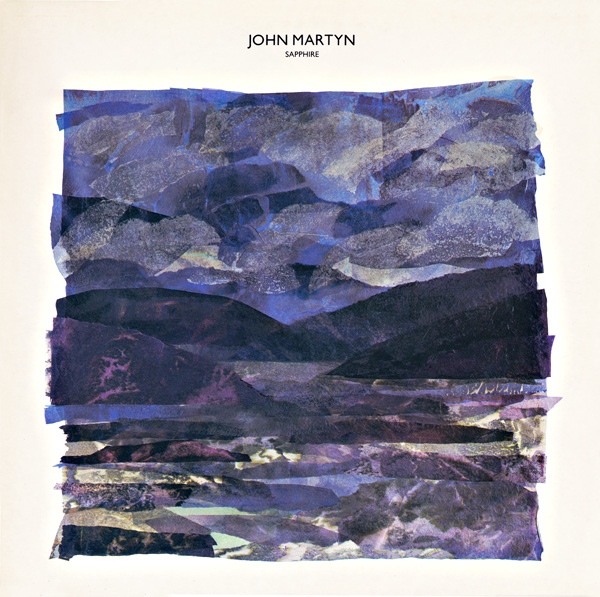
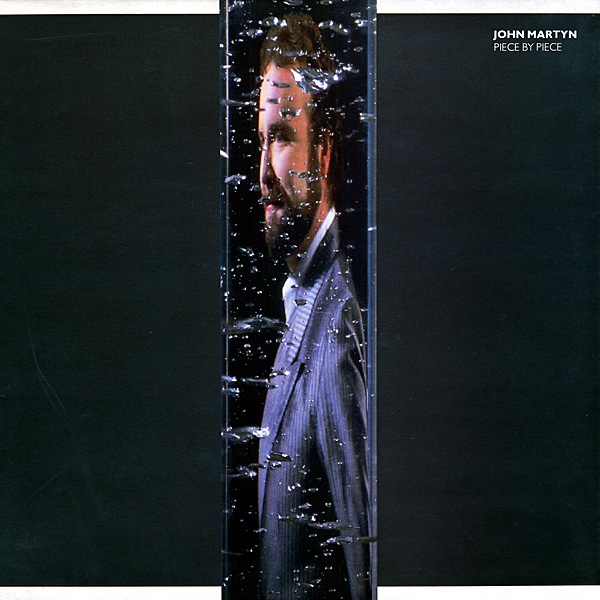

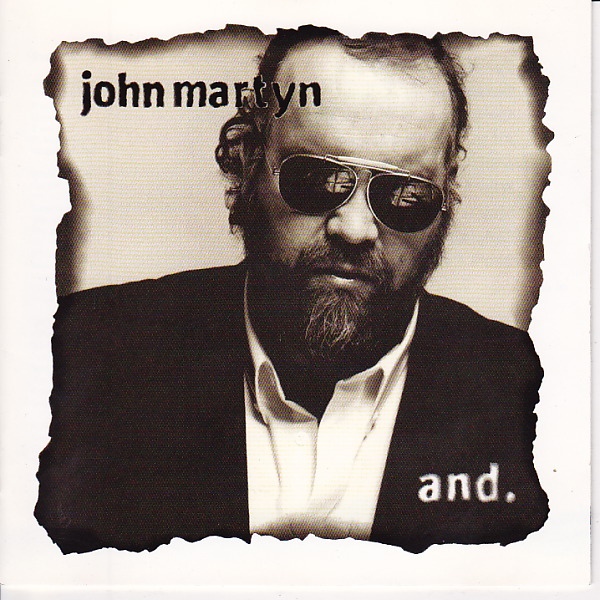
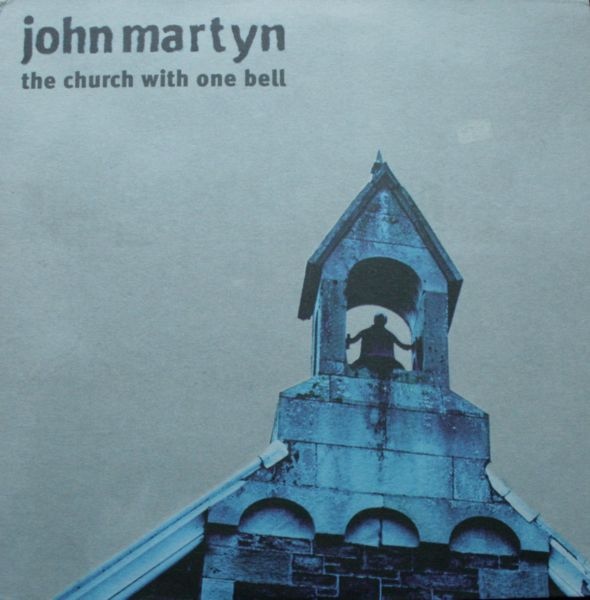
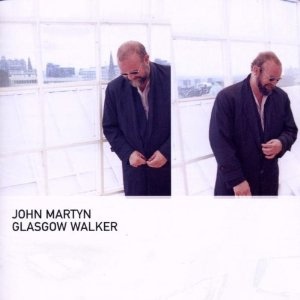

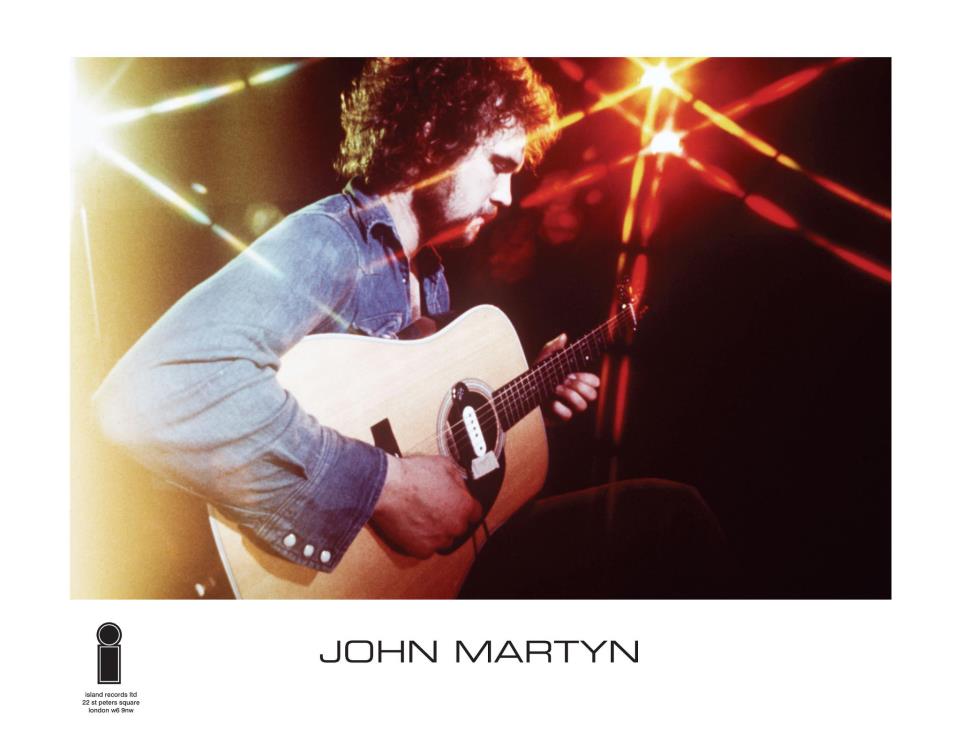
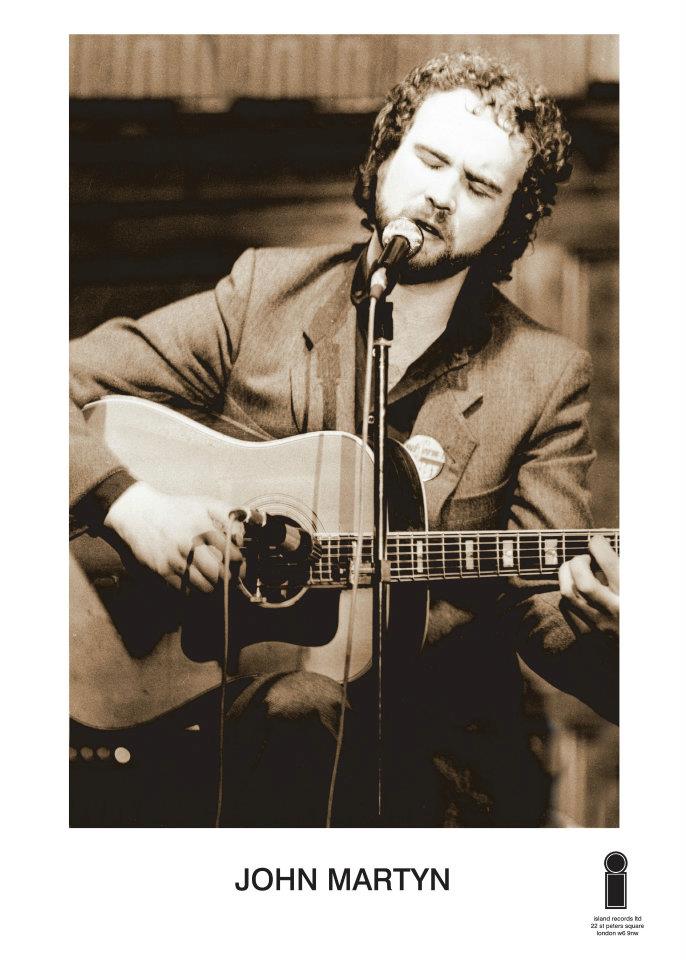
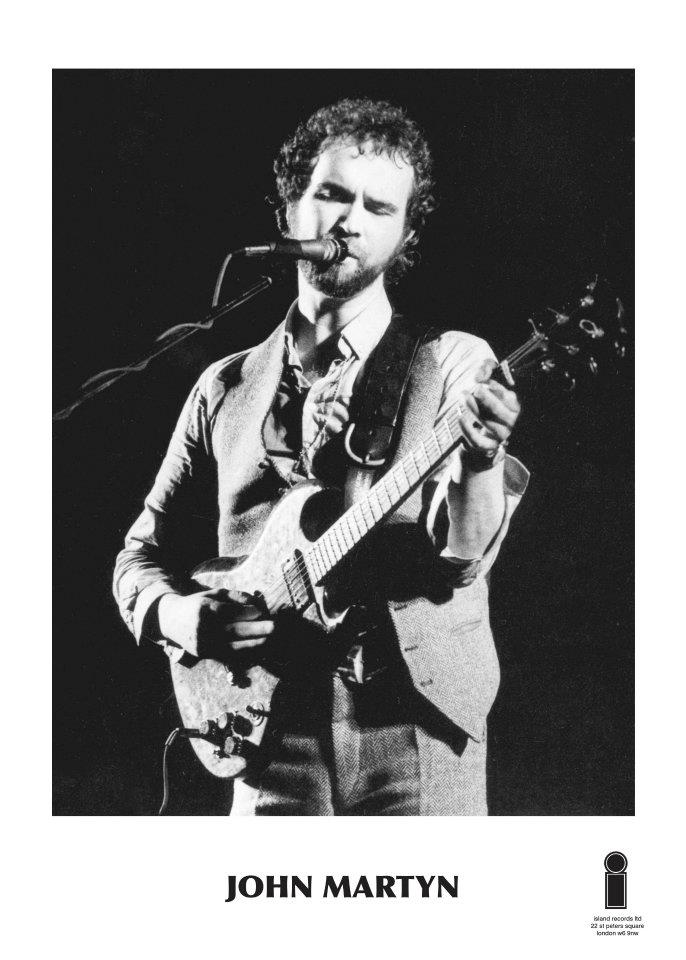
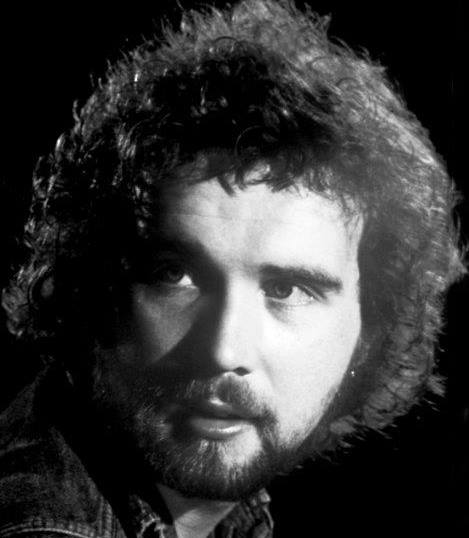
THIS IS FAME 1964-1968-VINYL EDITION.
THIS IS FAME 1964-1968-VINYL EDITION.
Back in the sixties, many record companies sent their artists to the Fame Recording Studios, in Muscle Shoals. This was home to Rick Hall and the legendary Muscle Shoals Rhythm Section. They had previously transformed ailing careers and worked on million selling albums. Rick Hall was fast becoming the go-to producer for the biggest names in soul. He and the Muscle Shoals Rhythm Section had worked with some of the biggest names in soul, including Aretha Franklin, Arthur Alexander, Arthur Conley, Candi Staton, Etta James, Otis Redding and Wilson Picket. However, that was just part of he story.
Rick Hall and the Muscle Shoals Rhythm Section had also worked with Jimmy Hughes, Clarence Carter, Art Freeman, Jeanie Greene, Dan Penn, George Jackson, Billy Young, June Conquest and James Barnett. They’re among the artists that feature on This Is Fame 1964-1968. It was recently released on Kent Soul, an imprint of Ace Records as a double album and will be a welcome release for anyone who loves Southern Soul. They’ll be aware of the Fame Records’ story.
The story starts during late fifties when Rick Hall, Tom Stafford and Billy Sherill founded a record label, and built their first studio above the City Drug Store in Florence, Alabama. However, by the early sixties, this nascent partnership would split-up, resulting in Tom Stafford and Rick Hall needing a new studio.
They decided to move to what had been a tobacco warehouse in Muscle Shoals, Alabama. As if by magic, Rick Hall soon recorded what would be his first hit single, Arthur Alexander’s You Better Move On. Wisely, he decided to invest the profit in a better studio, and moved to their current location Avalon Avenue in Muscle Shoals, Alabama. The first hit single Rick Hall recorded in his new studio was Jimmy Hughes’ Steal Away. Little did Rick Hall know it back then, but soon his new studio would see artists coming from far and wide to record at Fame.
After Rick’s success with Jimmy Hughes, word got out that Fame was the place to go to record a new single or album. Quickly, everyone from Tommy Roe to The Tams, and from Joe Tex, Joe Simon, George Jackson and Clyde McPhatter right through to Irma Thomas, Etta James and Mitty Collier. Even Aretha Franklin recorded at Muscle Shoals. Indeed, it was at Muscle Shoals that Jerry Wexler brought Aretha Franklin, to record her 1967 album I Never Loved A Man the Way I Loved You. However, why did all these artists choose to head to Muscle Shoals to Fame?
Part of the reason was the session musicians that worked with Rick Hall. This included the legendary Muscle Shoals Rhythm Section and Muscle Shoals Horns. They were some of the hottest and tightest musicians of that era. This included drummer Rodger Hawkins, bassist David Hood, guitarist Jimmy Johnson and keyboardist Barry Beckett. When they recorded together, they were one of the finest backing bands ever. Between 1961 and 1969, when they departed from Fame to found the rival studio Muscle Shoals Sound Studio. However, for eight years, they helped make Fame Records Southern Soul’s greatest label. They can be heard on numerous singles and albums. The Muscle Shoals Rhythm Section and Muscle Shoals Horns can also be found on many of the tracks on This Is Fame 1964-1968.
Side One.
Opening This Is Fame 1964-1968 is Jimmy Hughes’ 1964 single Steal Away. This is fitting, as it’s the single that transformed Rick Hall and the Fame Recording Co’s fortunes. When Steal Away, was released it gradually, began to climb the charts. Eventually, reached number seventeen in the US Billboard 100 and number two in the US R&B chart. Buoyed by the success of Steal Away, Jimmy Hughes had the confidence to quit his job in Robbins Rubber factory. He recorded his debut album Steal Away, which became the first album to be released bearing the Fame logo. However, Steal Away is also stonewall Southern Soul classic that even fifty-two years later, is truly timeless.
By the time Clarence Carter released She Ain’t Gonna Do Right in 1967, he had enjoyed two hit singles. Clarence had signed to Fame Records in late 1966. His first solo single was Tell Daddy, which reached number thirty-five in the US R&B charts. The followup Thread The Needle reached number ninety-eight in the US Billboard 100 and thirty-eight in the US R&B charts. Later in 1967, Clarence Carter covered Dan Penn and Lindon Oldham’s She Ain’t Gonna Do Right. It was produced by Rick Hall and Staff, and released later in 1967. Sadly, two didn’t become three for Clarence Carter, when She Ain’t Gonna Do Right failed to chart. That’s despite being an irresistible slice of soul-baring Southern Soul.
Otis Clay was one of soul music’s best kept secrets. He had an abundance of talent, and should’ve enjoyed commercial success and critical acclaim. Proof of this his cover of Don Covay’s That Kind Of Lovin’, which was produced by Rick Hall and Staff. It was the B-Side to Do Right Woman, Do Right Man. When it was released as a single by Cotillion in October 1968 it failed to trouble the charts. This became a familiar story for Otis Clay, who only enjoyed five minor US R&B hits during his career. Sadly, Otis Clay died in January 2016, and That Kind Of Lovin’, is the perfect reminder of one of the most talented Southern Soul men in full flight.
Side Two.
James Barnett only ever released the one single on Fame Records, Keep On Talking. It’s a Dan Penn and Spooner Oldham composition, which was released as a single in January 1966. Alas, commercial success eluded Keep On Talking. Most people expected the single to fade into obscurity. That wasn’t the case though. Later, James Barnett’s Keep On Talking found an audience within the UK Northern Soul scene, where even today, it’s still a favourite of dancers and DJs.
By August 1967, Jimmy Hughes was about to bid farewell to Fame Records. His swan-song was a cover of Hi-Heel Sneakers, which was produced by Rick Hall and Staff. When Hi-Heel Sneakers was released as a single, it failed to chart. This was Jimmy Hughes’ second single that failed to trouble the charts. Record buyers missed out on a barnstorming performance from Jimmy Hughes on this oft-covered song. However, it’s a welcome addition to This Is Fame 1964-1968.
Jeanie Greene was one of the female vocalists who made the journey to Muscle Shoals, and recorded at Fame Recording Studios. One of the songs she recorded was Don’t Make Me Hate Loving You. It was never released until it found its way onto Ace Records’ three CD box set The Fame Studios Story 1961-1973 in November 2011. Nearly five years later, Jeanie Greene’s impassioned plea makes an encore as with the help of the Muscle Shoals Rhythm Section, she combines gospel and Southern Soul. This results in a beautiful and moving ballad.
Side Three.
George Jackson played an important role in the rise and rise of Fame Records. He was a prolific songwriter, whose songs were covered by many artists. However, George Jackson also enjoyed a lengthy recording career. One of the labels he was signed to, was Fame Records where he recorded Back In Your Arms. It’s a heart-wrenching Southern Soul ballad, with gospel tinged harmonies. Incredibly, Back In Your Arms was never released as a single. That’s despite being a beautiful and timeless Southern Soul ballads that one will never tire of. It was the one that got away for George Jackson.
Having enjoyed a hit single with Tell Daddy earlier in 1967, Clarence Carter began working on the followup. He wrote Thread The Needle, which was produced by Rick Hall and Staff. It was released later in 1967 as Clarence Carter’s sophomore single on Fame Records. Thread The Needle reached number ninety-eight in the US Billboard 100 and thirty-eight in the US R&B charts. Stylistically and sonically, Thread The Needle is not dissimilar to Tell Daddy. There’s even a nod to Sam and Dave and even Otis Redding, on what’s another of Clarence Carter’s finest moments at Fame Records.
Art Freeman only ever released two singles on Fame Records.His second and final single, A Piece Of My Heart was Art Freeman’s finest moment. It was released in March 1967, but failed to make any impression on the charts. Nearly fifty years later, and A Piece Of My Heart is a welcome addition to This Is Fame 1964-1968. Quite simply, it epitomises everything that’s good about Southern Soul. It’s also an introduction to another of Southern Soul’s nearly men, Art Freeman who should’ve reached greater heights.
Side Four.
June Conquest’s recording career lasted just eight years. During that period, she released just six singles. This included one single on Fame Records, Almost Persuaded. It was a Rick Hall production, that was released in 1964. When Almost Persuaded wasn’t a commercial success June Conquest was dropped by Fame Records. This seemed somewhat hasty, as June Conquest was obviously a talented vocalist. She doesn’t so much deliver lyrics but live them. Her vocal is a mixture of melancholia, sadness and disappointment on Almost Persuaded, which is a real hidden gem. That’s almost an understatement. It’s much better than that, and is essential listening for anyone who likes their music soulful.
The only single James Barnett released on Fame Records was Keep On Talking. It was released in January 1966, but failed to even trouble the lower reaches of the charts. That was the end of James Barnett’s career at Fame Records. However, tucked away on the B-Side was Take A Good Look. It’s a beautiful Southern Soul ballad, where the Muscle Shoals Rhythm Section and Horns provide an understated backdrop. This allows James Barnett’s vocal to take centre-stage, as he lays bare his soul for all to hear. The result is another tantalising taste of James Barnett, and one of my favourite songs from This Is Fame 1964-1968.
Closing This Is Fame 1964-1968, is Jimmy Hughes’ I Worship The Ground You Walk On. It’s a Dan Penn and Spooner Oldham composition, which was released as a single in 1966. It reached twenty-five on the US R&B charts, and gave Jimmy Hughes’ his fourth hit single. It’s one of his finest moments, with Jimmy Hughes’ vocal akin to a confessional on this beautiful Southern Soul ballad.
It’s nearly five years since Kent Soul, an imprint of Ace Records began their comprehensive reissue of the music recorded at Fame Recording Studios, in Muscle Shoals. Their most recent release is This Is Fame 1964-1968, which is Kent Soul’s first vinyl release. It’s a double album which features twenty-four songs produced by Rick Hall and featuring the legendary Muscle Shoals Rhythm Section. With songs from Jimmy Hughes, Clarence Carter, Art Freeman, Jeanie Greene, Dan Penn, George Jackson, Billy Young, June Conquest and James Barnett, This Is Fame 1964-1968 is Southern Soul at its best.
Familiar faces and new names rub shoulders on This Is Fame 1964-1968. There’s singles, B-Sides and unreleased tracks on This Is Fame 1964-1968. That’s not forgetting more than a few hidden soulful gems. They’re among the twenty-four reasons for vinyl enthusiasts to buy This Is Fame 1964-1968. It’s a reminder, if any was needed, of one of Southern Soul’s premier labels, Fame Records, during what was its most successful years.
Key to the success of Fame Records were producer Rick Hall, and his house band the Muscle Shoals Rhythm Section. They can be heard throughout This Is Fame 1964-1968, which is a welcome addition to Ace Records ongoing and lovingly curated reissue program.
THIS IS FAME 1964-1968-VINYL EDITION.

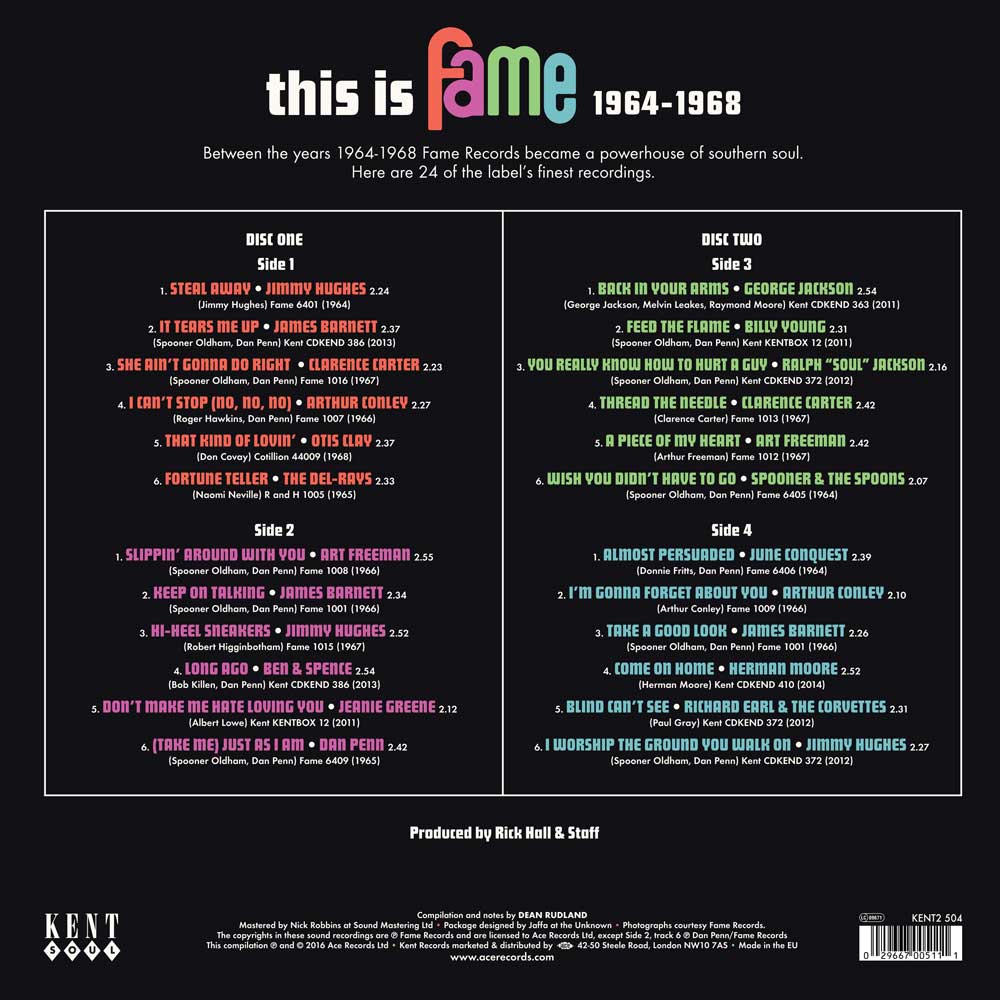
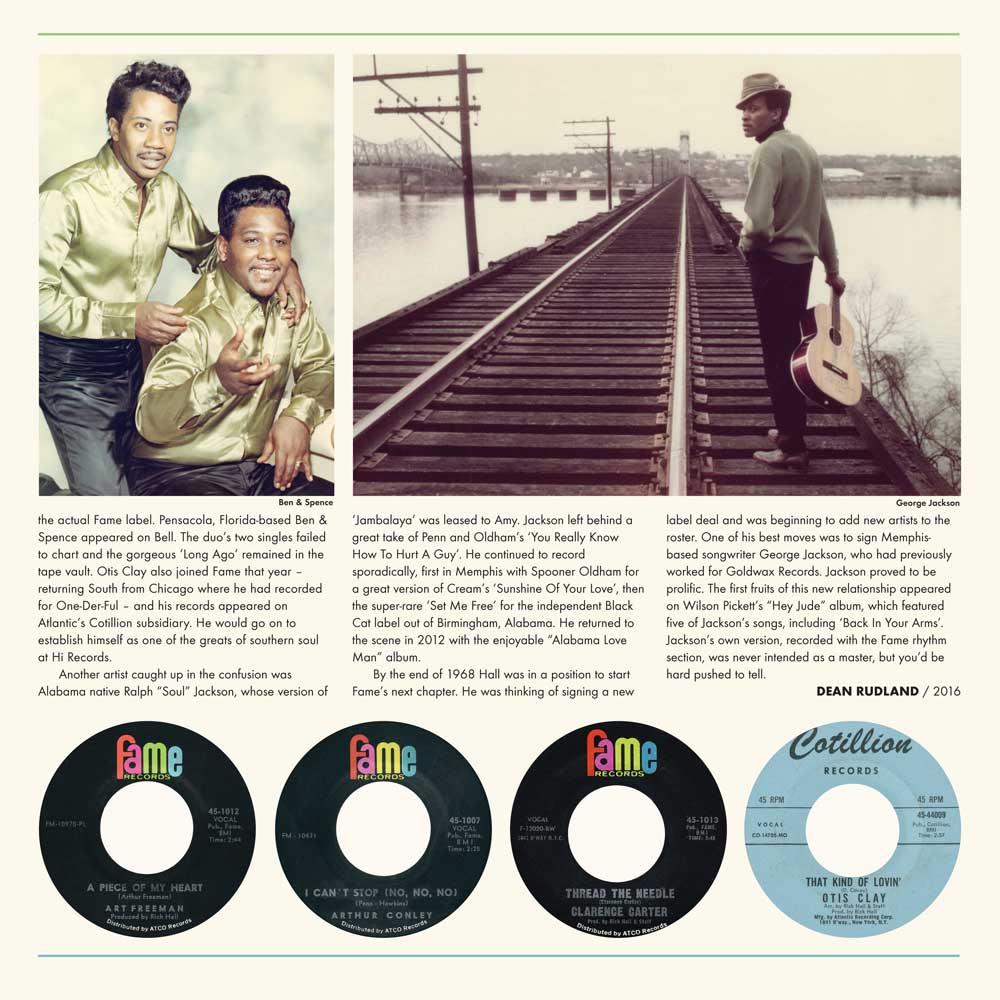

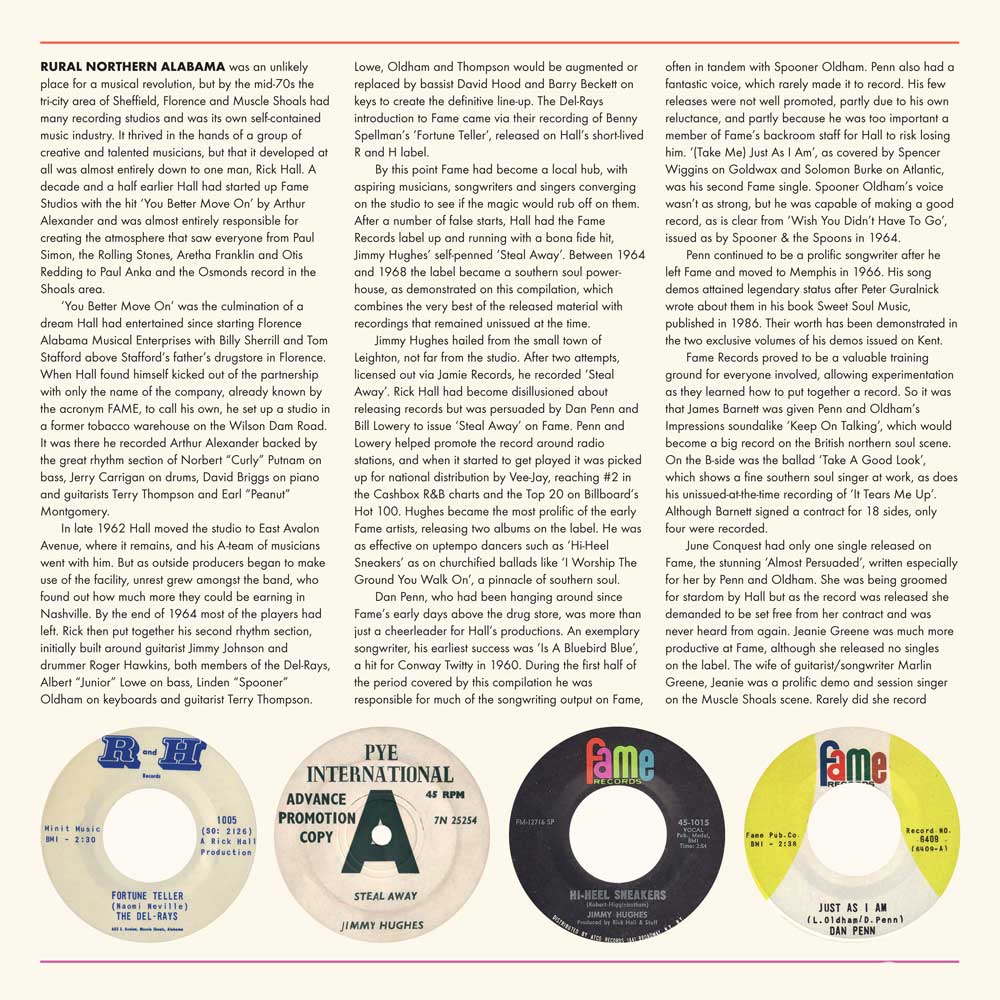
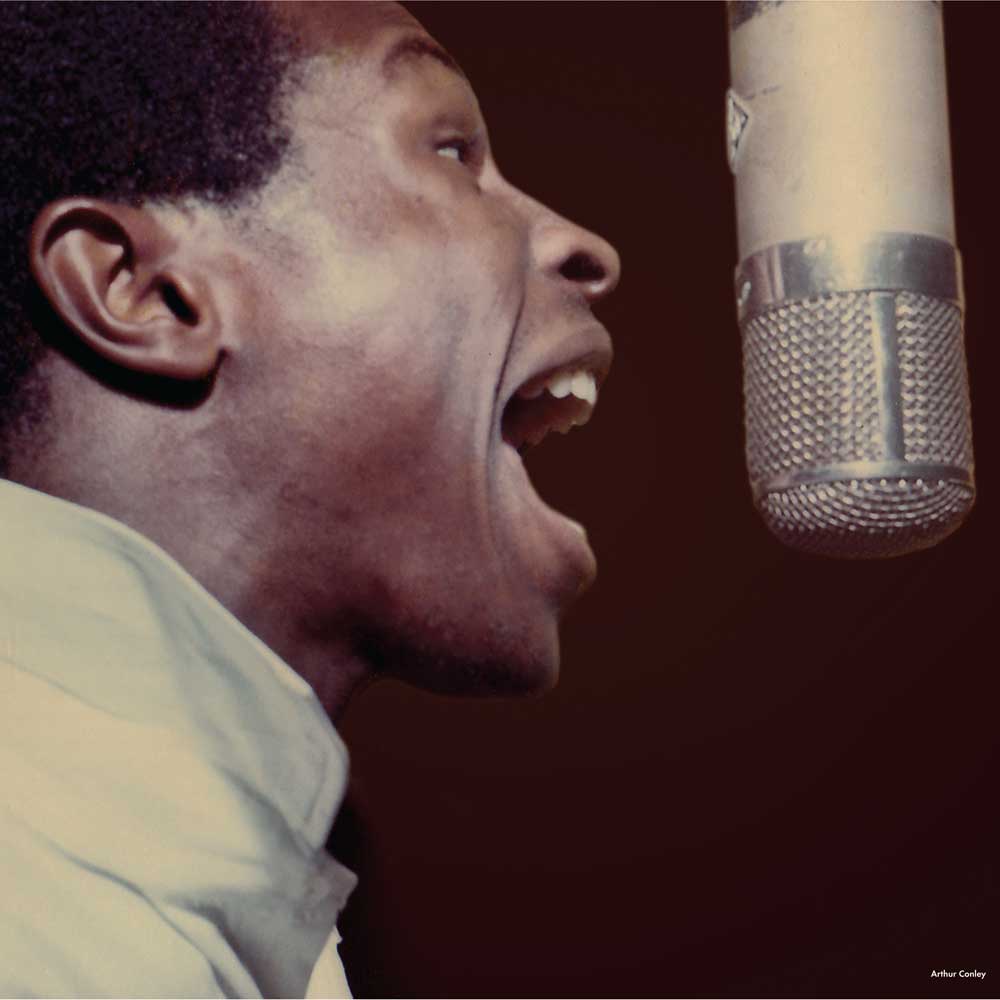
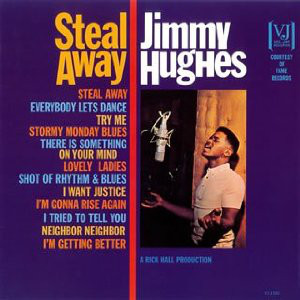
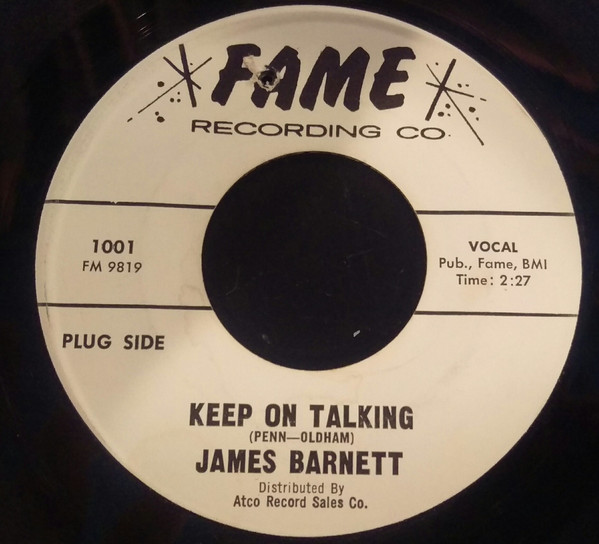
JOAN AS POLICE WOMAN AND BENJAMIN LAZUR DAVIS-LET IT BE YOU.
JOAN AS POLICE WOMAN AND BENJAMIN LAZUR DAVIS-LET IT BE YOU.
Signing a distribution deal to Reveal Records in December 2005 was the turning point for Joan As Police Woman. Their new label rereleased their eponymous debut E.P. Meanwhile, Joan As Police Woman headed into the studio and recorded their debut album, Real Life. It was released to critical acclaim in June the 12th 2006 and reached 189 in the UK charts. This was just the start of Joan Wrasse’s latest musical adventure.
Eleven years later, and Joan As Police Woman are about to release their fifth album for Reveal Records. This isn’t just a Joan As Police Woman album. Instead, Let It Be You, which will be released on 21st of October 2016, is a collaboration between Joan As Police Woman and Benjamin Lazur Davies. It’s an album that was inspired by journeys to Africa to study traditional music.
In Joan Wrasse’s case, she headed to Ethiopia to study the country’s indigenous music with Damon Albarn’s Africa Express. Meanwhile, Benjamin Lazur Davies headed to West Africa, where he studied traditional music. It was only when they returned, that the pair met and realised they both shared an interest in African music. Especially, Central African Republic Pygmy musical patterns. Soon, the pair decided to write and record an album together. This album became the genre-melting Let It Be You, which is Joan As Police Woman’s first album in just over two years. It’s also the latest chapter in a musical journey that began for Joan Wrasse in 1991.
Back in 1991, Joan Wrasse was twenty-one and about to join a new band, The Dambuilders. This was no surprise to everyone who knew Joan Wrasse, who had been immersed in music since the age of six.
That was when she began taking piano lessons in Norwalk, Connecticut. Two years later, and Joan Wrasse began taking violin lessons. By then, it was obvious that the eight year old was a prodigious talent. Over the next few years, Joan played violin in both school and community orchestras. However, eventually, she musically outgrew Norwalk.
Joan Wrasse left Norwalk, and headed to college. By the time she was eighteen, this prodigiously talented musician was admitted early to the College Of Fine Arts, at Boston University. This was not an everyday occurrence. However, Joan Wrasse was not just any musician. She had an overabundance of talent, which maybe explained her eventual restlessness.
Despite studying classical music under some of the finest tutors, including Yuri Mazurkevich, Joan Wrasse began to tire of classical music. Joan came to realise that she didn’t want to spend the rest of her life playing classical music. So Joan joined a punk band, and tried: “to bridge the gap between the guitar and the bass and play the violin really loud.” Little did Joan realise that this was the start of her musical career.
The Dambuilders.
Having started life playing with punk bands, Joan Wrasse joined The Dambuilders in 1989. They were founded in 1989 in Honolulu, in Hawaii, but moved to Boston in the early nineties.
By then, The Dambuilders had signed to the Berlin based Cuacha! label. It released The Dambuilders’ 1989 album A Young Person’s Guide in 1989, and their 1991 sophomore album Greek Lust. It was after the release of Greek Lust, that Joan Wrasse replaced Debbie Fox as vocalist and violinist.
Joan Wrasse made her recording debut on The Dambuilders’ third album Islington Porn Tapes. It was released in 1993, and brought The Dambuilders to the attention of Elektra Records.
They signed The Dambuilders in 1994, and they released their major label label debut later that year. Encendedor was released on Elektra Records’ subsidiary East West Records, and caught the attention of critics. So did the followup Ruby Red, which was released in 1995. That same year, The Dambuilders delivered a barnstorming and memorable performance at Lollapalooza. The Dambuilders seemed to be rising stars of the indie scene.
Despite this, Joan Wrasse began to work with other artists. This is something she still does today. However, in 1996 Joan announced that she was moving to Brooklyn, in New York. For The Dambuilders this was the beginning of the end. Just a year later, in 19997, and The Dambuilders had disbanded. By then, Joan Wrasse’s life had been hit by a tragedy.
By 29th May 1997, Joan Wrasse’s boyfriend Jeff Buckley was working on his new album in Memphis. After working all day, Jeff Buckley went out for a walk, and on the spur of the moment decided to dive in the Wolf River Harbour for a swim. He dived into the river fully clothed, and tragically, drowned. Jeff Buckley’s body was found on the 4th of June 1997. Just like his father Tim, Jeff had died tragically young. For Joan Wrasse, the sudden death of her partner was one of the most traumatic events of her life.
She was grieving, but didn’t know how to grieve. Joan Wrasse it seems, was in shock and struggling to come to terms with the loss of her partner. Somehow, Joan continued to make music.
Those Bastard Souls.
This included with one of Joan Wrasse and Jeff Buckley’s friends, David Shouse. The Grifters’ founder and drummer had founded the indie rock band Those Bastard Souls. It had been founded by David Shouse in 1995, and Joan Wrasse had been the vocalist and violinist. In the aftermath of Jeff Buckley’s death, they began to work on a new album, Debt and Departure.
It was an album that tried to deal with, and respond to the death of Jeff Buckley. Joan Wrasse, his family, friends and bandmates were struggling to come to terms with Jeff Buckley’s death. Debt and Departure allowed the musicians to try and do so, through the means of music. This could’ve and should’ve been cathartic. Alas, it took several years before the album was released.
In 1996, Those Bastard Souls released their debut album, Twentieth Century Chemical in 1996. It wasn’t until 1999 that Debt and Departure was released. By then, Joan decided to form a new band, Black Beetle in late 1997.
Black Beetle.
Black Beetle was founded by Joan Wrasse, and featured the remaining members of Jeff Buckley’s band. They found themselves in a state of flux after the death of Jeff Buckley. Although they were grieving after the loss of a friend, it was only natural that eventually, they began to wonder what the future hold for them? Eventually, Joan Wrasse decided to take matters into her own hands, and founded Black Beetle. This was a whole new ball game for the twenty-seven year old.
Joan Wrasse had never been a bandleader. She was also the principal songwriter and lead singer. Despite all this being new for Joan, she wrote Black Beetle’s eponymous debut album. It was recorded, but alas, was never released. While this must have been a huge disappointment for Joan, she had coped admirably with all the challenges and met them head on. She had embraced her new role. However, in 1999, Joan was asked to join another band.
Antony and The Johnsons.
During 1999, Joan Wrasse was asked to fill in for Antony and The Johnsons’ violinist during a rehearsal. Joan headed along to the rehearsal, thinking that this was a one off. That was meant to be the case. However, by the end of the rehearsal, Joan had joined the band on a full-time basis.
By the time Joan Wrasse joined Antony and The Johnsons, they had recorded their eponymous debut album. It was released in 2000. Joan featured on Antony and The Johnsons’ sophomore album I Am A Bird Now. When it was released in 2005, it was to critical acclaim and commercial success. Later, I Am A Bird Now won the prestigious Mercury Prize in the UK. However, by then, Joan Wrasse had embarked upon a new adventure.
Joan As Police Woman.
This began in June 2002, after the demise of Black Beetle. It was then that Joan Wrasse decided to embark upon a solo career. She would still work with other artists, but her solo career took prominence.
That was the case over next couple of years. Although Joan Wrasse worked as a solo artist, there was an inevitability that somewhere down the line, Joan would form a new band. That proved to be the case, and Joan As Police Woman was born.
The newly formed Joan As Police Woman released its eponymous debut E.P. in 2004. It was self-released by the band. However, Joan As Police Woman caught a break when they signed a distribution deal to Reveal Records in December 2005 was the turning point for Joan As Police Woman.
Reveal Records rereleased their eponymous debut E.P. on February 27th 2006. For many British music fans, this was the first they heard of Joan As Police Woman. It certainly wouldn’t be the last.
Meanwhile, Joan As Police Woman headed into the studio and recorded their debut album, Real Life. It was released to critical acclaim in June the 12th 2006 and reached 189 in the UK chart. This was just the start of Joan Wrasse’s latest musical adventure.
Nearly two years to the day, Joan As Police Woman released their sophomore album To Survive on the 9th June 2008. Just like Real Life, critical acclaim accompanied the the release of To Survive.It reached fifty-five in the UK, and To Survive found its way onto many of the best of 2008 lists. After just two albums, it seemed as if Joan As Police Woman had arrived.
As if to celebrate, Joan As Police Woman released an album of cover versions via their own website and at their concerts. Cover found Joan As Police Woman covering everyone from Jimi Hendrix, Iggy Pop, Sonic Youth, David Bowie and Nina Simone on what was a captivating album. It showcased Joan As Police Woman versatility and talent. So would Joan As Police Woman’s fourth studio album, The Deep Field.
On January 24th 2011, Joan As Police Woman released The Deep Field on Reveal Records. Just like Cover, The Deep Field featured a variety of different songs. Ballads and uptempo tracks sat side-by-side on what was a slick, polished album that won over critics and record buyers. The Deep Field reached number forty on the UK Charts. For Joan As Police Woman, The Deep Field was their most successful album.
Despite the commercial success of The Deep Field, it was another three years before Joan As Police Woman returned with a new album. The Classic was released on March 10th 2014 to praise and plaudits. Some critics hailed The Classic, Joan As Police Woman’s finest hour. Meanwhile, The Classic began to climb the UK charts, eventually reaching forty-four. The success story that was Joan As Police Woman continued. Their next album, Let It Be You, would be very different from everything that’s gone before.
Let It Be You.
Unlike previous albums, Let It Be You is a collaboration between Joan As Police Woman and Benjamin Lazur Davies. Let It Be You was inspired by Joan Wrasse and Benjamin Lazur Davies’ respective journeys to Africa to study traditional music.
In Joan Wrasse’s case, she headed to Ethiopia to study the country’s indigenous music with Damon Albarn’s Africa Express. Meanwhile, Benjamin Lazur Davies who currently performs with Okkervil River, Cuddle Magic and Bridget Kearney, headed to West Africa, where he studied traditional music. It was only when they returned, that the pair met, and realised they both shared an interest in African music. Especially, Central African Republic Pygmy musical patterns. Soon, the pair decided to write and record an album together. This album became Let It Be You.
For Let It Be You, Joan As Police Woman and wrote ten tracks. They were recorded at various studios, including Vibromonk, ColorStudy, Guilford Sound, Trout Recording and Mochi Studios. At these studios, Joan Wrasse and Benjamin Lazur Davies were joined by drummer Ian Chang and bassist and guitarist Ryan Dugre. The rest of the album was recorded by Joan Wrasse and Benjamin Lazur Davies. He added vocals, bass and keyboards. Joan Wrasse took charge of vocals, strings, guitar and keyboards. Once the ten tracks were recorded, Luke Moellman mixed Let It Be You and then Chris Gehringer mastered the album. Only then was Let It Be You ready for release on 21st October 2016. It’s a captivating genre-melting album.
Broke Me In Two opens Let It Be You. A bit crushed guitar combines with a tack piano before the arrangement is transformed. Suddenly, the arrangement bursts into life, becoming big and bold, as the track seems to head into anthem territory. Drums and keyboards are added and accompany Joan’s powerful, soaring diva-esque vocal. Briefly, it’s akin to rap, before she vamps and revisits her soulful side. Later, the arrangement revisits its understated sound, before returning to the earlier anthemic sound as it reaches a glorious crescendo.
There’s contrasts aplenty in the arrangement to Overloaded. The arrangement is dark, and sometimes futuristic as an ethereal vocal soars above the arrangement. They give way to compressed drums, piano and bass as Benjamin takes charge of the lead vocal. Behind him, a myriad of beeps and squeaks are joined by ethereal, elegiac, soaring harmonies. They’re part of a multilayered mid tempo arrangement, where hooks certainly haven’t been rationed. It’s a memorable, genre-melting song where electronica, avant-garde indie rock and soul have been combined.
A crystalline guitar chirps and chimes on Magic Lamp, as Joan delivers a tender vocal. Soon, drums crack, as the mesmeric guitar plays. They’re joined by slow, dark, dramatic keyboards and a rumbling bass. Gradually, the arrangement begins to unfold and instruments are added at just the right time. This includes drums that crack and quiver and an electric piano. However, it’s the strings and what’s one of Joan’s best vocals that play leading roles, as the song reveals its secrets, subtleties and surprises. The result is a truly irresistible song, that’s a marriage of electronica and indie pop.
Handclaps are to the fore on Let It Be You as drums pound. They’re joined by Joan’s drawling and later, heartfelt vocal. By then, exotic percussion, keyboards and effects laden guitar are added. So is a bass synth that rumbles menacingly. Keyboards feature prominently, and sometimes, there’s an almost futuristic and experimental sound. This isn’t overdone though, as handclaps encourage Joan’s urgent and heartfelt vocal. It’s part of what’s a melodic, memorable and catchy song.
The drums on Hurts So Bad seem to have been processed as lumbering keyboards and the bass provide a backdrop for Benjamin’s needy vocal. Elegiac harmonies and a guitar accompany him as he lays his soul. From 1.11 to 1.30, Joan and Benjamin seem to pay homage to Prince. Their vocals intertwine with keyboards and the rhythm section as sweet soul and funk meets indie pop. This delicious musical potpourri gives way to a hopeful, needy vocal. Meanwhile, drums, keyboards and bass play a supporting role. Later, the delicious musical potpourri makes a welcome return, as Benjamin delivers a soul-baring paean. When his vocal drops out, string provide welcome replacement, before the vocal returns and the carefully crafted Hurts So Bad reaches its emotive crescendo.
There’s a lo-fi sound to the keyboards that open Satellite. They set the scene for Joan’s impassioned, but tender vocal. Soon, drums crack, while the lo-fi keyboards buzz. Contrasts abound, as Joan’s elegiac vocal is joined by an electric piano and harmonies. Gradually, the song is sculpted, and takes shape, as Joan and Benjamin deploy an array of disparate instruments and effects effectively.
Urgent drums crack on Easy Money, as stabs of keyboard punctuate the arrangement. Other keyboards drone, as filters are used on Benjamin’s vocal. Harmonies and handclaps are added, and add to the sense of urgency. Futuristic, sci-fi and dark keyboards are deployed. So are soaring harmonies, as Benjamin’s delivers a needy, hopeful vocal. When it drops out, keyboards pickup the baton, before the song reaches its dramatic and memorable ending.
A bit crusher is put to good use on Violent Dove. It transforms the keyboard sound, as Joan delivers a slow, thoughtful vocal. At .31 the arrangement blossoms. Keyboards, drums and the bass combine, while the bit crusher continues to make its presence felt. Again, contrasts abound, with a variety of disparate instruments and effects playing their part in what’s a spacious, but dreamy arrangement. So does Joan’s vocal. Sometimes, it’s multi tracked. That’s the case later, where synths and stringsare added, and once again, ensuring this dreamy, ethereal song ends on a high.
Hypnotic describes the introduction to Motorway. A myriad of whirs, scrapes and ringing sounds accompany the drums. Soon, so does Benjamin’s vocal. It fills in the gaps in the arrangement. It’s joined by harmonies and percussion, as there’s another nod to Prince. Later, a bass synth plays, and meanders across the arrangement while drums click and crack. They’re part of this alternative symphony. So are the vocal and harmonies, which play leading roles and are key to the sound and success of Motorway.
Station closes Let It Be You, and is the longest track on the album. It lasts 6.11, and allows for some experimentation. Right up until 1.42, just a hypnotic guitar chimes and accompanies Joan’s breathy vocal. A chord change just after 1.43 signals a change. Soon, a bass, electric piano and strings have been added. They play subtly, taking care not to overpower Joan’s impassioned, tender vocal. At 3.28 another chord change signals a change in sound and style. Over the next minute, the arrangement is transformed. A wash of sound feedbacks, as drums pound and a guitar plays. Joan’s vocal becomes ethereal, as drones emerge from the arrangement. The best, and most experimental and innovative soundscape has been kept to last. It’s Let It Be You’s Magnus Opus, and shows another side to Joan As Police Woman and Benjamin Lazur Davies.
Let It Be You is the much-anticipated, and genre-melting collaboration between Joan As Police Woman and Benjamin Lazur Davies. The wait however, is almost over, with Let It Be You due for release by Reveal Records on 21st October 2016. It’s been worth the wait, and is an album that will appeal to a wide range of record buyers.
No wonder. There’s elements of a wide range of musical genres on Let It Be You. Elements of electronica, indie pop and indie rock are combined with ambient, avant-garde and experimental music. Then there’s the influence of African music. That’s no surprise.
Both Joan As Police Woman and Benjamin Lazur Davies journeyed to Africa to study traditional music. Joan Wrasse headed to Ethiopia to study the country’s indigenous music with Damon Albarn’s Africa Express. Meanwhile, Benjamin Lazur Davies headed to West Africa, where he studied traditional music. Incredibly, neither Joan nor Benjamin knew of the other’s plans. That’s despite both living in the borough of Brooklyn, in New York.
It was only when they returned, and happened to meet that they realised they both shared an interest in African music. This lead to the pair deciding to write and record an album together. This album became the genre-melting Let It Be You. There’s an African influence on the album. Especially on staccato bit-crushed guitar line that plays throughout Broke Me In Two. That sound reappears elsewhere on the album. However, care is taken not to overuse it. It’s a similar case with the various effects that are deployed.
Effects are used throughout Let It Be You, and help sculpt and carefully craft the ten tracks. They may last just thirty-seven minutes, but it’s thirty-seven memorable and melodic minutes. The music on Let It Be You is variously beautiful, dreamy, elegiac and ethereal, but also dark and dramatic. Other times, the music is hypnotic and mesmeric, before becoming catchy and truly irresistible. It’s a case of don’t spare the hooks, as Joan As Police Woman and Benjamin Lazur Davies weave their musical magic and continually captivate on what’s hopefully the first of many collaborations, Let It Be You.
JOAN AS POLICE WOMAN AND BENJAMIN LAZUR DAVIS-LET IT BE YOU.

PIED PIPER -THE PINNACLE OF NORTHERN SOUL-VINYL EDITION.
PIED PIPER -THE PINNACLE OF NORTHERN SOUL-VINYL EDITION.
There’s always been a degree of oneupmanship within record collecting circles. That’s still the case today, with some record collectors willing to spend thousands of pounds on a rare record. Especially within the Northern Soul scene. That’s not surprising, and has been for the best part of fifty years.
Within the Northern Soul scene, not all singles are created equal. Some are more collectable than others. Indeed, some singles regularly change hands for several thousand pounds. Similarly, there’s a certain kudos to certain labels. Especially those who are renowned for the quality of music they produced.
Over the years, this has included labels like Chess, Dore, Era Record, Mirwood, Okeh, Revilot, Ric Tic and Shrine Records. Another favourite within the Northern Soul scene are singles produced by Pied Piper Productions. Their productions were released on various labels, and nowadays, have become collector’s items.
That’s why Ace Records have recently released a new vinyl compilation Pied Piper-The Pinnacle Of Northern Soul. It features twelve tracks from Nancy Wilcox, The Cavaliers, The Hesitations, Lorraine Chandler, Freddy Butler, September Jones, Mikki Farrow and Tony Hester. These tracks are a reminder of the music that Pied Piper produced, in Detroit between 1965 and
Pied Piper was founded in 1965 by Sheldon “Shelley” Haines, a music industry veteran. His first job in the music industry, was as a distributor for King Records. This was the late-forties. By, 1952, Sheldon and Jack Gale, a local DJ, formed the short-lived Triple A record label. It lasted a mere five released. After that, Sheldon became interested in Detroit’s emerging R&B scene.
Soon Sheldon was a familiar face on the Detroit R&B scene. By 1954, Sheldon and songwriter Perry Stevens found themselves working with doo wop group The Spartans, for the Capri label. A year later, Sheldon and Irving Lief formed a production partnership and several record labels. This included labels like Pix, Plaid, Sterling and Studio. Groups and artists like The Coronets, Cool Papa Jarvis and The Jet Tones. The pair also recorded The Womack Brothers, who later, became The Valentinos. Sheldon and Irving’s partnership lasted until 1960, where they recorded artists at their own studio. It wasn’t just artists signed to their own labels, but artists signed to RCA’s Groove imprint. This was a sign of how well thought of the production partnership were. Despite this, Sheldon returned to becoming a distributor in 1961.
For the next four years Sheldon was happy worked as a distributor. Occasionally, he produced artists, and in 1965, made his comeback. Ed Wingate hired Sheldon as Vice President and General Manager of Ric-Tic, Golden World and Wingate record labels. His remit was overseeing marketing, promotion and product control. For his new business venture, Sheldon called the company Pied Piper Productions. The first two single produced by Pied Piper Productions were releases by Bob Santa Marie and Frank Meadow and The Meadowlarks. While they were neither successful nor groundbreaking releases, once Sheldon put together his production team, success wouldn’t be far away.
The two men who masterminded Pied Piper Productions were Jack Ashford and Mike Terry. Jack Ashford had studied music at college. He was a vibes player and a familiar face in Philly’s jazz scene. When he was asked to become a member of Marvin Gaye’s touring band, Jack went from jazz musician to Funk Brother.
Through meeting the Motown musicians, Jack decided to base himself in Detroit. Soon, he became part of Motown’s legendary studio band, The Funk Brothers. Jack’s trademark tambourine sound became a staple of Motown recordings. However, Jack was more than a tambourine player. He studied arrangers, engineers and producer and soon, was able to learn from them. Jack was also a talented songwriter. Essentially, Jack Ashford was a musical all-rounder, which made him perfect for Pied Piper Productions. His partner would be Mike Terry.
Mike Terry played baritone saxophone first in Popcorn Wylie’s Mohawks, then with Joe Hunter’s band. Like many musicians, he gravitated to Motown, which is the sixties, was one of the most successful labels. He was part of the touring and studio bands, and his trademark sound features on numerous Motown recordings. Despite being on Motown’s payroll, Mike, like other musicians, including Jack Ashford, felt the fees they were paid weren’t enough. So the pair left Motown.
Having left Motown, Jack and Mike briefly worked for Ed Wingate’s Golden World label. Mike with George Clinton and Sidney Barnes, formed the Geo-Si-Mik songwriting and production partnership. At the same time, Jack and Mike formed a songwriting and production partnership. One of their songs, Lonely One, for The San Reno Strings album on Ric-Tic came to the attention of Sheldon “Shelley” Haines. He realised this was a partnership to watch.
Sheldon “Shelley” Haines was right. Jack and Mike head to Jack’s hometown Philly, to produce I Can’t Change for The Sensations with Yvonne Baker. This was their first production, which was released on the Junior label. Later in 1965, the pair produced Joe Douglas for the Playhouse label. With Bobby Martin penning the B-Side, this was a single that was made has Philly. Ironically, it wasn’t in Philly Jack made his name as a producer. No. It was in Detroit, where Jack Ashford and Mike Terry masterminded Pied Piper Productions, including the music on Pied Piper-The Pinnacle of Northern Soul.
Side One.
Side one of Pied Piper-The Pinnacle of Northern Soul opens with Nancy Wilcox’s cover of the Jack Ashford and Randy Scott composition More Than A Memory. It was recorded on the 21st July 1966 with producer Joe Hunter. Sadly, the song wasn’t released as a single, and only made its debut on the 2015 Ace Records’ compilation Pied Piper Follow Your Soul. More Than A Memory makes a welcome return on Pied Piper-The Pinnacle of Northern Soul, and proves to be the perfect showcase for Nancy Wilcox. She delivers a vocal powerhouse, where she sounds as if she’s lived and survived the lyrics. Alas, even the combined talented of Pied Piper Productions couldn’t transform Nancy Wilcox’s fortunes, and she remains one of soul’s nearly women.
23rd February 1967 was a date The Cavaliers hoped would change their fortunes. They were about to work with Pied Piper Productions, who by then, had established a reputation as a talented production team. The Cavaliers were due to record several tracks, including Larry Banks and Norman Kelley’s Ooh It Hurts Me. Once the session was complete, Ooh It Hurts Me was shopped to record companies. Incredibly, there were no takers, and the various versions of the song lay unreleased in the Pied Piper vaults. This includes the alternate take on Pied Piper-The Pinnacle of Northern Soul. It made its debut on Ace Records’ 2015 compilation Pied Piper Follow Your Soul, and returns for an encore on Pied Piper-The Pinnacle of Northern Soul. It’s Northern Soul at its most melodic and memorable.
Over the last fifty years, Cleveland, Ohio has produced many talented and successful groups. One of the earliest of the Cleveland bands were The Hesitations. They began work on their debut album Soul Superman in 1967. One of the songs they recorded, was I’m Not Built That Way, a Jack Ashford,Ed Hillert and Joseph Hunter composition. Later in 1967, Soul Superman was released by Kapp Records. One of the highlights of Soul Superman was I’m Not Built That Way, an irresistible Northern Soul stomper.
Rose Batiste recording career began in 1964, and over the next few years, she moved between record labels. Still, commercial success eluded her. She thought this might change when she signed to Pied Piper Productions. One of the songs she recorded was This Heart Is Lonely, which was penned by Jack Ashford, Randy Scott and Andrew Terry. Sadly, the song was never released and lay in the Pied Pier vaults until 2013, when it featured on Pied Piper Presents A New Concept In Detroit Soul. So good is Rose Batiste’s This Heart Is Lonely, that it makes a welcome return on Pied Piper-The Pinnacle of Northern Soul. Melodic and not short of hooks, this uber soulful dancer epitomises everything that’s good about Northern Soul.
Lorraine Chandler wasn’t just a singer, she was also a talented songwriter. Alas, she didn’t write You Only Live Twice. Instead, it’s Jack Ashford, Randy Scott and Andrew Perry composition. When it was recorded in 1967, the arrangement was big, bold and included more than an element of drama. This would make it a future favourite of the UK’s Northern Soul scene. That’s still the case even today, nearly fifty years after the recording of You Only Live Twice.
It wasn’t often that Jack Ashford got the opportunity to dust off his vibes. He did on Freddy Butler’s That’s When I Need You. I’s taken from his 1967 album on Kapp, With A Dab Of Soul. Jazz-tinged, soulful and understated, with a late-night sound, it’s one of the highlights of Pied Piper-The Pinnacle of Northern Soul.
Side Two.
Opening side two of Pied Piper-The Pinnacle of Northern Soul, is The Cavaliers’ We Go Together. It was written by Shelley Haims and Perry Stevens, and was recorded by The Cavaliers in 1966. This isn’t the original version. Instead, it’s an unreleased alternate take featuring a rap into. The addition of a rapped intro was relatively new in 1966. Its inclusion on Pied Piper-The Pinnacle of Northern Soul allows listeners to compare and contrast the original and the this alternate take. It’s a welcome release of a song that’s reminiscent of the type of music Chess were releasing during the first half of the sixties. As for the lyrics, they’re best described as innocent, as The Cavaliers combine soul and doo wop during what’s a reminder of another and more innocent musical era.
In 1966, September Jones enjoyed a hit with I’m Coming Home. This wasn’t the only recording she made for Pied Piper Production. One was Voo Doo Madamoiselle, which is very different September Jones’ other recordings. Instead, it’s moody and atmospheric, and is a real find. It wasn’t released until 2014, when it was released as a single on Ace Records’ Pied Piper imprint. However, it makes a very welcome return on Pied Piper-The Pinnacle of Northern Soul, where hopefully, it will reach a much wider audience.
In March 1966, Mikki Farrow released Could It Be as a single on Karate Records. Alas, commercial success eluded what was Mikki Farrow’s only single for Karate Records. However, tucked away on the B-Side of Could It Be, was the Gwen Smith penned Set My Heart At Ease. It’s another track that epitomises everything that’s good about Northern Soul. Braying horns, soulful harmonies and a driving beat accompany Mikki Farrow’s coquettish and sometimes sassy, powerful vocal. It’s a far better song than Could It Be, and begs the question, why wasn’t it chosen as a single?
Singer-songwriter Lorraine Chandler, played an important part in the Pied Piper Productions’ story. Away from her solo career, she wrote and produced other artists signed to Pied Piper Productions. Despite being a talented songwriter, Lorraine Chandler wasn’t averse to covering other people’s songs. Especially when they were as good as I Can’t Hold On. It was penned by Jack Ashford, Ermastine Lewis and Ray Monette. However, this isn’t the original version. Instead, it’s the alternate version that features on the 2013 Ace Records’ compilation Pied Piper Presents A New Concept In Detroit Soul. The only difference from the original, is the tempo to this truly irresistible track is quicker.
Back in 1967, September Jones has a released I’m Coming Home was released as a single, on Kapp. Moody, broody and dramatic describes a track written by Jack and Penny Ashford with Joseph Hunter. Waves of harmonies unfold, while September’s vocal is an outpouring of emotion. Nearly fifty years later, and this Northern Soul favourite has stood the test of time.
Closing side two, and indeed Pied Piper-The Pinnacle Of Northern Soul, is Tony Hester’s Just Can’t Leave You. It was penned by Tony Hester and was originally released on Giant Records. Later, Just Can’t Leave You Karate Records label in March 1966. It’s a melodic, mid-tempo track with a feel-good sound. Fifty years later, and Just Can’t Leave You is a truly timeless track that should find an audience outside of the Northern Soul scene.
That’s the case with Ace Records’ new vinyl compilation Pied Piper-The Pinnacle Of Northern Soul. It’s not just those that used to frequent the Blackpool Mecca, Twisted Wheel and Wigan Wheel that Pied Piper-The Pinnacle Of Northern Soul will appeal to. This is a compilation that will appeal to anyone who likes their music soulful. Especially those that enjoyed the two previous Pied Piper compilations, 2013s Pied Piper Presents A New Concept In Detroit Soul and 2015s Pied Piper Follow Your Soul. Just like these two compilations, there’s ballads and uptempo tracks on Pied Piper-The Pinnacle Of Northern Soul. They’re a reminder of the combined talents of the various members of Pied Piper Productions.
This included former Funk Brothers Jack Ashford and Mike Terry. They discovered that there was life after Motown. Their time at Pied Piper Productions was the first step in what would be long and successful careers.
At Pied Piper Productions, Jack Ashford and Mike Terry worked with Nancy Wilcox, The Cavaliers, The Hesitations, Lorraine Chandler, Freddy Butler, September Jones, Mikki Farrow and Tony Hester, who all feature on Pied Piper-The Pinnacle Of Northern Soul. They were among the artists that were discovered, careers that were rejuvenated and stars were born. Sheldon “Shelley” Haines’ decision to bring Jack Ashford and Mike Terry to Pied Piper Productions was vindicated. For a few short years, they were a potent and successful partnership. Proof of this is the music on Pied Piper-The Pinnacle Of Northern Soul. It’s a compilation that will appeal to anyone who likes their music soulful.
PIED PIPER -THE PINNACLE OF NORTHERN SOUL-VINYL EDITION.

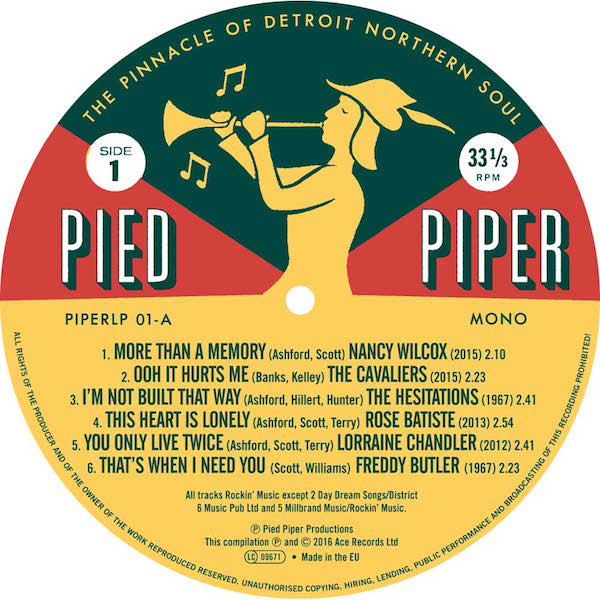
LET IT BE-BLACK AMERICA SINGS LENNON, McCARTNEY AND HARRISON.
LET IT BE-BLACK AMERICA SINGS LENNON, McCARTNEY AND HARRISON.
In America, The Beatles are the best selling artists in the history of popular music. They sold an incredible, 178 million albums in America alone. What makes this all the more remarkable, was that America were latecomers to The Beatles.
The first Beatles album to be released in America, was Introducing…The Beatles on the 10th of January 1964. Soon, America was making up for lost time as far as The Beatles were concerned. That was the case right through to The Beatles’ swan-song, Let It Be, which was released on the 8th of May 1970. By then, many American artists were covering The Beatles’ songs.
That had been the case since 1964, when The Supremes covered A World Without Love. Soon,everyone from Aretha Franklin to The Four Tops, Junior Parker, The Temptations and Ella Fitzgerald were covering some of the Fab Four’s finest songs. This continued after The Beatles spilt-up in 1970. Everyone from Randy Crawford and Earth, Wind and Fire, The Undisputed Truth and Gary U.S. Bonds all covered Beatles’ songs. These songs feature on Ace Records’ much anticipated new twenty-two track compilation Let It Be-Black America Sings Lennon, McCartney and Harrison. It finds some of the biggest names in jazz, soul, funk and R&B paying homage to The Beatles. These songs were released between 1964 and 2009, and ensured that The Beatles remain one of the most oft-covered bands in musical history.
Opening Let It Be-Black America Sings Lennon, McCartney and Harrison is Aretha Franklin’s cover of Eleanor Rigby. With the entire Beatles songbook to choose from, the Queen Of Soul decided to cover Eleanor Rigby. It was released as a single in late 1969, reaching number seventeen in the US Billboard 100 and five in the US R&B charts. Then as the sixties gave way to seventies, Eleanor Rigby featured on
Aretha Franklin’s first album of the seventies, This Girl’s In Love With You. When it was released on January 15th 1970, it reached number seventeen on the US Billboard 200 and number eight on the US R&B charts. One of its most memorable moments was the cover of Eleanor Rigby. Aretha Franklin reinvents this familiar song, as she delivers a vocal powerhouse. Accompanied by gospel-tinged harmonies, Aretha Franklin transforms Eleanor Rigby, taking it in a direction that The Beatles could never have imagined.
It’s a similar case with Earth, Wind and Fire’s take on Got To Get You Into My Life. When it was released as a single by Columbia in 1978, it reached number nine on the US Billboard 100 and topped the US R&B charts. This was Earth, Wind and Fire’s fifth number one on the US R&B charts. However, when Got To Get You Into My Life was released, Earth, Wind and Fire were between albums. It never featured on one of their studio albums. That’s despite being one their finest moments, where seamlessly, Maurice White and Co. combine elements of soul, funk and jazz.
For Berry Gordy’s burgeoning Motown empire, The Beatles proved a rich source of music to cover. That had been the case since The Beatles first hit America’s shores in 1964. Since then, many Motown artists have covered the Fab Four’s songs, hoping some of their success would rub off on them. This included The Four Tops, who recorded Fool On The Hill for their album The Four Tops Now. It was released in 1969, and featured a ruminative, but soulful cover of Fool On The Hill. It’s one of the finest moments on The Four Tops Now, which reached number seventy-four on the US Billboard 200. This was The Four Tops’ most successful album since Reach Out in 1967.
Even Nina Simone wasn’t immune to the charms of The Beatles. She covered the George Harrison penned Here Comes The Sun, which lent its title to her 1971 album. Here Comes The Sun was released on RCA Victor, and found Nina Simone reworking eight cover versions. This included Here Comes The Sun. Accompanied by an understated, orchestrated arrangement, Nina Simone delivers a beautiful, tender jazz-tinged cover of this familiar ballad.
By 1970, Junior Parker was no stranger to The Beatles’ songbook. When recording his 1970 album for Capitol Records, he covered Taxman, Lady Madonna and Tomorrow Never Knows. When it came to releasing a single from the album, Lady Madonna was chosen. Tucked away on the flip side was a real hidden gem, Junior Parker’s rework of Tomorrow Never Knows. It has an understated, but mesmeric and mystical psychedelic sound. It’s a total transformation of Lennon and McCartney’s song that closed Revolver.
Forty years ago, in 1976, Randy Crawford released her debut album Everything Must Change on Warner Bros. Records. Sadly, the album failed to chart, and it wasn’t until the release of Raw Silk in 1979, that Randy Crawford began to make a commercial breakthrough. However, when she was recording Everything Must Change, Randy Crawford decided to The Beatles’ Don’t Let Me Down. In her hands, it becomes a beautiful, heartfelt ballad with soul and jazz stylings.
By the time Gary U.S. Bonds released his Dedication album in 1981, he had been making music for twenty-five years. During this period, Gary U.S. Bonds had influenced two generations of musicians. This included a young John Lennon. Alas, John Lennon never got to see Gary U.S. Bonds cover one of his songs. He had been murdered outside his New York home 8th December 1980.
Less than a year later, Gary U.S. Bonds released Dedication, which featured a cover of It’s Only Love. Just like the rest of Dedication, it was produced by Bruce Springsteen and Steven Van Zandt. Their influence can be heard on It’s Only Love, where R&B and rock melt into one. This new sound found favour with American record buyers. Dedication reached number twenty-seven on the US Billboard 200 and thirty-four on the US R&B charts, partly thanks to the songwriting skills of one John Lennon.
When Dionne Warwick recorded her 1969 Soulful album, she made the journey to Chips Momans’ American Studios, in Memphis. She wash neither the first, nor last to make this journey. It was a well trodden path for artists wanting to kickstart failing careers or change direction musically. Soulful was released in 1969, it reached number eleven on the US Billboard 200 and two on the US R&B charts. This meant Soulful was the second most successful album of Dionne Warwick’s twelve album. No wonder. Dionne Warwick sounds reinvigorated, as she unleashes a barnstorming version of We Can Work It Out. It takes on new life and meaning in Dionne Warwick’s hands, as she breathes new life and meaning into the song.
Five years after covering Can’t Buy Me Love in 1964, Ella Fitzgerald covered another Beatles’ song, Savoy Truffle. It was the B-Side to the Richard Perry produced single I’ll Never Fall In Love Again. For her 1969 Reprise Records’ album Ella, the Queen of Jazz dipped into The Beatles’ songbook, and covered Savoy Truffle and Got To Get You Into My Life. The single version of Savoy Truffle features on Let It Be-Black America Sings Lennon, McCartney and Harrison, and showcases the Queen of Jazz versatility and ability to reinvent even the most familiar song.
By 1970, Isaac Hayes was enjoying a rich vein of musical form. This continued with his third album The Isaac Hayes Movement. It followed in the footsteps of Hot Buttered Soul, and reached number eight on the US Billboard 200 and topped the US R&B charts. Without doubt, the highlight of The Isaac Hayes Movement was a cover George Harrison’s Something. It’s reinvented and becomes a near twelve minute epic, where Isaac Hayes marries funk and soul and deploys lush strings and backing vocalist. The result is a musical Magnus Opus from Isaac Hayes, whose rich vein of musical form continued apace.
My final choice from Let It Be-Black America Sings Lennon, McCartney and Harrison, is Bill Withers’ cover of Let It Be. It was produced by Booker T. Jones, and featured on Bill Withers’ 1971 debut album Just As I Am. On its release, it reached number thirty-five on the US Billboard 200 and number nine on the US R&B charts. Bill Withers’ cover of Let It Be is a fusion of soul, jazz and gospel, as he takes the song in new and unexpected directions.
For either fans of The Beatles, or anyone whose interested in soul, funk, blues, R&B and jazz, then Ace Records’ much anticipated new compilation Let It Be-Black America Sings Lennon, McCartney and Harrison, will be a must have. It features some of the biggest names in black music reinventing twenty-two songs from The Beatles’ back-catalogue.
The cover versions on Let It Be-Black America Sings Lennon, McCartney and Harrison were released between 1964 and 2009. This includes Aretha Franklin, The Four Tops, Junior Parker, Bill Withers, The Temptations and Ella Fitzgerald. That’s not all. Randy Crawford, Earth, Wind and Fire, The Undisputed Truth and Gary U.S. Bonds all covered some of some of the Fab Four’s finest songs. Each of these artists has takes a different approach to these songs.
Sometimes, artists stay true to the original version. Other artists, take the song in a new and totally unexpected directions. It becomes something of a magical mystery tour, as a familiar song takes on new life life and meaning. This can be through a change in style or tempo. Occasionally, a song is deconstructed and then reconstructed. However, regardless of whether an artist stays true to the original, or reworks a Beatles classic, each of the song on Let It Be-Black America Sings Lennon, McCartney and Harrison works, and works well. That’s why Let It Be-Black America Sings Lennon, McCartney and Harrison is, without doubt, one of the finest compilations of covers from The Beatles’ songbook, and for anyone with even a passing interest in soul or the Fab Four’s music, will be essential listening and a welcome addition to their music library.
LET IT BE-BLACK AMERICA SINGS LENNON, McCARTNEY AND HARRISON.



BETTY HARRIS-THE LOST QUEEN OF NEW ORLEANS SOUL.
BETTY HARRIS-THE LOST QUEEN OF NEW ORLEANS SOUL.
Betty Harris’ recording career lasted just eight years. It began in 1962 with the release of Taking Care of Business, and was over by 1970. After just three minor hit singles, Betty Harris called time on her career. The Florida born singer decided to retire from music, to raise a family.
That was the last that was heard from Betty Harris until 2005, when she hit the comeback trail. By then, several of Betty Harris’ singles had found a new audience. I Don’t Want to Hear It and I’m Evil Tonight were favourites within the UK Northern Soul circles. Meanwhile, ballads like What’d I Do Wrong and Can’t Last Much Longer were favourites within the deep soul community. Belatedly, Betty Harris’ music was finding a wider audience.
To mark the comeback of Betty Harris in 2005, a compilation of her music was released that year. Entitled The Lost Soul Queen, Betty Harris’ star had been in the ascendancy, and she was regarded by some, as soul royalty. Eleven years later, and that’s still the case.
When Soul Jazz Records’ recently released a compilation of Betty Harris music, it was entitled The Lost Queen Of New Orleans Soul. That’s despite Betty Harris never living in New Orleans. The nearest Betty Harris came to New Orleans, was recording for one of the city’s top producers, Allen Toussaint.
Betty Harris signed to Allen Toussaint and Marshall Sehorn’s new label Sansu Records in 1964. For the next your years, Sansu was home to Betty Harris. The period between 1964 and 1968 is documented on The Lost Queen Of New Orleans Soul, which was the most fruitful period of Betty Harris’ career. However, her story began in Florida in 1939.
That was when Betty Harris was born, to the Revs. Rufus C. Crews and Winifred Crews. With both of her parents ministers in the Pentecostal Church, the Crews’ house was deeply religious. It was also one where music played an important part in everyday life.
The Rev. Rufus C. Crews was multi-instrumentalist and singer, who sported a powerful tenor voice. He was also a part time booking agent for a variety of gospel groups and artists. This was a role Rev. Rufus C. Crews would continue, when the family moved to Alabama.
When the Crews moved Alabama, Betty was just four. It would be her home for the next thirteen years, and where her father introduced Betty to Rosetta Sharp, Sam Cooke, The Soul Stirrers, Johnny Taylor and The Blind Boys Of Alabama. Soon, young Betty Crews would be following in their footsteps.
By the age of twelve, the Crews’ family were living in Alabama. They had moved there when Betty was just four. When she was just twelve, Betty Crews had already sung lead in a choir which had supported Brother Joe May. Already, people were taking notice of Betty. Over the next few years, Betty continued to sing gospel. During that period, she spoke to and learnt from, all the gospel singers who stayed over in the Crews’ household. Despite meeting and learning from some of the biggest names in gospel music, Betty soon came to realise that she didn’t want to make a career out of gospel music.
Realising that there was little money to be made in gospel music, Betty Crews wanted to crossover and sing secular music. She was listening to the music coming out of Nashville, Tennessee. This was when Betty realised there was more to music than gospel. So around her seventeenth birthday, Betty began plotting how she could escape from Alabama.
It was around this time that Betty saw an advert in the local paper, advertising jobs for maids in a New Jersey hotel. So Betty packed her bags and headed to New Jersey. Once there, Betty and her future colleagues decided to head out to a local nightclub. That was when Betty made her debut as a singer, and was spotted by producer Zell Sanders.
He recruited Betty Harris to become the lead singer of The Hearts. They released their debut single Like Later Baby later in 1958. It failed commercially, and The Hearts’ recording career came to nothing. Betty’s nascent musical career had hit the buffers.
So in 1960, Betty Harris decided to move to New York. Before long, Betty was singing in some of the Big Apple’s smaller clubs. When she was finished her set, Betty would head to venues like the Apollo, where she would study the technique. One night, when Betty arrived at the Apollo, Mabel Louise Smith. a.k.a. the R&B singer Big Maybelle was about to go on stage. Betty watched and was captivated as Big Maybelle unleashed a vocal powerhouse on Candy. So impressed was Betty Harris met, that later, she headed backstage to introduce herself to Big Maybelle.
Having introduced herself to Big Maybelle, Betty Harris asked if she could study her technique. Big Maybelle agreed, and took Betty out on the road, where she became the young singer’s mentor. It wasn’t just technique and stagecraft that Big Maybelle taught Betty, it was how to conduct herself.
Over the next few weeks, Big Maybelle coached Betty Harris. She also had a powerful vocal, and Big Maybelle helped Betty harness her powerful vocal, and improve her technique. This they continued to do on a two week tour. It began in Chicago and headed to Tennessee, before ending in Chicago. That was where Betty Harris landed a job, and would record her debut single.
The time Betty Harris had spent with Big Maybelle had been time well spent. Big Maybelle made Betty promise that she would continue to sing each day. It was as if the older woman wanted her protege to fulfil the potential she saw in her. Even in what was a relatively short space of time, Betty had improved as a vocalist, and was ready to make the next step in her career
This included recording her debut single. Now living in Chicago, Betty Harris got her break when she recored Taking Care Of Business for Douglas Records. Taking Care Of Business was released in 1962, and failed to make any impression commercially. Betty Harris’ time at Douglas Records was over after just one single.
Fortunately, Betty Harris met Solomon Burke’s manager, Marvin Leonard ‘Babe’ Chivian. He introduced Betty to Bert Sterns, who had produced Solomon Burke’s hit single Cry To Me.
Bert Berns was a songwriter and producer, who was housed within the famous Brill Building. He cowrote a string of classic songs, including Under The Boardwalk and Piece Of My Heart. Among Bert Berns’ various songwriting partners, were none other than Leiber and Stoller. However, Bert Berns wasn’t just a songwriter; he was also a producer, who would transform Betty Harris’ fortunes.
For Betty Harris’ debut for Jubilee Records, Cry To Me was chosen. It gave Solomon Burke a hit single a year earlier. The man who had produced Solomon Burke hit single was none other than Bert Berns. He took a different approach to Cry To Me this time around, dropping the tempo. In Betty Harris’ hands Cry To Me became a heart wrenching ballad, which later, would become a deep soul classic. Before that, Cry To Me was released on Jubilee Records.
Cry To Me reached reached twenty-three in the US Billboard 100 and number ten in the US R&B charts. Considering this was merely Betty Harris’ sophomore single, this was a good start to her nascent recording career. For the followup, His Kiss was released on the 4th of January 1964. Although it was another deep soul ballad, His Kiss stalled at the lower reaches of the charts. This was a disappointment for Betty Harris.
Although His Kiss hadn’t come close to matching the success of Cry To Me, Betty Harris was a popular live draw, and even had topped the bill at Apollo Theatre, in New York. Betty who had shared the bill with Sam Cooke, Aretha Franklin and James Brown seemed to be going up in the world. So the oft-covered Mojo Hannah was chosen to be Betty’s next single.
Mojo Hannah which was released later in 1964, became Betty Harris’ third single for Jubilee Records. It was merely a minor hit, and proved to be Betty Harris’ swan-song for Jubilee Records. What happened next is the subject of debate.
After Mojo Hannah, Betty Harris was still signed to Jubilee Records. Betty had met New Orleans based singer, songwriter, arranger and producer Allen Toussaint. He was about to launch a new record label, with his business partner Marshall Sehorn. That label was Sansu, which was based in New Orleans. Allen Toussaint wanted Betty Harris to sign to the new label. So did Marshall Sehorn; who Betty alleges told her than he had bought her Jubilee Records’ contract out. She alleges that this was not the case, and that she was still under contract to Jubilee Records when her career at Sansu Records began.
To record her Sansu Records’ debut, Betty Harris flew from her home in Florida to New Orleans, where she spent a month living in the city’s Mason’s motel. Much of the time was spent recording with producer Allen Toussaint. He put together a band that featured some of the Big Easy’s top session musicians. The initial sessions didn’t go well. Betty didn’t like recording the songs live, and preferred working with backing tapes. This was a lesson learnt for future sessions. Backing tracks would be recorded, and then the vocals would be added. However, during the first recording sessions, the tracks were recorded live, including What A Sad Feeling which became Betty Harris’ debut single for Sansu Records.
What A Sad Feeling, a soul-baring ballad would be the first of just ten singles Betty Harris released on Sansu Records. It features on The Lost Soul Queen compilation. So does the B-Side I’m Evil Tonight, which features a vocal powerhouse from Betty Harris. Alas, when What A Sad Feeling was released in 1965, it failed commercially. While the single found an audience within New Orleans, elsewhere it was a different story. Sansu Records was just a small independent label, with neither the financial muscle nor marketing expertise to give Betty Harris another hit single. This would be a familiar story.
It wasn’t until 1966, that I Don’t Wanna Hear It was released as Betty Harris’ second single for Sansu Records. Just like What A Sad Feeling, it failed to find an audience outside of the Big Easy. However, later, I Don’t Wanna Hear It would become a favourite with the UK’s Northern Soul scene. Tucked away on the B-Side was Sometime, a ballad, where Betty’s vocal veers between tender to hurt filled and powerful. Strings and harmonies accompany Betty on a track that deserved to fare better than a B-Side.
Later in 1966, Betty Harris returned with the Allen Toussaint penned 12 Red Roses. It was an uptempo fusion of soul and funk. On the flip side was another Allen Toussaint composition, What’d I Do Wrong. This future deep soul classic, was without doubt a much stronger track. Why it wasn’t chosen as a single seems strange? Maybe if Sansu Records had released What’d I Do Wrong as a single, it would’ve found an audience. 12 Red Roses certainly didn’t, and it was now two years since a Betty Harris song even troubled the lower reaches of the chart.
During 1967, Allen Toussaint saw Art Neville and The Neville Sounds playing on Basin Street. Straight away, he realised that here was the band he wanted to play on the Sansu Records’ releases. By then, Sansu were recording at Cosimo Matassa’s state of the art eight-track studio. This was where the Neville Sound was born. Betty Harris would be accompanied by Art Neville and The Neville Sounds.
It wasn’t until later in 1967 that Betty Harris released her fourth single for Sansu Records. The song chosen was the ballad Lonely Hearts, which could only have been recorded in New Orleans. Horns and harmonies accompany Betty, as she delivers an impassioned, heartfelt vocal. On the flip side was Bad Luck, a mid tempo slice of R&B. Just like previous singles, Lonely Hearts made no impression on the charts. However, Betty Harris’ luck was about to change.
For her second single of 1967, the ballad Nearer To You was chosen. It features an atmospheric, Southern Soul arrangement. It’s one of Betty Harris’ finest moments, is helped no end by Allen Toussaint’s arrangement. On the flip side, I’m Evil Tonight made a reappearance. When Nearer To You was released, it entered the US Billboard 100. However, it stalled at a disappointing eighty-five. Nearer To You deserved to fare better, and was a case of what might have been? What if had been released on Atlantic Records or even Stax?
Given the success of Nearer To You, Sansu Records were keen to build on the relative success of the single. So later in 1967, Can’t Last Much Longer was released as a single. On the B-Side was I’m Gonna Git Ya. Only I’m Gonna Git Ya features on The Lost Soul Queen compilation. It features another heart wrenching vocal powerhouse from Betty Harris, while horns and harmonies accompany her. It’s a welcome addition to The Lost Soul Queen compilation. Alas, Can’t Last Much Longer never even came close to troubling the US Billboard 100. That’s despite Betty Harris spending much of 1967 on tour.
During 1967, Betty Harris toured with Otis Redding, Carla Thomas and Bettye Swann. They played tour fifty-three dates, before Otis Redding died in a plane crash. For Betty this was a tragedy for several reasons.
She had become friendly with many of the artists on the tour, including Otis Redding. He had also cofounded a new management company with Phil Walden, Redwal Enterprises. The new company was going to manage some of the biggest names in soul, including Percy Sledge, Sam and Dave and Wilson Pickett. Betty Harris who was about to embark upon a European tour with Otis Redding, had signed a management contract with Redwal Enterprises. After the death of Otis Redding, this came to nothing.
Despite this, Betty Harris’ recording career continued. She released Love Lots Of Lovin’, a duet with Lee Dorsey in 1968. It failed to make any impression on the charts. Neither did the former B-Side What’d I Do Wrong when it was belatedly released as a single later in 1968. On the B-Side was Mean Man, a fusion of funk and soul, where Betty seems to live the lyrics. By then, she was able to bring Allen Toussaint’s to life. He wrote the songs, and she brought them to life. The only thing missing, was commercial success. Still, it continued to elude Betty Harris.
Despite this, Betty Harris released the ballad Hook, Line ‘n’ Sinker as a single later in 1969. Again, commercial success eluded Line ‘N’ Sinker. For Betty Harris, this must have been a frustrating time. On the B-Side of Hook, Line ‘n’ Sinker was Show It, an uptempo dancer. This stomper would find favour within the UK’s Northern Soul scene. However, by then, Betty Harris and Sansu Records had parted company.
In 1969, Betty Harris released Ride Your Pony as a single in 1969. Funk meets soul on what sounds like a novelty dance track. On the B-Side was Trouble With My Lover, which ironically, was a slightly stronger track. Ride Your Pony was the tenth and final single Betty Harris released on Sansu Records.
Only one of the ten singles had charted, and even then, Nearer To You struggled into the lower reaches of the US Billboard 100. The Sansu years hadn’t been the most successful of Betty Harris’ career. However, Allen Toussaint and Betty Harris had one last roll of the dice.
When it came to recording There’s A Break in The Road, Allen Toussaint brought onboard The Meters. They unleashed some of their trademark heavy duty funk. It was the perfect backdrop for Betty Harris, as she delivered a vocal that’s a mixture of power, frustration and sass. The single was originally meant to be released on Sansu. However, Allen Toussaint decided to license There’s A Break in The Road to Shelby Singleton’s SSS International label. It was a larger label, and it might result in a change of fortune for Betty Harris.
There’s A Break in The Road was released in 1969. It was without doubt, one of Betty Harris’ best singles. Despite the undoubted quality, and the decision to release There’s A Break in The Road on SSS International, the single failed to find an audience. It was all too familiar a story for Betty Harris, and marked the end of her recording career for thirty-six years.
In 1970, Betty Harris decided to retire from music, and concentrate on bringing up her family. By then, she was thirty-one, had been making music since the late-eighties. Apart from four minor hit singles, Betty Harris’ career had been a case of what might have been?
Through no fault of her own, Betty Harris had underachieved. Sansu was just a small independent label, with neither the financial muscle nor marketing expertise to promote Betty Harris singles. While each of the ten singles Betty Harris released for Sansu Records sold reasonably well within New Orleans, they never found an audience further afield. That was the case between 1965 and 1969, when Betty Harris released ten singles on Sansu Records. Only Nearer To You charted, but only reached a lowly eighty-five in the US Billboard 100. This must have been hugely frustrating for Betty Harris.
Maybe it was no surprise when Betty Harris turned her back on music in 1970? That was the last that was heard from Betty Harris until 2005, when she hit the comeback trail. By then, several of Betty Harris’ singles had found a new audience. I Don’t Want to Hear It and I’m Evil Tonight were favourites within the UK Northern Soul circles. Meanwhile, ballads like What’d I Do Wrong and Can’t Last Much Longer were favourites within the deep soul community. Belatedly, Betty Harris’ music was finding a slightly wider audience. That’s still the case today.
So it’s no surprise that Soul Jazz Records’ recently released a new seventeen track compilation of Betty Harris music, The Lost Queen Of New Orleans Soul. It shows the two sides to Betty Harris’ Sansu Records’ years. Ballads and uptempo tracks rub shoulders on The Lost Queen Of New Orleans Soul. This includes a couple of ballads that would later become deep soul classics, and several uptempo tracks that would find favour on the UK’s Northern Soul scene. These tracks are a reminder of the what proved to be the most productive years of Betty Harris’ career.
During that period, Betty Harris music epitomised everything that was good about the New Orleans’ sound. She was a talented singer, who can breath meaning and emotion into a song. Despite that, Betty Harris isn’t the true Queen Of New Orleans Soul.
Far from it. That honour has been bestowed upon New Orleans’ very own, Irma Thomas. For over fifty years, she has been rightly recognised as the true Queen Of New Orleans Soul. During that period, there have been many challengers to Irma Thomas’ crown. This includes Betty Harris. Alas, she neither enjoyed the longevity nor commercial success that Irma Thomas enjoyed. However, Betty Harris, is a talented and versatile vocalist. A reminder of that is The Lost Queen Of New Orleans Soul, which is the perfect primer to Betty Harris who is one of New Orleans’ soul music’s best kept secrets.
BETTY HARRIS-THE LOST QUEEN OF NEW ORLEANS SOUL.

WHATEVER HAPPENED TO JEANETTE JONES?
WHATEVER HAPPENED TO JEANETTE JONES?
Musical history is littered with artists who could’ve and should’ve gone on to greater things, but for whatever reason, commercial success and critical acclaim passed them by. That, sadly, was the case with Jeanette Jones.
She had talent in abundance, and a voice that was a mixture of power, passion, emotion and sheer soulfulness. Sadly, Jeanette Jones’ recording career was all too brief, and amounts to just one single, Darling, I’m Standing By You. It was released on the Golden Soul label in 1969, and the two years later, was reissued by Kent. Nothing came of the single.
Jeanette Jones’ last recording session was in 1974, when she recorded a publishing demo for Barry Goldberg. Sadly, that was the last time she entered a recording studio. It was also the end of Jeanette Jones’ musical career. For Jeanette Jones, the dream was over.
Since then, Jeanette Jones has remained an enigmatic and mysterious figure. Very little is known of her life pre and post music. Nowadays, it is thought that Jeanette Jones lives quietly in San Francisco.
Details of Jeanette Jones’ early life are sketchy. It’s thought that she was born and brought up in San Francisco. That was where Jeanette Jones first discovered music.
Just like many future soul singers, Jeanette Jones first started singing in church. That proved to be Jeanette Jones’ gateway into music. However, it was with the Voices Of Victory gospel choir that Jeanette Jones’ first came to prominence.
Cora Wilson had formed The Voices Of Victory gospel choir in 1962. Hers was no ordinary choir though. The Voices of Victory gospel choir featured sixty singers, who travelled the West Coast in their own bus. They sang in churches and at gospel conventions. It was an impressive sight and sound. Especially when the soloists enjoyed their moment in the spotlight. By 1965, one of the soloists was Jeanette Jones.
She was the owner of a impressive and powerful voice. When Jeanette Jones stepped into the spotlight, she combined, power, passion and emotion. Given the her vocal prowess, it was no surprise that Jeanette Jones was one of the stars of The Voices Of Victory gospel choir. Everyone who heard them realised this. So too would Leo Kulka at Golden State Recorders.
Leo Kulka first encountered Jeanette Jones in November 1965. Cara Wilson had booked Golden State Recorders to record an album by The Voices Of Victory gospel choir. It was to be recorded at Golden State Recorders, and then a limited number of albums would be pressed. They would be sold after concerts. In a way, Cara Wilson was just testing the water, to see if there was a market for albums featuring her choir. However, Leo Kulka felt she was underselling her choir.
As the recording session got underway, at Golden State Recorders, Leo Kulka realised how good The Voices Of Victory gospel choir were. He knew they were recorded as one of the best choirs in the state, and when he heard them in the studio realised that their music deserved to be heard by a much wider audience. So did the voice of one of the choir’s soloists, Jeanette Jones.
Her voice stopped Leo Kulka in his tracks. It was a cut above the rest of the soloists. Jeanette Jones was capable of singing with power, but was always in control as she delivered the lyrics with emotion and sincerity. From the moment Leo Kulka heard Jeanette Jones sing, he promised himself he was going to sign her. So once the recording session was over, Leo Kulka approached Jeanette Jones, with a view to signing her.
Jeanette Jones wasn’t interested in signing a recording contract. She had no intention in crossing over, and instead, wanted to continue to do what she saw as the “Lord’s work” with The Voices Of Victory gospel choir. This must have come as a surprise to Leo Kulka.
Back in 1965, most singers, including gospel singers, dreamt of signing a recording contract. Even if this meant crossing over from gospel to secular music. Jeanette Jones it appeared was the exception. That was until late 1967.
It wasn’t until late 1967, that Leo Kulka next encountered Jeanette Jones. By then, things had changed for Jeanette Jones. Not only had she crossed over, and was singing secular music, but she also had acquired a manager, Jay Barrett.
He didn’t come from a musical background. Instead, he was a banker who was based in Palo Alto. Although a relative newcomer to the music industry, Jay Barrett wasn’t content to be a manager, he also dreamt of forging a career as a songwriter. Jeanette Jones he hoped would go on to record some of these songs. So he went away to work on a proposal.
By then, Jeanette Jones had signed to Leo Kulka’s Golden Soul label. Leo Kulka was vastly experienced, and would be able to guide Jeanette Jones through the early stages of her recording career. Soon, though, Soon, Jay Barrett came up with a proposal. It stated that if Jeanette Jones was willing to record Jay Barrett’s songs, then he was willing to part finance the recording of a demo. This would be recorded Leo Kulka’s Golden State Recorders. Leo Kulka agreed to this, and began preparing for his first session with Jeanette Jones.
The recording session was scheduled to take place in February 1968. No expense was spared, and Leo Kulka began to put together an extensive backing band. There was a problem though. The songs that Jay Barrett had written were unsuited to Jeanette Jones in their present form.
They were poppy, and sounded like a remnant from earlier in the sixties. Soon, though, Leo Kulka had worked out a solution, backing vocalist. So Leo Kulka put in a call to Ramona King and her brother Cleo.
Ramona King’s career began in 1962, when she signed to Eden Records. Since then, she had spent time at Warner Bros. Records, Amy and most recently, Action Records. Leo Kulka explained that he needed backing vocalists to accompany Jeanette Jones and help her add some much needed soulfulness to Jay Barrett’s songs. The Kings agreed, and when the recording sessions began, found themselves at Golden State Recorders.
At that first recording session, Jeanette Jones recorded a couple of Jay Barrett songs, Jealous Moon and Quittin’ The Blues. With the large ensemble accompanying her, the two songs were soon in the can, They were produced by Leo Kulka, with Jay Barrett receiving a co-production credit. The next step, was to try and interest another label in the songs.
Leo Kulka began shopping Jealous Moon and Quittin’ The Blues to various labels. However, none of the labels expressed an interest in releasing the songs. For Leo Kulka, this was a huge disappointment. So he dug deep into his contact book.
The man he decided to consult was Larry Goldberg, an independent producer based in Los Angeles. Larry Goldberg was part talent scout, part producer. Part of his time was spent finding and developing artists. Other times, he shopped his artists to major labels. Just like Leo Kulka, Larry Goldberg was vasty experienced. He also thought he might have the answer to Leo Kulka’s problem.
The answer Larry Goldberg thought, might lie in three backing tracks. This included the Ben Raleigh penned Break Someone Else’s Heart. Another possibility was Andy Badale and Albert Elias’ I Want Action, which had recently given Ruby Winters a hit. The third and final songs was Sam Russell’s Cut Loose, which had been arranged by H.B. Barnum. Having listened to the three pop soul cuts, Leo Kulka agreed that they had the potential to solve his problem. So he gave Jeanette Jones a call, and she made her way to Golden State Recorders.
Although Jeanette Jones was signed to Leo Kulka’s Golden Soul label, she was still singing with the Voices Of Victory gospel choir. Maybe she was keeping her options open, given the life of a professional singer could sometimes, be perilous? Careers were often short, unpredictable and unprofitable. Jeanette Jones must have realised this after her first recording session. Now was time to try once again.
Having listened to the trio of backing tracks, Jeanette Jones set about laying down vocals on Break Someone Else’s Heart and Cut Loose and I Want Action. Jeanette Jones had had done her part. Now it was over to Leo Kulka.
His job was to shop the songs to various labels. Given the quality of the songs, Leo Kulka must have been confident of securing a deal for Jeanette Jones. Despite his best efforts, none of the labels he approached were interested in releasing the songs. Lightning had struck twice for Jeanette Jones.
She returned to the Voices Of Victory gospel choir. By the spring of 1969, Jeanette Jones was now fronting the Voices Of Victory gospel choir. They were one of the biggest and most successful gospel choirs on the West Coast. Despite this, Jeanette Jones returned to Golden State Recorders.
Still Jeanette Jones hadn’t given up on her dream of making a career out soul music. So she headed to Golden State Recorders. That was where she first encountered singer-songwriter Wally Cox. Leo Kulka had asked him to write a song that would showcase Jeanette Jones’ conferable vocal talents. He delivered a trio of songs, including Darling, I’m Standing By You. It was tailor made for Jeanette Jones.
At Golden State Recorders, Jeanette Jones prepared to record Darling, I’m Standing By You. It was a career defining moment. Meanwhile, Wally Cox went away and wrote two new songs, The Thought Of You and I’m Glad I Got Over You. These songs had a much more contemporary sound, and could’ve and should’ve transformed Jeanette Jones’ career. Leo Kulka realised this.
So much so, that he was willing to release ‘Darling, I’m Standing By You and The Thought Of You’ on his own record label, Golden Soul. Leo Kulka hoped that the local R&B and gospel an radio stations would pickup on the single. This Leo Kulka hoped, would result in him being able to cut a distribution deal with a major label. That was the plan.
Leo Kulka had 1,000 copies of Darling, I’m Standing By You and The Thought Of You pressed. These copies he hoped would sell out, and the single would be picked up radio stations in the San Francisco area. However, the 1,000 copies of Darling, I’m Standing By You failed to sell, and Leo Kulka was back to square one.
While many people would’ve called it a day, Leo Kulka decided to use the single to shop Darling, I’m Standing By You to major labels. He took the single to Atlantic, but they turned the song down. Motown then passed on Darling, I’m Standing By You. Things weren’t looking good for Darling, I’m Standing By You, and Jeanette Jones’ career.
She had been trying to make a breakthrough since 1967, and was no nearer to doing so. Things however changed in 1971, when the Bihari brother agreed to release some of Leo Kulka’s releases on their Kent Records and Modern Records’ labels. One of the singles they chose to release was Jeanette Jones’ Darling, I’m Standing By You. Maybe, Jeanette Jones’ luck was changing?
Alas it wasn’t to be. Darling, I’m Standing By You failed commercially, and quickly, the single disappeared without trace. For Leo Kulka and Jeanette Jones it was a frustrating time. The single, Leo Kulka felt, hadn’t received sufficient promotion by Modern Records. So it was no surprise when it failed for commercially. By then, Jeanette Jones was beginning to rethink her future.
Following the commercial failure of Darling, I’m Standing By You, Jeanette Jones started to work as a session singer. She also worked with Mike Bloomfield on his Mill Valley Bunch project. They released their one and only album Casting Pearls on Verve Records in 1972. Soon, though, Jeanette Jones began to look beyond music.
Jeanette Jones began to do some voiceover work, and was chosen as the voice of the Swiss Colony Wine radio campaign. It was also around this time, that Jeanette Jones began to do some modelling. This kept her busy, and gradually, Jeanette Jones seemed to lose interest in music. Indeed, she only returned to Golden State Recorders one more time.
This was in 1974, when Jeanette Jones headed to Golden State Recorders to record a publishing demo for Barry Goldberg, who a friend of both Mike Bloomfield and Leo Kulka. During that last session, Jeanette Jones cut two tracks penned by Gerry Goffin and Barry Goldberg. The first was You’d Be Good For Me and What Have You Got To Gain By Losing Me? Sadly, after the publishing demo for Barry Goldberg, Jeanette Jones turned her back on music.
Since then, nothing has been heard of her, and the Jeanette Jones’ story is a case of what might have been. She could’ve and should’ve enjoyed commercial success and critical acclaim. Jeanette Jones certainly didn’t lack talent. Quite the opposite
Jeanette Jones was a hugely talented singer, who had the ability to breath life, meaning and emotion into lyrics. She could combine power and passion, and seamlessly switch between ballads and uptempo tracks. Despite her undoubted talent, sadly, Jeanette Jones never made a breakthrough. It was a case of what might have been.
That is despite Leo Kulka championing Jeanette Jones. He produced her, and then shopped the songs to bigger labels. Sadly, only once did a single get picked up by a bigger record, Darling, I’m Standing By You. Even when that happened in 1971, Modern Records didn’t promote the single sufficiently. Maybe this lead to Jeanette Jones considering her future?
After four years struggling to make a breakthrough, maybe reality kicked in and Jeanette Jones realised that not all dreams come true? It was certainly around this time that Jeanette Jones began to work as a session singer. After this, the only time Jeanette Jones returned to a recording studio was to record a publishing demo for Barry Goldberg, Ironically, during that session, Jeanette Jones recorded one of her finest songs What Have You Got To Gain By Losing Me? It’s a poignant reminder of a truly talented artist. Alas the Jeanette Jones story is a case of what might have been.
What if Jeanette Jones has signed to Leo Kulka’s Golden State in 1965, when he recorded The Voices Of Victory gospel choir? However, Jeanette Jones wanted to continue doing the “Lord’s work.” Maybe by the time she changed her mind in 1967, it was too late? Music was changing, and changing fast. Suddenly the musical landscape was totally different. There is also the possibility that Jeanette Jones was neither driven nor determined enough to make a career out of music. Deep down, maybe Jeanette Jones knew that enjoying a successful career as singer was a long shot, and very few succeeded? That was ironic, as Jeanette Jones had what it took to enjoy a long and successful career in music, talent.
WHATEVER HAPPENED TO JEANETTE JONES?

ARISE KING CREOSOTE.
ARISE KING CREOSOTE.
Ever since the birth of modern music, Scotland has constant and consistently produced talented and innovative musicians. That’s been the case since the days of Donovan, John Martyn and Maggie Bell in the sixties, through to the Average White Band and the Sensational Alex Harvey Band in the seventies. Then in the eighties, Scotland produced The Blue Nile, Lloyd Cole and The Commotions, Love and Money, the Jesus and Mary Chain, the Associates and Aztec Camera. Scottish music enjoying a rich vein of form. This continued into tube nineties, with The Beta Band, Belle and Sebastian, Teenage Fanclub and The Delgados. Each of these artists have, and in some cases, are still releasing albums. However, none of them have released as many albums as Kenny Anderson.
Since 1995, Kenny Anderson has been a one man music making machine. He has released over forty albums under a number of aliases, including the Skuobhie Dubh Orchestra, Khartoum Heroes, Kwaing Creasite and Jokes. That however, is just part of the Kenny Anderson story. Kenny Anderson is also a member of Kid Canaveral, and the Scottish-Canadian folk band The Burns Unit. However, it’s as King Creosote that Kenny Anderson has released the majority of his music.
Quite simply, the King Creosote back-catalogue is a veritable musical feast, fit for a king. There’s plenty of tasty treats awaiting discovery within King Creosote’s back-catalogue. Most of these albums were released on Fence Records, which King Creosote founded in 1995.
By 1995, singer-songwriter Kenny Anderson was twenty-eight, and living in Anstruther, a small fishing village in the East Neuk of Fife. He was a familiar face within the Scottish music scene. For some time, Kenny Anderson had been contemplating founding his own record label. However, this was a big step and not one to be taken lightly.
Eventually, though, Kenny Anderson and Johnny Lynch of The Pictish Tail decided to take the plunge, and founded Fence Records. Most new labels would’ve been based in Glasgow or Edinburgh, where much of Scotland’s music industry was based. However, city life wasn’t for Kenny Anderson. Instead, he decided to base Fence Records in the place he called home Anstruther. Over the next twenty years, Anstruther would become synonymous with its most favourite resident, King Creosote.
By the time Fence Records had been founded, Kenny Anderson had adopted another moniker, King Creosote. Little did Kenny realise that King Creosote would become one of the most profile artists in the history of Scottish music.
Just three years after dawning the King Creosote moniker, Fence Records released its first album, Queen Of Brush Country in 1998. This was the debut album from King Creosote. It was released on CDR, and nowadays, is a much prized collector’s item. So are many of King Creosote’s albums.
This includes the rest of the albums King Creosote released during 1998. This includes Rain Weekend, Inner Crail To Outer Space, Or Is It? and Gink Scootere. By the time 1998 drew to a close, King Creosote had released five albums. He was a truly prolific and inimitable singer-songwriter.
As 1999 dawned, King Creosote continued to release albums with regularity. 1999: An Endless Round Of Balls (Parties and Social Events) was King Creosote first album of 1999. It was followed by Wednesday, Jacques De Fence and I Am 9, Fence Records’ ninth album. Soon, though, nine became ten when King Creosote released Planet Eggz. Just like all the other albums, it showcased King Creosote’s unique and often quirky songs, which were tinged with humour, hooks and social comment. King Creosote had come a long way in just a couple of years.
With the new millennia dawning, King Creosote seemed determined to steal James Brown’s crown as the hardest working man in music. Or Was It? was King Creosote’s first album of 2000. Soon, though, 12 O’Clock On The Dot and Stinks followed. This meant King Creosote had released thirteen albums in just three years. By then, King Creosote was maturing as a singer, songwriter and storyteller. His carefully crafted songs were beginning to find a wider audience.
G was the first album King Creosote released during 2001. It was one of the best albums the Fife-based singer-songwriter had released. King Creosote seemed to draw inspiration from a variety of sources, on what was a captivating album. Soon, though, King Creosote was back with a very different album, Radge Weekend Starts Here. This was followed by King Creosote Says “Buy The Bazouki Hair Oil.” However, King Creosote’s fourth album of 2001, was Disclaimer, which was another of his finest albums. 2001 had been a busy and successful year for King Creosote, having released five album and been busy playing live.
2002 would be just as busy. King Creosote released a limited edition, five disc box, Squeezebox Set. It featured Fair Dubhs, Favourite Girl, Whelk Of Arse, More Afraid Of Plastic and Losing It on the Gyles. These five albums meant that Fence Records had released twenty-two albums since 1998. They had all been released on CDR, but from 2003, things began to change at Fence Records.
For some time, record companies were watching the progress of King Creosote with interest. They were keen to add the singer-songwriter to their roster. Despite this, King Creosote wasn’t willing to turn his back on Fence Records. So Domino Records came up with a solution.
King Creosote’s albums would be released via Fence Records and Domino Records. It was a deal that gave King Creosote the best of both worlds. He was still signed to an independent label, while Domino Records had the financial muscle and expertise to promote and release King Creosote albums in different territories. Soon, King Creosote would be going global.
King Creosote’s albums would be released on CD, LP and as digital downloads in 2003 when Fence Records joined forces with Domino Records. In the short term, Fence Records continued to release albums on CDR.
During 2003, King Creosote released Now (Nearly 36), Psalm Clerk and Ideal Rumpus Room Guide on CDR. However, King Creosote also released Kenny and Beth’s Musakal Boat Rides in 2003. It was the first album to be released by Fence Records and Domino Records. Kenny and Beth’s Musakal Boat Rides was the album that also introduced King Creosote to a much wider audience. This was the start of the rise and rise of King Creosote.
While many artists would’ve concentrated on albums that could be released worldwide, King Creosote released several albums on CDR during 2004. This included Sea Glass, Red On Green, Three Nuns and Kompanion Çet +1 in September 2004. King Creosote also released Loose Tea On His Wynd, a limited edition LP. There was no sign of King Creosote slowing down. It was if he was making up for lost time.
King Creosote had released his debut album in 1998, when he was thirty-one. Since then, he had been averaging four and five albums each year. 2005 was no different. Balloons was released on CDR, and marked the end of an era. No further CDR albums were released. However, King Creosote was just as busy as ever.
Rocket D.I.Y. was released on April 4th 2005, and immediately hailed one of King Creosote’s best albums. When Vintage Quays was released later in 2005, it was the thirty-fourth album that Vintage Quays King Creosote had released. That number soon rose to thirty-five when KC Rules OK was released on September 19th 2005. It featured songs penned between 1999 and 2003. These songs captured the hearts and minds of critic and record buyers, and would soon be regarded as one of the finest albums in King Creosote’s back-catalogue.
2011 was another busy year for King Creosote. He released his solo album Thrawn, and then collaborated with Jon Hopkins on the album Diamond Mine . It was released in 2011, and was later nominated for the Mercury Prize. This played a part in King Creosote’s music reaching a much wider audience.
This just happened to coincide with King Creosote hitting a rich vein of form. On April the 21st 2013 King Creosote returned with a rerecorded version of one of the hidden gems in his back-catalogue, That Might Well Be It, Darling, It was originally an acoustic album, but King Creosote decided to rerecord the album with a full band.
King Creosote spent six months working with producer Paul Savage at the Chem 19 studio, in Blantyre. Critics believed that this was time well spent. The newly rerecorded version of That Might Well Be It, Darling ,many critics felt, was the best album of King Creosote’s fifteen year recording career. However, wasn’t the only album King Creosote released during 2013.
Later in 2013, King Creosote released the album Sure and Steadfast. It was album that King Creosote had released to raise funds for the Scottish Fisheries Museum, in his home village of Anstruther. Despite being one of Scotland’s top recording artists, King Creosote hadn’t forgotten his roots.
From Scotland With Love.
Further proof of this came in 2014, when King Creosote released From Scotland With Love, which was the soundtrack to a documentary feature film directed by Virginia Heath. The film was commissioned as part of the Cultural Festival, which accompanied the 2014 Commonwealth Games in Glasgow. King Creosote seemed to have embraced the From Scotland With Love project, and had written and recorded some of the best songs of his career. Critical acclaim accompanied the release of From Scotland With Love, which was heard by a global audience during the 2014 Commonwealth Games.
During the Commonwealth Games, a screening of From Scotland With Love took place on Glasgow Green, with King Creosote playing live. That night, an audience from the four corners of the globe were captivated and spellbound by King Creosote’s music. It was a far cry from the days when he was Scottish music’s best kept secret.
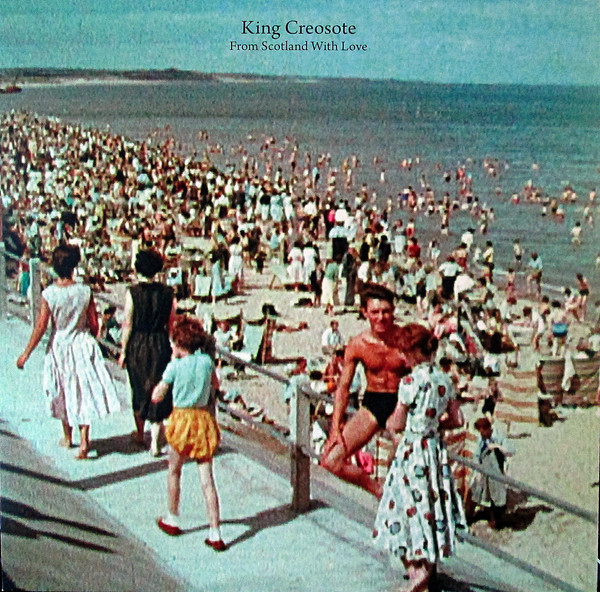
Despite releasing the most successful album of their career, King Creosote returned with another limited edition, vinyl release on Fence Records. 3 On This Island was released later in 2014, It may not have been as high profile a release as From Scotland With Love, but it featured nine carefully crafted songs. So did the followup, Småvulgär.
It was released in 2015, on Fence Records. Just like 3 On This Island, Småvulgär featured carefully crafted song which showcased the considerable talents of the truly talented trio. However, their next album, Astronaut Meets Appleman would see King Creosote return to the global stage.
Astronaut Meets Appleman.
Having just released one album, it wasn’t long before King Creosote began work on his next album. For the new album, King Creosote wrote ten new songs. They would become Astronaut Meets Appleman, the forty-sixth album from the uber prolific King Creosote. Recording of Astronaut Meets Appleman, King Creosote took place at various studios across Scotland.
Recording of the latest addition to the King Creosote songbook, Astronaut Meets Appleman took place between July 2015 and February. The sessions began at Analogue Catalogue in July 2015. Then the band headed to Gordon McLean’s at An Tobar, where recording took place between September and October 2015. To complete Astronaut Meets Appleman, King Creosote hooked up with an old friend, at Paul Savage at Chem 19 studios.
Paul Savage was no stranger to King Creosote, and had worked with them several times at Chem 19, on some of their best and most successful albums. This was no surprise. The producer and former Delgado drummer, was now one of the most experienced Scottish producers. He was sure to bring out the best in King Creosote, who made their way to the Blantyre studios.
When King Creosote arrived at At Chem 19, Kenny Anderson brought with him his trusty acoustic guitar, accordion, xylophone and synths. He would also play piano and add vocals. Joining Kenny Anderson, were the other members of King Creosote, drummer Andy Robinson and keyboardist, pianist and bassist Derek O’Neill. They were joined by some of their musical friends. Producer Paul Savage added drums and the sound of a ‘wind turbine; on Melin Wynt. Eventually, after seven months of recording at three different locations, Astronaut Meets Appleman was complete. Now it was ready for release.
Astronaut Meets Appleman was one of the most-anticipated albums of King Creosote’s twenty-one year career. Especially, as it became known that Astronaut Meets Appleman was one of the most eclectic albums of King Creosote’s career. The release of Astronaut Meets Appleman was eagerly awaited, as critics and record buyers awaited discovery of the delights within King Creosote’s latest musical feast.
That’s no exaggeration. Astronaut Meets Appleman which is King Creosote’s forty-sixth album, is without doubt, one of the best albums of a twenty-one year career. During that period, the chameleon-like King Creosote have become one Scotland’s top bands. Anyone wondering why, just need listen to albums like From Scotland With Love and Astronaut Meets Appleman.
They’re among the most accomplished and eclectic albums of King Creosote’s long and illustrious career. He’s now one of the elder statesmen of Scottish music. No two albums are the same. They can feature everything from folk, indie rock, perfect pop and psychedelia. Similarly, King Creosote albums can feature balladry, paeans, rockers and hook-laden anthems. King Creosote are equally happy delivering ballads, as they’re heading into anthem territory. That’s no surprise. Kenny Anderson is a talented singer-songwrter who can breath life, meaning and emotion in his lyrics. That’s the case on ballads and hook-laden and rocky anthems. He’s Mr. Versatile. However, King Creosote isn’t a one man band.
Far from it. Drummer Andy Robinson and Derek O’Neill who played keyboards, piano and bass both play vital roles in the success of the King Creosote story. Especially on recent additions to King Creosote’s burgeoning back-catalogue. It now numbers forty-six albums. However, for a newcomer whose yet to discover the delights of King Creosote, where do they start in this glorious, veritable musical feast? A good starting point is From Scotland To Love and Astronaut Meets Appleman, which are a tantalising taste of the inimitable King Creosote. These albums have introduced Scotland’s musical king to a much wider audience. It’s taken twenty-one years and over forty-six albums. However, at least, Scotland’s musical king are belatedly receiving the critical acclaim and recognition that their music so richly deserves. Arise King Creosote
ARISE KING CREOSOTE.
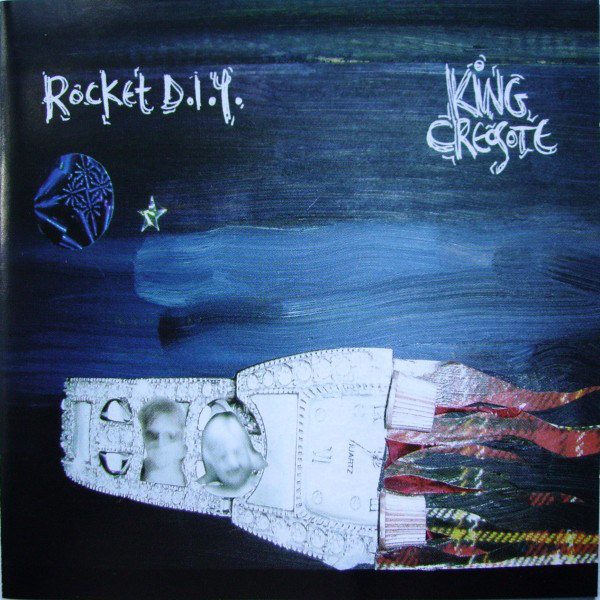

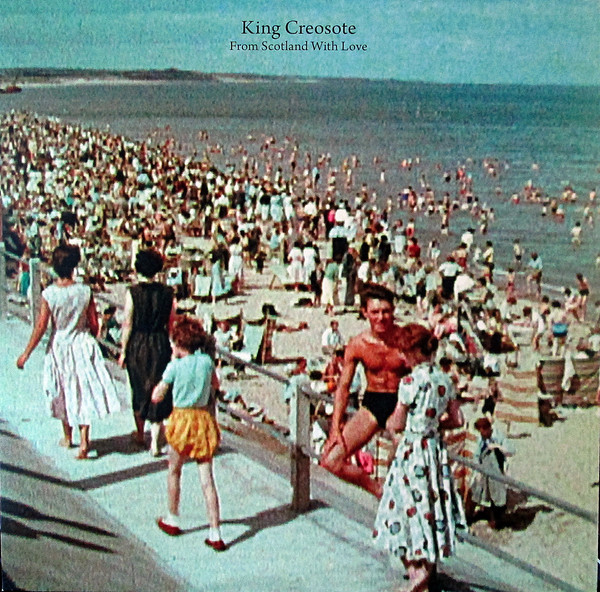

ADELBERT VON DEYEN-STERNZEIT.
ADELBERT VON DEYEN-STERNZEIT.
By 1977, Adelbert Von Deyen was working as a retoucher for a Berlin newspaper. While this kept him busy during the day, Adelbert had plenty of free time in the evenings. Wanting to put his free time to good use, Adelbert decided to take up a hobby. The hobby Adelbert Von Deyen chose was music.
This was no surprise, as at that time, Berlin had a thriving music scene. Many of the Krautrock bands, were formed in Berlin. Meanwhile, Tangerine Dream, Klaus Schulze, and Manuel Göttsching were pioneering the Berlin School of electronic music. However, Adelbert Von Deyen didn’t just want to listen to the music being made in Berlin, he wanted to make music.
The type of music Adelbert Von Deyen wanted to make was electronic music. So he began to working out what type of equipment he would need to buy. Having made a “shopping list” of equipment, Adelbert headed out and bought a second hand synth, a Revox A77 tape recorder and keyboards. Little did he realise that this was just the first of numerous shopping trips he would make.
Having started making music in the evenings as a hobby, gradually Adelbert Von Deyen was bitten by the music making bug. Soon, he was adding new pieces of equipment to his home studio. This meant making sacrifices. Sometimes, when Adelbert hadn’t enough money to buy new pieces of equipment, he borrowed from the funds from the bank. Adelbert was dedicated to making music.
When he returned from work each night, Adelbert Von Deyen began making music. He often worked late into the night, and sometimes, into the early hours of the morning as he perfected his elegiac soundscapes. This took time, patience and determination.
After eight months, Adelbert Von Deyen had finished his first compositions. He decided to tape the compositions, and send a copy to various German record companies. Maybe he hoped, one of the record companies would interested in his album?
This was a long shot. Adelbert Von Deyen was a new artist, who had only been making music for eight months. However, it was a case of fortune favouring the brave.
One of the record companies Adelbert Von Deyen had sent his tape to, was Hamburg based Sky Records. They had been formed just three years earlier, in 1975 by Günter Körber. Since then, Sky Records’ had only released eighteen albums. However, Sky Records had released albums by Bullfrog, Streetmark, Wolfgang Riechmann, Michael Rother, Cluster, and Hans-Joachim Roedelius. This was already an impressive roster, and one that many musicians were keen to sign to.
Sky Records had already established a reputation for releasing groundbreaking music. Just like most record companies, Sky Recordswere being sent many tapes during 1978. Usually, the tapes would range from good and bad to indifferent. One of the tapes that Günter Körber had been sent was Adelbert Von Deyen’s. Having listened to the tape, Günter Körber made the decision to add a new name to the Sky Records’ roster,.. Adelbert Von Deyen.
Günter Körber contacted Adelbert Von Deyen to offer him a recording contract. Sky Records were willing to record Adelbert Von Deyen’s debut album worldwide. The as yet unnamed album became Sternzeit, which featured a distinctive cover painted by Adelbert Von Deyen. Sternzeit which was recently reissued by Bureau B, was the first of nine albums Adelbert Von Deyen released for Sky Records between 1978 and 1985. Many of these albums contained groundbreaking music, including Adelbert Von Deyen’s debut album Sternzeit.
Sky Records’ release of Sternzeit rewarded all the time and effort Adelbert Von Deyen’s had spent recording his debut album. From March to August 1978, Adelbert worked on the two lengthy tracks that became Sternzeit. They were Per Aspera Ad Astra ,which was a three-part suite, featuring Mental Voyage, Stellardance and Astral Projection. Then on the second side of Sternzeit was the title-track a twenty-five minute epic. These tracks were recorded in Adelbert new home studio.
Although Sternzeit was recorded in his home studio, Adelbert Von Deyen had access to an enviable array of equipment. This included a myriad of strings including an ARP Odyssey. They were joined by synth strings, an organ, electric piano and electric guitar. Adelbert Von Deyen played each instrument, and produced Sternzeit. Once the album was recorded, it was mixed at Star-Studio, in Hamburg. Now Sternzeit was ready for release.
When Sternzeit was released later in 1978, it was well received by critics. Sternzeit sold reasonably, well and certainly was more successful than many Krautrock and Berlin School albums. It was only later that Adelbert Von Deyen’s music would receive the credit and critical acclaim it deserved.
By then, Adelbert Von Deyen was regarded as one of the leading lights of the Berlin School. His music was innovative and would go on to influence further generations of artists. This included Adelbert Von Deyen’s debut album Sternzeit.
Opening Sternzeit is Per Aspera Ad Astra, the three part suite, where Mental Voyage, which gives way to Stellardance and Astral Projection. Slow, spacious and ambient describes the introduction, as lone keyboard plays, while a guitar is strummed carefully. To this, occasional bursts of sci-fi synths are added. Less is more, as the arrangement meander along. An electric piano plays, adding a melancholy and mesmeric backdrop. As it taps out a code, subtle washes of synths sweep. Again, the sci-fi synths make a brief appearance, as the drama builds. Soon, an elegiac cinematic sound has emerged, and washes over, and cocoons the listener. Gradually though, an organ adds to the drama, while futuristic sounds bubble and a pulsating synth provides the heartbeat to what could be the soundtrack to a sci-fi film. From there, the arrangement ebbs and flows, with drama, beauty and sci-fi sounds omnipresent. Later, the music becomes shrill and adds to the drama that’s unfolding. There’s also a ruminative, melancholy and darkness to as Adelbert Von Deyen paints pictures and sets the listener’s imagination racing during this epic three part twenty-four minute musical suite.
The title-track closes Sternzeit. A synth hisses, quivers and shimmers, before growing in power and drama. The tempo is slow, but there’s an element of drama as the edgy arrangement eddies. Gradually, synth strings are added, and become the counterpoint. Still, the arrangement buzzes and quivers, as it continues to drone. Meanwhile, subtle layers of synth strings and the organ sit below the main part of the arrangement gradually revealing. At 9.51 wistful keyboards are added. Still the arrangement drones and buzzes. though the synth strings and organ grow in power. However, the arrangement is still dominated by buzzing, drone. It’s joined by a variety synths and keyboards as the drama continues to build. There’s more to the arrangement than meets the eye. It’ll take several listens, before the arrangement reveals all its secrets and subtleties. Right up until the closing bars, the drama builds during this compelling cinematic opus that sounds as if it belongs on a sci-fi drama.
Sternzeit was the result of eight months work of hard work and dedication by Adelbert Von Deyen. He worked long hours crafting and sculpting two lengthy complex, multilayered soundscapes. They’re variously atmospheric, cinematic, dramatic, elegiac and ruminative. There’s also beauty, darkness and sense of melancholia on Sternzeit, as it reveals its secrets, subtleties and nuances. The result is compelling album which would later, and quite rightly, be hailed a Berlin School classic. No wonder.
The music on Sternzeit was groundbreaking and way ahead of its time. That was the case with many within the Berlin School. However, Adelbert Von Deyen would become a leading light of the Berlin School, and his music would go on to influence two generations of musicians. However, Sternzeit, which was recently released by Bureau B, was just the first chapter in Adelbert Von Deyen’s long and illustrious career.
Adelbert Von Deyen went on to release nine albums on Sky Records. His first five albums contained his most groundbreaking music. This includes the followup to Sternzeit, Nordborg, which was released in 1979. The as the seventies gave way to the eighties, Adelbert Von Deyen’s rich vein of form continued, with Atmosphere in 1980, Eclipse in 1981 and Planetary in 1982. That wasn’t the of Adelbert Von Deyen’s career at Sky Records. He remained with the label right through until the release of his ninth solo album Dreamdancer.
After leaving Sky Records, Adelbert Von Deyen didn’t release another album until Painted Black in 2006. It was released on Adelbert Von Deyen Productions. So was 2007s Roseg@rden, and Adelbert Von Deyen’s 2009 collaboration with Dieter Schütz, Old Fashioned. Thirty-one years after the release of Sternzeit, Adelbert Von Deyen continued to release ambitious albums. That had been the story of musical career.
Especially, the early years of Adelbert Von Deyen’s long and illustrious career. He continued to release innovative music that would influence further generations of musicians. However, the most fruitful period of Adelbert Von Deyen’s career was the quintet of albums he released between Sternzeit in 1978 and Planetary in 1982. They feature a musical pioneer as he hits a rich vein of form and his creativity blossoms.
ADELBERT VON DEYEN-STERNZEIT.
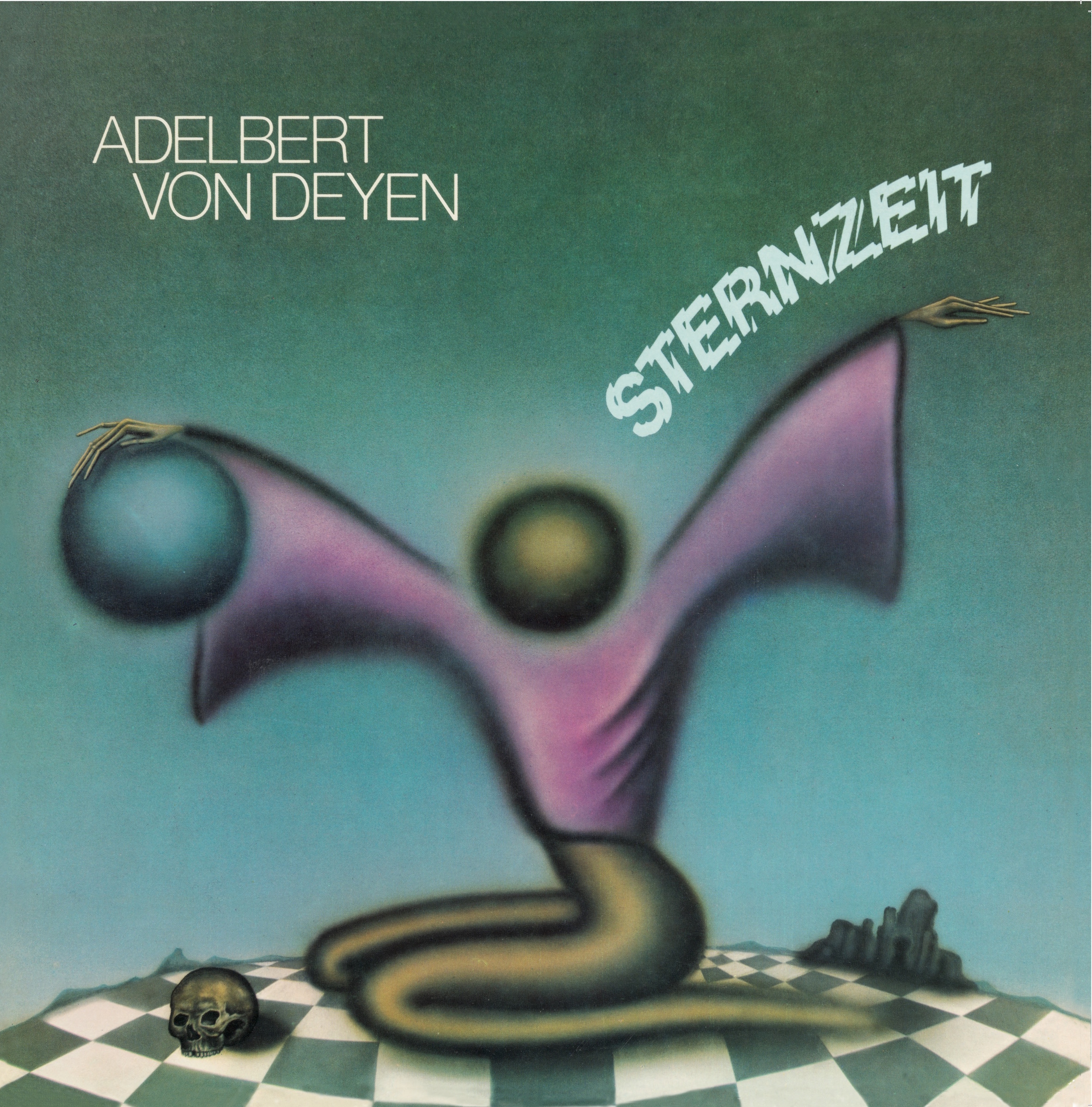

TED COLEMAN BAND-TAKING CARE OF BUSINESS-VINYL EDITION.
TED COLEMAN BAND-TAKING CARE OF BUSINESS-VINYL EDITION.
It was in 1921, that the Leedy Manufacturing Company first began marketing the vibraphone in America. Since then, the distinctive sound of the vibraphone has featured on albums by Gary Burton, Milt Jackson, Roy Ayres, Bobby Hutcherson, Tito Puente and Cal Tjader. They’re among just a few of the most high profile “vibes” players. There were many more musicians vibes players, including Ted Coleman.
His career began in Pittsburgh, where he played piano in local clubs. This was Ted Coleman’s introduction to life as a working musician, and was akin to a musical apprenticeship. Ironically, the piano wasn’t Ted Coleman’s first instrument. He was a talented multi—instrumental, whose musical weapon of choice was the vibes. It was the instrument that Ted Coleman would layer make his name playing.
Although Ted Coleman could play piano, synths, steel drums and the marimba, his first musical love was the vibes. Having started off playing piano, Ted switched to vibes. Soon, Ted Coleman became a popular attraction in Pittsburgh and later, New Jersey’s thriving and vibrant music scene. That’s no surprise.
Growing up, Ted Coleman was influenced by Milt Jackson and Bobby Hutcherson. Then when Ted’s father introduced him to the music Cal Tjader, he was hooked on the languid Latin sound of the vibes. Soon, Ted was determined to follow in Cal Tjader’s footsteps.
As Ted Coleman’s career began to take shape, he was influenced by both Roy Ayers and Johnny Lytle. Their music was funkier and had a much more contemporary sound. This would go on to influence Ted Coleman’s career.
By 1979, Ted Coleman living in New Jersey, and had founded his own band, the Ted Coleman Band. They had already established a reputation locally, and were regarded as one of the rising stars of what was a thriving and eclectic local music scene. The next step for the Ted Coleman Band was to record their debut album, Taking Care Of Business, which was recently rereleased on vinyl by BBE. It was recorded back in 1979.
For Taking Care Of Business, Ted Coleman had written seven songs. They would be recorded at G.T. Recording Studio, Long Branch, New Jersey during 1979.
At the G.T. Recording Studio, the Ted Coleman Band began setting up. Its lineup featured drummers Al Woods Jr. and David Nuding, bassist Tim Tindall and rhythm guitarist Ethan Rips. They were joined by lead guitarist George Naha, Albert “Ali” Reyes on bongos and conga player David Stone. Ted Coleman had arranged the seven songs and was going to produce Taking Care Of Business. He also added vocals and played vibes, piano, synths and was responsible for the strings. Tom Elliott was one of two house engineers, ensured the session ran smoothly. Then when Taking Care Of Business was recorded, it was mixed by Ted Coleman. Now the Ted Coleman Band were ready to released their debut album Taking Care Of Business.
With Taking Care Of Business recorded, the next step for the Ted Coleman Band was getting the album released. This was where the New Jersey based JSR label came in. They were a relatively new company, and one that specialised in releasing albums by what they called “working bands.” JSR’s approach was quite simple: they didn’t offer advances neither did they cover recording nor production costs. The Ted Coleman Band weren’t even signed to JSR. What JSR would do, was press copies of Taking Care Of Business, and the Ted Coleman Band could sell them at concerts or via retail outlets. That was the theory.
In 1980, the Ted Coleman Band’s debut album Taking Care Of Business was released via JSR, sporting a cover designed by Ted. He had been involved in every aspect of the release. Doubtless Ted was involved in selling copies of the album, as he had been hands on throughout the project.
Alas, like many private pressings, Taking Care Of Business wasn’t a huge seller. Instead, it found an audience in the New Jersey area, especially among those who saw the Ted Coleman Band live. However, the Ted Coleman Band weren’t going to get rich out of Taking Care Of Business.
That proved to be case. It wasn’t until much later, that the Ted Coleman Band’s debut album began to find an audience. Some lucky record buyers stumbled across copies, and took a chance on Taking Care Of Business. Gradually, word began to spread about Taking Care Of Business. Soon, though, demand began to outstrip supply. That’s often the case with private pressings that belatedly find an audience. Nowadays, an original copy Taking Care Of Business will cost £533 or $649. Fortunately, BBE have recently released Taking Care Of Business.
Opening Taking Care Of Business is Can You Feel It? It bursts joyously into life. The rhythm section, complete with an uber funky bass, is joined by keyboards, Latin percussion and sweeping strings. They accompany Ted’s tender, heartfelt and soulful. When his vocal drops out, a jazzy guitar solo proves the perfect replacement. It’s then replaced by Ted’s vibes solo as the strings dance and the percussion and rhythm section power the arrangement along. The rest of the band enjoy their moment in the sun, and prove to be a talented and versatile band. They accompany Ted when vocal returns, and later, enjoy another opportunity to showcase their skills as almost seamlessly, they combines funk, jazz, Latin and soul to create a joyous slice of feel good music.
Drums pound while a guitar chimes and is joined by bubbling, funky bass on Due Consideration. They’re soon joined by Ted’s vibes and a soon, his vocal. He delivers lyrics that are full of social comment. When the vocal drops out, a jazz guitar and then Ted’s vibes take centre-stage. Ted unleashes a virtuoso performance on the vibes, as the rhythm section take the track in the direction of the dance-floor. That’s where this irresistible hook-laden track belongs.
Straight away, it’s obvious something special is unfolding on If We Took the Time. The rhythm section and guitar provide a funky backdrop, while strings sweep and combine with the vibes. They accompany Ted, as he delivers another heartfelt and soulful vocal. It drops out at 1.09 and the Band get the opportunity to shine. This includes Ted who step forward at 1.32 and delivers another flawless solo. He gives way to a jazzy guitar solo, which steals the show. Soon, it’s replaced by a rocky and effects laden guitar solo. Ted it seems was comfortable playing with some truly talented musicians, and had no qualms about allowing them to take centre-stage. When Ted’s vocal returns, it’s still tender, heartfelt and ruminative, as he delivers lyrics that are still relevant today. Similarly, there’s a timeless quality to this beautiful, laid back fusion of soul, funk and jazz.
Due Consideration Interlude finds the Ted Coleman lock into a funky groove on this instrumental. The rhythm section anchor the arrangement, as strings sweep. Percussion is added to the bouncy, funky arrangement, before Ted, wielding his trusty mallet delivers another solo on this dance-floor friendly jam.
Sweet Bird sees a drop in tempo as the arrangement flows elegiacally along. The rhythm anchor the arrangement, strings sweep above the arrangement, while percussion and keyboards play. Then Ted steps forward and delivers another vibes solo. It’s then replaced by a searing guitar solo that uses as its reference point Seals and Croft’s Summer Breeze. From there, the arrangement meanders melodically along, and as the Ted Coleman Band showcase their considerable skills.
Just vibes play before lush strings join the rhythm section and keyboards on What a Lovely Way. They provide the backdrop for Ted’s dreamy, lovestruck vocal. When it drops out, the vibes are to the fore as the arrangement ebbs and flows. Still, the rhythm section provide a slightly funky sound, as lush strings sweep. Then when the vibes drop out, it’s replaced by a languid, laid-back jazz guitar solo. It’s the best on Taking Care Of Business, and together with the strings, they provide a beautiful, summery sounding backdrop for Ted Coleman’s paean.
Samba De closes Taking Care Of Business the Ted Coleman Band’s debut album. Vibes join with the urgent Latin percussion, before a jazz guitar and strings sweep in. They take the track in the direction of the dance-floor. That’s despite another jazz guitar solo, as the rhythm section, bongos and congas power the arrangement along. Then at 2.25 Ted steps up and plays his vibes with speed and accuracy. He plays with the same urgency as the percussion and rhythm section. When the vibes drop out, the rest of the band get one last opportunity to shine. A piano takes over, then gives way to the guitar, percussion and drums. Even the strings enjoy a moment in the sun, before Ted takes charge and ensures that Taking Care Of Business ends on a high, with this genre-melting instrumental. The Ted Coleman Band it seems, have kept the best until last.
Thirty-six years have passed since the Ted Coleman Band released their debut album Taking Care Of Business in 1980. It’s stood the test of time, and belatedly, found the audience it deserves. There was only one problem, original copies of Taking Care Of Business were prohibitively expensive. Fortunately, BBE have recently reissued Taking Care Of Business on vinyl, and the Ted Coleman Band’s debut album can now be heard by a wider audience.
They will discover an album that’s a glorious fusion of funk, jazz, Latin and soul. There’s even the occasional rocky guitar lick thrown in for good measure on Taking Care Of Business. Mostly, though, the music on Taking Care Of Business is funky, jazz-tinged and soulful. It’s also dance-floor friendly. This is in part to the irresistible Latin rhythms and funky rhythm section. They’re part of the multitalented Ted Coleman Band.
Looking back, it seems that unlike many bandleaders, Ted Coleman wasn’t afraid to surround himself with talented musicians. He gave them a platform to showcase their considerable skills. This they were allowed to do throughout Taking Care Of Business, but especially during the solos. Ted Coleman wasn’t afraid to allow his band to take centre-stage. When this opportunity arose, they grasped it with both hands, and sometimes, came close to upstaging Ted. Especially, lead guitarist George Naha, whose jazzy solos ran Ted close on several occasions. However, Taking Care Of Business wasn’t just the work of one or two men.
While Ted Coleman wrote, arranged, produced and mixed Taking Care Of Business, each and every member of the Ted Coleman Band play their part an important part in the album’s sound and belated success. Thirty-six years after the The Ted Coleman Band released Taking Care Of Business, this timeless, hidden gem is belatedly finding the audience it deserves. It’s a case of better late than never.
Just like so many private presses, Taking Care Of Business never found the audience it deserved. JSR which in 1980, was a relatively new company, neither had the resources nor marketing expertise to promote the album. Neither did the Ted Coleman Band. Fortunately, things have changed, and now record buyers worldwide are able to discover the delights of BBE’s reissue of Ted Coleman Band’s debut album Taking Care Of Business.
TED COLEMAN BAND-TAKING CARE OF BUSINESS-VINYL EDITION.
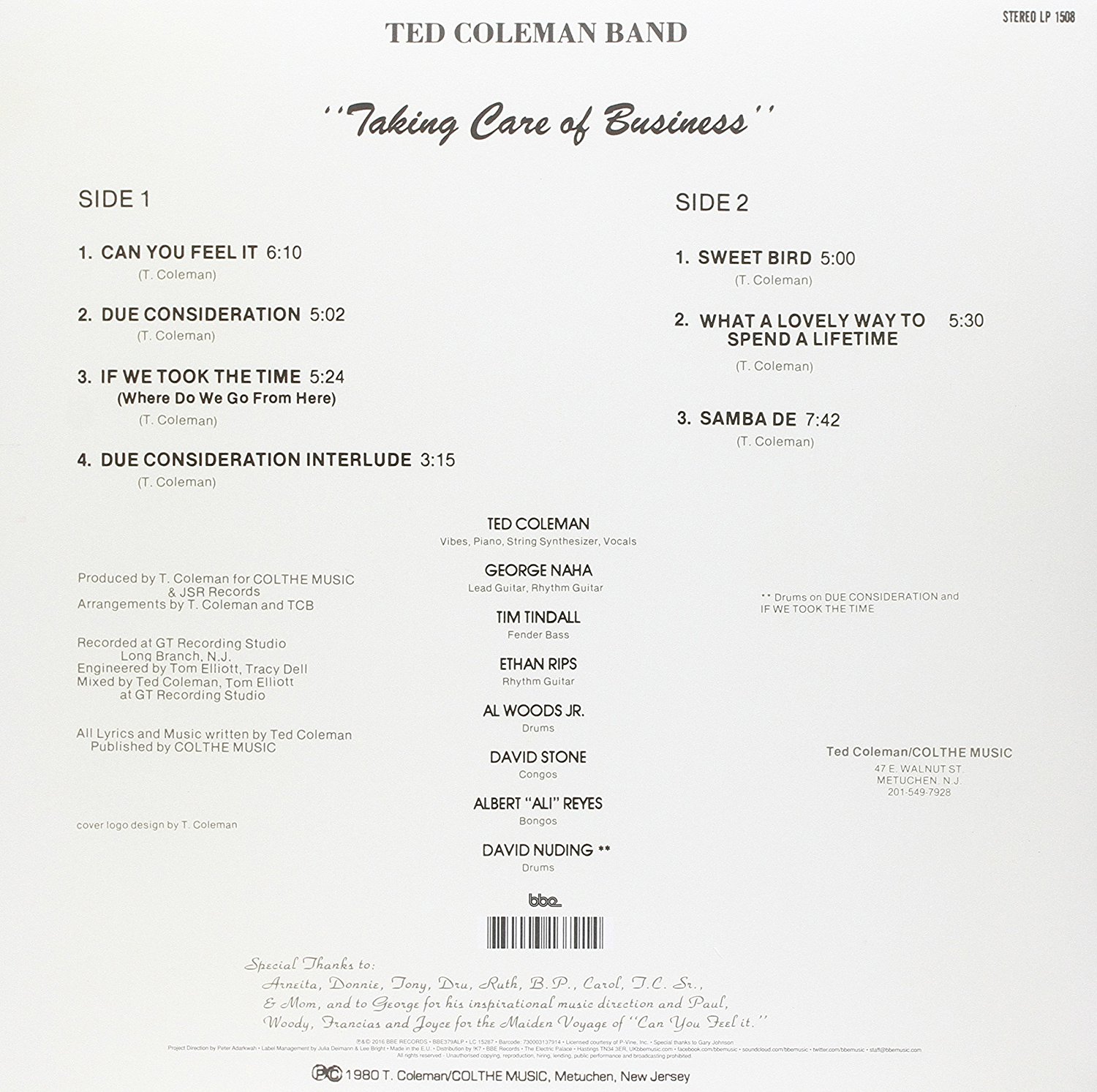
 dereksmusicblog
