CULT CLASSIC: LUIZ CARLOS VINHAS-O SOM PSICODELICO DE L.C.V
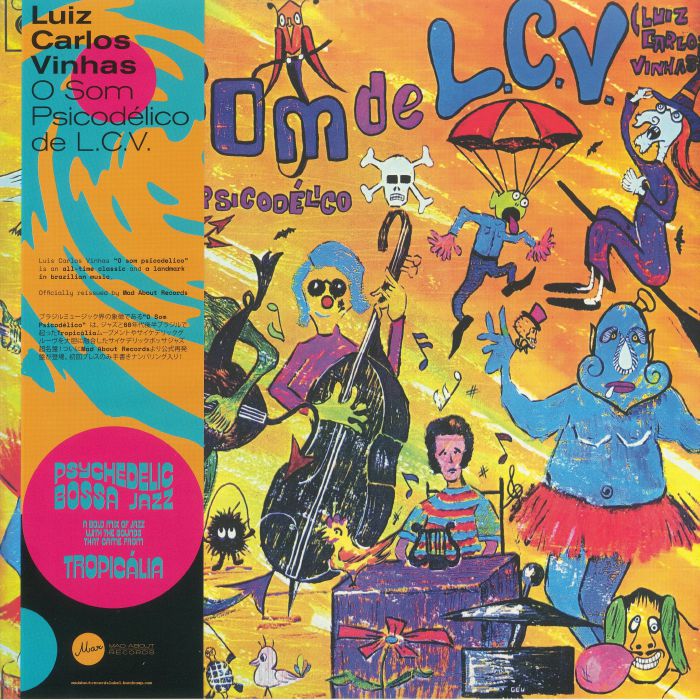
Cult Classic: Luiz Carlos Vinhas-O Som Psicodélico De L.C.V.
Within his native Brazil, Luiz Carlos Vinhas is remembered and regarded as one of the greatest pianists of the Bossa Nova movement. He was one of the genre’s founding fathers and was a founder member of Bossa Três in 1961. They became one of the most important groups of the Bossa Nova era and released eight albums between 1963 and 1966.
By 1968, Luiz Carlos Vinhas had embarked upon a solo career and released O Som Psicodélico De L.C.V.. This genre-melting cult classic has been released by the Mad About label and shows another side to Luiz Carlos Vinhas’ music.
Luiz Carlos Vinhas was born in Rio de Janeiro on May the ‘19th’ 1940. Growing up, he learnt to play the piano and by the time he was a teenager, he had already decided that he wanted to make a career out of music.
His career began when he was seventeen year old.The following year, 1958, a new musical genre was born in the South Zone of Rio de Janeiro, Bossa Nova. By then, Luiz Carlos Vinhas was already working as a session musician and was determined to be at the forefront of this new and exciting urban musical movement.
By 1961, Bossa Nova’s popularity had grown and Luiz Carlos Vinhas had been part of the new musical movement since the beginning. However, he wanted to be more than a session musicians and cofounded Bossa Três with drummer Edison Machado and double bassist Tião Neto. This was the first ever instrumental Bossa Nova group, and they would go on to write their names into Brazilian musical history.
In the early days, Bossa Três played mostly Luiz Carlos Vinhas’ compositions. He was the nascent group’s songwriter-in-chief when they played in the nightclubs of Beco das Garrafas, in Copacabana, where they accompanied dancers Joe Benett , Lennie Dale and Martha Botelho. However, it wasn’t long before Bossa Três got the chance to travel further afield.
With the dancers, they traveled to America after being invited to appear on the Ed Sullivan Show. By then, it was one of the most popular American television shows and they were about to play in front of a huge audience. This launched their career and the group decided to stay in America.
During the next few years, Bossa Três played in New York’s jazz clubs and recorded three albums. This included their finest American album Bossa Três 3. It was also the final album he group released in America.
Although Luiz Carlos Vinhas enjoyed his time in America, he missed Brazil and decided to head home in 1963. However, the other two members of the group stayed in America.
On his return home, Luiz Carlos Vinhas started looking for new band members. Eventually, he recruited drummer Ronie Mesquita and bassist Octavio Bailly Júnior for the new lineup of Bossa Três.
1964 was an important year for twenty-four year old Luiz Carlos Vinhas. He had signed to the Forma label and released his debut solo album Novas Estruturas. Nowadays, it’s regarded as a Bossa Nova classic and one of Luiz Carlos Vinhas’ finest releases.
The same year, 1964, he was a member of Meirelles E Os Copa 5 when they released their debut album O Som. This future classic was followed up by O Nôvo Som in 1965. It was one of the busiest years of Luiz Carlos Vinhas’ career.
By 1965, the new lineup of Bossa Três were dividing their time between playing live and recording new albums. They released three albums during 1965 and a further two during 1966. This includes Os Reis Do Rítmo in 1966 which is regarded as Bossa Três Mk II’s finest album and is anther Bossa Nova classic.
Later in 1966, Luiz Carlos Vinhas formed The Gemini 5 who soon, began work on their debut album. This was Gemini 5 which was released in Mexico in 1967 when the group toured the country. It was the latest chapter in the Luiz Carlos Vinhas story.
In 1968, Luiz Carlos Vinhas had signed to CBS and began work on his long-awaited sophomore album. By then, four years had passed since the release of his debut album Novas Estruturas. However, he was about to record a very different album and one that reflected the music of 1968.
By then, the psychedelic era was well underway and Luiz Carlos Vinhas had been influenced by this new genre of music. It would influence O Som Psicodélico De L.C.V.. However, the starting point for the album was his first musical love Bossa Nova. To this, Luiz Carlos Vinhas added elements of Afro-Brazilian, tropicalia, easy listening, jazz, pop and rock. This was all part of his plan to record an ambitious album befitting the new musical era.
For the album that eventually became O Som Psicodélico De L.C.V. he wrote Tanganica and cowrote Yê-Melê and Zizê Baiô with Chico Feitosa who features on the album. Luiz Carlos Vinhas also covered some familiar tracks including Horace Silver’s Song For My Father. It was joined by Chatanooga Choo-Choo and Can’t Take My Eyes Off You which were part of two suites on the album. In total, ten tracks were recorded by Luiz Carlos Vinhas for O Som Psicodélico De L.C.V. which was scheduled for release later in 1968.
Record buyers discovered an album that was quintessentially Brazilian. Luiz Carlos Vinhas combined Bossa Nova with elements of tropicalia and Afro-Brazilian with jazz, psychedelia, pop and rock. Sampling was used on O Som Psicodélico De L.C.V. which featured bursts of birdsong, animal sounds, vocal riffing and onomatopoeia. It was an ambitious and innovative album that sometimes, seemed ahead of its time.
O Som Psicodélico De L.C.V. was the perfect showcase for Luiz Carlos Vinhas’ skills. It featured the deft touch that had served him so well since he made his professional debut in 1957. During the album his playing was delicate and intricate as he takes the listener on a captivating journey.
Side One.
Joao Donato’s classic Amazonas opens the album and Luiz Carlos Vinhas forever the showman reinvents this familiar track. His fingers glide and sometimes dance across the keyboard his playing smooth and inventive as he joins forces with the horns, percussion and rhythm section to ensure that this uplifting and joyous slice of musical sunshine swings. It’s a similar case on Song For My Father where Luiz Carlos Vinhas pays homage to jazz legend Horace Silver.
Among the highlights of the album are Luiz Carlos Vinhas’ own compositions. This includes Tanganica where birdsong and animal sounds are combined with the guitar and horns. They combine with the vocals and play a leading role in sound and success of this soulful track. Then Yê-Melê is a homage to the water goddess Yoruba where blazing horns, percussion and piano drive the arrangement along. Later, drums pound, cymbals crash and a female vocalist adds umbandista chants which add a contrast to the urgency of this genre-melting track. Zizê Baiô then sashays along as braying horns punctuate this fusion of Bossa Nova, psychedelia and lo-fi sounds.
The tempo drops on Un Jour Christine as Luiz Carlos Vinhas is transformed into a balladeer. The arrangement is understated with a late-night jazz sound that occasionally becomes lysergic and features lo-fi sounds on what’s one of the most beautiful songs on the album.
Side Two.
Opening the second side is the first of three short suite. It opens with remakes of the jazz standards Chatanooga Choo-Choo and Don’t Be That Way and then closes with Wilson Simonal’s Tributo A Martin Luther King. Then Luiz Carlos Vinhas and his band work their way through Pourquoi, Arrasta A Sandália, Morena, Boca De Ouro and Rosa Morena. For nearly eight minutes the band and vocalists transport the listener to Rio De Janeiro as Bossa Nova, soulful vocals and high kicking horns combine. The third suite opens with celebratory sound of Birthday Morning before giving way to the easy listening classic Can’t Take My Eyes Off You which is given a makeover as Bossa Nova, soul and jazz combine seamlessly. It’s one of the highlights of side two.
Closing O Som Psicodélico De L.C.V. is O Dialogo which features Chico Feitosa on a track that includes elements of spoken word, vocal riffing and onomatopoeia. It’s without doubt one of the most innovative tracks on the album and shows that Luiz Carlos Vinhas was way ahead of his time.
When Luiz Carlos Vinhas released O Som Psicodélico De L.C.V. in 1968, this groundbreaking genre-melting album was nowhere near as successful as his debut Novas Estruturas. It may have been that the music was too adventurous and avant-garde for fans of Bossa Três and his debut album? For Luiz Carlos Vinhas this must have been hugely disappointing.
It was only much later that O Som Psicodélico De L.C.V. started to find an audience when it was rediscovered by collectors and crate-digging DJs. Belatedly, Luiz Carlos Vinhas’ oft-overlooked and vastly underrated sophomore album O Som Psicodélico De L.C.V. started to find an audience and fifty-three years after its release is receiving the plaudits and praise it so richly deserves.
Cult Classic: Luiz Carlos Vinhas-O Som Psicodélico De L.C.V.
CULT CLASSIC: BRAINCHILD-HEALING OF THE LUNATIC OWL.
Cult Classic: Brainchild-Healing Of The Lunatic Owl.
Progressive brass rock pioneers Brainchild were formed in Somerset in the late-sixties, and by the 1970 the septet had signed to A&M. This was perfect timing as the brass rock boom began in 1969 and continued until 1972. By then, Chicago, Blood, Sweat and Tears and The Electric Flag were amongst the highest profile brass rock bands stateside. However, it wasn’t just an American phenomenon.
In Britain, a number of brass rock bands were making waves. However, Brainchild were different to the rest as they combined progressive rock and brass rock. It was impressive sight and sound as the septet took the stage and like well oiled machine worked their way through their set. As they did, the audience realised that here was a band that was a cut above the competition.
Not many bands could seamlessly switch between time signatures and combine disparate musical genres like Brainchild. They took as a starting point progressive brass rock and incorporated elements of fusion, funk, psychedelia, pop, rock and blues. Their music was quite different to the majority of the bands playing live in 1970 and it was no wonder they had been signed by A&M and were en route to the studio to record their debut album Healing Of The Lunatic Owl.
Brainchild’s detonation was Wessex Sound Studios in West London, where they were about to record their debut album with producer Lennie Wright who had been a member of The Web.
Three of the members of the group had written the eight tracks they were about to record. Bill Edwards contributions were Autobiography and Two Bad Days, while Brian Wilshaw had penned Healing Of The Lunatic Owl, Hide From The Dawn and To “B”. Harvey Coles had also written three tracks, She’s Learning, A Time A Place and Sadness Of A Moment. These eight tracks were about to be recorded by Brainchild and would be their debut album Healing Of The Lunatic Owl.
The band’s lineup for the session included drummer Dave Muller, bassist and vocalist Harvey Coles, vocalist Bill Edwards who switched between electric and acoustic guitar plus organist and pianist Chris Jennings. Adding the brass rock sound were trumpeter Lloyd Williams, saxophonist and flautist Brian Wilshaw and trombonists Ian Goss and Pat Strachan. With Lennie Wright taking charge of production and Robin Thompson engineering the session Brainchild recorded their debut album.
With Healing Of The Lunatic Owl completed, A&M scheduled the release of Brainchild’s debut album for later in 1970. By then, the popularity of both progressive rock and brass rock were growing. Marketing executives at A&M must have thought that this was the perfect time to release an album of progressive rock brass rock. Sadly, that wasn’t the case when Healing Of The Lunatic Owl was released the album sunk without trace. It must have been hugely disappointing for a group as talented and versatile as Brainchild. Sadly, record buyers weren’t ready for their unique take on progressive brass rock. Maybe the album was ahead of its time?
Brainchild had incorporated elements of fusion, funk, psychedelia, blues, rock, poppy hooks and theatre into progressive brass rock during Healing Of The Lunatic Owl. Lead vocalist Bill Edwards is responsible for the poppy hooks and the slight theatrical sound. There’s a lounge influence on the title-track where Brainchild combine jazz, rock and seem to have been inspired by Chicago and Blood, Sweat and Tears. It’s one of the highlights of the album. So is the nine minute epic A Time A Place which is Brainchild’s finest moment.
Sometimes, the album heads in the direction of psych-prog and even Krautrock which was in its infancy in 1970. Later in the album dissonant horns on To B take the album in the direction of free jazz. However, the structure of the songs are unmistakably progressive rock and seamlessly Brainchild spring a surprise with unexpected changes in time signature. Add to that the psychedelic influence and Healing Of The Lunatic Owl was an album with the past, the present and the future.
Playing an important role is Harvey Coles’ elastic and probing bass which takes the album in the direction of progressive funk. The progressive funkateer forms a potent partnership with drummer Dave Muller in the rhythm section. Given their versatility they’re one of Brainchild’s secret weapons.
Then there’s the horn section that take progressive rock in a new direction. Brainchild may not have been the first progressive rock to add a horn section but how many combined a trumpet, two trombones and a saxophone? They take the this impressive sounding album to the next level.
Despite the undeniable quality of Healing Of The Lunatic Owl it is one of the many albums released in the early seventies that failed to find the audience it deserved. It was an ambitious and innovative album where Brainchild took progressive brass rock in a new direction. They were musical pioneers who rather than follow in the footsteps of others, decided to forge a new sound. Sadly, Healing Of The Lunatic Owl was ahead of its time and passed the record buying public by in 1970.
This was hugely disappointing for Brainchild who split-up not long after releasing their debut album. Sadly, by then the dream was over for Brainchild. Healing Of The Lunatic Owl was Brainchild’s one shot at the title and for this groundbreaking group and sadly, it was a case of what might have been?
Cult Classic: Brainchild-Healing Of The Lunatic Owl.

CULT CLASSIC: EL POLEN-CHOLO (MUSICA ORIGINAL DE LE BANDA DE SONIDO).
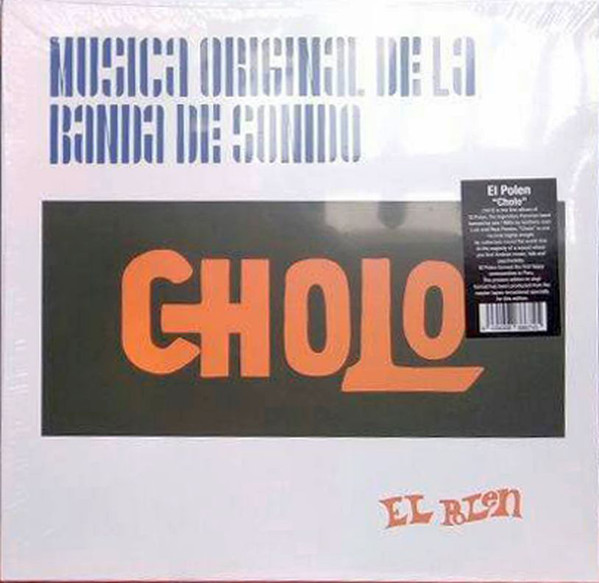
Cult Classic: El Polen-Cholo (Música Original De La Banda De Sonido).
When El Polen was formed by brothers Juan Luis and Raul Pereira in 1969, little did anyone realise that their new band would become one of the most important and influential in the history of Peruvian music. That was until El Polen released their genre-melting debut album Cholo in 1972 where they fuse Andean music, folk and psychedelia. This new genre-melting was ambitious and groundbreaking and would influence a new generation of bands in the future. By then, El Polen had come a long way in just three short years.
The El Polen story began three years earlier in 1969 when brothers Juan Luis and Raul Pereira decided to form a new band. They had decided that their new band would head in a new direction and make music that was different to their previous band. By then, the Pereira brothers realised that Peruvian music was about to change.
By 1969, the first wave of new Peruvian bands were combing beat music and surf sounds, which they played at Matinales, where concerts that took place on a Sunday morning. These concerts were always popular, and so were the bands that took to the stage. However, the music was starting to sound tired and like yesterday’s sound. What Peruvian music needed was a revolution.
Juan Luis Pereira was part of the burgeoning hippy movement and realised this, he and his brother Raul formed El Polen, and set about reinventing music in the new Peru. It was a very different country since 1968, and it was an exciting time for the Pereira brothers as they started their new band.
Peru was transformed in 1968, when a nationalist government was established by Juan Velasco Alvarado. This brought to an end the oligarchic state, which had previously ruled Peru. Suddenly, many people started to migrate from the country to the city, seeking a new life in the new Peru.
This coincided with new Andean singers and bands playing concerts in a coliseum located on the outskirts of a city. Many within the audience were those who had migrated from the country to the city, and they enjoyed the concerts that they attended.
Meanwhile, their was an upsurge of interest in Andean music, and sales of new recordings increased. The Andean sound which had first been recorded and promoted by Jose Maria Arguedas by the late-forties was growing in popularity. Soon, new bands were being formed and Andean sound became more popular than ever and the Peruvian musical industry expanded. However, Juan Luis and Raul Pereira had their own plans for Peruvian music.
As the sixties, gave way to the seventies, Juan Luis and Raul Pereira realised that the fusion of beat music and surf sounds many bands had been playing was yesterday’s sound and no longer as popular as it had once been. It was time for Peruvian music to change. The Pereira decided to fuse the sound of today with some of the music that they had heard growing up.
This included classical music, Peruvian waltzes and huaynos which had influenced and moulded the Pereira brothers in their formative years. So did Andean folklore music which would become part of El Polen’s sound. They were about to combine Andean music, folk psychedelia and rock, and this new genre-melting was groundbreaking. Nobody had ever tried this before and the members of El Polen were about to become musical pioneers.
By then, the members of El Polen had been on a journey which would help them improve as musicians and spiritually. El Polen had traveled to Cusco, where they learned more about Andean instruments and musical traditions. This was they saw as part of their continuing musical education, and having gathered new knowledge, El Polen began the next part of this two-part journey.
It took El Polen to Santa Eulalia high in the mountains above Lima, where they examined their burgeoning spirituality. After this, the members of El Polen were ready to change Peruvian music forevermore.
By then, the hippy movement had exploded in popularity as Peruvian music fans embraced psychedelia and sought altered states of consciousness. With the new hippy generation enjoying and embracing the new, alternative lifestyle and psychedelic music El Polen had a captive audience.
The members of El Polen had much in common with the people who they hoped would embrace their music. They had lived in a community, and shared many of the same values and beliefs. El Polen also hoped that the new hippy generation would embrace their music.
When El Polen took to the stage, they sought to eliminate the boundaries between rock and huayno. To do this, they deployed acoustic guitars, a cello, mandolin, percussion and quenas, as they combined Andean music, folk rock and psychedelia. This proved popular, and soon, El Polen was at the forefront of a new musical movement that was blossoming in Peru.
Given their popularity, it was only a matter of time before El Polen came to the attention of one of the Peruvian record companies. Virrey won the signature of El Polen who soon, began work on their debut album.
Cholo (Música Original De La Banda De Sonido).
For their debut album, El Polen was asked to write the soundtrack to the film Cholo (Música Original De La Banda De Sonido), which was based on the life of the famous Peruvian Soccer Player Hugo Sotil.
For Cholo (Música Original De La Banda De Sonido), El Polen wrote six new tracks, and covered Cholito Pantalion Bianco which was written by singer and songwriter Luis Abanto Morales. These seven tracks were recorded by the six members of El Polen.
As recording of Cholo (Música Original De La Banda De Sonido) began, El Polen’s lineup featured guitarist Juan Luis Pereira and his brother Raul who played guitar and took charge of the vocals. They were joined by cellist Juan Sebastián Montesinos, violinist Fernando Silva, percussionist Ernesto Pinto and Carlos Martínez who played mandolin. As Cholo (Música Original De La Banda De Sonido) took shape the six members of El Polen had no idea that they were about to make musical history.
Prior to the release of Cholo (Música Original De La Banda De Sonido) critics had their say on El Polen’s debut album. While El Polen’s debut album was well received and hailed as an ambitious and exciting release, it was only later that critics realised the importance of Cholo (Música Original De La Banda De Sonido).
It was a game-changer of an album, and Cholo (Música Original De La Banda De Sonido) proved not just to be innovative, but also influential. El Polen paved the way for other bands to fuse Andean music and rock and would influence several generations of bands and musicians.
Nowadays, Cholo (Música Original De La Banda De Sonido) is regarded as a landmark album in the history of Peruvian music. That is no surprise as El Polen was the first band to fuse traditional Andean music with folk and psychedelia and rock. They were also the first group to combine traditional Andean instruments with Western instruments.
This they do effectively from the opening bars of the near twelve-minute epic La Flora (tema De Cholo). It showcases El Polen’s considerable musical skills as they seamlessly combine disparate musical genres on what’s a tantalising taste of a truly talented group. So too does upbeat and joyous Cholito Pantalion Bianco.
Quite different is the dramatic, cinematic and emotive Paisajes De Quenas which features traditional Peruvian instruments. They combine with the swirling strings as the cello and violin combine during the evocative and irresistible Valicha.
Sitting Dreaming is genre-melting lysergic track that has obviously been influenced by Western psychedelia. There’s even a nod to The Beatles midway through the track, which is one of the highlights of Cholo (Música Original De La Banda De Sonido). Tondero is another carefully crafted, genre-melting track where elements of classical music, folk, psychedelia and rock combine as Raúl Pereira delivers soul-baring vocal. Closing El Polen’s debut album is Secuencias De Organillo Y Poliphon, which is a short track where plink plonk sounds are part of track that is both cinematic and psychedelic and close the album on a high.
Cholo (Música Original De La Banda De Sonido) was a groundbreaking album that featured genre-melting music from musical pioneers El Polen. They had spent the best part of three years honing their sound and were more than ready to record an album.
Led by the Pereira brothers they recorded what was a landmark album where they fuse traditional Andean music with classical music, folk, psychedelia and rock. This had never been done before, and the members of El Polen were pioneers who were breaking new ground.
Soon, many bands would follow in their footsteps, during the next few years. However, nowadays, El Polen and their debut album Cholo (Música Original De La Banda De Sonido) is regarded as a turning point for Peruvian music. They had changed music forevermore and revolutionised Peruvian music in the process.
Sadly, El Polen only released one more album during the seventies, Fuera De La Ciudad in 1973, which was another innovative, landmark album. Just two years later, El Polen split-up in 1975, and that was the last that was heard of the band for twenty-one years.
In 1996, El Polen made a comeback, and three years later, self-released their third album Signos E Instrumentos. Sadly, not long after releasing their first album in twenty-six years El Polen split-up once again.
Fifteen years later, in 2014, there was an El Polen reunion, as they rolled back the years. Sadly, that was the last that was heard from one of the most important groups in the history of modern Peruvian music.
El Polen certainly made their mark on Peruvian music during the six-year period between 1969 and 1975. This began when they released their genre-melting landmark debut album Cholo (Música Original De La Banda De Sonido) in 1972, and followed this up with another classic album Fuera De La Ciudad which are El Polen’s finest releases.
Cult Classic: El Polen-Cholo (Música Original De La Banda De Sonido).
GENE RUSSELL-TALK TO MY LADY.
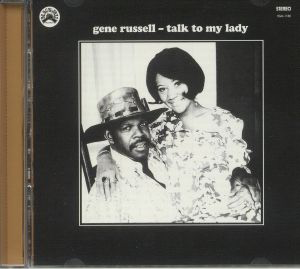
Gene Russell-Talk To My Lady.
Label: Real Gone Music.
Format: CD.
Release Date: ‘5th’ March 2021.
As 1973 dawned, LA-based Black Jazz Records had already released nine albums since 1971. Its first release was Gene Russell’s critically acclaimed sophomore album New Direction. However, another two years passed before the LA-born pianist returned with the followup.
Gene Russell spent the spent the rest of 1971 and all of 1972 running the label as well recording and producing albums for the artists who had signed to Black Jazz Records. This left little time for him to write and record a new solo album. He had to sacrifice his solo career for the good of the label he cofounded in 1969.
Pianist Gene Russell and percussionist Dick Schory cofounded Black Jazz Records in Oakland, California, in 1969, and the nascent label’s raison d’être was “to promote the talents of young African American jazz musicians and singers.” This, however, was only part of their vision for their new label.
The cofounders were determined that Black Jazz Records would released an alternative to what they saw as the old school jazz that was popular at the time. They wanted to release an alternative to traditional jazz, and this included albums that featured political and spiritual influenced music. However, spiritual jazz was just part of the Black Jazz Records’ story. The label released twenty albums that included everything from free jazz and funk to soul-jazz between 1971 and 1975.
After Gene Russell’s New Direction became Black Jazz Records first release in 1971, the nascent label released Walter Bishop Jr’s Coral Keys, Doug Carn’s Infant Eye, Rudolph Johnson’s Spring Rain, Calvin Keys’ Shawn-Neeq and Chester Thompson’s Powerhouse. It was the final release of 1971. By then, word had spread about Black Jazz Records and its musical philosophy
The cofounders were determined that as wide an audience as possible hear the albums that the label was releasing. Gene Russell decided that one way to do this was to organise a promotional tour.
In September 1971, Gene Russell and his Ray Lawrence who was his marketing consultant toured America giving interviews to newspaper journalists and featured on radio and newspaper where they showcased Black Jazz Records and its artists. This resulted in valuable publicity for the label.
By then, other labels looked on enviously at the new label and artists were keen to sign to Black Jazz Records. This was no surprise.
Cofounder Dick Schory had founded Chicago-based Ovation Records which was a successful country and western label. It was providing funding for Black Jazz Records and distributing its releases. This gave the label a much needed helping hand and meant it had an edge on its competitors.
Having released six albums during 1971, the first album that Black Jazz Records released during 1972 was Henry Franklin’s cult classic The Skipper. This was followed by Doug Carn’s second album for the label Spirit Of The New Land, which was the most successful album the label released during 1972. The final release of the year was The Awakening’s Hear, Sense and Feel.
While 1972 wasn’t as a busy as the previous year, the three albums that Black Jazz Records released were well received by critics and cultural commentators. The releases were also starting to find a wider audience. This was another reason why artists were keen to sign to the label.
However, it wasn’t a new signing that released Black Jazz Records’ tenth release. Instead, it was cofounder Gene Russell who returned with his second album for the label, Talk To My Lady.
Despite his busy schedule, Gene Russell had written Talk To My Lady, Get Down and Blues Suite. The other five tracks were cover versions. This included a cover of the Billy Paul classic Me and Mrs Jones which Cary Gilbert wrote with Gamble and Huff. It was joined by Donald Meyer, Elise Bretton and Sherman Edwards’ For Heaven’s Sake; Stevie Wonders’ You Are The Sunshine Of My Life; Rodgers and Hammerstein’s My Favorite Things plus Carl Sigman and Tadd Dameron’s If You Could See Me Now. These eight tracks became Talk To My Lady which was Gene Russell’s much-anticipated followup to New Direction.
Recording of Talk To My Lady took place at Hollywood Spectrum Studios, Los Angeles, with Gene Russell producing the album and playing Fender Rhodes and a Steinway piano. He was joined in the rhythm section by drummer Leon “Ndugu” Chancler, bassist Henry Franklin and guitarist Calvin Keys. Eddie Gee played tambourine and Charles Weaver congas on an album that was a mixture of new material and familiar songs.
Talk To My Lady was released to critical acclaim in 1973. Critics were won over by an album that featured elements of blues, funk, fusion, hard bop, jazz, jazz-funk and soul-jazz. Accompanied by a tight, talented and versatile band, Gene Russell switches between and fuses disparate musical genres.
That’s apparent on the album opener and title-track Song For My Lady where elements of funk, fusion and hard bop are combined by Gene Russell and his band. Leon “Ndugu” Chancler’s drumming is complex but subtle and soon, the track swings. By then, he’s been joined by bassist Henry Franklin and the pair form a potent partnership in the rhythm section. Meanwhile, Gene Russell plays a starring role as his fly across the keyboard of Fender Rhodes which later takes on a slinky sound. He seems to have been inspired by Herbie Hancock as he adds a fusion influence to this genre-melting title-track that sets the bar high for the rest of the album.
Covering a classic like Me and Mrs Jones is never easy as the definitive version has already been recorded. Instead, it’s a case of reinventing the song and taking it in a new direction. It opens with Calvin Keys’ guitar combining with Henry Franklin’s bass. He goes on to play a starring role and combines with drummer Leon “Ndugu” Chancler’s who like Calvin Keys doesn’t overplay. It’s a case of less is more. Meanwhile, Gene Russell’s Fender Rhodes takes centrestage and combines power, emotion and degree of drama on this beautiful, impassioned cover of a Philly Soul classic which gets a jazzy makeover.
For Heaven’s Sake was originally recorded in 1948, and a decade later was made famous by Billie Holliday. This cover is slow and understated with drums played by brushes accompanying Henry Franklin’s bass. He plays slowly and choosing each note with care while Gene Russell plays Fender Rhodes. His playing is expressive, emotive and heartfelt on a truly beautiful cover of an oft-covered track.
Earlier in 1973, Stevie Wonder had a hit single with You Are The Sunshine Of My Life. Gene Russell’s cover starts off as a shuffle but become an upbeat and joyous track that has a cinematic sound. It sounds as if it belongs on the soundtrack to seventies film.
It’s all change on Blues Suite which is a ballad where Gene Russell switches to the Steinway piano. Behind him, the rhythm section provide an understated accompaniment. Drummer Leon “Ndugu” Chancler plays with brushes while Henry Franklin resists the temptation to overplay. This allows him to enjoy a musical masterclass from Gene Russell who jabs and stabs the keyboard playing with power and passion on this bluesy ballad.
Very different is the cover of My Favorite Things which was the title of John Coltrane’s seventh album, and the first where he played soprano saxophone. It’s as if Gene Russell wants to pay homage to one of the most innovative musicians in the history of jazz. This cover bursts into life and quickly reveals an avant-garde sound. A space bass accompanies a shimmering Fender Rhodes which heads in the direction of fusion as drums power the arrangement along. What follows is groundbreaking avant-garde cover of a Rogers and Hammerstein’s much-covered track.
If You Could See Me Now closes Talk To My Lady and is narrated by Gene Russell. The piano-led arrangement accompanies his needy, hurt-filled soliloquy. It’s a mixture of a music and theatre and shows another side to bandleader, pianist and label owner Gene Russell.
Talk To My Lady was the much-anticipated and critically acclaimed followup to New Direction which was the first release on Black Jazz Records. Two years laters, Gene Russell made a welcome return. He was backed by a crack band of musicians when they recorded an album where new songs sat side-by-side with cover versions of classics and familiar songs. Some of these songs were reinterpreted and were taken in a new direction. To do that, Gene Russell and his band switch between and combine elements of avant-garde, blues funk, fusion, hard bop, jazz, jazz-funk and soul-jazz on an album that he also produced.
The result was Talk To My Lady, which is one of the greatest and most eclectic albums of Gene Russell’s long career and a reminder of a pioneering musician who in 1973 was at the peak of his powers.
Gene Russell-Talk To My Lady.
HENRY FRANKLIN-THE SKIPPER.
Henry Franklin-The Skipper.
Label: Real Gone Music.
Format: CD.
Release Date: ‘5th’ March 2021.
When pianist Gene Russell and percussionist Dick Schory founded Black Jazz Records in Oakland, California, in 1969, the nascent label’s raison d’être was “to promote the talents of young African American jazz musicians and singers.” This was only part of their vision for their new label.
They were determined that Black Jazz Records would released an alternative to what they saw as the old school jazz that was popular at the time. They wanted to release an alternative to traditional jazz, and this included albums that featured political and spiritual influenced music. However, spiritual jazz was just part of the Black Jazz Records’ story and the label between 1971 and 1975 it released twenty albums that included everything from free jazz and funk to soul-jazz.
Black Jazz Records’ first release was Gene Russell’s sophomore album New Direction which was released in 1971. This was just the start of a prolific year for the label.
Black Jazz Records second release of 1971 was Walter Bishop Jr’s Coral Keys with Doug Carn’s Infant Eye, Rudolph Johnson’s Spring Rain and Calvin Keys’ Shawn-Neeq following later that year. The final release of 1971 was Chester Thompson’s Powerhouse.
By then, other labels looked on enviously at the new label and artists were keen to sign to Black Jazz Records.
Cofounder Dick Schory had founded Chicago-based Ovation Records which was a successful country and western label. It was providing funding for Black Jazz Records and distributing its releases. This gave the label a much needed helping hand and meant it had an edge on its competitors.
The cofounders were determined that as wide an audience as possible hear the albums that the label was releasing so Gene Russell organised a promotional tour. In September 1971, Gene Russell and his Ray Lawrence who was his marketing consultant toured America giving interviews to newspaper journalists and featured on radio and newspaper where they showcased Black Jazz Records and its artists. This resulted in valuable publicity for the label.
As 1972 dawned, Black Jazz Records prepared to release Henry Franklin’s The Skipper. It was the label’s first release of the year and the seventh in a year. Black Jazz Records had a come a long way in a short space of time. And so had Henry Franklin.
Jazz double bassist Henry Franklin was born in Los Angeles, on the ‘1st’ of October 1940. His father was jazz trumpeter and bandleader Sammy Franklin, and It was no surprise when he decided to make a career out of music.
Just like his father, Henry Franklin was a prodigiously talented musician and when he was still attending Manual Arts High School he was already a member of Roy Ayers Latin Jazz Quintet. Around this time, he also worked Harold Lamb and Hampton Hawkes. During his teenage years, Henry Franklin also played alongside free jazz pioneers Don Cherry and Ornette Coleman. This was good experience for the young, aspiring bassist.
In 1963, Henry Franklin made his recording when he accompanied Lou Rawls in a group put together by Curtis Amy. This was the first of many recording sessions that featured the LA-born bassist.
Next stop for Henry Franklin was New York, where he spent a year working with Willie Bobo. That was how he met Archie Shepp’s pianist Lamont Johnson who he went on to work with.
By 1967, Henry Franklin was part of Hugh Masekela’s band when he recorded his number one single Grazing In The Grass. This resulted in Hugh Masekela appearing at the Monterey International Pop Festival in June 1967. Henry Franklin was part of his band and featured on three albums released between 1967 and 1969.
The first was Hugh Masekela Is Alive and Well At The Whisky in 1967; 1968s The Promise Of A Future and Masekela in 1969. By then, Henry Franklin had moved on and was part of The Three Sounds.
The group was founded in 1956 and by 1969 the lineup had evolved and included Henry Franklin who played on the soul-jazz album Soul Symphony. When the album was released by Blue Note Records later in 1969 it was well received by critics. However, Soul Symphony turned out to be the group’s swansong and Henry Franklin moved on.
In 1970, he played on John Carter and Bobby Bradford’s cult classic elf Determination Music which was released by the Flying Dutchman label. It was two more years before Henry Franklin returned to the recording studio to record his debut album The Skipper.
Having signed to Black Jazz Records, Henry Franklin began work on his long-awaited debut album The Skipper. He wrote Outbreak, Plastic Creek Stomp, Beauty and The Electric Tub and Little Miss Laurie. They were joined by Al Hall Jr’s Theme For JoJo and Bill Henderson’s The Skipper which lent its name to Henry Franklin’s debut album.
When The Skipper was recorded, the rhythm section featured drummer Mike Carvin, Henry Franklin on electric and double bass and guitarist Kenny Climax. They were joined by Bill Henderson on Fender Rhodes, percussionists Fred Lido and Tip Jones plus a front line of tenor saxophonist Charles Owens and Oscar Brashear on trumpet and flugelhorn. Just like previous Black Jazz Records recording sessions Gene Russell was recordist and producer of The Skipper.
When The Skipper was released in early 1972 it was Black Jazz Records seventh release and first of the year. Critics were won over by Henry Franklin’s much anticipated debut album which was a mixture of funk, fusion, jazz and jazz-funk. Seamlessly the talented and versatile band switched between and combined disparate genres on The Skipper.
Opening The Skipper is Outbreak which has a classic bop sound and is propelled along at breakneck speed by Henry Franklin’s bass which locks into a groove with drummer Mike Carvin. His hissing hi-hats also a play an important part before Charles Owens unleashes a sweeping, swirling, soaring saxophone solo that plays a starring role.
Then it’s all change and Plastic Creek Stomp heads in the direction marked funk. Just like the previous track, Mike Carvin’s drums and the Henry Franklin’s bass lock down the groove and soon the track is swinging. The band move through the gears and soon this tight, talented and versatile band are in full flight. It’s an impressive sound and shows another side to the band.
Percussion opens Theme For JoJo before Henry Franklin plucks his bass and is joined by a shimmering Fender Rhodes and wistful horns. Still, the arrangement is understated and drifts along as Mike Carvin the ride cymbal soars high above an arrangement. Later, it’s joined by the ruminative horns combine with the glistening Fender Rhodes and bass as this beautiful track reaches a crescendo.
Initially the tempo is slow as Beauty and The Electric Tub unfolds but gradually it rises as Henry Franklin and his band combine fusion and bop. They play with freedom and an inventiveness during a twelve minute epic that has a filmic and theatrical sound.
Very different is Little Miss Laurie has a much smoother, laidback sound. The rhythm section provide the heartbeat as the arrangement glides along with the horns and Fender Rhodes playing starring roles on this beautiful ballad.
The title-track closes The Skipper and is another track with a cinematic sound. It sounds like the theme to a seventies television show as the horns play a leading role. Especially the saxophone which is played with power and passion before the trumpet replies. Meanwhile, the unmistakable sound of shimmering Fender Rhodes meanders along augmenting the horns on a truly memorable track that’s one of the highlights of Henry Franklin’s much-anticipated debut album.
By the time Henry Franklin released The Skipper he was thirty-one and had been a professional musician since he was a teenager. He had worked with some of the biggest names in music, but never recorded an album. The Skipper was his debut and was well worth the wait.
Henry Franklin put together and led a tight, talented and versatile band who seamlessly switched between and combined funk, fusion, hard bop, jazz and jazz-funk. Playing an important part in the album was Gene Russell who produced The Skipper. When it came to mixing the album he wanted a wide sounding mix. He succeeded and the result was one of the best sounding albums that Black Jazz Records had released.
Despite the superior sound quality, The Skipper wasn’t a hugely successful album. It sold steadily but wasn’t one of Black Jazz Records’ success stories.
It was only much later that the twenty albums that Black Jazz Records released between 1971 and 1975 started to find a wider audience amongst DJs and discerning record collectors. By then, many of the album had been sampled by hip hop artists which was how many record collectors discovered Black Jazz Records. However, by then, many of the albums released by the label were rarities that were beyond the budget of many record collectors.
Last year, Real Gone Music started reissuing the twenty albums that Black Jazz Records’ released. This includes The Skipper which will be reissued on the ‘5th’ of March 2021 and was the much-anticipated debut album from LA born bandleader and bassist Henry Franklin which is a timeless and cult classic that is one of the most accessible albums that Black Jazz Records’ released.
Henry Franklin-The Skipper.

HERBIE HANCOCK-MY POINT OF VIEW.
Herbie Hancock-My Point Of View.
Label: Blue Note Records.
Format: LP.
By the time Herbie Hancock signed to Blue Note Records, the Chicago-born pianist was just twenty-two, and had already worked with Donald Byrd and Coleman Hawkins.
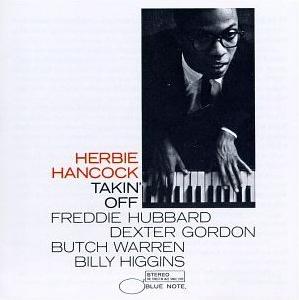
On May the ‘28th’ 1962, he recorded his debut solo album Takin’ Off which featured the jazz standard Watermelon Man. The album was released to widespread critical acclaim later in 1962. This was the start of productive period that saw Herbie Hancock release seven studio albums for Blue Note Records between 1962 and 1969.
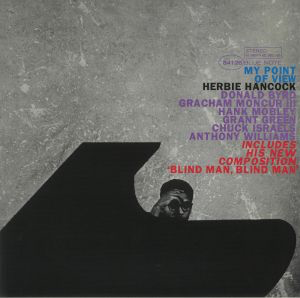
This includes his sophomore album My Point Of View, which featured was the first recording by his classic hard bop small group. This landmark album has just been reissued by Blue Note Records on 180 gram vinyl as part of their Tone Poet Series. It’s a reminder of one of the greatest jazz pianists of his generation as he embarks upon a long and illustrious career.
Herbert Jeffrey Hancock was born in Chicago on April the ’12th’ 1940. His father Wayman Edward Hancock was a government meat inspector and his mother Winnie worked as a secretary. They named their son after the singer and actor Herb Jeffries. This was fitting as the new addition to their family turned out to be prodigiously talented musician.
Growing up, Herbie Hancock like many other jazz pianists studied classical music. His talent was soon spotted and teachers realised that he was a child prodigy.
Aged just eleven, Herbie Hancock played the first movement of Mozart’s Piano Concerto No. 26 in D Major at a young people’s concert on February the ‘5th’ 1952 with the Chicago Symphony Orchestra which was led by assistant conductor George Schick. The young pianist was one of the stars of concert.
As a teenager, Herbie Hancock attended Hyde Park High School on the South Side of Chicago. Despite eventually making a career as a jazz pianist, he never had a jazz teacher during his teenage years. However, he spent time developing his ear and a sense of harmony. One of his musical influences were The Hi-Lo’s a vocal quartet who sometimes supported Frank Sinatra.
After graduating from Hyde Park High School, Herbie Hancock enrolled at Grinnell College and graduated in 1960 with degrees in electrical engineering and music.
In 1960, Herbie Hancock heard Chicago-born jazz pianist Chris Anderson play and was so impressed that he asked him to accept him as a student. He agreed and was a huge influence on the young pianist who later, called him his “harmonic guru.”
After graduating from Grinnell College, Herbie Hancock returned to the Windy City and began working with Donald Byrd and Coleman Hawkins. During this time, he enrolled in courses at the Roosevelt University, in Chicago.
During 1960, Donald Byrd was studying at the Manhattan School of Music and he suggested that Herbie Hancock studied composition with Vittorio Giannini. This he did briefly, but by then, Herbie Hancock’s star was in the ascendancy and he was invited to play on sessions Oliver Nelson and Phil Woods.
Just two years later, in 1962, Herbie Hancock signed to one of jazz’s premier labels, Blue Note Records. This would be his home for the next seven years.
Takin’ Off.
Having signed to Blue Note Records, Herbie Hancock began work on his debut album, Takin’ Off. He wrote six new compositions including Watermelon Man which were recorded at on May the ‘28th’ 1962, at Van Gelder Studio, Englewood Cliffs, New Jersey and produced by Alfred Lion.
Joining pianist Herbie Hancock in the rhythm section were drummer Billy Higgins and double bassist Butch Warren. The front line featured trumpeter Freddie Hubbard and tenor saxophonist. It was an all-star band that was accompanied Herbie Hancock on an album that was produced by Alfred Lion and engineered by Rudy Van Gelder.
Later in 1962, Takin’ Off was released to widespread critical acclaim. It was an album of cerebral music that was light, tight, bluesy, funky, imaginative and sometimes ruminative. Always the music was memorable on this album of hard bop and soul-jazz. The standout track was Watermelon Man with Three Bags Full, Empty Pockets and Alone and I receiving honourable mentions. Takin’ Off had launched Herbie Hancock’s career which was well underway, and has since been hailed as one of the most accomplished debut albums in the history of jazz.
My Point Of View.
Buoyed by the critical response to his debut album Takin’ Off, Herbie Hancock began work on his much-anticipated sophomore album My Point Of View. He wrote five new compositions Blind Man, Blind Man, A Tribute To Someone, King Cobra, The Pleasure Is Mine and the album closer And What If I Don’t. These tracks were recorded by Herbie Hancock’s classic hard bop small group.
The rhythm section included seventeen year old drummer Tony Williams, bassist Chuck Israels, guitarist Grant Green who played on two tracks and pianist and bandleader Herbie Hancock. They were joined by a front line of trumpeter Donald Byrd, tenor saxophonist Hank Mobley and trombonist Graham Moncur III. This new band made the journey to Van Gelder Studio, on March the ’19th’ 1963, where they were joined by producer Alfred Lion and engineer Rudy Van Gelder .
My Point Of View was released in the autumn of 1963, to plaudits and praise. Herbie Hancock wasn’t content to stand still and began to push the boundaries of hard bop on his sophomore album. Especially on A Tribute To Someone which is a nine minute epic that sometimes can be challenging a listen but is ultimately rewarding. Very different is the beautiful ballad The Pleasure Is Mine which is one of the album’s highlights.
Then King Cobra heads in the direction of modal jazz. It has a silty edgy sound and there’s similarities to one of Herbie Hancock’s most famous compositions, Maiden Voyage. The seeds to that jazz classic were sown here.
Bookending My Point Of View are the two tracks with a much more pronounced soul-jazz sound. This came courtesy of guitarist Grant Green who plays a starring role on the both tracks. The album opener Blind Man, Blind Man was a track that Herbie Hancock later said reminded him of a blind man who stood on the corner playing his guitar in the neighbourhood of Chicago he grew-up in. It’s also a track that owes a debt of gratitude to one of his classic tracks,Watermelon And What If I Don’t bookends the album and has a laidback, bluesy groove that’s the perfect way to close Herbie Hancock’s sophomore album My Point Of View.
Nowadays, Takin’ Off is regarded as one of the finest debut albums by a jazz artist. Herbie Hancock had set the bar high. However, the twenty-three year old pianist returned with a stunning sophomore album My Point Of View. The album’s foundation is hard bop but there’s also soul-jazz and modal jazz as well as elements of blues and funk. Herbie Hancock was determined to reinvent hard bop and take it in a new direction. He was a musical pioneer who was determined never to stand still musically.
Not long after Herbie Hancock recorded My Point Of View, he was invited to join what became Miles Davis’ Second Great Quintet which also featured drummer Tony Williams. Herbie Hancock had come a long way in a short space of time.
He had only released his debut album Takin’ Off in the autumn of 1962, with My Point Of View following a year later in 1963 which nowadays is regarded as a jazz classic. This was just the start of a period when Herbie Hancock could do no wrong with
This was something he continued to do throughout his time at Blue Note Records releasing Inventions and Dimensions in early 1964 with Empyrean Isles following in November 1964; Maiden Voyage in March 1965 and Speak Like A Child in the summer of 1968. Bringing the Blue Note Records Years to a close in 1969 was one of Herbie Hancock’s most ambitious and innovative albums, The Prisoner, which was produced by Duke Pearson and dedicated to the memory of the late Dr Martin Luther King. The seven studio albums that Herbie Hancock released on Blue Note Records are among his finest albums and are the perfect introduction to one of the greatest jazz pianists of his generation.
Herbie Hancock-My Point Of View.
J JAZZ: DEEP MODERN JAZZ FROM JAZZ VOLUME 3.
J Jazz: Deep Modern Jazz From Japan Volume 3.
Label: BBE Music.
Format: 2CD.
Nowadays, the most important period in the development of J-Jazz is the between late-sixties through to the early eighties. That’s regarded as a crucial period in the development of modern jazz in Japan. During that period, many Japanese composers and musicians and bands released ambitious and innovative music that astounded those who heard it. This included Yasuhiro Kohno Trio and One, Kohsuke Mine, Hideo Shiraki, Tatsuya Nakamura, Shigeharu Mukai, Seiichi Nakamura, Ryusei Quartet and Koichi Matsukaze Trio who feature on J Jazz: Deep Modern Jazz From Japan Volume 3 which was recently released by BBE Music. When critics, cultural commentator and record buyers heard this music they were making they were amazed just how far Japanese jazz had come in such a short space of time.
It was only twenty or thirty years earlier that Japanese music fans were banned from listening to jazz during the World War II. However, after Japan’s defeat and unconditional surrender in August 1945, the wartime ban on jazz was lifted.
Jazz fans were now able to hear jazz on the radio, and watch the allied forces bands play jazz in concert halls across Japan. Some of the bands featured some of the top American jazz musicians who were serving their country. Sometimes, these musicians spent time collaborating with local jazz musicians who were keen to learn from some of the names they had only heard on the radio. However, in 1952 when the allied forces left Japan, and returned home musicians like Frank Foster, Harold Lamb and Oliver Nelson had formed firm friendships with local jazzers. By then, they had played an important part in the cultural rebirth of Japan.
Left to their own devices, a new era began for Japanese musicians who were determined to make up for lost time. Musically there had been no winners after six years of war. While jazz had been banned in Japan during the war, many British and American jazz musicians had been called up and were serving their country. Many jazz musicians had spent the war in army bands where they were usually out of harm’s way. Now they had returned home, and like their Japanese counterparts were making up for lost time.
By the mid-fifties, a jazz scene had developed in Japan, during what was later referred to as the “funky period.” However, much of the jazz music being made in Japan had been influenced by American jazz and particularly the West Coast cool jazz and East Coast hard bop. Many Japanese musicians were collecting albums on Blue Note and Prestige which heavily influenced them. It would only be later that some would find their own voice.
Meanwhile, many of the top American jazz musicians no longer serving in the US Army, and had returned home. Some joined new or existing bands while some musicians put together new bands. Initially, they returned to their local circuit where they tried to pickup where they had left off. This changed a few years later.
In the late-fifties and early sixties, many of these musicians who had played in Japan during World War II were keen to return to a country where so many loved and appreciated jazz music. They made the long journey to Japan where they were reunited with some old friends.
During this period, Miles Davis, Art Blakey’s Jazz Messengers and Horace Silver all made the long journey to Japan where they received a warm and enthusiastic welcome. Whether any of these legendary musicians were aware at the time, they were playing a part in the cultural rebirth of Japan. Soon, many Japanese jazz musicians weren’t just content to copy Miles Davis, Art Blakey’s Jazz Messengers and Horace Silver sonically, but were determined copy them stylistically. Before long, Japanese jazz musicians were soon sporting the same preppy Ivy League clothes as their American counterparts.
Despite many people enjoying the visits of American jazz musicians, the Japanese authorities heard that some musicians had been arrested on drugs offences. They tightened the law as they didn’t want musicians with drug convictions visiting the new Japan and corrupting their youth. However, with the laws tightened, much fewer American jazz musicians visited Japan. Those that visited, played in packed concert halls and continue to influence Japanese jazzers.
Not all Japanese jazz musicians were inspired by their American counterparts by the mid-sixties as homegrown musicians were making their presence felt. Especially pianist Toshiko Akiyoshi and saxophonist and flautist Sadao Watanabe who were among the leading lights of the vibrant Japanese jazz scene.
Toshiko Akiyoshi had been invited to study at the prestigious Berklee College of Music in Boston in 1955. However, it took a year of wrangling, diplomacy and arm twisting before Toshiko Akiyoshi was able to enrol at Berklee College of Music in Boston in 1956. By then, Toshiko Akiyoshi was already making a name for herself outside of her native Japan and would enjoy a long and successful career.
Five years later, Sadao Watanabe released his eponymous debut album on King Records. The following year, 1962, Sadao Watanabe followed in Toshiko Akiyoshi’s footsteps and enrolled at Berklee College of Music in Boston. He too was on the cusp of a successful career.
Back home in Japan, many other Japanese jazz musicians were content to draw inspiration from their American counterparts, but decided to forge a new style of modern jazz befitting the new modern Japan. Leading this movement in the late-sixties was Sadao Watanabe whose music was progressive, experimental, exciting and ambitious and reflected the musical influences and genres he had absorbed. Soon, Sadao Watanabe was influencing some of the musicians who were at the forefront of a jazz revolution.
Some of Japan’s top up-and-coming jazz musicians joined Sadao Watanabe’s band, where they learned from one of the country’s top jazzers. For these musicians this was akin to a musical apprenticeship, before they headed off to play their part in the jazz revolution that took place between the late-sixties and early eighties. It’s documented on J Jazz: Deep Modern Jazz From Japan Volume 3.
Disc One.
Opening J Jazz: Deep Modern Jazz From Japan Volume 3 is Yasuhiro Kohno Trio and One’s Song Of Island. It’s the title track to his third album which was released in March 1986. This is a live album which was recorded on August the ‘28th’ and ‘29th’ 1985 at Live House Again and features a guest appearance from vibes virtuoso Masahiro Kanno. Along with the bandleader and pianist Yasuhiro Kohno Trio he plays a starring role on the title-track which is one of the highlights of this hidden gem of a J Jazz album.
Morning Tide is taken for Kohsuke Mine’s debut album First, which was released on Philips in 1970. The alto saxophonist and bandleader was part of a new generation of modern jazz musicians. Here, he moves towards a fusion of post modal bop and free jazz on this rich-sounding, dense and groundbreaking track.
In 1963, legendary J Jazz drummer Hideo Shiraki released the album Plays Bossa Nova on King Records. It featured the sun-kissed and funky Groovy Samba which was one of the highlights of the album.
In April 1978, Hiroshi Murakami and Dancing Sphinx recorded the album Dancing Sphinx which was released later that year. It featured the funky sounding Phoebus which also incorporates elements of jazz-funk and fusion. It’s one of the highlights of this oft-overlooked and J Jazz rarity.
Closing disc one is Tatsuya Nakamura’s 1/4 Samba II which It’s taken from the album Locus which was released in 1984. By then, the thirty-nine year jazz drummer was leading a fusion band who were heavily inspired by Miles Davis. However, Tatsuya Nakamura a versatile drummer who could switch seamlessly and combine musical genres. Here he combines fusion, funk and samba on this eleven minute genre-melting Magnus Opus which is one of the highlights of J Jazz: Deep Modern Jazz From Japan Volume 3.
Side Two.
Jazz trombonist Shigeharu Mukai opens disc two with Cumulonimbus, which is taken from his album Spacing Out, which was released on the Better Days label in 1978. It’s a breathtaking performance whether the band are playing as one or during the solos. The band plays with speed, fluidity and inventiveness as they combine samba with fusion and jazz-funk on a track that’s sure to become a favourite amongst DJs and jazz dancers.
In 1977, the Masaru Imada Trio released their album Planets. This little-known album was a private press that was released on the Planets label. Copies of this obscure album are rarities which change hands for large sums of money. The highlight of the album is the title-track Planets, which is a beautiful lyrical track that floats and waltzes along revolving it hidden secrets.
There’s two three bonus tracks on the CD version of J Jazz: Deep Modern Jazz From Japan Volume 3. The second is Wolf’s Theme by soprano and tenor saxophonist Seiichi Nakamura. It’s the title-track from his 1978 album which was released on Union Records in 1978 and is a samba that heads in the direction of fusion and jazz-funk as this all-star band showcase their considerable skills.
The other bonus track on the CD version is Kirisame from the Ryusei Quartet’s one and only album Dah Nah. It was an acoustic album that released by Union Records in 1979 and was the last in a series of sixteen albums the label released. Kirisame is a quite beautiful, laidback track with a Bossa groove.
Closing J Jazz: Deep Modern Jazz From Japan Volume 3 is Acoustic Chicken by the Koichi Matsukaze Trio which features jazz drummer Ryojiro Furusawa. It’s taken from the group’s debut album At The Room 427 which was released on ALM Records in 1976. This ambitious and innovative live track lasts just over twenty minutes and finds bandleader and saxophonist Koichi Matsukaze playing a starring role. He switches between tenor and soprano saxophone and plays with power, passion and aggression. Especially when he improvises and his saxophone brays, shrieks, squeals and soars during this impressive epic that closes the compilation on a high.
Tony Higgins and Mike Peden dig deep into their impressive record collections and select a captivating and eclectic selection of sixteen tracks on J Jazz: Deep Modern Jazz From Japan Volume 3. It’s a welcome reminder of the golden age of J Jazz, and will appeal to anyone interested in Japanese jazz.
Veterans of many a previous J Jazz compilation or album will enjoy the latest instalment in this occasional series. So will newcomers to Japanese jazz. In fact, anyone with even a passing interest in J Jazz should be looking to add J Jazz: Deep Modern Jazz From Japan Volume 3 to their collections. It features ambitious, exciting and innovative J Jazz where some of its finest exponents pushed musical boundaries to its limits, and sometimes, way beyond.
Sadly, much of the music on J Jazz: Deep Modern Jazz From Japan Volume 3 never found the audience it deserved, and it’s only relatively recently, in the internet age when a new audience discovered the delights of J Jazz from the genre’s golden age.
J Jazz: Deep Modern Jazz From Japan Volume 3.

CLASSIC ALBUM: THE OHIO PLAYERS-PAIN.
Classic Album: The Ohio Players-Pain.
It wasn’t until The Ohio Players signed with Westbound, and released their sophomore album Pain in 1972, that commercial success came the way of a group that was founded in 1959. Originally, they were known as The Ohio Untouchables, and had a chequered history.
Initially, The Ohio Untouchables lineup featured drummer Cornelius Johnson, bassist Marshall “Rock” Jones, guitarist and vocalist Robert Ward, guitarist and saxophonist Clarence “Satch” Satchel plus trombonist and trumpeter Ralph “Pee Wee” Middlebrooks. In the early days, the Drayton-based quintet was best known as The Falcons’ backing band. This allowed the group to hone their sound before heading out on their own.
When The Ohio Untouchables started playing live, it soon became apparent that Robert Ward was an unreliable bandleader. He would suddenly walk off the stage during concerts forcing the band to stop playing. Eventually, the band decided to keep playing when their leader left the stage. However, things came to a head in 1964 when Robert Ward and bassist Marshall “Rock” Jones got into fight onstage. This resulted in the group splitting up for the first time.
Robert Ward decoded to draft in new musicians, while the rest of The Ohio Untouchables headed home to Drayton. That was where they discovered guitarist Leroy “Sugarfoot” Bonner who became the band’s lead singer. The other new recruit was drummer Gregory Webster. This wasn’t the end of the changes.
The group decided to change direction musically and starting playing R&B. This allowed them to play to new Leroy “Sugarfoot” Bonner’s strengths, and meant they weren’t competing with Robert Ward’s group. With that, the new group began playing live.
In 1965, the group decided changed its name to The Ohio Players. The reason for this was because of how the group perceived themselves as musicians and “ladies men.”
The newly named group added two more singers to its lineup. Bobby Lee Fears and Dutch Robinson joined The Ohio Players who were ready to record their debut single.
By then, they were managed by Johnny Brantley a manager and producer. He recorded The Ohio Players’ debut single This Thing Called Love which was released on Ray Charles’ Tangerine Records in 1967. However, the single failed to find an audience and The Ohio Players moved on.
Johnny Brantley arranged for the group to become the house band at New York-based Compass Records. They played on various recordings and backed Helena Ferguson on her top thirty single Where Is The Party?
The Ohio Players also released two singles on Compass Records during 1967. This included Trespassin’ and It’s A Crying Shame. Despite neither single making any impression on the charts, an expanded lineup began recording the group’s debut album.
By then, vocalist Helena Ferguson Kilpatrick had joined the group. She was part of the expanded lineup who began recording what later became Observations In Time. It was nearly completed when their manager decided to license the album to Capitol Records. This seemed a strange decision.
It turned out that Compass Records wasn’t in the best financial health. That was why the incomplete version of Observations In Time was licensed to Capitol Records. However, the decision backfired when Observations In Time was released in 1968 and although it was a hit in Ohio, it failed to make any impression on the national charts. This was a huge disappointment for The Ohio Players.
So was the commercial failure of the single Here Today and Gone Tomorrow in the UK in 1970. Executives at Capitol Records thought that the single would sell well in the UK. However, this wasn’t the case and was another disappointment for the band.
Just two years after the release of their debut album The Ohio Players split-up in 1970. It looked like the end of the road for the band.
It wasn’t, and the group reformed with a new lineup. This included drummer Gregory Webster, bassist Marshall “Rock” Jones, guitarist and guitarist and saxophonist Clarence “Satch” Satchel. They were joined by trombonist and trumpeter Ralph “Pee Wee” Middlebrooks, trumpeter Bruce Napier, trombonist Marvin Pierce, keyboardist Walter “Junie” Morrison plus vocalists Leroy “Sugarfoot” Bonner and Charles Dale Allen. The new line-up was the start of a new and exciting chapter for The Ohio Players.
Especially when a local label Top Hit sent the group to Sound Recorders in Nashville, to record a new eight-track album. By then, The Ohio Players had discovered that Walter “Junie” Morrison was the group’s secret weapon. Not only was he a talented, inventive and progressive keyboardist who also played guitar and drums. He was part of the group that recorded an album’s worth of funky and sometimes jazz-tinged cover versions. However, when the label listened to the tracks the highlight of the session was Pain, a funky instrumental.
By then, The Ohio Players had come to the attention of Armen Boladian who had founded Westbound Records in 1968. He had signed Funkadelic who were well on their way to becoming one of the most innovative and successful funk bands of the seventies. They were joined in 1971 by The Ohio Players.
Having signed to Westbound Records, Pain (Part 1) was rerecorded and released in 1971, and reached sixty-four in the US Billboard 100 and thirty-five in the US R&B charts. Across the border in Canada, the single reached ninety-one giving The Ohio Players a minor hit single. This was just a start for Armen Boladian’s latest signing.
Buoyed by the success of Pain, Armen Boladian was keen that The Ohio Players release an album soon. They could’ve released the material recorded in Nashville as their sophomore album, but Armen Boladian decided to send the group into the studio to record a new album.
When they entered the studio The Ohio Players were joined by two new recruits. This included vocalist and saxophonist James Johnson and Dale Allen who was going to share the lead vocal. However, his time with the group was cut short after he had a heated argument with Clarence Satchell in the studio during the third day of the recording session. That was the end of his time with The Ohio Players.
They had written the six tracks that became Pain and coproduced the album with Herb James and Billy Pittman. Once the album was completed, it was scheduled for release in early 1972.
When Pain was released in February 1972, it still featured some of sound that appeared on their debut album Observations in Time. However, the album was funky and had a tough, slick, polished sound that was soulful and sometimes, jazz-tinged. Walter “Junie” Morrison’s keyboards played an important part in the album
Pain opened with the funky, jazz-infused instrumental Pain, and showcases The Ohio Players’ new sound. It’s followed by the soulful ball Never Had A Dream which later heads in the direction of jazz. Players Balling (Players Doin’ Their Own Thing) has a looser, funkier and vampish sound as the group jam and experiment. The result is a very different tracks to what’s preceded it.
I Wanna Hear From You is a funky, soulful and psychedelic sounding track where Dale Allen and Sugar take charge of lead vocal. The Reds is a progressive genre-melting track where elements of blues, funk, jazz and rock are combined by The Ohio Players. They close the album with Singing In The Morning which features Granny on a track that has a looser, space sound and finds the band combining a jazz, funk and soul. It brought to an end The Ohio Players’ Westbound Records’ debut, Pain.
It was also an album of firsts. Pain was the first Ohio Players’ album to feature the group’s romantic, sensual sound and featured songs that were devoted to their love of women. It was also the first album to feature what many regarded as a suggestive photo on the album cover. The Ohio Players knowing that: “sex sells” used a Joel Brodsky photo of a woman in leather underwear dominating a prostrate man. This was a controversial photo and similar to the one on the cover of Funkadelic’s album Free Your Mind.
The other first was the inclusion of Walter “Junie” Morrison’s character Granny on Pain. She featured on all their Westbound Records’ albums and he revisited the character on his solo albums. That was in the future.
Before that, The Ohio Players released Pain in February 1972, and it reached 177 in the US Billboard 200 and twenty-one in the US R&B charts. This was enough for Pain to be certified gold and was the start of the most successful period of the band’s career.
They released eight albums between 1972 and 1976 that sold in excess of six million copies. The Ohio Players were one of the most successful funk band in the world.
This began with Pain where The Ohio Players music was ambitious, innovative and progressive on Pain, where they combined funk, soul and jazz with elements of blues and psychedelia to create a timeless and heady musical brew.
Classic Album: The Ohio Players-Pain.


CULT CLASSIC: BOILLAT THERACE QUINTET-BOILLAT THERACE QUINTET.
Cult Classic: Boillat Thérace Quintet-Boillat Thérace Quintet.
By 1974, the Swiss jazz scene was thriving, and the Montreux Jazz Festival which had been launched in 1967, was in its eight year. The organisers had surpassed themselves with what was an all-star lineup
Between the ‘2nd’ and ‘7th’ July 1974, the great and good of jazz arrived at what was now one of Europe’s premiere jazz festivals. Legends of jazz including Cecil Taylor, Art Ensemble Of Chicago, Billy Cobham, Sonny Rollins, Mahavishnu Orchestra and The Gil Evans Orchestra were due to arrive and entertain Swiss jazz fans. They also inspired the local jazz musicians.
That had been the case since the early days of the Montreux Jazz Festival, and suddenly, new bands being formed and creating ambitious, inventive and innovative music. This was the case in towns and cities across Switzerland.
Another jazz hotspot was the region that surrounds Lake Geneva. It was home to jazz activist and one of Switzerland’s top pianists Jean-François Boillat, and Raymond Thérace. He was known for his versatility and ability to play a variety of wind instruments including the flute and tenor saxophone. This talented duo decided to form a their own band and the Boillat Thérace Quintet was born.
They recorded two albums between 1974 and 1975. Their debut album was Boillat Thérace Quintet which was recorded between the ‘17th’ and ‘19th’ January 1974. By then, the lineup featured drummer Eric Wespi, bassist Frédéric Pecoud and percussionist Rogelio Garcia. They were joined by Jean-François Boillat on piano and Fender Rhodes, while Raymond Thérace switched between flute and tenor saxophone during the sessions.
Boillat Thérace Quintet recorded six tracks that made it onto the album. This included 1224, Rahsaan Rahsaan and Cenovis which were written by Jean-François Boillat and Raymond Thérace. They were joined by covers of Roland Kirk’s Sweet Fire, Keith Jarrett’s In Your Quiet Place and Freddie Hubbard’s Straight Life. However, three other cover versions were recorded but never made it onto the album. This included Herbie Hancock’s Dolphin Dance, Wayne Shorter’s Adam’s Apple and Claude Engel’s ‘5th’ Of July, Dulong Street. They’re part of what’s an incredibly rare European jazz album.
With the album complete, there was no sign of a indie or major label signing the Boillat Thérace Quintet.They decided like a lot of artists and bands in the early to mid seventies to self-release their album. Boillat Thérace Quintet was scheduled to be released by PMP Pierre Maire Productions later in 1974.
While self-releasing their album gave the Quintet control over every aspect of the release, and potentially was more profitable, it wasn’t without a number of pitfalls. The band’s money was at risk and they were paying for everything directly. This included recording and manufacturing the album. Often by the time they paid for this there was very little money left.
Very few artists and bands had the marketing budget and expertise that a record company had. They also had a contract with a distributor who could get the album into record shops. Bands self-releasing an album couldn’t, and often, resorted to taking boxes of albums around local record shops in the hope that they would take some on sale or return.The other option was to sell their album after concerts. It was hard work, but bands were able to release an album and for many, this was something that they had dreamt of.
Later in 1974, Boillat Thérace Quintet was released in Switzerland by PMP Pierre Maire Productions. Just like many other private presses, only a small number of copies Boillat Thérace Quintet were pressed. Despite the quality of music on this album of soul-jazz and modal jazz it was a low-profile release that slipped under the musical radar. Very few people outside of the local jazz scene were aware of the release of Boillat Thérace Quintet. It was another private press that failed to find the audience it deserved.
Opening the album is 1224, which is dedicated to Geneva’s public transport line Tram 12. It finds the Boillat Thérace Quintet grabbing the listener’s attention from ye get-go. What follows is a memorable and sometimes funky, dramatic and cinematic slice of soul-jazz that takes the listen on a musical journey.
The tempo drops on the cover of Roland Kirk’s Sweet Fire. It’s beautiful, dreamy and sensual cover and shows another side to the Boillat Thérace Quintet.
They change things around on Rahsaan Rahsaan where the rhythm section propel the arrangement along, and Jean-François Boillat’s piano and Raymond Thérace flute plays leading rolls. Drum fills punctuate the arrangement to a track that sounds as if it belongs on the soundtrack to a French or Swiss film.
For those unfamiliar with Cenovis it’s the Swiss equivalent of Marmite. Here, Jean-François Boillat switches to Fender Rhodes and combines with the rest of the rhythm section and percussionist Rogelio Garcia to provide the perfect backdrop for Raymond Thérace’s tenor saxophone. He gives one of his finest performances playing with speed, control and accuracy as his sultry saxophone breezes across the arrangement playing its part in the feelgood summery sounding track where jazz, funk, fusion and Latin are combined seamlessly by the Quintet.
Very different but quite beautiful is the wistful piano lead ballad In Your Quiet Place. It encourages reflection and is one of the album’s highlights.
Boillat Thérace Quintet close their eponymous debut album on a high with Straight Life. Funky fusion and soul-jazz are combined on a track where Raymond Thérace unleashes a peerless performance on tenor saxophone. He’s combines power and speed but is always in control. Meanwhile, Jean-François Boillat fingers dance across the keyboard to his Fender Rhodes on this irresistible track that would still fill a dancefloor. It’s akin to a call to dance and resistance is impossible.
Although there’s only six tracks on Boillat Thérace Quintet they’re all of the highest quality. There’s everything from funk and fusion to Latin, modal jazz and soul-jazz and sometimes, several genres are fused within the space of a track. This the Boillat Thérace Quintet do effortlessly and seamlessly.
While each member of the band are obviously talented and versatile musicians, cofounders pianist Jean-François Boillat and tenor saxophonist and flautist Raymond Thérace play starring roles. They’re playing is flawless and veers between beautiful, dreamy melancholy, sensual, understated and wistful on the ballads. Other times, the music is cinematic, dancefloor friendly or fiery, funky, sultry and irresistible. Not once will the listener be tempted to reach for their remote control.
Not even on the bonus tracks, which on many albums can be hit or miss affairs. That isn’t the case here and they’re welcome additions and offer further insight into Boillat Thérace Quintet who only released two albums during their career. This includes their eponymous debut album which nowadays, is a much-prized rarity among collectors of European jazz that changes hands for around €250. However, the reissue of Boillat Thérace Quintet means that a jazz fans old and new, will be belatedly be able to discover the delights of this long-lost hidden gem of an album that is one of the jewels in the crown of Swiss jazz.
Cult Classic: Boillat Thérace Quintet-Boillat Thérace Quintet.

CULT CLASSIC: SUN RA-CELESTIAL LOVE.
Cult Classic: Sun Ra-Celestial Love.
Nowadays, maybe music journalists are guilty of using the words innovator and musical pioneer all too freely, but that is the perfect description of the inimitable Sun Ra. He’s quite rightly regarded as one of the true pioneers of free jazz and a truly innovative and influential musician who pushed musical boundaries to their limit, and sometimes, way beyond.
Sun Ra was also a prolific artists who released around 125 albums during a career that spanned six decades. This includes Celestial Love, which was the final studio album to be released by El Saturn Records. These albums are all part of Sun Ra’s fascinating life story.
Before dawning the moniker Sun Ra, Herman Poole Blount was born on the ‘22nd’ of May 1914, in Birmingham, Alabama, but very little is known about his early life. So much so, that for many years, nobody knew what age he was. However, at an early age Herman immersed himself in music.
He learnt to play the piano at an early age and soon, was a talented pianist. By the age of eleven, Herman was to able read and write music. However, it wasn’t just playing music that Herman enjoyed. When the leading musicians of the day swung through Birmingham, Herman want to see them play and saw everyone from Duke Ellington to Fats Waller live. Seeing the great and good of music play live only made Herman all the more determined to one day become a professional musician.
By his mid teens, Herman was a high school student, but even by then, music was his first love. His music teacher John T. “Fess” Whatley realised this, and helped Herman Poole Blount’s nascent musical career.
John T. “Fess” Whatley was a strict disciplinarian, and this rubbed off on Herman who would layer acquire a reputation as a relentless taskmaster when he formed his Arkestra. The future Sun Ra was determined that the musicians in his Arkestra to reach his high and exacting standards and fulfil the potential that he saw in them. At rehearsals, musicians were pushed to their limits, but this paid off when they took to the stage. Led by Sun Ra, the Arkestra in full flow were peerless. However, that was way in the future. Before that, Herman’s career began to take shape.
In his spare time, Herman was playing semi-professionally in various jazz and R&B groups, and other times, he worked as a solo artist. Before long, Herman was a popular draw. This was helped by his ability to memorise popular songs and play them on demand. Strangely, away from music, the young Herman was very different.
He’s remembered as studious, kindly and something of a loner and a deeply religious young man despite not being a member of a particular church. One organisation that Herman joined was the Black Masonic Lodge which allowed him access to one of the largest collection of books in Birmingham. For a studious young man like Herman this allowed him to broaden his knowledge of various subjects. However, still music was Herman Poole Blount,’s first love.
In 1934, twenty-year-old Herman was asked to join a band that was led by Ethel Harper. She was no stranger to Herman Poole Blount, and just a few years earlier, had been his high school biology teacher. Just a few years later, and he was accepting Ethel Harper’s invitation to join her band.
Before he could head out on tour with Ethel Harper’s band, Herman joined the local Musicians’s Union. After that, he embarked on a tour of the Southeast and Mid-West and this was the start of Herman’s life as a professional musician. However, when Ethel Harper left her band to join The Ginger Snaps, Herman took over the band.
With Ethel Harper gone, the band was renamed The Sonny Blount Orchestra, and it headed out on the road and toured for several months. Sadly, The Sonny Blount Orchestra wasn’t making money, and eventually, the band split up. However, other musicians and music lovers were impressed by The Sonny Blount Orchestra.
This resulted in Herman always being in demand as a session musician. He was highly regarded within the Birmingham musical community, so much so, that he was awarded a music scholarship to Alabama Agricultural and Mechanical University in 1937. Sadly, he dropped out after a year when his life changed forever.
In 1937, Herman experienced what was a life-changing experience, and it was a story that he told many times throughout his life. He describes a bright light appearing around him and his body changing. “I could see through myself. And I went up … I wasn’t in human form … I landed on a planet that I identified as Saturn. They teleported me. I was down on a stage with them. They wanted to talk with me. They had one little antenna on each ear. A little antenna over each eye. They talked to me. They told me to stop attending college because there was going to be great trouble in schools … the world was going into complete chaos … I would speak through music, and the world would listen. That’s what they told me.” For a deeply religious young man, this was disturbing and exciting. It certainly inspired the young Herman Poole Blount.
After his: “trip to Saturn,” Herman Poole Blount decided to devote all his time and energy to music. So much so, that he hardly found time to sleep. Day in, day out, Herman spent his time practising and composing new songs in his first floor home which he had transformed into a musical workshop. That was where also where he rehearsed with the musicians in his band. Away from music, Herman took to discussing religious matters. However, mostly, though, music dominated his life.
It was no surprise to when Herman announced that he had decided to form a new band. However, his new band was essentially a new lineup of The Sonny Blount Orchestra. It showcased the new Herman Poole Blount, who was a dedicated bandleader, and like his mentor John T. “Fess” Whatley, a strict disciplinarian. Herman was determined his band would be the best in Birmingham. This proved to be the case as seamlessly, The Sonny Blount Orchestra were able to change direction, as they played an eclectic selection of music. Before long, The Sonny Blount Orchestra were one of most in-demand bands in Birmingham, and things were looking good for Herman. Then in 1942, The Sonny Blount Orchestra were no more when Herman was drafted.
On receiving his draft papers, Herman declared himself a conscientious objector. He cited not just religious objections to war and killing, but that he had to financially support his great-aunt Ida. Herman even cited the chronic hernia that had blighted his life as a reason he shouldn’t be drafted. Despite his objections the draft board rejected his appeal, and things got worse for Herman.
His family was embarrassed by his refusal to fight and some turned their back on him. Eventually, Herman was offered the opportunity to do Civilian Public Service but failed to appear at the camp in Pennsylvania on the December ‘8th’ 1942.
This resulted in Herman being arrested, and when he was brought before the court, Herman Poole Blount debated points of law and the meaning of excerpts from the Bible. When this didn’t convince the judge Herman Poole Blount said he would use a military weapon to kill the first high-ranking military officer possible. This resulted in Herman being jailed and led to one of the most disturbing periods in his life.
Herman’s experience in military prison were so terrifying and disturbing that he felt he no option but to write to the US Marshals Service in January 1943. By then, Herman felt he was on the verge of a nervous breakdown. He was suffering from stress and feeling suicidal. There was also the constant fear that he would be attacked by others within the military prison. Fortunately, the US Marshals Service looked favourably on his letter.
By February 1943, Herman was allowed out during the day to work in the forests around Pennsylvania, and at nights, he was able to play the piano. A month later, Herman was reclassified and released from military prison which brought to an end what had been a harrowing period of his life.
Having left prison, Herman formed a new band that played around the Birmingham area for the next two years. Then in 1945, when his Aunt Ida died, Herman left Birmingham, and headed to the Windy City of Chicago.
Phase One-Chicago.
Now based in Chicago, Herman quickly found work within the city’s vibrant music scene. This included working with Wynonie Harris and playing on his two 1946 singles, Dig This Boogie and My Baby’s Barrelhouse. After that, Herman Poole Blount worked with Lil Green in some of Chicago’s strip clubs. Then in August 1946, Herman Poole Blount started working with Fletcher Henderson but by then, the bandleader’s fortunes were fading.
By then, Fletcher Henderson’s band was full of mediocre musicians, and to make matters worse, the bandleader was often missed gigs. This couldn’t be helped as Fletcher Henderson, was still recovering after a car accident. What Fletcher Henderson needed was someone to transform his band’s failing fortunes and this was where Herman came in. His role was arranger and pianist, but realising the band needed to change direction, he decided to infuse Fletcher Henderson’s trademark sound with bebop. However, the band were resistant to change and in 1948, Herman left Fletcher Henderson’s employ.
Following his departure from Fletcher Henderson’s band, Herman formed a trio with saxophonist Coleman Hawkins and violinist Stuff Smith. Alas, the trio was somewhat short-lived and didn’t release any recordings.
Not long after this, Herman made his final appearance as a sideman on violinist’s Billy Bang’s Tribute to Stuff Smith. After this, Herman Poole Blount became Sun Ra.
By then, Chicago was changing, and was home to a number of African-American political activists. Soon, a number of fringe movements sprung up who were seeking political and religious change. When Herman became involved he was already immersing himself in history, especially, Egyptology. He was also fascinated with Chicago’s many ancient Egyptian-styled buildings and monuments. This resulted in Herman Poole Blount discovering George GM James’ book The Stolen Legacy which turned out to be a life-changing experience.
In The Stolen Legacy, George GM James argues that classical Greek philosophy actually has its roots in Ancient Egypt. This resulted in Herman concluding that the history and accomplishments of Africans had been deliberately denied and suppressed by various European cultures. It was as if Herman’s eyes had been opened and was just the start of a number of changes in his life.
As 1952 dawned, Herman had formed a new band, The Space Trio. It featured saxophonist Pat Patrick and Tommy Hunter. At the time, they were two of the most talented musicians Herman knew. This allowed him to write even more complicated and complex compositions. However, in October 1952 the author of these tracks was no longer Herman Poole Blount was Sun Ra had just been born.
Just like Malcolm X and Muhammad Ali, adopting the name Sun Ra was perceived by some as Herman choosing to dispense with his slave name. This was a kind of spiritual rebirth for Sun Ra, and was certainly was a musical rebirth.
After Pat Patrick got married, and moved to Florida, this left The Space Trio with a vacancy for a saxophonist. Tenor saxophonist, John Gilmore was hired and filled the void. He would become an important part of Sun Ra’s band in the future.
So would the next new recruit alto saxophonist Marshall Allen. They were then joined by saxophonist James Spaulding, trombonist Julian Priester and briefly, tenor saxophonist Von Freeman. Another newcomer was Alton Abraham, who would become Sun Ra’s manager. He made up for Sun Ra’s shortcomings when it came to business matters.
While he was a hugely talented bandleader, who demanded the highest standards, Sun Ra, like many other musicians, was no businessman. With Alton Abraham onboard, Sun Ra could concentrate on music while his new manager took care of business. This included setting up El Saturn Records, an independent record label, which would release many of Sun Ra’s records. However, El Saturn Records didn’t released Sun Ra and His Arkestra’s debut album, Jazz By Sun Ra.
Instead, Jazz By Sun Ra was released in 1956, on the short-lived Transition Records. However, Sun Ra and His Arkestra’s sophomore album Super Sonic Jazz was released in March 1956, on El Saturn Records. Sound Of Joy was released on Delmark in November 1956. However, it was El Saturn Records that would release the majority of Sun Ra and His Arkestra’s albums.
In 1961, Sun Ra deeded to leave Chicago and move to New York where he would begin a new chapter in his career. Much had happened to Sun Ra since he first arrived in Chicago 1945 as the World War II drew to a close. Back then, he was still called Herman Poole Blount and was trying to forge a career as a musician. By the time he left Chicago he was a pioneer of free jazz
Phase Two-New York.
Sun Ra and His Arkestra journeyed to New York in the autumn of 1961, where they lived communally. This allowed Sun Ra to call rehearsals at short notice, and during the rehearsals, he was a relentless taskmaster who was seeking perfection. However, this paid off and Sun Ra and His Arkestra recorded a string of groundbreaking albums. This included Secrets of the Sun in 1962 which was the most accessible recording from their solar period. However, Sun Ra and his music continued to evolve in the Big Apple
The Heliocentric Worlds of Sun Ra Volume 1 was released by Sun Ra and his Solar Arkestra in 1965. Sun Ra had dispensed was the idea of harmony and melody, and also decided there should be no continuous beat. Instead, the music revolved around improvisation and incorporated programmatic effects. This was the case The Heliocentric Worlds of Sun Ra Volume 2 which was released later in 1965.
As Sun Ra and His Arkestra came to the end of their time in New York, their music was often described as “avant-garde jazz” or “free jazz.” However, Sun Ra started to reject the free jazz label that was attached to his music. He pointed out that his music had been influenced by different types of ethnic music and he often used percussion, synths and in one case strings.
A case in point was Strange Strings which was released in 1967 and found Sun Ra and His Arkestra playing an array of stringed instruments while he adds vast quantities of reverb. Strange Strings was just the latest innovative album Sun Ra released during his New York period, which came to an end in 1968. By then, the cost of living was proving prohibitive and Sun Ra decided to move his band again.
Phase Three-Philadelphia.
Sun Ra wasn’t moving his Arkestra far, just to Philadelphia where it was much cheaper to live. Again, Sun Ra and His Arkestra lived communally in Philadelphia which was their “third period.”
During this period, Sun Ra’s music became much more conventional and often incorporated swing standards when they played live. However, still Sun Ra’s concerts featured performances where his sets were eclectic and the music full of energy as they veered between standards and always at least, one lengthy, semi-improvised percussive jam.
In the studio, Sun Ra and His Arkestra continued to innovate, releasing albums of the quality of 1970s My Brother The Wind Volume 1, The Night Of The Purple Moon and 1972s Astro Place. However, Sun Ra in 1973 released two classic albums like Space Is The Place and Discipline 27-II. Sun Ra was at the peak of his powers and seemed to have been reinvigorated creatively after moving to Philly.
The Next Phase.
Buoyed by the critical acclaim and commercial success of Space Is The Place and Discipline 27-II had enjoyed during 1973, Sun Ra knew that 1974 was going to be yet another busy year. He was used to this, as Sun Ra and His Arkestra had been working non stop since 1972. They embarked upon lengthy tours and recorded several albums in Chicago, California and Philly. It was more of the same in 1974, with Sun Ra and His Arkestra embarking upon yet another lengthy and gruelling tour of America. Still, Sun Ra found time to prepare a couple of live albums for his label El Saturn Records including 1975s Pathways To Unknown Worlds; 1976s What’s New and Live At Montreux, and 1977s Somewhere Over The Rainbow and Taking A Chance On Chances and Some Blues But Not The Kind That’s Blue. However, in 1978 Sun Ra and His Arkestra began work on another new album, The Other Side Of The Sun which was released in 1979 but was an oft-overlooked and vastly underrated album.
As the seventies gave way to the eighties, Sun Ra continued to record new albums including Celestial Love in 1982.
Celestial Love.
When Sun Ra began work on Celestial Love he was sixty-eight and had been a professional musician since he was twenty. With forty-eight years of experience behind him he was a vastly experienced and highly respected bandleader, composer and musician who in 1957, had cofounded his own label El Saturn Records.
For the previous twenty-five years the label had released many albums by Sun Ra and the Arkestra. Sun Ra planned to release Celestial Love on El Saturn Records. That was all in the future as the album still had to be recorded.
For Celestial Love, Sun Ra decided to record a total of nine tracks. This included five of his own compositions: Celestial Love, Interstellarism, Blue Intensity, Nameless One No. 2 and Nameless One No. 3. They were joined by four cover version of familiar songs including Sometimes I’m Happy and Smile. The other two tracks were cowritten by Duke Ellington. During his long and illustrious career he had penned Sophisticated Lady with Irving Mills and Mitchell Parish, and Drop Me Off In Harlem with Nick Kenny. The inclusion of these tracks should’ve hinted to onlookers that the Celestial Love sessions had the potential to produce one of Sun Ra’s most.
Recording of Celestial Love took place in the familiar surroundings of Variety Recording Studio which had been owned and run by Warren Allen Smith and Fred Vargas since 1961. It had been Sun Ra’s studio of choice in New York since the sixties and he had recorded some of his best and most innovative albums in Variety Recording Studio. He liked the familiar surroundings and was joined by many familiar faces.
Joining Sun Ra who played piano, organ and synths and produced the Celestial Love sessions was his Arkestra. It included a rhythm section of drummer Samarai Celestial aka Eric Walker and bassists Hayes Burnett and John Ore. They were augmented by percussionist Atakatune aka Stanley Morgan and James Jacson who played infinity drum and bassoon. The horn section included alto saxophonist and flautist Marshall Allen; baritone saxophonists and flautist Danny Ray Thompson; tenor saxophonist John Gilmore; trombonist Tyrone Hill; trumpeter Walter Miller and Vincent Chancey on French horn. June Tyson the Queen of Afrofuturism added vocals on Sometimes I’m Happy and Smile during the sessions in 1982.
After the Celestial Love sessions, only eight of the nine tracks recorded made their way onto the album. The cover of Drop Me Off In Harlem was omitted from the original album.
It wasn’t until 1984 that Celestial Love was released on vinyl by El Saturn Records and was the last Sun Ra studio album to be released by the label. Although the label continued to release live albums by Sun Ra, Celestial Love marked the end of an era for El Saturn Records.
Meanwhile, in Europe much of Celestial Love featured on the full-length Nuclear War record which was issued in by the post punk label Y Records. That was ironic given how different the apocalyptic sounding Nuclear War single was to the music on Celestial Love.
When Celestial Love was released in 1984 it was one of Sun Ra’s most accessible albums, and whether by design or accident, was the perfect introduction to his music. For newcomers to Sun Ra, and those who struggled with his music, Celestial Love was the perfect primer to one of the pioneers of jazz.
On Celestial Love, Sun Ra and his Arkestra combines jazz and swing standards with his own compositions. This includes the album opener Celestial Love, where Sun Ra plays an organ which sounds as if it belongs in a church and is at the heart of the arrangement. It combines with drums and wistful, braying horns as Sun Ra and the Arkestra fuse elements of blues, gospel, jazz, soul-jazz and swing during a quite beautiful track that’s a roller coaster of emotions. June Tyson’s croons her way through Sometimes I’m Happy and plays a starring role in this joyous, swinging track.
When Sun Ra recorded Interstellarism in 1959, John Gilmore and Marshall Allen played on the recording. Twenty-five years later when Celestial Love was released they feature on this slow, swaying and sometimes spacious remake. The tempo increases on Blue Intensitywhere Sun Ra’s organ and saxophone play leading role as the track swings and then some. Then as Sophisticated Lady unfolds its slow and bluesy before the tempo gradually increases and Sun Ra and the Arkestra unleash the first of his homages to one of his heroes.
There’s two version of Nameless One on Celestial Love. The first is Nameless One No Two which starts off briskly, with the blazing horns playing a leading role as a walking bass propels the arrangement along as Sun Ra plays keyboards. They’re part of another swinging arrangement. It’s a similar case on Nameless One No Three where rasping, braying and sultry horns play a leading role and Sun Ra plays synths. Together, they play their part in a truly memorable and swinging track.
Very different is the cover of Smile, which sounds as if it were recorded during a different era. Sun Ra and the Arkestra show their versatility while June Tyson’s vocal is tender and hopeful. Closing the reissue of Celestial Love is a joyous, upbeat cover of Duke Ellington’s Drop Me Off In Harlem.
Celestial Love is one of Sun Ra’s most accessible of the 125 albums the great bandleader, composer and musician released during what was a long and illustrious career. It finds Sun Ea combining jazz’s past and present with sometimes the music of the future as he and the Arkestra innovate and combine free jazz, avant-garde, blues, soul-jazz and swing. In doing so, Sun Ra creates Celestial Joy, which is an uplifting and joyous genre-melting album bristling with optimism and positivity.
Cult Classic: Sun Ra-Celestial Love.
HELLO HEARTBREAKER-UPTOWN SOUL FROM SCEPTER, MUSICOR AND WAND.
Hello Heartbreaker-Uptown Soul From Scepter, Musicor and Wand.
Label: Playback Records.
Format: CD.
During the sixties, Scepter, Musicor and Wand played an important part in New York’s vibrant soul scene. These three record labels were among the finest purveyors of uptown soul and their releases were favourites of the Big Apple’s DJs and dancers. They were guaranteed to fill the dancefloor, and that’s still the case nearly fifty years later.
At soul nights across the world, DJs sill play single released on the Scepter, Musicor and Wand labels. This includes the twenty-eight tracks on Hello Heartbreaker-Uptown Soul From Scepter, Musicor and Wand which was recently released by the Australian label Playback Records.
Among the twenty-eight artists and groups on this compilation of lavishly produced big city soul are Jack Montgomery, Dean Parrish, Marie Knight, Bobby Hebb, The Shirelles, Big Maybelle, The Inspirations, Maxine Brown, Roscoe Robinson, Chuck Jackson, Judy Clay and Kenny Ballard and The Fabulous Soul Brothers. These are just some of the artists and bands who contribute dancefloor fillers and beautiful ballads that range from old favourites and hits to hidden gems and rarities.
Ironically for a compilation of New York soul Jack Montgomery’s Dearly Beloved was recorded in Detroit but released as a on Scepter in July 1966. Sadly, the single failed to chart when it was released. However, it later became a favourite on the UK Northern Soul scene where it’s still a favourite of DJs and dancers. No wonder as it oozes quality and is the perfect way to open Hello Heartbreaker-Uptown Soul From Scepter, Musicor and Wand.
Dean Parrish recorded Bricks Broken Bottles and Sticks which was arranged by Bert Keyes and produced by Stan Kahan and Bill Stanley. It was released in June 1965 but failed to find an audience. That’s despite being a hook-laden dancer that even today will fill a dancefloor.
Marie Knight started off as a gospel singer but in 1956 crossed over and started singing secular music. Her first top forty hit came in 1966 when she covered Cry Me A River which was released on Musicor. It’s one of her finest releases and features a soulful vocal powerhouse that’s accompanied by gospel-tinged backing vocals.
After enjoying a hit with Sunny, Nashville native Bobby Hebb released another of own compositions I Love Mary on Scepter in 1966. Although it didn’t replicate the commercial success of Sunny, it features a tender, heartfelt vocal and an understated arrangement that features lush strings.
By 1965, Big Maybelle was signed to Scepter and entered the studio to record an album. Instead of recording the tracks from scratch, she added her vocal to backing tracks that had been used by other artists. The album became The Soul Of Big Maybelle and was released later in 1965. One of the highlights was an impassioned and soulful cover of the classic Only You.
Although The Inspirations were from New Jersey they were based in Philly when they released Kiss And Make Up on Wand in April 1965. Hidden away on the B-Side is the hidden gem Love Can Be So Wonderful 8 Maxine Brown – I Don’t Need Anything which was penned by John Stiles and Bobby “Electronic” Eli.
In February 1967, Roscoe Robinson released What You’re Doin’ To Me on Wand. On the B-Side was A Thousand Rivers which was anther of his own compositions. It epitomises everything that’s good about uptown soul from the Big Apple.
Nowadays, Ronnie Milsap is best known as a successful country singer. However, during the sixties he recorded a string of soul sides. This included a cover of Never Had It So Good which was written by Ashford and Simpson with Joshie Armstead. The single was arranged by Ed Martin and produced by Stan Green and became Ronnie Milsap’s debut single for Scepter when it was released in October 1965. Sadly, this beautiful ballad which features a soul-baring, lovelorn vocal failed to trouble the charts.
Between 1961 and 1967 Chuck Jackson was signed to Wand, and in March 1965 released a cover of Carol King and Gerry Goffin’s I Need You. It’s another beautiful ballad with a needy and emotive vocal that’s accompanied by lush strings and soaring harmonies.
J.J. Barnes recorded the ballad Hey Child I Love You with postman turned producer Fred Brown in Detroit. However, the single was released by New York-based Scepter Records in 1964. Many people will recognise the song from the 2017 film Detroit which was set during the riots that took place during 1967.
Tommy Hunt is one of a small number of artists who recorded for both Musicor and Scepter. However, The Biggest Man was the very first single that was released in January 1967 on Dynamo, which was a new imprint of Musicor. The single reached the top thirty in the US R&B and features an impassioned vocal powerhouse from the Pittsburg-born soul man.
Judy Clay originally recorded the ballad Turn Back The Time for Scepter. It features a vocal that’s a mixture of power and emotion as she breaths life and meaning into the lyrics. Sadly, the song was never released until it belatedly made its debut on Big City Soul which was released by Kent Soul in 1986. Twenty-five years it returns for a well deserved encore.
Closing Hello Heartbreaker-Uptown Soul From Scepter, Musicor and Wand is Kenny Ballard and The Fabulous Soul Brothers’ There Will Never Be Another You. It’s a wistful but beautiful ballad that was released as a single on Dynamo in 1969 and is the perfect way to close the compilation.
For anyone interested in New York soul or soul music in general, Hello Heartbreaker-Uptown Soul From Scepter, Musicor and Wand. It features twenty-eight tracks and there’s contributions from some of the stars of soul as well as what will be new names for some people. They’re responsible for this compilation of dancefloor fillers and beautiful ballads that features hits, hidden gems and oft-overlooked rarities that were recorded during the sixties and are a reminder of the Big Apple’s uptown soul era. It’s celebrated on Hello Heartbreaker-Uptown Soul From Scepter, Musicor and Wand which was released by the Australian label Playback Records, and just like the previous releases is another lovingly curated compilation of soul.
Hello Heartbreaker-Uptown Soul From Scepter, Musicor and Wand.

WORDS…A BEE GEES SONGBOOK.
Words…A Bee Gees Songbook.
Label: Playback Records.
Format: CD.
During a career that began in 1958 and lasted until 2009 the Bee Gees sold over 120 million records and are one of the biggest selling groups in the history of modern music. “Britain’s first family of harmony” won five Grammy Awards for the Saturday Night Fever soundtrack in 1978 and 1979 and in 1997 were inducted into Rock and Roll Hall of Fame. By then, the Bee Gees were enjoying a glittering career.
When they released their thirteenth studio album Main Course which was released in 1975 it was certified gold in America and double platinum in Canada. Little did the Robin, Barry and Maurice Gibb realise that this was the start of the most successful period of their career. Right through until the Bee Gees released their twenty-second and final studio album This Is Where I Came In, which was released in April 2001 every album was certified gold or platinum.
The secret to their success was their inimitable three-part harmonies and the hook-laden songs the Gibb brothers wrote. As songwriters they were master craftsmen who had the Midas touch.
That’s why so many artists and bands around the world have covered the Bee Gees songs over the last six decades. This includes the twenty-seven on Words…A Bee Gees Songbook which was released by the Australian label Playback Records. This lovingly compiled compilation features contributions from familiar faces and new names including Mike Furber, The Richard Wright Group, Noeleen Batley, The Cyrkle, The Marmalade, Cilla Black, Lulu, Jose Feliciano, Nina Simone, Swamp Dogg, Martin Carthy, The Seekers and The Searchers. They cover some of the Gibb brothers’ best known song while others dig deeper into their songbook for the oft-overlooked hidden gems.
Opening Words…A Bee Gees Songbook is Mike Furber’s cover of Where Are You. It’s the title-track from the 1967 EP by Sydney-based musician and vocalist Mike Furber and The Bowery Boys who were his regular backing band. The EP was released on the Kommotion label but wasn’t a commercial success. That’s despite the uptempo, soulful sounding title-track which sometimes sounds as if it’s been influenced by The Hollies. Sadly, the EP was the last release from Mike Furber and The Bowery Boys and nowadays is regarded as one of their finest songs.
In 1966, the Sydney-based The Richard Wright Group recorded a rocking cover of Neither Rich Nor Poor which they released as their single on HMV. It gave the group a local hit single in May 1966 and was the first of three singles they released.
Noeleen Batley came to prominence during the early sixties and was part of the early Australian pop scene. Initially she was a teen idol but Little Miss Sweetheart graduated to the cabaret circuit. By 1965, she was signed to the Festival label and in October of that year released a cover of Watching The Hours Go By. It was written by Barry Gibb and was recorded in 3/4 time. The result was one of Noeleen Batley’s finest recordings which is a welcome addition to the compilation.
Initially, The Cyrkle were purveyors of bubble gum pop which brought a degree of success their way. However, when the hits dried up they decided to cover Turn Of The Century which was released on Columbia in November 1967. Rather than try to reinvent the song, the group stayed true to the Bee Gees original. Sadly, the single failed to find an audience and nowadays is a regarded as a hidden gem
Soft Pillow only ever released a couple of singles including their cover of Gilbert Green which was released on the Park label in the group’s native Belgium in January 1969. It’s a fusion of pop-rock and psychedelia where a piano, lush strings and horns play a leading role on this hidden gem that sadly, is all too often overlooked by compilers. It’s another welcome addition to Words…A Bee Gees Songbook.
The Cole Brothers from Margate, New Jersey, released a cover of I Can’t See Nobody on the Jamie label in 1967. It was arranged by Richard Rome and produced by Kit Stewart who stay true to the original on this catchy cover.
By 1967, Jackie Lomax had signed to CBS and was working with producer Robert Stigwood. They recorded Genuine Imitation Life which was released as a single. On the B-Side was One Minute Woman which features a heartfelt, impassioned and soulful vocal from the Liverpool-born singer who sadly never enjoyed the commercial success his considerable talent deserved.
Scottish pop-rock group The Marmalade covered Butterfly which was released as their final single by CBS in October 1969. It was arranged by Keith Mansfield a future giant of library music, who is responsible for the sweeping strings and horns which punctuate what’s a stunning arrangement. Mike Smith takes charge of the production on this melodic and memorable cover which sadly, was the one that got away for The Marmalade.
Although Jose Feliciano was known for his easy listening sound, he wasn’t averse to bowling a curveball and reinventing tracks. This included his cover of Marley Purt Drive which he released as a single on RCA in 1969. It was arranged and produced by Rick Jarard. His arrangement combines elements of country rock with gospel-tinged and soulful harmonies as Jose Feliciano unleashes a impassioned and emotive vocal.
Nina Simone released a dramatic reading cover of To Love Somebody as a single on RCA Victor in 1968 and gave her a hit single in Britain. In 1969, the Gibb brothers composition lent its name to her new album. The title-track was one of the highlights of the album and features The High Priestess of Soul at the peak of her powers.
Charismatic describes Swamp Dogg who covered Got To Get A Message To You on his 1971 album Rat On. It features a soulful and impassioned rendition this Bee Gees song.
In 1998, Martin Carthy covered New York Mine Disaster for his album Signs Of Life which was released on Topic Records. This acoustic cover features a wistful vocal that’s full of emotion as the veteran folk singer takes the song in a new direction.
When The Seekers recorded the Bee Gees summer of love anthem Massachusetts they decided to stayed true to the original. The song made its debut on The Ultimate Compilation which was released by EMI in 2003. It returns for a well-deserved encore on Words…A Bee Gees Songbook.
Closing the compilation is The Searchers’ cover of Spicks and Specks. It was released as single on RCA in 1973. By then, the group’s glory years were in the past and they were trying to kickstart their career. They decided to head in the direction of glam pop on this stomping and rousing anthem which shows another side to The Searchers and closes Words…A Bee Gees Songbook with another hidden gem that thankfully has been unearthed.
For anyone with even a passing interest in the Bee Gees’ music this lovingly compiled collection of covers of twenty-seven of their songs is worth adding to their collection. Words…A Bee Gees Songbook is a mixture of tracks from familiar faces and what will be new names to many people. They cover classic tracks, hidden gems and deep cuts on Words…A Bee Gees Songbook which was released by Australian label Playback Records and is a compilation that oozes quality.
Words…A Bee Gees Songbook.

STEVE MOORE-ANALOG ACTIVITY.
Steve Moore-Analog Activity.
Label: Be With Records.
Format: LP.
Prolific is the perfect word to describe New York-based multi-instrumentalist, producer, remixer and film composer Steve Moore. He’s best known as one half of Zombi the duo that he formed with Anthony Paterra. However, that is just part of the Steve Moore story.
He’s also part of Brooklyn-based progressive rock group Titan, and has previously worked with an eclectic selection of artists including Ghost, Goblin, Lair Of The Minotaur, Maserati, Microwaves, Municipal Waste, Panthers, Red Sparowes and Sally Shapiro. These are just a few of the bands Steve Moore has worked with and he’s equally at home working on psychedelia, progressive rock, punk, post rock or even crossover thrash. Versatility seems to be his middle name.
Steve Moore has also enjoyed a successful career as a remixer and has remixed Lower Dens, The Melvins, Voivod and Washed Out. Then there’s his solo career.
This includes the music he’s released using various monikers including Gianni Rossi and his dance-pop alter-ego Lovelock. Steve Moore has also written the scores to a number of films, most of which are low budget horror films like The Guest and Cub. Then there’s the ten solo albums he’s released between 2007 and 2020.
Recently, ten albums became eleven when Analog Activity was released by Be With Records. It’s an album where the bassist and synth maestro joins forces with KPM on a carefully crafted album of modern library music.
The story behind Analog Activity began when Steve Moore had some downtime between the recording of the scores to The Guest and Cub. He decided to use the free time to record some new music. Soon, whenever he some free time he headed to his collection of synths and began working on new music. This continued for three years. During that period, Steve Moore never thought about what he would do with the music or even if he would release it. He was happy making new music.
Then he was invited by Jon Tye to play on his Ocean Moon project for KPM. That was when Steve Moore realised that the legendary library label was the perfect home for music he had been recording.
When he let executives at KPM hear the music that he had been recording they agreed. Now all Steve Moore had to do was finish the album.
Steve Moore finishing production at his studio in Albany, New York, late 2019 in Albany, All he that was left was to sequence the album which became Analog Sensitivity.
On the ‘8th’ of July 2020 KPM added Analog Sensitivity to their vast and illustrious library. This was the second album of library music that Steve Moore had recorded for KPM. The first was Crystal Harmonies. It was followed by Analog Sensitivity.
Side One.
Side one of Analog Sensitivity opens with Eldberg which is a dark, moody and cinematic soundscape where there’s a sense foreboding despite the shimmering synth arpeggios. At The Edge Of Perception has a wistful sound before referencing Kraftwerk and adding futuristic and sci-fi sounds and before the track takes on an uneasy and unsettling sound.
Rose Of Charon has a slow, spacey cinematic sound that conjures up images of the Apollo space mission. Time Freeze is a slow cinematic synthscape that glides along its mesmeric and dreamy sound gradually revealing its secrets.
Seesaw synths open Analog Sensitivity is also mesmeric, sometimes haunting, wistful and beautiful. It’s music to ease the weary soul and which will make the world a better place.
Very different is Behind The Waterfall which has a dark filmic sound that paints pictures of a bleak, barren landscape in a world where something terrible has gone wrong.
Side Two.
Mirror Fountain has a similar sound to Behind The Waterfall and reveals a haunting atmospheric and eerie sound. Bubbling synths combine with drones, wispy pads and an effects-laden ambient guitar on Syzgy. It’s quite different from previous tracks but is tinged with drama and has a cinematic sound. So does Pentagram Of Venus which is understated, spacey and has a haunting, windswept sound.
Of Dust Thou Art plods along and a dark, disturbing and eerie soundscape takes shape. Straight away, Message From The Beast has an unsettling sound that sounds as if it belongs on the score to a horror movie. Bursts of sci-fi sounds are fired across the dark, hypnotic and sometimes elegiac soundscape. Closing side two is the Urge Surfing which is best described as broody, moody and atmospheric.
Although the golden age of library music was between the late-sixties and mid-eighties there’s still artists recording and releasing albums of modern library music. This includes Steve Moore who recorded Analog Activity during downtime in between recording film scores. he had no idea what to do with the music he was recording and it’s an accidental album of library music. It was only while recording the Ocean Moon album Crystal Harmonies for KPM that he found a home for the album he had been working on.
In the summer of 2020, Analog Activity became part of KPM’s vast, illustrious and legendary music library. Recently, Be With Records released Steve Moore’s first album of library music Analog Activity on vinyl. It’s one of the finest albums of modern library music released during the last few years and hopefully Steve Moore will go on to record more music for KPM in the future.
Steve Moore-Analog Activity.
CULT CLASSIC: ANDREW HILL-SMOKE STACK.
Cult Classic: Andrew Hill-Smoke Stack.
By the time Chicago-born pianist Andrew Hill released his sophomore album Black Fire on Blue Note Records in 1964, he was already thirty-two, and was making up for lost time. He had only started to play the piano when he was thirteen but made rapid progress. Earl Hines spotted the young pianist’s potential and encouraged him, and so did German composer, conductor, musician and teacher Paul Hindemith who he studied with until 1952. This paid off, and just two years later, Andrew Hill began working as a sideman. It was a rapid rise for someone who only took up the piano eight years earlier.
Andrew Hill was born in Chicago on the ‘30th’ of June 1941, and was brought up by his parents William and Hattie alongside his brother Robert, who was a singer and classical violinist. As a child, the future jazz great attended the University of Chicago Laboratory Schools. However, he didn’t start playing the piano until he was thirteen.
It turned out that he was a natural and his potential was spotted by another Chicago-born jazz pianist Earl Hines. He encouraged Andrew Hill, which may have changed the course of his career.
He had started out as a boy soprano, singing, playing the accordion and tap dancing. This was all part of an act that Andrew Hill had developed, and between 1943 and 1947 he was a familiar face at talent shows in the Windy City, and won two Thanksgiving parties at the Regal Theatre, which were sponsored by the local newspaper, the Chicago Defender. This was ironic because a few years earlier, he was selling the paper on the city streets. The same paper would later document Andrew Hill’s career.
Before that, Chicago-born composer, arranger and musician Bill Russo met Andrew Hill and referred him to Paul Hindemith. The high respect German composer, conductor, violist and violinist was teaching at Yale and taught Andrew Hill on an informal basis until 1952. By then, his career was well underway.
Andrew Hill had been playing in local R&B bands and alongside touring jazz musicians since he was a teenager. He had already shared the stage with Charlie Parker and Miles Davis, and the future looked bright for the young pianist. However, he was still learning about music.
In 1950, saxophonist Pat Patrick taught Andrew Hill his first blues changes on the piano. This was a revelation for the nineteen year old, who three years later, would make his professional debut.
This was with the Paul Williams’ band and much later, Andrew Hill remembered: ”At that time, I was playing baritone sax as well as piano. However, he settled on the piano which was the instrument he eventually made his name playing.
The following year 1954, Andrew Hill made his recording debut as a sideman. Within a decade he had embarked upon a solo career. That was all in the future.
Over the next few years Andrew Hill worked as a sideman and established a reputation as an up-and-coming pianist. He also met two men who would influence him stylistically, Barry Harris and Joe Segal.
In the late-fifties, Andrew Hill started to work as an accompanist for jazz singer Chicagoan Dinah Washington. Her popularity had soared during the fifties and she was enjoying the most successful period of her career. Working with the Queen of the Blues was a prestigious gig for Andrew Hill who also embarked upon a solo career whilst in her employ.
He signed to Warwick Records which had been established by Morty Craft in New York, in 1959. The new label released everything from rock ’n’ roll by Johnny and The Hurricanes to jazz albums by Pepper Adams, Curtis Fuller, Teddy Charles and Andrew Hill. His debut album was So In Love, a hard bop album which was produced by Fred Mendelsohn and released in 1960. However, the album wasn’t a commercial success and Andrew Hill continued to accompany Dinah Washington.
This he continued to do until 1961. By then, the nomadic life as a sideman and years spent touring had taken their toll, and Andrew Hill was ready to settle down.
He was thirty in 1961, and decided to move to New York which became his new home. This made sense as the Big Apple was the jazz capital of America and home to many of the top jazz clubs. It was also where he worked with Al Hibbler and Johnny Hartman. Living in New York seemed to suit Andrew Hill. Despite that, he decided to move to Los Angeles.
This came about after he got the chance to work with Roland Kirk’s quartet who were playing at the Lighthouse Café, in Hermosa Beach. However, it wasn’t long before Andrew Hill was heading home having also played on Roland Kirk’s album Domino. It was released in November 1962, and was the second album he had played on that year.
The other was Walt Dickerson’s To My Queen. It was also released in 1962 and was a showcase for Andrew Hill’s piano playing. However, 1963 would be the busiest year of his career.
For part of 1963, Andrew Hill worked as sideman playing on Jimmy Woods’ Conflict and then on Hank Mobley’s No Room For Squares and Joe Henderson’s Our Thing which were released by Blue Note Records. This was the label that Andrew Hill had signed to, and in November 1963 would record his sophomore album.
Three years had passed since the release of So In Love, and Andrew Hill was keen to kickstart his solo career. There was no better place to do so, that at Blue Note Records which was jazz’s premiere label. He would be working with some of the biggest names in jazz as well as recordist Rudy Van Gelder and producer Alfred Lion.
Black Fire.
On the ‘8th’ of November 1963, Andrew Hill and his band travelled to the now familiar environs of Van Gelder Studio, which was situated at 445 Sylvan Avenue, Englewood Cliffs, New Jersey. The band that arrived at the studio wasn’t the one that was meant to record the album. Drummer Philly Joe Jones had to drop out because of scheduling problems and was replaced by Roy Haynes. He was joined by in the rhythm section by bassist Richard Davis who later played on Van Morrison’s classic album Astral Weeks. Completing the lineup were saxophonist Joe Henderson and bandleader Andrew Hill who wrote the seven tracks on Black Fire.
Unlike many Blue Note Records’ albums which were recorded in a day, Black Fire took two days to record. The band made the return journey to New Jersey and recorded the rest of the album ‘9th’ of November 1963. Now Andrew Hill’s Blue Note Records’ debut was ready to release.
When Black Fire was released to critical acclaim in the spring of 1964, it was hailed as a powerful and impressive album that was unique. Here was an album that stood out from the crowd. The music was adventurous and innovative and borrowed from avant-garde and combined this with hard bop, Afro-Cuban rhythms and modal harmonics. While the music on the album was complex and sometimes challenging it was rewarding and Black Fire was later heralded as a timeless modern jazz classic. Andrew Hill had set the bar high with his Blue Note Records’ debut. How would he follow this up?
Smoke Stack.
While many record labels would’ve waited until Black Fire has been released before sending Andrew Hill back into the studio, that wasn’t the way Blue Note Records operated. Alfred Lion decided that his new signing should return to the Van Gelder Studio n the ’13th’ of December 1963 and record the followup to Black Fire, Smoke Stack.
Just like Black Fire, Andrew Hill had written the seven tracks that would become Smoke Stack. It was going to be a very different album from Black Fire as it would feature two bassists.
Joining Andrew Hill at Van Gelder Studio were drummer Roy Haynes and bassists Richard Davis and Eddie Khan. They worked their way through seven compositions and this time, the session lasted just the one day. However, Smoke Stack wasn’t released until August 1966.
By then, Andrew Hill played on Bobby Hutcherson’s 1965 album Dialogue and recorded six more solo albums. He released Judgment! in September 1964, which was followed by Point Of Departure in April 1965. After this, Blue Note Records decided the time was right to release Smoke Stack.
Nearly three years had passed by the time Smoke Stack was released in August 1966 and often, an album can sound dated. That wasn’t the case when it was released to mostly critical acclaim and hailed as a cerebral and innovative album which was a showcase for Andrew Hill’s enviable compositional skills and one of the leading pianists of the early-sixties. However, despite the reviews of Smoke Stack the album failed to match the success of Black Fire. It was the album that got away for Andrew Hill.
Looking back, Smoke Stack found Andrew Hill’s music evolving, and it was quite different to the previous album he had recorded in 1963, Black Fire and featured what were akin to seven impressionistic tone poems. They showcased a talented composer who was confident enough to eschew conventionally structured compositions and encourage spontaneity and allowed his band to improvise and play with freedom and fluidly. This was something that Andrew Hill explored on future albums, especially Point Of Departure.
On Smoke Stack, gone was much of the obvious Afro-Cuban rhythms on what was another ambitious, adventurous, complex cerebral album of post-bop. It was an album where Andrew Hill was the midpoint between hard bop and free jazz. Having said that, Smoke Stack eschewed much of the looseness and dissonance of free jazz. However, the lengthy and sinuous modal improvisations made it a challenging album for some listeners. Those who understood and embraced the album found it was a rewarding experience.
That was despite some of the music being dark, broody and ruminative. It was also subdued and sometimes slightly discordant. However, the loose and nebulous song structures of the seven tone poems allowed the quartet to shine.
Andrew Hill came into his own on the angular modernist piano structures, and during the improvised solos his playing borders on provocative. Some critics described his playing insular and cerebral and a few as challenging. However, by 1963 when the album was recorded jazz was evolving and not everyone understood the direction the music was heading or what he was trying to achieve. On Smoke Stack Andrew Hill and his band play with an unbridled freedom and the constantly changing combination of two bassists made it a unique and innovative album that stood out from the crowd.
Among the album’s highlights are the beautiful, gossamer ballad Verne, which was dedicated to Andrew Hill’s first wife, Laverne Gillette. It’s haunting and poignant. Another highlight is the understated and blues-tinged 30 Pier Avenue. Then there’s Ode To Von which Andrew Hill dedicated to saxophonist Von Freeman. These three tracks are part of what was the most ambitious and innovative album that Andrew Hill had recorded during his career. Incredibly Smoke Stack was recorded in 1963 and was without doubt an album that was way ahead of its time.
The cerebral Chicagoan bandleader, composer and pianist was an innovator and pioneer and Smoke Stack is an oft-overlooked and underrated album. Partly because it wasn’t as successful as Black Fire and maybe because some critics and record buyers didn’t understand what Andrew Hill was doing or like the direction his music was heading.
That was a great shame given the quality of music on Smoke Stack. It veers between broody and ruminative to beautiful, delicate, expressive, emotive and haunting on what’s an ambitious, innovative and complex album that captivates, challenges and ultimately is rewarding for those who embrace and understand Andrew Hill’s vision on Smoke Stack.
Cult Classic: Andrew Hill-Smoke Stack.
CLASSIC ALBUM: CREAM-DISRAELI GEARS.
Classic Album: Cream-Disraeli Gears.
Nowadays, the British rock group Cream are regarded as the world’s first ever supergroup. They were founded in the summer of 1966, and split-up in November 1968, having released four albums that sold over fifteen million copies worldwide. This included their critically acclaimed sophomore album Disraeli Gears, which was released in November 1967 and hailed a classic by critics. By then, Cream had come a long way in a short space of time.
By July 1966, Eric Clapton was in his second spell with John Mayall and The Bluesbreakers. He originally joined in April 1965 and was a Bluesbreaker until August 1965. That was when he left the band for the first time.
In November 1965, Eric Clapton returned to the fold and for the next eight months he was back with the Bluesbreakers. During this period, John Mayall and The Bluesbreakers recorded their classic album Blues Breakers With Eric Clapton in April 1966.
Three months later, and Blues Breakers With Eric Clapton was released by Decca on the ‘ 2nd; July 1966. Critical acclaim accompanied what’s regarded as a British blues classic. It reached number six in the UK charts and this should’ve been a reason to celebrate. However, Eric Clapton was neither happy nor feeling fulfilled musically.
Instead, he felt constrained musically. Eric Clapton was unable to stretch his legs within John Mayall and The Bluesbreakers. There was certainly no room for invention and he found this was frustrating. So much so, that he was even considering forming his own band. However, the Blues Breakers With Eric Clapton had just been released and looked like being the band’s most successful album. Despite that, Eric Clapton’s nascent career was at a crossroads.
To take his mind off his problems, Eric Clapton decided to go and see blues guitarist Buddy Guy in concert. That night, Buddy Guy took to the stage with a trio. When Eric Clapton saw the trio live, he was so impressed that he decided to form a new band. They would also be a trio, Cream.
Having made the decision to leave John Mayall and The Bluesbreakers, Eric Clapton began looking for musicians to join his band. He knew drummer Ginger Baker, who was a member The Graham Bond Organisation. Ginger Baker was tiring of Graham Bond’s drug addiction and bouts of instability. So much so, that he was considering his future.
When Eric Clapton approached Ginger Baker about joining his trio, the answer was yes. However, there was a catch. Eric Clapton had to agree to hire The Graham Bond Organisation’s bassist Jack Bruce.
Eric Clapton already knew Jack Bruce and played alongside him on two occasions. The first came in November 1965 when Jack Bruce sat in with John Mayall and The Bluesbreakers during November 1965. More recently, Eric Clapton and Jack Bruce were part of Steve Winwood’s band Powerhouse, which also featured Paul Jones. During the two sessions, Eric Clapton had been impressed by Jack Bruce proficiency and prowess as a bassist. Jack Bruce who had previously enjoyed working with Eric Clapton, agreed to join the band. However, he was surprised that Ginger Baker had recommended him to Eric Clapton.
During their time with The Graham Bond Organisation, Ginger Baker and Jack Bruce had a volatile relationship. The two members of the rhythm section were known to argue onstage. Sometimes, things got so bad that they traded blows. However, that was the past. Ginger Baker and Jack Bruce agreed to put their differences aside. A musical truce was declared. Suddenly, there was peace in our time. All for the good of the new group.
With the lineup complete, the nascent band set about establishing the ground rules. They envisaged that songs would be collaborations, with each member playing a part in writing the lyrics and music. Next on the agenda was a name for the group. It didn’t take long for them to come up with the name Cream. The music press had been describing the new band as the: “cream of the crop” of British musicians. Cream was essentially the first British supergroup. They were about to make what was their unofficial debut.
This took place on the 29th of July 1966, at the Twisted Wheel nightclub in Manchester. That night, it was hosting the Sixth Annual Windsor Jazz & Blues Festival. Cream was a special guest, and in absence of new material, ran through a set of blues covers. Little did those in the audience realise that they had just witnessed history being made.
Just three months later, in October 1966, Cream took to the stage with another legend of sixties music, Jimi Hendrix. He was a fan of Eric Clapton and was keen to jam with his new band on his arrival of London. Little did anyone realise that by the end of the sixties, both Cream and Jimi Hendrix would’ve become two of the biggest names of the late-sixties music scene.
Later in 1966, Cream was still experimenting musically, and had yet to decide who would be the group’s lead vocalist. Eric Clapton’s shyness meant he was reluctant to take charge of the lead vocals. Instead, Jack Bruce became Cream’s lead vocalist. However, during Cream’s lifetime, Eric Clapton would add harmonies and the lead vocal on a number of tracks.This included a track on Cream’s debut album Fresh Cream.
Fresh Cream.
Almost straight away, work began on Cream’s debut album, which later became Fresh Cream. It featured ten songs. They were a mixture of new songs and cover versions.
The new songs included Jack Bruce’s N.S.U. and Dreaming. He cowrote Sleepy Time Time with his first wife and songwriting partner Janet Godfrey. She cowrote Sweet Wine with Ginger Baker, who wrote the instrumental Toad. Other songs included a cover of song Cat’s Squirrel, which was arranged by Cream and a quartet of blues classics.
This included Willie Dixon’s Spoonful. Cream decided to cover Robert Johnson’s From Four Until Late which Eric Clapton arranged. It was joined by Rollin’ and Tumblin’ which Muddy Waters penned using his real name, McKinley Morganfield. The final blues classic was Skip James’ I’m So Glad. These songs were recorded over a three-month period.
Recording of Fresh Cream took place between July and October 1966 at two separate studios in London. Some sessions took at Rayrik Studios, while others took place at Ryemuse Studios. Drummer Ginger Baker joined bassist Jack Bruce in the rhythm section. He also played harmonica, piano and took charge of seven of the eight lead vocals. Guitarist Eric Clapton added the lead vocal on Four Until Late. Meanwhile, Robert Stigwood ‘produced’ what would later became Fresh Cream. It was completed by October 1966.
The release of Fresh Cream was scheduled for the 9th of December 1966. Before that, Cream released their debut single Wrapping Paper in October 1966 . It was penned by Jack Bruce and Pete Brown, but didn’t feature on Fresh Cream. Wrapping Paper showcased a psychedelic pop sound that Cream returned to. This proved popular and reached thirty-four in the UK charts. Things were looking good for Cream.
Nearer the release of Fresh Cream, critics had their say on the nascent supergroup’s debut album. Nearly every critic lavished praise and plaudits on Fresh Cream. They were won over by an album that ranged from blues rock to psychedelia and a much more hard rocking sound. Cream’s debut was an eclectic and accomplished album. Especially the psychedelic sound of N.S.U, the bluesy Sleepy Time and the Jack Bruce penned ballad Dreaming. Four Until Late shakes off his shyness and makes his debut on lead vocal on the cover Robert Johnson’s Four Till Late. However, one of Cream’s finest moments on Fresh Cream was their reinvention of I’m So Glad. It’s transformed into something that Skip James could never have envisaged. Given the critical reaction to Fresh Cream, it seemed that the future looked bright for Cream.
They prepared to release Fresh Cream on the 9th of December 1966 on Robert Stigwood’s new independent record label, Reaction Records. The same day, Cream released their sophomore single, I Feel Free. Just like their debut single, it didn’t feature on Fresh Cream. Despite that, I Feel Free reached number eleven in the UK and fifty-three in Australia. Meanwhile, Fresh Cream reached number six in the UK, ten in Australia and twenty in France. This resulted in Fresh Cream being certified gold in Britain and France. The success continued when Fresh Cream was released in America.
The American version of Fresh Cream was released by Atco. It featured a slightly different track listing. I Feel Free opened the album, with the British version of Fresh Cream following. This proved popular among American record buyers. Fresh Cream eventually reached thirty-nine in the US Billboard 200 and was certified gold. For Cream, this meant that their debut album Fresh Cream had been certified gold in three different continents. Critics wondered how they could they followup such a successful album? Cream returned with a classic album, Disraeli Gears.

Disraeli Gears.
Following the success of Fresh Cream, Cream headed out on tour. In March they landed in America, to play their first American tour. They were part of a package tour, and were booked to play nine dates at the Brooklyn Fox Theater in New York.
Each day, Cream played three times. However, the early concerts weren’t well received. DJ turned promoter Murray the K wasn’t impressed. He placed Cream at the bottom of the bill. Towards the end of the run, they were reduced to playing just one song during each set. The New York part of their American tour had been a disaster. They wouldn’t forget Murray the K in a hurry.
Having returned home from their American tour, Cream’s thoughts turned to their sophomore album. They had been writing what later became Disraeli Gears for some time.
When Cream was formed, the plan had been for the band to collaborate on songs. Alas, none of the eleven tracks on Disraeli Gears were written by the three members of Cream. They arranged the traditional song, Mother’s Lament. Sometimes, the members of Cream wrote alone. Jack Bruce wrote We’re Going Wrong and Ginger Baker penned We’re Going Wrong. Mostly, the members of Cream wrote alone or formed songwriting partnerships with other musicians and songwriters.
Jack Bruce and Eric Clapton cowrote Sunshine Of Your Love with Pete Brown. It would become one of their known songs. So would Strange Brew, which Eric Clapton wrote with Pete Brown. Meanwhile, Jack Bruce wrote Dance the Night Away, SWLABR and Take It Back with Pete Brown. Eric Clapton and Martin Sharp wrote Tales of Brave Ulysses. These songs were joined by a couple of cover versions.
This included Arthur Reynolds’ Outside Woman Blues which was arranged by Eric Clapton. The other cover versions was World Of Pain, which was penned byFelix Pappalardi and Gail Collins songwriting partnership wrote. Just like the rest of Disraeli Gears, it was recorded in New York, during May 1967.
Recording of Disraeli Gears took place at Atlantic Studios, New York. This time around, Cream was joined by a new producer, with Felix Pappalardi replaced ‘musical impresario’ Robert Stigwood. The twenty-seven year old was a classically trained musician who having turned his back on classical music, became a successful singer, songwriter, bassist and producer. However, Disraeli Gears was one of the biggest projects of his career, and was a much more complex album than Fresh Cream.
Ginger Baker played drums and percussionist and joined his cohort, bassist Jack Bruce in the rhythm section. Jack Bruce also played harmonica, piano and took charge of seven of the eight lead vocals. Eric Clapton switched between lead guitar, rhythm guitar and twelve-string guitar. He also added the lead vocal on Strange Brew, World of Pain and Outside Woman Blues. It seemed that Eric Clapton was well on his way to overcoming his shyness, as Cream changed direction musically.
Critics realised this when they received their promotional copies of Disraeli Gears. It took its name from a malapropism which alluded to the former British Prime Minister Benjamin Disraeli. Eric Clapton had been taking about buying a racing bike during a car journey. Mick Turner who was driving the car responded that it should have: “Disraeli Gears” when he meant derailleur gears. That malapropism gave birth to tittle of the album critics were holding. When they listened to Disraeli Gears, they soon realised that Cream was moving away from the blues’ roots.
That was apart from on the cover of Blind Boy Reynolds’ Outside Woman Blues and Take it Back. It had been inspired by American students burning their draft cards. These were the only bluesy tracks on Disraeli Gears. Mostly, Cream moved towards psychedelia on Disraeli Gears. Tracks like Strange Brew, Sunshine Of Your Love, Dance The Night Away, Tales Of Brave Ulysses and We’re Going Wrong found Cream embracing psychedelia on an album that stood head and shoulders above the competition. Critic acclaim accompanied the release of Disraeli Gears.
On 2nd November 1967, Cream released their sophomore album Disraeli Gears. In Britain, Disraeli Gears reached number six and was certified platinum. Meanwhile, Disraeli Gears reached number two in France and twenty in Norway. Halfway round the world, Disraeli Gears reached number one in Australia and was certified platinum. However, Disraeli Gears was a huge success across North America. It reached number ten in Canada and number four in America. By then, Disraeli Gears had sold over a million copies. This resulted in Cream receiving their first platinum disc in America. However, that wasn’t the end of the success for Cream.
They released Sunshine Of Your Love as a single in January 1968. It reached seventeen in the UK, eighteen in Australia, three in Canada and five in the US Billboard 100. This resulted in Sunshine Of Your Love being certified gold in Britain, Australia and America. After just two albums, Cream was one of the biggest bands in the world.
Following Disraeli Gears, Cream would rebased just two more albums. This included their third and final studio album Wheels Of Fire, which was released on the ‘9th’ of August 1968 and became world’s first platinum-selling double album. By then, all wasn’t well within the band.
Cream’s manager Robert Stigwood announced they were disbanding in November 1968. They had just completed recording their swansong Goodbye Cream a month earlier in October 1968. It featured three tracks recorded in the studio and another three which were recorded live. When Goodbye Cream was released in February 1969 and topped the British charts and reached number two in America. It was the end of an era for Cream.
They sold over fifteen million copies of Fresh Cream, Disraeli Gears and Wheels Of Fire and Goodbye. That is why nowadays, Cream are regarded as rock royalty. Cream were also the first British supergroup. Soon, others followed in Cream’s wake but never came close to replicating the commercial success and critical acclaim that Cream enjoyed. They were in a league of their own.
Each of the albums they released found Cream’s music evolving as they continued to create groundbreaking music. This includes on their sophomore Disraeli Gears where they fuse blues rock, hard rock and psychedelia to createa timeless classic that belongs in every self respecting record collection.
Classic Album: Cream-Disraeli Gears.
CULT CLASSIC: ART BLAKEY AND THE JAZZ MESSENGERS-JUST COOLIN’.
Cult: Classic: Art Blakey and The Jazz Messengers-Just Coolin’.
Although Philly-born tenor saxophonist Benny Golson’s tenure with The Jazz Messengers was short-lived, he still played an important part in the development and history of the group. He joined in 1958, and during the summer, helped Art Blakey recruit three new Messengers.
They were all from Philly, and included bassist Jymie Merritt, pianist Bobby Timmons and trumpeter Lee Morgan who joined Benny Golson in the front line. This latest lineup of The Messengers made their recording debut on what would become a classic album, Moanin’.
On the ‘30th’ of October 1958, Art Blakey and The Jazz Messengers journeyed to the original Van Gelder Studio, at 25 Prospect Avenue in Hackensack, New Jersey. By then, Benny Golson was The Jazz Messengers’ musical director and chief composer. He wrote Are You Real, Along Came Betty, The Drum Thunder Suite and Blues March. These compositions plus Bobby Timmons’ Moanin’ and a cover of Come Rain or Come Shine were recorded with producer Alfred Lion and eventually, became Moanin’.
After the recording of Moanin, Art Blakey and The Jazz Messengers embarked upon a European tour. During November and December 1958, they wowed and won over audiences across Europe with a series of spellbinding performances. However, all wasn’t well behind the scenes and there were personality clashes during the tour. When Art Blakey and The Jazz Messengers retuned home, Benny Golson left the group.
Although he had only been a Messenger for a few months, he had played on a future jazz classic and ensured the band stayed relevant in spite of the growing popularity of the soul-jazz movement. However, Benny Golson wanted to be part of a more structured band, and in 1959 formed The Jazztet with Art Farmer. By then, Moanin’ had been released and a Messenger had returned.
Moanin’ was released to widespread critical acclaim in January 1959. Critics said the album featured some of his finest music, played by what they considered to be the greatest lineup of Art Blakey and The Jazz Messengers. Nowadays, Moanin’ is considered a jazz classic and one of the greatest hard bop albums ever released. Sadly, by the time the album was released, the Messengers’ lineup had changed.
Hank Mobley who had already served one tour of duty with The Messengers between 1954 and 1956. He returned in 1959 to fill the void left by by the departure of Benny Golson.
Hank Mobley joined up with the latest lineup of Art Blakey and The Jazz Messengers on the ‘8th’ of March 1959 when they traveled to Van Gelder Studio, in New Jersey. The lineup featured drummer Art Blakey, bassist Jymie Merrit, pianist Bobby Timmons, trumpeter Lee Morgan and tenor saxophonist Hank Mobley.They were scheduled to record a new album with recordist Rudy Van Gelder and producer Alfred Lion. That album would eventually became Just Coolin’.
Although Hank Mobley had just returned to the Messengers’ fold, he wrote three of the six tracks on Coolin’. This included Hipsippy Blues, M&M and Just Coolin’. They were joined by Jimerick, Bernice Petkere’s Close Your Eyes and the Bobby Timmons’ composition Quick Trick. These six tracks were recorded by Art Blakey and The Jazz Messengers during a one day session.
By then, the material on Just Coolin’ was still relatively new to Art Blakey and The Jazz Messengers. They weren’t as tight as they had hoped to be when they entered the studio. However, what they lacked in tightness and precision they made up for with passion. Just Coolin’ featured a series of impassioned performances and showcased the band’s trademark hard bop sound.
On the album opener Hipsippy Blues, Art Blakey plays a shuffle as the horns unite and play their part in the languid, swinging theme. Then it’s time for Hank Mobley’s lengthy solo and he’s at his most soulful as he’s accompanied by pianist Bobby Timmons and a crisp backbeat. Later, Lee Morgan’s solo is ruminative and impassioned before the baton passes to Bobby Timmons. He picks up where he left off on Moanin’ with a flawless solo where his fingers dance across the keyboards. Then the band join forces one last time on this laidback and swinging blues.
As the horns combines with the piano on Close Your Eyes there’s an understated, wistful sound, as Lee Morgan’s expressive trumpet takes centrestage before the tempo increases and the arrangement unfolds. He plays with power and passion as Art Blakey’s thunderous drums punctuate the arrangement. Meanwhile, Bobby Timmons adds a steadying influence before Hank Mobley takes inspiration from the cool school as he combines with Art Blakey who later switches to brushes. Before that, Bobby Timmons’ solo is understated, spartan and flawless, and is followed by a trio section. However, the highlights of this captivating track are the solos of Bobby Timmons and the frontline of Lee Morgan and Hank Mobley who play starring roles.
Jimerick bursts into life with Bobby Timmons’ fingers flying across the keyboard. He’s joined by the horns, with Lee Morgan matching the piano and rhythm section every step of the way. Art Blakey plays the percussion with a ferocity and powers the arrangement along. Meanwhile, Bobby Timmons’ caresses the keyboard, while Hank Mobley plays with power and purity at bebop speed. Not to be outdone, Art Blakey unleashes one of his best solos pounding, thumping and almost slashing at his kit on one of the album’s highlights.
Quick Trick swings from the get-go. Subtle horns pepper and punctuate the arrangement and combine with Bobby Timmons understated piano. Lee Morgan steps forward and unleashes bursts of high kicking trumpet. Hank Mobley’s braying, rasping solo is shorter, coherent and considered. He never puts a foot wrong, and when he’s reunited with Lee Morgan the front line play a starring role ensuring the track swings and then some.
The tempo rises on M & M with horns and piano to the fore as the rhythm section propel the arrangement. First to breakout is Bobby Timmons’ slinky piano before Hank Mobley unleashes a breathtaking and expressive solo at breakneck speed. Art Blakey adds thunderous drum rolls before Lee Morgan steps forward and plays with speed, power, passion and is always in control as he unleashes sheets of sound. When the baton passes to Bobby Timmons his fingers dart across the keyboard. By then, everyone is in the groove and feeding off each other. Everyone raises their game and there’s even some showboating on what’s the highlight of Just Coolin’.
Closing Just Coolin’ is the title-track where the band enjoy the opportunity to stretch their legs on what’s a more complex and upbeat composition. The band play as one before Hank Mobley steps forward and plays a lengthy solo, and his playing is impassioned, inventive and fluid. Lee Morgan takes over and plays with speed and power his trumpet soaring above the arrangement. Later, Bobby Timmons fingers dance across the keyboards as he plays a sparkling solo. He passes the baton to Jymie Merrit who plays a flawless solo that is one of his finest solos on the album. Then bandleader Art Blakey powers his way round the kit one last time during a showboating solo where he plays a variety of different rhythms. The band then head for the finishing line on this irresistible and joyous track that closes this album of hard bop on a high.
After the session was over, Art Blakey and The Jazz Messengers must have thought that Just Coolin’ would be released as the followup to Moanin’. However, it didn’t turn out that way.
Art Blakey and The Jazz Messengers were booked to play at a Canadian jazz festival and Hank Mobley failed to turn up. Art Blakey called Wayne Shorter who was part of Maynard Ferguson’s big band and asked him to stand in for his missing tenor saxophonist. Wayne Shorter agreed and was meant to become a Messenger for a one-off performance.
When Art Blakey heard Wayne Shorter play at the Canadian jazz festival he liked the way the twenty-five year old played. Despite Hank Mobley having recently played a starring role in the sound of Just Coolin’, Art Blakey decided to replace him with Wayne Shorter who later, became The Messengers’ musical director. Sadly, Hank Mobley’s return to The Messengers’ fold was short-lived, although he remained on good terms with Art Blakey.
When The Big Beat was recorded at Van Gelder Studio, on March the ‘6th’ 1960, Wayne Shorter had been installed as the tenor saxophonist in The Messengers. The album was released to plaudits and praise later in 1960.
By then, Art Blakey and The Jazz Messengers had played at Birdland on the ’15th’ of April 1950 where the tapes were rolling and enough material for two live albums was recorded. This included four tracks of the tracks that they recorded during the Just Coolin’ session. Since then, they had regularly played Hipsippy Blues, Close Your Eyes, Just Coolin’ and M & M live and smoothed out some of the rough edges which featured on the album. That was the case that night at Birdland.
When Alfred Lion listened to the recording of Art Blakey and The Jazz Messengers at Birdland he felt they were superior to the recordings on Just Coolin’. He demanded and expected exactitude which was missing on the album. This resulted in Alfred Lion deciding to postpone the release of Just Coolin’ and instead, he released At The Jazz Corner Of The World Volumes 1 and 2.
Later in 1959, At The Jazz Corner Of The World Volumes 1 and 2 were released by Blue Note Records. When critics heard the two album they were hailed as among the best live jazz albums ever released, and essential listening for jazz fans. Alfred Lion’s decision had been vindicated.
Since then, Just Coolin’ has languished in the Blue Note Records’ vaults until recently, when it was belatedly released in 2020. At last, jazz fans young and old are able to hear this short-lived lineup of The Messengers on what was their only album, Just Coolin’. It’s an album that has lain unreleased for forty-one years because of Alfred Lion’s high standards.
When the album was recorded, The Messengers hadn’t enough time to familiarise themselves with the new material. Then Art Blakey and The Jazz Messengers had only one day to the six tracks that became Just Coolin’. That was the Blue Note Records’ way. However, if Art Blakey and The Jazz Messengers had the chance to rerecord some of the tracks they may have been able to smooth away the few rough edges on the album and it would’ve met Alfred Lion’s high standards. Sadly, the exactitude he demanded and expected was missing from Just Coolin’ and this was enough for him to shelf the project.
The sad thing is that neither Art Blakey nor any of The Messengers lived to see the release of Just Coolin’. Jymie Merritt passed away on the ‘10th’ of April 2020, aged eighty-four knowing that Just Coolin’ would be released later in the year. Sadly, he never lived to see this hard bop hidden gem released which Alfred Lion felt lacked the exactitude he expected, but since its belated release has been embraced by jazz fans, and is a welcome reminder of this short-lived but multitalented and versatile lineup of Art Blakey and The Jazz Messengers on a spring day in 1959.
Cult: Classic: Art Blakey and The Jazz Messengers-Just Coolin’.
CALVIN KEYS-SHAWN-NEEQ.
Calvin Keys-Shawn-Neeq.
Label: Real Gone Music.
Format: CD.
Having founded Black Jazz Records in 1969, Gene Russell and Dick Schory’s new label released six albums during 1971. This included Calvin Keys’ debut album Shawn-Neeq which was recently reissued on CD by Real Gone Music. It was the fifth album that the new label released during 1971. This was the most productive year of the label’s five year existence.
In 1971, pianist Gene Russell and percussionist Dick Schory founded Black Jazz Records in Oakland, California. It was no ordinary jazz label. Instead, they wanted their new label: “to promote the talents of young African American jazz musicians and singers.” That was only part of the story.
Black Jazz Records’ cofounders were determined that their nascent label would released an alternative to what they saw as the old school jazz that was popular at the time. This included albums that featured political and spiritually influenced music. However, spiritual jazz was just part of the Black Jazz Records’ story.
Between 1971 and 1975 the label released twenty albums that included everything from spiritual jazz and soul-jazz to free jazz and funk. Eclectic described the music that the label released
Black Jazz Records’ first release was Gene Russell’s sophomore album New Direction which was released in 1971. This was just the start of a prolific year for the label.
Later in 1971, Black Jazz Records released Walter Bishop Jr’s Coral Keys and then Doug Carn’s Infant Eyes. Other labels looked on enviously at the new label and artists were keen to sign to Black Jazz Records. That was no surprise.
Cofounder Dick Schory had founded Chicago-based Ovation Records which was a successful country and western label. It was providing funding for Black Jazz Records and was also distributing its releases. This gave the new label a much needed helping hand and meant it had an edge on its competitors.
The fourth album released by the label was Spring Rain which was the debut album from Columbus-born tenor saxophonist Rudolph Johnson.
This was followed in late 1971 by Calvin Keys’ debut album Shawn-Neeq. By then, the Bay Area guitarist was twenty-eight and was regarded as a rising star in the local jazz scene.
Calvin Keys was born in Omaha, Nebraska, on the ‘6th’ of February 1943. Growing up, he learned to play guitar and it was soon apparent that he was a prodigiously talented musician.
By the time he was fourteen, he was playing he was playing with Eddie ‘Cleanhead’ Vinson’s band. After this, he toured with saxophonist Little Walkin’ Willie and decided to relocate to Kansas City.
His decision to move was vindicated when he was playing alongside Preston Love who had been part of the Count Basie Orchestra. After this, he joined the Frank Edwards Organ Trio which was good practice when he headed out on our with some of the soul-jazz organ greats.
Calvin Keys heads out on tour with the legendary Jimmy Smith, Richard ‘Groove’ Holmes and Jack McDuff. The young guitarist spent much of the sixties touring with some of the soul-jazz greats. This was good experience for him and was akin to serving a musical apprenticeship.
In 1969, Calvin Keys decided to move to LA to further his career. That was where he met bassist Larry Gales who had just left Thelonious Monk’s band and was running an after-hours coffee shop. This was where the local musicians hung out and sometimes jammed. It was also where Calvin Keys met Gene Russell who said he wanted to start a record label.
By then, Calvin Keys was working with Doug and Jean Carn and also pursing a solo career. Gene Russell knew this and asked the twenty-six year old guitarist if he would be interested in signing to the label he was about to found? It didn’t take Calvin Keys long to agree and he would soon become one of Black Jazz Records’ first signings. The reason he had moved to LA was to record a solo album and now the dream was about to become a reality.
Having signed to the nascent Black Jazz Records, Calvin Keys began work on his debut album. He wrote three of the five tracks Shawn-Neeq, Gee-Gee and BK. The other two, B.E. was written by Owen Marshall and Criss Cross was penned by Art Hillery and Red Holloway. These five tracks were recorded by Calvin Keys’ band.
When recording of Shawn-Neeq began, the rhythm section featured drummer Bob Braye and bassist Lawrence Evens. They were augmented by Larry Nash on electric piano, flautist Owen Marshall and bandleader and guitarist Calvin Keys who arranged the album. Black Jazz Records’ cofounder Gene Russell took charge of production of Shawn-Neeq which was scheduled for release later in 1971.
Prior to the release of Shawn-Neeq, Calvin Keys’ debut album was well received by critics. Just like Black Jazz Records’ previous releases it was an album that saw jazz move in a new and different direction. This was what jazz needed. It need to constantly reinvent itself if it was going to stay relevant.
Shawn-Neeq was an example of this. The album opens with B.E. a breezy slice of fusion which is the perfect showcase for Calvin Keys’ skills as a guitarist. Behind him, the rhythm section provide the heartbeat as Larry Nash’s shimmering and glistening electric piano proves the perfect accompaniment. Later, a braying flute is played with power and freedom on this innovative and melodic example of early seventies fusion.
During Calvin Keys cover of Criss Cross he unleashes a breathtaking performance as he takes centrestage and plays his guitar with speed and fluidity. So does Larry Nash on electric piano when the baton is based to him. He enjoys his moment in the sun and matches drummer Bob Braye and Calvin Keys every step of the way. Later, the bandleader unleashes another virtuoso performance as he continues to reinvent the track and take it in a new direction.
Shawn-Neeq is a quite beautiful, laidback and summery sounding track. Sometimes, it’s got a ruminative sound and other times it becomes dreamy. Beauty is everpresent on what’s the highlight of the album.
The tempo rises on Gee-Gee which breezes along as the band play as one. However, it’s not long before Calvin Keys steps forward and delivers another spellbinding performance. This seems to result in the rest of the band raising their game during an eight minute track where elements of funk, fusion and jazz-funk are combined by this talented combo. However, the twenty-eight year old bandleader and guitar hero plays a starring role on a track he named after his pet poodle.
B.K. closes Shawn-Neeq and is quite different from previous tracks. The drums are insistent and power the arrangement along with flamboyant flourishes added along the way. Meanwhile Calvin Keys showcases his versatility and considerable skills. Just like other tracks there’s a fusion influence but his playing also rocky and funky as his guitar wah-wahs. Other times he plays with speed and fluidity as his fingers fly up and down the fretboard. Calvin Keys has saved one of his best performances until last on this genre-melting epic.
When Calvin Keys recorded his debut album Shawn-Neeq he was twenty-eight and had been working as a professional musician since he was fourteen. He had a lot more experience than many of his contemporaries and sounded like a seasoned and versatile musician. Seamlessly, he and his band switch between and combined disparate musical genres on Shawn-Neeq.
This includes everything from funk and fusion to jazz and jazz-funk to rock. However, it’s Calvin Keys that steals the show on Shawn-Neeq. It was the first of two albums that he recored for Black Jazz Records.
Three years later, in 1974, Calvin Keys returned with Proceed With Caution! However, Shawn-Neeq was the best album he released for Black Jazz Records. This was just the start of a long career.
Calvin Keys released thirteen albums during a career that’s spanned six decades, but his finest moment is Shawn-Neeq which was also the most accessible album that Black Jazz Records released in 1971.
Calvin Keys-Shawn-Neeq.

RUDOLPH JOHNSON-SPRING RAIN.
Rudolph Johnson-Spring Rain.
Label: Real Gone Music.
Format: CD.
When pianist Gene Russell and percussionist Dick Schory founded Black Jazz Records in Oakland, California, in 1969, the nascent label’s raison d’être was “to promote the talents of young African American jazz musicians and singers.” This was only part of their vision for their new label.
They were determined that Black Jazz Records would released an alternative to what they saw as the old school jazz that was popular at the time. They wanted to release an alternative to traditional jazz, and this included albums that featured political and spiritual influenced music. However, spiritual jazz was just part of the Black Jazz Records’ story and the label between 1971 and 1975 it released twenty albums that included everything from free jazz and funk to soul-jazz.
Black Jazz Records’ first release was Gene Russell’s sophomore album New Direction which was released in 1971. This was just the start of a prolific year for the label.
Later in 1971, Black Jazz Records released Walter Bishop Jr’s Coral Keys and then Doug Carn’s Infant Eyes. Other labels looked on enviously at the new label and artists were keen to sign to Black Jazz Records.
Cofounder Dick Schory had founded Chicago-based Ovation Records which was a successful country and western label. It was providing funding for Black Jazz Records and distributing its releases. This gave the label a much needed helping hand and meant it had an edge on its competitors.
The cofounders were determined that as wide an audience as possible hear the albums that the label was releasing so Gene Russell organised a promotional tour. In September 1971, Gene Russell and his Ray Lawrence who was his marketing consultant toured America giving interviews to newspaper journalists and featured on radio and newspaper where they showcased Black Jazz Records and its artists. This resulted in valuable publicity for the label.
By then, the label had released Rudolph Johnson’s Spring Rain which was recently reissued on CD by Real Gone Music. It was the fourth of six albums that Black Jazz Records released during 1971 and would later he hailed as a genre classic.
Rudolph Johnson was born in Columbus, Ohio, in the mid-forties and grew-up on the East Side and eventually made his name as a saxophonist. He also played flute and harmonica as well as tenor and soprano saxophone. His introduction to music came in high school.
Growing up, Rudolph Johnson could hear organist Bobby Pierce who was a neighbour practising day in day out. However, it was saxophonist Gene Walker who taught Rudolph Johnson the scales when they were attending Champion Junior high school. Little did he realise this was how he was going to make a living.
Soon, Rudolph Johnson and Bobby Pierce were rehearsing together on the East Side. This wasn’t just a pastime for the pair. They wanted to make it their career and eventually decided to do that, they would have to head West. Their destination was California.
By the sixties, Rudolph Johnson was living in San Francisco and could often be found playing in the clubs in the Filmore area of the city. He was a member of a trio that also featured organist Chester Thompson and Herschel Davis. However, when he wasn’t playing live Rudolph Johnson sometimes worked as a sideman.
He also toured in support of organist Jimmy McGriff and accompanied him on four albums released by Sue Records between 1963 and 1965. The most notable was Jimmy McGriff At The Apollo. However, during the sixties most of Rudolph Johnson’s time was spent playing live.
As the sixties gave way to the seventies there was no sign of Rudolph Johnson making the transition from sideman to solo artist. However, in 1971 he came to the attention of Black Jazz Records’ Gene Russell and Dick Schory. They signed Rudolph Johnson on a two album deal and later in 1971 he released his debut album Spring Rain and also played on Chester Thompson’s album Powerhouse.
For Rudolph Johnson this was the break he was looking for and he began work on his debut album and the seven new compositions eventually became Spring Rain.
It was a quartet recording that featured drummer Ray Pounds, bassist Reggie Johnson, pianist John Barns and tenor saxophonist Rudolph Johnson who also arranged the album. Spring Rain was produced by Gene Russell and became Black Jazz Records’ fourth release.
When Spring Rain was released it wasn’t a hugely successful album and didn’t sell in the same quantities as the label’s previous release which was Doug Carn’s Infant Eyes. However, the album was well received by critics who were starting to take notice of Black Jazz Records. Other labels didn’t have the same budget or access to the distribution network which gave Black Jazz Records the edge.
Spring Rain opened with Sylvia Ann and is a swinging slice of bebop that packs a punch. Ray Pounds literally pounds the kit as John Barns sonorous piano plays to Rudolph Johnson’s wailing, howling tenor saxophone. It’s reminiscent of John Coltrane in his prime and is a thing of beauty on a track that whets the listener’s appetite.
The classic jazz sound continues on Fonda which has a much more restrained sound. Here, the rhythm section is focusing much more on the groove. Their playing is tight while bandleader Rudolph Johnson’s playing is much more understated but also eloquent and emotive as he channels the spirit of ‘Trane.
It’s all change on Diswa where Rudolph Johnson and Co. head get funky on a track that’s been influenced by sixties soul-jazz. For just over six-and-a-half minutes Ray Pounds’ drums powers the arrangement along as he gives a musical masterclass.
Very different is the cinematic sounding Mr. TJ which wouldn’t sound out of place on an early sixties soundtrack.
Little Daphne is a laidback mid-tempo track where Ray Pounds’ drums and Reggie Johnson’s bass lock into a groove and provide the heartbeat. Rudolph Johnson’s playing is inventive especially later in the track where he twists the notes out of shape during a quite beautiful track.
On Devon Jean the rhythm section lock into a funky groove while pianist John Barns draws inspiration from Les McCann. There’s even a nod to Eddie Harris during an upbeat and memorable track that combines funk, jazz and pop.
Spring Rain closes with the title-track which has a late-night, smokey, cinematic sound. It’s the type of track that those who have loved and lost will listen and appreciate. Especially when the bartender shouts last call for alcohol and they wind their way along the boulevard of broken dreams to the place that they once called home.
After nearly a decade as a professional musician Rudolph Johnson released his debut album Spring Rain on Black Jazz Records in 1971. It was the label’s fourth release and although the album was well received upon its release it didn’t find the audience it deserved.
Just like many albums, it wasn’t until much later when Spring Rain like the rest of the albums released by Black Jazz Records was rediscovered in the early nineties. This came after several of Doug Carn’s including Infant Eyes, Adam’s Apple and Spirit In A New Land found a new audience in the UK and Japan. By then, hip hop artists were sampling some of the tracks from the twenty albums Black Jazz Records released between 1971 and 1975. Suddenly, a new generation decided to dig deeper into the label’s back-catalogue. Since then, interest in Black Jazz Records has continued to grow and this includes the two albums that Rudolph Johnson released on the label.
This includes Spring Rain which was the long-awaited debut album from multi-instrumentalist Rudolph Johnson. He leads a tight, talented and versatile quartet who seamlessly switch between genres and paint pictures with their music. They start off with bebop and classic jazz before getting funky and then drop the tempo as the music becomes laidback and filmic. It’s all change when funk, jazz and pop melt into one before saving the best on cinematic and smoky title-track which is moody and wistful.
Spring Rain is a hidden gem of an album and one of the finest of the six albums that Black Jazz Records released in 1971. This was a decade after Rudolph Johnson decided to follow his dreams and headed west to pursue a career as a professional musician. He served his time playing in clubs, touring and working as a session musician before signing for Black Jazz Records and releasing Spring Rain. Sadly, Rudolph Johnson only recorded one more album for the label and that was The Second Coming which was released in 1973. Of the two albums, Spring Rain is regarded as his finest and is a reminder of a truly talented and versatile saxophonist who sadly passed away in 2007.
Rudolph Johnson-Spring Rain.


CLASSIC ALBUM: KING CRIMSON-LARK’S TONGUES IN ASPIC.
Classic Album: King Crimson-Lark’s Tongues In Aspic.
In October 1969, King Crimson announced their arrival when they released their critically acclaimed debut album, In The Court Of The Crimson King. This future progressive rock classic reached number five in the UK, and was certified gold in America, when it reached number twenty-eight. Following the success of In The Court Of The Crimson King in America, King Crimson headed out on what was their first ever American tour.
On their return home from their American tour, disaster struck when Ian McDonald and Michael Giles left King Crimson. This was the first of numerous lineup changes in the history of King Crimson.
The next member of the band to exit stage left was Greg Lake. He was approached by Keith Emerson to join what became Emerson, Lake and Palmer. Having lost three members of the band, Robert Fripp was left as the only remaining original member of King Crimson. This presented a problem, King Crimson had an album to record.
Fortunately, former members of the band Peter and Michael Giles returned to play bass and drums, while Keith Tippett played piano. Robert Fripp played keyboards and guitars, while session musicians augmented the band’s lineup. Without a lead singer, an unknown singer Elton John was in the running to become King Crimson’s lead singer. However, instead, Robert Fripp sang the lead vocals and this proved to be a winning formula.
On its release in May 1970, In The Wake Of Poseidon reached number four in the UK and number thirty-one in America. It proved to be King Crimson’s most successful album during a five year period where they were well on their way to becoming one of the most successful progressive rock bands in the world.
From In The Court Of Crimson right through to Panegyric, King Crimson were one of the most successful progressive rock bands and it seemed could do no wrong. This five year period was a golden period in King Crimson’s long and illustrious career. During this period, King Crimson were also prolific band.
Following the success of In The Wake Of Poseidon, King Crimson returned just seven moths later with their third album, Lizard. It was released on the ‘3rd’ of December 1971, and again, King Crimson’s lineup seemed to be constantly evolving.
Jazz pianist Keith Trippett and flautist and saxophonist Mel Collins had returned for the recording of Lizard. They were joined by drummer Andy McCulloch; Yes’ frontman Jon Anderson; plus Robert Fripp and Peter Sinfield who took charge of production at Command Studios, London.
Lizard was a much more jazz oriented album. and despite its undoubtable quality, it stalled at twenty-six in the UK and number 113 in the US Billboard 200. Equally disappointing was that this lineup of King Crimson never got the opportunity to tour. Having released two albums in seven months, it was another year before King Crimson released their fourth album, Islands.
Islands marked the end of era for several reason. The first was that Islands was the last album to feature Peter Sinfield’s lyrics. It was also the last album to feature what was King Crimson’s trademark fusion of progressive and symphonic rock. There were changes in the band’s lineup with drummer and percussionist Ian Wallace and bassist and lead vocalist Boz Burrell making their debut. However, when Islands was released it was an album divided opinion.
Some critics felt that Islands didn’t match the quality of King Crimson’s three previous albums. Despite this, Islands, which was released in December 1971, reached number thirty in the UK and number seventy-six in the US Billboard 200. Then there was the controversy surrounding Ladies Of The Road. King Crimson found themselves in the midst of a controversy where they were accused of misogyny. For King Crimson this wasn’t the best way to end an era.
Larks’ Tongues In Aspic.
For their fifth album, Larks’ Tongues In Aspic, the album marked the debut of the third lineup of King Crimson. Joining Robert Fripp were bassist John Wetton, ex-Yes drummer Bill Bruford, percussionist Jamie Muir and David Cross, who played violin, viola, Mellotron, electric piano and flute. This new lineup saw the band head in a new direction.
King Crimson decided to incorporate different instruments into their music on their new album. This included percussion and African mbira as they moved away from their jazz sound to a fusion of progressive rock and experimental music on what eventually became Larks’ Tongues In Aspic. It was the start of a new chapter in the King Crimson story.
Larks’ Tongues in Aspic featured just six tracks. King Crimson’s founder member Robert Frip, wrote Larks’ Tongues in Aspic, Part Two and cowrote the other five tracks. This included Larks’ Tongues in Aspic, Part One and Talking Drum which he wrote with the best of the band. Robert Fripp, John Wetton and Richard Palmer James wrote Book Of Saturday and Easy Money. The trio also collaborated with David Cross on Exiles. These six tracks became Larks’ Tongues In Aspic, which was recorded at Command Studio, London.
At Command Studio, the five members of King Crimson began recording and producing Larks’ Tongues In Aspic in January 1973. King Crimson spent January and February 1973 recording the six tracks that became Larks’ Tongues in Aspic. Once Larks’ Tongues In Aspic was completed, it was released it was scheduled for release in the spring of 1973.
On the release of Larks’ Tongues In Aspic, on 23rd March 1973, King Crimson’s progressive rock opus received the same critical acclaim as previous albums. Critics called Larks’ Tongues In Aspic innovative, inventive and full of contrasts. The music was experimental and jazz tinged. Comparisons were made to Yes’ Close To The Edge. However, Larks’ Tongues In Aspic stole the show with some critics referring to Larks’ Tongues In Aspic as the most important progressive rock album of 1973. Given the opposition, this was quite an accolade.
Despite the critical acclaim and accolades that surrounded the release of Larks’ Tongues in Aspic, it only reached number twenty in Britain. While this was an improvement on 1970s Lizards and 1971s Island, Larks’ Tongues In Aspic failed to scale the heights of 1969s In the Court of the Crimson King or 1970s In the Wake of Poseidon. This was also the case in America. In America, Larks’ Tongues In Aspic reached just number sixty-one in the US Billboard 200. However, since its release in 1973, Larks’ Tongues In Aspic has been regarded as a progressive rock classic.
Larks’ Tongues in Aspic opens with the centre-piece of the album, Larks’ Tongues in Aspic, Part One. It’s a fourteen minute instrumental epic. Jamie Muir contributes a lengthy, understated percussive introduction. Everything from chimes, bells, a thumb piano, mbiras, a musical saw, shakers and rattles feature. Gradually, though, the arrangement changes. Soon, urgent, sweeping, strings take centre-stage. Then the percussion is soon joined by a taste of a blistering, guitar driven driven section. It then explodes into life and Robert Fripp’s searing, scorching guitar is at the heart of everything that’s good about the arrangement. Not to be outdone, Bill Bruford powers around his drum kit and John Wetton unleashes a funky bass. By then, King Crimson are in full flight and it’s a joy to behold. Later, the arrangement does a volte face, becoming wistful and minimalist. Just a lone violin plays, its melancholy sound taking centre-stage, until later, it’s joined by a distant, cinematic backdrop. That’s the signal for King Crimson to unite, as this epic track reaches a captivating crescendo.
Book of Saturday is very different from the previous track. The arrangement is much more understated and spacious. Just a crystalline guitar and probing bass joins John’s pensive vocal, as memories come flooding back. Soon, wistful strings sweep in, adding to the sense of melancholy as John scats. Later, heartfelt harmonies add to the ethereal beauty of Book Of Saturday.
Disturbing, droning, eerie, futuristic, sci-fi sounds assail you as Exiles unfolds. Soon, the arrangement bubbles and drama builds. it’s not unlike a journey to a lost planet. Just like Larks’ Tongues in Aspic, Part One, there’s a nod to Pink Floyd. That becomes more apparent as the arrangement becomes melodic, and the myriad of disparate sounds dissipate. A wistful violin and a probing bass joining John’s pensive vocal. Before long, melodic becomes dramatic. From there, the two unite. Melancholy strings, chiming guitars and the rhythm section join with John’s heartfelt, pensive vocal. He delivers the lyrics with emotion, bringing meaning to the lyrics, on what would become a a staple of many a King Crimson concert.
Slow, dramatic and moody, describes the arrangement to Easy Money as it marches along to the beat of Bill’s drums. It’s augmented by soaring harmonies, gongs and then, when the arrangement is stripped bare, a chiming guitar. However, it’s John’s vocal that sits amidst the dramatic, broody arrangement. It pulsates and creeps along. Stabs of keyboards, cinematic strings, sound effects unite with Robert’s scorching, rocky guitar masterclass. It’s one of Robert’s finest solos. Add to that, John’s vocal and cerebral lyrics, and it’s one of Larks’ Tongues in Aspic’s highlights.
The Talking Drum is another instrumental with an understated, atmospheric and somewhat eerie sounding arrangement. Its minimalist sound toys with you. Then slowly, it builds. Drums play in the distance, then a bass is plucked adding to the atmospheric backdrop. Soon, a fuzzy guitar and violins join. Still, the arrangement is understated. Gradually, it grows in power and eventually, King Crimson kick loose. By then, elements of jazz, rock and world music are uniting and King Crimson combine disparate instruments and influences as they create an innovative, genre-straddling track.
Larks’ Tongues In Aspic, Part Two closes Larks’ Tongues In Aspic. Straight away, the track has a heavier sound. It’s as if King Crimson’s driving rhythm section and searing guitars are heading in the direction of heavy metal. That’s until the track takes on a classical sound. Later, the two combine. Whistles sound, drums pound and Robert Fripp’s scorching, riffing guitar plays a leading role. King Crimson it seems, are determined to close Larks’ Tongues In Aspic on a high, and succeed in doing so, with another instrumental epic.
When King Crimson released Larks’ Tongues In Aspic in 1973, they were in the midst of a five year period where King Crimson could do no wrong. Between In The Court Of Crimson right through to Panegyric, King Crimson were one of the most successful progressive rock bands. They released seven albums and during that period, commercial success and critical acclaim were constant companions of King Crimson. As a result, King Crimson became part of progressive rock royalty.
For five years, King Crimson could do no wrong. Larks’ Tongues In Aspic was the fifth album King Crimson had released since 1969. That was quite an achievement considering King Crimson’s ever changing lineup. This didn’t affect the quality of music.
There’s a reason for this. Robert Fripp had the uncanny knack of bringing in the right musicians at the right time and they always seemed to compliment the other members of King Crimson. This was the case on Larks’ Tongues In Aspic, King Crimson’s fifth album.
Larks’ Tongues In Aspic marked the debut of the third lineup of King Crimson. Joining Robert Fripp were bassist John Wetton, ex-Yes drummer Bill Bruford, percussionist Jamie Muir and David Cross, who played violin, viola, Mellotron, electric piano and flute. This new lineup took King Crimson in a new direction.
On Larks’ Tongues In Aspic, King Crimson incorporated different instruments, including percussion and African mbira. They moved away from their jazz sound, to a fusion of progressive rock and experimental music. There was even a nod to heavy metal on a couple of tracks. This made Larks’ Tongues In Aspic another captivating and critically acclaimed album, from one of prog-rock’s leading lights.
Indeed, Larks’ Tongues In Aspic is a genre classic. It’s one of the finest progressive rock albums released during the seventies. Seamlessly, the new lineup of picked up where the previous lineup of King Crimson left off on Islands. In doing so, the new lineup of King Crimson were responsible for one of the group’s finest hours.
Of the seven albums King Crimson release during their golden period, Larks’ Tongues In Aspic was a stonewall classic. Starting with the fourteen minute, instrumental epic Larks’ Tongues In Aspic, Part One and continuing through favourites like Book of Saturday, Exiles and Easy Money, King Crimson bring their A-Game to Larks’ Tongues In Aspic. Not once do they disappoint. The two other instrumentals, The Talking Drum and Larks’ Tongues In Aspic, Part Two allow King Crimson to showcase their considerable talents. It’s a joy to behold as what’s akin to a supergroup stretch their legs, taking the listener in unexpected directions. However, Larks’ Tongues In Aspic is a compelling and breathtaking journey, with King Crimson at the top of their game during their golden period.
Following Larks’ Tongues In Aspic, King Crimson released just two more albums during this golden period. The first was 1973s Starless and Bible Black and then 1974s Red. Sadly, neither of these albums replicated the critical acclaim and commercial success of Larks’ Tongues In Aspic. It was the end of an era for King Crimson.
Their fifth album Larks’ Tongues In Aspic was a landmark album, and and one of the finest albums the musical pioneers released during their five year golden period. It was one of their finest hours during what’s been a long and illustrious career.
Nowadays, Larks’ Tongues In Aspic is a regarded as a progressive rock classic, and a Magnus Opus from one of the genre’s finest exponents who were at their creative zenith when they released an album that few groups could or would better.
Classic Album: King Crimson-Lark’s Tongues In Aspic.
SPIRITUAL JAZZ 13: NOW! PART TWO.
Spiritual Jazz 13: Now! Part Two.
Label: Jazzman Records.
Format: CD.
Nowadays, there aren’t many compilation series’ that are still going strong after thirteen years and thirteen volumes. However, Jazzman Records’ critically acclaimed compilation and commercially successful Spiritual Jazz seems to be going from strength-to-strength. Recently, the label released Spiritual Jazz 13: Now! Part One and Two which are the latest instalments in a series that began in 2008.
The story began with the release of Spiritual Jazz (Esoteric, Modal and Deep Jazz From The Underground 1968-77) in 2008. This was the first instalment in what would eventually become their longest-running and most successful compilation series.
Between 2009 and 2020 they’ve released compilations of European, Islamic, Japanese and vocal spiritual jazz. They also turned their attention to some of the most important and prestigious jazz labels and dug deep into the vaults of Blue Note, Prestige and most recently Steeplechase and Impulse! By then, there were twelve instalments in the Spiritual Jazz series and critics wondered what next?
Many thought that another compilation from one of jazz’s legendary label would follow. That wasn’t the case and instead, Jazzman Records decided to bring the series up-to-date with the release of Spiritual Jazz 13: Now! Part One and Two.
Recently, I reviewed Spiritual Jazz 13: Now! Part One which featured contributions from artists from Africa, America, Britain and Europe. They’re part of what was a welcome addition to this long-running series. However, what about Spiritual Jazz 13: Now! Part Two? Is it of the same quality?
Opening Spiritual Jazz 13: Now! Part Two is the Canadian octet The Cosmic Range who released the album The Gratitude Principal in 2019. It featured Palms To Heaven which is a groundbreaking yard that’s dense and lysergic sounding. It sounds as if it’s been influenced by African music, free jazz and classic spiritual jazz. This is the perfect way to open the compilation and sets the bar high.
Vibration Black Finger released their eponymous EP in 2015 and it featured a genre-melting cover of Brandon Ross’ Empty Streets. Playing a leading role is Ebony Rose’s vocal which is guaranteed to grab the listener’s attention. Meanwhile, the carefully crafted arrangement veers between haunting and edgy to dark and cinematic. This track is an oft-overlooked hidden gem and is a welcome addition to the compilation.
Slow Sweet Burn was recorded in 2013 by the David Boykin Experience and then Abeeku added his vocal. He’s lives in the South Side of Chicago and has been part of the Windy City’s vibrant music scene for many years. There’s an intensity and energy to his music which is thought-provoking and powerful as he address inequality and other social issues. However, many people won’t be aware of Abeeku’s music and this is the perfect introduction to a man whose much more than a musician.
Wildflower recorded Flute Song live in Finsbury Park, London in 2017. Just like so many of the artists on the compilation they combine an eclectic selection of musical genres. This includes from Afrobeat and jazz during what’s an impassioned and captivating performance.
The Pyramids were originally founded by Idris Ackamoor in the seventies, and made a comeback in 2011 when they released the album Otherworldly. One of the highlights was Memory Ritual which features a masterclass from bandleader and saxophonist. He played a leading role on a tracks that veers between uplifting and emotive to laidback and ruminative and is always melodic and memorable.
In 2005, the Steve Reid Foundation recorded For Coltrane for his album Spirit Walk which was released on Soul Jazz Records. The veteran American drummer’s playing is expressive and bristling with energy and emotion as he leads a band who unleash a series of flamboyant flourishes as they pay homage to the founding father of spiritual jazz.
Ever since the fifties, Italy has had a vibrant jazz scene. In 2001, alto saxophonist Carla Marciano recorded her album Trane’s Groove. It was released the following year on CAM Jazz, and one of the highlights was the title-track, which has obviously been influenced by John Coltrane’s classic album A Love Supreme.
In 2109, vocalist and multi-instrumentalist Angel Bat Dawid recorded her album The Oracle on her cell phone. It featured What Do I Tell My Children Who Are Black (Dr Margaret Burroughs) where she combines an understated ruminative arrangement where an electric piano accompanies her heartfelt, impassioned pleas for social justice. Later, vocal is transformed as it reaches an operatic crescendo which is the perfect way to conclude such a powerful and moving track.
Over the last few years, Menagerie who are led by composer and guitarist Lance Ferguson have been a familiar face on the Australian jazz scene. In 2017, they released their album Arrow Of Time on Freestyle Records. It features Nova a piano-led track where this talented and versatile group showcase their considerable skills on what’s one of the highlights of the compilation.
Avo’s Tune is taken from the Teemu Akerblom Quartet eponymous debut album which was released in 2015. It features some breathtaking interplay between the flute and tenor saxophone as the rhythm section underpin the arrangement. It’s also further proof of how strong the Finnish jazz scene is.
Vessels featured on The Jamie Saft Quartet’s 2018 Blue Dream. The American pianist leads his band as they play with power, passion and an intensity. Especially tenor saxophonist Bill McHenry who draws inspiration and pays homage to the greats of spiritual jazz.
Closing Spiritual Jazz 13: Now! Part Two is Jonas Kullhammar’s Paris. It’s taken from the soundtrack to Gentlemen which was released in 2014. It’s a quite beautiful and is also wistful, ruminative and cinematic sounding track that paints pictures in the mind’s eye.
Just like Spiritual Jazz 13: Now! Part One, Part Two shows that jazz in its various forms is in a healthy state. There’s contributions from musicians and groups from Africa, America, Australia, Britain and Europe whose music is ambitious and innovative as they continue in there quest to push musical boundaries. To do that, they fuse disparate genres and sometimes, draw inspiration from the pioneers of spiritual jazz including its founding father John Coltrane.
Many of the artists on Spiritual Jazz 13: Now! Part Two will be new to many music fans and the compilation is the perfect introduction to their music. This could be the start of a musical voyage of discovery and an introduction to a new generation of musicians and some familiar faces who are recording and releasing spiritual jazz. A tantalising taste can be found on Spiritual Jazz 13: Now! Part Two which is another welcome addition to Jazzman Records’ long-running, commercially successful and critically acclaimed compilation series.
Spiritual Jazz 13: Now! Part Two.
 dereksmusicblog
 dereksmusicblog