MARY LOVE-LAY THIS BURDEN DOWN-VINYL.
Mary Love-Lay This Burden Down-Vinyl.
Label: Kent.
The day that Mary Love entered a talent contest in a local club was that the day that her life changed. She sang a cover of Etta James’ Somebody’s Got A Hold On Me and won. This resulted in Mary being hired to sing every Thursday.
She was paid $8 a night and accompanying Mary Love were The Vows who she had befriended. They were her friends and were protective of Mary.
The next big break came when Sam Cooke’s manager J.W. Alexander heard Mary sing and gave her his card. The next day, J.W. Alexander and Mary Love met. He offered Mary the chance to sing on demos. This was her opportunity to make a life for herself.
The Modern Records Years.
Having started singing demos, Hal Davis heard Mary singing, and liked what he hear. Here was a singer potential and talent, and he signed Mary Love to Modern Records. The only problem was her name. It was Hal Davis who came up with the name Mary Love, which he thought was a better name for a singer. The newly named Mary Love signed to Modern Records and recorded twelve tracks between 1965 and 1968.
Fitting, Lay This Burden Down opens with Mary Love’s debut single for Modern Records You Turned My Bitter Into Sweet and featured the beautiful paean I’m In Your Arms on the B-Side. When Lay This Burden Down was released in April 1965, and went on to become one of Mary biggest hit singles. The single sold especially well around the Los Angeles area, and this was enough to launch Mary Love’s career. Since then, You Turned My Bitter Into Sweet has become a favourite in the UK’s Northern Soul scene, and nowadays, is regarded as a Northern Soul classic.
Four months after the release Mary’s debut single, You Turned My Bitter Into Sweet, I’ve Got To Get You Back was released as Mary’s sophomore single in August 1965. Mary’s vocal sounds like Diana Ross on this uptempo dancer that later, became a favourite on the UK Northern Soul scene. Tucked away on the B-Side was the hidden gem Hey Stoney Face which features an emotive vocal from Mary. On its released I’ve Got To Get You Back sold well in the Los Angeles area, but failed to find an audience further afield. Sadly, this would be a familiar story for Mary Love, apart from Move A Little Closer.
Released in October 1968, Move A Little Closer reached number forty-eight in the US Billboard 100. This was Mary’s biggest hit. Ironically, Move A Little Closer wasn’t the A-Side. This was Let Me Know which features an impassioned vocal from Mary Love. Despite that, the bluesy and soulful ballad Move A Little Closer proved more popular, and Modern Records flipped the song over. With that, a hit was born, and it was thought that was just the start of the rise and rise of Mary Love.
Mary Love’s next single was the soulful dancer Lay This Burden Down, which featured Think It Over Baby on the B-Side. It’s almost too good for B-Side as braying horns and piano accompany Mary’s hopeful and needy vocal. Despite the quality of both sides, Move A Little Closer didn’t build on the success of Move A Little Closer when was released in October 1966. Although it was hit locally, but failed to trouble the charts. This was a disappointment for Mary Love.
So was the commercial failure of the Ashford and Simpson penned Baby I’ll Come when it was released in January 1967. It finds Mary mixing power, passion and emotion on what’s one of her best singles. Hidden away on the B-Side is another hidden gem, Satisfied Feeling. Mary Love is at her most soulful on this stomper and delivers a powerhouse of a vocal. Sadly, after this, Mary would only release one more single for Modern Records.
Talkin’ About My Man was released in July 1967. Written by Arthur Adams, here was a ballad that seemed tailor-made for Mary Love. On the B-Side was the joyous, soulful and anthemic Dance Children Dance. Sadly, when Talkin’ About My Man was released it wasn’t a commercial success. It was nearly the end of road for Mary Love at Modern Records.
She did release a duet with Arthur Adams, Is That You. He seems to bring out the best in Mary Love, but sadly, the single which doesn’t feature on Lay This Burden Down flopped. This brought to an end her time at Modern Records.
During her time at Modern Records, Mary Love divided her time between her solo career and singing backing vocals. She was one The Ikettes, and also accompanied Vernon Garrett and Lowell Fulson. However, Mary was determined to make a success of her solo career.
The Post Modern Years.
Having left Modern Records, Mary met producers Matt Hill and Skip Layne later in 1968, She recorded the anthemic The Hurt Is Just Beginning which was released in October 1968. By then, The Hurt Is Just Beginning was being played on radio stations in Los Angeles. This just happened to be during the trial of the Black Panther’s Huey Newton. They took to singing lyrics from the song: “The Hurt Is Just Beginning and don’t let it happen.”
Not long after this, the B-Side, If You Change Your Mind, started getting radio play. It was released nationally on Josie, reaching number forty-six in the US R&B Charts. For Mary this was her second most successful single. Despite this, another three years passed before Mary released her next single.
Ironically, it was back in Sacramento that Mary Love met John W. Cole, who was a friend of Mary’s grandparents. He was a businessman, who ran a chain of chemist and record shops. John wanted to expand his business interests and decided to enter the music business.
Fortunately, John W. Cole knew Roger Spotts, who played alongside Johnny Otis and Shuggie Otis, who were both hugely talented musicians, arrangers and producers. It was agreed that Roger Spotts would and arrange Mary’s next single Mary Love penned There’s Someone For Me, which was recorded at Ray Charles’ Los Angeles studio.
That day the great Ray Charles took charge of engineering and helped out as Mary Love delivered a beautiful, soul-baring vocal on There’s Someone For Me, which featured Born To Live With Heartache on B-Side. Both sides of this 1971 single, which was released on Elco are among some of Mary’s finest work. Sadly, history repeated itself when the single flopped. This resulted in Mary taking time out from the music industry.
It wasn’t until 1975 that Mary Love returned to music full-time. For the past four years she had been raising her family and sometimes sang in nightclubs. However, during this break from recording, Mary Love had hung out with Lou Rawls, Barry White, Willie Hutch and Dennis Edwards. Through her friendship with comedian, Rudy Ray Moore, Mary landed a part in the Blaxploitation movie Dolemite.
Appearing as herself, Mary Love sings When We Start Making Love and Power Of Love which were part of the soundtrack released on Generation Records. That would be the last we heard of Mary for a couple of years.
When Mary Love returned, she was featured in another film. This time it was Rudy Ray Moore’s Petey Wheatstraw-The Devil’s Son-In-Law. Mary Love penned five tracks for the film soundtrack, which was released on the Magic Disc label. The songs ranged from included the gospel-tinge Joy and Loving You to the disco inspired Petey Wheatstraw. Still commercial success still eluded Mary Love. This resulted in Mary moving in a different direction,
Over the next few years, Mary Love toyed with disco, and released Dance To My Music in 1979. Although it wasn’t a hit in America, Dance To My Music gave Mary Love a hit single in Italy.
After this, Mary spent three months living in Osaka, Japan, where she was part of Ah Sweet Tastes. They released a single Keep On Dancing, where Mary sings in Japanese and English.
On her return home, Mary Love released a cover of Tit For Tat in 1982. This was followed two years later by Save Me in August 1984, which marked the end of era for Mary Love as she turned her back on secular music.
The Gospel Years and Commercial Success.
Turning her back on secular music, Mary Love became one of America’s most successful gospel singers. When Thankful was released in 2000, it was certified platinum, while 2002s Incredible and 2005s Mary, Mary were both certified gold. Somewhat belatedly, Mary Love was at last enjoying the success her voice and undoubtable talent deserved. This commercial success was on Mary’s terms. Sadly, Mary Love passed away on June the ‘23rd’ 2013, aged just sixty-nine.
That day, soul music had lost one of its greatest female vocalists. Although Mary Love didn’t enjoy the commercial success and critical acclaim her music deserved, her music is popular throughout the world, especially in Britain, where Mary was always a welcome visitor and is sadly missed.
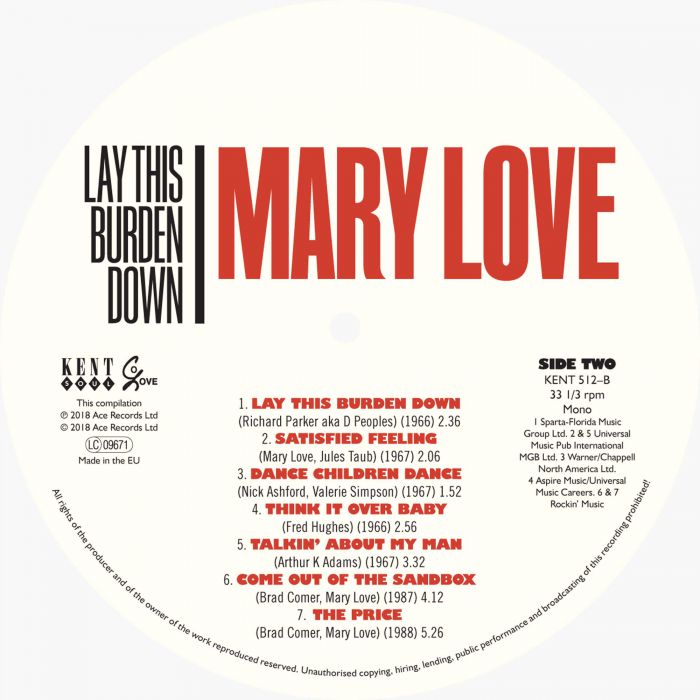
The recent release of Lay This Burden Down on vinyl by Kent Soul, an imprint of Ace Records, is a welcome addition to any record collection. It features the twelve sides Mary Love recorded for Modern Records and two songs from later in her career. This includes 1987s Come Out Of The Sandbox and 1988s The Price which closes the album.
Despite that, Mary Love released the best music of her career at Modern Records. It features on Lay This Burden Down which is fitting homage to one of soul’s finest female singers, Mary Love.
Mary Love-Lay This Burden Down-Vinyl.


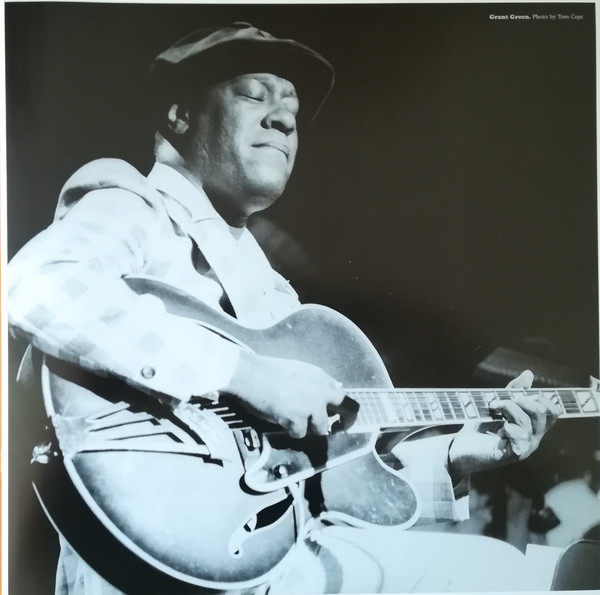
GRANT GREEN-SLICK! LIVE AT OIL CAN HARRY’S.
Grant Green-Slick! Live At Oil Can Harry’s.
Label: Resonance Records.
Nowadays, guitarist Grant Green is best known for the jazz and soul-jazz albums that he recorded for Blue Note Records during the sixties. However, that was only part of the Grant Green story, and by 1969, he had changed direction and was playing jazz-funk.
This came as a surprise to many of his fans, but Grant Green knew that if he didn’t reinvent his music, he risked becoming musically irrelevant. This was something that Grant Green wasn’t going to risk, and when he resigned to Blue Note Records in 1969 after spending two long years battling heroin addiction, this was the start of his jazz-funk years.
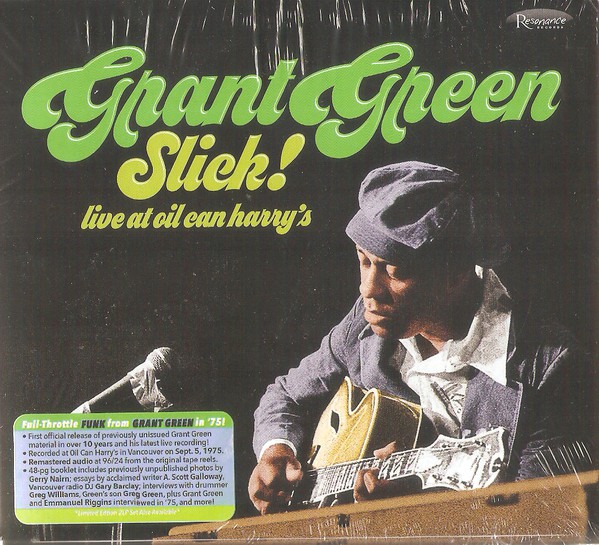
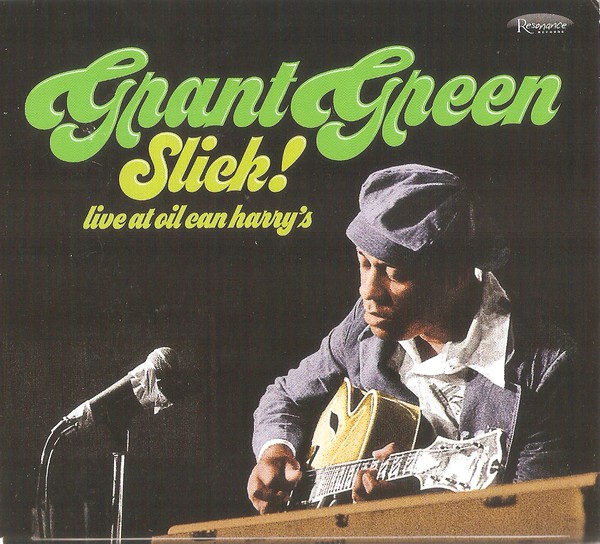
Grant Green spent the remainder of his career playing and recording albums jazz-funk with various bands. This included the quintet that accompanied him on Slick! Live At Oil Can Harry’s, which has just been released on CD by Resonance Records. Just like Funk In France From Paris To Antibes 1969-1970, which has also been released by Resonance Records on CB, Slick! Live At Oil Can Harry’s none of the tracks have been released before and are a reminder of Grant Green’s later career.
Grant Green was born on the ‘6th’ of July 1931, in St. Louis, Missouri, and the man who would later became one of jazz’s unsung heroes and most underrated guitarists became a professional musician when he was still a teenager. For the early part of his career, Grant Green was content to play in his home town of St Louis and around East St Louis. Initially, he had no inclination to move to New York until Lionel Hampton persuaded him to make the move in 1959.
A year later, in 1960, Grant Green was introduced to Alfred Lion the cofounder of Blue Note Records, who signed the twenty-nine tear old guitarist to one of jazz’s premier labels.
The Blue Note Records Years.
Between 1960 and 1965, Grant Green recorded a total of twenty-two albums for Blue Note Records as bandleader leading trios, quartets, quintets and sextets. Fourteen of these albums were released between 1960 and 1965, with the remainder released by Blue Note Records during the seventies and eighties. However, by 1965 Grant Green was already one of jazz music’s rising stars and had come a long way in five years.
Although Grant Green was a prolific recording artist between 1960 and 1965, he also found time to work with many of the other artists signed to Blue Note Records. This was akin to the great and good of jazz, and before long, Grant Green was the go-to-guitarist for many artists signed to Blue Note Records. However, within the space of two years Grant Green’s life had been transformed.
Detox In Detroit.
As 1967 dawned, Grant Green was in throes of heroin addiction which was threatening to derail his burgeoning career. Just like so many jazz musicians before him, Grant Green had succumbed to heroin, not knowing how addictive the drug was. By 1967, heroin had sunk its claws into Grant Green and was desperate to free himself from its grasp. That was why in 1967, Grant Green made the decision to move to Detroit where he would turn his back on the local music scene while he tackled his heroin addiction.
Grant Green moved his family to Detroit which became his home for the next two years as he set about beating his addiction to heroin. During 1967 and 1968, Grant Green deliberately avoided the local music scene, where he knew drugs would be freely available. He wasn’t willing to put temptation in his way having come so far, and beaten his addiction to heroin. Now he was ready to return to the Big Apple, and rebuild his career.
The Return To Blue Note Records.
After two years away, Alfred Lion resigned a newly reinvigorated Grant Green to Blue Note Records in 1969. By then, Grant Green was a changed man, and although he looked older, and his hair was starting to thin, he looked much healthier than he had two years previously.
Grant Green had also put together a new band and was moving in a new direction musically. Rather than jazz, Grant Green’s new band were playing a much funkier type of music. This new music was showcased by Grant Green during a European tour.
Having re-signed to Blue Note Records, Grant Green joined Larry Ridley and Don Lamond on a European tour, where each of the three guitarists took to the stage with the band that travelled with them, and played a short set. After the three sets, the three guitarists joined forces, and played together showcasing their considerable skills. Grant Green would return to France in October 1969, but before that, had his comeback album to record.
On the ‘3rd’ of October 1969, Grant Green and his band headed to Van Gelder Studio, Englewood Cliffs, New Jersey, to record his comeback album Carryin’ On. It found Grant Green leading a sextet on an album which marked a stylistic change for the thirty-eight year old guitarist. Carryin’ On was the first album of jazz-funk that Grant Green recorded and was the sound he embraced for the rest of his career.
Having recorded Carryin’ On, which was released in the spring of 1970, Grant Green started preparing to return to Paris, France, later that month. This was something of a surprise for Grant Green.
In the October 1969 edition of Jazz Magazine, an announcement that ORTF’s Guitar Night was due to take place at the headquarters of French National Radio with a ‘dream lineup’ of Barney Kessel, Kenny Burrell and Tal Farlow all featuring on the ‘26th’ of October. As soon as the event was announced, French jazz fans were looking forward to three of their favourite guitarists. That was until one was forced to withdraw from the event.
This was Tal Farlow, who had been suffering from asthma attacks and was unable to make the journey to France. For the organisers this was a disaster, but by the time next edition of Jazz Magazine was published, a replacement had been found…Grant Green.
While Grant Green was one of the biggest names in American jazz, French jazz fans didn’t appreciate the talented St Louis born guitarist. When Jazz Hot ran its reader’s poll, Grant Green ended up in eighth place in the list of guitarists. As a result, the announcement of Grant Green as Tal Farlow’s replacement was greeted with a lack of enthusiasm. It was going to take a lot for Grant Green to win over the French jazz fans.
When Grant Green arrived in Paris to play at the ORTF’s Guitar Night on the ‘26th’ of October 1969, he was joined by a slightly different, and slimmed down lineup of his band. Grant Green was about to lead a trio, which didn’t feature his usual drummer Idris Muhammad, who was unable to make the trip. Instead, drummer Don Lanond, bassist Larry Ridley and Grant Green would take to the stage at Studio 104, La Maison De Le Radio. That night, Grant Green took to the stage first, and initially, the audience weren’t exactly enthusiastic. However, by the time he left the stage, Grant Green had won over the audience, who realised they had underestimated the guitarist. Forty-nine years later, Grant Green’s performance featured on Funk In France From Paris To Antibes 1969-1970.
Buoyed by the reception at Studio 104, La Maison De Le Radio, on the ‘26th’ October 1969, Grant Green headed home, and this new chapter in his career continued apace. This included recording a new album.
Green Is Beautiful was recorded at Rudy Van Gelder Studio, Englewood Cliffs, New Jersey, on January the ’30th’ 1970, and featured a very different lineup of Grant Green’s band. This time around, Grant Green led an octet that featured drummer Idris Muhammad, bassist Jimmy Lewis and conga player Cándido. The expanded lineup of Grant Green’s band worked their way five cover versions as the bandleader continued his journey into jazz-funk.
In the spring of 1970, Carryin’ On was released and showcased Grant Green’s new jazz-funk sound. Carryin’ On was well received, although some of Grant Green’s older fans weren’t won over by the album. They preferred his earlier albums, although a new audience embraced Grant Green’s newly updated sound. Later, Carryin’ On proved popular amongst collectors of acid jazz and rare groove.
By July 1970, Green Is Beautiful was released and found Grant Green growing into his new sound on an album that featured a tougher, funkier, brand of R&B. This new sound Grant Green was about to showcase at the Festival Mondial du Jazz Antibes, in 1970.
Grant Green’s appearance at the Festival Mondial du Jazz Antibes is also documented in Funk In France From Paris To Antibes 1969-1970, and documents his transition from jazz to jazz-funk. This became Grant Green’s trademark sound for the rest of his career.
Following his return from the Festival Mondial du Jazz Antibes, his new album Visions was released by Blue Note Records in late summer of 1971 and was reasonably well received. It wasn’t regarded as a Grant Green classic, and nor was Shades Of Green, which was released by Blue Note Records to mixed reviews in late 1971. Not every critic was convinced by Grant Green’s decision to reinvent himself and move in the direction of jazz funk.
The following year, 1972, Grant Green made history when he released The Final Comedown on Blue Note Records. It was the first soundtrack album the label had released, and what was Grant Green’s first venture into the world of soundtracks was well received by critics and later, and a cult following amongst fans of Blaxploitation soundtracks.
On April the ’21st’ 1972, Grant Green arrived at the Lighthouse Café, Hermosa Beach, California, to record another live album. This became Live At The Lighthouse, which was released later in 1972 and features one of his best performances of the jazz-funk era. He rolls back the years on Live At The Lighthouse which features some virtuoso performances by the bandleader and some peerless interplay. This was fitting as Live At The Lighthouse was the last album Grant Green recorded for Blue Note Records.
When Grant Green left Blue Note Records in 1974, it marked the end of an era, as he had spent his entire career signed to the label. He had signed to the label in 1960 and left for the first time in 1967. After spending two years detoxing in Detroit, Grant Green re-signed to Blue Note Records in 1969. That was the start of his jazz-funk years, which would continue even after Grant Green left Blue Note Records.
By 1975, Grant Green’s career had stalled and he found himself at a crossroads. He was living in Detroit and found himself without a record label for the first time in his career, and record labels weren’t exactly fighting for his signature. That wasn’t a surprise, as the albums he had released for Blue Note Records during the seventies varied in quality. His albums lacked the consistency that he had enjoyed earlier in his career. This meant that some record companies may have been reluctant to sign the forty-year old guitarist. However, Grant Green was determined to get his career back on track.
The problem was that Grant Green’s music wasn’t finding a younger audience. Mostly, his music was popular amongst older jazz fans who had discovered his music during his first spell with Blue Note Records. However, even some of his long-term fans had turned their back on Grant Green during his jazz-funk years, and the audience for his music was becoming smaller. Grant Green knew that he needed to do was attract a younger audience.
This was easier said than done, and Grant Green vowed to make himself fan friendly. He wanted to be seen as approachable and connect with his fans when he played live. The last thing he wanted to do was alienate his fans, and he vowed to take care not to be seen as aloof, and was always approachable when he arrived at a venue to play live. Now that he had no record contract, playing live was putting food on the table. This included the gig that Grant Green pencilled into his diary on September the ‘5th’ at Oil Can Harry’s, in Vancouver, Canada.
Slick! Live At Oil Can Harry’s.
By the time Grant Green was booked to play the gig at Oil Can Harry’s, the forty-year old bandleader and guitarist in the middle of his pop-funk period, and at home, was listening to what can only be described as an eclectic selection of music. This included everything from The Beatles, and Bobby Womack right through to the self-styled godfather of funk James Brown, Stanley Clarke, Stevie Wonder, The Ohio Players and The O’Jays. These artists and bands would influence and inspire Grant Green when he led his band on September the ‘5th’ at Oil Can Harry’s, which was being recorded for posterity.
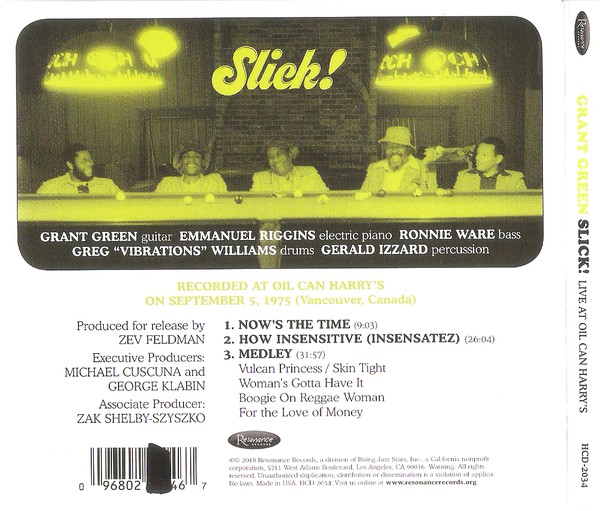
By the time the gig at Oil Can Harry’s arrived, Grant Green’s band featured a number of familiar faces who had worked with him when he was signed to Blue Note Records in the early seventies. The rhythm section featured drummer Greg Williams and bassist Ronnie Ware while Emmanuel Riggins on Fender Rhodes and percussionist Gerald Izzard joined guitar Grant Green.
When Grant Green took to the stage at Oil Can Harry’s, he was introduced by Vancouver based DJ Garry Barclay, who explains that the show was going to be played live a week later on CHQM-FM radio station. As soon as the applause died down, Grant Green’s jazz-tinged guitar rings out, and he plays the first few notes of a brisk cover Charlie Parker’s Now’s The Time. It had a been a favourite of Grant Green when he played live during the early seventies. He’s accompanied by a walking bass, the soulful chitchat of the drums and congas while the Fender Rhodes fills out the arrangement and adds a warmth. Meanwhile, Grant Green rolls back the years playing with speed and fluidly as the track is extended to nine majestic and almost flawless minutes. However, just a couple of times, Grant Green fluffs a line, during what’s a glorious example of bop blues.
Very different is the cover of Antonio Carlos Jobim’s How Insensitive (Insensatez), which seems an unlikely track for Grant Green to cover. Unlike many other jazz guitarists, Grant Green hadn’t embraced samba, but with the help of his band delivers a sympathetic cover of this familiar track which allows the guitarist and bandleader to showcase his talent and versatility during this twenty-eight minute epic.
Slick! Live At Oil Can Harry’s closes with a medley that opens with Stanley Clarke’s Vulcan Princess which is initially haunting and otherworldly before veering between funk and fusion, while the Ohio Players’ Skin Tight is sensual and funky. After that, a brief burst of Marvin Gaye’s Trouble segues into soul man Bobby Womack’s Woman’s Gotta Have It. Here, Grant Green rolls back the years during a musical masterclass on this uber funky track where a bluesy bridge brings in a verse of the sunshine funk of Stevie Wonder’s Boogie On Reggae Woman. Closing the medley is a The O’Jays’ Philly Soul favourite For The Love of Money, which is reinvented and becomes funky and soulful as this thirty-two minute, five song medley draws to a close. It’s no ordinary medley and this genre-melting opus is spread across sides three and four of Slick! Live At Oil Can Harry’s. During this genre-melting medley that takes a series of twists and turns, as Grant Green and his band seamlessly switch between musical genres and showcase their talent and versatility, before taking a well deserved bow.
Sadly, after concert that recently became Slick! Live At Oil Can Harry’s, which was recorded on September the ‘5th’ 1975, very few of Grant Green’s concerts were recorded. At the time, Grant Green and his band most likely thought that there was plenty of time to record live albums in the future. Sadly, that wasn’t to be.
In 1976, Grant Green recorded The Main Attraction for Creed Taylor’s Kudu imprint, and when this album of funky soul-jazz was released critics weren’t impressed. After that, Grant Green left Kudu and didn’t record another album until 1978.
This was Easy, which was recorded between the ‘17th’ and ‘20th’ April 1978, for the Versatile label. However, when the album which is also known as Last Session was released later in 1978, tragedy had struck.
Grant Green’s health had deteriorated during 1978, and he was forced to spend much of that year in hospital. During this period, Grant Green wasn’t earning money, and before long the guitarist’s finances were in a perilous state.
Against doctor’s advice, Grant Green headed back out on the road to try to make some much-needed money. His final gig was at his fiend George Benson’s Breezin’ Lounge in New York, but sadly, Grant Green collapsed in his car of a heart attack and died on January the ’31st’ 1979 aged just forty-three. That day, jazz music lost one of its great guitarists.
His recording career belatedly began in 1960 when twenty-nine year old Grant Green signed to Blue Note Records for the first time. This was the label that Grant Green called home for the majority of his career, and where he recorded the best music of his career. This included the start of Grant Green’s jazz-funk years, which continued after he left Blue Note Records.
By the time he left Blue Note Records in 1974, Grant Green’s best years were behind him, and neither The Main Attraction nor Easy matched the quality of albums he had released during the Blue Note Records’ years. Despite that, Grant Green and his band gave an almost flawless performance when they took to the stage at Oil Can Harry’s on the ‘5th’ of September 1975 and flitted between blues bop, funk, fusion, jazz and jazz-funk. Fortunately, the CHQM-FM radio station had the tapes running at Oil Can Harry’s, but sadly, they weren’t unearthed by Resonance Record until 2017.
These tapes became Live At Oil Can Harry’s which Resonance Record released as a double album for Record Store Day 2018. Live At Oil Can Harry’s which is a hidden gem, is a welcome release, and a reminder of one of jazz’s unsung heroes and most underrated guitarists, as he rolled back the years one final time, during what sadly, proved to be the twilight of his career
Grant Green-Slick! Live At Oil Can Harry’s.

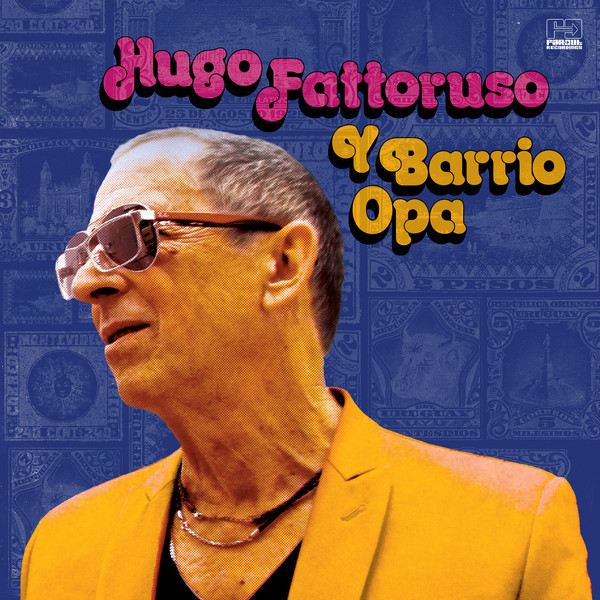
HUGO FATTUOSO-Y BARRIO OPA.
Hugo Fattoruso-Y Barrio Opa.
Label: Far Out Recordings.
Composer, arranger and multi-instrumentalist Hugo Fattoruso, was born in the Uruguayan capital of Montevideo on the ‘29th’ June 1943, and formed his first band Trío Fattoruso in 1952 aged nine. Sixty-six years later and Hugo Fattoruso is still involved in music and recently, released a new album Y Barrio Opa on Far Out Recordings. It’s the latest album from an artist and musician who has dedicated his life to music, and released an eclectic selection of albums. Y Barrio Opa is just the latest release from Hugo Fattoruso one of the biggest names in Uruguayan music. His story began in 1952,
Hugo Fattoruso joined the family group Trío Fattoruso as a nine-year old in 1952, and what was his first ever band, was together for six years. However, in 1958 it looked as if it was the end of the road for Trío Fattoruso. Nothing more was heard of the group until the dawn of the new millennia, when Hugo Fattoruso would reformed Trío Fattoruso in 2000. By then, his musical career had six decades and he was a veteran of many groups.
This included The Hot Blowers who were formed in 1959, when Hugo Fattoruso was sixteen. They were together for four years, until the band went their separate ways in 1963.
Los Shakers
Another year passed before Hugo Fattoruso and his brother Osvaldo formed the four piece band Los Shakers. This came after they saw the film A Hard Day’s Night which starred The Beatles. They would heavily influence Los Shakers musically, and the band even copied the way the Fab Four dressed.
Just a year after Los Shakers was founded, the band signed to Odeon imprint of EMI in Argentina in 1965 and became part of the Uruguayan Invasion of South America. When Los Shakers released their debut single Break it All later in 1965, the group was briefly billed as The Shakers. However, when they returned with their eponymous debut album in 1965 they were now called
Los Shakers.
In January 1966, Los Shakers made their one and only attempt to break into the lucrative American market when they released Break It All. However, the album failed to make any impact in America, Los Shakers decided to concentrate on Latin America and especially the Argentinian market.
Ten months later, in November 1966, Los Shakers released Break It All, which was their breakthrough album. By the, Los Shakers were being referred to in the press as “The South American Beatles.” This was what Hugo and Fattoruso had been working towards. They may have achieved their goal, but some critics believed that they were merely copying The Beatles, and their music lacked originality.
These comments were ironic, because when Los Shakers released their third album La Conferencia Secreta del Toto’s Bar in 1968, it was hailed as the Latin American equivalent of Sgt. Pepper’s Lonely Hearts Club Band. However, Los Shakers’ record label neither liked nor approved of the new sound, and failed to promote the album. For Los Shakers this was the end of the road.
Opa.
In 1969, Hugo Fattoruso left Uruguay behind, and moved to New York where he founded Opa. They fused Candombe which is the traditional rhythm of Uruguay with rock, jazz, funk and various other Latin American rhythms to create an irresistible and inimitable Afro-Uruguayan sound. This would influence and inspired many artists over the next few years and beyond.
Before that, Hugo Fattoruso worked with Airto Moreira and played on Fingers, which was released in 1973 and became one of the percussionist’s most successful albums. Three years later, in 1976, played on Flora Purim’s groundbreaking album. However, the same year, Opa released their much-anticipated debut album.
Seven years after Opa was founded, they released their critically acclaimed debut album Goldenwings in 1976. Buoyed by its reception Opa returned with their sophomore album Magic Time following in 1977. It was released to plaudits and praise and it wasn’t until 1981 that Opa realised A Los Shakers four years later in 1981. Five years later, Hugo Fattoruso released his solo album Hugo Fattoruso with Opa’s fourth album En Vivo following in 1988. By then, Hugo Fattoruso was living in Brazil and had begun a new chapter in his career.
As the nineties dawned, Hugo Fattoruso released his solo album Oriental in, but after that, much of his time was spent working with various Brazilian artists. That was until Opa decided to record a new album, Back Home which was released in 1996. This was Opa’s first album in eight years and was their swan-song.
In 1997 Hugo Fattoruso returned with his first new album in seven years, Homework. However, the highlight of 1997 for Hugo Fattoruso was arranging and working on Milton Nascimento’s 1997 World Grammy Award winning album Nascimento.
Three years later, in 2000, Hugo Fattoruso reformed Trío Fattoruso, and they played together for the first time in forty-two years. Still though, Hugo Fattoruso found time to work on a variety of other projects.
This included his solo album Ciencia Fictiona, which was released in 2004. After that, Hugo Fattoruso spent much of the next five years working with other artists and collaborating on albums with Tomohiro Yahiro, Ray Tambor and Aska Strings. However, in 2011 Hugo Fattoruso returned with Acorde On and followed this up with Fatto In Casa in 2014. Despite turning seventy-one, Hugo Fattoruso was as busy as ever.
Hugo Fattoruso then jailed forces with Leo Maslíah recorded Montevideo Ambiguo, which was released in 2015. That was Hugo Fattoruso’s last release for the best part of three years.
Y Barrio Opa.
The next album that Hugo Fattoruso released was Y Barrio Opa, which was released in 2018, and featured an all-star cast of Uruguayan musicians. This included Hugo Fattoruso’s son Francisco who plays bass on Y Barrio Opa. He’s a talented musician whose followed in his father’s footsteps.
For Y Barrio Opa, Hugo Fattoruso wrote three new compositions and cowrote the other six songs. His new compositions were Botijas, El Romance del Sordo and Llamada Insólita. Hugo Fattoruso wrote Trenes de Tokyo and For You To Be Proud Albana Barrocas and they then penned Candombelek and Candombe Alto with Wellington Silva. Other tracks included the Hugo and Osvaldo Fattoruso composition Antes/Goldenwings which was originally recorded by Opa. It was joined by La del Cheche which Hugo and Christian Fattoruso wrote with Gustavo Etchenique. The other track on Y Barrio Opa was Francisco Fattoruso’s Candombe Beat Funk. These tracks were recorded at the Sondor Studio in Montevideo.
Hugo Fattoruso was joined by Joe Davis the founder of Far Out Recordings, who oversaw production. He watched on as a rhythm section of drummer Tato Bolognini, bassist Francisco Fattoruso and guitarist Nicolás Ibarburu. They were joined by percussionists Guillermo Díaz Silva, Mathías Silva, Wellington Silva and Albana Barrocas who added vocals. Hugo Fattoruso played keyboards, added vocals and took charge of production. With such a talented band accompanying him, it wasn’t long before Y Barrio Opa was completed.
With Y Barrio Opa completed, it was recently released by Far Out Recordings and was Hugo Fattoruso’s first solo album in four years. However, it’s been well worth the wait.
Hugo Fattoruso and his top class band take as a starting point for Y Barrio Opa, Opa’s original sound. To that they add Afro-Uruguayan rhythms, a healthy dose of funk, fusion, jazz harmonies, jazz-funk and Candombe drumming which comes courtesy of the De Silva brothers. They play their part in what’s a captivating, genre-melting album from Hugo Fattoruso… Y Barrio Opa.
It opens with the slow burner La del Cheche which gradually reveals its secrets as Hugo Fattoruso and his band play with a fluidity, drawing inspiration from Opa as they combine elements of funk, fusion, jazz, and jazz-funk with Afro-Uruguayan rhythms. In doing so, this flawless track whets the listener’s appetite for the rest of this musical feast.
This includes Botijas which breezes along as the piano carries the melody, while Hugo Fattoruso scats and his rhythm section unleashes rolling waves of jazzy rhythms. Soon, the band is in full flight, as they play with freedom, fluidity, speed and accuracy creating washes of melodic, genre-melting music.
The carefully crafted Candombe Beat Funk is built around the Fattorusos. Son Francisco ensures the funky, bubbling and percussive arrangement swings before his father’s keyboards enter. These rhythmic movements play starring roles, but it’s Hugo Fattoruso’s keyboards that take centre-stage as he rolls back the years and steals the show as funk meets jazz.
El Romance del Sordo sees the tempo rise, as the rhythm section lock down the groove. Meanwhile a myriad of percussion is part of the backdrop as Hugo Fattoruso unleashes another spellbinding performance. This inspirers guitarist Nicolás Ibarburu who steps forward and delivers one of his finest solos. After that, Hugo Fattoruso plays a flawless fleet-fingered keyboard solo plays a starring role, and he scats, as if he’s not got a care in the world.
The tempo drops on the cinematic, soulful and sultry sounding Trenes de Tokyo. As it meanders and shuffles along revealing its hip swaying, feelgood sound. Next up is Candombelek, where layers of shuffling percussion combine with exotic vocals that bring to mind exotic faraway places. Meanwhile, Hugo Fattoruso’s electric keyboards sit back in the mix, letting the vocals take centre-stage. When they drop out Hugo Fattoruso’s then take centre-stage against the percussive arrangement. The vocals, percussion and keyboards prove to be a potent and successful combination. Candombe Alto is regarded as the partner piece to Candombelek, but is a much more explosive track with searing guitar, urgent Afro-Cuban rhythms and keyboards combining. Hugo Fattoruso plays with speed and accuracy as his keyboards climb and soar high above the arrangement and reaches new heights.
Sci-fi synths and keyboards combine on Llamada Insólita as the rhythm section drop the tempo and the arrangement meanders almost lazily along. However, it’s the keyboards that are at the heart of the arrangement which features futuristic sounds and synths strings. Still, beauty is omnipresent as this melodic and filmic track reveals its secrets.
Antes is another new track which seamlessly gives way to a remake of Goldenwings, which was the title track of Opa’s 1976 eponymous debut album. The track where Opa combined funk and disco was a favourite of DJs and dancers and became a club hit. However, the remake ‘borrows’ and incorporates the melody to Summertime as the track heads in new and unexpected directions. This includes jazz, Latin and rock during what’s another genre-melting track.
For You To Be Proud closes Y Barrio Opa, and fittingly, Hugo Fattoruso’s keyboards play a leading role in this futuristic and filmic track. It’s quite different to previous tracks but shows Hugo Fattoruso’s versatility and ability to innovate.
Y Barrio Opa which was recently released by Far Out Recordings, is Hugo Fattoruso’s first album in four years. It finds one of Uruguay’s finest musicians returning with a carefully crafted genre-melting album Y Barrio Opa.
The building blocks for Y Barrio Opa is the Opa sound, and Hugo Fattoruso add Afro-Uruguayan rhythms, a healthy dose of funk plus fusion, jazz harmonies, jazz-funk, Latin, rock and Candombe drumming. It’s a melodic and potent musical potpourri from one of the legends of music Hugo Fattoruso’s whose new album Y Barrio Opa is without his finest post-millennium solo album.
Hugo Fattoruso-Y Barrio Opa.
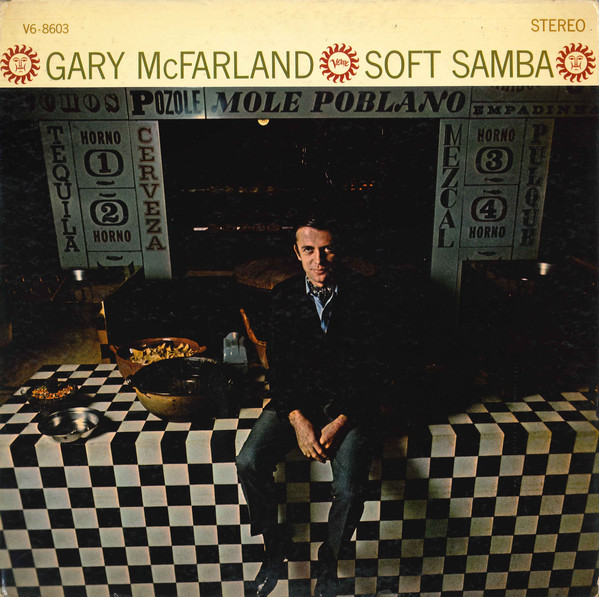
GARY MCFARLAND-THE IN SOUND AND SOFT SAMBA.
Gary McParland-The In Sound and Soft Samba.
Label: Ace Records.
Composer, arranger, vibraphonist and vocalist Gary McParland was born on October the ’23rd’ 1933, in Los Angeles, but moved to Grants Pass, in Oregon as a fifteen year old. After graduating from high school,Gary McParland headed to college where he became interested in jazz.
Despite his burgeoning interest in jazz,Gary McParland was content to listen to music, and only started to learn to play an instrument when he joined the army. Gary McParland tried the trumpet, trombone and then the piano, with little success. It was starting to look like Gary McParland wasn’t musically inclined. That was until he discovered the vibes, and Gary McParland knew this was the interment for him.
Within two years, Gary McParland had joined a band led by Santiago Gonzales who spotted the potential in the young vibes player. He encouraged Gary McParland to study music, and he received a scholarship from the Lennox School of Jazz where he encountered the Modern Jazz Quartet’s pianist John Lewis.
After leaving the Lennox School of Jazz, Gary McParland headed to the prestigious Berklee School of Music. This was the opportunity of a lifetime, but Gary McParland left Berklee after just one semester and moved to New York.
It wasn’t long before the New York based jazzers were taking notice of Gary McParland’s inimitable and distinctive compositions. The Modern Jazz Quartet covered Why Are Blue, Gerry Mulligan recorded Weep and Chuggin’ and Johnny Hodges covered Knuckles. By then, Gary McParland was already regarded a rising star of jazz.
Soon, Gary McParland came to the attention of Creed Taylor, who asked him to arranged All The Sad Young Men for Anita O’Day. It was released on Verve in 1962, and by then, Creed Taylor had signed Gary McParland to Verve Records.
He had recorded his debut album with producer Creed Taylor over a three days period in New York in November 1961. When Gary McParland released his debut album later in 1962, The Jazz Version Of How to Succeed In Business Without Really Trying, it was to widespread plaudits and praise.
Not long after this, Gary McFarland was asked to write the charts for Stan Getz’s Big Band Bossa Nova. Getting the opportunity to arrange and conduct Stand Getz and his band was showed that Gary McFarland’s stock was rising. The album also left a lasting impression on him.
The following year, 1963, The Gary McFarland Orchestra released their Creed Taylor produced eponymous debut album. It featured a guest appearance by pianist Bill Evans, but it was Gary McFarland whose compositions and vibes playing that attracted the attention of critics. Gary McFarland critics believed had a big future ahead of him.
Gary McFarland then led Orchestra USA on their 1963 album Debut, and in 1964 the Gary McFarland Sextet released Point Of Departure on the Impulse label. This bop-oriented album was produced by Bob Thiele and was released to the same critical acclaim as previous albums.
Buoyed by the success of Point Of Departure, Gary McFarland released Reflections In The Park and the critically acclaimed Essence in 1965. However, Gary McFarland’s next album was very different to everything he had released up until then.
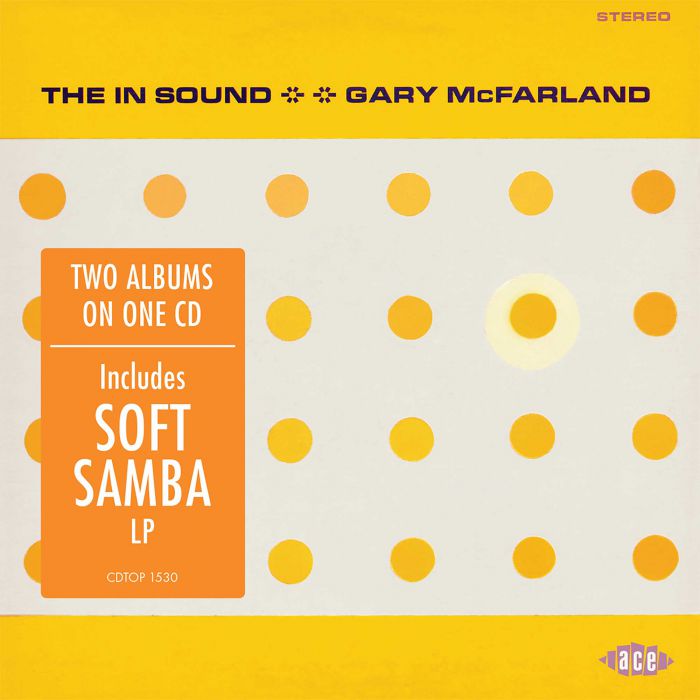
This was The In Sound, which was paired with Soft Samba, and released on one CD by Ace Records. It’s an opportunity to discover or rediscover two of Gary McFarland’s finest albums.
Soft Samba.
The first was Soft Samba, where Gary McFarland decided to give twelve familiar songs a makeover by combining Latin rhythms and vocalese. It was a stylistic departure from Gary McFarland’s previous albums, but was one with commercial potential.
Especially with covers of Lennon and McCartney’s She Loves You, A Hard Day’s Night, And I Love Her and I Want To Hold Your Hand. They were joined by Linda Laurie and Jerry Mack’s Ringo, Won’t You Marry Me, Lionel Bart’s From Russia With Love, Sashsa Distel and Jack Reardon’s The Good Life, More (Theme from Mondo Cane), Percy Faith and Mack David’s The Love Goddess, Johnny Mandel and Johnny Mercer’s Emily. The other two tracks Gary McFarland chose for Soft Samba. were California, Here I Come and La Vie En Rose. Now he had to reinvent these tracks
Gary McFarland headed to the Van Gelder Studio, Englewood Cliffs, New Jersey in 1964 with producer Creed Taylor. They were joined by a talented band that featured ten top musicians. Among them, were pianist Antônio Carlos Jobim, guitarist Kenny Burrell and percussionist Willie Bobo who helped Gary McFarland give twelve familiar tracks and gave them a Latin twist.
When Soft Samba was released in March 1965, jazz critics were shocked by how different the music on the album was. It featured Latin rhythms and vocalese on what was critics saw as an album of pop covers. This wasn’t jazz the critics cried. For goodness sake, Gary McFarland even whistles on Soft Samba was the response from shocked and disappointed critics. They were in the minority.
Other critics were won over by this irresistible musical cocktail, where Gary McFarland and his band took familiar songs in a new direction and reinvented them. There was even a nod to Stan Getz, on what was a captivating fusion of melodic feelgood music. A key ingredient was the Bossa Nova, which was provided by its founding father Antônio Carlos Jobim. The Latin rhythms, with their Soft Samba sound were combined with pop and a hint of jazz. All this was combined by Gary McFarland. His elegant, individual approach to the vibes plays an important roll, and sometimes the jazzer turns crooner as he hums and scats: “ba-ba, baya-baya, byu-byu.”
Meanwhile, there’s highlights aplenty on Soft Samba, including And I Love Her, From Russia With Love, The Good Life, The Love Goddess, Emily and the album closer La Vie En Rose. Across LA, Soft Samba was providing the soundtrack to the smartest parties, and elsewhere, bachelors mixed cocktails in the post modern flats as the album played in the background. Soft Samba which was an album that didn’t take itself too seriously, and was part of the soundtrack to 1965.
Ironically, and despite jazz critics and purists loathing Soft Samba, it was nominated for the Grammy Award For The Best Jazz Performance. Alas, it lost out to Ramsey Lewis’ The In Crowd. However, Gary McFarland had been vindicated and was set to do it all again on the followup The In Sound.
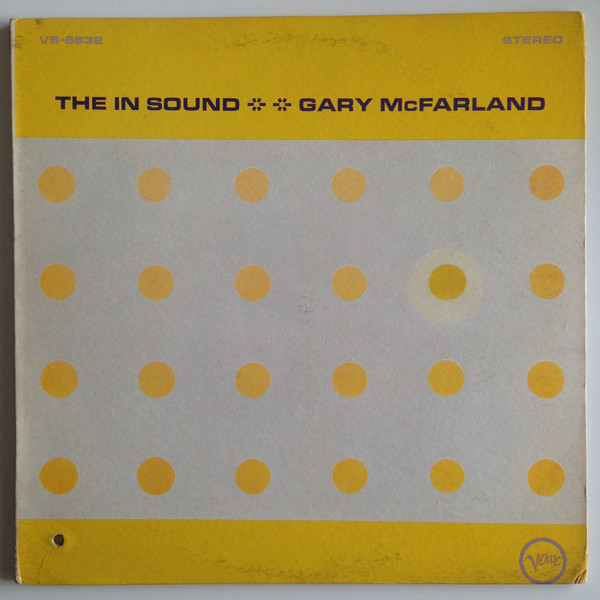
The In Sound.
After the relative success of Soft Samba, Gary McFarland decided to record the sequel, The In Sound. It found the Rolling Stones’ (I Can’t Get No) Satisfaction feature on album that consisted of old songs, new songs and familiar songs.
For The In Crowd, which featured just ten tracks, Gary McFarland penned The Hills of Verdugo, Over Easy, Fried Bananas and Wine and Bread. They were joined by Piero Piccioni’s The Moment of Truth, Frank Loesser’s Bloop Blee and Nino Oliviero, Bruno Nicolai and Alan Brandt. While many people knew these tracks, everyone knew. Especially Bacharach and David’s Here I Am which was joined by Cole Porter’s I Concentrate on You and Jagger and Richards’ (I Can’t Get No) Satisfaction.
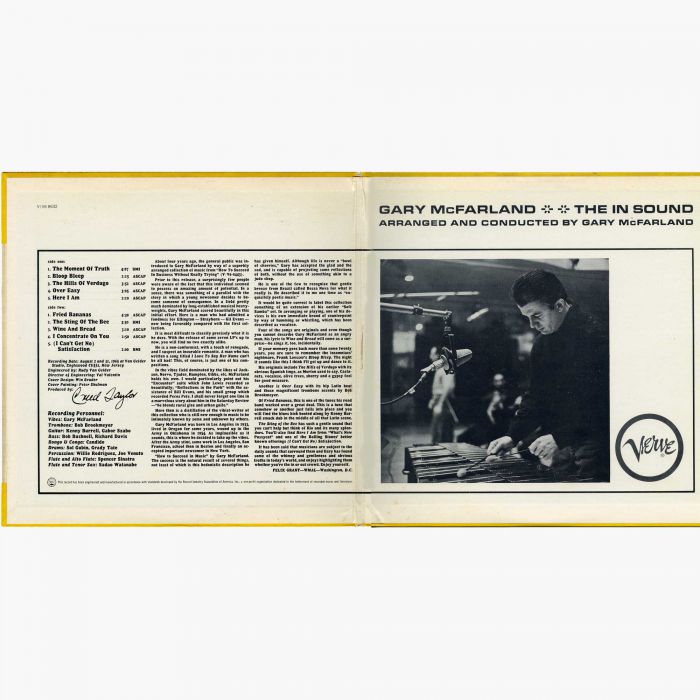
Once again, Gary McFarland headed to the Van Gelder Studio, Englewood Cliffs, New Jersey with producer Creed Taylor and between the ‘2nd’ and ‘3rd’ August 1965 The In Sound with another talented band. It featured guitarists Gábor Szabó and Kenny Burrell, percussionist Willie Rodriguez, double bassist Richard Davis and Candido on bongos and congos. Over a two-day period,Gary McFarland and his band which featured twelve other musicians recorded the ten tracks that became The In Crowd.
With The In Crowd due to be released later in 1965, Verve’s PR department got behind the album which was promoted heavily. Even some of the critics that had slated Soft Samba, gave The In Crowd grudging praise. Other critics were won over by the album, and felt that it surpassed Soft Samba.
It seemed that Gary McFarland had settled into this new style, as he led his band during his four original songs and six cover versions, which they took in a new direction and reinvented. Among the highlights of The In Crowd were The Moment of Truth, The Sting of the Bee, Here I Am, I Concentrate and the album closer (I Can’t Get No) Satisfaction. These tracks and the rest of The In Crowd were melodic and tinged with humour, as The In Crowd was another album that didn’t take itself too seriously.
The In Crowd was melodic, feelgood music where once again, Gary McFarland combined Latin rhythms and his unique vocalese. Just like its predecessor, The In Crowd was a fusion of Bossa Nova, soft samba pop and jazz. It seemed that Gary McFarland had settled into his new style and was embracing it on what was a memorable, melodic, kitsch and ironic album that didn’t take itself seriously, and was an addition to pop art culture.
When The In Crowd was released, Gary McFarland’s new album found enough of audience that he would repeat the experiment in 1967 with The Samba Strings. However, by then, Gary McFarland was back recording music that won the approval of the critics…jazz.
It was jazz music that led to Gary McFarland being called: “the most gifted arranger since Duke Ellington.” He was a versatile arranger who created inventive and melodic music. Proof of that is The In Sound and Soft Samba which have just been reissued by Ace Records one CD. It’s a welcome reissue of a two albums by an arranger, composer and musician who could’ve become one of the greats.
Sadly, Gary McFarland never got the chance to show his full potential. Just five years after the release of The In Crowd, Gary McFarland died under what were mysterious circumstances to the say the least. He had spent the evening in 55 Bar, inNew York City on the ‘2nd’ of November 1971, and one of the drinks that Gary McFarland consumed had been spiked. A post-mortem revealed that he had consumed a poisoned drink which proved fatal, and robbed music of a great talent.
Two reminders of Gary McFarland’s potential and talent are The In Sound and Soft Samba, where he combines Latin rhythms and vocalese during his pop-jazz period. The In Sound and Soft Samba are Gary McFarland’s finest hour, and reminder of an arranger, composer and musician who could and should’ve gone on to become one of greats, and written his name into musical history in large letters.
Gary McParland-The In Sound and Soft Samba.

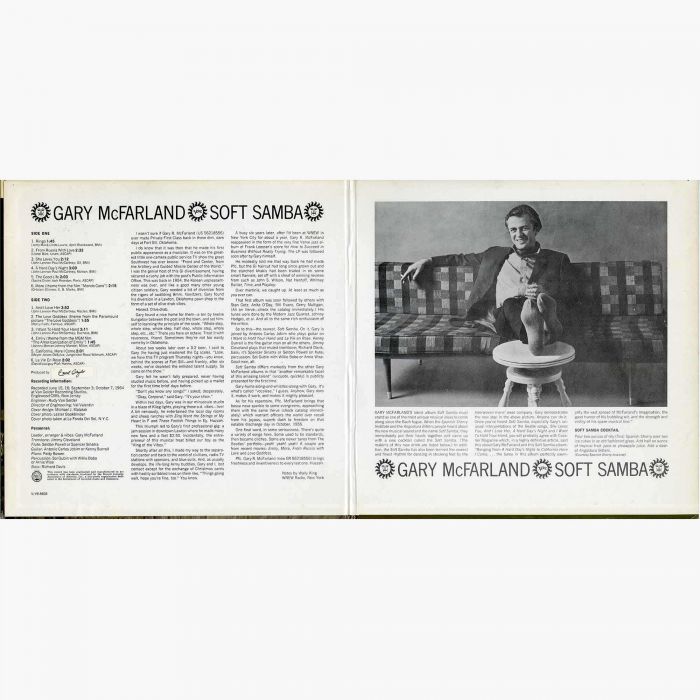
MUSIC CITY BLUES AND RHYTHM.
Music City Blues and Rhythm.
Label: Ace Records.
For anyone with even a passing interest in blues music, Ace Records’ new compilation Music City Blues and Rhythm will be of interest to them. It features twenty-eight tracks from the vaults of the Music City label, which was based in Berkeley, California. That was where the story started for Alec Palao who compiled Music City Blues and Rhythm with Roger Armstrong.
Around ten years ago, Alec Palao arrived at Music City Records to pickup some tapes from the vaults. Little did he know that he was going to have to transport and then listen to 1,500 reels of tape. That should’ve come as no surprise as Music City Records was founded in the early fifties and was still active right up to the mid-seventies.
Ironically, when Ray Dobard founded Music City Records he never intended to run the label for the best part of a quarter-of-a-century. Instead, Ray Dobard hoped to make some quick music during the fifties and sell Music City Records. Ray Dobard was a businessman first and foremost and wanted to make money. However, as it turned out, Ray Dobard ran Music City Records for three decades, which explained the vast quantity of tapes.
Over thirty years later, and Alec Palao took away the 1,500 reels of tape and began looking through them and listened to them. This was obviously time-consuming, but was a labour of love, as the Music City Records’ archives are regarded by many connoisseurs of blues as the holy grail.
In an instant, he was transported back to the fifties, when Ray Dobard’s Music City Records was releasing an eclectic selection of blues music. Unlike many other blues labels, Music City didn’t release much of what’s regarded as hard blues. The exception is Al Smith’s memorable 1954 single On My Way which features on Music City Blues and Rhythm. The rest of the compilation is best described as eclectic selection of blues music.
Music City Records’ founder Ray Dobard knew what type of blues people wanted to hear during the fifties, and it wasn’t the pure form of the blues that had once been popular. Ray Dobard paid attention to the blues music people were buying at his record shop at 1815 Alcatraz Avenue. He had noticed that different types of people were buying different types of records.
The more urbane black community seemed to prefer jazz and the adult orientated cool blues favoured by Nat Cole and Charles Brown. While Ray Dobard catered for the needs of these record buyers, he soon discovered what type of music was the most popular and indeed profitable.
This was the vocal groups were growing in popularity amongst teenagers. They were coming into his record store for the first time and regularly buying records. Ray Dobard was determined to have the music in stock that they wanted to hear. Even if this meant releasing it on Music City Records.
Meanwhile, older record buyers were buying the different sub-genres of the blues. Some wanted the country blues that reminded them of home, while others wanted a more contemporary sound. Just like with vocal the teenagers who were frequenting his shop, Ray Dobard was determined to cater for the needs of blues fans. This included by recording new singles which he would release on Music City Records.
The only problem Ray Dobard was the prohibitive cost of hiring a recording studio. However, the recordings of Al Harris and Alvin Smith that took place at Bay Area, Sound Recorders in San Francisco were professional sounding and in many cases superior to what other smaller labels were releasing. While the sound quality of the music he was releasing was important to Ray Dobard, was the bottom line.
That was why in 1954, the forever self-confident Ray Dobard decided to build his own studio in a room next to his record shop. Build is a bit of an exaggeration. The only acoustic treatment Ray Dobard’s used for his nascent studio was sticking some egg boxes to the walls. This many musical impresarios like Ray Dobard thought was effective, as he began recording artists signed to Music Hall Records.
To keep costs to a bare minimum, Ray Dobard decided to engineer the sessions himself. The only problem was he had no engineering experience and the quality sometimes suffered in the early days. This wasn’t Music Hall Records’ only problem.
Music Hall Records was run by Ray Dobard who fulfilled every role in the company. While his engineering skills were sometimes lacking in the early days, so were his skills as an A&R man. He sometimes took a gamble on an artists, but sometimes they weren’t good enough. Others were talented and released singles with potential, but weren’t promoted properly and sunk without trace. However, Ray Dobard honed his A&R skills and he later became a good judge of artists.
Proof of that is Music City Blues and Rhythm, which featured twenty-eight tracks. This includes Alvin Smith, Al Harris, Sidney Grande, Roland Mitchell, Jasper Evans, Johnny George, The Richmond Boys, Jimmy Raney, Pee Wee Parham and Little Willie Littlefield. Some of these tracks were released during the fifties and others have lain unreleased for over sixty years. There’s even some mystery songs by unknown vocalists. Music City Blues and Rhythm is a song where there’s highlights aplenty.
It’s Music City Jump an unreleased instrumental by Alvin Smith that opens Music City Blues and Rhythm. This dancefloor filler sounds like the type of music that would be heard in a local juke joint in the mid-fifties. Another unreleased track from Alvin Smith is Brand New Baby where he takes charge of a vocal that veers between joyous to boastful as he sings of his newfound love. Very different is On My Way, which was the B-Side to Alvin Smith’s 1954 single My Last Letter. It’s a welcome addition to the compilation and is a truly memorable blues. These tracks are joined by three more unreleased songs. There’s Traveling Time which has a rawer sound and Don’t Know Where I’m At which features a despairing vocal and rasping horns as the song swings. It’s joined by Low Down Dirty Ways which is a tale of love gone wrong. Here it sounds as if heartbroken Alvin Smith is telling the story in his local juke joint as he combines his slurred vocal with a singalong chorus.
Go To Bed With A Worry was released by pianist Chick Morris and His Band in 1953 and featured a vocal from Bay Area vocalist Golden Boy. Jazz-tinged and bluesy it’s one of the best of the early singles released by Music City Records.
Gloria Jean Pitts released the rocking blues I Don’t Stand No Quittin’ in 1955. However, the version on Music City Blues and Rhythm is an alternate take featuring another vocal powerhouse from Gloria Jean Pitts.
Tin Pan Alley was recorded by Sidney Grande but never saw the light of day until Music City Blues and Rhythm was released. It features a wistful, bluesy arrangement and a vocal from Sidney Grande that is full of emotion and hurt. When this is combined it’s part of a three-minute musical soap opera.
She Moves Me was released as a single by Jimmy (Mr. T-99) Nelson in 1956. By then, Ray Dobard was recording singles at what was a basic home studio. However, this song has a much more professional sound than some of the early recordings Ray Dobard made. This is thanks to Jimmy (Mr. T-99) Nelson’s vocal, piano and growling horns. Together, they’re part of what was one of the best songs on Music City Blues and Rhythm which was recorded at Ray Dobard’s home studio. Jimmy (Mr. T-99) Nelson’s other contribution is the unreleased track No More Any More which features a rueful, hurt-filled vocal as rasping horns punctuate the arrangement.
In May 1955, Jasper Evans recorded Wrong Doin’ Woman for Music City Records He also recorded the boisterous sounding alternate take that features on Music City Blues and Rhythm. It swings and then some.
Another unreleased track is The Richmond Boys’ You Gotta Be Mighty Careful. It features a much more understated and rawer arrangement, while the vocal is almost delivered blues shouter style.
Roy Hawkins dawns the moniker Mr Undertaker on Take 1 of Here Lies My Love. He lives the lyrics and is accompanied by a talented band on this hidden gem.
Your Money Ain’t Long Enough was released on Delcro in 1953 by Que Martyn’s Orchestra, and featured a vocal by Del Graham. Her vocal plays a starring role as the horn led arrangement swings.
Pee Wee Parham contributes two unreleased tracks to Music City Blues and Rhythm. This includes the ballad To Be Alone which features a vocal full of despair. Then the tempo rises and Pee Wee Parham and band deliver a swinging take of Ease My Mind. Just like so many tracks recorded for Ray Dobard’s Music City Records horns play an important part in the arrangement.
Gene Lee and The Blues Rockers released You’re The One in 1957. It’s slow and bluesy, with the band adding an element of drama. Playing a leading role are the drums, piano and horns, while Gene Lee delivers a deliberate and powerful vocal.
Closing Music City Blues and Rhythm is Who Did It which is one of the mystery tracks. Sadly, the identity of the singer is unknown, which is a great shame as it’s another of the hidden gems on the compilation.
Music City Blues and Rhythm which has just been released by Ace Records takes the listener back to the fifties when Ray Dobard had just founded Music City Records. These tracks are a reminder of the early days of Music City Records, which Ray Dobard ran for three decades.
Initially, Ray Dobard’s Music City Records specialised in the blues, and took great care to release what he thought people wanted to hear. Rather than focus on the hard blues or pure blues, the blues music that Ray Dobard recorded and released on Music City Records was eclectic. Different sub-genres of the blues were released in an attempt to turn Music City Records into a profitable venture.
This worked and Music City Records was in business for the best part of a quarter-of-a-century. However, in the early days Ray Dobard released a lot of blues music. Just like a lot of labels, Ray Dobard recorded more music than he could release, and much of it has lain unreleased for sixty years. Now a tantalising taste of the riches to be found in the vaults of Music City Records can be heard on Ace Records new and lovingly compiled compilation, Music City Blues and Rhythm.
Music City Blues and Rhythm.


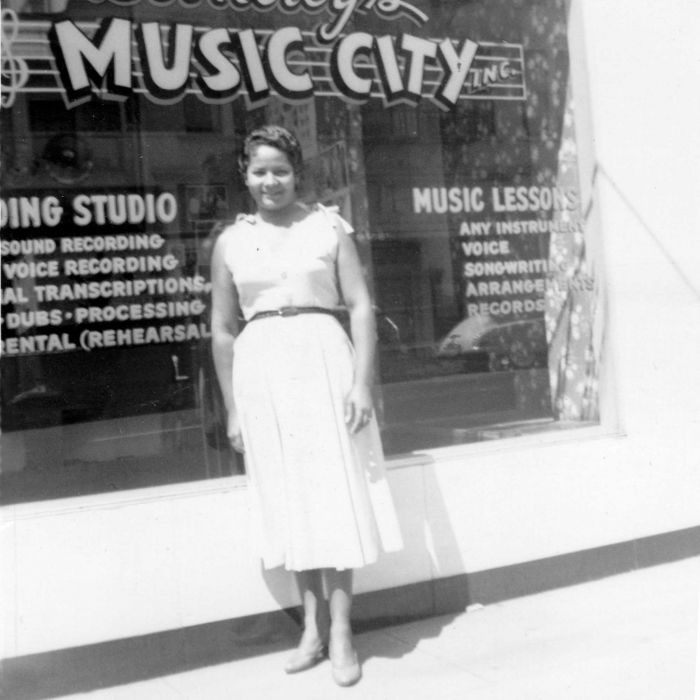
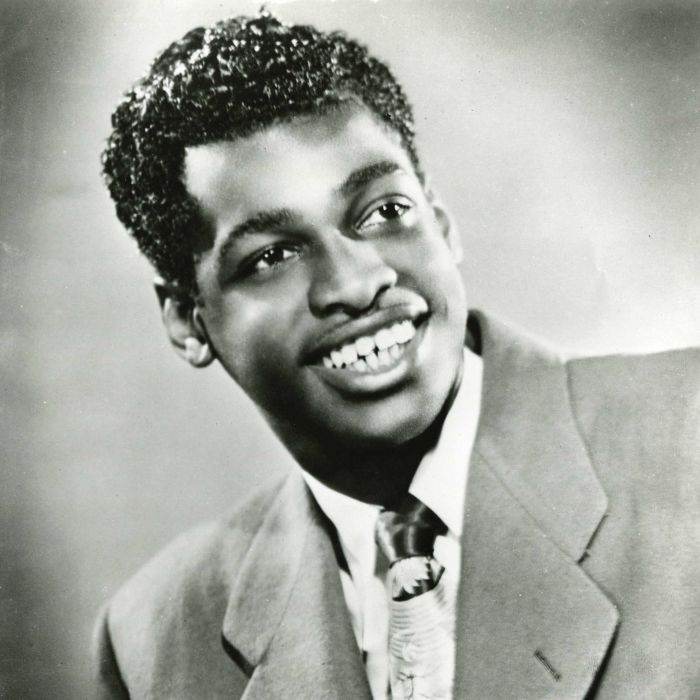

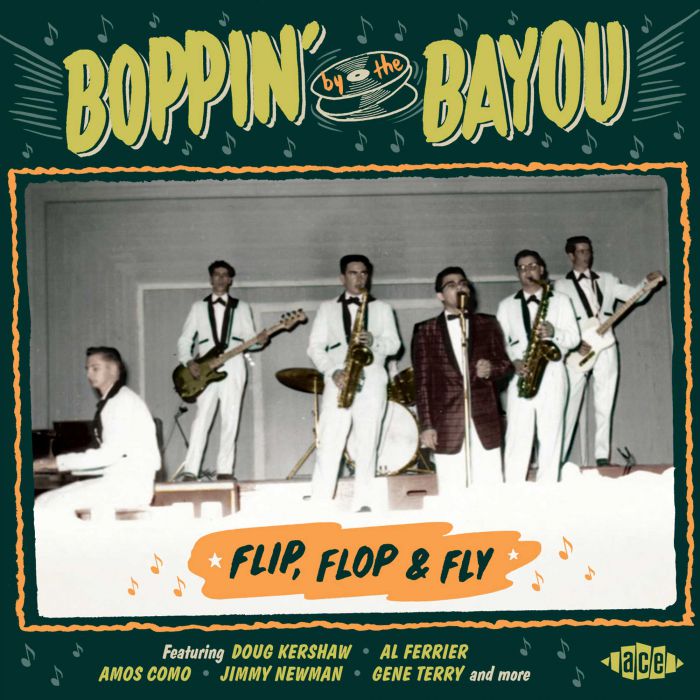
BOPPIN’ BY THE BAYOU-FLIP, FLOP AND FLY.
Boppin’ By The Bayou-Flip, Flop and Fly.
Label: Ace Records.
Nowadays, the compilation market is without doubt, one of the most competitive in the music industry. Every week hundreds of compilations are released by labels in America, Europe and Britain. Some are released by major labels, while others are lovingly curated and released by smaller independent labels. However, what many of these compilations concentrate on one type of music.
This can be anything from progressive rock and psychedelia, to funk or fusion, throughout to blues, country, R&B, reggae and soul. Some record companies have taken to focusing on one of America’s great musical cities or states. Among the favourite cities for compilers have been Chicago, Detroit, LA, Memphis, New York and Philly. Often though, some of America’s most musical cities and states were being overlooked, and for too long, this included Louisiana and later, Texas. One man decided to rectify this, Ian Saddler.
He’s a renowned expert in Louisiana and Texas’ rich musical heritage, which made Ian Saddler the perfect person to compile Boppin’ By The Bayou for Ace Records. It was released in 2012, and was so successful that another instalment in the series was commissioned.
Boppin By The Bayou More Dynamite followed in 2013, and enjoyed the same commercial success as its predecessor. Since then, By The Bayou has become one of Ace Records’ longest running and most successful compilation series. The latest instalment in the series, Boppin’ By The Bayou-Flip, Flop and Fly is the twentieth in Ace Records’ series.
For the twentieth instalment in the much-loved By The Bayou compilation series, Ian Saddler takes the listener to the Gulf Coast area, which covers from New Orleans, Louisiana in the East to Port Arthur, Texas in the West for Boppin’ By The Bayou-Flip, Flop and Fly.
This was where the groups of young white rockers recorded the music on Boppin’ By The Bayou-Flip, Flop and Fly, It’s the seventh compilation of music from this area. The Gulf Coast is an area dominated by countless swamps and bayous, and where crawfish and rice were farmed, alligators used to be hunted and the locals fished to put food on their table. However, Texas was also were oil was found, and companies began drilling for this black gold.
It was hard physical labour, and at the end of each week, men left the oilfields and headed into town to relax. They wanted to relax and party, usually drink and carousing into the early hours against the soundtrack provided by the many bands that were formed along the Gulf Coast.
These bands played in clubs where sometimes the owner would try to shortchange them, and where the oilmen were usually boisterous and raucous after being paid. They were ready to let off steam and often trouble erupted. Sometimes arguments were settled the old-fashioned way, outside in the car park away from prying eyes.
Despite being rough, tough men, many were extremely protective of their wives and partners. So much so, if anyone looked at them the wrong way, never mind said something to them, the oilmen were soon reaching for a weapon. Many wouldn’t hesitate to use it, and often blood was spilt. Very occasionally, when things got out of hand, a body ended up in the swamp. That never happened very often though.
Mostly, though, the oilmen and their partners, were content to carouse and listen to bands playing South Louisiana rock ’n’ roll into the early hours of the morning.
The South Louisiana rock ’n’ roll ranged from rockabilly, right through to what later, became known as swamp pop. Another reminder of this music can be heard on Boppin’ By The Bayou-Flip, Flop and Fly.
It features twenty-eight tracks, including contributions from Willie Goodson, Johnny Jano, Doug Kershaw, The Tune Tones, Al Ferrier, Warren Storm, Andy Charles, Jay Richards, Ken Cameron, Larry Hart, Bob Henderson, Charles Page and Gene Terry. Some of these tracks were released during the fifties, others were only released at a later date and many make their debut on Boppin’ By The Bayou-Flip, Flop and Fly.
Opening Boppin’ By The Bayou-Flip, Flop and Fly is Willie Goodson’s single Put A Nickel In The Jukebox, which was released on the Hammond label in 1959. It bursts into life and is a melodic slice of South Louisiana rock ’n’ roll that us guaranteed to get any party started
Amos Como and His Tune Toppers recorded Hole In The Wall at Eddie Shuler’s Goldband studio. It was the released as a single on the Starday label in August 1956. This is rockabilly hidden gem from drummer Amos Como and His Tune Toppers that will have many people Boppin’ By The Bayou.
Rockabilly singer Johnny Jano features twice on Boppin’ By The Bayou-Flip, Flop and Fly. Both tracks were recorded with JD Miller. This includes the unreleased slow version of Mabel’s Gone, and Take 2 of She’s My Baby which made its debut on a Flyright Records’ compilation in 2017. She’s My Baby makes a welcome return on Boppin’ By The Bayou-Flip, Flop and Fly.
The Tune Tones are one of many groups who have covered Tutti Frutti since it was first recorded in 1955. They recorded this raw and explosive version at JD Miller’s studio where they also cut Got Something For You Baby. It’s got the same raw and untamed sound, but sadly, neither track was released until now.
When TK Hulin and The Lonely Knights released Many Nites on the LK label in 1959,tucked away on the B-Side was Little Bitty Boy. It was penned by Robert Thibodeaux and swamp pop star Bobby Webb and featured fifteen year old TK Hulin. Sadly, they only recorded two singles, and Little Bitty Boy is regarded as TK Hulin and The Lonely Knights’ finest hour.
Warren Storm is a legend of swamp pop and a familiar face on the By The Bayou compilations. This time around, he contributes an alternate take of No No which he released as a single on Top Rank International in November 1960.
In 1959, Jay Richards released Gosh Dog as a single on the Hollywood label. This was one of four tracks Hollywood released from studio owner and producer Eddie Shuler. He had spotted Jay Richards’ potential and recorded Gosh Dog and Little Shyrel which was also released a single on Hollywood in 1959. While both tracks are excellent examples of South Louisiana rock ’n’ roll, neither single was a commercial success and Jay Richards’ career at Hollywood was over after just two singles.
Rocket Morgan’s fifth single for the Zynn label was Irene which was released in 1960. It’s a heartfelt rockabilly ballad from Rocket Morgan, who only released one more single, before following in his father’s footsteps and becoming a preacher.
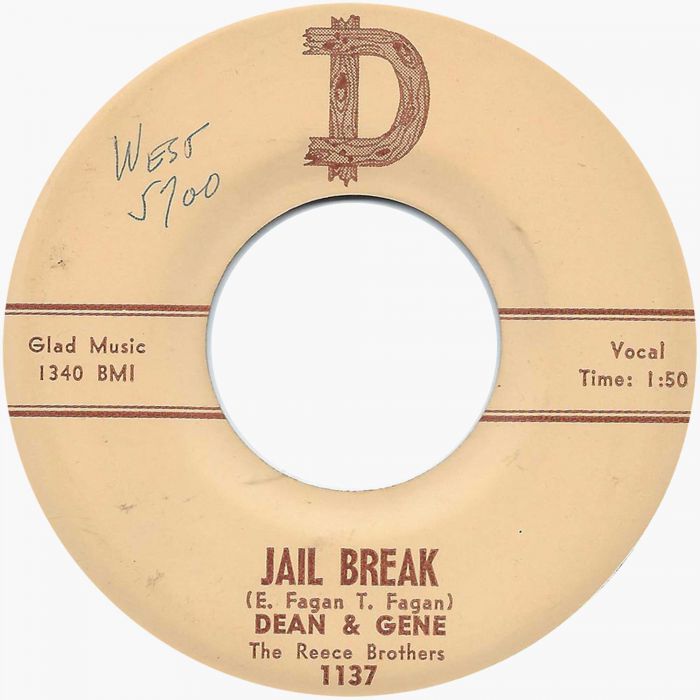
Jail Break was released as single by Dean and Gene on the D label in March 1960. Little is known about the duo who only released one single, Jail Break a country-tinged slice of South Louisiana rock ’n’ roll.
In 1966, Bob Henderson released A Million Tears as a single on the Montel Michelle label. It was one of his own compositions which was produced by Joe Avants Jr. So was the B-Side So Long, which could only have been recorded in Louisiana By The Bayou.
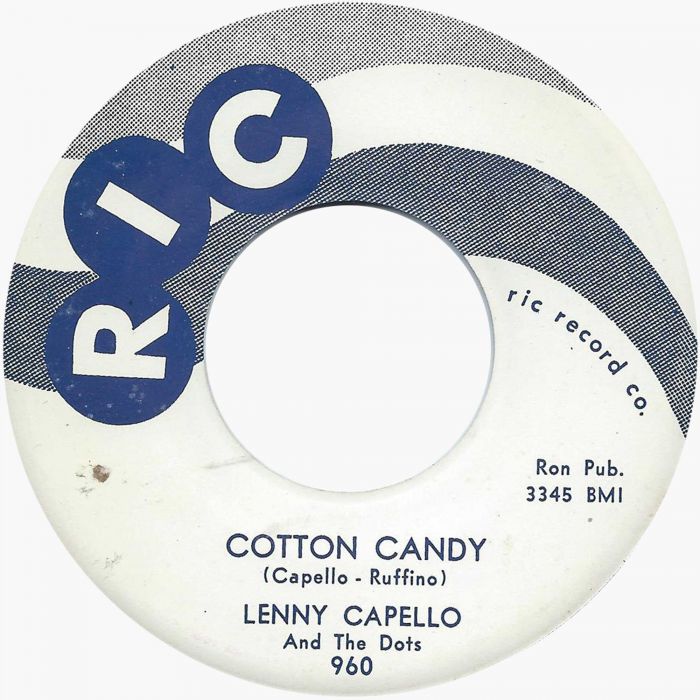
Lenny Capello and The Dots’ debut single Cotton Candy was released as the Ric label in December 1958. By then, Lenny Capello was just sixteen, but had been playing guitar since he was ten. Six years he recorded Cotton Candy which is one of just two singles he released with The Dots. Their finest song was Cotton Candy rock ’n’ roll South Louisiana style.
Anyone who turned over to the B-Side of Boo’s 1970 single Gratefully, which was released on the Jin label, were rewarded with his cover of Fats Domino’s Where Did You Stay. It epitomises everything that is good about South Louisiana rock ’n’ roll in the early seventies.
Closing Boppin’ By The Bayou-Flip, Flop and Fly is Gene Terry’s demo of Flip, Flop and Fly. It’s rollicking run through of Flip, Flop and Fly that falls into the category of hidden gem, and closes the album on a high.
Boppin’ By The Bayou-Flip, Flop and Fly which was recently released by Ace Records is a welcome addition to this successful series. It finds Ian Saddler digging deep, not just in Louisiana, but in South-East Texas. He’s found some hidden gems, which sit side-by-side with songs from old friends, familiar faces and new names. This includes singles, B-Sides and unreleased tracks. They’re part of compilation that’s all killer and no filler. That takes some doing, as there’s twenty-eight tracks on Boppin’ By The Bayou-Flip, Flop and Fly.
It’s a compilation that is the equivalent to time travel, as compiler Ian Sadder takes the listener back to another era on Boppin’ By The Bayou-Flip, Flop and Fly. Suddenly, it’s anywhere between 1953 and 1970, late at a night in a juke joint where carousing and dancing is the order of the day as the band play South Louisiana rock ’n’ roll just like that on Boppin’ By The Bayou-Flip, Flop and Fly.
Boppin’ By The Bayou-Flip, Flop and Fly.



EMANATIVE-EARTH.
Emanative-Earth.
Label: Jazzman Records.
Three years after the release of their third album The Light Years Of The Darkness in 2015, British jazz collective Emanative return with Earth, a new album of ambitious genre-melting music. It finds Emanative channelling the spirit of Sun Ra, but also drawing inspiration from Floating Point’s unique brand if cinematic experimentation. The result is Earth, which was recently released by Jazzman Records. This is the fourth album from Emanative, who have been led by drummer and producer Nick Woodmansey for the past decade.
The name Woodmansey will ring a bell with many record buyers, especially fans of David Bowie, who will remember Mick ‘Woody’ Woodmansey who was the drummer on Spiders from Mars. Mick had a son, Nick Woodmansey who was born in 1975, and from an early age, music was part of his life. It was almost inevitable that Nick Woodmansey would sooner, rather than later, follow in his father’s footsteps.
Nick Woodmansey had one of the best teachers an aspiring drummer could hope to have as he began to learn the drums. Mick taught his son Nick Woodmansey the basics of drumming, which gave him a good grounding and was the start of a lifelong passion for the drums.
Back then, neither Mick nor his son had any idea that a musical career beckoned for Nick Woodmansey. He planned to go to art college, but his plans were put on hold when sixteen year old Nick Woodmansey moved into a Dalston squat in 1991, and became part of London’s eclectic and vibrant music scene. This was all part of Nick Woodmansey’s musical apprenticeship.
A few years later, Nick Woodmansey’s musical apprenticeship continued when he spent a year playing drums in a band on a cruise ship. This was good experience for Nick Woodmansey when he arrived back on terra firma.
Over the next ten years, Nick Woodmansey became a familiar face on the London music, and was involved in various musical projects. Still he found time to raise a family whilst working as a full-time musician. However, in 2006 Nick Woodmansey decided launch his own jazz collective Emanative.
After two years honing their sound and playing live, Emanative released their debut single What On Earth in 2008. This was followed up by the Spacebeats EP. It featured a tantalising taste of Emanative’s debut album Space which was released in 2009 and found favour with critics.
Buoyed by the success and response to Space, Emanative returned in 2010 with their genre-melting sophomore album Time. It was released to plaudits and praise and Emanative’s star was in the ascendancy.
Over the next three years, released just two singles. The first was Lions Of Judah in 2011, which was a collaboration between Emanative and Ahmed Abdullah who was Sun Ra’s trumpeter. Then on the ‘18th’ of November 2013, Emanative released Over as a single. It featured appearances by Earl Zinger and RocketNumber9 on what was the latest chapter in the Emanative story.
Less than two years later, and Emanative returned with their third album The Light Years Of The Darkness, which featured a cast of top musicians. This included Keiran Hebden a.k.a Four Tet and trumpeter Ahmed Abdulla. The Light Years Of The Darkness was released to widespread critical acclaim and was seen as Emanative’s breakthrough album. However, it’s also an album that was supporting a good cause.
When The Light Years Of The Darkness was released on Gilles Peterson’s Brownswood label in 2015, all profits were being donated to the Steve Reid Foundation. It’s a charity founded by Gilles Peterson, and Nick Woodmansey is a trustee. The charity baring the name of the legendary jazz drummer had been setup to support musicians in crisis and up-and-coming musicians. Emanative’s decision to support the project was admirable, and his breakthrough album The Light Years Of The Darkness introduced the jazz collective’s music to a new and wider audience.
Over the next three years, Emanative released the single Ominous Shanti in 2017, and followed it up with Planet B in 2018. Meanwhile, the members of Emanative were preparing to release their fourth album Earth.
Emanative’s fourth album was their most ambitious and was a truly eclectic offering from the British based jazz collective. Led by drummer Nick Woodmansey who produced Earth, he and the rest of Emanative combine African, Asian, Indian and Middle Eastern influences with jazz of the spiritual and free variety.To do this, Nick Woodmansey put together what can only be described as an all-star band.
This included Manchester-based musician Nat Birchall, Malcolm Catto of The Heliocentrics, Idris Ackamoor of American spiritual jazz group The Pyramids and Afrobeat legend Dele Sosimi who was once a member of Fela Kuti’s Africa 80. They were joined by Ben Hadwen of Ibibio Sound Machine, RocketNumberNine’s Benjamin Page and Flying Lotus collaborator Ahu. The final member of this all-star band was Sarathy Korwar who was born and brought up in India and is a talented artist whose signed to Ninja Tunes and has collaborated with Shabaka Hutchings. When they arrived at the studio, Nick Woodmansey had a request for his multitalented band.
As Nick Woodmansey spoke to his band about the project, he encouraged his dig deeper into their spirituality. Thinking back to the project he says: “when you work with guys like Ahmed and Idris (Ackamoor), spiritual people, their vibe, attitude rubs off on you…I’m not religious but I am very spiritual: my perspective on life is less materialistic, more humanitarian. It’s important to see both the negative and the positive in life–but a spiritual perspective is inherently positive–you look for the good in things”.
In the case of Nick Woodmansey, his spiritual side is entwined with life as musician. They’re part of his life and what he’s become over the past forty-three years. However, Nick Woodmansey is a realist and does realise that: “the rest of the band are not necessarily on the same planet as me!.”
They were certainly on the same page musically as Emanative recorded the eleven tracks on Earth. The result is ambitious, captivating and innovative album where Emanative channel the spirit of Sun Ra’s unique brand of space jazz on an album where they mix global influences, religion and politics on Earth.
Dawn Child (Sunrise) opens Earth, features a welcome in French from Atrobal, which gives way to Indian classical music and closes with a raga. This sets the scene for the rest of Earth, including Heaven’s Mirror where Idris Ackamoor and David Molina of The Pyramids play starring roles during a track where constellations map civilisations and join the dots between Egypt, Ethiopia, Thailand and Meso-America. Ìyáàmi is jazz-tinged and soulful shootout to motherhood that swings and as Dele Sosimi delivers an impassioned vocal.
Spice Route Suite is powerful and thought-provoking as Nat Birchall plays minor-key saxophone whilst the rest of Emanative use spice to symbolise the cultural trade route that has flows between the East and West for centuries. It gives way to the evocative and cinematic Sandhyavandanam where Vedic prayers are recited at midday as the sun beats down. Meanwhile, Emanative deploys a flute, rubab. and sarod to create an authentic backdrop as they continue to paint pictures with music.
There’s social comments a plenty on Ecosystem (Solar Noon) which is dramatic and sometimes discordant as Emanative criticise and condemn what they believe is a so-called “inner clique” who try to outdo each other. Reflection gives the listener as a chance to reflect as Emanative unleash what’s best described as Liz Elensky delivers dramatic prose where opposites abound as they’re set to melodic music. Equally melodic, soulful, jazz-tinged and hook-laden is New Day which initially seems hopeful and joyous. Sadly, this hope and joy is short-lived as Ahu delivers one of the finest vocals on Earth.
Heaven’s Mirror (Reprise) finds Nat Birchall’s dancing saxophone taking centre as beep punctuate an arrangement that is best described as celestial imitation. It’s another carefully crafted and ambitious track from jazz collective Emanative.
So is Minutes To Midnight For This Planet, which was inspired by the legendary free jazz pioneer Sun Ra. He once said: “it’s about one minute to midnight for this planet,” and here Emanative try to recreate the concept of this pre-apocalyptic minute .
Closing Earth Raga Requiem (Dusk) which deals with the subject of death. Atheists and scientists realised that death is the end, while religion talks of heaven and hell, and of afterlife where spirits exist. Emanative try to recreate the sounds of heaven and hell and the afterlife during Earth Raga Requiem (Dusk). It another thought-provoking and cinematic track full of imagery.
Twelve years after Nick Woodmansey founded Emanative, they released Earth, which is a truly ambitious, groundbreaking genre-melting album. It features an all-star cast and finds Emanative fusing African, Asian, Indian and Middle Eastern influences with various varieties of jazz. This includes contemporary jazz, free jazz, soul jazz, spiritual jazz. There’s even elements of electronica, Indian classical music, Middle Eastern trance and soul on the eleven tracks on Earth, which is the fourth album from Emanative.
While The Light Years Of The Darkness was Emanative’s breakthrough album, Earth is a career-defining album from Nick Woodmansey’s jazz collective who with a little help from his friends created an ambitious, innovative and thought-provoking opus.
Emanative-Earth.

THE LIGHTMEN-FREE AS YOU WANNA BE.
The Lightmen-Free As You Wanna Be.
Label: Now Again Records.
Before founding The Lightmen, drummer, bandleader and political activist Bubbha Thomas had toured the length and breadth of America playing in R&B revues. The rest of his career had been spent working alongside the legends of jazz and playing on sessions for Peacock and Back Beat Records. However, Bubbha Thomas’ career took a different path in the late-sixties, after witnessing the political and social upheaval that was tearing America apart.
Bubbha Thomas formed a new jazz group The Lightmen, who released four albums of spiritual jazz during the seventies. This includes The Lightmen’s debut album Free As You Wanna Be, which was recently reissued by Now Again Records as a two CD set. Disc one of Free As You Wanna Be features the stereo mix and the second disc features the mono mix, on what’s the first ever CD of reissue of The Lightmen’s debut album. It finds The Lightmen following in the footsteps of the late John Coltrane on Free As You Wanna Be, on what was a powerful album of spiritual jazz from Bubbha Thomas’ new band.
He was born and grew up in the Houston’s Fourth Ward, where Bubbha Thomas’ father was a preacher and his mother a musician. Sadly, Bubbha Thomas’ mother passed away before he started school, and he was brought up by his maternal grandmother. Growing up, Bubbha Thomas was a talented basketball player, but it was music that he grew to love.
All around the Fourth Ward, the young Bubbha Thomas heard music playing, especially the blues. He could walk down the streets and hear Big Mama Thornton, Clarence “Gatemouth” Brown and Lightnin’ Hopkins. Bubbha Thomas heard the music as he made his way through the Fourth Ward. This made an impression on Bubbha Thomas, and so do did what was happening within the Fourth Ward.
Many of the black residents who had moved to the Fourth Ward in the post-war years, were becoming upwardly mobile socially and economically. Some were keen to become active politically, while others had joined the police force and were determined to change the force from within. This included by opposing the enforcement of the Jim Crow laws from within the police force. It looked like Houston and the South was changing.
Meanwhile, as Bubbha Thomas headed to school each morning, he always met a professional drummer called Fats. By the time Bubbha Thomas returned home at night, he could hear Fats practising. He had spent most of the day honing his skills and was a talented drummer who made a big impressions on Bubbha Thomas.
By then, Bubbha Thomas was attending Booker T. Washington High School, and was playing basketball. However, his first love was music, and he was the drummer in the intermediate and senior bands. Later, he was taught by Conrad O. Johnson who would later enjoy a successful career in jazz music. Prof as he was affectionately known, would influence many young musicians, including Bubbha Thomas.
Via what was called the orchestra at Booker T. Washington High School, Prof introduced his pupils to jazz music. This wasn’t meant to happen, but he saw this as part of his pupil’s musical education. The curriculum at the school had been drawn up by white people for primarily white children. Those that were responsible for the curriculum referred to the “orchestra,” which under Prof’s tutelage became a jazz band and Bubbha Thomas’ its drummer.
Between the influence of Prof and Fats, Bubbha Thomas’ people were soon taking attention of the young drummer. He was still playing basketball, but that was more of a hobby. Bubbha Thomas was more interested in music. Meanwhile, he was about to discover the other side of Houston.
When Bubbha Thomas boarded a bus in Houston, he was still forced to sit at the back of the bus, away from his white friends. It’s hard to believe that any civilised society was treating its citizens like this in the fifties. Bubbha Thomas who was still in high school new this was wrong.
Gradually it started to eat away at him, being treated like a second class citizen. Things came to a head when he boarded a bus with his elderly grandmother who was exhausted and needed a seat. The only remaining seat was on the white part of the bus, and Bubbha Thomas encouraged his grandmother to sit down. She wasn’t sure but, was so tired that she eventually sat down. When a white woman got on the bus, she wouldn’t sit down in the empty seat next to Bubbha Thomas’ grandmother. The bus driver was watching what was happening, and stopped the bus and told Bubbha Thomas’ grandmother to get out of her seat and give it the white lady. Bubbha Thomas got upset with the driver, and this resulted in them being thrown off the bus. This was the first time Bubbha Thomas had been a victim of racism, and this would shape his future and eventually he would rail against political and social injustice.
Before that, Bubbha Thomas was hoping to head Wiley College, in East Texas, on a basketball scholarship. He was told that there were no scholarships available until the following year, but he was offered a musical scholarship. Bubbha Thomas and one his neighbours in the Fourth Ward spent the next four years drumming in East Texas.
When Bubbha Thomas returned the his grandmother had died, and the house that he lived in the Fourth Ward had been sold. Meanwhile, the Fourth Ward was now seen as part of the Gregory-Lincoln campus. It wasn’t the place Bubbha Thomas knew and he left the Fourth Ward for good, and moved in with his father in another part of Houston.
That was until Bubbha Thomas received his call up papers, and soon, he was en route to Korea. The irony was he Bubbha Thomas was being asked to fight for a country where he was regularly discriminated against, and couldn’t even sit next to a white person on a bus.
After a few days doing mundane chores in Korea, Bubbha Thomas told a superior officer that he was a musician, and soon doing what he did best playing music. He spent his time in the army playing jazz rather than as a regular soldier. By the time Bubbha Thomas left the army, he was a much better musician than the one that arrived in Korea.
Back home in Houston in 1961, Bubbha Thomas put together his own band and hit the road. Each night, Bubbha Thomas played his own music, but other nights, he was asked to accompany other artists. He and his band backed R&B singer Chuck Jackson, bluesman Lightnin’ Hopkins and jazz musicians like Leon Spencer and Melvin Sparks. Before long, Bubbha Thomas and his band were capable of playing every style of music.
It was around this time that Bubbha Thomas met Frederick Tillis who would influence him as a musician. So would Don Wilkerson, who released his debut album The Texas Twister in 1960, and then released a trio of well-regarded albums on Blue Note Records. Soon, Bubbha Thomas and Don Wilkerson were part of a quartet together and played all over Texas.
By the mid-sixties, Bubbha Thomas was a talented and versatile musician who had played all over America. He played from small venues and taken to the stage in some of the most prestigious concert halls America had to offer. However, by then, jazz’s popularity was in the decline in America, and other musical genres were growing in popularity.
Fortunately, Bubbha Thomas was asked to join Chuck Jackson’s band in the mid-sixties, and after that, led a trio in Houston that featured Leon Spencer. Later, Bubbha Thomas founded The Jazz Merchants, who despite their name, weren’t influenced by Houston’s very own The Jazz Crusaders. The Jazz Merchants were determined to head in a different direction and make music that was unique. This they managed to do as the world around them started to change.
By the late-sixties, the civil rights movement had brought about change in America, and the country was changing. Bubbha Thomas had been part of the civil right’s movement and played his part in the changes that were taking place around him. Now he turned his attention to the musicians with the Houston music scene.
While Houston had many talented musicians, Bubbha Thomas realised that they had an image problem. People’s perception of the local musicians wasn’t good. They were seen as people who slept all day, lived on fast food and after gigs drank too much and smoked reefer. Many people were looking down their noses at musicians, and they were starting to receive bad PR. This Bubbha Thomas knew was wrong and ironic as he was university educated, and many of his musician friends were well-educated. Others were studying at college and music was a way of paying the bills. This was very different to the articles that were being write about local musicians in Houston.
Bubbha Thomas started to spend more time with groups of musicians, and got to know them. His next step was to try to get them some much-needed publicity. This was how drummer Bubbha Thomas found himself working for the local anti-poverty, grassroots newspaper Voice Of Hope.
Soon, Bubbha Thomas had a regular column and wrote about a variety of local issues. This resulted in the local police targeting Bubbha Thomas, who was regularly followed and stopped for no apparent reason. The musician and part-time community and cultural activist was once again being discriminated against. Just when it looked as if things were changing in the land of the free.
Meanwhile, Bubbha Thomas was collaborating with playwright, poet and professor at Texas Southern University Thomas Melecon. He was combined the philosophy of the Black Panthers with the style of early Bob Dylan. It was a potent and powerful combination and one that impressed Bubbha Thomas.
So much so, that Bubbha Thomas produced the two singles that Thomas Melecon released on Judnell Records. Not long after this, Bubbha Thomas asked the poet to join him when he played live, and bring a new angle to his music. Bubbha Thomas was already an innovator when it came to art and music.
He was also someone who wanted equality, and when he noticed that there were no black television presenters, wrote to local stations. This resulted in Bubbha Thomas being given his own television show, which sadly, was short-lived. It featured the only live footage of the Kashmere Stage Band, and spiritual jazz combos the Fifth Ward Express and The Lightmen Plus One led by Bubbha Thomas. It was part of his plan for the future.
As 1969 dawned, Bubbha Thomas was leading The Lightmen and The Jazz Merchants. They accompanied some of the high-profile local jazz musicians including Annette Cobb. However, Bubbha Thomas was thinking beyond live gigs and wanted to release music that was very different to what his peers were releasing. The music would be ambitious, innovative and revolutionary, and released on record labels that were co-ops. This was way before Strata in Detroit and Strata Records in New York thought of the concept.
Soon, Bubbha Thomas and his band The Lightmen were rehearsing and writing material for a new album. During the rehearsals before the recording of Free As You Wanna Be, the members of The Lightmen had been discussing the concept of freedom from the perspective of the African-American people. By then, many had started to question the United States’ constitution regarding their rights as American citizens. Ed Rose who knew that Bubbha Thomas had been active within the civil right’s movement asked Bubbha Thomas: “how free are black people in America?”
It took some time before Bubbha Thomas responded: “free as they wanna be.” This inspired Ed Rose to write new track.
He remembers: “with the answer to the question came the name to a tune i had written, the title tune of this album. After the head of tune, there should be no sense of time; each musician has the freedom to be free musically, as he can imagine himself.”
By the time The Lightmen were ready to record their debut album Free As You Wanna Be, members of the band had penned seven tracks. Bandleader Bubbha Thomas had written May ’67, which referred to a clash between student protesters in the Third Ward and the Houston Police Department. During the clashes twenty-four year old rookie policemen Louis Kuba was shot, and 500 people were arrested. These events insured Bubbha Thomas to write May ’67.
Meanwhile, Ed Rose who had written Free As You Wanna Be had also written Luke 23:32-49 which deals with Jesus’ forgiving two criminals just before his crucifixion. These two songs by Ed Rose were joined by Joe Singleton’s High Pockets, Kenny Abair’s Talk Visit, Doug Harris’ #109 Psychosomatic and Creative Music which was a Carl Adams and George Nelson composition. These tracks were recorded by The Lightmen.
Bubbha Thomas’ band featured a rhythm section of drummers Bubbha Thomas and William Jefferies, bassist Ed Rose and guitarist Kenny Abair. They were joined by conga player Mike O’Connor and a horn section that featured trumpeter Carl Adams, trombonist Joe Singleton, tenor saxophonist Doug Harris and flautist Ronnie Laws who played alto and soprano saxophone. The Lightmen’s debut album was produced by George Nelson.
When the Houston underground jazz collective had completed its debut, The Lightmen released Free As You Wanna Be on Judnell Records in 1970. Sadly, The Lightmen’s debut album never found the wider audience it deserved. However, Free As You Wanna Be found a small, but appreciative audience in Houston.
It was only much later that a new generation of record buyers discovered The Lightmen’s debut album Free As You Wanna Be. By then, it was regarded as a hidden gem and an oft-overlooked album that featured music that was ambitious, cerebral, innovative album, powerful and thought-provoking album of spiritual jazz.
Especially tracks like Free As You Wanna Be, May ’67 and the album closer Luke 23:32-49. These are especially thought-provoking and have a strong narrative. However, the album opener Creative Music, High Pockets, Talk Visit and #109 Psychosomatic feature a group of like-minded innovative musicians pushing musical boundaries to their limits and sometimes beyond.
Album opener Creative Music finds spiritual jazz almost heading in the direction of free jazz, before The Lightmen play with speed, power and freedom on Free As You Wanna Be. It gives way to the melodic shuffling High Pockets and then Talk Visit where the tempo increases and The Lightmen keep things melodic. That is despite playing with the utmost urgency, power and accuracy. May ’67 is cinematic and thought-provoking and is without doubt one of Free As You Wanna Be’s highlights. So is #109 Psychosomatic where sharp bursts of squealing horns play their part in the sound and success of the track. Closing Free As You Wanna Be is Luke 23:32-49 which is another slower cinematic and cerebral track from spiritual jazz pioneers The Lightmen.
Forty-eight years after The Lightmen released Free As You Wanna Be, it was recently reissued for the first time on CD by Now Again Records. This is the perfect opportunity to discover an oft-overlooked spiritual jazz hidden gem that nowadays, has achieved cult status.
It features Bubbha Thomas’ band The Lightmen as they embark on the start of a four album musical journey with Free As You Wanna Be. It’s an album of spiritual jazz that is ambitious and innovative and finds The Lightmen pushing musical boundaries to their limits Free As You Wanna Be as they play with freedom. In doing so, The Lightmen created music that is cerebral, cinematic, melodic and thought-provoking as they broach subjects like freedom, religion and one of the darkest days in Houston’s recent history in May ’67. All this makes Free As You Wanna Be as a compelling and groundbreaking album of spiritual jazz from Houston-based musical mavericks The Lightmen.
The Lightmen-Free As You Wanna Be.
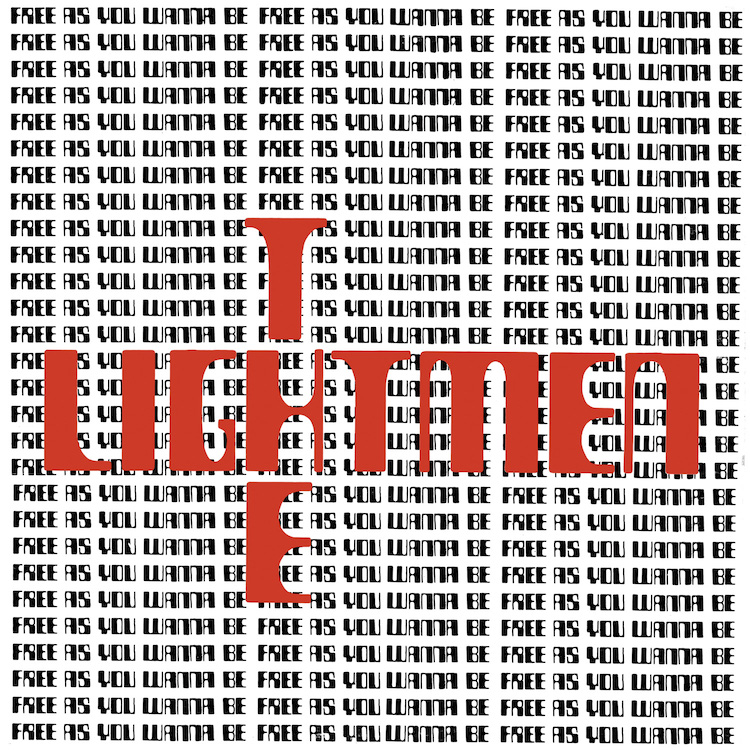
ANA SILVERA-ORACLES.
Ana Silvera-Oracles.
Label; Gearbox.
When London born singer-songwriter Ana Silvera released her debut album The Aviary to widespread critical acclaim in March 2012, great things were forecast for one of the rising star’s of British Nu Folk. Since then, critics and music fans have looked forward with anticipation to the followup to The Aviary. They’ve had to be patient though.
By the time the Gearbox label released Ana Silvera’s much-anticipated sophomore album Oracles which features her celebrated song cycle, over six years had passed since the release of The Aviary. However, during that six-year period, Ana Silvera has worked on a variety of projects that have allowed her to broaden her musical horizons.
The Ana Silvera story began in London, England, where she was brought up by her mother who a writer and teacher. She introduced her daughter to poetry, folk music and the art of storytelling. Soon, Ana Silvera was following in her mother’s footsteps having embraced folk music, poetry and storytelling. However, it wasn’t long before Ana Silver decided to take her love of music further.
Although she was still a teenager, Ana Silvera enrolled at the prestigious Guildhall School of Music, in London, where she studied voice. After this, Ana Silvera decided to study literature at University College London. Having graduated Ana Silvera decided to spend some time travelling.
One of the places that spent time was in Ibiza, off the East coast of Spain. Ana Silvera lived high in the hills above Ibiza, which was where she started to write and record her own music. This was the just the start for Ana Silvera.
After leaving Ibiza, Ana Silvera’s wanderlust continued, and she headed to Berlin, in Germany where she explored the city’s vibrant electronic music scene. However, Ana Silvera was just passing through Berlin, and her wanderlust continued.
Next stop was New York, which was were Ana Silvera wrote and recorded much of her debut album The Aviary. Ana Silvera also collaborated with filmmaker Ryan Foregger on the spectral Hometown video. Its release was in the future.
In 2011, Ana Silvera was commissioned to write the seven part song cycle Oracles which she performed on three successive nights at the Roundhouse in London. This was the break that Ana Silvera had been waiting for. However, things were about to get even better
Ana Silvera released her debut album The Aviary on March the ‘12th’ 2012. The album was released to widespread critical acclaim and Ana Silvera was heralded as one of the rising stars of the British Nu Folk scene.
The same day, March the ‘12th’ 2012, Ana Silvera released a cover of Jacques Brel’s Ne Me Quitte Pas as a single. It had been recorded for Ana Silvera’s debut album The Aviary, but didn’t quite belong. However, it was far to good a song to discard and Ana Silvera decided that it would be debut single. Backed by cellist Jon Cottle and violinist Antoine Silverman, Ne Me Quitte Pas, showcased a talented and versatile vocalist.
Later in 2012, Ana Silvera returned to The Roundhouse, and this time, was invited to perform on the main stage where she was and Imogen Heap were the headline acts at the Reverb Festival. That night, Ana Silvera performed the Oracles song cycle and her latest composition Step Onto The Ground, Dear Brother! It had been commissioned by the Estonian Television Girls Choir and Ana Silvera had written the song with Max de Wardener. Their new composition played its part in what was a critically acclaimed sell out show.
While reading the reviews, Ana Silvera travelled to the North East of England the following day, where she was due to perform the same show at Sage Gateshead. Just like the previous night, Ana Silvera’s received plaudits and praise, and critics continued to forecast great things for her.
They were right. Later in 2012, Oracles was nominated for a British Composer Award. 2012 had been one of the most successful and important years of Ana Silvera’s nascent career.
During 2013, Ana Silvera was invited to collaborate with the Royal Ballet, and composed, helped create and performed an entirely new full length work Cassandra. This was a major work for Ana Silvera, which premiered at the Linbury Theatre, Royal Opera House in October 2014.
On the ‘10th’ of March 2015, Ana Silvera released Purcell’s Revenge, which was her collaboration with early music ensemble Concerto Caledonia. They had first worked together in March 2013 during week-long workshop where they recorded and performed together at Aldeburgh. At the end of the week, there was a sold out concert at Britten Studio, Snape Maltings, By then, Ana Silvera and the other three singers who attended the workshop with Concerto Caledonia had already discussed recording together. Two years later, that album, Purcell’s Revenge was released.
Less than three weeks later, Ana Silvera and Concerto Caledonia released Letter from New York as a single on the ‘30th’ of March 2015. Letter from New York which originally featured on The Aviary was reworked and became the latest chapter in Ana Silvera’s career.
After three successful years, Ana Silvera decided expand her work into the areas of social justice. This resulted in her collaborating with the London-based organisation Freedom from Torture. Ana Silvera created a musical piece with the survivors of torture. It was a powerful and poignant piece of music.
Very different was the winter EP Arcana that Ana Silvera released in 2017. The EP featured both original and traditional festive songs and was released in conjunction with an Arts Council funded British your that took place during December 2017.
During 2018, Ana Silvera continued to broaden her musical horizons as she collaborated with local musicians in Copenhagen, in Denmark. Closer to home, Ana Silvera collaborated with the Ice and Fire Theatre company to create music and soundscapes for a new commission entitled What Do I Know? It premiered at the Liverpool Arab Arts Festival in July 2018, which was a busy month for Ana Silvera.
During July 2018, Ana Silvera also released the live recording of her song cycle Oracles. It featured seven songs written by Ana Silvera in 2011, after the sudden loss of her mother, who was such an important influence on her. These songs were recorded with a talented cast of musicians and vocalists and are a fitting and poignant homage to Ana Silvera’s late mother.
The recording of Oracles features a choir led by Josephine Stephenson, and includes sopranos Josephine Stephenson and Héloïse Werner; altos Rose Martin and Joel Newsome-Hubbard; tenors Ruairi Bowen and Kieran Brunt and basses: William Marsey and Dan D’Souza. They were joined by a rhythm section that featured drummer and percussionist Jacob Smedegaard, double bassist Jasper Høiby and pianist Bill Laurance of Snarky Puppy. Strings came courtesy of violinist Simran Singh and cellist Anne Chauveau Dhayan. Percussionist Naomi Morris and vocalist Signe Trylle were the final members of this talented cast of musicians and vocalists who accompanied Ana Silvera who sang, played harmonium and arranged Oracles.
Ana Silvera’s much-anticipated sophomore album Oracles is a powerful, poignant and often haunting album of life-affirming songs. They find Ana Silvera exploring the subjects of loss, love and salvation as she documents her journey towards acceptance of the loss she had suffered.
This song cycle opens with Tears Of Oak, Fist Of Willow (The Sorrow) where ethereal harmonies accompany Ana Silvera’s soul-baring vocal. Her loss and sorrow seems very real during this beautiful, poignant ballad. Ana Silvera’s emotive journey continues on The Skeleton Song (The Awakening), where strings and piano accompany her vocal. It veers between urgent, hurt-full and elegiac as she relives the initial memory of her loss during this powerful song. The arrangement to When The Heart Is A Lonely Hunter (The Search) is understated, allowing Ana Silvera’s searching vocal to take centre-stage as she tries to make sense of what’s happened and come to terms with her loss. Then during Circle Of Chalk (The Test) handclaps, harmonies and strings accompany Ana Silvera as the arrangement swings. Meanwhile, Ana Silvera struggles to come to terms with her lost, This is The Test during a melodic song which showcases a talented and versatile vocalist.
Melancholy describes the piano led introduction Pearls and Thieves (The Rapture), as cooing harmonies accompany Ana Silvera’s vocal which is full of sadness, as she lays bare her soul. Gradually, though, Ana Silvera starts to come to terms her loss, and the journey towards acceptance begins on I Grew Up In A Room, Small As A Penny (The Returning). It finds memories coming flooding back to Ana Silvera, before Catherine Wheels (Acceptance) sees her accepting and coming to terms with the loss of her mother. This brings to an end a powerful and poignant album that many people grieving after the loss of a loved one will be able to relate to.
Oracles isn’t just powerful and poignant, it’s also deeply moving and beautiful as Ana Silvera examines the themes of loss, love and salvation as she journeys towards acceptance of the loss of her mother. This she does against arrangements that feature ethereal harmonies, enchanting choral lines, Debussy inspired piano melodies, sweeping strings and a subtle sprinkling of percussion. Meanwhile, Ana Silvera delivers heartfelt, emotive, tender, searching and soul-baring, confessional vocals as she searches for answers to her questions, and moves towards acceptance.
All the time, Ana Silvera is reliving and revisiting her grief. As she does, it’s no surprise that emotion, frustration and sometimes anger comes to the surface during Oracles. That is no surprise as something precious was snatched from Ana Silvera’s grasp when she lost her mother who was such an important influence on her career. She inspired and influenced Ana Silvera, but sadly, never saw her daughter become one of stars of the British Nu Folk scene.
Seven years after she was commissioned to write her critically acclaimed song cycle Oracle, Ana Silvera decided to revisit her grief once more when she recorded her much-anticipated sophomore album which became Oracle. It features the seven songs which Ana Silvera wrote after the sudden loss of her mother. Ana Silvera has performed Oracles on a number of occasions, but had never recorded it. That was until recently, when Ana Silvera made the decision to revisit her song cycle Oracle. Hopefully, the recording and subsequent release of Oracles will bring about a sense of closure for Ana Silvera. Oracle has a confessional quality, and hopefully revisiting this poignant song cycle will have had a cathartic effect for Ana Silvera and allow her to move on her life, while remembering the mother who influenced and inspired her.
Ana Silvera-Oracles.
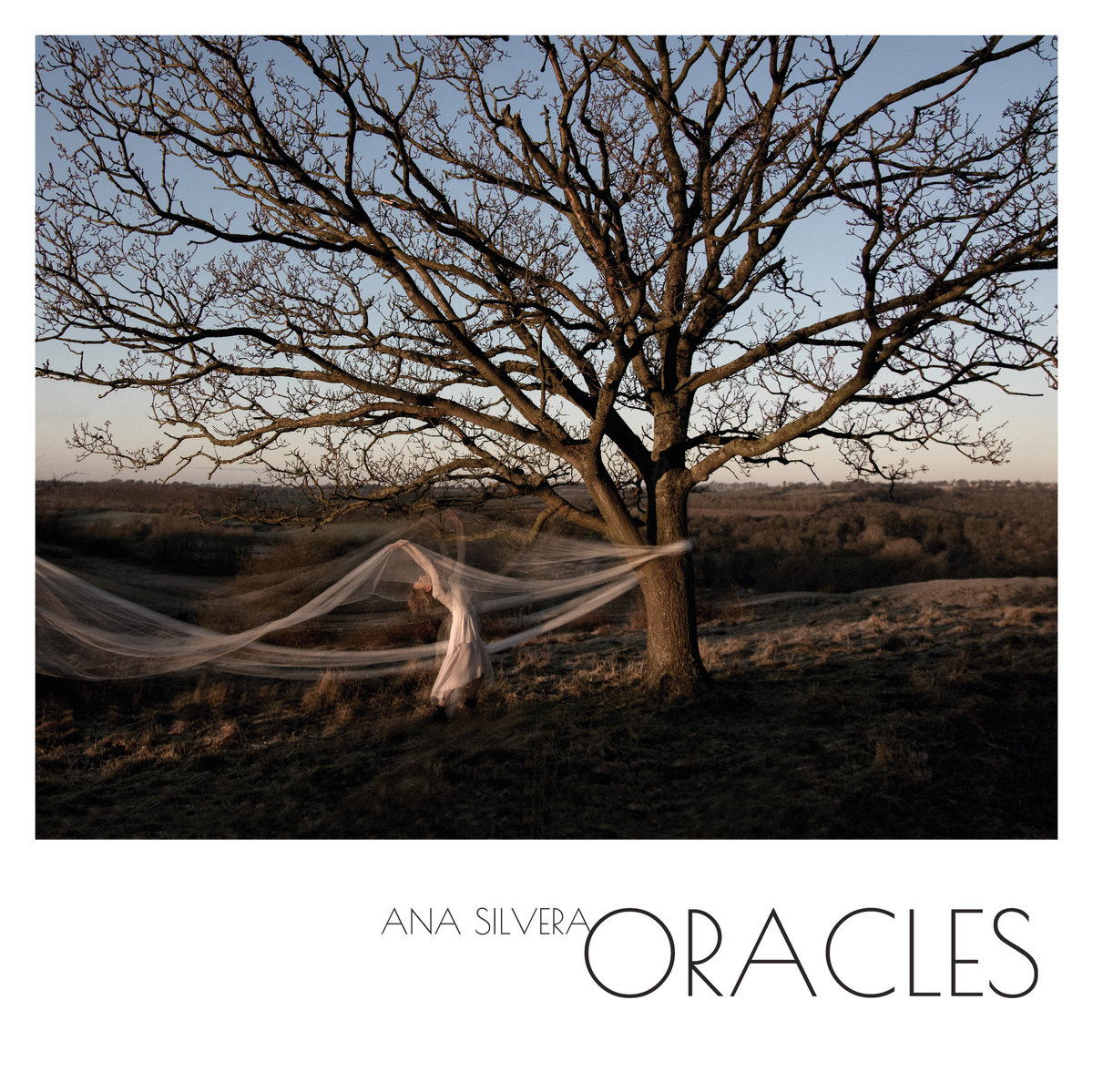
THE STOOGES-THE STOOGES DETROIT MIX-RECORD STORE DAY EDITION.
The Stooges-The Stooges Detroit Mix Record Store Day Edition.
Label: Elektra Records.
James Newell Osterberg a.k.a. Iggy Pop had been the drummer in a number of bands based in Ann Arbor during his teenage years. This included The Iguanas and later, The Prime Movers. However, it was a chance meeting with blues drummer Sam Lay in Chicago that inspired the future Iggy Pop to form a new group to make a new type of blues music, which wasn’t a derivative of the past.
On his return to Detroit, James Osterberg started looking for the “right” musicians for his new band. This included drummer Scott Asheton, bassist Dave Alexander and guitarist Ron Asheton who James Newell Osterberg saw playing with the covers band The Chosen Few. He was recruited because James Newell Osterberg believed that: “I’ve never met a convincing musician that didn’t look kind of ill and kind of dirty, and Ron had those two things covered!”
The three musicians joined James Osterberg in a new band that was originally called The Psychedelic Stooges. It would later change its name, and so would the lead singer. This came after the rest of the band started calling James Osterberg Pop after a local character who he resembled. However, it was only after seeing the MC5 that James Osterberg started calling himself Iggy Pop.
By then, The Psychedelic Stooges had played their debut gig at their communal State Street house on the ‘31st’ October 1967…Halloween. The best part of three months passed before The Psychedelic Stooges played their second gig in January 1968. It wasn’t long before The Psychedelic Stooges were familiar faces on the Detroit live scene.
This included sharing the bill with MC5 at the Grande Ballroom, in Detroit. During that concert, they were playing I Wanna Be Your Dog when Ron Asheton guitar neck separated from the body. As a new band, The Psychedelic Stooges’ instruments weren’t the best and they even used homemade instruments and
used household including a blender and vacuum cleaner. Then there was The Jim-a-phone which was a homemade effects unit that was used to funnel feedback. The Psychedelic Stooges were a unique band who sometimes shocked the audience.
While The Psychedelic Stooges music was raw, primitive and wild, Iggy Pop’s behaviour was often confrontational and outrageous. He sometimes smeared his bare chest with peanut butter and hamburger meat and during gigs and took to stage diving. Other times, he cut his chest with shards of glass and on occasions exposed himself to the audience. Iggy Pop was unlike most singers and The Psychedelic Stooges were unlike most bands.
Despite that, in 1968, Elektra Records signed The Stooges as they were now known. Elektra Records had sent DJ and publicist Danny Fields to watch the MC5 and that night, he also saw The Stooges. Realising the potential of both bands the MC5 and The Stooges were signed to Elektra Records.
While the MC5 was paid $20,000, The Stooges received just $5,000. The disparity between the rates of pay was a bone of contention between the members of The Stooges. However, they were soon sent into the studio to record their debut album The Stooges which was reissued for Record Store Day 2018 as a two LP set. This version was the famous Detroit Mix of The Stooges which was mixed by John Cale, who produced the album.
The Stooges.
By thew time The Stooges entered The Hit Factory, in New York, in April 1969, they intended to record five songs that were staples of their live sets. This included I Wanna Be Your Dog, No Fun, 1969, Ann and We Will Fall. During their sets, The Stooges would play each song for around two minutes, before improvising for several minutes. The Stooges thought that they could do this during the recording sessions .
Vocalist Iggy Pop, drummer Scott Asheton, bassist Dave Alexander and guitarist Ron Asheton recorded fives songs that are best described as a mixture brutalist garage rock and proto-punk. Once the five songs that The Stooges had recorded with producer John Cale were completed, they were handed over to executives at Elektra Records. For The Stooges this was a proud moment as they had completed their eponymous debut album.
Or so they thought. Unfortunately for The Stooges, when executives at Elektra Records heard the album they promptly rejected it. Their reason was that there weren’t enough songs for an album. When The Stooges were told about the lack of songs they bluffed, claiming that they plenty more songs they could record.
That wasn’t true. The Stooges had exhausted their supply of songs and were faced with the prospect of writing three songs overnight. This wasn’t going to be easy, but somehow, The Stooges wrote Real Cool Time, Not Right and Little Doll, which they played for the first time in the studio the following day.
With eight songs recorded, The Stooges had enough material for their eponymous debut album. They even had one song left over, Asthma Attack which didn’t make it onto The Stooges. Now that The Stooges was recorded, the next stage was mixing.
Producer John Cale took charge of the first mix, and used as a reference Lou Reed’s “closet mix” of The Velvet Underground’s eponymous third album, which had also been recorded at The Hit Factory, in New York, in April 1969. When it was handed over to executives at Elektra Records they rejected the mix.
The Stooges was then remixed by Iggy Pop and Elektra Records’ president Jac Holzman. This was the version of The Stooges that was released on August the ‘5th’ 1969.
Before that, critics had their say on The Stooges.The reviews of The Stooges weren’t good, and the majority of critics struggled to find any merit in the album. Robert Christgau the self-styled ‘dean’ of rock critics reviewed The Stooges for the Village Voice and called the album: “stupid-rock at its best.” Edmund O Ward writing in the Rolling Stone said: that The Stooges was: “loud, boring, tasteless, unimaginative and childish,” but did concede that he: “kind of liked it.” Most of the critics rejected The Stooges out of hand, which didn’t bode well for its release.
When The Stooges was released on August the ‘5th’ 1969, it was unlike anything else that had been released. It was a ferocious fusion of brutalist garage rock and proto-punk. Despite the quality of songs like 1969, I Wanna Be Your Dog, No Fun and Real Cool Time the album failed to find an audience. The problem was that neither record buyers nor critics understood The Stooges.
It was only later that critics started to change their mind about The Stooges. By then, The Stooges was regarded as one of forerunners of punk. The raw power and proto-punk sound of The Stooges inspired many on the early punk bands who cited Iggy Pop and Co. as an influence on the music they went on to make.
Meanwhile, many critics who had slated The Stooges were now rewriting history. The Stooges was now regarded as a classic album and part of any self-respecting record collection. Some critics went as far as to say that The Stooges as a groundbreaking album that was way ahead of its time. The Stooges was held in such high esteem that it was ranked at “185” in Rolling Stones’ magazine’s list of the 500 best albums of all time.
By 2010, The Stooges were regarded as one of the most important and influential groups in the history of music. Meanwhile, their eponymous debut album was now seen as a classic album and a staple of numerous record collections. However, still The Stooges was reissued once more on CD and featured a bonus disc. It featured the original John Cale mix of The Stooges. This was a welcome reissue, but since then, and the resurgence of interest in vinyl, many record buyers wanted to hear the John Cale mix as he intended…on vinyl.
It took eight years before Elektra Records decided to release what’s known as the Detroit Mix of The Stooges for Record Store Day 2018. It’s a ‘limited edition’ of 8,000 and allows fans of The Stooges and music lovers to hear the original mix of The Stooges.
John Cale’s Detroit Mix of The Stooges was the first mix of the album, and the mixer’s reference was Lou Reed’s “closet mix” of The Velvet Underground. Whether this was what The Stooges wanted or envisaged is a different thing, as they were very different bands.However, even after a couple of listens it’s obvious that Lou Reed’s “closet mix” of The Velvet Underground was used by John Cale’s reference when he mixed The Stooges.
Despite this different approach to mixing, the energy, defiance, raw power and rebelliousness is omnipresent as The Stooges swagger and tear through eight songs combining garage rock and proto-punk. The music was raw and primitive as The Stooges played as if their very lives depended upon it. This was a lo-fi recording, and it was important that John Cale’s mix didn’t try to make The Stooges something they were never going to be. Maybe the problem was that when John Cale used Lou Reed “closet mix” of The Velvet Underground he was trying to make The Stooges something they were never going to be?
Sadly, John Cale’s mix was rejected by Elektra Records and Iggy Pop and Jac Holzman’s remixed The Stooges. However, one can only speculate what would’ve happened if John Cale’s mix of The Stooges had been released in August 1968?
Instead, Iggy Pop and Jac Holzman’s mix featured on The Stooges and is quite different John Cale’s original mix. However, nearly fifty years after the release of The Stooges, Iggy Pop and Jac Holzman’s mix is regarded by most critics as the definitive mix.
The recent reissue of the Detroit Mix of The Stooges allows critics and record buyers to reevaluate the original mix, and also compare and contrast the two mixes. They’re quite different and show different sides to the eight songs that marked the debut of The Stooges.
On the second album are eight bonus tracks, including some that have never been released before. This is sure to appeal to completists who want everything The Stooges have recorded. There’s an alternate vocal of I Wanna Be Your Dog and Not Right, plus the original John Cale mix of Real Cool Time. They’re joined by alternate versions of We Will Fall, Not Right and full versions No Fun and Ann. Closing the album is Take 5 of Little Doll. These eight tracks show another side to what are now familiar songs from a classic album.
The same can be said of the Detroit Mix of The Stooges which was reissued for Record Store Day 2018 as a two LP set. It’s a welcome reissue, but shouldn’t be seen as a replacement for the version of The Stooges that was released on the ‘6th’ of August 1969. That version is the definitive mix of The Stooges, but the Detroit Mix offers the chance to compare and contrast the two mixes of this classic album, that was way ahead of its time when it was released in 1969.
The Stooges-The Stooges Detroit Mix Record Store Day Edition.

MIGUEL FLORES-PRIMITIVO (1983) SOUNDS ESSENTIAL COLLECTION VOLUME 2-VINYL.
Miguel Flores-Primitivo (1983) Sounds Essentials Collection Volume 2-Vinyl.
Label: Buh Records.
Many words have been used to describe avant-garde musician Miguel Flores is his native Peru. This includes brave and determined, after learning to walk again after an accident just as he was making a breakthrough with the rock group Pax. Miguel Flores has been described as a humble and thoughtful, despite all he’s achieved during a long and illustrious career. He’s also been described as a proud man, especially of his Andean roots. Some critics have described Miguel Flores an artist with a larger than life personality. However, everyone who has followed Miguel Flores’ musical career will agree that he’s one of the legends of the Peruvian music. Sadly, though, outside of Peru, Miguel Flores is not as well known as he should be.
Fortunately, Lima-based Buh Records have recently released Primitivo (1983) Sounds Essentials Collection Volume 2 on vinyl. This is an opportunity to discover three of Miguel Flores’ most ambitious recordings. He was commissioned by choreographer Luciana Proaño to write the score for her new contemporary performance of Mitos Y Mujeres. To do this, put together a band who could record a genre-melting score that fused folklore, free jazz and psychedelia with ashaninka chants, tribal music and electronics. It was a truly groundbreaking musical experiment which sadly, hasn’t been heard for over thirty years. That is until it was released as part of Buh Records’ Sounds Essentials Collection. It’s a welcome addition to this occasional series and a reminder of a remarkable man and musician.
Miguel Flores was born, and grew up in Lima, Peru, and was fortunate to attend the prestigious Markham College. This venerable institution was founded by British expatriates and since then, scholars receive a mixture of British and Peruvian education at what’s often been referred to as the Eton of the Andes. However, life at Markham College wasn’t always easy for Miguel Flores.
With Markham College was the most prestigious school in Lima, it was where the Peruvian elite and the many expatriates living and working in Peru sent their children. While Miguel Flores was readily accepted by his American, Australian, British and Canadian classmates and made many friends, he struggled to gain the acceptance of the children of the Peruvian elite. Sadly, the problem was that he wasn’t from the same social class and had a different skin colour. This sometimes made life tough during his time at Markham College.
Despite this, Miguel Flores was a gifted scholar who regularly received top grades as he studied towards the Peruvian national curriculum and the International General Certificate of Secondary Education program from the University of Cambridge. Markham College was preparing leaders, and doubtless the tutors were shocked when Miguel Flores started to play the drums.
It won him the respect of fellow students and soon, his popularity was growing. Especially when he announced that he was forming a band. This was something that students did in schools and colleges all over the world. However, very few of these student bands were “discovered.” Miguel Flores’ band had a sound that was of the moment, and there was a reason for that.
Many of Miguel Flores’ American and British classmates had copies of all the latest albums, and he was able to listen to them. He heard the all British Invasion groups and the music that the American bands were making. This influenced the music that Miguel Flores’ band was making. The band enjoyed a degree of success locally and Miguel Flores’ and his popularity and stature rose at Markham College. However, it was after leaving Markham College that his musical career began in earnest.
In 1969, Miguel Flores was one of the founded of the Peruvian rock band Pax. They released their debut album Pax (May God And Your Will Land You And Your Soul Miles Away From Evil) on Sono Music in 1970. It found Pax combining psychedelic rock and progressive rock on what was a critically acclaimed and commercially successful album.
Having released their debut album, Pax released Resurrection Of The Sun as their debut single. This they hoped would build on the success of their album.
Within a couple of years, Pax was one of the most successful Peruvian rock bands, and it looked as if they were going to enjoy a long and illustrious career. Sadly, tragedy struck for Miguel Flores.
He was involved in an accident, and was so badly hurt that he had to relearn how to walk again. For Miguel Flores this was a massive blow personally and professionally. Pax looked as if they were about to become one of the biggest Peruvian rock groups, and he was robbed of the opportunity to be part of this. However, Miguel Flores was determined to make good use of the free time he had as learned how to walk again.
During his convalescence, Miguel Flores took the opportunity to learn how to write music. This he knew would open up all sort of opportunities in the future. Miguel Flores who had been playing drums since his early teens also decided that he wanted to learn how to play other instruments. This allowed him to broaden his musical horizons.
After learning how to walk again after the accident, Miguel Flores changed direction musically and moved away from Pax’s hard rocking sound. Instead, Miguel Flores founded a new group Ave Acustica in 1974, and they began playing experimental fusion. The concept of combining traditional Peruvian music with experimental music was seen as bold and ambitious.
By then, there was a resurgence of interested in folk music, which was being promoted across Peru a result of Juan Velasco Alvarado’s nationalistic policies. Meanwhile,the appearance of the Talleres de la Canción Popular in 1974, which headed by Celso Garrido Lecca played an important factor in the founding of a new generation of folk groups. However, Miguel Flores was already moving beyond folk music as he continued to push musical boundaries.
Folk music was only one part of what Miguel Flores was trying to achieve during his sound experiments. He had also embraced free jazz as he created ambitious and genre-melting music. However, not everyone embraced Miguel Flores’ sound experiments. Some critics believed some of the constituent parts didn’t belong in a sonic experiment. They were seen as part of Peru’s cultural heritage, and not something that should be experimented with. However, what they failed to realise was that Miguel Flores was a musical pioneer whose raison d’être was to push musical boundaries and create music that was ambitious, bold and innovative.
Over the next couple of years, Miguel Flores’ continued to move in new directions musically. He started composing and producing music for theatre groups, documentaries and choreographers. It seemed that new opportunities were opening up for Miguel Flores.
Especially when a Japanese theatre group which had been funded by the Japanese foundation, arrived in Peru. They were due to perform in Peru, which was how they discovered Miguel Flores. He was asked by the theatre company to travel to Japan to work on a new project. This was something of a coup as the theatre group could’ve chosen any one of a number of composers. However, it was Miguel Flores they wanted, and he left Peru and headed to Japan.
Miguel Flores worked on the new theatre production, and his new patrons were so impressed with his work that they asked him to stay. This was the opportunity of a lifetime as Miguel Flores was being offered what was a prestigious role that wasn’t just lucrative, but brought with it fame and artistic recognition. It was an offer that could’ve transformed Miguel Flores’ career. However, after much soul-searching Miguel Flores turned down the opportunity and returned to Peru where he had work to do.
When he returned to Peru in 1980, Miguel Flores brought with him a little part of Japan. During what was a relatively short period Miguel Flores spent in Japan, its art, culture and music had influenced him. This he would introduce to the Peruvian people he would come into contact with. Mostly though, Miguel Flores was keen to introduce the Peruvian people to their own art, culture and music. He wanted to educate the Peruvian people about their cultural heritage. This was all very well, but Miguel Flores had to earn a living.
Fortunately, Miguel Flores was commissioned by Peruvian choreographer Luciana Proaño to write the score for her new contemporary performance of Mitos Y Mujeres. To do this, Miguel Flores called upon some of the most talented musicians that he knew.
This included Arturo de la Cruz, Aberlardo Oquend, Corina Bartra and Manuel Miranda. They recorded a genre-melting score that fused folklore, free jazz and psychedelia with ashaninka chants, tribal music and electronics. It was truly groundbreaking recording that became Primitivo and was a fusion of experimental and neofolklorical music where Miguel Flores.
Primitivo opened with Pachacuti which is a twelve-and-a-half minute four-part suite. It opens with the abstract creation of the universe where fourteen guitars combined. This recording was then played backwards, resulting in array of plink plonk, droning, percussive and crystalline sounds assail the listener during this ambitious piece. After the creation of the universe, Miguel Flores documents the pre-Columbian empires of ancient Peru as they formed, and wars troubled the new land. To do this, he uses the basic rhythm of the Peruvian Andes the huayno. However, rather than flowing the off beat means that the sounds clash which grab the listener’s attention and force them to listen and reflect on important part of Peruvian history. The third part of the suite features the final conflict, and the arrival of the Spaniards. Miguel Flores uses a rhumba beat to signify this. Closing the suite was the urban music of the day. This veers between experimental to what’s akin to a joyous call to dance.
When Miguel Flores wrote the second piece, Iranpabanto, it was inspired by the Ashaninka myths from the Peruvian Amazon region. The music is based on the sounds they attribute to a thunderbolt and this repeats itself throughout a track that lasts the best part of twenty-one minutes. Here, Miguel Flores play percussion and was joined by saxophonist Manuel Miranda who also played siku, Abelardo Oquendo on electric guitar and Arturo de la Cruz synths. They play their part in the sound and success of this ambitious soundscape, which features field recordings of Ashaninka chants, wind instruments and later, lengthy sultry saxophone solo. All this us part of an epic tracks which is variously atmospheric, dramatic, haunting, otherworldly, sultry, jazz-tinged, percussive and beautiful. Seamlessly, musical genres melt into one during a cinematic epic that is rich in imagery and features a musical pioneer at the peak of his powers.
Primitivo closes with Taki Onqoy, which was the name of religious movement in Peru. Its origins can be traced to between 1560 and 1570 when it became the first organised movement to react to the Spanish presence in the Tawantinsuyu. The leaders told the Peruvian people to forget about Christian gods and Spanish habits and free themselves from the shackles of suffering. They were also told that death and illness was the punishments that awaited those that abandoned or replaced the ancient and now forgotten deities, the Huacas. Taki Onqoy’s followers were told to return to how life had been before the arrival of the Spanish, during the days of the Huacas. During this part of Miguel Flores’ score, saxophonist and flautist Manuel Miranda accompanies Corina Bartra. Miguel Flores had written most of the lyrics, but left room for Corina Bartra to improvise. This does, before Manuel Miranda’s saxophone and flute bring to a close another ambitious, innovative and thought-provoking track.
Thirty-five years after Miguel Flores recorded Primitivo in 1983, this groundbreaking, genre-melting score has been reissued on vinyl by Lima-based Buh Records as part of their Sounds Essentials Collection. It’s a welcome reissue.
Originally, Primitivo (1983) Sounds Essentials Collection Volume 2 was released as a limited edition CD, but quickly sold out. Buoyed by the success of the CD version of Primitivo (1983) Sounds Essentials Collection Volume 2, a vinyl version has just been released and is the perfect opportunity to discover three of Miguel Flores’ most ambitious recordings.
He was commissioned by choreographer Luciana Proaño to write the score for her new contemporary performance of Mitos Y Mujeres. Miguel Flores and his band recorded a truly ambitious genre-melting score where he fused folklore, free jazz and psychedelia with ashaninka chants, tribal music and electronics. It was a truly groundbreaking musical experiment which sadly, hasn’t been heard for over thirty years. That is until it was released as part of Buh Records’ Sounds Essentials Collection. Primitivo (1983) Sounds Essentials Collection Volume 2 a welcome addition to this occasional series and a reminder of a remarkable man and musician…Miguel Flores.
Miguel Flores-Primitivo (1983) Sounds Essentials Collection Volume 2-Vinyl.
MIDNIGHT IN TOKYO VOLUME 2.
Midnight In Tokyo Volume 2,
Label: Studio Mule Japan.
Release Date: ‘27th’ July 2018.
During the seventies and eighties, Japan still had a thriving and vibrant jazz scene, although many artists and bands had turned their attention to fusion. This includes the thirteen artists and bands that feature on the new compilation Midnight In Tokyo Volume 2,which will be released by Studio Mule Japan on the ‘27th’ July 2018.
Midnight In Tokyo Volume 2 is a compilation of Japanese fusion that was compiled by Dubby, who runs the online record store Ondas. His latest compilation of fusion features thirteen hidden gems that are regarded as perfect nighttime listening in Tokyo. It’s also another opportunity to discover the delights of Japanese jazz which has been growing in popularity outside of Japan over the last couple of years. However, by the seventies, Japanese jazz had come long way in just over thirty years.
Especially since it was illegal for Japanese music fans to listen to jazz during the World War II. The ban was only lifted after Japan’s defeat and unconditional surrender in August 1945.
Jazz fans were now able to hear jazz on the radio, and watch the allied forces bands play jazz in concert halls across Japan. Some of the bands featured some of the top American jazz musicians who were serving their country. Sometimes, these musicians spent time collaborating with local jazz musicians who were keen to learn from some of the names they had only heard on the radio. However, in 1952 when the allied forces left Japan, and returned home musicians like Frank Foster, Harold Lamb and Oliver Nelson had formed firm friendships with local jazzers. By then, they had played an important part in the cultural rebirth of Japan.
After six years of war, a new era began for Japanese jazz musicians who were determined to make up for lost time. There had been no winners after six years of war. While jazz had been banned in Japan during the war, many British and American jazz musicians had been called up and were serving their country. However, many jazz musicians spent war years playing in army bands where they were usually out of harm’s way. Now that they had returned home, they like their Japanese counterparts were determined to make up for lost time.
By the mid-fifties, a jazz scene had developed in Japan, during what was later referred to as the “funky period.” However, much of the jazz music being made in Japan had been influenced by American jazz and particularly the West Coast cool jazz and East Coast hard bop. Many Japanese musicians were collecting albums on Blue Note and Prestige which heavily influenced them. It would only be later that some would find their own voice.
Meanwhile, many of the top American jazz musicians no longer serving in the US Army, and had returned home. Some joined new or existing bands while some musicians put together new bands. Initially, they returned to their local circuit where they tried to pickup where they had left off. This changed a few years later.
In the late-fifties and early sixties, many of these musicians who had played in Japan during World War II were keen to return to a country where so many loved and appreciated jazz music. They made the long journey to Japan where they were reunited with some old friends.
During this period, Miles Davis, Art Blakey’s Jazz Messengers and Horace Silver all made the long journey to Japan where they received a warm and enthusiastic welcome. Whether any of these legendary musicians were aware at the time, they were playing a part in the cultural rebirth of Japan. Soon, many Japanese jazz musicians weren’t just content to copy Miles Davis, Art Blakey’s Jazz Messengers and Horace Silver sonically, but were determined copy them stylistically. Before long, Japanese jazz musicians were soon sporting the same preppy Ivy League clothes as their American counterparts.
Despite many people enjoying the visits of American jazz musicians, the Japanese authorities heard that some musicians had been arrested on drugs offences. They tightened the law as they didn’t want musicians with drug convictions visiting the new Japan and corrupting their youth. However, with the laws tightened, much fewer American jazz musicians visited Japan. Those that visited, played in packed concert halls and continue to influence Japanese jazzers.
Not all Japanese jazz musicians were inspired by their American counterparts by the mid-sixties as homegrown musicians were making their presence felt. Especially pianist Toshiko Akiyoshi and saxophonist and flautist Sadao Watanabe who were among the leading lights of the vibrant Japanese jazz scene.
Toshiko Akiyoshi had been invited to study at the prestigious Berklee College of Music in Boston in 1955. However, it took a year of wrangling, diplomacy and arm twisting before Toshiko Akiyoshi was able to enrol at Berklee College of Music in Boston in 1956. By then, Toshiko Akiyoshi was already making a name for herself outside of her native Japan and would enjoy a long and successful career.
Five years later, Sadao Watanabe released his eponymous debut album on King Records. The following year, 1962, Sadao Watanabe followed in Toshiko Akiyoshi’s footsteps and enrolled at Berklee College of Music in Boston. He too was on the cusp of a successful career.
Back home in Japan, many other Japanese jazz musicians were content to draw inspiration from their American counterparts, but decided to forge a new style of modern jazz befitting the new modern Japan. Leading this movement in the late-sixties was Sadao Watanabe whose music was progressive, experimental, exciting and ambitious and reflected the musical influences ad genre he had absorbed. Soon, Sadao Watanabe was influencing some of the musicians who were at the forefront of a jazz revolution.
Some of Japan’s top up-and-coming jazz musicians joined Sadao Watanabe’s band, where they learned from one of the country’s top jazzers. For these musicians this was akin to a musical apprenticeship, before they headed off to play their part in the jazz revolution that took place between the late-sixties and early eighties.
During the Japanese jazz revolution, some musicians changed direction and started playing fusion. Its roots could be traced to America in the late-sixties, when some jazz musicians started combining jazz harmony and improvisation with rock, funk, and R&B. This marked the birth of fusion, which grew in popularity.
Soon, fusion had arrived on the shores of Britain, Europe and Japan, and some critics felt that it ensured that jazz stayed musically relevant.
In the pre-fusion years jazz was no longer as popular as it once was, and by the late-sixties it looked as if jazz was going the same way as the blues. Fortunately, both blues and jazz were reinvented and stayed relevant.
Jazz begat fusion which during the seventies and eighties grew in popularity in Japan. This includes amongst the artists and bands on Midnight In Tokyo Volume 2. This included Genji Sawai, Today’s Latin Project, Air Suspension Club Band, Yasunori Soryo and Jim Rocks, King Kong Paradise, Om, Parachute, Keichi Oku and Safari. They’re just some of the artists that feature on Midnight In Tokyo Volume 2.
It opens with Hikobae from Genji Sawai’s album Sowaka, which was released on the Agharta label in April 1985. Hikobae has a slow, clunky electronic arrangement where Genji Sawai plays synths and a wailing saxophone. They’re part of a genre-melting track that where Genji Sawai and his band combine elements of electronica, free jazz and fusion to create an ambitious and moderne track.
Very different is Danza Lucumí which is taken from Today’s Latin Project’s 1983 eponymous album. It was released on the Discomate label and meanders melodically, meditatively and dreamily along as Today’s Latin Project combine electronica, fusion and Latin music.
In 1979, Shigeru Suzuki released the album White Heat on the Invitation. It was his sixth solo album and featured On The Coast which is soulful and funky as Shigeru Suzuki combines elements of boogie fusion and jazz-funk seamlessly.
In the Hot City was taken from Air Suspension Club Band’s 1982 debut album Another World. It was released on the Vap label and featured In the Hot City which is one of the album’s highlights. No wonder with Air Suspension Club Band seamlessly combining funk, fusion, jazz and soul during a track that is perfect late night listening.
Yasunori Soryo and Jim Rocks Singers collaborated on two albums including So Long America…in 1982. It was released on the Victor label and featured So Long America one of Yasunori Soryo and Jim Rocks Singers’ finest hours. They combine synths and uber soulful vocals during a wistful ballad which is funky, soulful and has stood the test of time.
Jugando’s one and only album Samba Kathy was released on Trio Records in 1980, and featured Twisty. Initially, it features a horn, the arrangement that skanks along before later, rasping horns, harmonies and a Hammond organ play their part in Twisty’s sunshine sound.
King Kong Paradise released their sophomore album 1000倍青い空になれ on Bourbon Records in 1979. It featured what’s one of their finest recordings Samarkand. This carefully crafted example J-Fusion is by far the highlight of Midnight In Tokyo Volume 2.
Between 1980 and 1981 Katsutoshi Morizono and Bird’s Eye View released two albums. This included Spirits which was released on the Electric Bird label in 1981. It features Imagery, where Katsutoshi Morizono and Bird’s Eye View seamlessly combine electronica, funk and fusion.
Another group who only released the one album was Om whose 1983 album Solar Wind was their only offering. It was released on Casablanca and featured Windmill, which is a beautiful, breezy track where jazz and folk are combined by Om.
Parachute were a prolific group who released five albums between 1980 and 1980 on the Agharta label. This included their 1980 debut album From Asian Port. It featured Mystery Of Asian Port which was released as single in 1980, and is an unmistakably Japanese sounding track where electronica, funk and fusion combine seamlessly.
On the ‘21st’ April 1985 Yuji Toriyama released the album A Taste Of Paradise on the Agharta label. One of its highlights was Bay/Sky Provincetown 1977 a melodic mid-tempo track where electronic and fusion are combined by Yuji Toriyama
When Keiichi Oku’s released his 1981 album The Good Bad Girl on JVC, it featured Heat Wave. It’s smooth and soulful, thanks to the vocal which plays a starring role in a song where electronica, jazz-funk and soul are seamlessly combined.
Closing Midnight In Tokyo Volume 2 is Safari Day Dream At The Bob’s Beach. It’s taken from Safari’s eponymous album which was released in July 1984 on the Vap label. Safari never miss a beat and close the compilation on a high as funk, fusion, jazz and even a hint of reggae are combined on this slice of musical sunshine.
Midnight In Tokyo Volume 2 Midnight In Tokyo Volume 2 which will be released by Studio Mule Japan, on the ’27th’ July 2018, is just the latest compilation of jazz from the land of the rising it. It follows in the footsteps of BBE’s J Jazz: Deep Modern Jazz From Japan 1969-1984 and Jazzman Records’ Spiritual Jazz Volume 8 Japan: Parts I and II. Both are essential compilations for anyone with a passing interest in J-Jazz or jazz. They’re also both compilations of J-Jazz, while Midnight In Tokyo Volume 2 is supposedly a compilation of Japanese fusion from the late-seventies to mid-eighties. However, it’s not.
While there’s a couple of tracks on Midnight In Tokyo Volume 2 that are out-and-out fusion, the other tracks are best described as genre-melting. Everything from boogie, electronica, free jazz, funk, jazz, jazz-funk, Latin and soul features on Midnight In Tokyo Volume 2. It’s an eclectic compilation rather than a compilation of Japanese fusion. Having said that, Midnight In Tokyo Volume 2 is chock full of hidden gems and is perfect late night listening whether you’re spending the night in Texas, Tokyo or even Taunton.
Midnight In Tokyo Volume 2,

SKADEDYR-MUSIKK!
Skadedyr-Musikk!
Label: Hubro Music.
Release Date: ’27th’ of July 2018.
Over the last few years, some of the most ambitious and innovative new music being released in Europe, has been in Norway, which has a vibrant and thriving musical community. However, this didn’t happen overnight, and instead, it took years for Norway to become home to some of the most inventive, innovative and influential musicians in Europe. This includes the twelve members of Norwegian supergroup Skadedyr who are about to release their third album Musikk on Hubro Music on the ’27th’ of July 2018. The release of Musikk! is the latest chapter in the Skadedyr story, who can trace their roots back to 2010.
That was when a new Norwegian group Your Headlights Are On released their debut single Diskobar on the ’23rd’ of October 2010. Diskobar whetted listener’s appetite for the group’s genre-melting sound that featured elements of jazz, pop and rock.
Just under five months later, Your Headlights Are On returned with their eponymous debut album, which was released on the ‘18th’ of March 2011. Your Headlights Are On was well received upon its release, and critics forecast a great future for Your Headlights Are On. Sadly, that wasn’t to be, and the band that Heida Karine Johannesdottir Mobeck and Anja Lauvdal had formed was no more.
From the ashes of Your Headlights Are On, came Skadedyr, which Heida Karine Johannesdottir Mobeck and Anja Lauvdal were determined to make a success of. They became the driving force behind, and brought together what is a twelve strong Norwegian supergroup.
Having founded Skadedyr, Heida Karine Johannesdottir Mobeck and Anja Lauvdal went looking for some of Norway’s most talented and innovative musicians. Given this was a golden era for Norwegian music they were absolutely spoilt for choice. The founders of Skadedyr took weighed up their choices, and after much consideration, they brought onboard members of Broen Osk, Karokh, Moskus, Skrap and Hullyboo. The result was a Norwegian supergroup. However, this was no ordinary supergroup.
Instead, Skadedyr describe themselves as an anarchist-democratic band. This makes Skadedyr stand out from the crowd. So does the fact that there’s twelve members of Skadedyr.
These twelve musicians play what can only described as an eclectic selection of instruments. This includes a brass, string and rhythm section. However, even Skadedyr’s rhythm section is unlike most other bands and features two drummers. They’re joined by guitars, keyboards and even an accordion. Skadedyr is unlike most bands, and best described as a pioneering collective of top avant-garde musicians whose recording career began in 2013.
Kongekrabbe.
On the ‘4th’ of October 2013 Skadedyr released their much-anticipated debut album Kongekrabbe it was to plaudits and praise. Skadedyr’s debut was hailed as an ambitious and innovative genre-melting album where they fused elements of ambient, electronica, experimental, free jazz and even hints of industrial and Krautrock on Kongekrabbe. Meanwhile, the five soundscapes on Kongekrabbe were atmospheric, cinematic, crystalline, dramatic, ethereal and evocative. Kongekrabbe was a tantalising taste of one of Norway’s most exciting up-and-coming bands.
The critical acclaim and commercial success of Kongekrabbe was also proof that Skadedyr’s alternative approach to making music worked. When Skadedyr was founded, they were keen to stress that the band was a musical democracy where everyone had their say in the music making process. That had been the case during the making of Kongekrabbe, with the twelve talented and innovative musicians all having their say and making music their way. This had worked and now the members of Skadedyr were keen to build on the success of Kongekrabbe.
Buoyed by the success of Kongekrabbe, Heida Karine Johannesdottir Mobeck and Anja Lauvdal who had founded Skadedyr, were keen to begin work on the band’s sophomore album. There was only one problem, getting the twelve band members in the one studio at the same time.
The twelve members of Skadedyr were all members of different bands, who had busy schedules. Some bands could in the studio recording, while others were out on the road touring. Meanwhile, other members of Skadedyr could be doing session work or working as arrangers and producers. It wasn’t easy getting twelve musicians from different bands into the studio at the same time.
Culturen.
Eventually, the members of Skadedyr’s schedules meshed and they entered the studio to record their eagerly awaited sophomore album Culturen. For the recording session, Morgan Nicolaysen replaced Andreas Mjøs who had produced Skadedyr’s debut album Kongekrabbe. This could quite easily have been a case of too many cooks spoil the broth.
With Skadedyr being a musical democracy, everyone could have their say during the recording of Culturen. With Morgan Nicolaysen taking charge of production, this meant potentially thirteen very different opinions. However, the democratic process has never failed Skadedyr, and didn’t fail them during the recording of Culturen.
It found Skadedyr reinventing their music on Culturen, where they fuse elements of avant-garde, electronica, experimental, folk, free jazz and post rock. So does brass band, jazz and musique concrète on an album that veers between atmospheric, dark, dramatic and eerie, to ethereal, joyous and melodic. Other times, the music was minimalist and understated, but can quickly, become urgent, futuristic and otherworldly. Sometimes, the music becomes melancholy and wistful, but has an inherent beauty and continually captivates. After three years away, Skadedyr had returned with what was their finest hour. Critics and their growing fan-base were already looking forward to Skadedyr’s third album.
Musikk!
This time, there wasn’t going to be a three-year gap between albums. and Skadedyr headed to Studio Paradiso on September the ‘11th’ 2017. Over the next two days the twelve strong group recorded five soundscapes.
This included the Hans Hulbækmo compositions Kallet, Festen, Hage Om Kvelden and Musikk! They were joined by Frampek which was written by Skadedyr and Portrett which was penned by Adrian Løseth Waade, Marius Klovning, Torstein Lavik Larsen and Øystein Aarnes Vik. These tracks were recorded by Skadedyr at Studio Paradiso.
Skadedyr featured a rhythm section of drummer and percussionists Øystein Aarnes Vik and Hans Hulbækmo who plays also play the recorder. He’s joined by Fredrik Luhr Dietrichson on double bass and electric bass while Lars Ove Fossheim plays electric guitar and synth guitar. They’re joined by Marius Hirth Klovning who plays dobro and lap pedal steel, accordionist Ida Løvli Hidle, violinist Adrian Løseth Waade, pianist and synth player Anja Lauvdal and vocalist and effects guru Ina Sagstuen. The final piece of the Skadedyr jigsaw was the horn section of trombonist Henrik Munkeby Nørstebø, trumpeter Torstein Lavik Larsen and tubaist Heiða Karine Jóhannesdóttir. They played their part in the recording of Musikk! which was completed on September the ‘12th’ 2017.
With the album recorded, Lasse Marhaug mixed and mastered Musikk! was ready for release. However, the release date was scheduled for the ’27th’ of July 2018 when finally, critics and their fans can hear more of Skadedyr’s Musikk!
Opening Musikk! is the title-track where rattling drums and percussion combine with a wailing Santana-inspired guitar and droning keyboards. As cymbals rinse, the bass and guitar are unleashed and horns rasp as Skadedyr play with abandon and freedom. When harmonies are added, it’s inevitable that there will be comparisons with Alice Coltrane in her musical prime. Meanwhile, a searing guitar and pounding drums are added as this fusion of free jazz, rock and spiritual jazz reaches a crescendo. After that, the soundscape becomes subdued as jangling percussion combines with horns that belong in a brass band while the leftfield percussive sounds and strings are joined by a scatted vocal and rattling sound. They’re part of an ambitious genre-melting soundscape that also features elements of avant-garde, country, experimental and musique concrète. It’s also melodic and continually captivates and it’s impossible to second-guess Skadedyr as they throw curveballs a plenty during this cosmic, lysergic and meditative twelve-minute epic.
A myriad of disparate leftfield sound combine with a rasping, squealing horn on Frampek. It’s played with freedom before the drums are played with urgency and are joined by a fleet-fingered bass and scatted vocal. This is music, but not as we know it as Skadedyr push musical boundaries to their limits during what’s like a cosmic free jazz jam. Soon, a wheezing accordion and scratchy strings join the frae as it reaches a crescendo. Meanwhile, a wistful tuba and ethereal vocal are added as disparate sounds assail the listener. They range from elegiac to industrial and liturgical before the arrangement explodes and drums power the genre-melting arrangement along. It speeds up and slows down, before drones, braying horns, a haunting vocal and scratchy strings play part in what’s a truly ambitious and innovative soundscape.
Rueful describes the horn that opens Kallet before plink plonk keyboards give way to the horn. It’s played in an unorthodox way, as wailing, squealing sounds are emitted. Meanwhile, bubbling, gurgling and rustling sounds can be heard and later, a guitar is played in an equally unorthodox way. Sometimes, it sounds detuned, while other times it’s played with accuracy and urgency as it jangles, while the horn rasps and brays. They’re joined by an accordion, jangling percussion, bass, piano crashing cymbals and sweeping strings which add the final piece of the jigsaw, as this alternative Nordic symphony becomes melodic as it sweeps and sways.
As Festen unfolds, it shows different sides of Skadedyr. Their rhythm section sound like a tradition jazz band during the golden age of jazz. That is apart from the introduction of an electric bass which adds scampering runs. Soon, the piano is played with freedom and other members of Skadedyr embrace free jazz. Later, a gypsy violin and scatted jazzy vocal are added. So are an array of leftfield sounds, while the guitar takes the track in the direction of fusion. It’s joined by wheezing horns, rueful strings and keyboards as Skadedyr seek inspiration from and combine elements of jazz from the past and present. In doing so, they create one of the highlights of Musikk!
Portrett is the shortest track on the album and allows Skadedyr to improvise. Lars Ove Fossheim toys with his guitar and it’s as if he’s contemplating channeling the spirit of Jimi Hendrix. Meanwhile, droning. clanging, clicking and rasping sounds provide a backdrop as Lars Ove Fossheim continues to toys with his guitar and tease the listener. He doesn’t unleash any spellbinding solos, but improvises and experiments during this short, but intriguing soundscape.
There’s wistful sound to the piano that opens Hage Om Kvelden. It’s a similar case with as the horn, which is joined by a jangling, shimmering guitar. Meanwhile, the wistful piano is mesmeric as the horn provides the perfect foil. However, it’s replaced by the tuba, drones and harmonies as a degree of drama is added. Later, Skadedyr’s replicate the sound of a brass band as cymbals crash and otherworldly sounds are added. Still, the piano plays a leading in the sound and success of what’s another of the highlights of Musikk!
Two years after the release of their critically acclaimed sophomore album Culturen, Skadedyr return with their third album Musikk! It’s without doubt Skadedyr’s first hour as the twelve piece Norwegian democratic supergroup reach new heights. They also continue to push musical boundaries to their limits, and sometimes, way beyond on Musikk! Unlike many groups, the members of Skadedyr are risk takers and seem determined to release music that is ambitious, bold and challenges the listener. It sometimes takes them out of their comfort zone, but they’re rewarded during what’s an ambitious and innovative album of genre-melting music.
Skadedyr combine elements of ambient, avant-garde, country, electronica, experimental, free jazz, fusion, industrial, jazz, modern classical, musique concrète, post-rock, rock and spiritual jazz during the five soundscapes on Musikk! In doing so, Skadedyr draw inspiration from everyone from Alice Coltrane, the Art Ensemble of Chicago, Pharoah Sanders, Santana, Sun Ra and closer to home Jaga Jazzist. Although these artists have influenced Skadedyr, their music is inimitable and unique.
Skadedyr who are freewheeling, twelve piece mini orchestra that feature musical free spirits who want to shakeup music, and take it in a new direction. This they do throughout the five soundscapes on Musikk! Skadedyr continue in their mission to mix and match musical genres as they create ambitious, challenging, exciting, innovative and melodic music for the ‘21st’ Century.
While Norway has one of the most vibrant and eclectic music scenes in Europe, Skadedyr is a very different group and have establishing a reputation for doing this their own way. Proof of this are the five soundscapes on Musikk! It finds Skadedyr bowling curveballs aplenty, springing surprises and sometimes combining the most unlikely sounds and instruments during their third album Musikk!, which is the Norwegian supergroup’s Magnus Opus.
Skadedyr-Musikk!


TROPIC OF COLDNESS-FRAMED WAVES.
Tropic Of Coldness-Framed Waves.
Label: Glacial Movements.
It was after a chance meeting in Brussels, Belgium, during November, 2011, between American guitarist, synth and sample player David Gutman, and Italian vocalist, guitarist and fellow ‘sample player’ Giovanni, that led to them forming Tropic Of Coldness.
Since then, Tropic Of Coldness have released one EP and four genre-melting albums where they combine elements of ambient, avant-garde, drone, electroacoustic, experimental and musique concrète. This includes Framed Waves which has just been released on Glacial Movements and is a cinematic album that is rich in imagery. It shows how far Tropic Of Coldness have come since they began their musical journey just under seven years ago.
When David Gutman and Giovanni first met in November, 2011, the two musicians were already involved with bands. David Gutman was the guitarist, synth and sample player with the electro-experimental project Drawing Virtual Gardens who were familiar faces on the Brussels music scene.
Meanwhile, Giovanni was also a member of Fuji Apple Worship, who were based in North-East Italy. Giovanni was the band’s vocalist, guitarist and sample player, and had much in common with David Gutman.
In many ways, it was a meeting of musical minds and David Gutman and Giovanni decided to form a new band which they called Tropic Of Coldness. This more than hinted at the type of ambient music that they were about to release.
By March 2012, Tropic Of Coldness were ready to self-release their debut EP Commuting as a digital download. It was well received, and was later released as a CDR by the Cathedral Transmissions label. This it was hoped would allow a wider audience to hear Tropic Of Coldness’ debut EP Commuting and worked. When 2012 drew to a close, Commuting was included on a couple of the best of 2012 end of year lists.
Buoyed by the response to Commuting, Tropic Of Coldness were already preparing to release their debut album Unrelated Causalities in February 2013. It was self-released as a digital download and a limited edition of 100 CDRs. Just like Commuting, Unrelated Causalities found Tropic Of Coldness sculpting soundscapes which were a fusion of ambient, dark ambient and drone music. Unrelated Causalities was well received by critics and Tropic Of Coldness would soon complete their next album.
This was Demography Of Data which Tropic Of Coldness began recording in March 2013. It took fourteen months to record just six soundscapes which were completed in May 2014. Six months later, Demography Of Data was released on the ‘26th’ of November 2014 by Organic Industries as a digital download. Demography Of Data was a mixture of ambient, avant-garde, dark ambient and drone and experimental. This was the most ambitious and accomplished album of Tropic Of Coldness’ short career.
After the release of Demography Of Data, nothing was heard of Tropic Of Coldness for nearly three years. Meanwhile, David Gutman and Giovanni were working on their own projects.
The busiest member of Tropic Of Coldness was David Gutman. He hadn’t released any new music as Drawing Virtual Gardens since their 2012 EP Notes Before Travelling. In 2015, he started to make up for the lack of music from Drawing Virtual Gardens during the last three years. The albums Six Weeks Were Too Long Too Wait and The Osmotic Memory of JJ Bhagee were released in 2015, with Charcoals and Heartbeats Of A Premature Image following in 2016. David Gutman had just enjoyed the most creative period of his career.
By then, Tropic Of Coldness had returned to the studio and had recorded and mixed their new album Déplacés between May and December 2016. However, it was another year before Déplacés was released as a digital download by Shimmering Moods Records, in December 2017. It was well received by critics and found Tropic Of Coldness combining ambient and drones on what was their third album in just six years.
What many people didn’t know was that Tropic Of Coldness had already recorded the five tracks that would become their fourth album Framed Waves. The five tracks Distilled Conversation, The Pride Of Our Sails, Two and A Half Stones, They Rested, Then Blossomed and Framed Waves had been composed and sculpted by the two members of Tropic Of Coldness in Brussels, Belgium, between September 2015 and February 2016.
American guitarist synth and sample player David Gutman, and Italian vocalist, guitarist and fellow sample player Giovanni entered the studio where they began work on Framed Waves. The pair also deployed a myriad of samples, field recordings and drones as they sculpted five new glacial soundscapes that were cinematic and rich in imagery.
Distilled Conversation opens Framed Waves, and meanders and floats along gradually revealing its hidden secrets. It’s a minimalist soundscape where the meditative and melodic music ebbs and flows. Meanwhile, the two members of Tropic Of Coldness seamlessly combine elements of ambient, avant-garde drone and electroacoustic music as synths sweep, a guitar cheeps and later, shimmering glistening sounds emerge. They play their part in a beautiful, dreamy soundscape that is meditative and melodic and is a tantalising taste of what’s ahead.
This includes The Pride Of Our Sails which is very different from the previous track. Gone is the understated soundscape, which is replaced by a dramatic and cinematic soundscape. It ebbs and flows, veering between ethereal and elegiac against the dramatic cinematic backdrop. Sometimes, the soundscape becomes eerie as creaks and squeaks and otherworldly sounds add to the drama as. Later, the soundscape becomes understated, but the drama remains during this eight-minute epic that is rich in imagery.
Mesmeric describes the introduction to Two and A Half Stones as this ambient soundscape seems reluctant to reveal its cinematic secrets. Soon, sounds assail the listener and paint pictures in the mind’s eye. Tropic Of Coldness deploy washes of synths and a dark, dramatic and droning gothic strings. Adding a contrast is a chirping guitar and haunting,celestial and ethereal sounds. They’re part of what sounds like the soundtrack to a short film, as it ebbs and flows revealing its secrets, drama and darkness. Contrasts abound during this genre-melting, multilayered soundscape. Much later, and with less than a minute of this eleven-minute soundscape remaining, it becomes minimalist, filmic and ruminative as it encourages reflection.
They Rested, Then Blossomed has a shimmering, minimalist arrangement as it meanders along. Soon, ethereal and celestial sounds are added and add a degree of drama that builds. Still, the main part of the arrangement shimmers and once again, contrasts abound. Especially as the drama grows and processed guitars are added to the multilayered arrangement. By then, it’s a fusion of ambient, avant-garde, dark ambient and experimental music. Soon, it’s all change as the soundscape becomes understated although it continues to quiver and shiver. After that, it’s just synths, drones and a chirping guitar that are combined to sculpt the soundscape It murmurs and drones then takes on a thoughtful sound before dissipating into the ether, leaving just a memory this captivating soundscape.
The title-track closes Framed Waves, buzzing, droning and whining as this dramatic, cinematic soundscape quickly takes shape. Just like Two and A Half Stones, it sounds as if it’s part of the soundtrack to a short film. Tropic Of Coldness create a degree of tension, but as the soundscape glistens and shimmers, guitar chirp and synth strings sweep. Soon, the music veers between dark and dramatic to slow, understated and spacious. Samples and field recording are used to spring surprises, before an organ adds to the drama. It’s best described as gothic and liturgical as the soundscape lumbers almost menacingly along. Filmic is the best word to describe the soundscape before layers of synths band processed guitars are added to the mix. The guitar reverberates while the arrangement drones and meanders along, before this ambitious, filmic soundscape dissipates after twelve minutes.
After making music for the best part of seven years, Tropic Of Coldness have released what is the finest album of their career, Framed Waves, on Glacial Movements. Framed Waves marks the coming of age of Tropic Of Coldness as they reach new musical heights with genre-melting cinematic album.
The two members of Tropic Of Coldness spent five months recording Framed Waves, where they combine elements of ambient, avant-garde, drone, electroacoustic, experimental and musique concrète during five soundscapes. They’re variously beautiful and dreamy or meditative and melodic and minimalist and sometimes dark. dramatic and eerie. Other times, the music is thoughtful and ruminative and encourages reflection. However, mostly, the sounds aces on Framed Waves are cinematic and rich in imagery as Tropic Of Coldness paint pictures with their unique brand of music on what’s a career-defining album.
Tropic Of Coldness-Framed Waves.
MULATA ASTATKE AND THE ETHIOPIAN QUINTET-AFRO LATIN SOUL.
Mulatu Astatke and The Ethiopian Quintet-Afro Latin Soul.
Label: Strut Records.
By 1966, Ethiopian multi-instrumentalist Mulatu Astatke was twenty-three, and had already spent time studying music in London, Boston and New York. This included spells at two prestigious institutions, London’s Trinity College of Music and Boston’s Berklee College of Music. However, having finished his studies, Mulatu Astatke was ready to embark upon a musical career.
In 1966, twenty-three year old Mulatu Astatke led the The Ethiopian Quintet when they recorded Afro-Latin Soul Volume 1 and Volume 2 which have just been rereleased by Strut Records. These two albums marked the debut of the man who would later become the founding father of Ethio-jazz, Mulatu Astatke.
He was born in the city of Jimma, in south-western Ethiopia, on ‘19th’ December 1943, and growing up, Mulatu Astatke developed a love of music. Over the next few years, he learnt to play a variety of instruments, including the vibraphone, conga drums, percussion, keyboards and organ. Mulatu Astatke developed into a talented multi-instrumentalist and it looked as if Mulatu Astatke would embark upon a career in music. Suddenly, though, any dreams Mulatu Astatke had of embarking upon a career in music were dashed.
Towards the end of the fifties, Mulatu Astatke’s family sent him to Wales study engineering. However, Mulatu Astatke had other ideas and enrolled at Lindisfarne College near Wrexham which prepared him for his studies in London, New York and Boston.
After completing his course at Lindisfarne College, Mulatu Astatke enrolled at Trinity College of Music, where he spent the next few years studying towards a degree in music. Having graduated, Mulatu Astatke began collaborating with jazz singer and percussionist Frank Holder. The pair formed a fruitful partnership, and for a while, Mulatu Astatke was part of London’s jazz scene. Eventually though, Mulatu Astatke decided to head stateside, where he would continue his studies and career.
Next stop for Mulatu Astatke was Boston, and the prestigious Berklee College of Music. He became the first African student to enrol and study at Berklee College of Music. For the next few years, Mulatu Astatke studied the vibraphone and percussion and remembers: “ I learnt the technical aspects of jazz and gained a beautiful understanding of many different types of music. That’s where I got my tools. Berklee really shook me up.” His spell at Berklee College of Music proved an important period in Mulatu Astatke’s career. So did a journey to New York
While studying in Boston, Mulatu Astatke would often travel to New York to play gigs, and other times, to watch concerts at venues like The Cheetah, The Palladium and The Village Gate. It was during one of these journeys to the Big Apple that Mulatu Astatke met producer Gil Snapper for the first time. “Gil was a nice and very interesting guy. He produced music and worked with all kinds of musicians.” This would eventually include Mulatu Astatke.
After graduating from Berklee College of Music, which had been a life-changing experience for Mulatu Astatke, he moved to New York and continued his studies. Having settled in New York, began experimenting by fusing Ethiopian music, Afro Latin and jazz.
Mulatu Astatke remembers: “I have always felt a deep connection between Latin and African music…I travelled to Cuba and listened to their musicians; the tempo, rhythm and feeling was very similar to different African forms. In the mid-‘60s, I formed a band called The Ethiopian Quintet in New York comprising Ethiopian, Latin and Afro-American musicians – the band included trumpeter and pianist Rudy Houston who later played with Yambu and Felix Torres who played with La Sonora Poncena.” Little did anyone know that The Ethiopian Quintet was a about to make history.
With the support of Worthy Records and the help of Gil Snapper who offered to record and produce The Ethiopian Quintet, Mulatu Astatke had to chance to record his new genre-melting music. It was already regarded as ambitious, innovative and culturally important. Here was music that had the potential to take Ethiopian music in a new direction. For a proud Ethiopian like Mulatu Astatke, these were exciting times, as he began recording not one, but two albums for Gil Snapper’s Worthy label.
Afro-Latin Soul Volume 1,
The first album was Afro-Latin Soul Volume 1 which would eventually feature ten tracks. This included I Faram Gami I Faram, Mascaram Setaba, Shagu, One For Buzayhew, Almaz and Mulatu’s Hideaway. Other tracks included Rudy Houston’s Askum, Oscar Garcia’s Playboy Cha Cha and Alone In The Crowd which was penned by Gil Snapper. He also joined forces with Charles Weiss to write A Kiss Before Dawn. These songs recorded by The Ethiopian Quintet and would feature on Afro-Latin Soul Volume 1,
During that initial session, it was obvious that Mulatu Astatke taking African music in a new direction. Gil Snapper describes what was at the heart of this new sound on the sleeve-notes to Afro-Latin Soul Volume 1: “he has taken the ancient five-tone scales of Asia and Africa and woven them into something unique and exciting; a mixture of three cultures, Ethiopian, Puerto Rican and American.”
One of the songs on the album I Faram Gami I Faram, was Mulatu Astatke’s adaptation of a traditional ancient Ethiopian warrior song. Ideally, Mulatu Astatke wanted to use an Ethiopian singer for the recording of the song, which featured Latin lyrics. However, when an Ethiopian singer couldn’t be found, the lyrics were translated to Spanish and Mulatu Astatke who took charge of the lyrics. While this was a departure from the original ancient Ethiopian warrior song, the new version was powerful and the new arrangement and vocal took the song in a new direction.
Meanwhile, Mulatu Astatke was proving to be a talented composer, arranger, bandleader and multi-instrumentalist who could play a variety of instruments. This included the vibraphone, congas, percussion, keyboards and organ. However, Mulatu Astatke didn’t use his entire musical arsenal as he led from the front during what was an ambitious, genre-melting album that mostly featured instrumentals. They were carefully crafted and featured a new and innovative sound which would influence the future direction of Ethiopian music.
Up until Mulatu Astatke released Afro-Latin Soul Volume 1 in 1966, Ethiopian musicians neither used congas nor bongos on when recording popular music. This would change when musicians back home in Ethiopia heard Afro-Latin Soul Volume 1 which featured elements of disparate musical genres.
Mulatu Astatke and The Ethiopian Quintet as Gil Snapper said combined the music of three cultures on Afro Latin Soul. Musical alchemist Mulatu Astatke combined the music of Ethiopia, Puerto Rica and American as he recorded Afro-Latin Soul Volume 1. He combined Ethiopian music, Afro Latin and jazz with Latin soul-jazz and even R&B-tinged boogaloo. The result was a groundbreaking album of genre-melting music.
The highlights of Afro-Latin Soul Volume 1 were Mulatu Astatke’s compositions being the album’s shining lights. Especially tracks of the quality the album opener I Faram Gami I Faram plus Mascaram Setaba, Shagu and Mulatu’s Hideaway. They’re joined by the jazz ballad A Kiss Before Dawn and the Latin jazz of Playboy Cha Cha which closes Afro-Latin Soul Volume 1.
Having released Afro-Latin Soul Volume 1, Mulatu Astatke and The Ethiopian Quintet had no idea that they had just released an important and influential album would influence and inspire musicians back home in Ethiopia. Afro-Latin Soul Volume 1 was also one of the stepping-stones that led Mulatu Astatke to becoming the founding father of Ethio-jazz. The next step was Afro-Latin Soul Volume 2.
Afro-Latin Soul Volume 2.
Buoyed by the reception that Afro-Latin Soul Volume 1 received, Mulatu Astatke keen to record another album. While Afro-Latin Soul Volume 1 hadn’t been a huge commercial success, Worthy Records agreed and Mulatu Astatke and The Ethiopian Quintet entered the studio to record what became Afro-Latin Soul Volume 2.
This time, Mulatu Astatke arranged the traditional song Lover’s Mambo and penned Girl From Addis Ababa. Rudy Houston contributed The Panther (Boogaloo), Soul Power, Love Mood For Two, Jigger and Raina. The remainder of the tracks, Konjit (Pretty) and Karayu were written by Oscar Garcia, and became part Afro-Latin Soul Volume 2, which was Mulatu Astatke and The Ethiopian Quintet’s sophomore album.
Later in 1966, Mulatu Astatke and The Ethiopian Quintet returned with his sophomore album, Afro-Latin Soul Volume 2. Stylistically, it was similar to his genre-melting debut album as Mulatu Astatke and The Ethiopian Quintet fused and switched between Ethiopian music, Afro Latin and jazz with Latin soul-jazz and even R&B-tinged boogaloo. Mostly, though, Mulatu Astatke’s vibes are accompanied by a piano and conga drums that add Latin rhythms. This was regarded as new and innovative back home in Ethiopia.
Mulatu Astatke’s fellow musicians and record buyers were amazed as they listened to such what was another ambitious and eclectic album. It made an impression from the get-go, when The Panther (Boogaloo) opened the album. After that, Mulatu Astatke and The Ethiopian Quintet take the listener on a captivating musical journey with musical influences and genres melting into one. Among the highlights were Mulatu Astatke’s reworking of the traditional song Lover’s Mambo Girl From Addis Ababa, which is the album’s standout track. Along with Soul Power, Lover’s Mambo, Love Mood For Two, Karayu and Raina, Afro-Latin Soul Volume 2 was another ambitious and groundbreaking album of genre-melting music.
Despite this, some critics thought that Mulatu Astatke and The Ethiopian Quintet’s Afro Latin Soul Volume 2 was similar to many other Latin-jazz records released during the mid-sixties. Given the fusion of disparate genres on Afro Latin Soul Volume 2, this must have been a disappointing comment. Latin-jazz was just one part of the genre-melting recipe on Afro Latin Soul Volume 2. It seemed that the critics hadn’t listened closely enough to Afro Latin Soul Volume 2, which was a very different and much more ambitious album to other Latin-jazz albums.
When Afro Latin Soul Volume 2 was released later in 1966, it wasn’t a hugely successful album, but found an audience who embraced and were appreciative of what was an ambitious and innovative album. It was a similar case back home in Ethiopia.
Just like Afro Latin Soul Volume 1, Afro Latin Soul Volume 2 influenced and inspired musicians in Ethiopia who followed in Mulatu Astatke’s footsteps. Up until Mulatu Astatke and The Ethiopian Quintet released Afro-Latin Soul Volume 1 in 1966, Ethiopian musicians neither used congas nor bongos on when recording popular music. This had started to change when Ethiopian heard Afro-Latin Soul Volume 1 and its followup Afro Latin Soul Volume 2. However, while both albums influenced Ethiopian musicians, Mulatu Astatke’s third album was a game-changer.
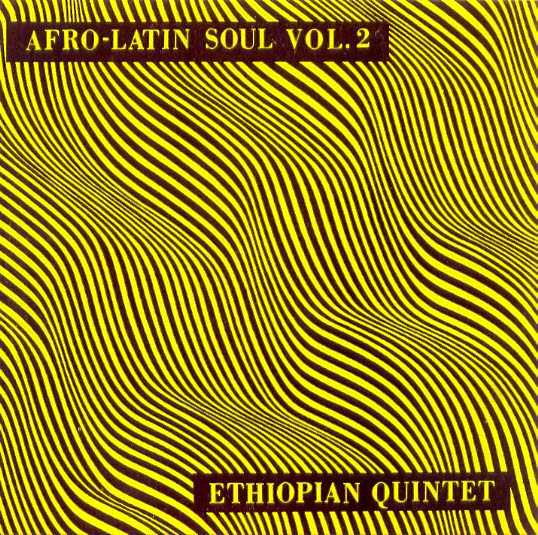
As the sixties gave way to the seventies, Mulatu Astatke’s music began to change. This was a conscious decision, and one that was necessary. Mulatu Astatke needed and wanted to develop his own sound, and make music that stood out from the crowd.
Mulatu Astatke had decided to develop the sound that had featured on Afro-Latin Soul Volume 1 and 2. To this, Mulatu Astatke decided to add elements of funk and Azmari chik-chikka rhythms to his genre-melting sound. Gradually, this new sound began to take shape. The next step was to return to the studio, and record an album that showcased Mulatu Astatke’s new sound.
Mulatu Of Ethiopia.
By 1972, Mulatu Astatke had gained the necessary skills to fuse the disparate musical genres to create Ethio-jazz. It had taken time and perseverance. Now the twenty-nine year old was ready to return to the studio to record his long-awaited third album, Mulatu Of Ethiopia.
Joining Mulatu Astatke at a studio in downtown Manhattan, were producer Gil Snapper and the band that would record eventually record Mulatu Of Ethiopia. Before that, Mulatu Astatke put his multitalented band through their paces. The band featured some of the Big Apple’s top Latin session musicians and several young, up-and-coming jazz musicians. They would spend the next four weeks rehearsing, and honing Mulatu Astatke’s new sound. He remembers that: “it took them a while to get the right feeling in the music.” Eventually, the band were ready to record what would become a landmark album, Mulatu Of Ethiopia.
The release of Mulatu Of Ethiopia was a turning point in Mulatu Astatke’s career, and after spending several years searching for his own sound, Mulatu Astatke had eventually settled on what would become his trademark sound, Ethio-jazz. It’s the sound that eventually Mulatu Astatke would become famous for.
While Mulatu Astatke released his first album of Ethio-jazz in 1972, Mulatu Of Ethiopia wasn’t a hugely successful album, it influenced a generation of Ethiopian musicians. They adopted the new Ethio-jazz sound, and for the second time in his career, Mulatu Astatke was influencing Ethiopian musicians from afar. At least his fellow countrymen understood the importance of this ambitious and innovative album.
It was until much later that record collectors discovered Mulatu Of Ethiopia, and realised just how important, influential and innovative an album it was. Sadly, by then, Mulatu Of Ethiopia was out of print, and very few original copies of the album were still available. Occasionally, record collectors chance upon a copy of Mulatu Of Ethiopia, and picked it up in the bargain bins. Mostly though, copies of Mulatu Of Ethiopia were changing hands for large sums of money. What had once been a £200 album was changing hands for upwards of £600. This was a reflection of the importance of Mulatu Of Ethiopia which was the first album of Ethio-jazz from the genre’s founding father, Mulatu Astatke.
For Mulatu Astatke, Mulatu Of Ethiopia was a game-changer of an album. At last, after years of searching for his own sound, Mulatu Astatke had discovered his own unique sound. This Mulatu Astatke called Ethio-jazz.
The first Ethio-jazz album was Mulatu Of Ethiopia, which influenced and inspired a generation of Ethiopian musicians. Now forty-six Mulatu Of Ethiopia continues to influence a new generation of musicians. However, Mulatu Astatke would never have recorded Mulatu Of Ethiopia if Mulatu Astatke and The Ethiopian Quintet hadn’t recorded the two volumes of Afro Latin Soul.
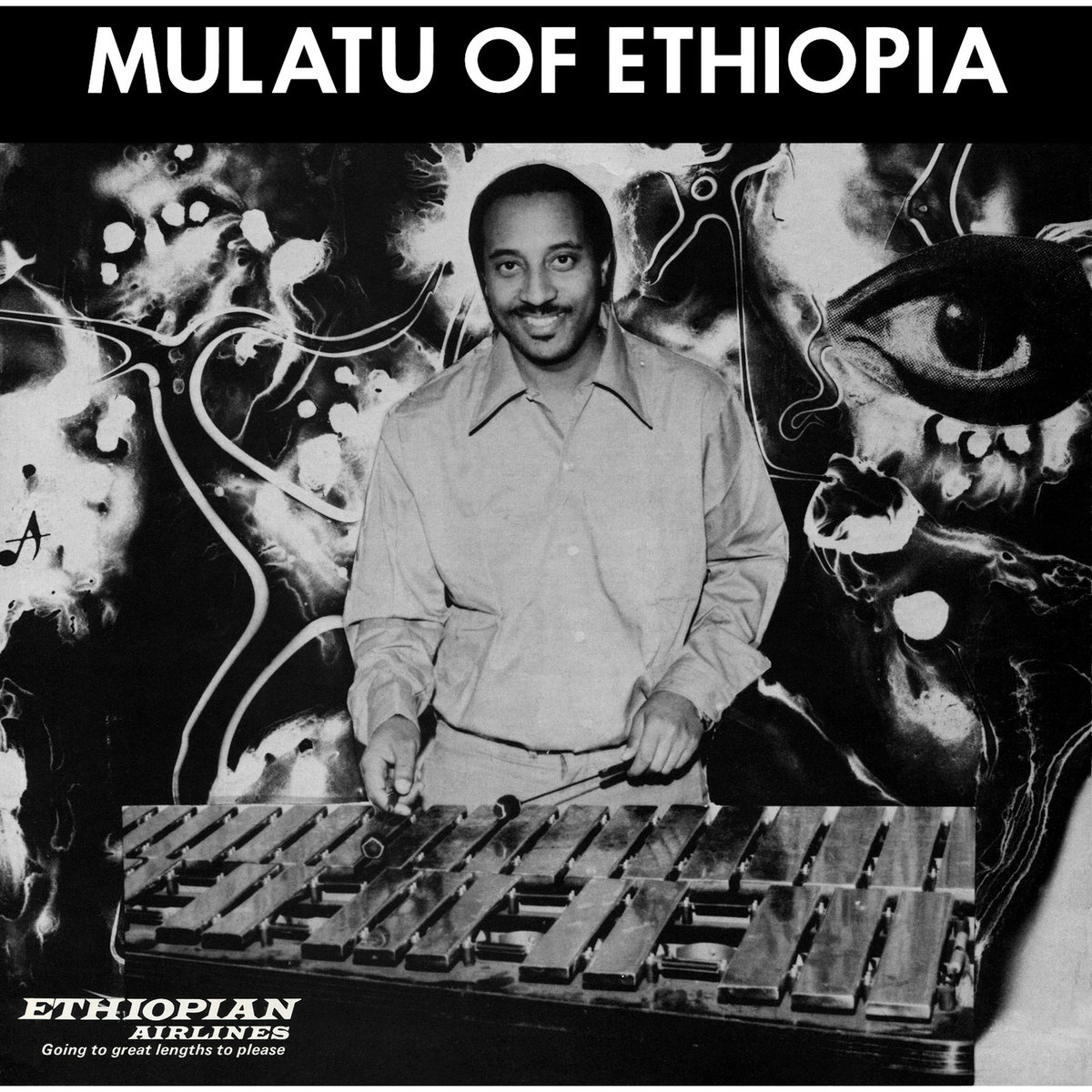
Afro Latin Soul Volume 1 was the start of a journey for Mulatu Astatke as he began to develop and hone his sound with The Ethiopian Quintet. He continued to do this later in 1966 when Mulatu Astatke and The Ethiopian Quintet released Afro-Latin Soul Volume 2. Both album genre-melting albums found musical pioneer combining the music of three cultures as he combined disparate genres in his quest to modernise Ethiopian music. This Mulatu Astatke and The Ethiopian Quintet succeeded in doing as he started to discover and develop his own unique sound. It can be heard on Afro-Latin Soul Volume 1 and Afro-Latin Soul Volume 2, which have been reissued by Strut Records as Afro Latin Soul.
Strut Records also reissued Mulatu Astatke’s landmark album Mulatu Of Ethiopia in 2017, which was the first ever Ethio-Jazz album. However, Mulatu Astatke would never have become the founding father of Ethio-Jazz if the bandleader hadn’t recorded the two genre-melting albums that feature on Afro Latin Soul. They were stepping-stones for Mulatu Astatke who is regarded as a pioneer of Ethiopian music who changed and helped modernise Ethiopian. Mulatu Astatke also influenced and inspired Ethiopian musicians with the two albums on Afro Latin Soul and his Ethio-Jazz classic Mulatu Of Ethiopia, which belong in the collections of anyone with even a passing interest in African music.
Mulatu Astatke and The Ethiopian Quintet-Afro Latin Soul.
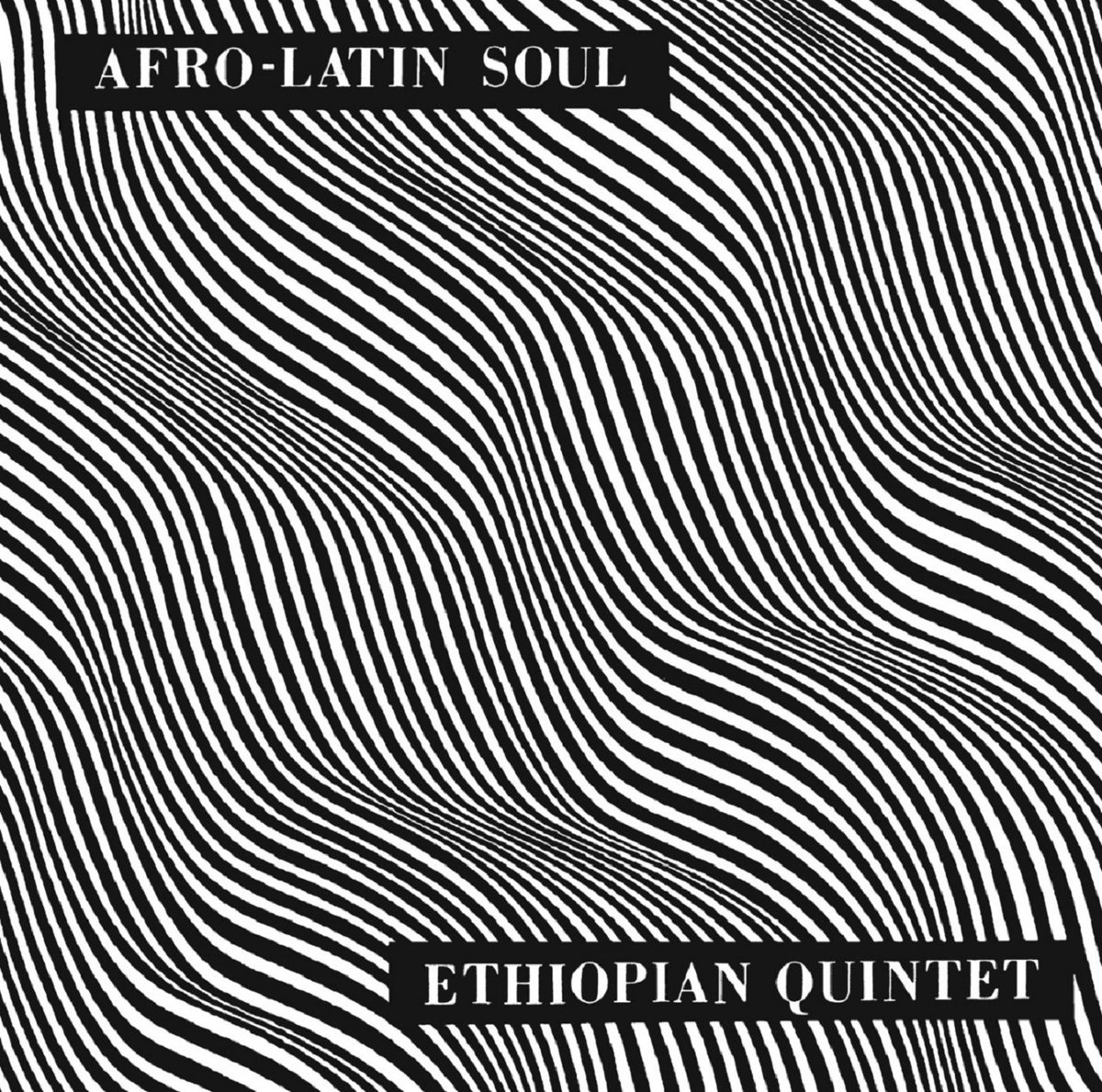
DEUTSCH AMERIKANISCHE FREUNDSCHAFT-FUR IMMER.
Deutsch Amerikanische Freundschaft-Für Immer.
Label: Groenland Records.
History treats groups differently, and that was the case with Deutsch Amerikanische Freundschaft a.k.a. DAF, who released four albums between 1980 and 1982. They’ve been described variously as the “godfathers of techno,” the pioneers of EBM and the forefathers of electropunk. DAF recorded five albums during the four years that they were together, and bowed out in 1982 with their swan-song Für Immer which was recently released by Groenland Records. However, the DAF story began four years earlier in 1978.
Gabi Delgado-López and Robert Görl met at the at punk club Ratinger Hof, in Düsseldorf, Germany, in August 1978, where the pair were regulars. Not long after this, the two friends decided to form a band together. This was DAF which initially, was a duo featuring Delgado-López on stylophone and drummer Robert Görl.
When DAF started out, they were one of a number of early Neue Deutsche Welle bands that had been formed within their social circle. However, very few of these bands were as influential as DAF.
Having started out as a duo, Gabi Delgado-López and Robert Görl were joined by bassist Michael Kemner, guitarist Wolfgang Spelmans and keyboardist Kurt “Pyrolator” Dahlke. This new, expanded lineup of DAF decided to enter the studio for the first time.
The early recordings didn’t go to plan, which resulted in Gabi Delgado-López leaving the band temporarily. This meant just four of the members of DAF entered the studio to record their debut album.
Ein Produkt der Deutsch-Amerikanischen Freundschaft.
This was Ein Produkt der Deutsch-Amerikanischen Freundschaft (A Product Of German-American Friendship for Kurt “Pyrolator” Dahlke’s Ata Tak label. When Ein Produkt der Deutsch-Amerikanischen Freundschaft was released in 1979, this fusion of punk and industrial music received mixed reviews from critics. Some critics confused by the album and simultaneously found captivating and repugnant. There seemed to be no middle ground with DAF’s debut album.

Shortly, after the release of Ein Produkt der Deutsch-Amerikanischen Freundschaft was released Kurt “Pyrolator” Dahlke left the band, to pursue other projects. He was replaced by assist and saxophonist Chrislo Haas who also played various electronic instruments.
Not long after this, the new lineup of DAF moved to London, as that was where many of the major and independent record labels were situated. This included Daniel Miller’s Mute Records who signed DAF.
Die Kleinen und die Bösen.
Daniel Miller had a longstanding love and admiration for Krautrock and modern German music, arranged for DAF to record with producer Conny Plank. He produced one side of Die Kleinen und die Bösen while the other was recorded live. When Die Kleinen und die Bösen was released later in 1980 it was hailed as an ambitious album that saw DAF start to make move from industrial music to modern dance music. However, the sales of Die Kleinen und die Bösen were low and what was one of the early electropunk albums was DAF’s only release for Mute.

Following the release of Die Kleinen und die Bösen, DAF’s numbers were reduced, and by the time they signed to Virgin Records, they were a duo featuring Gabi Delgado-López and Robert Görl.
Alles Ist Gut.
For their Virgin Records’ debut, DAF once again headed to Canny Plank’s Studio, where they worked with one of the legends of modern German music between December 1980 and January 1981. The sessions resulted in DAF’s third album Alles Ist Gut which was released later in 1981.
Critical acclaim accompanied Alles Ist Gut which was ambitious, innovative and genre-melting album. It was a fusion of Neue Deutsche Well, electronic body music (EBM) and electropunk. Alles Ist Gut reached number eight in Austria, fifteen in Germany where it would eventually sell hundreds of thousands of copies. However, that wasn’t the end of the success.
DAF had chosen Der Mussolini as the lead single from Alles Ist Gut. This resulted in the band’s first hit single and DAF were going from strength to strength.

Gold und Liebe.
Buoyed by the success of Alles Ist Gut, DAF returned to Canny Plank’s Studio in August 1981 and spent two months recording Gold und Liebe. It was completed in September 1981, and scheduled for release in late 1981.
The Conny Plank produced Gold und Liebe was released to mixed reviews. One of the criticisms was that the music wasn’t as eclectic as on Alles Ist Gut, and that DAF had just about exhausted the possibilities offered by the sixteen-step sequencer. Still, a few critics felt that the album was innovative and ambitious, as it examined the themes of alchemy. Despite there being no consensus amongst critics, Gold und Liebe enjoyed a degree of commercial success.
In Austria, Gold und Liebe reached number four and spent ten weeks in the charts. Meanwhile, Gold und Liebe stalled at thirty-five in the German charts, and failed to replicate the success of Alles Ist Gut. Despite that, 1981 had been a successful year for DAF.
At the end of 1981, the British music magazine included Alles Ist Gut in its top ten albums of the year. 1981 had been an important year for DAF, who had released two albums, and made a commercial breakthrough just three years after the band was formed.

Für Immer.
1981 had been a roller coaster year for DAF, who made their commercial breakthrough with Alles Ist Gut, and watched as Gold und Liebe failed to enjoy the same success. Gabi Delgado-López and Robert Görl knew that they needed another successful album to kickstart their career.
The criticism that DAF had just about exhausted all of the possibilities offered by the sixteen-step sequencer must have stung, because they added ab Oberheim OB-Xa to their musical arsenal for the recording of Für Immer.
Conny Plank who had worked with some of the most innovative musicals of the seventies, including pioneers of Krautrock at one end of the spectrum to electropop artists at the other. The pioneering producer was the perfect person to encourage DAF to expand their musical horizons.
By the time that DAF began work on Für Immer, they were already disillusioned after the reception of Gold und Liebe. At Conny Plank’s Studio in May 1982 DAF began recording what was an ambitious album that was very different from much of the music that had been released during the first half of 1982. The music wasn’t exactly melodic, but couldn’t be described as harsh or brittle as DAF switched between EBM, electropunk, funk, rock ’n’ roll, twisted metal drone and a full-blown dance track on Wer Schön Sein Will Muss Leiden which would later close the album. DAF’s decision to record such an eclectic album seemed to be their way answering their critics who had criticised Gold und Liebe.
Soon, though, what the critics thought of Gold und Liebe was the least of DAF and Virgin Records’ worries. The sense of disillusionment that was present when DAF entered Conny Plank’s Studio had been slowly tearing the band apart. Maybe it hadn’t been a wise decision to let DAF begin recording Für Immer, and when things came to a head, the band decided to split-up.
After five albums in just three years it was the end of the road for DAF, who released Für Immer later in 1982. DAF’s swan-song was well received as they flitted between EBM, electropunk, funk, rock ’n’ roll and twisted metal drone. It was a truly eclectic album that opened with the Kraftwerk inspired electropop of Im Dschungel Der Liebe (In The Jungle Of Love). However, other tracks were quite different, and some were regarded as dark and controversial songs.
Especially Kebabträume which featured ambiguous lyrics about Turkish immigrants. Lyrics like: “Turkish culture behind the barbed wire…Germany, everything has passed!..,We are the Turks of tomorrow” brought criticism DAF’s way. So did Die Götter Sind Weiß which features the lyrics: “your body is white, like the body of the gods.” Even the album cover was deemed controversial, and some critics compared it to the fascistic imagery of the past. DAF it seemed were playing were with fire on Für Immer.
Elsewhere was the EBM anthem Ein Bißchen Krie which was hard and funky. Verlieb Dich In Mich (Fall In Love With Me) was hook-laden, dancefloor friendly and sometimes, hinted at Sparks. Geheimnis (Secret) is a genre-melting track that is oft-overlooked and falls into the category of hidden gem. Dark, dramatic and ominous sounding describes Die Lippe (Lip). Very different was the beautiful paean Prinzeßin which shows another side to DAF on Für Immer. However, like most EBM groups DAF returned to familiar themes.
This included the themes of health and beauty were more like obsessions to EBM groups. Proof of this is Verehrt euren Haarschnitt (Adore Your Haircut), which features the unforgettable lyrics: “worship your haircut.” Then there’s the album closer Wer Schön Sein Will, Muss Leiden (Who Wants To Be Beautiful, Must Suffer) which is a full-blown dance track that closes Für Immer on a high, and allows DAF to bow out in style.
Sadly, when Für Immer was released later in 1982, the album failed to replicate the success of their Virgin Records debut Alles Ist Gut. In fact, it never even came close to enjoying the success of Gold und Liebe. Instead, Für Immer which has just been reissued by Groenland Records was the one that got away for DAF.
Despite the darkness, controversy and the obsessions with health and beauty that were common to many EBM groups, Für Immer is an underrated album that deserves to be reevaluated. The recent reissue offers this opportunity to revisit Für Immer, which was the swan-song for DAF who were only together four years, but managed to release five albums. Their finest album was Alles Ist Gut, which was the first of the Virgin Records trilogy which ended with Für Immer. It was the end of era for DAF, who nowadays, are regarded as groundbreaking group.
Since they split-up, DAF have variously been described as the “godfathers of techno,” the pioneers of EBM and the forefathers of electropunk. DAF achieved a lot in what was a relatively short space of time. They were founded in 1978, and released their debut album in 1979. This was the first of five albums that DAF recorded over the next three years, before bowing out in style in 1982 with their swan-song Für Immer.
DAF-Für Immer.

THE WHO-LIVE AT THE ISLE OF WIGHT VOLUMES 1 AND 2 RECORD STORE DAY 2018 EDITIONS.
The Who-Live At The Isle Of Wight Volumes 1 and 2 Record Store Day 2018 Editions.
Label: Rock Classics.
During the late-sixties and early seventies, some of the most famous festivals took place and become part of musical history. By then, festivals were well established, with jazz fans attending many historic festival since the fifties and early sixties. This included the Newport Jazz Festival in Rhode Island, the Beaulieu Jazz Festival, the National Jazz and Blues Festival and the Reading and Leeds Festivals which were founded in 1961. They would become part of rock history later in the sixties.
By 1966, psychedelic music was growing and popularity and the Trips Festival took place in San Francisco between the ‘21st’ and ‘23rd’ of January. During the event Ken Keesey carried out his infamous Acid Tests at the Trips Festival. It was the first of several similar types of festivals.
This included the Mantra-Rock Dance and Fantasy Fair and Magic Mountain Music Festival which took place during 1967. So did the Monterey Pop Festival took place between the ‘16th and ‘18th’ of June 1967. Among the artists and groups that took to the stage were the Jimi Hendrix Experience, The Who and Ravi Shankar who were making their first appearances at major even in America. The audience also witnessed the first performance by Janis Joplin and Otis Redding at such a large-scale public event. Those in the audience were watching musical history being made.
It was similar case at the 1967 Monterey Pop Festival and Schaefer Music Festival in Central Park New York. However, the popularity of festivals was about to explode.
In 1968, the Newport Pop Festival became the first covert to have more than 100,000 paid attendees. Meanwhile, in Britain, the very first Isle of Wight Festival was held in 1968. However, in America many major cities had their own festival during 1968. This included the San Francisco Pop Festival, Los Angeles Pop Festival and the Miami Pop Festival which took place between the ‘28th’ and ‘30th’ of December and rounded of what was a vintage year for festivals.
So was 1969, as the amount of concerts beings staged grew. This included the Newport 1969 Pop Festival took place between June the ’20th’ and ’22nd’ 1969. The same weekend, the Toronto Pop Festival took place during the Summer Solstice and following week, Led Zeppelin and Fleetwood Mac starred at the Bath Festival Of Blues. Across the Atlantic, the historic Denver Pop Festival took place the same weekend. It seemed that there was a festival every weekend during the summer of 1969.
This included Mississippi River Festival and the first ever Atlanta International Pop Festival. However, on the ‘5th’ of July 1969, The Stones In The Park took place in front of an audience of between 250,000 and 500,000. This was just after the mysterious death of former Rolling Stone Brian Jones. Despite this tragedy The Stones In The Park became part of rock history.
It was a similar case with 1969, when The Woodstock Music and Art Fair which featured some of the biggest names in music. This included The Grateful Dead, Sly and The Family Stone, Jefferson Airplane, The Band and Jimi Hendrix who closed what was an eventful and sometimes chaotic festival.
Most festivals passed off without any problems including the Texas International Pop Festival and Toronto Rock and Roll Revival which featured John Lennon and Yoko Ono. However, as the sixties drew to a close this changed.
The Palm Beach Pop Festival was chaotic, while violence and three deaths marred the Altamont Free Concert which was attended by 300,000 people. The final festival of the sixties was the Miami Rock Festival which took place between the ‘27th’ and ‘29th’ December and there were forty-seven arrests and a member of the audience died after falling from a spotlight tower. It was way to end the sixties.
Despite there being chaos, violence and sometimes even deaths at concerts, still people wanted to attend concerts during 1970. New festivals were founded, old ones expanded and some made a welcome return. This included the second Atlanta International Pop Festival, the Bath Festival of Blues and Progressive Music and the third Isle of Wight Festival.
Isle of Wight Festival 1970.
The third Isle of Wight Festival took place between Wednesday the ’26th’ and Sunday ’31st’ of August 1970. Between 600,000 and 700,000 made their way to the Isle of Wight Festival to watch a lineup that featured a mixture of new names and the great and good of music.
During the first day, progressive rockers Judas Jump, singer-songwriter Kris Kristofferson and the psychedelic rock band Mighty Baby took to the stage. However, problems with the PA meant the audience couldn’t hear the singer who was the first of several artists to be booed.
On Thursday the 27th’ of August 1970 Supertramp, Terry Reid, British blues rockers Groundhogs and progressive rockers Gracious entertained the audience. However, some of then higher profile artists arrived the following day.
This included Taste who featured Rory Gallagher who took to the stage on Friday the ‘28th’ of August 1970. Just like Chicago, and Family they were regarded as rising stars of music. Meanwhile, Tony Joe White had already enjoyed several hits, but was nowhere near as successful as Procol Harum who were one of the biggest names on the third day.
The lineup on Saturday the ‘29th’ of August 1970 was star-studded. It included Joni Mitchell who played a controversial set. Later, Miles Davis, Ten Years After, Emerson, Lake and Palmer and The Doors took to the stage. While they received a rapturous reception, many in the audience were waiting for one particular band…The Who.
When The Who took to the stage at The Isle Of Wight Festival, they were one year and three months into their Tommy tour. They had released Tommy on the ’23rd’ of May 1969 and watched as it reached number two in Britain and four in the US Billboard 200. This resulted in Tommy being certified gold in Britain, France and Italy and double platinum in America. Despite the success of Tommy, The Who continued to tour the album, and the latest stop on the tour was The Isle Of Wight Festival.
This was the second time The Who had played at The Isle Of Wight Festival since it began in 1968. However, this time the tapes were running, and their performance which included their 1966 rock opera Tommy and some of their best known songs was being taped. It meant that The Who and their management could release a live album in the future.
This took twenty-six years, before Live at the Isle of Wight Festival 1970 was released as a two CD set by Columbia Legacy on the ’29th’ of October 1996. Twenty-two years later, Live At The Isle Of Wight Volume 1 and Live At The Isle Of Wight Volume 2 were released on white vinyl by the Rock Classics label for Record Store Day 2018.
Volume 1 which is a two LP set features just twelve tracks, while Volume 2 is a single album and features just six song. These two albums feature part of The Who’s performance at the Isle of Wight Festival in 1970, and are a reminder of a famous performance at a famous festival.
Live At The Isle Of Wight Volume 1.
The Who opened their performance at Isle of Wight Festival 1970 with Heaven and Hell, which gives way to I Can’t Explain and a six-minute cover of Mose Allison’s Young Man’s Blues which closes side A.
I Don’t Even Know Myself opens side B and features Water and Overture, which opens their rock opera Tommy. It continues on side C with The Who classic It’s A Boy, then 1921, Amazing Journey, Sparks, Sonny Boy Williamson’s Eyesight To The Blind (The Hawker) and Christmas which close side C.
Tommy continues on side D with The Acid Queen, before the compilers deviate from the original track listing of Tommy. On Live At The Isle Of Wight Volume 1 a blistering version of Pinball Wizard comes before Do You Think It’s Alright and Underture is omitted. Instead, The Who breeze through Tommy Can You Hear Me? and There’s A Doctor, Go To The Mirror! and Smash The Mirror. Sensation, Sally Simpson and Welcome are all omitted from the set, but Miracle Cure, I’m Free, Tommy’s Holiday Camp and a defiant version We’re Not Gonna Take It is extended to nearly ten magical minutes and is a memorable reminder of The Who at The Isle Of Wight. However, in footballing parlance it’s only halftime.
Live At The Isle Of Wight Volume 2.
After playing the majority of Tommy, Live At The Isle Of Wight Volume 2 features some of The Who’s favourite songs and their greatest hits. They open this part of the set with Summertime Blues which is synonymous with Eddie Cochran. However, The Who’s barnstorming version offers something different. It’s a similar case with the medley of Shakin’ All Over, Spoonful and Twist and Shout which gives way to Substitute which closes the first side of Live At The Isle Of Wight Volume 2.
The B side explodes into life with the The Who classic My Generation, and is followed by Naked Eye which is a welcome and some might think surprising addition. It first appeared on The Who’s 1974 album Odds and Sods. However, closing Live At The Isle Of Wight Volume 2 is a blistering versions of Magic Bus, before The Who take their bow.
The Who had released sixteen live albums before the Rock Classics released Live At The Isle Of Wight Volume 1 and Live At The Isle Of Wight Volume 2 for Record Store Day 2018. However, these two LPs which are limited editions that were pressed on white vinyl, feature The Who making musical history. This was their second performance at The Isle Of Wight Festival since it was founded in 1968. It was also The Who’s best performance at The Isle Of Wight Festival.
Across six sides of vinyl, The Who play some of their greatest hits, favourite cover versions and the majority of their 1966 rock opera Tommy. They had been playing roughly the same set for fifteen months, but when they took to the stage at The Isle Of Wight Festival were revitalised and show just why by 1970 The Who were regarded as one of the best British rock bands. Anyone who doubts this should checkout Live At The Isle Of Wight Volume 1 and Live At The Isle Of Wight Volume 2, which is proof, as if any was needed.
The Who-Live At The Isle Of Wight Volumes 1 and 2



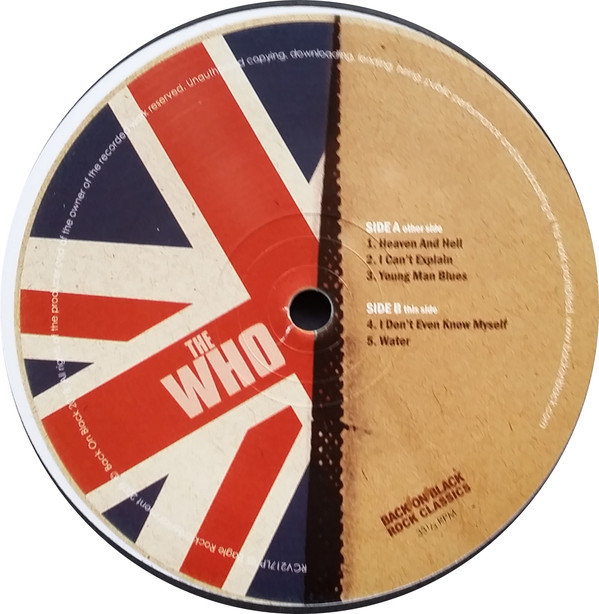

TOHRU AIZAWA QUARTET-TACHIBANA.
Tohru Aizawa Quartet-Tachibana.
Label: BBE Records.
Release Date: ‘27th’ of July 2018.
For many connoisseurs of jazz, especially seventies J-Jazz, one little known private pressing is their holy grail, and everywhere they go is the album they search for. There’s always the hope that in a backstreet record shop, antique centre or thrift store in a town or city somewhere in the world a copy of Tohru Aizawa Quartet’s 1975 album Tachibana way be sitting unnoticed. It’s highly unlikely though, as only a few hundred copies of Tachibana were pressed.
On the rare occasions when a copy of Tachibana is found, and is offered for sale on an online auction or specialist site where vinyl is bought and sold, many jazz collectors will express an interest. However, very few will be able to afford what is one of the rarest J-Jazz albums ever recorded. Currently, there are just three copies of Tachibana for sale, and cheapest is £550 and comes with a sleeve that is graded at very good plus. For some jazz collectors who only by albums in near mint condition, they’re going to have to dig deeper and spend between £820 and £1,150. Sadly, that is beyond the budget of the majority of jazz fans and means they’ll be unable to hear Tohru Aizawa Quartet’s J-Jazz classic Tachibana.
That is until BBE Records reissue Tohru Aizawa Quartet’s album Tachibana on CD and LP on the ‘27th’ of July 2018. At last jazz fans will be able to discover the delights of this mystical and much revered album that is talked about in hushed tones. It’s also an album that came about in remarkable circumstances.
The story began in the early seventies when brothers Tetsuya Morimura and Kyoichiroh Morimura decided to form a jazz group. Tetsuya Morimura who was a drummer, had been inspired by his heroes Elvin Jones and Tony Williams, Meanwhile, Tetsuya Morimura’s brother Tetsuya Morimura, who was a saxophonist, was influenced by his heroes John Coltrane, Wayne Shorter and Japanese jazz legend Sadao Watanbe. These musicians and the Morimura brothers love of jazz was why they decided to form a new group.
Prior to this, Kyoichiroh Morimura had been a part of the college jazz scene in Kunitachi Music University, in North Tokyo, and for a while had played with koto master Hideakira Sakurai. Ironically, it was with Hideakira Sakurai that pianist Tohru Aizawa had made his debut. Little did Tohru Aizawa and the Morimura know that their paths were about to cross.
This occurred when the Morimura brothers attended a music festival at medical school in Maebashi, in the Gunma Prefecture, in the norther Kantō region. That night, the brothers saw pianist Tohru Aizawa play for the first time and were captivated by his skills as a pianist. Tohru Aizawa was a couple of older than the Morimura brothers was studying to become a doctor, and also loved jazz music. When Tohru Aizawa and the Morimura brothers met, it wasn’t long before they were planning to form a band together. All they needed was a bassist.
It wasn’t long before Tohru Aizawa and the Morimura brothers met law student and bassist Kozo Watanabe, and the lineup of the nascent quartet was complete. The new quartet they decided to call Mr Aizawa, which would play in local jazz clubs in Maebashi in the Gunma Prefecture.
This included Mokuba, which was situated in Maebashi, and owned by Kohichi Negishi. Mokuba became one of Mr Aizawa’s favourite venues and they soon became the club’s unofficial house band. The more that Mr Aizawa played the better they got, and many of the regular patrons noticed this improvement. Mr Aizawa seemed to improve with each performance and that the music they made was becoming much more melodic. This included a local businessman who had watched with interest as Mr Aizawa improved over the last few weeks and months.
Eventually, Ikujiroh Tachibana who was a local hotelier and huge jazz fan approached Mr Aizawa with an offer that many jazz bands the world over could only have dreamt of. Ikujiroh Tachibana offered to finance and record an album of Mr Aizawa’s music which he would use to promote his various business interests. This included the venue Tachibana Hall, which was situated in Takahashi Machi, in Numata City, which was forty miles from Maebashi. It didn’t take long for the members of Mr Aizawa to accept Ikujiroh Tachibana’s generous offer.
No expense was spared for the recording at Tachibana Sound Hall, Numata, Gunma, Japan. Ikujiroh Tachibana purchased new instruments from the Yukigasa Instrument Store and Mr. Yukimoto ensured the new instruments made their way to Tachibana Sound Hall in plenty of time for the recording of what would eventually Tachibana.
The Tachibana took place in 1975 at Tachibana Sound Hall, where many famous jazz musicians had been invited to play by Ikujiroh Tachibana. Now four students were about to record an album, and no expense was being spared. Kunio Arai an engineer from Trio Kenwood Records had been brought onboard to record and run the sessions, although it was Ikujiroh Tachibana produced the Tachibana. Meanwhile some of the band were preparing to record the album with new instruments.
Drummer Tetsuya Morimura and bassist Kozo Watanabe had new instruments to play, while the final member of the rhythm section pianist Tohru Aizawa, took his seat at a Steinway full concert grand. Saxophonist Kyoichiroh Morimura had a new tenor and soprano saxophone to play for the recordings.
The band that had started life as Mr Aizawa was now called the Tohru Aizawa Quartet, and had written three compositions that were about to be recorded. This included Tetsuya Morimura’s Philosopher’s Stone, Kyoichiroh Morimura’s Sacrament and Tohru Aizawa’s Dead Letter. They were joined by covers of Chick Corea’s La Fiesta and Samba De Orfeu which was penned by Brazilian jazz guitarist and composer Luiz Bonfá. These tracks would become Tohru Aizawa Quartet’s debut album Tachibana.
Later in 1975, Tohru Aizawa Quartet released their debut album Tachibana as a private pressing on Tachibana Record, which had been formed by Ikujiroh Tachibana. It’s thought that anywhere between 150 to 1,000 copies of Tachibana were pressed by Ikujiroh Tachibana as the album wasn’t a commercial release.
Instead, Ikujiroh Tachibana planned to use copies of Tachibana as his business card. Great importance was placed on the exchange of business cards in Japan. It was recognised as part of strict protocol, and part of etiquette that had been established over not just years, but generations. Some business people presented grand and lavish business cards, but a copy of the Tohru Aizawa Quartet’s debut album Tachibana was sure to trump everything. Or so Ikujiroh Tachibana must have thought.
Sometimes when Ikujiroh Tachibana proudly handed over a copy Tachibana, its recipient often discarded the album. They were obviously not a J-Jazz fan.
Ironically the lucky recipient had discarded or given away to their secretary or assistant what would become one of the rarest album J-Jazz albums ever. Especially as there may have only been 150, 200 or 1,000 copies of Tachibana pressed.
It was only much later that the Tohru Aizawa Quartet’s debut album Tachibana became a cult classic amongst jazz fans and especially connoisseurs of J-Jazz. That was no surprise given the quality of this hidden J-Jazz gem.
Tachibana opens with Philosopher’s Stone which was written by Tetsuya Morimura. The track is an energetic percussive workout and a showcase for drummer Tetsuya Morimura’s considerable skills. His playing underpins this muscular track as the Tohru Aizawa Quartet play with urgency, power and freedom as they switch between modal and free jazz.
Sacrament was written by saxophonist Kyoichiroh Morimura and the influence of his heroes Wayne Shorter and John Coltrane, especially his later music. The influence of Pharaoh Sanders can be heard in Kyoichiroh Morimura’s playing. After a prolonged introduction, the rhythm section launch into a busy, swirling groove and Kyoichiroh Morimura unleashes a blazing, scorching soprano saxophone solo . He plays with speed, power and accuracy, as pianist Tohru Aizawa matches him every step of the way. However, Kyoichiroh Morimura steals the show as he pays homage to his hero John Coltrane and also Pharaoh Sanders as he unleashes sheets of sound but resists the temptation to overflow during one of the highlights of Tachibana.
There’s an almost melancholy quality to Tohru Aizawa’s piano during the introduction to La Fiesta. It breezes joyously along with the piano playing a leading role. So does Kyoichiroh Morimura’s saxophone and together, they breath new meaning into the track. Later, Tohru Aizawa delivers a fast and flawless fleet-fingered performance on piano and this seems to inspire the rest of the quartet. Especially Kyoichiroh Morimura, who joined forces with Tohru Aizawa and they play leading roles and play with speed, power and accuracy as they breeze through this Chick Corea composition .
Dead Letter was written by Tohru Aizawa, and features an impressive and energetic performance where the Quartet combine power with urgency. Fittingly, Tohru Aizawa’s piano plays a leading role and sometimes, he seems to have been influenced by McCoy Tyner a stunning performance. Given the quality of his playing during this piece it was no surprise that many thought Tohru Aizawa was destined for greatness. Sadly, Tachibana was his only recording and Dead Letter features his finest hour.
Samba De Orfeu closes Tachibana and finds Tohru Aizawa Quartet race through this cover version. It’s Tohru Aizawa’s piano and Kyoichiroh Morimura’s saxophone that play starring roles. Despite playing at breakneck speed it’s a flawless performance. Tohru Aizawa again showcases his enviable talent during the solos. So does drummer Tetsuya Morimura as he works his way round the kit before passing the baton Tohru Aizawa. He’s joined by Kyoichiroh Morimura and they unite one last time during this joyous sounding race through of Samba De Orfeu, which closes the album on a high.
For anyone yet to discover the delights of the Tohru Aizawa Quartet’s debut Tachibana, the BBE Records reissue on the ‘27th’ of July 2018 is the perfect opportunity to hear a J-Jazz cult classic. This is the first time Tachibana has been reissued in Britain and Europe, and for many connoisseurs of jazz will the first opportunity to hear the album given its rarity.
Tachibana is one of the rarest J-Jazz albums of the seventies, with between 150 and 1,000 copies of the album being pressed. They became Ikujiroh Tachibana’s business card, which he handed out to his business associates. Alas, not every recipient was a jazz fan, and many copies were discarded. This meant that an already rare J-Jazz album became even rarer. That is one reason why an original copy of Tachibana costs between £550 and £1,200. Obviously this is beyond the budget of most jazz fans, but they will be quite happy with BBE Records’ reissue which is part of their J-Jazz Masterclass Series.
If the next instalment in BBE Records J-Jazz Masterclass Series is as good as Tohru Aizawa Quartet’s Tachibana then this is going to be a series that connoisseurs of jazz will enjoy and embrace. There’s no better way to start the series than with Tohru Aizawa Quartet’s debut album Tachibana which was their only release and nowadays is regarded as J-Jazz cult classic, that belongs not in every jazz fan’s collection, but anyone who appreciates and enjoys good music.
Tohru Aizawa Quartet-Tachibana.
VERY BE CAREFUL-DAISY’S BEAUTY SALON.
Very Be Careful-Daisy’s Beauty Salon.
Label: Downtown Pijao and Steadybeat Records.
Release Date: ‘20h’ July 2018.
For over twenty years, Los Angeles-based vallenato veterans Very Be Careful have been playing their unique brand of music everywhere from bars, clubs and sports arenas to festivals in Britain, America and Japan. That is where many people heard Very Be Careful for the first time as they fused Colombian vallenato and cumbia on music that is a mixture of Caribbean soul and a California heart. That is the case on their new album Daisy’s Beauty Salon which will be released on Downtown Pijao and Steadybeat Records on the ‘20th’ of July 2018. Daisy’s Beauty Salon is the eleventh album from Very Be Careful since they released their debut in 1998.
Very Be Careful were formed in Los Angeles, and nowadays, are regarded as the city’s first cumbia and vallenato crossover band. It may be that Very Be Careful was America’s first ever cumbia and vallenato crossover band. They certainly weren’t the last, and later, other bands followed in the footsteps.
In the early days of Very Be Careful, the band combined the defiance of rock with an underground aesthetic, but stayed true to the roots of Colombian vallenato and cumbia. Its roots can be traced to the fifties, and was popular right through to the seventies. After that, Colombian vallenato and cumbia was no longer fashionable, and fell from grace in America.
That was until the members of Very Be Careful decided to rejuvenate the music. It was perfect for the new band. The music was uncomplicated, had a rawness and honesty and with practise, the members of Very Be Careful knew that they could play with precision.
As Very Be Careful began practising and honing their sound, and stripped the music back to its simplest form. This was when Ricardo and Arturo Guzman saw vallenato and cumbia as a combination of musical challenge and uncomplicated expression. It also had the potential to be popular.
Having made their live debut, it wasn’t long before Very Be Careful were familiar faces on LA’s live scene where they became known for their lengthy sets that lasted several hours. Soon, the band started to play further afield and were preparing to release their debut album.
Very Be Careful had recorded their debut album Deception Is Easy with producer by Money Mark, and it was released in 1998. Just a year later, Very Be Careful returned with their sophomore album Cheap Chillin’ in 1999 which built on the success of their debut album.
Meanwhile, the LA-based band continued to play live and were playing much further afield and everywhere from bars, clubs, arenas and festivals. Night after night, Very Be Careful cranked out their trademark lengthy sets of Colombian vallenato and cumbia. Given how busy Very Be Careful were playing live, it was two years until they returned with their third album.
This was The Rose which was released their first album on the Downtown Pijao label in 2001. It was followed by El Grizz in 2002 which became Very Be Careful’s fourth album. However, it was a while before they released their fifth album.
That was no surprise as Very Be Careful crisscrossed the land of the free, playing to larger crowds. Still though, Very Be Careful were willing to go back to their roots and play bars and clubs with their good time fusion of boogie and Colombian coastal beat. It was proving popular wherever they played, and Very Be Careful enjoyed playing live.
Despite that, they found time to record their fifth album Ñacas which was released in 2005. Buoyed by the response and success of their new album, Very Be Careful continued to play live, and in 2006 headed to mainland Europe.
Their detonation was Germany, where the soccer World Cup was being played. Very Be Careful were part of what was billed as Germany’s World Cup Tour, which they hoped would introduce their music to a wider audience.
The following year 2007, Very Be Careful released their sixth album Salad Buey. This was followed in 2009 by Horrible Club which was a live album pot bootleg recordings released by their record label Downtown Pijao. Horrible Club featured Very Be Careful’s trademark live sound that tens of thousands of people had heard over the past decade.
As a new decade dawned, Very Be Careful released their seventh studio album and eighth overall, Escape Room on the Barbès’ label in 2010. However, when they returned in 2012 with Remember Me From The Party? it was released on Downtown Pijao. It looked like Very Be Careful had returned home.
When Very Be Careful released El Millonario in 2013 it was via Steadybeat Records and Downtown Pig. This was their ninth studio album, and by then, Very Be Careful had played all over North America, Britain, Germany and Japan. The globetrotting band had come a long way since their early days in LA.
Following the release of El Millonario in 2013, Very Be Careful spent most of their time playing live and didn’t release an album for four years. That was until Disfraz was released on OlFactory Records in 2017. This was Very Be Careful’s comeback album, and they were back to stay.
Soon, Very Be Careful were planning to record their eleventh studio album, and twelfth overall. This was Daisy’s Beauty Salon which was recorded in an analog studio that had been abandoned for many years. It was like walking into a world where time stood still, and at the heart of the studio was a sixty-four track analog desk. This was the perfect place for Very Be Careful to record their new album.
“We rushed in there with no planning. The songs weren’t finished and we did it on the spot in two days, with no overdubs. Magic happened because we didn’t talk about it, didn’t brood over how the session was going to go. If we think about it too much, it won’t happen.”
During the sessions, Very Be Careful played a variety of Afro-Colombian genres that had inspired them musically during their formative years. Ricardo and Arturo Guzman can still remember sitting in front of their parent’s record player as children and hearing the rolling drive of uncomplicated but urgent percussion, complex bass lines and dance ready beats. The final piece of this musical jigsaw were the personal stories told by the vocalists. Initially, they were heard only by those within the e vallenato and cumbia communities, but eventually found mainstream success. However, like many genres of music whose popularity rises, it also falls, and vallenato and cumbia fell from grace when it was no longer enjoying mainstream success.
That saddened Arturo who grew up listening to the music, but would play his part in reinventing it and making it relevant.“If you listen to the stuff we listened to, the sixties vallenato that got us started, you’ll hear some really weird chords and stuff happening. If you’re not listening closely, you might miss it. But one or two tracks per album can be super dark with minor chord changes. It’s not stepping out of the tradition. We’re taking it where it could have evolved if it hadn’t been for the pop and commercial labels and their push for lighter, happier sounds. We’re inventing an alternate vallenato history.”
Some of the music that Very Be Careful recorded had a feel-good sound, while other songs were about partying. However, some tracks on Daisy’s Beauty Salon are about their familial roots. Daisy who owned the beauty parlour is Ricardo and Arturo Guzman’s mother and also writes lyrics for the band. This includes more than half the songs on Daisy’s Beauty Salon,
“My mom had a beauty salon in the 70s, in a rough immigrant neighborhood that’s been gentrified, and we’ve been waiting forever to name an album after it, and her…This album is really personal, and based on her experience. She saw the traditional male and female roles in Latin American marriages, then she saw something different here in the States. She was a bit disgruntled about that part of life. These songs contain some personal expression of her frustrations, things that are also political in a way.”
It’s not unusual for songwriters to add their own personal experiences when using vallenato’s traditional approach to lyrics. Sometimes, machismo-fuelled boasting sessions full of bravado and derring-do are part of the songwriting process. Other times, stories about everyday life and emotion are added. So are the themes of heartbreak, disappointment and betrayal. They’re usually magnified for dramatic effect and emotional impact when they feature on albums. Very Be Careful are no different.
When the members of Very Be Careful and Daisy write songs, sometimes they have added twists and turns and subtleties and surprises to their songs. It’s very much about doing things their way on Daisy’s Beauty Salon.
“We take the freedom to play whatever we wanted, even though it’s close to a traditional cumbia that someone like Luis Enrique Martínez might play. But at the same time, I’m playing a lot of bass that’s influenced by Caribbean sounds and reggae.” That is apparent throughout Daisy’s Beauty Salon and adds a new dimension to the band’s familiar, trademark sound.
Ricardo seems to enjoyed being freed from the shackles of having to play in a traditional manner. That is apparent on the album opener El Disfraz, It’s a song that masquerades as a way to restart a failing relationship. Arturo describes the song: “It has a circusy sort of feel, as the melody that goes up and down the scale. It’s unique, unlike anything we’ve heard or put on a record before.” It’s also one of the album’s highlights and Arturo tells the story behind the song well.
The only thing that many people will dispute is Arturo’s statement about the song Dos Corazones. He said of: “Dos Corazones when we first started playing it, people said it sounded like The Cure.” Alas they don’t, and there’s absolutely nothing Cure-like about the song and or the instrumentation used. The only way Dos Corazones would sound like The Cure is by dropping acid. Having said that, Dos Corazones is still a memorable song with an impassioned vocal. However, there’s better songs on Daisy’s Beauty Salon.
This includes El Disfraz, El Desesperado, La Hormiga and La Escuela, which are part of a new beginning for Very Be Careful. They’ve been together for three decades and now have decided to head in a new and different direction.
Daisy’s Beauty Salon finds Very Be Careful heading broadening their musical horizons as they sometimes move away from their trademark mixture of Colombian vallenato and cumbia. However, for much of Daisy’s Beauty Salon, Colombian vallenato and cumbia is the order of the day as Ricardo and Arturo Guzman stay true their musical roots as they work their way through thirteen tracks. The lyrics to many of the songs were written by Daisy Guzman who owned the beauty parlour referenced in the album title. Her lyrics were brought to life by Very Be Careful as they breezed through the recording of Daisy’s Beauty Salon in a long-lost analog studio.
Arturo says: “It’s a big deal to us to record in an analog studio. We were really happy to work with our engineer in this really creative environment. It makes for a really unique album we’re really happy with. It’s one of our coolest records.”
Very Be Careful seemed to have been inspired during the recording or Daisy’s Beauty Salon as they moved in new direction musically. Hopefully, that will continue when Ricardo and Arturo Guzman return with the followup to Daisy’s Beauty Salon and Very Be Careful decide to modernise their trademark sound where they combine Colombian vallenato and cumbia. Until them, Very Be Careful’s music will continue to combine Caribbean soul with a California heart just they did on their eleventh studio album Daisy’s Beauty Salon which will be released by Downtown Pijao and Steadybeat Records on the ‘20h’ July 2018.
Very Be Careful-Daisy’s Beauty Salon.

ARTURIO RUIZ DEL POZO-COMPOSICIONES NAVITAS-MUSIC FOR NATIVE PERUVIAN INSTRUMENTS AND MAGNETOPHONIC TAPE 1978-VINYL
Arturo Ruiz del Pozo-Composiciones Nativas-Music For Native Peruvian Instruments and Magnetophonic Tape 1978-Vinyl.
Label: Buh Records.
Arturo Ruiz del Pozo who would go on to become one of Peru’s leading avant-garde musicians, was born in the capital Lima, in 1949. By the time Arturo Ruiz del Pozo was a teenager, he had discovered music which was changing, and changing fast.
When The Beatles made their breakthrough in 1962 with Love Me Do, Arturo Ruiz del Pozo was just thirteen and watched with interest from afar. Two years later, the British Invasion groups arrived on American shores and the Rolling Stones, The Kinks and The Who became part of musical revolution that transformed American music. While this was of interest to Arturo Ruiz del Pozo, the music he was interested was very different.
After graduating from high school, Arturo Ruiz del Pozo enrolled at the National Conservatory in Lima, where he studied with Edgar Valcárcel. When Arturo Ruiz del Pozo graduated in 1976, he decided to complete his musical education in a city 6,326 miles away…London.
Arturo Ruiz Del Pozo had decided to complete his musical educational at the prestigious Royal College of Music in London, England. The composer and musician packed some of his favourite Peruvian native instruments thinking that me might use them in future compositions during his time in London.
After leaving Lima, in 1976, Arturo Ruiz Del Pozo flew to London and the twenty-seven year old enrolled at the Royal College of Music. Arturo Ruiz Del Pozo was about to spend the next two years of his life studying towards a Master’s degree in electronic composition and would be taught by one of the most eminent figures in British electro acoustic composition Lawrence Casserly, who was a former student of the Royal College of Music.
In 1967, Lawrence Casserly had been one of the very first students of Electronic Music at the Royal College of Music. The original course was taught by Tristram Cary, who had influenced and encouraged Lawrence Casserly.
By 1969, Lawrence Casserly’s early electro acoustic compositions were being performed, and this was the start of a long and illustrious career.
Just three years later in 1972, and Lawrence Casserly was regarded as pioneer of electronic music, who had also cofounded the mixed media group Hydra in 1972. They had made their named combining electroacoustic and instrumental sound with lasers, light smoke and projections. Hydra’s performances were groundbreaking and spectacular and brought them to the attention of the wider artistic community.
Soon, everyone from musicians and poets, to technicians, visual artists and writers wanted to collaborate with Hydra. Meanwhile, Lawrence Casserly’s academic career at the Royal College of Music was blossoming and in 1976 he first encountered Arturo Ruiz Del Pozo.
When Arturo Ruiz Del Pozo arrived at the Royal College of Music, he had already graduated from the National Conservatory, in Lima, and was looking forward to completing his musical education. Especially now that he was being taught by such an eminent figure as Lawrence Casserly.
He would influence all the students on the two-year Masters degree in electronic composition including Arturo Ruiz del Pozo. He would spend two years between 1976 and 1978 working towards his degree. However, just like the rest of the students, one of the requirements was that Arturo Ruiz del Pozo produce two new compositions.
For the two new compositions, Arturo Ruiz del Pozo decided to use the Peruvian native instruments that he had brought from his homeland. Combined with the knowledge that he had gained from Lawrence Casserly Arturo Ruiz del Pozo began working towards his two new compositions.
By then, Arturo Ruiz del Pozo had immersed himself electroacoustic music, and was exploring the richness and variety of the sounds produced by the traditional instruments that he had brought from home. Combined with his newfound knowledge that he had gained over the best part of two years, and the influence of Lawrence Casserly Arturo Ruiz del Pozo had soon completed his compositions.
These compositions were premiered at the Royal College Of Music later in 1978. This was the final obstacle that Arturo Ruiz del Pozo had to overcome, and just over two years after he arrived in London from Lima, graduated on the ‘18th’ of October 1978. For the twenty-nine year old, this was one of the proudest moments of his life.
After graduating from the Royal College of Music, Arturo Ruiz del Pozo who had fully immersed himself in the electroacoustic scene in his adopted home country, decided to return home.
By the end of the seventies, Arturo Ruiz del Pozo was back living in Lima, and was part of a new generation of musicians who were regarded as innovators. They were ancestral and forefront as they began combining the sounds of native instruments and new technology. By then, drum machines, sequencers and synths were much affordable and within the budget of many musicians. This opened up all sorts of new musical opportunities for musicians like Arturo Ruiz del Pozo.
Since Arturo Ruiz del Pozo returned home, he began to explore the vast riches of all the types of Peruvian indigenous music. This inspired Arturo Ruiz del Pozo to new make new, ambitious and innovative music. To do this, he took a variety of instruments, ranging from drums and flutes to gongs and rattles which had different tones and timbres. Having recorded the instruments, electronic processing and tape manipulation was used to transform the dry sound. The result was new, ambitious and truly innovative.
In 1984, Arturo Ruiz del Pozo released Composiciones Nativas on cassette. It featured five of his compositions including Estudio Para Quena, Lago de Totoras, Despegue, Noche Ashaninka and Selvynas. The five compositions were part of what was a truly groundbreaking release from a musical pioneer who was well on his way to becoming one of the leading lights of the Peruvian avant-garde scene.
Thirty-one years later, in 2015, and Buh Records an independent label and research platform based in Lima, Peru, that focused in experimental music released Composiciones Nativas-Music For Native Peruvian Instruments and Magnetophonic Tape 1978 on CD. This was part of the label’s Essential Sounds Collection, which is dedicated to publishing esoteric and interesting artefacts that were released by Peruvian experimental musicians during this period.
Composiciones Nativas-Music For Native Peruvian Instruments and Magnetophonic Tape 1978 featured seven of Arturo Ruiz del Pozo’s compositions. This included Parantara, Lago de Totoras, Clarinete Cajamarquino, Estudio Para Quena, Despegue and Selvynas. Composiciones Nativas-Music For Native Peruvian Instruments and Magnetophonic Tape 1978 was an expanded release of Composiciones Nativas which was now regarded as a Peruvian avant-garde classic. It was no surprise when the CD version of Composiciones Nativas-Music For Native Peruvian Instruments and Magnetophonic Tape 1978 sold out.
Three years later and Buh Records have just released a limited edition version of Composiciones Nativas-Music For Native Peruvian Instruments and Magnetophonic Tape 1978 on vinyl. It’s a welcome reissue of Peruvian avant-garde classic from musical pioneer Arturo Ruiz del Pozo.
As Parantara opens Composiciones Nativas-Music For Native Peruvian Instruments and Magnetophonic Tape 1978, gongs that sound as if they should be used as part a religious ceremony combine with an unusual cyclical pipe motif sprinkled as metallic Fasutian sounds combine with drones. Later, urgent jangling sounds are added to the hypnotic soundscape that mesmerise as sounds assail the listener. Meanwhile, there’s a filmic sound to the mesmeric music which sounds as if belongs on a sci-fi film that tells the story of the discovery of a new civilisation in a faraway planet.
Gurgling, swirling sounds open Lago de Totoras as liquid disappears. Soon, the soundscape reverberates as effects are added and transform the dry signal. Soon, a myriad of disparate sounds are added and together provide an alternative symphony.They range from metallic and industrial sounds to rattling, jarring, gurgling, swirling and dubby sounds that add a strangely melodic and soothing sound as this alternative symphony.
Ethereal, angelic sounds combine with eerie, cinematic strings on Clarinete Cajamarquino which us just two minutes long. However, it still manages to be ethereal, elegiac, eerie and cinematic as this short avant-garde soundscape captivates.
Parka en Brujas’ had a much spartan and distant sound as high-pitched whistles combine with what sounds like birdsong. However, nothing is at seems as processing is added and sound are manipulated. As the birdsong seems to multiply, it unites with a murmuring metallic drone, which is later joined by a gravely sounding bass flute. It sounds as if it’s a remnant of Peru’s musical past, but plays it’s part in what was part of a groundbreaking release. It saw Arturo Ruiz del Pozo continues to push musical boundaries to their limits, and sometimes it seems, way beyond.
Estudio Para Quena is built around eerie, otherworldly tape-delayed sounds which sounds if they’ve been played on a Japanese Shakuhachi flute. They become part of filmic backdrop to what sounds like part of the soundtrack to an early sci-fi film. Meanwhile, alien-beings or Martians chatter urgently, as the remainder of soundscape shimmers and glistens becoming melodic, mesmeric and even dramatic as Arturo Ruiz del Pozo paints pictures with his avant-garde music.
Futuristic and even otherworldly describes the introduction to Despegue, which sounds as if a UFO is hovering before a rocket is launched. It sounds as if Arturo Ruiz del Pozo is creating the soundtrack to an interplanetary adventure where earthlings go in search and sometimes, battle the extra terrestrials. The sound of an explosion brings to an end the battle, and as the rocket plunges to earth, it is a case extra terrestrials 1 earthlings 0. All this happens within the space of four captivating minutes of cinematic music that is rich in imagery.
Composiciones Nativas-Music For Native Peruvian Instruments and Magnetophonic Tape 1978 closes with Selvynas. What sounds like seashells rustling is combined with a foghorn drone that drifts in and out. Meanwhile, processing has been added to the drum which has an abstract sound and helical, coiling pipes add a haunting, spartan sound. With the drum adding dramatic, ominous sound, the rest of soundscapes is eerie, otherworldly and haunting but has a strange beauty that is omnipresent.
Thirty-one years after Arturo Ruiz del Pozo released Composiciones Nativas on cassette, Buh Records released Composiciones Nativas-Music For Native Peruvian Instruments and Magnetophonic Tape 1978 on CD. It was a reminder of Arturo Ruiz del Pozo’s groundbreaking avant-garde classic, and it was no surprise when the album sold out.
Now three years later, and Buh Records have released a limited edition vinyl version of Arturo Ruiz del Pozo’s Composiciones Nativas-Music For Native Peruvian Instruments and Magnetophonic Tape 1978. This is the perfect opportunity to discover or rediscover what was an ambitious and innovative album where Arturo Ruiz del Pozo combines elements of ambient, drone, electronica, electroacoustic, experimental, industrial and musique concrète to create what is a Peruvian avant-garde classic.
The seven tracks on Composiciones Nativas-Music For Native Peruvian Instruments and Magnetophonic Tape 1978 are carefully crafted collages of disparate and esoteric sounds. This ranges from sounds produced by traditional Peruvian instruments and the technology deployed by avant-garde pioneer Arturo Ruiz del Pozo. He adds effects and manipulates this array of sounds on the seven groundbreaking soundscapes on Composiciones Nativas-Music For Native Peruvian Instruments and Magnetophonic Tape 1978. It’s part of Buh Records’ Essential Sounds Collection and is a welcome reissue on vinyl.
Composiciones Nativas-Music For Native Peruvian Instruments and Magnetophonic Tape 1978 is essential listening for anyone interested in avant-garde or esoteric music, and for those who want an introduction to musical pioneer Arturo Ruiz del Pozo. There’s no better place top start than Composiciones Nativas-Music For Native Peruvian Instruments and Magnetophonic Tape 1978 which is one of the best avant-garde reissues of 2018 so far.
Arturo Ruiz del Pozo – Composiciones Nativas-Music For Native Peruvian Instruments and Magnetophonic Tape 1978-Vinyl.

 dereksmusicblog
