MARK KNOPFLER-TRACKER.
MARK KNOPFLER-TRACKER.
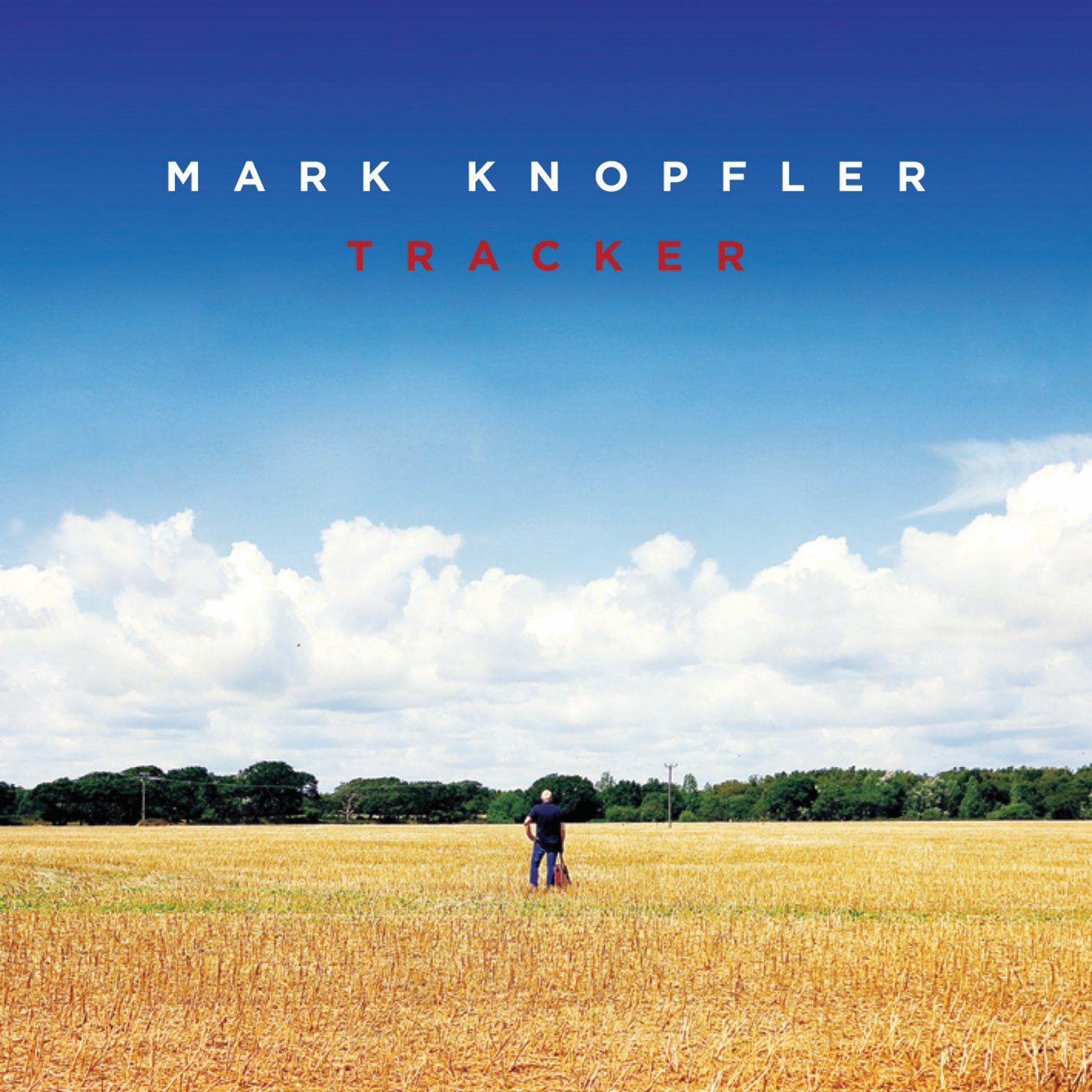
Three years have passed since Mark Knopfler released his previous solo album, Privateering. Since then, very little has been heard of Mark Knopfler. However, he recently made a welcome return with his eighth solo album, Tracker, which was released by Mercury. The release of Tracker in 2015 is fitting. It’s thirty years since Dire Straits released their landmark album, Brothers in Arms.
13th May 1985 passed almost unnoticed. There was no celebration of this momentus day. That daym thirty years ago, Dire Straits released their biggest selling album, Brothers in Arms. It was released to widespread critical acclaim on 13th May 1985. Soon, Brothers in Arms was well on its way to being certified thirteen times over in Britain. Across the Atlantic, Brothers in Arms sold nine million copies. Eventually, Brothers in Arms went on to sell thirty-million copies, and in the process, single handedly, launched the compact disc.
The compact disc was tailor made for Brothers In Arms. It was the perfect sonic showcase for Dire Straits’ latest classic album. At one point, it was thought that everyone who owned a compact disc plater, owned a copy of Brothers In Arms. This was almost unheard of. Never before had one album launched a new musical format. However, Brothers In Arms wasn’t like most albums.
What helped transform Brothers in Arms into a musical phenomena, were the singles. A total of five singles were released from Brothers in Arms. The sophomore single, quickly became a hit on Money For Nothing MTV. With its landmark video, suddenly, the MTV generation were discovering Dire Straits. This resulted in Money For Nothing reaching number one on the US Billboard 100 charts. Then in December 1985, Walk of Life, which had been destined for a B-Side released as a single. Just like Money For Nothing, the boogie of Walk of Life was very different from much of Dire Straits other music. Gone was their cinematic and smoky, late-night sound. Little did Dire Straits realise the effect these two songs would have.
Following the release of Brothers In Arms, Dire Straits spent the rest of 1985 and much of 1986 touring. A near two year tour was bound to take its toll. The schedule was gruelling. Dire Straits played on ever continent. Night after night, the crowds called for Money For Nothing and Walk Of Life. It was then that Dire Straits realised they had created a monster.
Neither Money For Nothing nor Walk Of Life was representative of Dire Straits’ music. For their longtime fans, it was like listening to a new band. The old Dire Straits featured on So Far Away, Why Worry and the late-night sound of Your Latest Trick. Mark Knopfler and the rest of Dire Straits realised this as night after night, the time came for Money For Nothing and Walk Of Life. These songs had became an albatross for Dire Straits. Eventually, though, the tour was at an end. It had taken its toll.
All the commercial success and critical acclaim came at a cost. Marriages had broken down during the Brothers In Arms tour. They would end in the divorce courts. Within Dire Straits, all wasn’t well. Being together for nearly two years strained relationships within the band. Especially since Mark Knopfler let the other band members know, he was calling the shots. Dire Straits was no longer a democracy. So, it was just as members took a break, allowing Mark Knopfler to work on other projects.
Very little was heard from Dire Straits over the next few years. They reunited for Live Aid in 1986. However, it was another six years before they released another studio album.
To keep their fans happy, Dire Straits released a greatest hits album, Money For Nothing. Someone clearly had a sense of humour. When Money For Nothing was released, it sold 6.1 million copies. It seemed the record buying public’s appetite for Dire Straits music hadn’t abated. That proved to be the case in 1991.
On 10th September 1991, Dire Straits released On Every Street. It was released to mixed reviews. Despite the mixed reviews, On Every Street sold ten million copies. Good as On Every Street was, it fell short of Brothers In Arms. By then, it was the third biggest selling British album, and was perceived as a classic. So, it’s no surprise that On Every Street failed to live up to Brothers in Arms. However, selling ten million copies of On Every Street was pretty good. The only problem was that this meant touring On Every Street.
A gruelling worldwide tour followed. Just like with Brothers In Arms, Dire Straits headed to the four corners of the globe. They played 216 concerts during 1991 and 1992. It was a punishing schedule. So, it’s no surprise that it proved to be Dire Straits’ final tour.
Two years later, on 10 May 1993, Dire Straits released their second live album On The Night. It came ten years after Dire Straits’ classic live album Alchemy was released in 1983. By 1993, Dire Straits were a different band. Their music had evolved. However, still Dire Straits were a tight, talented band live.
This was apparent on On The Night, which had been recorded in Nîmes and Rotterdam, during May 1992. Dire Straits ran through a string of their biggest hits and best known tracks. It was a fitting and popular souvenir of Dire Straits’ final tour. On The Night sold 7.1 million copies. This was a fitting finale from one of the best British bands of the past thirty years.
Two years later in 1995, without any fanfare, Mark Knopfler announced that Dire Straits were no more. The band were going their separate ways. There would be no comebacks in the twenty intervening years. Dire Straits was part of Mark Knopfler’s musical past.
Following the break-up of Dire Straits, Mark focused on his soundtracks. Mark’s first soundtrack was for Bill Forsyth’s Local Hero in 1983. Between Local Hero 1983 and the breakup of Dire Straits in 1995, Mark had written four further soundtracks. In 1984, Mark penned the soundtracks to David Puttnam’s Cal and Bill Forsyth’s Comfort and Joy. The Princess Bride followed in 1987, before Mark released one of his most critically acclaimed soundtracks, Last Exit To Brooklyn. After Last Exit To Brooklyn, took a break from soundtracks.
In 1990, Mark collaborated with The Notting Hillbillies on Missing Presumed Having Fun. The same year, Mark and Chet Atkins released Neck and Neck. Mark seemed to be enjoying working with different artists. However, still, he hadn’t released a solo album.
Eventually, Mark released his debut solo album Golden Heart in 1996. It may have been a long time coming, but was well worth the wait. Golden Heart was a reminder of what music had been missing.
Two years later, in 1998, Mark returned with the soundtrack to Wag The Dog. He also produced Randy Newman’s Land Of Dreams. After six years away from music, Mark Knopfler was back.
There was no stopping Mark. His sophomore album Sailing to Philadelphia was released in 2000, and featured guest appearances from Van Morrison and James Taylor. Sailing to Philadelphia received mixed reviews. Part of the problem for some critics and record buyers, was adjusting to Mark’s new sound. It was quite unlike the music he made with Dire Straits. That was his musical past. His solo career and soundtracks were his musical future.
In April 2002, A Shot at Glory was released. This was the last soundtrack that Mark penned. It was an against the odds story of a hapless football team and their new manager. It was shot in Scotland. So, it was fitting that Glasgow born Mark was asked to provide the soundtrack. While it may not have been the most successful film he provided the score to, many could relate to the story. The same can be said of Mark’s next album
Mark released The Ragpicker’s Dream in September 2002. The reviews were much more favourable. It seemed critics and record buyers were more attuned to Mark’s new, rootsy unplugged sound. With its late night sound, it won the hearts and minds of music lovers.
Another two years passed before Mark was able to release Shangri-La in September 2004. Originally, Shangri-La had been scheduled for 2003. That’s until Mark had a motorcycle accident in March 2003. This resulted in a broken collarbone, broken shoulder blade and seven broken ribs. After months of physiotherapy, Mark was able to head to Malibu, to record Shangri-La in February 2004.
When Shangri-La was released seven months later, thankfully, Mark’s guitar playing hadn’t been affected. He was still one of the best guitarists of his generation. Mark showcased his considerable talents on Shangri-La, fusing blues, country and folk rock. This struck a nerve with critics and record buyers.
After four albums, critics and record buyers had grown accustomed to Mark’s solo sound. In some ways, Shangri-La was a lovingly crafted homage to the music that influenced him. As usual, Mark had poured something of himself into Shangri-La, his comeback album.
It was another three years before Mark released another solo album. He hadn’t been resting on his laurels though. On 21st June 2005, Mark released One Take Radio Sessions. As the title suggests, all the tracks on the album were recorded in one take. It’s a warts and all performance, featuring tracks from Golden Heart and Shangri-La. This being Mark Knopfler, it was a pretty near flawless performance. Any mistakes were left untouched, allowing the listener to hear what Mark sounded like live. They would have another opportunity in 2006.
In April 2006, a collaboration between Mark and Emmylou Harris was released. All The Roadrunning had been recorded over a seven year period. Whenever they had time in their respective schedules, Mark and Emmylou entered the studio. It was a labor of love for the pair. However, by 2006, it was complete. Now the critics had to have their say.
All The Roadrunning was mostly, well received by critics. This bode well for the release of All The Roadrunning. There was no expensive advertising campaign. Quite the opposite. This was a low key release. Mark and Emmylou were happy to let their music do the talking.
That proved to be the case. Despite the low key release, All The Roadrunning reached number eight in Britain and number seventeen in the US Billboard 200. So, Mark and Emmylou toured All The Roadrunning. This resulted in a live album.
Real Live Roadrunning was released in November 2006. After taking seven years to record All The Roadrunning, Real Live Roadrunning hit the shops seven months later. It was well received and sold well. In Germany, Real Live Roadrunning was certified gold. Mark and Emmylou were a potent musical combination. However, this was just a side-project for the pair. They had to return to their solo careers.
Straight away, Mark got to work on his fifth solo album, Kill To Get Crimson. It was recorded between January and March 2007, at British Grove Studios. A total of twelve songs were recorded. They became Kill To Get Crimson, which was released on 17th September 2007.
Before that, Mark hit the road. As soon as Kill To Get Crimson was recorded, Mark and his began a ninety-four date tour of eighty-eight cities. It was as if Mark was determined to build on the success of his collaboration with Emmylou Harris, All The Roadrunning.
This succeeded, despite some mixed reviews. In eighteen countries, Kill To Get Crimson charted. It reached number nine in Britain and was certified silver. Kill To Get Crimson was certified gold in Denmark and Switzerland, and platinum in Norway. In America, Kill To Get Crimson reached number twenty-six in the US Billboard 200. For Mark Kill To Get Crimson was one of his most successful albums.
Once the Kill To Get Crimson tour finished in March 2008, Mark enjoyed some time off. However, in the back of his mind, he was already thinking about his next album. Given how successful Kill To Get Crimson had been, Mark couldn’t let the grass grow under his feet. Now was the time to Get Lucky.
From November 2008, right through to March 2009, Mark returned to British Grove Studios, in West London. With his band in tow, he recorded the eleven tracks that became Get Lucky.
Nearly six months after completing the recording of Get Lucky, Mark released his sixth album. Get Lucky received some of the best reviews any of Mark’s solo career. It seemed that after six solo albums, critics were warming to Mark’s roots’ sound. So were record buyers.
When Get Lucky was released on 14th September 2009, it managed to surpass the success of Kill To Get Crimson. Get Lucky reached number nine in Britain and number seventeen in the US Billboard 200. Across the world, Get Lucky proved to be one of Mark Knopfler’s most successful albums. Thirty-one years after Dire Straits released their debut album, Mark Knopfler was still going strong.
It wasn’t until 2012, that Mark released the followup to Get Lucky. Before that, he had produced Bap Kennedy’s eighth solo album, The Sailor’s Revenge. It was released in January 2012. Eight months later, Mark released his seventh solo album, Privateering.
Privateering had been recorded twenty songs between March and December 2011. As usual, Mark used British Grove Studios. He was used to the room, and its sound. It had proved the perfect environment for previous albums, so Mark wasn’t going to change a winning formula.
When critics heard Privateering, they were won over by Mark’s new material. Privateering was a fusion of blues rock, folk and country music. This struck a nerve with critics. So, it’s no surprise that critical acclaim accompanied the release of Privateering.
Upon its release on 3rd September 2012, the Mark Knopfler produced Privateering sold well in most parts of the world. Across Europe, Privateering reached the top ten in eighteen countries. In four Austria, Germany, Holland and Norway, Privateering reached number one. Privateering reached number eight in Britain and sixty-five in the US Billboard 200. While Privateering hadn’t sold as well in America, Mark was still a huge draw.
In 2014, Mark Knopfler finally became one of music’s veterans. He was sixty-five on 12th August 2014. However, there was sign of Mark slowing down. Far from it.
During 2014, Mark had been busy. He had recorded his eighth solo album, Tracker. It features twelve new songs. They were written by Mark. To record Tracker, Mark headed to British Grove Studios, in London.
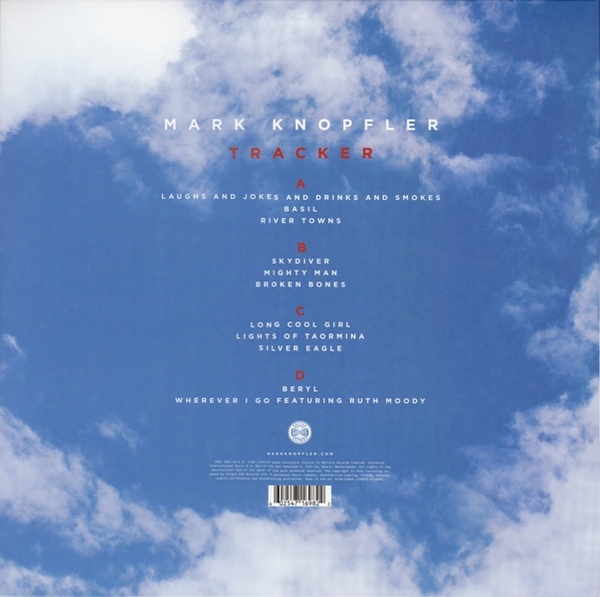
Accompanying Mark, were a rhythm section of drummer Ian Thomas, bassist Glenn Worf and Mark. Keyboardist Guy Fletcher adds vocals, while Bruce Molsky plays fiddle, rhythm guitar and banjo. John McCusker plays fiddle and cittern, Michael McGoldrick whistle and wooden flute and Phil Cunningham accordion. Horns come courtesy of saxophonist Nigel Hitchcock and trumpeter Tom Walsh. Ruth Moody adds vocals on Wherever I Go. Mark and Guy Fletcher co-produced Tracker, which was released on 16th March 2015.
Before the release of Tracker, critics had their say. They liked what they heard, and hailed Tracker one of Mark’s finest albums. Critical acclaim accompanied the release of Tracker.
When Tracker was released, it became one of Mark Knopfler’s most successful albums. It reached the top ten in eighteen countries. In Austria, Belgium, Croatia, Denmark, Germany, Holland and Norway, Tracker reached number one. Tracker also reached number three in Britain and number fourteen in the US Billboard 200. Considering Tracker was only released two months ago, it seems Mark Knopfler’s music is just as popular as it ever has been. No wonder.
Tracker found Mark Knopfler in a reflective mood, looking back at his life and career. The music is understated, melancholy and eclectic. From blues, Celtic, country, folk and roots to rock, Mark has switches seamlessly between genres. Just like on previous albums, Mark has been people watching. His ability to conjure characters out of his every observations is uncanny. The listener is introduced to a cast of characters and emotions. There’s plenty to enjoy.
That’s the case from Tracker’s opening track, Laughs and Jokes and Drinks and Smokes. It’s sing-along sound puts a smile upon your face, before Mark unleashes one of Tracker’s highlights, Basil Bunting.
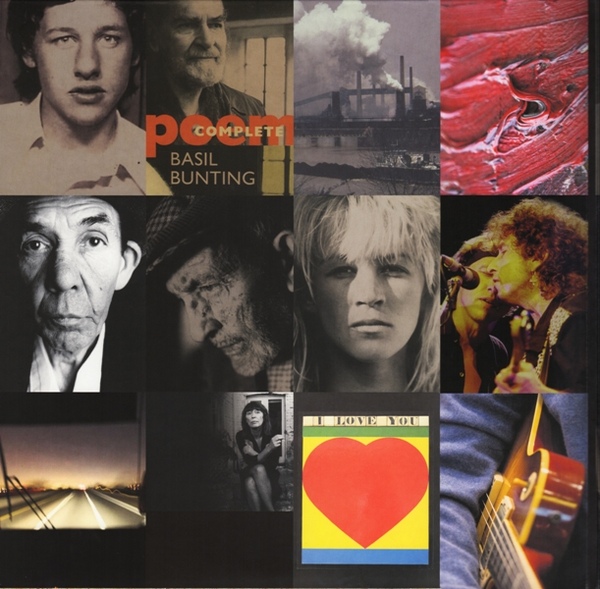
Instantly, Mark returns to his days as a copy boy on the local newspaper on Basil Bunting. He introduces an older man, trapped in a dead end job, with no apparent escape on the horizon. Then there’s a beautiful ballad, River Towns. It’s one of Mark’s best ballads of recent albums. He’s certainly not lost his magic touch. Next up is the laid-back, shuffling Skydiver. It allows Mark to weave his magic with his guitar, as he delivers a laconic vocal. From there, Mark draws inspiration from his old band.
Broken Bones is built around a two chord groove. There’s a nod to early Dire Straits, as Mark delivers a world weary vocal. That’s also the case on Long Cool Girl. It was an understated and sparse arrangement. Gradually, it unfolds, bringing back memories of a different musical era.
Lights of Taormina features a bluesy sound and influence. It’s a six minute epic, where Mark and his band enjoy the opportunity to stretch their legs. After that, Mark takes us onboard Bob Dylan’s tour on the cinematic Silver Eagle. Then Mark pays tribute to author Beryl Bainbridge. The song owes a debt of gratitude Sultans Of Swing and Lady Writer. However, Mark has kept one of his best tracks until last. Wherever I Go features vocalist Ruth Moody. She plays an important part in the sound and success of the track. It’s a fitting finale to Tracker, depending upon which version you buy.
Now that the music industry has been forced to reinvent itself, this is the age of the multi format album. This means there’s several versions of Tracker were released by Mercury. As well as CD and double vinyl releases, there was deluxe CD release and a box set. The deluxe CD features four bonus tracks, including 38 Special, My Heart Has Never Changed, Terminal Of Tribute To and Heart Of Oak. Then there’s the box set. It features a bonus CD, that features six extra tracks. There’s also a DVD in the box set, which features a short film directed by Henrik Hansen, plus an interview with Mark. There’s something for every budget.
Tracker is, without doubt, one of the best albums of Mark Knopfler’s eight album solo career. It features a reflective Mark Knopfler, as he looks back at life, and those he’s encountered. With the help of some of his musical friends, Mark dawns the role of storyteller. Just like he’s been doing since Dire Straits released their eponymous debut album in 1978, Mark is a storyteller par excellence.
Accompanied by a talented band, Mark paints pictures. His music is cinematic, beautiful, wistful, reflective, heartfelt, laid-back and understated. Other times, Mark is laconic, pensive and rueful. All the time, his band creates a suitable musical backdrop. They fill in the spaces left by Mark, taking care not to overpower his lived-in, worldweary vocal.
As Mark’s band provide the musical backdrop, they flit between musical genres. Everything from blues, Celtic, country, folk, roots and rock can be heard on Tracker. So can a Dire Straits’ influence. It’s good that Mark’s not turned his back on the band he founded and lead.
Especially thirty years after Brothers In Arms was released in May 1985, and went on to sell thirty million copies. Ten years later, Mark called time on Dire Straits in 1995. It was a very different group to the one that released their eponymous debut album in 1978. Fittingly, thirty seven years after the release of Dire Straits, their influence can be heard on Mark Knopfler’s critically acclaimed eighth album, Tracker.
MARK KNOPFLER-TRACKER.
 \
\
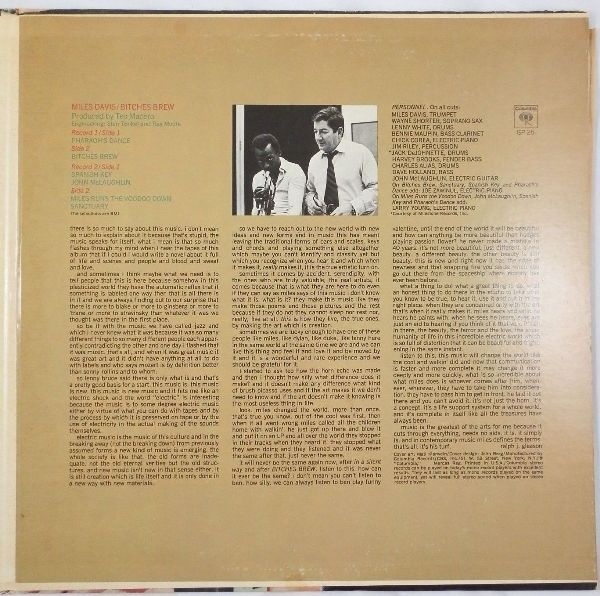
MILES DAVIS-BITCHES BREW 40TH ANNIVERSARY COLLECTORS EDITION.
MILES DAVIS-BITCHES BREW 40TH ANNIVERSARY COLLECTORS EDITION.
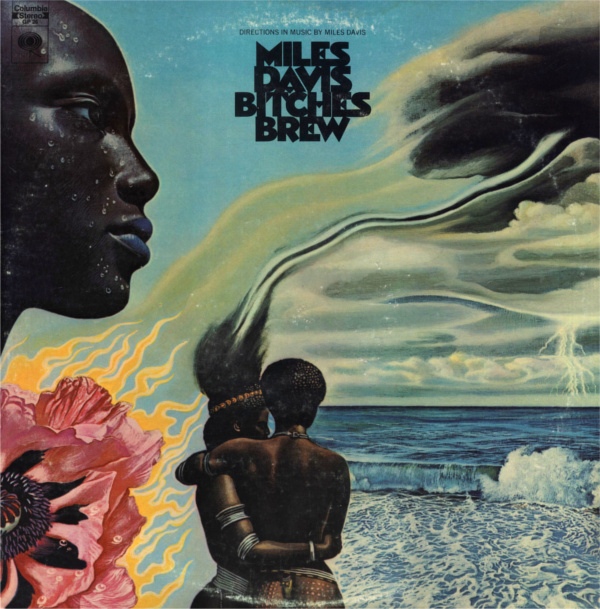
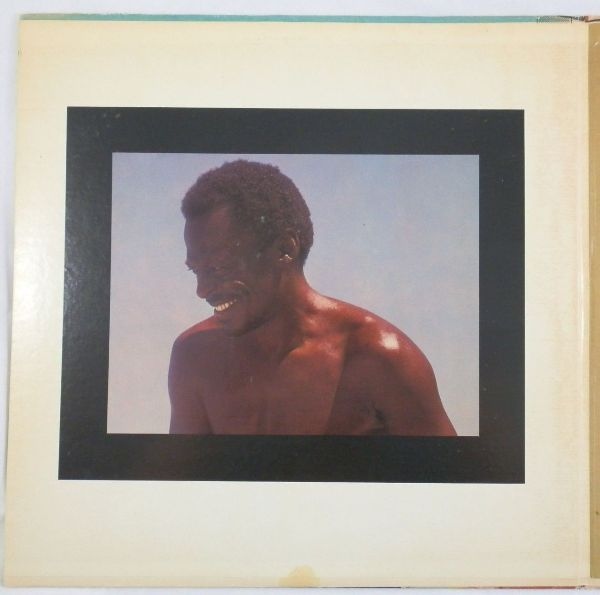
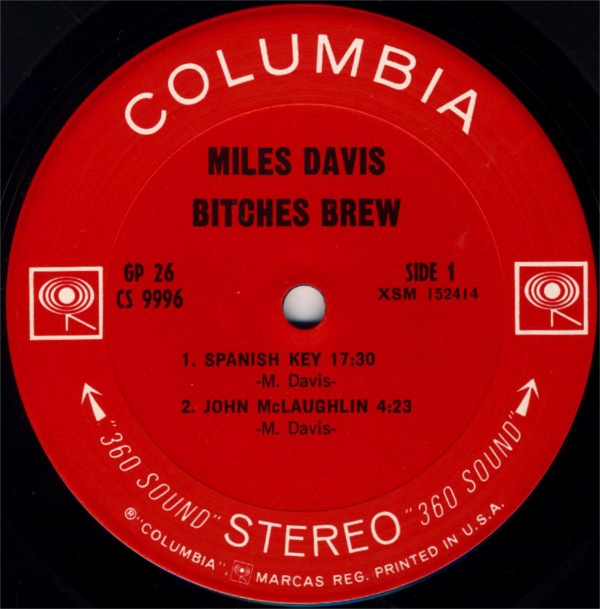
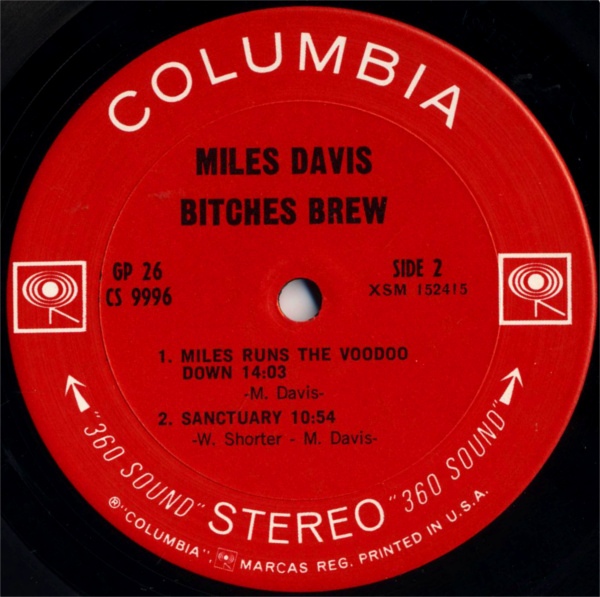
Miles Davis’ recording career began in 1951, when he released his debut album The New Sounds. Soon, Miles Davis was establishing a reputation as a prolific, and innovative musician. He released further forty-three albums between 1951 and 1969. This included classics like 1957s Round About Midnight and 1959s Kind Of Blue. While both of these albums would become classic albums, neither sold in huge quantities. Certainly not enough to result in a gold or platinum disc. That was all about change when Miles Davis released his forty-fifth album, Bitches Brew; which has just been reissued as a four disc 40th Anniversary Collectors Edition by Sony Music.
Bitches Brew was the second of Miles Davis’ electric albums. This latest period in Miles’ career began with In a Silent Way. It was released in July 1969, and completed the shift that began on Filles de Kilimanjaro.
For Miles Davis, In a Silent Way marked a change in his fortunes. When it was released on 30th July 1969, In a Silent Way reached number 134 in the US Billboard 200. This became Miles first album to chart since Seven Steps to Heaven in 1963. In A Silent Way also reached number three in the US Jazz charts. This meant it was Miles’ most successful album. It seemed Miles’ new sound had introduced a new generation to Miles Davis. So, it’s no surprise that Miles decided to return to the studio straight away.
Miles booked three days at Columbia Studio B, New York. The sessions for what became Bitches Brew began on August 19th 1969. Over the next three days, Miles’ extended band would record six songs that became one of Miles’ most ambitious and innovative albums, Bitches Brew.
Between 19th and 21st August 1969, a huge cast of what can only be described as the great and good of jazz, made their way Columbia Studio B. This included a rhythm section of bassist Dave Holland, Harvey Brooks on electric bass guitarist John McLaughlin, drummers Lenny White and Jack DeJohnette. Joe Zawinul and Chick Corea played electric piano, Don Alias congas and Juma Santos played shaker and congas. Wayne Shorter added soprano saxophone, Bennie Maupin bass clarinet and Miles Davis trumpet. The session on the 19th August set the tone for the next three days.
Three songs were recorded on the 19th August by producer Teo Macero, Bitches Brew, John McLaughlin and Sanctuary. Miles’ band was different from most bands of that time. He used two drum kits and two electric pianos. Lenny White’s drum kit was situated on the right, and Jack DeJohnette’s on the left. Similarly, Chick Corea electric piano sat on the right, while
Joe Zawinul was situated on the left. There were also two bases used. Dave Holland played standup bass and Harvey Brooks electric bass. Some of the musicians had never encountered this setup. Neither had engineer Frank Laico. Nobody it seemed, had encountered Miles’ way of working on Bitches Brew.
Miles had brought the band together without much notice. Looking back, it’s as if he wanted them to arrive without any preconceived ideas. He needed them to work with them. Very little of the material had been rehearsed. That’s how Miles planned it. Everything was off-the-cut. Briefly, he would give them some hints about tempo, chord structure, melody, mood or tone. Then the red light came on. As Miles stood watching, he would study each of the musicians, encouraging and cajoling, giving cues when to change tempo or chord. Often, the only cue a musician had, was when Miles clicked his fingers. With Miles guiding his all-star band, gradually a very different style of music emerged.
The three tracks recorded on the 19th August, Bitches Brew, John McLaughlin and Sanctuary hinted at the direction Bitches Brew was heading. Miles was turning his back on traditional jazz rhythms. Instead, he embraced a much looser rock-tinged, improvisational style. This was what Miles had been trying to cajole out of his band. As Miles played the tapes back once the session was over, he knew he was on the right road.
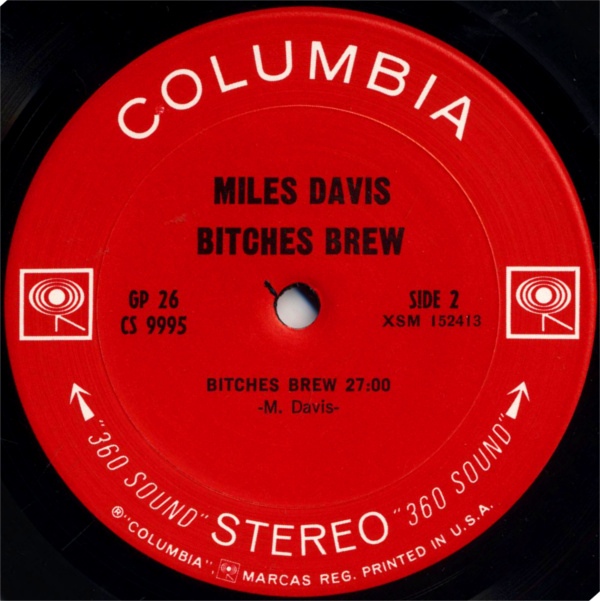
Miles had coaxed and cajoled the basis for three tracks. Bitches Brew would eventually become a twenty-seven minute epic. John McLaughlin would be trimmed to just over four minutes. Sanctuary, which was penned by Joe Zawinul, would close Bitches Brew. It would eventually clock in at just under eleven minutes. However, there was still half an album to record, plus a lot of editing to do.
As the 20th August 1969 dawned, the same musicians made their way to Columbia Studio B. The only change was Stan Tonkel engineered the rest of the sessions. Everything else stayed the same.
If the previous day had been a shock to their system, now they had some idea of what Miles and producer Teo Macero was trying to achieve. Those that thought about it, realised that Bitches Brew potentially, was a truly innovative album in the making. Especially, those in the rhythm section.
For those in the rhythm section, they must have realised the enormity of rhythmic innovations. The use of two bassists, two drummers and two electric pianos was groundbreaking. Especially, as they all played together. This was what a generation of rock groups had been doing. Miles’ admitted to having been influenced and inspired by the Jimi Hendrix Experience. Their influence was playing a part in the reinvention of Miles Davis.
As part of the reinvention of Miles Davis, he decided that his rhythm section be allowed off the leash. They enjoyed took centre-stage, enjoying the opportunity to fire off lengthy and improvised solos. For musicians of the calibre of John McLaughlin, Dave Holland and Chick Corea, this was music to their ears.
Whereas the previous day, Miles’ band had recorded three tracks, they only recorded the one track on the 20th August, Miles Runs The Voodoo Down. It’s an equally ambitious track, that eventually, was edited down to fourteen minutes. However, that day in August, when the red light went on, Miles coaxed, cajoled and encouraged a performance out of his band. He wasn’t interested in a good performance. No, What he was looking for was an outstanding and groundbreaking performance. His band were capable of this. It was Miles’ job to coax it out of the band.
Unsurprisingly, Miles managed to do so. He had been a bandleader long enough. Using a mixture of praise and constructive criticism, somehow, Miles’ band raised their game. Just like the day before, the rhythm section were responsible for a truly innovative performances. Similarly, Wayne Shorter’s soprano saxophone, Bernie Maupin’s bass clarinet and Miles’ trumpet played leading roles in another epic track. It would later be edited down to fourteen minutes. That was still to come. There were two more tracks to record.
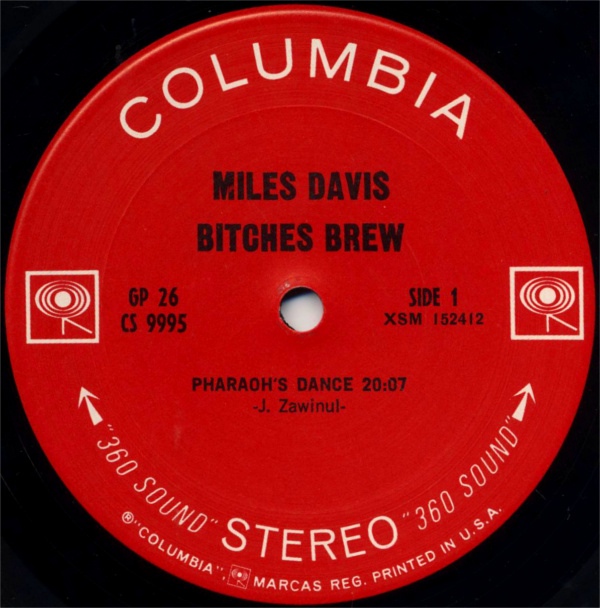
The two final tracks that would make up Bitches Brew, were Spanish Key and Joe Zawinul’s Pharaoh’s Dance. They were recorded on 21st August 1969. While the same band reconvened, Miles decided to add a third pianist. He knew the very man, Larry Young.
Bringing in a new face so let on in the Bitches Brew session made sense. Larry Young would have no preconceived ideas about what to play. He would play with an unbridled freedom. That’s what Miles and producer Teo Macero wanted from Larry, whose piano would sit in the centre of the arrangement. This resulted in yet another layer of music, as Miles and Ted continued to push musical boundaries.
Over the course of the 21st August, Miles encouraged, coaxed and persuaded two final performances out his band. They responded to Miles’ encouragement, unleashing two sterling performances. As engineers Frank Laico and producer Teo Macero looked on, little did they know that they were in the process of making history.
With the six songs that became Bitches Brew recorded, the band left Columbia Studio B, New York. None of them realised that they had just played their part in an album that would transform jazz music. However, there was a lot of work to do before then.
Much of this entailed editing. Miles had encouraged the band to lay down a series of performances. Now he was left to pick and choose what made its way onto the final tracks. Surrounded by piles of reel-to-reel tapes, Miles and Ted worked their way through the various reels. What followed was like piecing together a musical jigsaw. Sometimes, numerous edits featured in the one track. On Bitches Brew, there were fifteen edits, including the same loop being repeated on three occasions.
Then on Pharaoh’s Dance, the number rose to nineteen. Never before had editing been used so extensively. Bitches Brew was seen as a landmark use of studio technology. This wasn’t the only reason though.
In the studio, all producers had a variety of effects they can use. Like most musicians, Miles Davis was well aware of this. So, he encouraged Teo Macero to do so. Miles wanted to transform the studio into another musical instrument. This wasn’t new. The musique concrète composers of the fifties and sixties had used this extensively. Now was Miles time to deploy tape delays, reverb and echo. They would play their part in what would be the most ambitious and innovative album of Miles Davis’ career. However, before then, Miles returned to Columbia Studio B, New York, on January 28, 1970.
Many of the same musicians that featured on the other tracks on Bitches Brew returned. This included a rhythm section of bassist Dave Holland, Harvey Brooks on electric bass, guitarist John McLaughlin, drummers Lenny White and Jack DeJohnette. Joe Zawinul and Chick Corea played electric piano and Airto Moreira percussion and cuíca. Wayne Shorter added soprano saxophone, Bennie Maupin bass clarinet and Miles Davis trumpet. They would record Felio, which Wayne Shorter had written.
Over the course of January 28, 1970, Miles, producer Teo Macero and engineer Stan Tonkel recorded Felio. Gradually, the song began to take shape. Eventually, by the close of play, Miles had another song in the can. Would it make its way onto Bitches Brew?
The answer was no. Despite its quality, Felio didn’t make it onto Bitches Brew. It was an ambitious and groundbreaking double album that lasted ninety-four minutes and eleven seconds. Miles and Ted had poured their heart and soul into an album which they believed, could, change the face of jazz music.
There was a stumbling block though. Critics weren’t won over by Bitches Brew. Reviews were mixed. Rock critics seemed to “get” Bitches Brew. Most were excited by this melting pot of musical genres. They could understand the marriage of avant-garde, experimental, musique concrète, funk, jazz, psychedelia and rock. It seemed to harness the best of various disparate genres. However, not everyone agreed.
Jazz critics especially, wrote disparaging reviews of Bitches Brew. Some went as far as to say this wasn’t jazz music. The problem was, many critics fed on diet of mainstream jazz, just didn’t understand this gushing vortex of groundbreaking, genre-melting music. An expanded rhythm section featuring multiple drummers, bassists and pianists wasn’t something they had encountered before. This was something new, imaginative, influential and innovative, fusion. It caught the attention of a several generations of music lovers.
Unlike some music critics, record buyers tuned in and were turned on to the music on Bitches Brew. It was released in April 1970, and before long, became Miles Davis’ biggest selling album. Bitches Brew reached number thirty-five in the US Billboard 200 and number one on the US Jazz charts. This resulted in Miles’ first gold album. Over the Atlantic, Bitches Brew was certified silver. On both sides of the Atlantic, Bitches Brew had given Miles his biggest selling album. That was fitting, as it was his forty-fifth album. Eventually though, Bitches Brew sold over two million copies in America, and was certified double platinum. By then, people understood Bitches Brew.
Just like so much groundbreaking music, many people didn’t understand Bitches Brew. Critics, musicians and record buyers were puzzled. Why had Miles plugged in? What was with the expanded rhythm section and the myriad of effects? They found it hard to comprehend where Miles was coming from. Soon, it all became clear; at least to those who cared to listen.
The Godfather of cool and modal jazz was at the vanguard of a new musical movement, fusion. Where Miles Davis lead, others followed. Soon, it would become one of the biggest musical movements of the seventies. Miles Davis would, eventually, be crowned its founding father. Recognition came a year later.
In February 1971, Miles Davis released The Complete Bitches Brew Sessions. This four album set featured the Bitches Brew Sessions in their entirety. In some ways, this further explained where Miles Davis was coming from musically. The four discs explained the musical journey that became Bitches Brew. Suddenly, many who hadn’t understood Bitches Brew were enlightened. Already enlightened however, were the Grammy Awards’ judges.
From 1961, there had a Grammy Award for the Best Large Jazz Ensemble Album. One of the nominees in 1971, was Miles Davis’ Magnus Opus Bitches Brew. Looking back, it seemed inevitable Miles’ would win a Grammy Award for Bitches Brew. However, it was far from a fait accompli.
On its release, Bitches Brew had divided opinion. While Bitches Brew won the hearts and minds of rock critics, jazz critics weren’t convinced. To them it was strange brew of disparate musical genres and influences; one they either didn’t understand, or want to understand. However, the Grammy Award judges were made of sterner stuff. They understood innovation when they heard it, and were more than happy to reward it.
At the glittering Grammy Awards’ ceremony in April 1971, Miles Davis was vindicated. His decision to plug in, and change direction musically on Bitches Brew, was richly rewarded. He won a Grammy Award for the Best Large Jazz Ensemble Album. By then, fusion as it became known, was growing in popularity. The man who gave birth to fusion was receiving his reward. This has been the case over the last forty-five years.
Ever since the release of Bitches Brew, it has been recognised as a landmark album. This musical tour de force is now perceived as one of the most important albums in the history of jazz. Bitches Brew was a game-changer. Suddenly, jazz’s rhythmic rules were rewritten. Anything was possible. Rhythm sections grew in size. Suddenly, two drummers, bassists or pianists were acceptable. The use of effects were embraced, transforming the recording studio into an extra instrument. Similarly, editing was used as part of the creative process. Here, Miles drew inspiration from the musique concrète composers of the fifties and sixties. This was just another piece in the musical jigsaw that was Bitches Brew. It rejuvenated interest in jazz.
By 1970, many critics and record buyers regarded jazz as yesterday’s music. It was the music their parents and grandparents listened to. A new generation of record buyers turned their back on jazz. That was until Miles Davis released Bitches Brew.
Suddenly, jazz was back in fashion. It had been reimagined and reinvented by Miles Davis on Bitches Brew. This was a game-changer. Fusion as the genre became known, proved to be happy a marriage between jazz and rock. Before long, fusion was the most popular genre of jazz. A generation of jazz and rock musicians collaborated, resulting in jazz that was commercially successful and critically acclaimed. It’s also music that’s stood the test of time.
That’s why forty-five years after the release of Bitches Brew, Sony Music have released Bitches Brew 40th Anniversary Collectors Edition. This four disc set was originally released in 2010. However, it made a welcome return on 18th May 2015. The first two discs feature Bitches Brew plus six bonus tracks. On disc three, there’s a previously unissued performance at Tanglewood, in August 1970. It features Miles accompanied by Keith Jarrett, Chick Corea, Dave Holland, Jack DeJohnette, Airto Moreira and Gary Bartz. Then the final disc is a DVD of a previously unissued performance in Copenhagen. It took place in November 1969, and features Wayne Shorter, Corea, Holland and DeJohnette accompanying Miles Davis. Given that the Bitches Brew 40th Anniversary Collectors Edition box set can be found for £11, $16 or €14, then this is the definitive edition of Bitches Brew.
A copy of Bitches Brew 40th Anniversary Collectors Edition should make its way into every self-respecting record collection. It’s not just one of Miles Davis’ best albums, but one of his most ambitious and groundbreaking albums. Yet again, Miles Davis set out to reinvent himself and jazz music. Miles Davis succeeded in doing so, and in the process, created a pioneering album that transformed, and rejuvenated jazz, Bitches Brew.
MILES DAVIS-BITCHES BREW 40TH ANNIVERSARY COLLECTORS EDITION.

LONESOME HIGHWAY-AN ANTHOLOGY OF AMERICAN SONGS OF THE ROAD.
LONESOME HIGHWAY-AN ANTHOLOGY OF AMERICAN SONGS OF THE ROAD.
The automobile is one of the most celebrated of American institutions. That’s been the case for nearly 100 years. Right back to the days of the blues, the automobile and the highways they travel down, have been celebrated by musicians.
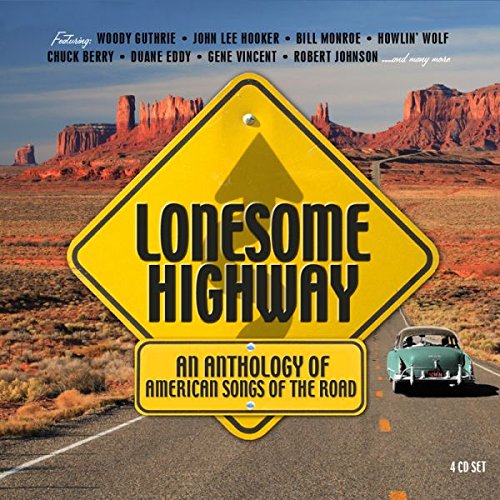
That’s the case on Lonesome Highway-An Anthology Of American Songs Of The Road. It’s a four disc celebration of the automobile and highway from Proper Box. They released Lonesome Highway-An Anthology Of American Songs Of The Road on 25th May 2015. A total of 100 songs feature on Lonesome Highway-An Anthology Of American Songs Of The Road. There’s everything from bluegrass, blues, country, folk, gospel, rockabilly and rock ‘n’ roll on Lonesome Highway-An Anthology Of American Songs Of The Road. It’s a celebration of American music. This celebration begins back in the days of the delta bluesmen.
Disc One.
Just like each of the four discs on Lonesome Highway-An Anthology Of American Songs Of The Road, there’ a total of twenty-five tracks. This includes some of the biggest names in blues music.
From the days of the delta blues, bluesmen like Robert Johnson, Blind Lemon Jefferson, Memphis Minnie and Sleepy John Estes celebrated and romanticised both the automobile and the highway. It spawned a wealth of material. Some of it features on disc one of Lonesome Highway-An Anthology Of American Songs Of The Road.
Lemon Jefferson’s Booger Rooger Blues opens disc one. His other contribution is D B Blues. He’s the first giant of the blues. Others include Ramblin’ Thomas, Robert Johnson, Sleepy John Estes and Charley Patton,
Many people won’t have heard of Ramblin’ Thomas, who was born Willard Thomas, in Logansport, Louisiana. He wasn’t a prolific musician. Far from it. However, tracks like Hard To Rule Woman Blues showcase a talented, and underrated musician. While many people won’t have heard of Ramblin’ Thomas, they’ll have heard of Robert Johnson.
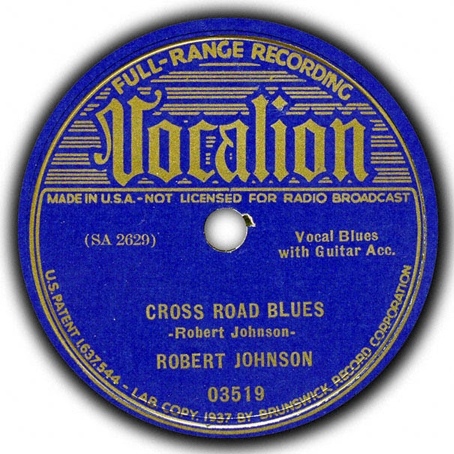
Two of Robert Johnson’s classic tracks feature on disc one. Terraplane Blues and Cross Road Blues show why Robert Johnson is regarded as King Of The Delta Blues. Sleepy John Estes by comparison, sometimes, doesn’t receive the recognition he deserves. He also features twice. Poor Man’s Friend (T-Model) and Brownsville Blues show why blues connoisseurs hold Sleepy John Estes in such high regard. The same goes for Charley Patton. His only contribution is Down The Dirt Road Blues. It’s the perfect introduction to The Masked Marvel. However, there’s more to disc one that blues music.
There’s also country and folk music on disc one. When it comes to country music, three tracks stand out. This includes Roy Acuff’s Automobile Of Life, W.Lee O’Daniel and His Hillbilly Boys’ Lonesome Road Blues and Cliff Bruner and His Boys’ Truck Driver’s Blues. These tracks are an essential soundtrack to any road trip. So is a track by a legend of American music.
Legend is an oft-overused track. Not in the case of Woody Guthrie. He was born in 1912, and was a prolific songwriter and political activist. When he died in 1967, Woody Guthrie left behind a rich musical legacy, including Blowin’ Down This Road. It’s a fitting addition to disc one of Lonesome Highway-An Anthology Of American Songs Of The Road, and like other twenty-four tracks, whets your appetite for disc two.
Disc Two.
Some of the artists that feature on disc one, feature on disc two of Lonesome Highway-An Anthology Of American Songs Of The Road. This includes Roy Acuff and Woody Guthrie. Roy Acuff contributes Wreck On The Highway and There’s A Big Rock In The Road, while Woody Guthrie’s contributions are This Land Is Your Land and Car Song. Given how important their contribution to music was, and the quality of the tracks, this can be forgiven. However, they’re not the only big names on disc two.
Nat King Cole makes an appearance, contributing (Get Your Kicks On) Route 66. Hank Williams, one of the legends of country music features twice. Lost Highway and I’ve Been Down That Road Before are a reminder of a giant of country music, who tragically died aged just twenty-nine. By then, Hank had more than made his mark on country music. The same can be said of Hank Snow.
Canadian country singer Hank Snow enjoyed a lengthy career, living until he was eighty-five. He released over sixty singles and 100 albums. In 1950, Hank released The Golden Rocket. On the flip side was Paving The Highway With Tears, a true hidden gem, that’s a reminder of the man they called The Country Ranger. Similarly, Travelin’ This Lonesome Road shows bluegrass pioneer Bill Monroe at his groundbreaking best. Away from bluegrass and country, there’s much more to discover on disc two.
This includes a healthy serving of the blues. What better way to start is with two tracks from one of the biggest names in blues, John Lee Hooker. He contributes Highway Blues and Road Trouble. Lightnin’Hopkins contributes his single for Prestige, Automobile Blues, the B-Side of Lightnin’Hopkins. Apart from blues, there’s a myriad of musical delights on disc two.
There’s the R&B courtesy of Roy Brown’s Cadillac Baby is. Then’s there’s two gospel cuts. This includes The Pilgrim Travellers’ I’m Standing On The Highway and The Five Blind Boys Of Mississippi contribute Jesus Traveled This Road Before. However, one of my favourite tracks from disc two is Dick Reinhart’s 1948 single Hot Rod Baby. This was one of just two singles Dick Reinhart released on Columbia. Just like the rest of disc two, it’s the reminder of another age, and the perfect soundtrack to a musical road trip.
Disc Three.
It’s not just blues and country on disc three of Lonesome Highway-An Anthology Of American Songs Of The Road. Far from it. There’s R&B and rockabilly. This makes disc three just as eclectic as the first two.
There’s not as much blues on disc three. What blues there is, is electric blues. It comes courtesy of some blues’ legends. Howlin’ Wolf contributes Mr. Highwayman, Johnny Guitar Watson Motor Head Baby and Lowell Fulson Let Me Ride In Your Little Automobile. These three tracks show how blues music was evolving. It was a very different genre from the days of Blind Lemon Jefferson, Charlie Patton and Robert Johnson. Just as the blues was changing, so was country music.
Country duo, Flatt and Scruggs recording career began in 1950, and lasted right through to the early seventies. During that period, they were prolific recording artists, releasing over thirty-studio albums and thirty singles. Despite this, many people are unfamiliar with their music. So it’s fitting that I’m Working On A Road (To Glory Land) and Don’t This Road Look Rough And Rocky feature on disc three. They’re not the only country cuts on disc three.
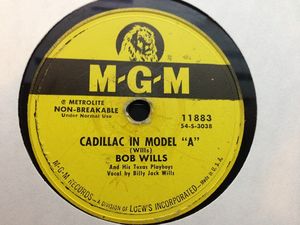
Another of country music’s biggest names of the forties and fifties features on disc two, Bob Willis. Two of the singles with His Texas Playboys are included. This includes 1953s single Hubbin’ It and 1954s Cadillac In Model “A”. Other country cuts include Shorty Rogers’ A Mile Down The Highway (There’s A Toll Bridge), Ray Smith’s Lonesome Truck Driver’s Blues and Tillman Franks and His Rainbow Boys’ Hot Rod Shotgun Boogie #2. While country music was popular during the fifties, a change was gonna come.
A new breed of musicians were about to make their presence felt. This include R&B and rock ’n’ rollers like Little Richard, Bo Diddley and Chuck Berry. They would all go on to play in important part in the birth of rock ’n’ roll.
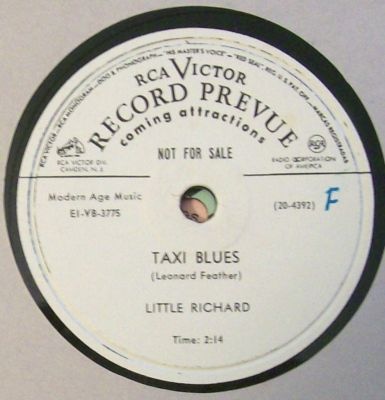
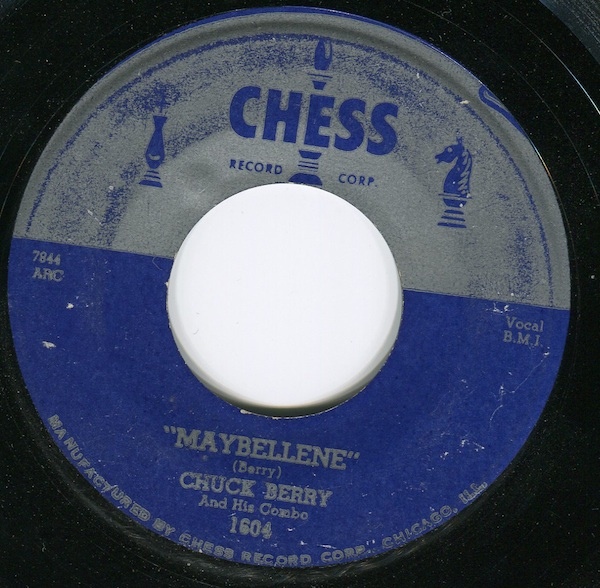
So it’s fitting that Little Richard’s 1951 debut single Taxi Blues features on disc three. So does Bo Diddley’s 1960 classic Roadrunner. It’s one of two tracks from Bo Diddley. The other is Cadillac. Then there’s two tracks from Chuck Berry. This includes his 1955 classic Maybellene and No Money Down. Each of these tracks show just how music was changing. Rock ’n’ roll has just been born as as we approach disc four of Lonesome Highway-An Anthology Of American Songs Of The Road.
Disc Four.
By disc four of Lonesome Highway-An Anthology Of American Songs Of The Road, the musical landscape has changed. The birth of rock ’n’ roll was a game-changer. So much so, that the delta blues on disc one seems a reminder of forgone musical age.
Good as the three previous discs are, disc four literally oozes quality. That’s the case from Gene Vincent’s Race With The Devil and Pink Thunderbird. The future member of the rock ’n’ roll hall of fame, starts disc one with a bang. From there, Jerry Lee Lewis contributes End Of The Road and Bobby “Blue” Bland Further Up The Road. Even after four songs, eclectic is the best way to describe the music.
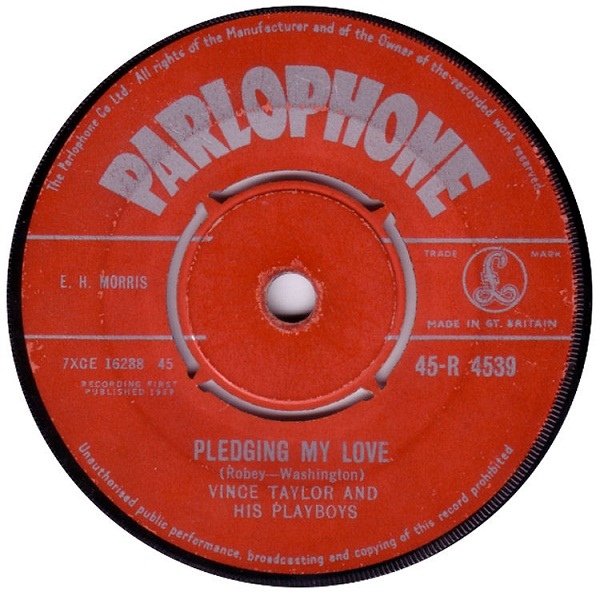
That continues to be the case. There’s some rockabilly courtesy of Vince Taylor’s Brand New Cadillac. This was the B-Side to his 1959 single Pledging My Love. Another flip side is Howard W. Brady’s Hot Rod Boogie. This was the B-Side to Weary Walkin’ Blues. While neither of these tracks will be familiar to most people, they’re worthy additions. So are other tracks on disc four.
This includes The King Of Rockabilly, Carl Perkins. His contribution is a Pop, Let Me Have The Car. It was the B-Side to Carl’s 1958 single Levi Jacket (And A Long Tail Shirt). Pop, Let Me Have The Car is another hidden gem, and shows just why, Carl Perkins was crowned The King Of Rockabilly. That’s despite the competition being fierce.
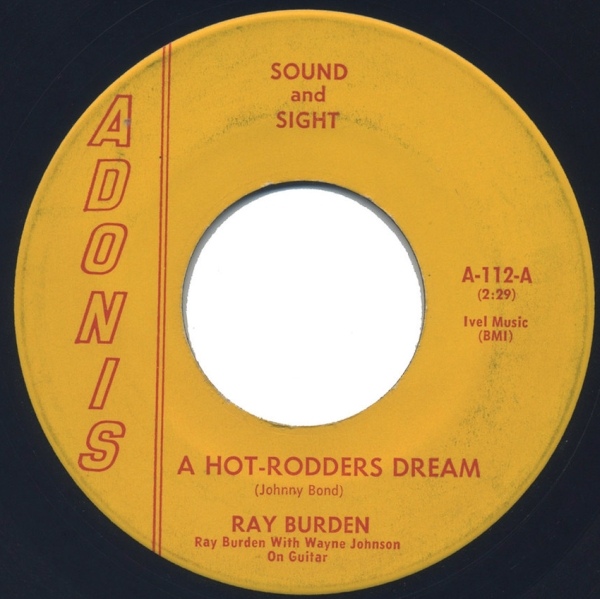
There were many contenders to Carl Perkins’ crown. Some singers enjoyed a degree of longevity, releasing a string of singles. Not Bobby Johnston. His single Flat Tire passed most people by. Since then, it’s become a firm favourite among the rockabilly and hot rod community. The same can be said of Ray Burden’s 1960 single Hot Rodder’s Dream. It was released on the Adonis label and has become something of a collector’s item. The same can be said of a number of tracks on disc four.
Among them are the 1959 single from Duane Eddy and His “Twangy” Guitar And The Rebels’ Forty Miles Of Bad Road. It showcases Duane’s distinctive guitar sound. Similarly distinctive is the piano playing on Chuck Berry’s Jaguar And The Thunderbird. It features one of the original rockers, as Chuck Berry delivers a strutting vocal. A very different style of vocal closes disc four of Lonesome Highway-An Anthology Of American Songs Of The Road.
It comes courtesy of Glen Campbell’s slow, country-tinged vocal on his 1962 single Long Black Limousine. Glen’s vocal is full of sadness and emotion, as he brings the lyrics to life. Even then, it was obvious he was destined for greatness.
That was the case with many of the artists on Lonesome Highway-An Anthology Of American Songs Of The Road. They would go on to reach even greater heights, and become some of the most influential musicians in the history of American music. That’s the case from Robert Johnson, Woody Guthrie, Hank Williams, Howlin’ Wolf, John Lee Hooker, Bo Diddley, Chuck Berry, through to Jerry Lee Lewis, Gene Vincent and Glen Campbell. Still their music continues to influence generation of musicians. That’s not all. Their music is being enjoyed by another generation of music lover. They’ve the opportunity to discover music by each and every one of these artists on Lonesome Highway-An Anthology Of American Songs Of The Road.
Proper Box released Lonesome Highway-An Anthology Of American Songs Of The Road on 25th May 2015. It’s a musical celebration of an American institution, the automobile, and the highways they travel down. This is fitting, given the role the highway has played in music’s history.
From the days of the delta bluesmen, musicians have travelled the highways of America. Even today, bands traverse the highways and byways of America in everything from beaten up vans, to luxurious coaches. It’s almost a rite of passage for bands. Each band has their own musical soundtrack. What would be fitting was, if it was Lonesome Highway-An Anthology Of American Songs Of The Road, which celebrates several generations of musicians, who took the same journey.
LONESOME HIGHWAY-AN ANTHOLOGY OF AMERICAN SONGS OF THE ROAD.



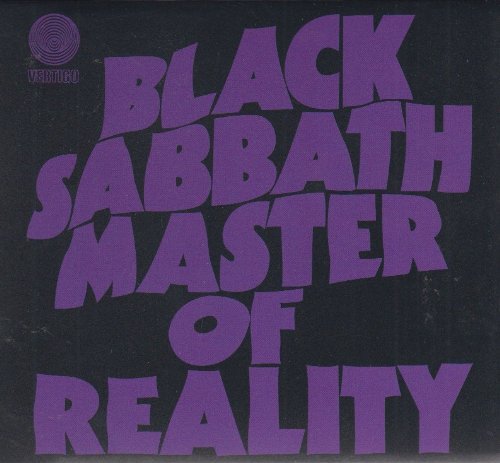
BLACK SABBATH-MASTER OF REALITY-VINYL EDITION.
BLACK SABBATH-MASTER OF REALITY-VINYL EDITION.
1970 had been a year that defined Black Sabbath’s career. They’d released two hugely successful albums. This includes their debut album Black Sabbath, which was released in February 1970. It reached number eight in the UK and number twenty-three in the US Billboard 200 charts. This resulted in Black Sabbath being certified gold in the UK and platinum in the US. Black Sabbath launched the Birmingham trio’s career. However, things were about to get even better.
Paranoid, Black Sabbath’s sophomore album, was released in the UK in September 1970. It reached number one and was certified gold. Then in January 1971, Paranoid was released in the US, reaching number twelve and was certified platinum four times over. Ironically, in the US, Paranoid wasn’t well received by critics. Despite this, Paranoid sold over twelve-million copies and and featured three Black Sabbath classics Paranoid, Iron Man and War Pigs. After just two albums, Black Sabbath were one of the biggest names in rock music.
Unlike many bands, Black Sabbath’s rise and rise had been meteoric. Just two years after they’d formed in Birmingham, bassist Geezer Butler, drummer Bill Ward, guitarist Tony Iommi and lead vocalist Ozzy Osbourne were rubbing shoulders with rock royalty. There was a problem though. How do you followup an album as successful as Paranoid? After all, what chance had Black Sabbath of recording an album that surpassed Paranoid, a stonewall classic?
The answer to that is with Master Of Reality, is an album influenced three genres of music. They were stoner rock, doom metal and sludge metal, a fusion of hardcore punk and heavy metal. It seemed Black Sabbath were determined to continue pushing musical boundaries on Master Of Reality, which will be rereleased on vinyl by Sanctuary, on 1st June 2015.
Black Sabbath didn’t even get the opportunity to enjoy Paranoid’s success in America. It was released in America in January 1971. That was when Black Sabbath headed into Island Studios to record eight tracks. Six of them, Sweet Leaf, After Forever, Children Of The Grave, Lord of This World, Solitude and Into The Void were written by Black Sabbath. Embryo and Orchid were written by Tony Iommi. Between January and May 1971, Black Sabbath got to work.
At Island Studios, producer Rodger Bain was joined bassist Geezer Butler, drummer and percussion Bill Ward. They provided the rhythm section. Guitarist Tony Iommi also played synth, flute and piano. Adding his inimitable vocal was Ozzy Osbourne. By May 1971, Black Sabbath had completed Master Of Reality, which was released in July 1971.
Before the release of Master Of Reality, reviews were mixed. Just like Paranoid, Lester Bangs, the supposed doyen of critics, gave the album a mixed review. Other high profile critics didn’t take to Master Of Reality. It wasn’t cerebral enough for them. Among the criticisms were that Master Of Reality was “monotonous,” “dull and decadent.” Despite the mixed reviews, Master Of Emotion was a huge commercial success.
Master Of Reality, which was Black Sabbath’s third album, was released on 21st July 1971. In the UK, Master Of Reality reached number five and was certified silver. Over the Atlantic, Master Of Reality was certified gold on preorders along. Eventually, Master Of Reality reached number eight in the US Billboard 200 and was certified double-platinum. The Black Sabbath success story continued with Master Of Reality, which I’ll tell you about.
Master Of Reality opens with Sweet Leaf, one of the earliest examples of stoner rock. A loop of Tony coughing, whilst allegedly smoking a joint opens the track. After that, the rhythm section and blistering guitars accompany Ozzy’s powerhouse of a vocal. It’s a mixture of emotion and power., Machine gun guitars and the thundering rhythm section accompany him all the way. Guitarist Tony Iommi gives a guitar masterclass, before Black Sabbath’s rhythm section kick loose. Like a well-oiled machine Black Sabbath pickup where they left off on Paranoid, creating groundbreaking rock music.
After Forever was the only single released from Master Of Reality. However, it failed to chart. Black Sabbath were always more of an albums band. This is one of the most controversial songs on the album, given the lyrics about religion and Christianity. When this song was released in 1971, it must have provoked controversy. Back then, religion played a bigger part in British and American life. A buzzing synth gives way to Black Sabbath in full flow. It’s a joy to behold. Geezer, Bill and Tony lock into a tight groove. Drums like jackhammers accompany blistering guitars. Ozzy’s rabble rousing vocal is accompanied by stomping arrangement as heavy rock anthem unfolds.
The guitars that open Embryo have a sixties influence. There’s also a brief prig rock influence, before Black Sabbath cut loose. Quickly, the arrangement gathers momentum and a glorious, driving arrangement unfolds. Ozzy struts his way through the lyrics, singing about revolution. Dramatic bursts of guitar are fired above the arrangement. Tony unleashes some blistering licks, while the rhythm section drive the arrangement along further honing and defining Black Sabbath’s trademark sound.
Children Of The Grave is an anti-war song. Black Sabbath had two anti-war songs on Paranoid, War Pigs and Electric Funeral. This is just as good. It’s no mealy mouthed protest song, like Give Peace A Chance. They left that to ex-Beatles and conceptual artists. Neither do Black Sabbath do bed ins. That’s unless groupies and class As are involved. The arrangement is big, bold and in-your-face. Literally, the arrangement is a wall of sound. Searing, blistering and crystalline guitar licks and a thundering, driving rhythm section. Ozzy’s vocal is a mixture of anger and frustration. Tony seems to play as if his very life depends on it, before the track reaches a haunting crescendo.
Straight away, it’s obvious that Orchid is very different to the other tracks on Master Of Reality. It has a folk influence. Chiming, crystalline guitars and a subtle bass combine during this beautiful, short and melancholy instrumental.
Normal service is restored on Lord Of This World. Dark. Dramatic and moody describes the arrangement. The rhythm section glue the arrangement together, while scorching guitars match Ozzy’s grizzled vocal. Later, when Ozzy’s vocal drops out, the rest of the band get their chance to shine. It’s obvious that Geezer, Bill and Tony are top class musicians who were among the greatest rock musicians of the seventies. Lord Of This World is a reminder of this, if any was needed.
Solitude has an understated, melancholy sound. Just a chiming guitar and meandering bass combine with Ozzy’s vocal. It’s full of sadness, regrets and confusion. A flute floats above the arrangement, adding to the atmospheric, haunting arrangement. While this is very different to much of Master Of Reality, it’s a beautiful, haunting and cerebral song, that shows another side of Black Sabbath.
Into The Void closes Master Of Reality, was originally called Spanish Sid. A blistering guitar solo joins a pounding, thunderous rhythm section. Black Sabbath seem to be enjoying the opportunity to showcase their inconsiderable skills. They kick loose and are joined by Ozzy. He delivers his vocal urgently, in short, sharp bursts. Behind him Geezer and Tony join forces, while Bill seems determined to punish his drums.
Although Master Of Reality didn’t quite match the success of paranoid, it proved to be a hugely influential album. Master Of Reality influenced three genres of music. They were stoner rock, doom metal and sludge metal, a fusion of hardcore punk and heavy metal. It seemed Black Sabbath were determined to continue pushing musical boundaries on Master Of Reality, which will be rereleased on vinyl by Sanctuary, on 1st June 2015.
Master Of Reality also saw Black Sabbath further refine and and hone their unique sound. They were continuing to rewrite the rules of heavy metal. It was a case of the heavier the better. Leading the charge, were Black Sabbath. This didn’t please some people.
Among them were the critics. This self styled tastemaker seemed to have a downer on Black Sabbath. Along with many American critics, they felt Master Of Reality was too heavy. Critics didn’t approve of the aggression and later, satanic lyrics. That’s why Master Of Reality wasn’t released to critical acclaim. Despite that, Master Of Reality was certified gold in the UK and double platinum in the US. Not for the first time, the critics got it wrong.
Black Sabbath continued to redefine heavy metal on Master Of Reality. So much so, that Black Sabbath provided the blueprint for heavy metal If someone asked what heavy metal sounded like, Black Sabbath was what you played them. The albums that started this was Paranoid, Black Sabbath’s sophomore album. That’s why, in the history of heavy metal, there are only two periods, B.P. and A.P. Before Paranoid and After Paranoid. Following Paranoid would’ve been almost impossible for most bands. However, they weren’t Black Sabbath.
By the time Black Sabbath released Master Of Reality, they’d become a musical phenomena. That was the case for the next ten years. Excess and commercial success were ever-present for the band the redefined heavy metal. Black Sabbath rewrote the rules. Right through until 1981s Mob Rules, gold and platinum discs came Black Sabbath’s way. So did controversy. Much of it concerned Ozzy Osbourne. He parted company with the band in 1979. Sacked by the group he formed, both Ozzy and Black Sabbath survived to tell the tale. However, back in 1971, the Black Sabbath story was just taking shape and they’d go on to become one of the biggest and most successful bands in the history of heavy metal. However, back in 1971, when Black Sabbath released the influential and innovative Master Of Reality, they had another ten years of chaos, controversy, commercial success and critical acclaim coming their way.
BLACK SABBATH-MASTER OF REALITY-VINYL EDITION.
TOO SLOW TO DISCO VOLUME 2.
TOO SLOW TO DISCO VOLUME 2.
Ever since the birth of rock ’n’ roll, musical genres have fallen in, and then out, of fashion. That was the case as the seventies dawned. The sixties had come to a disappointing end. It may have been a musical age of aquarius, but it ended badly.
Undoubtably the sixties was a golden age for music. From the moment The Beatles burst onto the scene in 1962 with I Wanna Hold Your Hand, the times they were a changing. Soon, some of the biggest names in music announced their arrival. At first there were Bob Dylan, The Rolling Stones and The Beach Boys. Then the British Invasion bands took America by storm. From The Kinks, The Animals, The Who, The Small Faces, The Yarbirds and later Cream, British bands lead the way. However, America was soon fighting back.
The land of the free responded, and gave the world The Jimi Hendrix Experience, The Byrds, Big Brother and The Holding Company, The Doors, Jefferson Airplane, the Grateful Dead, Country Joe and The Fish and Crosby, Stills, Nash and Young. A golden age for music was unfolding.
Music was in a constant state of flux. From the pop of the early sixties, folk, country rock, folk rock, garage rock and psychedelia all ensured that the sixties swung. However, as the sixties drew to a close, a cloud hung over music.
On August 10th, 1969, America awoke in a state of shock. The previous night, The Manson Family had embarked upon a murderous spree at the Tate and LaBianca households. Gradually, the details started to filter out.
Americans were then shocked to discover that songs like Helter Skelter, from The Beatles’ White Album may have influenced The Manson Family. This resulted in a backlash against both psychedelia and the hippie movement. The final nail in psychedelia’s coffin happened at The Altamont Free Concert.
The Rolling Stones decided to put on free concert at Altamont Speedway, in Northern California. What was meant to be a concert featuring the great and good of psychedelia went badly wrong. Santana, Jefferson Airplane, The Flying Burrito Brothers, Crosby, Stills, Nash and Young, the Rolling Stones and Grateful Dead were all booked to play. It was meant to be a major event in psychedelic’s musics history. After the carnage in Los Angeles, everyone hoped this would be a good news story. It wasn’t.
As the Rolling Stones took to the stage, the concert descended into chaos. The Hell’s Angels fought with the audience, and Meredith Hunter, a black teenager, was allegedly stabbed by a member of the Hells’s Angels who were meant to be providing security at Altamont. After this, the event was cancelled. The Grateful Dead never even took to the stage. Altamont had been a disaster. There were three accidental deaths, many were injured, property was destroyed and cars stolen. As the sixties drew to a close, the events at Altamont played its part in the decline of psychedelia.
As the seventies began, music was continuing to evolve. Psychedelia was no longer as popular. However, new musical genres were making their presence felt. Prog rock was growing in popularity. So were singer-songwriters like Carole King, James Taylor and Jackson Browne. In Detroit, Memphis and Philly, the soul factories were churning out their trademark sounds. Then there was heavy metal. Black Sabbath, Deep Purple and Led Zeppelin were the holy trinity of heavy metal. They were also trailblazers for future generations of heavy metal groups. Meanwhile, in the West Coast of America, a new sound was emerging.
From the early seventies onwards, the West Coast Sound, was winning over the hearts and minds of record buyers. No wonder. With its lush harmonies, slick sound and clever chord progressions the West Coast Sound was irresistible. Groups like The Eagles, The Doobie Brothers, Fleetwood Mac, Chicago, Foreigner, Supertramp and REO Speedwagon would go on to enjoy widespread commercial success and critical acclaim. That’s no surprise. Their music was always slick, full of clever hooks and always memorable. So, it’s no surprise that nearly forty years after the heyday of the West Coast sound, the music is just as popular as ever.
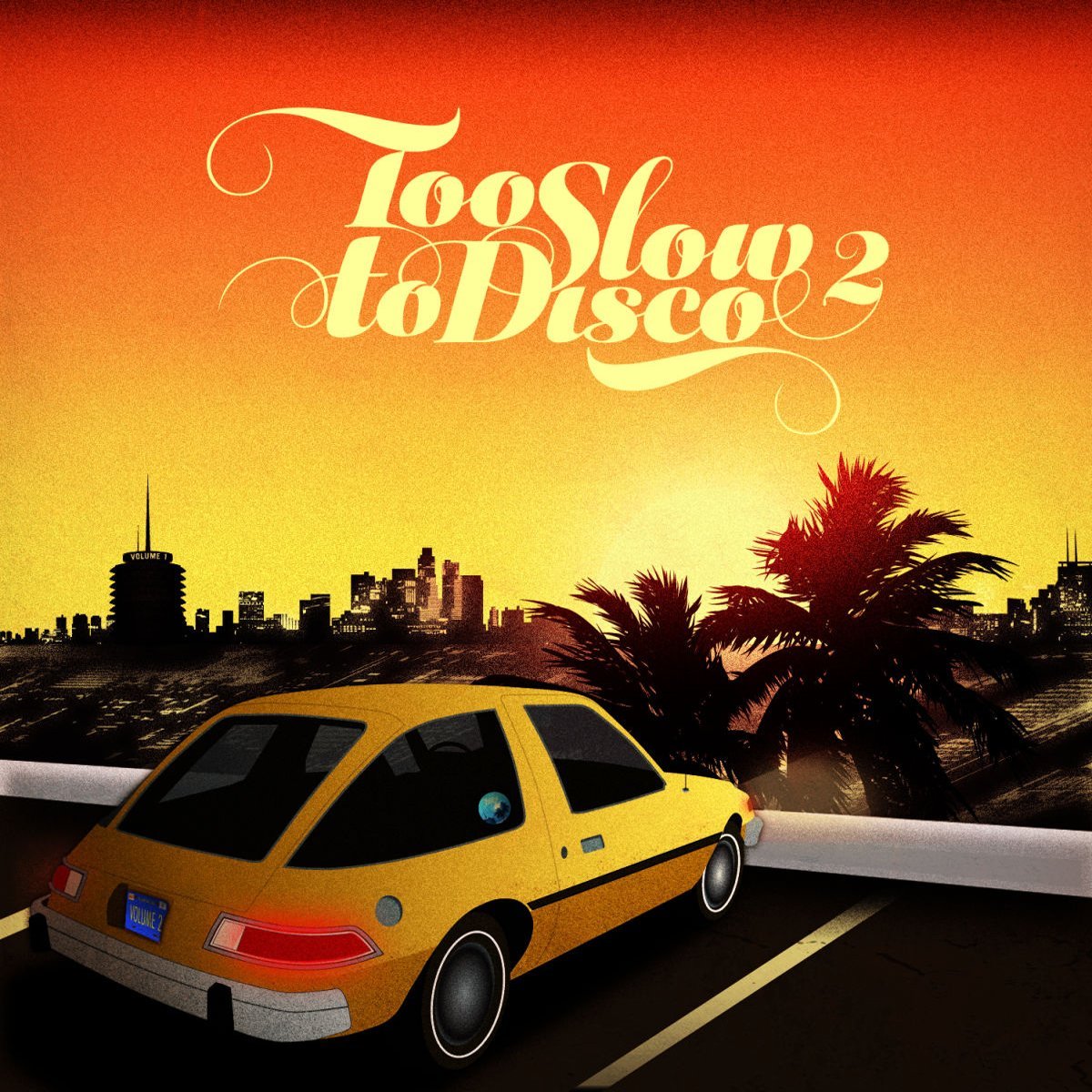
That’s why last year, How Dare You Are Recordings released Too Slow To Disco. It was compiled by DJ Supermarkt. Featuring nineteen tracks, Too Slow To Disco was like a who’s who of the West Coast sound. So it’s no surprise that Too Slow To Disco caught the attention of music lovers. In a compilation market full of third rate compilations, Too Slow To Disco was a glittering gem. Surely there had to be a followup?
Just over a year later, and the news is out. Too Slow To Disco Volume 2 will be released by How Dare You Are Recordings, on 15th June 2015. Just like Too Slow To Disco, it features a glittering array of artists.
A total of sixteen artists feature on Too Slow To Disco Volume 2 . This includes Daryl Hall and John Oates, Jimmy Gray Hall, Eric Kaz, Dave Raynor, Paul Davis, Michael Omartian and Michael Nesmith. With such an illustrious lineup, choosing the highlights of Too Slow To Disco Volume 2 won’t be easy. However, here goes.
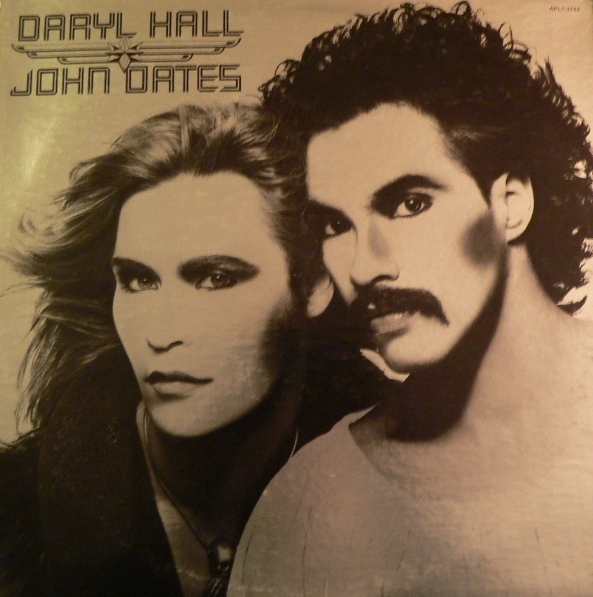
Daryl Hall and John Oates are, without doubt, the biggest name on Too Slow To Disco Volume 2. The Philly born duo’s contribution is Alone Too Long, a track from their 1975 eponymous album. It was Daryl Hall and John Oates’ RCA debut. It reached number seventeen in the US Billboard 200 ban and was certified gold. In Britain, Daryl Hall and John Oates stalled at just number fifty-six. That’s a great shame, given the quality of music, including this heartfelt ballad.
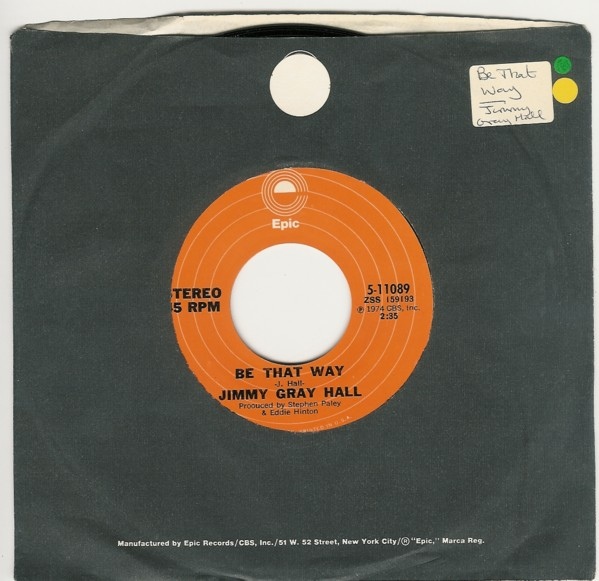
Jimmy Gray Hall released Be That Way as a single in 1973. It was released on Epic, and is one of just two singles the Nashville born singer-songwriter released. Funky and soulful with gospel tinged harmonies, hooks haven’t been spared on Be That Way.
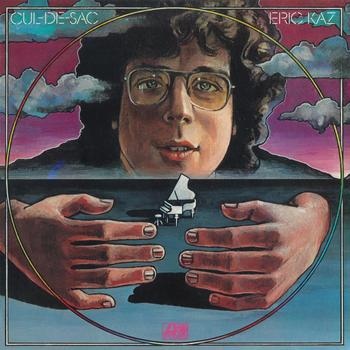
Eric Kaz released two albums for Atlantic in the early seventies. His debut album was 1972s If You’re Lonely. This marked the debut of the New York born singer, songwriter and keyboardist. Two years later, Eric returned with Atlantic swan-song, Cul-De-Sac. It was released in 1974, and featured Come With Me. Sadly, Cul-De-Sac failed commercially and that was the end of Eric’s solo career. However, Come With Me is a reminder of a talented singer, songwriter and musician, who could’ve should’ve enjoyed commercial success and critical acclaim.
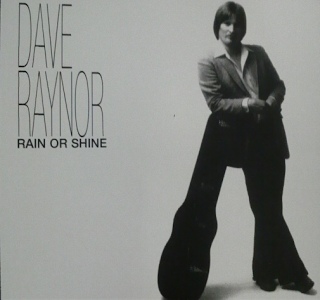
Dave Raynor only ever released one album, Rain Or Shine. It was released on Dave Raynor Productions in 1981. This private pressing featured Leave Me Alone Tonight. There’s similarities to James Taylor, Jackson Browne and Hall and Oates. With its slick sound, lush harmonies and clever chord progressions, Leave Me Alone Tonight epitomises the West Coast Sound.
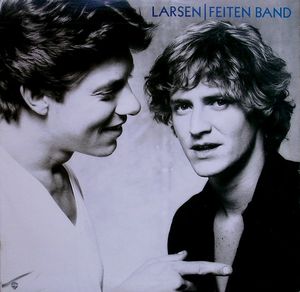
The tempo drops courtesy of the Larsen/Feiten Band and Who’ll Be The Fool Tonight. They were signed to Warner Bros. Records, and in 1980, released their eponymous debut album. It featured the single Who’ll Be The Fool Tonight. It’s slick, smooth, jazz-tinged, funky ballad. Add in crystalline rocky guitars, and you’ve the recipe for a hidden gem.
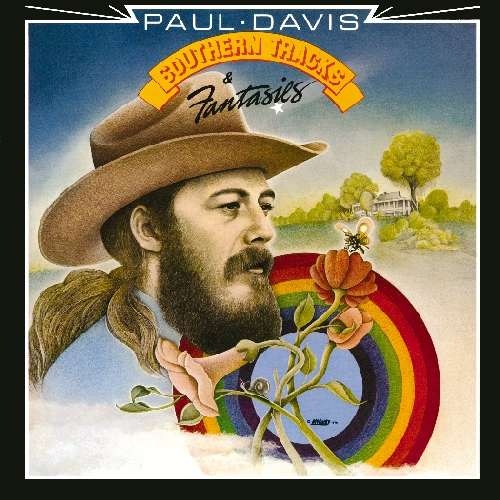
Paul Davis had released three albums before he released Southern Tracks and Fantasies in 1976. This was the fourth album he released on Bang. The lead single was Medicine Woman. Laid-back, with an understated arrangement, it’s a quite beautiful, dreamy track.
In 1974, Joe Vitale had just signed to Atlantic Records. His debut album was 1974s, Roller Coaster Weekend. It featured the single Step On You. Sadly, commercial success eluded Roller Coaster Weekend and Step On You. However, it makes a welcome return on Too Slow To Disco Volume 2.
Bruce Hibbard was born in Oklahoma City and by 1980, was an accomplished singer, songwriter and keyboardist. He released his debut album A Light Within in 1980, on the Seed label. A year later, and Bruce had signed to the Myrrh label. He released sophomore album, Never Turnin’ Back later in 1981. One of its highlights was the title-track. From the sultry saxophone that opens Never Turnin’ Back, the arrangement bubbles along. Harmonies and a rocky guitar accompany Bruce’s tender, heartfelt vocal. It’s impossible not to be swept away by Never Turnin’ Back’s hook-laden sound.
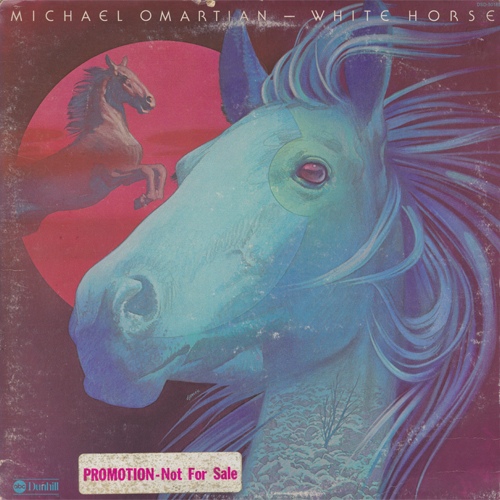
Michael Omartian released his debut album White Horse in 1974. White Horse was released on ABC Dunhill Records, and featured Fat City. This was one of Michael’s compositions. He was a singer, songwriter, arranger, producer and keyboardist. Fat City showcased the multitalented Michael Omartian. He’s responsible for a funky, soulful slice of seventies rock.
Closing Too Slow To Disco Volume 2, is Michael Nesmith’s Capsule (Hello People A Hundred Years From Now). This is the track that closed Michael’s 1979 album, Infinite Rider On The Big Dogma. It was released on Michael’s Pacific Artis label, which he founded in 1974. Since then, it had been a musical home-from-home for the multi-talented singer, songwriter, musician and producer. Soulful, smooth and sometimes funky, it’s the perfect way to close Too Slow To Disco Volume 2.
Although I’ve only mentioned ten of the sixteen tracks on Too Slow To Disco Volume 2, I could just as easily have picked any of the tracks. That says a lot about the quality of the music on Too Slow To Disco Volume 2. It’s obviously a lovingly compiled collection. The familiar is often eschewed.
Instead, the compiler focuses on tracks most people won’t have heard of…until now. After hearing Too Slow To Disco Volume 2, they’ll be looking for albums by many of the artists they’re unfamiliar with. For whatever reason, the commercial success and critical acclaim Daryl Hall and John Oates enjoyed, eluded them. That could be for any number of reasons.
Dave Raynor’s album Rain Or Shine was a private pressing. Maybe music was only a hobby? Who knows. What I do know, is that Dave Raynor is a talented singer-songwriter. That’s the case with all the artists on Too Slow To Disco Volume 2. For whatever reason, they never enjoyed the success their talent warranted. That’s a great shame. Especially, that during this period.
Most of the music on Too Slow To Disco Volume 2 was released between the early seventies and the early eighties. While this was a golden era for music, there were a few blots on the musical landscape.
Throughout the seventies, the American soul factories were churning out manufactured music. It featured their trademark sound. Many of the artists that enjoyed commercial success, neither wrote, arranged nor produced the music they wrote. That’s ironic, given many of the artists on Too Slow To Disco Volume 2 were singers, songwriters, musicians and producers. Then there was the sound that sucked, disco. It become a musical phenomenon, before dying in July 1979, in of all places, a ball park in Chicago. Finally, there were the ultimate musical charlatans, punks. While the new breed of punk groups stole a living, many talented purveyors of the West Coast Sound struggled to make a living. Music, like life, was proving not to be fair. However, thankfully, now, the West Coast Sound is back in fashion.
After years when the West Coast Sound was out favour, now it’s enjoying a resurgence in interest. Over the last couple of years, the West Coast Sound has been embraced by a new generation of music lovers. Those of us who were “there,” are still enjoying what was part of the musical soundtrack to our lives. Through the release of compilations like Too Slow To Disco Volume 2, helpfully people will revisit the music of Daryl Hall and John Oates, Jimmy Gray Hall, Eric Kaz, Dave Raynor, Paul Davis, Michael Omartian and Michael Nesmith. While many of them aren’t household names, they could’ve and should’ve been. They certainly had the talent. What they didn’t have was luck. If they had caught a break, many of the artists on Too Slow To Disco Volume 2 would’ve enjoyed the commercial success and critical acclaim that their talent warranted.
TOO SLOW TO DISCO VOLUME 2.
JETHRO TULL-MINSTREL IN THE GALLERY-40TH ANNIVERSARY: LA GRANDE EDITION.
JETHRO TULL-MINSTREL IN THE GALLERY-40TH ANNIVERSARY: LA GRANDE EDITION.
By the time Jethro Tull began work on their eighth album Minstrel In The Gallery, they were one of the biggest selling groups of the seventies. Especially in America. Five of their albums had been certified gold, while 1971s Aqualung was certified triple-platinum. In America alone, Jethro Tull had sold 5.5 million albums by 1974. Jethro Tull were also enjoying a glittering career in Britain and Germany. Aqualung had been certified gold in Germany, and 1974s War Child was certified silver in Britain. For the members of Jethro Tull, this should’ve been one of the happiest time of their lives. It wasn’t though.
For lead singer Ian Anderson, it was a bitter-suite moment. The commercial success and critical acclaim was what every band craved. However, it came at a cost. The more successful Jethro Tull became, the more they had to tour. Soon, they were locked into a schedule of recording an album, then touring it. Eventually, the constant round of touring and recording, took its toll on Ian’s marriage. By April 1975, Ian’s marriage to Jennie Franks had ended in divorce. It wasn’t a good time for the Jethro Tull frontman.
So when he arrived in Monaco in April 1975, to begin work on what became Minstrel In The Gallery, it proved a cathartic experience. Ian wrote about his divorce, and the pressures of having to constantly, write, record and tour. It was as if Ian Anderson was venting his sadness and frustration as he penned Minstrel In The Gallery, which was recently reissued as a four disc 40th Anniversary: Grand Edition by Chrysalis. Once Minstrel In The Gallery was written, recording of Jethro Tull’s eighth album began.
When recording of Minstrel In The Gallery began, in April 1975, Ian Anderson had penned six tracks, and cowrote Minstrel In The Gallery with Martin Barre. These seven tracks were recorded using the Masion Rouge Mobile studio. Ian played flute, acoustic guitar and sang lead vocals. The rest of Jethro Tull included drummer and percussionist Barriemore Barlow, guitarist Martin Barre and bassist Glen Cornick who also played Hammond organ. John Evan played piano and organ. David Palmer took charge of the orchestral arrangements,while Ian Anderson produced Minstrel In The Gallery. It was released in September 1975. Before that, the critics had their say.
The reviews of Minstrel In The Gallery were hardly glowing. Some critics slated Minstrel In The Gallery. Rolling Stone’s unnamed critic didn’t hold back. Their review called Minstrel In The Gallery “instantly forgettable.” This is somewhat ironic, given that the 40th Anniversary: La Grande Edition is just the latest celebration of Minstrel In The Gallery. However, Rolling Stone weren’t alone. A few reviews weren’t favourable. Mostly, the reviews were mixed. However, the record buying public had the final say.
On its release in Britain on 5th September 1975, Minstrel In The Gallery reached number twenty. This resulted in Jethro Tull’s first sliver disc in Britain. Across the Atlantic, Minstrel In The Gallery reached number two in the US Billboard 200, and was certified gold. In Austria, Germany, Norway and Sweden, Minstrel In The Gallery sold well. Jethro Tull were still one of the biggest bands of the seventies, thanks to Minstrel In The Gallery.
Opening Minstrel In The Gallery, is the title-track. It was penned by Ian Anderson and Martin Barre. Here, Jethro Tull transport the listener back to Elizabethan times. They dawn the role of wandering minstrels. Their raison d’être is to entertain the guests in the gallery of the grand hall. As Ian sings, an acoustic guitar accompanies him. A lilting flute and harmonies drift in and out. Then with a flourish of guitar, a blistering electric guitar solo enters. The rest of Jethro Tull cut loose. They’re at their heaviest as the rhythm section, guitars, keyboards and Ian’s flute combine. Later, Ian’s vocal is akin to strut. It’s as if he’s frustrated at being a modern day Minstrel In The Gallery. He vents his frustration and anger. This seems to inspire the rest of Jethro Tull. Together, they play their part in this storming, but melodic opus. Elements of classic rock, English folk, jazz and prog rock combine seamlessly, as Jethro Tull start as they mean to go on.
Jethro Tull draw inspiration from Norse mythology on Cold Wind to Valhalla. In Norse mythology, Valhalla is a majestic hall, ruled over by the God Odin. Half of those who die in combat, travel to Valhalla, led by the Valkyrie. As Ian counts the band in, an acoustic guitar and organ combine. A roll of percussion signals the arrival of Ian’s flute and then Ian’s deliberate, dramatic vocal. Swathes of strings sweep urgently as the story unfolds. Drums and searing, screaming guitars add to the urgency. It’s best described as controlled aggression from Jethro Tull’s rhythm section. Later, as Ian’s vocal drops out, strings sweep dramatically, a guitar chimes and bursts of flute punctuate the arrangement. By now, it’s a masterclass from Jethro Tull. Things can’t get any better. They do. When Ian’s vocal returns, Jethro Tull are at their tightest. They never miss a beat, and with a flourish, they reach a dramatic crescendo.
As Ian’s flute flutters above the arrangement to Black Satin Dance and a bass probes. Originally, the bass playing was criticised for being rigid. This however, suits the arrangement. Soon, a piano plays and Ian’s heartfelt, needy vocal enters. He seems to have dawned the role of Elizabethan minstrel. Before long, a scorching guitar is straining at the reigns. So are sweeping strings. It’s a hint at what’s about to unfold. Jethro Tull return to their heaviest. As blistering guitars are unleashed, the bass probes and drums pounds. At the breakdown, the arrangement is stripped bare, before becoming frenzied. Ian vamps and plays his flute. After that, Jethro Tull combine controlled power, drama and imagery on this beautiful, cerebral example of prog rock at its finest.
Requiem has a much more understated sound. It reminds me of Pink Floyd. Accompanied by just an acoustic guitar and wistful strings Ian delivers a tender vocal. He delivers lyrics that are both beautiful and thoughtful. In doing so, we hear another side to Jethro Tull. Later, Requiem would remembered as one of the finest ballads Jethro Tull ever recorded.
One White Duck/010 = Nothing At All opens side two also has understated sound. An acoustic guitar and strings play an important part in the arrangement. They accompany Ian’s pensive vocal. So do the rhythm section. They take care not to overpower the rest of arrangement. Instead, they’re content to provide the heartbeat. Meanwhile, Ian’s vocal paints pictures of those he’s left behind; as the wandering minstrel tours the world. Poignantly, he sings: of “postcards on the mantlepiece” and “one white duck on the wall.” That’s reality. Not what he’s doing now. Pizzicato strings signal that a change is coming. As Ian returns to his other life, he urgently strums his guitar. His vocal is full frustration and confusion. You wonder if it’s what he wants? Ian knows he’s lucky, but isn’t sure this is the life he wants? On this very personal song, one can’t help wonder whether Ian Anderson was at a crossroads in his life.
Every Jethro Tull must have an epic. Minstrel In The Gallery has Baker St. Muse, a song in four parts. On the original album, they were one long track. Not now. Despite Ritalin, a generation’s attention span is shorter. So, Pig-Me and the Whore. Nice Little Tune, Crash Barrier Waltzer and Mother England Reverie become four tracks.
Ironically, Baker St. Muse is much more accessible than some of Jethro Tull’s previous epics. Seamlessly, the four parts become part of what’s a musical Magnus Opus. That’s the case from the opening bars of Pig Me, as Ian paints pictures of London in the seventies, and the sights, smells, sounds and sadness of Baker Street. Ian likens it to a fairground. As he does this, just an acoustic guitar plays. Soon, melancholy strings, a piano and a pounding rhythm section enter. They add an element of drama and a folk-tinged sound. As Ian’s vocal drops out, Jethro Tull stretch their legs. It’s all change. A cascading flute, blistering guitar, bubbling bass and stabs of Hammond organ unite. Joining the rocky arrangement, is Ian’s vocal before the song reaches its crescendo, giving way to Pig-Me and the Whore.
Straight away, Ian sings of Baker Street’s dark underbelly on Pig-Me and the Whore. Before heading home to respectability, the character in the song has an assignation with a hooker. Ian’s vocal is almost judgemental. Strident guitars accompany him. So do the rhythm section and swathes of lush strings. They set the scene for Nice Little Tune.
It’s an instrumental, lasting just over a minute. However, Jethro Tull pack a lot into Nice Little Tune. They jam, building the track up. Various instruments flit in and out. It has an understated, wistful sound, before the arrangement marches along to the beat of the drum. Later, swathes of strings prove the perfect bridge to Crash-Barrier Waltzer.
On Crash-Barrier Waltzer, Ian Anderson’s lyrics have a sense of sadness. They tell of a woman’s fall from grace. She’s: “some only son’s mother…a Baker Street casualty.” With wistful strings for company, Ian tells how he wanted to help her. However, he tells of the intransigent policeman’s response. Oh officer, let me send her to a cheap hotel, I’ll pay the bill and make her well – like hell you bloody will!” There’s a sense of anguish, anger and sadness as thoughtfully, he delivers the lyrics..
Mother England Reverie is the final part in Baker St. Muse. Ian’s been back on Baker Street, observing everyday life. He returns with what’s like a short story put to music. As the arrangement unfolds, it’s understated and melancholy. Just piano and guitars augment the string drenched arrangement. They provide the backdrop for Ian’s vocal. Then after two minutes, the arrangement grows. Flourishes of piano and flute are joined by a powerhouse of a rhythm section. Later, bursts of drums and cascading strings reflect the drama in Ian’s vocal. They play their part in what’s highlight of Baker St. Muse. Everything, it seems has been leading to this moment.
Grace closes Minstrel In The Gallery. It’s thirty-seven seconds of quite beautiful music. Just Ian, his acoustic guitar and lush strings combine. However, you can’t help but wonder whether this could’ve been the start of another Jethro Tull elegiac epic?
Forty years ago, very few critics thought that another generation would be celebrating the release of Minstrel In The Gallery. However, that’s what happened recently.
Chrysalis released Minstrel In The Gallery-40th Anniversary-La Grande Edition. It’s a fitting celebration of what’s now regarded as one of Jethro Tull’s finest albums. Disc one features Steven Wilson stereo mix of Minstrel In The Gallery, while disc two features a live show recorded in Paris, in July 1975. Then there’s two DVD’s of 5.1 DTS and AC3 Dolby Digital mixes. That’s not forgetting the lavish eighty page book. However, back in 1975, very few critics thoughtMinstrel In The Gallery was worthy of a celebration. This poses a question, how did the critics get things so wrong?
With its fusion of art rock, avant-garde, baroque, classical, folk, free jazz, jazz, pop and psychedelia, prog rock was a melting pot of musical influences and genres. Innovative and groundbreaking, it was a move away from the throwaway pop songs that had dominated music. Prog rock was cerebral music. It provided the soundtrack to university campuses on both sides of the Atlantic. However, some critics weren’t impressed by prog rock.
When Minstrel In The Gallery was released in September 1975, already, critics were turning their back on prog rock. This was the ultimate irony. Many critics had championed prog rock. Not any more. A year later, and sadly, punk was born. This resulted in Napoleonic critics turning their back on prog rock. These self styled tastemakers tried to airbrush prog rock from musical history. They didn’t succeed.
Now, thankfully, the tide has turned, and prog rock is receiving the credit it deserves. Groups like Jethro Tull are being discovered by a new generation of music lovers. They’re no longer willing to be fed a diet of third rate modern music. This includes most of today’s hip hop and dance music. It’s disposable music at its worst. People won’t be listening to it in forty years time. It won’t stand the test of time. Unlike Jethro Tull and albums like Minstrel In The Gallery.
Since its release in 1975, Minstrel In The Gallery has been reappraised. Belatedly, Jethro Tull are receiving the credit they deserve for Minstrel In The Gallery. It’s far from the derivative album that some critics accused Jethro Tull of producing. Instead, it’s another groundbreaking album of genre-defying music. Minstrel In The Gallery saw Jethro Tull continue to create music that was cerebral, cinematic, dramatic and ethereal. Elements of classic rock, classical, folk, jazz are combined by Jethro Tull on Minstrel In The Gallery. Together, they play their part in what’s Jethro Tull’s oft-overlooked, prog rock classic, Minstrel In The Gallery.
JETHRO TULL-MINSTREL IN THE GALLERY-40TH ANNIVERSARY: LA GRANDE EDITION.
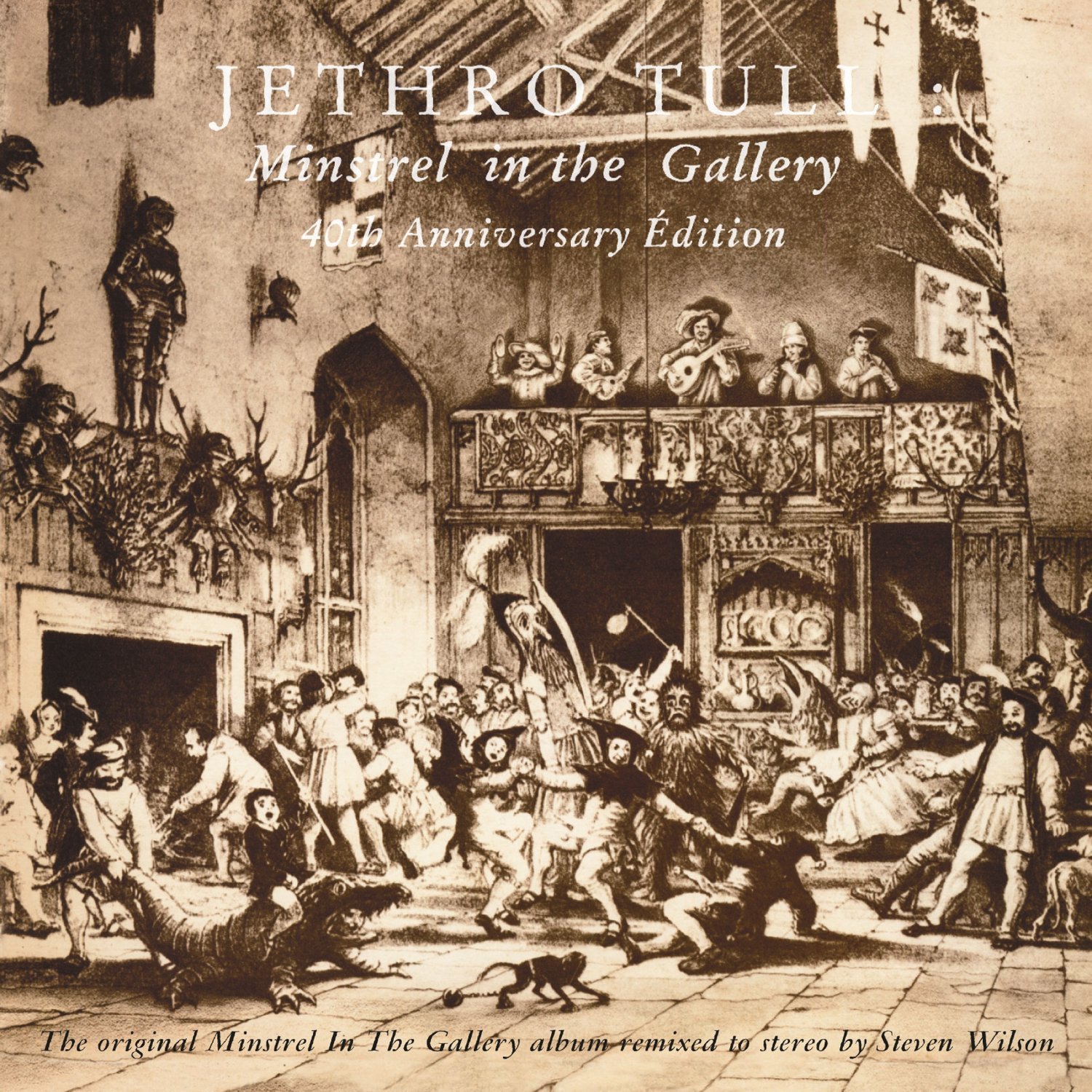
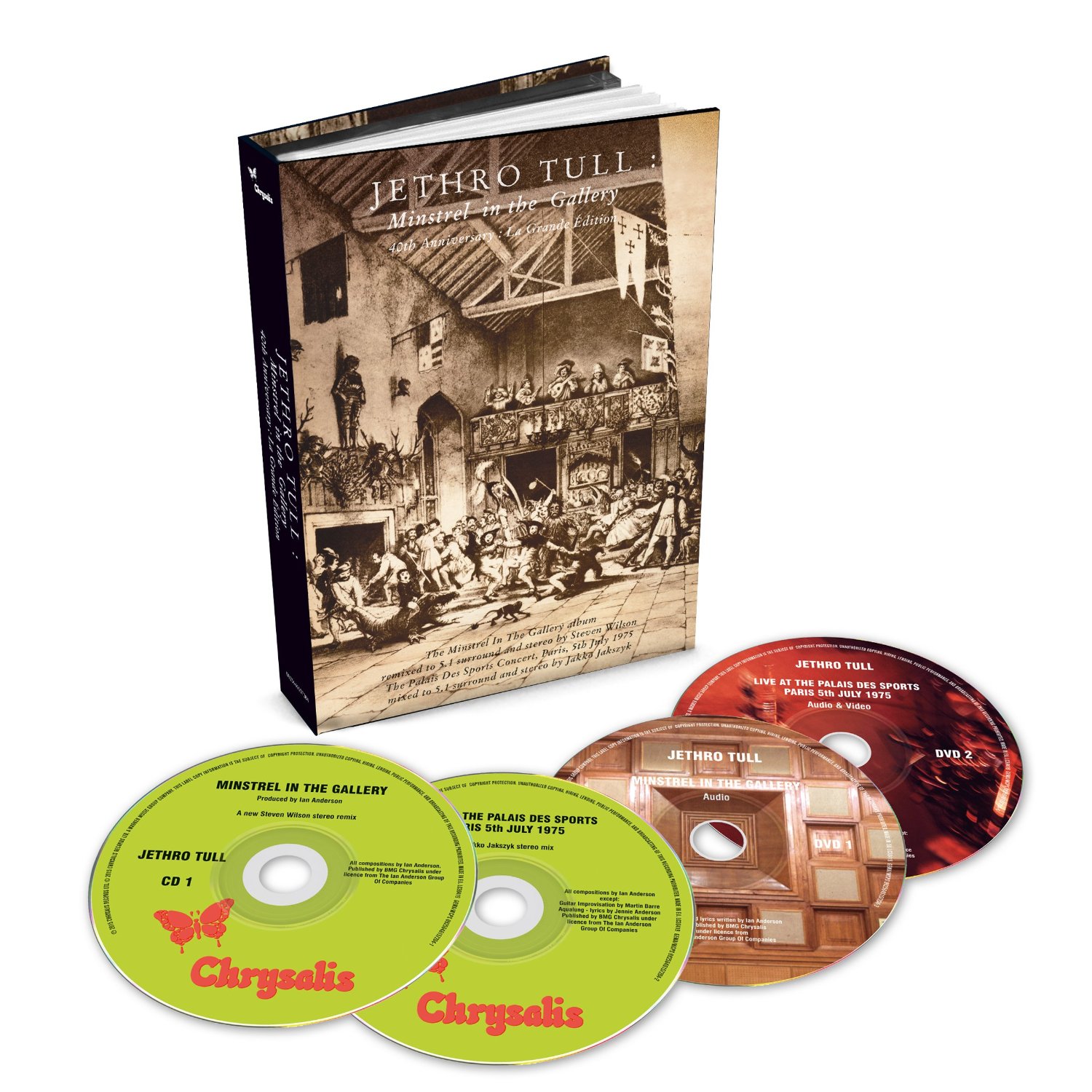
KILINDU-KILINDU.
KILINDU-KILINDU.
There aren’t many bands who are fortunate enough to have a two-times Grammy Award winning producer working on their debut alum. Kilindu have been. Last year, they worked with Grammy winning producer, Robert Cutarella. He producer their eponymous debut album, Kilindu which was recently released on CD.
Previously, Robert Cutarella has worked with the great and good of music. This includes some of the biggest names in music. Musical legends like Eric Clapton, Jeff Beck, Keith Richard, Alice Cooper and Slash have worked with Bob. So have Allison Krauss, John Legend and Joss Stone. Then there’s the 160 platinum discs artists Robert has been awarded. This is the equivalent to having sold 160 million albums. With a track record like this, Robert Cutarella can pick and choose who he works with. So when Robert agreed to work with Kilindu, people sat up and took notice. If Robert Cutarella was working with Kilindu, they must be a band going places.
They were right. In March 2014, Kilindu released their debut single O Que O Futuro. Released to critical acclaim, O Que O Futuro was an internet sensation. It was a genre-melting single whose beauty was breathtaking. Just by listening to O Que O Futuro, it was obvious Kilindu were a band going places.
Five months later, and on 20th August 2014, Kilindu released their eponymous debut album as a digital download. It was the next chapter in the Kilindu story. However, since then, Kilindu’s star has been in the ascendancy.
They’ve played a series of high profile concerts, and recently, one of the songs played on one of Portugal’s biggest radio stations. Suddenly, Kilindu’s music was being heard by a much wider audience. By then, Kilindu were attracting the attention of a number of record labels. The Lisbon based sextet were one of Portugese music’s rising stars. So, this is the perfect time for Kilindu to release their debut album Kilindu on CD.
The launch of Kilindu is due to take place at a glittering presentation party in Lisbon, on 3oth May 2015. This has been a long time coming. However, sadly, it will be a case of absent friends. João and Ivan’s father died. Obviously, this has affected them badly. They decided to quit Kilindu. That wasn’t the end of the changes in lineup. Now Kilindu are a trio, consisting of Pedro, João and Joaquim. The trio are augmented by some top session musicians. So, Kilindu haven’t lost their magic. Far from in. They’re still one of Portugal’s top bands, who currently, are currently promoting their eponymous debut album Kilindu. Already, it’s caught people’s attention. That includes a number of record labels. That’s somewhat ironic.
Just like many bands, Kilindu decided to self-release their debut album. They’ve financed the recording and release of Kilindu. Guitarist Pedro Duarte has been doubling as Kilindu’s manager. He’s done a good job. However, now Kilindu have brought onboard a P.R. company and booking agent. That’s not surprising. Kilindu are going places. They’ve come a long way since they were founded in 2012.
Kilindu are a sextet, who were formed in Lisbon, Portugal by guitarist Pedro Duarte and singer João Pedreira in 2012. Just like the rest of the band, Pedro and João are experienced musicians who’ve spent a lifetime dedicated to music. Each member brings something new to the band. Their musical tastes, influences and styles vary. That’s no bad thing. It makes for eclectic music.
Music from European, Latin, Afro Cuban, African and American music melts into one. Everything from Portuguese ‘Fado’ music, Cape Verde’s traditional Morna, Brazilian Samba, Bossa Nova, Cuban Habanera and Latin jazz plays its part in Kilindu’s music. So does blues, flamenco and folk. This results in a delicious musical fusion, that comes courtesy of a talented band lead by composer and guitarist Pedro Duarte.
Kilindu however, is no one man band. Far from it. Instead, Kilindu comprises a group of experienced musicians from Lisbon. They were formed in 2012, when composer and guitarist Pedro Duarte met R&B vocalist Joao Pedreira. Pedro is a guitarist who also plays mandolin, ukulele and Cuban trés. Soon, drummer Joaquim Preto, bassist Ivan Pedreira, violinist Tiago Simao, percussionist Emanuel Pitra and saxophonist Daniel Vieira joined Kilindu. This is the lineup that would feature on their debut album Kilindu.
Recording of Kilindu took place at at Atlantico Blue Studios. Eleven tracks were recorded. Pedro wrote the music and with vocalist Joao Pedreira, penned the lyrics. Kilindu were joined by producer Robert Cutarella and engineer Rui Guerreiro, who also mixed the album. With their debut album recorded, Kilindu started thinking about the album cover.
Kilindu could have easily chosen any number of top designers. After all, there’s more than a little kudos being involved with such a high profile project. However, Kilindu decided to have a contest. They asked designers worldwide to submit their idea for an album cover. The winner was American designer Arjun Gheewala. His design is truly striking. Just like the music on Kilindu, Arjun Gheewala’s album cover grabs your attention. Kilindu certainly caught the attention of critics.
When critics heard Kilindu’s eponymous debut album, they were won over by this genre-melting album. Critically acclaimed, great things were forecast for Kilindu. The critics saw what Robert Cutarella saw in Kilindu, a hugely talented band with bags of potential. That’s apparent on Kilindu, which I’ll tell you about.
Opening Kilindu is Adamastor. There’s two versions on the album, the original version and a radio edit. An acoustic guitar toys with you, before a drum pounds and a cymbal crashes. Soon, a sultry saxophone enters and Kilindu become one. They set the scene for Joao Pedreira’s tender, heartfelt vocal. Accompanying him is a myriad of percussive delights, gypsy violin and acoustic guitar. Providing the heartbeat is the rhythm section. Soon, Kilindu are in full flow. It’s a joy to behold. They’re a tight, talented band and Adamastor is the perfect way to open Kilindu. Jazz-tinged, smooth, soulful and beautiful it’s a tantalising taste of what’s to come.
Very different is Oxala Estivesses Aqui. It has a much more traditional sound. When the arrangement unfolds, Kilindu march to the beat of Joaquim Preto’s drums. Violins, keyboards and percussion combine with Joao Pedreira’s impassioned vocal. The rest of Kilindu add equally impassioned, sweeping harmonies. Midway through the track, Pedro takes centre-stage during a brief breakdown. After this joyous, anthemic track heads towards its crescendo.
As the arrangement to Ja Nao Te Quero Mais unfolds, it literally bursts into life. Gypsy violins and the rhythm section drive the arrangement along. Then handclaps signal the arrival of Joao’s emotive vocal. Soon, he’s joined by the rest of Kilindu. They add handclaps and harmonies. This adds to what’s a much more traditional sounding track. It’s given a modern twist by Kilindu, and the result is truly irresistible.
The tempo drops on O Ceu Chorou, and the arrangement is understated and spacious. A guitar is strummer, violins sweep and the rhythm section create a shuffling beat. When Joao enters, he’s dawned the roll of troubled troubadour. He delivers the lyrics with feeling. Meanwhile the arrangement literally floats along. It has taken on a much more subtle sound. Before long, it grows in power. This matches the emotion in Joao’s vocal. Later, when his vocal drops out during a breakdown, melancholy violins take centre-stage. This is a masterstroke. They add to the beauty, drama and melancholia of this track,
O Que O Futuro was Kilindu’s debut single. This was my introduction to Kilindu. From the opening bars I was hooked. The rhythm section, guitars and violins combine confidently. My immediate thoughts were that this was a tight, talented, band. They’d obviously spent time honing their sound. I was right. Then percussion signals the arrival of a heartfelt, soul baring vocal from João Pedreira. As João lays bare his soul, the rest of Kilindu create a pulsating, joyous and sultry backdrop. The result is a single that’s soulful, jazz-tinged and beautiful. One listen and they’ll be won over by its breathtaking beauty.
Two versions of Rua da Saudade on Kilindu. There’s the original version and the radio edit. A saxophone floats above the arrangement and is joined by percussion and a probing bass. They meander along until João heartfelt, earnest vocal enters. It takes centre-stage. This seems to signal the arrangement to unfold in waves. Sometimes, the tempo quickens. It reflects the emotion in João’s vocal. His vocal is key to the song’s sound and success. It’s no wonder this song has been earmarked as a single.
A crystalline guitar, gypsy violin and the rhythm section combine on O Sermao Do Pescador. Just like most of the songs on Kilindu, it’s a fusion of disparate influences and genres. Elements of folk, jazz, Latin and soul shine through. The soul comes courtesy of João’s vocal. His vocal is deeply soulful, as he breaths life and meaning into the lyrics. Later, his vocal drops out and a floaty, jazz-tinged breakdown allows the rest of Kilindu to showcase their considerable talents. After that, João returns to add the finishing touch to this six minute opus.
The sultriest of saxophone and hissing hi-hats provide the understated backdrop to Maria. Soon, João delivers a tender, seductive vocal. While the saxophone takes centre-stage, the rhythm section provide a shuffling beat and washes of keyboards float in and out. Then during a breakdown, Pedro’s acoustic guitar takes centre-stage. He’s joined by the rest of Kilindu. They’re let of the leash and enjoy the opportunity to stretch their legs, combining elements of jazz, rock, flamenco and Latin. There’s an urgency to Kilindu’s music that we’ve never heard before. This shows another side to the multitalented, and versatile Kilindu.
Straight away, there’s a Latin influence on Lavava No Rio Lavava. This comes courtesy of an acoustic guitar and braying saxophone. Soon, they’re joined by bongos and the wistful sound of gypsy guitars. Equally wistful is João’s hurt-filled vocal. As his vocal takes centre-stage, a rasping saxophone floats above the arrangement and the violins tug at your heartstrings.
Fado Bailarico is just the latest track that’s given a Fado makeover. The arrangement takes on a much more traditional sound. That’s apparent from the get-go. There’s a sense of urgency as violins, percussion and an acoustic guitar combine with drums. Their raison d’être is to set the scene for João’s impassioned vocal. Adding a moderne twist are the bass and the guitars. They play their part in a track that’s Fado, but Fado given an urgent, moderne, makeover by Kilindu.
Closing Kilindu is Amor A Agua Que Corre. Straight away, it’s obvious this is the perfect track to close Kilindu. It bursts into life a guitar joined by the rhythm section and percussion. They provide a pulsating, urgent backdrop for João’s seductive vocal. Soon, he’s joined by the rest of Kilindu. Their handclaps replace Joao’s vocal, as a breakdown begins. It’s the perfect showcase for each member of Kilindu to demonstrate their musical prowess. Each member enjoys the opportunity to take centre-stage. Then Joao returns and this irresistible track brings Kilindu to a joyous close.
When I reviewed Kilindu’s debut single O Que O Futuro last year, I said that their debut album Kilindu was the main event. Their debut single, O Que O Futuro, was just a tantalising taste of what Kilindu were capable of. After I reviewed O Que O Futuro, I wondered what Kilindu’s debut album would be like? They had set the bar high with O Que O Futuro. It was a huge internet sensation, being played over 230,000 times. That’s almost unheard of for a debut single by an unsigned band. However, not every band are as talented as Kilindu.
Similarly, not many unsigned bands get the opportunity to work with a Grammy Award winning producer like Robert Cutarella. He saw the potential in Kilindu. Not only that, but Robert Cutarella brought out the potential in Kilindu. He ensured that Kilindu fulfilled their potential. They’ve created a genre-melting album that oozes quality.
From the opening bars of Adamastor, right through to the closing notes of Amor A Agua Que Corre, Kilindu combine musical genres and influences. What follows is an eclectic album of traditional and modern music. European, Latin, Afro Cuban, African and American music melts into one. Everything from Portuguese ‘Fado’ music, Cape Verde’s traditional Morna, Brazilian Samba, Bossa Nova, Cuban Habanera and Latin jazz plays its part in Kilindu’s music. So does blues, flamenco and folk. This results in a delicious musical fusion, that comes courtesy of a talented band lead by composer and guitarist Pedro Duarte.
Pedro Duarte and the rest of Kilindu are a band with a huge future ahead of them. Although unsigned, they won’t be unsigned for long. Record companies are chasing Kilindu’s signature. However, it has to the right contract with the right label. Only then, will Kilindu sign on the dotted line. Hopefully, they’ll find the record label soon. After all, Kilindu have a big future ahead of them.
Whether it’s music lovers, A&R executives or producer Robert Cutarella, it’s obvious that Kilindu are going places. They’ve the perfect recipe for a successful band. Kilindu comprises experienced and talented musicians. They’ve spent a lifetime dedicated to music. Each member brings something new to the band. Their musical tastes, influences and styles vary. That’s no bad thing. It makes for eclectic music.
Eclectic is one way of describing Kilindu’s eponymous debut album. Their debut album has just been recently self-released by Kilindu. It’s dedicated to absent friends. This includes Edmundo Duarte, Pedro’s late father, and of course João and Ivan’s late father. They were hugely supportive of Kilindu, and are fondly remembered by bandleader Pedro Duarte. He dedicates Kilindu to their memory.
Despite the tragedy of the past few months, another chapter in the Kilindu story begins. Meanwhile, rise and rise of Kilindu continues. Who knows what heights Kilindu will have scaled by the time they release their sophomore album? If it’s anywhere near as good as Kilindu, then it’ll be an album to cherish.
KILINDU-KILINDU.
HOLGER CZUKAY-ELEVEN YEARS INNERSPACE.
HOLGER CZUKAY-ELEVEN YEARS INNERSPACE.
The very first Record Store Day took place back in 2007. Since then, Record Store Day has become a huge event. This year, on 18th April 2015, 1,400 record shops worldwide celebrated Record Store Day. For the ninth Record Store Day, record companies across the globe released a plethora of exclusive releases.
Ahead of Record Store Day, a list of releases was published. Just like previous years, the number of release has grown. Vinyl collectors were spoilt for choice. Record Store Day 2015 was going to be an expensive day. So, clutching a wad of cash and a credit card, vinyl junkies made their way to their local record shop. It was a case of arrive early.
Those that didn’t, risked being at the end of a lengthy queue. Mostly, it’s good natured day, with Record Store Day veterans swapping tales of past campaigns. Newcomers discuss their want lists. Then when the doors open, it’s every man or women for them-self.
Everyone makes a beeline for where the Record Store releases are situated. This includes the latest limited edition release from Holger Czukay, Eleven Years Innerspace, which was released by Berlin based Grönland Records.
Eleven Years Innerspace features six unreleased songs.Holger Czukay recorded the songs at the legendary Innerspace Studios earlier in his long and illustrious career. It began back in the late sixties. However, the Holger Czukay story began in 1938.
The future Holger Czukay was born in March 1938, as Holger Schüring. Holger’s home was what was then called the Free City of Danzig. Nowadays, it’s known as Gdansk. In January 1945, Holger and his family were forced to flee their home.
“When I was a child I had to leave my hometown Danzig in Poland. My mother had already bought the tickets for the ship, the Wilhelm Gustlof, when my grandmother warned us that the “water hasn’t got any planks”. I never forgot this sentence, because it saved our lives. We didn’t go onboard the ship, but went to the main station on January 13th 1945. It was a freezing night We were extremely lucky that a train with wounded soldiers picked us up, and they gave us a little bit of room on their mattresses to sleep, and we headed to Berlin. When we arrived i looked out of the window and all I could see were stones and a free field and I asked myself if this can be a capital city?” Having arrived in Berlin, Holger and his family became refugees.
Just like so many children, the war had an impact upon Holger’s education. Like so many displaced children, Holger’s education suffered. Despite this, Holger managed to get a job in a radio repair shop. Not only did he learn how to repair electrical equipment, but became fascinated by radio and the opportunities it offered. This would prove crucial to Holger Czukay’s later career. Before that, Holger served his musical apprenticeship.
For a three year period between 1963 and 1966, Holger Czukay was privileged to study music under the legendary Karlheinz Stockhausen. “A true pioneer, Karlheinz was way ahead of time.” During his time studying with Karlheinz, Holger met Conny Plank and Irmin Schmidt.
Holger remembers “Conny sitting behind him, writing out a score by hand.” At first “Conny was quiet,” but they “soon became close friends,” during their time studying with Karlheinz Stockhausen. It was a thorough musical education, where Karlheinz taught his pupils about aleatoric music, serial composition and musical spatialisation.
Karlheinz wasn’t just a “visionary” in terms of electronic music, but was fascinated by aleatoric music. Essentially, aleatory is controlled chance. With aleatoric music, some element of a piece are left to chance. Granted there will only be a certain number of outcomes, but the musician has to choose the outcome they believe is correct. Serialism was another subject Karlheinz was interested in. With serialism, a series of values are used to manipulate musical elements. This form of composition fascinated Karlheinz. So did musical spatialism, which would influence Can. Karlheinz was an evangelist, encouraging his pupils, including Holger Czukay and Conny Plank to investigate, examine and scrutinise each of these subjects between 1963 and 1966.
For Holger, he could have asked for a better musical education. He admits “Karlheinz taught me so much.” When I asked Holger the most important thing Karlheinz taught him, he didn’t hesitate. Karlheinz told him to “find your own sound.” Holger never forget those words of advice. They became his musical mantra, when eventually, he decided to make a career as a musician. However, when Holger finished studying with Karlheinz Stockhausen in 1966, he became a musical teacher.
Having graduated, Holger was enjoying life as a music teacher. Holger was enjoying his newfound career as an educator. He wasn’t a fan of pop or rock music. That was about to change in 1967.
That’s when Holger heard The Beatles’ I Am A Walrus in 1967, he was captivated by this psychedelic rock single. Holger describes this “as a life-changing moment…the music of the past and present came together.” At last, “here was music that made the connection between what I’d studied and I was striving towards” With the innovative use of bursts of radio and the experimental sound and structure, “I went in search of similar music.”
So I asked Holger about what type of music he started listening to? Specifically, I asked about Frank Zappa and Velvet Underground? Did they influence you, and ultimately Can? “Frank Zappa I didn’t get.” “Velvet Underground they were different, they were really influential” “They influenced the music I made…I remember the first time I heard Velvet Underground and where I heard it.”
Much of the music that influenced Holger, he heard whilst spending time with friends. Holger is a huge fan of vinyl. He remembers “sitting in a friend’s flat “looking through piles of albums. We’d study the sleeve-notes and then spread the album covers all over the floor. We scrutinised them, then immersed ourselves in the music. It was a shared experience. We listened and discussed the music. I can remember these times well.” Listening to Holger speak, he’s a real music fan. His enthusiasm is infectious. So much so, that it’s as if your sitting in the flat with Holger and his friends, looking at the album covers, listening to the music and discussing it. This music would go on to influence Holger’s future career.
Inspired by what he’d heard, Holger decided to form his own band in 1968…Can. Can’s roots can be traced back to the previous year, when one of Can’s co-founders was studying in time. This was Irmin Schmidtm who’d studied under Karlheinz Stockhausen, at the same time as Holger, fellow pupils was Irmin Schmidt.
After graduating, Irmnin headed to New York, where he spent time with avant-garde musicians like Steve Reich, Terry Riley and La Monte Young. Soon, Irmin was aware of Andy Warhol and Velvet Underground. This inspired him to form his own band when he returned home to Cologne.
In Cologne, Irmin a pianist and organist formed Can with American avant garde flautist David C. Johnson and bassist Holger Czukay. Up until then, the trio had exclusively played avant-garde classical music. Now their ambitions lay beyond that. Their influences included garage, rock, psychedelia, soul and funk. So they brought onboard three new members of the group, which started life as Inner Space, and then became The Can. Eventually, they settled on Can, an acronym of communism, anarchy, nihilism.
The first two new additions were guitarist Michael Karoli and drummer Jaki Liebezeit. Vocalist and New York-based sculptor Malcolm Mooney joined the band midway through 1968. By then, they were recording material for an album Prepare To Meet Thy Pnoom. Two tracks, Father Cannot Yell and “Outside My Door were already recorded. Unfortunately, record companies weren’t interested in Prepare To Meet Thy Pnoom. As a result, it wasn’t released until 1981, when it was released as Delay 1968. Undeterred, Can continued to record what became their debut album, Monster Movie.
Despite not being able to interest a record company in Prepare To Meet Thy Pnoom, Can were confident in their own ability. So Can continued recording what would become their debut album Monster Movies. That’s despite being what Holger referred to as “a poor man’s band.” They didn’t have the equipment that other groups did. What they did have was “an ambition to create innovative music.” However, before long, there was a problem.
David C. Johnson left Can at the end of 1968. He was disappointed at the change in musical direction. Little did he realise that he’d lost the chance to be part of one of the most groundbreaking band’s in musical history, Can.
Monster Movie.
Monster Movie had been recorded in Schloss Nörvenich, a 14th-century castle in North Rhine-Westphalia. Can recorded Monster Movie between 1968-69. It was the released in August 1969. This marked the debut of Can. Their career started as they meant to go on. A groundbreaking, genre-melting fusion of blues, free jazz, psychedelia, rock and world music, Monster Movies has a Velvet Underground influence. It’s as if Can have been inspired by Velvet Underground and pushed musical boundaries to their limits.
Throughout Monster Movie, Can improvised, innovated and experimented. Multilayering and editing played an important part in Monster Movie’s avant garde sound. So did spontaneous composition, which Can pioneered.
Spontaneous composition was hugely important in Can’s success. Holger remembers “that the members of Can were always ready to record. They didn’t take time to think. It was spontaneous. The music flowed through them and out of them.” Holger remembers that he was always “given the job of pressing the record button. This was a big responsibility as the fear was failing to record something we could never recreate.” In some ways, Can were an outlet for this outpouring of creativity, which gave birth to a new musical genre.
This new musical genre was dubbed Krautrock by the British music press. So not only was Monster Movie the album that launched Can’s career, but saw a new musical genre, Krautrock coined. The founding father’s of Krautrock were Can, lead by Holger Czukay.
Canaxis 5,
1969 saw the release of Holger Czukay’s debut album. Credited to the Technial Space Composer’s Crew, Canaxis 5 was a collaboration between Holger and Ralf Dammers. Canaxis 5 is an often overlooked album, which features two lengthy tracks. It shows two innovative musicians pushing the musical envelop, as Can would continue to do.
Soundtracks.
Released in 1970, Soundtracks, was Can’s sophomore album. Essentially, Soundtracks is a compilation of tracks Can wrote for the soundtracks to various films. It’s the album that marked the departure of vocalist Malcolm Mooney. Replacing him, was Japanese busker, Kenji Damo Suzuki. He features on five of the tracks, contributing percussion and vocals. The addition of Damo wasn’t the only change Can were making.
Soundtracks was a coming of age for Can. It marked a move away from the psychedelic jams of Monster Movie and a move towards their classic sound. That saw the music becoming much more experimental and avant-garde. The music took an ambient, meditative, mesmeric and thoughtful sound. This marked the beginning of what became known as Can’s classic years, when albums like Tago Mago, Ege Bamyasi and Future Days were released.
Tago Mago.
The first instalment in the golden quartet was Tago Mago. This was the first album where Kenji Damo Suzuki was a permanent member of Can. He and the rest of Can spent a year in the castle in Schloss Nörvenich. It was owned by an art collector named Mr. Vohwinkel. He allowed Can to stay at Schloss Nörvenich rent free. For what Holger described as “a poor man’s band,” this was perfect.
Holger remembers Can during this year as “just jamming and seeing what took shape. Songs started as lengthy jams and improvised pieces.” This Holger remembers is “how Can always worked” After that, Holger worked his magic. He edited them and these mini masterpieces featured on Tago Mago, which was four months in the making.
For four months between November 1970 and February 1971, Can recorded what would become one of their most innovative and influential albums, Tago Mago.
A double album, it featured seven groundbreaking tracks. Tago Mago was released in February 1971. Straight away, critics realised the importance of Tago Mago. Here was a game-changer of an album. It has an intensity that other albums released in 1971 lacked. Jazzier with an experimental sound, the music is mysterious, mesmeric and multilayered. It’s innovative, with genres and influences melting into one. Nuances, subtleties and surprises reveal themselves. No wonder. Can deliver an avant garde masterclass.
This comes courtesy of jazz-tinged drumming, improvised guitar playing and showboating keyboard solos. Then there was Kenji Damo Suzuki’s unique vocal style. All this, resulted in an album that was critically acclaimed, influential and innovative.
Released to widespread critical acclaim in 1971, Tago Mago was the start of a golden period for Can. Their reputation as one of the most innovative groups of the seventies started to take shape. Can had released one of the most innovative albums, Tago Mago. Holger remembers the reaction to Tago Mago. “I knew Tago Mago was an innovative album, but I never realised just how innovative an album it would become?
On Tago Mago’s release, it was hailed as their best album yet. However, not in Holger’s opinion. “Tago Mago is a classic album, but I much prefer Future Days.” Despite Holger’s preference, several generations of musicians have been inspired by Tago Mago, a true Magnus Opus, that belongs in every record collection. So does the followup Ege Bamyasi.
Ege Bamyasi.
Can were on a roll. It seemed they could do no wrong. They released Spoon as a single in 1972. It reached number six in Germany, selling over 300,000 copies. That was helped no end, by the single being used as the theme to a German thriller Das Messer. It seemed nothing could go wrong for Can. The money the made from Spoon, allowed Can to hire disused cinema to record what became Ege Bamyasi.
Can adverted for a space to record their next album, Ege Bamyasi. Recording began in a disused cinema, which doubled as a recording studio and living space. The sessions at Inner Space Studio, in Weilerswist, near Cologne didn’t go well. Irmin Schmidt and Kenji Damo Suzuki took to playing marathon chess sessions. As a result, Can hadn’t enough material for an album. This resulted in Can having to work frantically to complete Ege Bamyasi. Despite this, Can were still short of material. So Spoon was added and Ege Bamyasi was completed.
Ege Bamyasi was a fusion of musical genres. Everything from jazz, ambient, world music, psychedelia, rock and electronica melted into one. When it was Ege Bamyasi released in November 1972, it was to the same critical acclaim as previous albums. Critics were won over by Can’s fourth album. It was perceived as a more accessible album than its predecessors. Just like Can’s previous albums, the quality of music was consistent.
Critica hailed Can as one of the few bands capable of creating consistent and pioneering albums. They were one of the most exciting bands of the early seventies. Can were continuing to innovate and influence musicians and music lovers alike. Just like its predecessor, Tago Mago, Ege Bamyasi is an essential part of any self respecting record collection. Having released two consecutive classic albums and their first single, it seemed nothing could go wrong for Can.
Future Days.
Despite Tago Mago and Ege Bamyasi being referred to as two of the most influential albums ever released, Holger Czukay prefers Future Days. This is the album he calls “my favourite Can album.” It was the third in Can’s golden quartet, and marked a change in direction from Can.
Future Days saw Can’s music head in the direction of ambient music. The music is atmospheric, dreamy, ethereal, melancholy, expansive and full of captivating, mesmeric rhythms. It’s also pioneering and progressive, with elements of avant garde, experimental, psychedelia and rock melting into one. Rather than songs, soundscapes describes the four tracks. Future Days and Bel Air showcase Can’s new sound. Bel Air was the Future Day’s epic. It lasted just over nineteen minutes, and sees can take you on an enthralling musical journey. Just like the rest of Future Days, critics hailed the album a classic.
On its release in August 1973, Future Days was hailed a classic by music critics. The move towards ambient music may have surprised some Can fans. However, Brian Eno was just one artist pioneering ambient music. This move towards ambient music must have pleased Holger’s guru Karlheinz Stockhausen. He must have looked on proudly as Can released the third of a quartet of classic albums. The final album in this quartet, Soon Over Babaluma was released in 1974.
Soon Over Babaluma.
Soon Over Babaluma marked the end of Can’s golden period. It was the end of a period where they were releasing some of their most innovative and groundbreaking music. There was a change of direction on Soon Over Babaluma. Can were without a vocalist. Kenji Damo Suzuki left Can and married his German girlfriend. He then became a Jehovah’s Witness. Despite the lack of a vocalist, Can continued as a quartet. They released Soon Over Babaluma in November 1974.
When Can released Soon Over Babaluma in November 1974, it received praise from critics. With a myriad of beeps, squeaks and sci-fi sounds, Soon Over Babaluma is like musical journey into another, 21st Century dimension. A musical tapestry where layers of music are intertwined during five tracks on Soon Over Babaluma. It followed in the ambient footsteps of Future Days and brought to a close the most fruitful period of Can’s career. Following the “golden quartet,” Can didn’t go into decline. Instead, Can continued to reinvent themselves and their music.
Landed.
Landed was released in September 1975. It had been recorded between February and April 1972 at Inner Space Studios. Just like previous albums, Can produced Landed. Holger and Tony Robinson mixed the first four tracks at Studio Dierks, Stommeln. The other two tracks were mixed by Holger at Inner Space Studios. These six tracks marked a change of direction from Can.
As well as a change in direction musically, Landed was the first Can album to be released on Virgin Records. Gone is the ambient sound of Soon Over Babaluma. Only Unfinished on Landed has an ambient influence. Instead, Landed has a poppy, sometimes glam influence. With uptempo, shorter songs, Landed was a much more traditional album. How would the critics react?
Critics were divided about Landed. Some critics saw Landed as the next chapter in the Can story, while others praised the album as adventurous, eclectic and innovative. Others thought Can were conforming. Surely not?
Flow Motion.
Flow Motion was Can’s eight album. As usual, it was recorded at Inner Space Studios. Produced by Can, Flow Motion was an album that drew inspiration from everything from funk, reggae, rock and jazz. It was an eclectic, genre-melting album. It’s also one of Holger Czukay’s favourite Can albums.
Holger remembers Flow Motion as an “Innovative and eclectic” album. He calls it “one of Can’s underrated albums,” Flow Motion marked a another change in Can’s way of working.
Released in October 1976, Flow Motion featured lyrics written by Peter Gilmour. This was a first. Never before, had anyone outside the band had written for Can. It worked. Can enjoyed their first UK single I Want More. It would later be recorded Fini Tribe and then Italo disco group Galaxis. With what was just their second hit single in seven years, maybe Can were about to make a commercial breakthrough?
Saw Delight.
Sadly, that wasn’t to be. Saw Delight which was released in March 1977, wasn’t the commercial success many people forecast. That’s despite the new lineup of Can embracing world music.
Joining Can were bassist Rosko Gee and percussionist and vocalist Rebop Kwaku Baah. They’d previously been members of British rock band Traffic. Rosko Gee replaced Holger on bass. Holger decided to add a percussive element, Holger added a myriad of sound-effects. This was Holger at his groundbreaking best. Experimental sounds including a wave receiver was used. The result was one of the most ambitious albums can had released.
Despite the all-star lineup and a bold, progressive and experimental album, Saw Delight wasn’t a commercial success. It was well received by critics. The problem was, Saw Delight was way ahead of its time. If it had been released in the eighties, like albums by Paul Simon or Peter Gabriel, it would’ve been a bigger commercial success. Sadly, by then Can would be no more. That was still to come. However, things weren’t well within the Can camp.
Out Of Reach.
Nine years after Can had released their debut album Monster Movie, they released their tenth album, Out Of Reach. It was released in July 1978. The title proved to be a prophetic. After all, commercial success always seemed to elude Can. Not only did Out Of Reach fail commercially, but the Out Of Reach proved to be Can’s most controversial album.
So much so, that they disowned Out Of Reach. On Out Of Reach Holger was left to add myriad of sound-effects. Bassist Rosko Gee and percussionist Rebop Kwaku Baah of Traffic returned. They were part of the problem. Holger confirms this.
When I asked him what he meant by this, he said “During the recording of Out Of Reach, I felt an outsider in my own group. I was on the outside looking in. I was on the margins. All I was doing was add sound-effects.” For Holger, he felt his group had been hijacked by Rosko Gee and and Rebop Kwaku Baah. Things got so bad, that Holger quit Can.
Rosko Gee and Rebop Kwaku Baah dominated Out Of Reach. Gone was the loose, free-flowing style of previous albums. Even Jaki Liebezeit’s play second fiddle to Baah’s overpowering percussive sounds. The only positive thing was a guitar masterclass from Michael Karoli. Apart from this, things weren’t looking good for Can. It was about to get worse though.
The critics rounded on Out Of Reach. They found very little merit in Out Of Reach. Gee and Baah were rightly blamed for the album’s failure. Even Can disliked Out Of Reach. They later disowned Out Of Reach. Despite this, Rosko Gee and and Rebop Kwaku Baah remained members of Can.
Unable to play with the necessary freedom Can were famed for, the two ex-members of Traffic stifled Can. Rebop’s percussion overpowers Jaki’s drums, which have always been part of Can’s trademark sound. At least Michael’s virtuoso guitar solos are a reminder of classic Can. A nod towards Carlos Santana, they showed Can were still capable of moments of genius. There wouldn’t be many more of these. Can would breakup after their next album.
Can.
Following the failure of Out Of Reach, the members of Can began recording what became Can. Remarkably, Rosko Gee and Rebop Kwaku Baah were still part of Can. Sadly, Holger was not longer a member of Can. He’d left during the making of Out Of Reach. His only involvement was editing Can.
Can, which is sometimes referred to as Inner Space, was released in July 1979. Again, critics weren’t impressed by Can. It received mixed reviews. No longer were Can the critic’s darlings. The music on Can was a fusion of avant garde, electronica, experimental, psychedelia and rock. Add to that, a myriad of effects including distortion and feedback, and here was an album that divided the opinion of critics. The critics agreed, it was better than Out Of Reach. They agreed that Holger was sadly missed.
Even Holger’s renowned editing skills couldn’t save Can. Try as he may, he could only work with what he was given. He did his best with Can, which the eleventh album from the group he co-founded. By the time Can was released, Holger “had come to a realisation, that it was time to go his own way.” Holger describes this as “necessary.”
Can had split-up after the release of Can. That was their swan-song. However, even before that, Holger “felt marginalised, this had been the case since he Rosko Gee and Rebop Kwaku Baah became part of Can. They’d hijacked Can.” Now, Holger would embark upon his solo career.

Movies,
Holger hadn’t really been making music since 1976. The last two Can albums saw Holger editing the music. So, Holger set about finding “his own sound again.” He’d “been through this with Can,” Now he’d have to do so again. It would be worth it though, when he released his first solo album since 1969s Canaxis 5, Movies.
Recording of Movies took place at Inner Space Studio, Cologne. This was where Can had recorded the best music of their career. It was like a Can reunion. Jaki Liebezeit played drums on Movies. Irmin Schmidt and Michael Karoli played on Oh Lord, Give Us More Money. Even Baah was drafted in to play organ on Cool In The Pool. Holger threw himself into the project. He recorded Movies and played guitars, bass, keyboards and synths. Then when the four songs that became Movies were completed, Holger mixed and produced the album. Movies saw Holger hailed the comeback King.
Released to critical acclaim, Movies was hailed as one of the best albums of 1979. It was an eclectic album. Described as variously psychedelic, cinematic, melodic, moody, understated and progressive, here was the next chapter in Holger’s musical career. The one track that everyone agreed was a minor masterpiece was Cool In The Pool. It was Movies’ Magnus Opus. Holger’s decision to embark upon a solo career had been vindicated. He was back doing what he did best, creating ambitious, groundbreaking and pioneering music. That would continue in 1981, when Holger released On The Way To The Peak Of Normal.
On The Way To The Peak Of Normal.
When I spoke to Holger, he said “one of the albums I’m most proud of, is 1981s On The Way To The Peak Of Normal. It was Holger’s first collaboration with Conny Plank.
Working with Conny Plank Holger remembers, was a revelation. Holger felt Conny was a consummate professional. “Here was someone who understood what I was trying to achieve.” He ensured that I never made music people neither understood, nor wanted to buy. The sessions were organised and disciplined, very difference from the indiscipline of late Can albums.”
Recording took place in the familiar surroundings of Inner Space Studios, Cologne. The only member of Can were present was Jaki Liebezeit. Other members of the band included Conny Plank and Jah Wobble, who Holger and would collaborate with on the 1982 E.P. Full Circle and the 1983 Snake Charmer E.P. They’re two of many collaborations Holger would be involved with. That was still to come.
Before that, Holger released On The Way To The Peak Of Normal in 1981. Just like the early days of Can, Holger was the critic’s darling.
Critics were won over by On The Way To The Peak Of Normal. The albums was a fusion of ambient, avant-garde, electronic, experimental, funk, industrial, jazz, psychedelia and rock. Genre-melting describes an album of bold, challenging, innovative, inventive and influential music. It was a case of expect the unexpected on On The Way To The Peak Of Normal, which saw Holger continue to create groundbreaking music. Here, was one of the most inventive albums Holger had recorded.
Although Holger had been making music for three decades, he still had plenty to say musically. That would continue throughout the rest of the eighties, with his various collaborations and his 1984 album Der Osten ist Rot.

Der Osten ist Rot.
There was a three year gap between On The Way To The Peak Of Normal and Der Osten ist Rot. During that period, Holger was busy collaborating with other artists. A new generation of artists discovering his music, and Holger was discovering their music.
He remembers spending time with Conny Plank in Cologne. Devo and the Eurythmics had been working with Conny. Holger was able to spend time in their company. One night, Holger remembers “Devo jamming, and they asked me to join them. I was impressed by their discipline and stability. It was a pleasure to play with them. Compared to Can in the end, it was totally different and a great experience. Especially with the Eurythmics watching.” Conny Plank, Holger remembers, was a hugely important influence on him and his music.
When recording of Der Osten ist Rot began at Inner Space Studios, Cologne, there was still a Can influence. Holger had written six songs and cowrote three with Jaki Liebezeit of Can. Jaki also played drums, piano, trumpet and organ. Conny played synths and Michy took charge of vocal duties. Together, they played their part in another groundbreaking album from Holger Czukay.
Released in 1984, critics welcomed another ambitious and groundbreaking album. The combination of Holger, Conny Plank and Jaki Liebezeit had proved a powerful partnership. This is apparent when you listen to Der Osten Ist Rot, which remarkably, was released thirty years ago. Ambitious, progressive and eclectic, Holger and his band weave musical genres. They become something other artists will never have envisaged. These artists however, aren’t a visionary like Holger Czukay. That’s obvious on Der Osten Ist Rot, and the followup
Rome Remains Rome.
Rome Remains Rome saw Holger joined by some familiar faces. This included two of Holger’s old friends from Can, guitaristMichael Karoli and drummer Jaki Liebezeit. Bassist Jah Wobble completed what was a fearsome rhythm section. They provided the heartbeat to Rome Remains Rome, which was released in 1987.
On its release in 1987, Rome Remains Rome saw the continued reinvention of Holger Czukay. He was a musical chameleon. No two albums were the same. Holger’s music continued to evolve. That’s what you’d expect from one of the most innovative musicians of his generation, Holger Czukay. It seems that after leaving Can, Holger had been rejuvenated. He agreed with that.
I broached the subject of his leaving Can. Holger felt that Can had run its course. He explains it “as organic, it was time to go my own way. A new era unfolded when my solo career began.”
Listening to Holger, he enthuses about his solo career. It’s obvious that Holger feels his solo albums are overlooked. As a longtime Can and Holger Czukay fan, I don’t need convinced. He’s preaching to the converted. The problem is, that having been a member of one of the biggest and most innovative bands in musical history, anything that Holger released would be compared to that.
Following the release of Rome Remains Rome, it was another four years before Holger released another solo album. He was still making music. However, mostly he was collaborating with other people.
This included former Japan frontman David Sylvian. They collaborated on David’s 1988 album Plight and Premonition. A year later, the pair reconvened, for the recording of Flux + Mutability. It was released in 1989. Both albums were well received, with David and Holger proving a formidable musical partnership. However, another two years passed before Holger returned with a new album, Radio Wave Surfer.
Radio Wave Surfer.
Radio Wave Surfer was a thirteen track album. The first eight tracks had been recorded in the Can studio on 21st and 22nd October 1987. These tracks had been recorded “live.” There was no over-dubbing. That was also the case with the other five tracks.
They were recorded in Berlin, back on the 2nd December 1984. Again, there was no over-dubbing. On the sleeve, it says: “music played in teamwork, spontaneously. Recomposed on various hilarious nights.” Editing would’ve stifled the spontaneity. That couldn’t be allowed to happen. It would’ve gone against what Holger’s musical principles. He had his reputation to think of.
When Radio Wave Surfer was released, Holger’s comeback album was well received by critics. Now into his fourth decade, he was still relevant and still had plenty to say musically. So two years later, Holger returned with a new studio album.
Moving Pictures.
By 1993, Holger was ready to return with his first new album of material since 1987s Rome Remains Rome. Since then, music had changed. That didn’t matter. Holger had adapted musically. Just like since the early days of Can, constantly, Holger’s music evolved. As his music evolved, Holger was joined by two names from the past.
For his new studio album Moving Pictures, Holger reunited with Can guitarist Michael Karoli, and bassist Jan Wobble. Along with Sheldon Ancel, Romie Singh, U-She and Helmut Zerlett they recorded Moving Pictures at Can Studio. Once Moving Pictures was recorded, it was ready for release in 1993.
Given Moving Pictures was Holger’s first album of new material since 1987s Rome Remains Rome, critics wanted to hear if Holger Czukay’s music was still relevant. It was. Holger was like a musical chameleon, constantly changing direction, and keeping one step ahead of the pack. He might be fifty-five, but his music was just as relevant. It always would be.
Another seven years would pass before Holger Czukay released another solo album. He did collaborate on Holger Czukay Vs. Dr Walker’s album Clash. This collaboration between Holger and Ingmar Koch was released in 1997. It seemed Holger still had an appetite for collaborating and making music.
Another seven years would pass before Holger Czukay released another solo album. He did collaborate on Holger Czukay Vs. Dr Walker’s album Clash. This collaboration between Holger and Ingmar Koch was released in 1997. It seemed Holger still had an appetite for collaborating and making music.
Good Morning Story.
Six years after the release of Moving Pictures, Holger made a welcome return with Good Morning Story in 1999. Holger, who was always keen to keep up with musical innovations, used sampling extensively on Good Morning Story.
Fittingly, Holger sampled the music of his former Can bandmates. He sampled his former drummer Jaki Liebezeit’s drums, Michael Karoli’s guitar and Irmin Schmidt’s electronics. U-She added vocals and Rhani Krija percussion. They played their part in a triumphant return to form from Holger.
While Radio Wave Surfer and Moving Pictures had been well received, the genre-hopping Good Morning Story was perceived as Holger’s finest solo albums since Rome Remains Rome. With its fusion of ambient, avant-garde and experimental music, Good Morning Story struck a nerve. Critics and record buyers were in agreement, Good Morning Story was a very welcome addition to Holger Czukay’s discography. It was also a fitting way to bid farewell to a millennia.
La Luna.
As a new millennia began, Holger Czukay, forever the musical pioneer, returned with an album fit for a new millennia. This was La Luna, which featured just one track, An Electronic Night Ceremony. It lasted forty-five minutes. However, La Luna, was no ordinary album.
Holger compared La Luna to the: “automatic writing techniques of the Surrealists… and the transcript of this transcendental conversation between man and machine.” This musical dialogue between “man and machine” proved to be a truly groundbreaking album.
On its release, La Luna was critically acclaimed. Holger may have entered his fifth decade as a musician, but he was still one of the most innovative and visionary musicians. He was making music that other musicians couldn’t even envisage. This would continue. Holger wasn’t for turning his back on music.
Linear City.
Just a year after La Luna, Holger returned with Linear City in 2001. This was no ordinary album. Instead, it was an album of internet collaborations. Holger, now into his sixty-third year, had embraced the internet, and was happily collaborating with artists around the world. Four of these collaborations found their way onto Linear City.
Although Linear City featured just four tracks, the list of collaborators was lengthy. Among them were Susanne Drescher, Per Odderskove, Ray Darr, Darren B. Dunn, Marc Uzan, Ola Norlander, Haki, U-She, Drew Kalapach, Michael Letourneau, Luca Kormentini, James Webb and Tom Hamlyn. Each of these artists played their part in this new, innovative and imaginative way of making music.
Suddenly, geographical boundaries didn’t exist. All that was a Digital Audio Workstation and an internet connection. Then musical ideas could be exchanged across the globe. Holger realised the potential of this. Over a decade later, and only now are other artists catching up. Just like had always been the case, Holger Czukay was a trendsetter.
Following Linear City, Holger Czukay didn’t release any new solo albums. He collaborated with U-She on 2001s Time and Tide and 2003 The New Millennium. Then in 2007, Holger and Ursa Major collaborated on the album 21st Century. Holger was still influencing a new generation of artists. So, it’s no surprise that interest in Holger Czukay’s music has never been higher.
That’s why, over the past few years, there’s been reissues of all Can’s albums, and some of Holger Czukay’s solo albums. While Mute release Can’s albums, Grönland Records have released some of Holger Czukay’s solo material. This includes On The Way To The Peak Of Normal in 2013. Then in 2014, Grönland Records released excerpts from Rome Remains Rome and Der Osten Ist Rot. These releases were welcomed by fans of Holger Czukay’s music. However, a hugely exciting development came just before Record Store Day 2015.
Eleven Years Innerspace.
Grönland Records announced that to celebrate Record Store Day 2015, they were releasing Eleven Years Innerspace. It features six previously unreleased tracks. The six tracks are spread across two ten inch records. They feature a musical pioneer at the peak of his powers.
The six tracks on Eleven Years Innerspace, were recorded during the years Holger Czukay called the Inner Space Studio his musical home. During that period, Holger was creating some of the most ambitious and innovative music of his career. That’s apparent throughout Eleven Years Innerspace.
From In-Between, Holger begins the process of reinventing the six tracks on Eleven Years Innerspace. Something old becomes something new. Holger redefines, and reimagines the music. They become something new and innovative. Just like a sculptor, Holger takes the music and reshapes it, moulding it into something that he never originally imagined. That’s the case from the opening track.
In-Between opens Eleven Years Innerspace. Straight away, Holger re-orchestrates the track. Textures and tones combine. So do genres. Cinematic and haunting, with a classical twist describes Secret Of My Life. Early on, it takes on a wistful, almost dreamy sound. Soon, cinematic strings bring to mind thrillers or horror films. Later, a child’s vocal adds to the cinematic sound. Holger’s painting pictures with his music. He’s a sonic sculptor, who shapes the listener’s emotions. They all play their part in shaping the listener’s emotion.
This continues on Secret Of My Life. The music is slow, understated, melancholy and beautiful. Holger’s not scared to spring a few surprises. This comes courtesy of a moody, broody vocal and bursts of cinematic strings. Mostly, though there’s an inherent beauty to the music, as Holger creates what sounds like music for films.
My Can-Axis is a nod to Holger’s 1967 debut album. It’s a truly captivating track. The arrangement meanders along, as a myriad of influences and sounds shine through. There’s Eastern influences, skewed vocals and a myriad of percussive sounds. Together they play their part in a track whose ethereal beauty is omnipresent.
Give the title, it wouldn’t be a surprise if My Can Revolt was Holger’s response to the breakup of Can. It was as if something had been stolen from Holger. This is apparent as the frenzied introduction gives way to a blistering jam. As the drums drive the arrangement furiously along, keyboards and guitars are augmented by stabs of effects and vocals. It’s akin to Primal Scream Therapy, as Holger through his music, voices his frustration at the end of group he cofounded.
Again there’s an elegiac classical influence as My Maiden Dream unfolds. Strings are at the heart of the ethereal arrangement. Soon, Holger’s throwing curveballs. A myriad of sounds flit in and out. Some make only a fleeting appearance, as Holger takes on the role of musical alchemist. Elements of ambient, avant-garde and experimental music are combined to create a concerto for the 21st Century.
Melancholy and moody describes the introduction to Breathtaking, the final track on Eleven Years Innerspace. It’s like an incantation, with it’s understated, minimalist sound. This is still the case when the female vocal enters. Slow, crunchy drums provide a backdrop as the heartfelt vocal. There’s an obvious similarity to Kate Bush. They have a similar style and range. As the drums play yin to the vocals yang, swathes of strings sweep above the arrangement, before it reaches a Breathtaking crescendo.
The release of Eleven Years Innerspace is a very welcome addition to Holger Czukay’s illustrious back-catalogue. It showcases a musical visionary at the peak of his musical powers. Can was no more, and Holger was determined to forge a solo career. To do this, he headed to the Inner Space studio, where he made some of the best music of his solo career.
Throughout the period, that Holger called the Inner Space studio his musical home from home, he was creating some of the most ambitious and innovative music of his career. A tantalising taste of that features on Eleven Years Innerspace. The six tracks show, just what a musical visionary like Holger Czukay was capable of.
From the opening bars of In-Between, right through to the closing notes of Breathtaking, Holger begins the process of reinventing the six tracks on Eleven Years Innerspace. He takes something old, and transforms it into something new. Holger redefines, and reimagines the music. The six tracks on Eleven Years Innerspace become something new and innovative. It’s as if Holger dawns the role of a sculptor, taking a piece of music and reshapes it. Gradually, it takes on new form and meaning. Holger takes the music and reshapes it, moulding it into something that he never originally imagined. Eventually, the six tracks on Eleven Years Innerspace take shape.
These six tracks were released by Grönland Records as Eleven Years Innerspace, on 18th April 2015, which vinyl collectors know, was Record Store Day 2015. They’re a reminder of a true musical visionary, who is responsible for some of the most ambitious, innovative and inspirational musicians in the history of music, Holger Czukay musical alchemist.
HOLGER CZUKAY-ELEVEN YEARS INNERSPACE.
BERANGERE MAXIMIN-DANGEROUS ORBITS.
BERANGERE MAXIMIN-DANGEROUS ORBITS.
Crammed Discs’ Made To Measure series began back in 1983. For the next twelve years, a total of thirty-five albums were released. They’ve been described as the musical equivalent of a collection of art books. These albums are a reminder of some of the most innovative, important and interesting music of an era. This included albums by Steven Brown, John Lurie, Arto Lindsay, Harold Budd, Brion Gysin, Aksak Maboul and Hector Zazou. In total, thirty-five albums were released between 1983 and 1995. Sadly, in 1995, then Made To Measure series was put on hold.
Fast forward nineteen years, to 2014, and Crammed Discs’ Made To Measure series made a welcome return. Fittingly, the album that marked the return of a landmark series, was Jozef Van Wissem’s It Is Time For You To Return. Since then, five further volumes have followed. It seemed the Made To Measure series was back to its innovative best. The big question was, who would feature in the next instalment of the Made To Measure series?
Two months later, and the answer to that question has been revealed. It’s none other than Bérangère Maximin’s fourth album Dangerous Orbits. It’s been released on Crammed Discs, on 18th May 2015. This is a fitting addition to the Made To Measure series.
Bérangère Maximin has a reputation for continually releasing groundbreaking music. Her music is ambitious, challenging and pushes musical boundaries to their limits, and sometimes way beyond. The music can also be described as challenging, cerebral and engaging. That’s been the case throughout Bérangère Maximin’s career.
The Bérangère Maximin story begins in 1976, in the Reunion Island. It’s a French overseas territory in the Indian Ocean. Those that have visited the Reunion Island will be familiar with its unspoilt beaches. It must have been a beautiful and inspirational place for Bérangère to grow up. That’s apart from the active volcano that looms above the island. However, by the time Bérangère was fifteen, she was about to leave behind the beauty and danger of the Reunion Island behind.
Next stop for Bérangère Maximin was the Metropolis. However, she never turned her back on the place she grew-up. Instead, the samples the sounds of the Reunion Island on her albums. They’re what Bérangère refers to her “digital chimeras,” which she recalls using a myriad of midi controllers and laptops. That however, was still to come.
Before that, Bérangère Maximin studied electroacoustic music at the Conservatoire National de Région de Perpignan. Bérangère’s tutor was musique concrète composer Denis Dufour. He was Bérangère’s tutor right through to 1999, when she graduated.
Having graduated, Bérangère Maximin embarked upon a musical career. By then, Bérangère Maximin was using her personal experiences for musical inspiration. This meant that Bérangère’s music was very personal. There was an inherent honesty to Bérangère’s music. However, it took nine years before she released her debut album
It was American avant-garde composer, arranger and musician John Zorn, that “discovered” Bérangère Maximin. His New York based Tzadik label released Bérangère’s 2008 debut album, Tant Que Les Heures Passent.
On the release of Tant Que Les Heures Passent, critics forecasted a great future for Bérangère Maximin. This proved to be the case.
Four years passed before Bérangère Maximin released her sophomore album was released. A lot had happened to Bérangère. She had met Ukrainian artist Anton Yakutovych. He would provide the artwork for Bérangère’s next two albums. Anton also became one of Bérangère’s closest friends as she become one of the rising stars of New York’s improv scene.
Through exposure to New York’s thriving improv scene, Bérangère was inspired to embark upon two European tours. The first tour featured just Bérangère. However, the other tour saw her collaborating with Fred Frith, Fennesz or Rhys Chatham. Working with musicians of that calibre proved inspirational for Bérangère, and influenced her sophomore album, No One Is An Island.
No One Is An Island was released on indie label, Sub Rosa in 2012. Although very different to her debut album, No One Is An Island was released to widespread critical acclaim. Bérangère’s peers hailed the album a triumph. Already, Bérangère was gaining the respect of established artists. Her star was in the ascendancy.
Just a year after the release of No One Is An Island, Bérangère returned with her third album, Infinitesimal. It was released on Sub Rosa in 2013. When critics heard Infinitesimal, they hailed the album a truly innovative, introspective and ambitious album. This was very different from other albums in this genre. Mind you, they didn’t have the imagination of Bérangère Maximin.
That’s apparent on Infinitesimal. Bérangère was determined to push musical boundaries to their limits, and even way beyond. She tore the rule book up, then rewrote it. The result was Infinitesimal, a magical and mystical fusion of disparate sounds and effects. They merge and morph into one, playing their part in a series of Bérangère’s “digital chimeras.” The result was music that was captivating, engaging, innovative and minimalist. It seemed that Bérangère Maximin’s third album had made a big impression on critics, cultural commentators, musicians and music lovers. Will that be the case with Dangerous Orbits?
For Dangerous Orbits, Bérangère Maximin composed, recorded, arranged, produced and mixed the five soundscapes. This took place at Bérangère’s Home Sweet Home Studios, in Paris, during 2014 and 2015. Now they make their debut on Bérangère Maximin’s fourth album Dangerous Orbits, which just happens to be Volume 41 in Crammed Discs’ Made To Measure series. Dangerous Orbits, you’ll soon realise, is a welcome addition to the Made To Measure series?
Opening Bérangère Maximin’s fourth album Dangerous Orbits is Cracks, an eleven minute epic. Synth drone, as if firing off a warning sound. They’re like a siren. Meanwhile, a myriad of sounds assail you. Some are eerie, others industrial, futuristic or otherworldly. What sounds like a turnstile or rack can be heard. So can crackles, rumbles, bubbles and scrapes. Briefly, a futuristic vocal emerges from the depths. All the time, sounds flit in and out of the soundscape. Some like drills and machinery are recognisable. They play in Cracks’ musique concrète influence. Drone music, avant-garde, industrial and experimental play their part in what’s an ambitious and pioneering, genre-defying soundscape.
Distant bells jingle as Glow’s arrangement unfolds. Soon, a wash of dramatic, droning music sweeps in. It reaches a crescendo, like waves breaking on a beach. As the arrangement drones, glows and rumbles, it captivates. Panning is used effectively, so that it sounds as if you’re surrounded by swells of the arrangement. Later, the arrangement trembles and thunders. Deep down percussive sounds quiver and shiver. Sometimes, it’s like a journey onboard a steam train, destination unknown. Bérangère Maximin, it seems, is taking you on a captivating and engaging magical, musical mystery tour, where seamlessly, she fuses disparate musical genres. In doing so, she creates a mesmeric musical painting.
Just like the two preceding tracks, A Day Closer has a cinematic sound. In the first few bars, a fly buzzes, a lion roars, a car drives off and the sound of worn vinyl can be heard. Later, a horn beeps, while a myriad of growls, cackles, crackles and thunderous rumbles emerge. This is one of Bérangère Maximin’s legendary “digital chimeras.” It’s a day in the life, courtesy of Bérangère Maximin. Using a tape recorder or sampler, she takes snapshots of everyday life, and incorporates them into her music. As you listen, you can’t help but pick out sounds. That’s why cinematic describes A Day Closer perfectly. Then a droning sound gives way to a hypnotic sound. Still, sounds drift in and out. Relentlessly, they toy and tease with your senses. Constantly, you wonder what that sound was? It’s a sonic roller coaster, as elements of avant-garde, drone, electronica, experimental and musique concrète play their part in an innovative, and cinematic collage.
OOP (Our Own Planet) is a twenty-one minute epic. This allows Bérangère Maximin to head off on another sonic voyage of discovery. As the arrangement unfolds, it has a minimalist sound. In the distance, it rumbles and buzzes. Slowly, it become melodic and dreamy. Still its minimalist. The arrangement washes over you. Suddenly, all is well with the world. Gradually though, the arrangement grows, chirping and cheeping. It’s akin to a walk along a deserted beach, as birds fly overhead. All the time, the arrangement is evolving. As feedback shrieks, Bérangère tames the tiger. Similarly, a myriad of sounds are knitted together. Even when the arrangement grows, becoming louder and more dramatic, Bérangère remains in control. She’s like a conductor, bringing a myriad of disparate sound together. This includes feedback. In a Hendrix-esque way, Bérangère tames this tiger. Chaos becomes order. Not many people are capable of this. However, not many people have the talent, vision and imagination that Bérangère has. She’s responsible for a soundscape that’s variously beautiful, challenging, dramatic, ethereal and lysergic.
No Guru Holds Me closes Dangerous Orbits. It bookends the album perfectly. A note is held, droning constantly. Meanwhile, another wash of ominous music arrives from the distance. Deep down, sounds bubble and rumble. By now, the drone is trembling, quivering and shimmering. All of sudden, gunfire can be heard. So can wistful strings. Someone crashes through a door. An animal growls. Later, a siren sounds. What sounds like looting can be heard. Much later, there’s an industrial sound. It sounds like an old printing press. By now, the listener’s imagination is running riot. Scenarios unfold before their eyes. Short stories could be written about this captivating and cinematic “digital chimera.”
Bérangère Maximin’s fourth album Dangerous Orbits, which was released by Crammed Discs, on 18th May 2015, is a fitting, and welcome, addition to the Made To Measure series. There’s a reason for this. Dangerous Orbits showcases the music of a musical pioneer.
Ever since she released her debut album in 2008, Bérangère Maximin has established a reputation for continually releasing groundbreaking music. Constantly, Bérangère releases music that’s ambitious, challenging and pushes musical boundaries to their limits, and sometimes way beyond. That’s what she has done on Dangerous Orbits.
Without doubt, Dangerous Orbits is the most ambitious album of Bérangère Maximin’s career. Dangerous Orbits features five innovative soundscapes. They can also be described as captivating and cinematic “digital chimersa.”
These “digital chimeras” take you on a musical journey. If you embrace the music on this journey, you’re richly rewarded. As you embark upon this sonic voyage of discovery, you’ve no idea where the destination is. It’s a case of trusting Bérangère Maximin. She takes you on a journey that’s Dangerous Oribits. All you need to bring is your imagination. As you listen to Dangerous Orbits’ five tracks, scenarios and plots unfold. That’s not surprising, as Dangerous Orbits has a cinematic sound. However, the listener has to provide the script. The beauty of this is, that each script is different. Everyone will pick and choose different sounds. They’ll also interpret sounds differently. This makes Dangerous Orbits a fascinating album, one that’s a captivating, cerebral and cinematic. It’s also a journey through through disparate musical genres.
Listen carefully to Dangerous Orbits, and elements of ambient, avant-garde, drone, electronica, experimental, free jazz, industrial, musique concrète, psychedelia and rock all play their part in the sound and success of Dangerous Orbits. It features sonic explorer Bérangère Maximin creating music that’s challenging, cerebral, engaging and truly groundbreaking. So much so, that Dangerous Orbits is the most ambitious, cinematic and innovative album of Bérangère Maximin’s four album career.
BERANGERE MAXIMIM-DANGEROUS ORBITS.
20 YEARS OF HENRY STREET MUSIC-THE DEFINITIVE COLLECTION.
20 YEARS OF HENRY STREET MUSIC-THE DEFINITIVE COLLECTION.
Nowadays, not many independent record labels survive to celebrate their twentieth anniversary. Especially given how turbulent the last twenty years have been. During that period, the music industry was forced to reinvent itself. So much had changed.
Many labels struggled to survive. Some fell by the wayside. All of a sudden, labels that had been around for years, disappeared overnight. A few came back, but were never the same again. Other labels that had survived the fallout, were forced to reinvent themselves. It was a case of only the strong survive. Especially, in dance music.
For the last twenty years, dance music has constantly changed. Genres and sub-genres have come and gone. This was the case with house music.
First there was house. Then a myriad of sub-genres were born. Suddenly, there was deep, disco, French, funky, ghetto, jazz, Latin, soulful, tech and tribal house. Sub-genres fell in and out of fashion. The trick has been staying one step ahead of the pack. Knowing what the next popular genre in house music, and dance music per se, took “good ears.” Not many people are born with good ears. Johnny DeMairo was.
By 1993, Johnny DeMairo had spent most of his life working in the music industry. He had been working as a DJ since he was fifteen. This gave Johnny his first taste of life within the music industry. Straight away, Johnny knew this was how he wanted to make a living.
This proved to be the case. As the years went by, Johnny became immersed in music. He was a DJ, producer, record collector and by 1993, was working for S.I.N. one of New York’s leading promotions company. However, that still wasn’t enough. So he decided to found his own record label, Henry Street Music with Tommy Musto.
While both Johnny and Tommy were successful producers, the pair knew their way around the music industry. They knew how the business worked. This gave them an advantage over the competition. What also helped, was that Johnny was already successful businessman. So, it’s not surprise that Henry Street Music became one of dance music’s success stories and recently celebrated its twentieth anniversary. To commemorate this landmark, BBE Music will release Henry Street Music-The Definitive Collection 20 Years box set, on 18th May 2015.
And what a celebration of Henry Street Music, the Henry Street Music-The Definitive Collection 20 Years box set is. It features a total of fifty-four tracks spread across five discs. This includes some of Henry Street Music’s most successful releases. There’s contributions from Kenny “Dope” Gonzalez, Lil Louie Vega, Robbie Rivera, Ralphie Rosario and Armand Van Helde. That’s just the tip of a musical iceberg. There’s much more to enjoy on 20 Years Of Henry Street Music-The Definitive Collection. However, what of the man behind Henry Street Music, Johnny DeMairo?
His career began when he was just twelve years old. That’s when Johnny DeMairo started learning to mix on a pair of Lafayette T-2000s his father bought him. This was just the first step on the road to DJ stardom. Quickly, Johnny managed to master his set of Lafayette T-2000s, which as anyone whose ever tried to learn to DJ on a cheap set of decks, is quite a feat, and testament to Johnny’s ability and patience. A year later, Johnny got new set of Technics 1200 Mk IIs, one of the first sets in New York. That was the next step on Johnny’s journey.
Before long, Johnny was playing parties at the local high school, and in his local neighbourhood. Soon, he was spinning at block parties, where he met much older and more experienced DJs. Undeterred, and with an impressive array of records, Johnny soon won over the older DJs, with his skill and choice of music. His selection of music was eclectic to say the least, with Italo disco and Led Zeppelin sitting next to classics on the West End and Prelude labels. Having impressed his peers with his skills, he’d soon meet a DJ whose skills would impress Johnny no end…Leroy Washington.
Aged fourteen and having managed to acquire a fake id, Johnny managed to gain entry to New York’s hottest nightclub, Studio 54, where he’d meet resident DJ Leroy Washington. His mixing skills on a set of Thorens’ turntables blew Johnny away, where he’d mix every type of music, all with impeccable timing and stunning mixing skills. Leroy was just one of a series of people who’d inspire Johnny, and a year later, Johnny would have his own residency.
When Johnny was fifteen, he met Danny Cole, a Brooklyn DJ who DJ-ed each Friday and Saturday at Brooklyn’s Plaza Suite. Danny invited Johnny to join him, and together, the duo DJ-ed while live acts like Jimmy Castor also featured at the Plaza Suite. Not only was Johnny was Dj-ing at the Plaza, but also parties at night, and holding down a job in his family business. This allowed him to continue building his record collection, which now numbers eighty-thousand records. These records would find their way into his DJ sets. Around this time, he’d encounter someone else who’d become a huge influence in Johnny’s career, Shep Pettibone.
Back then, Shep Pettibone was one of the hottest DJs on New York radio. Along with Frankie Crocker, the pair ruled New York’s airwaves on Kiss FM. Johnny was hugely impressed by Shep’s reediting and mixing skills, and like Leroy Washington, became influential in shaping Johnny’s nascent career. They weren’t the only DJs who’d influence Johnny though. This also included freestyle DJs Albert Carera and Tony Moran who together, made up the The Latin Rascals.
As well as the Latin Rascals, The Dynamic Duo, a.k.a. the late Tommy Sozzi and Tommy Musto both influenced Johhny. All of these DJs played their part influencing Johnny’s DJ career.
Through meeting DJ at record pools and in clubs, Johnny soon had numerous contacts among New York’s music community. However, soon, he’d have contacts much further afield. Although Johnny had plenty contacts within New York, he needed contacts further afield. He was able to increase his contacts worldwide by joining a promotion company the Street Informations Network. This allowed him to network with DJs from worldwide and also played a part in Johnny forming his own record company Henry Street Music, which became one of the most important and influential label in dance music.
Henry Street Music was founded in 1993, by Johnny De Mairo and Tommy Musto. Both were already successful producers, and experienced in the ways of the music industry. Johnny was also a successful businessman. However, like all successful businessmen, he knew his limits. So he brought people in to help with other parts of Henry Street Music.
To deal with distribution and street marketing, Johnny originally enlisted the help of Silvio Tancredi and Tommy Musto, the owners of Northcote Productions. They were already responsible for legendary house labels Sub-Urban, 4th Floor and 25 West. A&R was left to Johnny, while Nicky Palermo became Johnny’s studio partner and right hand man. Quickly, Henry Street became known as one of the most innovative and influential dance labels in the US.
The reason for this was the quality of music Henry Street Music was releasing. It was groundbreaking, and streets ahead of the competition. Much of the music was described as innovative, and quickly found favour within the dance music community. That’s despite Henry Street Music being Johnny’s “other” job.
What makes the story of Henry Street Music even more remarkable, is that Johnny was still working full-time. At first, Johnny was working at S.I.N. a New York promotions company. Later, Johnny became head of A&R at Atlantic Records. This meant Johnny ran Henry Street in the evenings and weekends.
Despite this hectic and gruelling schedule, Johnny still managed to attract some of the biggest and most talented recording artists to Henry Street. Among them were Kenny “Dope” Gonzalez, Lil Louie Vega, Robbie Rivera, Ralphie Rosario and Armand Van Helde. They all released tracks on Henry Street Music. However, so did some tracks that had passed others by.
It wasn’t just new music Henry Street was releasing. Since the label was founded, old tracks and hidden gems were unearthed. Some were over twenty years old. Johnny resurrected these tracks, helping breath new life into them, using his enthusiasm, knowledge of all things disco and house and of course, his A&R skills. This meant that many a track that slipped through the net first time around, was given a second chance. These tracks played their part in the rise and rise of Henry Street Music.
Its star was in the ascendancy from its first release. This was Whew, a track from Kenny Dope Presents The Bucketheads. It was released in Spring of 1994. Straight away, Whew caught the attention of DJs and dancers. Already, Henry Street Music was providing part of the musical soundtrack in New York’s most fashionable clubs.
It didn’t take Henry Street Music long to hit the musical jackpot. This came as no surprise to some critics. Already Henry Street Music had established a reputation for releasing cutting-edge, contemporary dance music. Success came courtesy of the label’s fourth release, Kenny Dope Presents The Bucketheads’ Bomb (These Sounds Fall Into My Mind). Not only was Bomb a hit in the US, but worldwide.
Suddenly, Henry Street Music was one of the leading US dance labels. The success didn’t stop there. Henry Street Music was an international success story. After just four releases, Henry Street Music wasn’t just a player in the US, but worldwide.
With Johnny’s finger always on the pulse of the music scene, the success of Henry Street Records grew and grew, resulting in it becoming one of the major players in dance music. Meanwhile, Johnny became one of most influential people in the music business.
Constantly Johnny spent his every waking moment DJ-ing, producing and continually building his legendary eighty-thousand record collection. Now, twenty-two years after it was founded in 1993, Henry Street Records is still releasing quality music. That’s what it’s been doing since its first release. To commemorate the success of Henry Street Music, and its first twenty years in business, I’ll tell you about the 20 Years Of Henry Street Music-The Definitive Collection box set.
Disc One.
Disc One of 20 Years Of Henry Street Music-The Definitive Collection features eleven tracks. Most go back to the label’s early days. Fittingly, Henry Street Music’s first release opens disc one.
That was Kenny ‘Dope’ Presents The Bucketheads’ Whew. It was released in 1994, caught the imagination of DJs and dancers. This set the bar high for future releases. However, 1994 was going to be a vintage year for the nascent label.
Among the other releases during 1994, were Anthony Mannino presents Syncopation’s It’s Jazzy and Armand Van Helden presents Old School Junkies’ Hey Baby. Both were funky, soulful and most importantly, innovative. That’s apparent when you spin tracks like It’s Jazzy. Even twenty-one years later, it’s timeless. So, is the single the transformed Henry Street Music’s fortunes.
That was Kenny ‘Dope’ Presents The Bucketheads’ The Bomb! (These Sounds Fall Into My Mind). It gave Henry Street Music a worldwide hit. For the new label, this was a game-changer.
Just like The Bomb, JohNick’s first release on Henry Street, Play The Game, proved to be a game-changer. It was a taste of what was to come from Johnny De Mairo and Nicky Palermo Jr. Now that the two Brooklyn born producers had a platform for their music, they would go on to release a string of house classics on Henry Street Music. They weren’t alone. So did Dirty Harry
Dirty Harry, who was introduced to Johnny by Kenny Dope. One of the Sunset Park producer’s finest moments is Ascension (The Ethereal Funk Mix). It features on The Next Dimension E.P., which was released in 2003. Ascension draws inspiration from disco, funk and soul, and epitomises everything that’s good about house music. It’s one of Dirty Harry’s finest moments on Henry Street and disc one.
Although I’ve only mentioned six of the nine tracks on disc one, I could just as easily have mentioned any of the tracks. Johhny DeMairo took quality control seriously. Only the best and most innovative tracks were allowed to feature the Henry Street Music label. That would be the case throughout the next twenty years.

Disc Two.
It’s no surprise that disc two of 20 Years Of Henry Street Music-The Definitive Collection is also crammed full of quality house music. There’s eleven tracks to choose from, including Armand Van Helden presents Old School Junkies’ The Funk Phenomena. It was released in 1996, on Old School Junkies Pt. 2. Innovative describes a track which marries elements of French Touch, hip hop and funky house. Just like all good music, it’s stood the test of time. That’s the case with much of the music on disc two.
It’s difficult not to succumb to the delights of Todd Terry’s I Thought Your Love. This is a track from the 1996 deep house single, Todd Terry presents Fingertrips. Funky and soulful, hooks aren’t in short supply. The same of I Wanna Know. It comes courtesy of Kenny ‘Dope’ Presents The Bucketheads. They gave Henry Street Music their first worldwide single in 1994. On the B-Side was I Wanna Know. with its funky, soulful and its joyous sound is hard to resist.
Hooks certainly haven’t been spared on 95 North presents Da Hooligans 1996 single, Who’s Hoo. Stabs of a blazing saxophone add a jazzy sound, to a track that funky, soulful and sometimes, sultry. Then there’s JohNick’s Open Up Your Eyes. Anthemic and uplifting, it’s hard to resist the delights of Open Up Your Eyes. However, the best has yet to come.
My highlight of disc two has to be the Philly Jazz (Remix). It comes courtesy of Brutal Bill and featured on Project #3. Released in 1996, the Philly Jazz (Remix) is a delicious, and driving slice of jazz house. Relentlessly Brutal Bill teases the listener as the track builds and builds. All the time, a Henry Street classic is unfolding. Nearly twenty years later, and this Henry Street would still fill a dance-floor. That’s the case with so much of the music on disc two.
That includes Mike Delgado presents The Upstairs Lounge’s Byrdman’s Revenge and DJ Duke’s The Hustler. That’s not forgetting DJ Sneak presents Polyester 2’s Reachin’. Each of these tracks show why Henry Street Music was already one of the most respected, and successful dance labels. With Johnny DeMairo at the helm, Henry Street Music was one step ahead of the pack.
Disc Three.
As a new millennia took shape, Henry Street’s reputation was on the rise. The great and good of dance music were releasing tracks on Henry Street. This included both halves of Masters At Work, Armand Van Helden and Robbie Riviera. Henry Street Music had come a long way in a short space of time.
In 2001, The Pound Eyes released The Pretty Face EP on Henry Street Music. The E.P. also featured The Omi-Palones. They played their part in the success of The Pretty Face EP. Its highlight was My Eyes. Disco, jazz and soul combined seamlessly to create a hook-laden anthem. As the new decade began, Henry Street picked up where they left off in the nineties.
Back in 1996, Little Louie Vega collaborated with The Chameleon on The Missile. It’s an innovative deep house track. Little Louie Vega adds a myriad of sci-fi sounds and bursts of vocal to the hypnotic beats. It’s what one would expect from a Master At Work. However, back in the nineties, Henry Street was home to some of the biggest names in house music.
Many were creating Funky Music. This includes Norty Cotto presents 2nd Soul. They released Funky Music in 1996. Although funky, there’s a soulful twist to Funky Music, which still has a contemporary sound. That’s the case with Party Hardy, another track from 95 North presents Da Hooligans. It wasn’t released until 2000, when it surfaced on a promo sent out to DJs. Its inclusion on 20 Years Of Henry Street Music-The Definitive Collection is to be welcomed, as belatedly, a hidden gem can be heard by a wider audience.
By 1999, Robby Rivera was well on his way to becoming one of the top house producers. He released Crazy Mother EP Vol. 2 on Henry Street Music in 1999. It featured the infectious and urgent Get On The Floor. It showed what Robbie Rivera was capable of. Since then, he’s become one of the most successful producers, releasing a string of successful albums. Before that, Henry Street Music provided him with a musical platform.
That was the case with That Kid Chris whose I Believe features on disc three of Henry Street Music-The Definitive Collection 20 Years. So does DJ Stew’s Funky Fresh and JohNick’s Magic. This slice of musical Magic sees the quality continue on Henry Street Music-The Definitive Collection 20 Years. However, there’s still two more discs to go.
 p
pDisc Four.
On disc four of 20 Years Of Henry Street Music-The Definitive Collection, there’s another ten tracks from the Henry Street vaults. Johnny DeMairo is spoiled for choice. Eventually, he settled on ten tracks.
This includes Ray Roc presents Ray Roc Zone’s Shake It Again. It was released in 2002, on The Ray Roc Zone (Parts 1 & 2). A sultry saxophone sits above the crispy, choppy beats. In doing so, they provide a yang to the drum’s yin. After this we go back to the nineties.
Furious George 3 released their eponymous single in 1997. It featured Paradise By the Furious Light, which was arranged, mixed and produced by George Rivera. It’s a joyous, hands in the air anthem. The same can be said of Next To You.
Next To You was released back in 2003. It’s multi talented collaboration. Producer Josh Harris enlists the help of Philter Inc and Sandy B. Straight away, when you see the words Sandy B, you realise there’s going to be vocal masterclass on Next To You. There is. Sandy whose best remembered for her classic, I Think I’ll Do Some Steppin’ Out, plays her part in a dance-floor filling anthem.
Albert Cabrera drops the tempo on Melted. It’s one of the lesser known tracks on Henry Street Music-The Definitive Collection 20 Years. Melted has never been released. That doesn’t matter. The hooks haven’t been spared, as Albert relentlessly teases the listener six magical minute.
Andy Ward and Paul ‘The Wikkaman’ Timothy presents The Mentalists provide another hidden gem. That’s Came Into My Life. With its choppy vocal, lush arrangement and even vibes solo, it’s a case of what’s not to like? Drawing inspiration from disco, jazz, funk and soul, Came Into My Life proves the perfect way to close disc four of 20 Years Of Henry Street Music-The Definitive Collection.
Apart from the tracks I’ve mentioned, BQE’s Steal Your Love, Tony Moran presents Bond-Age’s and Die Another Day and Groove Culture’s Feelin’ It deserve a special mention. I could just as easily have mentioned them. Just like the the preceding discs, disc four of 20 Years Of Henry Street Music-The Definitive Collection oozes quality.
Disc Five.
After four discs and forty-two tracks, the Henry Street story is almost at an end. There’s still the twelve track on disc four of 20 Years Of Henry Street Music-The Definitive Collection to consider. They bring the story up-to-date.
This starts with DJ Duke and Roland Clark’s D2-D2 (I Get Deep), The version chosen is the Timmy Regisford Shelter Mix. It was released on Henry Street Music in 1996. Elements of hip hop and house melt into one, on this hypnotic sounding track. From the hypnotic, to the melodic and dramatic.
That’s Mike Rizzo presents Tiger Blood’s Like That. It’s a real rarity, and has never been released before. For whatever reason, this killer house track has lain in the Henry Street vaults. Not any more. This melodic, dramatic and joyful anthem belatedly sees the light on 20 Years Of Henry Street Music-The Definitive Collection.
E-Smoove’s Lake Shore Drive is another track that’s never been released before. However, Smoove had released The Guitar E.P. on Henry Street in 2001. That was his only release for the label. Until now. Lake Shore Drive is something of a slow burner. Gradually, the arrangement builds, and E-Smoove shows their hand. All the time there’s a sense of anticipation, as the track takes shape. It’s worth the wait, as Lake Shore Drive proves to be another hidden gem.
DJ Kwest’s Love to Ecstasy was released in 2014, to celebrate the twentieth anniversary of Henry Street Music. That’s fitting. Love to Ecstasy epitomises the Henry Street sound.
Closing disc five of 20 Years Of Henry Street Music-The Definitive Collection, is a collaboration between two giants of dance music Todd Terry and Marshall Jefferson. It’s their original demo of Party People. This seems a fitting way to bring this musical history of Henry Street Music to a close.

Ever since Henry Street Music released Whew, by Kenny Dope Presents The Bucketheads, the New York based label was on its way to becoming one of most successful and innovative labels in the music of house music. With Johnny DeMairo at the helm, Henry Street Music released some of the past three decades. It’s documented on 20 Years Of Henry Street Music-The Definitive Collection, which will be released by BBE Music on 18 May 2015.
Featuring fifty-four tracks spread over five discs, Henry Street Music-The Definitive Collection 20 Years is a fitting musical history of one of house music’s greatest labels. 20 Years Of Henry Street Music-The Definitive Collection is a lovingly compiled box set, which is sure to bring the musical memories flooding back.
There’s classics aplenty on 20 Years Of Henry Street Music-The Definitive Collection. Alongside the Henry Street classics, are singles, tracks from E.P.s, hidden gems and rarities. Each of these tracks play their part in the sound and success of Henry Street Music. Its success and sound is documented on 20 Years Of Henry Street Music-The Definitive Collection.
From 1994 right through to 2014, Henry Street Music was one of the most successful and innovative labels. No wonder. Johnny DeMaira ensured that Henry Street Music was one step ahead of the pack. Constantly, he was looking for the next big thing. He was never content to stand still. That was other labels. Instead, Johnny ensured that the music Henry Street Music released was always groundbreaking.
Sometimes, Johnny was at the forefront of a musical genre, including French Touch. As one half of JohNick, he was one of the leading purveyors of French Touch. So it’s fitting that JohNick feature on 20 Years Of Henry Street Music-The Definitive Collection. They played their part in the rise and rise of Henry Street Music.
For twenty years, Henry Street Music’s star shawn brighter than the rest. During that period, Henry Street Records released some of the most influential, innovative and finest music from the golden age of house music. It’s documented on 20 Years Of Henry Street Music-The Definitive Collection, which is a reminder of house music’s golden era, from one of house music’s greatest labels, Henry Street Music.
20 YEARS OF HENRY STREET MUSIC-THE DEFINITIVE COLLECTION.

BLACK SABBATH-PARANOID.
BLACK SABBATH-PARANOID.
Just seven months after Black Sabbath released their eponymous debut album in February 1970, they were back with the album that defined their career, Paranoid. It was released in September 1970 and features three Black Sabbath classics Paranoid, Iron Man and War Pigs. They’ve since become staples of Black Sabbath’s live performances. They’re also three reasons why Paranoid which will be reissued on vinyl, by Sanctuary, on 1st June 2015, sold twelve-million copies. Incredibly, Black Sabbath had only been formed two years earlier.
In 1968, guitarist Tony Iommi and drummer Bill Ward found themselves with a band. Mythology, their previous band had just split-up. Tony and Bill decided to form a new band. So they got in touch with vocalist Ozzy Osbourne and bassist Geezer Butler. Ozzy had placed an advert in a local music shop saying “Ozzy Zig Needs Gig.” They were joined by slide guitarist Jimmy Phillips and saxophonist Alan Clarke. This was the birth of what would later become Black Sabbath.
At first, the new band was called The Polka Tulk Blues Band. This was shortened to Polka Tulk, and later, Earth. The band’s name wasn’t the only thing that changed. So did the lineup.
Tony Iommi became concerned that Jimmy Phillips and lan Clarke weren’t taking the band seriously. So they hatched a plan. Earth would breakup, and straight away, reform as a quartet. The quartet were still called Earth and recorded several demos. These demos were penned written by Norman Haines. Among them were The Rebel, Song For Jim and When I Came Down. It looked as if Earth were going places. Then in December 1968, another member of Earth left.
This was Tony Iommi. He left to join Jethro Tull and featured on the Rolling Stones’ Rock and Roll Circus television show. He didn’t spent long as a member of Jethro Tull. No. Unhappy with the direction Jethro Tull were heading, Tony rejoined Earth. Tony’s time working alongside Ian Anderson inspired him. Now he was determined that Earth were going to become a successful band.
Before long, Earth realised that there was a problem. With another band called Earth, this was causing confusion. So, when the members of Earth noticed that a cinema near their rehearsal room was showing a rerun of Moris Bava’s horror film Black Sabbath, which starred the inimitable Boris Karloff, they were inspired to write a song.
The inspiration was seeing people queue up to watch horror film. Essentially, people were paying to be scared. This the band felt was strange. So Ozzy and Geezer penned Black Sabbath, which was inspired by writer Dennis Wheatley. The lyrics were dark and gothic. Indeed, the song was later referred to as: ”probably the most evil song ever written” by Rob Halford of Judas Priest. Having written this dark opus, Earth decided to change their name to Black Sabbath.
Black Sabbath made their debut in Workington, in Cumbria on 30th August 1969. Four months later, in November 1969, Black Sabbath signed to Phillips Records. They released their debut single Evil Woman through Vertigo Records, which was Phillips Records’ new prog rock label. After appearing on BBC radio, Black Sabbath began work on their debut album.
With producer Rodger Bain, Black Sabbath began recording their debut album. Ominously, Black Sabbath was released on 13th February 1970. It wasn’t a case of unlucky for Black Sabbath. Their debut reached number eight in the UK and number twenty-three in the US Billboard 200. Despite mixed reviews, Black Sabbath was certified gold in the UK and platinum in the US. Just two years after they formed, Black Sabbath were one of the most successful of a new generation of rock bands. Their sophomore album Paranoid would be a game-changer.
Geezer Butler wrote the lyrics to six of the eight tracks on Paranoid. The exception were Planet Caravan and Fairies Wear Boots, which Geezer and Ozzy penned. Black Sabbath wrote the music the eight tracks. These tracks would be recorded at two studios in London.
Recording of Paranoid took place in Regent Sound Studios and Island Studios, in London. Geezer played bass, Tony guitar and flute and Bill Ward drums and congas. Tom Allom played piano on Planet Caravan. Producing Paranoid was Rodger Bain, who’d produced Black Sabbath. Once Paranoid was completed, it was released in September 1970 in the UK and Europe. Paranoid wasn’t released until January 1971.
On the release of Paranoid in September 1970, it reached number one and was certified gold. Then in January 1971, Paranoid reached number twelve and was certified platinum four times over. Ironically, in the US, Paranoid wasn’t well received by critics. Just like Black Sabbath, Paranoid was slated. Black Sabbath, as you’ll realise, had the last laugh.
Opening Paranoid is War Pigs, an anti Vietnam War song. Here, Black Sabbath provide a slow, moody backdrop. The rhythm section and flourishes of searing guitar are joined by wailing sirens. They set the scene for Ozzy. His angry, frustrated vocal is the signal for Black Sabbath to become a power trio. Guitar doubles are panned left and right, balancing he mix. Meanwhile, the rhythm section drive the arrangement along. A buzzing bass, blistering guitar and pounding drums provide the backdrop for Ozzy’s strutting vocal. The result is not just one of the best anti-war songs you’ll hear, but a Black Sabbath classic.
Make that two. Paranoid is another Black Sabbath classic. From the opening bars, the track is instantly recognisable. It’s like meeting old friends. They just happen to be raucous, rabble rousers. Black Sabbath burst into life. They’re at their rockiest best. Machine gun guitars join the driving, rhythm section. Listening to Ozzy’s grizzled vocal, it’s as if he can empathise with the character in the song. It’s as if he’s experienced and suffered the paranoia he’s singing about. That, together with a blistering performance from Tony, Geezer and Bill made this a heavy metal classic.
Planet Caravan sees a change in direction from Black Sabbath. They head in the direction of psychedelia. Ozzy’s distant, lysergic vocal is full of mystery, while the arrangement meanders along, bathed in echo. The rhythm section and guitar take care never to overpower Ozzy’s vocal. Later, Tony’s guitar references Peter Green of Fleetwood Man. Understated, lysergic and psychedelic it’s another side of Black Sabbath, one I’d like to hear more of.
Iron Man sees a return to heavy metal. Drums pound relentlessly before menacingly, Ozzy announces “I am Iron Man.” From there, Black Sabbath are back doing what they do best, playing heavy metal. Tony delivers a guitar masterclass, while the rhythm section lock into a groove, becoming one. Ozzy’s vocal is a mixture of menace and raw power as he sings about a time traveller. It’s Tony that steals the show. His guitar playing is some of the best on Paranoid.
Menacing describes the introduction to Electric Funeral. That’s down to the rhythm section, Tony’s guitar playing and Ozzy’s vocal. Black Sabbath become one. The tempo is slow and sounds dark and dramatic. There’s even a nod to prog rock. Mostly, though it’s Black Sabbath’s unique brand of heavy metal. With Tony wielding his guitar like a musical wizard, Ozzy vamps his way through the track, singing about a futuristic world. He mixes menace, drama and theatre. Then later, the rhythm section want in on the act. When the baton is passed from Tony’s guitar, they enjoy their moment in the sun. They prove that Black Sabbath wasn’t just a one man band.
Hand Of Doom was written by Black Sabbath after noticing the number of American soldiers arriving in the UK. Many of them were traumatised, and resorted to taking drugs to blot out the horrors they’d witnessed. Sadly, the drugs destroy them. As a result, there’s a darkness to this song. Dark and dramatic. The arrangement meanders along, understated before exploding into life. Ozzy unleashes a vocal that brings to life the horrors these soldiers have witnessed. Anger, frustration and pain fills his vocal as the arrangement builds and grows. Soon, Black Sabbath are in full flow. That’s a joy to behold. Especially, as machine gun guitars are unleashed and Ozzy delivers one of his finest vocals on Paranoid.
Rat Salad sees Black Sabbath return to their blues’ roots. They jam, mixing blues, jazz and rock. It’s a case of sitting back and enjoying this musical masterclass. Whether playing as a unit or unleashing solos, Black Sabbath are peerless. They’re a power trio par excellence. Geezer’s bass playing, Bill’s drumming and Tony’s guitar solos play their part in delicious jam.
Closing Paranoid is Fairies Wear Boots. Blistering guitars and the rhythm section lock horns. They drive the rocky arrangement along. Bill’s around the kit, while Tony’s fingers flit up and down the fretboard. Geezer joins Bill in glueing everything together. Then having enjoyed their moment in the sun, Ozzy struts centre-stage. His grizzled, rocky vocal is the perfect accompaniment to one of the hardest rocking arrangements. It’s as if Black Sabbath are determined to lift their game one last time. This they do, closing Paranoid on blistering rocky high.
Whilst Paranoid wan’t released to the critical acclaim that accompanies many classic albums, it’s gone on to become one of the most important albums in the history of heavy metal. It redefined heavy metal. So much so, that Paranoid became the blueprint for the genre. If someone asked what heavy metal sounded like, Paranoid was the album to play them. Indeed, in the history of heavy metal, there are only two periods, B.P. and A.P. Before Paranoid and After Paranoid. Ironically, music critics panned Paranoid.
Among them was the so called doyen of critics Lester Bangs. This self styled tastemaker seemed to have a downer on Black Sabbath. Along with many American critics, they felt the album was too heavy. Then there were criticism of the aggression and satanic lyrics. Not for the first time, the critics got it wrong.
Paranoid was certified platinum four times over in the UK. It was the album that rewrote the rules of heavy metal. Now it was a case of the heavier the better when it came to heavy metal. At the forefront were Black Sabbath. Eventually, Paranoid sold twelve million copies worldwide and Black Sabbath became a musical phenomena.
Right through until 1981s Mob Rules, gold and platinum discs came Black Sabbath’s way. So did controversy. Much of it concerned Ozzy Osbourne. He parted company with the band in 1979. Sacked by the group he formed, both Ozzy and Black Sabbath survived to tell the tale. However, back in 1970, the Black Sabbath story was just beginning.
It started with Black Sabbath in February 1970 and then Paranoid in September 1970. Since then, critics have reappraised Paranoid and belatedly, realised it was actually a classic. Twelve million people could’ve told them that Paranoid was a stonewall classic. That’s why it’s fitting that Sanctuary will rerelease Paranoid on vinyl, on 1st June 2015.
Paranoid is much more than a classic album. I’d go much further than that. I’d say that Paranoid, Black Sabbath’s 1970 sophomore album was a groundbreaking release. Paranoid saw Black Sabbath rewrite the rules of heavy metal, with what was the most successful and most innovative album of their long and illustrious career, Paranoid.
BLACK SABBATH-PARANOID.
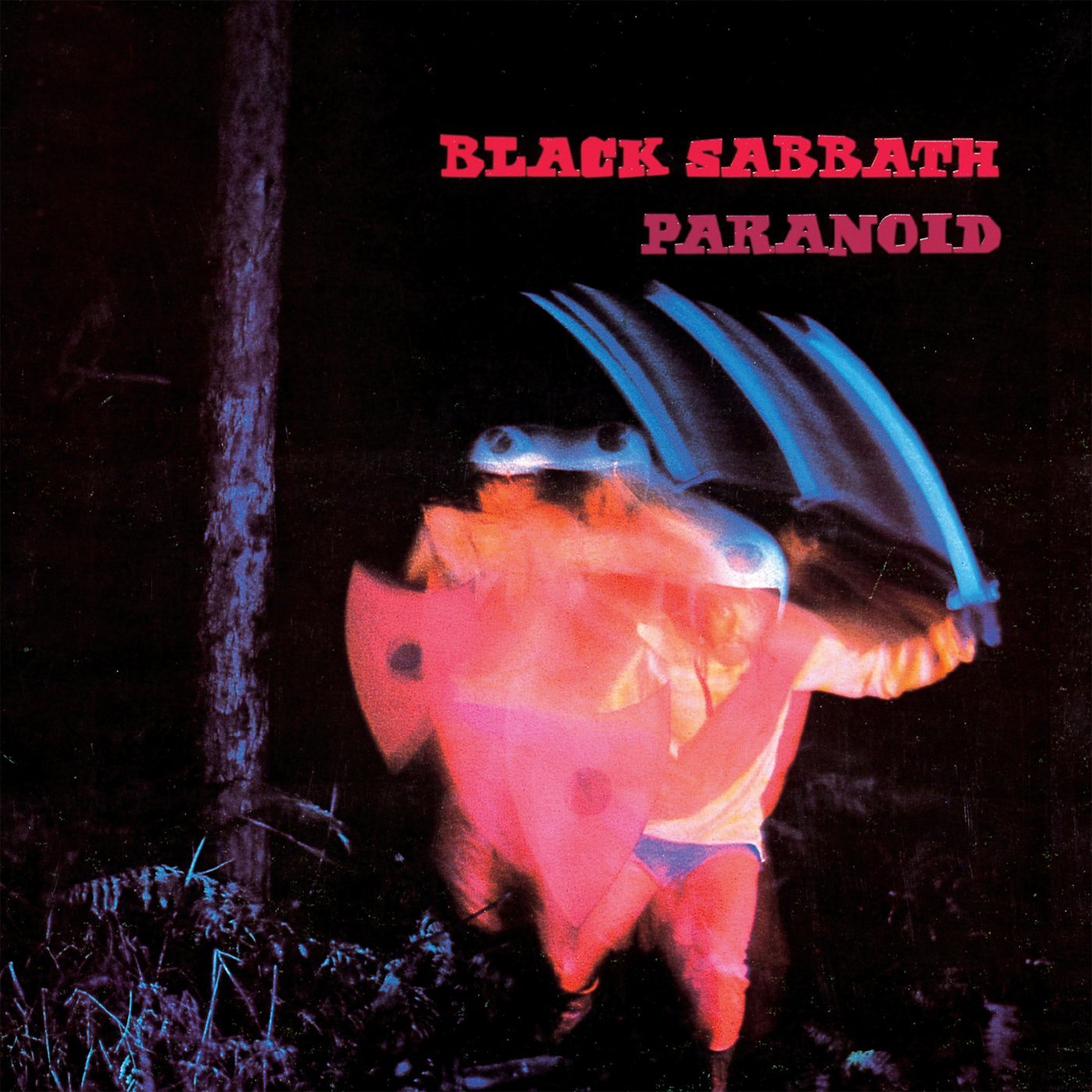
LAKKER-TUNDRA.
LAKKER-TUNDRA.
Over the last nine years, Lakker have called various labels home. As a result, Lakker have been like musical nomads, moving from label to label. These labels have been based in Berlin, Dublin and London. Often, Lakker were only signed to a label for a short time, moving on after one or two releases. That isn’t ideal for Lakker.
Like any artist or group, Lakker would rather find the right label, and sign to it. This would afford them some security. Then they can get on with doing what they do best…make music. Last year, Lakker found the right label.
That was R&S Records. It was founded by Renaat Vandepapeliere and Sabine Maes. They lent their initials to the new label, which started life as Milos Music Belgium. However, after releasing Big Tony’s Bubble Up in 1983, Milos Music Belgium became R&S Records. This became Lakker’s home in 2014.
Signing to R&S Records just so happen to coincide with Lakker releasing some of the best music of their career. This included the release of two critically acclaimed E.P.s Lakker released in 2014. The first was the Containing A Thousand E.P. Next was the Mountain Divide EP. Both E.P.s saw plaudits heaped on the Dublin based production duo. After the success of the two E.P.s it was almost inevitable that Lakker would release an album.
This was something that Lakker hadn’t done since their 2007 debut album, Ruido. Since then, Lakker’s career has been full of twists and turns. That’s not forgetting numerous labels. However, now signed to R&S Records, Lakker began work on what would become Tundra. It was released on 11th May 2015, on R&S Records. It’s been a long time coming from Lakker.
Eight years to be precise. Lakker had released their debut E.P. Cosas’ label, in May 2006. It was released on Irish net-label Alphabet Set. Cosas was well received. This prompted Lakker to return to the studio, to begin work on their debut album. When they returned a year later, Lakker had moved labels for the first time. However, it wouldn’t be the last time.
Lakker returned with their debut album, Ruido,in 2007. Ruido was released another Irish label, Ladybird. Just like the Cosas E.P., Ruido was well received. Things were looking good for the two members of Lakker, Dara Smith and Ian McDonnell.
Or so it seemed. In June 2008, Lakker released another E.P., Ruido (Acroplane Remixes). It was released on another Irish label Acroplane Recordings. This would be the last we heard of Lakker for three years.
After their three year musical sabbatical, Lakker returned in 2011 with their single Spider Silk. It was released on Berlin based label, Killekill. Lakker it seemed, had landed on their feet. Killekill were perceived as a label going places. However, for Lakker, Spider Silk was a one-off release.
2012 saw Lakker release two E.P.s on London based Blueprint. The Torann E.P. and Arc E.P. marked a return to form from Lakker. Then as 2012 drew to a close, Lakker released their Deathmask E.P. in December. By then, Lakker’s star was in the ascendancy. Their lives shows were winning friends amongst the dance music community. Laurent Garnier, James Ruskin and Aphex Twin were all fans of Lakker. 2013 was shaping up to be a big year from the Dublin based duo.
As 2013 took shape, Lakker returned with the first of two E.P.s, Coal Bath. Later in 2013, the Untitled E.P. was released on the Berlin-based label, Stroboscopic Artefacts. Both E.P.s were well received. However, things were about to get even better, when Lakker found a label they could call home, R&S Records.
Lakker’s signing to R&S Records coincided with Lakker releasing some of the best music of their career. This included the two critically acclaimed E.P.s Lakker released in 2014. The first was the Containing A Thousand E.P. Next was the Mountain Divide EP. Both E.P.s saw plaudits heaped on the Dublin based production duo. After the success of the two E.P.s it was almost inevitable that Lakker would release an album.
Tundra was released on 11th May 2015. It’s eclectic album from Lakker. No wonder. They’ve been inspired and influenced various labels, singers and groups. One influence is the music released by No U-Turn Records. Then there’s the choral music of Arvo Part. Other influences include Merzbow, early Human League and raw, ethnic music. The resultant album Tundra, is the album that many within the music industry knew Lakker were capable of making.
To make what’s a career defining album, Lakker have combined the organic and synthetic. Sometimes, the lines have been blurred. Deciding which is which isn’t easy.
Especially with: “voices that sound like synths, and synths that sound like voices.” That’s not the only curveball on Tundra. What about the inclusion of field recordings from motorway tunnels in Japan? Then there’s recordings of church bells from Schöneberg. Recordings of a female choir from Dublin and Inuit throat singers play their part in the sound and success of Tundra, which I’ll tell you about.
Echtrae opens Tundra. It’s a track dominated by synths. They’re mostly shrill and jagged. That’s apart from the dark, buzzing bass synth. They’re joined by bursts of a floaty, dreamy vocal. Contrasts abound. Sometimes, the track is dark and dramatic, other times, ethereal and lysergic.
A tender, ethereal vocal is panned on Milch. The arrangement is floaty and dreamy. There’s a downtempo sound. That’s until thunderous techno drums make their presence felt. They dominate the arrangement, while the ethereal vocal floats in and out. Soon its beauty and elegance increase. All the time, the thunderous drums charge along. However, despite their volume, it’s the spellbinding beauty of the vocal that captivates.
As synths create a moody, broody arrangement, drums pulsate on Mountain Divide. Later, Hendrix-inspired feedback is unleashed. The tiger is tamed though. From chaos, comes order. So does an elegiac, melodic sound. Gradually, it makes its presence felt. Mostly though, the music is dark, dramatic and pulsating. There’s almost a futuristic, cinematic sound. Especially when synths cascade and chime, drums skip and gallop and hi-hats hiss. They play their part in cinematic soundtrack for the sci-fi generation.
Vocalist Eileen Carpio features on Three Songs. Her elegiac, ethereal vocals will stop the listener in their tracks. It also adds to the melodic nature of Three Songs. She sings unaccompanied. Then her vocal drops out. Pounding, thunderous drums are added. They’re distorted. So are the Acid House synths. They sit back in the mix. Above the arrangement is the angelic, ethereal sound of Eileen Carpio’s vocal. It’s at the heart of the track’s success
Droning, buzzing synths sweep in as Ton’neru unfolds. Galloping, pounding drums join beeping, squeaking synths. Soon, a myriad of moody, atmospheric sounds flit in and out. Panning is used effectively, moving sounds around the arrangement. At one stage, you’re assailed and surrounded by this unpredictable and fascinating fusion of man and machine.
Straight away, drums pound on Halite. However, the drums are something of a curveball. They’re designed to throw you off the scent of what’s an enchanting and melodic track. Don’t let them. There’s much more to the track than the drums. Slowly and gradually the melody makes its presence felt. Later, the drums provide a hypnotic backdrop to this enchanting and melodic track.
Tundra, the title-track is another genre-melting track. Techno is main influence. Then there’s elements of ambient, drone, electronica and experimental music. There’s even a nod to Kraftwerk’s Radio Activity. That comes courtesy of the clicks and crackles in the background. These type of sounds have recently become more prominent on techno tracks. Often they sit in the background, adding another layer. That’s not the case here. They play more than a walk-on role. As the mesmeric arrangement unfolds, Tundra sounds as if it’s been inspired by Kraftwerk’s Autobahn. It’s like a six minute musical journey courtesy of The Man Machine that is Lakker.
The drums on Pylon pound and then reverberate. They’re soon joined by washes of crackly synths. Soon, bells briefly ring out melodically. Mostly drums click and pound, while synths crackle. Occasionally a train whistles and piano plays. Later, a gong sounds, bells chime and a melody is picked out carefully on a piano. By then, you’re listening intently, decoding the disparate sounds that Lakker unleash on this innovative fusion of organic and synthetic sounds.
Hypnotic describes Oktavist perfectly. Whether it’s the drones, cracks, keyboards or drums, they’re hypnotic. The droning sound of the track has a hypnotic effect. You’re drawn into the track, intent on exploring its subtleties and nuances. Sometimes, there’s a melodic twist. Other times, Oktavist takes on an industrial sound, as Lakker push musical boundaries to their limits.
Herald, which closes Tundra is another genre-defying track. Lakker seem determined to explore other musical genres. This includes avant-garde and experimental. However, elements of ambient music shine through, resulting in a track that’s wistful, dreamy and lysergic.
Lakker’s new album, Tundra, which was recently released by R&S Records, is an ambitious, groundbreaking and genre-defying album. Elements of ambient, avant-garde, drone, electronic, experimental, neo-classical, techno and world music shine through on what’s a truly captivating musical journey.
The music on Tundra is variously challenging, dramatic, dreamy, ethereal, hypnotic, lysergic, melodic, mesmeric and wistful. Influences melt into one. This includes the music released by No U-Turn Records and the choral music of Arvo Part. Other influences include Merzbow, early Human League, Jimi Hendrix, Kraftwerk and raw, ethnic music. These disparate influences play their part in Tundra, the album that many within the music industry knew Lakker were capable of making.
To make what’s a career defining album, Tundra, Lakker have combined the organic and synthetic. In doing so, the lines have been blurred. Deciding which is which, isn’t easy. Especially when Lakker include “voices that sound like synths, and synths that sound like voices.” That’s one of many curveballs on Tundra.
As the ten tracks on Tundra unfold, it’s almost impossible to second-guess Lakker. When you do, Lakker take Tundra in the opposite direction. In doing so, the two members of Lakker, Dara Smith and Ian McDonnell take you on a captivating musical journey. All you can do, is sit back and enjoy this magical, musical mystery tour.
As you do, ten soundscapes unfold on Tundra. Each and every one, is very different from its predecessor. That’s no bad thing. Never will Lakker be accused of being predictable. They’re don’t rest on their laurels. No. Instead, Lakker make music that’s exciting, innovative and full of nuances, subtleties and surprises.
That’s what Lakker have been doing for the last nine years. However, for much of that time, Lakker have lead a nomadic existence. They’ve moved from label to label. Often, Lakker move on after one or two releases. However, in 2014 that changed.
Lakker signed to R&S Records. This just happened to coincide with one of the most fruitful periods of Lakker’s nine year career. Since then, Lakker have released some of the best music of their career. This includes two critically acclaimed E.P.s, and Lakker’s new album Tundra, which is a career defining album from the Dublin based duo.
LAKKER-TUNDRA.
KEB DARGE AND LITTLE EDITH’S LEGENDARY WILD ROCKERS VOLUME 5.
KEB DARGE AND LITTLE EDITH’S LEGENDARY WILD ROCKERS VOLUME 5.
Four years ago, in June 2011, Keb Darge and Little Edith released the first instalment in their Legendary Wild Rockers’ compilation series, on BBE Music. This was Keb Darge and Little Edith’s Legendary Wild Rockers. It was so successful, that Keb Darge and Little Edith’s Legendary Wild Rockers’ series has been an annual occurrence. This is quite ironic, given Keb once called the records on the Legendary Wild Rockers’ series as “junk records.”
This was after Keb’s divorce. Like many people, a divorce proved devastating for Keb. He was forced to sell his beloved record collection. For a working DJ, this was a disaster. Without records, a DJ-ing career wasn’t feasible. Heading out into civvy street, Keb tried various jobs to make ends meet. Then, when he rediscovered some records in his loft, this would change his career, and life.
One night, Keb discovered a pile of records in his loft. When he looked through them, he realised that this was “only” his “junk records.” Or so he thought.
Little did Keb realise that his “junk records” would give birth to two musical phenomena. The first was “deep funk,” which Keb is the founding father of. However, Keb’s “junk records” would also feature on the early volumes of the Legendary Wild Rockers’ series.
Keb’s “junk records” player their part in the success of Keb Darge and Little Edith’s Legendary Wild Rockers. Back then, this was just the first instalment in the Legendary Wild Rockers’ series. Neither Keb, nor Little Edith realised that the Legendary Wild Rockers would become an annual occurrence.
Just over a year later, Keb Darge and Little Edith’s Legendary Wild Rockers 2 followed in July 2012. It featured R&B, rockabilly and surf. This eclectic selection of music caught the attention of music lovers. Keb and Little Edith were on a roll.
It was almost inevitable that there would be a third instalment in the Legendary Wild Rockers’ series. That came as no surprise. The Legendary Wild Rockers’ series had become one of BBE Music’s most popular series. Eleven months later, and Keb Darge and Little Edith’s Legendary Wild Rockers 3 was released to widespread critical acclaim. Somehow each instalment in the series seemed to surpass the previous instalments. Keb’s “junk records” were quickly becoming a musical phenomenon. However, this musical phenomenon nearly was no more.
In 2013, the village in the Philippines where Keb Darge and Little Edith livex was destroyed by a typhoon. Nothing was heard of Keb Darge and Little Edith for several days. Some people feared the worst.
Eventually, came the news, Keb Darge and Little Edith were safe. They’d survived one of the most devastating typhoons to hit the Philippines. It had been a harrowing period for Keb Darge and Little Edith. Despite this, they were determined to compile Keb Darge and Little Edith’s Legendary Wild Rockers 4.
Somehow, Keb and Little Edith managed to cheat death. Their house was in ruins and much of their possession destroyed. So, Keb and Little Edith had to escape from the devastation left behind by the typhoon. They decided to return to London, clutching a pile of records.
Among the records that Keb and Little Edith brought back to London, were the twenty tracks that made their way onto Keb Darge and Little Edith’s Legendary Wild Rockers 4. They were recorded between 1956 and 1964. These tracks were recorded by some of the music’s pioneers. This was perfect for Keb and Little Edith’s comeback compilation.
Despite the trauma that Keb and Little Edith had experienced, they had managed to compile what was regarded as the finest compilation in the Legendary Wild Rockers’ series. Critics, cultural commentators and music lovers were one over by Keb Darge and Little Edith’s Legendary Wild Rockers 4. After four volumes, there was still live in the Legendary Wild Rockers’ series. Did this mean there would be a Volume 5?
Of course there would be. Summer wouldn’t be summer without the latest instalment of the Legendary Wild Rockers’ series. So, on 11th May 2015, Keb Darge and Little Edith’s Legendary Wild Rockers Volume 5 was released on BBE Music.
Keb Darge and Little Edith’s Legendary Wild Rockers Volume 5 features a total of twenty-one tracks. The music is described as “more raw, rootsy rockabilly and surf sounds.” There’s contributions from Ahab and The Wailers, The Thunderbolts, Bobby Verne, Wally Hughes, The Dynamics, Bobby De Soto, The Jesters, Brownie Johnson and Elroy Dietzel. Together on Little Edith’s Legendary Wild Rockers Volume 5, which I’ll pick the highlights of.
This comes courtesy of Ahab and The Wailers. They released Cleopatra’s Needle, in Britain, on Pye Records, in 1963. This proved to be their one and only single. On the flip side was Neb’s Tune. It’s best described as cinematic surf, with a proto psychedelic sound. Neb’s Tune wouldn’t sound out of place on the soundtrack to the latest Tarrantino movie. If the rest of Keb Darge and Little Edith’s Legendary Wild Rockers Volume 5 is as good as Neb’s Tune, it’s going to be an explosive journey.
Originally, Ron Haydock and The Boppers released Baby Say Bye Bye on Cha Cha Records, in 1960. This was a year after they released their debut single 99 Chicks. Neither 99 Chicks, nor Baby Say Bye Bye proved particularly successful. However, both tracks are well regarded, and were later reissued. Keb Darge and Little Edith eschew the predictable however. Instead, they flip Baby Say Bye Bye over, and choose to cover Maybelline. While it’s an oft-covered track, Ron Haydock and The Boppers deliver a blistering and joyous version of this classic track.
In 1959, Jonnie and The Cyclones decided to release Scrub Bucket as a single. Rather than sign to a record label, they founded their own label McCady Records. Its first release was Scrub Bucket. On the B-Side, was Twisted Fender, a slice of surf rock. It’s become a favourite within the surf community, and found its way onto the Surf-Age Nuggets: Trash and Twang Instrumentals. No wonder. It’s an irresistible instrumental.
The Dynamics were a Louisville group, who provide another surf rock instrumental, Later On. It was recorded at Farrell Records, on Portland Road, Louisville. With its twanging guitars and blazing saxophone, it’s a real find and must be one of the highlights of Keb Darge and Little Edith’s Legendary Wild Rockers Volume 5.
Duke Dickson and The Teens are another group that only released one single. Mind you, what a single it was. Is You Is Or Is You Ain’t was released in 1959, on Bakersfield based, Global Records. Sadly, Global Records only released one further single, Joe Hall’s Bongo Beating Beatnik. The labels finest moment was undoubtably, the rock ’n’ roll of Duke Dickson and The Teens’ Is You Is Or Is You Ain’t.
Most people associate Folsom Prison Blues with Johnny Cash. It’s one of his classic songs. However, other people have covered Folsom Prison Blues. This includes Billy Tidwell and The Chivells. It was the B-Side to their 1965 single, I Was Standing Too Close To A Heartache. It was released on the Ko Co Bo label in 1965, and nowadays, is a real rarity. There’s a reason for this. The record company picked the wrong song for the single. Billy Tidwell and The Chivells’ cover of Folsom Prison Blues far surpasses the quality of I Was Standing Too Close To A Heartache. So when it was released, the single flopped. Since then, copies of the single have become increasingly rare. Collectors that have a copy, are holding onto them. Nowadays, the only way to get hold of a copy of this hidden gem, is by buying a copy of a compilation like Keb Darge and Little Edith’s Legendary Wild Rockers Volume 5.
If you’re a fan of rockabilly, then Alvis Wayne’s Swing Bop Boogie will be right up your street. This was Alvis’ debut single. It was penned by Tony Wayne, and released on the Westport label, in 1956. Swing Bop Boogie features a vampish vocal from Alvis, who pays homage to Elvis on this poppy slice of rockabilly.
The rockabilly keeps on coming. Bob Doss contributes Don’t Be Gone Long. It was released on Starday Records, and features none other than Hal Harris on guitar. His guitar is at the heart of the track. So is Bob’s Elvis’ inspired vocal. They play their part in what’s considered to be a rockabilly classic that was later reissued by Starday Records in 1972.
Royce Porter is responsible for what’s one of my favourite rockabilly tracks on Keb Darge and Little Edith’s Legendary Wild Rockers Volume 5. That’s Yes I Do. It was written by Roy Doggett and released on Look Records. With its jangling guitar, sweeping harmonies and a vocal that sounds as if it has been inspired by The King, Yes I Do is still guaranteed to fill a dance-floor.
The Jesters close Keb Darge and Little Edith’s Legendary Wild Rockers Volume 5 with their own brand of musical magic. Panther Pounce is their second contribution. The first was Side Tract, one of the rarest tracks on Keb Darge and Little Edith’s Legendary Wild Rockers Volume 5. The last copy of this surf rock track I could find, sold for $257. That was over a year ago. For that price, you could buy every volume in the Legendary Wild Rockers’ series. As for Panther Pounce, copies are almost impossible to track down. Apparently, this is a take on Strange Man, which Jim Messina and The Jesters recorded. Of the two versions, my favourite is definitely the uber rare and urgent Panther Pounce.
Just ten months after Keb Darge and Little Edith released their comeback compilation, Keb Darge and Little Edith’s Legendary Wild Rockers 4, they make a very welcome return with Keb Darge and Little Edith’s Legendary Wild Rockers Volume 5. It was released by BBE Music on 11th May 2015. Featuring twenty-one slices of rare rockabilly and surf rock, it’s the perfect soundtrack to the summer. That’s not all.
Somehow, Keb Darge and Little Edith’s Legendary Wild Rockers Volume 5 have managed to do what looked almost impossible, and surpassed the quality of the previous volumes in the series. That took some doing. Volume 4 was crammed full of quality cuts. However, Keb Darge and Little Edith pulled out all the stops for Keb Darge and Little Edith’s Legendary Wild Rockers Volume 5.
Starting with Ahab and The Wailers, Ron Haydock and The Boppers, Jonnie and The Cyclones, The Dynamics, Duke Dickson and The Teens, Alvis Wayne, Royce Porter and finishing with The Jesters’ unique brand of musical magic. In between, The Thunderbolts, Bobby Verne, Bobby De Soto, Brownie Johnson and Elroy Dietzel play their part in the sound and success of Keb Darge and Little Edith’s Legendary Wild Rockers Volume 5, which is without doubt, the best instalment in the series.
KEB DARGE AND LITTLE EDITH’S LEGENDARY WILD ROCKERS VOLUME 5.
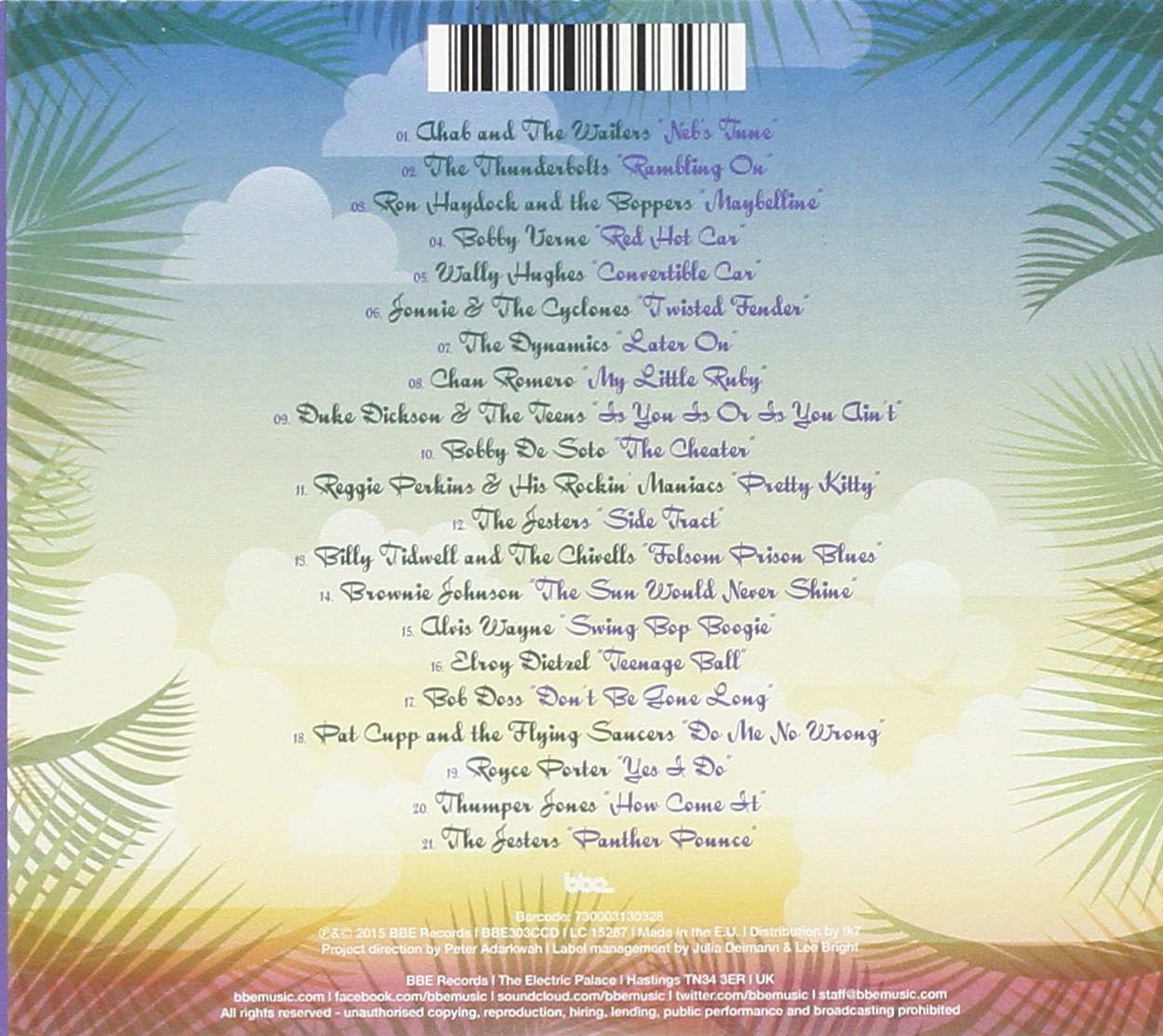



I HAVE A TRIBE-YELLOW RAINCOATS E.P.
I HAVE A TRIBE-YELLOW RAINCOATS E.P.
Ever since 2012, Patrick O’Laoghaire has been one of music’s rising stars. Patrick first came to prominence as a member of Dublin based band Slow Skies. They were founded in 2012, and featured Karen Sheridan, Conal Herron and Patrick O’Laoghaire. Less than a year later, and Slow Skies were ready to release their debut E.P.
Slow Skies released their debut E.P., Close in May 2013. Close was well received by critics. A great future was forecast for the Dublin based trio.
Fast forward to September 2014, and Slow Skies had released their sophomore E.P. Keepsake . Suddenly, critics were taking notice of Slow Skies. They were now classed as “one to watch.” However, by then, Patrick O’Laoghaire had also embarked upon a solo career.
For the last few couple of years, Patrick had been contemplating a career as a singer-songwriter. So, he adopted the pseudonym I Have A Tribe, and was soon one music’s rising stars.
I Have A Tribe released their debut E.P. Yellow Raincoats in May 2014. Yellow Raincoats, which featured four songs penned by Patrick, was recorded in Dublin. Monsoon was produced by Conor O’Brien, who added beats and synths. Rob Ellis played on and produced, Yellow Raincoats, Biscayne and Wake The Cavalry (We’re Moving On). Once the four tracks were recorded and mastered, the Yellow Raincoats E.P. was ready for release in Europe by Grönland Records.
The Yellow Raincoats E.P. was released in May 2014. It was released to widespread critical acclaim. Critics were won over by I Have A Tribe’s fusion of folk and pop. The highlight of the Yellow Raincoats E.P., was Monsoon, a beautiful ballad. It caught the attention of Anna Calvi.
Anna Calvi was about to head off on a tour of Europe. She was looking for an opening act. When she heard Monsoon, Anna decided that I Have A Tribe fitted the bill.
So, each night, during Anna Calvi’s European tour, I Have A Tribe opened for her. Suddenly, I Have A Tribe’s music was being heard across Europe. Patrick O’Laoghaire was winging friends and influencing people, including Villagers.
Just like Anna Calvi, Villagers were looking for someone to open their Irish homecoming show. Who better than fellow countryman, I Have A Tribe? Villagers couldn’t have picked a better act. I Have A Tribe charmed the audience with their unique fusion of pop and folk. This however, wasn’t the end of this whirlwind year.
Over a twelve month period, I Have A Tribe were asked to play at some of the biggest music festivals. This included The Great Escape, Electric Picnic, the Reeperbahn Festival and CMJ in New York. Things it seemed, couldn’t get much better. However, it did.
I Have A Tribe was asked to headline at The Button Factory in Dublin. For Dublin based Patrick O’Laoghaire this was a huge thrill. Especially when he was welcomed with open arms by his hometown audience. With every appearance, it seemed, I Have A Tribe’s star was in the ascendancy. So, it was time for I Have A Tribe to record the followup to Yellow Raincoats, which I’ll tell you about.
Monsoon opens the Yellow Raincoats’ E.P. Accompanied by just a lone piano, Patrick’s vocal is heartfelt and emotive, as he delivers the cinematic lyrics. He paints pictures with his lyrics. So much so, that you can imagine the scenes unfolding before your eyes, and a Monsoon sweeping in. Meanwhile, Patrick is safely “cocooned” in his cottage in the hills. By then, a drum machine accompanies the piano. Patrick’s vocal is akin to a cathartic outpouring of emotion as he warns “Monsoon coming.”
Synths open Yellow Raincoats. They have an almost industrial sound. Their sound is bold, becoming almost hypnotic. Meanwhile Patrick’s vocal is wistful and almost grief-stricken. Guitars chime and ring out. Still the industrial synths, click and clack ominously. It’s as if they’re reflecting what Patrick’s feeling and suffering. That’s despair. As Patrick delivers a soul-searching vocal, the lyric “the depression rose in my throat,” is akin to a glimpse of his weary, troubled soul.
Patrick dawns the role of troubadour on Biscayne, a quite beautiful ballad. That’s apparent from the opening bars. Accompanied by his guitar, he sings: “I don’t want to let you down.” As string synths sweep in and ripple, Patrick almost uses his voice as instrument. It soars and weaves above the arrangement, sounding not unlike Jeff Buckley circa Grace. That might sound like high praise, but Patrick O’Laoghaire is a hugely talented singer. Especially when he becomes a balladeer, like does on Biscayne a beautiful ballad.
Wake The Cavalry (We’re Moving On) closes the Yellow Raincoats E.P. Briefly, the arrangement quivers and trembles, before resonating and introducing Patrick’s vocal. He sings: “my pills are gone, my evening settled.” As he does, his voices quivers. Meanwhile, a piano, and soon synths are added. Later, as Patrick sings slowly and emotively, harmonies are added. So is a drum machine. By then there’s an element of drama. Especially, as Patrick sings: “Wake The Cavalry (We’re Moving On), run to Calgary.” There’s an element of drama as he delivers the cinematic lyrics. Later, harmonies respond to Patrick’s call, adding to the ethereal quality of this cerebral, dramatic and thoughtful ballad.
Although the Yellow Raincoats E.P. only features four songs from I Have A Tribe, one thing is obvious, and that is that I Have A Tribe are one of music’s rising stars. Other people have realised that.
Anna Calvi asked I Have A Tribe to open for her on her 2014 European tour. Villagers asked I Have A Tribe to open for on their Irish homecoming concert. Numerous festival bookers were keen to add I Have A Tribe to their roster. Soon, I Have A Tribe had built a large, loyal following across Europe and in America. So, it’s no surprise that one of Europe’s leading labels have added I Have A Tribe to their roster.
Grönland Records have added I Have A Tribe to their illustrious roster. They’ll release I Have A Tribe’s music in Europe. That should prove the perfect label for I Have A Tribe, as Grönland Records is also home to singer-songwriter William Fitzsimmons. Hopefully, I Have A Tribe will reach the same heights as William Fitzsimmons.
Certainly, Patrick O’Laoghaire a.k.a. I Have A Tribe, is a talented singer, songwriter and musician. He writes songs that are beautiful, cerebral, cinematic, melancholy, poignant, thoughtful and touching. They’re framed by arrangements that are understated. They don’t get in the way of the vocal. Instead, the vocal is allowed to breath and becomes the focus of your attention. That’s as it should be.
Patrick’s delivery is heartfelt, emotive and melancholy. He doesn’t so much deliver the lyrics, but lives them. That’s why there’s an intensity to the four tracks on I Have A Tribe’s Yellow Raincoats debut E.P.
While the Yellow Raincoats E.P. is I Have A Tribe’s debut E.P., it won’t be their last. Another E.P. from I Have A Tribe is due for release on Grönland Records. I’m sure that the music on I Have A Tribe’s sophomore E.P. will be just as beautiful, intense and powerful as the four tracks on the Yellow Raincoats E.P.
I HAVE A TRIBE-YELLOW RAINCOATS.
DUKE ELLINGTON AND HIS ORCHESTRA-THE CONNY PLANK SESSION.
DUKE ELLINGTON AND HIS ORCHESTRA-THE CONNY PLANK SESSION.
By 1970, thirty year old Conny Plank was already well on his way to establishing a reputation as one of the most innovative producers in Germany. He had come a long way since his early days working as Marlene Dietrich’s sound engineer.
When multi-track recording was introduced, Conny spent time investigating its sonic possibilities. Soon, he was able to create dramatic productions through the use of effects. These production techniques would become part and parcel of Conny’s production style. Especially, when he worked on two of his musical loves.
Electronic music and soundscapes were two of Conny’s passions. He was an early advocate of electronic music’s possibilities, and throughout his career, worked with some of the leading lights of Germany’s electronic scene, including Kraftwerk and Cluster.
Indeed, in 1969 Conny Plank was asked to engineered Kluster’s debut album Klopfzeichen. It was released in 1970, the same year Conny Plank was asked to work with one of the legends of music, Duke Ellington.
To this day, an element of mystery surrounds the background to how Duke Ellington and His Orchestra came to work with Conny Plank. Several theories abound. One theory was that Wolfgang Hirschmann, a sound engineer, and onetime leader of the Westdeutscher Rundfunk big band, asked Conny to take charge of the sessions. However, when Wolfgang Hirschmann was asked about this, he was unaware of the sessions. That however, isn’t the only mystery surrounding The Conny Plank Session, which will be released by Grönland Records on 10th July 2015.
There’s even some debate about when the recording took place. Although the master tape is dated April 1970 this has been disputed. Those who chronicle Duke Ellington’s discography, date the sessions as July 1970. Most likely, this is because Duke Ellington and His Orchestra were touring Europe in July 1970. However, in the archives, there’s nothing to suggest Duke Ellington and His Orchestra recorded The Conny Plank Session at Rhenus Studio, Cologne, in July 1970. This would suggest that the session took place sometime in April 1970. By then, The Duke was approaching veteran status. He had come a long way since his early days in music.
Duke Ellington was born into a middle class family in Washington D.C. on April 29th 1899. Growing up, Duke Ellington learnt to play the piano. Before long, he was a prestigious talent. It was no surprise that in 1914, aged just fifteen, Duke Ellington made his professional debut. This was just the start of a long and successful career. Bandleader, composer, pianist and political activist, Duke Ellington did it all.
He moved to New York in the early twenties. In 1923, Duke Ellington formed his own orchestra in 1923. He played at the Cotton Club during the twenties. In the thirties, Duke Ellington and his orchestra toured the world. Right up to his death in 1974, Duke Ellington was still leading his orchestra. However, it wasn’t all smooth sailing for Duke Ellington.
After the Second World War, music changed. Duke Ellington’s orchestra was perceived as the music of the past. Crooners were the future. Frank Sinatra and Jo Stafford were flavour of the month. This was just the start of a slump in Duke Ellington’s popularity. At one point, Duke Ellington’s income as a songwriter and performer was subsidising his orchestra. Thing would get worse before they got better.
During the early fifties, Duke Ellington’s orchestra lost some of its top musicians. Not long after this, Duke Ellington’s music was seen as old fashioned. Bebop was the future. Duke Ellington’s popularity suffered. Things got so bad that he had to scale back his orchestra. However, in 1956, Duke Ellington became the comeback King.
At the 1956 Newport Jazz Festival, Duke Ellington made his comeback. Ironically, two of the songs at the centre of his comeback were old songs. Diminuendo and Crescendo in Blue had been part of Duke Ellington’s show since 1937. They were often overlooked. Not at the Newport Jazz Festival. This was just part of an explosive set that introduced Duke Ellington to a new generation of music fans. Such was the effect of Duke Ellington’s appearance at the Newport Jazz Festival, that Duke Ellington made the front page of Time magazine. Following the Newport Jazz Festival, there was a revival of interest in Duke Ellington’s career.
Right through the rest of the fifties and early sixties, Duke Ellington recorded a number of film soundtracks. This included 1957s Such Sweet Thunder, 1959s Anatomy Of A Murder and 1961s Paris Blues. For Duke Ellington, his career was back on track.
Especially when he started working with some of the current biggest names in jazz. Duke Ellington worked with Coleman Hawkins, John Coltrane, Charles Mingus and Max Roach. Although Duke Ellington was seen as part of jazz’s past, the new generation of jazz musician’s embraced him. They enjoyed working with one of jazz music’s legends. Duke Ellington still had plenty to offer jazz music.
This became apparent in 1963. This was the hundredth anniversary of President Lincoln’s Emancipation Proclamation. It stated that all slaves in the ten rebel states would be free. Duke Ellington was determined that this date should be celebrated. However, America in 1963 was a troubled country.
Racism was still rife in parts of America. So was poverty and conflict. Then there were the problems America were encountering abroad. Tensions were rising between East and West. The Cold War was at a crucial juncture. Then there was the war in Vietnam. A generation of Americans were losing their lives in Vietnam. For many people, there wasn’t much to celebrate. However, Duke Ellington wasn’t going to let the centenary of President Lincoln’s Emancipation Proclamation passed unnoticed.
To celebrate what was one of the most important dates in America’s history, Duke Ellington wrote My People, a stage play that celebrated President Lincoln’s Emancipation Proclamation. The soundtrack to My People was released in 1963. Despite being an important musical document, commercial success eluded The Duke. So, he spent much of the sixties touring and recording the occasional album.
Throughout the rest of the sixties, Duke Ellington seemed to be on a never ending tour. He seemed to spent months circumnavigating the globe with his orchestra. Still, albums were being released in The Duke’s name.
Many of the albums released, were live albums. It seemed that whenever Duke Ellington played live, the tapes were running. Many live albums were released, and would be released long after Duke Ellington’s death in 1974. Still, though, Duke Ellington found time in his busy touring schedule to enter the studio.
By the second half of the sixties, studio albums were becoming something of a rarity for Duke Ellington. An exception was The Popular Duke Ellington. It was released in 1966, but neither excited critics nor record buyers. Although The Duke was a popular live draw, some thought he had lost his Midas touch in the studio.
In 1967, Duke Ellington released Soul Call and The Far East Suite. They were an improvement on albums like The Popular Duke Ellington. Both albums saw The Duke trying to move with the times. Maybe there was still life in The Duke?
During the remainder of the sixties, Duke Ellington spent much of his time touring. He collaborated with Frank Sinatra on Francis A. and Edward K. It was released in 1968. Tellingly, The Chairman Of The Board took top billing. For Duke Ellington, who had spent fifty-four years as a professional musician, this must have been galling. However, by 1968 Frank Sinatra was a bigger draw than The Duke.
Despite this, when Duke Ellington celebrated his seventieth birthday in 1969, the great and good of music paid tribute to one of jazz’s leading lights. A concert was held to celebrate The Duke’s seventieth birthday. It was released in 1970 as Duke Ellington’s 70th Birthday Concert. That was the year Duke Ellington recorded The Conny Plank Session in Cologne.
It was in April 1970, that Duke Ellington and His Orchestra arrived at Rhenus Studio, Cologne. The Duke and his entourage were welcomed by one of German music’s rising stars, Conny Plank. He was responsible for recording Duke Ellington and His Orchestra. They recorded a total of six tracks, three takes of Alerado and three takes of Afrique. They’ve lain in Conny Plank’s vaults since the recording session in April 1970. That’s until they arrived at Grönland Records’ offices.
Having listened to what became The Conny Plank Session, Grönland Records realised they had struck gold. This was very different from the unissued recordings of Duke Ellington and His Orchestra that occasionally come to light. Most of them are live recordings. The remainder, are mainly outtakes or Duke Ellington and His Orchestra noodling. Not here.
Somehow, Conny Plank had managed to get the best out of Duke Ellington and His Orchestra. He had encouraged, cajoled and charmed a performance out of Duke Ellington and His Orchestra. It was as if Conny Plank had managed to transfer Duke Ellington and His Orchestra’s famous live sound onto the master-tape. Somehow, Conny had gotten one of the last great unreleased recordings of Duke Ellington and His Orchestra. They make their debut on the much anticipated The Conny Plank Session, which I’ll tell you about.
Opening The Conny Plank Session is Alerado (Take 1). It’s the first of three takes of Alerado. Straight away, grizzled horns and a standup bass drive the arrangement along. Meanwhile, washes of organ are added. That’s until the arrangement takes on an understated sound. With just the rhythm section for company, a flute adds the first solo. Next in the spotlight is the organ. Bold stabs and splashes of organ take centre-stage. Next up it’s the trumpet. It’s panned left by Conny Plank, while the organ is panned right. This ensures the mix is balanced. After the solos, the arrangement becomes a joyous sonic explosion. It’s as if The Orchestra have taken to their feet, and added some swing, before taking Take 1 to its joyful crescendo.
Straight away, there’s similarities between Alerado (Take 2) and Take 1. The horns lead the way. They’re aided and abetted by the organ, before a wistful flute is added. Deep down in the mix, subtle bursts of organ can be heard. Then when it’s time for the organ to enjoy its moment in the sun, it’s loud, proud and brash. It’s the polar opposite for the subtle, restrained sound of the horn. As the flute plays, the organ is reigned in, ensuring it doesn’t overpower the horn. Then it’s time for The Orchestra to kick loose. They seem to savour this moment. From 2.38 to 3.15 they sweep dramatically, but elegantly along. High kicking horns, the rhythm section and the organ unite. After that, The Orchestra plays within itself. There’s a subtlety to their playing as the arrangement meanders along, instruments dropping in and out, enjoying their moment in the spotlight.
On Alerado (Take 3), the tempo is dropped. It’s noticeable from the opening bars. Mostly, it’s the same instruments that play. This includes horn and rhythm section. They play slowly, thoughtfully and within themselves. Noticeably absent is the organ. That’s until it plays a supporting to a sultry horn. Gradually, stabs of organ make their presence felt. Soon, they’re taking centre-stage as the tempo rises. As the organist improves, the rhythm section up the tempo. That’s the signal for the horns to blaze in. Soon, they’re soaring about the arrangement. Later, they become restrained as the plucked bass helps power the arrangement along, as Duke Ellington and His Orchestra reinvent Alerado.
The three versions of Alerado are quite different. On the three different takes, the instruments are switched round. They’re used in different ways and at different times. Then on Alerado (Take 3), there’s a noticeable change in tempo at the start. That’s a curveball. Later, The Orchestra are let off the reigns, as they continue to reinvent Alerado. They do the same with Afrique.
Unlike the other two takes of Afrique, Afrique (Take 1) is seven minutes long. From the get-go, the track has a much more contemporary sound. Duke Ellington stabs urgently at his piano. Meanwhile, thunderous drums provide a pulsating heartbeat. Washes of organ give way to horns that growl menacingly. It’s as if firing off a warning shot. Soon, their sound changes, becoming sultry and slinky. Still, thunderous drums punctate the arrangement. So do bursts of braying horns and The Duke’s piano. By now, it’s as if The Orchestra are incorporating elements of free jazz, and thanks to the organ, soul jazz. Washes of cascading organ are fired off, and sit well with the bursts of grizzled horns and the discordant piano. Playing a crucial part, are the Afro-beat inspired drums. Their distinctive and thunderous heartbeat is a masterstroke. Just like the rest of The Orchestra, they play their part in an innovative, genre-defying epic from Duke Ellington and His Orchestra.
Whereas Afrique (Take 1) was seven minutes long, Afrique (Take 2) lasts just over five minutes. Straight away, drums replace the piano. The drums are joined by the organ, and stabs of piano. Braying horns join, before become sultry and slinky. They’ve a vintage sound. Soon, they growl, bray and howl. Still the thunderous, urgent drums pulsate. Later, the horns protest and the organ sounds. It replicates the sound of the horn. While all this is going on, the mesmeric drums provide a backdrop. A scrabbled bass and wistful horn unite. The Duke adds a dark and discordant sounds on his piano, as the arrangement gallops along creating a very different and totally captivating take on Afrique. Especially when it reaches it dramatic crescendo.
Closing The Conny Plank Session is Afrique (Take 3). This take is a similar length to Take 2. However, it’s quite different. The introduction is more like Take 1. Drums gallop along, washes of organ and stabs of piano combine. Then horns growl and bray. Before long, a sultry horn signals the sound of an ethereal female soprano vocal. It ghosts across the arrangement. Soon, the vocal, which many believe came courtesy of Conny Plank’s wife, is transformed into an instrument. She scats, honing and shaping her soaring vocal so it melts into the mix. As it does, grizzled horns, hypnotic drums, plink plonk piano and a scrabbled bass unite. Washes of organ replace the vocal. A horn replies to the organ’s cry. Then the sultry horn signals the return of the ethereal, ghostly vocal. From there, the Orchestra drive the arrangement along, and they continue to push musical boundaries. In doing so, they create what’s without doubt, the most groundbreaking, compelling and dramatic take of Afrique. Partly, that’s thanks to the addition of the vocal, which is was another masterstroke.
Just like the three versions of Alerado, the three takes of Afrique see the track reinvented. Duke Ellington and His Orchestra begin with Take 1, a seven minute epic. It’s a truly tantalising and innovative take. One wonders if this is the definitive version? However, it’s not. Take 3 steals the show. The addition of vocal was a masterstroke. Its ethereal sound, and the way the vocal is transformed into an instrument was an innovative addition. It weaves its way around, and above the arrangement, creating a captivating ethereal sound. This was something the pioneers of free jazz and avant-garde music had been doing for several years. One wonders if this was one of The Duke or Conny Plank’s idea?
While The Duke was quite rightly perceived as one of jazz music’s legends, he had spent much of the sixties touring. Conny on the other hand, was a true innovator, who was always one step ahead of the musical pack. He wasn’t just interested in the music of the past and present, he was interested in creating the music of the future.
Given Duke Ellington’s last few studio albums had been neither successful nor particularly innovative, Conny had the chance to help rejuvenate The Duke’s career. To do this, he combined music of the past, the present and the future. Elements of Afro-beat, free jazz, jazz, soul jazz and swing were combined with avant-garde and experimental music. Especially on the three takes of Afrique. It’s as if Conny Plank encouraged The Duke to head in new musical directions.
In doing so, Conny Plank coaxed, cajoled and encouraged a series of spellbinding performances from Duke Ellington and His Orchestra. Conny takes The Duke out of comfort zone, and encourages him to head on musical voyage of discovery. To do that, Conny charmed, encouraged and flattered Duke Ellington. He did whatever it took to get the best performance from The Duke. Once The Conny Plank Session was complete, Conny let Duke Ellington hear the fruits of their labour.
As Conny and Duke Ellington listened to the six tracks, the veteran jazz musician was enthralled. He complemented Conny for his work. Somehow, he had captured Duke Ellington and His Orchestra at their best. It was one of the last great recordings The Duke made. Sadly, however, Conny and The Duke never worked together again.
Whether the tracks on The Conny Plank Session, which which will be released by Grönland Records, on 10th July 2015, were meant to be the start of an album by Duke Ellington and His Orchestra, we’ll that is unclear. Information is scarce about The Conny Plank Session. What’s clear is that the session made a big impression on both men.
By the time Duke Ellington left Cologne, Conny Plank had made a big a big impression on The Duke. Sadly, Duke Ellington would only live another four years. He died in 1974. However, Duke Ellington and His Orchestra recording career enjoyed something of a renaissance. 1971s The Afro-Eurasian Eclipse and 1972s Latin American Suite saw a return to form from The Duke. Maybe Conny Plank had inspired Duke Ellington?
Conny Plank had certainly learnt a lot from The Conny Plank Sessions. He had never worked with a big band. It was a sound he had never experienced, but thoroughly enjoyed. After The Conny Plank Sessions, Conny realised that the performance was everything. He could only produce what was there. This is still true today. It doesn’t matter what technology or equipment a studio has, it counts for nothing if the performance isn’t any good. That stood Conny Plank in good stead right through his career.
Right up until his untimely death in 1987, Conny Plank worked with some of the most innovative bands in the history of music, including Kraftwerk, Cluster, Neu!, Harmonia, Holger Czukay , Brian Eno and The Scorpions. Each and every one of these artists owe a debt of gratitude to Conny Plank, producer, musician and innovator. This also includes Duke Ellington and His Orchestra, who worked with Conny Plank in April 1970, on the long lost, and eagerly anticipated, The Conny Plank Session, which will be released by Grönland Records on 10th July 2015.
DUKE ELLINGTON AND HIS ORCHESTRA-THE CONNY PLANK SESSION.
WILLIAM FITZSIMMONS-PITTSBURGH.
WILLIAM FITZSIMMONS-PITTSBURGH.
Like many artists, William Fitzsimmons draws upon personal experience for his songs. That has been the case since William released his 2005 debut album, Until When We Are Ghosts. Since then, William has released a further five albums.Each album has proved a compelling insight into William Fitzsimmons’ life.
It seems no subject is off-limits for William Fitzsimmons.On his third album, The Sparrow And The Crow, which was released in 2008, William relived the pain and trauma of his divorce. William was so badly affected by his divorce, that he took a two year break from music.
Only after a two year sabbatical from music, was William ready to resume his career. A year later, in 2011, he was ready to release one of his most personal albums, Gold In The Shadow. It dealt with the demons that have tormented William; the mistakes he has made in life; and the mental illness that he has suffered from. Gold In The Shadow was akin to a stark confessional. However, it also was a sign that William was on the road to recovery.
Since then, William’s career has continued apace. He released his sixth album Lions in 2013. Since then, William has been writing and recording another hugely personal album, Pittsburgh, which will be released on Grönland Records, on 18th May 2015.
Pittsburgh has been a long time coming. It was ten years ago that William first thought of the album, and the two themes that run through Pittsburgh. William describes Pittsburgh as: “It’s a memorial for my grandmother, who lived her whole life there, and it’s an honorarium to my hometown.” This makes Pittsburg a hugely personal album from William Fitzsimmons.
William Fitzsimmons was born in Pittsburgh, Pennsylvania in 1978. He was the youngest child in the Fitzsimmons family. Both of William’s parents were blind. Despite this, both parents were talented musicians, capable of playing a variety of disparate instruments. Their talent rubbed off on William.
By the time William was in elementary school, he was already able to play piano and trombone. This meant that William could join in the impromptu musical evenings in the Fitzsimmons family home.
With William’s parents both blind, music played an important part in the family home. Some nights, William’s parents, and the rest of the family, sang, and played the musical instruments that filled the house. For the Fitzsimmons’ family, these were happy times, with everyone sharing in a common interest, music. It would play an important part in William’s life.
When William entered junior school he began to teach himself guitar. Later, William learnt how to play banjo, melodica and ukelele. This would stand William in good stead when he embarked upon his musical career. That was a long way off.
Before that, William headed to college. He had decided to pursue a career in the mental health. Eventually, William hoped to become a therapist. This meant many years of study at Geneva College in Pennsylvania. Eventually, William graduated with a Masters Degree in Counselling.
Already William had experience working with people with mental health problems. This came during the summer months, when William was on holiday. However, during one summer, William’s interest in music was rekindled.
It was towards the end of his training, that William started writing and recording music. William was on a summer break. As usual, William was working. However, this summer he had been asked to write some songs. Rhis was in preparation for William beginning work as a therapist. However, it was partly a cathartic experience.
For some time, William had been suffering from some psychological problems. Through writing and recording a collection of songs, he was able to exercise some ghosts from William’s past. These songs became William’s debut album Until When We Are Ghosts. William self-released Until When We Are Ghosts in 2005.
Until When We Are Ghosts.
William wrote the eleven tracks that became Until When We Are Ghosts. He also played all the instruments and produced the album. Until When We Are Ghosts was then sold via William’s My Space page. It was a very personal album.
For Until When We Are Ghosts,William drew upon personal experience. With titles like When I Come Home, My Life Changed, Forsake All Others, The Problem Of Pain, When You Were Young and Shattered, it’s a soul-baring album. Until When We Are Ghosts is almost a cathartic confessional. This would be the case with much of William’s music.
Goodnight.
A year after releasing Until When We Are Ghosts, William was still juggling his career as a therapist, and as a musician. However, he had found time to write and record his sophomore album, Goodnight. It too, was a very personal album.
Just like Until When We Are Ghosts, Goodnight which was released in 2006, was a personal album. It dealt with his parent’s divorce. This obviously affected William badly. Songs like It’s Not True, Everything Has Changed, Leave Me By Myself, Please Don’t Go, You Broke My Heart, Never Let You Go, I Don’t Love You Anymore and Goodnight show just how his parent’s divorce affected William. It was a huge body blow, where the foundations of his life were shaken to the core. Suddenly, nothing seemed the same again.
The Sparrow And The Crow.
After a gap of two years, William returned with his third album. Ever since he release his first two albums, William’s profile was on the rise. His music began to feature on national television programs. Professionally, William was just as busy. Something had to give,
Ever since the making of Goodnight, William had been struggling. Things had been difficult. His marriage had come to an end, and William was undergoing a painful divorce. As if that wasn’t bad enough, the demons that had long haunted William had returned. What’s more, psychologically, William was struggling. So when the time came to write and record his third album, William had plenty of experience to draw upon.
Just like his two previous albums, The Sparrow And The Crow was a very personal and intense album. It was akin to a confessional.
On The Sparrow And The Crow, William relived relived the pain and trauma of his divorce. That’s apparent on I Don’t Feel It Anymore (Song Of The Sparrow), I Feel Alone, Further From You and Just Not Each Other. Then on Please Forgive Me (Song Of The Crow), William apologises to his wife. There’s a sense of hope on They’ll Never Take The Good Years. It’s sees William remembering that their time together wasn’t all bad. Like so much of The Sparrow And The Crow, the music is powerful, poignant and personal. So much so, that William revisited The Sparrow And The Crow the following year.
Derivatives.
Derivatives, which was William’s first release on Grönland Records, saw various songs from The Sparrow And The Crow reinvented.
For the reinvention of The Sparrow And The Crow guest artists and remixers were brought onboard. Guest artists included Brook Fraser. She featured on the George Raquet Remix of I Don’t Feel It Anymore. Loane featured on I Don’t Feel It Anymore. The Great Neck South High School Choir featured on You Still Hurt Me. Other tracks were remixed. Mikroboy remixed If You Would Come Back Home, while Pink Ganter remixed Good Morning and So This Is Goodbye. All this resulted in the reinvention of The Sparrow And The Crow. This showed a very different side to William Fitzsimmons’ music. Normal service was resumed on Gold In The Shadow.
Gold In The Shadow.
Three years after the release of The Sparrow and The Crow, William Fitzsimmons returned with his fourth studio album, Gold In The Shadow. It was another personal album, one where William reflected on what was one of the most difficult periods of his life.
Following his divorce, William was at his lowest. Psychologically, he wasn’t in a good place. He had been struggling to come to terms with his divorce, and the psychological problems that had long troubled him. It seemed that he had to reach his lowest, before rebuilding his life. That’s what he did.
Over the next couple of years, William confronted his inner demons. He came to terms with his divorce, and the other mistakes he had made. Most importantly, William sought help for the mental health problems that for a large part of his life, have afflicted him. With the problems of his past addressed, William set about healing his life. Part of this comes through music.
On Gold In The Shadow, William he describes the songs as: “a real and long coming confrontation with personal demons, past mistakes, and the spectre of mental illness that has hovered over me for the great majority of my life.” However, William concedes that the healing has begun.
No longer is William willing to submit to the illnesses and problems that have blighted his life. He had to change. There was no way he couldn’t continue as he had been doing. So William bravely confronted his problems and illnesses head-on. That’s apparent on Gold In The Shadow.
There’s a sense of optimism and hope on some of the songs on Gold In The Shadow. Fade and Then Return is proof of this. However, Gold In The Shadow also sees William combine therapy and music. This is the first William has broached first external perspective taking musically. On Gold In The Shadow, William examines not just his own life and his psychological struggle, but those around him. He does this on songs like Psychasthenia, Wounded Head, The Tide Pulls From The Moon Most and Blood And Bones. This results in a compelling, cerebral and personal album from singer, songwriter and therapist William Fitzsimmons, who was slowly, rebuilding his life.
Lions.
This continued on Lions, which was released in 2014. The long-awaited follow-up to Gold In The Shadow, was produced by Death Cab For Cutie guitarist Chris Walla. He played his part in what critics referred to as a “career defining album.”
Lions saw William pickup where he left off on Gold In The Shadow. He continued to document how he had rebuilt his life on Lions. It was an album to be proud of.
Prior to the release of Lions, William described his journey as “wonderful, painful, long, incredibly brief, and more educational and rewarding than any I’ve ever lived before. Lions is something I’m terribly proud of and utterly connected to.” And so he should be.
Critics hailed Lions, the finest album of William’s career. Songs like Well Enough, Josie’s Song, Hold On, From You and Speak were proof of this. Lions was a career defining album. It was the album many critics knew he was capable of producing. Everyone wondered what the future held for William Fitzsimmons?
Pittsburgh.
Just a year after Lions, William Fitzsimmons returns with another incredibly personal and poignant album, Pittsburgh.
Pittsburgh features seven songs, which were written, and produced by William. They play their part in what William describes as: a memorial for my grandmother.” She died in late 2014, “having lived her whole life in Pittsburgh.” William was obviously close to his grandmother. He wanted to tell the world how: “amazing a woman my grandmother was.” His way of doing this, is through the medium of music. The rest of Pittsburgh, is “an honorarium to my hometown” the city William and his grandmother shared for decades. It’s proved the inspiration for one of William Fitzsimmons’ most moving albums, Pittsburgh.
I Had to Carry Her (Virginia’s Song), opens Pittsburgh. Just a lone guitar is panned left, before it’s joined by a double that’s panned right. They envelop William’s vocal. It’s full of sadness and melancholia, as he sings of having to carry his grandmother’s coffin. A reflective William delivers the cinematic lyrics. Soon, he’s singing to her, telling her “I’m sorry it took me to two years to come, you should see how the kids have grown.” Cooing harmonies briefly sweep in, while percussion, guitars and keyboards combine. Together they provide the perfect backdrop for William’s beautiful, wistful homage to his grandmother.
Firmly William strums his guitar on Falling on My Sword. A lone drums booms in the background. Then suddenly, the tempo drops and William’s vocal enters. Just like the previous track, it sits forward in the arrangement. This is how it should be. Especially given the quality of William’s vocal and his lyrics. His delivery is heartfelt and emotive. There’s also an element of despair, as he sings: “you stand on the shoreline, shining like a bright light, but it’s not for me.” Behind him, ethereal harmonies sweep in, as an organ and guitar combine with plink plonk percussion. They frame William’s vocal, as with sadness and regret he sings: ‘“Falling on My Sword.” In doing so, he brings this folk-tinged track to a thoughtful crescendo.
The tempo rises on Better. Drums provide a pounding heartbeat. They’re accompanied by a bounding bass. By then, a heartbroken William sings: “I’m not enough to make you better.” Washes of keyboards and jangling, trembling guitars accompany William as he sings: “I will spread your ashes from the bridge from the city where we live.” It’s no ordinary city. Pittsburgh is the city where William and his grandmother, lived and shared. Poignant, melodic and full of poppy hooks, Better is one of Pittsburgh’s highlights.
Pittsburgh is another song that appears to have been inspired by William’s grandmother’s death. William examines not just his grandmother’s death, but those that fell on foreign fields. He also deals with the subject of forgiveness, asking can the sons forgive those responsible for their father’s death? Just like the previous songs, the arrangement is understated. At the start, it’s just William and his guitar. Soon, his melancholy, thoughtful vocal enters. As he reminisces, waves of quivering guitar and harmonies enter. They provide an understated accompaniment to William’s vocal. This is fitting, as he remembers: “the ones we left behind.” A piano is panned, a guitar is strummed and washes of steel guitar reverberate. Along with the ethereal harmonies they play their part in a track that’s not just beautiful, but cerebral, thoughtful and heart-wrenching.
Washes of synths open Beacon, another poignant song. Just a keyboards and guitar combine before they’re joined by William’s vocal. Together they play their part in creating a pensive and poignant backdrop. Tenderly, William remembers the loss of his grandmother: “I’ll watch you slip you go, into the dark where I cannot follow anymore. I’ll hold your head across the bridge who will be there, waiting for me.” After she is gone, William becomes the Beacon of her memory. It carries on through him. By the end of Beacon, you feel privileged to have heard what are, some of the most touching and poignant and lyrics on Pittsburgh.
An old school drum machine opens Matter. Soon, it’s joined by a Fender Rhodes and William’s thoughtful vocal. Soon, a guitar and buzzing bass enter. By then, William is telling the story of his grandmother’s life. Tenderly, and with sincerity, he delivers the lyrics. There’s a sense of sadness in William’s voice, when he sings of “the love I never gave to you, it doesn’t matter any more.” Despite the words he sings, regret fills William’s vocal. It’s apparent as his vocal drops out. Hypnotic drums and washes of guitar take centre-stage on William’s heartfelt tribute to his grandmother.
Ghosts of Penn Hills closes Pittsburgh. Just a lone guitar plays. It’s joined by William’s pensive vocal, as he sings of the ghosts: “he sees each night.” Soon, a twinkling piano and wistful strings play. They frame William’s heartfelt vocal as he sings “The Ghosts of Penn Hills will bring you where you are.”Later, and poignantly, William sings: “I was woke by the baby at 5am, found out a day later that’s when you left, and I hope it’s true that we meet again. Touching, poignant and from the heart, these lyrics are among the most moving on Pittsburgh, where William remembers those he’s loved and lost.
Although Pittsburgh, William Fitzsimmons’ seventh album, features just seven songs, lasting twenty-six minutes, it oozes quality. This makes it a fitting memorial for William Fitzsimmons’ grandmother and honorarium to his hometown of Pittsburgh.” It’s also an incredibly personal album.
Pittsburgh, which will be released on Grönland Records, on 18th May 2015, sees William Fitzsimmons roll back the years, as he remembers his grandmother, and the city that shaped him. William lays bare his soul on Pittsburgh. Hopefully, in doing so, it has proved cathartic. The loss of a loved one isn’t easy to get over. Hopefully, through writing and recording Pittsburgh, William will be able to work through his grief and hurt. He certainly has produced a fitting memorial to his grandmother.
Most of Pittsburgh’s arrangements are understated. Some are atmospheric. Often that’s down to William use of washes and waves of guitar. They play a part in framing William’s vocal. Quite rightly, they take centre-stage. Each of William’s vocal is heartfelt, and full of emotion, sadness and regret. His lyrics are variously beautiful, cerebral, melancholy, poignant, thoughtful and touching. Often, it’s possible to relate to the lyrics. Especially when William deals with death, and the loss of a loved one.
Despite setting out to write what was a hugely personal album, William Fitzsimmons has written an album that others will be able to relate to. Who knows, maybe the music on Pittsburgh might help people to come to terms with the loss of a loved one? Surely, as a therapist, this will please William Fitzsimmons?
What will definitely please William Fitzsimmons is if Pittsburgh receives the critical acclaim and commercial success it so richly deserves. It’s a spellbindingly beautiful and poignant album. From the opening bars of I Had to Carry Her (Virginia’s Song), right through to the closing notes of Ghosts of Penn Hills, I was captivated by what’s without doubt, the best album of William Fitzsimmons’ ten year career. This makes Pittsburgh a fitting memorial to William Fitzsimmons’ grandmother, and a tribute to the city he proudly calls home.
WILLIAM FITZSIMMONS-PITTSBURGH.
GIL SCOTT-HERON-SMALL TALK AT 125TH AND LENNOX.
GIL SCOTT-HERON-SMALL TALK AT 125TH AND LENNOX.
There’s been many an important day in Chicago’s musical past. That’s not surprising. The Windy City has given the world some of the biggest names in music. This includes Buddy Guy, Herbie Hancock, Nils Lofgren, Patti Smith, Ray Manzarek of The Doors and Pearl Jam’s Eddie Vedder were all born in Chicago. So was musician, novelist poet and political activist Gil Scott-Heron. Sadly, despite all he achieved, Gil Scott-Heron is to some extent, one of Chicago’s forgotten musical heroes. Gil Scott-Heron’s story began in 1949.
April Fool’s Day in 1949 was an important day in Chicago’s musical history. That was the day Gil Scott-Heron was born. His mother Bobbie Scott-Heron was an opera singer. She sang with New York’s Oratorio Society. Gil’s father was Gil Heron was a Jamaican footballer, who at one time, played for Celtic Football Club. Sadly, Bobbie and Gil’s marriage ended when Gil was young.
After this, Gil was sent to live with his maternal grandmother, Lillie Scott, who lived in Jackson,Tennessee. Then when Gil was just twelve, Lillie Scott died. Gil returned to New York to live with his mother. She was now living in the Bronx. Originally, Gil enrolled at the DeWitt Clinton High School, but later, moved to the Fieldston High School.
This came after impressing the head of the English department. He’d read one of Gil’s essays and recommended that Gil received a full scholarship. This proved a poisoned chalice. The education he was receiving was better. However, he was only one of five black students. He felt alienated. Another problem was the socioeconomic gap. Other students came from a much more affluent background. Gil was the son of a single mother. It was at this period, that Gil became socially and politically aware. His eyes were opened to inequality, injustice and racism. This would shape his music in later years. Before that, Gil headed to university.
Lincoln University was where Gil headed after high school. Gil was recommend to head to Lincoln University by Langston Hughes. He was also at Lincoln University and was a member of Gil’s first band, the Black and Blues. After two years at Lincoln University, Gil decided to take time out to write a novel.
During this period, Gil Scott-Heron wrote two novels. His first novel was a thriller entitled The Vulture, was published in 1970. Whilst writing The Vulture, Gil saw The Last Poets in Lincoln in 1969.
After watching The Last Poets, Gil approached the band and asked: “can I form a band like you guys?” The seed had been sown. Maybe, music rather than writing would be the direction Gil’s career headed?
Having been impressed with The Last Poets and now considering a career in music, Gil had a lot on his mind as he headed back to New York. He found a new home in Chelsea, Manhattan. Once he’d settled in, Gil decided to make his dream a reality. So he looked for a record company. Gil just so happened to approach a label tailor-made for his music, Flying Dutchman Productions.
After his departure from ABC/Impulse Bob Thiele decided to found his own label. Over the last few years, Bob had worked with some of the most innovative and creative musicians in the history of jazz. Bob realised that often, large record companies aren’t the best environment for innovative and creative musicians. Often, these musical mavericks didn’t thrive within such an orthodox environment. Their creativity is restricted, meaning they’re unable to experiment and innovate like they’d like. So when Bob parted company with Impulse, who he’d transformed into one of jazz’s pioneering labels, he founded Flying Dutchman Productions. This was the label that Gil Scott-Heron approached. There was a problem though.
While Bob wanted to sign Gil, there was a problem, funding. The funding that Phillips, the Dutch record label had given Bob wasn’t going as far as he’d hoped. Despite this, when he met Gil he was impressed by the poet, musician, and author. So what Bob did, was fund an album that was a fusion of poetry accompanied by understated, percussive arrangements.
This was Small Talk At 125 and Lenox, which was recently reissued by BGP, an imprint of Ace Records. Recording of Small Talk At 125 and Lenox took place in the summer of 1970. Rather than record his debut album in a studio, Gil decided to record the album live. So, with percussionists David Barnes, Eddie Knowles and Charles Sanders accompanying him, Gil recorded fourteen tracks he had written. They became Small Talk At 125 and Lenox.
Prior to the release of Small Talk At 125 and Lenox, critics had their say on Gil Scott-Heron’s debut album. Straight away, comparisons were drawn with the group who’d inspired Gil, The Last Poets. To some extent, this was a fair comment.
When one listens closely to tracks like Whitey On The Moon, plus what was the original version of The Revolution Will Not Be Televised, it’s apparent that Gil was taking what The Last Poets had been doing to the next level. With just a trio of percussionists accompanying Gil, Small Talk At 125th and Lenox was a potent and explosive mix of social comment and humour. Given that The Last Poets had enjoyed a degree of success, surely so should Gil?
Sadly, when Small Talk At 125th and Lenox was released, it wasn’t a commercial success. However, a small crumb of comfort was, that The Revolution Will Not Be Televised found its way onto radio play lists. That was encouraging for Bob and Gil. The Revolution Will Not Be Televised introduced a wider audience to Gil Scott-Heron’s scathing take on politics, social comment and satire. This was first heard on Small Talk At 125th and Lenox.
The first thing you realise, is that Small Talk At 125th and Lenox is quite unlike most of the music being released in 1971. The nearest comparison is The Last Poets. However, Gil took what The Last Poets were dong as a starting point, and took it much further. The result, Small Talk At 125th and Lenox is a potent, powerful and explosive mix of social and political comment. It’s a reflection of where America was, socially and politically. Racism still blighted America. Gil took this personally. It was like a personal affront. He felt obliged to speak up for those without a voice. On Small Talk At 125th and Lenox, Gil Scott-Heron also rails and rages against corruption, hypocrisy, inequality, poverty and racism. Gil Scott-Heron a long-term political activist and advocate for change warns against inactivity. He longs for change, and is determined to make America a better country. His manifesto for change was Small Talk At 125th and Lenox.
After introducing his band, fittingly, Gil Scott-Heron begins his set with the song that would become synonymous with him, The Revolution Will Not Be Televised. Accompanied by just bongos and congas, Gil delivers his unmistakable proto rap. His delivery is impassioned, as he encourages the audience to make a difference. Change won’t happen if they’re at home sitting on their sofas watching television. Instead, they’ve got to go out there and make it happen.
Having set the tone for the evening, Gil Scott-Heron goes on to combine satire and passion. Racism, poverty, corruption and inequality inspire Gil. So does hypocrisy on Brothers, The Rainbow Conspiracy on Comment #1 and the money spent on the space race on Whitey On The Moon. Gil rages against money spent on the space race, while deprivation is rife within housing projects. Gil’s anger and disgust is apparent. His delivery is inspired and impassioned. Just like other tracks on Small Talk At 125th and Lenox, Gil delivers the lyrics as if they’re a personal affront.
That’s the case on Evolution (and Flashback) and Enough. Both tracks see Gil examine the progress of black America since slavery. On Evolution (and Flashback), anger and frustration fills his voice as he delivers the lyrics. Later, as he mentions the arrival of Dr. Martin Luther King, there’s a sense of in Gil’s voice. It doesn’t last though. It’s as if the dream has died. especially when Gil ruefully says: “the bitter truth lives on.” Then on Plastic Pattern People compares life in the Northern and Southern states of America. Inequality and racism were rife in the South in the late sixties and early seventies. Again, Gil sees this as a personal affront. He rails against inequality, racism and injustice, as he provides a voice for the poor and oppressed. However, on a couple of tracks, Gil Scott-Heron draws inspiration from daily life.
Like all good poets, Gil finds inspiration in everything and anything. An example is Omen. He was found inspiration for Omen in the New York subway, when he saw a painting publicising Kinji Fukasaku’s film The Green Slime. Then on Small Talk at 125th and Lenox, Gil found inspiration on the street corner. It’s as if he’s been eavesdropping on everyday conversations. He recounts what people were saying, right down to what they had for lunch. Then on a trio of tracks, Gil the poet becomes Gil the vocalist.
On The Vulture, Who’ll Pay Reparations on My Soul? and Everyday, which closes Small Talk At 125th and Lenox sits down at the piano and sings. With just the trio of percussionists accompanying him, Gil is transformed. He proves to be a talented and soulful vocalist. Especially on Who’ll Pay Reparations on My Soul?, which takes a diversion in the direction of jazz. Everyday proves the perfect way to close Small Talk At 125th and Lenox. Especially with gospel tinged harmonies and handclaps accompany Gil’s heartfelt, soulful vocal.
Throughout a fourteen album career, Gil Scott-Heron provided a voice for the disenfranchised. Fearlessly, Gil highlights the social and political problems that blighted America. He encouraged Americans to join together and change America for the better. This pioneering poet and protest singer made a difference politically. Gil made people aware of the problems people were facing and urged them to take action. His career began with Small Talk At 125th and Lenox, which introduced the world to Gil Scott-Heron, novelist, poet, political activist, singer and songwriter.
For the next five decades, Gil Scott-Heron tried to make a difference with his music. His 1971 debut album, Small Talk At 125th and Lenox, is a mature and accomplished album. Gil combines power, passion, emotion, sadness, frustration, anger and confusion. In a way, his youthfulness helps Gil brings the lyrics to life. Gil was a young man and was aware of and possibly, had experienced the inequality and injustice he sings about.
Gil rails and rages against corruption, hypocrisy, inequality, poverty and racism. Gil Scott-Heron a long-term political activist and advocate for change warns against inactivity. He longs for change, and is determined to make America a better country. His manifesto for change was Small Talk At 125th and Lenox.
This potent, powerful and explosive mix of social and political comment was a reflection of where America was, socially and politically. Racism still blighted America. Gil took this personally. It was like a personal affront. He felt obliged to speak up for those without a voice on Small Talk At 125th and Lenox which was recently reissued by BGP, an imprint of Ace Records.
GIL SCOTT-HERON-SMALL TALK AT 125TH AND LENNOX.



GONG-CAMEMBERT ELECTRIQUE (VINYL EDITION).
GONG-CAMEMBERT ELECTRIQUE (VINYL EDITION.
In music, true innovators never seem to get the credit they deserve. That’s the case it seems in life and death. Especially, if the type of music they produce is shall we say leftfield. That was the case with Australian musicians Daevid Allen, who founded Gong in 1967. His death on 13th March 2015, passed almost unnoticed. Some music magazines didn’t even publish a fitting eulogy to this groundbreaking musician. Daevid Allen released several classic albums with Gong. The first was Camembert Electrique, which will be reissued by Charly, on 25th May 2015, on 180 gram heavyweight vinyl.
This newly remastered version of Camembert Electrique is what Gong fans have been waiting for. It’s packaged in a lavish replica of the original gatefold sleeve, complete with all the original inserts. That’s not all. For the first time, Camembert Electrique’s track listing, correct. The song titles and timings have been wrong since 1974, when Gong released Camembert Electrique. By then, Gong had been together four years. Fast forward forty-one years, and Gong are still going strong. Not many groups enjoy the longevity that Gong have enjoyed.
Gong, a Franco-British band were formed back in Paris, in 1967 by Daevid Allen, an Australian musician and Gilli Smyth a professor of the Sorbonne. They were joined by vocalist Ziska Baum and flautist Loren Standlee. This was the first lineup of Gong. However, it wouldn’t be the last.
Over the next six decades, Gong’s lineup was best described as fluid. Around thirty musicians came and went. Some left of their own accord. Others left in acrimonious circumstances. However, in 1967, when Gong were formed almost accidentally, it looked like a brave new world. Four years later, Gong released their debut album Camembert Electrique.
In 1967, Australian musician, Daevid Allen, was a member of Soft Machine. Daevid had been spending time in Paris, France. However, the time came to return to London, where Soft Machine were based. When Daevid arrived in London, there was a problem with his visa. He was denied entry into Britain, and returned to Paris where he met Gilli Smyth a professor of the Sorbonne, one of France’s most prestigious universities.
Daevid Allen and Gilli Smyth decided to form a band, which they named Gong. The pair, who were both vocalists, were joined by another vocalist, Ziska Baum, and flautist Loren Standlee. This was the first of numerous lineups of Gong, a group who six decades and forty-eight years later, are still going strong. That’s quite remarkable, given their turbulent history.
A year after Gong formed, France was in the throes of a student revolution. Police and students clashed on the streets during May 1968. This was a worrying time for the members of Gong. So much so, that Daevid Allen and Gilli Smyth fled from Paris, and eventually, settled in Deià, in Majorca.
This resulted in the first changes in Gong’s lineup. After fleeing Paris, the band’s lineup changed. Rumour has it, that Daevid and Gilli discovered saxophonist Didier Malherbe living in a cave in Deià. He would soon join Gong, when they headed to France to record the soundtrack toJérôme Laperrousaz’s movie Continental Circus.
Continental Circus.
For the recording of Continental Circus, Gong returned to France. Things were much calmer, than when they had been force to flee the country. On their return, Gong were a very different band.
Since they left France for Deià, the first changes in Gong’s lineup took place. Vocalist Ziska Baum and flautist Loren Standlee. However, saxophonist Didier Malherbe had joined Gong, who were now reduced to a trio. This was the lineup that recorded the soundtrack to Continental Circus.
The Continental Circus soundtrack kickstarted Gong’s nascent career. They were signed to Jean Karakos’ newly formed BYG label, on a multi-album deal. Their first album for BYG was Magick Brother.
Magick Brother.
Recording of Magick Brother, which is regarded as Gong’s debut album, took place in Paris. Between September and October 1969, recording of Magick Brother, took place at Studio ETA and Studio Europa Sonor. The same personnel that featured on Continental Circus, featured on Magick Brother, which was produced by Jean Georgakarakos and Jean-Luc Young.
They guided Gong through the recording of their debut album. Just like on Continental Circus, Daevid Allen played guitar and added vocals. Gilli Smyth was credited as adding vocals and a “space whisper.” Didier Malherbe played saxophone and flute. Augmenting Gong, were some top session musicians.
With Gong lacking a rhythm section, drummer Rachid Houari was brought onboard. So were Earl Freeman, Dieter Gewissler and Barre Phillips, who played contrabass on various tracks. Free jazz pianist, Burton Greene, a native of Chicago, was also brought onboard. The final piece of the jigsaw, was Tasmin Smyth. Her vocal features on Mystic Sister/Magick Brother. Tasmin and the rest of the guest artists, played their part in Gong’s debut album Magick Brother, which was released in March 1970.
On the release of Magick Brother in March 1970, Gong’s debut album was well received by critics. Gong were hailed as an innovative group, one who weren’t afraid to push musical boundaries. Their music was a fusion of musical influences and genres. Everything from psychedelia, free jazz, pop, rock and prog rock can be heard on Magick Brother. The future Kings of the potheads had made their presence felt. However, as was their want, Gong’s music wouldn’t stand still. continue to evolve. This would result in the first classic album of their career, and their first PhP album, Camembert Electrique.
Camembert Electrique.
Camembert Electrique is remembered as the first album in Gong’s PhP phase. The pothead pixies made their debut on Gong’s trailblazing sophomore album.
Gong were one of the earliest prog rock bands. Unlike other prog rock bands their music was a fusion of musical genres. Elements of psychedelia, jazz, avant garde, and pop are combined. Other times, the music is ethereal, spacey and atmospheric. Always though, there’s an intensity throughout Camembert Electrique, as Gong take you on a trailblazing journey. The destination is planet Gong. Providing the soundtrack to the journey was the now legendary radio gnome, which dips in and out of Camembert Electrique. Radio gnome plays its part in a truly groundbreaking album which was recorded in 1971.
Gong had some new additions to their lineup when work began in May 1971. The first of the new additions was bassist and guitarist Christian Tritsch. Drummer Pip Pyle slotted into the rhythm section. Eddy Luiss played Hammond organ and piano. They joined guitarist and vocalist Daevid Allen, vocalist and space whisperer Gilli Smyth and Didier Malherbe on saxophone and flute. This was the the lineup of Gong that headed to Michel Magne’s Strawberry Studios, in north west Paris where they recorded Camembert Electrique, which was mostly, written by Daevid Allen.
Eight of the tracks on Camembert Electrique were written by Daevid Allen. He wrote the other two tracks with new additions to Gong’s lineup. Bassist and guitarist Christian Tritsch cowrote And You Tried So Hard. These songs became Camembert Electrique, which Gong began recording in May 1971.
For Gong’s sophomore album Camembert Electrique, Gong headed to Michel Magne’s Strawberry Studios, in north west Paris. Gong couldn’t have picked a better studio. It was stocked with the latest equipment. This was the perfect location for a groundbreaking band. Over ten days in May 1971, Gong recorded what was the basis for the ten tracks that became Camembert Electrique. Two months later, Gong returned to the studio.
In July 1971 returned to Strawberry Studios, to finish recording of Camembert Electrique. Just like the sessions in May, everything was off the cuff. There was an experimental side to Gong. The used tape recorders that played backwards. Tape loops added bursts of laughter. Gong were making music with a smile on their face. To do this, they fused musical genres and influences. Elements of psychedelia, jazz, avant garde, and pop shine through on Camembert Electrique, which was eventually completed in September 1971, when Gong returned to Strawberry Studios. Little did they realise that they had recorded their first classic album, Camembert Electrique.
Camembert Electrique was released in 1971. Critics hailed the album a classic. The album also marked the debut of the pothead pixies (PhP). They made their debut on Gong’s trailblazing, genre-melting sophomore album Camembert Electrique.
Opening Camembert Electrique is Radio Gnome Prediction. Amidst the myriad of sci-fi sounds, sits Radio Gnome. He sounds like a create from another planet. That’s the case, he’s from the planet Gong.
Gong’s new rhythm section get to work on You Can’t Kill Me. They’re joined by searing guitars and Daevid’s vocal. It veers between frustrated, angry and a sneer. Meanwhile, Gilli vamps, and later a scorching saxophone is unleashed. By now, Gong are at their tightest, fusing prog rock, psychedelia and rock. later, the track heads in the direction of free jazz. The saxophone and guitars are unleaded, and go toe-to-toe. They play their part in a track that’s an innovative, lysergic and ambitious fusion of musical genres.
With a church organ for company, Daevid proudly sings I’ve Been Stoned Before. A subtle, sultry saxophone is added. It’s panned left. Later, a scrabbled bass and rolls of urgent drums are combined. By then Daevid’s vocal is a yelping vamp and drops out. When it returns, Daevid delivers an emotive plea. Accompanying him are the saxophone and rhythm section. They drive the arrangement to it’s urgent crescendo.
Straight away, Mr. Long Shanks/O Mother/I Am Your Fantasy has a languid, lysergic sound. The arrangement meanders lazily along, sweeping Gilli’s whispery vocal in its wake. Her vocal is dreamy and ethereal, the perfect accompaniment to the lysergic arrangement.
There’s a sense of urgency from the opening bars of Dynamite/I Am Your Animal. Repeatedly, Daevid sings “Dynamite.” It’s as if he’s delivering a warning shot across the Gong’s bows. The rest of Gong pickup on this sense of urgency, fusing rock, psychedelia and free jazz. Then on I Am Your Animal, Gilli delivers a wailing, teasing vocal. Still, Gong play with an urgency. Their new rhythm section are at the heart of this urgency, aided and abetted by chirping guitars and a wailing saxophone. Together, they play their part in an urgent, mesmeric and innovative track.
Wet Cheese Delirium is another announcement from planet Gong. Radio Gnome makes his pronouncement against a hypnotic backdrop. He returns on Squeezing Sponges Over Policemen’s Heads, a thirteen second track that ushers in one of the spaciest tracks on Camembert Electrique, Fohat Digs Holes In Space.
Straight away, Fohat Digs Holes In Space has a spacey, triply sound. The arrangement is constantly panned. Washes of subtle, but futuristic sounds almost hypnotise. Meanwhile, Gong’s rhythm section provide an equally hypnotic heartbeat. However, things are about to change. A saxophone is added. Daevid then adds his unique brand of lyrics. They’re akin to a proto-rap, where he combines humour, surrealism and social comment. Bursts of soaring harmonies and a scorching guitars and thunderous bass are added, as Daevid hollers in the distance. It’s a very different track. Indeed, Fohat Digs Holes In Space is more like two separate tracks, where we very different sides to Gong.
Chiming guitars open And You Tried So Hard. Soon, the rhythm section are playing softly. Daevid’s vocal, when it enters, is laid-back and dreamy. There’s a West Coast influence to the track. Then it’s all change. Blistering guitars are added, and an edhy rocky track unfolds. From there, they veer between the two different sides, showing Gong’s versatility. Later, Gilli adds a dreamy, lysergic vocal, taking this captivating musical adventure into yet another direction.
Tropical Fish/Selene literally bursts into life. The rhythm section and scorching guitars kick loose, driving the arrangement along. Accompanied by a braying saxophone, David delivers an urgent vocal. It’s not unlike a stream of consciousness. When his vocal drops out, Gong enjoy the opportunity to stretch their legs. They jam, fusing prog rock, jazz, psychedelia and rock. Then when Daevid’s vocal returns, it’s lysergic. Briefly it drifts in and out, as Gong jam. Later, Gilli delivers one of her trademark space whispers. After that, the arrangement and vocals become choppy, as Gong continue their mission to innovate.
Camembert Electrique closes with Gnome The Second. This is the final pronouncement from Radio Gnome. A gong sounds, and Radio Gnome delivers a short, futuristic sounding speech. After twenty-six seconds, he returns to planet Gong.
Camembert Electrique, which was recently reissued by Charly, was the first classic album of Gong’s forty-eight year career. It was a trailblazing and ambitious album. No other prog rock band had released such an ambitious album. That’s not surprising.
Gong were one of the earliest prog rock bands. Unlike other prog rock bands their music was a fusion of musical genres. They fused prog rock with psychedelia, jazz, avant garde, and pop. As a result, the music is atmospheric, challenging, ethereal, languid, lysergic, spacey, surreal and trippy. Other times, it’s jazz-tinged, rocky. It’s a true musical magical mystery tour. However, throughout Camembert Electrique the music has an intensity. That’s the case from the opening bars of Radio Gnome Prediction, right through to the closing notes of Gnome The Second, when legendary radio gnome makes his pronouncements. He’s part of this trailblazing journey to planet Gong. It’s a journey that must be experienced.
No wonder. Camembert Electrique is one of the most innovative, and ambitious albums of the early seventies. Seamlessly, musical genres and influences melt into one on Camembert Electrique. Gong continually push musical boundaries to their limits, and sometimes, way beyond. This was risky. They risked alienating their audience.
Neither Gong, nor their record company BYG Actuel, need have worried. When it was released in France in 1971, it was to widespread critical acclaim. However, in Britain, music lovers didn’t get the chance to hear Camembert Electrique until 1974.
Virgin Records reissued Camembert Electrique in Britain in 1974. To encourage record buyers to purchase Camembert Electrique, Virgin Records sold copies for 59p, which was the price of a single. The theory was, that having discovered the artist, record buyers would continue to buy their back-catalogue and new albums. This marketing strategy had worked well for Virgin Records a year earlier, when they released Faust’s 1973 album The Faust Tapes. It worked well for Faust and a year later, worked for Gong. There was a problem though. Albums sold at a discounted price, didn’t qualify for the British charts. However, at least many record buyers discovered Gong’s music. For many, it would be the start of a lifetime love affair with Gong’s music.
That’s why, when many people are asked what their favourite Gong album is, many will say Camembert Electrique. For them, Camembert Electrique was their introduction to Gong. Camembert Electrique was Gong’s first classic album. However, it wasn’t their last. They were about to release the Gnome Trilogy. It started with Flying Teapot and Angel’s Egg in 1973. The last in the Gnome Trilogy was 1974s You. Just like Camembert Electrique, they’re Gong classics. However, Gong, who will forever will be remembered as a trailblazing group, who released innovative and genre-melting music, including their first classic album, Camembert Electrique in 1971.
GONG-CAMEMBERT ELECTRIQUE (VINYL EDITION).
Z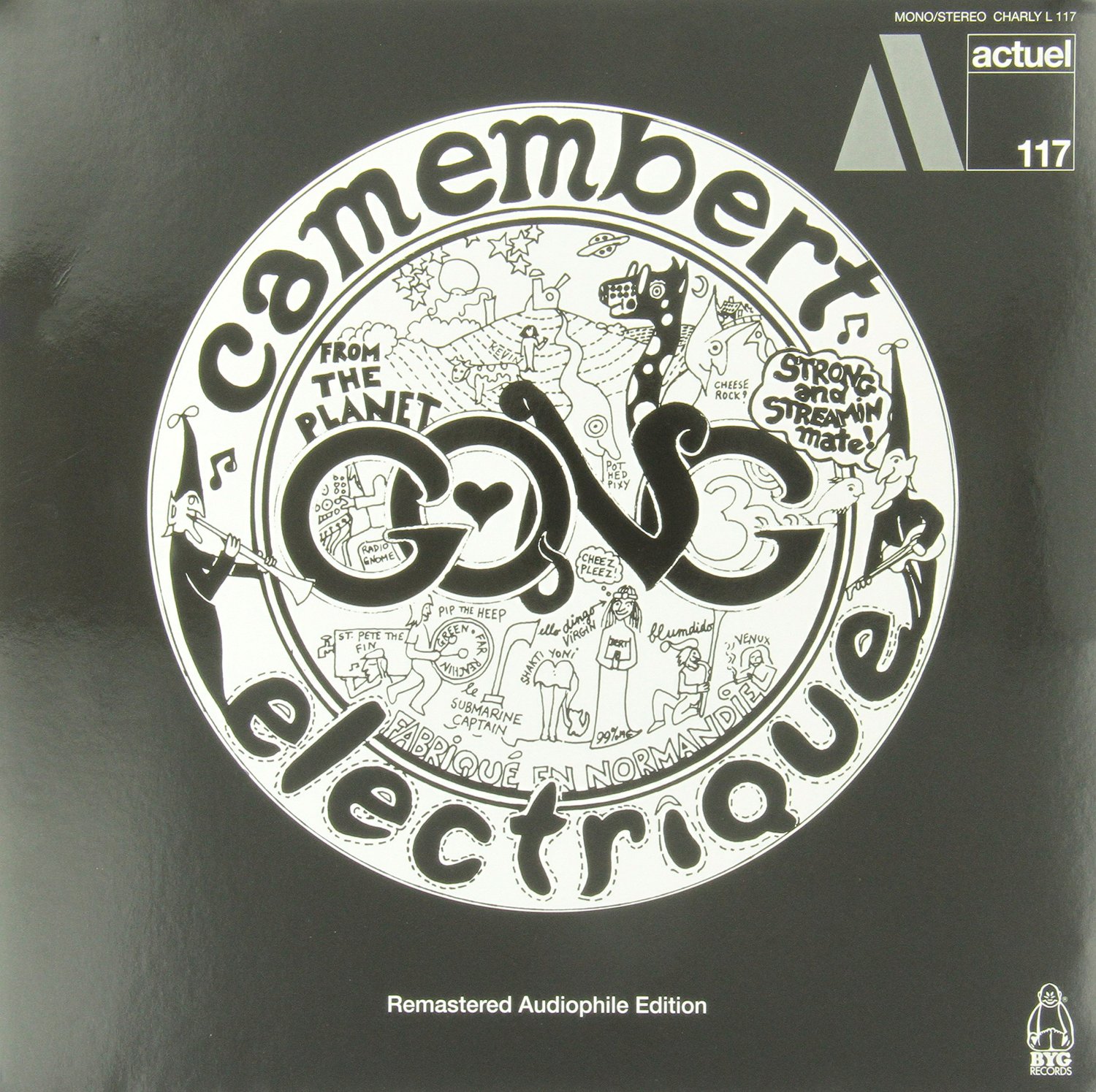
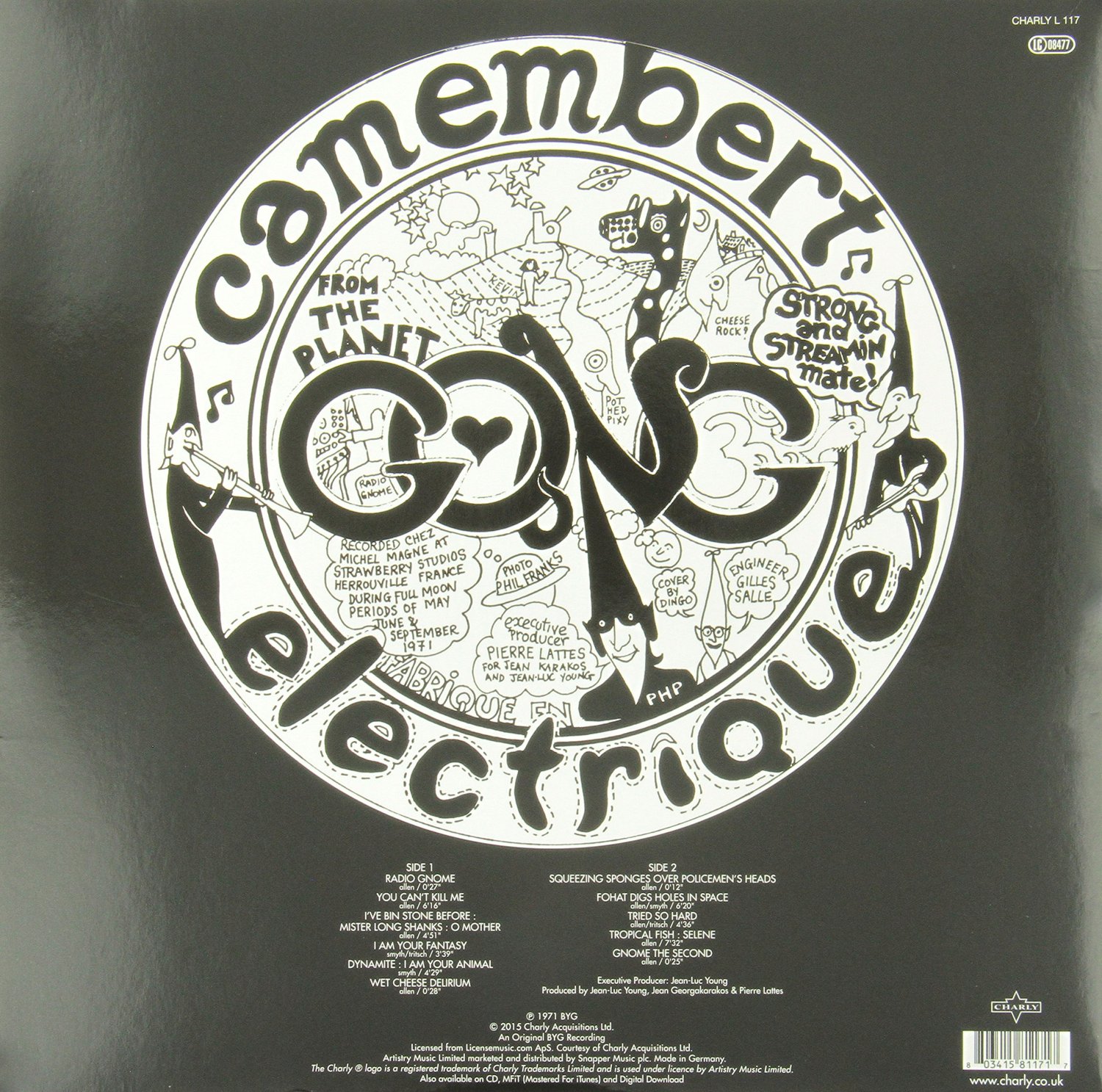
JETHRO TULL-BENEFIT-STEVEN WILSON 2013 STEREO MIX.
JETHRO TULL-BENEFIT-STEVEN WILSON 2013 STEREO MIX.
For Jethro Tull fans, 2015 looks like proving an expensive year. Much of Jethro Tull’s back catalogue has been released on import. This includes Thick As A Brick, Passion Play, War Child, Stand Up and Benefit. 2015 was proving an expensive year for fans of the Tull. It was soon,about to get a lot more expensive.
Last week, PLG released the new 40th Anniversary: La Grande Edition of Minstrel In The Gallery. Given Minstrel In The Gallery is one of Jethro Tull classic albums, the box set was a must have for Jethro Tull fans. The same day, what billed as the Standard Edition of Minstrel In The Gallery was released. By comparison, it seemed to have a much more low profile release. Grudgingly, Jethro Tull completists added the Standard Edition to their collections. However, soon, Jethro fans will be dipping into their wallets again for two new reissues.
Aqualung and Benefit are being reissued on 25th May 2015 by PLG. This however, isn’t a reissue of the original album. No. It’s Steven Wilson Mix of Aqualung and Benefit Steven Wilson Mix. For some Jethro Tull fans, the thought of two of their beloved group’s best albums being remixed, will sound like sacrilege. That’s not the case.
Previously, Steven Wilson has worked wonders with some of King Crimson’s back-catalogues. So, allowing him to work his magic on Aqualung and Benefit is a calculated gamble. Having heard Steven Wilson’s 2013 mix of Benefit, which I’ll tell you about, his mix of Benefit will be a welcome addition to any Jethro Tull’s fans music collection. However, before I tell you Benefit, I’ll tell you about about the roots of Jethro Tull and their journey to becoming one of the most successful, groundbreaking and innovative of the prog rock bands in musical history. The Jethro Tull story starts in Blackpool, in 1962.
That’s where the origins of Jethro Tull began, It was in Blackpool, in 1962, that Ian Anderson formed his first group The Blades. Originally a four piece, featuring Ian Anderson on vocals and harmonica, they became a quintet in 1963 and septet in 1964. By that time, they were a blue eyed soul band. After three years, the band decided to head to London.
Having moved to London, the band split-up within a short time. Just Ian Anderson and bassist Glen McCornick were left. This proved a blessing in disguise. They were soon joined by blues guitarist Mick Abrahams and drummer Clive Bunker. This was the lineup that featured on their debut album This Was. That was still to come.
Before that, the band had to settle on a name. Various names were tried. Then someone at a booking agent christened them Jethro Tull, after the eighteenth century agriculturalist. Not long after that, Ian Anderson acquired his first flute.
Up until then, Ian Anderson played just harmonica and was trying to learn to play the guitar. He realized wasn’t a great guitarist though. So, having decided the world had enough mediocre guitarists, he decided to expand his musical horizons. So he bought his first flute. Little did he realize this would be one of Jethro Tull’s trademarks. After a couple of weeks, Ian had picked up the basics of the flute. He was learning as he played. Not long after this, Jethro Tull released their debut single.
Sunshine Day was penned by Mick Abrahams, with Derek Lawrence producing the single. On its release, the single was credited to Jethro Toe. It seemed thing weren’t going right for Jethro Tull. The single wasn’t a commercial success and failed to chart. Despite this disappointment, thing got better when they released their debut album This Was.
Having released their debut album This Was in October 1968, it reached number ten in the UK. Then when This was released in the US in February 1969, it reached just number sixty-two in the US Billboard. Critics praised This Was, which cost just £1,200 to record. Featuring mostly original material, which was penned by members of Jethro Tull, This Was was a fusion of blues rock, folk, jazz and prog rock. This Was was a successful start to Jethro Tull’s career, which was about to enter a period where critical acclaim and commercial success were almost ever-present.
Prior to the recording of Stand Up, Jethro Tull’s sophomore album, Mick Abrahams left the band. Mick and Ian Anderson disagreed over the future direction of Jethro Tull. The problem was, Mick wanted Jethro Tull to stick with blues rock. Ian Anderson realised there was no real future in blues rock. He wanted to take Jethro Tull in different directions, exploring a variety of musical genres. So Mick left Jethro Tull and was replaced by Michael Barre. Little did either Mick nor Michael realise that Stand Up marked the start of a period where Jethro Tull sold over sixty-million albums.
Drawing inspiration from everything from blues rock, Celtic, classical, folk and rock work began on Stand Up. With Mick Abraham having left Jethro Tull, Ian Anderson was the primary songwriter. He penned nine of the ten tracks. They became Stand Up, which was released in August 1969 in the UK, where in reached number one. A month later, in September 1969, Stand Up reached number twenty in the US Billboard 200 Charts. This resulted not just in the start of Jethro Tull’s first gold disc, but the beginning of a golden period in their career. The next album in this golden period was Benefit.
For what became Benefit, Ian Anderson had written ten tracks. These ten tracks were recorded at Morgan Studios, London, during December and January 1970. Ian played flute, keyboards, guitar and sang lead vocals. The rest of Jethro Tull included Clive Bunker, who played drums, guitarist Martin Barre and bassist Glen Cornick who also played Hammond organ. John Evan, who’d later become a member of Jethro Tull, played piano and organ. David Palmer took charge of the orchestral arrangements, while Ian Anderson produced Benefit. It was released in April 1970.
Unlike Jethro Tull’s two previous albums, Benefit was released simultaneously in the US and UK and was well received by critics. Upon its release in April 1970, Benefit reached number three in the UK and number eleven in the US Billboard 200 Charts. This meant another gold disc for Jethro Tull. Not only were they were on a roll, but as Benefit shows, continually reinventing their music.
Opening Benefit is With You There to Help Me. Straight away, there’s some studio trickery at work, with a flute played backwards. Then, Jethro Tull remind me somewhat of The Moody Blues. Ian’s earnest, heartfelt vocal is enveloped by harmonies, while searing, scorching guitars answer his call. Soon, we hear a different side to Jethro Tull. They’re rocking, and rocking hard. Driven along by the rhythm section and bursts of scorching, sizzling guitars, while flourishes of flute cascade above the arrangement. They prove a foil for the vocal and guitar, on a track where folk, blues, jazz and rock intertwine seamlessly and mesmerically.
Despite being recorded in 1970, Nothing To Say sounds way ahead of its time. It sounds more like a track recorded around 1973 or 1974. Again musical genres are fused. Rock becomes prog rock and then thanks to Ian’s wistful vocal and the languid arrangement, almost pastoral and then rocky. Then thanks to echo and filters, a lysergic, psychedelic sound can be heard. With Jethro Tull’s rhythm section joining forces with fiery guitars and piano, they provide a fitting backdrop for Ian’s dramatic, hurt-filed and defiant vocal. Shrouded in echo, it takes on an almost mysterious sound. From there, harmonies combine with the band as a timeless track unfolds where Jethro Tull, musical visionaries, showcase their inconsiderable skills.
A piano sets the scene for Ian’s vocal on Alive And Well And Living In. Stabs of piano are matched by the bass before Ian’s vocal enters. It’s deliberate and definite. He seems to be taking care as he articulates the lyrics. Meanwhile flourishes of flute and bursts of guitar are fired off. By now we’re hearing a harder rocking side of Jethro Tull. Then the arrangement is stripped back to the piano and bursts of flute which accompany Ian’s dramatic, powerful vocal. A fusion of blues, orchestral, classical, prog rock and rock it’s a continuation of Jethro Tull’s reinvention.
Son is a stomping, hard rocking number. Here, Ian Anderson reminds me of Alex Harvey, of the Sensational Alex Harvey Band. His vocal is almost a theatrical sneer. Strutting his way through the track, machine gun guitars accompany him, while the rhythm section provide the heartbeat. Midway through the track, it’s all change. The tempo drops and Ian’s vocal becomes pensive, probing and questioning. Then the drama returns as the track heads to its glorious hard rocking crescendo.
Crystalline, chiming guitars join Ian’s tender vocal on For Michael Collins, Jeffrey and Me. The meandering guitars and vocal are a potent partnership. You’re drawn to them. Soon, you’re enchanted. Then with a burst of guitar the tempo picks up and Jethro Tull combine folk, blues, rock, classical and Celtic music. Just like what’s gone before, what follows is enthralling, beguiling and enchanting. It also shows another side to Jethro Tull.
To Cry You A Song sees a return to Jethro Tull’s blues rock sound. Driven along by a powerhouse of a rhythm section and dual guitars, it’s Jethro Tull at their best. Ian’s vocal is a mixture of power and emotion. When it drops out, Jethro Tull concentrate on mixing blues rock with prog rock. A captivating combination the music of the past, present and future collides head on. Later, Ian’s vocal is enveloped by harmonies and bursts of guitar, showcasing Jethro Tull at their hard rocking, bluesy best.
A Time For Everything bursts into life. It’s best described as a fusion of rock, Celtic and folk. Scorching guitars, boron, flute and acoustic guitar create a wall of dramatic, rocky music. As if inspired, Ian launches himself into the lyrics. He becomes a seer or philosopher, as he delivers the lyrics. A wash of feedback envelops a vocal that’s pensive, thoughtful and dramatic. Later, as the track heads towards a sudden and poignant ending Ian’s vocal is akin to an unanswered question. It’s as if he’s asking is there: “A Time For Everything?”
Inside is one of the highlights of Benefit. A rousing, anthemic combination of folk, rock and blues music. Meandering gently, there’s a slight Eastern influence. That’s maybe down to Ian’s flute. His vocal has a folk influence. Tender, veering between wistful and joyously, his vocal is crucial to the song’s success. Behind him, the rest of Jethro Tull combine musical genres on this breezy, joyous and irresistibly catchy track.
The rhythm section are at the heart of this hard rocking, bluesy Play In Time. Ian adds a grizzled vocal and plays the flute. Again, there’s some studio trickery, with the piano and guitars speeded up. This works, adding a psychedelic influence on this driving, dramatic and genre-melting track. Cascading flute, thunderous drums and wizened guitars provide the backdrop for what’s one of Ian’s best vocals. Strident and confident he struts his way through the track, as Jethro Tull kick loose. They’re a tight and talented unit who never miss a beat. As they jam, the earlier psychedelic influence adds the finishing touch.
Sossity You’re A Woman which closes Benefit, is very different from any of the other tracks. It’s like something from an other age. It’s as if Ian Anderson has been transported back in time as has been given the job of entertaining at a medieval feast. Just acoustic guitars accompany him, before later an organ adds an almost gothic sound. Later, the arrangement is a mass of acoustic guitars, tambourine, shakers and organ, before reaching its melancholy, thoughtful ending.
Benefit was just the second album in the most successful and productive period of Jethro Tull’s career. Between 1969 and 1979, nine of Jethro Tull’s albums were certified gold. Aqualung, Jethro Tull’s 1971 Magnus Opus was certified triple-platinum. It seemed Jethro Tull could do no wrong. They were one of the most successful, groundbreaking and innovative of the prog rock bands in musical history. Several times, Jethro Tull reinvented themselves musically. Jethro Tull weren’t content to stand still. Far from it. In their early years, Jethro Tull were experimenting musically, so they could come up with their trademark sound and style. This saw Jethro Tull become one the most groundbreaking and inventive bands of the prog rock era. Despite being one of the most innovative bands of the prog rock era, sadly, Jethro Tull never received the recognition they deserved.
After the advent of punk, critics and music lovers shied away from prog rock. Confessing to liking prog rock wasn’t the done thing. No. It wasn’t fashionable. Critics who previously, had championed prog rock, referred to prog rock groups like Jethro Tull as dinosaurs. Despite that, Jethro Tull gold discs kept coming Jethro Tull’s way. Right through to 1979s Stormwatch, Jethro Tull were hugely successful. The reason for that was their music never stood still. It constantly evolved. Jethro Tull’s music was groundbreaking, genre-melting and innovative. That’s why Jethro Tull enjoyed so much critical acclaim and commercial success.
Having released their debut album This Was in 1968, Jethro Tull went on to release another twenty studio albums. Their final album was 2003s The Jethro Tull Christmas Card. Over five decades, where they released twenty-one albums, Jethro Tull were more successful in the US than the UK. Ten of their albums were certified gold and one triple-platinum. Over in the UK, five of Jethro Tull’s albums were certified silver. Worldwide, Jethro Tull sold over sixty-million albums, making them one of the most successful prog rock bands ever. Despite that, Jethro Tull haven’t received the critical acclaim and recognition their music deserves.
Hopefully, that’s starting to change, especially with the rerelease of the Stephen Wilson mix of Jethro Tull’s third album Benefit, which will be rereleased by PLG on 25th May 2015. The Stephen Wilson mix of Benefit first featured on the 2013 Collector’s Edition. For those who haven’t got the Collector’s Edition of Benefit, Stephen’s mix brings out Benefit’s subtleties and nuances. The albums shares its hidden secrets. In many ways, Benefit takes on new life and meaning. All this is down to Stephen Wilson remixing Benefit, which is the perfect introduction to Jethro Tull’s music.
Along with Benefit, I’d recommend Aqualung. They’re the perfect starting point to Jethro Tull, one of the most innovative, groundbreaking, commercially successful and critically acclaimed prog rock bands of all time, whose music is truly timeless, innovative and groundbreaking.
JETHRO TULL-BENEFIT-STEVEN WILSON 2013 STEREO MIX.

CLARENCE “FROGMAN” HENRY-BABY AIN’T THAT LOVE-TEXAS AND TENNESSEE SESSIONS 1964-1974.
CLARENCE “FROGMAN” HENRY-BABY AIN’T THAT LOVE-TEXAS AND TENNESSEE SESSIONS 1964-1974.
New Orleans is one of America’s great musical cities. It always has been. That’s always been the case for just over a hundred years. Back then, blues and gospel provided Big Easy’s soundtrack. Next came Dixieland and swing. By then, New Orleans lived and breathed music. Even prohibition couldn’t stop the musical party in New Orleans.
Speakeasies sprung up across the city, as the Jazz Age took shape. New Orleans, one of America’s musical capitals came alive. Especially when one New Orleans’ most successful sons, Louis Armstrong took to the stage.
In 1924, Louis Armstrong became the featured soloist in the Fletcher Henderson dance band. Louis Armstrong spent the year with the Fletcher Henderson dance band. This was part of his musical education. It paid off, and
Louis Armstrong became one of the legends of jazz. However, Louis Armstrong wasn’t the only New Orleans’ native making a name for himself back then.
The Big Easy was the birthplace of Jelly Roll Morton, Sidney Bechet and Mahalia Jackson. Just like Louis Armstrong, they were all making forging a successful career in music. Later, so would Professor Longhair and Fats Domino. They would become two of New Orleans’ most successful musical exports, and influenced the next generation of musicians. This included Clarence “Frogman” Henry, whose career is celebrated on Baby Ain’t That Love-Texas and Tennessee Sessions 1964-1974 which was recently released by Ace Records. It documents a ten year period in Clarence “Frogman” Henry’s career. His story began in New Orleans, back in 1937.
Clarence “Frogman” Henry was born in Algiers, New Orleans, on March 19th 1937. He was one of seven children, but the only one who showed any musical aptitude.
His musical aptitude became apparent from an early age. There was a battered old piano in the Henry household. Young Clarence looked at it as a challenge. He was determined to teach himself to play it. However, he was only a child. This wasn’t going to stop Clarence. Eventually, through persistence, practice and determination, Clarence became a proficient pianist. For Clarence, this was his Everest. Next, he moved onto the trombone. Like the piano, Clarence conquered the trombone. So, when Clarence enrolled at Algiers High School, he was already a proficient in two instruments.
When his teachers saw that Clarence was a talented musician, they encouraged him. He improved under their tutelage. However, it was the breakthrough of another New Orleans’ native, Fats Domino, that inspired Clarence musically.
From that day that Clarence first saw Fats Domino, he was determined to become a singer. For many teenagers, this was the stuff of dreams. Not Clarence. He was determined to make his dream a reality. By the time his school days were almost at an end, Clarence had taken his first foray into music.
This was with Bobby Mitchell and The Toppers. They were well known in New Orleans. Despite their potential and talent, they struggled to make a name for themselves further afield. Clarence was a longtime fan of Bobby Mitchell and The Toppers. So when they were looking for a trombonist, Clarence auditioned. Bobby Mitchell thought Clarence fitted the bill, and Clarence became a Topper. He was now a professional musician.
The only problem was Clarence was still a student. He wanted to graduate, so had to juggle his studies with playing with Bobby Mitchell and The Toppers. This wasn’t ideal. However, Clarence made the best of it, playing live dates with Bobby Mitchell and The Toppers. Then on 9th February 1953, Clarence played the trombone on four tracks with Bobby Mitchell and The Toppers. During this session, Clarence started to write his now songs. It seemed Clarence was looking to the future. Especially when, after two years as a Topper, Clarence called time on his career with Bobby Mitchell.
Looking back, Clarence was taking a risk, turning his back on Bobby Mitchell and The Toppers. Maybe he realised they were never destined for fame and fortune? For Clarence, the future looked bright.
Not long after leaving Bobby Mitchell and The Toppers, Clarence formed his own group. They were mostly, a covers band. Sometimes, though, Clarence sung some of his own songs. That’s where Clarence was spotted by Pascal Marcello. He offered Clarence a gig at the Joy Lounge, in Gretna. That’s where Clarence got his break.
Paul Gayten was known locally as an R&B singer and pianist. He was also Chess’ A&R man. When he heard Clarence, he liked what he heard. Clarence was what Chess Records were looking for.
Following the emergence of Fats Domino, every record label was looking for their very own Fats Domino. So, A&R men set off across America looking for the next big thing. Paul Gayten thought he found it with Clarence Henry.
Having heard Clarence, Paul phoned Leonard Chess. He told his boss about this young, unknown singer, Clarence Henry. Leonard Chess not wanting to risk losing a potential star, made his way to New Orleans. Paul urged the owner of Chess Records to sign Clarence to their Argo imprint. When Leonard Chess heard Clarence sing, he knew his trip was worthwhile. Clarence Henry, and also Bobby Charles, were both signed to Chess Records the same day. Now Clarence’s solo career was underway.
Before his first recording session, Clarence and Paul penned two tracks, Driving Troubles and Ain’t Got No Home. The two tracks were recorded. When the time came to release Clarence’s debut single, Driving Troubles was chosen as the single. Ain’t Got No home was destined for the flip side…for the time being.
On the release of Driving Troubles, the single looked like it was about to sink without trace. Then DJ Poppa Stoppa flipped the single over. From the moment ge played Ain’t Got No Home, the radio station was getting calls to play what listeners called “the frog song, by that frog man.” Not only was Clarence well on the verge of having his first hit single, but his nickname was born.
By January 1957, Ain’t Got No Home entered the top twenty on the US Billboard 100, and reached number three in the US R&B charts. It looked like Clarence was about to enjoy a successful career at Chess.
That wasn’t to be. Clarence’s next four singles flopped. After that, Chess Records stopped taking Clarence’s calls. Already, he was yesterday’s man.
Four years later, in 1961, Clarence heard from Chess Records again. Although he hadn’t recorded anything recently for Chess, he was still under contract. So, Leonard Chess was within his rights to ask Clarence to cover a Bobby Charles song, I Don’t Know Why.
When Clarence arrived at the studio, Chess Records had put together their A-Team. They accompanied Clarence on I Don’t Know Why. However, there was a problem. A song from the forties had the same title. So, I Don’t Know Why became But I Do, and in the process, rejuvenated Clarence’s career.
When it was released, But I Do reached number four in the US Billboard 100, and number three in Britain. The followup, a cover of the Mills Brothers’ You Always Hurt, The One You Love gave Clarence another hit single. It reached number twelve in the US Billboard 100 and number six in Britain. With two hit singles on both sides of the Atlantic Clarence “Frogman” Carter’s was the comeback king.
As comebacks go, it was somewhat brief. After You Always Hurt, The One You Love, Clarence’s next couple of singles failed to chart. The timing couldn’t have been worse. Clarence was due to tour Britain with Bobby Vee and Tony Orlando. By the time the tour began, Clarence was a forgotten man.
To coincide with the British tour, Pye released A Little Too Much. Clarence even lip synched his new single on the British pop program Thank Your Lucky Stars. However, it was too little too late.
By 1963, Clarence hadn’t had a hit single for two years. Chess in America, and Pye in Britain had had enough. They were pouring good money after bad, trying to transform Clarence’s career. The time had come to pull the plug when Clarence’s cover of Nat King Cole’s Looking Back sunk without trace. There was no Looking Back for Chess or Pye. They turned their back on Clarence “Frogman” Carter. Music was changing, and in Britain especially, Clarence seemed to represent music’s past.
Bob Astor, Clarence’s longtime manager, refused to give-up on Clarence. They had been together a while, and been through good and bad times. So, once Clarence’s contract with Chess expired, Bob took Clarence to see Huey Meaux. However, there was a problem.
Huey and Cosimo Matassa had been partners in what was then, New Orleans’ premier studio. However, the pair fell out. There was no mending their relationship. This meant that Huey had no regular recording studio To call home.
That however, didn’t seem to matter. It seemed that whatever studio Huey decided to use, he was able to conjure up his trademark New Orleans sound. That’s what Bob Astor was looking for, for his client Clarence “Frogman” Henry.
Huey, who back then, was one of the Big Easy’s top producers, agreed to help. From 1964, right through to 1966, it’s thought that Heuy Meaux and Clarence “Frogman” Henry worked together.
Ironically, though, Huey was never officially credited as Clarence “Frogman” Henry’s producer. Instead, Bob Astor and Peter Paul were. That’s disputed by some as Huey’s voice can be heard on the master tapes. There could be an innocent explanation. It could be that for two years, Huey and Clarence attempted to rejuvenate the “Frogman” ailing career.
By 1966, the two men went their own ways. However, they had managed to record a plethora of music, some of which finds its way onto Ace Records’ recently released compilation Baby Ain’t That Love-Texas and Tennessee Sessions 1964-1974.
There’s a total of twenty-eight tracks on Baby Ain’t That Love-Texas and Tennessee Sessions 1964-1974. This includes nine unreleased tracks. Eight tracks made their way onto an Edsel compilation released in 1999. The other eleven tracks on Baby Ain’t That Love-Texas and Tennessee Sessions 1964-1974 were released between 1964 and 1974.
Having found a new producer for Clarence, Bob Astor, his manager, found him a new label, Parrot, a subsidiary of London Records. Clarence was still in the game. However, would his career take off at Parrot?
Now signed to Parrot, Clarence released five singles for Parrot. The first three singles don’t feature on Baby Ain’t That Love-Texas and Tennessee Sessions 1964-1974. However, the inclusion of You Can’t Hide A Tear and Cajun Honey more than make up for this. So, does the inclusion of Baby Ain’t That Love, the Huey Meaux penned Think It Over, and a remake of Clarence’s first hit single Ain’t Got No Home. It’s transformed. A stomping beat and blazing saxophones accompany Clarence, as he unleashes a vampish vocal. His biggest hit takes on new meaning. Despite the quality of Clarence’s releases on Parrot didn’t sell well. This left Clarence “Frogman” Henry’s career at the crossroads.
It had been five years since Clarence “Frogman” Henry had enjoyed a hit. Clarence was a talented singer, songwriter and musician. However, during the two years he spent with Parrot, commercial success passed Clarence by. He couldn’t live on his past glories. So Parrot release Clarence from his contract.
Clarence wasn’t without a contract long. He soon signed to Nashville based, Dial Records. It was owned by musician turned musical impresario, and publisher, Buddy Killen. With Buddy’s help, Clarence recorded two singles at Chips Moman’s American Studio. If anyone could turn Clarence’s career around in 1967, it was Chips Moman.
After cutting four sides at American Studio, the time came for Clarence to release his Dial debut. Hummin’ A Heartache, was chosen and released as a single in 1967.
On the B-Side was This Time. Sadly, it wasn’t This Time for Clarence “Frogman” Henry. Despite its quality, this fusion of pop and R&B flopped. This wasn’t the time for Clarence “Frogman” Henry. Maybe next time?
That wasn’t to be. Clarence released That’s When I Guessed as a single in 1968. With its country-tinged sound, it marked a stylistic departure from Clarence. So did the flip side, Shake Your Moneymaker. It was a slice of good time, funky soul. However, despite Clarence’s best efforts, history repeated itself. The single sunk without trace. That was the end of Clarence “Frogman” Henry’s time at Dial.
Nothing was heard of Clarence “Frogman” Henry until 1969. Although he charmed the crowds on Bourbon Street, Clarence never entered the studio until he was asked to record a live album for Roulette.
Clarence “Frogman” Henry Is Alive And Well Living In New Orleans was released on Roulette in 1970. For some, this was a blast from the past. With Clarence not having had a hit since 1961, many people had forgotten about him. However, still Clarence hadn’t entered the recording studio since 1967. It would be another three years before he set foot in Huey Meaux’s studio.
After seven years apart, Clarence and Huey reunited in 1973. The result of the sessions were a trio of singles released on the American Pla-Boy label. The first single, In The Jailhouse Now was released in late 1974, with We’ll Take Our Last Walk Tonight on the B-Side. Just like Clarence’s previous singles, it passed most people by. Hot on the heels of In The Jailhouse Now, came You Can Have Her. This was the last single Clarence released on the American Pla-Boy label. Still a hit single continued to elude Clarence “Frogman” Henry.
You Can Have Her is the final single that features on Baby Ain’t That Love-Texas and Tennessee Sessions 1964-1974. However, there’s still plenty more music to enjoy, including the nine previously unreleased tracks on Baby Ain’t That Love-Texas and Tennessee Sessions 1964-1974.
The unreleased tracks on Baby Ain’t That Love-Texas and Tennessee Sessions 1964-1974, show different sides to Clarence “Frogman” Henry. Among their highlights of the unreleased tracks are covers of Billy Hill’s The Glory Of Love and a driving version of You Made Me Love You. Looking Back is transformed into a beautiful, soul-baring ballad. Then Clarence strolls his way through You’ve Got A Lot To Learn. Long, Lost And Worried, a Mac Rebennack composition, sounds as if it was written for Clarence. He breathes life and meaning into the song. Just like Clarence’s cover of Heartaches By The Number, it’s a real find. However, it’s not the last.
Eight tracks that feature on Baby Ain’t That Love-Texas and Tennessee Sessions 1964-1974, made their way onto an Edsel compilation released in 1999. This includes slow, moody and bluesy Cheatin’ Traces. So does an upbeat, poppy version of Huey Smith’s Sea Cruise. A real find is I Can’t Take Another Heartache. As Clarence delivers a worldweary vocal, gospel-tinged backing vocals accompany him. Mathilda has a country blues influence, as Clarence delivers a truly heartfelt vocal. It’s one of the best of the tracks that Edsel licensed back in 1999. So, it’s fitting it features on Baby Ain’t That Love-Texas and Tennessee Sessions 1964-1974, which was recently released by Ace Records.
Baby Ain’t That Love-Texas and Tennessee Sessions 1964-1974 documents a ten year period in Clarence “Frogman” Henry’s long and illustrious career. Sadly, it wasn’t the most successful period of Clarence “Frogman” Henry’s career. There’s a reason for this.
From the British Invasion of 1964, neither R&B nor soul music was as popular in America. Blues and jazz had suffered the same fate. Pop, psychedelia, rock and then prog rock was what most people were listening to during this period. This meant that soul and R&B were marginalised. It seemed that the upsurge in interest in pop and rock was affecting sales of other genres in music.
The only soul label that seemed to be enjoying any sort of success was Motown. They were continuing to churn out their unique brand of poppy soul. Apart from Motown, soul singers signed to Stax and Atlantic enjoyed a degree of success. This would be the case with soul music throughout the period that Baby Ain’t That Love-Texas and Tennessee Sessions 1964-1974 covers.
Between 1964 and 1974, the soul factories of Detroit, Memphis and Philly would enjoy their moment in the sun. They seemed to find a winning formula. However, their sound was formulaic, and the success didn’t last.
This meant that the singles charts on both sides of the Atlantic were dominated by pop and rock. For soul singers like Clarence “Frogman” Henry, it meant their music often passed record buyers by.
That proved to be the case. Between 1964 and 1974, commercial success eluded Clarence “Frogman” Henry. He never enjoyed the commercial success that enjoyed at Argo. This was ironic. During this period, Clarence “Frogman” Henry was continuing to mature as a singer and musician. He was a much better singer by 1974, than he was when has signed to Argo. However, throughout that ten year period, commercial success eluded Clarence.
That’s despite the best efforts of producers Chips Moman and Huey Meaux. So, Clarence “Frogman” Henry returned to where it all began, the Big Easy.
For nineteen years, Clarence “Frogman” Henry made his money on Bourbon Street. Each night, locals and tourists flocked to Bourbon Street, where Clarence “Frogman” Henry won friends and influenced people. Clarence “Frogman” Henry was one of the biggest draws on Bourbon Street, where he played a selection of his finest moments, including some of the music on Baby Ain’t That Love-Texas and Tennessee Sessions 1964-1974.
CLARENCE “FROGMAN” HENRY-BABY AIN’T THAT LOVE-TEXAS AND TENNESSEE SESSIONS 1964-1974.



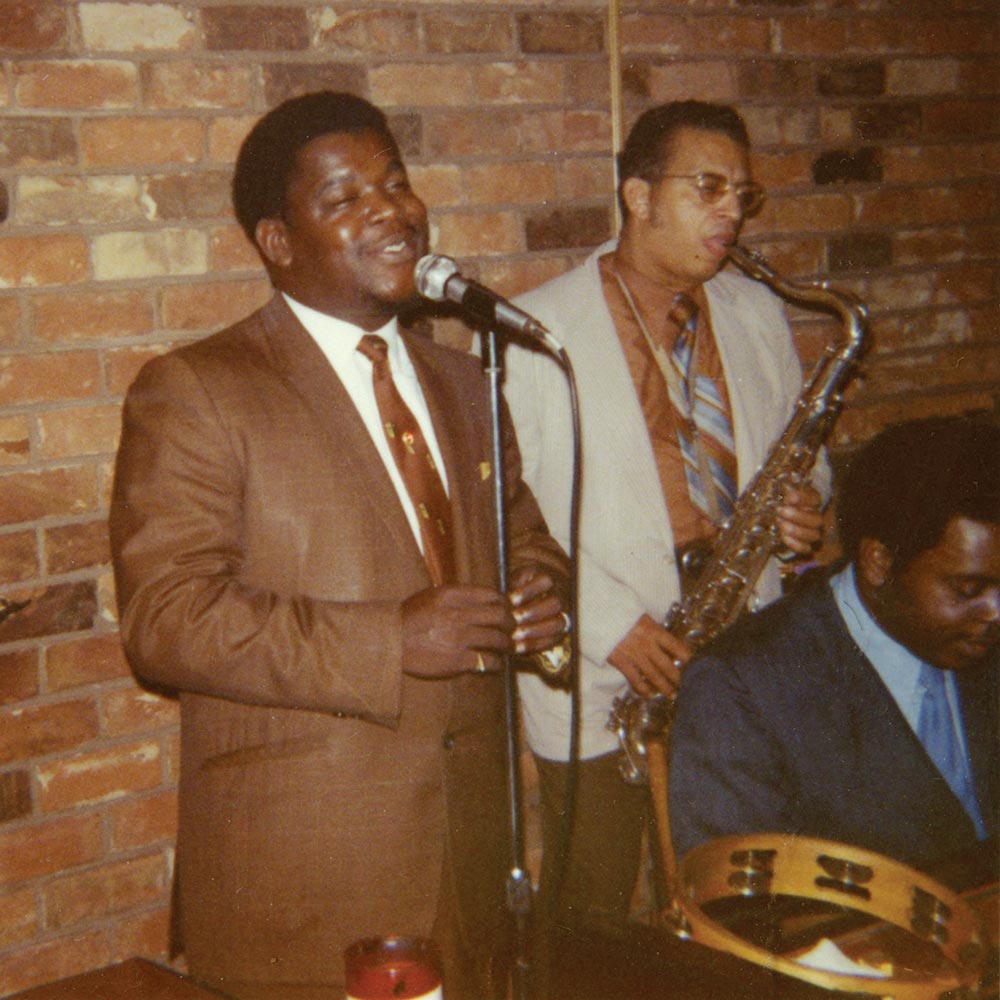

 dereksmusicblog
 dereksmusicblog