HELLO HEARTBREAKER-UPTOWN SOUL FROM SCEPTER, MUSICOR AND WAND.
Hello Heartbreaker-Uptown Soul From Scepter, Musicor and Wand.
Label: Playback Records.
Format: CD.
During the sixties, Scepter, Musicor and Wand played an important part in New York’s vibrant soul scene. These three record labels were among the finest purveyors of uptown soul and their releases were favourites of the Big Apple’s DJs and dancers. They were guaranteed to fill the dancefloor, and that’s still the case nearly fifty years later.
At soul nights across the world, DJs sill play single released on the Scepter, Musicor and Wand labels. This includes the twenty-eight tracks on Hello Heartbreaker-Uptown Soul From Scepter, Musicor and Wand which was recently released by the Australian label Playback Records.
Among the twenty-eight artists and groups on this compilation of lavishly produced big city soul are Jack Montgomery, Dean Parrish, Marie Knight, Bobby Hebb, The Shirelles, Big Maybelle, The Inspirations, Maxine Brown, Roscoe Robinson, Chuck Jackson, Judy Clay and Kenny Ballard and The Fabulous Soul Brothers. These are just some of the artists and bands who contribute dancefloor fillers and beautiful ballads that range from old favourites and hits to hidden gems and rarities.
Ironically for a compilation of New York soul Jack Montgomery’s Dearly Beloved was recorded in Detroit but released as a on Scepter in July 1966. Sadly, the single failed to chart when it was released. However, it later became a favourite on the UK Northern Soul scene where it’s still a favourite of DJs and dancers. No wonder as it oozes quality and is the perfect way to open Hello Heartbreaker-Uptown Soul From Scepter, Musicor and Wand.
Dean Parrish recorded Bricks Broken Bottles and Sticks which was arranged by Bert Keyes and produced by Stan Kahan and Bill Stanley. It was released in June 1965 but failed to find an audience. That’s despite being a hook-laden dancer that even today will fill a dancefloor.
Marie Knight started off as a gospel singer but in 1956 crossed over and started singing secular music. Her first top forty hit came in 1966 when she covered Cry Me A River which was released on Musicor. It’s one of her finest releases and features a soulful vocal powerhouse that’s accompanied by gospel-tinged backing vocals.
After enjoying a hit with Sunny, Nashville native Bobby Hebb released another of own compositions I Love Mary on Scepter in 1966. Although it didn’t replicate the commercial success of Sunny, it features a tender, heartfelt vocal and an understated arrangement that features lush strings.
By 1965, Big Maybelle was signed to Scepter and entered the studio to record an album. Instead of recording the tracks from scratch, she added her vocal to backing tracks that had been used by other artists. The album became The Soul Of Big Maybelle and was released later in 1965. One of the highlights was an impassioned and soulful cover of the classic Only You.
Although The Inspirations were from New Jersey they were based in Philly when they released Kiss And Make Up on Wand in April 1965. Hidden away on the B-Side is the hidden gem Love Can Be So Wonderful 8 Maxine Brown – I Don’t Need Anything which was penned by John Stiles and Bobby “Electronic” Eli.
In February 1967, Roscoe Robinson released What You’re Doin’ To Me on Wand. On the B-Side was A Thousand Rivers which was anther of his own compositions. It epitomises everything that’s good about uptown soul from the Big Apple.
Nowadays, Ronnie Milsap is best known as a successful country singer. However, during the sixties he recorded a string of soul sides. This included a cover of Never Had It So Good which was written by Ashford and Simpson with Joshie Armstead. The single was arranged by Ed Martin and produced by Stan Green and became Ronnie Milsap’s debut single for Scepter when it was released in October 1965. Sadly, this beautiful ballad which features a soul-baring, lovelorn vocal failed to trouble the charts.
Between 1961 and 1967 Chuck Jackson was signed to Wand, and in March 1965 released a cover of Carol King and Gerry Goffin’s I Need You. It’s another beautiful ballad with a needy and emotive vocal that’s accompanied by lush strings and soaring harmonies.
J.J. Barnes recorded the ballad Hey Child I Love You with postman turned producer Fred Brown in Detroit. However, the single was released by New York-based Scepter Records in 1964. Many people will recognise the song from the 2017 film Detroit which was set during the riots that took place during 1967.
Tommy Hunt is one of a small number of artists who recorded for both Musicor and Scepter. However, The Biggest Man was the very first single that was released in January 1967 on Dynamo, which was a new imprint of Musicor. The single reached the top thirty in the US R&B and features an impassioned vocal powerhouse from the Pittsburg-born soul man.
Judy Clay originally recorded the ballad Turn Back The Time for Scepter. It features a vocal that’s a mixture of power and emotion as she breaths life and meaning into the lyrics. Sadly, the song was never released until it belatedly made its debut on Big City Soul which was released by Kent Soul in 1986. Twenty-five years it returns for a well deserved encore.
Closing Hello Heartbreaker-Uptown Soul From Scepter, Musicor and Wand is Kenny Ballard and The Fabulous Soul Brothers’ There Will Never Be Another You. It’s a wistful but beautiful ballad that was released as a single on Dynamo in 1969 and is the perfect way to close the compilation.
For anyone interested in New York soul or soul music in general, Hello Heartbreaker-Uptown Soul From Scepter, Musicor and Wand. It features twenty-eight tracks and there’s contributions from some of the stars of soul as well as what will be new names for some people. They’re responsible for this compilation of dancefloor fillers and beautiful ballads that features hits, hidden gems and oft-overlooked rarities that were recorded during the sixties and are a reminder of the Big Apple’s uptown soul era. It’s celebrated on Hello Heartbreaker-Uptown Soul From Scepter, Musicor and Wand which was released by the Australian label Playback Records, and just like the previous releases is another lovingly curated compilation of soul.
Hello Heartbreaker-Uptown Soul From Scepter, Musicor and Wand.

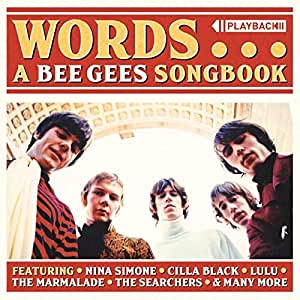
WORDS…A BEE GEES SONGBOOK.
Words…A Bee Gees Songbook.
Label: Playback Records.
Format: CD.
During a career that began in 1958 and lasted until 2009 the Bee Gees sold over 120 million records and are one of the biggest selling groups in the history of modern music. “Britain’s first family of harmony” won five Grammy Awards for the Saturday Night Fever soundtrack in 1978 and 1979 and in 1997 were inducted into Rock and Roll Hall of Fame. By then, the Bee Gees were enjoying a glittering career.
When they released their thirteenth studio album Main Course which was released in 1975 it was certified gold in America and double platinum in Canada. Little did the Robin, Barry and Maurice Gibb realise that this was the start of the most successful period of their career. Right through until the Bee Gees released their twenty-second and final studio album This Is Where I Came In, which was released in April 2001 every album was certified gold or platinum.
The secret to their success was their inimitable three-part harmonies and the hook-laden songs the Gibb brothers wrote. As songwriters they were master craftsmen who had the Midas touch.
That’s why so many artists and bands around the world have covered the Bee Gees songs over the last six decades. This includes the twenty-seven on Words…A Bee Gees Songbook which was released by the Australian label Playback Records. This lovingly compiled compilation features contributions from familiar faces and new names including Mike Furber, The Richard Wright Group, Noeleen Batley, The Cyrkle, The Marmalade, Cilla Black, Lulu, Jose Feliciano, Nina Simone, Swamp Dogg, Martin Carthy, The Seekers and The Searchers. They cover some of the Gibb brothers’ best known song while others dig deeper into their songbook for the oft-overlooked hidden gems.
Opening Words…A Bee Gees Songbook is Mike Furber’s cover of Where Are You. It’s the title-track from the 1967 EP by Sydney-based musician and vocalist Mike Furber and The Bowery Boys who were his regular backing band. The EP was released on the Kommotion label but wasn’t a commercial success. That’s despite the uptempo, soulful sounding title-track which sometimes sounds as if it’s been influenced by The Hollies. Sadly, the EP was the last release from Mike Furber and The Bowery Boys and nowadays is regarded as one of their finest songs.
In 1966, the Sydney-based The Richard Wright Group recorded a rocking cover of Neither Rich Nor Poor which they released as their single on HMV. It gave the group a local hit single in May 1966 and was the first of three singles they released.
Noeleen Batley came to prominence during the early sixties and was part of the early Australian pop scene. Initially she was a teen idol but Little Miss Sweetheart graduated to the cabaret circuit. By 1965, she was signed to the Festival label and in October of that year released a cover of Watching The Hours Go By. It was written by Barry Gibb and was recorded in 3/4 time. The result was one of Noeleen Batley’s finest recordings which is a welcome addition to the compilation.
Initially, The Cyrkle were purveyors of bubble gum pop which brought a degree of success their way. However, when the hits dried up they decided to cover Turn Of The Century which was released on Columbia in November 1967. Rather than try to reinvent the song, the group stayed true to the Bee Gees original. Sadly, the single failed to find an audience and nowadays is a regarded as a hidden gem
Soft Pillow only ever released a couple of singles including their cover of Gilbert Green which was released on the Park label in the group’s native Belgium in January 1969. It’s a fusion of pop-rock and psychedelia where a piano, lush strings and horns play a leading role on this hidden gem that sadly, is all too often overlooked by compilers. It’s another welcome addition to Words…A Bee Gees Songbook.
The Cole Brothers from Margate, New Jersey, released a cover of I Can’t See Nobody on the Jamie label in 1967. It was arranged by Richard Rome and produced by Kit Stewart who stay true to the original on this catchy cover.
By 1967, Jackie Lomax had signed to CBS and was working with producer Robert Stigwood. They recorded Genuine Imitation Life which was released as a single. On the B-Side was One Minute Woman which features a heartfelt, impassioned and soulful vocal from the Liverpool-born singer who sadly never enjoyed the commercial success his considerable talent deserved.
Scottish pop-rock group The Marmalade covered Butterfly which was released as their final single by CBS in October 1969. It was arranged by Keith Mansfield a future giant of library music, who is responsible for the sweeping strings and horns which punctuate what’s a stunning arrangement. Mike Smith takes charge of the production on this melodic and memorable cover which sadly, was the one that got away for The Marmalade.
Although Jose Feliciano was known for his easy listening sound, he wasn’t averse to bowling a curveball and reinventing tracks. This included his cover of Marley Purt Drive which he released as a single on RCA in 1969. It was arranged and produced by Rick Jarard. His arrangement combines elements of country rock with gospel-tinged and soulful harmonies as Jose Feliciano unleashes a impassioned and emotive vocal.
Nina Simone released a dramatic reading cover of To Love Somebody as a single on RCA Victor in 1968 and gave her a hit single in Britain. In 1969, the Gibb brothers composition lent its name to her new album. The title-track was one of the highlights of the album and features The High Priestess of Soul at the peak of her powers.
Charismatic describes Swamp Dogg who covered Got To Get A Message To You on his 1971 album Rat On. It features a soulful and impassioned rendition this Bee Gees song.
In 1998, Martin Carthy covered New York Mine Disaster for his album Signs Of Life which was released on Topic Records. This acoustic cover features a wistful vocal that’s full of emotion as the veteran folk singer takes the song in a new direction.
When The Seekers recorded the Bee Gees summer of love anthem Massachusetts they decided to stayed true to the original. The song made its debut on The Ultimate Compilation which was released by EMI in 2003. It returns for a well-deserved encore on Words…A Bee Gees Songbook.
Closing the compilation is The Searchers’ cover of Spicks and Specks. It was released as single on RCA in 1973. By then, the group’s glory years were in the past and they were trying to kickstart their career. They decided to head in the direction of glam pop on this stomping and rousing anthem which shows another side to The Searchers and closes Words…A Bee Gees Songbook with another hidden gem that thankfully has been unearthed.
For anyone with even a passing interest in the Bee Gees’ music this lovingly compiled collection of covers of twenty-seven of their songs is worth adding to their collection. Words…A Bee Gees Songbook is a mixture of tracks from familiar faces and what will be new names to many people. They cover classic tracks, hidden gems and deep cuts on Words…A Bee Gees Songbook which was released by Australian label Playback Records and is a compilation that oozes quality.
Words…A Bee Gees Songbook.
STEVE MOORE-ANALOG ACTIVITY.
Steve Moore-Analog Activity.
Label: Be With Records.
Format: LP.
Prolific is the perfect word to describe New York-based multi-instrumentalist, producer, remixer and film composer Steve Moore. He’s best known as one half of Zombi the duo that he formed with Anthony Paterra. However, that is just part of the Steve Moore story.
He’s also part of Brooklyn-based progressive rock group Titan, and has previously worked with an eclectic selection of artists including Ghost, Goblin, Lair Of The Minotaur, Maserati, Microwaves, Municipal Waste, Panthers, Red Sparowes and Sally Shapiro. These are just a few of the bands Steve Moore has worked with and he’s equally at home working on psychedelia, progressive rock, punk, post rock or even crossover thrash. Versatility seems to be his middle name.
Steve Moore has also enjoyed a successful career as a remixer and has remixed Lower Dens, The Melvins, Voivod and Washed Out. Then there’s his solo career.
This includes the music he’s released using various monikers including Gianni Rossi and his dance-pop alter-ego Lovelock. Steve Moore has also written the scores to a number of films, most of which are low budget horror films like The Guest and Cub. Then there’s the ten solo albums he’s released between 2007 and 2020.
Recently, ten albums became eleven when Analog Activity was released by Be With Records. It’s an album where the bassist and synth maestro joins forces with KPM on a carefully crafted album of modern library music.
The story behind Analog Activity began when Steve Moore had some downtime between the recording of the scores to The Guest and Cub. He decided to use the free time to record some new music. Soon, whenever he some free time he headed to his collection of synths and began working on new music. This continued for three years. During that period, Steve Moore never thought about what he would do with the music or even if he would release it. He was happy making new music.
Then he was invited by Jon Tye to play on his Ocean Moon project for KPM. That was when Steve Moore realised that the legendary library label was the perfect home for music he had been recording.
When he let executives at KPM hear the music that he had been recording they agreed. Now all Steve Moore had to do was finish the album.
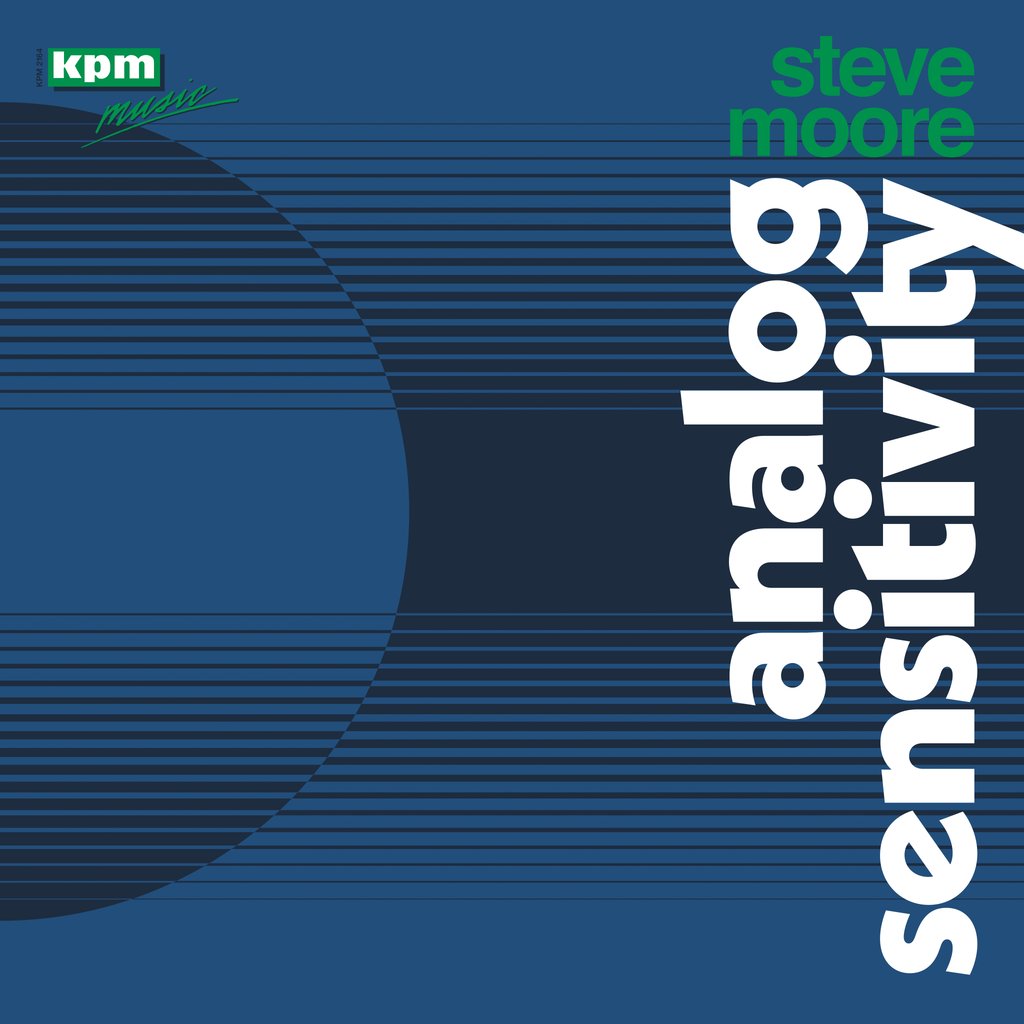
Steve Moore finishing production at his studio in Albany, New York, late 2019 in Albany, All he that was left was to sequence the album which became Analog Sensitivity.
On the ‘8th’ of July 2020 KPM added Analog Sensitivity to their vast and illustrious library. This was the second album of library music that Steve Moore had recorded for KPM. The first was Crystal Harmonies. It was followed by Analog Sensitivity.
Side One.
Side one of Analog Sensitivity opens with Eldberg which is a dark, moody and cinematic soundscape where there’s a sense foreboding despite the shimmering synth arpeggios. At The Edge Of Perception has a wistful sound before referencing Kraftwerk and adding futuristic and sci-fi sounds and before the track takes on an uneasy and unsettling sound.
Rose Of Charon has a slow, spacey cinematic sound that conjures up images of the Apollo space mission. Time Freeze is a slow cinematic synthscape that glides along its mesmeric and dreamy sound gradually revealing its secrets.
Seesaw synths open Analog Sensitivity is also mesmeric, sometimes haunting, wistful and beautiful. It’s music to ease the weary soul and which will make the world a better place.
Very different is Behind The Waterfall which has a dark filmic sound that paints pictures of a bleak, barren landscape in a world where something terrible has gone wrong.
Side Two.
Mirror Fountain has a similar sound to Behind The Waterfall and reveals a haunting atmospheric and eerie sound. Bubbling synths combine with drones, wispy pads and an effects-laden ambient guitar on Syzgy. It’s quite different from previous tracks but is tinged with drama and has a cinematic sound. So does Pentagram Of Venus which is understated, spacey and has a haunting, windswept sound.
Of Dust Thou Art plods along and a dark, disturbing and eerie soundscape takes shape. Straight away, Message From The Beast has an unsettling sound that sounds as if it belongs on the score to a horror movie. Bursts of sci-fi sounds are fired across the dark, hypnotic and sometimes elegiac soundscape. Closing side two is the Urge Surfing which is best described as broody, moody and atmospheric.
Although the golden age of library music was between the late-sixties and mid-eighties there’s still artists recording and releasing albums of modern library music. This includes Steve Moore who recorded Analog Activity during downtime in between recording film scores. he had no idea what to do with the music he was recording and it’s an accidental album of library music. It was only while recording the Ocean Moon album Crystal Harmonies for KPM that he found a home for the album he had been working on.
In the summer of 2020, Analog Activity became part of KPM’s vast, illustrious and legendary music library. Recently, Be With Records released Steve Moore’s first album of library music Analog Activity on vinyl. It’s one of the finest albums of modern library music released during the last few years and hopefully Steve Moore will go on to record more music for KPM in the future.
Steve Moore-Analog Activity.
CULT CLASSIC: ANDREW HILL-SMOKE STACK.
Cult Classic: Andrew Hill-Smoke Stack.
By the time Chicago-born pianist Andrew Hill released his sophomore album Black Fire on Blue Note Records in 1964, he was already thirty-two, and was making up for lost time. He had only started to play the piano when he was thirteen but made rapid progress. Earl Hines spotted the young pianist’s potential and encouraged him, and so did German composer, conductor, musician and teacher Paul Hindemith who he studied with until 1952. This paid off, and just two years later, Andrew Hill began working as a sideman. It was a rapid rise for someone who only took up the piano eight years earlier.
Andrew Hill was born in Chicago on the ‘30th’ of June 1941, and was brought up by his parents William and Hattie alongside his brother Robert, who was a singer and classical violinist. As a child, the future jazz great attended the University of Chicago Laboratory Schools. However, he didn’t start playing the piano until he was thirteen.
It turned out that he was a natural and his potential was spotted by another Chicago-born jazz pianist Earl Hines. He encouraged Andrew Hill, which may have changed the course of his career.
He had started out as a boy soprano, singing, playing the accordion and tap dancing. This was all part of an act that Andrew Hill had developed, and between 1943 and 1947 he was a familiar face at talent shows in the Windy City, and won two Thanksgiving parties at the Regal Theatre, which were sponsored by the local newspaper, the Chicago Defender. This was ironic because a few years earlier, he was selling the paper on the city streets. The same paper would later document Andrew Hill’s career.
Before that, Chicago-born composer, arranger and musician Bill Russo met Andrew Hill and referred him to Paul Hindemith. The high respect German composer, conductor, violist and violinist was teaching at Yale and taught Andrew Hill on an informal basis until 1952. By then, his career was well underway.
Andrew Hill had been playing in local R&B bands and alongside touring jazz musicians since he was a teenager. He had already shared the stage with Charlie Parker and Miles Davis, and the future looked bright for the young pianist. However, he was still learning about music.
In 1950, saxophonist Pat Patrick taught Andrew Hill his first blues changes on the piano. This was a revelation for the nineteen year old, who three years later, would make his professional debut.
This was with the Paul Williams’ band and much later, Andrew Hill remembered: ”At that time, I was playing baritone sax as well as piano. However, he settled on the piano which was the instrument he eventually made his name playing.
The following year 1954, Andrew Hill made his recording debut as a sideman. Within a decade he had embarked upon a solo career. That was all in the future.
Over the next few years Andrew Hill worked as a sideman and established a reputation as an up-and-coming pianist. He also met two men who would influence him stylistically, Barry Harris and Joe Segal.
In the late-fifties, Andrew Hill started to work as an accompanist for jazz singer Chicagoan Dinah Washington. Her popularity had soared during the fifties and she was enjoying the most successful period of her career. Working with the Queen of the Blues was a prestigious gig for Andrew Hill who also embarked upon a solo career whilst in her employ.
He signed to Warwick Records which had been established by Morty Craft in New York, in 1959. The new label released everything from rock ’n’ roll by Johnny and The Hurricanes to jazz albums by Pepper Adams, Curtis Fuller, Teddy Charles and Andrew Hill. His debut album was So In Love, a hard bop album which was produced by Fred Mendelsohn and released in 1960. However, the album wasn’t a commercial success and Andrew Hill continued to accompany Dinah Washington.
This he continued to do until 1961. By then, the nomadic life as a sideman and years spent touring had taken their toll, and Andrew Hill was ready to settle down.
He was thirty in 1961, and decided to move to New York which became his new home. This made sense as the Big Apple was the jazz capital of America and home to many of the top jazz clubs. It was also where he worked with Al Hibbler and Johnny Hartman. Living in New York seemed to suit Andrew Hill. Despite that, he decided to move to Los Angeles.
This came about after he got the chance to work with Roland Kirk’s quartet who were playing at the Lighthouse Café, in Hermosa Beach. However, it wasn’t long before Andrew Hill was heading home having also played on Roland Kirk’s album Domino. It was released in November 1962, and was the second album he had played on that year.
The other was Walt Dickerson’s To My Queen. It was also released in 1962 and was a showcase for Andrew Hill’s piano playing. However, 1963 would be the busiest year of his career.
For part of 1963, Andrew Hill worked as sideman playing on Jimmy Woods’ Conflict and then on Hank Mobley’s No Room For Squares and Joe Henderson’s Our Thing which were released by Blue Note Records. This was the label that Andrew Hill had signed to, and in November 1963 would record his sophomore album.
Three years had passed since the release of So In Love, and Andrew Hill was keen to kickstart his solo career. There was no better place to do so, that at Blue Note Records which was jazz’s premiere label. He would be working with some of the biggest names in jazz as well as recordist Rudy Van Gelder and producer Alfred Lion.
Black Fire.
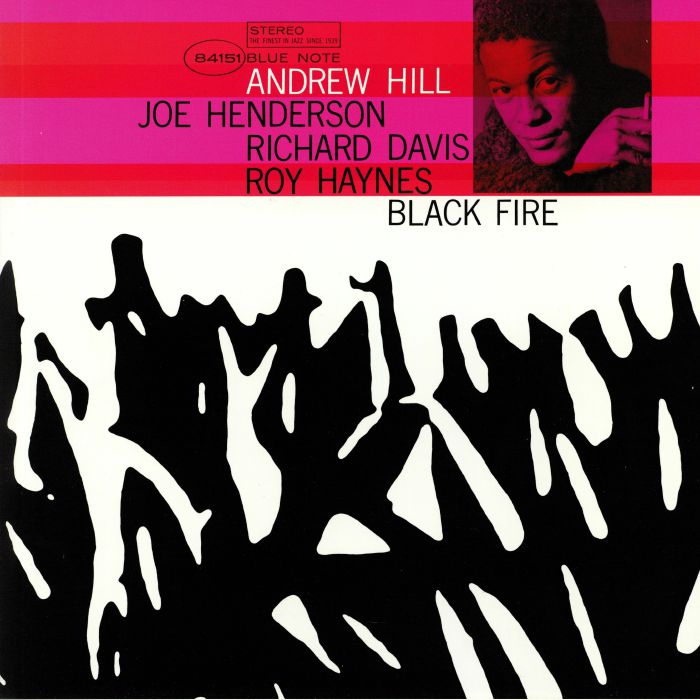
On the ‘8th’ of November 1963, Andrew Hill and his band travelled to the now familiar environs of Van Gelder Studio, which was situated at 445 Sylvan Avenue, Englewood Cliffs, New Jersey. The band that arrived at the studio wasn’t the one that was meant to record the album. Drummer Philly Joe Jones had to drop out because of scheduling problems and was replaced by Roy Haynes. He was joined by in the rhythm section by bassist Richard Davis who later played on Van Morrison’s classic album Astral Weeks. Completing the lineup were saxophonist Joe Henderson and bandleader Andrew Hill who wrote the seven tracks on Black Fire.
Unlike many Blue Note Records’ albums which were recorded in a day, Black Fire took two days to record. The band made the return journey to New Jersey and recorded the rest of the album ‘9th’ of November 1963. Now Andrew Hill’s Blue Note Records’ debut was ready to release.
When Black Fire was released to critical acclaim in the spring of 1964, it was hailed as a powerful and impressive album that was unique. Here was an album that stood out from the crowd. The music was adventurous and innovative and borrowed from avant-garde and combined this with hard bop, Afro-Cuban rhythms and modal harmonics. While the music on the album was complex and sometimes challenging it was rewarding and Black Fire was later heralded as a timeless modern jazz classic. Andrew Hill had set the bar high with his Blue Note Records’ debut. How would he follow this up?
Smoke Stack.
While many record labels would’ve waited until Black Fire has been released before sending Andrew Hill back into the studio, that wasn’t the way Blue Note Records operated. Alfred Lion decided that his new signing should return to the Van Gelder Studio n the ’13th’ of December 1963 and record the followup to Black Fire, Smoke Stack.
Just like Black Fire, Andrew Hill had written the seven tracks that would become Smoke Stack. It was going to be a very different album from Black Fire as it would feature two bassists.
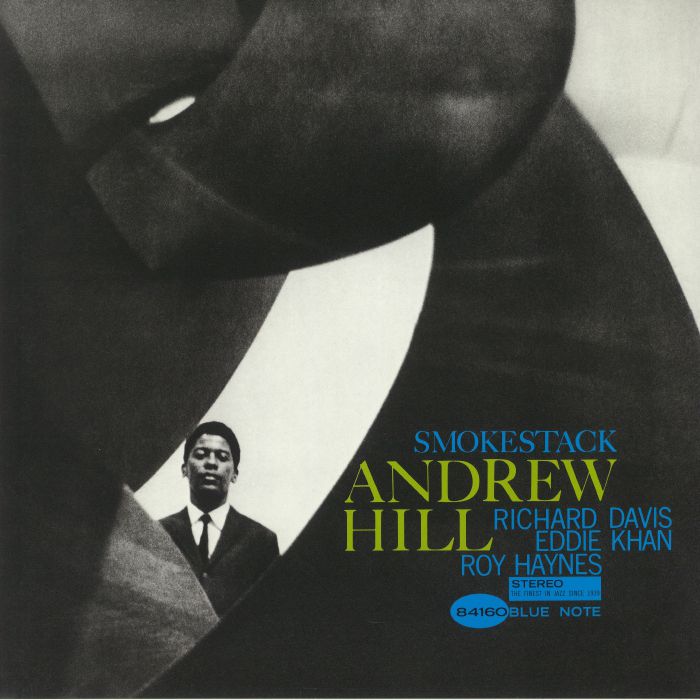
Joining Andrew Hill at Van Gelder Studio were drummer Roy Haynes and bassists Richard Davis and Eddie Khan. They worked their way through seven compositions and this time, the session lasted just the one day. However, Smoke Stack wasn’t released until August 1966.
By then, Andrew Hill played on Bobby Hutcherson’s 1965 album Dialogue and recorded six more solo albums. He released Judgment! in September 1964, which was followed by Point Of Departure in April 1965. After this, Blue Note Records decided the time was right to release Smoke Stack.
Nearly three years had passed by the time Smoke Stack was released in August 1966 and often, an album can sound dated. That wasn’t the case when it was released to mostly critical acclaim and hailed as a cerebral and innovative album which was a showcase for Andrew Hill’s enviable compositional skills and one of the leading pianists of the early-sixties. However, despite the reviews of Smoke Stack the album failed to match the success of Black Fire. It was the album that got away for Andrew Hill.
Looking back, Smoke Stack found Andrew Hill’s music evolving, and it was quite different to the previous album he had recorded in 1963, Black Fire and featured what were akin to seven impressionistic tone poems. They showcased a talented composer who was confident enough to eschew conventionally structured compositions and encourage spontaneity and allowed his band to improvise and play with freedom and fluidly. This was something that Andrew Hill explored on future albums, especially Point Of Departure.
On Smoke Stack, gone was much of the obvious Afro-Cuban rhythms on what was another ambitious, adventurous, complex cerebral album of post-bop. It was an album where Andrew Hill was the midpoint between hard bop and free jazz. Having said that, Smoke Stack eschewed much of the looseness and dissonance of free jazz. However, the lengthy and sinuous modal improvisations made it a challenging album for some listeners. Those who understood and embraced the album found it was a rewarding experience.
That was despite some of the music being dark, broody and ruminative. It was also subdued and sometimes slightly discordant. However, the loose and nebulous song structures of the seven tone poems allowed the quartet to shine.
Andrew Hill came into his own on the angular modernist piano structures, and during the improvised solos his playing borders on provocative. Some critics described his playing insular and cerebral and a few as challenging. However, by 1963 when the album was recorded jazz was evolving and not everyone understood the direction the music was heading or what he was trying to achieve. On Smoke Stack Andrew Hill and his band play with an unbridled freedom and the constantly changing combination of two bassists made it a unique and innovative album that stood out from the crowd.
Among the album’s highlights are the beautiful, gossamer ballad Verne, which was dedicated to Andrew Hill’s first wife, Laverne Gillette. It’s haunting and poignant. Another highlight is the understated and blues-tinged 30 Pier Avenue. Then there’s Ode To Von which Andrew Hill dedicated to saxophonist Von Freeman. These three tracks are part of what was the most ambitious and innovative album that Andrew Hill had recorded during his career. Incredibly Smoke Stack was recorded in 1963 and was without doubt an album that was way ahead of its time.
The cerebral Chicagoan bandleader, composer and pianist was an innovator and pioneer and Smoke Stack is an oft-overlooked and underrated album. Partly because it wasn’t as successful as Black Fire and maybe because some critics and record buyers didn’t understand what Andrew Hill was doing or like the direction his music was heading.
That was a great shame given the quality of music on Smoke Stack. It veers between broody and ruminative to beautiful, delicate, expressive, emotive and haunting on what’s an ambitious, innovative and complex album that captivates, challenges and ultimately is rewarding for those who embrace and understand Andrew Hill’s vision on Smoke Stack.
Cult Classic: Andrew Hill-Smoke Stack.
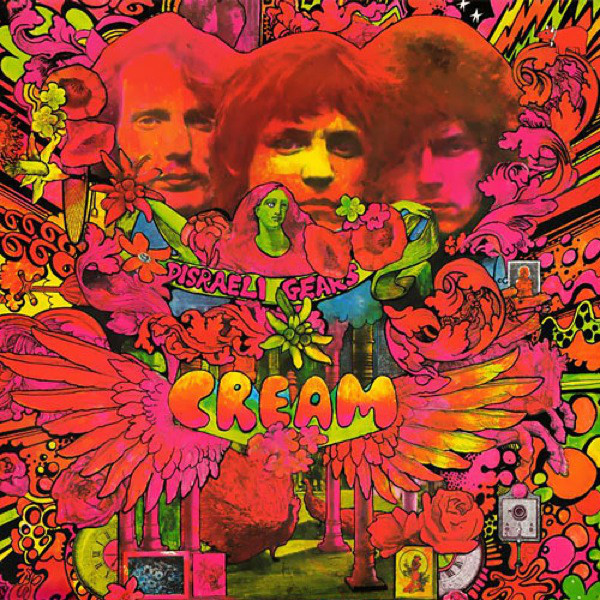
CLASSIC ALBUM: CREAM-DISRAELI GEARS.
Classic Album: Cream-Disraeli Gears.
Nowadays, the British rock group Cream are regarded as the world’s first ever supergroup. They were founded in the summer of 1966, and split-up in November 1968, having released four albums that sold over fifteen million copies worldwide. This included their critically acclaimed sophomore album Disraeli Gears, which was released in November 1967 and hailed a classic by critics. By then, Cream had come a long way in a short space of time.
By July 1966, Eric Clapton was in his second spell with John Mayall and The Bluesbreakers. He originally joined in April 1965 and was a Bluesbreaker until August 1965. That was when he left the band for the first time.
In November 1965, Eric Clapton returned to the fold and for the next eight months he was back with the Bluesbreakers. During this period, John Mayall and The Bluesbreakers recorded their classic album Blues Breakers With Eric Clapton in April 1966.
Three months later, and Blues Breakers With Eric Clapton was released by Decca on the ‘ 2nd; July 1966. Critical acclaim accompanied what’s regarded as a British blues classic. It reached number six in the UK charts and this should’ve been a reason to celebrate. However, Eric Clapton was neither happy nor feeling fulfilled musically.
Instead, he felt constrained musically. Eric Clapton was unable to stretch his legs within John Mayall and The Bluesbreakers. There was certainly no room for invention and he found this was frustrating. So much so, that he was even considering forming his own band. However, the Blues Breakers With Eric Clapton had just been released and looked like being the band’s most successful album. Despite that, Eric Clapton’s nascent career was at a crossroads.
To take his mind off his problems, Eric Clapton decided to go and see blues guitarist Buddy Guy in concert. That night, Buddy Guy took to the stage with a trio. When Eric Clapton saw the trio live, he was so impressed that he decided to form a new band. They would also be a trio, Cream.
Having made the decision to leave John Mayall and The Bluesbreakers, Eric Clapton began looking for musicians to join his band. He knew drummer Ginger Baker, who was a member The Graham Bond Organisation. Ginger Baker was tiring of Graham Bond’s drug addiction and bouts of instability. So much so, that he was considering his future.
When Eric Clapton approached Ginger Baker about joining his trio, the answer was yes. However, there was a catch. Eric Clapton had to agree to hire The Graham Bond Organisation’s bassist Jack Bruce.
Eric Clapton already knew Jack Bruce and played alongside him on two occasions. The first came in November 1965 when Jack Bruce sat in with John Mayall and The Bluesbreakers during November 1965. More recently, Eric Clapton and Jack Bruce were part of Steve Winwood’s band Powerhouse, which also featured Paul Jones. During the two sessions, Eric Clapton had been impressed by Jack Bruce proficiency and prowess as a bassist. Jack Bruce who had previously enjoyed working with Eric Clapton, agreed to join the band. However, he was surprised that Ginger Baker had recommended him to Eric Clapton.
During their time with The Graham Bond Organisation, Ginger Baker and Jack Bruce had a volatile relationship. The two members of the rhythm section were known to argue onstage. Sometimes, things got so bad that they traded blows. However, that was the past. Ginger Baker and Jack Bruce agreed to put their differences aside. A musical truce was declared. Suddenly, there was peace in our time. All for the good of the new group.
With the lineup complete, the nascent band set about establishing the ground rules. They envisaged that songs would be collaborations, with each member playing a part in writing the lyrics and music. Next on the agenda was a name for the group. It didn’t take long for them to come up with the name Cream. The music press had been describing the new band as the: “cream of the crop” of British musicians. Cream was essentially the first British supergroup. They were about to make what was their unofficial debut.
This took place on the 29th of July 1966, at the Twisted Wheel nightclub in Manchester. That night, it was hosting the Sixth Annual Windsor Jazz & Blues Festival. Cream was a special guest, and in absence of new material, ran through a set of blues covers. Little did those in the audience realise that they had just witnessed history being made.
Just three months later, in October 1966, Cream took to the stage with another legend of sixties music, Jimi Hendrix. He was a fan of Eric Clapton and was keen to jam with his new band on his arrival of London. Little did anyone realise that by the end of the sixties, both Cream and Jimi Hendrix would’ve become two of the biggest names of the late-sixties music scene.
Later in 1966, Cream was still experimenting musically, and had yet to decide who would be the group’s lead vocalist. Eric Clapton’s shyness meant he was reluctant to take charge of the lead vocals. Instead, Jack Bruce became Cream’s lead vocalist. However, during Cream’s lifetime, Eric Clapton would add harmonies and the lead vocal on a number of tracks.This included a track on Cream’s debut album Fresh Cream.
Fresh Cream.
Almost straight away, work began on Cream’s debut album, which later became Fresh Cream. It featured ten songs. They were a mixture of new songs and cover versions.
The new songs included Jack Bruce’s N.S.U. and Dreaming. He cowrote Sleepy Time Time with his first wife and songwriting partner Janet Godfrey. She cowrote Sweet Wine with Ginger Baker, who wrote the instrumental Toad. Other songs included a cover of song Cat’s Squirrel, which was arranged by Cream and a quartet of blues classics.
This included Willie Dixon’s Spoonful. Cream decided to cover Robert Johnson’s From Four Until Late which Eric Clapton arranged. It was joined by Rollin’ and Tumblin’ which Muddy Waters penned using his real name, McKinley Morganfield. The final blues classic was Skip James’ I’m So Glad. These songs were recorded over a three-month period.
Recording of Fresh Cream took place between July and October 1966 at two separate studios in London. Some sessions took at Rayrik Studios, while others took place at Ryemuse Studios. Drummer Ginger Baker joined bassist Jack Bruce in the rhythm section. He also played harmonica, piano and took charge of seven of the eight lead vocals. Guitarist Eric Clapton added the lead vocal on Four Until Late. Meanwhile, Robert Stigwood ‘produced’ what would later became Fresh Cream. It was completed by October 1966.
The release of Fresh Cream was scheduled for the 9th of December 1966. Before that, Cream released their debut single Wrapping Paper in October 1966 . It was penned by Jack Bruce and Pete Brown, but didn’t feature on Fresh Cream. Wrapping Paper showcased a psychedelic pop sound that Cream returned to. This proved popular and reached thirty-four in the UK charts. Things were looking good for Cream.
Nearer the release of Fresh Cream, critics had their say on the nascent supergroup’s debut album. Nearly every critic lavished praise and plaudits on Fresh Cream. They were won over by an album that ranged from blues rock to psychedelia and a much more hard rocking sound. Cream’s debut was an eclectic and accomplished album. Especially the psychedelic sound of N.S.U, the bluesy Sleepy Time and the Jack Bruce penned ballad Dreaming. Four Until Late shakes off his shyness and makes his debut on lead vocal on the cover Robert Johnson’s Four Till Late. However, one of Cream’s finest moments on Fresh Cream was their reinvention of I’m So Glad. It’s transformed into something that Skip James could never have envisaged. Given the critical reaction to Fresh Cream, it seemed that the future looked bright for Cream.
They prepared to release Fresh Cream on the 9th of December 1966 on Robert Stigwood’s new independent record label, Reaction Records. The same day, Cream released their sophomore single, I Feel Free. Just like their debut single, it didn’t feature on Fresh Cream. Despite that, I Feel Free reached number eleven in the UK and fifty-three in Australia. Meanwhile, Fresh Cream reached number six in the UK, ten in Australia and twenty in France. This resulted in Fresh Cream being certified gold in Britain and France. The success continued when Fresh Cream was released in America.
The American version of Fresh Cream was released by Atco. It featured a slightly different track listing. I Feel Free opened the album, with the British version of Fresh Cream following. This proved popular among American record buyers. Fresh Cream eventually reached thirty-nine in the US Billboard 200 and was certified gold. For Cream, this meant that their debut album Fresh Cream had been certified gold in three different continents. Critics wondered how they could they followup such a successful album? Cream returned with a classic album, Disraeli Gears.

Disraeli Gears.
Following the success of Fresh Cream, Cream headed out on tour. In March they landed in America, to play their first American tour. They were part of a package tour, and were booked to play nine dates at the Brooklyn Fox Theater in New York.
Each day, Cream played three times. However, the early concerts weren’t well received. DJ turned promoter Murray the K wasn’t impressed. He placed Cream at the bottom of the bill. Towards the end of the run, they were reduced to playing just one song during each set. The New York part of their American tour had been a disaster. They wouldn’t forget Murray the K in a hurry.
Having returned home from their American tour, Cream’s thoughts turned to their sophomore album. They had been writing what later became Disraeli Gears for some time.
When Cream was formed, the plan had been for the band to collaborate on songs. Alas, none of the eleven tracks on Disraeli Gears were written by the three members of Cream. They arranged the traditional song, Mother’s Lament. Sometimes, the members of Cream wrote alone. Jack Bruce wrote We’re Going Wrong and Ginger Baker penned We’re Going Wrong. Mostly, the members of Cream wrote alone or formed songwriting partnerships with other musicians and songwriters.
Jack Bruce and Eric Clapton cowrote Sunshine Of Your Love with Pete Brown. It would become one of their known songs. So would Strange Brew, which Eric Clapton wrote with Pete Brown. Meanwhile, Jack Bruce wrote Dance the Night Away, SWLABR and Take It Back with Pete Brown. Eric Clapton and Martin Sharp wrote Tales of Brave Ulysses. These songs were joined by a couple of cover versions.
This included Arthur Reynolds’ Outside Woman Blues which was arranged by Eric Clapton. The other cover versions was World Of Pain, which was penned byFelix Pappalardi and Gail Collins songwriting partnership wrote. Just like the rest of Disraeli Gears, it was recorded in New York, during May 1967.
Recording of Disraeli Gears took place at Atlantic Studios, New York. This time around, Cream was joined by a new producer, with Felix Pappalardi replaced ‘musical impresario’ Robert Stigwood. The twenty-seven year old was a classically trained musician who having turned his back on classical music, became a successful singer, songwriter, bassist and producer. However, Disraeli Gears was one of the biggest projects of his career, and was a much more complex album than Fresh Cream.
Ginger Baker played drums and percussionist and joined his cohort, bassist Jack Bruce in the rhythm section. Jack Bruce also played harmonica, piano and took charge of seven of the eight lead vocals. Eric Clapton switched between lead guitar, rhythm guitar and twelve-string guitar. He also added the lead vocal on Strange Brew, World of Pain and Outside Woman Blues. It seemed that Eric Clapton was well on his way to overcoming his shyness, as Cream changed direction musically.
Critics realised this when they received their promotional copies of Disraeli Gears. It took its name from a malapropism which alluded to the former British Prime Minister Benjamin Disraeli. Eric Clapton had been taking about buying a racing bike during a car journey. Mick Turner who was driving the car responded that it should have: “Disraeli Gears” when he meant derailleur gears. That malapropism gave birth to tittle of the album critics were holding. When they listened to Disraeli Gears, they soon realised that Cream was moving away from the blues’ roots.
That was apart from on the cover of Blind Boy Reynolds’ Outside Woman Blues and Take it Back. It had been inspired by American students burning their draft cards. These were the only bluesy tracks on Disraeli Gears. Mostly, Cream moved towards psychedelia on Disraeli Gears. Tracks like Strange Brew, Sunshine Of Your Love, Dance The Night Away, Tales Of Brave Ulysses and We’re Going Wrong found Cream embracing psychedelia on an album that stood head and shoulders above the competition. Critic acclaim accompanied the release of Disraeli Gears.
On 2nd November 1967, Cream released their sophomore album Disraeli Gears. In Britain, Disraeli Gears reached number six and was certified platinum. Meanwhile, Disraeli Gears reached number two in France and twenty in Norway. Halfway round the world, Disraeli Gears reached number one in Australia and was certified platinum. However, Disraeli Gears was a huge success across North America. It reached number ten in Canada and number four in America. By then, Disraeli Gears had sold over a million copies. This resulted in Cream receiving their first platinum disc in America. However, that wasn’t the end of the success for Cream.
They released Sunshine Of Your Love as a single in January 1968. It reached seventeen in the UK, eighteen in Australia, three in Canada and five in the US Billboard 100. This resulted in Sunshine Of Your Love being certified gold in Britain, Australia and America. After just two albums, Cream was one of the biggest bands in the world.
Following Disraeli Gears, Cream would rebased just two more albums. This included their third and final studio album Wheels Of Fire, which was released on the ‘9th’ of August 1968 and became world’s first platinum-selling double album. By then, all wasn’t well within the band.
Cream’s manager Robert Stigwood announced they were disbanding in November 1968. They had just completed recording their swansong Goodbye Cream a month earlier in October 1968. It featured three tracks recorded in the studio and another three which were recorded live. When Goodbye Cream was released in February 1969 and topped the British charts and reached number two in America. It was the end of an era for Cream.
They sold over fifteen million copies of Fresh Cream, Disraeli Gears and Wheels Of Fire and Goodbye. That is why nowadays, Cream are regarded as rock royalty. Cream were also the first British supergroup. Soon, others followed in Cream’s wake but never came close to replicating the commercial success and critical acclaim that Cream enjoyed. They were in a league of their own.
Each of the albums they released found Cream’s music evolving as they continued to create groundbreaking music. This includes on their sophomore Disraeli Gears where they fuse blues rock, hard rock and psychedelia to createa timeless classic that belongs in every self respecting record collection.
Classic Album: Cream-Disraeli Gears.
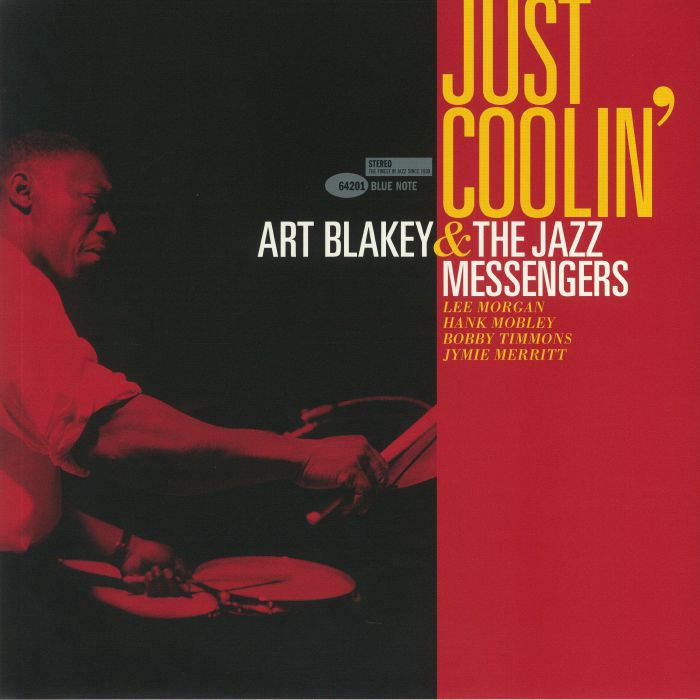
CULT CLASSIC: ART BLAKEY AND THE JAZZ MESSENGERS-JUST COOLIN’.
Cult: Classic: Art Blakey and The Jazz Messengers-Just Coolin’.
Although Philly-born tenor saxophonist Benny Golson’s tenure with The Jazz Messengers was short-lived, he still played an important part in the development and history of the group. He joined in 1958, and during the summer, helped Art Blakey recruit three new Messengers.
They were all from Philly, and included bassist Jymie Merritt, pianist Bobby Timmons and trumpeter Lee Morgan who joined Benny Golson in the front line. This latest lineup of The Messengers made their recording debut on what would become a classic album, Moanin’.
On the ‘30th’ of October 1958, Art Blakey and The Jazz Messengers journeyed to the original Van Gelder Studio, at 25 Prospect Avenue in Hackensack, New Jersey. By then, Benny Golson was The Jazz Messengers’ musical director and chief composer. He wrote Are You Real, Along Came Betty, The Drum Thunder Suite and Blues March. These compositions plus Bobby Timmons’ Moanin’ and a cover of Come Rain or Come Shine were recorded with producer Alfred Lion and eventually, became Moanin’.
After the recording of Moanin, Art Blakey and The Jazz Messengers embarked upon a European tour. During November and December 1958, they wowed and won over audiences across Europe with a series of spellbinding performances. However, all wasn’t well behind the scenes and there were personality clashes during the tour. When Art Blakey and The Jazz Messengers retuned home, Benny Golson left the group.
Although he had only been a Messenger for a few months, he had played on a future jazz classic and ensured the band stayed relevant in spite of the growing popularity of the soul-jazz movement. However, Benny Golson wanted to be part of a more structured band, and in 1959 formed The Jazztet with Art Farmer. By then, Moanin’ had been released and a Messenger had returned.
Moanin’ was released to widespread critical acclaim in January 1959. Critics said the album featured some of his finest music, played by what they considered to be the greatest lineup of Art Blakey and The Jazz Messengers. Nowadays, Moanin’ is considered a jazz classic and one of the greatest hard bop albums ever released. Sadly, by the time the album was released, the Messengers’ lineup had changed.
Hank Mobley who had already served one tour of duty with The Messengers between 1954 and 1956. He returned in 1959 to fill the void left by by the departure of Benny Golson.
Hank Mobley joined up with the latest lineup of Art Blakey and The Jazz Messengers on the ‘8th’ of March 1959 when they traveled to Van Gelder Studio, in New Jersey. The lineup featured drummer Art Blakey, bassist Jymie Merrit, pianist Bobby Timmons, trumpeter Lee Morgan and tenor saxophonist Hank Mobley.They were scheduled to record a new album with recordist Rudy Van Gelder and producer Alfred Lion. That album would eventually became Just Coolin’.
Although Hank Mobley had just returned to the Messengers’ fold, he wrote three of the six tracks on Coolin’. This included Hipsippy Blues, M&M and Just Coolin’. They were joined by Jimerick, Bernice Petkere’s Close Your Eyes and the Bobby Timmons’ composition Quick Trick. These six tracks were recorded by Art Blakey and The Jazz Messengers during a one day session.
By then, the material on Just Coolin’ was still relatively new to Art Blakey and The Jazz Messengers. They weren’t as tight as they had hoped to be when they entered the studio. However, what they lacked in tightness and precision they made up for with passion. Just Coolin’ featured a series of impassioned performances and showcased the band’s trademark hard bop sound.
On the album opener Hipsippy Blues, Art Blakey plays a shuffle as the horns unite and play their part in the languid, swinging theme. Then it’s time for Hank Mobley’s lengthy solo and he’s at his most soulful as he’s accompanied by pianist Bobby Timmons and a crisp backbeat. Later, Lee Morgan’s solo is ruminative and impassioned before the baton passes to Bobby Timmons. He picks up where he left off on Moanin’ with a flawless solo where his fingers dance across the keyboards. Then the band join forces one last time on this laidback and swinging blues.
As the horns combines with the piano on Close Your Eyes there’s an understated, wistful sound, as Lee Morgan’s expressive trumpet takes centrestage before the tempo increases and the arrangement unfolds. He plays with power and passion as Art Blakey’s thunderous drums punctuate the arrangement. Meanwhile, Bobby Timmons adds a steadying influence before Hank Mobley takes inspiration from the cool school as he combines with Art Blakey who later switches to brushes. Before that, Bobby Timmons’ solo is understated, spartan and flawless, and is followed by a trio section. However, the highlights of this captivating track are the solos of Bobby Timmons and the frontline of Lee Morgan and Hank Mobley who play starring roles.
Jimerick bursts into life with Bobby Timmons’ fingers flying across the keyboard. He’s joined by the horns, with Lee Morgan matching the piano and rhythm section every step of the way. Art Blakey plays the percussion with a ferocity and powers the arrangement along. Meanwhile, Bobby Timmons’ caresses the keyboard, while Hank Mobley plays with power and purity at bebop speed. Not to be outdone, Art Blakey unleashes one of his best solos pounding, thumping and almost slashing at his kit on one of the album’s highlights.
Quick Trick swings from the get-go. Subtle horns pepper and punctuate the arrangement and combine with Bobby Timmons understated piano. Lee Morgan steps forward and unleashes bursts of high kicking trumpet. Hank Mobley’s braying, rasping solo is shorter, coherent and considered. He never puts a foot wrong, and when he’s reunited with Lee Morgan the front line play a starring role ensuring the track swings and then some.
The tempo rises on M & M with horns and piano to the fore as the rhythm section propel the arrangement. First to breakout is Bobby Timmons’ slinky piano before Hank Mobley unleashes a breathtaking and expressive solo at breakneck speed. Art Blakey adds thunderous drum rolls before Lee Morgan steps forward and plays with speed, power, passion and is always in control as he unleashes sheets of sound. When the baton passes to Bobby Timmons his fingers dart across the keyboard. By then, everyone is in the groove and feeding off each other. Everyone raises their game and there’s even some showboating on what’s the highlight of Just Coolin’.
Closing Just Coolin’ is the title-track where the band enjoy the opportunity to stretch their legs on what’s a more complex and upbeat composition. The band play as one before Hank Mobley steps forward and plays a lengthy solo, and his playing is impassioned, inventive and fluid. Lee Morgan takes over and plays with speed and power his trumpet soaring above the arrangement. Later, Bobby Timmons fingers dance across the keyboards as he plays a sparkling solo. He passes the baton to Jymie Merrit who plays a flawless solo that is one of his finest solos on the album. Then bandleader Art Blakey powers his way round the kit one last time during a showboating solo where he plays a variety of different rhythms. The band then head for the finishing line on this irresistible and joyous track that closes this album of hard bop on a high.
After the session was over, Art Blakey and The Jazz Messengers must have thought that Just Coolin’ would be released as the followup to Moanin’. However, it didn’t turn out that way.
Art Blakey and The Jazz Messengers were booked to play at a Canadian jazz festival and Hank Mobley failed to turn up. Art Blakey called Wayne Shorter who was part of Maynard Ferguson’s big band and asked him to stand in for his missing tenor saxophonist. Wayne Shorter agreed and was meant to become a Messenger for a one-off performance.
When Art Blakey heard Wayne Shorter play at the Canadian jazz festival he liked the way the twenty-five year old played. Despite Hank Mobley having recently played a starring role in the sound of Just Coolin’, Art Blakey decided to replace him with Wayne Shorter who later, became The Messengers’ musical director. Sadly, Hank Mobley’s return to The Messengers’ fold was short-lived, although he remained on good terms with Art Blakey.
When The Big Beat was recorded at Van Gelder Studio, on March the ‘6th’ 1960, Wayne Shorter had been installed as the tenor saxophonist in The Messengers. The album was released to plaudits and praise later in 1960.
By then, Art Blakey and The Jazz Messengers had played at Birdland on the ’15th’ of April 1950 where the tapes were rolling and enough material for two live albums was recorded. This included four tracks of the tracks that they recorded during the Just Coolin’ session. Since then, they had regularly played Hipsippy Blues, Close Your Eyes, Just Coolin’ and M & M live and smoothed out some of the rough edges which featured on the album. That was the case that night at Birdland.
When Alfred Lion listened to the recording of Art Blakey and The Jazz Messengers at Birdland he felt they were superior to the recordings on Just Coolin’. He demanded and expected exactitude which was missing on the album. This resulted in Alfred Lion deciding to postpone the release of Just Coolin’ and instead, he released At The Jazz Corner Of The World Volumes 1 and 2.
Later in 1959, At The Jazz Corner Of The World Volumes 1 and 2 were released by Blue Note Records. When critics heard the two album they were hailed as among the best live jazz albums ever released, and essential listening for jazz fans. Alfred Lion’s decision had been vindicated.
Since then, Just Coolin’ has languished in the Blue Note Records’ vaults until recently, when it was belatedly released in 2020. At last, jazz fans young and old are able to hear this short-lived lineup of The Messengers on what was their only album, Just Coolin’. It’s an album that has lain unreleased for forty-one years because of Alfred Lion’s high standards.
When the album was recorded, The Messengers hadn’t enough time to familiarise themselves with the new material. Then Art Blakey and The Jazz Messengers had only one day to the six tracks that became Just Coolin’. That was the Blue Note Records’ way. However, if Art Blakey and The Jazz Messengers had the chance to rerecord some of the tracks they may have been able to smooth away the few rough edges on the album and it would’ve met Alfred Lion’s high standards. Sadly, the exactitude he demanded and expected was missing from Just Coolin’ and this was enough for him to shelf the project.
The sad thing is that neither Art Blakey nor any of The Messengers lived to see the release of Just Coolin’. Jymie Merritt passed away on the ‘10th’ of April 2020, aged eighty-four knowing that Just Coolin’ would be released later in the year. Sadly, he never lived to see this hard bop hidden gem released which Alfred Lion felt lacked the exactitude he expected, but since its belated release has been embraced by jazz fans, and is a welcome reminder of this short-lived but multitalented and versatile lineup of Art Blakey and The Jazz Messengers on a spring day in 1959.
Cult: Classic: Art Blakey and The Jazz Messengers-Just Coolin’.
CALVIN KEYS-SHAWN-NEEQ.
Calvin Keys-Shawn-Neeq.
Label: Real Gone Music.
Format: CD.
Having founded Black Jazz Records in 1969, Gene Russell and Dick Schory’s new label released six albums during 1971. This included Calvin Keys’ debut album Shawn-Neeq which was recently reissued on CD by Real Gone Music. It was the fifth album that the new label released during 1971. This was the most productive year of the label’s five year existence.
In 1971, pianist Gene Russell and percussionist Dick Schory founded Black Jazz Records in Oakland, California. It was no ordinary jazz label. Instead, they wanted their new label: “to promote the talents of young African American jazz musicians and singers.” That was only part of the story.
Black Jazz Records’ cofounders were determined that their nascent label would released an alternative to what they saw as the old school jazz that was popular at the time. This included albums that featured political and spiritually influenced music. However, spiritual jazz was just part of the Black Jazz Records’ story.
Between 1971 and 1975 the label released twenty albums that included everything from spiritual jazz and soul-jazz to free jazz and funk. Eclectic described the music that the label released
Black Jazz Records’ first release was Gene Russell’s sophomore album New Direction which was released in 1971. This was just the start of a prolific year for the label.
Later in 1971, Black Jazz Records released Walter Bishop Jr’s Coral Keys and then Doug Carn’s Infant Eyes. Other labels looked on enviously at the new label and artists were keen to sign to Black Jazz Records. That was no surprise.
Cofounder Dick Schory had founded Chicago-based Ovation Records which was a successful country and western label. It was providing funding for Black Jazz Records and was also distributing its releases. This gave the new label a much needed helping hand and meant it had an edge on its competitors.
The fourth album released by the label was Spring Rain which was the debut album from Columbus-born tenor saxophonist Rudolph Johnson.
This was followed in late 1971 by Calvin Keys’ debut album Shawn-Neeq. By then, the Bay Area guitarist was twenty-eight and was regarded as a rising star in the local jazz scene.
Calvin Keys was born in Omaha, Nebraska, on the ‘6th’ of February 1943. Growing up, he learned to play guitar and it was soon apparent that he was a prodigiously talented musician.
By the time he was fourteen, he was playing he was playing with Eddie ‘Cleanhead’ Vinson’s band. After this, he toured with saxophonist Little Walkin’ Willie and decided to relocate to Kansas City.
His decision to move was vindicated when he was playing alongside Preston Love who had been part of the Count Basie Orchestra. After this, he joined the Frank Edwards Organ Trio which was good practice when he headed out on our with some of the soul-jazz organ greats.
Calvin Keys heads out on tour with the legendary Jimmy Smith, Richard ‘Groove’ Holmes and Jack McDuff. The young guitarist spent much of the sixties touring with some of the soul-jazz greats. This was good experience for him and was akin to serving a musical apprenticeship.
In 1969, Calvin Keys decided to move to LA to further his career. That was where he met bassist Larry Gales who had just left Thelonious Monk’s band and was running an after-hours coffee shop. This was where the local musicians hung out and sometimes jammed. It was also where Calvin Keys met Gene Russell who said he wanted to start a record label.
By then, Calvin Keys was working with Doug and Jean Carn and also pursing a solo career. Gene Russell knew this and asked the twenty-six year old guitarist if he would be interested in signing to the label he was about to found? It didn’t take Calvin Keys long to agree and he would soon become one of Black Jazz Records’ first signings. The reason he had moved to LA was to record a solo album and now the dream was about to become a reality.
Having signed to the nascent Black Jazz Records, Calvin Keys began work on his debut album. He wrote three of the five tracks Shawn-Neeq, Gee-Gee and BK. The other two, B.E. was written by Owen Marshall and Criss Cross was penned by Art Hillery and Red Holloway. These five tracks were recorded by Calvin Keys’ band.
When recording of Shawn-Neeq began, the rhythm section featured drummer Bob Braye and bassist Lawrence Evens. They were augmented by Larry Nash on electric piano, flautist Owen Marshall and bandleader and guitarist Calvin Keys who arranged the album. Black Jazz Records’ cofounder Gene Russell took charge of production of Shawn-Neeq which was scheduled for release later in 1971.
Prior to the release of Shawn-Neeq, Calvin Keys’ debut album was well received by critics. Just like Black Jazz Records’ previous releases it was an album that saw jazz move in a new and different direction. This was what jazz needed. It need to constantly reinvent itself if it was going to stay relevant.
Shawn-Neeq was an example of this. The album opens with B.E. a breezy slice of fusion which is the perfect showcase for Calvin Keys’ skills as a guitarist. Behind him, the rhythm section provide the heartbeat as Larry Nash’s shimmering and glistening electric piano proves the perfect accompaniment. Later, a braying flute is played with power and freedom on this innovative and melodic example of early seventies fusion.
During Calvin Keys cover of Criss Cross he unleashes a breathtaking performance as he takes centrestage and plays his guitar with speed and fluidity. So does Larry Nash on electric piano when the baton is based to him. He enjoys his moment in the sun and matches drummer Bob Braye and Calvin Keys every step of the way. Later, the bandleader unleashes another virtuoso performance as he continues to reinvent the track and take it in a new direction.
Shawn-Neeq is a quite beautiful, laidback and summery sounding track. Sometimes, it’s got a ruminative sound and other times it becomes dreamy. Beauty is everpresent on what’s the highlight of the album.
The tempo rises on Gee-Gee which breezes along as the band play as one. However, it’s not long before Calvin Keys steps forward and delivers another spellbinding performance. This seems to result in the rest of the band raising their game during an eight minute track where elements of funk, fusion and jazz-funk are combined by this talented combo. However, the twenty-eight year old bandleader and guitar hero plays a starring role on a track he named after his pet poodle.
B.K. closes Shawn-Neeq and is quite different from previous tracks. The drums are insistent and power the arrangement along with flamboyant flourishes added along the way. Meanwhile Calvin Keys showcases his versatility and considerable skills. Just like other tracks there’s a fusion influence but his playing also rocky and funky as his guitar wah-wahs. Other times he plays with speed and fluidity as his fingers fly up and down the fretboard. Calvin Keys has saved one of his best performances until last on this genre-melting epic.
When Calvin Keys recorded his debut album Shawn-Neeq he was twenty-eight and had been working as a professional musician since he was fourteen. He had a lot more experience than many of his contemporaries and sounded like a seasoned and versatile musician. Seamlessly, he and his band switch between and combined disparate musical genres on Shawn-Neeq.
This includes everything from funk and fusion to jazz and jazz-funk to rock. However, it’s Calvin Keys that steals the show on Shawn-Neeq. It was the first of two albums that he recored for Black Jazz Records.
Three years later, in 1974, Calvin Keys returned with Proceed With Caution! However, Shawn-Neeq was the best album he released for Black Jazz Records. This was just the start of a long career.
Calvin Keys released thirteen albums during a career that’s spanned six decades, but his finest moment is Shawn-Neeq which was also the most accessible album that Black Jazz Records released in 1971.
Calvin Keys-Shawn-Neeq.

RUDOLPH JOHNSON-SPRING RAIN.
Rudolph Johnson-Spring Rain.
Label: Real Gone Music.
Format: CD.
When pianist Gene Russell and percussionist Dick Schory founded Black Jazz Records in Oakland, California, in 1969, the nascent label’s raison d’être was “to promote the talents of young African American jazz musicians and singers.” This was only part of their vision for their new label.
They were determined that Black Jazz Records would released an alternative to what they saw as the old school jazz that was popular at the time. They wanted to release an alternative to traditional jazz, and this included albums that featured political and spiritual influenced music. However, spiritual jazz was just part of the Black Jazz Records’ story and the label between 1971 and 1975 it released twenty albums that included everything from free jazz and funk to soul-jazz.
Black Jazz Records’ first release was Gene Russell’s sophomore album New Direction which was released in 1971. This was just the start of a prolific year for the label.
Later in 1971, Black Jazz Records released Walter Bishop Jr’s Coral Keys and then Doug Carn’s Infant Eyes. Other labels looked on enviously at the new label and artists were keen to sign to Black Jazz Records.
Cofounder Dick Schory had founded Chicago-based Ovation Records which was a successful country and western label. It was providing funding for Black Jazz Records and distributing its releases. This gave the label a much needed helping hand and meant it had an edge on its competitors.
The cofounders were determined that as wide an audience as possible hear the albums that the label was releasing so Gene Russell organised a promotional tour. In September 1971, Gene Russell and his Ray Lawrence who was his marketing consultant toured America giving interviews to newspaper journalists and featured on radio and newspaper where they showcased Black Jazz Records and its artists. This resulted in valuable publicity for the label.
By then, the label had released Rudolph Johnson’s Spring Rain which was recently reissued on CD by Real Gone Music. It was the fourth of six albums that Black Jazz Records released during 1971 and would later he hailed as a genre classic.
Rudolph Johnson was born in Columbus, Ohio, in the mid-forties and grew-up on the East Side and eventually made his name as a saxophonist. He also played flute and harmonica as well as tenor and soprano saxophone. His introduction to music came in high school.
Growing up, Rudolph Johnson could hear organist Bobby Pierce who was a neighbour practising day in day out. However, it was saxophonist Gene Walker who taught Rudolph Johnson the scales when they were attending Champion Junior high school. Little did he realise this was how he was going to make a living.
Soon, Rudolph Johnson and Bobby Pierce were rehearsing together on the East Side. This wasn’t just a pastime for the pair. They wanted to make it their career and eventually decided to do that, they would have to head West. Their destination was California.
By the sixties, Rudolph Johnson was living in San Francisco and could often be found playing in the clubs in the Filmore area of the city. He was a member of a trio that also featured organist Chester Thompson and Herschel Davis. However, when he wasn’t playing live Rudolph Johnson sometimes worked as a sideman.
He also toured in support of organist Jimmy McGriff and accompanied him on four albums released by Sue Records between 1963 and 1965. The most notable was Jimmy McGriff At The Apollo. However, during the sixties most of Rudolph Johnson’s time was spent playing live.
As the sixties gave way to the seventies there was no sign of Rudolph Johnson making the transition from sideman to solo artist. However, in 1971 he came to the attention of Black Jazz Records’ Gene Russell and Dick Schory. They signed Rudolph Johnson on a two album deal and later in 1971 he released his debut album Spring Rain and also played on Chester Thompson’s album Powerhouse.
For Rudolph Johnson this was the break he was looking for and he began work on his debut album and the seven new compositions eventually became Spring Rain.
It was a quartet recording that featured drummer Ray Pounds, bassist Reggie Johnson, pianist John Barns and tenor saxophonist Rudolph Johnson who also arranged the album. Spring Rain was produced by Gene Russell and became Black Jazz Records’ fourth release.
When Spring Rain was released it wasn’t a hugely successful album and didn’t sell in the same quantities as the label’s previous release which was Doug Carn’s Infant Eyes. However, the album was well received by critics who were starting to take notice of Black Jazz Records. Other labels didn’t have the same budget or access to the distribution network which gave Black Jazz Records the edge.
Spring Rain opened with Sylvia Ann and is a swinging slice of bebop that packs a punch. Ray Pounds literally pounds the kit as John Barns sonorous piano plays to Rudolph Johnson’s wailing, howling tenor saxophone. It’s reminiscent of John Coltrane in his prime and is a thing of beauty on a track that whets the listener’s appetite.
The classic jazz sound continues on Fonda which has a much more restrained sound. Here, the rhythm section is focusing much more on the groove. Their playing is tight while bandleader Rudolph Johnson’s playing is much more understated but also eloquent and emotive as he channels the spirit of ‘Trane.
It’s all change on Diswa where Rudolph Johnson and Co. head get funky on a track that’s been influenced by sixties soul-jazz. For just over six-and-a-half minutes Ray Pounds’ drums powers the arrangement along as he gives a musical masterclass.
Very different is the cinematic sounding Mr. TJ which wouldn’t sound out of place on an early sixties soundtrack.
Little Daphne is a laidback mid-tempo track where Ray Pounds’ drums and Reggie Johnson’s bass lock into a groove and provide the heartbeat. Rudolph Johnson’s playing is inventive especially later in the track where he twists the notes out of shape during a quite beautiful track.
On Devon Jean the rhythm section lock into a funky groove while pianist John Barns draws inspiration from Les McCann. There’s even a nod to Eddie Harris during an upbeat and memorable track that combines funk, jazz and pop.
Spring Rain closes with the title-track which has a late-night, smokey, cinematic sound. It’s the type of track that those who have loved and lost will listen and appreciate. Especially when the bartender shouts last call for alcohol and they wind their way along the boulevard of broken dreams to the place that they once called home.
After nearly a decade as a professional musician Rudolph Johnson released his debut album Spring Rain on Black Jazz Records in 1971. It was the label’s fourth release and although the album was well received upon its release it didn’t find the audience it deserved.
Just like many albums, it wasn’t until much later when Spring Rain like the rest of the albums released by Black Jazz Records was rediscovered in the early nineties. This came after several of Doug Carn’s including Infant Eyes, Adam’s Apple and Spirit In A New Land found a new audience in the UK and Japan. By then, hip hop artists were sampling some of the tracks from the twenty albums Black Jazz Records released between 1971 and 1975. Suddenly, a new generation decided to dig deeper into the label’s back-catalogue. Since then, interest in Black Jazz Records has continued to grow and this includes the two albums that Rudolph Johnson released on the label.
This includes Spring Rain which was the long-awaited debut album from multi-instrumentalist Rudolph Johnson. He leads a tight, talented and versatile quartet who seamlessly switch between genres and paint pictures with their music. They start off with bebop and classic jazz before getting funky and then drop the tempo as the music becomes laidback and filmic. It’s all change when funk, jazz and pop melt into one before saving the best on cinematic and smoky title-track which is moody and wistful.
Spring Rain is a hidden gem of an album and one of the finest of the six albums that Black Jazz Records released in 1971. This was a decade after Rudolph Johnson decided to follow his dreams and headed west to pursue a career as a professional musician. He served his time playing in clubs, touring and working as a session musician before signing for Black Jazz Records and releasing Spring Rain. Sadly, Rudolph Johnson only recorded one more album for the label and that was The Second Coming which was released in 1973. Of the two albums, Spring Rain is regarded as his finest and is a reminder of a truly talented and versatile saxophonist who sadly passed away in 2007.
Rudolph Johnson-Spring Rain.


CLASSIC ALBUM: KING CRIMSON-LARK’S TONGUES IN ASPIC.
Classic Album: King Crimson-Lark’s Tongues In Aspic.
In October 1969, King Crimson announced their arrival when they released their critically acclaimed debut album, In The Court Of The Crimson King. This future progressive rock classic reached number five in the UK, and was certified gold in America, when it reached number twenty-eight. Following the success of In The Court Of The Crimson King in America, King Crimson headed out on what was their first ever American tour.
On their return home from their American tour, disaster struck when Ian McDonald and Michael Giles left King Crimson. This was the first of numerous lineup changes in the history of King Crimson.
The next member of the band to exit stage left was Greg Lake. He was approached by Keith Emerson to join what became Emerson, Lake and Palmer. Having lost three members of the band, Robert Fripp was left as the only remaining original member of King Crimson. This presented a problem, King Crimson had an album to record.
Fortunately, former members of the band Peter and Michael Giles returned to play bass and drums, while Keith Tippett played piano. Robert Fripp played keyboards and guitars, while session musicians augmented the band’s lineup. Without a lead singer, an unknown singer Elton John was in the running to become King Crimson’s lead singer. However, instead, Robert Fripp sang the lead vocals and this proved to be a winning formula.
On its release in May 1970, In The Wake Of Poseidon reached number four in the UK and number thirty-one in America. It proved to be King Crimson’s most successful album during a five year period where they were well on their way to becoming one of the most successful progressive rock bands in the world.
From In The Court Of Crimson right through to Panegyric, King Crimson were one of the most successful progressive rock bands and it seemed could do no wrong. This five year period was a golden period in King Crimson’s long and illustrious career. During this period, King Crimson were also prolific band.
Following the success of In The Wake Of Poseidon, King Crimson returned just seven moths later with their third album, Lizard. It was released on the ‘3rd’ of December 1971, and again, King Crimson’s lineup seemed to be constantly evolving.
Jazz pianist Keith Trippett and flautist and saxophonist Mel Collins had returned for the recording of Lizard. They were joined by drummer Andy McCulloch; Yes’ frontman Jon Anderson; plus Robert Fripp and Peter Sinfield who took charge of production at Command Studios, London.
Lizard was a much more jazz oriented album. and despite its undoubtable quality, it stalled at twenty-six in the UK and number 113 in the US Billboard 200. Equally disappointing was that this lineup of King Crimson never got the opportunity to tour. Having released two albums in seven months, it was another year before King Crimson released their fourth album, Islands.
Islands marked the end of era for several reason. The first was that Islands was the last album to feature Peter Sinfield’s lyrics. It was also the last album to feature what was King Crimson’s trademark fusion of progressive and symphonic rock. There were changes in the band’s lineup with drummer and percussionist Ian Wallace and bassist and lead vocalist Boz Burrell making their debut. However, when Islands was released it was an album divided opinion.
Some critics felt that Islands didn’t match the quality of King Crimson’s three previous albums. Despite this, Islands, which was released in December 1971, reached number thirty in the UK and number seventy-six in the US Billboard 200. Then there was the controversy surrounding Ladies Of The Road. King Crimson found themselves in the midst of a controversy where they were accused of misogyny. For King Crimson this wasn’t the best way to end an era.
Larks’ Tongues In Aspic.
For their fifth album, Larks’ Tongues In Aspic, the album marked the debut of the third lineup of King Crimson. Joining Robert Fripp were bassist John Wetton, ex-Yes drummer Bill Bruford, percussionist Jamie Muir and David Cross, who played violin, viola, Mellotron, electric piano and flute. This new lineup saw the band head in a new direction.
King Crimson decided to incorporate different instruments into their music on their new album. This included percussion and African mbira as they moved away from their jazz sound to a fusion of progressive rock and experimental music on what eventually became Larks’ Tongues In Aspic. It was the start of a new chapter in the King Crimson story.
Larks’ Tongues in Aspic featured just six tracks. King Crimson’s founder member Robert Frip, wrote Larks’ Tongues in Aspic, Part Two and cowrote the other five tracks. This included Larks’ Tongues in Aspic, Part One and Talking Drum which he wrote with the best of the band. Robert Fripp, John Wetton and Richard Palmer James wrote Book Of Saturday and Easy Money. The trio also collaborated with David Cross on Exiles. These six tracks became Larks’ Tongues In Aspic, which was recorded at Command Studio, London.
At Command Studio, the five members of King Crimson began recording and producing Larks’ Tongues In Aspic in January 1973. King Crimson spent January and February 1973 recording the six tracks that became Larks’ Tongues in Aspic. Once Larks’ Tongues In Aspic was completed, it was released it was scheduled for release in the spring of 1973.
On the release of Larks’ Tongues In Aspic, on 23rd March 1973, King Crimson’s progressive rock opus received the same critical acclaim as previous albums. Critics called Larks’ Tongues In Aspic innovative, inventive and full of contrasts. The music was experimental and jazz tinged. Comparisons were made to Yes’ Close To The Edge. However, Larks’ Tongues In Aspic stole the show with some critics referring to Larks’ Tongues In Aspic as the most important progressive rock album of 1973. Given the opposition, this was quite an accolade.
Despite the critical acclaim and accolades that surrounded the release of Larks’ Tongues in Aspic, it only reached number twenty in Britain. While this was an improvement on 1970s Lizards and 1971s Island, Larks’ Tongues In Aspic failed to scale the heights of 1969s In the Court of the Crimson King or 1970s In the Wake of Poseidon. This was also the case in America. In America, Larks’ Tongues In Aspic reached just number sixty-one in the US Billboard 200. However, since its release in 1973, Larks’ Tongues In Aspic has been regarded as a progressive rock classic.
Larks’ Tongues in Aspic opens with the centre-piece of the album, Larks’ Tongues in Aspic, Part One. It’s a fourteen minute instrumental epic. Jamie Muir contributes a lengthy, understated percussive introduction. Everything from chimes, bells, a thumb piano, mbiras, a musical saw, shakers and rattles feature. Gradually, though, the arrangement changes. Soon, urgent, sweeping, strings take centre-stage. Then the percussion is soon joined by a taste of a blistering, guitar driven driven section. It then explodes into life and Robert Fripp’s searing, scorching guitar is at the heart of everything that’s good about the arrangement. Not to be outdone, Bill Bruford powers around his drum kit and John Wetton unleashes a funky bass. By then, King Crimson are in full flight and it’s a joy to behold. Later, the arrangement does a volte face, becoming wistful and minimalist. Just a lone violin plays, its melancholy sound taking centre-stage, until later, it’s joined by a distant, cinematic backdrop. That’s the signal for King Crimson to unite, as this epic track reaches a captivating crescendo.
Book of Saturday is very different from the previous track. The arrangement is much more understated and spacious. Just a crystalline guitar and probing bass joins John’s pensive vocal, as memories come flooding back. Soon, wistful strings sweep in, adding to the sense of melancholy as John scats. Later, heartfelt harmonies add to the ethereal beauty of Book Of Saturday.
Disturbing, droning, eerie, futuristic, sci-fi sounds assail you as Exiles unfolds. Soon, the arrangement bubbles and drama builds. it’s not unlike a journey to a lost planet. Just like Larks’ Tongues in Aspic, Part One, there’s a nod to Pink Floyd. That becomes more apparent as the arrangement becomes melodic, and the myriad of disparate sounds dissipate. A wistful violin and a probing bass joining John’s pensive vocal. Before long, melodic becomes dramatic. From there, the two unite. Melancholy strings, chiming guitars and the rhythm section join with John’s heartfelt, pensive vocal. He delivers the lyrics with emotion, bringing meaning to the lyrics, on what would become a a staple of many a King Crimson concert.
Slow, dramatic and moody, describes the arrangement to Easy Money as it marches along to the beat of Bill’s drums. It’s augmented by soaring harmonies, gongs and then, when the arrangement is stripped bare, a chiming guitar. However, it’s John’s vocal that sits amidst the dramatic, broody arrangement. It pulsates and creeps along. Stabs of keyboards, cinematic strings, sound effects unite with Robert’s scorching, rocky guitar masterclass. It’s one of Robert’s finest solos. Add to that, John’s vocal and cerebral lyrics, and it’s one of Larks’ Tongues in Aspic’s highlights.
The Talking Drum is another instrumental with an understated, atmospheric and somewhat eerie sounding arrangement. Its minimalist sound toys with you. Then slowly, it builds. Drums play in the distance, then a bass is plucked adding to the atmospheric backdrop. Soon, a fuzzy guitar and violins join. Still, the arrangement is understated. Gradually, it grows in power and eventually, King Crimson kick loose. By then, elements of jazz, rock and world music are uniting and King Crimson combine disparate instruments and influences as they create an innovative, genre-straddling track.
Larks’ Tongues In Aspic, Part Two closes Larks’ Tongues In Aspic. Straight away, the track has a heavier sound. It’s as if King Crimson’s driving rhythm section and searing guitars are heading in the direction of heavy metal. That’s until the track takes on a classical sound. Later, the two combine. Whistles sound, drums pound and Robert Fripp’s scorching, riffing guitar plays a leading role. King Crimson it seems, are determined to close Larks’ Tongues In Aspic on a high, and succeed in doing so, with another instrumental epic.
When King Crimson released Larks’ Tongues In Aspic in 1973, they were in the midst of a five year period where King Crimson could do no wrong. Between In The Court Of Crimson right through to Panegyric, King Crimson were one of the most successful progressive rock bands. They released seven albums and during that period, commercial success and critical acclaim were constant companions of King Crimson. As a result, King Crimson became part of progressive rock royalty.
For five years, King Crimson could do no wrong. Larks’ Tongues In Aspic was the fifth album King Crimson had released since 1969. That was quite an achievement considering King Crimson’s ever changing lineup. This didn’t affect the quality of music.
There’s a reason for this. Robert Fripp had the uncanny knack of bringing in the right musicians at the right time and they always seemed to compliment the other members of King Crimson. This was the case on Larks’ Tongues In Aspic, King Crimson’s fifth album.
Larks’ Tongues In Aspic marked the debut of the third lineup of King Crimson. Joining Robert Fripp were bassist John Wetton, ex-Yes drummer Bill Bruford, percussionist Jamie Muir and David Cross, who played violin, viola, Mellotron, electric piano and flute. This new lineup took King Crimson in a new direction.
On Larks’ Tongues In Aspic, King Crimson incorporated different instruments, including percussion and African mbira. They moved away from their jazz sound, to a fusion of progressive rock and experimental music. There was even a nod to heavy metal on a couple of tracks. This made Larks’ Tongues In Aspic another captivating and critically acclaimed album, from one of prog-rock’s leading lights.
Indeed, Larks’ Tongues In Aspic is a genre classic. It’s one of the finest progressive rock albums released during the seventies. Seamlessly, the new lineup of picked up where the previous lineup of King Crimson left off on Islands. In doing so, the new lineup of King Crimson were responsible for one of the group’s finest hours.
Of the seven albums King Crimson release during their golden period, Larks’ Tongues In Aspic was a stonewall classic. Starting with the fourteen minute, instrumental epic Larks’ Tongues In Aspic, Part One and continuing through favourites like Book of Saturday, Exiles and Easy Money, King Crimson bring their A-Game to Larks’ Tongues In Aspic. Not once do they disappoint. The two other instrumentals, The Talking Drum and Larks’ Tongues In Aspic, Part Two allow King Crimson to showcase their considerable talents. It’s a joy to behold as what’s akin to a supergroup stretch their legs, taking the listener in unexpected directions. However, Larks’ Tongues In Aspic is a compelling and breathtaking journey, with King Crimson at the top of their game during their golden period.
Following Larks’ Tongues In Aspic, King Crimson released just two more albums during this golden period. The first was 1973s Starless and Bible Black and then 1974s Red. Sadly, neither of these albums replicated the critical acclaim and commercial success of Larks’ Tongues In Aspic. It was the end of an era for King Crimson.
Their fifth album Larks’ Tongues In Aspic was a landmark album, and and one of the finest albums the musical pioneers released during their five year golden period. It was one of their finest hours during what’s been a long and illustrious career.
Nowadays, Larks’ Tongues In Aspic is a regarded as a progressive rock classic, and a Magnus Opus from one of the genre’s finest exponents who were at their creative zenith when they released an album that few groups could or would better.
Classic Album: King Crimson-Lark’s Tongues In Aspic.
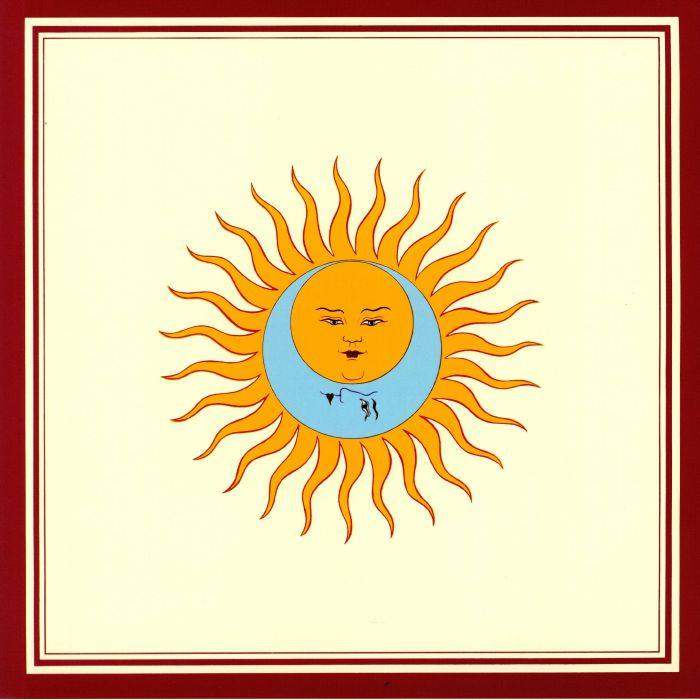
SPIRITUAL JAZZ 13: NOW! PART TWO.
Spiritual Jazz 13: Now! Part Two.
Label: Jazzman Records.
Format: CD.
Nowadays, there aren’t many compilation series’ that are still going strong after thirteen years and thirteen volumes. However, Jazzman Records’ critically acclaimed compilation and commercially successful Spiritual Jazz seems to be going from strength-to-strength. Recently, the label released Spiritual Jazz 13: Now! Part One and Two which are the latest instalments in a series that began in 2008.
The story began with the release of Spiritual Jazz (Esoteric, Modal and Deep Jazz From The Underground 1968-77) in 2008. This was the first instalment in what would eventually become their longest-running and most successful compilation series.
Between 2009 and 2020 they’ve released compilations of European, Islamic, Japanese and vocal spiritual jazz. They also turned their attention to some of the most important and prestigious jazz labels and dug deep into the vaults of Blue Note, Prestige and most recently Steeplechase and Impulse! By then, there were twelve instalments in the Spiritual Jazz series and critics wondered what next?
Many thought that another compilation from one of jazz’s legendary label would follow. That wasn’t the case and instead, Jazzman Records decided to bring the series up-to-date with the release of Spiritual Jazz 13: Now! Part One and Two.
Recently, I reviewed Spiritual Jazz 13: Now! Part One which featured contributions from artists from Africa, America, Britain and Europe. They’re part of what was a welcome addition to this long-running series. However, what about Spiritual Jazz 13: Now! Part Two? Is it of the same quality?
Opening Spiritual Jazz 13: Now! Part Two is the Canadian octet The Cosmic Range who released the album The Gratitude Principal in 2019. It featured Palms To Heaven which is a groundbreaking yard that’s dense and lysergic sounding. It sounds as if it’s been influenced by African music, free jazz and classic spiritual jazz. This is the perfect way to open the compilation and sets the bar high.
Vibration Black Finger released their eponymous EP in 2015 and it featured a genre-melting cover of Brandon Ross’ Empty Streets. Playing a leading role is Ebony Rose’s vocal which is guaranteed to grab the listener’s attention. Meanwhile, the carefully crafted arrangement veers between haunting and edgy to dark and cinematic. This track is an oft-overlooked hidden gem and is a welcome addition to the compilation.
Slow Sweet Burn was recorded in 2013 by the David Boykin Experience and then Abeeku added his vocal. He’s lives in the South Side of Chicago and has been part of the Windy City’s vibrant music scene for many years. There’s an intensity and energy to his music which is thought-provoking and powerful as he address inequality and other social issues. However, many people won’t be aware of Abeeku’s music and this is the perfect introduction to a man whose much more than a musician.
Wildflower recorded Flute Song live in Finsbury Park, London in 2017. Just like so many of the artists on the compilation they combine an eclectic selection of musical genres. This includes from Afrobeat and jazz during what’s an impassioned and captivating performance.
The Pyramids were originally founded by Idris Ackamoor in the seventies, and made a comeback in 2011 when they released the album Otherworldly. One of the highlights was Memory Ritual which features a masterclass from bandleader and saxophonist. He played a leading role on a tracks that veers between uplifting and emotive to laidback and ruminative and is always melodic and memorable.
In 2005, the Steve Reid Foundation recorded For Coltrane for his album Spirit Walk which was released on Soul Jazz Records. The veteran American drummer’s playing is expressive and bristling with energy and emotion as he leads a band who unleash a series of flamboyant flourishes as they pay homage to the founding father of spiritual jazz.
Ever since the fifties, Italy has had a vibrant jazz scene. In 2001, alto saxophonist Carla Marciano recorded her album Trane’s Groove. It was released the following year on CAM Jazz, and one of the highlights was the title-track, which has obviously been influenced by John Coltrane’s classic album A Love Supreme.
In 2109, vocalist and multi-instrumentalist Angel Bat Dawid recorded her album The Oracle on her cell phone. It featured What Do I Tell My Children Who Are Black (Dr Margaret Burroughs) where she combines an understated ruminative arrangement where an electric piano accompanies her heartfelt, impassioned pleas for social justice. Later, vocal is transformed as it reaches an operatic crescendo which is the perfect way to conclude such a powerful and moving track.
Over the last few years, Menagerie who are led by composer and guitarist Lance Ferguson have been a familiar face on the Australian jazz scene. In 2017, they released their album Arrow Of Time on Freestyle Records. It features Nova a piano-led track where this talented and versatile group showcase their considerable skills on what’s one of the highlights of the compilation.
Avo’s Tune is taken from the Teemu Akerblom Quartet eponymous debut album which was released in 2015. It features some breathtaking interplay between the flute and tenor saxophone as the rhythm section underpin the arrangement. It’s also further proof of how strong the Finnish jazz scene is.
Vessels featured on The Jamie Saft Quartet’s 2018 Blue Dream. The American pianist leads his band as they play with power, passion and an intensity. Especially tenor saxophonist Bill McHenry who draws inspiration and pays homage to the greats of spiritual jazz.
Closing Spiritual Jazz 13: Now! Part Two is Jonas Kullhammar’s Paris. It’s taken from the soundtrack to Gentlemen which was released in 2014. It’s a quite beautiful and is also wistful, ruminative and cinematic sounding track that paints pictures in the mind’s eye.
Just like Spiritual Jazz 13: Now! Part One, Part Two shows that jazz in its various forms is in a healthy state. There’s contributions from musicians and groups from Africa, America, Australia, Britain and Europe whose music is ambitious and innovative as they continue in there quest to push musical boundaries. To do that, they fuse disparate genres and sometimes, draw inspiration from the pioneers of spiritual jazz including its founding father John Coltrane.
Many of the artists on Spiritual Jazz 13: Now! Part Two will be new to many music fans and the compilation is the perfect introduction to their music. This could be the start of a musical voyage of discovery and an introduction to a new generation of musicians and some familiar faces who are recording and releasing spiritual jazz. A tantalising taste can be found on Spiritual Jazz 13: Now! Part Two which is another welcome addition to Jazzman Records’ long-running, commercially successful and critically acclaimed compilation series.
Spiritual Jazz 13: Now! Part Two.
CULT CLASSIC: KENNY DORHAM-TROMPETA TOCCATO.
Cult Classic: Kenny Dorham-Trompeta Toccato.
On December the ‘15th’ 1953, twenty-nine year old Texan trumpeter Kenny Dorham had already been a member of Dizzy Gillespie, Billy Eckstine and Lionel Hampton big bands and had joined Charlie Parker’s Quintet in December 1948. Less than five years later, and the sideman embarked upon a solo career when he signed the Debut label, which was founded by Charles Mingus and his wife Celia, with drummer Max Roach. This was a new chapter in Kenny Dorham’s career.
He journeyed to the Van Gelder Studio, at 25 Prospect Avenue, Hackensack, New Jersey, to record his debut album as leader, Kenny Dorham Quintet. It was well received upon its release in 1954, and this should’ve been the start of a long and illustrious career for the bandleader, composer and trumpeter.
By 1955, Kenny Dorham had signed to Blue Note Records, and in October released one of his finest albums for the label, Afro-Cuban. This was first of start five albums that he released for Blue Note Records over a ten year period.
1956 was an important and sometimes frustrating year for Kenny Dorham. He was one of the charter members of The Jazz Crusaders, although his involvement was relatively short-lived. When drummer and fellow cofounder Art Blakey took over The Jazz Crusaders’ name he decided to found a new band The Jazz Prophets. They played on his second album for Blue Note Records.
This was ‘Round About Midnight At The Cafe Bohemia which was recorded on the ‘31st’ of May 1956. Later that year, the same lineup recorded another album together, and Kenny Dorham And The Jazz Prophets Volume 1 was released on ABC-Paramount. Still, Kenny Dorham found time tow work with two giants of jazz.
He had recorded with Sonny Rollins, and then joined the Max Roach Quintet after the death of Clifford Brown. 1956 was an important year in the career of Kenny Dorham.
As 1957 dawned, ‘Round About Midnight At The Cafe Bohemia on. This sextet recording was released to plaudits and praise in January 1957. However, it would another four years before Kenny Dorham released another album on Blue Note
Over the next four years, he released albums on the Riverside, New Jazz and Time labels. Then on the ‘15th’ of January 1961 Kenny Dorham recorded Whistle Stop for Blue Note Records with an all-star band.
Five months later, Whistle Stop was released and hailed as his finest album Blue Note Records. Kenny Dorham was the comeback king, and “in 1975 five British critics picked Whistle Stop as one of 200 albums that belonged in a basic library of jazz recorded after World War II.”
Buoyed by the response to Whistle Stop, Kenny Dorham released the live album Inta Somethin’ on Pacific Jazz in March 1962. Reviews of the album were mixed, although Matador which was released by United Artists in April 1962 was a return to form from Kenny Dorham.
He returns to Blue Note Records and Una Mas (One More Time) on the ‘1st’ of April 1963. Little did any of the Quintet realise that this would be the penultimate album that Kenny Dorham would record. By then, he was frustrated that he still wasn’t well known within the jazz scene and that his music wasn’t receiving the recognition he deserved.
In an interview for the album’s liner notes he said: “All I can say is that if it’s going to happen, it’ll happen. But it’s going to have to happen within a reasonable time. After all, I’ll soon be into my ‘25th’ year on the trumpet. Anyway, however it goes, I’ll just keep playing. That’s where the basic satisfaction is at”
When Una Mas (One More Time) was released in January 1964, the majority of the reviews were positive. However, just like his previous albums, it wasn’t a particularly successful release. Still his music was being heard by a small group of discerning jazz lovers. For Kenny Dorham it was a disappointing and frustrating time.
On September the ‘14th’ 1964, nearly eleven years after he made his debut as bandleader, Kenny Dorham journeyed to the Van Gelder Studio with his quintet. They were about to record Trompeta Toccato, which was recently reissued on vinyl by Blue Note Records. It turned out that it was the last time he would make the journey as a bandleader.
That day, his band featured drummer Albert Heath, double bassist Richard Davis and pianist Tommy Flanagan. They were joined by tenor saxophonist Joe Henderson who wrote Mamacita, while bandleader Kenny Dorham played trumpet and wrote the other three new compositions. Producing Trompeta Toccato was recorded by Rudy Van Gelder and produced by Alfred Lion. Just like so many Blue Note Records’ sessions, the album was recorded in one day, but wasn’t released until 1965.
By the time Trompeta Toccato was released in July 1965, Kenny Dorham was working as a sideman. It was also his swansong, and he would never record another album of new material. That was a great shame as Trompeta Toccato was one of the finest albums of his career. Sadly, it failed to find the wider audience it so richly deserved.
Trompeta Toccato opens with the title-track which is played in 6/8 time. Just Kenny Dorham’s trumpet and then the piano play slowly leaving space on what seems like a melancholy sounding track. Then it’s all change as the rhythm section, piano and a blazing, braying horns that are like a tag team as they bobs and weave their way across the arrangement which has taken on an Afro-Latin feeling. Later, pianist Tommy Flanagan plays a lengthy ruminative solo that invites refection before passing the baton to Richard Davis’ slow deliberate and thoughtful bass. Latterly the band unite and Joe Henderson’s trumpet soars about the rest of arrangement to this ambitious and complex twelve minute modal epic.
“Night Watch is a bluesy, cinematic track with a strong and memorable hook, where the Quintet are at their tightest and paint vivid pictures. Kenny Dorham described the scene as: ”It’s very late at night, and the mood is what comes when you’re alone at that time”. That describes it perfectly and many people will have experienced that feeling and be able to relate to it. Again the horns are to the fore as the band play as one. Then when the solos come round bandleader and trumpeter Kenny Dorham blows hard but is always in control and his playing melodic as the rhythm section ensure the track swings. Tenor saxophonist Joe Henderson then takes charge and plays his solo effortlessly. So does pianist Tommy Flanagan, who adds to the late night sound with one of his finest solos as the rhythm section provide the heartbeat. Then the horns take charge and add a sense of melancholia that many people will have experienced when they find themselves along late at night.
Mamacita is a twelve bar Bossa Nova written by Joe Henderson that came to life during the recording at the Rudy Van Gelder Studio. The band knew they were on the right road when they got producer Alfred Lion and photographer Francis Wolff moving to the rhythm. That’s sure to be the case from the opening bars as the piano and drums combine and then the trumpet and tenor saxophone enter. By then, toes are sure to be tapping and hips are swaying. This is just the start as the solos are still to come. First up is tenor saxophonist Joe Henderson whose playing is flawless and he sets the bar high. Kenny Dorham matches him every step of the way and so does pianist Tommy Flanagan. Then when the band reunite, the horns take the lead as the track swings as this Bossa Nova transports the listener to the Copacabana Beach in Rio De Janeiro.
Closing Trompeta Toccato is The Fox which bursts into life and has a 12-8-12 bar structure. It’s driven along by the rhythm section as Kenny Dorham plays with speed, power, urgency and a fluidity putting his twenty-five years of experience to good use. Then he bass the baton to Joe Henderson and his braying, rasping tenor saxophone scampers along as if the hounds are on the heels of The Fox. Tommy Flanagan replicates that urgency on the piano as his fingers flit up and down the keyboard. Later the band become one and the urgency increases before reaching a crescendo and Kenny Dorham takes a bow.
Sadly, Trompeta Toccato was Texan trumpeter Kenny Dorham’s swansong as bandleader. However, he had saved one of his finest albums until last, and combines hard bop, Afro-Latin, modal jazz and Bossa Nova on Trompeta Toccato. That comes as no surprise.
He’s backed by a hugely talented and versatile Quintet, with pianist Tommy Flanagan and tenor saxophonist Joe Henderson playing starring roles on the album. Just like Kenny Dorham they showcase their considerable skills when the solos come around their playing is variously tight, inventive, expressive, urgent and fluid as they feed off each other and drive each other to greater heights. They played their part in an album that should’ve been a turning point in Kenny Dorham’s career.
When Trompeta Toccato was released in July 1965 it failed to find the audience it deserved. This was a huge disappointment for Kenny Dorham. By then, he was already disillusioned as even his finest albums, including Trompeta Toccato, weren’t selling well and he he wasn’t receiving the recognition from critics and the jazz establishment that he felt he deserved. That was why Kenny Dorham decided to call time on his solo career after Trompeta Toccato, which was recently reissued by Blue Note Records as part of their ‘80th’ anniversary celebration.
After that, he continued to work as a sideman, but latterly only sporadically. By then Kenny Dorham was writing for Downbeat magazine as he was suffering from kidney disease and was unable to make a living as a musician. Tragically, this truly talented and vastly underrated bandleader, composer and trumpeter passed away on December the ‘5th’ 1972 aged forty-eight in New York. Jazz was in mourning at the loss of Kenny Dorham.
While he may not have been as prolific as other artists or enjoyed such a lengthy career, Kenny Dorham released some vastly underrated albums that somewhat belatedly are starting to find a wider audience. This includes Trompeta Toccato, which was one of his finest albums, and what was sadly his swansong, but along with Whistle Stop is the perfect introduction to the late, great Kenny Dorham.
Kenny Dorham-Trompeta Toccato.
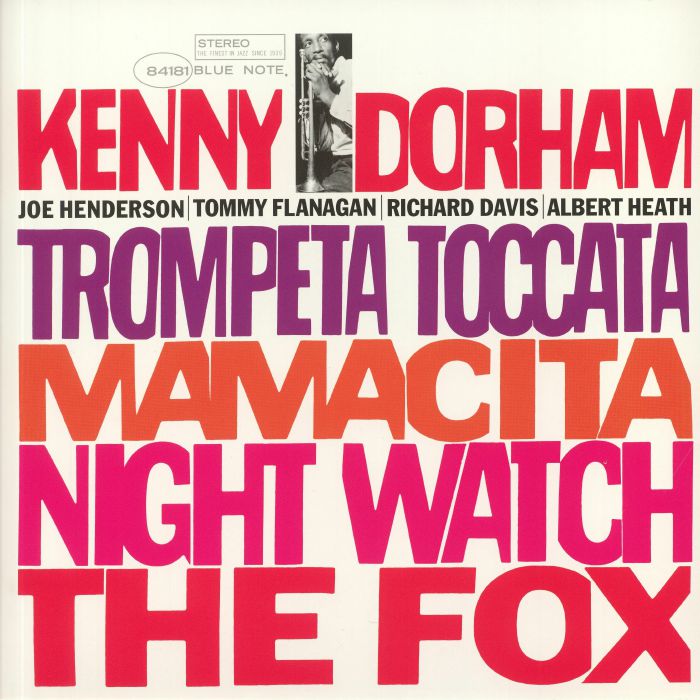
CULT CLASSIC: CATAPILLA-CHANGES.
Cult Classic: Catapilla- Changes.
The story of Catapilla is another case of what might have been. They were formed in West London around Christmas 1970, and signed to Vertigo Records and released two ambitious and innovative albums where they combined progressive rock with experimental fusion. Sadly, neither their 1971 debut album Catapilla, nor the followup Changes, which was released in 1972, found the audience they deserved. Not long after the release of their sophomore album Catapilla disbanded. Their legacy is the two albums they released on Vertigo which have just been reissued by Trading Places on vinyl.
When Catapilla was formed around Christmas 1970 the original lineup featured drummer Malcolm Frith, Edison Lighthouse bassist Dave Taylor and guitarist Graham Wilson joined forces with vocalist Jo Meek, saxophonists Robert Calvert and Hugh Eaglestone plus woodwind player Thiery Rheinhart to form Catapilla. The newly formed Catapilla began playing live.
Not long after this, they came to the attention of Cliff Cooper of the Orange Music Electronic Company. He’s credited with “discovering” Catapilla and became their manager. One of the first things he did was arrange a showcase for the band where they played in front of an audience that featured top music industry figures. This included none other than Black Sabbath’s manager Patrick Meehan.
He was so impressed with Catapilla that he helped the group secure a recording contract with Vertigo Records. Patrick Meehan also offered to produce the group’s eponymous debut album. However, before he could get Catapilla into the studio vocalist Jo Meek left, and was replaced by her sister Anna. This was the lineup of Catapilla that recorded their eponymous debut album.
Catapilla.
By then, Graham Wilson, Thierry Reinhardt, Robert Calvert, Malcolm Frith and Anna Meek had written the four tracks that became Catapilla. Naked Death, Tumbleweed, Promises and Embryonic Fusion a twenty-four minute epic were recorded with producer Patrick Meehan. When the album was completed, it was scheduled for release in late 1971.
When Catapilla was released it failed to find the audience it deserved, and record buyers missed out on what was an ambitious and innovative album where the group combined progressive rock with experimental fusion, psychedelic free jazz and funky rhythms. Catapilla was an album that benefited from structure but also featured stunning jams, blistering riffs, fuzzy wah wah guitars and atmospheric, wailing saxophone solos. They helped drive the arrangements along and were joined by woodwinds and Anna Meek’s inimitable vocals.
She was the group’s very own tortured troubadour, and unleashed gutsy gasps, shrieks and otherworldly vocals full of emotion. It was an unconventional vocal style and one that many fans of progressive rock didn’t understand. They were used a more traditional delivery. However, for many fans of Catapilla the enigmatic vocalist is key to the group’s sound and comes into her own on the album opener Naked Death and the twenty-four minute Magnus Opus Embryonic Fusion that even encompasses voodoo jazz and a soul-baring vocal. It’s a genre-melting track and is akin to a journey on a musical roller coaster. It’s a case of sit back and enjoy the rides as this epic takes twists and turns as it reveals a myriad of surprises. By the closing notes, one can only wonder why the album wasn’t a bigger success? Maybe it was an album that was ahead of its time?
What happened after the release of Catapilla certainly didn’t help. Following the album release, the band embarked upon a tour sponsored by Vertigo Records. Catapilla toured the UK supporting Graham Bond and Roy Harper, which it was hoped would lift their profile. Sadly, this wasn’t the case and after the tour disaster struck.
Citing musical differences, Malcolm Frith, Dave Taylor, Hugh Eaglestone and Thiery Rheinhart all left the band. It looked like the end of the road for Catapilla.
A decision was made to reform the group. Joining the remaining members of Catapilla were drummer Bryan Hanson, bassist Carl Wassard and keyboardist Ralph Rolinson. This new lineup immediately began work on their sophomore album Changes.
Changes.
This time around, Anna Meek wrote all the lyrics on the album. She cowrote the music to Reflections, Charing Cross and Thank Christ For George with Robert Calvert and Graham Wilson who wrote the music to It Could Only Happen To Me. These four tracks were recorded by the new line-up of Catapilla and the album was scheduled for release later in 1972.
On the release of Changes lighting struck twice for Catapilla and the album failed commercially. It was another album that deserved to be heard by a wider audience.
They would have discovered another genre-melting offering from Catapilla. They start with progressive rock and add elements of fusion, psychedelic rock, avant-garde, experimental and space rock. The arrangements are multilayered and lysergic and feature cerebral, thought-provoking lyrics. They’re delivered by Anna Meek whose inimitable vocals add an atmospheric hue to the album.
Especially on the album opener Reflections which veers between ethereal to eerie and is punctuated by saxophone solos and benefits from the addition of Ralph Rolinson’s Hammond organ. Charing Cross features some of Anna Meek’s best lyrics. They’re full of social comment, while the arrangement starts off slow and atmospheric becoming rocky and later a guitar solo seems to pay homage to Pink Floyd. Catapilla’s rhythm section lays down a mesmeric groove on the psychedelic sounding Thank Christ For George. It features a fuzzy wah wah guitar and later, heads in the direction of fusion. By them, Anna Meek’s vocal is a mixture of mystery and misery even desperation and is accompanied by an otherworldly saxophone. They play starring roles in the sound and success of the track. Quite different is the instrumental It Could Only Happen to Me. It’s moody, mesmeric, introspective and languid and allows the rest of Catapilla to showcase their considerable musical skills on the album closer.
For Catapilla, Changes was the end of the road. Not long after they released their sophomore album the group disbanded. They had been together for less than two years, but managed to released two albums. Sadly, neither album were a commercial success and failed to find the audience they deserved.
The problem was the genre-melting music on Catapilla and Changes was way ahead of its time and record buyers neither understood nor appreciate such ambitious and innovative albums.
Although Catapilla are described as a progressive rock band they’re much more than that. Their music incorporates a variety of disparate genres. Seamlessly they fuse and switch between different genres on their two albums. However, their secret weapon was Anna Meek whose inimitable vocals added something new and different to the albums. Her vocals veered between emotive to hurt-filled, soul-baring and otherworldly. Sometimes, her lyrics were cerebral and full of social comment. Sadly, Anna Meek’s vocals and lyrics weren’t heard by a wider audience when Catapilla and Changes were released.
One can only wonder what type of music Catapilla would’ve gone on to make if they hadn’t disbanded in 1972? The lineups who recorded Catapilla and then Changes were innovators who weren’t afraid to push musical boundaries and in 1971 and 1972 set about creating the music of today, tomorrow. This they succeeded in doing, and fifty years after they were formed in West London, this groundbreaking group are belatedly starting to receive the plaudits and praise they deserve for recording and releasing two ambitious and innovative genre-melting albums, Catapilla and Changes.
Cult Classic: Catapilla-Changes.

CULT CLASSIC: THE THIRD POWER-BELIEVE.
Cult Classic: The Third Power-Believe.
By 1967, Detroit’s eclectic music scene was thriving and new bands were being formed almost daily. Some never got beyond practising in a garage, while others graduated to playing in local bars and clubs which was where they were spotted by A&R reps for local indie labels.
Once signed, they released a single which in many cases, sunk without trace. For other bands, the single they released was a stepping stone to bigger and better things.
That was the case with The Third Power who released We, You, I on Baron Records in 1968. By 1969, they had been signed by Vanguard Records which was primarily a folk label, which had started releasing psychedelic rock. A year later in 1970, The Third Power released their debut album Believe. The album wasn’t a commercial success and The Third Power split-up after the release of Believe. Theirs is a case of what might have been? Would things have been different if they had signed to a different label? Instead, the group were only together three years.
The story begins in Detroit in 1967, when drummer Jim Craig, bassist and vocalist Jem Targal and guitarist and vocalist Drew Abbott formed The Blewsies. They moved into a rented farmhouse which became their base as they honed their sound. It wasn’t long before the group was ready to play on the local live circuit.
For the next year, The Blewsies were a familiar face on the local rock clubs where it soon became apparent that they were a cut above the competition. This was because of the interplay between the three band members who were soon attracting the attention of a local record company.
This was a local indie label Baron Records. By then, The Blewsies had changed their name and were now known as The Third Power.
They entered the studio in 1968 to record their debut single We, You, I, which featured Snow on the B-Side. When it was released later in 1968 the single sold well in Detroit. This was encouraging for a band who had only been formed a year ago.
After the release of their debut single, The Third Power returned to the live circuit and were supporting a number of bands including local heroes MC5 at the Grande Ballroom. This was all good experience for a band who were about to go up in the world.
By 1969, Vanguard Records which was primarily a folk label, was also signing psychedelic groups. They had already signed The Frost who were from Michigan. When Vanguard Records’ A&R rep heard The Third Power they offered them a recording contract.
This was the opportunity to sign with a prestigious and reputable label. However, one wonders if The Third Power stopped to think was Vanguard Records the right label for them? The label had made its name releasing folk music, and hadn’t much experience with psychedelic music. Would the label know how to market the group and their album? And who was going to produce the album? These were all questions The Third Power should’ve asked executives at Vanguard Records.
When The Third Power entered the studio, they were a progressive power trio whose music incorporated psychedelia, hard rock, blues, funk rock and the influence of Cream, Jimi Hendrix, Led Zeppelin and Moby Grape. They had written nine songs which they would record with Vanguard Records’ Sam Charters who was producing the session.
Jem Targal was the group’s songwriter-in-chief and penned Feel So Lonely, Passed By, Lost In A Daydream, Comin’ Home and Crystalline Chandelier. He cowrote Gettin’ Together and Won’t Beg Any More with Drew Abbott who wrote Persecution. Like Me Love Me was written by The Third Power and closed the album.
The members of The Third Power kick out the jams on the album opener Gettin’ Together. Searing, scorching guitars combine with the tight rhythm section and Jem Targal’s powerhouse of a vocal. Meanwhile, distortion is part of their armoury as they grab the listener’s attention from the get-go on this hard rocking track.
Feel So Lonely is quite different to the album opener and sounds as if it’s been inspired by Crossroads’ from Cream’s Wheels Of Fire album. Especially the meandering rhythm and a blistering, wailing guitar solo. It comes courtesy of Jem Targal who delivers an impassioned against the hard rocking and psychedelic backdrop.
Very Different is Passed By a beautiful ballad where Jem Targal’s wistful vocal is accompanied by an arrangement features a twelve-string acoustic guitar, piano and tambourine. It’s the perfect accompaniment one of the highlights of the Believe and shows another side to The Third Power.
Lost In A Daydream is the equivalent to time travel and takes the listener back to the late-sixties, early seventies. The arrangement gallops along and seems to have been inspired by Moby Grape. It’s dreamy, languid and lysergic and is the perfect track to listen to as you while away a lazy day.
After a hesitant start The Third Power kick loose on Persecution and quickly go from 0-60 mph. Frontman Drew Abbot struts and swaggers his through this hard rocking track. His bass helps drives the arrangement along as Jim Craig powers and pounds his way around his double kit. Meanwhile, Jem Targal sprays searing, scorching and machine gun guitar licks. The interplay between the three band members plays an important part in the sound and success of this hard rocking track full of social comment that apparently, was a favourite at Detroit’s Grande Ballroom.
Straight away, the influence of Led Zeppelin can be heard on Comin’ Home. Especially the drums and guitar parts. Elsewhere there’s a nod to Cream and this is noticeable on Jem Targal’s vocal and the harmonies. It’s a melodic and memorable track this is reminder of what The Third Power were capable of.
They drop the tempo on Won’t Beg Anymore which starts life as a soul-baring psych ballad. That is the case until 2:28 when chatter can be heard in the distance. Meanwhile, the tempo increases and Jem Targa’s chiming guitar takes centrestage. Then the arrangement slows down before becoming rocky and dramatic. Still the vocal is still full of emotive and impassioned on this powerful and poignant track.
One of the most beautiful tracks on Believe is Crystalline. Chandelier It finds The Third Power combine everything from a rolling bass, baroque harmonies, wind-chimes and a heartfelt, tender vocal on a truly timeless track that should be a favourite amongst compilers of psychedelic compilations.
Closing Believe is Like Me Love Me which was written by the band. It’s another hard rocking track and is the perfect showcase for this tight and talented power trio. They close their debut album with this melodic example of riff rock. It bookends Believe and The Third Power take their bow.
Sadly, when Believe was released in 1970, the album wasn’t a commercial success. It sold reasonably well in Detroit where The Third Power had a following. However, elsewhere the album sank without trace. It was a disaster for The Third Power. Worse was still to come.
When The Third Power returned home to Detroit, they supported the MC5, Bob Seger and various high-profile acts who played at the Grande Ballroom.
Not long after the release of Believe, Vanguard Records announced that they were dropping The Third Power. Their reason was that they were “too heavy.”That seems strange as they must have known what type of group they were signing?
Even before they signed to Vanguard Records, The Third Power’s music was a mixture of hard rock, psychedelia, blues, funk-rock. They were a progressive power trio who Vanguard Records had been keen to sign as they were branching out and signing psychedelic rock bands. This was very different to the folk music that the label made its name releasing. Maybe that was the problem?
It may have been that Vanguard Records didn’t know how to position and market The Third Power? If they had been signed to a different label Believe may have found the wider audience it deserved and things would have been very different for The Third Power.
Not long after the release of Believe, The Third Power split-up. They had released just one single and one album, Believe. Their story is a case of what might have been. The Third Power were talented songwriters and musicians who technically were streets ahead of many similar bands who were releasing albums in 1970. Sadly, talent only gets a band so far.
That was the case with The Third Power. Sadly, they were only together for three year, but released what is regarded as “one of the finest psychedelic hard rock albums of its era.” Rather belatedly, record collectors have discovered the hard rocking and lysergic delights of The Third Power’s cult classic Believe which could’ve and should’ve launched the Detroit-based progressive power trio’s career in 1970.
Cult Classic: The Third Power-Believe.
PATCHWORK-MEAN AND DIRTY.
Patchwork-Mean and Dirty.
Label: De Wolfe Music Library.
Format: LP.
Nowadays, library music is highly collectable, especially the albums released by KPM, Amphonic, Conroy, Sonoton and De Wolfe between the late-sixties and early eighties. That is regarded by many collectors as a golden age for library music. This is ironic as the albums of library music were never meant to fall into the hands of collectors.
Originally, library music was meant to be used by film studios or television and radio stations, and was never meant to be commercially available. The music was recorded on spec by music libraries who often hired young unknown composers, musicians and producers. This ranged from musicians who were known within publishing circles, to up-and-coming musicians who later, went onto greater things, and look back fondly at their time writing, recording and producing library music. This they now regard as part of their musical apprenticeship.
For the musicians hired to record library music, their remit was to music libraries with a steady stream of new music, which was originality referred to as production music. During some sessions, the musicians’ remit was write and record music to match scenes, themes or moods. This wasn’t easy, but after a while they were able to this seamlessly. Soon, the musicians were able to enter the audio and write and record a piece of music that matched a theme or mood for a film or television show.
Once the library music was recorded, record libraries sent out demonstration copies of their music to advertising agencies, film studios, production companies, radio stations and television channels. If they liked what they heard, they would license a track or several tracks from the music libraries. That was how it was meant to work.
Sometimes, copies of these albums fell into the hands of record collectors, who realising the quality of music recorded by these unknown musicians, started collecting library music. That is still the case today, and nowadays, many original albums of library music are highly collectable. Often, though, these albums are beyond the budget of most record buyers. Luckily, many independent record labels are reissuing library music.
Hardly a week goes by without a new library music compilation hitting the shelves of record shops. Then there’s the reissues of albums of library music from the golden age. This includes Patchwork’s Mean and Dirty which was recently reissued by De Wolfe Music Library.
Mean and Dirty was released in 1978 and the twenty tracks were written and performed by Patchwork which featured Chris Rae and Frank McDonald. Some of the tracks they cowrote while others they wrote themselves.The emphasis of the music is on “drama, activity, industry” and they’re also atmospheric and cinematic. Others are driving, exciting, moody and tense while others are ruminative and even comedic or light-hearted. All of the tracks paint pictures in the mind’s eye.
Side One.
The album opener Moving Target was a dramatic track where searing guitar riffs play their part in a track where Patchwork combine funk and fusion. Bank Job is moody and there’s a degree of tension in a track that sounds as if it belongs in an episode of The Sweeney.
Then the tempo drops on the atmospheric sounding Slow Fuse and on Blue Mood which has a laidback and almost sensual sound.
Flying Squad is a funky rock track that wouldn’t sound out of place on The Sweeney as Regan and Carter chase villain snd “spin drums.” Arrival Time is a mid-tempo slice of good time funky music.
Quite different is the mid-tempo Prowler where a degree of tension is apparent during this mesmeric track. The funky Route 67 breezes along and so does the percussive sounding and Fast Mover where funk meets fusion and closes side one.
Side Two.
Side two of Mean and Dirty opens with Dragster which is fast, dramatic and features blistering guitars. Listen carefully, and there’s a nod to the legendary surf guitarist Dick Dale.
The tempo drops on the moody sounding Night Moves while Easy Drive is an uptempo track that has an almost light-hearted sound. Smash and Grab is a cinematic sounding track that conjures up images of cops chasing the bad guys after a robbery has gone down. Then Mean and Dirty heads in the direction of fusion while Mind’sEye is ruminative and Zero Hour is a dramatic track that chugs along. Pulsating and dramatic describes The Boys In Blue whole Nightwatch is slow, moody, broody and dramatic. It’s one of the highlights of side two and the perfect way to close the album.
The reissue of Mean and Dirty is a welcome one because this a library music classic from Patchwork that nowadays is a rarity. It’s Patchwork’s finest hour and a reminder of the golden age of library music which was between the late-sixties and early eighties. Much of the music recorded during this period was heard by millions but the viewers knew nothing of those that wrote and recorded such an eclectic selection of music.
Musicians like Chris Rae and Frank McDonald had to be versatile and be able to write music to suit moods, themes and scenes. They were capable of writing music that was atmospheric, dramatic, exciting, moody, ruminative and even comedic or light-hearted. Other times, there was a degree of tension to the music which was always cinematic and was the perfect accompaniment to television shows in 1978 and beyond.
The music was funky, jazz-tinged, rocky and sometimes even headed in the direction of jazz-funk and fusion. Chris Rae and Frank McDonald were versatile and formed a potent partnership as they recorded albums of library music including as Patchwork. Of all the albums they recorded Mean and Dirty which was Patchwork’s sophomore album is their finest.
Patchwork-Mean and Dirty.

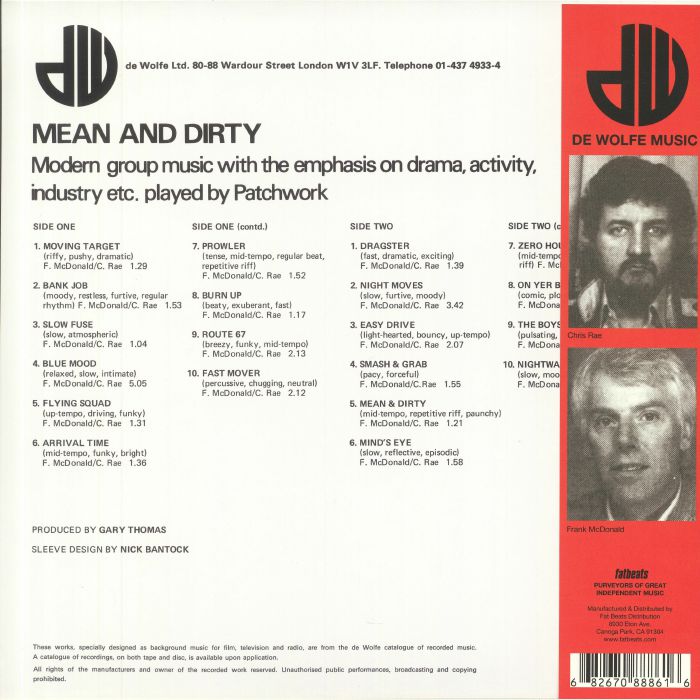
SPIRITUAL JAZZ 13: NOW! PART ONE.
Spiritual Jazz 13: Now! Part One.
Label: Jazzman Records.
Format: CD.
Little did anyone at Jazzman Records know when they released Spiritual Jazz (Esoteric, Modal and Deep Jazz From The Underground 1968-77) in 2008, that this was the first instalment in what would become their longest-running and most successful compilation series. Over the next thirteen years, they’ve released compilations of European, Islamic, Japanese and vocal spiritual jazz. They also turned their attention to some of the most important and prestigious jazz labels and dug deep into the vaults of Blue Note, Prestige and most recently Steeplechase and Implulse! for further critically acclaimed compilations of spiritual jazz. By then, there were twelve instalments in the series.
The big question on many critics and jazz fans lips was what was next for the Spiritual Jazz label? Were Jazzman Records about to turn their attention to another of jazz’s classic labels?
That wasn’t the case. Instead, Spiritual Jazz 13: Now! Part One looks at the current crop of jazz musicians recording and releasing spiritual jazz. So does Spiritual Jazz 13: Now! Part Two which was released at the same time. These are the latest instalments in this long-running and successful series. However, how does Spiritual Jazz 13: Now! Part One compare to the previous volumes?
Opening Spiritual Jazz 13: Now! Part One is Benjamin Herman’s Lizard Waltz which is taken from his album Bughouse, which was released in 2018 on Dox Records. The soprano saxophonist has released over twenty albums and Lizard King has a wonderfully wistful and reflective sound. It’s the perfect introduction to a truly talent and prolific composer and musician.
In 2018, Idris Ackamoor and The Pyramids released their critically acclaimed album An Angel Fell on Strut. One of the highlights was the title-track which is an innovative and progressive track that fuses Afro-funk, electronica and jazz with lyrics that combine beauty and symbolism.
Nowadays, saxophonist Nat Birchall is regarded as a veteran of the British jazz scene and has been a familiar face for over thirty years. Nine years ago, he released his album A World Without Words. It featured The Black Ark where his emotive and fervid playing sounds as if it’s been inspired by classic John Coltrane and features some impressive improvisation. Playing an important part in the sound and success of a track named after Lee Perry’s studio is the rhythm section and vibes. They’re play their part in one of the highlights of the compilation.
British flautist Chip Wickham released the album Shamal Wind on Lovemonk in 2018. One of the highlights of the album was the title-track where Eastern influences and sounds accompany the bandleader whose playing veers is variously inventive, heartfelt, impassioned, restrained and melancholy during a truly beautiful track.
Finnish saxophonist Jimi Tenor and Kabukabu recorded Suite Meets for the 2012 album The Mystery Of Aether which was released on the Kindred Spirits label. This track is a slow burner that gradually builds and so does the intensity as jazz and funk combine as they seek inspiration and pay homage to jazz greats including Sun Ra, Pharaoh Sanders Duke Ellington before the track reaches its impressive finale.
In 2014, Antwerp-based Ethio-jazz band Black Flower released the album Abyssinia Afterlife on Zephyrus Records. It featured the genre-melting track Flower which is impressive and memorable mixture of dub, Ethio- jazz and fusion.
In 2017, Darryl Yokley’s Sound Reformation released their debut album Pictures At An African Exhibition which featured Echoes Of Ancient Sahara. It features Afro-Arabic influences and is an ambitious, intricate and multilayered nine-minute opus that for many people will be the first time they’ve heard the American saxophonist’s music.
Damon Locks Black Monument Ensemble are based in the Windy City and Sounds Like Now is taken from their 2018 live album Where Future Unfolds. It’s a track with lyrics full of social comment which fuses elements of African music with jazz and soul and there’s even a nod to the legendary Art Ensemble Of Chicago.
When Finnish flautist Oiro Pena released his eponymous album in 2019 it featured Nimeto. It’s a ruminative sounding track that encourages reflection as the saxophone provides the perfect accompaniment to the flute.
Cat Toren’s Human Kind released their eponymous debut album on Green Ideas Records in 2017. One of the highlights of the album was the spiritual and contemplative sounding track Soul. It’s a tantalising taste of the New York-based bandleader, composer and pianist whose career has already spanned two decades.
In 2016, Shabaka and The Ancestors released their debut album Wisdom Of Elders on Brownswood Recordings. It’s another genre-melting track where African influences, folk, gospel and jazz are combined during what’s an impassioned performance.
Closing Spiritual Jazz 13: Now! Part One is Makaya McCraven’s Gnawa which is a track from his live album In The Moment which was released in 2015. It’s an innovative sounding and sometimes mesmeric track where mechanical and metallic sounds combine with phrases fired from from Junius Paul’s double bass. The result is a bewitching and joyous track that’s the perfect way to close the compilation.
This is only the end of Spiritual Jazz 13: Now! Part One and Part Two is still to come. This latest instalment in the series is quite different to the previous ones which looked at some of jazz’s iconic labels including Blue Note, Prestige and most recently Steeplechase and Impulse! Other volumes turned their attention to Islamic and J-Jazz from yesteryear. However, it was only a matter of time before Jazzman Records turned their attention to the present day.
Spiritual Jazz 13: Now! Part One shows that jazz in its various forms is in a healthy state. There’s currently many talented jazz musicians in Africa, America, Britain and Europe. Proof of this can be found on Spiritual Jazz 13: Now! Part One which features ambitious, innovative and memorable music from the current crop of musicians who fuse disparate genres and sometimes, draw inspiration from jazz’s past and in doing so, play their part in a welcome addition to this long-running and successful series
Spiritual Jazz 13: Now! Part One.
SNIFF ’N’ THE TEARS-LOVE/ACTION.
Sniff ’n’ The Tears-Love/Action.
Label: Chiswick Records.
By 1981, Sniff ’n’ The Tears were about to record their third alum Love/Action with Mike Howlett taking charge of production. However, the last few years had been eventful. So much so, that the only original member of the band was lead singer and songwriter-in-chief Paul Roberts.
He was part of the earliest lineup of Sniff ’n’ The Tears who toured the England in 1974. They got as far as recording a demo for a French record label in 1975 but when nothing came of this the group split-up later that year.
That looked like the end of Sniff ’n’ The Tears until 1977 when Luigi Salvoni, the drummer from Moon, heard the demos and thought the band had potential. He contacted Paul Roberts and suggested that he contact Chiswick Records to see if they would be interested in signing the band?
This latest lineup of Sniff ’n’ The Tears made their debut in 1977. Joining vocalist Paul Roberts who also played acoustic guitar was a rhythm section of drummer and percussionist Luigi Salvoni, bassist , Chris Birkin who were joined by the twin guitars of the Mick Dyche and Loz Netto plus keyboardist Alan Fealdman. This was the lineup of the group that began playing live and in 1978 recorded their debut album.
Sniff ’n’ The Tears began recording their debut album Fickle Heart in 1978 with drummer Luigi Salvoni taking charge of production. When the album was completed Chiswick Records were in the midst of changing their distributor and the album was released until 1979.
Driver’s Seat was released as the lead single n 1979 and gave the group a hit single on three continents. It reached forty-two in the UK, eight in Holland, thirteen in Australia, seventeen in Canada and fifteen in the US Billboard 10o chart.
Meanwhile, critics were won over by an album that combined elements of pop and rock with classic rock.
Buoyed by the success of Driver’s Seat, Fickle Heart which combined elements of classic rock with pop-rock was released in 1979 and reached number seventy-two in Australia, forty-three in Canada and thirty-five in the US Billboard 20o chart. This was a good start to Sniff ’n’ The Tears’ recording career.
Despite that, Luigi Salvoni, Chris Birkin and Alan Fealdman all left the band just a few months after the release of their debut album. This was a huge blow for the remaining members of the band.
Not long after this, bassist Nick South was recruited and joined the band on a full-time basis. When they played live Sniff ’n’ The Tears were joined by keyboardist Mike Taylor and drummer Paul Robinson. This was a new chapter in the band’s career.
When they entered the studio to record their sophomore album The Game’s Up there were further changes to the band’s lineup. Paul Robinson usually only played with band when they played live but played on four of the nine tracks on the album. To complete the album two sessions drummers were brought onboard. Richard Bailey played on two tracks and Richard Marcangelo the other three.
Prior to the release of The Game’s Up the album was well received by critics. They were impressed by an album of carefully crafted pop and rock. However, when The Game’s Up was released in 1980 by Chiswick Records it failed to chart. Neither did the singe Poison Pen Mail nor Rodeo Drive. Only One Love charted and that was in Holland where it reached thirty-eight. This was a car cry from a year earlier when Sniff ’n’ The Tears enjoyed a hit single with Driver’s Seat and their debut album was charted in three continents.
Just when it looked like things couldn’t get any worse for Sniff ’n’ The Tears it did. They were demoing the songs for their third album when Pau Roberts headed off on holiday. He was in for a surprise when he returned.
During his absence, Loz Netto announced that he was leaving the band to embark upon a solo career. He asked the other band members to join him. The only one that agreed to join his new band was Mick Dyche. However, the two departures meant that the very future of the group was at stake.
By then, Paul Roberts was the only original member of the band. Despite losing the two guitarists he decided that the band should continue.
Paul Roberts began looking for new recruits and brought onboard guitarist Les Davidson and Jamie Lane who became the group’s permanent drummer. The new lineup would recorded Sniff ’n’ The Tears’ third album Love/Action.
The ten songs on Love/Action were written by the group’s songwriter-in-chief Paul Roberts. He led a band that featured new drummer Jamie Lane, bassist Nick South, guitarist Les Davidson and keyboardist Mike Taylor. Producing the album was Mike Howlett.
He was brought onboard after Sniff ’n’ The Tears’ manager Bud Prager said that he felt the album would only succeed if the group used a producer. Several names were considered and eventually they settled on Mike Howlett who had produced their debut album Fickle Heart.
Sniff ’n’ The Tears had just a month to record Love/Action. After a few days rehearsing, the band began recording the album and just two weeks later it was completed. This meant that Mike Howlett and Paul Roberts had a week to mix the album at a studio in Hamburg used by Kraftwerk.
When Love/Action was released in 1981 it was very different to their debut album Fickle Heart which Mike Howlett had produced. That was just three years earlier, but music had changed and so had production values. He had produced a slick and polished album of pop-rock that featured an early eighties sound. This won over critics and Love/Action which was released to plaudits and praise.
Sadly, when Love/Action was released by Chiswick Records in 1981 it failed to trouble the charts. Neither did the lead single That Final Love nor the followup The Driving Beat. It was hugely disappointing.
So was the lack of commercial success in North America where the album generated a lot of interest prior to its release. The first couple of weeks there was a lot radio play which then dried up. This left Sniff ’n’ The Tears and their manager wondering why?
It turned out that there had been changes in MCA in America and the new CEO sacked a lot of a staff. He also decided to cut the company’s roster in North America. This included Sniff ’n’ The Tears. However, they were still signed to Chiswick Records in the UK.
However, the group’s time at Chiswick Records came to an end after their fourth album Ride Blue Divid was released in 1982 and failed to chart. It was a similar case with the single Hungry Eyes. For Sniff ’n’ The Tears this spelt an end to their Chiswick Records’ years when they were dropped by the label in 1983.
That isn’t the end of the story though. During the lockdown in 2020, Paul Roberts decided to remix Love/Action to get the sound that he envisaged during rehearsals. Forty-years later, and Chiswick Records which is an imprint of Ace Records, have reissued the remixed version of Love/Action complete with four bonus tracks. This new album is a revelation and is like an old master that has been lovingly and carefully restored.
The result is a rawer and tougher sounding version of Love/Action which has an immediacy that was missing from the original album. Gone is the splashy eighties’ drum sound which was heard on so many albums. It’s been replaced by a tougher drum sound that is part of more uncompromising rhythm section. Meanwhile, the guitars have more bite and cut through the arrangements which are airier. Songs are allowed room to breath and this is a gamechanger. Paul Roberts’ remixed version of Love/Action results in a much more contemporary sound. So much so, that it’s hard to believe that the album was released in 1981.
Sadly, when Love/Action was released the album wasn’t a commercial success. That was despite a sound that was bang on trend. This was just the latest blow for Sniff ’n’ The Tears since releasing their debut album Fickle Heart in 1979. Love/Action was the third album of their Chiswick Records’ years and the one that got away for Sniff ’n’ The Tears.
Maybe the newly remixed version of Sniff ’n’ The Tears’ third album Love/Action will belatedly find the audience that this oft-overlooked album deserves? The original album has been transformed and forty years after the its release this is an opportunity to hear the album that vocalist and songwriter-in-chief Paul Roberts originally envisaged during the rehearsal of Love/Action.
Sniff ’n’ The Tears-Love/Action.

SMOKEY HOGG-THE TEXAS BLUES OF SMOKEY HOGG.
Smokey Hogg-The Texas Blues Of Smokey Hogg.
Label: Ace Records.
One of the most prolific bluesmen early twentieth Century was Andrew Hogg, who was born on a farm in Glenfawn, Rusk County, Texas on the ’27th’ of January 1914. Growing up, his father taught him to play guitar. Little did his father know that his son would become one of the greatest blues guitarists of his generation, Smokey Hogg.
By 1932, eighteen he had met and married his first wife Bertha Blanton who was only fifteen. A year later, in 1933, their son was born but by 1934 the marriage was over.
Just four years later, in 1937, Smokey Hogg had signed to Decca and embarked upon a recording career that spanned twenty-four years. His first recordings were released on Decca later in 1937 but after this he recorded for a number of labels.
The majority were situated on the West Coast and included Combo, Ebb, Exclusive, Fidelity, Imperial, Jade, Meteor, Ray’s, Recorded in Hollywood, Show Time and Specialty. Smokey Hogg even spent some time signed to Bullet in Nashville and Macy’s, Mercury and Sittin’ In With in Houston. However, much of his career was LA-based Modern Records.
Recently, Ace Records released The Texas Blues Of Smokey Hogg. This is the fifth compilation of Smokey Hogg’s music the label has released. It’s also a tie-in with Guido Van Rijn’s biography of the Texan bluesman. The compilation features twenty-four tracks that have never been on CD before. This includes thirteen songs that originally featured on 78s and singles, seven that are taken from LPs and four previously unreleased tracks recorded for Modern and Combo. The other tracks were released on Crown, Kent, Modern Records and Top Hat and are part of the next chapter in the Smokey Hogg story.
In 1947, Smokey Hogg entered the studio to recorded one of his own compositions, I Don’t Want You for Kent. However, it lay unreleased until 1967 when it featured on the album Original Folk Blues in 1967. This was seven years after the death of the Texan-born bluesman. Other songs on the album included three more of this compositions I Want My Baby (But My Baby Don’t Want Me), You Can’t Tell Them Where I’m Goin’ and No Matter What You Do plus a cover of Leroy Carr’s When The Sun Goes Down which were recorded in 195o when he was in his prime. This posthumous album was a reminder of what the blues lost after Smokey Carr’s death in 1947.
Three other recordings from 1947 feature on the compilation. This includes Worrying Over You which was recorded on the ‘22nd’ November and tells the story of an unfaithful lover. It’s thought that the song may be about Smokey Hogg’s first wife Bertha.
Another recording from 1947 is Everybody’s Gotta Racket where Smokey Hogg lived-in, cynical vocal sings about how he believed everyone in the post-war years was doing something that was either illegal or immoral. It was released on Modern in 1950.
In 1947, Smokey Hogg recorded one of best known songs. This was a cover of Sonny Boy WIlliamson’s Good Mornin’ Little School Girl. It featured on Smokey Hogg Sings The Blues which was released on Crown in 1961 a year after his death. So does Coming Back Home To you Again which was recorded in 1950,
By 1950, Smokey Hogg was signed to Modern and cut another of his compositions The Way You Treat Me (aka ( Got Your Picture). It’s a song about a woman who treats him badly and despite the opening verse she won’t be missed if she leaves him. It’s another relationship song which Smokey Hogg seemed to specialise in.
There’s four unreleased tracks on the compilation. This includes Kind Hearted Blues and What’s That You Got which were recorded for Modern in 1951. They’re joined by My Gal Gave You Money and Instrumental which were recorded for the Combo label in 1951.
Smokey Hogg cut eight songs for the Recorded In Hollywood label and they all feature on the compilation. This includes You’ll Need My Help Someday which was released in 1951 with Somebody New on the B-Side. Later that year, he followed this up with Ain’t You Sorry Baby with Ruby on the flip-side. The third single featured Penitentiary Blues Part 1 with Penitentiary Blues Part 2 on the B-Side. These six sides are underrated and oft-overlooked tracks and a welcome addition to the compilation.
The same can be said Baby Shake Your Leg which was released as a single on Top Hat with Fortune Teller Blues on the B-Sides. Many blues fans won’t have heard these tracks which fall into the category of hidden gens.
Where Have You Been was released on Combo in 1952 and features a vocal full of loneliness, longing and even mistrust. Closing The Texas Blues Of Smokey Hogg is a cover Too Late Old Man which was released on Modern in 1953. It’s a case of not straying far from the original on what’s akin to a homage to Washboard Sam’s cover of the track. This is one of the best covers on the compilation.
The Texas Blues Of Smokey Hogg is the perfect opportunity to discover twenty-four tracks the prolific Texan bluesman recorded between 1947 and 1952. This is the fifth compilation of Smokey Hogg’s music that Ace Records have released and for newcomers to his music it’s the perfect starting place. It’s a compilation that will also be of interest to anyone with an interest in the blues and especially Texas blues.
So will Guido Van Rijn’s biography which is entitled The Texas Blues Of Smokey Hogg. It analyses the 256 tracks that he recorded during a career that spanned just twenty-three years.
Sadly, Smokey Hogg passed away in 1960 aged just forty-six. However, he left behind a rich musical legacy including the music on The Texas Blues Of Smokey Hogg.
The Texas Blues Of Smokey Hogg.


CULT CLASSIC: EDDIE HARRIS-THE IN SOUND.
Classic Classic: Eddie Harris-The In Sound.
When Eddie Harris released The In Sound on Atlantic Records in late 1965, the Chicago born jazz saxophonist was thirty-four, and had already established a reputation as a versatile, inventive and innovative musician. That was despite only releasing his debut album Exodus To Jazz on Vee-Jay Records in 1961. It featured Exodus which have Eddie Harris his first hit single and helped launch his career. The next four years were a roller coaster ride for Eddie Harris. However, his story began in the Windy City in 1934.
Eddie Harris was born in Chicago on October the ’20th’ 1934. His father was Cuban and his mother was originally from Mississippi. The Harris family had settled in Chicago, and when Eddie Harris was just three his cousin, Bernice Benson, who played piano at the church his mother attended began teaching him how to play the piano. Initially, he learned to play by ear and later, learned to read music.
By then, Eddie Harris had started his career as a singer and was singing in baptist churches around Chicago. He was a student at DuSable High School, where he studied music under Captain Walter Dyett who also taught Clifford Jordan, Dinah Washington, Gene Ammons and Nat King Cole. When he graduated high school, Eddie Harris could play clarinet, organ, piano, saxophone and vibes and knew he wanted to make a career out of music.
Having graduated high school Eddie Harris enrolled at the Roosevelt University where he studied music. That was where he met Gene Ammons and although still students, the pair played professionally together. By then, Eddie Harris who was already a talented tenor saxophonist could also play organ, piano and vibes. He would put this versatility to use later in his career.
After graduating from Roosevelt University Eddie Harris was drafted and served in the United States Army. It was while he was serving in Europe, that he was accepted into the 7th Army Band, which at the time also included Cedar Walton, Don Ellis and Leo Wright. This was the next part of Eddie Harris’ musical education.
When Eddie Harris left the United States Army he headed first for New York, but then decided to return home to Chicago where he signed to Vee-Jay Records.
In 1961, Eddie Harris released debut album Exodus To Jazz to critical acclaim. It was an album of bop and soul jazz that featured original material and cover versions that were snappy yet swang. This included Ernest Gold’s theme from the movie Exodus which was given a jazzy makeover. When an edited version was released as a single it entered the US Billboard 100, reached sixteen in the US R&B charts and was certified gold. This launched Eddie Harris career.
He returned later in 1961 with Mighty Like A Rose, which was another album of bop and soul jazz. It was released to plaudits and praise but wasn’t as successful as Exodus To Jazz. However, Eddie Harris was regarded as one of jazz’s rising stars.
Critics were just as impressed with his third album Jazz For “Breakfast At Tiffany’s.” It was a jazz interpretation of Henry Mancini’s score for Breakfast at Tiffany’s and was released later in 1961. In the first year of his recording career, Eddie Harris had already released three albums.
When he returned in 1962 with his fourth album A Study In Jazz, it was the first to feature some of Eddie Harris’ own compositions. Critics and record buyers were won over by this talented, up-and-coming composer.
Quite different was the other album Eddie Harris released during 1962. This was his fifth album Eddie Harris Goes To The Movies, which was released later in 1962 found him accompanied by an orchestra conducted by Dick Marx. String drenched arrangements provided an accompaniment for Eddie Harris’ tenor saxophone as he covered many popular film themes. The result was an album of sensuous mood music that at times veered towards easy listening.
Eddie Harris returned to the studio in November 1962, and recorded the album Bossa Nova. It featured six compositions including three that Lalo Schifrin had written early in his career. Eddie Harris wrote Lolita Marie, which was part of what critics called his finest albums and a return to form when it was released in 1963. This he followed with Half and Half which was his Vee-Jay Records swansong.
In 1964, Eddie Harris signed to Columbia Records, and later that year, released Cool Sax, Warm Heart. The album wasn’t well received and critics said it wasn’t as strong as some of the albums he had released for Vee-Jay Records. This wasn’t the best way for Eddie Harris to begin life at Columbia Records.
Things didn’t get much better when he returned later in 1964 with Here Comes The Judge. While the reviews were slightly better than Cool Sax, Warm Heart, it seemed that Eddie Harris wasn’t making progress at Columbia Records. Maybe it was the wrong label for him?
Some critics thought that was the case when Eddie Harris released Cool Sax From Hollywood To Broadway in 1965. Just like his two previous albums, it was an average album that disappointed critics and his fans. It wasn’t one of Eddie Harris’ finest recordings, and it looked like his career was at a crossroads.
The next album that Eddie Harris released on Columbia Records was one of the most important of his career. He had released three disappointing albums since signing to the label, and needed to record an album that would transform his fortunes. Executives at Columbia Records also realised this, and Nesuhi Ertegun replaced Tom Scott as producer when recording of The In Sound began.
For the recording of The In Sound, Eddie Harris had written Cryin’ Blues and Freedom Jazz Dance which was recorded by Miles Davis in 1966 and became a jazz standard. The other four tracks were cover versions including Johnny Mandel and Paul Francis Webster’s Love Theme From The Sandpiper (The Shadow Of Your Smile); Mel Tormé and Robert Wells’ Born To Be Blue; Cole Porter’s Love For Sale plus George and Ira Gershwin’s ‘S Wonderful. These tracks were recorded by Eddie Harris’ quintet.
The two sessions took place on August the ‘9th’ and the ’30th’ 1965 and featured a rhythm section of drummer Billy Higgins; bassist Ron Carter and pianist Cedar Walton. Trumpeter Ray Codrington and Eddie Harris made up the front line and Nesuhi Ertegun took charge of production. Once the album was completed, The In Sound was released later in 1965.
Critics were won over by The In Sound a stunning album of bop that marked a return to form on what was called one of the finest albums of Eddie Harris’ career. He was back with what’s nowadays regarded as one of his greatest albums.
That is apparent from the opening bars of Love Theme From The Sandpiper (The Shadow Of Your Smile). It’s one of the earliest versions and is slow, laid-back and mellow sounding as Eddie Harris and his band explore the song’s subtleties and nuances. Pianist Cedar Walton plays a starring role and then Eddie Harris who plays with power and passion but is always in control during what’s now regarded as a classic.
Born To Be Blue conjures up images of a smokey jazz club in the mid-sixties late at night. With its wistful, rueful and ruminative sound it encourages reflection, and is the perfect soundtrack for those who have loved and lost.
Very different is Love For Sale where Eddie Harris and his band romp their way through the track. It’s a similar case on a joyous and swinging version of the standard ‘S Wonderful.
Closing The In Sound is Freedom Jazz Dance where Eddie Harris explores and investigates what were then the latest developments in jazz. The result was a much more innovative sounding track. It was very different to what Eddie Harris had recorded for Columbia Records. Initially, it’s a piano blues for the first sixteen bars. Later, there’s a nod to Ornette Coleman during the melody. Then when the solos come around the front line come into their own and trumpeter Ray Codrington and tenor saxophonist Eddie Harris take charge against a pulsating arrangement. They play their part in what became a jazz classic which was recorded by Miles Davis in 1966.
After three disappointing albums for Columbia Records Eddie Harris returned with The In Sound. This prodigiously talented multi-instrumentalist was back with one of the finest albums of his short recording career and critics called him the comeback king.
Ironically, they had been wondering what had happened to Eddie Harris since signing to Columbia Records? He had gotten his career back on track with The In Sound, which nowadays is regarded as one of the finest albums from a versatile, inventive and innovative musician. Seamlessly he switches between melancholy ballads before romping through much-loved standards on The In Sound. It’s one of the finest moments in Eddie Harris long and distinguished career and The In Sound is the perfect introduction to Eddie Harris and a reminder of a jazz great at his creative zenith.
Classic Classic: Eddie Harris-The In Sound.

CULT CLASSIC: HANK MOBLEY-POPPIN’.
Cult Classic: Hank Mobley-Poppin’.
Musically, Hank Mobley was a late starter, and first picked up a saxophone was when he was sixteen, and suffering from an illness that meant he had to stay at home for several months. By then, he was living in Elizabeth, New Jersey, and was finding that the days were long and he needed something to pass the time. That was why his grandmother decided to buy her grandson a saxophone. It passed the time as Hank Mobley recuperated, transformed his life.
Eleven years after first picking up the saxophone, and Hank Mobley had worked with the great and good of jazz including everyone from Dizzy Gillespie and Max Roach to Art Blakey, Doug Watkins, Horace Silver and Kenny Dorham. He was also member of the Jazz Messengers until they split-up in 1956. By then, Hank Mobley had already signed to jazz’s premier label, Blue Note Records.
Hank Mobley had signed to Blue Note Records in 1955, and by the time he journeyed to Van Gelder Studio, in Hackensack, New Jersey on the ‘20th’ of October 1957 he had already released seven albums for the label. He had also recorded two other albums which were still be released and Poppin’ the album he was about to record, made it three. This was the way that producer Alfred Lion who cofounded Blue Note Records in 1939 liked to work.
He liked to have a stockpile of albums that he could release in the future. This included albums that were recorded and their release postponed or projects that were shelved. Sometimes, albums lay unreleased for over twenty years and it was only when they were reappraised that they were belatedly released. That was what happened to the album that Hank Mobley to record that October day in 1957.
By then, Hank Mobley was regarded by critics, his peers and Alfred Lion as one of the finest exponents of hard bop, which stylistically, was quite different from bebop. Hard bop had been heavily influenced by elements of blues and gospel, and wasn’t as cerebral as bebop. However, hard bop was seen as the future of jazz, especially when played by Hank Mobley.
He was a talented composer and had written three new compositions for the Poppin’ sessions. This included Poppin’, Gettin’ Into Something and East Of Brooklyn. They were joined by Jimmy Van Heusen and Eddie DeLange’s Darn That Dream and Miles Davis’ Tune-Up. These five tracks were recorded by Hank Mobley’s sextet at the Van Gelder Studio.
The sextet included a rhythm section of drummer Philly Joe Jones, bassist Paul Chambers and pianist Sonny Clark. They were joined by a front line of trumpeter Art Farmer, baritone saxophonist Pepper Adams and Hank Mobley on tenor saxophone. Rudy Van Gelder was the recording engineer and taking charge of production was Alfred Lion. He always enjoyed working with Hank Mobley and admired the tenor saxophonist’s talent, versatility, inventiveness and ability to swing.
Just like so many of the Blue Note sessions, Poppin’ was recorded in just one day. When Hank Mobley returned home he wondered when the album he had just recorded would be released? He had recorded two other album Hank Mobley and Curtain Call which were still to be released. It was a case of wait and see.
Eight months later, in June 1958, and Hank Mobley was released by Blue Note Records. This left just Curtain Call and Poppin’ to be released.
Alfred Lion seemed to be in no rush to release either album, but Hank Mobley was back in the Van Gelder studio recording more music. He wasn’t alone.
Grant Green, Jimmy Smith, Stanley Turrentine were other artists who Alfred Lion always enjoyed working with, and he recorded more music than he needed. This resulted in projects being postponed or shelved.
This is what happened to Poppin’, which Hank Mobley recorded on October the ‘20th’ 1957. No explanation was ever given why the album was shelved and sadly, this stellar sextet recording lay unreleased in the Blue Note Records’ vaults for twenty-three years, and belatedly, was released in 1980.
By then, Hank Mobley had already retired from music a few years earlier. He was diagnosed with lung problems in the mid-seventies which forced him to retire from music. It was a bitter blow for one of the greatest tenor saxophonists of his generation. Hank Mobley great lost album Poppin’ was released in 1980, and was a reminder of a truly talented bandleader, composer and tenor saxophonist.
When Poppin’ was eventually released in 1980, it was to widespread critical acclaim. Puzzled critics and cultural commentators wondered why an album as good as Poppin’ had lain unreleased for so long?
Opening Poppin’ is the title-track, which is the first of three Hank Mobley compositions on the album. The horns unite and play the main theme as the rhythm section create a vivacious, swinging groove. Soon, the solos arrive and the band enjoy the opportunity to shine. Especially pianist Sonny Clark who is first up. His right hand dances up and down the keyboard before Art Pepper’s baritone saxophone takes centrestage and then trumpeter Art Farmer enters and his playing is effortless, fluid and bright. When bandleader Hank Mobley plays it doesn’t take long to realise why he was regarded as one of the great tenor saxophonists. Speed, power and control his playing is flawless and so is drummer Philly Joe Jones’ solo. Then the horns are reunited as they revisit the opening theme which takes a series of twists and turns on a track that sets the bar high for the rest of Poppin’.
Unlike many jazz musicians, Hank Mobley didn’t cover many standards on the albums he released on Blue Note Records. However, he covered Darn That Dream where Sonny Clark’s piano takes the lead before Hank Mobley’s wistful tenor saxophone plays. As it combines with the piano and drums played with brushes and then Art Farmer’s muted trumpet. All the time, the rhythm section provide an understated backdrop. The music is laidback with a late-night sound, and is perfect to reflect and ruminate. It’s a beautiful cover of much-loved standard that gets even better when Hank Mobley playing unaccompanied delivers a breathtaking solo that is his finest on the album.
The tempo rises on Gettin’ Into Something where the rhythm section propel the arrangement along and pianist Sonny Clark’s playing is bluesy. Soon, the horns enter braying, rasping and growling ensuring the arrangement swings. Then Hank Mobley unleashes a solo that bobs and weaves and inspires Art Farmer to improvise. His playing is effortless and inspired as the solo takes twists and turns his raspy trumpet soaring. It’s then the turn of Pepper Adams and Sonny Clark who plays a fleet fingered solo before the horns play the opening theme for the final time. In doing so, they showcase their considerable skills during a track that is also a reminder of Hank Mobley’s compositional skills.
There’s no drop in tempo during Tune-Up, which was written by Miles Davis and featured on his 1956 Blue Haze. This light and airy sounding track is driven along by Philly Joe Jones’ drums which fizz and hiss and combine with Paul Chambers bass. It’s not a walking bass. Instead, it’s more of a power walking or yomping bass as he helps power the arrangement along as the horns play the song’s main melody. When the solos arrive Art Farmer and Pepper Adams are first up, before pianist Sonny Clark’s fingers glide across the keyboard effortlessly at a perilous pace his playing proves to be flawless as he gives breathtaking performance. Not to be outdone, Paul Chambers bows his bass which adds a contrast and a moderne sound before Hank Mobley steps forward and plays with speed, power and control. Philly Joe Jones then powers and his way around his kit delivering a thunderous solo before the band play as one and revisit the head theme during what’s this near eleven minute epic.
Closing Poppin’ is East Of Brooklyn where the horns play the main theme while the rhythm section lay down the groove that starts of with a percussive sound, then Latin-style syncopations and a much more traditional swing style. Then when the solos arrive Hank Mobley takes centrestage first before the other members of the front line enjoy the opportunity to shine. Art Farmer and then Pepper Adams step forward before the baton passes to pianist Sonny Clark who yet again plays a starring role. Last to showcase his considerable skills is Paul Chamber on this swinging slice of hard bop.
Poppin’ was belatedly discovered in 1980 by producer Michael Cuscuna in the Blue Note Records’ archives and it was released in Japan on vinyl.
Forty years later, Hank Mobley’s long-lost hidden gem has been reissued by Blue Note Records as part of their Tone Poet audiophile vinyl reissue series. Poppin’ is a welcome addition to the series and is a reminder of one of the greatest tenor saxophonists of his generation, Hank Mobley.
He was described by critic Leonard Feather as the: “middleweight champion of the tenor saxophone.” What he meant was that Hank Mobley’s tone wasn’t as aggressive and thick as John Coltrane or Sonny Rollins, and it wasn’t as soft and cool as Lester Young or Stan Getz. Instead, it was somewhere in between.
Hank Mobley was a versatile tenor saxophonist, and one of Alfred Lion’s favourite musicians to record. That was why he recorded so many sessions with him. Sadly, some of these sessions were shelved and were only released much later. That was the case with Poppin’ which was belatedly released in 1980. Why it wasn’t released sooner seems strange, given the quality of the album?
It must have been frustrating for Hank Mobley who had been forced to retire from music by then. At least he saw Poppin’ released in 1980, and then four years later in 1984, Curtain Call was released. The following year Hank Mobley made a comeback.
On the ’22nd’ and ’23rd’ of November 1985, he took to the stage at the Angry Squire in New York. Then on January the ’11th’ 1986, Hank Mobley was played in a quartet with Duke Jordan that featured vocalist Lodi Carr. Sadly, that was his swansong and on May the ‘30th ‘ 1986 Hank Mobley passed away in Philly aged just fifty-five. That day, jazz music was in mourning after losing the “middleweight champion of the tenor saxophone,” and one of the finest purveyors of hard bop, who could swing and then some, as his long-lost hidden gem Poppin’ proves.
Cult Classic: Hank Mobley-Poppin’.

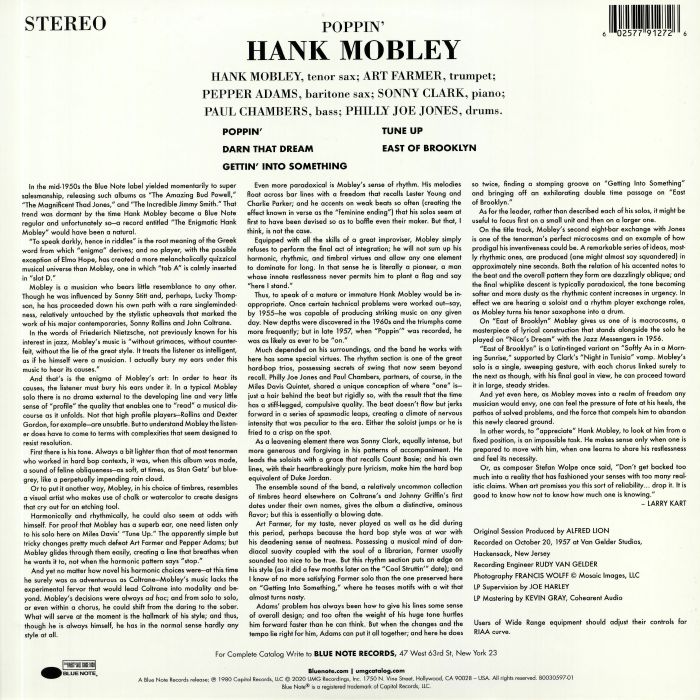
CULT CLASSIC: LEE MORGAN-THE RUMPROLLER.
Cult Classic: Lee Morgan-The Rumproller.
In 1964, twenty-six year old hard bop trumpeter Lee Morgan’s career was transformed when he enjoyed a crossover hit with The Sidewinder. Instantly recognisable and incredibly catchy, it became a jazz standard and nowadays, is regarded as Lee Morgan’s best known composition.
Buoyed by the success of the single, Blue Note Records released The Sidewinder album in July 1964. It became the label’s biggest selling album and reached number twenty-five in the US Billboard 200. In doing so, it transformed the career of the prodigiously talented Lee Morgan.
It should’ve been a time for celebration for the trumpeter who had just celebrated his twenty-sixth birthday, and had broken sales records at Blue Note Records. However, Lee Morgan wasn’t happy. He had discovered that Chrysler was using The Sidewinder as background music on a commercial that was being shown during the Word Series. There was a problem thpugh. The car giant hadn’t asked his permission, and it was only after he threatened to sue the company that they agreed not to show the advert again. It was a moral victory for Lee Morgan.
Little did he know that he had just enjoyed the biggest single and the most successful album of his career. Buoyed by the success of The Sidewinder, Lee Morgan and many other artists were encouraged to try to replicate the track’s boogaloo sound. They were essentially trying find a formula for a hit single, and took this further firstly with Lee Morgan’s future albums.
Given The Sidewinder was the most successful album Blue Note Records had ever released, executives at the label wanted Lee Morgan to follow a similar formula for future albums. They decided that his future albums would open with a lengthy, funky blues and he would follow this with a number of hard bop compositions. This became the formula for other artists.
While labels like Motown were known to record and release formulaic music, this was a first for artists signed to Blue Note Records.
By then, Lee Morgan had already recorded his Tom Cat album at Van Gelder Studio, on August the ‘11th’ 1964. However, Alfred Lion shelved both Tom Cat and Search For The New Land which was recorded on February the ‘15th’ 1964. Alfred Lion wanted to build on the success of The Sidewinder and encouraged Lee Morgan to Morgan to record a new funky theme, which was dubbed as: “the Sidewinder lineage.” The resulted was The Rumproller the title-track from the album that Alfred Lion hoped would replicate the success of The Sidewinder.
The Rumproller.
With Blue Note Records wanting Lee Morgan to come up with another hit single, he began writing material for his new album which eventually became The Rumproller. However, he wrote just two of the five tracks, Desert Moonlight and Eclipso. The other compositions were Andrew Hill’s The Rumproller, Wayne Shorter’s Edda and Rudy Stevenson’s The Lady. Just like The Sidewinder and previous albums, it was recorded at a familiar studio.
This was the Van Gelder Studio, at 445 Sylvan Avenue, Englewood Cliffs, New Jersey. The first of two sessions took place on the ‘9th’ of April 1965. Joining trumpeter Lee Morgan were drummer Billy Higgins, bassist Victor Sproles, pianist Ronnie Mathews and tenor saxophonist Joe Henderson. While Alfred Lion produced the session he was ably assisted by recording engineer Rudy Van Gelder. They had worked together for many years, and many albums were recorded in a day. However, that wasn’t the case with The Rumproller.
Twelve days later, on the ‘21st’ of April 1965, the same personnel reconvened at the Van Gelder Studio to complete the album. This they managed to do and Alfred Lion had the album he hoped would replicate the success of The Sidewinder.
Sadly, that wasn’t the case. When The Rumproller was released as a single in 1966 it wasn’t a commercial success and failed to chart. This didn’t augur well for the release of the album.
The Rumproller was well received by many critics, but it wasn’t hailed as a classic like The Sidewinder. It was a career defining album and the most successful album of Lee Morgan’s career. This was a lot to live up to, and when The Rumproller was released in mid-January 1966 it wasn’t the commercial success that Lee Morgan, his band and Alfred Lion had hoped. It was the album that got away for Lee Morgan and is a welcome reminder of the much-missed and prodigiously talented trumpeter.
Opening The Rumproller is the title-track, which Alfred Lion hoped would replicated the commercial success of his boogaloo hit The Sidewinder. It doesn’t take long to realise that The Rumproller has been inspired by The Sidewinder. The two tracks have much in common and are from the same lineage. Lee Morgan’s trumpet and Ronnie Mathews’ piano play starring roles, and later, so does tenor saxophonist Joe Henderson. He blows hard, playing with power and passion before Ronnie Mathews’ piano takes centrestage before the band are reunited as this ten minute epic draws to a close. It’s one of the highlights of the album and an oft-overlooked track.
Straight away, Desert Moonlight has a cinematic sound and transports the listener to a faraway land. Meanwhile, Lee Morgan and his band create a joyous sounding track. Horns are to the fore as the rhythm section ensure the track swings and Ronnie Mathews’ fingers dance across the keyboard. Later, Lee Morgan plays his trumpet with speed, power and accuracy before being replaced by Joe Henderson’s braying, growling and rasping tenor saxophone. He’s accompanied by Ronnie Matthews who plays a flawless solo, his fingers flying across the keyboard before the horns unite and the band play as one. They showcase their considerable skills during a quite beautiful, memorable and melodic musical journey
Initially, the introduction to Eclipso is understated before Lee Morgan leads his quintet from the front. Bursts and stabs of horns blaze and rasp as the Ronnie Matthews stabs and jabs at his piano and the rhythm section provide the heartbeat. Soon, drummer Billy Higgins adds a degree of drama and Victor Sproles firmly and confidently plucks his bass. Still the horns play a starring role. They’re played with speed, power and control as Ronnie Matthews jabs, stabs and pounds his piano before it’s all change and he plays a subtle and melodic solo. He’s accompanied by Billy Higgins who powers his way around the kit playing with a swagger as the horns unite before the track reaches a memorable crescendo.
Ronnie Matthews’ piano leads the way on Edda before the rest of the quintet enter. The horns play a starring role soaring above the arrangement quivering, shivering, rasping and braying as the rhythm section propel the joyous arrangement which almost dances along. By then, the quintet is in full flight and Lee Morgan is unleashing one of his finest solos. It’s flawless as he plays with speed, fluidity and an enviable inventiveness. He seems to lift the rest of the quintet to new heights on what’s without doubt another of the album’s highlights.
Closing The Rumproller is The Lady, a ruminative sounding track that invites reflection. It sounds like a track about love, love lost and The Lady who got away. Maybe she was the one as well? One can imagine Lee Morgan and his band in a smokey jazz club, late at night playing The Lady as those who have loved and lost think about what might have been and how different their lives could’ve been?
It was a similar case with The Rumproller. Sadly, when it was released in the middle of January 1966, The Rumproller failed to replicate the commercial success and critical acclaim of The Sidewinder. That was never going to be easy given the success of The Sidewinder.
The title-track gave Lee Morgan his biggest hit single of his career, and The Sidewinder was his most successful album. It was also the biggest selling album in Blue Note Records’ history. That was why Alfred Lion wanted Lee Morgan attempted to replicate the single’s boogaloo sound and use The Sidewinder as a formula for future albums.
Lee Morgan was placed in an impossible position after the success of The Sidewinder. Producer and Blue Note Records cofounder Alfred Lion had shelved two albums, Search For The New Land and Tom Cat, so that Lee Morgan could record and release Rumproller. It was a huge risk and one that sadly, backfired.
When The Rumproller was released as a single, stylistically it had much in common with The Sidewinder. However, it wasn’t a commercial success when released as a single and neither was the album. Maybe the problem was that Lee Morgan’s fans were looking for something new from him? Instead, they received an album that in many ways had been heavily inspired by The Sidewinder.
Despite that, The Rumproller is one of the oft-overlooked hidden gems in Lee Morgan’s discography. It’s an underrated album where the boogaloo of The Rumproller rubs shoulders with hard bop and the beautiful ballad The Lady.
Sadly, The Rumproller failed to build upon the success of Lee Morgan’s career defining classic The Sidewinder. While he enjoyed further success with the title-track from his 1967 Cornbread album and Yes I Can, No You Can’t from 1968s The Gigolo, The Rumproller was a case of what might have been and was the one that got away for the prodigiously talented trumpeter Lee Morgan.
Cult Classic: Lee Morgan-The Rumproller.

 dereksmusicblog
 dereksmusicblog