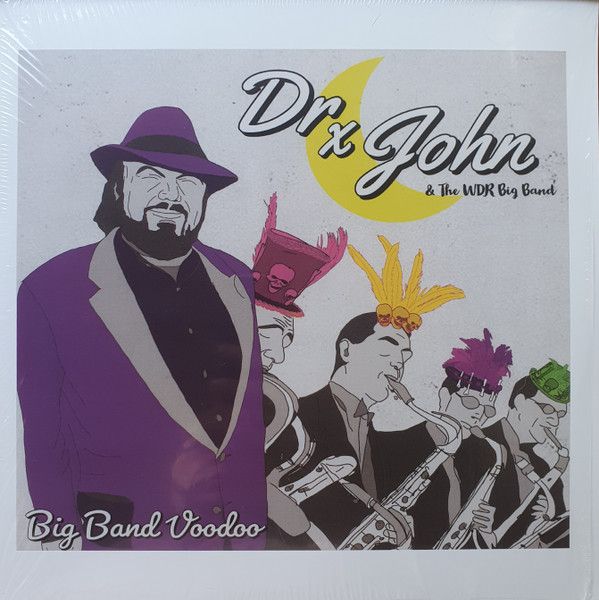
DR. JOHN AND THE WDR BIG BAND – BIG BAND VOODOO (RECORD STORE DAY 2026).
Dr. John and The WDR Big Band – Big Band Voodoo (Record Store Day 2026).
Label: Orange Music Records.
Format: Vinyl.
Few posthumous archival releases document an artistic collision as improbable – yet as immediately combustible – as ‘Big Band Voodoo.’ Captured during a series of sessions in 1995 at the Westdeutscher Rundfunk (WDR) studios in Cologne, Germany, the recording remained sealed in the broadcast vaults for nearly a quarter of a century before its poignant unveiling in November 2019, arriving just months after the June passing of New Orleans icon Malcolm “Dr. John” Rebennack.
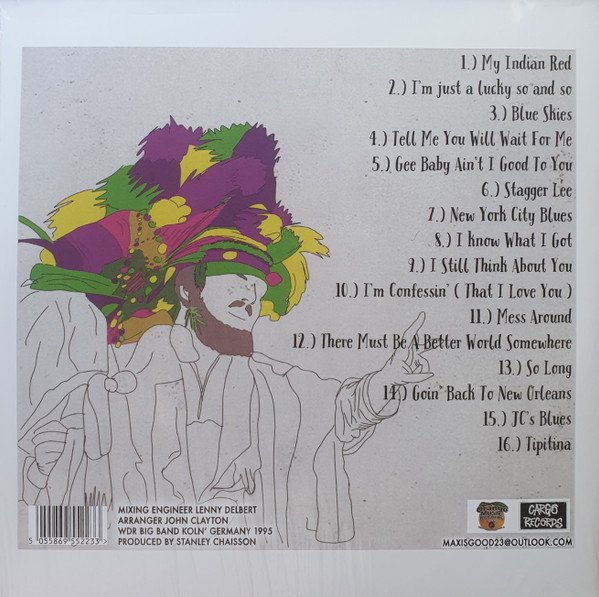
Seven years on from that initial release, the recording received a renewed audiophile celebration via a 2026 Record Store Day vinyl pressing, allowing listeners to experience its rich analog warmth and expansive dynamic range in physical form. Across sixteen sprawling tracks, the project orchestrates an extraordinary transatlantic summit, uniting Dr. John – the quintessential custodian of Crescent City piano, voodoo funk, and second-line R&B – with the WDR Big Band, Germany’s premier jazz orchestra.
On paper, pairing a gravelly-voiced bayou mystic with a precision-drilled European radio orchestra risks neutralising the raw, street-level spontaneity that defines New Orleans music. Large-scale jazz arrangements often threaten to encase vernacular rhythm-and-blues artists in overly polite, academic formality, smoothing away the very eccentricities that make them compelling. In practice, however, the WDR Big Band refuses to sanitise Rebennack’s signature grit; instead, the ensemble leans wholeheartedly into his syncopated rhythmic universe. Under astute musical direction, the musicians match Dr. John’s loose-limbed, behind-the-beat pocket with remarkable elasticity, trading European conservatory stiffness for the greasy, rolling cadence of a French Quarter parade.
Navigating a wide-ranging repertoire that spans Mardi Gras Indian chants, Tin Pan Alley standards, late-night blues ballads, and rolling piano boogie showcases, the orchestra operates less like a formal symphonic backdrop and more like a colossal, breathing Crescent City horn section. Through punchy brass voicings, muscular reed counter-melodies, and fluid dynamic shifts, the ensemble magnifies every facet of Rebennack’s musical persona. On high-octane numbers, the band erupts with celebratory, roof-raising force that propels Dr. John’s rolling Professor Longhair-inspired keyboard runs; on quieter, smoke-filled ballads, the orchestrations recede into lush, nocturnal harmonies that frame the weathered vulnerability of his vocal delivery.
Ultimately, ‘Big Band Voodoo’ stands as far more than a mere historical curiosity or a bittersweet footnote to a storied career. By framing Rebennack’s singular blend of hoodoo theatrics, stride piano mastery, and street-corner soul within an ambitious big-band canvas, the collaboration illuminates the deep historical lineage connecting traditional New Orleans polyphony to modern orchestral jazz. What began as a long-shelved European studio encounter emerges, decades later, as a triumphant, larger-than-life testament to Dr. John’s enduring musical legacy.
Side A.
Opening the album is ‘My Indian Red,’ one of New Orleans’ most sacred carnival anthems sets an immediate thesis statement. Anchored by Rebennack’s rolling, percussive piano ostinato, the WDR Big Band builds around the traditional call-and-response chant with surging brass swells and polyrhythmic horn punches. Dr. John’s gravelly vocal delivery commands the room, transforming a intimate neighbourhood parade chant into a widescreen orchestral invocation.
Duke Ellington and Mack David’s classic standard ‘I’m Just a Lucky So and So’ receives an effortless, blues-drenched reading. Here, the WDR Big Band demonstrates its innate grasp of classic American swing, laying down plush saxophone pads and muted brass commentary. Rebennack’s phrasing is sly and conversational, lagging just behind the beat with knowing charm while his piano fills bridge the vocal lines with crisp, bluesy trills.
Irving Berlin’s perennial favourite ‘Blue Skies’ is revitalised with an energetic, uptempo arrangement that highlights the precision of the WDR brass section. Dr. John navigates the brisk harmonic changes with infectious enthusiasm, trading rhythmic jabs with the ensemble. His piano solo injects barrelhouse grit into Berlin’s sleek melody, proving how naturally New Orleans stride connects to classic swing.
Slowing the tempo down with ‘Tell Me You Will Wait For Me,’ this ballad showcases a side of Dr. John often overshadowed by his “Night Tripper” persona: his profound vocal vulnerability. Backed by warm, nocturnal horn voicings that evoke late-night Bourbon Street lounges, Rebennack delivers a quietly dramatic, emotionally unguarded performance. The band exercises remarkable restraint, cradling his weathered baritone without ever overwhelming it.
Side B.
Don Redman and Andy Razaf’s 1929 standard ‘Gee Baby, Ain’t I Good To You’ fits Rebennack like a tailored suit. Driven by a slow, swaying shuffle, the arrangement allows ample space for Dr. John’s expressive piano work – rich in tremolos and blues inflections—before the horns bloom into lush, velvety harmonies. His vocal inflection balances tenderness with wry, romantic on a smoky, intimate track dripping with after-hours blues elegance.
Returning to the darker folklore of the American South, Dr. John’s signature take on the infamous murder ballad ‘Stagger Lee’ hits with seismic force when backed by an eighteen-piece jazz orchestra. The WDR rhythm section locks into a heavy, lurching New Orleans funk pocket while the trumpets and trombones punctuate the narrative’s dramatic twists like cinematic stabs. Rebennack relishes every syllable, his delivery leaning into the storytelling and veering between menacing to theatrical gusto.
‘New York City Blues’ shifts the geographic lens northward while retaining a Southern rhythmic backbone, this slow-burning blues number pairs Rebennack’s world-weary vocal tone with wailing, muted brass and brooding saxophone lines. The track highlights the seamless interplay between Dr. John’s left-hand piano bass-lines and the orchestra’s dynamic swells, building tension with unhurried precision. The result is a musical masterclass that is urbane, gritty, and steeped in mid-century big city noir.
Built around an infectious, head-nodding groove, ‘I Know What I Got’ pairs tight, staccato horn riffs with Dr. John’s unmistakable vocal cadence. The arrangement leaves generous breathing room for soloists within the WDR ranks to stretch out, creating an organic dialogue between Rebennack’s funky keyboard comping and the ensemble’s crisp jazz soloing. This collaboration results in confident, mid-tempo soul-jazz with a celebratory bounce.
Side C.
‘One of the album’s most tender moments, ‘I Still Think Of You’ relies on delicate piano arpeggios and sweeping, pastel-hued brass textures. Dr. John’s voice – weathered yet deeply expressive – carries an authentic sense of longing. Wistful, romantic, and unhurried describes the track. It serves as an essential emotional counterweight to the album’s more raucous carnival and blues numbers.
‘I’m Confessin’ (That I Love You)’ will be forever linked to fellow New Orleans titan Louis Armstrong, Rebennack pays implicit homage to his hometown lineage on this thirties standard. The WDR Big Band adopts a classic, singing big band timbre, allowing Dr. John to croon the melody with heartfelt sincerity before delivering a rolling, melodic piano break that bridges swing and Crescent City lyricism.
Co-written by Ahmet Ertegun and Jesse Stone, and immortalised by Ray Charles, ‘Mess Around’ unleashes Dr. John’s pianistic firepower in full. Taking off at a blistering clip, Rebennack’s right hand dances across the upper register with dazzling triplets and percussive syncopation, while the WDR Big Band roars behind him like a runaway locomotive. It is an exhilarating showcase of R&B energy channeled through big band discipline.
Penned by the celebrated creative partnership of Rebennack and songwriting icon Doc Pomus, ‘There Must Be a Better World Somewhere’ is a modern blues standard that transcends its intimate origins to take on sweeping, anthemic grandeur. The WDR Big Band frames Dr. John’s world-weary plea for grace with resonant, church-like brass chords and sweeping dynamic builds that swell with gospel-inflected majesty. Anchored by these lush orchestral textures, Rebennack delivers his vocal with unguarded vulnerability and deep conviction, elevating a deeply personal reflection into a poignant, communal hymn that resonates long after the final note fades.
Side D.
‘So Long’ is a bittersweet, swinging farewell steeped in classic R&B tradition. It has long been of New Orleans piano masters like Professor Longhair and Fats Domino. Here, ‘So Long’ receives a regal, brass-burnished treatment. The steady, rolling rhythm section propels the tune forward with unforced grace, while Dr. John’s vocals carry a warm, valedictory quality – a quality rendered all the more poignant given the album’s posthumous release.
Serving as the titular centrepiece of Rebennack’s Grammy-winning 1992 tribute to his beloved hometown, ‘Goin’ Back To New Orleans’ unfolds here as an expansive, nearly eight minute musical tour de force. The generous runtime grants both Dr. John and the WDR Big Band the breathing room to stretch out and explore the arrangement’s full architecture, navigating seamless shifts in tempo, blistering solo excursions from the horn section, and an irresistible, parade-ready second-line groove. At the helm of the ensemble, Rebennack commands the session with effortless authority, paying vibrant homage to the rich musical DNA of the Crescent City with unbridled, infectious joy.
Functioning as a brisk, swinging showcase for ensemble interplay, ‘JC’s Blues’ spotlights the crisp execution of the WDR horn sections alongside Dr. John’s agile, blues-rooted piano phrasing. It strips away theatricality in favour of pure musicianship, underscoring Rebennack’s credentials as a serious jazz pianist capable of trading blows with elite European orchestral players.
Closing the album with Professor Longhair’s immortal ‘Tipitina’ is both inevitable and triumphant. Rebennack channels the spirit of his mentor with trademark rhumba-boogie piano figures, while the WDR Big Band erupts in joyful, syncopated counterpoint. The orchestra captures the loose-limbed, celebratory spirit of a New Orleans club at peak fever, bringing the sixteen track journey to a euphoric conclusion.
‘Big Band Voodoo’ succeeds precisely because it refuses to treat the synthesis of New Orleans R&B and European big-band jazz as a mere stylistic novelty. Historically, cross-genre collaborations uniting vernacular roots musicians with large jazz orchestras frequently suffer from an inherent structural friction: either the ensemble sounds overly stiff and academic when set against the soloist’s earthier groove, or the soloist is shoehorned into sterile, overly formalised charts that strip away their spontaneous edge. Captured in 1995 at the height of Dr. John’s mid-career creative renaissance – hot on the heels of his 1992 Grammy-winning heritage tribute ‘Goin’ Back to New Orleans’ and his critically acclaimed standards collection Afterglow which was released in 1995 – this session bypasses those pitfalls entirely. Instead, the synergy between soloist and orchestra feels immediate, lived-in, and deeply organic, rooted in a shared reverence for the foundational dialects of American music.
Structurally, the album’s sequencing reveals a deliberate and compelling narrative arc that mirrors the breadth of Rebennack’s artistic identity. The programme opens directly in the streets with the ceremonial, ancestral pulse of ‘My Indian Red,’ immediately anchoring the orchestra in the percussive traditions of Mardi Gras Indian culture. From there, the set pivots into the smoky, late-night intimacy of classic American Songbook standards including ‘Gee Baby, Ain’t I Good to You,’ ‘I’m Confessin’’, showcasing Rebennack’s underrated mastery as a jazz crooner and interpretive stylist. The trajectory then descends into the shadowy, myth-laden terrain of Southern gothic storytelling ‘Stagger Lee,’ before culminating in a triumphant, celebratory homecoming via the rolling second-line exuberance of ‘Goin’ Back To New Orleans’ and Professor Longhair’s signature anthem, ‘Tipitina.’
Across every stylistic shift, the WDR Big Band demonstrates an extraordinary sensitivity to rhythmic nuance and micro-timing. Rather than imposing a rigid, quantised European conservatory pulse onto the material, the orchestra understands that New Orleans music breathes in the elastic, rolling space between straight-ahead swing and Afro-Caribbean syncopation – the elusive “second-line” feel. The rhythm section locks effortlessly into Rebennack’s left-hand stride and rhumba-boogie ostinatos, allowing the brass and reed sections to function like an amplified, multi-voiced extension of a classic Crescent City horn line, punctuating phrases with muscular warmth rather than clinical detachment.
Ultimately, ‘Big Band Voodoo’ stands as a vital archival testament to Malcolm Rebennack’s singular versatility as both a bandleader and a stylistic bridge-builder. Stripped of the studio overdubs, psychedelic production flourishes, and theatrical Night Tripper regalia that defined his early solo work, Dr. John emerges here in pure, unvarnished focus. Relying solely on his command of the eighty-eights, his expressive, weathered vocal phrasing, and his encyclopaedic grasp of musical lineage, he holds effortless authority over a world-class jazz orchestra – proving that the spirit of the Crescent City can thrive on any stage, no matter how grand the canvas.
Dr. John and The WDR Big Band – Big Band Voodoo (Record Store Day 2026).
- Posted in: Big Band ♦ Blues ♦ Boogie Woogie ♦ Funk ♦ Jazz ♦ R&B ♦ Swing
- Tagged: Afterglow, Big Band Voodoo, Dr John, Dr. John and The WDR Big Band, Goin’ Back To New Orleans, Malcolm "Dr. John" Rebennack, Orange Music Records, Record Store Day 2026, WDR Big Band
 dereksmusicblog

