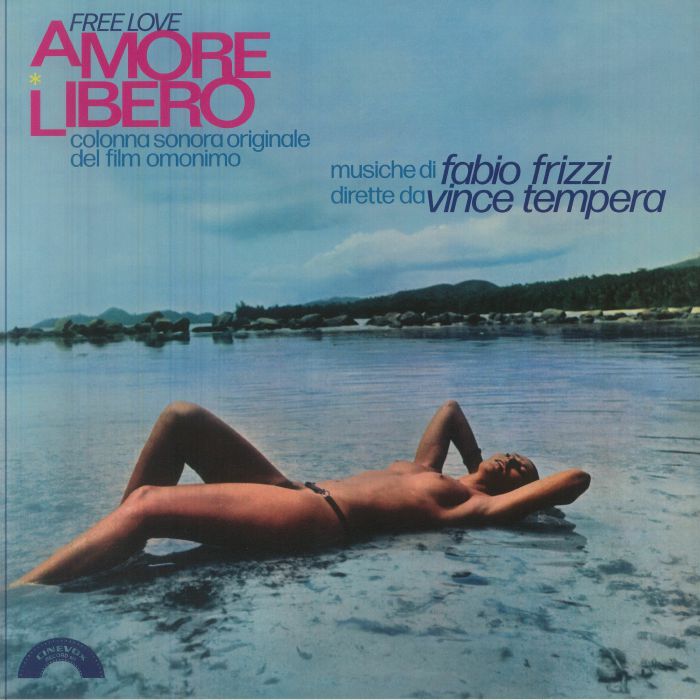
FABIO FRIZZI – AMORE LIBERO (FREE LOVE) (RECORD STORE DAY 2026).
Fabio Frizzi – Amore Libero (Free Love) (Record Store Day 2026).
Label: AMA
Format: Vinyl.
Standing as a remarkable sonic artefact from the golden age of Italian genre cinema, the original soundtrack to Pier Ludovico Pavoni’s 1974 erotic-exotic adventure film ‘Amore libero’ which was released internationally under titles such as Free Love and The Real Emanuelle captures a pivotal, transformative crossroads in European film scoring. Credited to maestro Fabio Frizzi – working in close creative partnership with frequent collaborators Franco Bixio and Vince Tempera – the album occupies an indelible place in music history as the foundational studio debut of the core musicians who would, just months later, coalesce into the legendary progressive rock outfit Goblin for Dario Argento’s Profondo Rosso (Deep Red).
Assembling guitarist Massimo Morante, keyboardist and synthesizer pioneer Claudio Simonetti, and bassist Fabio Pignatelli alongside drummer Walter Martino and elite percussionists from Rome’s vibrant session scene, the ‘Amore libero’ sessions document a rare and combustible stylistic alchemy. Rather than retreating into the polite, predictable tropes of standard seventies Italian lounge-exotica or easy-listening erotica, Frizzi and his young virtuoso ensemble push the musical boundaries outward. Across the score, sun-drenched tropical Bossa nova rhythms, sweeping acoustic textures, and lush, romantic Mediterranean melodies collide head-on with blistering, Hammond-driven progressive rock, razor-sharp clavinet funk grooves, and swirling, psychedelic analog synthesiser experiments.
What emerges from this unlikely union of sensual island escapism and muscular, forward-thinking progressive rock is a work of enduring cult fascination. Far more than a mere curiosity attached to an obscure exploitation feature, ‘Amore libero’ serves as both a vibrant time capsule of mid-1970s Roman studio craftsmanship and an essential blueprint for the visceral, genre-defining horror and thriller soundtracks that Frizzi and Goblin would soon unleash upon international cinema.
To appreciate ‘Amore libero,’ one must examine the transitional climate of Roman film scoring in 1974. The golden age of symphonic Italian soundtracks – dominated by Ennio Morricone, Nino Rota, and Piero Piccioni – was actively absorbing the electric vocabulary of progressive rock, psychedelic soul, and American funk. Rather than treating rock instrumentation as a superficial novelty layered atop traditional orchestration, Frizzi, Bixio, and Tempera embedded the nascent Goblin quartet at the structural core of the sessions.
This division of labor proved transformative. Frizzi’s innate gift for emotionally resonant, singable melodies provided an anchor that kept the younger musicians’ technical virtuosity grounded in narrative service, while Simonetti, Morante, Pignatelli, and Martino injected an unmistakable electric urgency into every frame.
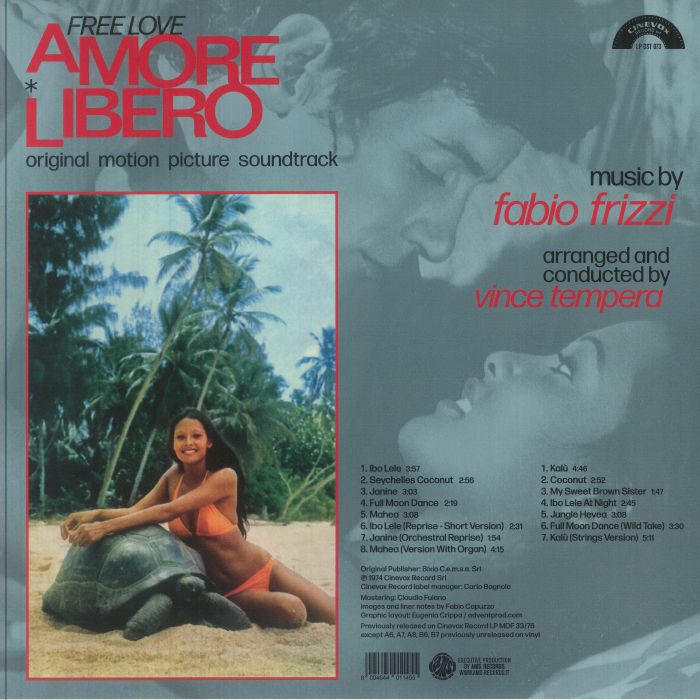
Side A.
Opening the soundtrack with an immediate jolt of rhythmic kinetic energy, ‘Ibo Lele’ sets the blueprint for the entire album’s cross-cultural fusion. Built upon a foundation of dense, driving Afro-Caribbean percussion and Fabio Pignatelli’s agile, propulsive bass-line, the track quickly reveals its progressive rock DNA through Claudio Simonetti’s swirling Hammond organ and analog synthesiser flourishes. Rather than treating its exotic setting with kitschy detachment, the ensemble injects genuine muscle and urgency into the arrangement, pairing bright acoustic guitar strums from Massimo Morante with soaring, wordless vocal chants and sharp rhythmic breaks that bridge tropical ritual and Roman prog-rock bravado.
Shifting gears into sun-drenched, coastal bliss, ‘Seychelles Coconut’ showcases the lighter, more romantic side of Fabio Frizzi’s compositional palette. Anchored by a breezy, mid-tempo Bossa nova groove and warm acoustic guitar arpeggios, the piece evokes the idyllic island escapism central to Pier Ludovico Pavoni’s narrative. Yet even in this relaxed setting, the musicianship remains sophisticated and forward-thinking: Simonetti weaves liquid, shimmering electric piano lines around subtle orchestral strings, while Pignatelli’s melodic bass counterpoint elevates what could have been a simple lounge vignette into a richly textured piece of Mediterranean-infused jazz-fusion.
Serving as the album’s emotional and melodic centrepiece, ‘Janine’ highlights Frizzi’s unmistakable gift for crafting haunting, bittersweet themes – a hallmark that would later define his iconic work in Italian horror cinema. Opening with delicate acoustic textures and tender, lyrical phrasing, the composition gradually blossoms into a sweeping, romantic ballad. Morante’s expressive, singing electric guitar lines carry the primary motif with poised restraint, supported by lush string arrangements and subtle keyboard pads that give the piece a timeless, nostalgic resonance.
True to its title, ‘Full Moon Dance’ plunges the listener into a hypnotic, nocturnal groove where progressive rock experimentation takes centre stage. Driven by Martino’s crisp, insistent drumming and a labyrinthine web of congas and auxiliary percussion, the track unfolds like a pagan ritual reimagined by a seventies European fusion band. Simonetti unleashes fiery, distorted organ runs and eerie, sweeping synthesizer textures that dart across the stereo field, while Morante’s razor-sharp, was wah-inflected guitar riffs lock into a tight, funky interplay with Pignatelli’s subterranean bass grooves.
‘Mahea’ closed Side A of the original version of ‘Amore libero,’ and strikes an exquisite balance between sensual intimacy and intricate instrumental craftsmanship. Built around a languid, swaying rhythm, the track pairs warm, sun-baked acoustic instrumentation with subtly psychedelic studio textures. The interplay between the rhythm section and keyboards is particularly noteworthy here; rather than relying on heavy orchestral swells, the arrangement leaves ample breathing room for Simonetti’s crystalline electric piano voicings and Pignatelli’s resonant, round-toned bass lines, creating an atmosphere of serene, late-afternoon tropical reverie.
Included on Side A are three bonus tracks. This includes ‘Ibo Lele (Reprise Short Version).’ Where the full-length version of ‘Ibo Lele’ unfolds as a hypnotic, cyclical journey, this concise reprise drops the listener directly into the heart of the percussive pocket. Interlocking congas, bongos, and shakers snap with crystalline urgency against Martino’s tight, syncopated drum kit, while Pignatelli’s elastic bass-line anchors the low end with muscular precision. The recurring call-and-response vocal chant enters without preamble, riding atop Simonetti’s percussive keyboard stabs and Morante’s clipped funk guitar chops. As an archival variation, its brevity works entirely in its favor: it acts as a potent rhythmic palate cleanser, proving that the core groove of ‘Ibo Lele’ hits with undiminished force even in miniature form.
‘Janine (Orchestral Reprise)’ strips away the electric rock and funk instrumentation that defines much of the ‘Amore libero’ sessions, and instead, spotlights the classical compositional craft of Frizzi, Bixio, and Tempera. Built around a soaring, bittersweet string melody, the arrangement unfolds with unhurried Mediterranean grace. Lush violins carry the primary thematic line with warm, singing phrasing, supported by subtle woodwind counter-melodies and delicate harmonic swells in the lower strings. Hearing the motif in pure orchestral dress highlights the emotional vulnerability at the centre of the score – demonstrating that beneath the progressive rock muscle and tropical grooves lies a deeply traditional, heart-on-sleeve Italian romantic sensibility.
On ‘Mahea (Version with Organ)’ the Hammond organ transforms the original track from a delicate pastoral cue into a rich, texturally layered showcase for Simonetti. Over a gentle, swaying mid-tempo pulse anchored by Pignatelli’s melodic bass and understated percussion, Simonetti’s organ fills the midrange with lush, rotary-speaker warmth. Rather than deploying the aggressive, percussive stabs heard on the soundtrack’s thriller cues, he coaxes round, singing sustain and soulful harmonic swells from the instrument, trading subtle conversational phrases with Morante’s clean-toned guitar. It is a fascinating study in timbral balance, showing how a single instrument swap can deepen the emotional gravity of a melody.
Side B.
Injecting a dose of gritty, syncopated funk into the proceedings, ‘Kalu’ stands out as one of the soundtrack’s most overtly muscular and danceable cuts. Propelled by a relentless, percussive clavinet groove and tight, punchy drum breaks, the track finds the future members of Goblin flexing their collective rhythmic dexterity. Morante’s biting, rhythmic guitar chording locks seamlessly into the pocket, while bursts of brass and analog synth accents punctuate the groove, demonstrating how effortlessly the ensemble could pivot from lush film-score lyricism to hard-edged street funk.
‘Coconut’ is closely related to the breezy spirit of ‘Seychelles Coconut,’ this variation leans even further into crisp, sunlit rhythmic interplay. Driven by an infectious, mid-tempo Bossa-funk pulse, the track pairs light, sparkling hand percussion with Martino’s nimble cymbal work and Pignatelli’s agile, high register bass runs. Morante’s guitar work shines with bright, articulate phrasing – balancing rhythmic chordal chops with playful melodic hooks – while Simonetti decorates the edges with shimmering electric piano voicings and bubbly analog synth accents. Together, the ensemble turns a simple coastal motif into a sleek, endlessly re-playable slice of seventies Italian jazz-funk.
Standing apart from the instrumental exotica and progressive suspense cues, ‘My Sweet Brown Sister’ reveals the softer, pop-soul dimension of the 1974 Roman sessions. Built on a gentle, swaying groove, the arrangement cradles the vocal melody in warm Fender Rhodes chords, delicate acoustic guitar strumming, and soft, enveloping string pads. The rhythm section exercises supreme restraint – Martino’s brushed and feathered kit and Pignatelli’s round, supportive bass-lines provide a heartbeat that never intrudes on the vocal intimacy. Frizzi and his co-composers craft a melody that feels both nostalgic and deeply sincere, capturing the sun-bleached romance of seventies European cinema at its most unguarded.
Reimagining the opening theme through a darker, more mysterious lens, ‘Ibo Lele At Night’ illustrates Frizzi’s mastery of thematic variation and cinematic atmosphere. Stripping away the bright, daytime exuberance of the original track, this nocturnal reprise slows the tempo and deepens the shadows. Brooding bass pulses, echoing percussion, and ominous, sustained organ chords transform the familiar motif into something far more enigmatic and suspenseful – offering a tantaliSing sonic preview of the gothic tension that Simonetti, Morante, Pignatelli, and Frizzi would soon weaponise in their landmark horror scores.
Closing the original album on an exhilarating, percussive crescendo, ‘Jungle Hevea’ encapsulates the wild, untamed energy of the entire ‘Amore libero’ project. Opening with dense, polyrhythmic percussion that evokes the humidity and mystery of an uncharted tropical interior, the piece steadily builds in intensity as electric guitars, throbbing bass, and swirling synthesisers enter the fray. The ensemble locks into an electrifying, hypnotic jam that balances primal rhythmic drive with sleek, futuristic studio textures, bringing the soundtrack to a triumphant and unforgettable conclusion.
However, there are two bonus tracks on Side B. The undisputed adrenaline highlight of these archival selections, ‘Full Moon Dance (Wild Take)’ preserves the raw, unedited energy of four young musicians pushing a groove to its absolute limit in the studio. Freed from the strict timing constraints of picture-locked film cues, the ensemble locks into a ferocious, driving fusion of Afro-Latin percussion and heavy progressive rock. Martino’s drumming explodes with busy, syncopated fills; Pignatelli’s bass throbs with distorted, relentless authority; and Simonetti and Morante trade fiery, improvisational passages across swirling Hammond organ and biting, effects-laden electric guitar. The “wild take” designation is entirely earned – you can practically feel the studio floorboards vibrating as the band teeters thrillingly on the edge of combustion.
‘Kalu (Strings Version)’ elevates its underlying motif through lush, cinematic string writing. Unhurried and deeply atmospheric, the arrangement allows sustained orchestral harmonies to breathe across wide dynamic arcs, evoking twilight over open water. Subtle acoustic textures and gentle low-end resonance ground the strings without disrupting their weightless, floating quality. Following the raw electric ferocity of ‘Full Moon Dance (Wild Take),’ this string-led interpretation provides an essential emotional resolution – leaving the listener suspended in the timeless, bittersweet beauty that defines Fabio Frizzi’s finest work.
Viewed through the lens of music history, ‘Amore libero’ occupies a fascinating and singularly important position in the evolution of 1970s Italian cinema and progressive rock. On the surface, the album fulfillls its commercial brief as the accompaniment to an exotic-erotic adventure film, delivering the lush melodies, tropical percussion, and sensual atmospheres expected of the genre. Yet beneath that sun-drenched veneer lies a restless, boundary-pushing musical intelligence that refuses to conform to the disposable conventions of mid-seventies exploitation scoring. By entrusting the realisation of his compositions to a cadre of young, fiercely ambitious Roman session virtuosos, Fabio Frizzi inadvertently catalysed a creative chemistry that would alter the trajectory of European film music.
Analytically, the brilliance of ‘Amore libero’ lies in its seamless synthesis of seemingly disparate idioms. Rather than treating “exotica” and “progressive rock” as oil and water, Frizzi, Franco Bixio, Vince Tempera, and the nascent members of Goblin discover a shared rhythmic and textural language between them. The intricate polyrhythms of Afro-Caribbean and tropical percussion become a natural launching pad for complex, syncopated progressive rock time signatures and funk-inflected clavinet grooves. Similarly, the lush, romantic harmonic sensibilities of traditional Italian film scoring provide an ideal emotional counterweight to Claudio Simonetti’s futuristic analog synthesisers and Massimo Morante’s biting, rock-oriented guitar work. Nothing feels pasted on or incongruous; every stylistic pivot serves both the narrative arc of the film and the internal logic of the music itself.
Ultimately, ‘Amore libero’ endures not merely as a fascinating historical footnote – the “secret origin” of Goblin before ‘Profondo Rosso’ changed horror scoring forever – but as a fully realised artistic triumph in its own right. Capturing a group of extraordinary musicians at a moment of pure, uninhibited creative discovery, the soundtrack stands as a vibrant testament to the golden age of Italian studio craftsmanship, where even an unassuming genre assignment could yield a work of enduring sophistication, groove, and sonic daring.
Fabio Frizzi – Amore Libero (Free Love) (Record Store Day 2026).
- Posted in: Bossa Nova ♦ Funk ♦ Jazz ♦ Jazz Funk ♦ Jazz Fusion ♦ Lounge ♦ Prog Rock ♦ Psychedelia ♦ Rock ♦ Soundtrack
- Tagged: Amore Libero, Claudio Simonetti, Fabio Frizzi, Fabio Pignatelli, Franco Bixio, Massimo Morante, Profondo Rosso, Vince Tempera, Walter Martino
 dereksmusicblog

