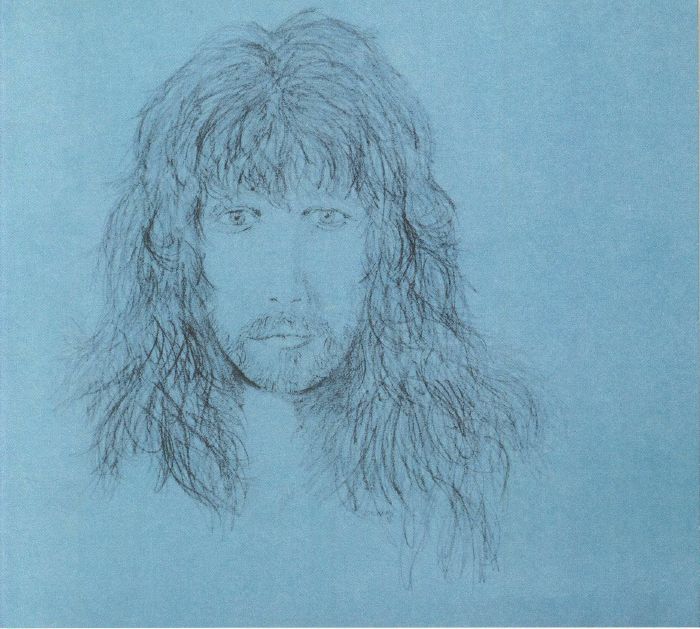
ROBERT LESTER FOLSOM – MUSIC AND DREAMS: 50TH ANNIVERSARY EDITION.
Robert Lester Folsom – Music and Dreams: 50th Anniversary Edition.
Label: Anthology Recordings.
Format: CD.
For half a century, Robert Lester Folsom’s 1976 debut existed largely at the margins of recorded music history – an elusive artefact passed quietly between dedicated record collectors, archival enthusiasts, and devotees of private press Americana. With the ‘release of ‘Music and Dreams: 50th Anniversary Edition’ via Anthology Recordings, this singular masterwork receives a definitive institutional reassessment that elevates it from a regional cult rarity to a cornerstone of mid-century American singer-songwriter craft.
Originally issued in a modest, self-financed run of just 1,000 vinyl LPs, 500 45-rpm singles, and a small batch of eight-track cartridges on Folsom’s own Abacus Records imprint, ‘Music and Dreams’ was never built for commercial saturation. Yet its obscurity belied the sophistication of its studio realiSation. Recorded at Atlanta’s historic LeFevre Sound Corporation – a facility more frequently associated with Southern gospel than avant-garde folk-pop – the album was spearheaded by head engineer and co-producer Stan Dacus, who recognised the distinct compositional voice of the young Georgia songwriter while Folsom was cutting preliminary demos with his band, Abacus.
Stylistically, the record occupies an anomalous and deeply compelling crossroads within the musical landscape of the mid-seventies American South. While regional contemporaries leaned heavily into amplified boogie-rock, country-rock outlaw posturing, or muscular soul, Folsom and Dacus charted an inward, atmospheric course. The resulting twelve tracks combine rural folk-rock intimacy with the polished melodicism of AOR, soft-pop craftsmanship, and a gentle, sun-dappled psychedelic drift. Rather than relying on studio excess, the production uses subtle textural layering to create an expansive sense of space and emotional vulnerability.
What elevates this 2026 ’50th Anniversary Edition’ beyond a routine catalog reissue is the rigour of both its technical restoration and its curatorial architecture. Meticulously remastered from original source tapes by Grammy-nominated audio engineer Jessica Thompson, the core album exhibits newfound dynamic clarity, preserving the warmth of analog tape saturation while unveiling delicate instrumental nuances previously obscured on scarce original pressings.
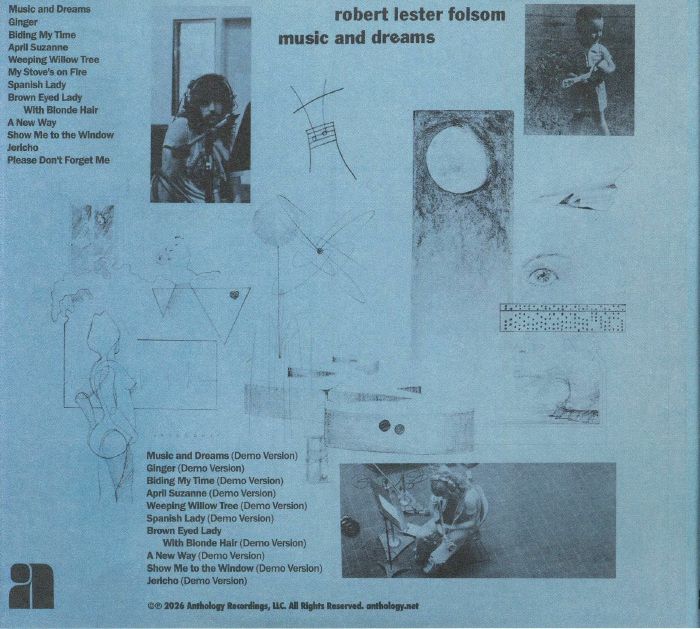
Presented as an expanded CD anthology, the sequencing operates as an analytical study in songwriting evolution. ‘Disc 1: Music and Dreams’ features the twelve newly remastered original album tracks, restoring the cohesive pacing and lush sonic palette of the 1976 LeFevre sessions. Then ‘Disc 2: Music and Dreams Demos’ pairs ten foundational reel-to-reel home demos – unearthed and compiled by longtime musical collaborator Don Fleming – with two contemporary reinterpretations by dream-pop duo Beach House and singer-songwriter Hannah Cohen.
Auditioning the polished LeFevre studio masters alongside Folsom’s unadorned acoustic home recordings illuminates the precise mechanics of his and Dacus’s studio alchemy. On the reel-to-reel demos, the songs reveal themselves as sturdy, structurally disciplined folk compositions rooted in traditional fingerpicking and unvarnished vocal phrasing.
Moving into the studio, Folsom and Dacus expanded these porch-side sketches into richly textured arrangements without compromising their homespun sincerity. By introducing the shimmering, orchestral wash of an Elka string synthesiser, subtle guitar flanging, and unhurried, hypnotic rhythmic grooves, they transformed solitary acoustic reflections into immersive sonic landscapes. The inclusion of Beach House and Hannah Cohen further underscores this stylistic lineage, demonstrating how Folsom’s dreamy, reverb-kissed aesthetics directly anticipated modern indie and chamber-pop sensibilities.
Ultimately, ‘Music and Dreams: 50th Anniversary Edition’ succeeds as both an act of historical preservation and an illuminating critical document. By framing the original album within the context of its solitary domestic origins and its enduring generational influence, Anthology Recordings ensures that Robert Lester Folsom’s quiet masterpiece is no longer merely a collector’s footnote but a vital, enduring chapter in the broader canon of American popular music.
Disc One: Music and Dreams.
Setting the tonal foundation for the record, the title track establishes a clear aesthetic direction from its very first measures, emerging on a warm, phased electric guitar motif and measured percussion. Thompson’s 2026 remaster lends newfound depth and definition to the low end while allowing the shimmering keyboard textures to expand naturally across the stereo field. At the centre of the arrangement, Folsom adopts an unforced, conversational vocal delivery reminiscent of Todd Rundgren’s most introspective work, ultimately positioning music and creative imagination as essential anchors for navigating the quietude of rural life.
Shifting from mid-tempo reverie to brisk, affectionate pop-folk, ‘Ginger’ highlights Folsom’s gift for economical, hook-laden songwriting. Built around crisp acoustic strumming and buoyant bass-lines, the track bounces with a lightness that echoes early-seventies AM radio staples. The remaster sharpens the transient snap of the rhythm guitar and brings Folsom’s layered backing harmonies into crisp focus, underscoring the song’s effortless charm.
One of the album’s standout deep cuts, ‘Biding My Time’ leans into a languid, hypnotic groove that splits the difference between sun-bleached Laurel Canyon folk-rock and Southern soul. Folsom’s vocal delivery carries an understated patience, matching the lyrical theme of waiting out uncertainty. Subtle studio embellishments – including phased guitar licks and warm organ swells – give the arrangement a liquid, psychedelic undertow that rewards close headphone listening.
Widely regarded as Folsom’s signature composition, ‘April Suzanne’ is the emotional centrepiece of the record. Clocking in at just over four minutes, the song balances plaintive yearning with an intricate, bustling instrumental arrangement. Cascading acoustic guitars intertwine with swelling synthesizer strings and a steady, driving rhythm section, elevating a tender character portrait into an expansive, bittersweet anthem.
Shifting the album’s emotional register toward understated reflection, ‘Weeping Willow Tree’ foregrounds Folsom’s enduring affinity for traditional folk songwriting. Built upon intricate fingerpicked acoustic guitar and wistful melodic phrasing, the arrangement draws on pastoral imagery to articulate an unspoken sense of heartache. The 2026 remaster heightens the intimacy of the performance by preserving the natural room tone surrounding Folsom’s vocal, allowing its raw vulnerability to remain front and centre amidst subtle, atmospheric overdubs.
Originally the A-side for the album’s sole 1976 single, ‘My Stove’s On Fire’ pivots the record’s momentum toward brisk, syncopated funk. Propelled by a tight rhythmic pocket and buoyant clavinet flourishes, the track turns a tongue-in-cheek domestic idiom into an infectious celebration of romantic infatuation. Here, Folsom steps into the spotlight with uninhibited rhythmic flair, showcasing an effortless command of upbeat pop-funk sensibilities.
Opening Side Two of the original vinyl sequence, ‘Spanish Lady’ blends breezy melodicism with narrative romance. Over a gentle, swaying accompaniment, Folsom recounts an encounter with a mysterious stranger whose language he cannot speak, yet whose connection feels unmistakable. The arrangement avoids heavy-handed pastiche, opting instead for delicate acoustic filigree and warm vocal phrasing that keeps the focus squarely on the song’s disarming sincerity.
Continuing the album’s streak of bright, character-driven vignettes, ‘Brown Eyed Lady With Blonde Hair’ pairs an upbeat, jangling folk-rock pulse with infectious melodic hooks. The interplay between crisp rhythm guitars and Dacus’s clean, spacious engineering gives the track a buoyant momentum, capturing the carefree spirit of mid-seventies regional studio craft.
At just under two minutes and forty seconds, ‘A New Way’ is the album’s briskest studio statement, yet it packs considerable melodic punch. Driven by an optimistic chord progression and crisp percussion, the song embodies a sense of forward motion and personal renewal. The remaster lends clarity to the midrange instrumentation, allowing the vocal harmonies and rhythm section to lock together with punchy precision.
Providing a stark tonal counterweight to its A-side counterpart, ‘My Stove’s On Fire,’ the original 1976 B-side ‘Show Me To The Window’ downshifts into a languid, dreamlike reverie. Suspended over open-voiced chords, swirling flanged textures, and an aching vocal melody, the composition captures the quiet tension of peering out from a still interior toward an uncertain horizon. Through its deliberate pacing and immersive sonic depth, the track emerges as one of the album’s most captivatingly hypnotic centrepieces.
Frequently cataloged under the archival subtitle ‘My Quiet Place,’ ‘Jericho” broadens the record’s sonic architecture through a measured, processional cadence and lush harmonic density. Anchored by resonant bass frequencies and glistening guitar overdubs, the arrangement gathers momentum behind Folsom’s understated yet resolute vocal phrasing. Crucially, the 2026 restoration unveils intricate percussive nuances and layered backing textures that remained obscured on original pressings.
Disc Two: Music and Dreams Demos.
Unearthed from Folsom’s personal reel-to-reel archives, this intimate home demo of ‘Music and Dreams’ distills the title track to its bare essentials: an acoustic guitar and a solitary voice. Stripped of the studio version’s phased, psychedelic sheen, the composition’s resilient folk architecture and reflective lyricism come into sharp focus, demonstrating just how fully realised the melody stood prior to the LeFevre Sound sessions.
Slightly more relaxed in pacing than its studio counterpart, the ‘Ginger’ demo radiates living room warmth. Hearing Folsom accompany himself on acoustic guitar highlights the playful rhythmic cadence of his strumming and the natural charm of his unpolished vocal delivery.
Running nearly fifty seconds longer than the 1976 master, the demo of ‘Biding My Time’ unfolds at a leisurely, unhurried pace. The extended runtime allows Folsom’s hypnotic guitar picking to breathe, trading the studio version’s soft-rock polish for a raw, loner-folk intimacy.
Unfolding over more than five unhurried minutes, the archival demo of ‘April Suzanne’ offers a compelling new perspective for longtime admirers of the record. Divested of its full-band accompaniment, the performance relies solely on Folsom’s acoustic guitar and plaintive vocal delivery to shoulder the song’s emotional arc, transforming a brisk folk-pop staple into an expansive, deeply intimate meditation.
Spanning just over four unhurried minutes, this early archival recording of ‘Weeping Willow Tree’ casts the composition’s melancholic grace in stark relief. Analog tape hiss and ambient room tone wrap Folsom’s delicate fingerpicking in an organic warmth, capturing the unvarnished, homespun restlessness that defines his private tape archive.
In its demo form, ‘Spanish Lady’ feels like an intimate fireside ballad. The unadorned acoustic arrangement places complete focus on Folsom’s storytelling and gentle vocal inflection, highlighting the natural ease with which he crafted memorable melodies.
Slightly brisker and punchier than the studio take, the demo of ‘Brown Eyed Lady With Blonde Hair’ showcases the rhythmic drive of Folsom’s acoustic playing. Even without a full rhythm section, the song’s infectious bounce and bright melodic hooks remain completely intact.
Trimmed to a lean two minutes and fifteen seconds, the ‘A New Way’ demo captures the song in its purest, most immediate state. The raw vocal take bursts with youthful optimism, offering a fascinating blueprint for the tighter, radio-friendly studio arrangement.
Matching the exact three-minute-twenty-five-second runtime of the album version, the demo of ‘Show Me To The Window’ demonstrates just how closely the studio band adhered to Folsom’s original structural vision. Stripped of flanged studio effects, the melody’s quiet yearning feels even more direct.
Expanding to four minutes and thirty-nine seconds, the final demo on the set transforms ‘Jericho’ into an extended acoustic reverie. The extra space lets Folsom’s resonant guitar chords ring out against the quiet tape floor, bringing the archival sequence to a deeply satisfying close.
Commissioned exclusively for ‘Music and Dreams: 50th Anniversary Edition,’ Baltimore dream pop duo Beach House refracts ‘April Suzanne’ through their signature aesthetic of glacial organ swells, luminous slide guitar, and Victoria Legrand’s smoky, reverb-soaked vocals. Foregoing the brisk folk-pop momentum of Folsom’s original, the pair suspends the tempo in a hypnotic, nocturnal haze – demonstrating the effortless durability of Folsom’s melodic craft within contemporary indie-pop architecture.
Closing ‘Music and Dreams: 50th Anniversary Edition’ singer-songwriter Hannah Cohen offers a luminous, tactile rendition of the title track. Anchored by warm analog keyboards, delicate percussion, and Cohen’s understated, honeyed vocal phrasing, the cover honours the 1976 original’s soft-psychedelic soul while situating it squarely within the lineage of contemporary indie folk.
When Robert Lester Folsom privately financed and pressed a modest run of one thousand copies of ‘Music and Dreams’ in 1976, the record existed almost entirely outside the commercial machinery of the American music industry. Recorded in Atlanta and distributed largely by hand across Georgia, the album initially functioned as a localised calling card – a charming anomaly destined to linger in regional obscurity. Half a century later, Anthology Recordings’ ‘50th Anniversary Edition’ accomplishes far more than mere archival preservation; it orchestrates a critical reappraisal of Folsom’s catalog, positioning ‘Music and Dreams’ as an essential, if long-overlooked, cornerstone of seventies independent American songwriting. Rather than treating the album as a kitschy private-press artefact, this expanded edition frames Folsom’s work through a rigorous dual lens, examining both the sophisticated studio craft of the original master tapes and the unadorned structural integrity of the demos that preceded them.
The architectural brilliance of this reissue lies in its deliberate pairing of two distinct phases of Folsom’s creative process, curated with forensic care by mastering engineer Jessica Thompson and archival producer Don Fleming. On Disc 1,Thompson’s remaster of the original LeFevre Sound sessions brings unprecedented clarity and dynamic headroom to Folsom’s collaboration with engineer Stan Dacus. Stripped of the sonic compromises inherent to the original private pressing, the recordings reveal a remarkably assured synthesis of styles. Folsom effortlessly bridges the narrative intimacy of Southern folk-rock with the lush, phase-shifted textures and harmonic complexity of mid-seventies soft-rock and sunshine psych-pop. The nuanced interplay between sun-dappled acoustic guitars, swelling keyboard arrangements, and Dacus’s subtle studio treatments demonstrates that Folsom was not merely mimicking mainstream radio trends, but adapting their sonic vocabulary to suit a deeply personal, pastoral sensibility.
Disc 2 shifts the analytical focus from studio realisation to compositional genesis through Fleming’s meticulous restoration of Folsom’s original reel-to-reel home demos. By stripping away the orchestral embellishments, multi-tracked harmonies, and studio polish of the LeFevre sessions, these archival recordings expose the foundational architecture of Folsom’s songwriting. What emerges is an unassailable core of melodic intuition and harmonic sophistication. In their skeletal form, tracks that felt expansive and dreamy on the finished LP take on a stark, unhurried vulnerability, highlighting Folsom’s gift for phrasing and his refusal to hide behind lyrical irony. Hearing these demos in direct conversation with the final masters clarifies how much of the album’s enduring emotional resonance was already fully formed before Folsom ever stepped inside a professional recording booth.
Beyond its archival rigour, the compilation situates Folsom within a broader continuum of contemporary independent music through the inclusion of newly recorded reinterpretations by Beach House and Hannah Cohen. Far from functioning as obligatory bonus tracks, these covers operate as a critical thesis statement on the album’s quiet, cross-generational influence. Beach House’s contribution translates Folsom’s hazy, tape-saturated melancholy into their own signature dream-pop lexicon, underscoring the direct lineage between Folsom’s seventies experiments and modern indie aesthetics. Similarly, Cohen’s rendition foregrounds the timeless lyrical poise and vocal warmth at the heart of his catalogue, proving that these compositions translate seamlessly across eras and stylistic frameworks without losing their emotional centre of gravity.
Viewed in its entirety, ‘Music and Dreams: 50th Anniversary Edition’ stands as a benchmark in modern reissue curation, honouring the delicate equilibrium between solitary inspiration and collaborative studio execution. The trajectory of Folsom’s debut – from forgotten crates in Southern record shops to algorithmic rediscovery, critical acclaim, and sold-out anniversary performances – testifies to the enduring power of unvarnished artistic sincerity in an increasingly homogenised musical landscape. By giving equal weight to the polished studio artefact, the raw archival blueprint, and the contemporary artists carrying its torch forward, Anthology Recordings ensures that ‘Music and Dreams’ is no longer heard as a relic of a bygone era, but as a living, breathing benchmark of independent American craftsmanship.
Robert Lester Folsom – Music and Dreams: 50th Anniversary Edition.
 dereksmusicblog

