PHIL COLLINS – FACE VALUE.
Phil Collins – Face Value.
Label: Atlantic.
Format: CD.
At the turn of the eighties, the commercial and aesthetic landscape of popular music stood at a volatile crossroads. Punk had dismantled excess, disco was fracturing into post-disco and synth-pop, and progressive rock – once the dominant high-art ambition of the album era – increasingly risked sounding anachronistic. When Phil Collins released ‘Face Value’ in February 1981, few outside his immediate orbit anticipated that the longtime drummer and newly minted lead vocalist of Genesis was about to recalibrate the sonic blueprint of mainstream pop. Arriving amid the personal upheaval of his divorce from Andrea Bertorelli and a pause in Genesis’s relentless touring cycle, the album did not emerge from a boardroom strategy or a calculated grab for solo dominance. Instead, it began as an intimate, solitary act of emotional triage – a domestic reckoning in which raw grief, simmering resentment, dry self-irony, and fragile renewal were captured directly onto magnetic tape in his Surrey bedroom using a four-track recorder, a Roland CR-78 drum machine, a Rhodes electric piano, and a Sequential Circuits Prophet-5 synthesiser.
What elevates ‘Face Value’ above the conventional “band member goes solo” vanity exercise is its refusal to remain tethered to any single stylistic orthodoxy. Rather than recasting the pastoral twelve-string folk textures, theatrical myth-making, or multi-part song cycles of seventies Genesis, Collins treated his solo debut as a cross-pollination lab. He brought together the formative musical currents of his life – the punchy phrasing and emotional directness of Motown and Stax soul, the studio-as-instrument ethos of late-period Beatles, the metric agility and harmonic elasticity of his jazz-fusion work with Brand X, and the atmospheric, post-punk sensibility of Brian Eno and Peter Gabriel – and forged them into a taut, modern pop idiom. Emotional vulnerability and rhythmic precision coexisted without blunting one another; confession was framed not as aimless wallowing, but as tight, hook-driven songcraft.
Equally decisive was Collins’s creative partnership with co-producer and engineer Hugh Padgham. Having recently discovered the “gated reverb” drum sound during sessions for Peter Gabriel’s third solo album, Collins and Padgham transformed what began as an unconventional studio experiment into an organising architectural principle. By clamping down on the reverb tail with a noise gate, snare hits gained a cavernous, metallic authority that cut cleanly through dense synth and brass arrangements without muddying the low end. That percussive weight gave emotional ballads and tense mid-tempo grooves alike an unmistakable physical presence that soon echoed across a decade of pop production.
Collins further broadened the record’s palette through a remarkably eclectic roster of collaborators, treating each guest contribution as a distinct timbre rather than star-studded ornament. He enlisted The Phenix Horns—Earth, Wind & Fire’s brass section, with arrangements by Thomas “Tom Tom 84” Washington—to inject razor-sharp soul-funk momentum, paired them with Indian violinist L. Shankar’s modal, soaring lines and Weather Report bassist Alphonso Johnson’s fluid low end, and drew on guitarists Daryl Stuermer and Eric Clapton for complementary harmonic and blues-inflected colour. Every layer served the emotional contour of the material rather than competing for spotlight space.
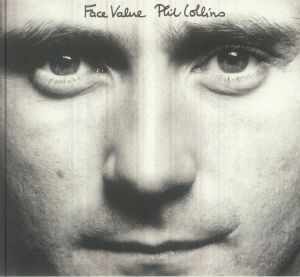
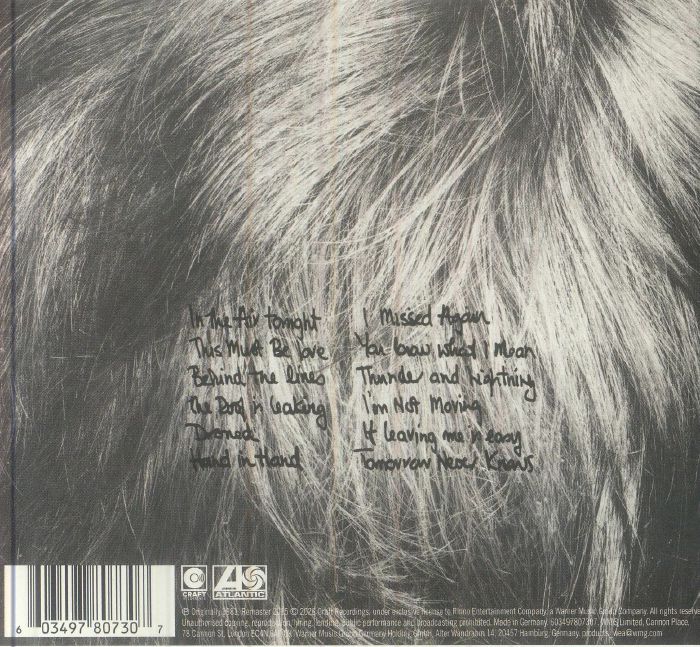
Even the packaging reinforced the album’s ethos of radical candour. The front cover presented an uncompromisingly tight, unvarnished close-up of Collins’s face, while the back cover turned to the back of his head – a visual mirror of inwardness and exposure. Inside the gatefold, his self-credit as “Me” underscored the confessional immediacy of songs written from the eye of personal fallout.
Ultimately, ‘Face Value’s’ enduring significance lies in how seamlessly it bridged private catharsis and mass appeal. By pairing raw, unguarded songwriting with disciplined studio innovation and genre-fluid musicianship, Collins demonstrated that emotional honesty need not sacrifice rhythmic drive or pop clarity. The album’s international chart success and pervasive influence were no fluke; they marked a turning point in which personal reckoning, studio craft, and mainstream hooks converged to reshape the sound and sensibility of eighties popular music.
‘Face Value’ opens with ‘In the Air Tonight.’ It is one of the most audacious and recognisable sonic statements in recorded history. Built over a hypnotic, ticking Roland CR-78 rhythm and ominous, sustained Prophet-5 chords, the first three and a half minutes operate as a masterclass in psychological tension. Collins’s vocal – treated with a cold, spectral delay- delivers cryptic, bitter accusations – “Well, if you told me you were drowning, I would not lend a hand” – that channel pure marital betrayal without ever descending into melodrama. L. Shankar’s eerie, weeping violin and Daryl Stuermer’s subterranean guitar swells thicken the atmosphere until the arrangement hits an absolute vacuum. What follows—the monumental, cascading ten-beat drum fill drenched in Hugh Padgham’s gated reverb – is not merely a rhythmic entrance; it is an emotional detonation. Rarely has studio engineering so viscerally mirrored human rage and release.
Following the gothic claustrophobia of the opener, ‘This Must Be Love’ acts as an immediate exhale, pivoting from bitter isolation to the tentative warmth of a new romance. It was inspired by Collins’s relationship with Jill Tavelman. Anchored by a gentle, undulating CR-78 pulse and warm electric piano, the track’s secret weapon is Alphonso Johnson’s liquid, fretless bass playing, which weaves melodic counter-lines around Collins’s tender, double-tracked vocal. The chorus lifts effortlessly, accented by tasteful backing harmonies from singer-songwriter Stephen Bishop. It is unhurried, remarkably restrained, and establishes early on that Collins’s gift for romantic vulnerability was just as potent as his capacity for percussive drama.
Originally conceived as the bombastic, prog-rock curtain-raiser for Genesis’s 1980 album ‘Duke,’ ‘Behind The Lines’ undergoes a thrilling metamorphosis here. Speeding up the tempo and stripping away Tony Banks’s grandiose keyboard fanfare, Collins and arranger Tom Tom 84 reinvent the composition as a razor-sharp, R&B-inflected funk workout. The Phenix Horns announce their arrival on the album with blistering, syncopated stabs that lock tightly into Collins’s crisp snare work and Johnson’s propulsive bass-line. While the Genesis version felt theatrical and mythic, Collins’s solo reading feels street-level, urgent, and joyous – proving how effortlessly his rhythmic instincts bridged progressive rock complexity with classic soul groove.
If the preceding tracks showcase Collins’s mastery of modern studio craft, ‘The Roof Is Leaking’ strips everything back to stark, wooden Americana. Driven by a solemn, hymn-like acoustic piano progression and an aching, high-register vocal, the song adopts the persona of a struggling frontier farmer watching his homestead deteriorate through a bitter winter. Yet the metaphor for Collins’s crumbling domestic life is unmistakable. Joe Partridge’s mournful slide guitar and Eric Clapton’s restrained dobro accents evoke a dusty, Band-inspired rustic melancholy, culminating in a raw, unpolished vocal peak before resolving into the quiet, nocturnal chirp of crickets. It stands as one of Collins’s finest narrative lyrics.
Serving as a hypnotic bridge into the final stretch of Side One of the original album, ‘Droned’ is an atmospheric instrumental rooted in Collins’s admiration for Brian Eno and Indian classical music. Over a resonant, open-tuned acoustic piano ostinato and L.Shankar’s shimmering tamboura drone, Collins layers intricate, polyrhythmic percussion – including Shankar’s “voice drums” (konnakol) and heavily treated tom-toms. Rather than building toward a conventional rock climax, the piece swells into a dense, psychedelic swirl of reversed textures and cascading rhythms before seamlessly bleeding into the next track. It is a vital reminder that beneath his pop sensibilities, Collins remained a fearless, textural percussionist.
Emerging directly out of the fading echoes of ‘Droned,’ ‘Hand In Hand’ is an exhilarating, five-minute instrumental tour de force that fuses jazz-rock virtuosity with triumphant soul. Opening with a playful, almost childlike piano motif accompanied by wordless chants from a Los Angeles children’s choir, the track gradually blossoms as the Phenix Horns enter with soaring, celebratory fanfares. Halfway through, the piece shifts gears into a ferocious rhythmic showcase:Collins unleashes blistering, hyper-articulate drum fills across the stereo field, trading blows with blazing brass lines and fluid bass work. Closing Side One on a note of pure kinetic uplift, ‘Hand In Hand’ captures the sheer joy of a master musician liberated from band democracy.
Side Two of the original album bursts out of the gate with ‘I Missed Again,’ an infectious piece of self-deprecating Motown-pop. Originally demoed as a somber ballad titled ‘I Miss You, Babe,’ Collins wisely flipped the arrangement on its head, transforming romantic failure into an ebullient, brass-fuelled stomper. Over a driving four-on-the-floor beat and rubbery bassline, the Phenix Horns deliver punchy, joyous riffs while Collins wryly mocks his own emotional clumsiness – “Did I miss again? I think I missed again.” A fiery, unexpected tenor saxophone solo from British jazz legend Ronnie Scott injects grit into the bridge, cementing the track as the blueprint for Collins’s upbeat eighties singles.
In stark contrast to the brassy exuberance of ‘I Missed Again,’ ‘You Know What I Mean’ is two and a half minutes of devastating, unadorned heartbreak. Accompanied initially by nothing more than his own hesitant, melancholic piano chords, Collins sings in a fragile, conversational register about the painful realisation that a relationship has slipped beyond repair. Halfway through, a lush, sweeping string section – arranged by legendary Atlantic Records producer Arif Mardin – enters like a sudden wave of grief, lifting Collins’s voice to an emotional breaking point before abruptly receding back to solitary piano. Its brevity only sharpens its emotional devastation.
‘Shaking off the melancholy of the preceding ballad, “Thunder and Lightning’ is a brisk, buoyant pop-soul number powered by crisp horn charts, nimble bass work, and an effervescent rhythm section. Lyrically, the song captures the volatile, exhilarating rush of sudden romantic infatuation, using meteorological imagery to describe an unexpected emotional awakening. While lighter in thematic weight than the album’s centrepiece ballads, its tight arrangement and infectious energy keep the second side moving forward with effortless momentum, highlighting Collins’s uncanny knack for crafting radio-ready hooks without sacrificing musicianship.
One of the most stylistically adventurous cuts on ‘Face Value,’ ‘I’m Not Moving’ blends slick, vocoder-processed R&B funk with subtle reggae syncopation and art-pop quirkiness. Anchored by a rubbery, infectious synth-bass groove and crisp off-beat guitar chops, the track finds Collins digging in his heels against emotional manipulation and romantic instability. The use of the vocoder on the chorus adds a cool, detached mechanical sheen that contrasts sharply with the warmth of the Phenix Horns, demonstrating Collins’s willingness to experiment with cutting-edge studio textures alongside traditional soul instrumentation.
Returning to the raw, confessional territory of the album’s core, ‘If Leaving Me Is Easy’ is a slow-burning, soul-drenched torch song of staggering emotional weight. Featuring weeping slide guitar from Eric Clapton, lush yet restrained string swells, and a deeply expressive vocal performance from Collins, the track pleads for mercy from a departing lover. As the arrangement builds toward its climax, Collins’s voice cracks with genuine anguish before resolving into quiet resignation. It stands alongside ‘In The Air Tonight’ as the emotional anchor of the record—a masterwork of blue-eyed soul that turns personal humiliation into enduring art.
Closing ‘Face Value’ with an audacious, psychedelic left turn, Collins tackles The Beatles’ 1966 ‘Revolver’ masterpiece, ‘Tomorrow Never Knows.’ Rather than attempting a faithful rock recreation, Collins transforms the track into a dense, ambient electronic soundscape driven by swirling tape loops, backwards effects, pulsing drum machines, and haunting, heavily processed vocals. It is a fittingly surreal conclusion to an album born out of psychological upheaval – a sonic dissolution of the ego that honours Collins’s lifelong devotion to John Lennon whose recent murder in December 1980 is memorialised by a brief, poignant acoustic snippet of ‘Over the Rainbow’ hidden in the final fade-out.
In the canon of late-twentieth-century popular music, few records have managed to bridge the chasm between private, unguarded confession and global commercial ubiquity as effortlessly as Phil Collins’s 1981 solo debut, ‘Face Value.’
Arriving at a transitional moment when progressive rock was ceding cultural ground to post-punk austerity and synthesiser-driven pop, the album did not merely announce a successful side project for the Genesis drummer and vocalist; it fundamentally reimagined what a mainstream rock record could sound like and how a male pop star could inhabit it. By centring the album around the raw aftermath of his first divorce, Collins bypassed the performative swagger, theatrical distance, and virtuoso detachment that still defined much of arena-scale rock stardom. Instead, both visually—through the stark, unvarnished close-up photograph of his face on the sleeve – and musically, he offered an unfiltered portrait of an ordinary, fallible man navigating grief, bitterness, self-mockery, and tentative hope in real time.
That emotional candour was matched – and structurally reinforced – by a radical approach to sequencing and songwriting. Rather than imposing a neat, triumphant arc of recovery onto his personal fallout, Collins allowed the record to mirror the erratic, nonlinear reality of heartbreak. Bitter, slow-burning accusation collides directly with fragile new affection; stark, demo-like folk minimalism gives way to kinetic, horn-driven soul-pop; and moments of wry self-deprecation sit alongside unguarded pleas for honesty. By refusing to sand down these tonal contradictions, Collins turned ‘Face Value’ into an unusually cohesive psychological document, proving that an album assembled from four-track bedroom sketches could sustain profound dramatic weight without sacrificing melodic immediacy.
From an engineering and production standpoint, ‘Face Value’ permanently altered the sonic vocabulary of contemporary music. Working closely with co-producer Hugh Padgham, Collins transformed their earlier studio experiment on Peter Gabriel’s third solo album – the gated reverb drum sound – into an architectural cornerstone of modern pop production. By compressing and abruptly gating the ambient room decay of the drum kit, they achieved a percussive impact that was simultaneously cavernous and razor-sharp, capable of cutting through dense synthesizer textures without muddying the low end. Within a few years, that signature sound had rippled far beyond British art-pop, reshaping the rhythmic grammar of arena rock, synth-pop, R&B, and early hip-hop.
Equally transformative was Collins’s cross-cultural synthesis of disparate musical idioms. Drawing directly on his lifelong devotion to Motown and Stax soul, his jazz-fusion dexterity from Brand X, and the studio-as-instrument ethos of The Beatles, he seamlessly integrated Earth, Wind and Fire’s Phenix Horns, Indian violinist L. Shankar, and Weather Report bassist Alphonso Johnson into a distinctly British pop sensibility. In doing so, he dismantled the false dichotomy between rhythmic sophistication and mass appeal, demonstrating that intricate syncopation, harmonic nuance, and studio experimentation could serve hooks of effortless commercial power.
Forty-five years after its release, ‘Face Value’ continues to resonate because its technical breakthroughs never feel like hollow studio vanity; every sonic choice is anchored to a human pulse. The eerie throb of a drum machine, the sudden detonation of a gated snare, the celebratory punch of a brass section, and the hush of a solitary piano all operate in service of a single, deeply relatable narrative: the slow, uneven labor of emotional survival. That rare alignment of formal invention and unguarded vulnerability not only established ‘Face Value’ as Phil Collins’s definitive artistic statement, but secured its place among the most enduring and influential breakup records in popular music history.
Phil Collins – Face Value.
- Posted in: AOR ♦ Folk ♦ Jazz Fusion ♦ Pop ♦ Rock ♦ Soft Rock ♦ Soul
- Tagged: Behind The Lines, Daryl Stuermer, Duke, Eric Clapton, Face Value, Genesis, Hugh Padgham, I Missed Again, If Leaving Me Is Easy, In The Air Tonight, L. Shankar, Phil Collins, The Phenix Horns, This Must Be Love, Thunder and Lightning, You Know What I Mean
 dereksmusicblog

