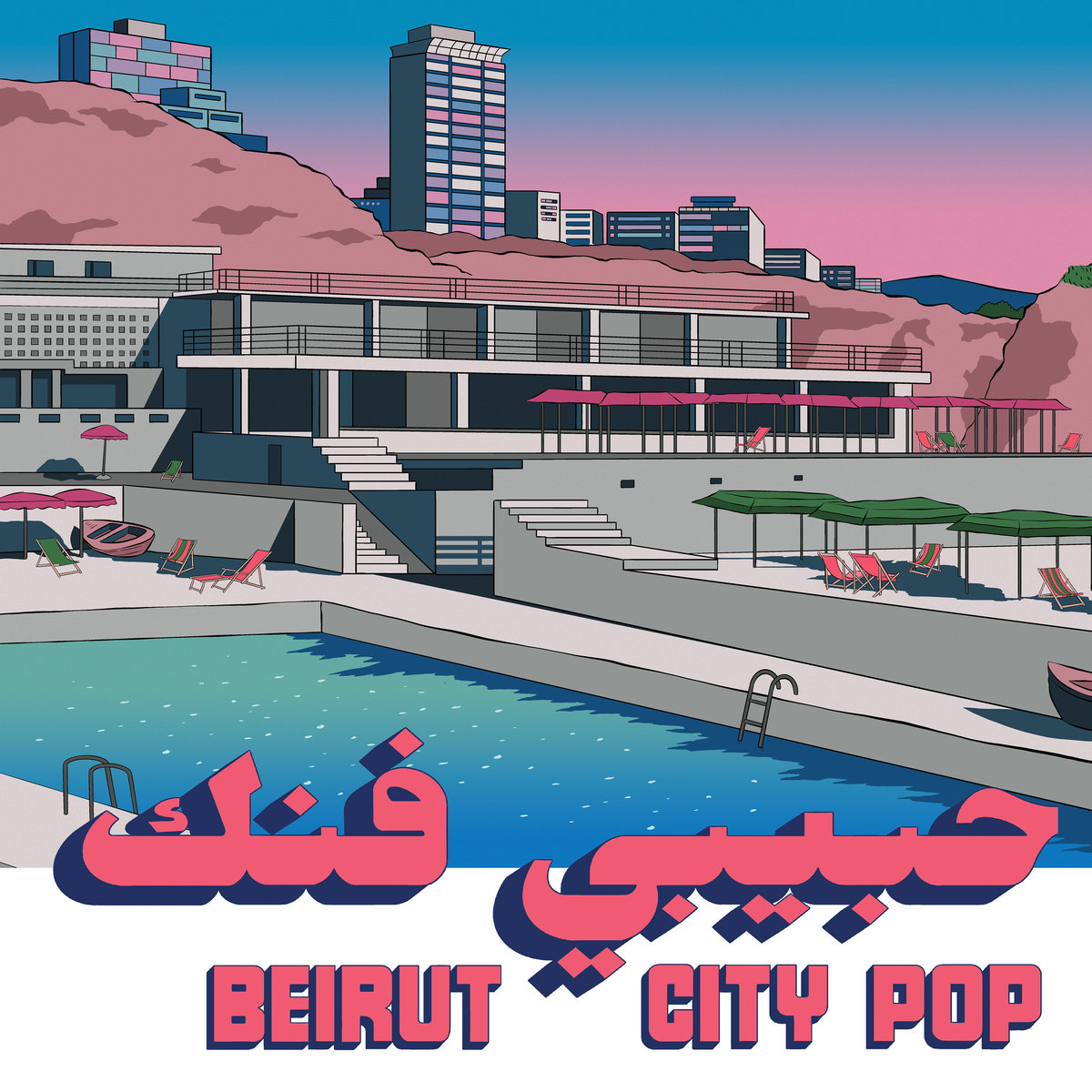
HABIBI FUNK 035: BEIRUT CITY POP.
Habibi Funk 035: Beirut City Pop.
Label: Habibi Funk.
Format: CD.
Curated and released by the Berlin-based archival imprint Habibi Funk, ‘Habibi Funk 035: Beirut City Pop’ stands as an essential musicological and historical document – one that transcends routine crate-digging to illuminate an extraordinary paradox of cultural production. Concentrating on Lebanon’s private press cassette underground of the late seventies and eighties, the compilation captures a fleeting, hyper-localised creative ecosystem that flourished amidst the protracted devastation of the Lebanese Civil War. Within a landscape scarred by sectarian fragmentation, infrastructural collapse, and daily existential peril, a tightly integrated network of session players, sound engineers, and avant-garde composers coalesced – most notably around Ziad Rahbani’s seminal Bypass Studio – to construct an alternate sonic reality defined by warmth, precision, and cosmopolitan poise.
To frame this body of work under the rubric of “City Pop” invites an immediate, instructive contrast with the genre’s canonical Japanese archetype. Whereas late-Showa era Tokyo birthed a slick, neon-saturated soundscape fuelled by bubble-era affluence, rapid urbanisation, and consumer optimism, Beirut’s iteration emerged from conditions of acute scarcity and siege. In this context, the lush harmonic vocabulary of Album Oriented Rock (AOR), kinetic disco rhythms, intricate jazz-funk arrangements, velvety soul, and syncopated Bossa nova ceased to be mere markers of metropolitan leisure. Instead, these Western and Latin-inflected idioms were recontextualised as instruments of psychological sanctuary, aesthetic escapism, and quiet cultural defiance. Denied access to major label distribution or stable commercial infrastructure, fleeting ensembles and fluid studio collectives recorded onto magnetic tape, duplicating their masters on domestic cassette decks for circulation through informal, hyper-local peer networks.
Ultimately, ‘Habibi Funk 035: Beirut City Pop’ operates as both a triumph of sonic restoration and a vital corrective to monolithic historical narratives of the wartime Levant. By recovering these fragile, hand-dubbed artefacts from the brink of physical degradation and cultural erasure, the compilation preserves far more than a collection of rare grooves; it documents the enduring agency of artists who insisted on beauty, technical sophistication, and outward-looking modernity in the face of geopolitical collapse. In doing so, it affirms the capacity of underground music scenes to generate spaces of profound human resilience, ensuring that Beirut’s clandestine golden age of studio craft resonates with undiminished clarity for contemporary global listeners.
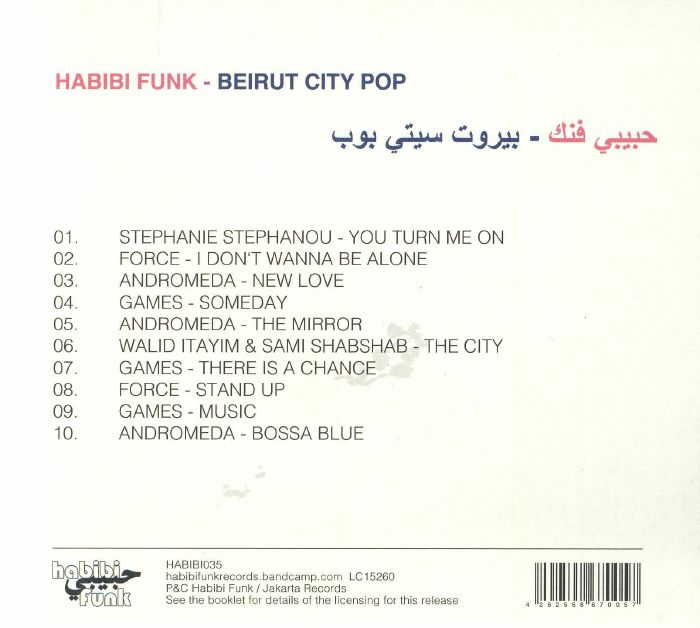
The compilation opens with an intoxicating masterclass in smooth, sun-kissed groove. Stephanie Stephanou’s ‘You Turn Me On’ immediately establishes the record’s polished production standards, driven by a sinuous bass-line, lush keyboard pads, and vocal delivery that balances understated intimacy with effortless pop magnetism. It bridges Western radio-friendly soul and Levantine warmth, setting an uplifting, high-vibe blueprint for what follows
Shifting gears toward an infectious, mid-tempo dancefloor rhythm, Force’s ‘I Don’t Wanna Be Alone’ leans heavily into a late-seventies disco-funk pocket. Crisp percussion, tight rhythm guitars, and cascading synthesiser accents intertwine to create a driving urban landscape. The track captures the nocturnal restlessness of a city seeking connection amidst external isolation, anchored by an undeniably hook-laden chorus.
Adromeda enters the sequence with ‘New Love,’ a track that radiates a breezy, breezy AOR sophistication. Reminiscent of West Coast soft-rock production values yet imbued with a distinct Mediterranean lightness, the song utilises shimmering electric pianos and crystalline vocal arrangements. It feels tailor-made for twilight coastal drives, showcasing the arrangement dexterity present in Beirut’s underground studio circuits.
Clocking in as one of the emotional centrepieces of the compilation, Games’ ‘Someday’ introduces a wistful, reflective undertone. The composition relies on melancholic chord progressions and evocative instrumentation, where subtle jazz harmony meets soft-pop structures. There is a palpable yearning baked into the melodies – a delicate balance between despair over the present and hopeful projection toward an uncertain future.
Returning for their second appearance, Andromeda’s ‘The Mirror’ leans into a more introspective, moody atmosphere.Spacey synthesiser textures and a hypnotic, unhurried groove give the track a cinematic quality. It explores the psychological interiority of living through prolonged societal stress, utilising sonic abstraction and sophisticated chord shifts to convey a sense of quiet introspection.
Serving as a thematic anchor for the entire project, Walid Itayim and Sami Shabshab’s ‘The City’ directly addresses the duality of Beirut itself- its chaos, its resilient beauty, and its inescapable magnetism. The track pulses with an urgent urban energy, marrying rhythmic vitality with sophisticated jazz-funk instrumentation. It functions as an auditory postcard of a metropolis striving to maintain its cultural pulse under pressure.
On ‘There Is A Chance,’ Games return with a composition that radiates cautious optimism. The arrangement is luminous ,featuring buoyant keyboard lines and a steady, reassuring groove that lifts the listener upward. It captures the quiet resilience of a community holding onto faith, translating complex emotional perseverance into a remarkably accessible, radio-ready pop framework.
Force’s second contribution, ‘Stand Up,’ injects an energetic, motivational burst of funk and soul into the sequencing. Propelled by punchy horns, a driving bass groove, and an uplifting vocal rallying cry, the track is built for movement. It exemplifies how musicians of this era channeled collective energy into dynamic, rhythm-driven expressions of endurance and collective strength.
True to its title, Games’ ‘Music’ is a loving, meta-textual ode to the consoling power of art itself. Concise and direct, the track strips away extraneous elements to focus on a pristine melodic hook and a cozy, inviting arrangement. It acts as a reminder of why these artists risked resources and safety to record in the first place: music as a vital, life-affirming refuge.
The compilation closes with Andromeda’s ‘Bossa Blue,’ a sublime excursion into sultry, nocturnal bossa nova. Gently swaying rhythms, warm acoustic textures, and smoky jazz guitar lines wind down the record with an exquisite sense of calm. It provides a soft, elegant landing, leaving the listener suspended in the bittersweet afterglow of Beirut’s hidden musical history.
By situating late-seventies and eighties Beirut within the global lineage of modern studio pop, ‘Habibi Funk 035: Beirut City Pop’ executes a compelling historiographical intervention – one that reaches far beyond the conventions of an archival reissue or a stylistic curio. Rather than merely compiling rare regional artefacts, the release compels a substantive reevaluation of twentieth-century popular music history, challenging Western and East Asia-centric narratives of sonic modernity.
Through meticulous curation and audio restoration, it demonstrates that high level studio craftsmanship, harmonic sophistication, and cosmopolitan pop-fusion were never the exclusive preserve of stable Western markets or bubble-era Tokyo. Instead, these musical impulses emerge here as adaptable, universal languages capable of achieving remarkable refinement even amidst severe geopolitical and infrastructural duress.
The enduring musicological value of this anthology resides in how vividly it maps an ecosystem of radical artistic camaraderie and resourcefulness. Operating within a fractured urban landscape devoid of functional commercial infrastructure, Beirut’s musicians forged a collaborative underground economy – pooling scarce equipment, sharing vital creative sanctuaries such as Ziad Rahbani’s Bypass Studio, and moving fluidly across disco, AOR, jazz-funk, and Bossa nova. Crucially, this cross-pollination was driven not by corporate market segmentation or commercial calculation, but by an urgent psychological and communal imperative: to construct spaces of normalcy ,beauty, and forward-looking experimentation while everyday civic life unravelled outside the studio walls. Recorded onto magnetic tape and circulated via small-run, hand-dubbed private-press cassettes, these works capture the sound of a tight-knit creative community sustaining itself through shared technical ambition.
In recovering these fragile, ephemeral recordings from physical deterioration and historical erasure, Habibi Funk has accomplished far more than satisfying the appetites of specialist collectors; it has reinstated a vital, long-obscured chapter of Levantine and global musical heritage. ‘Habibi Funk 035: Beirut City Pop’ endures as an essential primary document of cultural agency under siege, illustrating how artistic communities can transform constraint into extraordinary sonic poise. Decades after their clandestine circulation across a divided city, these recordings retain their warmth, structural intricacy, and kinetic groove, offering contemporary listeners both an exhilarating musical experience and a profound testament to creative endurance.
Habibi Funk 035: Beirut City Pop.
- Posted in: Album-Oriented Rock ♦ Avant Garde ♦ Bossa Nova ♦ City Pop ♦ Disco ♦ Funk ♦ Jazz Funk ♦ Latin ♦ Soft Rock
- Tagged: Adromeda, Beirut City Pop, Bypass Studio, Force, Games, Habibi Funk, Habibi Funk 035: Beirut City Pop, Stephanie Stephanou, Walid Itayim and Sami Shabshab, Ziad Rahbani
 dereksmusicblog

