DIGGING CENTRAL ASIA: ARCHAELOGY ALONG THE SILK ROAD.
Digging Central Asia: Musical Archaeology Along The Silk Road.
Label: Death Is Not The End.
Format: Vinyl.
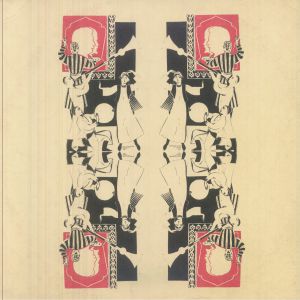
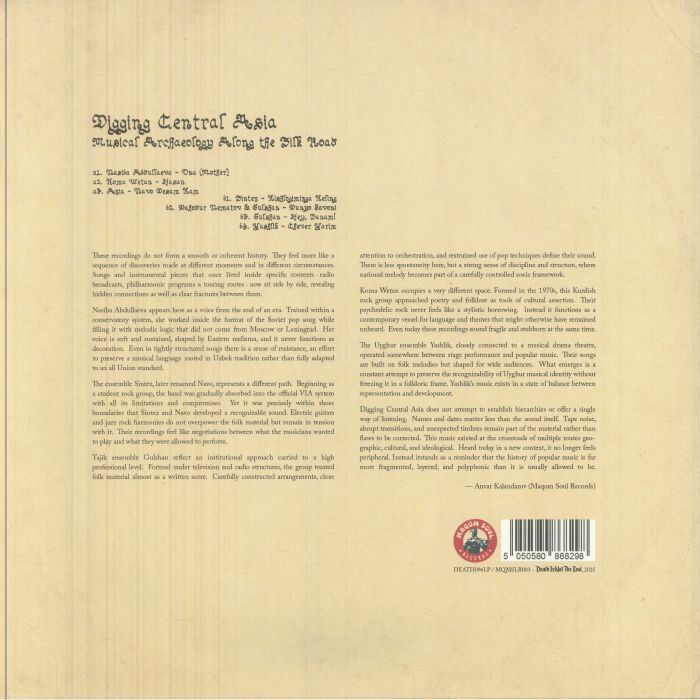
Few archival releases manage to redraw the map of twentieth-century global music as decisively as ‘Digging Central Asia: Musical Archaeology Along The Silk Road.’ Conceived by Tashkent-based producer, multi-instrumentalist, and Maqom Soul Records founder Anvar Kalandarov in partnership with the acclaimed London archival imprint Death Is Not The End, this meticulously assembled compilation unearths a vital, long-overlooked chapter of late-Soviet sonic history.
Spanning seven rare recordings captured between 1978 and 1989 across former Soviet Central Asian studios, the release illuminates an intricate cultural balancing act: how Uzbek, Tajik, Kurdish, and Uyghur musicians operated within the rigid bureaucratic parameters of the Soviet VIA (Vokalno-Instrumentalny Ansambl, or Vocal-Instrumental Ensemble) system while simultaneously forging fiercely local, psychedelic, and rhythmically intoxicating idioms of their own.
Within the Western crate-digging canon, the musical output of late-twentieth-century Central Asia has historically remained an enigmatic blind spot – frequently overshadowed by Moscow’s centralised state apparatus or reduced to monolithic generalisations regarding “Soviet pop.” ‘Digging Central Asia: Musical Archaeology Along The Silk Road’ systematically dismantles those reductive assumptions by approaching regional magnetic tape reels, state radio broadcasts, and scarce Melodiya vinyl pressings as living historical artefacts rather than mere curiosities. Originally developed as a narrative mixtape before receiving a definitive physical LP edition, Kalandarov’s curation deliberately resists the contemporary impulse to over-restore or sanitise archival audio. Subtle tape hiss, abrupt studio edits, saturated analog warmth, and unvarnished room acoustics remain fully intact, preserving the tactile physicality of how these recordings originally circulated across Uzbekistan, Tajikistan, Kazakhstan,and the broader Eurasian crossroads.
What elevates this seven-track survey beyond simple historical preservation is its vivid demonstration of cultural resilience through musical hybridity. Working inside state-sanctioned ensembles that officially mandated ideological conformity and modernised folkloric presentation, these artists absorbed the vocabulary of Western electric instrumentation—incorporating fuzz-drenched guitars, expressive analog synthesisers, syncopated funk bass-lines, and kinetic jazz-rock drumming – and bent those tools to the modal gravity of classical maqam and shashmaqam traditions. Rather than reading as derivative imitations of Anglo-American rock, funk, or disco, the selections pulse with an unmistakable Central Asian vernacular, bearing witness to a cosmopolitan sonic ecosystem shaped by Silk Road geography, cross-border migration ,and quiet artistic self-determination.
Ultimately, ‘Digging Central Asia: Musical Archaeology Along The Silk Road’ stands as both an essential piece of ethnomusicological detective work and an absorbing listening experience in its own right. By foregrounding the ingenuity of musicians who turned state infrastructure into a vehicle for regional identity and sonic experimentation, Kalandarov and Death Is Not The End restore a crucial missing link to the global history of psychedelic, funk, and experimental music – offering an indispensable document that rewards repeated, attentive listening long after the final groove fades.
Side One.
Anchoring the entire sequencing of the release, ‘Ona (Mother)’ by Samarkand-born vocal icon Nasiba Abdullaeva presents a monumental, slow-burning masterclass in emotional gravity. Unfolding across just over seven minutes, the piece immediately establishes the album’s refusal to rush, rejecting conventional pop brevity in favour of expansive, unhurried development. Abdullaeva’s conservatory-trained voice – simultaneously commanding in its technical poise and deeply vulnerable in its delivery – glides effortlessly across ornate microtonal phrasing rooted in classical Uzbek and Tajik traditions.
Beneath her performance, the arrangement evolves like a psychedelic chamber-folk suite: weeping electric guitar lines trade expressive phrases with traditional plucked lutes, while a patient, hypnotic rhythm section anchors the composition with quiet inevitability. Ultimately, this majestic overture functions as an unmistakable statement of artistic intent, calibrating the listener’s ear to the nuanced interplay of classical rigour and studio experimentation that defines the remainder of the record.
Marking an immediate tonal shift from the stately, conservatory-honed grandeur of the opening track, Koma Wetan’s ‘Hasan’ erupts with the visceral urgency of raw, defiant psychedelic rock. Formed by Kurdish musicians residing in Soviet Georgia who toured extensively across the Caucasus and Central Asia, the ensemble channels traditional Anatolian and Kurdish folk laments through searing, fuzz-drenched guitar leads, swirling electric organ textures, and a relentless, driving backbeat.
Unfolding across nearly seven minutes, the composition methodically builds tension through repetitive, trance-inducing riffs before breaking open into blistering solos that stand shoulder to shoulder with the finest Anatolian psych-rock of the seventies. Positioned strategically at the heart of the album’s opening sequence, “Hasan” transforms a deeply rooted diasporic lament into an electrifying statement of cultural survival – vividly demonstrating how displaced communities carried, adapted, and amplified their musical heritage across the interconnected cultural corridors of the Soviet Union.
Bringing the opening half of the compilation to a poised, reflective resolution, Azia’s “Navo Desam Kam” redirects the record’s momentum toward sleek, jazz-inflected folk-fusion. Anchored by a supple, syncopated bass groove and shimmering electric piano chords, the arrangement showcases the remarkable harmonic sophistication nurtured within Central Asia’s late-Soviet studio scene. Traditional melodic motifs weave effortlessly through tight, horn-like synthesiser voicings and crisp, articulate percussion, striking an exquisite equilibrium between contemplative melancholy and propulsive rhythmic forward motion.
As the culminating statement of Side One, the track seamlessly bridges the visceral intensity of the preceding selections with a more cosmopolitan, arrangement-driven sensibility – demonstrating how local ensembles assimilated Western jazz-fusion idioms and reimagined them as a fluent, unmistakably regional musical dialect.
Side Two.
Opening Side Two of the compilation with a surge of infectious kinetic energy, Sintez’s ‘Kishlogimizga Keling’ stands as a masterwork of electric-folk diplomacy. True to the ensemble’s moniker – which translates directly to “Synthesis” – the arrangement stages an exuberant dialogue between contemporary studio electronics and traditional rural Uzbek celebratory idioms. Bubbling analog synthesizer arpeggios and crisp, percussive funk guitar stabs lock seamlessly into the intricate cadences of traditional doira (frame drum) rhythms, generating a buoyant, dancefloor-ready momentum that feels simultaneously forward-looking and deeply anchored in communal hospitality.
Positioned at the threshold of Side Two, the track immediately re-energises the album’s pacing – transforming the studio into an ebullient crossroads where metropolitan electronic experimentation and village festivity meet on equal terms.
Stepping into the spotlight with unmistakable authority, Tajikistan’s legendary state ensemble Gulshan – widely regarded as one of the crown jewels of Soviet Central Asian music – joins forces with acclaimed vocalist Bahodur Nematov on the radiant ‘Dunyo Javoni.’ Captured in Dushanbe, the recording exemplifies orchestral funk-pop brilliance at its zenith. Nematov’s impassioned, soaring vocal delivery rides effortlessly atop a lush, impeccably arranged backdrop propelled by elastic bass-lines, crisp brass accents, and shimmering percussion.
Exuding an irresistible theatricality, the production preserves the golden-era vibrancy of Tajik estrada, weaving classical Persian poetic sensibility into a cosmopolitan, groove-driven framework. The result is a tour de force of state-era studio craftsmanship – capturing a fleeting historical moment when institutional scale, lyricism, and rhythmic sophistication converged in triumphant harmony.
Extending Gulshan’s commanding presence into a second consecutive showcase, ‘Hey, Sanam!’ elevates the rhythmic intensity of the sequence to an exhilarating crescendo. A deeply cherished staple across both Tajik and Uzbek repertoires, this spirited rendition pulses with celebratory urgency – driven forward by interlocking hand percussion, bright, insistent organ riffs, and buoyant call-and-response vocal exchanges.
Here, the unvarnished fidelity of the archival tape transfer becomes an active part of the listening experience; the saturated analog warmth allows you to practically feel the air circulating inside the studio as the ensemble locks into a feverish, hypnotic cadence. Standing as the undeniable spiritual apex of the entire compilation, the performance distills the raw, unscripted euphoria of live Central Asian celebration into four unforgettable minutes of collective groove.
Bringing the journey to an invigorating, cross-border finale, the compilation turns to Yashlik, the pioneering Uyghur vocal-instrumental ensemble founded in Almaty, Kazakhstan. On ‘Chever Yarim,’ the group channels classical Uyghur muqam melodies and Central Asian steppe rhythms through a tight, punchy rock and soul framework. Crisp electric guitar lines agilely mirror the plucked phrasing of the traditional rawap and dutar, interlocking with buoyant vocal harmonies and a remarkably snappy rhythm section that leaves the listener energised rather than fatigued.
By entrusting the final word to Yashlik’s vibrant trans-regional voice, Kalandarov draws the compilation’s sweeping geographic arc to a resonant close – tracing an unbroken musical continuum from the western edges of the Caucasus and Transoxiana all the way to the threshold of the Tarim Basin, and underscoring the enduring borderless vitality of the Silk Road.
Ultimately, ‘Digging Central Asia: Musical Archaeology Along The Silk Road’ succeeds because it rejects the conventions of passive, museum-grade preservation in favour of active, incisive cultural historiography. Across a tightly curated, seven-track arc, Anvar Kalandarov and Death Is Not The End systematically dismantle the entrenched false dichotomies that have long segregated “authentic” folkloric heritage from modern electric experimentation. Rather than viewing the Soviet VIA system solely through the lens of state censorship and bureaucratic constraint, the compilation exposes the nuanced reality of artistic agency within institutional frameworks—demonstrating how regional musicians commandeered state-funded studios, analog synthesizers, and electric guitars to forge laboratories of local identity and sonic self-determination. By refusing to over-process or sanitise the source material – allowing magnetic tape hiss, saturated dynamic peaks, and abrupt studio edits to remain intact – the release preserves the material reality of these artefacts, honouring the physical media through which this music survived decades of historical obscurity .
Beyond its immediate magnetic appeal to DJs, crate-diggers, and devotees of global psychedelia, jazz-fusion, and funk, the compilation carries profound ethnomusicological and geopolitical weight. By placing Uzbek, Tajik, Kurdish, and Uyghur ensembles in direct, seamless dialogue across a single cohesive narrative, Digging Central Asia challenges the rigid national borders and Cold War cartographies that frequently obscure Eurasia’s shared cultural continuum. In doing so, the record reframes our understanding of the Silk Road itself – illustrating that it was never merely an ancient conduit for silk, spices, and medieval trade, but a living, adaptable circuit of migrated melodies, cross-pollinated rhythms, and diasporic resilience that persisted well into the late twentieth century.
Standing simultaneously as a rigorous work of sonic scholarship and a deeply visceral listening experience, ‘Digging Central Asia: Musical Archaeology Along The Silk Road’ sets a definitive benchmark for contemporary archival curation. It restores long-overdue visibility to a generation of visionary Central Asian performers while offering an essential corrective to Western-centric histories of modern popular music – proving that some of the most vital, forward-thinking chapters of twentieth-century sound remain quietly encoded on magnetic tape, awaiting attentive ears to bring them back into the light.
Digging Central Asia: Musical Archaeology Along The Silk Road.
- Posted in: Folk ♦ Folk Jazz ♦ Folk Rock ♦ Folk-Funk ♦ Folk-Psych ♦ Funk ♦ Jazz ♦ Pop ♦ Psychedelia ♦ Rock ♦ Soul
- Tagged: Anvar Kalandarov, Azia, Bahodur Nematov, Bahodur Nematov and Gulshan, Digging Central Asia: Musical Archaeology Along The Silk Road, Gulshan, Koma Wetan, Label: Death Is Not The End, Maqom Soul Records, Nasiba Abdullaeva, Sintez, Yashlik
 dereksmusicblog

