HOGAN, THE HAWK AND DIRTY JOHN CROWN
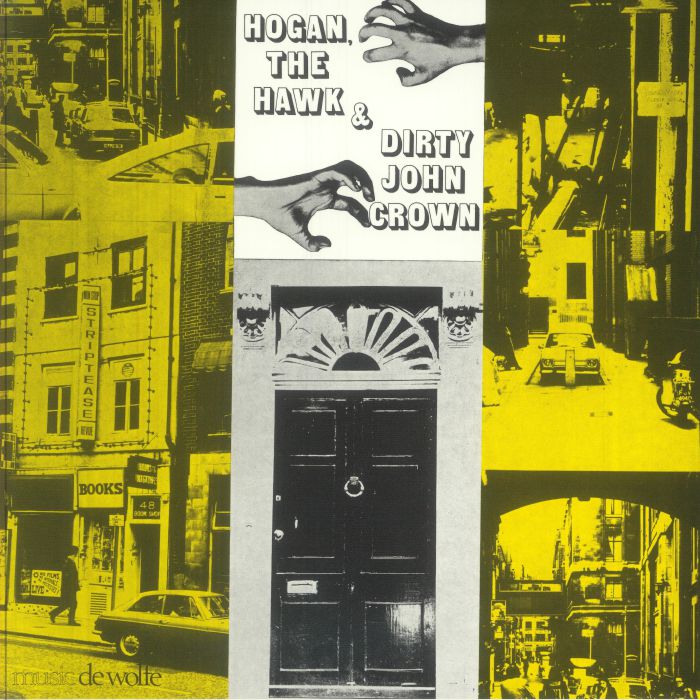
Hogan, The Hawk and Dirty John Crown.
Label: Be With Records.
Format: Vinyl.
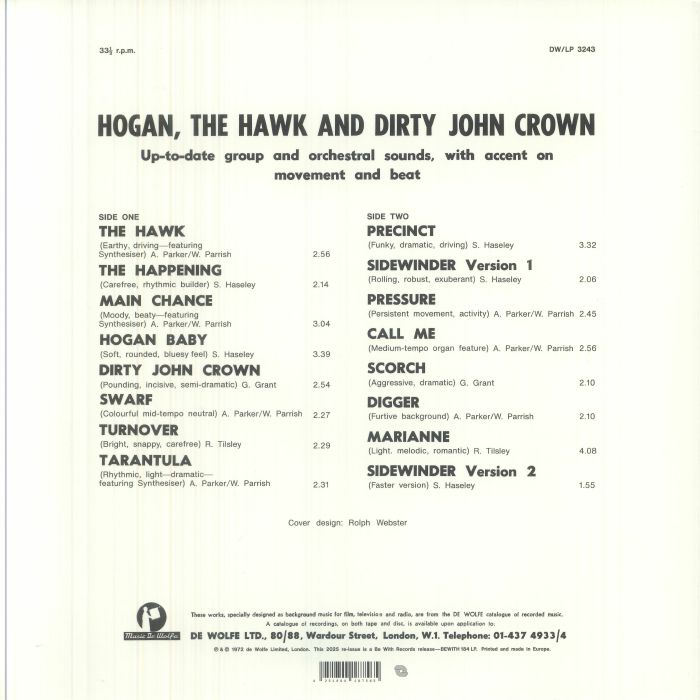
‘Hogan, The Hawk and Dirty John Crown’ was originally issued in 1972 on the legendary British production imprint Music De Wolfe, and stands as one of the undisputed crown jewels of seventies UK library music. Conceived during the golden age of British broadcast production, the album assembles an extraordinary syndicate of London’s most formidable session titans and master arrangers. This included guitar virtuoso Alan Parker and keyboard legend Alan Hawkshaw operating here under their recurring pseudonym William Parrish, alongside Simon Haseley, Gordon Grant, and Reg Tilsley.
Engineered specifically to supply film, television, and radio editors with authentic, gritty action-drama cues, ‘Hogan, The Hawk and Dirty John Crown’ captured the raw, street-level urgency of early-seventies crime cinema and hard-boiled detective thrillers with astonishing fidelity.
Because these recordings were pressed in strictly limited quantities solely for industry professionals – entirely bypassing commercial retail shelves and mainstream radio expectations – the composers were granted a rare creative autonomy. Unburdened by the need for catchy pop hooks or radio-friendly structures, they channeled their collective virtuosity into raw groove, harmonic tension, and widescreen atmosphere. Every track is defined by muscular, live-in-the-room interplay: razor-sharp drum breaks, searing wah-wah guitars, snarling brass sections, and brooding, minor-key keyboard textures that evoke rain-slicked London alleyways and high-stakes pursuits.
Over the subsequent decades, what began as a strictly utilitarian broadcast tool underwent a remarkable cultural transformation. Crate diggers, rare-groove DJs, and soundtrack aficionados uncovered the record’s staggering musical depth, while pioneering hip-hop producers prized its crisp, unvarnished drum breaks and dramatic orchestral stabs as prime sampling material. Today, original pressings of ‘Hogan, The Hawk and Dirty John Crown’ command reverence as coveted holy grails among collectors. It is timeless monument to a moment when British studio craft turned functional television underscores into visceral, enduring art
Side A.
Wasting no time establishing the album’s hard-boiled, street-level espionage aesthetic, ‘The Hawk’ immediately asserts itself as a masterclass in earthy, driving seventies drama-funk. Parker’s incisive, razor-sharp guitar work locks effortlessly into Hawkshaw’s signature keyboard textures blending gritty, overdriven electric piano with pioneering early synthesiser flourishes—all anchored by a taut, relentlessly propulsive rhythm section. Compact, muscular, and brimming with subterranean tension, the track sets an uncompromising sonic benchmark that reverberates throughout the remainder of the album.
Pivoting sharply from subterranean intrigue to sunlit urban vibrancy, Haseley steps into the spotlight with ‘The Happening,’ a bright, buoyant rhythm-builder that injects irresistible kinetic momentum into the album’s sequence.Propelled by crisp, rolling percussion, an agile bass-line, and nimble, interlocking melodic phrasing, the arrangement effortlessly evokes the bustling, sun-drenched energy of early-seventies London street scenes and briskly cut editorial montages – balancing carefree effervescence with the immaculate, tightly disciplined studio polish that defines the entire session.
Dropping the tempo into a deliberate, predatory prowl, ‘Main Chance’ epitomises moody, beat-heavy crime-drama scoring. The taut interplay between Parker’s shadowy, reverb-laced guitar lines and Hawkshaw’s smoky keyboard chords conjures a dense atmosphere of back-alley intrigue, anchored by thunderous, unvarnished drum breaks that pulse with palpable menace—making it one of the record’s most evocative and fiercely coveted cues for late-night suspense.
Unfurling across one of the album’s longest and most deeply soulful runtime excursions, ‘Hogan Baby’ immerses the listener in a soft, rounded, blues-inflected groove. Haseley gives the arrangement generous room to breathe, allowing burnished brass, fluid bass-lines, and laid-back rhythmic syncopation to unspool with effortless cool—trading the urgent panic of high-speed chase sequences for the understated elegance of a smoky, late-night London lounge.
Completing the album’s titular triad with a striking study in sonic duality, Grant’s ‘Dirty John Crown’ thrives on the friction between gritty street-level muscle and widescreen orchestral elegance. The composition juxtaposes pounding, incisive drama-funk drum breaks against swirling, string-swept serenity, creating a compelling push-and-pull dynamic.This deliberate tension between a hard-hitting, unvarnished rhythm pocket and lush, cinematic string arrangements imbues the cue with a palpable dramatic gravitas that stands among the album’s most sophisticated achievements.
Descending back into the shadowy, clandestine underbelly of British crime-funk, ‘Swarf’ rides an ominous, hypnotic bass-line beneath haunting, slow-motion flute melodies and razor-sharp percussive accents. Parker and Hawkshaw exercise remarkable compositional restraint throughout, generating a palpable sense of creeping dread through negative space, atmospheric texture, and micro-rhythmic tension—proving that a whispered threat can be far more menacing than full-throttle orchestral bombast.
Serving as a sophisticated, sparkling palette cleanser orchestrated by veteran British composer Reg Tilsley, ‘Turnover’ injects a refreshing burst of brightness into the sequencing. Snappy, airy, and impeccably arranged, the track deftly balances lighthearted rhythmic bounce with crisp, beautifully voiced orchestral movements – delivering an expertly crafted transitional cue that bridges the record’s darker, heavier funk explorations with effortless elegance.
Summoning a visceral, high-tension crescendo to draw Side A to a breathless close, ‘Tarantula’ delivers a lean, brooding masterclass in driving crime-funk. Prowling synthesisers, snarling saxophone lines, and razor-sharp, interlocking guitars collide with ferocious energy over ultra-clean, hard-hitting drum breaks, packing a maximum dose of cinematic adrenaline and dramatic impact into a tightly coiled two-and-a-half-minute run.
Side B.
Igniting the second half of the record with explosive, high-octane energy, ‘Precinct’ tears out of the gate as the definitive police-procedural anthem of the entire project. Pushing the tempo into breathless overdrive, Haseley orchestrates an urgent collision of stabbing horns, relentless percussion, and relentless bass momentum that brilliantly evokes the flashing lights, screeching tires, and heart-pounding panic of a high-stakes urban pursuit – delivering a masterclass in cinematic adrenaline that lingers long after the final note fades.
Living up to its serpentine moniker with effortless poise, ‘Sidewinder Version 1’ coils forward on a taut, mid-tempo rhythmic spring. Haseley constructs an agile, remarkably stealthy groove anchored by crisp hi-hat precision and sinuous, winding melodic phrasing—serving as an exquisite textbook cue for tense undercover surveillance and mounting dramatic anticipation.
Ratchet up the psychological stakes with immaculate studio precision, Parker and Hawkshaw masterfully tighten the screws on the appropriately titled ‘Pressure.’ Anchored by a relentless, thoroughly claustrophobic groove, the composition deploys taut, clipped guitar figures, pulsing low-end frequencies, and anxious, jittery keyboard motifs that relentlessly simulate a ticking clock closing in on its target – delivering an unforgettable exercise in cinematic suspense that leaves an indelible mark on the listener.
Transitioning seamlessly from high stakes anxiety into an atmosphere of cool, nocturnal sophistication, ‘Call Me’ brilliantly highlights the duo’s effortless command of melodic soul-jazz. Rich, cascading keyboard voicings and expressive, beautifully articulated guitar lines glide over a supple, head-nodding rhythm section, providing an impeccably smooth, romantic counterpoint to the relentless tension of the surrounding action cues.
Marking Grant’s second stellar contribution to the sequence, ‘Scorch’ erupts as a compact, fiercely concentrated burst of percussive energy. Clocking in at a brisk two minutes, the track wastes zero time establishing a blistering, high-velocity groove driven by punchy brass accents and an aggressive rhythmic momentum that brilliantly fulfils the fiery promise of its title.
An embodiment of the raw, uncompromising ethos that defines the finest 1972 British library pressings, ‘Digger’ plunges deep into a wonderfully heavy, low-slung groove. Parker’s unvarnished, percussive guitar chops interlock seamlessly with Hawkshaw’s punchy keyboard stabs and thunderous, unadulterated drum hits, forging the exact kind of rugged breakbeat architecture that cemented De Wolfe records as legendary holy grails among crate-diggers and sample-hungry producers worldwide.
Standing as the most expansive composition on the entire album at over four minutes in duration, Tilsley’s ‘Marianne’ unfolds as a breathtaking, emotionally resonant centrepiece near the culmination of Side B. Imbued with sweeping, lush orchestral textures and a gorgeously romantic, deeply lyrical main theme, the piece captures the timeless elegance of classic seventies feature-film scoring – magnificently demonstrating the astonishing breadth of cinematic moods and compositional sophistication housed within a single De Wolfe library release.
Bringing the entire masterwork to a sleek and sophisticated conclusion, ‘Sidewinder Version 2’ presents a brilliantly streamlined, alternative reading of Haseley’s earlier thematic motif. Tailored with the utilitarian brilliance characteristic of classic British library scoring- providing film and television editors with an agile, concise cue perfectly suited for brisk scene transitions or fading end-credits sequences – this final iteration distills the composition’s sleek, serpentine rhythmic DNA into a crisp, impeccably paced farewell.
Standing as a towering masterwork of early-seventies British studio craftsmanship and a holy grail for collectors, ‘Hogan, The Hawk and Dirty John Crown’ transcends its utilitarian origins to achieve rare artistic distinction. Conceived strictly as functional production music for the prestigious Music De Wolfe commercial catalogue – designed to sit anonymously behind gritty television detective series, theatrical crime thrillers, and documentary sequences – the album nevertheless possesses a fierce sonic cohesion, an unvarnished sonic grit, and a sophisticated musical authority that easily rivals the finest standalone jazz-funk and cinematic soundtrack albums of the era.
The enduring fascination and legendary status of the album lies in the exceptional synergy among its five master composers and the peerless execution of the elite session players who brought the scores to life. The creative partnership of Alan Parker and Alan Hawkshaw who are frequently credited under the pseudonym William Parrish, form the unmistakable rhythmic and atmospheric backbone of the record: lean, hard-edged street-funk infused with psychedelic guitar textures, pioneering synthesiser experiments, and thunderous, unadulterated drum breaks that have since become foundational text for hip-hop producers and crate-diggers worldwide.
Complementing this raw funk foundation, Simon Haseley injects kinetic, brass-driven urban momentum and smoky blues warmth, evoking the neon-lit desperation of post-war London. Gordon Grant contributes high-drama, string-laced orchestral tension that bridges the gap between gritty realism and widescreen cinema, while veteran composer Reg Tilsley anchors the collection with classic, sweeping British orchestral poise and emotional depth.
Together, these distinct yet deeply complementary compositional voices weave a surprisingly seamless narrative arc. The album moves with effortless precision from high-speed police pursuits and shadowy espionage to sultry late-night lounges and lush, cinematic romance – proving that utilitarian library music, when executed with uncompromising artistry, can achieve true immortality.
In the decades since its quiet entry into the Music De Wolfe vaults in 1972, ‘Hogan, The Hawk and Dirty John Crown’ has undergone a profound critical and cultural transfiguration, transitioning from an anonymous industry tool into a celebrated cornerstone of vintage British music. Freed from the commercial imperatives, radio constraints, and lyrical triteness of mainstream pop production, the collection captures London’s premier session elite functioning at the absolute vanguard of studio telepathy and improvisational rigour. Ultimately, whether analysed as a masterclass in functional crime-cinema orchestration or revered as a pristine analog quarry of heavy breakbeat architecture, the album endures as a vital, peerless monument to the creative apex of the British library tradition.
Hogan, The Hawk and Dirty John Crown.
- Posted in: Funk ♦ Jazz ♦ Library Music ♦ Soul ♦ Soundtrack
- Tagged: Alan Parker, Be With Records, Gordon Grant, Hogan, Music De Wolfe, Reg Tilsley, Simon Haseley, The Hawk and Dirty John Crown
 dereksmusicblog

