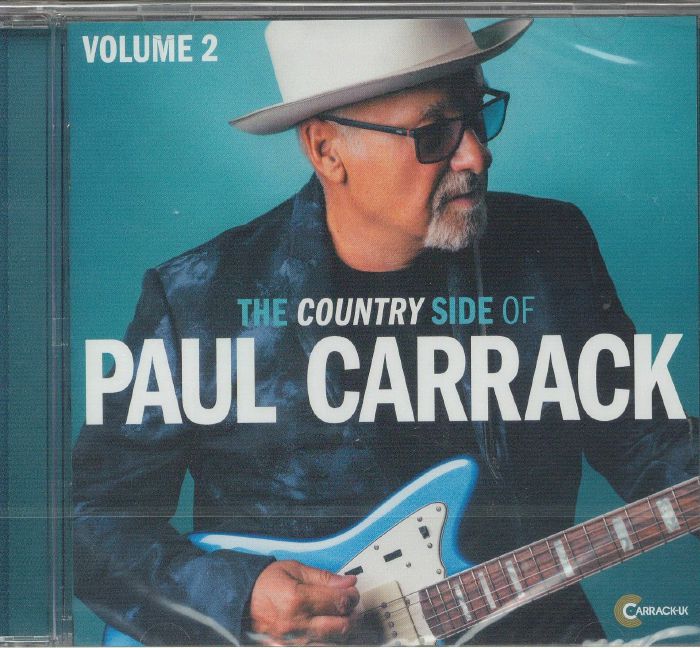
PAUL CARRACK – THE COUNTRY SIDE OF PAUL CARRACK VOLUME 2.
Paul Carrack – The Country Side of Paul Carrack Volume 2.
Label: Carrack-UK.
Format: CD.
The evolution of popular music is frequently defined by cross-pollinations that, upon closer examination, reveal not a collision of disparate genres, but a shared vernacular rooted in storytelling, emotional candour, and rhythmic restraint. Few contemporary artists are better positioned to illuminate this lineage than Sheffield-born vocalist, multi-instrumentalist, and songwriter Paul Carrack.
Across a career spanning more than five decades, Carrack – widely lauded as “The Man with the Golden Voice” – has served as an indispensable connective thread throughout British pop, rock, and blue-eyed soul. From his seminal vocal turns on Ace’s ‘How Long,’ Squeeze’s ‘Tempted,’ and Mike and The Mechanics’ ‘The Living Years’ to an enduring, fiercely independent solo catalog, his artistry has long been defined by an effortless command of R&B phrasing and church-infused Hammond B3 organ work. Yet beneath this sophisticated soul-pop exterior lies an even earlier musical foundation: the classic American country, skiffle, and close-harmony roots traditions that shaped his formative years in post-war Northern England.
Following the critical acclaim and chart-topping commercial reception of ‘The Country Side of Paul Carrack, Volume 1’ in 2025, Carrack returned recently with ‘The Country Side of Paul Carrack, Volume 2’ – a work that deepens his engagement with American roots repertoire while refining his aesthetic methodology.
Where its predecessor balanced archival country standards with a pair of Carrack’s own original compositions, ‘The Country Side of Paul Carrack, Volume 2’ commits entirely to the discipline of the interpretive archivist. Clocking in at a disciplined, vinyl-friendly thirty-two minutes across ten meticulously curated covers, the album operates less as a casual side project and more as a focused musicological inquiry into the shared genetic code of classic country and Southern soul. By removing the variable of original songwriting, Carrack places the full analytical weight of the record on arrangement, vocal nuance, and repertoire selection. His curation deliberately avoids the obvious, over-anthologised staples of the country canon in favour of mid-century benchmarks that highlight harmonic sophistication and lyrical economy – spanning the stark emotional realism of honky-tonk, the orchestral polish of the “countrypolitan” era, the weathered introspection of outlaw balladry, and the communal resonance of traditional gospel.
This stylistic breadth is unified by a production philosophy that prioritises organic interplay and sonic transparency over modern studio artifice. Recorded with a sharp focus on classic Nashville songcraft, the sessions rely on an ensemble sensibility that allows space, silence, and subtle rhythmic shifts to carry emotional weight. On key selections, this intimate core is elevated by lush, sweeping arrangements from the Nashville String Machine, conducted by David Shipps at Nashville’s historic Starstruck Studios. Crucially, these orchestral elements are never deployed as mere nostalgic window dressing; rather, they function in the tradition of Billy Sherrill’s landmark countrypolitan productions or Ray Charles’s Modern Sounds in Country and Western Music, providing a warm, cinematic harmonic bed that accentuates the vulnerability in Carrack’s phrasing.
At the centre of this carefully calibrated sonic architecture sits Carrack’s voice – an instrument that has only gained textural complexity and interpretive gravitas with age. Rather than adopting an affected Southern drawl or treating country idioms as a stylistic costume, Carrack approaches each lyric with the unhurried authority, rhythmic pocket, and grain of a seasoned soul singer. His phrasing leans behind the beat, drawing out the internal vowels and bruised subtext of heartbreak ballads with the same empathetic restraint that has anchored his finest R&B performances. In doing so, he exposes the structural kinship between the two genres: the shared reliance on pedal-steel-like melodic bends, gospel-derived chord progressions, and an unflinching confrontation with romantic regret and redemption.
Ultimately, ‘The Country Side of Paul Carrack, Volume 2 stands as far more than a late-career indulgence or an exercise in retro-stylism; it is a masterclass in interpretive synthesis that clarifies the unifying ethos of Carrack’s entire catalog. By stripping away stylistic borders and allowing his seasoned, empathetic tenor to inhabit the unvarnished truths of mid-century Nashville songwriting, Carrack proves that great interpretive singing is an act of authorship in its own right. In bridging the trans-Atlantic divide between Sheffield’s working-class soul tradition and the hallowed studios of Music Row, the album offers a compelling, enduring thesis: that when rendered with genuine conviction and musical humility, the distance between Memphis soul and country heartbreak is scarcely a mile wide.
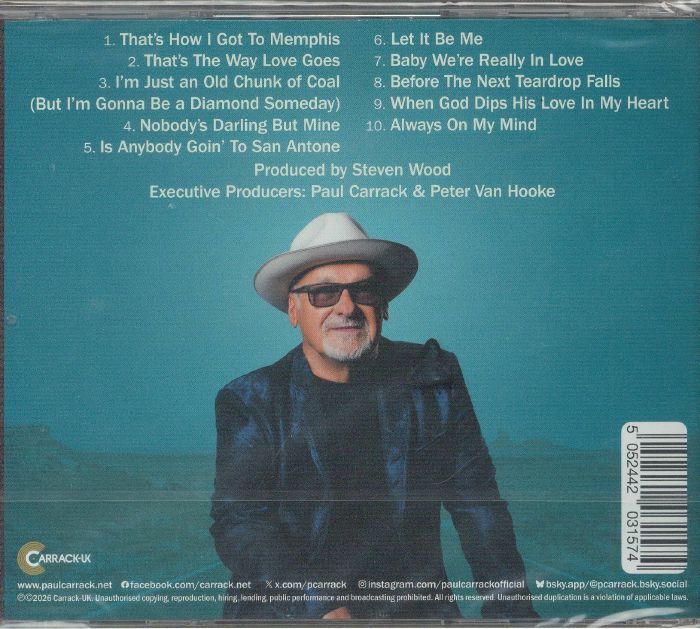
Opening the album with Tom T. Hall’s 1969 classic ‘That’s How I Got To Memphis,’ Carrack immediately establishes the record’s emotional thesis:country storytelling delivered with soul-singer restraint. Hall’s lyric is a masterclass in understated desperation – a narrator explaining his presence in Memphis not through grand theatricality, but through the simple, unshakeable logic of tracking down a lost love. Carrack resists the urge to over-sing the chorus, instead riding a steady, mid-tempo rhythmic pulse with a conversational ease that highlights every syllable of the narrative. The arrangement balances crisp acoustic strumming with weeping pedal steel and tasteful electric guitar fills, allowing the song’s inherent ache to build organically over its brisk sub-three-minute runtime.
Written by Lefty Frizzell and Sanger D. Shafer and immortalised by both Johnny Rodriguez and Merle Haggard, ‘That’s the Way Love Goes’ finds Carrack leaning fully into the warm, unhurried groove of seventies country soul. At three minutes and twenty-seven seconds, the track breathes with an effortless, late-night swing. Carrack’s vocal phrasing here is a revelation; he glides around the beat with the seasoned grace of a veteran R&B crooner, turning the lyric’s philosophical resignation into something deeply comforting. Subtle keyboard textures and swelling orchestral strings wrap around the rhythm section, elevating the track into one of the album’s premier examples of cross-genre synthesis.
Billy Joe Shaver’s 1981 outlaw-country staple ‘I’m Just An Old Chunk Of Coal (But I’m Gonna Be a Diamond Some Day)’ offers a welcome shift in tempo and temperament, injecting a dose of gritty, self-deprecating optimism into the sequencing. Where Shaver delivered the song with ragged, hard-living defiance and John Anderson brought a distinct nasal twang to his hit version, Carrack reframes it as an upbeat, roots-rocking shuffle. His delivery brims with wry humour and genuine warmth, transforming the narrator’s vow of spiritual and personal refinement into an infectious, toe-tapping affirmation. The interplay between lively honky-tonk piano lines and snappy rhythm guitar gives the track an irresistible live-in-the-studio vitality.
Reaching back to Jimmie Davis’s thirties country standard ‘Nobody’s Darling But Mine’ – a song later revisited by icons ranging from Bing Crosby to Merle Haggard – Carrack showcases his ability to modernise pre-war songwriting without stripping away its foundational charm. Built around a gentle, rolling country waltz feel, the arrangement strips things back to let the melody shine. Carrack’s tone is remarkably pure and unforced here, capturing the simple, unwavering devotion of the lyric with a sincerity that never tips into sentimentality. It is a quiet centrepiece on the first half of the record, proving how effectively timeless melodies endure when paired with disciplined, tasteful musicianship.
Clocking in at a brisk two minutes and twenty-eight seconds, this rendition of the 1970 Charley Pride classic ‘s Anybody Goin’ To San Antone’ is pure, unadulterated kinetic joy. Penned by Dave Kirby and Glenn Martin, the song has always relied on an effortless, road-weary momentum, and Carrack’s band locks into a tight, buoyant two-step groove from the very first bar. Carrack sounds thoroughly energised, delivering the escapist verses with a bright, ringing clarity that recalls his finest upbeat solo singles .The concise runtime leaves zero room for filler, making it one of the most immediately infectious moments on the album.
A defining touchstone of Carrack’s lifelong musical education, ‘Let It Be Me’ traces its lineage from Gilbert Bécaud’s French original (“Je t’appartiens”) through the Everly Brothers’ transcendent 1960 arrangement. Given Carrack’s vocal affection for the Everlys’ close-harmony perfection, his interpretation carries palpable personal weight. Rather than attempting to replicate their exact duo dynamic, Carrack approaches the ballad as a lush, slow-burning soul-country prayer. Supported by sweeping Nashville strings and delicate arpeggiated guitar, his voice soars on the bridge with controlled passion, bridging the transatlantic gap between British pop craftsmanship and American roots romanticism.
Even the most reverence-driven roots projects require moments of unburdened levity to maintain dynamic equilibrium, and Carrack finds an ideal vehicle for that release in the foundational songbook of Hank Williams. On his rendition of ‘Baby We’re Really In Love’ originally introduced by Williams in 1951 – Carrack injects a buoyant, kinetic dose of classic mid-century honky tonk bounce into the album’s sequence. Built on brisk, unpretentious rhythmic drive and crisp melodic directness, the arrangement favours taut ensemble propulsion over studio ornament. At the microphone, Carrack radiates genuine warmth and playful charisma, subtly trading Williams’s lonesome, high-lonesome hillbilly edge for a smoother, pub-rock-inflected swing that sits effortlessly within his natural register. Clocking in at just over two and a half minutes, this crisp, spirited performance acts as both a structural reset and an illuminating stylistic bridge, injecting vital kinetic momentum just before the album transitions into its emotionally weighty final act.
Few standards exemplify the natural convergence of countrypolitan sophistication and classic soul balladry quite like ‘Before The Next Teardrop Falls,’ a composition uniquely suited toCarrack’s particular set of vocal gifts. Anchored by an unhurried, slow-dance cadence and a lyric defined by its bittersweet promise of devotion, the arrangement occupies the exact emotional terrain where Nashville polish meets Southern R&B restraint. Carrack navigates the melody with remarkable tenderness, leaning into the sustained notes with a rich, controlled vibrato that underscores the song’s quiet heartbreak without ever tipping into melodrama. Behind him, lush string swells and tasteful pedal steel accents frame the performance in a warm, cinematic glow, providing an understated harmonic cushion that elevates – rather than overwhelms – the conversational intimacy of his phrasing. Ultimately, the track stands as a quiet triumph of interpretive empathy, demonstrating how a seasoned vocalist can inhabit a well-worn standard and render its vulnerability feel entirely immediate.
Traditional Southern gospel has long been the secret engine behind both classic country and vintage rhythm and blues, and Carrack honours that shared heritage on this vibrant rendition of Cleavant Derricks’s forties standard. Following the brooding romanticism of the preceding track, ‘When God Dips His Love In My Heart’ lifts the curtains and lets the sunlight pour in. Anchored by rolling gospel-infused piano, uplifting backing harmonies, and a buoyant rhythm section, Carrack sings with joyful conviction, channeling the celebratory spirit of classic Sunday-morning radio broadcasts while keeping the groove firmly rooted in earthy, organic musicianship.
Closing the record with ‘Always On My Mind, ‘one of the most heavily recorded ballads in modern music history – made iconic by Brenda Lee, Elvis Presley, and Willie Nelson – is a bold gambit, yet Carrack earns every second of its three-minute-and-forty-five-second runtime. Rather than competing with Willie Nelson’s weathered, conversational phrasing or Presley’s operatic grandeur, Carrack finds a middle path defined by quiet, regretful dignity. Accompanied by understated piano, gentle acoustic guitar, and a final, poignant sweep of strings, his voice carries the accumulated weight of a lifetime’s experience. Every line sounds deeply lived-in, turning a familiar standard into a deeply moving personal confession that lingers long after the final chord fades.
When veteran rock or soul vocalists venture into country territory, the resulting projects too often succumb to a form of musical tourism – over-produced, self-conscious exercises that mimic the surface signifiers of Nashville without grasping its underlying emotional restraint. Across ‘The Country Side of Paul Carrack Volume 2,’ however, the defining triumph is not mere stylistic versatility, but genuine emotional translation. Carrack sidesteps the pitfalls of genre novelty entirely by approaching these ten mid-century standards not as an outsider looking in, but as a lifelong student returning to a foundational source. Having spent more than five decades mastering the discipline of serving the song – whether anchoring the keyboard chairs for Roxy Music and Nick Lowe or fronting his own chart-topping hits – he brings an intuitive understanding that great country singing relies on economy, clarity, and unguarded vulnerability.
Sequenced with the deliberate, unhurried pacing of a classic long-player, the album rewards immersive, start-to-finish listening. Its narrative arc moves seamlessly from the bruised yearning of ‘That’s How I Got To Memphis’ through the brisk honky tonk lift of ‘Is Anybody Goin’ To San Antone’ and the communal gospel warmth of ‘When God Dips His Love in My Heart,’ before culminating in the quiet, devastating candour of ‘Always On My Mind.’ Throughout this progression, the production strikes an ideal equilibrium between crisp, contemporary fidelity and warm analog intimacy, granting the Nashville strings, weeping pedal steel, and rolling piano lines ample room to breathe around Carrack’s weathered, unmistakable tenor. Rather than registering as a late-career diversion within an already storied discography, ‘Across The Country Side of Paul Carrack Volume 2’ emerges as a definitive statement on the art of interpretation – proving that when filtered through seasoned musicianship and sincere conviction, the golden era of country songcraft retains all of its original power to move, console, and endure.
Paul Carrack – The Country Side of Paul Carrack Volume 2.
 dereksmusicblog

