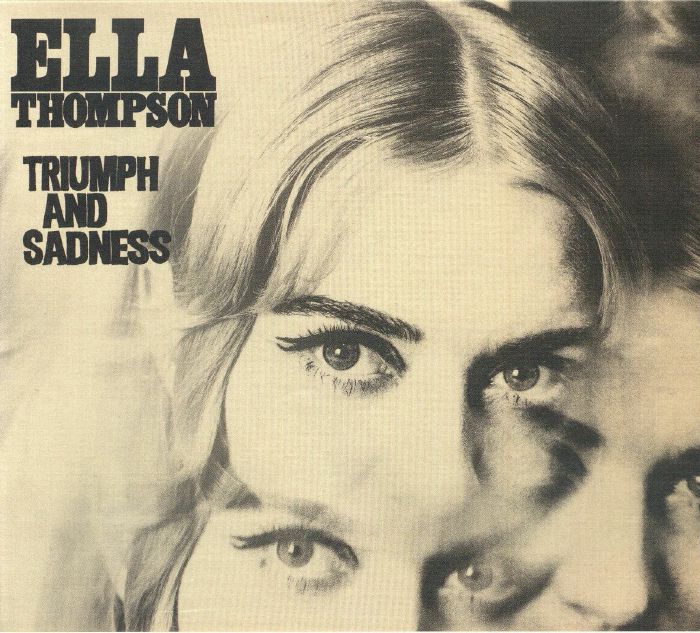
ELLA THOMPSON – TRIUMPH AND SADNESS.
Ella Thompson – Triumph and Sadness.
Label: Mr Bongo.
Format: CD.
In contemporary soul music, the tension between historical reverence and modern emotional immediacy remains a defining artistic challenge. With ‘Triumph and Sadness’ issued on October 16, 2026, as a transatlantic co-release between Brighton-based tastemaker imprint Mr Bongo and Melbourne’s College of Knowledge Records – Australian singer-songwriter Ella Thompson resolves that tension with rare poise.
Building upon the stylistic momentum of her acclaimed 2023 effort ‘Domino’ and 2024’s ‘Ripple On The Wing,’ the Melbourne-based artist delivers a tightly sequenced, ten-track work that interrogates the mechanics of human resilience. Rather than treating euphoria and grief as binary opposites, Thompson constructs a thematic framework in which the two states coexist, positioning emotional transparency not as fragility, but as a deliberate, hard-won form of strength.
This philosophical thesis is mirrored in the album’s sonic architecture, which was captured at Sound Recordings in Castlemaine, Victoria, under the collaborative production of Thompson, multi-instrumentalist Liam McGorry (Temporary Blessings), and engineer Henry Jenkins.
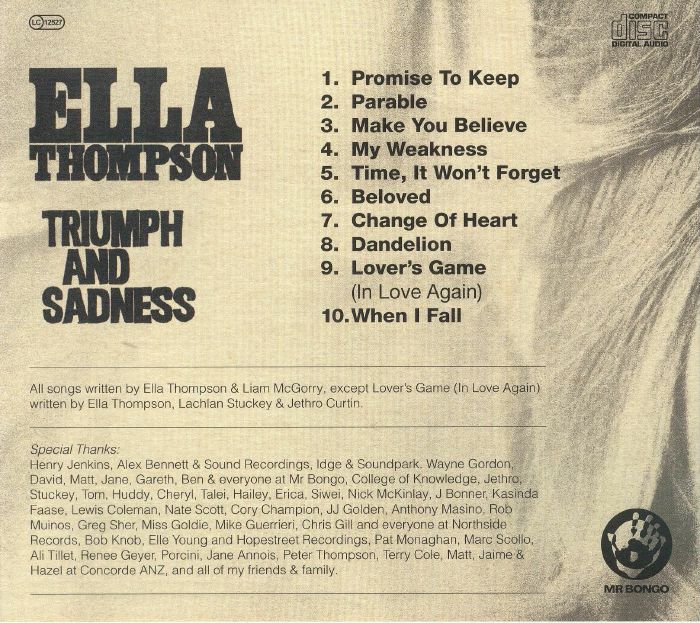
Rather than relying on isolated session tracking or sterile digital correction, the production capitalises on the communal telepathy of Melbourne’s thriving soul, jazz, and funk underground. Assembling a formidable roster of players drawn from ensembles such as Surprise Chef and Karate Boogaloo – including Hudson Whitlock (drums, timpani, vibraphone), Lachlan Stuckey (guitar), Jethro Curtin (Hammond organ, piano), Tom Pettit (bass), Cheryl Durongpisitkul (tenor saxophone), Erica Tucceri (flute), and Siwei Wong (harp) – the sessions yield an expansive, room-filling acoustics profile.
The interplay between Whitlock’s tactile percussion, Curtin’s harmonic grounding on Hammond and piano, and the textural delicacy of Wong’s harp and Tucceri’s flute creates a dynamic range capable of shifting from spare, rhythm-section minimalism to sweeping orchestral density within a single measure.
The record’s post-production pedigree further sharpens its historical dialogue without tipping into derivative nostalgia. Mixed by Wayne Gordon – whose analog sensibilities were honed through seminal work with Daptone Records and The Womack Sisters—and mastered by JJ Golden, ‘Triumph and Sadness’ occupies a sophisticated middle ground between the raw, rhythmic urgency of classic Memphis R&B and the lush, symphonic arrangements of late-sixties and early-seventies Chicago and Philadelphia soul. Yet where lesser revivalist projects settle for surface-level pastiche, Thompson’s vocal command ensures the material remains urgently contemporary. Possessing a nimble, finely calibrated soprano, she navigates the arrangements with remarkable dynamic control, moving seamlessly from hushed, conversational intimacy to a soaring, slightly weathered falsetto that carries the weight of lived experience.
Ultimately, ‘Triumph and Sadness’ stands as a masterclass in stylistic synthesis and emotional candour, marking a definitive creative peak in Thompson’s discography. By pairing the disciplined craftsmanship of classic soul arrangement with an unflinchingly modern psychological perspective, she and her collaborators have fashioned an album that feels both timeless in execution and vital in spirit. It is a rare work that honours the lineage of analog soul not merely by replicating its sonic artefacts, but by recapturing its enduring capacity to transform private sorrow into collective catharsis.
Setting the thematic and rhythmic coordinates for ‘Triumph and Sadness,’ the opening track ‘Promise To Keep’ makes an immediate, assertive statement of intent. Anchored by a brisk, mid-to-late-sixties vocal-group groove that channels the kinetic, floor-filling urgency of Northern Soul and classic Motown, the arrangement balances crisp, driving percussion and buoyant brass stabs against an effortlessly uplifting melodic hook. Lyrically, Thompson establishes the philosophical architecture of the entire album, examining the discipline of self-commitment and the quiet, persistent momentum required to trust one’s intuition when a destination remains out of reach. Delivered with bright, assured, and propulsive phrasing, her vocal performance propels the track forward, effectively framing personal integrity not merely as a virtue, but as the foundational act of triumph upon which the rest of the record builds.
Stepping back from the kinetic rush of the opener, ‘Parable’ pivots into a deeper, mid-tempo pocket that shifts the record’s focus from rhythmic propulsion to narrative nuance. Built upon the intuitive interplay between Jethro Curtin’s warm Hammond organ and Lachlan Stuckey’s understated, melodic guitar lines, the arrangement cultivates a contemplative, slightly smoky atmosphere. True to its title, the composition operates as an allegorical meditation on recurring behavioural patterns, emotional blind spots, and the hard-won lessons that persist until fully internalised. Thompson’s vocal delivery is measured, conversational, and quietly authoritative, utilising subtle dynamic shifts – gracefully accented by delicate vibraphone shimmer and soft woodwind textures – to let the track’s psychological weight resonate long after the final measure fades.
Demonstrating a masterclass in economy and structural discipline, the brisk, 2:47 single ‘Make You Believe’ distills the raw urgency of classic R&B into an infectious, tightly wound centrepiece. Driven forward by Tom Pettit’s nimble, muscular bass-line and a crisp, syncopated rhythm section, the arrangement channels the earthy, unvarnished punch of golden-era Stax recordings while maintaining a distinctly contemporary melodic sensibility. Thompson’s vocal performance is persuasive and full-bodied, pivoting seamlessly from sweet, coaxing warmth in the verses to a commanding, full-throated plea in the chorus. By balancing rhythmic restraint with emotional candour, the track vividly captures the exhilarating friction of attempting to bridge interpersonal distance – and the quiet resolve required to convince both a partner and oneself to take a leap of faith.
‘My Weakness was the title track of Thompson’s pre-album EP. Here it emerges as one of the album’s most important centrepieces. Here, the tempo drops into a brooding, deeply expressive slow-burn soul ballad that radically reframes vulnerability, presenting it not as a liability to be concealed, but as an indispensable catalyst for genuine human connection. Set against a lush, cinematic arrangement in which Tucceri’s flute and Wong’s harp weave delicate counter-melodies around steady, deliberate percussion, Thompson systematically dismantles her own defences. Her vocal delivery bends with extraordinary nuance, exposing a slight, unvarnished grain in her lower register before blossoming into luminous, aching clarity – an expressive duality that encapsulates the precise equilibrium of strength and surrender at the heart of ‘Triumph and Sadness.’
Closing the album’s first half, ‘Time, It Won’t Forget’ introduces a philosophical weight that lingers long after the final chord fades. Built around a hypnotic, mid-tempo groove accented by resonant timpani swells and melancholic horn voicings from McGorry and Durongpisitkul, the track meditates on memory, consequence, and the inescapable passage of years. Thompson treats time not as a passive healer, but as an active witness to our choices and affections. The arrangement builds patiently, allowing instrumental space for the rhythm section to breathe while Thompson delivers one of her most poised, reflective vocal performances on the record.
‘Beloved’ pivots the record’s sonic perspective forward, bringing crisp, articulated guitar work and prominent, melodic bass-lines to the forefront of the mix. Buoyant and celebratory in demeanour, the composition radiates an unforced warmth and devotion that sidesteps easy sentimentality in favour of grounded sincerity. Thompson examines interpersonal connection as an active, stabilising force, allowing her vocal phrasing to glide effortlessly across tight, interlocking grooves. Clocking in at just over two-and-a-half minutes, the track possesses the brisk economy and immediate charm of a golden-era 45rpm single, serving as an invigorating tonal reset that propels the album’s narrative forward with renewed clarity and purpose.
The longest and arguably most dramatic centrepiece on ‘Triumph and Sadness,’ ‘Change Of Heart’ is a heavy, cinematic sweet soul masterpiece. The tempo slackens into a brooding, beat-heavy sway that showcases the atmospheric depth of the Melbourne ensemble. Lyrically, Thompson examines impermanence, missed moments, and the bittersweet paradox of letting go – recognising that absence and presence, grief and liberation, frequently inhabit the exact same space. As the arrangement gathers momentum, Thompson’s vocals ascend into a breathtaking falsetto, culminating in a soaring climax where triumphant brass fanfares signal not defeat, but the hard-won emotional release of acceptance.
The sole track on the album co-written by Thompson alongside Jethro Curtin and Lachlan Stuckey, ‘Lover’s Game (In Love Again)’ introduces a slightly different harmonic and rhythmic flavour to the late stages of the album. Steeped in late-sixties and early-seventies romanticism, the song captures the intoxicating, slightly dizzying sensation of lowering one’s guard and stepping back onto the emotional high wire. Curtin’s keyboard textures and Stuckey’s fluid guitar work create a lush, swirling bed for Thompson, whose vocals convey both knowing awareness of the risks involved and genuine delight in the surrender.
Bringing the thematic and emotional architecture of ‘Triumph and Sadness’ into decisive focus, the closing track ‘When I Fall’ serves as a sophisticated, deeply restorative coda to the record. Confronting the inevitability of missteps, heartbreak, and life’s unpredictable reversals, Thompson approaches the prospect of falling not with trepidation, but with hard-won assurance in her capacity to endure and recover. Supported by rich, enveloping ensemble arrangements – in which horns, keyboards, and rhythm section coalesce into a unified, warm embrace – her vocal delivery sounds wholly unguarded, expansive, and deeply demonstrative. By resisting the pull of unresolved melancholy, the track sends the album out on a note of poised, hard-earned grace, cementing the notion that the willingness to remain open and continue feeling after hardship constitutes the truest measure of resilience.
In an era frequently defined by sprawling, algorithm-driven tracklists, the deliberate economy of ‘Triumph and Sadness’ feels like a quiet act of artistic conviction. Across a brisk, tightly curated thirty-one-minute runtime, the record emerges as Ella Thompson’s most cohesive and fully realised creative statement to date. By situating her songwriting within the rich analog traditions of classic soul while firmly resisting the urge to treat those conventions as static museum artefacts, Thompson and her collaborators achieve a rare equilibrium between historical reverence and contemporary emotional urgency. Every aesthetic decision – from Wayne Gordon’s warm, tactile analog mixing to the nuanced integration of orchestral harp, flute, and timpani alongside gritty, Stax-inflected rhythm sections – operates strictly in service of the songs’ emotional architecture, lending depth and dimension without ever lapsing into ornamental excess.
At a deeper structural level, the album triumphs because it refuses to simplify the psychological duality announced in its title. Within a broader pop and R&B landscape that frequently polarises expression into either escapist euphoria or guarded cynicism, Thompson insists on holding space for joy and grief as simultaneous, interlocking realities. Whether harnessing the kinetic Northern Soul momentum of ‘Promise To Keep,’ dismantling personal armour on the slow-burning ‘My Weakness,’ or unlocking cathartic release through the sweeping brass arrangements of ‘Change Of Heart,’ she articulates a nuanced thesis: sorrow is neither a detour from triumph nor its antithesis, but rather the essential ground from which authentic resilience takes root.
Ultimately, ‘Triumph and Sadness’ endures because its formal rigour is matched at every turn by radical emotional candour. Supported by an intuitive, world-class Melbourne ensemble and anchored by a vocalist operating in total command of her expressive range, Thompson has crafted an album that transcends retro-soul categorisation to become something far more vital. It stands as a deeply humane, impeccably proportioned work – one that invites immediate immersion while continuing to yield subtle harmonic and lyrical revelations across years of attentive listening.
Ella Thompson – Triumph and Sadness.
 dereksmusicblog

