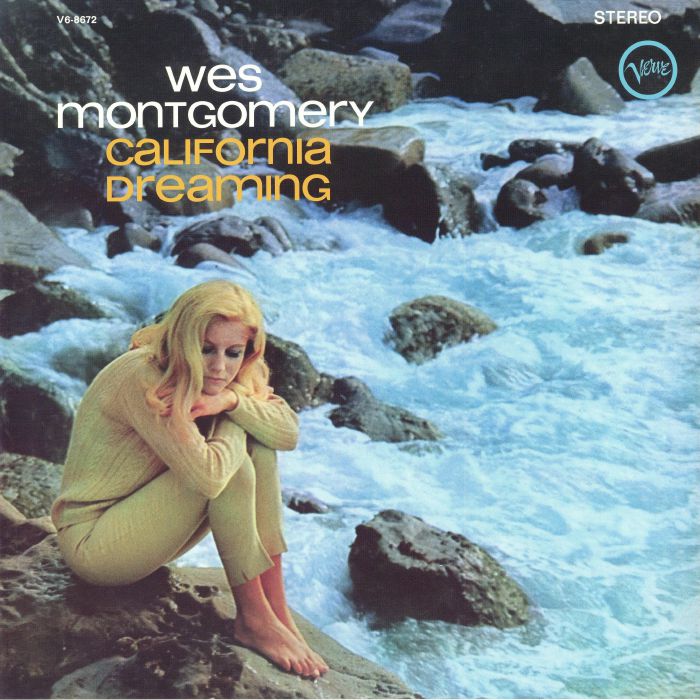
WES MONTGOMERY – CALIFORNIA DREAMING (ACOUSTIC SOUNDS).
Wes Montgomery – California Dreaming (Acoustic Sounds).
Label: Verve.
Format: Vinyl.
The tension between uncompromising artistic purity and broader commercial appeal has long stood as one of jazz’s defining fault lines – and rarely has that ideological divide been tested as sharply as during Wes Montgomery’s mid-sixties evolution. For jazz purists accustomed to the raw, hard-bop intensity and blistering single-note improvisations of Montgomery’s late-fifties and early-sixties Riverside recordings, his transition to Verve Records under the guidance of visionary producer Creed Taylor was initially met with skepticism, if not outright resistance.
Captured across two September sessions in 1966 at Rudy Van Gelder’s legendary Englewood Cliffs studio, ‘California Dreaming’ occupies a pivotal position at the very centre of that stylistic shift. Viewed with the clarity of historical distance, however, the album emerges far removed from the purist anxieties of its era – not as an act of commercial compromise, but as a nuanced triumph of melodic clarity, harmonic poise, and understated rhythmic sophistication.
Analytically, the enduring strength of ‘California Dreaming’ rests on the extraordinary caliber of its personnel and the disciplined restraint of its production architecture. Rather than submerging Montgomery’s signature sound beneath the heavy, saccharine string backdrops that often plagued crossover jazz records of the decade, Taylor assembled a tightly integrated ensemble designed to elevate and frame the guitarist’s voice. At the core of the sessions sits an elite rhythm section featuring Herbie Hancock on piano, Richard Davis on bass, Grady Tate on drums, and Ray Barretto on percussion – a unit capable of generating effortless, elastic swing infused with buoyant Latin-jazz undercurrents. Over this supple foundation, arranger Don Sebesky crafts crisp, transparent charts built around agile woodwinds, tastefully muted brass, and subtle harmonic countermines that converse with Montgomery rather than crowd him.
Within this finely calibrated sonic environment, Montgomery’s unmistakable thumb-plucked Gibson L-5 tone – warm, vocal, and instantly recognisable – commands the foreground with remarkable intimacy. Even within the concise, radio-conscious framework of ten tightly paced tracks, his phrasing retains all the rhythmic elasticity, octave mastery, and blues-inflected lyricism that defined his greatest small-group work. By drawing from an eclectic cross-section of contemporary pop hits, enduring jazz standards, Broadway repertoire, and original compositions, Montgomery and Taylor establish a cohesive musical language in which structural economy never comes at the expense of improvisational authority. Every solo statement feels distilled to its melodic essence, balancing immediate emotional accessibility with subtle harmonic sophistication.
Ultimately, ‘California Dreaming’ endures as one of the most compelling blueprints for tasteful crossover artistry in the post-bop era. By uniting Sebesky’s architectural elegance, Van Gelder’s warm acoustic fidelity, and an all-star rhythm section around Montgomery’s singular melodic gift, the album proves that broadening an audience does not require diminishing an artist’s voice – resulting in a timeless, deeply resonant work that continues to bridge the worlds of serious jazz appreciation and effortless listening pleasure.
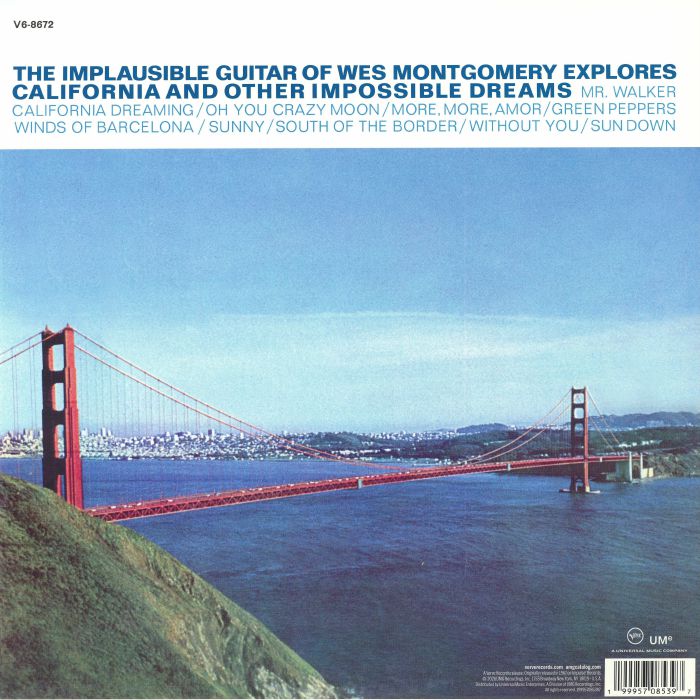
Side One.
Opening with The Mamas and The Papas’ folk-rock classic ‘California Dreaming’ was a bold statement of intent, and Montgomery transforms the overcast 1965 anthem into a sun-drenched, swinging reverie. Sebesky’s arrangement introduces the theme with shimmering woodwinds and crisp brass punctuations before Montgomery steps in, stating the melody with his signature warm, rounded thumb attack. Driven by Tate’s buoyant groove and Barretto’s subtle percussion, Montgomery moves seamlessly from single-note lyricism into his famous octave voicings, turning a song about winter longing into an effortless jazz-pop triumph.
As the longest track on the album and one of Montgomery’s own compositions, ‘Sun Down’ offers a vital glimpse into his unadulterated jazz instincts. Shedding the heavier orchestral embellishments in favoUr of a tight, blues-inflected small-group feel, the piece gives Montgomery ample room to stretch out. Hancock comps with crisp, modern harmonic sensitivity behind him, while Montgomery builds a masterfully paced solo – moving from sparse, conversational single lines to cascading octaves and chordal block solos that crackle with authentic hard-bop fire.
The Jimmy Van Heusen standard ‘Oh You Crazy Moon’ slows the tempo into a lush, nocturnal ballad that highlights Montgomery’s unmatched gift for romantic phrasing. Sebesky wraps the guitarist in velvety strings and soft horn swells that never intrude upon his space. Montgomery treats the melody with unhurried reverence, coaxing a singing, almost human resonance from his hollow-body guitar that places him in the lineage of great jazz vocalists as much as instrumentalists.
Injecting bright, mid-century Latin-jazz exuberance into the sequence, ‘More, More, Amor’ – penned by Sol Lake for Herb Alpert’s Tijuana Brass – thrives on brisk, effortless rhythmic momentum. Barretto’s nimble conga patterns interlock with Tate’s crisp ride cymbal to establish an infectious, sun-kissed groove, creating a buoyant foundation across which punchy brass stabs trade phrases with Montgomery’s agile, octave-driven guitar lines. Though concise in runtime, the track radiates pure kinetic joy, demonstrating just how naturally Montgomery’s innate rhythmic pocket adapted to the boogaloo and Latin-pop currents sweeping through 1966.
Another tender showcase for Montgomery’s balladry, “Without You” pairs his lyrical thumb-work with a delicate, chamber-like orchestral backdrop. Hancock’s crystalline piano fills weave gently around Montgomery’s lead lines, creating moments of exquisite harmonic intimacy. Montgomery’s restraint here is remarkable; every note is weighted with emotional clarity, demonstrating that his technical virtuosity was always subservient to melodic storytelling.
Side Two.
Written by Don Sebesky specifically for the session, ‘Winds of Barcelona’ leans into dramatic, Spanish-tinged harmonic coloUrs. Opening with evocative acoustic textures and sweeping strings, the piece builds a cinematic, Mediterranean atmosphere over a rolling, bolero-inflected rhythm. Montgomery navigates the minor-key modal shifts with effortless command, his octave runs soaring over the ensemble with noble, understated intensity.
Bobby Hebb’s 1966 soul-pop smash becomes one of the album’s undeniable highlights. Montgomery locks immediately into the song’s irresistible, minor-to-major harmonic lift, riding a tight, soulful groove propelled by Richard Davis’s elastic bassline and Barretto’s percussion. As the track unfolds, Montgomery’s soloing grows increasingly exuberant, layering soulful blues bends and ringing octaves that bridge the gap between Motown-era pop warmth and elite jazz improvisation.
Returning to the Herb Alpert songbook, ‘Green Peppers’ is a brisk, high-spirited romp powered by crisp brass fanfares and a driving, upbeat tempo. Montgomery’s articulation is razor-sharp, his thumb-plucked lines dancing cleanly across the brisk chord changes without a hint of strain. It is playful, kinetic, and tightly arranged—a textbook example of Taylor’s ability to craft compact, infectious crossover singles.
A second Wes Montgomery original, ‘Mr. Walker’ – named in tribute to his longtime manager – anchors the album firmly back in deep, hard-swinging blues territory. Stripping away the polished pop sheen in favour of gritty, soulful momentum, the track showcases remarkable telepathy between Montgomery, Hancock, and Tate, who lock into a supple, driving pocket from the opening bar. Montgomery’s solo unfolds as a masterclass in structural escalation, effortlessly building intensity through his signature three-tier architecture—moving seamlessly from fluid single-note lines to vocal octaves and commanding chordal voicings – with unmistakable swing and authority.
Closing the album with a classic pop standard given a breezy, Latin-tinged makeover, ‘South of the Border’ ends the record on a note of relaxed, sunlit charm. Sebesky’s brass and woodwind voicings frame the familiar melody with wit and warmth, while Montgomery glides across the rhythm section with effortless grace. Rather than aiming for a bombastic finale, the track fades out like a warm coastal sunset, leaving the listener with a lingering sense of ease and sophistication.
History has a way of vindicating artistic risks that initially confound contemporary gatekeepers—and few records illustrate that phenomenon more persuasively than Wes Montgomery’s ‘California Dreaming.’ Upon its release in February 967, Creed Taylor’s lush, radio-conscious productions for Verve Records frequently drew skepticism from jazz purists who equated accessible song structures with aesthetic compromise. Revisited decades later, however, ‘California Dreaming’ emerges not as a concession to commercial trends, but as a visionary achievement that quietly dismantled the artificial boundary between serious jazz improvisation and broad popular appeal. Rather than diluting Montgomery’s musical identity, the album’s studio craftsmanship, streamlined forms, and contemporary repertoire acted as a magnifying lens- projecting his singular voice to millions of new listeners without sacrificing an ounce of his rhythmic drive or harmonic sophistication.
From an analytical perspective, the album’s lasting resonance is rooted in the extraordinary equilibrium forged among soloist, arranger, and rhythm section. Don Sebesky’s orchestral charts demonstrate a rare command of acoustic architecture, negative space, and timbral balance. By favouring transparent woodwind textures, crisp, muted brass punctuations, and rhythmically buoyant phrasing over dense, syrupy string washes, Sebesky ensures that Montgomery’s dark, velvety, thumb-plucked Gibson L-5 tone remains the undisputed focal point of every arrangement. The ensemble never competes with the guitarist; instead, it breathes around him, framing his melodic statements with understated elegance and subtle harmonic colour.
Anchoring this orchestral frame is a world-class rhythm section- Herbie Hancock on piano, Richard Davis on bass, and Grady Tate on drums, enriched by Ray Barretto’s supple Latin percussion – that infuses even the most familiar pop material with unmistakable jazz authority. Their elastic swing and interactive nuance prevent the concise, three-minute track formats from ever feeling rigid or formulaic. Meanwhile, whenever the program opens up into broader harmonic terrain on originals such as ‘Sun Down’ and ‘Mr. Walker,’ Montgomery effortlessly unleashes his trademark three-tier soloing architecture – ascending from fluid single-note lines to singing octaves and dense, driving block chords – proving that his hard-bop fire burned as fiercely as ever.
Viewed within the broader arc of twentieth-century recorded music, ‘California Dreaming’ occupies a singular historical threshold: it helped establish the structural blueprint for modern crossover jazz and instrumental pop while retaining an organic warmth, spontaneity, and acoustic humanity that subsequent imitators rarely approached. Whether experienced as an effortless entry point into Wes Montgomery’s catalog or studied as a triumph of melodic economy and orchestral jazz arrangement, the record endures as an essential, deeply resonant milestone – a luminous testament to what happens when uncompromising musicianship meets universal emotional clarity.
Wes Montgomery – California Dreaming (Acoustic Sounds).
 dereksmusicblog

