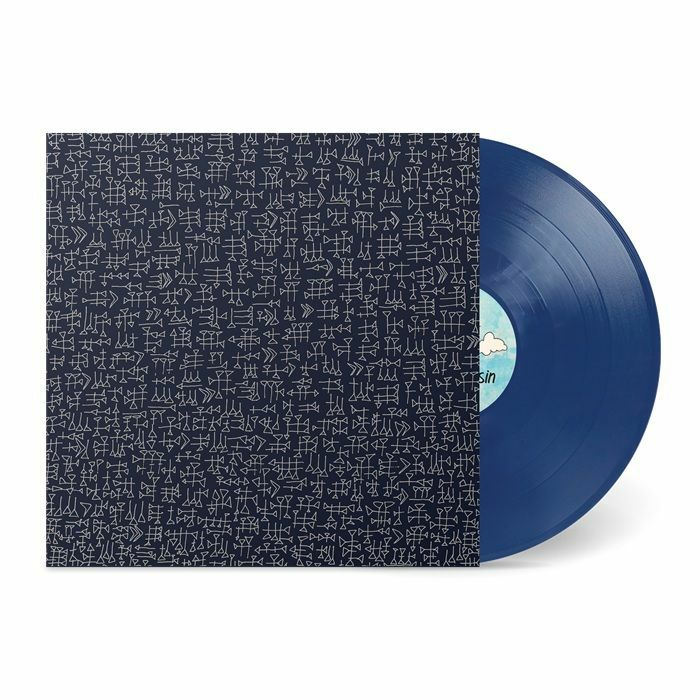
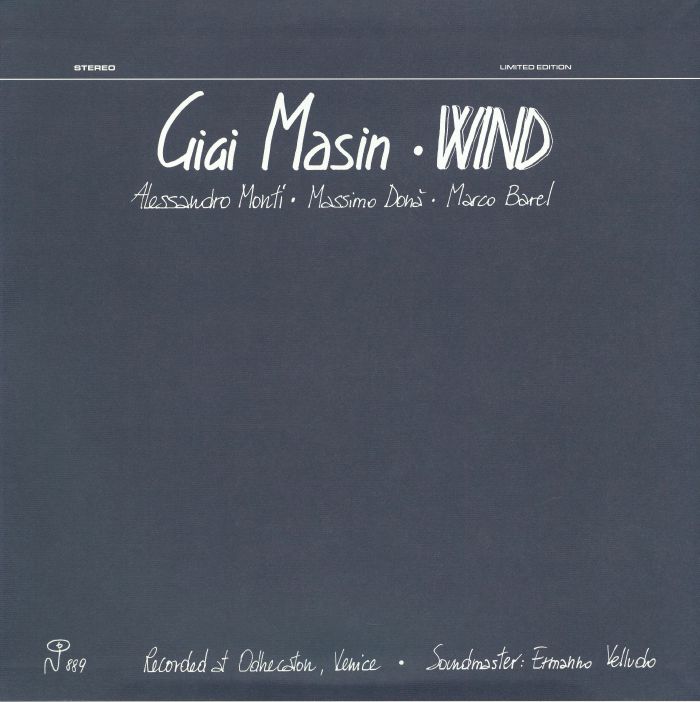
GIGI MASIN – WIND (40TH ANNIVERSARY EDITION).
Gigi Masin – Wind (40th Anniversary Edition).
Label: Numero Group.
Format: Vinyl.
The canonisation of Gigi Masin’s 1986 debut, ‘Wind,’ represents one of the most compelling archival recoveries in modern experimental music, charting a trajectory from near-total physical erasure to foundational influence across contemporary ambient, Balearic, and downtempo traditions. Recorded in a modest studio overlooking a canal in Masin’s native Venice, the album was originally self-financed and distributed in an ultra-limited private pressing on his personal imprint, The Bear On The Moon.
For nearly three decades, ‘Wind’ persisted largely as an elusive rumour among specialised collectors and crate-diggers: a devastating flood in Masin’s Venetian residence destroyed the majority of the original stock, leaving the few surviving vinyl copies to circulate in relative obscurity.
It was not until Amsterdam-based archival label Music From Memory showcased Masin’s work on the 2014 retrospective ‘Talk To The Sea.’ The following year, 2015, there was a reissue on Misin’s The Bear on the Moon label.
More recently, Numero Group have restored and reissued ‘Wind (40th Anniversary Edition).’ Now the record has escaped its collector-market exile and assumed its rightful place in the late-twentieth-century avant-garde canon.
To analyse the sonic architecture of ‘Wind’ is to examine the physical and acoustic geography of its Venetian genesis. In sharp contrast to the cool, frictionless, and frequently algorithmic minimalism emerging from Anglo-American studios during the late-seventies and early-eighties, Masin’s compositional ethos was anchored in tactile warmth, Mediterranean lyricism, and environmental permeability.
Working closely with recording engineer Ermanno Velludo and an intimate ensemble of local collaborators – most notably double bassist and co-arranger Alessandro Monti, trumpeter Massimo Donà, and tenor saxophonist Marco Barel – Masin approached the recording space not as an isolated, soundproofed vacuum, but as a resonant chamber porous to the dampness, stone acoustics, and tidal rhythms of the surrounding lagoon. Relying on a deliberately restrained palette of acoustic piano, a Korg P-800 synthesizer, bowed strings, analogue tape loops, and his own hushed, unvarnished vocal delivery, Masin constructed ten interconnected vignettes that hover effortlessly across generic borders.
Situated at the intersection of fourth-world jazz, impressionistic chamber music, Balearic proto-ambient, and minimalist art-song, the arrangements resist conventional harmonic resolution or rhythmic drive. Instead, Masin elevates negative space, natural reverb decay, and subtle timbral drift into primary structural elements, granting silence the same compositional gravity as melody.
Ultimately, Wind endures not merely as a triumph of archival preservation, but as a masterclass in emotional economy and spatial poetics. By rejecting the technological maximalism of its mid-eighties milieu in favour of fragile, human-scaled interplay, Masin created a work whose resonance has only deepened across four decades – offering an enduring blueprint for how place, memory, and vulnerability can be inscribed directly into recorded sound.
Side A.
‘Wind’ foregoes a traditional atmospheric buildup in favour of an immediate, nocturnal sense of intimacy. Anchored by the steady, hypnotic pulse of a Korg P-800 and resonant piano chords, the opening track, ‘Call Me,’ effortlessly defines the record’s sonic palette – romantic, slightly spectral, and deeply human. Beneath the surface, Monti’s bowed double bass provides an organic counterweight to the synthetic instrumentation, moving with the quiet weight of dark water against stone. When Masin enters with his whispered, incantatory refrain “Search me, find me, kiss me, call me. Search me, blind me, kiss me, call me,” the composition bridges the art-pop sensibilities of Brian Eno’s ‘Before and After Science’ with the late-night sophistication of The Blue Nile. Ultimately, the piece succeeds by balancing vulnerability with quiet momentum, drawing the listener seamlessly into the album’s world.
Maintaining the subtle momentum established by the opening track, ‘Tears of Clown’ transitions the focal point to Donà’s muted, elegiac trumpet. Set against a backdrop of shimmering synth arpeggios, sparse piano motifs, and Monti’s grounded bass-line, Donà’s horn rises in long, plaintive arcs that evoke Jon Hassell’s ‘Fourth World’ aesthetic alongside Mark Isham’s mid-eighties Windham Hill recordings. Despite the theatrical implications of its title, the arrangement avoids melodrama entirely. Through careful restraint, Masin balances the composition between wistfulness and quiet poise, giving every phrase the space to linger before fading seamlessly into the surrounding texture.
Expanding both the album’s runtime and its sonic boundaries, ‘Swallows’ Tempest’ disrupts the tranquil equilibrium of the preceding tracks with a turbulent study in acoustic texture. Masin and Monti turn their attention to the physical interior of the piano – pairing prepared and plucked strings with bowed double bass, violin, and nocturnal synth pads to construct a restless, percussive soundscape evocative of wings stirring against a twilight sky. Above this agitated foundation, Barel’s tenor saxophone eschews conventional jazz phrasing in favour of raw, vocalised squalls and breathy overtones. Deliberately uncompromising, this centrepiece introduces vital modernist friction and improvisational daring, challenging any reductive reading of the record as purely pastoral or ambient.
Standing as the quiet spiritual centrepiece of ‘Wind,’ ‘Tharros’ – named after the Greek word for courage – offers an immediate sense of clarity in the wake of ‘Swallows’ Tempest.’ Stripping away the surrounding ensemble to leave Masin alone with his Korg P-800 and acoustic piano phrasing, the composition unfolds through delicate, luminous chords punctuated by generous expanses of silence. Rather than seeking conventional harmonic resolution or rhythmic momentum, each note is placed with meditative precision, framing courage not as bold defiance, but as vulnerability and unhurried presence. Within a remarkably brief span, the piece captures the essence of Masin’s minimalist aesthetic, turning restraint and open space into its primary expressive tools.
Returning to the vocal-led chamber pop sensibility of the opening track, ‘Consequences of Goodbyes’ the final piece on Side A deepens the record’s emotional register with a study in bittersweet intimacy. Masin’s fragile, close-miked delivery hovers above tender piano chords and warm synth washes, capturing the quiet ache that lingers in the wake of departure. Massimo Donà’s trumpet re-enters as a sympathetic second voice, answering each vocal phrase with warm, breathy counter-melodies. Woven together, voice, piano, and brass evoke the stillness of an empty room at dusk, bringing the first half to a poignant, unguarded close before the album transitions into its more immersive, subterranean second side.
Side B.
Opening Side B by submerging the listener into the depths of the Venetian lagoon, ‘Underwater Current’ unfolds as an intricate study in subaquatic tension and textural contrast. Subterranean Korg P-800 swells establish a dense, pressure-heavy atmosphere through which Donà’s trumpets and Barel’s tenor saxophone dart and collide. The brass interplay alternates between murky, low-register murmurs and sudden, piercing upper-register cries – mimicking shafts of refracted light and unseen currents shifting below the waterline. Favouring spatial disorientation and timbral depth over conventional melody, the piece marks one of the record’s most immersive and subtly psychedelic excursions.
Expanding the record’s spatial horizons into a wide-angle vista, ‘The Wind Song’ serves as a soaring counterbalance to the quiet introspection of ‘Tharros.’ Built upon layered bowed bass, resonant piccolo bass, and billowing synthesiser pads, the composition unfolds gradually – gathering momentum like a sail catching an offshore breeze. Across the stereo field, Donà’s multi-tracked trumpets glide in majestic, unhurried intervals, suspending the arrangement in a state of weightless equilibrium. Spanning nearly six minutes, the piece showcases Masin’s command of slow-blooming dynamics, trading traditional structural climaxes for an immersive drift that leaves the listener far removed from the shoreline.
Stepping away from the ensemble once again, ‘Conversations (From the Milky Way)’ finds Masin returning to solo synthesiser exploration for a brief, weightless interlude. True to its celestial subtitle, the piece exchanges earthly chamber textures for glassy, starlit Korg P-800 tones that flicker and respond to one another across an expansive stereo horizon. Delicate and unhurried, this vignette acts as a quiet reset between the panoramic sweep of ‘The Wind Song’ and the rhythmic ritual that follows, subtly aligning Masin’s solitary studio craft with contemporary Kosmische and Japanese environmental traditions.
Shifting from celestial stillness into subtle forward motion, ‘Celebration of Eleven’ introduces one of the album’s most hypnotic and quietly kinetic arrangements. Anchored by Masin’s deft synth programming and Alessandro Monti’s supple bass-line, the composition establishes a gentle, ceremonial pulse that bridges minimalist repetition with Balearic warmth.Returning in a far more lyrical, ecstatic register than on ‘Swallows’ Tempest,’ Barel’s tenor saxophone weaves fluid, celebratory lines around the interlocking electronic patterns. Radiating an understated communal joy, the piece demonstrates how effortlessly Masin’s meditative aesthetic accommodates groove and momentum while preserving its signature poise.
Bringing Wind to a close with a solitary synthesiser reverie, ‘The Sea of Sands’ blurs the elemental boundary between water and desert. Drawing remarkable warmth and vulnerability from his Korg P-800, Masin layers slow-moving harmonic drones beneath a haunting, stripped-back lead melody that carries an ancient, elegiac resonance. As the final chords linger and dissolve into silence, the record completes its elemental arc – having journeyed from nocturnal intimacy through coastal tempests, subaquatic depths, and starlit expanses before resting on an open, windswept horizon where music and stillness ultimately converge.
Four decades after its original conception, Gigi Masin’s ‘Wind’ occupies an increasingly singular position within the canon of twentieth-century European experimental and electronic music. Recorded in Venice in 1986, the album emerged in near-total geographic and conceptual isolation from the dominant theoretical frameworks of the era. Masin operated outside the institutional networks of European academic electroacoustic studios and remained largely unacquainted with Anglo-American ambient orthodoxy – famously knowing Brian Eno primarily as the keyboardist for Roxy Music rather than as the theorist behind ‘Music for Airports.’
Yet it was precisely this creative insulation that allowed him to articulate an autonomous, deeply humane dialect of environmental composition. Where much of mid-eighties ambient and New Age production prized procedural detachment, conceptual neutrality, or pristine digital sheen, ‘Wind’ leaned decisively toward tactile imperfection, spatial intimacy, and emotional candour. The subtle environmental bleed of the Venetian canal beyond the studio walls, the physical rasp of bowed double bass and plucked interior piano strings, the unguarded fragility of Masin’s close-mic’d vocals, and the sudden eruptions of unvarnished free jazz brass all actively resist the functional neutrality of “background music.” Rather than designing an unobtrusive sonic wallpaper, Masin constructed a living acoustic architecture capable of holding memory, solitude, and quiet longing.
From a formal and compositional standpoint, the album’s enduring power stems from its carefully calibrated equilibrium between consonance and friction. A less ambitious arranger might have flattened ‘Wind’ into ten uniform exercises in pastel mood-setting, relying on predictable harmonic stasis to sustain an atmosphere. Masin, however, demonstrates an acute dramaturgical instinct: stillness only registers as profound when measured against turbulence. By sequencing the turbulent, free-form squalls of ‘Swallows’ Tempest’ and the claustrophobic, subterranean brass collisions of ‘Underwater Current’ directly alongside the crystalline minimalism of ‘Tharros’ and ‘The Sea of Sands,’ he shapes the record into a continuous, tidal arc. Each moment of pastoral calm feels earned rather than assumed, emerging organically out of inclement sonic weather instead of floating in a frictionless vacuum.
The trajectory of ‘Wind’ – from an obscure, flood-damaged Venetian private pressing to a foundational reference point for contemporary ambient composers, electronic producers, and global listening-bar culture – speaks to the durability of its emotional grammar. Decades before taxonomies such as “Balearic ambient,” “hauntology,” or “neoclassical minimalism” entered critical discourse, Masin intuitively dissolved the hierarchy between analog synthesis and acoustic chamber instrumentation, allowing both to converse as equals in service of raw feeling. Reassessed from the vantage point of its fortieth anniversary, ‘Wind’s’ greatest achievement is not that it anticipated future musical trends, but that it stepped outside historical chronology altogether – enduring as an unhurried, self-contained sanctuary whose resonance deepens with every subsequent generation that discovers it.
Gigi Masin – Wind (40th Anniversary Edition).
- Posted in: Ambient ♦ Avant Garde ♦ Balearica ♦ Classical ♦ Electronic ♦ Free Classical ♦ Free Jazz ♦ Jazz ♦ New Age
- Tagged: Alessandro Monti, ‘Talk To The Sea’, Ermanno Velludo, Gigi Masin, Marco Barel, Massimo Donà, Numero Group, The Bear On The Moon., Wind, Wind (40th Anniversary Edition)
 dereksmusicblog

