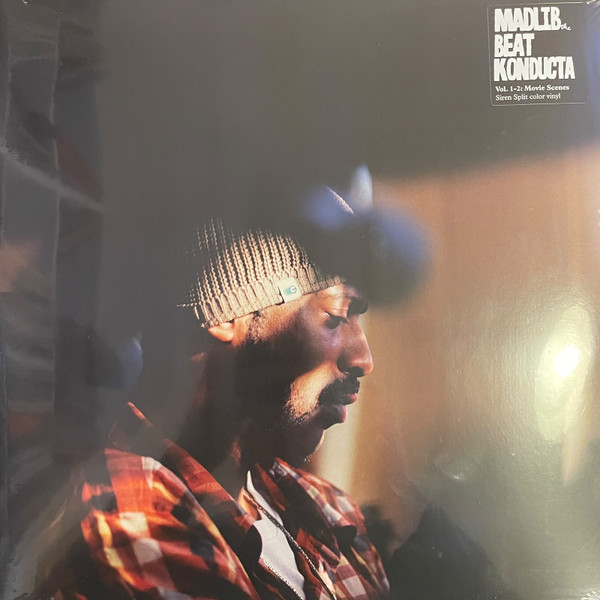
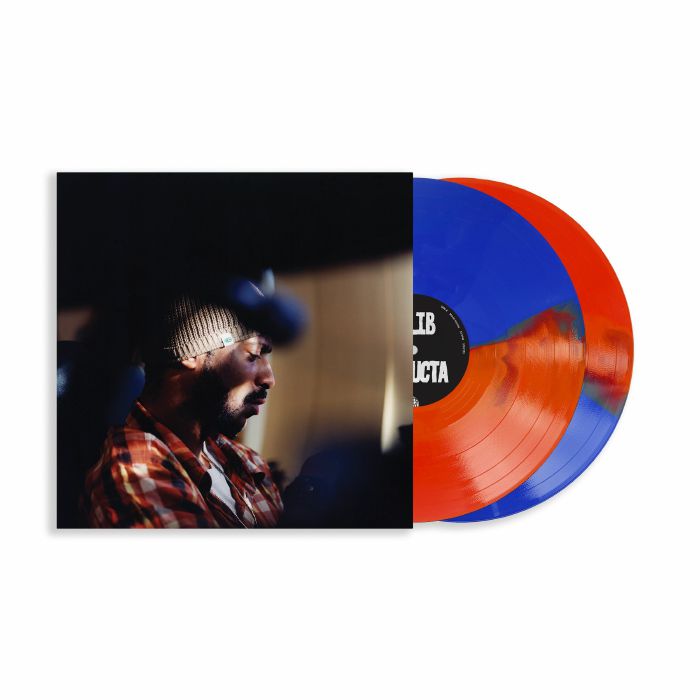
MADLIB – BEAT KONDUCTA VOL. 1-2: MOVIE SCENES.
Madlib – Beat Konducta Vol 1-2: Movie Scenes.
Label: Stones Throw Records.
Format: 2 x LP.
The Architecture of the Unfilmed and the Autonomy of the Beat Tape.
In the mid-2000s, instrumental hip hop stood at a critical aesthetic and commercial crossroads. For nearly three decades following the birth of the genre in the South Bronx, the hip hop beat – regardless of its harmonic sophistication, rhythmic ingenuity, or archival depth – was largely conceived as a functional scaffolding: a rhythmic and tonal bed engineered to support the narrative, cadence, and personality of an MC. While pioneering efforts by artists such as DJ Shadow (‘Endtroducing…..,’ 1996), RJD2 (‘Deadringer,’ 2002), and Prince Paul had demonstrated that sample-based production could sustain album-length conceptual arcs, the vast majority of beat-driven releases remained tethered to vocalists or structured around traditional song forms featuring discernible intros, verses, choruses, and outros. Beneath this visible commercial stratum, however, existed an informal, fiercely guarded underground currency: the producer’s beat tape. Circulated on dubbed cassettes and unmarked CD-Rs among trusted collaborators, these collections of raw, unarranged loops served as private audition reels – sonic portfolios intended to spark vocal inspiration rather than stand as finished works of art.
When Otis Jackson Jr., known universally as Madlib, compiled his 2005 vinyl LP ‘Vol. 1: Movie Scenes’ and its 2006 companion ‘Vol. 2: Movie Scenes, The Sequel’ into the 2006 Stones Throw Records CD release ‘Beat Konducta Vol. 1-2: Movie Scenes,’ he fundamentally upended this hierarchy. By the time of its release, Madlib had already secured a reputation as hip hop’s most prolific and unorthodox polymath.
Between 2000 and 2005, Madlib had dismantled mainstream rap conventions alongside MF Doom on the landmark Madvillainy, subverted notions of vocal identity and studio perfection through his helium-pitched alter ego Quasimoto, dismantled the Blue Note Records vault on ‘Shades of Blue,’ and fabricated an entire fictional jazz ensemble – complete with distinct player personas and biographies – under the banner of Yesterdays New Quintet.
Yet ‘Beat Konducta Vol 1-2: Movie Scenes’ represented a distinct formal breakthrough. Rather than adopting a theatrical mask or partnering with a lyricist, Madlib presented his raw, unvarnished beat-making process as an autonomous, feature-length sonic cinema.
To understand the formal architecture of ‘Beat Konducta Vol. 1-2: Movie Scenes,’ one must situate it within two intersecting traditions: the functional world of sixties and seventies library music, and the avant-garde lineage of cinematic montage theory. Library music – recorded by anonymous studio session ensembles for labels like KPM, De Wolfe, and Bruton – consisted of short, mood-specific instrumental cues designed to be licensed for film, television broadcasts, and radio dramas. These records were never intended for commercial retail; they were utilitarian mood-generators categorised by emotional temperature, pacing, and setting – “urban tension,” “pastoral reflection,” “high-speed pursuit.” Madlib, an obsessive crate-digger whose subterranean Oxnard studio, the famed “Bomb Shelter,” housed tens of thousands of obscure records, recognised that the fragmented, episodic nature of library records mirrored the internal logic of the hip hop beat tape.
Across thirty-five miniature vignettes – most lasting between sixty seconds and two minutes – ‘Beat Konducta Vol 1-2: Movie Scenes’ operates as an exercise in acoustic montage. Drawing conceptually from Soviet filmmaker Sergei Eisenstein’s theory that meaning in cinema is generated not within a single shot, but through the collision of two juxtaposed frames, Madlib sequences his beats like isolated celluloid reels spliced together without narrative dialogue. One track establishes a rain-slicked noir alleyway; the next cuts abruptly to a sun-drenched, psychedelic dream sequence; a third lurches into a frantic blaxploitation car chase before dissolving into static. Vinyl surface noise functions as tactile film grain; abrupt tape stops mimic the physical cut of an editor’s blade; and filtered sub-bass frequencies rumble like a theater projector whirring in a darkened room. In stripping away the MC, Madlib did not create an incomplete album – he liberated the listener’s imagination to act as director, screenwriter, and spectator simultaneously.
Hardware Minimalism and the Aesthetics of Tactile Imperfection.
Any rigorous analysis of ‘Beat Konducta Vol. 1-2: Movie Scenes’ must contend with its deliberate rejection of contemporary studio fidelity. Released in 2006 – an era dominated by the pristine, digitally quantised perfection of Pro Tools, glossy Neve console mixes, and the hyper-compressed low-end of commercial Southern and East Coast rap – Madlib’s production sounds deliberately subterranean, dusty, and physically weathered. Working primarily on a Boss SP-303 Dr.Sample – a compact, memory-limited phrase sampler prized for its gritty onboard vinyl simulation compression – alongside turntables, a four-track cassette recorder, and analog tape decks, Madlib treats signal degradation not as a flaw to be corrected, but as an essential compositional texture.
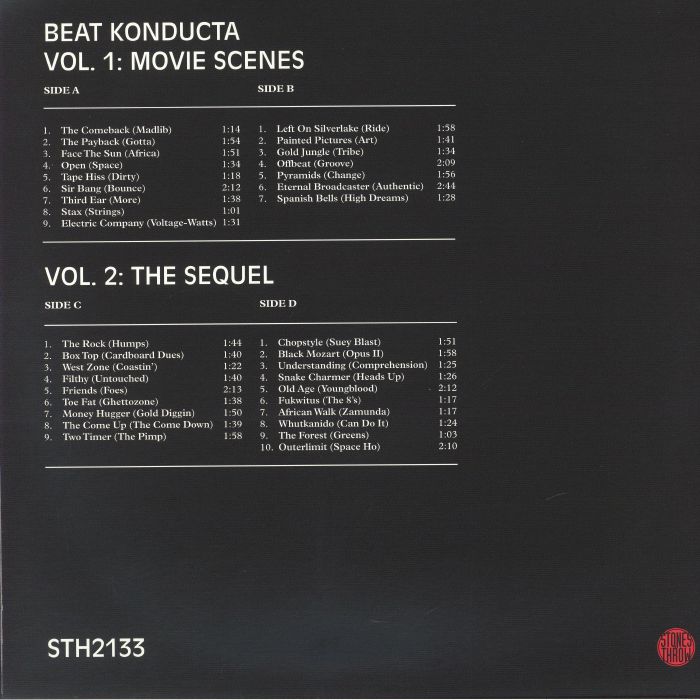
This philosophy is announced explicitly on tracks such as ‘Tape Hiss (Dirty)’ and ‘The Comeback (Madlib).’ On the former, audible analog hiss, tape saturation, and subtle pitch fluctuations (wow and flutter) sit directly in the foreground of the mix, wrapping the sampled horn stabs and muffled drums in a warm, claustrophobic haze. Rather than cleaning up the high-frequency noise floor or gating the silence between drum hits, Madlib allows the physical medium of magnetic tape and worn vinyl to breathe. The listener hears the needle drop, the crackle of oxidiSed grooves, and the mechanical click of sampler pads being triggered in real time. In doing so, Madlib foregrounds the materiality of his process. Every track carries the acoustic fingerprint of its storage medium, transforming the listening experience into an archaeological encounter with forgotten physical artefacts.
Equally radical is Madlib’s approach to rhythm and micro-timing. Where conventional hip hop producers of the mid-2000s relied heavily on the Akai MPC’s quantisation features to snap drum hits onto a strict mathematical grid, Madlib played his patterns unquantised, embracing human fallibility and rhythmic friction. On standout cuts like ‘Sir Bang (Bounce)’and ‘Offbeat (Groove),’ the snare drum lands milliseconds behind or ahead of the beat, creating a lurching, asymmetrical pocket that feels perpetually on the verge of stumbling yet never loses its forward momentum. Hi-hats rush forward with nervous energy while heavily compressed kick drums thud with a loose, elastic weight. This rhythmic tension – often described by musicologists as “drunken” or “unquantised” swing – forces the listener’s body to engage actively with the groove. Because the pulse cannot be predicted with mechanical certainty, each bar demands renewed attention, turning simple two and four bar loops into hypnotic, breathing organisms.
Furthermore, Madlib’s use of filtering and equalisation demonstrates an intuitive mastery of frequency sculpting. Rather than layering dozens of discrete synthesizer tracks or live overdubs, he frequently isolates narrow frequency bands from single vinyl sources – carving out a murky, resonant bass-line from a seventies psych-rock record using a low-pass filter, while letting a thin, midrange vocal sigh or harpsichord phrase float untethered above it. The resulting mixes possess a stark, three-dimensional depth: cavernous low-end frequencies anchor the floor of the sonic frame, crisp mid-range transients dart across the stereo field, and high-frequency vinyl static shimmers across the ceiling.
Structural Pacing and the Art of the Miniature Vignette.
Sustaining listener engagement across thirty-five instrumental tracks without a single traditional chorus or lyricist is an extraordinary feat of sequencing. Many beat tapes collapse under the weight of their own repetition, blurring into an undifferentiated wash of pleasant background grooves. Madlib avoids this trap by pacing ‘Beat Konducta Vol 1-2: Movie Scenes’ with the restless, associative logic of a late-night cinephile flipping channels through decades of global film history. Because most tracks conclude just as the listener has fully acclimated to their groove, the album generates a perpetual state of pleasurable anticipation.
Blaxploitation Grit and Urban Noir
The opening stretch of ‘‘Beat Konducta Vol. 1’ establishes the record’s primary cinematic vernacular: the gritty, paranoid atmosphere of seventies American crime cinema and blaxploitation soundtracks. Tracks like ‘The Payback (Gotta)’ and ‘Stax (Strings)’ tap directly into the dramatic tension pioneered by composers such as Isaac Hayes, Curtis Mayfield, and Lalo Schifrin. Built around urgent, tremolo-picked wah-wah guitars, brooding upright bass-lines, and sharp orchestral string stabs, these cues conjure immediate visual associations – rain-slicked asphalt, neon reflections in puddles, and covert surveillance from parked sedans.
On ‘The Payback (Gotta),’ Madlib chops a funk rhythm section into jagged, percussive shards, punctuated by a vocal exclamation that functions less like a lyric and more like a brass accent. The drums hit with dry, boxy urgency, evoking the raw acoustic acoustics of early-seventies Memphis and Detroit studio sessions. Conversely, ‘Stax (Strings)’ slows the tempo to a menacing crawl, allowing lush, minor-key violin phrases to swell and decay over a loping, heavy-footed breakbeat. Here, Madlib demonstrates how a single two bar orchestral loop, when framed by heavy low-end compression and strategic silence, can carry the dramatic weight of an entire dramatic monologue.
Psychedelic Drift and Pastoral Interlude.
If ‘Beat Konducta Vol 1-2: Movie Scenes’ remained locked in urban tension, its sixty minute runtime would quickly become exhausting. Madlib’s genius as a sequencer lies in his instinct for dynamic relief, regularly puncturing the street-level grit with weightless, hallucinatory interludes that function like cinematic dissolves or dream sequences.
Tracks such as ‘Open (Space)’ and ‘Painted Pictures (Art)’ suspend percussive momentum almost entirely, drifting into the realm of ambient psychedelia and cosmic jazz. On ‘Open (Space),’ woozy electric piano chords and shimmering harp glissandos hang suspended in a cavern of tape delay, untethered from any conventional backbeat. The track feels like a slow camera pan across an empty horizon, allowing the listener’s ear to reset after a dense cluster of drum-heavy workouts. Similarly, ‘Painted Pictures (Art)’ pairs delicate, melancholic acoustic guitar arpeggios with subtle analog warmth, evoking the pastoral intimacy of seventies European art-house cinema. These moments reveal the tender, contemplative side of Madlib’s musical sensibility – an artist deeply attuned not only to kinetic funk, but to harmonic vulnerability and negative space.
Global Crate-Digging and Cross-Cultural Synthesis.
As the compilation transitions from the ‘Vol. 1: Movie Scenes’ material into ‘Vol. 2: Movie Scenes, The Sequel,’ the geographical and stylistic aperture widens dramatically. While the first half leans heavily on American soul, funk, and jazz library records, the second half previews the borderless ethnomusicological curiosity that would later define subsequent chapters of the Beat Konducta saga – most notably 2007s ‘Beat Konducta Vol. 3-4: Beat Konducta In India’ and 2009s ‘Beat ‘Konducta Vol. 5-6: Dil Cosby and Dil Withers Suite’
.’On ‘Spanish Bells (High Dreams),’ Madlib weaves mournful acoustic flamenco guitar phrasing and resonant bell chimes into a slow, narcotic hip hop cadence, creating a sun-bleached border town noir aesthetic. ‘Black Mozart (Opus II)’ executes an audacious temporal collision, lifting a crisp baroque harpsichord motif out of the eighteenth century and anchoring it to a rugged, neck-snapping boom bap drum pattern. Meanwhile, ‘African Walk (Zamunda)’ and ‘Snake Charmer (Heads Up)’ draw upon West African highlife rhythms, Middle Eastern modal scales, and obscure international psych-rock pressings. Rather than treating non-Western musical traditions as exotic novelties, Madlib integrates them seamlessly into his rhythmic syntax, demonstrating that a drum break from Lagos, a sitar phrase from Mumbai, and a bassline from Philadelphia share a common percussive DNA when filtered through the sampler.
Sonic Punctuation, Sci-Fi Zaps, and Meta-Humour.
Binding these disparate genres together is Madlib’s unmistakable sense of dry, absurdist humour. Throughout the album, tracks are interrupted or bridged by cryptic dialogue snippets pulled from obscure B-movies, public-access broadcasts, and vintage educational records. Cuts like ‘Electric Company (Voltage-Watts)’ and ‘Outerlimit (Space Ho)’ inject bursts of retro-futuristic synthesiser oscillations and sci-fi laser effects into the mix, playfully nodding to fifties atomic age monster movies and Sun Ra’s cosmic Afrofuturism.
Equally characteristic are Madlib’s abrupt structural endings. On tracks like ‘Chopstyle (Suey Blast),’ a ferocious, martial-arts-inspired funk groove builds momentum for barely a minute before being violently severed mid-bar – as if someone yanked the power cord from the turntable. These sudden truncations serve a vital aesthetic function: they remind the listener of the producer’s physical presence at the controls, preventing the album from ever slipping into polite, passive “chill out” music. By refusing to provide neat, four bar fade-outs, Madlib keeps the listener perpetually alert, emphasising the raw, improvisational immediacy of the studio session.
The Absence of the MC as Structural Liberation.
When ‘Beat Konducta Vol. 1-2: Movie Scenes’ arrived in record stores in early 2006, a segment of hip hop criticism struggled to categorise it. Accustomed to evaluating beats strictly by their suitability for vocalists, some reviewers characterised the release as an intriguing but ultimately secondary “sketchbook” – a collection of unfinished blueprints awaiting the arrival of an MC to provide narrative focus and commercial viability. Viewed with the benefit of two decades of hindsight, however, that critique fundamentally misunderstands the compositional mechanics of the album. The absence of a rapper is not a void waiting to be filled; it is the exact precondition that allows Madlib’s sonic architecture to flourish.
When a hip hop producer constructs an instrumental intended for a vocalist, they must adhere to strict architectural constraints. Most importantly, they must carve out an acoustic “pocket” in the midrange frequencies – typically between 1 kHz and 4 kHz – so that the human voice can sit clearly atop the mix without competing against melodic instruments. Furthermore, the producer must maintain predictable four, eight and sixteen bar structural phrasing so the lyricist can anticipate breath points, rhyme schemes, and hook transitions.
Freed from every single one of these obligations on ‘Beat Konducta Vol. 1-2: Movie Scenes,’ Madlib floods the midrange with dense, competing melodic protagonists. On tracks like ‘Gold Jungle (Tribe)’ and ‘Understanding (Comprehension),’ the samples themselves become the vocalists. Chopped soul sighs, weeping electric guitars, frantic flute runs, and staccato horn swells occupy the exact frequency register normally reserved for a rapper, engaging in an intricate, wordless call-and-response.Were an MC to attempt to rhyme over ‘Gold Jungle (Tribe),’ the result would be an unbearable sonic traffic jam; the beat is already fully articulated, possessing its own internal syntax, rhythmic cadence, and emotional arc.
In this light, ‘Beat Konducta Vol. 1-2: Movie Scenes’ can be understood as a radical democratisation of narrative agency. By withholding explicit lyrical meaning, Madlib declines to dictate what the listener should think or feel. Instead, he provides evocative sensory prompts – a melancholic Fender Rhodes chord, a triumphant brass fanfare, a menacing bass-line – and invites the listener’s subconscious to project its own memories, anxieties, and cinematic imagery onto the soundstage. Every listener experiences a slightly different film while listening to ‘Beat Konducta Vol. 1-2: Movie Scenes,’ making the album an intensely personal, endlessly replayable psychological mirror.
Historical Context: 2006 and the Watershed Year of the Instrumental Beat.
To fully appreciate the historical weight of ‘Beat Konducta Vol. 1-2: Movie Scenes,’ one must examine the extraordinary cultural moment in which it appeared. In February 2006 – the very same month Stones Throw compiled ‘Beat Konducta Vol. 1-2: Movie Scenes’ onto CD – Madlib’s close friend, collaborator, and spiritual counterpart J Dilla released his final masterpiece, ‘Donuts,’ just three days before passing away from complications of lupus and TTP.
‘Donuts’ and ‘Beat Konducta Vol 1-2: Movie Scenes’ formed a seismic twin-pillar event that permanently altered the trajectory of hip hop production and independent electronic music. Though born from similar crate-digging traditions and shared mutual admiration (the two had previously collaborated as Jaylib on 2003’s ‘Champion Sound,’ the two albums represent distinct, complementary poles of sample-based artistry.
Together, ‘Beat Konducta Vol 1-2: Movie Scenes’ and ‘Donuts’ shattered the long-standing industry assumption that instrumental hip hop was merely a niche sub-genre or a functional utility for vocalists. Critics from Pitchfork to The Wire began analySing beatmakers with the same formal rigour previously reserved for avant-garde jazz composers, musique concrète pioneers, and auteur film directors. Within this watershed year, Madlib’s ‘Beat Konducta Vol 1-2: Movie Scenes’ stood as the definitive manifesto for the producer as an archivist-auteur – an artist whose mastery lay not in virtuoso instrumental performance on a single instrument, but in the encyclopedic curation, juxtaposition, and textural manipulation of recorded sound history.
Enduring Legacy and the Blueprint for Modern Beat Culture.
Nearly two decades after its release, the aesthetic DNA of ‘Beat Konducta Vol. 1-2: Movie Scenes’ has become so deeply woven into the fabric of contemporary music that it is easy to overlook how radical its approach was in 2006. Looking across the modern musical landscape, the album’s direct descendants are virtually ubiquitous. The entire global phenomenon of “lo-fi hip hop” and “beats to study or relax to” – a multi-billion-stream digital ecosystem built around short, nostalgic, vinyl-crackle-laden loops played on Roland SP-404 samplers – is essentially a commercialised, smoothed-out distillation of the template Madlib codified on ‘Beat Konducta Vol. 1-2: Movie Scenes.’ Similarly, the thriving underground cassette tape beat scene centred in Los Angeles (championed by institutions like Low End Theory, Brainfeeder, and Leaving Records) and across Europe owes its fundamental ethos to Madlib’s insistence that a ninety second, unquantised, hiss-drenched beat is a complete artistic statement worthy of physical release.
Yet, while thousands of bedroom producers have adopted Madlib’s hardware choices, tempo ranges, and surface-noise aesthetics, remarkably few have replicated the vital tension that makes ‘Beat Konducta Vol. 1-2: Movie Scenes’ an enduring masterwork.Where contemporary lo-fi beatmakers frequently sand down the rough edges of their samples to create pleasant, unobtrusive background wallpaper, Madlib embraced friction, dissonance, and unpredictability. His loops lurch violently; his tape edits jar the listener out of complacency; his source material spans continents and decades with scholarly depth rather than algorithmic familiarity. There is nothing passive or sedative about ‘Beat Konducta Vol. 1-2: Movie Scenes’ – it is restless, jagged, deeply funky, and occasionally abrasive.
Ultimately, the triumph of ‘Beat Konducta Vol. 1-2: Movie Scenes’ lies in its philosophical reconciliation of preservation and destruction. As a crate-digger, Madlib acts as a devoted preservationist, rescuing obscure session musicians, forgotten library composers, and overlooked international recordings from the dustbin of cultural oblivion. Yet as a beatmaker, he acts as an iconoclast – chopping, filtering, pitch-shifting, and distorting those very artefacts until they serve an entirely new, futuristic vision. In doing so, Otis Jackson Jr. transformed the humble beat tape into high art, proving beyond doubt that the most vivid, gripping cinema requires no camera, no script, and no screen – only a turntable, a sampler, and an imagination fearless enough to edit the ghosts trapped inside forgotten grooves.
Madlib – Beat Konducta Vol 1-2: Movie Scenes.
- Posted in: Avant Garde ♦ Baroque Pop ♦ Boom Bap ♦ Funk ♦ Highlife ♦ Hip Hop ♦ Instrumental Hip Hop ♦ Jazz ♦ Jazz Funk ♦ Library Music ♦ Musique Concrète ♦ Philadelphia Soul ♦ Psychedelia ♦ Soul ♦ Southern Soul
- Tagged: Beat ‘Konducta Vol. 5-6: Dil Cosby and Dil Withers Suite, Beat Konducta Vol 1-2: Movie Scenes, Beat Konducta Vol. 3-4: Beat Konducta In India, J Dilla, Madlib, MF Doom, Otis Jackson Jr., Quasimoto, Shades Of Blue, Stones Throw Records, Vol. 1: Movie Scenes, Vol. 2: Movie Scenes The Sequel
 dereksmusicblog

