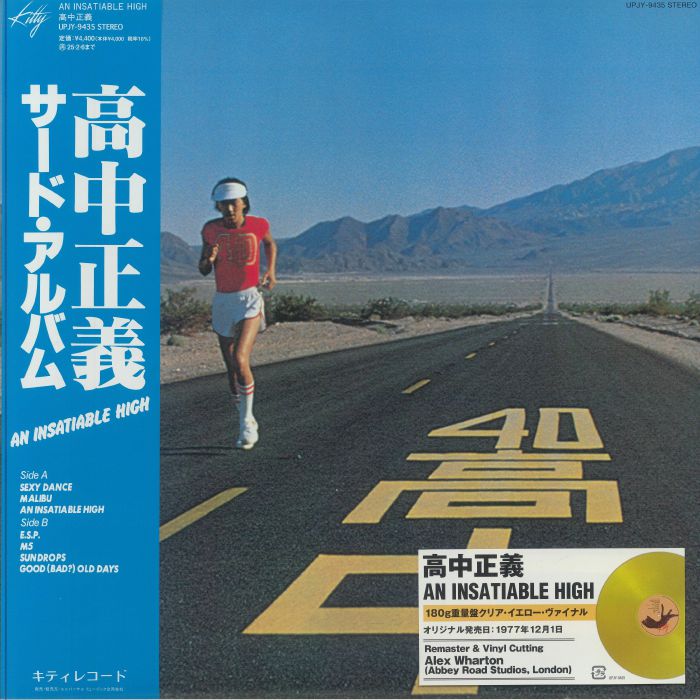
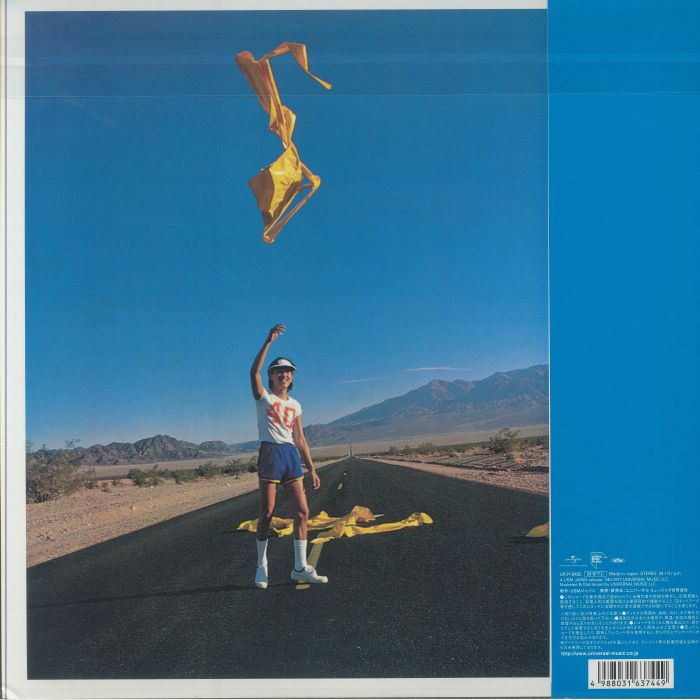
MASAYOSHI TAKANAKA – AN INSATIABLE HIGH.
Masayoshi Takanaka – An Insatiable High.
Label: Universal Music Japan.
Format: Vinyl.
By late 1977, Japanese guitarist and composer Masayoshi Takanaka was rapidly evolving from a respected session player into a titan of the West Coast-meets-Tokyo fusion scene.
Takanaka’s third album ‘An Insatiable High’ was recorded at Larrabee Sound Studios in Los Angeles. The album stands as Takanaka’s definitive masterpiece of the late seventies. That is no surprise.
Bridging the gap between fiery American jazz-funk and the sun-drenched, carefree aesthetics that would come to define Japanese City Pop, the album enlisted elite L.A. studio musicians. This included drummer Harvey Mason, bassist Abraham Laboriel, guitarist Lee Ritenour, keyboardist Patrice Rushen, vocalist Jim Gilstrap and the Tower Of Power Horn Section. The result was a vibrant, impeccably produced seven track suite that balances high-octane virtuosity with breezy tropical warmth.
‘An Insatiable High’ was released by Kitty Records on the 1st December 1977. On Japan’s primary tracking index, the Oricon LP Chart, the album peaked at number forty-six. For a jazz-fusion album at the time, this was a solid commercial performance that expanded Takanaka’s presence beyond niche jazz clubs and into mainstream Japanese households
While the album was not an instant, record-shattering blockbuster upon its release, its commercial trajectory tells a story of steady domestic growth followed by massive long-term global reach.
Nowadays, ‘An Insatiable High’ stands as a pivotal milestone in Masayoshi Takanaka’s sprawling discography. Universal Music Japan’s recent high-fidelity reissue of the album provides a new generation of listeners with the opportunity to experience this landmark record, reaffirming its foundational role in the evolution of Japanese jazz fusion and City Pop.
The reissue highlights the enduring sophistication of the 1977 release, which seamlessly blended Takanaka’s signature tropical guitar melodies with the polished, tight-knit grooves of top-tier Los Angeles session musicians. For long-time enthusiasts and modern listeners discovering his catalog through the global revival of seventies Japanese funk, this definitive release offers a pristine window into an artist operating at the peak of his creative momentum – capturing a masterwork that remains as vibrant and culturally resonant today as it was nearly five decades ago.
Side A.
‘Sexy Dance’ serves as the album’s punchy, high-energy curtain-raiser. It is built over an irresistible, disco-adjacent bassline and tight rhythm guitar chops. The track also establishes the West Coast production ethos immediately. Takanaka’s lead guitar voice is bright and razor-sharp, cutting through dense horn hits without cluttering the mix. The arrangement demonstrates a masterful balance between commercial dance floor accessibility and intricate jazz-funk improvisation.
‘Malibu’ is a mid-tempo masterpiece that trades high-tempo funk for a relaxed, coastal atmosphere. Warm electric piano chord swells and delicate percussion give Takanaka space to showcase his lyrical, singing lead tone. This track is a blueprint for the “resort fusion” style that defined eighties City Pop and smooth jazz. Critics consistently highlight Takanaka’s phrasing here: rather than overwhelming the track with speed, he focuses on melodic resonance, tone control, and emotional depth.
‘An Insatiable High’ is the album’s epic centrepiece. Spanning over ten minutes, this sprawling track cycles through driving Latin-inflected funk rhythms, soaring guitar melodies, dynamic horn breakdowns, and smooth backing vocals by Gilstrap. Universally celebrated as a tour de force in Japanese fusion history. The track maintains incredible momentum throughout its extended runtime, demonstrating Takanaka’s ability to structure long-form compositions that stay engaging, rhythmic, and melodic from start to finish.
Side B.
Driven by a driving syncopated beat, ‘E.S.P.’ leans heavily into futuristic, urban funk. Crisp horn arrangements punctuate Takanaka’s soaring lead riffs and aggressive rhythm fills. : Functioning as a high-octane bridge on side two, ‘E.S.P.’ highlights Takanaka’s technical precision and rhythmic agility. The interaction between his guitar leads and the brass section creates an urgent, cinematic feel that bridges late-seventies jazz-rock with early City Pop aesthetics.
Leaning heavily into pure fusion instrumental work, ‘M5’ spotlights the technical prowess of the L.A. studio band.Chuck Rainey’s bassline locked in alongside tight snare cracking provides a kinetic foundation for Takanaka and keyboards to exchange intricate solo passages. The brass section adds striking staccato hits throughout, keeping the energy at a peak. ‘M5’ captures the sheer thrill of elite musicians jamming in a top-tier studio space.
Returning to a brighter, tropical atmosphere, ‘Sundrops’ radiates pure summer euphoria. Abraham Laboriel’s bouncy bass playing leads a buoyant rhythm section that allows Takanaka’s guitar melodies to float effortlessly. The track features delicate acoustic guitar textures blended with his signature electric tone, yielding a multi-layered arrangement that feels both expansive and cozy.
The album draws to a poignant, reflective close with ‘Good (Bad?) Old Days,’ a track that intentionally steps back from the high-octane funk and buoyant energy of the preceding arrangements. Grounded in a measured, slow-tempo groove, this concluding ballad is propelled by Takanaka’s deeply evocative guitar work — marked by subtle volume swells, deliberate phrasing, and vocal-like string bends. Elevated by lush, cinematic string arrangements that add harmonic depth without overpowering the mix, Takanaka shifts his focus from technical virtuosity to pure emotional resonance. The result is a nostalgic, atmospheric denouement that brings the album’s vibrant summer energy to a serene conclusion, evocative of watching the final sunset at the end of an unforgettable journey.
‘An Insatiable High remains an audiophile landmark of seventies Japanese fusion. Recording at Larrabee Sound Studios in California allowed Takanaka to leverage state-of-the-art analog recording techniques, capturing punchy low-end response alongside pristine high-end clarity.
Takanaka’s lead guitar sound balances sharp bite with lush sustain. His frequent use of envelope filters, chorus, and subtle overdrive gives the lead instruments a modern, polished feel that cut through heavy brass and string layers without cluttering the stereo field.
The pairing of American rhythm masters Chuck Rainey, Abraham Laboriel and Harvey Mason with Japanese jazz compositions bridged two musical worlds seamlessly, supplying an authentic funk foundation that elevated Takanaka’s complex compositions.
Retrospectively, critics view ‘An Insatiable High’ as an essential piece of the seventies Japanese fusion canon. While some contemporary jazz purists occasionally noted that the album leaned heavily into polished, light-hearted pop-funk rather than avant-garde improvisation, modern reviews celebrate this exact quality – praising Takanaka’s ability to blend technical virtuosity with unadulterated joy, accessible melodies, and effortless summer vibes.
‘An Insatiable High’ remains an enduring classic that bridged cultural and stylistic boundaries, cementing Masayoshi Takanaka’s status as a master guitarist and visionary composer.
Masayoshi Takanaka – An Insatiable High.
- Posted in: City Pop ♦ Funk ♦ Jazz ♦ Jazz Funk ♦ Jazz Fusion ♦ Latin ♦ Latin Jazz
- Tagged: Abraham Laboriel, An Insatiable High, Harvey Mason, Jim Gilstrap, Kitty Records, Lee Ritenour, Masayoshi Takanaka, Patrice Rushen, Tower Of Power Horn Section, Universal Music Japan
 dereksmusicblog

