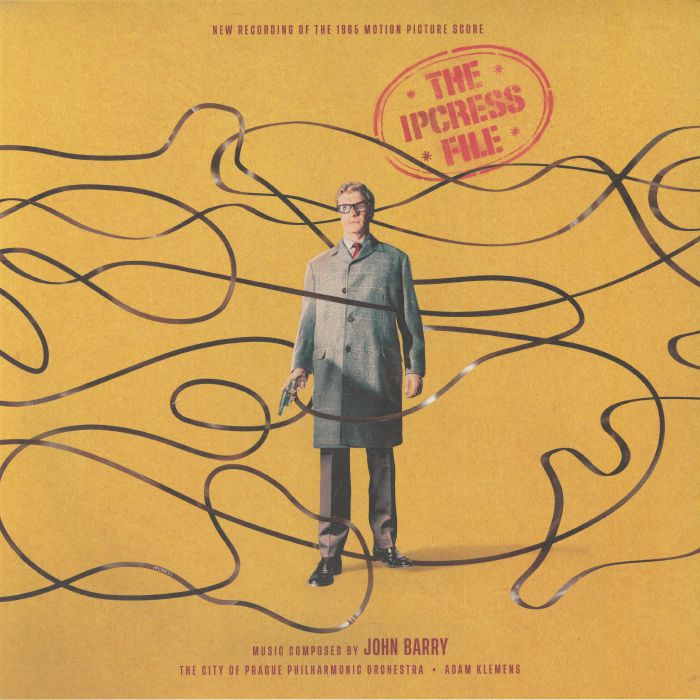
JOHN BARRY – THE IPCRESS FILE (SOUNDTRACK).
John Barry – The Ipcress File (Soundtrack).
Label: Quartet.
Format: Vinyl.
When Sidney J. Furie brought Len Deighton’s groundbreaking spy novel ‘The Ipcress File’ to the silver screen in 1965, it delivered a sharp, deliberate antidote to the extravagant, jet-setting fantasy of the James Bond phenomenon. Rather than indulging in high-octane escapism or hyper-masculine bravado, the film anchored itself in the grey, suffocating realities of Cold War espionage. At the centre of this world was Harry Palmer – a working class agent whose life was defined less by tailored suits and lethal gadgets, and more by thick-rimmed glasses, tedious grocery lists, and the oppressive weight of bureaucratic red tape.
The cinematic power of this gritty, anti-heroic vision was immeasurably heightened by its musical score, composed by John Barry – ironically, the primary architect who had helped define the signature, sweeping sound of the Bond franchise itself. Yet, instead of leaning into his trademark bombastic brass, soaring string arrangements, and grand romanticism, Barry executed a brilliant thematic pivot. For ‘The Ipcress File,’ he crafted a tense, minimalist sonic masterpiece that stripped away theatrical spectacle to lay bare the psychological core of the story: profound isolation, pervasive paranoia, and the quiet disillusionment of mid-century urban life.
At the heart of Barry’s brilliant compositional design was a striking acoustic contrast. By pairing standard jazz instrumentation — a familiar, rhythmic anchor with the icy, metallic timbre of the cimbalom, a traditional Hungarian hammered dulcimer, he introduced an unsettling, foreign texture to the soundscape. The cimbalom’s lingering, shivering tones echoed through the bleak, rainy streets of London, transforming the urban landscape into a character unto itself.Through this unique instrumentation, Barry forged a musical language that perfectly embodied the chilly, suspicious atmosphere of a fractured era, leaving behind one of the most distinctive and influential spy scores in cinematic history.
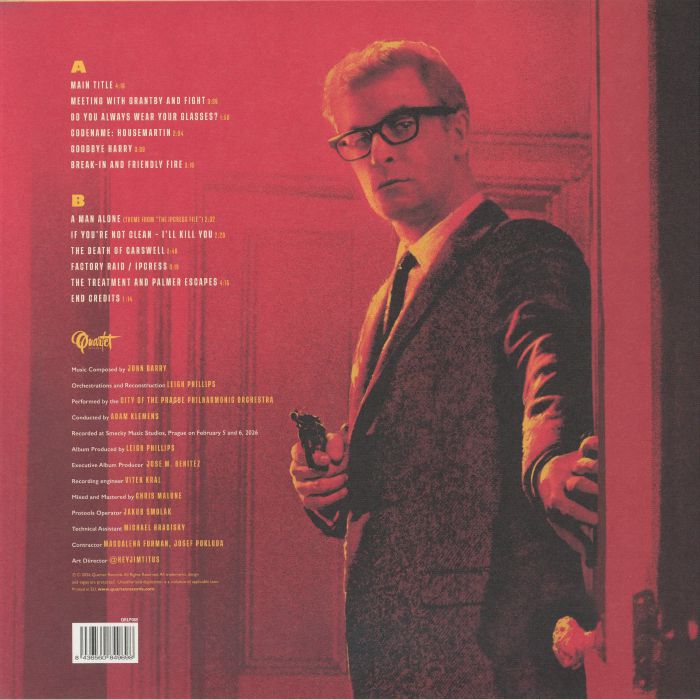
Side A.
‘Main Title Theme’ instantly establishes the score’s brooding architecture. Anchored by John Leach’s striking cymbalom motif, the main theme weaves a haunting, descending melodic line above muted brass and minor-key chords. It sets a tone of quiet paranoia, capturing the drab grey of sixties London and the psychological weight borne by its protagonist.
‘Alone In Three-Quarter Time’ finds Barry shift into a light, deceptive jazz waltz. The woodwinds and gentle rhythm section evoke the mundane, domestic side of Harry Palmer’s routine – brewing coffee, shopping for groceries, navigating office politics. Yet, beneath the easy-listening surface, slight harmonic shifts remind the listener that Palmer is never truly off the clock.
‘Meeting With Grantby and Fight’ leans heavily into Barry’s signature spy-action tropes. A driving, syncopated bassline builds tension alongside sharp horn stabs and percussive hits. The fight sequence cue avoids chaotic dissonance, maintaining a structured, rhythmic drive that feels deliberate and calculated.
‘Jazz Along Alone’ is a sleek, mid-tempo jazz arrangement featuring smooth saxophones and muted trumpet flourishes. It mirrors Palmer’s cynical, cool exterior as he navigates London’s streets and intelligence safe houses, blending cool jazz sophistication with an underlying sense of alienation.
‘The Death Of Carswell’ is one of the most emotionally resonant and haunting pieces on the record. Barry employs subdued, elegiac strings and sparse cimbalom notes to underscore tragedy and betrayal. The atmosphere is bleak and mournful, reinforcing the lethal stakes hidden beneath bureaucratic routine.
‘A Man Alone (Part 1)’ is the primary variation on Palmer’s personal theme. Slow, reflective, and stripped of excess orchestration, the track centres on solo woodwinds and cimbalom. It captures the solitary nature of intelligence work, where trust is non-existent and every companion is a potential threat.
Side B.
‘A Man Alone (Part 2)’ is secondary expansion of the theme, deepening the melancholy mood. Barry subtly alters the arrangement, incorporating low-register brass and sustained string pads to heighten the feeling of dread as the conspiracy around the “Ipcress” brainwashing process begins to close in.
‘If You’re Not Clean – I’ll Kill You’ is a short, razor-sharp suspense piece. Built on low-end piano pulses, muted brass swells, and stark percussion, the track mirrors the icy brutality of the film’s dialogue and the cold reality of interrogation rooms.
‘Alone Blues’ is the longest track on the album, Alone Blues serves as an extended jazz excursion. Built around a late-night, smoky blues groove, it showcases Barry’s early roots with the John Barry Seven. It provides a moody, atmosphere-heavy respite while preserving the soundtrack’s overall sense of isolation.
‘Goodbye Harry’ is a brief, dramatic cue that marks a major turning point in the narrative. Sharp brass motifs and urgent string phrases create a sudden sense of impending danger, signalling the collapse of Palmer’s safety and his descent into captivity.
‘Goodbye Harry (Continuation)’ extends the tension of the previous piece.’ This continuation uses repetitive, hypnotic rhythmic patterns that mimic sensory distortion. It effectively sets up the disorientation of the film’s psychological torture sequences.
A Man Alone (Part 3) brings the album to a contemplative, resolute finish. Restating the main motif with full orchestral richness, Barry allows the cimbalom to ring out one final time. Palmer survives, but the music offers no neat, happy resolution—only the quiet return to a cold, lonely reality.
John Barry’s ‘The Ipcress File’ remains a landmark in espionage film scoring. Where his work on the James Bond series celebrated action and grandeur, ‘The Ipcress File’ relies on restraint, sparse textures, and lingering tension. By adopting the cimbalom as the score’s central voice, Barry crafted a unique sonic signature that defined the gritty reality of sixties British spy cinema. It stands as one of his finest, most economically brilliant works – an essential listen for fans of film music and classic jazz alike.
John Barry – The Ipcress File (Soundtrack).
- Posted in: Jazz ♦ Soundtrack
- Tagged: Harry Palmer, John Barry, Len Deighton, Quartet, Sidney J. Furie, The Ipcress File (Soundtrack)
 dereksmusicblog

