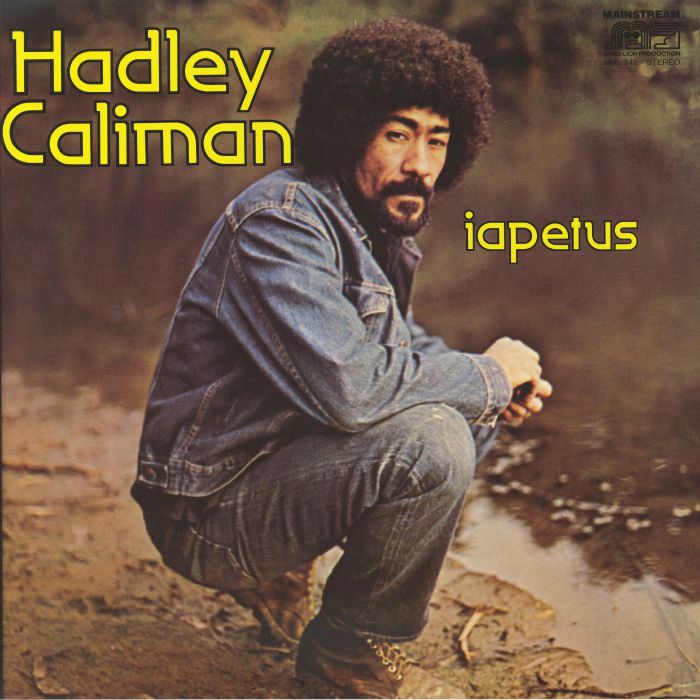
HADLEY CALIMAN – IAPETUS.
Hadley Caliman – Iapetus.
Label: Wewantsounds.
Format: Vinyl.
American jazz saxophonist and flutist Hadley Caliman enjoyed an expansive, decades-long career as a premier sideman, visionary bandleader, and dedicated educator. Celebrated for his robust, expressive tone and sophisticated post-bop harmonic fluency, Caliman stood as a vital force within the West Coast jazz, modal, and Latin fusion movements.
He was recognised for a deep, resonant tenor saxophone sound paired with remarkable agility on the flute, Caliman seamlessly bridged traditional hard bop with modern modal and avant-garde influences.
Over the course of his career, Caliman contributed pivotal work to prominent groups led by masters such as Dexter Gordon, Gerald Wilson, Bobby Hutcherson, and Carlos Santana, illustrating his versatility across acoustic jazz and electric fusion.
Born in Idabel, Oklahoma, Caliman spent his formative years in Los Angeles, California, after relocating with his family.He attended Jefferson High School – a legendary epicentre for West Coast jazz talent – where he honed his musical prowess alongside several future icons of the genre.
During his adolescence, Caliman fully immersed himself in the vibrant Central Avenue jazz ecosystem, a crucial hub for West Coast bebop and hard bop. It was during this pivotal era that he established a close mentorship with legendary master saxophonist Dexter Gordon, who resided in his neighbourhood. Owing to his commanding physical stature, melodic phrasing, and clear homage to Gordon’s swinging, robust, and broad-toned tenor style, Caliman earned the moniker “Little Dex” across the Los Angeles nightlife and club circuit.
Like many prominent figures navigating the high-pressure post-bop era of the fifties, Caliman contended with severe personal struggles with substance abuse. These hardships resulted in periods of incarceration that temporarily disrupted his early artistic trajectory. Rather than allowing these setbacks to define his legacy, Caliman transformed his time away into an intense period of musical development, dedicating himself to mastering advanced music theory and composition.Ultimately achieving long-term sobriety, he staged a remarkable professional resurgence, re-establishing himself as a disciplined, deeply reliable, and highly sought-after sideman and soloist in the jazz community.
By the late sixties, Caliman had established himself as a mainstay across both the Los Angeles and San Francisco live music scenes and worked as a session player in recording studios. A pivotal chapter in his career came when he joined the prestigious Gerald Wilson Orchestra, contributing his distinctive tone to several landmark Pacific Jazz releases. This included ‘Live and Swinging’ in 1967 and ‘Everywhere’ in 1968.
By 1971, Caliman had signed to Bob Shad’s Mainstream Records. He would release two solo albums for the label.
Caliman’s self-titled 1971 debut on Mainstream Records stands as a bold, evocative landmark in early-seventies spiritual post-bop. Backed by a premier West Coast line-up including pianist Todd Cochran, trumpeter Luis Gasca, bassist James Leary, and drummer Clarice Jones – Caliman immediately established his artistic voice, delivering muscular, Coltrane-influenced tenor saxophone solos alongside fluid, lyrical flute passages. Balancing expansive modal exploration with tight, propulsive grooves, the album laid a brilliant foundation for his solo career and remains a deep-cut classic of the era’s avant-garde jazz movement.
Just a year later, Caliman release his 1972 sophomore album ‘Iapetus.’ It was recently released by Wewantsounds and is a cornerstone of seventies spiritual post-bop and progressive jazz-fusion.
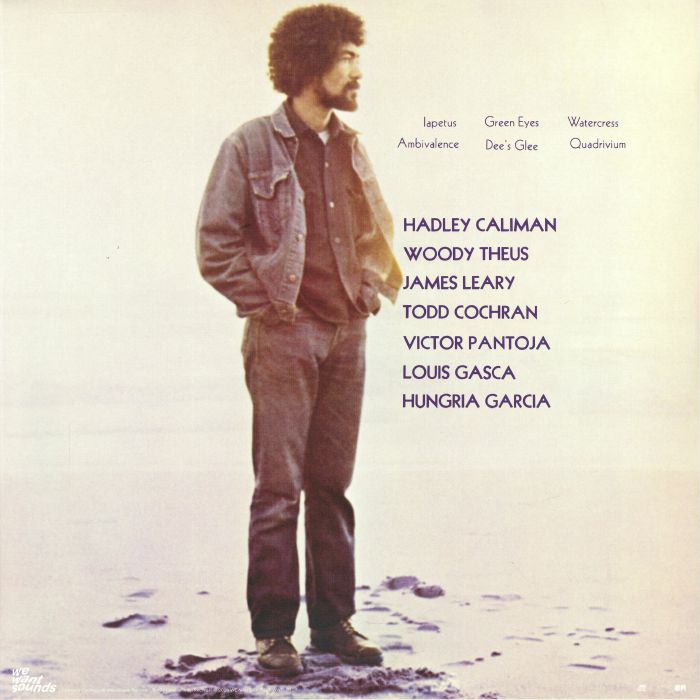
Nowadays, ‘Iapetus’ is regarded as one of the era’s most compelling, understated masterpieces. It was produced by Shad and recorded with a stellar West Coast ensemble. The lineup included drummer Woody “Sonship” Theus, bassist James Leary, pianist Cochran, trumpeter Gasca, conga player Victor Pantoja and Carmelo Garcia on timbales. They played their part in an album balances modal jazz, psychedelic textures, and expansive improvisation.
Side A.
The album opens with ‘Watercress,’ which has a concise, vibrant arrangement that establishes the band’s rhythmic agility. Driven by Cochran’s pulsing piano vamps and a polyrhythmic percussion layer, it provides a buoyant canvas for Caliman’s tenor saxophone work. His tone is rich and expressive, offering articulate phrases that ride effortlessly over the driving rhythm section.
‘Ambivalence’ expands into deeper modal territory, showcasing the ensemble’s ability to navigate tension and release.The track builds around a haunting melodic motif, with Caliman delivering a searching, Coltrane-influenced solo. Luis Gasca’s trumpet counterpoints add brass colour, while Leary’s bass-line grounds the rhythmic shifts.
‘Dee’s Glee’ shifts the energy toward a spirited post-bop groove. Caliman demonstrates his technical fluency, weaving intricate lines around Cochran’s harmonic changes. The interplay between drummer Theus and Pantoja’s congas. This creates a dynamic undercurrent that drives the soloists forward and closes Side A.
Side B.
‘Iapetus’ is the album’s central focal point, and is a ten-minute Magnus Opus. It is a captivating journey into spiritual and psychedelic jazz. Here, Caliman alternates between tenor saxophone and flute, establishing an ethereal atmosphere over ambient piano chords and expressive percussion. The track moves fluidly between modal structures and open-ended collective improvisation, highlighting the band’s deep group cohesion.
‘Quadrivium’ serves as a striking contrast, offering a compact, rhythmically angular performance. Cochran’s composition features complex time signatures and tight ensemble accents. Caliman’s soloing is sharp and incisive, cutting through the dense rhythmic framework supplied by Leary and Theus.
The album closes with ‘Green Eyes,’ a reflective ballad grounded in deep blues idioms. Caliman’s tenor tone takes centre stage here. It is warm, slightly nasal, and intensely emotive. The arrangement maintains an open, spacious feel, allowing each musical gesture to resonate fully as the record drifts to a satisfying conclusion.
‘Iapetus’ remains a powerful testament to Hadley Caliman’s artistic vision and the creative vitality of West Coast jazz during the early seventies. Rather than treating the recording session as a simple blowing date, Caliman and pianist Cochran crafted a cohesive work that seamlessly integrates modal post-bop, spiritual jazz, and subtle fusion elements.
What sets ‘Iapetus’ apart from many contemporary releases on the Mainstream label is its balance of structural rigour and spontaneous expression. The rhythmic synergy between Theus, Pantoja, and Leary creates a fluid foundation that allows Caliman’s woodwind work – both on tenor saxophone and flute to soar with complete expressive freedom.
While Caliman’s career often found him in high-profile sideman roles – opening Santana’s Caravanserai or recording with Julian Priester and Bobby Hutcherson – Iapetus proves he was a leader of exceptional depth. Decades after its initial 1972 release, the album continues to stand as an essential document of early seventies progressive jazz, deserving of a central place in the canon of American creative music.
Hadley Caliman – Iapetus.
- Posted in: Avant Garde ♦ Improv ♦ Jazz ♦ Jazz Fusion ♦ Modal Jazz ♦ Post Bop ♦ Psychedelia ♦ Soul Jazz
- Tagged: Bob Shad, Carmelo Garcia, Hadley Caliman, Iapetus, James Leary, Luis Gasca, Mainstream Records, Todd Cochran, Victor Pantoja, Wewantsounds, Woody "Sonship" Theus
 dereksmusicblog

